





















Our verdict
- Daily running 83
- Tempo 96
- Race 89
- Stability 75
Pros
- Impressive bounce from new foam
- Clever plate design
- Plenty of cushioning without excessive bulk
- Incredible versatility for all kind of paces
- Dependable traction on dry and wet surfaces
- Lightweight build enhances its fast-feeling ride
- Secure fit with zero heel slip
- Wide size available in select markets
- Excellent as do-it-all running shoe
- Outsole resists abrasion surprisingly well
- Good super trainer for beginners
Cons
- Not the most stable super trainer
- Low-volume upper may bother some
- Different drop than stated by NB
- High price
Awards
- Top pick in best New Balance running shoes
- Top pick in best cushioned New Balance running shoes
- Top 2% in road running shoes
- Top 4% in New Balance running shoes
- Top 25% most popular running shoes
Comparison
The most similar running shoes compared
+ + Add a shoe | |||||
|---|---|---|---|---|---|
| Our score | 94 Superb | 88 Superb | 91 Superb | 86 Great | |
| Price | $200 | $250 | $225 | $180 | |
| Pace | Daily runningCompetition | Competition | Competition | TempoCompetition | |
| Shock absorption | High | High | High | High | |
| Energy return | High | High | High | Moderate | |
| Traction | High | High | High | High | |
| Arch support | Neutral | Neutral | Neutral | Neutral | |
| Weight lab Weight brand | 7.3 oz / 207g 7.7 oz / 218g | 7.8 oz / 220g 7.4 oz / 210g | 7.6 oz / 215g 7.3 oz / 206g | 7.1 oz / 201g 6.9 oz / 196g | |
| Lightweight | ✓ | ✓ | ✓ | ✓ | |
| Drop lab Drop brand | 8.8 mm 4.0 mm | 10.0 mm 7.0 mm | 8.7 mm 8.0 mm | 8.7 mm 7.0 mm | |
| Strike pattern | HeelMid/forefoot | HeelMid/forefoot | HeelMid/forefoot | HeelMid/forefoot | |
| Size | Slightly small | Slightly small | Slightly small | True to size | |
| Midsole softness | Soft | Balanced | Balanced | Soft | |
| Difference in midsole softness in cold | Small | Small | Small | Small | |
| Toebox durability | Decent | Decent | Bad | Bad | |
| Heel padding durability | Good | Good | Decent | Good | |
| Outsole durability | Good | Good | Good | Good | |
| Breathability | - | Breathable | Moderate | Breathable | |
| Width / fit | Medium | Narrow | Medium | Medium | |
| Toebox width | Medium | Narrow | Narrow | Medium | |
| Stiffness | Moderate | Stiff | Stiff | Moderate | |
| Torsional rigidity | Moderate | Moderate | Moderate | Moderate | |
| Heel counter stiffness | Flexible | Flexible | Flexible | Moderate | |
| Plate | Carbon plate | Carbon plate | Carbon plate | Carbon plate | |
| Rocker | ✓ | ✓ | ✓ | ✓ | |
| Heel lab Heel brand | 38.3 mm 40.0 mm | 39.6 mm 40.0 mm | 36.5 mm 39.5 mm | 35.3 mm 37.5 mm | |
| Forefoot lab Forefoot brand | 29.5 mm 36.0 mm | 29.6 mm 33.0 mm | 27.8 mm 31.5 mm | 26.6 mm 30.5 mm | |
| Widths available | NormalWide | Normal | Normal | Normal | |
| Orthotic friendly | ✓ | ✓ | ✓ | ✓ | |
| Season | - | SummerAll seasons | All seasons | SummerAll seasons | |
| Removable insole | ✓ | ✓ | ✓ | ✓ | |
| Ranking | #5 Top 2% | #50 Top 13% | #24 Top 7% | #89 Top 23% | |
| Popularity | #98 Top 25% | #99 Top 25% | #61 Top 16% | #114 Top 29% |


Who should buy
After testing the New Balance SuperComp Rebel in the lab, we recommend it for:
- Those looking for a super trainer that delivers impressive agility and fun.
- Anyone who enjoys a soft, bouncy, and protective ride without the bulk of most super trainers.
- Neutral runners who prefer a snug, race-ready fit and an agile platform over maximum stability.
- Runners seeking one shoe that can do it all, from daily miles to tempo runs and even road races.
Who should NOT buy
Those who frown at shoes priced around $200 won’t be thrilled with the SuperComp Rebel’s price. Instead, we suggest checking out the adidas Adizero EVO SL or Saucony Endorphin Azura, as both come surprisingly close in performance while costing less.
We also think the SuperComp Rebel’s incredible versatility comes at the cost of not being as fast as a true super shoe. The obvious step up is the New Balance SuperComp Elite v6, which shares the same foam but is built exclusively for racing and features a full-length carbon plate.
Cushioning
Shock absorption
New Balance is moving on from the FuelCell SuperComp Trainer v3, ending the series after just three models and fully rebooting it as the SuperComp Rebel instead of the Trainer v4. We guess that the goal is to combine the strong sales of the Rebel with the increasingly popular super-trainer category.
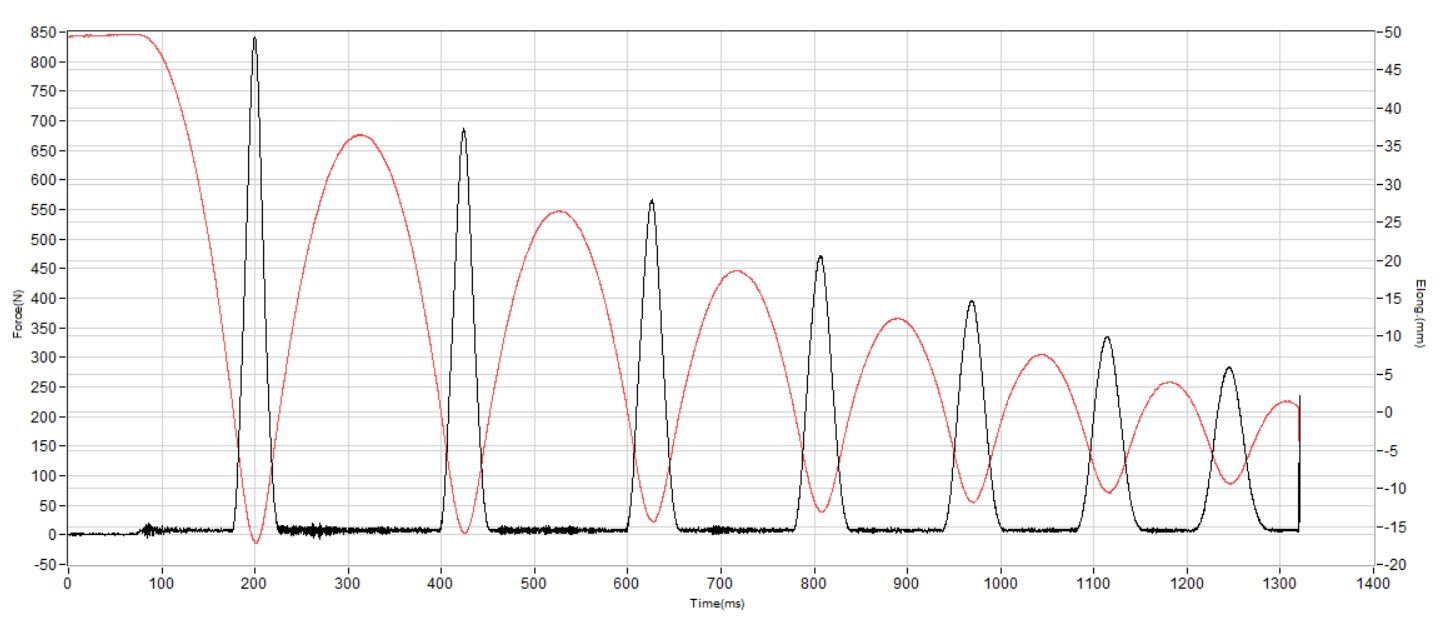
That’s why we’re seeing such a highly-cushioned Rebel here. With an incredible 168 SA reading in the heel, few shoes can go toe-to-toe with it in terms of cushioning. The forefoot is less impressive at 119 SA, but there’s still plenty of protection for any long run.
| SuperComp Rebel | 168 SA |
| Average | 131 SA |
Energy return
Energy return is just as impressive as shock absorption, and perhaps even more so. The new Infinion (A-TPU) foam is a huge step forward from FuelCell, and our lab data continues to show just how significant that improvement is.
With 72.7% in the heel and 78.4% in the forefoot, these are world-class numbers for a super trainer. In fact, the forefoot reading is one of the highest we've ever recorded outside the super shoe category.
| SuperComp Rebel | 78.4% |
| Average | 61.4% |
Heel stack
Such a crazy shock absorption result doesn’t come out of nowhere. It’s the result of combining a high stack height with a premium foam that excels at absorbing impact.
However, the heel isn’t as tall as some of you might expect given the impressive SA reading. At 38.3 mm, it’s still a high-stack shoe, but it doesn’t feel as intimidating as super trainers that push well beyond 40 mm. And the best part is that this shoe simply doesn’t need to go that high.
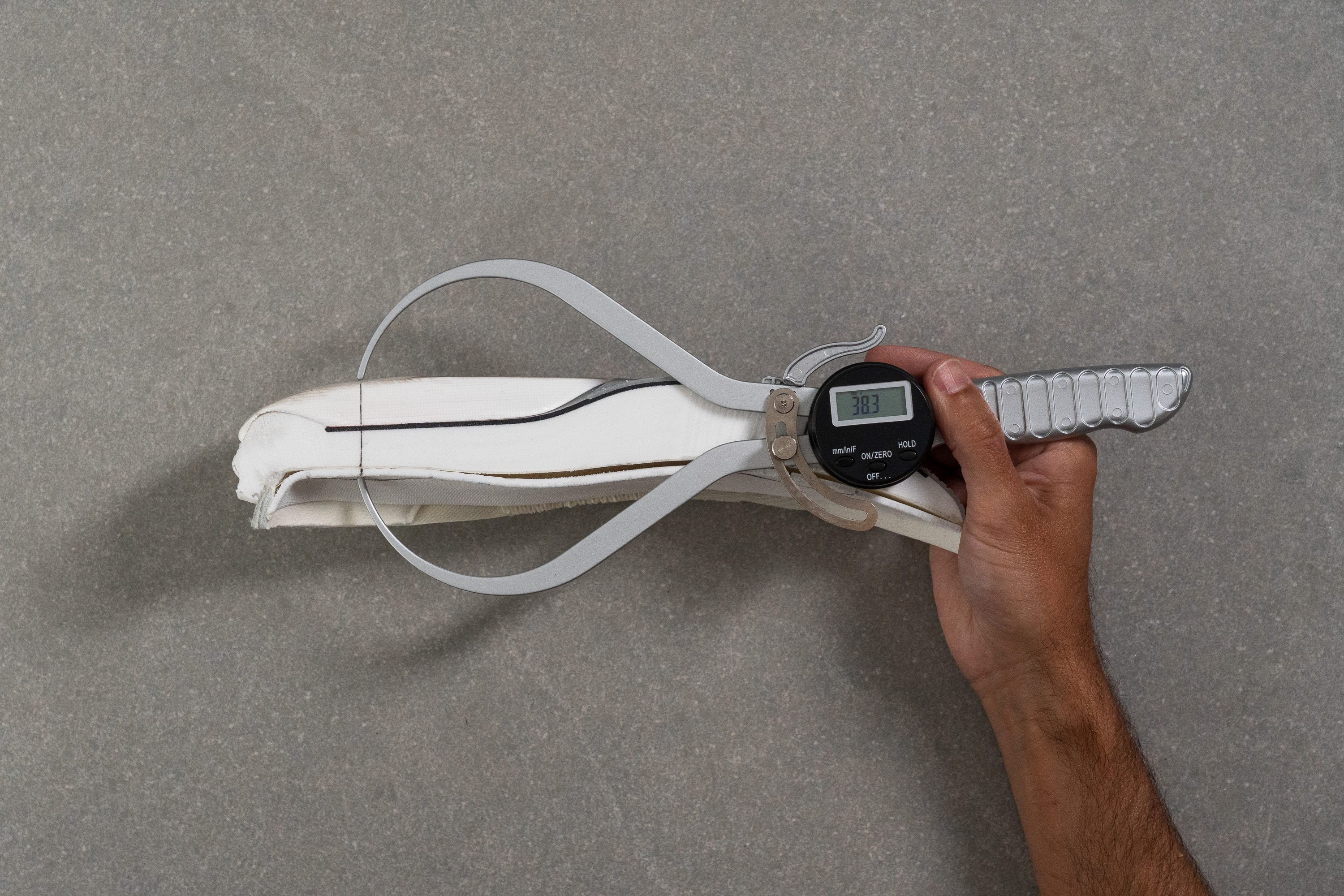
| SuperComp Rebel | 38.3 mm |
| Average | 35.5 mm |
Forefoot stack
The forefoot feels just like the heel: tall, but not as dramatic as most rivals, measuring 29.5 mm.
In our view, this could be a strong selling point for runners who want plenty of cushioning without the ultra-max-stack feel.
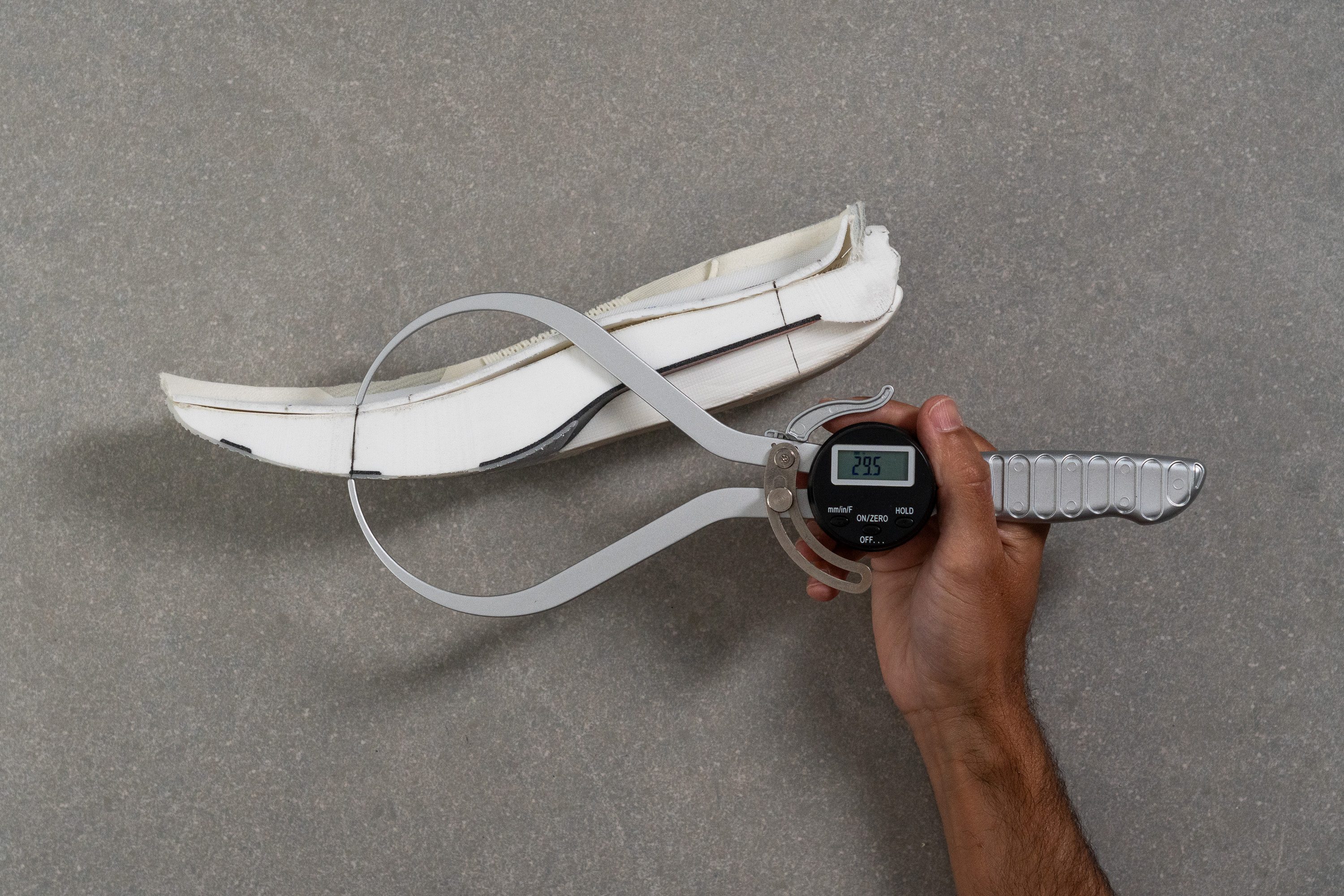
| SuperComp Rebel | 29.5 mm |
| Average | 27.1 mm |
Drop
The Boston-based brand states a 4 mm drop, while we found 8.8 mm in our lab. And let us tell you, the ride of this shoe clearly feels more like a high-drop shoe than a mid-drop one.
This is a classic case of a brand taking the forefoot measurement closer to the midfoot rather than following World Athletics guidelines. Therefore, the advertised 4 mm drop doesn’t accurately reflect the heel-to-forefoot difference where we measure it.
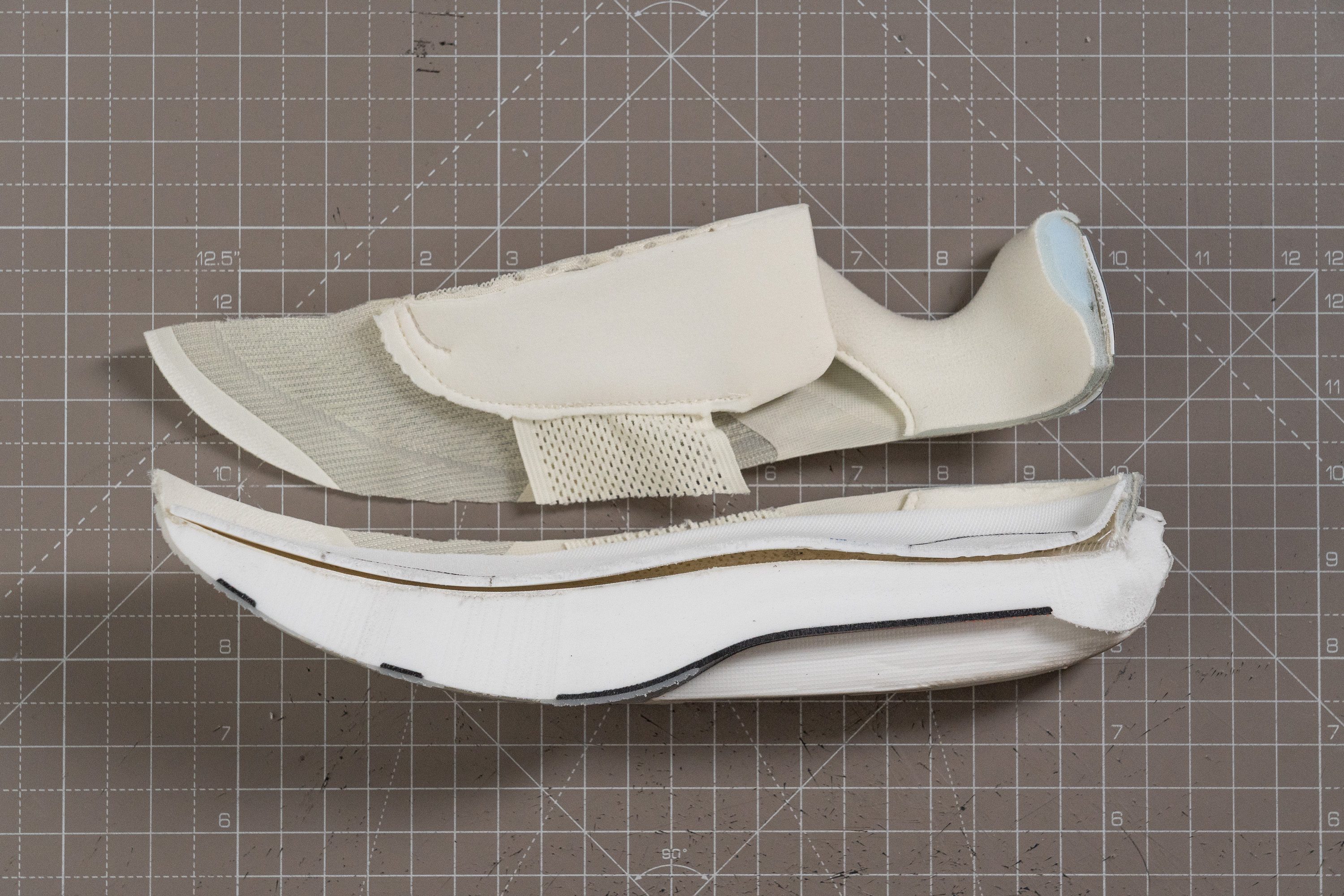
| SuperComp Rebel | 8.8 mm |
| Average | 8.4 mm |
Midsole softness
The new Infinion foam feels really, really good. It’s bouncy, fun, and protective, with a soft touch that feels incredibly pleasant underfoot. In other words, it feels exactly like what it is: a modern, premium foam. Our Asker C durometer confirmed that softness, with a reading of 31.0 AC.
In our view, New Balance has found a sweet spot here that should please runners who enjoy soft foams while also working well for those who dislike ultra-plush midsoles. And as the cherry on top, it handles cold temperatures with ease, firming up by just 4% after spending 20 minutes in our freezer!
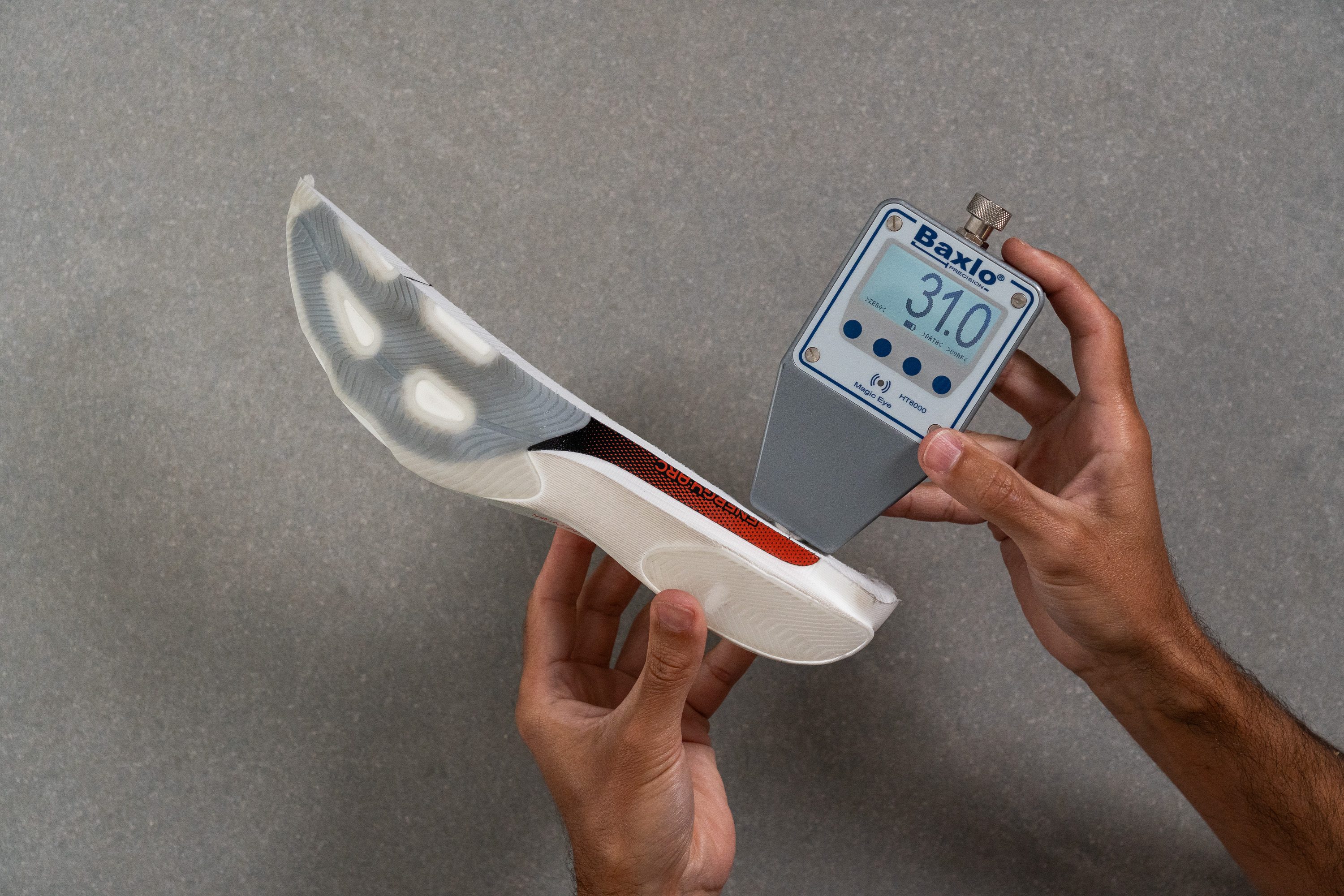
| SuperComp Rebel | 31.0 AC |
| Average | 35.5 AC |
Rocker
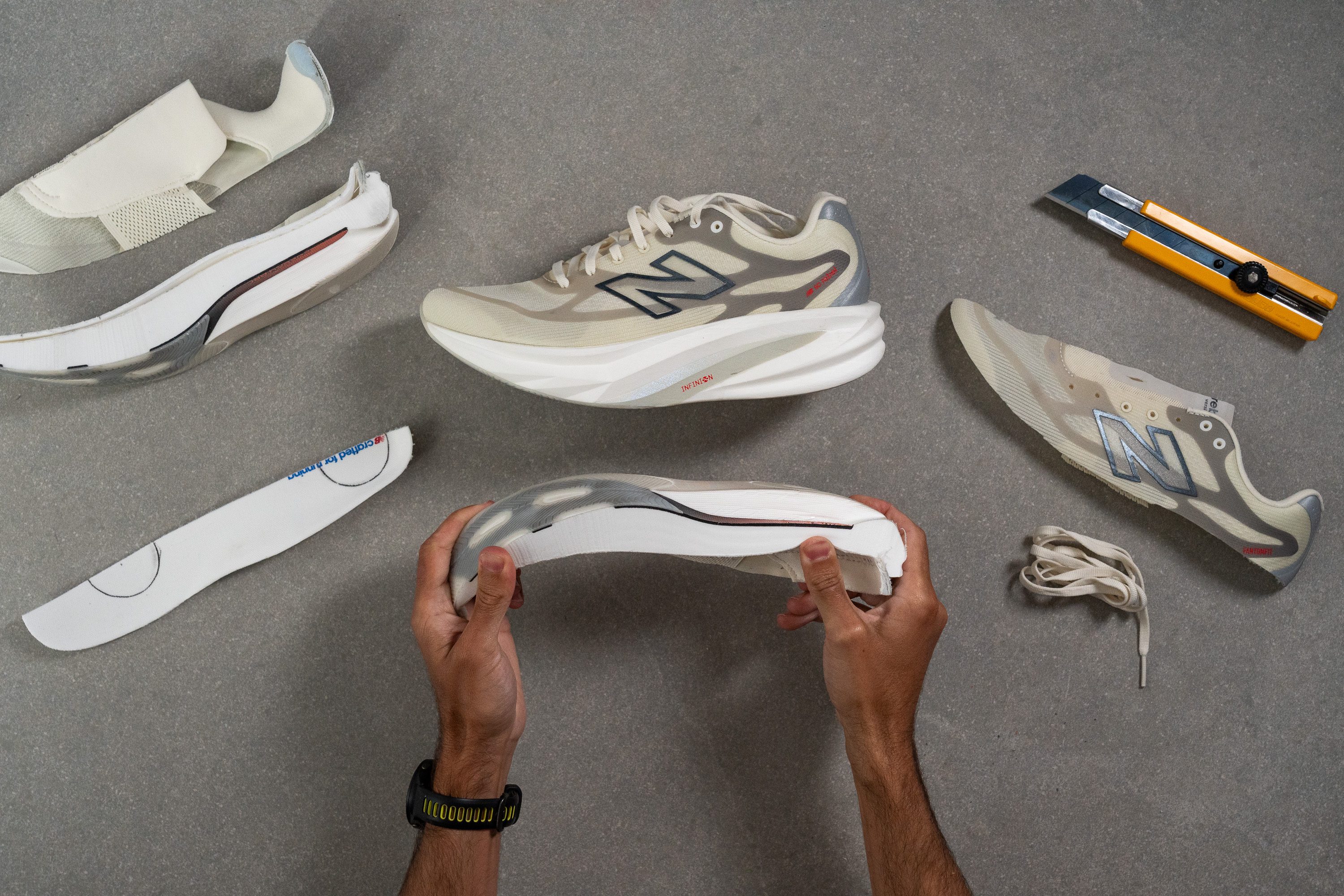
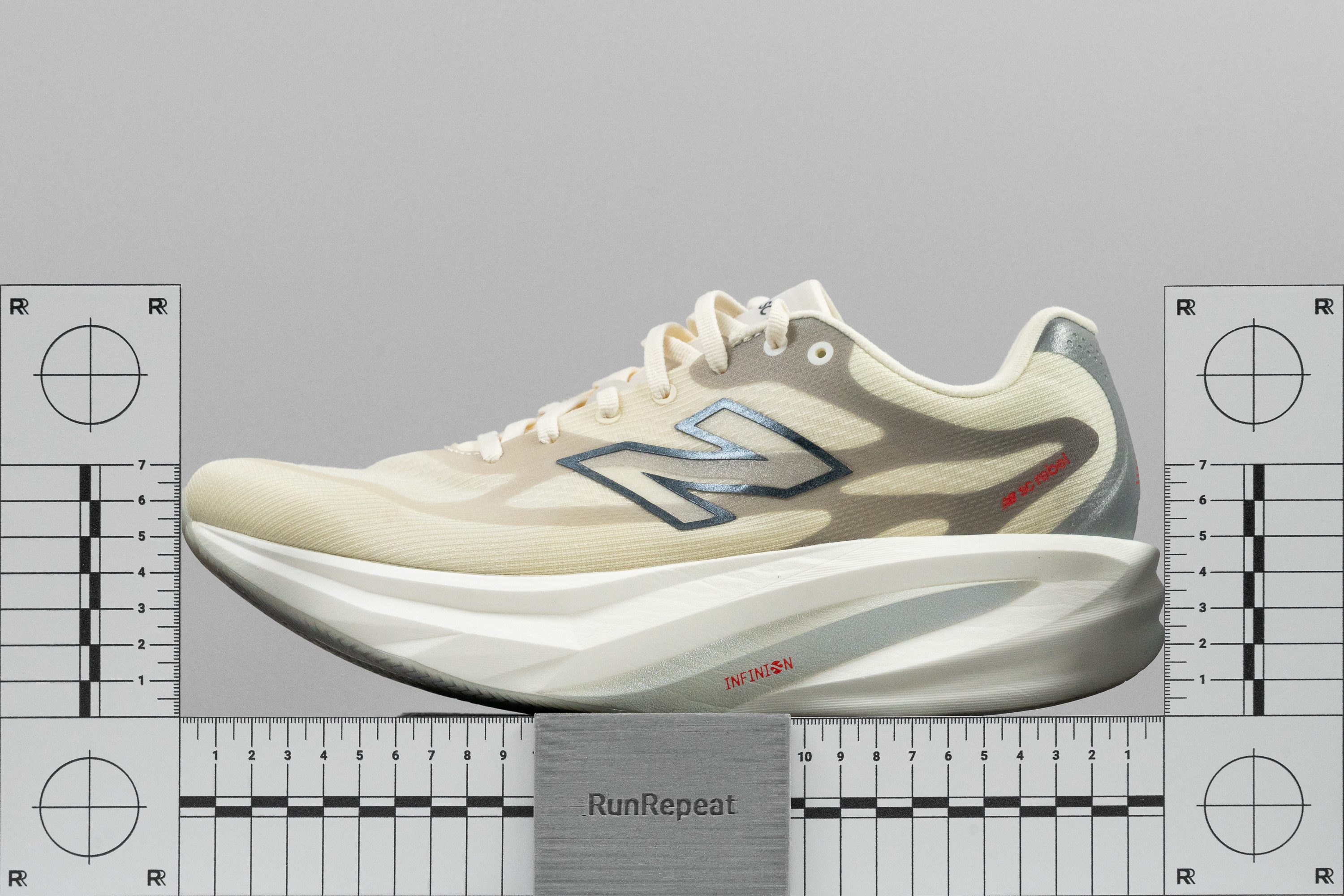
One of the secrets of this shoe is the sharp forefoot rocker, as it really rolls you forward with every stride. Runners who prefer a flatter forefoot probably won’t like it, because this one is designed to make its presence known, as you can probably tell from our photo.
The heel also features a gentle curvature, but nothing that feels strange or different from what you’d expect in a daily trainer. Combined with the real high drop, this geometry makes the shoe also effective for heel strikers who need a little extra help with their transitions.
Plate
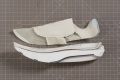
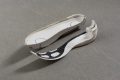
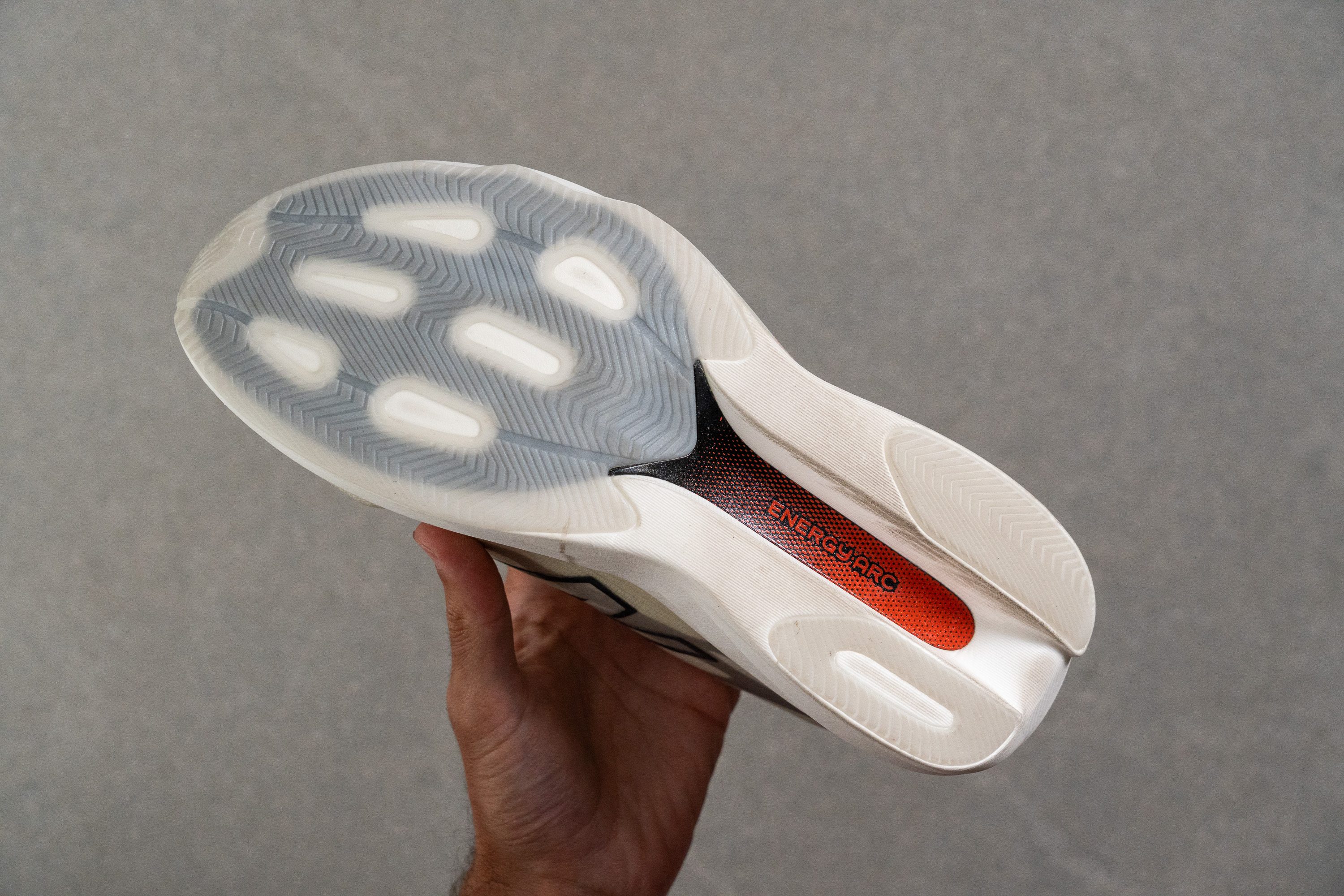
This shoe comes with a very unique plate design, although New Balance is keeping the Energy ARC name here as well. Basically, NB uses a carbon-infused material that’s a bit more flexible than full carbon fiber and places the plate very close to the ground. It’s so close that you can actually see it through the translucent outsole, and we absolutely love how it looks.
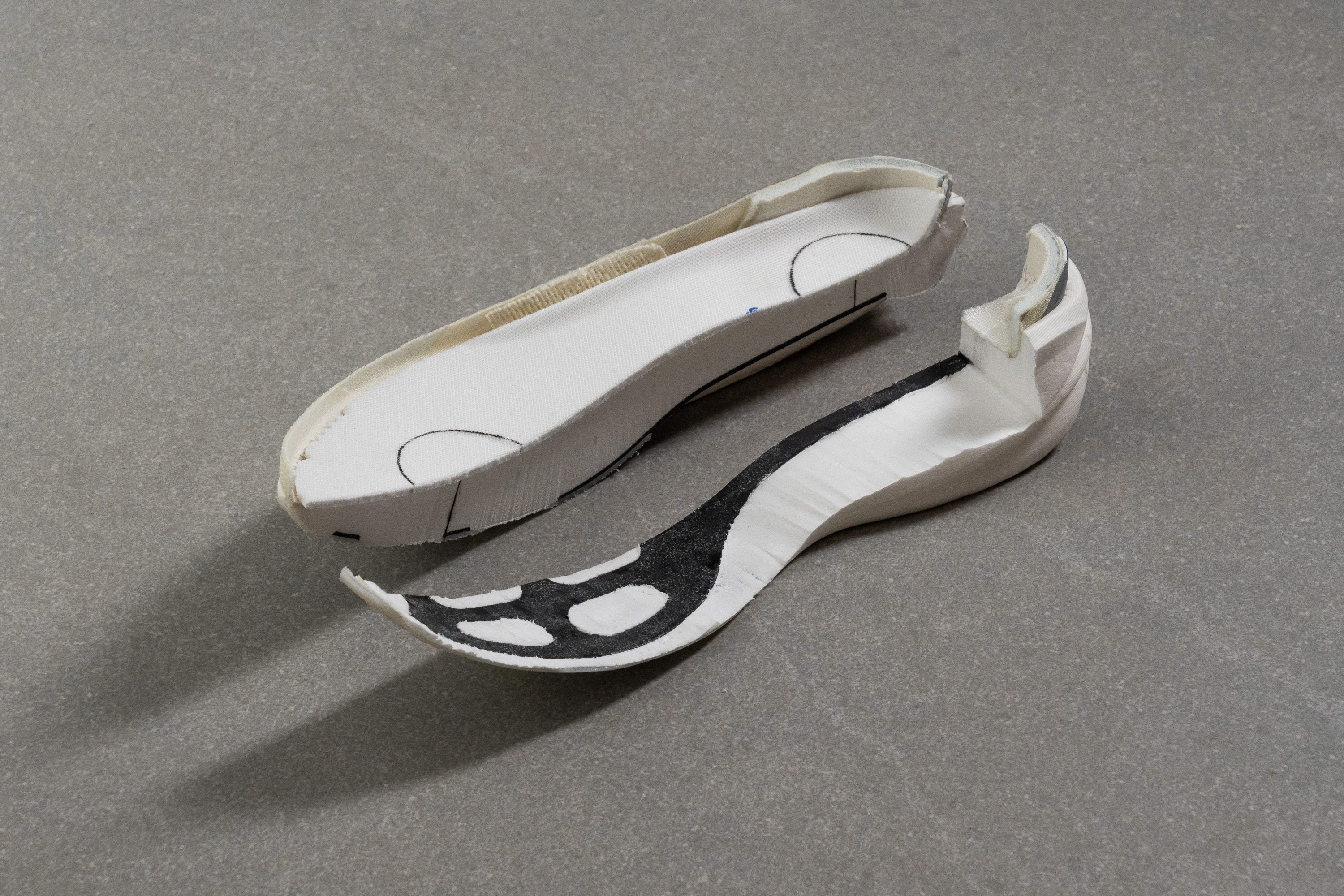
You may think that seeing the plate already exposed would save us from having to remove the foam to reveal it... nope.
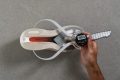
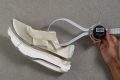
Of course, we took the time to fully expose it and show you just how narrow it is in the heel, along with the unique cutouts in the forefoot. It’s a very interesting plate that works 10/10 for a super trainer designed to handle all kinds of paces, as it adds some stiffness without overdoing it.
Size and fit
Size
New Balance SuperComp Rebel fits slightly small (74 votes).
Internal length
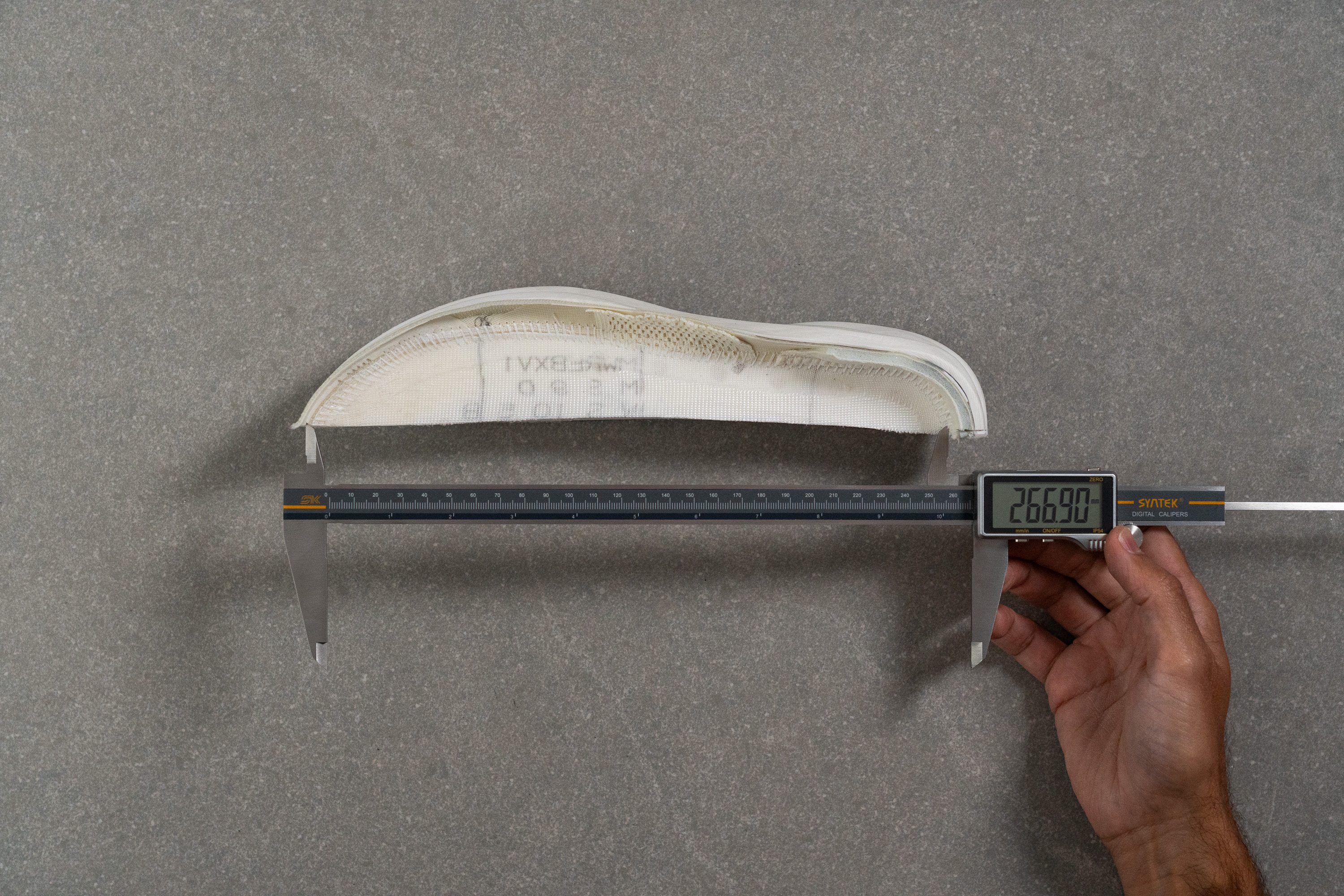
| SuperComp Rebel | 266.9 mm |
| Average | 269.4 mm |
Width / Fit
New Balance is one of the few brands offering a super trainer in a Wide version with this shoe, and kudos to them for that. Now, let’s analyze the fit using our usual three measurements.
The first one came in at 94.1 mm, which isn’t particularly surprising for a shoe designed with speed in mind.
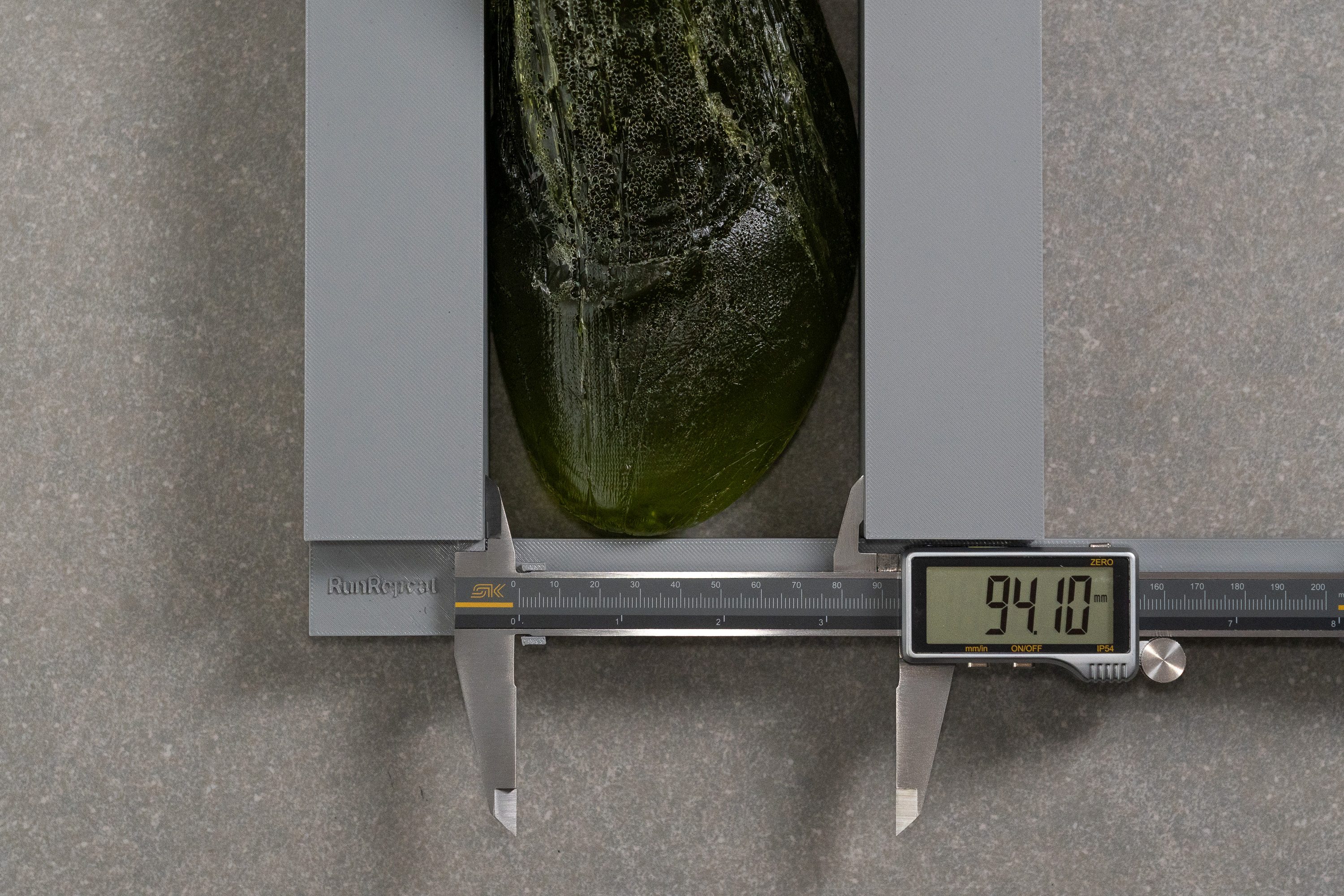
| SuperComp Rebel | 94.1 mm |
| Average | 95.2 mm |
Toebox width
The FANTOMFIT mesh is the same technology used in other top-tier New Balance shoes, and it really wraps the foot for a secure, close-to-the-foot feel.
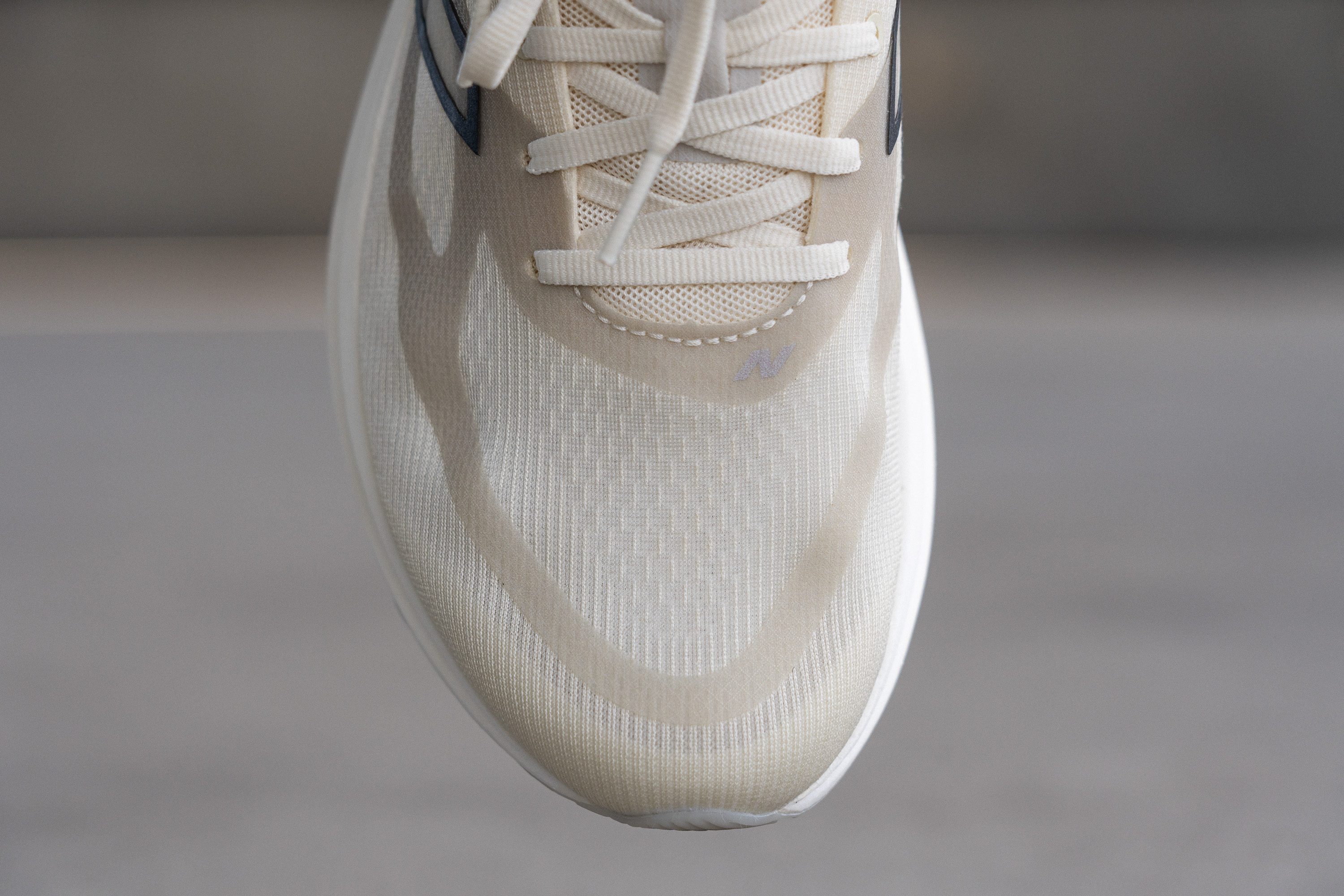
On top of that, the toebox has a tapered shape (71.2 mm) that creates a very snug fit, which could be somewhat divisive among runners.
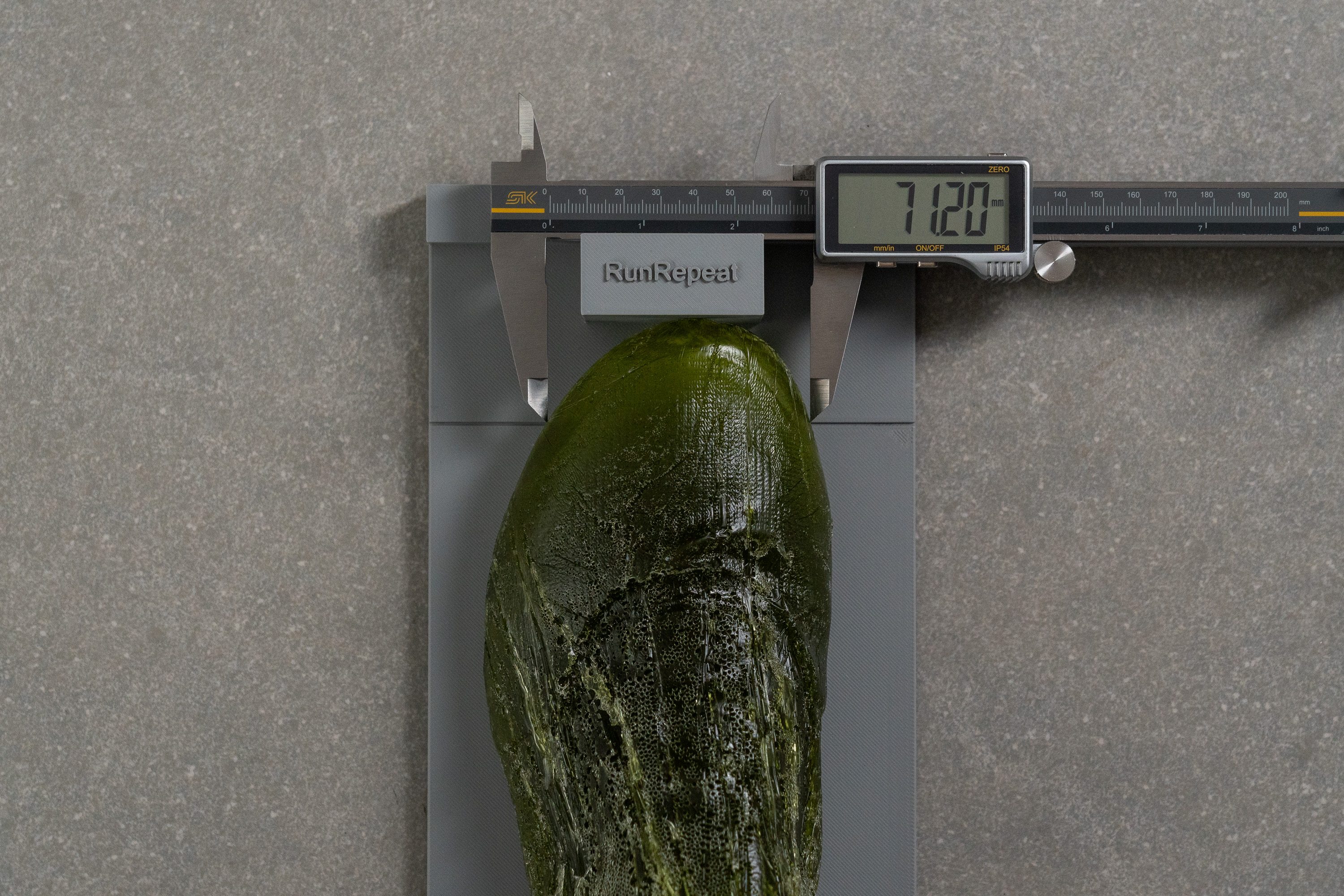
| SuperComp Rebel | 71.2 mm |
| Average | 73.2 mm |
Toebox height
We measured the toebox height at 24.8 mm.
The overall toebox volume is very low, and you can really feel that on the run. That won’t work for everyone, although runners who prefer a race-ready fit will find it a great match.
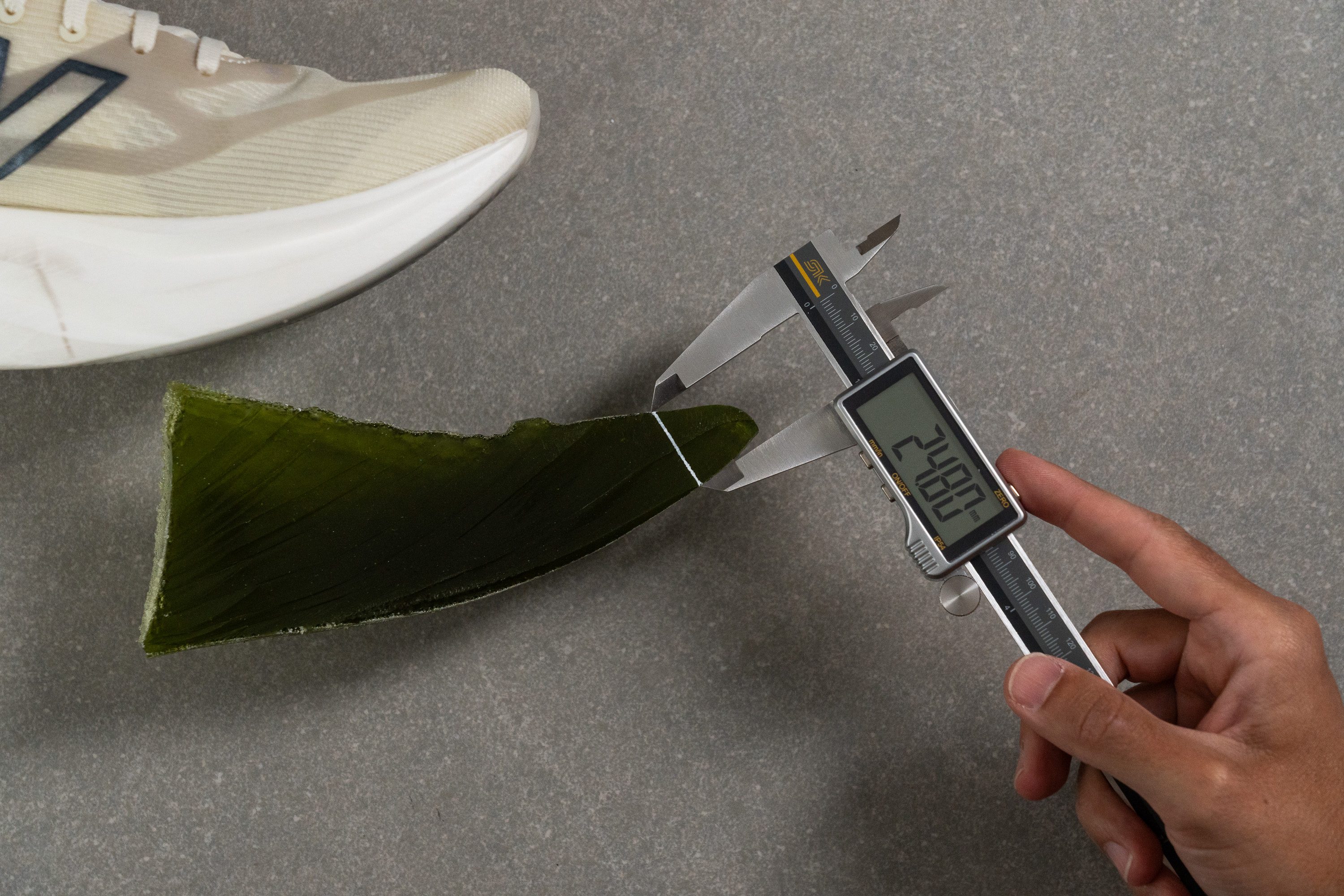
| SuperComp Rebel | 24.8 mm |
| Average | 27.0 mm |
Traction / Grip
Traction test
Traction is an area where New Balance has been lacking for years, but that’s now a thing of the past. The New Balance SuperComp Rebel delivered a 0.77 coefficient of friction on wet concrete, which is significantly better than what we see from most running shoes.
It’s great to see that New Balance has stepped up its game not only with the midsole, but with the outsole as well.
| SuperComp Rebel | 0.77 |
| Average | 0.53 |
Outsole design
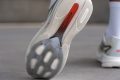
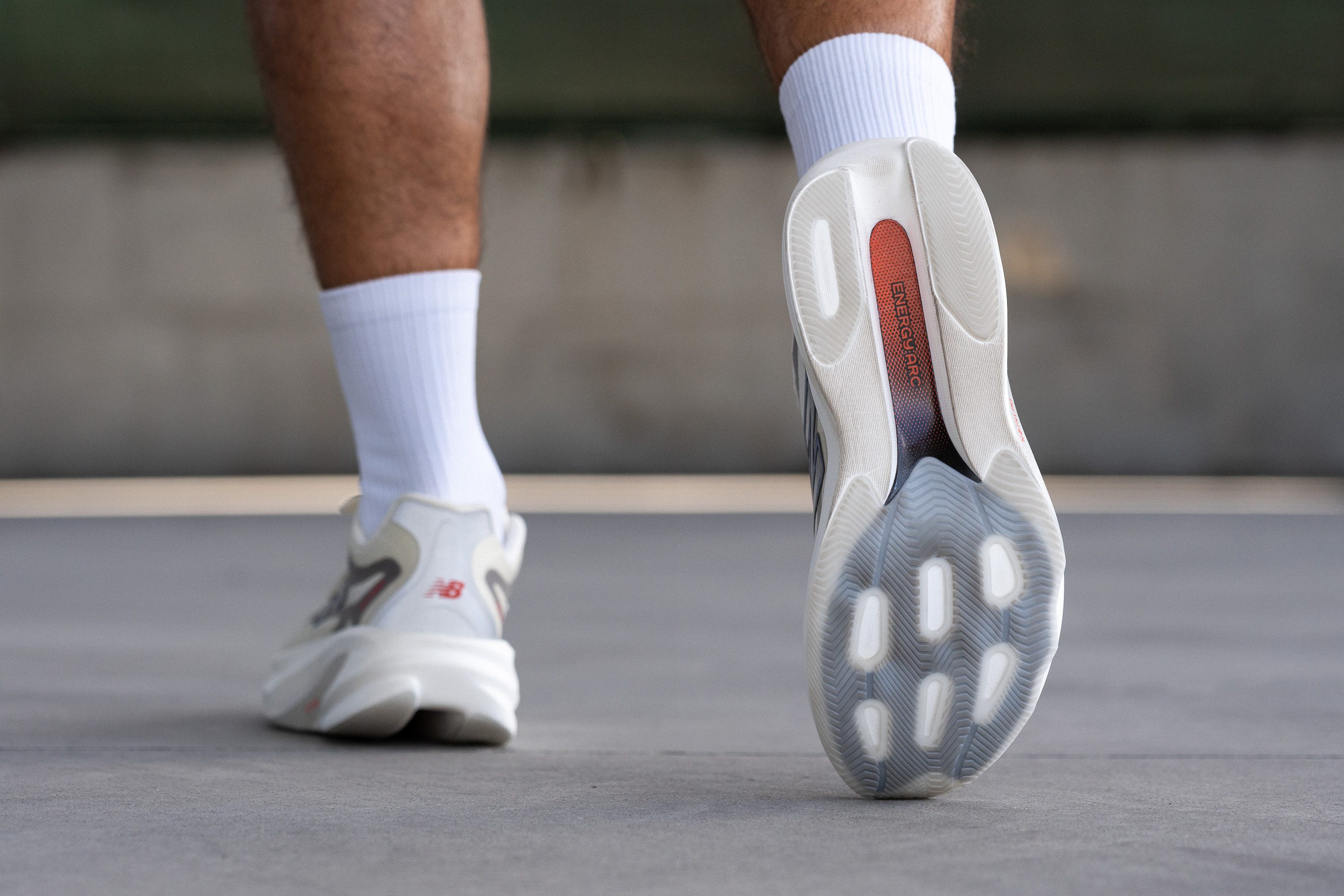
The outsole features three separate polyurethane pads: two smaller ones in the heel and a larger one covering the forefoot. This material is lighter than the classic rubber we’ve seen for decades, while also delivering impressive grip and durability. In our view, it’s only a matter of time before polyurethane reaches nearly every brand.
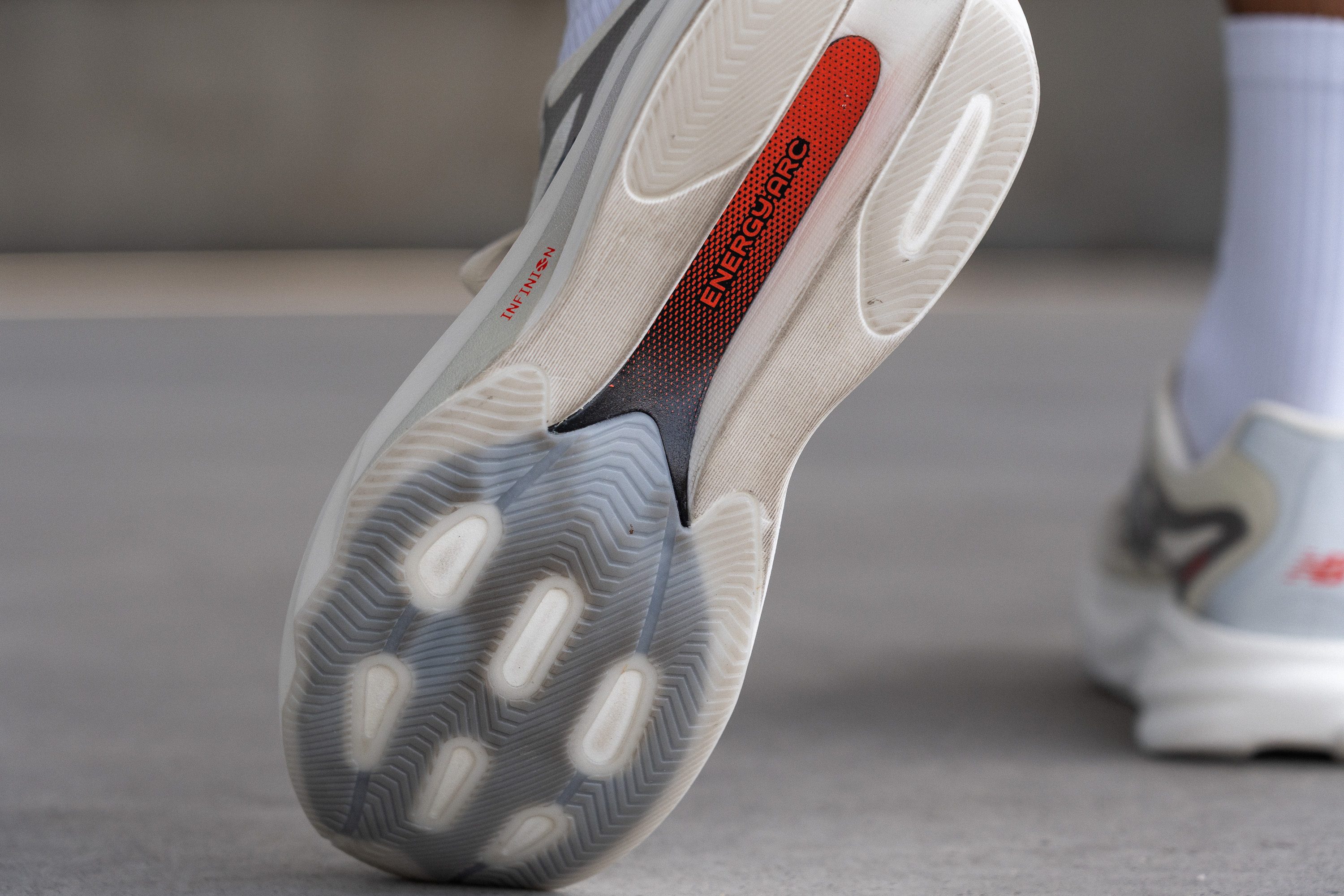
The translucent design of PU is absolutely beautiful, especially with the Energy ARC plate visible underneath, although it also reveals that the rubber isn’t particularly thick. We’ll see later in our durability tests how this thin-rubber setup holds up.
Flexibility / Stiffness
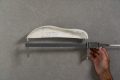
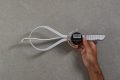
Skipping a rigid carbon-fiber plate in favor of a carbon-infused one (where the carbon fibers are integrated into the plate material rather than forming a full carbon-fiber plate) makes the shoe less stiff than a typical super shoe, as reflected by our 14.2N result.
This design also allows the shoe to handle everyday paces, but of course, the trade-off is that it won’t feel quite as snappy.
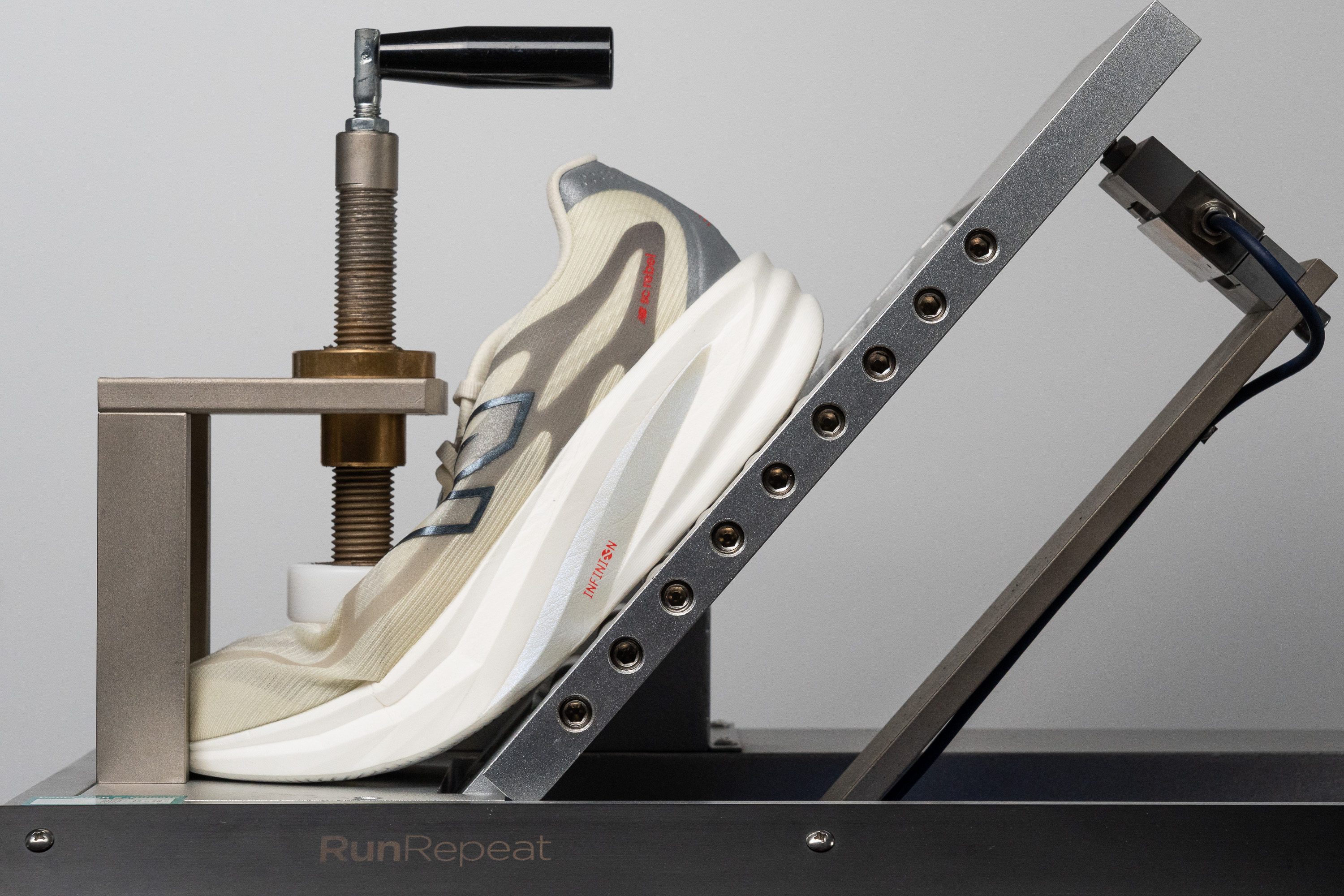
| SuperComp Rebel | 14.2N |
| Average | 15.5N |
Weight
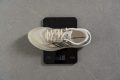
We've already come across several impressive test results from the New Balance SuperComp Rebel, and here’s another one. At just 7.3 oz or 207g, the SuperComp Rebel is lighter than several super shoes and delivers an incredibly lightweight, barely-there feel underfoot.
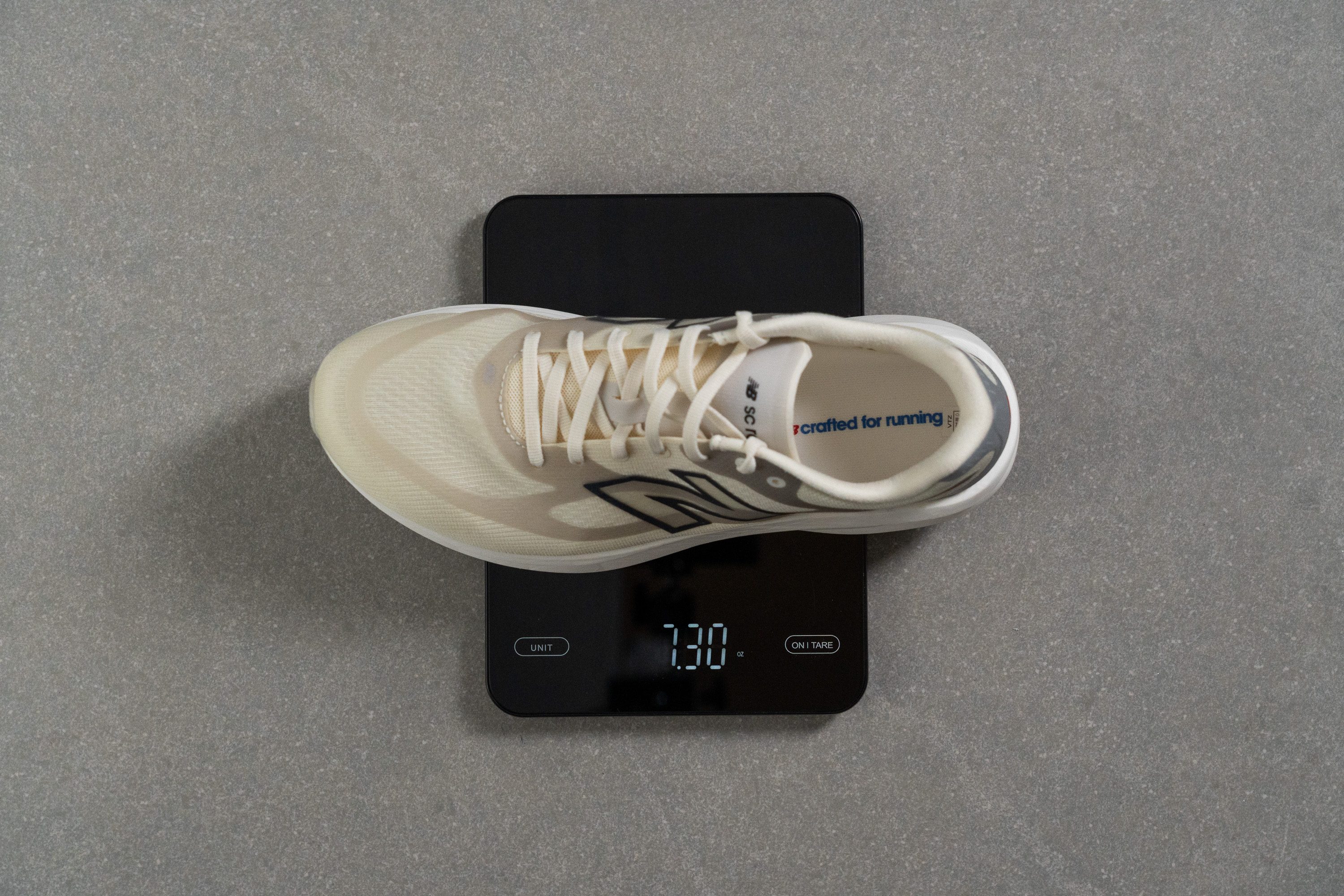
| SuperComp Rebel | 7.3 oz (207g) |
| Average | 9.2 oz (261g) |
Stability
Lateral stability test
The SC Rebel delivers good stability through its wide platform, midsole sidewalls, and central guidance groove. The midfoot and forefoot also feel decently stable thanks to their wider shape and plate design.
However, we think the shoe’s relatively narrow dimensions make it better suited to neutral runners. Those who need a bit more support may be better off with broader super trainers, such as the ASICS Superblast 3.
Torsional rigidity
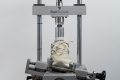
The plate also allows for some flex, while the soft foam adds further compliance to the ride. That’s why our torsional rigidity test came in close to average at 14.6 Nm, making the shoe versatile enough to handle easy paces too. It’s a true Swiss Army knife!
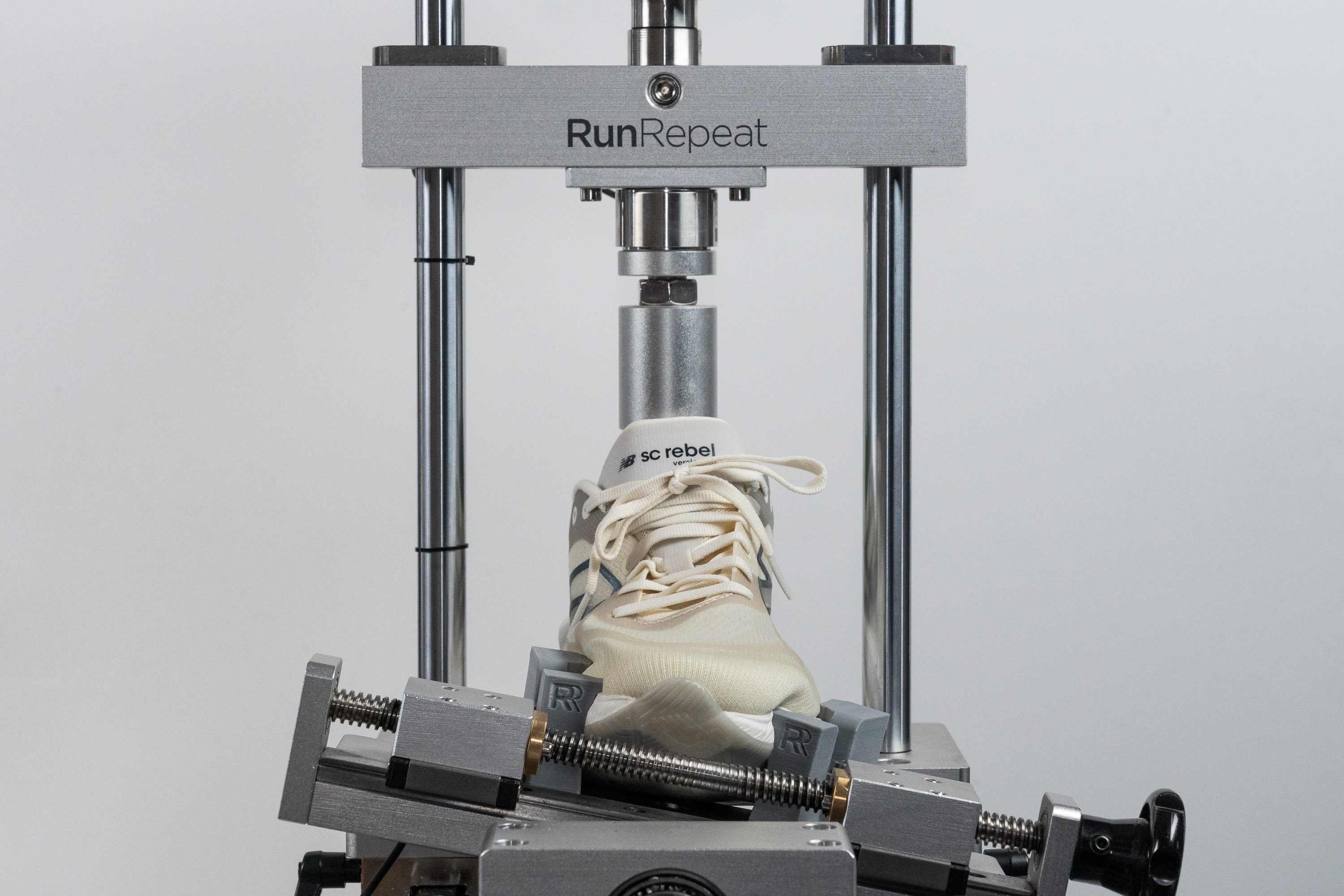
| SuperComp Rebel | 14.6 Nm |
| Average | 14.4 Nm |
Heel counter stiffness
For heel strikers, stability is also limited because the heel counter is designed to stay unobtrusive rather than control the ride. We rated it 2/5, and in our view, it pairs perfectly with the shoe’s overall design.
| SuperComp Rebel | 2 |
| Average | 3 |
Midsole width - forefoot
One thing we really like about the SuperComp Rebel is that, unlike many other brands, New Balance kept the dimensions below average. In the forefoot, we measured just 111.5 mm.
This makes the shoe more agile but also less stable. However, the super-trainer market is crowded with oversized designs, and NB is taking the chance to do something different from the crowd and also better geared towards racing.
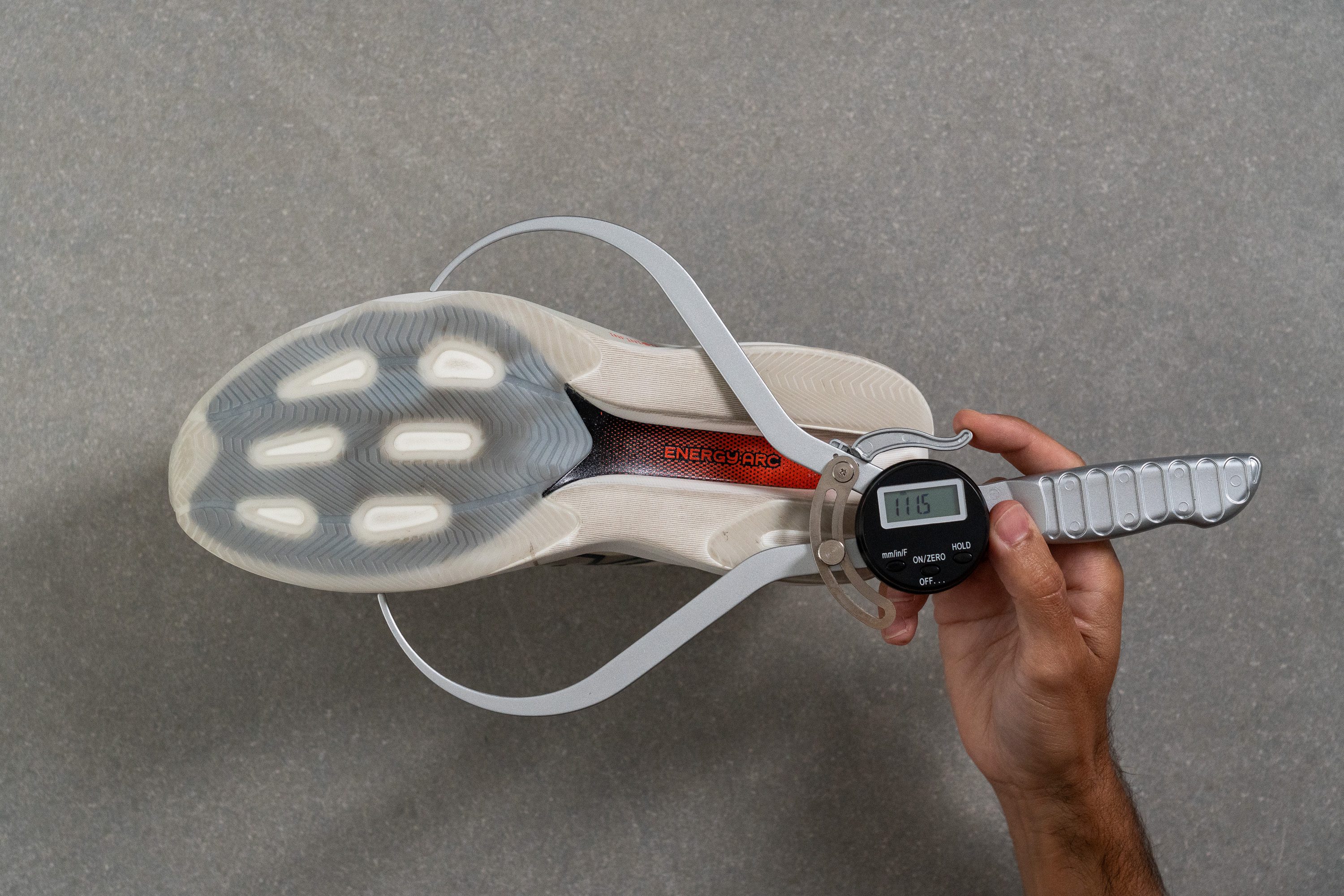
| SuperComp Rebel | 111.5 mm |
| Average | 115.1 mm |
Midsole width - heel
The heel follows the same design language as the forefoot with 86.7 mm.
While many super trainers feel more like powerful SUVs, the SuperComp Rebel is more like a sports car: sharper and clearly built to pick up the pace or seamlessly handle different paces within the same run.
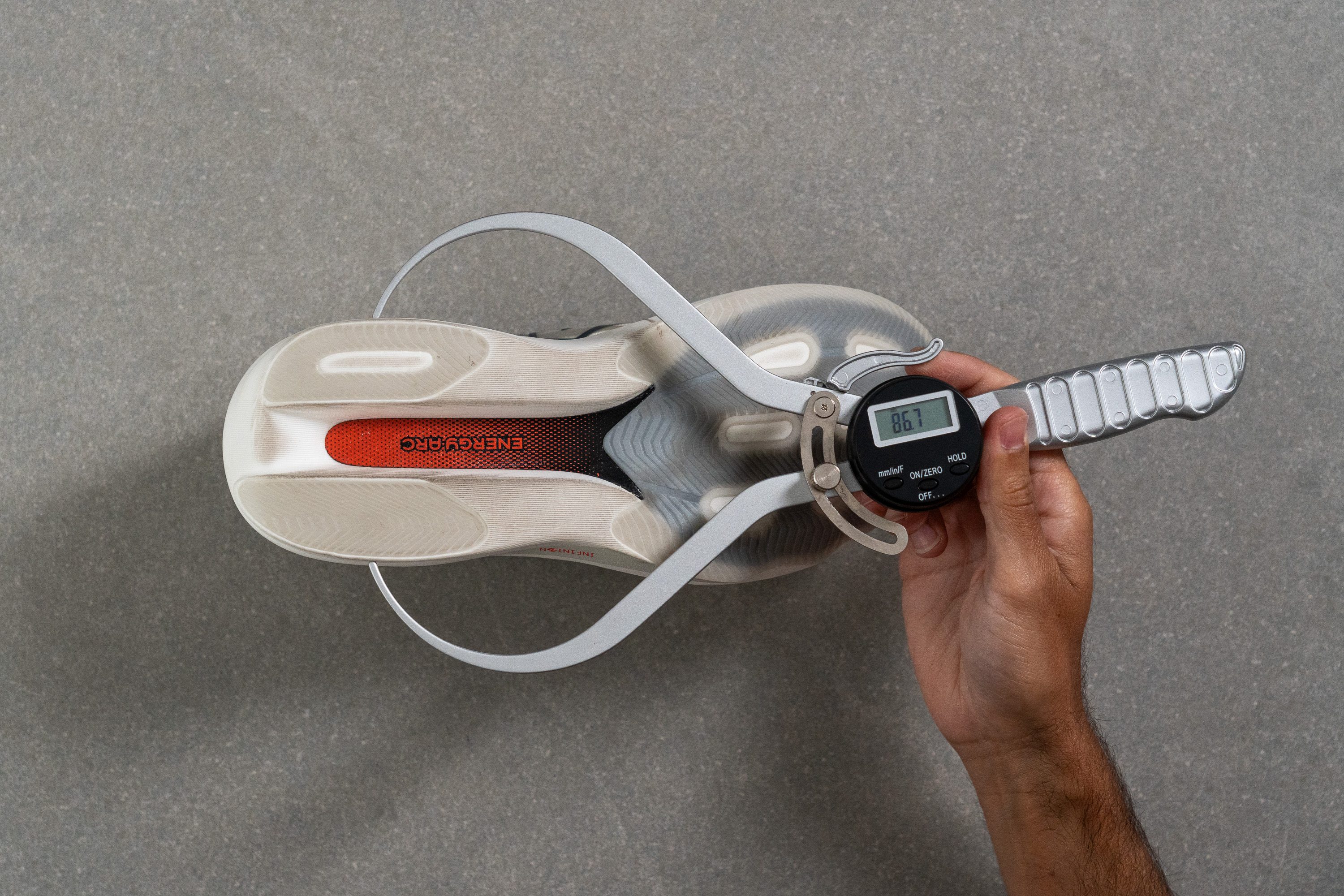
| SuperComp Rebel | 86.7 mm |
| Average | 91.1 mm |
Durability
Toebox durability
The FANTOMFIT upper is designed purely to provide as much comfort as possible while keeping weight to an absolute minimum, and that combination usually doesn’t bode well for durability. Therefore, we think this 2/5 score isn’t that bad after all!
| SuperComp Rebel | 2 |
| Average | 2.6 |
Heel padding durability
The heel padding scored 4 out of 5, which is a very good result and puts any concerns about premature wear to rest. Let’s move on to the outsole.
| SuperComp Rebel | 4 |
| Average | 3.4 |
Outsole durability
Good news here, as the polyurethane outsole stood firm against the Dremel and lost just 0.6 mm of rubber. That’s a really positive result and exactly what this shoe needed.
| SuperComp Rebel | 0.6 mm |
| Average | 1.1 mm |
Outsole thickness
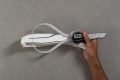
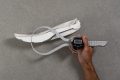
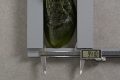
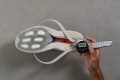
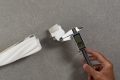
We had clear clues that the outsole was far from thick, and our digital calipers confirmed it at just 1.6 mm.
That said, its positive performance against abrasion suggests that this low-profile rubber setup may be worth it, as it helps keep the shoe more direct, fun, enjoyable, and lightweight.
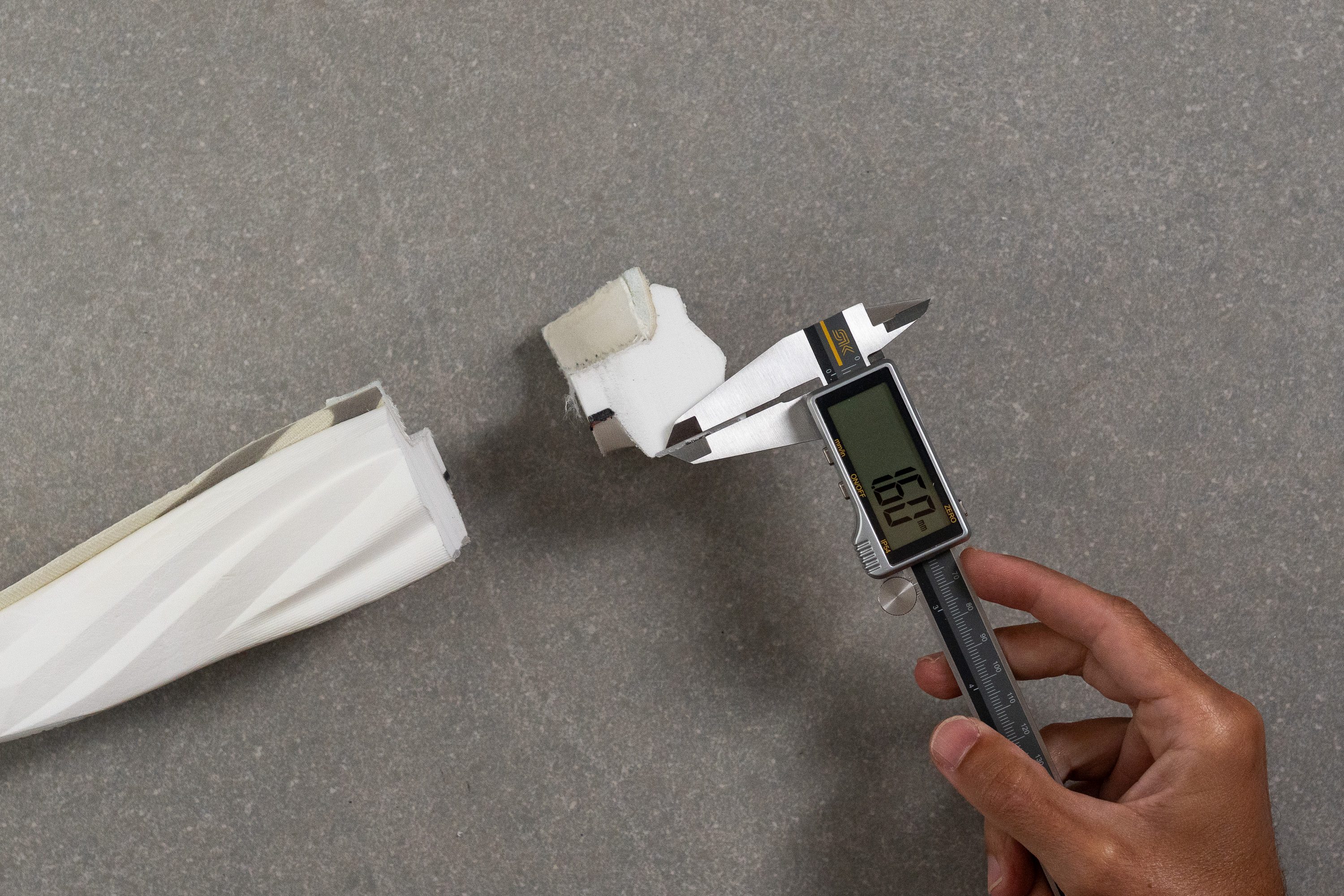
| SuperComp Rebel | 1.6 mm |
| Average | 3.1 mm |
Misc
Insole thickness
The insole is thinner than usual at just 3.0 mm, maximizing the amount of Infinion foam underfoot and allowing you to fully enjoy its impressive bounce.
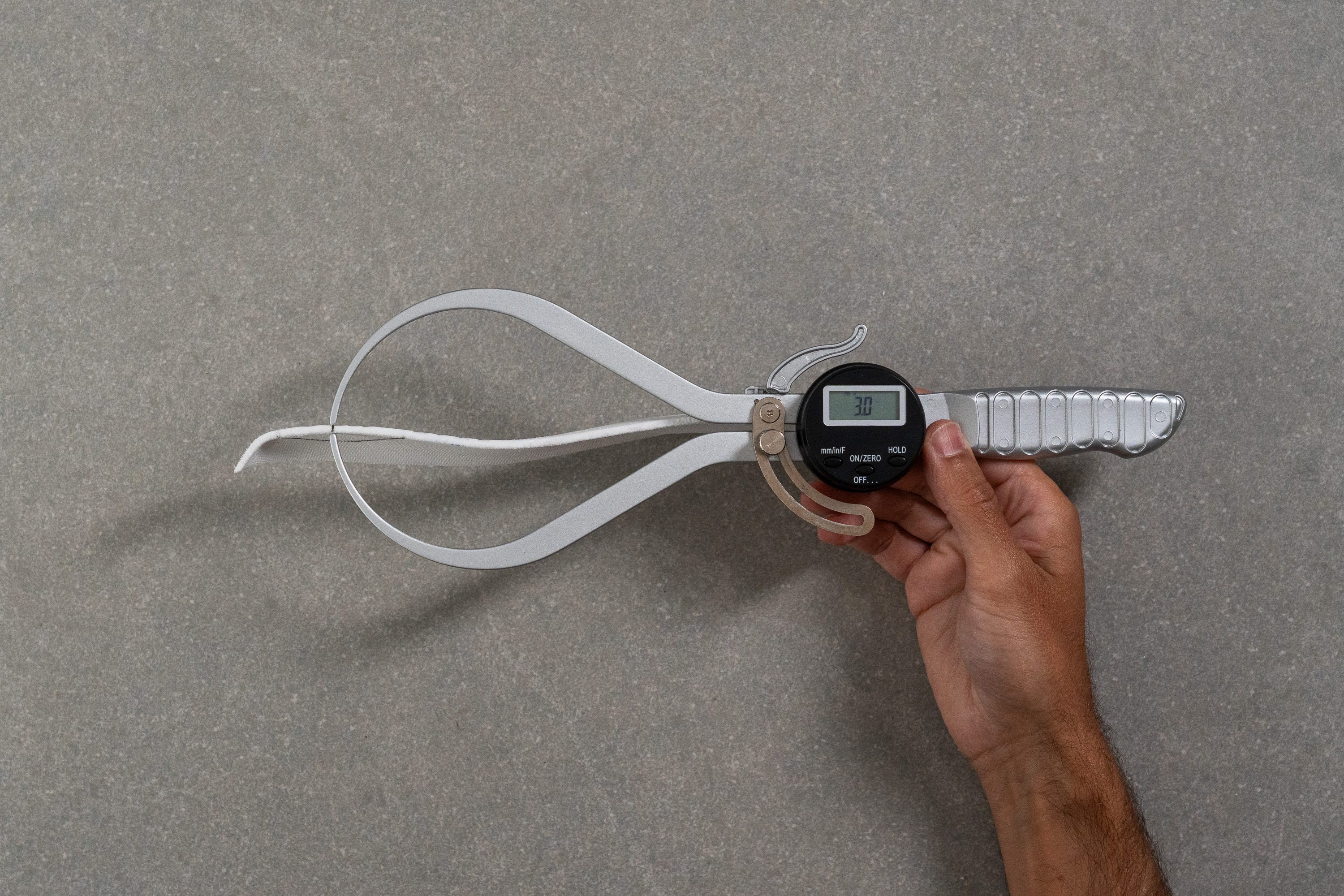
| SuperComp Rebel | 3.0 mm |
| Average | 4.4 mm |
Removable insole
If you want to swap the insole for a third-party option, you can. However, keep in mind that the toebox height is already low, so adding a thicker insole could be a deal-breaker here. And yes, this shoe is really crafted for running.
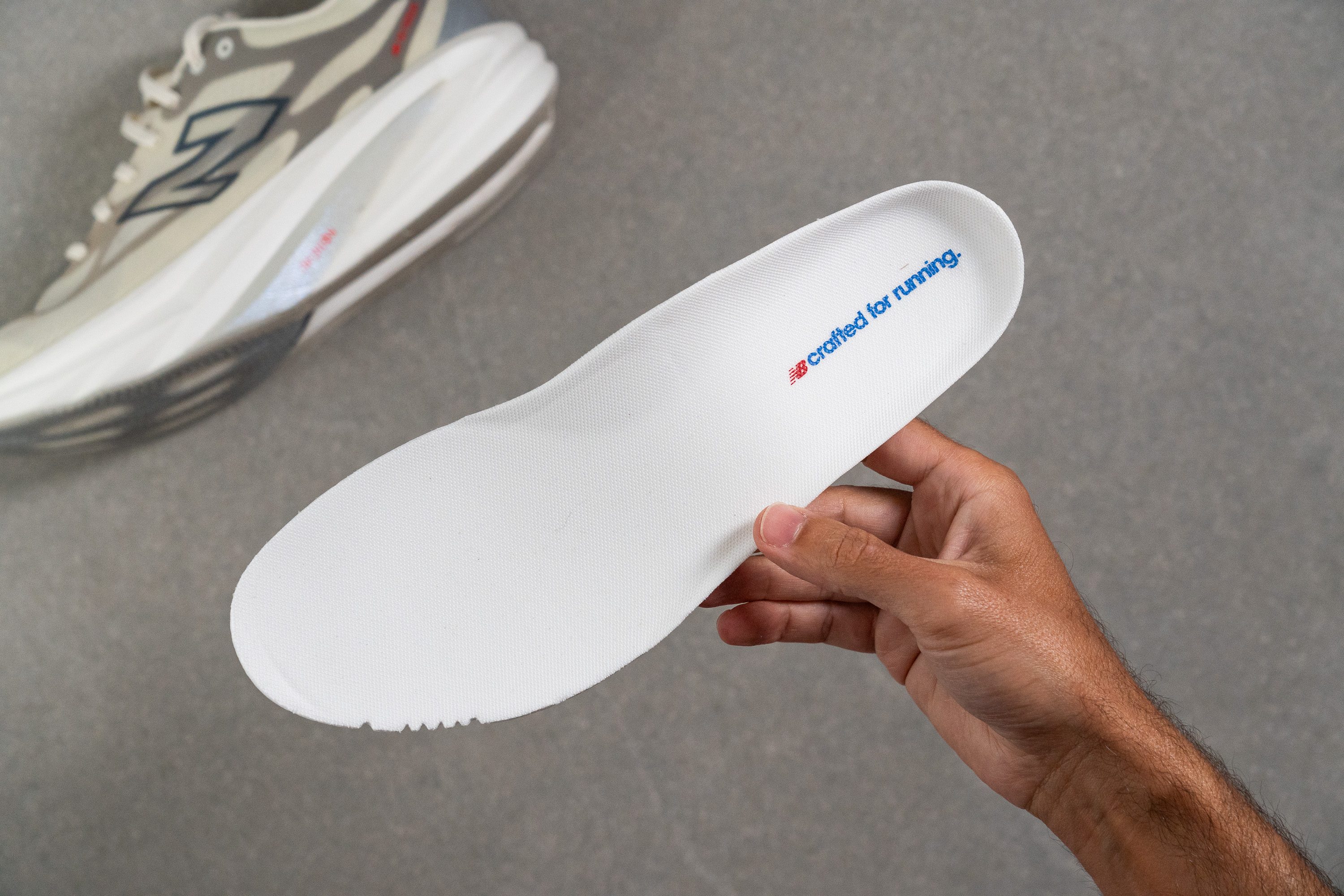
| SuperComp Rebel | Yes |
Reflective elements
When it comes to reflective elements, size matters. And we absolutely loved these!
| SuperComp Rebel | Yes |
Tongue padding
We found that the SC Rebel uses a classic New Balance tongue design, with the brand often opting for shorter tongues. Nonetheless, this one is short without feeling uncomfortably so, and it works well with the simple lacing system. We did miss sawtooth laces, though, which would have been the icing on the cake, especially from an aesthetic perspective.
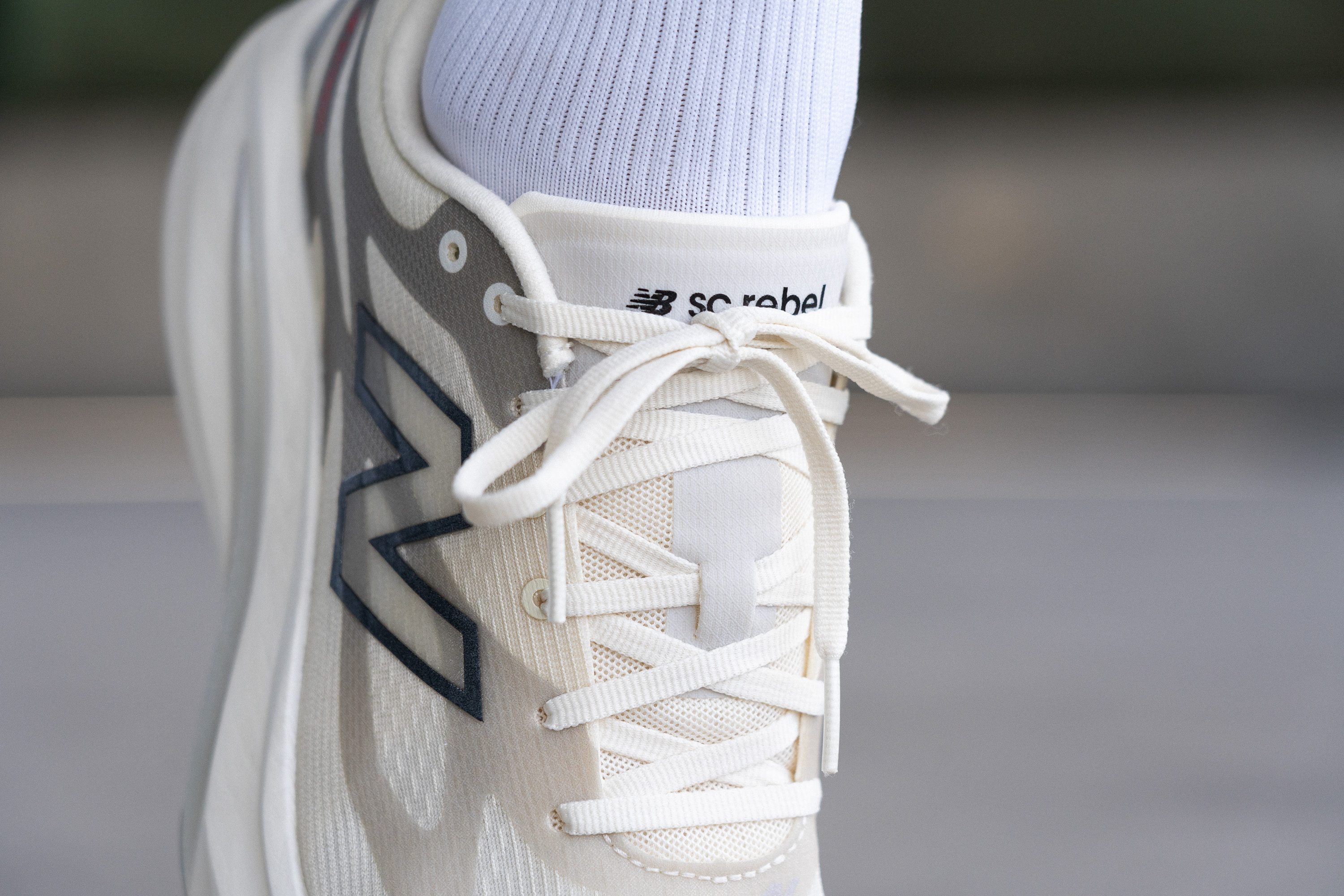
The tongue has good padding at 4.4 mm. Sure, that’s less than average, but it’s still more than we usually see in a shoe this lightweight!
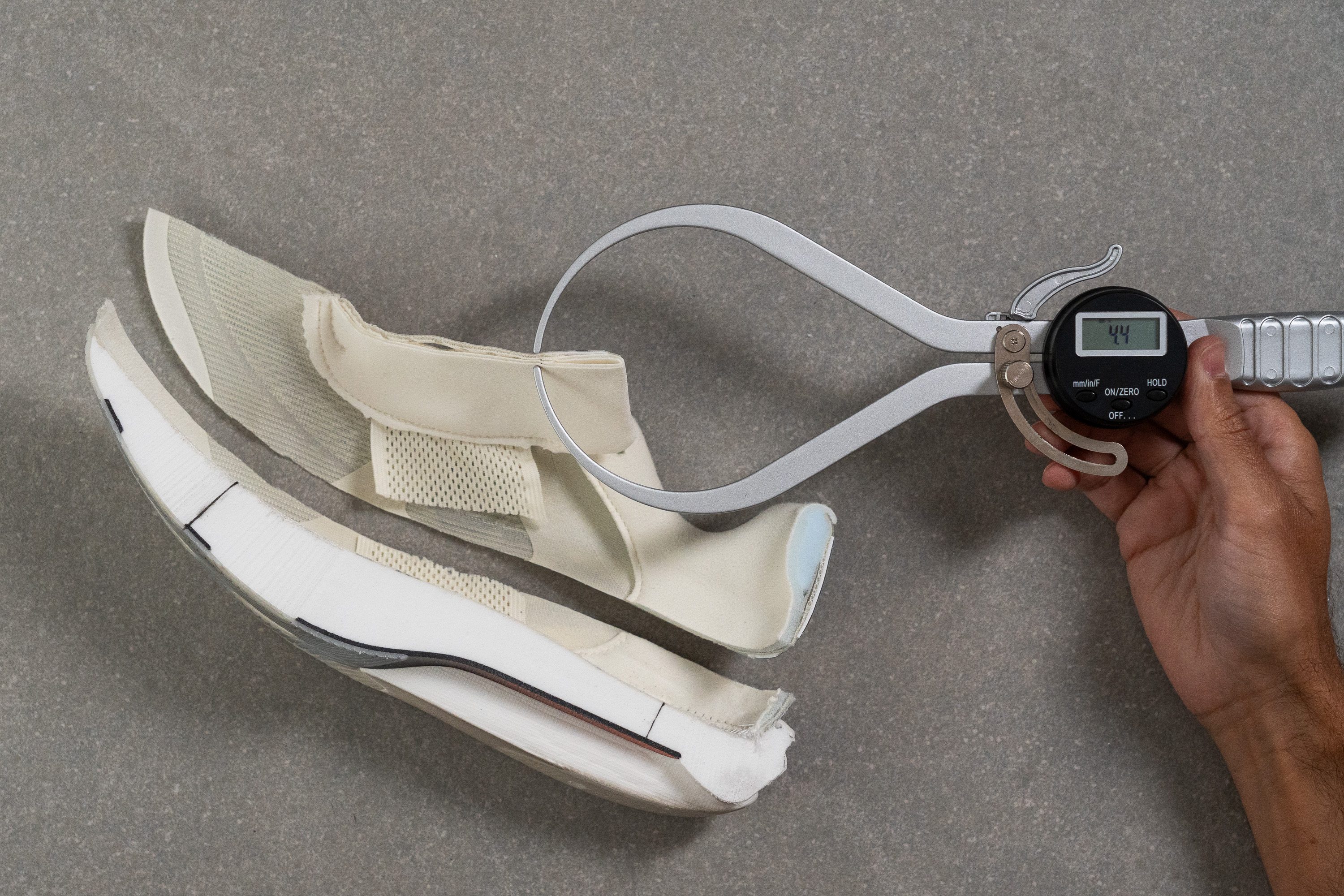
| SuperComp Rebel | 4.4 mm |
| Average | 5.8 mm |
Tongue: gusset type
The tongue is really well executed, featuring a semi-gusseted design made from perforated fabric for added ventilation.
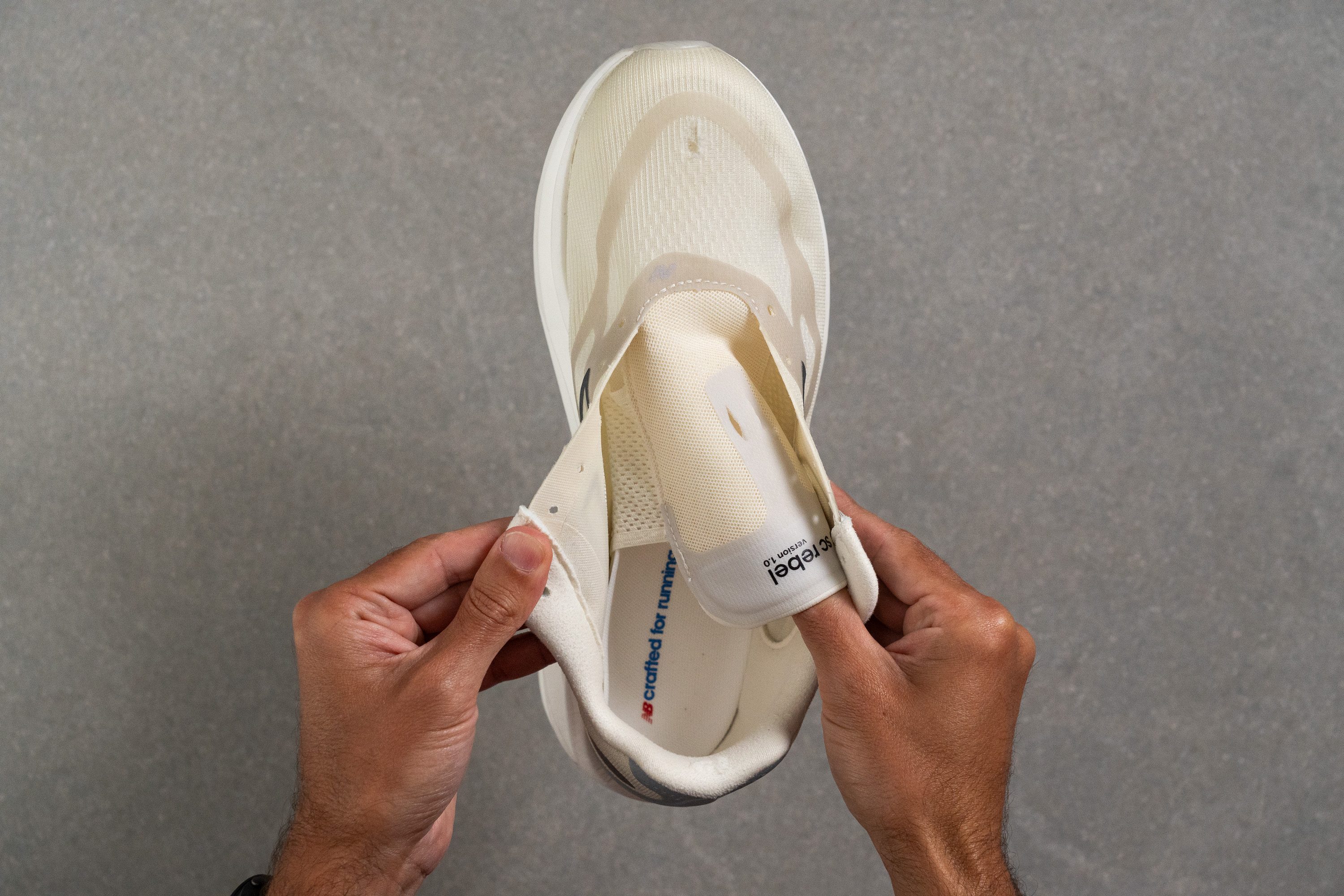
| SuperComp Rebel | Both sides (semi) |
Heel tab
There’s no heel tab on the SuperComp Rebel. Instead, New Balance reinforced the heel with a firmer piece that adds some structure while also covering the upper stitching for the clean, streamlined finish that we expect in a premium shoe.
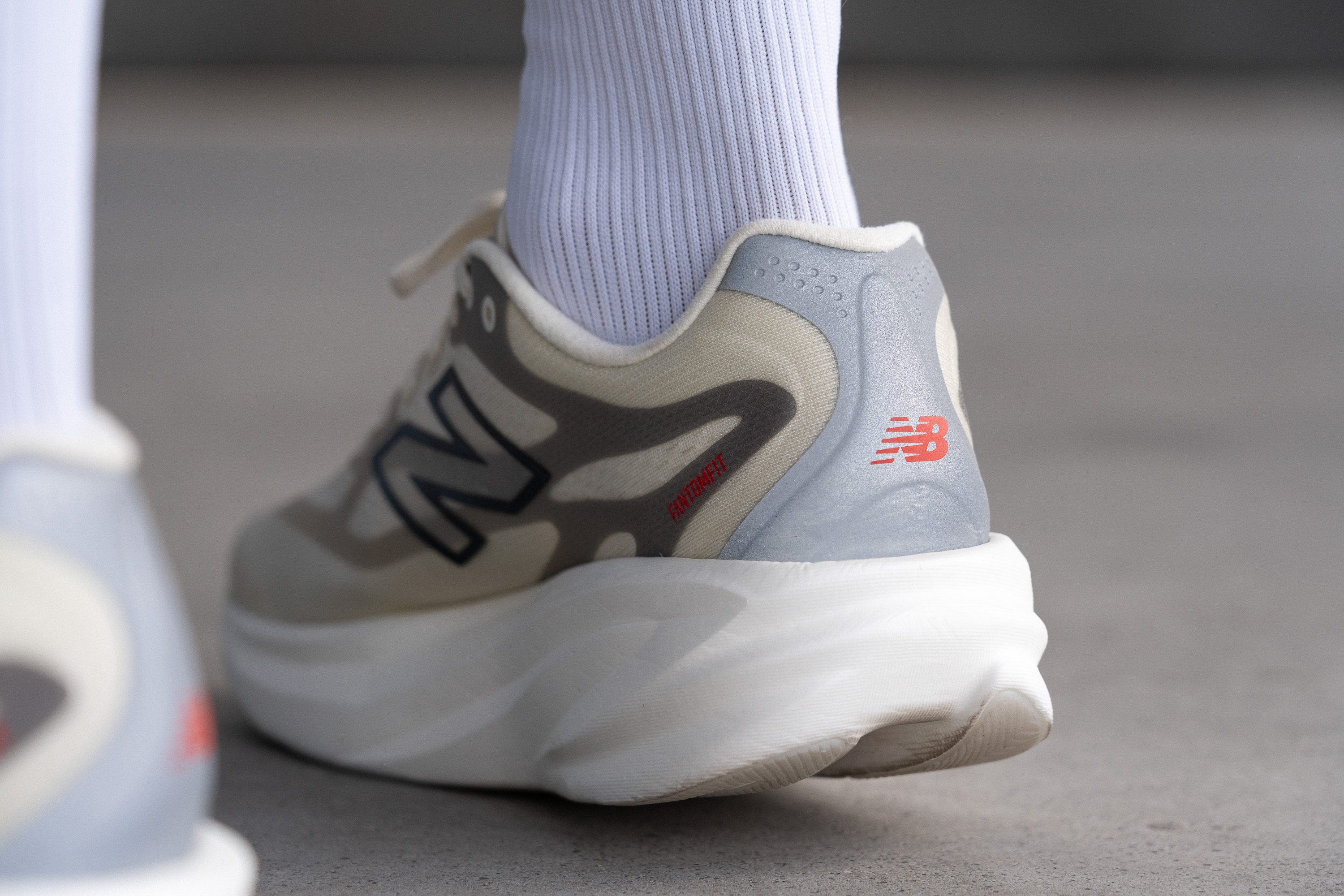
| SuperComp Rebel | None |
Price
The New Balance SuperComp Rebel is obviously an expensive running shoe, but we can also say that it’s not a bad price at all for a super trainer, as it’s very much in line with the current market.
Spec-wise, it offers everything you need for performance and can even double as a race shoe, so we think it delivers impressive value.
| SuperComp Rebel | $200 |
| Average | $157 |