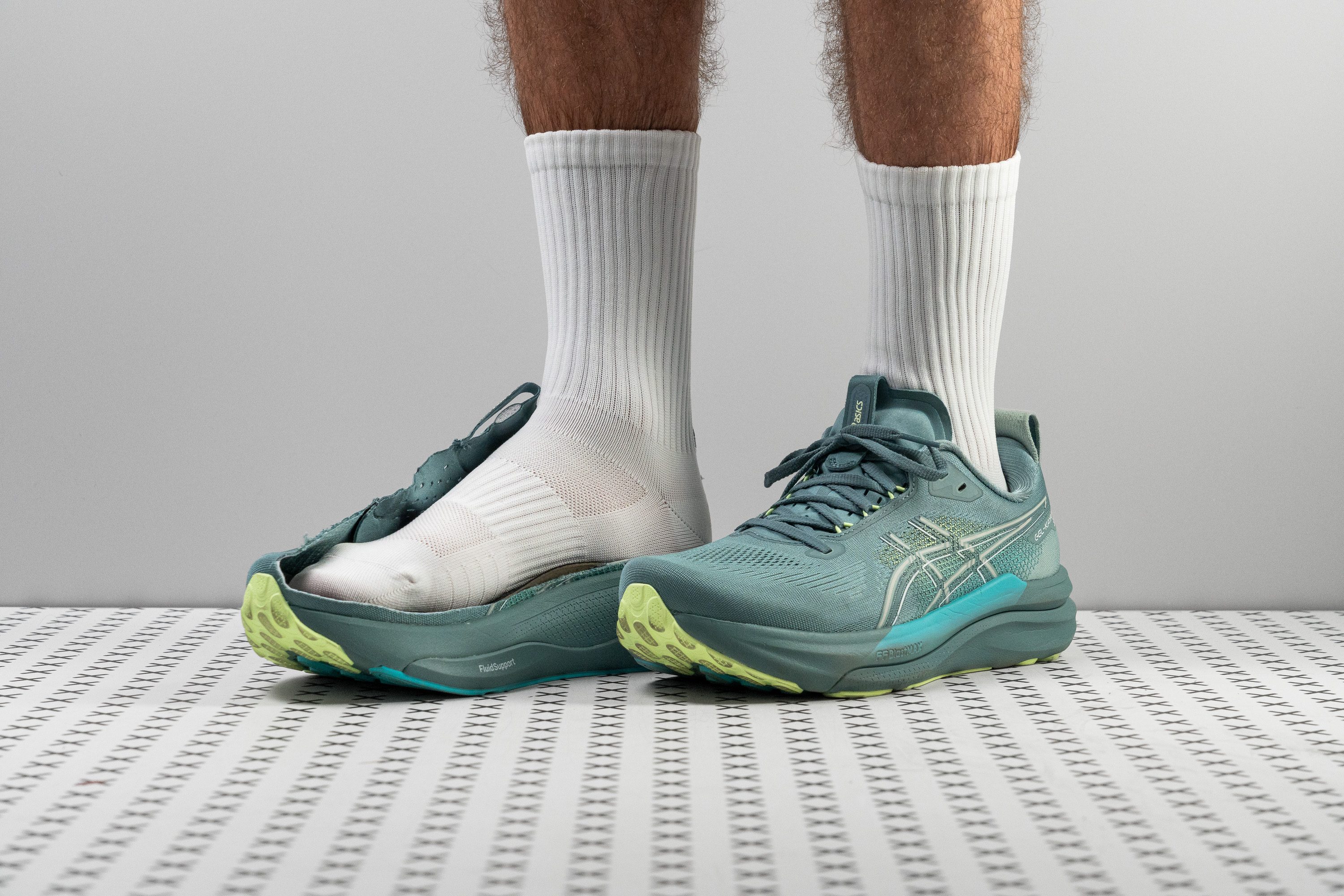






Our verdict
- Daily running 88
- Tempo 43
- Race 31
- Stability 93
Pros
- Softest-ever Kayano
- More natural support without sacrificing stability
- Dependable durability
- Premium-grade comfort
- Avoids a price hike
- Improved lacing system
- Refined, modern outsole
- Works for all footstrikes
- Finally a foam upgrade
Cons
- But still delivers low energy return
- Less stable for extreme overpronators
- Feels heavy
Awards
- Top pick in best running shoes
- Top pick in best running shoes for flat feet
- Top 24% in road running shoes
- Top 18% in stability running shoes
- Top 8% most popular running shoes
Comparison
The most similar running shoes compared
+ + Add a shoe | |||||
|---|---|---|---|---|---|
| Our score | 86 Great | 85 Great | 86 Great | 76 Good | |
| Price | $170 | $145 | $145 | $160 | |
| Pace | Daily running | Daily running | Daily running | Daily running | |
| Shock absorption | High | High | High | Moderate | |
| Energy return | Moderate | Moderate | Moderate | Moderate | |
| Traction | High | High | High | High | |
| Arch support | Stability | Stability | Stability | Stability | |
| Weight lab Weight brand | 10.5 oz / 298g 10.5 oz / 298g | 10.4 oz / 296g 10.5 oz / 298g | 10.4 oz / 295g 10.6 oz / 300g | 10.5 oz / 298g 10.4 oz / 295g | |
| Drop lab Drop brand | 8.5 mm 8.0 mm | 10.1 mm 10.0 mm | 10.2 mm 10.0 mm | 8.1 mm 8.0 mm | |
| Strike pattern | HeelMid/forefoot | Heel | Heel | HeelMid/forefoot | |
| Size | True to size | Slightly small | True to size | True to size | |
| Midsole softness | Soft | Balanced | Balanced | Firm | |
| Difference in midsole softness in cold | Normal | Small | Small | Small | |
| Toebox durability | Decent | Decent | Decent | Decent | |
| Heel padding durability | Good | Good | Good | Decent | |
| Outsole durability | Decent | Good | Good | Good | |
| Breathability | Moderate | Moderate | Moderate | Warm | |
| Width / fit | Medium | Medium | Medium | Medium | |
| Toebox width | Medium | Medium | Medium | Medium | |
| Stiffness | Stiff | Moderate | Moderate | Stiff | |
| Torsional rigidity | Stiff | Moderate | Moderate | Stiff | |
| Heel counter stiffness | Stiff | Moderate | Stiff | Stiff | |
| Rocker | ✗ | ✗ | ✗ | ✓ | |
| Heel lab Heel brand | 36.8 mm 39.0 mm | 36.1 mm 38.0 mm | 36.1 mm 37.0 mm | 36.8 mm 37.0 mm | |
| Forefoot lab Forefoot brand | 28.3 mm 31.0 mm | 26.0 mm 28.0 mm | 25.9 mm 27.0 mm | 28.7 mm 29.0 mm | |
| Widths available | NarrowNormalWideX-Wide | NarrowNormalWideX-Wide | NarrowNormalWideX-Wide | NormalWide | |
| Orthotic friendly | ✓ | ✓ | ✓ | ✓ | |
| Season | All seasons | All seasons | All seasons | All seasons | |
| Removable insole | ✓ | ✓ | ✓ | ✓ | |
| Ranking | #83 Top 21% | #111 Top 28% | #79 Top 20% | #298 Bottom 25% | |
| Popularity | #32 Top 8% | #48 Top 12% | #5 Top 2% | #96 Top 24% |

Who should buy
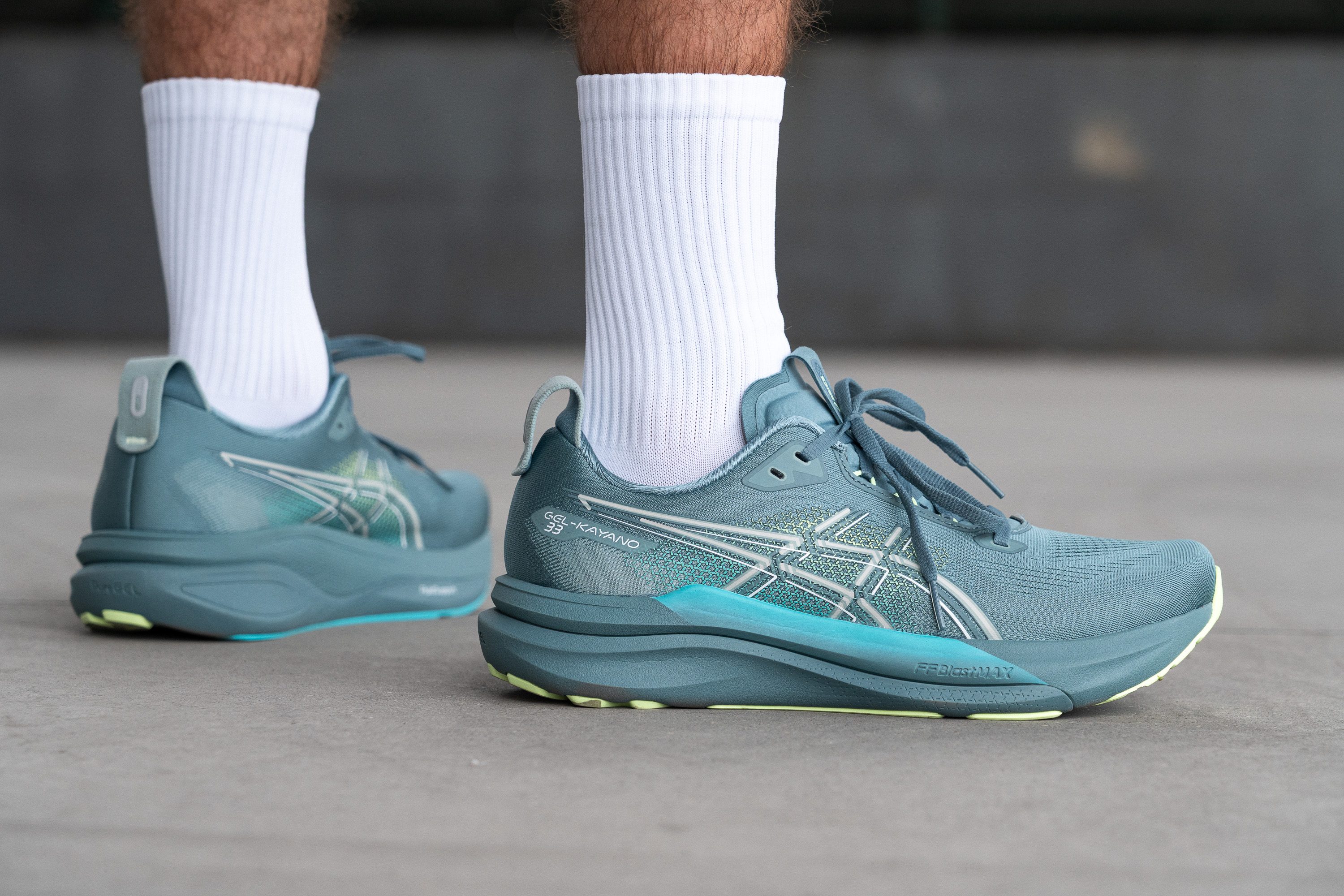
We pushed the ASICS Gel Kayano 33 through its paces, and found that it's:
- Perfect for runners who always wanted a softer Kayano.
- Ideal for those who felt previous Kayanos were too corrective, thanks to a more natural and less intrusive stability system.
- A great match for heavier runners with mild overpronation.
- Perfect for anyone seeking a highly-stable shoe with premium comfort and excellent overall build quality.
Who should NOT buy
Despite the addition of FF Blast Max, we found the energy return of the Kayano 33 to be underwhelming. Runners who prioritize a bouncy and energetic ride should instead consider the Saucony Hurricane 25 for maximum stability or the Saucony Tempus 2 if only a moderate level of support is needed.
We also believe that the substantial weight of the Kayano 33 may be a deal-breaker for those seeking a lighter shoe. In that case, the ASICS GT 2000 14 and HOKA Arahi 8 stand out as excellent alternatives that deliver stability with less bulk.
Cushioning
Shock absorption
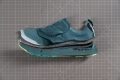
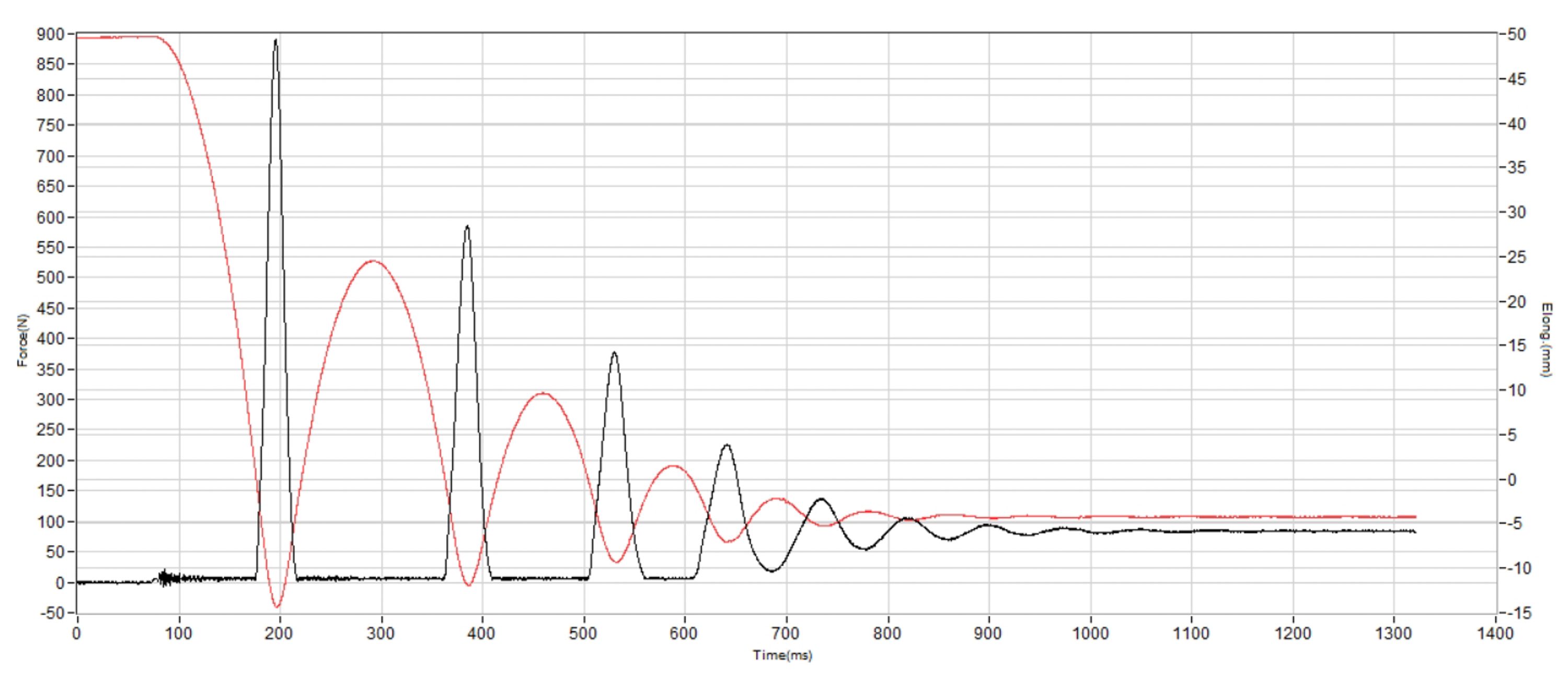
The Kayano 33 may look like a max-cushioned shoe at first glance, but part of that visual bulk comes from the raised midsole sidewalls that wrap around the foot to enhance stability rather than add cushioning. That's why its shock absorption lands close to our current lab average, reaching 132 SA in the heel and 112 SA in the forefoot.
These numbers make the Kayano 33 suitable for a wide range of runners and fully capable of handling long-distance efforts. However, our testing also confirmed that it doesn't belong in the max-cushion category despite its highly-stacked appearance.
| Gel Kayano 33 | 132 SA |
| Average | 131 SA |
Energy return
Moving the Kayano from FF Blast+ to FF Blast Max felt like an obvious step given what we saw with the Novablast 5, yet we found the outcome underwhelming. The new FluidSupport system still uses FF Blast+, and energy return reached only 50.0% in the heel and 56.6% in the forefoot.
While these figures represent a modest improvement over last year's model, the gain falls short of what many runners were likely expecting. It's clear to us that the Kayano remains firmly limited for easy-paced running, as faster efforts still feel somewhat flat and lacking the lively sensation found in shoes with bouncier foams.
| Gel Kayano 33 | 56.6% |
| Average | 61.4% |
Heel stack
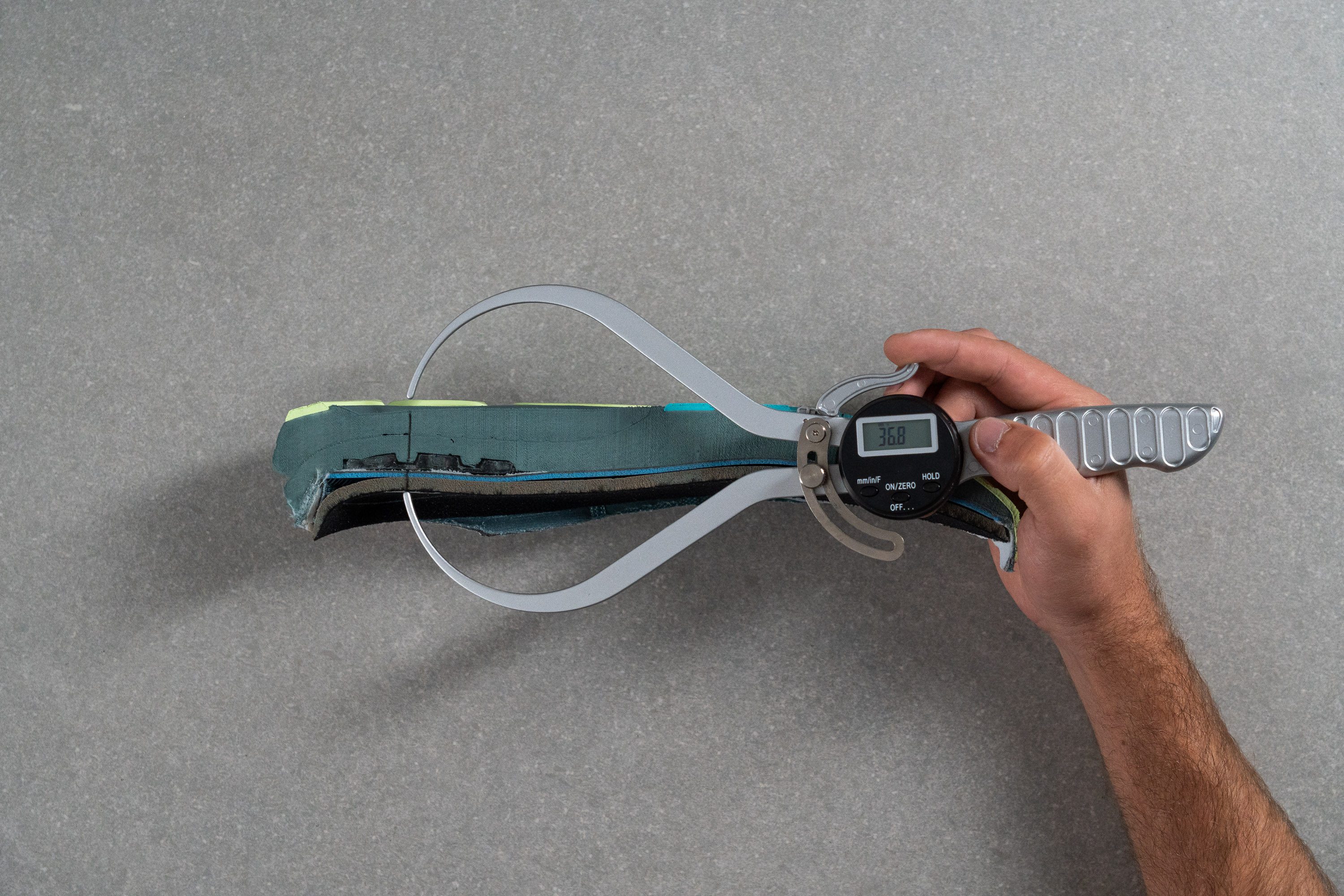
Here's another confirmation that the Gel Kayano 33 sits one tier below true max-cushioned shoes. In our measurements, we recorded a heel stack height of 36.8 mm.
As ASICS' flagship stability trainer, pushing beyond 40 mm in the heel would have introduced a number of compromises and likely worked against the shoe's core purpose. In fact, we believe that trimming the stack slightly from last year's 39.9 mm may prove beneficial for most runners.
| Gel Kayano 33 | 36.8 mm |
| Average | 35.5 mm |
Forefoot stack
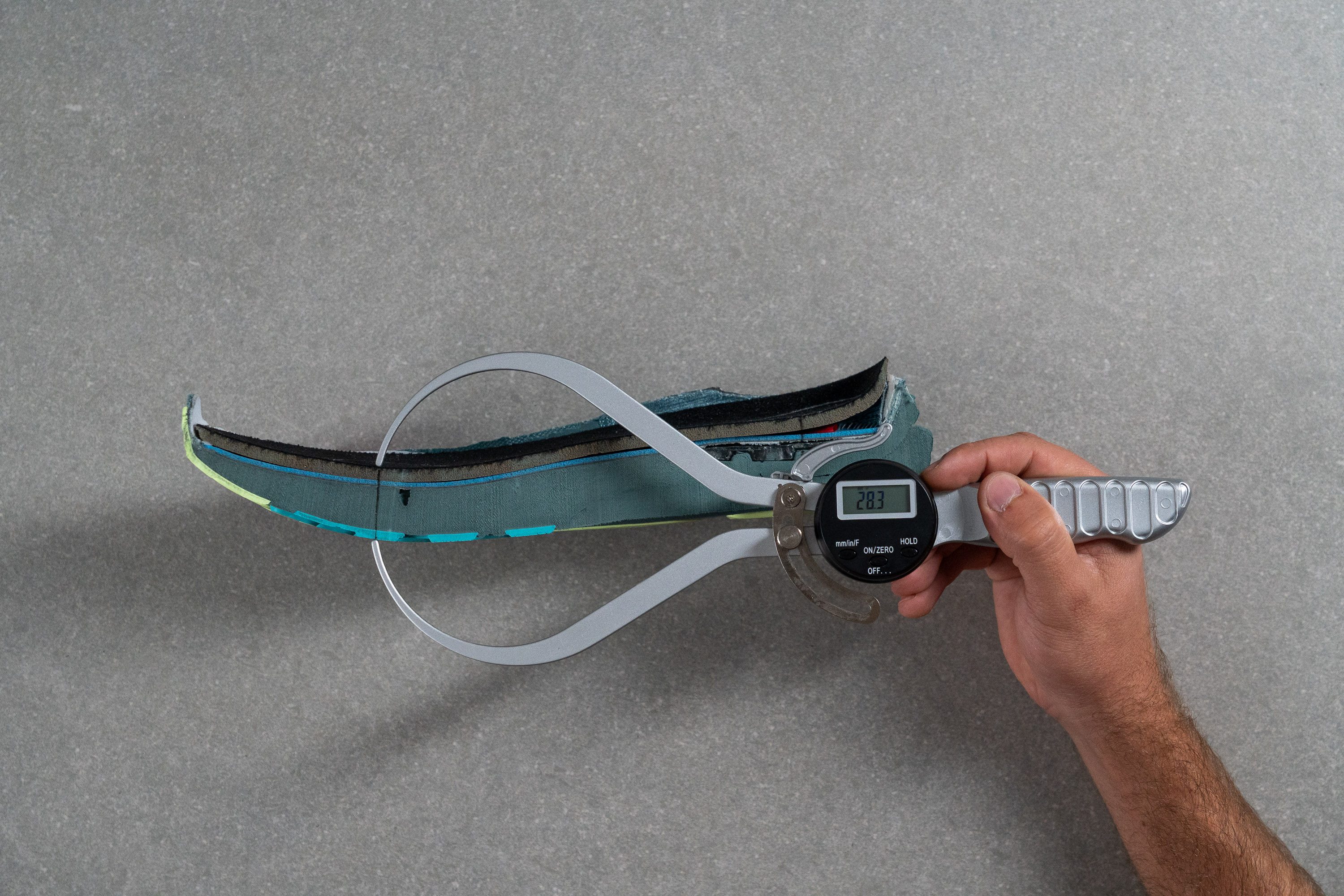
The forefoot also sheds a bit of foam, now measuring 28.3 mm. This helps explain the slight decline in shock absorption, although the effect is partially offset by the new FF Blast Max compound, which is more efficient than FF Blast+.
In other words, FF Blast Max allows ASICS to extract slightly more cushioning performance from the same amount of foam, delivering a similar ride despite the reduced stack height.
| Gel Kayano 33 | 28.3 mm |
| Average | 27.1 mm |
Drop
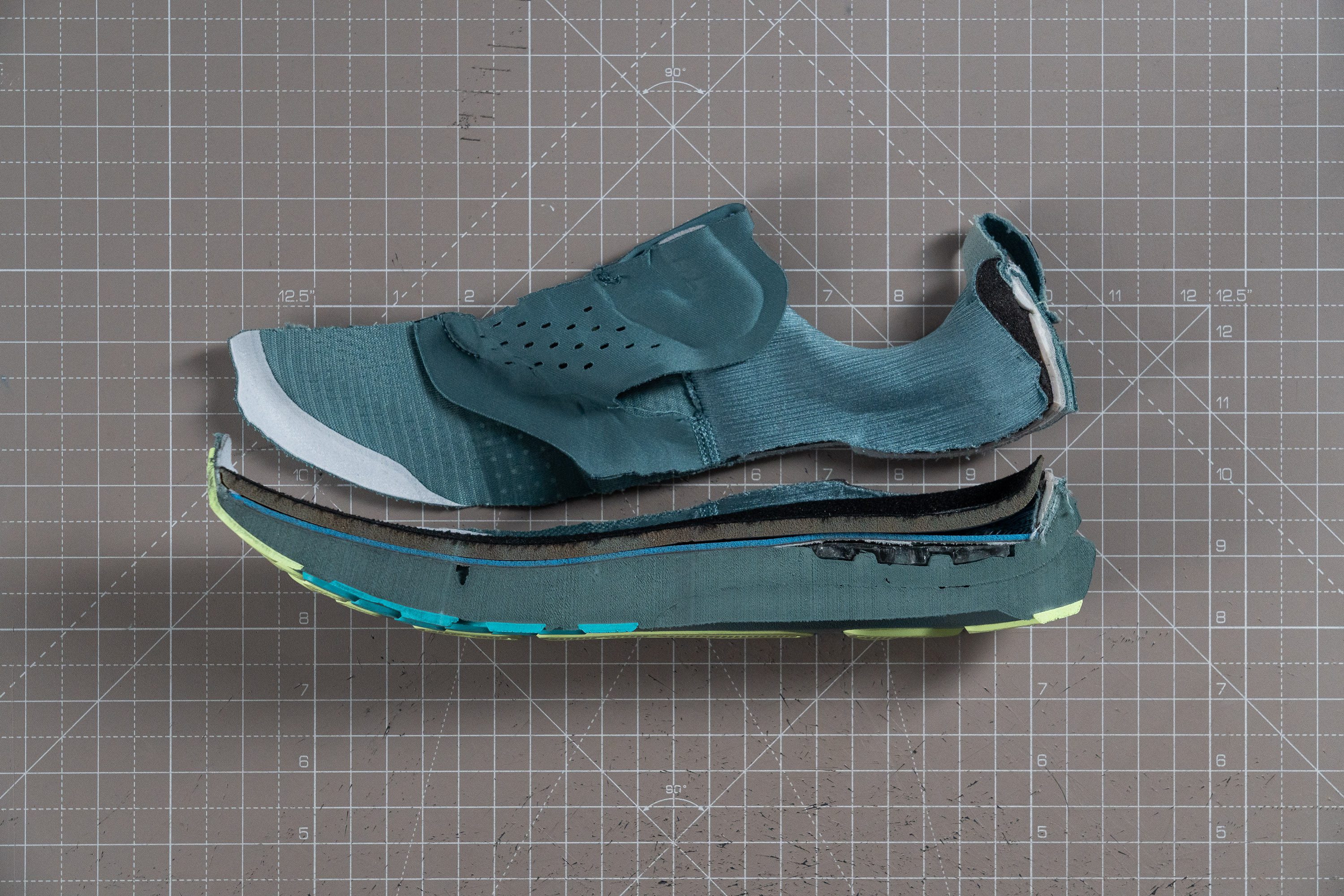
The official drop of the ASICS Gel Kayano 33 is 8 mm, and our measurements revealed an extremely small deviation, reaching 8.5 mm.
This comes as no surprise to us. It's a highly-conservative design that aligns perfectly with the Kayano's long-standing reputation as a shoe that works exceptionally well for heel strikers while still accommodating other landing patterns with ease.
| Gel Kayano 33 | 8.5 mm |
| Average | 8.4 mm |
Midsole softness
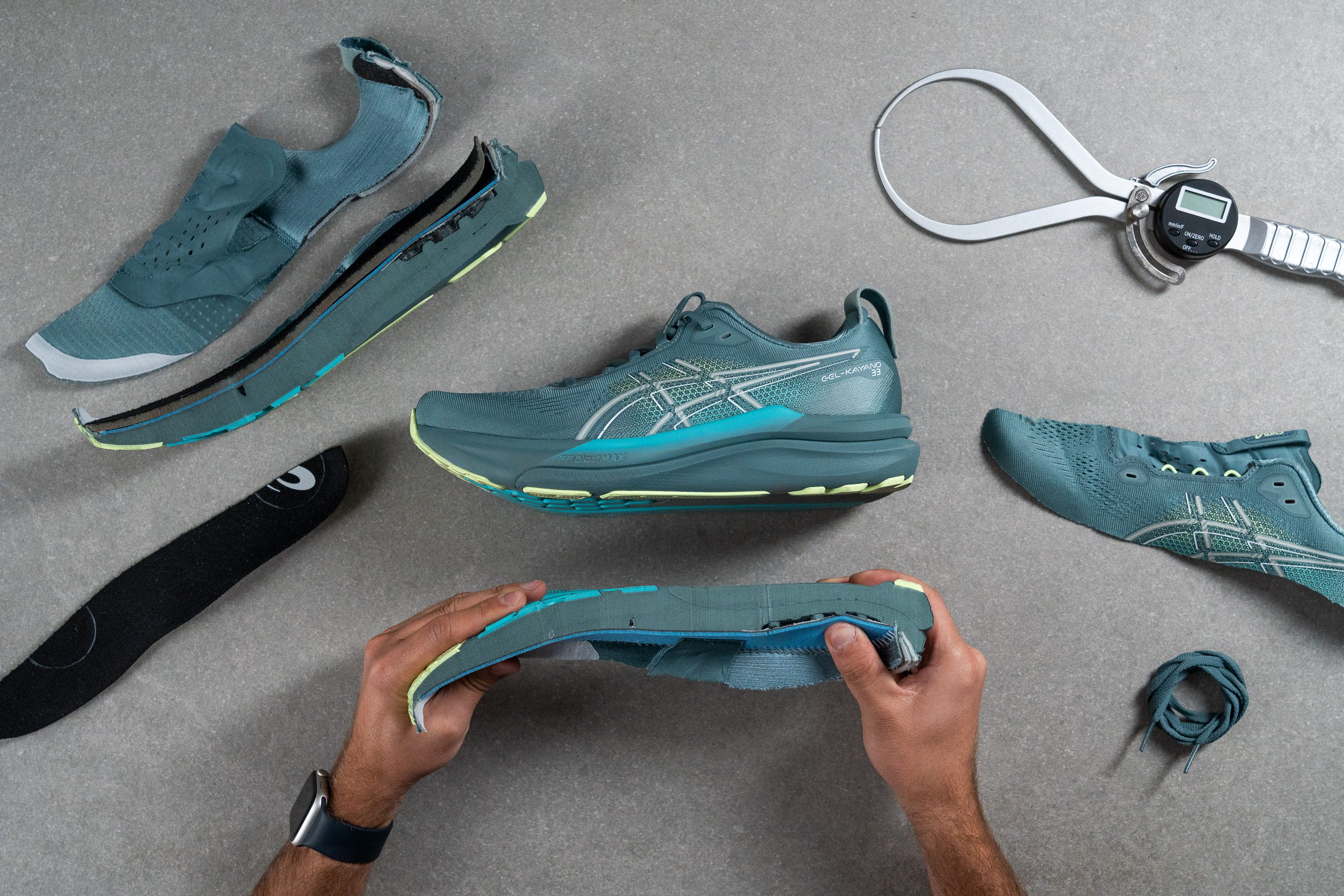
The new midsole design of the Gel Kayano 33 features a full-length top layer of FF Blast Max paired with a secondary bottom layer of FF Blast+.
As expected, the shoe feels less firm than its predecessor thanks to the introduction of FF Blast Max. In our lab, we measured the top layer at 32.8 AC, a noticeably softer result than before. At first glance, that may seem too plush for a stability-focused trainer, right?
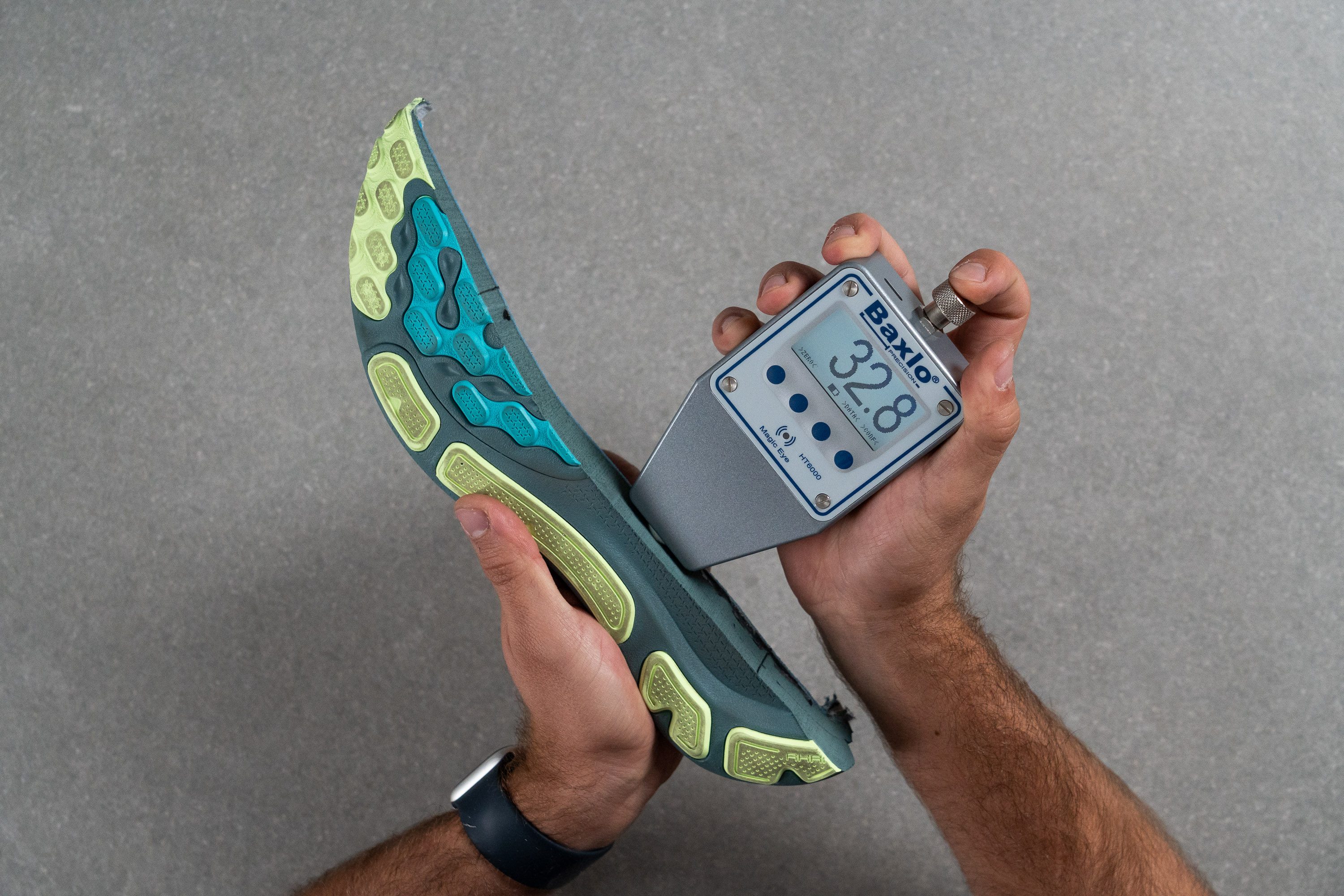
| Gel Kayano 33 | 32.8 AC |
| Average | 35.5 AC |
Rocker
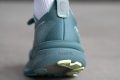
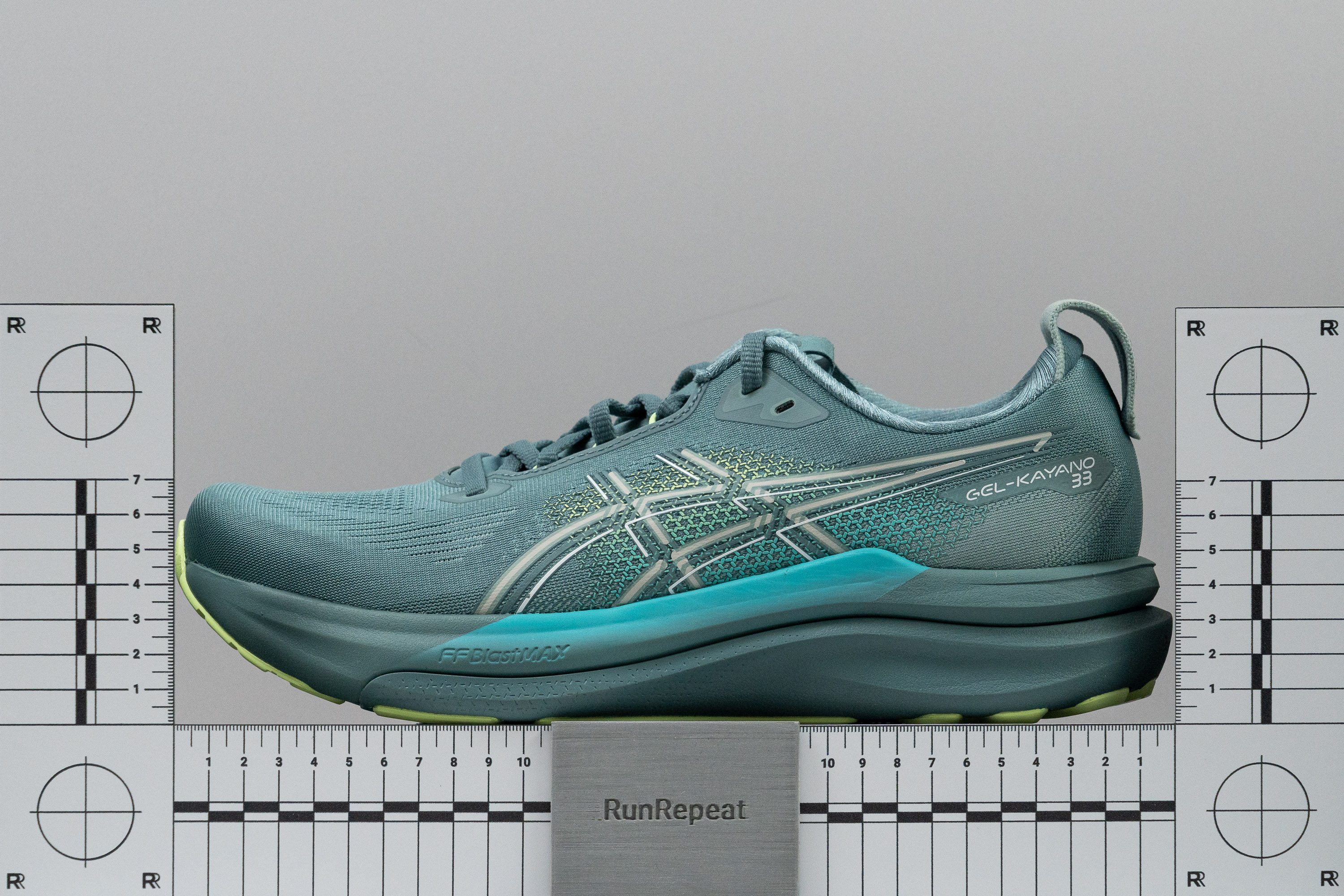
Unlike many modern trainers that rely on aggressive rocker geometries, the Gel Kayano 33 stays remarkably faithful to the series' traditional platform design.
That said, we found that ASICS slightly increased the heel rocker compared to version 32, a subtle tweak that should help smooth out landings for heel strikers.
PureGEL
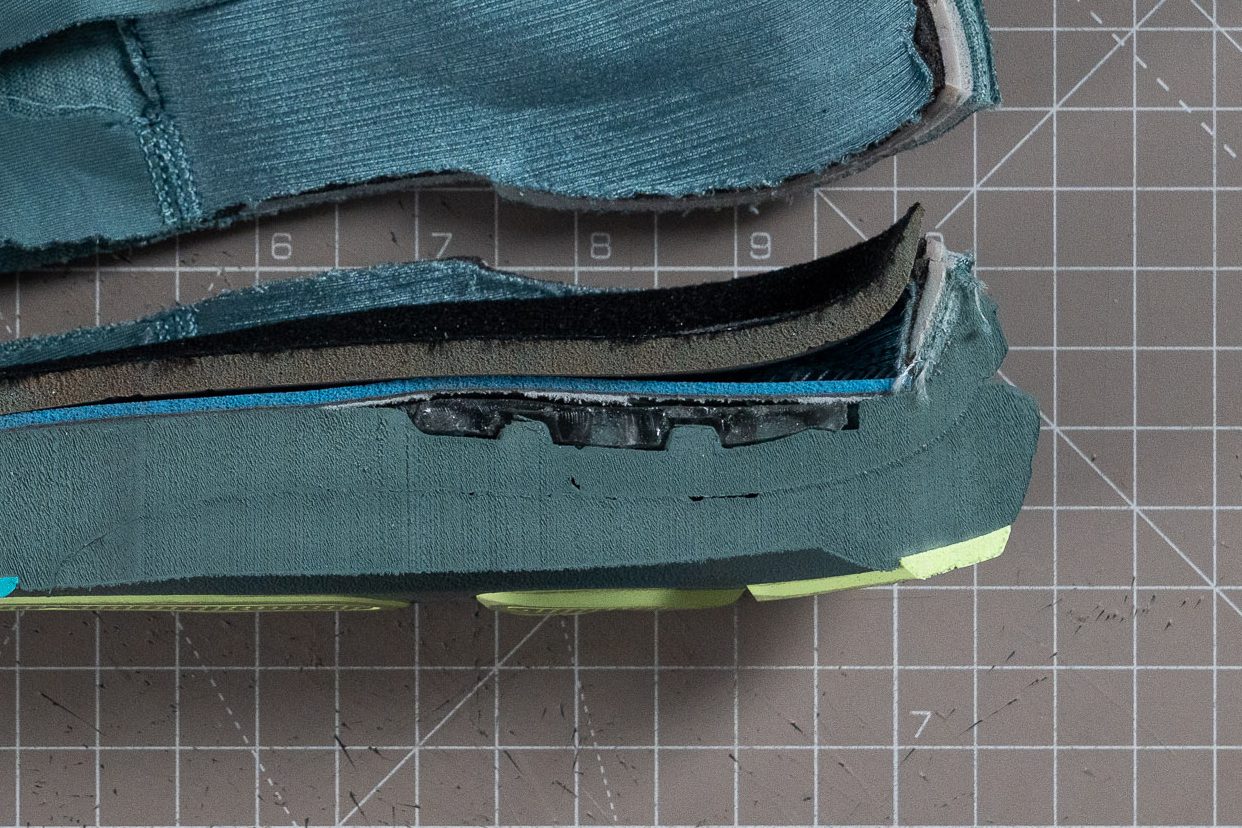
The same PureGEL insert found in recent generations remains in place, helping soften heel landings and enhance overall comfort, which it certainly achieves.
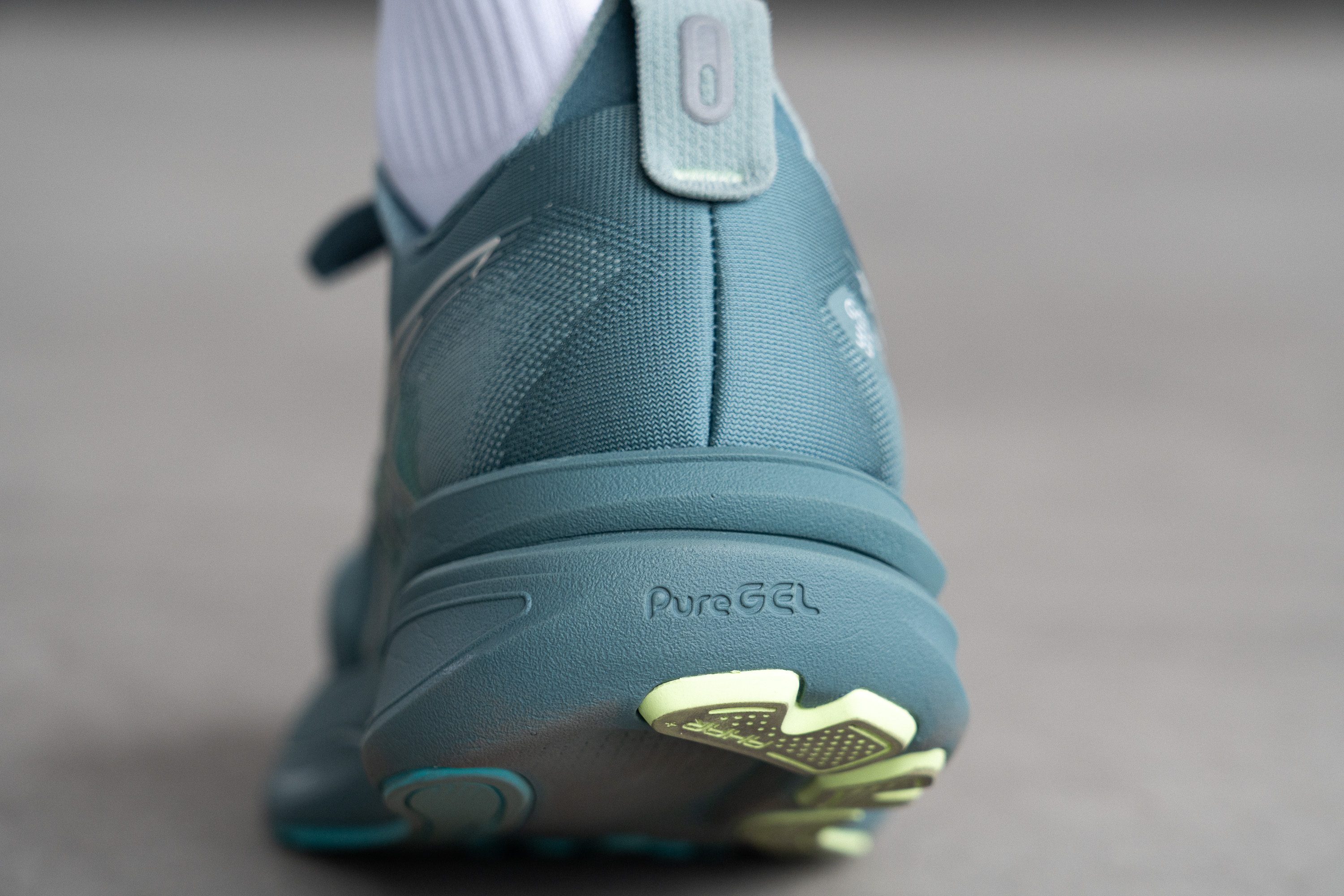
However, as our energy return testing revealed, PureGEL also contributes to lowering the shoe's rebound while adding another layer of complexity to the manufacturing process. That's why we're not entirely convinced the trade-off is worthwhile.
However, from ASICS' perspective, retaining Gel technology likely still makes sense especially from a branding and marketing standpoint.
Size and fit
Size
ASICS Gel Kayano 33 fits true to size (43 votes).
Internal length
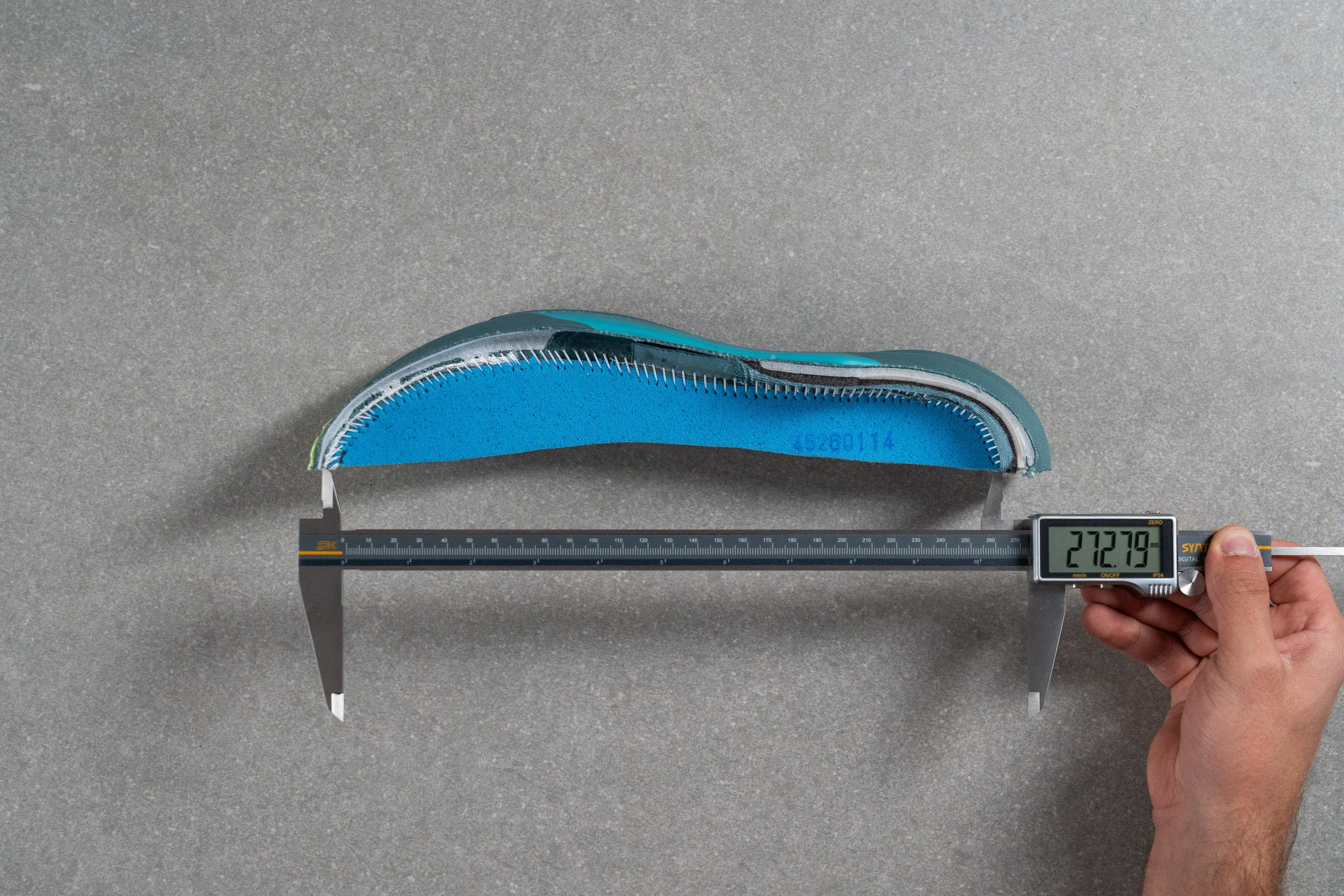
| Gel Kayano 33 | 272.8 mm |
| Average | 269.4 mm |
Width / Fit
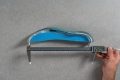
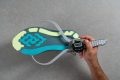
In the lab, we created a 1:1 replica of the Kayano 33's interiors and measured the widest part at 95.9 mm. This places it just slightly above the average running shoe.
ASICS went for a careful balance between narrow and wide without strongly favoring either end of the spectrum. In addition, the Kayano 33 is one of the few ASICS models offered in multiple width options, although availability varies depending on the market.
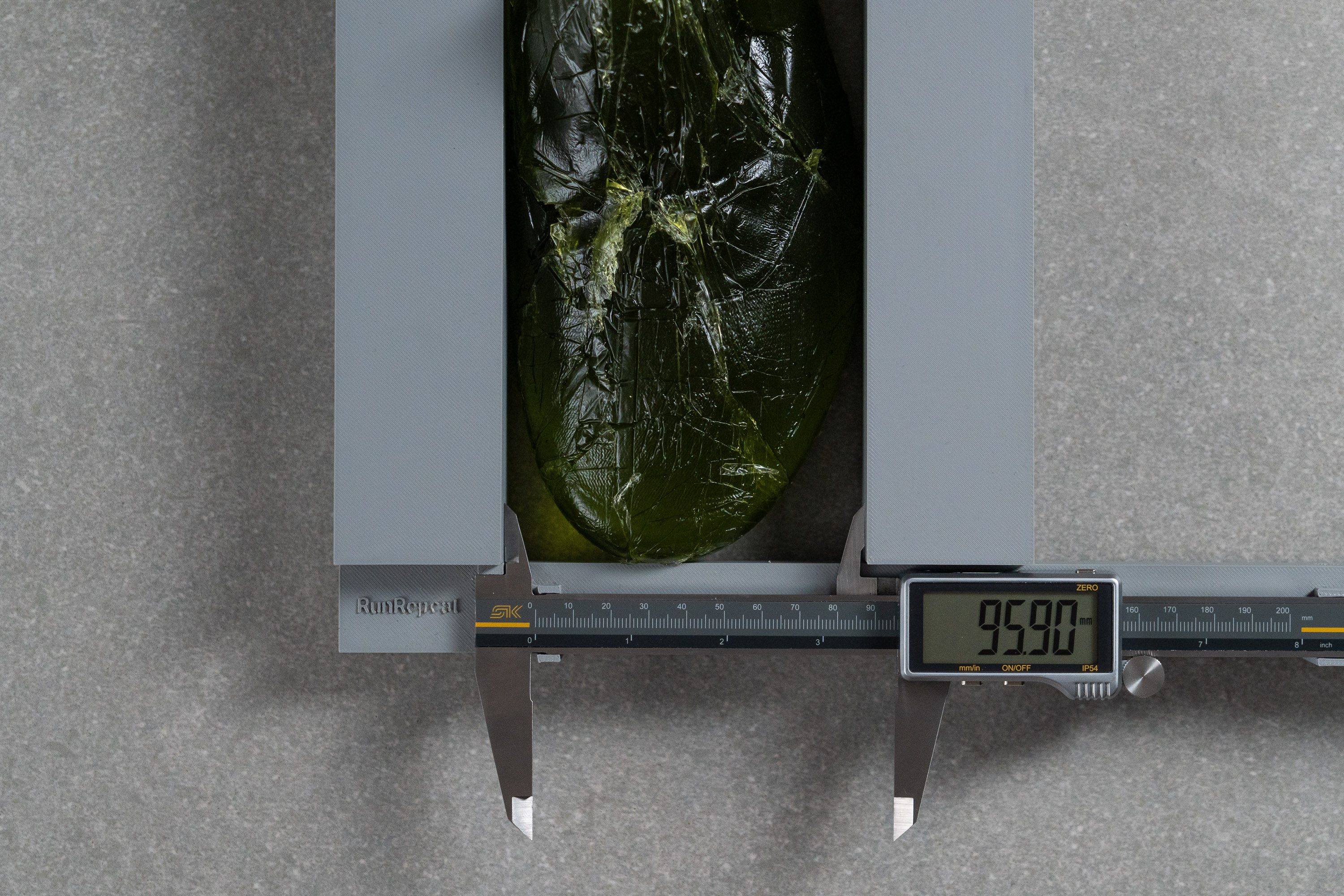
| Gel Kayano 33 | 95.9 mm |
| Average | 95.2 mm |
Toebox width
The toebox follows the same conservative approach, although at 72.4 mm it may feel slightly more tapered than some runners would prefer.
Still, it's hard to fault ASICS for that choice, as toebox design can play a role in enhancing overall stability too.
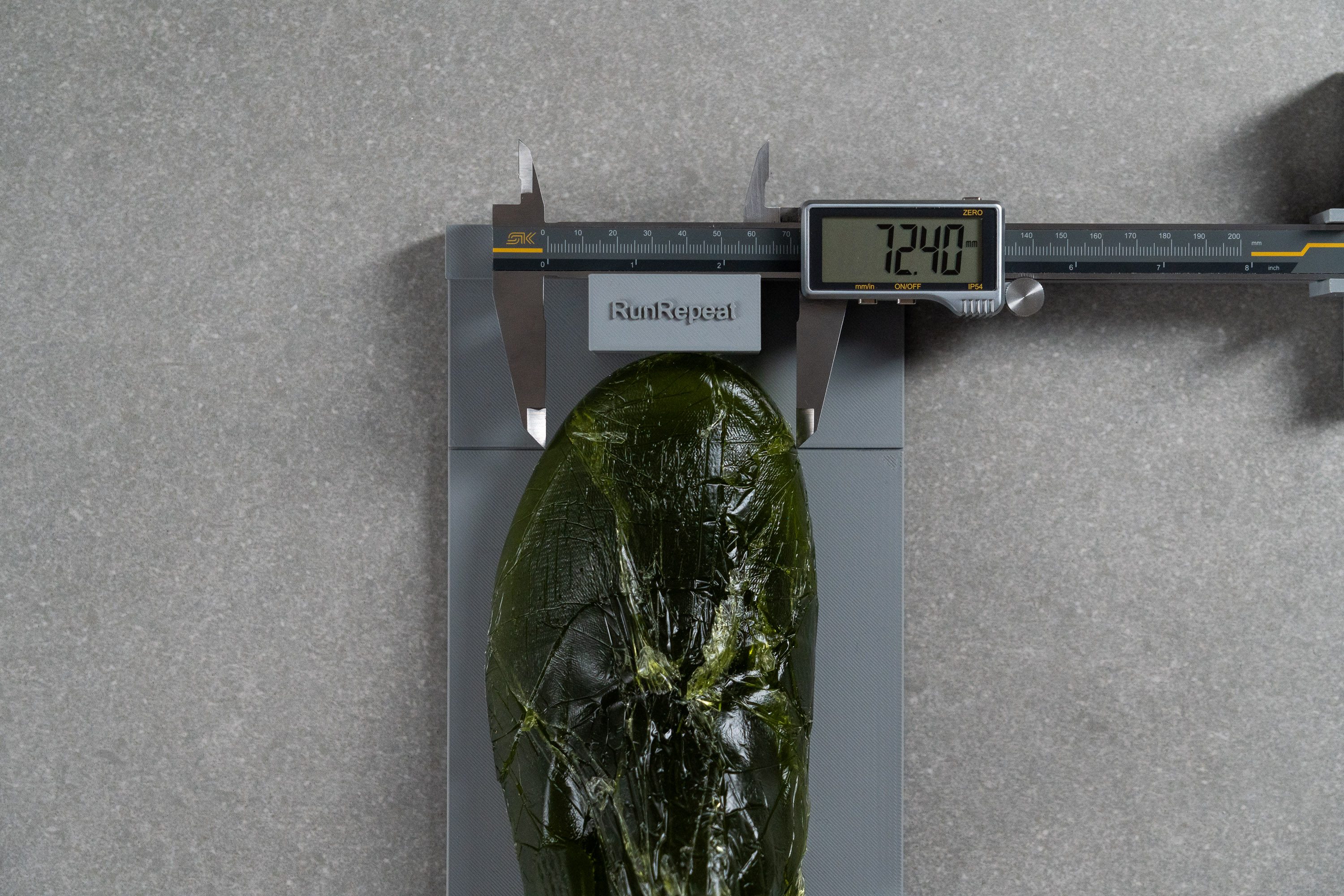
| Gel Kayano 33 | 72.4 mm |
| Average | 73.2 mm |
Toebox height
We found the toebox height comfortable throughout our test runs.
Back in the lab, our measurements confirmed that impression, recording 28.6 mm of vertical space. In our opinion, this strikes a well-balanced middle ground between providing enough vertical room for the toes and maintaining a secure fit.
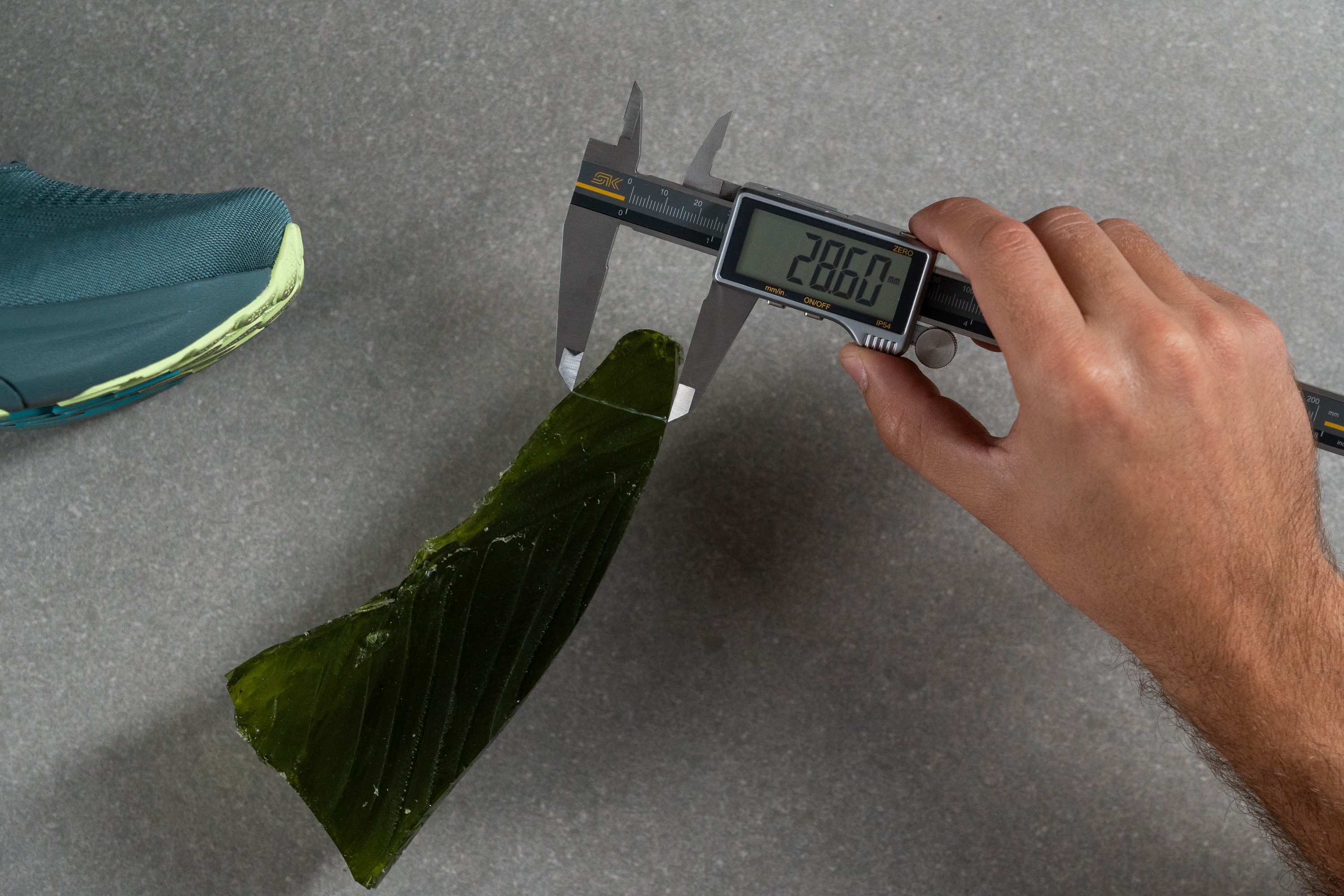
| Gel Kayano 33 | 28.6 mm |
| Average | 27.0 mm |
Traction / Grip
Traction test
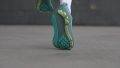
The ASICS Gel Kayano 33 achieved an exceptional 0.93 coefficient of friction, making it one of the grippiest road running shoes we've ever tested. We believe the use of ASICSGRIP rubber deserves much of the credit, delivering outstanding traction in both dry and wet conditions with remarkable confidence.
| Gel Kayano 33 | 0.93 |
| Average | 0.53 |
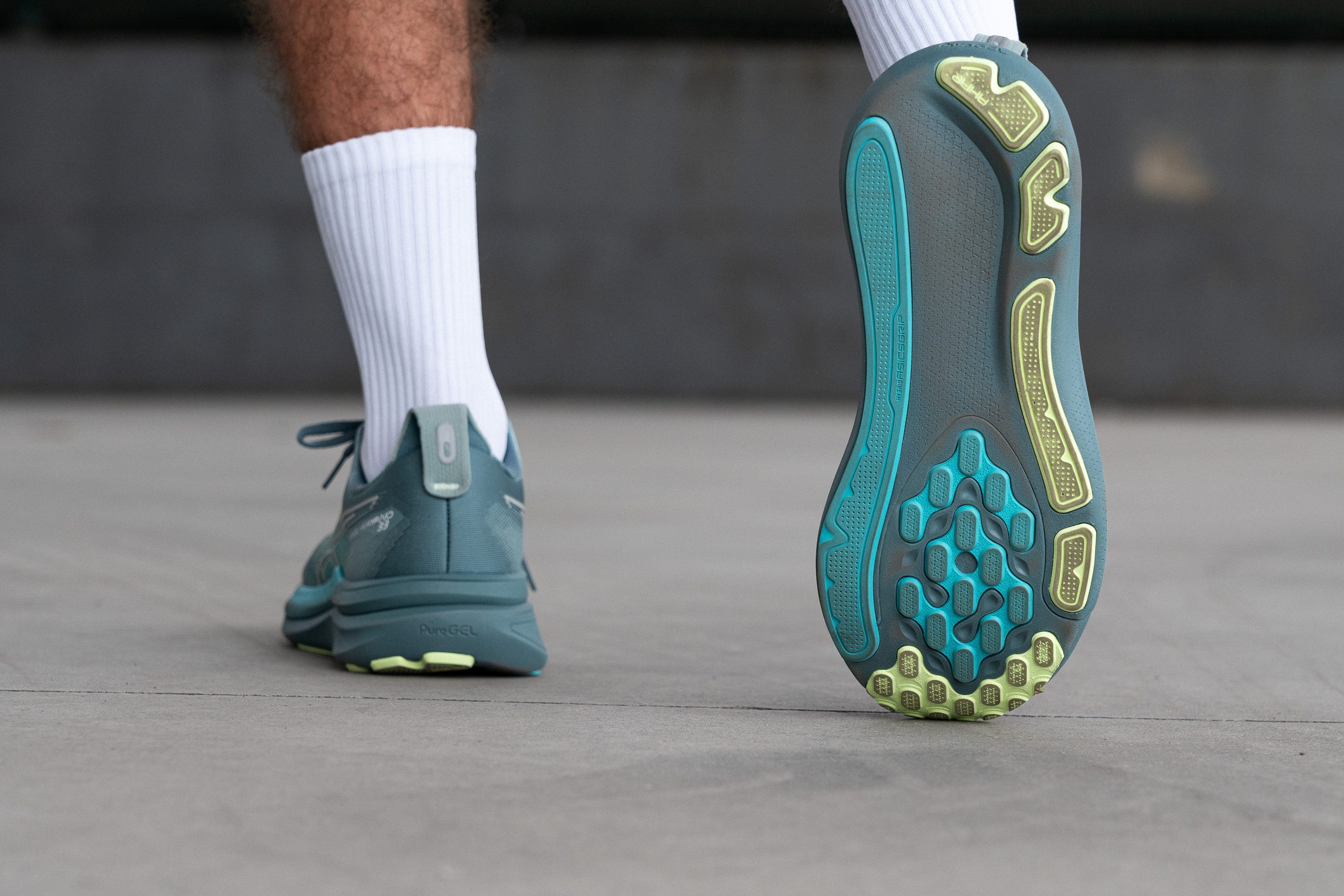
Outsole design
The outsole introduces several notable updates despite retaining the Hybrid ASICSGRIP setup, which combines AHAR+ and ASICSGRIP rubber. The most interesting change is the cluster of pill-shaped lugs placed on the central forefoot island.
These ASICSGRIP lugs sit directly on exposed FF Blast Max foam, allowing them to adapt more effectively to uneven surfaces and boost traction. It's certainly a risky move given how well previous Kayano outsoles performed, but we appreciate that ASICS continues to push the envelope instead of relying solely on a proven formula.
Flexibility / Stiffness
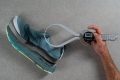
As is often the case with stability-focused shoes, we recorded a high score in our 30-degree longitudinal stiffness test. The Gel Kayano 33 required 19.7N of force, a result comparable to some carbon-plated super shoes.
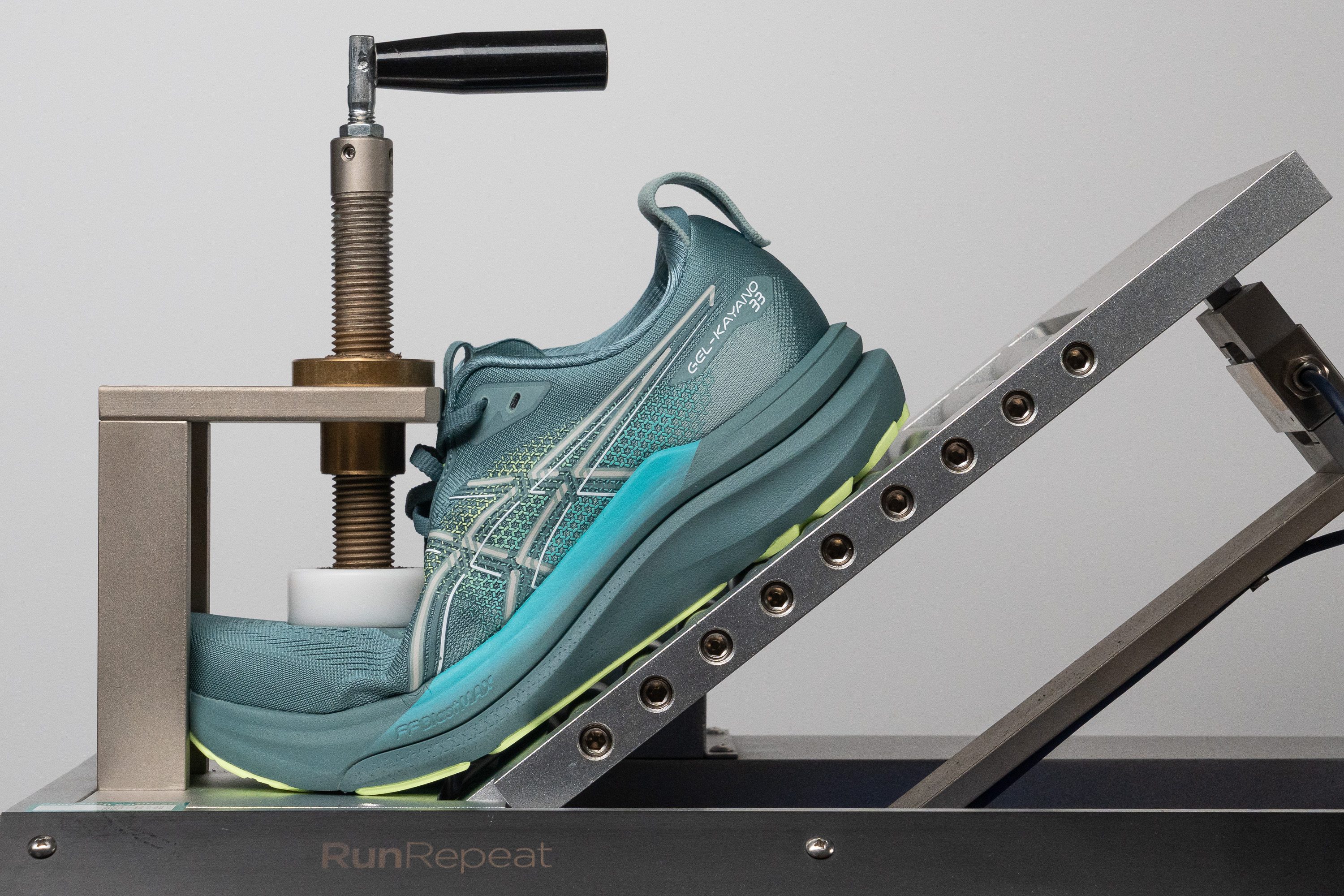
| Gel Kayano 33 | 19.7N |
| Average | 15.5N |
Weight
Weight remains virtually unchanged from version 32 at 10.5 oz (298g). That's just a 1% increase and, since we consistently find that shoe weights can vary by up to 3% due to manufacturing tolerances, we don't view this as either an upgrade or a downgrade.
However, it's clear that the Kayano 33 remains a heavy shoe. We thought that the switch to FF Blast Max might help reduce weight, but that wasn't the case. Therefore, runners hoping for a lighter Kayano will have to wait a bit longer.
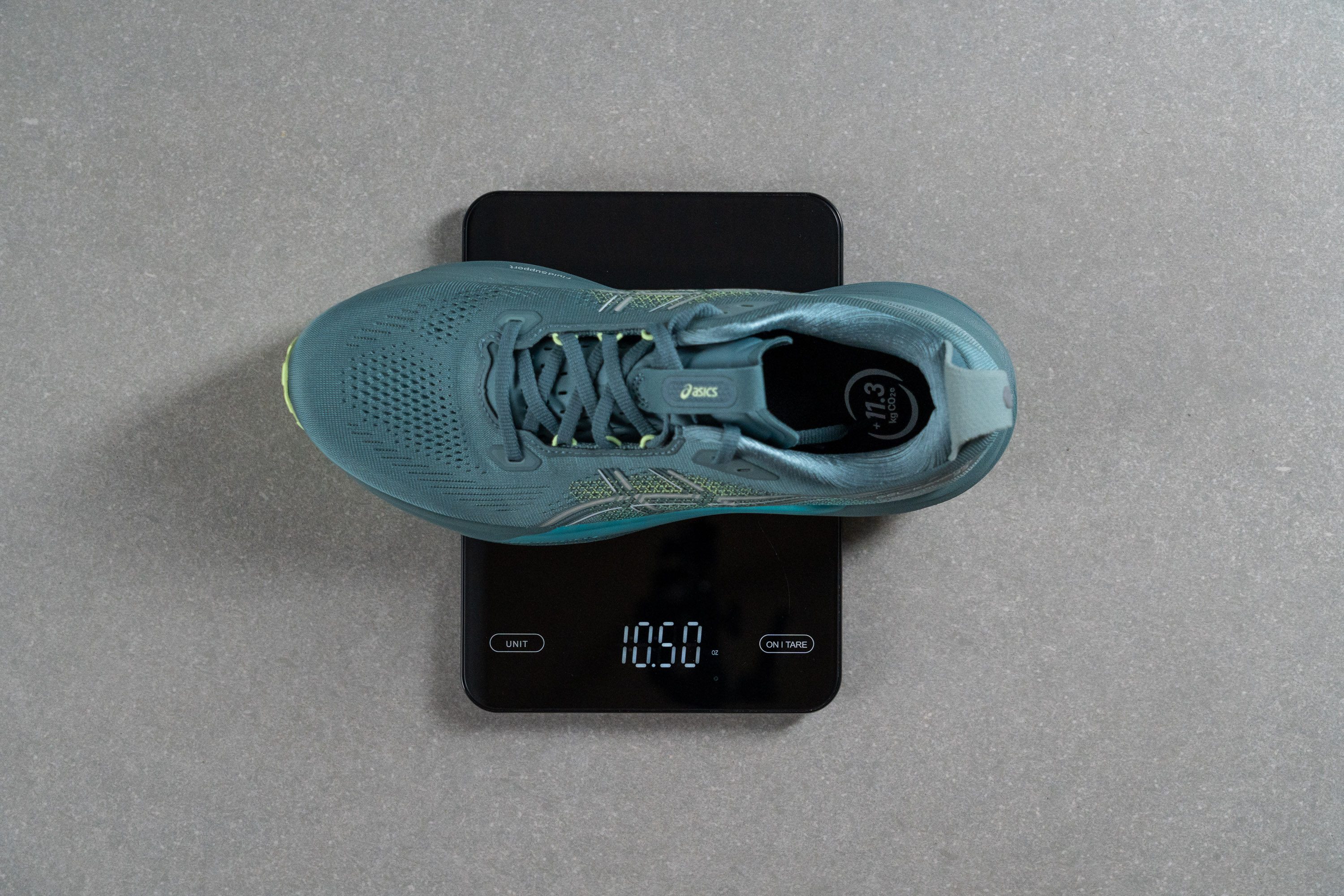
| Gel Kayano 33 | 10.5 oz (298g) |
| Average | 9.2 oz (261g) |
Breathability
Breathability test
UpdatedWhile not a standout result, the Kayano 33 earned a respectable 69 BR in our breathability test, making it a reliable companion for year-round running.
It does a decent job of pulling sweat away from the foot and distributing moisture throughout the shoe system, helping maintain a drier and more comfortable in-shoe environment while reducing the risk of blisters.
| Gel Kayano 33 | 69 BR |
| Average | 75 BR |
Drying potential
NewThe Kayano 33 delivered a drying potential result of 47% in our 3-hour chamber test, meaning that less than half of the accumulated moisture evaporated from the shoe during the evaluation.
While this isn't a poor result and is fairly common among comfort-focused uppers, it falls slightly below our current lab average. As a result, the Gel Kayano 33 tends to retain moisture a bit longer than we'd prefer, particularly during long summer runs when sweat can gradually accumulate inside the shoe.
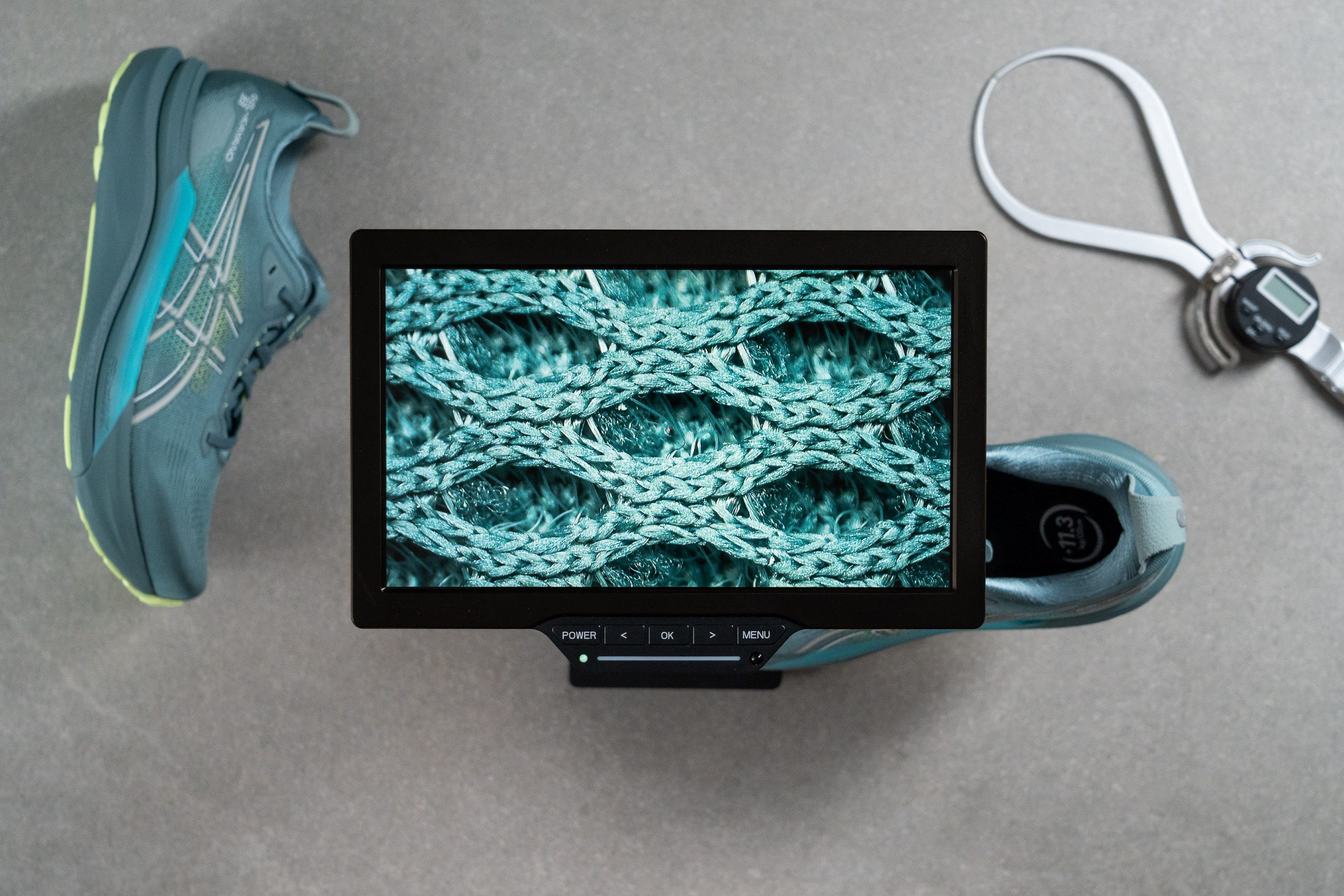
| Gel Kayano 33 | 47% |
| Average | 53% |
Stability
Lateral stability test
The Gel Kayano series has earned a legendary reputation for its stability, and we believe that's a major reason why it has successfully reached version 33. Few shoes have remained so relevant for so long while staying true to their core identity.
For this update, ASICS moves from the 4D Guidance System to FluidSupport, yet the overall philosophy remains largely unchanged. The shoe still relies on a broad platform and a strategically placed firmer foam layer. However, we found that the level of correction is slightly reduced compared to the previous version due to the softer FF Blast Max foam.
Torsional rigidity
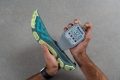
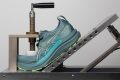
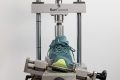
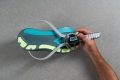
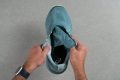
Using our custom-built machine, we can measure and compare the torsional rigidity of running shoes with exceptional precision. The Gel Kayano 33 recorded 20.1 Nm, placing it among the most rigid models we've ever tested.
This result came as no surprise to us, as a highly-rigid platform is one of the key ingredients of stability shoes.
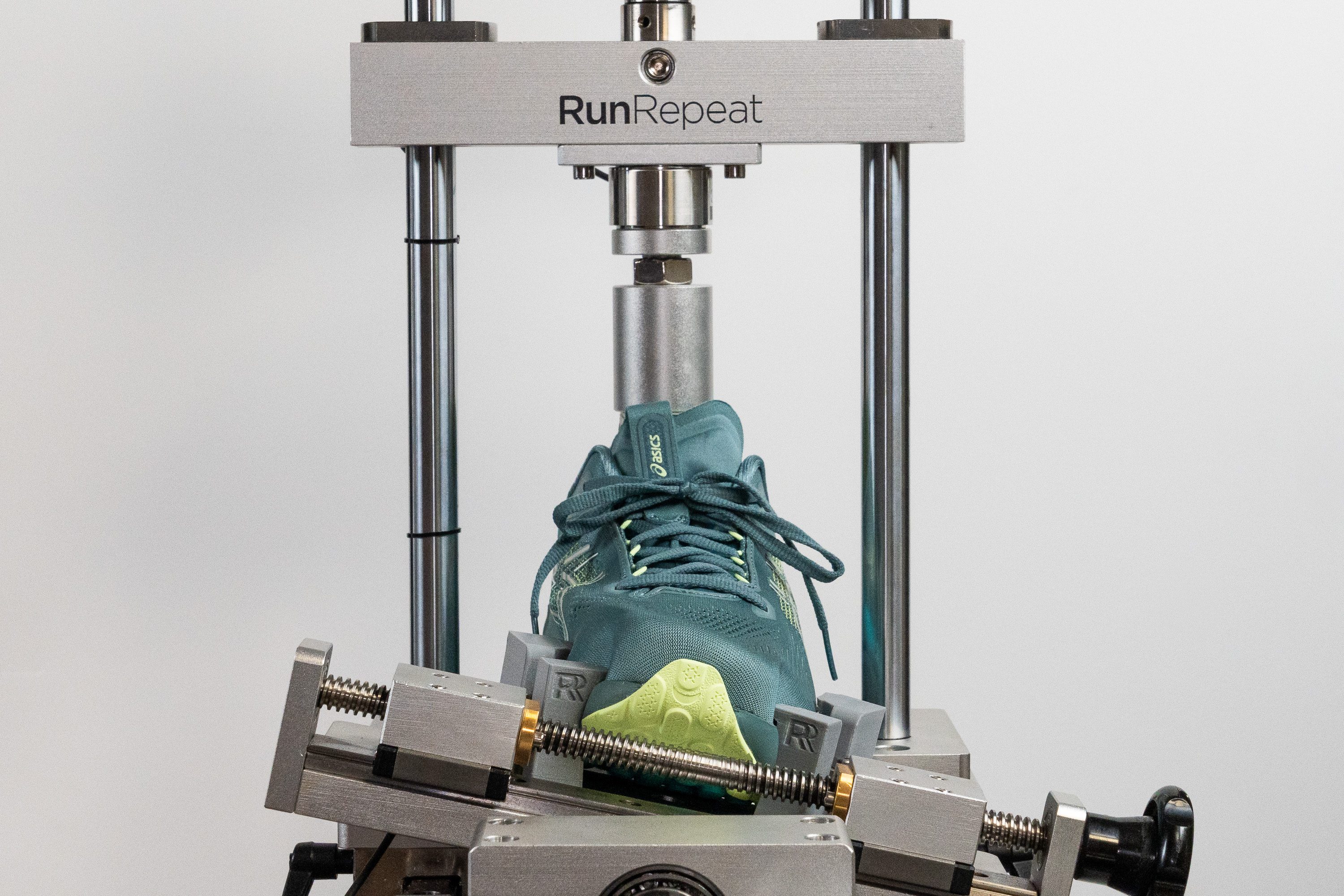
| Gel Kayano 33 | 20.1 Nm |
| Average | 14.4 Nm |
Heel counter stiffness
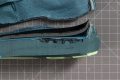
The heel counter is also quite rigid at 4/5, though not to the same extent as in some previous Kayano models. ASICS has softened its approach slightly here, a change that should be welcome news for runners with sensitive Achilles tendons or those who prefer a more forgiving rearfoot feel.
| Gel Kayano 33 | 4 |
| Average | 3 |
Midsole width - forefoot
The stable feel of the Gel Kayano 33 is partly driven by its generously wide landing platform, a hallmark of nearly every modern stability shoe.
In the forefoot, we measured 120.7 mm. A few years ago, that figure would have stood out as exceptionally wide, but today it feels right at home among support-focused trainers. In fact, we've recently tested several neutral daily trainers that reach similarly or higher expansive dimensions, like the Saucony Endorphin Azura.
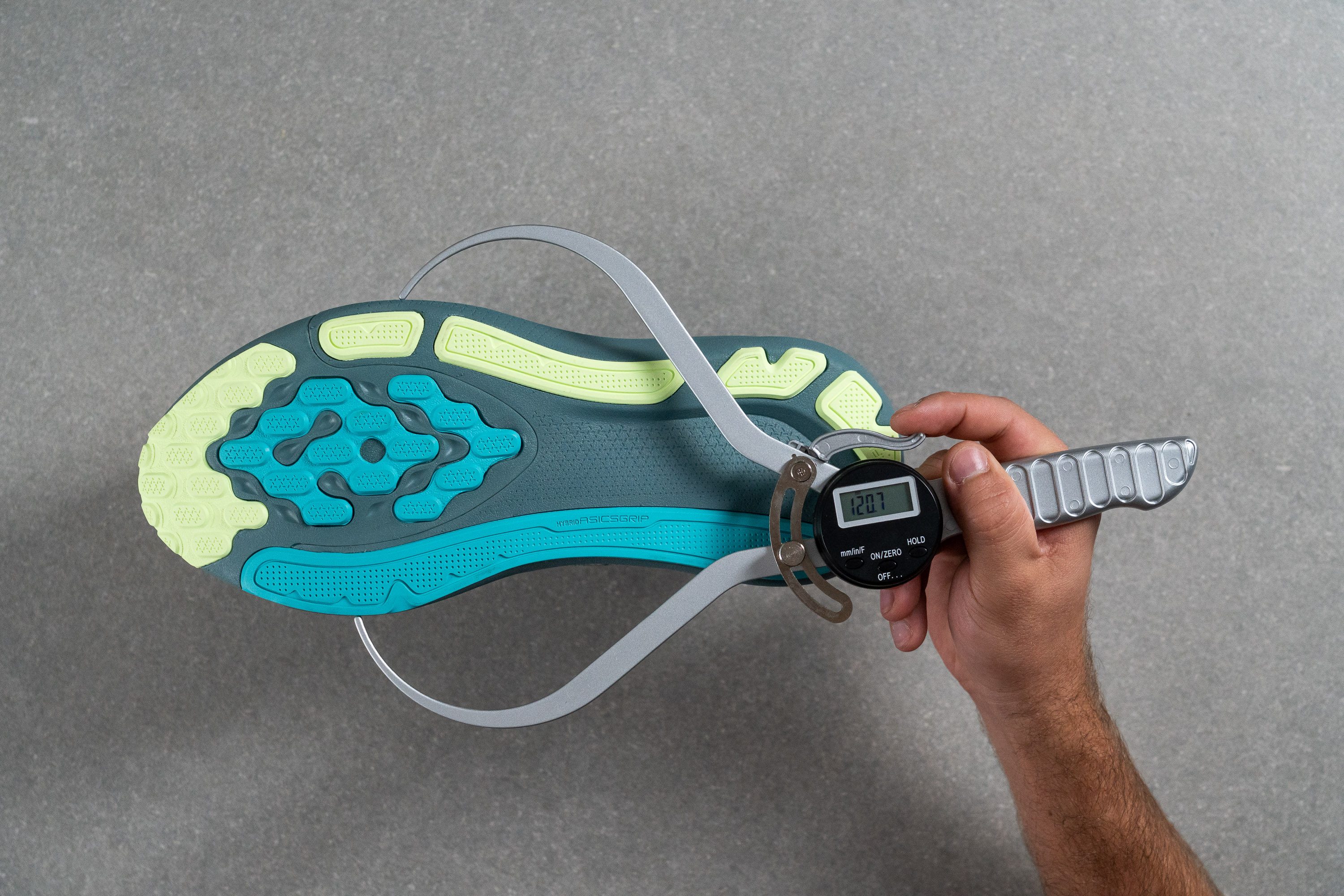
| Gel Kayano 33 | 120.7 mm |
| Average | 115.1 mm |
Midsole width - heel
The shoe features only a minimal taper through the midfoot, maintaining much of its broad platform all the way to the rear. We measured 97.1 mm in the heel, again a generously wide result.
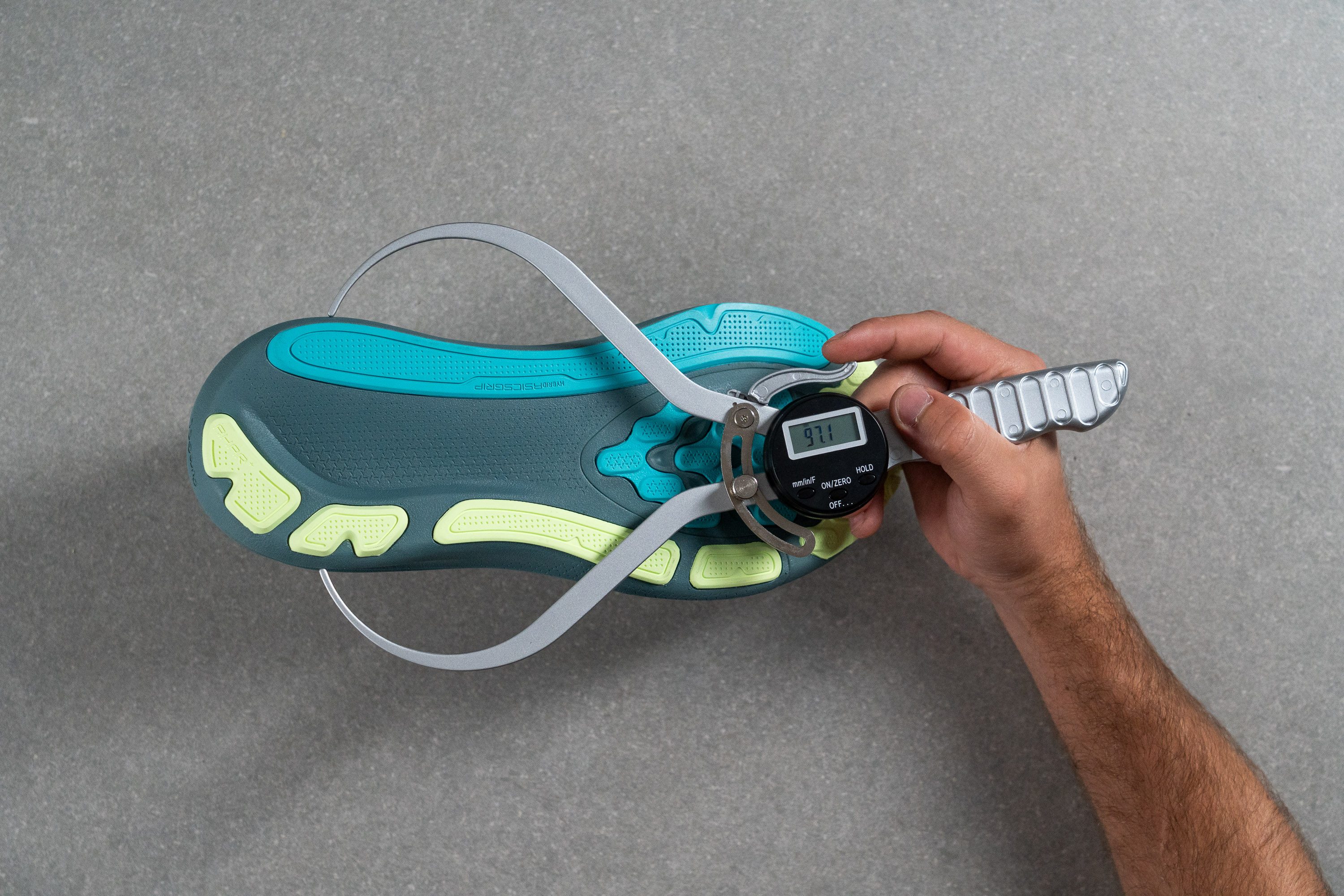
| Gel Kayano 33 | 97.1 mm |
| Average | 91.1 mm |
Durability
Toebox durability
We noticed that ASICS used a new dual-layer mesh for the Kayano 33, a construction that often translates into improved durability. Our testing supported that expectation, as the upper earned a solid 3/5 score, a positive result.
| Gel Kayano 33 | 3 |
| Average | 2.6 |
Heel padding durability
The heel padding also proved impressively durable despite its plush and heavily cushioned construction, earning a strong 4/5 score in our test. We have no durability concerns whatsoever in this area.
| Gel Kayano 33 | 4 |
| Average | 3.4 |
Outsole durability
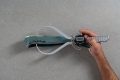
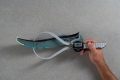
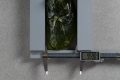
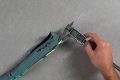
We also tested the outsole rubber and measured 1.1 mm of wear.
That's almost perfectly in line with our current lab average, indicating good abrasion resistance, although it doesn't quite reach the standout durability levels of the most hard-wearing outsoles we've tested.
| Gel Kayano 33 | 1.1 mm |
| Average | 1.1 mm |
Outsole thickness
However, as is often the case with the Kayano series, ASICS took a highly-conservative approach to outsole thickness.
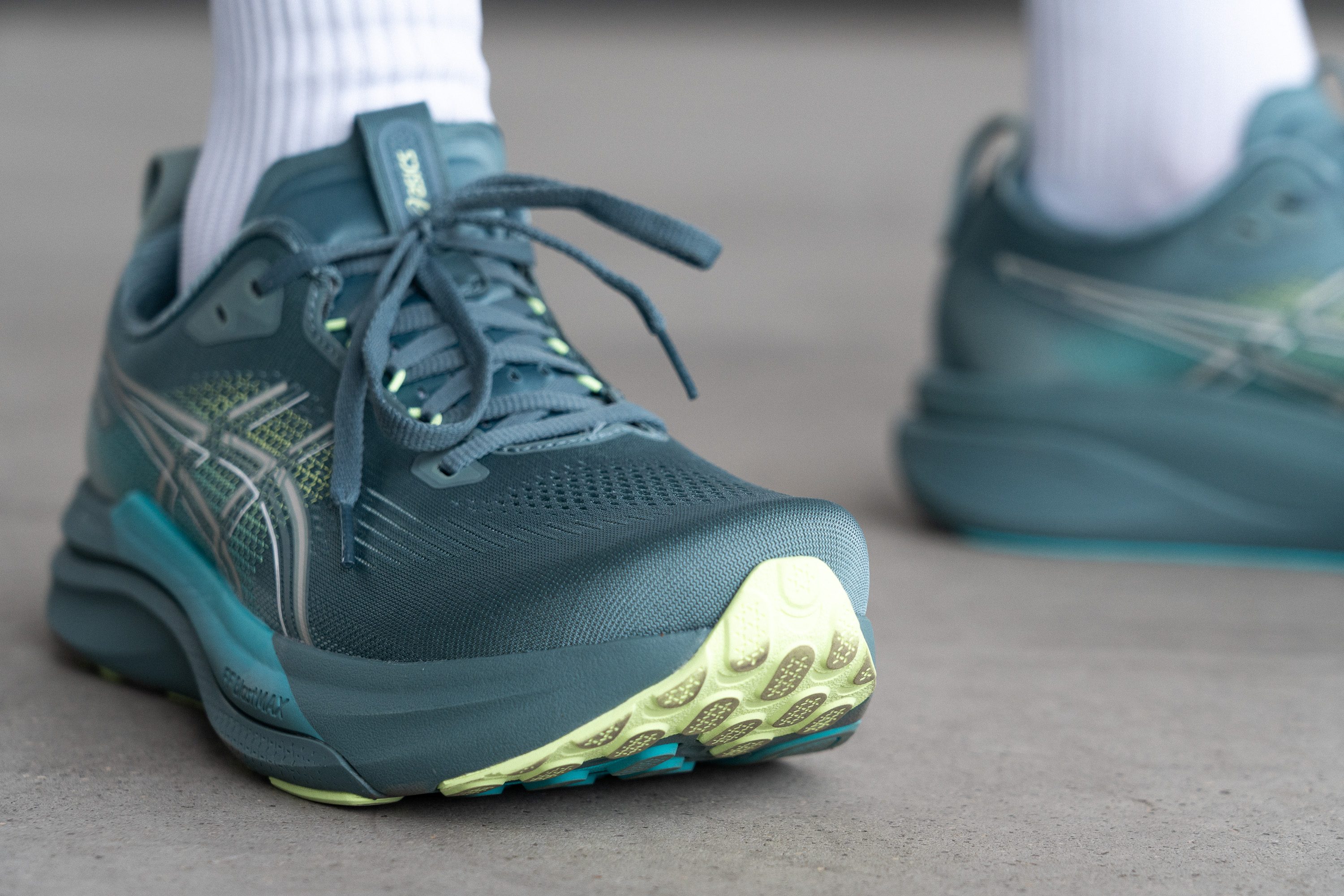
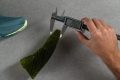
We measured a substantial 4.0 mm of rubber, a figure that certainly doesn't help reduce weight. Even so, trimming it down would have risked angering many long-time Kayano fans who expect a thick, long-lasting outsole capable of delivering years of reliable mileage.
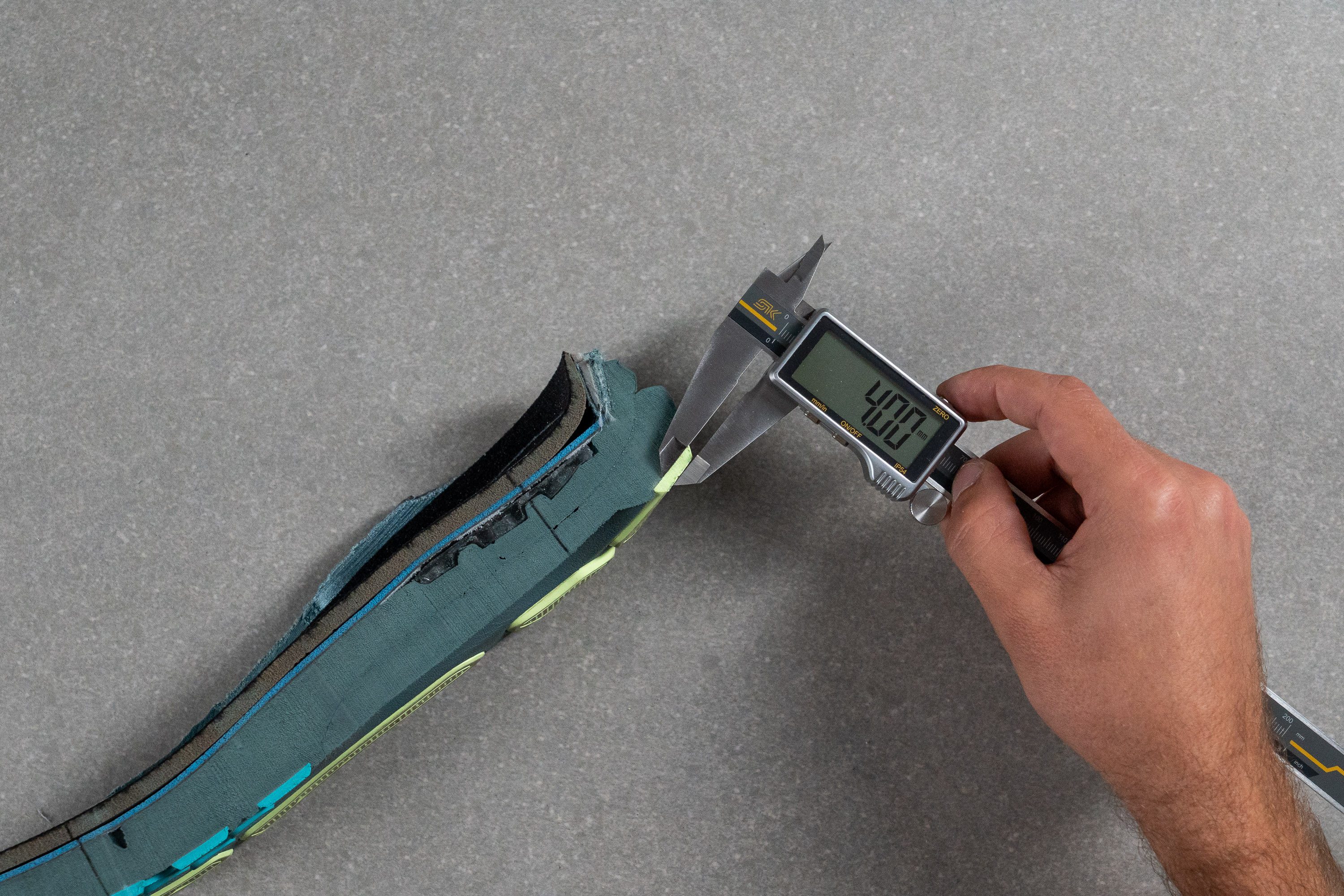
| Gel Kayano 33 | 4.0 mm |
| Average | 3.1 mm |
Misc
Insole thickness
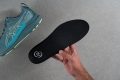
The insole is slightly thicker than average at 5.2 mm, which also helps explain the shoe's lower drying potential. A thinner insole would absorb less moisture, making it easier for sweat to evaporate and escape from the shoe.
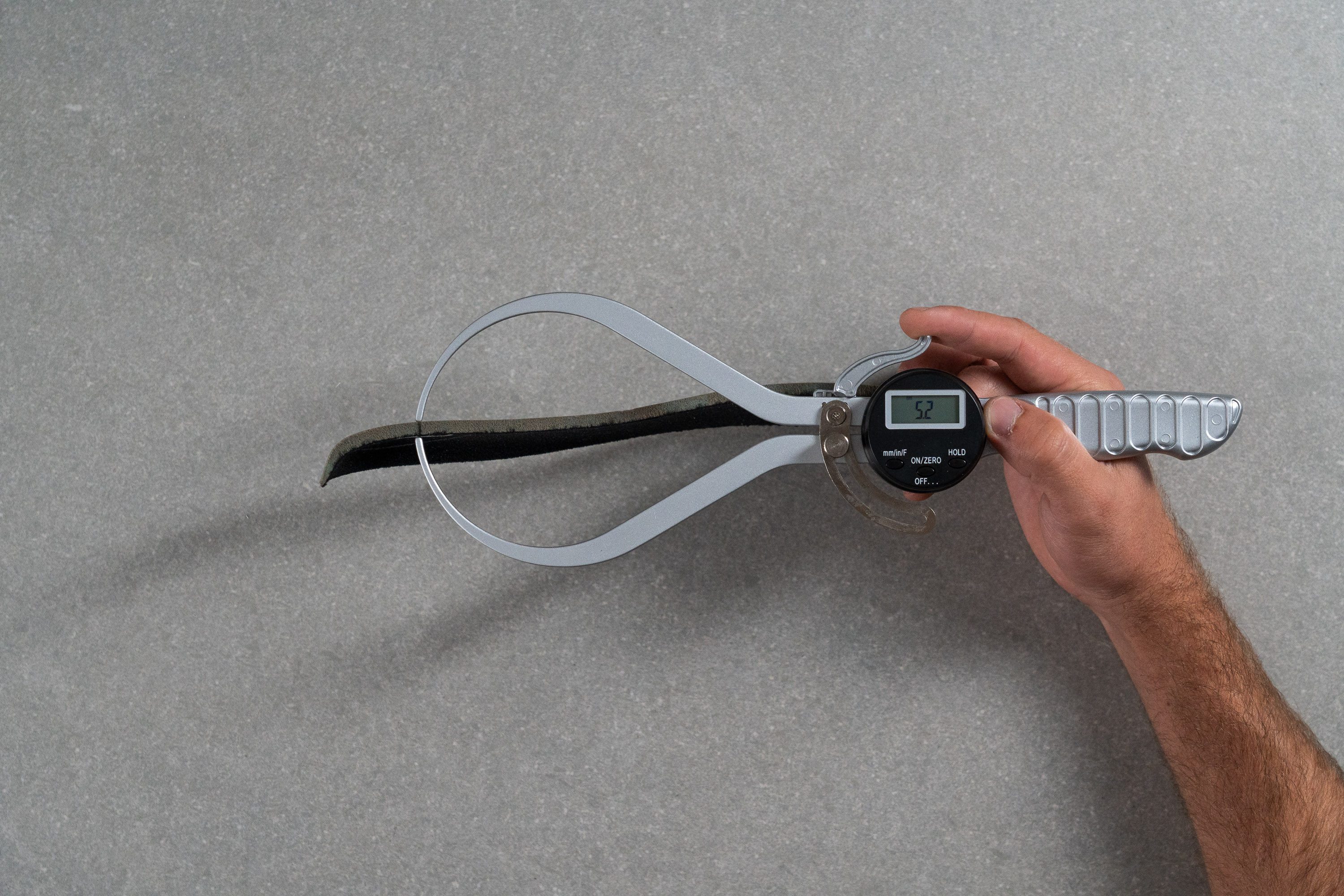
| Gel Kayano 33 | 5.2 mm |
| Average | 4.4 mm |
Removable insole
The insole remains removable and, as is customary with ASICS daily trainers, includes the shoe's carbon footprint. Interestingly, the figure has increased this year to 11.3 kg CO₂e, up from 10.3 kg CO₂e in the previous version.
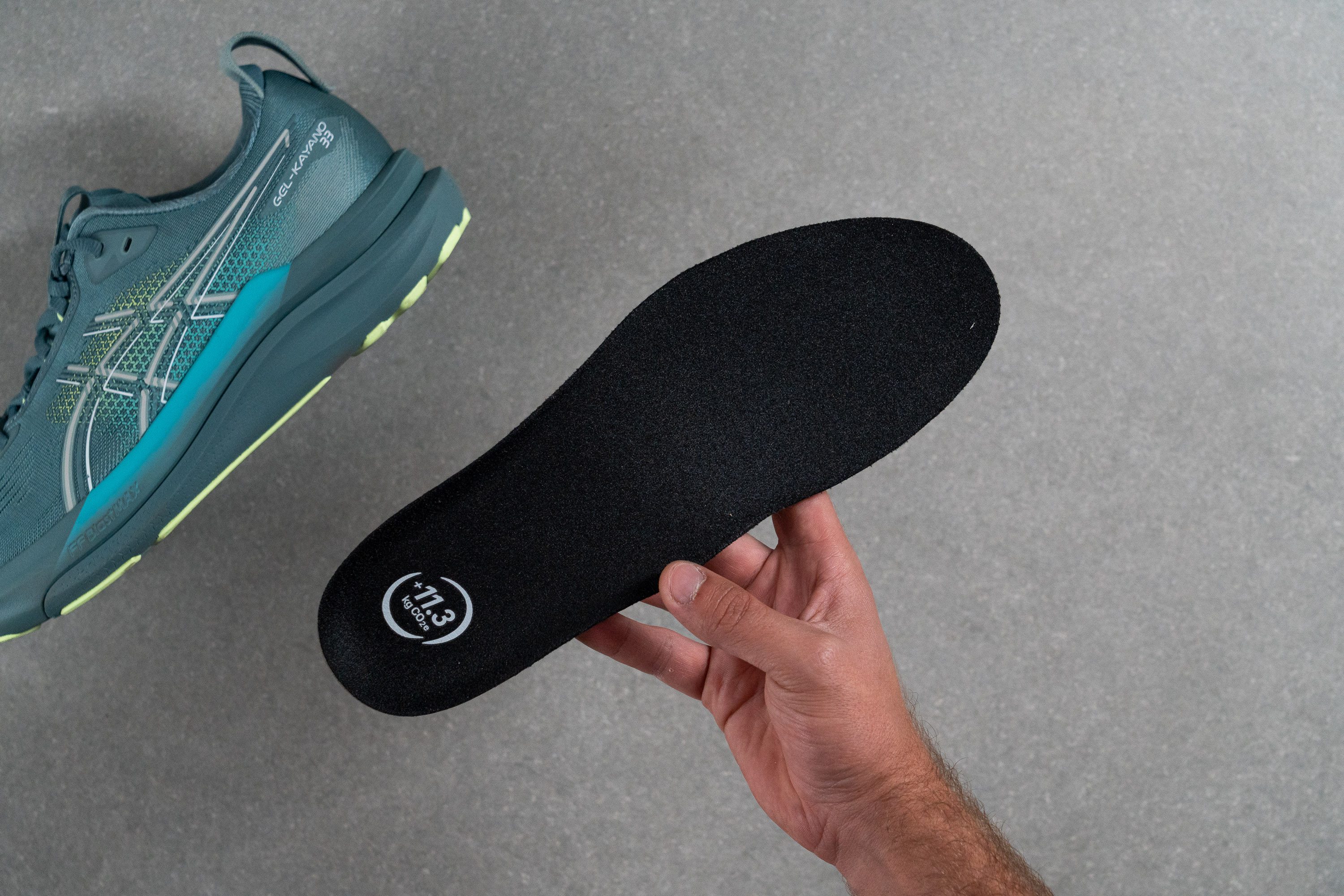
| Gel Kayano 33 | Yes |
Reflective elements
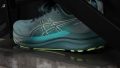
Nighttime visibility matters, and the Gel Kayano 33 delivers one of the most impressive reflective elements we've ever seen in the heel area. During low-light conditions, it lights up remarkably well and adds an extra layer of safety for runners heading out before sunrise or after sunset.
| Gel Kayano 33 | Yes |
Tongue padding
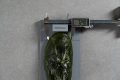
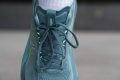
ASICS switched to a revised lacing system that uses traditional punched eyelets only at the top and bottom rows. The remaining six eyelets now rely on fabric loops, a design that we found highly effective at reducing pressure across the instep while still delivering a secure fit. However, it's also important to mention that it's a downgrade in terms of potential durability.
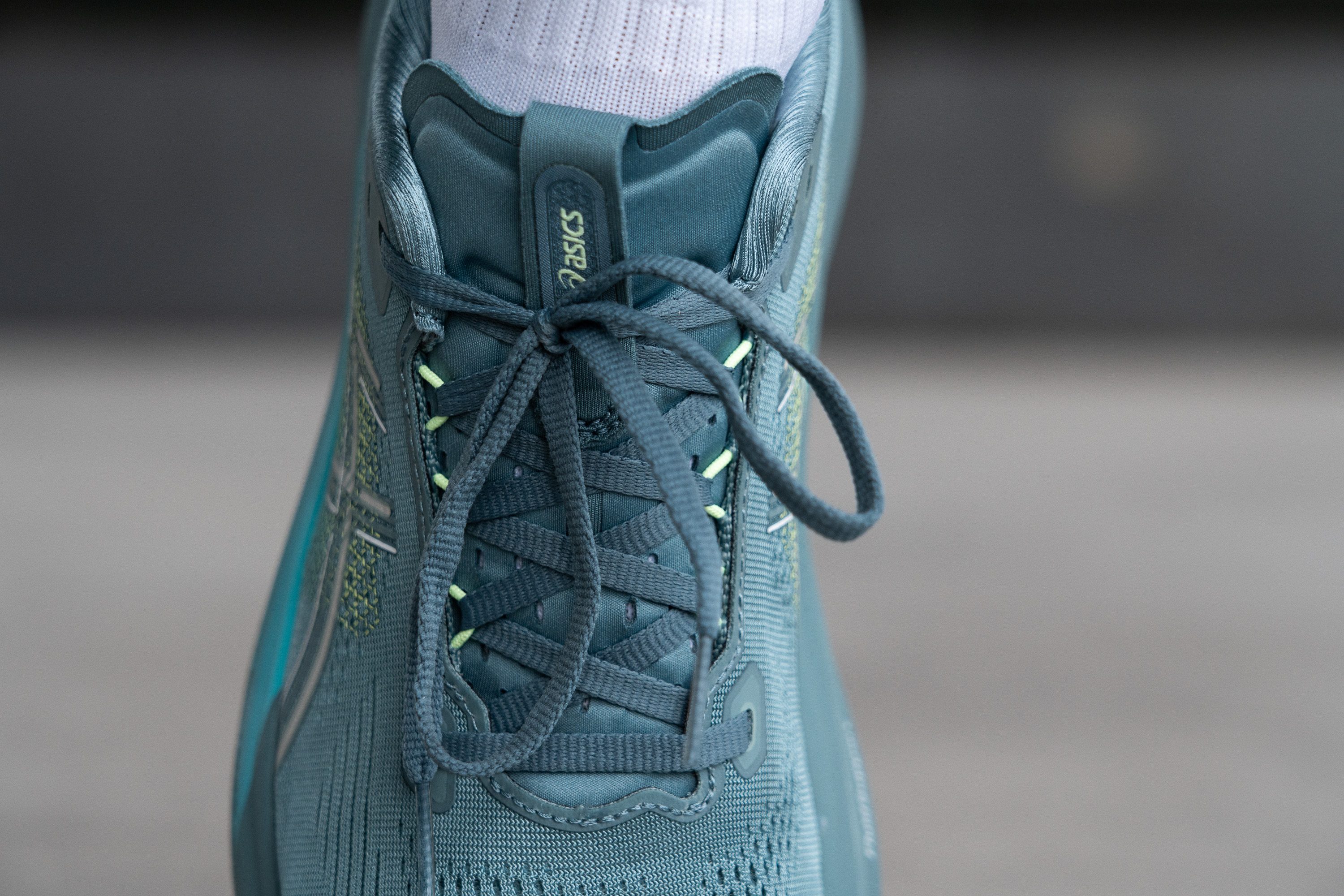
We also measured a notable increase in tongue padding, from 2.5 mm to 4.2 mm. Although ASICS had recently been moving toward thinner tongue designs across their whole lineup, this update suggests the brand recognizes that many runners still appreciate the plush-and-comfortable feel of a generously padded tongue in a daily trainer.
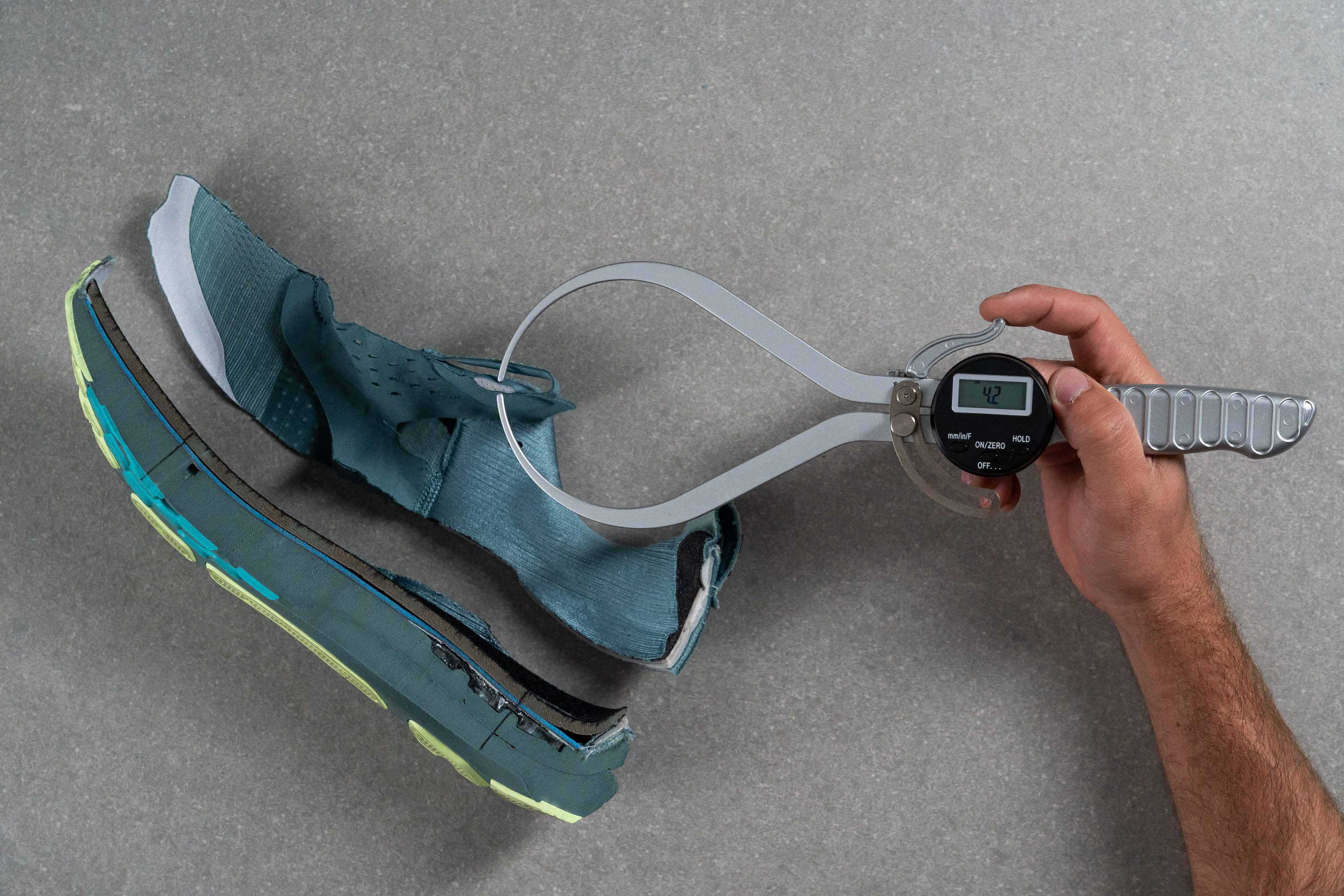
| Gel Kayano 33 | 4.2 mm |
| Average | 5.8 mm |
Tongue: gusset type
We found a semi-gusseted tongue design that does an excellent job of maintaining a secure lockdown while preventing the tongue from shifting sideways during runs.
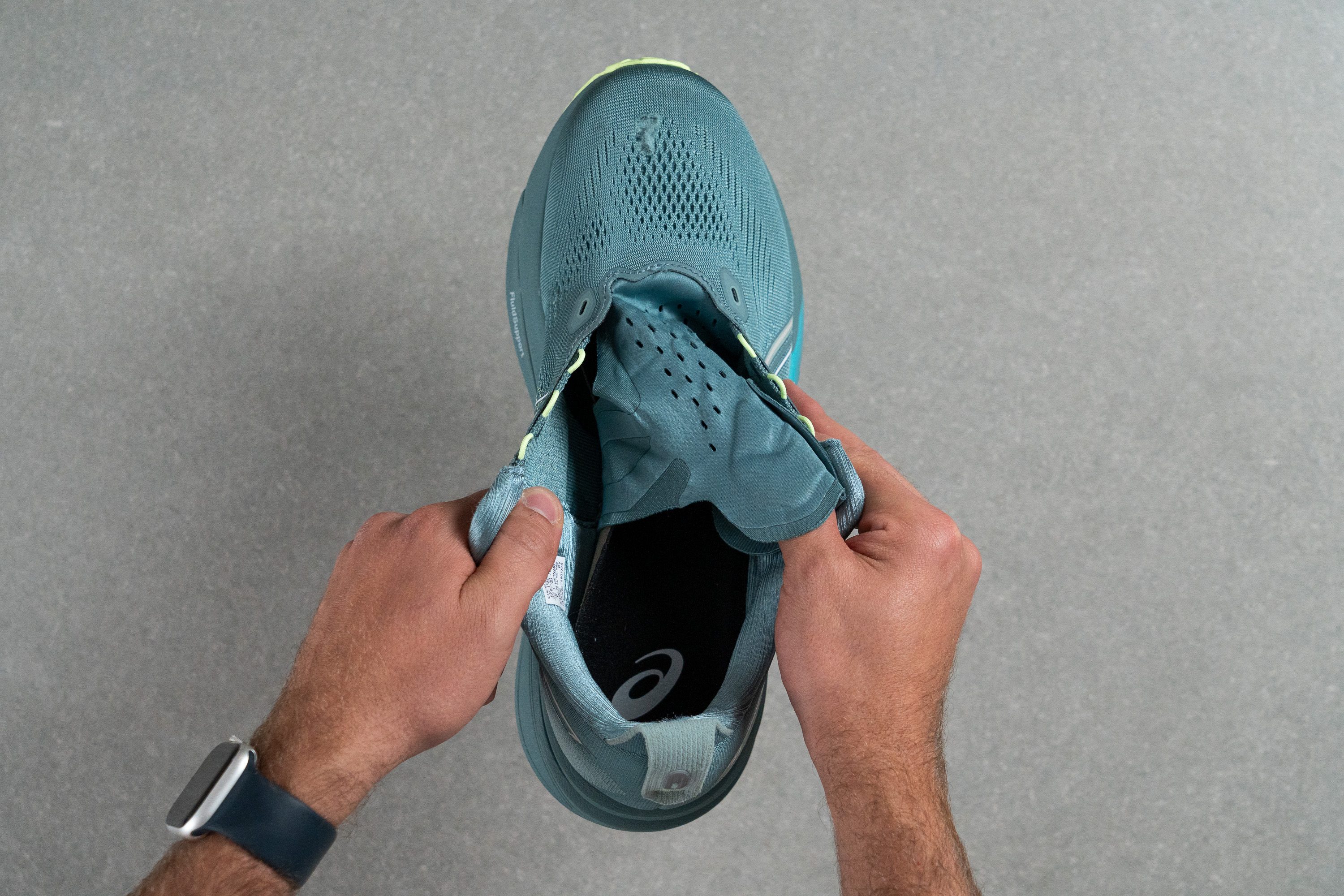
| Gel Kayano 33 | Both sides (semi) |
Heel tab
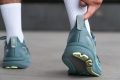
The heel features a finger-loop tab that, like many recent ASICS models, is seamlessly integrated into the collar. We found the execution outstanding, adding both convenience and a premium touch to the overall design.
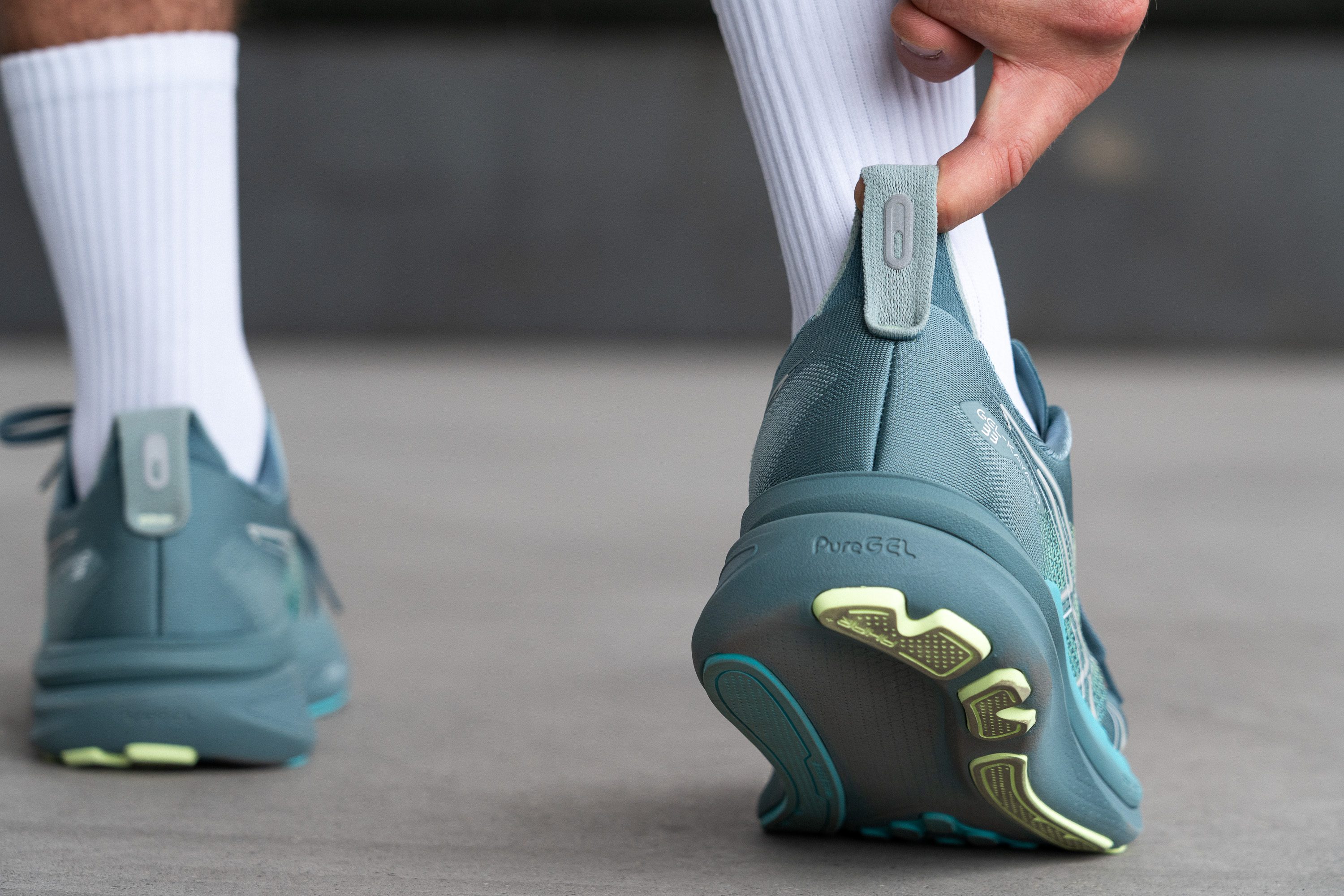
| Gel Kayano 33 | Finger loop |
Price
The price of the Gel Kayano 33 remains unchanged from its predecessor, which is welcome news given how inflationary the running shoe market has become in recent years.
At the same time, we believe that ASICS would have struggled to justify a higher price, as the shoe was already positioned clearly within the premium stability category.
| Gel Kayano 33 | $170 |
| Average | $157 |