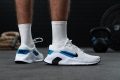
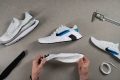

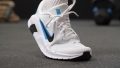



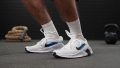
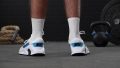


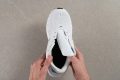
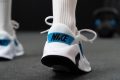
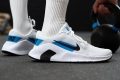
Our verdict
- Cross-training/HIIT 82
- Cardio 83
- Weightlifting 74
Pros
- Great entry-level cross-trainer
- High shock absorption
- Firm and stable base for easy lifting
- Solid medium fit with a wide option
- Exceptionally flexible forefoot
- Lighter than average
- Great durability for the price
Cons
- Lacks lateral support
- Low toebox height
Awards
- Top pick in best Nike gym shoes
- Top pick in best Nike workout shoes
- Top 29% most popular training shoes
Comparison
The most similar training shoes compared
+ + Add a shoe | |||||
|---|---|---|---|---|---|
| Our score | 79 Good | 90 Superb | 86 Great | 84 Great | |
| Price | $80 | $150 | $140 | $80 | |
| Use | WorkoutCross-trainingGymHIITJumping ropeCardio | WorkoutCross-trainingGymHIITJumping ropeCardio | CrossfitWorkoutCross-trainingGymHIITJumping ropeCardio | WorkoutCross-trainingGymHIITJumping ropeCardio | |
| Shock absorption | High | High | Moderate | High | |
| Energy return | Low | High | Moderate | Moderate | |
| Traction | Low | High | Low | Low | |
| Drop lab | 9.8 mm | 6.8 mm | 6.4 mm | 8.8 mm | |
| Heel stack lab | 26.8 mm | 29.2 mm | 24.1 mm | 30.6 mm | |
| Forefoot | 17.0 mm | 22.4 mm | 17.7 mm | 21.8 mm | |
| Weight lab | 9.1 oz / 258g | 8.1 oz / 230g | 10.5 oz / 298g | 10.4 oz / 296g | |
| Lightweight | ✓ | ✓ | ✓ | ✓ | |
| Breathability | Moderate | Breathable | Moderate | Breathable | |
| Width / fit | Medium | Narrow | Wide | Wide | |
| Toebox width | Medium | Medium | Wide | Medium | |
| Size | True to size | - | Full size small | Slightly small | |
| Midsole softness | Firm | Balanced | Firm | Firm | |
| Stiffness | Flexible | Flexible | Flexible | Moderate | |
| Torsional rigidity | Moderate | Moderate | Moderate | Stiff | |
| Heel counter stiffness | Flexible | Flexible | Flexible | Moderate | |
| Toebox durability | Decent | Bad | Bad | Bad | |
| Heel padding durability | Good | Good | Decent | Bad | |
| Outsole durability | Good | Decent | Good | Decent | |
| Midsole width - forefoot | Wide | Wide | Average | Wide | |
| Midsole width - heel | Average | Average | Average | Wide | |
| Widths available | NormalWideX-Wide | Normal | NormalWide | Normal | |
| Insole thickness | Average | Average | Very thick | Average | |
| Outsole thickness | Average | Thin | Average | Average | |
| Outsole hardness | - | - | - | Hard | |
| Heel tab | None | None | None | Finger loop | |
| Tongue: gusset type | None | Both sides (full) | Both sides (full) | None | |
| Tongue padding | Average | Average | Average | Average | |
| Ranking | #29 Bottom 25% | #5 Top 13% | #11 Top 29% | #18 Top 47% | |
| Popularity | #11 Top 29% | #12 Top 31% | #17 Top 44% | #10 Top 26% |

Who should buy
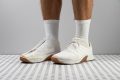
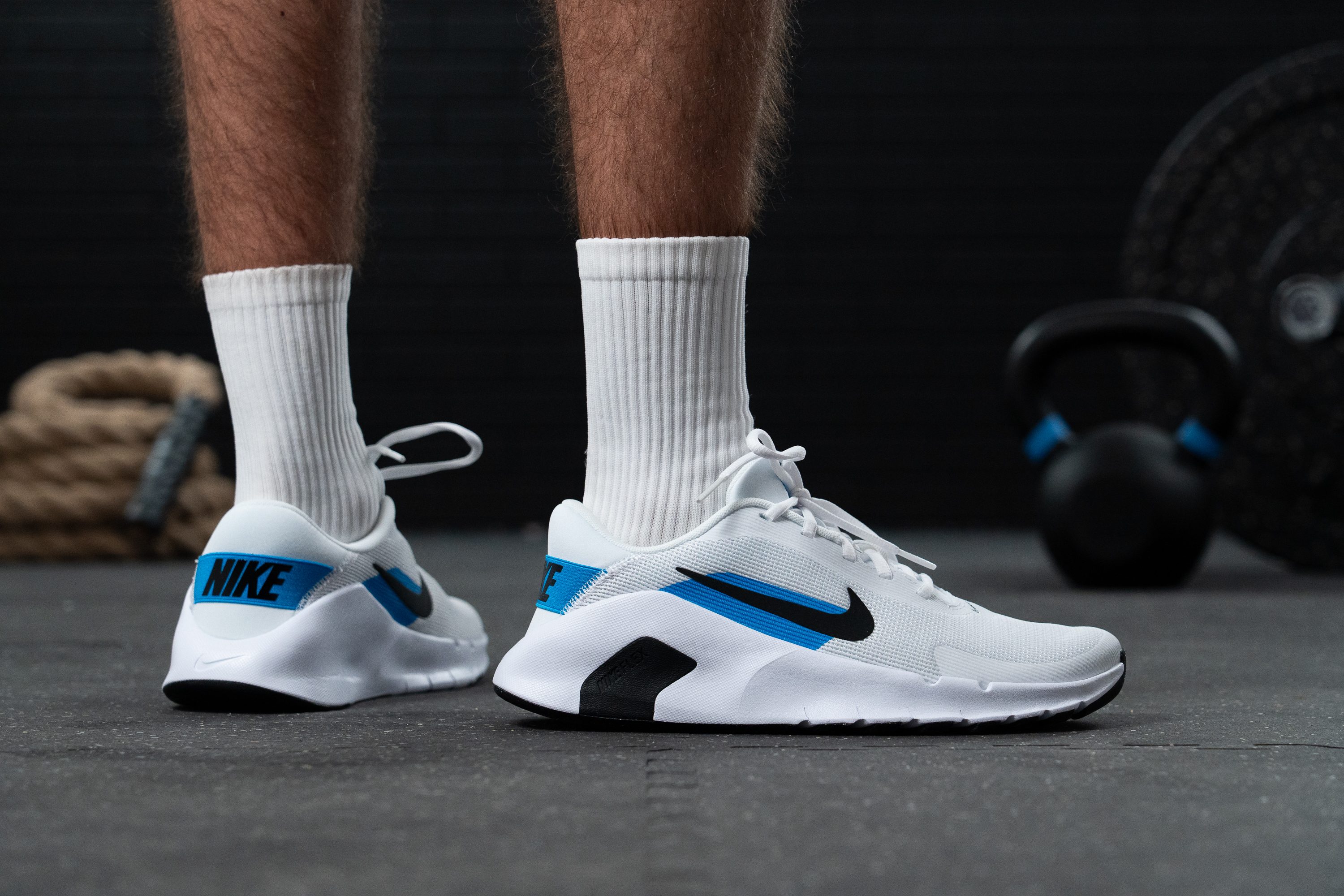
We believe that the Nike Flex Train is a great option for beginner gym goers who:
- need a do-it-all trainer
- focus on HIIT, cardio, machines, and strength training with lighter weights
- want a durable pair on a limited budget
Who should NOT buy
If you have moderate-to-severe overpronation or simply want more reliable lateral stability even in a cheap trainer, the Nike MC Trainer 3 is the way to go. It feels like a takedown Nike Metcon!
And if you don't mind stretching your gym shoe budget for better overall performance and the ability to lift heavier weights, we highly recommend the Nike Free Metcon 7.
Cushioning
Shock absorption
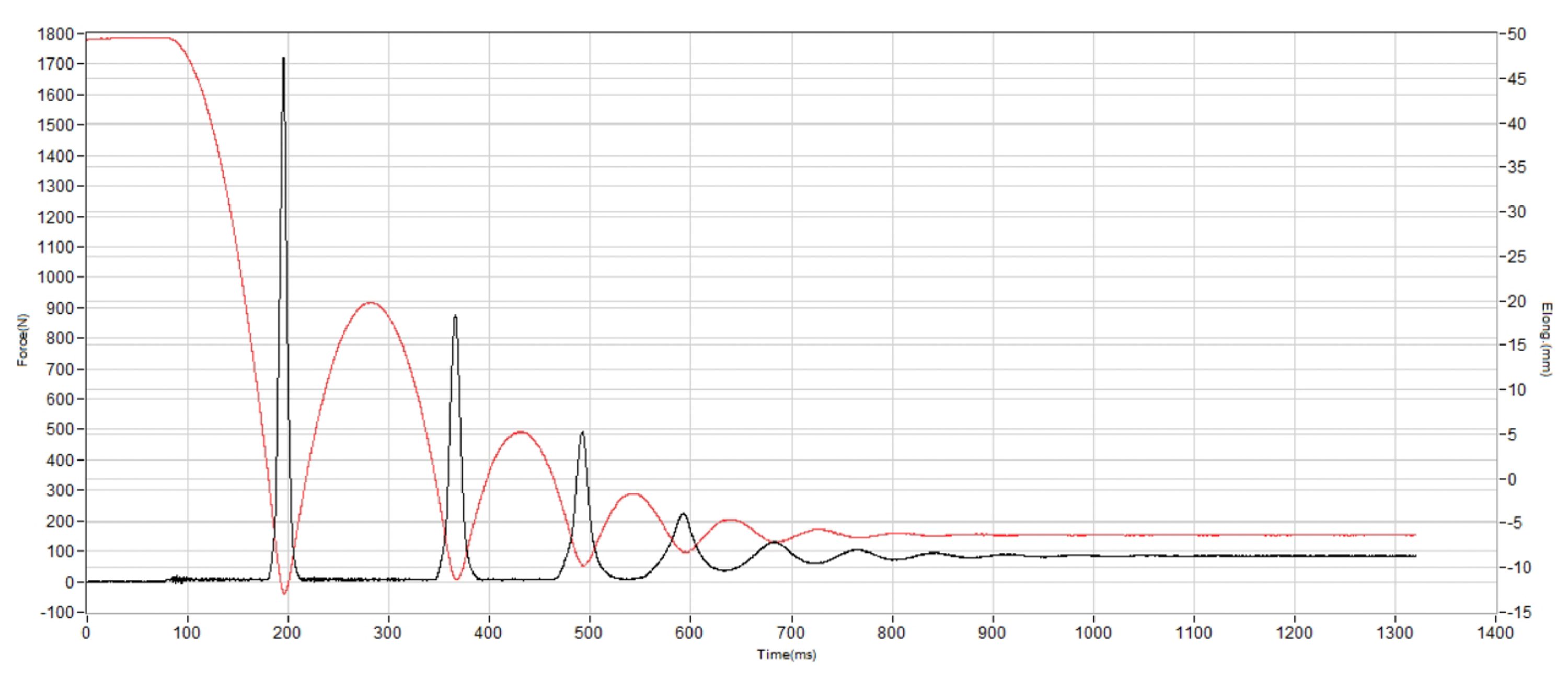
The Nike Flex Train appears to be a budget-friendly version of the Nike Free Metcon 7, and much like the latter, it offers more impact protection than the average cross-trainer, particularly in the rearfoot.
We measured the Flex Train's shock absorption at a high 104 SA in the heel and a standard 58 SA in the forefoot. It ensures much better-protected landings for plyometrics than the other trainers in its price range.
But if you prefer better cushioning in the ball-of-foot area (for cardio and aerobics), the Nike MC Trainer 3 showed a higher forefoot score of 83 SA.
| Flex Train | 104 SA |
| Average | 83 SA |
Energy return
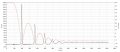
In addition to keeping landings safe, the Frex Train's midsole also has a touch of rebound. Nothing crazy as its energy return is still below the average at 49.3% in the heel and 49.6% in the forefoot. But it's just enough to prevent the ride from feeling dull.
| Flex Train | 49.6% |
| Average | 55.8% |
Heel stack
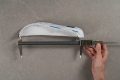
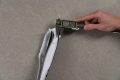
Even though our caliper recorded a slightly above-average heel stack of 26.8 mm, it doesn't feel excessively tall or towering.
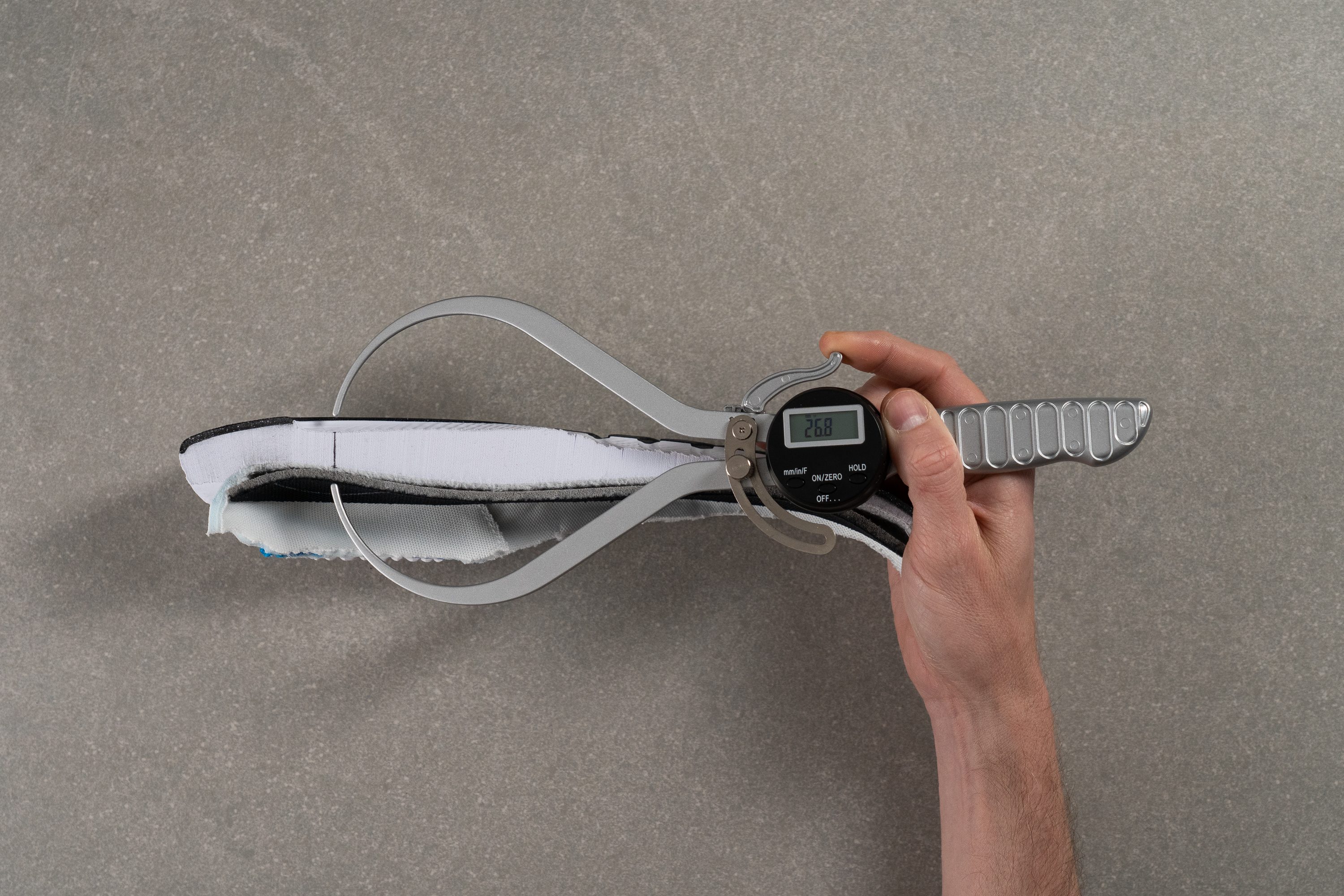
| Flex Train | 26.8 mm |
| Average | 24.1 mm |
Forefoot stack
The shoe's forefoot stack proved to be within the average at 17.0 mm.
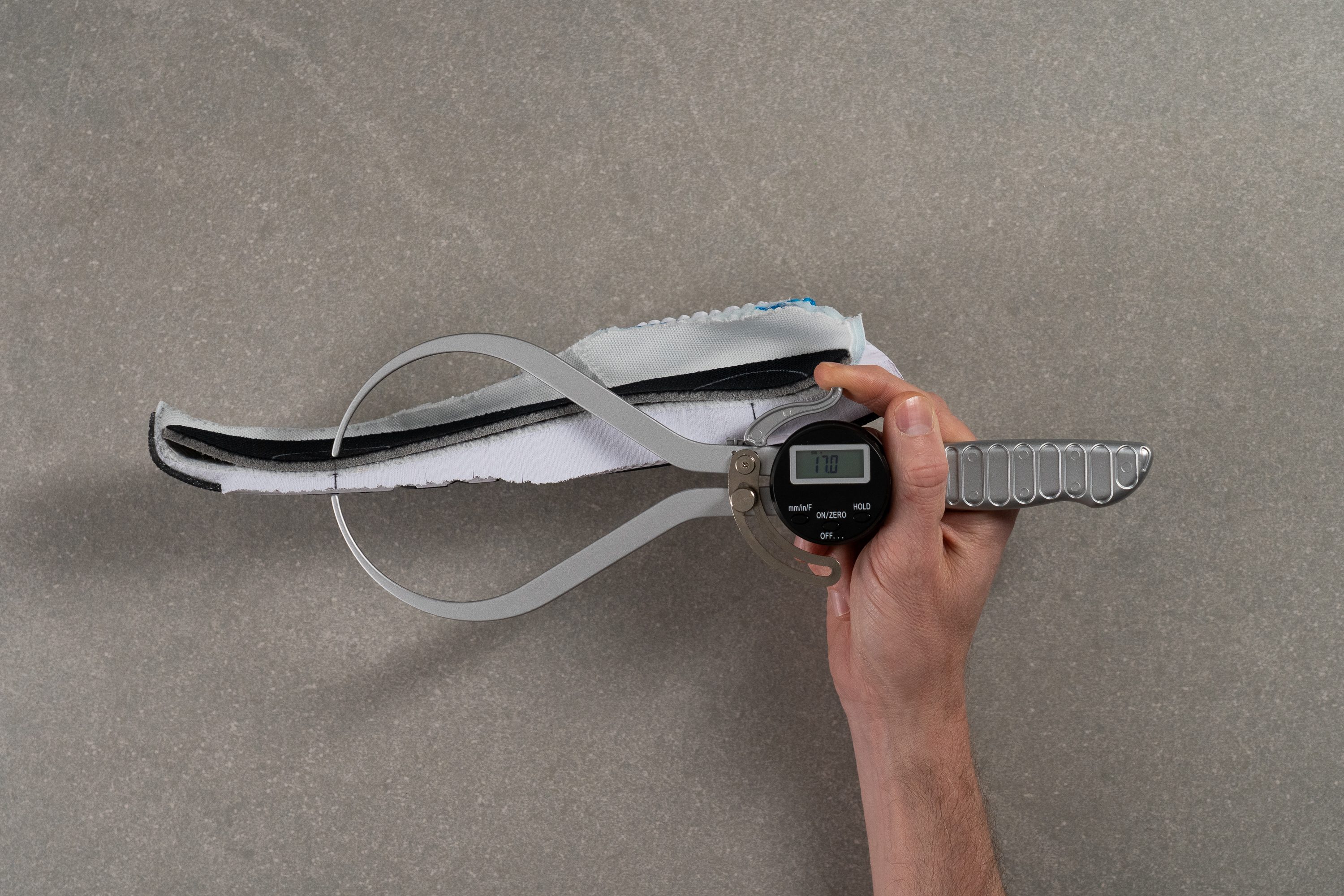
| Flex Train | 17.0 mm |
| Average | 17.7 mm |
Drop
The difference in stack heights results in a slightly above-average drop of 9.8 mm. It is an optimal setup for beginner gym goers as it feels familiar to most running shoes and sneakers on the market.
It also feels more comfortable for treadmill and elliptical workouts, as well as for aerobic classes, putting less strain on the Achilles and calves.
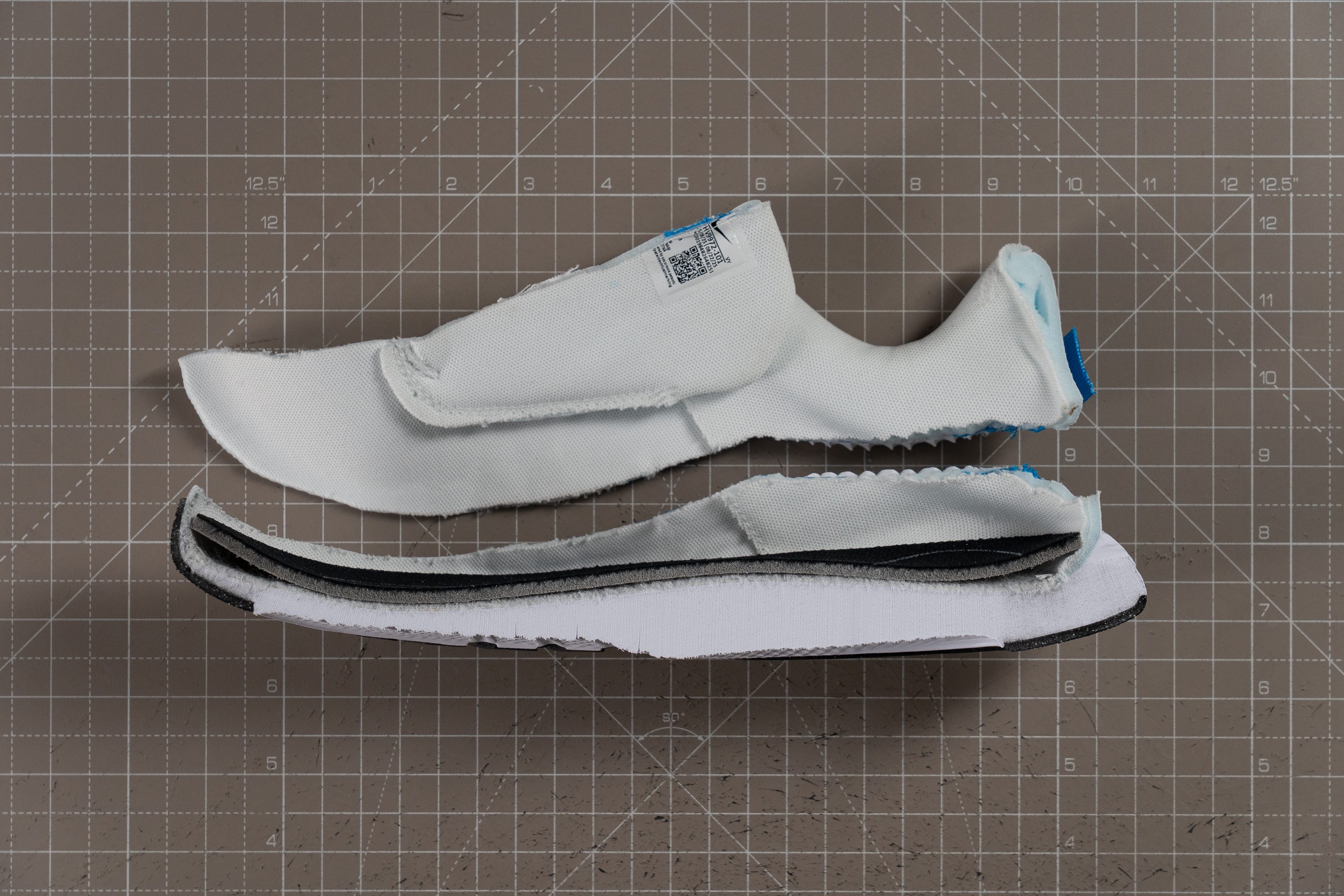
| Flex Train | 9.8 mm |
| Average | 6.4 mm |
Midsole softness
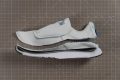
The Nike Flex Train relies on a basic full-length foam midsole made of firm EVA.
It is not easily compressed with a high durometer reading of 48.5 AC, making it feel stable underfoot.
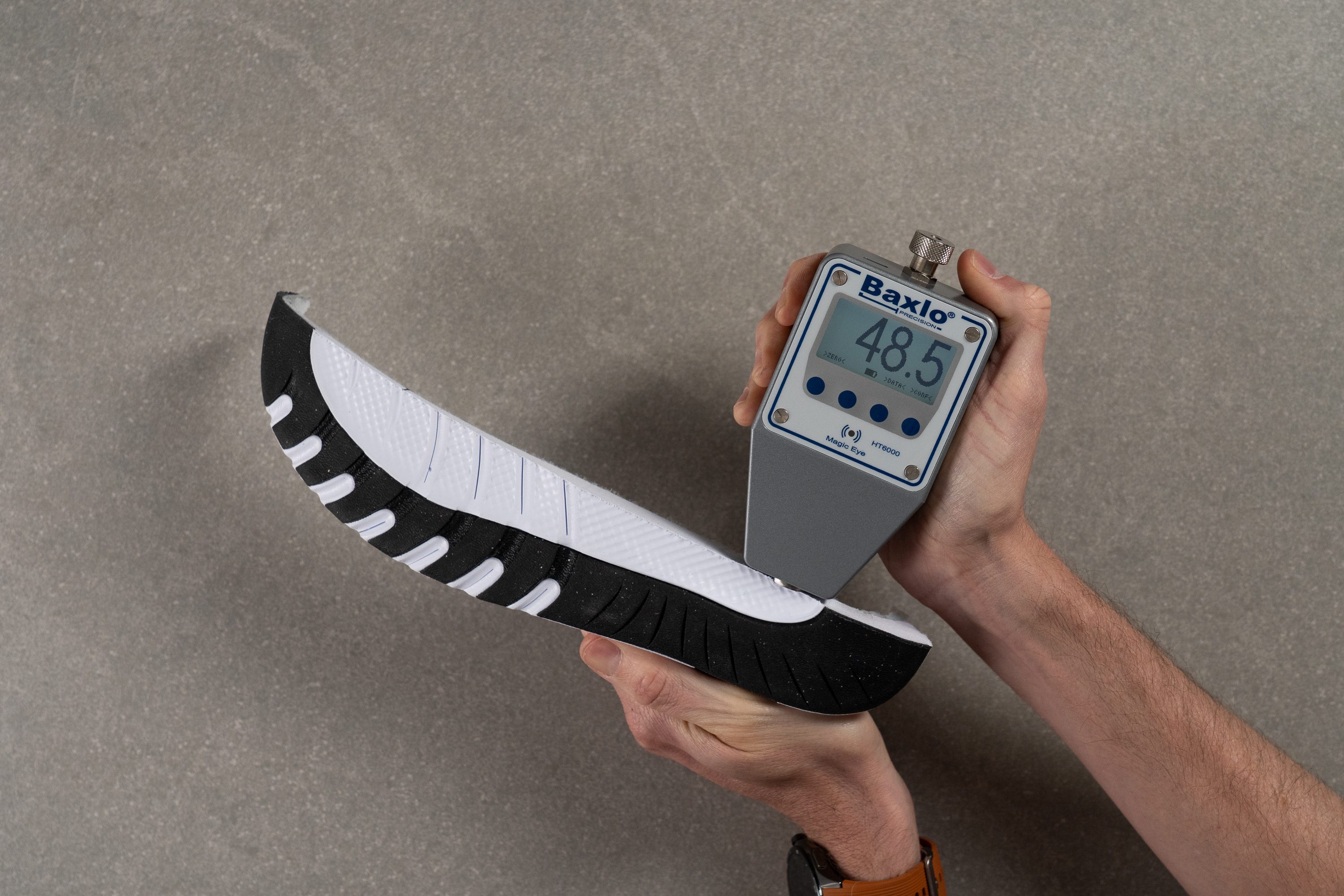
| Flex Train | 48.5 AC |
| Average | 48.8 AC |
Size and fit
Size
Nike Flex Train fits true to size (57 votes).
Internal length
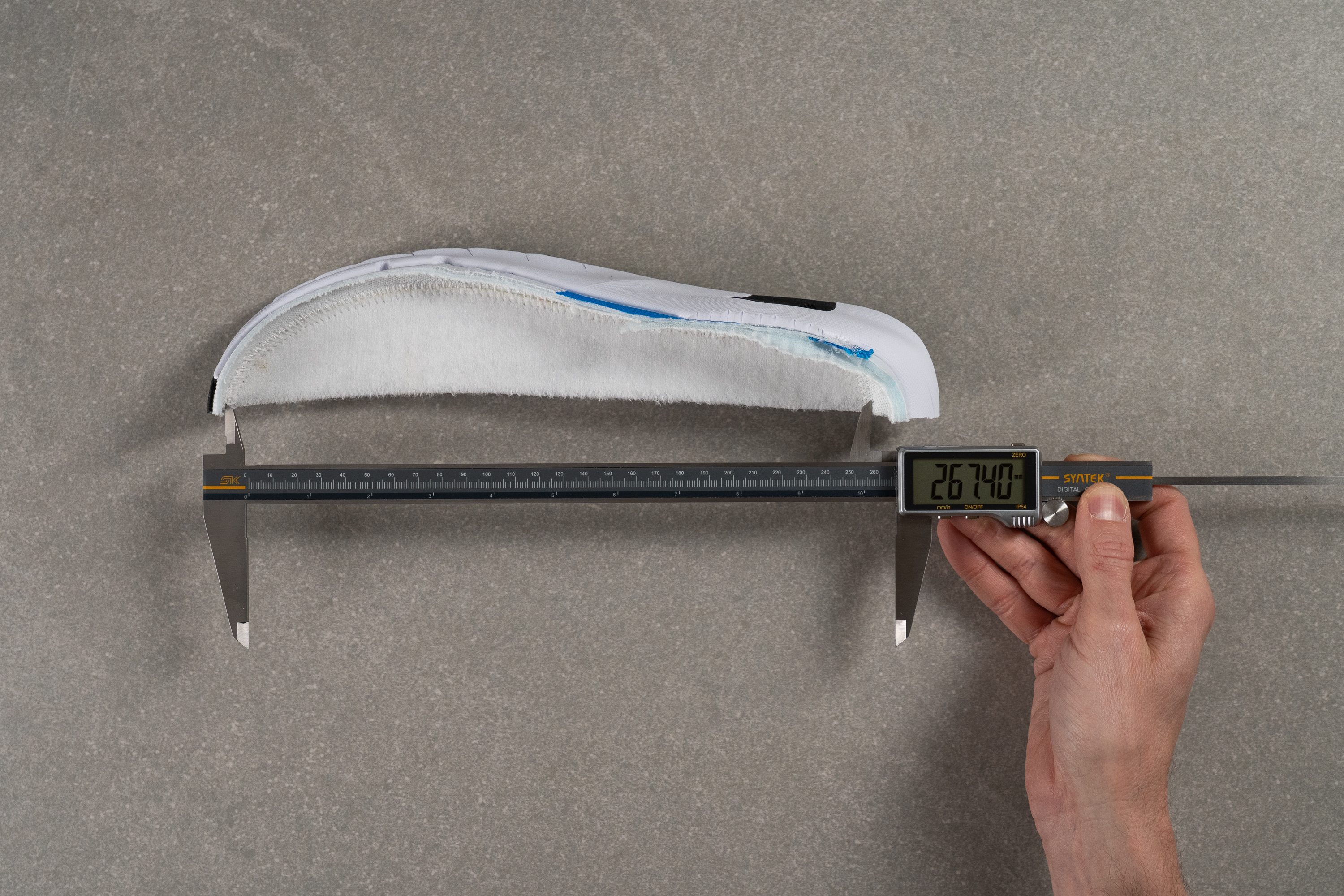
| Flex Train | 267.4 mm |
| Average | 268.7 mm |
Width / Fit
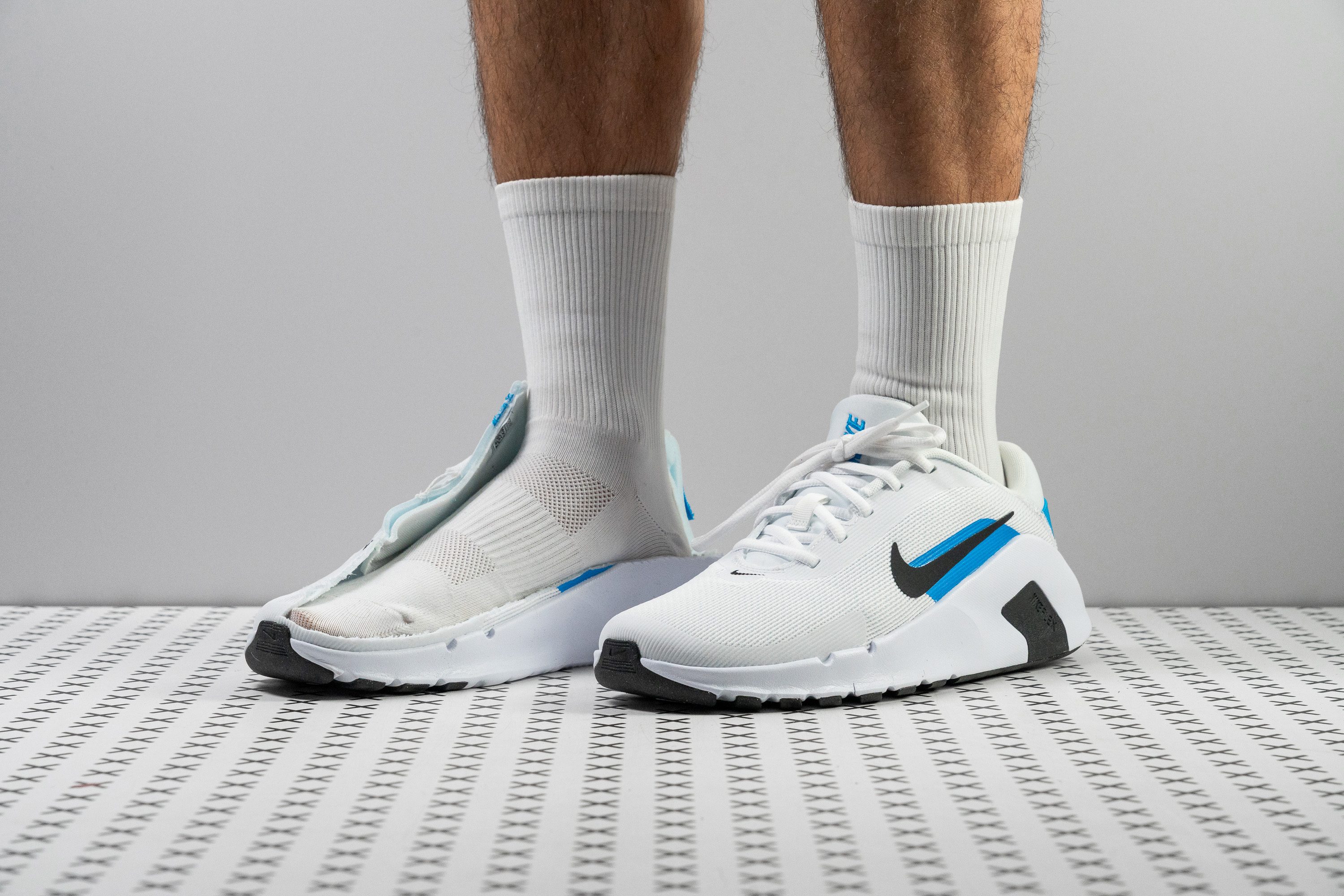
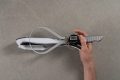
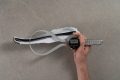
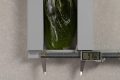
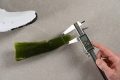
We created a one-to-one gel cast of the Frex Train's interiors by filling them with custom liquid and letting it solidify in the fridge.
Measuring the replica's widest area with a digital caliper, we recorded a solid medium-width reading of 97.6 mm.
But if you need even more forefoot space, this trainer is also available in a wide version.
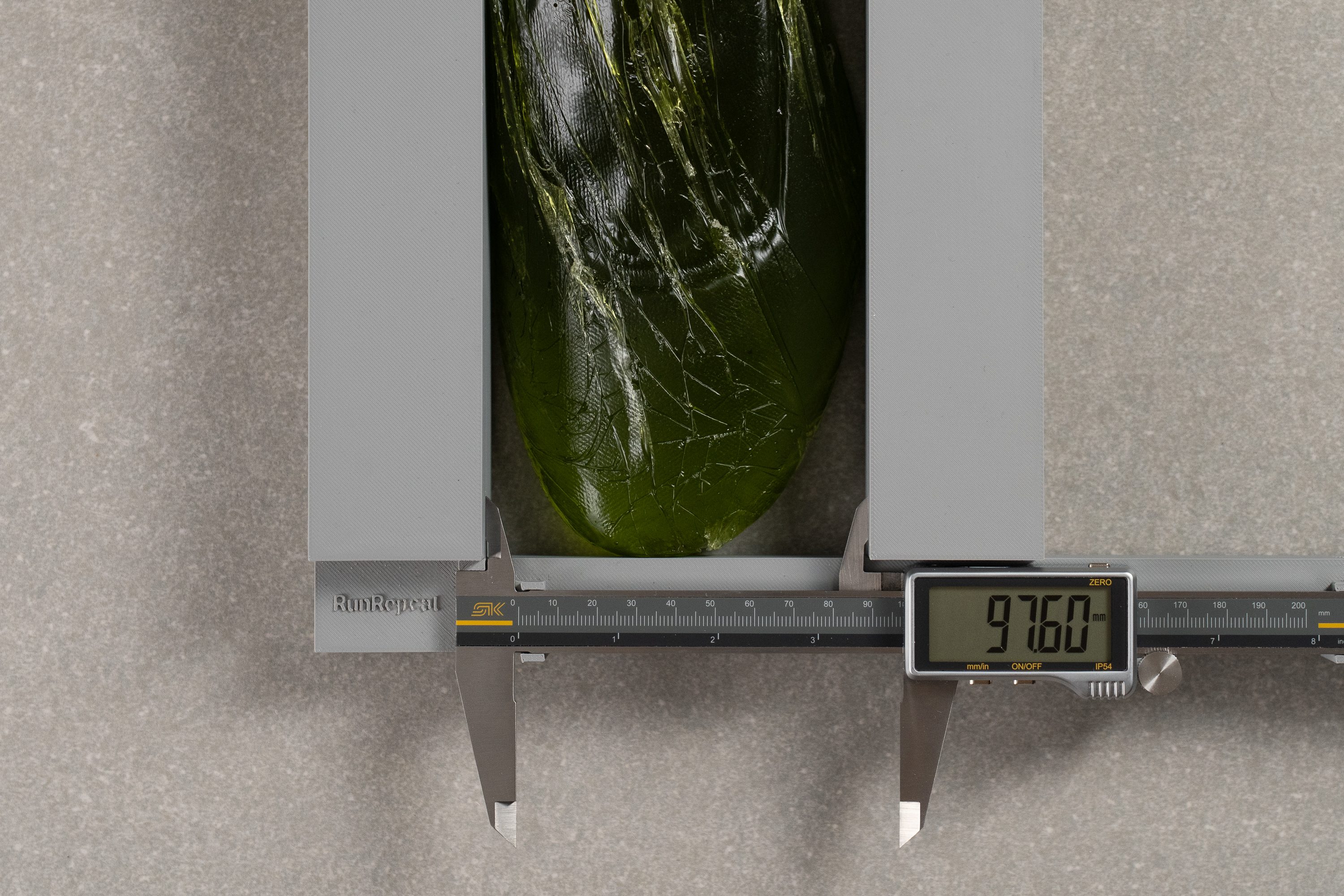
| Flex Train | 97.6 mm |
| Average | 96.2 mm |
Toebox width
And looking at the shape of its toebox, we didn't see any aggressive tapering in the Flex Train. Its standard dimensions also showed up in our caliper measurement of 73.7 mm in the big toe area.
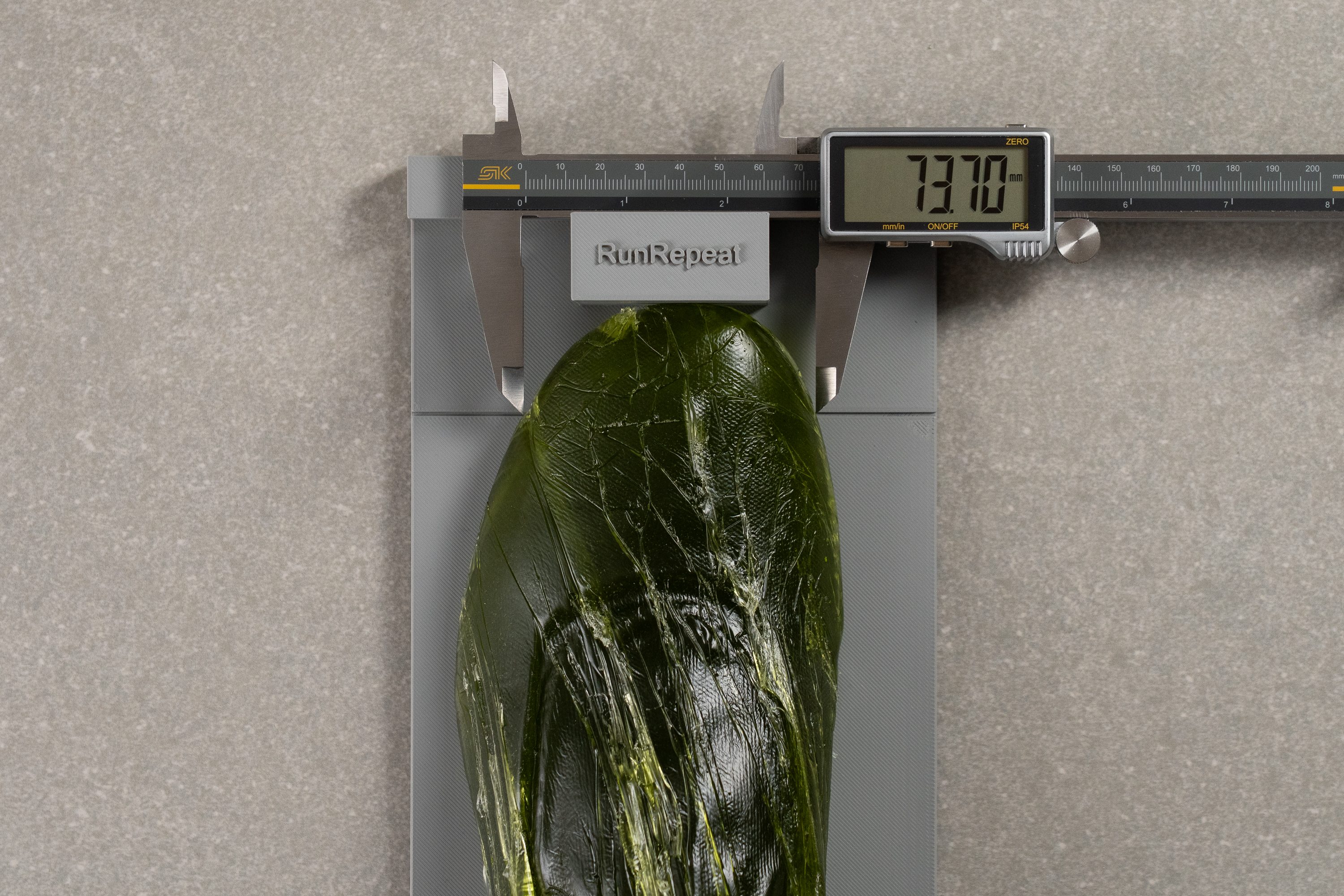
| Flex Train | 73.7 mm |
| Average | 73.4 mm |
Toebox height
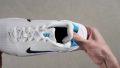
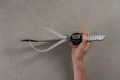
However, this Nike trainer can feel restrictive on the toes, as we found its vertical space rather limited.
With a below-average toebox height of 25.3 mm, the shoe's upper material sits rather close to the foot.
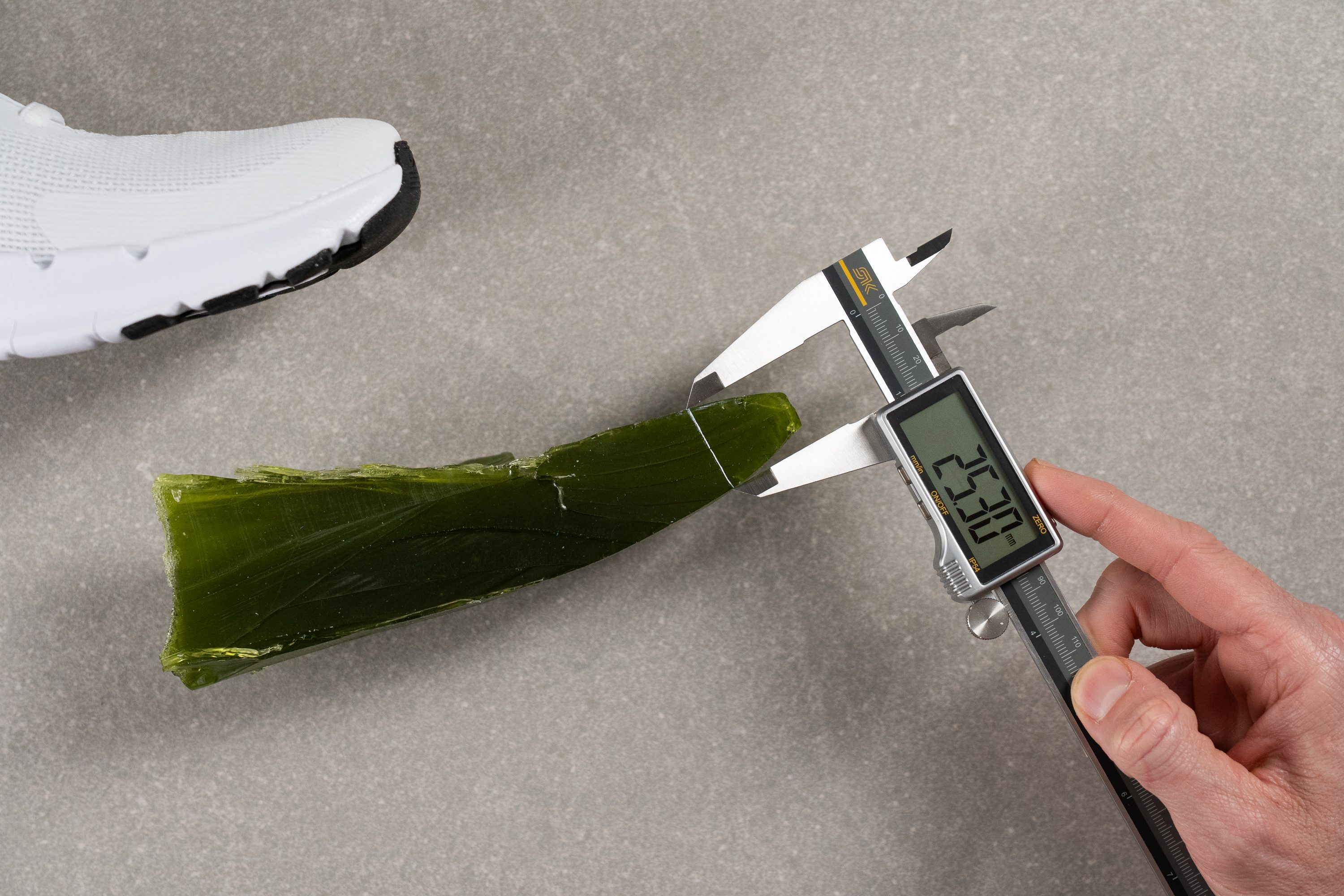
| Flex Train | 25.3 mm |
| Average | 27.2 mm |
Traction / Grip
Traction test
With a moderate friction coefficient of 0.27, we found the Nike Flex Train sufficiently grippy for a wide range of gym uses. Its average traction prevents slips during box-jump landings, multi-directional aerobic movements, and other dynamic exercises.
But it's not the tackiest of training shoes, if that's what you prioritize.
| Flex Train | 0.27 |
| Average | 0.34 |
Outsole design
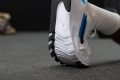
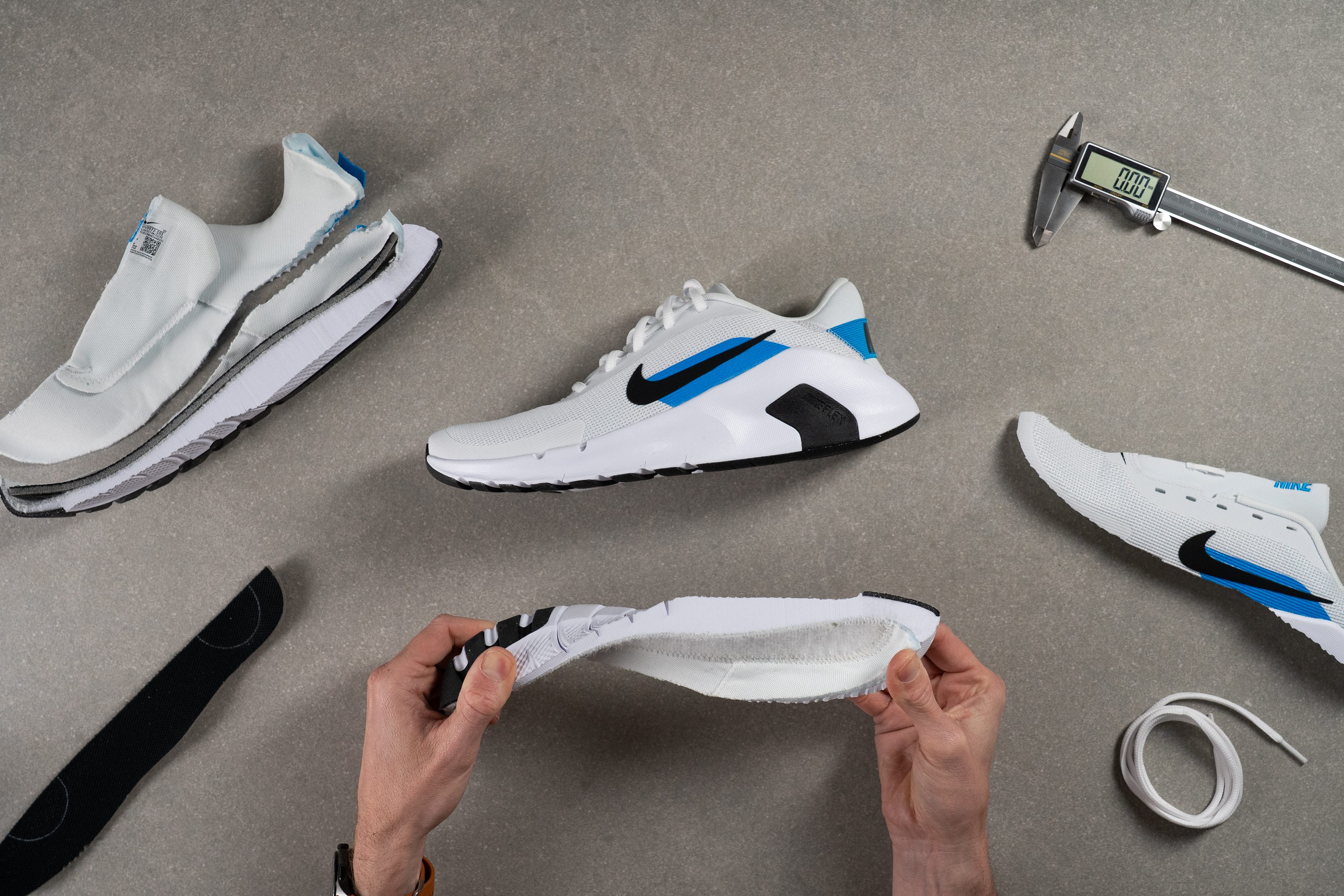
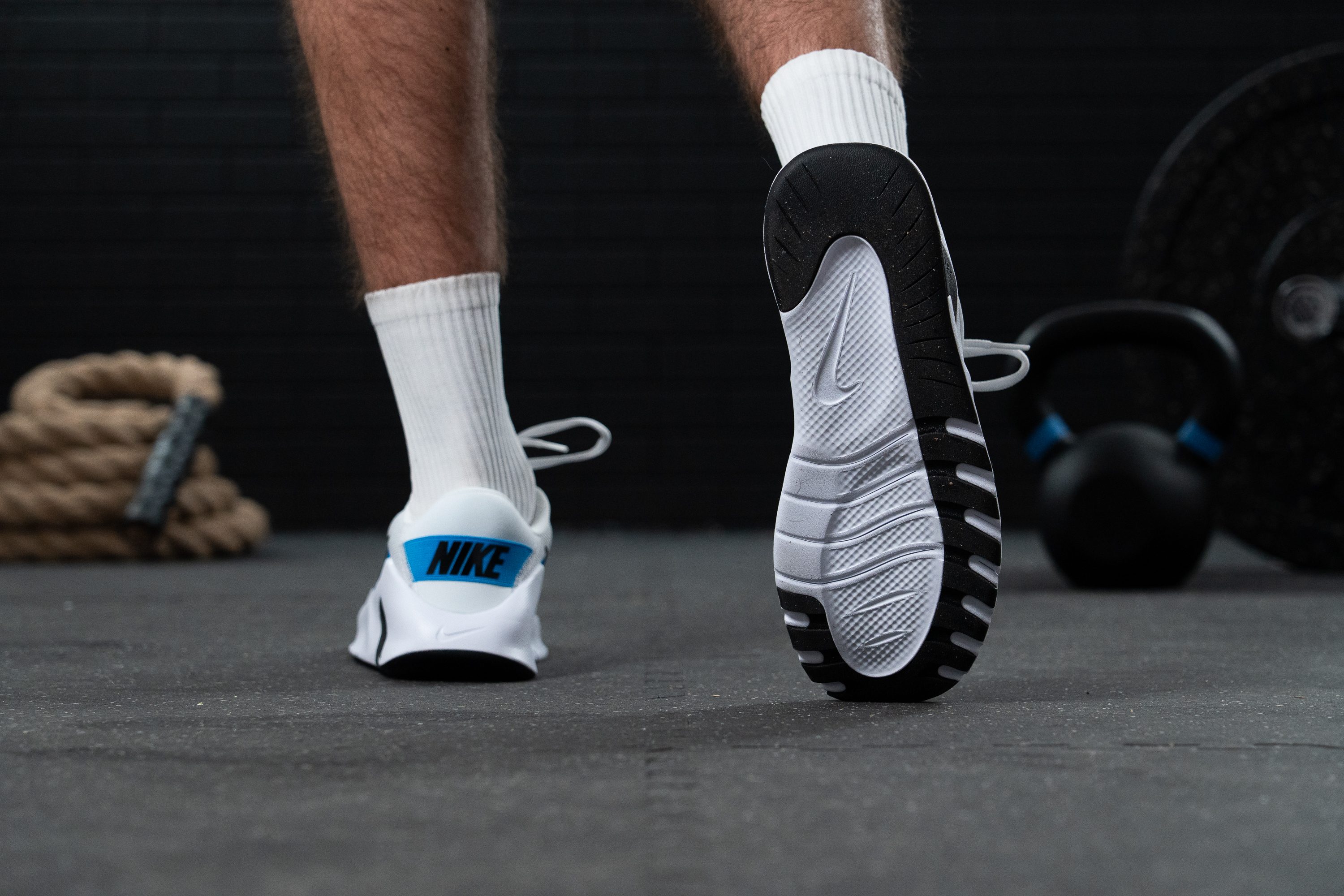
The shoe's limited grip is partly explained by its limited rubber coverage, which lines only the most strategic areas around the platform's perimeter.
We can also see its deep flex grooves starting quite early on in the midfoot, followed by thin slits in the forefoot, to ensure plenty of flexibility.
Flexibility / Stiffness
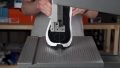
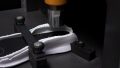
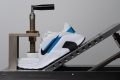
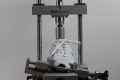
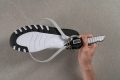
The Nike Flex Train clearly deserves the word 'Flex' in its name, as its midsole cutouts allow for rather deep bending.
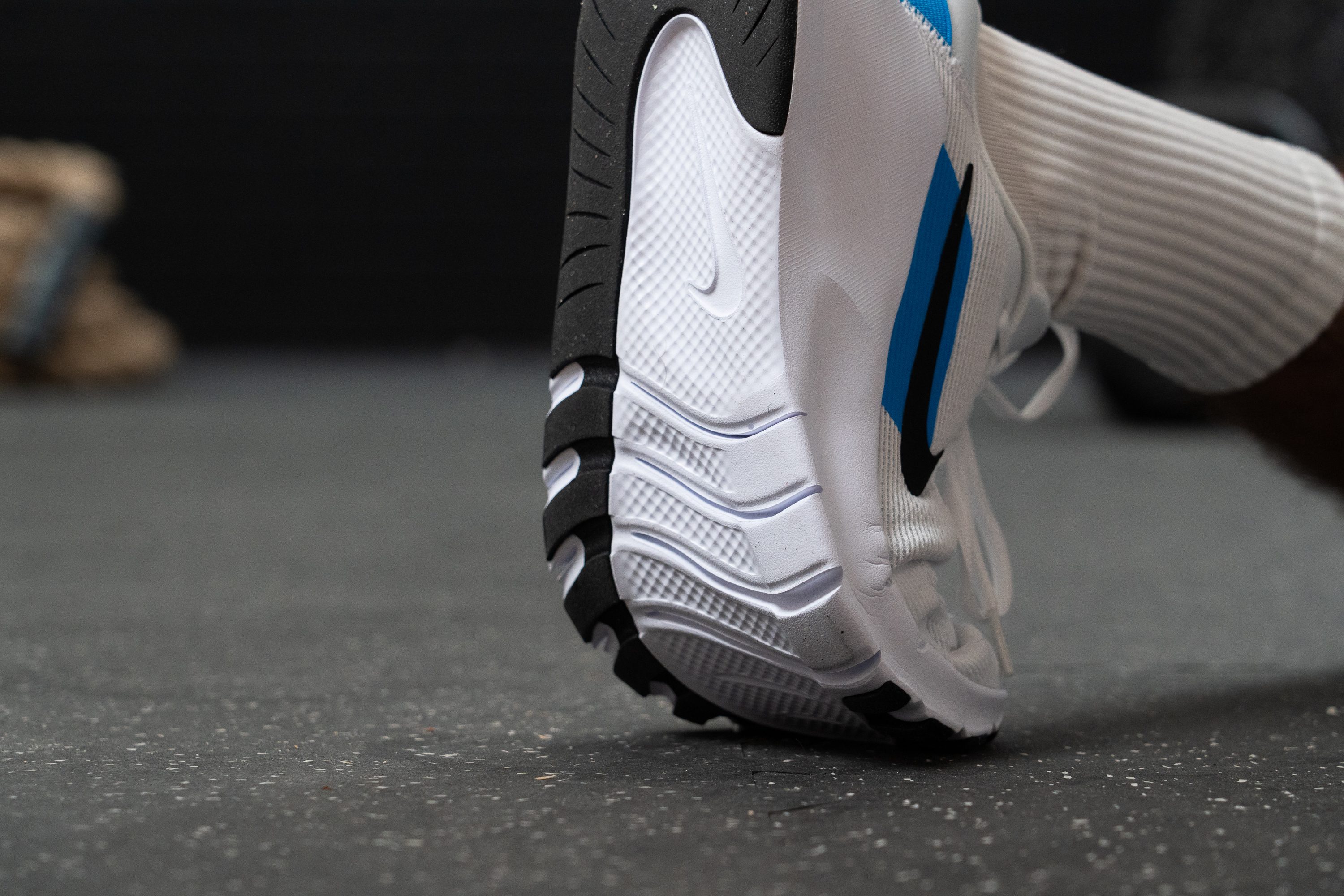
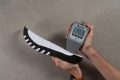
Fixing the shoe's forefoot in place, our machine recorded that it takes merely 8.4N of force to bend it by 30 degrees.
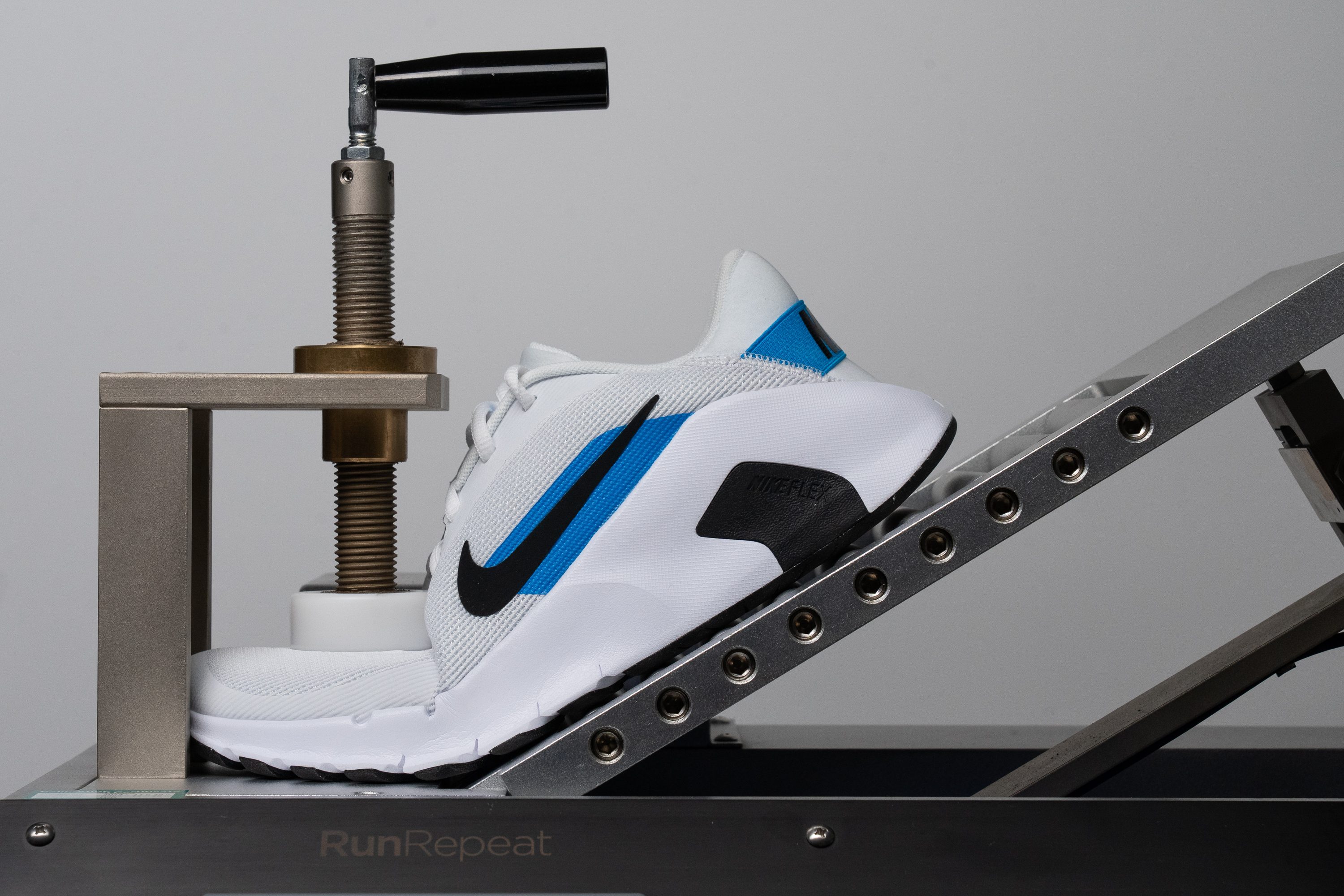
| Flex Train | 8.4N |
| Average | 10.3N |
Weight
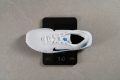
With its simple design and the absence of bulky stabilizing components, the Flex Train is fairly light for a training shoe (minimalist trainers aside).
Weighing it in a men's US size 9, we got a below-average reading of 9.1 oz (258g) - the lightest in its price range!
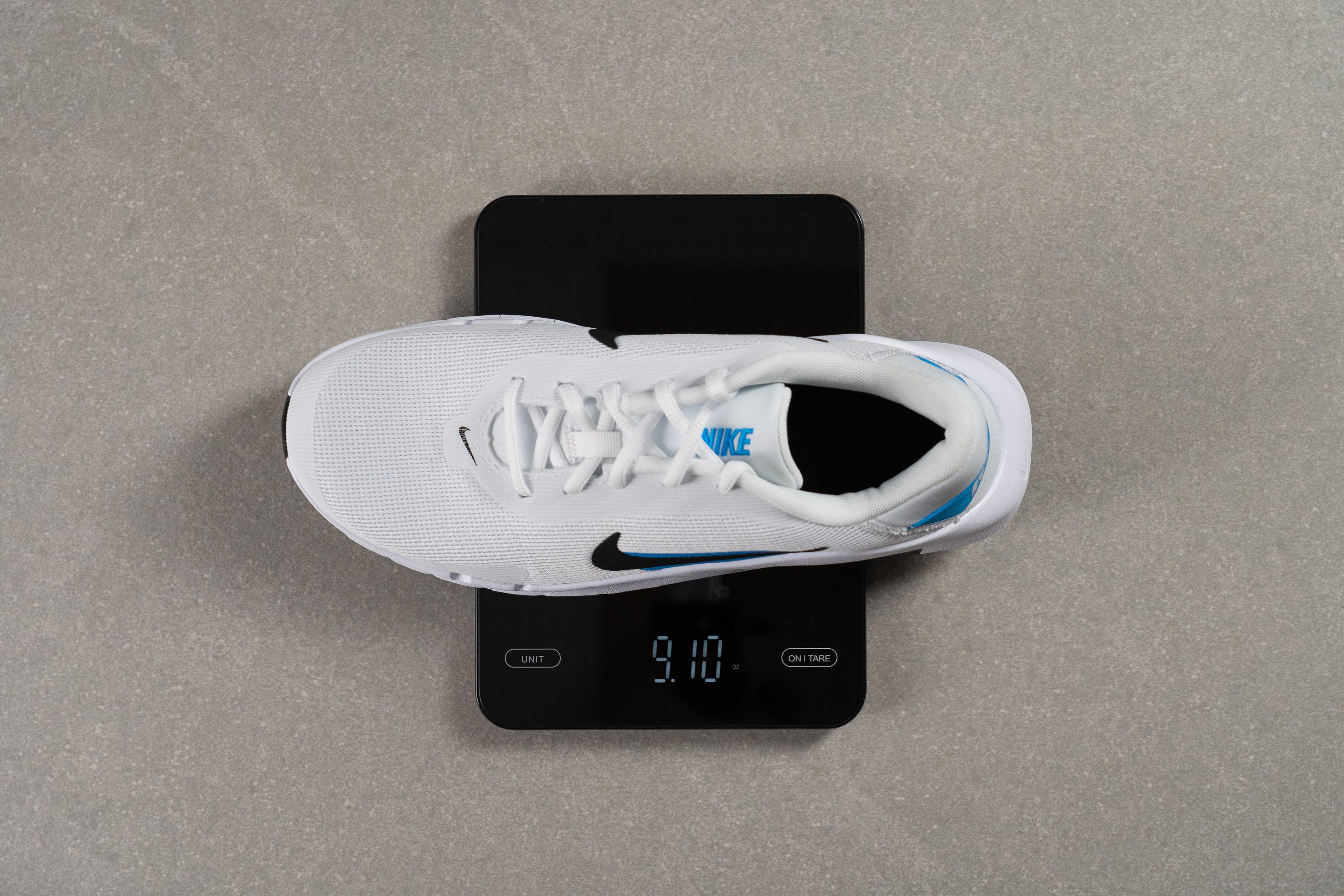
| Flex Train | 9.1 oz (258g) |
| Average | 10.7 oz (303g) |
Breathability
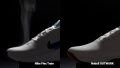
The Nike Flex Train employs a rather porous mesh to help release sweat and maintain airflow inside the shoe.
But as our smoke-pumping test showed, its ventilation capacity is only moderate as the flow is partially blocked by an interior lining beneath the mesh.
That's why it looks only semi-transparent in our light test.
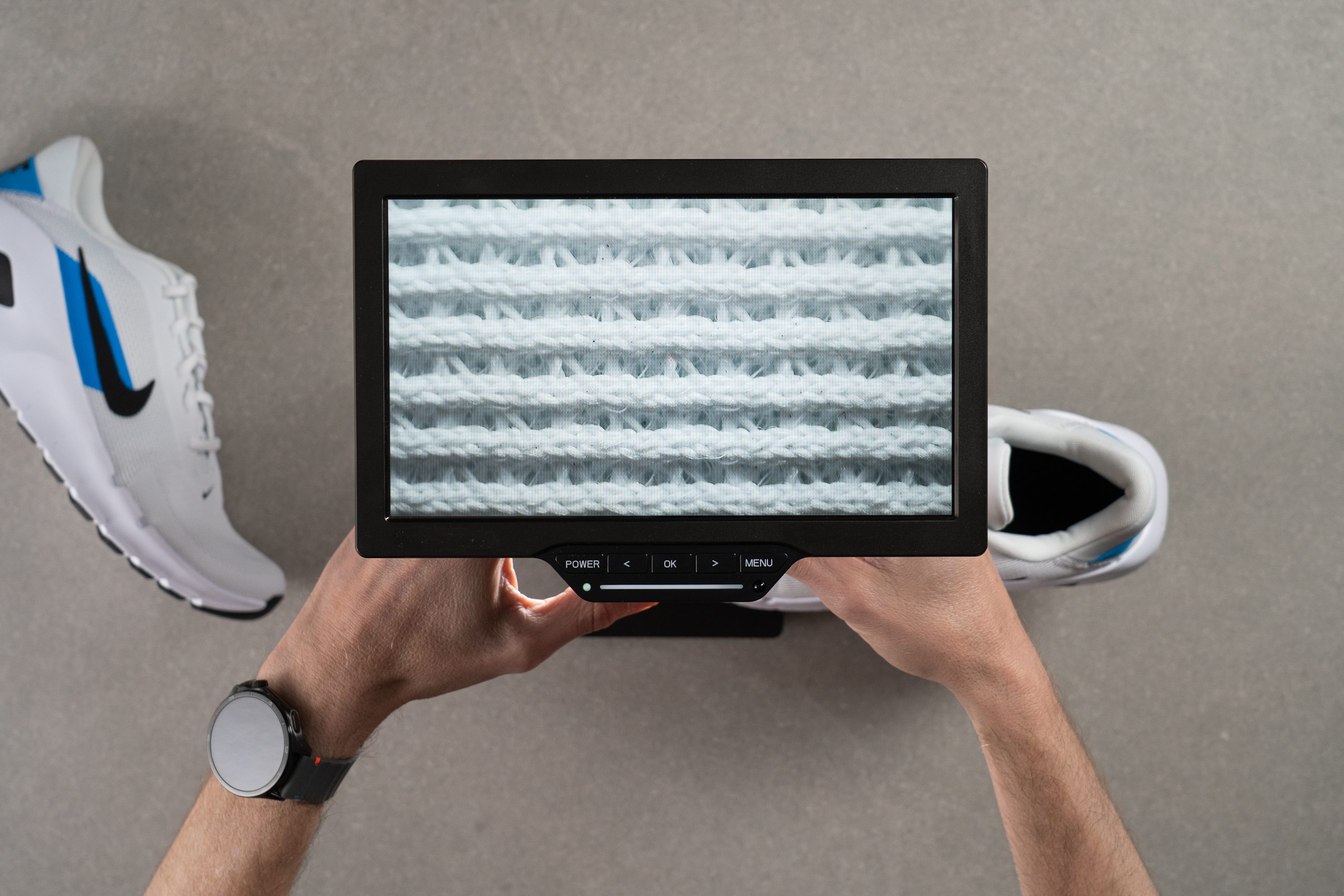
Yet, examining the mesh itself, we found the pores to be fairly open, which put our breathability score in the middle range at 3 out of 5.
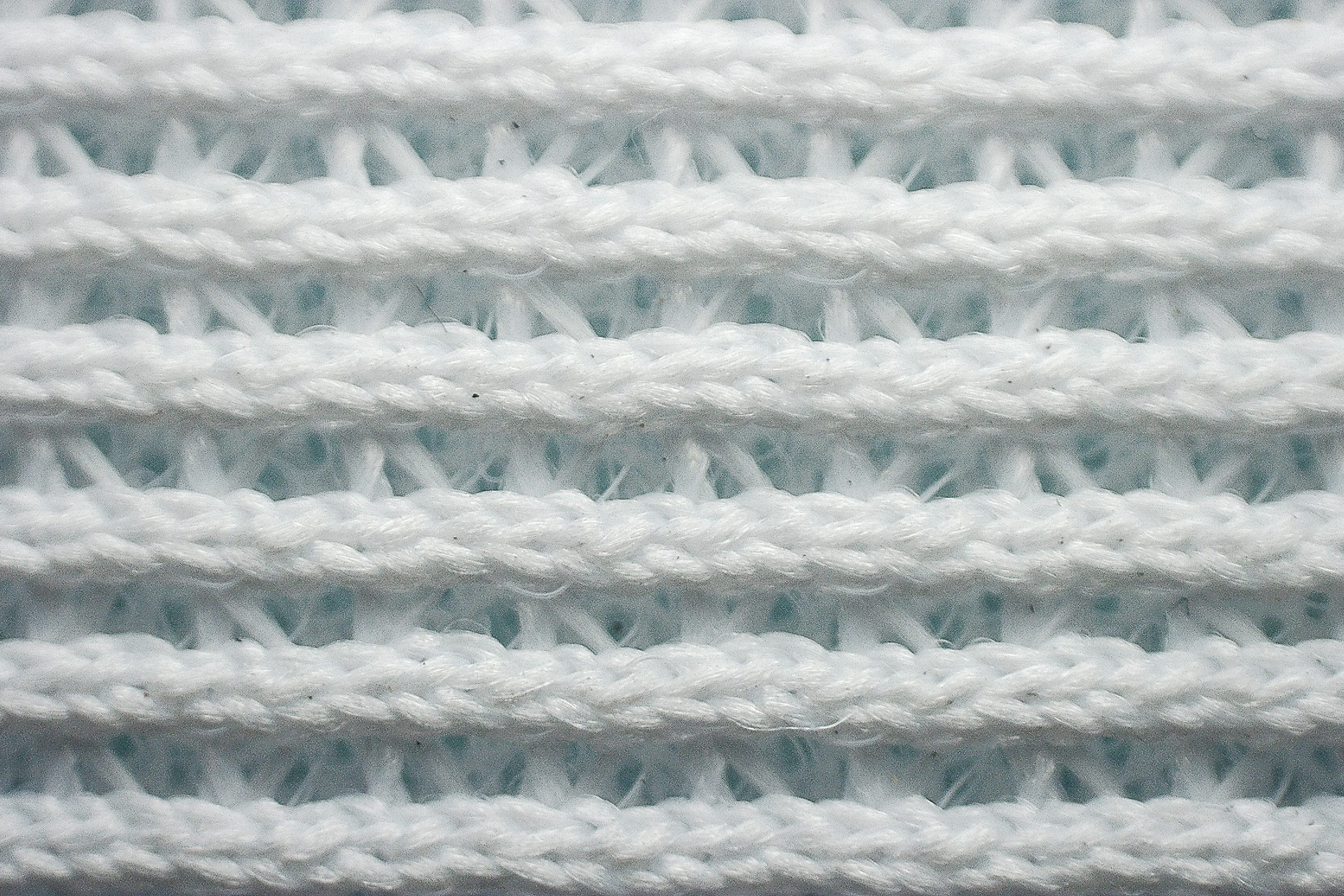
| Flex Train | 3 |
| Average | 3.6 |
Stability
Lateral stability test
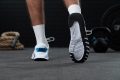
Our simple ankle-shifting test makes it clear that the Flex Train is not the most supportive cross-trainer on the market.
Even with its pronounced midsole sidewalls on both sides of the heel, we felt like it allowed for too much inward rolling of the foot.
And while the underfoot platform itself felt stable for light-to-moderate strength training, the side-to-side support was lacking in this Nike trainer.
Torsional rigidity
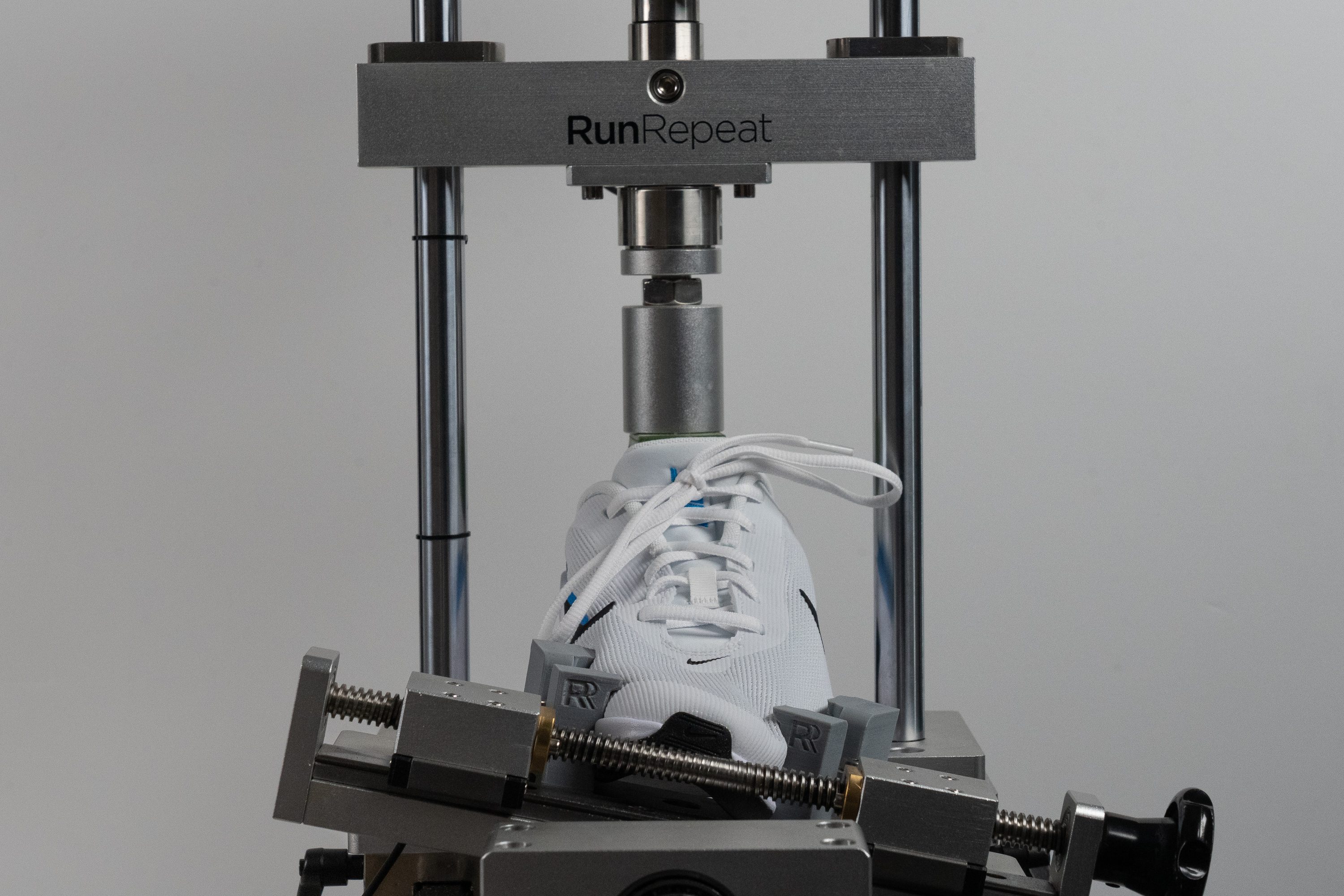
| Flex Train | 15.6 Nm |
| Average | 13.8 Nm |
Heel counter stiffness
'An elastic band around the heel' doesn't sound particularly reassuring, and our manual test showed that it hardly contributes to the rearfoot stability or lockdown.
Being able to easily bend and squeeze the Flex Train's heel counter, we rated its stiffness at only 2 out of 5.
| Flex Train | 2 |
| Average | 2.8 |
Midsole width - forefoot
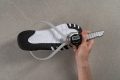
Gladly, the shoe's wide base helps to partially compensate for the lack of support in the upper. Based on our caliper measurements, the widest part of its forefoot platform exceeds the average at 116.3 mm.
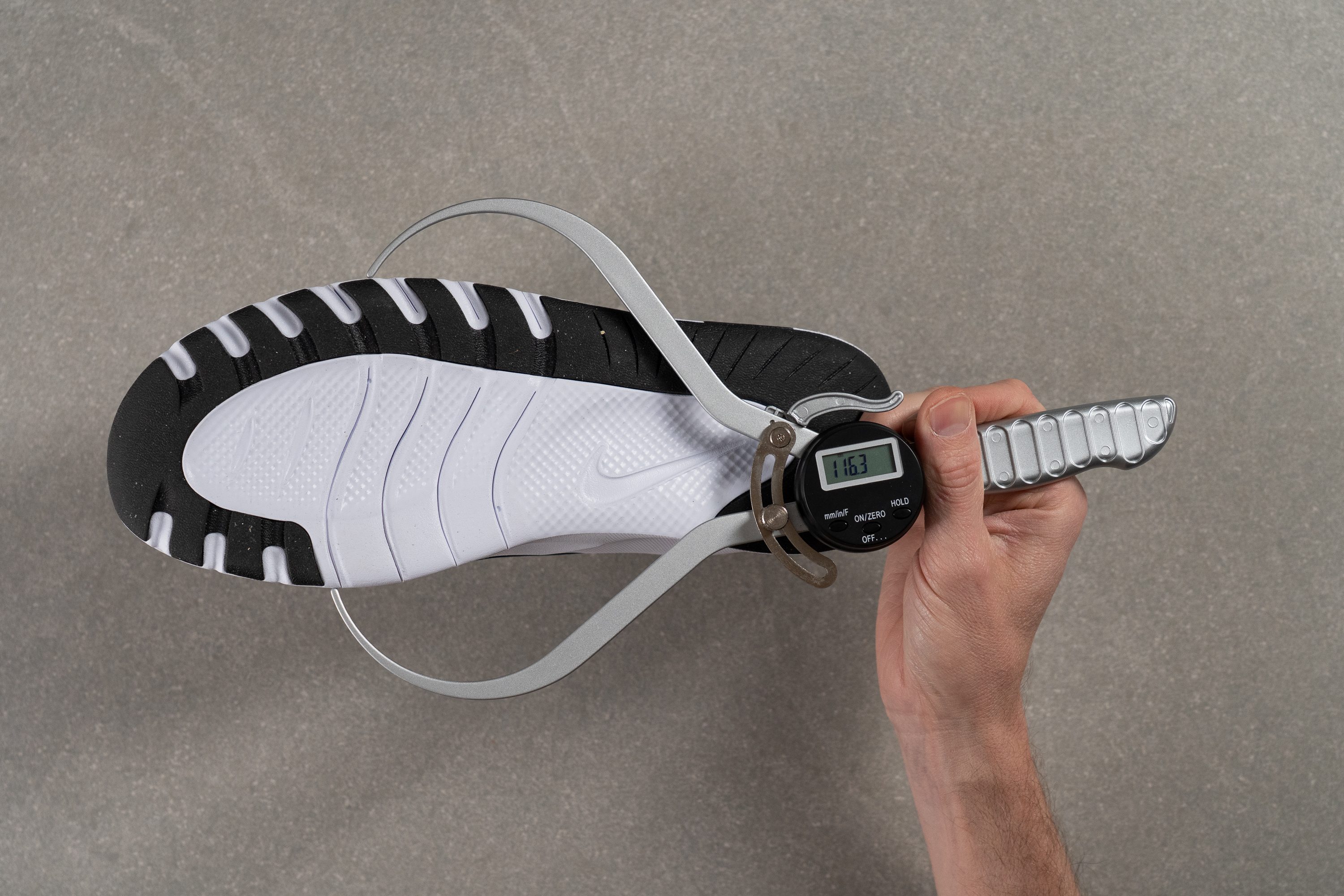
| Flex Train | 116.3 mm |
| Average | 112.0 mm |
Midsole width - heel
The heel, on the other hand, is on par with the category average at 87.7 mm.
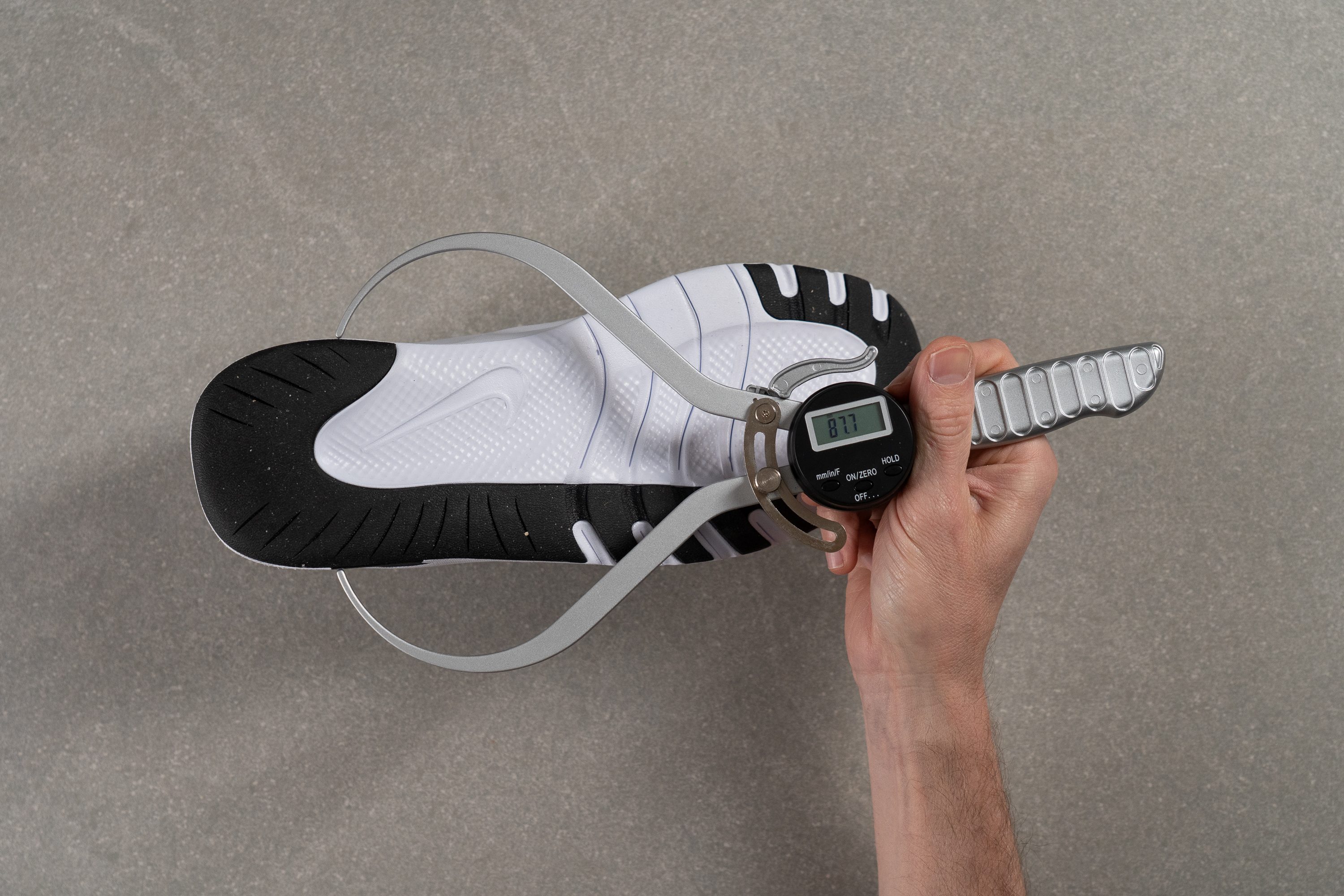
| Flex Train | 87.7 mm |
| Average | 86.9 mm |
Durability
Toebox durability
A thin synthetic toe rand offers little protection to the Flex Train's upper, and most of the shoe's mesh remains exposed to wear and tear.
But our Dremel test showed that the fabric has some decent abrasion resistance, scoring a moderate 3 out of 5 in toebox durability. So if you limit its use to the gym and non-abrasive surfaces only, it should last a good while.
| Flex Train | 3 |
| Average | 2.7 |
Heel padding durability
Its internal mesh, on the other hand, showed even stronger resistance to our Dremel, scoring a high 4 out of 5!
| Flex Train | 4 |
| Average | 3.1 |
Outsole durability
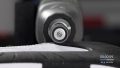
And the outsole rubber didn't disappoint either, leaving a shallow 0.8 mm dent in our rigorous 18-second drilling session. Excellent result for a trainer under $100!
| Flex Train | 0.8 mm |
| Average | 1.1 mm |
Outsole thickness
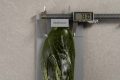
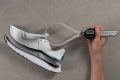
An outsole thickness of 3.2 mm also looked reassuring on our caliper, promising a solid lifespan.
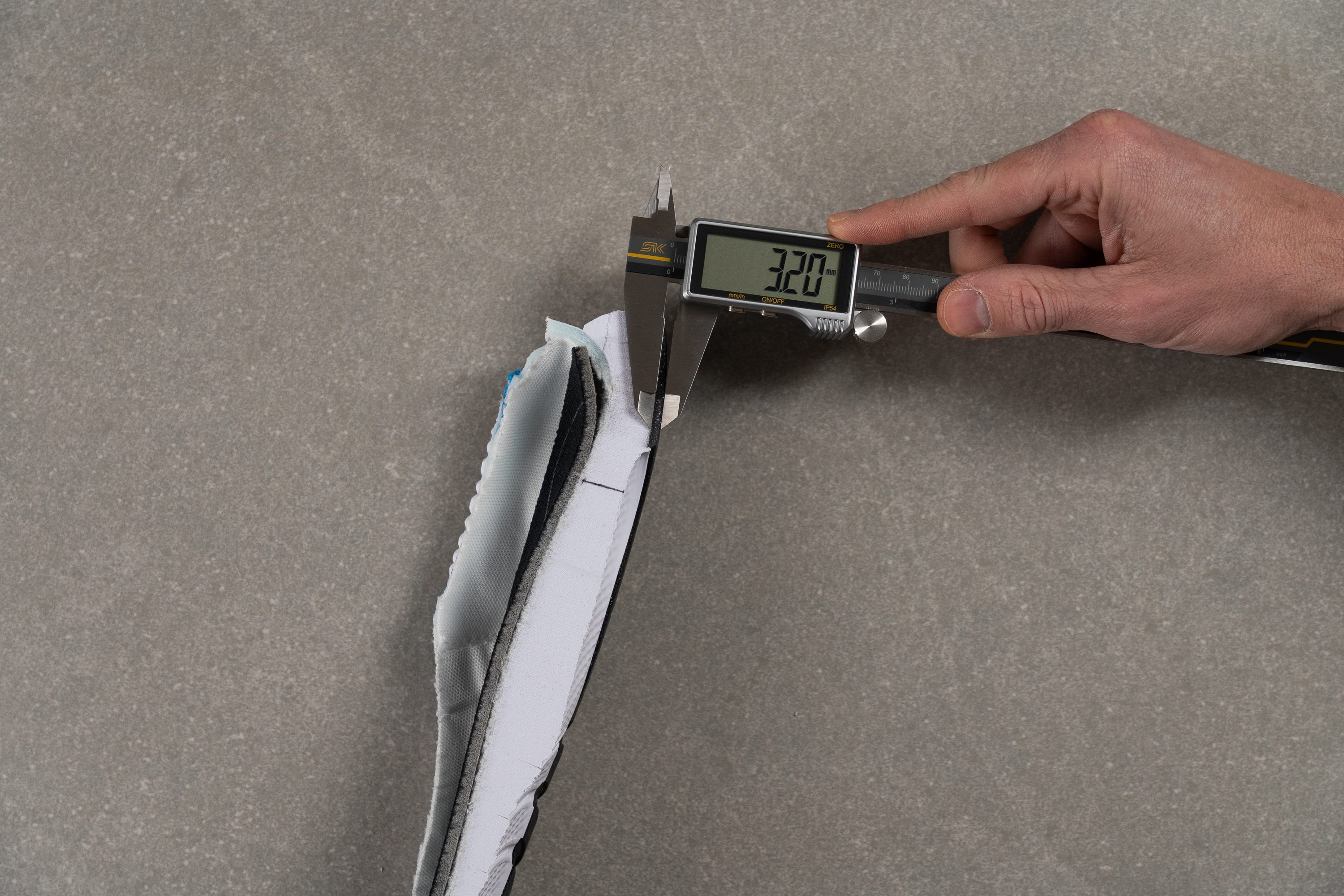
| Flex Train | 3.2 mm |
| Average | 3.5 mm |
Misc
Insole thickness
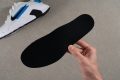
The Flex Train's internal padding is moderate yet sufficient. We recorded an insole thickness of 3.4 mm, which is close to the category average.
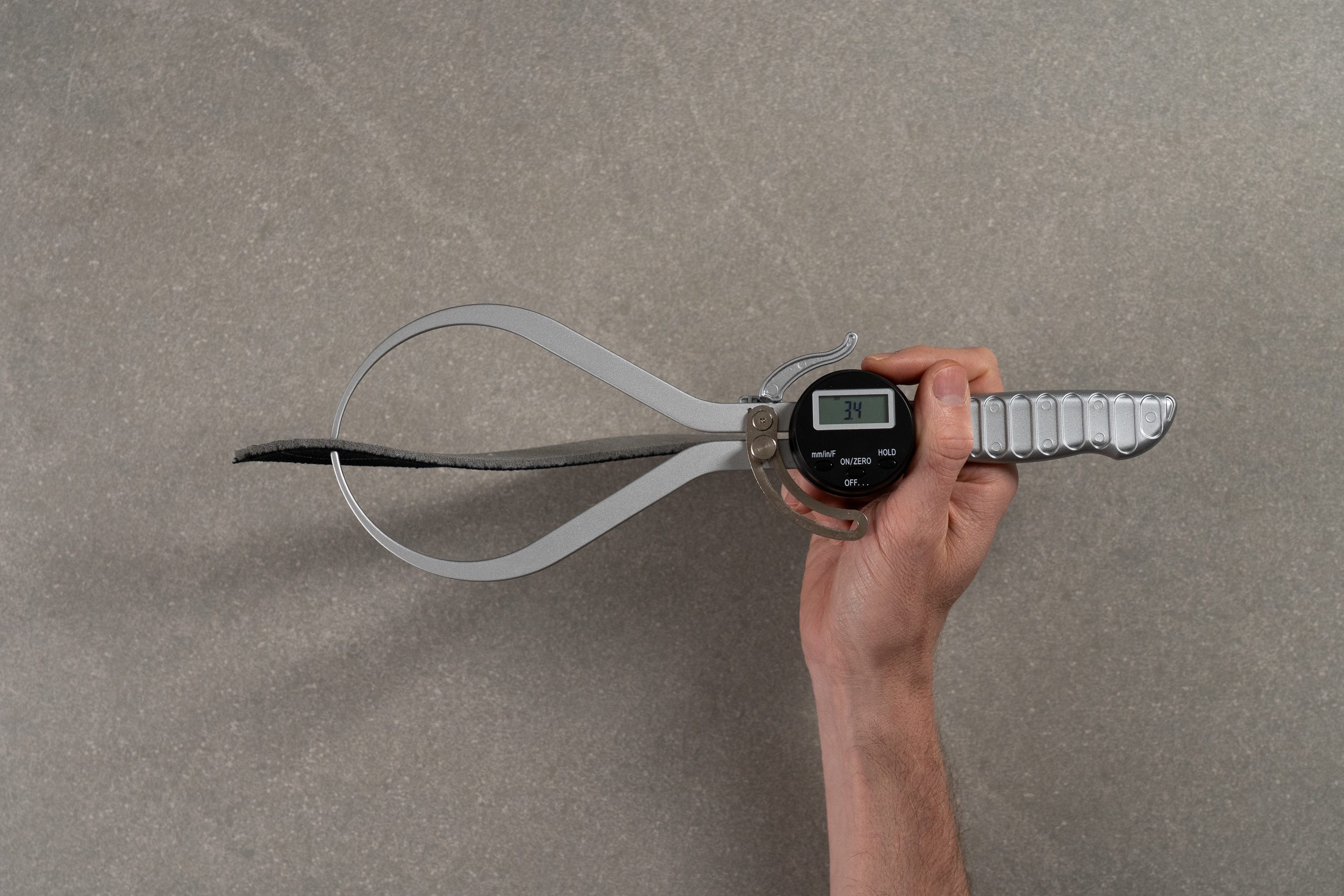
| Flex Train | 3.4 mm |
| Average | 4.0 mm |
Removable insole
The insole can be removed and replaced with an aftermarket insert for a more customized experience.
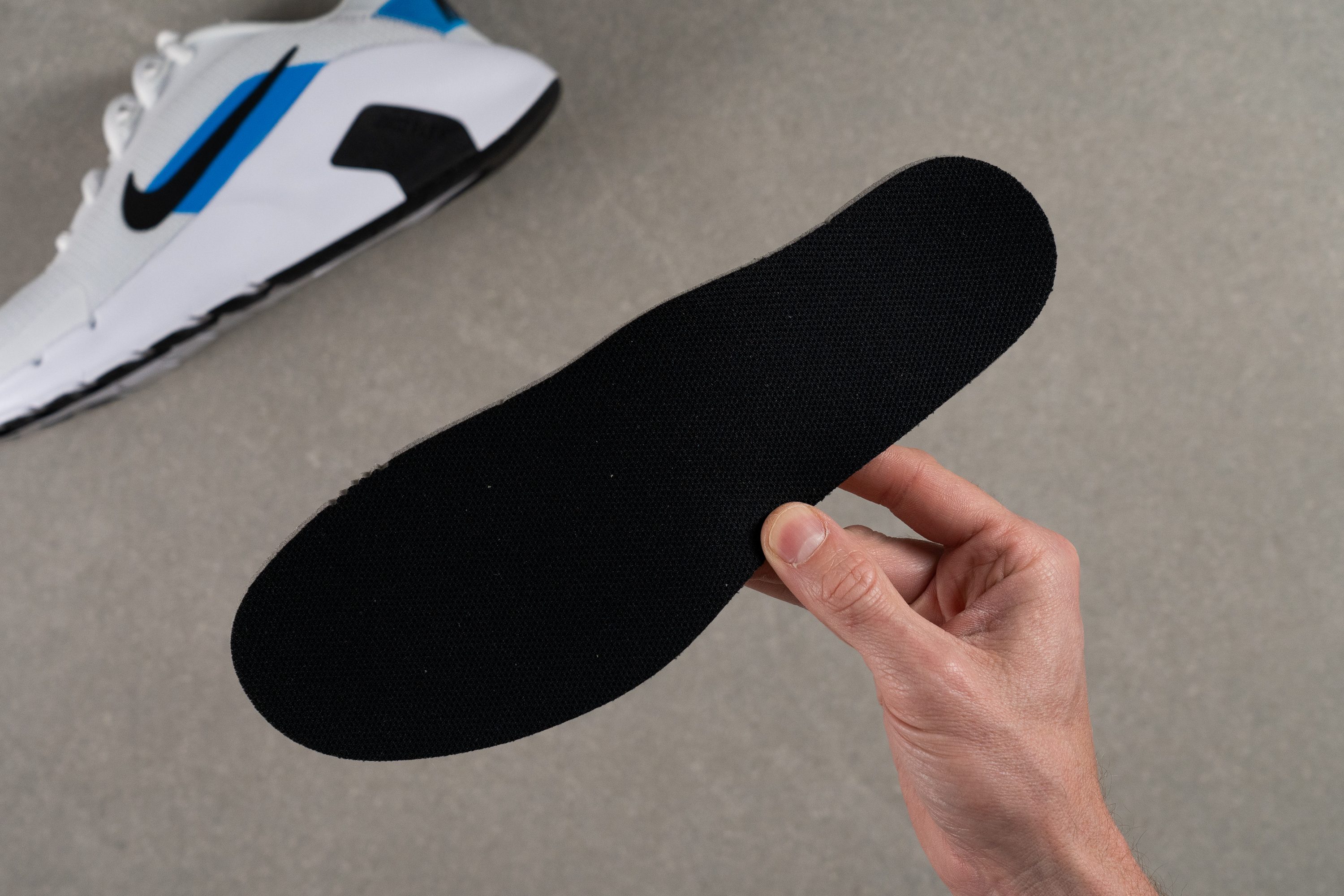
| Flex Train | Yes |
Tongue padding
The tongue padding, on the other hand, is thinner than average at only 4.0 mm. This may not be enough to buffer lace bites if you lace them too tightly.
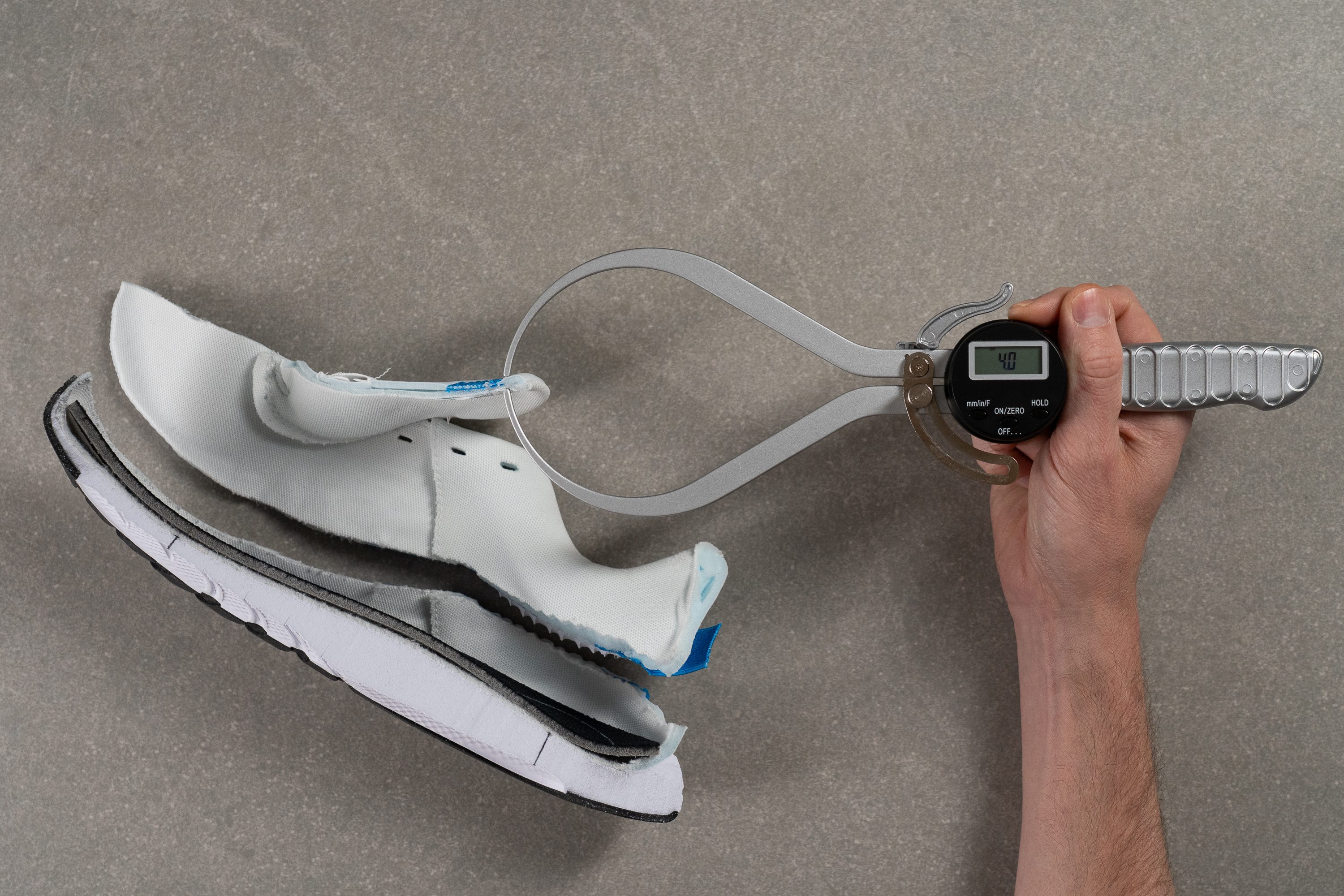
| Flex Train | 4.0 mm |
| Average | 6.0 mm |
Tongue: gusset type
Some tongue shifting might be possible, too, as there are no gussets on its sides.
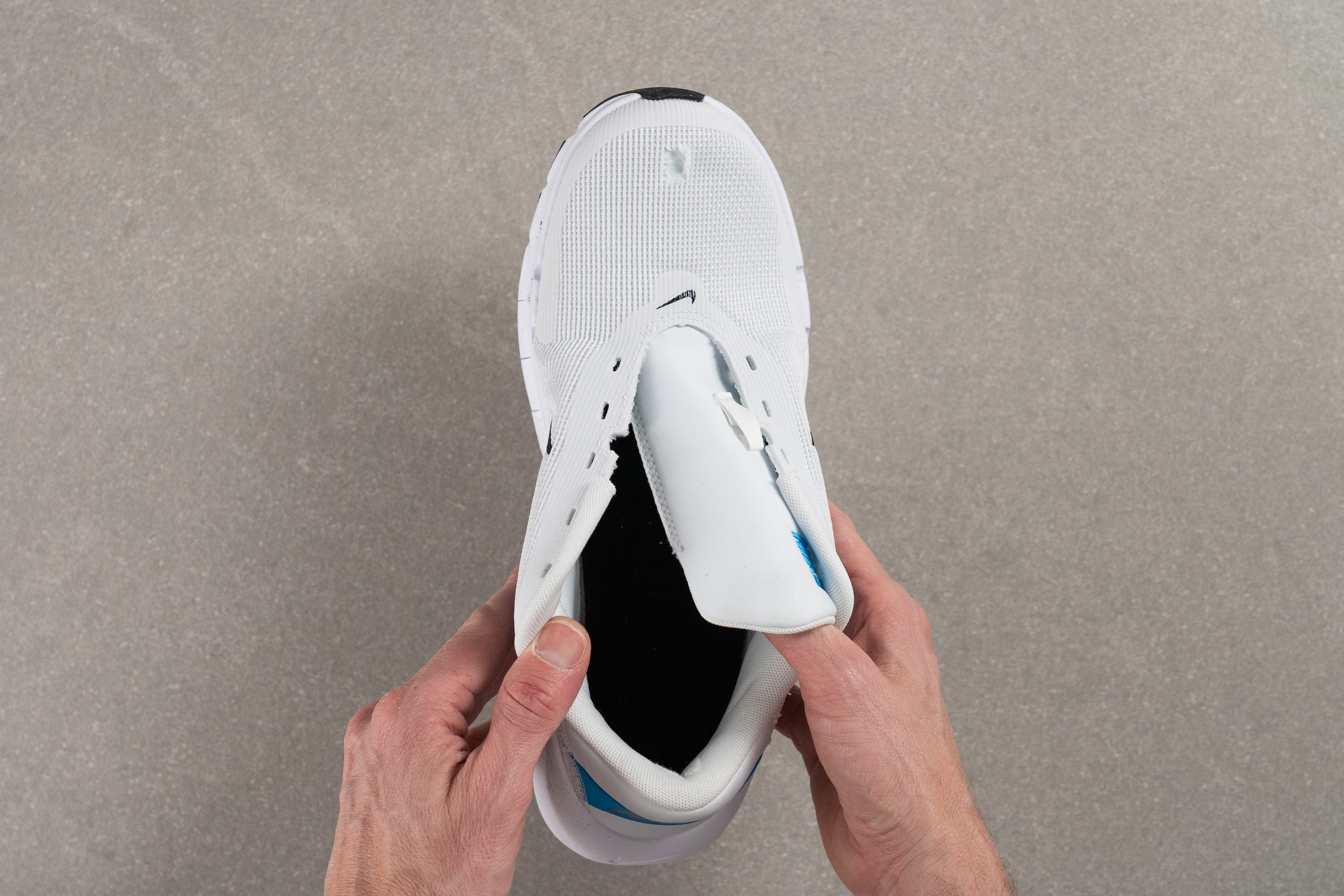
| Flex Train | None |
Heel tab
Pull tabs are not included in this Nike trainer.
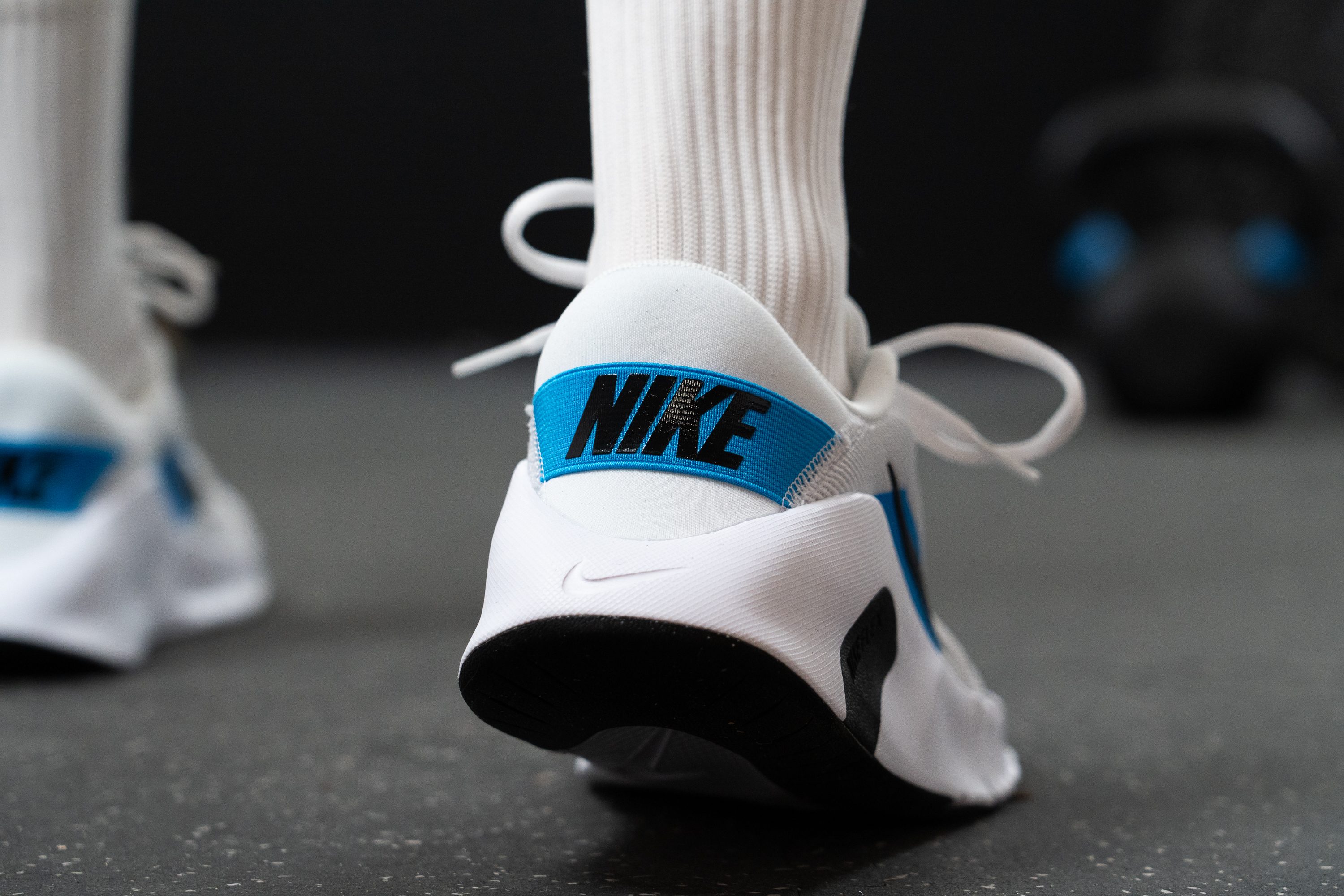
| Flex Train | None |
Price
The Nike Flex Train offers all the right basics for its low price and makes for a perfect budget-friendly training shoe.
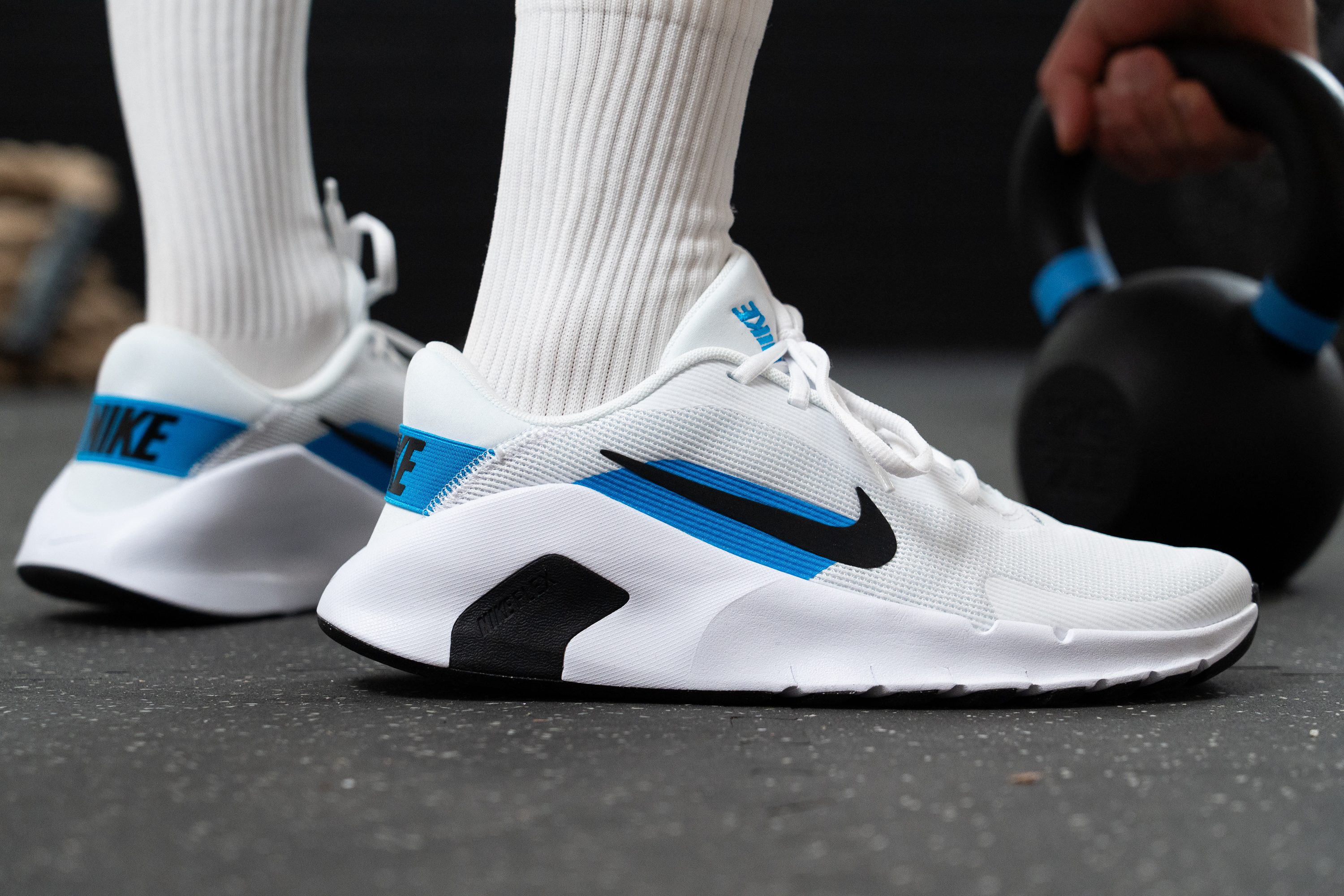
| Flex Train | $80 |
| Average | $129 |