
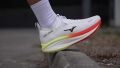
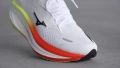
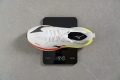


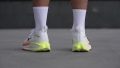
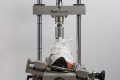
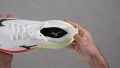



Our verdict
- Daily running 87
- Tempo 73
- Race 51
- Stability 69
Pros
- Exceptionally plush cushioning
- Top-level shock absorption
- Better heel lockdown than before
- Breathable knit upper
- Stable for a max-cushion trainer
- Long-lasting outsole rubber
- Dries quickly after sweaty runs
- Reasonable weight
- Fully redesigned Wave Plate
- Ideal partner for long runs
Cons
- Lacks the expected bounce
- Expensive for its performance
- Rocks can get trapped
- Overpriced
Awards
- Top pick in best daily running shoes
- Top pick in best cushioned running shoes
Comparison
The most similar running shoes compared
+ + Add a shoe | |||||
|---|---|---|---|---|---|
| Our score | 83 Great | 83 Great | 85 Great | 85 Great | |
| Price | $200 | $165 | $200 | $175 | |
| Pace | Daily runningTempo | Daily running | Daily running | Daily running | |
| Shock absorption | High | High | High | High | |
| Energy return | Moderate | Moderate | Low | Moderate | |
| Traction | High | High | High | High | |
| Arch support | Neutral | Neutral | Neutral | Neutral | |
| Weight lab Weight brand | 9.4 oz / 266g 9.3 oz / 265g | 10.1 oz / 286g 10.3 oz / 292g | 11.2 oz / 318g 11 oz / 311g | 10.7 oz / 303g 10.7 oz / 303g | |
| Drop lab Drop brand | 8.5 mm 8.0 mm | 9.0 mm 6.0 mm | 8.1 mm 6.0 mm | 8.2 mm 8.0 mm | |
| Strike pattern | HeelMid/forefoot | HeelMid/forefoot | HeelMid/forefoot | HeelMid/forefoot | |
| Size | Slightly large | True to size | True to size | Slightly small | |
| Midsole softness | Soft | Balanced | Soft | Soft | |
| Difference in midsole softness in cold | Small | Normal | Small | Normal | |
| Toebox durability | Good | Bad | Decent | Decent | |
| Heel padding durability | Bad | Good | Good | Good | |
| Outsole durability | Good | Good | Decent | Good | |
| Breathability | - | - | Moderate | Moderate | |
| Width / fit | Medium | Medium | Medium | Medium | |
| Toebox width | Medium | Medium | Medium | Medium | |
| Stiffness | Moderate | Stiff | Stiff | Moderate | |
| Torsional rigidity | Moderate | Moderate | Stiff | Moderate | |
| Heel counter stiffness | Flexible | Moderate | Stiff | Stiff | |
| Rocker | ✓ | ✓ | ✓ | ✓ | |
| Heel lab Heel brand | 43.5 mm 44.5 mm | 38.6 mm 40.0 mm | 45.4 mm 45.0 mm | 37.2 mm 38.0 mm | |
| Forefoot lab Forefoot brand | 35.0 mm 36.5 mm | 29.6 mm 34.0 mm | 37.3 mm 39.0 mm | 29.0 mm 30.0 mm | |
| Widths available | Normal | NormalWideX-Wide | NormalWideX-Wide | NormalWideX-Wide | |
| Orthotic friendly | ✓ | ✓ | ✓ | ✓ | |
| Season | - | - | All seasons | All seasons | |
| Removable insole | ✓ | ✓ | ✓ | ✓ | |
| Ranking | #160 Top 40% | #149 Top 38% | #110 Top 28% | #102 Top 26% | |
| Popularity | #133 Top 34% | #29 Top 8% | #44 Top 11% | #14 Top 4% |
Who should buy
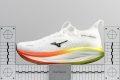
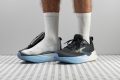
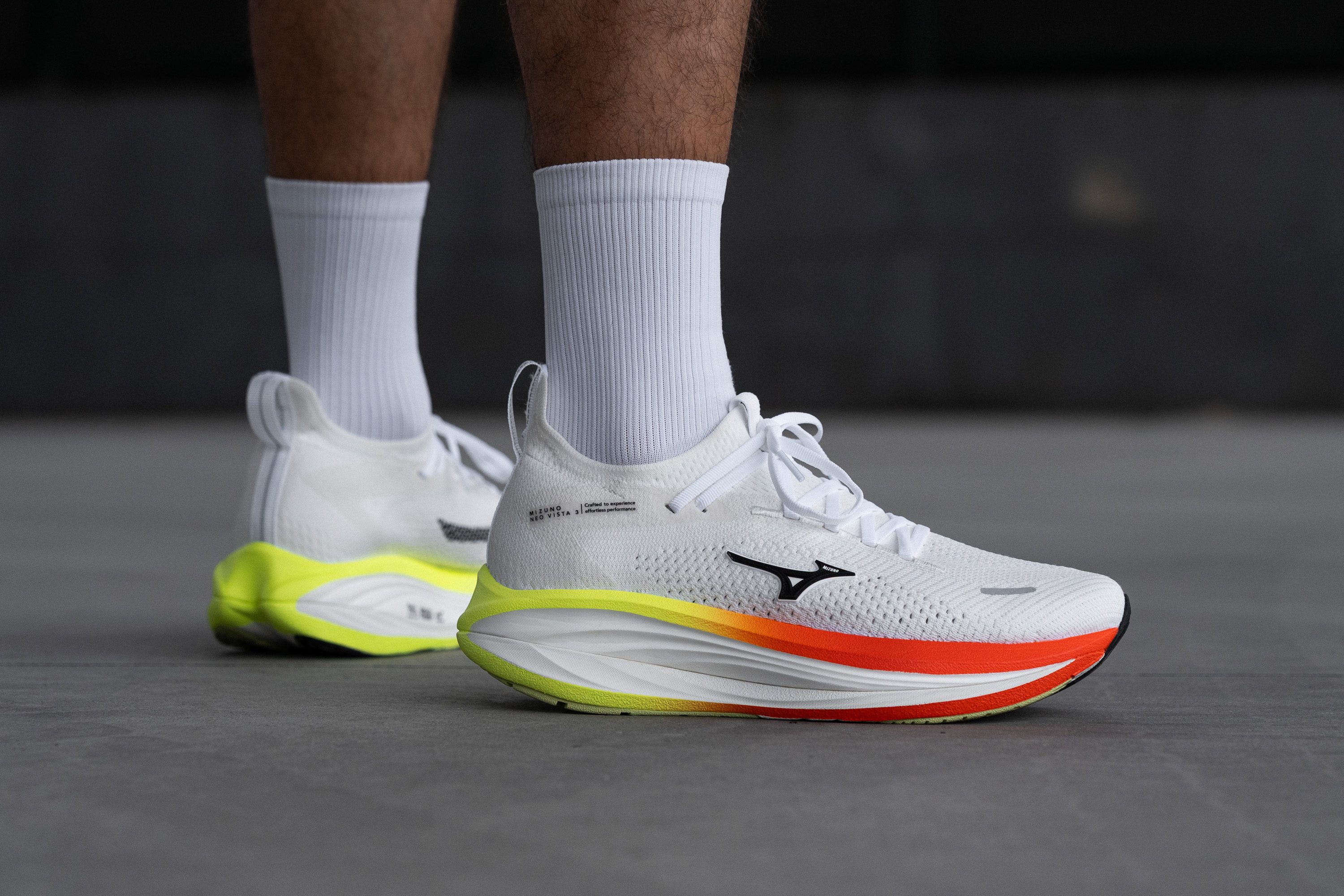
In our opinion, the Mizuno Neo Vista 3 is a good pick for:
- Runners who loved the Neo Vista 1 or 2 and want the best version yet, with a more refined upper and improved fit.
- Anyone who enjoys the simplicity and comfort of a sock-like knit upper in a high-cushion super trainer.
- Those looking for an ultra-plush ride with as much underfoot cushioning as possible for daily miles and long runs.
Who should NOT buy
For the third version in a row, the Mizuno Neo Vista keeps its Enerzy NXT midsole, which doesn't deliver standout energy return. The ride feels wonderfully soft, but it lacks the lively rebound found in some rivals. If a highly-energetic ride is a priority, we think the ASICS Megablast is the better choice.
We also believe that the Neo Vista 3's premium price could be a deal-breaker for many runners. If you're shopping on a tighter budget, the Nike Winflo 12 offers excellent value, while the Mizuno Neo Zen 2 delivers a similar experience at a more affordable price.
Cushioning
Shock absorption
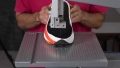
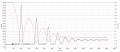
Few shoes operate in the same league as the Neo Vista 3 when it comes to shock absorption.
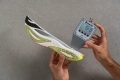
With a whopping 167 SA in the heel and 133 SA in the forefoot, our testing confirms that this shoe is an outstanding choice for runners seeking maximum protection against repetitive impacts. It was clearly designed with that goal in mind.
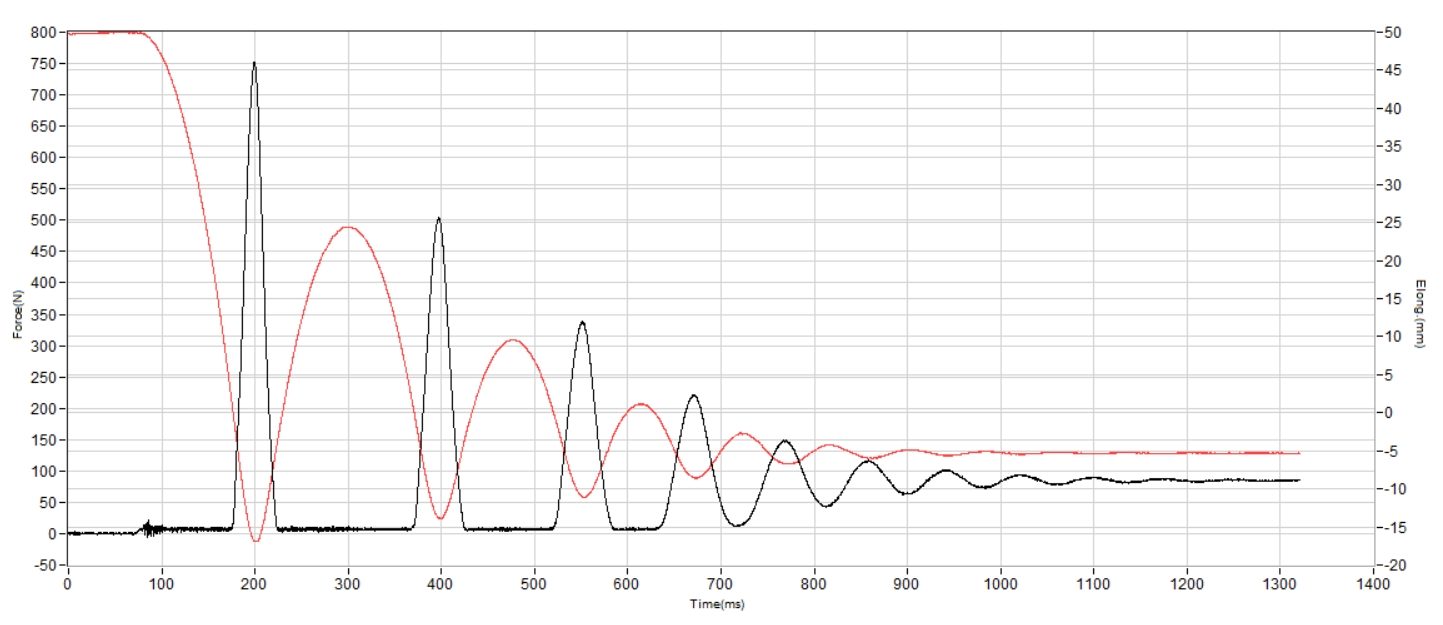
| Neo Vista 3 | 167 SA |
| Average | 131 SA |
Energy return
The Neo Vista 3 retains the same nitrogen-infused Enerzy NXT foam found in its predecessor, so we weren't expecting a dramatic leap in energy return. Even so, our tests showed just 57.7% in the heel and 57.1% in the forefoot, figures that fall short of what we'd expect from such an expensive super trainer.
In our view, this remains one of the shoe's biggest shortcomings, and we think that Mizuno needs to unlock far greater performance by switching to a more advanced compound like A-TPU, TPEE, or PEBA.
| Neo Vista 3 | 57.1% |
| Average | 61.4% |
Heel stack
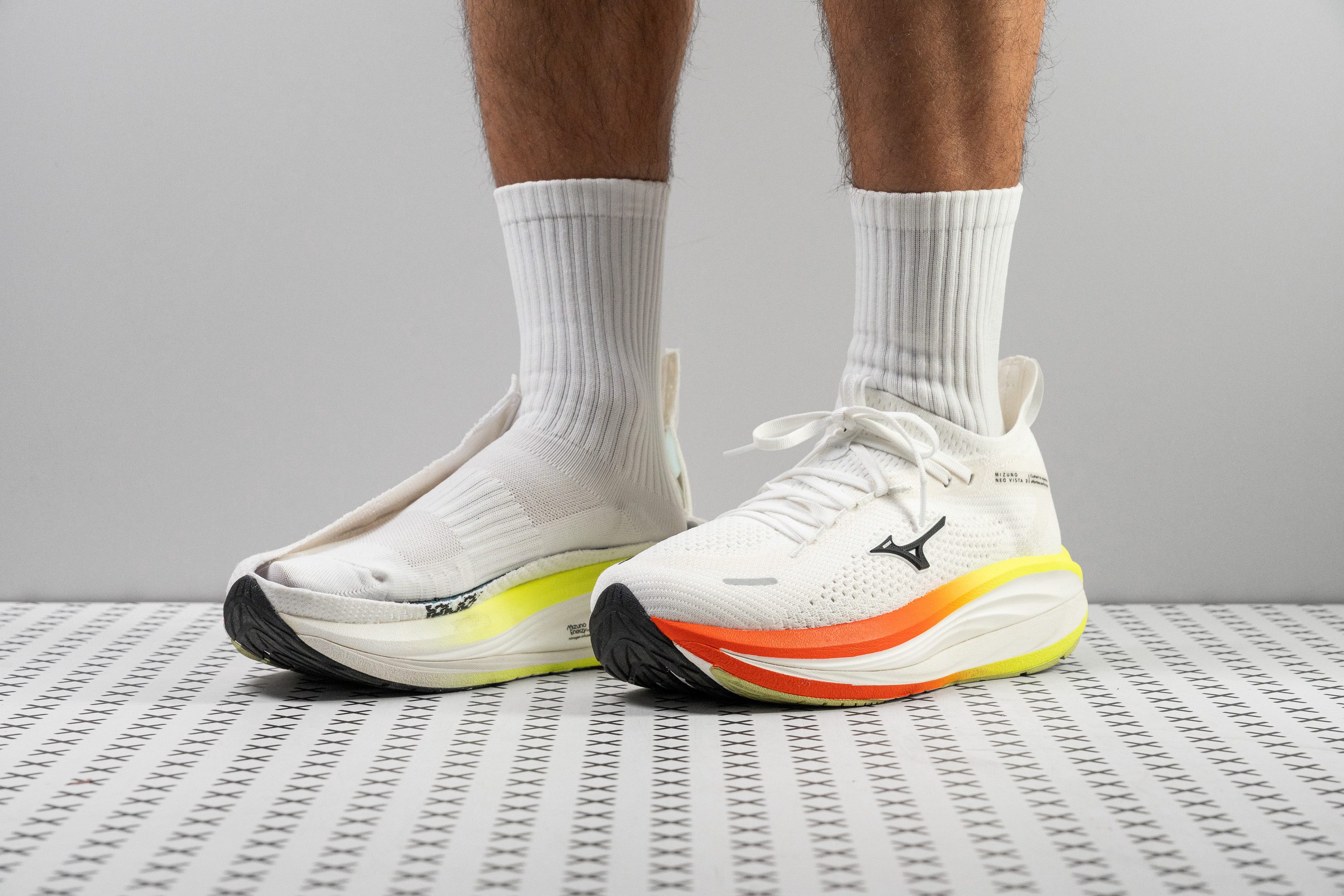
While it may not be the most energetic super trainer, the Neo Vista 3 packs an enormous amount of foam underfoot, making it an excellent choice for runners who prioritize protection over bounce.
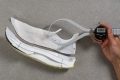
We already saw that in our shock absorption test, and the stack height helps explain why. We measured an impressive 43.5 mm in the heel, although the shoe is even taller as you move toward the midfoot due to its rockered geometry.
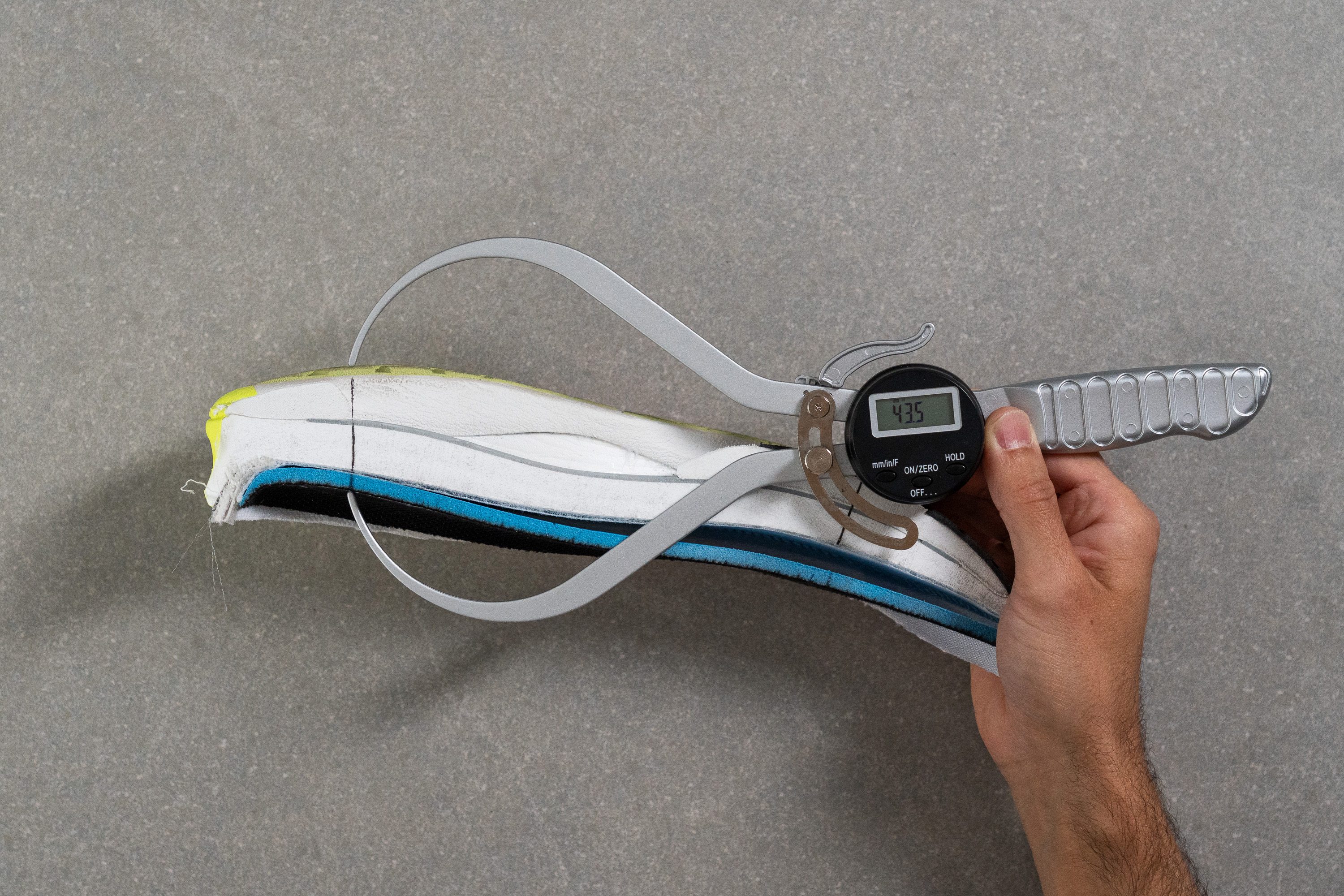
| Neo Vista 3 | 43.5 mm |
| Average | 35.5 mm |
Forefoot stack
The forefoot is equally impressive, offering 35.0 mm of stack height. This towering platform makes the Neo Vista 3 a poor choice for runners seeking a natural ride with some ground feel. Instead, it delivers an almost endless layer of cushioning beneath your feet.
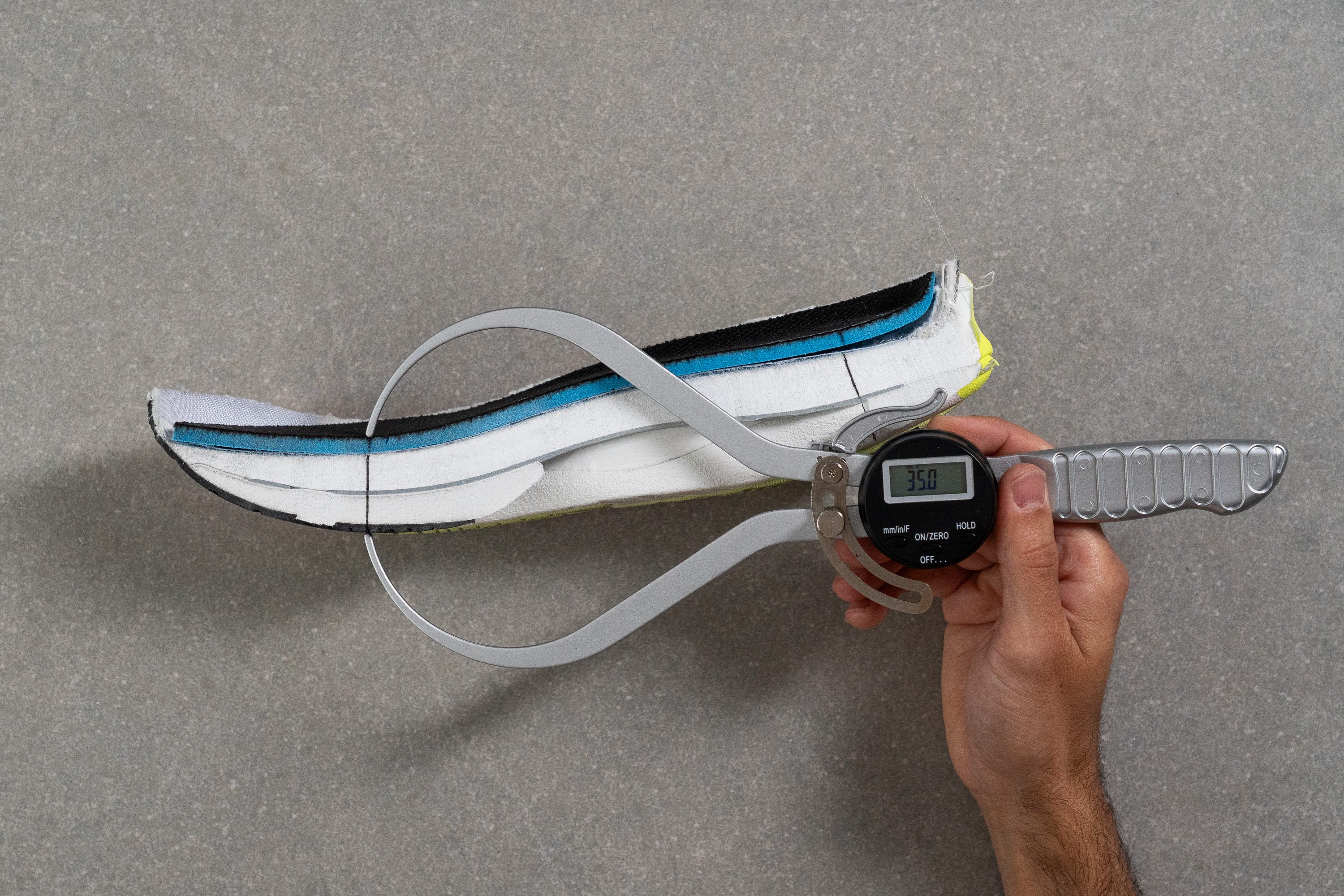
| Neo Vista 3 | 35.0 mm |
| Average | 27.1 mm |
Drop
We measured an actual heel-to-toe drop of 8.5 mm, remarkably close to Mizuno's stated 8-mm offset. As a result, the ride feels familiar and should suit runners already accustomed to the geometry of most modern running shoes.
| Neo Vista 3 | 8.5 mm |
| Average | 8.4 mm |
Midsole softness
For many runners, a big reason to choose the Neo Vista 3 is its incredibly plush ride. That sink-in sensation has become a defining trait of the series, and we're glad to see Mizuno preserving it in this latest version.
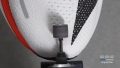
Like its predecessor, it features a dual-layer midsole, with the primary foam measuring just 19.8 AC on our Asker C durometer.
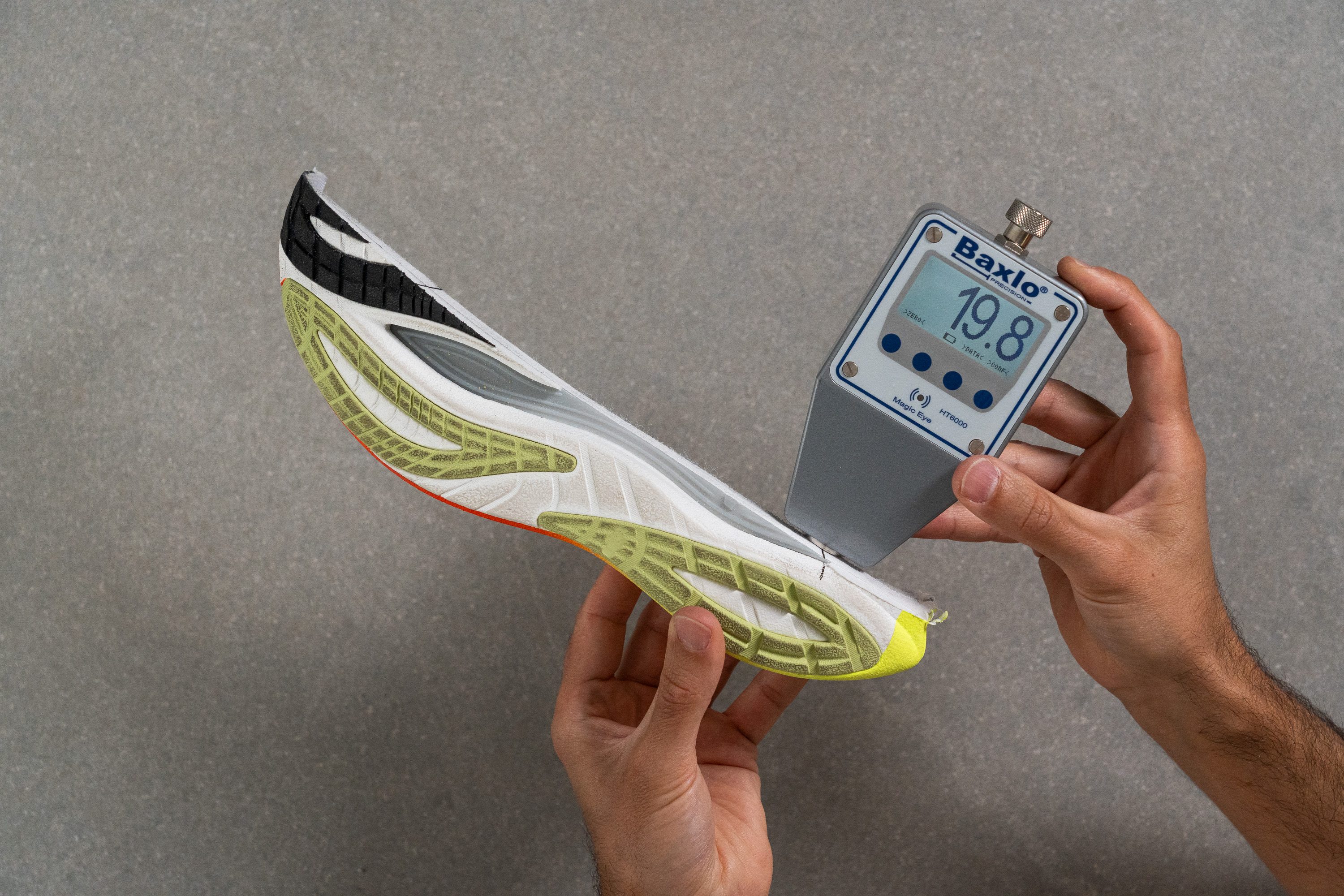
| Neo Vista 3 | 19.8 AC |
| Average | 35.5 AC |
Rocker
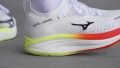
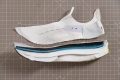
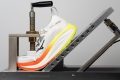
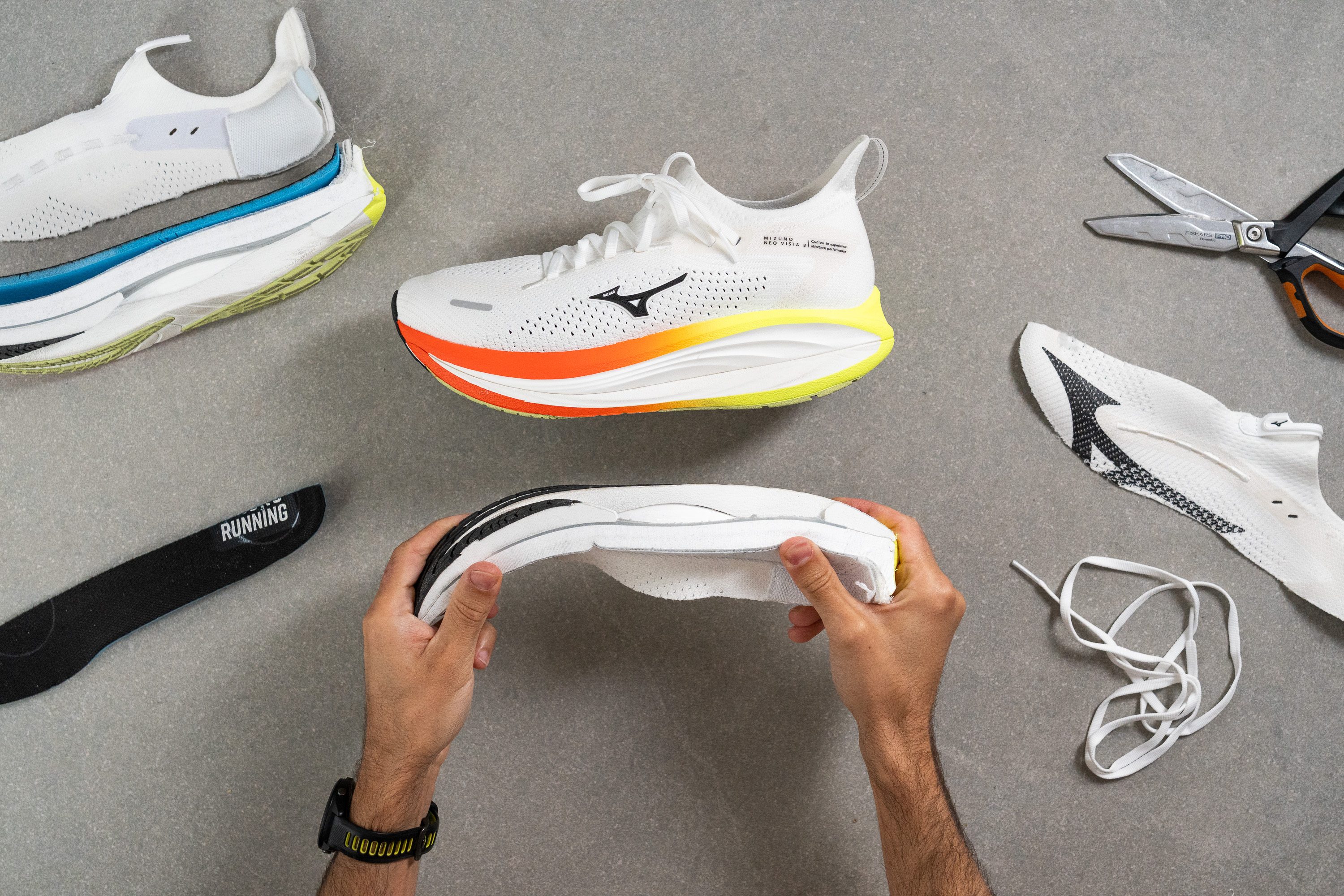
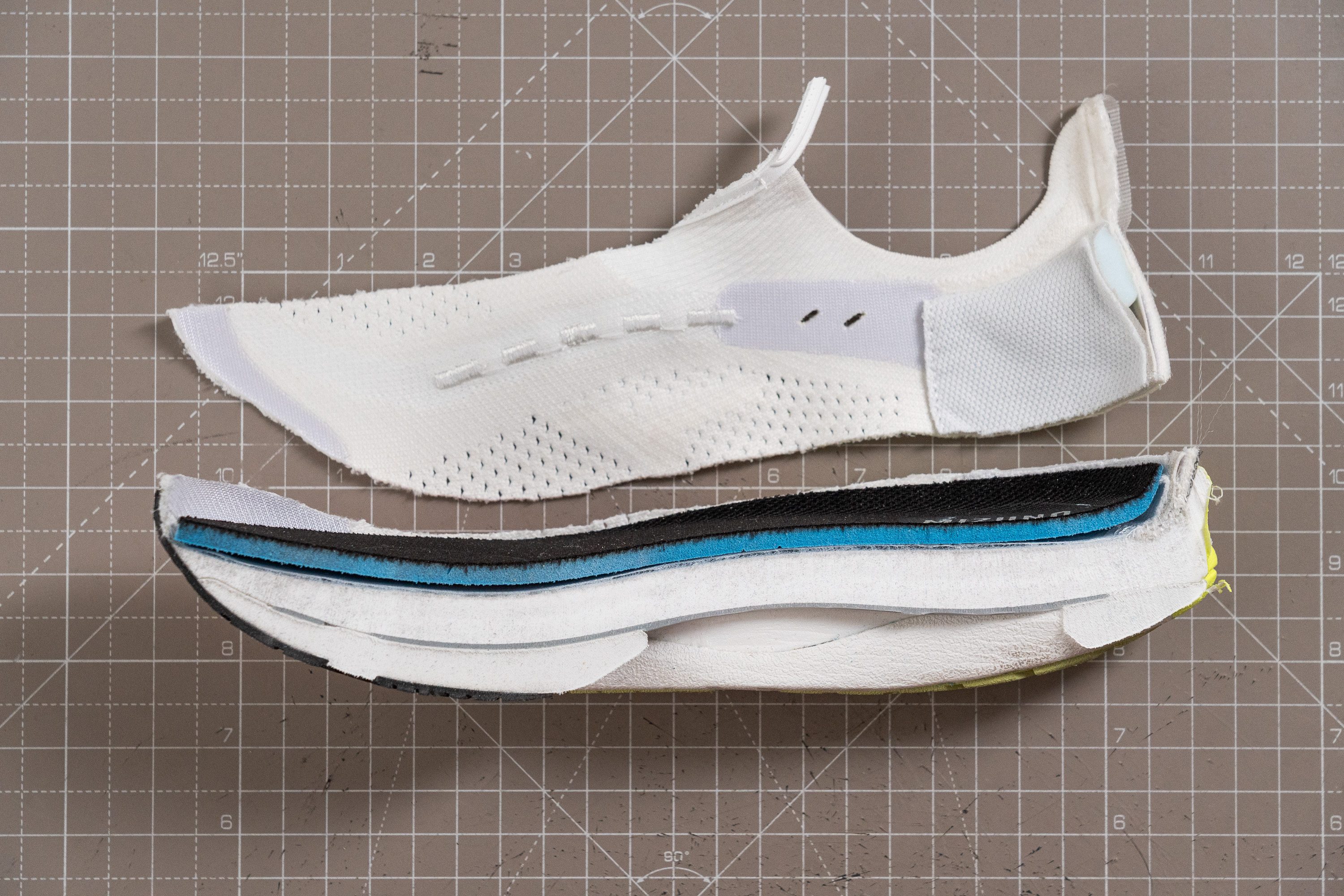
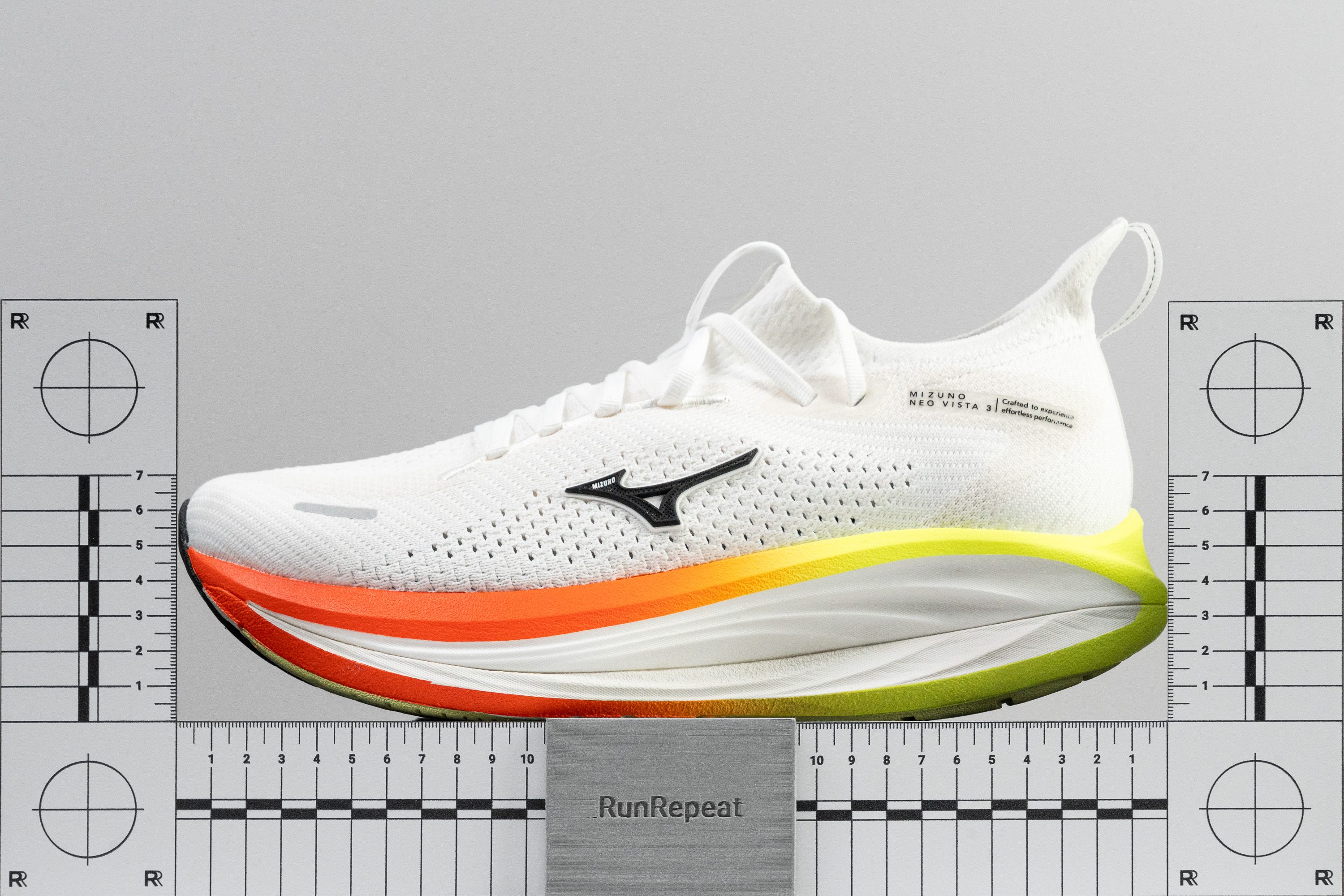
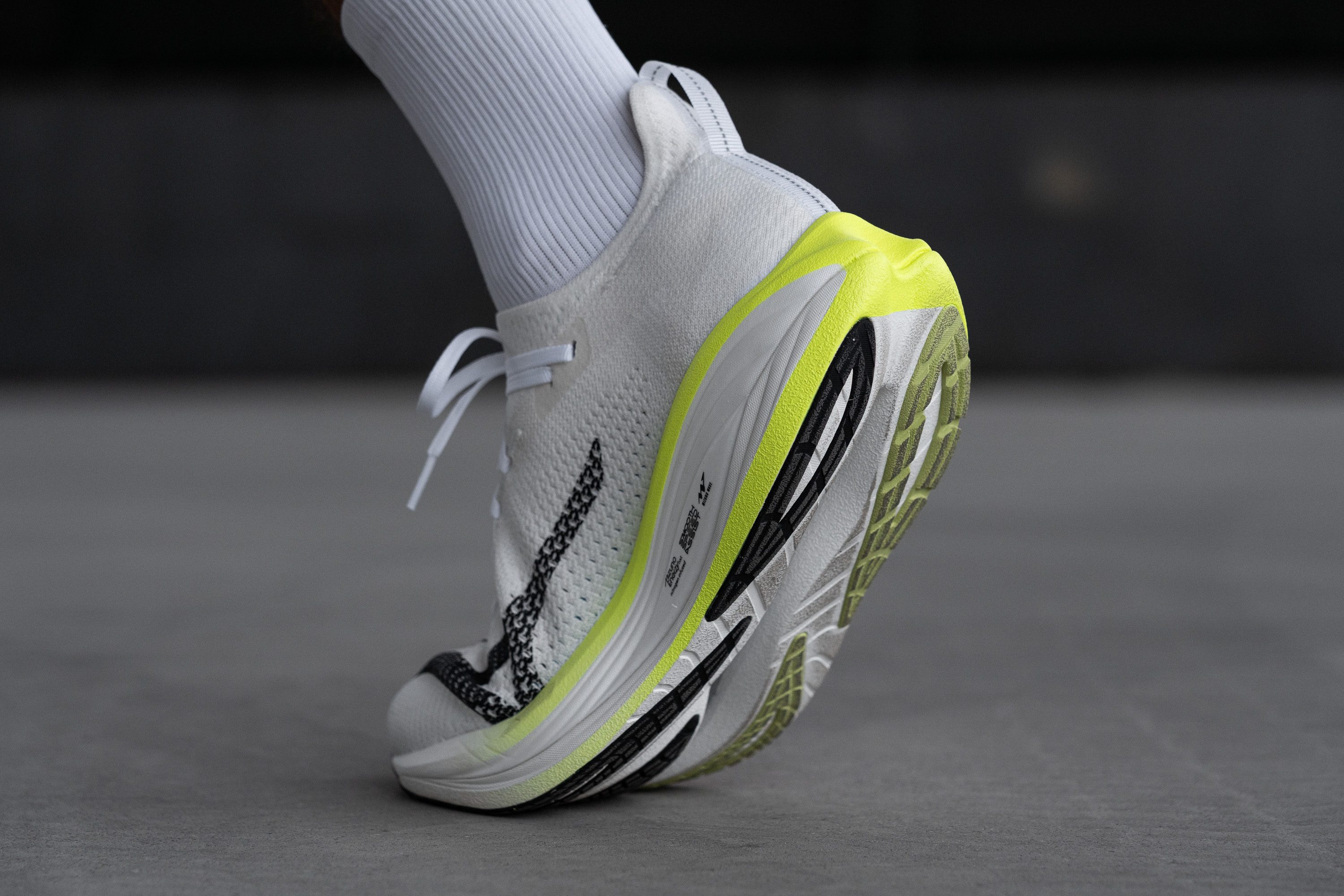
Mizuno also preserves another defining characteristic of the Neo Vista series in version 3: its pronounced rocker geometry called Smooth Speed Assist.
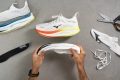
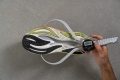
As our photo clearly shows, the curvature at both the heel and forefoot is unmistakable, creating a ride that strongly encourages smooth forward transitions regardless of your footstrike.
Plate
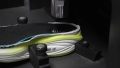
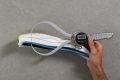
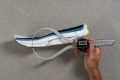
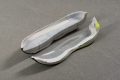
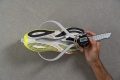
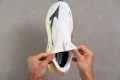
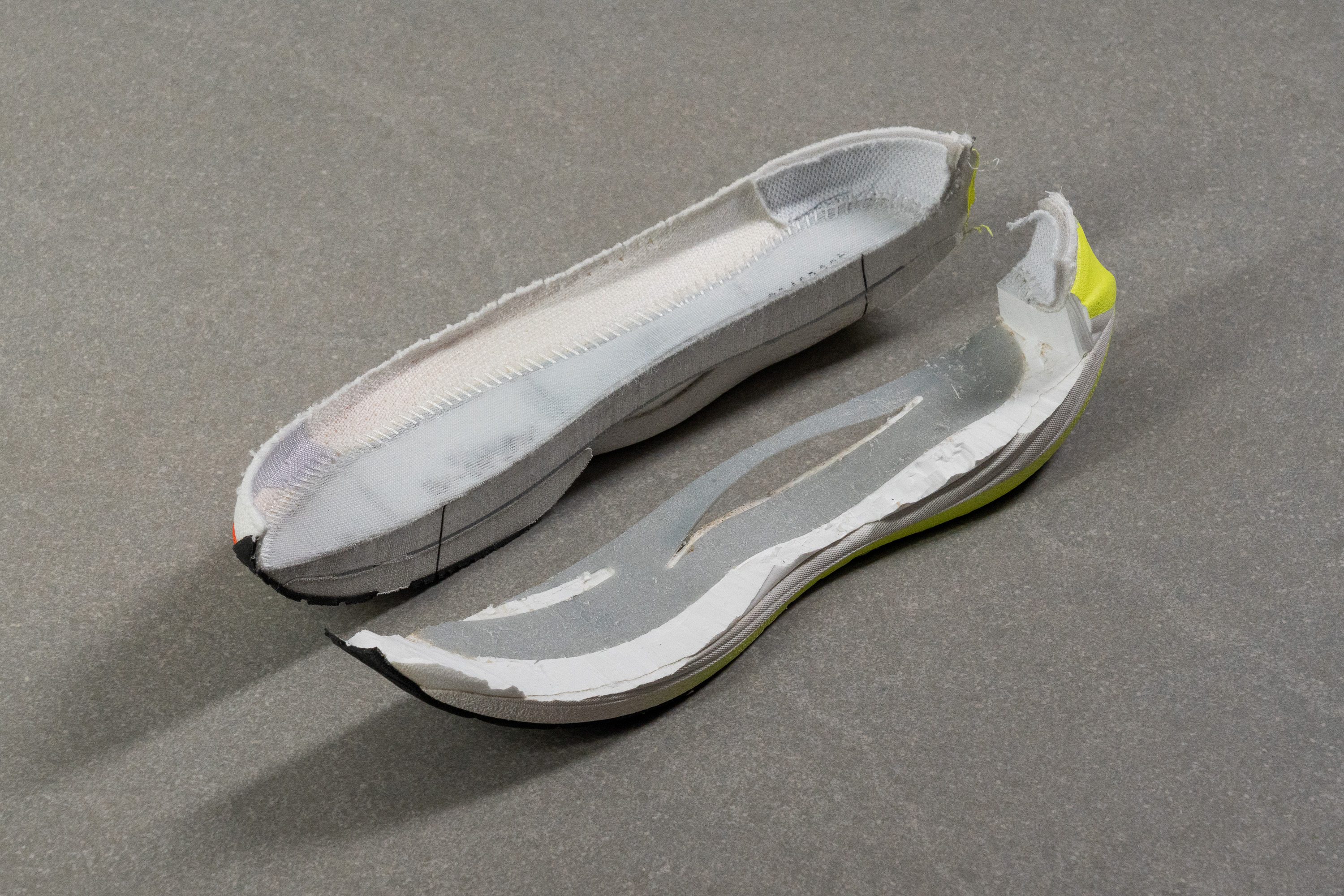
The plate, however, has changed substantially. The new fiberglass Mizuno Wave Plate features a rare design, with the central section curving upward through the midfoot to create a spring-like effect, while the lateral and medial sections curve downward in a more conventional layout.
Size and fit
Size
Mizuno Neo Vista 3 fits slightly large (26 votes).
Internal length
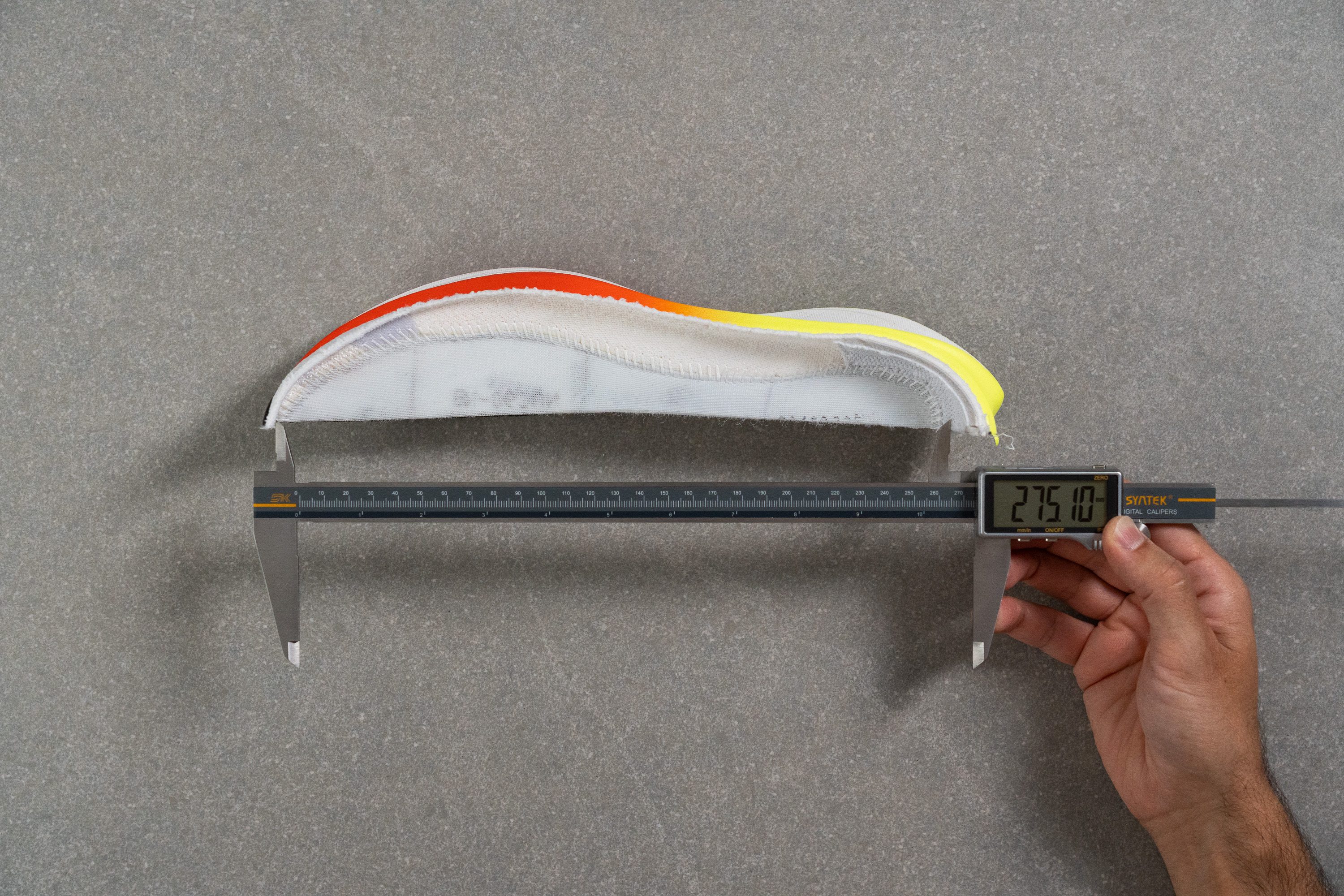
| Neo Vista 3 | 275.1 mm |
| Average | 269.4 mm |
Width / Fit
Mizuno sticks with the stretchy knit upper that has become another hallmark of the Neo Vista series. This material delivers a more accommodating fit, making the shoe feel less restrictive, especially for runners who appreciate a bit of extra room.
Our first measurement showed a maximum width of 95.2 mm, placing the Neo Vista 3 almost exactly at the average for road running shoes.
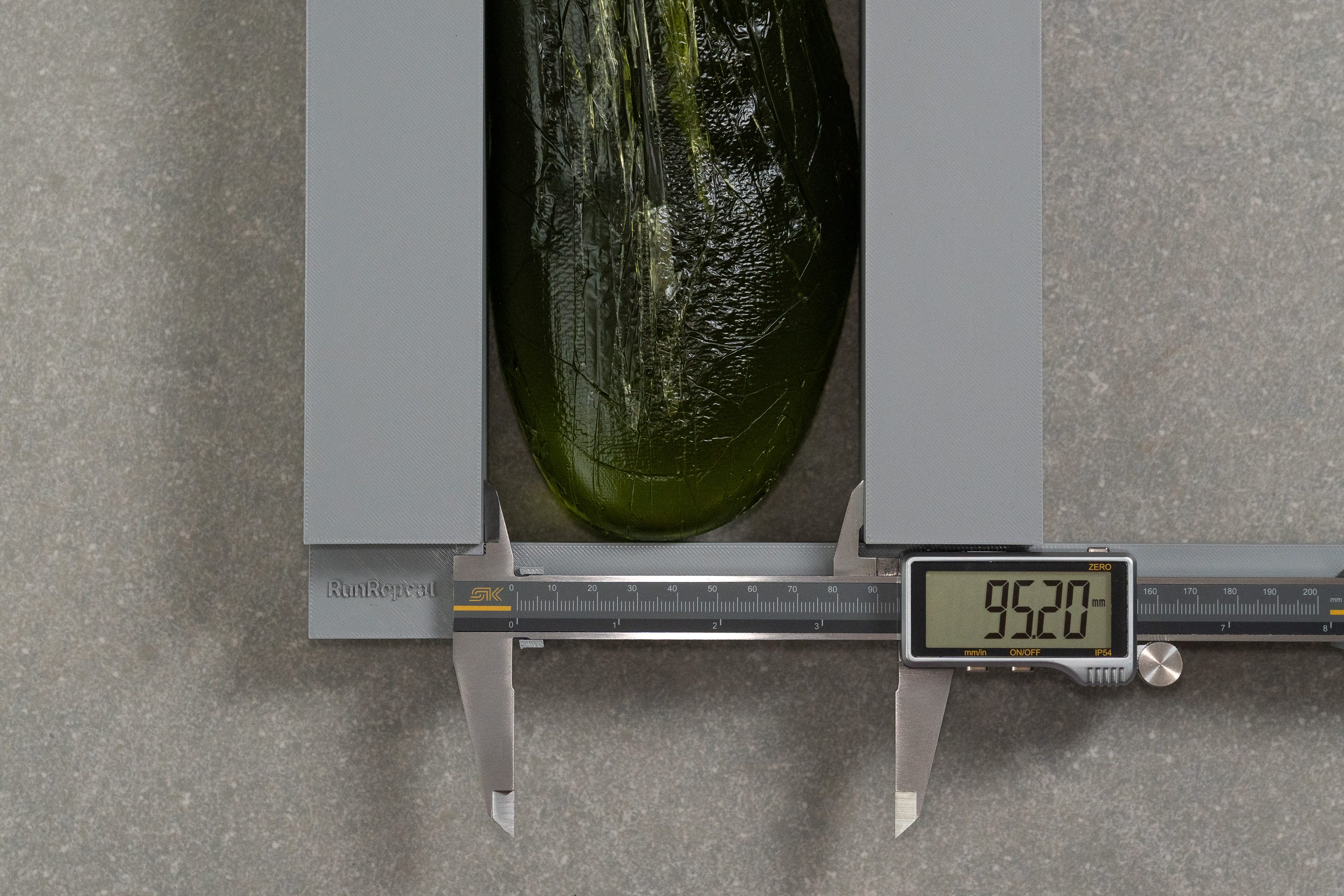
| Neo Vista 3 | 95.2 mm |
| Average | 95.2 mm |
Toebox width
The toebox is slightly more tapered than before, measuring 71.7 mm in our lab. However, as we mentioned earlier, the stretchy knit upper provides additional give, making the overall fit feel comfortably average despite the slightly narrower shape.
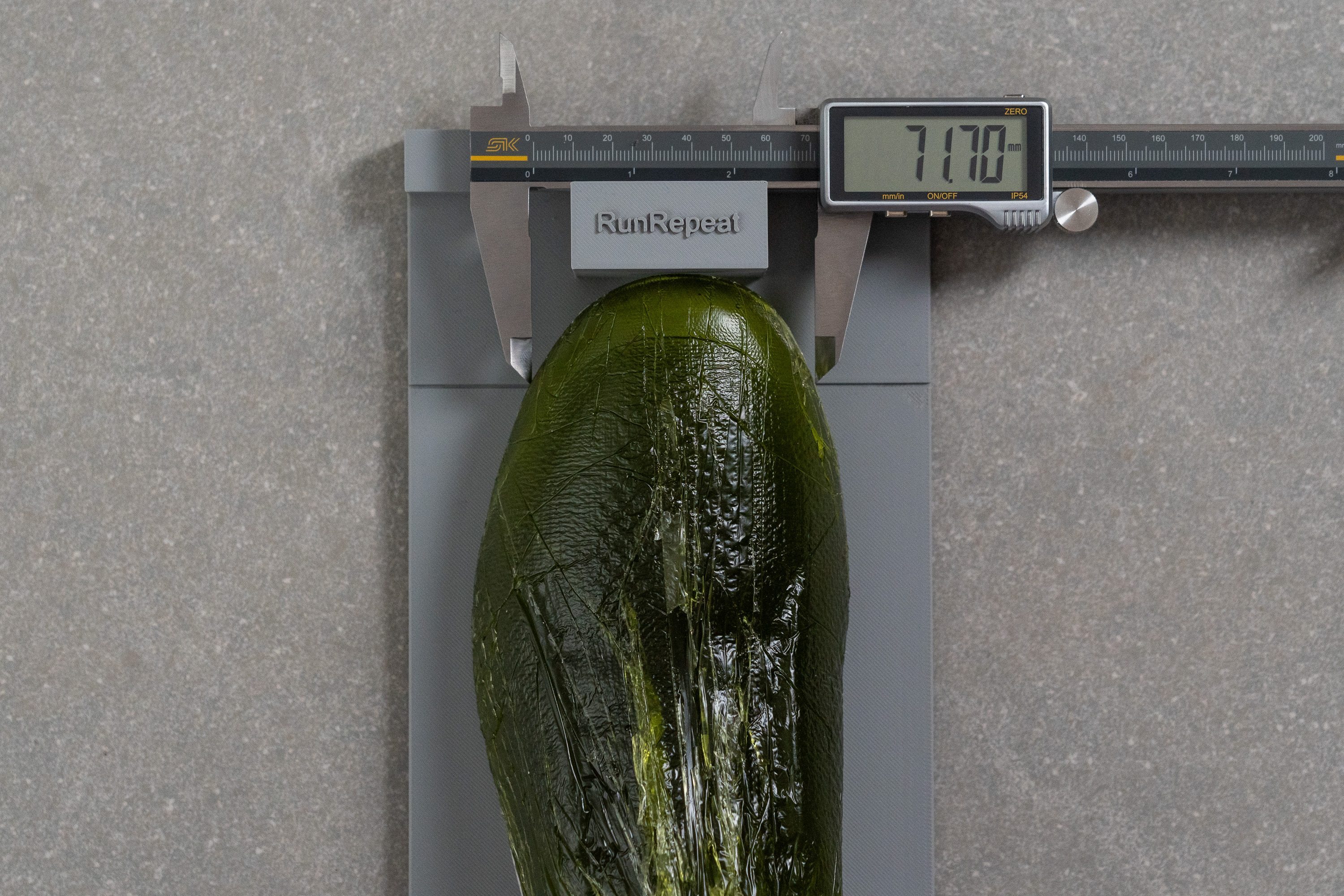
| Neo Vista 3 | 71.7 mm |
| Average | 73.2 mm |
Toebox height
Another defining feature of the Neo Vista series that carries over to version 3 is its generously tall toebox. As a result, the shoe feels roomier than its measured width alone would suggest.
We measured 29.4 mm of vertical space, providing ample room for natural toe movement. This extra volume should also contribute to better breathability by allowing air to circulate more freely inside the shoe. However, runners who prefer a snug, locked-in fit with the upper sitting close to the toes may not enjoy the Neo Vista 3.
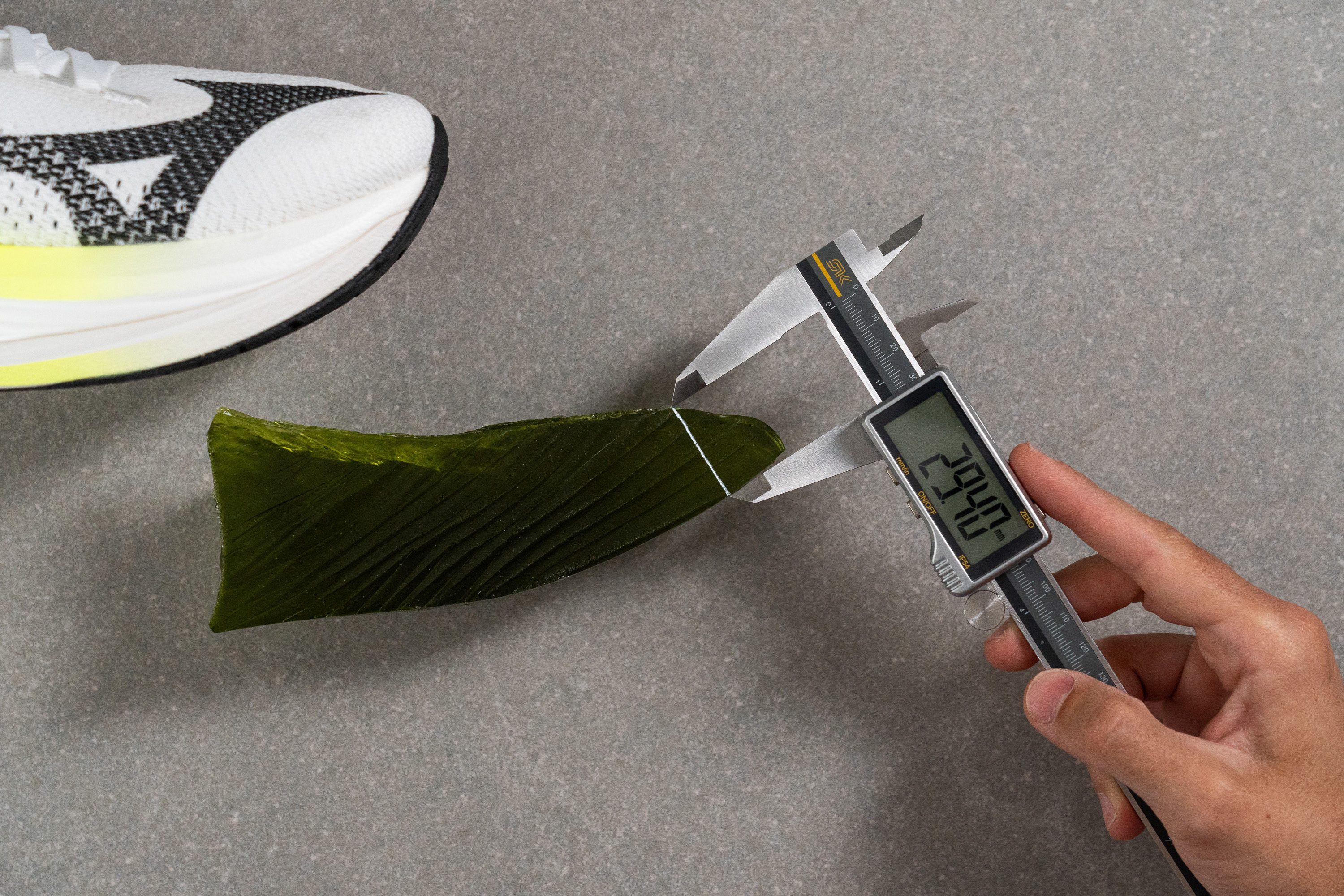
| Neo Vista 3 | 29.4 mm |
| Average | 27.0 mm |
Traction / Grip
Traction test
The Mizuno Neo Vista 2 recorded a 0.45 coefficient of friction in our testing. And the Neo Vista 3 jumped to an impressive 0.64 on wet concrete, so we believe Mizuno deserves credit for delivering such a substantial improvement in traction.
| Neo Vista 3 | 0.64 |
| Average | 0.53 |
Outsole design
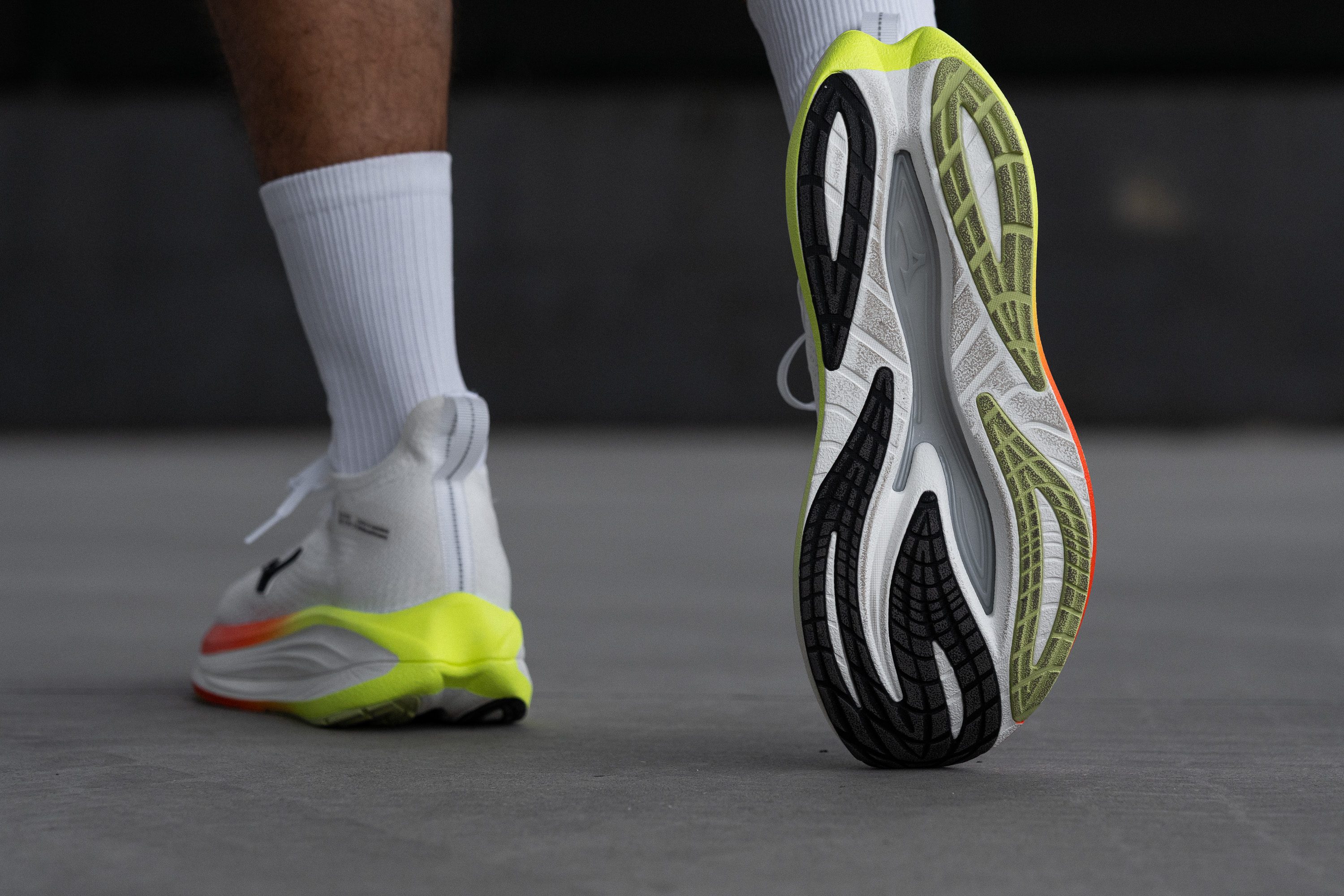
The outsole of the Neo Vista is one of the most complex we've seen in quite some time. Instead of relying on large rubber slabs, Mizuno uses multiple segmented pods separated by deep flex grooves and exposed foam.
It also retains the oversized midfoot cutout, although it now features a single window into the plate instead of two. Just like its predecessors, it's also prone to trapping the occasional small rock.
Flexibility / Stiffness
Our 30-degree bend test required just 15.3N of force, making the Neo Vista 3 more flexible than the average plated trainer although a bit stiffer than its predecessor.
We think Mizuno made the right call by sticking with a fiberglass plate instead of switching to carbon, as that decision helps preserve the forgiving ride that makes this shoe so good at daily training.
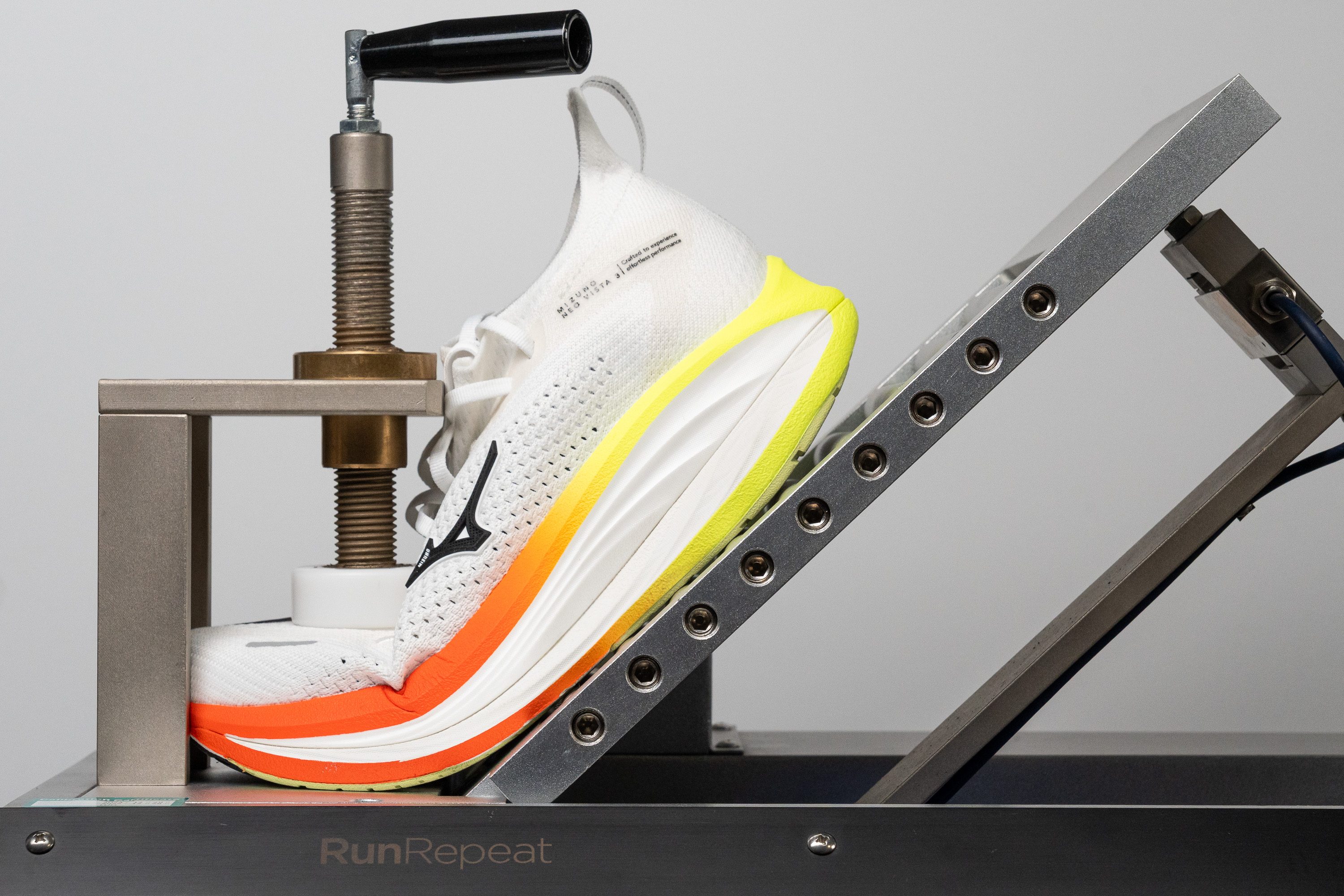
| Neo Vista 3 | 15.3N |
| Average | 15.5N |
Weight
The Mizuno Neo Vista 3 is undeniably a massive shoe, yet Mizuno deserves credit for keeping its weight under control at just 9.4 oz (266g).
While no one would mistake it for a lightweight trainer like the adidas Adizero Adios 9, achieving an almost average weight with this much cushioning underfoot is far from easy.
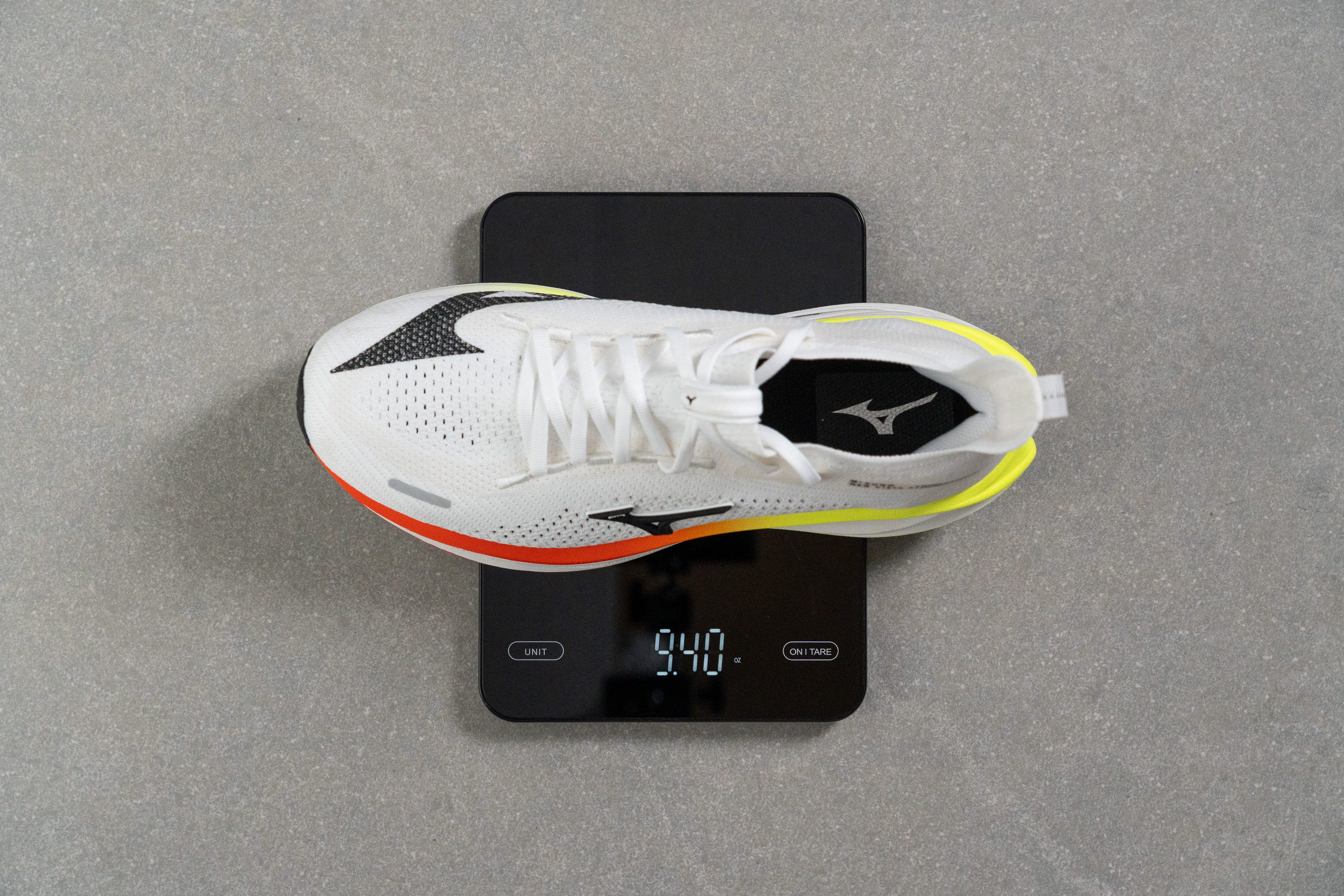
| Neo Vista 3 | 9.4 oz (266g) |
| Average | 9.2 oz (261g) |
Breathability
Breathability test
UpdatedDespite using a knit upper, the Neo Vista 3 delivers impressive breathability at 83 BR.
Our climate-controlled chamber test uses a heated foot form covered with a skin-like membrane and performance sock that steadily releases artificial sweat over three hours, closely simulating real-world sweating. In this demanding test, the Neo Vista 3 kept the foot drier than many competing running shoes!
| Neo Vista 3 | 83 BR |
| Average | 75 BR |
Drying potential
NewKnit uppers often retain moisture and can take a long time to dry, but that's not the case with the Neo Vista 3. It achieved an outstanding drying potential by releasing 62% of the absorbed moisture during our 3-hour test, an excellent result for such a plush material.

| Neo Vista 3 | 62% |
| Average | 53% |
Stability
Lateral stability test
The Mizuno Neo Vista 3 feels very similar to its predecessors in terms of stability. It performs better than its towering stack height might suggest, yet it remains best suited for runners with a neutral gait who don't require additional support.
The problem is that the exceptionally soft midsole and compliant heel don't provide enough structure for runners who overpronate. However, if you have a neutral stride, we believe the Neo Vista 3 offers more than enough stability for comfortable daily training.
Torsional rigidity
Despite its enormous midsole, we measured a torsional rigidity of just 15.5 Nm, placing it close to the average for road running shoes.
We believe this balanced level of flexibility is one of the main reasons why the Neo Vista 3 feels so smooth and comfortable during easy miles and relaxed jogs.
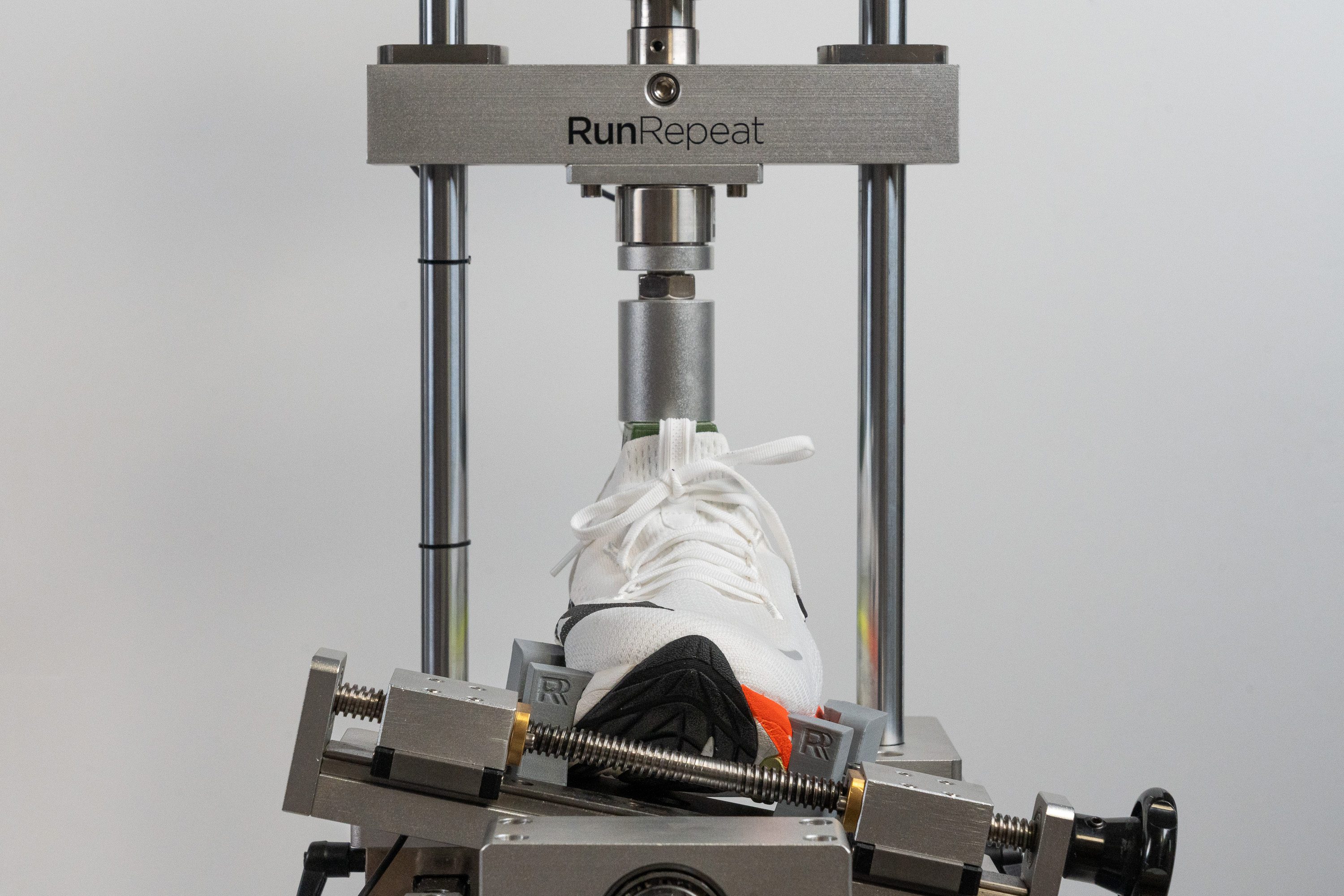
| Neo Vista 3 | 15.5 Nm |
| Average | 14.4 Nm |
Heel counter stiffness
Mizuno completely redesigned the heel to address one of the most common criticisms of the Neo Vista 2 by adding more generous, better-positioned padding for improved heel lockdown. These updates also resulted in a slightly more structured heel counter, which earned a 2/5 rating in our manual assessment.
| Neo Vista 3 | 2 |
| Average | 3 |
Midsole width - forefoot
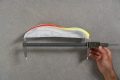
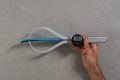
Like most super trainers, the Neo Vista 3 features an exceptionally wide midsole that rivals the dimensions of many stability-focused shoes. We started our measurements at the forefoot, where the caliper registered a substantial 118.6 mm.
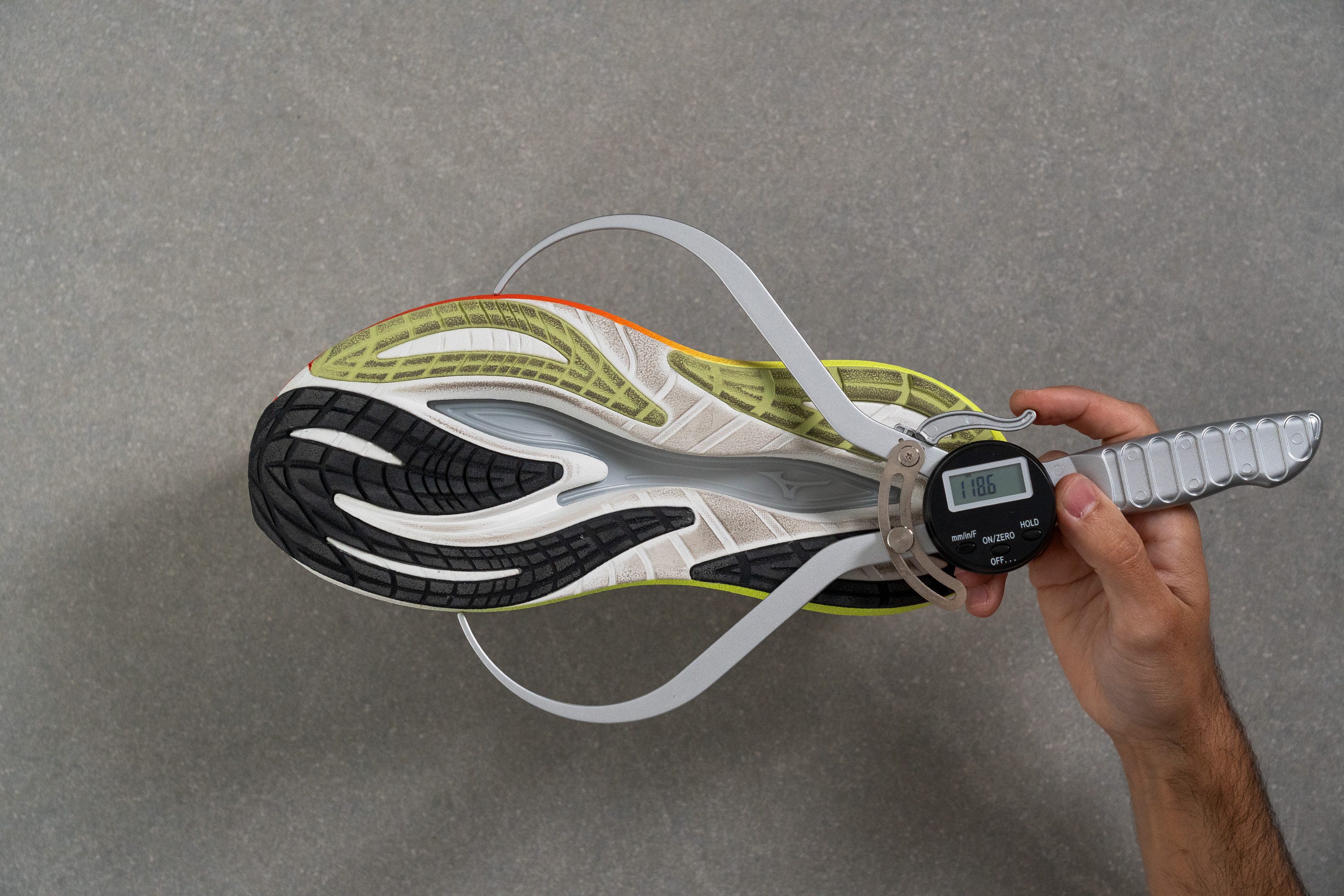
| Neo Vista 3 | 118.6 mm |
| Average | 115.1 mm |
Midsole width - heel
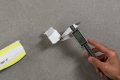
The heel is equally broad, measuring 95.4 mm.
This is nearly identical to the Neo Vista 2 (95.8 mm), so runners upgrading can expect a familiar platform with a more stable feel, thanks to the redesigned heel construction and improved rearfoot lockdown.
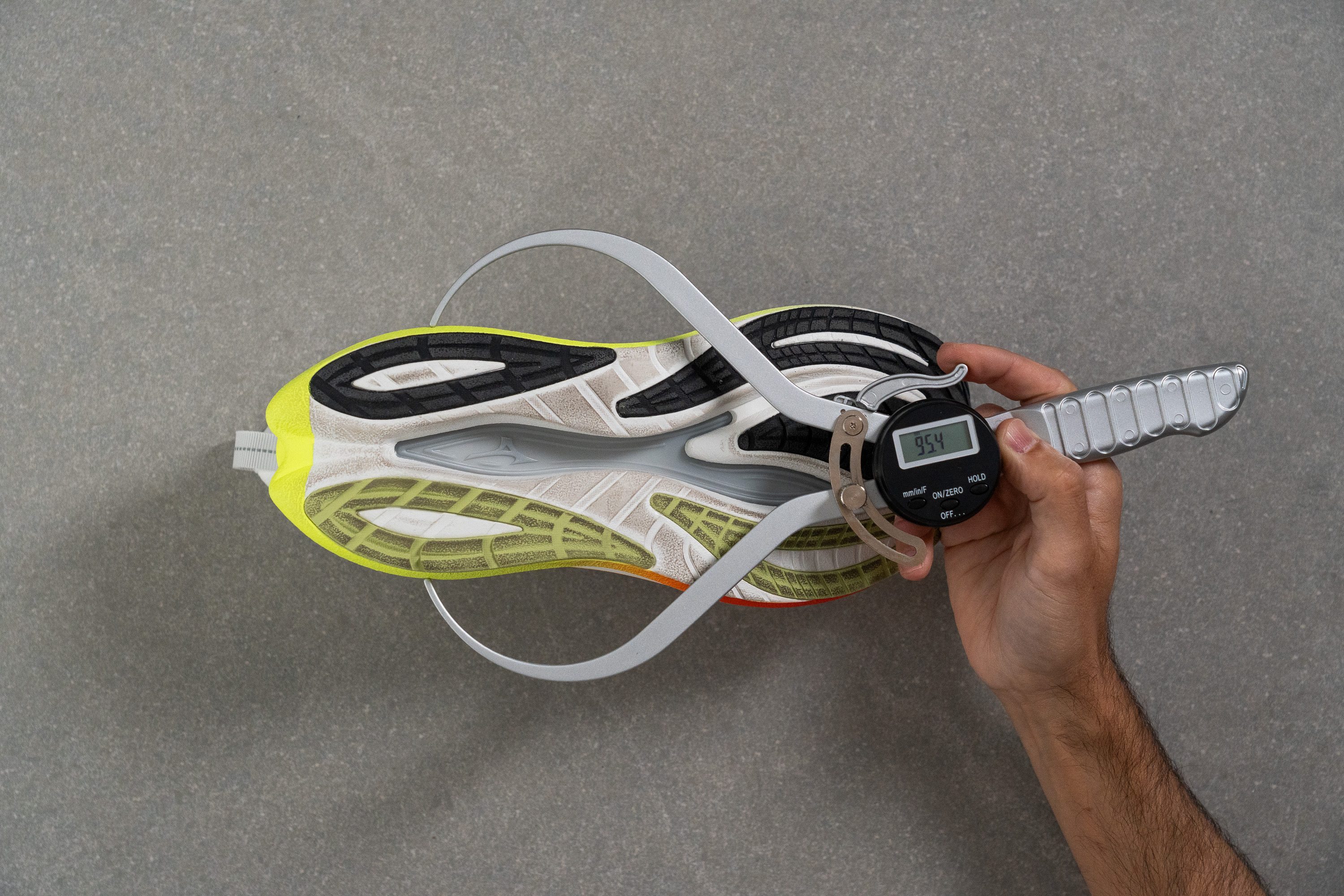
| Neo Vista 3 | 95.4 mm |
| Average | 91.1 mm |
Durability
Toebox durability
The upper continues to impress from every angle! Knit uppers often fall short in durability, yet the Neo Vista 3 delivered an outstanding performance in our Dremel test, earning an impressive 4/5 rating.
| Neo Vista 3 | 4 |
| Average | 2.6 |
Heel padding durability
The redesigned heel padding improves lockdown, but it doesn't hold up especially well against abrasion. In our Dremel test, it showed noticeable wear and received the lowest possible durability rating of 1/5.
| Neo Vista 3 | 1 |
| Average | 3.4 |
Outsole durability
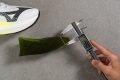
The good news continues with the X10 outsole, which delivered a strong performance in our Dremel test. We measured only 0.7 mm of wear, an excellent result that plays a key role in offsetting the shoe's relatively thin rubber layer.
| Neo Vista 3 | 0.7 mm |
| Average | 1.1 mm |
Outsole thickness
As we just mentioned, the outsole is very thin.
At only 1.9 mm, it helps keep weight low while allowing the plush midsole to shine, and given the excellent durability we measured, we don't see it as a concern.
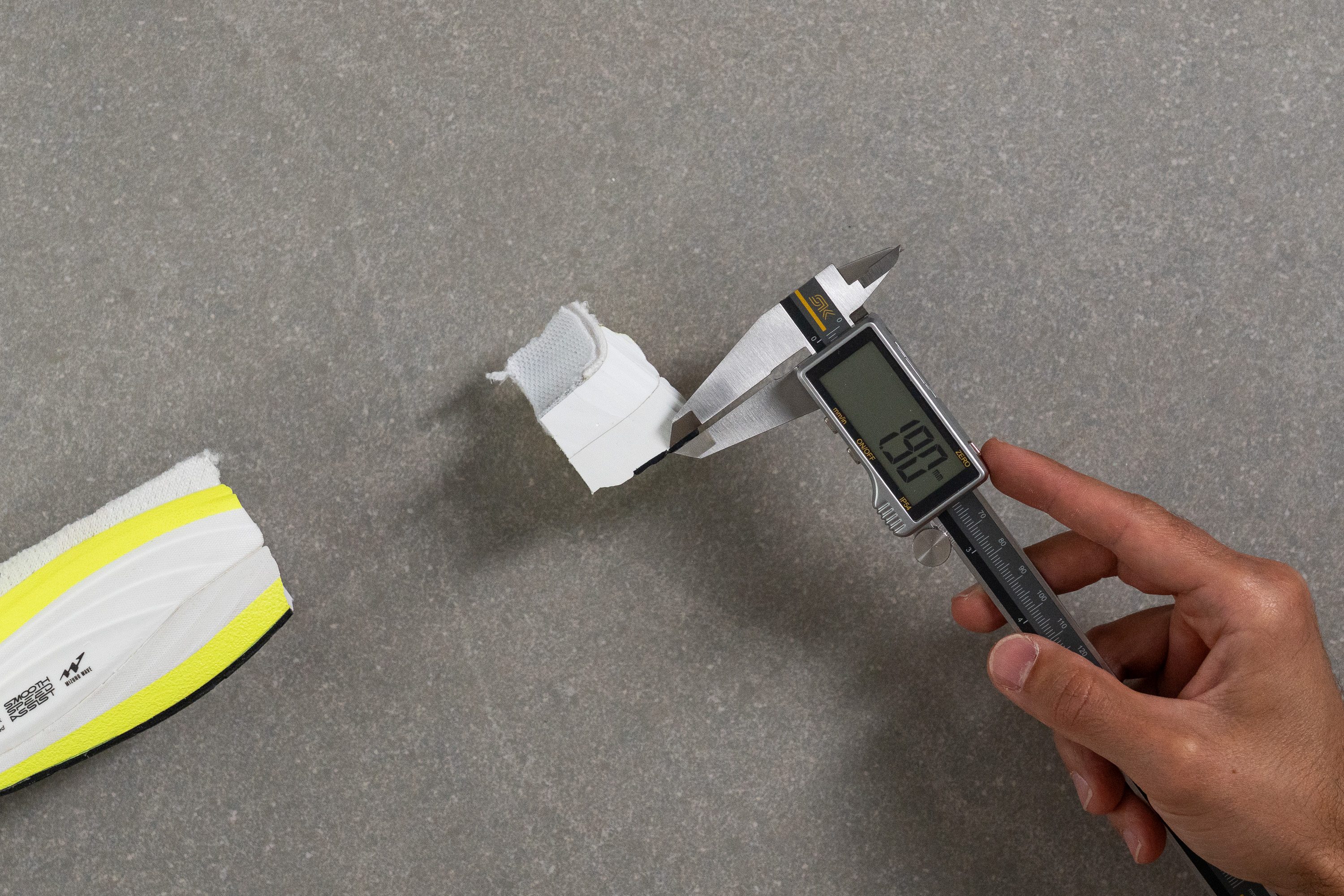
| Neo Vista 3 | 1.9 mm |
| Average | 3.1 mm |
Misc
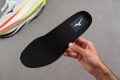
Insole thickness
Mizuno equipped the Neo Vista 3 with a generously cushioned insole that contributes 5.3 mm to the shoe's overall stack height. That said, we think the insole should feel more premium considering the shoe's hefty price tag.
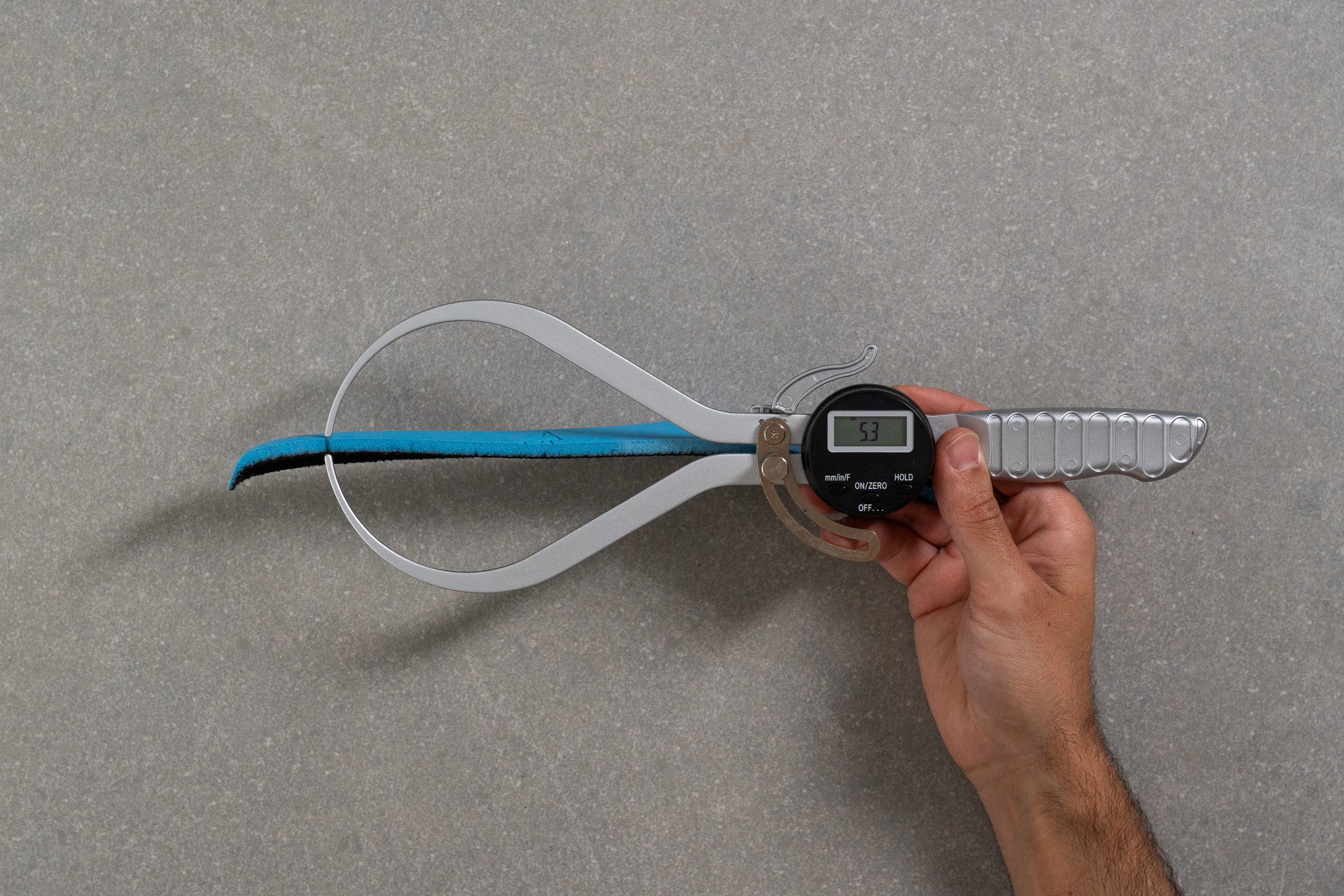
| Neo Vista 3 | 5.3 mm |
| Average | 4.4 mm |
Removable insole
If you'd rather use a different insole for extra bounce or added support, swapping it won't be an issue. However, installing a thinner one may leave too much vertical space inside the roomy toebox, resulting in a less secure and more sloppy fit.
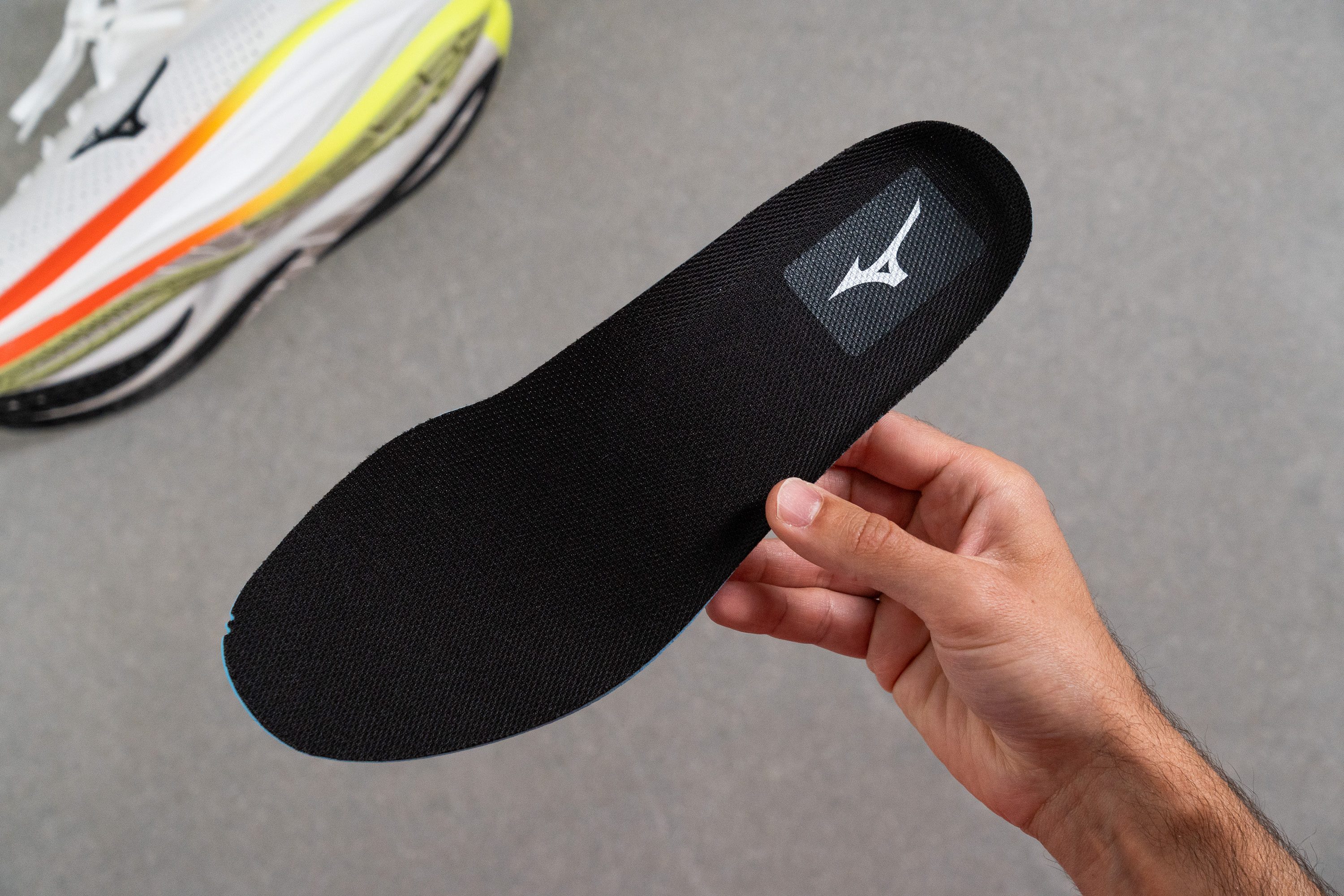
| Neo Vista 3 | Yes |
Reflective elements
Mizuno added a small reflective strip to the forefoot. It's not particularly large, but we still appreciate the extra visibility for low-light runs.
| Neo Vista 3 | Yes |
Tongue padding
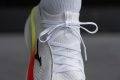
We found a lacing system that's nearly identical to the previous Neo Vista, with the eyelet chain fully integrated into the knit upper. It's a unique design that tends to divide opinions.
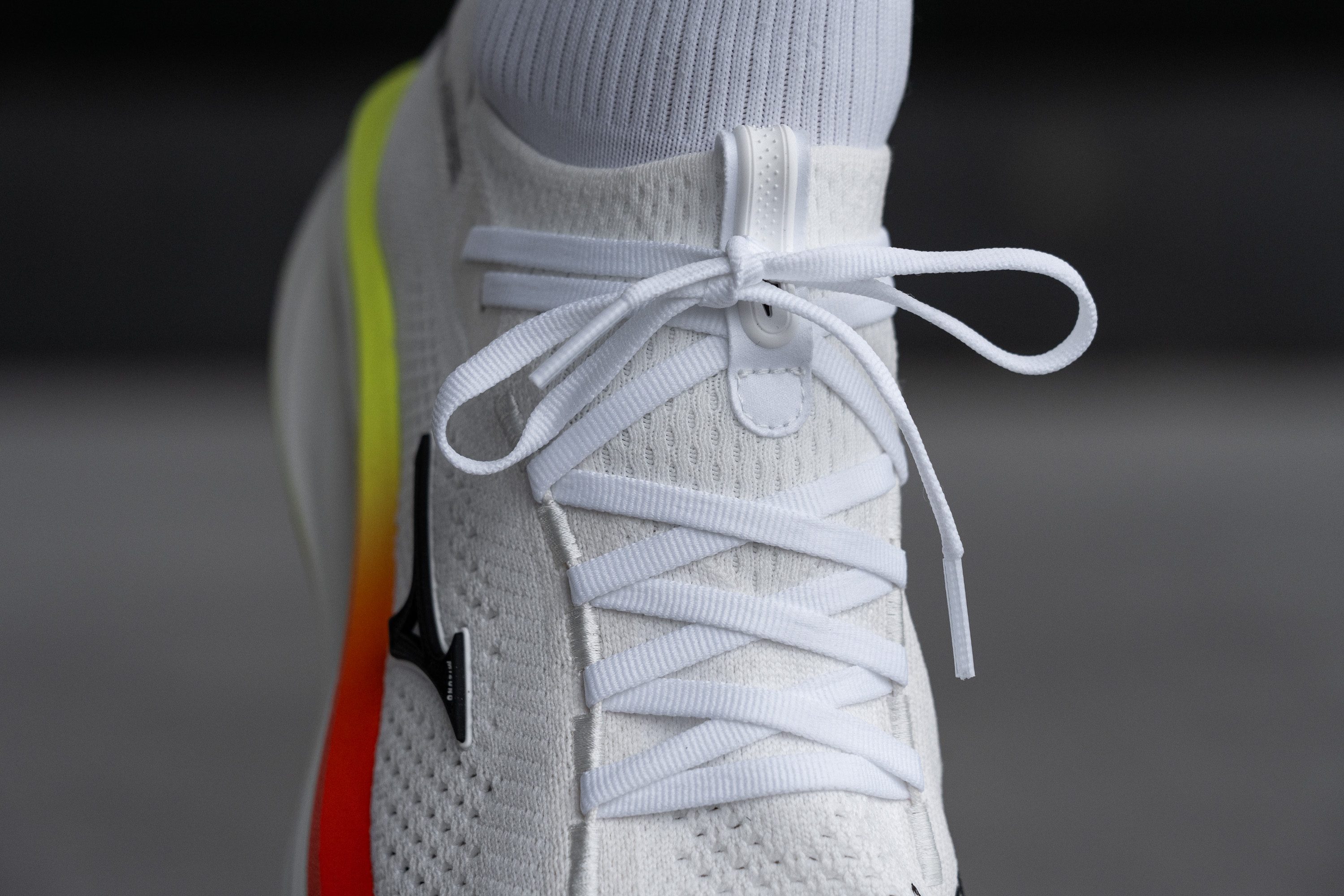
The tongue is equally polarizing. At just 2.3 mm thick, it lacks the plush cushioning that some runners prefer. However, if you're after a streamlined, sock-like fit with minimal bulk like in the Nike Alphafly 3, we think you'll really enjoy this design.
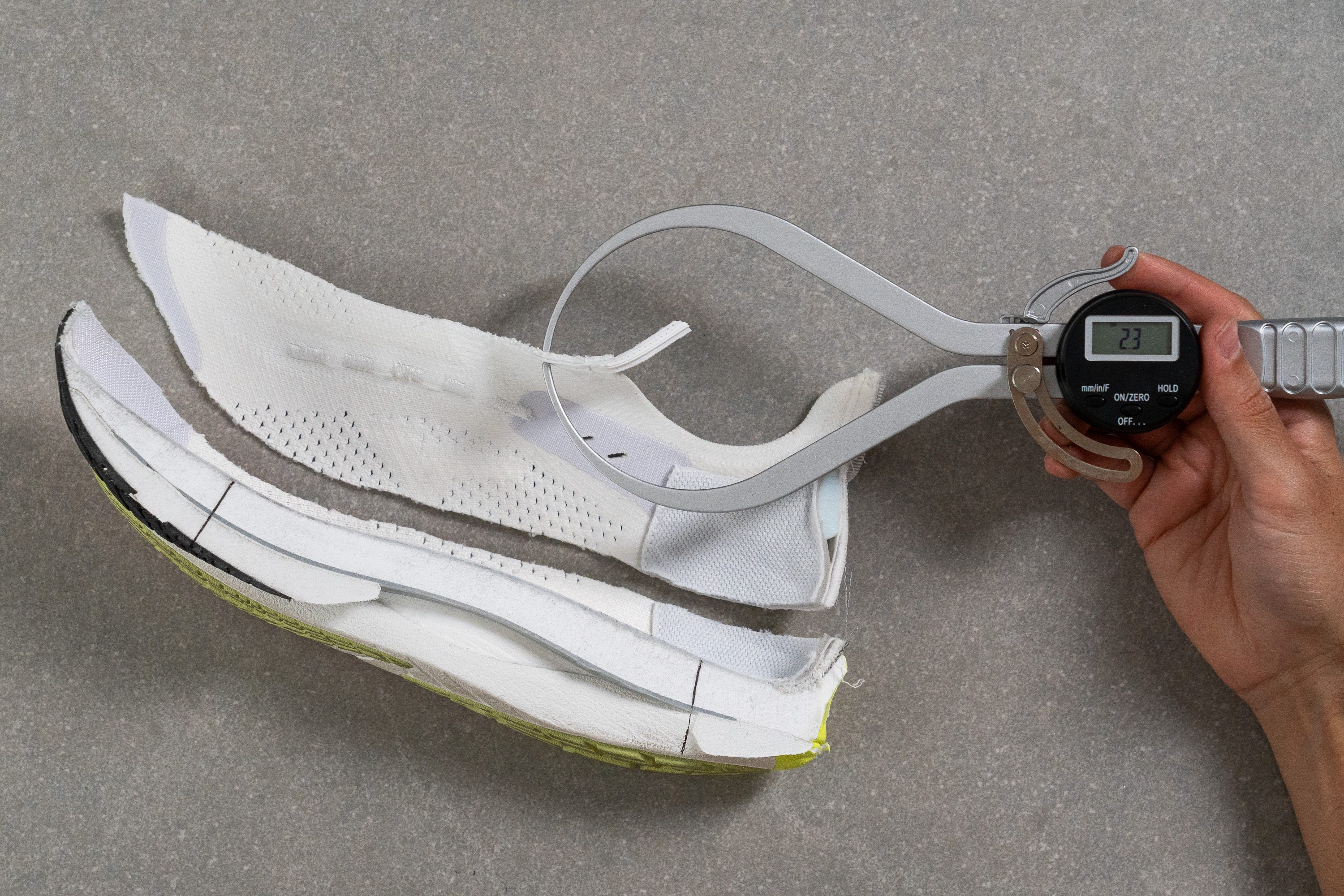
| Neo Vista 3 | 2.3 mm |
| Average | 5.8 mm |
Tongue: gusset type
The tongue stays perfectly in place thanks to the one-piece, sock-like upper construction, eliminating any chance of unwanted movement while running.
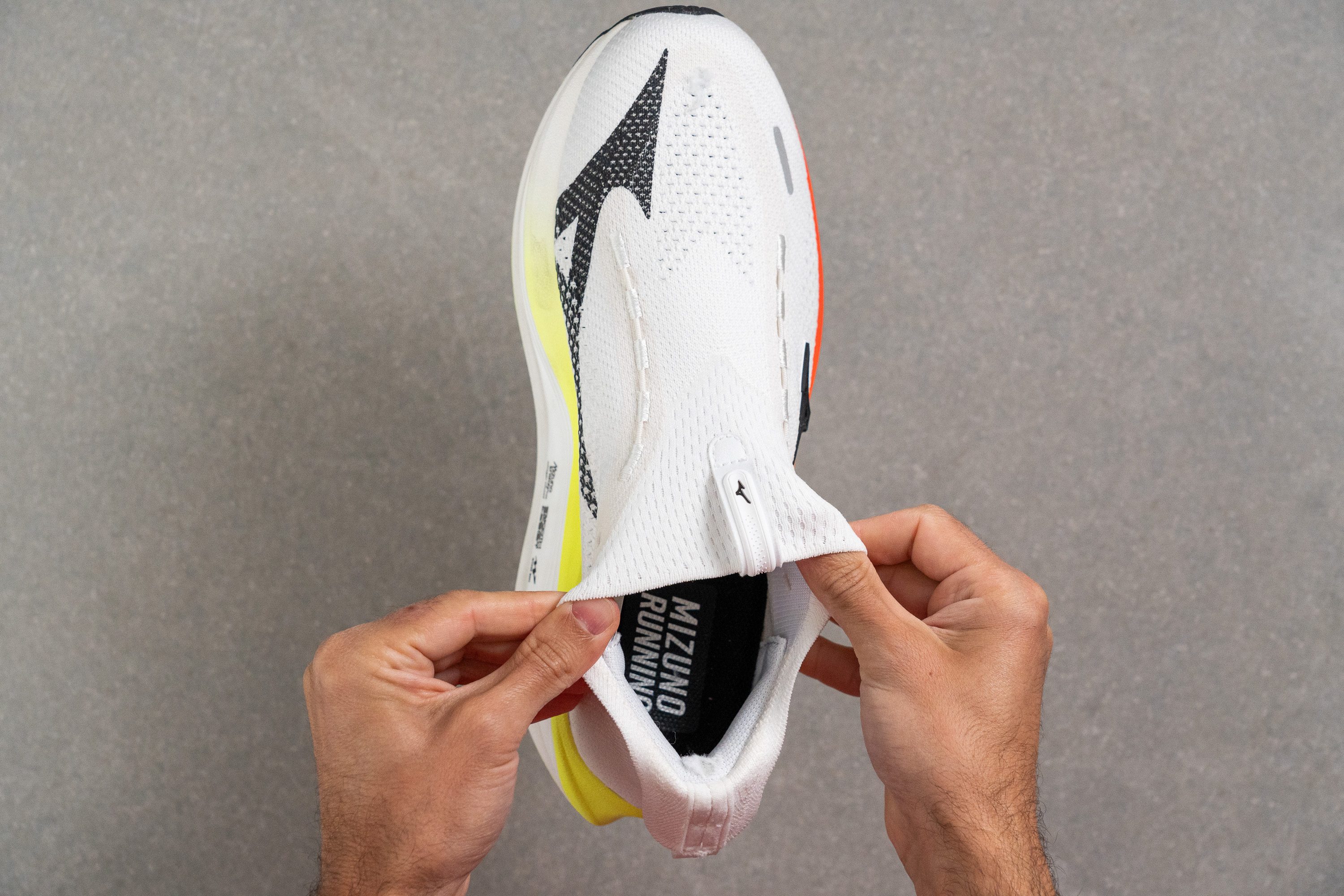
| Neo Vista 3 | Sock like |
Heel tab
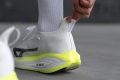
The heel features a generously sized finger-loop tab that's easy to grab, and its secure stitching gives us no concerns about long-term durability.
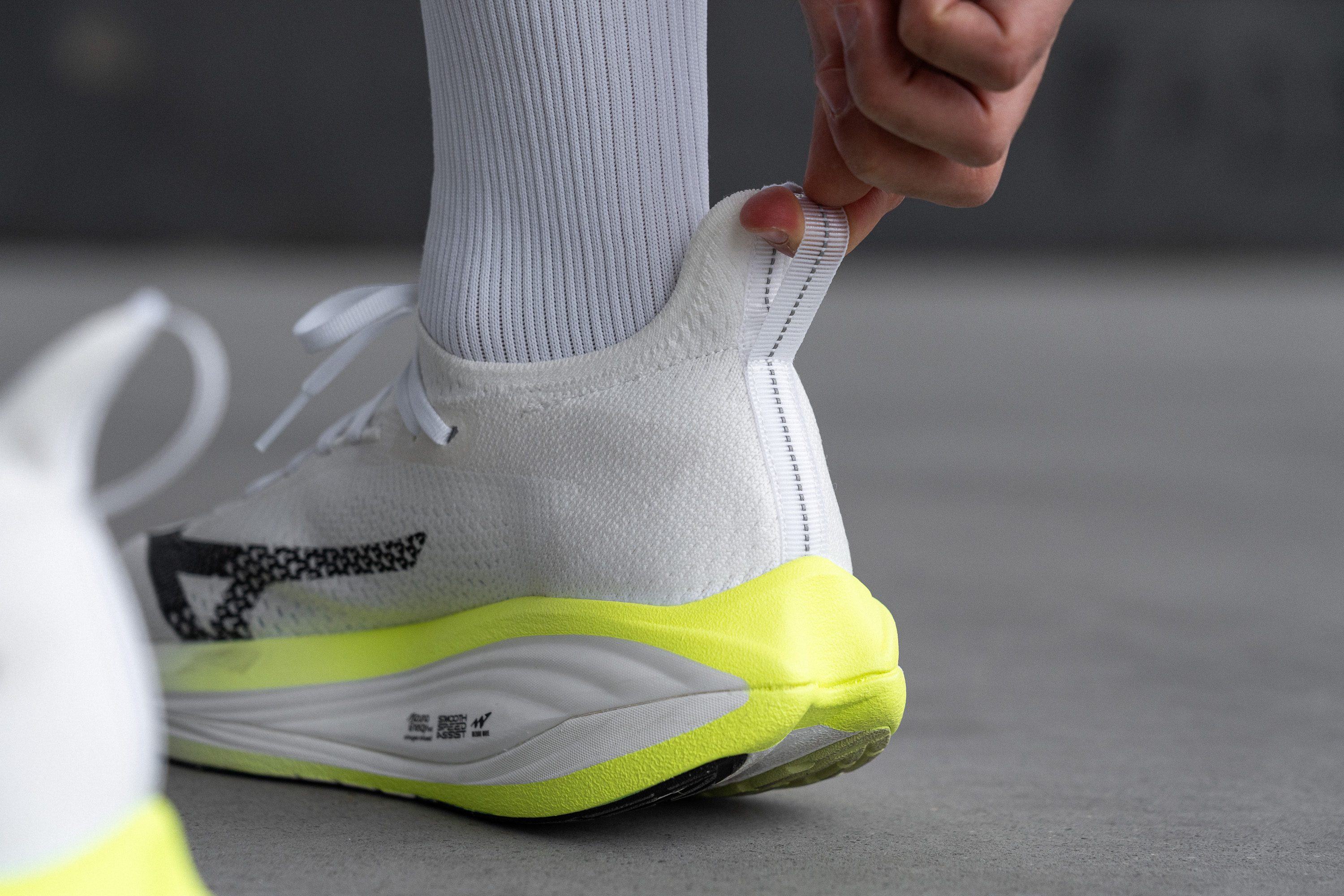
| Neo Vista 3 | Finger loop |
Price
Compared to its rivals and considering its overall performance, the Neo Vista 3 is a bit overpriced. However, it delivers a combination of features that's still hard to find elsewhere, like an exceptionally comfortable sock-like upper paired with endless cushioning.
| Neo Vista 3 | $200 |
| Average | $157 |