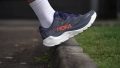
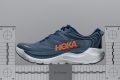

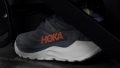
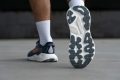
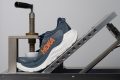
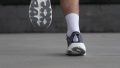




Our verdict
- Daily running 86
- Tempo 36
- Race 26
- Stability 97
Pros
- Roomy fit compared with most HOKA
- Excellent stability
- Improved outsole traction
- Good durability across the board
- Softer midsole than v5
- Good quality materials
- Keeps losing weight
- 360-degree reflectivity
Cons
- Average shock absorption
- High price for performance offered
- Outdated CMEVA foam
Awards
- Top pick in best running shoes for knee pain
- Top pick in best HOKA running shoes
- Top 9% most popular running shoes
Comparison
The most similar running shoes compared
+ + Add a shoe | |||||
|---|---|---|---|---|---|
| Our score | 81 Great | 83 Great | 87 Great | 86 Great | |
| Price | $180 | $150 | $170 | $170 | |
| Pace | Daily running | Daily running | Daily running | Daily running | |
| Shock absorption | Moderate | Moderate | High | High | |
| Energy return | Low | Low | High | Moderate | |
| Traction | High | High | High | High | |
| Arch support | Stability | Stability | Stability | Stability | |
| Weight lab Weight brand | 10 oz / 283g 10 oz / 283g | 9.9 oz / 280g 10.4 oz / 294g | 10.3 oz / 292g 10.9 oz / 309g | 10.5 oz / 298g 10.5 oz / 298g | |
| Drop lab Drop brand | 7.3 mm 6.0 mm | 7.6 mm 10.0 mm | 11.2 mm 10.0 mm | 8.5 mm 8.0 mm | |
| Strike pattern | Mid/forefoot | Mid/forefoot | Heel | HeelMid/forefoot | |
| Size | True to size | True to size | True to size | True to size | |
| Midsole softness | Soft | Soft | Soft | Soft | |
| Difference in midsole softness in cold | Small | Small | Small | Normal | |
| Toebox durability | Decent | Decent | Decent | Decent | |
| Heel padding durability | Good | Decent | Good | Good | |
| Outsole durability | Good | Good | Good | Decent | |
| Breathability | Moderate | Moderate | Moderate | Moderate | |
| Width / fit | Medium | Medium | Medium | Medium | |
| Toebox width | Wide | Medium | Medium | Medium | |
| Stiffness | Stiff | Moderate | Stiff | Stiff | |
| Torsional rigidity | Stiff | Flexible | Moderate | Stiff | |
| Heel counter stiffness | Stiff | Stiff | Stiff | Stiff | |
| Rocker | ✓ | ✗ | ✗ | ✗ | |
| Heel lab Heel brand | 36.0 mm 39.0 mm | 36.6 mm 38.5 mm | 40.9 mm 42.0 mm | 36.8 mm 39.0 mm | |
| Forefoot lab Forefoot brand | 28.7 mm 33.0 mm | 29.0 mm 28.5 mm | 29.7 mm 32.0 mm | 28.3 mm 31.0 mm | |
| Widths available | NormalWideX-Wide | NormalWide | NormalWide | NarrowNormalWideX-Wide | |
| Orthotic friendly | ✓ | ✓ | ✓ | ✓ | |
| Season | All seasons | All seasons | All seasons | All seasons | |
| Removable insole | ✓ | ✓ | ✓ | ✓ | |
| Ranking | #199 Top 50% | #166 Top 42% | #62 Top 16% | #83 Top 21% | |
| Popularity | #36 Top 9% | #152 Top 38% | #58 Top 15% | #32 Top 8% |
Who should buy
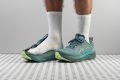
The HOKA Gaviota 6 is a strong option for runners who:
- Have wide feet and struggled with the snug fit of many HOKA models.
- Need maximum stability and want one of the most supportive platforms ever done.
- Want a comfort-focused stability shoe for easy runs, recovery miles, or long walks.
Who should NOT buy
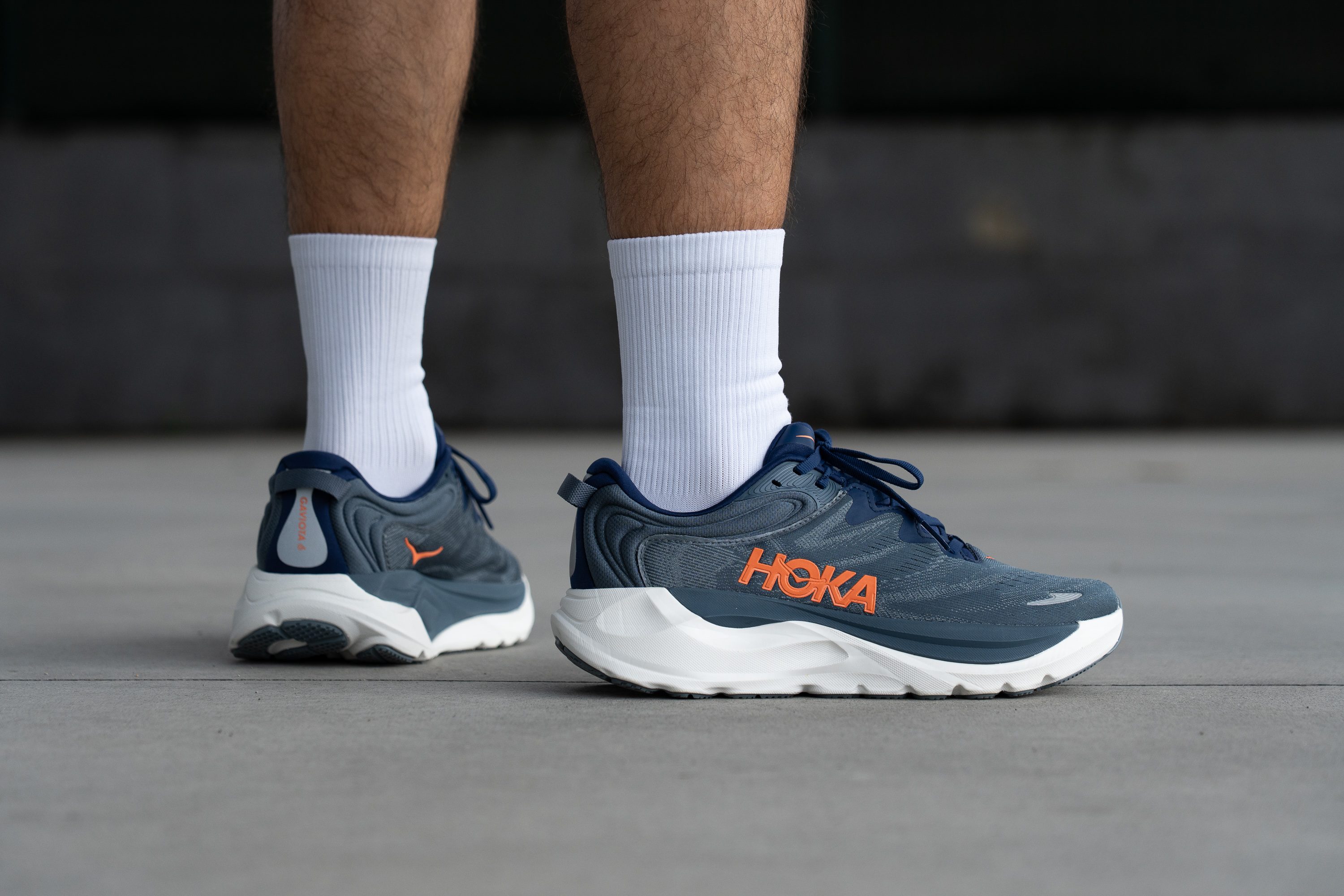
We found in the lab that the CMEVA midsole feels dull and low-energy, which limits the true potential of the Gaviota 6. In our view, runners seeking a more lively yet still stable ride should look elsewhere. Fortunately, there are much better choices for a fast-paced stability trainer, such as the Saucony Tempus 2 or the Nike Structure Plus.
We also think that heavier runners or those tackling long miles may find the shock absorption underwhelming. Our lab data proves that the impact protection simply does not match the shoe’s bulky appeareance. Instead, the Saucony Hurricane 24 is a better pick, and if you only need light support, the HOKA Bondi 9 comes with the supercritical foam that HOKA missed here.
Cushioning
Shock absorption
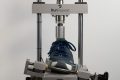
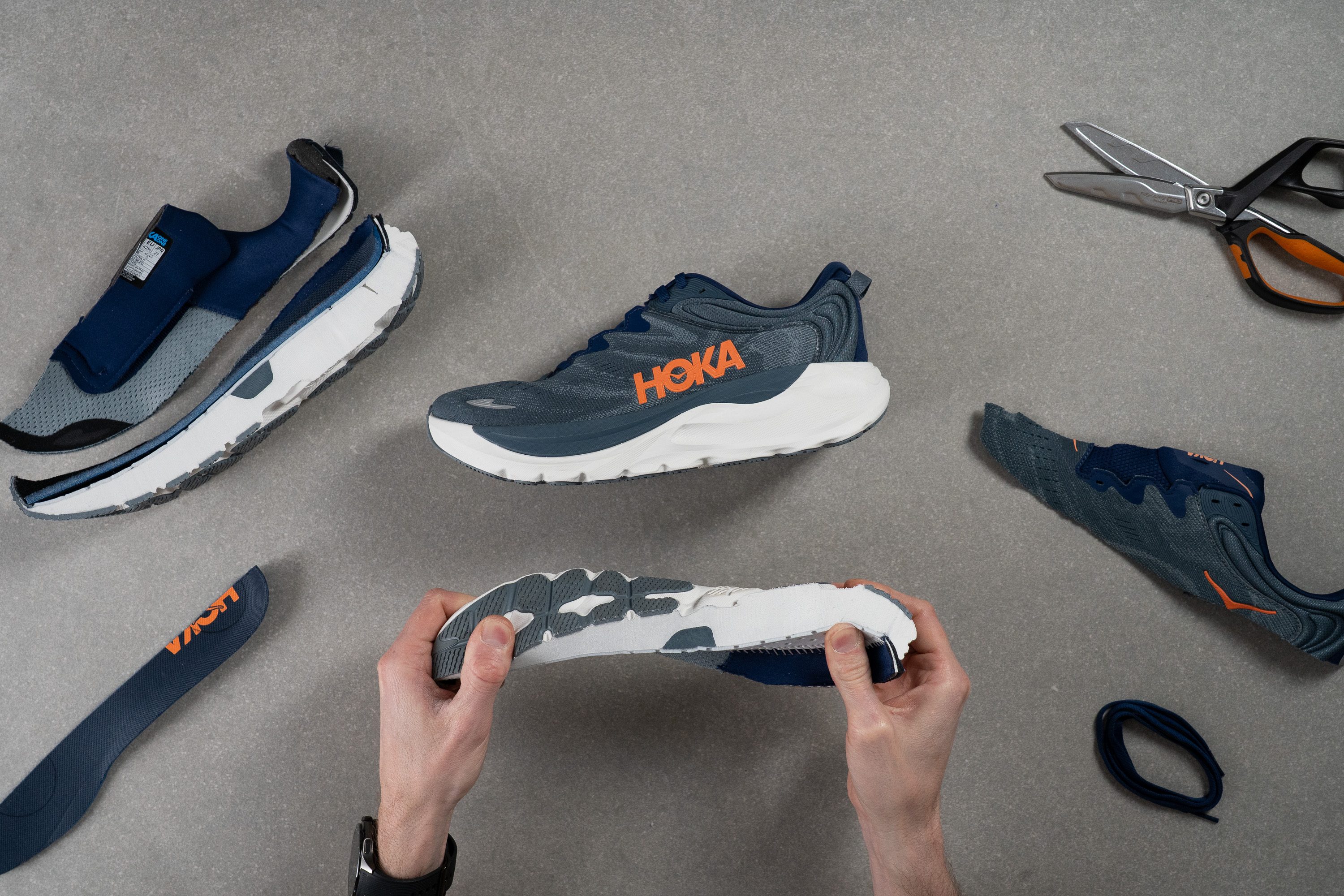
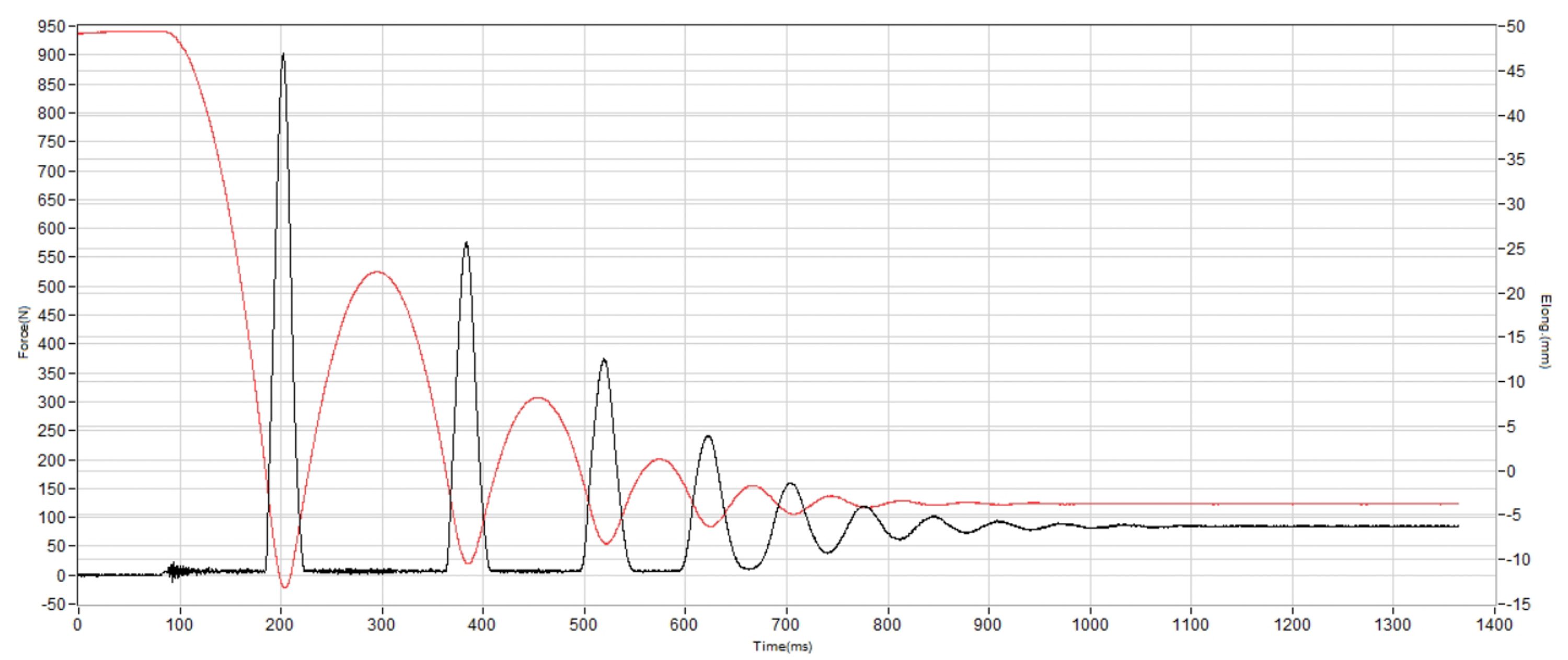
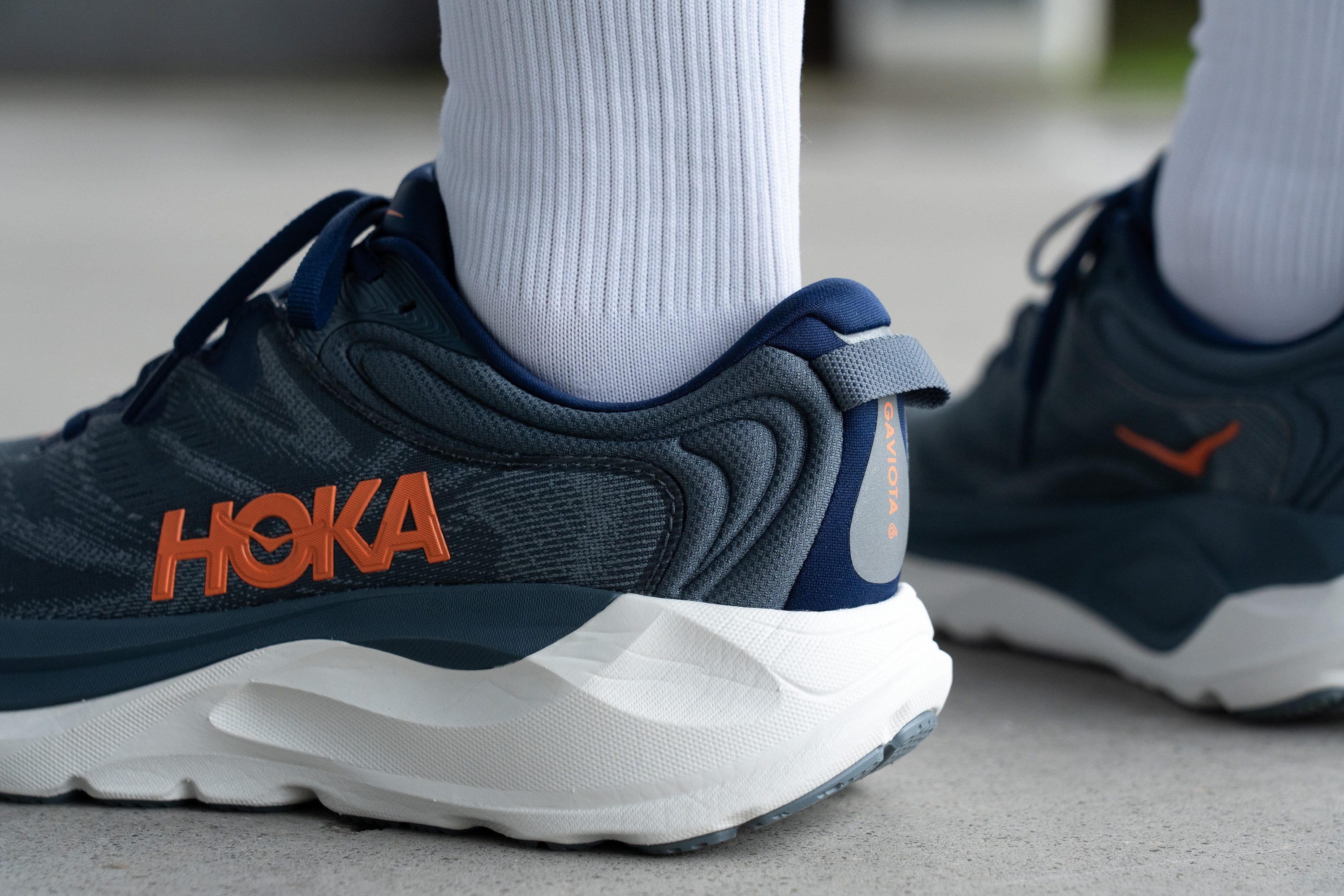
The HOKA Gaviota 6 looks, and is marketed, as a shoe with excellent shock absorption, but we did not experience that in our testing.
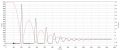
At 122 SA in the heel and 111 SA in the forefoot, it offers respectable cushioning that should work well for most runners, however we cannot describe it as impressive by any means.
| Gaviota 6 | 122 SA |
| Average | 131 SA |
Energy return
The reason behind the weak shock absorption of the Gaviota 6 is the same factor that limits energy return. Instead of moving to a modern supercritical foam, HOKA kept its old compression-molded EVA.
The result is very low energy return: just 45.4% in the heel and only a small rise to 52.4% in the forefoot. And that feels disappointing for a shoe at this price.
| Gaviota 6 | 52.4% |
| Average | 61.5% |
Heel stack
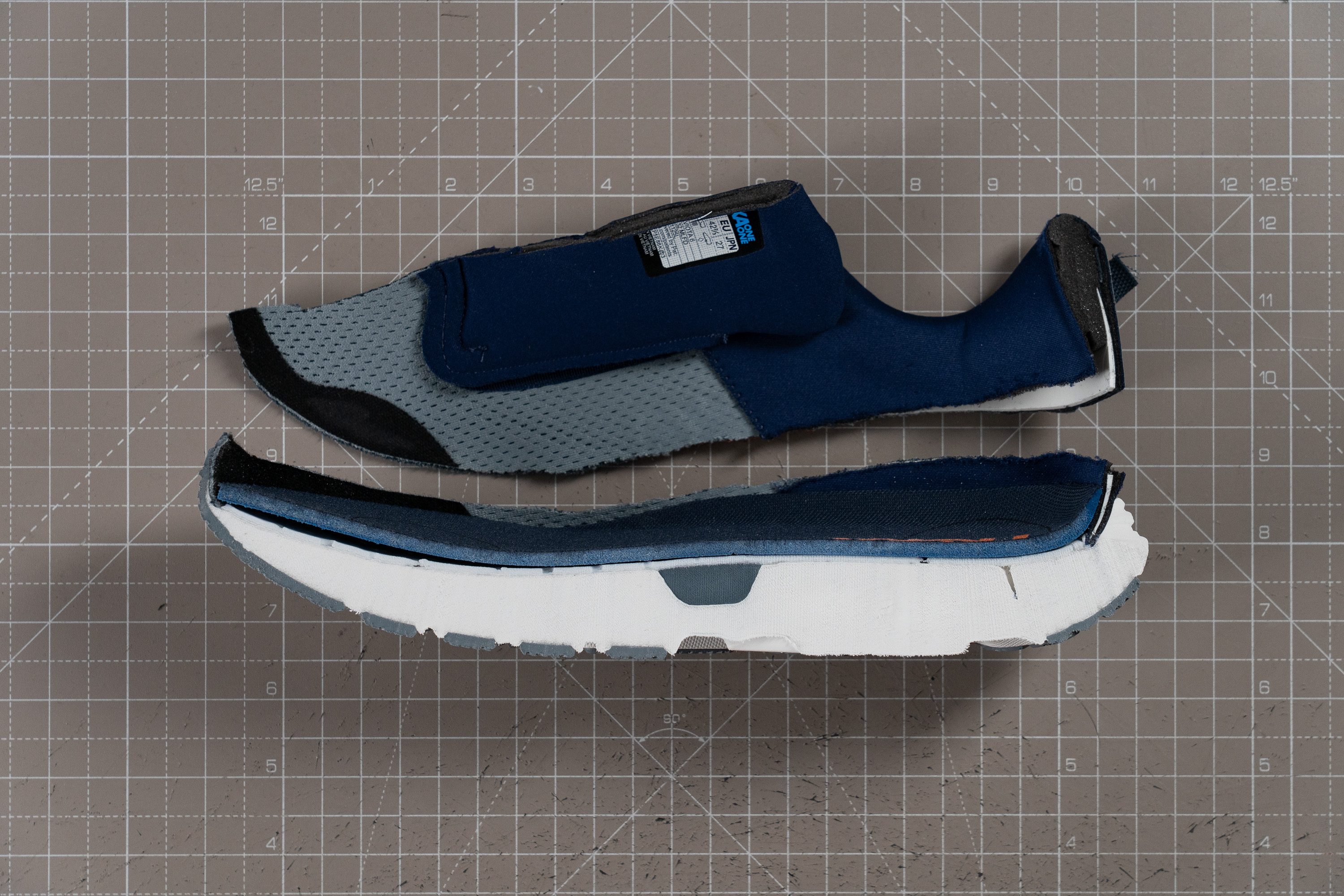
We took precise measurements of the HOKA Gaviota 6 to determine the real stack height, and it turned out slightly lower than what the brand claims.
HOKA states 39.0 mm in the heel, but we measured 36.0 mm, which aligns with the underwhelming shock absorption results we discussed earlier.
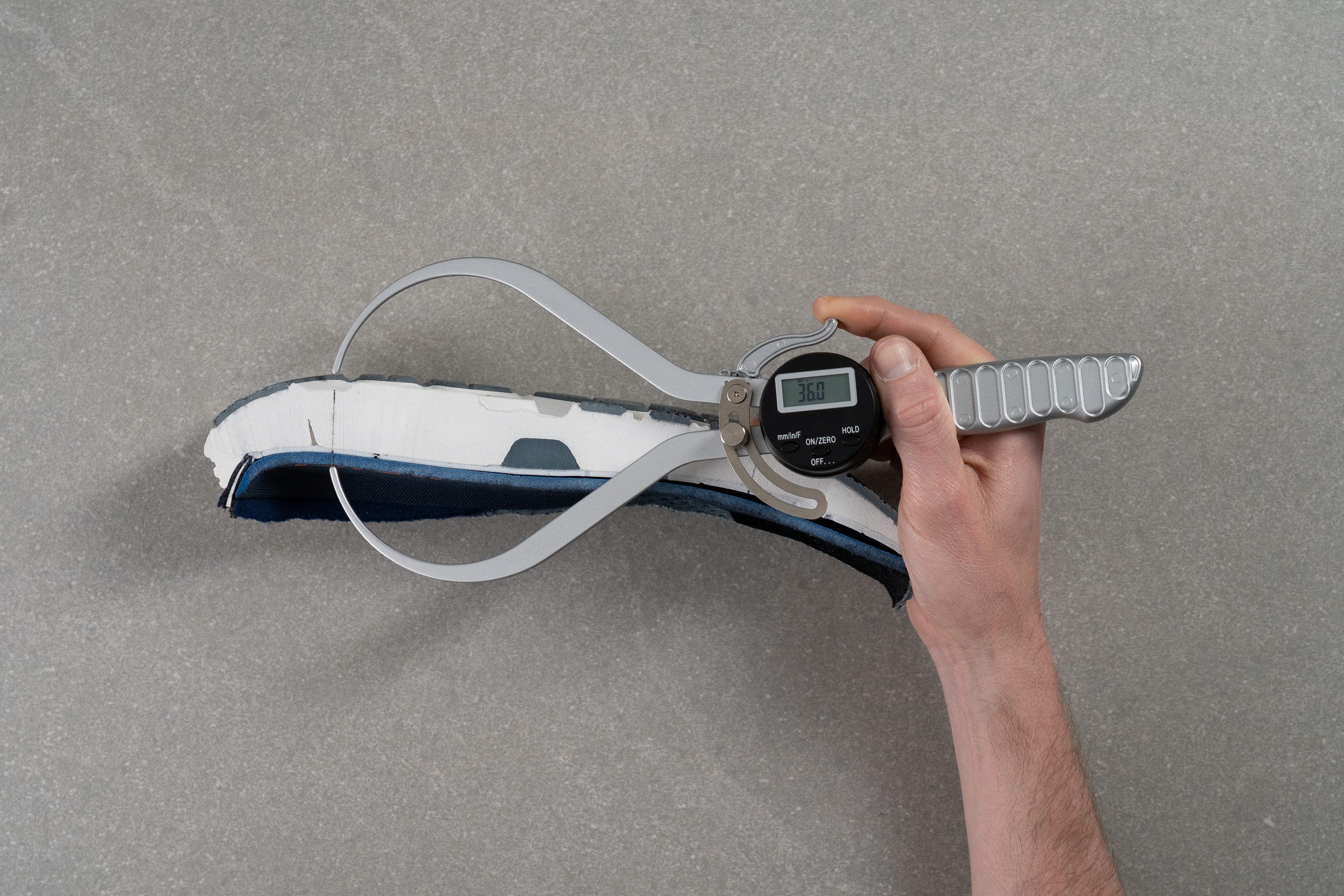
| Gaviota 6 | 36.0 mm |
| Average | 35.6 mm |
Forefoot stack
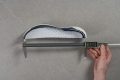
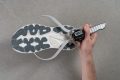
As expected, the forefoot also falls short of the brand specifications at 28.7 mm.
That still leaves a decent amount of foam underfoot, yet it is clearly lower than the 33 mm stated by HOKA. To be fair, the shoe never feels that tall while running.
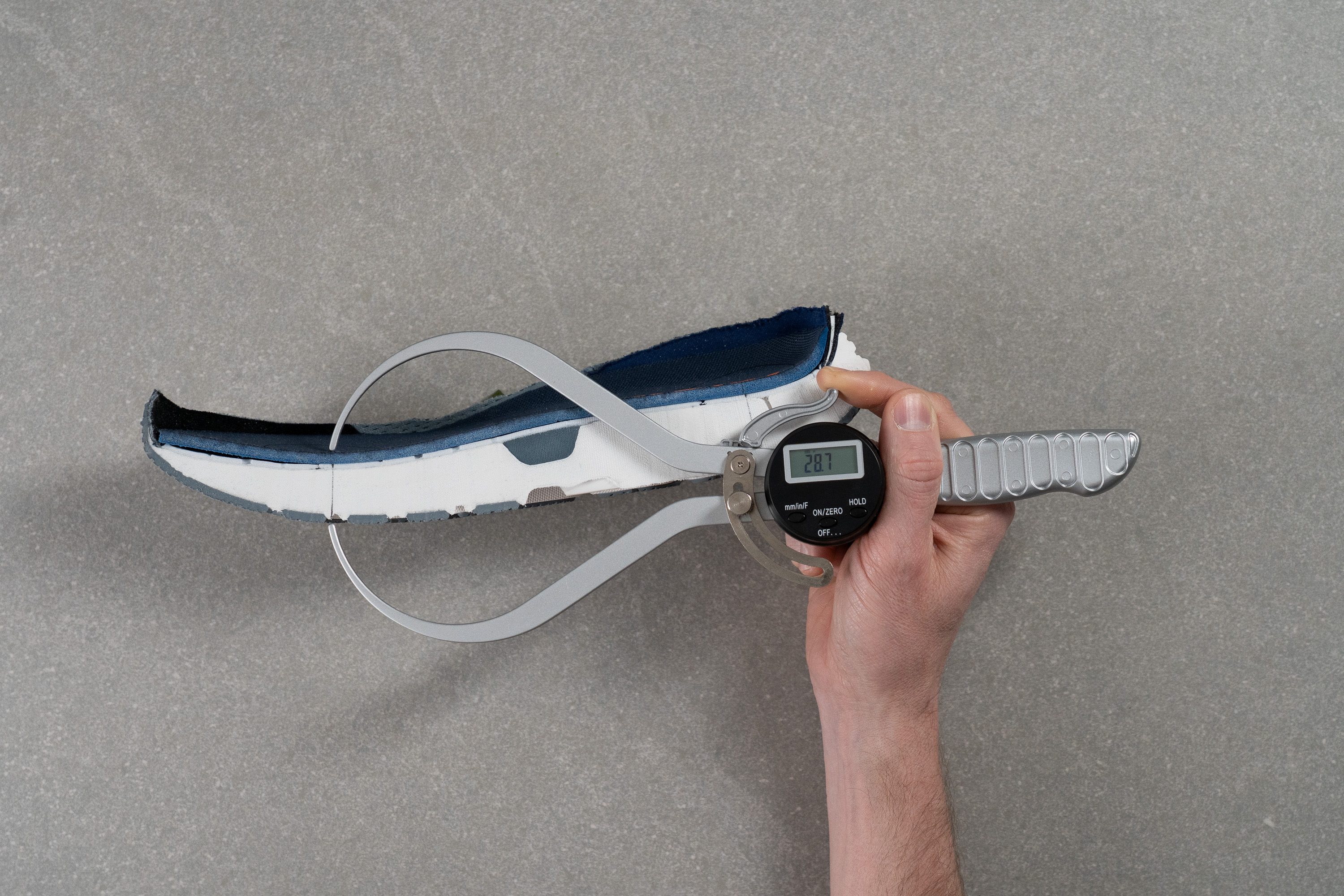
| Gaviota 6 | 28.7 mm |
| Average | 27.2 mm |
Drop
This midsole design results in a 7.3 mm heel-to-toe drop, which is a smart choice from a stability standpoint and also helps support runners with different footstrike patterns.
Here we saw less deviation from the specs, as HOKA lists 6 mm, leaving just a 1.3 mm difference.
| Gaviota 6 | 7.3 mm |
| Average | 8.4 mm |
Midsole softness
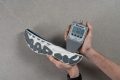
Running shoes keep getting softer, and the HOKA Gaviota 6 clearly follows that trend. Despite being a stability-focused model, the CMEVA foam measured just 32.6 AC in our Asker C durometer, noticeably softer than the 36.6 AC we recorded in the Gaviota 5.
This could raise concerns because a firmer midsole is naturally more stable. However, we still experienced solid support during testing, and the shoe felt more comfortable underfoot with this updated foam formulation. We believe that it's a positive change.
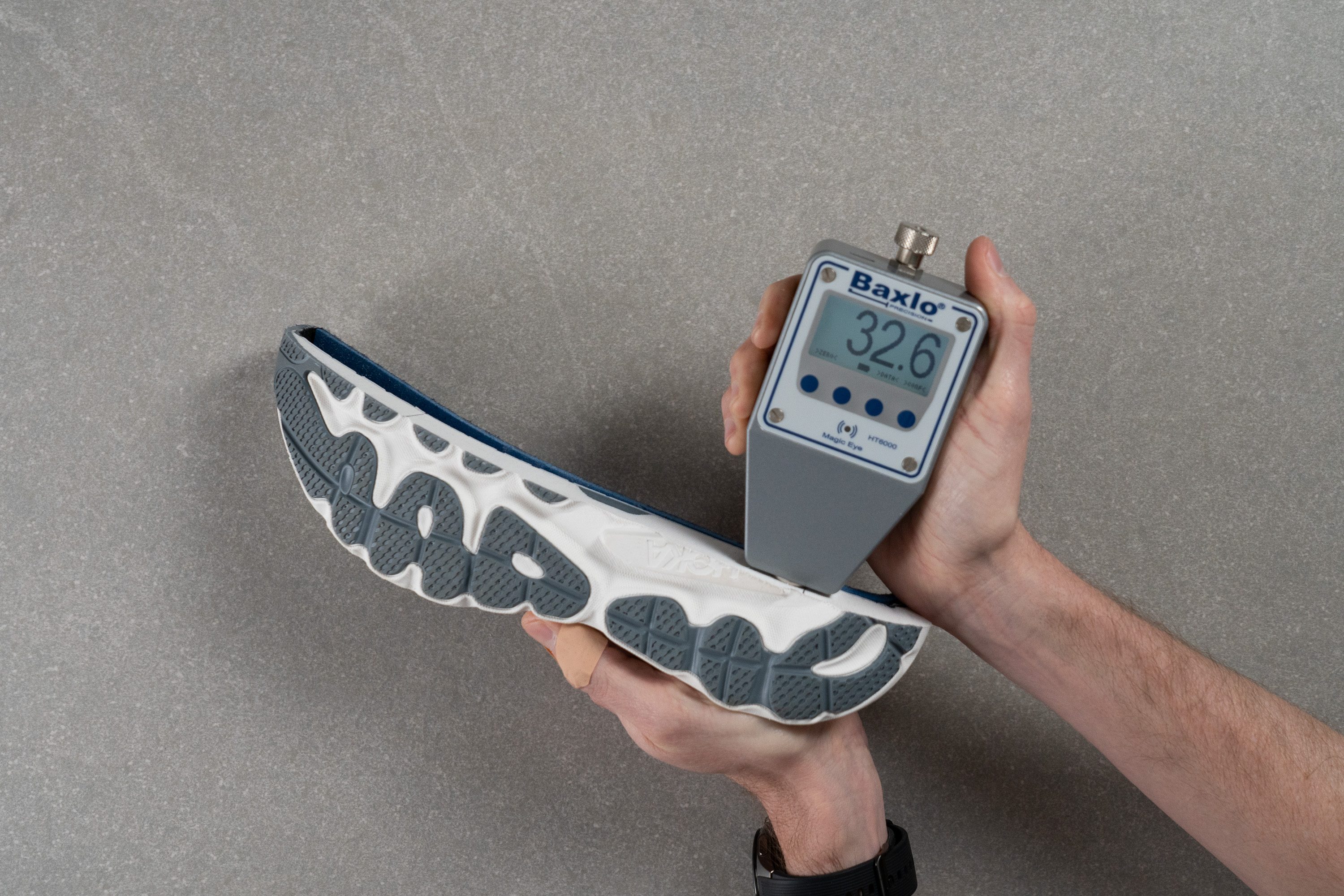
| Gaviota 6 | 32.6 AC |
| Average | 35.4 AC |
Rocker
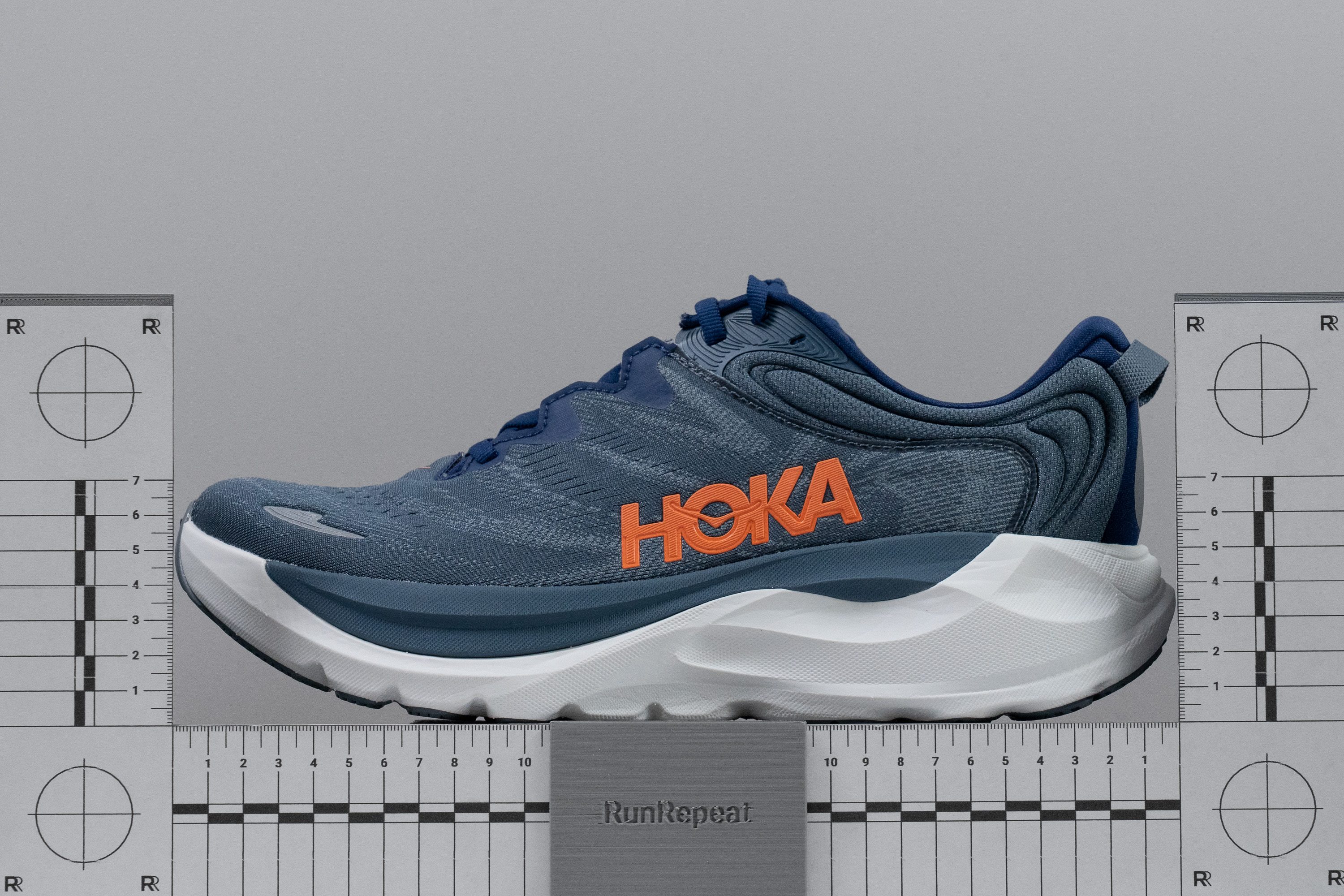
The HOKA Gaviota 6 features a more pronounced rocker than version 5, reflecting another design shift to align with current market trends. It uses HOKA’s Late Stage Meta-Rocker geometry, which helps add some forward momentum to the ride.
That extra assistance is welcome given the limited bounce of the CMEVA foam, helping the shoe feel slightly more dynamic despite the muted energy return.
Size and fit
Size
HOKA Gaviota 6 fits true to size (73 votes).
Internal length
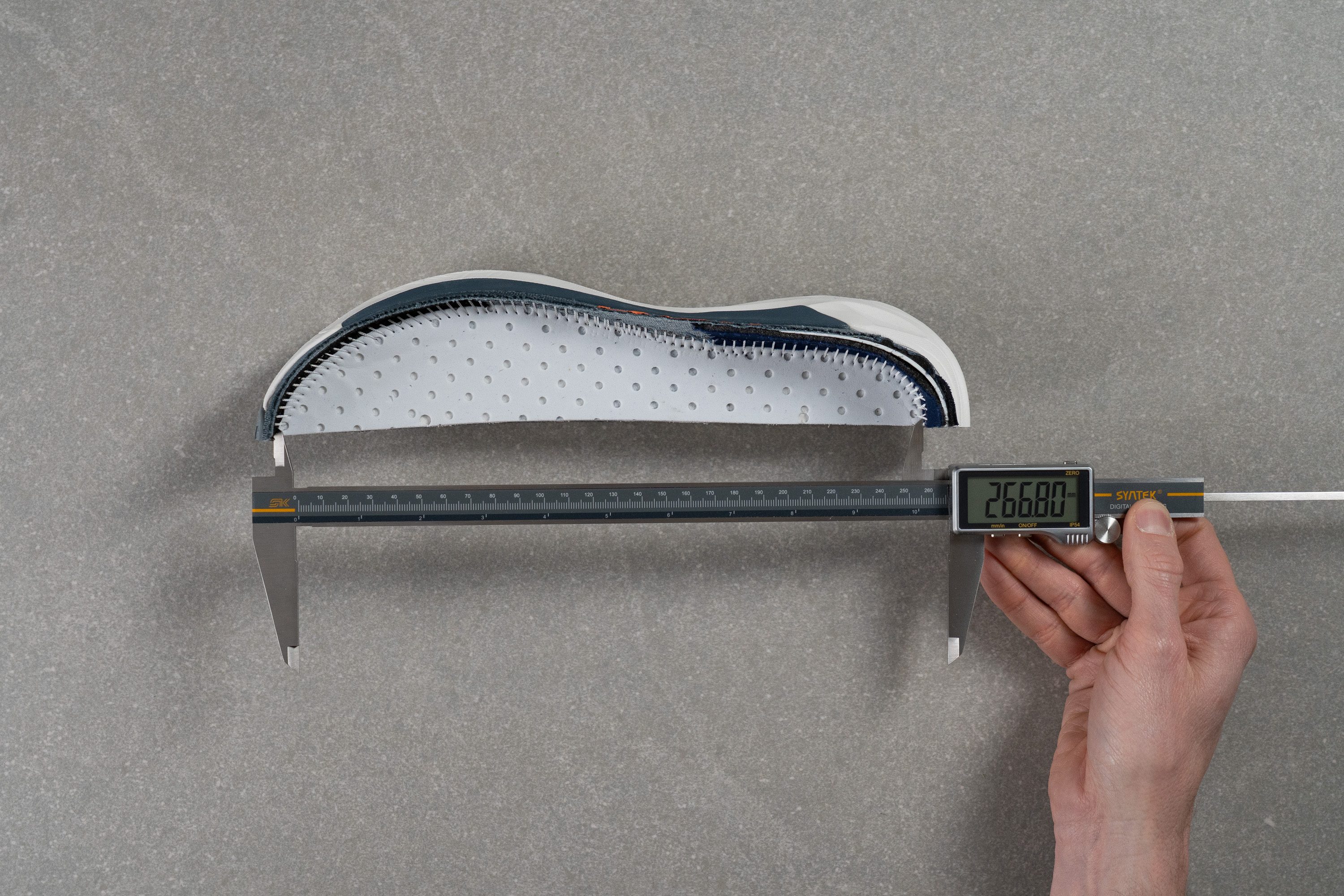
| Gaviota 6 | 266.8 mm |
| Average | 269.4 mm |
Width / Fit
HOKA shoes often run quite snug, but in our lab the Gaviota line has consistently been an exception. The same pattern continues with version 6.
From the moment we tried them on, the fit felt noticeably roomy, and our lab measurements confirmed it. The first reading of 97.2 mm already shows this, but we continued taking more measurements.
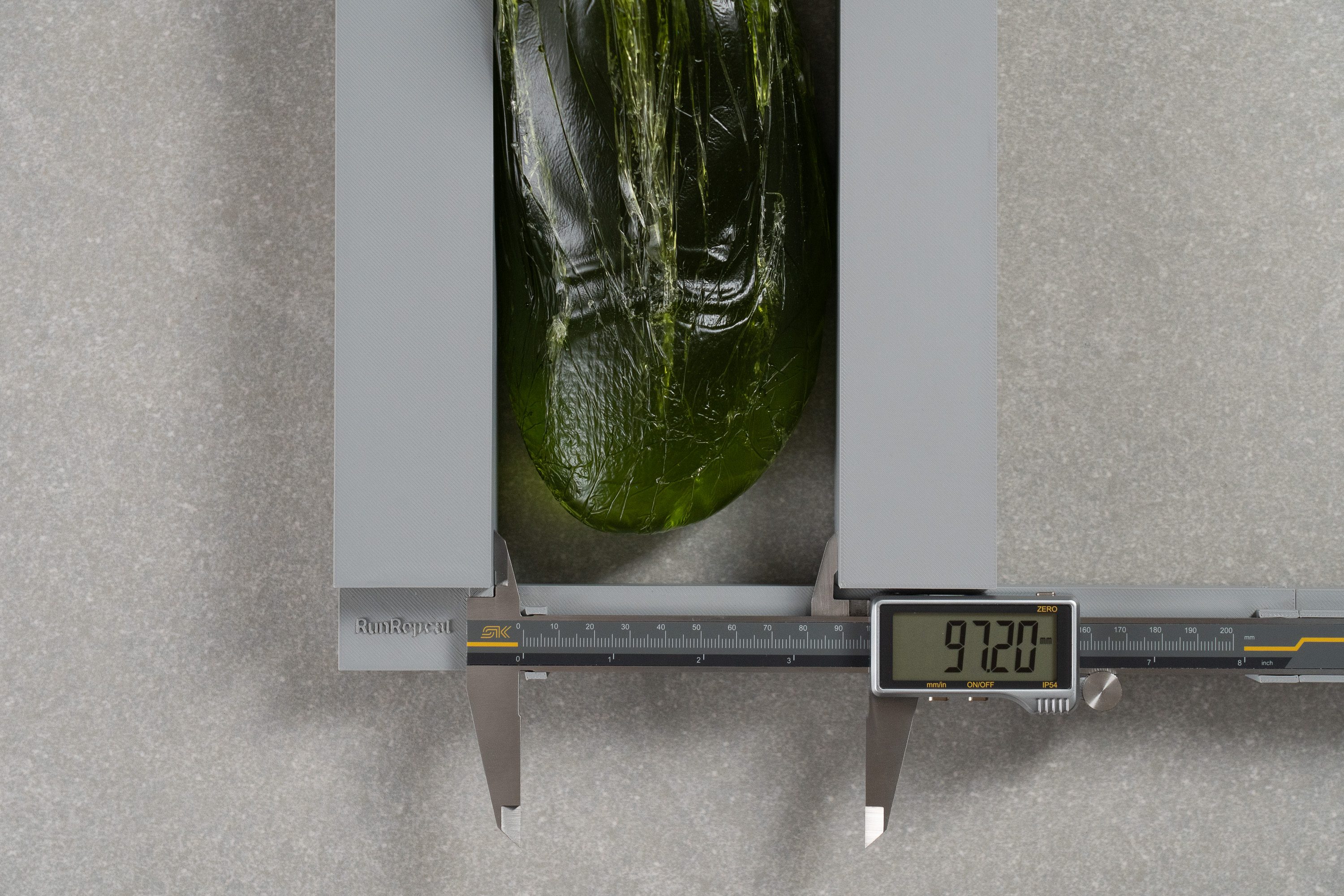
| Gaviota 6 | 97.2 mm |
| Average | 95.2 mm |
Toebox width
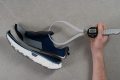
We took another measurement in the toebox to better understand the space available in the forefoot. Staying true to the Gaviota reputation, it also comes out wider than average at 76.7 mm.
In addition, HOKA produces this model in three different widths. However, availability depends on the colorway, as not every version is offered in all width options.
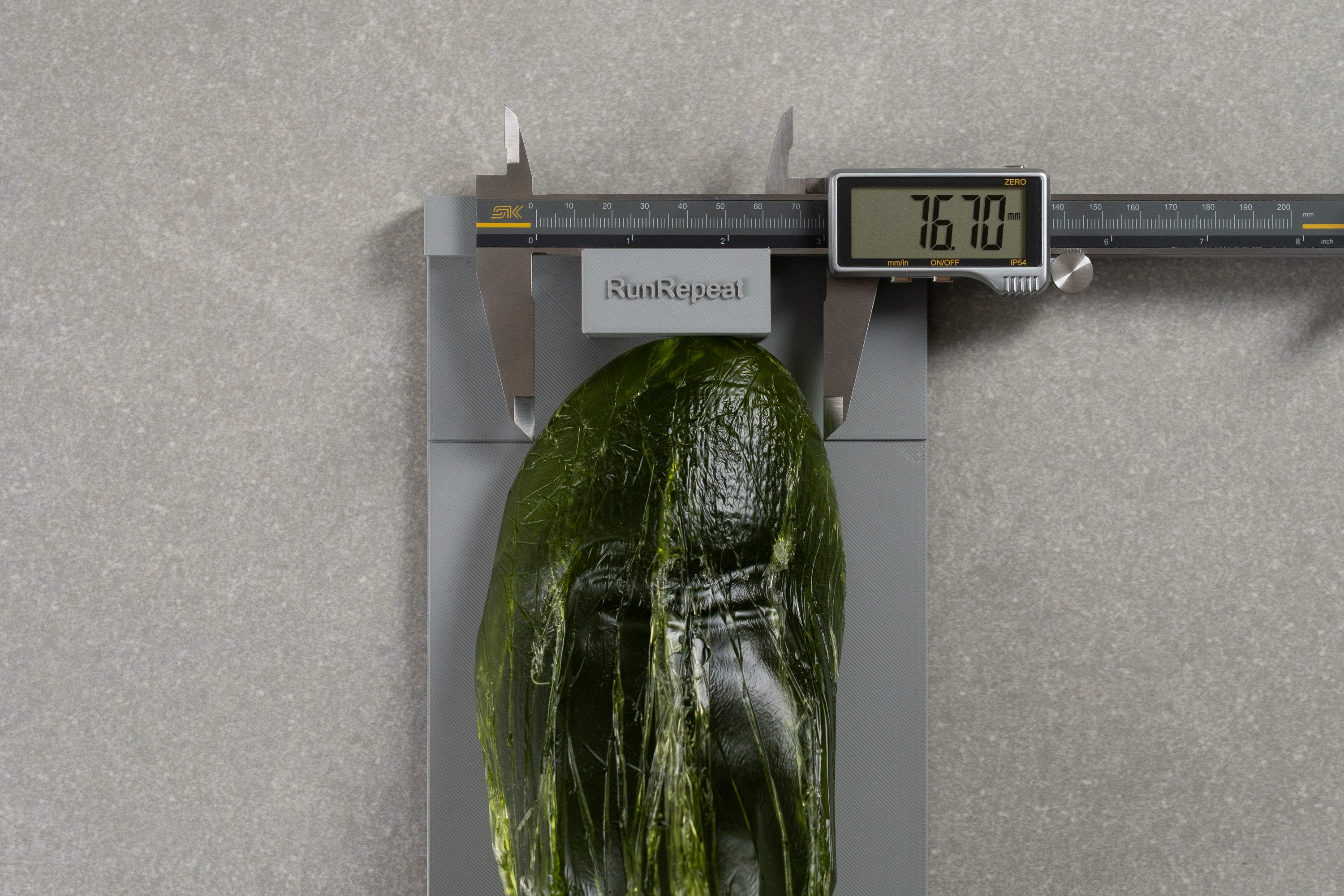
| Gaviota 6 | 76.7 mm |
| Average | 73.2 mm |
Toebox height
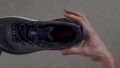
There’s also plenty of vertical space for the toes to move naturally.
We never experienced any discomfort, and the 28.2 mm height confirms that the shoe won’t feel restrictive even if you wear it all day, whether mixing runs and walks or simply using it for daily activities.
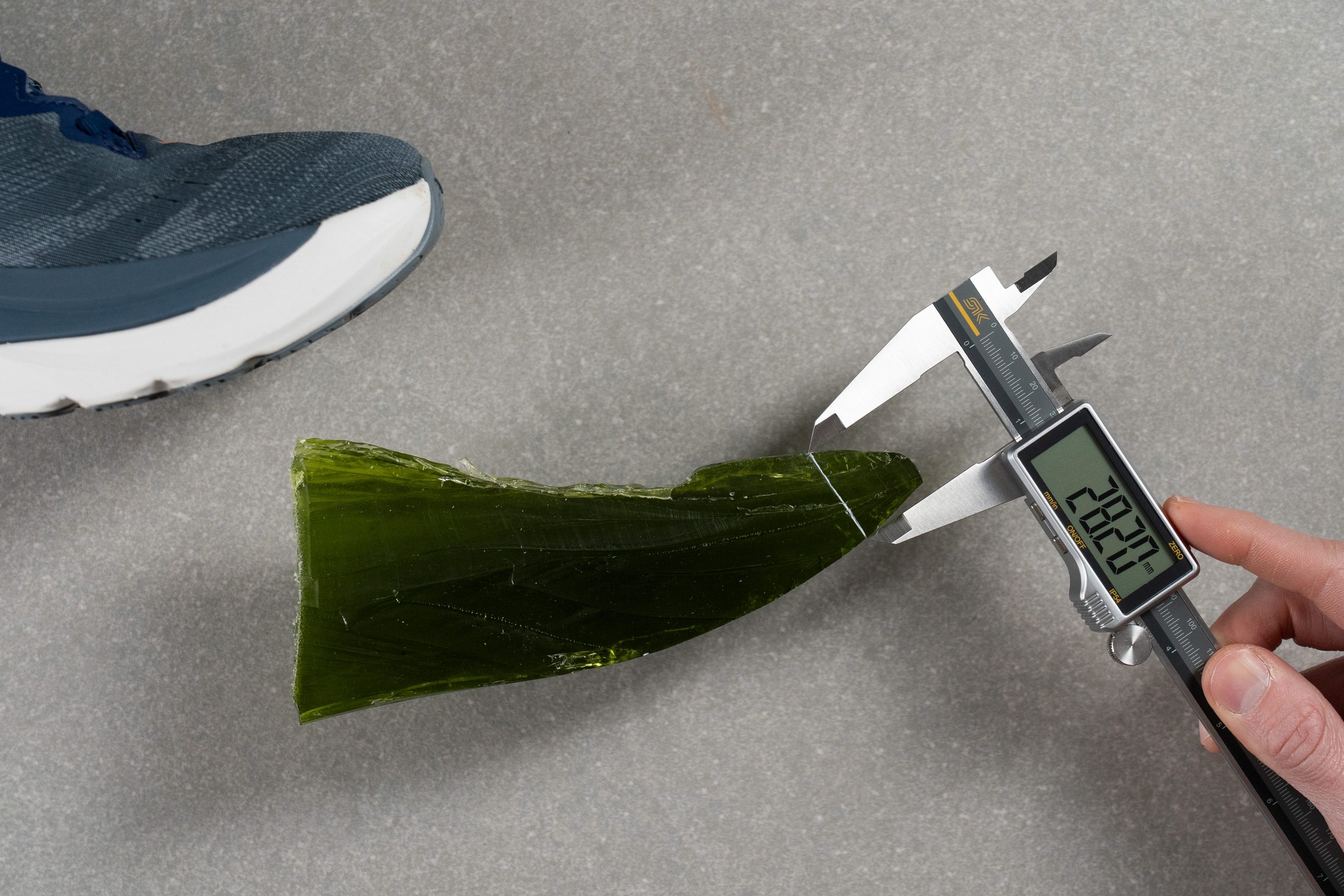
| Gaviota 6 | 28.2 mm |
| Average | 27.0 mm |
Traction / Grip
Traction test
One area we hoped to see improved was traction, as the Gaviota 5 scored just 0.46 in our SATRA TM144 test. Fortunately, HOKA improved the outsole and the Gaviota 6 reaches 0.65 in the same test.
That result represents a clear improvement and delivers a strong level of grip, giving the shoe dependable traction across a wide range of weather conditions.
| Gaviota 6 | 0.65 |
| Average | 0.53 |
Outsole design
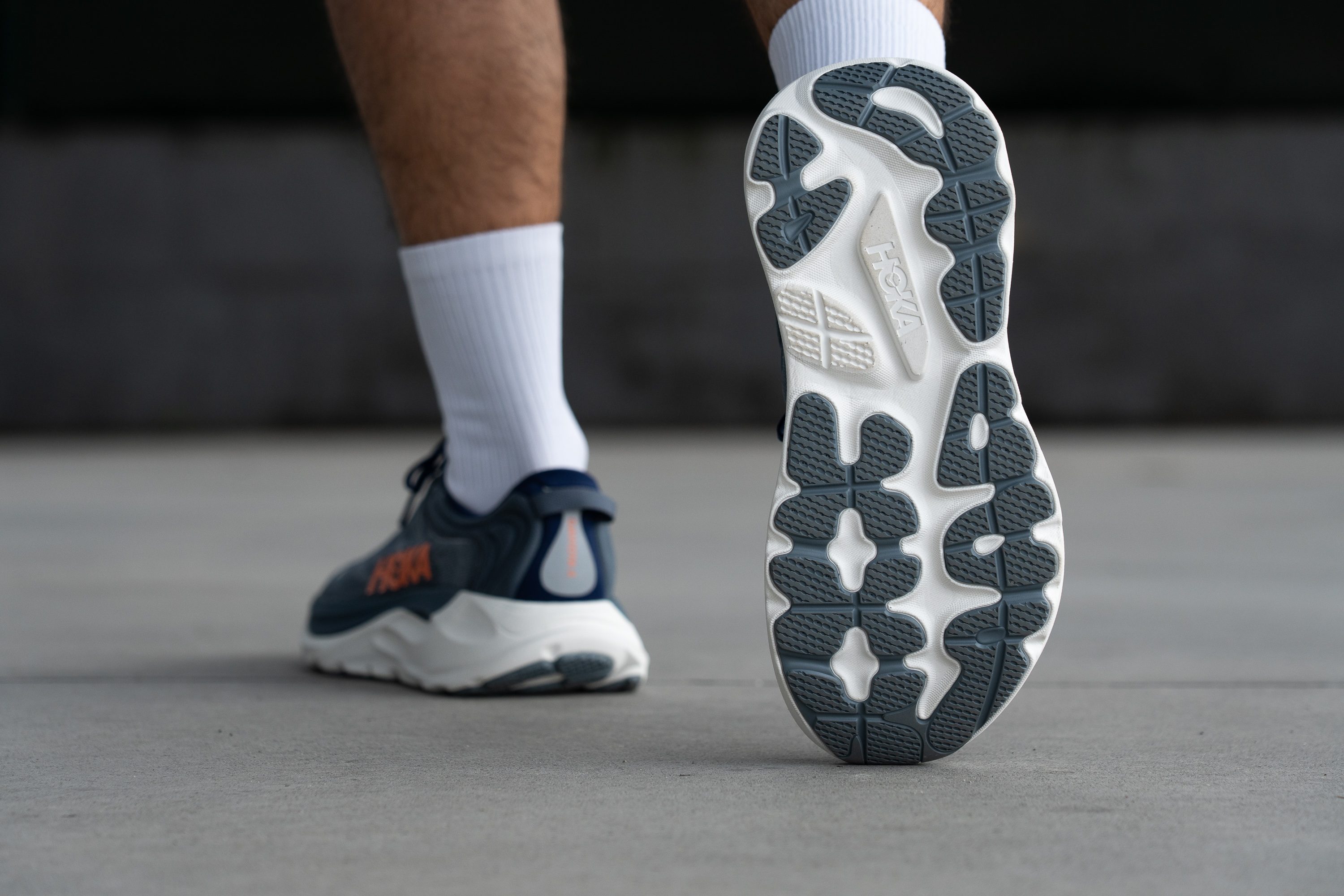
We found that the outsole of the Gaviota 6 combines exposed white midsole foam with multiple dark rubber patches. This follows the familiar layout we have seen in several HOKA models like the Clifton 10.
However, the Gaviota 6 includes slightly more rubber coverage to protect key areas, helping address the extra wear that often appears in stability shoes used by pronators.
Flexibility / Stiffness
The H-Frame structure embedded in the midsole makes the Gaviota 6 stiffer than expected for a shoe with this much stack height and a soft foam. In our test, it required 19.0N of force, which is higher than average.
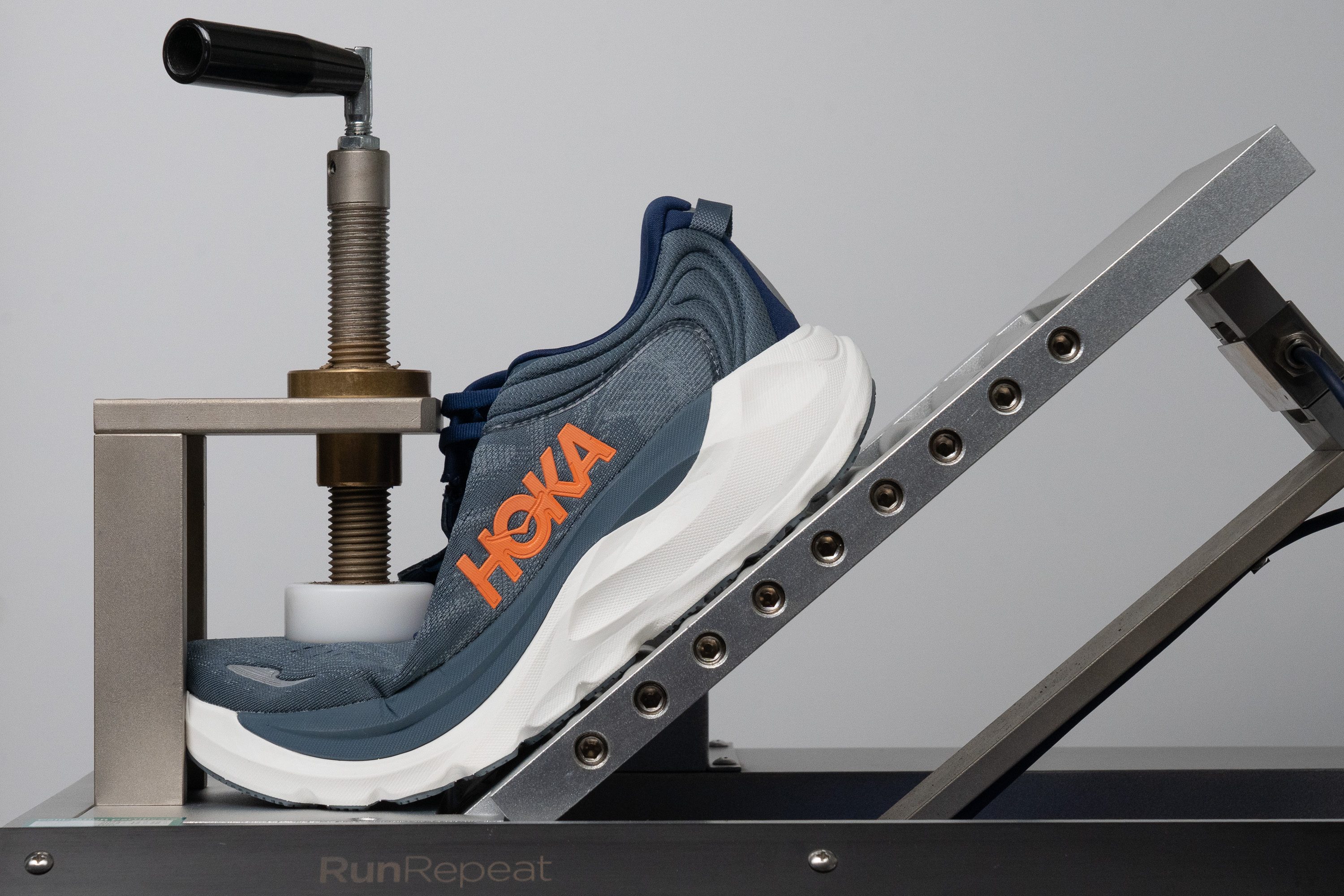
| Gaviota 6 | 19.0N |
| Average | 15.5N |
Weight
Here we saw another improvement compared with version 5. The Gaviota 6 is about 5% lighter, coming in at 10.0 oz or 283g. That is still far from a lightweight feel like the one provided by the Arahi 8, but it remains a reasonable weight considering the design.
We never expected a lightweight ride from this model. However, switching to a supercritical foam could easily reduce weight by around 10%, which is why we think HOKA should consider that move as soon as possible.
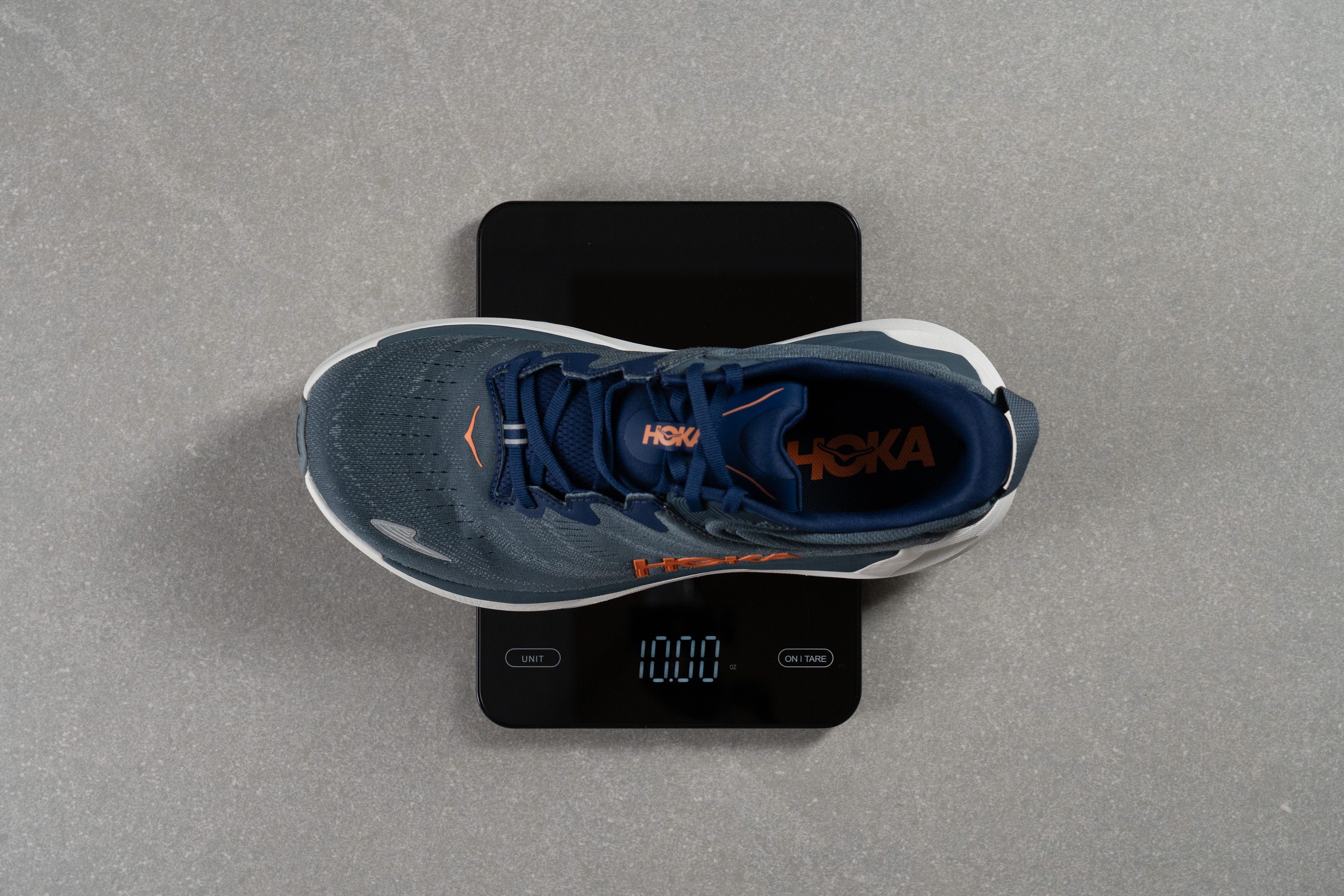
| Gaviota 6 | 10.0 oz (283g) |
| Average | 9.2 oz (261g) |
Breathability
Breathability test
During our runs, we felt that the upper of the Gaviota 6 was not among the most breathable we have tested. That pushed us to head back to the lab and check how it performed in our controlled tests.
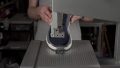
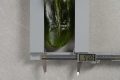
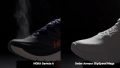
After attaching the shoe to a custom-made 3D piece that directs smoke into the toebox, we observed average airflow. It is not poor, but it is far from impressive, which results in a 3/5 rating.
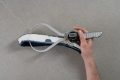
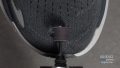
Using a bright light, we noticed that the upper clearly prioritizes support. In fact, the result starts to make more sense once you see how thick the material is.
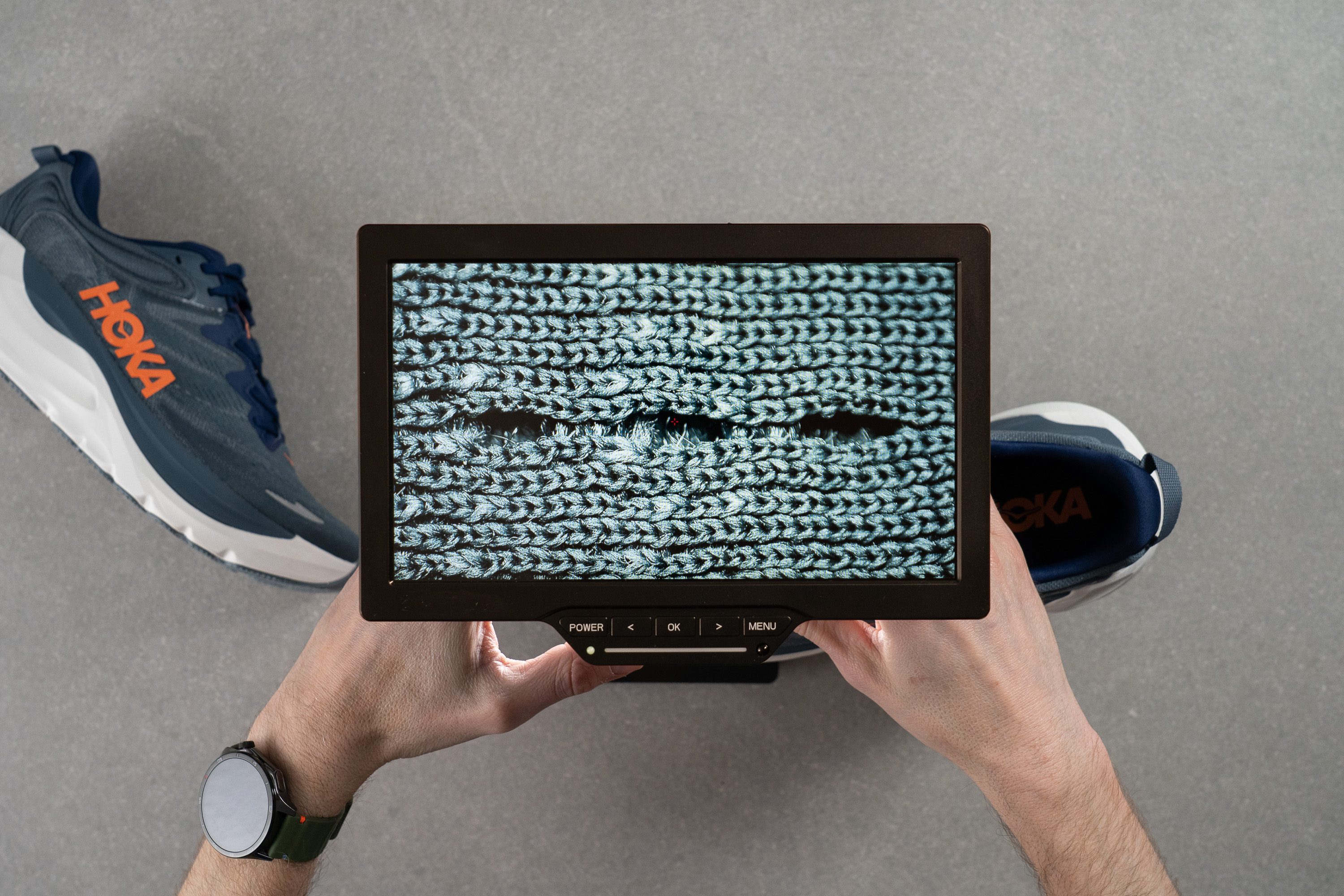
When we switched to our digital microscope, it became clear that there is limited space for air to escape.
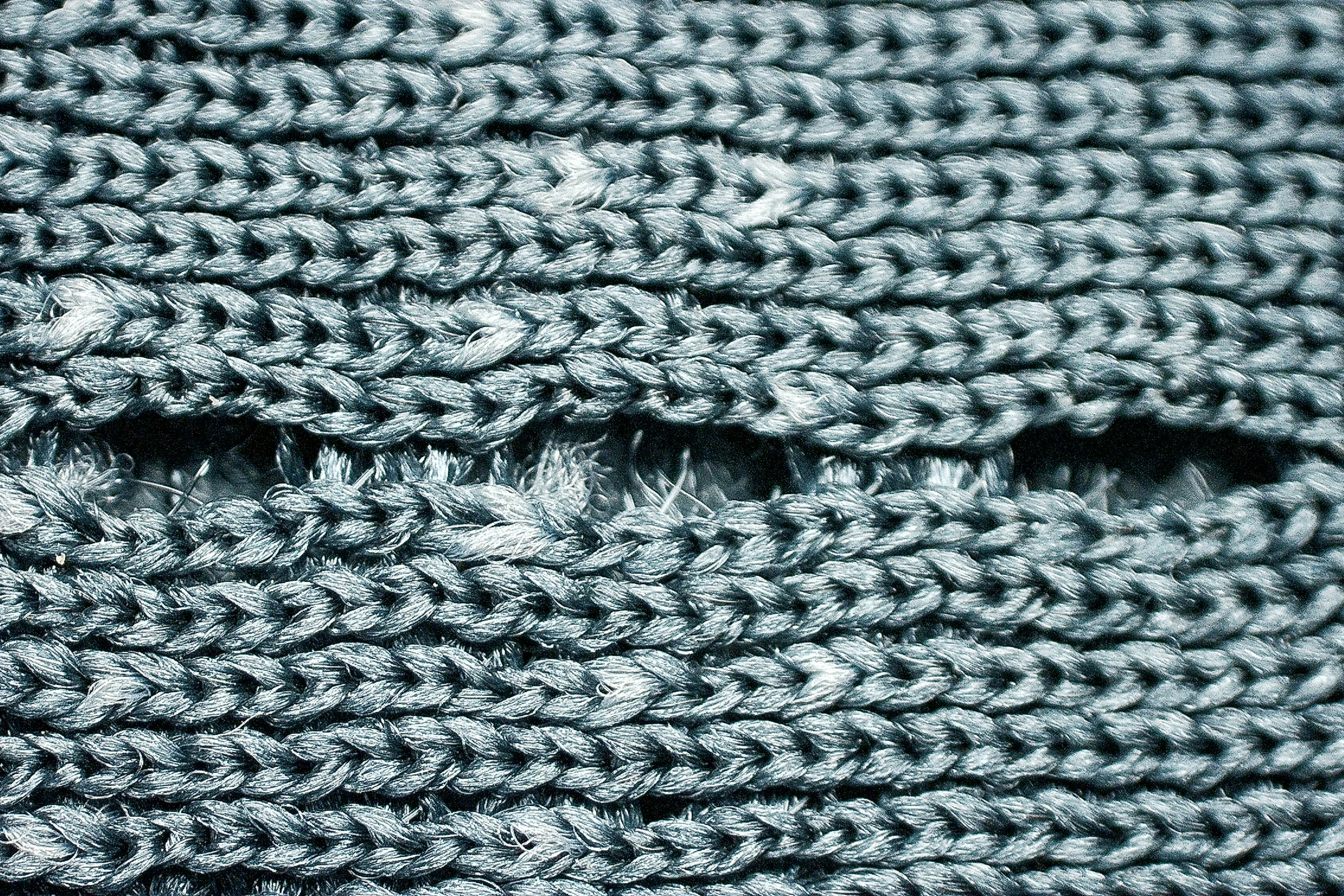
There are some ventilation holes, but they are small and backed by another layer that restricts airflow.
Overall, the engineered mesh upper focuses mainly on comfort and structure. Breathability is secondary, although it remains sufficient for most running conditions throughout the year.
| Gaviota 6 | 3 |
| Average | 3.6 |
Stability
Lateral stability test
HOKA introduced the H-Frame in the Gaviota 5, and the stability results were strong, so it’s no surprise to see it return in the Gaviota 6. Combined with an extremely wide net base and high rigidity, the design delivers massive support without relying on outdated solutions like medial posts.
Torsional rigidity
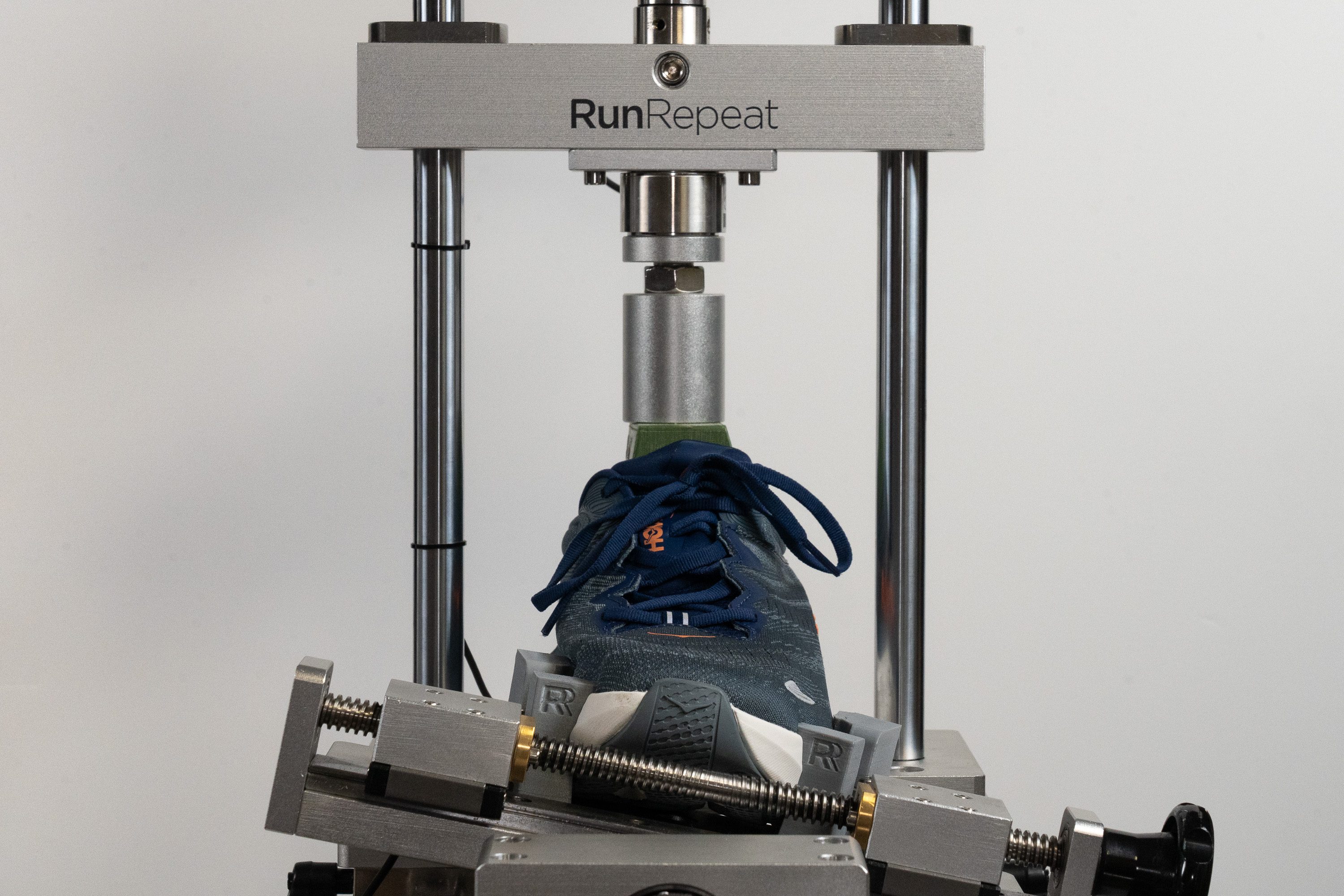
Torsional rigidity is clearly high at 17.7 Nm, but we expected even a higher result given its massive build. This is actually good news for those who plan to use the shoe as a sneaker or for easy paces.
| Gaviota 6 | 17.7 Nm |
| Average | 14.3 Nm |
Heel counter stiffness
The heel counter is slightly stiffer (4/5) than what we usually find in most daily trainers. However, the difference is small, and the generous padding helps maintain comfort throughout the run.
| Gaviota 6 | 4 |
| Average | 3 |
Midsole width - forefoot
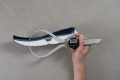
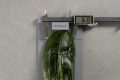
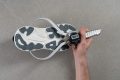
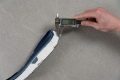
We grabbed our digital calipers again and measured a massive 120.0 mm forefoot. That kind of width is exactly what you want in a stability shoe, as a broad platform helps reduce lateral collapse regardless of your footstrike.
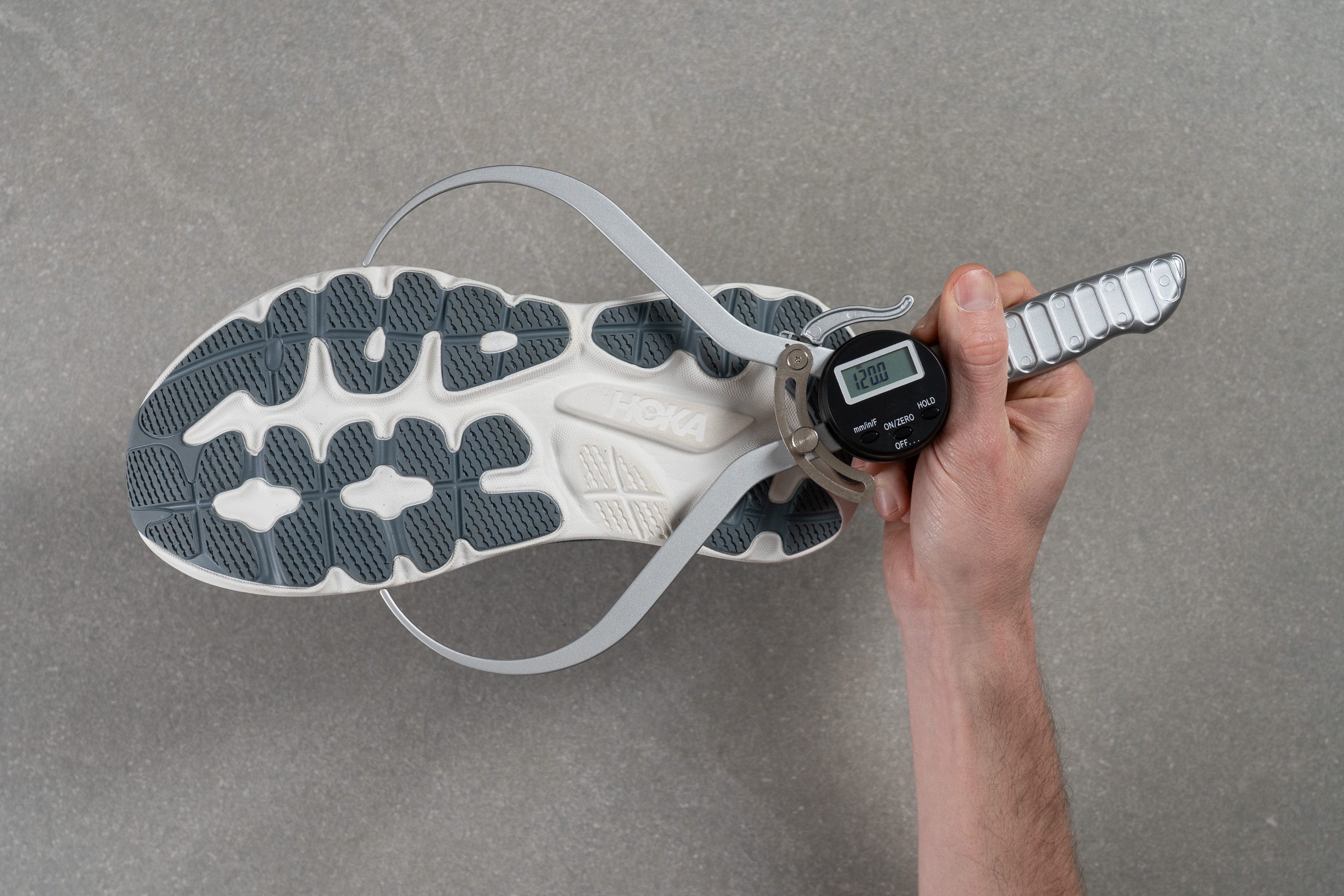
| Gaviota 6 | 120.0 mm |
| Average | 115.1 mm |
Midsole width - heel
The midfoot follows HOKA’s familiar design language with a very broad platform, but it was the heel that really caught our attention. At 105.6 mm wide, it places this shoe among the widest models we have ever measured.
Because of this massive base, the ride does not feel particularly agile. The tradeoff is clear: you gain huge stability and support, but quick transitions and nimble handling are not part of the package.
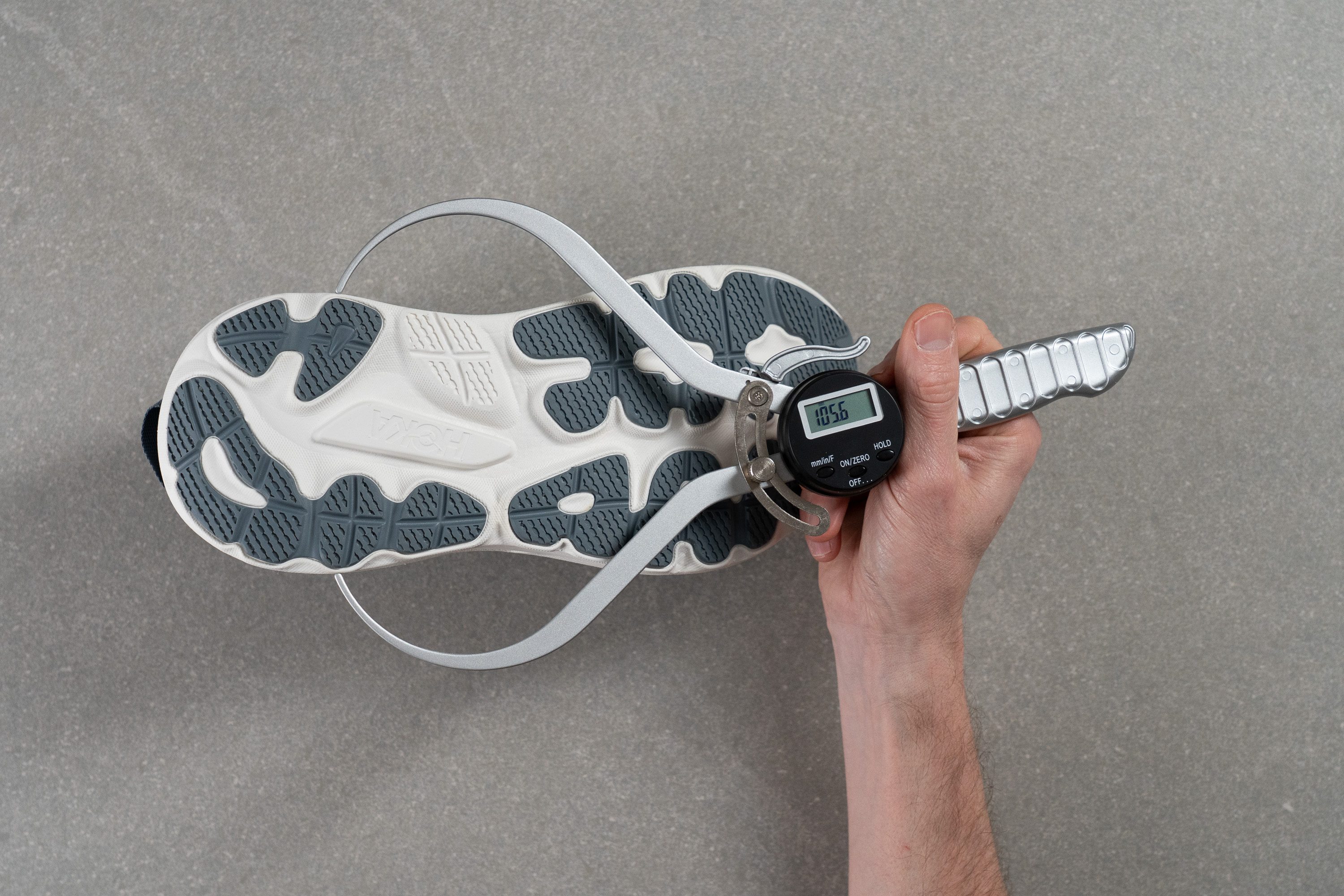
| Gaviota 6 | 105.6 mm |
| Average | 91.1 mm |
Durability
Toebox durability
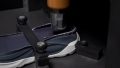
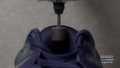
The Gaviota 6 held up well in our first Dremel test, earning a 3/5 score. That’s a respectable result that suggests reliable durability over time, especially considering that road shoes are generally less exposed to damage than trail models.
| Gaviota 6 | 3 |
| Average | 2.6 |
Heel padding durability
The heel padding also left us with a positive impression, earning a solid 4/5 score. It feels comfortable, is well finished, and shows good durability.
| Gaviota 6 | 4 |
| Average | 3.4 |
Outsole durability
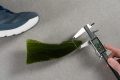
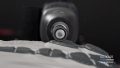
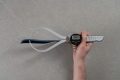
Back in the lab, we ran the Dremel test again to evaluate how much rubber the outsole loses under abrasion. The result was 0.9 mm of wear, which falls within a reasonable range.
This suggests the outsole should deliver dependable longevity. However, it will partly depend on your strike pattern, especially if you tend to wear down areas where rubber coverage is minimal and exposed foam appears.
| Gaviota 6 | 0.9 mm |
| Average | 1.1 mm |
Outsole thickness
We also measured 3.3 mm of outsole thickness, which reflects a balanced design. It provides solid protection without adding excessive weight or making the ride feel too firm.
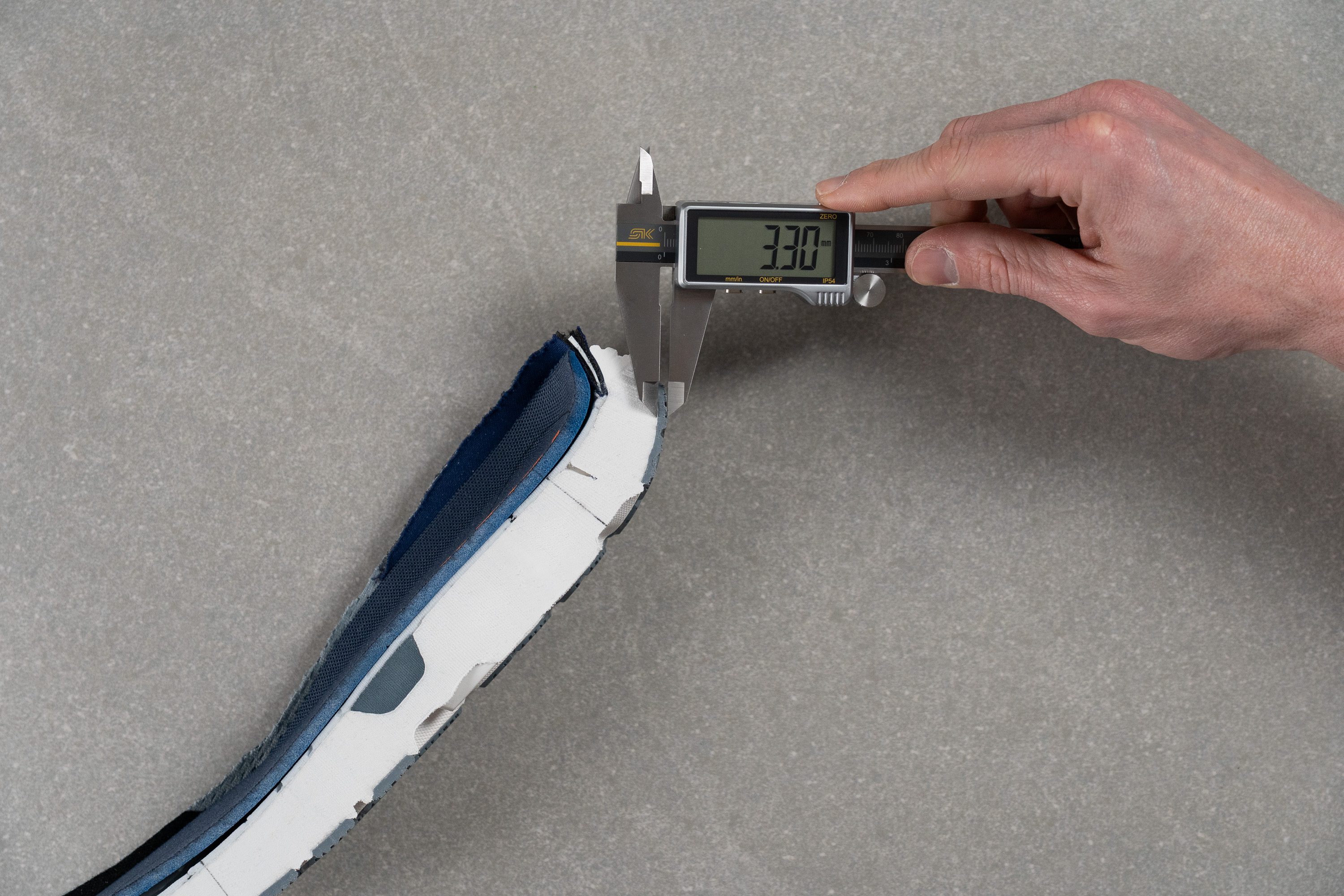
| Gaviota 6 | 3.3 mm |
| Average | 3.1 mm |
Misc
Insole thickness
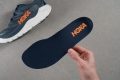
The insole provides 4.8 mm of cushioning, which sits right around the average.
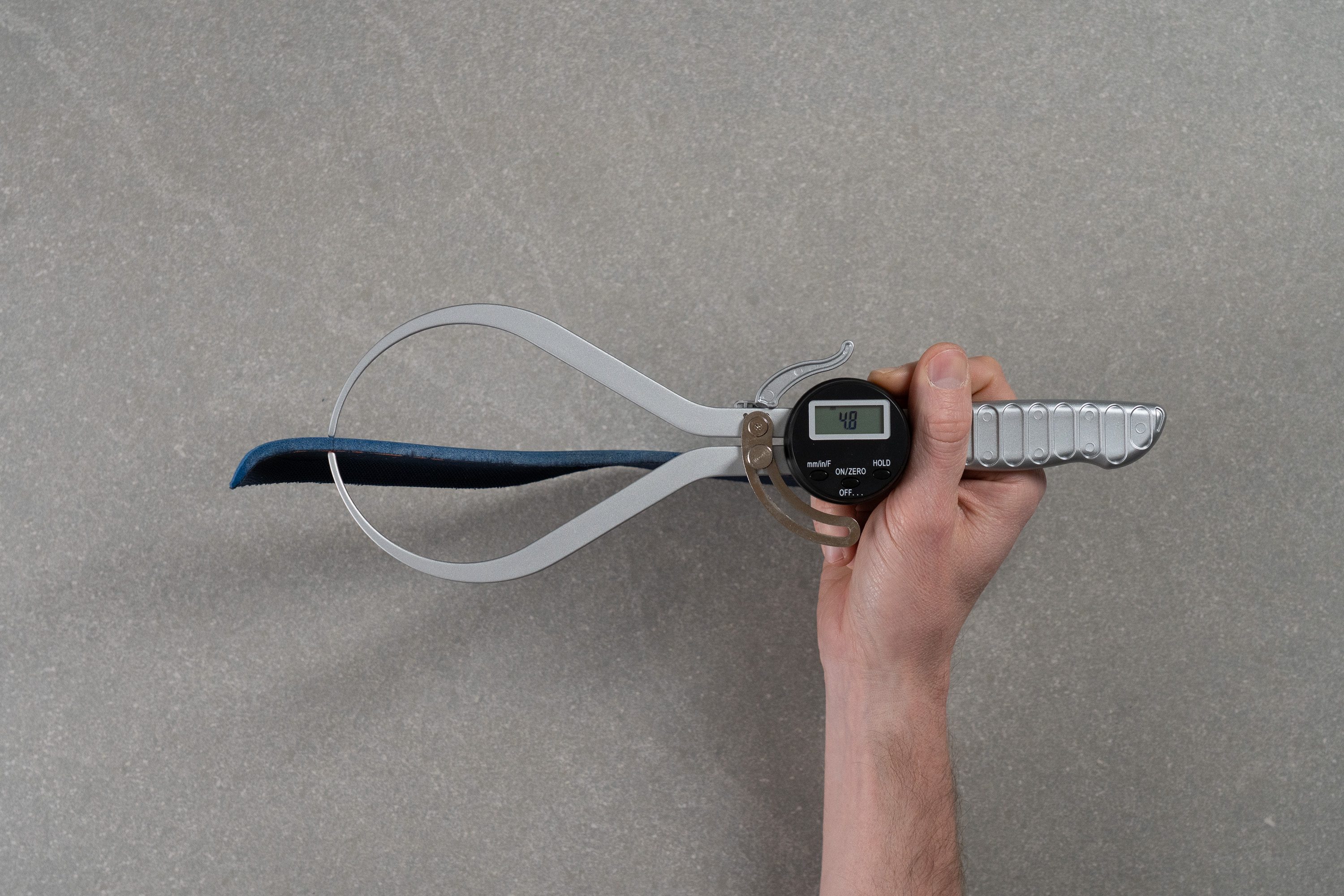
| Gaviota 6 | 4.8 mm |
| Average | 4.4 mm |
Removable insole
Runners who rely on custom orthotics can easily use them in the Gaviota 6. The standard insole is removable, and the shoe offers generous internal space to accommodate even thicker aftermarket inserts.
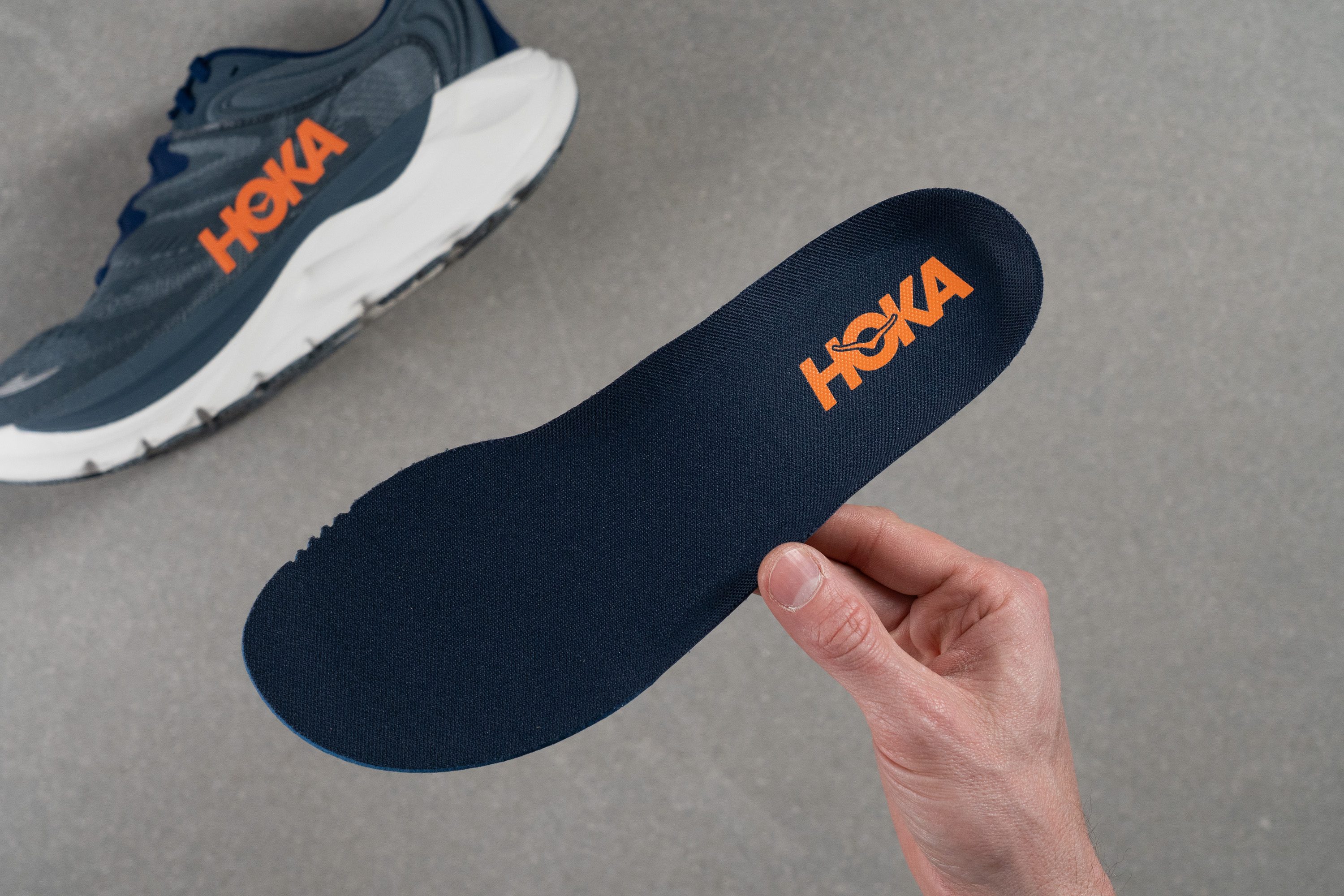
| Gaviota 6 | Yes |
Reflective elements
Kudos to HOKA for adding 360-degree reflective elements to the Gaviota 6. This extra visibility is always a welcome addition for runners.
| Gaviota 6 | Yes |
Tongue padding
The HOKA Gaviota 6 features an internal ghillie lacing system that improves midfoot lockdown while keeping pressure evenly distributed across the upper.
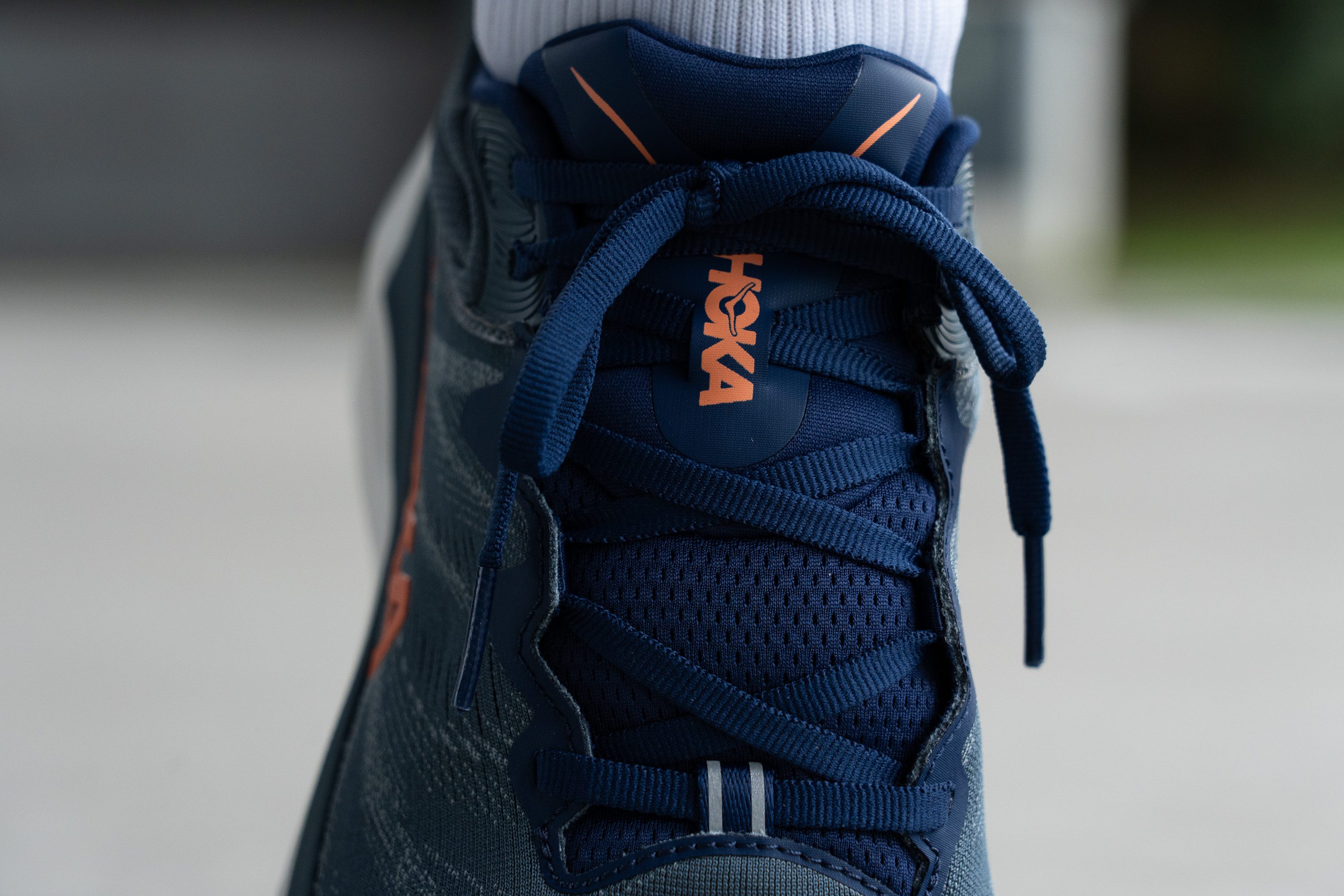
In addition the tongue measures a generous 9.7 mm in thickness delivering a plush comfort-oriented feel. This padded design reduces lace bite risk and enhances step-in comfort making the shoe especially suitable for runners who prioritize cushioning and stability, or for those that want to wear it from morning to night.
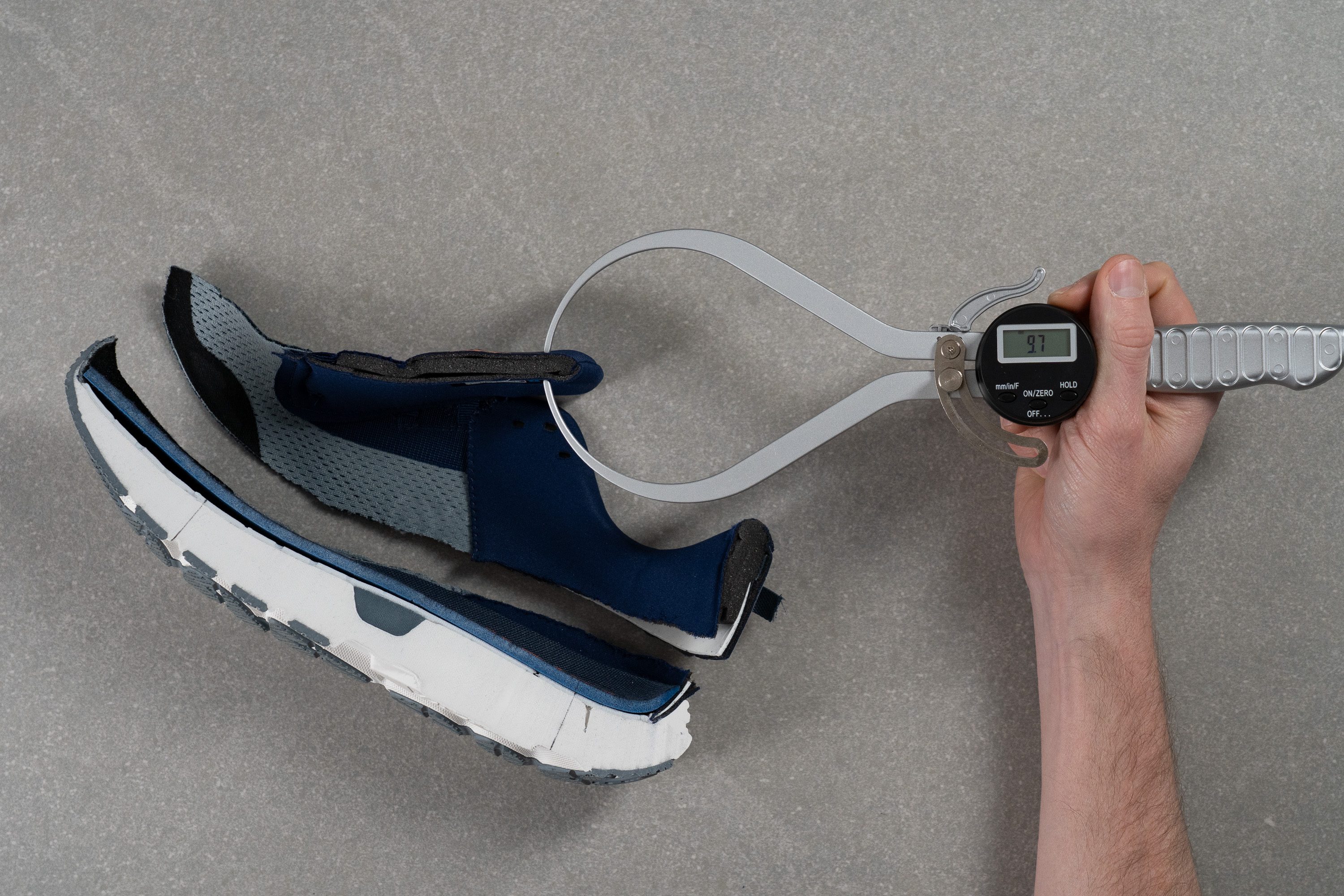
| Gaviota 6 | 9.7 mm |
| Average | 5.8 mm |
Tongue: gusset type
Another clear drawback of the Gaviota 6, especially given its high price, is the absence of a gusseted tongue. While it does stay fairly well in place, we believe a shoe that costs close to $200 should definitely include this feature.
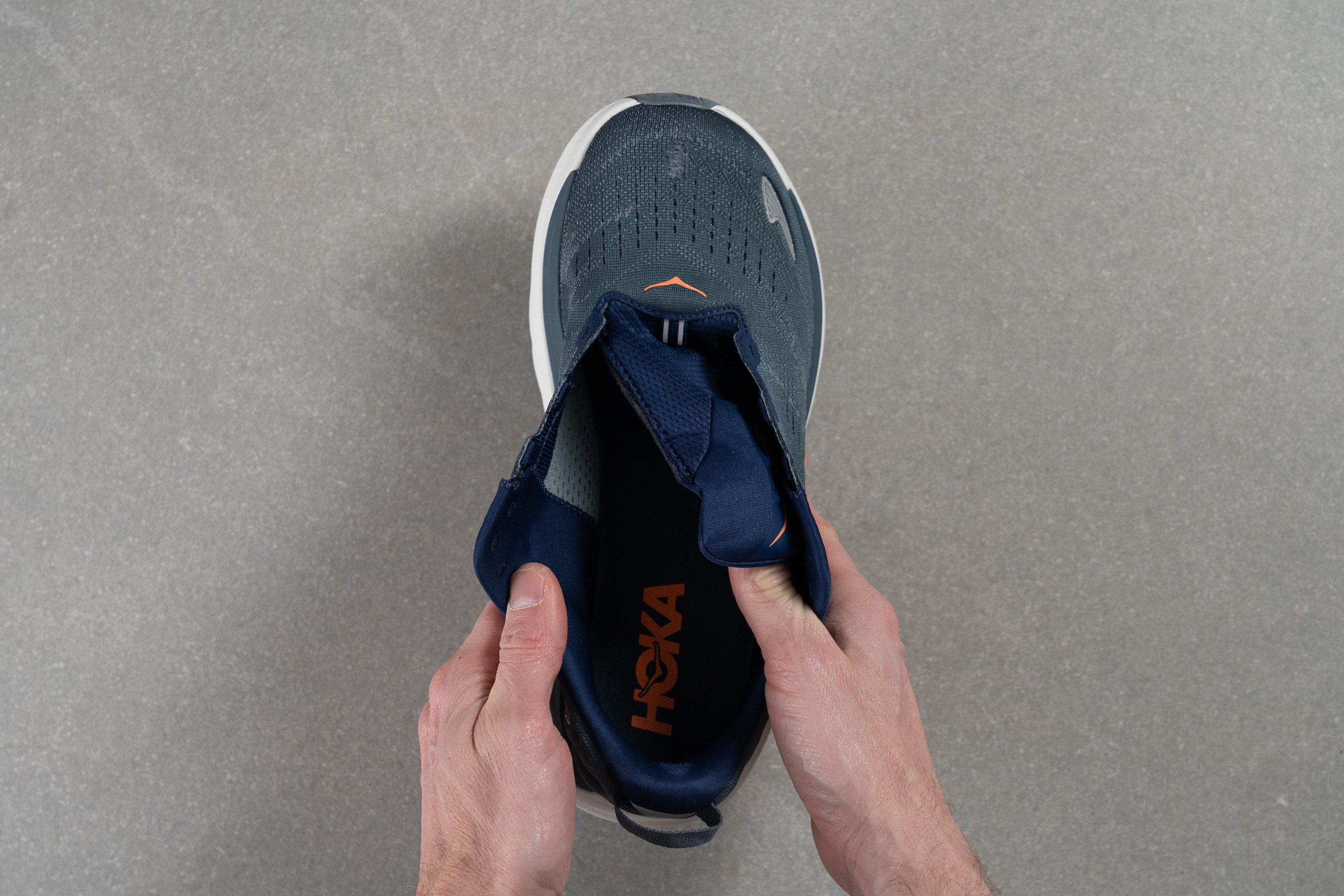
| Gaviota 6 | None |
Heel tab
The heel includes a sturdy finger-loop pull tab made from thick woven webbing. It is anchored directly into the heel collar and reinforced by the surrounding upper panels.
Using the shoe, we found that this horizontal design makes it easy to grab when putting the shoe on while maintaining a clean connection with the padded heel structure and shoe design.
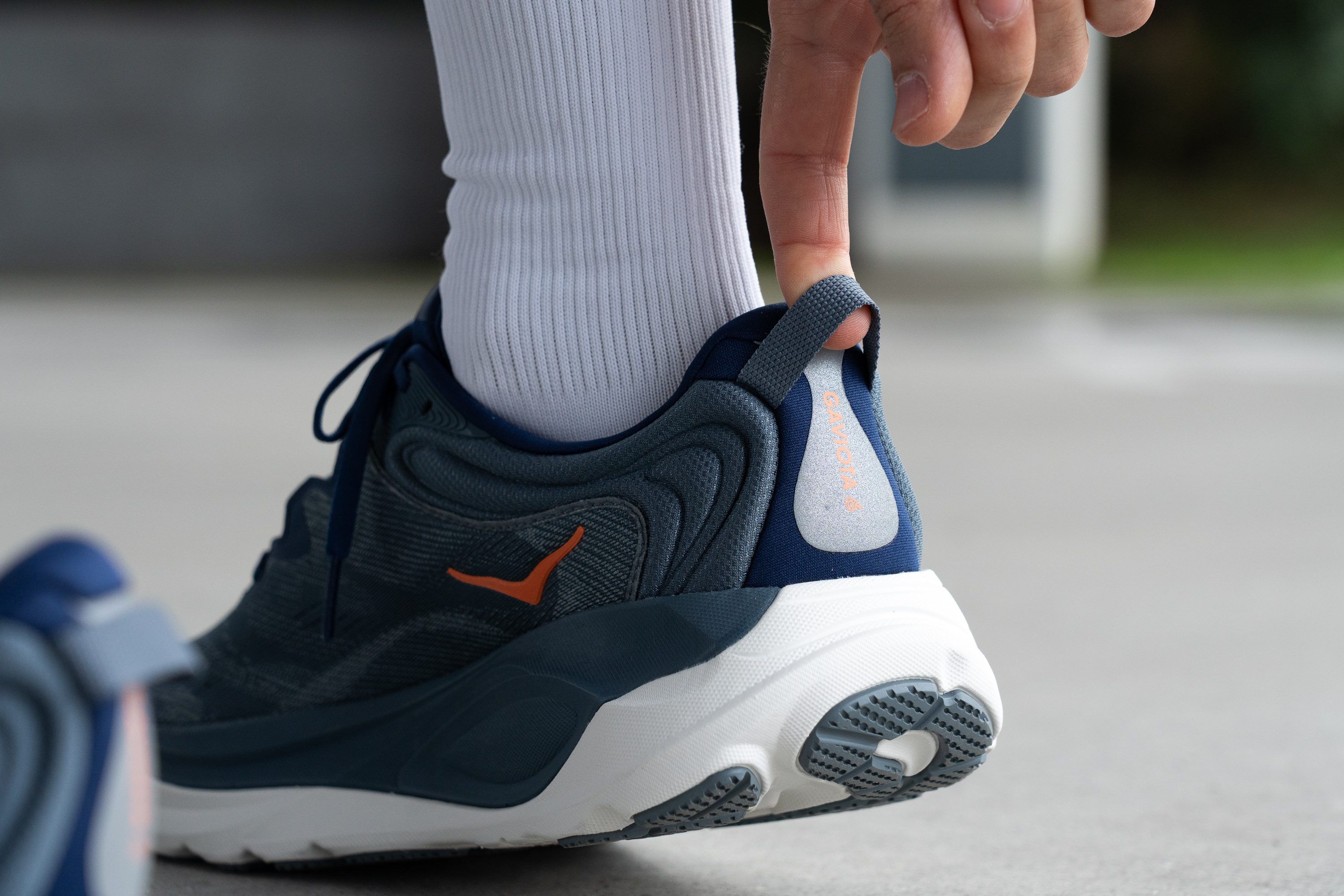
| Gaviota 6 | Finger loop |
Price
The Gaviota 6 remains HOKA’s premium offering in the stability category, but the continued use of CMEVA instead of a more modern foam makes the value harder to justify. The price has also increased 5 bucks, although the Gaviota 5 launched in 2023 so that can partly be explained by inflation.
Even so, the price is definitely high and we think many runners may hesitate given the limited performance of the Gaviota 6.
| Gaviota 6 | $180 |
| Average | $158 |