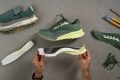
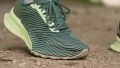







Nuestra conclusión
- Grava 94
- Versátiles 74
- Técnico 42
Pros
- Retorno de energía altísimo
- Suela exterior Vibram maravillosa
- Más estables de lo que nos esperábamos
- Ajuste espacioso
- Espuma mullida
- Rinden muy bien cuando hace frío
- Mucho mejores que sus predecesoras
- Pesan menos
- Upper cómodo
Contras
- Caras
- A lo mejor prefieres un drop más bajo
- Falta de transpirabilidad para cuando hace calor
- Tacos poco profundos que las hacen menos versátiles
Premios
- Entre mejores zapatillas de running para ultras
- Entre mejores zapatillas Nike de trail running
- Top 9% entre zapatillas de trail running
- Top 22% entre zapatillas de running Nike
Comparativa
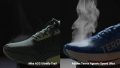
Las zapatillas de running más parecidas
+ + Añadir unas zapatillas | |||||
|---|---|---|---|---|---|
| Nuestra puntuación | 88 Magníficas | 90 Magníficas | 87 Geniales | 79 Buenas | |
| Precio | 250 € | 225 € | 250 € | 250 € | |
| Terreno de trail | Grava / Trail y asfalto | Grava / Trail y asfalto | Grava / Trail y asfalto | Grava / Trail y asfalto | |
| Absorción de impactos | Alta | Alta | Alta | Alta | |
| Retorno de energía | Alto | Alto | Moderado | Alto | |
| Tracción | Alta | Alta | Alta | - | |
| Sujeción arco del pié | Neutral | Neutral | Neutral | Neutral | |
| Peso laboratorio Peso marca | 9.8 oz / 278g 9.5 oz / 269g | 8.9 oz / 252g 9.2 oz / 261g | 9 oz / 255g 9 oz / 255g | 10.5 oz / 299g 10.1 oz / 286g | |
| Drop laboratorio Drop marca | 10.7 mm 8.5 mm | 11.3 mm 6.0 mm | 7.3 mm 5.0 mm | 11.8 mm 8.5 mm | |
| Técnica de carrera | Talón | Talón | Medio/antepié | Talón | |
| Talla | Tallan bien | - | - | Tallan bien | |
| Rigidez de la mediasuela | Blanda | Equilibrada | Blanda | - | |
| Diferencia de la rigidez de la mediasuela en frío | Pequeña | Pequeña | Pequeña | Pequeña | |
| Placa | Placa de carbono | Placa de carbono | Placa de carbono | Placa de carbono | |
| Durabilidad de la parte delantera | Mala | Decente | Decente | Muy mala | |
| Durabilidad del acolchado del talón | Alta | Alta | Alta | Alta | |
| Durabilidad de la suela exterior | Buena | Buena | Buena | Buena | |
| Transpirabilidad | Baja | Media | Media | Media | |
| Anchura / ajuste | Media | Media | Media | Media | |
| Anchura de la parte delantera | Ancha | Estrecha | Estrecha | Ancha | |
| Flexibilidad | Moderada | Rígida | Rígida | Rígida | |
| Rigidez torsional | Moderadas | Moderadas | Rígidas | Rígidas | |
| Rigidez del contrafuerte del talón | Rígido | Moderado | Flexible | Moderado | |
| Profundidad del dibujo de la suela | 3.0 mm | 2.8 mm | 3.2 mm | 3.0 mm | |
| Altura de la suela en la zona del talón laboratorio Altura de la suela en la zona del talón marca | 38.1 mm 38.0 mm | 41.6 mm 42.0 mm | 40.7 mm 41.5 mm | 36.6 mm 38.0 mm | |
| Antepié laboratorio Antepié marca | 27.4 mm 29.5 mm | 30.3 mm 36.0 mm | 33.4 mm 36.5 mm | 24.8 mm 29.5 mm | |
| Anchuras disponibles | Estándar | Estándar | Estándar | Estándar | |
| Para corredores pesados | ✗ | ✓ | ✗ | ✗ | |
| Estación | Todas las estaciones | Todas las estaciones | Todas las estaciones | Todas las estaciones | |
| Plantilla extraíble | ✗ | ✓ | ✓ | ✓ | |
| Compatibles con plantillas personalizadas | ✗ | ✓ | ✓ | ✓ | |
| Clasificación | #56 Top 14% | #38 Top 10% | #72 Top 18% | #253 37% inferior | |
| Popularidad | #149 Top 37% | #247 38% inferior | #209 48% inferior | #267 33% inferior |


Quién debería comprárselas
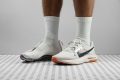
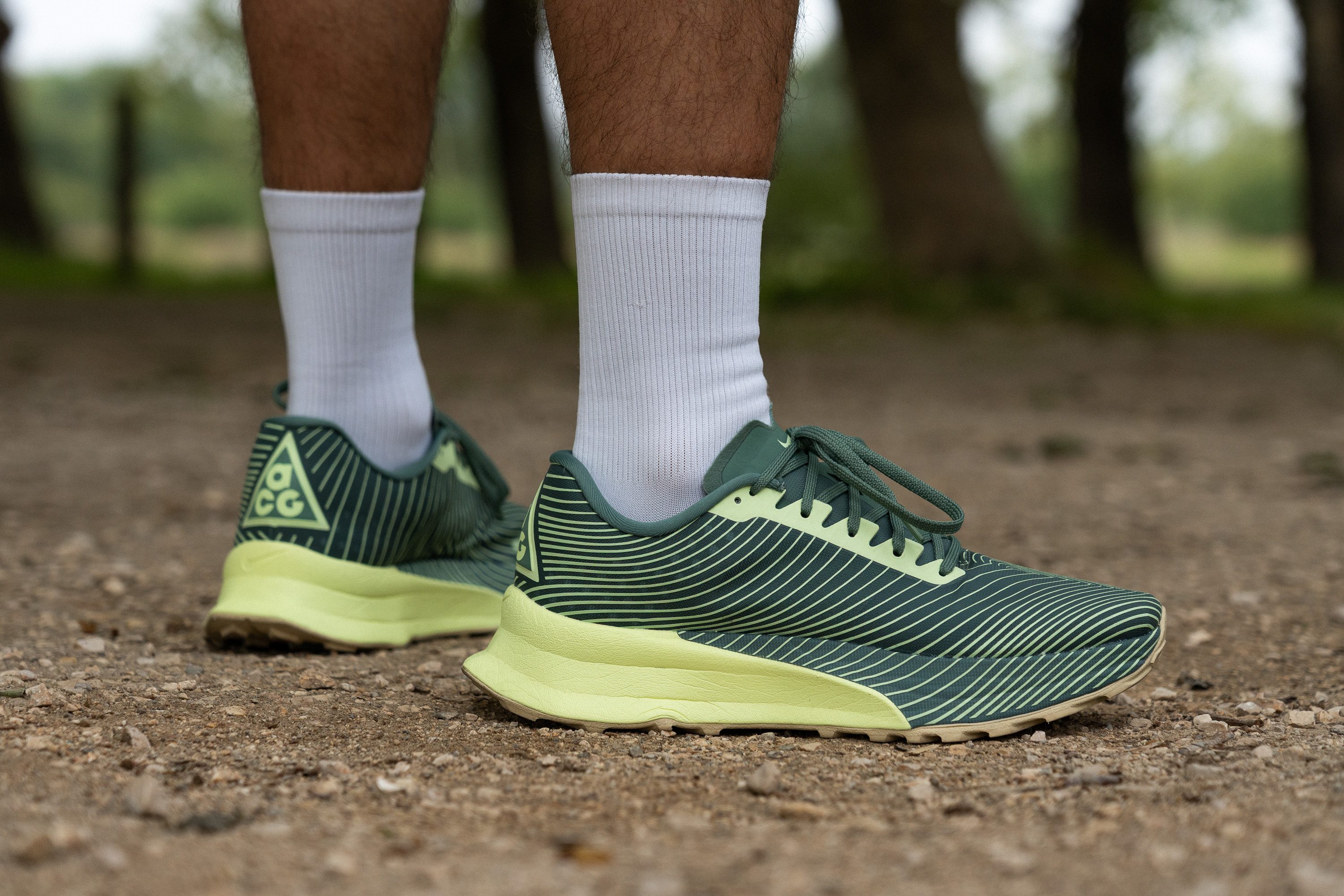
En nuestra opinión, las Nike ACG Ultrafly Trail son estupendas para:
- Los corredores a los que les gustó la primera generación pero estaban buscando menos desventajas y un mejor rendimiento en general.
- Los ultrarunners que ponen el retorno de energía y el rendimiento a la cabeza de su lista de prioridades.
- Cualquiera que quiera unas superzapatillas de trail con un rebote espectacular y el agarre de la suela Vibram para las zonas fáciles en el bosque o los caminos de grava.
Quién NO debería comprárselas
Aunque el retorno de energía de este modelo es excelente, gracias a nuestras pruebas descubrimos que los runners más pesados a lo mejor quieren más amortiguación para las distancias largas, sobre todo en el antepié si se enfrentan a un ultra. Las Saucony Xodus Ultra 4 probablemente sean una opción más inteligente para ellos, y más si aterrizan con el antepié.
También creemos que el drop alto de este modelo a lo mejor no les hace ninguna gracia a algunos amantes del trail running. Personalmente, nosotros no lo recomendamos para ese grupo. Como alternativas, tienes las HOKA Tecton X 3, que son unas superzapatillas de trail con un drop moderado, y las adidas Terrex Agravic Speed Ultra, que también nos parecen un modelo interesante.
Amortiguación
Shock absorption
Las Nike ACG Ultrafly Trail buscan posicionarse como una de las mejores zapatillas para ultramaratones, y eso exige una absorción de impactos excelente. Cuando las analizamos en el laboratorio, se llevaron un resultado de 137 SA en el talón y 103 SA en el antepié, cifras sólidas que deberían irles bien a la mayoría de los corredores.
Eso sí, puede que la absorción de impactos del antepié sea insuficiente para los trail runners más pesados que se enfrentan a distancias muy largas. Quitando eso, ¡todo correcto!
| ACG Ultrafly Trail | 137 SA |
| Media | 122 SA |
Energy return
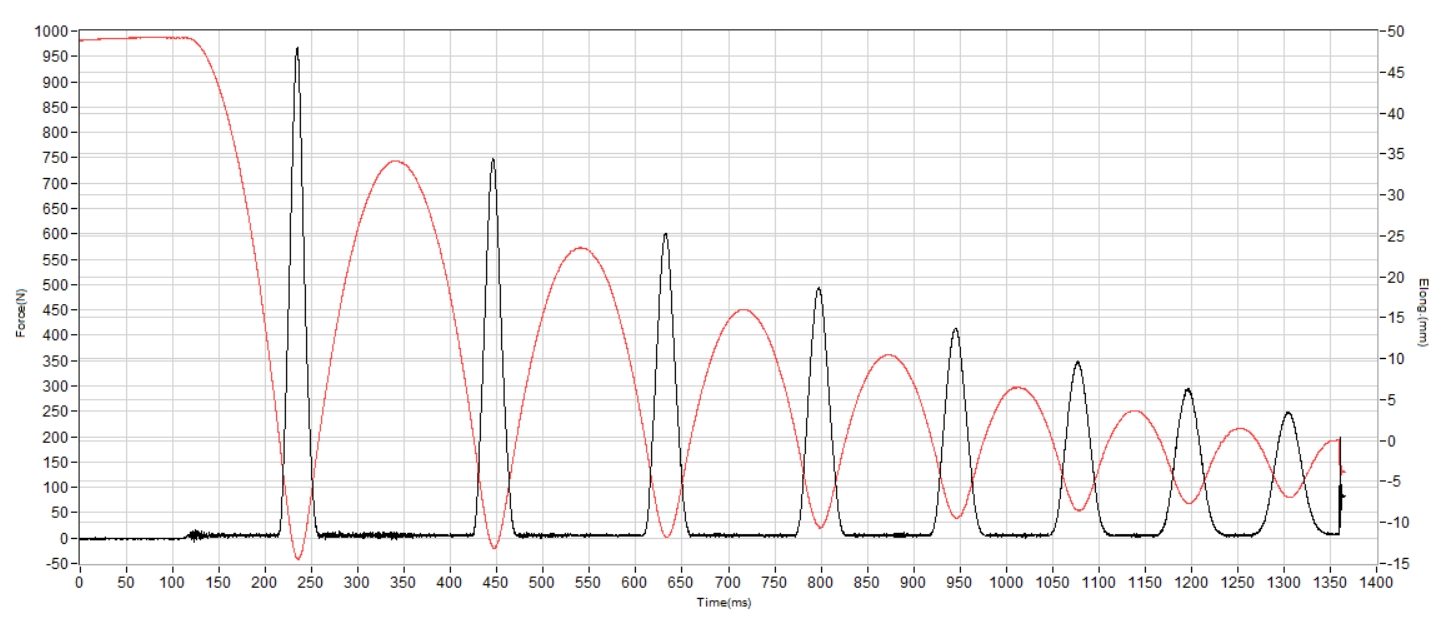
Sinceramente, nos esperábamos una absorción de impactos un 5 % o incluso 10 % más alta, pero bueno, las Nike ACG Ultrafly Trail lo compensaron con un resultado impresionante en nuestra prueba de retorno de energía. Con un impresionante 75,4 %, nos parecen la mejor opción para los deportistas que están buscando más y más energía en sus aventuras. Y si tenemos en cuenta que algunos ultras superan fácilmente las 10 horas, tienes tiempo de sobra de disfrutar de sus ventajas.
Para darte un poco de contexto sobre su evolución, la primera generación de las Nike Ultrafly se llevó un 66,2 % en esta misma prueba, y la media actual de nuestro laboratorio está muy por debajo del 60 %. Estamos contentísimos de poder decirte que Nike al fin les ha puesto su mejor espuma, la ZoomX, a unas zapatillas de trail.
| ACG Ultrafly Trail | 74.2% |
| Media | 59.7% |
Altura de la suela en la zona del talón
Con una altura de 38,1 mm, el talón de las ACG Ultrafly Trail es estupendo para las distancias largas. Además, toda esta amortiguación ayuda a proteger las articulaciones y los músculos de los talonadores.
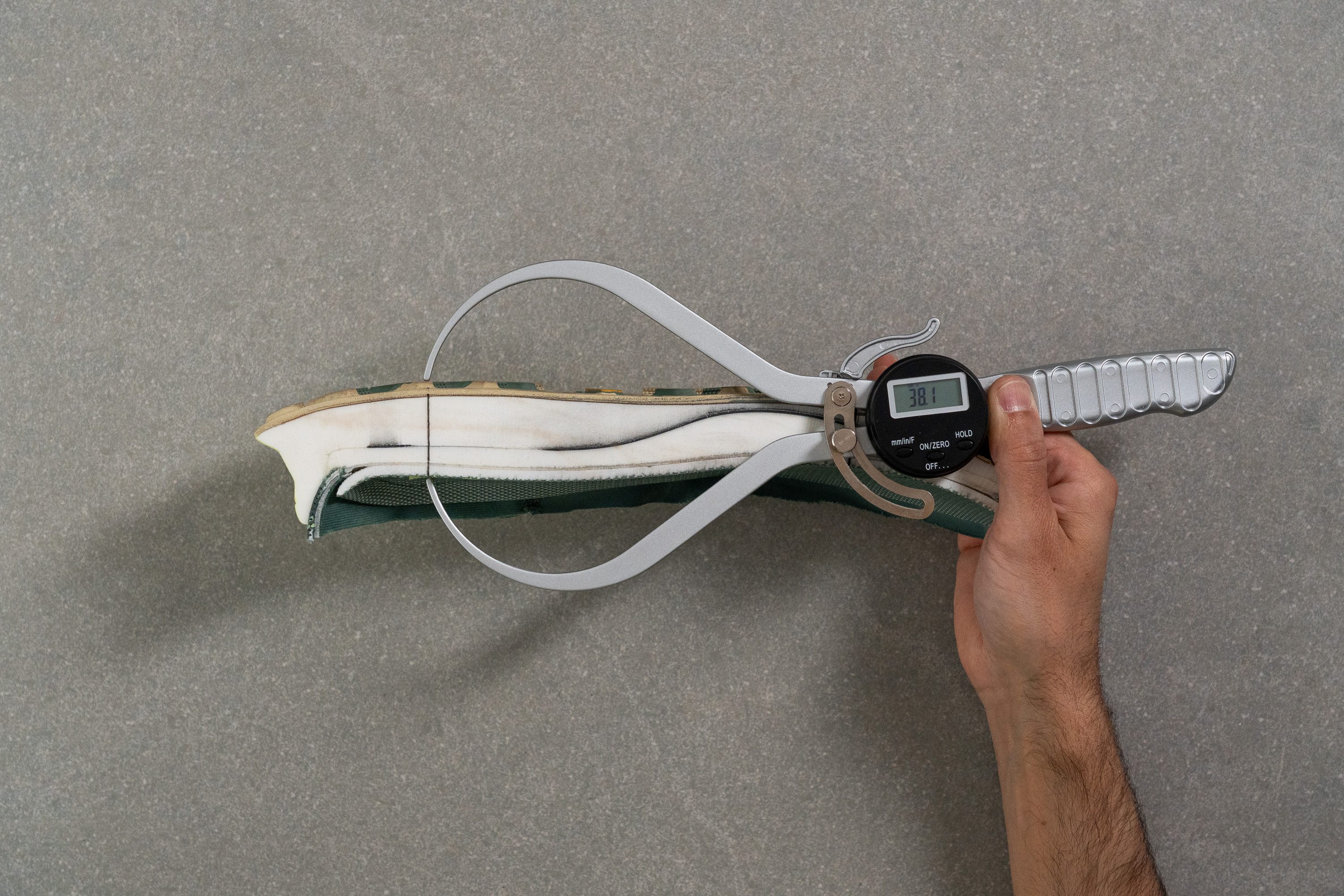
| ACG Ultrafly Trail | 38.1 mm |
| Media | 33.0 mm |
Altura de la suela en el antepié
El antepié tiene una altura de solo 27,4 mm. Aunque sacrificar un poco de absorción de impactos en esta zona puede parecer una desventaja, sigue siendo superior a la media, y debería ser suficiente para la mayoría de los runners. Además, te puede ayudar a controlar mejor cada paso, proporcionando más estabilidad.
A ver, al final, es imposible que un único par de running lo tenga todo.
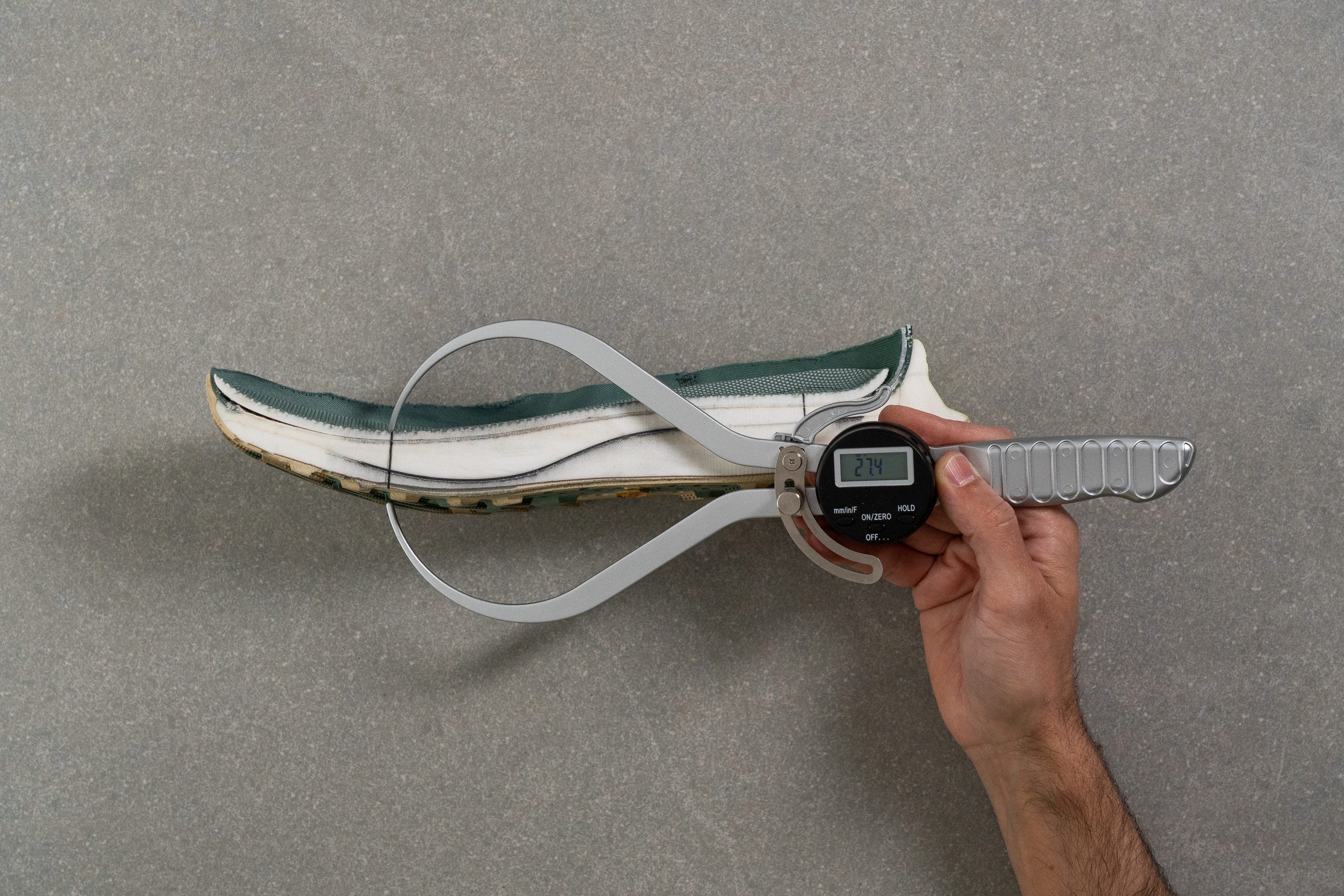
| ACG Ultrafly Trail | 27.4 mm |
| Media | 25.7 mm |
Drop
Para que puedas de las Nike ACG Ultrafly Trail, tienes que estar cómodo con los drops altos. El de estas zapatillas mide 10,7 mm, que es algo muy poco común en unas zapatillas de trail, ya que estos modelos suelen tener un drop ligeramente inferior al de sus compañeras de asfalto.
Los talonadores van a estar encantados, igual que los runners que pierden la forma poco a poco después de estar corriendo tantas horas y que empiezan a aterrizar con el talón más de lo normal. En ese caso, el drop alto puede ayudar mucho, pero los runners acostumbrados a los diseños de 4 mm y de 6 mm a lo mejor creen que este es demasiado alto.
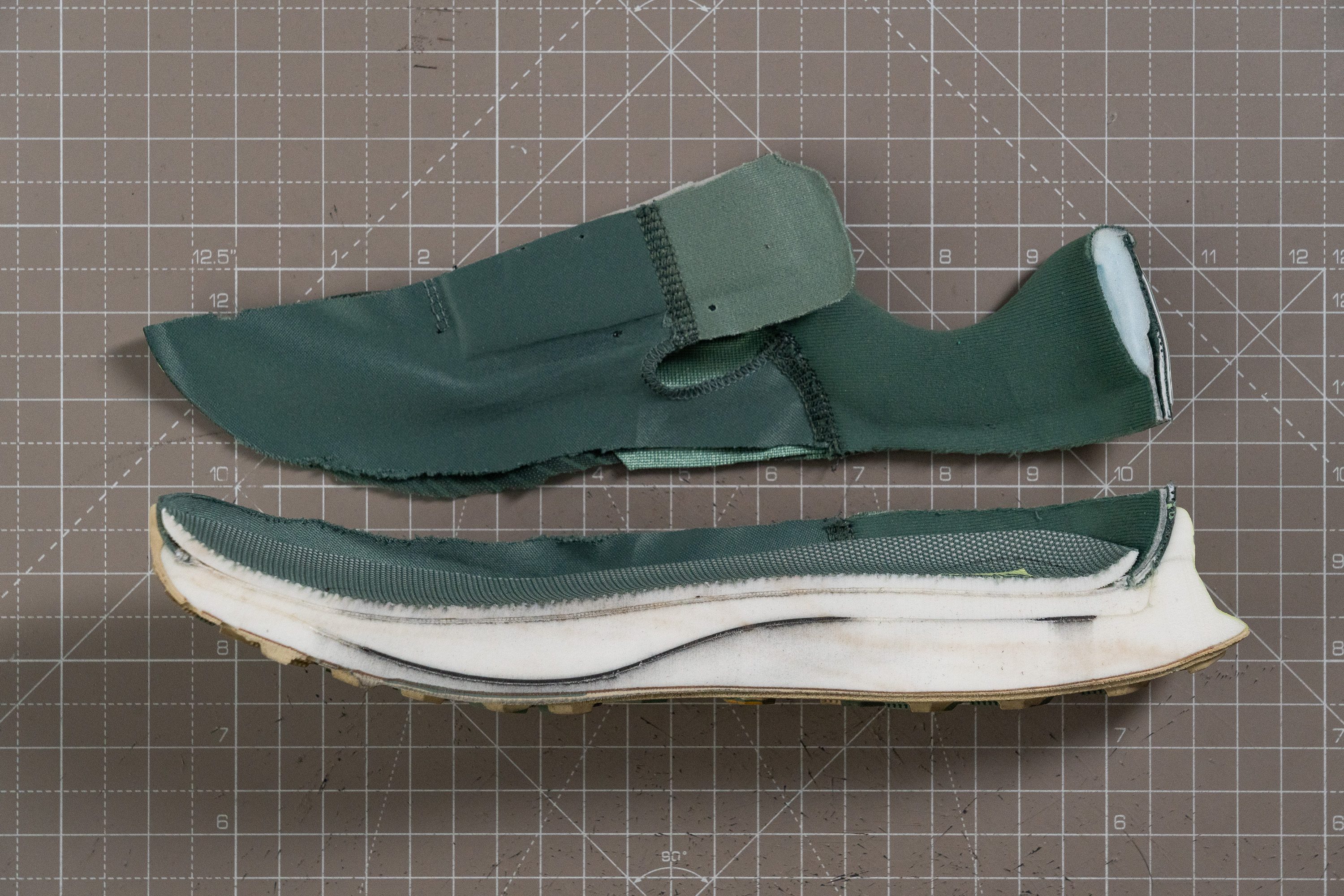
| ACG Ultrafly Trail | 10.7 mm |
| Media | 7.2 mm |
Dureza de la mediasuela
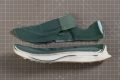
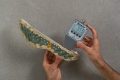
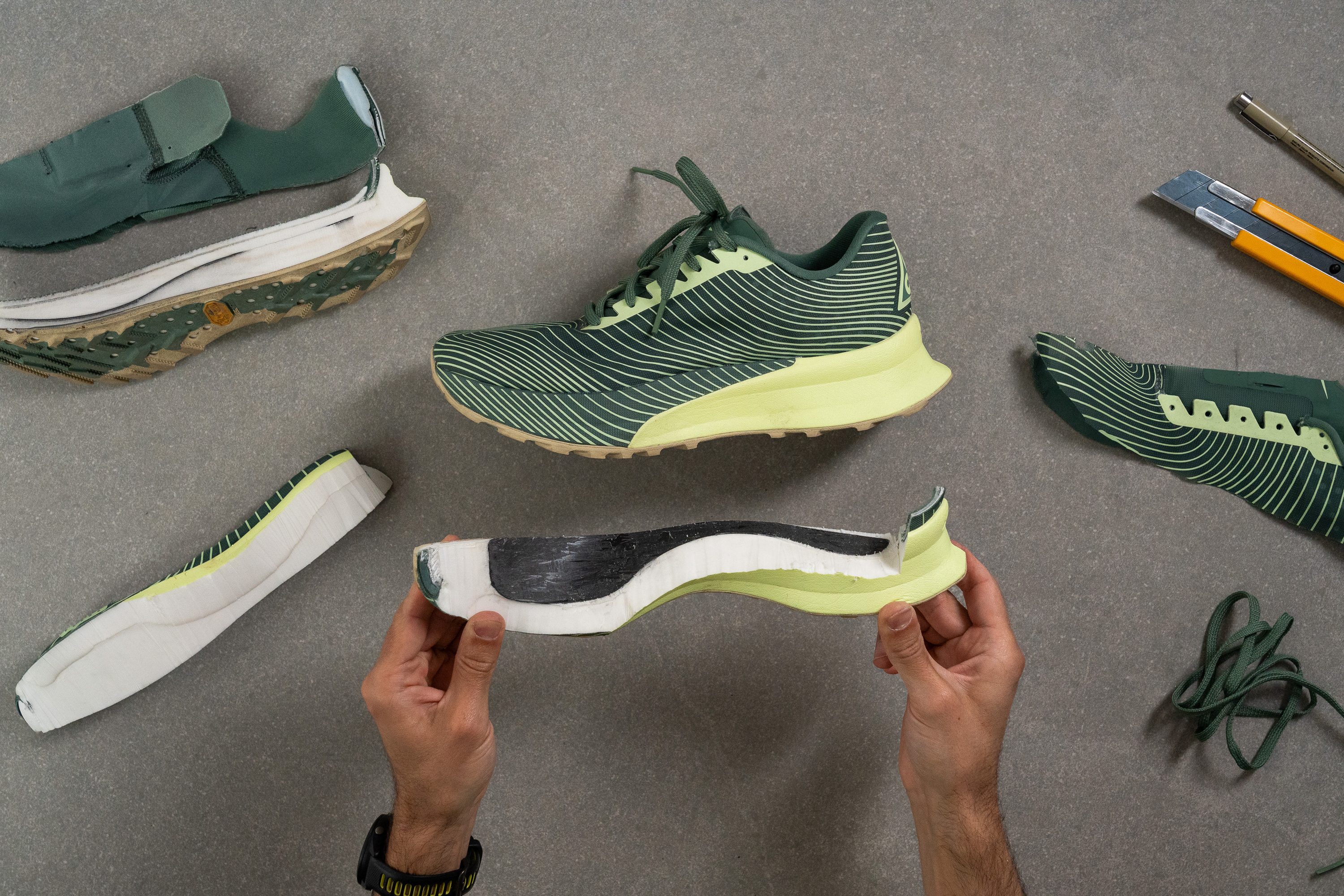
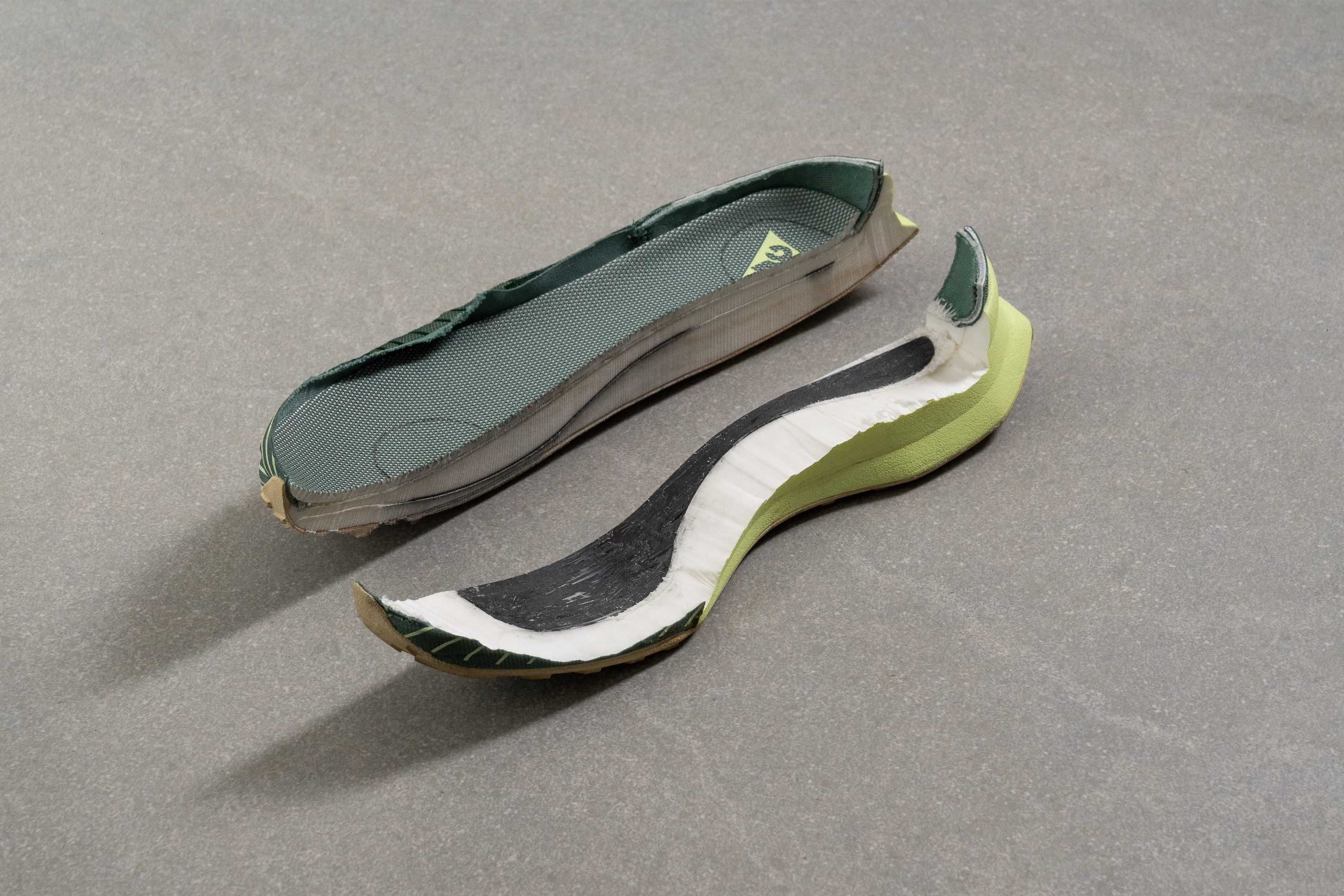
Nike utiliza dos capas distintas de espuma ZoomX en las ACG Ultrafly Trail, cada una con densidades diferentes. La que está debajo de la placa de carbono obtuvo un resultado de 31,5 AC, así que es más blanda que la media.
Pero no es nada que nos sorprenda, ya que sus predecesoras también tienen una espuma blanda. Eso sí, como suele pasar con las zapatillas de trail, la suela exterior hace que la pisada se sienta un poco más dura en comparación con la de los modelos para correr por asfalto, incluso si los resultados que marca el durómetro son iguales.
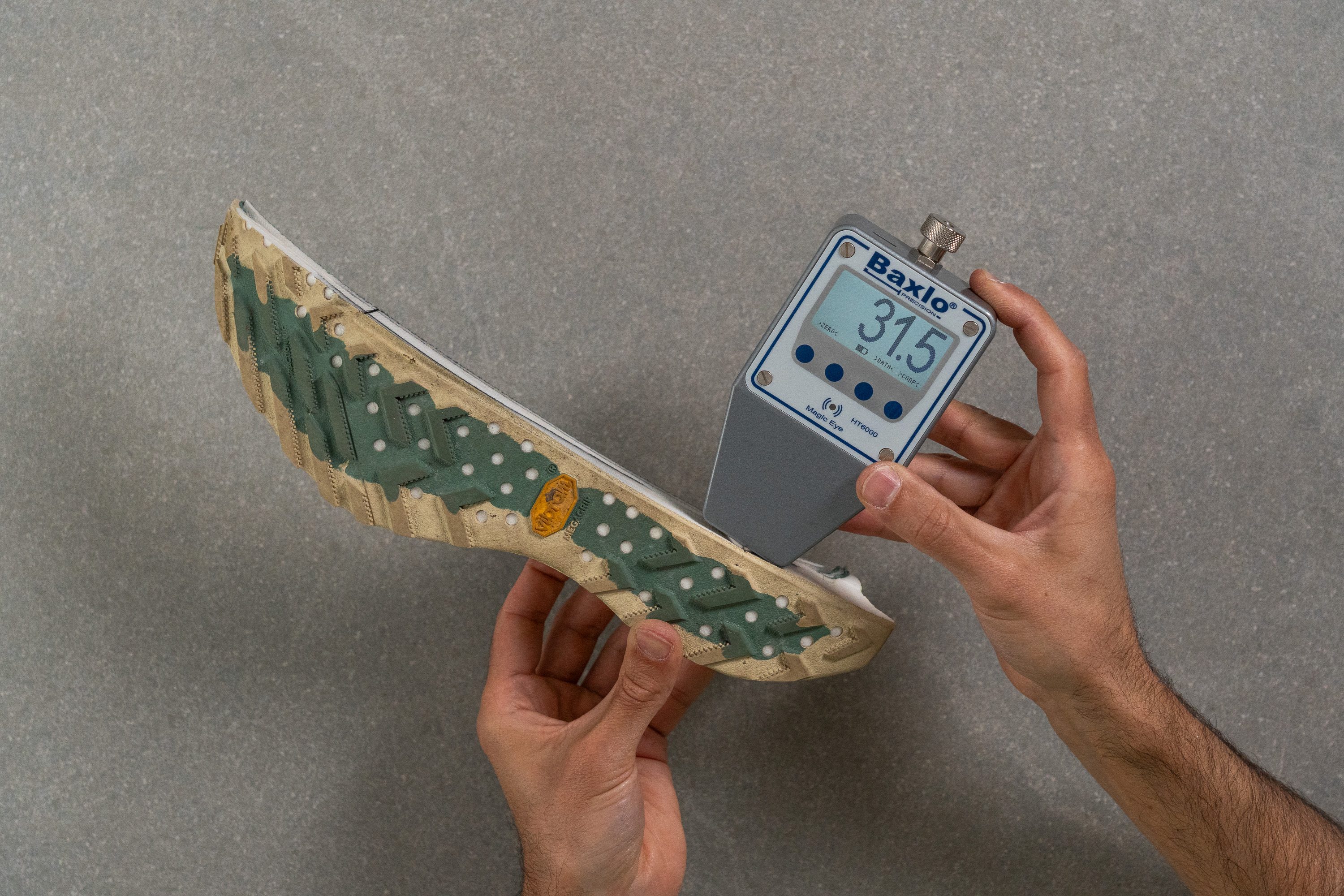
| ACG Ultrafly Trail | 31.5 AC |
| Media | 38.1 AC |
Rocker
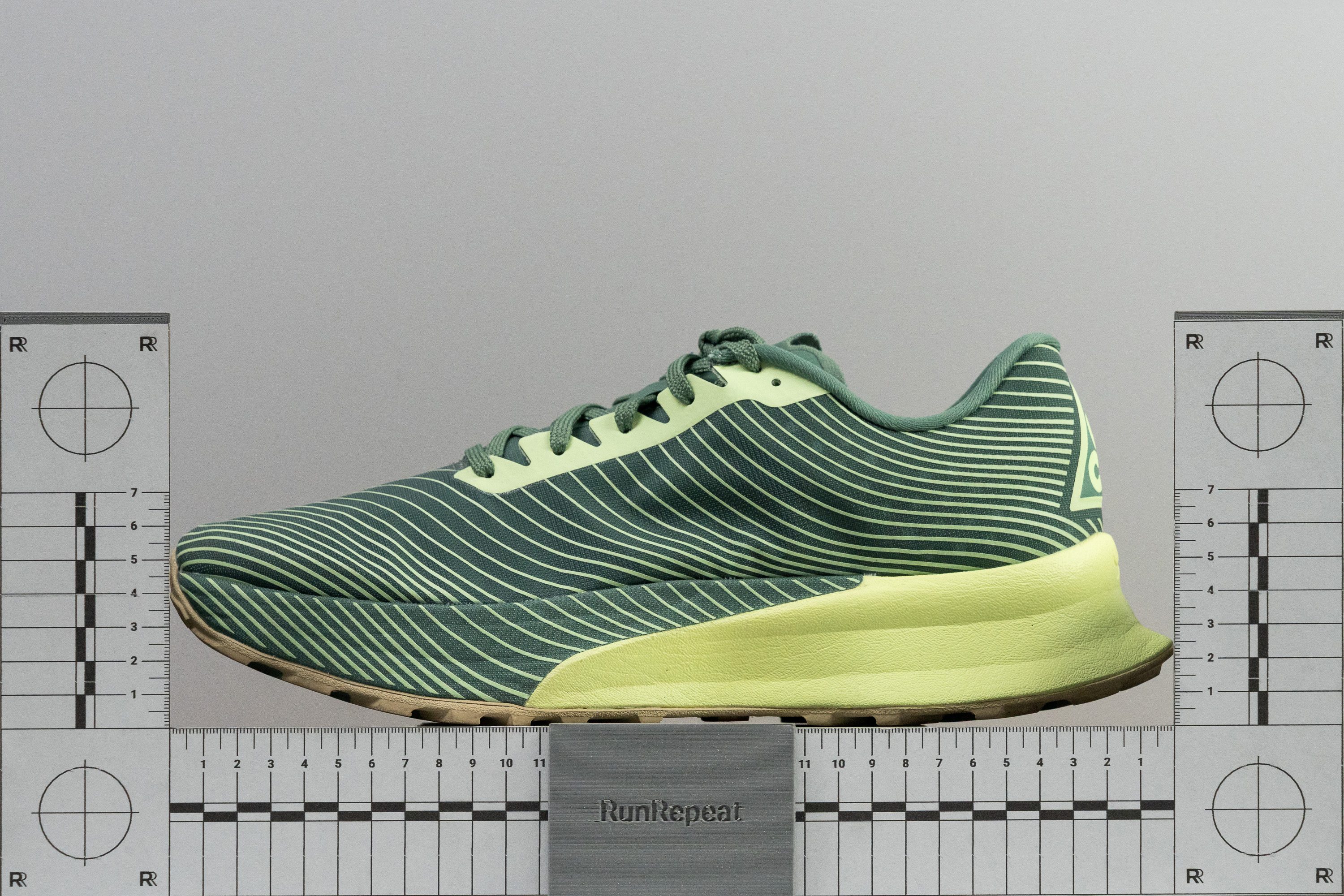
Cuando analizamos más de cerca el rocker de las Nike ACG Ultrafly Trail, sacamos dos conclusiones claras.
Primero, el antepié no necesita tener una curvatura muy marcada, ya que el drop es alto y el diseño de este modelo se centra en el trail. Después, tenemos claro que Nike pensó en los talonadores mientras lo creaba, ya que la marca se curró esa zona al ponerte una extensión del talón amplia para ofrecerles sujeción a los deportistas que aterrizan primero con el talón.
Placa
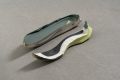
Ahora te vamos a hablar de uno de los cambios más interesantes que hemos visto en las ACG Ultrafly Trail. Al modelo anterior lo criticaron mucho por su falta de flexibilidad, y Nike decidió solucionar ese problema utilizando un nuevo diseño con dos placas de carbono en forma de cuchara colocadas en paralelo, en vez de tener una sola; es parecido a lo que HOKA hizo con la serie Tecton.
Esto mejora la flexibilidad torsional y ayuda a que las zapatillas se adapten mejor al terreno en lugar de mantener siempre su forma.
Tallaje y ajuste
Talla
Las Nike ACG Ultrafly Trail tallan bien (38 votos).
Longitud interna
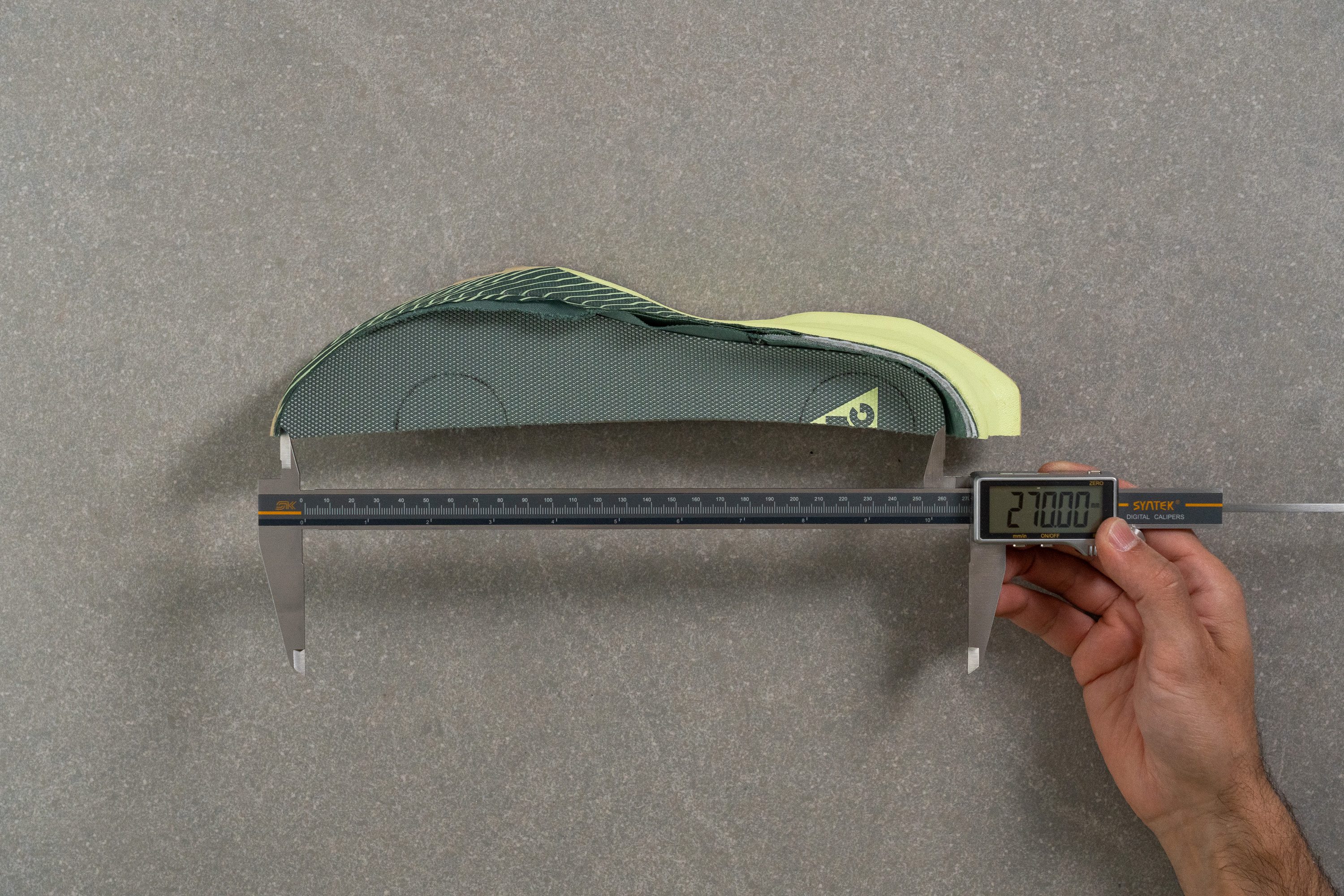
| ACG Ultrafly Trail | 270.0 mm |
| Media | 269.2 mm |
Anchura / Ajuste
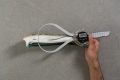
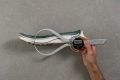
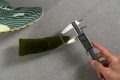
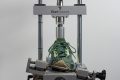
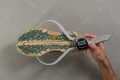
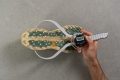
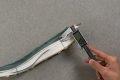
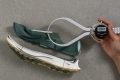
Para comparar el ajuste de las ACG Ultrafly Trail con el de sus predecesoras y con el de otros modelos, hicimos un molde de gel de su interior.
El primer resultado confirmó que Nike, una vez más, evita un ajuste demasiado estrecho, ofreciendo un poco más de espacio en comparación con lo que normalmente vemos en los modelos de trail. Sus 97,8 mm nos parecen muy acertados para los ultras, donde la hinchazón de los pies puede ser un problema.
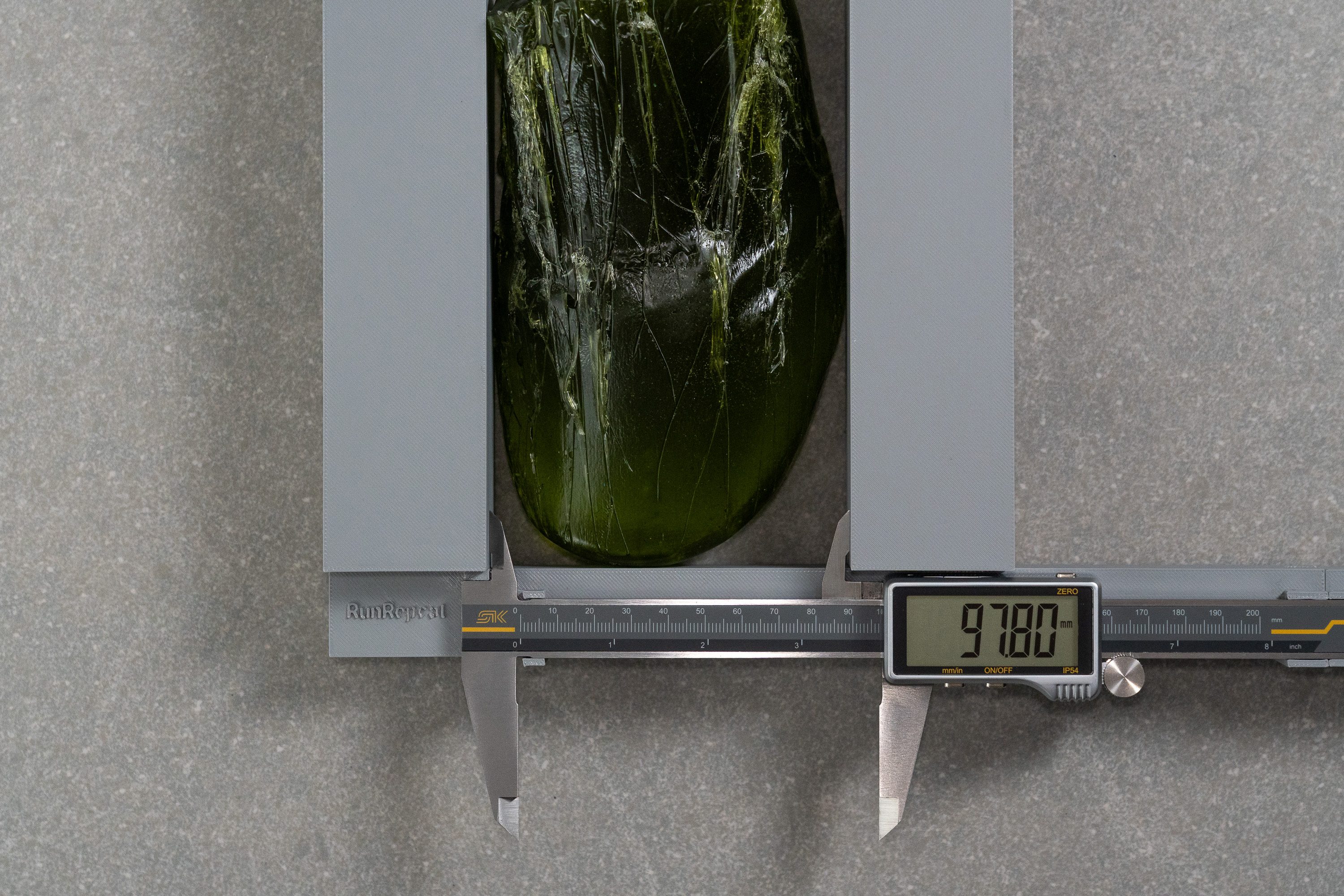
| ACG Ultrafly Trail | 97.8 mm |
| Media | 95.7 mm |
Anchura de la parte delantera
La parte delantera también es muy espaciosa, con sus 77,2 mm. Esos milímetros extra dejan que puedas mover más los dedos y estirarlos de forma natural, que es algo que seguro que a muchos amantes de los ultras les encanta.
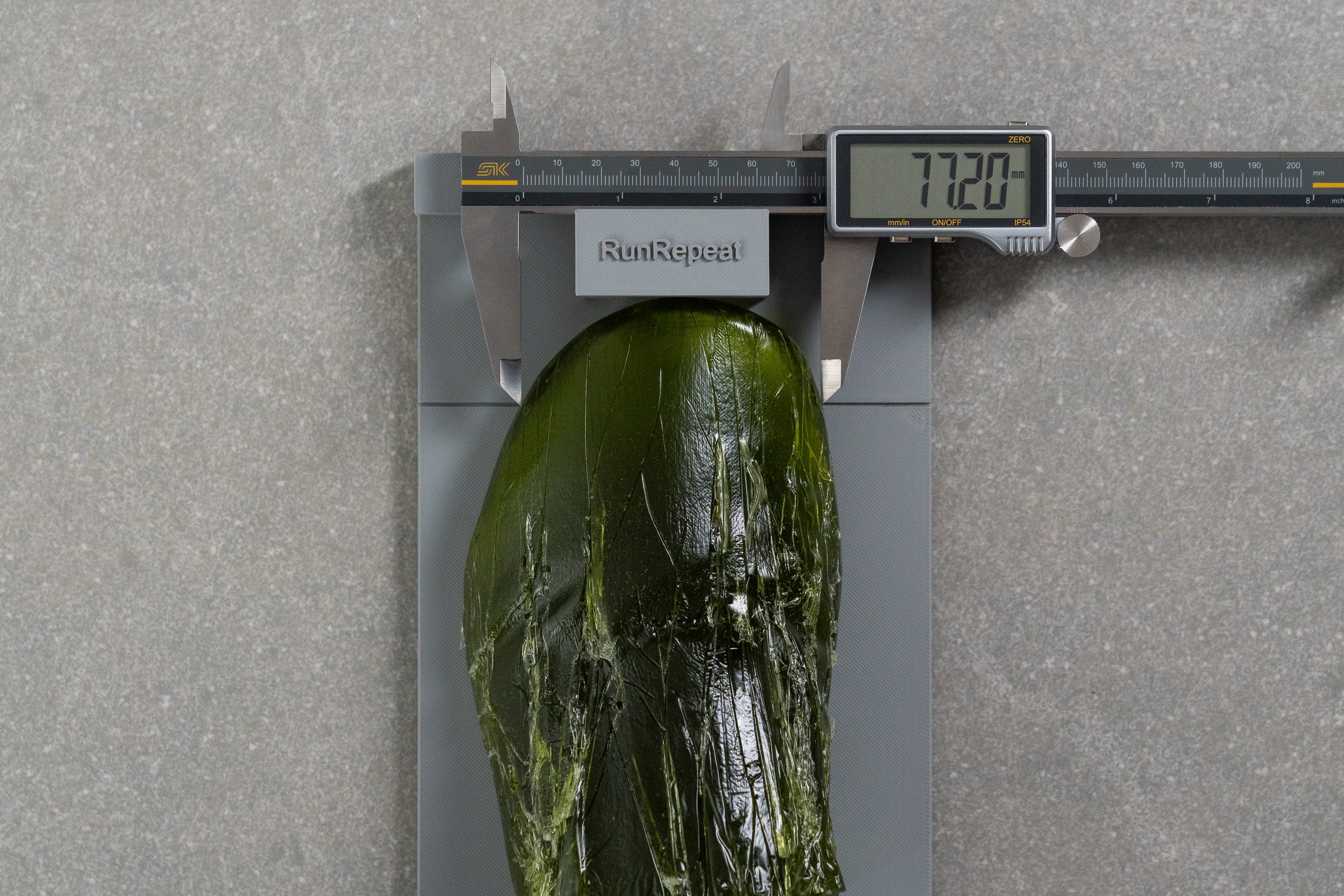
| ACG Ultrafly Trail | 77.2 mm |
| Media | 74.3 mm |
Altura de la parte delantera
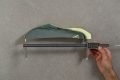
La altura de la zona de los dedos no nos dio ningún problema.
Sus 27,3 mm nos han dejado claro que el ajuste es lo suficientemente seguro como para inspirar confianza en los descensos y en las curvas, pero sin estrujarte los dedos.
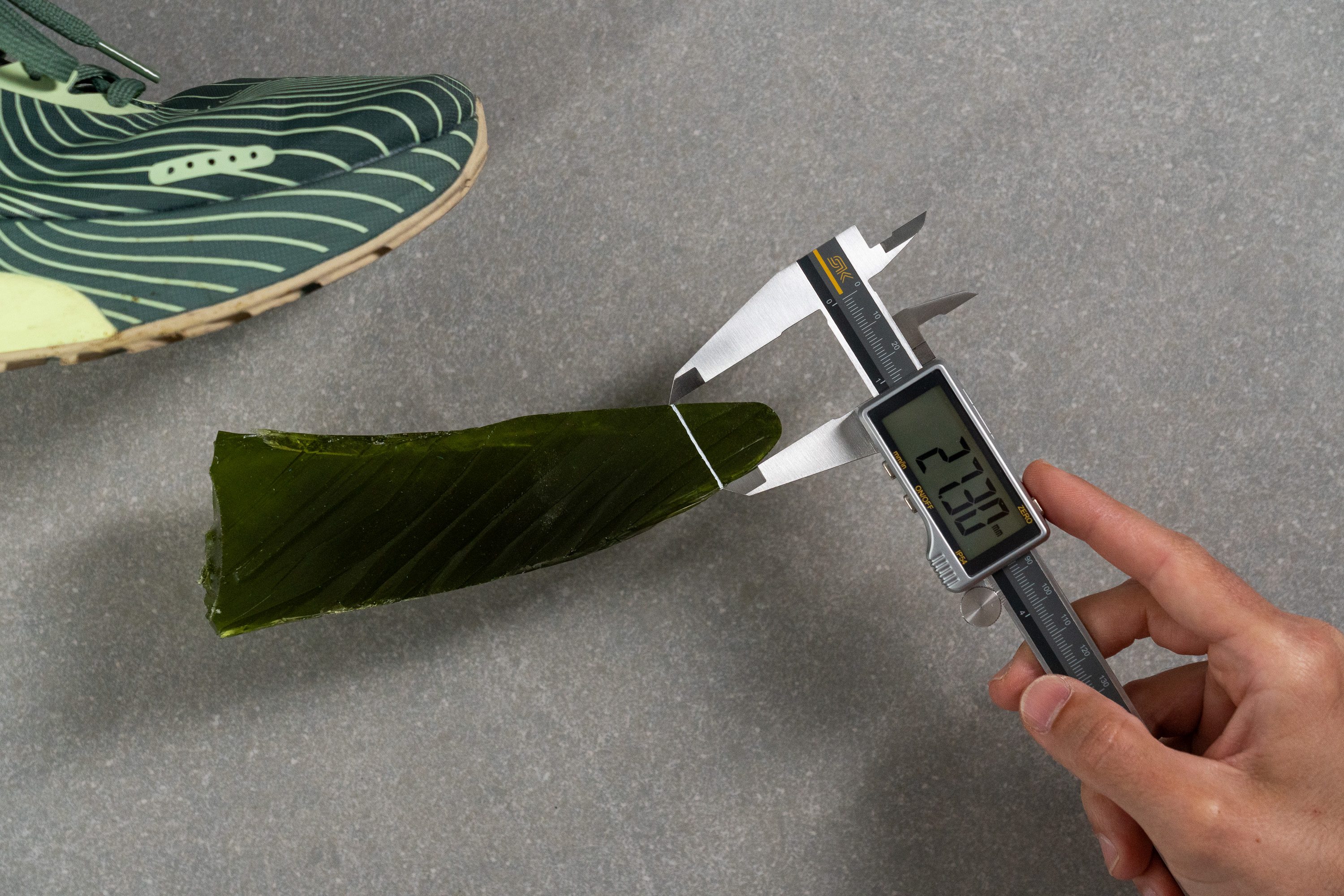
| ACG Ultrafly Trail | 27.3 mm |
| Media | 27.0 mm |
Tracción / Agarre
Traction test
Las Ultrafly originales crearon polémica entre los runners y, la verdad, tenían más de un punto flaco importante, pero marcaron un antes y un después para Nike, ya que fueron sus primeras zapatillas con una suela Vibram. Llevábamos años pidiendo esa colaboración, y en 2023 por fin nos la dieron.
Tres años después, este acuerdo es más sólido que nunca, ya que Nike ahora está poniéndole Vibram a muchos más modelos, como las Zegama 2. Las ACG Ultrafly Trail presumen del maravilloso compuesto Megagrip Litebase, que, por supuesto, se llevó un estupendo resultado de 0,77 en nuestra prueba sobre hormigón mojado.
| ACG Ultrafly Trail | 0.77 |
| Media | 0.68 |
Profundidad del dibujo de la suela
Nike no cambió los tacos poco profundos en esta nueva versión, así que siguen especializándose en las zonas fáciles, en los caminos de grava y en los tramos de asfalto que, de vez en cuando, conectan las unas con los otros. Siguen siendo de 3,0 mm, y también cuenta con la tecnología Traction Lug de Vibram.
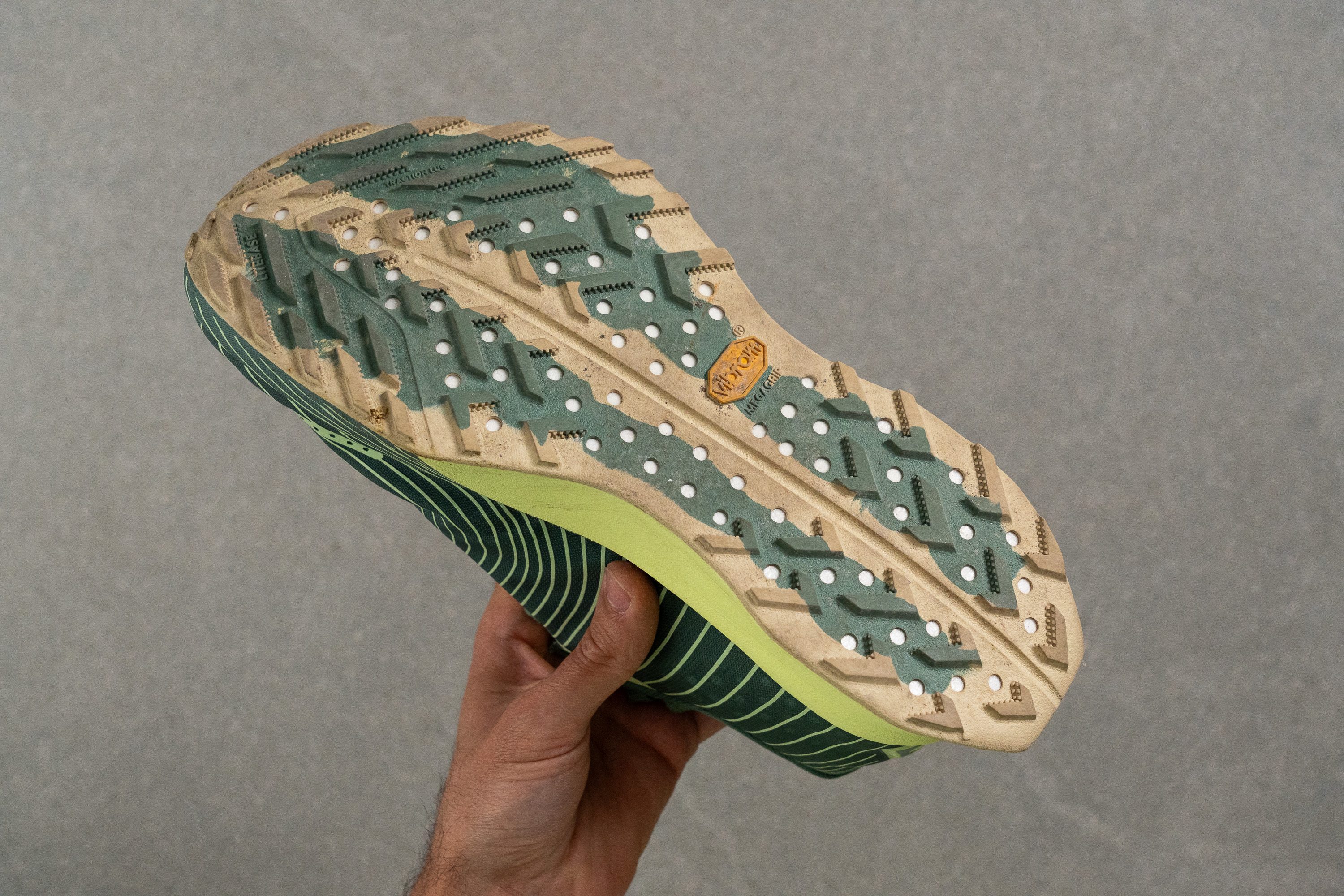
Los tacos combinan unidades en forma de V orientadas hacia adelante o hacia atrás según dónde están situados, mientras que los elementos rectangulares en los laterales del antepié buscan mejorar la tracción en las curvas. Sin duda, es una suela con un diseño más elaborado que la anterior.
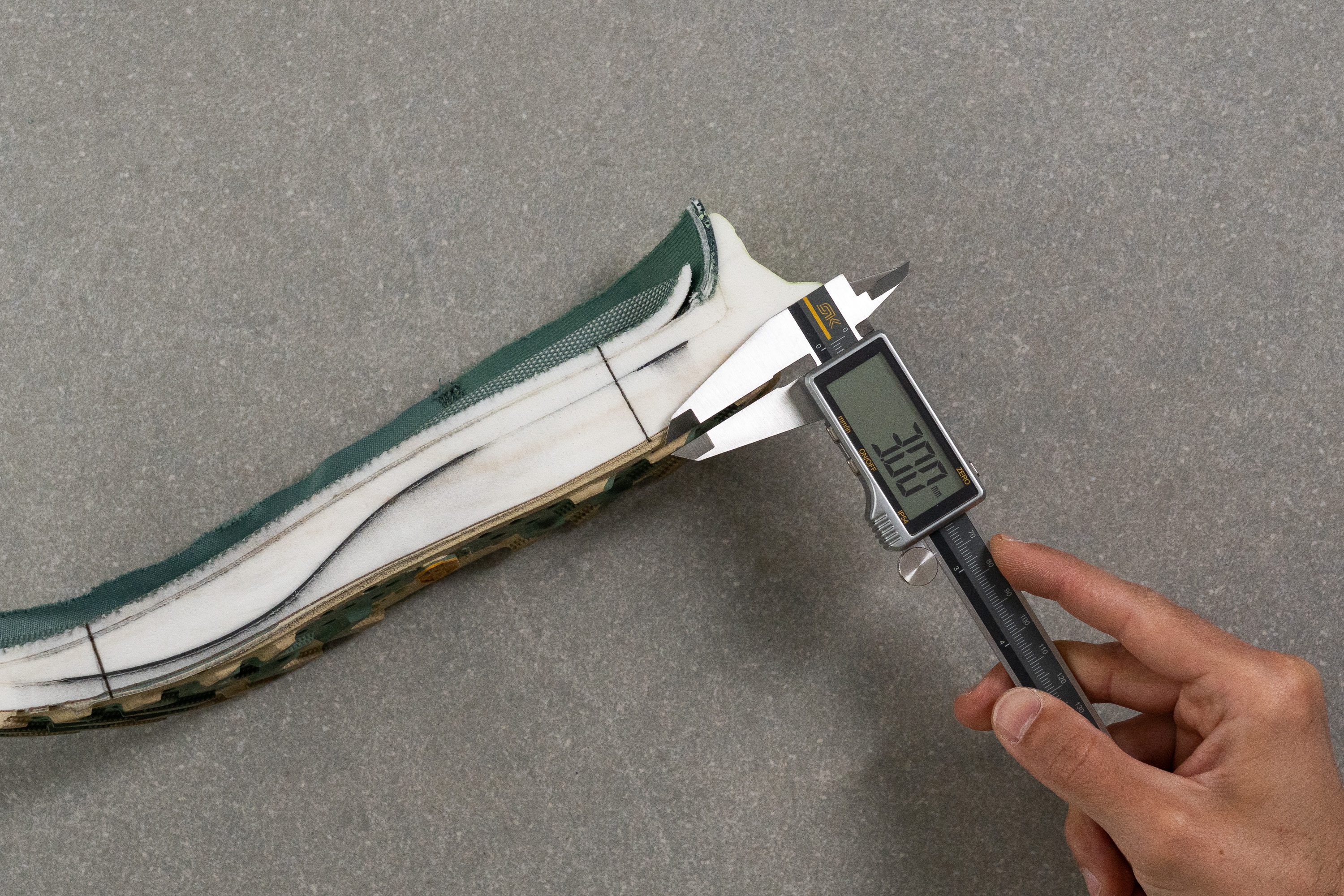
| ACG Ultrafly Trail | 3.0 mm |
| Media | 3.5 mm |
Diseño de la suela exterior
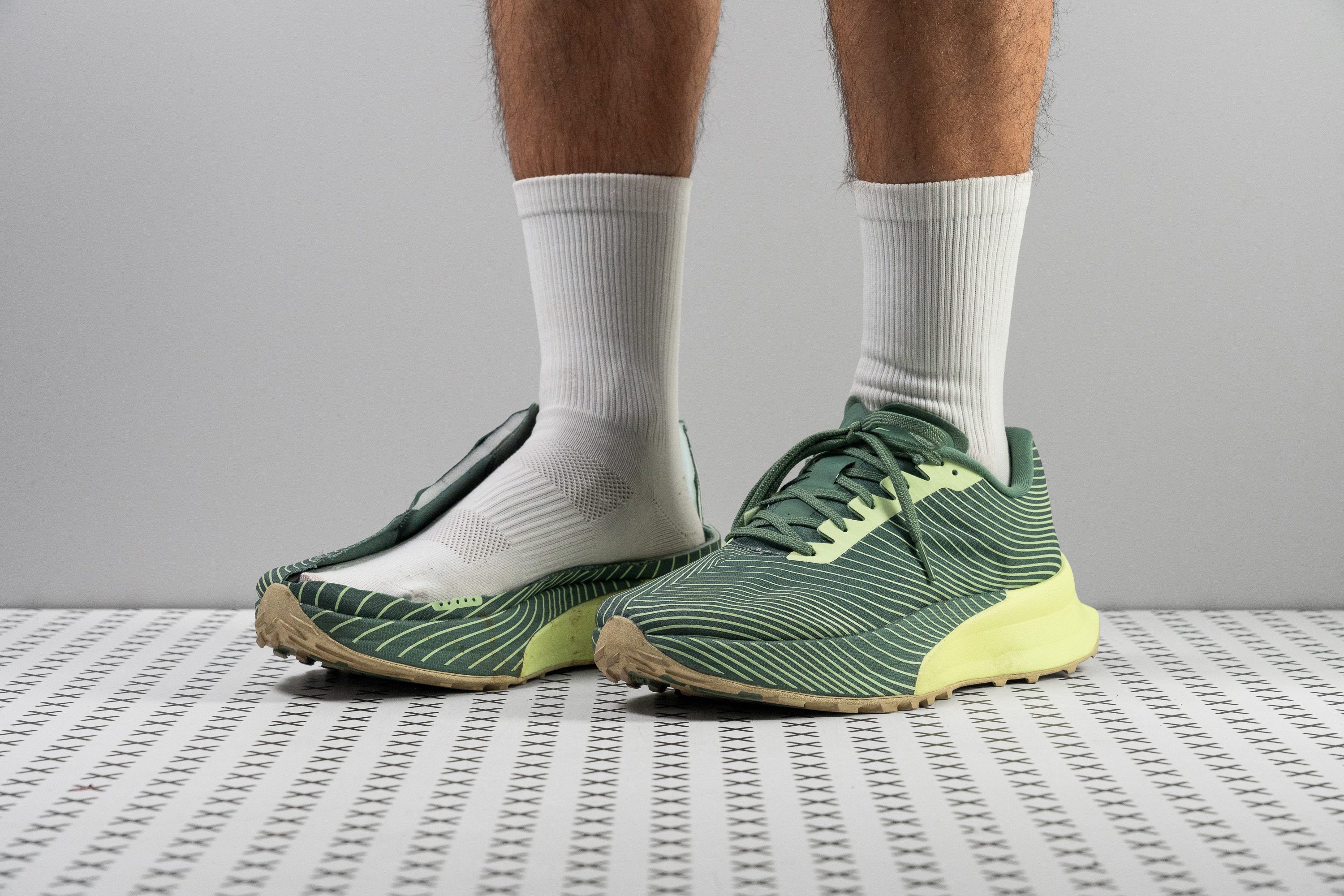
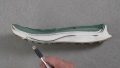
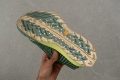
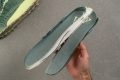
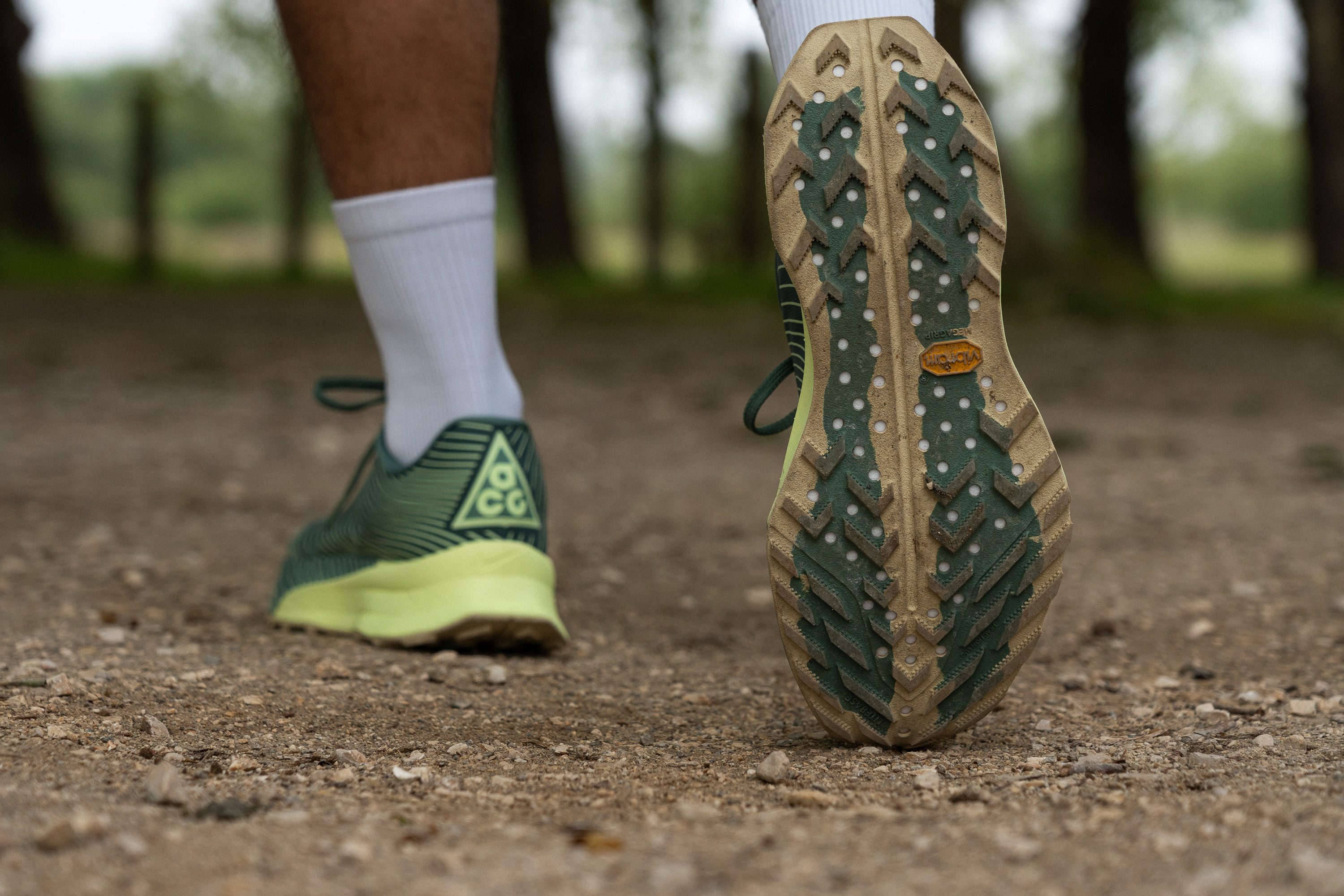
La suela exterior está hecha de caucho Vibram Megagrip Litebase, y recubre toda la base de las zapatillas. Su diseño está dividido en dos secciones con un corte en el medio que mejora la flexión torsional. Esto trabaja codo con codo con las dos placas de carbono paralelas, un detalle que Nike destaca con pintura verde.
Flexibilidad / Rigidez
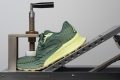
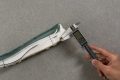
Las ACG Ultrafly Trail necesitaron 16,7 N para doblarse, así que su rigidez es moderada para ser un modelo con fibra de carbono en la mediasuela y una suela exterior sin cortes horizontales. Esto hace que sean más cómodas que la versión anterior, que tiene una estructura ultrarrígida, como vimos con el resultado de 20,6 N que obtuvo en esta misma prueba.
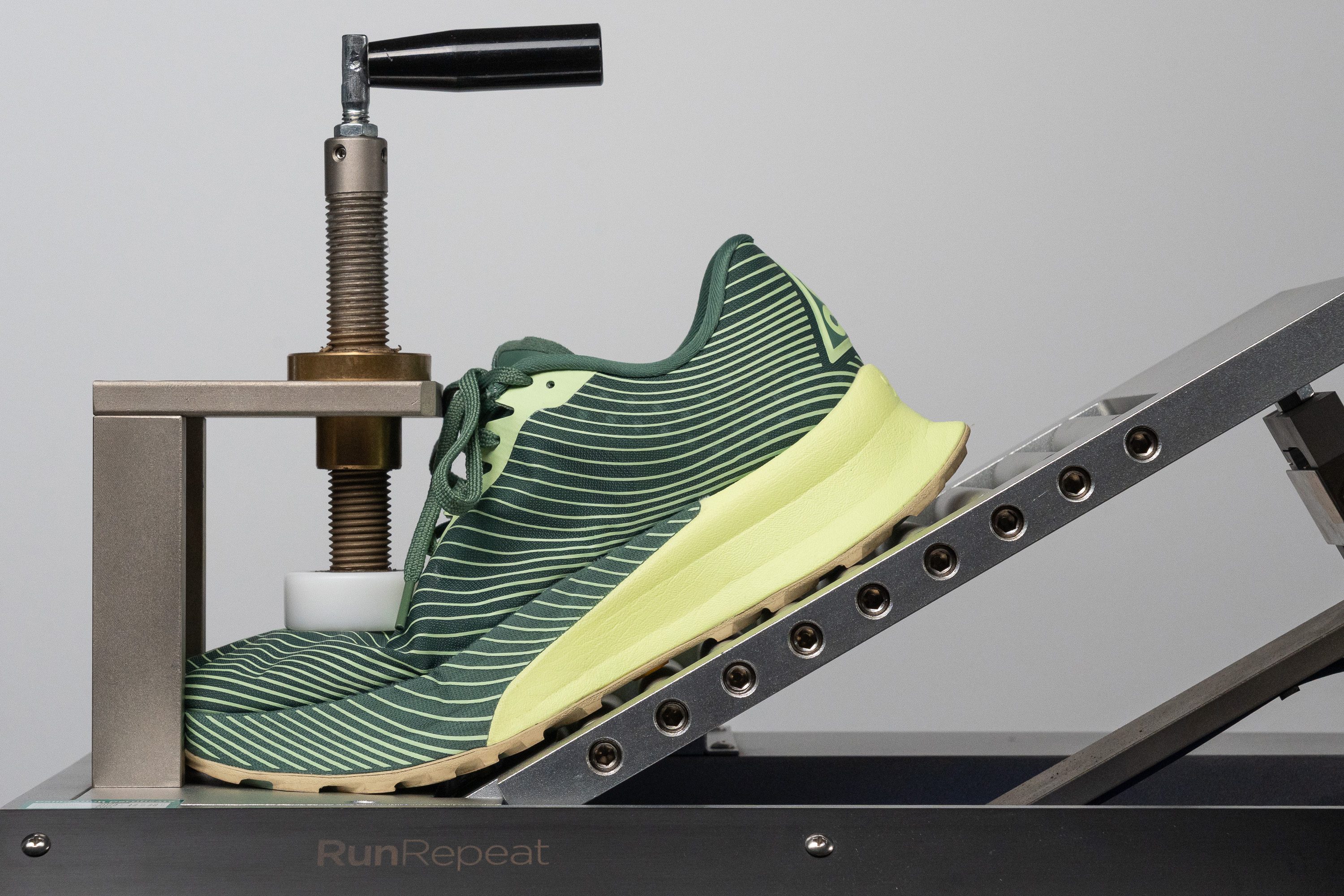
| ACG Ultrafly Trail | 16.7N |
| Media | 14.8N |
Peso
Una de las cosas de las que más nos quejamos cuando analizamos el modelo anterior fue el peso, y Nike se lo curró para mejorarlo en esta nueva versión. Ahora pesa 278 g, que es un 7 % menos que la v1.
Personalmente, a nosotros tampoco nos parece una diferencia loquísima, y estas zapatillas siguen estando lejos de ser ligeras, pero es un peso adecuado para unas superzapatillas de trail con tanta espuma y una estructura resistente.
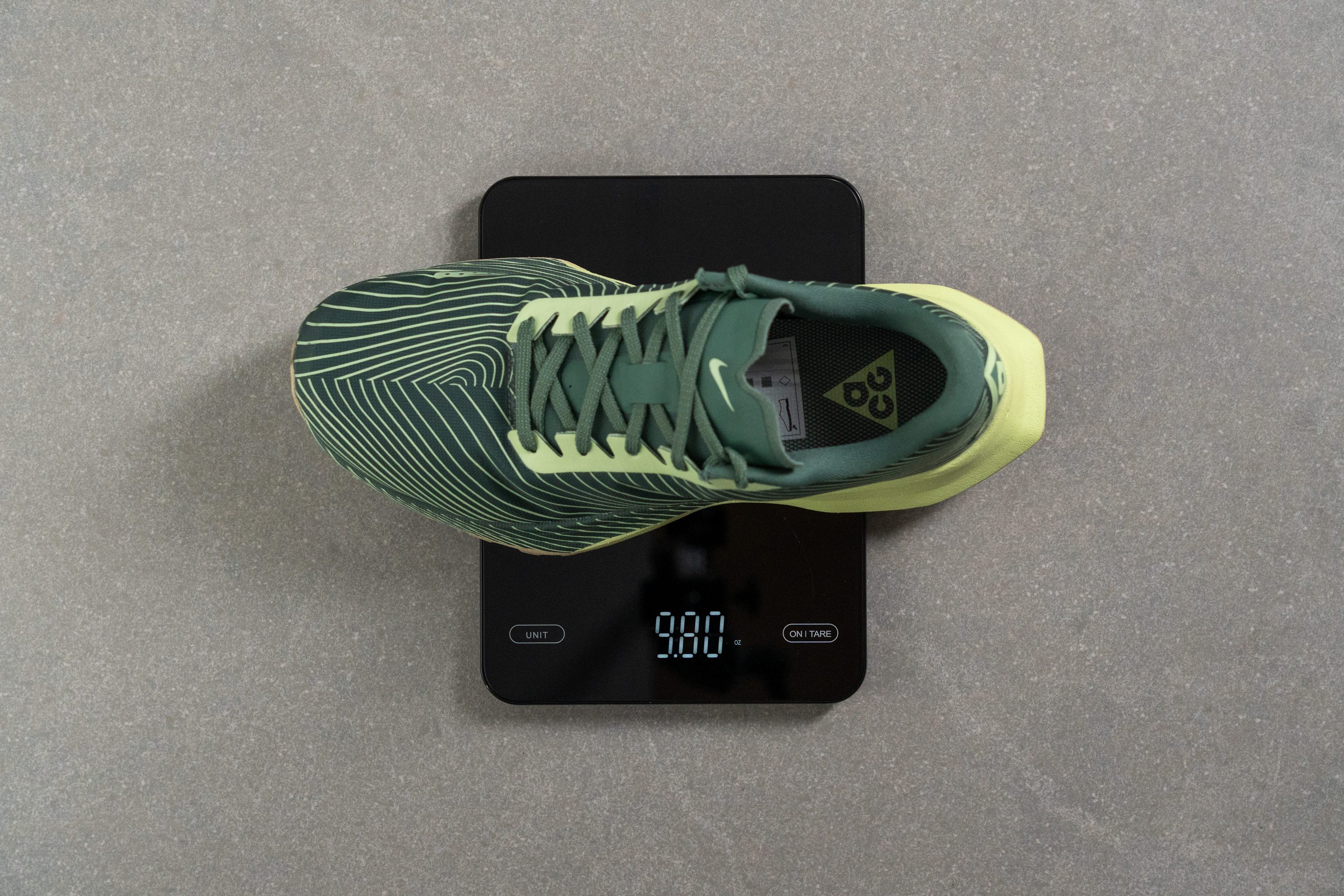
| ACG Ultrafly Trail | 9.8 oz (278g) |
| Media | 10.1 oz (285g) |
Transpirabilidad
Breathability test
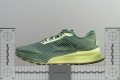
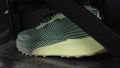
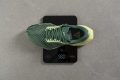
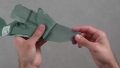
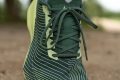
El upper de este modelo tiene un diseño único que nos llamó mucho la atención (hemos cogido un color chulo, ¿eh?), pero también parece muy denso y... poco transpirable. Pero bueno, puede que esto sea el precio a pagar para que las zapatillas no terminen hechas polvo. En fin, ¡vamos a darle caña al asunto!
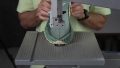
El 2/5 que se llevaron en nuestra prueba de humo nos dio la atención. No dejan que el aire entre y salga de las zapatillas, así que mucho ojo con los calcetines que te pones cuando salgas a correr.
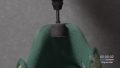
La malla densa de este modelo bloqueó casi toda la luz de nuestra lámpara LED, así que nos quedó clarísimo que la transpirabilidad nunca había sido una prioridad.
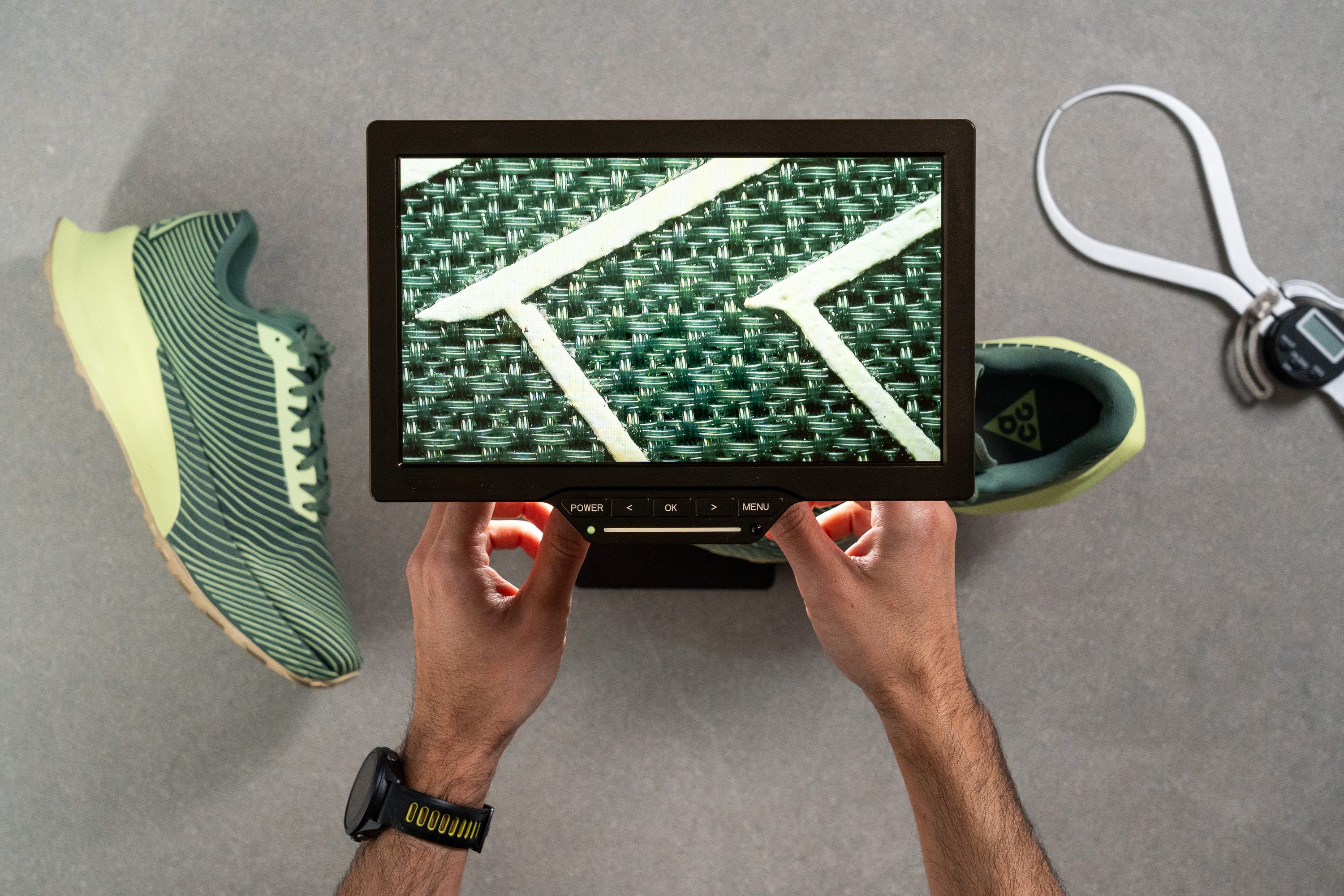
Gracias a nuestro microscopio, hemos visto que la malla que ha diseñado Nike está hecha de hilos sintéticos con un diseño muy compacto. Puede que, a primera vista, no te parezca muy cómoda, que la marca tiene un as bajo la manga.
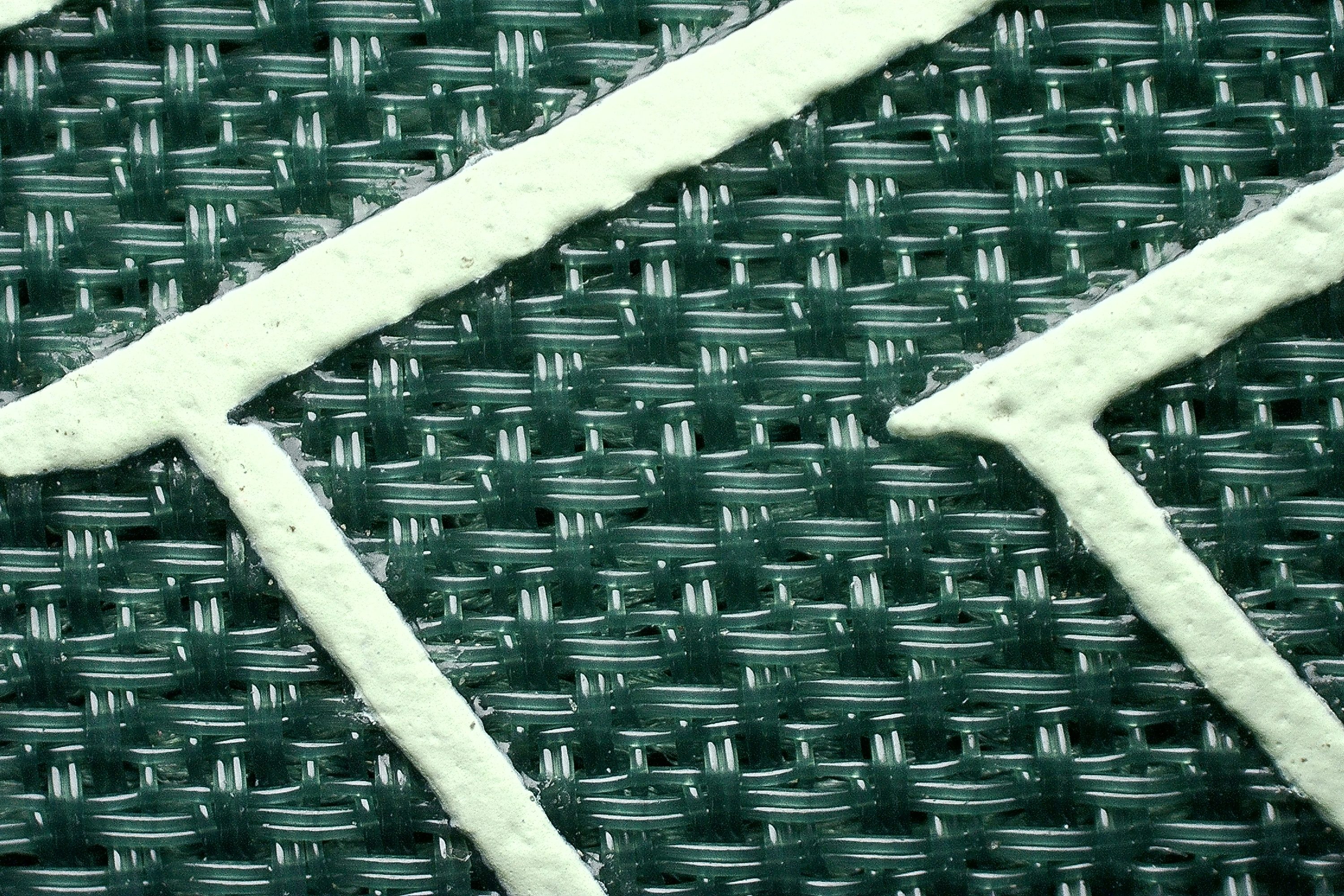
Resulta que el upper tiene dos capas, y la interior es mucho más suave. Esto también empeora la transpirabilidad, pero algunos corredores probablemente prefieran más comodidad al estar tantas horas corriendo por la montaña.
| ACG Ultrafly Trail | 2 |
| Media | 3.3 |
Estabilidad
Prueba de estabilidad lateral
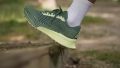
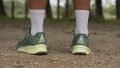
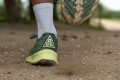
Cuando salimos a correr con ellas, descubrimos que las ACG Ultrafly Trail son sorprendentemente estables en su terreno preferido: los caminos fáciles y planos que no tienen ni muchas curvas ni descensos.
Si esas son las zonas por donde sueles correr, genial, porque Nike ha creado un modelo muy estable al combinar una base ancha, una extensión lateral de la suela grande, placas de carbono paralelas y paredes laterales de la mediasuela altas en el talón.
Rigidez torsional
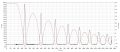
Gracias a las dos placas de carbono, que están colocadas en paralelo, las ACG Ultrafly Trail han recuperado parte de su rigidez torsional, como nos demostraron cuando se llevaron un resultado más o menos estándar en esta prueba: 17,3 Nm.
Inspirarse en las mejores ideas de tus rivales no debería darle vergüenza a nadie. Como dijimos antes, en las Tecton, HOKA utilizó dos placas en lugar de una para mejorar la flexibilidad torsional, y la verdad es que estamos contentísimos de que Nike haya optado por un diseño parecido.
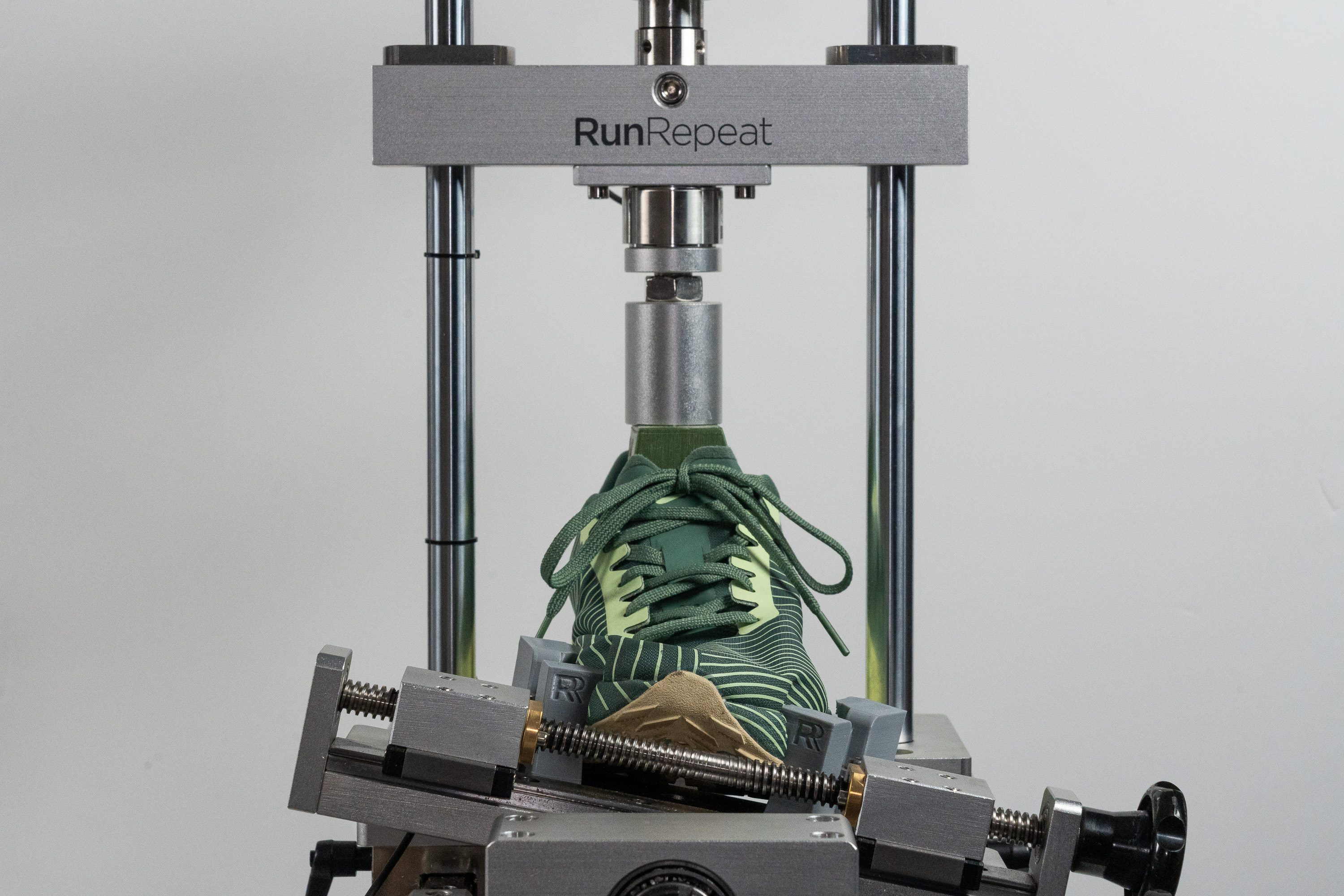
| ACG Ultrafly Trail | 17.3 Nm |
| Media | 15.7 Nm |
Rigidez del contrafuerte del talón
El contrafuerte del talón también busca ofrecer una buena sujeción, cosa que nos dejó clara con el 4/5 que se llevó en esta prueba. Por superte, también está bien acolchado, lo que ayuda a que sea cómodo.
| ACG Ultrafly Trail | 4 |
| Media | 2.9 |
Anchura de la mediasuela - antepié
Una de las principales razones por las que las ACG Ultrafly Trail (y, quizás, la más importante) son tan estables, sobre todo a ritmos rápidos, es que tienen una plataforma muy ancha en el antepié. Claramente, Nike sacrificó una sensación más ágil que se adaptaría a terrenos distintos para conseguir un modelo excelente para las zonas planas.
Nuestros calibres marcaron unos impresionantes 124,2 mm, un resultado mucho más amplio de lo que solemos ver.
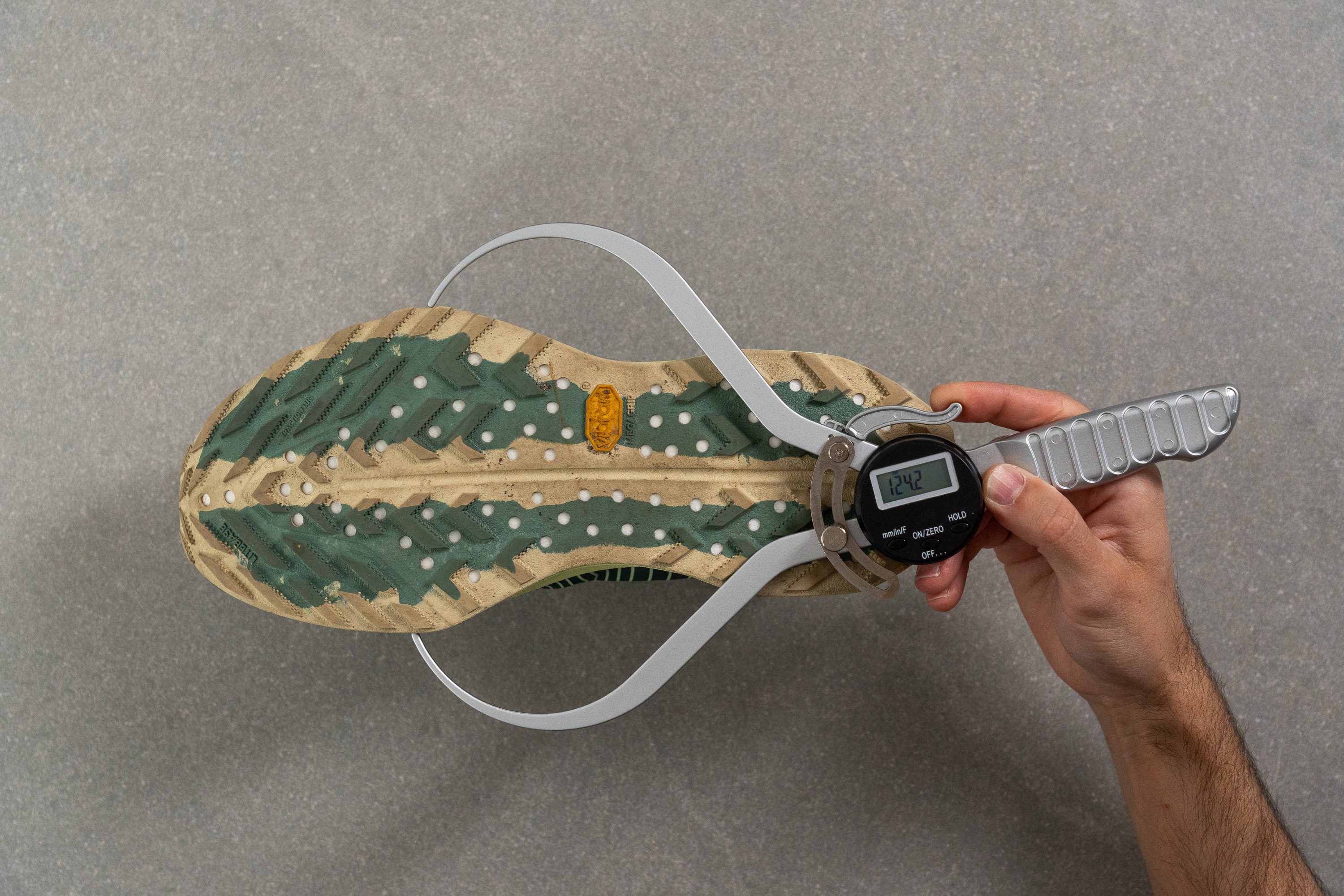
| ACG Ultrafly Trail | 124.2 mm |
| Media | 114.3 mm |
Anchura de la mediasuela - talón
Cuando medimos la anchura en el talón, vimos que también era más ancho que la media, aunque tampoco nada loco: nuestro calibre marcó 93,4 mm.
Eso sí, también queremos mencionar que el mediopié que tanto se estrechaba en la primera generación se ha ido para no volver. Ahora esa zona es más ancha, y la verdad es que ha sido un detalle que le ha dado la vuelta a la rodilla para los corredores de mediopié.
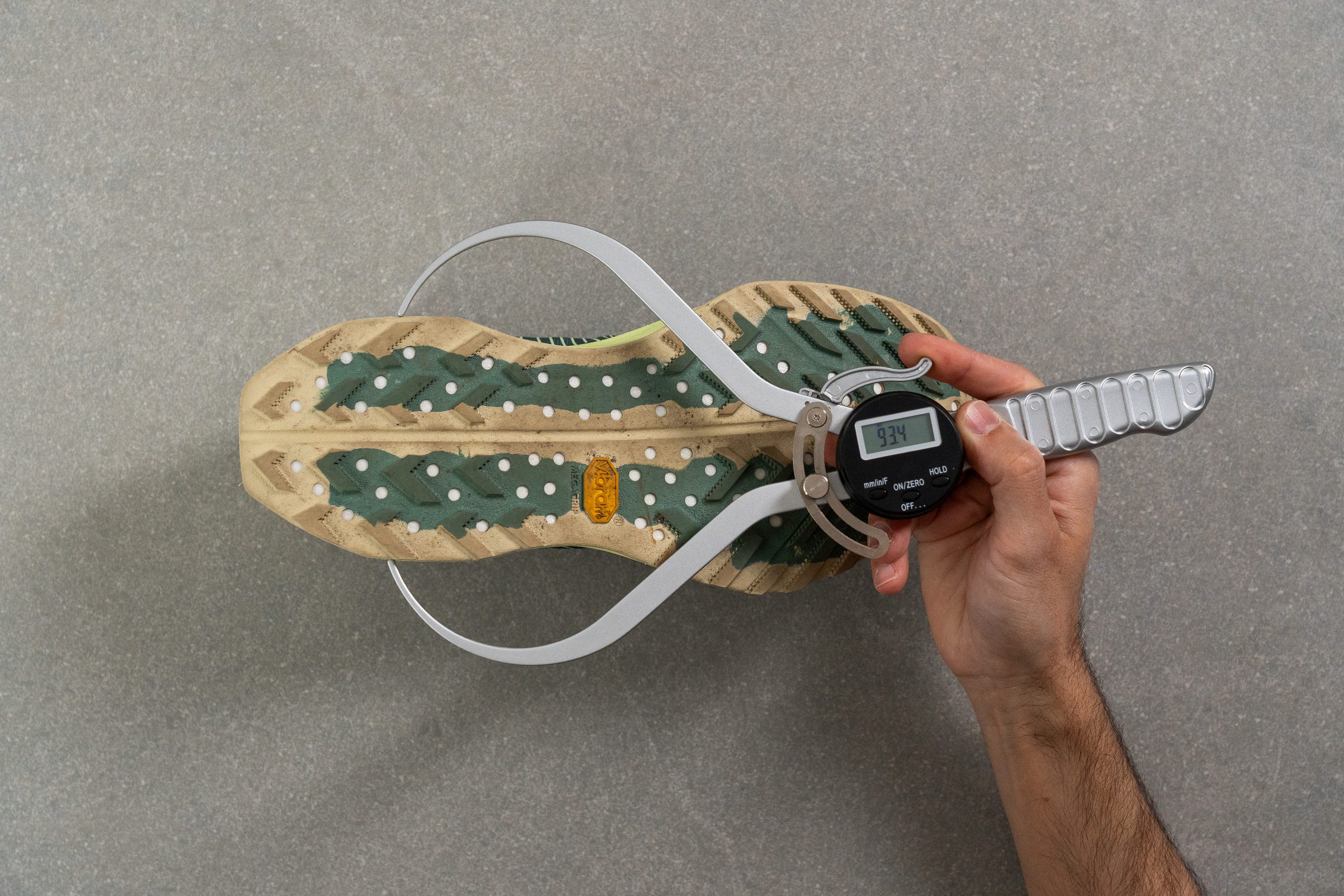
| ACG Ultrafly Trail | 93.4 mm |
| Media | 90.5 mm |
Durabilidad
Durabilidad de la parte delantera
La verdad es que nos esperábamos algo más que un 2/5 en esta prueba. No es un desastre pero, para unas zapatillas con una transpirabilidad tan baja, nos sabe a poco.
| ACG Ultrafly Trail | 2 |
| Media | 3.1 |
Durabilidad del acolchado del talón
Para compensarlo, Nike se curró el acolchado del talón, que se llevó un 5/5 en durabilidad. Esto hace que sea ideal para aguantar el tipo en las distancias largas sin mostrar signos prematuros de desgaste.
| ACG Ultrafly Trail | 5 |
| Media | 3.1 |
Durabilidad de la suela
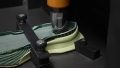
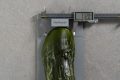
Vibram no suele decepcionar cuando hablamos de durabilidad, pero en vez de un resultado excepcional, esta vez nos tuvimos que conformar con uno estándar. Perdió 1,0 mm de material, cosa que es totalmente aceptable y, además, tampoco nos preocupa.
| ACG Ultrafly Trail | 1.0 mm |
| Media | 0.9 mm |
Grosor de la suela
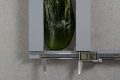
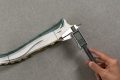
La suela exterior tiene solo 1,5 mm de grosor, lo que nos vuelve a señalar que este modelo no está diseñado para los terrenos técnicos. Si nos centramos en el rendimiento, también nos parece una decisión acertada.
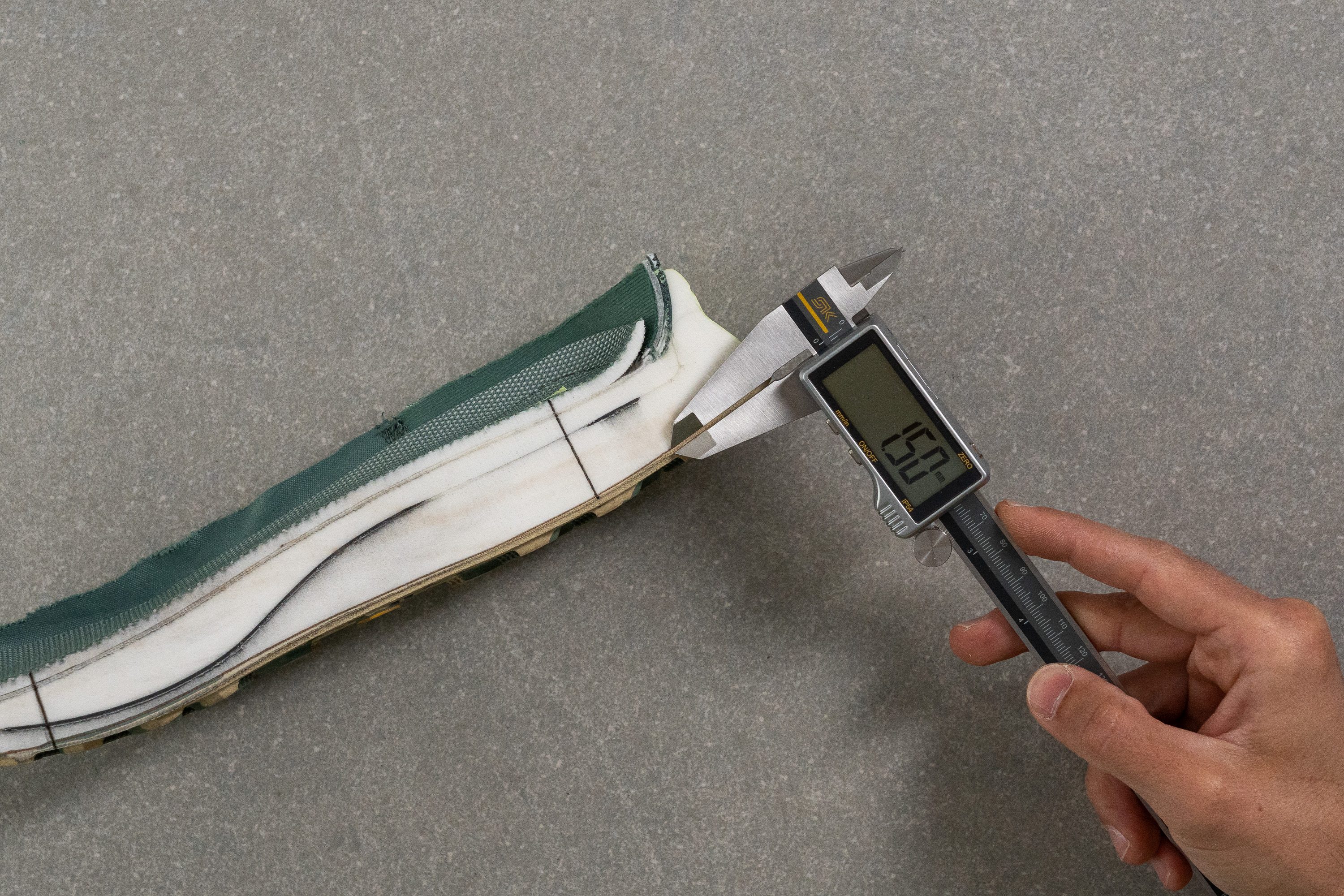
| ACG Ultrafly Trail | 1.5 mm |
| Media | 1.9 mm |
Varios
Grosor de la plantilla
Descubrimos que la plantilla suma 4,2 mm de amortiguación extra sobre la espuma ZoomX.
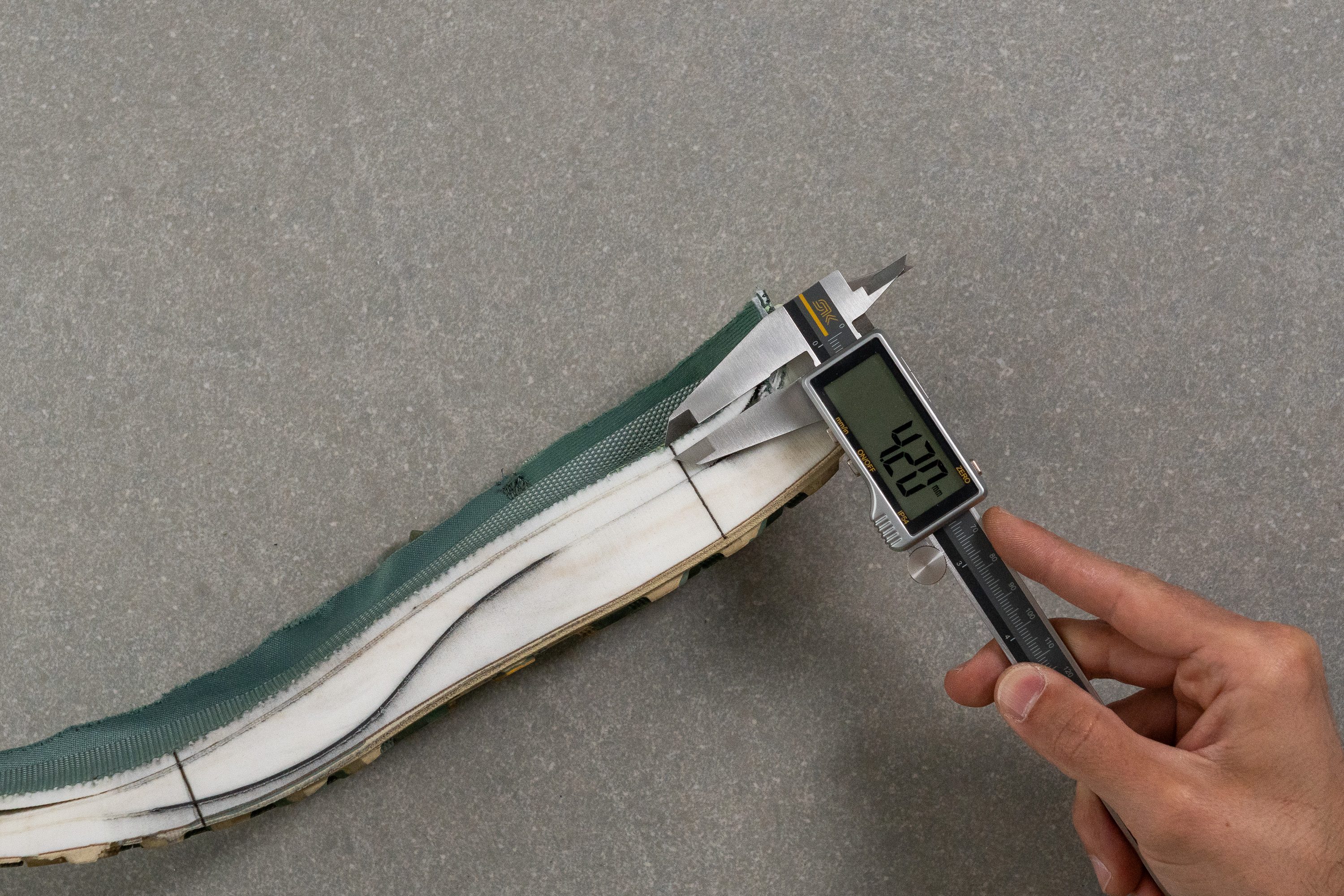
| ACG Ultrafly Trail | 4.2 mm |
| Media | 4.6 mm |
Plantilla extraíble
Esto no es nada común, ¡pero la plantilla de las ACG Ultrafly Trail no se puede quitar!
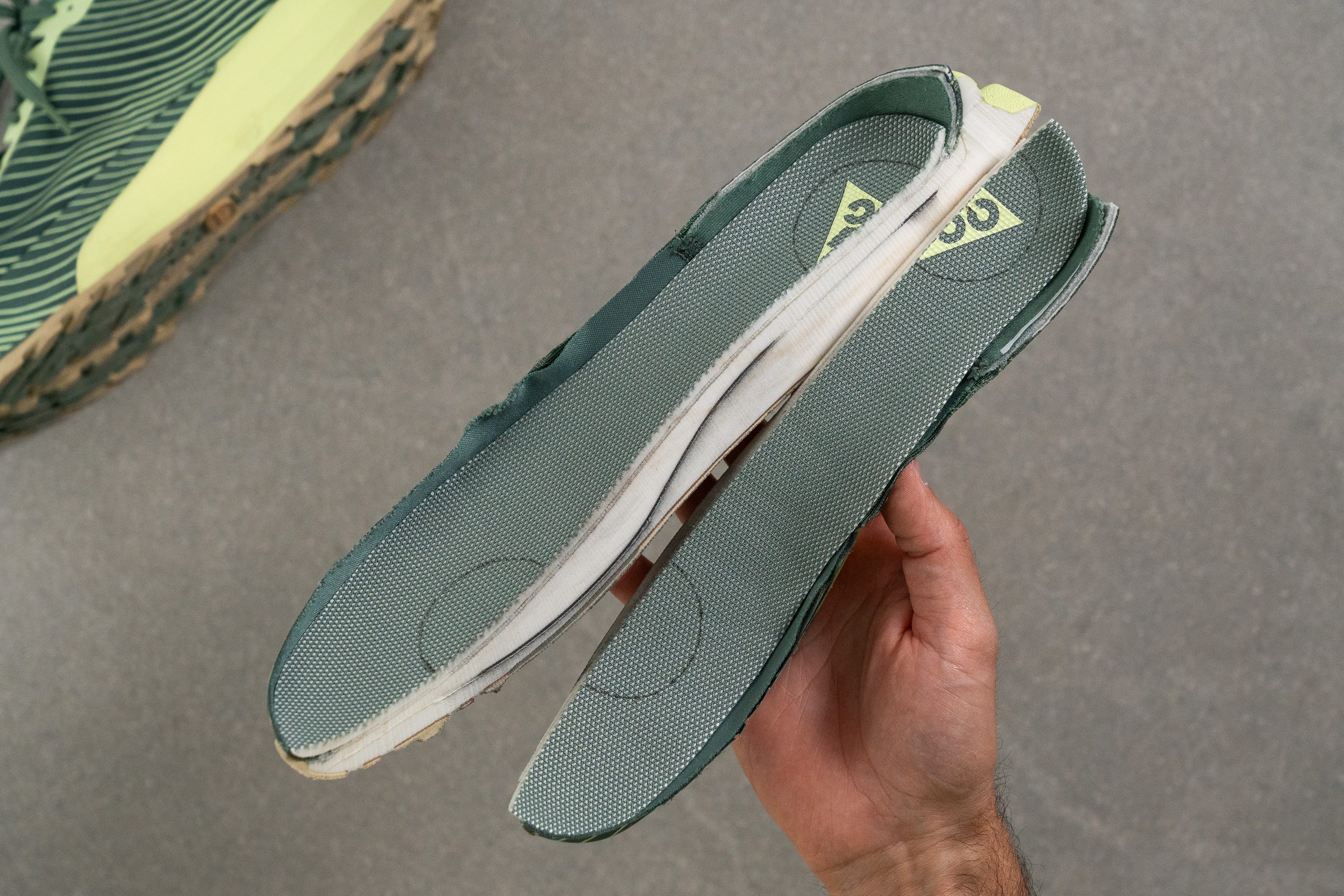
| ACG Ultrafly Trail | No |
Elementos reflectantes
Mira, sinceramente, a Nike no le habría costado nada ponerles elementos reflectantes a estas zapatillas, igual que hizo con las ACG Pegasus Trail. Pero no, ¡dejaron que se les pasase la oportunidad! Con lo guay que habría sido que las letras ACG fuesen reflectantes...
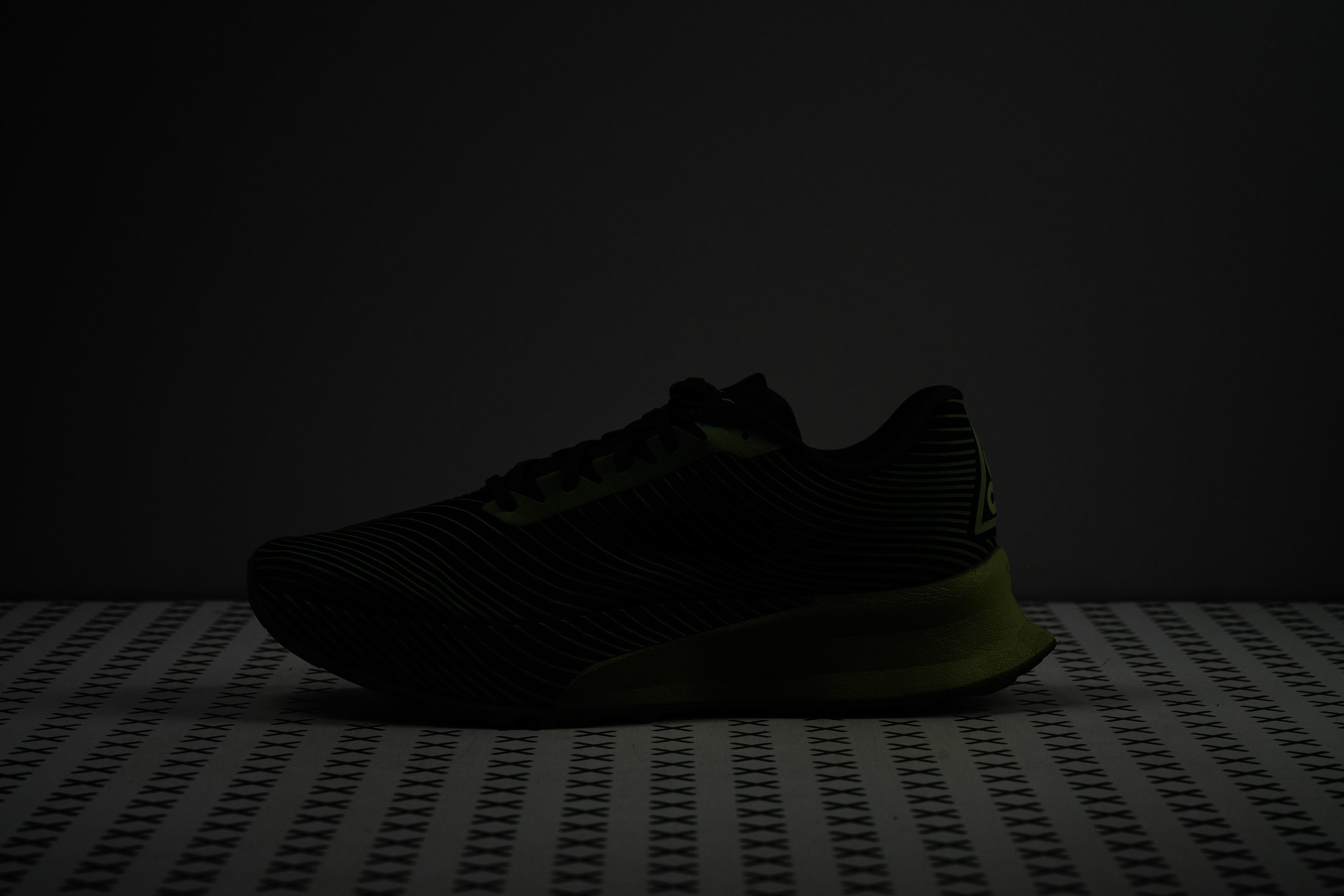
| ACG Ultrafly Trail | Sí |
Acolchado de la lengüeta
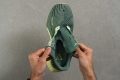
Cuando le echamos un ojo a los cordones, la verdad es que nos llevamos una minidecepción... Creemos que los mismos cordones que Nike popularizó con las Vaporfly Next% y que, posteriormente, utilizó en muchas de sus superzapatillas, habrían sido ideales para este modelo. Pero nada, nos ha dado cordones normalitos y listo.
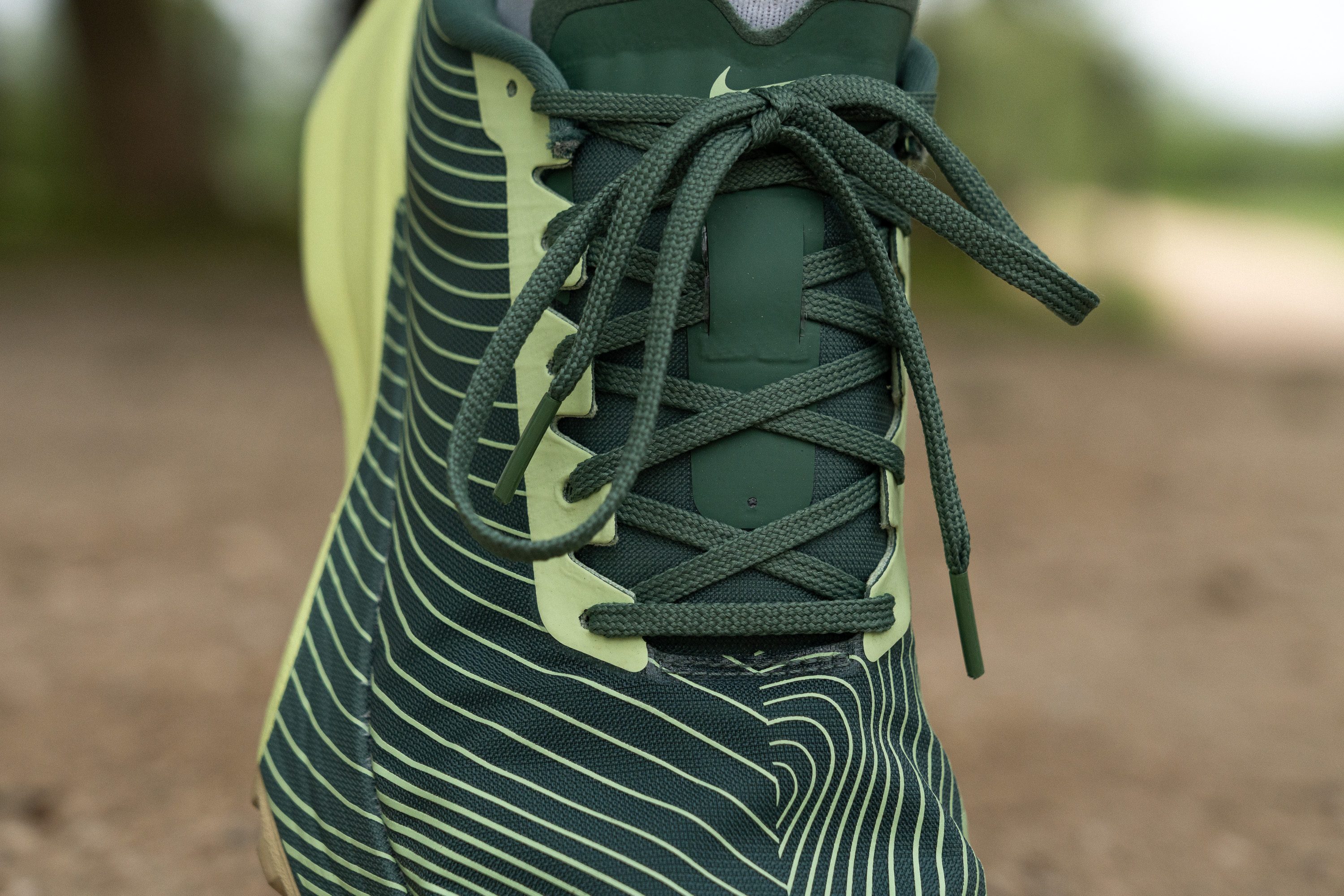
La lengüeta es comodísima, con sus 7,0 mm de acolchado. Nike tiene claro que este modelo a lo mejor tiene que aguantar carreras de 15 o incluso 20 horas, así que aumentar un poco el peso para conseguir que el empeine no te haga daño en los pies nos parece acertadísimo.
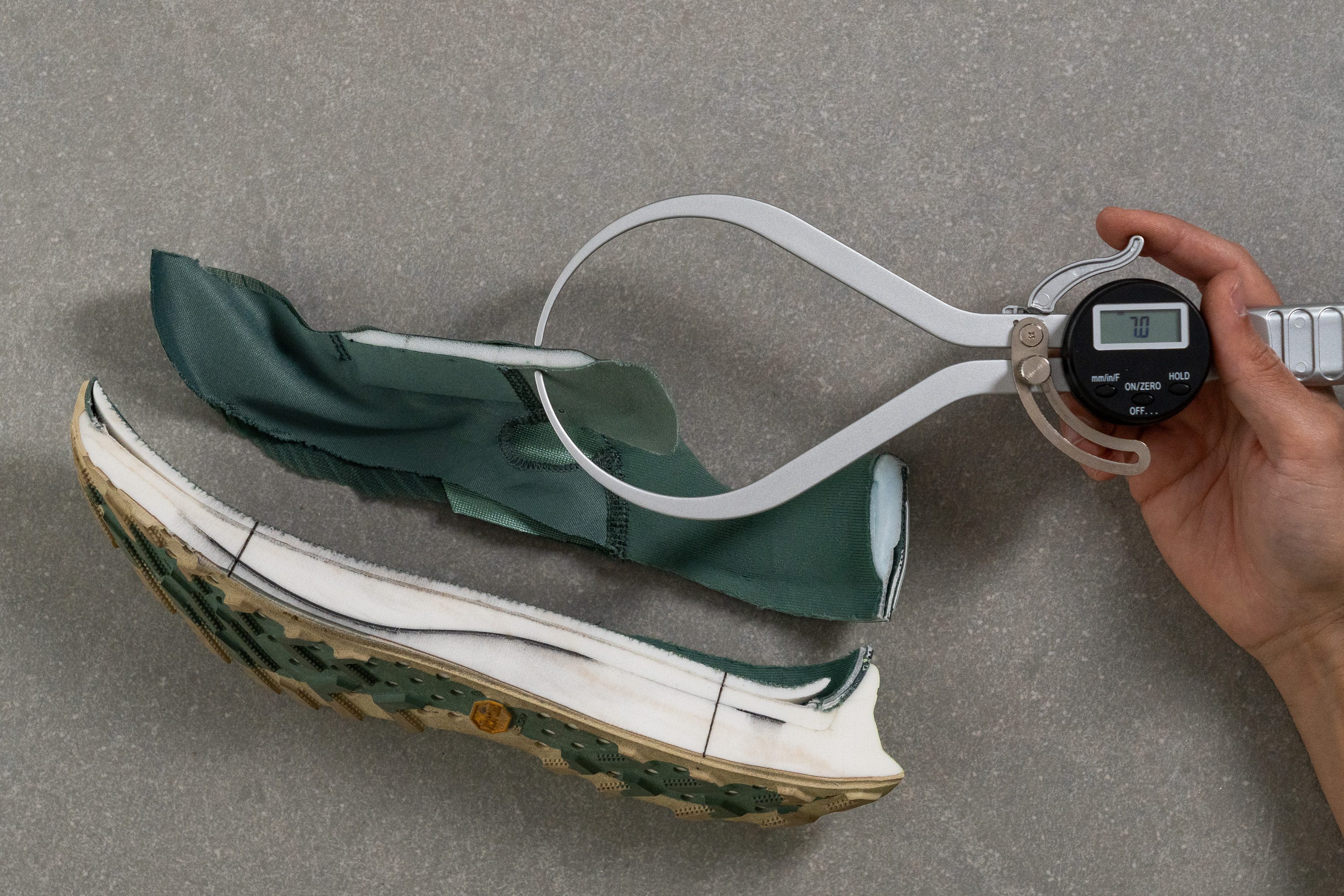
| ACG Ultrafly Trail | 7.0 mm |
| Media | 6.4 mm |
Lengüeta: tipo de refuerzo
La lengüeta está semirreforzada, lo que le suma puntos a nuestra opinión de que las Ultrafly Trail son mejores para los terrenos sencillos o en los caminos de grava, y que en las zonas complejas tendrán más problemas porque se les van a colar piedrecillas, tierra o hasta restos de hojas.
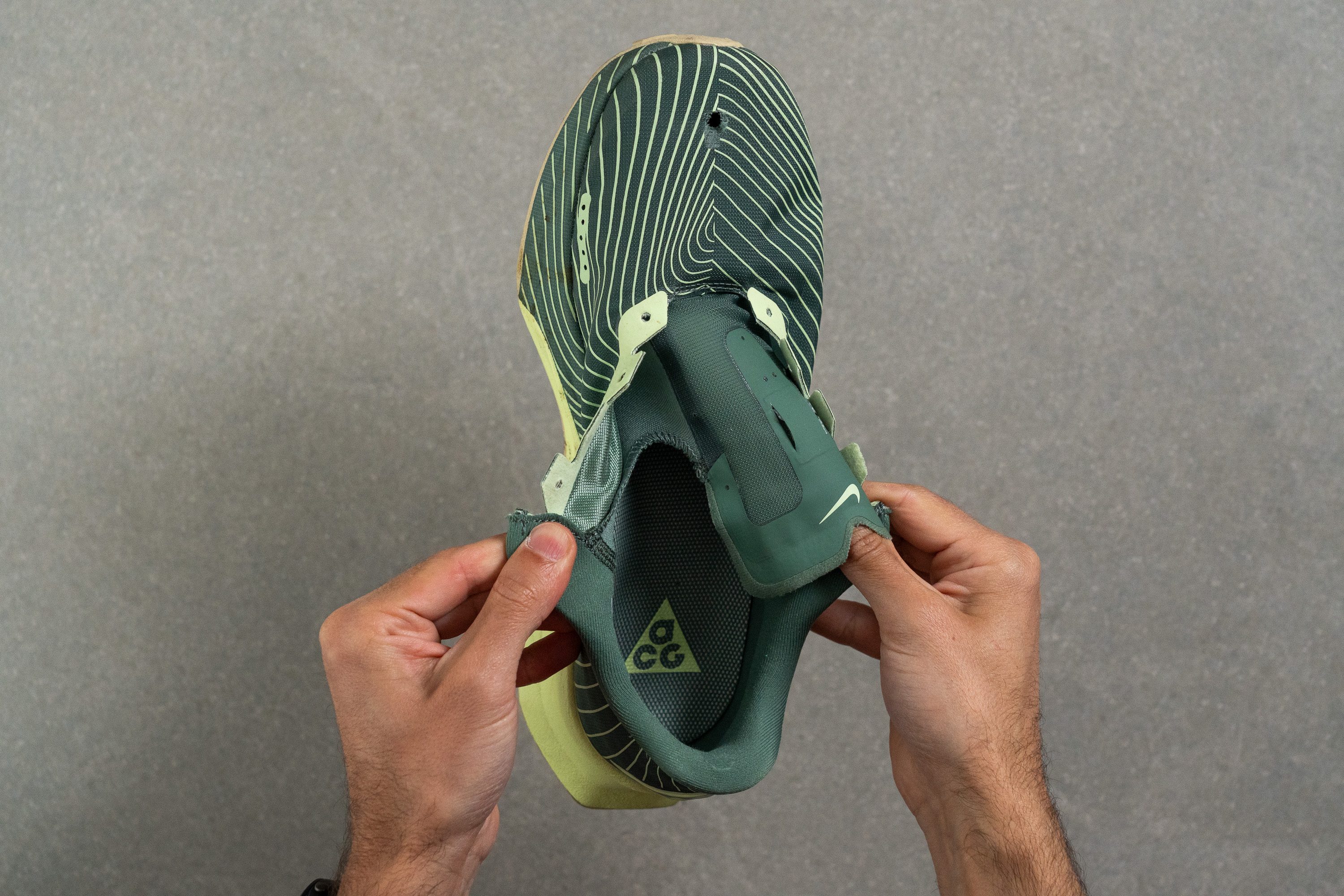
| ACG Ultrafly Trail | Ambos lados (semi) |
Tirador del talón
Estas zapatillas no tienen tirador en el talón, pero nos dejan claro que forman parte de la familia All Conditions Gear de Nike, por si alguien lo dudaba.
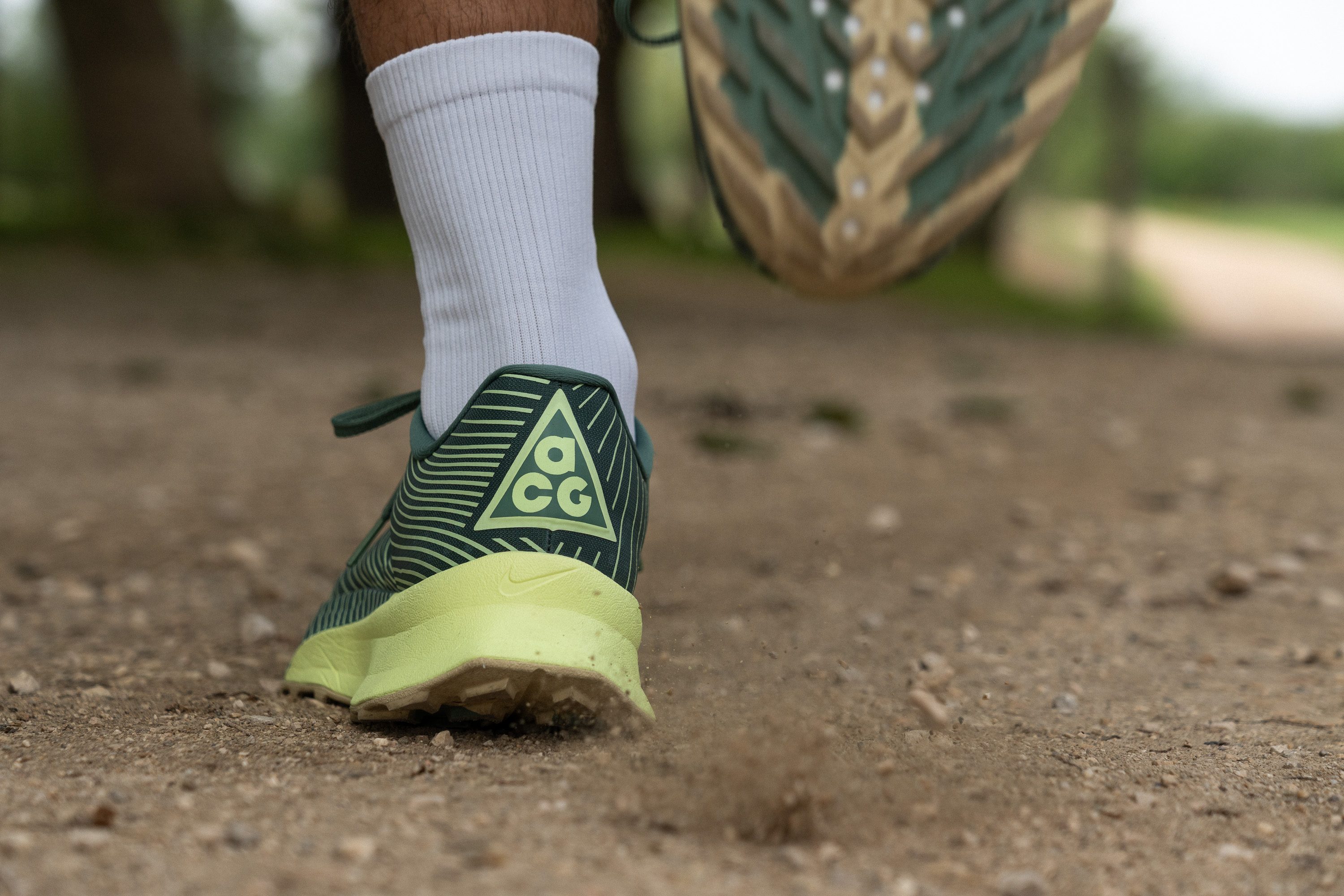
| ACG Ultrafly Trail | Ninguno |
Precio
El precio de este modelo probablemente sea lo que no termine de convencer a muchos runners. Al final, la tecnología de alta gama, como ZoomX y Vibram, tiene su precio, y entendemos que a más de un deportista no le apetecerá vender un riñón para hacerse con un par.
| ACG Ultrafly Trail | $260 |