
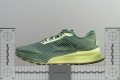


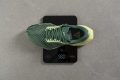

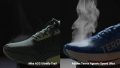






Our verdict
- Gravel 94
- Versatile 74
- Technical 42
Pros
- Incredible energy return
- Excellent Vibram outsole
- More stable than expected
- Roomy fit
- Plush foam
- Great cold-weather performance
- Greatly improved over its predecessor
- Improved weight
- Comfortable upper
Cons
- High retail price
- Some may prefer a lower drop
- Lacks airflow for hot weather
- Shallow lugs limit versatility
Awards
- Top pick in best ultra running shoes
- Top pick in best Nike trail running shoes
- Top 9% in trail running shoes
- Top 22% in Nike running shoes
Comparison
The most similar running shoes compared
+ + Add a shoe | |||||
|---|---|---|---|---|---|
| Our score | 88 Superb | 90 Superb | 87 Great | 79 Good | |
| Price | $260 | $250 | $280 | $260 | |
| Trail terrain | Gravel / Road-to-trail | Gravel / Road-to-trail | Gravel / Road-to-trail | Gravel / Road-to-trail | |
| Shock absorption | High | High | High | High | |
| Energy return | High | High | Moderate | High | |
| Traction | High | High | High | - | |
| Arch support | Neutral | Neutral | Neutral | Neutral | |
| Weight lab Weight brand | 9.8 oz / 278g 9.5 oz / 269g | 8.9 oz / 252g 9.2 oz / 261g | 9 oz / 255g 9 oz / 255g | 10.5 oz / 299g 10.1 oz / 286g | |
| Drop lab Drop brand | 10.7 mm 8.5 mm | 11.3 mm 6.0 mm | 7.3 mm 5.0 mm | 11.8 mm 8.5 mm | |
| Strike pattern | Heel | Heel | Mid/forefoot | Heel | |
| Size | True to size | - | - | True to size | |
| Midsole softness | Soft | Balanced | Soft | - | |
| Difference in midsole softness in cold | Small | Small | Small | Small | |
| Plate | Carbon plate | Carbon plate | Carbon plate | Carbon plate | |
| Toebox durability | Bad | Decent | Decent | Very bad | |
| Heel padding durability | Good | Good | Good | Good | |
| Outsole durability | Good | Good | Good | Good | |
| Breathability | Warm | Moderate | Moderate | Moderate | |
| Width / fit | Medium | Medium | Medium | Medium | |
| Toebox width | Wide | Narrow | Narrow | Wide | |
| Stiffness | Moderate | Stiff | Stiff | Stiff | |
| Torsional rigidity | Moderate | Moderate | Stiff | Stiff | |
| Heel counter stiffness | Stiff | Moderate | Flexible | Moderate | |
| Lug depth | 3.0 mm | 2.8 mm | 3.2 mm | 3.0 mm | |
| Heel stack lab Heel stack brand | 38.1 mm 38.0 mm | 41.6 mm 42.0 mm | 40.7 mm 41.5 mm | 36.6 mm 38.0 mm | |
| Forefoot lab Forefoot brand | 27.4 mm 29.5 mm | 30.3 mm 36.0 mm | 33.4 mm 36.5 mm | 24.8 mm 29.5 mm | |
| Widths available | Normal | Normal | Normal | Normal | |
| For heavy runners | ✗ | ✓ | ✗ | ✗ | |
| Season | All seasons | All seasons | All seasons | All seasons | |
| Removable insole | ✗ | ✓ | ✓ | ✓ | |
| Orthotic friendly | ✗ | ✓ | ✓ | ✓ | |
| Ranking | #56 Top 14% | #38 Top 10% | #72 Top 18% | #253 Bottom 37% | |
| Popularity | #149 Top 37% | #247 Bottom 38% | #209 Bottom 48% | #267 Bottom 33% |


Who should buy
From our point of view, the Nike ACG Ultrafly Trail works best for:
- Runners who liked the first generation but wanted fewer compromises and better performance overall.
- Ultrarunners who place energy return and performance at the top of their priority list.
- Anyone wanting a true trail super shoe with excellent bounce and Vibram-powered grip for easy terrain or gravel roads.
Who should NOT buy
While energy return was excellent, we found in the lab that heavier runners may want more long-haul cushioning, especially in the forefoot for ultra races. The Saucony Xodus Ultra 4 is likely a smarter pick here, especially for forefoot strikers.
We also think the high drop may disappoint some trail runners. From our perspective, we do not recommend it for that group. The HOKA Tecton X 3 is also a true trail super shoe with a moderate drop, and the adidas Terrex Agravic Speed Ultra is an interesting alternative too.
Cushioning
Shock absorption
The Nike ACG Ultrafly Trail aims to be one of the best shoes for ultramarathons, and that requires solid shock absorption. In our test, we found 137 SA in the heel and 103 SA in the forefoot, good numbers that should serve most runners well.
But at the same time, we think that the forefoot score may feel slightly limited for heavier trail runners tackling very long distances. Other than that, it's fine!
| ACG Ultrafly Trail | 137 SA |
| Average | 122 SA |
Energy return
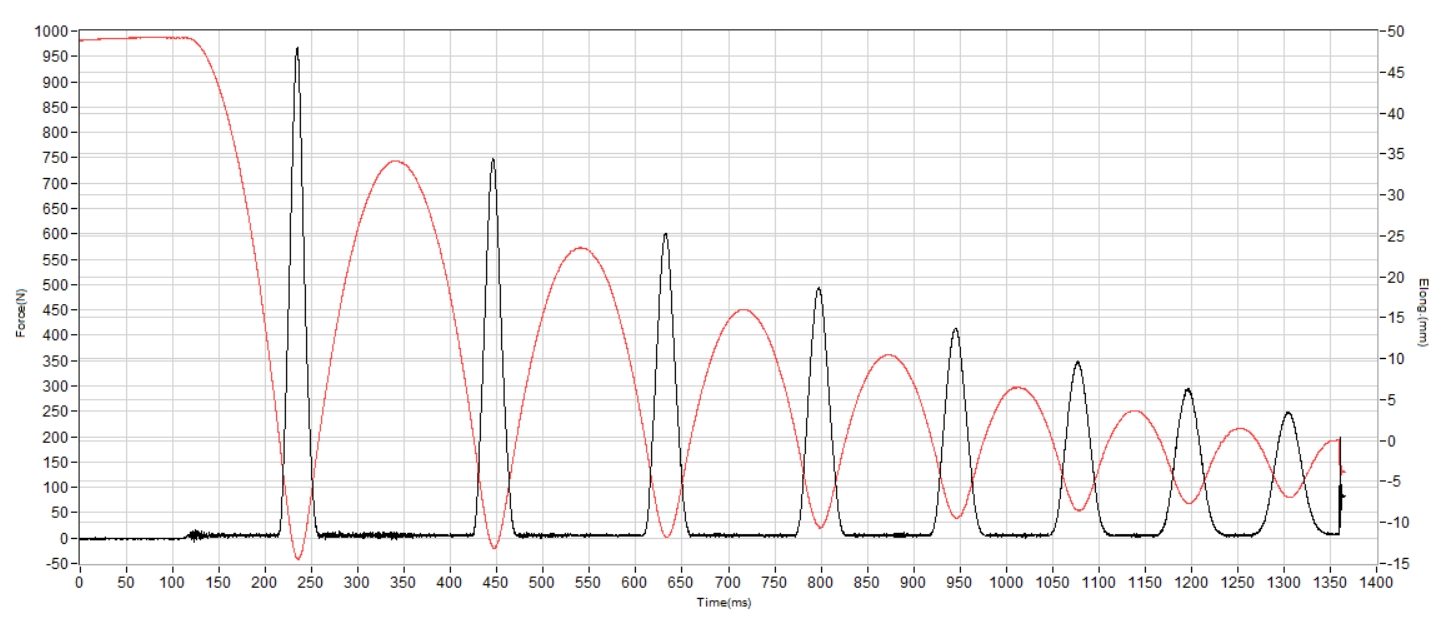
We maybe expected 5-10% more shock absorption, but the Nike ACG Ultrafly Trail really made up for that with an insane result in our energy return test. With an astonishing score of 75.4%, it becomes simply the best choice for those who want an energetic ride on the trails. And with some ultras going well over 10 hours, there is plenty of time to reap the benefits.
To put the evolution into context, the first-gen Nike Ultrafly scored 66.2% in this same test, and the current lab average sits well below 60%. It's so nice to see that Nike finally brings their absolute best ZoomX foam into a trail shoe!
| ACG Ultrafly Trail | 74.2% |
| Average | 59.7% |
Heel stack
With 38.1 mm of stack height in the heel, the ACG Ultrafly Trail offers a very thick platform to handle long distances and help protect joints and muscles for runners who land on the heel.
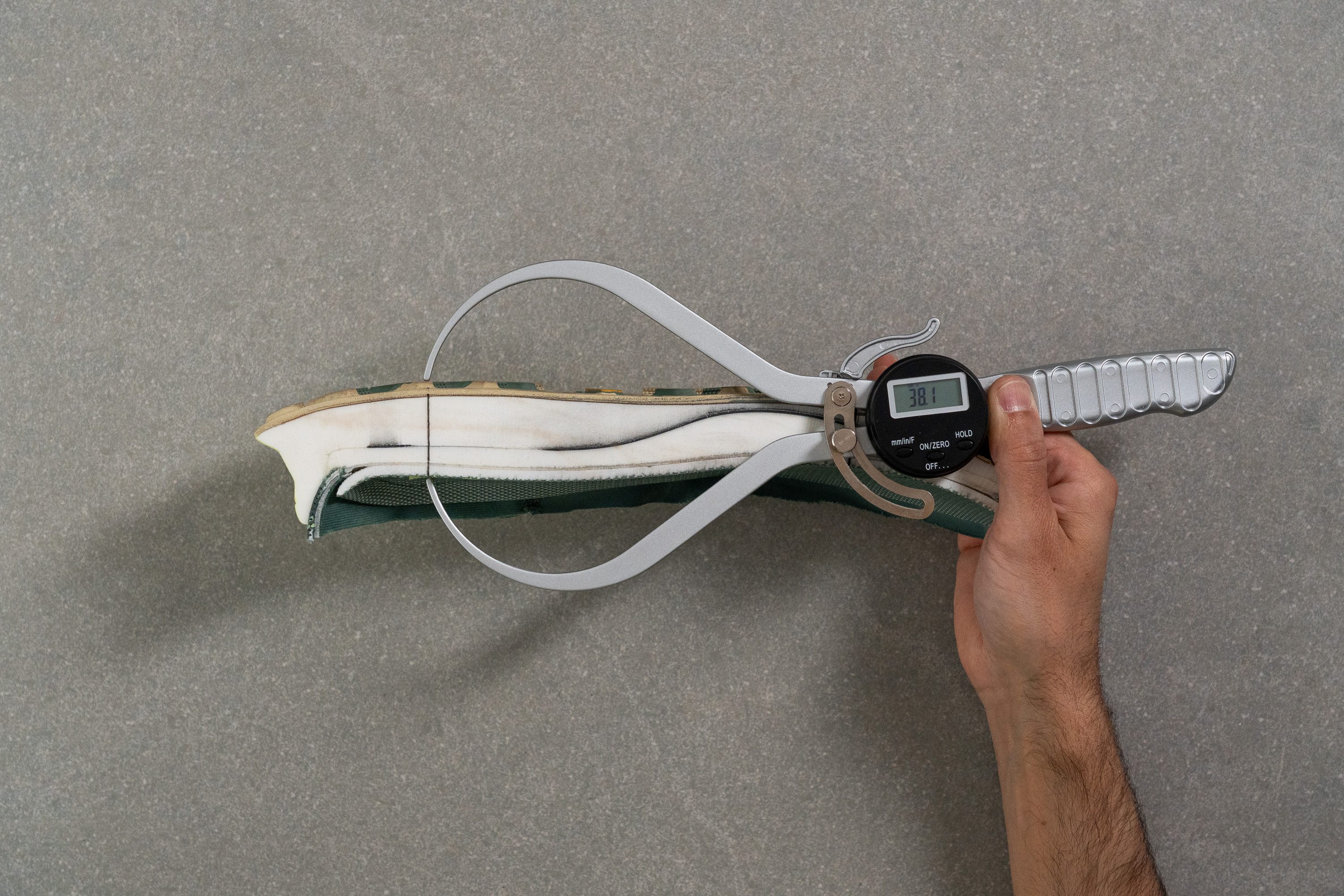
| ACG Ultrafly Trail | 38.1 mm |
| Average | 33.0 mm |
Forefoot stack
The forefoot measured only 27.4 mm. While sacrificing a bit of shock absorption here may seem like a trade-off, it still sits above average and should be enough for most runners. It also helps keep the ride more controlled and stable compared with a shoe that goes beyond 30 mm.
As you can see, it is impossible to cover everything in a single running shoe, and brands need to make compromises all the time.
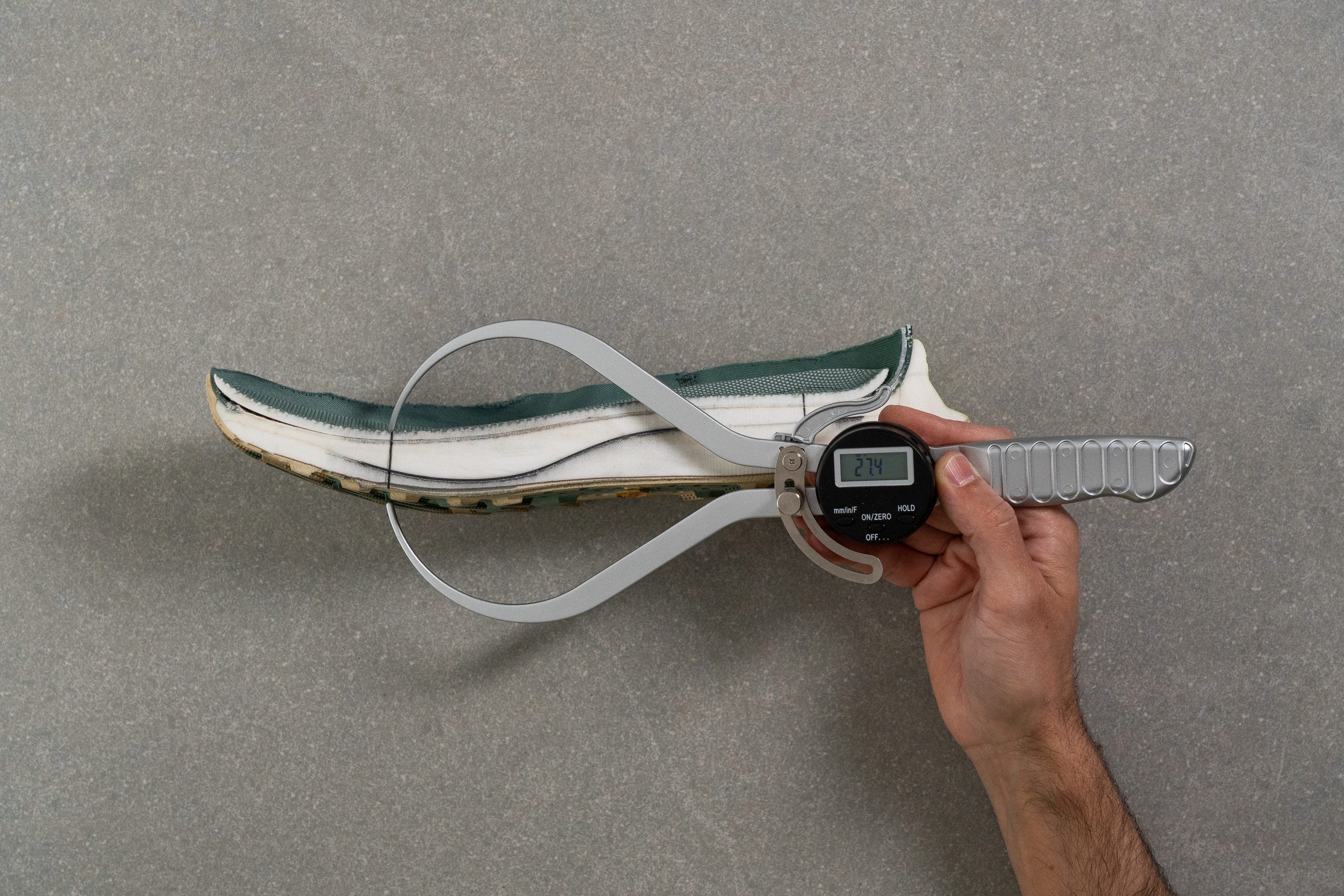
| ACG Ultrafly Trail | 27.4 mm |
| Average | 25.7 mm |
Drop
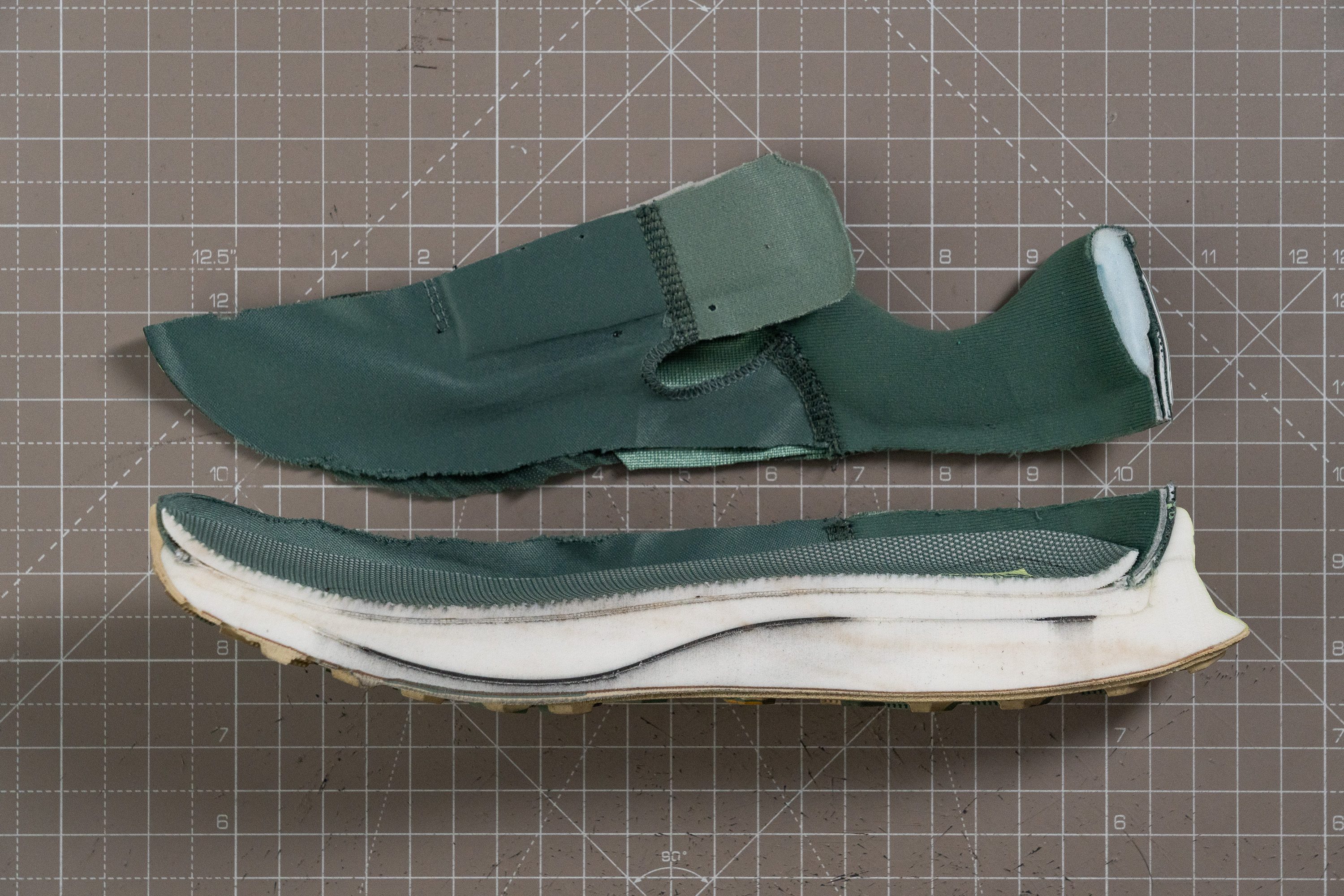
To enjoy the Nike ACG Ultrafly Trail, you need to be comfortable with a high drop. In fact, 10.7 mm is very uncommon for a trail shoe, as these models usually feature a slightly lower drop than their road counterparts.
Heel strikers should do very well here, as well as runners whose form tends to fade after several hours in ultras and begin landing on the heel more than usual. In that case, the high drop can help a lot, but runners used to 4 mm or 6 mm setups may find this shoe too steep.
| ACG Ultrafly Trail | 10.7 mm |
| Average | 7.2 mm |
Midsole softness
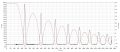
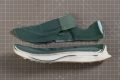
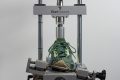
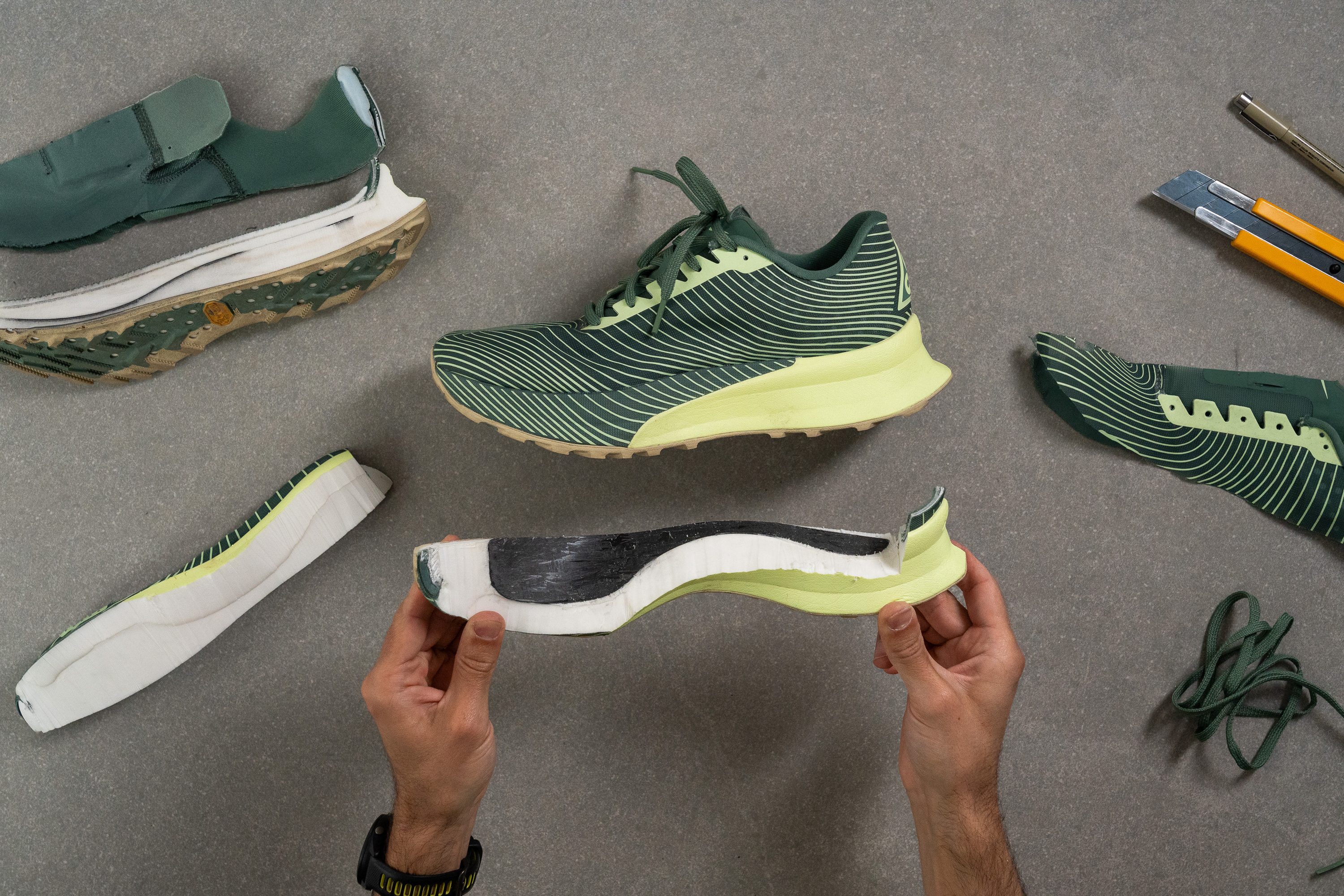
Nike uses two different layers of ZoomX foam in the ACG Ultrafly Trail with different densities. We measured the first one, located below the carbon plate, at 31.5 AC of softness, clearly softer than average.
That was not surprising at all, as its predecessor also featured a plush foam. However, as often happens with trail shoes, the rugged outsole usually makes the ride feel a bit firmer compared with the same result in a road shoe.
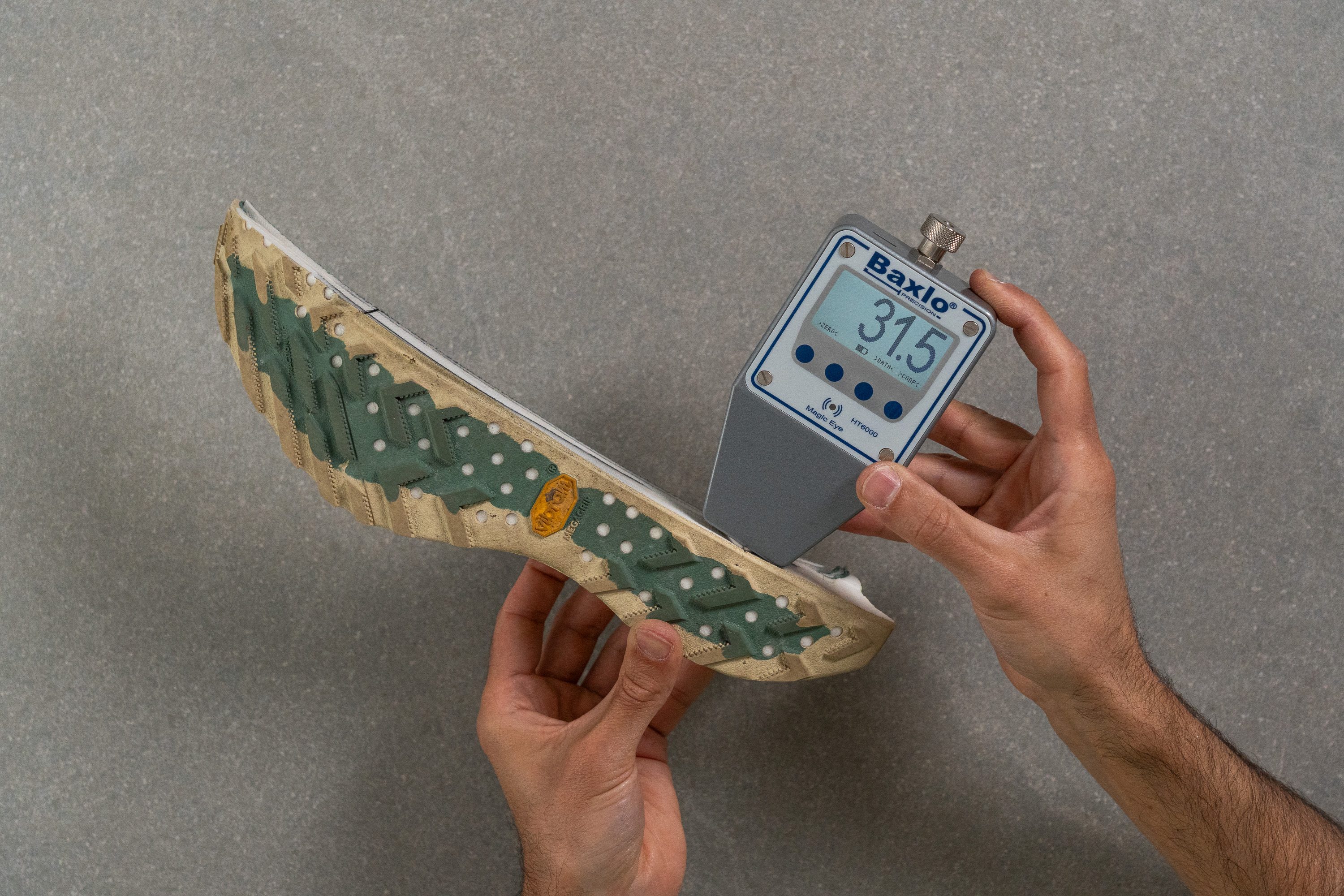
| ACG Ultrafly Trail | 31.5 AC |
| Average | 38.1 AC |
Rocker
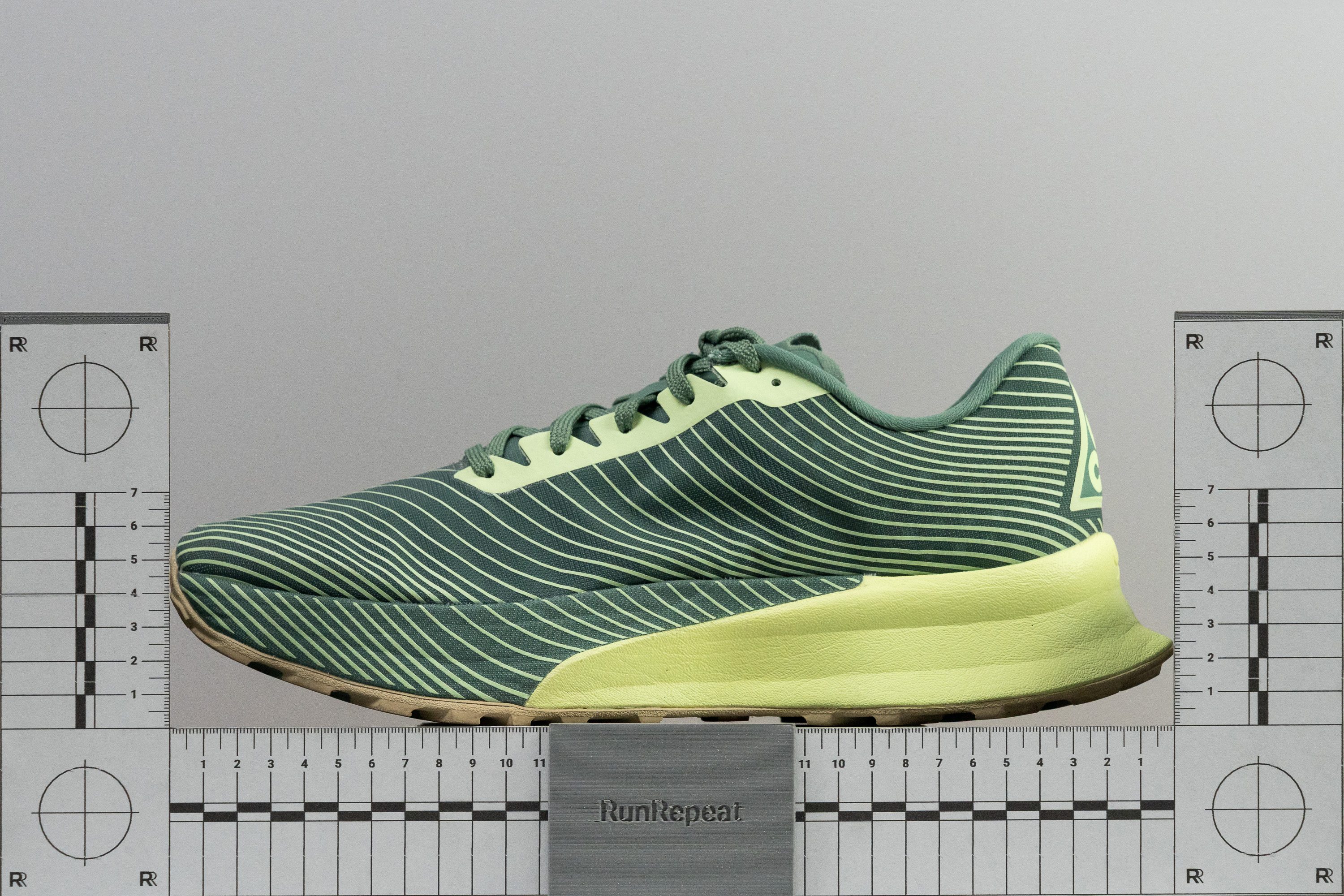
When taking a closer look at the rocker of the Nike ACG Ultrafly Trail, we see two clear things.
First, there is no need for a huge forefoot rocker here due to the high drop and the trail-focused nature of the shoe. Second, heel strikers were clearly on Nike’s mind, as the brand worked hard on that area by creating a large heel flare to support runners who contact the ground early.
Plate
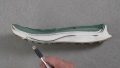
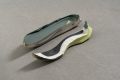
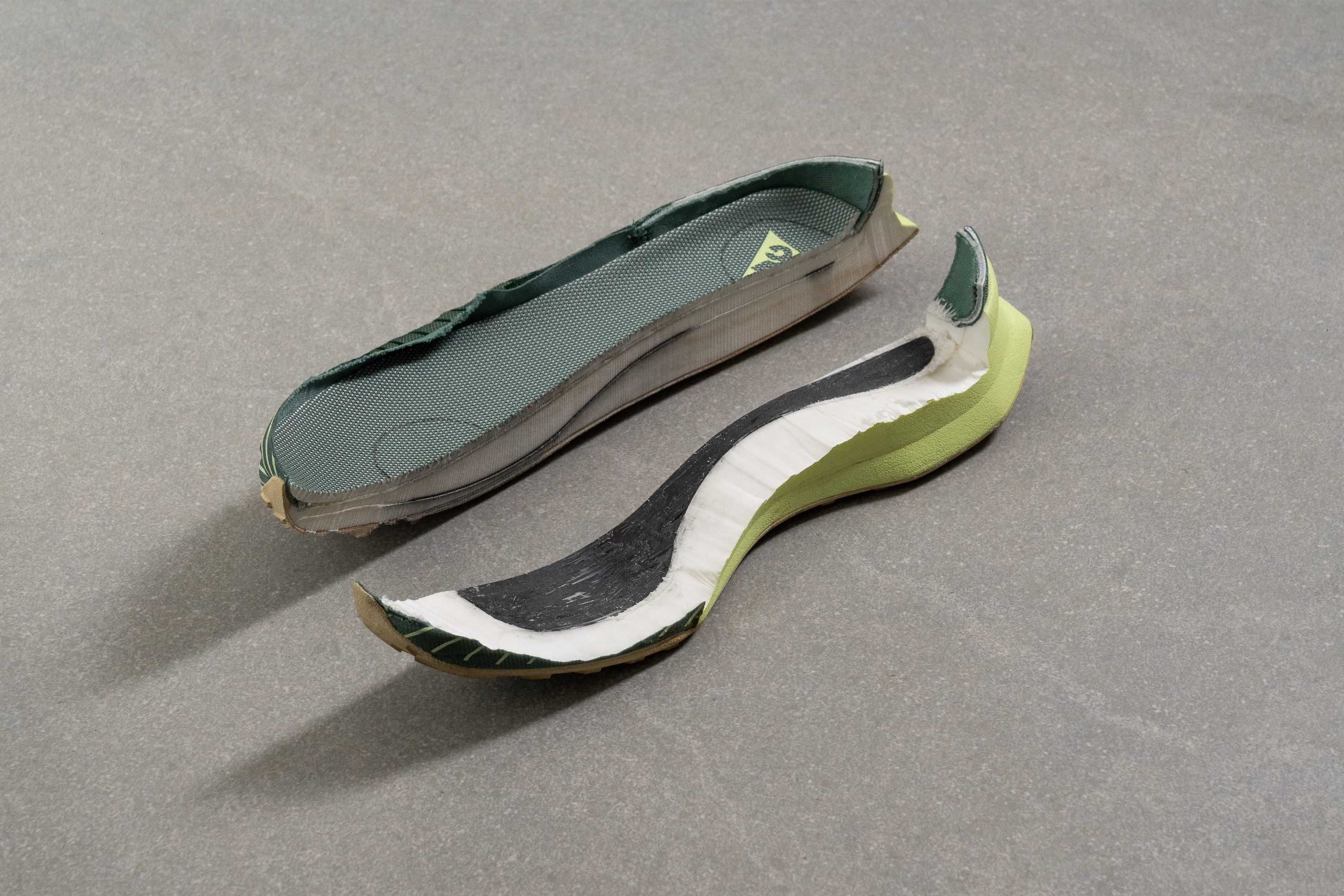
Here comes one of the most interesting changes in the ACG Ultrafly Trail. The previous model was often criticized for its high stiffness and lack of adaptability, and Nike addressed that by using a new design with two spoon-shaped carbon plates running in parallel instead of a single one, similar to what HOKA introduced with the Tecton series.
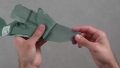
This improves torsional flexibility and help the shoe adapt to the terrain instead of always holding its shape.
Size and fit
Size
Nike ACG Ultrafly Trail fits true to size (38 votes).
Internal length
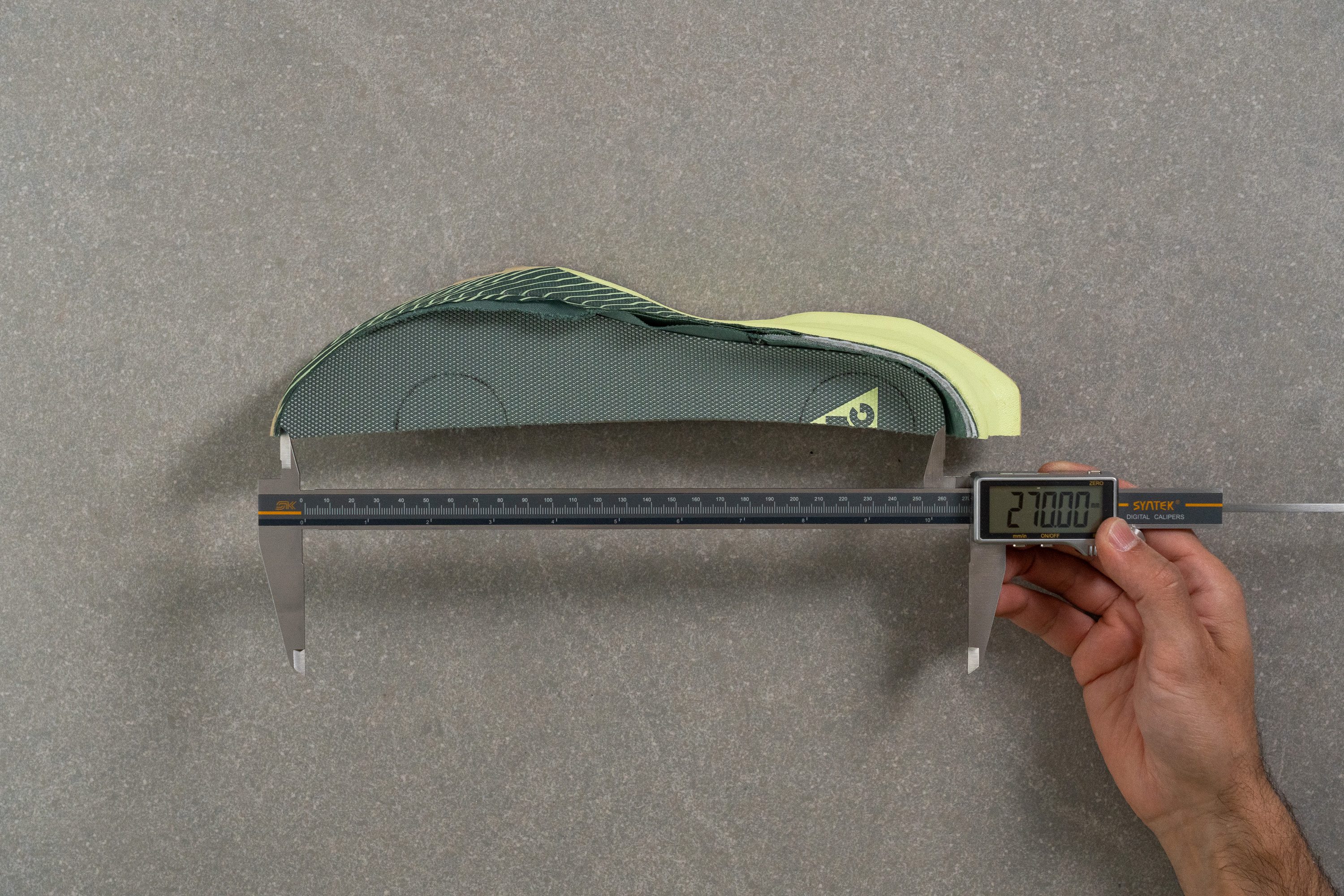
| ACG Ultrafly Trail | 270.0 mm |
| Average | 269.2 mm |
Width / Fit
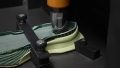
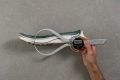
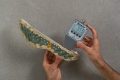
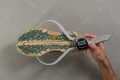
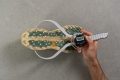
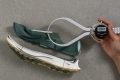
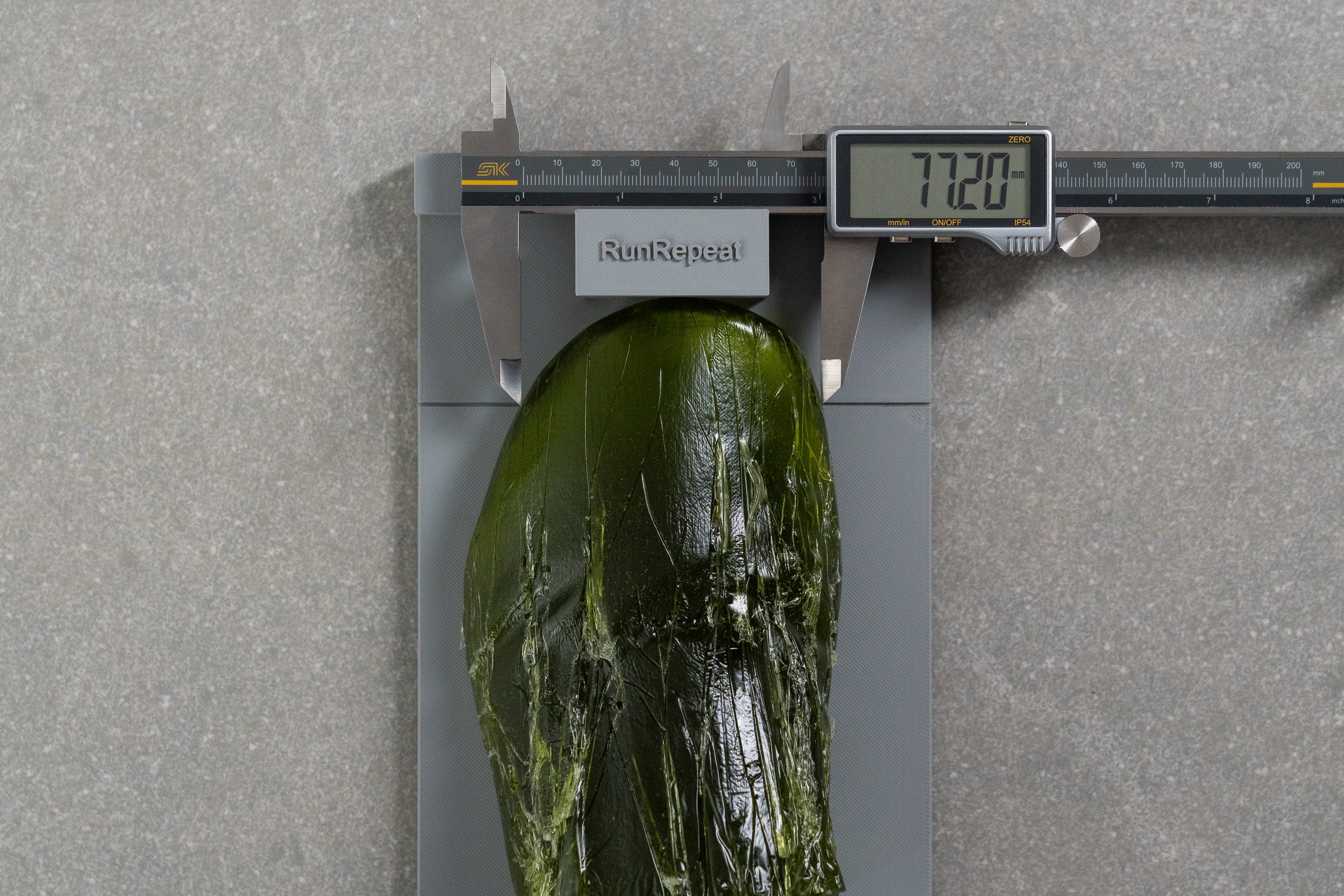
To compare the fit of the ACG Ultrafly Trail with both its predecessor and other shoes, we created our usual gel mold of the shoe and started taking measurements.
The first result confirmed that Nike is once again avoiding a very narrow fit, offering a bit more room than what we usually find in most trail shoes. At 97.8 mm, it feels especially well suited for ultra distances, where foot swelling can become a real issue.
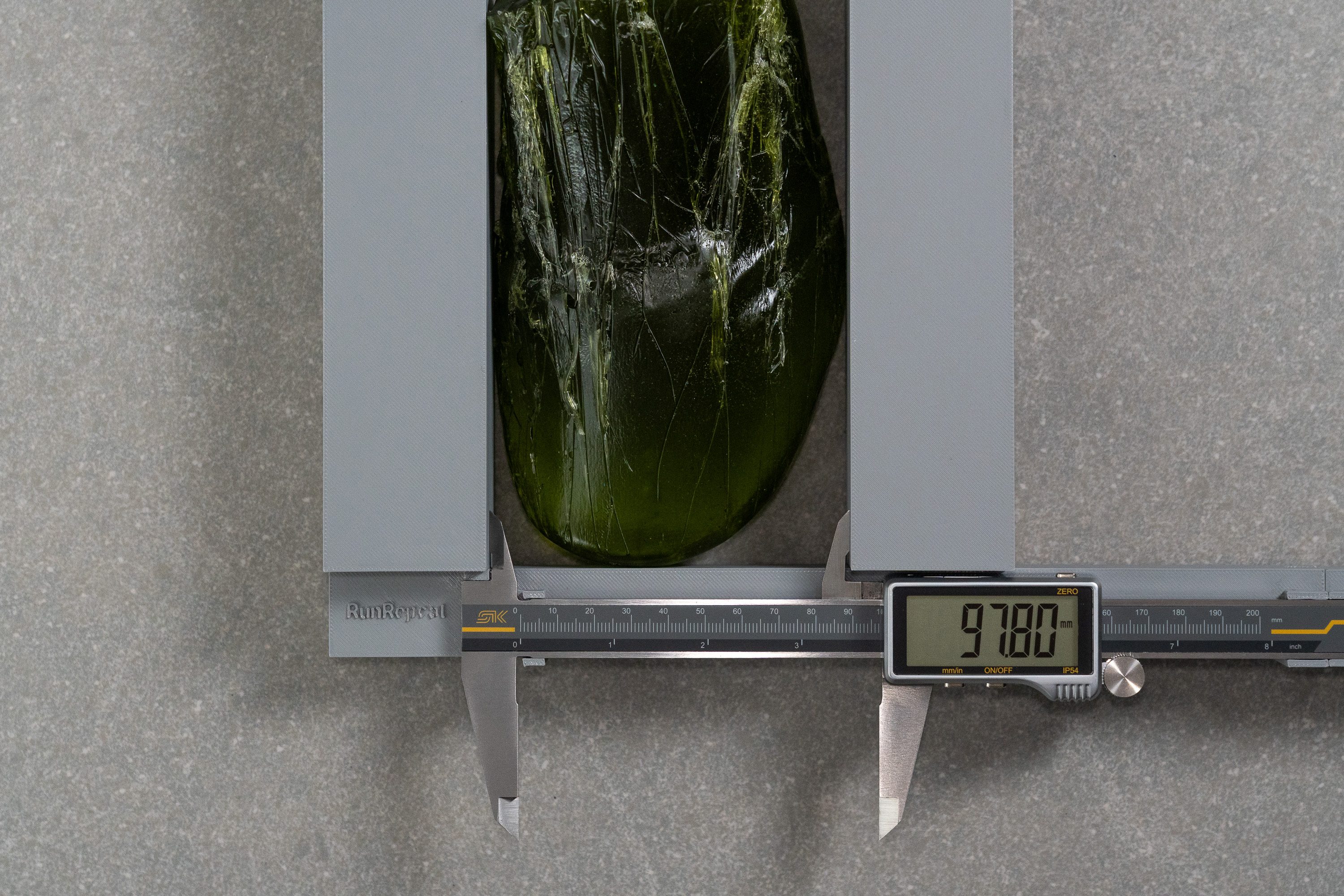
| ACG Ultrafly Trail | 97.8 mm |
| Average | 95.7 mm |
Toebox width
The toebox also showed plenty of room at 77.2 mm. Those extra millimeters allow more toe movement and natural expansion, and this should be very well received by many ultrarunners.
| ACG Ultrafly Trail | 77.2 mm |
| Average | 74.3 mm |
Toebox height
We did not find any potential issues with the toebox height.
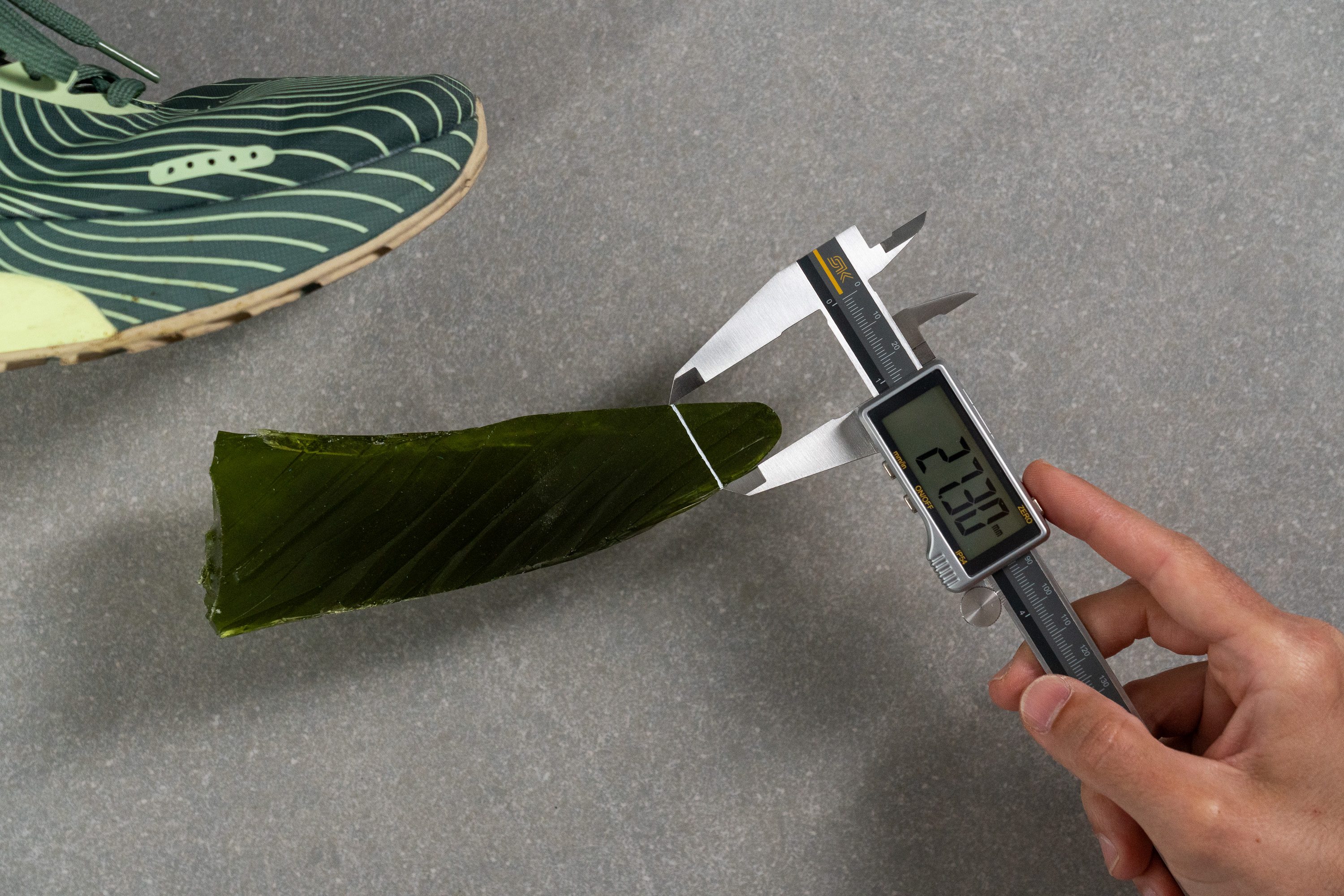
A measurement of 27.3 mm indicates that the fit is secure enough to inspire confidence on descents and through turns, but without feeling oppressive.
| ACG Ultrafly Trail | 27.3 mm |
| Average | 27.0 mm |
Traction / Grip
Traction test
The original Ultrafly was a divisive shoe that had some big flaws, but marked a very important point for Nike: their first shoe with a Vibram outsole. We've been requesting that partnership for years and it finally was born in 2023.
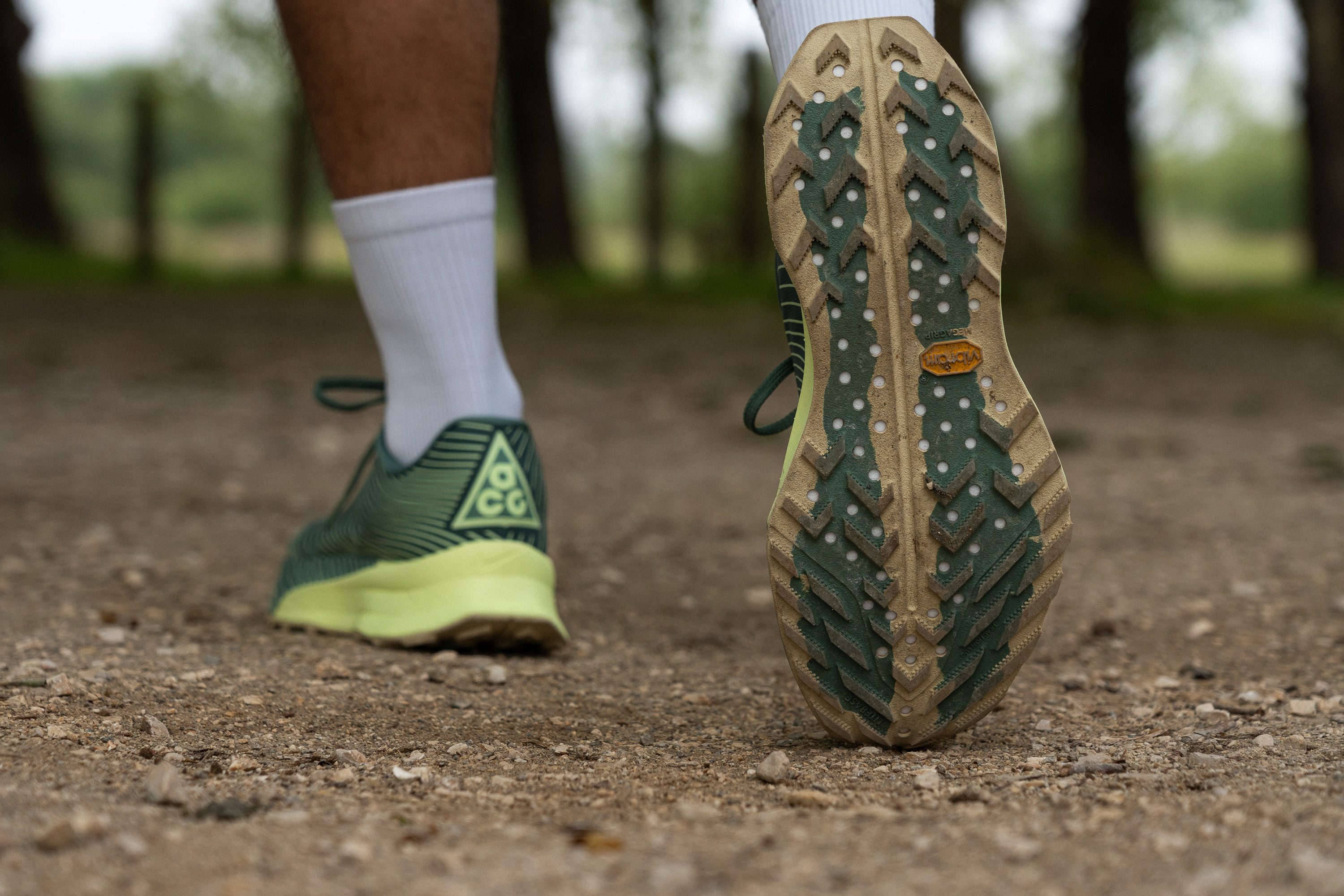
Three years later, the partnership is stronger than ever, as Nike is now bringing Vibram to many more shoes like the Zegama 2. The ACG Ultrafly Trail features the excellent Megagrip Litebase compound, which of course delivered a very strong result of 0.77 in our wet-surface test.
| ACG Ultrafly Trail | 0.77 |
| Average | 0.68 |
Lug depth
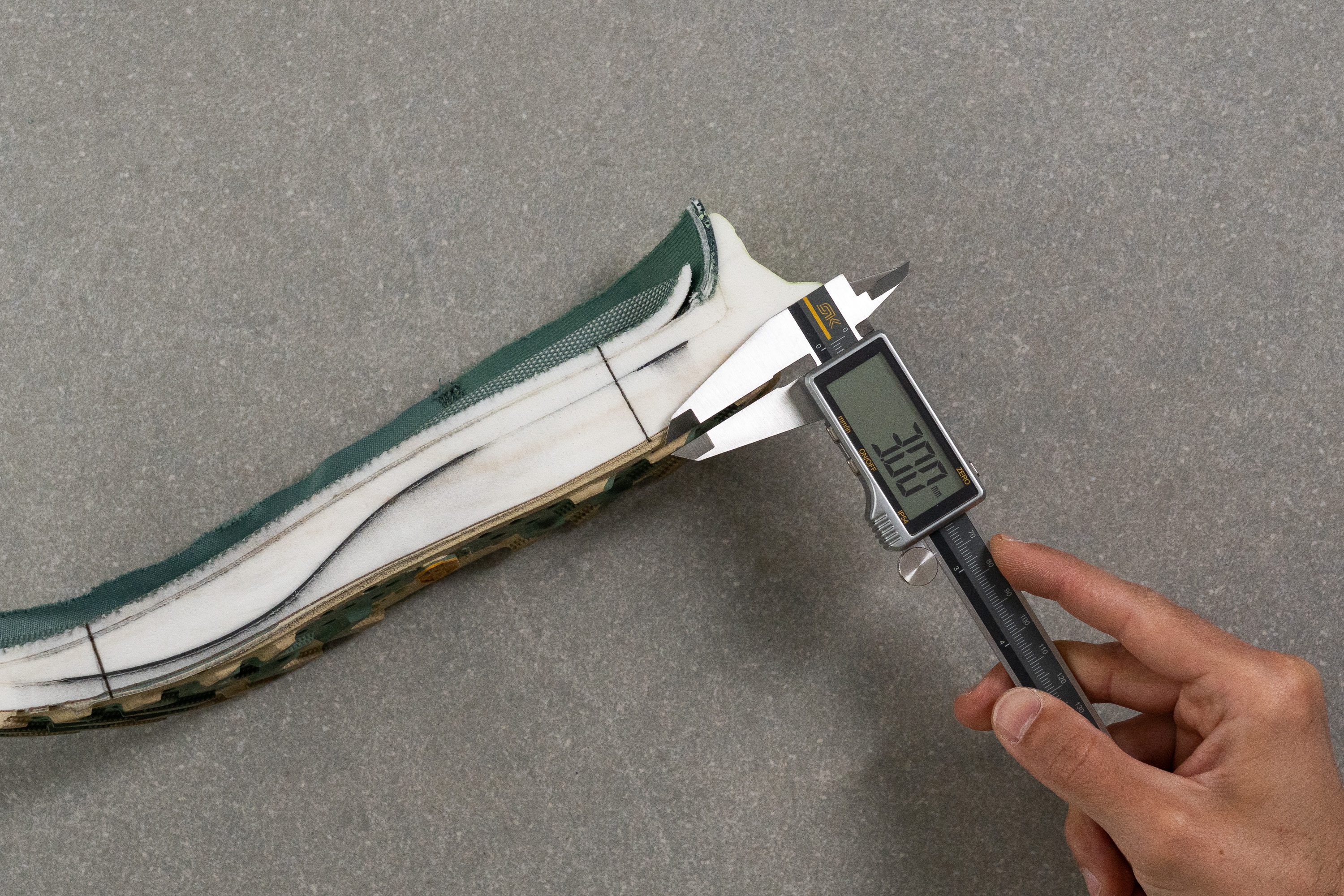
Nike kept the shallow lugs in this new version, and they are still clearly geared toward easy trails, gravel roads, and the occasional road section linking them. The depth remains 3.0 mm, you also get the Traction Lug technology from Vibram.
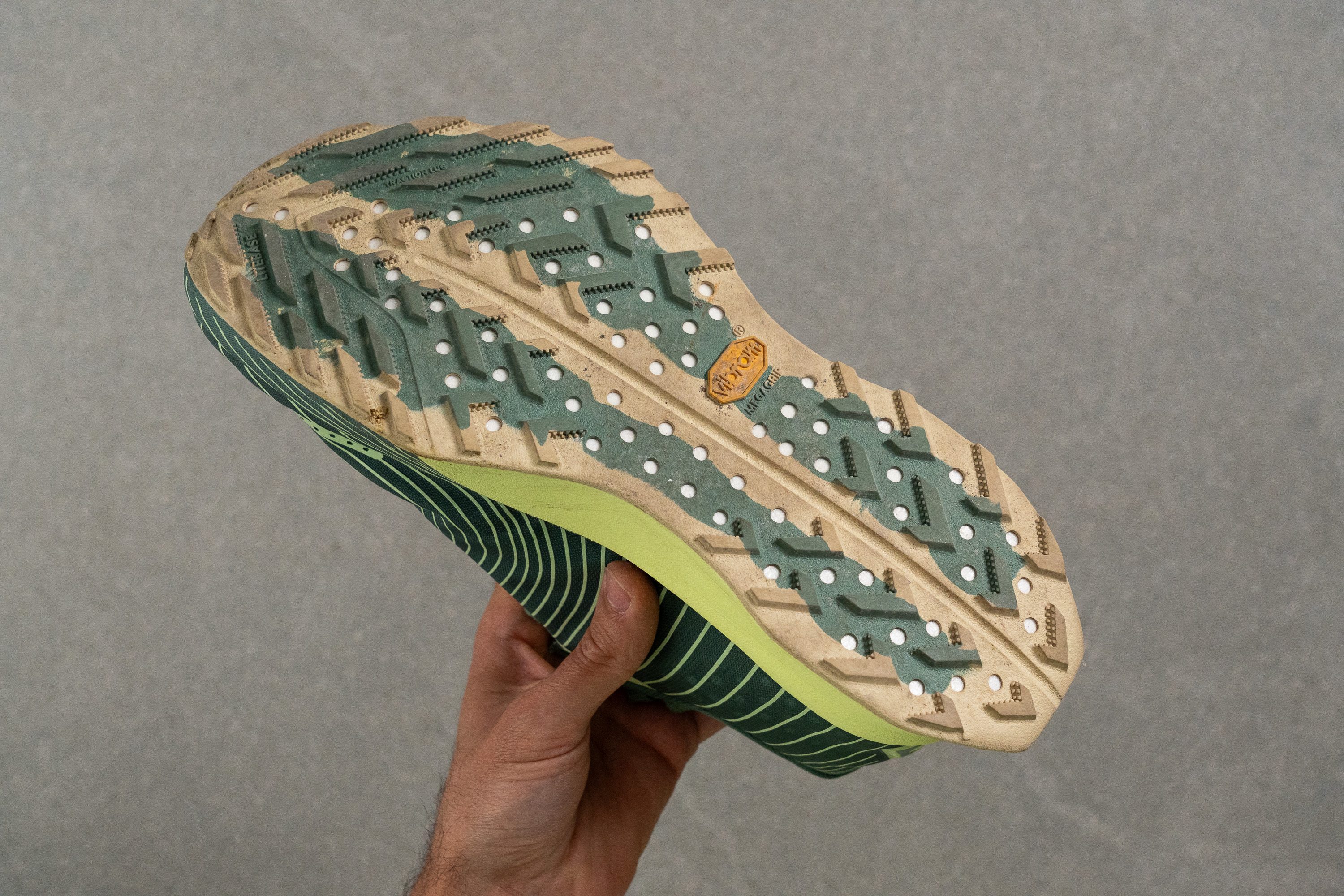
The lugs combine chevron-shaped units with forward or backward orientation depending on placement, while rectangular elements on the sides of the forefoot aim to improve cornering grip. It is definitely an outsole with more detailed design work than the previous one.
| ACG Ultrafly Trail | 3.0 mm |
| Average | 3.5 mm |
Outsole design
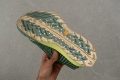
The outsole features full-length Vibram Megagrip Litebase rubber, and the design is split into two sections with a central groove to favor torsional flex. That works together with the dual carbon plates running in parallel, a feature highlighted by Nike with green paint.
Flexibility / Stiffness
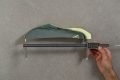
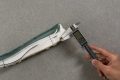
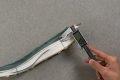
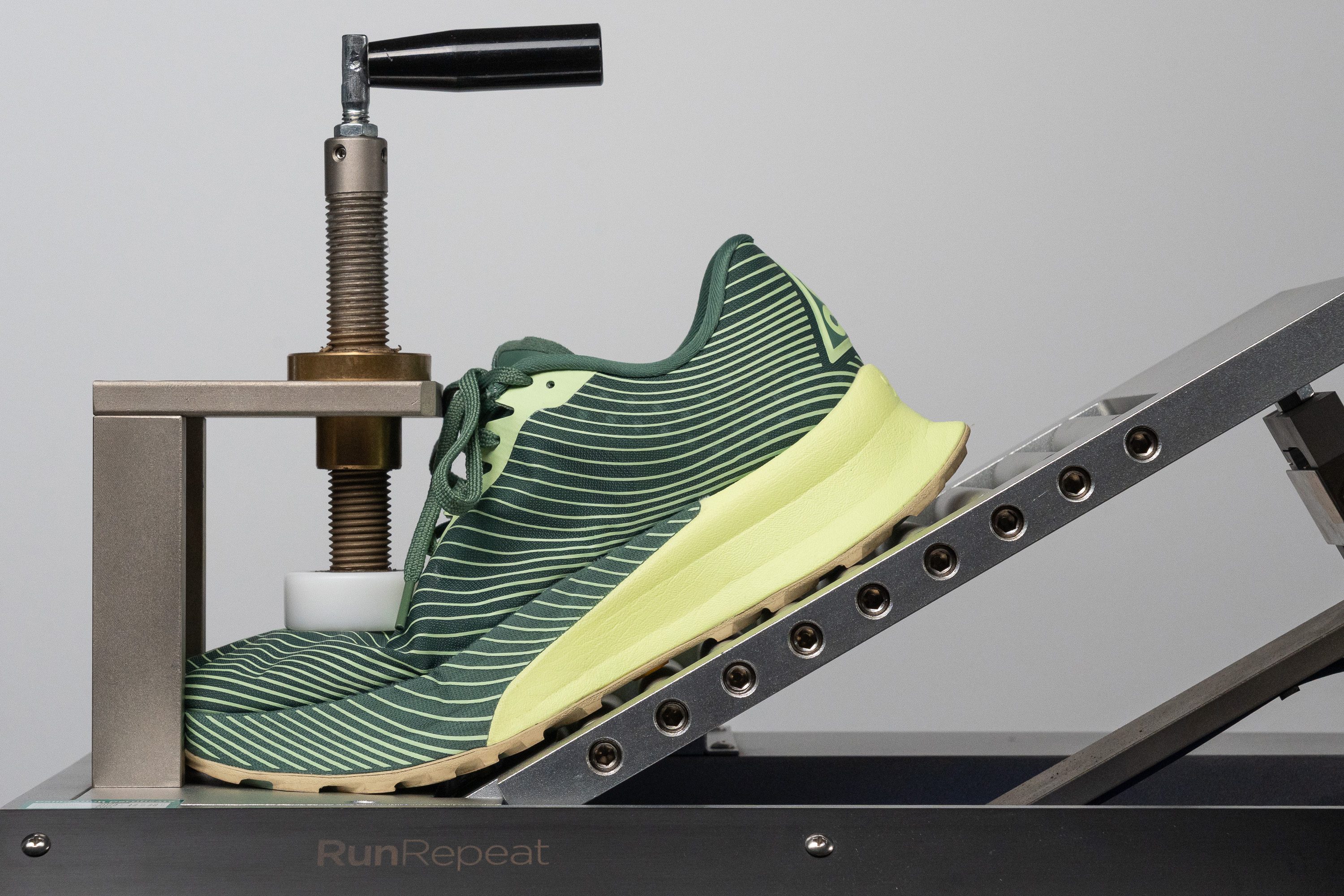
At 16.7N in our test, the ACG Ultrafly Trail showed moderate stiffness for a shoe that features carbon fiber in the midsole and a heel-to-toe outsole with no horizontal cutout. It's a welcome change in terms of comfort from the previous model super-stiff build (20.6N).
| ACG Ultrafly Trail | 16.7N |
| Average | 14.8N |
Weight
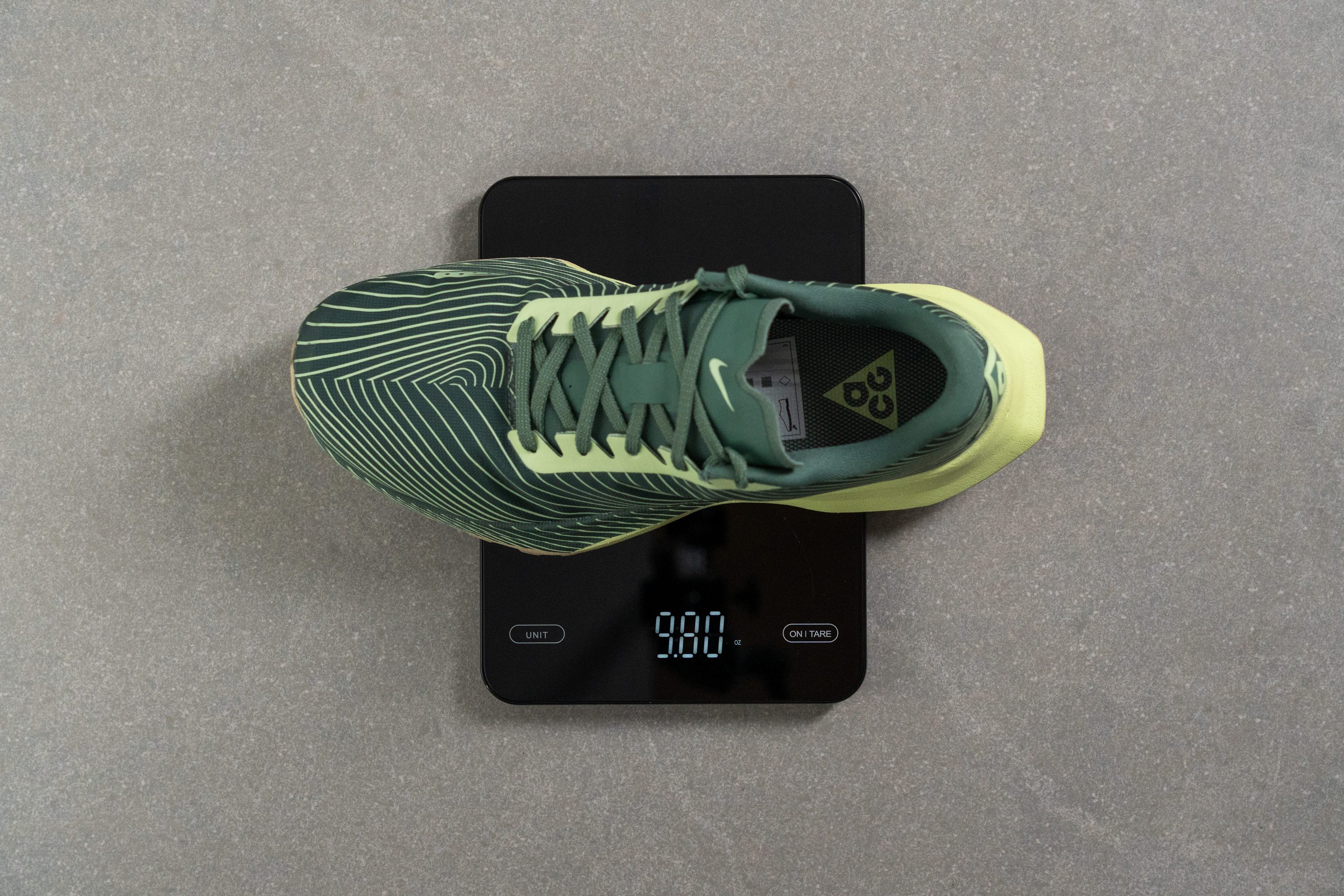
One of our biggest complaints with the predecessor of this shoe also received a huge improvement here. Nike clearly worked hard to reduce weight, and it now lands at 9.8 oz or 278g, which is a 7% decrease over version 1.
From our perspective, this is not a game-changing difference, and it still sits far from being a lightweight shoe, but this weight is definitely good for a trail super shoe with so much foam underfoot and a rugged build.
| ACG Ultrafly Trail | 9.8 oz (278g) |
| Average | 10.1 oz (285g) |
Breathability
Breathability test
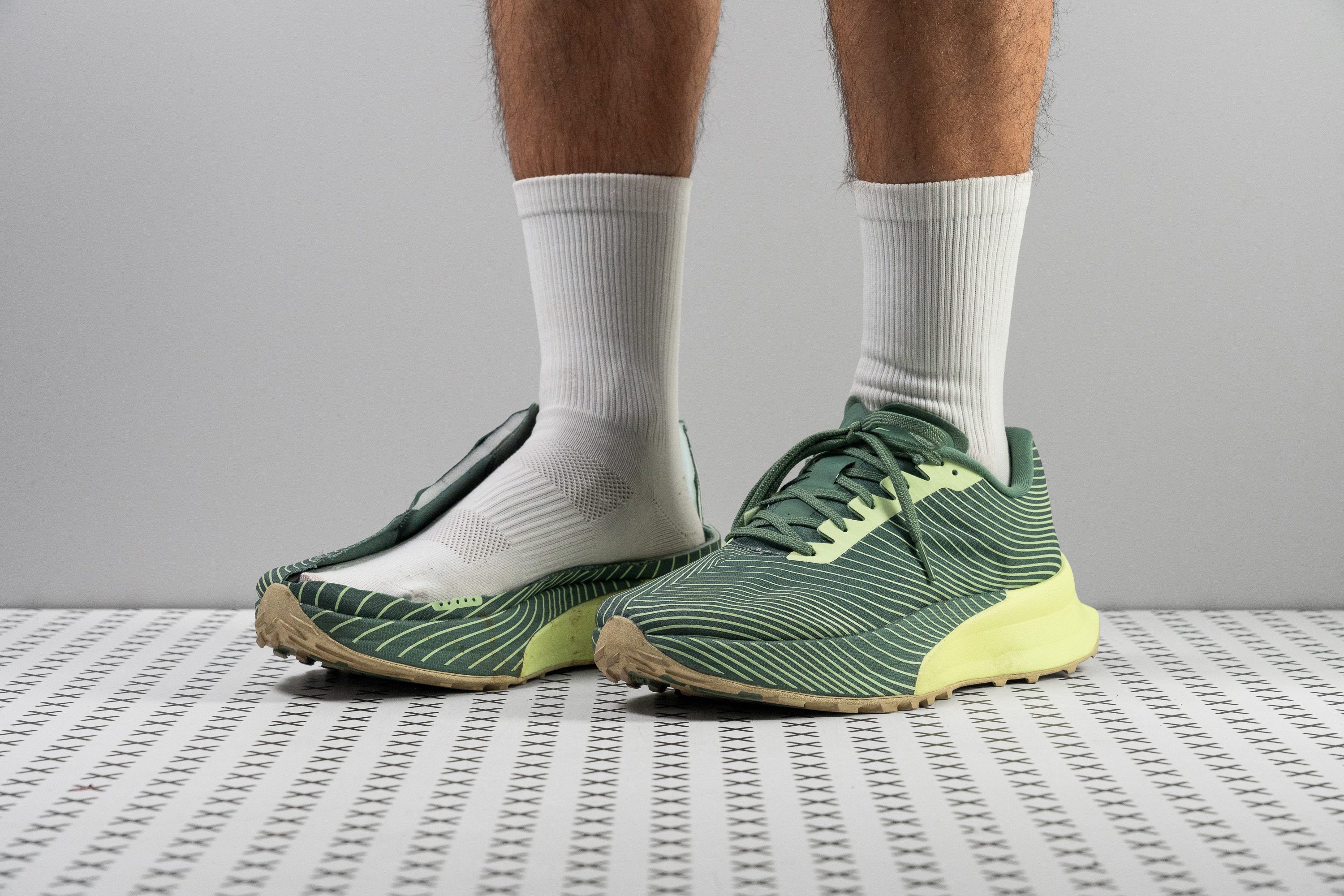
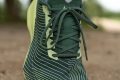
The upper of this colorway comes with a unique design that really stands out, but it also looks very dense and lacking ventilation holes, probably to help keep dust from entering the shoe. We were definitely eager to test breathability.
Indeed, we found a 2/5 score that confirmed our initial thoughts. Not much air moves between the inside and outside of the shoe, so sock selection can be crucial here.
Using a light source, we found that the dense mesh blocked most of it. That also makes one thing clear: ventilation was never a priority in this design.
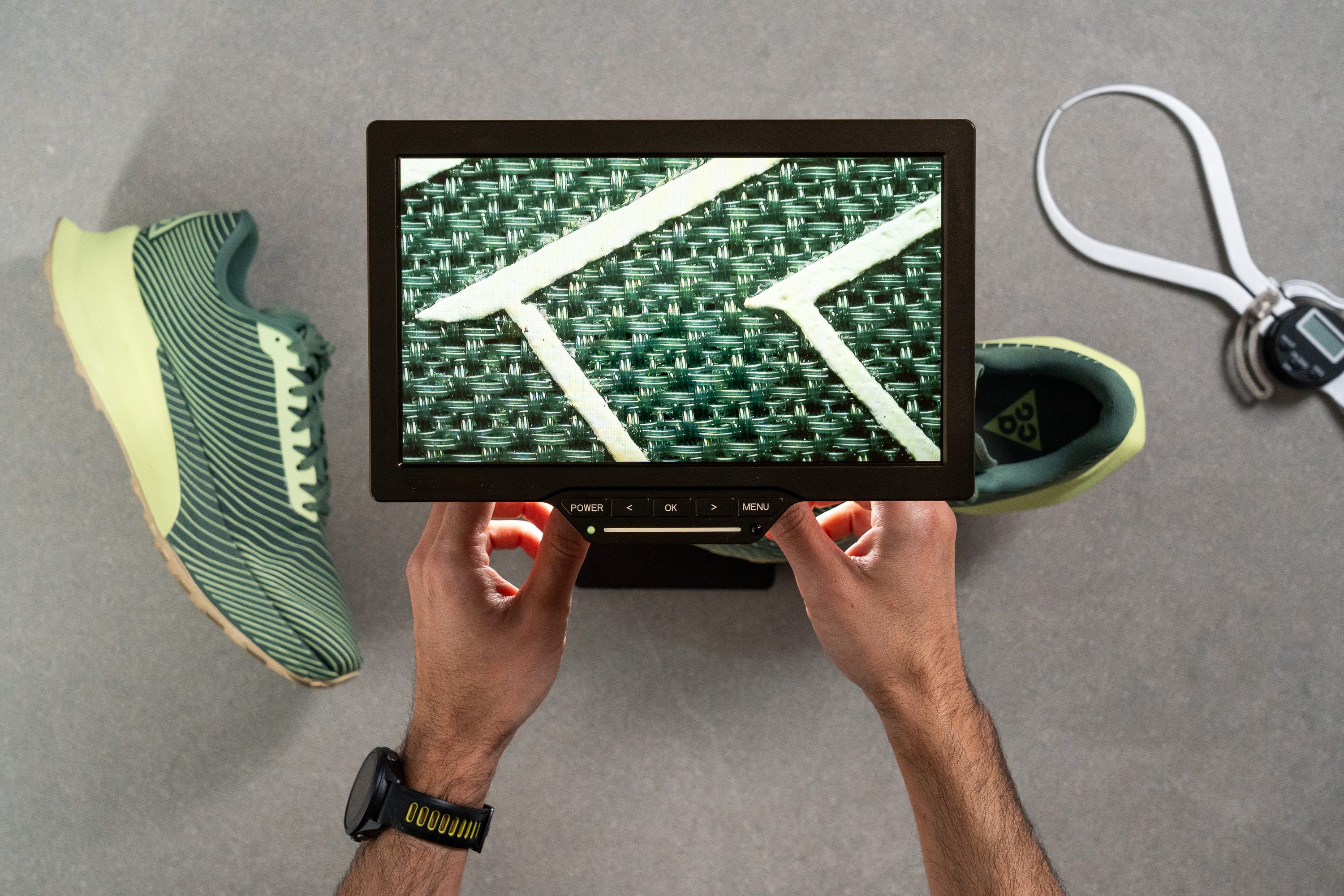
Under the microscope, the engineered mesh used by Nike clearly shows a tightly packed material made from synthetic yarns. It may not look especially comfortable in the toebox, but there is a catch.
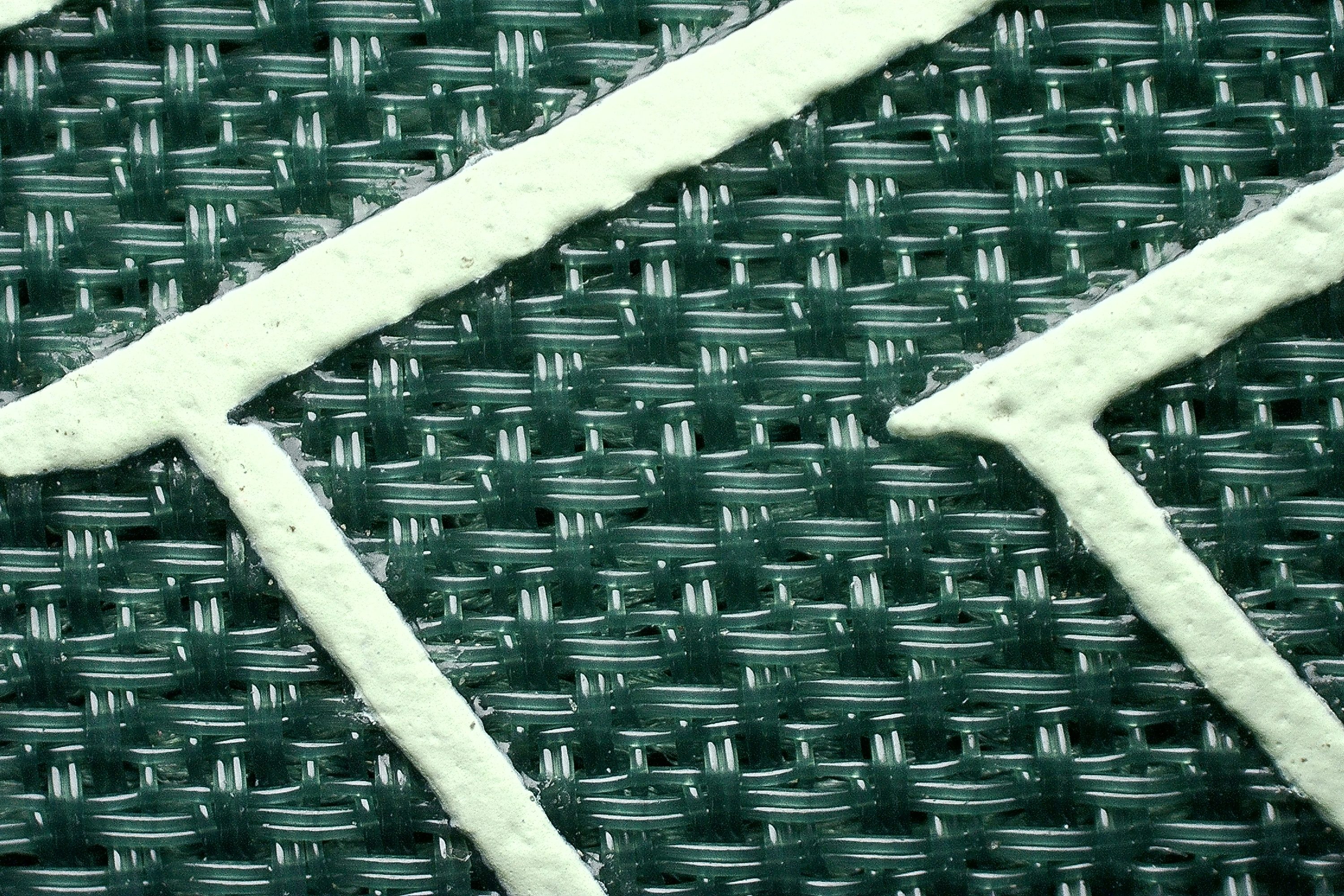
The upper uses two layers, with the inner one feeling much more pleasant to the touch. That also reduces airflow, but some runners may prefer the added comfort during long hours in the mountains.
| ACG Ultrafly Trail | 2 |
| Average | 3.3 |
Stability
Lateral stability test
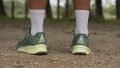
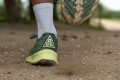
During our runs, we found that the Nike ACG Ultrafly Trail is surprisingly stable when used on its preferred terrain: open trails and flatter sections without many technical turns or descents.
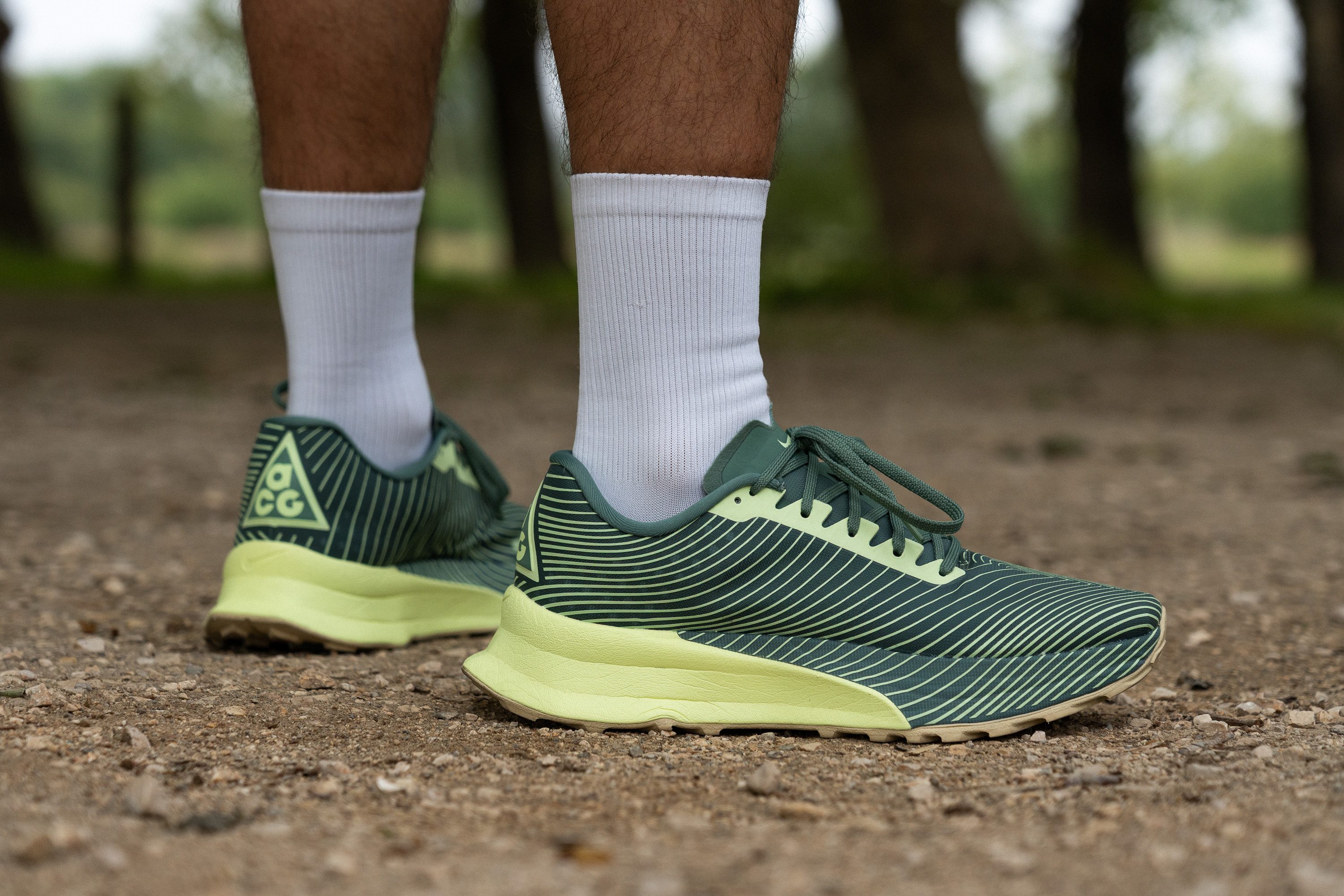
If that is where you run most often, Nike created a really stable package through the combination of a wide midsole with a large lateral flare, dual carbon plates, and sidewalls in the rear section.
Torsional rigidity
Thanks to the dual carbon plates running in parallel, the ACG Ultrafly Trail regains some torsional rigidity and now scores more or less around average at 17.3 Nm.
It is never a shame to borrow great ideas from a competitor. As we covered before, HOKA used two plates instead of one in the Tecton to gain extra torsional flex, and we are glad that Nike made a similar move here.
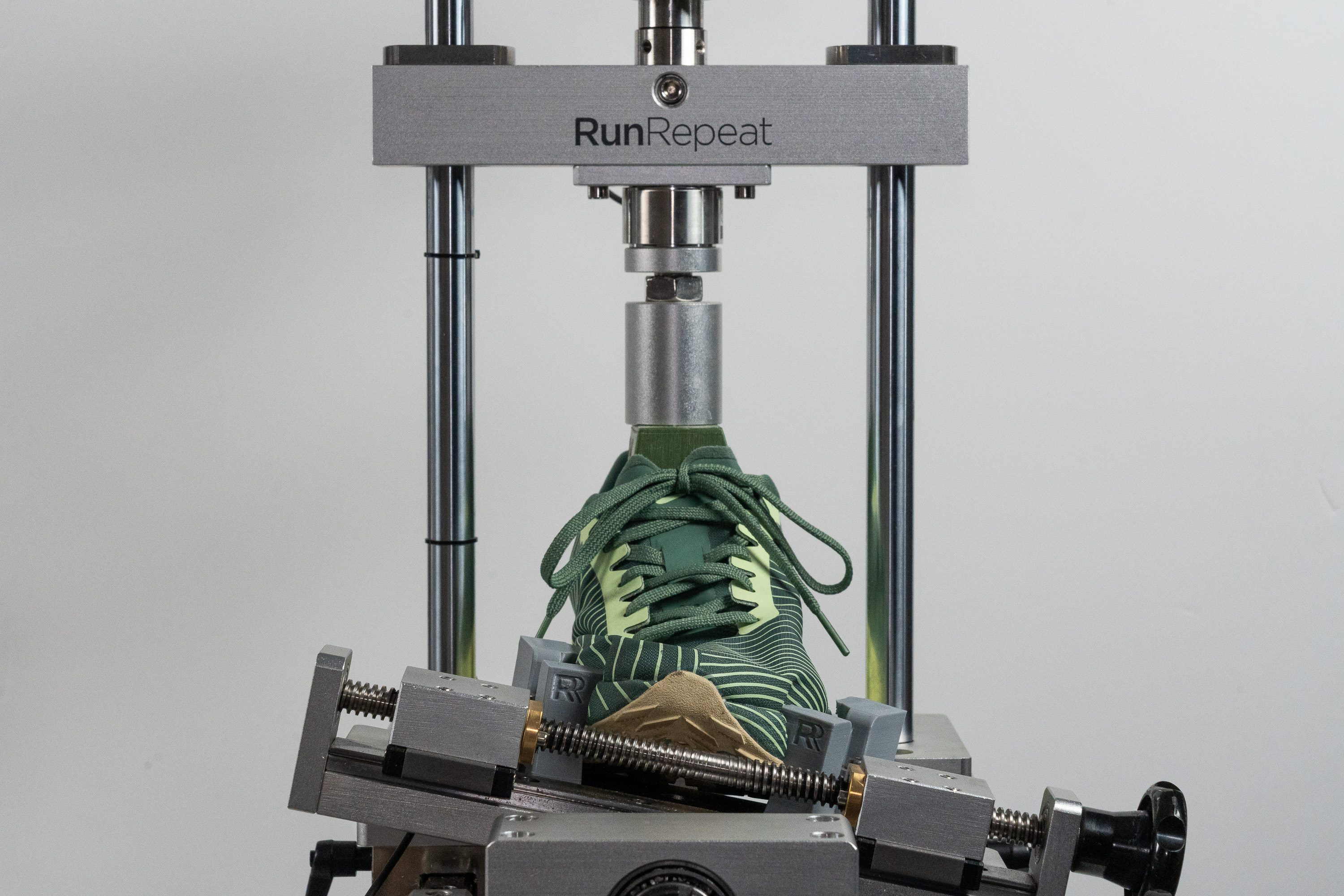
| ACG Ultrafly Trail | 17.3 Nm |
| Average | 15.7 Nm |
Heel counter stiffness
The heel counter also aims to provide plenty of support, which is why we found a 4 out of 5 score here. Fortunately, there is also plenty of padding to help keep it comfortable.
| ACG Ultrafly Trail | 4 |
| Average | 2.9 |
Midsole width - forefoot
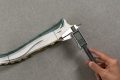
One of the key reasons why the ACG Ultrafly Trail (and perhaps the main one) feels so stable especially at faster paces is its super-sized forefoot platform. Nike clearly sacrificed a more agile feel that would suit varied terrain in favor of creating a superb flat-terrain cruiser.
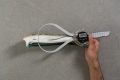
Our digital calipers stopped at a huge 124.2 mm, which is far wider than the readings we usually record here.
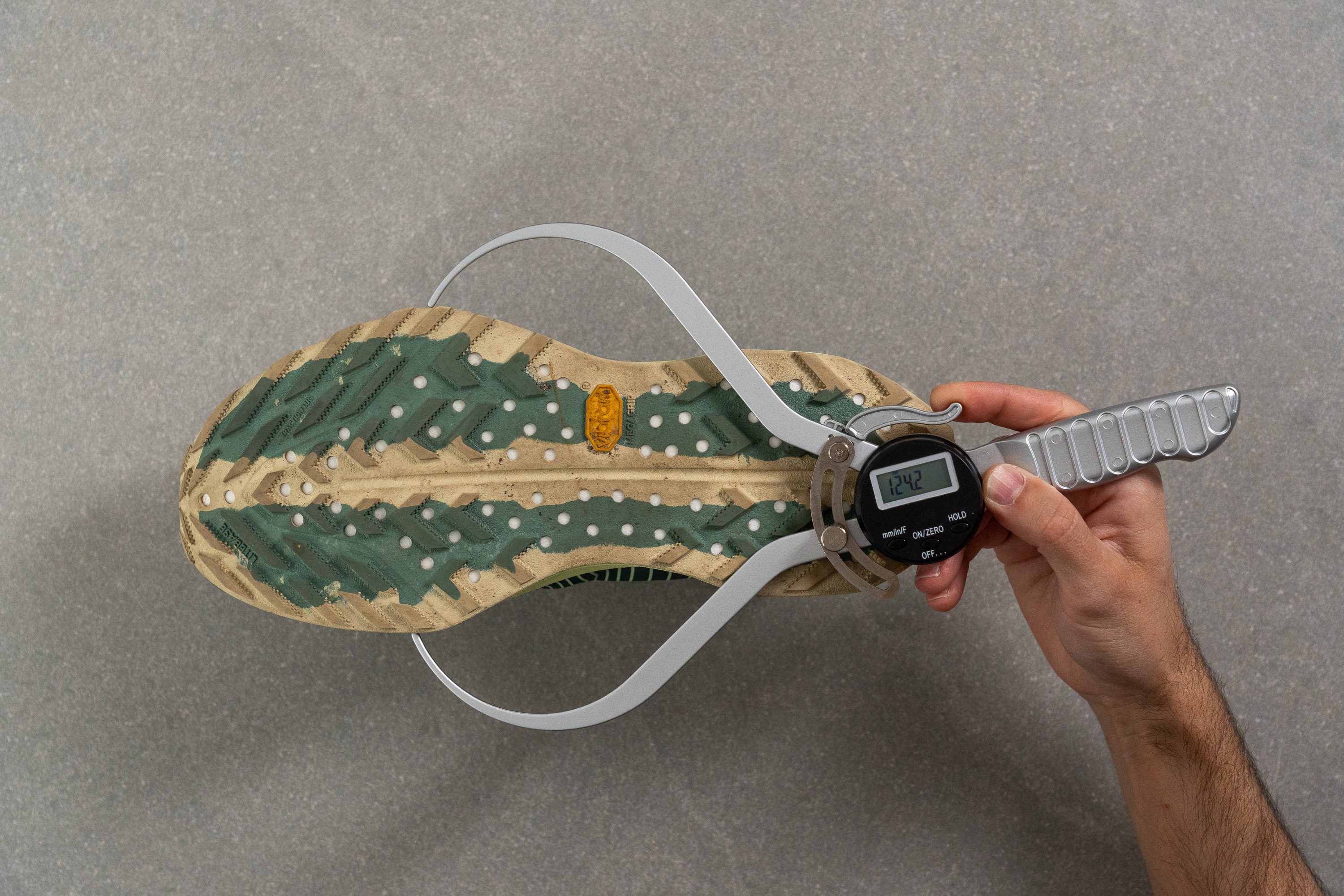
| ACG Ultrafly Trail | 124.2 mm |
| Average | 114.3 mm |
Midsole width - heel
We also took a measurement in the heel area, which proved wider than usual, though not by such a large margin. Here we found 93.4 mm.
However, it is also worth noting that the aggressively tapered midfoot of the first generation is gone, now replaced by a wider section in that area. And this is huge for midfoot strikers.
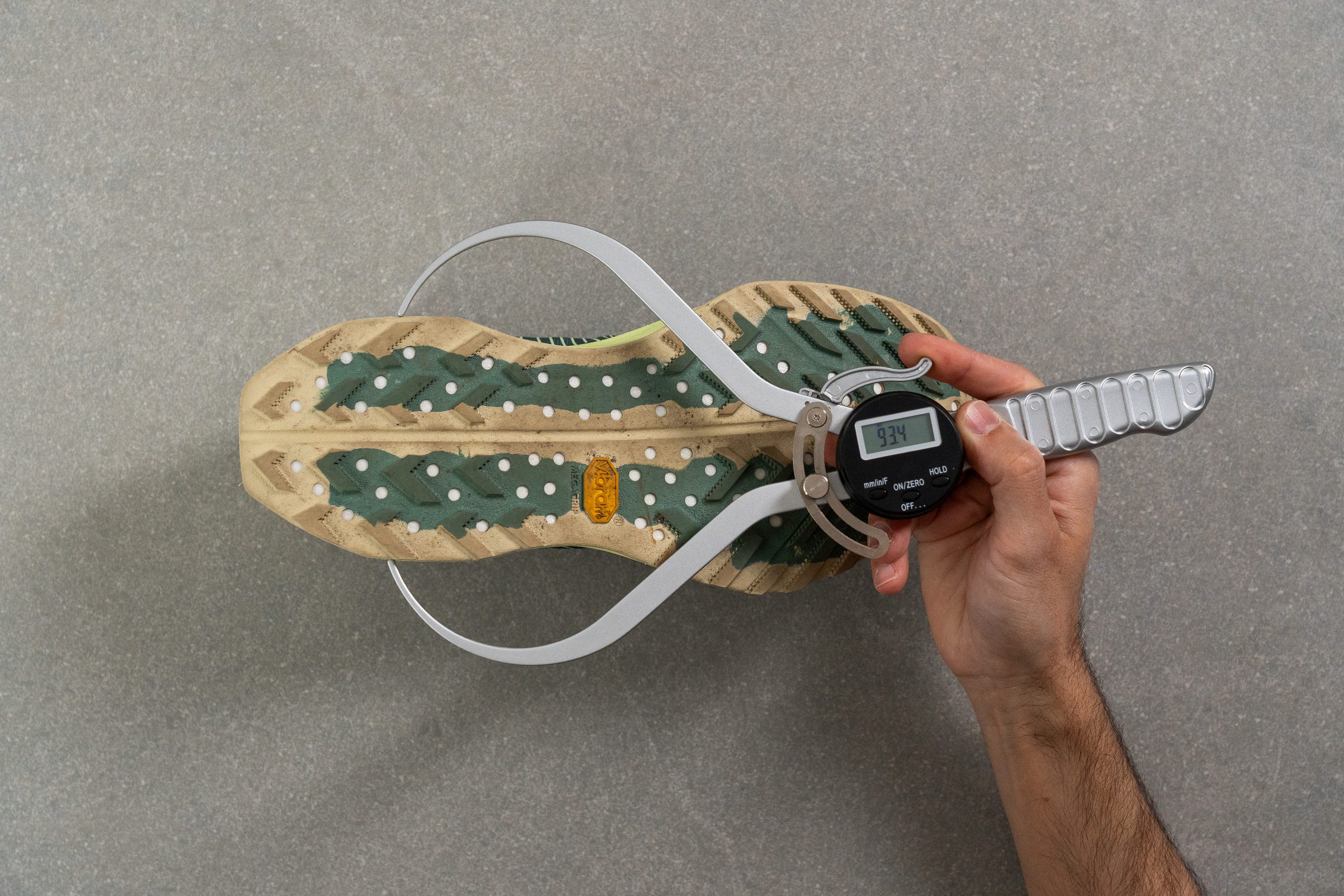
| ACG Ultrafly Trail | 93.4 mm |
| Average | 90.5 mm |
Durability
Toebox durability
We expected a slightly higher result here, but the reality is that we found a 2 out of 5. It is not a disaster, but for a shoe with poor airflow, we were hoping for something better.
| ACG Ultrafly Trail | 2 |
| Average | 3.1 |
Heel padding durability
To compensate, Nike delivered in a big way with the heel padding. Here we found a perfect score of 5 out of 5, making it ideal for enduring grueling ultras without showing early wear in this area.
| ACG Ultrafly Trail | 5 |
| Average | 3.1 |
Outsole durability
Vibram rarely disappoints when it comes to durability, although the result here was simply solid rather than exceptional. Nonetheless, a wear result of 1.0 mm is fully acceptable and does not raise big concerns.
| ACG Ultrafly Trail | 1.0 mm |
| Average | 0.9 mm |
Outsole thickness
The outsole measures just 1.5 mm in thickness, which again points to a shoe designed with non-technical terrain in mind. We think it is also a smart decision from a performance standpoint.
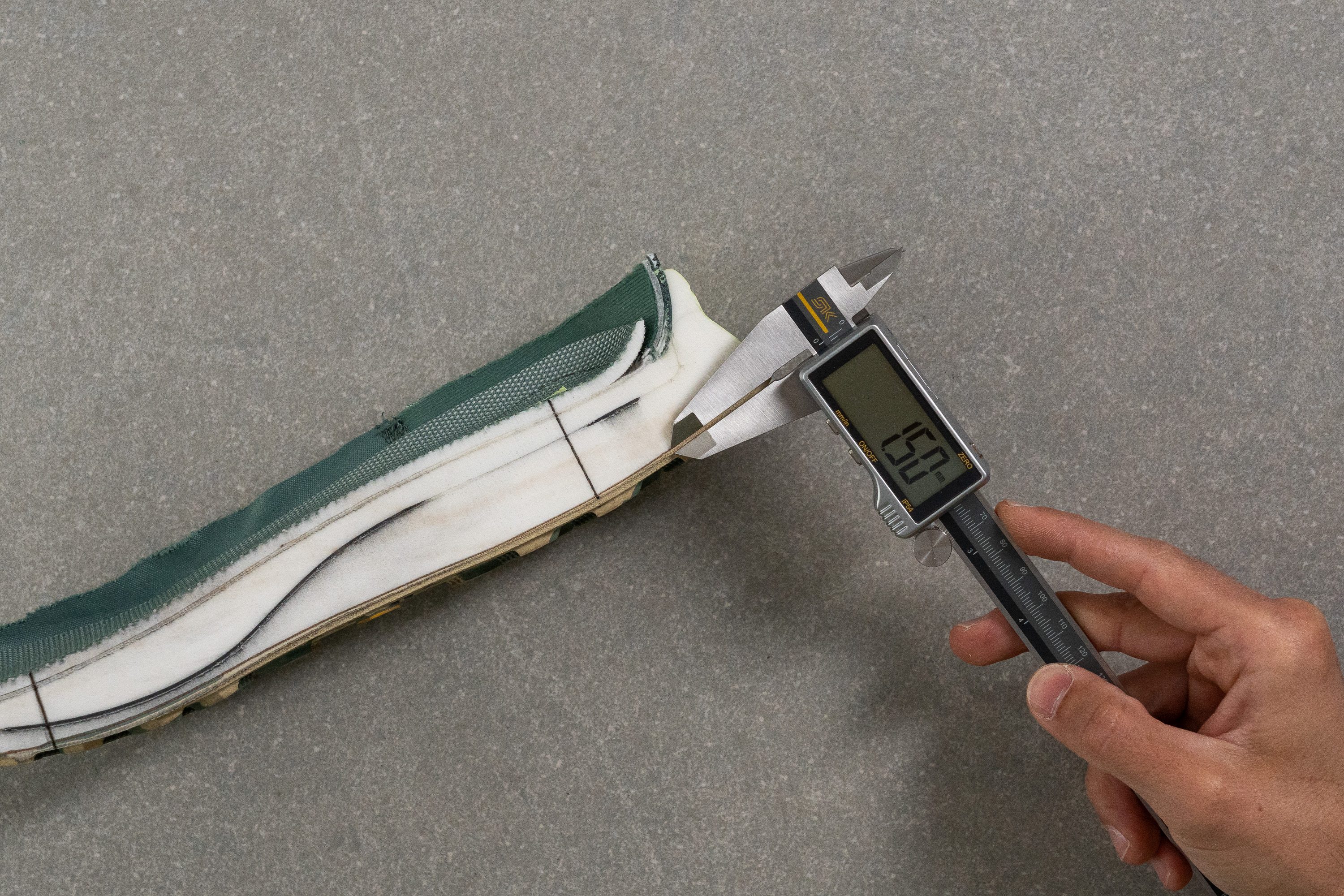
| ACG Ultrafly Trail | 1.5 mm |
| Average | 1.9 mm |
Misc
Insole thickness
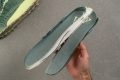
We found that the insole adds 4.2 mm of extra cushioning on top of the ZoomX foam.
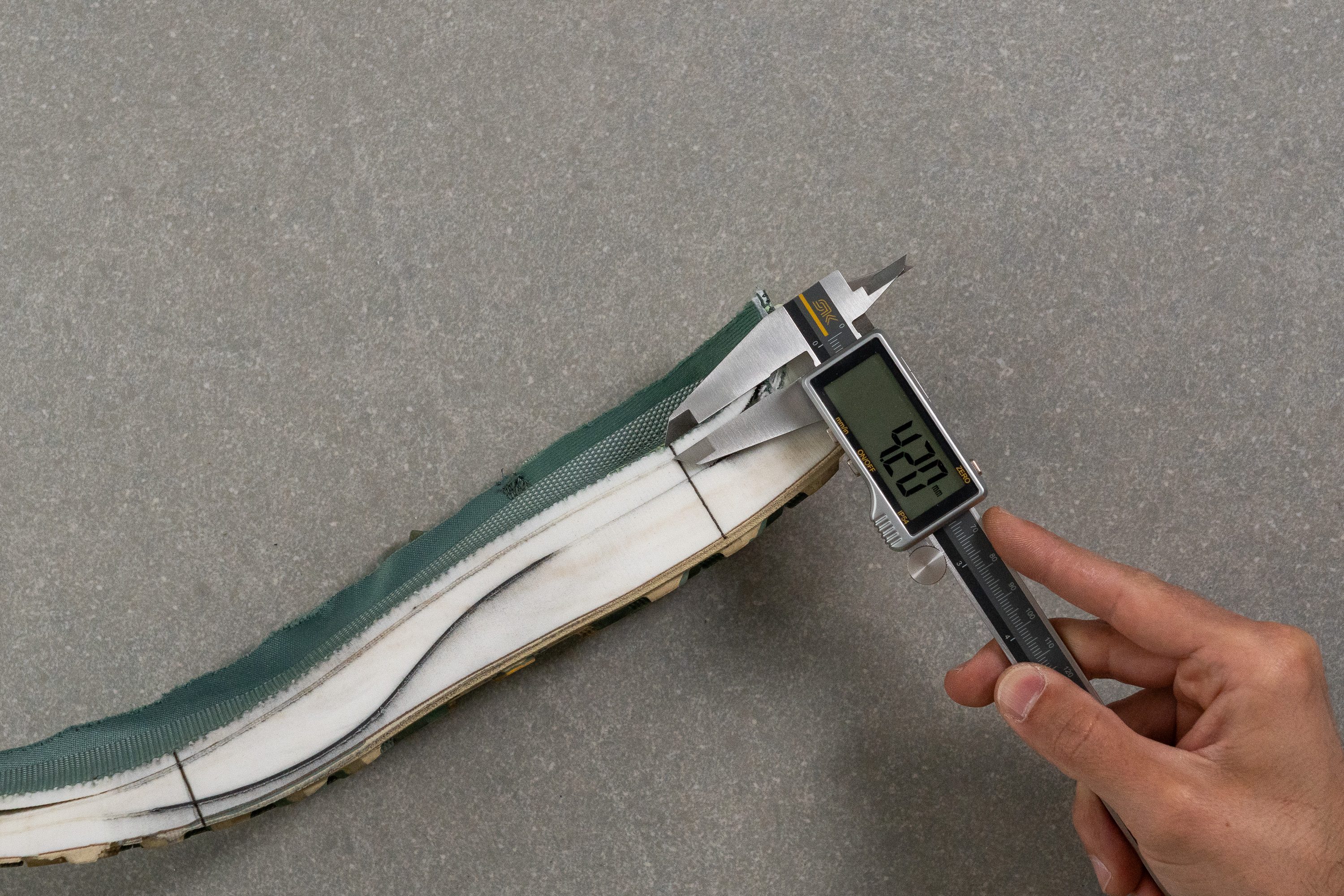
| ACG Ultrafly Trail | 4.2 mm |
| Average | 4.6 mm |
Removable insole
This is not common at all, but the insole of the ACG Ultrafly Trail cannot be removed or replaced.
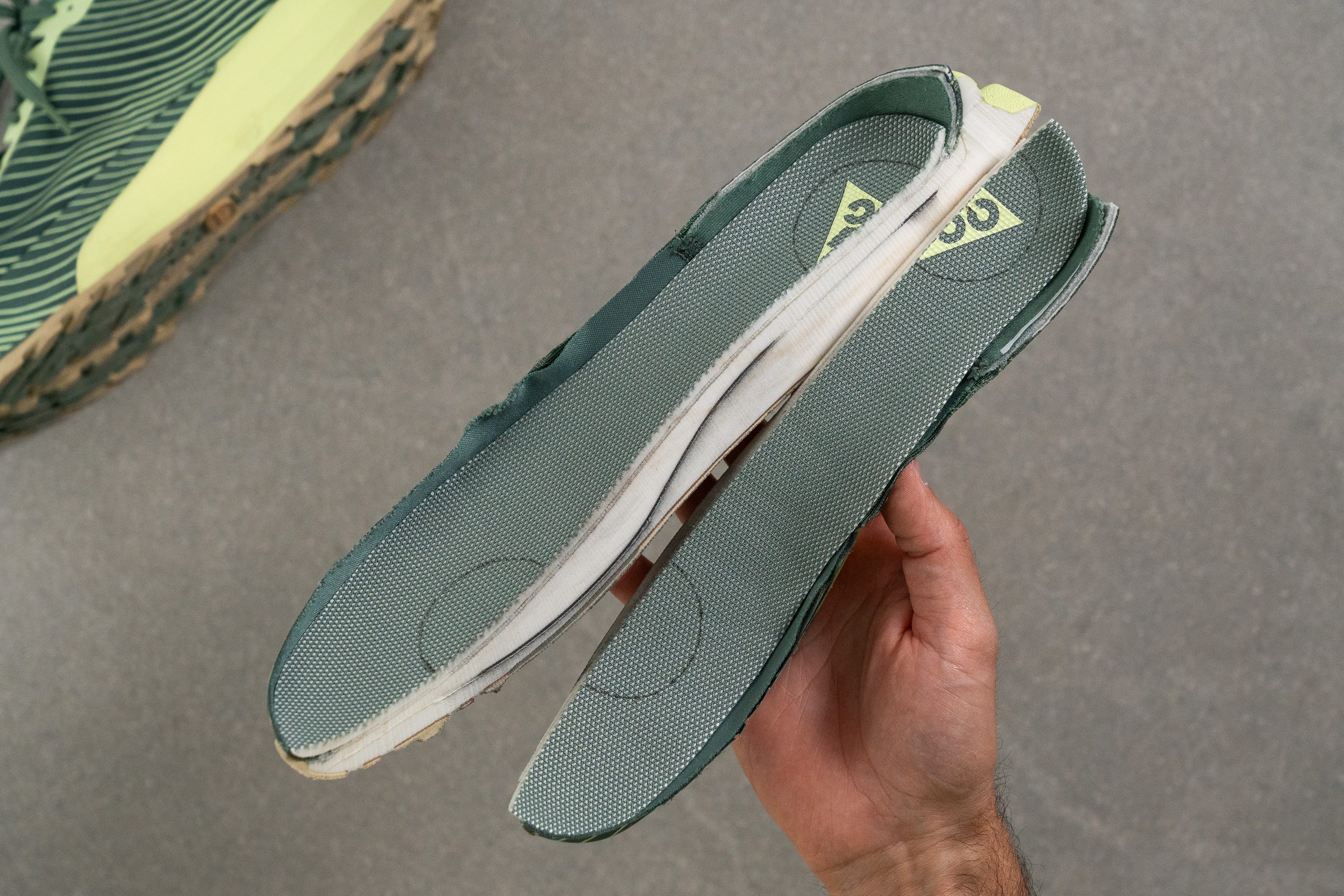
| ACG Ultrafly Trail | No |
Reflective elements
It would have been extremely easy for Nike to add reflective elements here, as they did with the ACG Pegasus Trail, but this time the answer was a clear no. Making the ACG letters reflective would have been so cool...
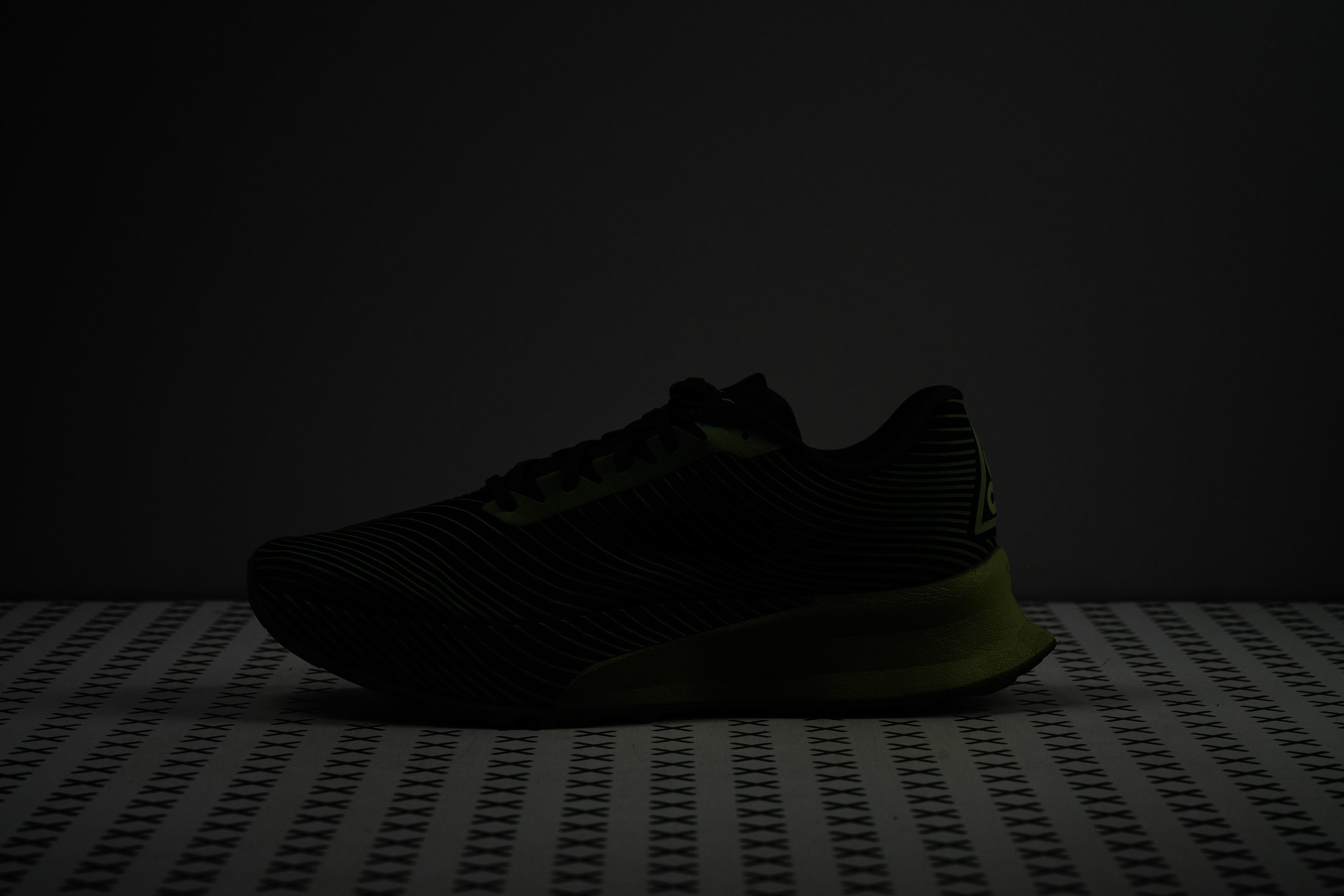
| ACG Ultrafly Trail | Yes |
Tongue padding
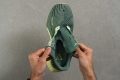
One of the small disappointments we found came when checking the laces. We think the same laces that Nike made popular with the Vaporfly Next% and later used in many super shoes would have been ideal for this model. Instead, we get standard laces here.
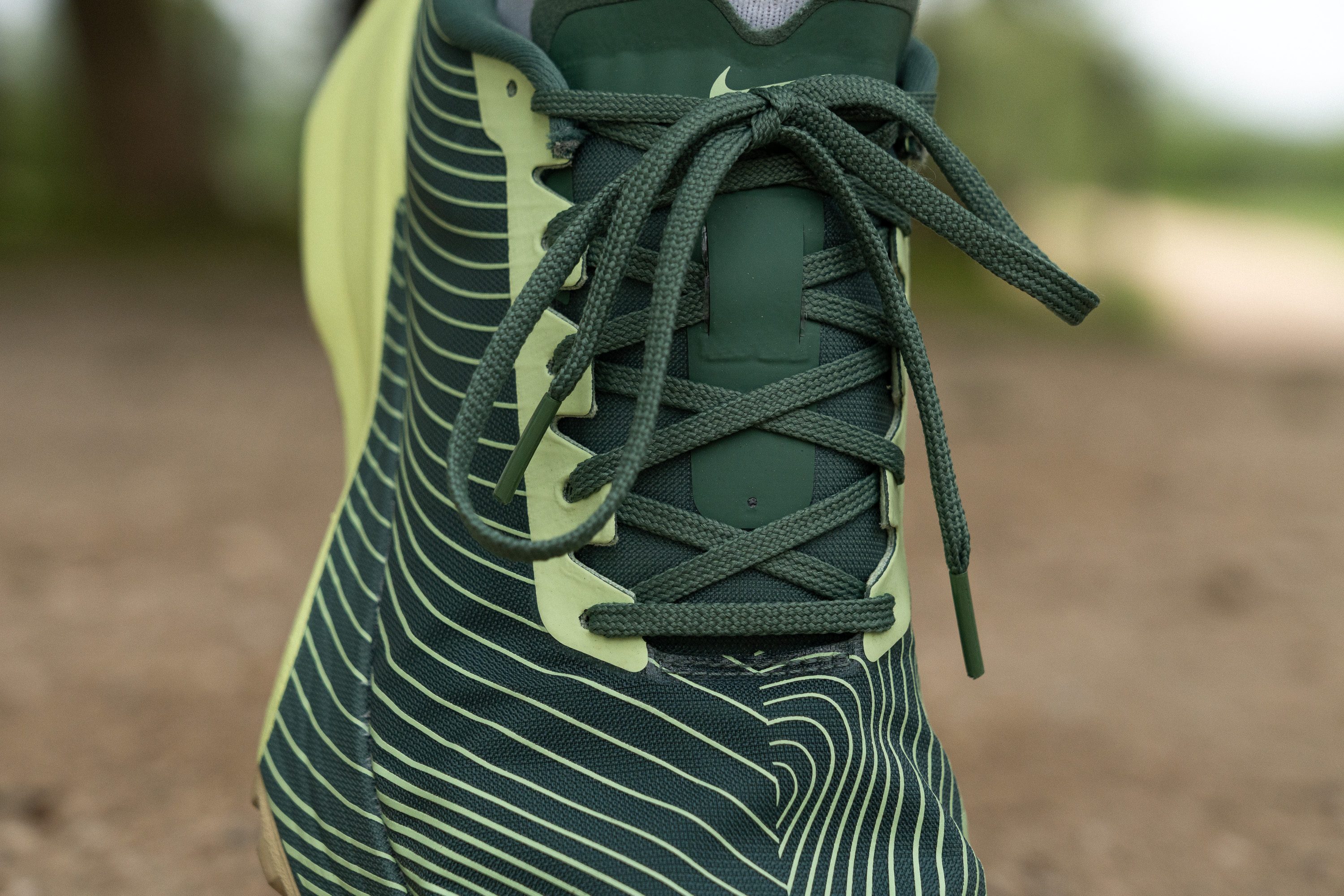
The tongue offers a surprisingly high level of comfort with 7.0 mm of padding. It is clear that Nike knows this shoe may need to endure races lasting 15 or even 20 hours, and sacrificing a bit of weight for a pain-free instep is a smart idea.
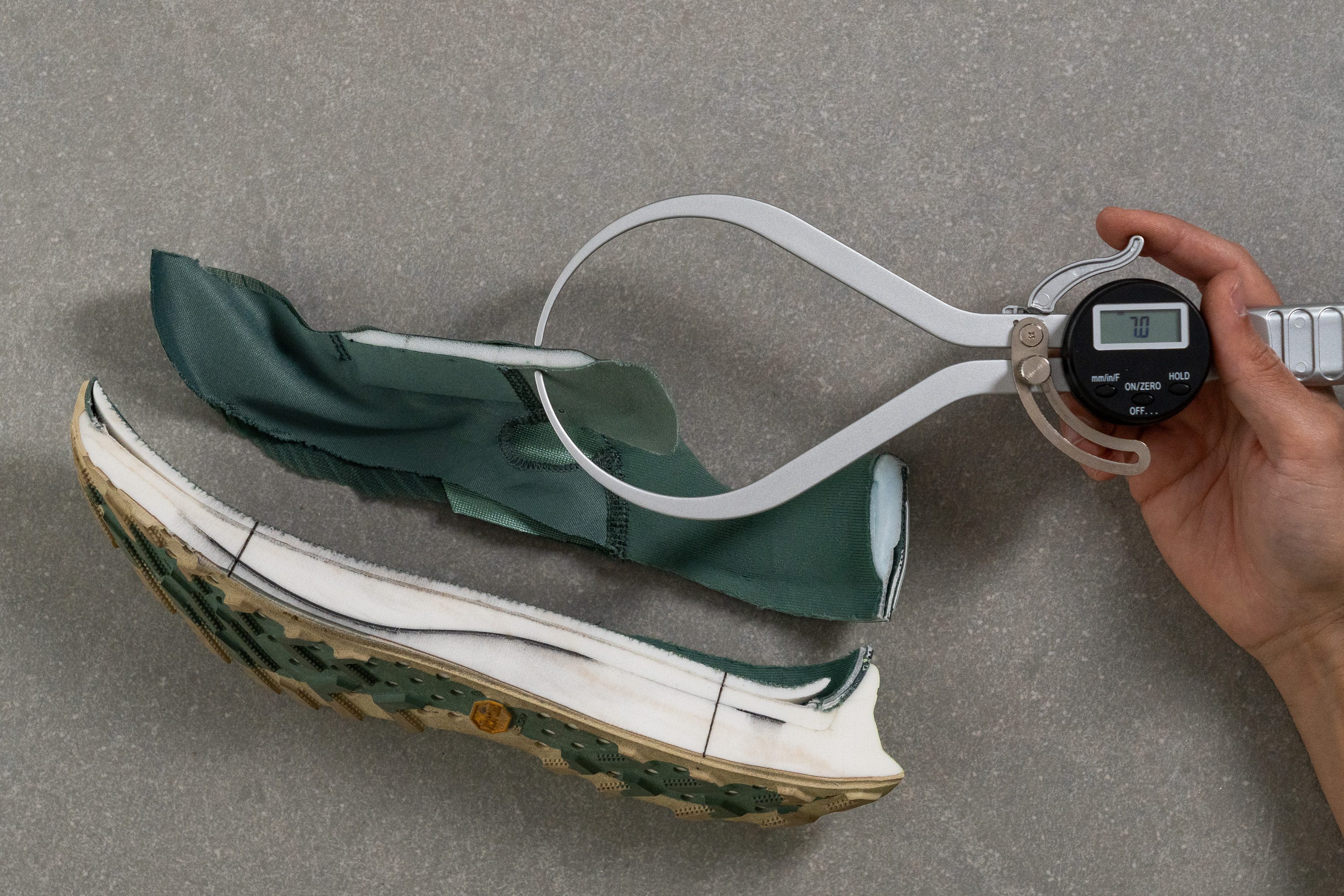
| ACG Ultrafly Trail | 7.0 mm |
| Average | 6.4 mm |
Tongue: gusset type
The tongue comes with a semi-gusseted design, which reinforces our view that the Ultrafly Trail excels more on easy terrain or gravel roads than on demanding trails, where debris is more likely to enter the shoe.
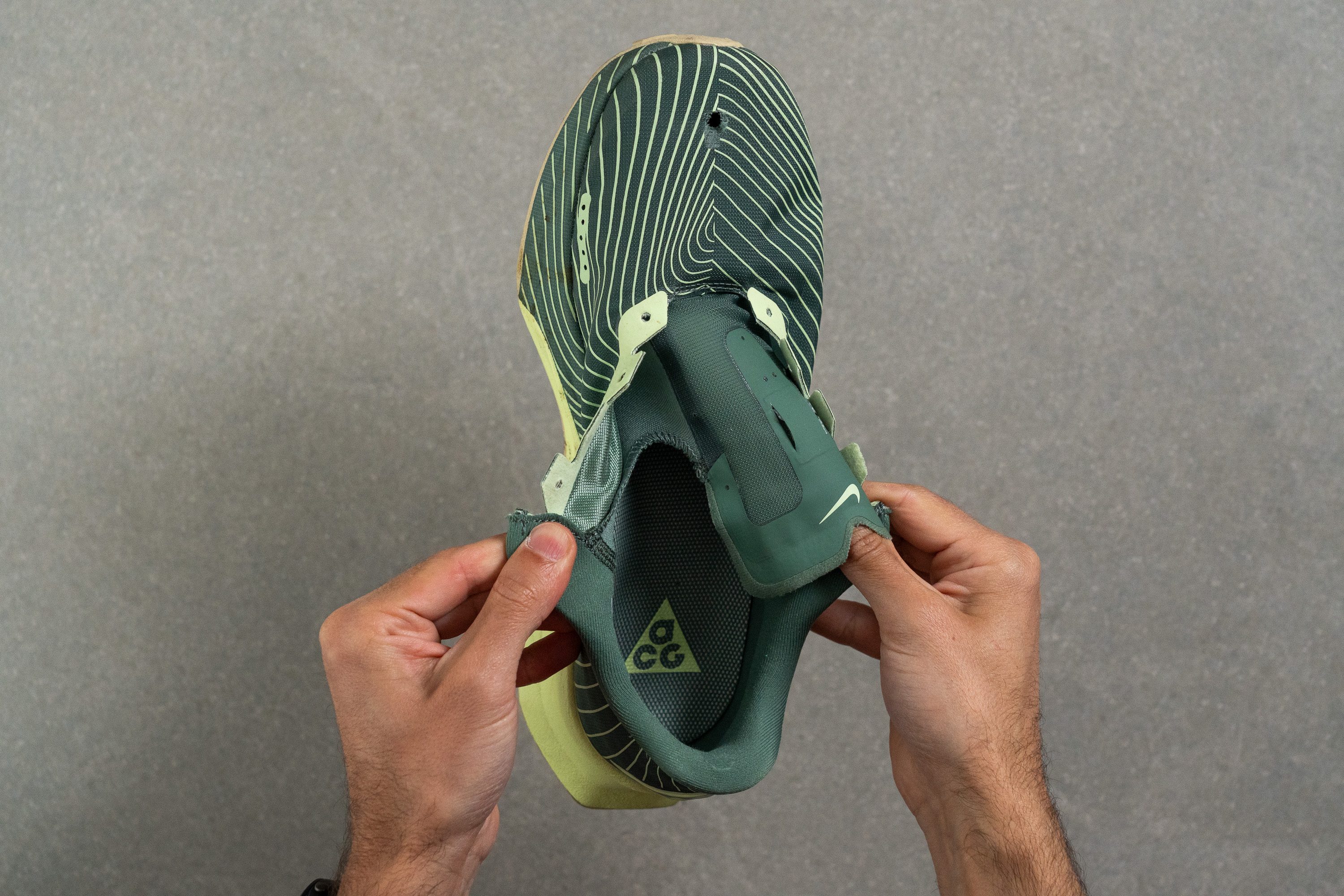
| ACG Ultrafly Trail | Both sides (semi) |
Heel tab
The heel of the shoe lacks a finger-loop tab, but showcases its new place within Nike’s All Conditions Gear family, just in case anyone had doubts.
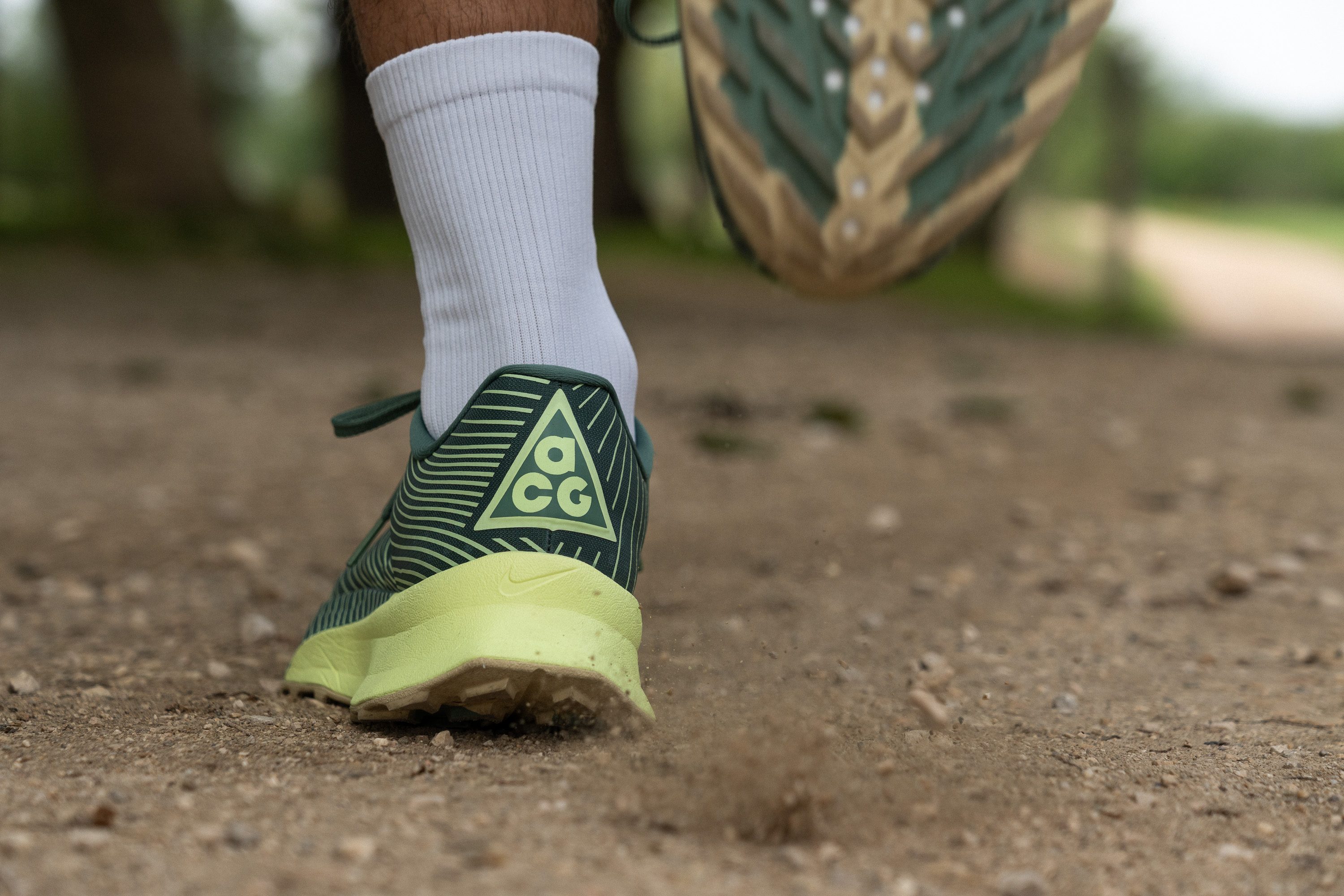
| ACG Ultrafly Trail | None |
Price
Pricing is likely the biggest barrier for many runners considering the ACG Ultrafly Trail. Premium technology like ZoomX and Vibram comes at a cost, and we can see that for many trail runners, moving closer to $300 is a big ask.
| ACG Ultrafly Trail | $260 |
| Average | $160 |