





















Our verdict
- Gravel 92
- Versatile 77
- Technical 43
Pros
- Fantastic PEBA foam
- Incredible Vibram Megagrip Elite outsole
- Surprisingly stable
- Elite-level materials from heel to toe
- Ideal for fast, flat courses
- Sock-like MATRYX upper
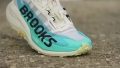
- Impressively beautiful design
- Fast without being too stiff or uncomfortable
- Ideal for heel strikers
- Plush, comfortable ride for long runs
Cons
- High price limits appeal
- Narrow-fitting toebox
- High drop can feel awkward to some
- Low toebox durability
Awards
- Top pick in best ultra running shoes
- Top pick in best Brooks trail running shoes
- Top 18% in trail running shoes
- Top 28% in Brooks running shoes
Comparison
The most similar running shoes compared
+ + Add a shoe | |||||
|---|---|---|---|---|---|
| Our score | 86 Great | 83 Great | 83 Great | 79 Good | |
| Price | $275 | $150 | $155 | $150 | |
| Trail terrain | Gravel / Road-to-trail | Gravel / Road-to-trail | Gravel / Road-to-trailVersatile / Moderate terrain | Gravel / Road-to-trailVersatile / Moderate terrain | |
| Shock absorption | High | Moderate | High | Moderate | |
| Energy return | High | Moderate | Moderate | Moderate | |
| Traction | High | High | High | High | |
| Arch support | Neutral | Neutral | Neutral | Neutral | |
| Weight lab Weight brand | 9.7 oz / 275g 9.7 oz / 275g | 10.4 oz / 295g 10.6 oz / 300g | 9.5 oz / 269g 9.7 oz / 275g | 10.9 oz / 309g 10.9 oz / 309g | |
| Drop lab Drop brand | 11.5 mm 6.0 mm | 11.5 mm 8.0 mm | 10.1 mm 8.0 mm | 8.8 mm 6.0 mm | |
| Strike pattern | Heel | Heel | Heel | HeelMid/forefoot | |
| Size | True to size | Slightly large | True to size | True to size | |
| Midsole softness | Soft | Balanced | Soft | Balanced | |
| Difference in midsole softness in cold | Small | Small | Normal | Big | |
| Toebox durability | Very bad | Decent | Good | Bad | |
| Heel padding durability | Good | Good | Good | Good | |
| Outsole durability | Good | Good | Good | Decent | |
| Breathability | Moderate | Moderate | Breathable | Moderate | |
| Width / fit | Narrow | Medium | Medium | Medium | |
| Toebox width | Medium | Medium | Medium | Medium | |
| Stiffness | Moderate | Moderate | Moderate | StiffModerate | |
| Torsional rigidity | Moderate | Moderate | Flexible | Stiff | |
| Heel counter stiffness | Moderate | Stiff | Stiff | Stiff | |
| Lug depth | 3.2 mm | 2.7 mm | 3.7 mm | 3.6 mm | |
| Heel stack lab Heel stack brand | 38.8 mm 40.0 mm | 38.3 mm 36.5 mm | 40.2 mm 42.0 mm | 36.7 mm 39.0 mm | |
| Forefoot lab Forefoot brand | 27.3 mm 34.0 mm | 26.8 mm 28.5 mm | 30.1 mm 34.0 mm | 27.9 mm 33.0 mm | |
| Widths available | Normal | NormalWide | NormalWide | Normal | |
| For heavy runners | ✗ | ✓ | ✗ | ✓ | |
| Season | All seasons | All seasons | SummerAll seasons | All seasons | |
| Removable insole | ✓ | ✓ | ✓ | ✓ | |
| Orthotic friendly | ✓ | ✓ | ✓ | ✓ | |
| Ranking | #91 Top 23% | #158 Top 40% | #153 Top 39% | #241 Bottom 39% | |
| Popularity | #175 Top 44% | #91 Top 23% | #50 Top 13% | #179 Top 45% |



Who should buy
We pushed the Brooks Cascadia Elite to its limits and found that:
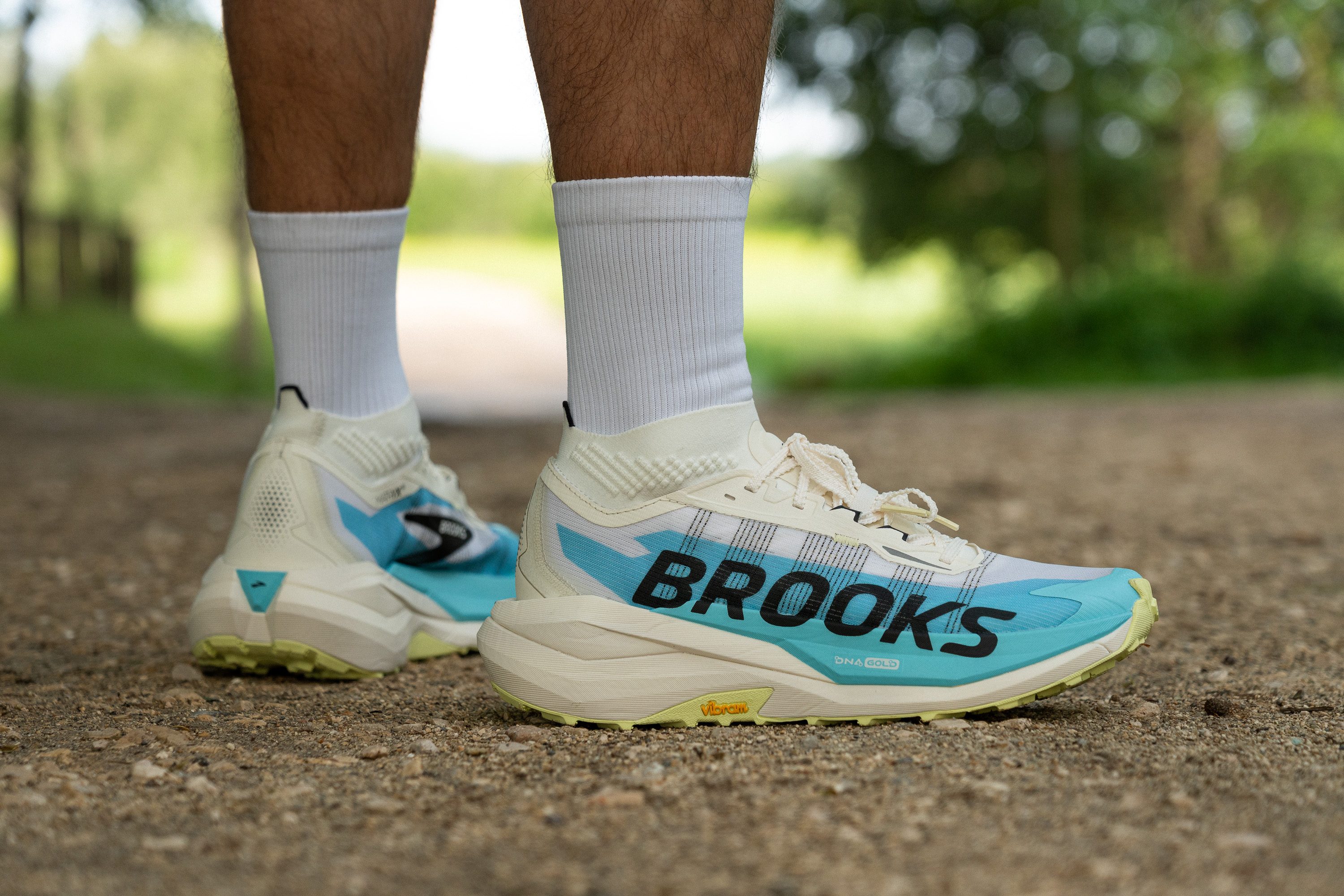
- Runners seeking a stable trail super shoe will appreciate its wide platform and supportive design during long races.
- Heel strikers will enjoy the high drop and aggressive rocker.
- Those who want premium materials everywhere will love the MATRYX upper, DNA Gold foam, and Vibram Megagrip Elite outsole package.
Who should NOT buy
While we really liked the premium build and explosive foam, the sky-high price of the Brooks Cascadia Elite makes it difficult to justify for many runners. The KIPRUN Kipsummit Max and Saucony Xodus Ultra 4 deliver similar or better energy return for much less money.
We also think the high-drop geometry may feel awkward for runners who prefer a more natural trail feel. From our perspective, the HOKA Tecton X 3 is probably a better trail super shoe for many midfoot and forefoot strikers.
Cushioning
Shock absorption
One of the main goals of the Brooks Cascadia Elite is to crush ultra-distance trail races, and based on our testing, it feels more than ready for that challenge. We verified excellent shock absorption in the lab with 147 SA in the heel and 116 SA in the forefoot, both landing comfortably above our current category average.
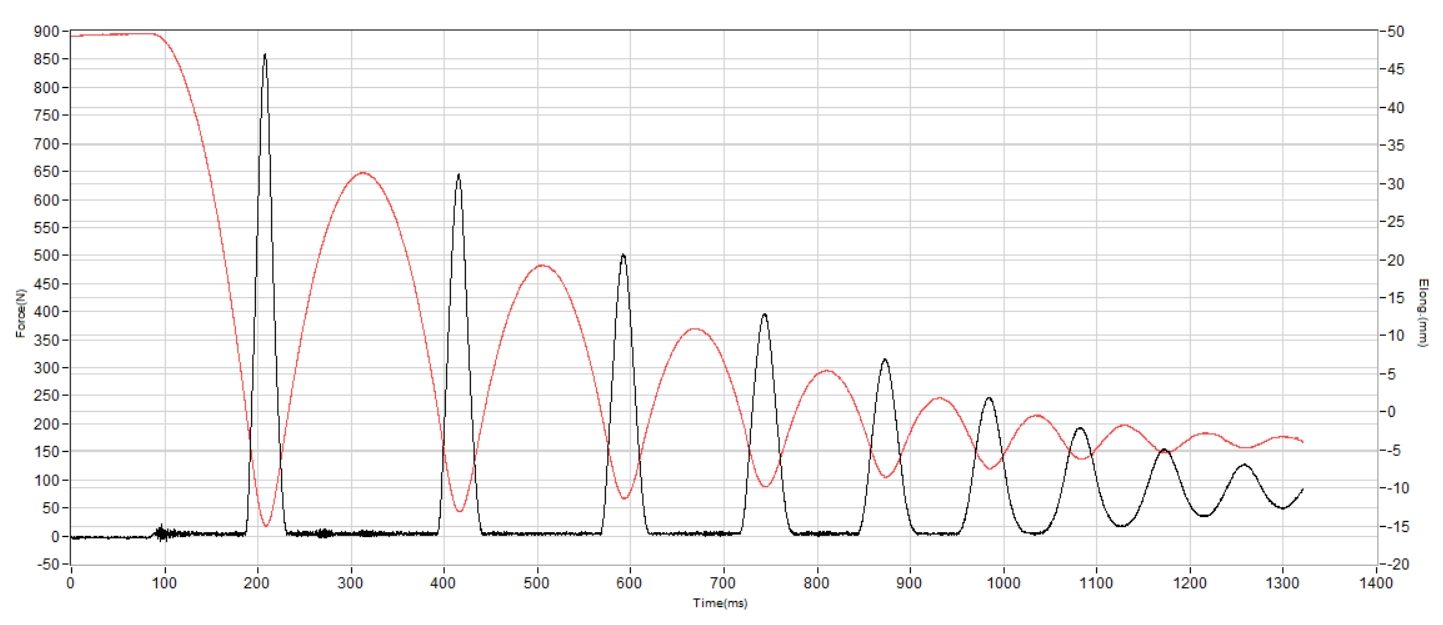
| Cascadia Elite | 147 SA |
| Average | 123 SA |
Energy return
This marks the first time Brooks has used its PEBA-based DNA Gold compound in a trail shoe, and during our testing it became immediately obvious why it's here.
We measured impressive energy return values of 68.4% in the heel and 68.9% in the forefoot, numbers that place the Cascadia Elite right alongside other modern trail super shoes.
| Cascadia Elite | 68.9% |
| Average | 59.7% |
Heel stack
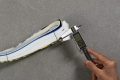
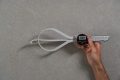
Brooks states that the Cascadia Elite features a 40 mm heel stack, and we measured it slightly lower at 38.8 mm. However, the difference is so small that we seriously doubt anyone could notice it during actual runs.
With such a massive amount of PEBA foam underfoot, excellent impact protection comes guaranteed, something we already confirmed in our shock absorption test.
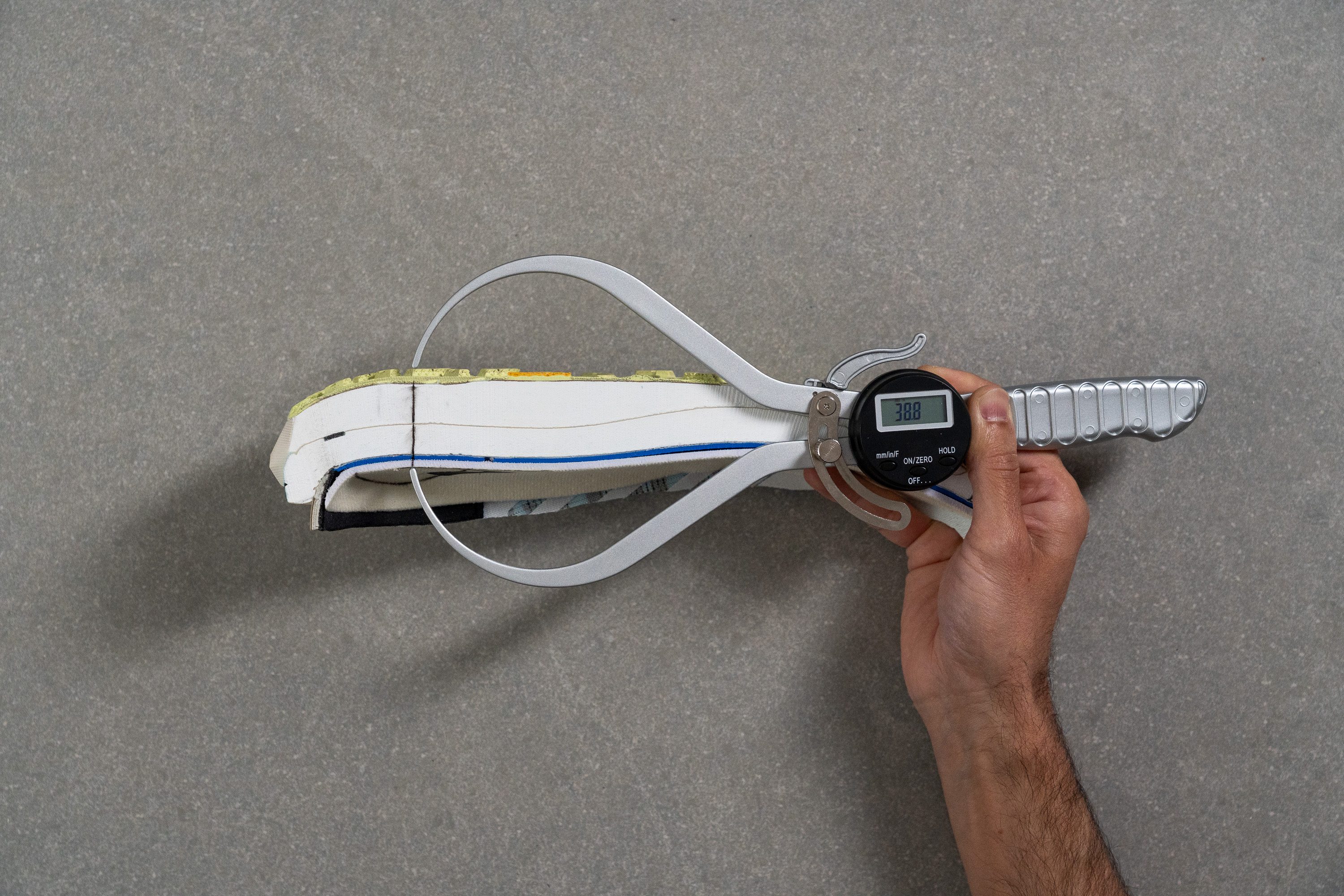
| Cascadia Elite | 38.8 mm |
| Average | 33.1 mm |
Forefoot stack
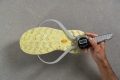
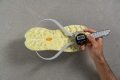
While the heel came remarkably close to the advertised stack height, the forefoot told a different story. Brooks claims 34 mm here, yet we measured only 27.3 mm at the official measurement point defined by World Athletics guidelines.
That said, an important clarification is needed. The shoe features an extremely aggressive rocker, and moving the calipers just a few millimeters can dramatically change the result. Therefore, it’s obvious that Brooks took the measurement slightly farther back into the midfoot area, and during our runs we clearly felt that the shoe still offers abundant cushioning through that section.
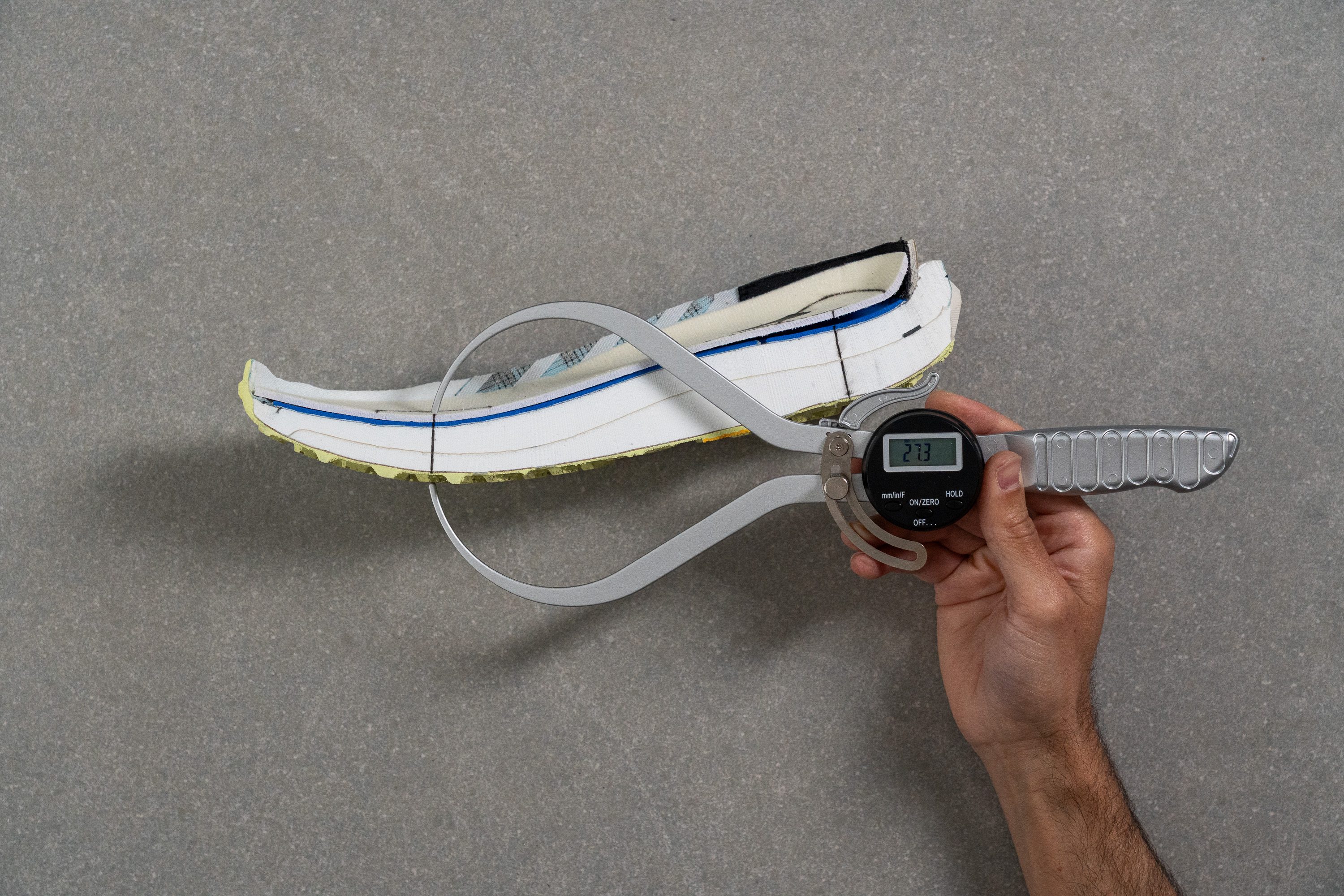
| Cascadia Elite | 27.3 mm |
| Average | 25.8 mm |
Drop
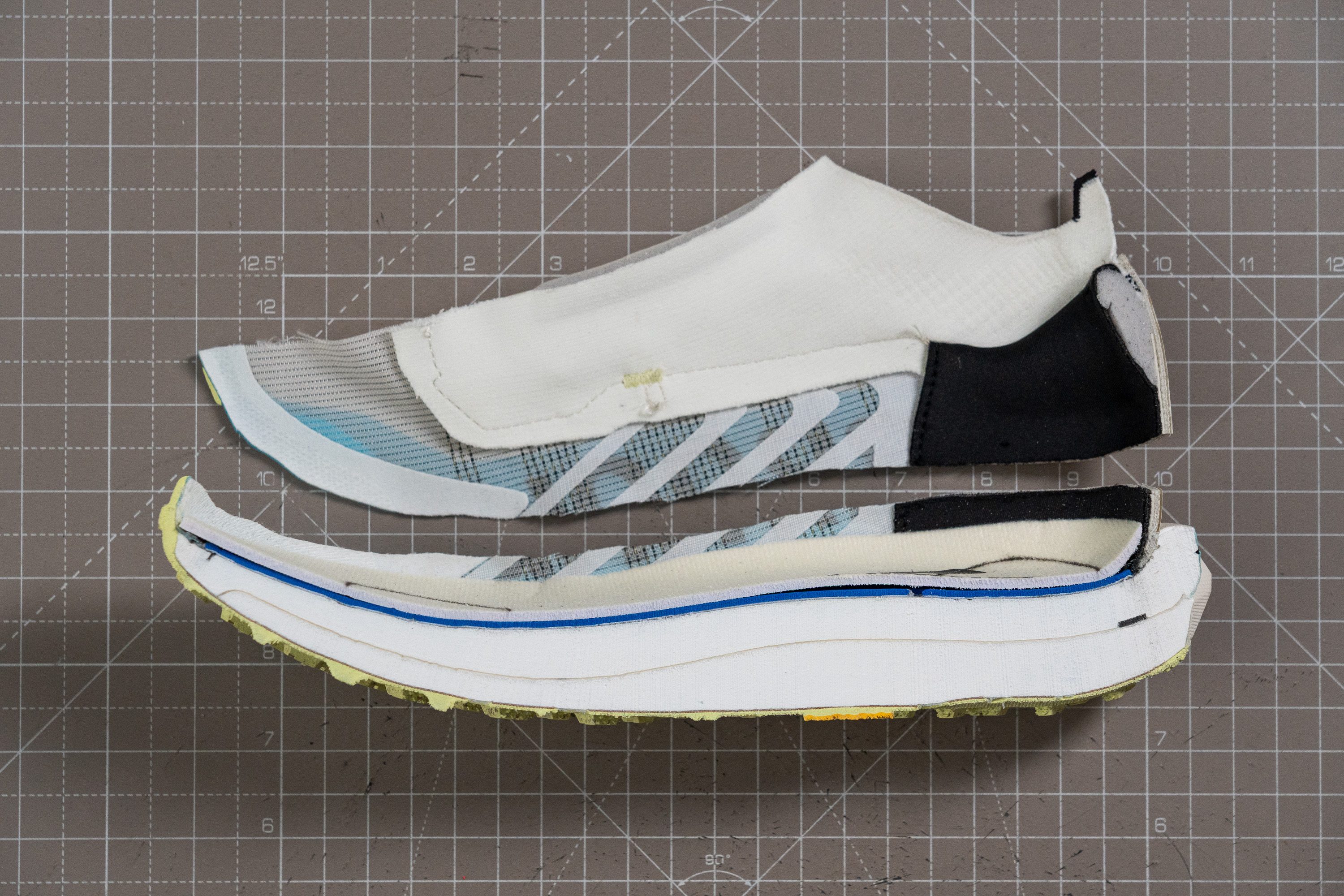
Given the lower-than-expected forefoot measurement, we naturally ended up with a much higher heel-to-toe drop than the one advertised. To be precise, we measured 11.5 mm, and in our experience the shoe never truly feels like a 6 mm design. Instead, it behaves much more like an 8-10 mm shoe, especially for heel and midfoot strikers.
| Cascadia Elite | 11.5 mm |
| Average | 7.3 mm |
Midsole softness
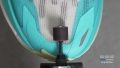
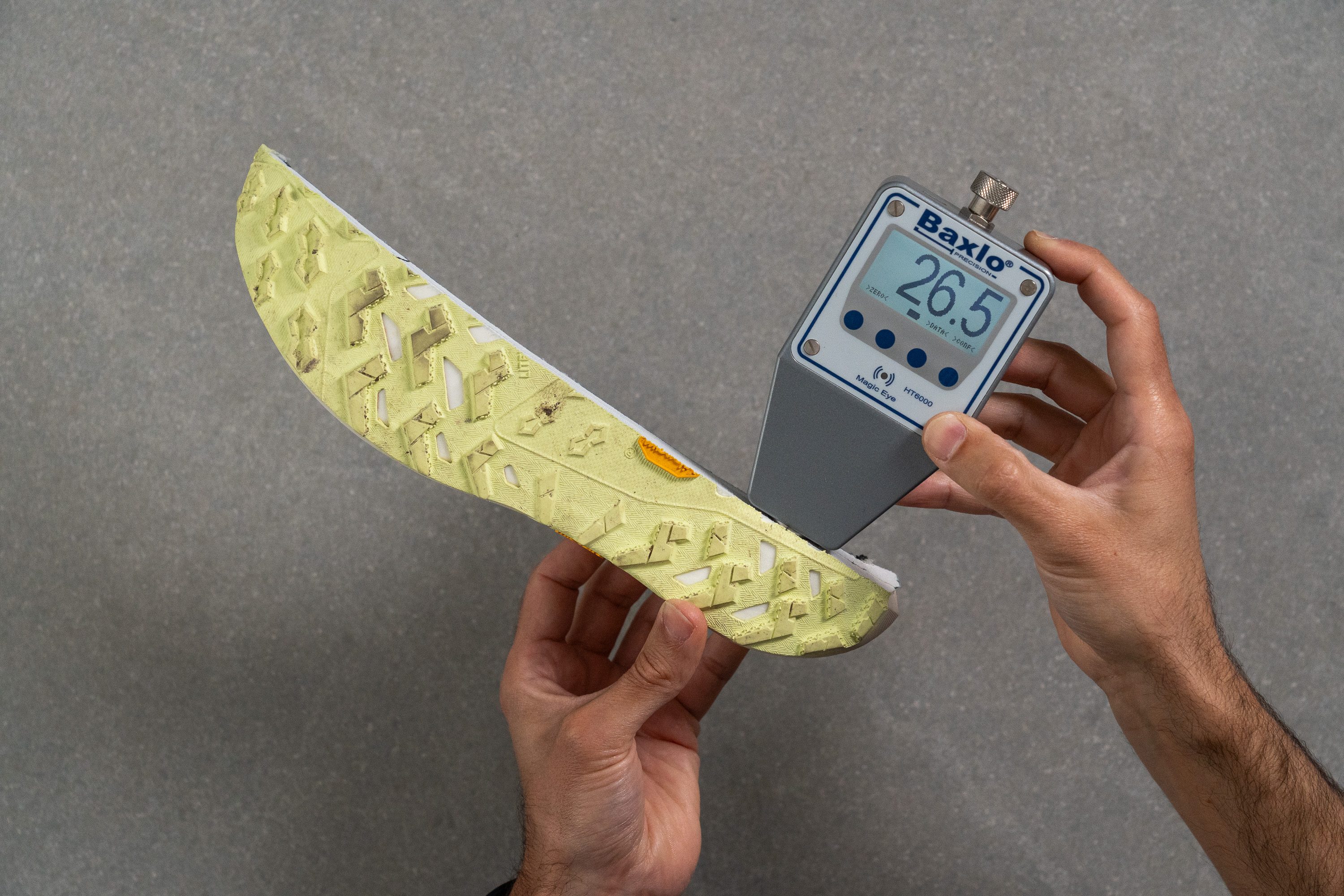
The Cascadia Elite also features the dual-foam setup commonly seen in modern super shoes, and the top layer already felt impressively plush in our lab, registering just 26.5 AC.
Indeed, the DNA Gold foam feels fantastic underfoot, delivering a combination of bounce and softness that we rarely experience in trail shoes. Therefore, runners searching for a mountain-ready shoe that avoids the usual firm and harsh sensation will find exactly that here.
| Cascadia Elite | 26.5 AC |
| Average | 38.3 AC |
Rocker
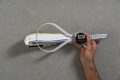
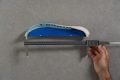
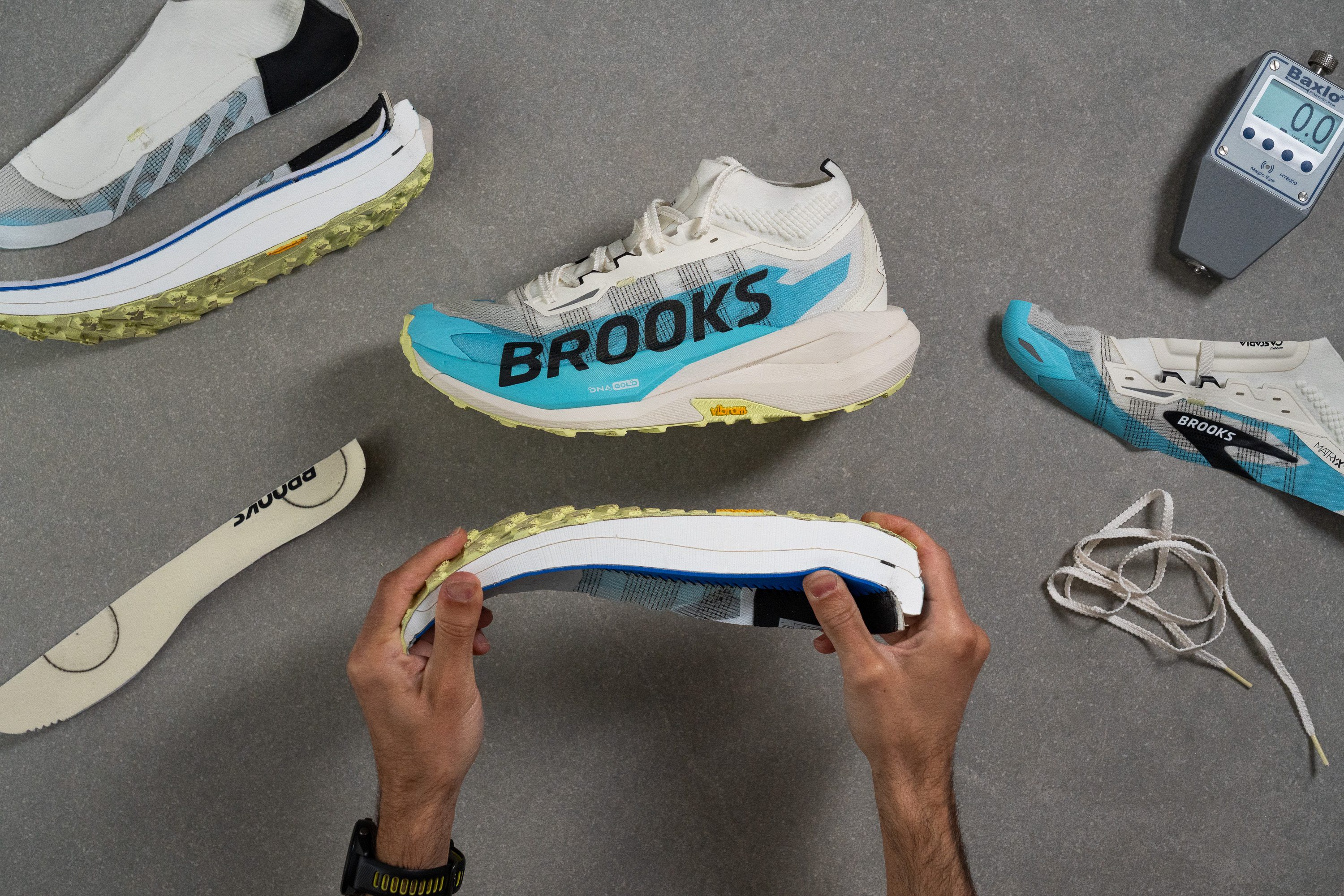
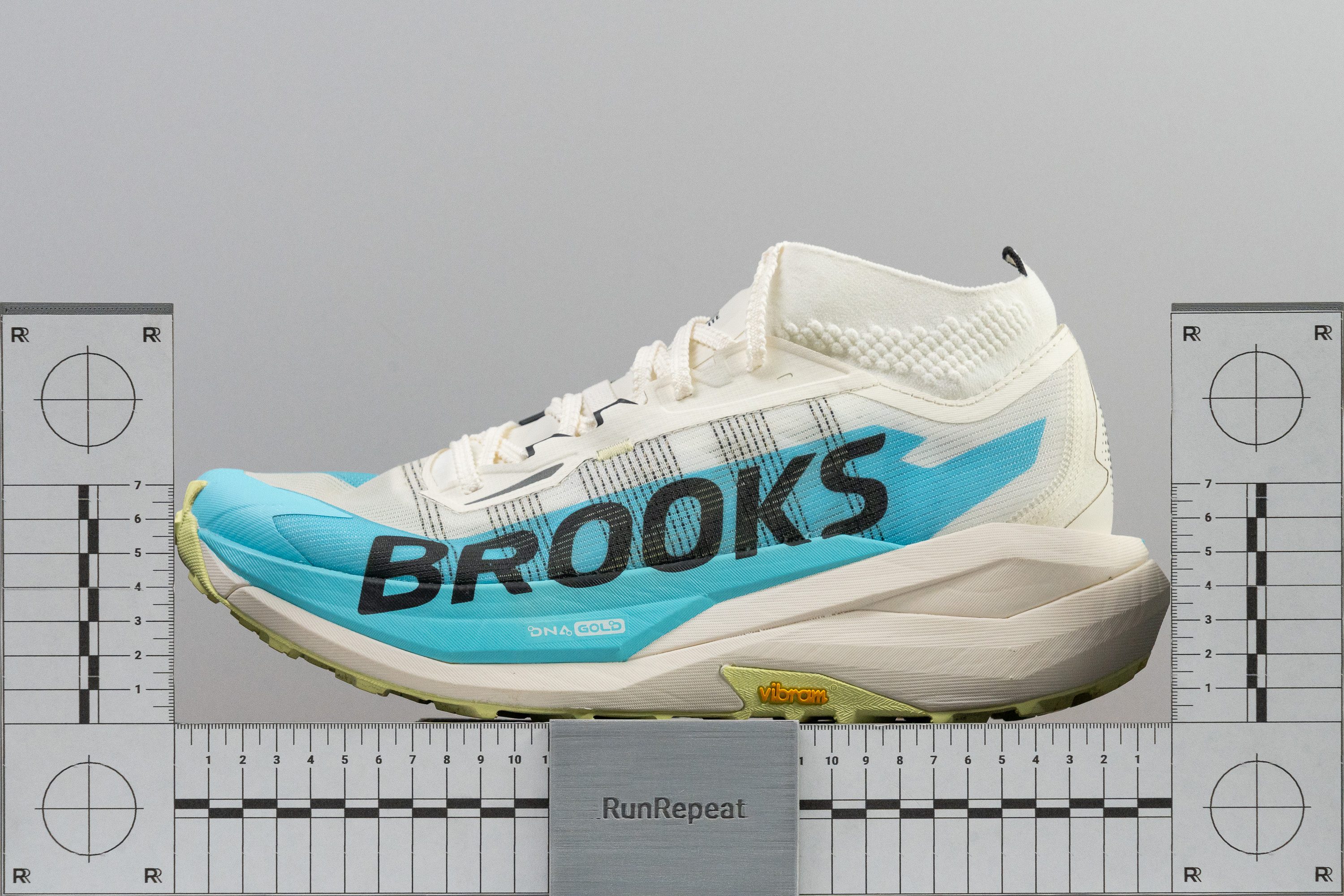
The Cascadia Elite already looks aggressive straight out of the box, and the ride perfectly matches that appearance. Back in the lab, we took our usual mug photo to analyze the rocker geometry and quickly discovered that Brooks went all-in here, using dramatic curves in both the forefoot and heel.
In our view, this setup makes the shoe especially well suited for fast and smooth trails rather than highly-technical terrain.
Plate
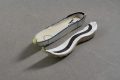
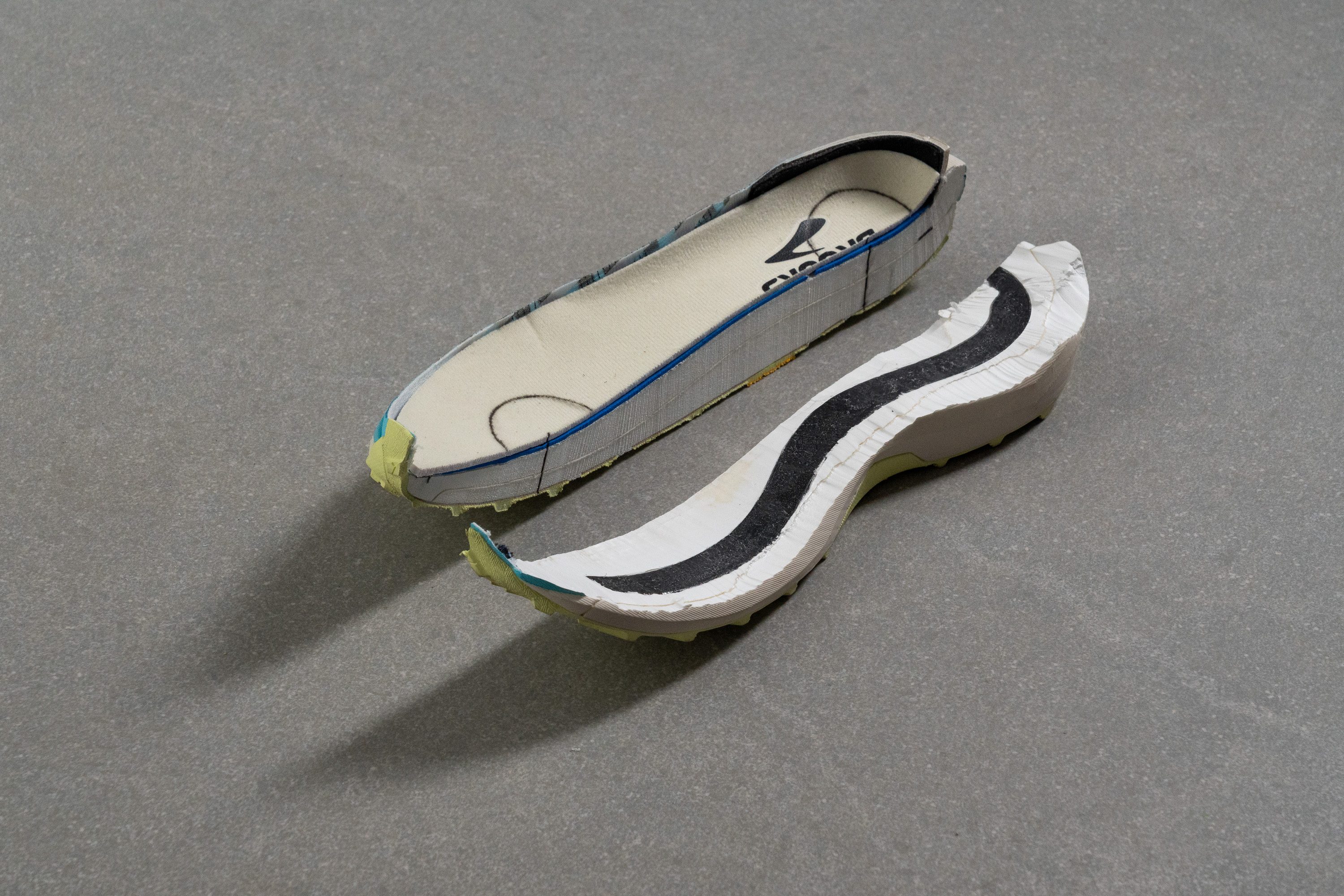
Slicing shoes in half is not enough to fully understand modern plate designs, something we’ve confirmed repeatedly over the last few years. The Brooks Cascadia Elite might be the best example yet, as it features a Pebax plate that wraps around the perimeter of the midsole. This approach adds stability and a touch of propulsion without introducing the harsh stiffness that often comes with full-length carbon plates.
We think it’s a really interesting solution, especially now that many brands are moving toward dual-plate systems for trail super shoes. Instead, Brooks chose a concept that feels much closer to what adidas recently introduced in the record-breaking Adizero Adios Pro Evo 3.
Size and fit
Size
Brooks Cascadia Elite fits true to size (17 votes).
Internal length
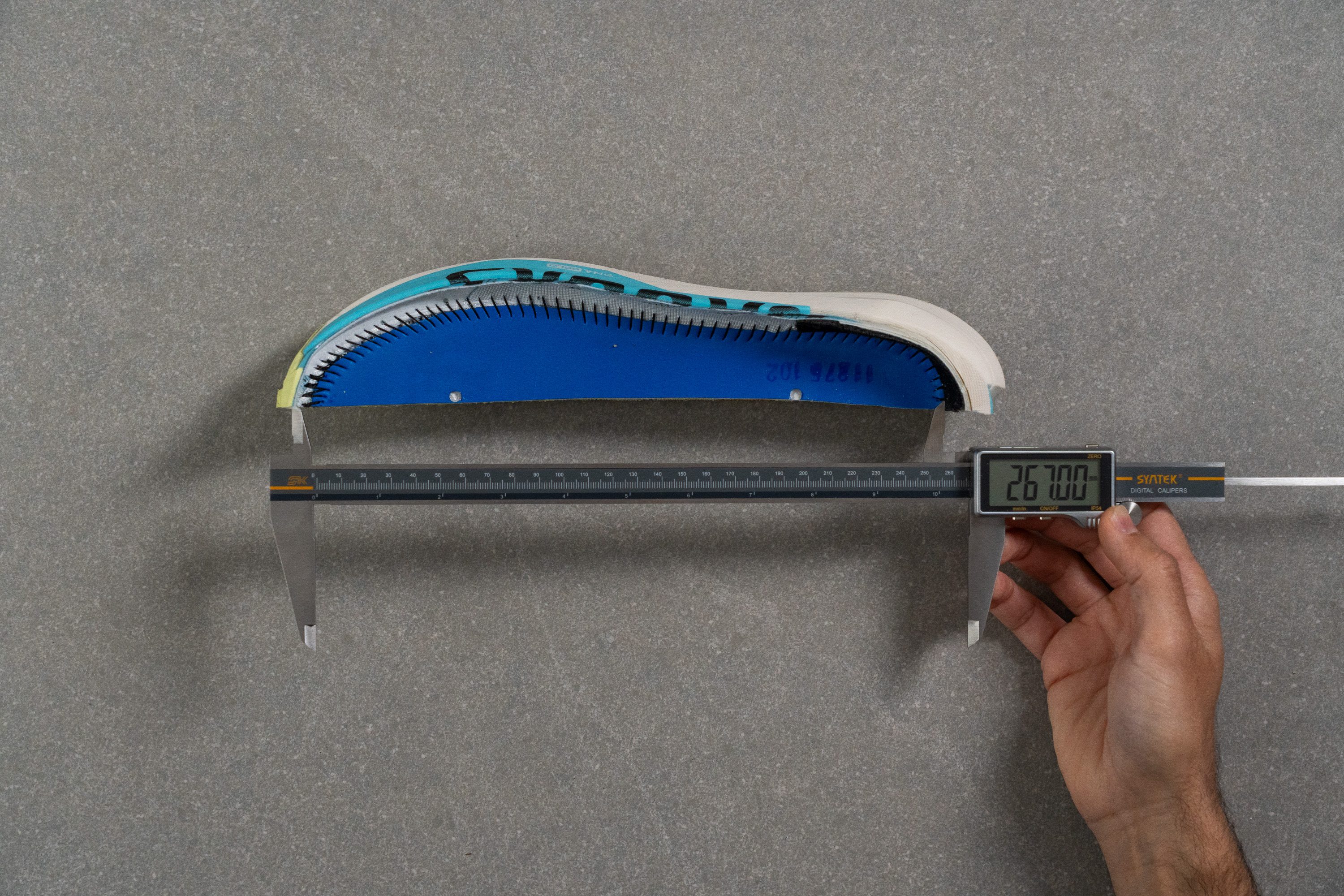
| Cascadia Elite | 267.0 mm |
| Average | 269.2 mm |
Width / Fit
Fit is always a delicate balancing act in trail shoes, especially in race-focused models built for ultra distances. Brands need to combine a secure foothold that limits ankle movement with enough comfort to handle long hours and foot swelling.
After running in the Cascadia Elite, we quickly noticed that Brooks clearly prioritized security first, and our 92.6 mm measurement strongly supports that impression.
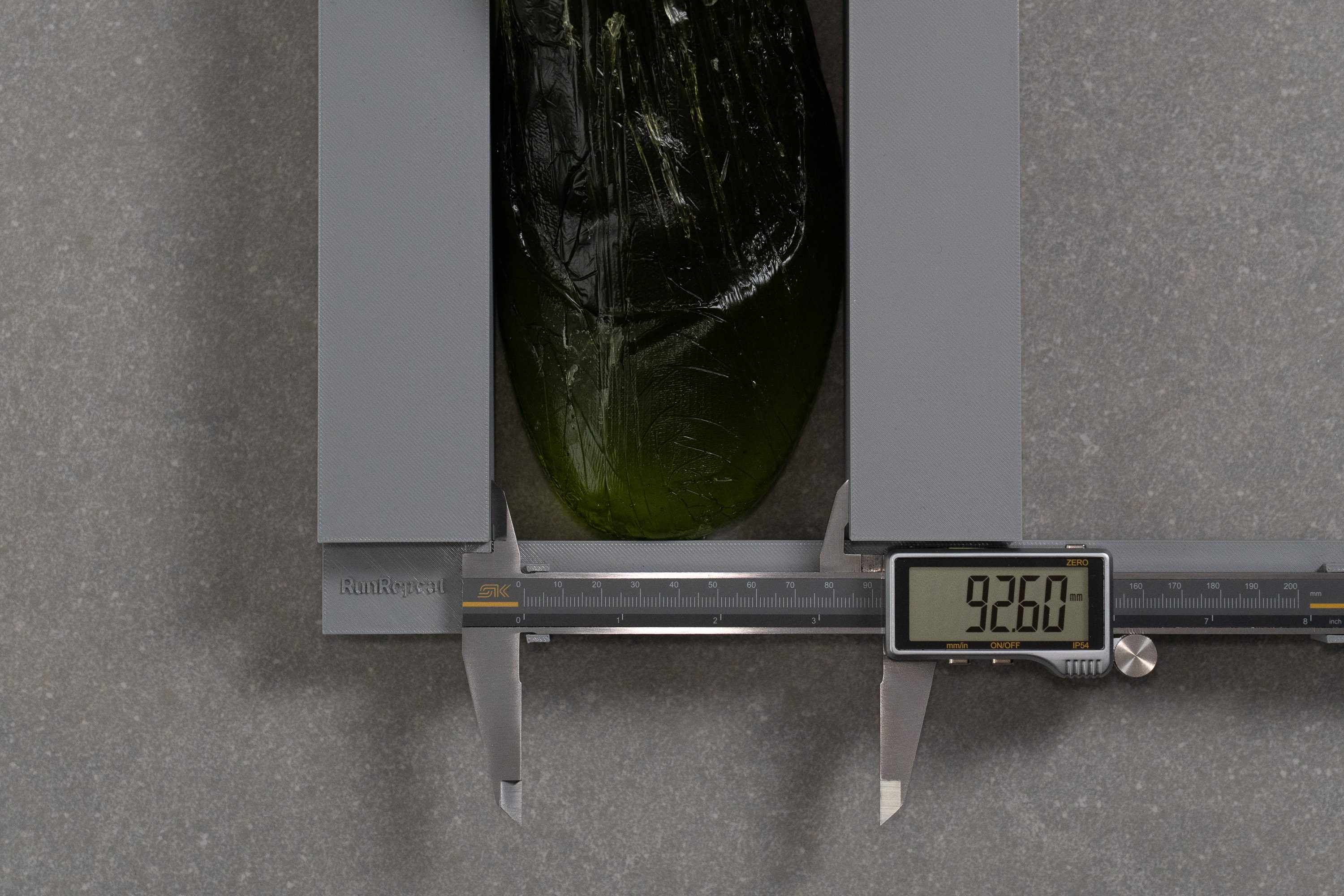
| Cascadia Elite | 92.6 mm |
| Average | 95.7 mm |
Toebox width
We took another measurement, this time focused on the toebox area, and the result again landed below average at 71.6 mm. Based on our testing, runners who usually need generous room for toe splay should probably avoid the Cascadia Elite, unless they plan to use it mainly for shorter races.
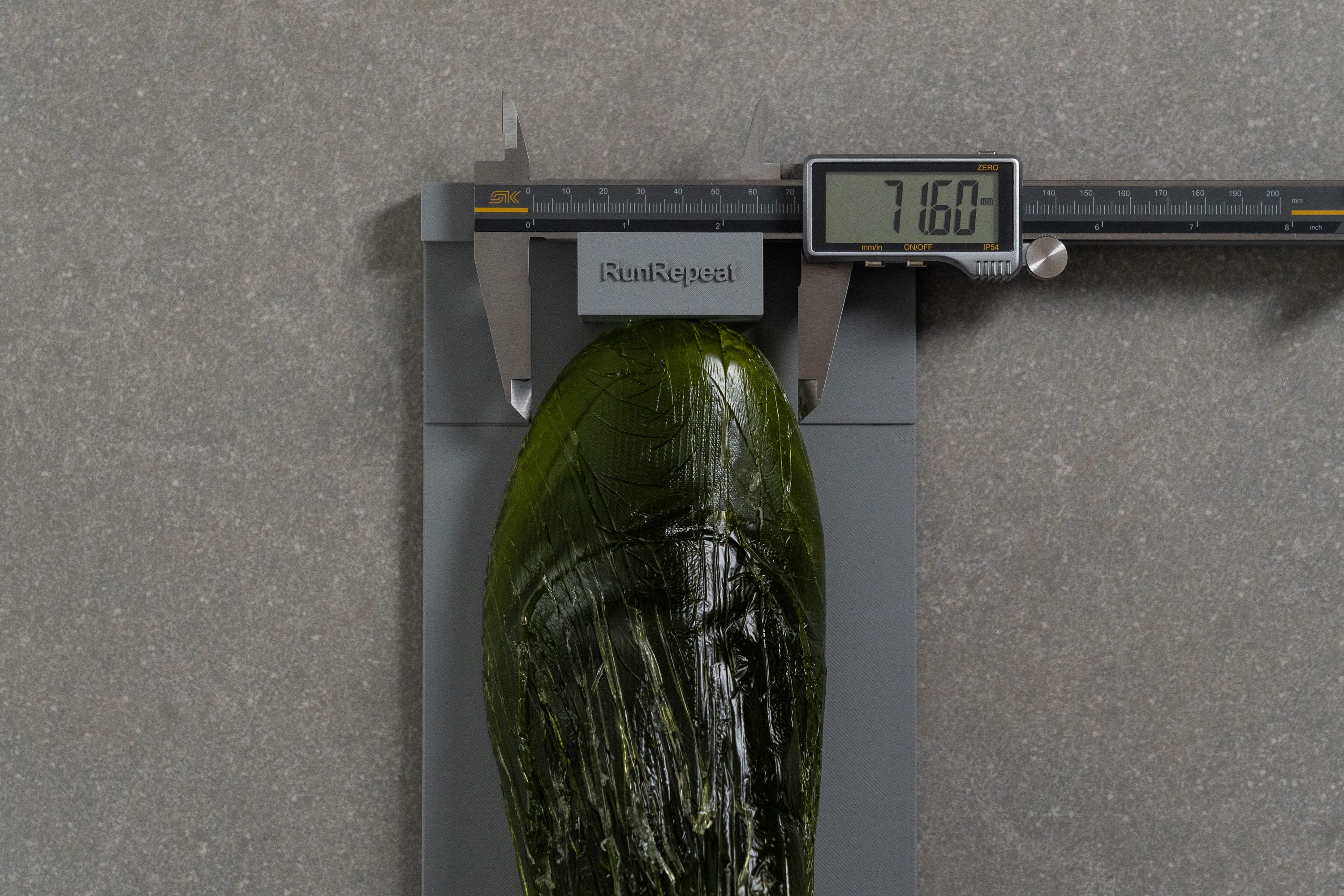
| Cascadia Elite | 71.6 mm |
| Average | 74.3 mm |
Toebox height
Toebox height feels well judged at 25.8 mm, and in our view Brooks made the right call here.
It’s low enough to maintain a secure fit during twisted sections, yet tall enough to avoid creating uncomfortable pressure on the toes.
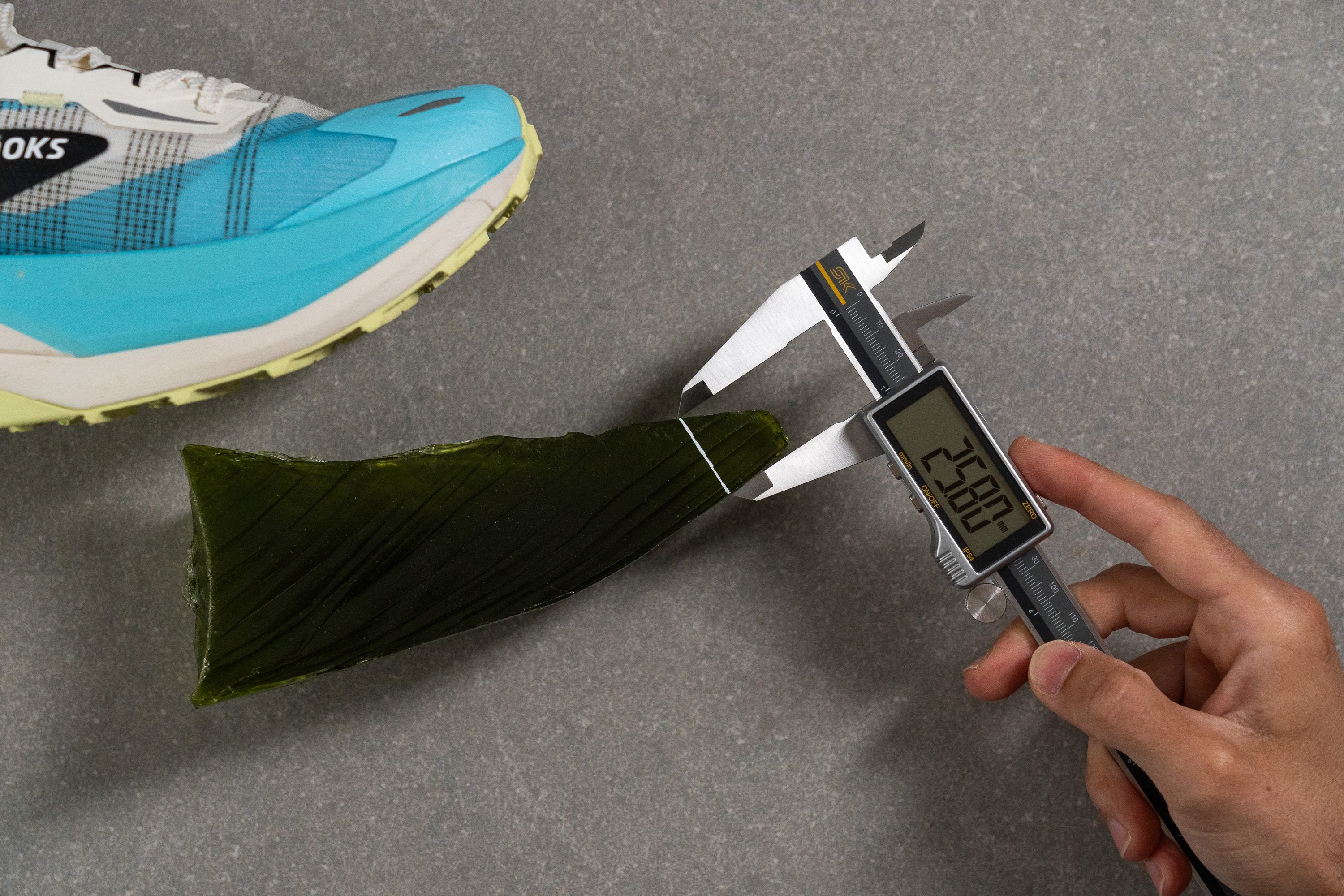
| Cascadia Elite | 25.8 mm |
| Average | 26.9 mm |
Traction / Grip
Traction test
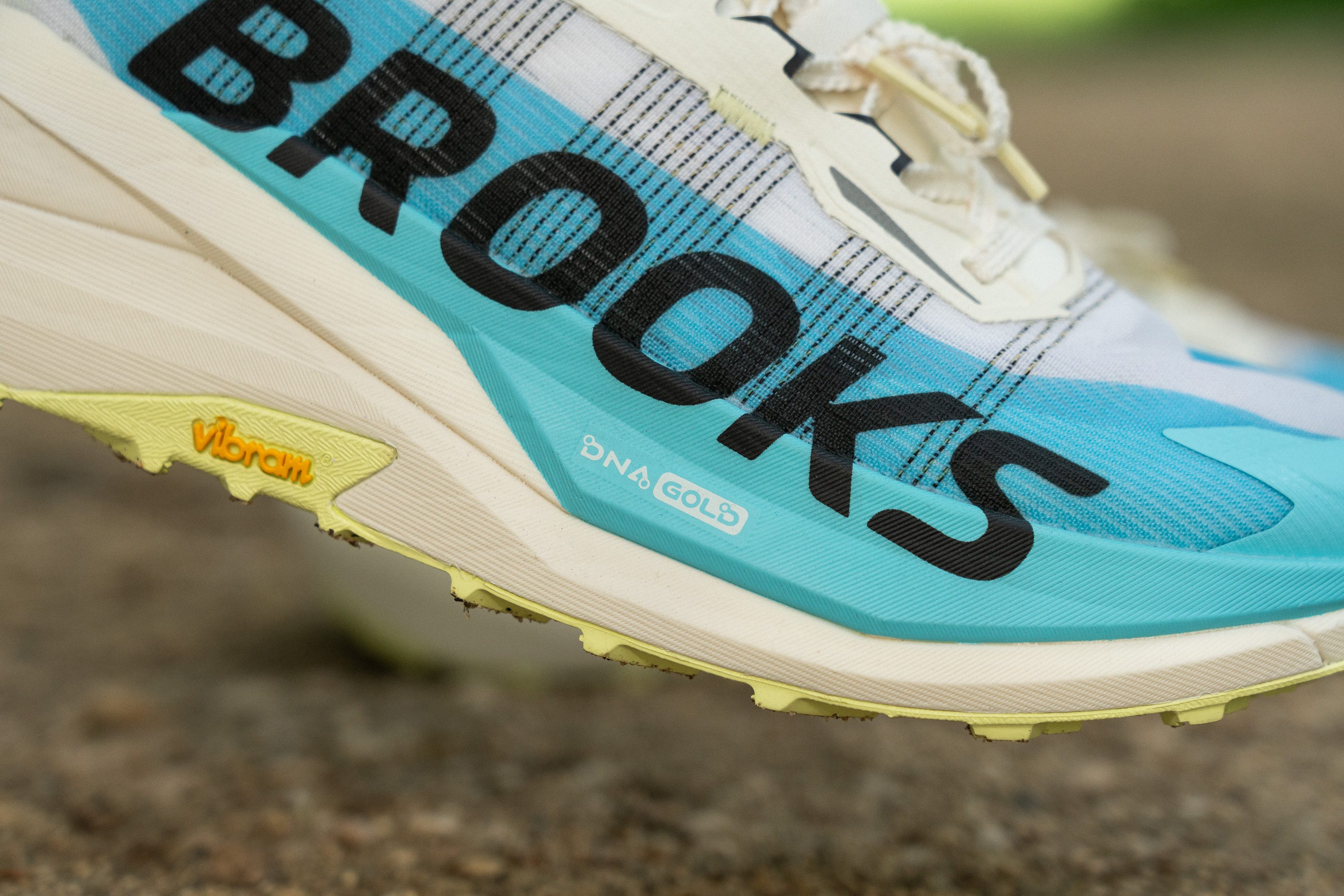
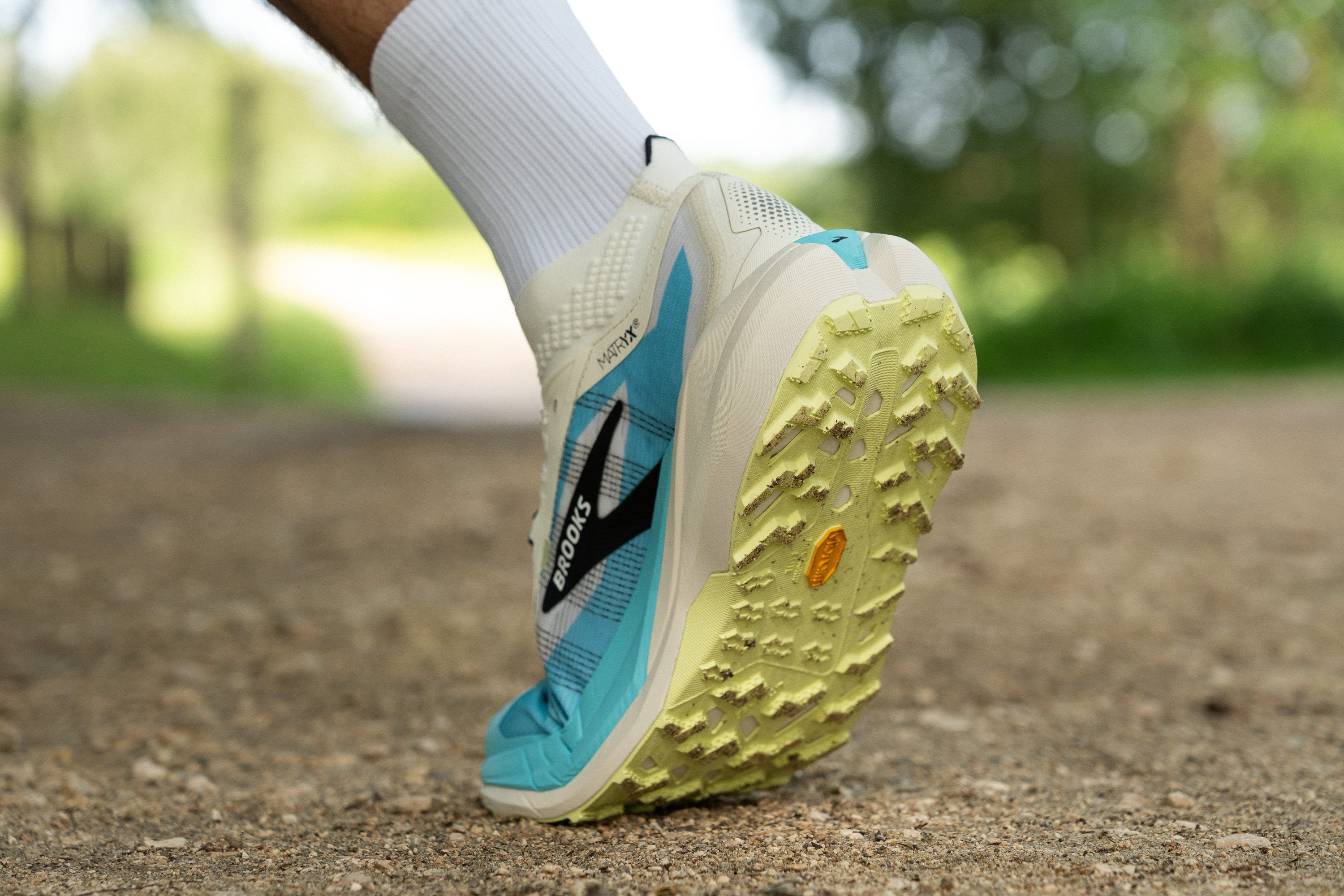
One of the most interesting parts of the Brooks Cascadia Elite is undoubtedly the outsole. It introduces the new Vibram Megagrip Elite compound, an upgraded version of the already-excellent Megagrip rubber that somehow manages to deliver even more traction.
And after testing it in the lab, we can confirm that the claims are absolutely justified. The shoe achieved an outstanding 1.08 score in our SATRA TM144 test, making it one of the grippiest trail shoes ever made.
| Cascadia Elite | 1.08 |
| Average | 0.68 |
Lug depth
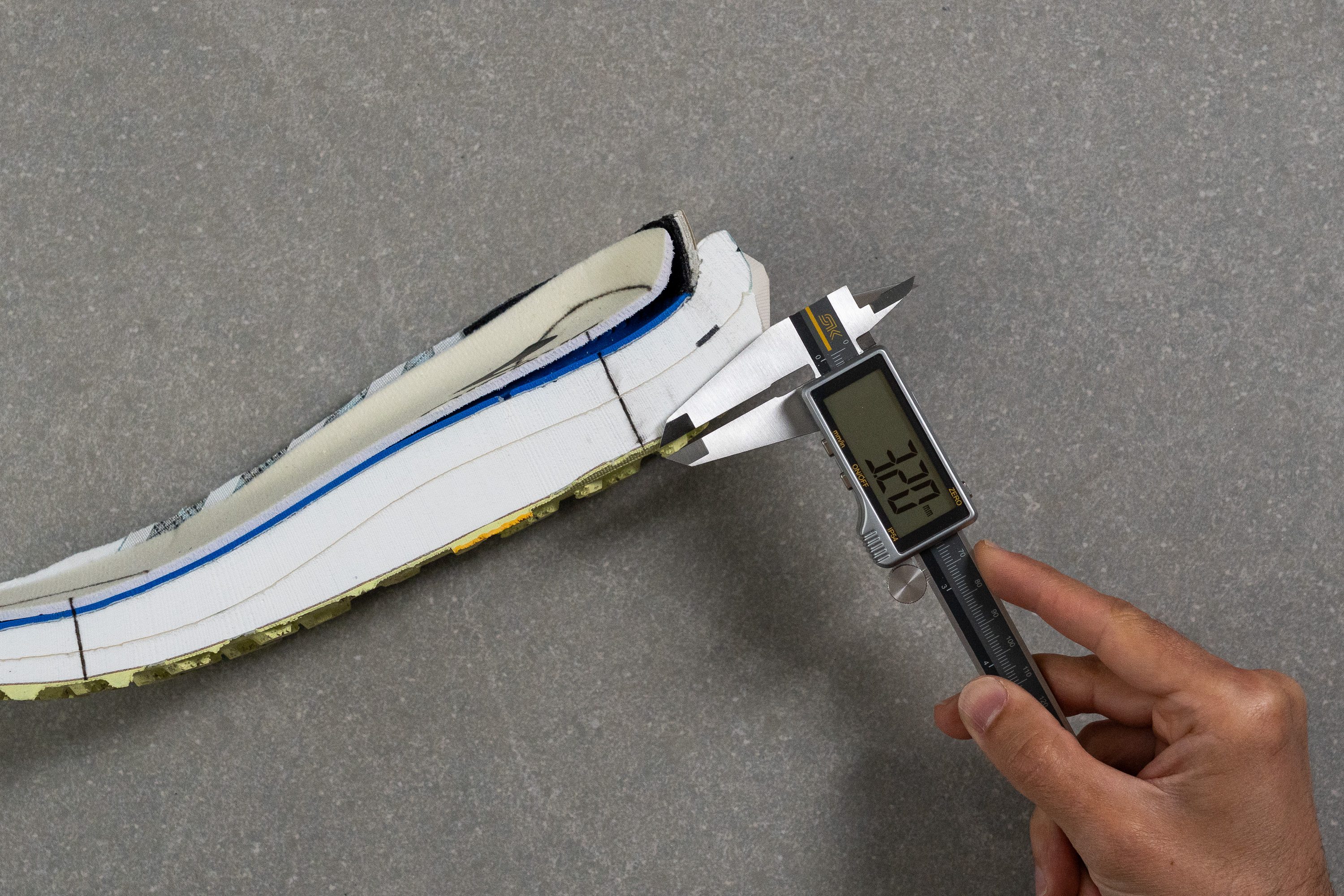
With 3.2 mm lugs, the Brooks Cascadia Elite is clearly tuned for smoother terrain and moderately technical sections rather than truly rugged trails.
In our view, taking this shoe into highly-technical terrain is definitely not the best idea, as the tall heel stack and relatively shallow lug depth are not designed for that kind of environment.
| Cascadia Elite | 3.2 mm |
| Average | 3.5 mm |
Outsole design
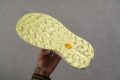
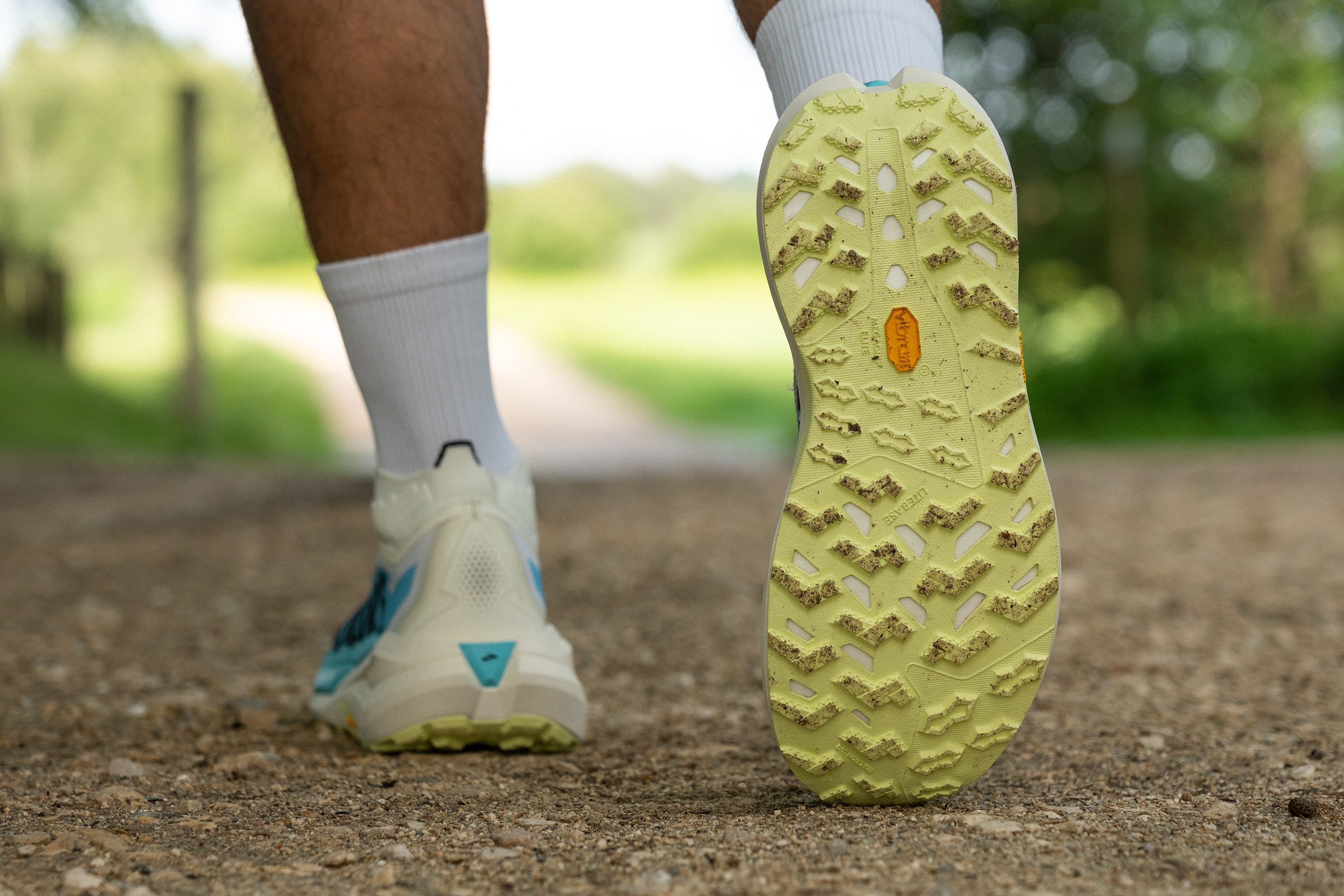
Brooks offers full-length rubber coverage in the Cascadia Elite, something that not all top-tier trail shoes are doing right now. Except for a few small cutouts in the heel and forefoot, Vibram Megagrip Elite rubber dominates the outsole.
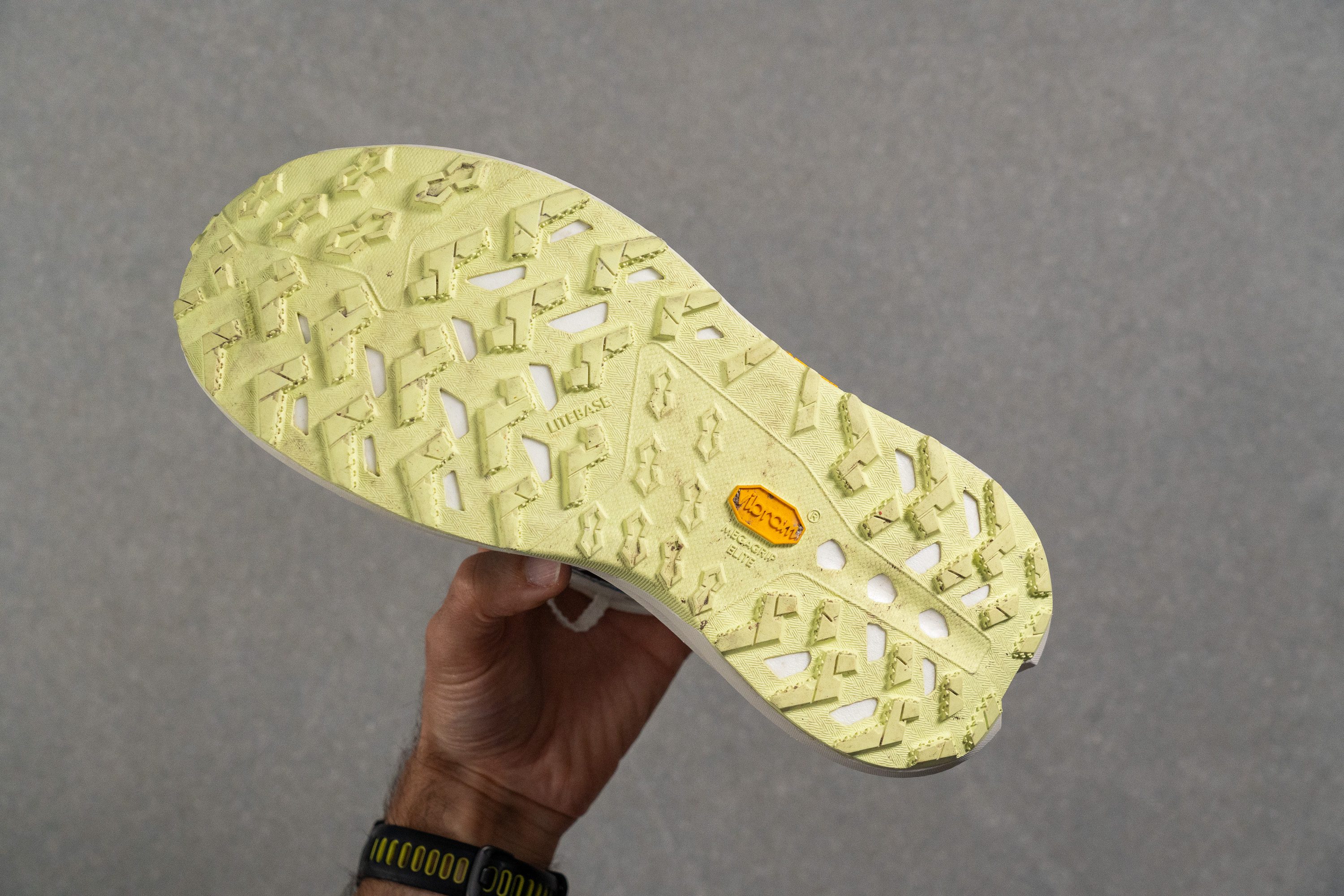
The lug layout is highly varied, clearly aiming to optimize each section of the shoe. The forefoot uses two different lug shapes to improve toe-off grip and cornering traction, while the heel relies on smaller and more angled shapes designed to increase braking control on descents.
Flexibility / Stiffness
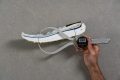
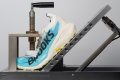
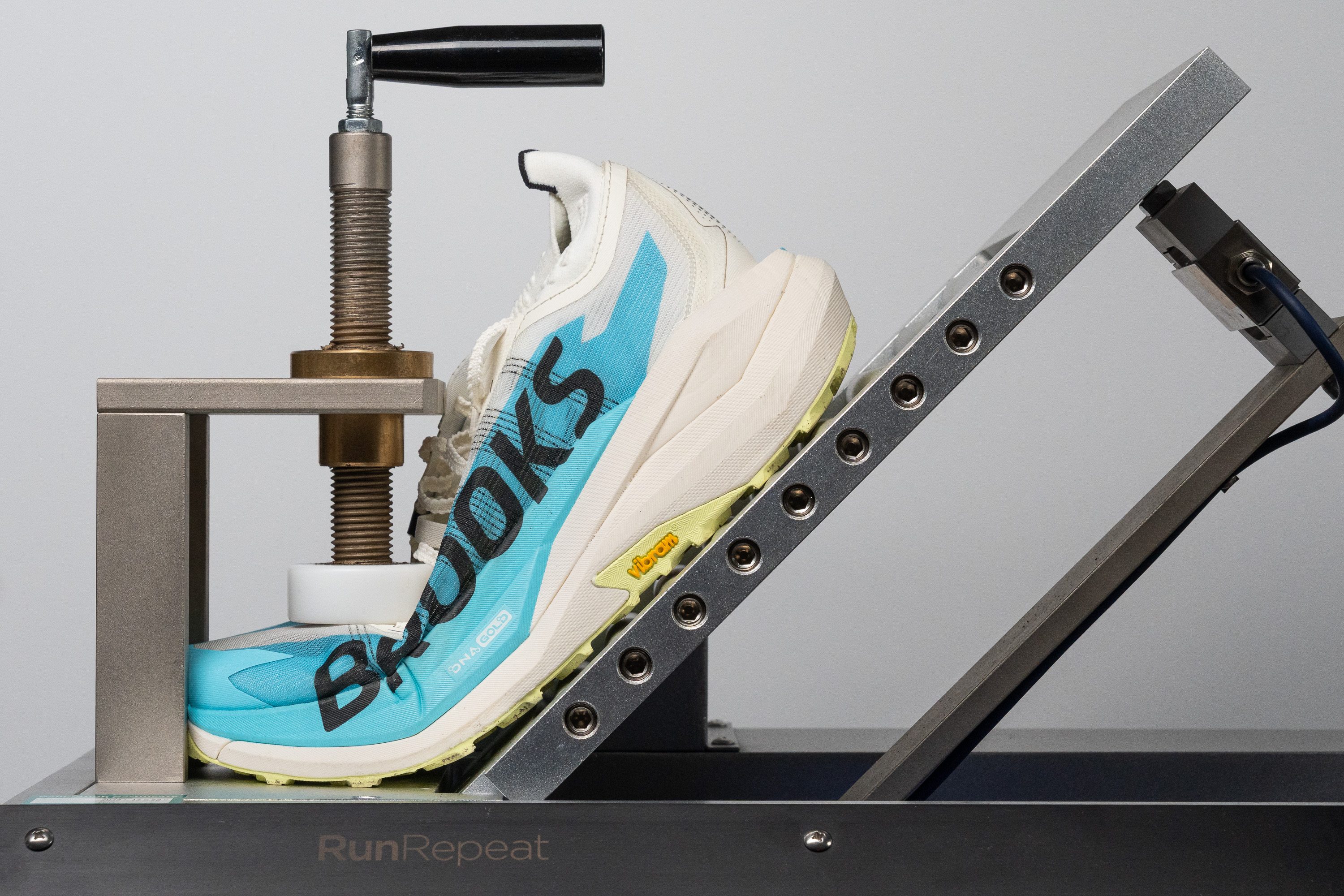
Using a Pebax plate—which behaves more similarly to plastic than carbon fiber—allowed the Cascadia Elite to maintain solid flexibility instead of becoming excessively stiff. As a result, it scored a reasonable 15.4N in our test.
| Cascadia Elite | 15.4N |
| Average | 14.8N |
Weight
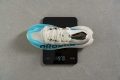
At 9.7 oz or 275g, the Brooks Cascadia Elite is not an especially lightweight trail shoe. However, considering the massive amount of foam underfoot and the full-length outsole coverage, we think the result is actually quite reasonable.
In fact, it lands right alongside the main competitors in this category, and we do not see the weight as a meaningful drawback.
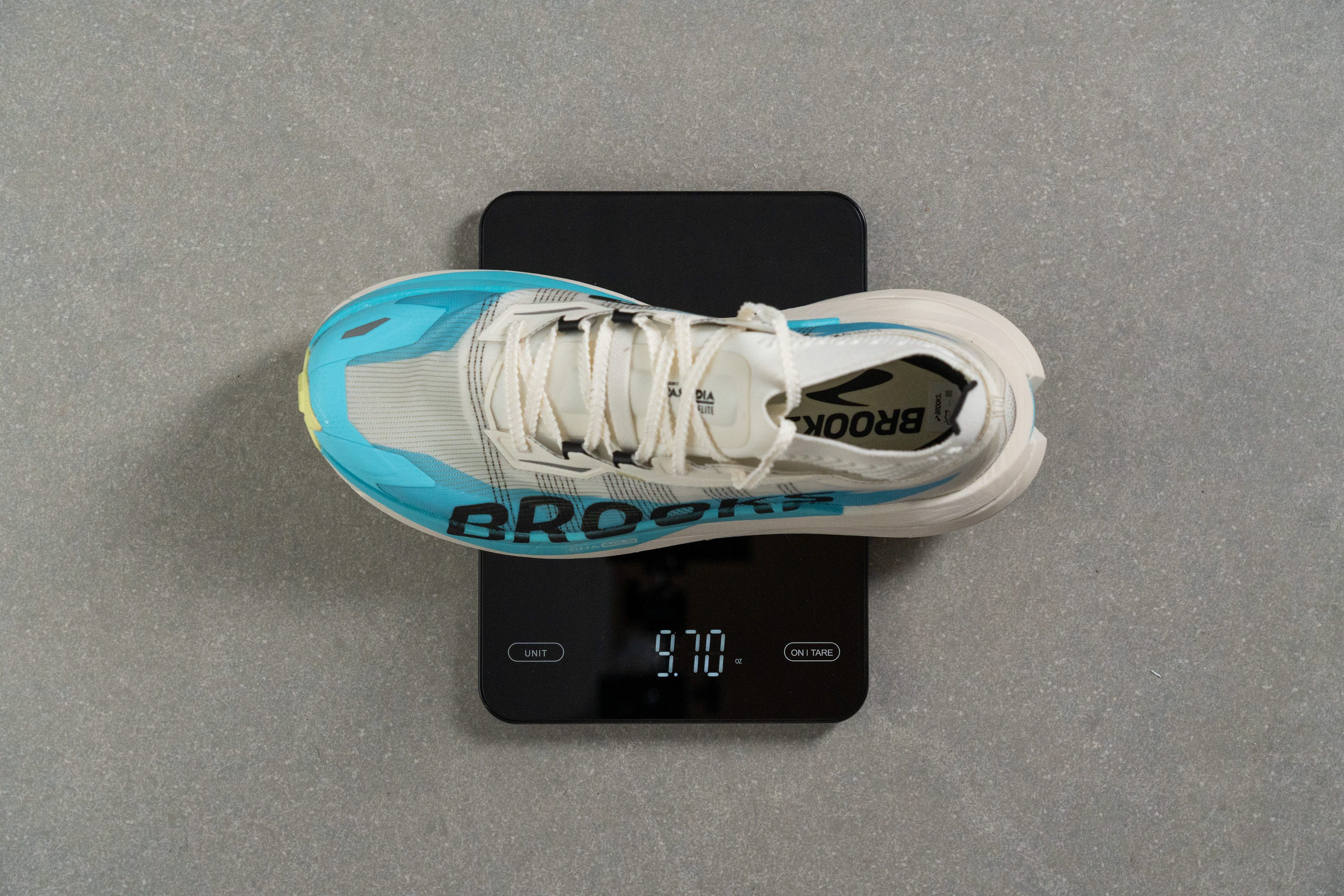
| Cascadia Elite | 9.7 oz (275g) |
| Average | 10.1 oz (285g) |
Breathability
Breathability test
UpdatedBrooks clearly invested in premium materials for the Cascadia Elite, and its partnership with Chamatex for the MATRYX upper paid off. While breathability depends on the entire shoe and not just the upper, we believe it played a major role in the strong 71 BR result recorded in our test.
As a result, the Cascadia Elite does a good job of pulling sweat away from the foot and helping keep your feet drier, an especially important feature during ultras.
| Cascadia Elite | 71 BR |
| Average | 71 BR |
Drying potential
NewAnd if you're worried about the Cascadia Elite becoming clammy or heavy from sweat or the occasional puddle crossing, it performed well in our drying potential test too. Using the same 3-hour protocol, we found that the shoe evaporated 51% of the trapped moisture.
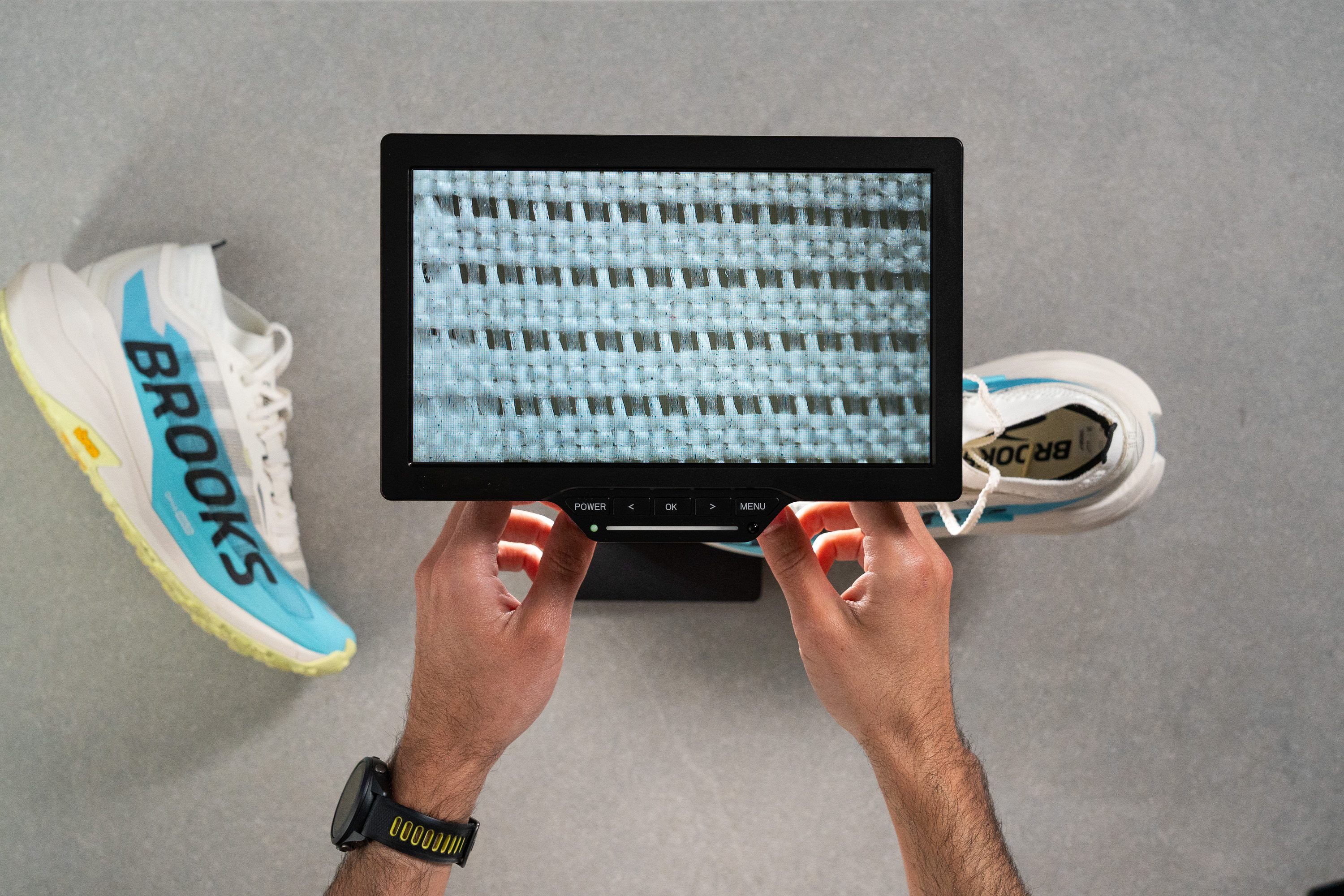
| Cascadia Elite | 51% |
| Average | 51% |
Stability
Lateral stability test
In our opinion, Brooks wanted stability to become a defining feature of the Cascadia Elite, and that intention is obvious throughout the entire design. For a race-focused shoe, it comes with a surprisingly wide heel platform, a supportive heel counter, and extra-tall sidewalls that help keep the foot centered during runs.
We still think the ultra-soft DNA Gold foam makes this shoe best suited for neutral runners overall, yet many runners will likely find the ride noticeably more stable than expected from such a highly-cushioned trail racer.
Torsional rigidity
Just like in our longitudinal stiffness test, we found another fairly moderate result here at 16.3 Nm. Once again, we think Brooks made a smart choice, especially for runners who usually struggle with overly-rigid and excessively aggressive race shoes.
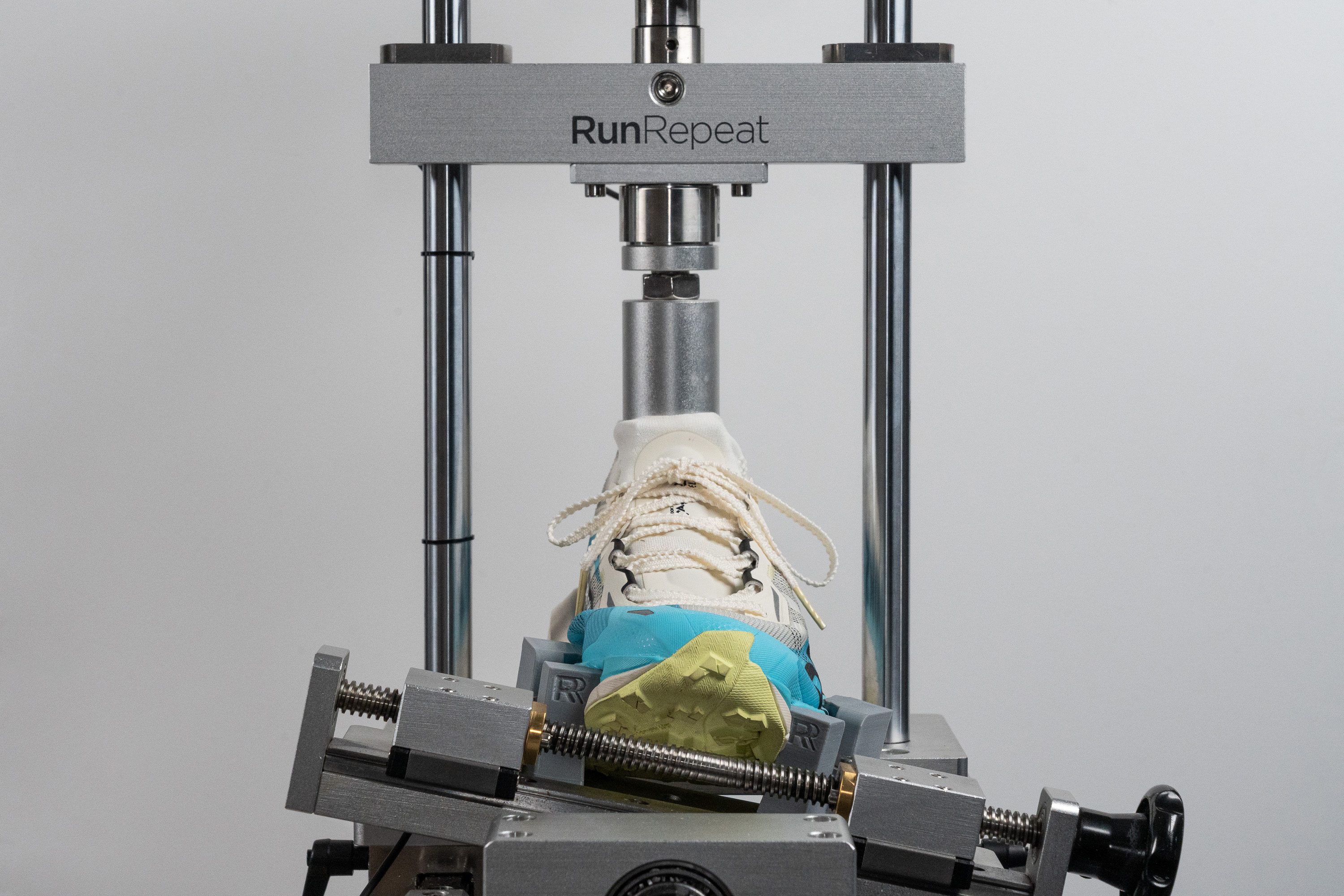
| Cascadia Elite | 16.3 Nm |
| Average | 15.8 Nm |
Heel counter stiffness
We mentioned earlier that Brooks used a fairly supportive heel counter here, and the 3/5 score confirms that impression. While this rating is relatively common in daily trainers, race-focused shoes often score just 1/5 or 2/5 in this test.
| Cascadia Elite | 3 |
| Average | 3 |
Midsole width - forefoot
The forefoot reaches 116.9 mm in width, creating a stable platform for forefoot landings that feels especially reassuring during faster efforts.
In our experience, this setup works best on smoother and less technical terrain, where runners can fully take advantage of the explosive DNA Gold foam and comfortably push the pace.
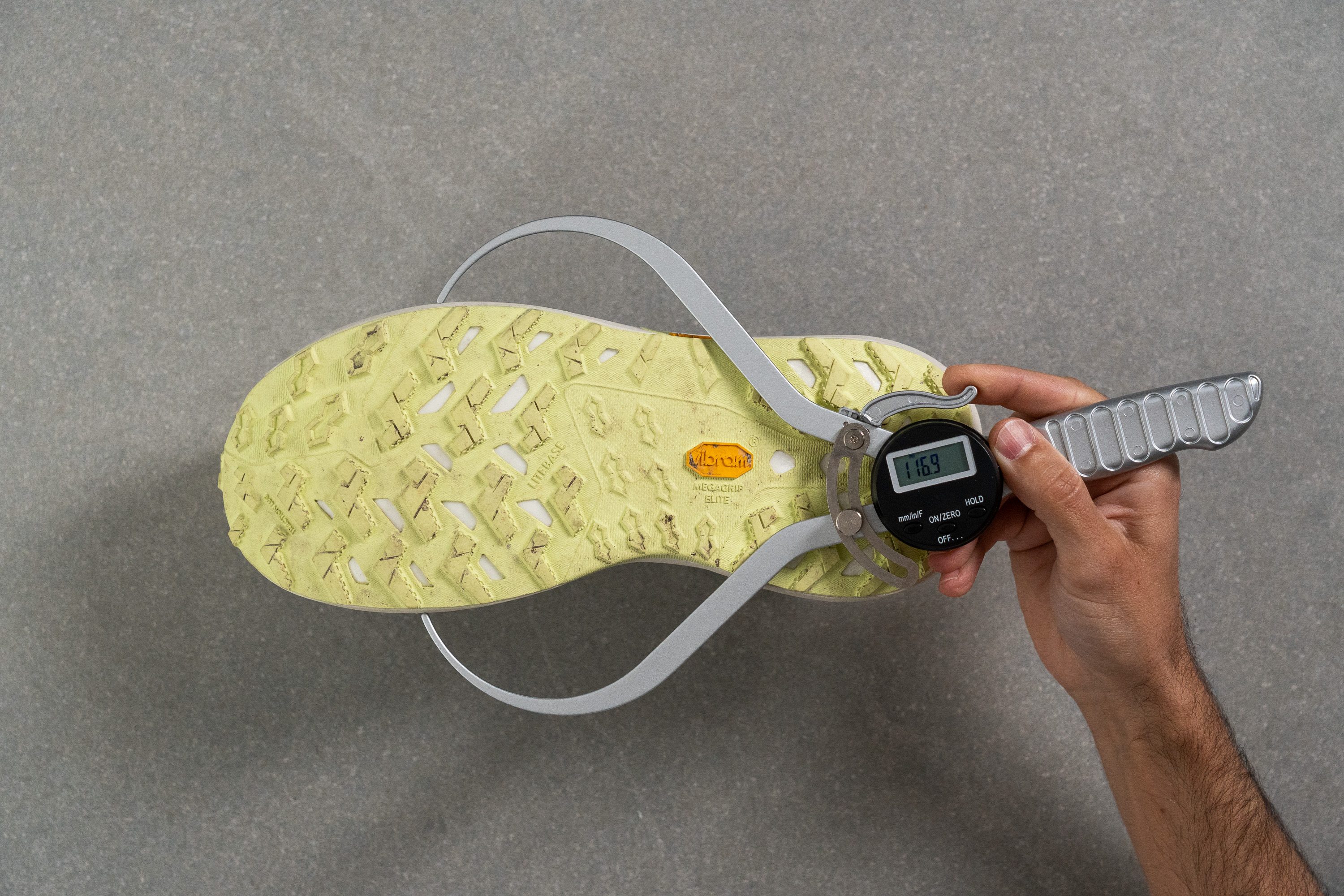
| Cascadia Elite | 116.9 mm |
| Average | 114.3 mm |
Midsole width - heel
Here, Brooks genuinely surprised us, and we think this design choice could become a deciding factor between the Cascadia Elite and other trail super shoes.
Runners who value a stable and confidence-inspiring heel platform will probably love this setup with 100.9 mm, especially if they do not mind the feeling of a large amount of foam underfoot. However, those who prefer a more agile ride or naturally land on the midfoot or forefoot may find the wide rear section less appealing.
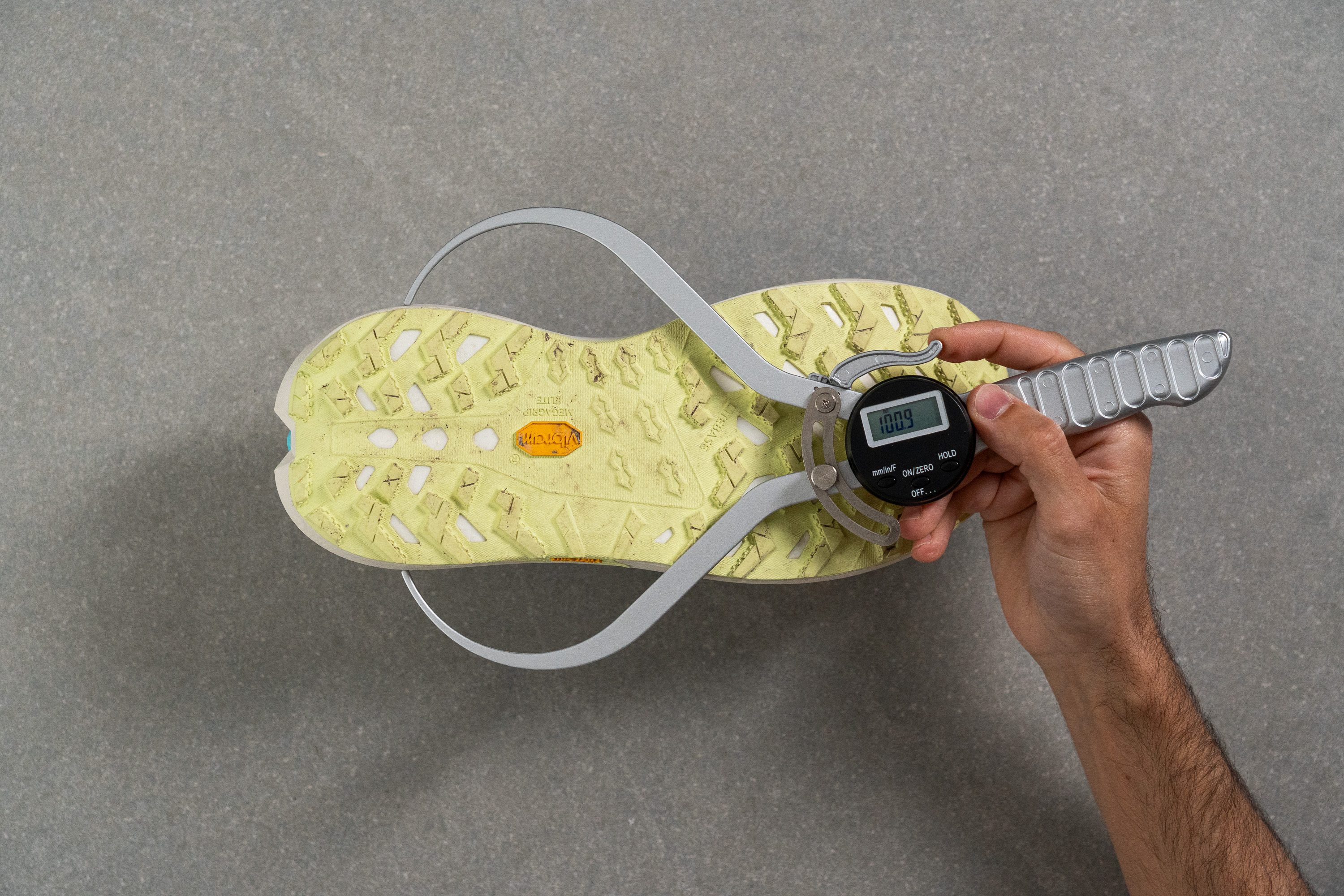
| Cascadia Elite | 100.9 mm |
| Average | 90.5 mm |
Durability
Toebox durability
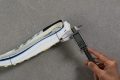
The downside of using such a race-focused upper is durability. We recorded a disappointing 1/5 result in our toebox durability test, although it’s important to mention that Brooks added substantial reinforcements in the areas where trail shoes usually suffer the most damage.
| Cascadia Elite | 1 |
| Average | 3.1 |
Heel padding durability
The heel padding performed far better, earning a strong 4/5 score that even surpassed our current lab average in this test.
| Cascadia Elite | 4 |
| Average | 3.1 |
Outsole durability
Finally, we also tested the Vibram Megagrip Elite rubber to evaluate its durability, as we had already confirmed that traction is simply outstanding. Thankfully, the result was very positive, with the outsole showing only 0.8 mm of damage in our test.
| Cascadia Elite | 0.8 mm |
| Average | 0.9 mm |
Outsole thickness
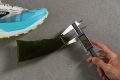
The outsole is clearly tuned for smoother terrain as well, measuring just 1.5 mm in thickness and prioritizing weight savings plus ground feel over maximum protection.
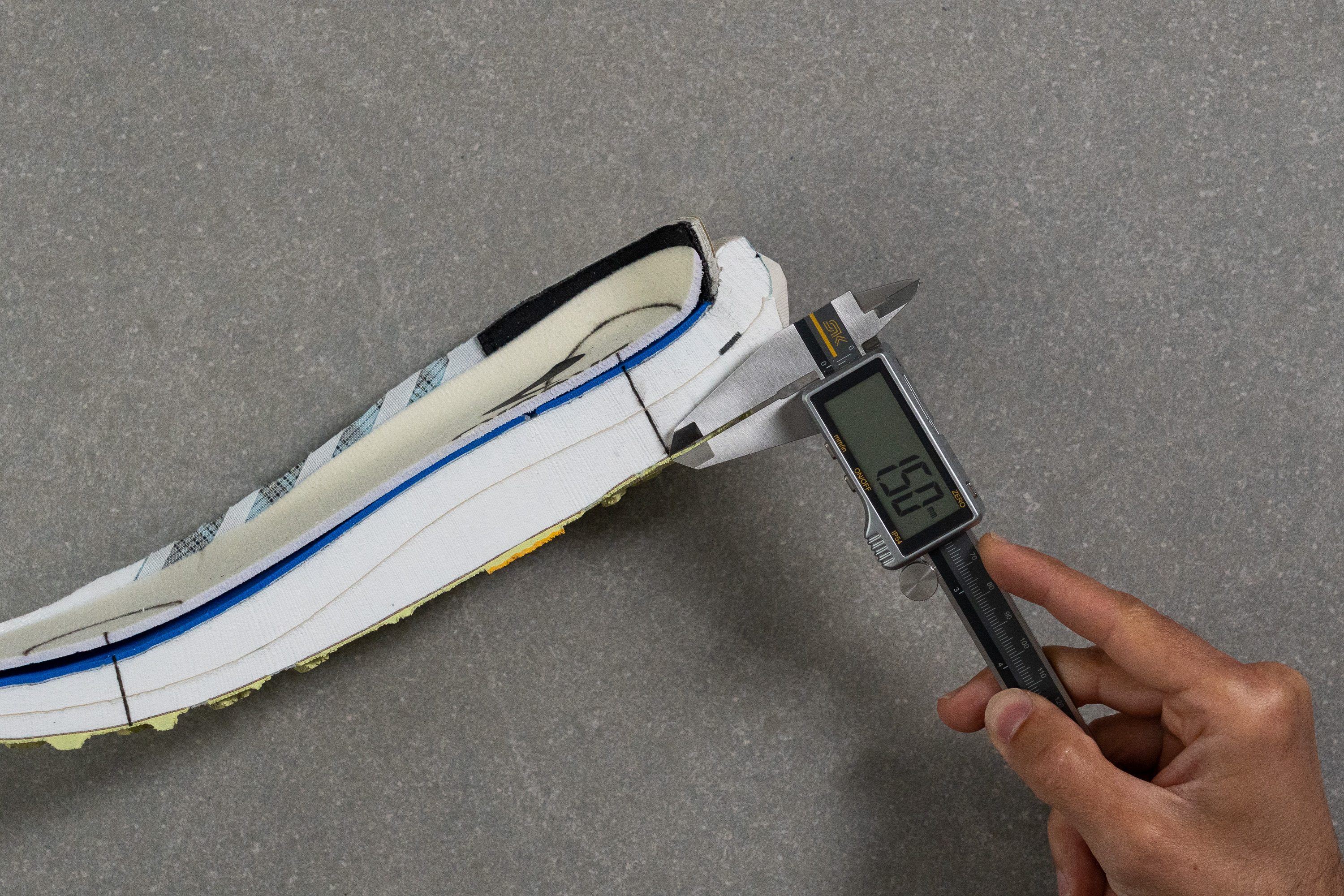
| Cascadia Elite | 1.5 mm |
| Average | 1.9 mm |
Misc
Insole thickness
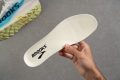
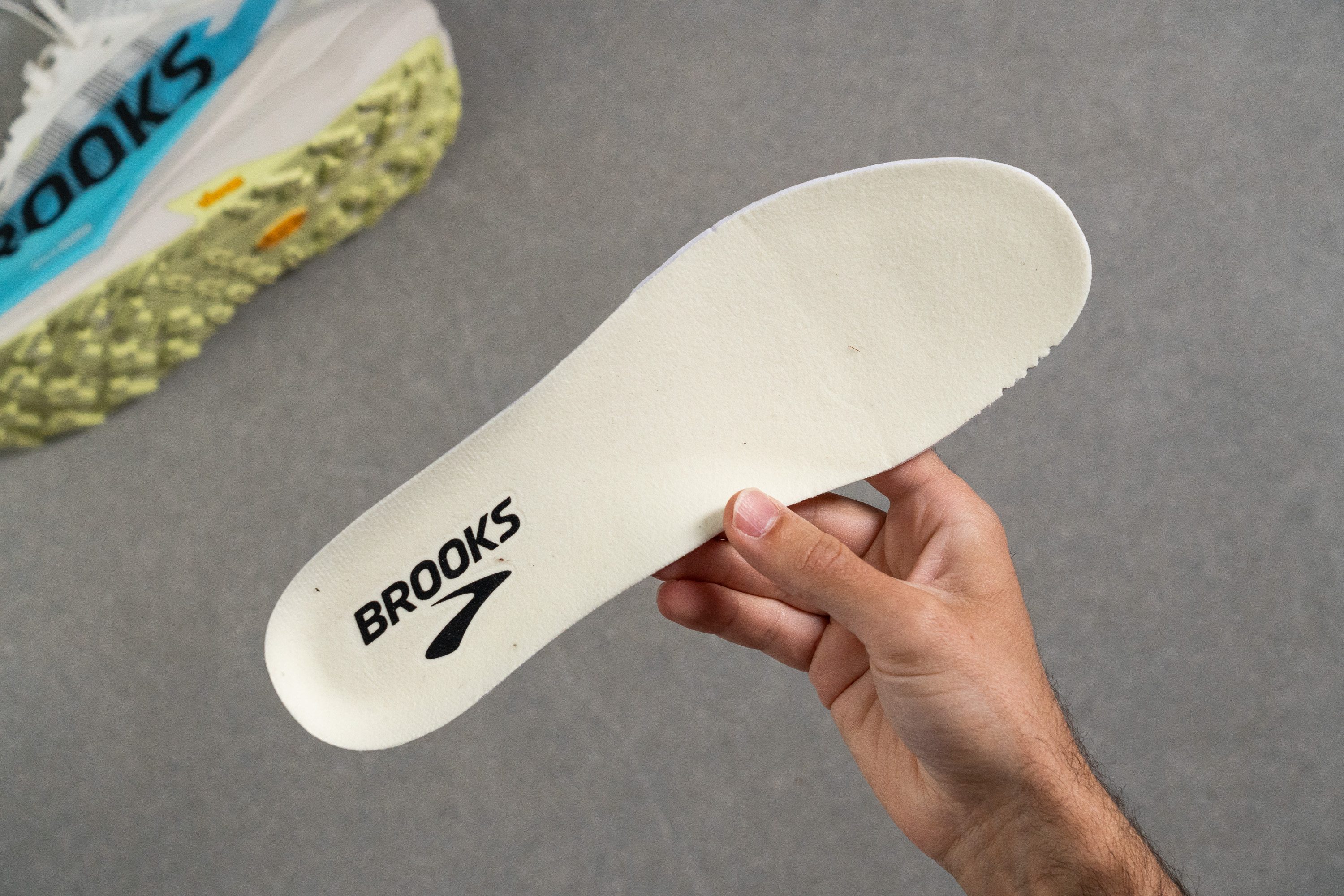
At just 2.6 mm, this is one of the thinnest insoles we’ve ever measured in a trail shoe.
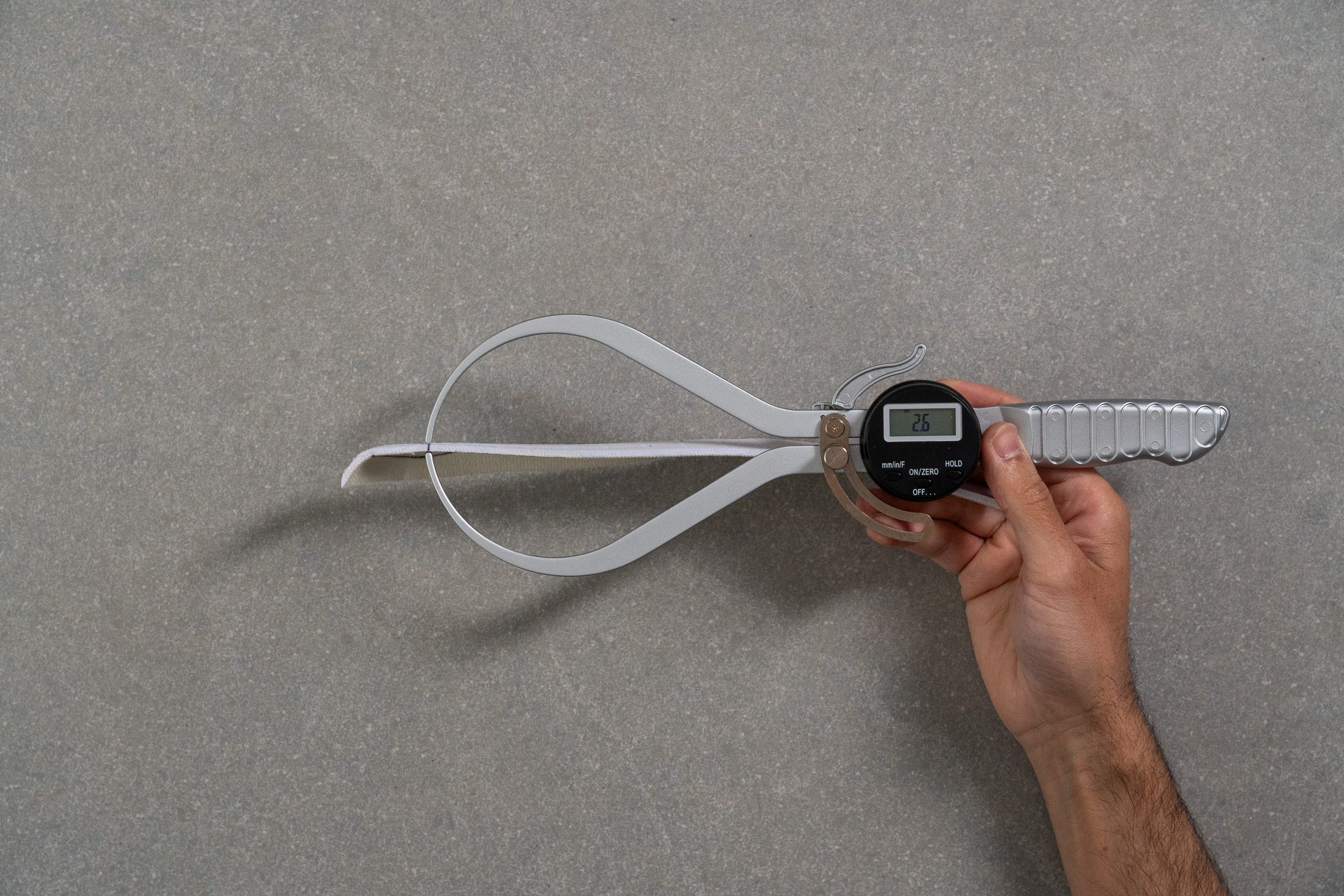
| Cascadia Elite | 2.6 mm |
| Average | 4.6 mm |
Removable insole
The insole can be removed easily, although its ultra-thin design makes finding a replacement that doesn’t compromise the fit quite difficult.
| Cascadia Elite | Yes |
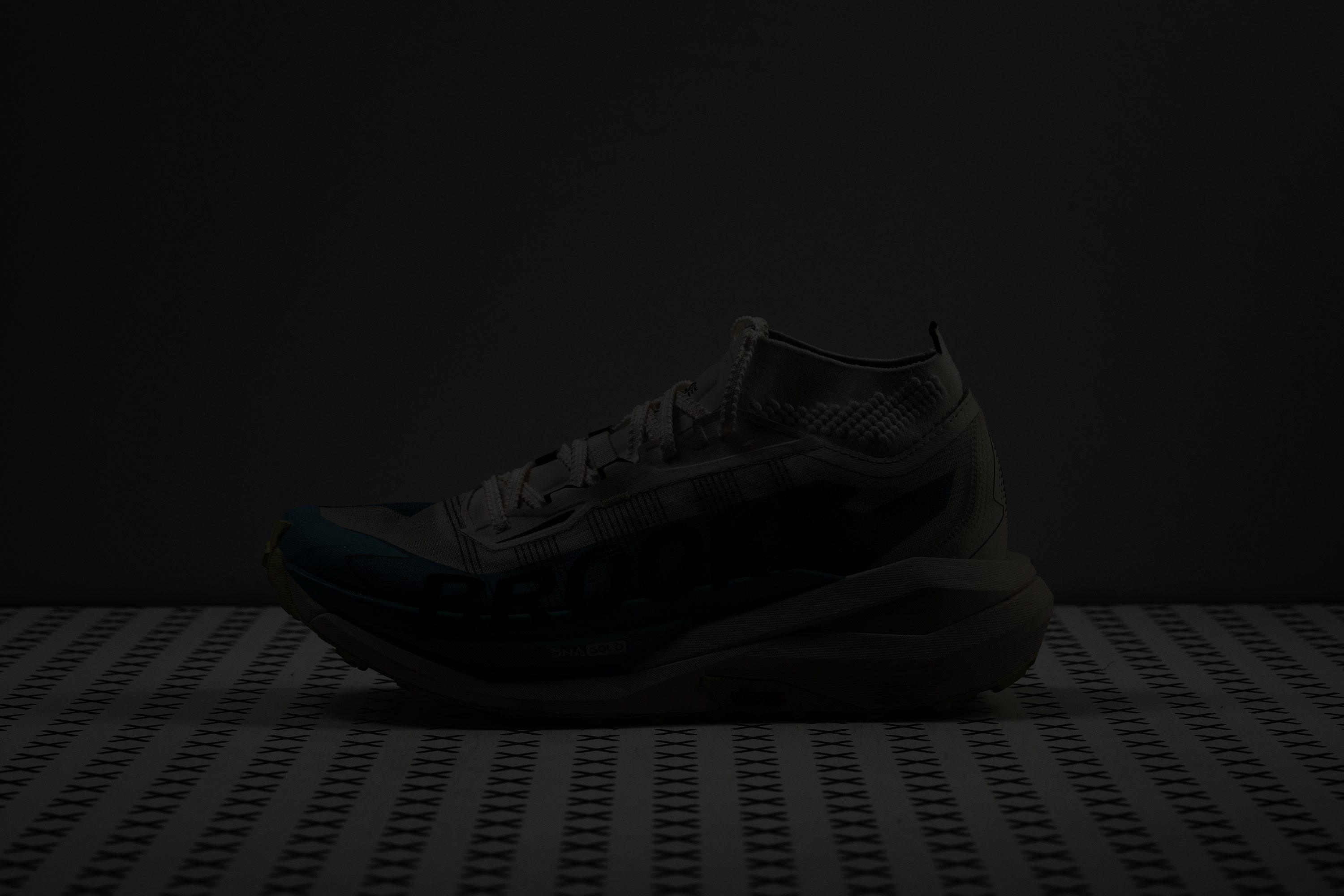
Reflective elements
One of the few areas where Brooks missed the mark was the complete lack of reflective elements.
| Cascadia Elite | No |
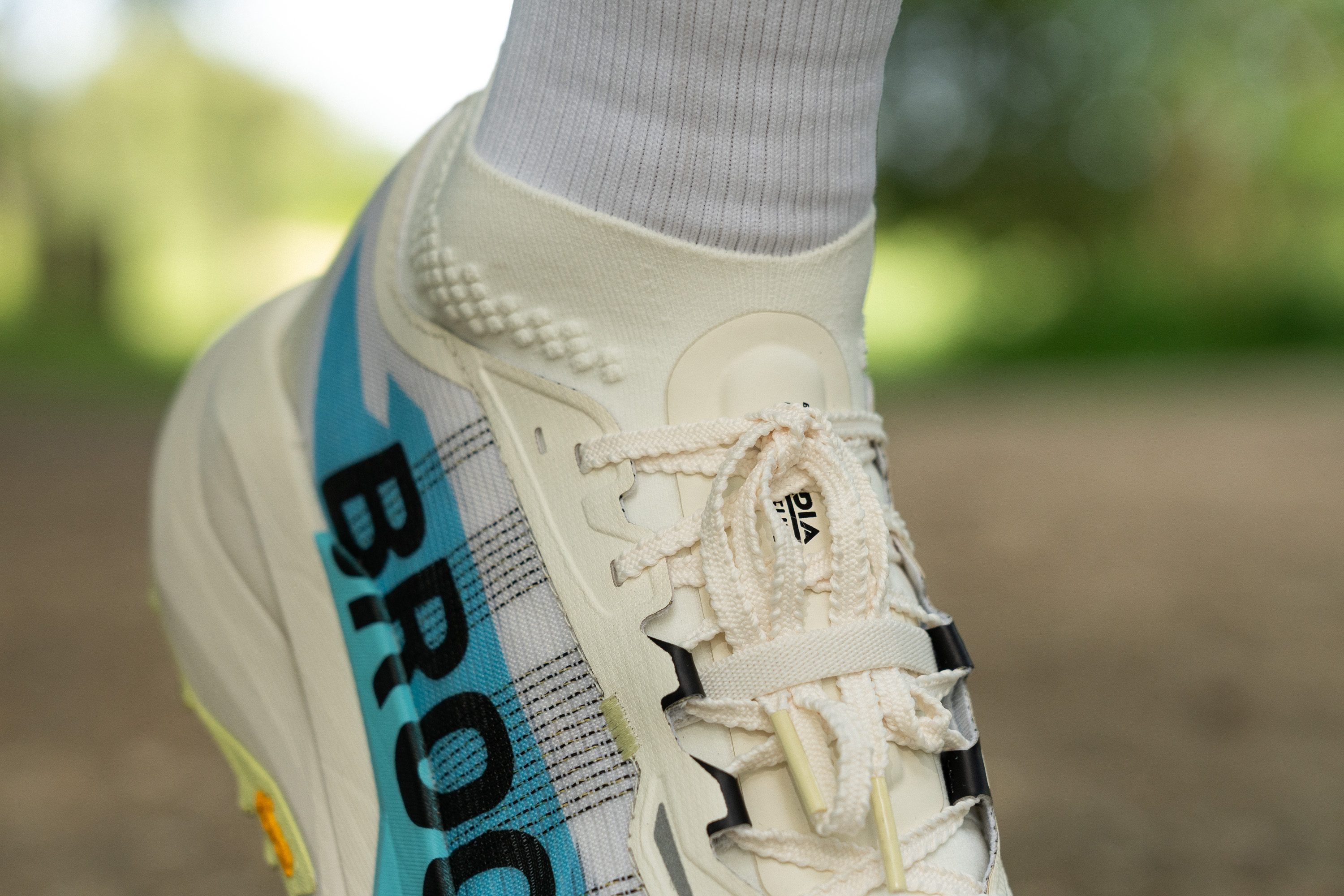
Tongue padding
We noticed that Brooks paid close attention to the small details here. The textured laces, inspired by modern road super shoes, combine with a hybrid lacing system to create an impressively secure lockdown, while the elastic lace keeper prevents annoying movement and noise during runs.
The tongue also includes a narrow strip of foam that adds 5.6 mm of cushioning. It slightly increases the weight, but in our view this extra comfort becomes especially valuable during ultra-distance efforts.
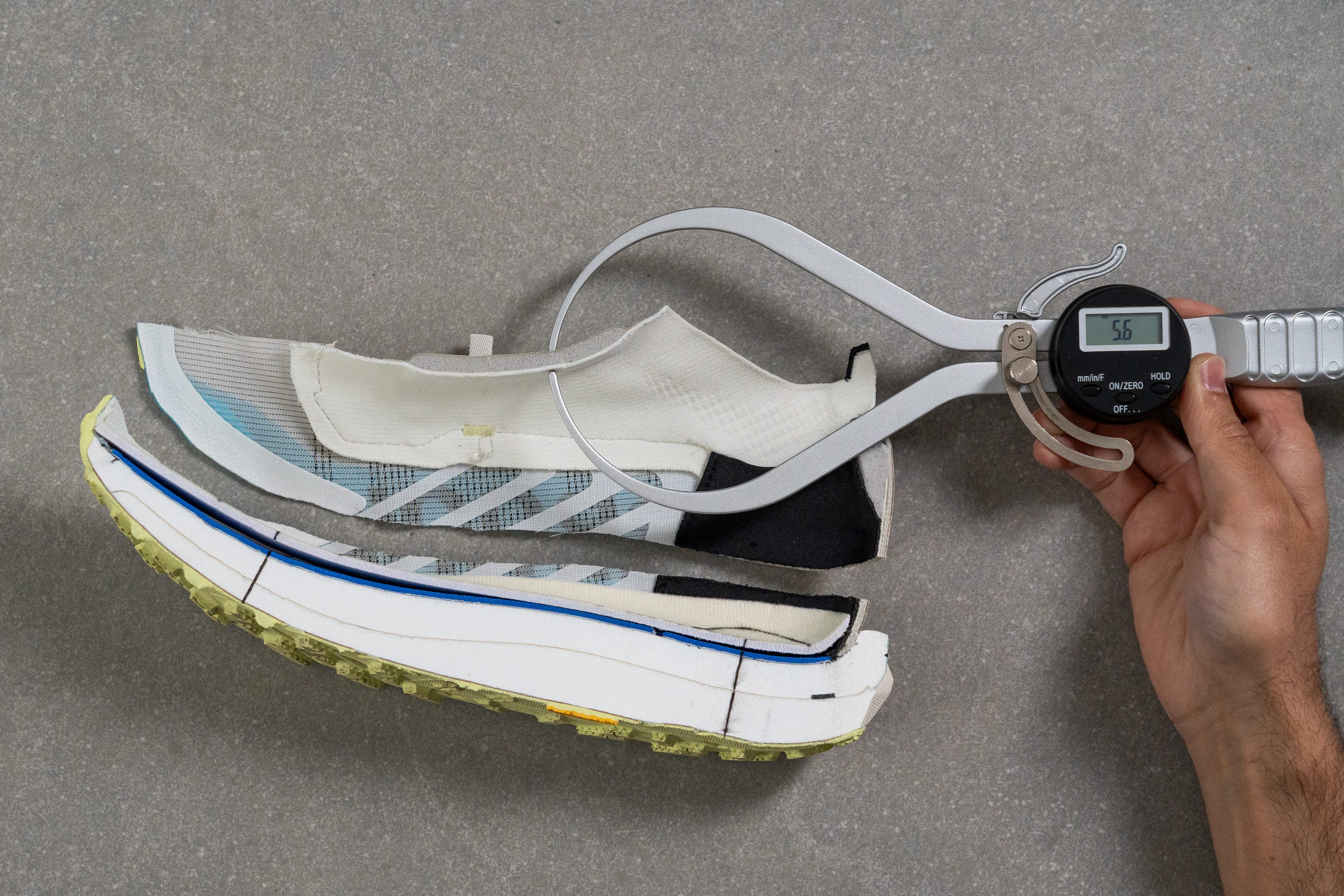
| Cascadia Elite | 5.6 mm |
| Average | 6.4 mm |
Tongue: gusset type
Those worried about debris getting inside the shoe will really appreciate the sock-like upper designed by Brooks for the Cascadia Elite. In our experience, it does an excellent job blocking dust, tiny rocks, and trail debris while also creating an impressively secure lockdown.
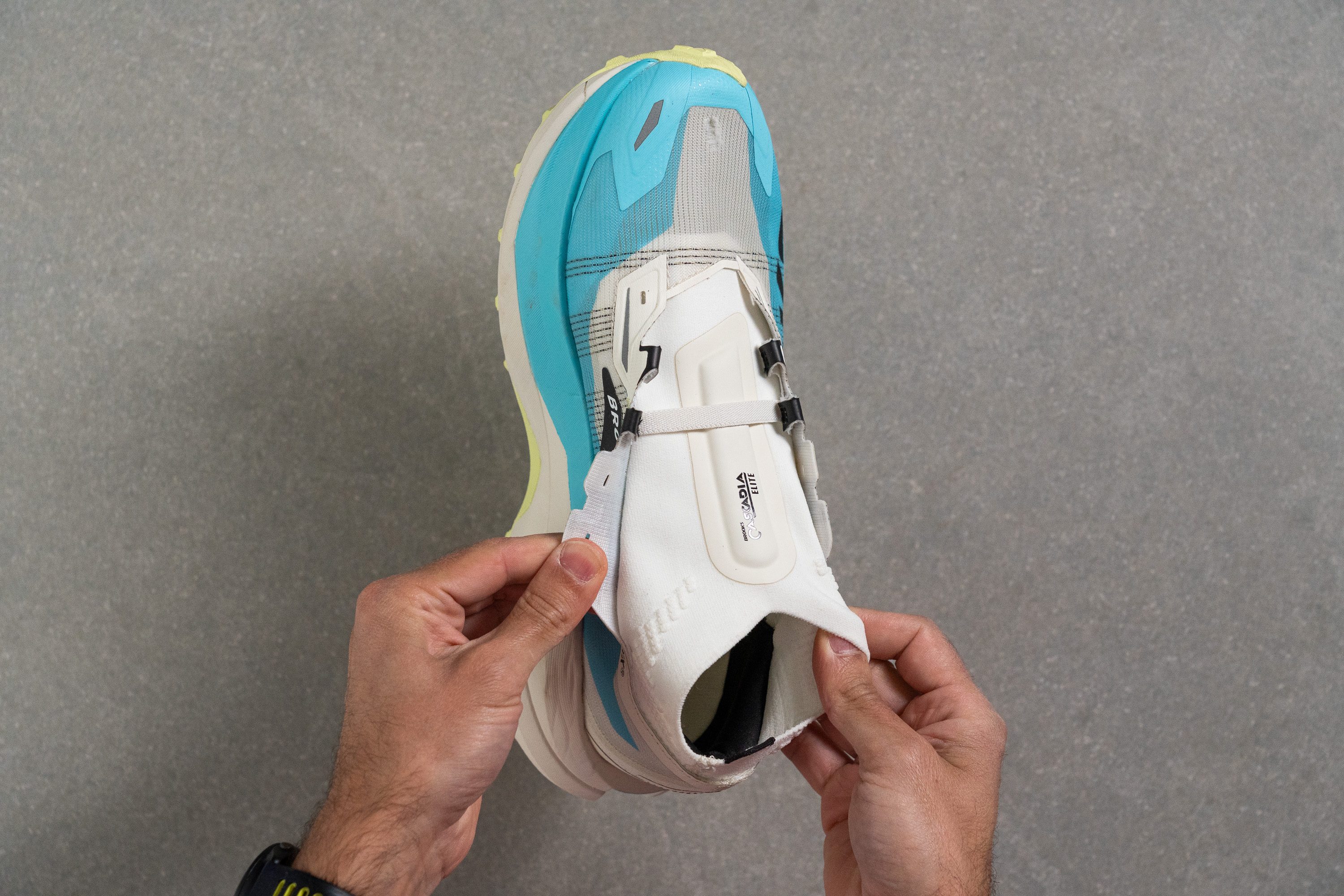
| Cascadia Elite | Sock like |
Heel tab
The Cascadia Elite features an integrated ankle gaiter with a small pull tab extension that makes it easier to slide the shoe on while also adding a sleek, race-focused look.
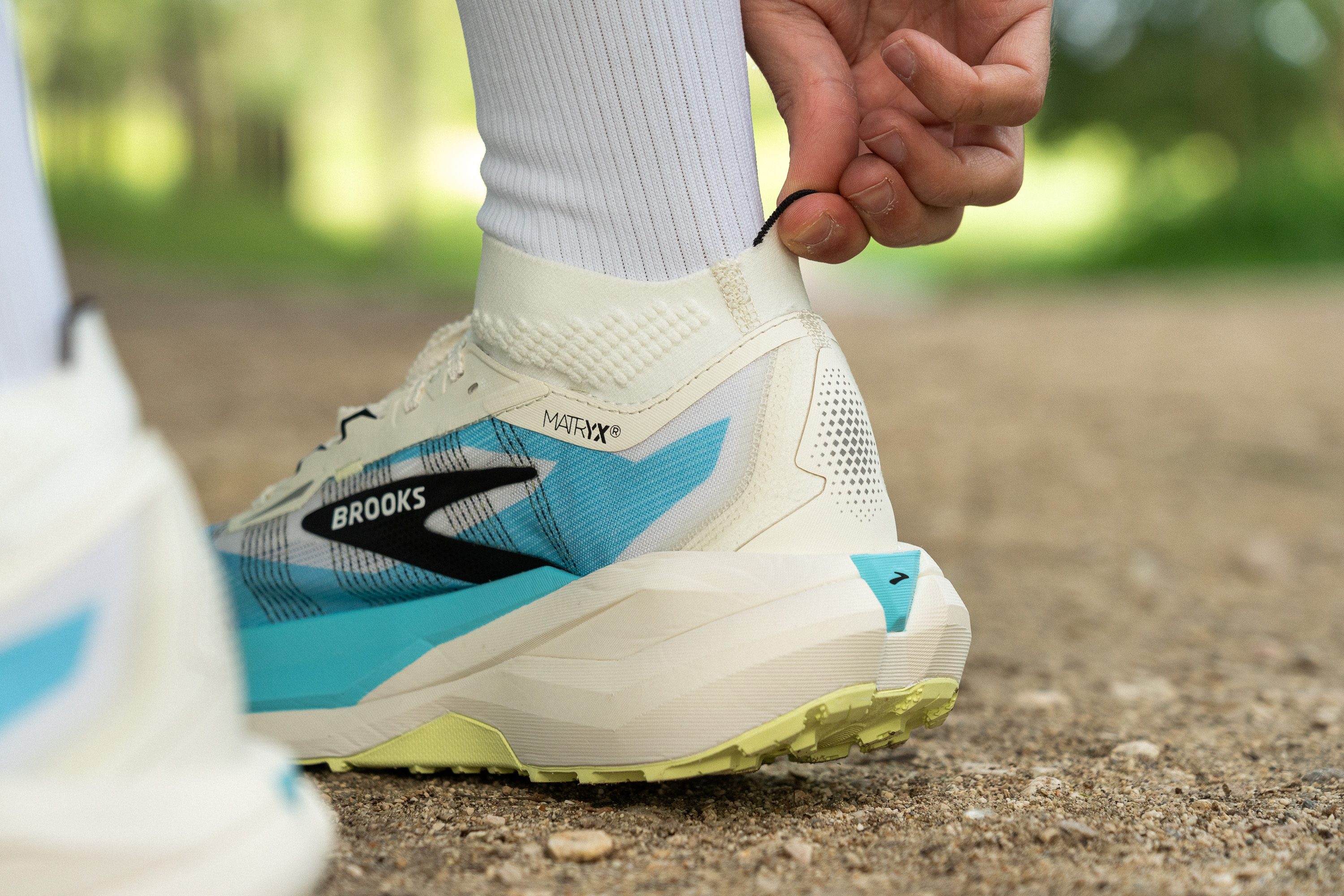
| Cascadia Elite | Extended heel collar |
Price
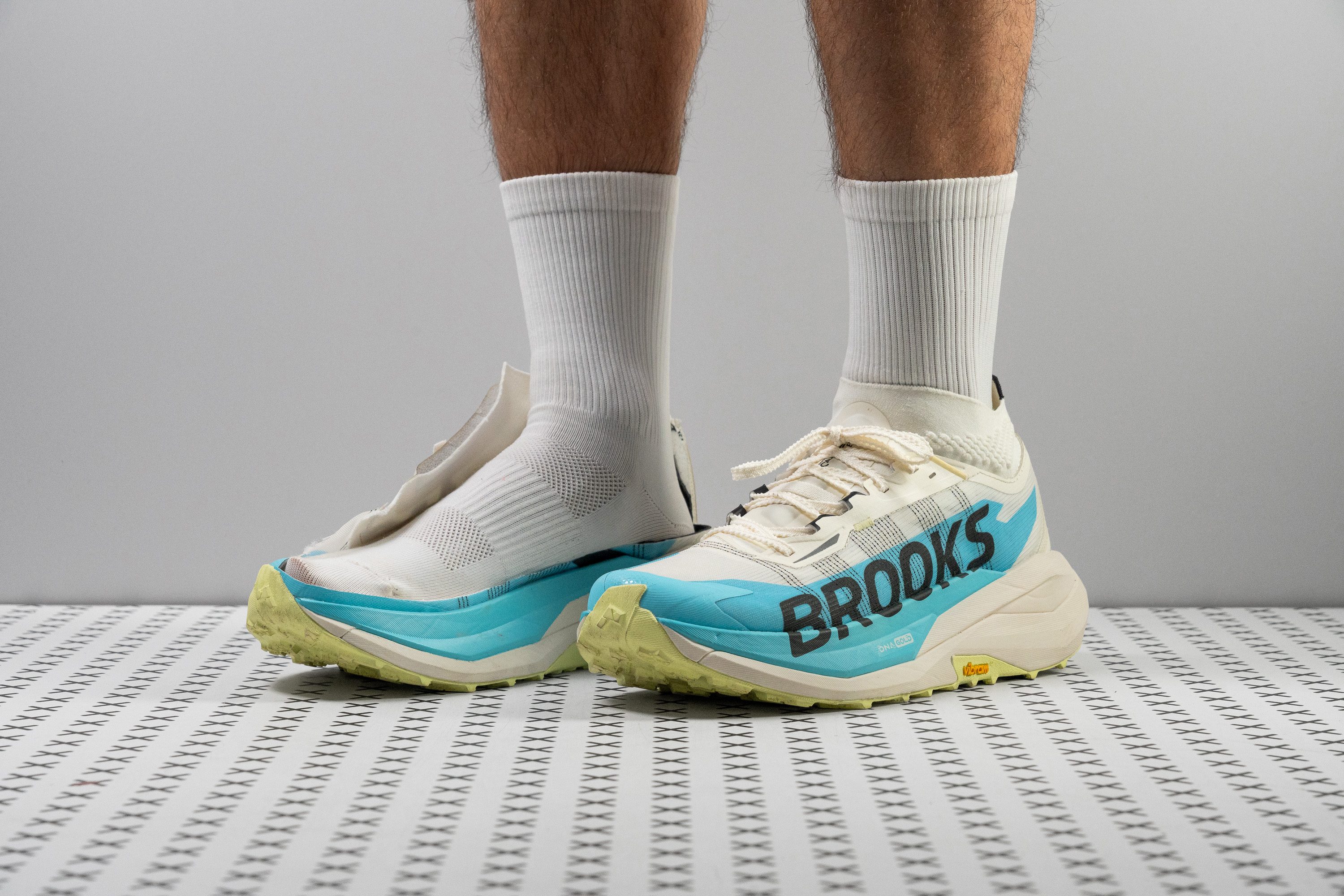
The Brooks Cascadia Elite comes with a sky-high price tag, and there’s no doubt that it will scare away many potential buyers. However, it’s also fair to recognize that Brooks packed this shoe with premium components from top to bottom, including a MATRYX upper, PEBA-based DNA Gold foam, and the state-of-the-art Vibram Megagrip Elite outsole.
| Cascadia Elite | $275 |
| Average | $160 |