














Nuestra conclusión
- Grava 92
- Versátiles 77
- Técnico 43
Pros
- Espuma PEBA estupenda
- Suela Vibram Megagrip Elite increíble
- Estables
- Materiales de primera de arriba a abajo
- Ideales para aumentar la velocidad en zonas planas
- Upper MATRYX que te queda como un guante
- Diseño precioso
- Rápidas sin llegar a ser ni demasiado rígidas ni incómodas
- Ideales para los talonadores
- Pisada cómoda y mullida para distancias largas
Contras
- Su precio alto las hace menos atractivas
- Zona de los dedos estrecha
- Drop alto que puede ser incómodo para algunas personas
- Parte delantera poco duradera
Premios
- Entre mejores zapatillas de running para ultras
- Entre mejores zapatillas Brooks de trail running
- Top 18% entre zapatillas de trail running
- Top 28% entre zapatillas de running Brooks
Comparativa
Las zapatillas de running más parecidas
+ + Añadir unas zapatillas | |||||
|---|---|---|---|---|---|
| Nuestra puntuación | 86 Geniales | 83 Geniales | 83 Geniales | 79 Buenas | |
| Precio | 250 € | 150 € | 150 € | 150 € | |
| Terreno de trail | Grava / Trail y asfalto | Grava / Trail y asfalto | Grava / Trail y asfaltoVersátiles / Terreno de dificultad moderada | Grava / Trail y asfaltoVersátiles / Terreno de dificultad moderada | |
| Absorción de impactos | Alta | Moderada | Alta | Moderada | |
| Retorno de energía | Alto | Moderado | Moderado | Moderado | |
| Tracción | Alta | Alta | Alta | Alta | |
| Sujeción arco del pié | Neutral | Neutral | Neutral | Neutral | |
| Peso laboratorio Peso marca | 9.7 oz / 275g 9.7 oz / 275g | 10.4 oz / 295g 10.6 oz / 300g | 9.5 oz / 269g 9.7 oz / 275g | 10.9 oz / 309g 10.9 oz / 309g | |
| Drop laboratorio Drop marca | 11.5 mm 6.0 mm | 11.5 mm 8.0 mm | 10.1 mm 8.0 mm | 8.8 mm 6.0 mm | |
| Técnica de carrera | Talón | Talón | Talón | TalónMedio/antepié | |
| Talla | Tallan bien | Tallan un poquito grande | Tallan bien | Tallan bien | |
| Rigidez de la mediasuela | Blanda | Equilibrada | Blanda | Equilibrada | |
| Diferencia de la rigidez de la mediasuela en frío | Pequeña | Pequeña | Normal | Grande | |
| Durabilidad de la parte delantera | Muy mala | Decente | Buena | Mala | |
| Durabilidad del acolchado del talón | Alta | Alta | Alta | Alta | |
| Durabilidad de la suela exterior | Buena | Buena | Buena | Decente | |
| Transpirabilidad | Media | Media | Alta | Media | |
| Anchura / ajuste | Estrecha | Media | Media | Media | |
| Anchura de la parte delantera | Media | Media | Media | Media | |
| Flexibilidad | Moderada | Moderada | Moderada | RígidaModerada | |
| Rigidez torsional | Moderadas | Moderadas | Flexibles | Rígidas | |
| Rigidez del contrafuerte del talón | Moderado | Rígido | Rígido | Rígido | |
| Profundidad del dibujo de la suela | 3.2 mm | 2.7 mm | 3.7 mm | 3.6 mm | |
| Altura de la suela en la zona del talón laboratorio Altura de la suela en la zona del talón marca | 38.8 mm 40.0 mm | 38.3 mm 36.5 mm | 40.2 mm 42.0 mm | 36.7 mm 39.0 mm | |
| Antepié laboratorio Antepié marca | 27.3 mm 34.0 mm | 26.8 mm 28.5 mm | 30.1 mm 34.0 mm | 27.9 mm 33.0 mm | |
| Anchuras disponibles | Estándar | EstándarAncho | EstándarAncho | Estándar | |
| Para corredores pesados | ✗ | ✓ | ✗ | ✓ | |
| Estación | Todas las estaciones | Todas las estaciones | VeranoTodas las estaciones | Todas las estaciones | |
| Plantilla extraíble | ✓ | ✓ | ✓ | ✓ | |
| Compatibles con plantillas personalizadas | ✓ | ✓ | ✓ | ✓ | |
| Clasificación | #91 Top 23% | #159 Top 40% | #154 Top 39% | #242 39% inferior | |
| Popularidad | #175 Top 44% | #91 Top 23% | #50 Top 13% | #179 Top 45% |
Quién debería comprárselas
Llevamos las Brooks Cascadia Elite al límite y descubrimos que:
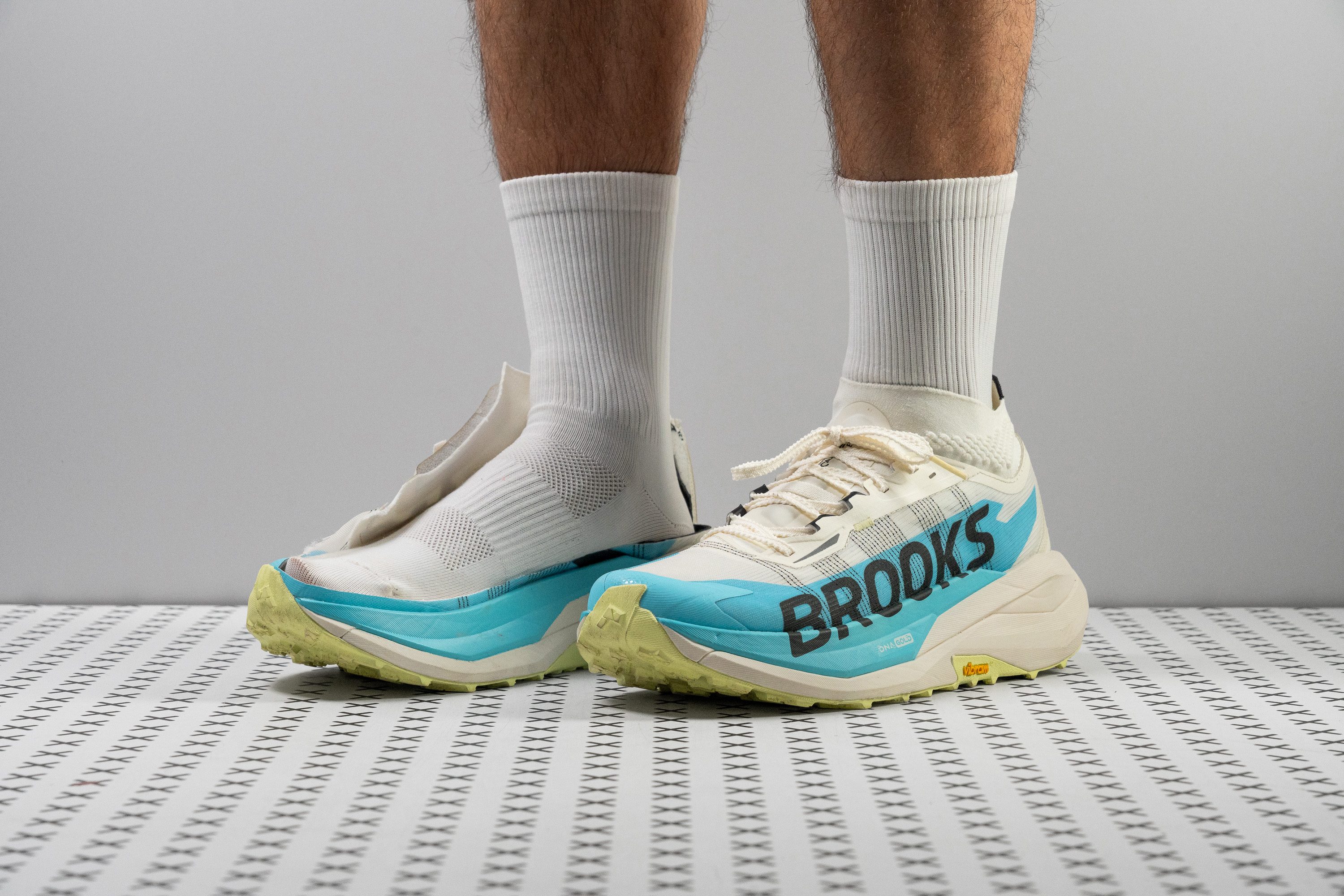
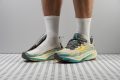
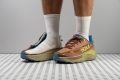
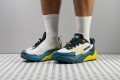
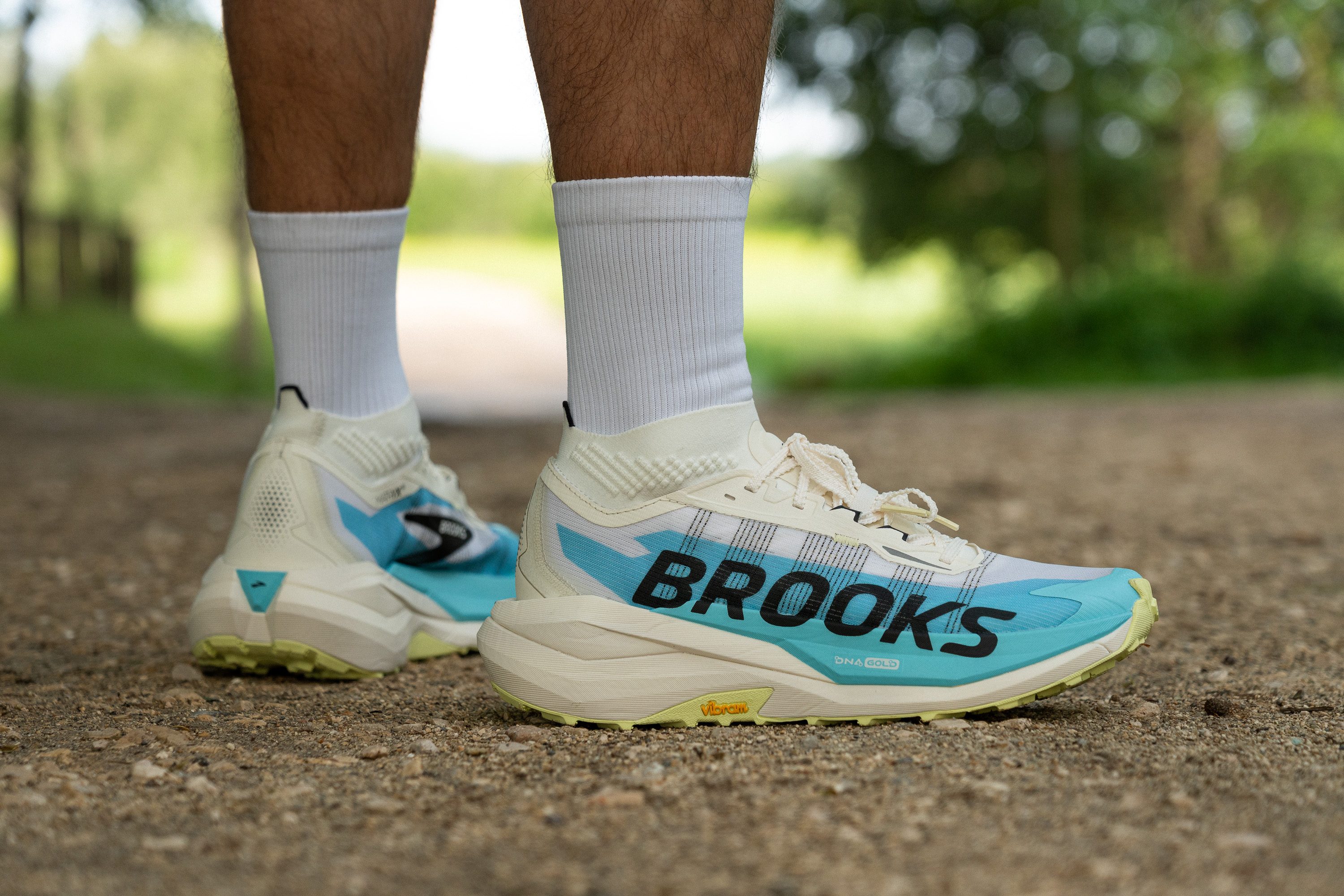
- Los runners que están buscando unas superzapatillas de trail estables estarán contentísimos con su plataforma ancha y la sujeción de su diseño en las distancias largas.
- A los talonadores les va a encantar el drop alto y el rocker agresivo.
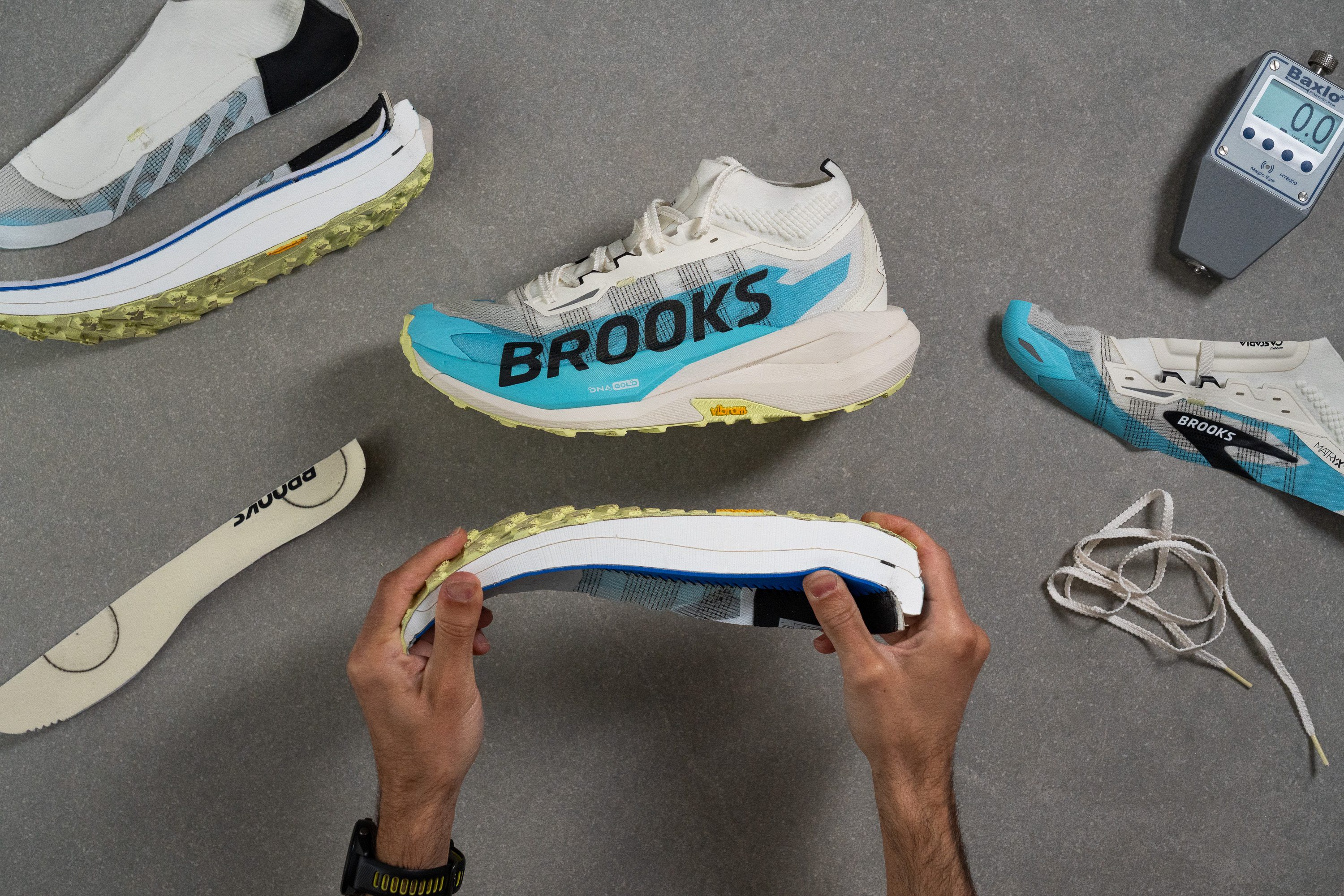
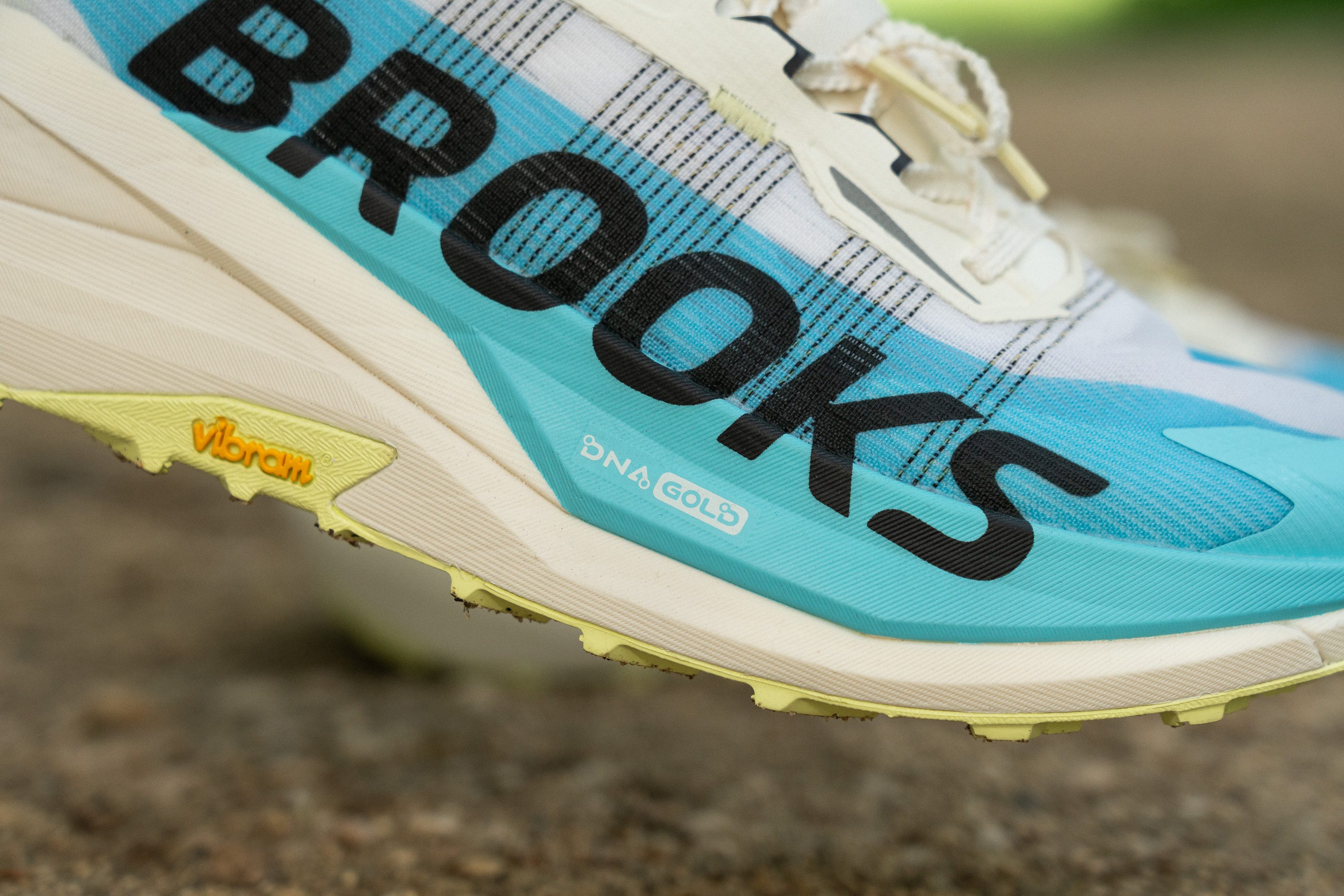
- Los que quieren un modelo que pueda presumir de materiales premium se van a enamorar del upper MATRYX, de la espuma DNA Gold y de la suela Vibram Megagrip Elite.
Quién NO debería comprárselas
Aunque la estructura de primera calidad y la espuma explosiva de estas zapatillas nos encantan, cuestan una pasta, y a muchos runners les va a costar justificar su compra. Como alternativas, las KIPRUN Kipsummit Max y las Saucony Xodus Ultra 4 tienen un retorno de energía parecido o incluso mejor y son mucho más baratas.
También creemos que su drop alto puede serles incómodo a los runners que prefieren una mejor conexión con el suelo. Personalmente, nosotros creemos que las HOKA Tecton X 3 pueden ser unas mejores superzapatillas de trail para los corredores de mediopié o de metatarsos.
Amortiguación
Shock absorption
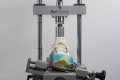
Uno de los objetivos principales de las Brooks Cascadia Elite es arrasar en las carreras de trail de ultradistancia y, según nuestras pruebas, parece que están más que preparadas para ese reto. Su absorción de impactos es excelente, como confirmó nuestra máquina al marcar 147 SA en el talón y 116 SA en el antepié (superando, en ambos casos, la media de la categoría).
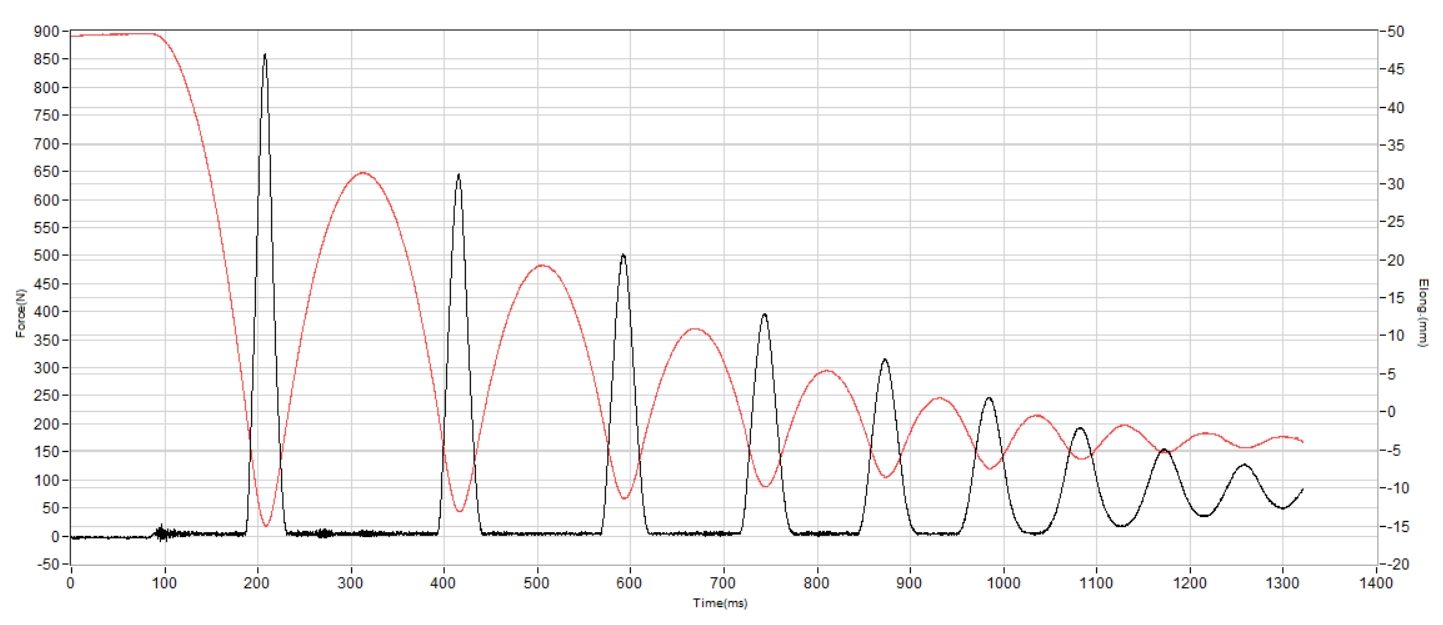
| Cascadia Elite | 147 SA |
| Media | 123 SA |
Energy return
Esta es la primera vez que Brooks utiliza su compuesto de PEBA DNA Gold en unas zapatillas de trail, y en nuestras pruebas de uso nos quedó clarísima la diferencia.
Con un impresionante retorno de energía del 68,4 % en el talón y del 68,9 % en el antepié, las Cascadia Elite han conseguido estar al nivel de otras zapatillas de trail de alto rendimiento modernas.
| Cascadia Elite | 68.9% |
| Media | 59.7% |
Altura de la suela en la zona del talón
Brooks afirma que las Cascadia Elite tienen una suela de 40 mm de altura en el talón, y cuando la medimos nosotros, nos dio un poquito menos: 38,8 mm. Pero bueno, esta diferencia es tan pequeña que dudamos muchísimo que alguien pueda notarla al correr.
Con un montón de espuma PEBA bajo los pies, la protección contra los golpes está garantizada, como comprobamos en nuestra prueba anterior.
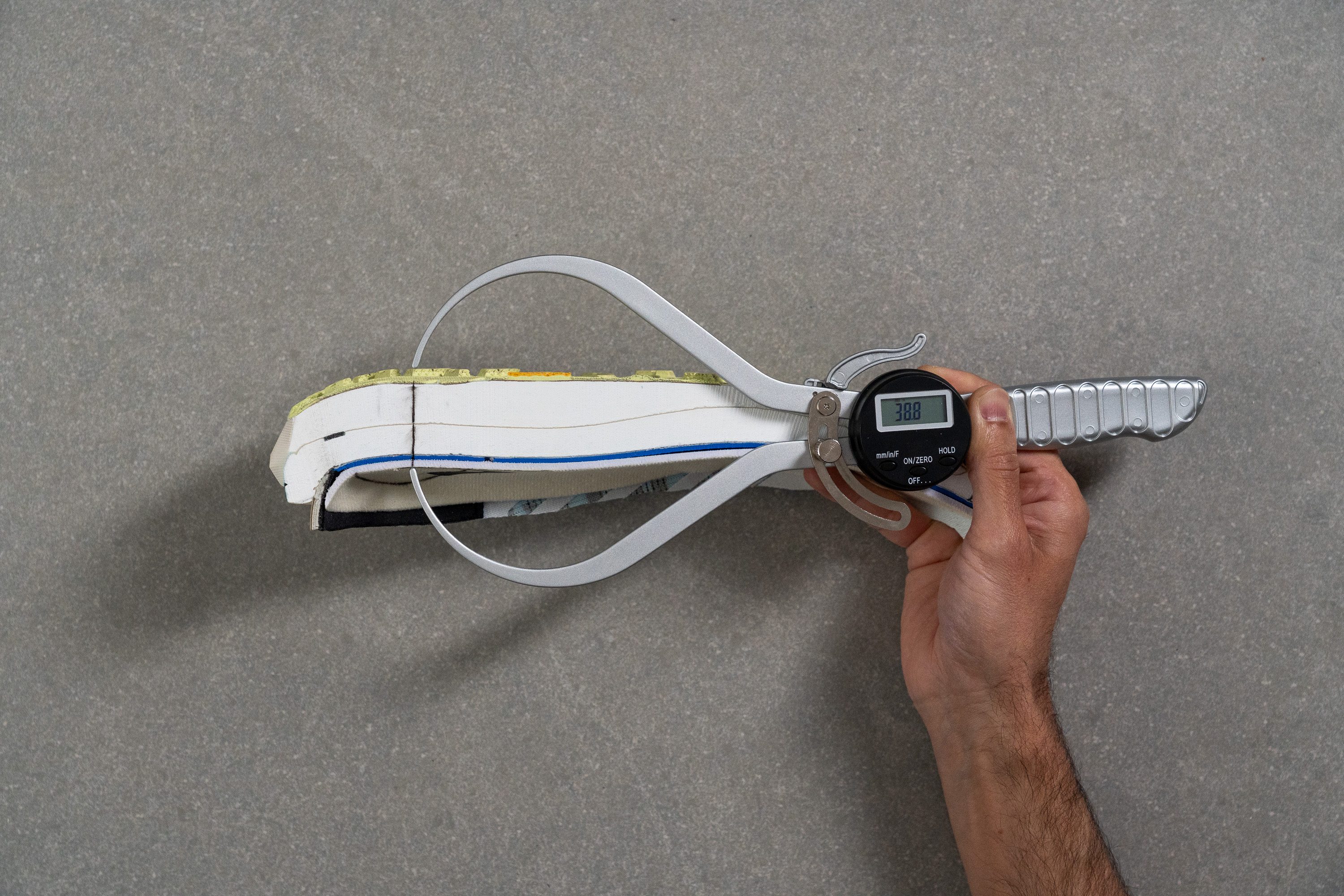
| Cascadia Elite | 38.8 mm |
| Media | 33.1 mm |
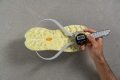
Altura de la suela en el antepié
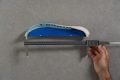
Aunque la altura del talón que nos da Brooks y la que indica nuestro durómetro sí que se parecen, el antepié... poquito que ver. Brooks dice que mide 34 mm, pero a nosotros nos dio solo 27,3 mm, y eso que seguimos las directrices de la World Athletics cuando vamos a medirlo.
Pero espera, que tenemos que aclarar algo importante. Estas zapatillas tienen un rocker muy agresivo, así que con mover el calibre solo unos pocos milímetros, el resultado puede cambiar drásticamente. Por lo tanto, creemos que Brooks midió la altura de la suela en el antepié un poco más atrás, hacia la zona del mediopié. Además, en nuestras pruebas de uso, sentimos que estas zapatillas tenían amortiguación de sobra en esa parte.
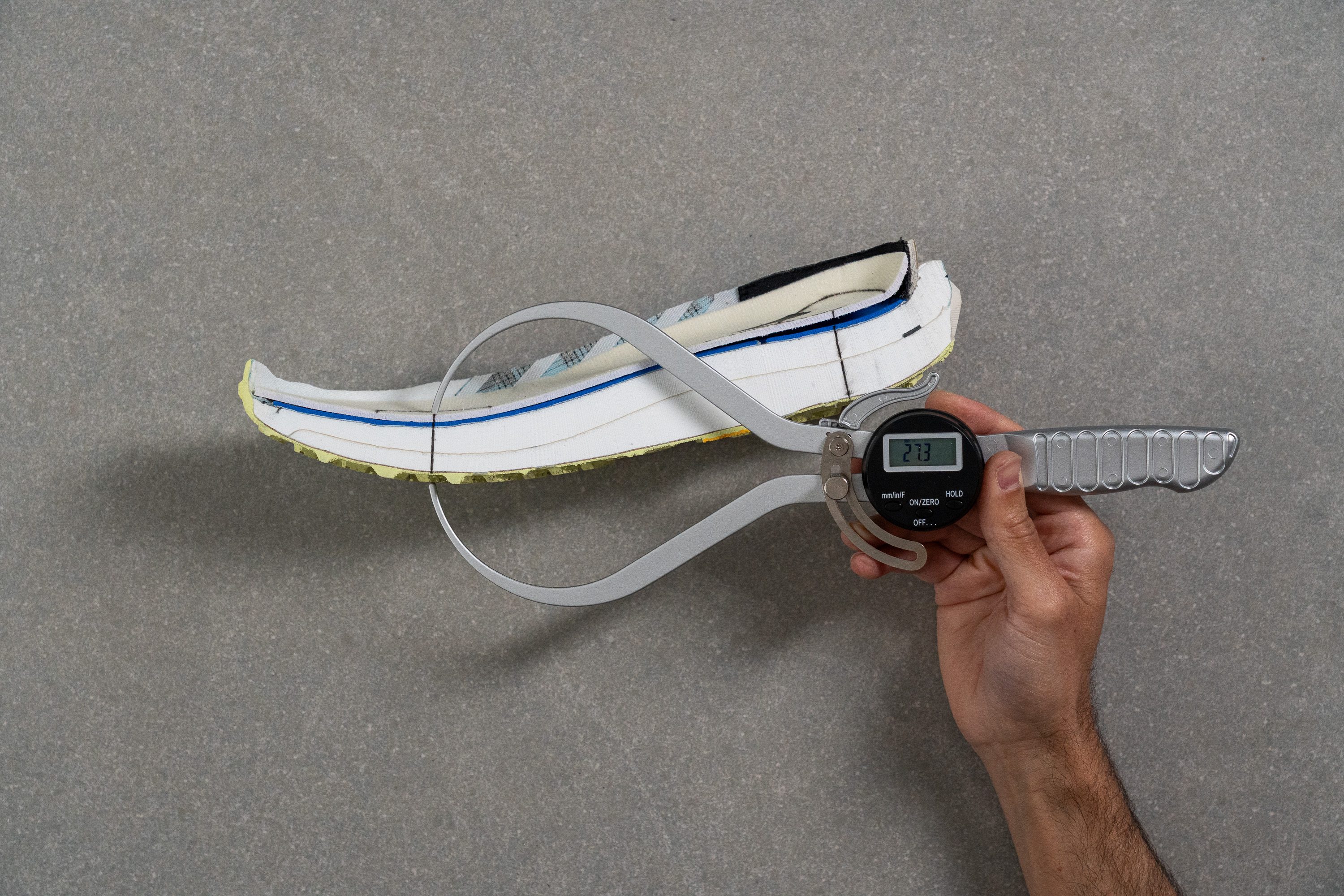
| Cascadia Elite | 27.3 mm |
| Media | 25.8 mm |
Drop
Como el antepié es más bajito de lo esperado, el drop es bastante más alto de lo que anuncia la marca. Después de hacer nuestros cálculos, nos dio 11,5 mm; y mira, según nuestra experiencia, estas zapatillas nunca se sintieron como si tuviesen un drop de 6 mm. Sinceramente, parece mucho más un modelo con un drop de 8-10 mm, sobre todo para los talonadores o para los corredores de mediopié.
| Cascadia Elite | 11.5 mm |
| Media | 7.3 mm |
Dureza de la mediasuela
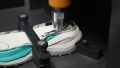
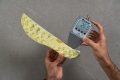
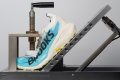
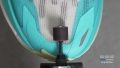
Las Cascadia Elite también presumen del diseño de espuma doble que solemos ver en las superzapatillas modernas. La verdad es que la capa de arriba es ultrablandita, como nos confirmó nuestro durómetro al marcar solo 26,5 AC.
De hecho, la espuma DNA Gold hizo que nuestros pies se enamorasen, ya que combina rebote y suavidad, que son dos detalles que no suelen ir de la mano en las zapatillas de trail. Por lo tanto, los runners que están buscando unas zapatillas listas para la montaña que no se sientan duras en los pies, seguro que están encantados con estas.
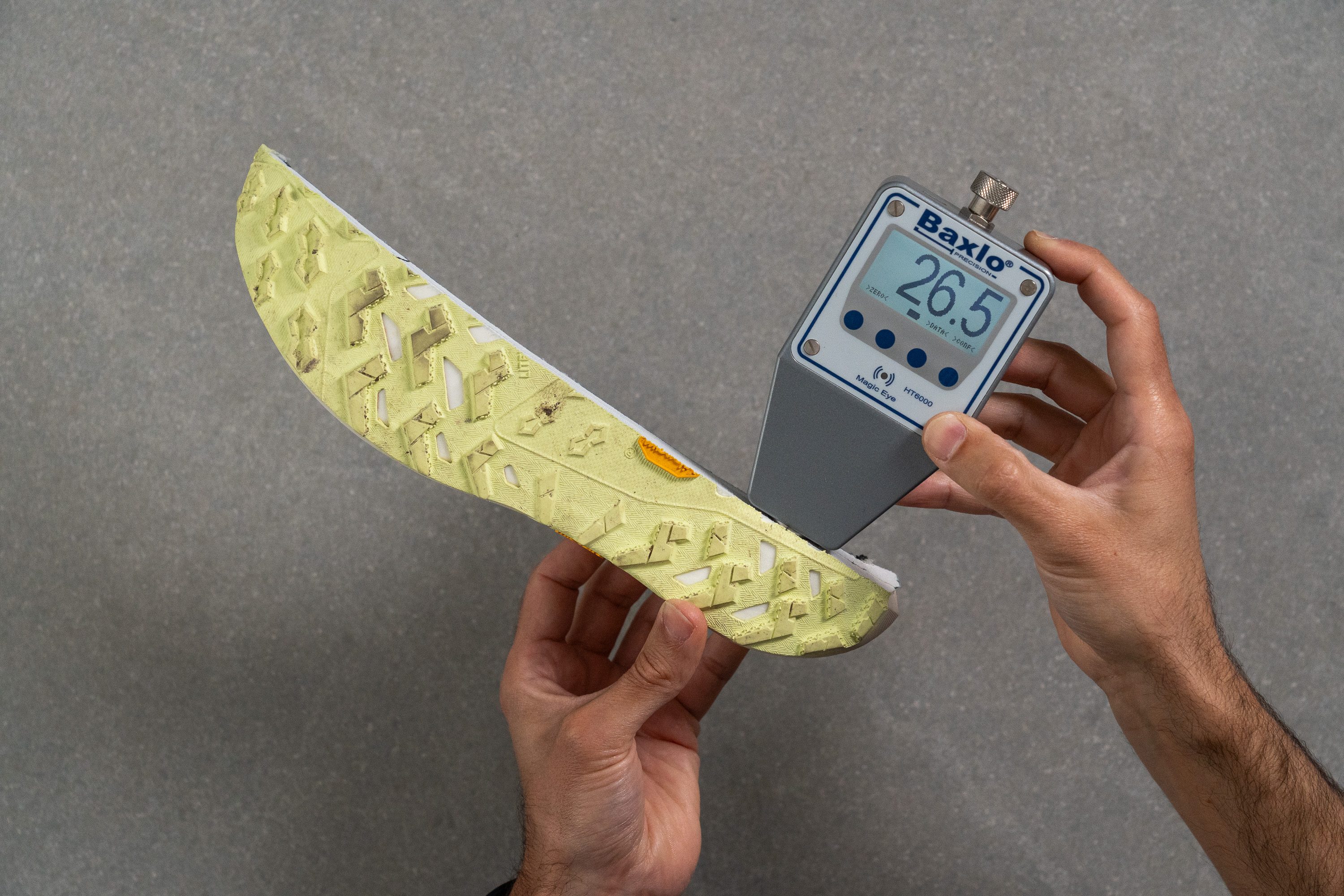
| Cascadia Elite | 26.5 AC |
| Media | 38.3 AC |
Rocker
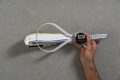
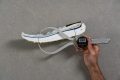
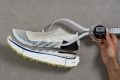
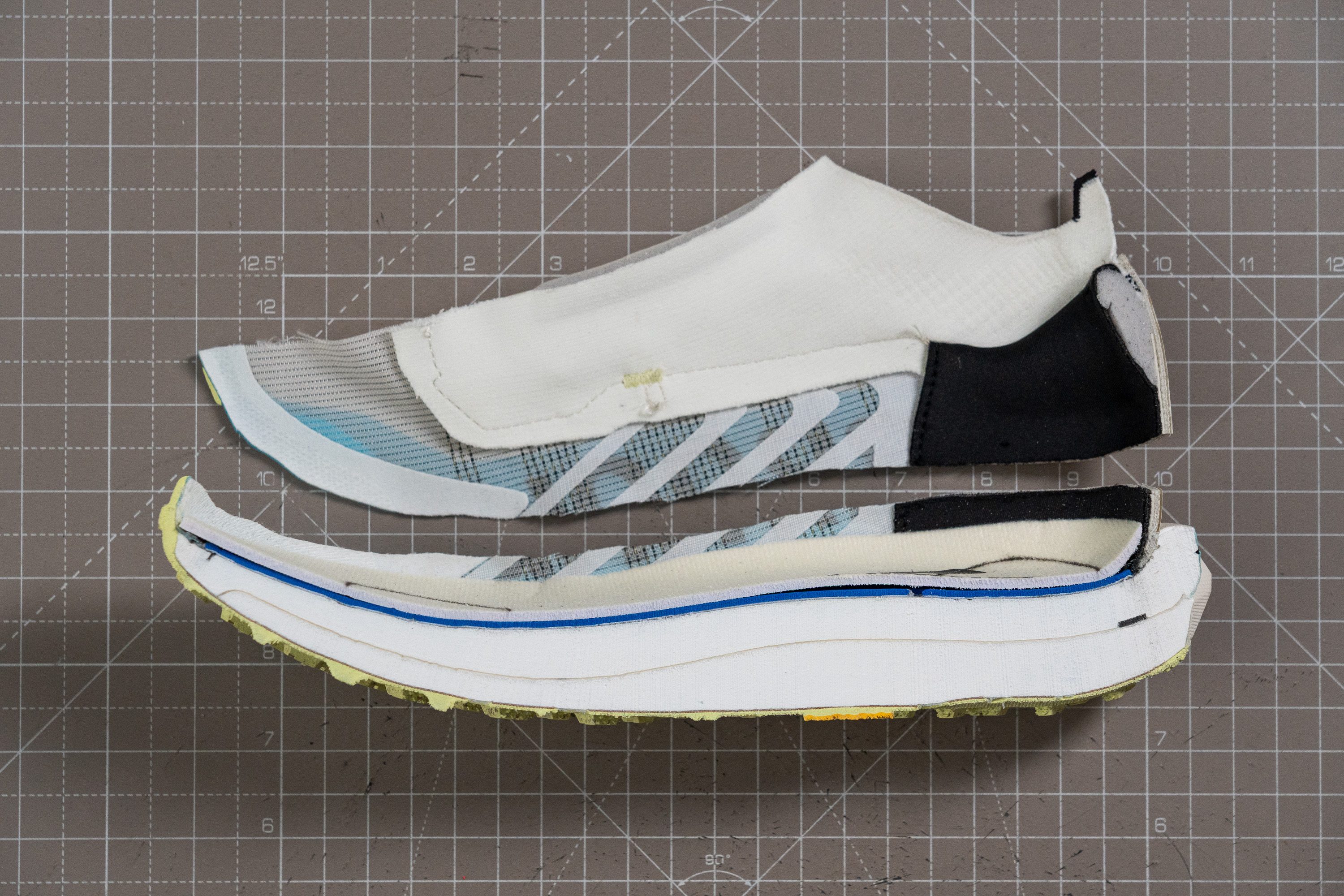
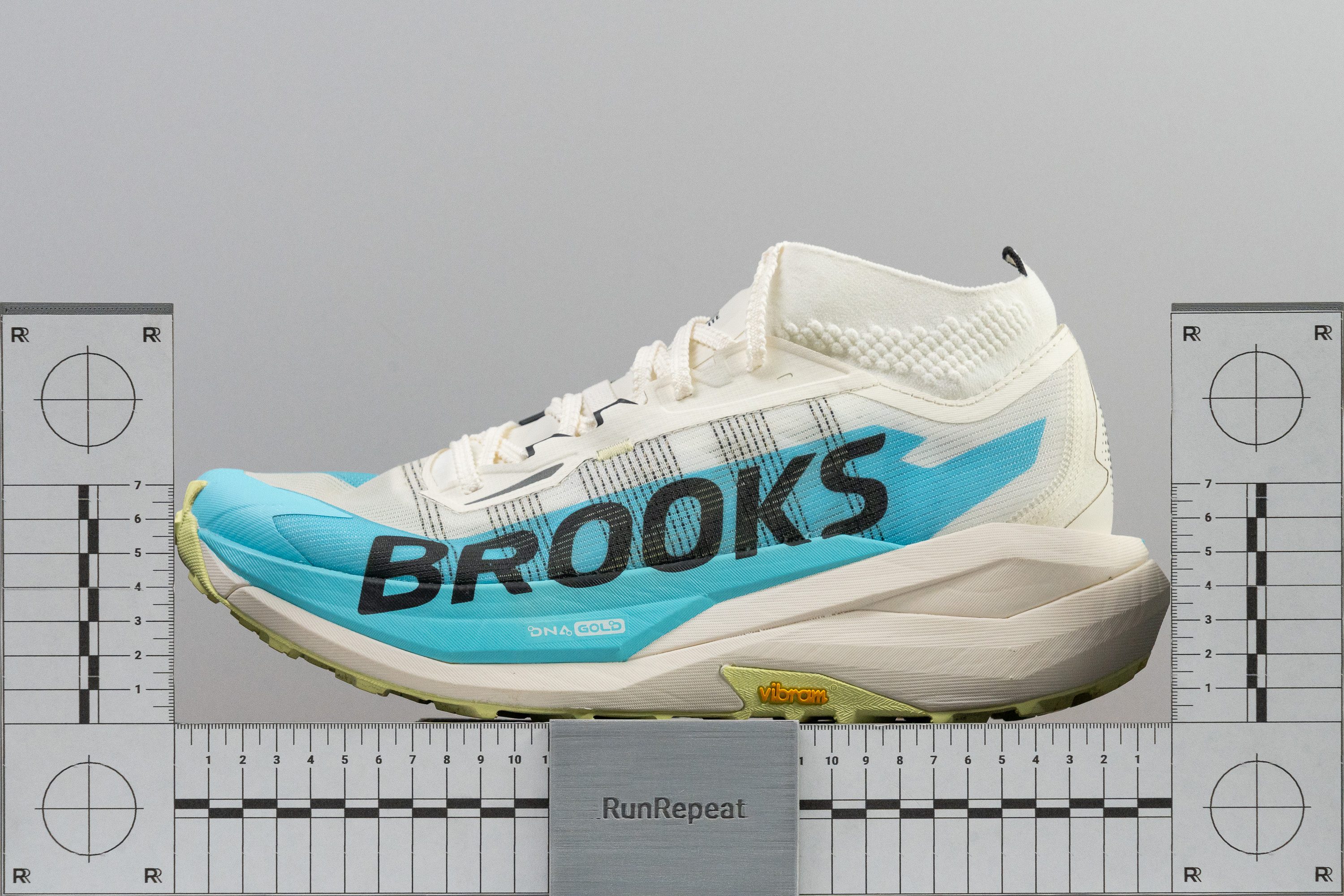
Las Cascadia Elite ya tienen una estética bastante agresiva de por sí, pero es que se sienten justo de esa misma forma al correr. Cuando nos las llevamos al laboratorio, les sacamos una foto de perfil para analizar su rocker, y ahí descubrimos que Brooks lo había apostado todo, ya que tanto el talón como el antepié tienen una curvatura pronunciada.
Sinceramente, nosotros creemos que este diseño consigue que estas zapatillas sean ideales para las zonas sencillas en las que vas a toda pastilla en el trail, y no tanto para los terrenos muy técnicos.
Placa
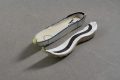
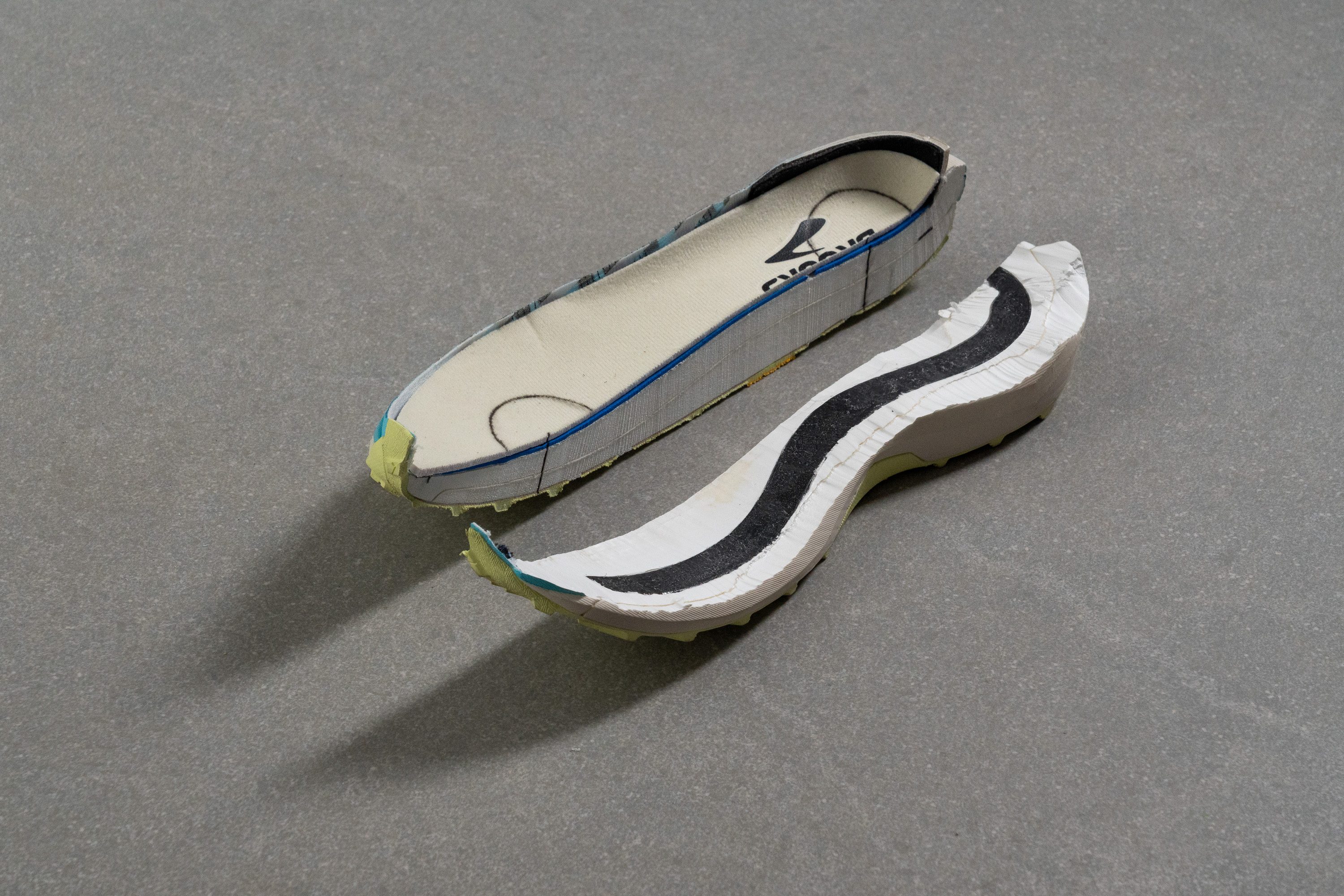
Ni cortar las zapatillas por la mitad es suficiente para entender los diseños de las placas modernas, cosa que ya hemos comprobado varias veces estos últimos años. Puede que las Brooks Cascadia Elite sean el mejor ejemplo hasta la fecha, ya que tienen una placa de Pebax que envuelve todo el perímetro de la mediasuela. Esto mejora la estabilidad y el impulso sin añadir esa rigidez excesiva que suele venir de la mano con las placas de carbono de longitud completa.
Nos ha parecido una solución muy interesante, sobre todo porque ahora hay muchas marcas que están utilizando placas dobles en sus superzapatillas de trail. Pero mira, Brooks optó por un concepto mucho más parecido a lo que adidas presentó hace poquito en sus rompe-récords Adizero Adios Pro Evo 3.
Tallaje y ajuste
Talla
Las Brooks Cascadia Elite quedan un poco pequeñas (18 votos).
Longitud interna
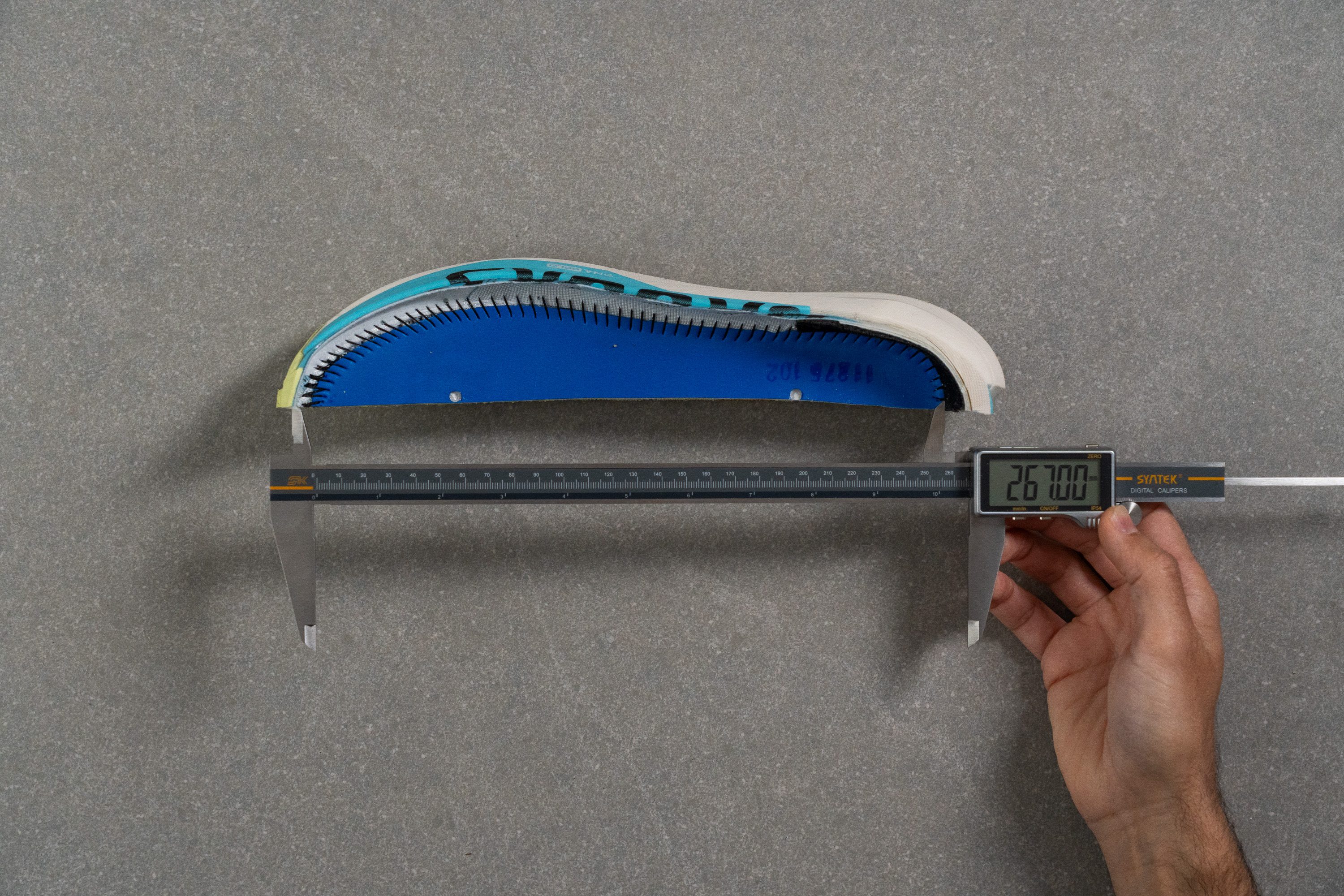
| Cascadia Elite | 267.0 mm |
| Media | 269.2 mm |
Anchura / Ajuste
En las zapatillas de trail, ajuste y equilibrio van de la mano, sobre todo en los modelos de competición diseñados para las distancias más largas. Al final, las marcas tienen que combinar una sujeción firme que limite el movimiento del tobillo, con un nivel de comodidad suficiente para aguantar tanto que se hinchen los pies como un montón de horas de movimiento.
Después de correr con las Cascadia Elite, nos dimos cuenta de que Brooks priorizó la estabilidad, y nuestro calibre lo confirmó al marcar una anchura de 92,6 mm.
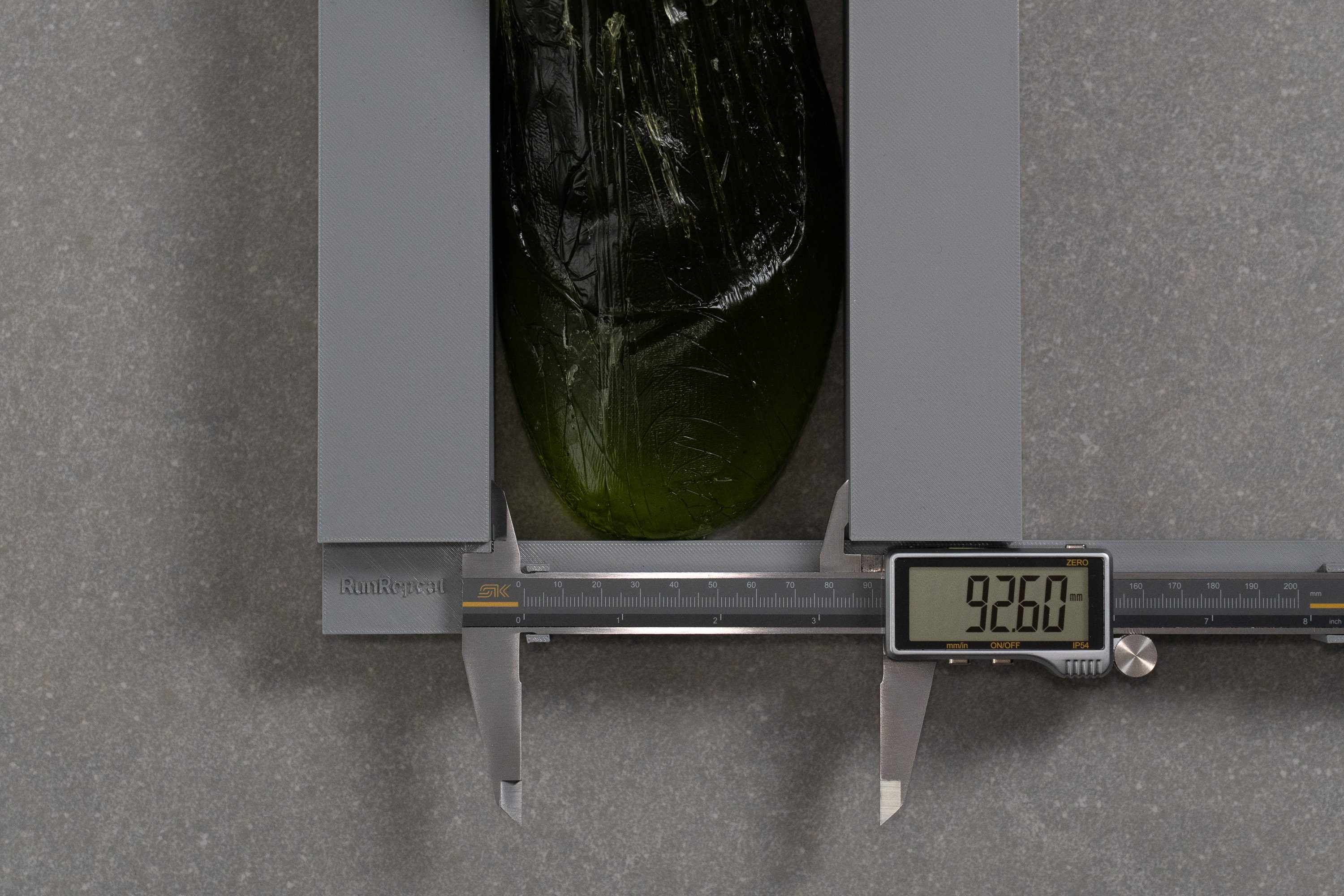
| Cascadia Elite | 92.6 mm |
| Media | 95.7 mm |
Anchura de la parte delantera
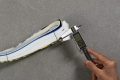
Después medimos la zona de los dedos y nuestro calibre marcó otro resultado por debajo de la media: 71,6 mm. Según nuestras pruebas, los runners que suelen necesitar espacio para estirar los dedos deberían pasar de las Cascadia Elite, a menos que tengan pensado ponérselas, principalmente, para las competiciones de corta distancia.
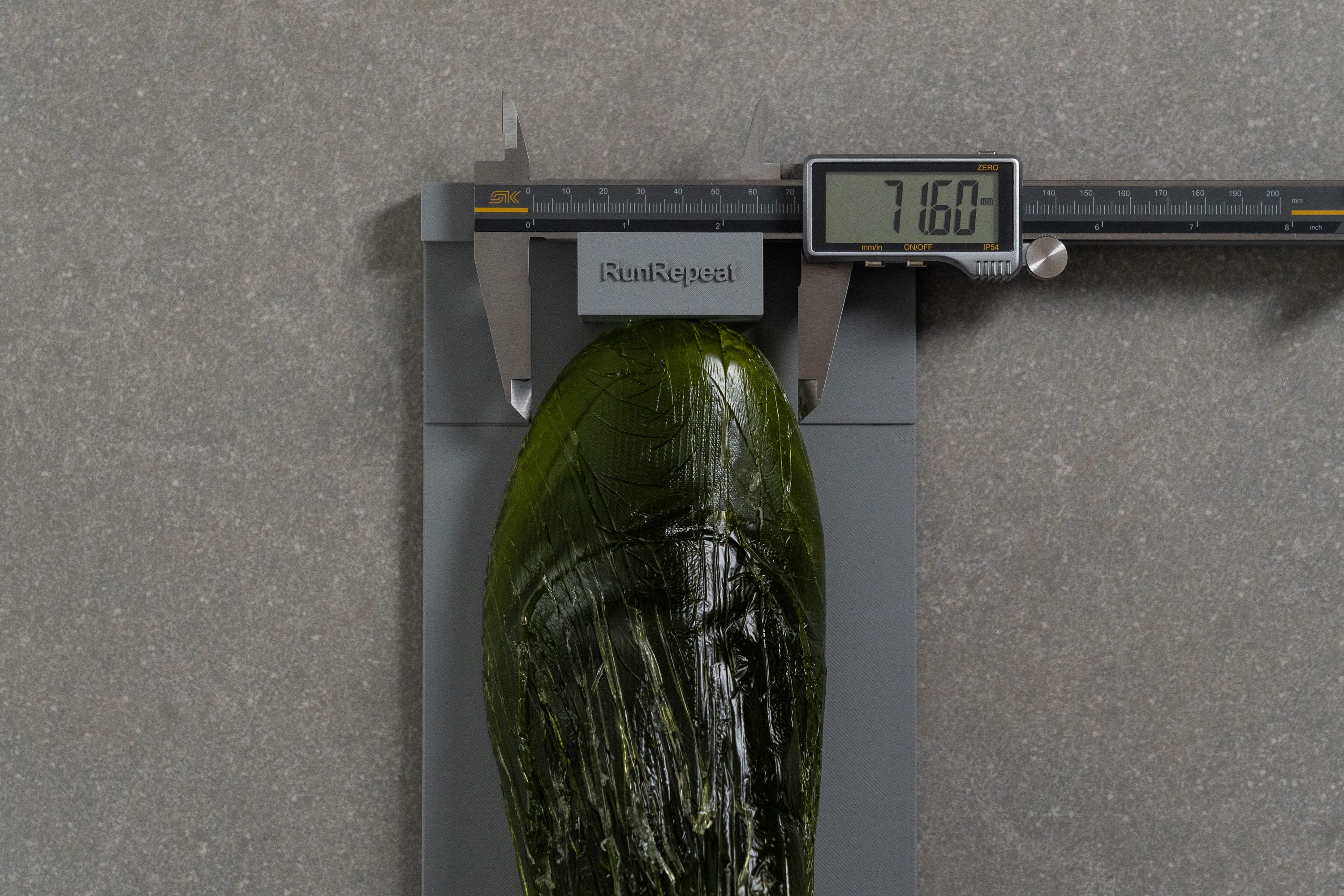
| Cascadia Elite | 71.6 mm |
| Media | 74.3 mm |
Altura de la parte delantera
La parte delantera tiene una altura bien equilibrada de 25,8 mm, así que creemos que Brooks ha tomado la decisión correcta aquí.
Es lo suficientemente bajita como para que el ajuste sea seguro en los giros, y lo suficientemente alta como para no generar una presión incómoda sobre los dedos.
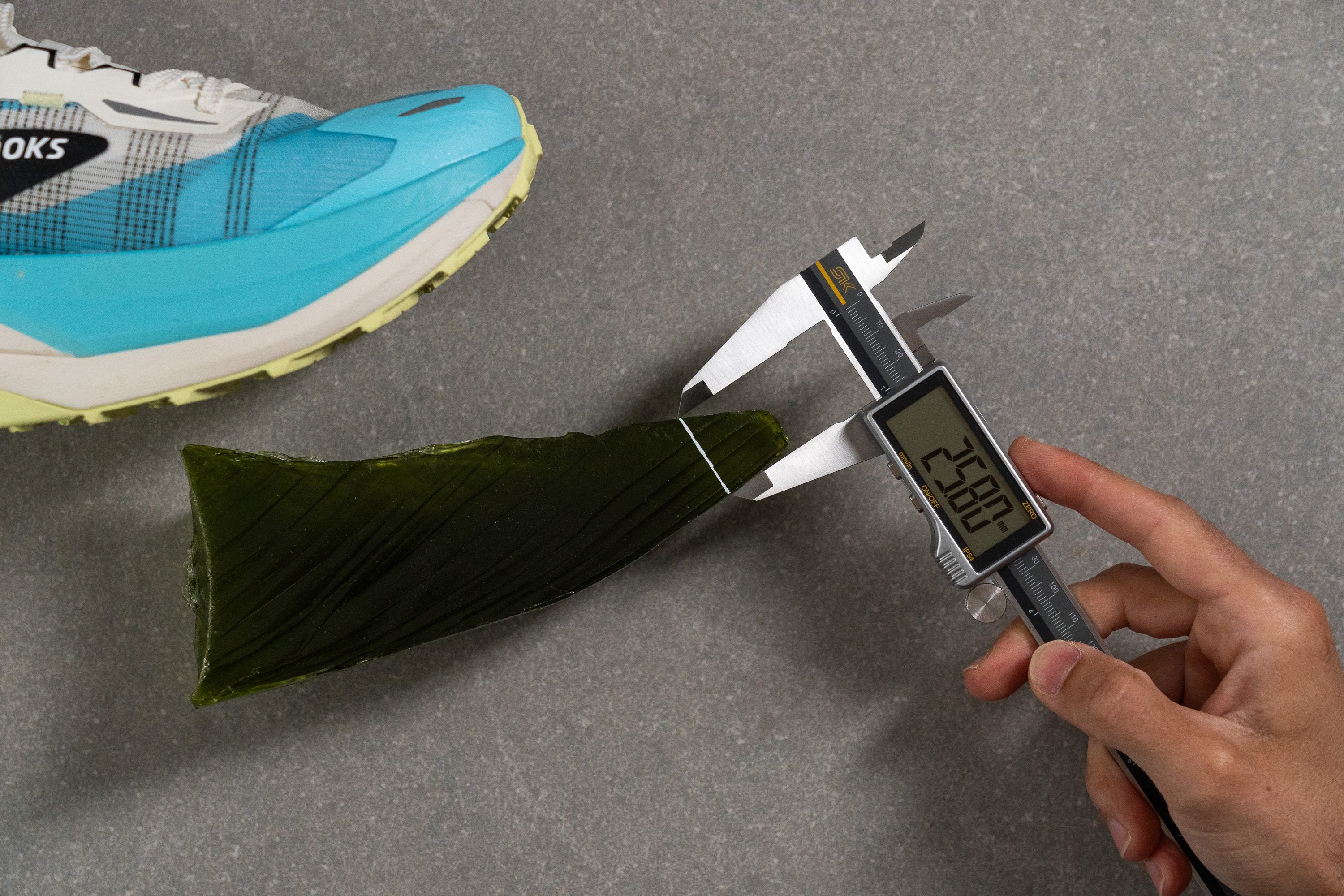
| Cascadia Elite | 25.8 mm |
| Media | 26.9 mm |
Tracción / Agarre
Traction test
Una de las partes más interesantes de las Brooks Cascadia Elite es, sin duda, su suela exterior. Presume del nuevo compuesto Vibram Megagrip Elite, una versión mejorada del ya maravilloso caucho Megagrip que, aunque parezca imposible, mejora incluso más la tracción.
Después de analizar este material en nuestro laboratorio, podemos confirmarlo. Con un excelente 1,08 en nuestra prueba SATRA TM144, son unas de las zapatillas de trail con el mejor agarre del mercado en estos momentos.
| Cascadia Elite | 1.08 |
| Media | 0.68 |
Profundidad del dibujo de la suela
Con tacos de 3,2 mm, las Brooks Cascadia Elite están diseñadas para terrenos sencillos, y no para las zonas más técnicas.
Vamos, que ponerte estas zapatillas en las zonas más complejas no nos parece buena idea, ya que lo alta que es su mediasuela en el talón y sus tacos, que no son demasiado profundos, no están pensados para ese tipo de terreno.
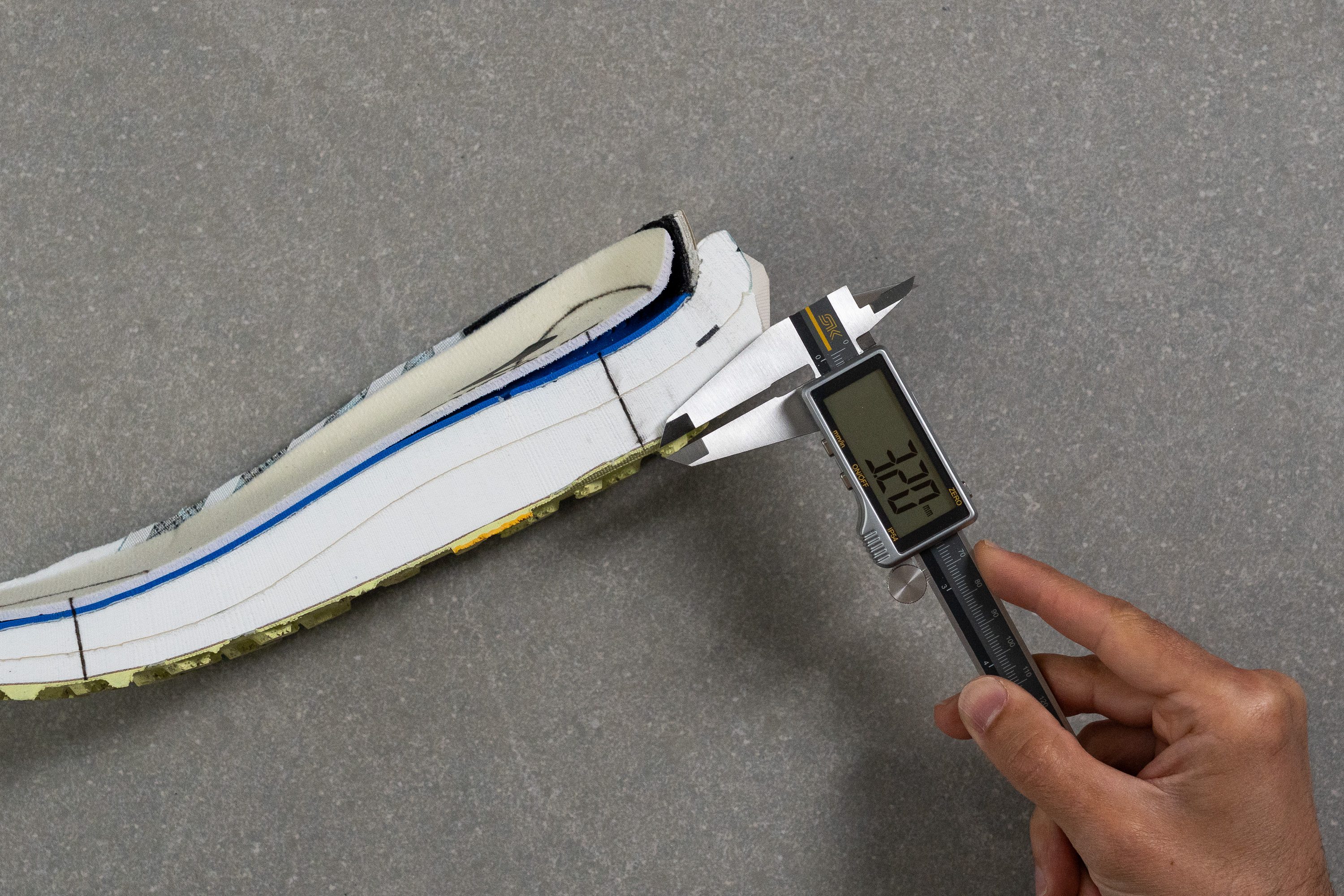
| Cascadia Elite | 3.2 mm |
| Media | 3.5 mm |
Diseño de la suela exterior
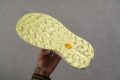
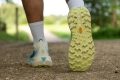
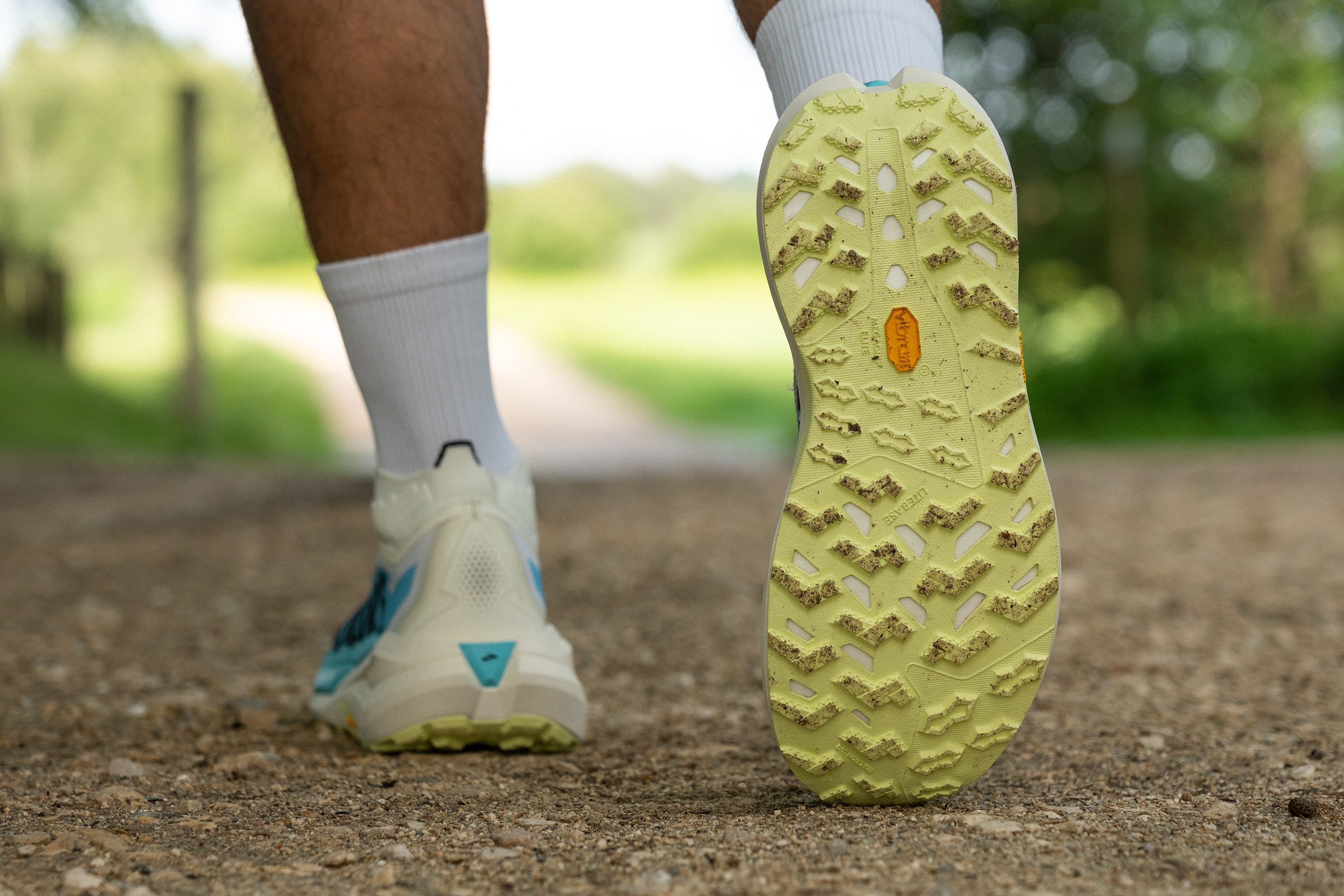
Brooks ha cubierto toda la suela de las Cascadia Elite de caucho, que es algo que no todas las zapatillas de trail de élite están haciendo últimamente. Quitando un par de cortes pequeños en el talón y en el antepié, el caucho Vibram Megagrip Elite domina la suela exterior.
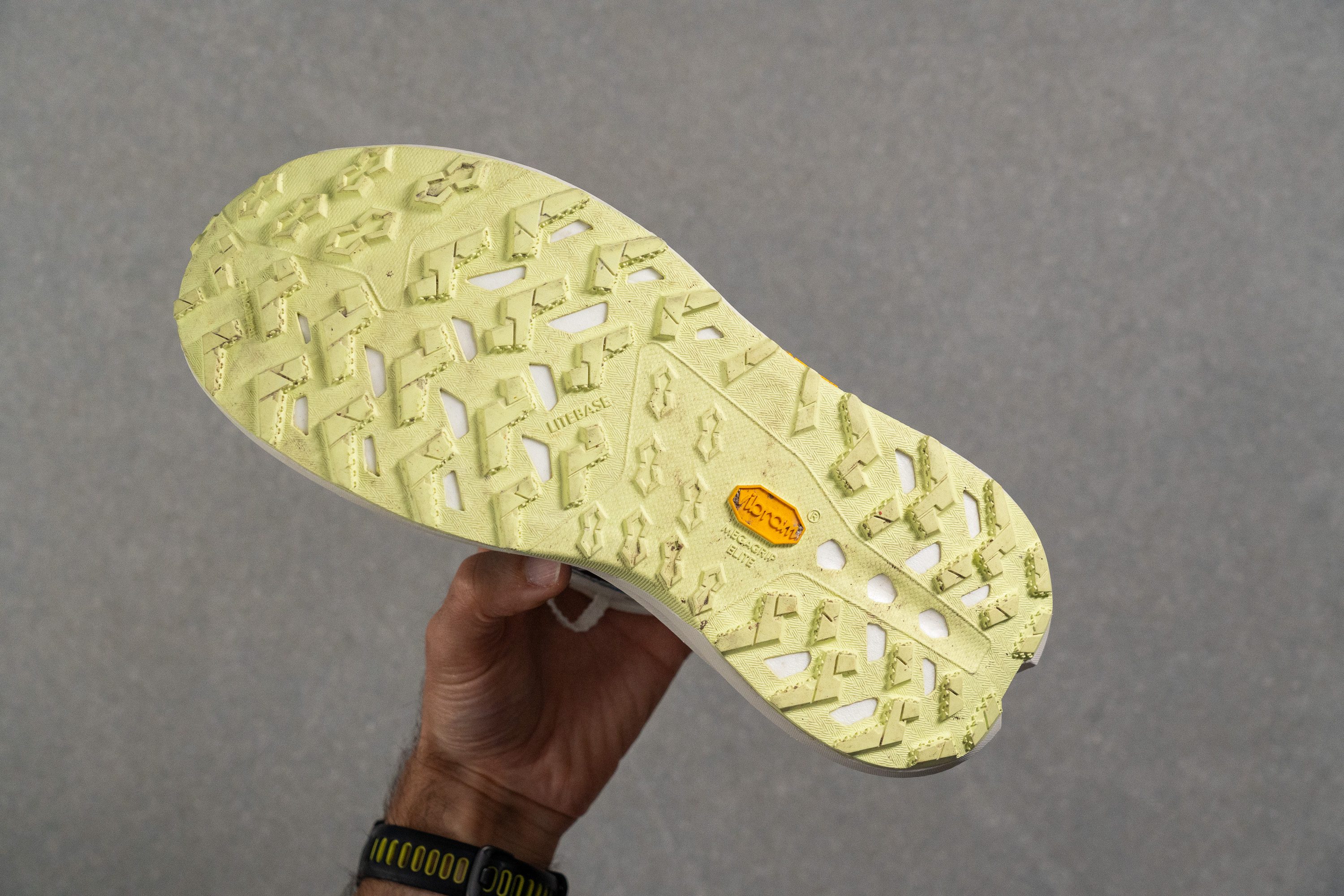
Los tacos tienen diseños diferentes para poder adaptarse lo mejor posible a cada sección de las zapatillas. En el antepié tienen dos formas distintas para mejorar el agarre en los despegues y en las curvas, mientras que el talón tiene otros más pequeños y angulados que te ayudan a frenar en los descensos.
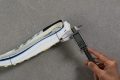
Flexibilidad / Rigidez
La placa de Pebax, cuyo rendimiento es más parecido al plástico que a la fibra de carbono, consiguió que las Cascadia Elite pudiesen ser más flexibles, como comprobamos cuando se llevaron un razonable resultado de 15,4 N en nuestra prueba.
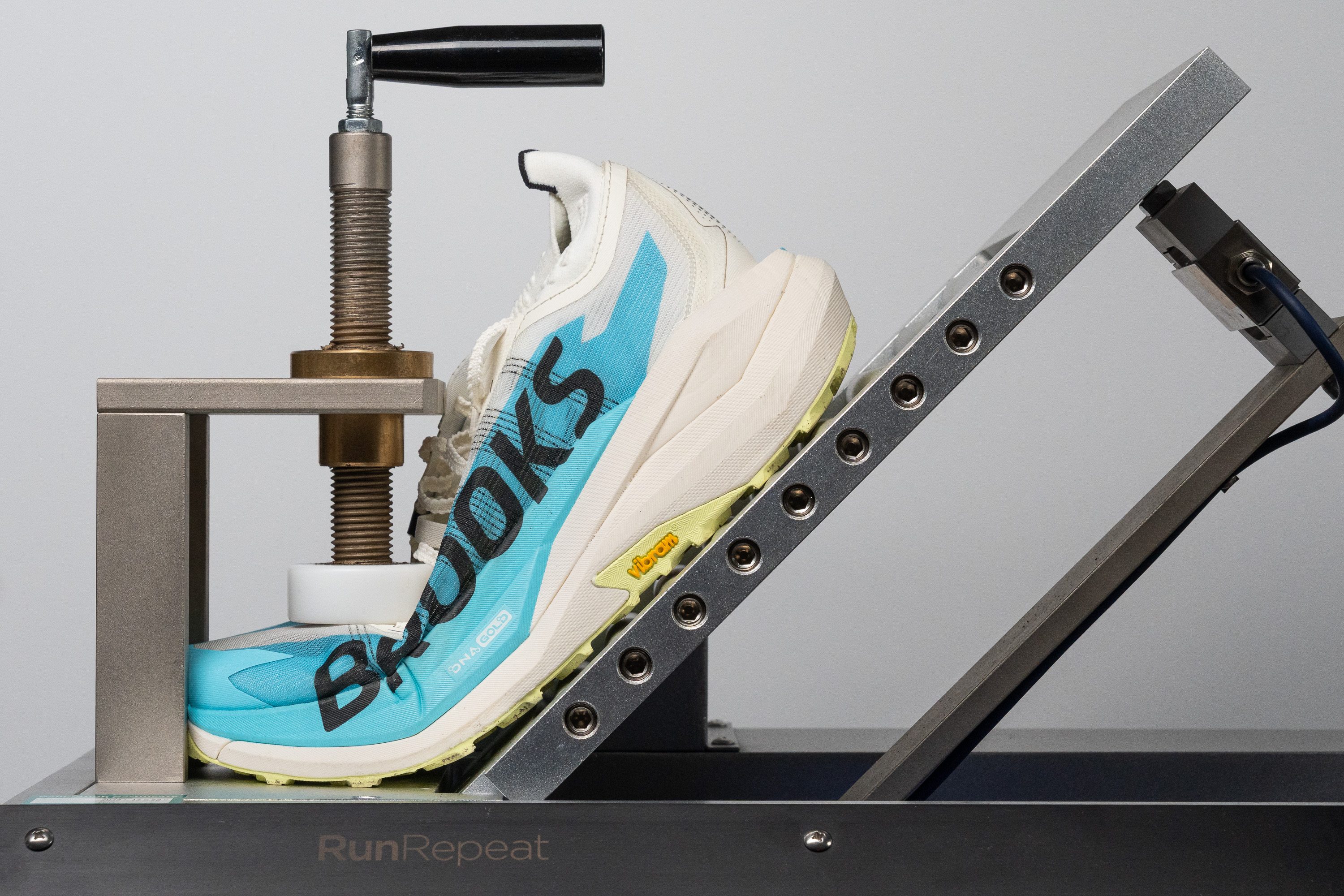
| Cascadia Elite | 15.4N |
| Media | 14.8N |
Peso
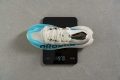
Con 275 g, las Brooks Cascadia Elite no son unas zapatillas de trail especialmente ligeras. Pero claro, teniendo en cuenta toda la espuma que ofrecen bajo los pies y todo el caucho de la suela, la verdad es que nos parece un resultado bastante razonable.
De hecho, está a la altura de sus principales competidoras en esta categoría, así que no creemos que su peso sea una desventaja importante.
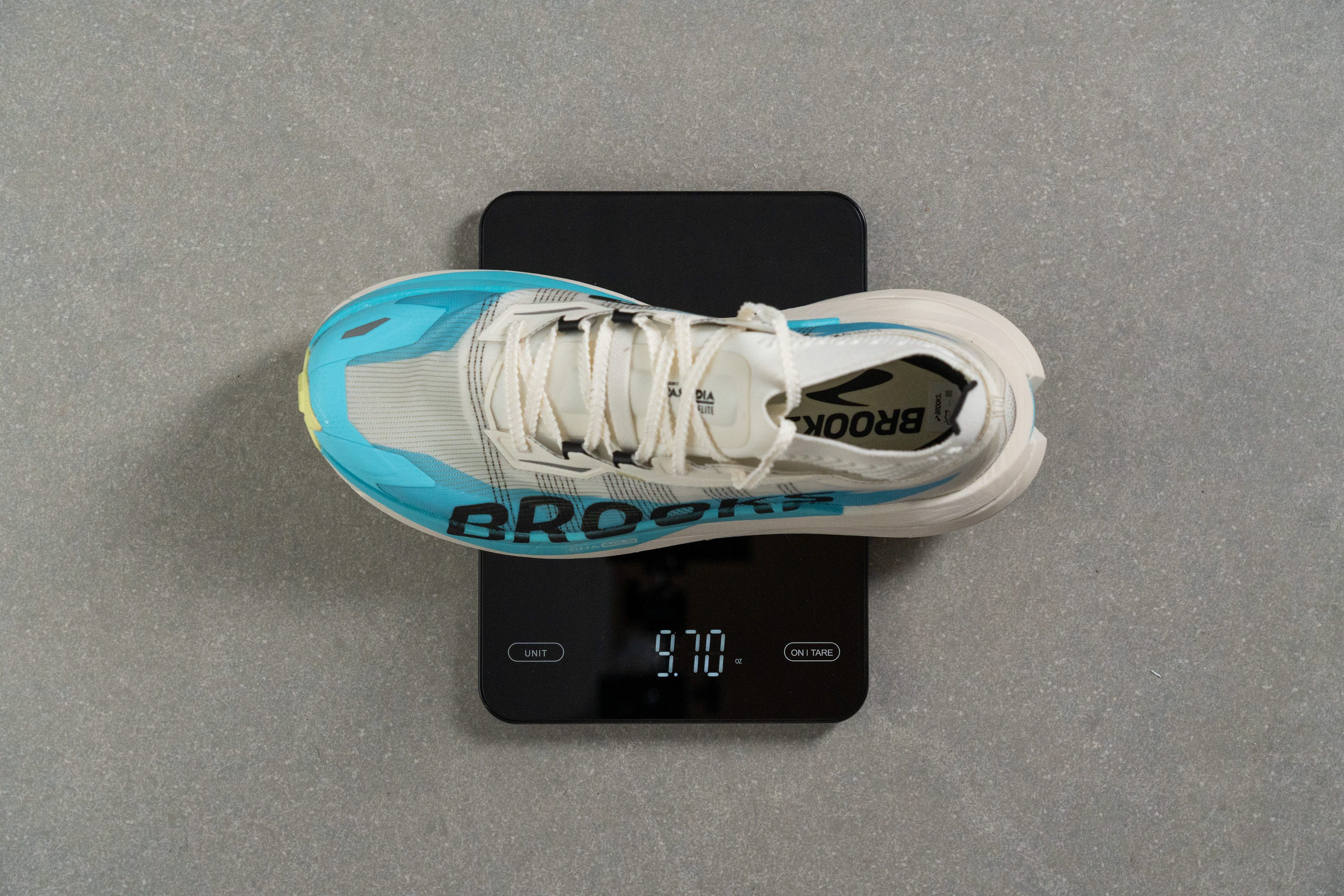
| Cascadia Elite | 9.7 oz (275g) |
| Media | 10.1 oz (285g) |
Transpirabilidad
Breathability test
ActualizadoBrooks decidió invertir en materiales de primera calidad cuando diseñó las Cascadia Elite, eso está claro, y que colaborase con Chamatex para el upper MATRYX dio sus frutos. Aunque la transpirabilidad es algo que depende de toda la estructura de las zapatillas, y no solo del upper, creemos que esta pieza influyó mucho en el sólido resultado de 71 BR que obtuvieron.
Vamos, que las Cascadia Elite no tienen problema quitándole el sudor del pie, lo que hace que estén más secos, una característica incluso más importante en los ultramaratones.
| Cascadia Elite | 71 BR |
| Media | 71 BR |
Potencial de secado
NuevoY si te preocupa que las Cascadia Elite se sientan húmedas o pesadas por el sudor o cuando te toca pisar algún que otro charco, estamos encantados de poder decirte que obtuvieron un buen resultado en nuestra prueba de potencial de secado. En este mismo proceso de 3 horas, descubrimos que estas Brooks habían evaporado el 51 % de la humedad retenida.
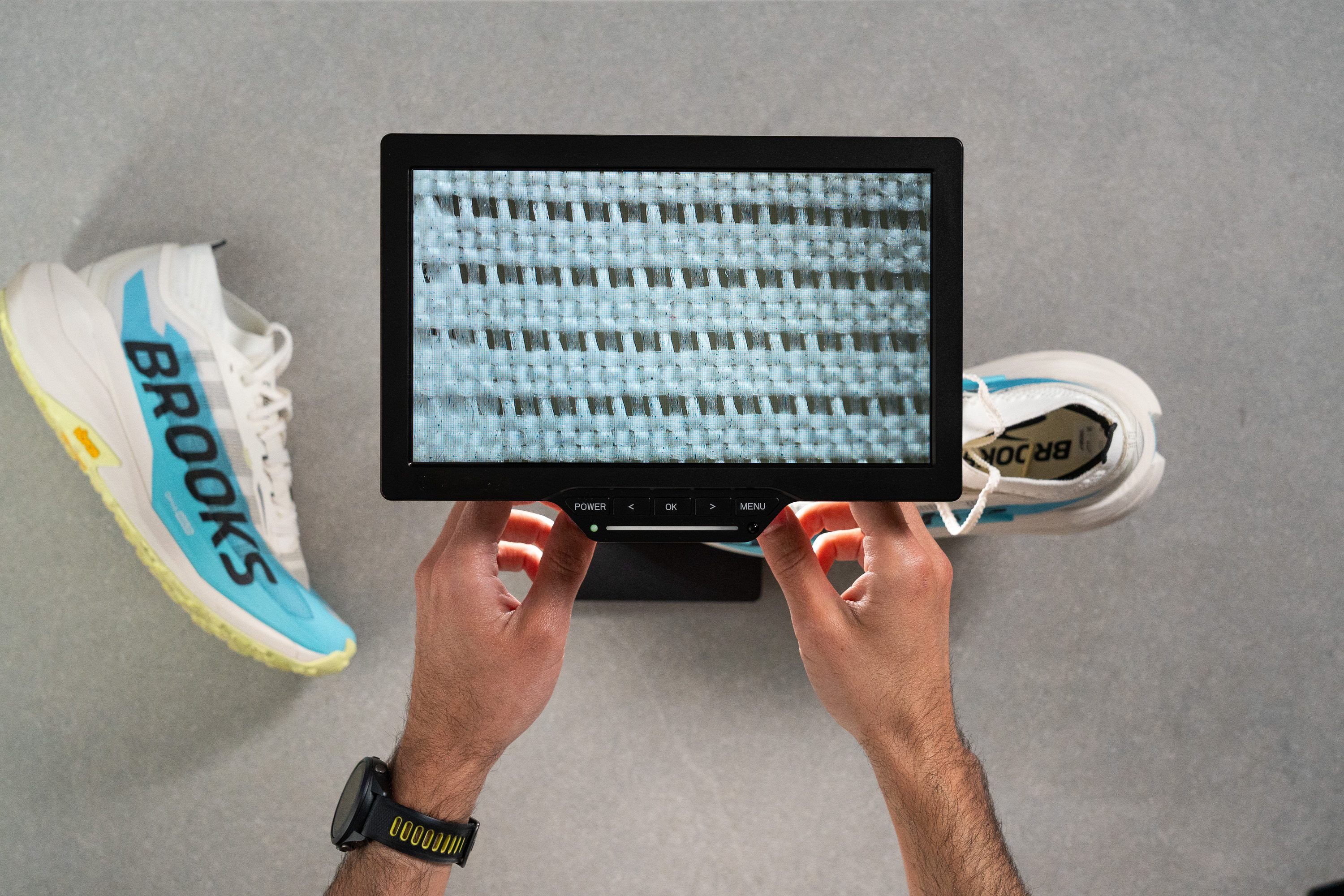
| Cascadia Elite | 51% |
| Media | 51% |
Estabilidad
Prueba de estabilidad lateral
Personalmente, nosotros creemos que Brooks quería que la estabilidad fuese una característica clave de las Cascadia Elite, ya que es algo que se nota por todo el diseño. Para ser unas zapatillas hechas para competir, tienen una plataforma sorprendentemente ancha en el talón, un contrafuerte en esta misma zona que ofrece sujeción y paredes laterales altas que ayudan a que el pie no se mueva de su sitio al correr.
Seguimos pensando que la espuma DNA Gold, que es ultrablandita, hace que estas zapatillas sean más adecuadas, en general, para los corredores neutros, aunque es probable que muchos runners sientan que es más estable de lo que se esperaban de un modelo de trail con tanta amortiguación.
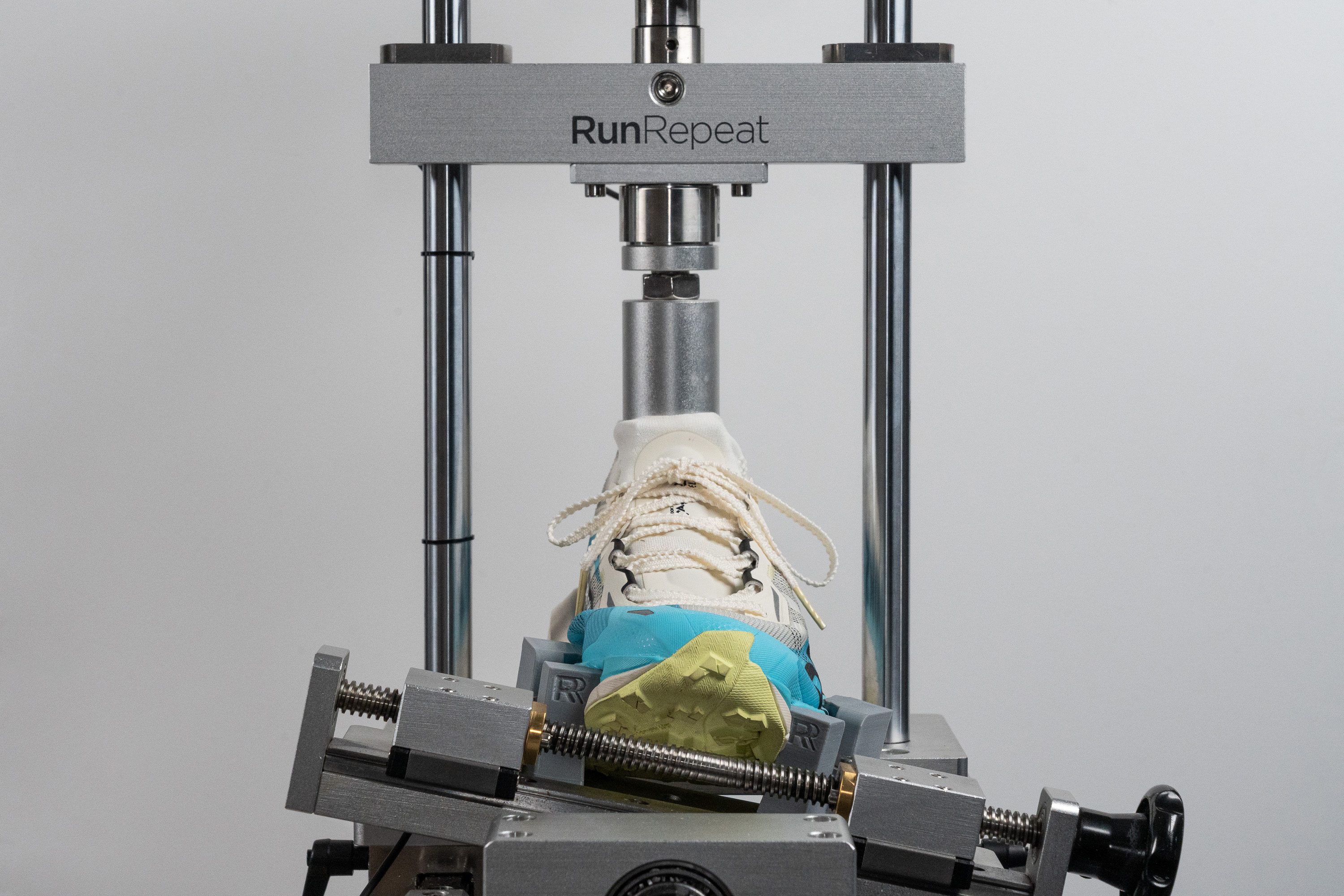
Rigidez torsional
Igual que en nuestra prueba de rigidez longitudinal, estas zapatillas obtuvieron otro resultado moderado cuando analizamos su rigidez torsional: 16,3 Nm. Una vez más, creemos que Brooks tomó la decisión correcta, sobre todo para los runners a los que no les terminan de convencer las zapatillas de competición excesivamente rígidas y agresivas.
| Cascadia Elite | 16.3 Nm |
| Media | 15.8 Nm |
Rigidez del contrafuerte del talón
Antes dijimos que el contrafuerte del talón de este modelo ofrece bastante sujeción, y el 3/5 que se llevó en nuestra prueba lo confirma. Aunque es un resultado bastante común entre los modelos de entrenamiento diario, las zapatillas de competición suelen llevarse solo un 1/5 o un 2/5 en esta prueba.
| Cascadia Elite | 3 |
| Media | 3 |
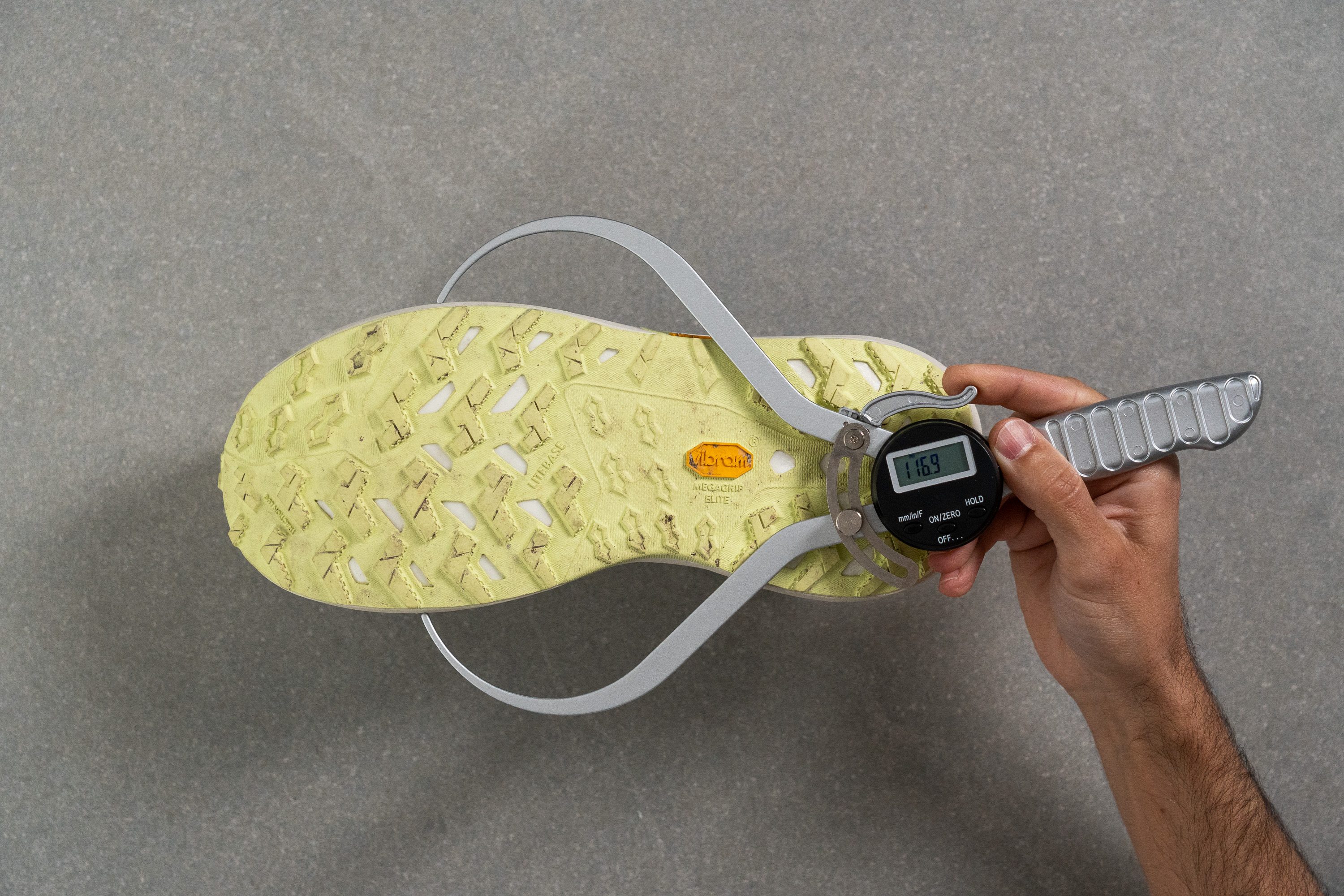
Anchura de la mediasuela - antepié
El antepié tiene una anchura de 116,9 mm, creando una plataforma estable para los aterrizajes con el antepié que se siente incluso más segura en los esfuerzos más rápidos.
En nuestra experiencia, este diseño rinde mejor en los terrenos fáciles y menos técnicos, donde los runners pueden sacarle más partido a la espuma explosiva DNA Gold y subir el ritmo sin problema.
| Cascadia Elite | 116.9 mm |
| Media | 114.3 mm |
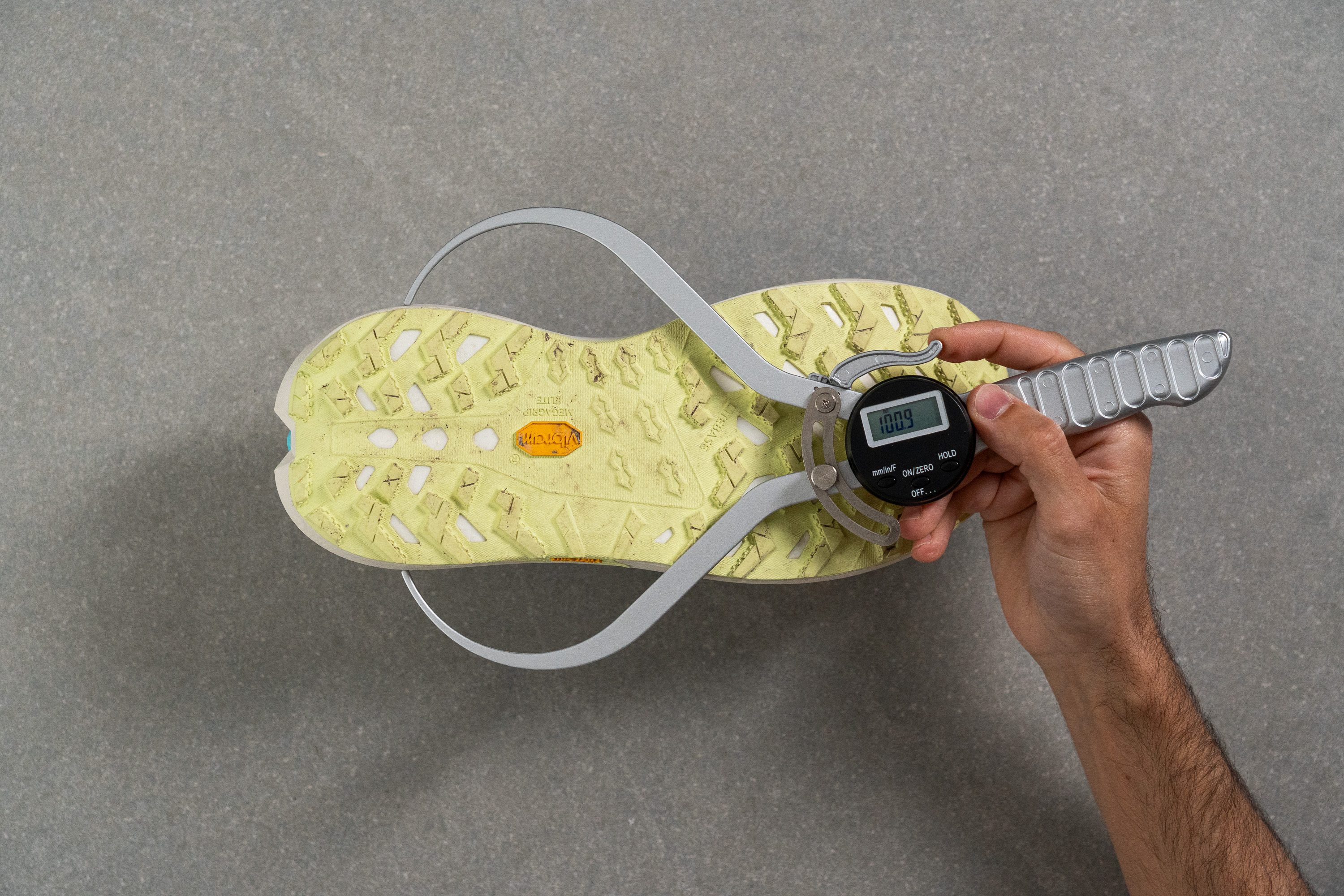
Anchura de la mediasuela - talón
Brooks nos sorprendió mucho con esta decisión, y la verdad es que creemos que puede ser el punto de inflexión que separe a las Cascadia Elite de otras superzapatillas de trail.
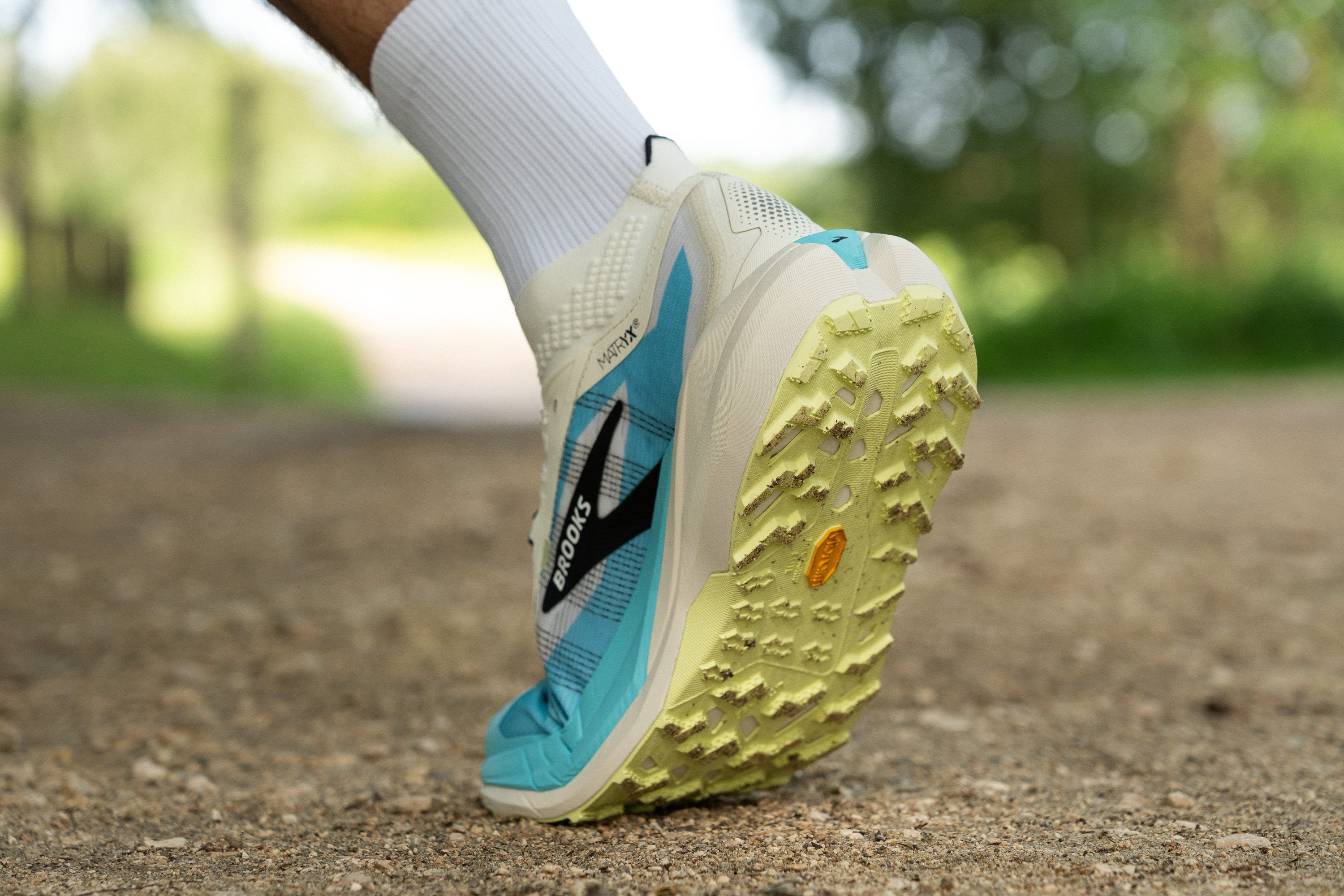
Los runners que están buscando una plataforma estable y que inspire confianza en el talón probablemente estén encantados con la de estas zapatillas, que mide 100,9 mm, sobre todo si no les importa que haya un montón de espuma bajo los pies. Sin embargo, los que prefieren una pisada más ágil o suelen aterrizar con el mediopié o los metatarsos, a lo mejor no están tan contentos con un talón tan ancho.
| Cascadia Elite | 100.9 mm |
| Media | 90.5 mm |
Durabilidad
Durabilidad de la parte delantera
El problema de que este upper se centre tanto en la competición es su durabilidad. Se llevó un decepcionante 1/5 en nuestra prueba Dremel cuando analizamos su parte delantera, aunque es importante mencionar que Brooks puso bastantes refuerzos en las zonas en las que las zapatillas de trail suelen desgastarse más.
| Cascadia Elite | 1 |
| Media | 3.1 |
Durabilidad del acolchado del talón
El acolchado del talón rindió mucho mejor, llevándose un sólido 4/5 y hasta superando la media actual de nuestro laboratorio en esta prueba.
| Cascadia Elite | 4 |
| Media | 3.1 |
Durabilidad de la suela
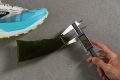
Aunque la tracción del caucho Vibram Megagrip Elite es una maravilla, ahora nos tocaba analizar su durabilidad. Solo perdió 0,8 mm en nuestra prueba con el Dremel, así que nos quedamos muy contentos.
| Cascadia Elite | 0.8 mm |
| Media | 0.9 mm |
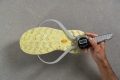
Grosor de la suela
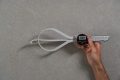
La suela exterior está diseñada para las zonas más sencillas, eso está claro. Al final, solo tiene un grosor de 1,5 mm, priorizando la ligereza y el contacto con el suelo y dejando más a un lado la protección total y absoluta.
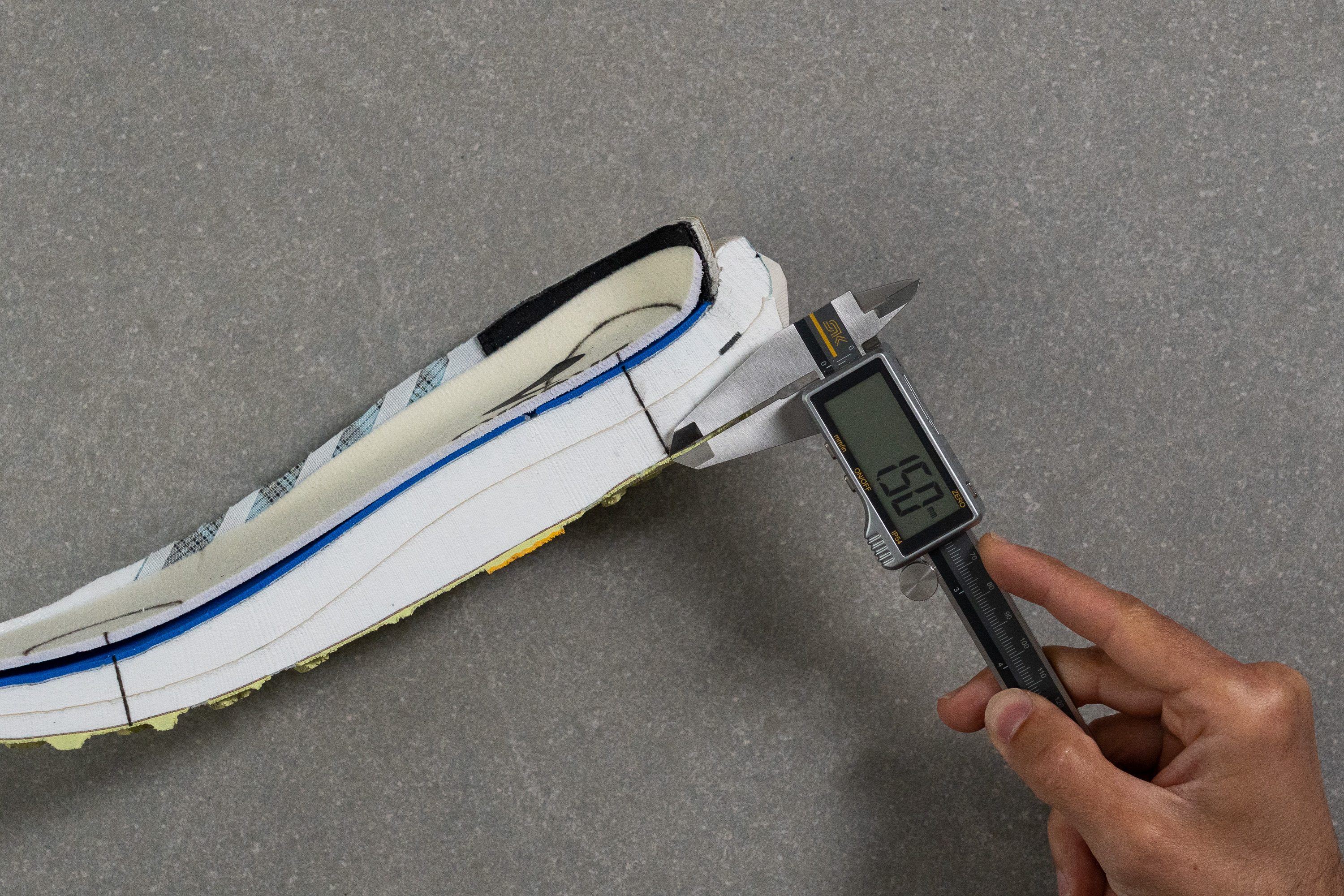
| Cascadia Elite | 1.5 mm |
| Media | 1.9 mm |
Varios
Grosor de la plantilla
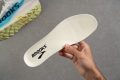
Con solo 2,6 mm, es una de las plantillas más finitas que hemos visto en unas zapatillas de trail.
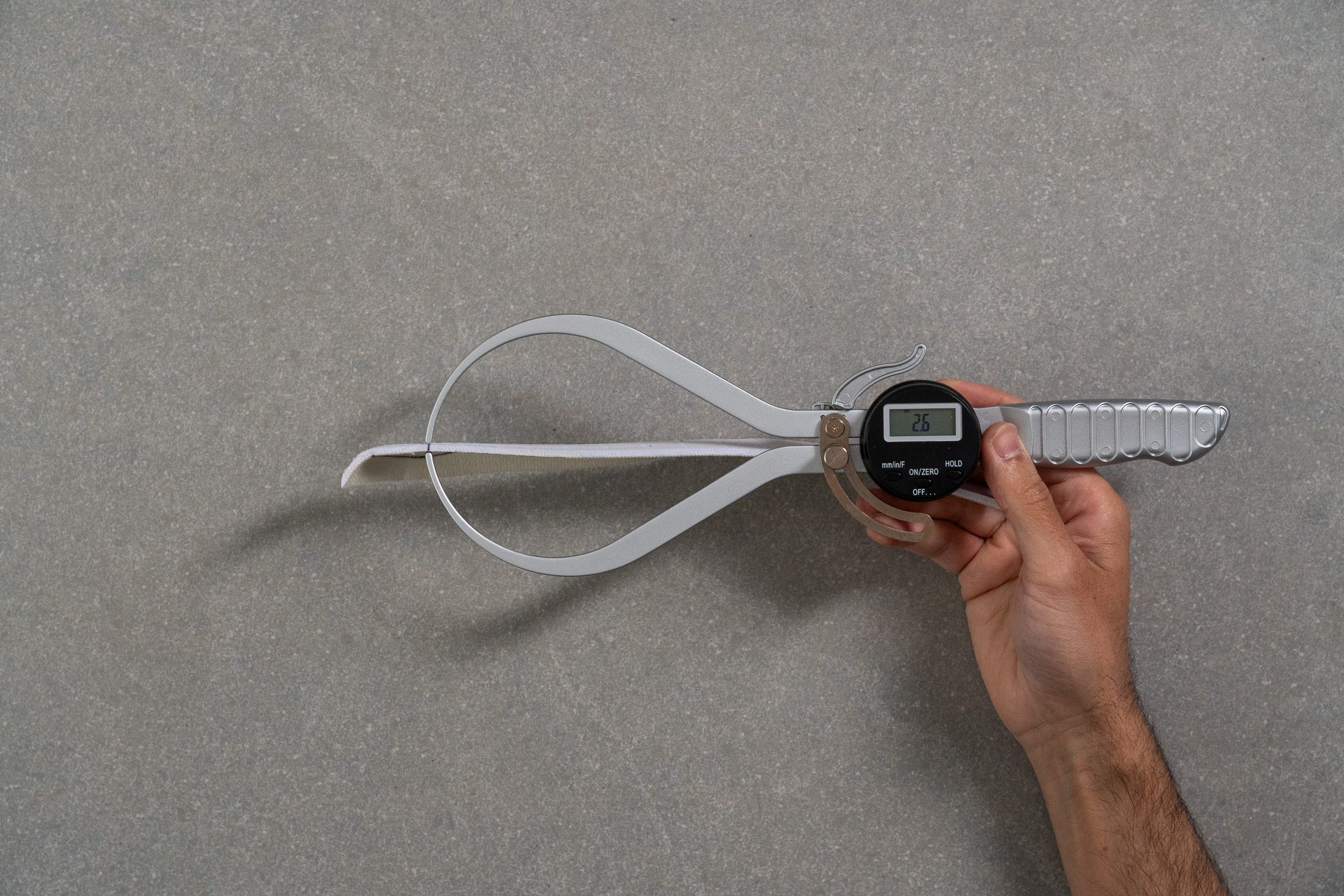
| Cascadia Elite | 2.6 mm |
| Media | 4.6 mm |
Plantilla extraíble
Puedes quitarles la plantilla sin problema, pero claro, al ser tan finita, es difícil encontrar una alternativa que no afecte negativamente al ajuste.
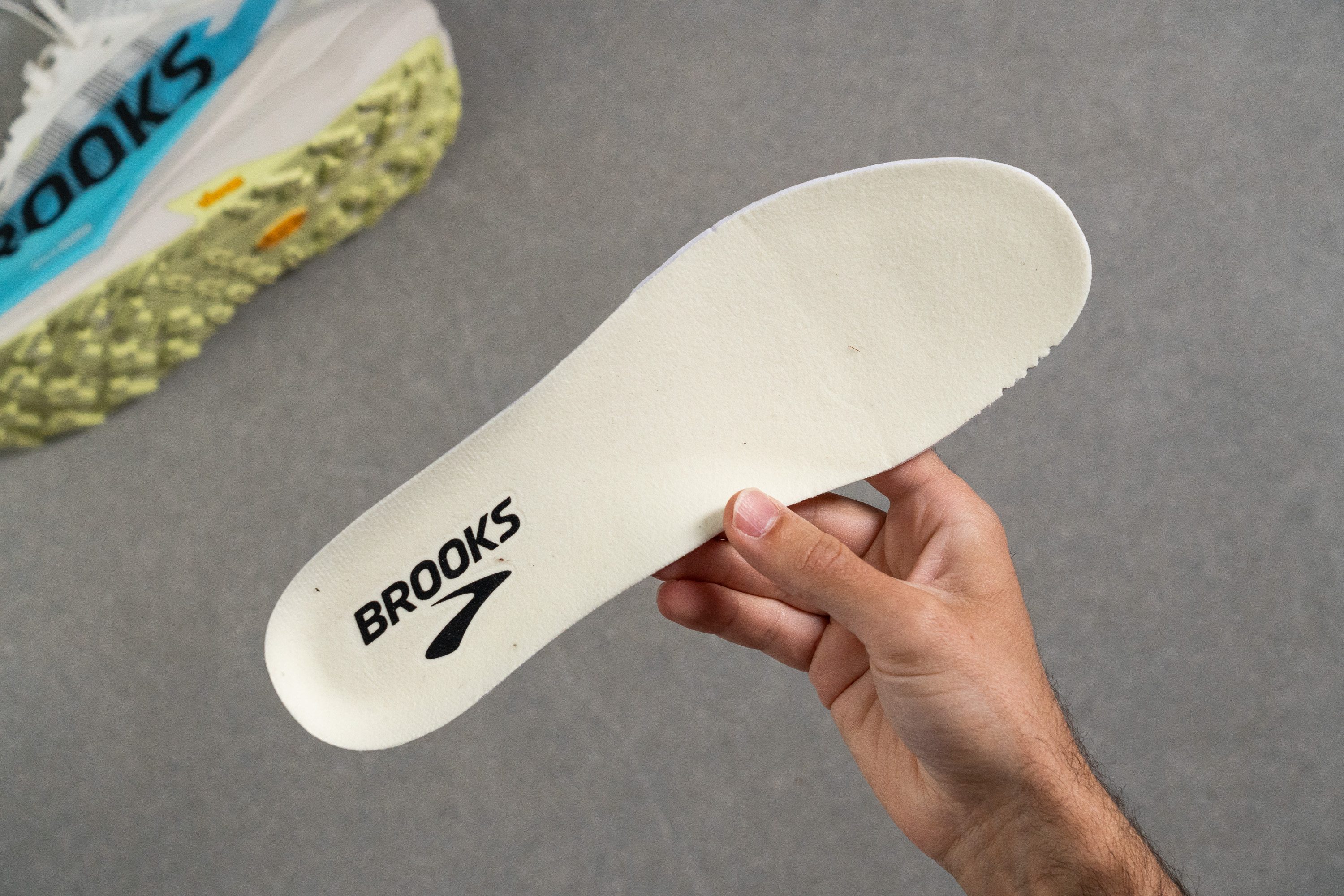
| Cascadia Elite | Sí |
Elementos reflectantes
Una de las pocas cosas que echamos en falta en este modelo fueron los elementos reflectantes.
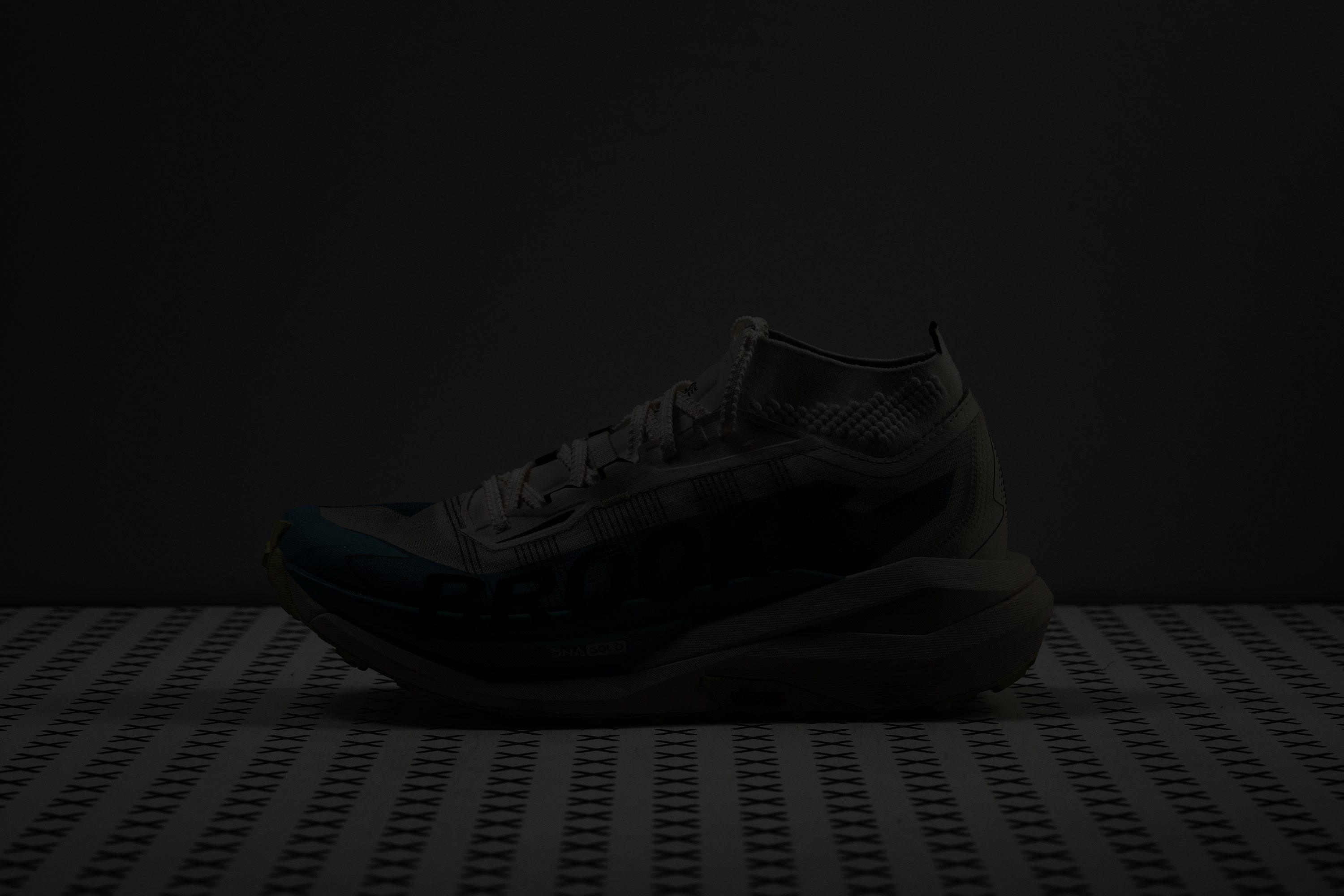
| Cascadia Elite | No |
Acolchado de la lengüeta
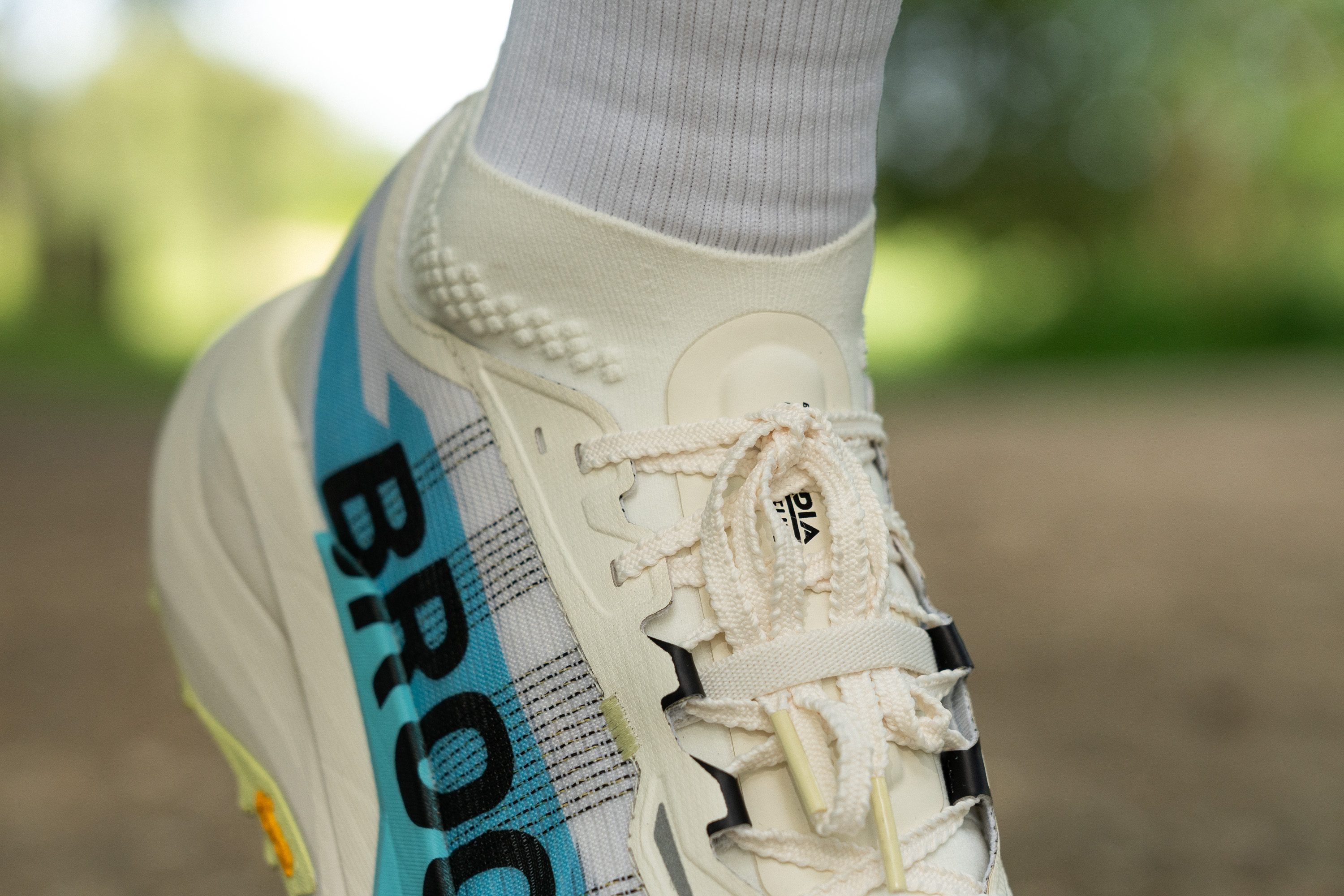
A medida que íbamos analizando estas zapatillas, nos íbamos dando cuenta de que Brooks se fijó mucho en los detalles. Los cordones con relieve, que se inspiran en las superzapatillas para asfalto modernas, combinados con un sistema híbrido, crean un cierre impresionante, mientras que la cinta elástica del medio hace que los cordones no bailen o hagan ruido.
La lengüeta también tiene un poco de espuma, con un grosor de 5,6 mm. Aumenta un poquito el peso pero, personalmente, creemos que esta comodidad extra es muy importante en las distancias largas.
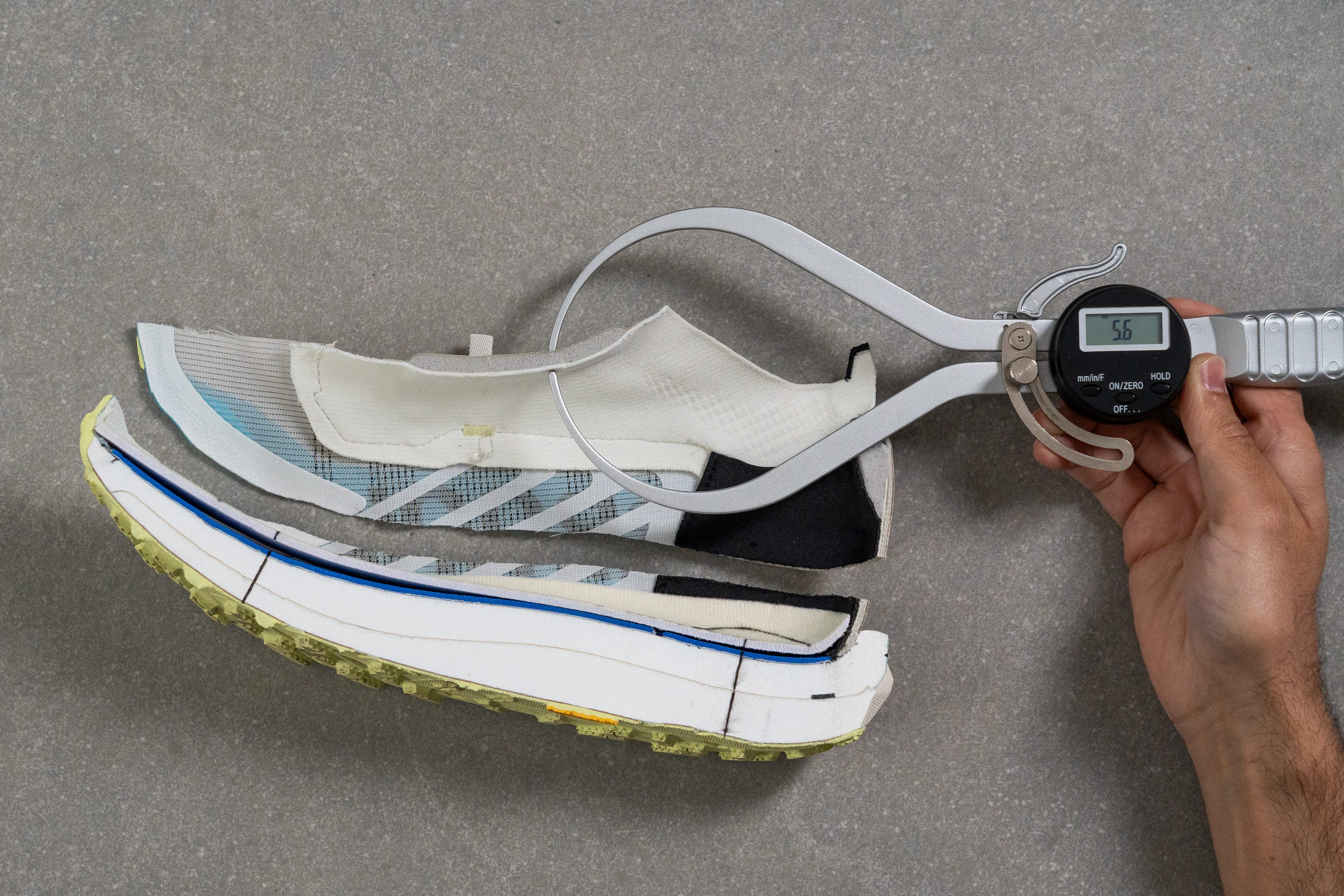
| Cascadia Elite | 5.6 mm |
| Media | 6.4 mm |
Lengüeta: tipo de refuerzo
Si te preocupa que se te cuele tierra o piedrecillas, seguro que estás encantado con el diseño tipo calcetín de estas zapatillas. Siguiendo nuestra experiencia, se le da genial proteger a los pies de los intrusos, y además ofrece un ajuste sorprendentemente seguro.
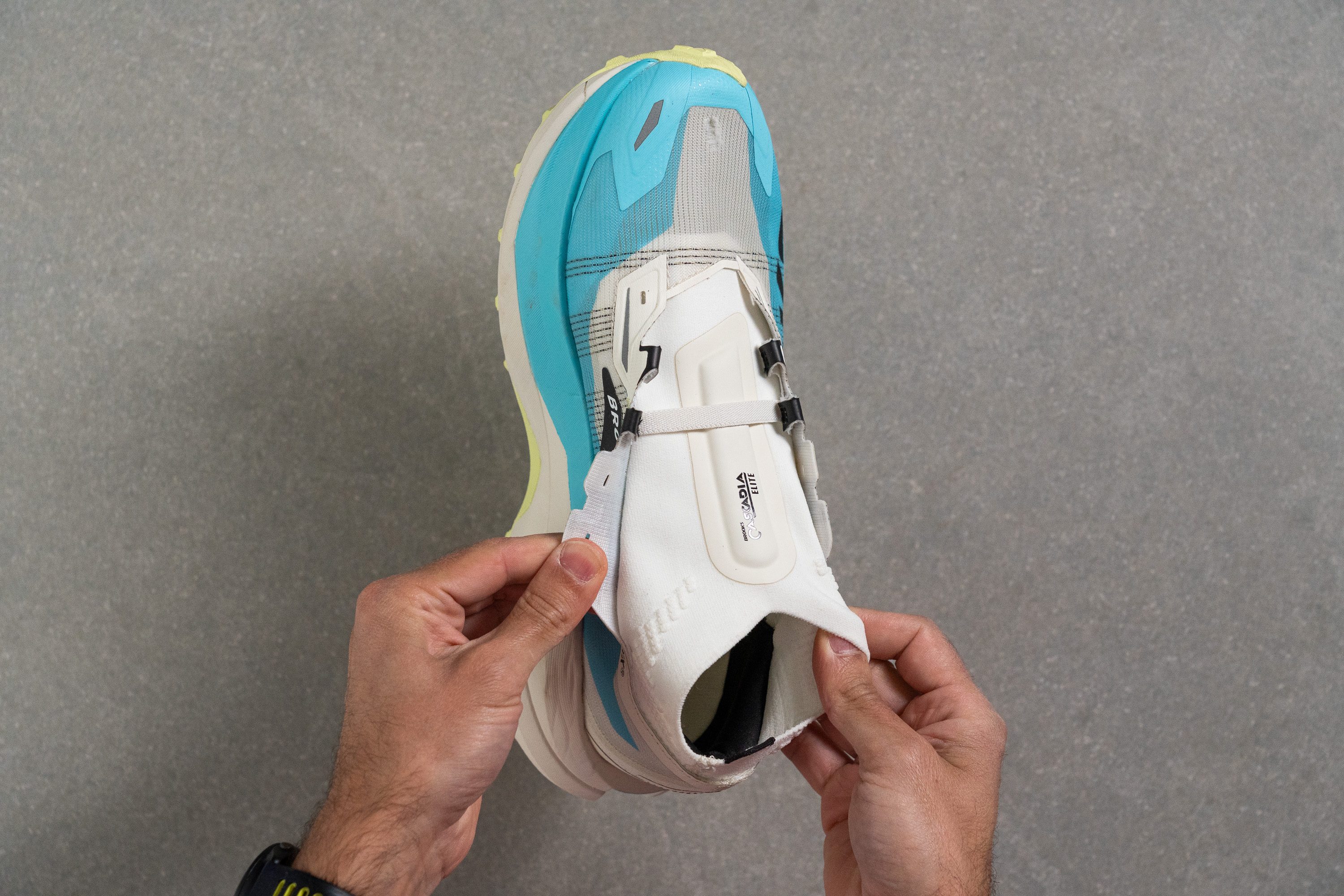
| Cascadia Elite | Tipo calcetín |
Tirador del talón
Las Cascadia Elite presumen de una polaina para el tobillo integrada con un tirador chiquitito que hace que calzarse sea más fácil y, al mismo tiempo, les da un toque muy chulo y centrado en el rendimiento a estas zapatillas.
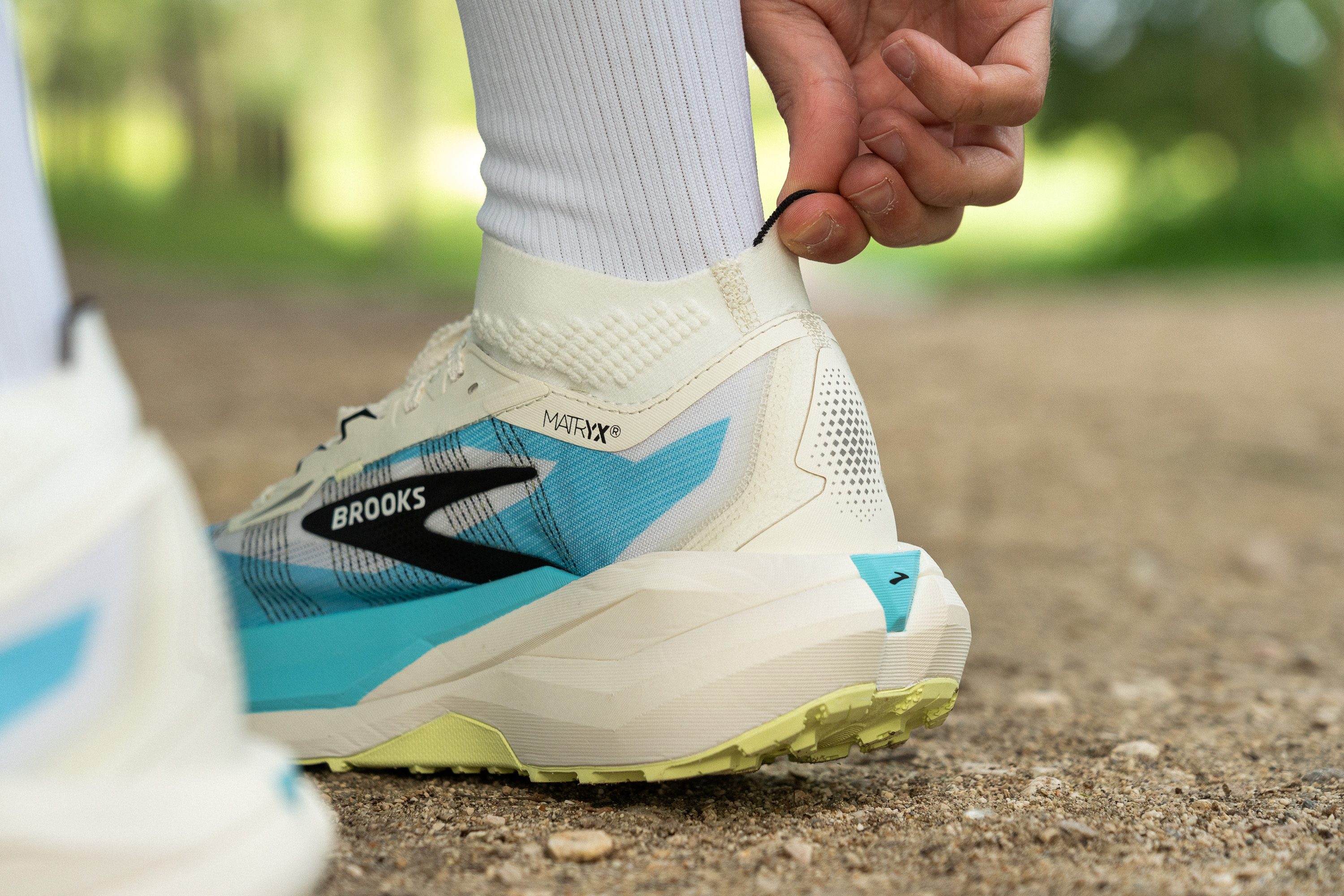
| Cascadia Elite | Talón extendido |
Precio
Las Brooks Cascadia Elite cuestan un riñón y la mitad del otro, cosa que sabemos que va a echar para atrás a un montón de posibles compradores. Pero claro, es que Brooks las ha llenado de componentes de primera calidad, entre los que están el upper MATRYX, una espuma DNA Gold de PEBA y una suela Vibram Megagrip Elite de última generación.
| Cascadia Elite | $275 |