


















Our verdict
- Daily running 83
- Tempo 88
- Race 74
- Stability 70
Pros
- Aggressive rocker geometry
- GoodYear outsole rubber
- Agile and fun ride
- Eye-catching design
- Low weight
- Solid energy return in the forefoot
- Amazing race-inspired upper
- Performs well in cold conditions
- Ideal for midfoot strikers
Cons
- Narrow fit won't work for everyone
- Heel energy return is underwhelming
- High stiffness limits versatility
- Limited stability
Awards
- Top pick in best Skechers running shoes
Comparison
The most similar running shoes compared
+ + Add a shoe | |||||
|---|---|---|---|---|---|
| Our score | 85 Great | 94 Superb | 87 Great | 81 Great | |
| Price | $160 | $150 | $165 | $180 | |
| Pace | Tempo | Daily runningTempo | TempoDaily running | Tempo | |
| Shock absorption | High | High | High | - | |
| Energy return | High | High | High | - | |
| Traction | High | Moderate | High | - | |
| Arch support | Neutral | Neutral | Neutral | Neutral | |
| Weight lab Weight brand | 8.5 oz / 242g 8.7 oz / 247g | 7.9 oz / 223g 7.9 oz / 224g | 8.4 oz / 238g 8.2 oz / 232g | 8.7 oz / 247g 9.1 oz / 259g | |
| Lightweight | ✓ | ✓ | ✓ | ✓ | |
| Drop lab Drop brand | 8.4 mm 4.0 mm | 8.0 mm 6.5 mm | 6.8 mm 5.0 mm | 7.7 mm 8.0 mm | |
| Strike pattern | HeelMid/forefoot | HeelMid/forefoot | Mid/forefoot | Mid/forefoot | |
| Size | Slightly small | True to size | Slightly small | Slightly large | |
| Midsole softness | - | Firm | - | - | |
| Difference in midsole softness in cold | Small | Small | Small | Normal | |
| Toebox durability | Decent | Bad | Decent | Decent | |
| Heel padding durability | Good | Good | Decent | Decent | |
| Outsole durability | Good | Good | Good | Bad | |
| Breathability | Breathable | Breathable | Moderate | Moderate | |
| Width / fit | Narrow | Medium | Medium | Medium | |
| Toebox width | Narrow | Medium | Wide | Medium | |
| Stiffness | Stiff | Flexible | Stiff | - | |
| Torsional rigidity | Moderate | Stiff | Moderate | Stiff | |
| Heel counter stiffness | Flexible | Moderate | Flexible | Stiff | |
| Rocker | ✓ | ✓ | ✓ | ✓ | |
| Heel lab Heel brand | 35.5 mm 37.0 mm | 36.1 mm 38.5 mm | 36.0 mm 37.0 mm | 36.4 mm 36.0 mm | |
| Forefoot lab Forefoot brand | 27.1 mm 33.0 mm | 28.1 mm 32.0 mm | 29.2 mm 32.0 mm | 28.7 mm 28.0 mm | |
| Widths available | Normal | NormalWide | NormalWide | Normal | |
| Orthotic friendly | ✓ | ✓ | ✓ | ✓ | |
| Season | SummerAll seasons | SummerAll seasons | All seasons | All seasons | |
| Removable insole | ✓ | ✓ | ✓ | ✓ | |
| Ranking | #129 Top 33% | #3 Top 1% | #71 Top 18% | #210 Bottom 47% | |
| Popularity | #298 Bottom 25% | #9 Top 3% | #193 Top 49% | #323 Bottom 19% |


Who should buy
In our view, the Skechers Aero Tempo is ideal for:
- Runners who enjoy a strong rocker and like a rolling, forward-assisted ride during faster runs and workouts.
- Skechers fans who have been waiting for a serious, speed-focused shoe for tempo sessions.
- Midfoot strikers who prefer a narrow, agile platform and do not like the bulky feel of most super trainers.
Who should NOT buy
Based on our lab data, we think the Aero Tempo is not the best pick if energy return is your top priority. We found it falls short of truly fast-paced trainers, so we believe there are better choices like the adidas Adizero EVO SL or the Saucony Endorphin Speed 5.
We also do not recommend it for runners who want a more stable ride. From our perspective, the narrow midsole could be a problem for certain runners, and we think shoes like the ASICS Superblast 2 or the adidas Adizero Boston 13 deliver a more supportive feel while staying quick for tempo runs.
Cushioning
Shock absorption
The Skechers Aero Tempo may have a very specific name, but do not be misled. Despite being marketed as a tempo shoe, it can also handle long runs thanks to its solid shock absorption.
Using the ASTM F1976 method, we measured 134 SA in the heel and 110 SA in the forefoot.
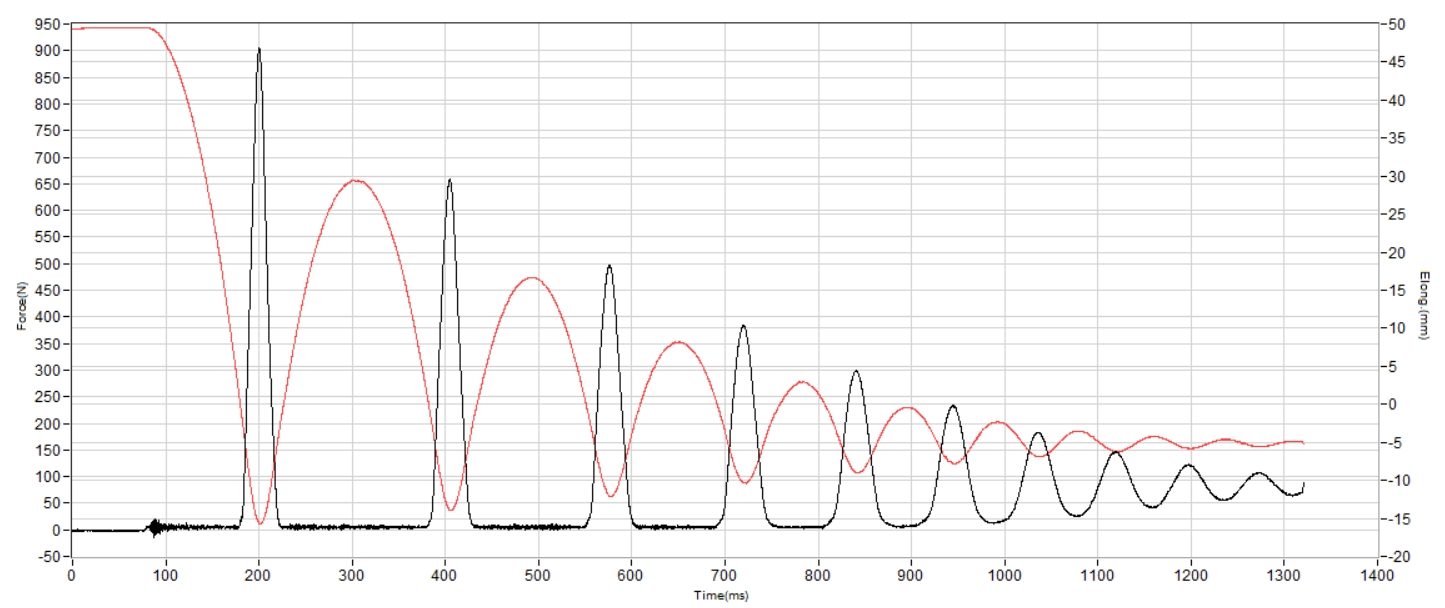
| Aero Tempo | 134 SA |
| Average | 131 SA |
Energy return
In terms of energy return, our lab results had a bittersweet taste. We measured 66.4% in the forefoot, which feels solid and fair, while 57.9% in the heel came across as underwhelming for this model.
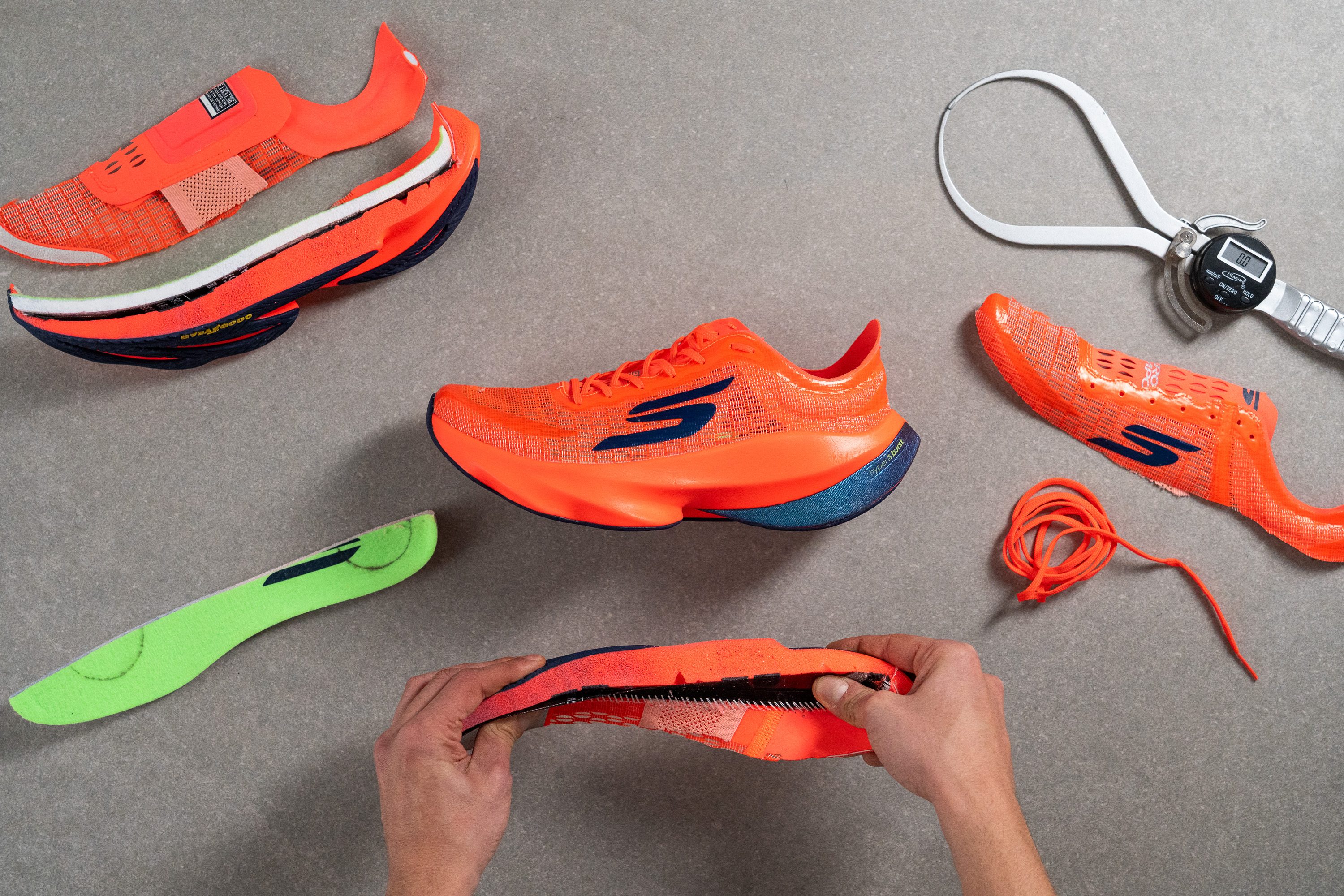
The gap is easy to explain: the Aero Tempo uses two foams, HyperBurst and HyperBurst Pro, and the forefoot contains a higher share of the Pro.
| Aero Tempo | 66.4% |
| Average | 61.5% |
Heel stack
The Aero Tempo may seem to have a non-maximalist stack height, but there is an important caveat to keep in mind.
While we measured 35.5 mm in the heel using the World Athletics methodology, the shoe’s massive rocker changes everything. Because of this shape, the midfoot rises above 40 mm, something that is very easy to notice on the run.
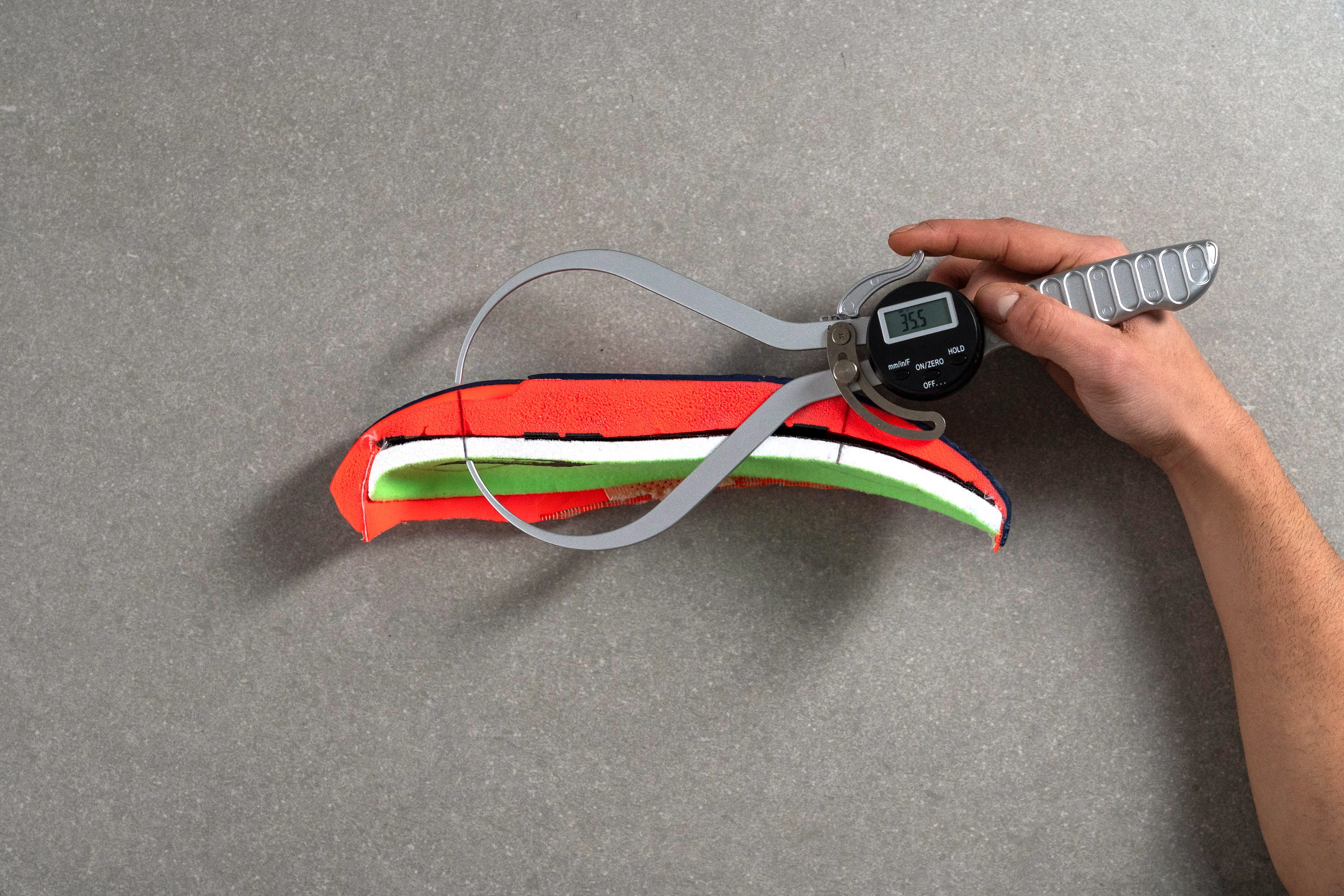
| Aero Tempo | 35.5 mm |
| Average | 35.6 mm |
Forefoot stack
What we observed in the heel also applies to the forefoot, as the shoe uses the same curved geometry at both ends. We measured 27.1 mm here, but on the run it feels closer to 30 mm, except for very aggressive forefoot strikers.
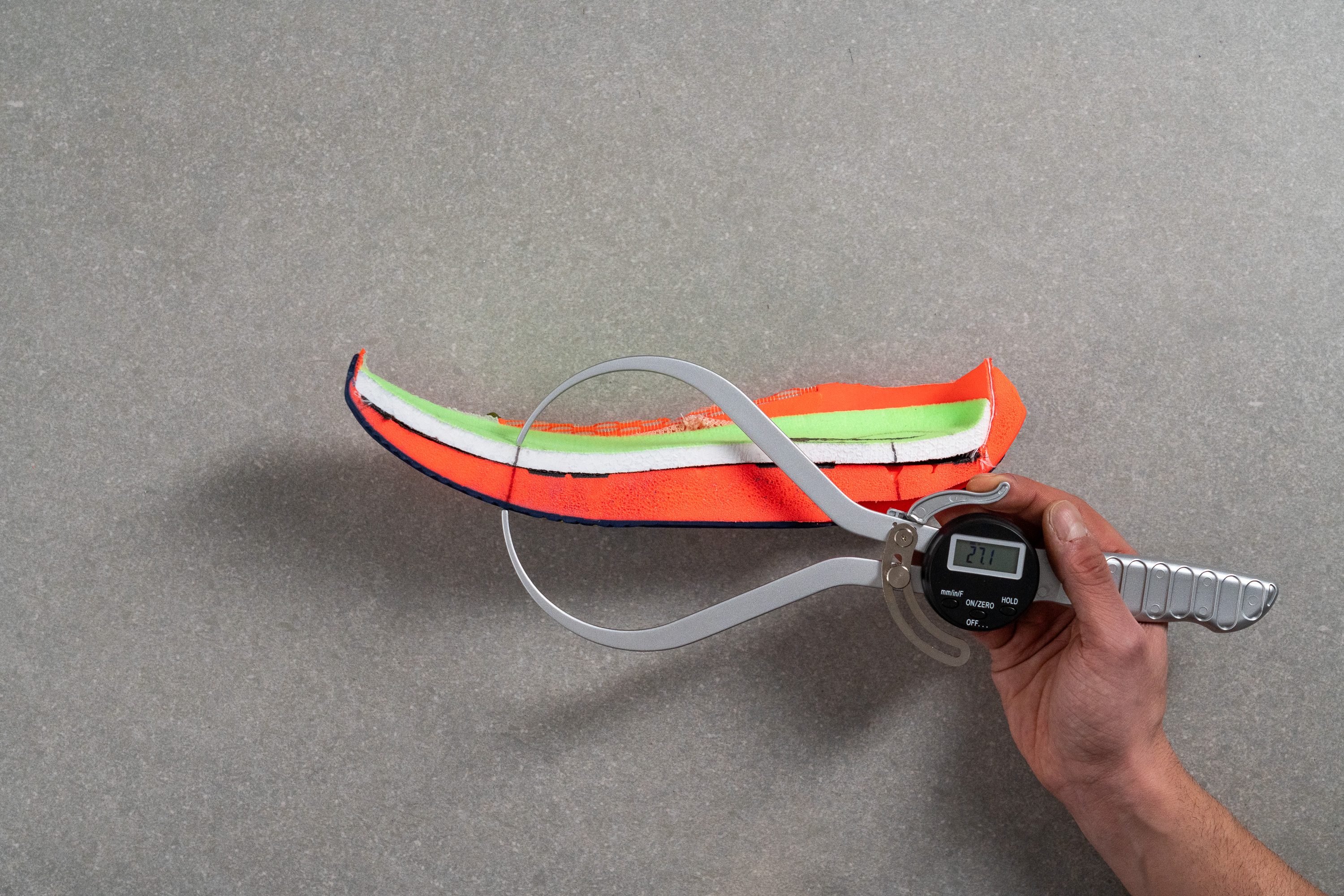
| Aero Tempo | 27.1 mm |
| Average | 27.2 mm |
Drop
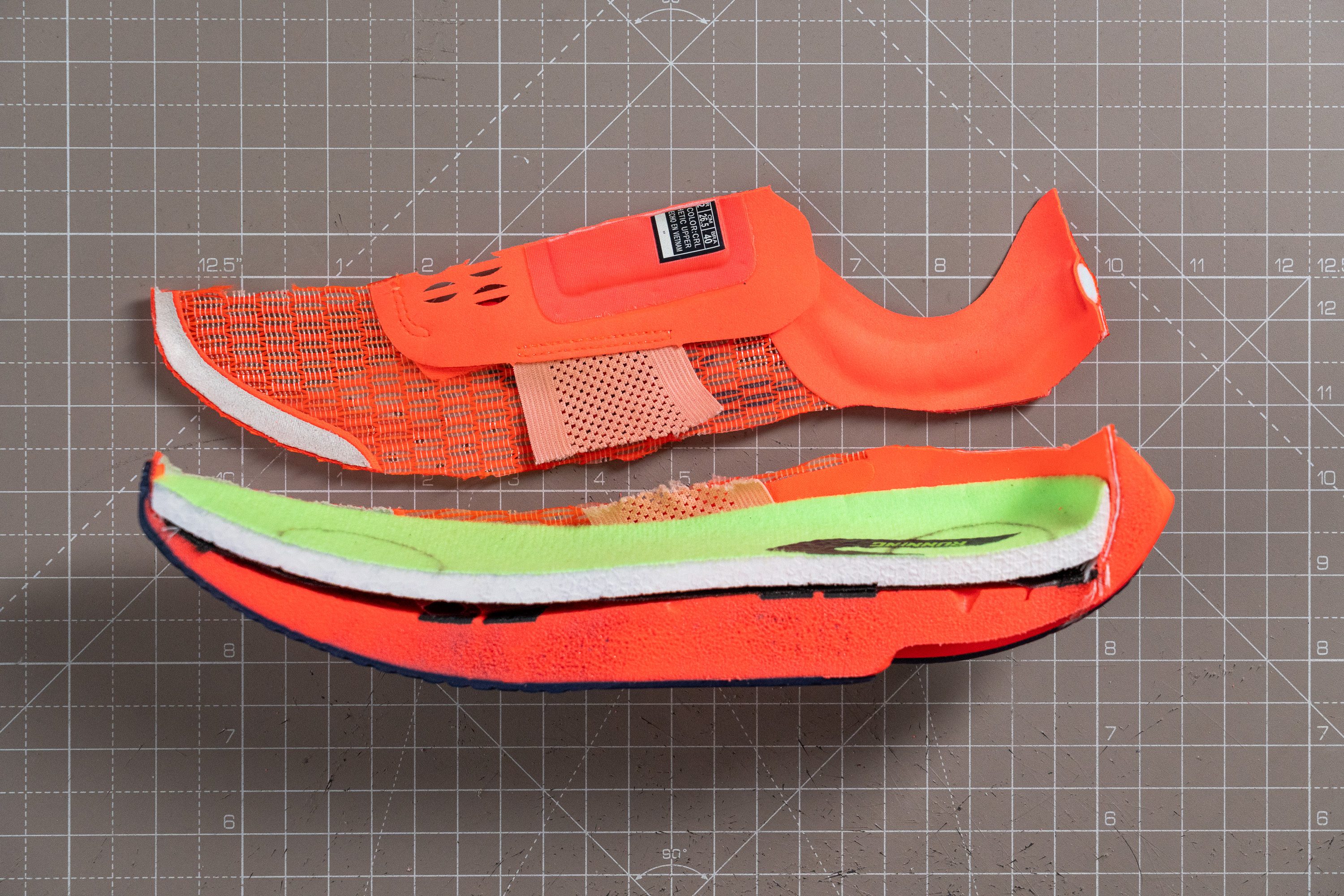
Using World Athletics guidelines, we measured an 8.4 mm drop. However, Skechers lists 4 mm... which is way lower.
That said, we must confess that there is no single number that fully explains the drop with this shoe. It depends heavily on how you land, as midfoot strikers experience a much flatter feel, while heel strikers roll forward as if the drop were closer to 10 mm.
| Aero Tempo | 8.4 mm |
| Average | 8.4 mm |
Midsole softness
As we already noted, this shoe uses a dual-foam setup, with the main layer being a supercritical EVA foam called HyperBurst. And this is a good moment to remember that Skechers was the first brand to bring supercritical foam to running shoes and even patented the process, which is why other brands use nitrogen instead of CO₂.
The foam feel leans clearly toward the firm side rather than soft, something confirmed by our Shore A durometer reading of 24.0 HA. Runners who prefer a plush ride may find it less appealing.
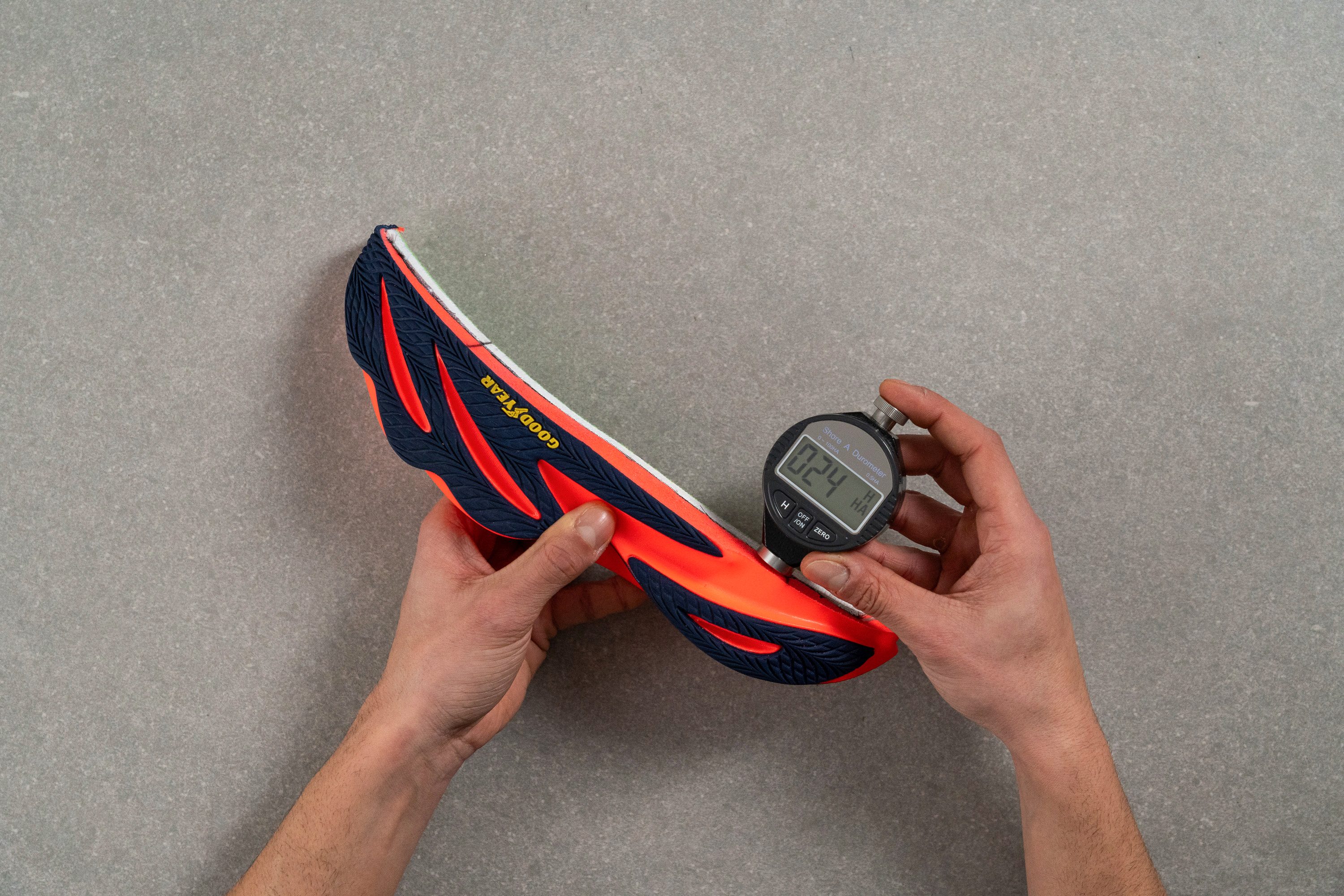
| Aero Tempo | 24.0 HA |
| Average | 20.1 HA |
Rocker
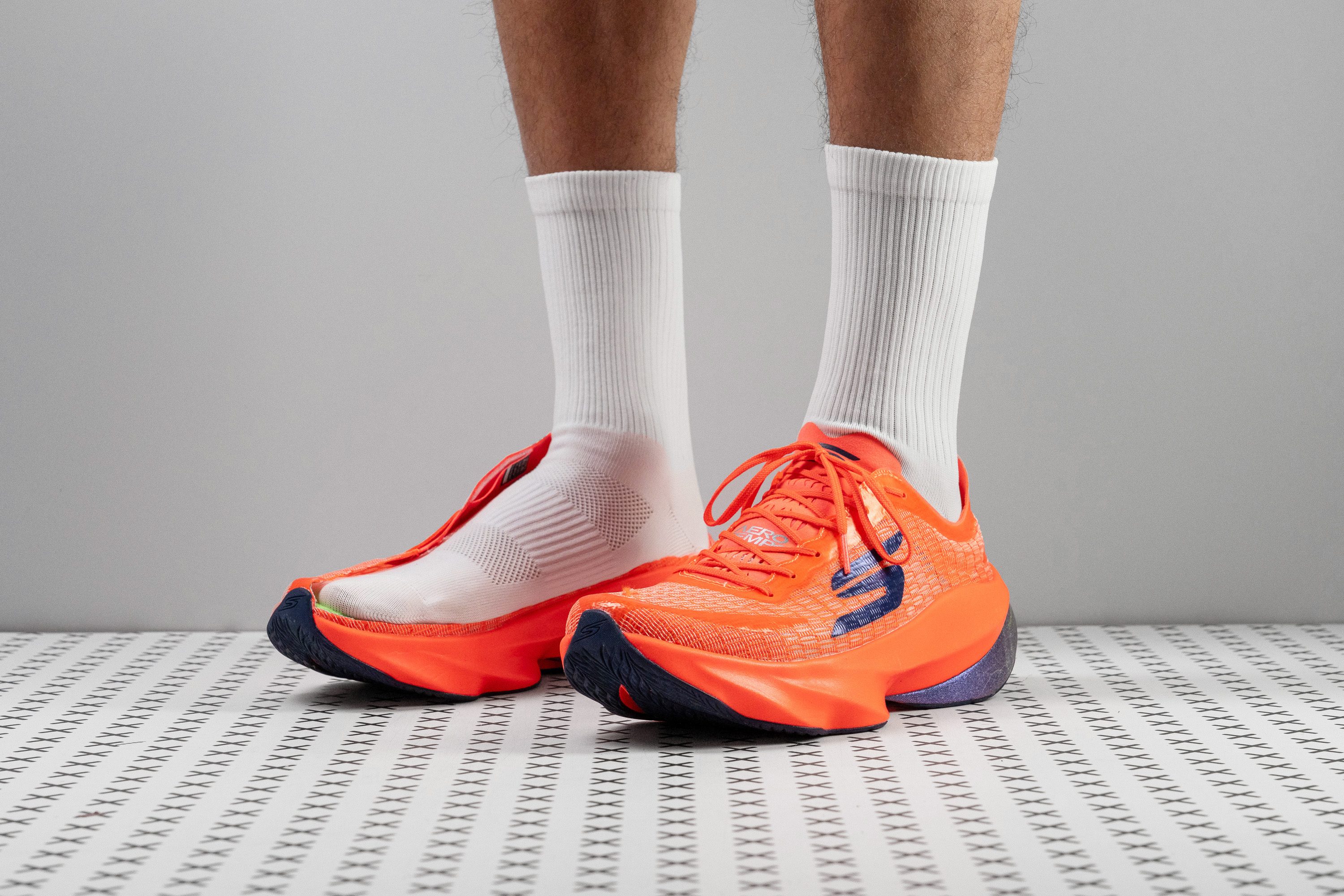
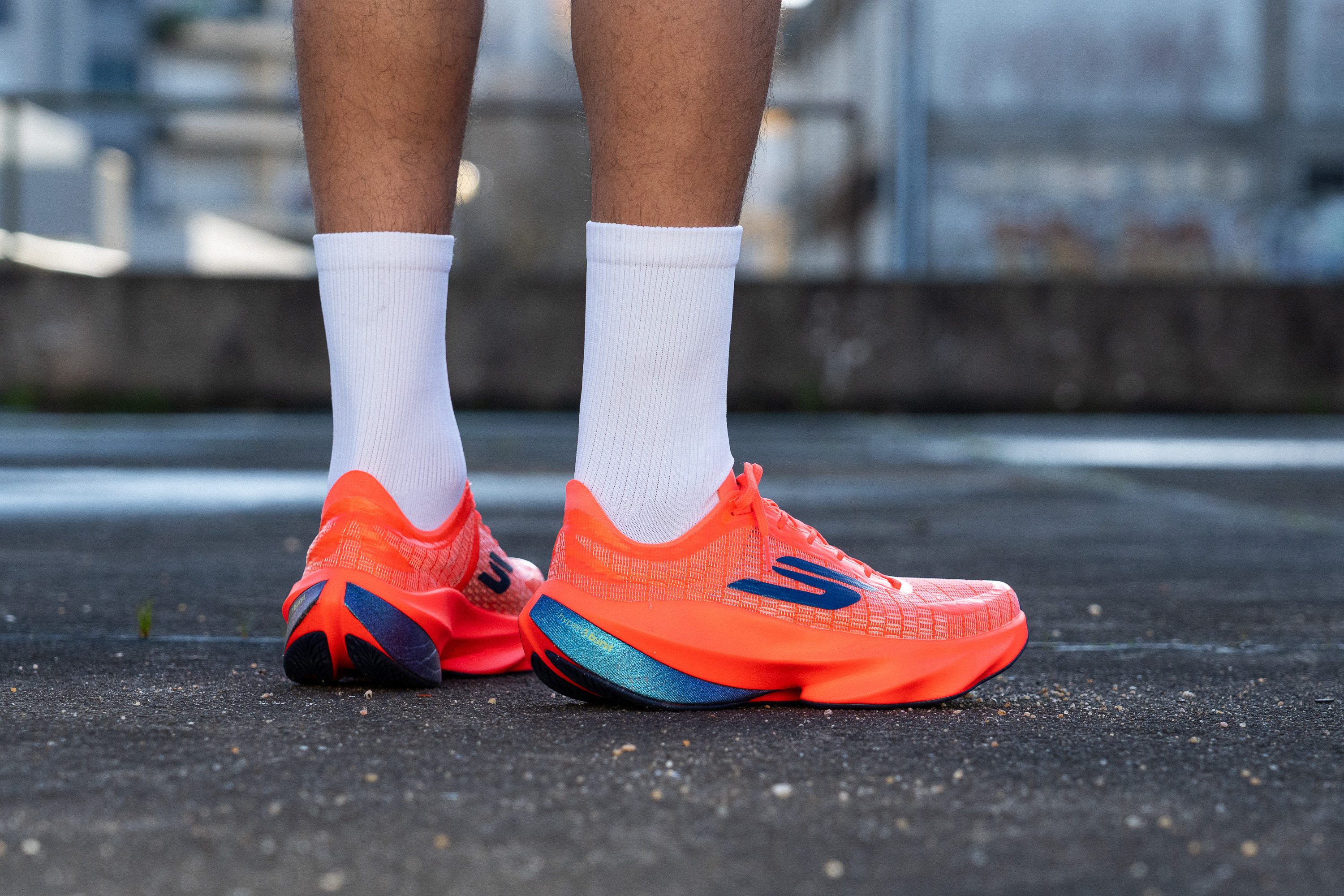
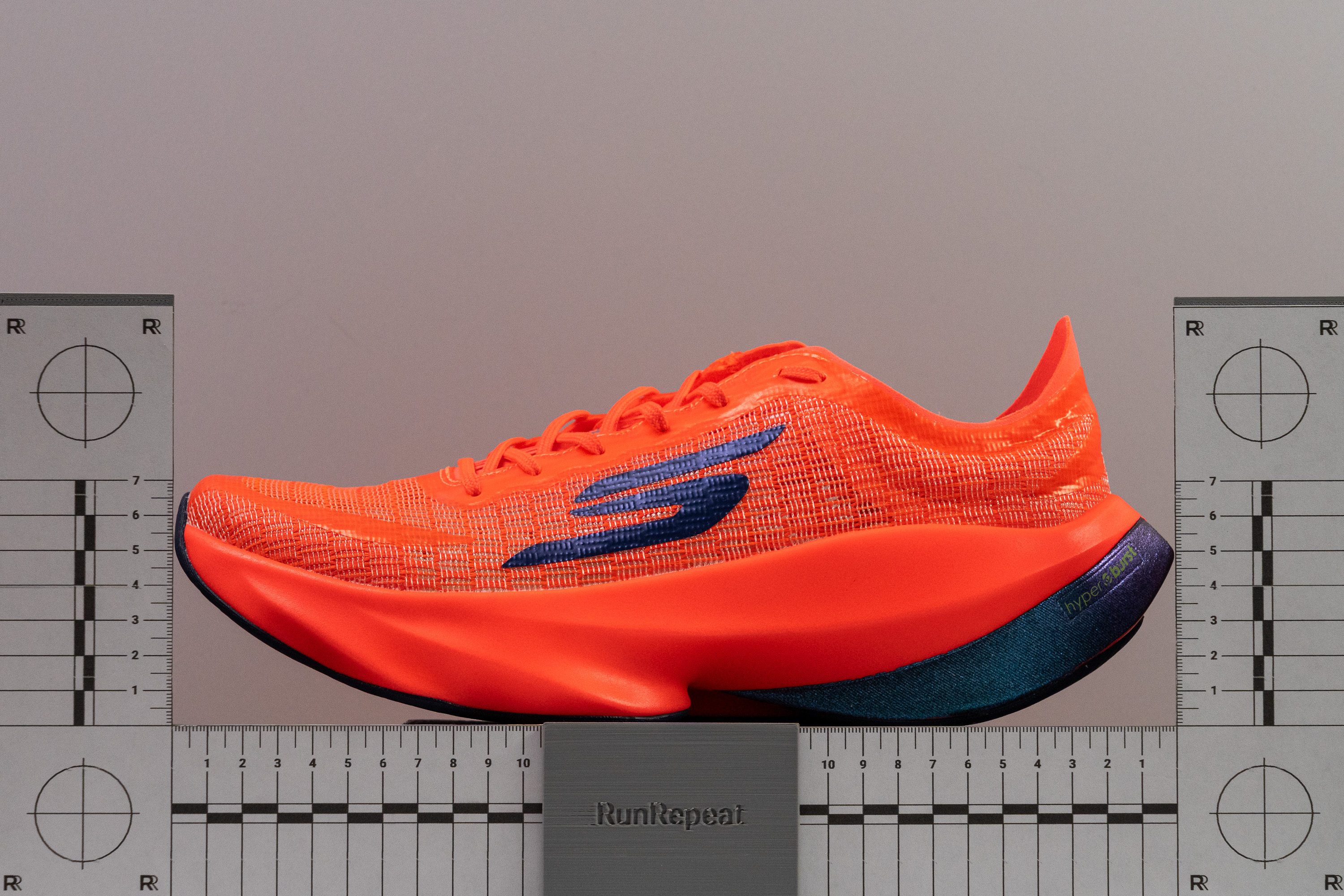
If you enjoy rockered running shoes, you'll love this one. The Skechers Aero Tempo shows how much shoe design has changed in recent years, marking a clear break from older, flatter models.
The aggressive curve in both the forefoot and heel is impossible to miss on the run, so you really need to like that assisted, roll-forward sensation to fully enjoy it.
Plate
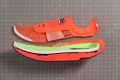
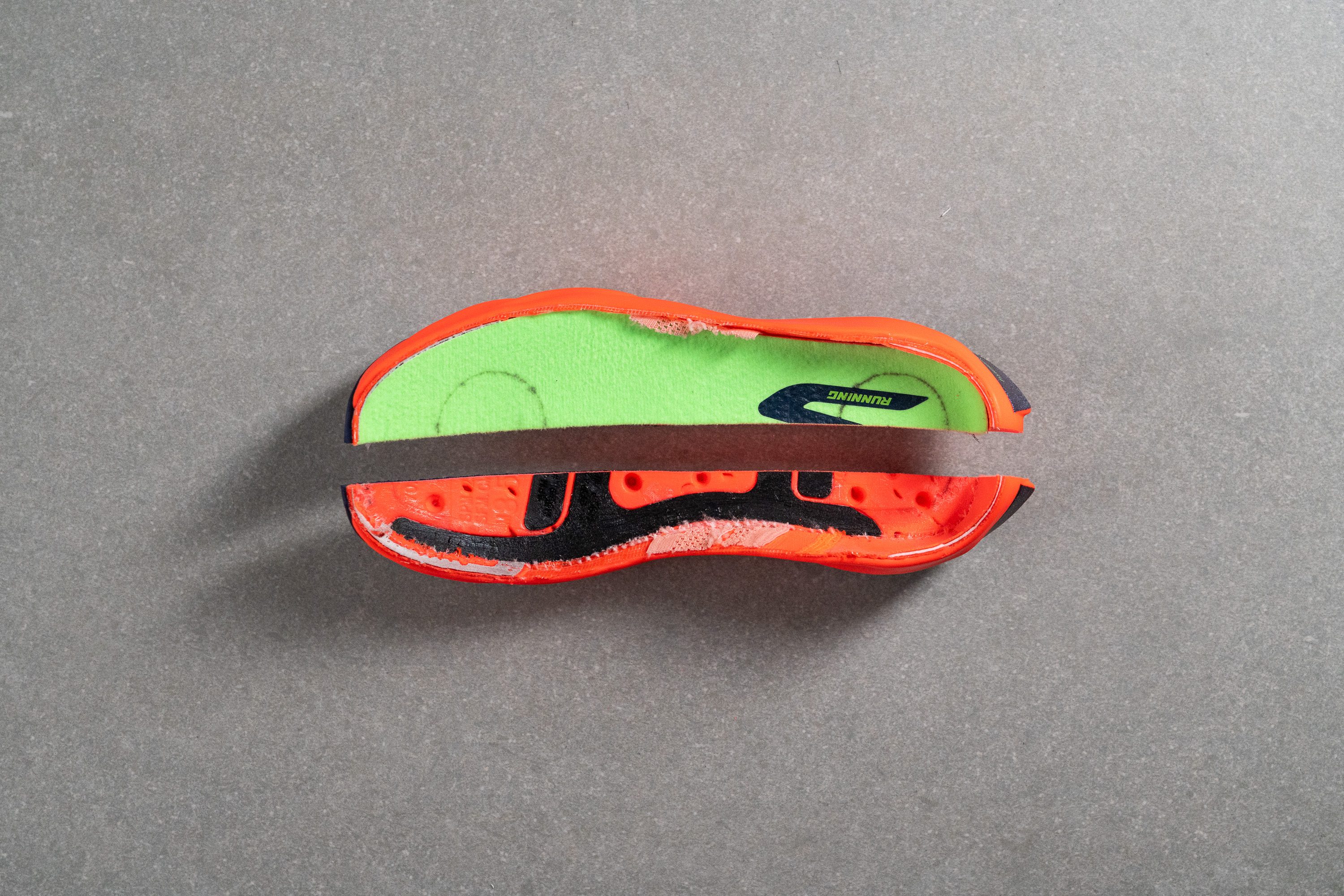
Instead of a single plate, we found that Skechers uses a carbon-infused, H-shaped plate that is effectively split into two sections, with full-length side rails and four crossbars connecting the forefoot and heel for added structure and stability.
Size and fit
Size
Skechers Aero Tempo fits slightly small (11 votes).
Internal length
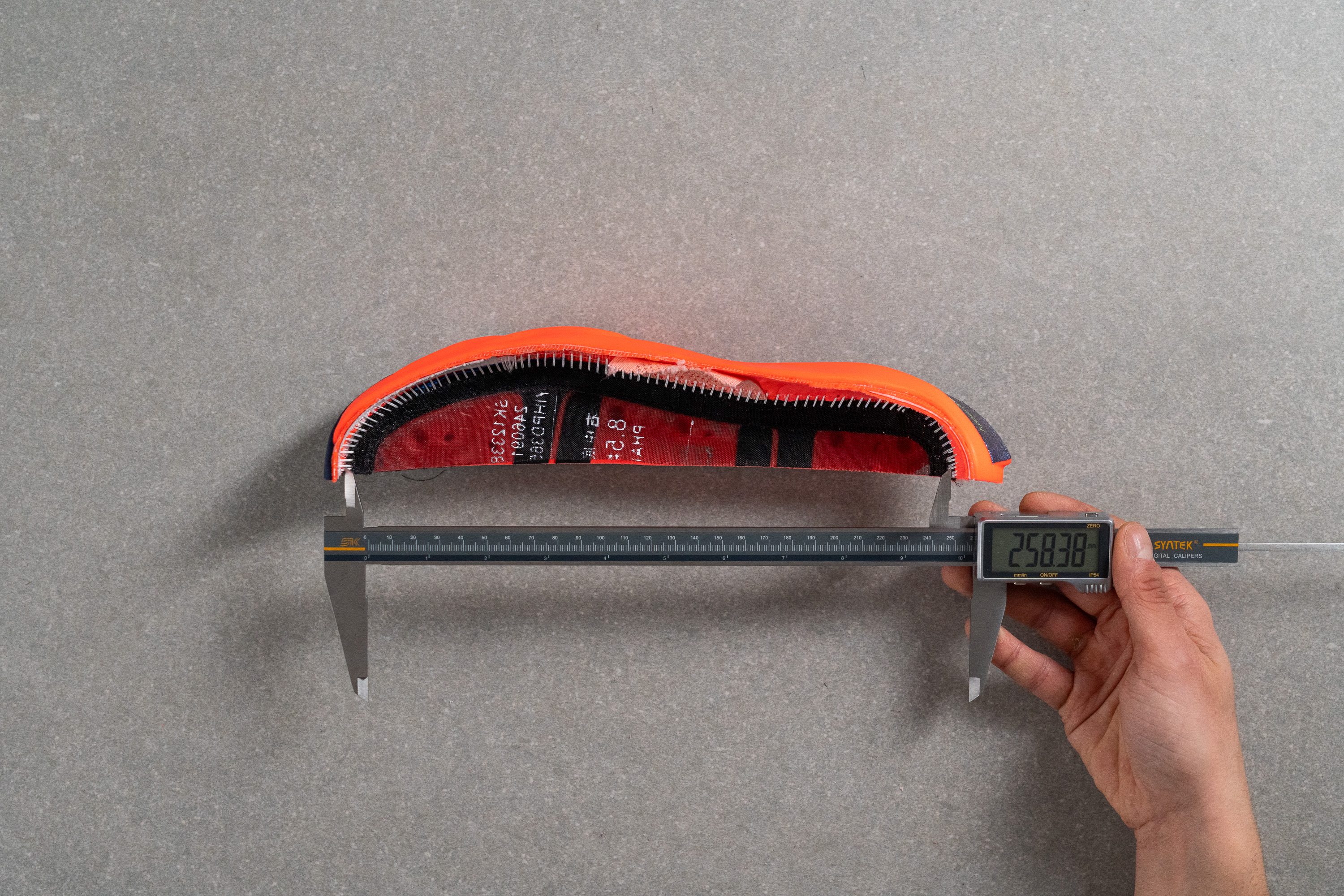
| Aero Tempo | 258.4 mm |
| Average | 269.4 mm |
Width / Fit
Right from the first try, we felt that the Aero Tempo was not a roomy shoe. Quite the opposite, in fact. To be sure, we compared it against every other model that has gone through our lab.
Our first measurement came in at 92.1 mm, which confirmed our initial impression and clearly shows that runners with wide feet are unlikely to enjoy the Aero Tempo.
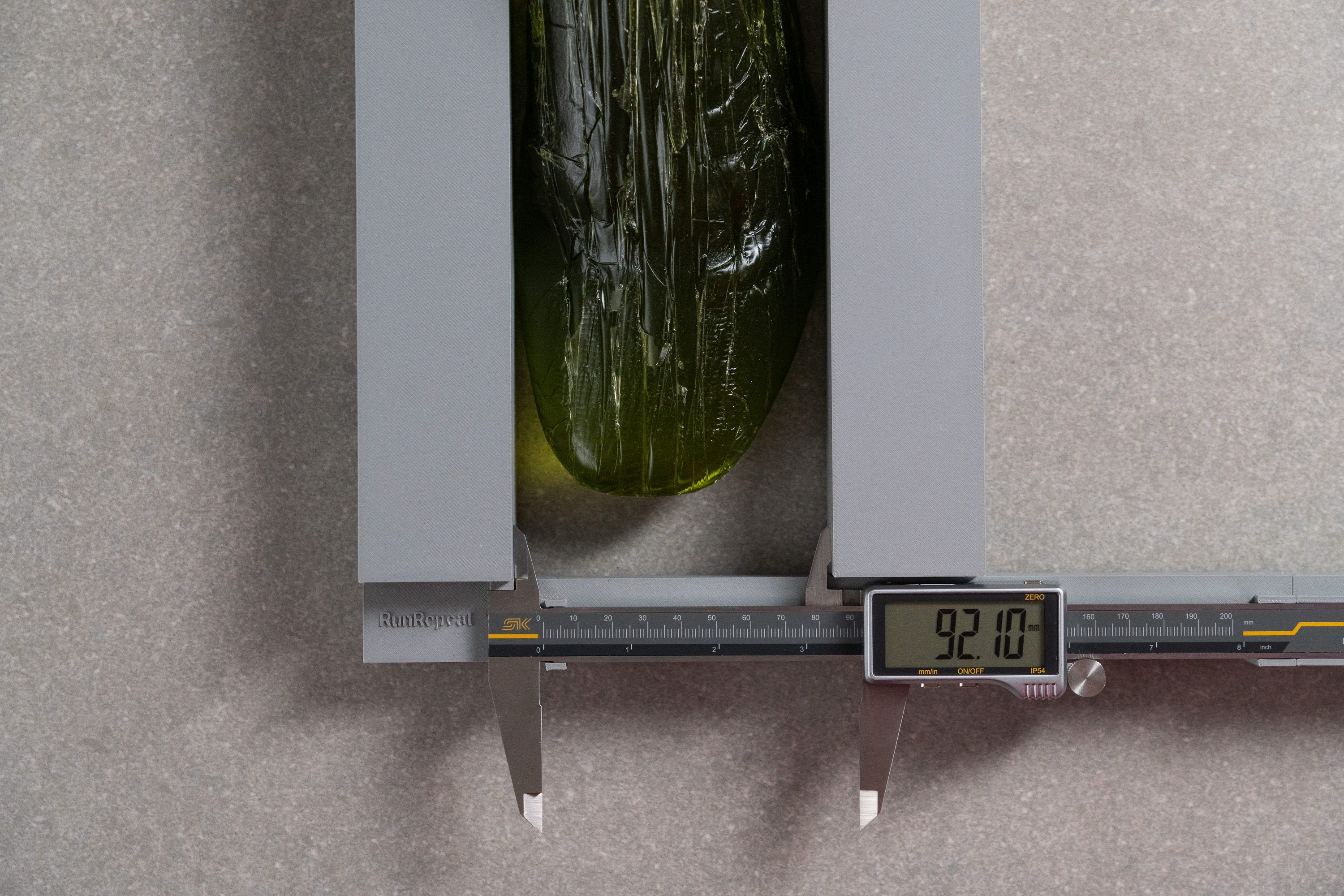
| Aero Tempo | 92.1 mm |
| Average | 95.2 mm |
Toebox width
We followed up with a second measurement in the toebox, and once again it came in below the average running shoe.
At 70.1 mm, there is very limited room for toe splay. That said, this does not mean it is a bad fit, as many runners prefer this kind of secure lockdown especially for faster running.
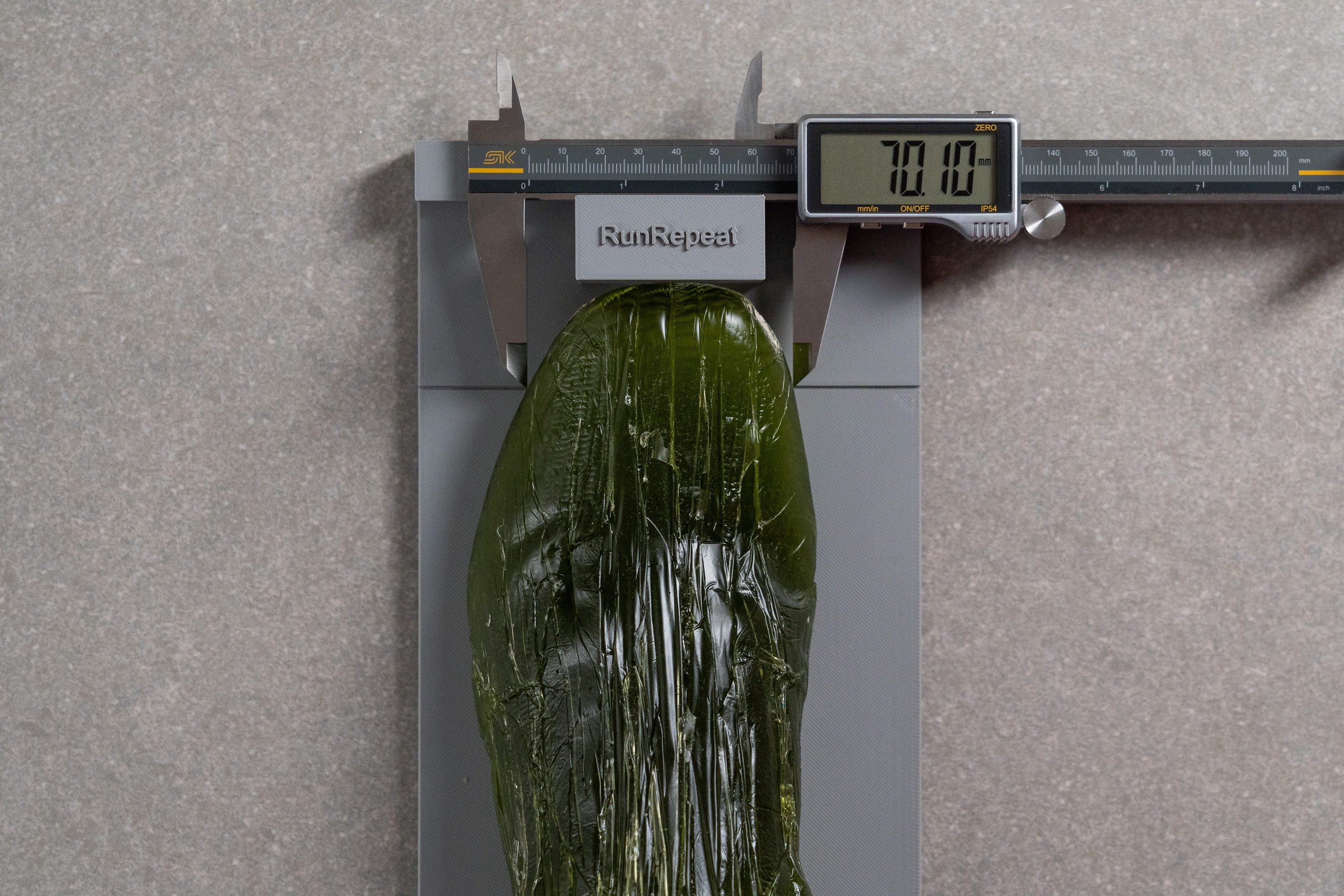
| Aero Tempo | 70.1 mm |
| Average | 73.2 mm |
Toebox height
The pattern of below-average measurements continued with the third test, this time focusing on toebox height.
At 22.8 mm, the Aero Tempo clearly favors low-volume feet and it is far away from a universal fit.
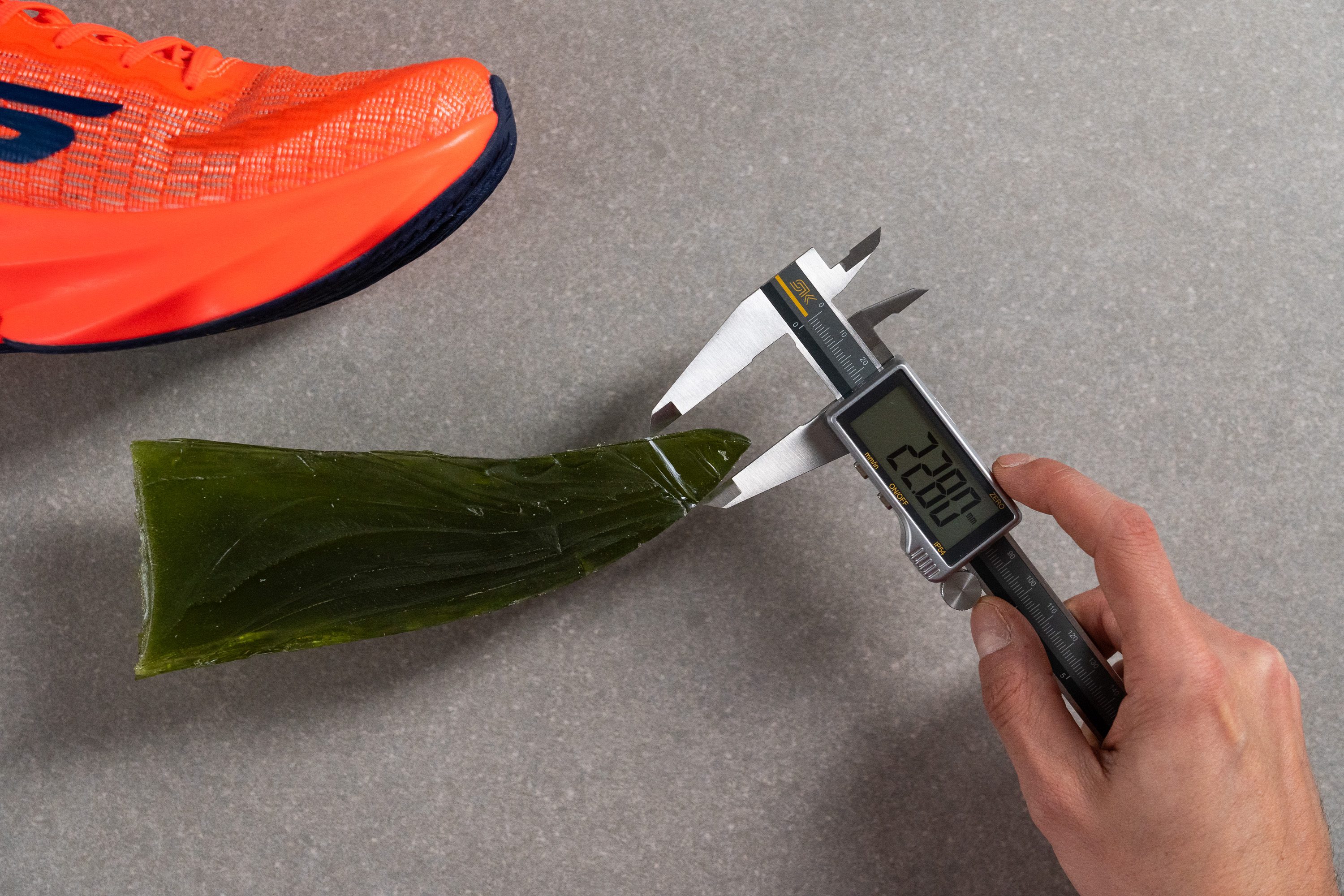
| Aero Tempo | 22.8 mm |
| Average | 27.0 mm |
Traction / Grip
Traction test
Skechers has a partnership with GoodYear, similar in spirit to the well-known collaboration between adidas and Continental. To see how it compares, we tested the Aero Tempo using the SATRA TM144 method on wet concrete.
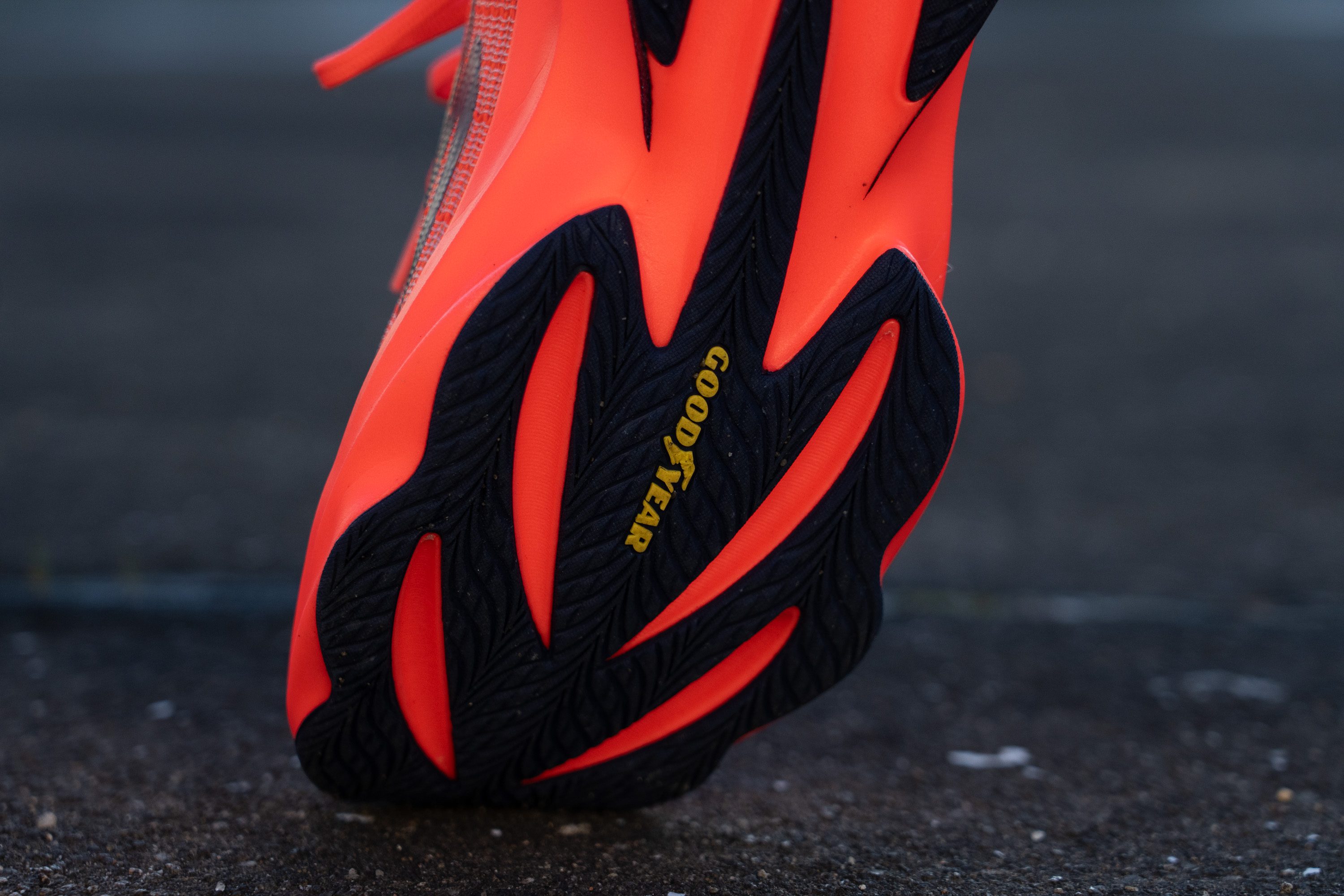
The result was solid, though clearly behind what we usually see from Continental rubber. The 0.55 score still delivers reliable grip in most situations, and we were satisfied with the outcome.
| Aero Tempo | 0.55 |
| Average | 0.53 |
Outsole design
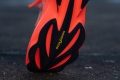
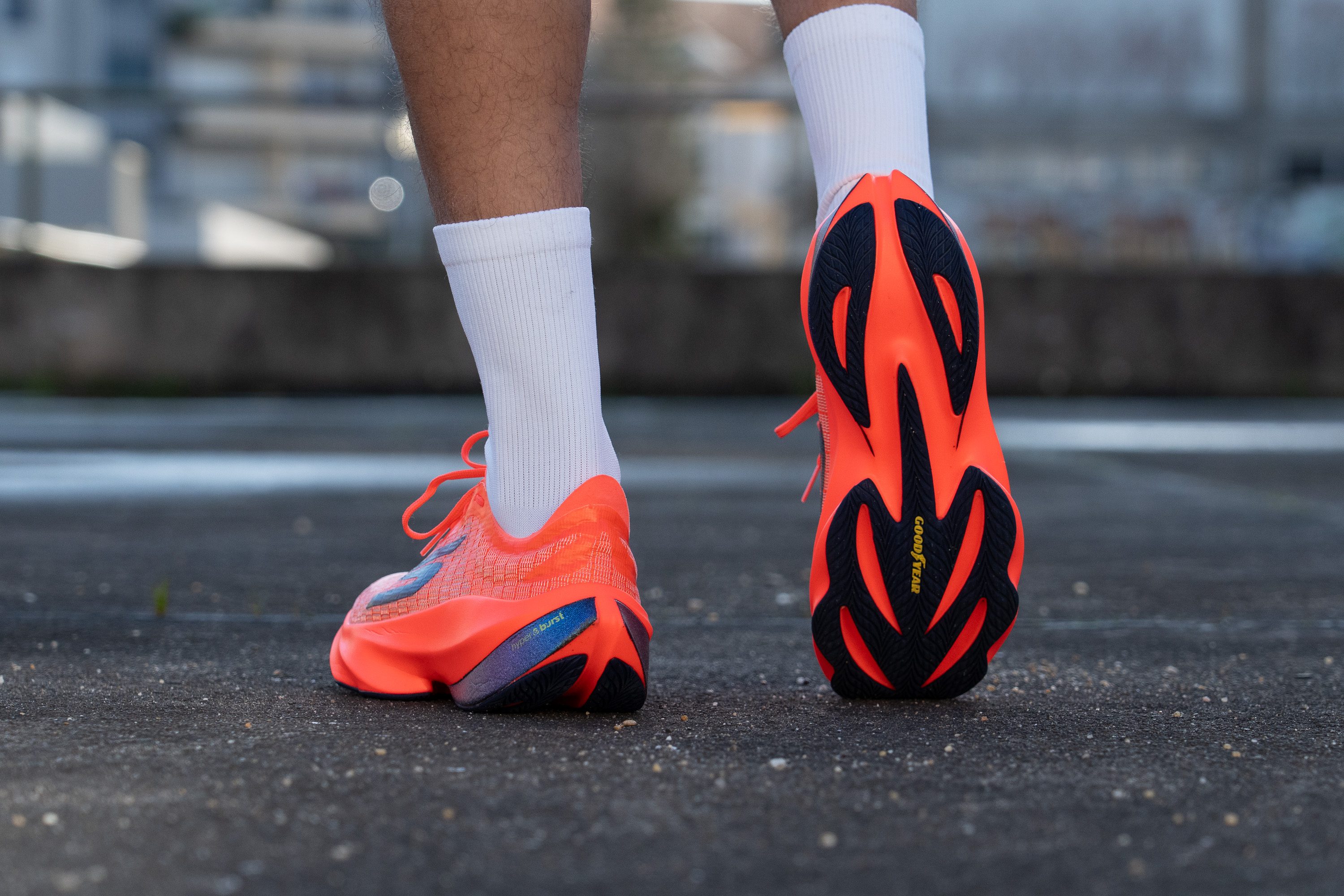
The outsole combines exposed foam with three rubber pieces, two in the heel and a big one in the front of the Aero Tempo.
It’s clear to us that Skechers refined this layout through multiple iterations, trimming as much weight as possible until they reached a limit.
Flexibility / Stiffness
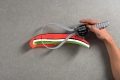
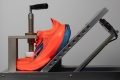
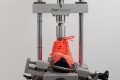
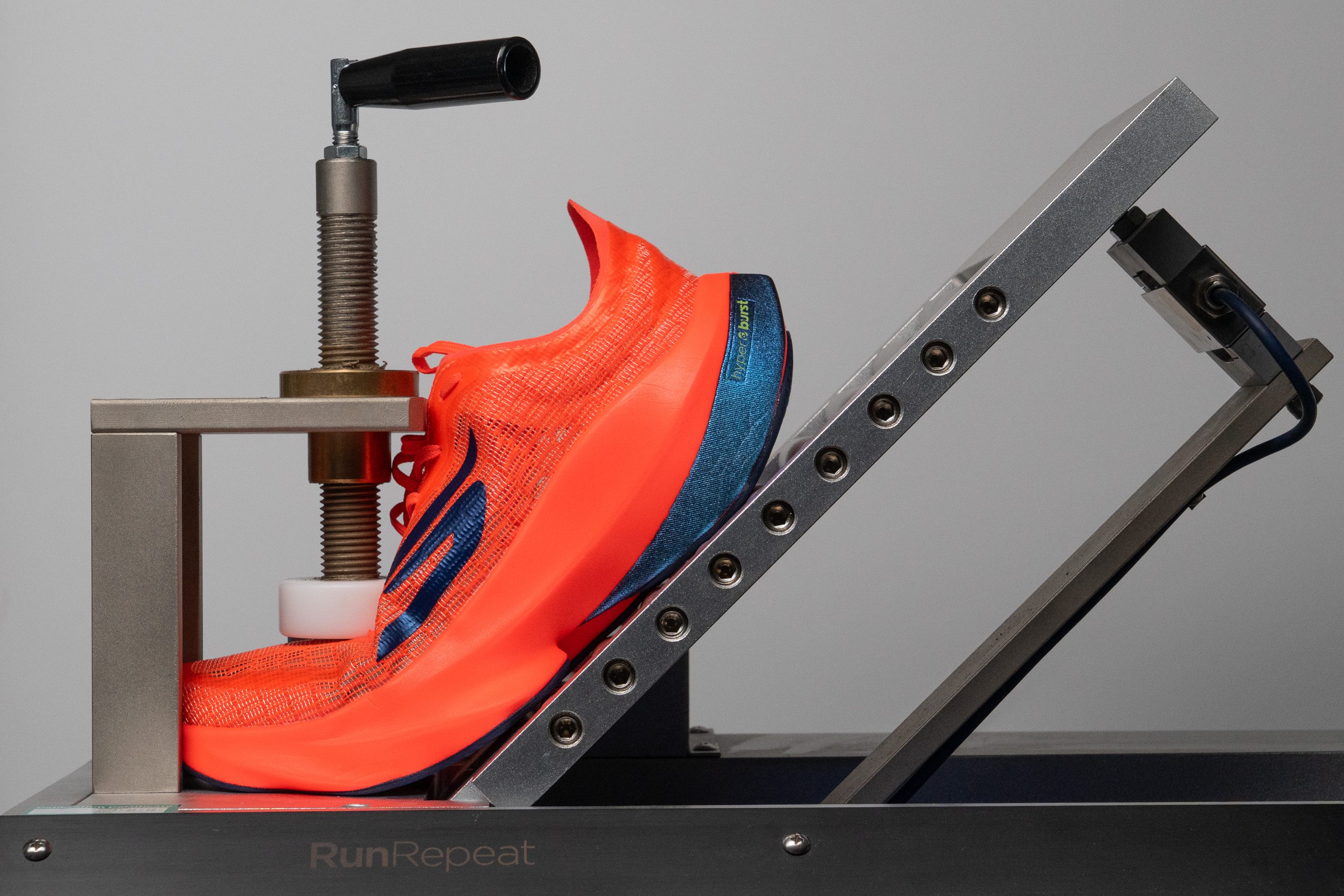
We found that the Aero Tempo will only suit runners who are comfortable with a very stiff ride, as it reached a massive 24.8N in our test.
Those are clear super shoe numbers and not a surprise, given the carbon-infused plate inside the midsole. Either way, it's clear flexibility is not part of the Aero Tempo experience.
| Aero Tempo | 24.8N |
| Average | 15.5N |
Weight
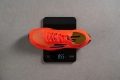
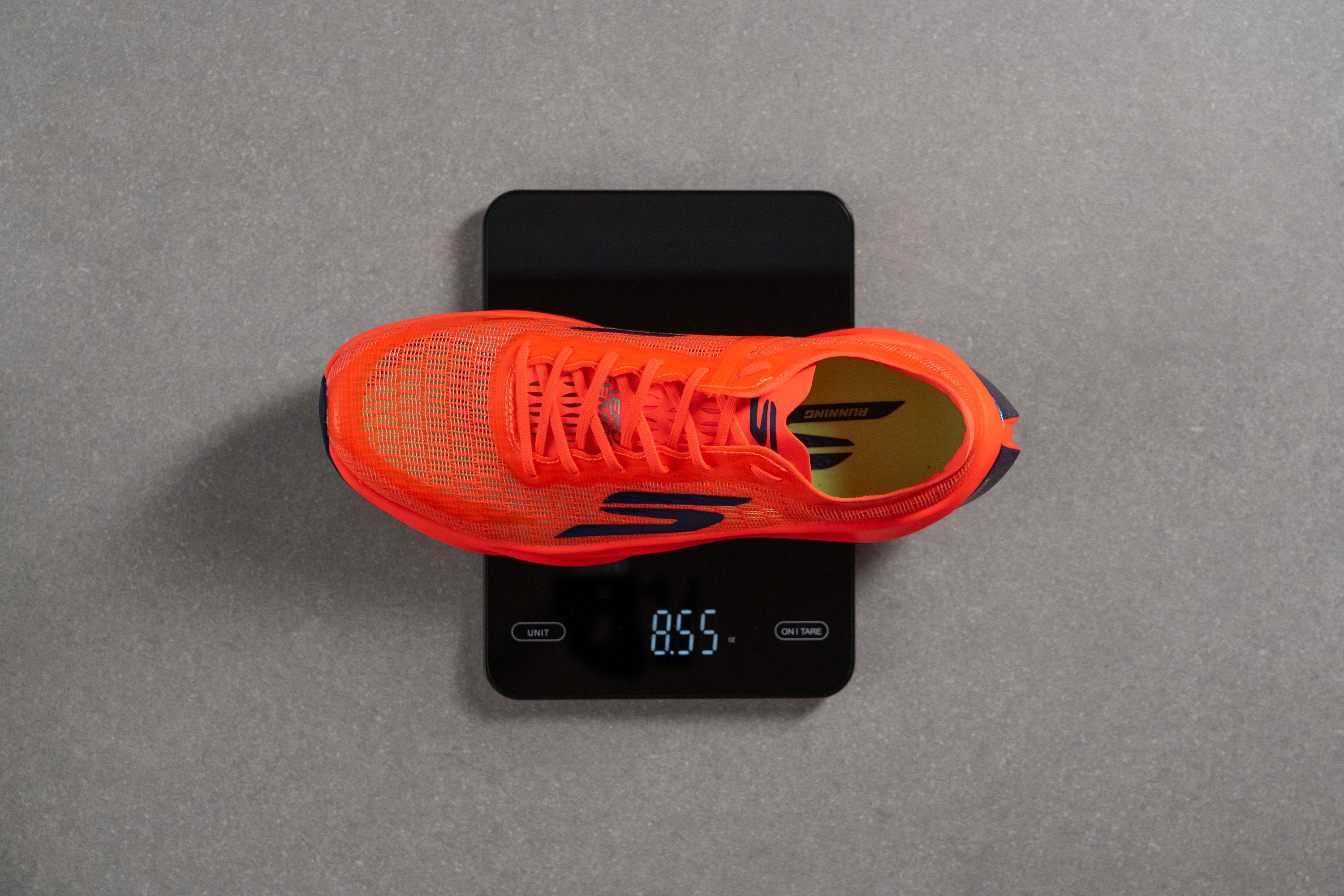
One of the biggest strengths of the Aero Tempo is its low weight. At just 8.5 oz (242g), it feels quick and agile underfoot. And after analyzing the shoe in the lab, it is clear to us that Skechers made weight a top priority, sacrificing other areas like upper comfort.
| Aero Tempo | 8.5 oz (242g) |
| Average | 9.2 oz (261g) |
Breathability
Breathability test
One thing that stands out right away when holding the Aero Tempo, and even more while running in it, is how incredibly light the upper feels. It almost looks like the shoe should weigh more, but the ultra-light TPU mesh keeps everything surprisingly minimal.
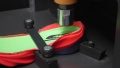
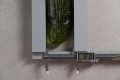
Ventilation is excellent. In our breathability test, smoke moved out of the upper with almost no resistance and escaped instantly, earning a perfect 5 out of 5 score.
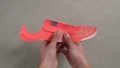
The razor-thin construction became even more obvious during our light test. We could clearly see targeted reinforcements around the heel, along with the tongue gusset, all placed with clear intent.
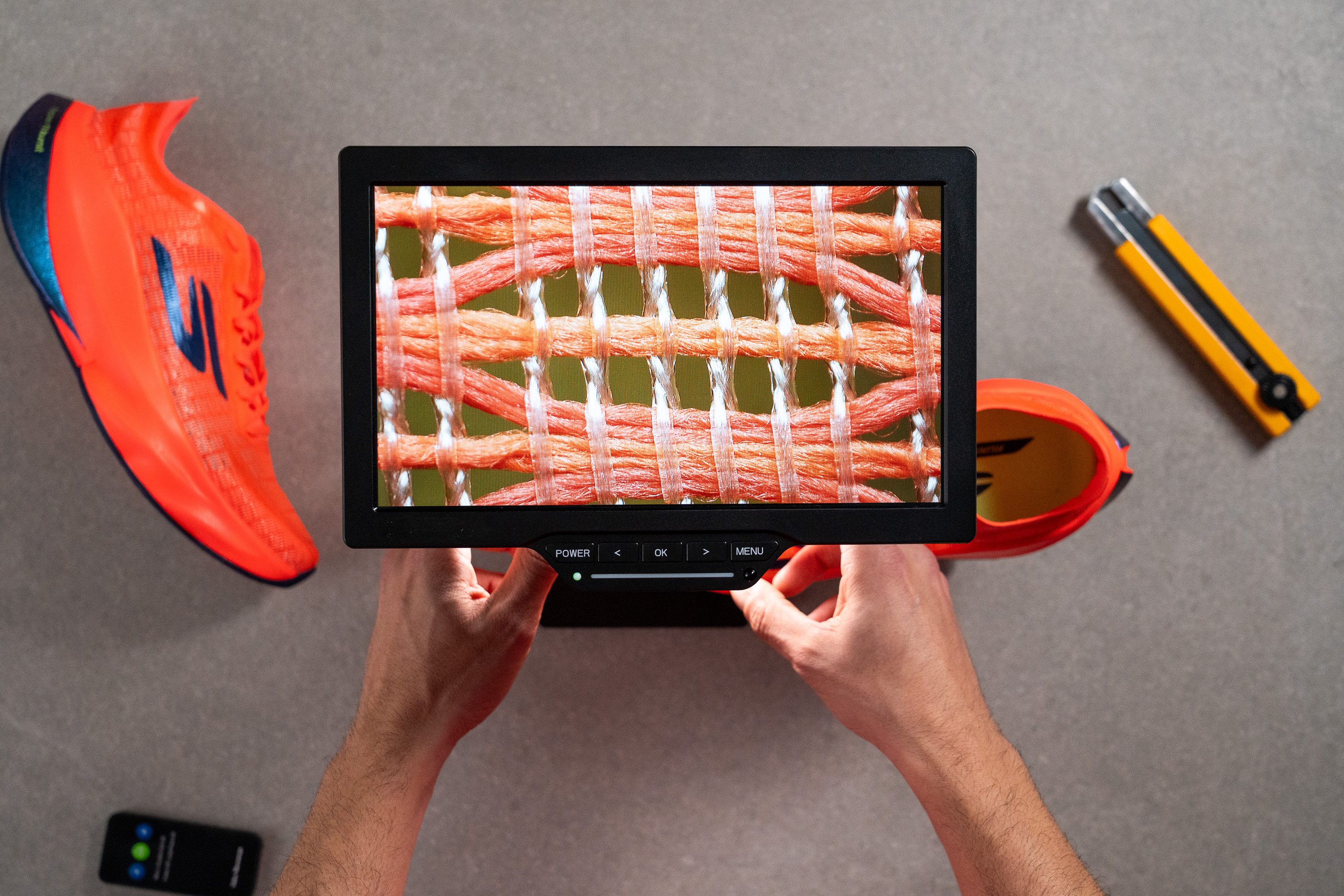
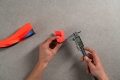
Looking at the upper under our digital microscope was impressive. The level of precision and detail is something we usually expect from super shoes, not from a model in this price range.
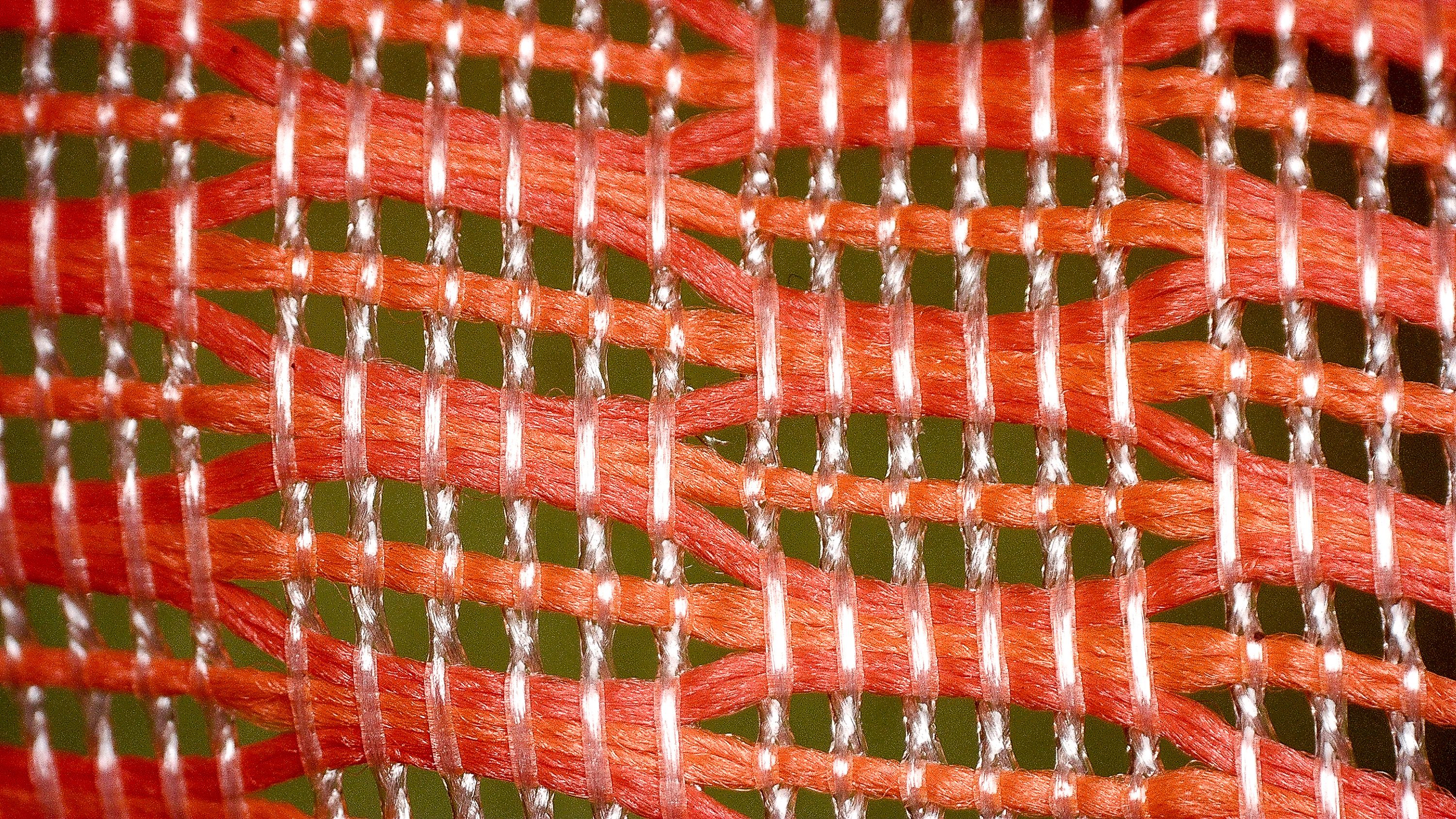
We really liked the upper, but it won’t suit everyone. It works best for runners who prefer a stripped-down feel with minimal padding, where low weight and maximum airflow clearly take priority over plush comfort.
| Aero Tempo | 5 |
| Average | 3.6 |
Stability
Lateral stability test
The Aero Tempo is a bit of a paradox when it comes to stability. At first glance, its narrow midsole and tall stack suggest a shaky ride, but on the run the firm foam, H-shaped plate, and huge midsole sidewalls work together to deliver more support and control than expected.
Torsional rigidity
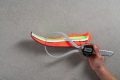
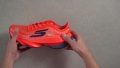
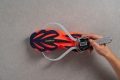
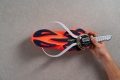
Despite having carbon fiber inside the midsole, the plate’s split design allows some torsional movement. We proved that in the lab with a 15.5 Nm score.
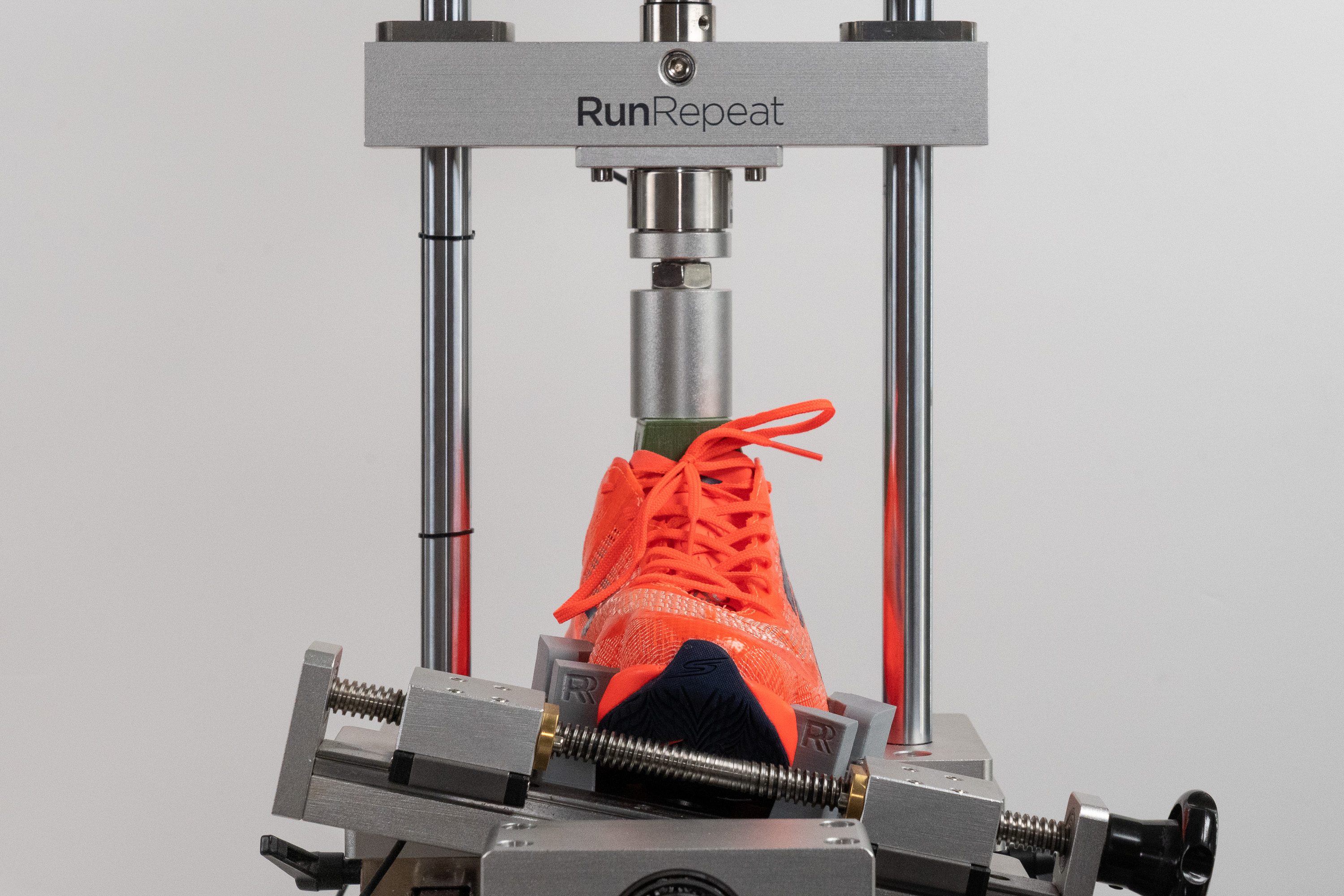
| Aero Tempo | 15.5 Nm |
| Average | 14.3 Nm |
Heel counter stiffness
By this point in the review, it is clear that the upper is highly minimalist and built with weight savings in mind. That approach showed up again in the heel counter stiffness test, where it scored just 2 out of 5, offering very little structure and a feel closer to a pure racing shoe.
| Aero Tempo | 2 |
| Average | 3 |
Midsole width - forefoot
The main reason the Aero Tempo does not suit runners looking for stability is its compact platform. Skechers clearly goes against current trends here, using just 104.4 mm in forefoot width at a time when most tempo shoes rely on much wider midsoles for added support.
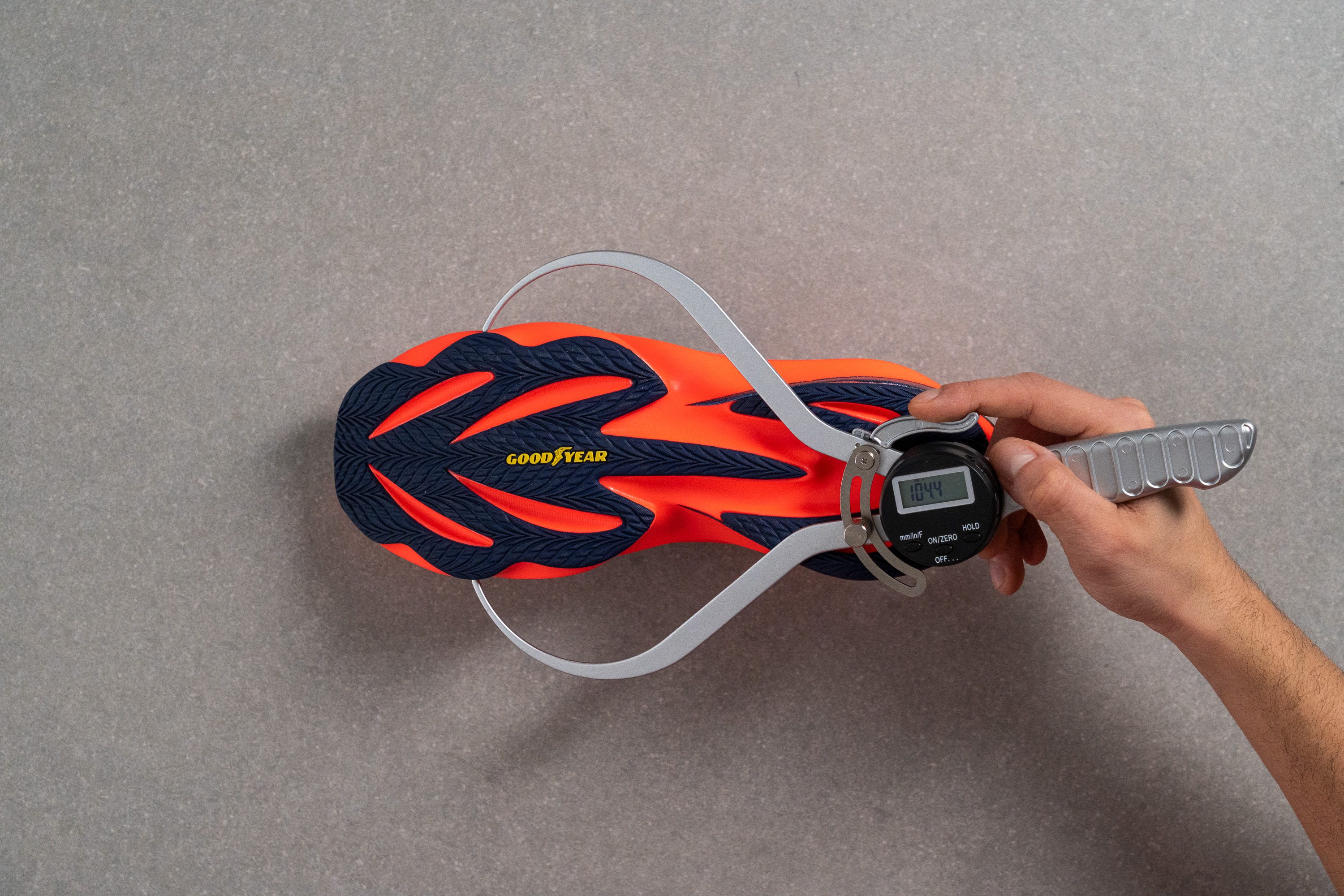
| Aero Tempo | 104.4 mm |
| Average | 115.1 mm |
Midsole width - heel
The heel is also quite narrow at 81.0 mm, which leads to two clear outcomes. The shoe feels very agile and sharp when cornering, but it can feel a bit wobbly for some heel strikers.
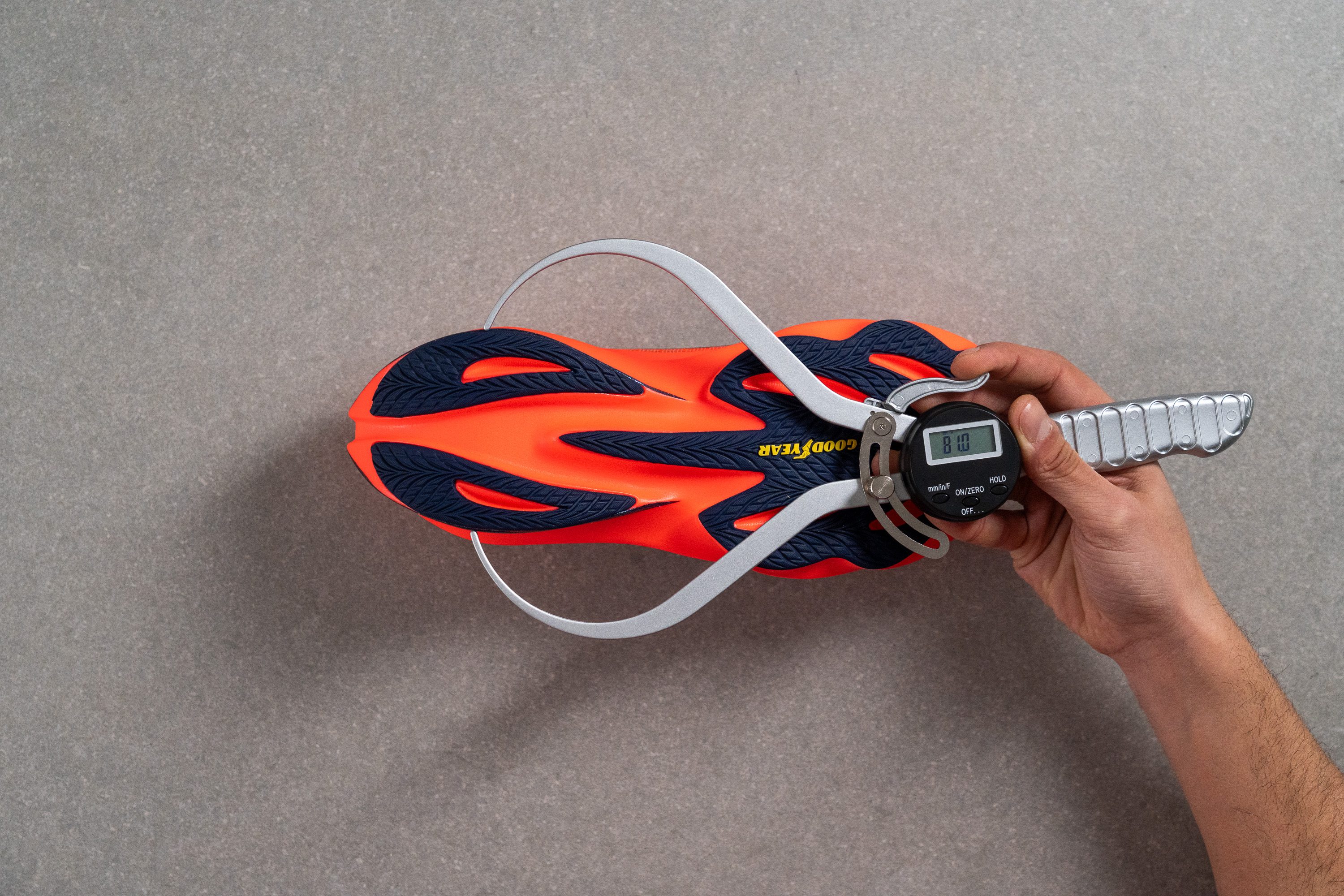
| Aero Tempo | 81.0 mm |
| Average | 91.1 mm |
Durability
Toebox durability
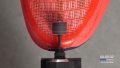
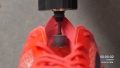
Ultra-thin mesh uppers usually struggle in our Dremel test, so this result was not surprising. Even so, the Aero Tempo held up reasonably well, earning a 2 out of 5, which is below average but still respectable given how thin and lightweight the material is.
| Aero Tempo | 2 |
| Average | 2.6 |
Heel padding durability
The heel counter performed much better, earning a 4 out of 5. This strong result confirms good durability in this area and helps reduce the risk of early wear.
| Aero Tempo | 4 |
| Average | 3.4 |
Outsole durability
The GoodYear outsole also held up well in our durability test. While it is not outstanding, a wear result of 1.0 mm is solid and reassuring for runners planning to put several hundred kilometers into the shoe.
| Aero Tempo | 1.0 mm |
| Average | 1.1 mm |
Outsole thickness
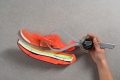
Runners worried about early outsole wear can relax here, as the Aero Tempo uses a thick 3.4 mm layer of GoodYear rubber that promises a long lifespan.
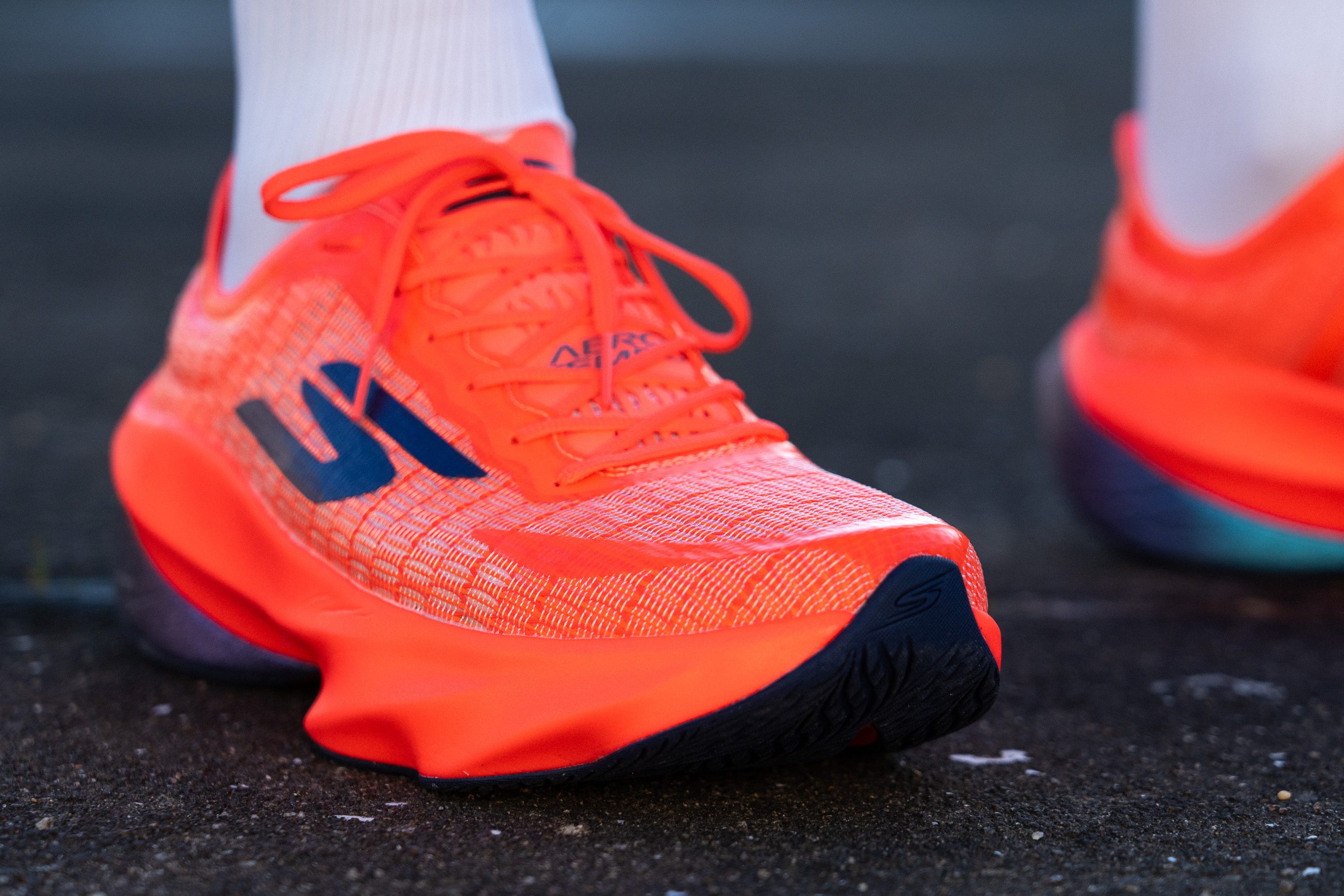
We were actually a bit surprised Skechers went this far, since that much rubber also adds noticeable weight.
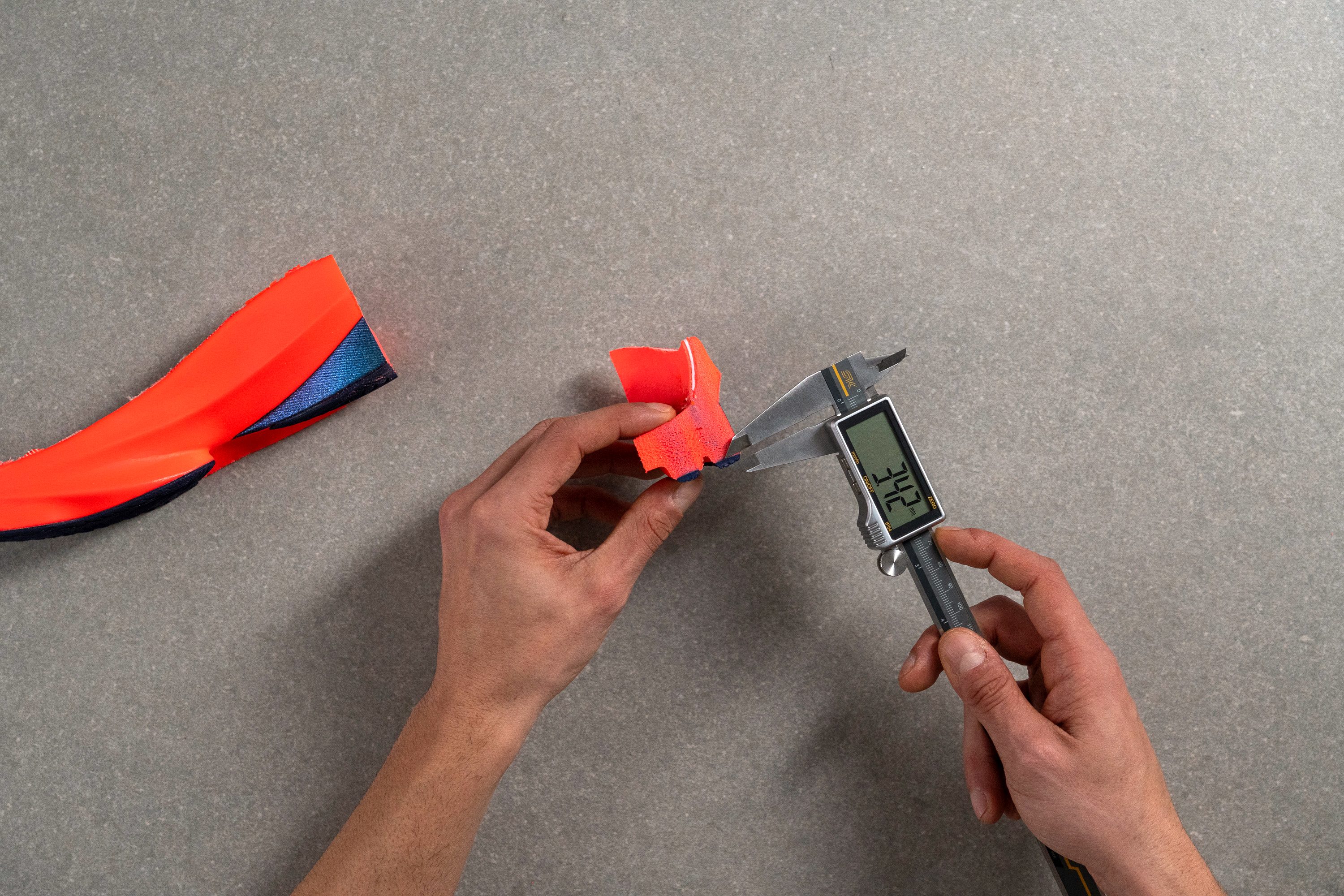
| Aero Tempo | 3.4 mm |
| Average | 3.1 mm |
Misc
Insole thickness
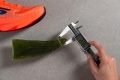
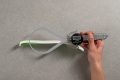
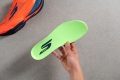
When we measured the HyperBurst Pro insole with our calipers, we found a huge 8.8 mm thickness, nearly double the lab average. But remember that this is not a regular insole as we explained before!
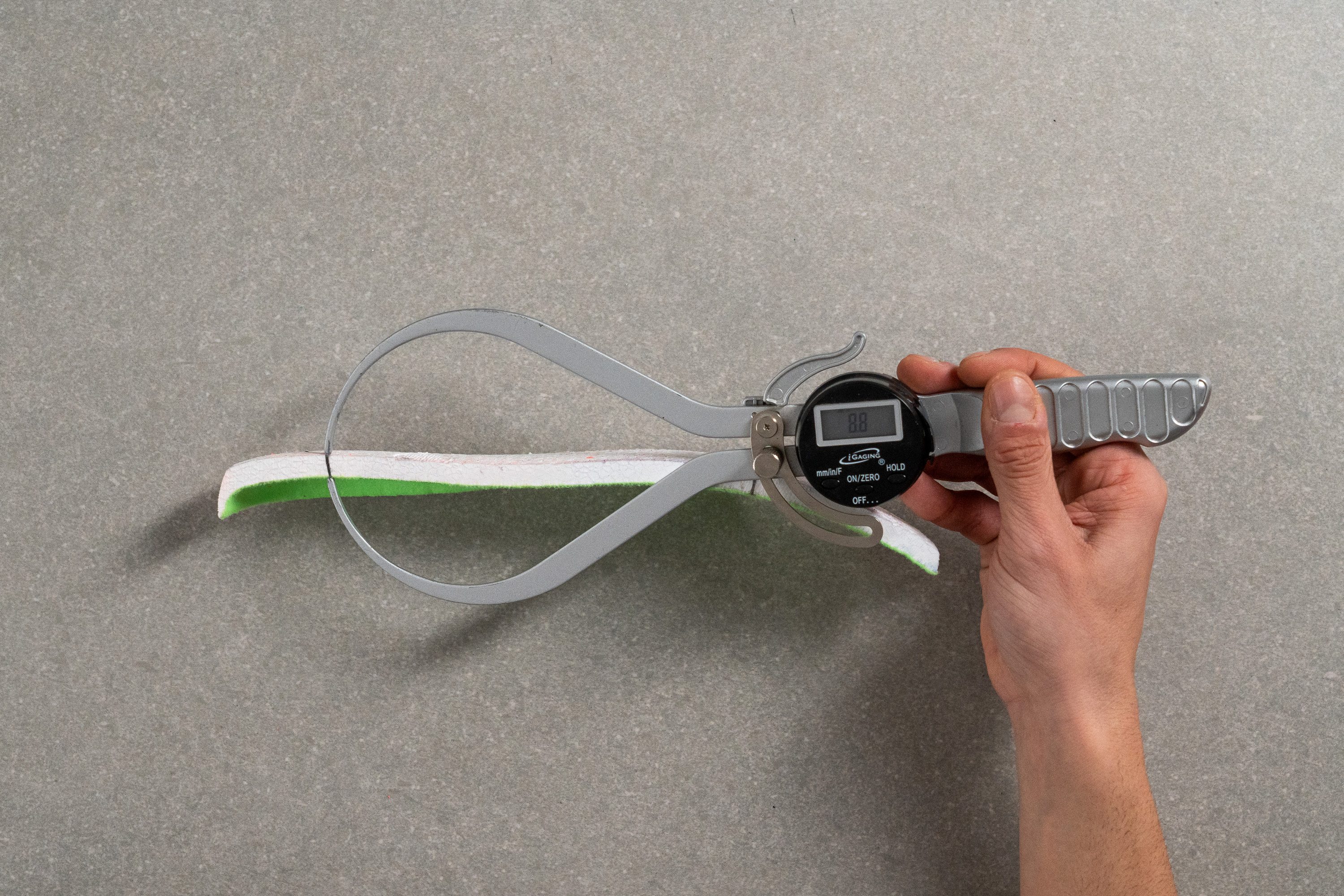
| Aero Tempo | 8.8 mm |
| Average | 4.4 mm |
Removable insole
Even though it is removable, we strongly advise against taking it out. You would lose the bounciest part of the midsole (HyperBurst Pro) and a large amount of cushioning, which would seriously undermine the whole point of buying this shoe.
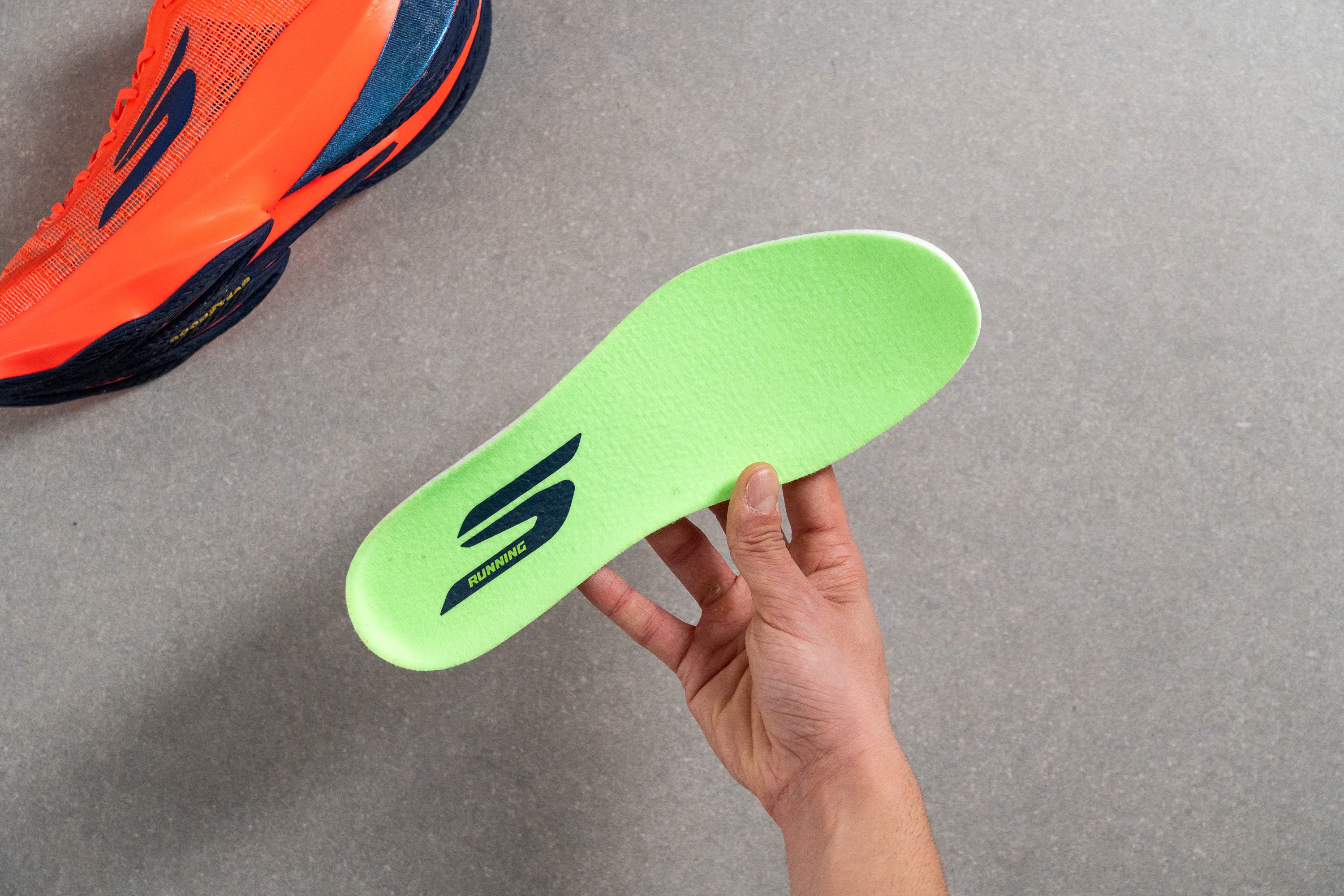
| Aero Tempo | Yes |
Reflective elements
Skechers had a clear chance to score a win by making the S logo reflective, but it seems they did not see it as appealing as we do.
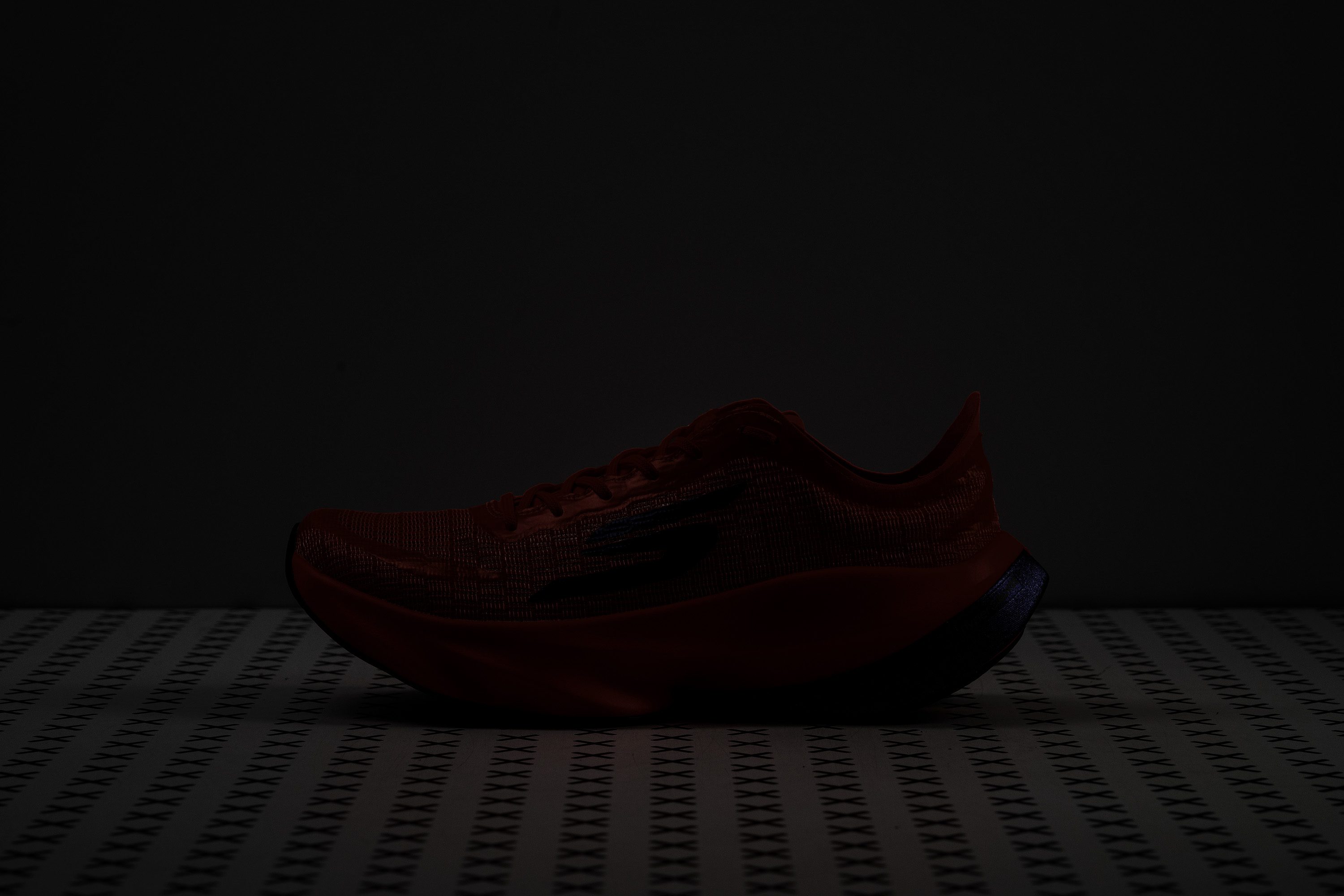
| Aero Tempo | No |
Tongue padding
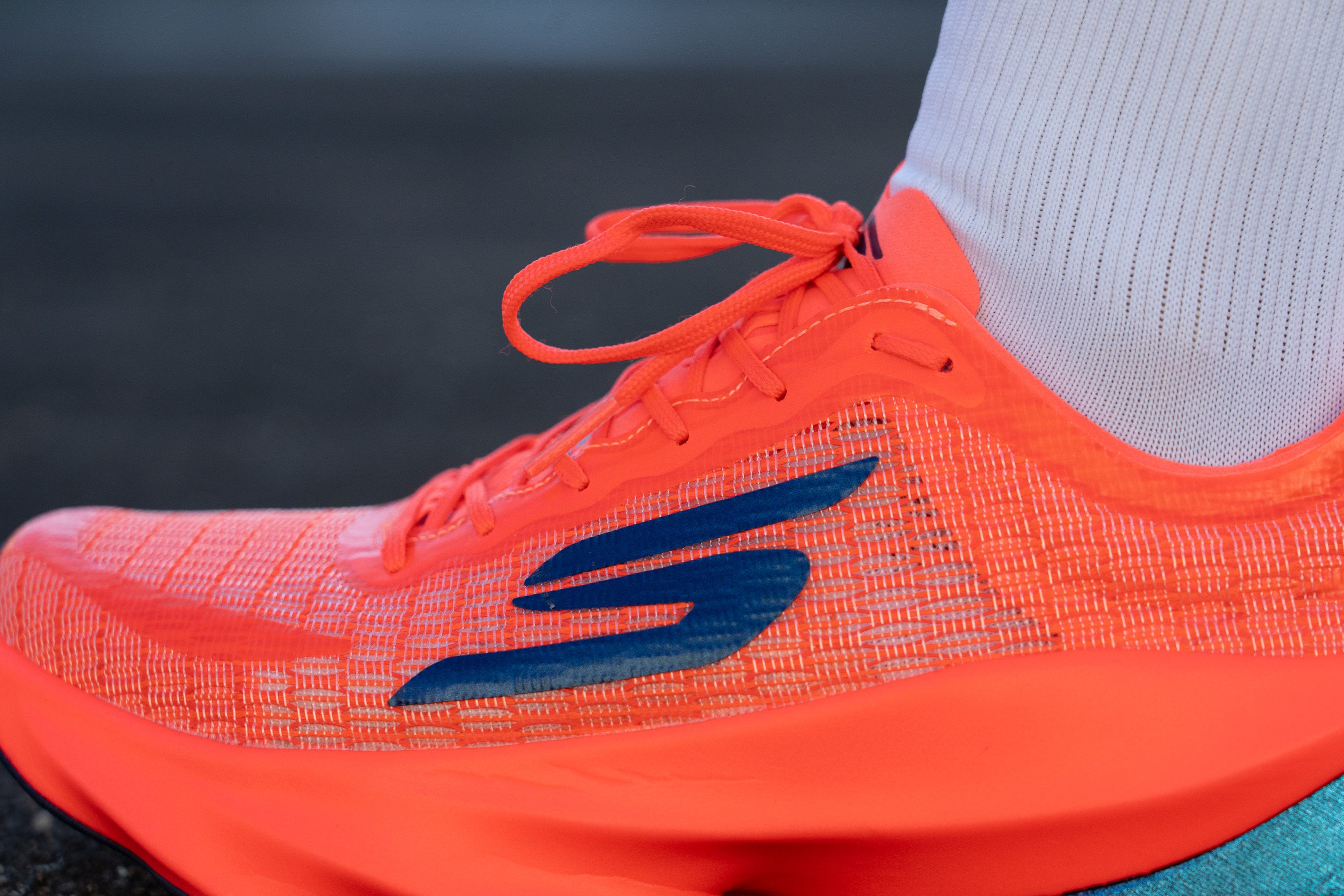
Skechers took a few risks with the Aero Tempo, but kept the lacing setup simple. It uses six punched eyelets plus an extra one for a runner’s knot, paired with very thin laces.
The tongue follows the same stripped-down philosophy as the rest of the shoe. With just 1.7 mm of padding, it keeps things light, making it clear that speed takes priority over step-in comfort here.
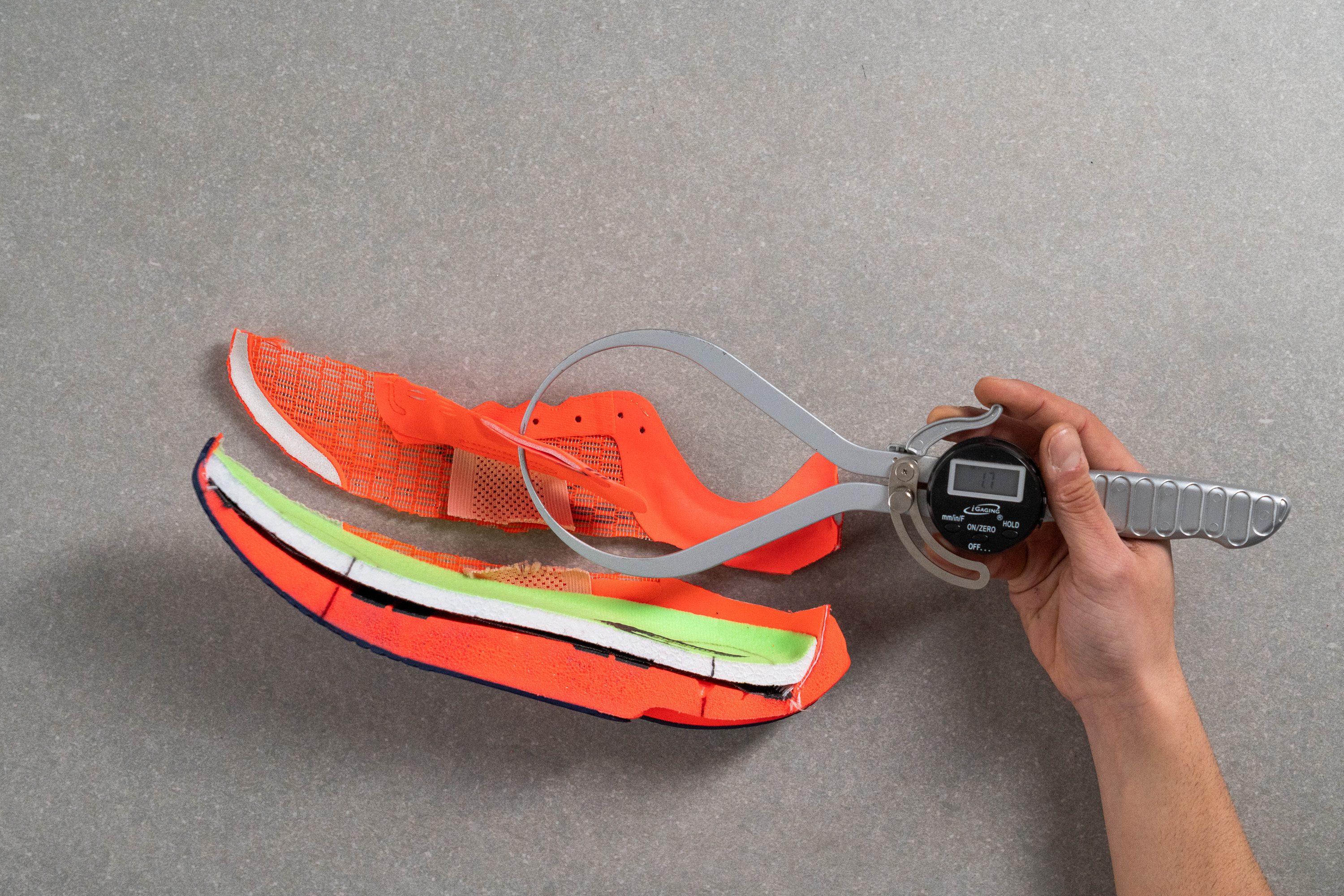
| Aero Tempo | 1.7 mm |
| Average | 5.8 mm |
Tongue: gusset type
The snug fit of the Aero Tempo is reinforced by its semi-gusseted tongue, which locks the foot in place while still allowing airflow. It's nice to see Skechers offering ventilation here, something that most brands tend to overlook.
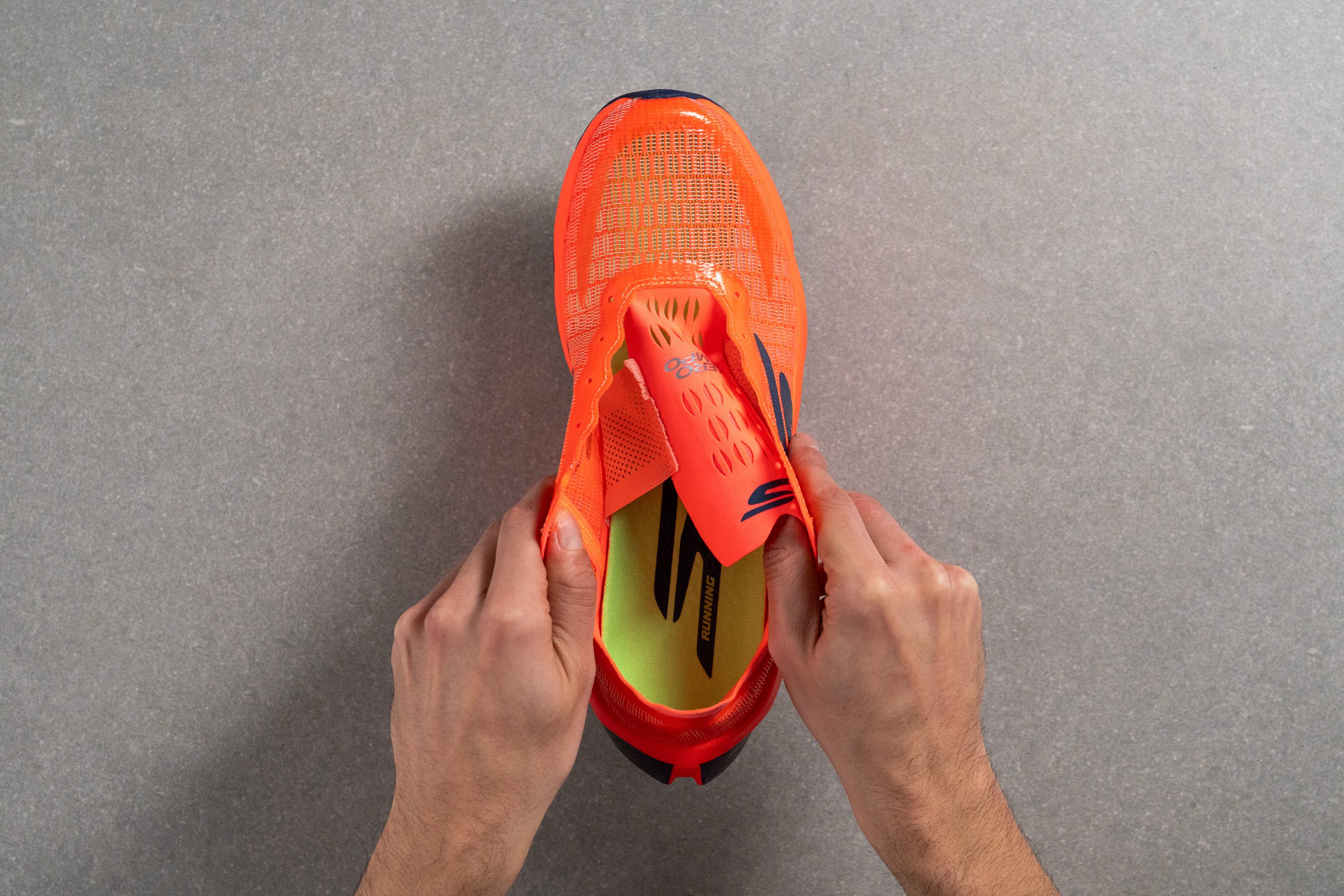
| Aero Tempo | Both sides (semi) |
Heel tab
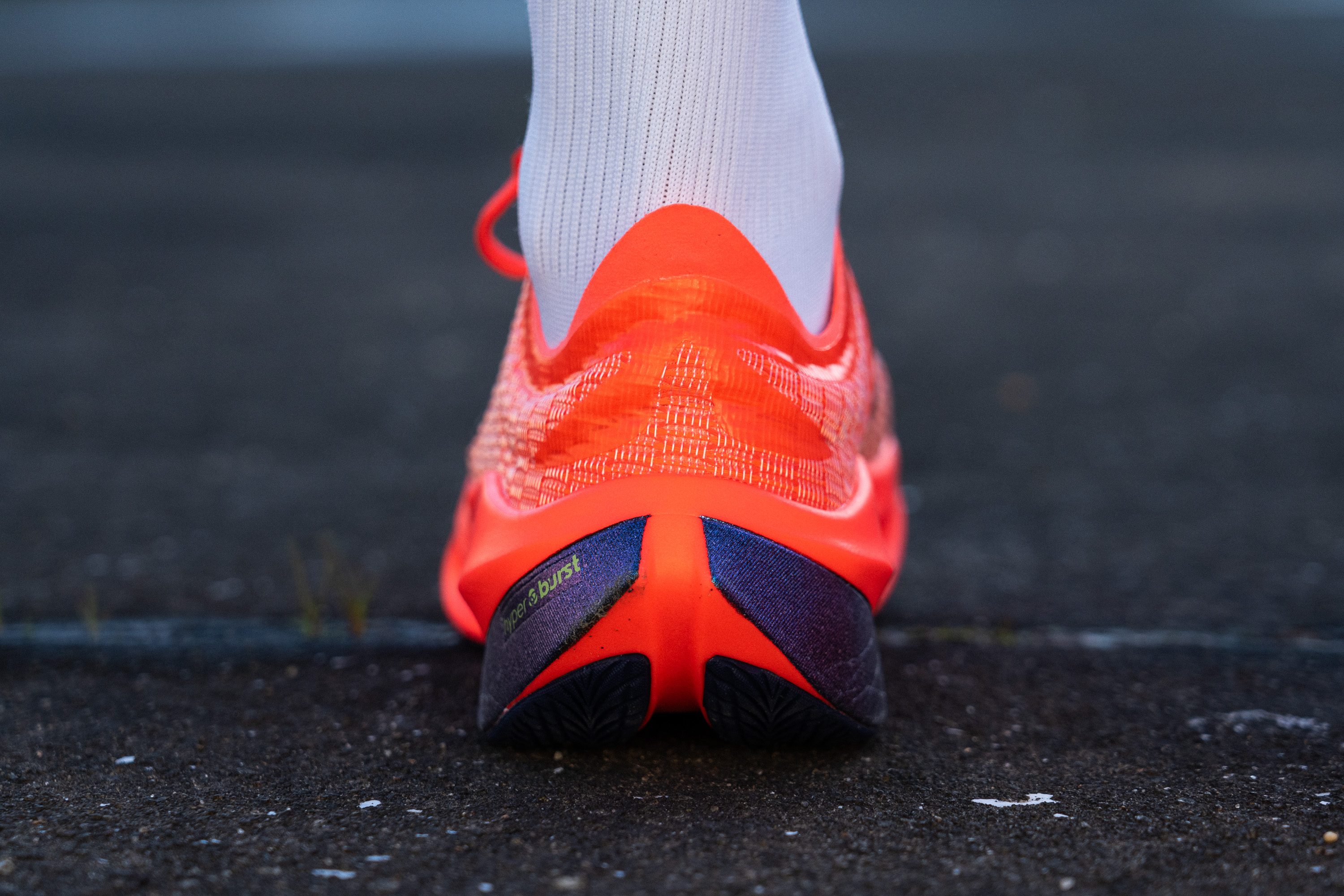
The heel design may look unusual at first, but it does a solid job of locking the foot in place. We also think skipping a finger-loop tab was the right call, as it fits better with the clean, performance-focused design.
| Aero Tempo | None |
Price
We believe that the Skechers Aero Tempo is not overpriced in most markets, but it only makes sense if it matches your needs and running style. Otherwise, we believe there are more interesting options on the market for a similar price.
| Aero Tempo | $160 |
| Average | $158 |