
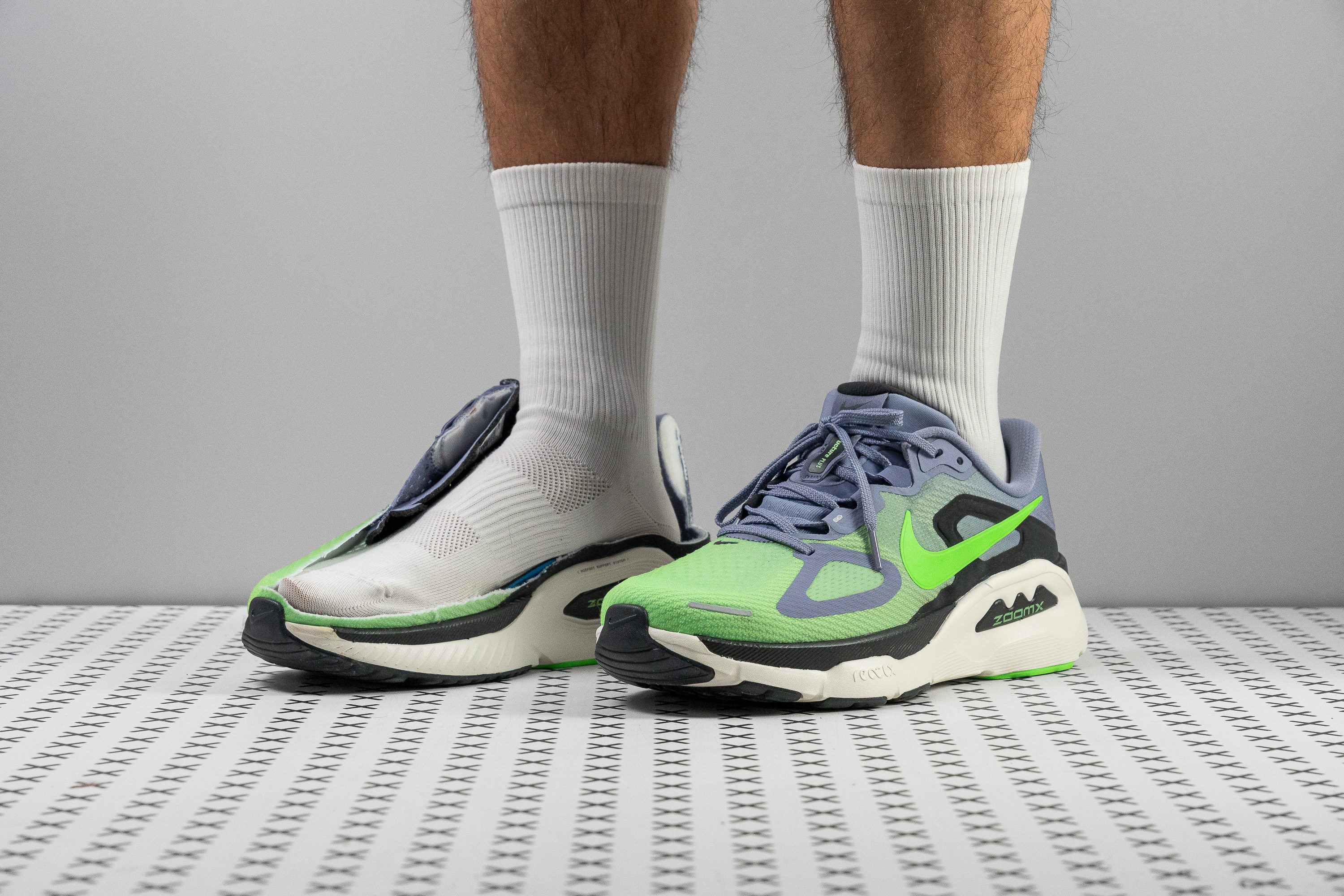





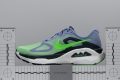


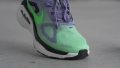














Nuestra conclusión
- Tiradas diarias / rodajes 90
- Tempo 46
- Competición 32
- Estabilidad 91
Pros
- Por fin algo de ZoomX mullida en las Structure
- Buena absorción de impactos
- También sirven como sneakers y están muy chulas
- Drop alto ideal para talonadores
- Tracción mejorada
- Upper de primera calidad con un flujo de aire sólido
- Suela exterior duradera
- Sistema de estabilidad que no es nada intrusivo
- Comodísimas desde el minuto 1
Contras
- Pesadas
- Siguen siendo aburridas incluso con la ZoomX
- Lengüeta sin refuerzo
Premios
- Entre mejores zapatillas Nike para caminar
- Entre mejores zapatillas Nike para caminar y estar de pie todo el día
- Top 18% entre zapatillas de running para asfalto
- Top 25% entre zapatillas de running Nike
- Top 15% más vendidas zapatillas de running
Comparativa
Las zapatillas de running más parecidas
+ + Añadir unas zapatillas | |||||
|---|---|---|---|---|---|
| Nuestra puntuación | 87 Geniales | 83 Geniales | 85 Geniales | 79 Buenas | |
| Precio | 180 € | 160 € | 140 € | 160 € | |
| Ritmo | Correr a diario | Correr a diario | Correr a diario | Correr a diario | |
| Absorción de impactos | Alta | Moderada | Alta | Alta | |
| Retorno de energía | Alto | Bajo | Moderado | Moderado | |
| Tracción | Alta | Alta | Alta | Alta | |
| Sujeción arco del pié | Estabilidad | Estabilidad | Estabilidad | Estabilidad | |
| Peso laboratorio Peso marca | 10.3 oz / 292g 10.9 oz / 309g | 9.9 oz / 280g 10.4 oz / 294g | 10.4 oz / 296g 10.5 oz / 298g | 9.8 oz / 278g 10 oz / 284g | |
| Drop laboratorio Drop marca | 11.2 mm 10.0 mm | 7.6 mm 10.0 mm | 10.1 mm 10.0 mm | 10.3 mm 8.0 mm | |
| Técnica de carrera | Talón | Medio/antepié | Talón | Talón | |
| Talla | Tallan bien | Tallan bien | Tallan un poquito pequeño | Tallan bien | |
| Rigidez de la mediasuela | Blanda | Blanda | Equilibrada | Blanda | |
| Diferencia de la rigidez de la mediasuela en frío | Pequeña | Pequeña | Pequeña | Pequeña | |
| Durabilidad de la parte delantera | Decente | Decente | Decente | Decente | |
| Durabilidad del acolchado del talón | Alta | Media | Alta | Alta | |
| Durabilidad de la suela exterior | Buena | Buena | Buena | Buena | |
| Transpirabilidad | Media | Media | Media | Alta | |
| Anchura / ajuste | Media | Media | Media | Media | |
| Anchura de la parte delantera | Media | Media | Media | Estrecha | |
| Flexibilidad | Rígida | Moderada | Moderada | Moderada | |
| Rigidez torsional | Moderadas | Flexibles | Moderadas | Flexibles | |
| Rigidez del contrafuerte del talón | Rígido | Rígido | Moderado | Moderado | |
| Talón laboratorio Talón marca | 40.9 mm 42.0 mm | 36.6 mm 38.5 mm | 36.1 mm 38.0 mm | 38.0 mm 39.0 mm | |
| Antepié laboratorio Antepié marca | 29.7 mm 32.0 mm | 29.0 mm 28.5 mm | 26.0 mm 28.0 mm | 27.7 mm 31.0 mm | |
| Anchuras disponibles | EstándarAncho | EstándarAncho | EstrechoEstándarAnchoExtra Ancho | EstándarAnchoExtra Ancho | |
| Compatibles con plantillas personalizadas | ✓ | ✓ | ✓ | ✓ | |
| Estación | Todas las estaciones | Todas las estaciones | Todas las estaciones | VeranoTodas las estaciones | |
| Plantilla extraíble | ✓ | ✓ | ✓ | ✓ | |
| Clasificación | #62 Top 16% | #165 Top 42% | #113 Top 29% | #240 40% inferior | |
| Popularidad | #58 Top 15% | #152 Top 38% | #49 Top 13% | #123 Top 31% |



Quién debería comprárselas
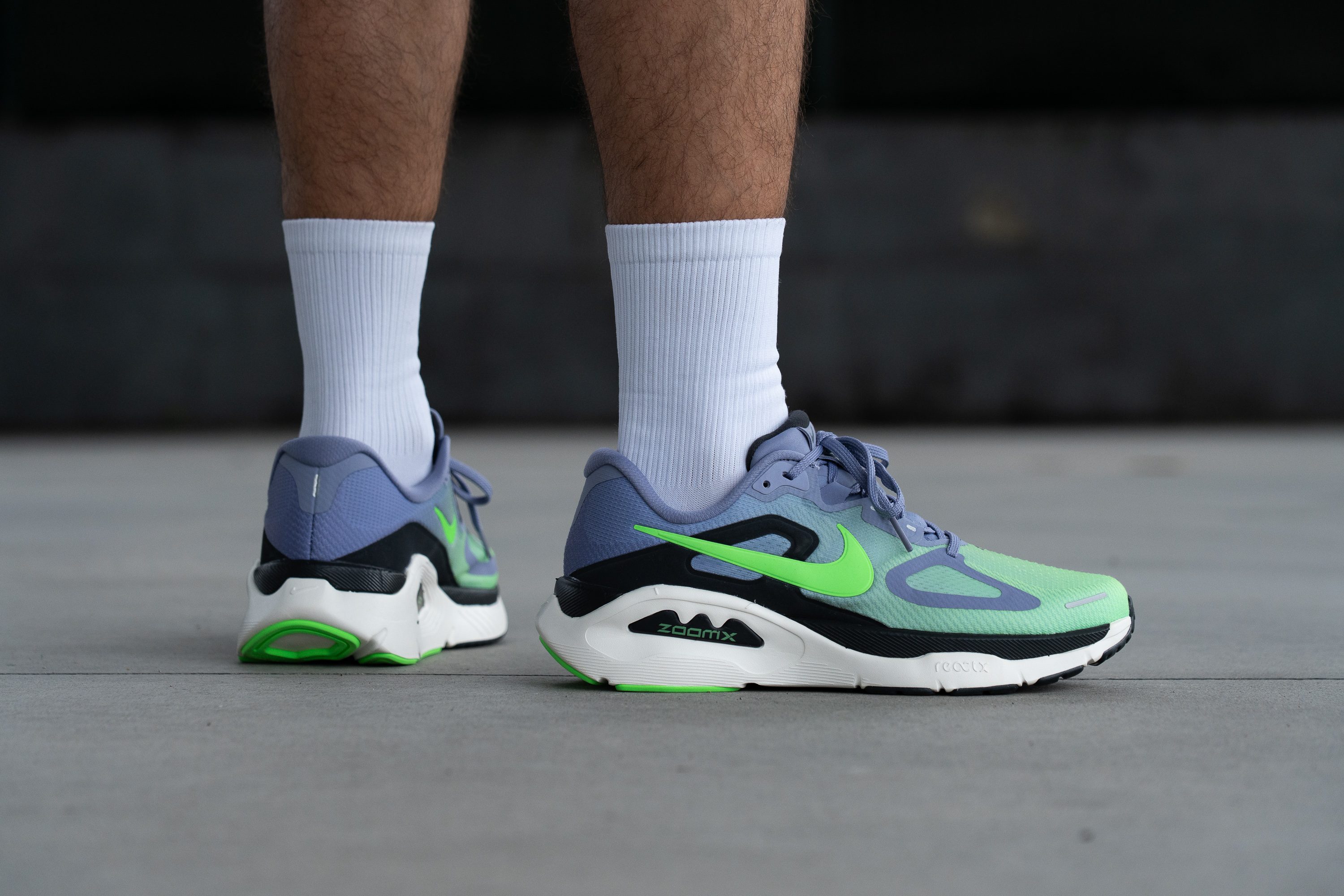
En nuestra opinión, las Nike Structure Plus son una opción estupenda para:
- Los runners que son fans de Nike que están buscando el modelo de estabilidad más avanzado de la marca hasta ahora.
- Los deportistas que prefieren las zapatillas de estabilidad con una geometría clásica en lugar de diseños con un rocker agresivo.
- Cualquiera que esté buscando un modelo de entrenamiento diario que combine un estilo en plan sneakers con una sujeción excepcional.
- La gente que lleva siendo fan de la línea Structure toda la vida y que quiere una tecnología y comodidad más avanzadas. La capa extra de ZoomX y el nuevo upper ofrecen una sensación más premium en comparación con versiones anteriores.
Quién NO debería comprárselas
La principal desventaja de las Nike Structure Plus es que son muy caras. En nuestra opinión, a muchos runners les costará justificar su precio si solo las quieren para sus entrenamientos diarios simples. Es más, creemos que, sobre todo los principiantes, dudarán a la hora de comprárselas, y más cuando existen opciones más asequibles como las Nike Structure 26 o las ASICS GT 2000 14, que ofrecen una sujeción fiable y una versatilidad parecida.
También creemos que el peso de estas zapatillas afecta negativamente a su experiencia general. Cuando salimos a correr con ellas, sentimos que eran bastante pesadas, así que están lejos de ser un modelo de entrenamiento rápido con el que subir el ritmo. En nuestra opinión, otras opciones de estabilidad más ligeras como las Saucony Tempus 2 o las HOKA Arahi 8 se sienten más ágiles e incluso te pueden servir para algún entrenamiento de tempo.
Amortiguación
Shock absorption
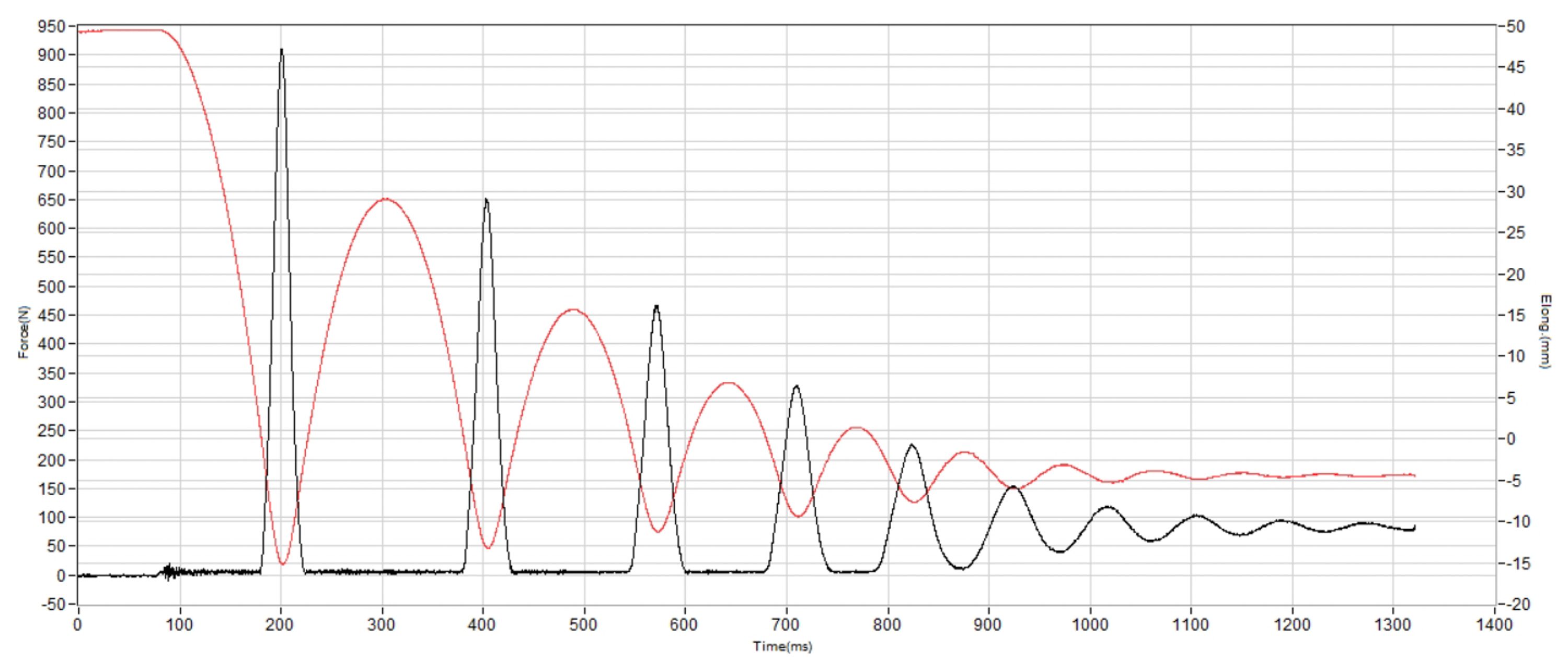
La mediasuela de las Structure Plus es alta, de eso no hay duda, por eso nos esperábamos un resultado más alto que la media en nuestra prueba de absorción de impactos. Cuando la analizamos, la máquina marcó 140 SA en el talón y 110 SA en el antepié, dos cifras sólidas para el entrenamiento diario, pero que tampoco son nada del otro mundo.
Pero bueno, a los corredores que buscan un poco más de amortiguación que en las Structure 26 estándar (132 SA / 99 SA), seguro que les vale.
| Structure Plus | 140 SA |
| Media | 131 SA |
Energy return
El logo de la espuma ZoomX nos pintó pajaritos en el aire, porque cuando salimos a correr con estas zapatillas... de rebote poco, la verdad. Los resultados de nuestro laboratorio lo confirmaron, con solo un 58,2 % de retorno de energía en el talón y un 65,2 % en el antepié.
El antepié tiene más ZoomX que ReactX, así que la diferencia entre los resultados anteriores tiene sentido. Estas cifras hacen que las zapatillas tengan un poco más de energía, pero solo la sentirán los runners que aterricen con el mediopié o el antepié.
| Structure Plus | 65.2% |
| Media | 61.5% |
Altura de la suela en la zona del talón
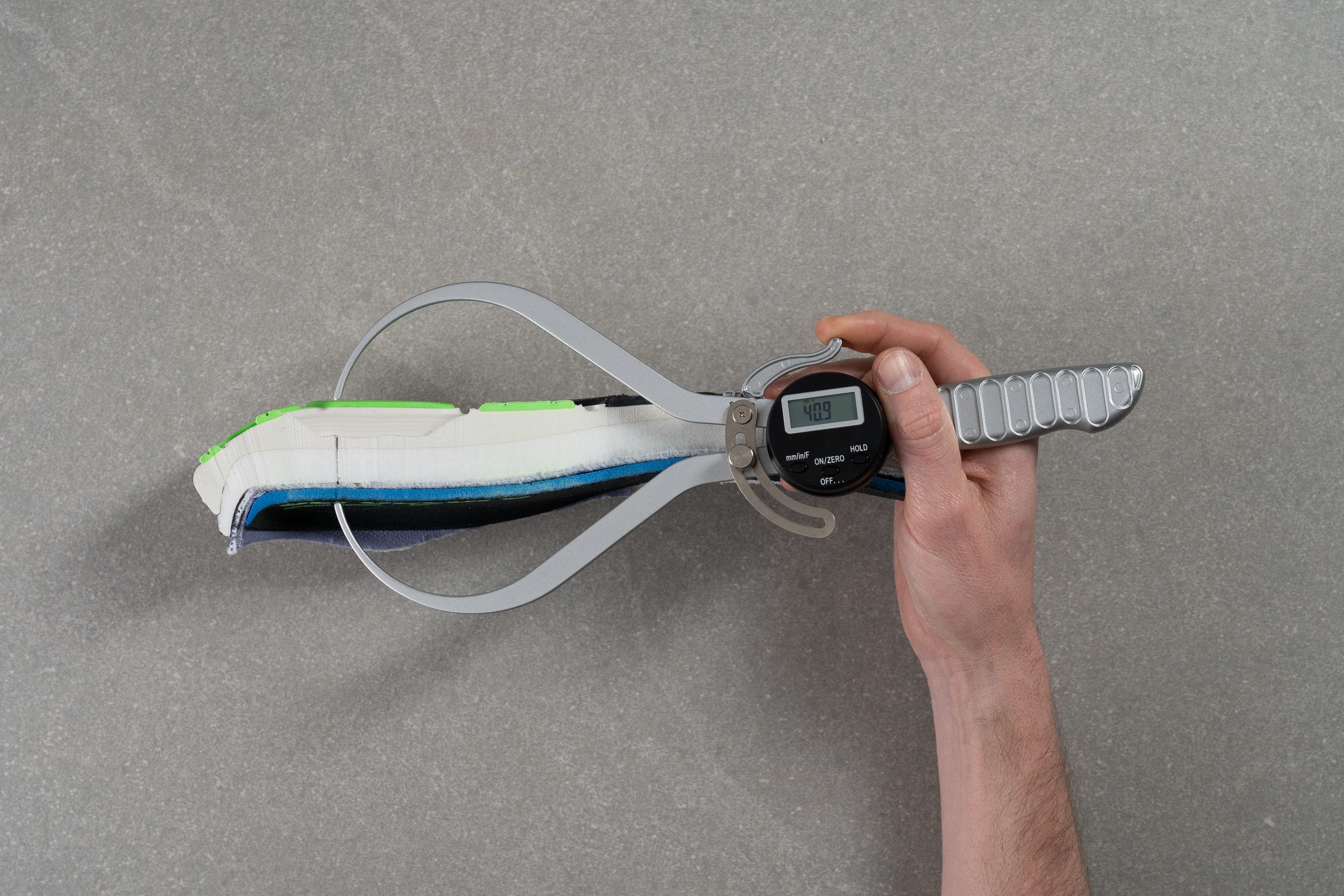
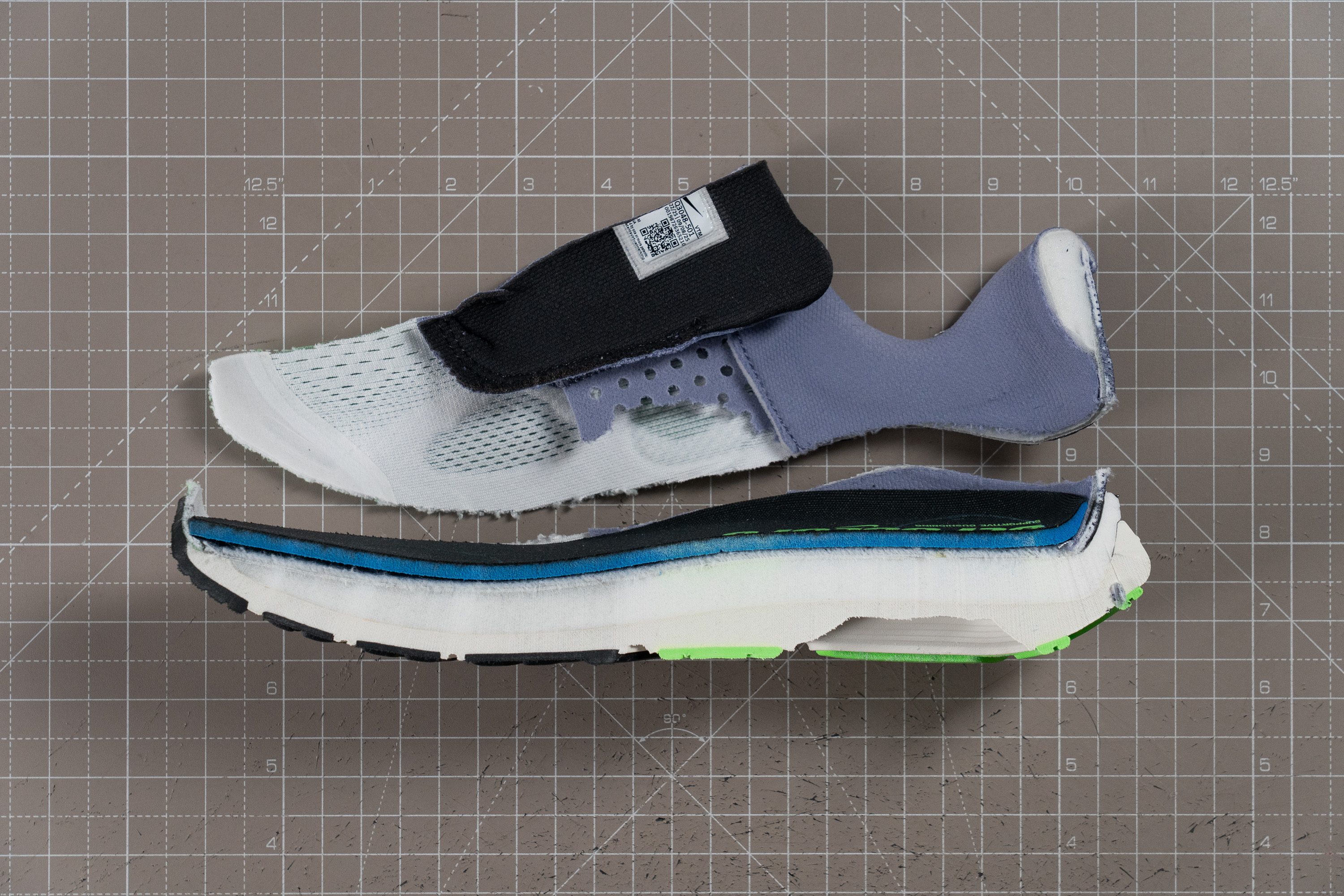
Con sus 40,9 mm, Nike siguió un enfoque completamente maximalista con las Structure Plus, y así es justo como se sienten bajo los pies. En cuanto empezamos a correr con ellas, notamos de inmediato lo altos que estaban nuestros pies con respecto al suelo.
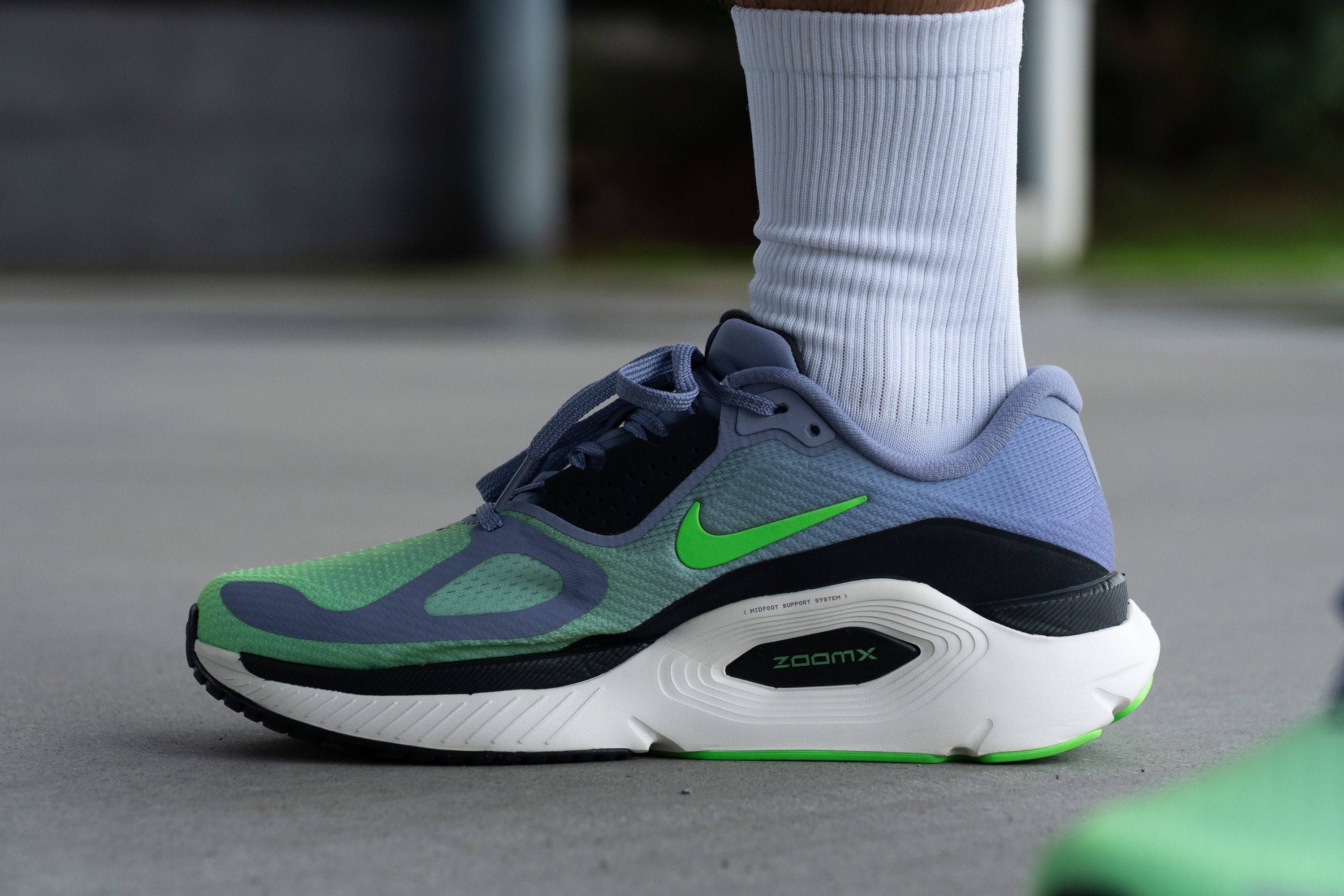
Eso sí, no te dejes engañar por los enormes laterales que Nike diseñó para ayudar a evitar que el arco se incline demasiado. La plataforma es alta, pero no tan alta.
| Structure Plus | 40.9 mm |
| Media | 35.6 mm |
Altura de la suela en el antepié
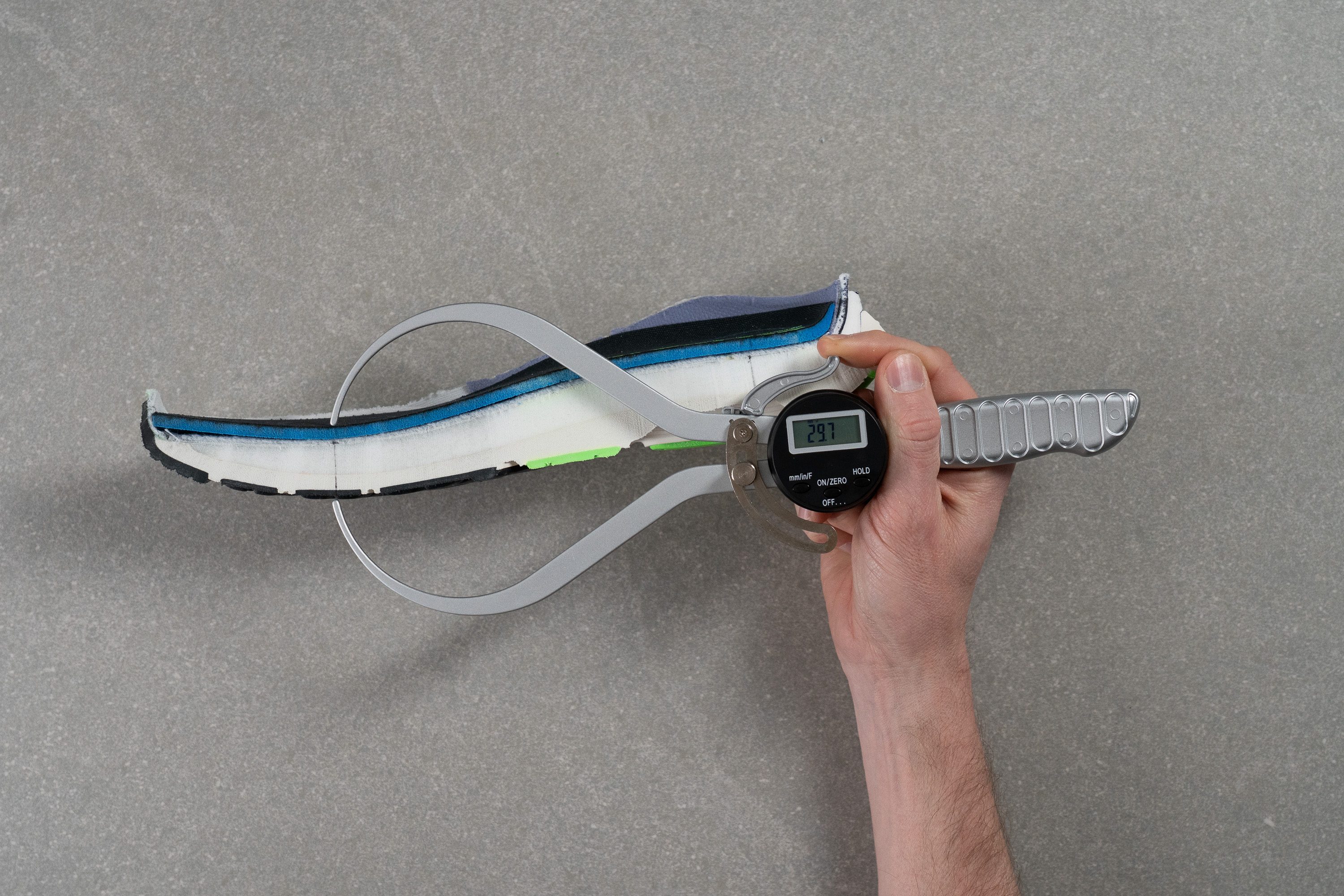
El antepié alcanza una altura de 29,7 mm, así que tiene bastante espuma para las tiradas diarias. Como vimos antes en nuestra prueba de absorción de impactos, su amortiguación es sólida.
| Structure Plus | 29.7 mm |
| Media | 27.2 mm |
Drop
La mayoría de los corredores están acostumbrados a que Nike les ponga un drop alto a sus zapatillas para correr a diario, y descubrimos que las Structure Plus lo confirman. Con un drop de 11,2 mm, nos ha quedado claro que los talonadores estarán muy cómodos con este modelo.
| Structure Plus | 11.2 mm |
| Media | 8.4 mm |
Dureza de la mediasuela
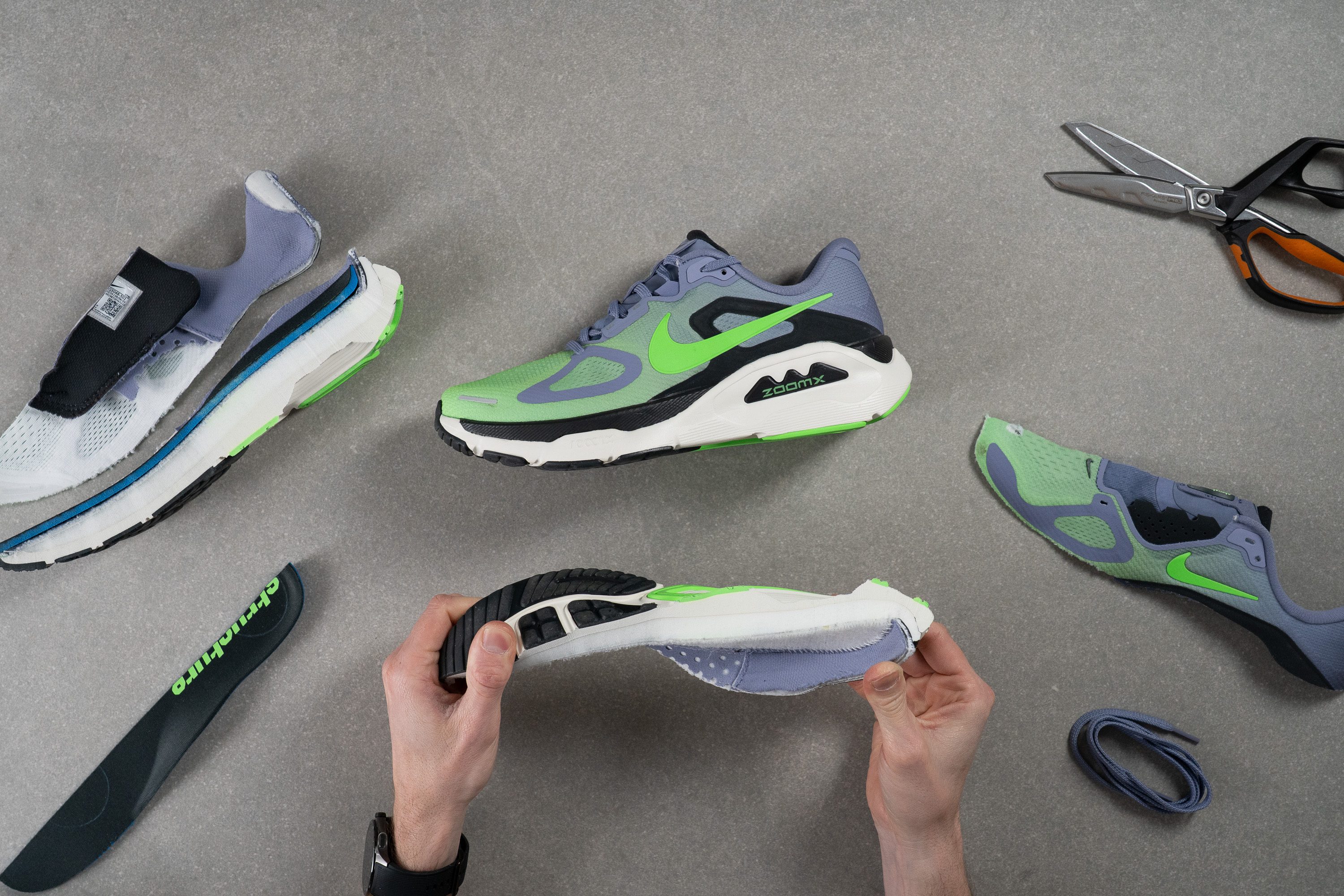
El logo de la espuma ZoomX ya no es tan impresionante como antes. Nike ha ajustado la fórmula utilizando una espuma de TPE en lugar de Pebax para los modelos de entrenamiento, y eso que hay muchas otras marcas que ahora usan espumas de primera calidad en sus zapatillas.
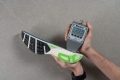
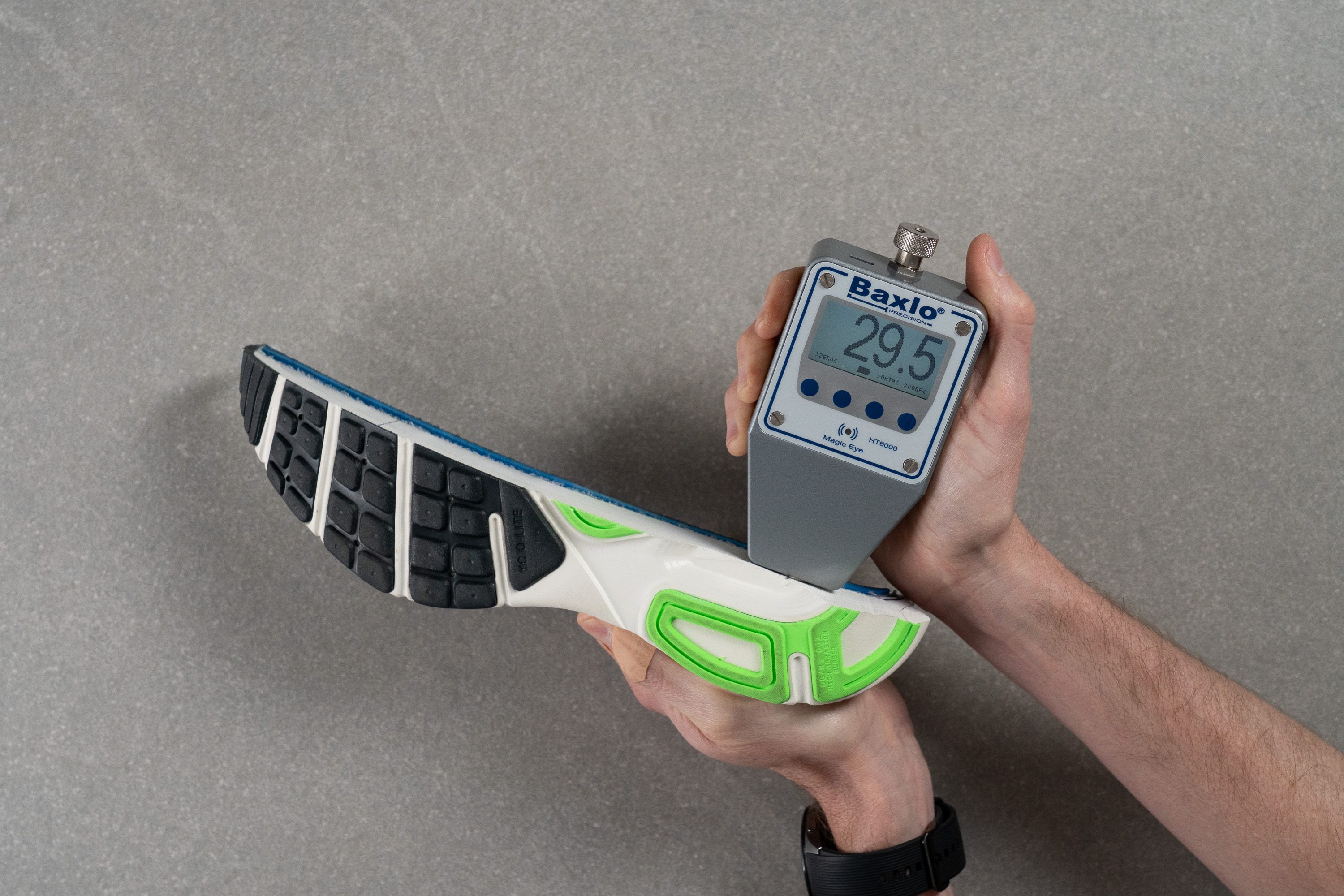
Sin embargo, después de analizar estas zapatillas, comprobamos que esta versión de la ZoomX rinde bien, ya que en nuestras pruebas de uso nos ofreció una pisada mullida y cómoda. Cuando nos las llevamos al laboratorio y analizamos su espuma con nuestro durómetro Asker C, marcó 29,5 mm en la capa de arriba, así que es más blanda que la media.
| Structure Plus | 29.5 AC |
| Media | 35.4 AC |
Rocker
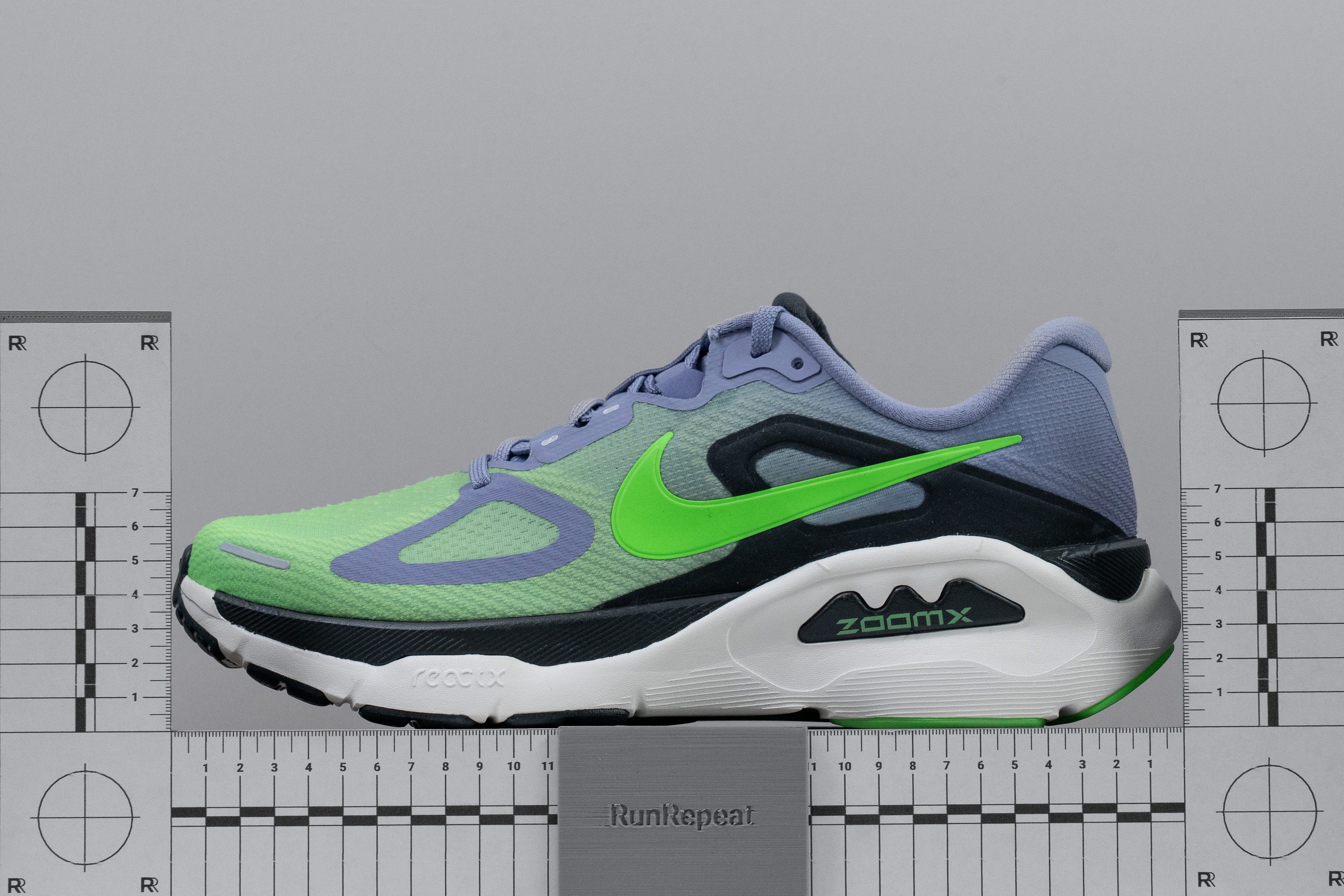
Algunas marcas están empezando a utilizar diseños con un rocker pronunciado en todas sus zapatillas, pero Nike pasa de eso con las Structure Plus. En nuestra opinión, es una decisión acertada para un modelo de entrenamiento diario que se centra en ser estable.
Este diseño hace que estas zapatillas sean una opción sólida para los corredores que prefieren una geometría más clásica. Además, se siente más natural al caminar o si te las pones en plan casual, en tu día a día, que es algo que creemos que Nike ha tenido en mente al crear este modelo tan en plan sneakers.
Tallaje y ajuste
Talla
Las Nike Structure Plus tallan bien (66 votos).
Longitud interna
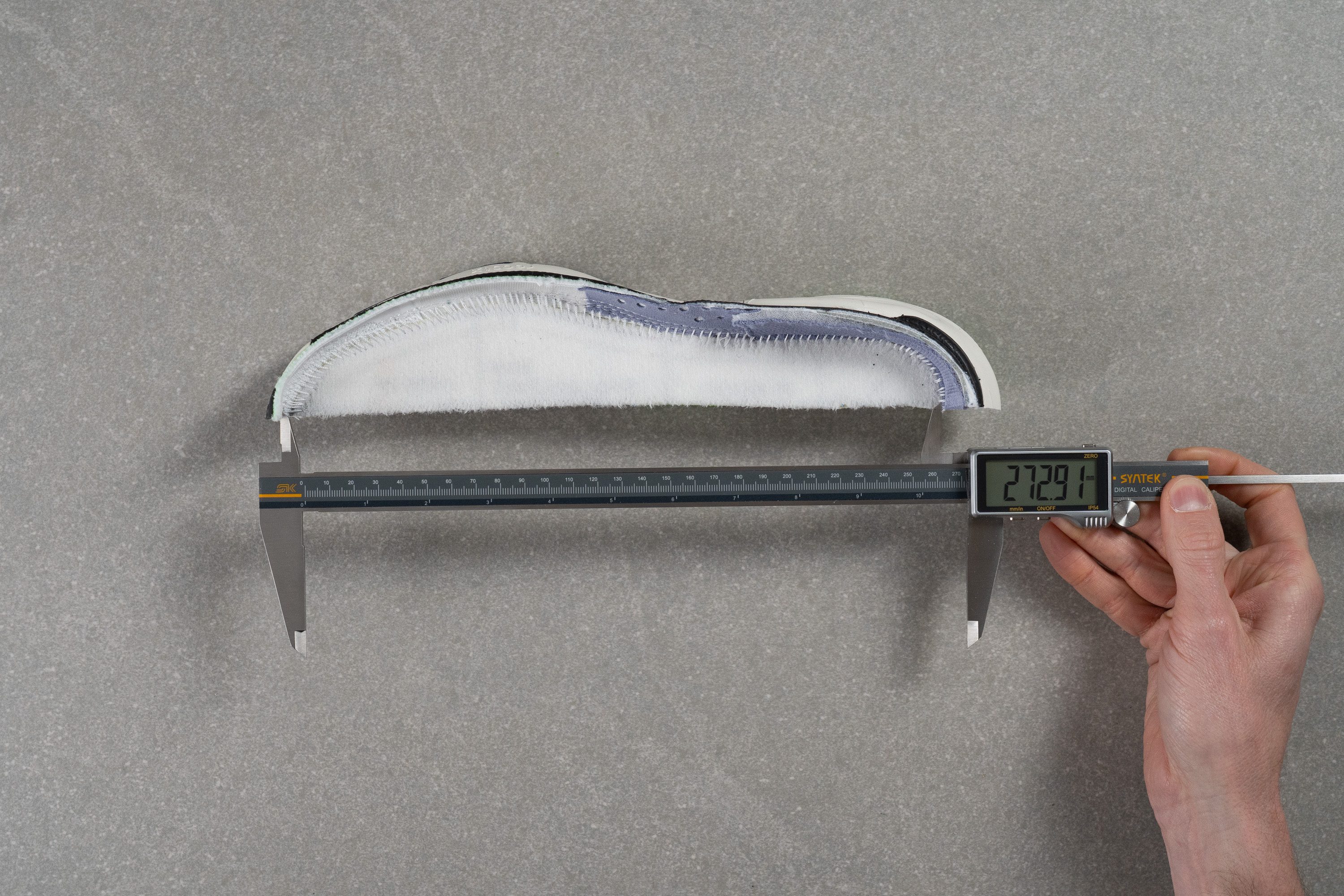
| Structure Plus | 272.9 mm |
| Media | 269.4 mm |
Anchura / Ajuste
Compramos todas las zapatillas que analizamos en una talla 9 estadounidense de hombre con anchura estándar, y las Nike Structure Plus no iban a ser una excepción. También queremos decir que Nike las tiene en tallas anchas, aunque la disponibilidad puede variar según el país.
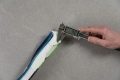
Cuando medimos la anchura de este modelo en su punto más ancho, nuestro calibre marcó 93,4 mm. Vamos, que es un ajuste clásico de Nike que, probablemente, no se adapte bien a las personas con pies anchos, pero vamos a seguir analizando el ajuste antes de hablar de conclusiones.
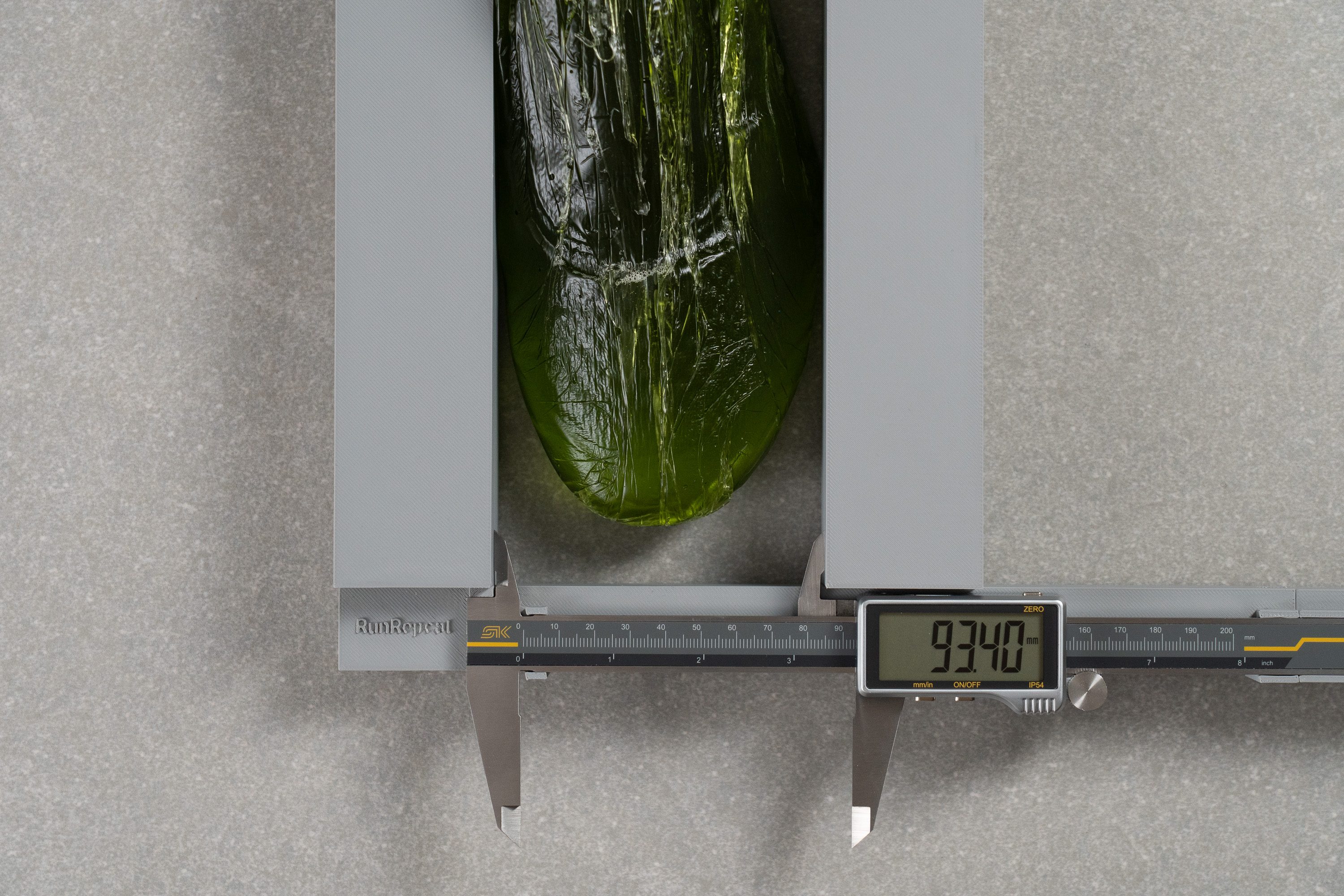
| Structure Plus | 93.4 mm |
| Media | 95.2 mm |
Anchura de la parte delantera
La segunda medida también está un poquito por debajo de la media. Con 72,5 mm, nos parece un ajuste muy estándar, y creemos que cualquiera que se haya puesto antes unas Nike no se sorprenderá ni un poquito.
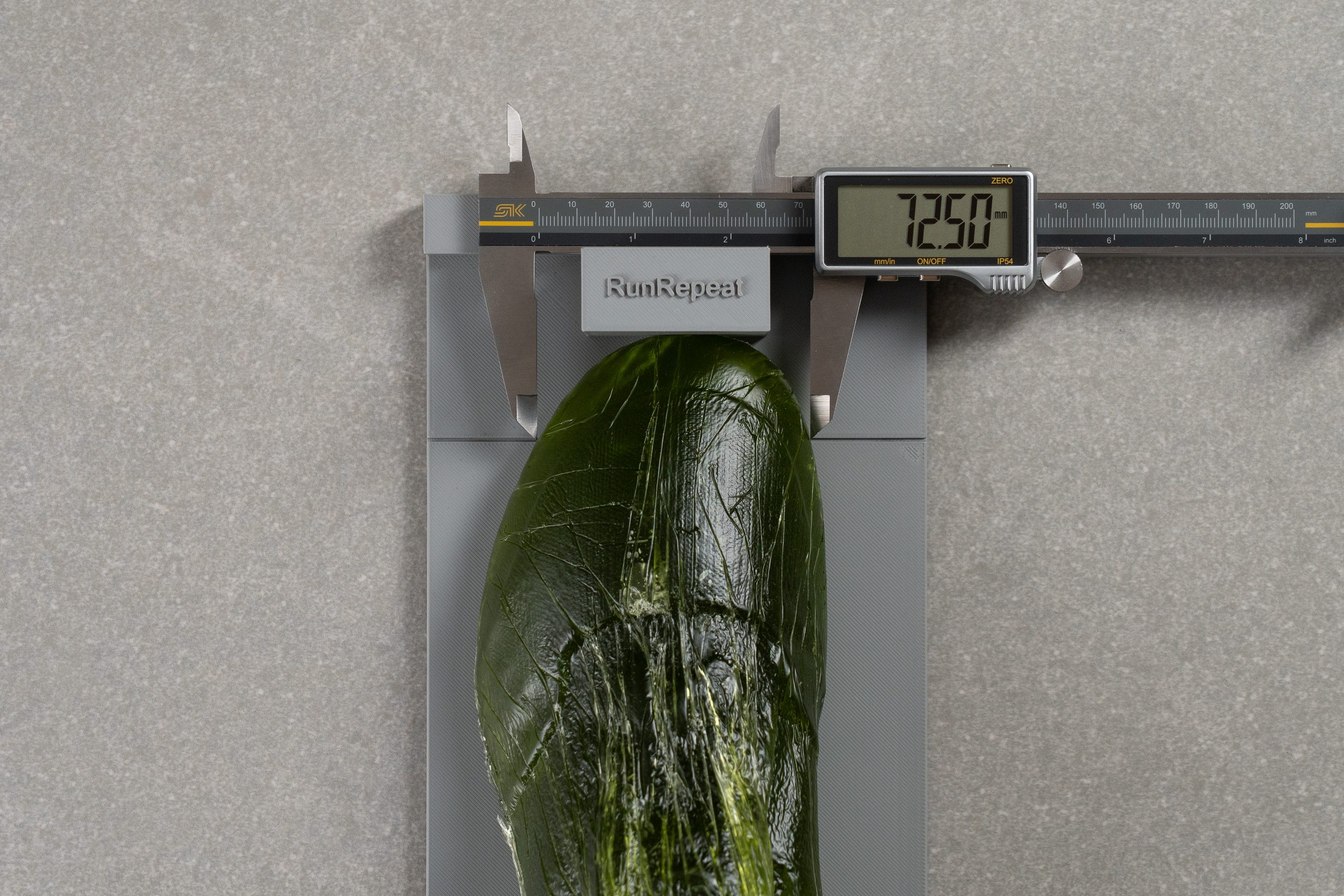
| Structure Plus | 72.5 mm |
| Media | 73.2 mm |
Altura de la parte delantera
La altura de la parte delantera sigue el mismo camino, así que no hubo sorpresas.
Con 26,0 mm, es un resultado que nos parece razonable, sobre todo porque a las zapatillas de estabilidad les suele ir como anillo al dedo un ajuste un poco más ceñido para ayudarte a controlar las fuerzas laterales y mejorar la sujeción.
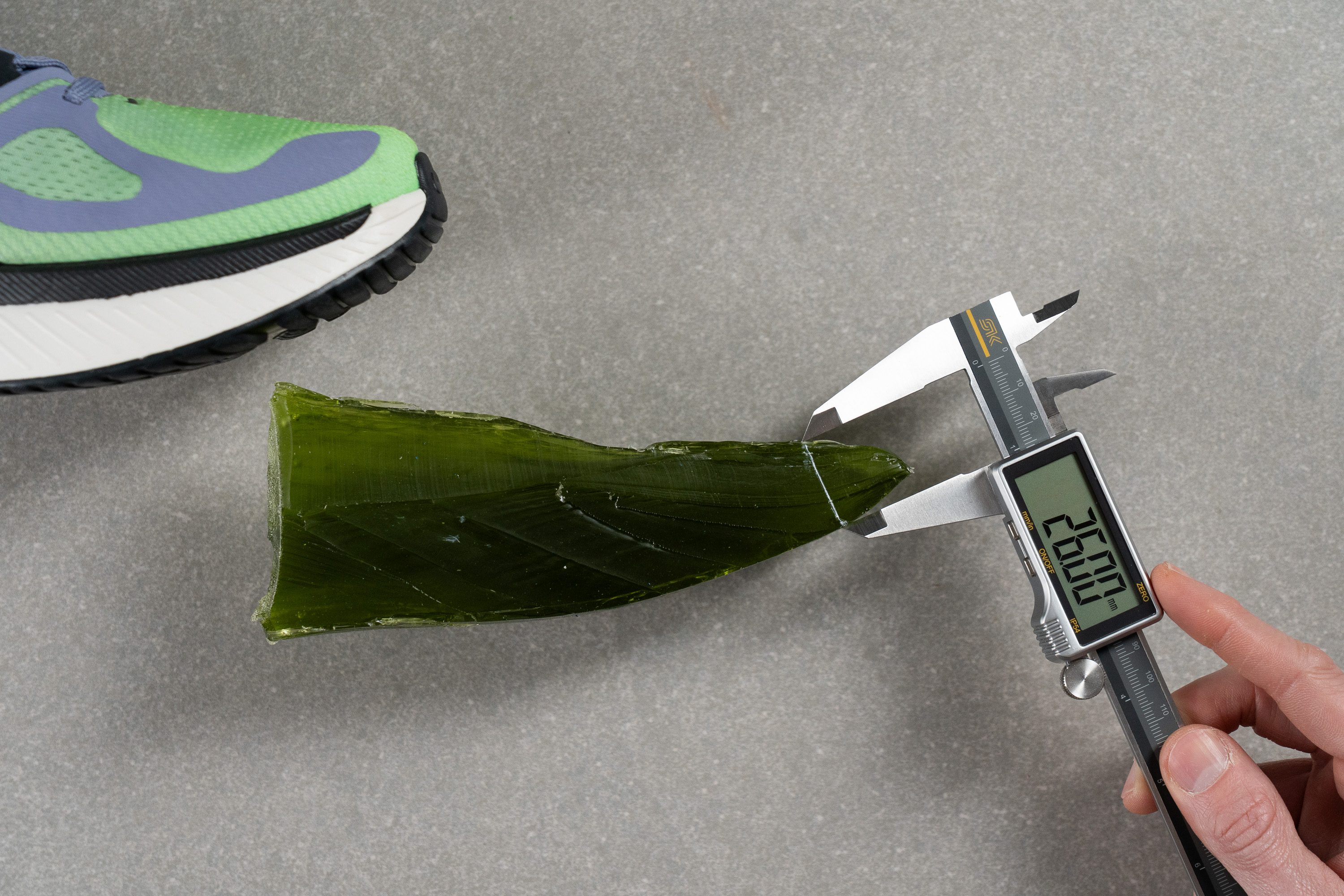
| Structure Plus | 26.0 mm |
| Media | 27.0 mm |
Tracción / Agarre
Traction test
Algo que sí que necesitaba mejorar en la versión estándar de las Structure era la tracción. La suela de la versión anterior se llevó un 0,37 en esta prueba y, por suerte, las Plus consiguieron alcanzar un 0,51.
Sigue sin ser nada loco, pero ahora ofrecen una tracción confiable incluso si sales a correr cuando está lloviendo.
| Structure Plus | 0.51 |
| Media | 0.53 |
Diseño de la suela exterior
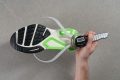
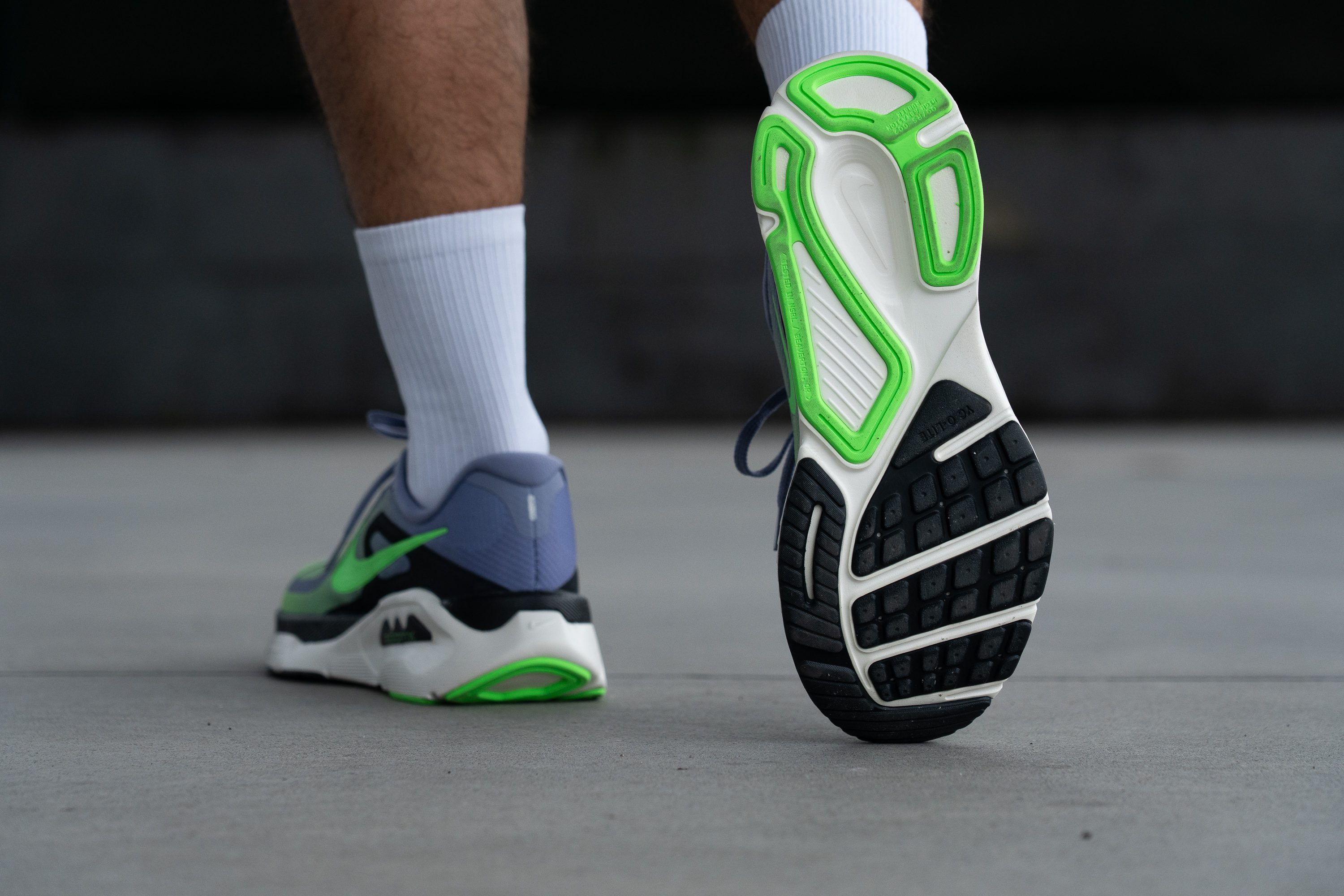
La suela exterior mantiene un diseño muy parecido al de las Structure 26, conservando la mayor parte de su diseño con solo pequeños ajustes visuales. Combina caucho negro "YC O-LITE" en el antepié con paneles de caucho de alta abrasión "OG/RS 002" de color verde brillante en el mediopié y en el talón.
El caucho del talón y del mediopié ofrece una protección sólida, sobre todo porque el caucho está encima de la espuma expuesta. Además, hay un corte muy profundo en el centro del talón que ayuda a que la espuma se comprima.
Flexibilidad / Rigidez
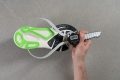
Para disfrutar de las Nike Structure Plus, sí o sí tienes que ser fan de las zapatillas con una rigidez longitudinal alta. Como necesitaron 19,3 N de fuerza para doblarse en nuestra prueba de laboratorio, nos parecen un error para los runners que prefieren una sensación más flexible bajo los pies.
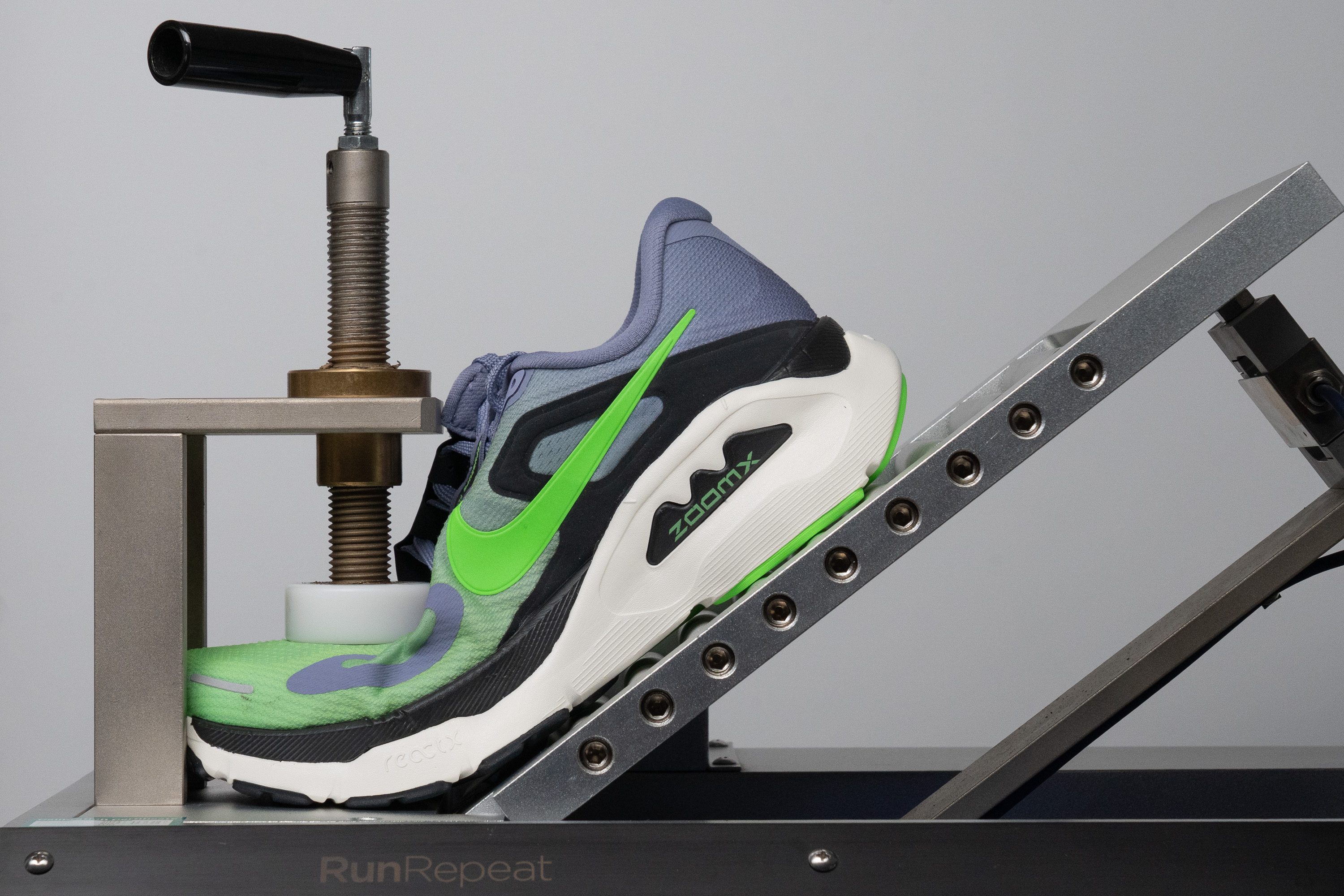
| Structure Plus | 19.3N |
| Media | 15.5N |
Peso
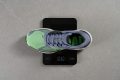
Las Nike Structure Plus son solo un 1 % más ligeras que las Structure 26 con sus 292 g. Esa pequeña reducción apenas cambia la experiencia, y este modelo sigue siendo de los más pesados dentro del mercado actual.
Para las tiradas diarias puede funcionar, pero en nuestras pruebas uso... la verdad es que nos parecieron pesadas. Personalmente, creemos que Nike ha perdido la oportunidad de ganarles terreno a rivales fuertes, como pueden ser las ASICS Gel Kayano 32.
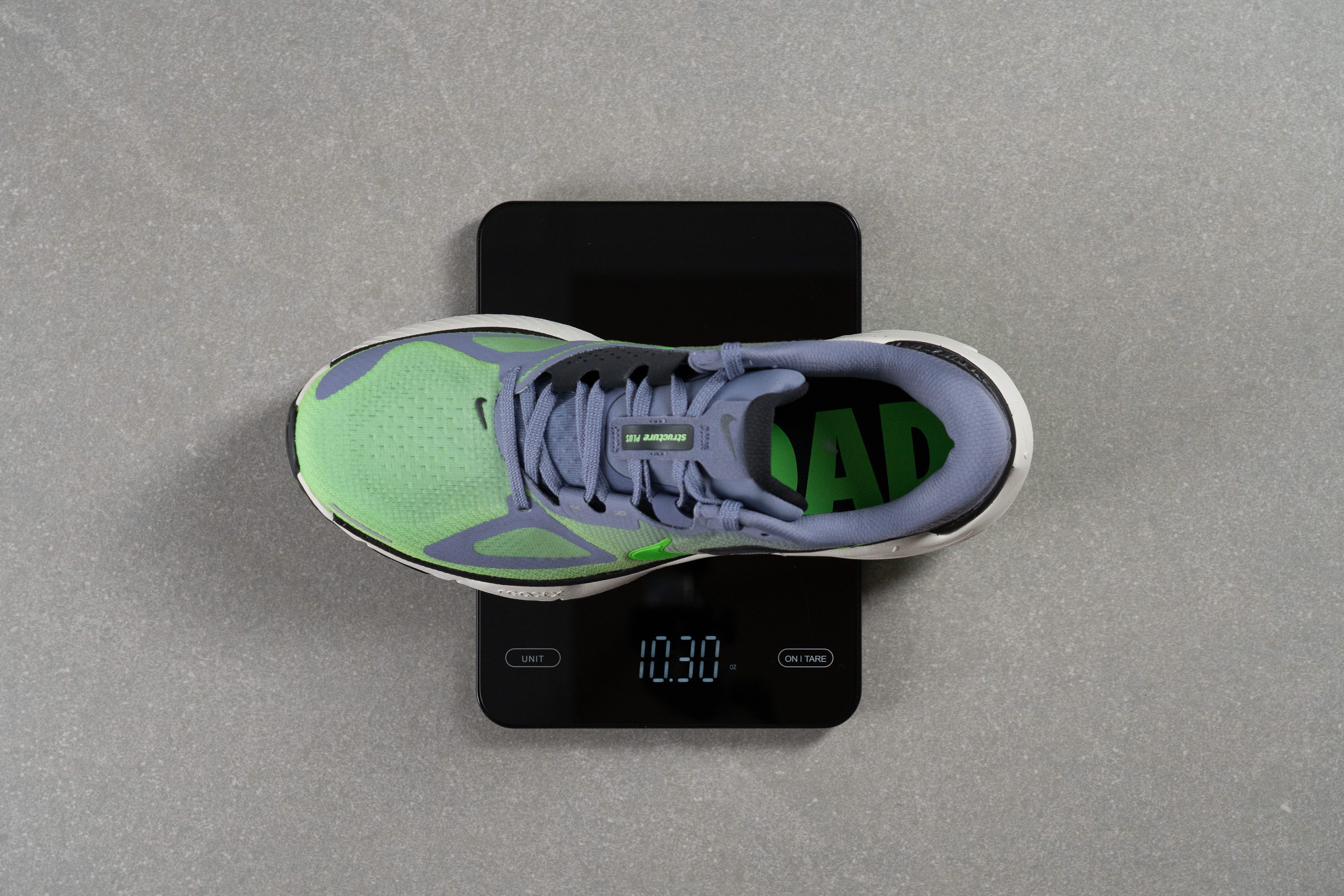
| Structure Plus | 10.3 oz (292g) |
| Media | 9.2 oz (261g) |
Transpirabilidad
Breathability test
Algo que, personalmente, creemos que todo el mundo debería exigirle a Nike en las versiones Plus y Premium de sus zapatillas de entrenamiento diario son materiales de primera calidad. En este caso, las Structure Plus cumplen con esa expectativa.
El upper nos parece bastante mejor que el de la versión estándar. Mejora la transpirabilidad hasta conseguir un 4/5 y sigue siendo igual de cómodo.
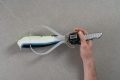
Nike organiza el upper en tres zonas distintas: una parte delantera con un buen flujo de aire, un talón muy denso diseñado para ofrecer estabilidad y una estructura equilibrada en la zona del mediopié.
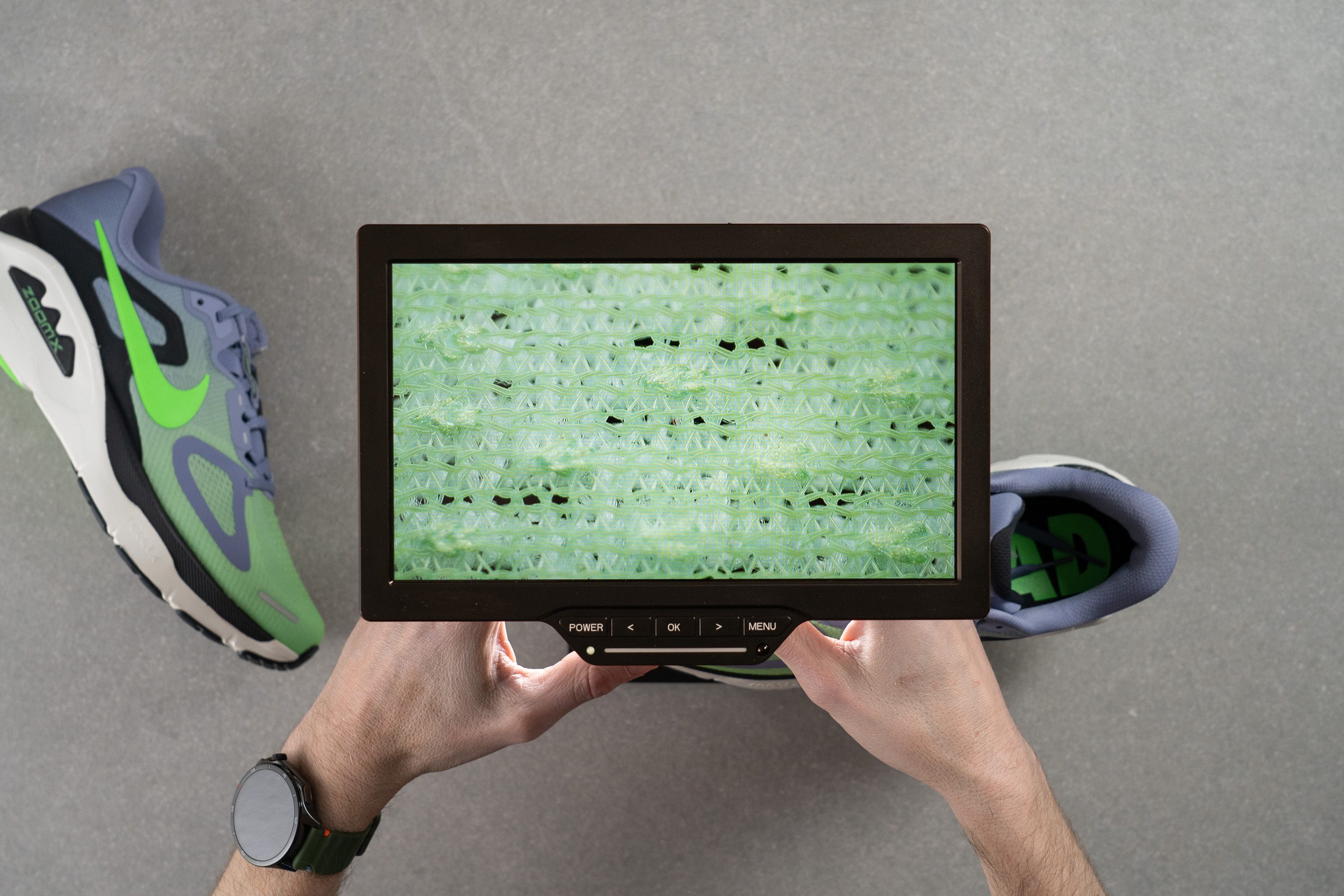
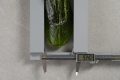
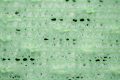
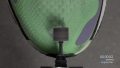
Cuando analizamos el upper bajo nuestro microscopio digital, el salto en calidad se hizo evidente. La malla se ve más suave y refinada, y los agujeritos para el flujo de aire parecen estar bien distribuidos.
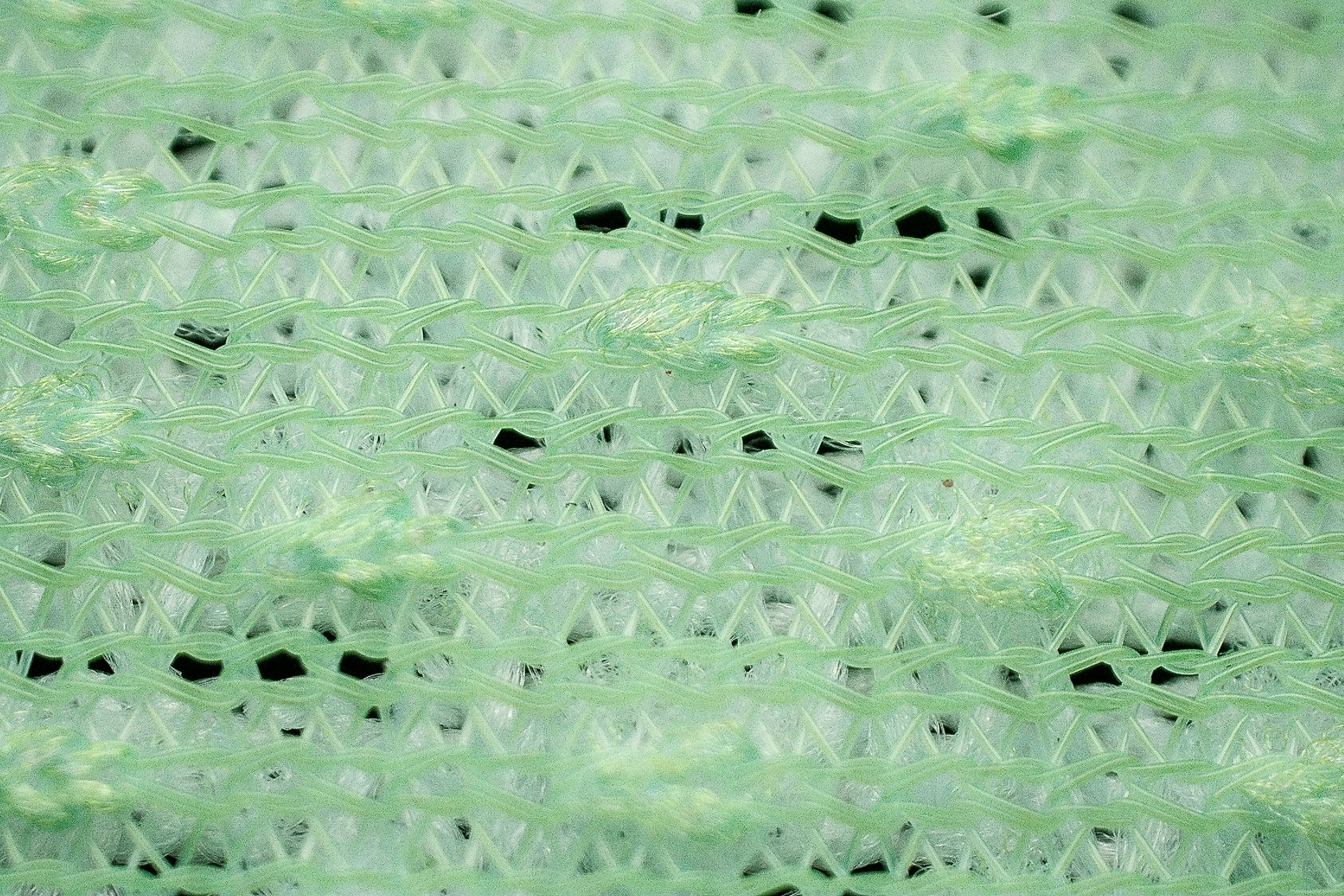
Después de sacar estas Nike de la caja, nos quedó claro que la comodidad fue una prioridad clara para la marca. El talón está muy acolchado, y todos los materiales se sienten suaves y agradables al tacto.
| Structure Plus | 4 |
| Media | 3.6 |
Estabilidad
Prueba de estabilidad lateral
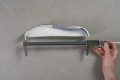
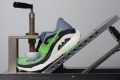
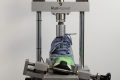
Las Structure Plus siguen utilizando el sistema de sujeción en el mediopié de Nike para mejorar la estabilidad y limitar la pronación. Funcionó bien en las Structure originales, y Nike lo hizo más marcado en esta versión para ajustarlo a la mediasuela, que es más alta.
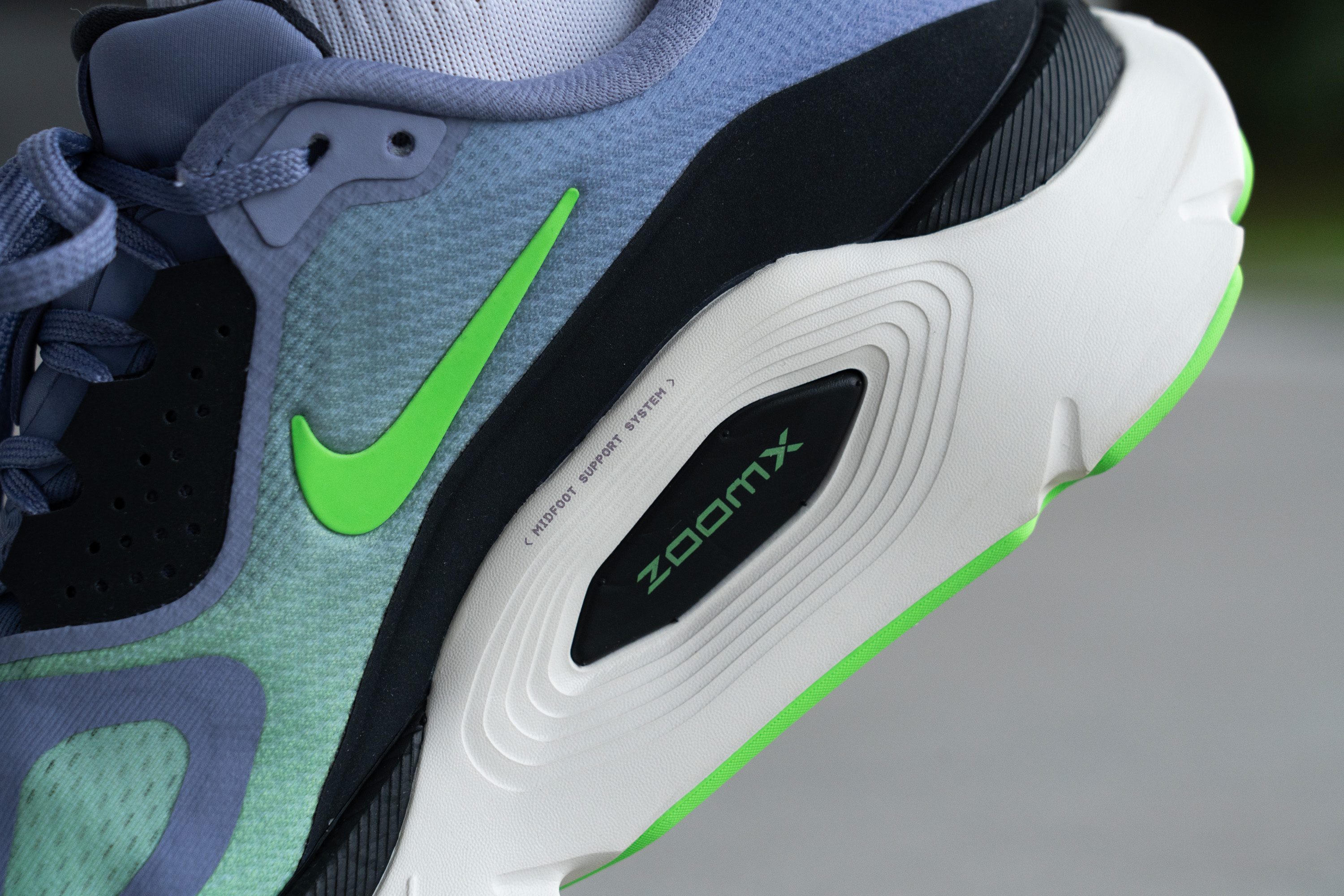
La sujeción no es intrusiva, así que estas zapatillas nos parecen una buena opción tanto para las personas con sobrepronación como para las que tienen una pisada neutra que buscan un poco más de control, evitando la dureza de los antiguos modelos de estabilidad. Ah, y también nos gustó mucho cómo Nike integró la sujeción en el upper de una manera sutil y tan estética.
Rigidez torsional
Con un resultado de 14,4 Nm, las Structure Plus tienen una estructura más flexible que la de muchas zapatillas de estabilidad, lo que también las hace más cómodas para el uso diario.
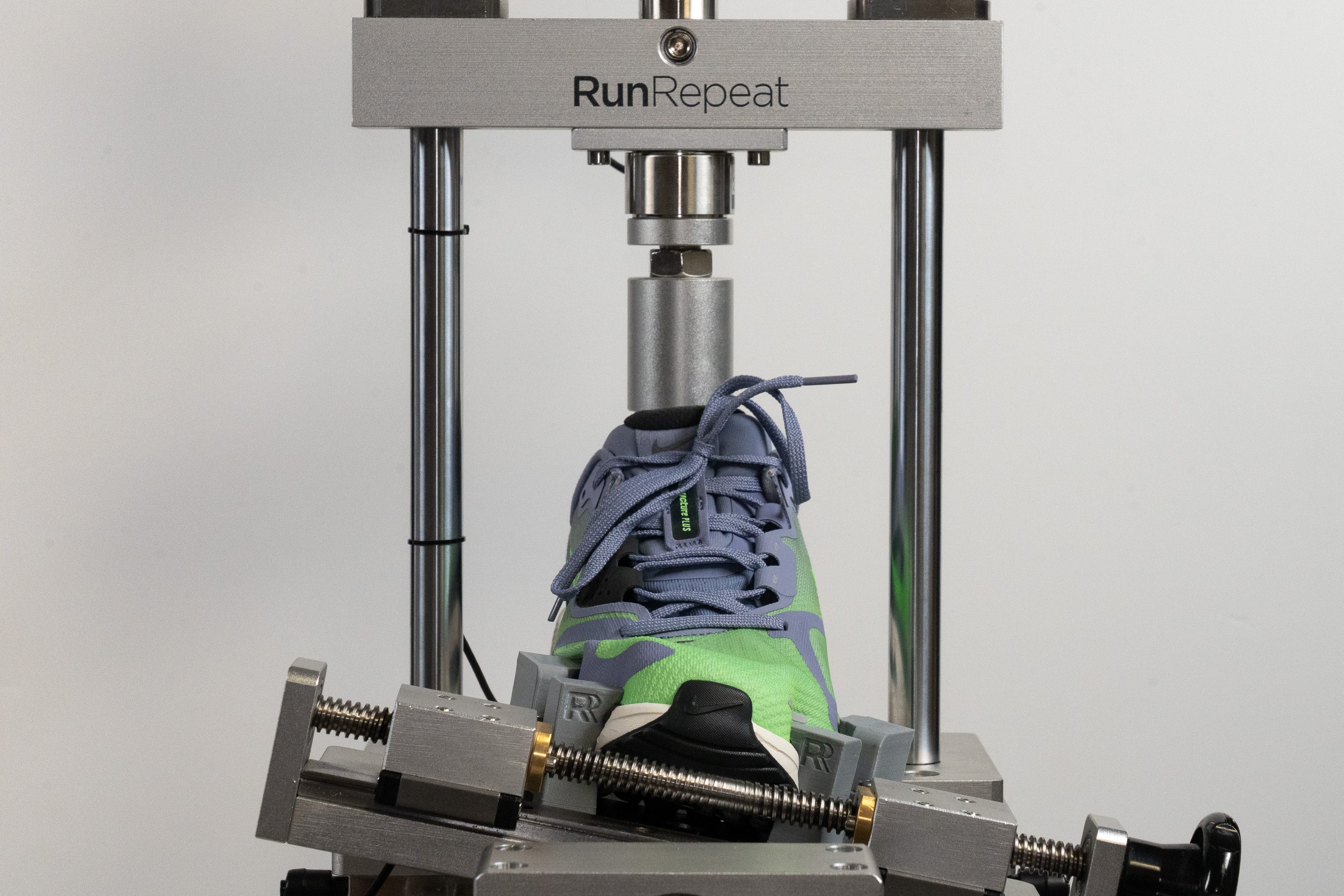
| Structure Plus | 14.4 Nm |
| Media | 14.3 Nm |
Rigidez del contrafuerte del talón
El contrafuerte del talón también se llevó un 4/5 en lugar de la puntuación máxima, que es algo poco común para este tipo de zapatillas. La verdad es que agradecemos tener una alternativa como esta en el mercado, ya que ofrece una estabilidad sólida sin esa sensación excesivamente rígida en el pie.
| Structure Plus | 4 |
| Media | 3 |
Anchura de la mediasuela - antepié
La anchura de la mediasuela sigue el mismo patrón que hemos visto en las otras pruebas, mostrando un diseño moderado en lugar de extremo.
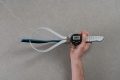
Cuando la medimos, nuestro calibre marcó 119,4 mm, así que es más ancha que la de un modelo de entrenamiento neutro, pero más estrecha que la de algunas zapatillas de estabilidad con amortiguación máxima.
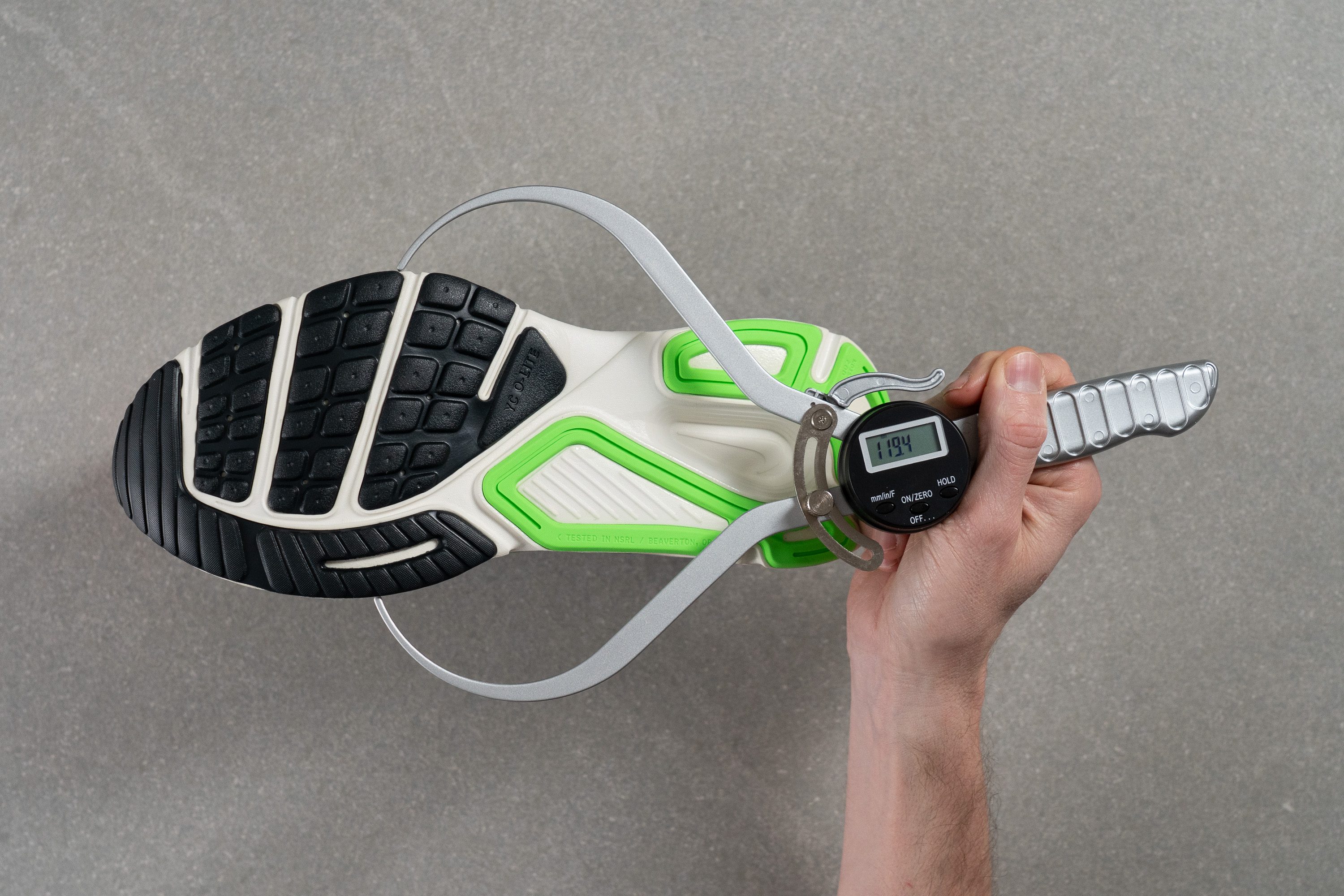
| Structure Plus | 119.4 mm |
| Media | 115.1 mm |
Anchura de la mediasuela - talón
Cuando movimos nuestro calibre al talón, marcó 94,7 mm. Una vez más, esto refleja lo que llevamos viendo en este modelo durante toda la review: un enfoque menos agresivo y más amigable para principiantes en cuanto a estabilidad.
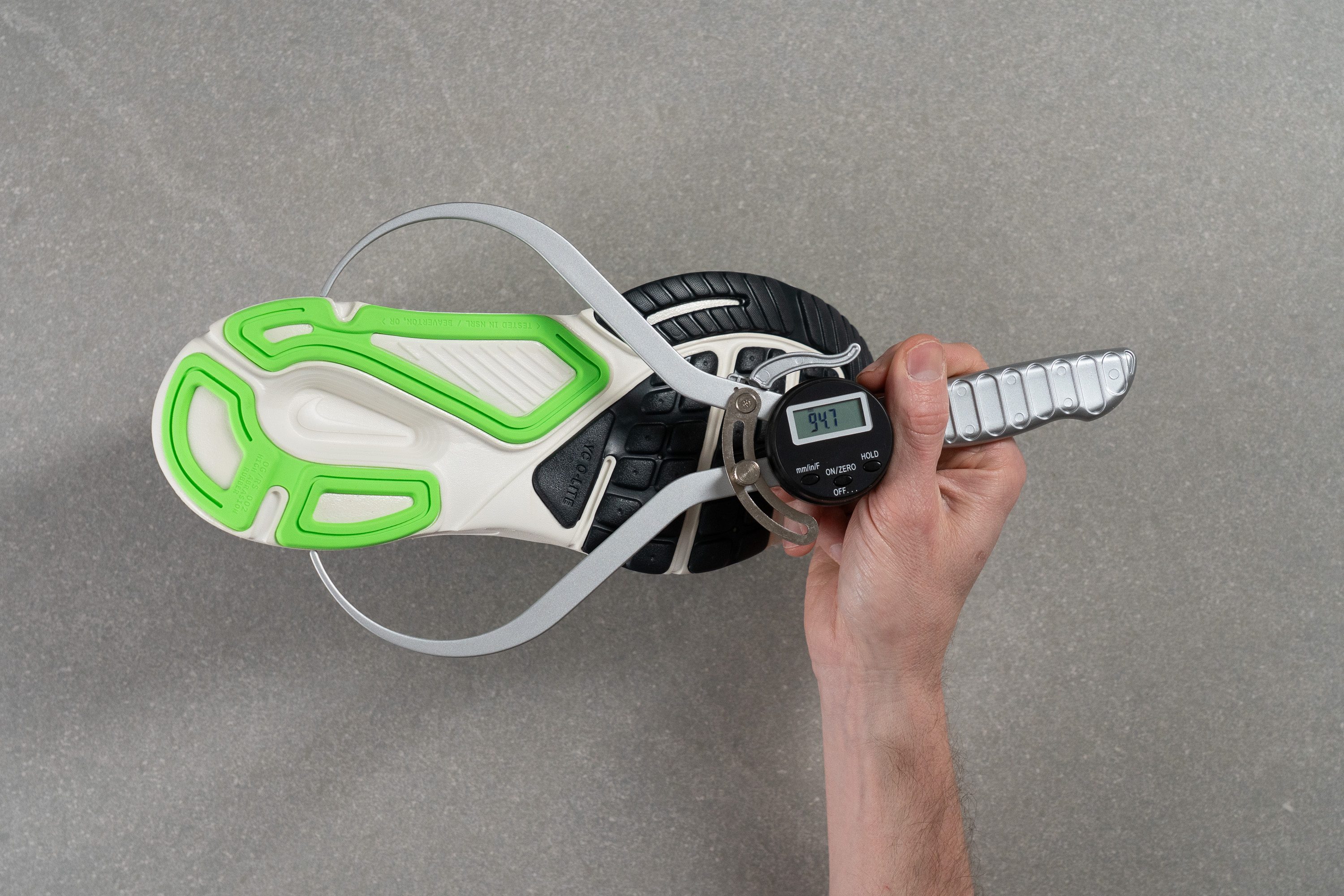
| Structure Plus | 94.7 mm |
| Media | 91.1 mm |
Durabilidad
Durabilidad de la parte delantera
Después de evaluar la transpirabilidad de las Structure Plus, nos preparamos para ver si al upper se le da bien actuar bajo presión. Los uppers con un buen flujo de aire como este suelen flaquear este aspecto, cosa que nos quedó clara cuando se llevó un 2/5 en esta prueba.
| Structure Plus | 2 |
| Media | 2.6 |
Durabilidad del acolchado del talón
Por suerte, el acolchado blandito del talón aguantó mucho mejor, llevándose un sólido 4/5.
| Structure Plus | 4 |
| Media | 3.4 |
Durabilidad de la suela
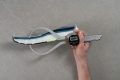
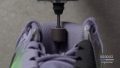
Nike no es la líder del mercado si hablamos de tracción o de durabilidad de la suela si depende solo de sus propios compuestos... y no modelos de trail que presumen del caucho Vibram, como las Ultrafly, no cuentan. Sin embargo, con las Structure Plus nos quedamos contentos, ya que aguantaron bien la paliza del Dremel al perder solo 0,9 mm de caucho.
| Structure Plus | 0.9 mm |
| Media | 1.1 mm |
Grosor de la suela
La suela exterior también tiene un grosor generoso de 3,4 mm. Si a esto le sumamos el resultado de la prueba de durabilidad, creemos que los runners pueden confiar en su resistencia a largo plazo.
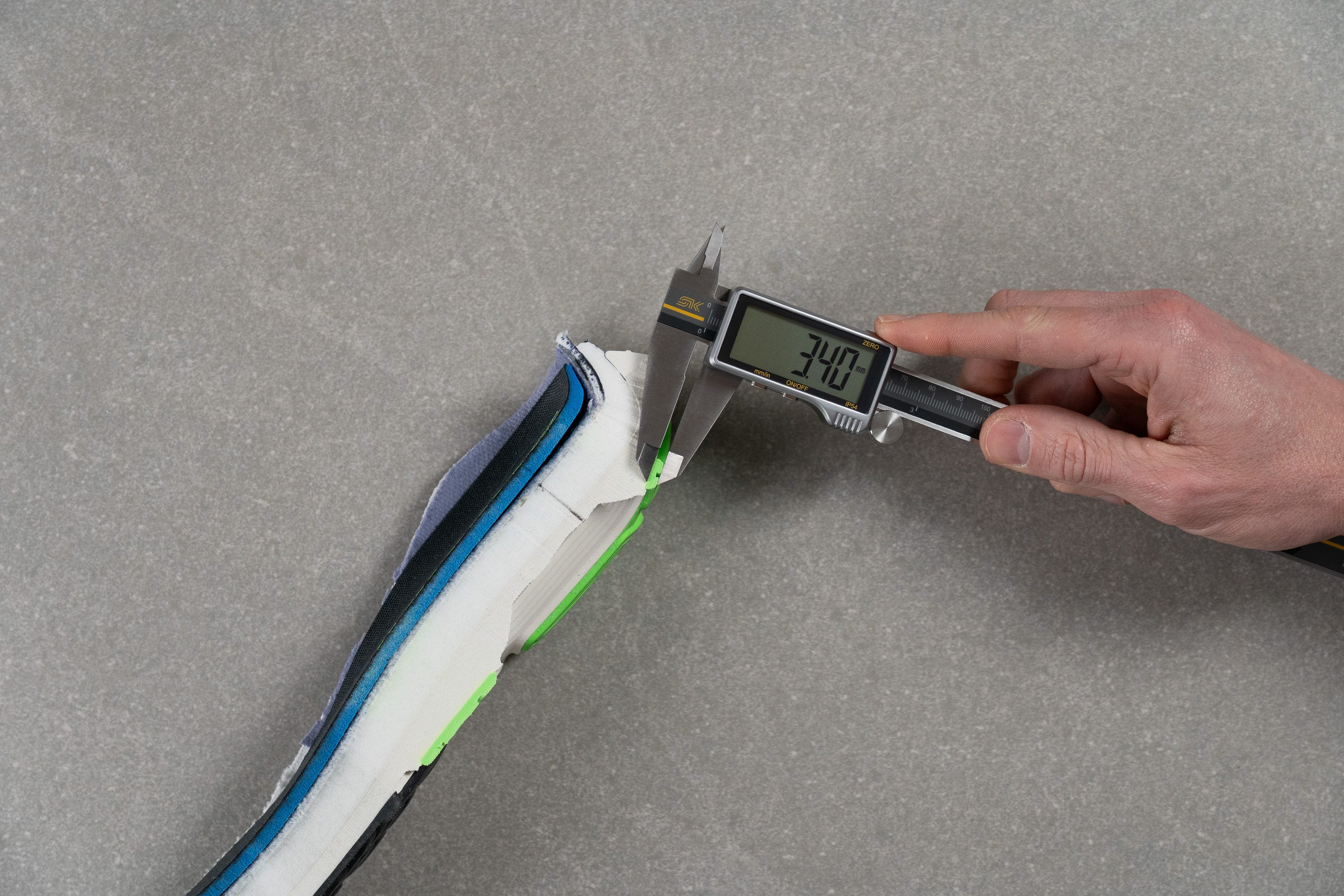
| Structure Plus | 3.4 mm |
| Media | 3.1 mm |
Varios
Grosor de la plantilla
La plantilla es bastante básica: está hecha de espuma EVA y les suma 4,9 mm de amortiguación a las Structure Plus.
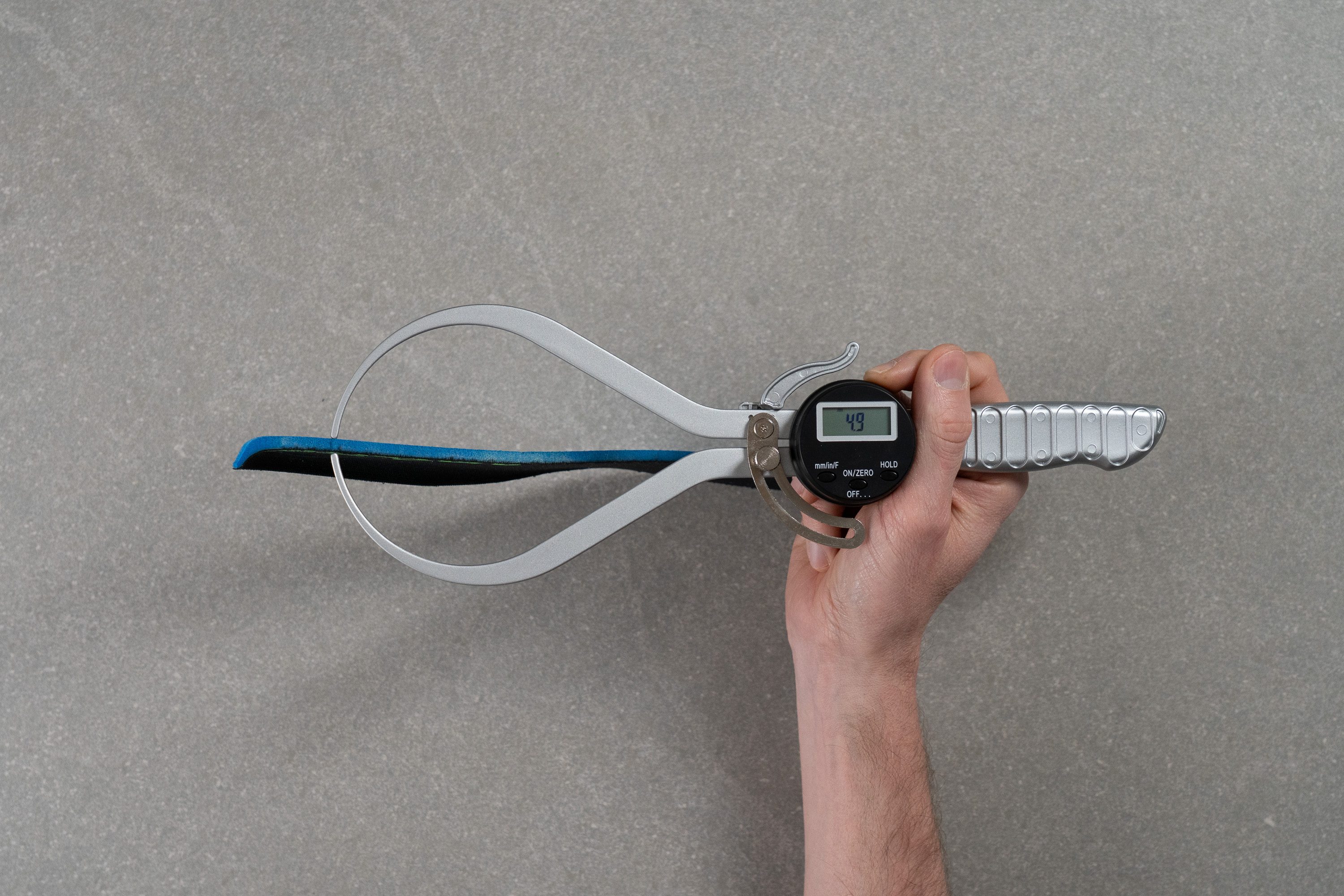
| Structure Plus | 4.9 mm |
| Media | 4.4 mm |
Plantilla extraíble
Quitarles la plantilla a las Structure Plus es fácil y rápido. Y sí, sabemos que son unas zapatillas para asfalto, ¡gracias, Nike!
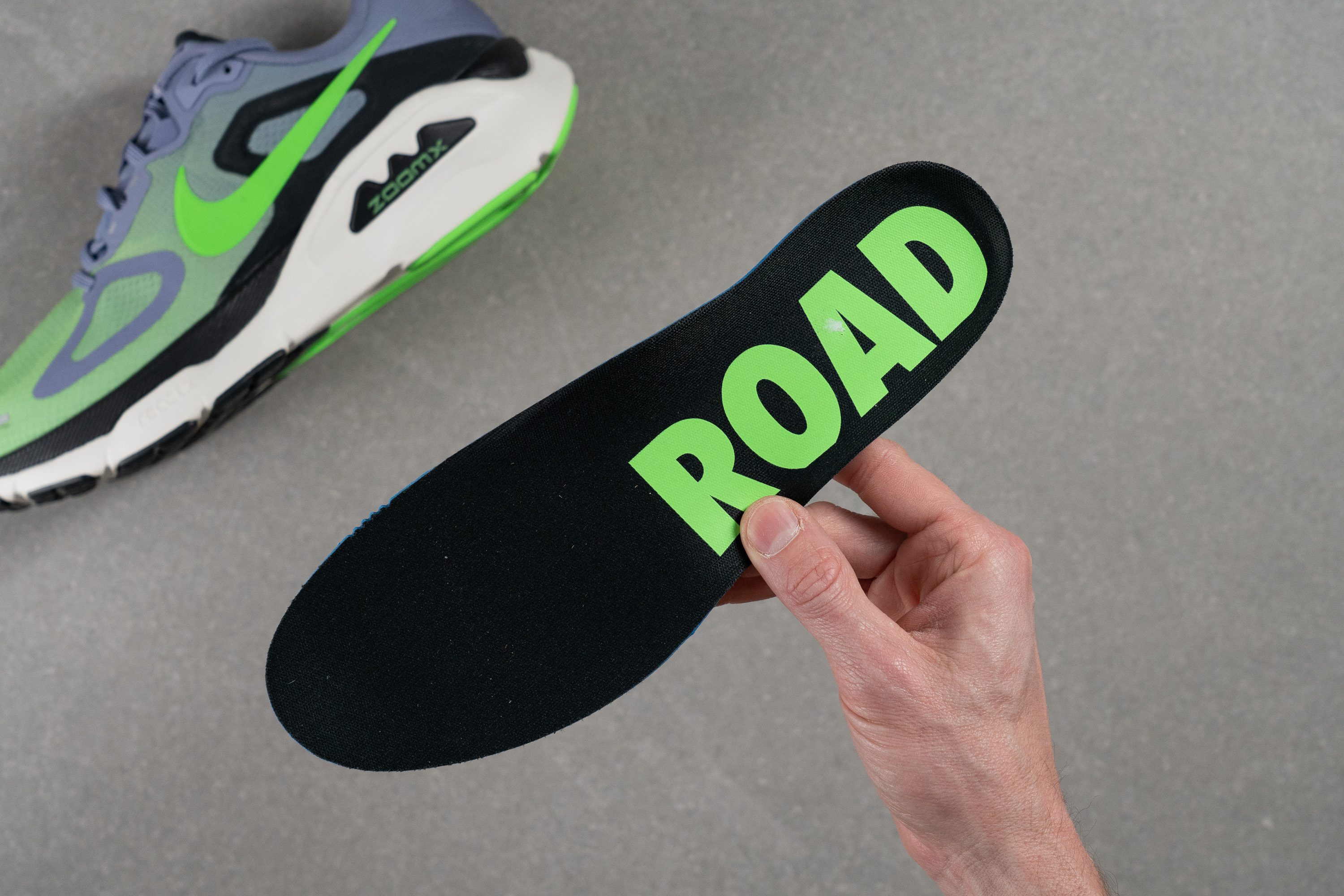
| Structure Plus | Sí |
Elementos reflectantes
Nike les ha puesto elementos reflectantes en el talón, pero no nos parecieron nada del otro mundo. Sinceramente, fueron más bien decepcionantes.
| Structure Plus | Sí |
Acolchado de la lengüeta
Hemos visto que Nike actualizó un poquito el sistema de cordones en comparación con la versión estándar de las Structure, aunque la sensación sigue siendo muy parecida. Los cordones también pasan dos veces por el lacito que tiene en el medio la lengüeta, lo que ayuda a que la misma no esté bailando al correr.
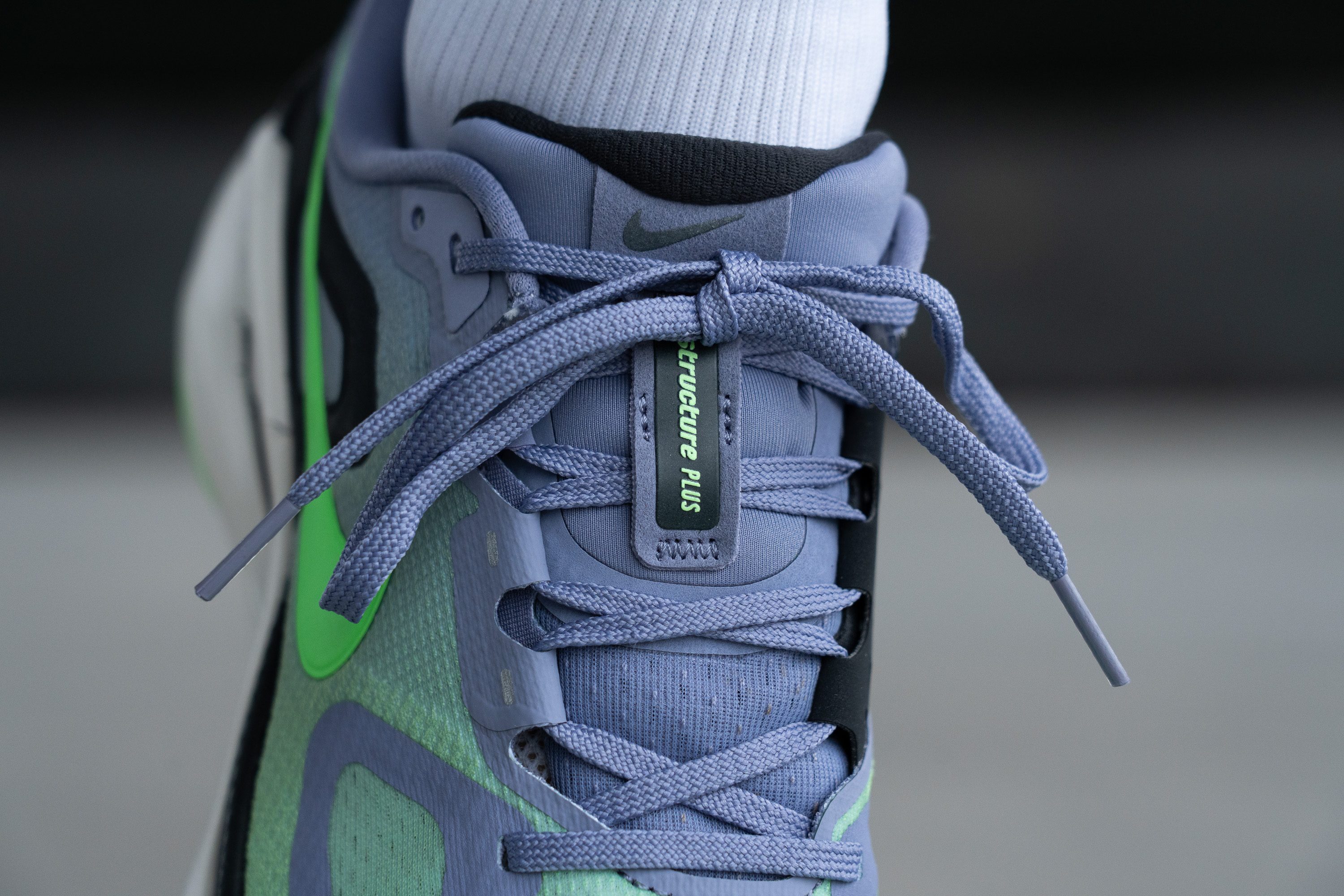
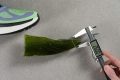
Cuando nos las pusimos, nos parecieron cómodas gracias a su lengüeta, que alcanza un grosor de 7,9 mm (que es más que suficiente para correr y para el uso diario). Teniendo en cuenta que son unas zapatillas pesadas, ponerles más acolchado no es una buena idea.
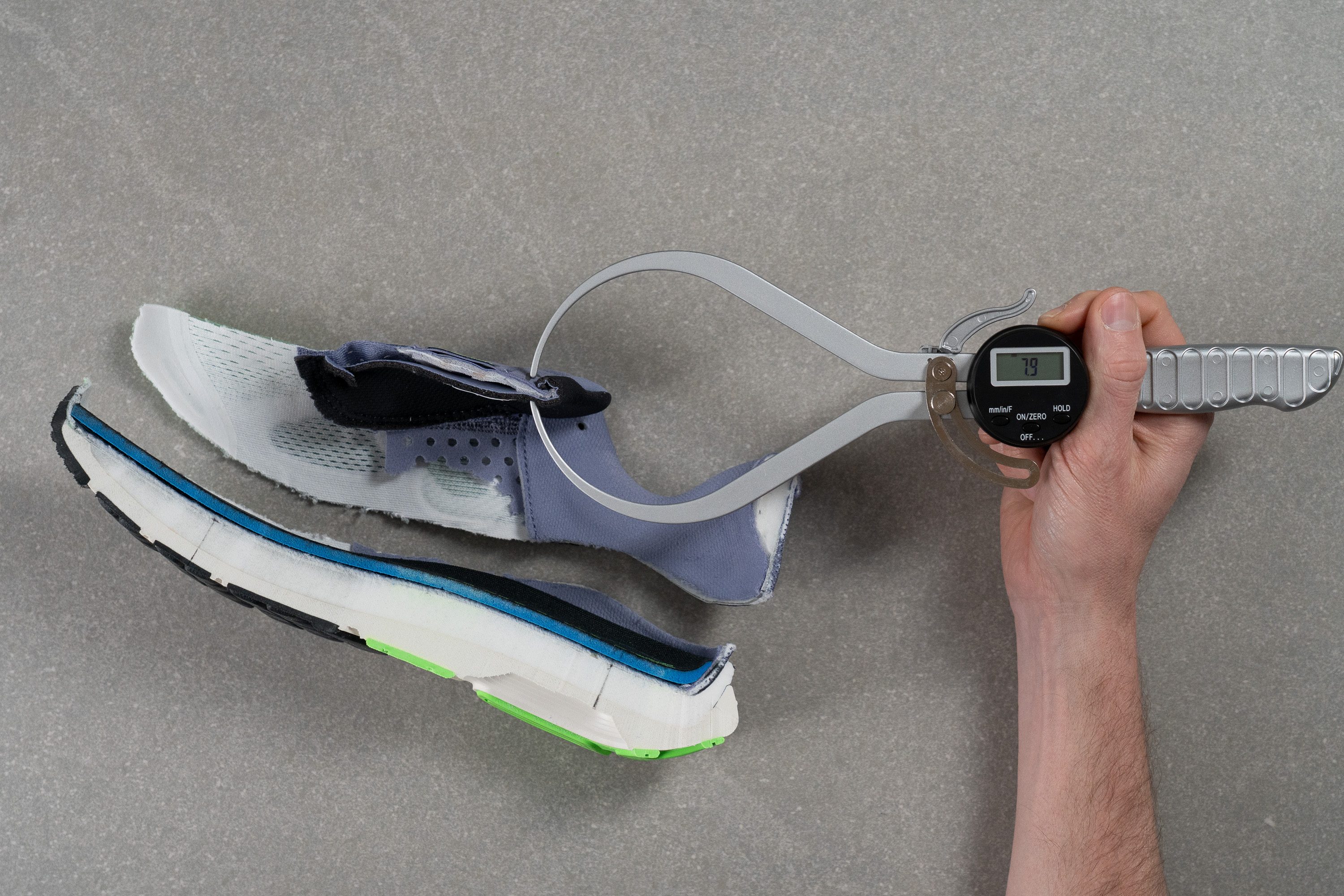
| Structure Plus | 7.9 mm |
| Media | 5.8 mm |
Lengüeta: tipo de refuerzo
La lengüeta no está unida a los laterales, cosa que nos decepcionó mucho si tenemos en cuenta lo que cuestan estas zapatillas. En serio, Nike, no te costaba nada.
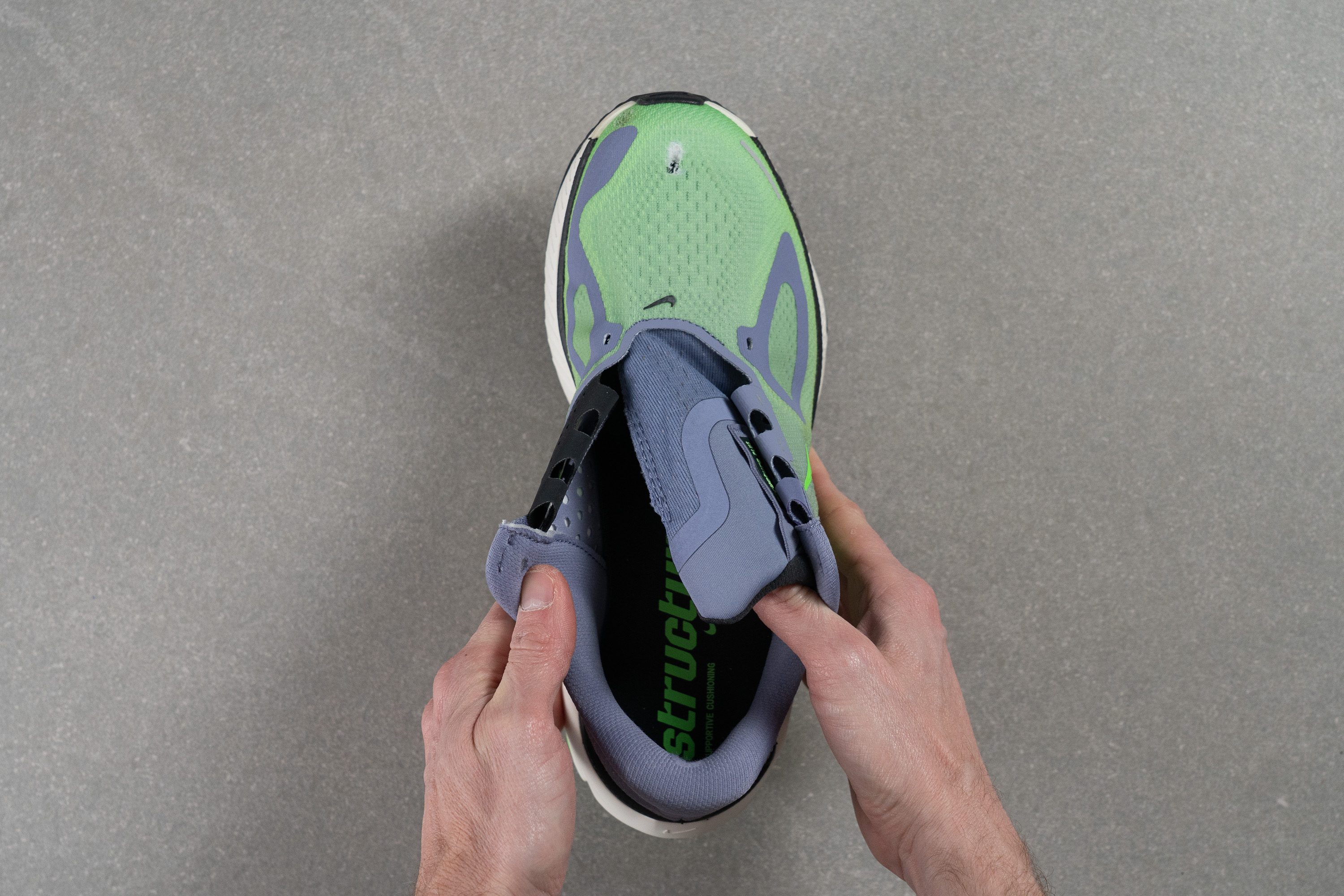
| Structure Plus | Ninguno |
Tirador del talón
El cuello del talón se curva hacia adentro con un acolchado mullido, proporcionando un ajuste seguro en el tobillo y pasando de tiradores.
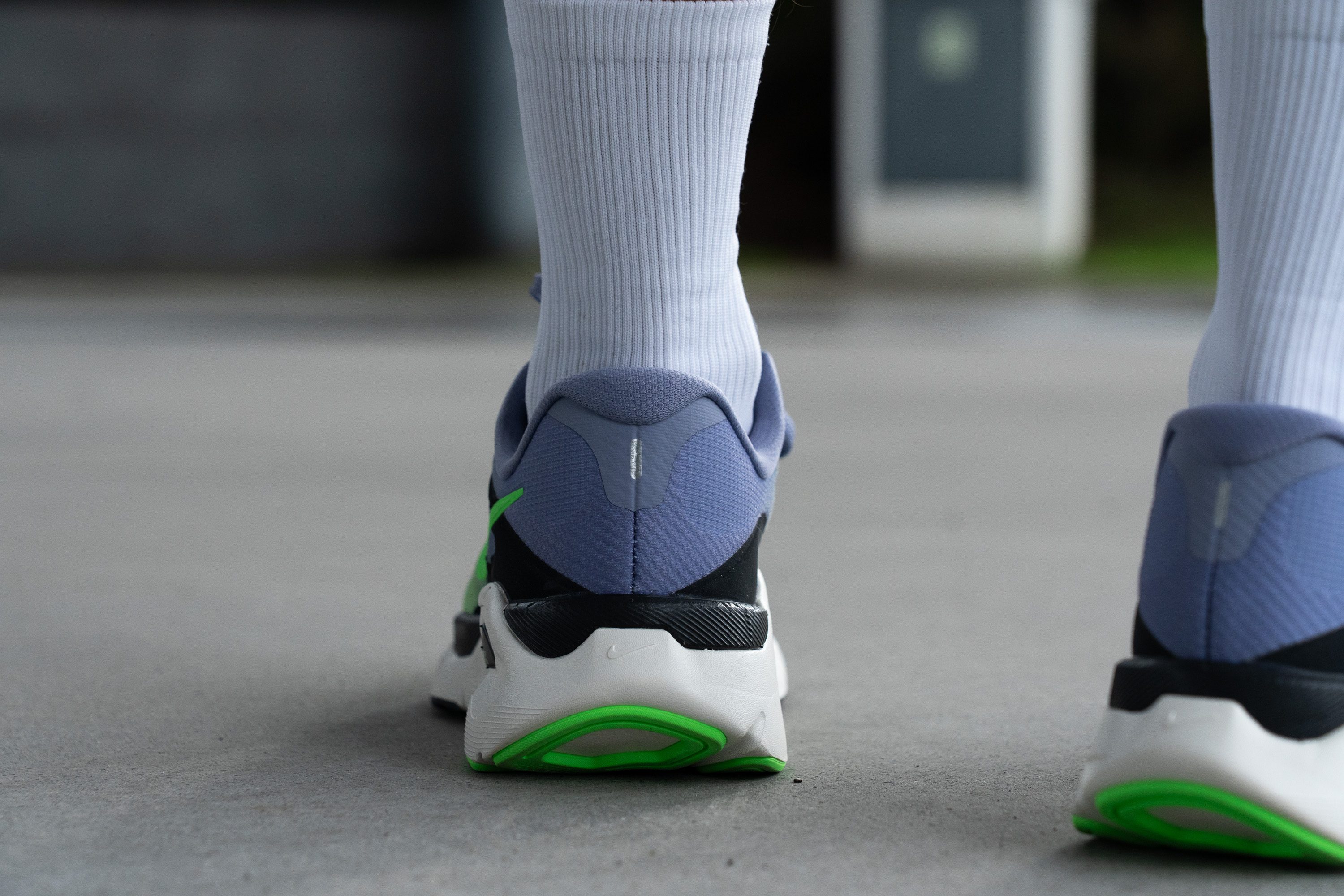
| Structure Plus | Ninguno |
Precio
El Plus que las Structure tienen en el nombre ya no suena muy bien en cuanto a precio, tal y como vimos con las Pegasus Plus. Por lo tanto, es normal que te parezcan caras teniendo en cuenta su rendimiento y la pisada, que es un poquito aburrida.
Por otro lado, también pueden ser la mejora que necesitan los runners que quieren dar un pasito más allá de las Structure tradicionales, ya que esta nueva versión presume de un enfoque en cuanto a la estabilidad que Nike no había ofrecido antes gracias al uso de la espuma ZoomX. Además, el hecho de que este modelo te sirva también para el día a día, como si fuesen un par de sneakers, también ayuda a justificar su precio.
| Structure Plus | $170 |