
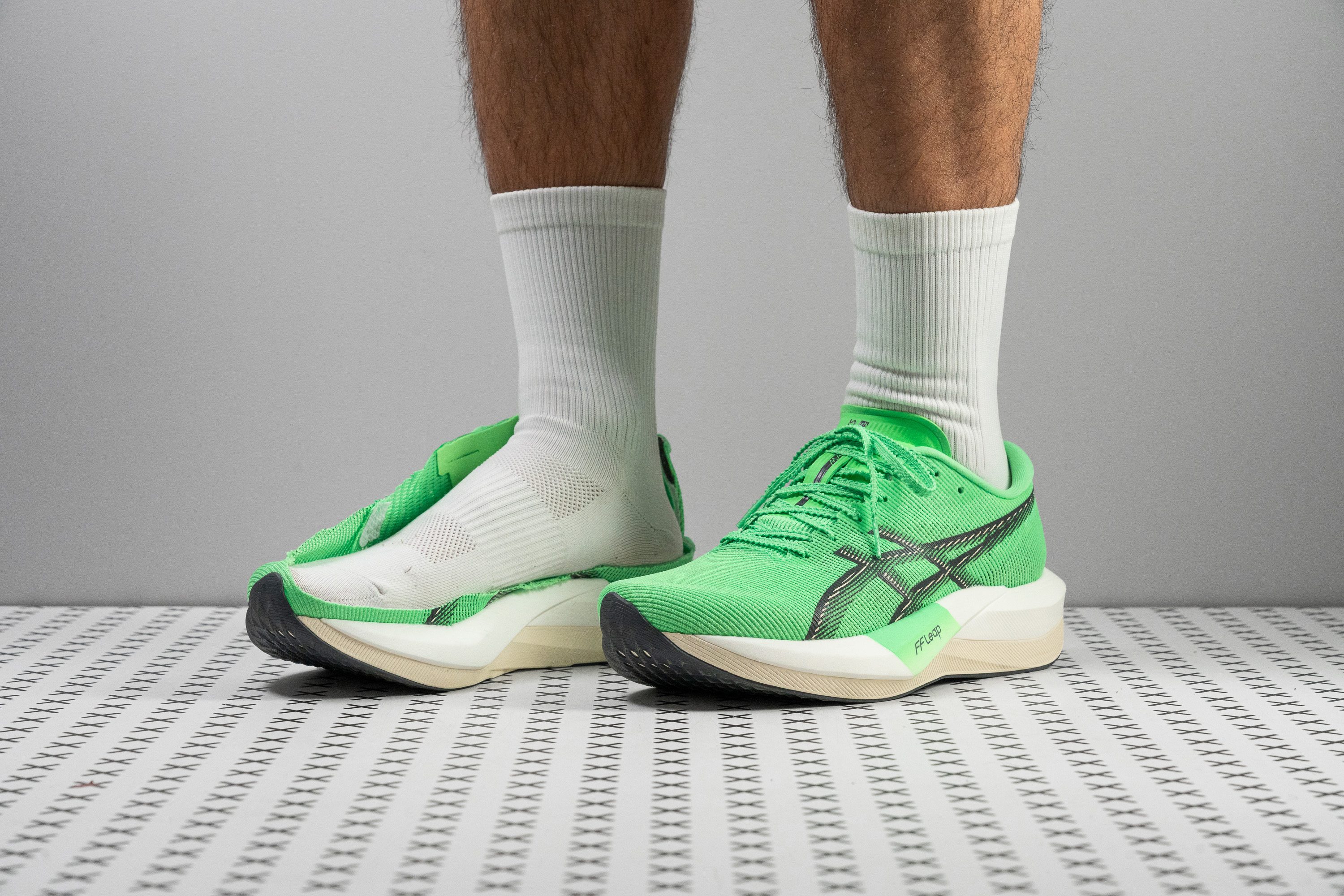



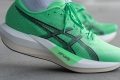
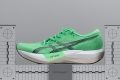


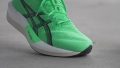










Our verdict
- Daily running 68
- Tempo 89
- Race 86
- Stability 55
Pros
- Feels like a Magic Speed again!
- Full-length FF Leap foam
- Excellent ASICSGRIP traction score
- Outstanding breathability
- Nimble, race-inspired geometry
- Reasonable price
- Solid competition shoe for beginners
- More flexible than super shoes
- Excellent lacing system
Cons
- Energy return limited by FF Blast+
- Maybe too extreme for heel strikers
- Not appealing for serious runners
Awards
- Top pick in best ASICS running shoes
- Top pick in best half marathon running shoes
- Top 26% in road running shoes
- Top 23% in neutral running shoes
- Top 29% most popular running shoes
Comparison
The most similar running shoes compared
+ + Add a shoe | |||||
|---|---|---|---|---|---|
| Our score | 86 Great | 92 Superb | 88 Superb | 92 Superb | |
| Price | $180 | $270 | $250 | $270 | |
| Pace | TempoCompetition | Competition | Competition | Competition | |
| Shock absorption | High | High | High | High | |
| Energy return | Moderate | High | High | High | |
| Traction | High | High | High | High | |
| Arch support | Neutral | Neutral | Neutral | Neutral | |
| Weight lab Weight brand | 7.1 oz / 201g 6.9 oz / 196g | 5.7 oz / 163g 6 oz / 170g | 7.8 oz / 220g 7.4 oz / 210g | 5.6 oz / 159g 6 oz / 170g | |
| Lightweight | ✓ | ✓ | ✓ | ✓ | |
| Drop lab Drop brand | 8.7 mm 7.0 mm | 6.0 mm 5.0 mm | 10.0 mm 7.0 mm | 6.9 mm 5.0 mm | |
| Strike pattern | HeelMid/forefoot | Mid/forefoot | HeelMid/forefoot | Mid/forefoot | |
| Size | True to size | True to size | Slightly small | True to size | |
| Midsole softness | Soft | Soft | Balanced | Soft | |
| Difference in midsole softness in cold | Small | Small | Small | Small | |
| Toebox durability | Bad | Bad | Decent | Bad | |
| Heel padding durability | Good | Good | Good | Good | |
| Outsole durability | Good | Decent | Good | Good | |
| Breathability | Breathable | Breathable | Breathable | Breathable | |
| Width / fit | Medium | Narrow | Narrow | Narrow | |
| Toebox width | Medium | Narrow | Narrow | Medium | |
| Stiffness | Moderate | Stiff | Stiff | Moderate | |
| Torsional rigidity | Moderate | Stiff | Moderate | Moderate | |
| Heel counter stiffness | Moderate | Flexible | Flexible | Flexible | |
| Plate | Carbon plate | Carbon plate | Carbon plate | Carbon plate | |
| Rocker | ✓ | ✓ | ✓ | ✓ | |
| Heel lab Heel brand | 35.3 mm 37.5 mm | 38.7 mm 39.5 mm | 39.6 mm 40.0 mm | 38.9 mm 39.5 mm | |
| Forefoot lab Forefoot brand | 26.6 mm 30.5 mm | 32.7 mm 34.5 mm | 29.6 mm 33.0 mm | 32.0 mm 34.5 mm | |
| Widths available | Normal | Normal | Normal | NormalWide | |
| Orthotic friendly | ✓ | ✓ | ✓ | ✓ | |
| Season | SummerAll seasons | SummerAll seasons | SummerAll seasons | SummerAll seasons | |
| Removable insole | ✓ | ✓ | ✓ | ✓ | |
| Ranking | #89 Top 23% | #13 Top 4% | #50 Top 13% | #18 Top 5% | |
| Popularity | #114 Top 29% | #15 Top 4% | #99 Top 25% | #172 Top 44% |
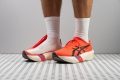
Who should buy
The ASICS Magic Speed 5 is a full reset that now suits:
- Beginners who want their first carbon-plated shoe that also works well for intervals and faster training days.
- Runners looking for a lightweight, agile, and fun shoe at a more approachable price than most competition shoes.
- Fans of the Magic Speed 3 who were let down by version 4 and want a clear return to a lighter, more responsive feel. It's back... and better!
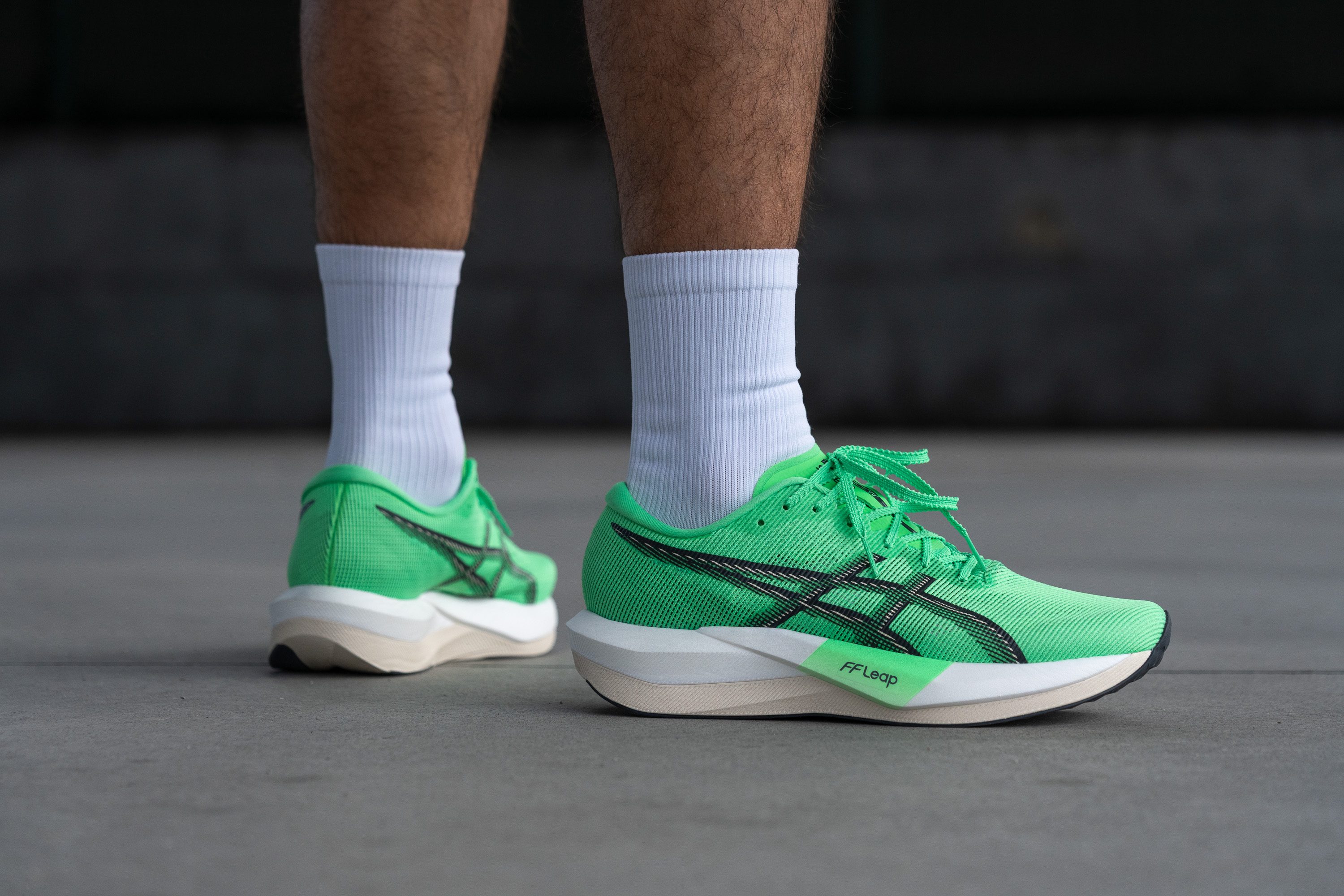
Who should NOT buy
While the lower price of the Magic Speed 5 may look appealing, we think it’s not the best option for serious racers. If you care about the clock, going all in makes more sense, and ASICS offers three excellent super shoes: Metaspeed Edge Tokyo, Metaspeed Sky Tokyo, and Metaspeed Ray.
We also believe runners who enjoy a sky-high, maximalist feel may feel underwhelmed here. The reduced stack height clearly changes the experience, and from our perspective, those craving a max-stack shoe should look at the ASICS Sonicblast instead, which we see as the spiritual successor to the Magic Speed 4.
Cushioning
Shock absorption
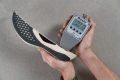
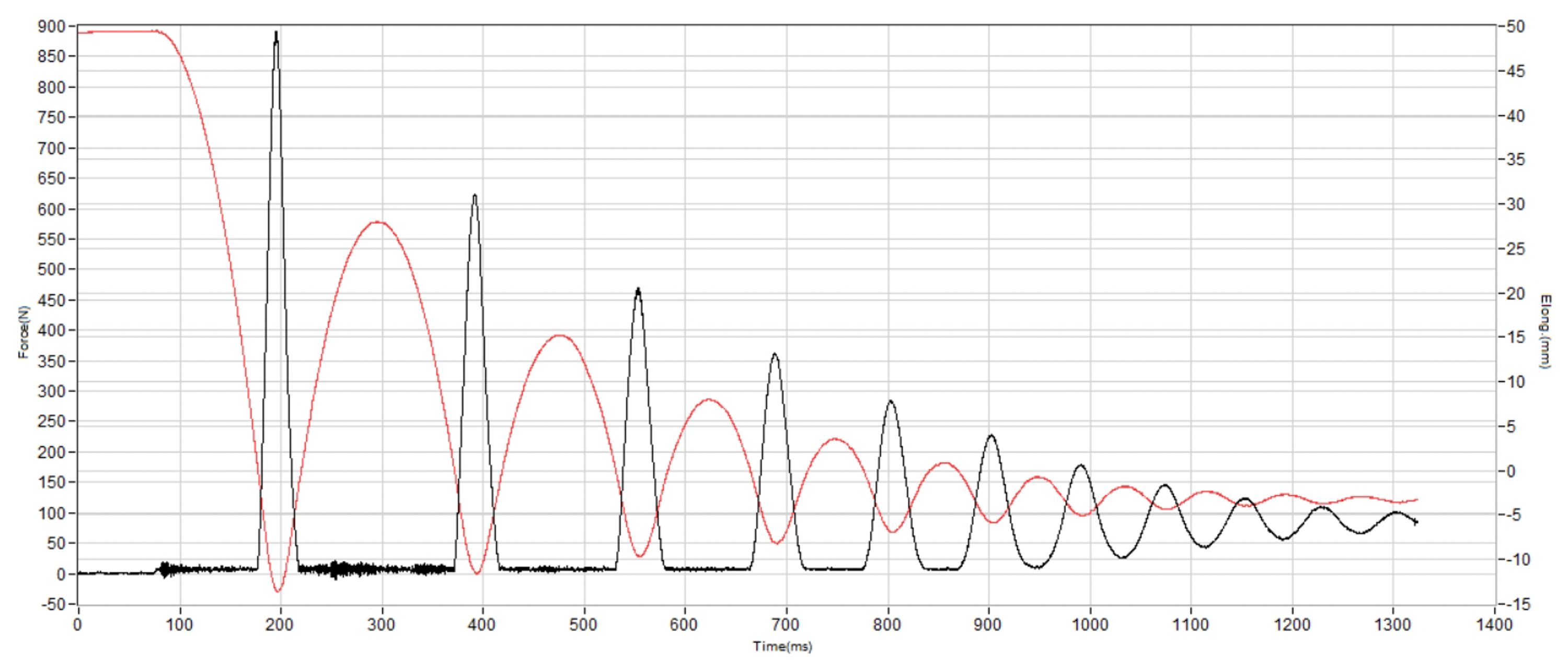
We found very good shock absorption in the Magic Speed 5, measuring 149 SA in the heel and 112 SA in the forefoot. It is not an eye-popping result, but it makes sense given the lower stack height and still provides enough protection for long runs, especially for heel strikers.
| Magic Speed 5 | 149 SA |
| Average | 131 SA |
Energy return
The ASICS Magic Speed 5 uses an interesting foam mix, pairing a top layer of the excellent FF Leap with a lower layer of the far less energetic FF Blast+. It feels like mixing gold with tin, resulting in a decent energy return of 64.6% in the heel and 62.6% in the forefoot.
That is not bad (and surpasses the disappointing Magic Speed 4) but still feels a bit low for serious racing. For us, this looks like a missed opportunity, as simply using FF Blast Max instead of FF Blast+ would likely have pushed bounce closer to the 70% mark.
| Magic Speed 5 | 62.6% |
| Average | 61.4% |
Heel stack
The Magic Speed 4 moved far away from the original idea behind the Magic Speed line. Judging by ASICS’ response, it appears that approach did not resonate strongly from a sales point of view.
With the Magic Speed 5, the brand clearly steps back from that maximalist direction. Heel stack drops to 35.3 mm from the huge 42.5 mm of the previous model, and we really think that it's a smart and welcome correction. The Magic Speed feels agile and nimble again.
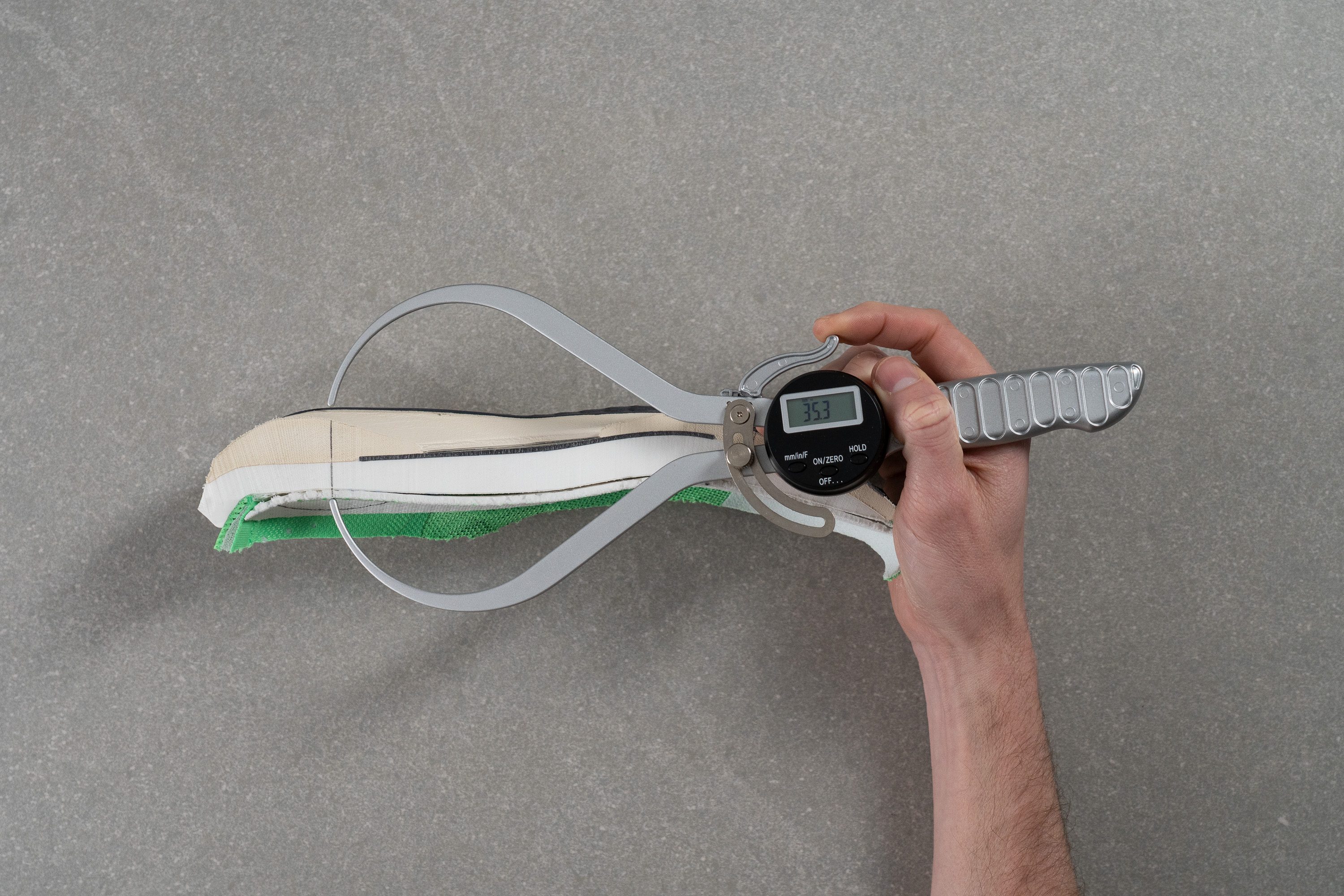
| Magic Speed 5 | 35.3 mm |
| Average | 35.5 mm |
Forefoot stack
The forefoot is also noticeably slimmer and now sits close to the average stack height, with 26.6 mm of cushioning. Because of this, we found a more direct ride with better ground feel and a stronger connection to the road, making it a better match for faster running.
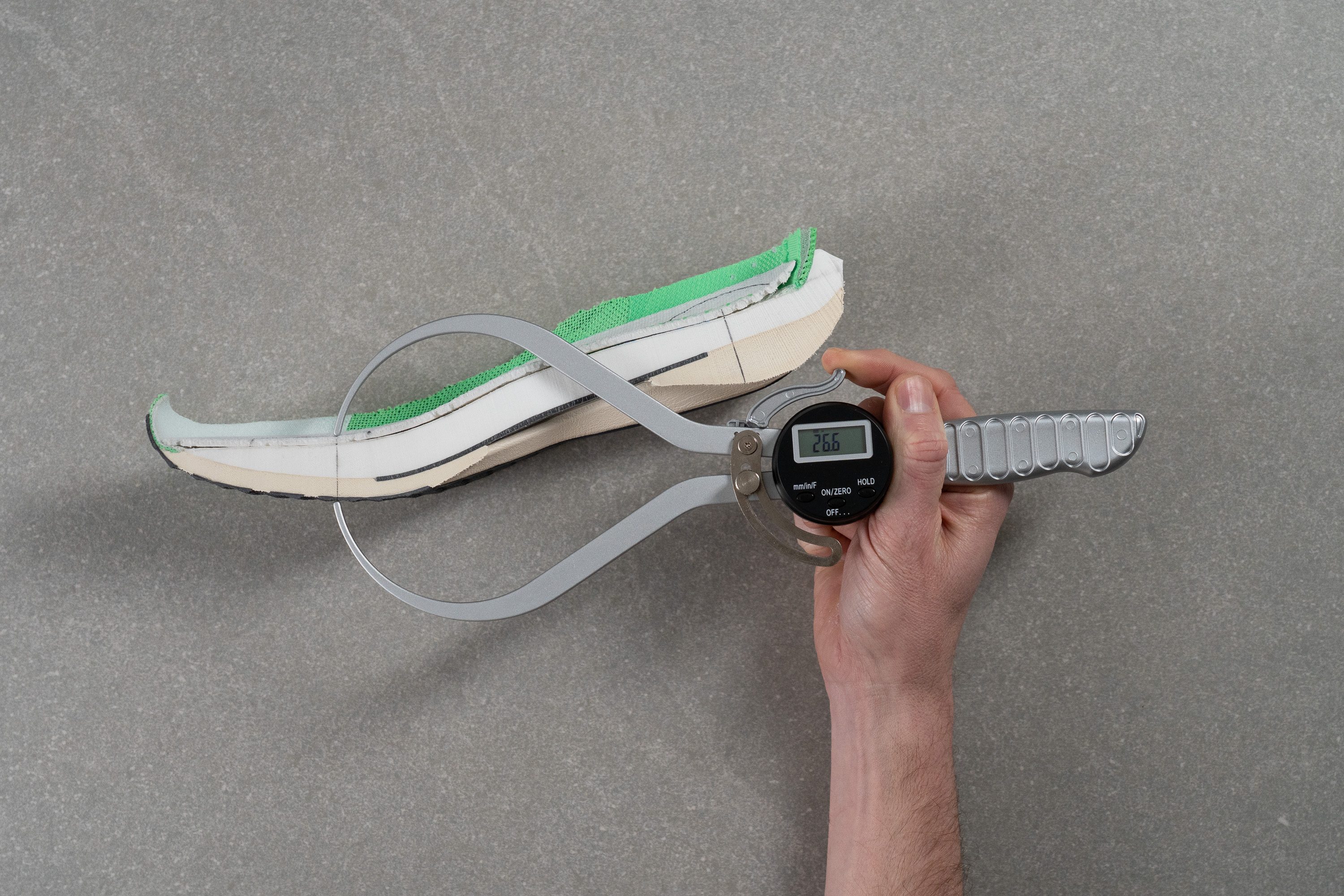
| Magic Speed 5 | 26.6 mm |
| Average | 27.1 mm |
Drop
ASICS lists an 7 mm drop, and we measured 8.7 mm, which is close and matches the expected feel. That result did not surprise us, although we briefly thought ASICS might aim for a lower offset inspired by the Metaspeed line.
That said, for a shoe meant to work as a more beginner-friendly take on the Metaspeed concept, the higher heel-to-toe drop makes sense and should feel more approachable for a wider range of runners.
| Magic Speed 5 | 8.7 mm |
| Average | 8.4 mm |
Midsole softness
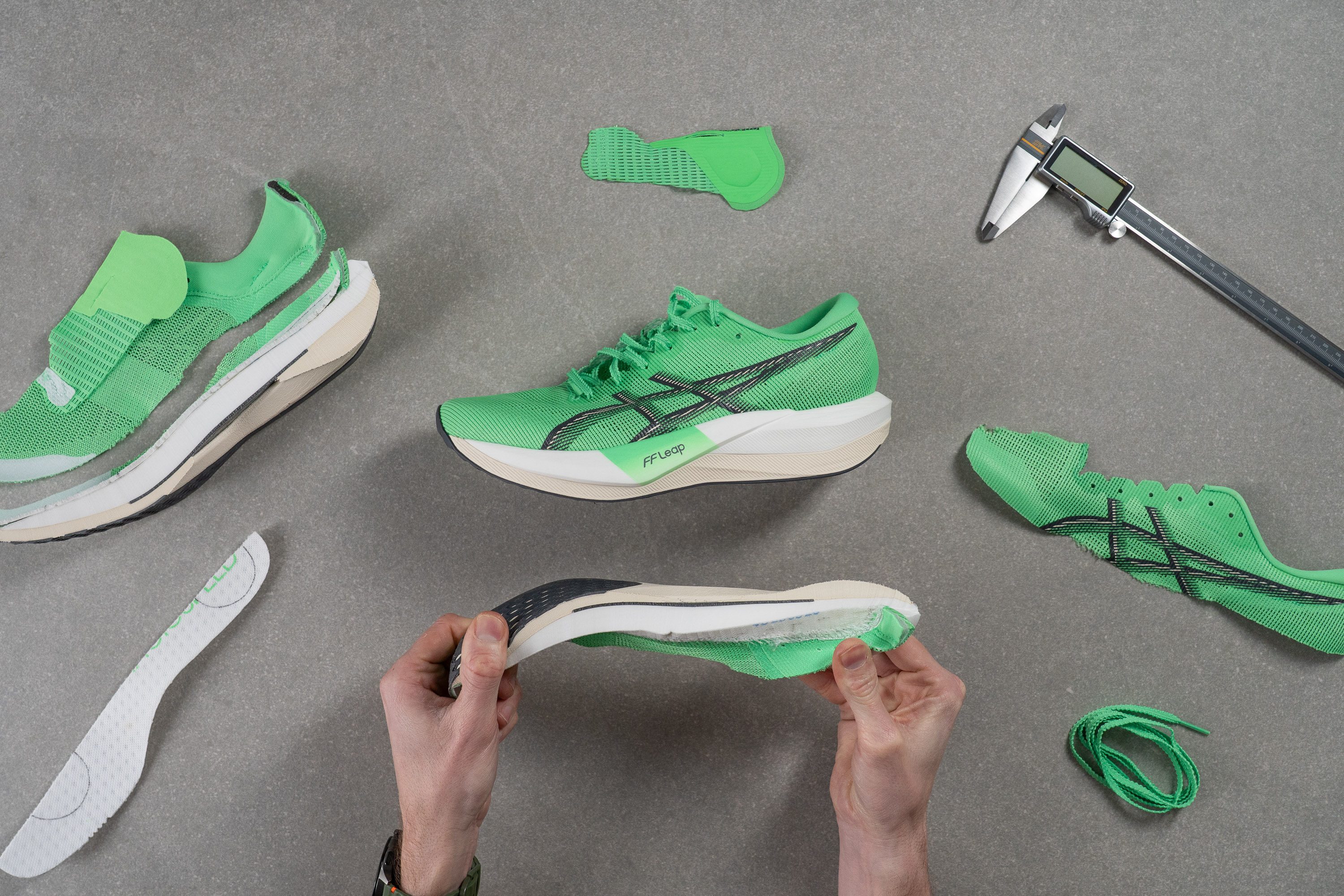
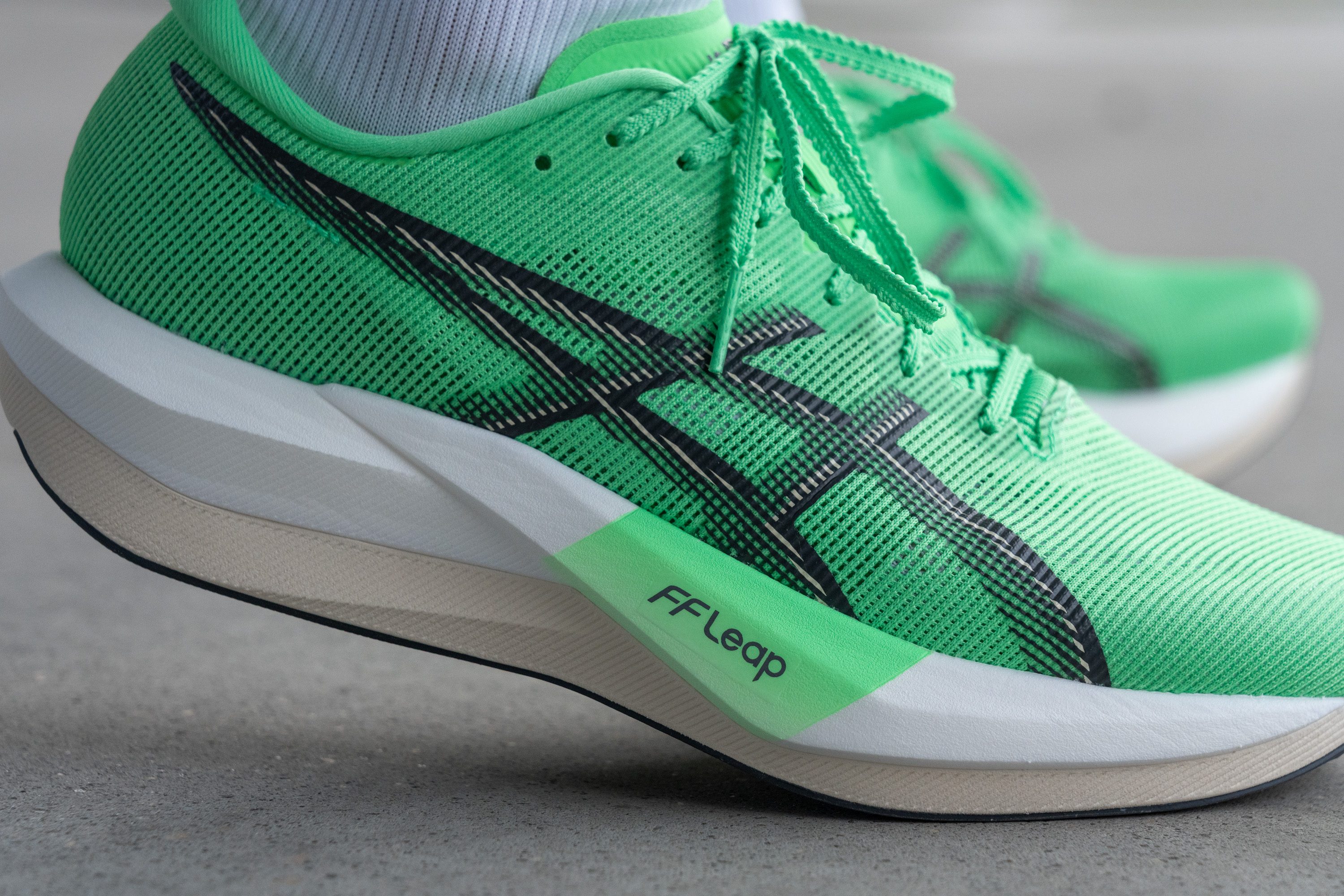
The running shoe industry is quickly moving toward A-TPU foams, and FF Leap is one of the best examples of how good this material can be. It feels bouncy, fun, and plush at 27.0 AC. The Magic Speed line gets this foam too, and it is a very welcome upgrade.
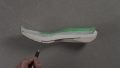
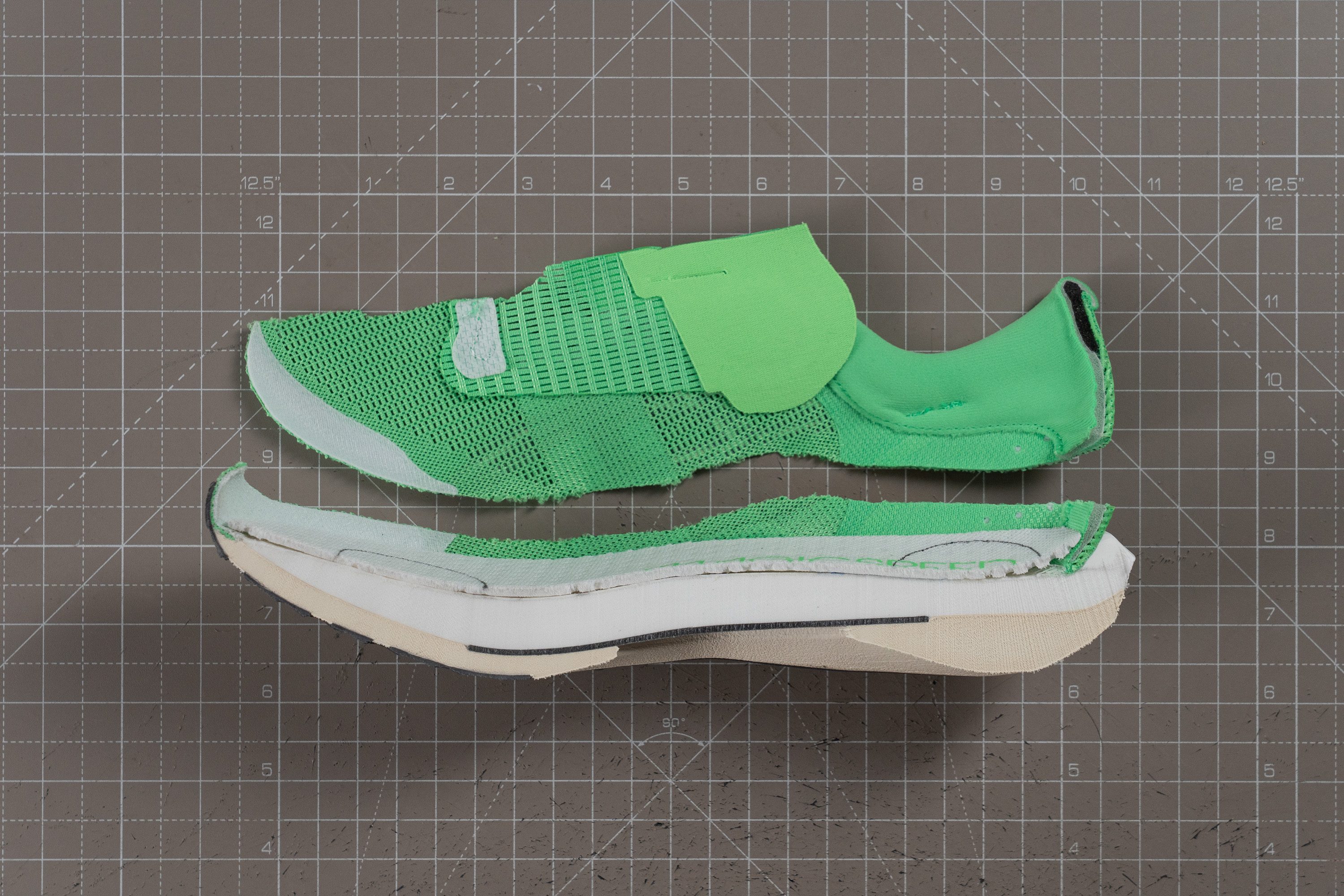
It is also important that FF Leap is used as a real, full-length layer this time. When we cut the Magic Speed 4 in half, FF Turbo appeared only as a small forefoot puck, which felt misleading. Here, ASICS applies FF Leap properly, and that change matters.
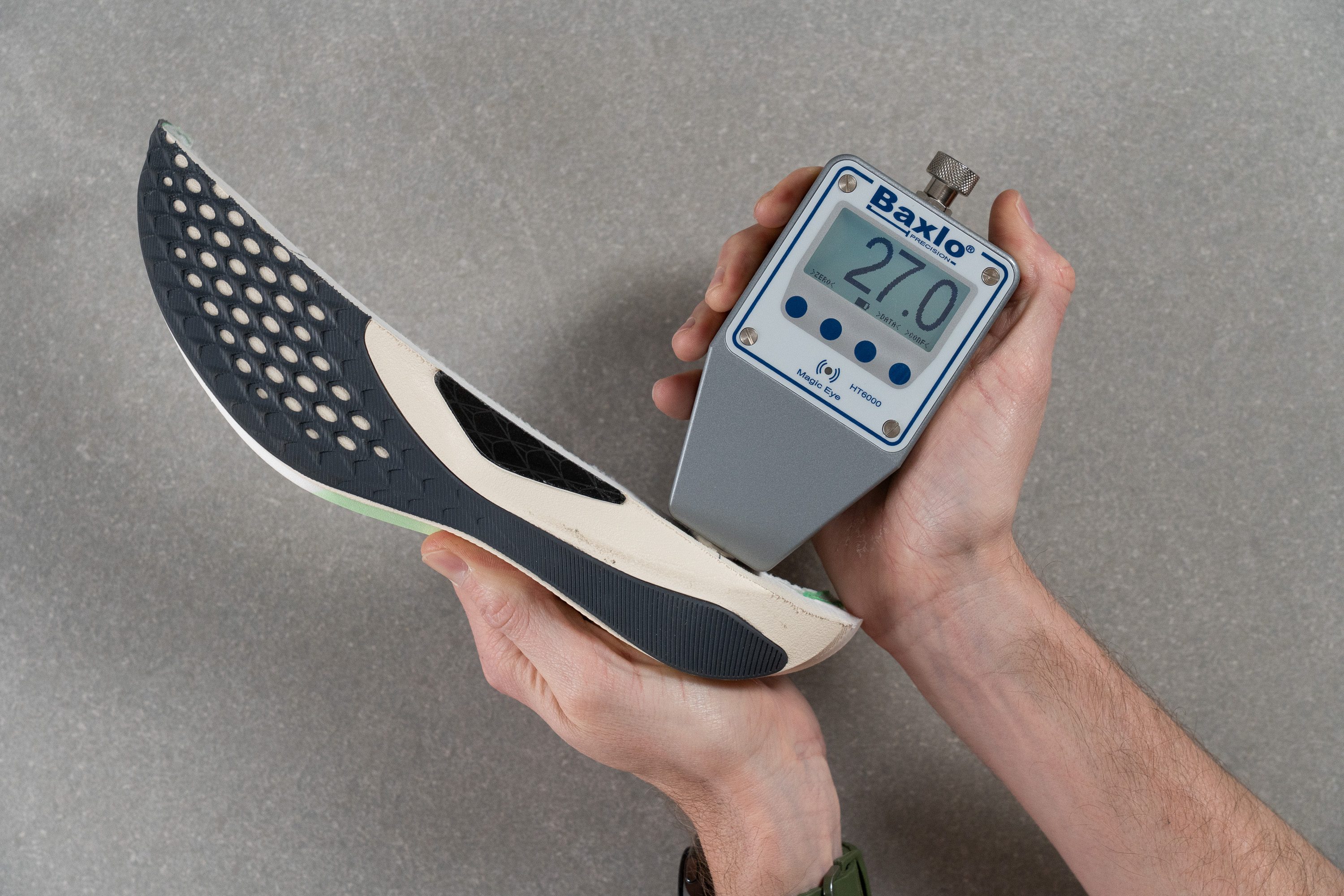
| Magic Speed 5 | 27.0 AC |
| Average | 35.5 AC |
Rocker
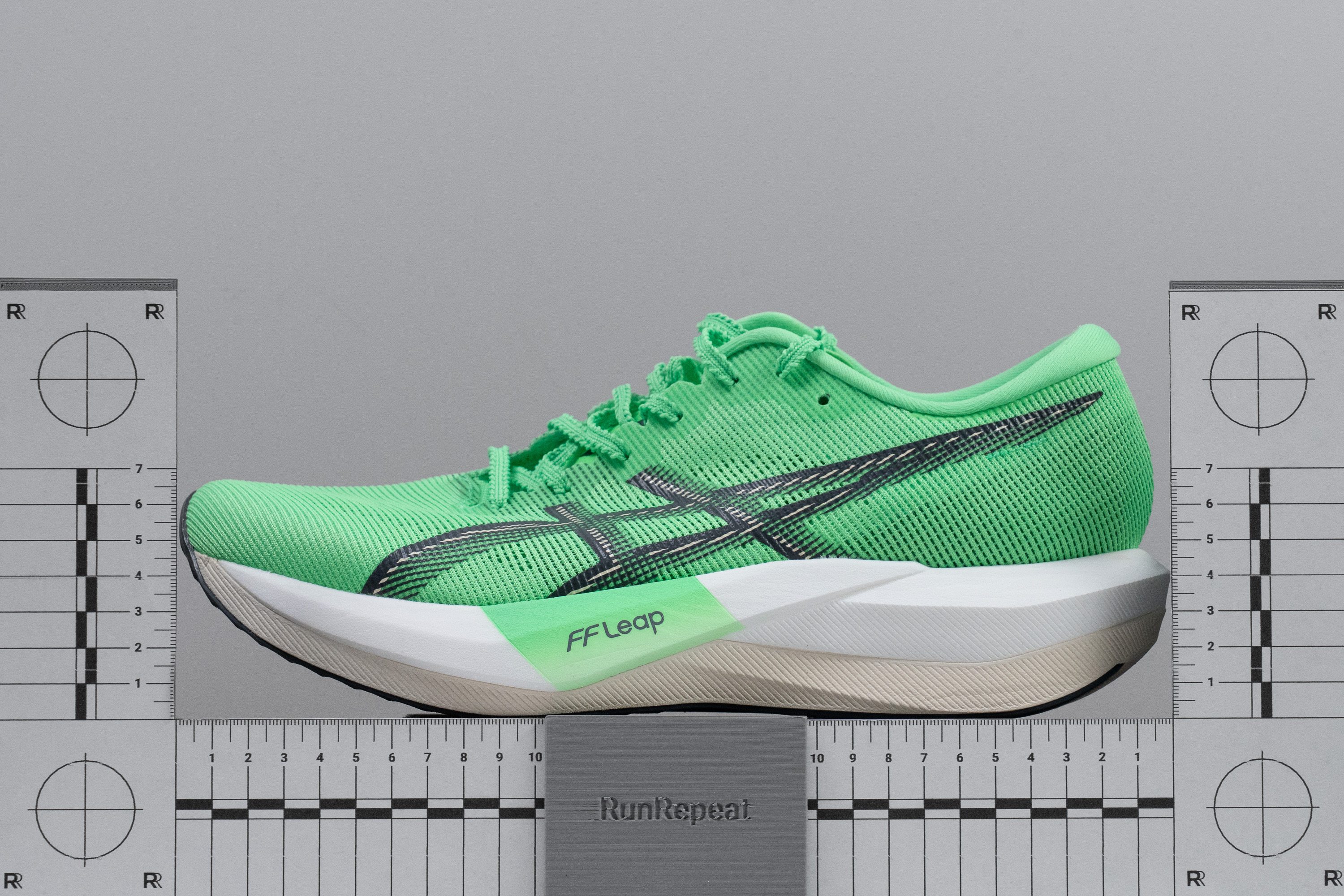
By stepping away from the massive stack height of the previous version, ASICS also softened the rocker. Still, the forefoot keeps an aggressive curve inspired by the Metaspeed series.
Plate
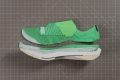
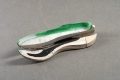
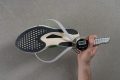
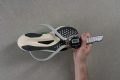
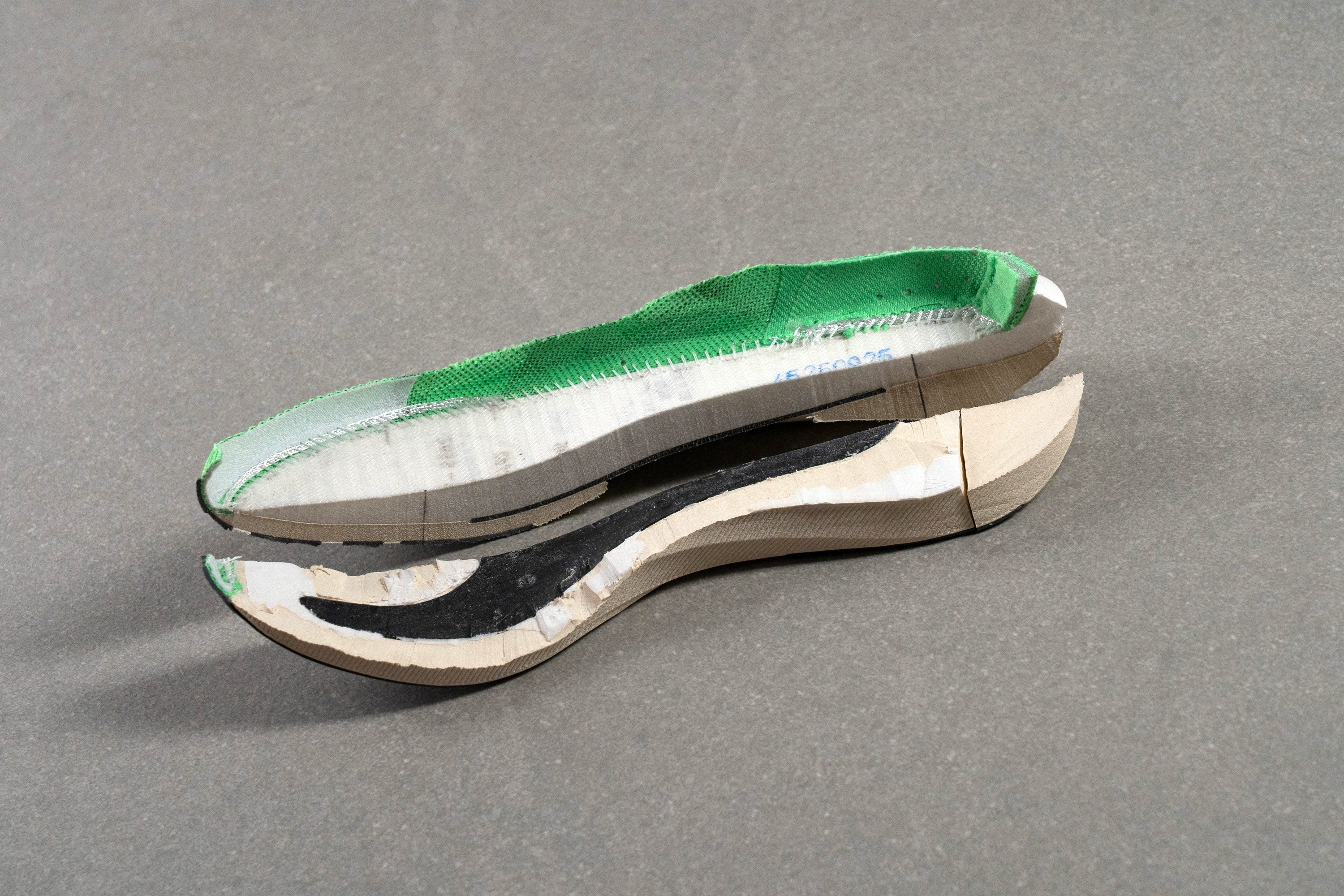
The plate in the Magic Speed 5 is another big departure from earlier versions. We found a carbon plate that runs from the end of the heel into the start of the forefoot, covering roughly 70% of the midsole. Or that’s the conclusion anyone would reach after watching this video, right?
However, we took a deeper look and found that the Magic Speed 5 uses a forked plate in the forefoot, similar to designs seen in trail racing shoes. This layout allows extra flex and avoids the classic super-stiff feel of a full-length carbon plate.
In terms of geometry, it feels closer to the Edge than the Sky, but with more compliance and flexibility, clearly tuned to be more forgiving and beginner-friendly.
Size and fit
Size
ASICS Magic Speed 5 fits true to size (50 votes).
Internal length
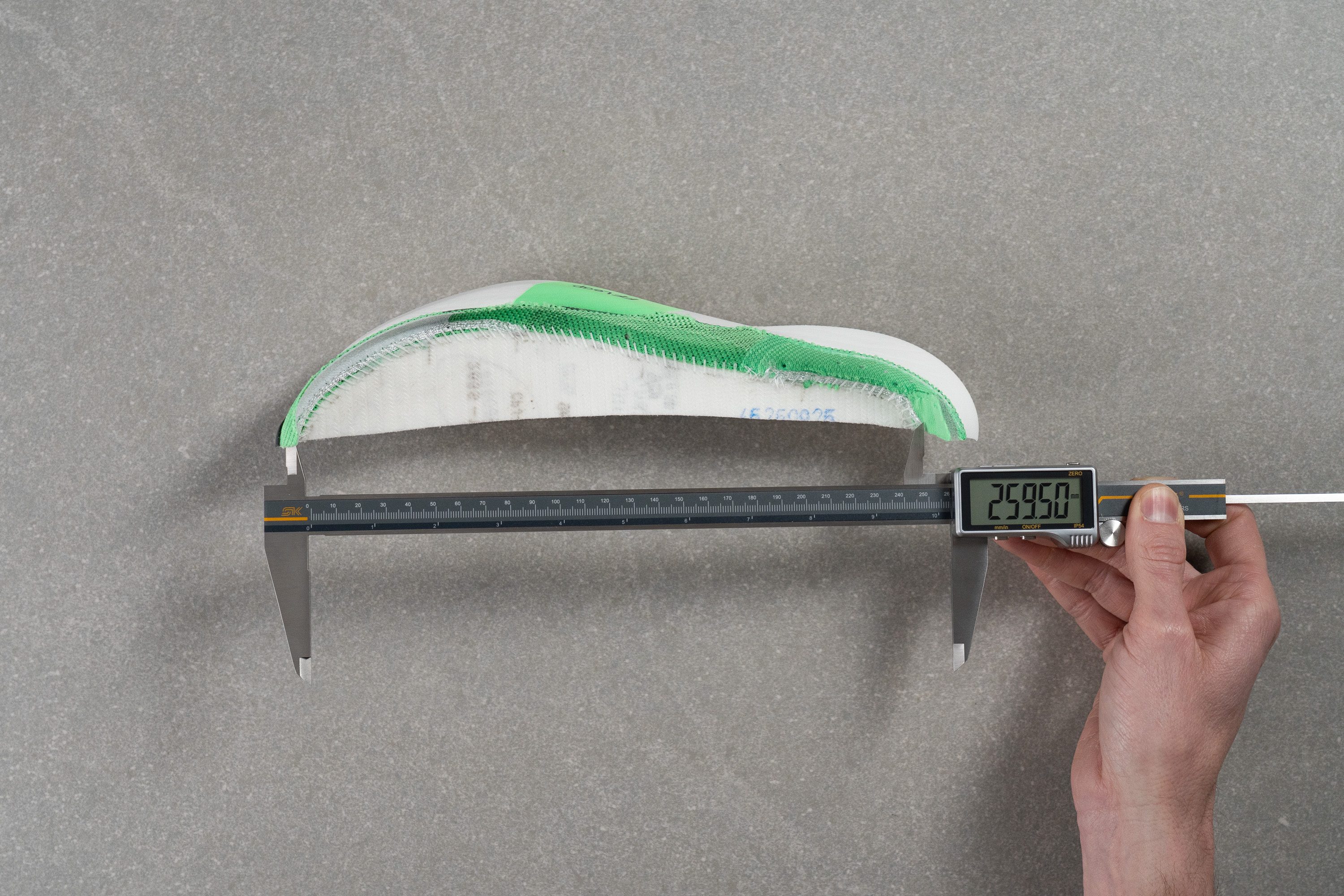
| Magic Speed 5 | 259.5 mm |
| Average | 269.4 mm |
Width / Fit
During our test runs, the fit of the Magic Speed 5 matched its intent: reasonably comfortable, yet clearly race-oriented, with a snug feel as the foot moves toward the toe cap.
That said, fit is highly subjective, so we prefer to rely on hard, lab-based data. Starting with our first internal measurement, we recorded an average width of 95.1 mm.
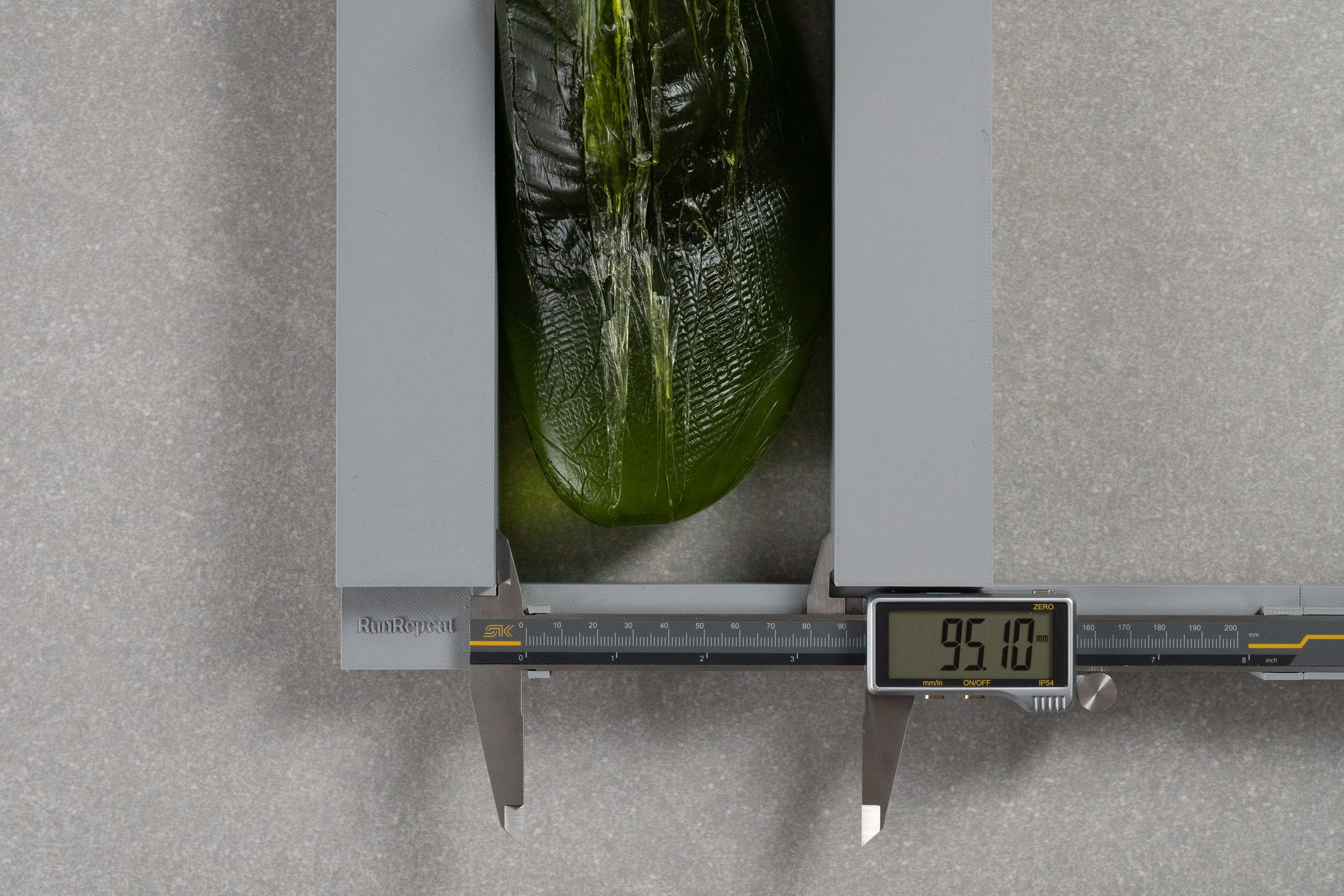
| Magic Speed 5 | 95.1 mm |
| Average | 95.2 mm |
Toebox width
The toebox shows a mild taper at 71.9 mm, which should work for most runners. However, those with very wide feet may feel extra pressure, especially during longer runs.
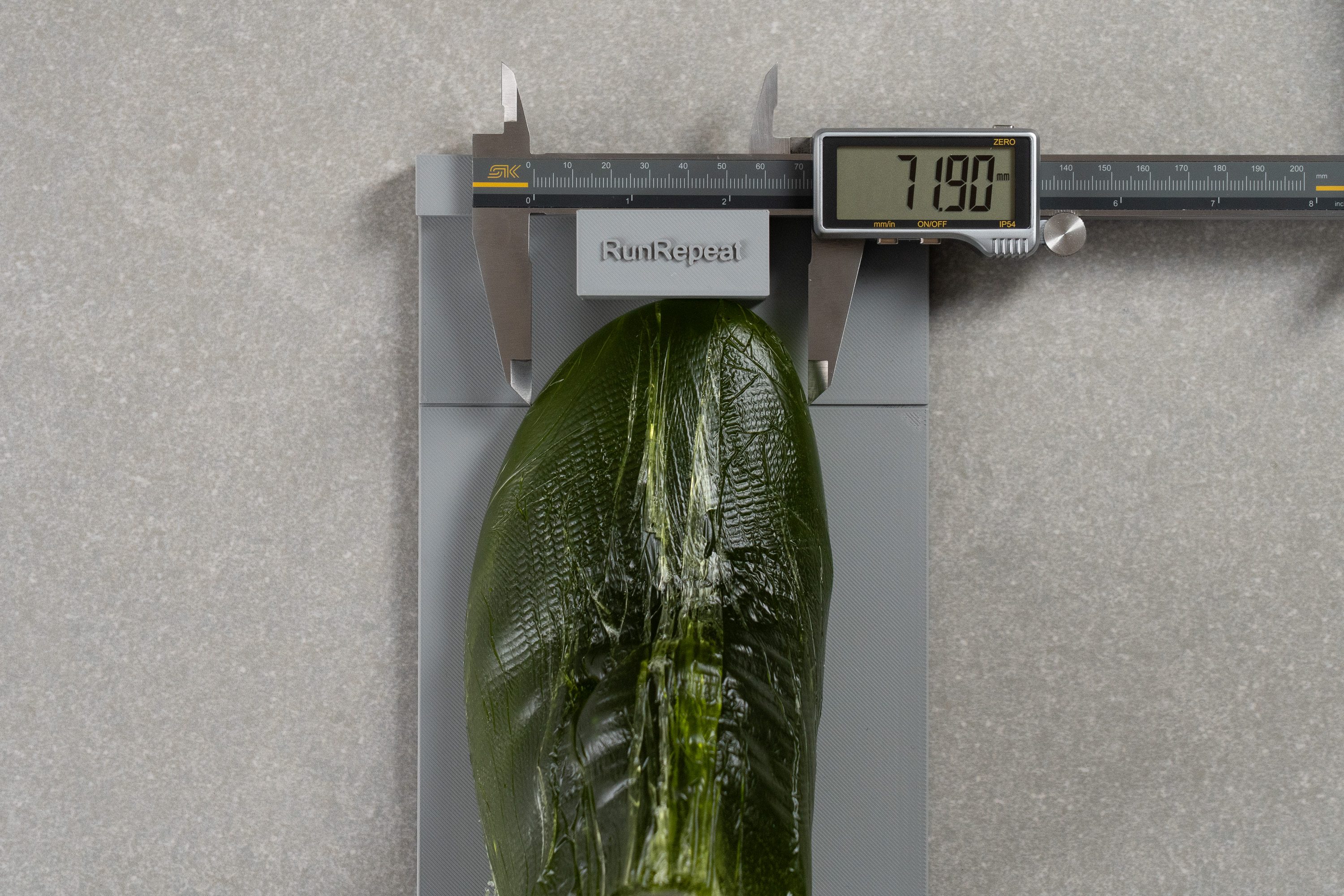
| Magic Speed 5 | 71.9 mm |
| Average | 73.2 mm |
Toebox height
Our third measurement focuses on toebox height, a detail that often gets overlooked but not in our lab.
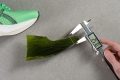
We measured 25.7 mm, which is a bit lower than most shoes. However, the engineered mesh offers some stretch, reinforcing that this model sits between a training shoe and a racer.
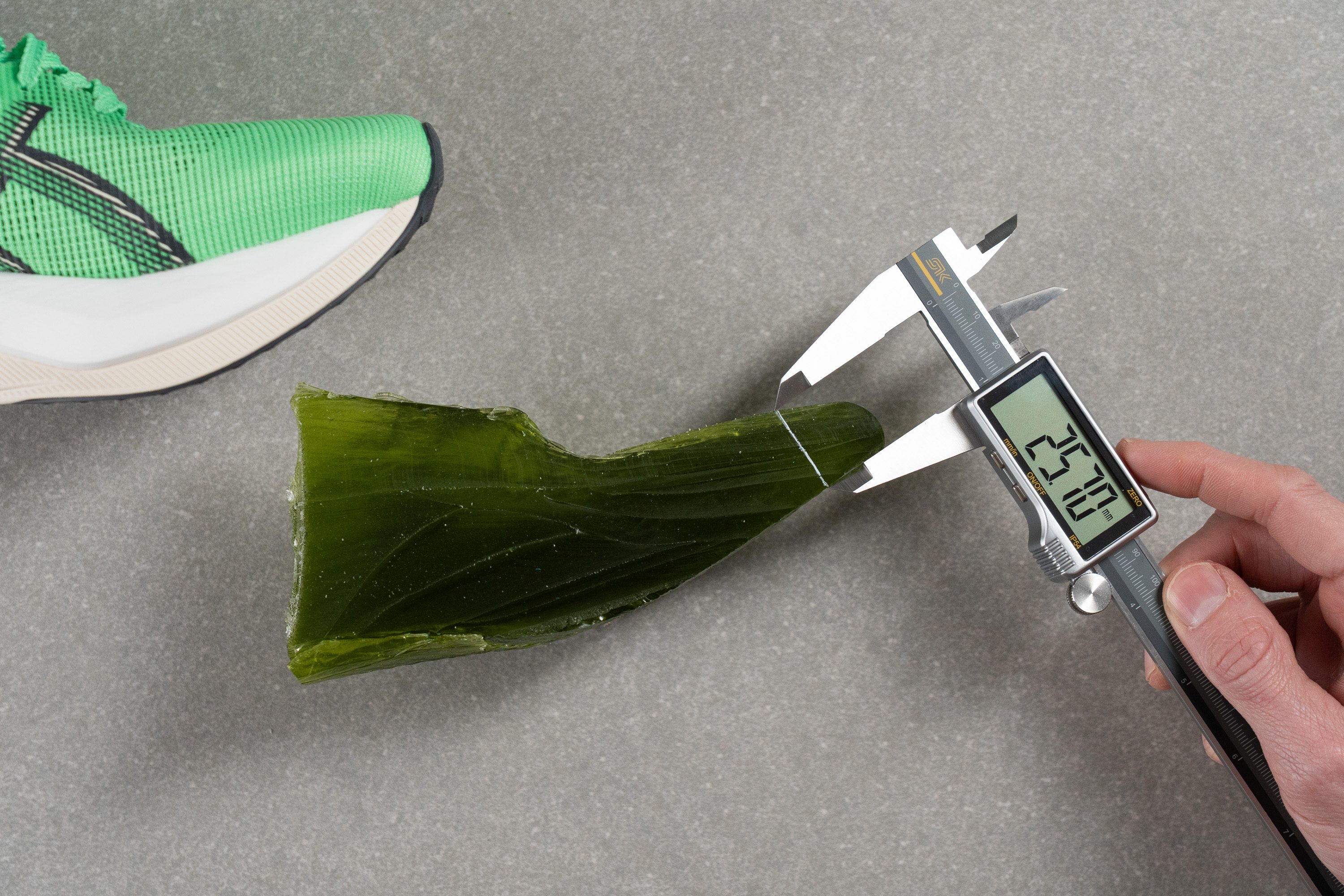
| Magic Speed 5 | 25.7 mm |
| Average | 27.0 mm |
Traction / Grip
Traction test
ASICS clearly struck gold with the ASICSGRIP rubber, matching or even surpassing some of the best outsoles on the market. This compound carries over to the Magic Speed 5, offering excellent traction on both dry and wet surfaces.
In our SATRA TM144 test, it posted a strong 0.79 score, which speaks for itself.
| Magic Speed 5 | 0.79 |
| Average | 0.53 |
Outsole design
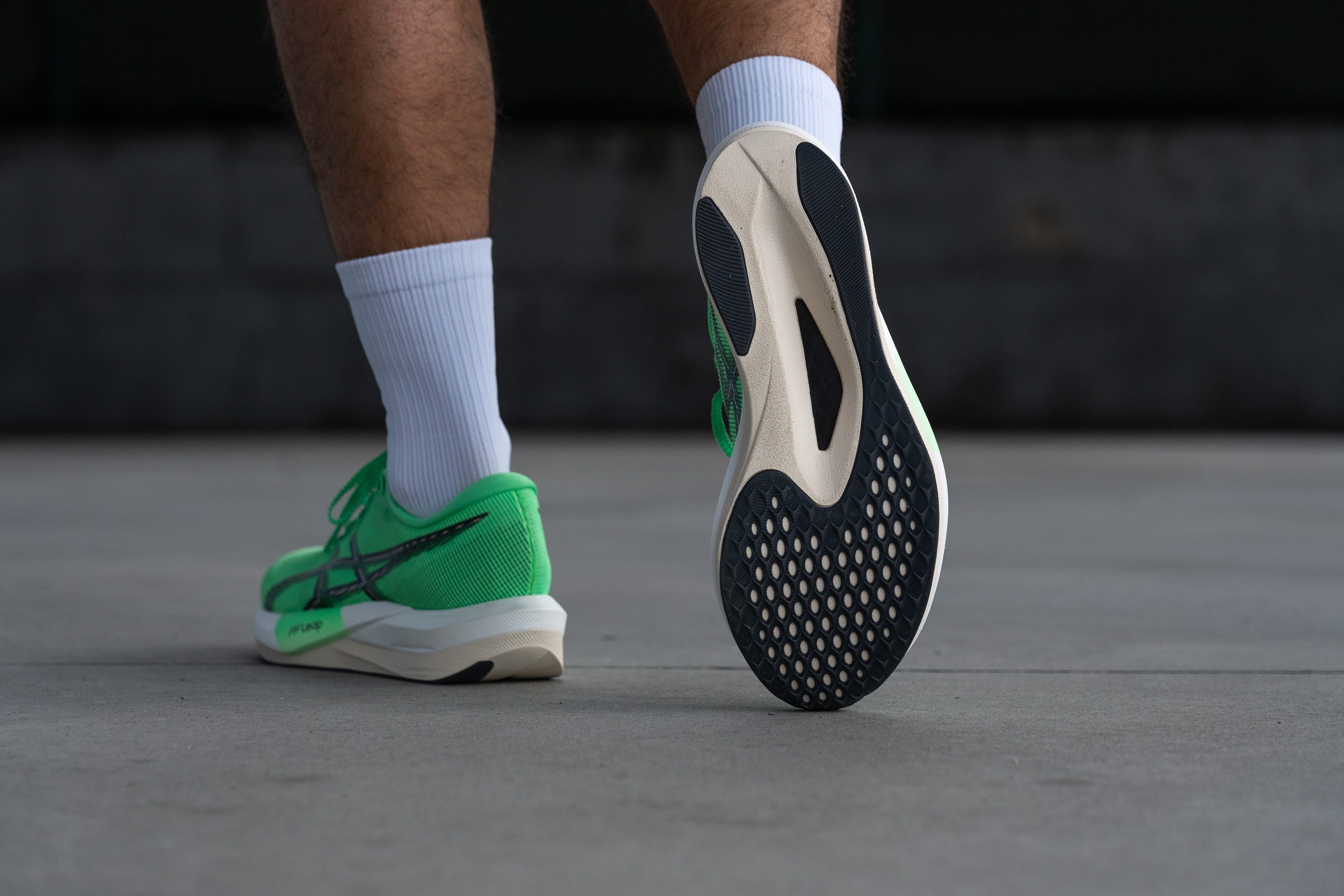
The outsole clearly takes inspiration from the Metaspeed series, but here ASICS adds slightly more rubber coverage and thickness. That choice makes sense, as this shoe is designed as a super trainer rather than a pure super shoe.
Even with the extra rubber, the shoe does not feel bulky at all. From our point of view, we think ASICS made the right call by aiming for better durability while keeping the overall feel light and efficient.
Flexibility / Stiffness
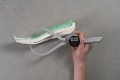
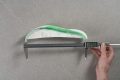
Another result that clearly shows the Magic Speed 5 has toned-down stiffness is our 30-degree bend test—we measured just 13.1N. For context, the Metaspeed Sky Tokyo scored 21.1N in the same test, which is 61% higher.
That's another reason why this can be a solid competition shoe for those new to the sport. It delivers sensations similar to a super shoe, but in a more forgiving version.
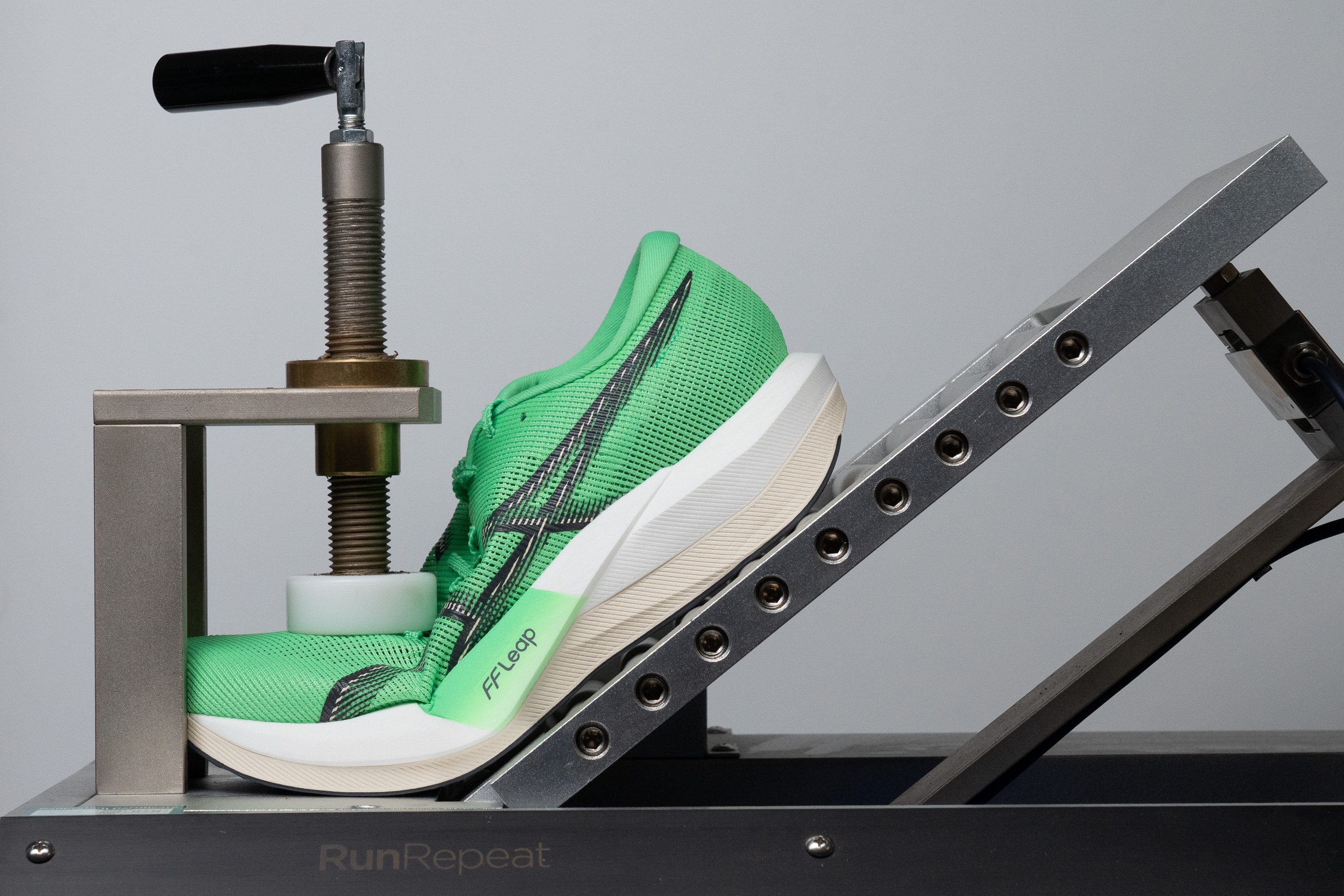
| Magic Speed 5 | 13.1N |
| Average | 15.5N |
Weight
Another area where the Magic Speed 5 returns to its roots is weight.
This shoe has always aimed for a nimble, barely-there feel, and that sensation is back. It now weighs just 7.1 oz or 201g, lighter than versions 3 and 4, and on par with super shoes like the Nike Alphafly 3.
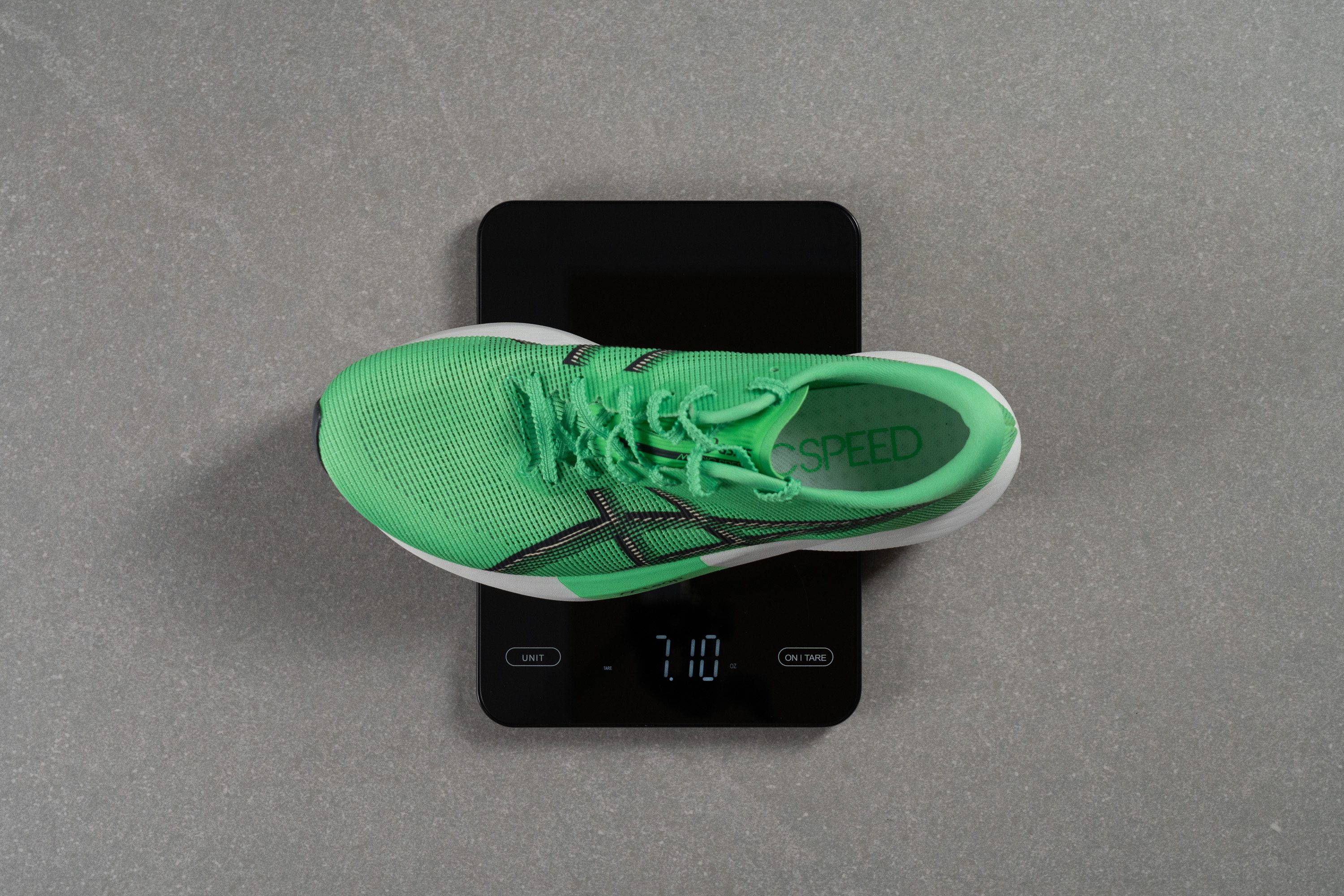
| Magic Speed 5 | 7.1 oz (201g) |
| Average | 9.2 oz (261g) |
Breathability
Breathability test
UpdatedDuring our manual inspection of the ASICS Magic Speed 5, we were impressed by its incredibly airy upper. However, appearances can be deceiving, which is why we always use our breathability machine to evaluate how effectively the entire shoe—and not just the upper—manages sweat and moisture.
The Magic Speed 5 passed with flying colors. Its outstanding score of 79 BR ranks among the best we've recorded in a tempo trainer, showing that the shoe pulls sweat away from the foot with remarkable efficiency!
| Magic Speed 5 | 79 BR |
| Average | 75 BR |
Drying potential
NewBut strong breathability is only part of the equation. Once sweat has been pulled away from the foot, the shoe also needs to release that moisture efficiently. Otherwise, it gradually builds up inside the shoe, making it heavier and damper especially during longer runs.
Fortunately, that wasn't an issue for the Magic Speed 5. After keeping it inside our climate-controlled breathability machine for another 3 hours, we found that the shoe evaporated 57% of the trapped moisture. While not an outstanding result, it's more than enough to avoid any real concerns about its drying potential.
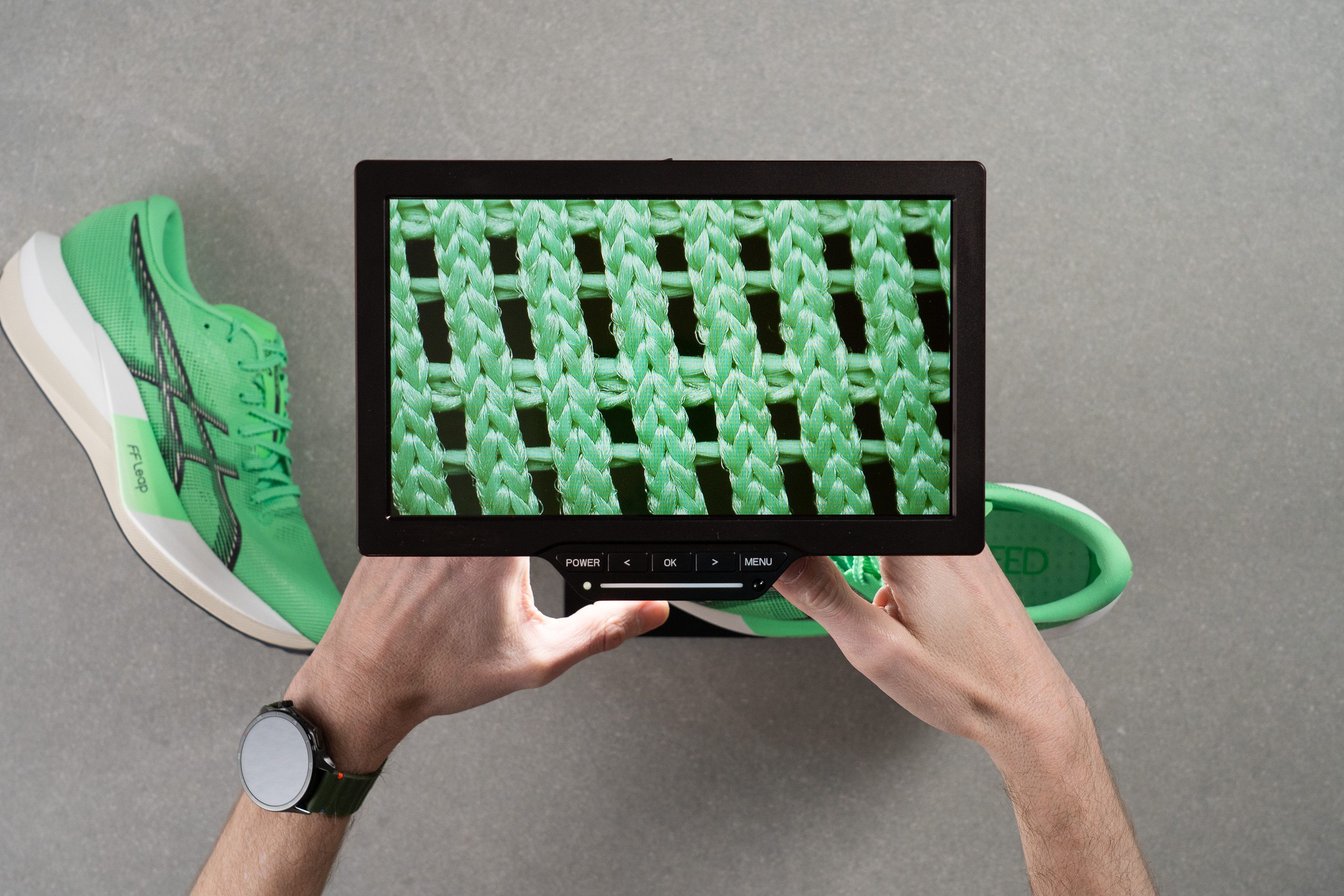
| Magic Speed 5 | 57% |
| Average | 53% |
Stability
Lateral stability test
Lowering the stack height from the more maximal design of its predecessor brings a small stability gain. Still, the Magic Speed 5 remains a fully neutral shoe due to its compact, race-inspired shape and the absence of dedicated stability features.
Torsional rigidity
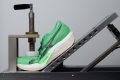
Reaching 15.9 Nm on our custom-made torsional rigidity machine, the MS5 shows strong resistance to twisting despite its forked plate allowing some movement in the forefoot.
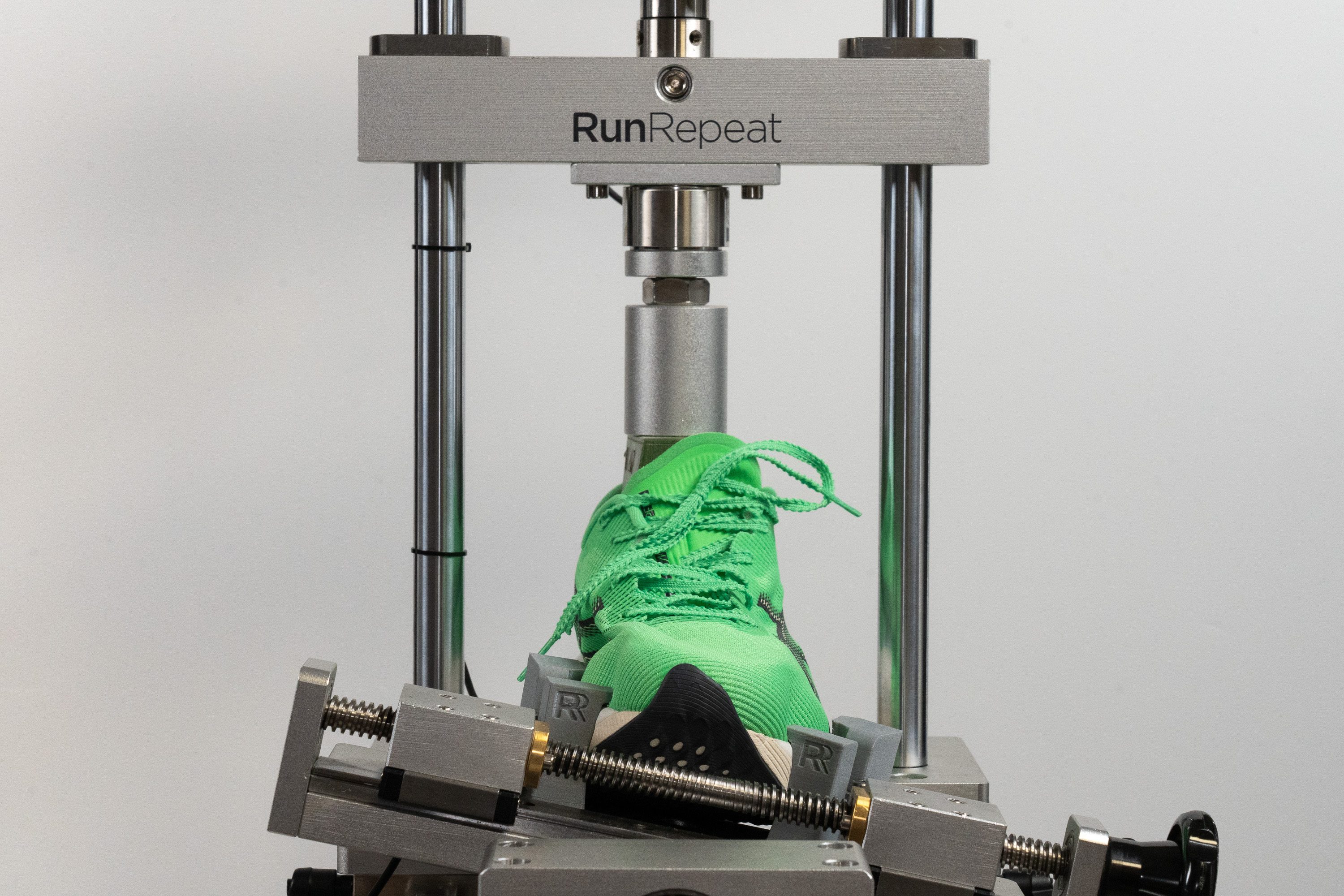
| Magic Speed 5 | 15.9 Nm |
| Average | 14.4 Nm |
Heel counter stiffness
ASICS also moved away from the ultra-flexible heel counter used in the Metaspeed line and opted for a more trainer-like design here, scoring 3/5. This adds a bit more support for heel strikers and helps maintain form during the final stretch of long, demanding Sunday runs.
| Magic Speed 5 | 3 |
| Average | 3 |
Midsole width - forefoot
We mentioned earlier the compact build of the Magic Speed 5, but we wanted to back that up with numbers from our digital caliper. Starting at the forefoot, we recorded 110.1 mm, which is clearly below our current lab average.
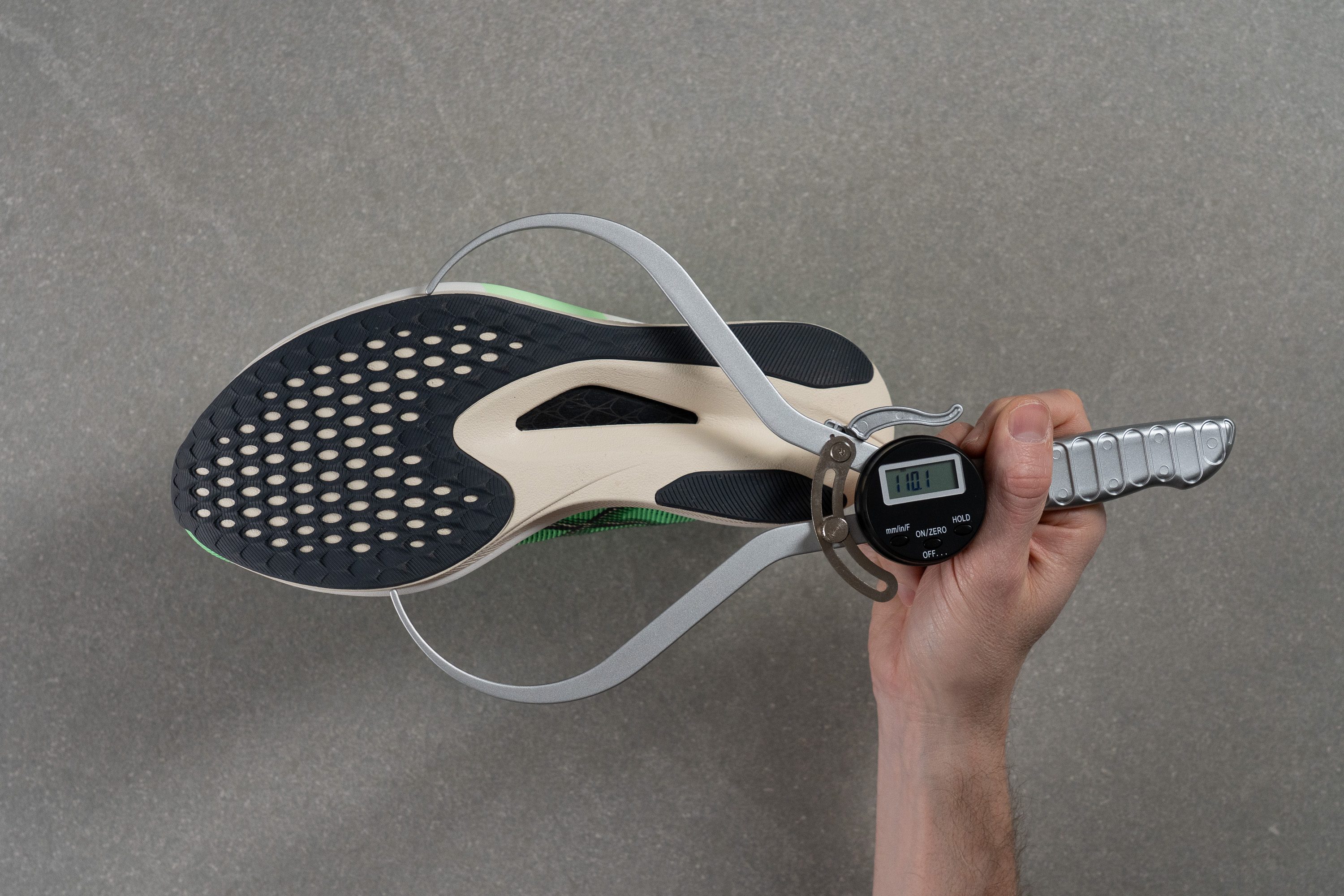
| Magic Speed 5 | 110.1 mm |
| Average | 115.1 mm |
Midsole width - heel
However, the heel is where ASICS truly commits to a more aggressive design.
Our digital caliper measured just 78.1 mm, so keep that in mind if you prefer a super trainer with a broader landing area, such as the Superblast 2.
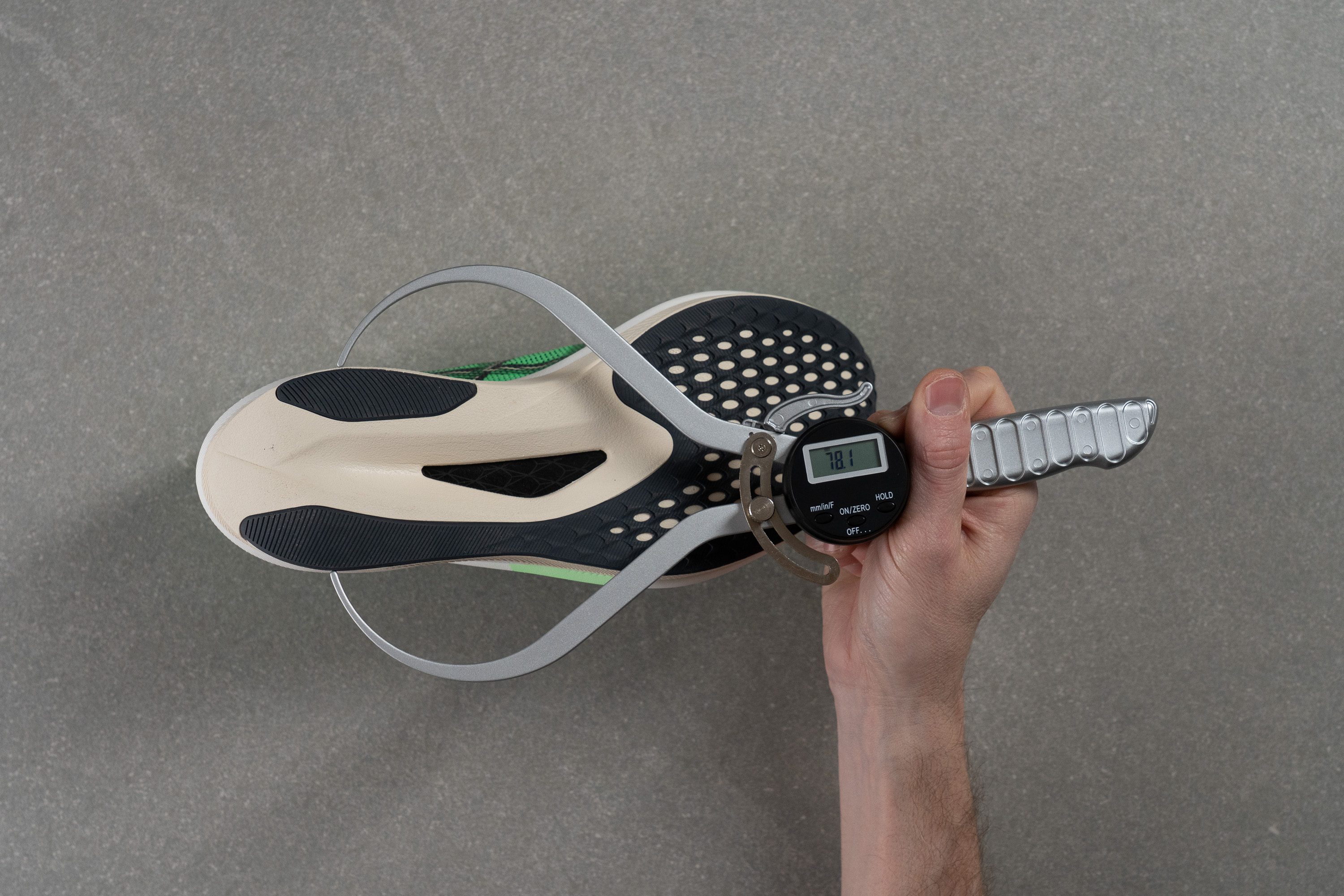
| Magic Speed 5 | 78.1 mm |
| Average | 91.1 mm |
Durability
Toebox durability
It is rare to find an upper that balances high breathability and low weight with strong durability, and that trade-off shows here. The engineered mesh failed right away, leaving us no choice but to give the Magic Speed 5 a 1/5 score.
| Magic Speed 5 | 1 |
| Average | 2.6 |
Heel padding durability
Luckily, ASICS makes up for that with the heel padding. We pushed it hard in our durability test, and this time it delivered an excellent 5/5 score.
| Magic Speed 5 | 5 |
| Average | 3.4 |
Outsole durability
ASICSGRIP continues to stand out for balancing grip and durability better than most rubbers on the market. After confirming strong traction earlier, durability also impressed us here, as the Dremel test left only 0.8 mm of wear.
| Magic Speed 5 | 0.8 mm |
| Average | 1.1 mm |
Outsole thickness
It is impressive to see 1.9 mm of rubber on such a lightweight shoe. Because of that, we expect a solid lifespan, which helps position the Magic Speed 5 as a versatile option for both training and workouts.
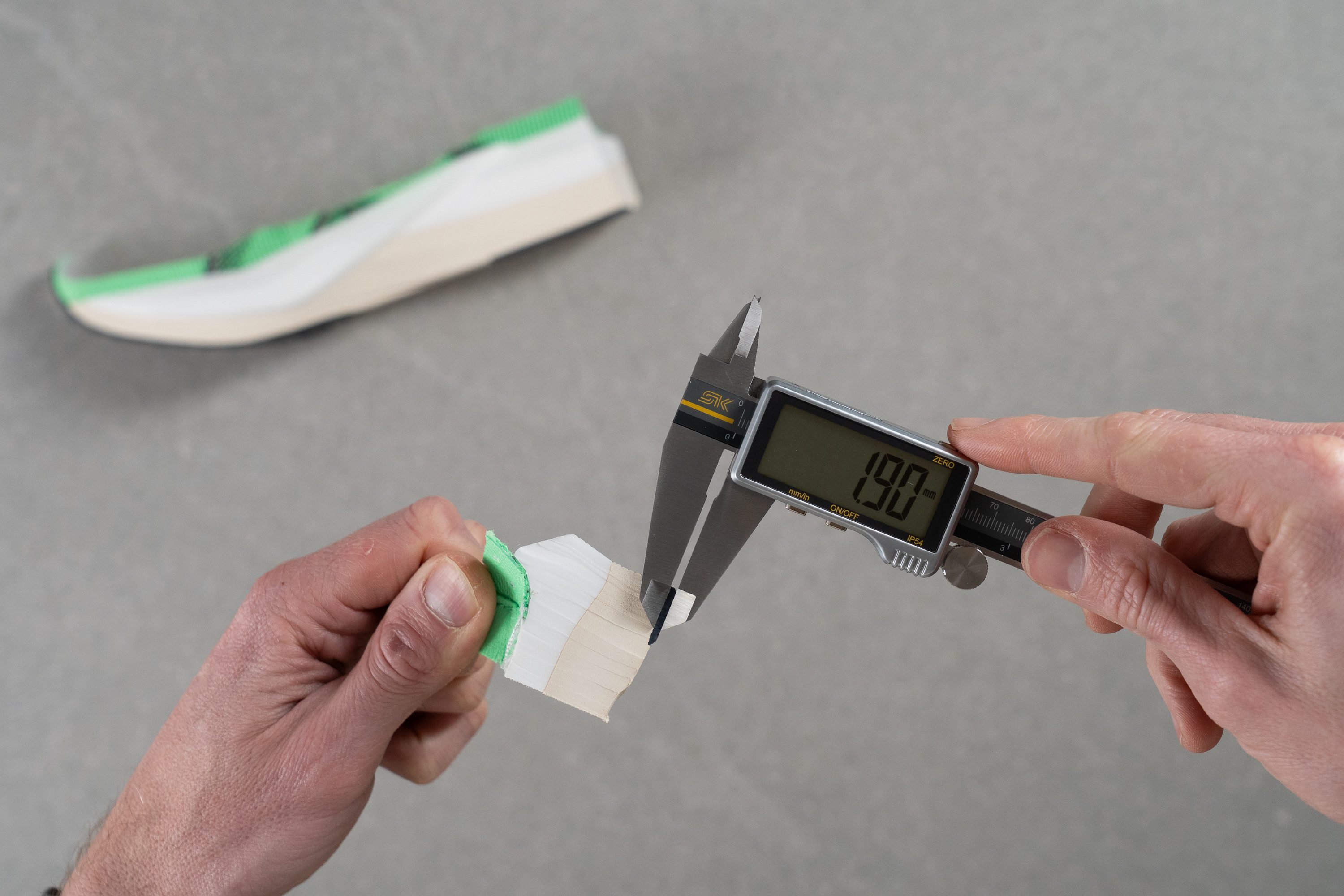
| Magic Speed 5 | 1.9 mm |
| Average | 3.1 mm |
Misc
Insole thickness
Throughout this lab review, we have seen how the Magic Speed 5 sits between training and racing. The insole, with its paper-thin 2.5 mm thickness, clearly leans toward a race-focused setup.
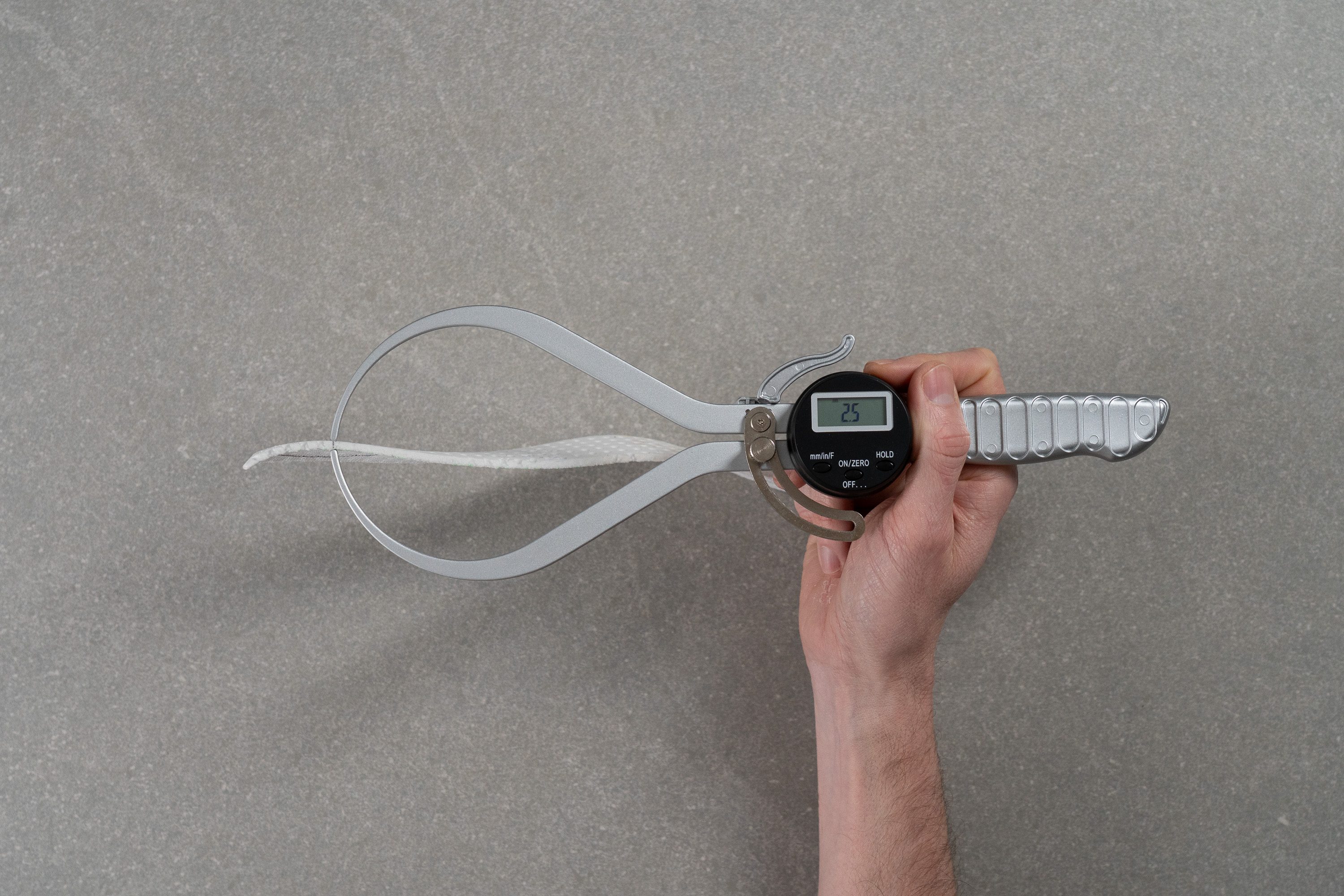
| Magic Speed 5 | 2.5 mm |
| Average | 4.4 mm |
Removable insole
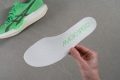
We liked that the insole is removable, and the full-length perforations help further improve airflow inside the shoe.
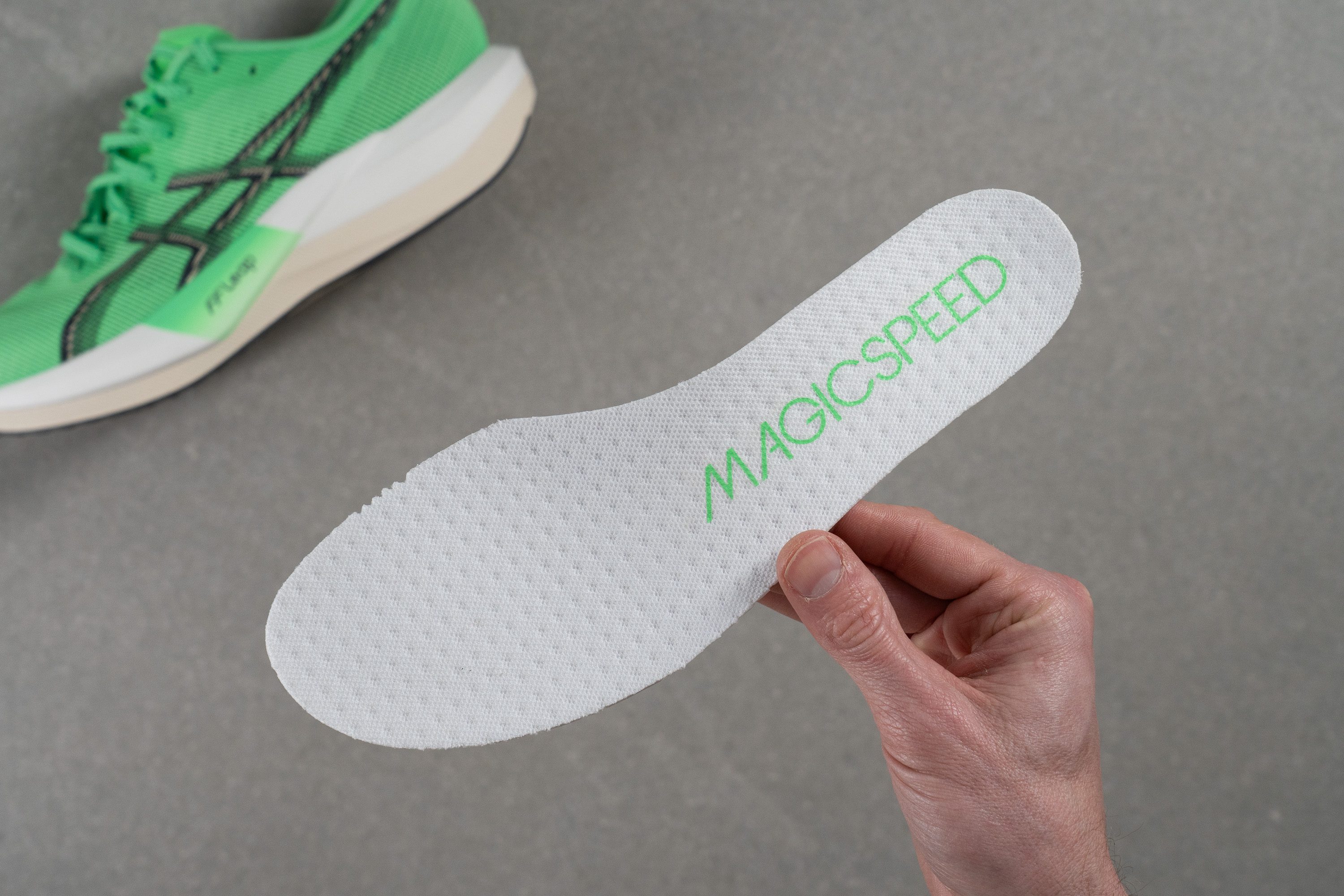
| Magic Speed 5 | Yes |
Reflective elements
The lack of reflective elements is not a major concern for this type of shoe. While it would be nice to have them, we are fine with their absence.
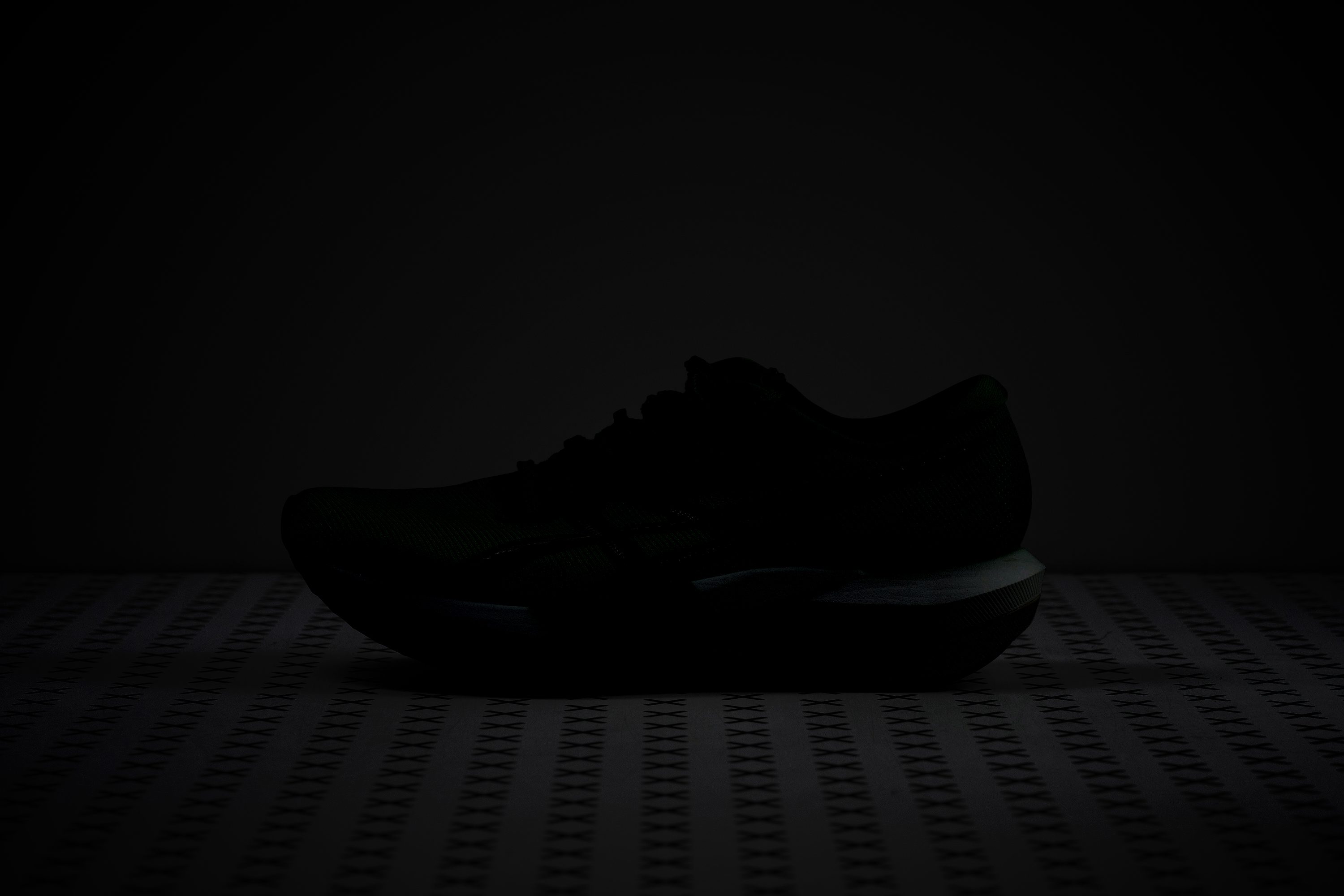
| Magic Speed 5 | No |
Tongue padding
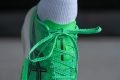
When Nike introduced serrated laces with the Vaporfly, they quickly became a big hit in the running shoe world. ASICS followed with the Metaspeed series, which was a smart move at the time. Now, these excellent laces make their way (for the first time) into the Magic Speed line.
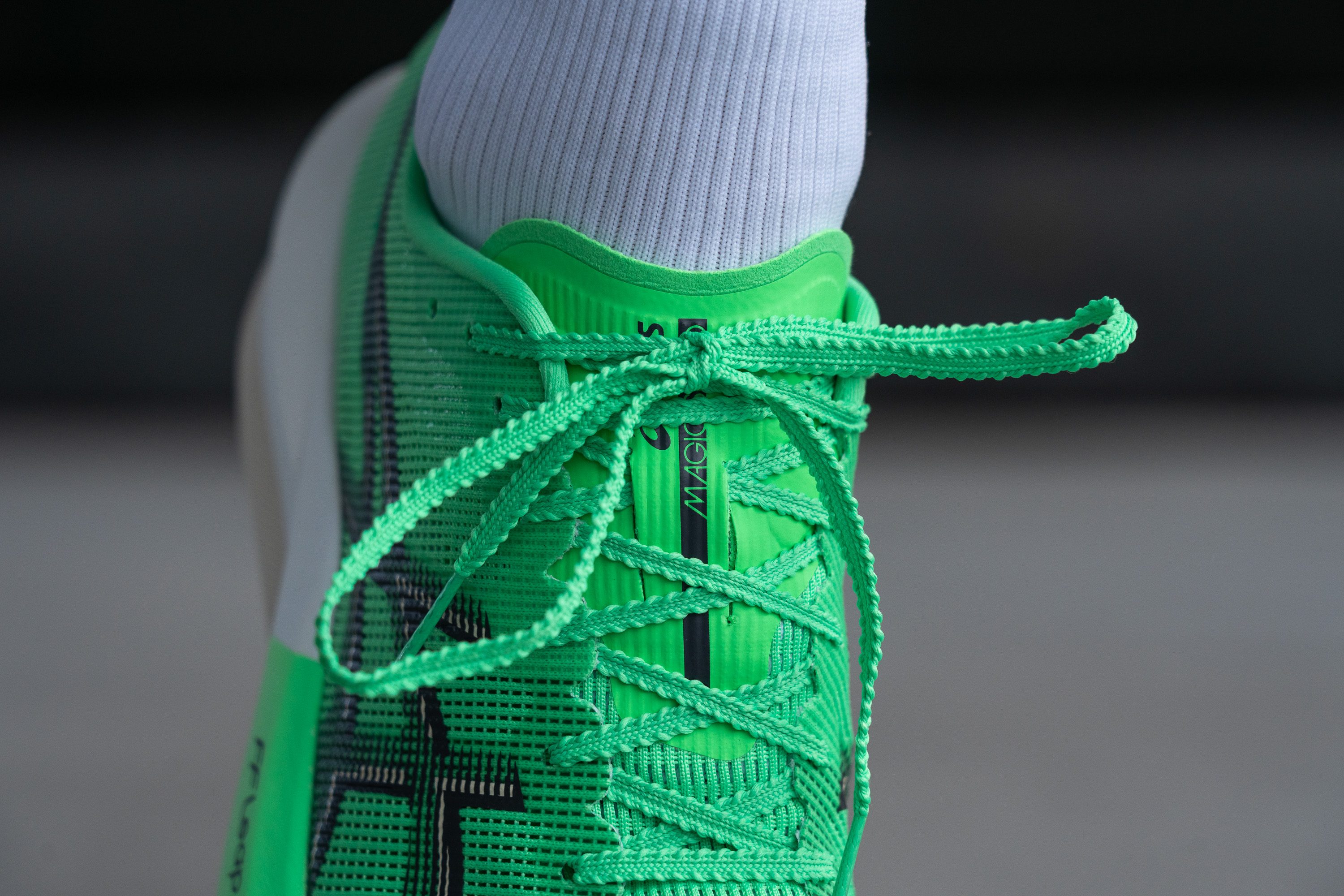
The tongue clearly takes inspiration from the Metaspeed in its overall design. We measured a very similar thickness of just 0.8 mm, leaving little room for padding, so keeping lace pressure in check is important here.
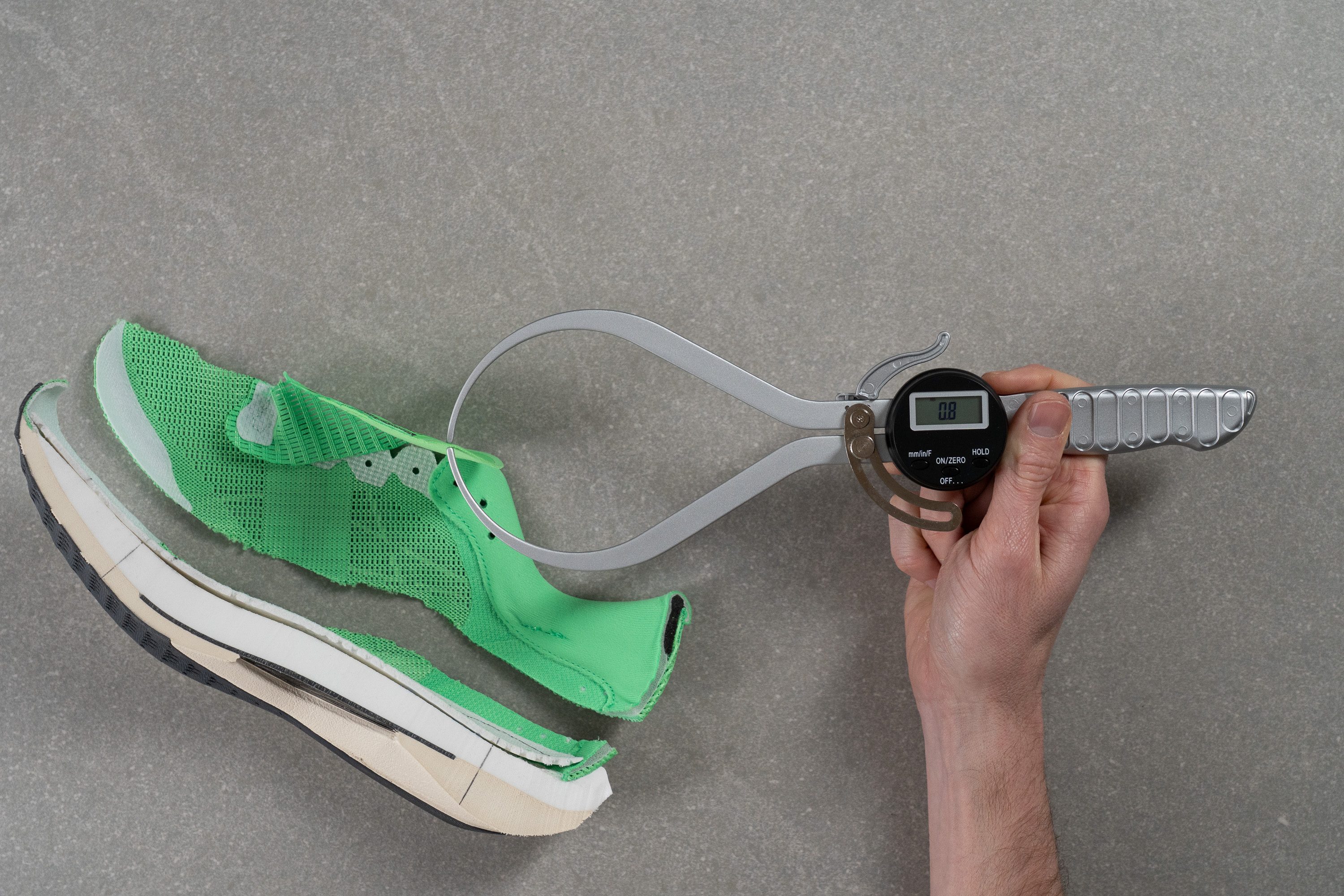
| Magic Speed 5 | 0.8 mm |
| Average | 5.8 mm |
Tongue: gusset type
Another clear nod to the Metaspeed is the absence of tongue gusseting, allowing the tongue to move freely. This may not be ideal for daily training, but it fits the goal of keeping the Magic Speed 5 as an affordable racing option.
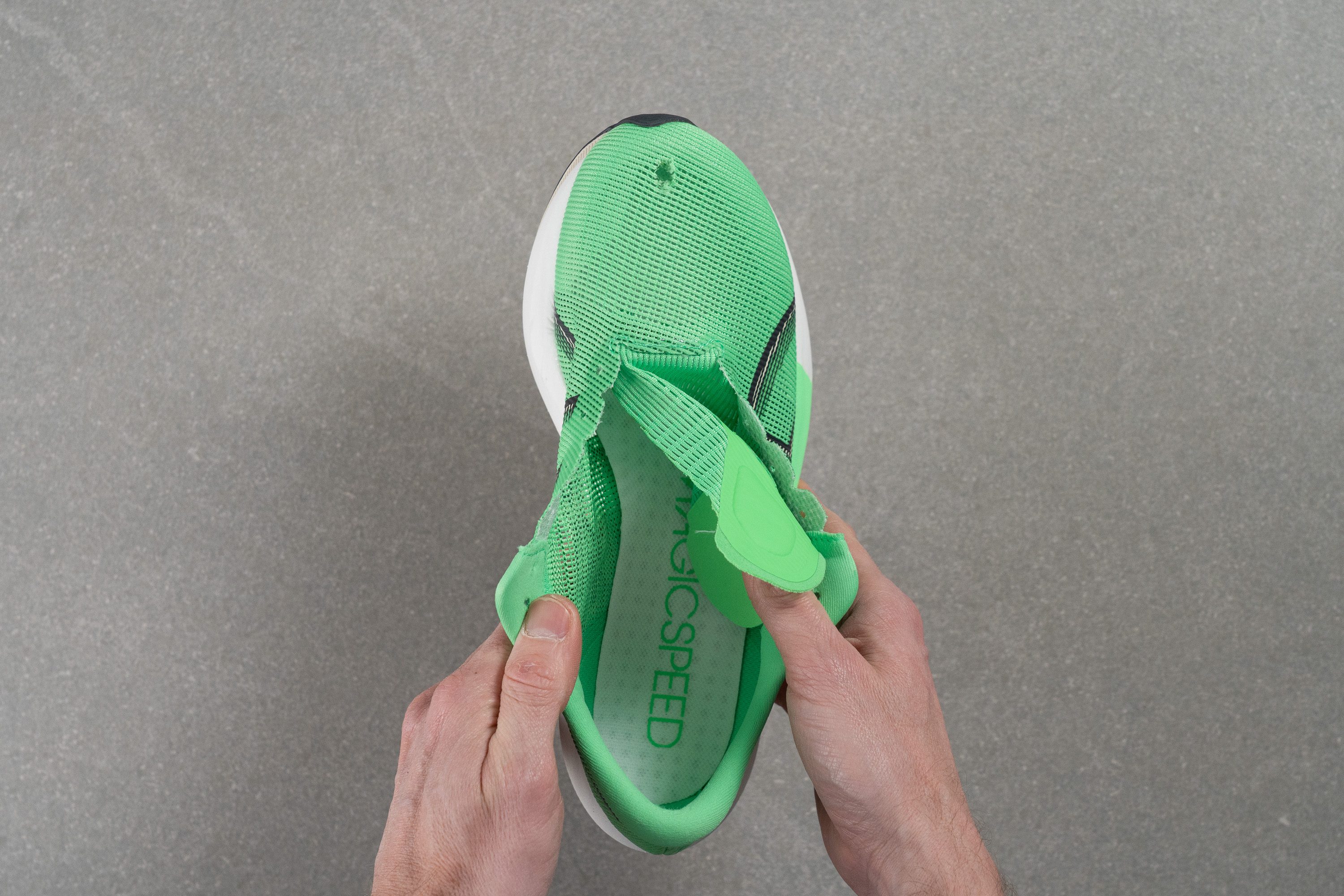
| Magic Speed 5 | None |
Heel tab
The heel of the Magic Speed 5 is another clear nod to the Metaspeed line. It skips a pull tab entirely and opts for a clean, minimalist design focused on saving weight.
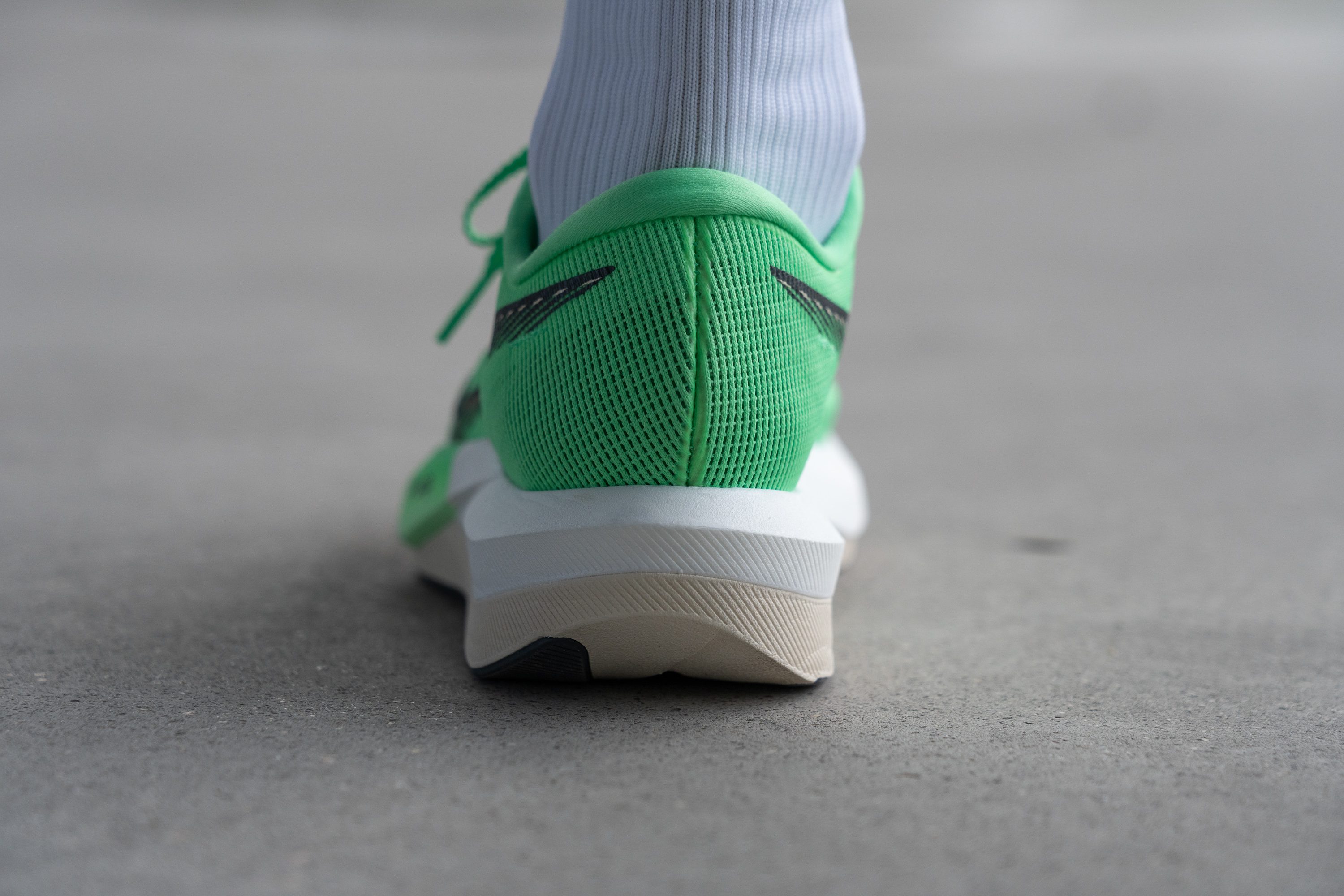
| Magic Speed 5 | None |
Price
We believe the Magic Speed 5 offers solid value given its features. Using FF Blast Max instead of FF Blast+ would have made it even more compelling, but even as it stands, pricing is good. It sits below many super trainers while delivering an appealing mix of low weight and speed.
| Magic Speed 5 | $180 |
| Average | $157 |