
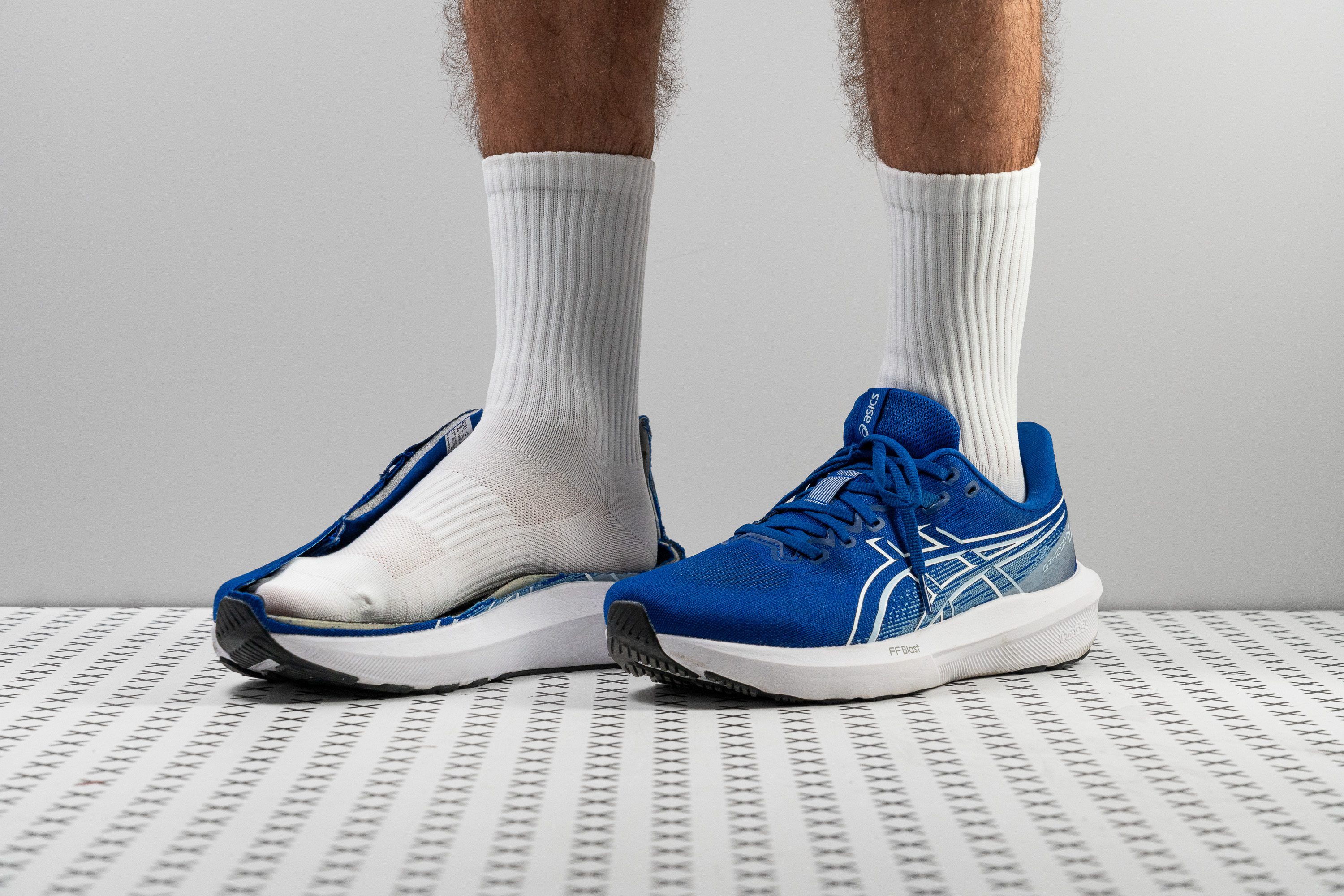
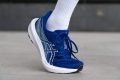
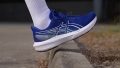

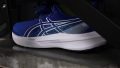
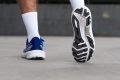
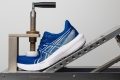
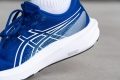
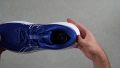

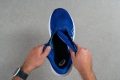
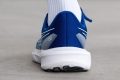
Our verdict
- Daily running 85
- Tempo 39
- Race 26
- Stability 94
Pros
- Wider platform improves overall stability
- Excellent value
- Works very well for heel strikers
- Incredible outsole durability
- Comfortable fit with optional wide sizes
- Best GT 1000 version to date
- No price increase
- Predictable ride for daily runs
- Handles daily life with ease too
Cons
- Lacks bounce
- Not ideal for long runs
- Toebox mesh durability is disappointing
- Small weight increase
Awards
- Top pick in best running shoes for beginners
- Top pick in best cheap running shoes
- Top 25% in running shoes for beginners
Comparison
The most similar running shoes compared
+ + Add a shoe | |||||
|---|---|---|---|---|---|
| Our score | 83 Great | 85 Great | 86 Great | 79 Good | |
| Price | $115 | $145 | $145 | $155 | |
| Pace | Daily running | Daily running | Daily running | Daily running | |
| Shock absorption | Moderate | High | High | High | |
| Energy return | Low | Moderate | Moderate | Moderate | |
| Traction | High | High | High | High | |
| Arch support | Stability | Stability | Stability | Stability | |
| Weight lab Weight brand | 9.8 oz / 278g 9.8 oz / 278g | 10.4 oz / 296g 10.5 oz / 298g | 10.4 oz / 295g 10.6 oz / 300g | 9.8 oz / 278g 10 oz / 284g | |
| Drop lab Drop brand | 9.9 mm 8.0 mm | 10.1 mm 10.0 mm | 10.2 mm 10.0 mm | 10.3 mm 8.0 mm | |
| Strike pattern | HeelMid/forefoot | Heel | Heel | Heel | |
| Size | - | Slightly small | True to size | True to size | |
| Midsole softness | Balanced | Balanced | Balanced | Soft | |
| Difference in midsole softness in cold | Normal | Small | Small | Small | |
| Toebox durability | Bad | Decent | Decent | Decent | |
| Heel padding durability | Good | Good | Good | Good | |
| Outsole durability | Good | Good | Good | Good | |
| Breathability | Moderate | Moderate | Moderate | Breathable | |
| Width / fit | Medium | Medium | Medium | Medium | |
| Toebox width | Medium | Medium | Medium | Narrow | |
| Stiffness | Moderate | Moderate | Moderate | Moderate | |
| Torsional rigidity | Moderate | Moderate | Moderate | Flexible | |
| Heel counter stiffness | Moderate | Moderate | Stiff | Moderate | |
| Heel lab Heel brand | 35.0 mm 36.0 mm | 36.1 mm 38.0 mm | 36.1 mm 37.0 mm | 38.0 mm 39.0 mm | |
| Forefoot lab Forefoot brand | 25.1 mm 28.0 mm | 26.0 mm 28.0 mm | 25.9 mm 27.0 mm | 27.7 mm 31.0 mm | |
| Widths available | NormalWideX-Wide | NarrowNormalWideX-Wide | NarrowNormalWideX-Wide | NormalWideX-Wide | |
| Orthotic friendly | ✓ | ✓ | ✓ | ✓ | |
| Season | All seasons | All seasons | All seasons | SummerAll seasons | |
| Removable insole | ✓ | ✓ | ✓ | ✓ | |
| Ranking | #171 Top 43% | #113 Top 28% | #79 Top 20% | #240 Bottom 40% | |
| Popularity | #186 Top 47% | #52 Top 13% | #5 Top 2% | #83 Top 21% |

Who should buy
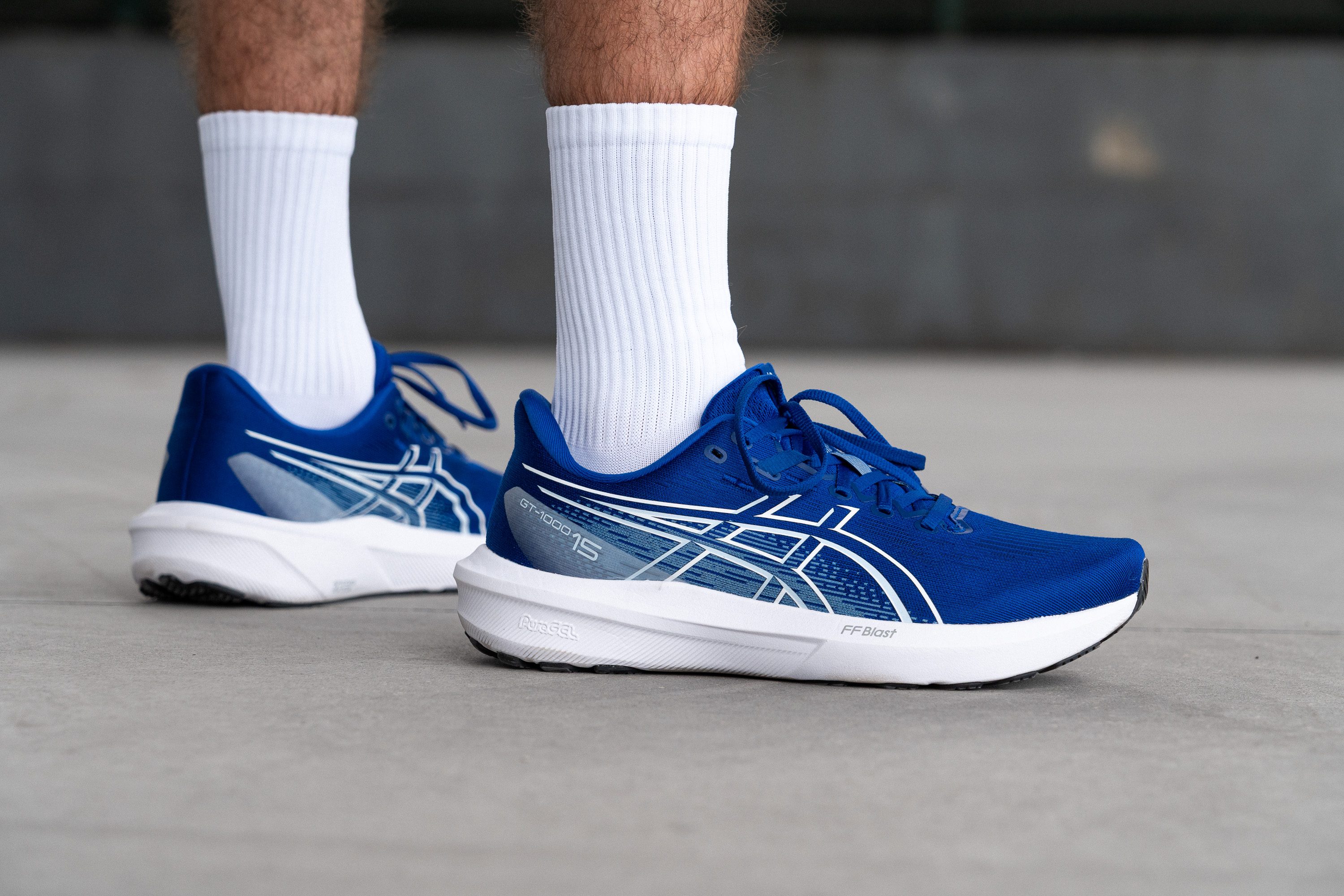
In our view, the ASICS GT 1000 15 is a great match for:
- Runners looking for a budget-friendly stability shoe that delivers reliable support without sacrificing comfort.
- Anyone upgrading from an older GT 1000, as we found this to be the best version yet.
- Neutral runners who want some extra guidance in a dependable daily trainer built around value.
- Heel strikers seeking a long-lasting workhorse with exceptional outsole durability and a stable ride.
Who should NOT buy
The GT 1000 15 remains a shoe better focused on shorter distances. In our experience, its moderate cushioning package is also better suited to lighter runners, so those seeking greater impact protection may be better served by stepping up to the ASICS GT 2000 14 and its FF Blast Max foam.
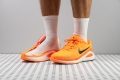
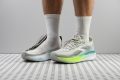
We also found that the limited energy return holds back the shoe's versatility, resulting in a ride that can feel somewhat dull when picking up the pace. If you're looking for a more lively all-rounder and don't require a high level of stability, the Saucony Endorphin Azura is a compelling alternative. Or maybe you can try the Saucony Tempus 2...
Cushioning
Shock absorption
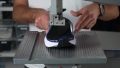
The ASICS GT 1000 15 delivers only a marginal improvement in shock absorption over its predecessor, with a 2% increase that does little to alter the shoe’s overall character.
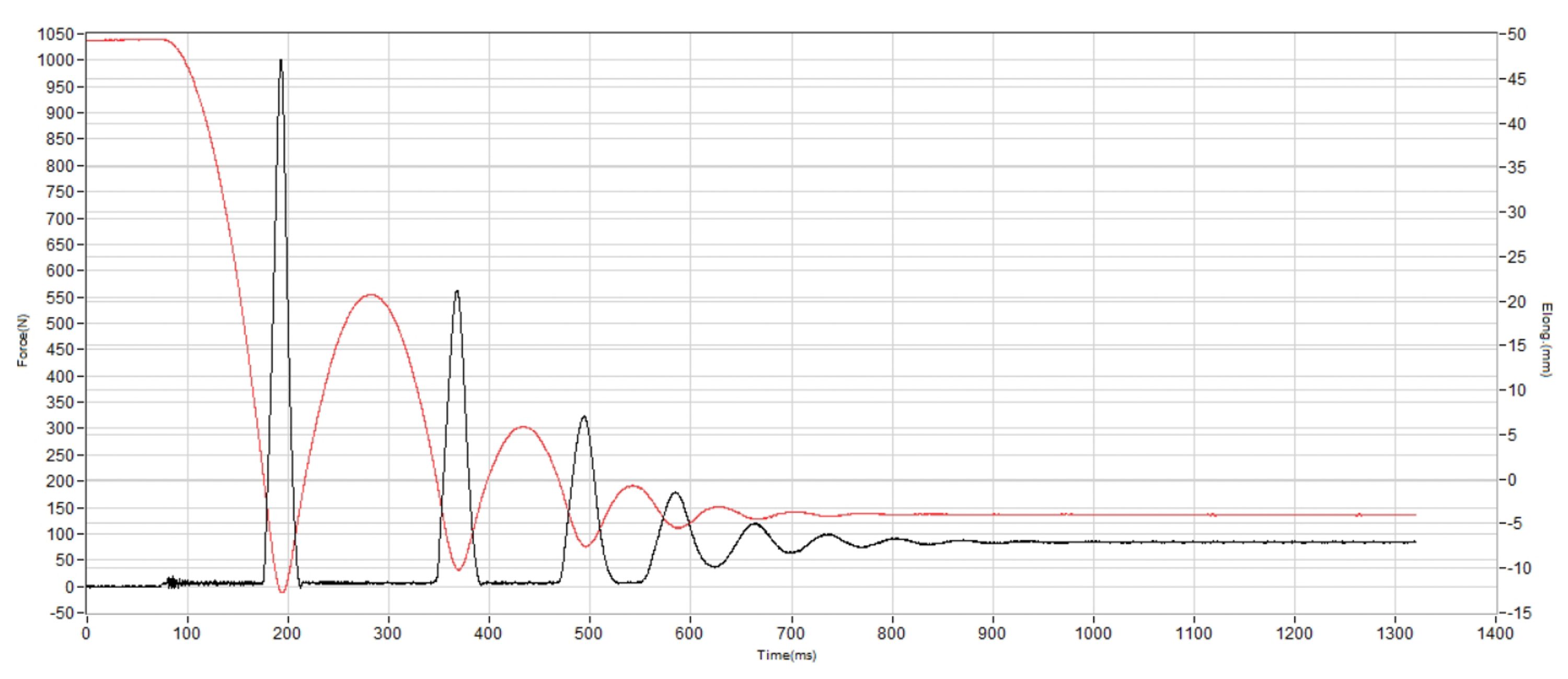
| GT 1000 15 | 125 SA |
| Average | 131 SA |
Energy return
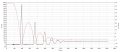
Although shock absorption improved slightly, our testing revealed an even lower energy return than in the previous version.
With just 49.9% in the heel and 49.6% in the forefoot, the GT 1000 15 lacks the bounce and responsiveness needed for faster-paced efforts, making it far better suited to easy days or runners without speed ambitions.
| GT 1000 15 | 49.6% |
| Average | 61.5% |
Heel stack
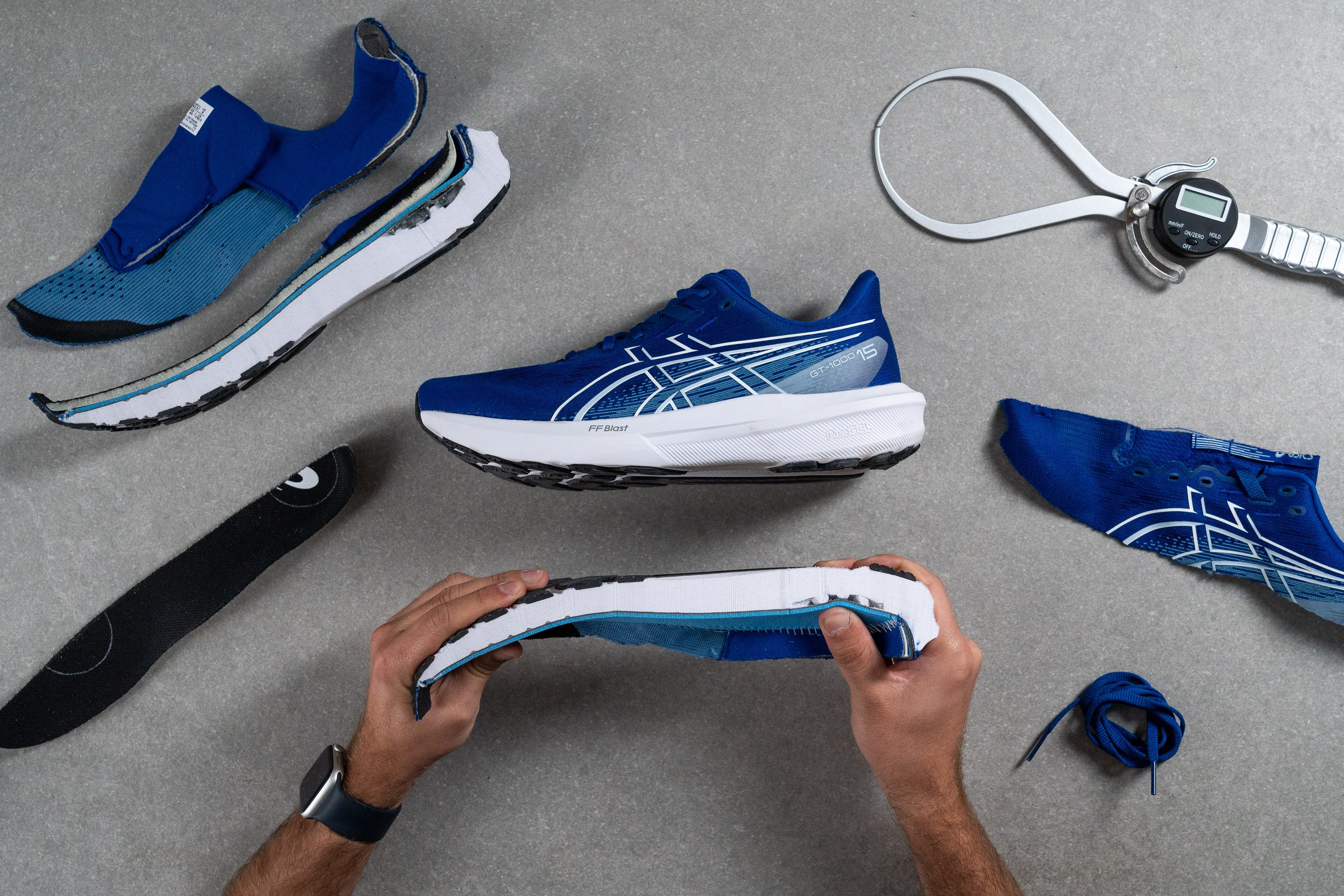
One of the key reasons the GT 1000 15 remains a moderately cushioned trainer is its stack height. ASICS deliberately kept it within a beginner-friendly range, and we believe that was the right decision for a shoe that continues to appeal to casual runners and those just starting their running journey.
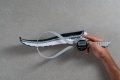
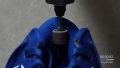
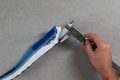
Using our digital calipers, we measured 35.0 mm in the heel, confirming its place in the mid-range cushioning category rather than the max-cushioned segment.
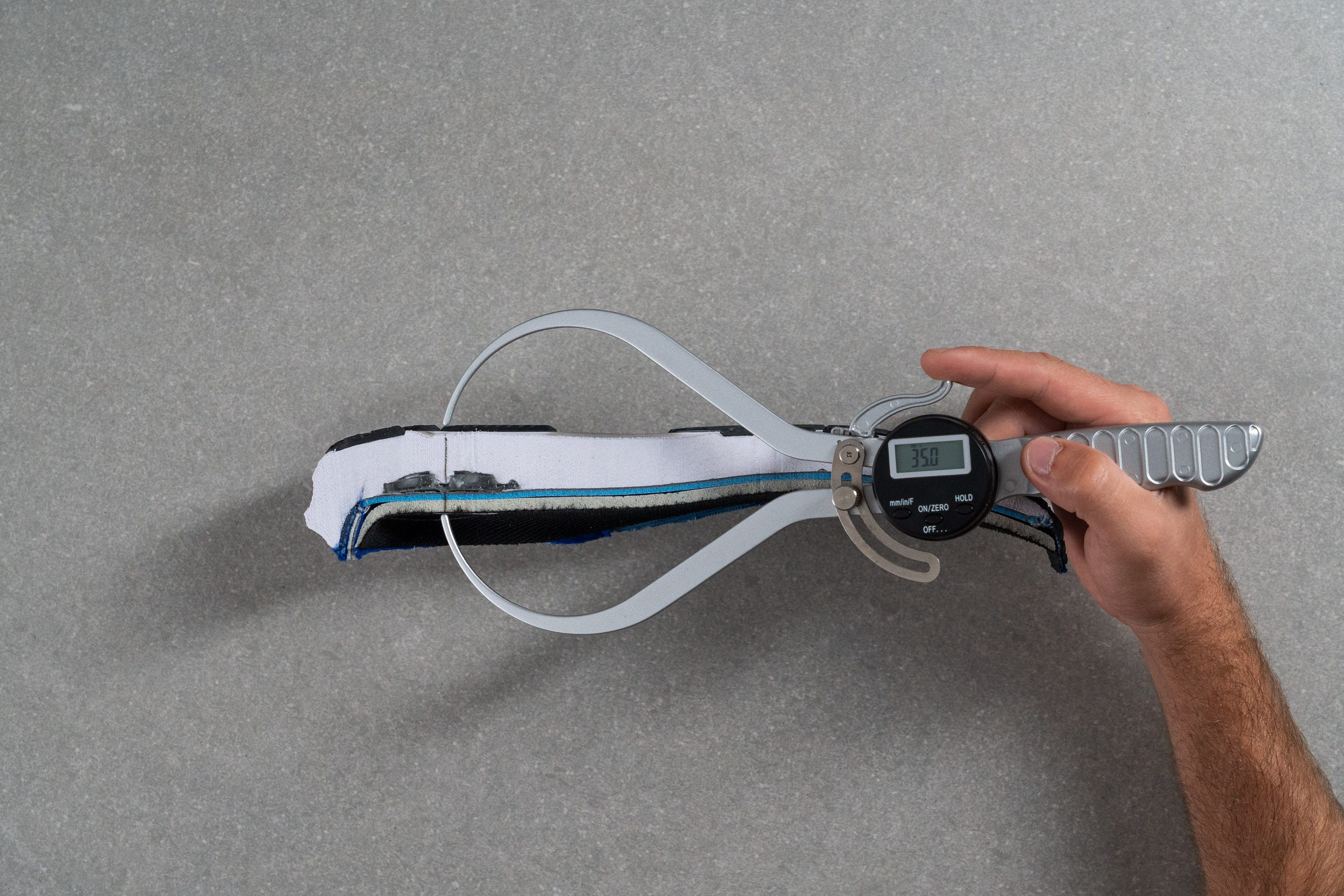
| GT 1000 15 | 35.0 mm |
| Average | 35.6 mm |
Forefoot stack
The same trend appears in the forefoot, where we measured just 25.1 mm.
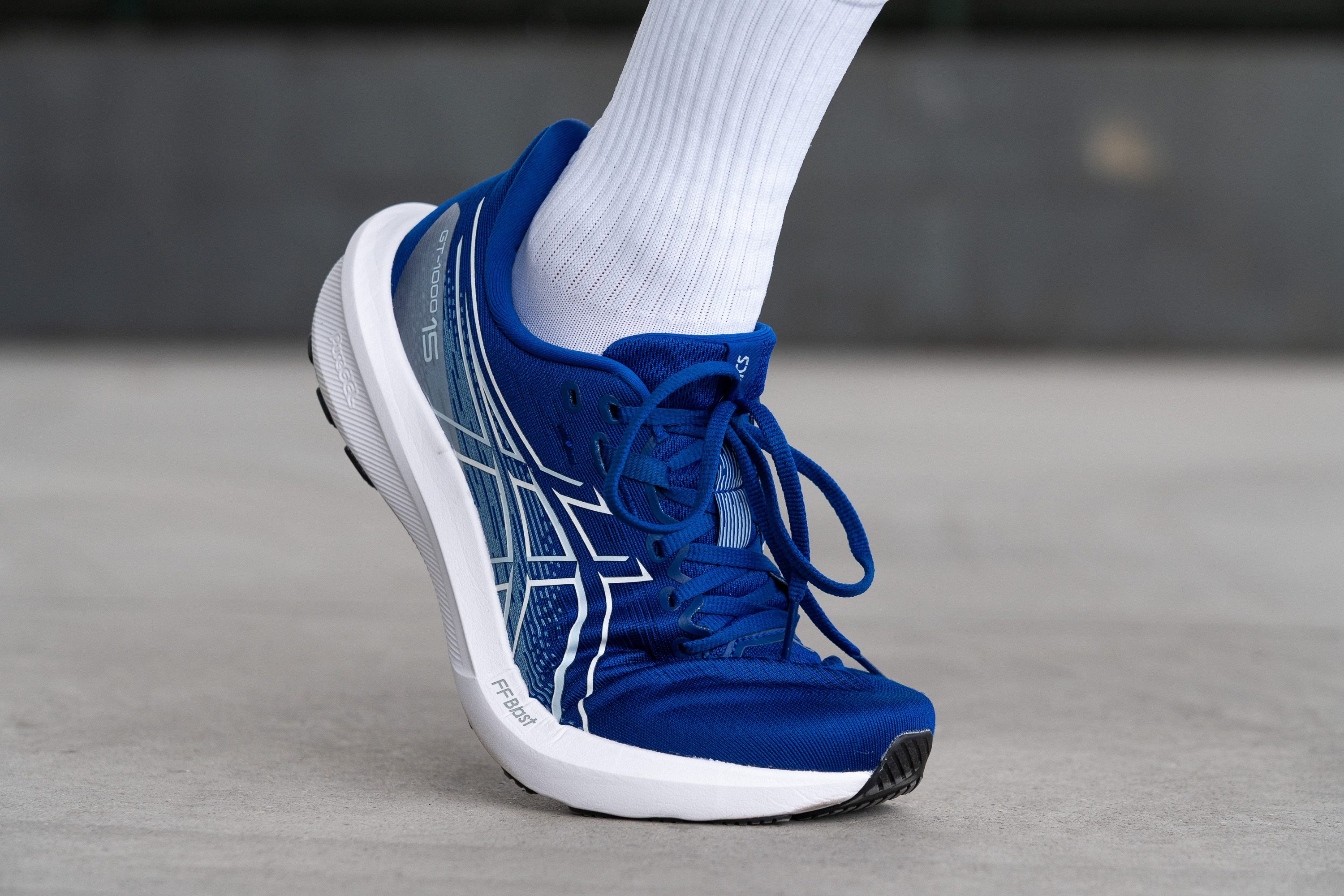
In fact, it's even more noticeable here, as the forefoot stack sits slightly below the current average.
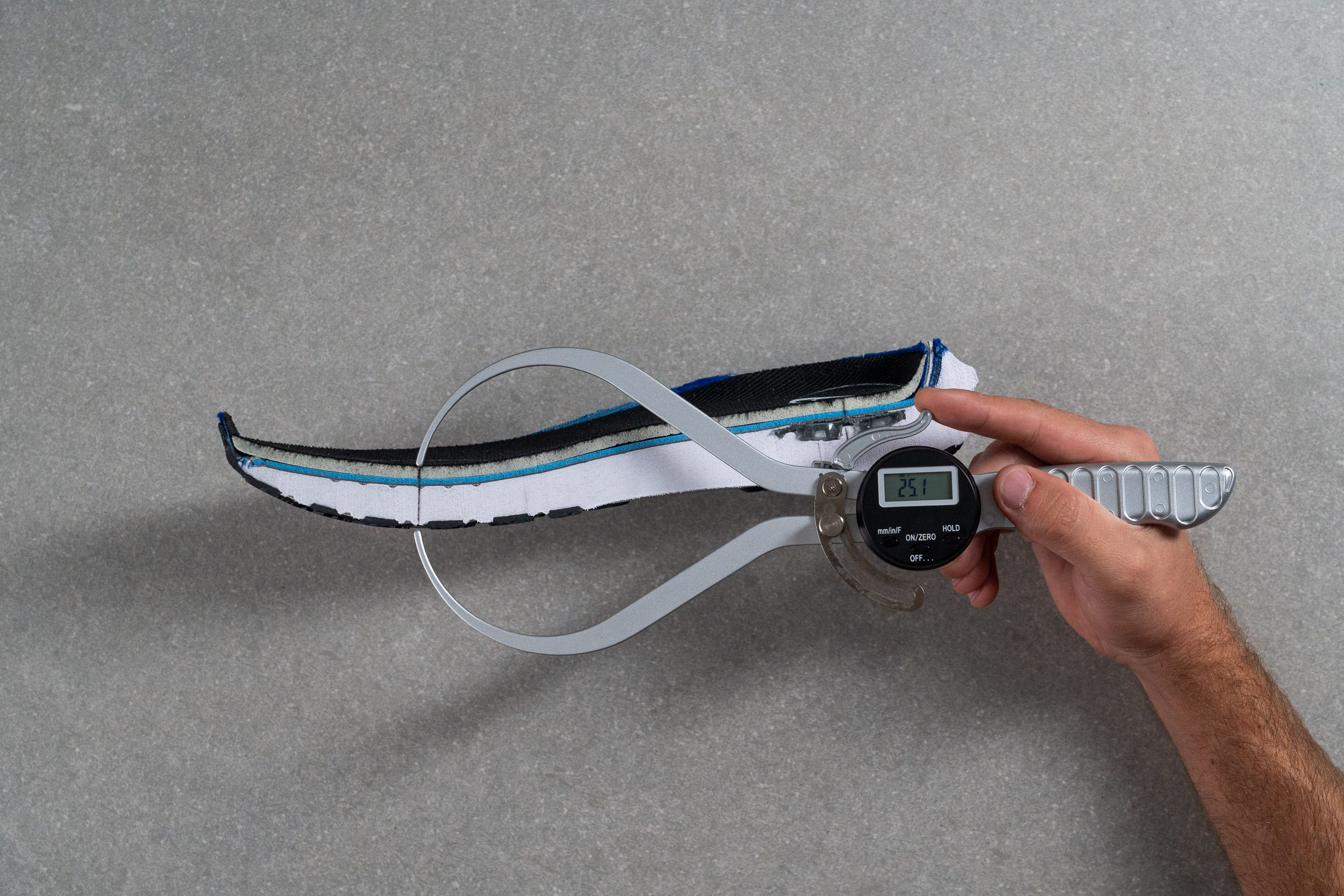
| GT 1000 15 | 25.1 mm |
| Average | 27.1 mm |
Drop
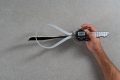
Although ASICS advertises an 8 mm heel-to-toe drop, our measurements told a slightly different story. Using digital calipers, we recorded a 9.6 mm offset, a bit higher than the official specification.
With nearly 10 mm separating the heel and forefoot, the GT 1000 15 delivers a geometry that we believe is especially appealing to heel strikers.
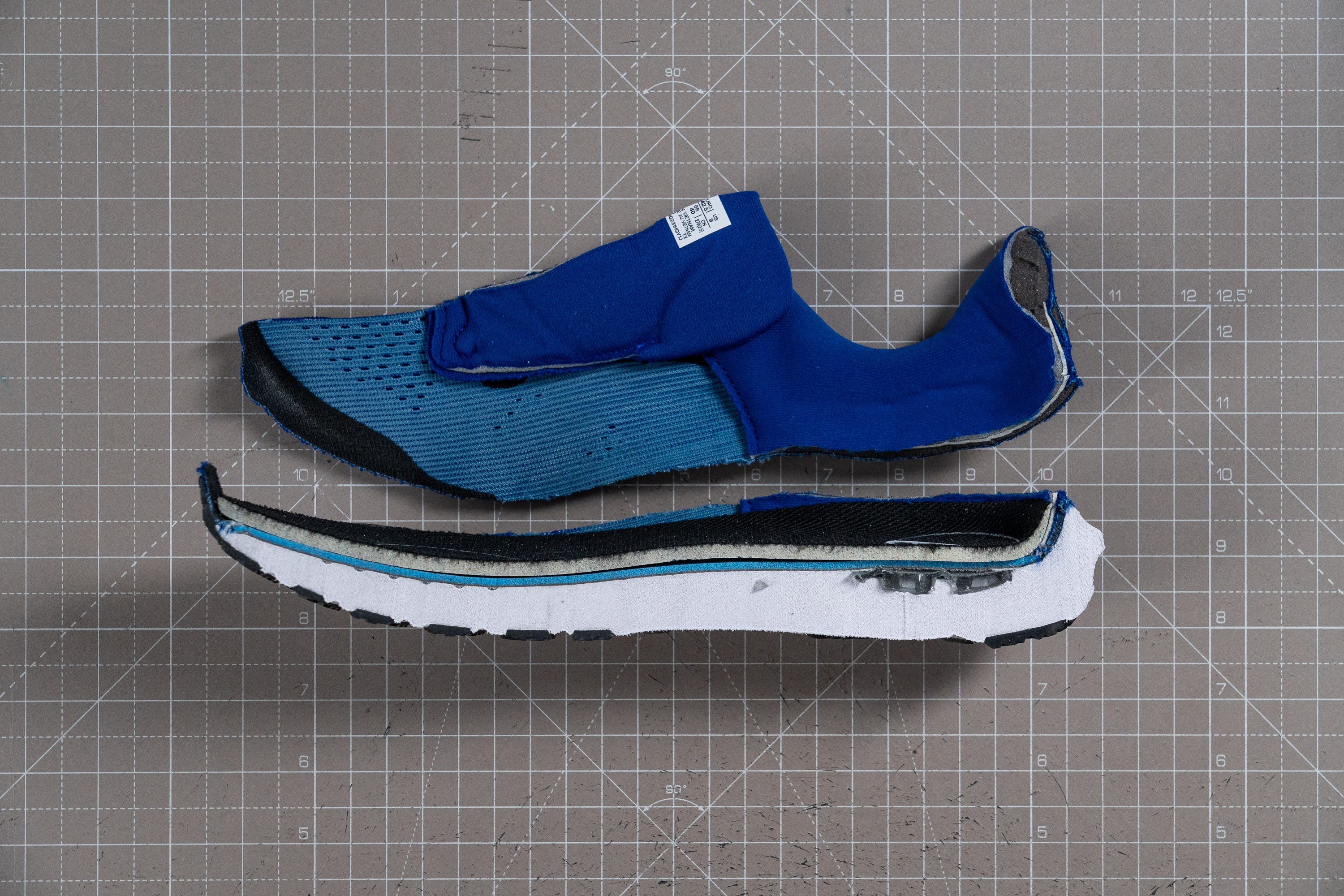
| GT 1000 15 | 9.9 mm |
| Average | 8.4 mm |
Midsole softness
ASICS introduced FF BLAST in the GT 1000 14, so we expected the same midsole to return in this update. In our experience, the brand tends to keep its foam compounds for 3 or 4 years before rolling out a major upgrade.
After testing, we confirmed that it's the exact same formulation used in the previous version. Our durometer measured 33.6 AC, a result that lands close to the current lab average. As a result, the ride feels nicely balanced, neither especially plush nor firm, and we think that some runners may even find it softer than expected for a stability-focused trainer.
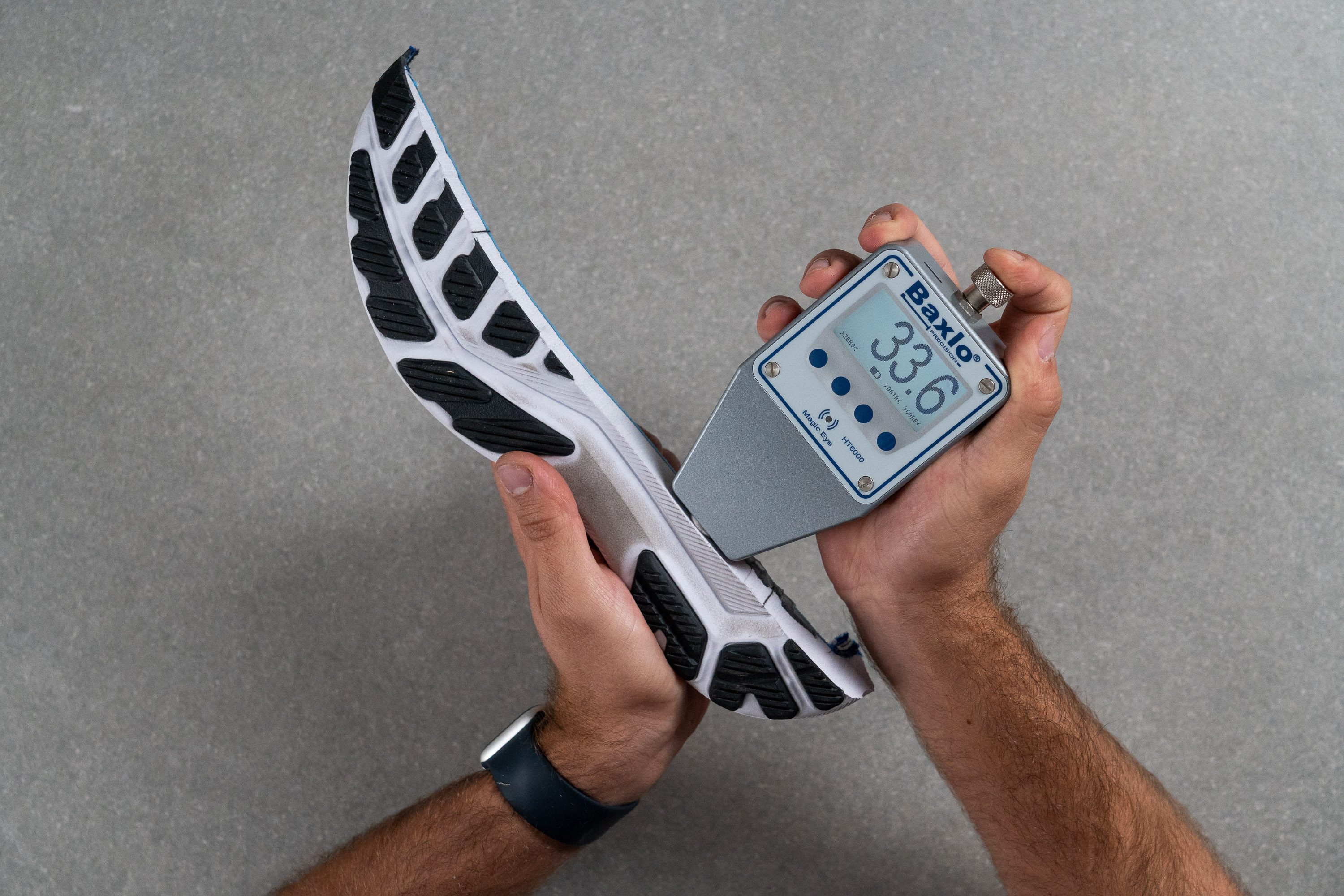
| GT 1000 15 | 33.6 AC |
| Average | 35.4 AC |
Rocker
Another element that remains unchanged is the absence of an aggressive rocker geometry.
Given the shoe's moderate stack height and naturally flexible design, we believe that this approach suits the GT 1000 15 perfectly, helping it maintain the easy-going versatility and all-day comfort that make it equally suitable for running and everyday wear.
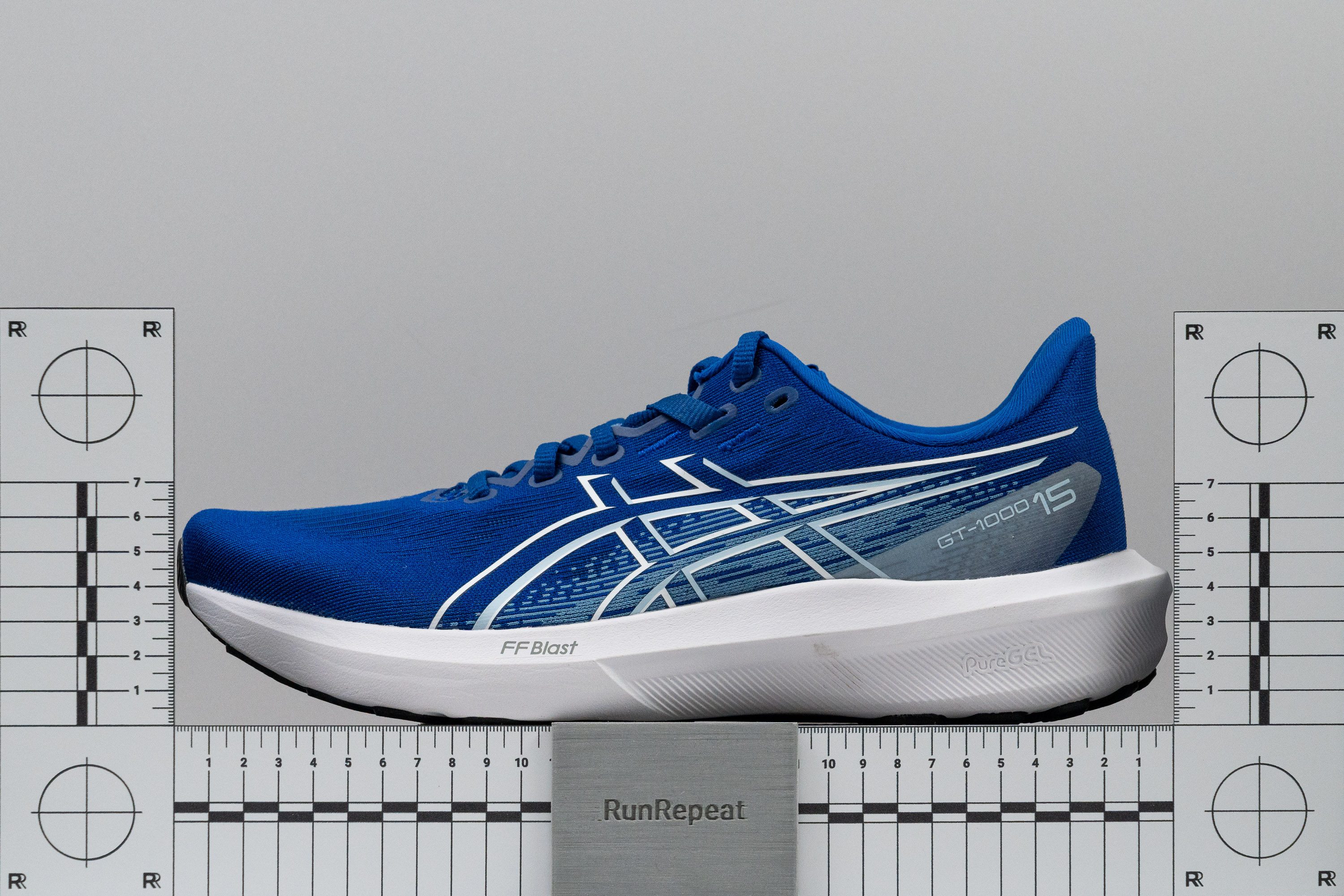
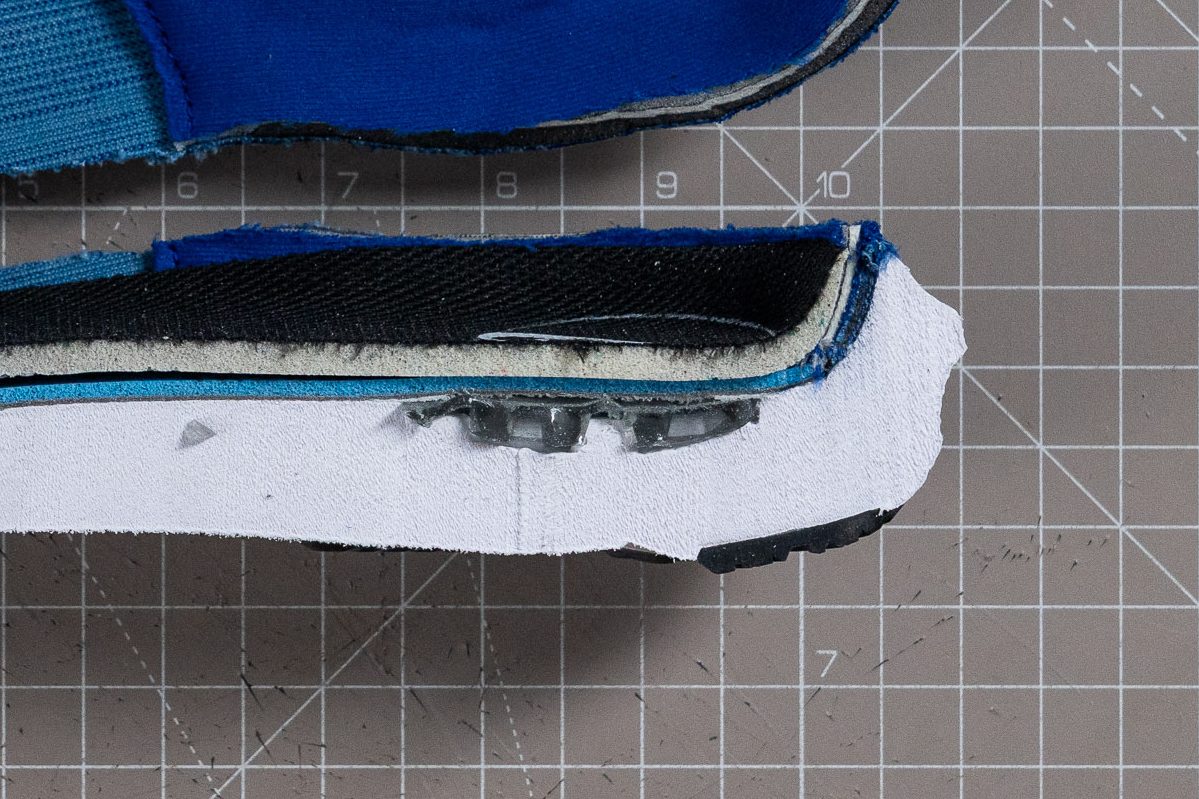
PureGEL
ASICS also retains the PureGEL insert in the heel. While it helps smooth out landings and adds a touch of extra comfort at impact, it also takes away some liveliness from the ride, as this material offers very little energy return.
As we've mentioned in other running shoes with PureGEL, we're still not entirely convinced that the trade-off is worthwhile.
Size and fit
Size
Internal length
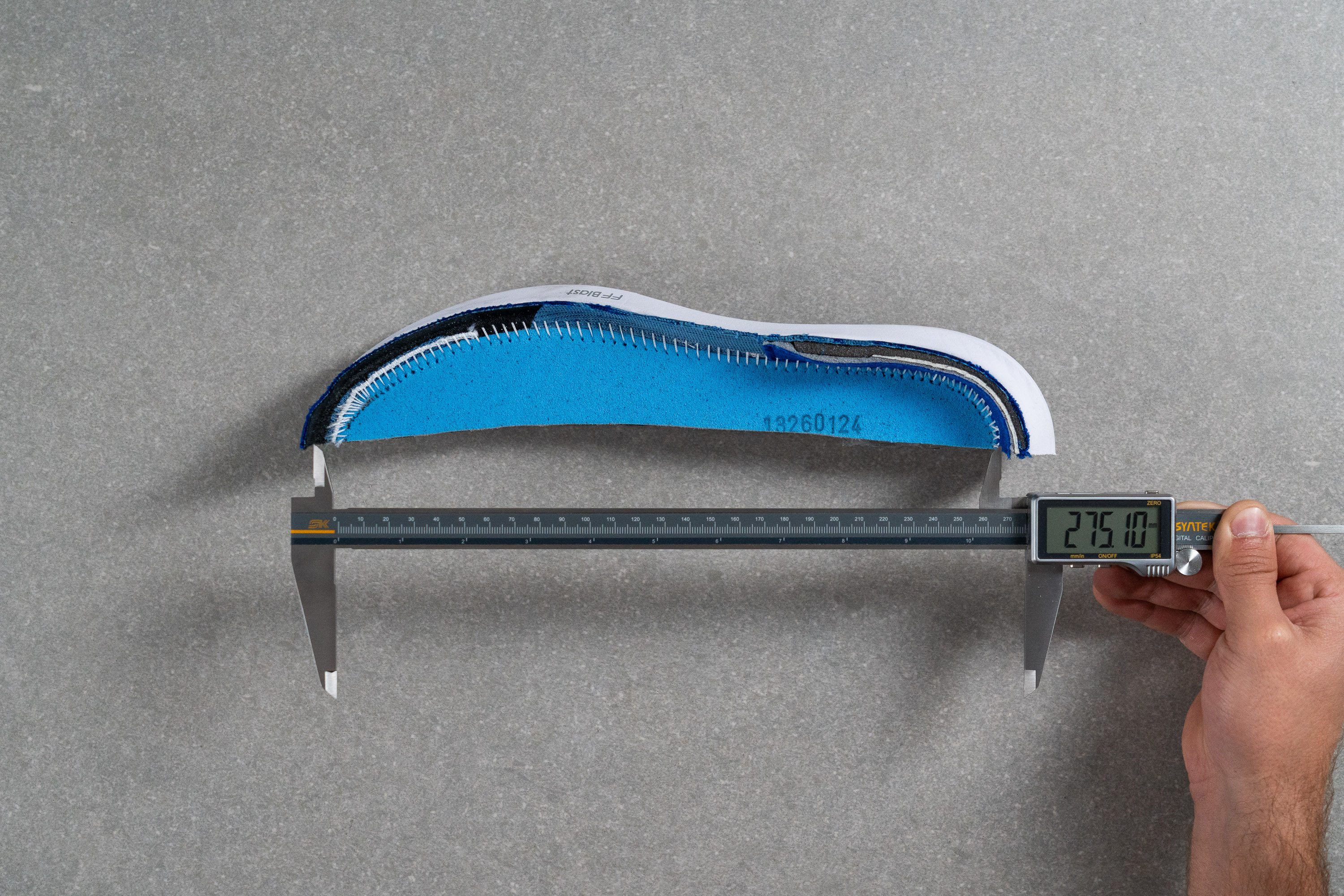
| GT 1000 15 | 275.1 mm |
| Average | 269.3 mm |
Width / Fit
The GT 1000 lineup has long offered a surprisingly accommodating fit by ASICS standards, and our measurements confirm that this characteristic remains intact in version 15.
Using our digital calipers, we recorded 96.9 mm at the widest part of the forefoot, a result that sits comfortably above the current lab average. On top of that, it's worth noting that ASICS usually offers this shoe in wide sizes, although availability varies by country.
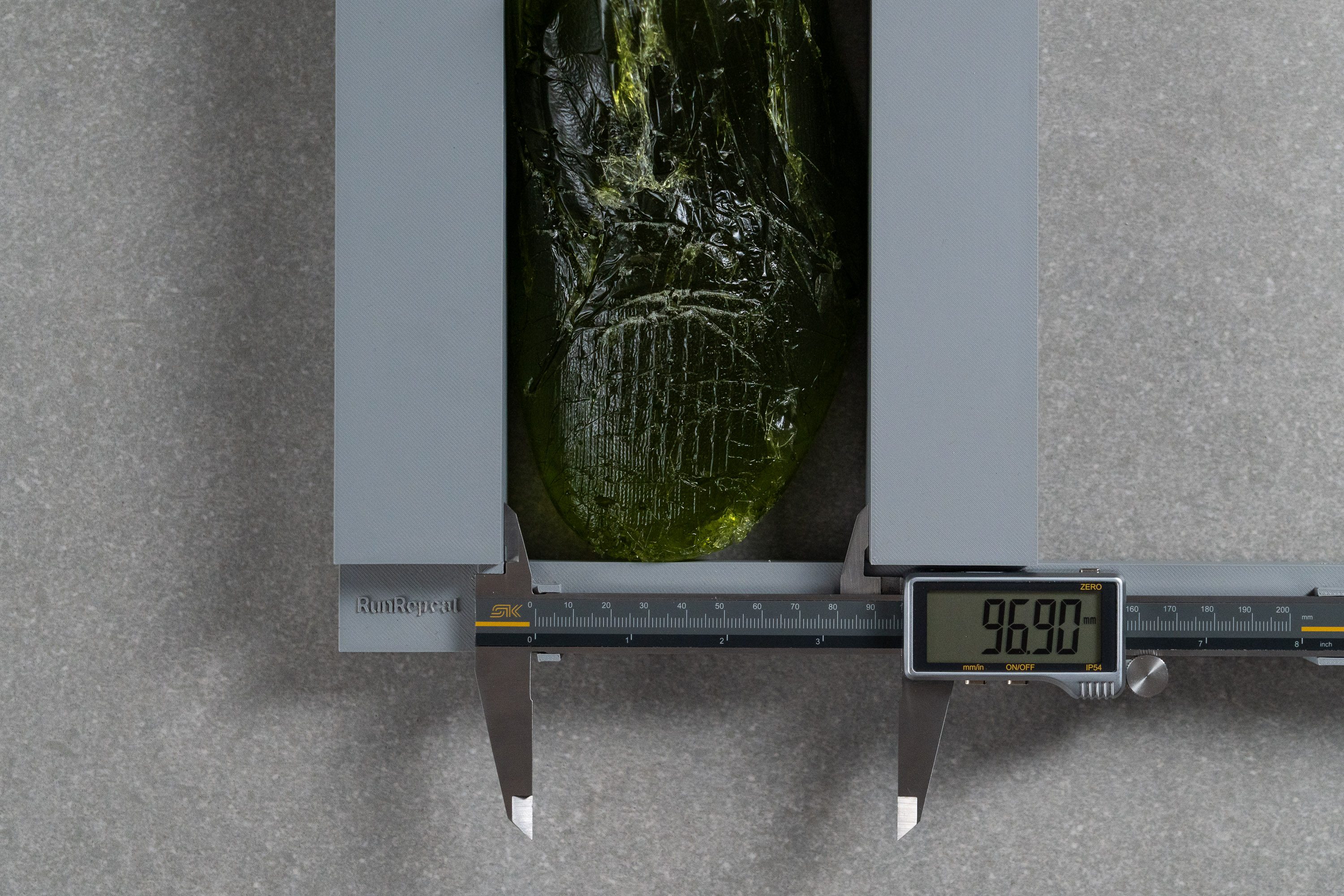
| GT 1000 15 | 96.9 mm |
| Average | 95.2 mm |
Toebox width
As we mentioned earlier, the GT 1000 15 can be considered relatively wide... by ASICS standards. However, it's nowhere near a truly foot-shaped design like the Altra Provision 8, and our 73.3 mm toebox measurement clearly reflects that distinction.
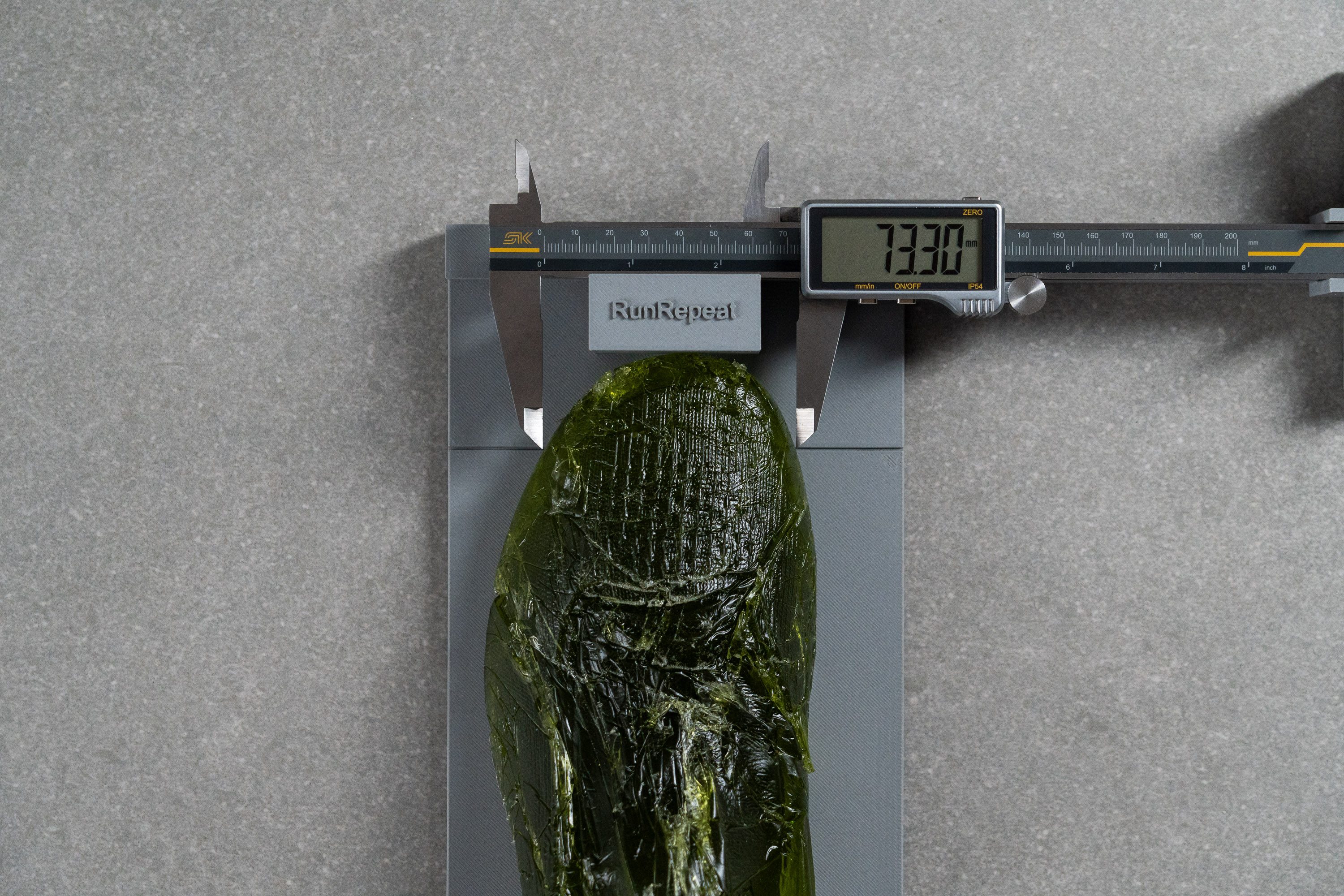
| GT 1000 15 | 73.3 mm |
| Average | 73.2 mm |
Toebox height
We took one final measurement, this time focusing on vertical space rather than width by assessing the toebox height.
At 27.4 mm, the GT 1000 15 delivers a comfort-oriented fit with enough room above the toes to avoid feeling restrictive, yet without creating the loose or sloppy sensation found in some higher-volume designs.
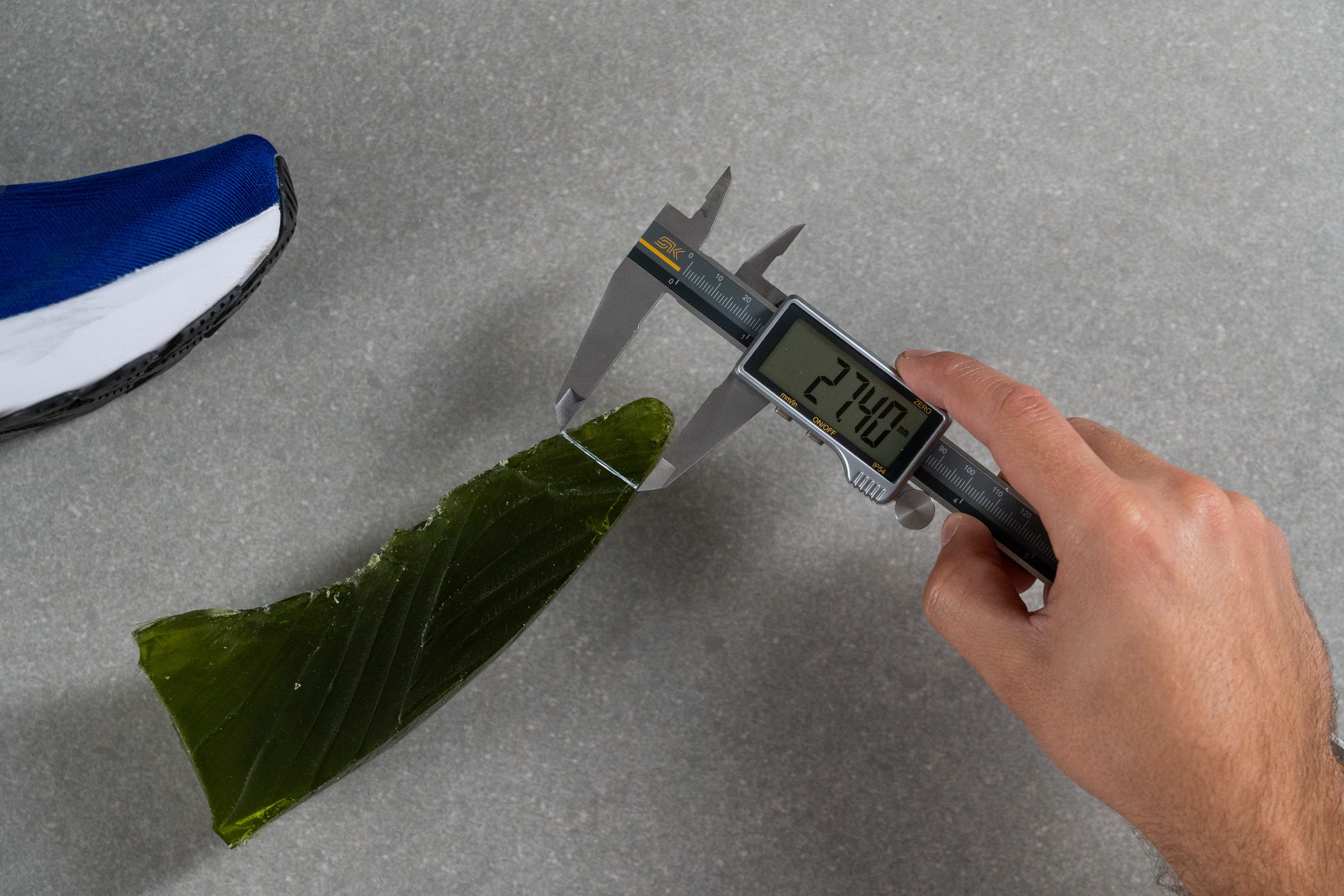
| GT 1000 15 | 27.4 mm |
| Average | 27.0 mm |
Traction / Grip
Traction test
The GT 1000 15 delivers reliable grip, although the absence of full-length ASICSGRIP rubber became evident in our SATRA TM144 test. It recorded an average score of 0.52, which we believe translates into confident traction on dry surfaces and dependable grip in wet conditions.
| GT 1000 15 | 0.51 |
| Average | 0.53 |
Outsole design
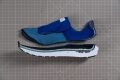
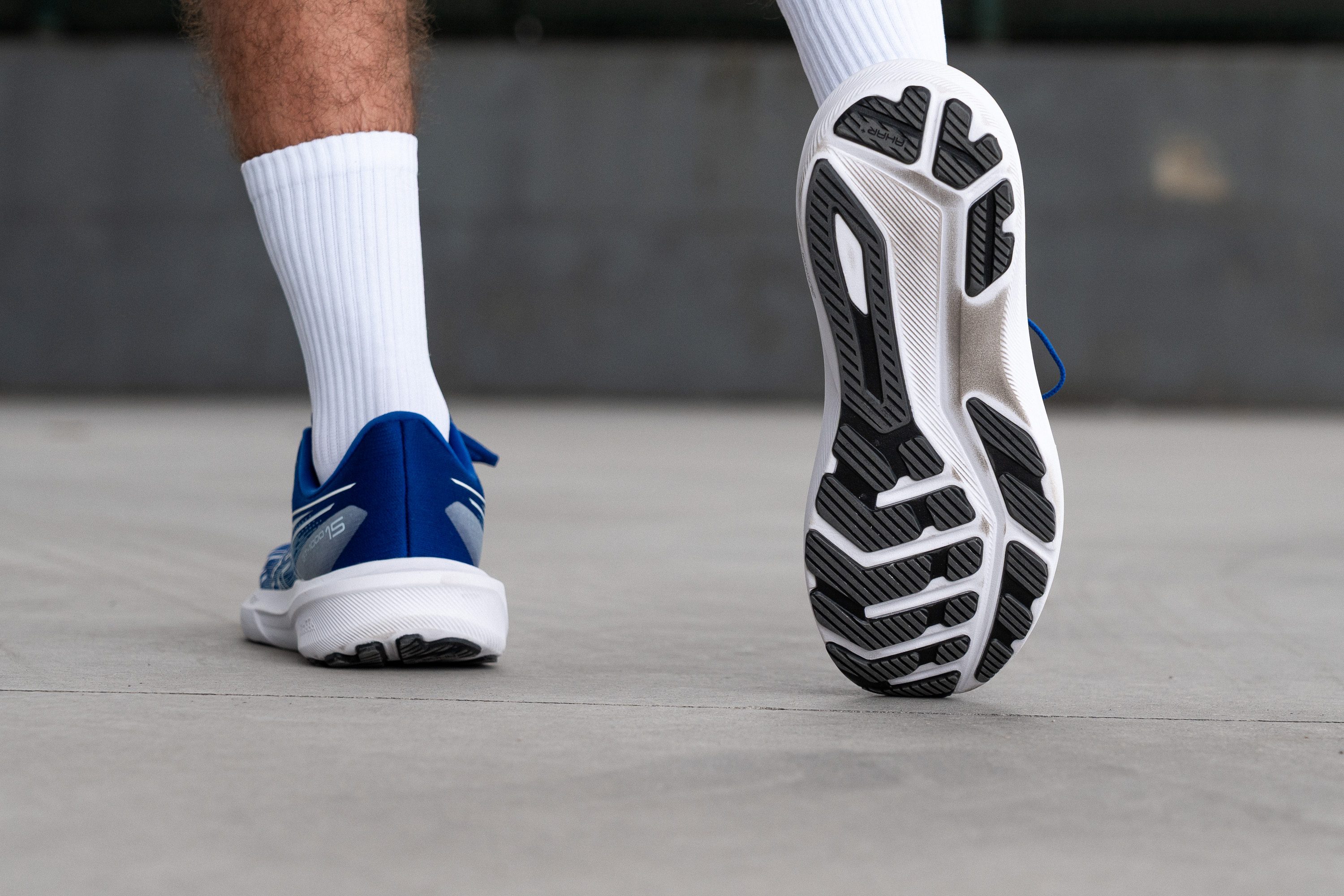
One of the biggest reasons to choose version 15 over a discounted GT 1000 14 is the outsole upgrade. ASICS now uses AHARPLUS rubber from heel to toe, whereas the previous version reserved AHARPLUS for the heel and relied on the less durable AHAR LO compound across the rest of the outsole.
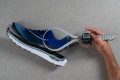
Outsole coverage is solid, with plenty of rubber under both the heel and forefoot. However, ASICS still leaves a large section of exposed foam through the midfoot. While this helps reduce weight and increase flexibility, the uncovered area can collect dirt quickly and may wear faster for runners who regularly contact that section.
Flexibility / Stiffness
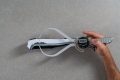
We were pleased to find that the ASICS GT 1000 15 remains highly flexible, requiring just 12.6N in our bend test. As a result, it feels comfortable for walking and easy runs, avoiding the rigid sensation often associated with more structured stability shoes.
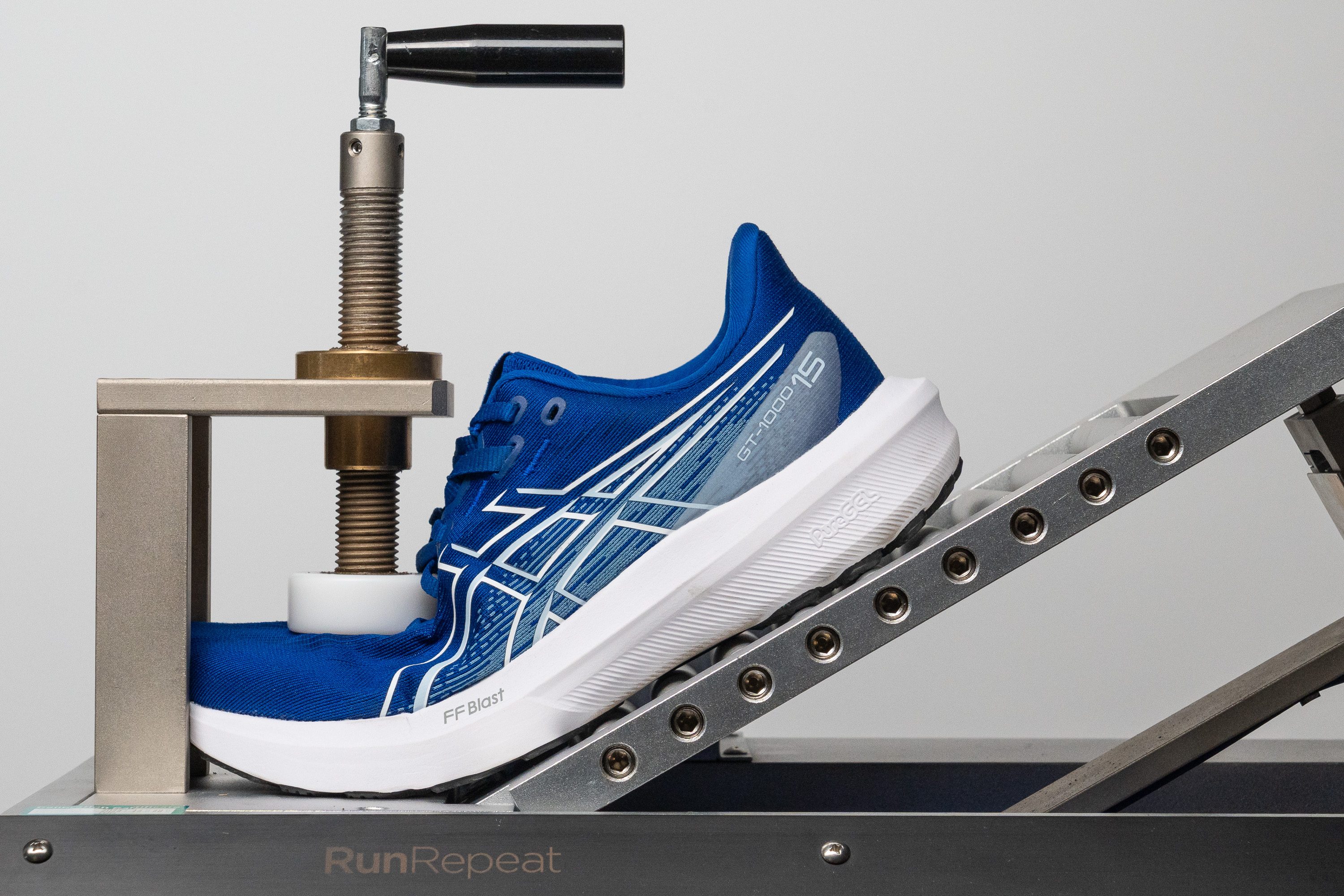
| GT 1000 15 | 12.6N |
| Average | 15.5N |
Weight
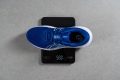
The outsole updates bring a small weight increase up to 9.8 oz or 278g, but the difference is so minor that we found it impossible to notice on the run.
That said, in our view, the GT 1000 15 still feels slightly heavy for its stack height and feature set, although that's hardly surprising given the absence of a modern supercritical EVA foam.
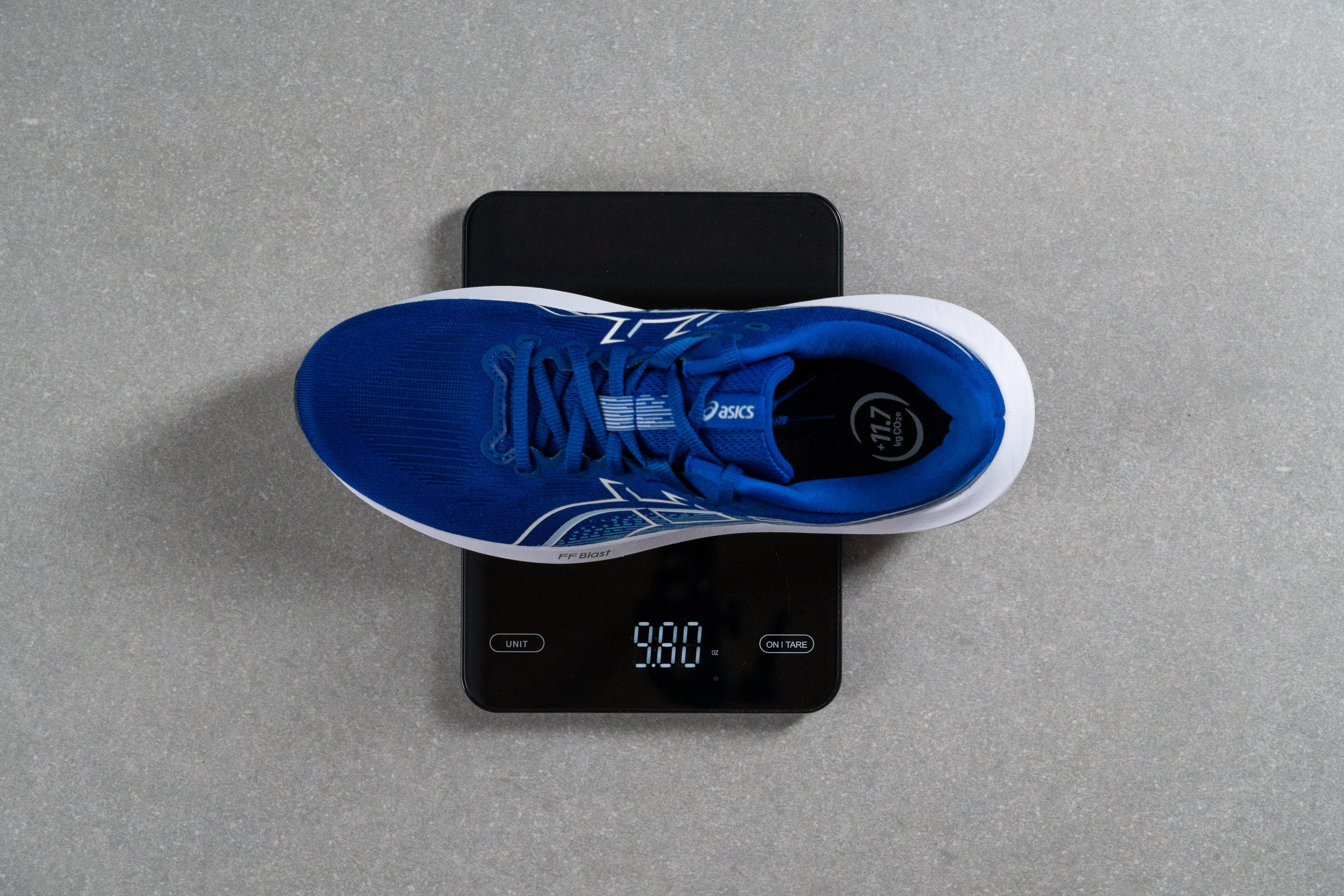
| GT 1000 15 | 9.8 oz (278g) |
| Average | 9.2 oz (261g) |
Stability
Lateral stability test
The standout technology in the GT 1000 15 is the 3D GUIDANCE SYSTEM, the feature that transforms this shoe from a standard daily trainer into a true stability-focused option.
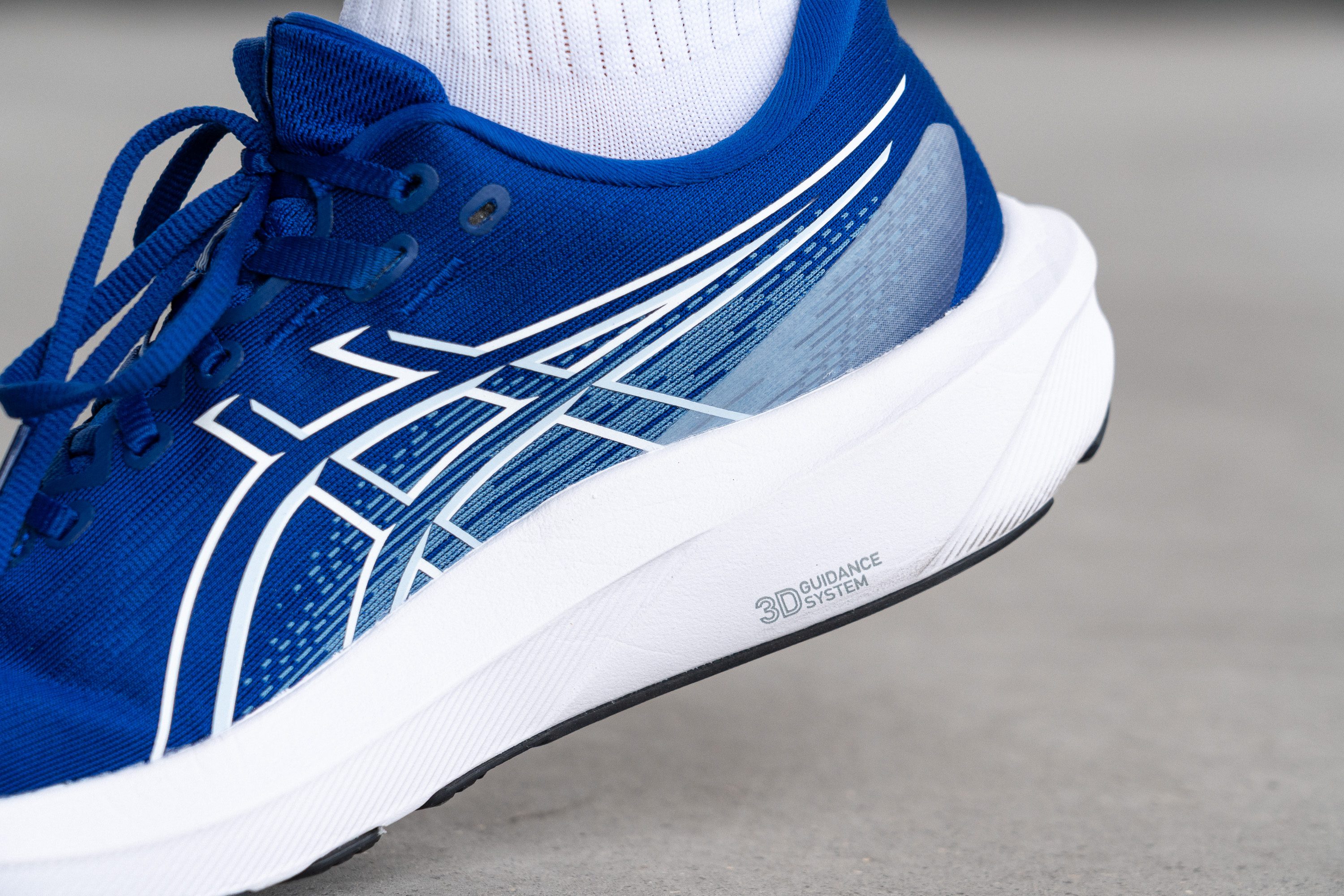
Based on our testing, the GT 1000 15 continues to deliver the stable and predictable ride that has defined the series for years. We think it works exceptionally well for neutral runners seeking a touch of extra support, while also providing enough guidance for those with mild to moderate overpronation.
Torsional rigidity
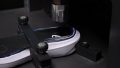
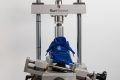
As expected, the GT 1000 15 shows a moderate level of torsional rigidity, a characteristic that plays an important role in enhancing lateral stability. However, it's far from overly rigid, as our custom-built testing machine measured a reasonable 14.0 Nm.
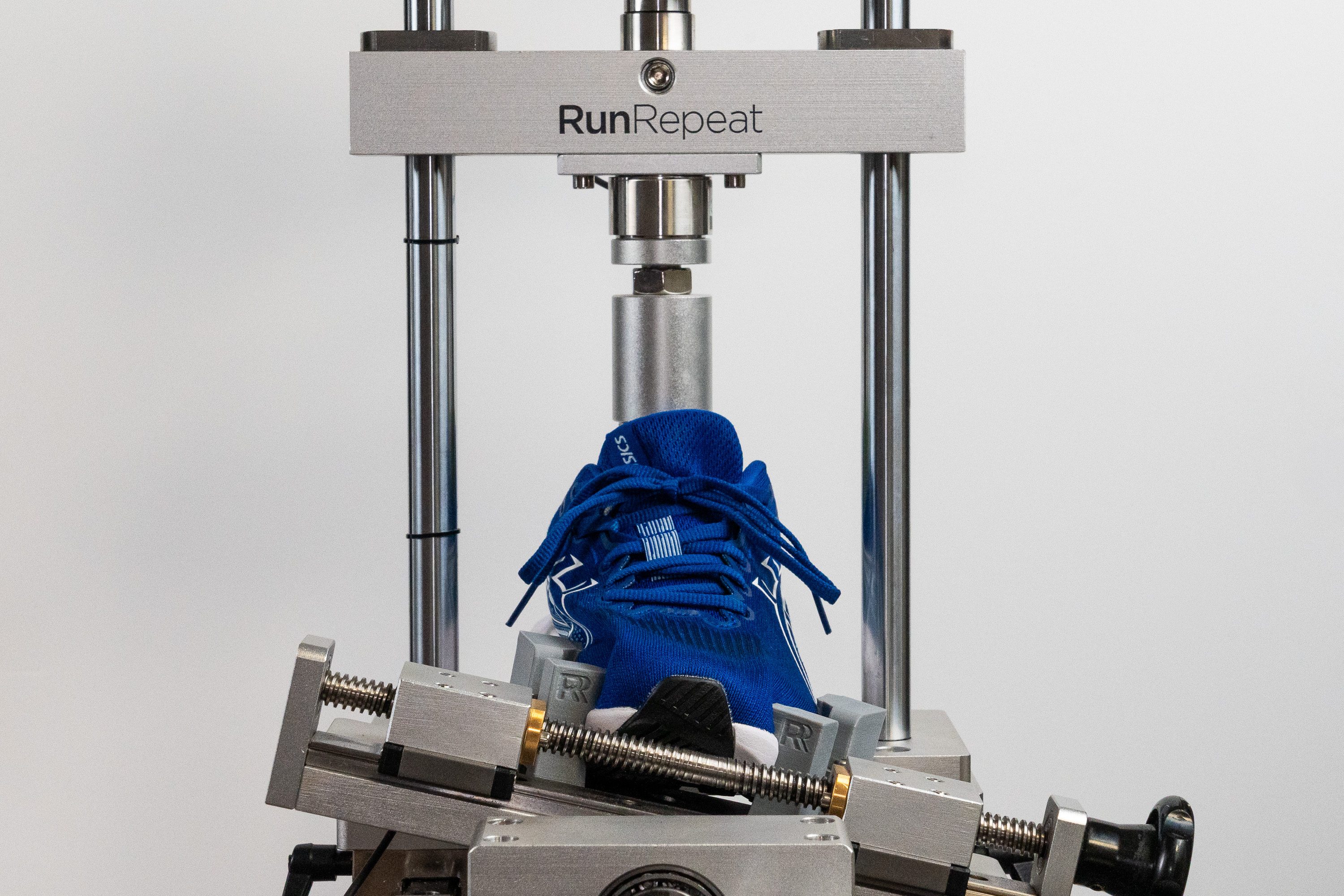
| GT 1000 15 | 14.0 Nm |
| Average | 14.3 Nm |
Heel counter stiffness
We also found that ASICS deliberately steers the GT 1000 15 closer to the feel of a neutral daily trainer than a highly supportive model like the Kayano. The heel counter offers only moderate resistance, earning a 3/5 in our manual assessment and contributing to a more comfortable experience.
| GT 1000 15 | 3 |
| Average | 2.9 |
Midsole width - forefoot
One of the things we enjoy most about lab testing is how it helps explain what we feel on the run. During our first miles in the GT 1000 15, we immediately noticed a slightly more stable ride than in version 14 despite the two shoes feeling remarkably similar at first glance. Once we brought it into the lab, the reason became obvious.
Although the foam and its softness remain unchanged, the platform has grown substantially. We found that ASICS has fully embraced the broad-platform approach now common among stability shoes, increasing the forefoot width from 113.6 mm to an impressive 119.4 mm.
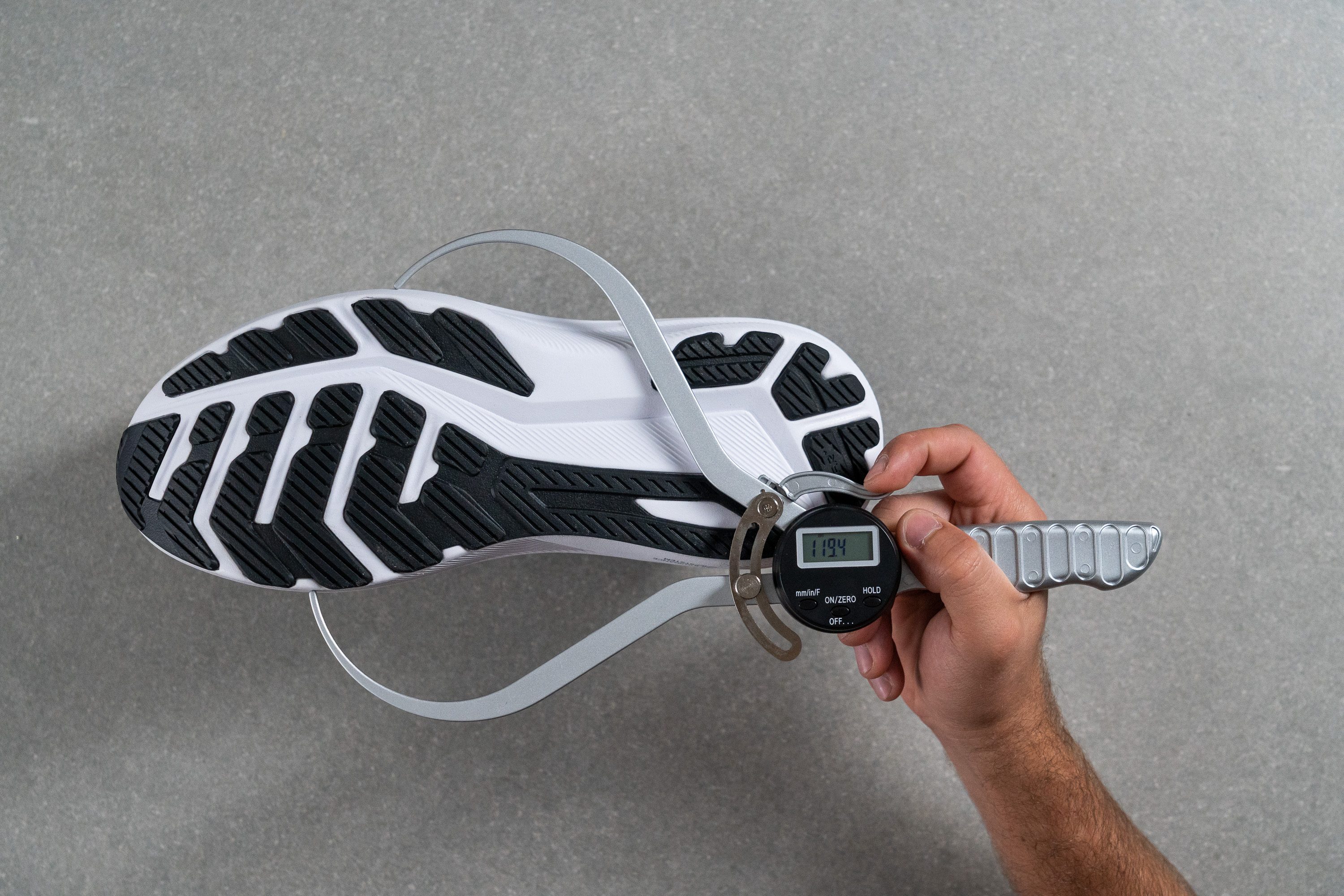
| GT 1000 15 | 119.4 mm |
| Average | 115.1 mm |
Midsole width - heel
The heel receives the same treatment, expanding to 99.8 mm and creating an exceptionally broad landing platform here too.
In fact, we couldn't help but wonder whether ASICS may have gone a bit too far, as some runners might find this level of width excessive.
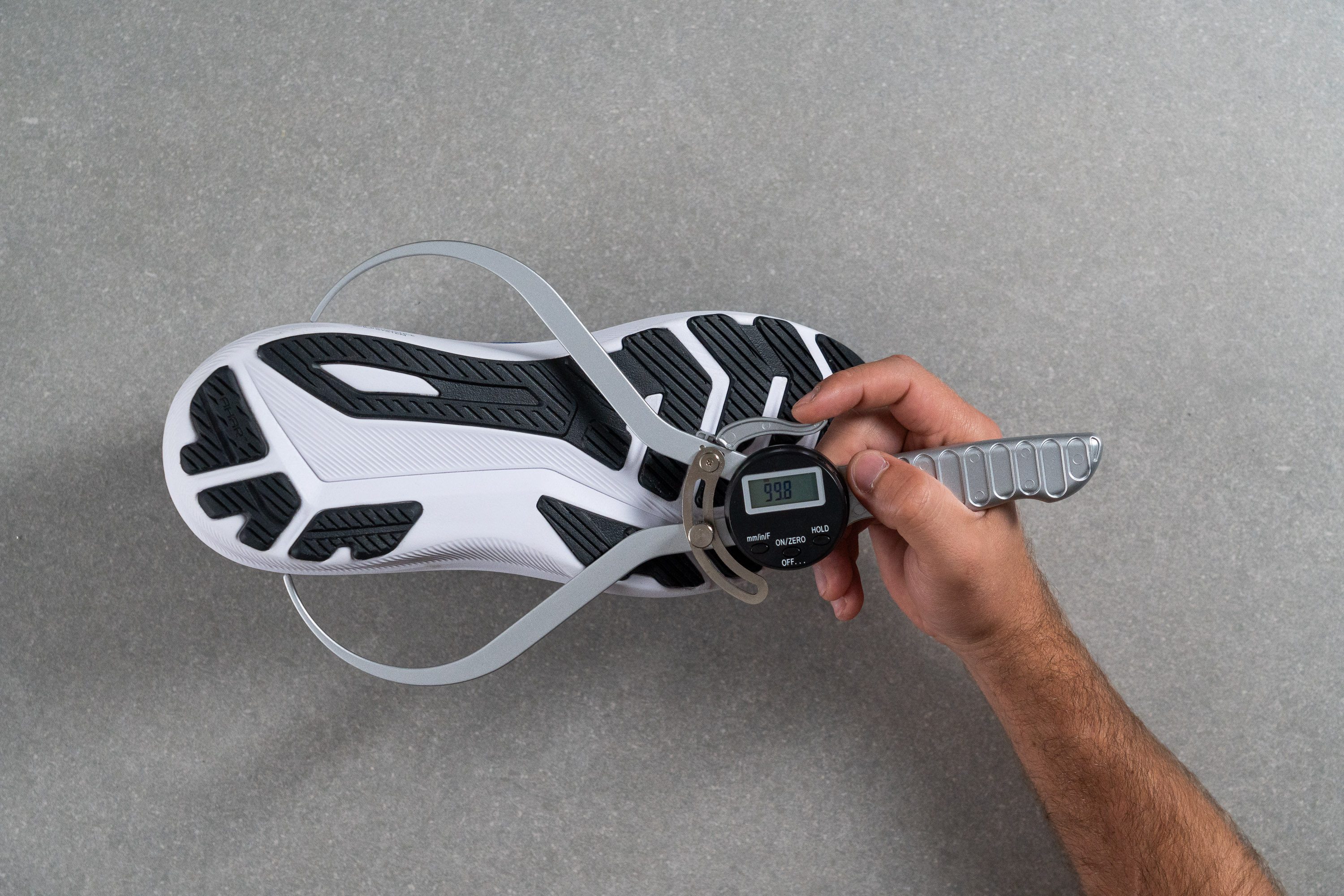
| GT 1000 15 | 99.8 mm |
| Average | 91.1 mm |
Durability
Toebox durability
The new engineered mesh upper impressed us with its comfort right from the first run. However, that plush and accommodating feel comes at a cost, as the material earned a low 1/5 in our initial Dremel durability test.
| GT 1000 15 | 1 |
| Average | 2.6 |
Heel padding durability
Fortunately, the heel padding helped balance things out, delivering a strong 4/5 score in our second durability test. That's also a clear improvement over what we saw in the toebox.
| GT 1000 15 | 4 |
| Average | 3.4 |
Outsole durability
Switching to full AHARPLUS rubber is a major upgrade for the GT 1000 15, and our durability testing clearly backs that up.
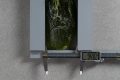
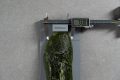
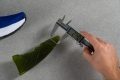
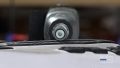
In our third Dremel test, the outsole delivered an outstanding result with just 0.5 mm of wear, suggesting that this shoe is built to withstand an enormous amount of mileage.
| GT 1000 15 | 0.5 mm |
| Average | 1.1 mm |
Outsole thickness
With a substantial 4.0 mm outsole and an outstanding result in our durability test, the GT 1000 15 is built for the long haul.
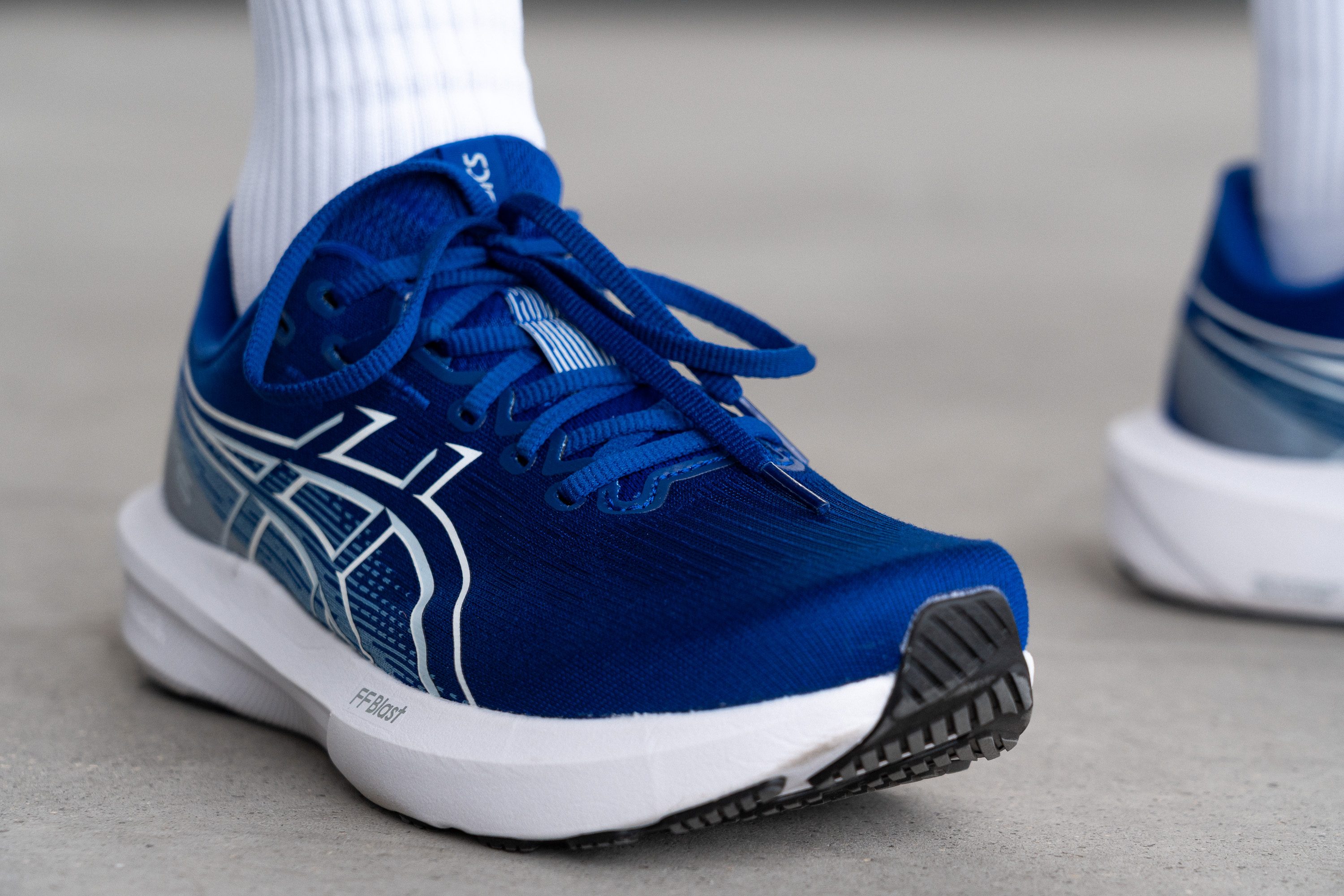
It's an excellent choice for runners frustrated by shoes that wear out after just a few months, as outsole longevity is clearly one of its strongest attributes.
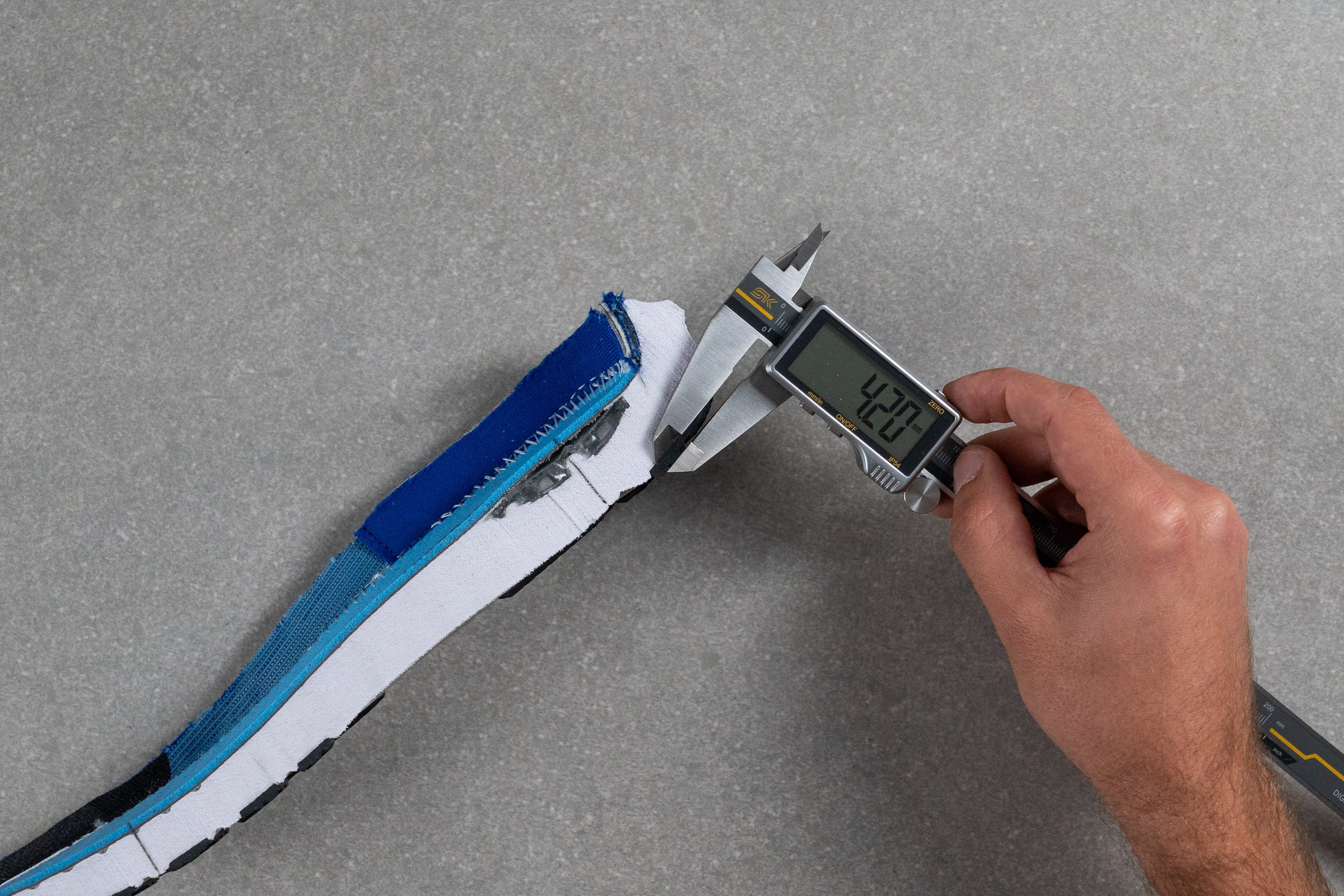
| GT 1000 15 | 4.0 mm |
| Average | 3.1 mm |
Misc
Insole thickness
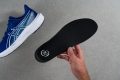
The GT 1000 15 features a slightly thicker-than-average insole, measuring 4.8 mm in our lab.
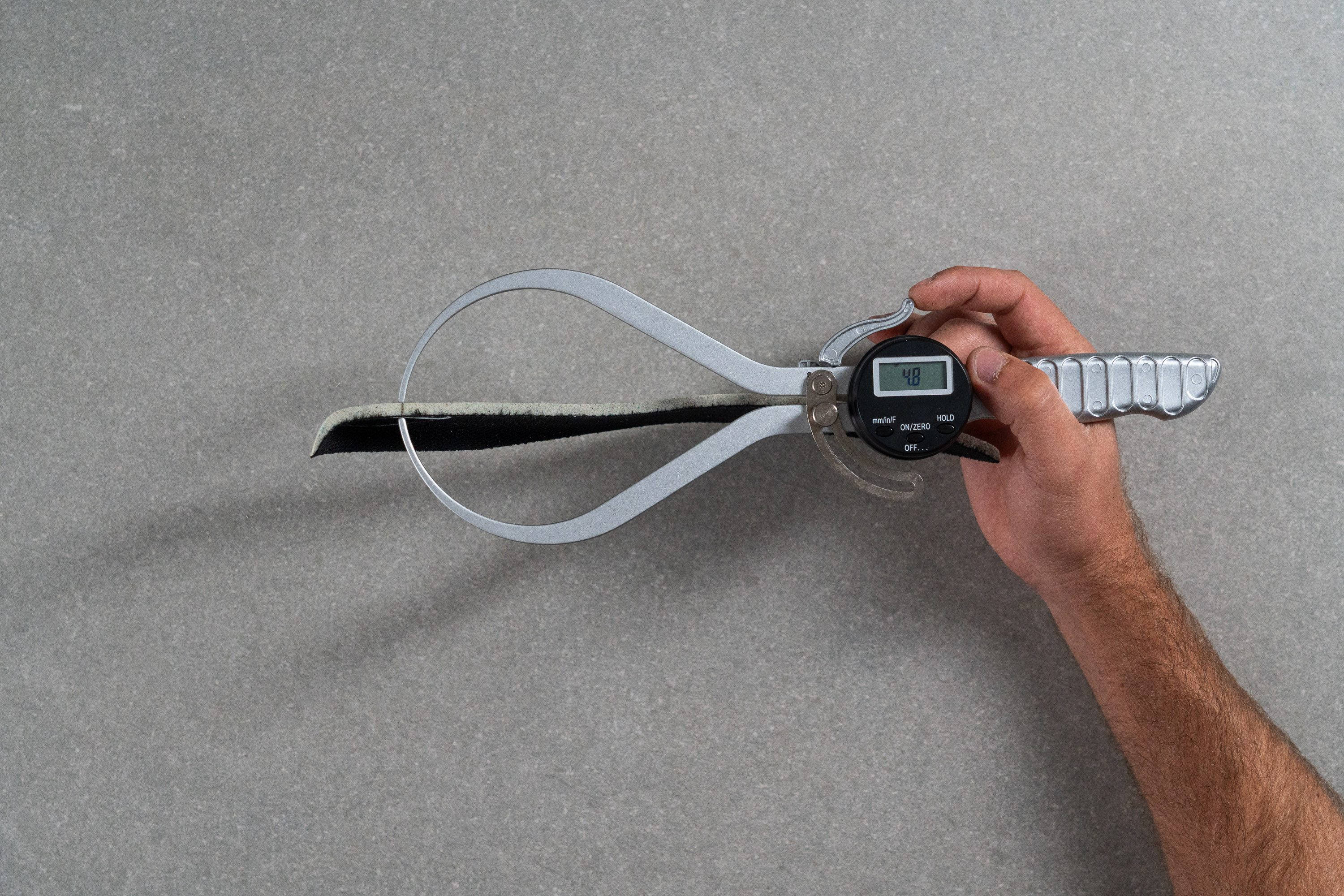
| GT 1000 15 | 4.8 mm |
| Average | 4.4 mm |
Removable insole
If the stock insole doesn't work for you, replacing it is straightforward. It can be removed with ease, and the shoe is compatible with most aftermarket insoles and orthotics.
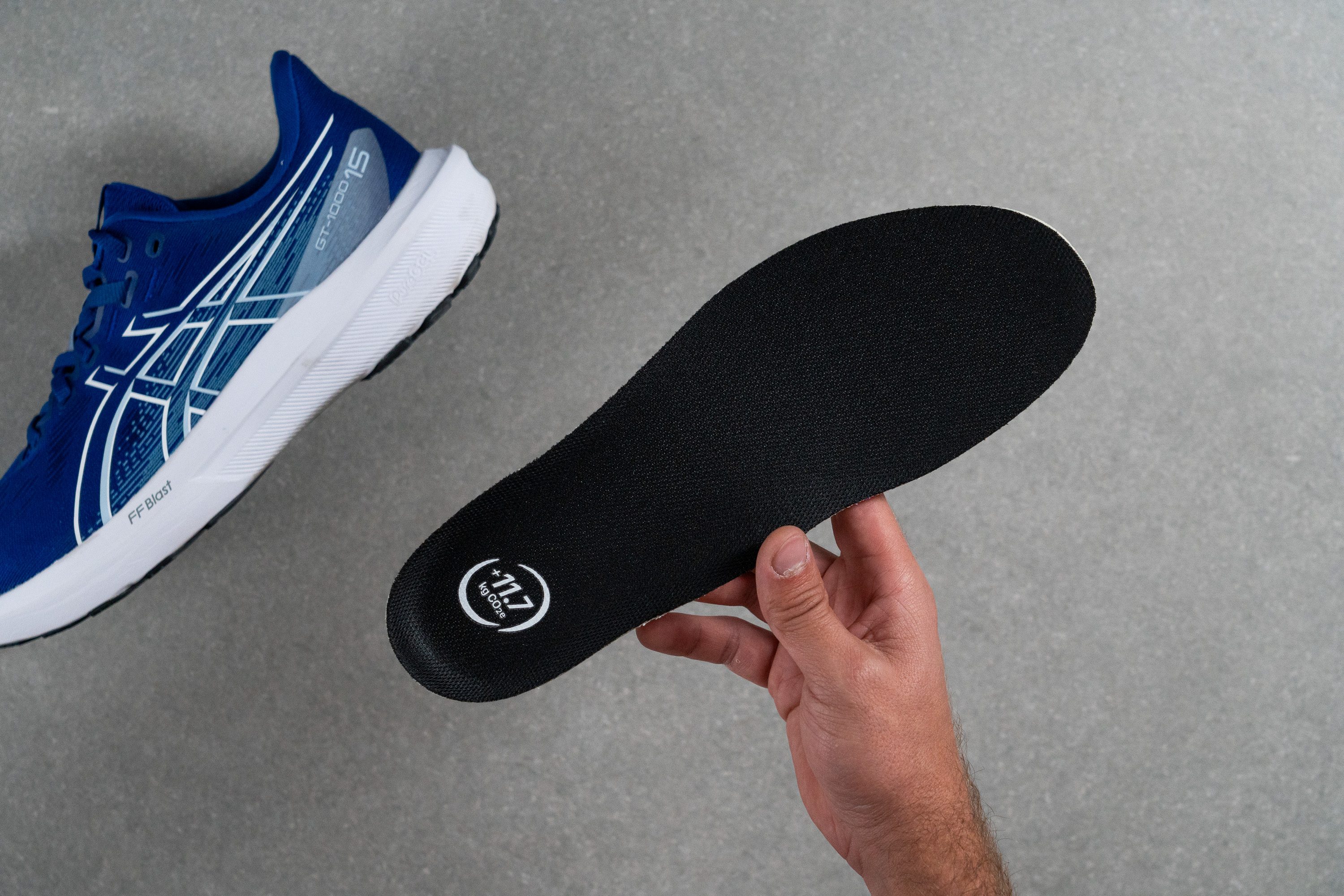
| GT 1000 15 | Yes |
Reflective elements
Unfortunately, ASICS decided not to include any reflective elements on the GT 1000 15.
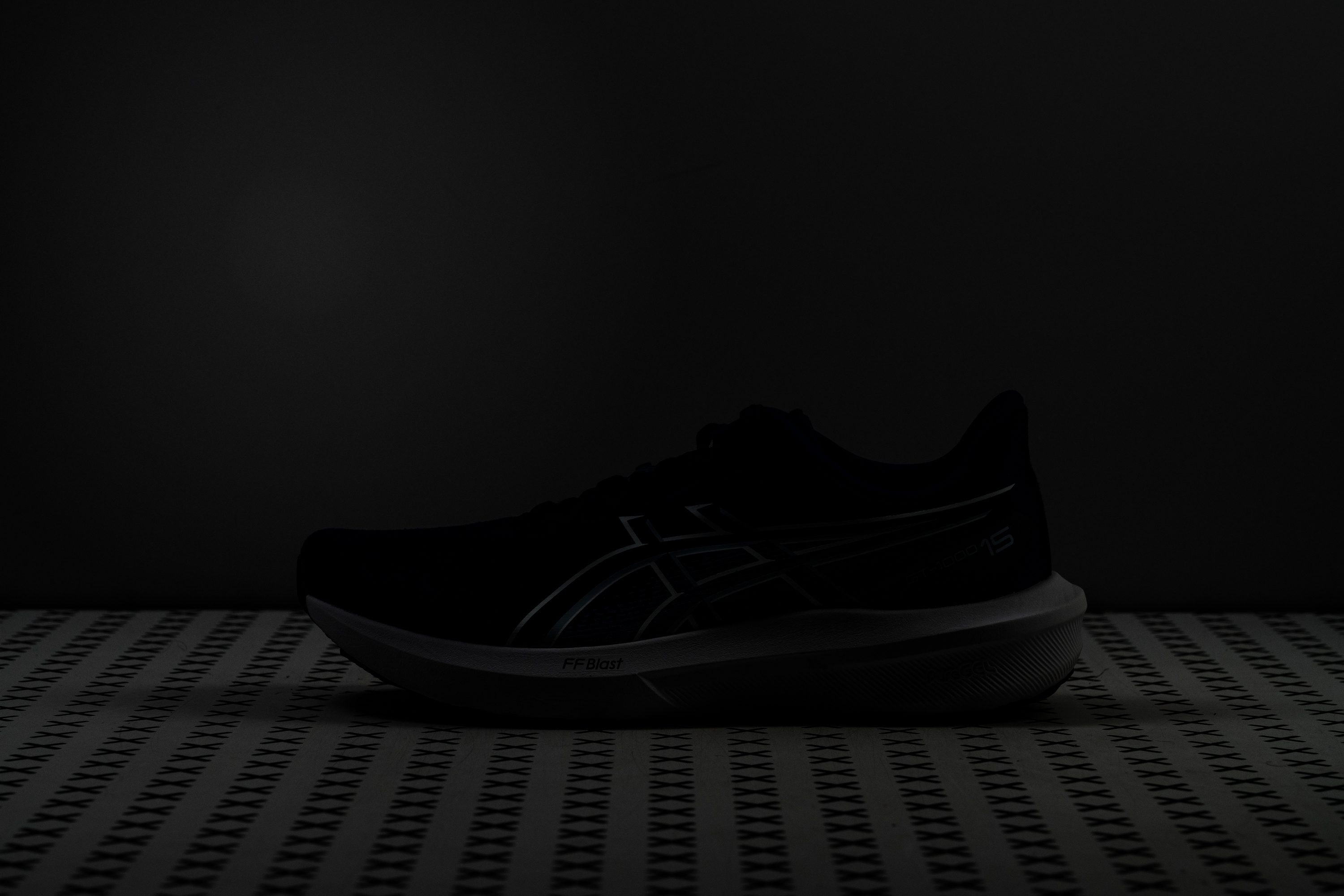
| GT 1000 15 | No |
Tongue padding
ASICS tends to keep things straightforward in its budget-friendly lineup, and the GT 1000 15 follows the same formula. It uses traditional laces paired with reinforced punched eyelets, delivering a simple yet dependable lockdown.
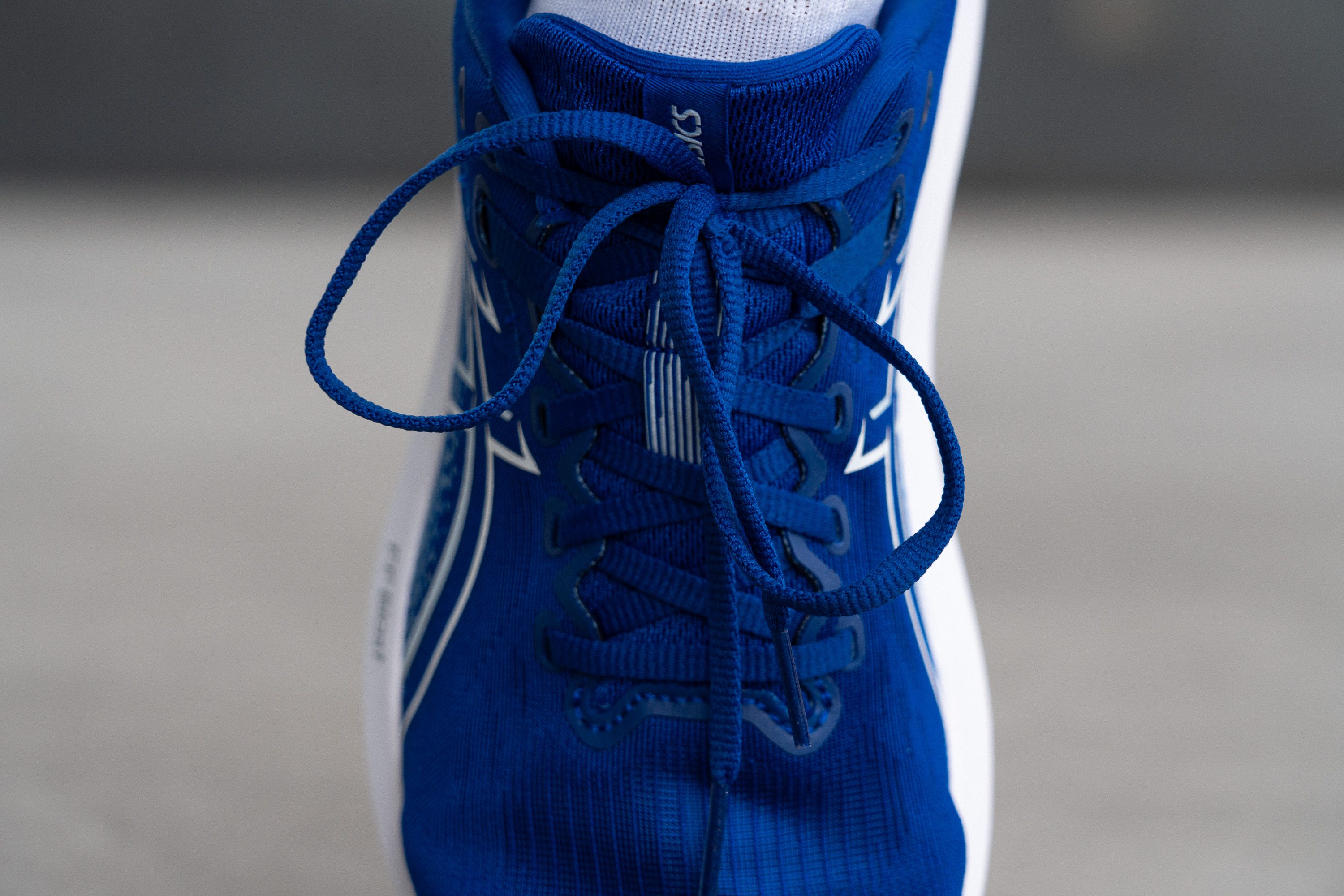
The tongue strikes a nice balance as well. At 5.7 mm thick, it carries slightly less padding than the previous version (8.1 mm) but still provides ample comfort, even during all-day wear.
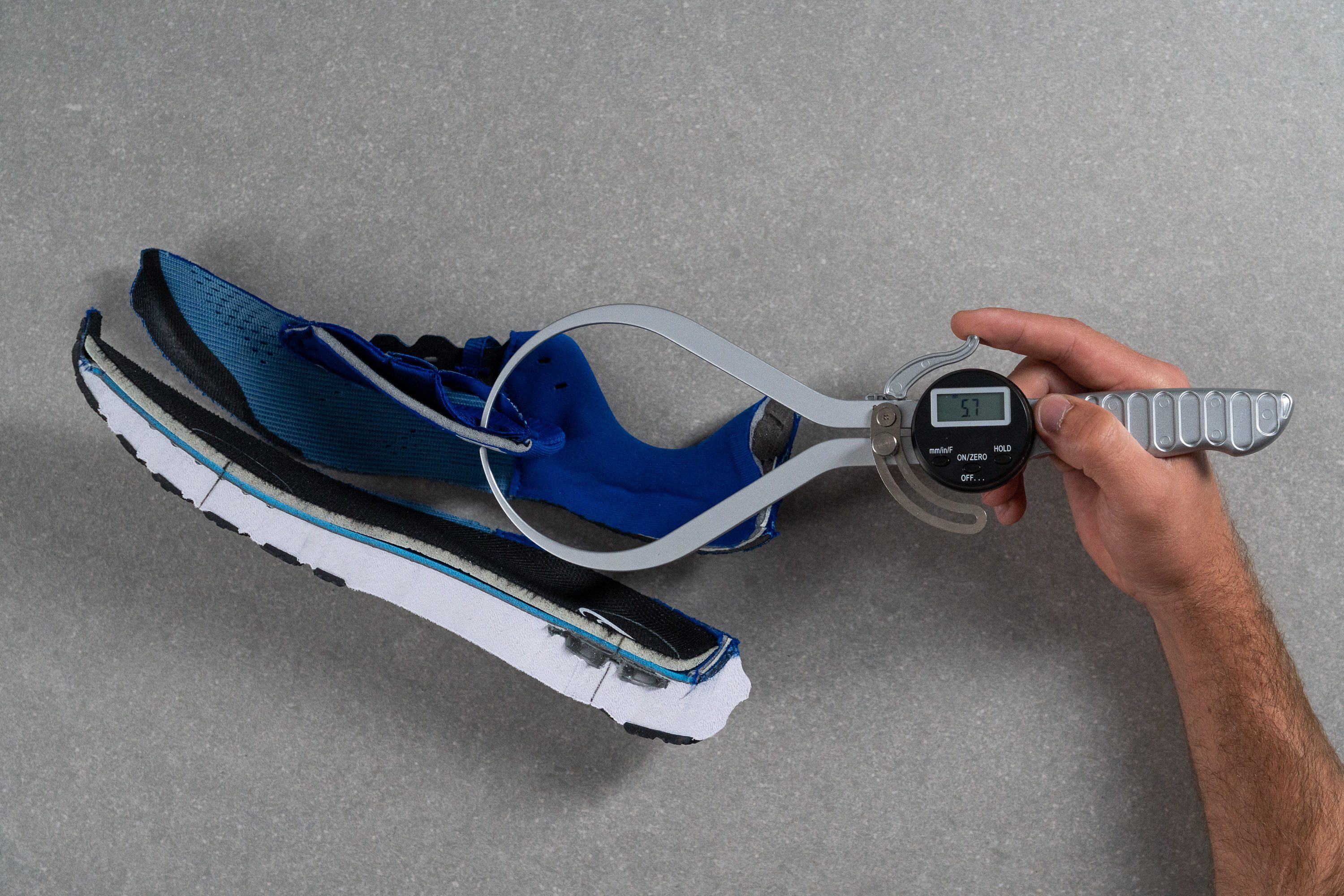
| GT 1000 15 | 5.7 mm |
| Average | 5.8 mm |
Tongue: gusset type
A gusseted tongue is another feature that often gets left out of cheap ASICS shoes, and the GT 1000 15 was no exception.
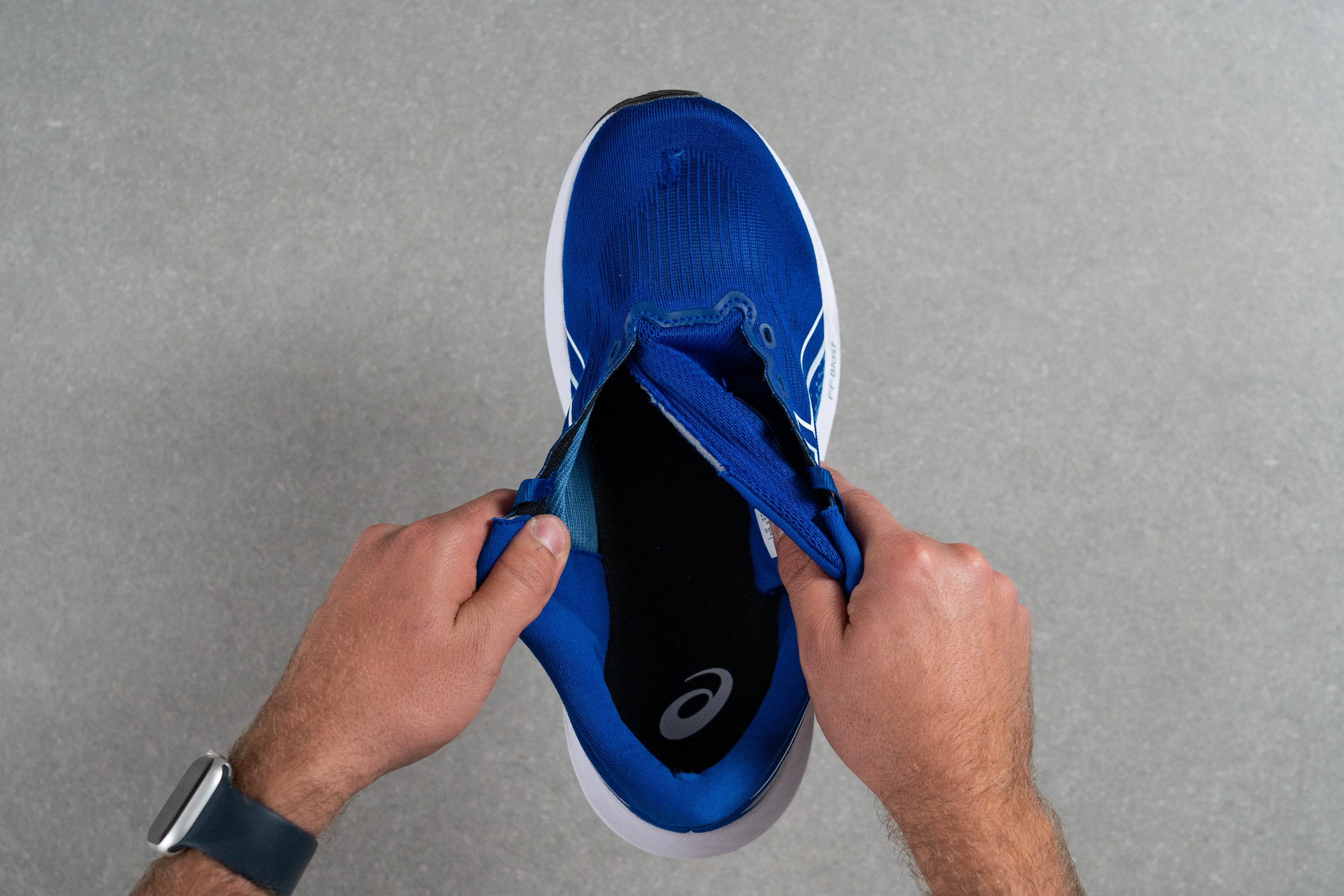
| GT 1000 15 | None |
Heel tab
Version 15 also marks the disappearance of the finger-loop heel tab found on its predecessor. Instead, ASICS opted for a much simpler heel design, leaving no pull tab or loop to assist when putting the shoe on.
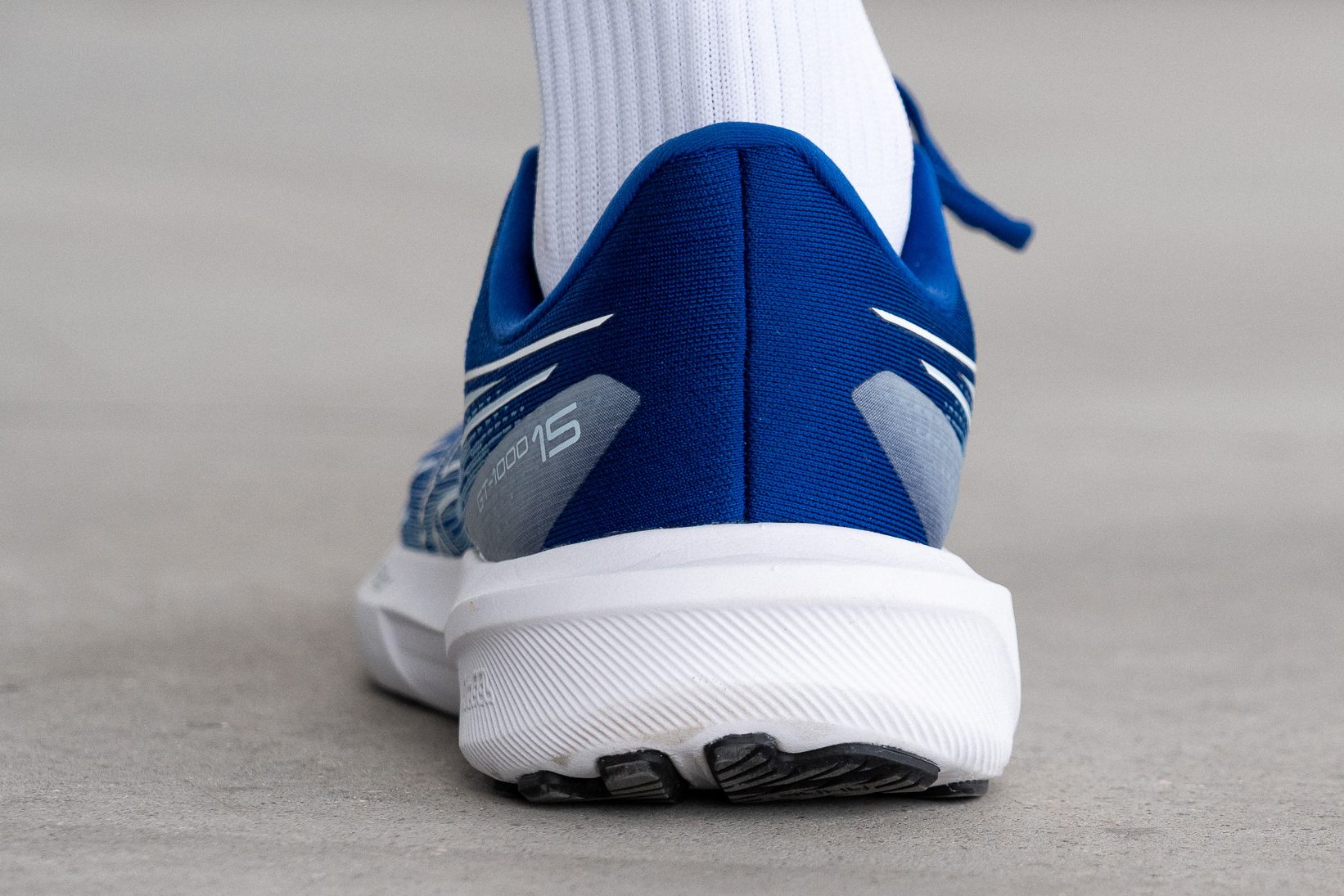
| GT 1000 15 | None |
Price
One of the most welcome updates is the lack of a price hike. Despite the addition of the full-length AHARPLUS outsole and a year full of price increases across the running shoe market, ASICS managed to keep the GT 1000 15 at the same MSRP.
As a result, it remains one of the most affordable options in the stability category and continues to offer outstanding value for money. We believe that's a key reason why the GT 1000 series remains selling well, and why version 16 will almost certainly be on store shelves next year.
| GT 1000 15 | $115 |
| Average | $158 |