




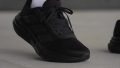










Our verdict
- Daily running 73
- Tempo 30
- Race 18
- Stability 80
Pros
- Very affordable price
- Ideal for beginners
- Serious grip improvement
- Balanced drop feels natural
- Comfortable step-in feel
- Upper accommodates wide feet
- Good option for winter
- Lighter than its predecessor...
Cons
- But still very heavy!
- Poor durability scores
- Not for summer
Awards
- Top pick in best cheap running shoes
Comparison
The most similar running shoes compared
+ + Add a shoe | |||||
|---|---|---|---|---|---|
| Our score | 70 Decent | 79 Good | 71 Decent | 75 Good | |
| Price | $60 | $70 | $80 | $55 | |
| Pace | Daily running | Daily running | Daily running | Daily running | |
| Shock absorption | Moderate | Moderate | Moderate | Moderate | |
| Energy return | Low | Moderate | Low | Low | |
| Traction | High | High | Moderate | High | |
| Arch support | Neutral | Neutral | Neutral | Neutral | |
| Weight lab Weight brand | 10.9 oz / 309g 11.3 oz / 319g | 9.3 oz / 264g 9.5 oz / 270g | 10.4 oz / 295g 11.4 oz / 323g | 11.2 oz / 318g 11.5 oz / 326g | |
| Drop lab Drop brand | 7.6 mm 6.0 mm | 8.8 mm 10.0 mm | 9.5 mm 10.0 mm | 6.9 mm 5.0 mm | |
| Strike pattern | Mid/forefoot | HeelMid/forefoot | HeelMid/forefoot | Mid/forefoot | |
| Size | True to size | Slightly small | True to size | Slightly small | |
| Midsole softness | Balanced | Firm | Balanced | Balanced | |
| Difference in midsole softness in cold | Small | Normal | Normal | Small | |
| Toebox durability | Decent | Good | Good | Decent | |
| Heel padding durability | Bad | Good | Good | Bad | |
| Outsole durability | Bad | Decent | Decent | Good | |
| Breathability | Warm | Moderate | Moderate | - | |
| Width / fit | Wide | Medium | Medium | Medium | |
| Toebox width | Medium | Medium | Medium | Narrow | |
| Stiffness | Moderate | Flexible | Moderate | Stiff | |
| Torsional rigidity | Moderate | Moderate | Moderate | Stiff | |
| Heel counter stiffness | Moderate | Stiff | Moderate | Moderate | |
| Rocker | ✓ | ✗ | ✗ | ✓ | |
| Heel lab Heel brand | 34.9 mm 35.0 mm | 31.8 mm 33.0 mm | 34.3 mm 35.0 mm | 37.4 mm 37.0 mm | |
| Forefoot lab Forefoot brand | 27.3 mm 29.0 mm | 23.0 mm 23.0 mm | 24.8 mm 25.0 mm | 30.5 mm 32.0 mm | |
| Widths available | NormalWideX-Wide | NormalWideX-Wide | Normal | NormalWideX-Wide | |
| Orthotic friendly | ✓ | ✓ | ✓ | ✓ | |
| Season | All seasons | All seasons | All seasons | - | |
| Removable insole | ✓ | ✓ | ✓ | ✓ | |
| Ranking | #619 Bottom 6% | #240 Bottom 40% | #371 Bottom 8% | #326 Bottom 19% | |
| Popularity | #313 Top 48% | #46 Top 12% | #310 Bottom 23% | #257 Bottom 36% |



Who should buy
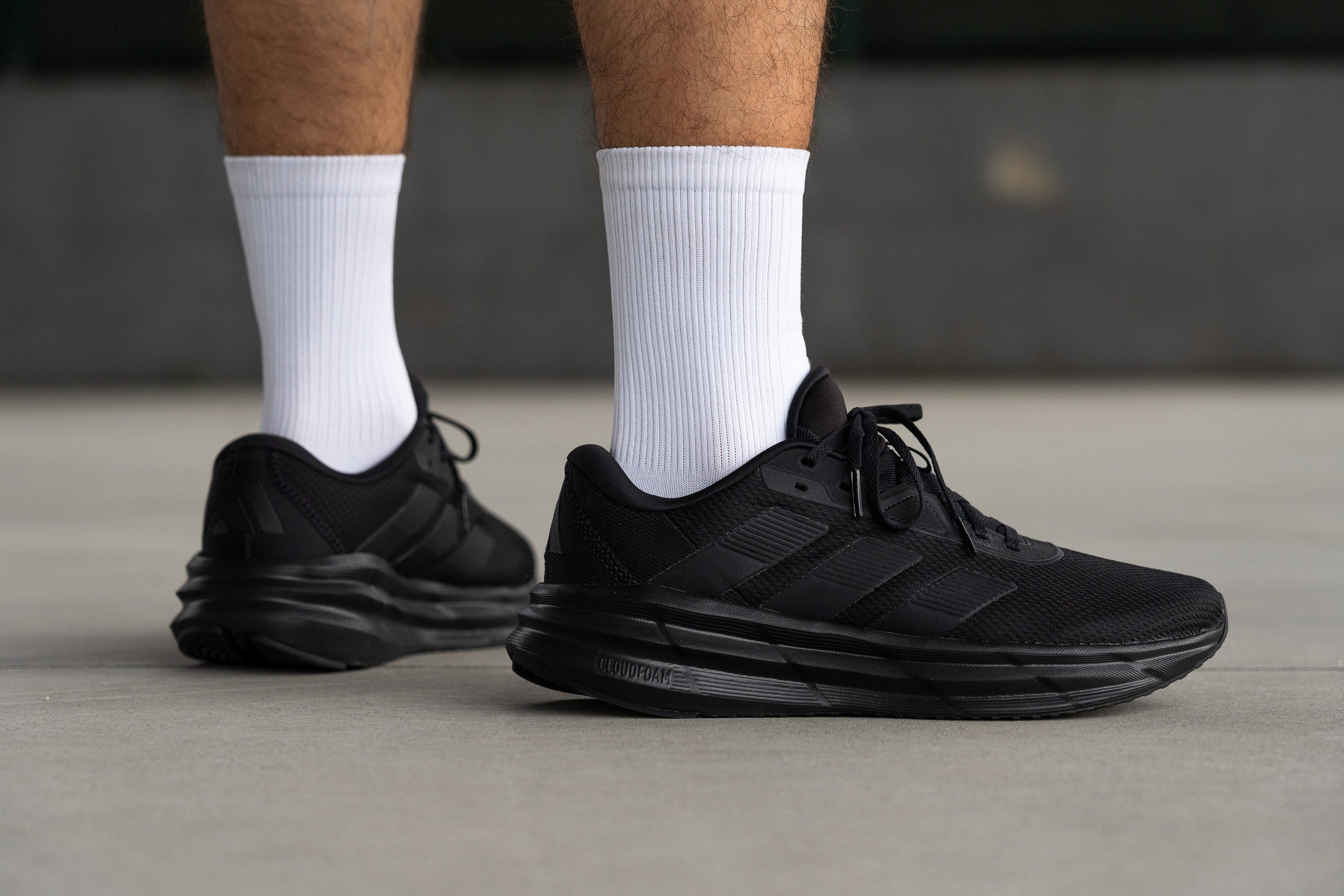
In our view, the adidas Galaxy 7 works best for:
- Midfoot strikers who want an affordable option without a high 10+ mm drop.
- New runners who are just starting out and want a simple, cheap shoe.
- Runners who enjoy a rockered feel but don’t want to spend much.
- Those in colder climates looking for a dependable shoe for walks and light runs.
Who should NOT buy
We think the adidas Galaxy 7 is not the best choice for runners who care about weight, as we found in the lab that it features a heavy build despite some improvements. For a lighter, more agile option, we recommend the ASICS Gel Pulse 16.
We also believe it’s not ideal for hot-weather runs, since we measured limited airflow in its warm-retaining upper. Instead, the adidas Duramo Speed 2 offers a more breathable design at a reasonable price, making it a better choice for summer training.
Cushioning
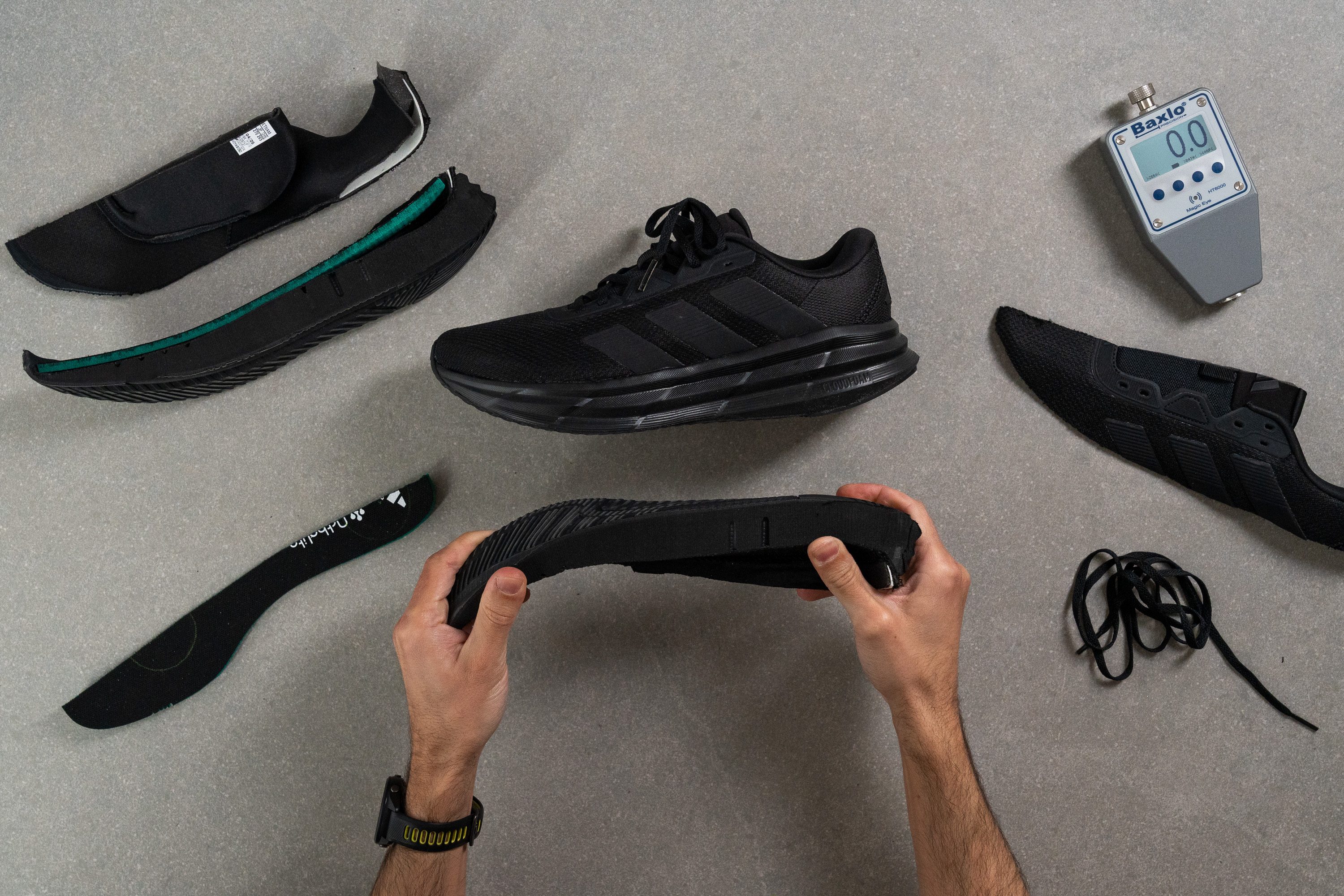
Shock absorption
We found in the lab that the adidas Galaxy 7 delivers mixed results in shock absorption compared to our current average.
The heel falls clearly below it at 112 SA, while the forefoot comes closer at 101 SA. Nonetheless, this is not a max-cushioned shoe, nor is it meant to be, and these results work well for short daily runs.
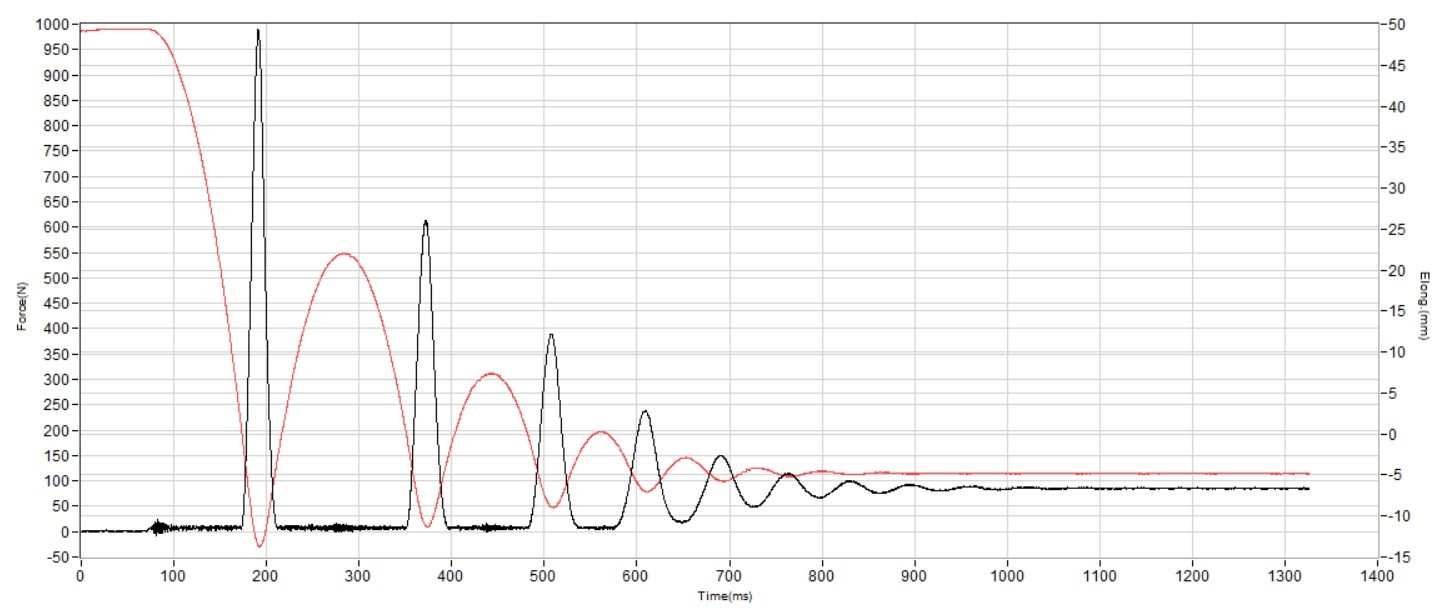
| Galaxy 7 | 112 SA |
| Average | 131 SA |
Energy return
The Galaxy 7 uses the same Cloudfoam compound in the midsole, so we expected energy return to land around the 50% range.
Our lab results confirmed this, with 49.5% in the heel and 52.8% in the forefoot, aligning closely with its budget-friendly positioning. It is not a bouncy ride, but at this ultra-low price point, that is entirely expected.
| Galaxy 7 | 52.8% |
| Average | 61.5% |
Heel stack
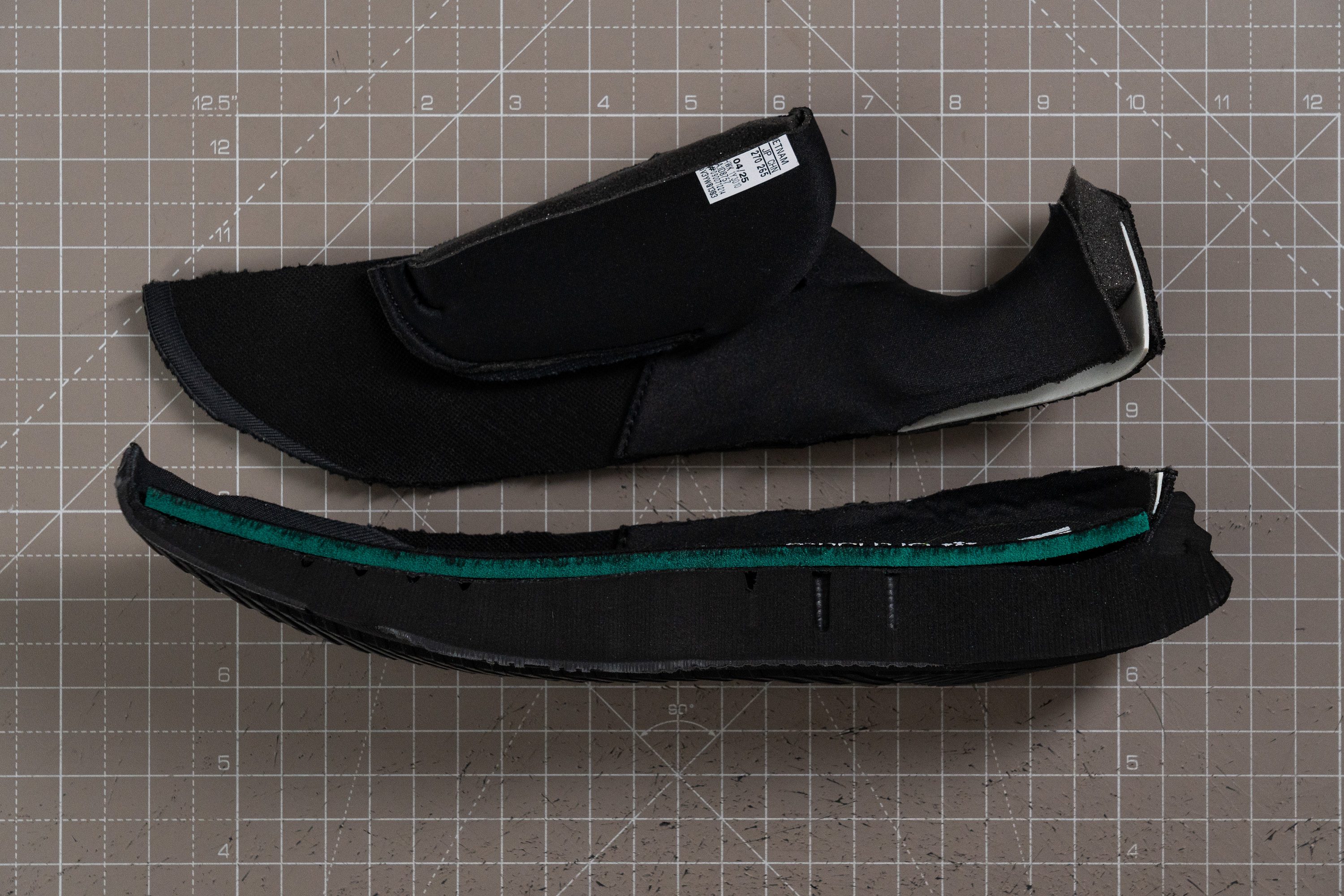
With 34.9 mm of stack height in the heel, the adidas Galaxy 7 follows a safe, middle-ground design that aims to suit most runners. It is not high enough to feel bulky, yet not low enough to compromise protection.
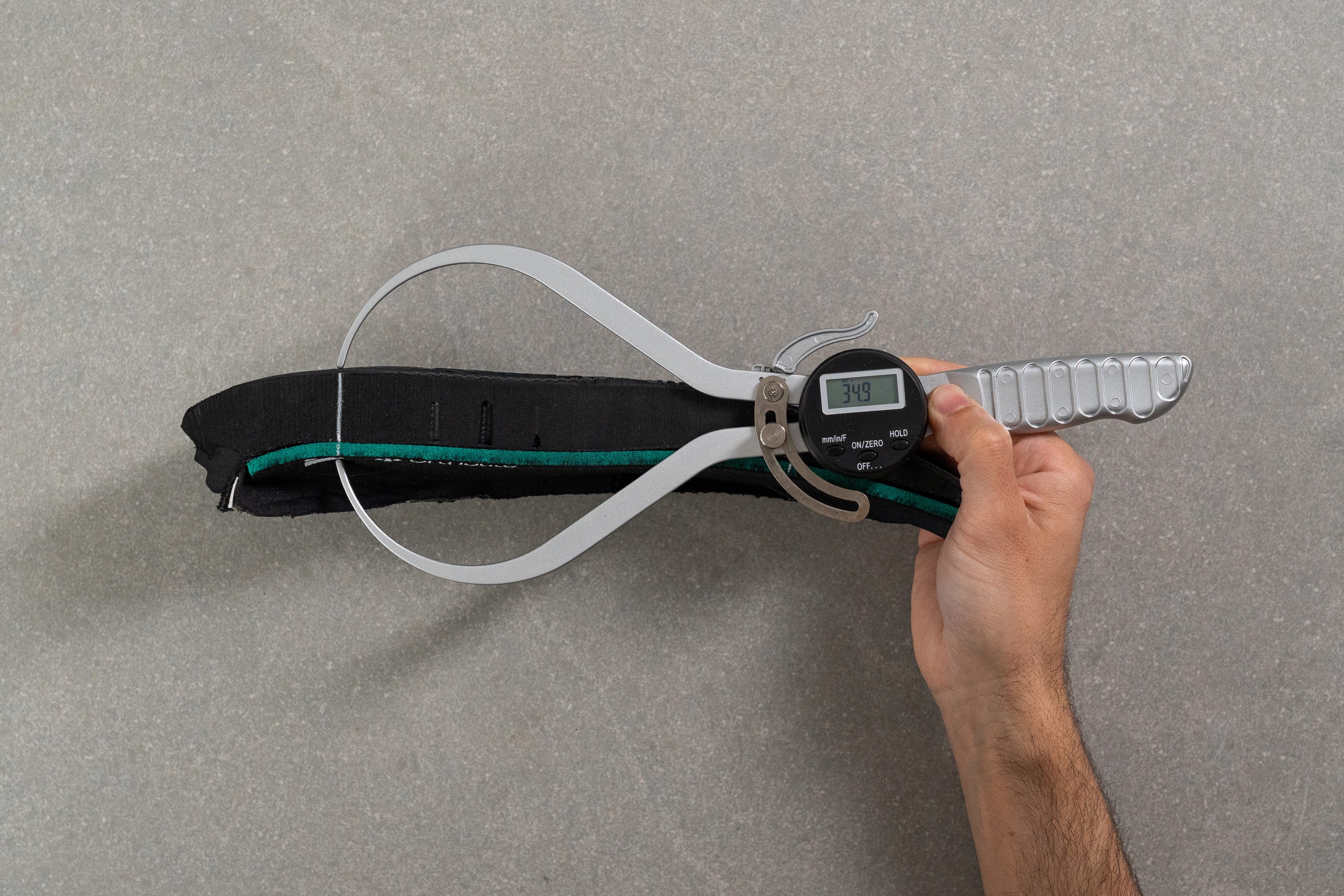
| Galaxy 7 | 34.9 mm |
| Average | 35.6 mm |
Forefoot stack
The forefoot of the Galaxy 7 also provides enough foam for weekend warriors or even marathoners seeking a very affordable option to build mileage through easy runs. We measured it at 27.3 mm.
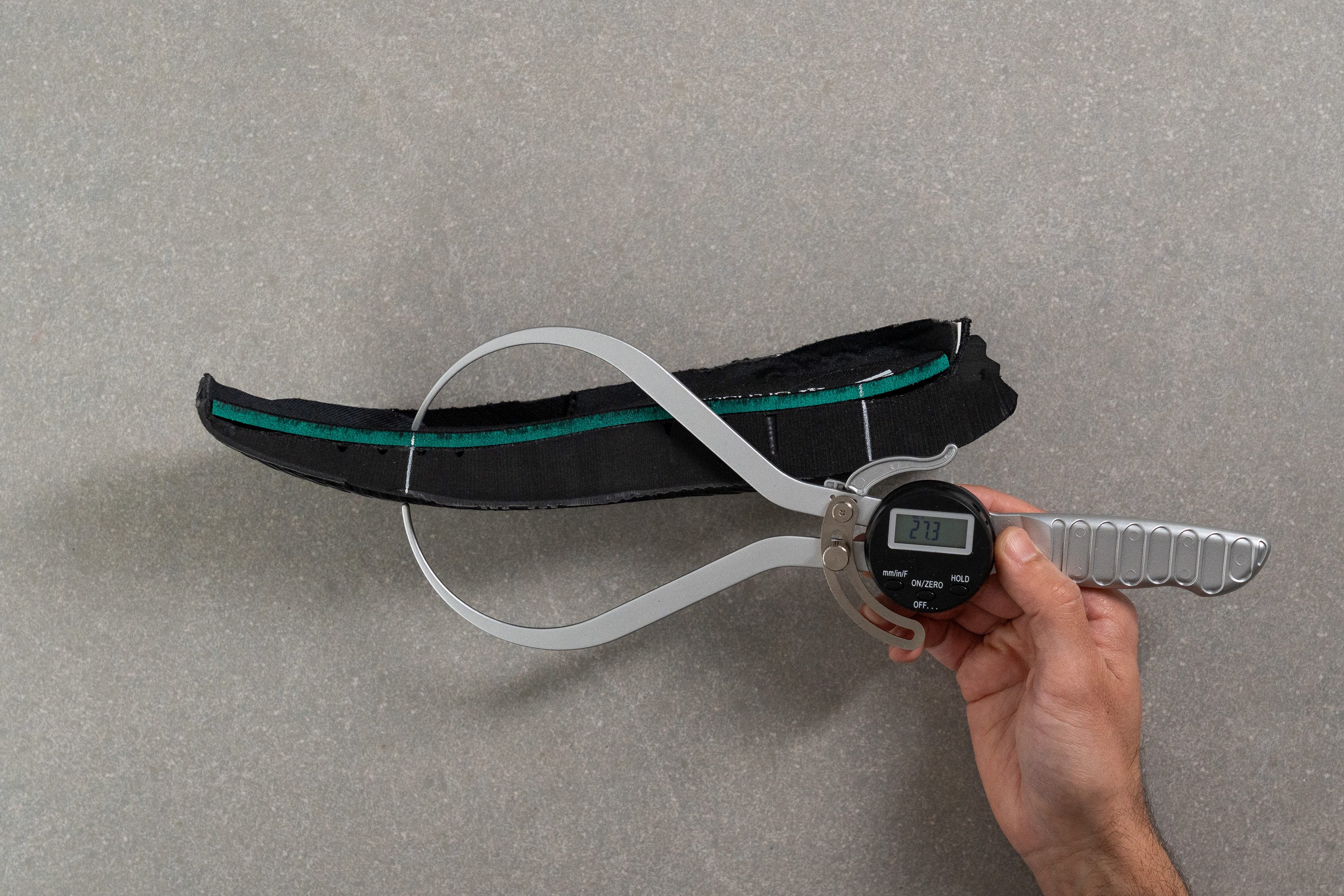
| Galaxy 7 | 27.3 mm |
| Average | 27.1 mm |
Drop
The difference between these two measurements gives us a 7.6 mm drop.
adidas lists 6 mm in its spec sheet, and on the run it feels right in that 6-8 mm sweet spot. Therefore, don’t expect a high drop like in other budget running shoes, as this one feels more balanced.
| Galaxy 7 | 7.6 mm |
| Average | 8.4 mm |
Midsole softness
adidas couldn’t really deliver a firm ride with a foam called Cloudfoam, right? Fortunately for their marketing team, we measured a softness of 38.1 AC.
So, how does it feel on the run? It’s one of those middle-ground foams that simply gets the job done, as brands tend to avoid risks with mainstream daily trainers or shoes marketed for beginners. A moderately soft setup usually keeps most runners satisfied, and that’s exactly what we experienced here.
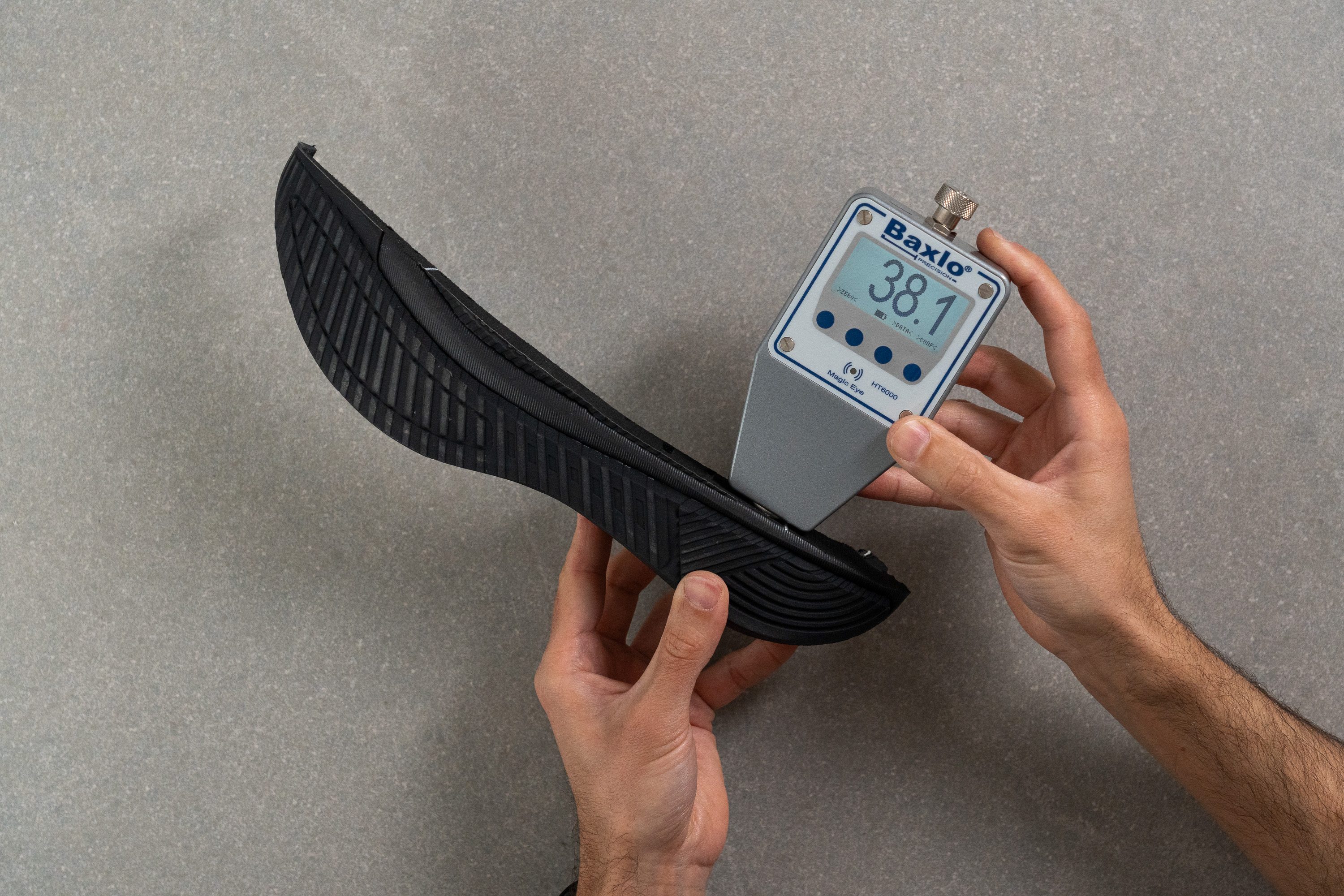
| Galaxy 7 | 38.1 AC |
| Average | 35.4 AC |
Rocker
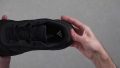
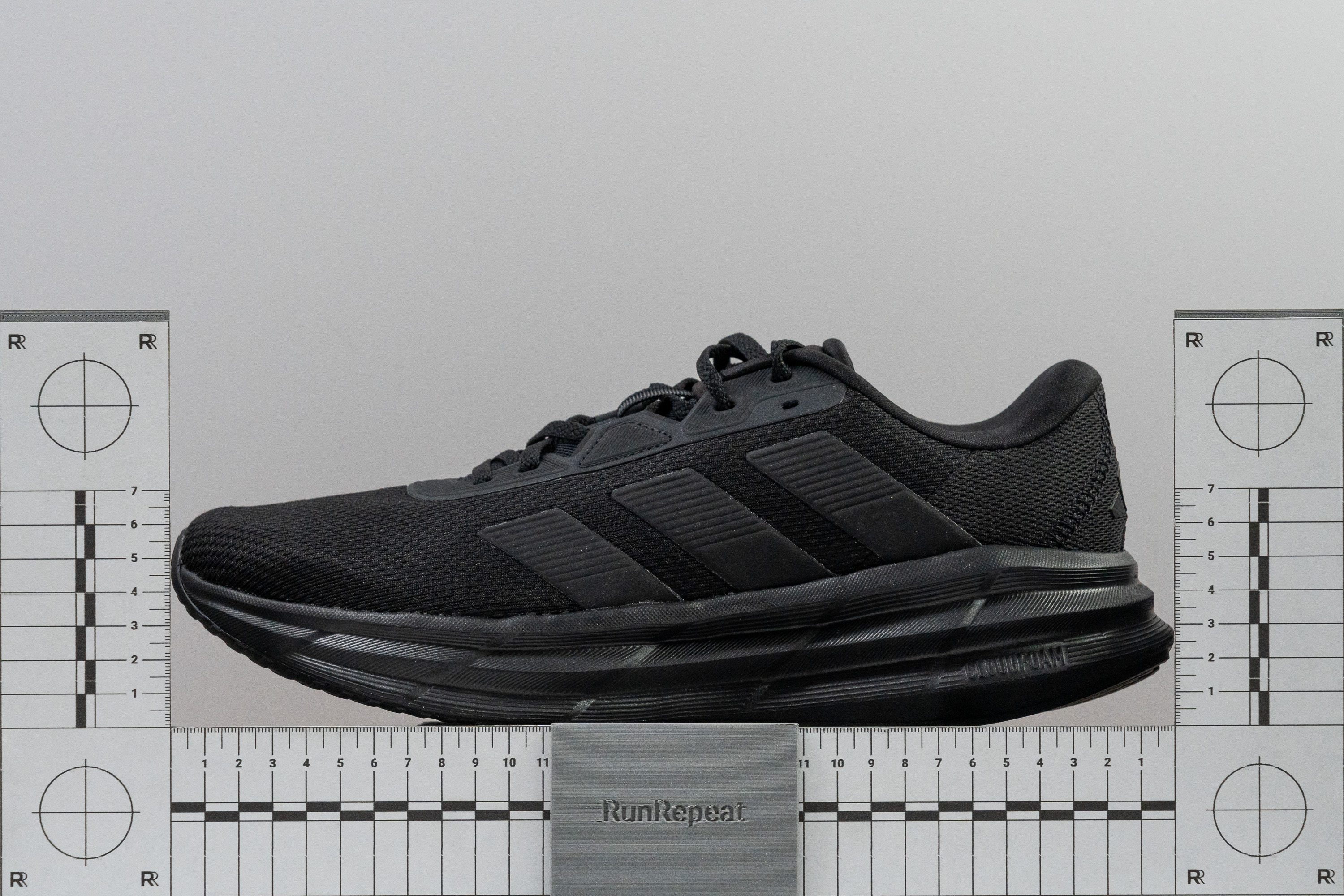
Maybe due to the lower-than-usual drop, or simply because it follows current design trends, adidas added a clearly noticeable rocker to the Galaxy 7. This is uncommon in a sub-$100 shoe, although it may reflect where the market is heading.
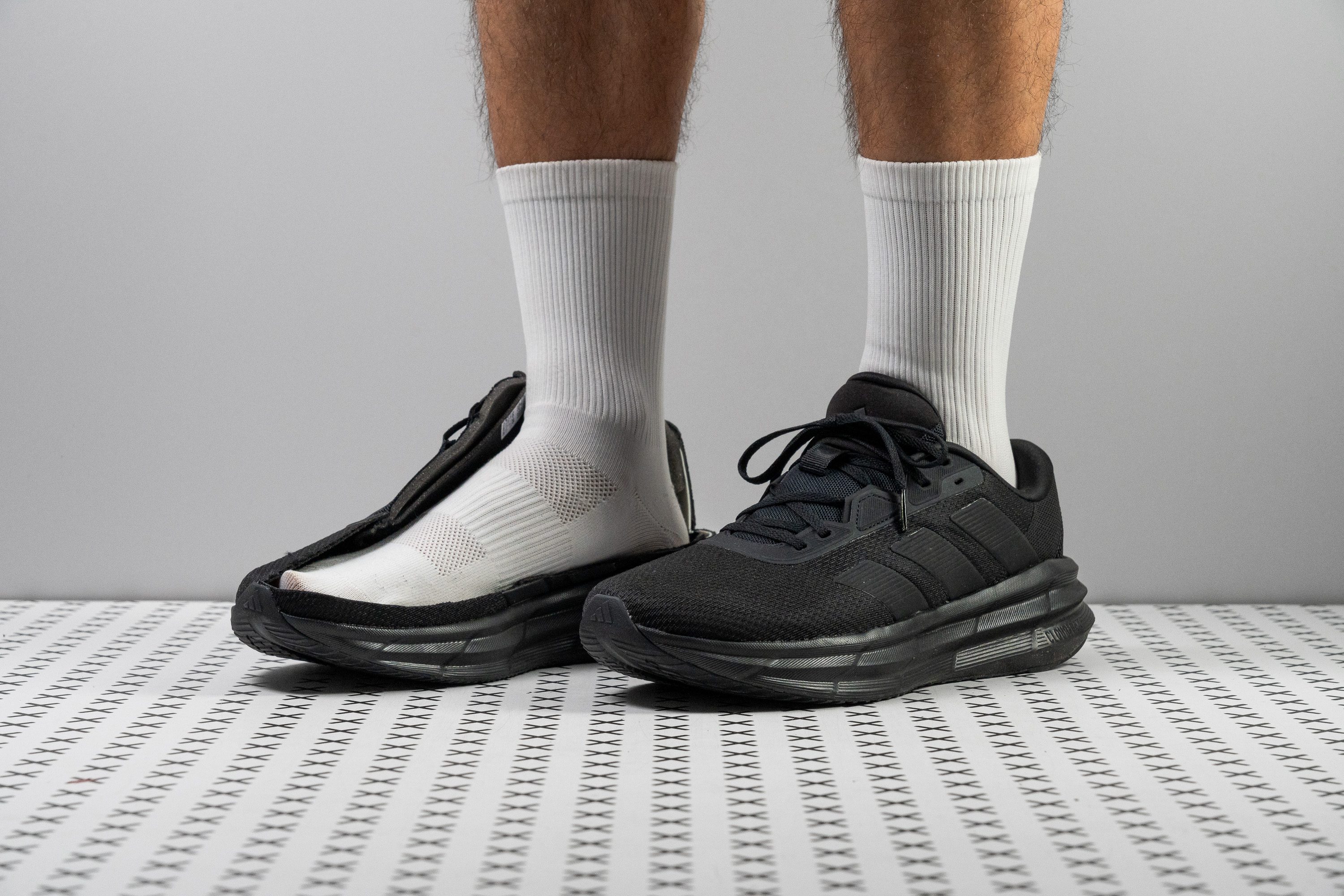
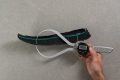
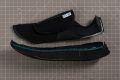
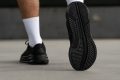
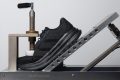
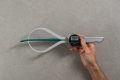
What stood out in our testing is how pronounced the heel bevel feels during any run, and the photo makes this easy to see. It takes 6 cm for the shoe to fully contact the ground from the heel, highlighting a very aggressive rear geometry for this category.
Size and fit
Size
adidas Galaxy 7 fits true to size (27 votes).
Internal length
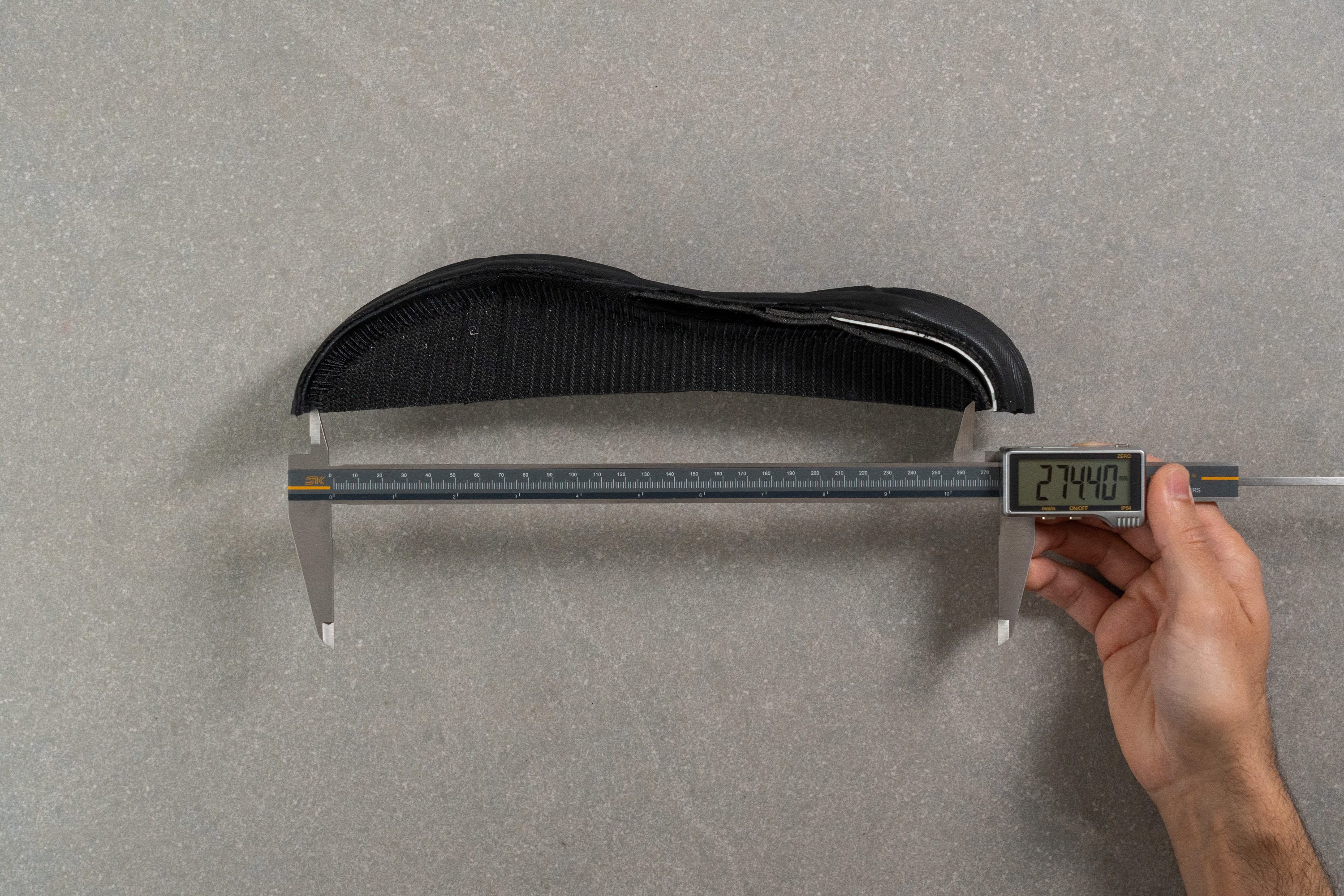
| Galaxy 7 | 274.4 mm |
| Average | 269.3 mm |
Width / Fit
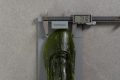
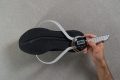
We found that the Galaxy 7 offers a surprisingly spacious upper, measuring 99.1 mm at its widest point.
This puts it clearly above many rivals in the budget segment, giving it a more accommodating fit than expected. In addition, adidas provides a wide version, although availability depends on the market.
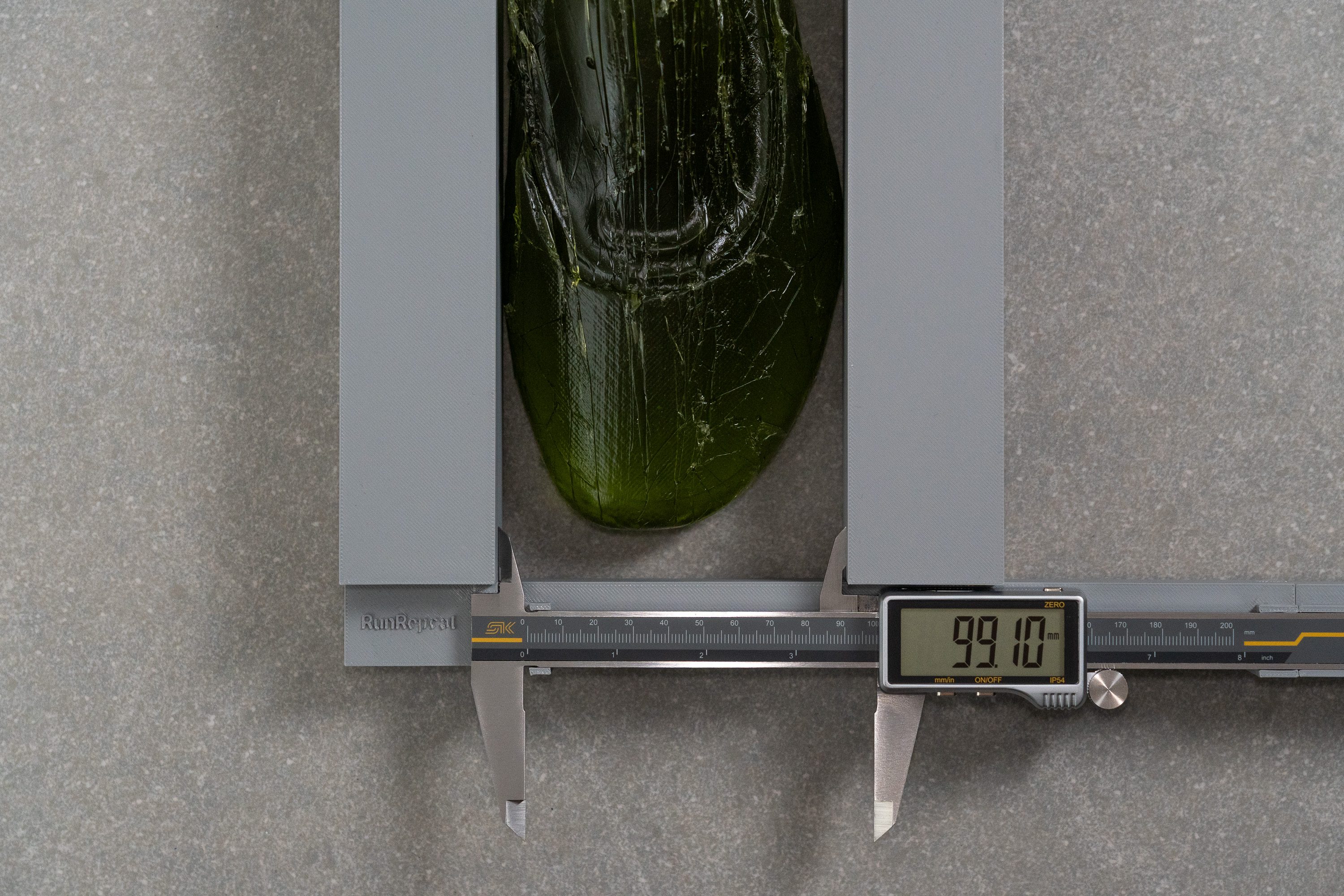
| Galaxy 7 | 99.1 mm |
| Average | 95.2 mm |
Toebox width
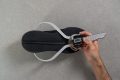
Despite the added width before, adidas maintains a classic tapered toebox, which we confirmed with a 73.1 mm measurement.
As a result, toe splay may feel somewhat restricted for runners with wide feet, especially those with Roman or Greek foot shapes.
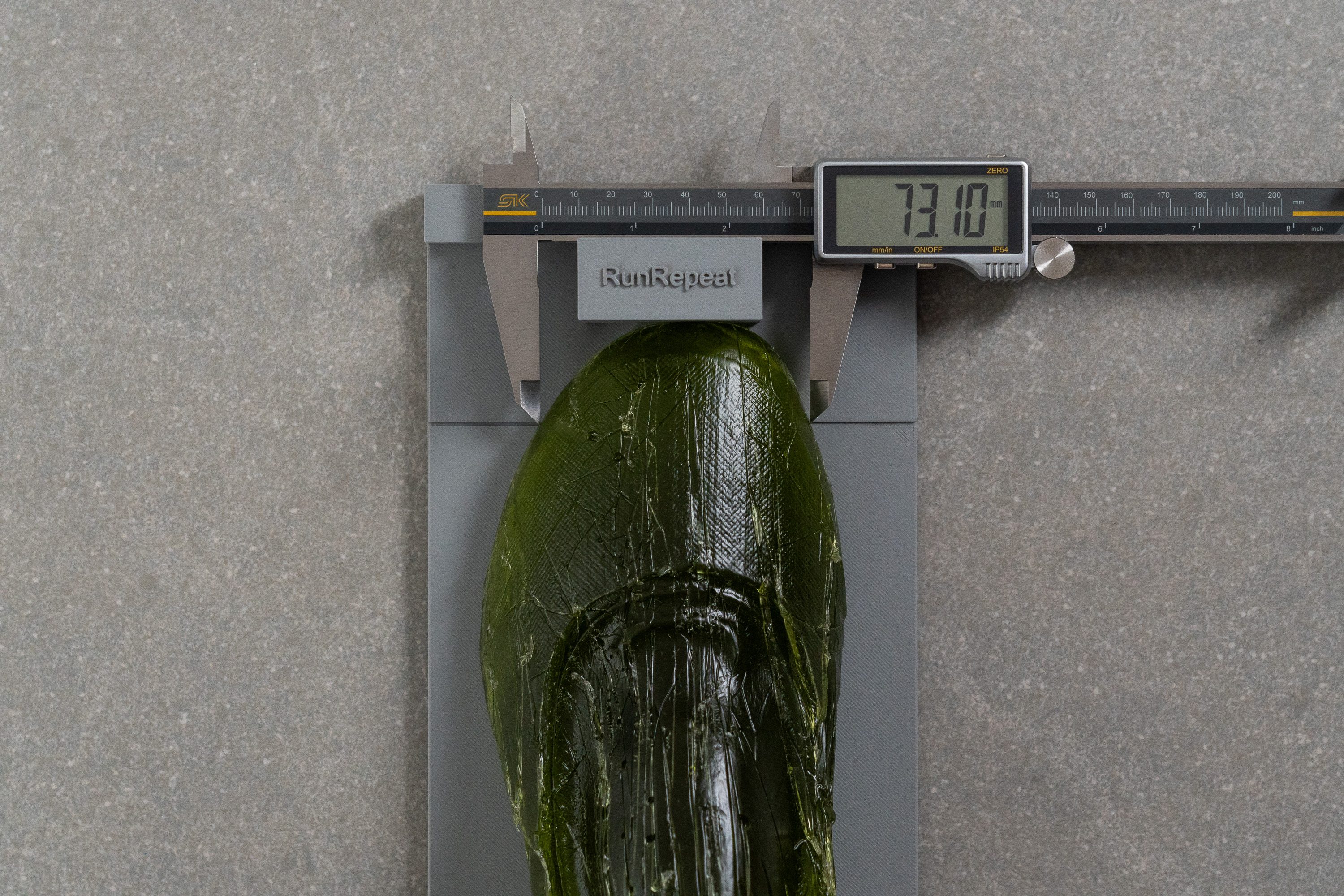
| Galaxy 7 | 73.1 mm |
| Average | 73.2 mm |
Toebox height
We expected no issues with the toebox height given its safe, standard design.
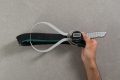
In use, it never felt restrictive, and our 27.5 mm caliper measurement confirms that.
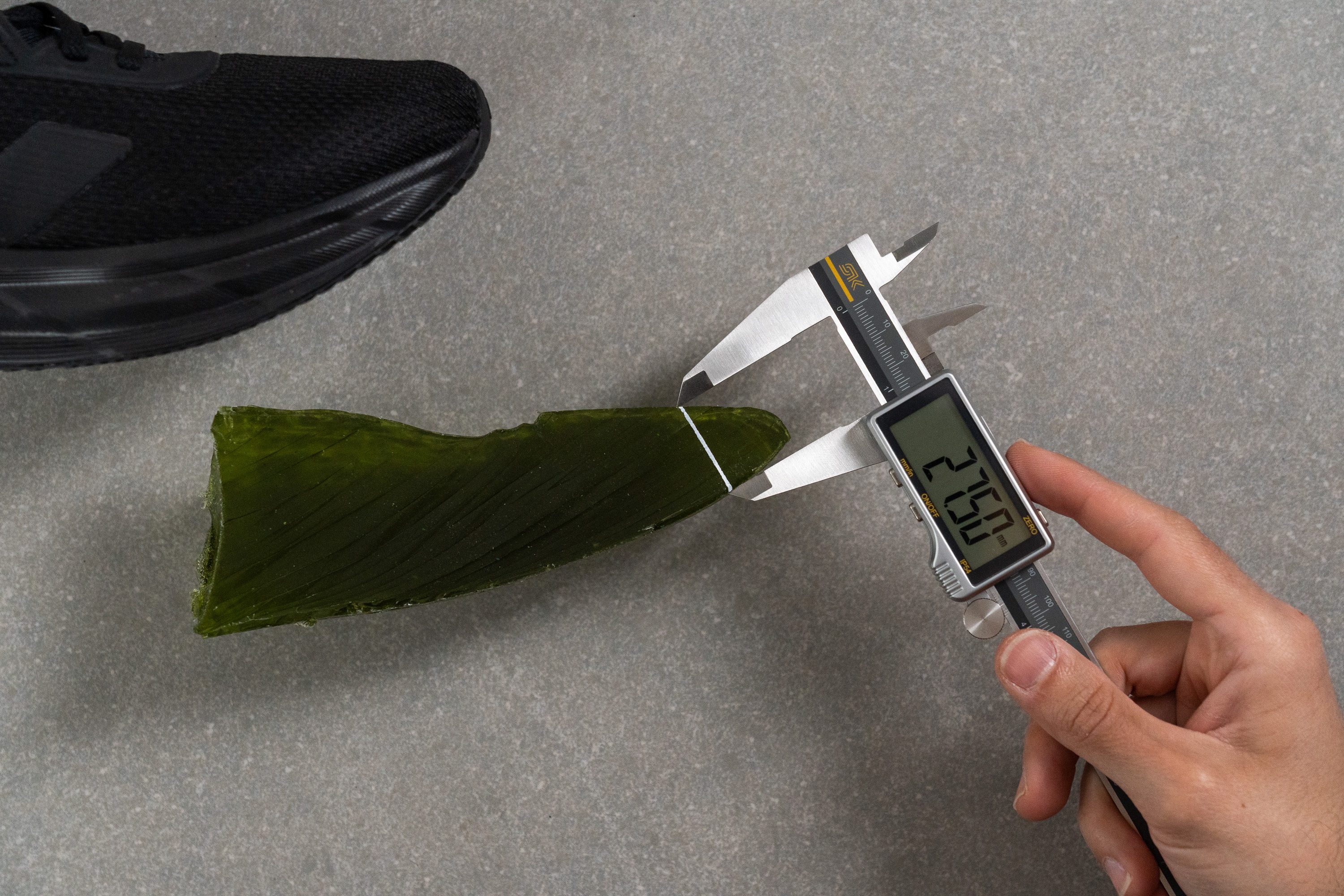
| Galaxy 7 | 27.5 mm |
| Average | 27.0 mm |
Traction / Grip
Traction test
Until we stepped in, it was very hard to know if a shoe had poor, average, or good traction before buying it. With our test, that changed, and we gave the Galaxy 6 a very low 0.24 score due to its weak performance.
This time, adidas clearly improved the grip, as we found the Galaxy 7 more than doubled that result. It reached a strong 0.57, bringing it closer to shoes that cost much more. This is great news, especially for runners in rainy conditions.
| Galaxy 7 | 0.57 |
| Average | 0.53 |
Outsole design
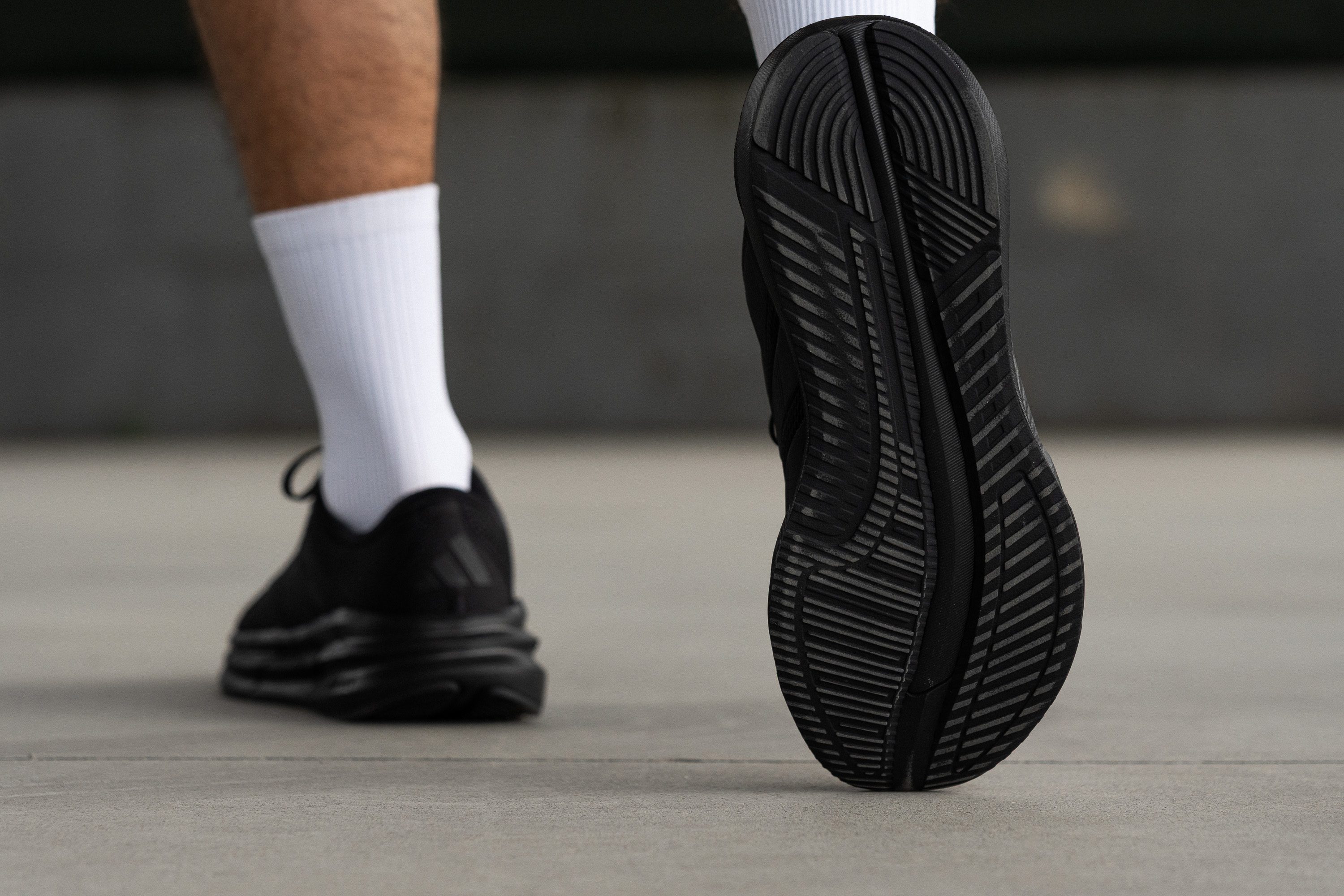
The Galaxy 7 takes grip to another level thanks to a new TPU outsole, which also allows adidas to apply generous rubber coverage, a key factor for runners seeking strong value. We also observed a thoughtful mix of outsole patterns that clearly enhance traction on wet surfaces.
Flexibility / Stiffness
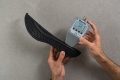
The full-length rubber coverage contributes here, adding a bit of stiffness and pushing the result to 15.3N despite the moderate stack and lack of a plate. It never feels uncomfortable, but it doesn’t offer the same flexible sensation found in other daily trainers.
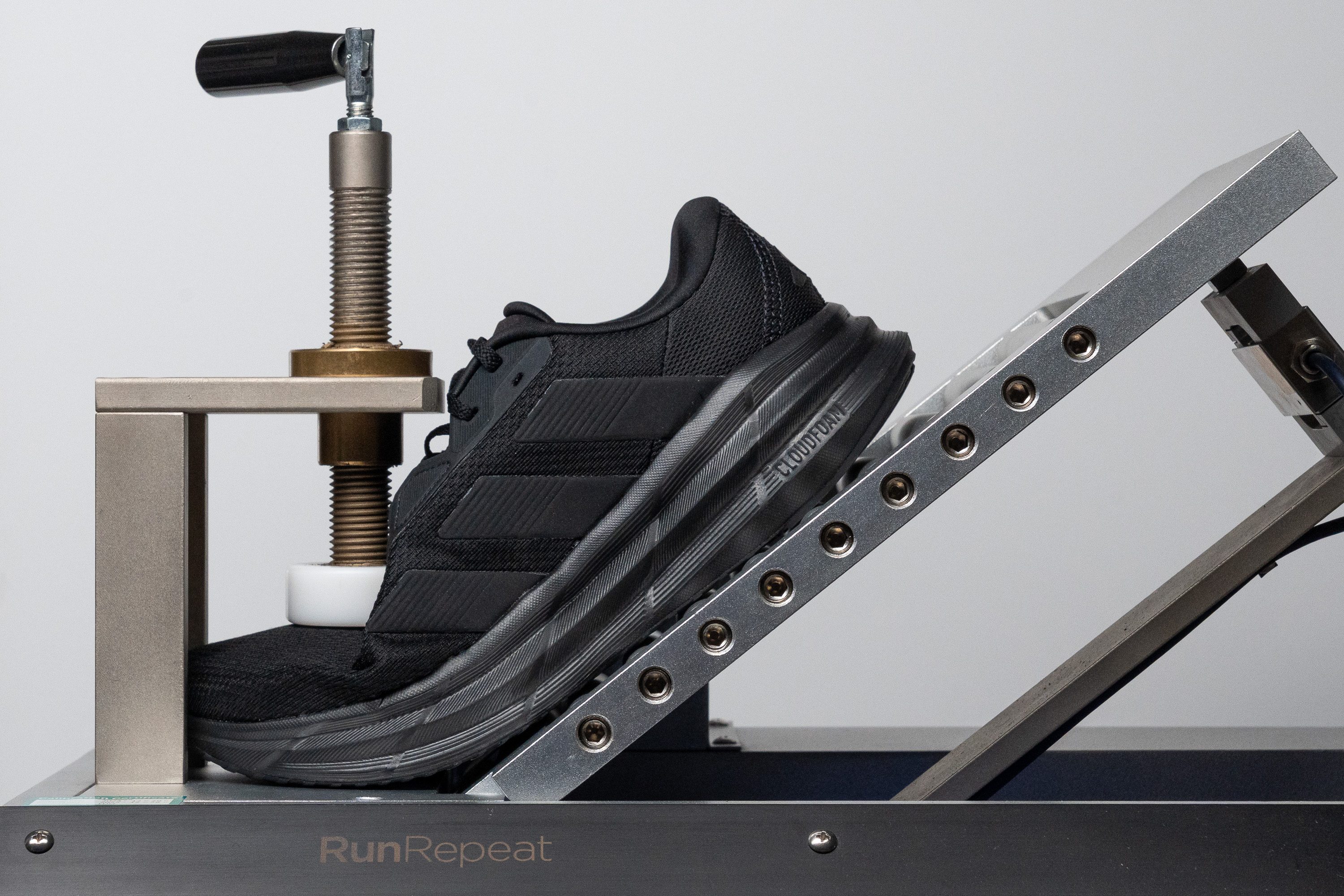
| Galaxy 7 | 15.3N |
| Average | 15.5N |
Weight
We heavily criticized the excessive weight of the Galaxy 6, and adidas clearly made progress with this version. At 10.9 oz or 309g, this update is 7% lighter than its predecessor.
However, it still feels overly heavy for its category and clearly needs further refinement...
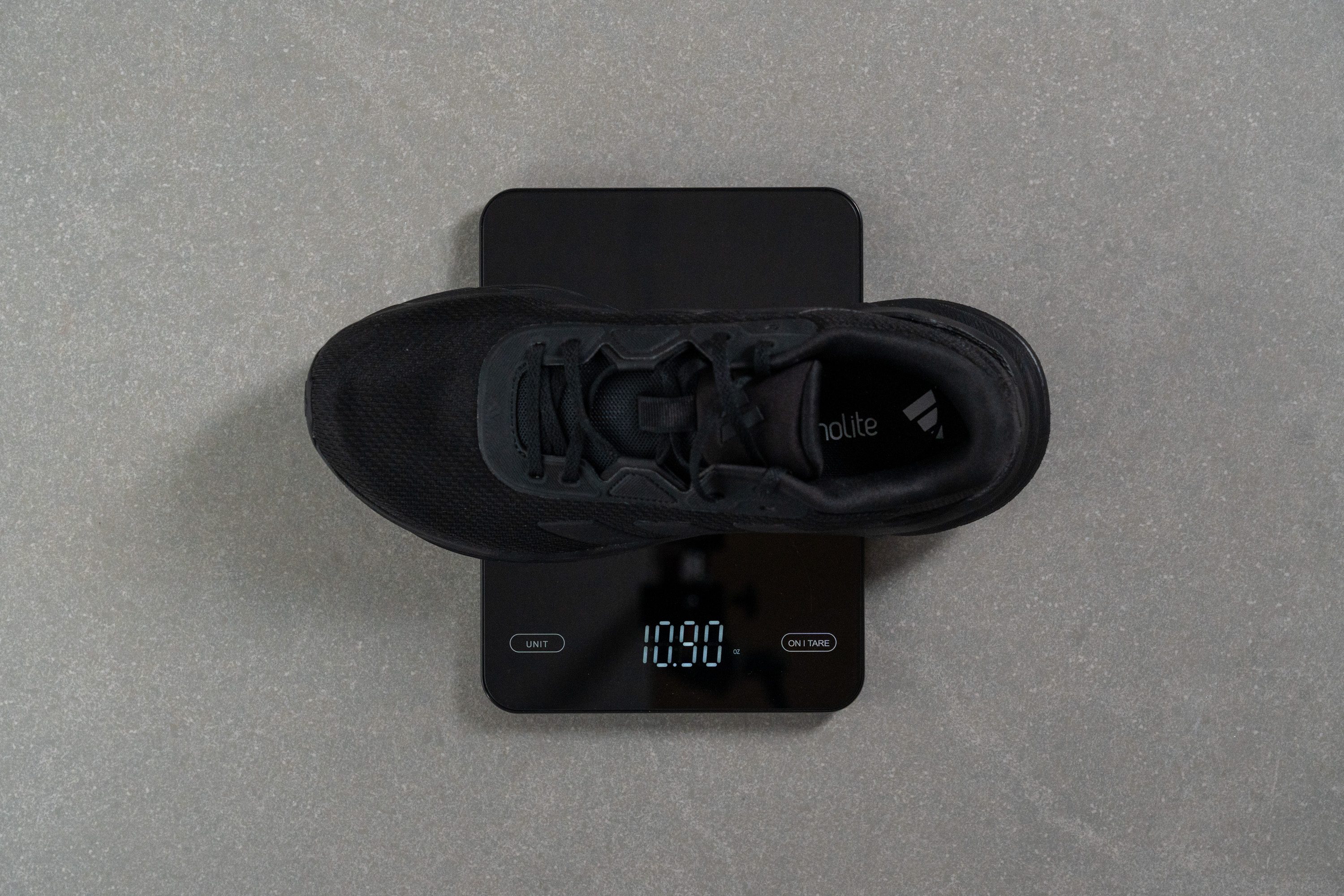
| Galaxy 7 | 10.9 oz (309g) |
| Average | 9.2 oz (261g) |
Breathability
Breathability test
One area where the adidas Galaxy 7 could use improvement is breathability. Our 2/5 test result clearly points in that direction.
There are very few openings for hot air to escape, which limits ventilation during runs. However, this also brings a small advantage, as the shoe feels warmer and more comfortable in colder conditions.
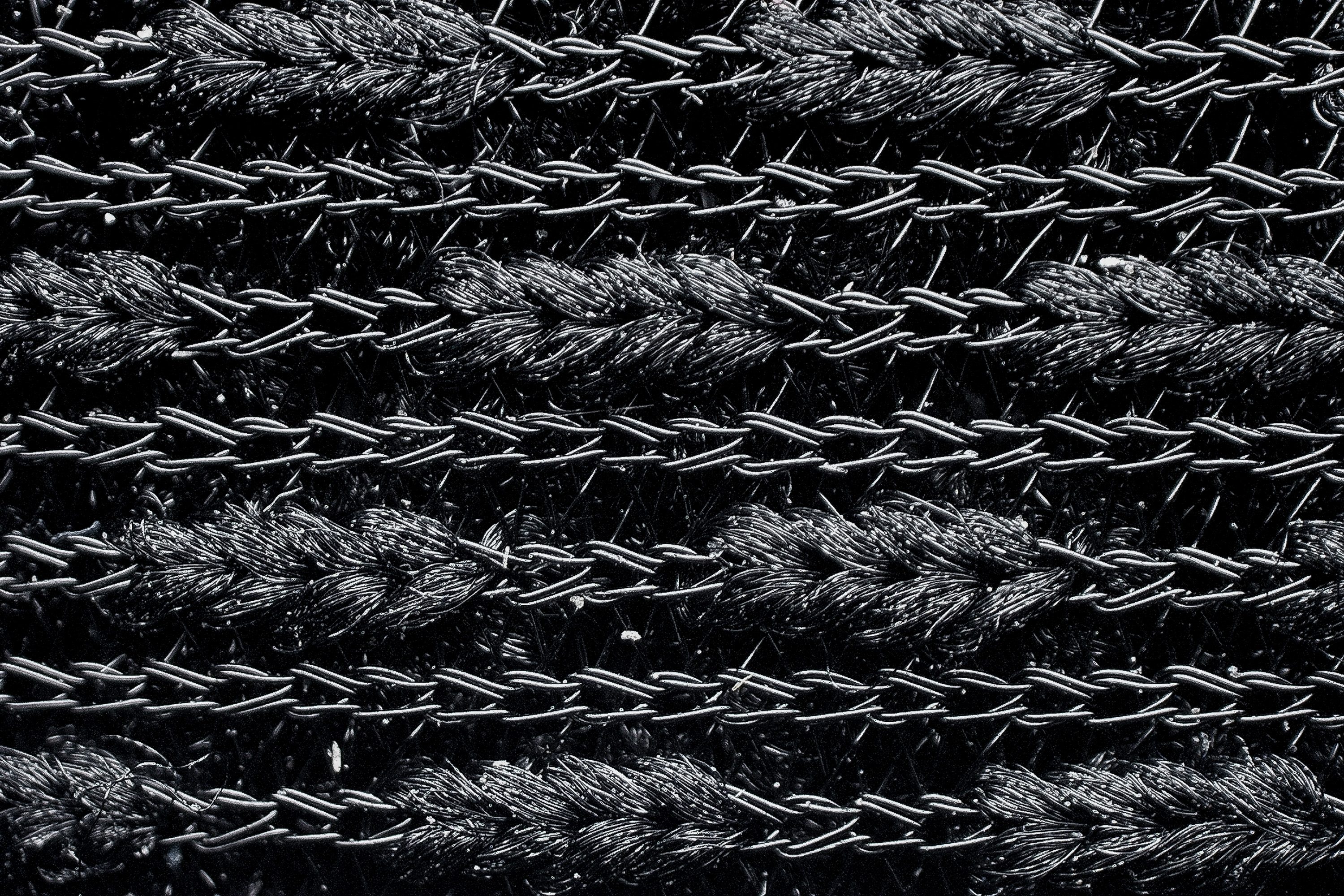
We took a closer look at the engineered mesh upper under our digital microscope.
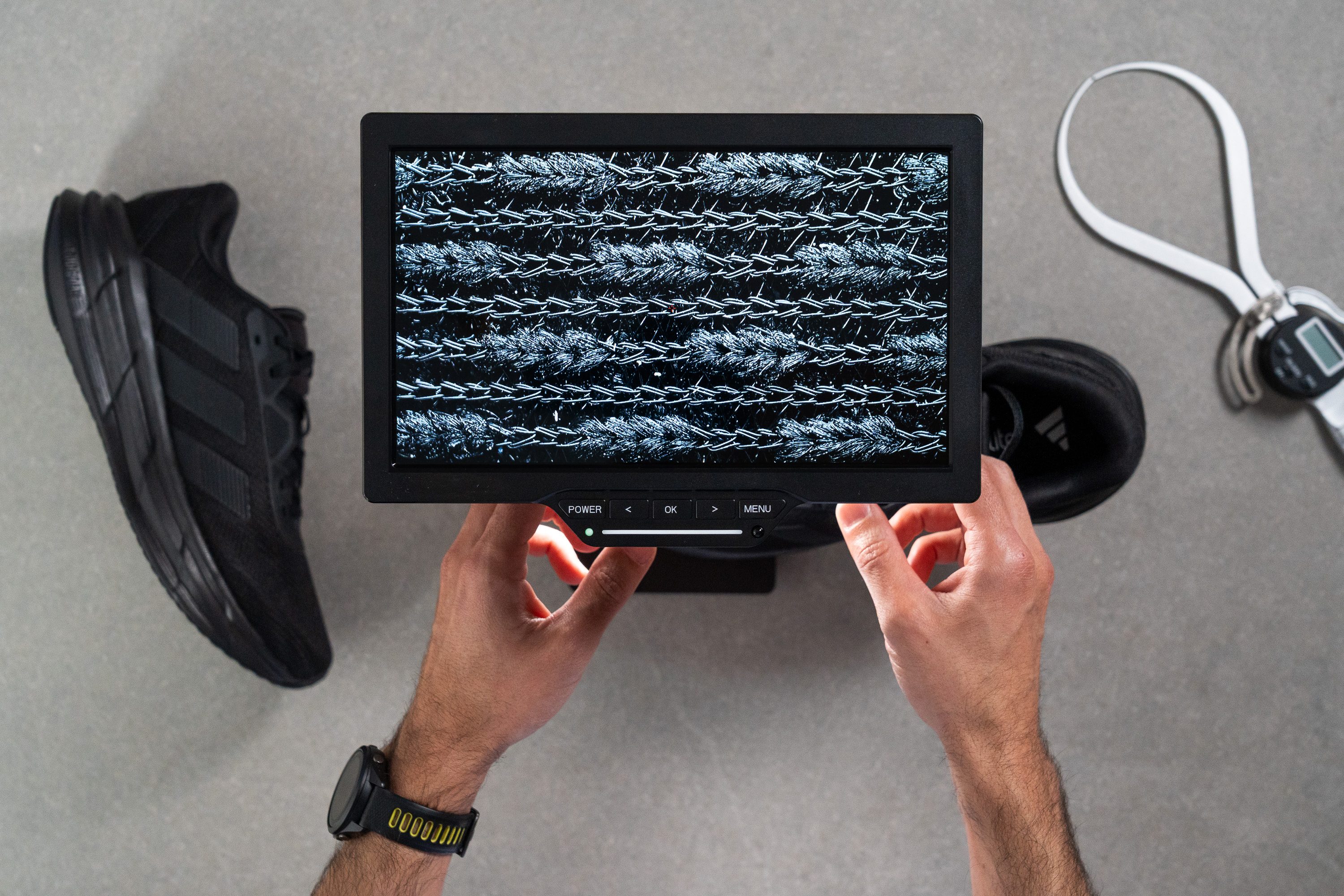
It’s a standard material, similar to what we see in other shoes at this price point, offering nothing special but delivering acceptable comfort.
Comfort, however, is where adidas placed clear emphasis. The shoe features generous padding in both the heel and tongue, creating a very secure and pleasant step-in feel for its category.
That said, this added cushioning also comes with a trade-off, as it contributes to the overall weight of the shoe.
| Galaxy 7 | 2 |
| Average | 3.6 |
Stability
Lateral stability test
Support has been one of the standout traits of the Galaxy line, and that continues with version 7. The wide midsole platform delivers a stable ride that suits neutral runners looking for extra security, while also offering enough guidance for mild overpronators who need a touch of support.
Torsional rigidity
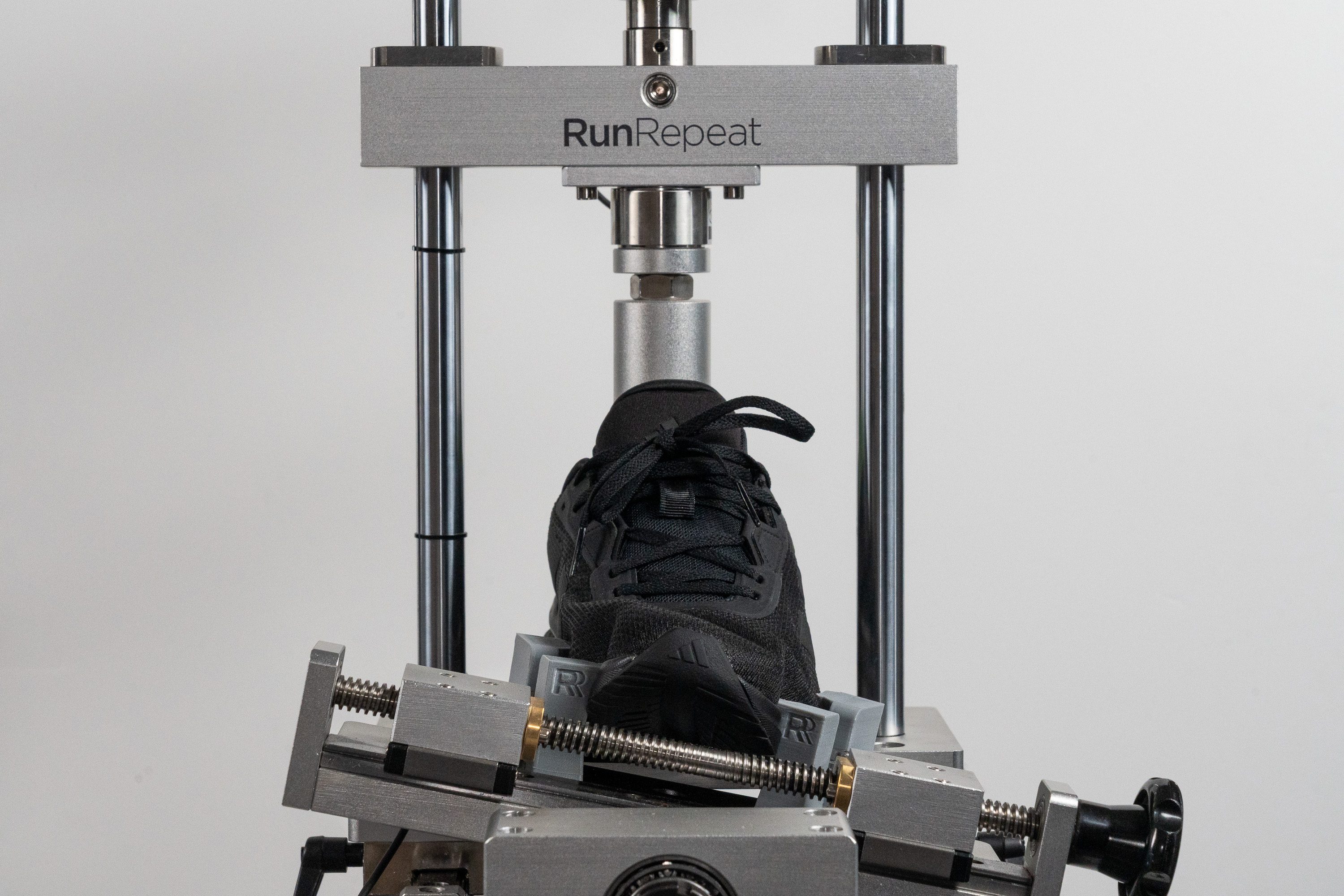
The Galaxy 7 shows moderate torsional rigidity, scoring 13.0 Nm in our custom test where we twist the shoe in both directions, placing it in a balanced middle ground between flexibility and structure.
| Galaxy 7 | 13.0 Nm |
| Average | 14.3 Nm |
Heel counter stiffness
One of the most noticeable design changes compared to the Galaxy 6 is the firmer heel counter. While the previous version featured an ultra-flexible design, this update aligns more with standard daily trainers and scores 3 out of 5.
| Galaxy 7 | 3 |
| Average | 2.9 |
Midsole width - forefoot
We measured a forefoot midsole width of 117.6 mm. That’s 2.7 mm narrower than version 6, which likely went a bit too far, so adidas made a sensible adjustment to reduce bulk while maintaining support. And we support that, no pun intended!
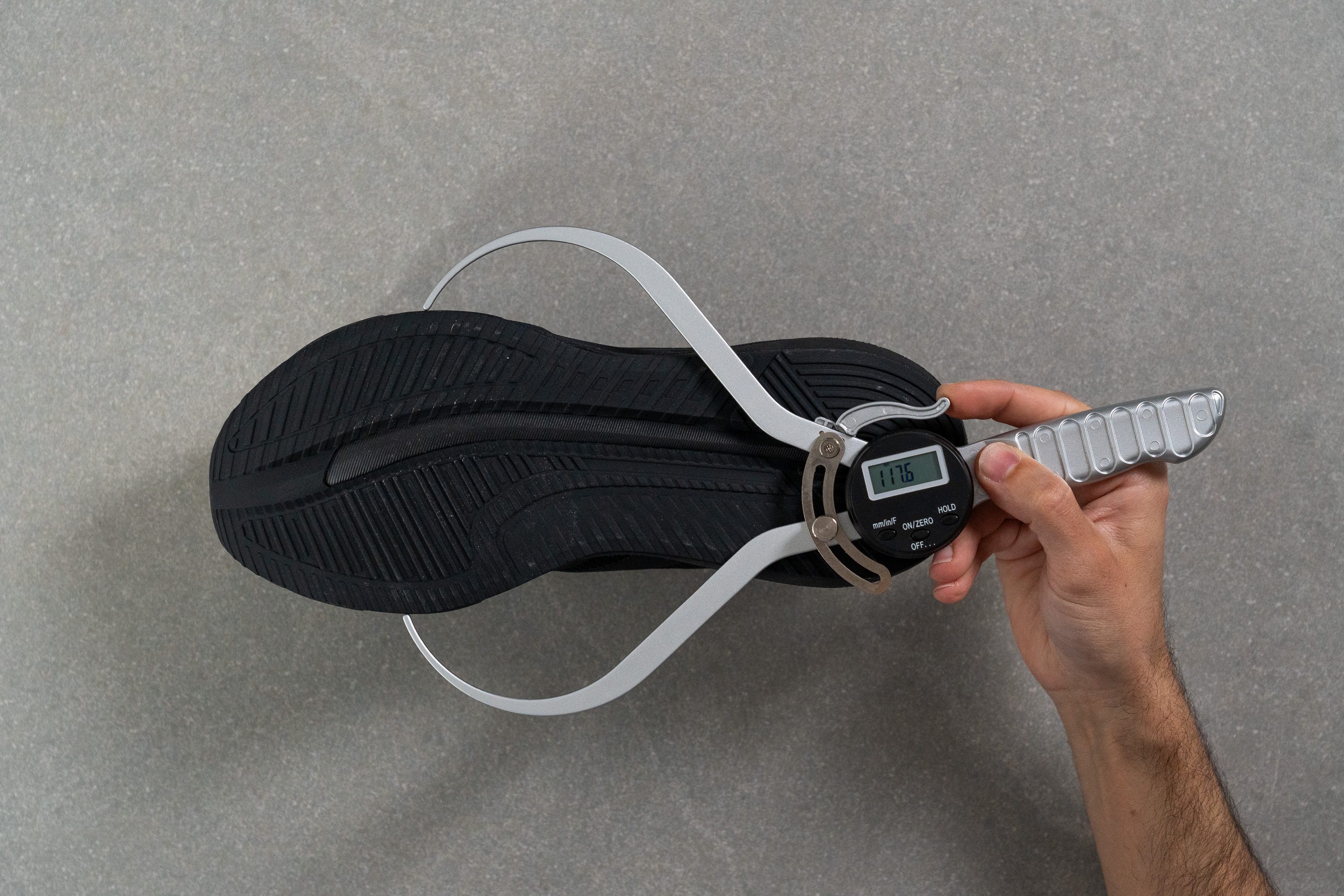
| Galaxy 7 | 117.6 mm |
| Average | 115.1 mm |
Midsole width - heel
The same idea applies to the heel, and it’s even more noticeable. Here, the reduction reaches 6.2 mm, yet the shoe still sits well above average with a 97.5 mm width.
Once again, this is a very positive update, a necessary adjustment that benefits most runners.
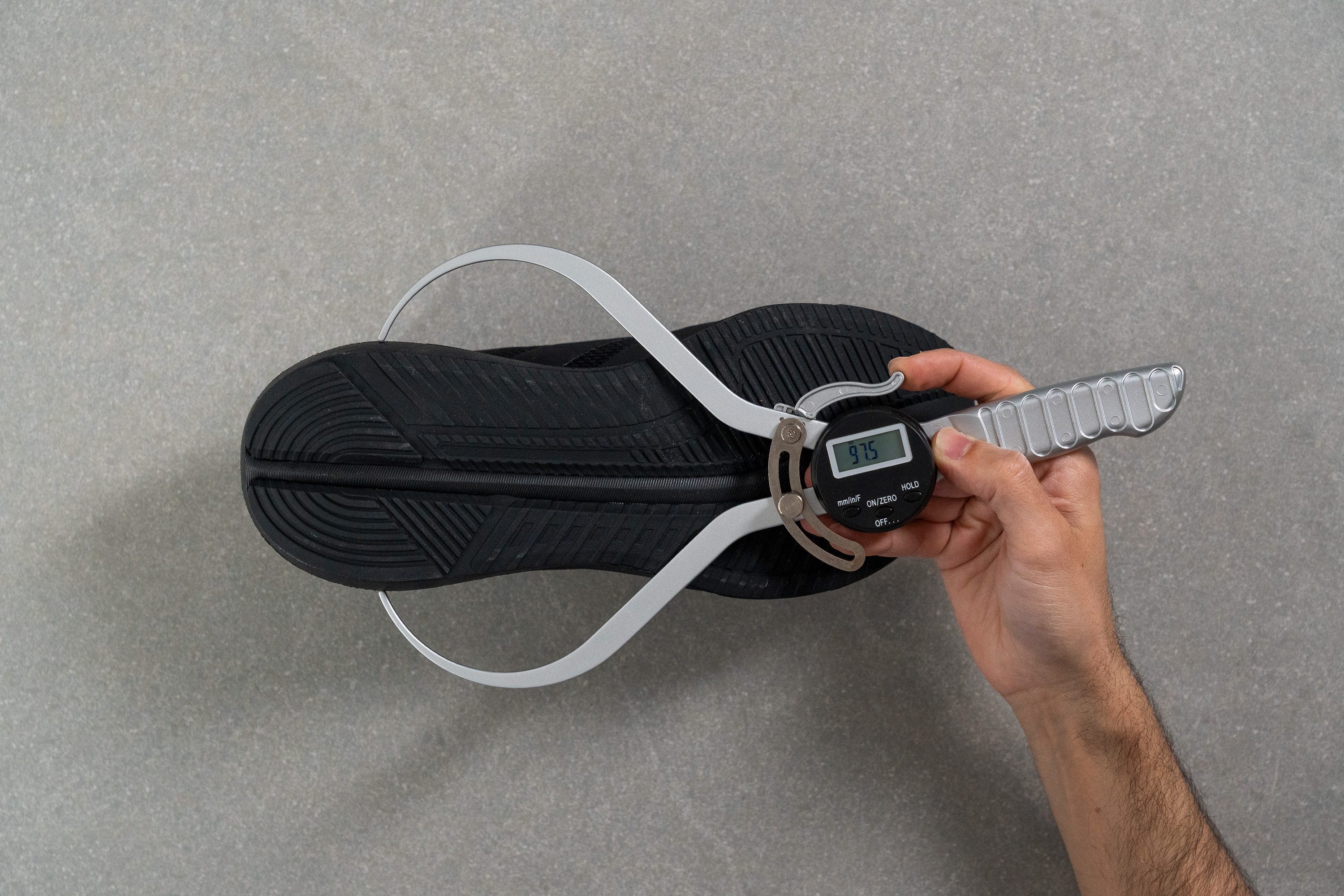
| Galaxy 7 | 97.5 mm |
| Average | 91.1 mm |
Durability
Toebox durability
The engineered mesh of the Galaxy 7 may not breathe as well as we expected, but its durability holds up to an average standard with a 3/5 score.
| Galaxy 7 | 3 |
| Average | 2.6 |
Heel padding durability
This result is disappointing for runners who tend to wear through this area quickly, as the fabric shows poor resistance to friction and earned a 1/5 in our test.
| Galaxy 7 | 1 |
| Average | 3.4 |
Outsole durability
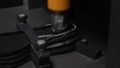
The new TPU outsole from adidas delivers much better grip, but durability is not its strongest point. After using our Dremel, we measured 2.6 mm of damage, which is more than double what we typically see in this test.
| Galaxy 7 | 2.6 mm |
| Average | 1.1 mm |
Outsole thickness
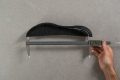
At least we found a solid amount of rubber, measuring 3.2 mm in thickness. Combined with the generous coverage that helps spread wear more evenly, this offers some reassurance. Still, don’t expect this shoe to last as long as others.
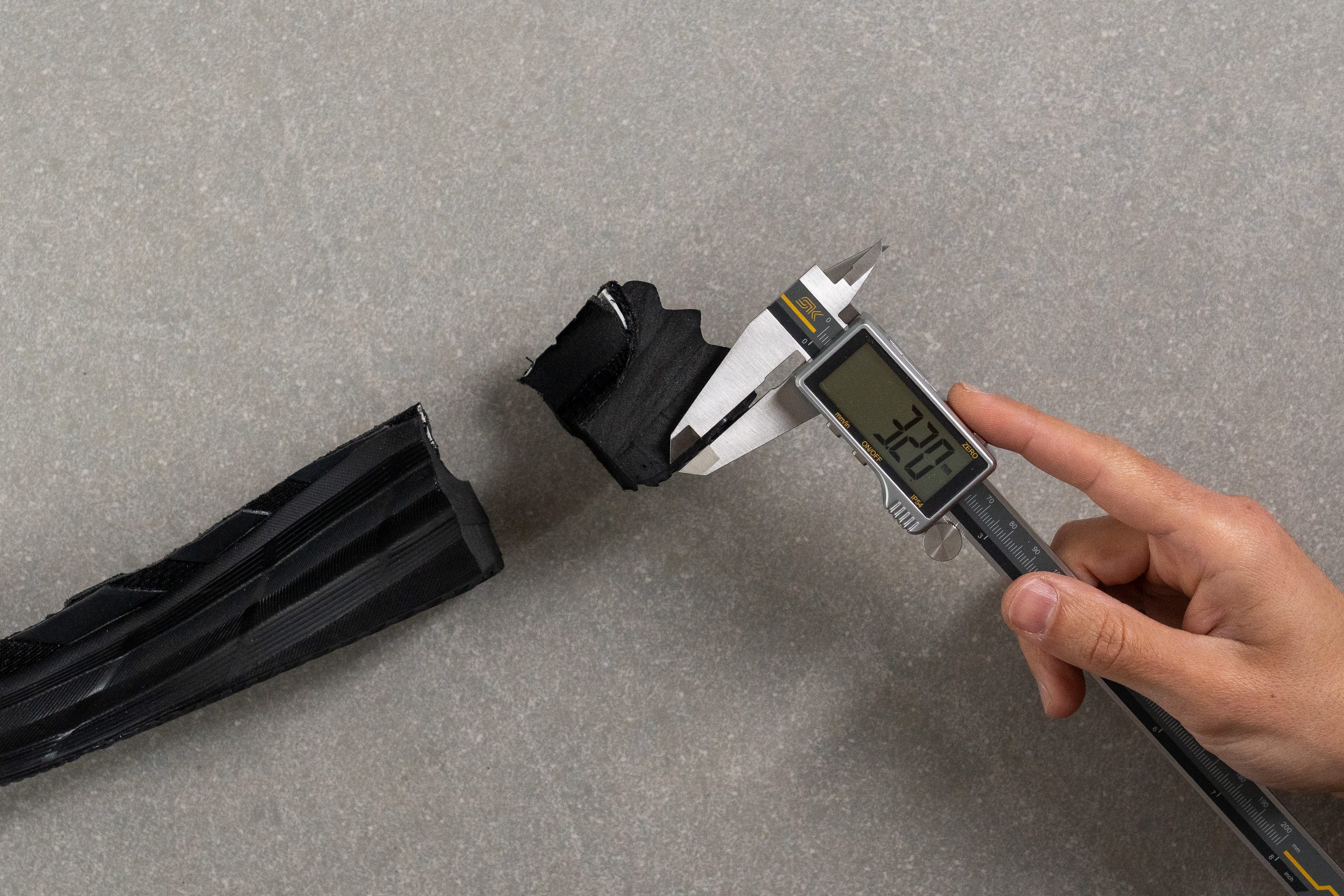
| Galaxy 7 | 3.2 mm |
| Average | 3.1 mm |
Misc
Insole thickness
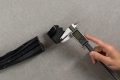
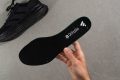
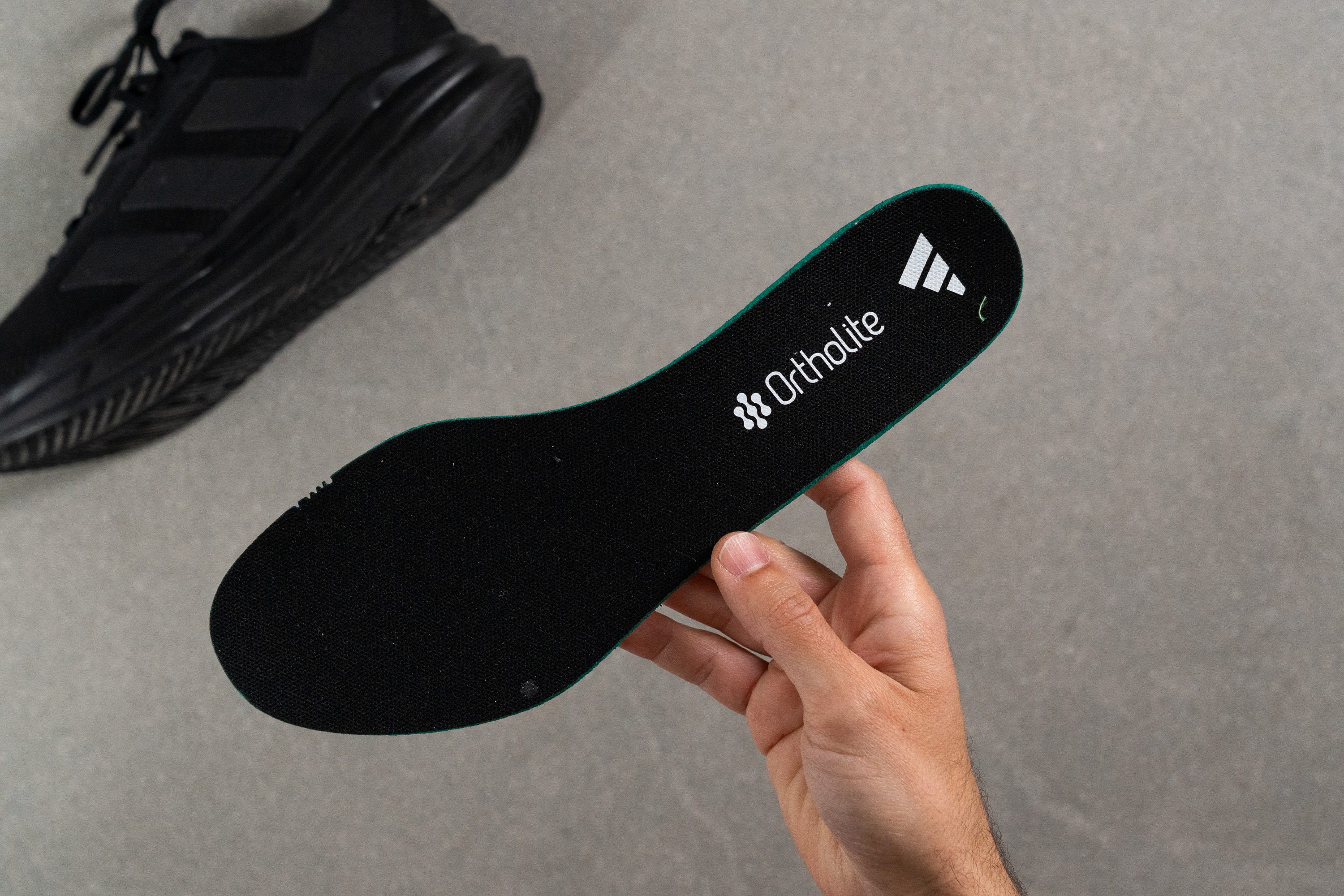
The insole is made of EVA foam and is slightly thicker than what we typically see in the lab, measuring 5.2 mm.
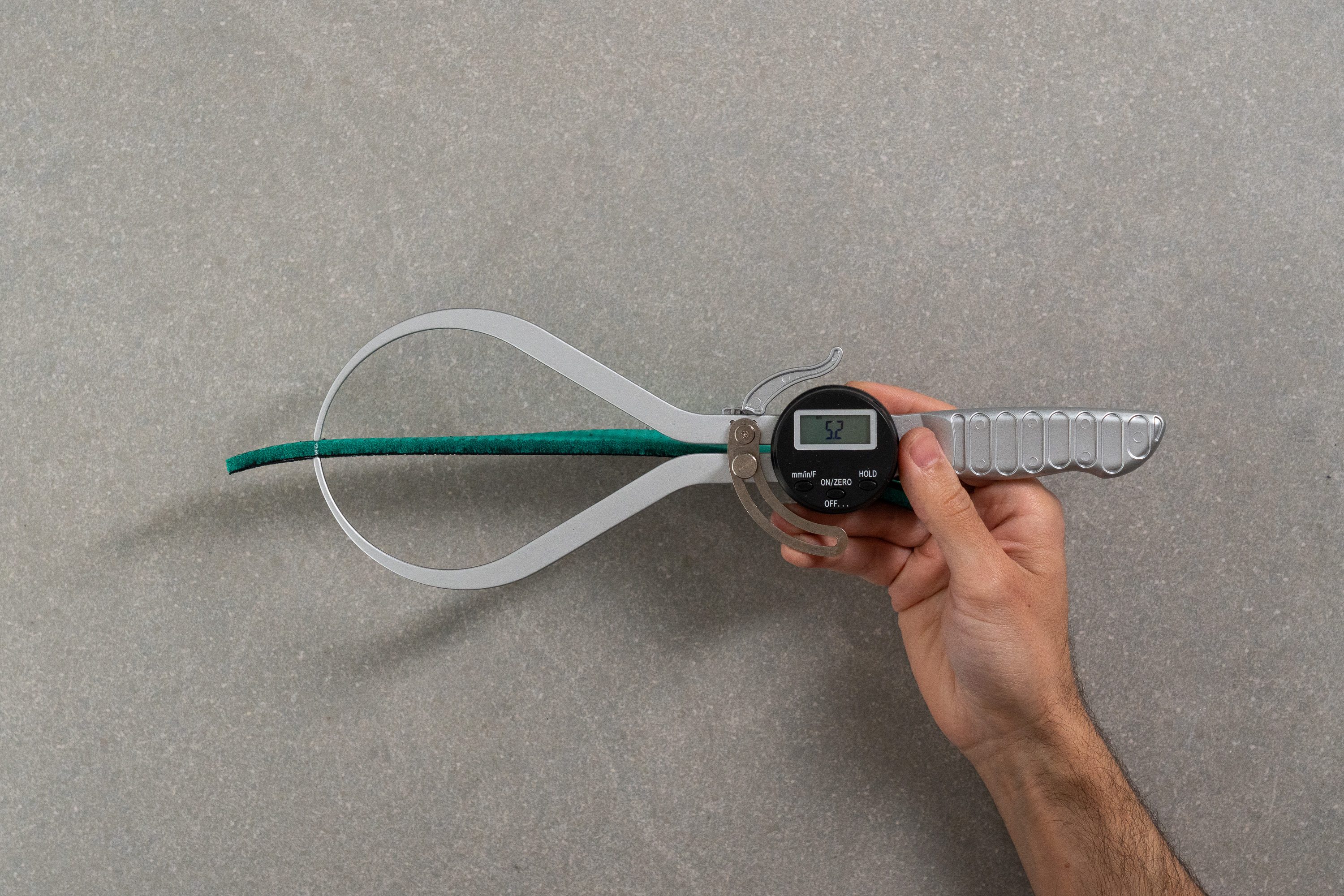
| Galaxy 7 | 5.2 mm |
| Average | 4.4 mm |
Removable insole
The Ortholite insole is removable and can be replaced with another one, as long as it fits properly inside the Galaxy.
| Galaxy 7 | Yes |
Reflective elements
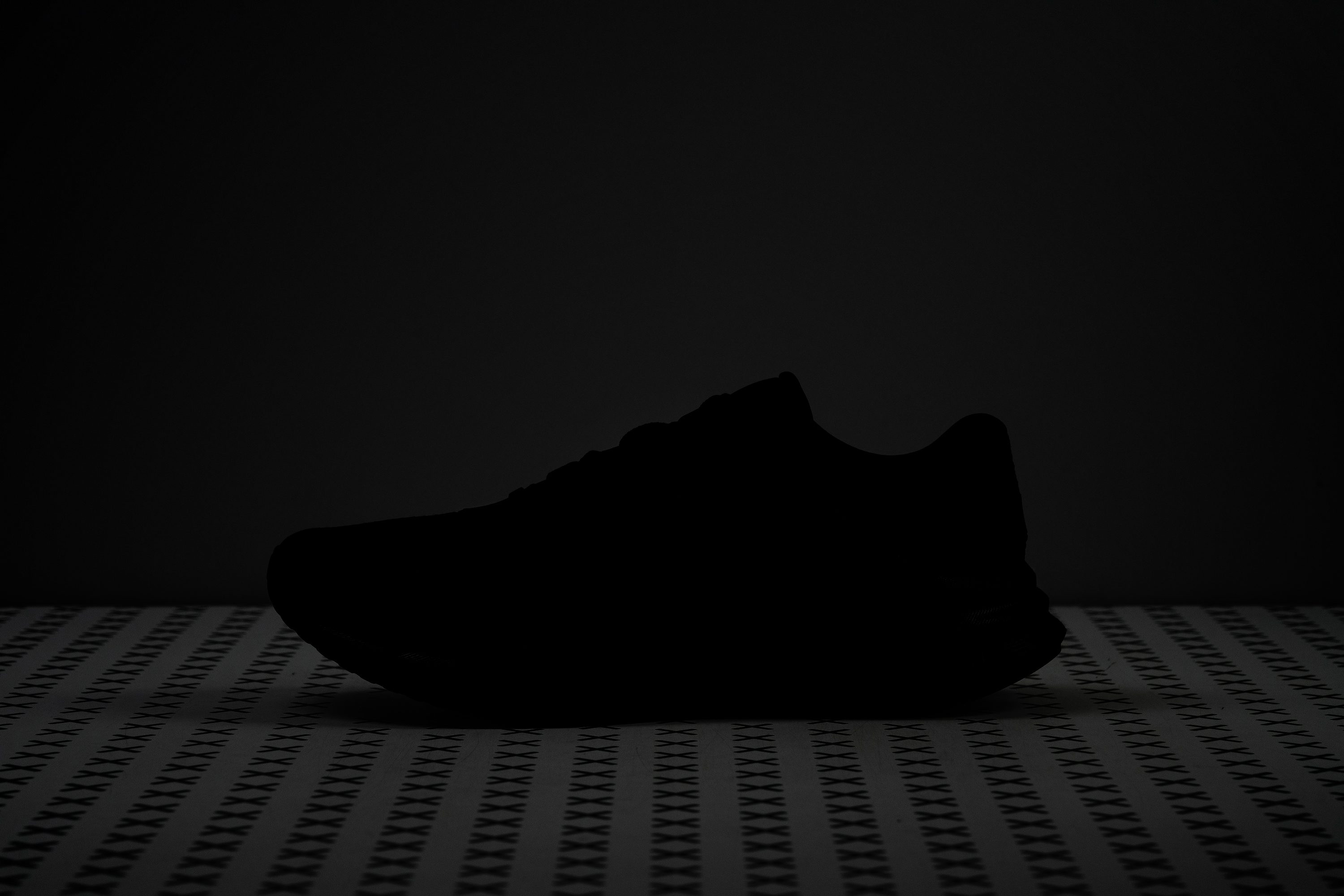
If cars or motorbikes are approaching from behind or the sides, make sure to wear reflective gear, as the shoe offers no visibility features to help you stay seen.
| Galaxy 7 | No |
Tongue padding
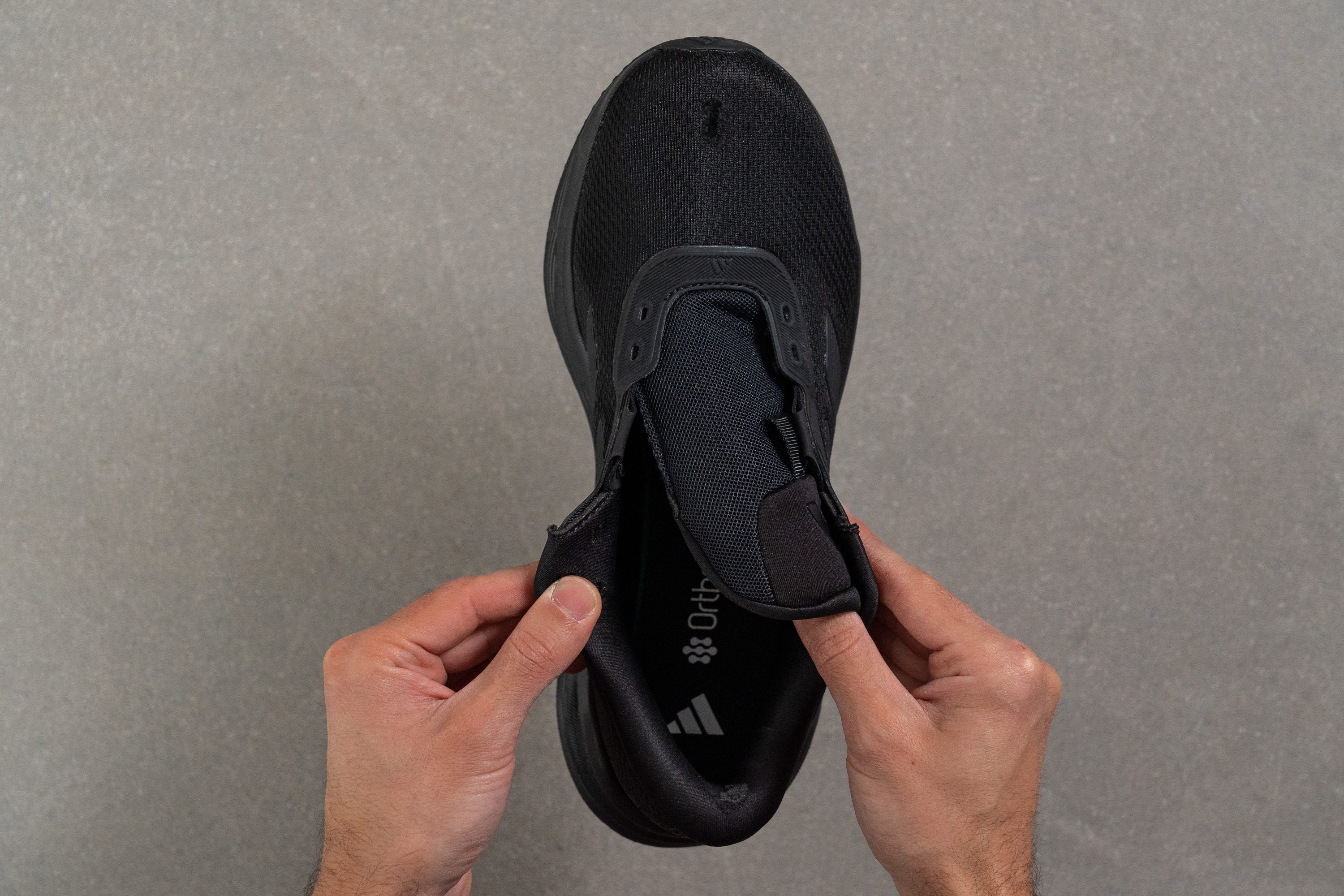
It’s uncommon to see a budget shoe move beyond standard punched eyelets, but that’s exactly what adidas did with the Galaxy 7. It combines the traditional setup with two lace loops, one on each side, helping reduce pressure on the most sensitive part of the instep.
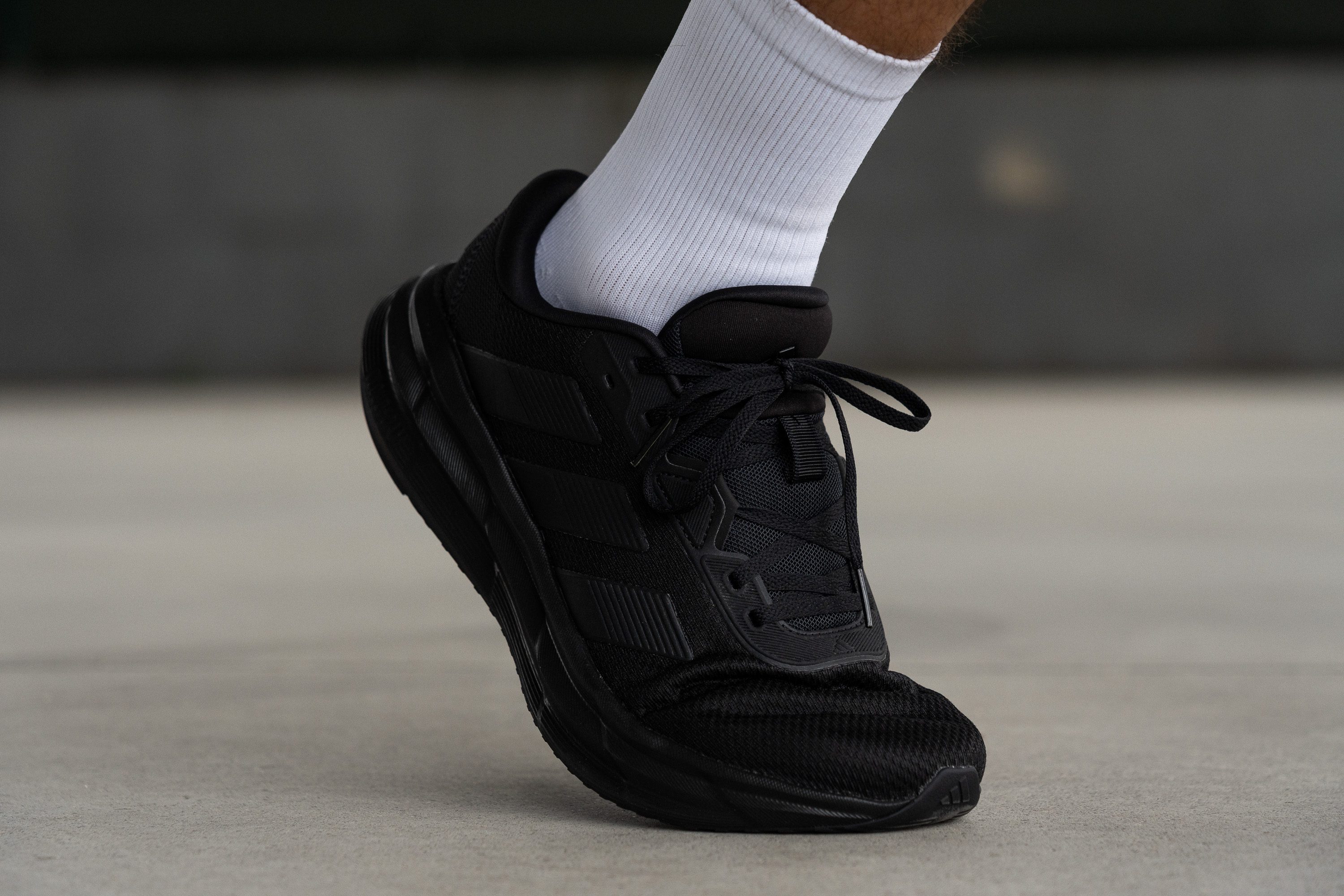
As mentioned in the breathability section, the tongue is clearly designed with comfort in mind. This was confirmed by our measurement, reaching 8.9 mm in thickness.
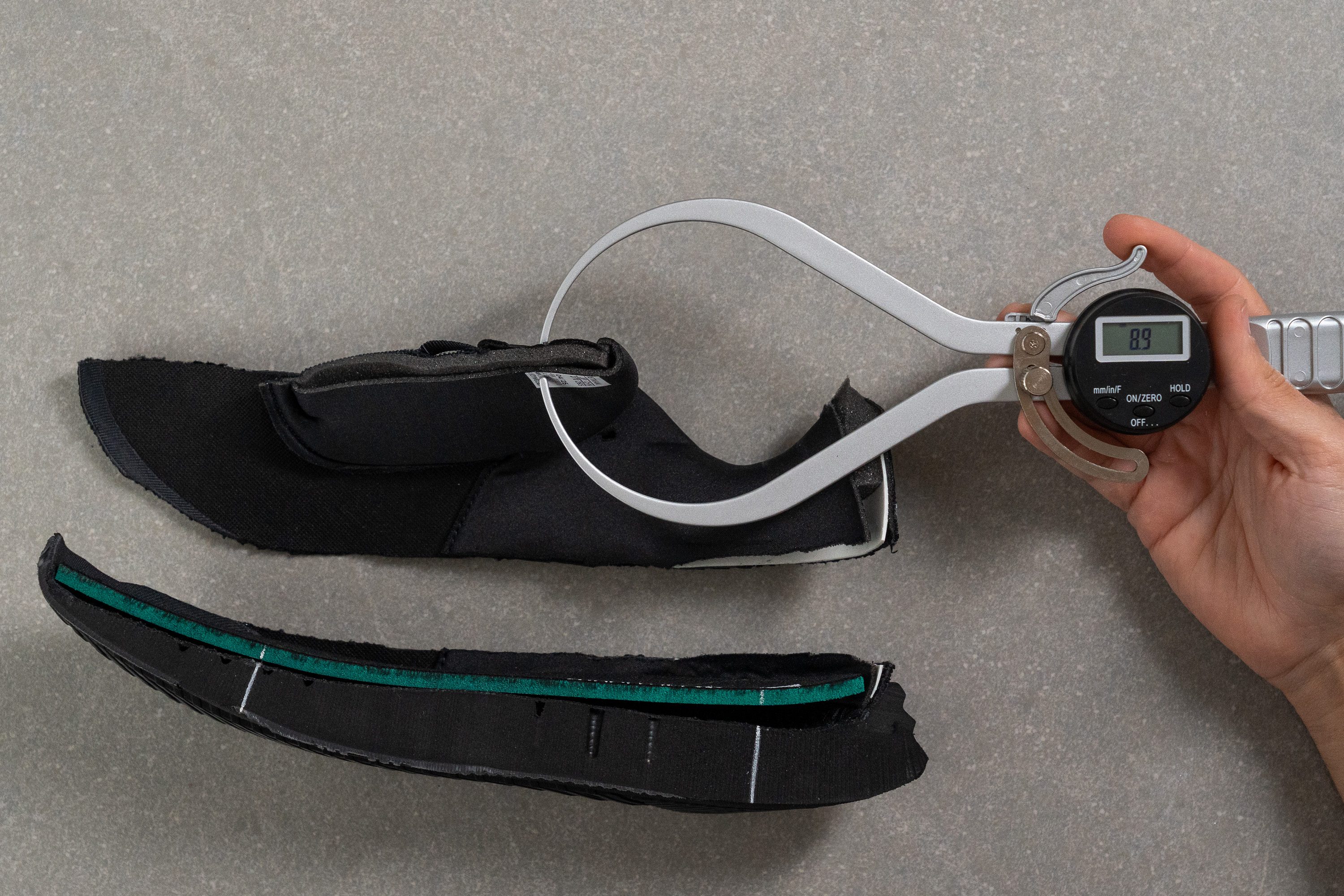
| Galaxy 7 | 8.9 mm |
| Average | 5.8 mm |
Tongue: gusset type
As expected from a budget-focused shoe, the tongue is not gusseted, which comes as no surprise.
| Galaxy 7 | None |
Heel tab
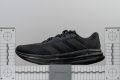
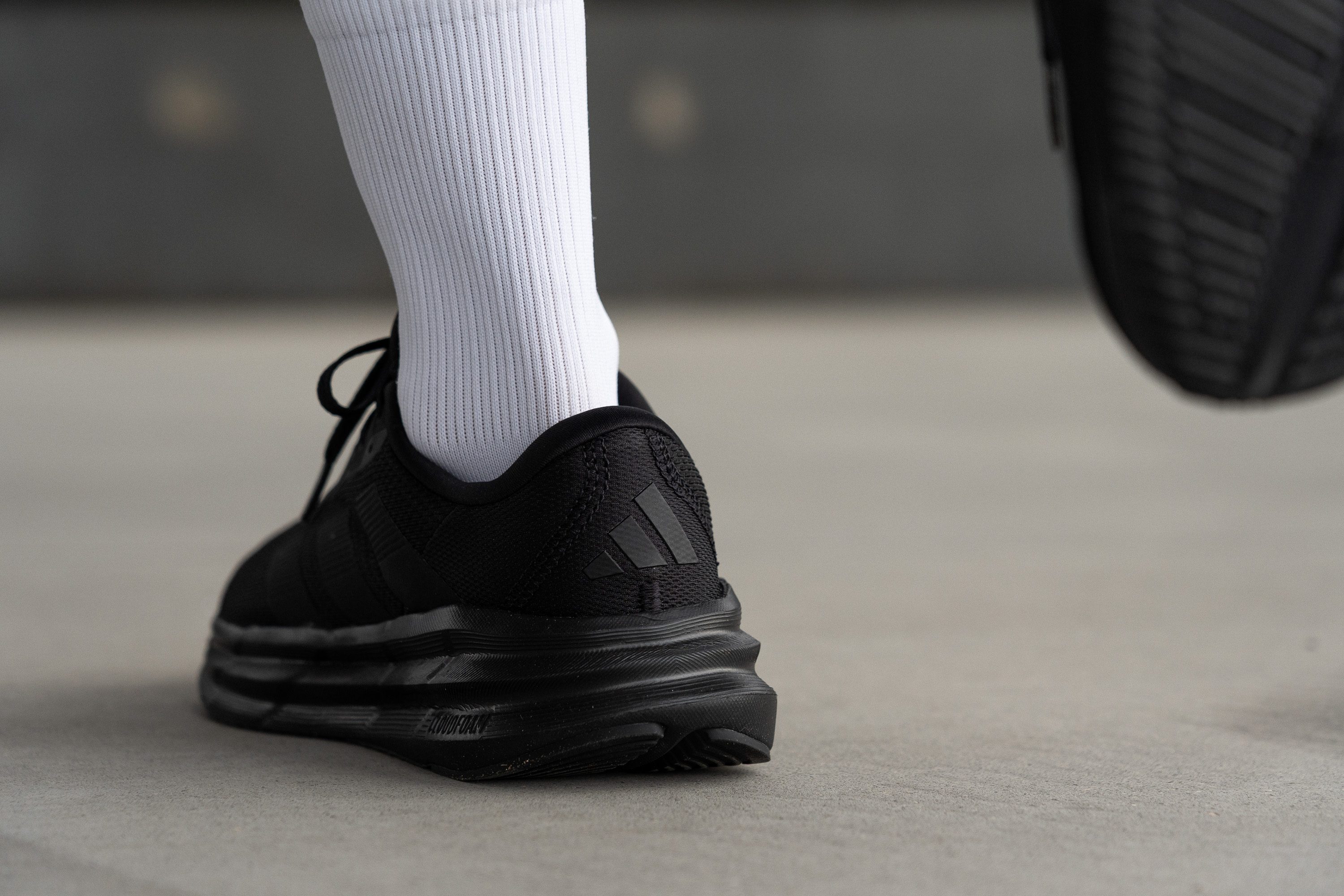
The heel of the Galaxy 7 features a very simple design, lacking a heel tab, with an adidas logo that is barely visible in this triple-black colorway.
| Galaxy 7 | None |
Price
The standout feature of the adidas Galaxy 7 is its ultra-affordable price. It may not deliver impressive performance, but it's one of the most budget-friendly running shoes adidas has ever released. If cost is a priority, this is where it truly excels.
| Galaxy 7 | $60 |
| Average | $158 |