
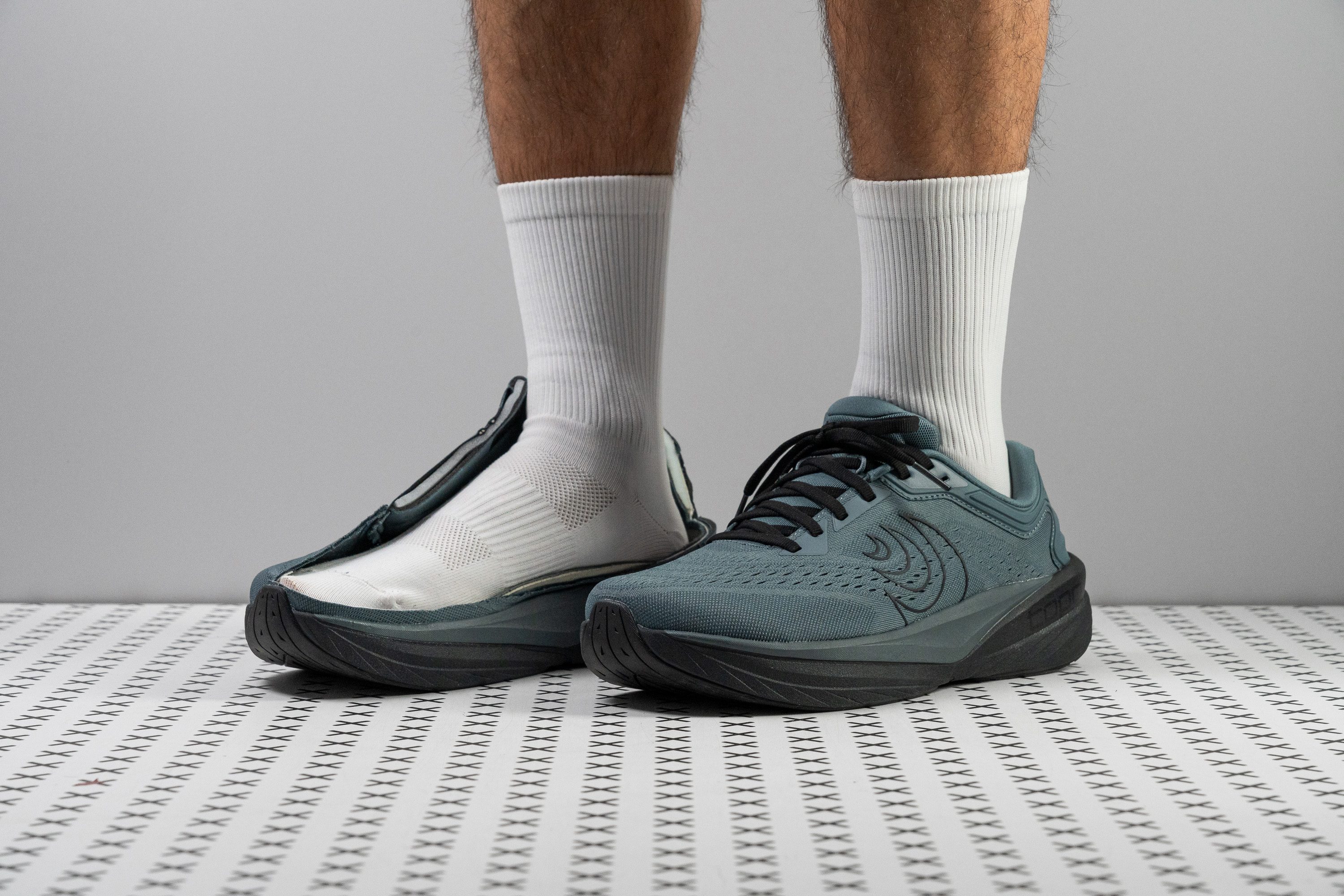

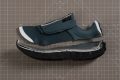
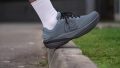
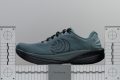







Our verdict
- Daily running 90
- Tempo 63
- Race 46
- Stability 86
Pros
- Improved shock absorption
- Softer midsole feel
- Wide anatomical toebox
- Outsole lasts forever
- Reasonable weight
- Works well for daily use too
- Comfortable upper
Cons
- Minor price increase
- Still low energy return
- Limited airflow
- Less stable than v3
Awards
- Top 29% in running shoes
- Top 19% in Topo Athletic running shoes
- Top 26% most popular running shoes
Comparison
The most similar running shoes compared
+ + Add a shoe | |||||
|---|---|---|---|---|---|
| Our score | 85 Great | 86 Great | 85 Great | 75 Good | |
| Price | $150 | $140 | $170 | $145 | |
| Pace | Daily running | Daily runningTempo | TempoDaily running | Daily running | |
| Shock absorption | High | High | High | Moderate | |
| Energy return | Low | High | High | Low | |
| Traction | High | High | High | High | |
| Arch support | Neutral | Neutral | Neutral | Neutral | |
| Weight lab Weight brand | 9.1 oz / 258g 9.3 oz / 264g | 7.8 oz / 220g 7.9 oz / 225g | 8.7 oz / 247g 8.6 oz / 245g | 8.5 oz / 241g 8.7 oz / 246g | |
| Lightweight | ✗ | ✓ | ✓ | ✓ | |
| Drop lab Drop brand | 7.0 mm 5.0 mm | 6.3 mm 6.0 mm | 7.0 mm 8.0 mm | 5.2 mm 4.0 mm | |
| Strike pattern | Mid/forefoot | Mid/forefoot | Mid/forefoot | Mid/forefoot | |
| Size | Slightly small | True to size | True to size | True to size | |
| Midsole softness | Balanced | Soft | Balanced | Soft | |
| Difference in midsole softness in cold | Small | Small | Small | Normal | |
| Toebox durability | Decent | Bad | Bad | Good | |
| Heel padding durability | Bad | Good | Bad | Decent | |
| Outsole durability | Good | Good | Good | Decent | |
| Breathability | Warm | Moderate | Moderate | Warm | |
| Width / fit | Medium | Medium | Medium | Wide | |
| Toebox width | Wide | Medium | Narrow | Wide | |
| Stiffness | Moderate | Flexible | Stiff | Flexible | |
| Torsional rigidity | Flexible | Flexible | Moderate | Flexible | |
| Heel counter stiffness | Flexible | Moderate | Moderate | Flexible | |
| Rocker | ✓ | ✓ | ✗ | ✗ | |
| Heel lab Heel brand | 34.6 mm 35.0 mm | 33.0 mm 35.0 mm | 33.6 mm 38.0 mm | 31.0 mm 32.0 mm | |
| Forefoot lab Forefoot brand | 27.6 mm 30.0 mm | 26.7 mm 29.0 mm | 26.6 mm 30.0 mm | 25.8 mm 28.0 mm | |
| Widths available | NormalWide | NarrowNormalWideX-Wide | NormalWide | NormalWide | |
| Orthotic friendly | ✓ | ✓ | ✓ | ✓ | |
| Season | All seasons | All seasons | All seasons | All seasons | |
| Removable insole | ✓ | ✓ | ✓ | ✓ | |
| Ranking | #116 Top 29% | #84 Top 21% | #113 Top 29% | #315 Bottom 21% | |
| Popularity | #104 Top 26% | #34 Top 9% | #77 Top 20% | #70 Top 18% |



Who should buy
In our experience, the Topo Phantom 4 is a strong choice for:
- Runners who liked previous Phantom versions and want the most cushioned and refined update yet.
- Those looking for a reliable daily trainer with a wide, foot-shaped forefoot.
- Anyone with high-volume feet who need an upper that offers generous space in all directions.
Who should NOT buy
The Phantom 4 still relies on ZipFoam, and we found in the lab that its energy return remains low. If you’re chasing a more modern-foam sensation underfoot, we do not recommend this one. From our perspective, options like the Altra Experience Flow 2 or the New Balance FuelCell Rebel v5 deliver a more bouncy experience at a similar MSRP.
We also think it’s not the best choice for runners with low-volume, narrow feet. In our experience, the roomy, anatomical fit can feel overly spacious and hard to lock down. Check the PUMA Magnify Nitro 3 or the HOKA Mach 6 instead.
Cushioning
Shock absorption
One of the defining traits of the Topo Phantom 3 was its limited shock absorption. With the market clearly shifting toward more highly-cushioned designs, it’s no surprise that this version delivers greater underfoot protection, registering 139 SA in the heel and 112 SA in the forefoot.
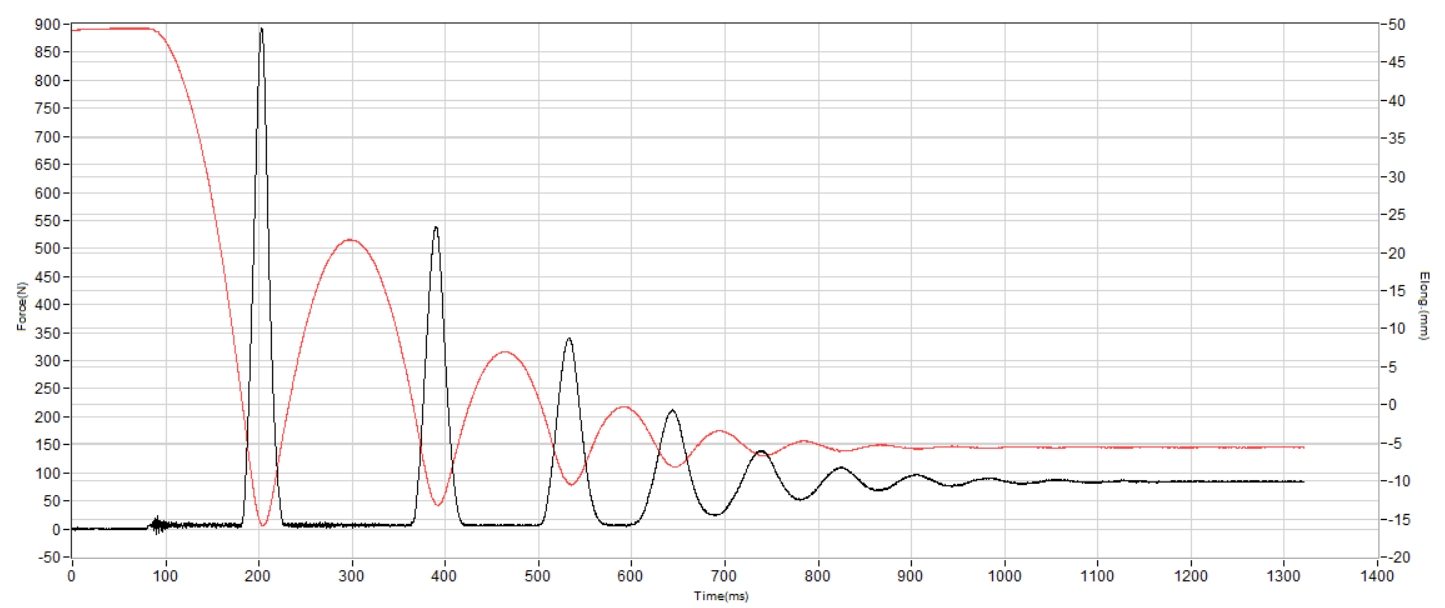
| Topo Phantom 4 | 139 SA |
| Average | 131 SA |
Energy return
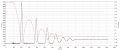
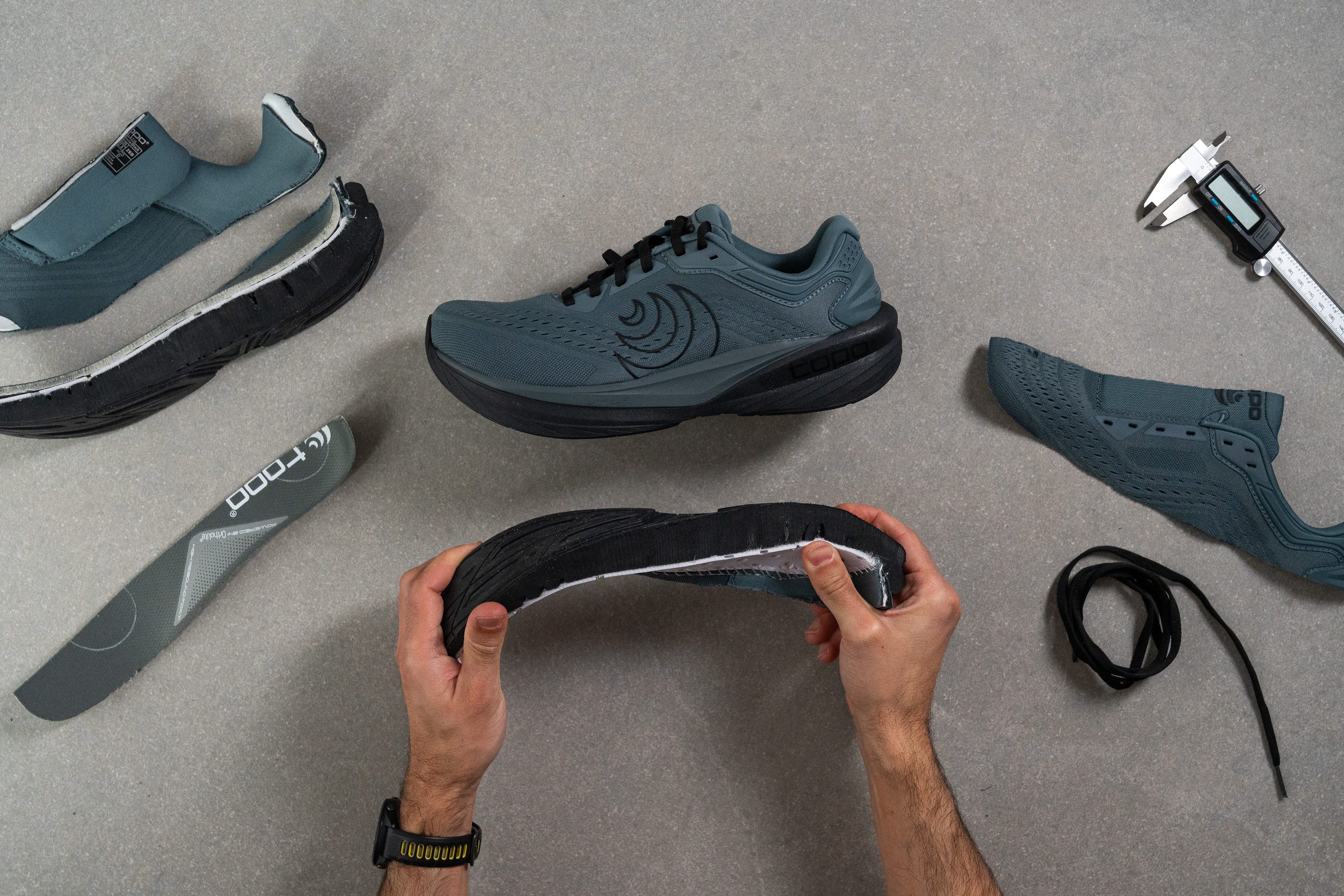
However, bounce is still missing from the equation. With just 49.4% energy return in the heel and 53.3% in the forefoot, the Phantom 4 feels flat underfoot and does not reward faster paces, so it’s worth keeping that in mind.
The Phantom 5 needs, at the very least, a supercritical EVA foam as soon as possible.
| Topo Phantom 4 | 53.3% |
| Average | 61.4% |
Heel stack
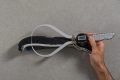
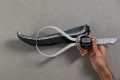
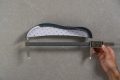
Topo hinted at a 2 mm stack height increase in the Phantom 4, and our measurements confirmed it. At 34.6 mm of total stack in the heel, there’s a small yet noticeable bump for heel strikers that brings the shoe closer to the current daily trainer standard.
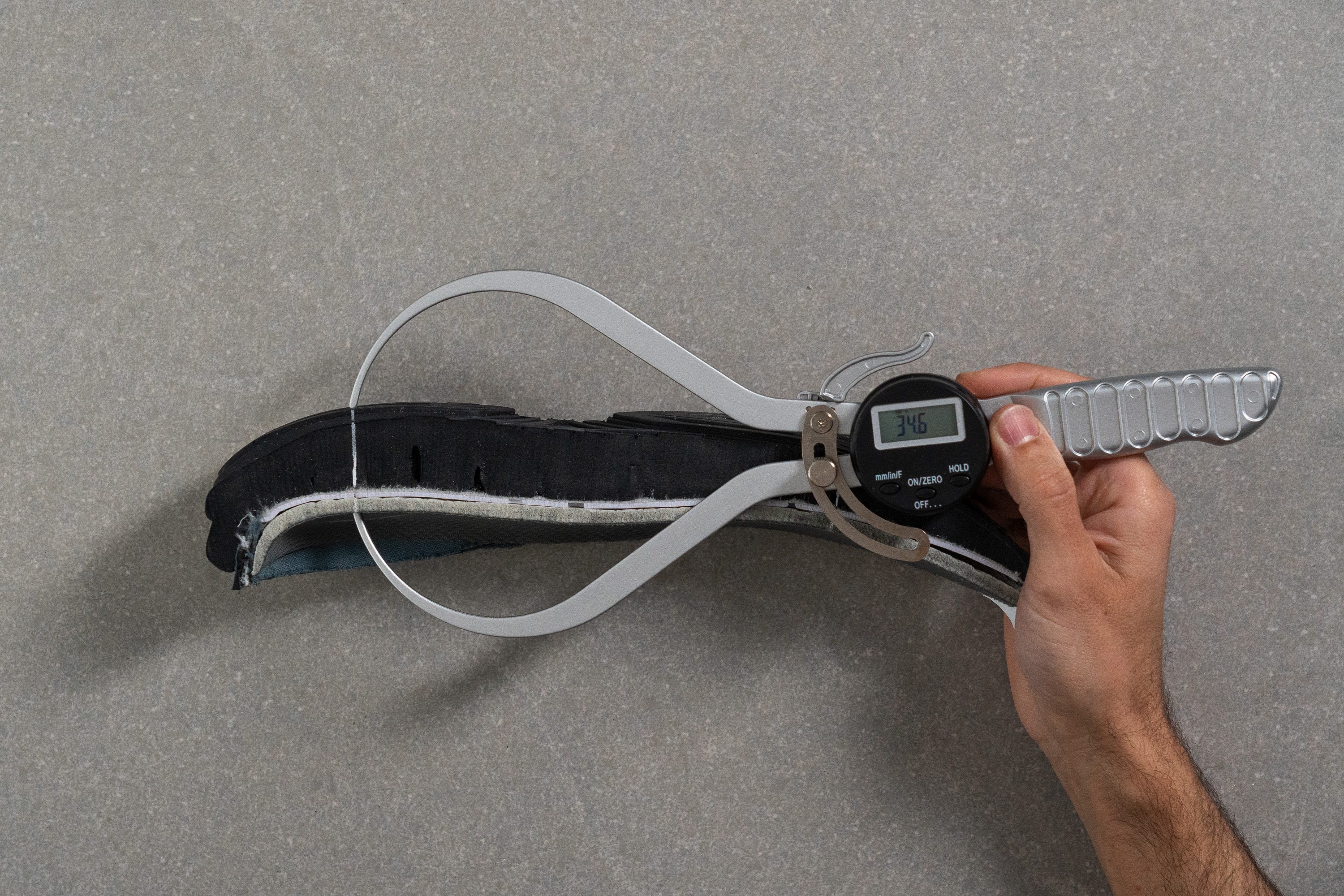
| Topo Phantom 4 | 34.6 mm |
| Average | 35.5 mm |
Forefoot stack
The forefoot also gains additional foam, although the increase is more modest than in the heel. We measured just 0.8 mm more, bringing the total stack height to 27.6 mm.
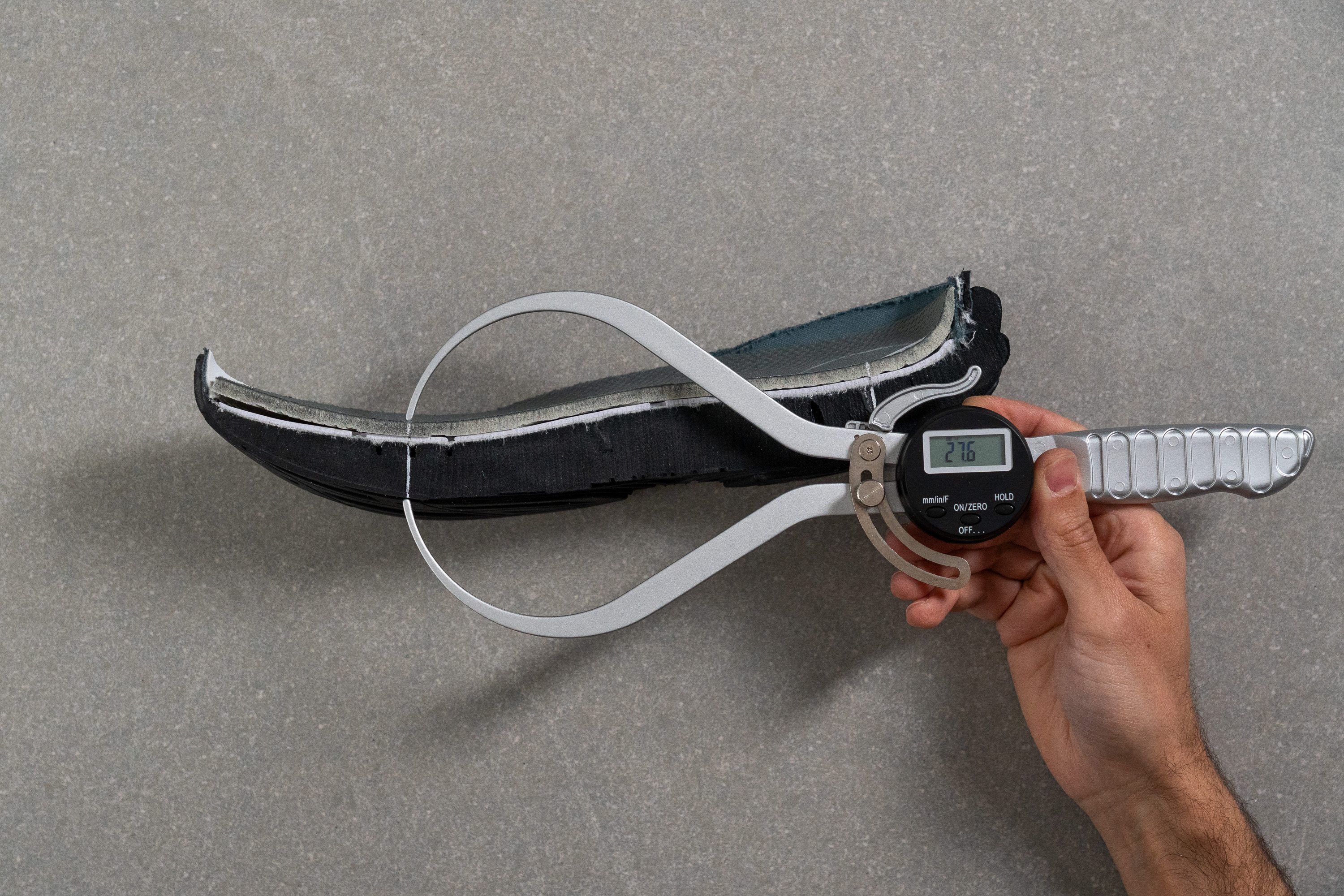
| Topo Phantom 4 | 27.6 mm |
| Average | 27.1 mm |
Drop
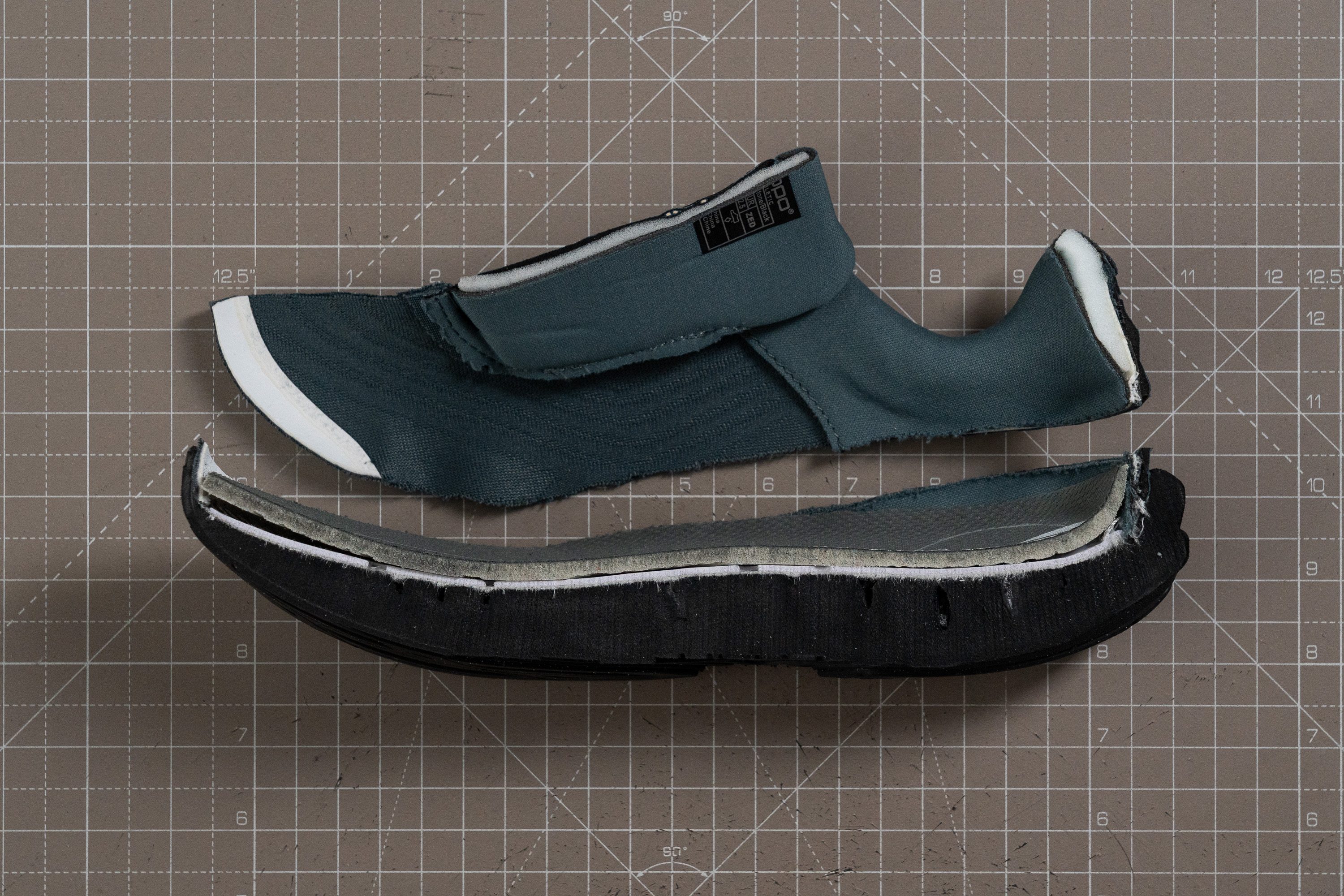
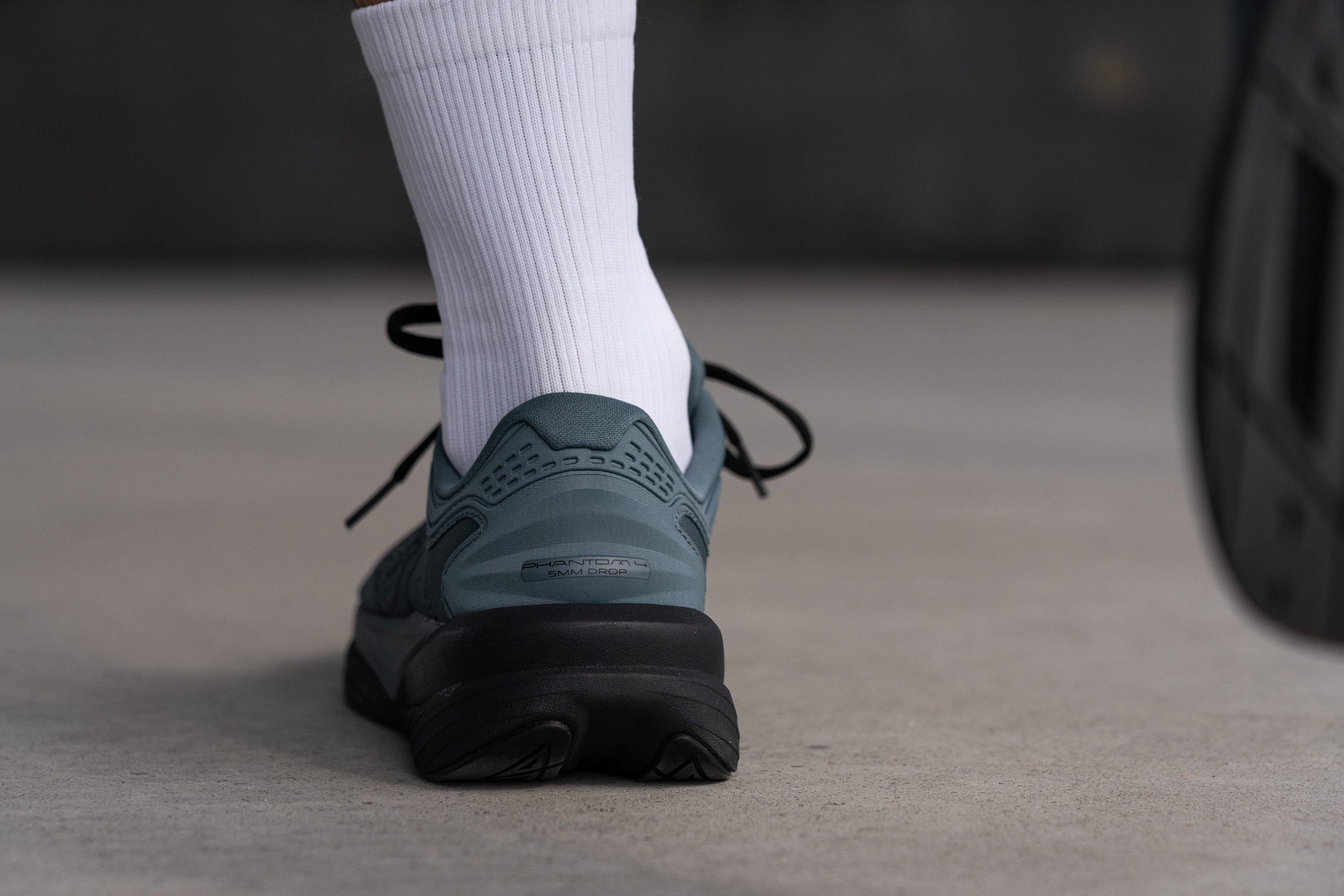
The heel-to-toe difference measured slightly higher in our lab than what Topo Athletic states. While the brand lists a 5 mm drop, which is even printed on the shoe, we recorded 7.0 mm. It remains best suited for midfoot strikers, yet versatile enough to accommodate a wide range of runners.
| Topo Phantom 4 | 7.0 mm |
| Average | 8.4 mm |
Midsole softness
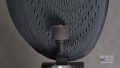
Topo also claims that the ZipFoam formula was updated to deliver greater softness in this version. We verified that, as it's clearly softer than previous Phantom models, although this change does not translate into improved responsiveness as we proved before.
Using our Asker C durometer, we measured the foam at 33.2 AC, a result that closely matches the soft-leaning feel we experienced during our runs.
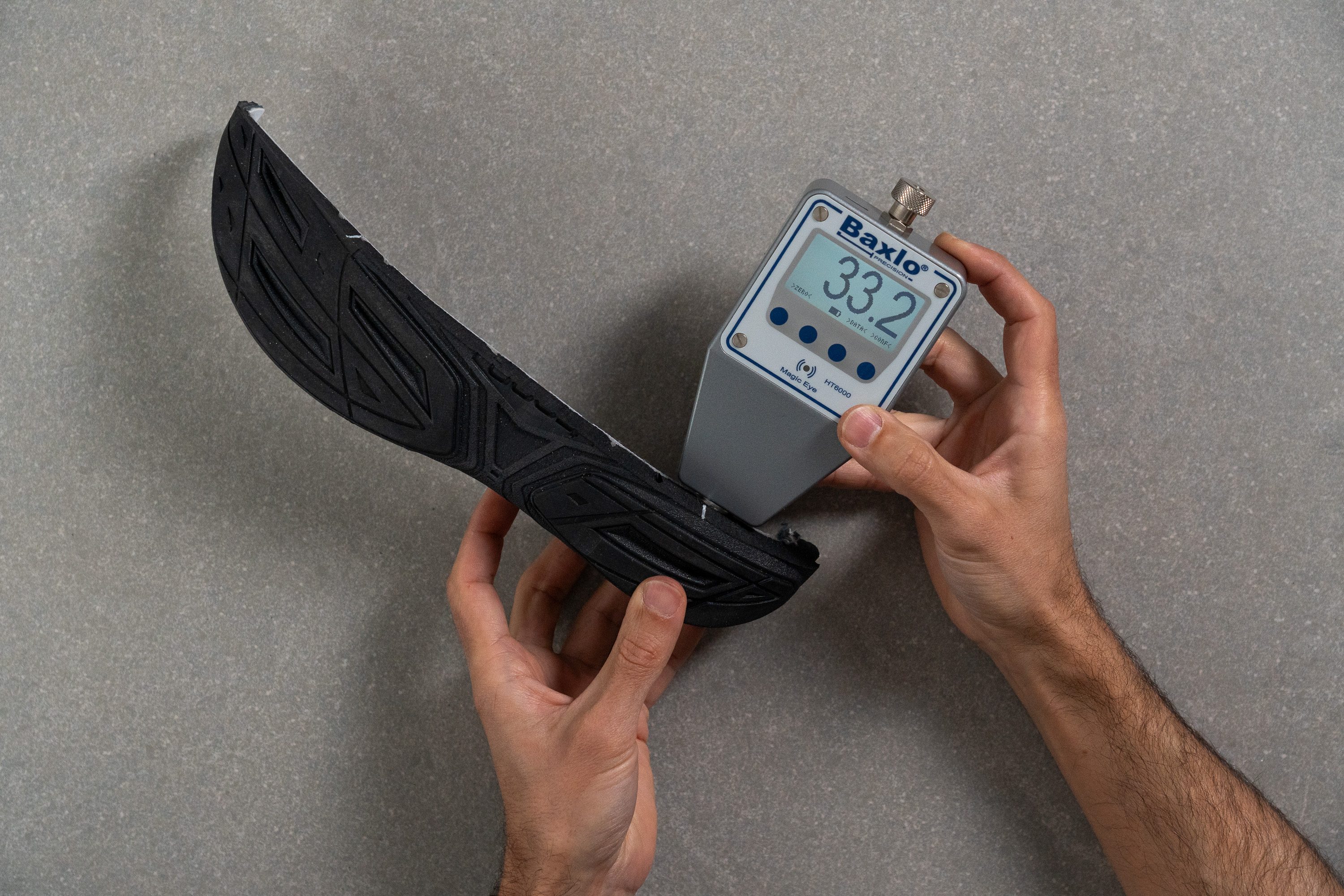
| Topo Phantom 4 | 33.2 AC |
| Average | 35.5 AC |
Rocker
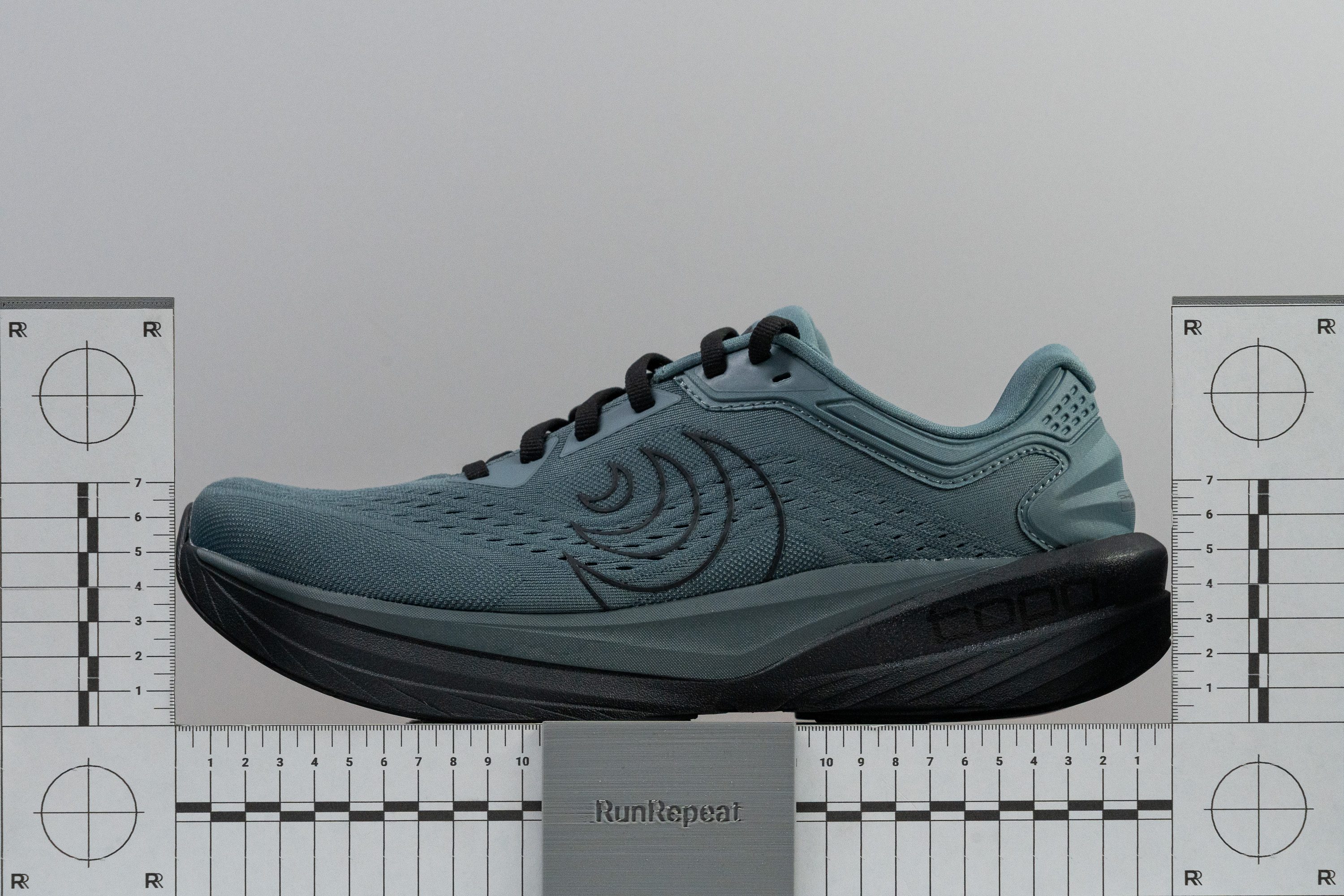
The added stack height also introduces a slightly more pronounced rocker, with a steeper curvature, particularly in the heel. It’s not a dramatic shift if you’re coming from version 3, but it does help nudge the shoe toward a more modern geometry.
Size and fit
Size
Topo Phantom 4 fits slightly small (64 votes).
Internal length
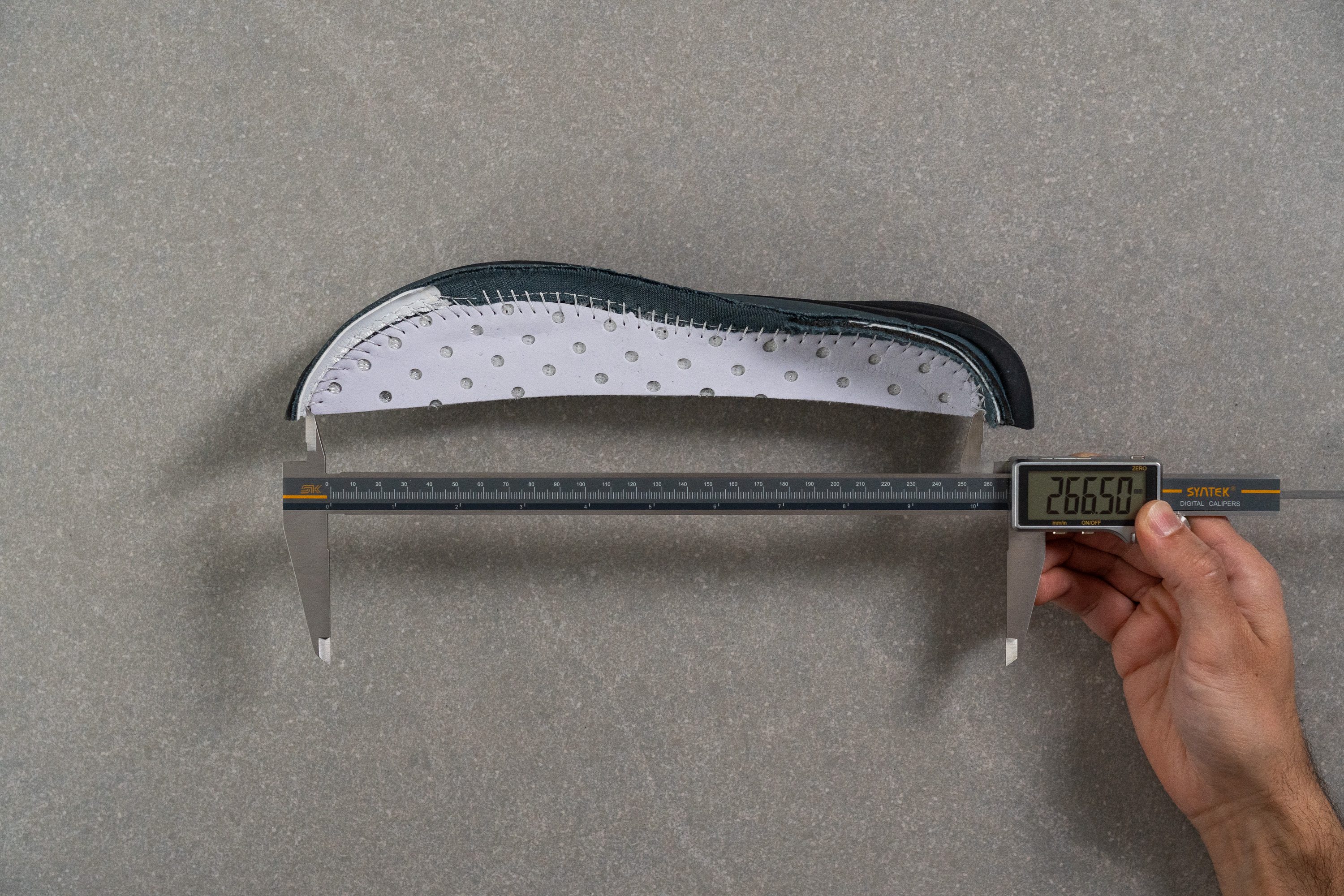
| Topo Phantom 4 | 266.5 mm |
| Average | 269.4 mm |
Width / Fit
Topo is widely recognized in the running shoe industry as a strong alternative to Altra’s anatomical fit, offering a similar foot-shaped design but with higher drops, and they stay true to that philosophy here.
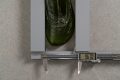
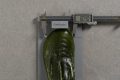
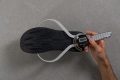
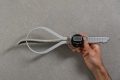
The Phantom 4 began our fit assessment with a forefoot width of 96.7 mm, yet with this brand, it’s the second measurement that truly defines how the shoe fits.
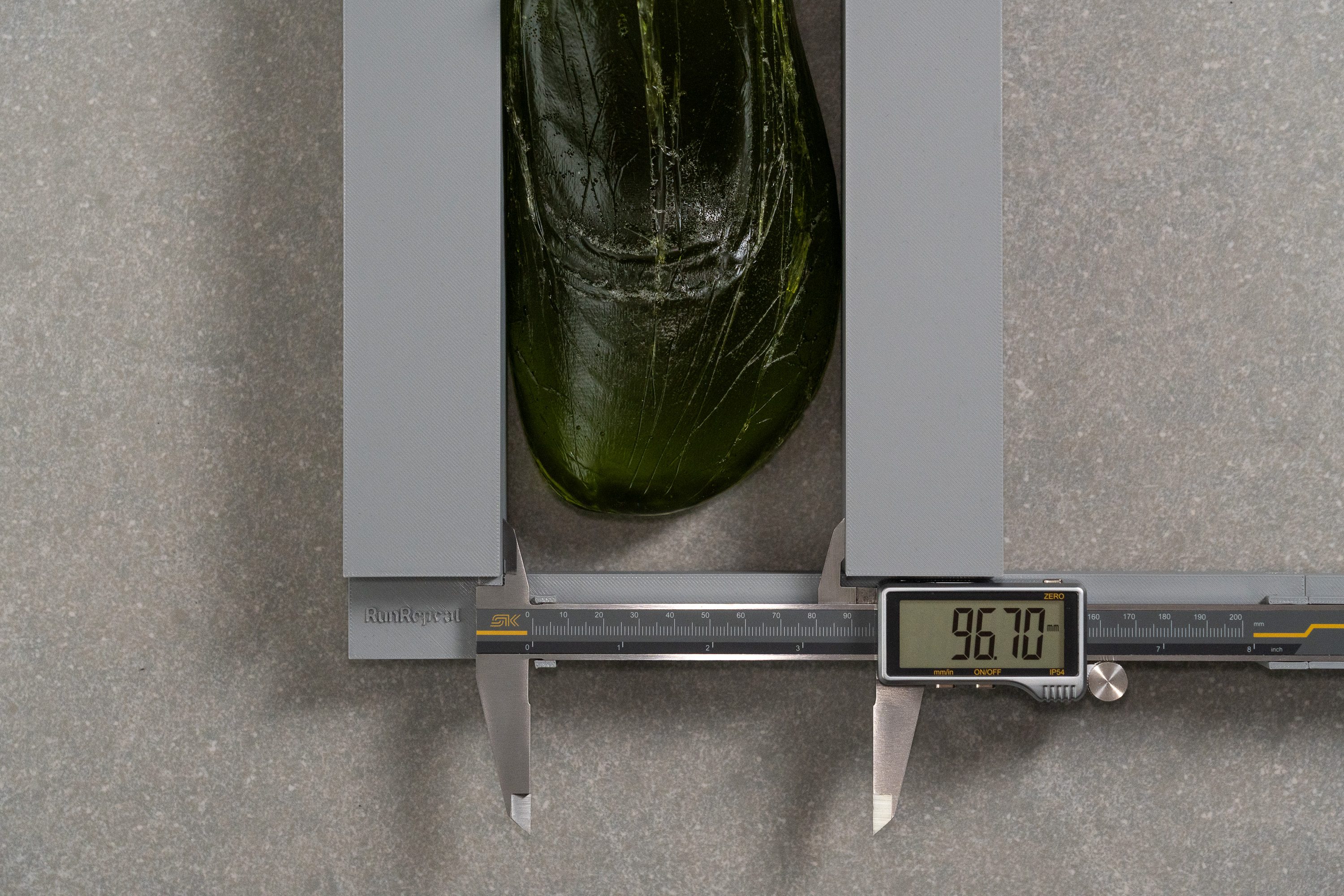
| Topo Phantom 4 | 96.7 mm |
| Average | 95.2 mm |
Toebox width
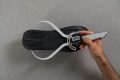
Our second measurement, taken directly in the toebox, came in at 80.4 mm. That’s an unusual figure in the lab, yet entirely consistent with the foot-shaped design philosophy that defines Topo shoes.
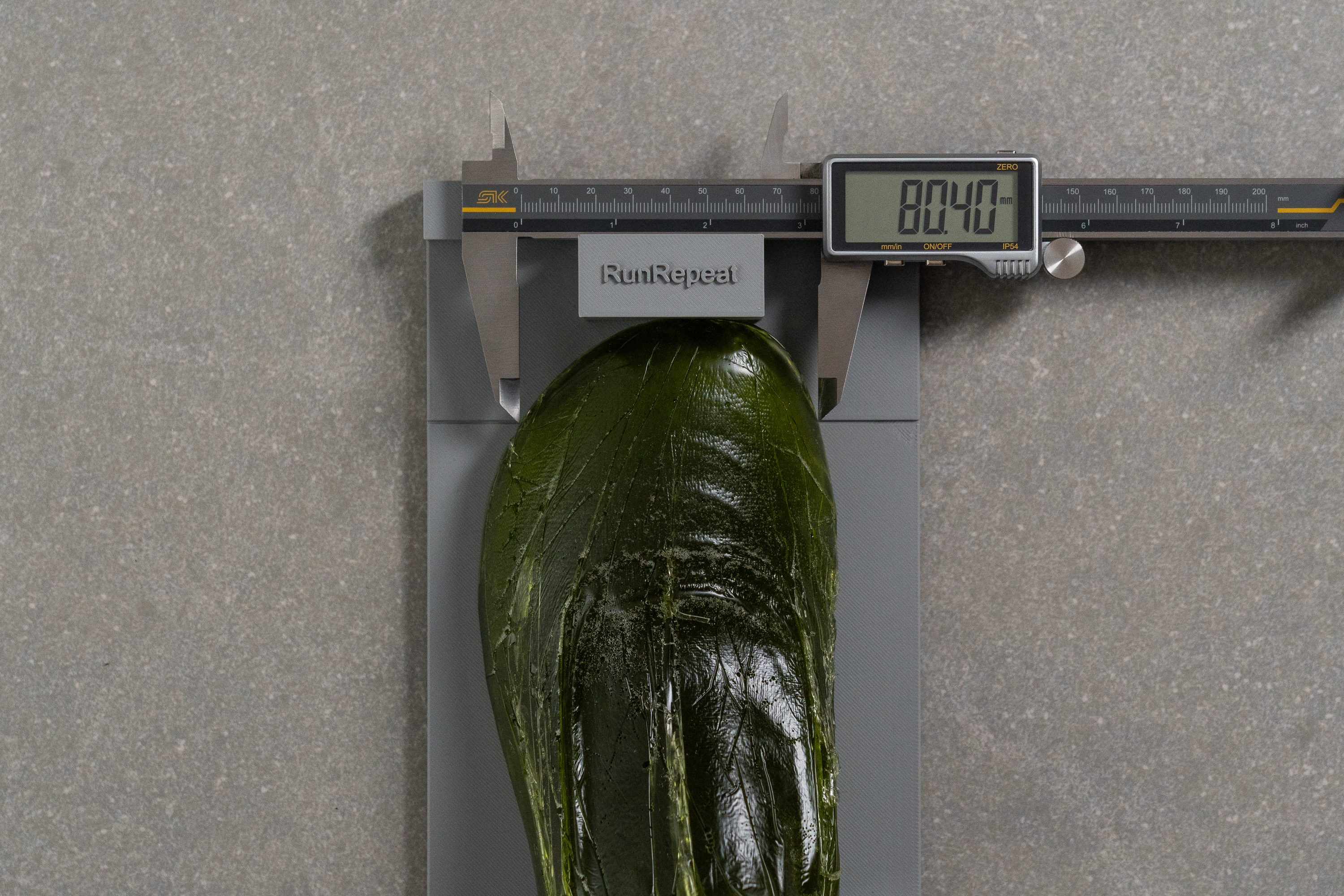
| Topo Phantom 4 | 80.4 mm |
| Average | 73.2 mm |
Toebox height
There is also generous vertical space in the toebox, allowing the toes to move freely without feeling restricted.
In our third and final fit measurement, the Phantom 4 again scored above average, reaching 31.1 mm.
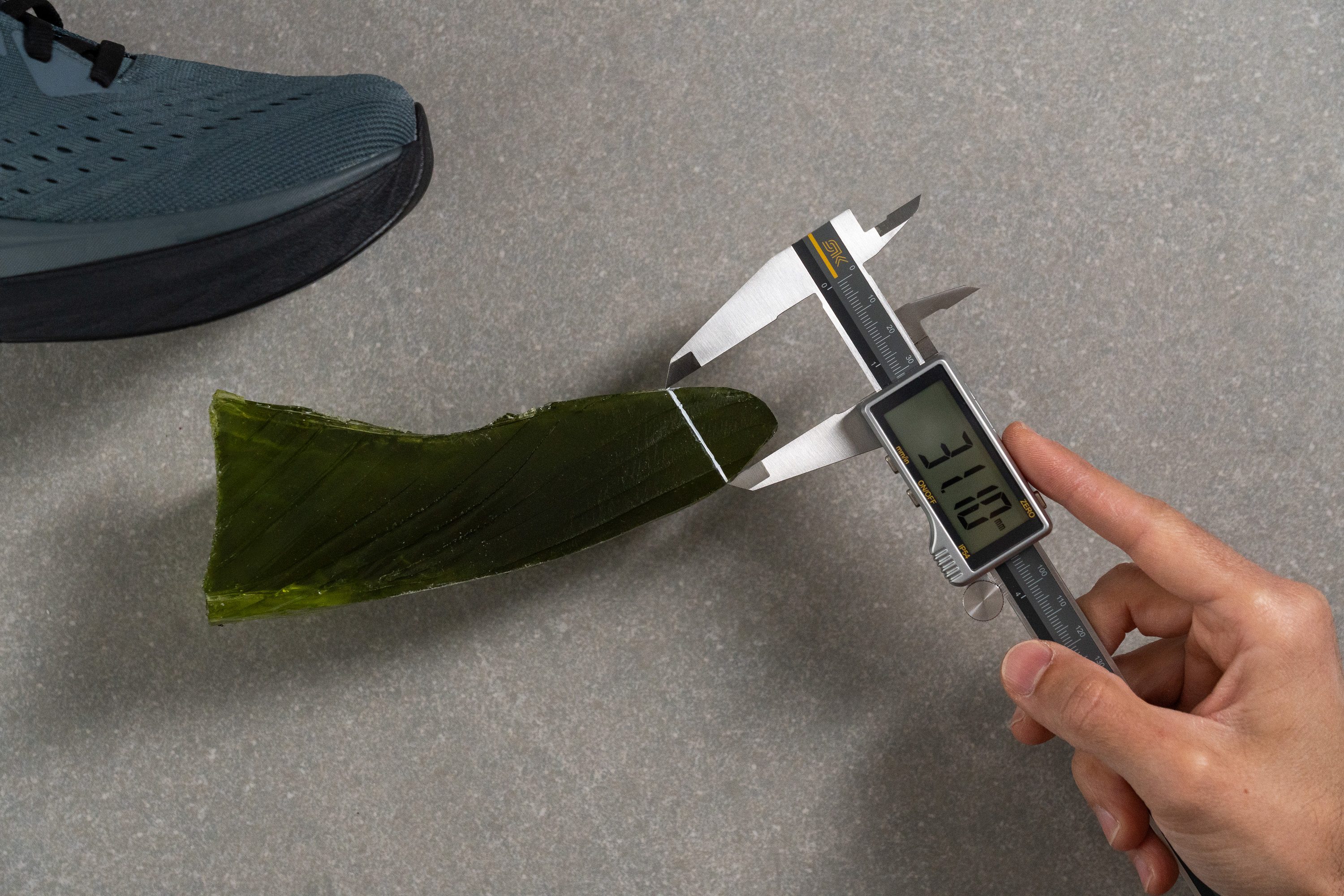
| Topo Phantom 4 | 31.1 mm |
| Average | 27.0 mm |
Traction / Grip
Traction test
In our traction test, the outsole recorded a 0.50 score, marking a slight step forward from its predecessor.
While it’s far from the best in pure traction performance, it delivers reliable grip on dry pavement and remains steady in light rain too.
| Topo Phantom 4 | 0.50 |
| Average | 0.53 |
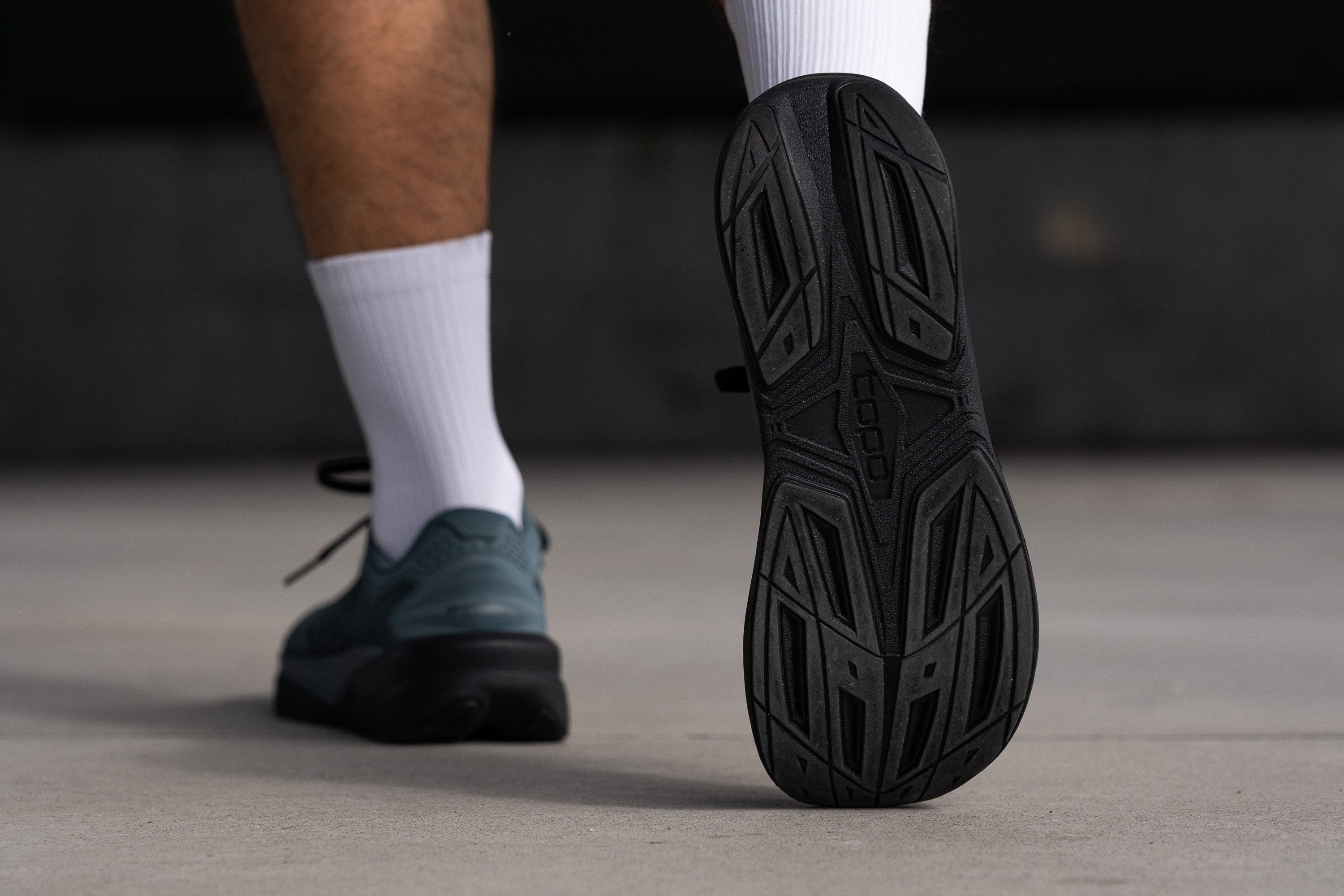
Outsole design
The outsole design has been fully reworked, now extending more coverage into the midfoot area and addressing the weak point found in its predecessor.
Unfortunately, it may not be immediately obvious to you due to the color combination of this version, but it was the only one available at the time of our purchase.
Flexibility / Stiffness
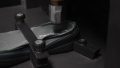
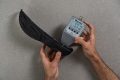
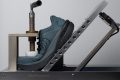
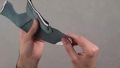
To evaluate longitudinal stiffness, we performed our standard 30-degree bend test and recorded a force of 12.9N to flex the Phantom 4. That’s only a slight uptick compared to the previous version and not something we noticed while running.
This result places it squarely within the average range for daily trainers, flexible enough to be comfortable at easy runs without feeling overly unstable.
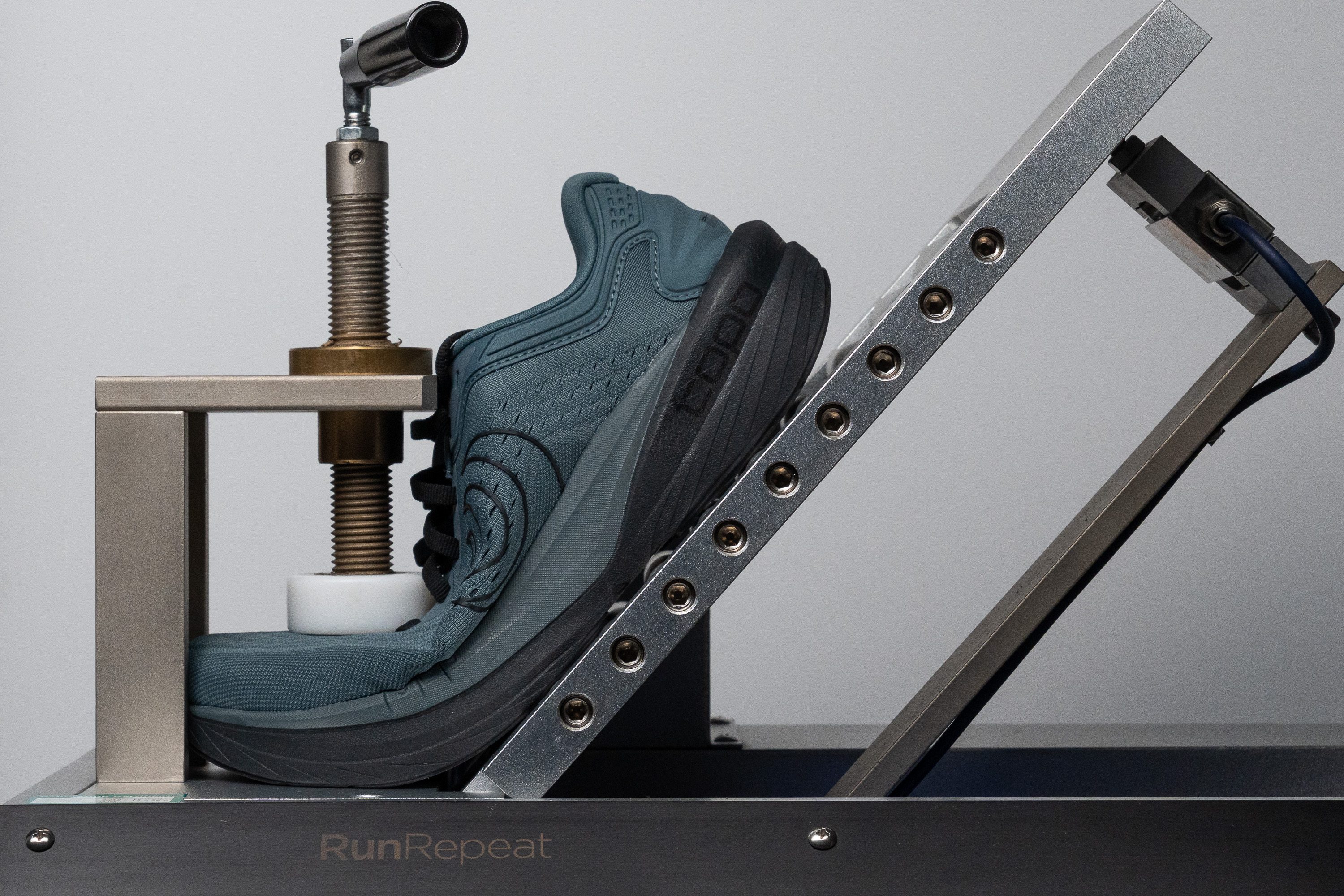
| Topo Phantom 4 | 12.9N |
| Average | 15.5N |
Weight
The redesigned outsole is largely responsible for the 4% weight reduction in the Phantom 4. It may not be a groundbreaking change, but a lighter build is always welcome in a daily trainer.
Still, we can’t help but wonder how much more dynamic this shoe could have felt with a supercritical foam instead of the current ZipFoam.
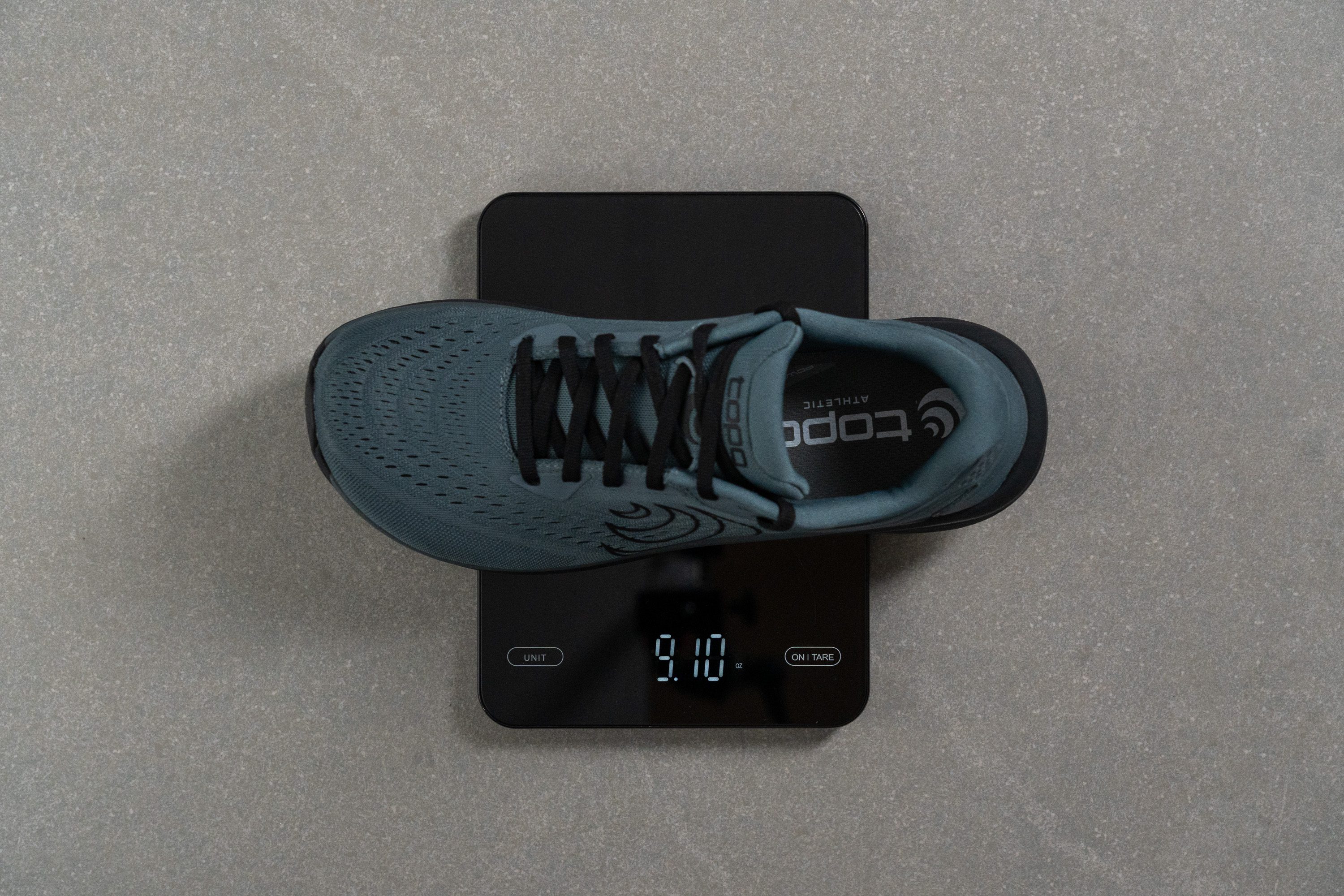
| Topo Phantom 4 | 9.1 oz (258g) |
| Average | 9.2 oz (261g) |
Breathability
Breathability test
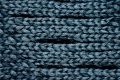
The upper of the Phantom 4 is a clear example of why lab testing shoes matters. Simply judging it by appearance or relying on a few winter test runs would lead us to misleading conclusions.
At first glance, the mesh looks packed with ventilation holes, and visually, it suggests strong airflow. However, beneath that outer layer sits a secondary lining that restricts most of the ventilation, which ultimately led us to assign it a 2/5 in breathability.
Once we examined the material, the explanation became obvious. Having a thick upper means that airflow is significantly limited despite the perforated appearance.
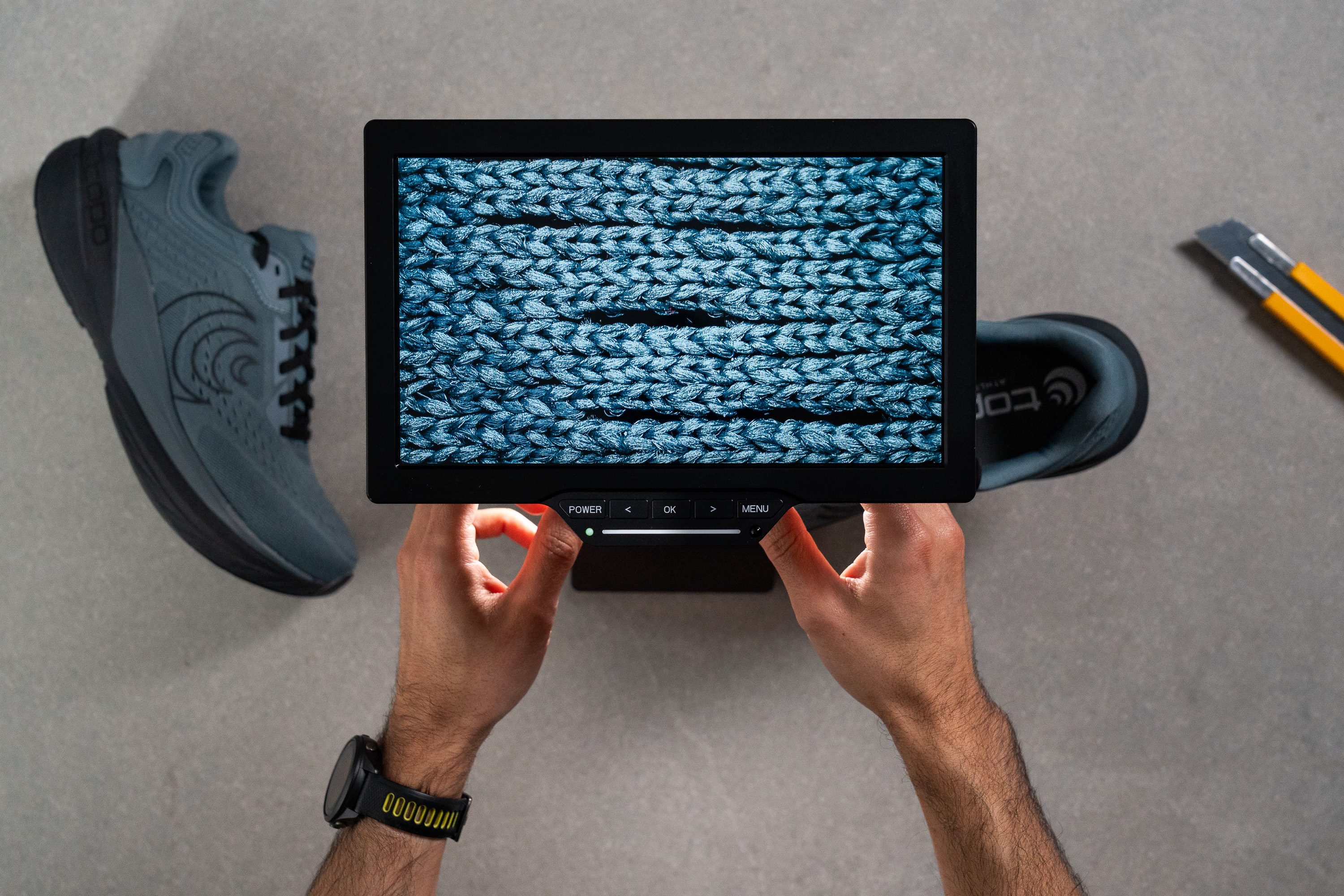
Previous Phantom versions featured larger openings and earned a 3/5 score, so the drop in ventilation this time around didn’t come as a surprise.
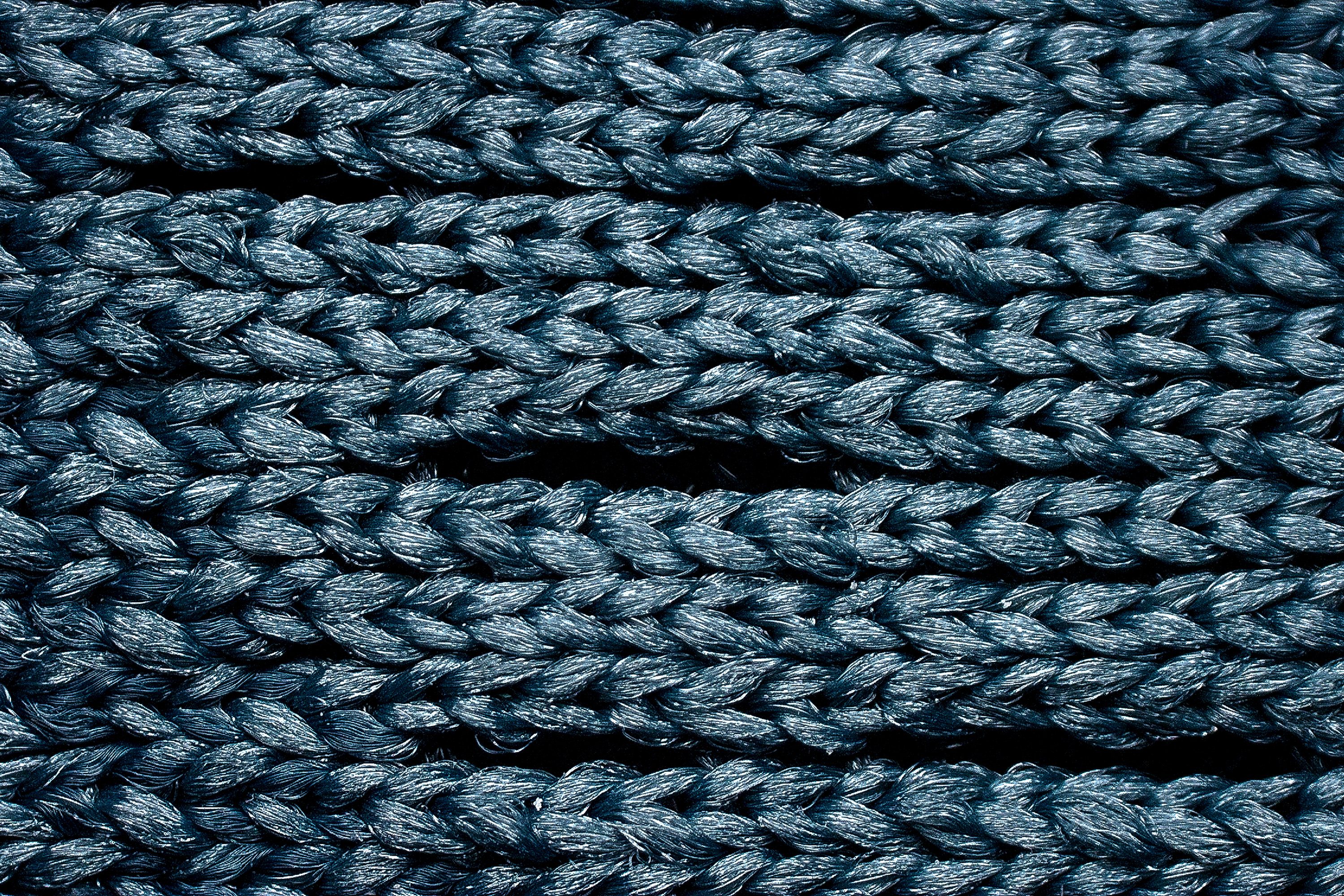
As is usually the case with Topo, the upper feels well constructed and durable, leaving us with few structural complaints. Still, runners who log miles in hot summer conditions should be aware that this shoe retains heat, which could become a drawback in warmer climates.
| Topo Phantom 4 | 2 |
| Average | 3.6 |
Stability
Lateral stability test
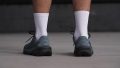
The Phantom has long sat between a neutral trainer and a mild stability option. With the softer foam in this fourth version and a few changes, it leans more clearly toward the neutral side and it's not a good option for those with support needs.
Torsional rigidity
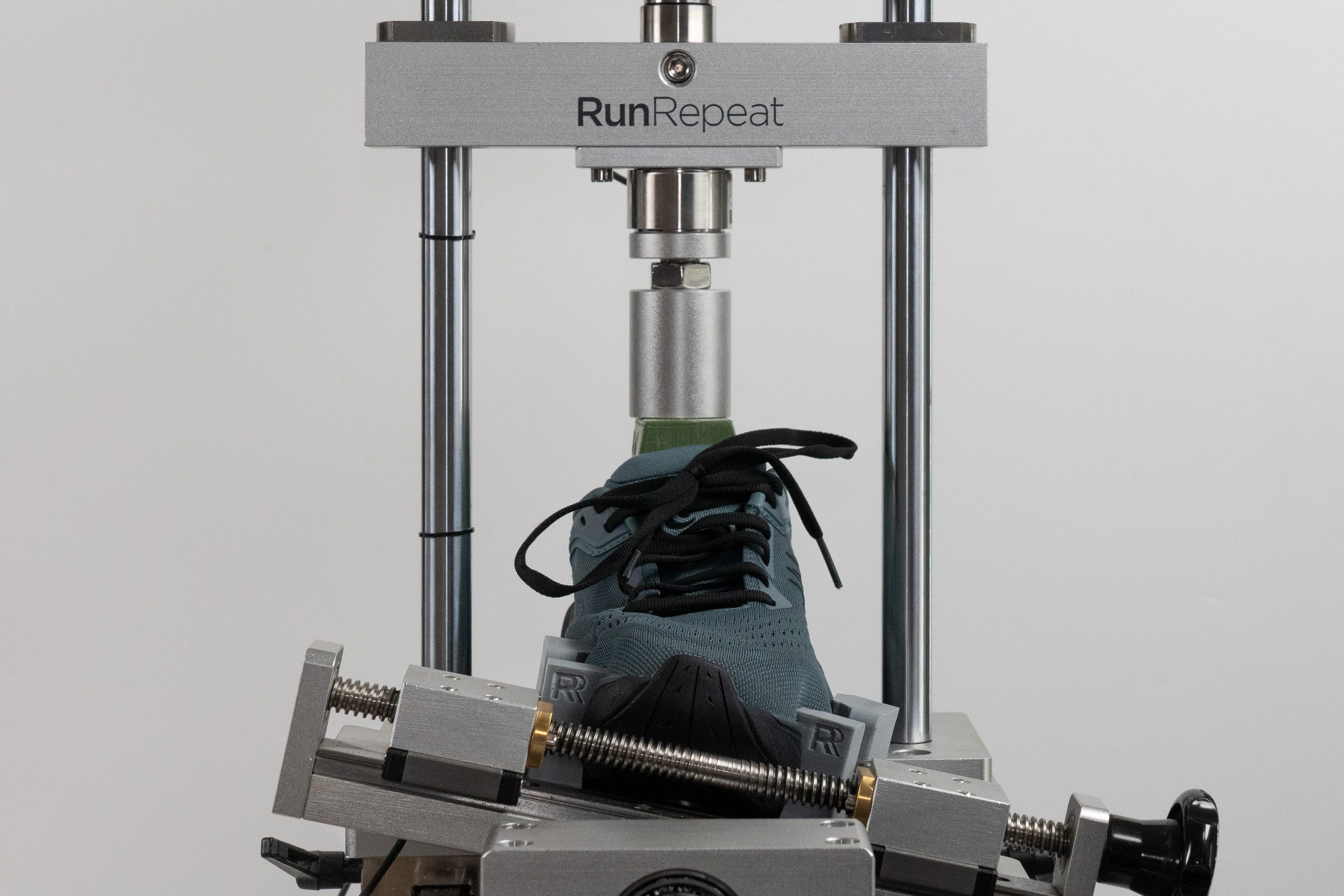
The redesigned outsole also results in slightly reduced torsional rigidity of 11.1 Nm, which aligns with our earlier observation that the shoe now feels more neutral in character.
| Topo Phantom 4 | 11.1 Nm |
| Average | 14.4 Nm |
Heel counter stiffness
The plastic heel clip from version 3 has been removed, and as you may guess, that change makes the shoe feel more neutral and slightly less stable in the heel area. Here, it scores a 2 out of 5 in our test.
| Topo Phantom 4 | 2 |
| Average | 3 |
Midsole width - forefoot
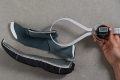
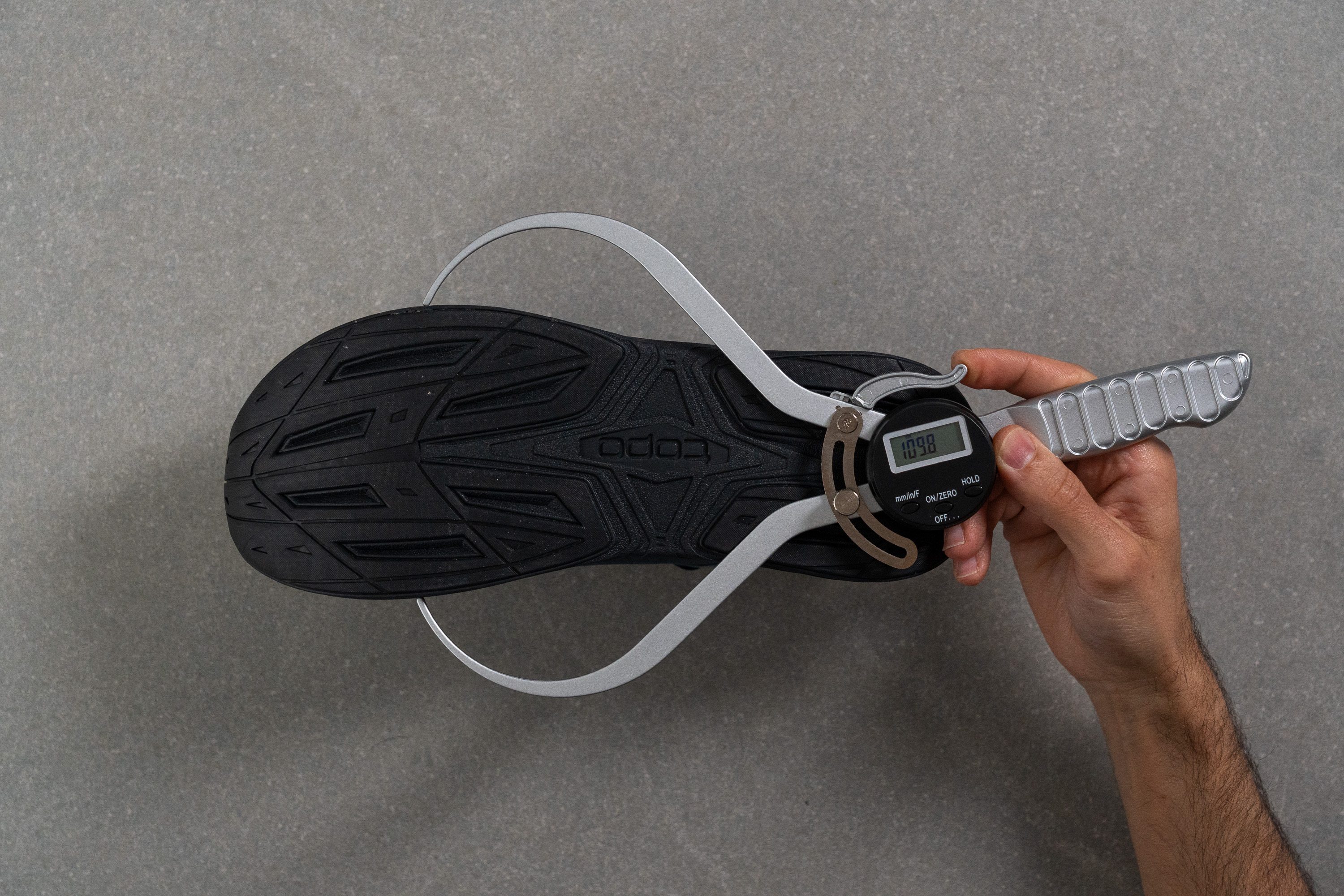
The shoe’s platform dimensions have also been revised compared to version 3, and the Phantom now presents a narrower footprint. We measured 109.8 mm in the forefoot, which is well below average and 3.5 mm less wide than its predecessor.
| Topo Phantom 4 | 109.8 mm |
| Average | 115.1 mm |
Midsole width - heel
The heel platform also stays below average at 87.1 mm, a characteristic we’ve seen repeatedly across many Topo models. Anyway, the brand has long leaned toward designs that favor midfoot and forefoot strikers.
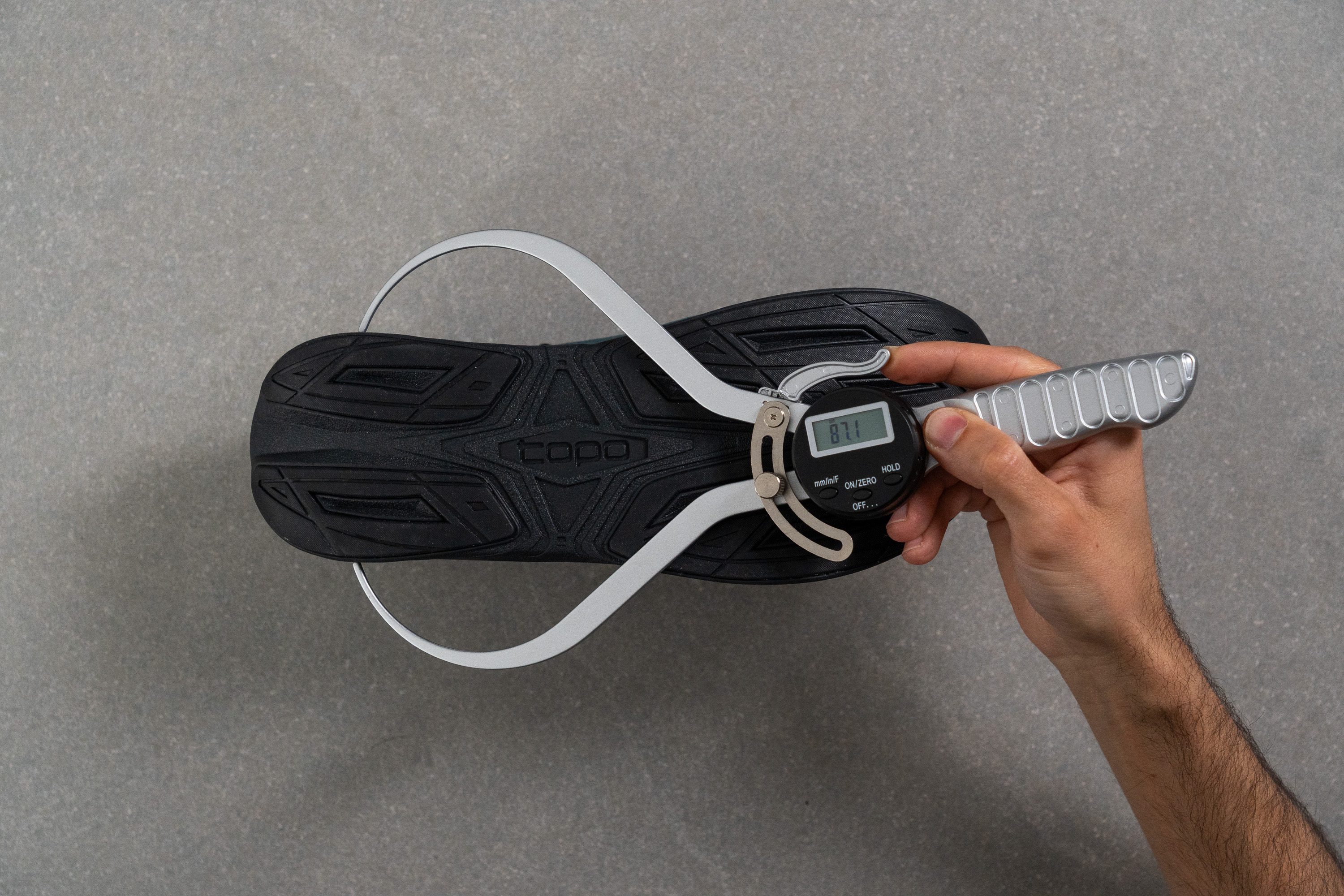
| Topo Phantom 4 | 87.1 mm |
| Average | 91.1 mm |
Durability
Toebox durability
Durability may not grab headlines, but it plays a crucial role in a daily trainer expected to log high mileage and likely see regular everyday use, especially among casual runners.
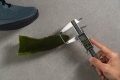
Beginning with the toebox, we recorded a solid 3 out of 5 in our abrasion test.
| Topo Phantom 4 | 3 |
| Average | 2.6 |
Heel padding durability
On a less encouraging note, the heel padding received the lowest possible score of 1 out of 5. That result will undoubtedly raise concerns for some runners.
| Topo Phantom 4 | 1 |
| Average | 3.4 |
Outsole durability
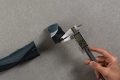
The rubber compound in the Phantom 4 proves slightly more abrasion-resistant than in its predecessor, as we removed only 0.8 mm in our durability test. That’s a welcome improvement for runners aiming to maximize mileage and get plenty of life out of this shoe.
| Topo Phantom 4 | 0.8 mm |
| Average | 1.1 mm |
Outsole thickness
With 3.5 mm of rubber protecting the foam and solid abrasion resistance in our tests, the Phantom 4 shows strong durability potential. Early wear shouldn’t be a concern, aside from sections where the foam remains exposed.
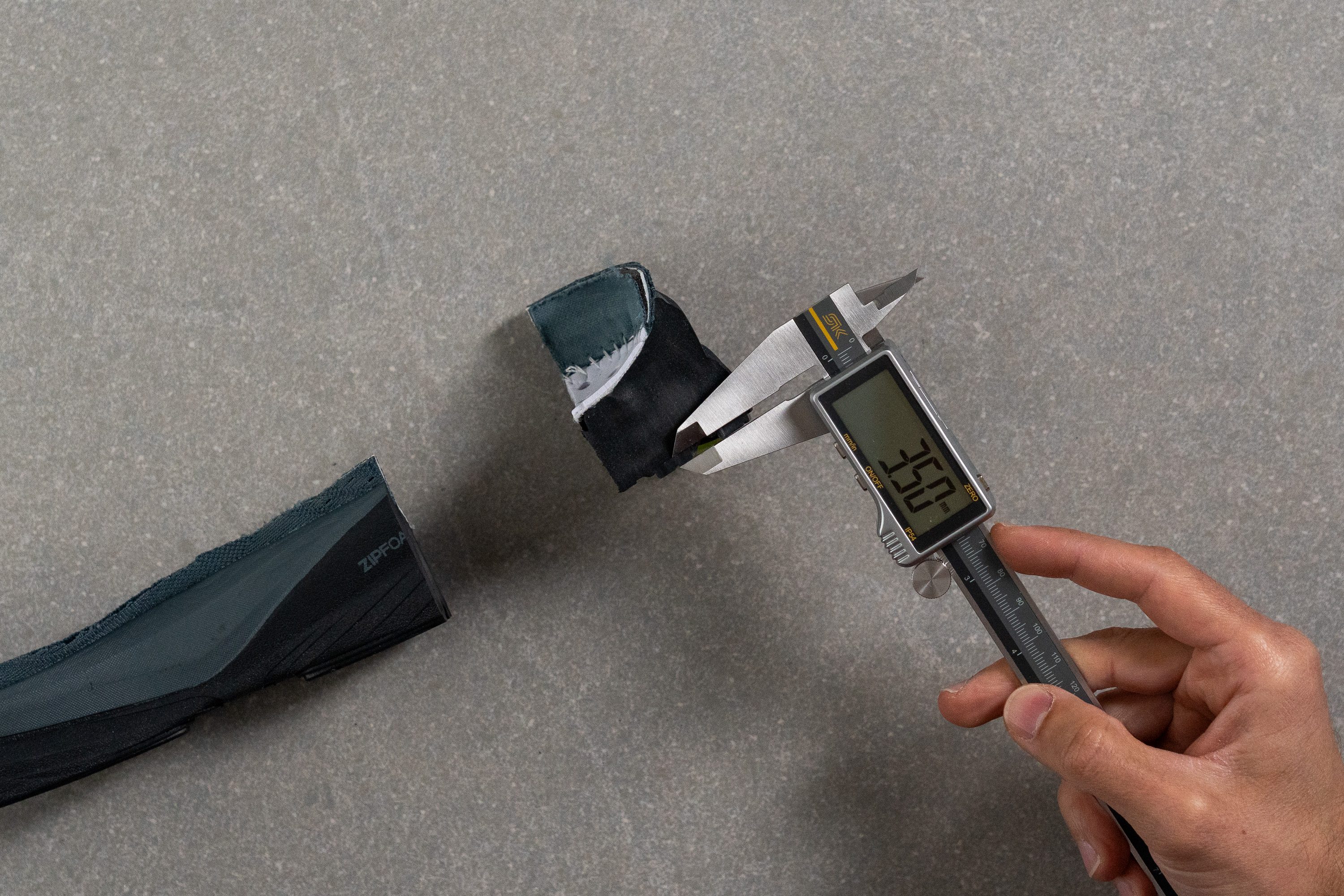
| Topo Phantom 4 | 3.5 mm |
| Average | 3.1 mm |
Misc
Insole thickness
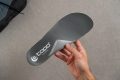
The insole measures 4.1 mm in thickness, which is very much in line with what we typically see in daily trainers.
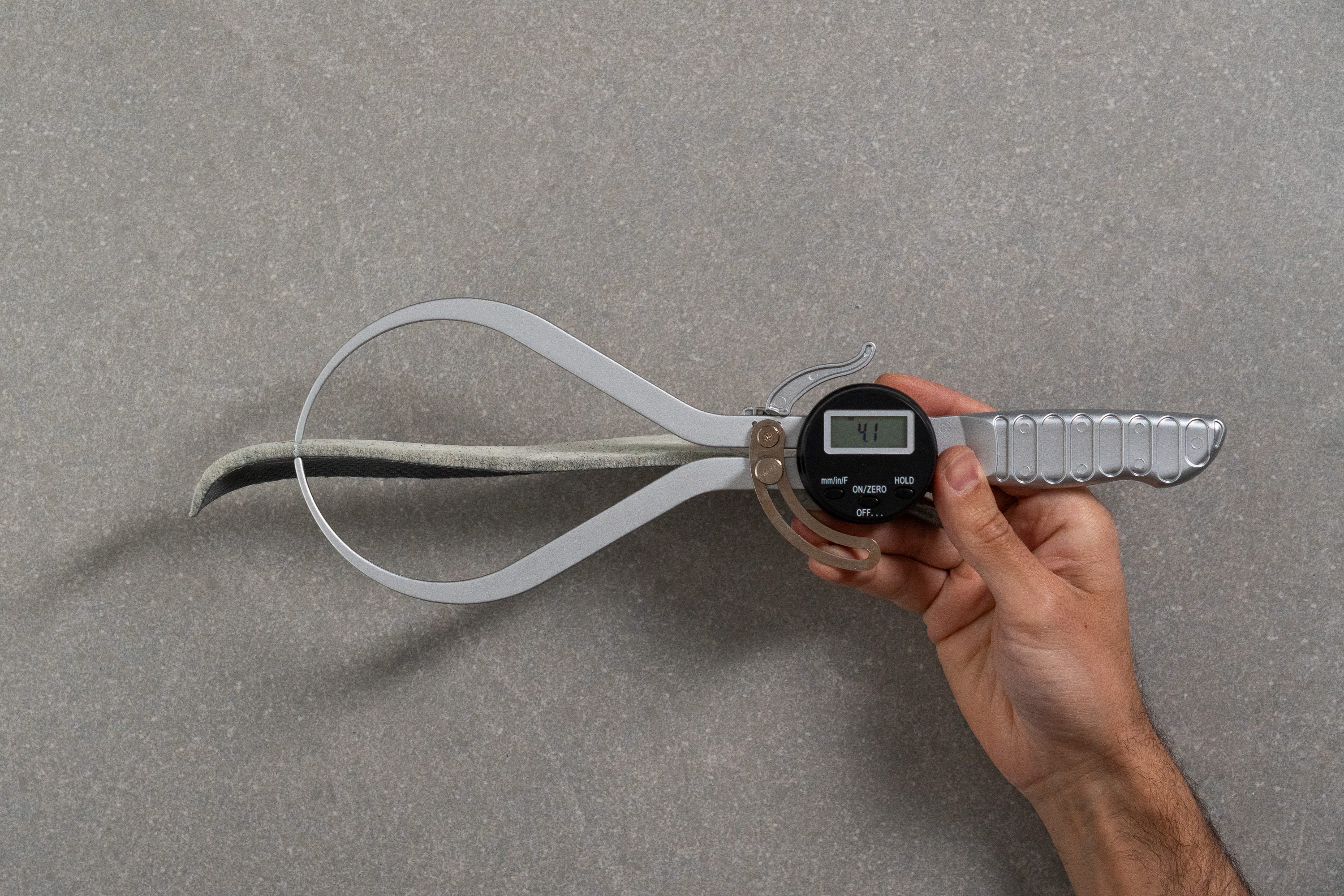
| Topo Phantom 4 | 4.1 mm |
| Average | 4.4 mm |
Removable insole
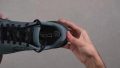
The Ortholite insole, promoted as featuring high-rebound foam, is fully removable and easy to swap out. However, based on our lab findings, its rebound performance is not exactly a compelling reason to keep it inside.
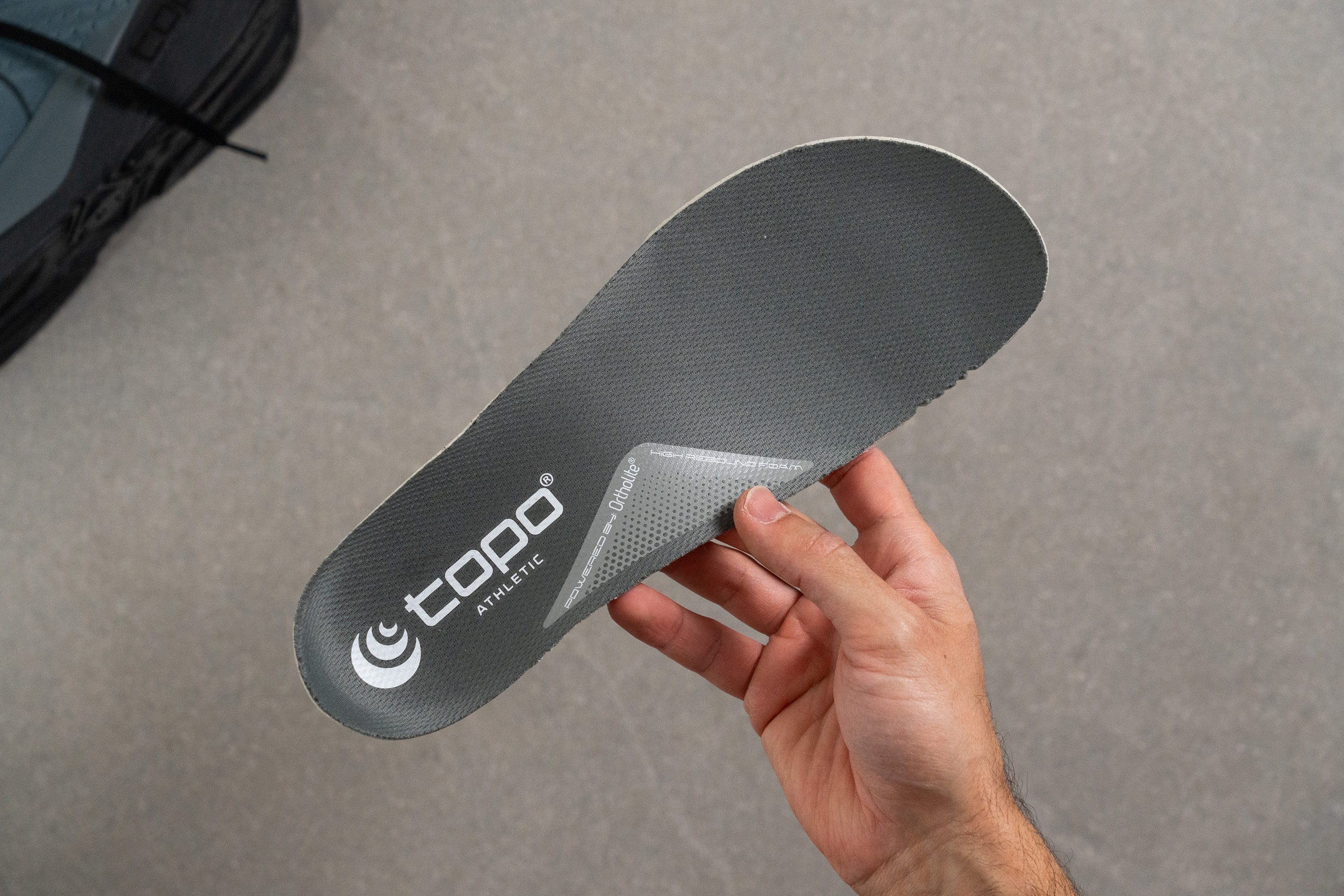
| Topo Phantom 4 | Yes |
Reflective elements
The Phantom 4 lacks reflective elements, perhaps something to look forward to in version 5.
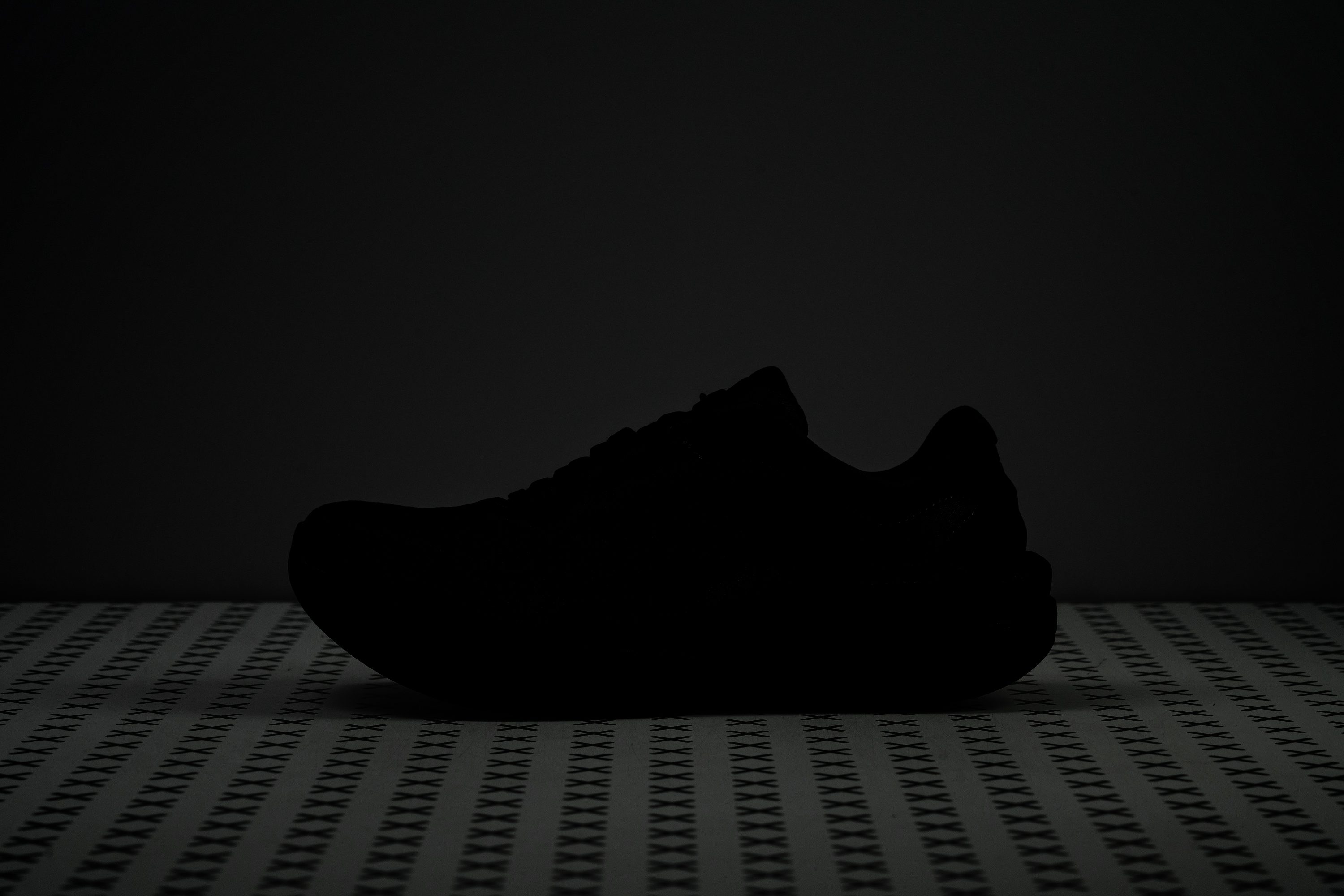
| Topo Phantom 4 | No |
Tongue padding
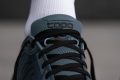
Topo doubles down on its classic design by using two tongue lace loops to keep it centered, instead of the single loop found in most shoes. It has clearly become a recognizable trademark for the brand.
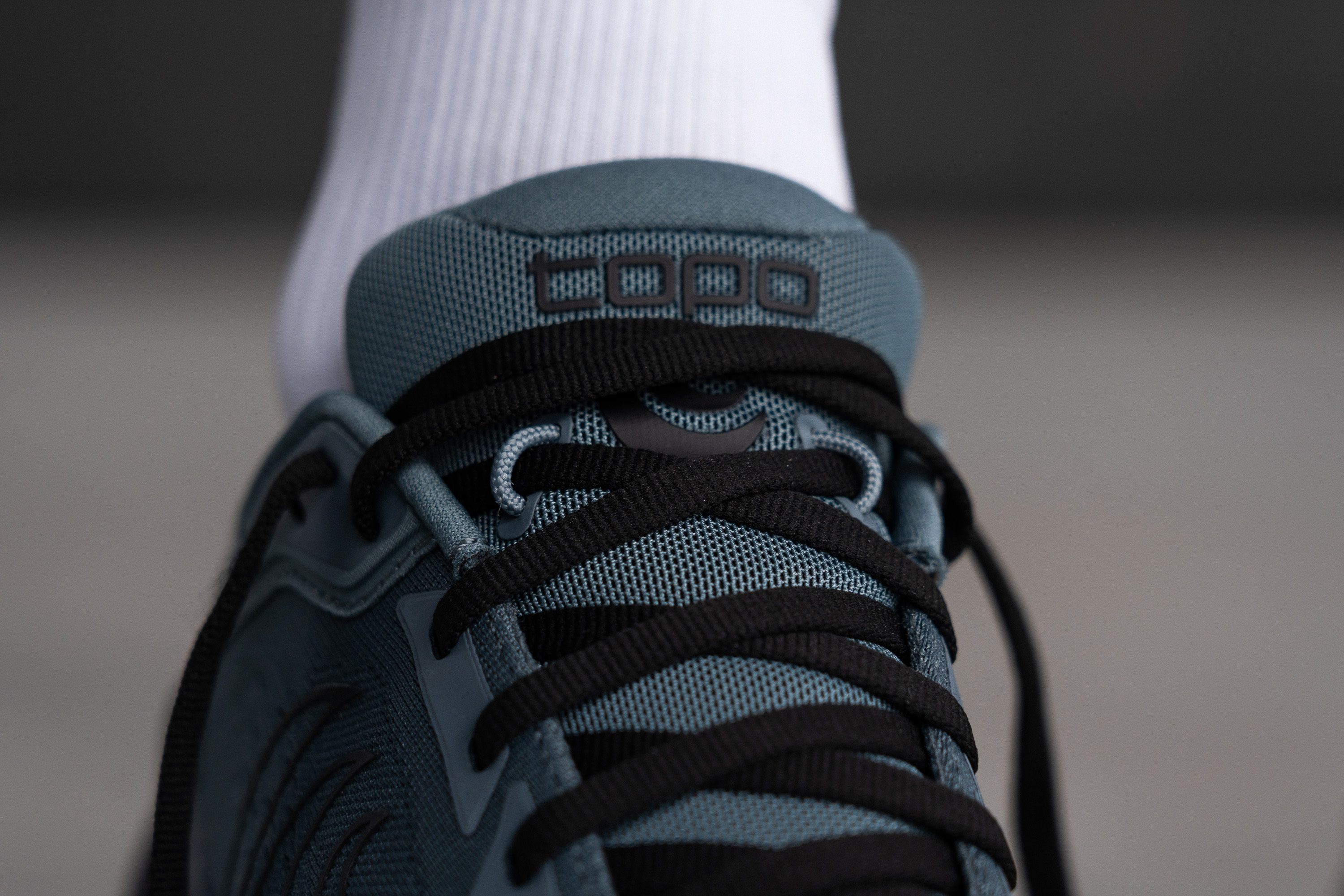
The tongue measures 6.4 mm in padding, striking a thoughtful balance between comfort and weight that suits the Phantom 4 especially well.
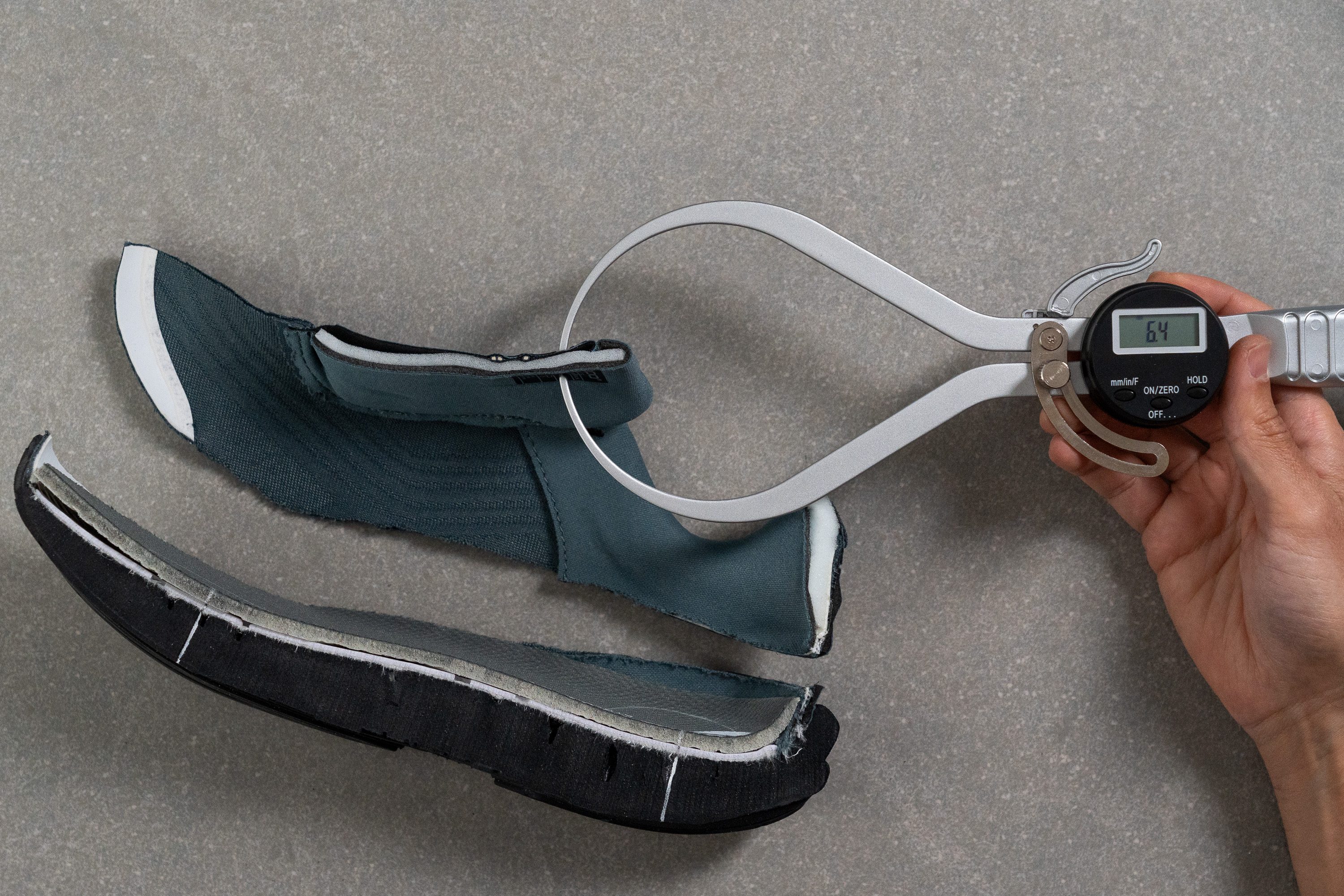
| Topo Phantom 4 | 6.4 mm |
| Average | 5.8 mm |
Tongue: gusset type
The tongue design we mentioned earlier likely stems from the absence of a gusseted construction. Although we would have preferred the tongue to be secured to the sides, it at least stays in place and doesn’t shift around like in many other shoes.
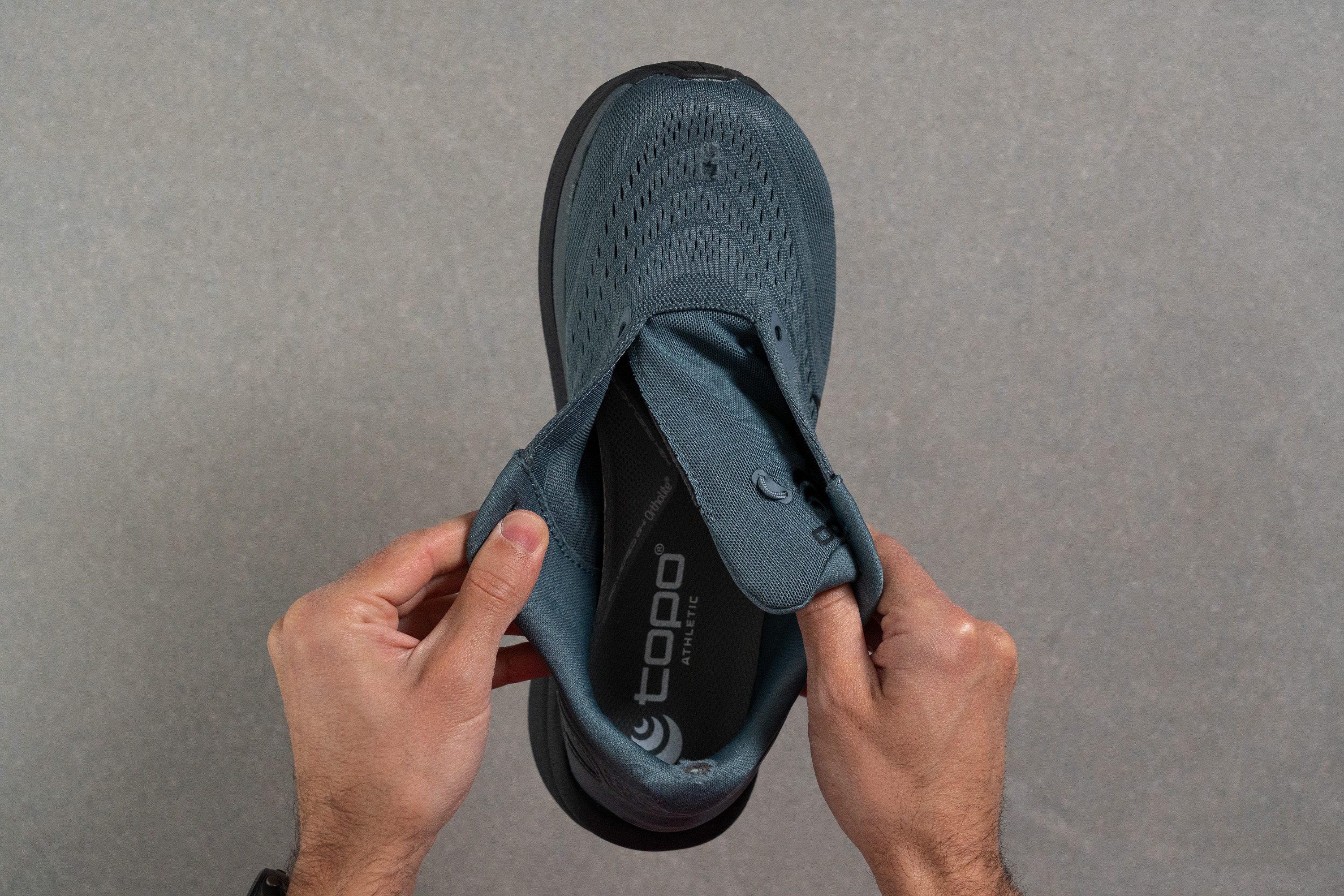
| Topo Phantom 4 | None |
Heel tab
The heel follows Topo’s classic design, lacking a heel tab but incorporating structural reinforcements and displaying the shoe’s official drop.
| Topo Phantom 4 | None |
Price
The Phantom 4 comes with a slight price increase, which feels somewhat hard to justify given that energy return remains relatively low. It’s not a deal-breaker, as it still aligns with many competitors in the category, but it reinforces our view that a more energetic foam would help to keep this shoe competitive.
| Topo Phantom 4 | $150 |
| Average | $157 |