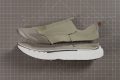
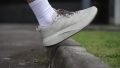



Our verdict
- Daily running 85
- Tempo 77
- Race 65
- Stability 80
Pros
- Impressive energy return and shock absorption
- Premium-quality laces. Finally!
- Top traction thanks to updated Conti rubber
- Ideal for winter training and cold conditions
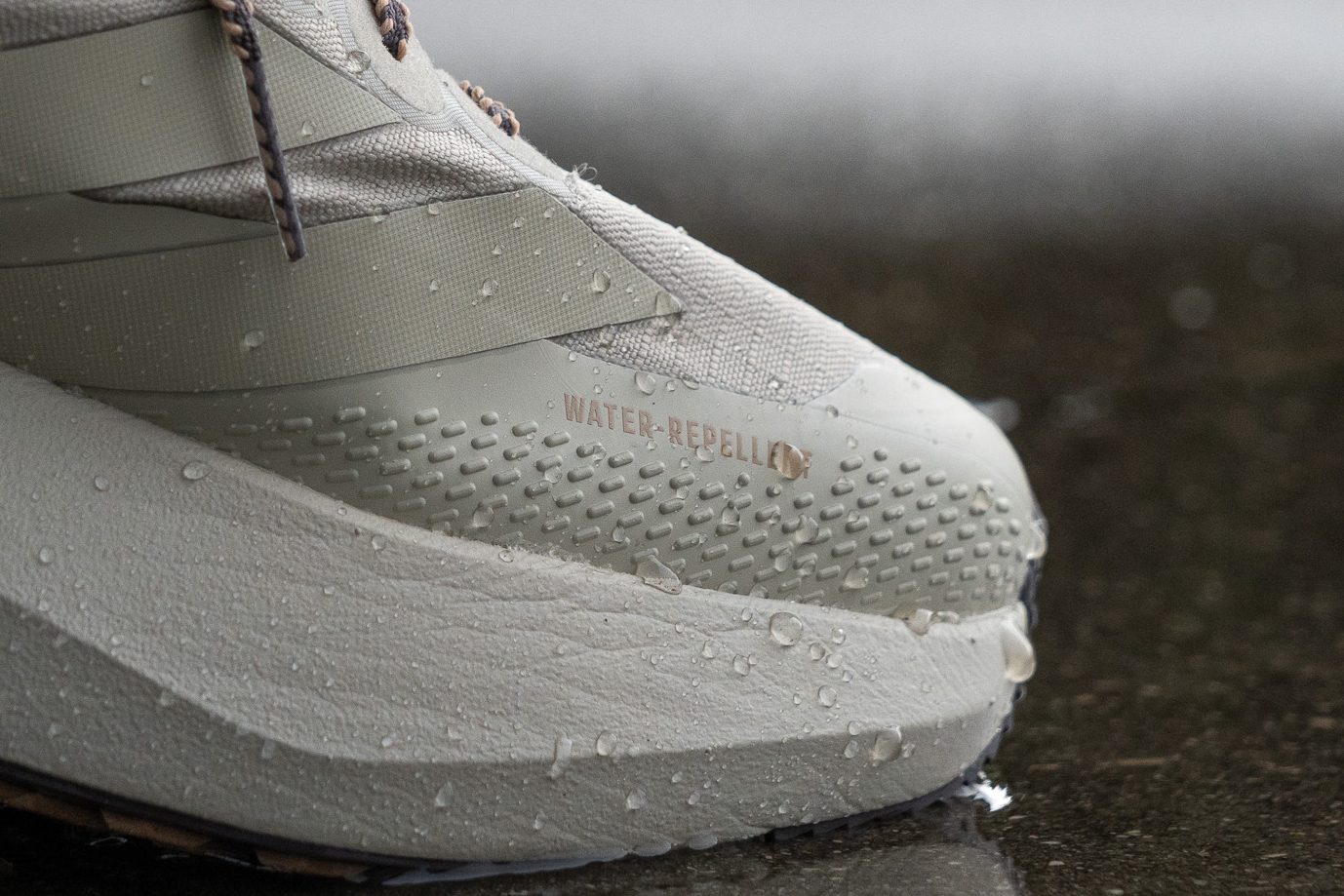
- Water-repellent upper
- Still delivers insane value
- Works well across a wide mix of surfaces
- Versatile for many paces
- Feels a bit more stable than the regular edition
Cons
- Noticeably heavier than the regular EVO SL
- Virtually no ventilation
- Significantly reduced flexibility
- Limited heel stability
Awards
- Top pick in best winter running shoes
- Top 20% in road running shoes
- Top 25% in adidas running shoes
Comparison
The most similar running shoes compared
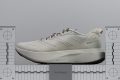
+ + Add a shoe | |||||
|---|---|---|---|---|---|
| Our score | 87 Great | 76 Good | 86 Great | 91 Superb | |
| Price | $160 | $180 | $170 | $180 | |
| Pace | Daily runningTempo | Daily running | Daily running | Daily running | |
| Shock absorption | High | High | High | High | |
| Energy return | High | Low | Low | High | |
| Traction | High | High | High | High | |
| Arch support | Neutral | Neutral | Neutral | Neutral | |
| Weight lab Weight brand | 9.3 oz / 264g 10.1 oz / 287g | 10.3 oz / 292g 10.3 oz / 292g | 9.8 oz / 278g 10 oz / 283g | 10.2 oz / 289g 10.1 oz / 285g | |
| Drop lab Drop brand | 8.1 mm 6.0 mm | 7.9 mm 6.0 mm | 5.2 mm 8.0 mm | 9.6 mm 10.0 mm | |
| Strike pattern | HeelMid/forefoot | Mid/forefoot | Mid/forefoot | HeelMid/forefoot | |
| Size | True to size | True to size | True to size | True to size | |
| Midsole softness | Balanced | Firm | Balanced | Soft | |
| Difference in midsole softness in cold | Small | Normal | Small | Small | |
| Toebox durability | Decent | Decent | Decent | Decent | |
| Heel padding durability | Good | Decent | Decent | Good | |
| Outsole durability | Good | Decent | Good | Good | |
| Breathability | Warm | Warm | Moderate | Moderate | |
| Width / fit | Medium | Medium | Medium | Medium | |
| Toebox width | Medium | Medium | Medium | Medium | |
| Stiffness | Moderate | Stiff | Stiff | Stiff | |
| Torsional rigidity | Moderate | Moderate | Stiff | Moderate | |
| Heel counter stiffness | Moderate | Moderate | Stiff | Moderate | |
| Rocker | ✓ | ✗ | ✓ | ✗ | |
| Heel lab Heel brand | 39.2 mm 39.0 mm | 37.3 mm 37.0 mm | 39.5 mm 43.5 mm | 42.3 mm 45.0 mm | |
| Forefoot lab Forefoot brand | 31.1 mm 33.0 mm | 29.4 mm 31.0 mm | 34.3 mm 35.5 mm | 32.7 mm 35.0 mm | |
| Widths available | NormalWide | NormalWide | NormalWideX-Wide | NarrowNormalWideX-Wide | |
| Orthotic friendly | ✓ | ✓ | ✓ | ✓ | |
| Season | Winter | All seasons | All seasons | All seasons | |
| Removable insole | ✓ | ✓ | ✓ | ✓ | |
| Ranking | #71 Top 18% | #303 Bottom 25% | #82 Top 21% | #18 Top 5% | |
| Popularity | #206 Bottom 49% | #84 Top 21% | #23 Top 6% | #2 Top 1% |
Who should buy
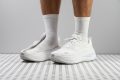
In our opinion, the Adizero EVO SL ATR suits perfectly:
- Fans of the Adizero EVO SL who struggled with its poor grip and protection in wet conditions.
- Runners who liked the original model but wanted more confidence beyond perfectly paved roads, as the ATR handles mixed surfaces much better.
- Anyone looking for a cold-ready daily trainer with very high energy return that still comes at a reasonable price.
- Runners in cold climates who want one shoe for everyday runs and daily use without giving up speed or performance.
Who should NOT buy
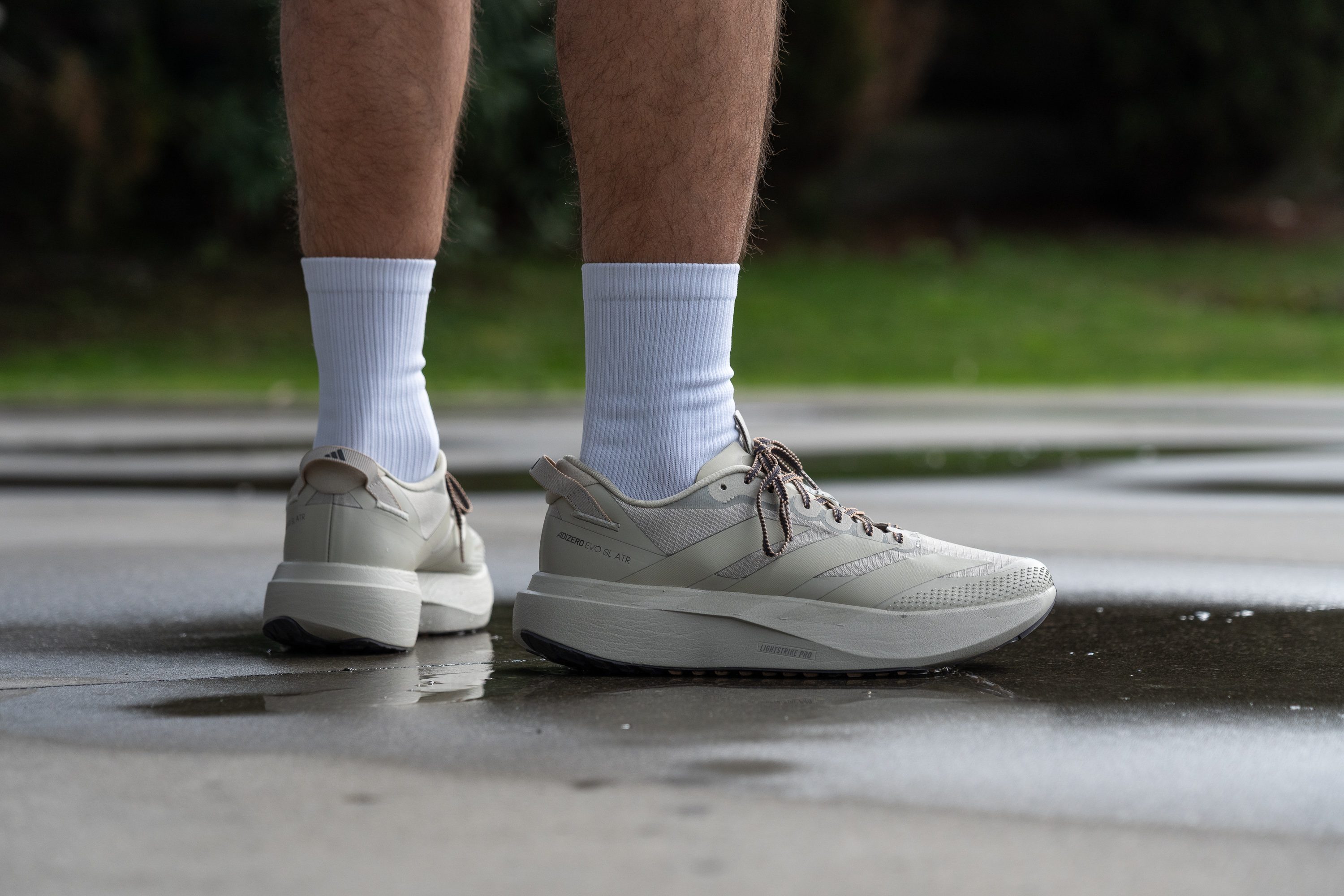
We’ve observed that the EVO SL ATR’s heat-trapping upper works great in winter, but we do not recommend it for warm weather. In our experience, the low airflow becomes uncomfortable fast, and we believe that the On Cloudsurfer Trail 2 makes more sense for mixed terrain during summer.
We’re under the impression that the ATR label can be misleading for some runners. We think it’s not the best choice for serious trail running, as the shallow-lug outsole only suits very mild paths. From our evaluation, dedicated trail shoes like the Nike Zegama 2 or the Saucony Xodus Ultra 4 are far better picks for real off-road use.
Cushioning
Shock absorption
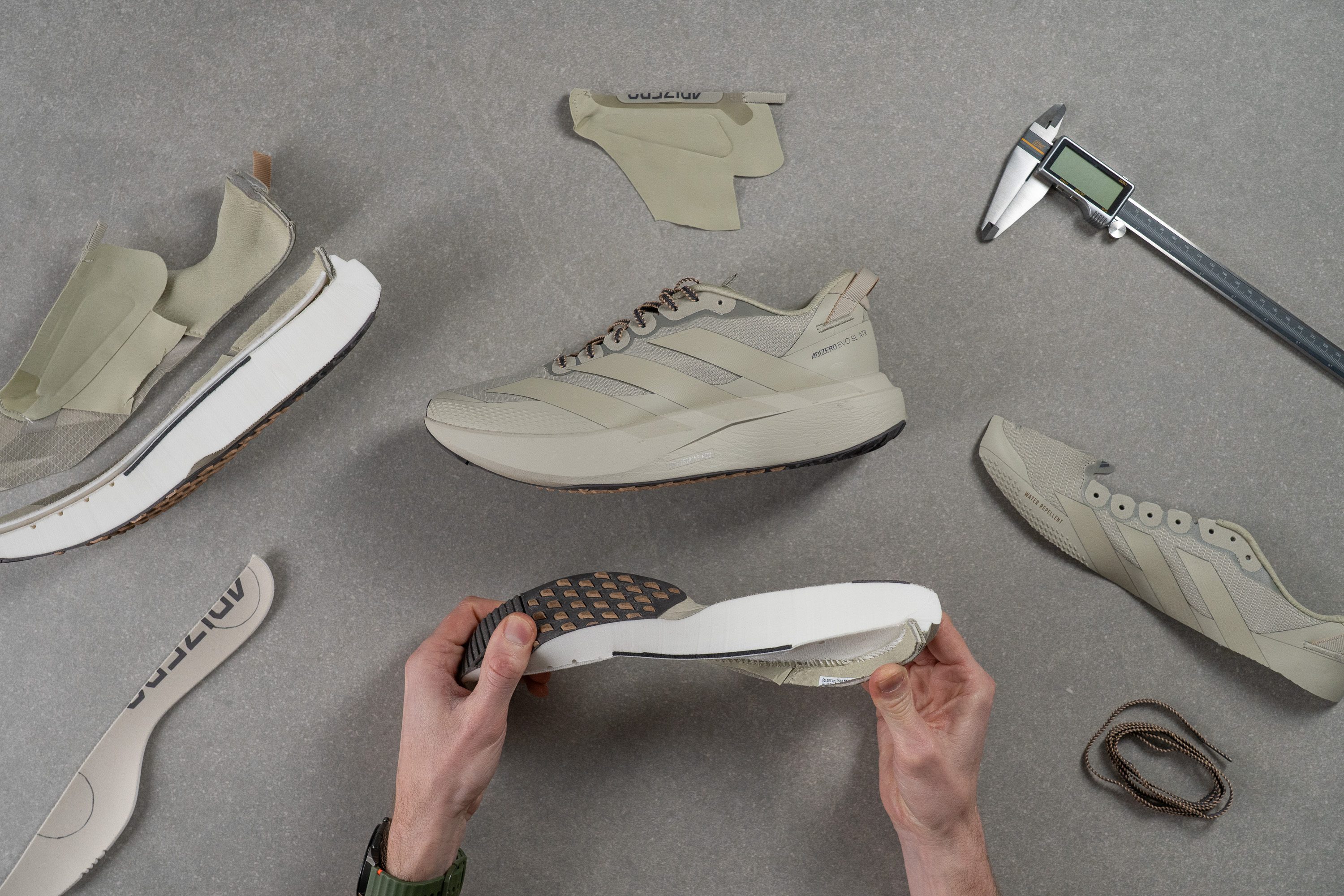
Thanks to its tall stack height and Lightstrike Pro superfoam, the EVO SL ATR delivers excellent shock absorption, posting 149 SA in the heel and 132 SA in the forefoot. Interestingly, if you compare it with our data for the regular Adizero EVO SL (147/126 SA), there is a small increase despite both shoes using the exact same midsole.
The explanation is straightforward: the ATR has a thicker outsole with more rubber underfoot, which takes the first part of the impact.
| Adizero EVO SL ATR | 149 SA |
| Average | 131 SA |
Energy return
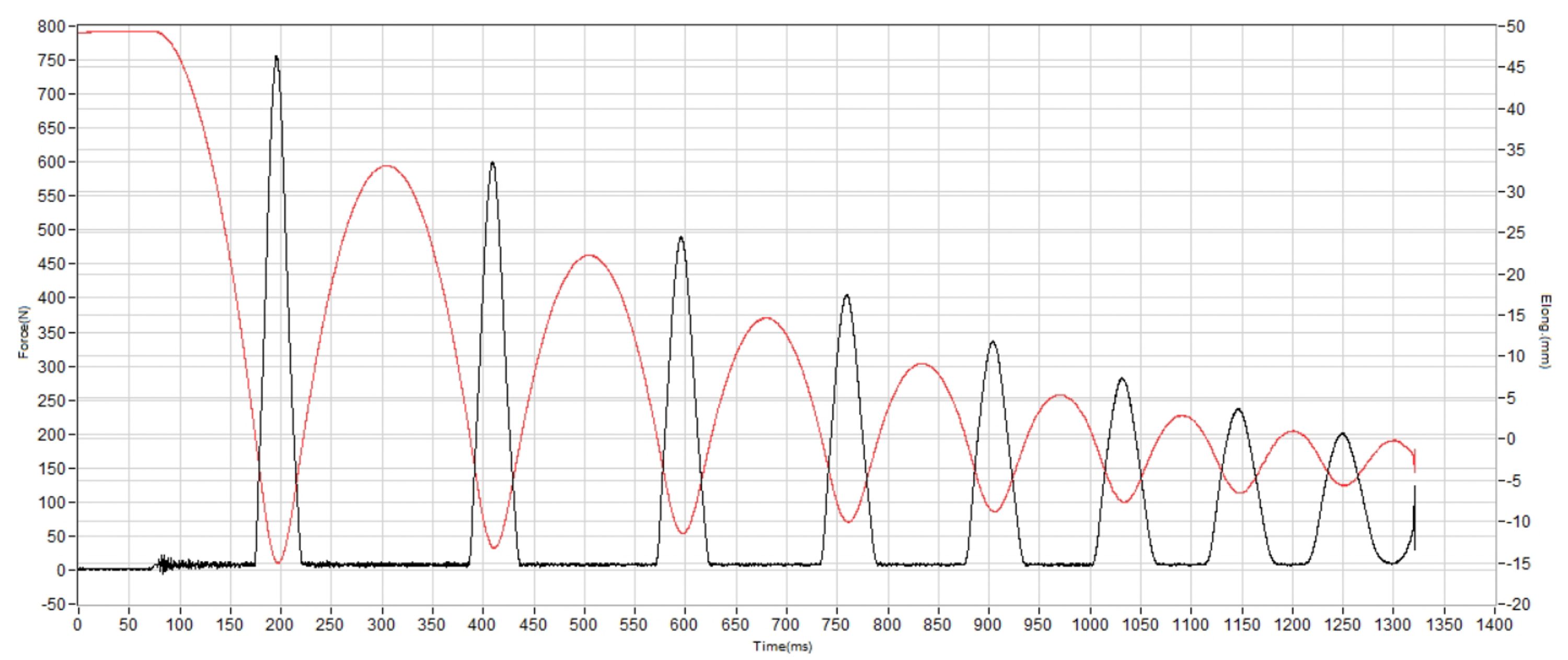
The flip side is energy return. While 71.1% in the heel and 71.8% in the forefoot are excellent results, they sit slightly below the regular EVO SL, which reached 74.3% and 73.5%, respectively.
The explanation is the same as before—those extra Continental rubber lugs hit the ground first and return less energy, which slightly hurts bounce. Still, anything above 70% is really impressive especially at this price point.
| Adizero EVO SL ATR | 71.8% |
| Average | 61.5% |
Heel stack
adidas lists a 39 mm stack height for the EVO SL ATR, and our measurement came in at 39.2 mm.
That lines up perfectly with expectations, as there is plenty of Lightstrike Pro underfoot to soften landings and help shield heel strikers from impact.
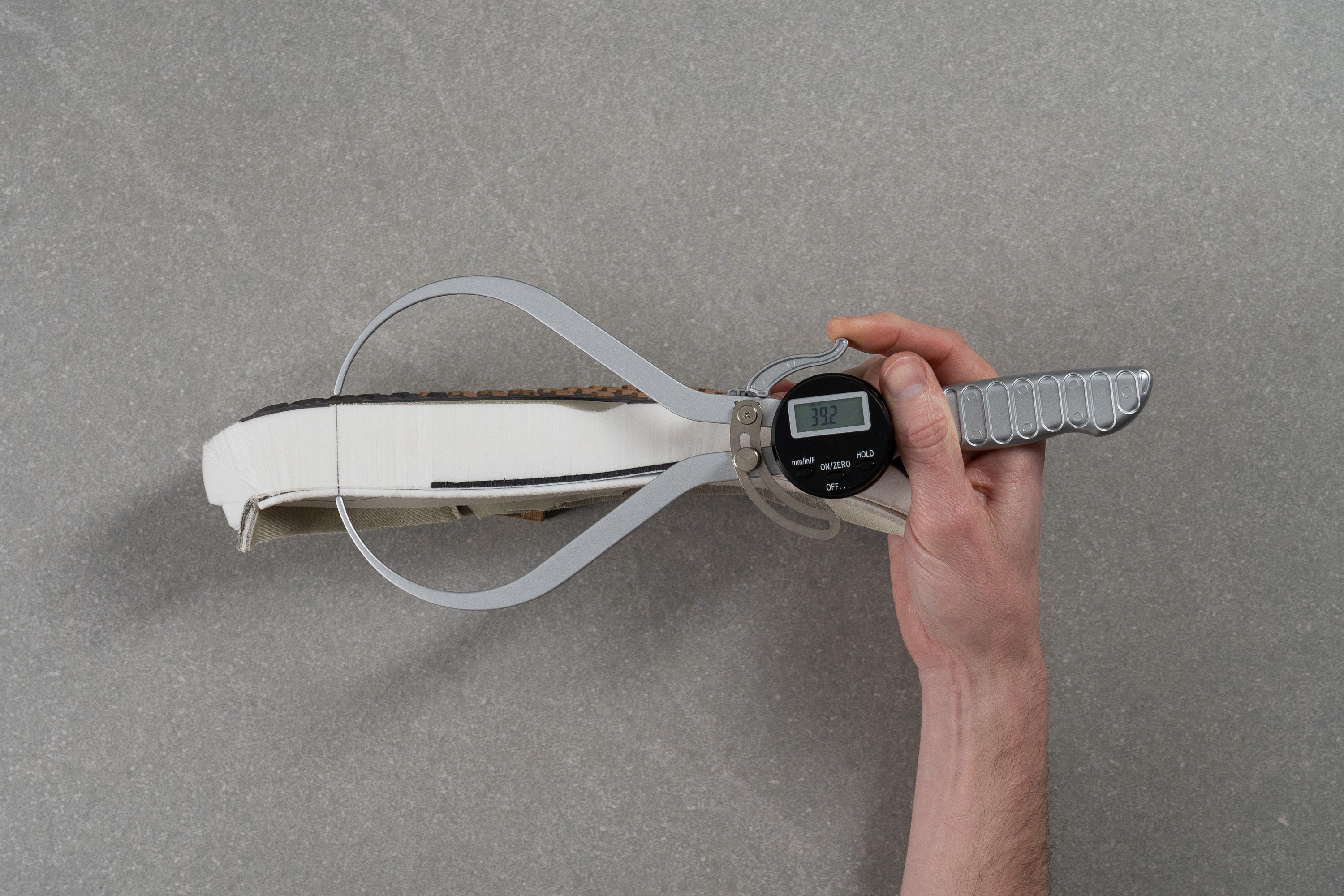
| Adizero EVO SL ATR | 39.2 mm |
| Average | 35.6 mm |
Forefoot stack
The forefoot is also generously stacked with foam, even if it comes in a few millimeters lower than expected. In our measurement, it reached 31.1 mm.
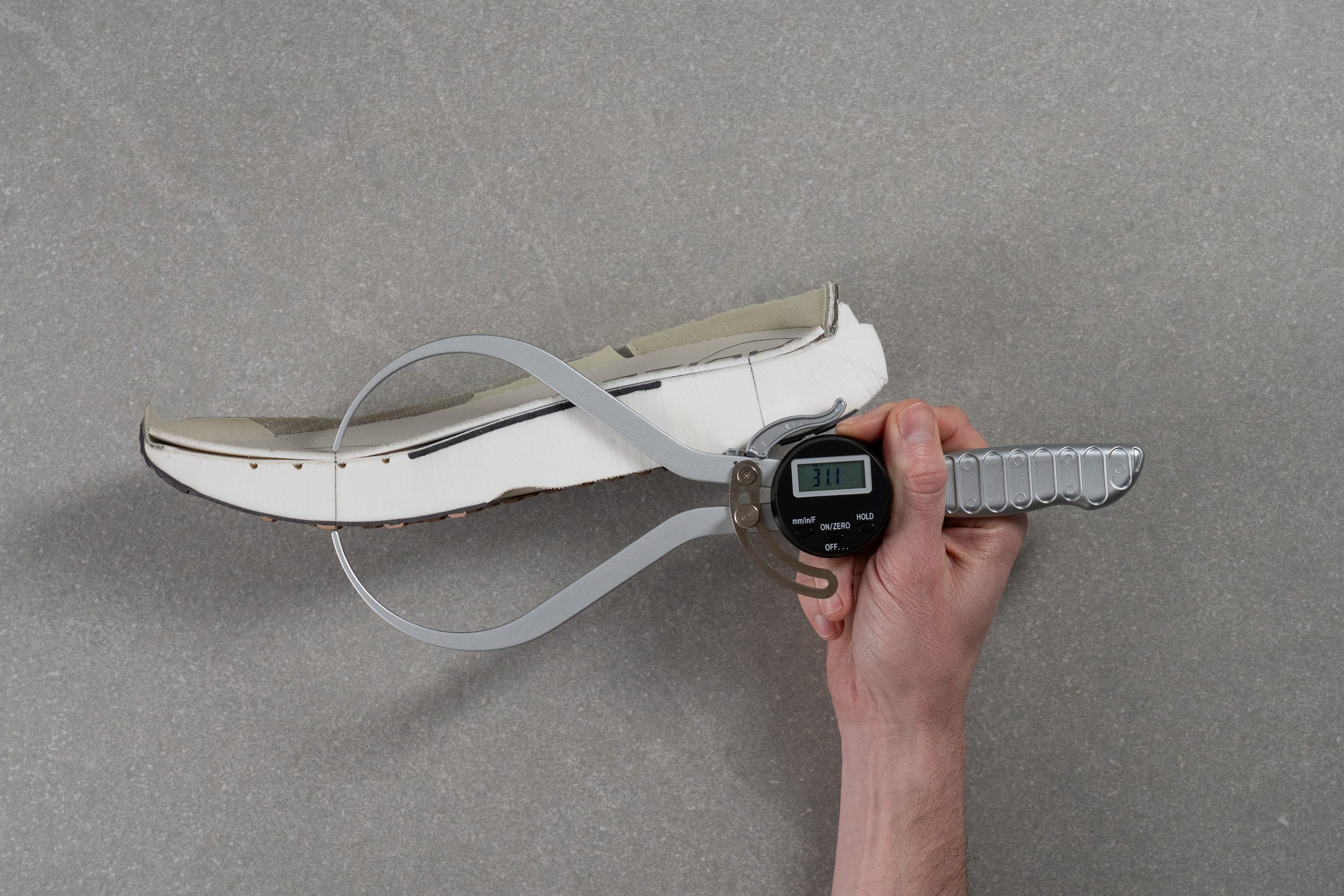
| Adizero EVO SL ATR | 31.1 mm |
| Average | 27.1 mm |
Drop
This results in a true 8.1 mm heel-to-toe drop. Since adidas states that the midsole is identical to the regular EVO SL, which we measured at 8.0 mm, this fully checks out. A 1 mm difference sits well within normal manufacturing tolerance and is not a meaningful change.
What the ATR version confirms is what we saw in the regular edition: the advertised 6 mm drop feels a bit higher on the run, and our lab data clearly backs that up.
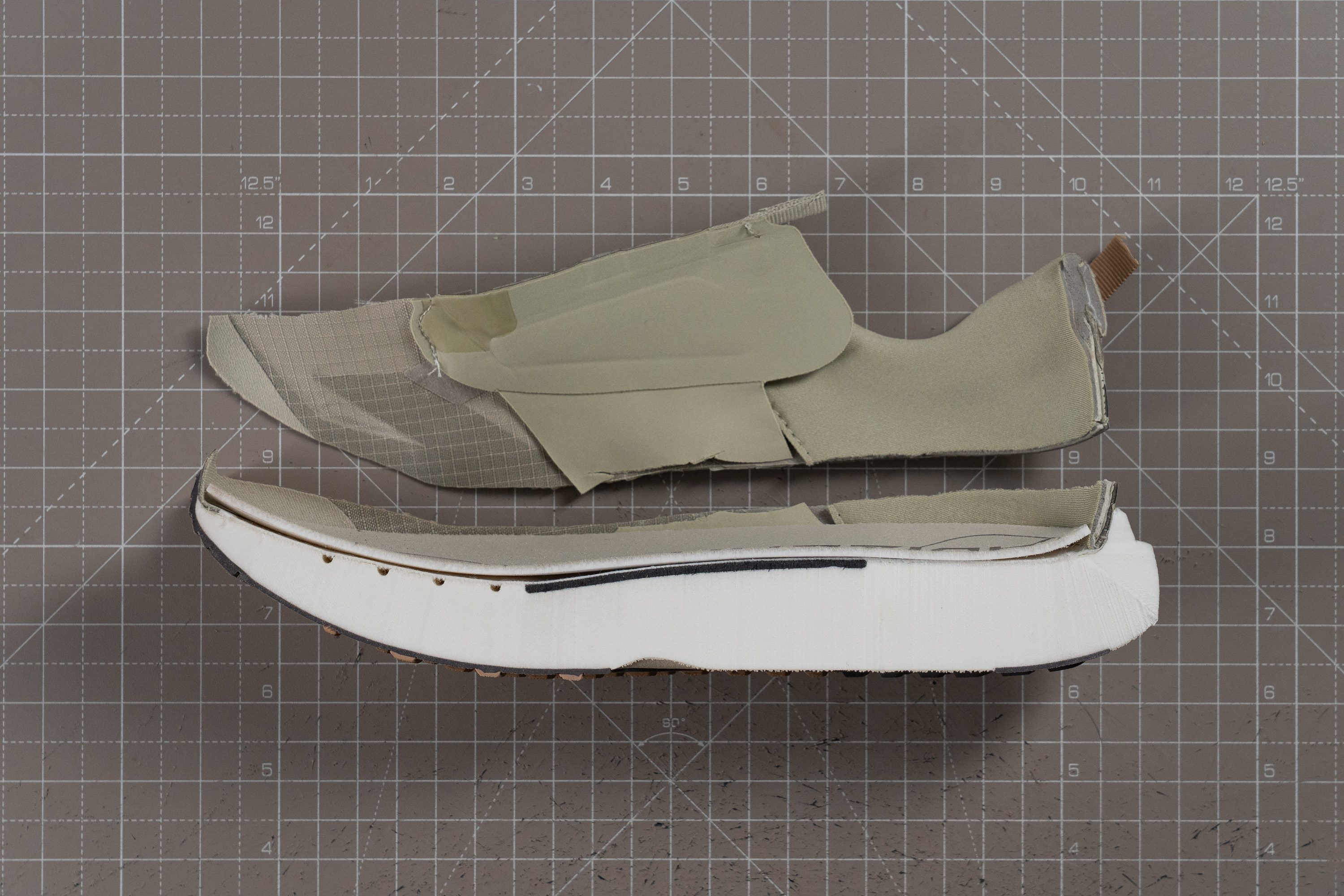
| Adizero EVO SL ATR | 8.1 mm |
| Average | 8.4 mm |
Midsole softness
The highly praised Lightstrike Pro returns here in its original formulation, not the newer version from the Adios Pro 4, but the one many of us loved in the Adios Pro 3 for its legendary durability/performance mix.
We confirmed in our testing that softness stays at a balanced 38.3 AC, although the EVO SL ATR feels slightly firmer than the EVO SL because the hard Continental lugs hit the ground first, similar to what you feel when running in trail shoes.
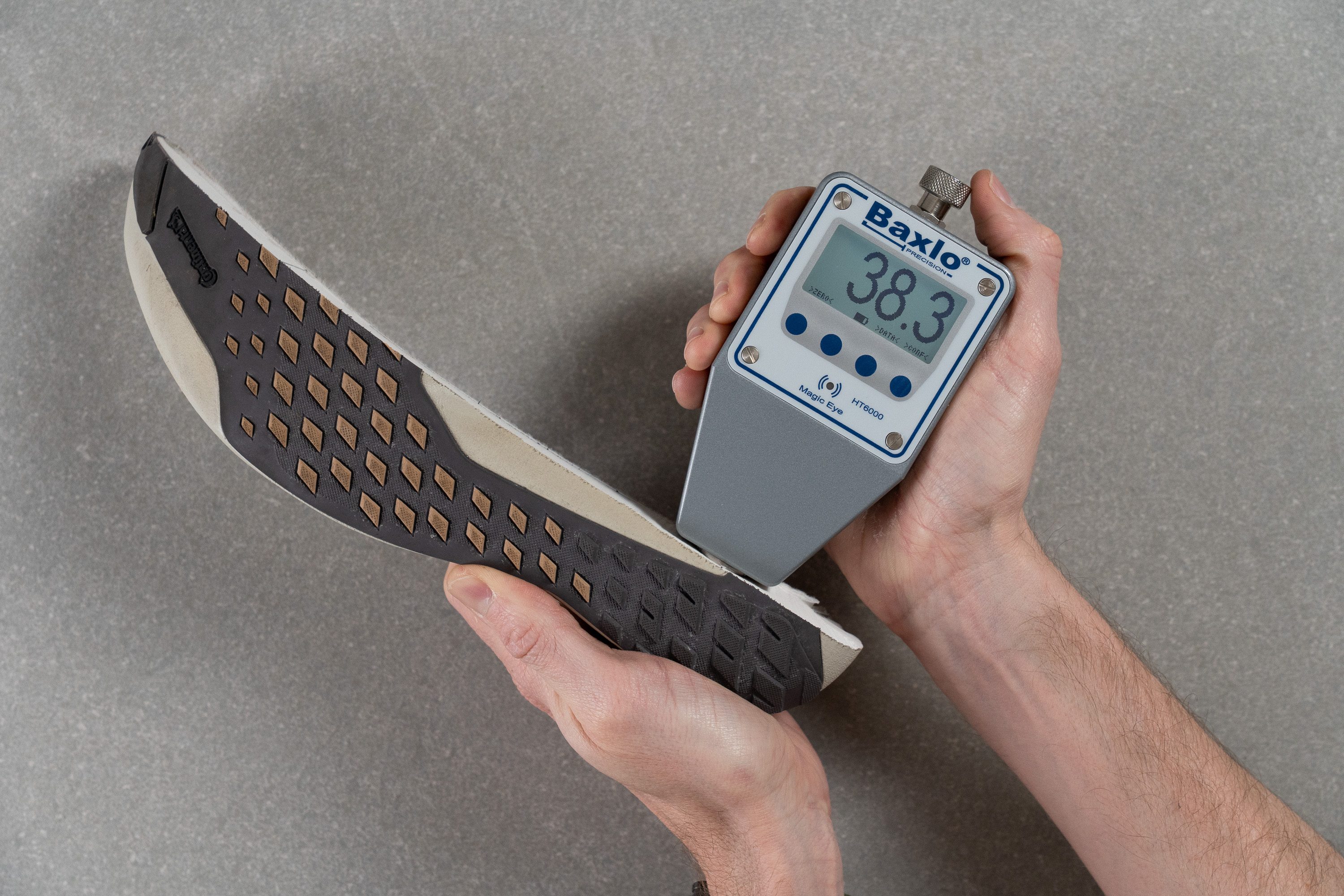
| Adizero EVO SL ATR | 38.3 AC |
| Average | 35.4 AC |
Rocker
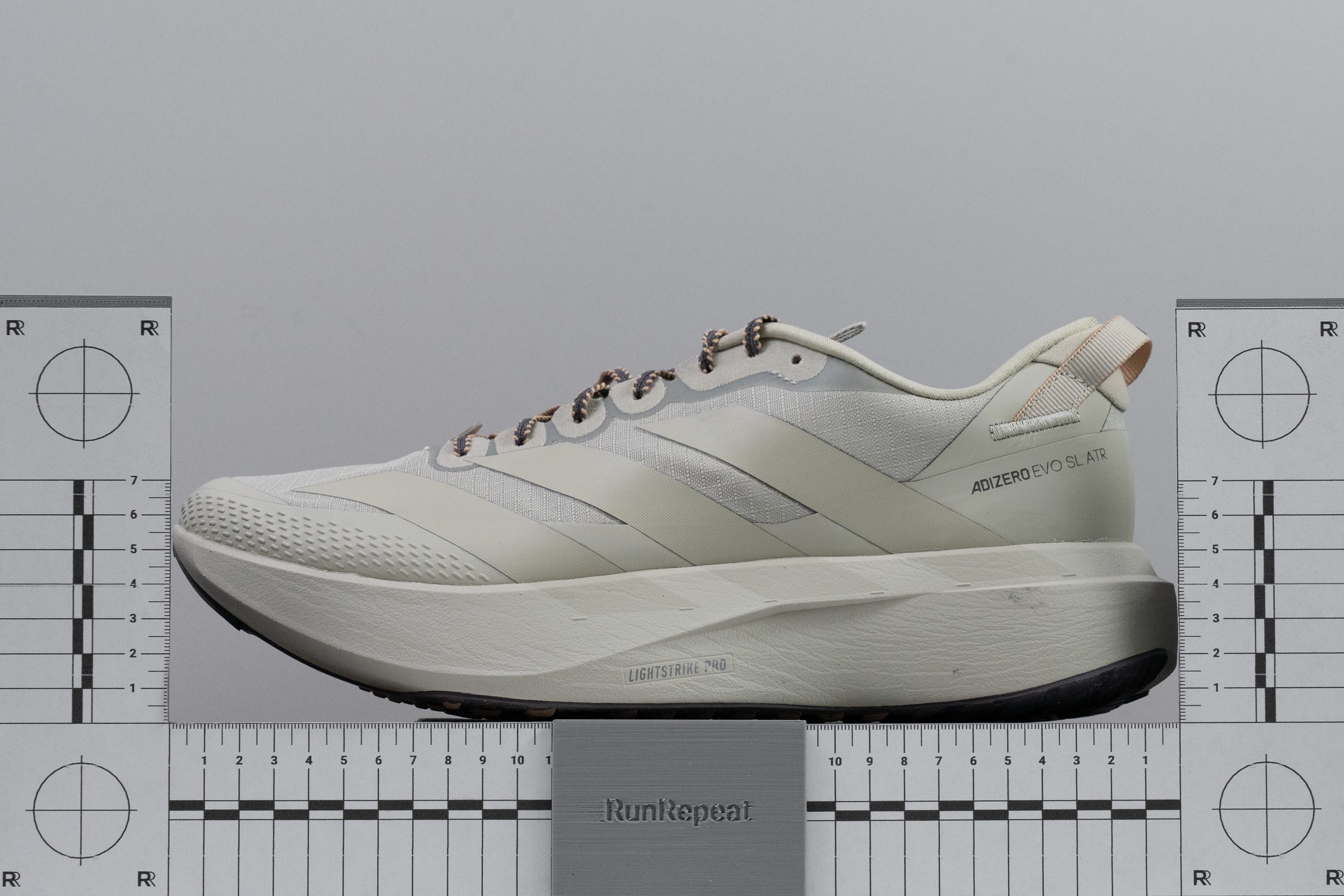
The EVO SL ATR retains the same early-stage forefoot rocker as the original, beginning around 60% from the heel. This design promotes quick transitions while keeping the ride smooth and not overly aggressive.
Plate
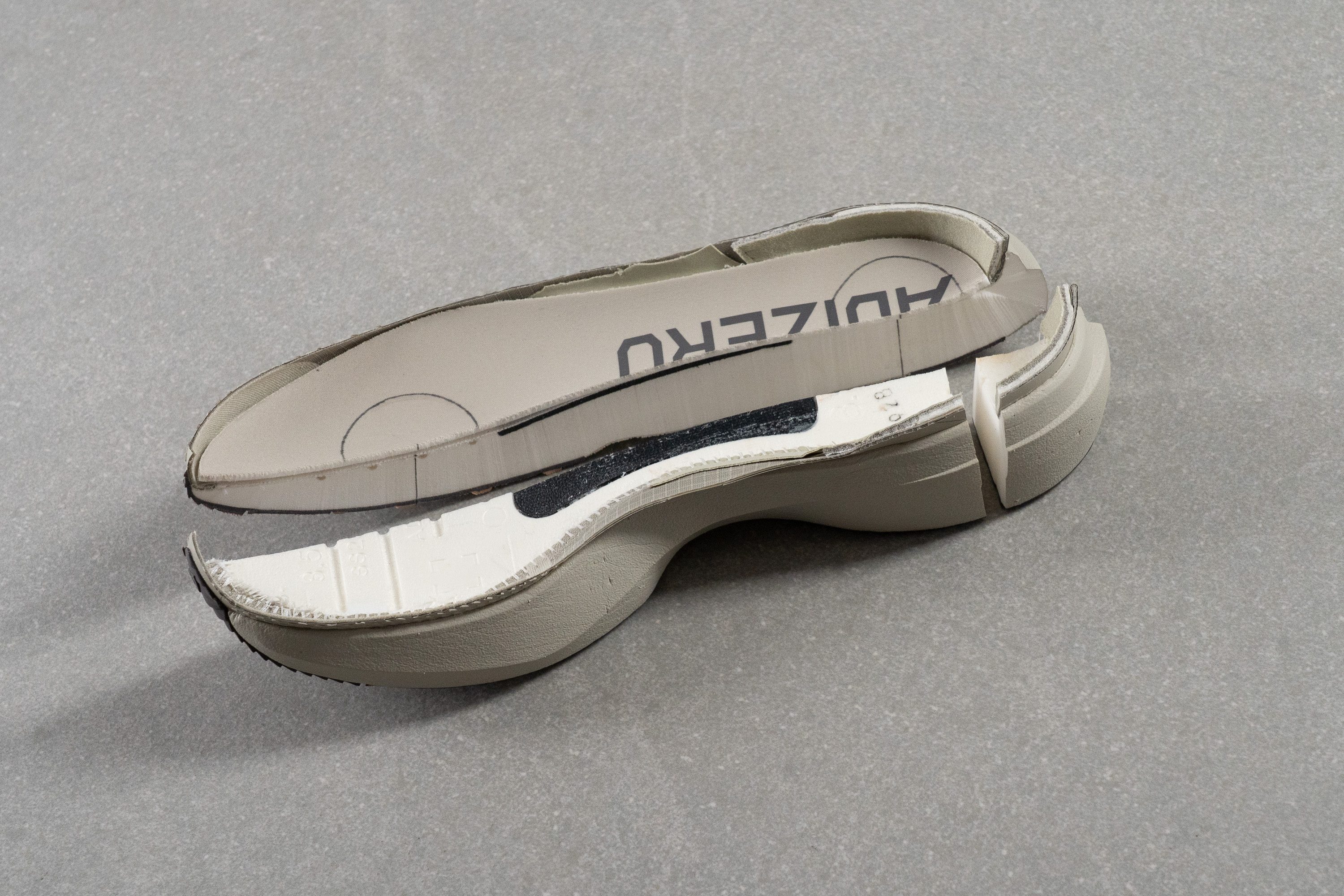
We found again a plastic shank in the midfoot area, positioned above the Lightstrike Pro foam.
It brings a controlled touch of stability while avoiding the added stiffness of a full-length carbon plate or adidas’ Energy Rods.
Size and fit
Size
adidas Adizero EVO SL ATR fits true to size (37 votes).
Internal length
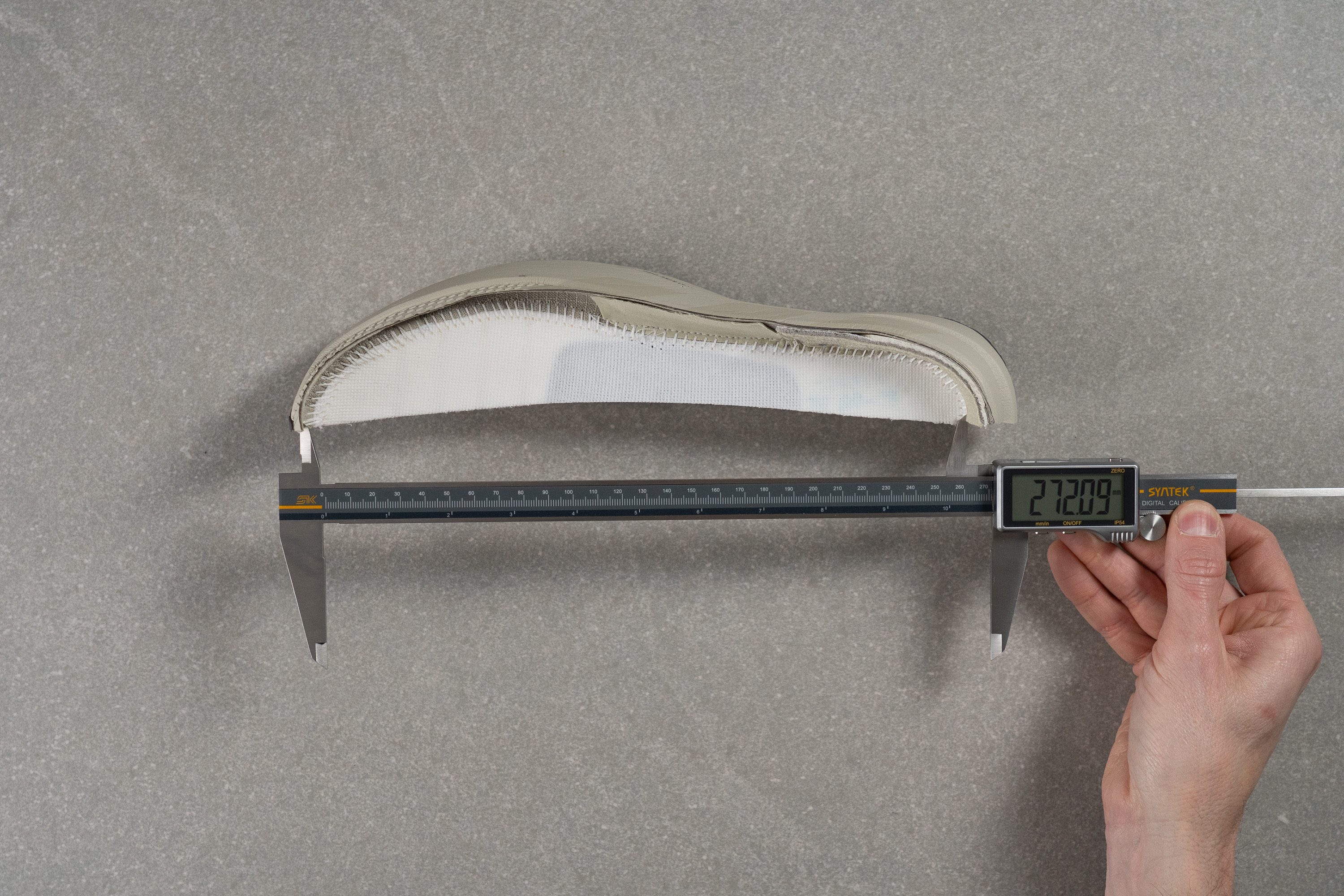
| Adizero EVO SL ATR | 272.1 mm |
| Average | 269.3 mm |
Width / Fit
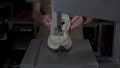
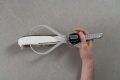
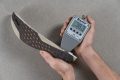
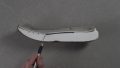
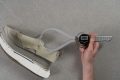
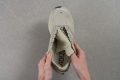
Despite sharing the same midsole and last, the upper is completely different, which can affect fit and internal volume. To check this, we created a gel mold of the interior.
Our first measurement came in at a wider-than-average 97.7 mm, fully in line with what we saw on the original EVO SL.
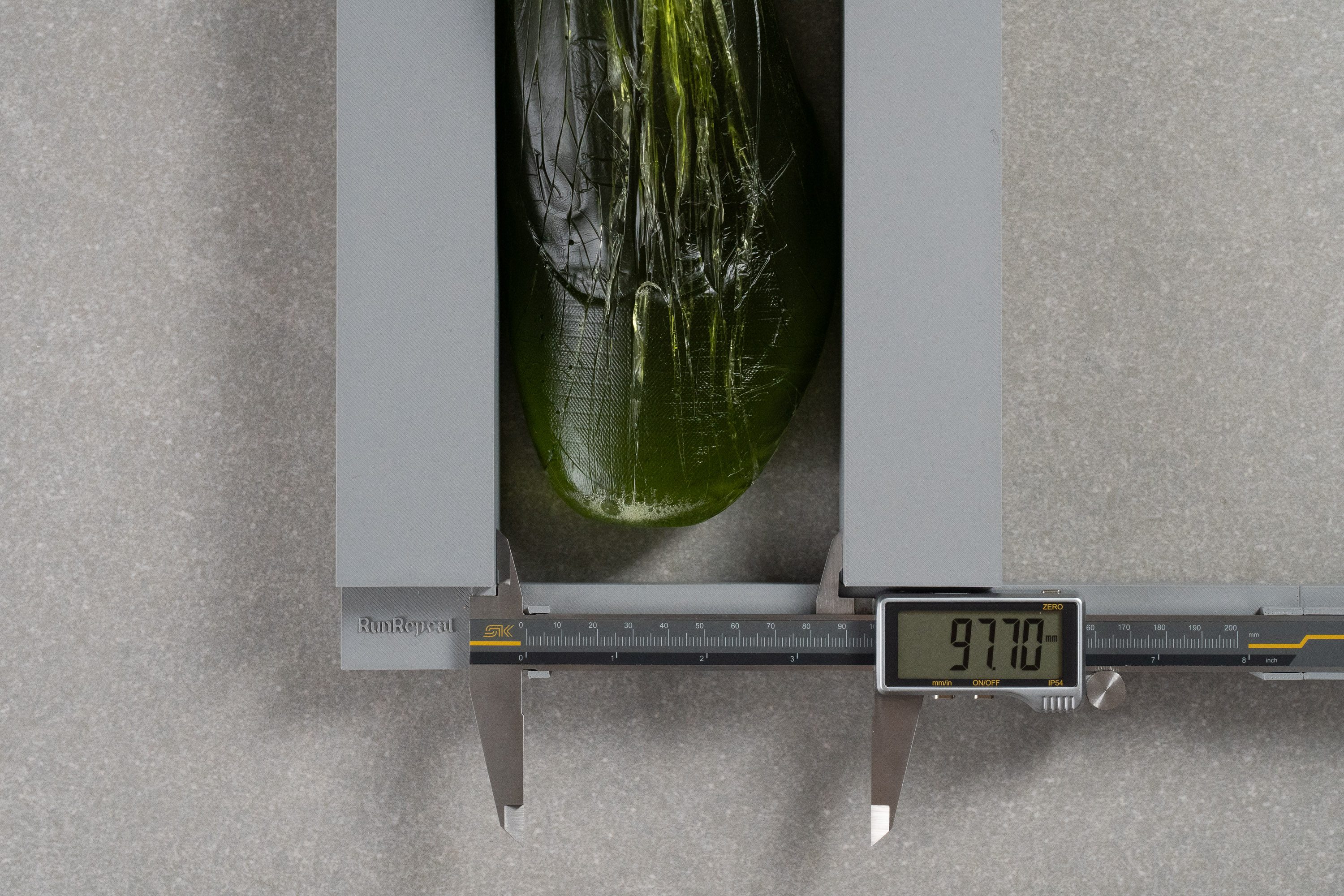
| Adizero EVO SL ATR | 97.7 mm |
| Average | 95.2 mm |
Toebox width
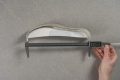
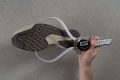
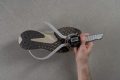
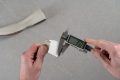
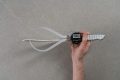
The toebox also tapers in the same way as the EVO SL, so toe fit feels very similar in the EVO SL ATR. Our calipers measured 72.8 mm in this area.
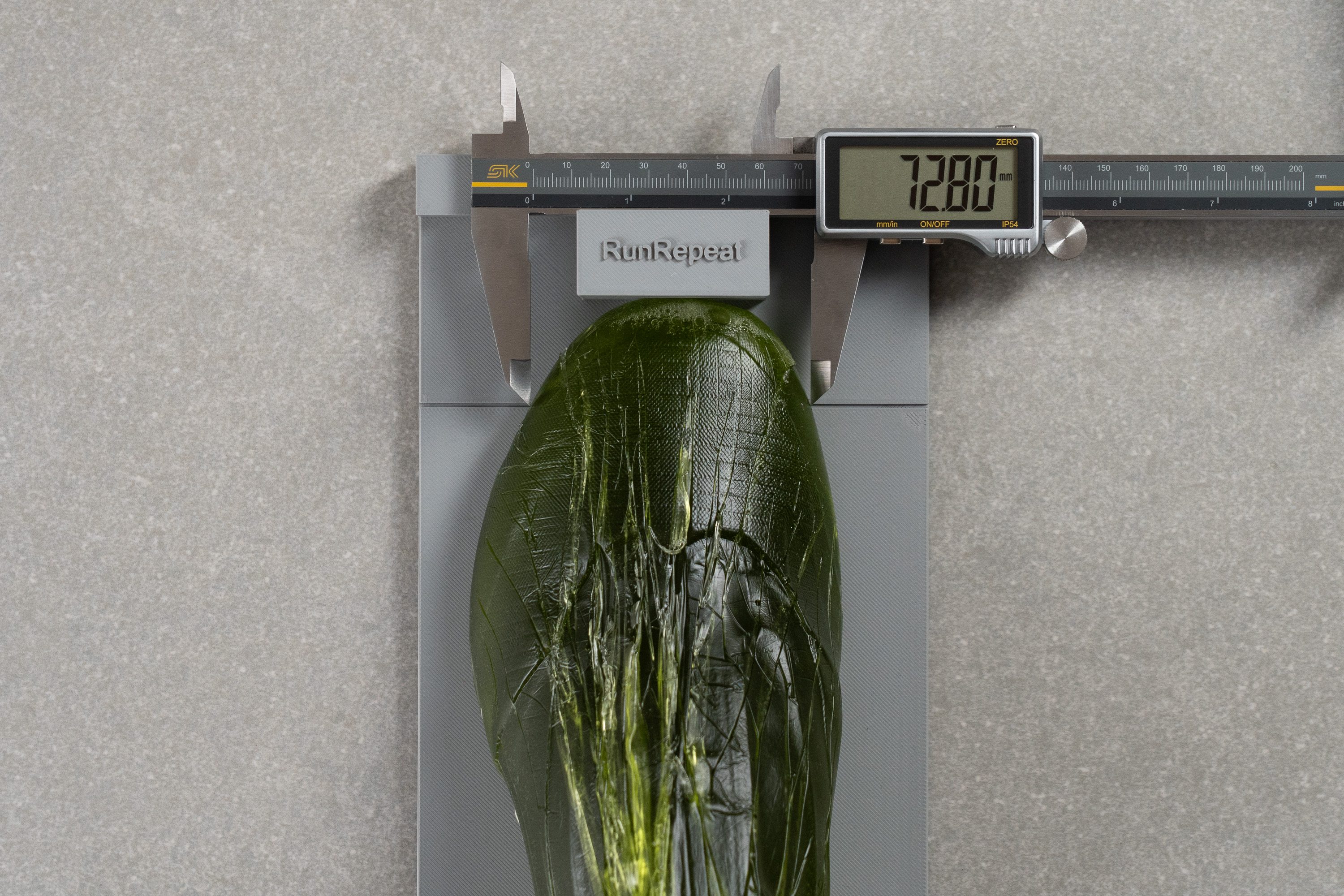
| Adizero EVO SL ATR | 72.8 mm |
| Average | 73.2 mm |
Toebox height
To complete the fit assessment, we took a third measurement for toebox height.
At 27.4 mm, there is enough vertical room for most runners, confirming that space is not an issue. That said, the ripstop upper doesn't stretch at all, so the volume may feel slightly lower for some.
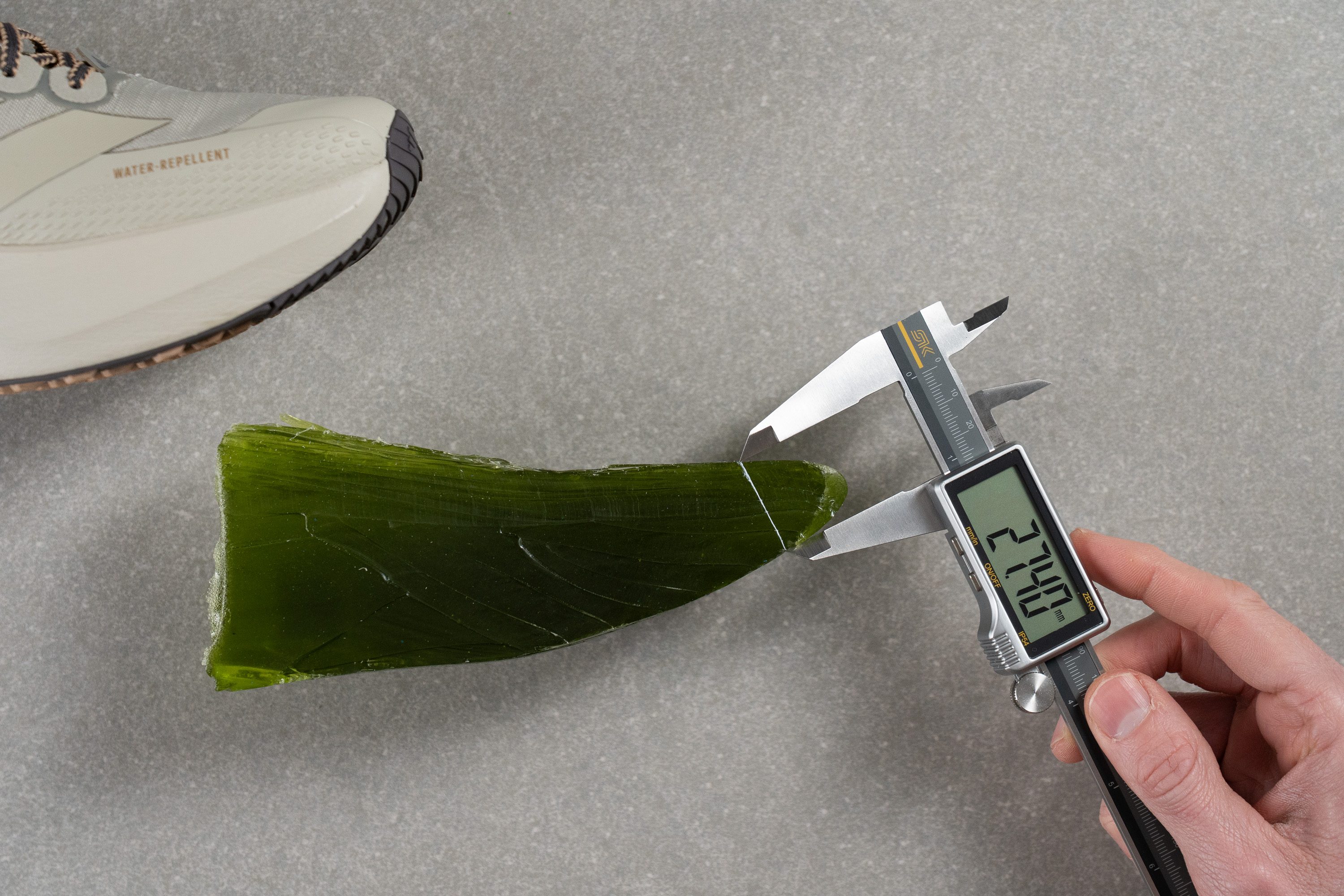
| Adizero EVO SL ATR | 27.4 mm |
| Average | 27.0 mm |
Traction / Grip
Traction test
One of the weakest points of the EVO SL was traction. It was acceptable at 0.40, but limited on wet surfaces. That changes here, as the EVO SL ATR delivers a much stronger 0.65 score.
The trade-off is a heavier outsole, but we believe this is a positive trade-off that will benefit a large share of runners looking for more confidence underfoot.
| Adizero EVO SL ATR | 0.65 |
| Average | 0.53 |
Outsole design
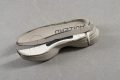
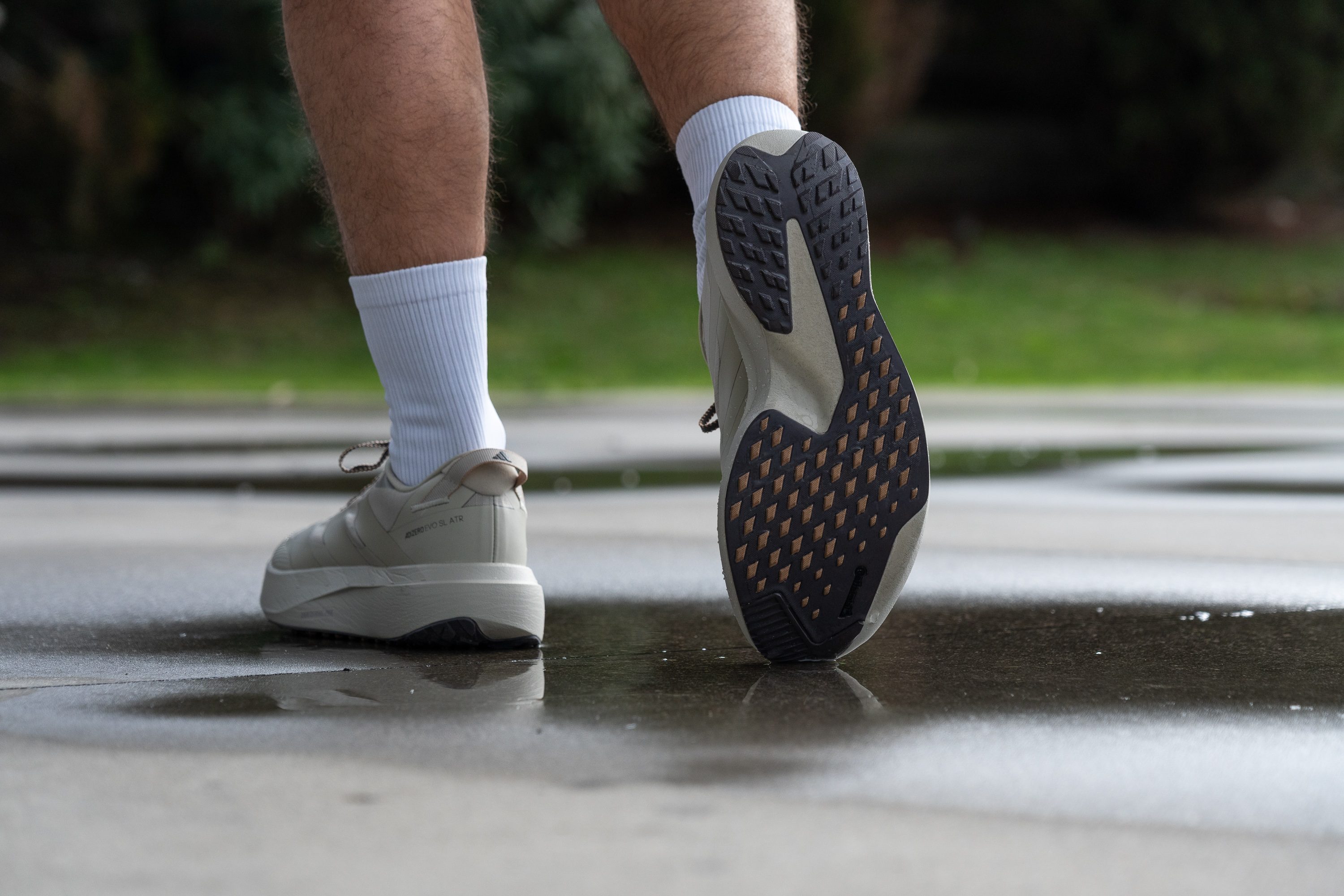
While the midsole of the EVO SL ATR stays exactly the same as its sibling, the outsole sees meaningful changes. The race-inspired layout is gone, replaced by a more rugged design with Continental rubber and wider coverage, especially under the heel.
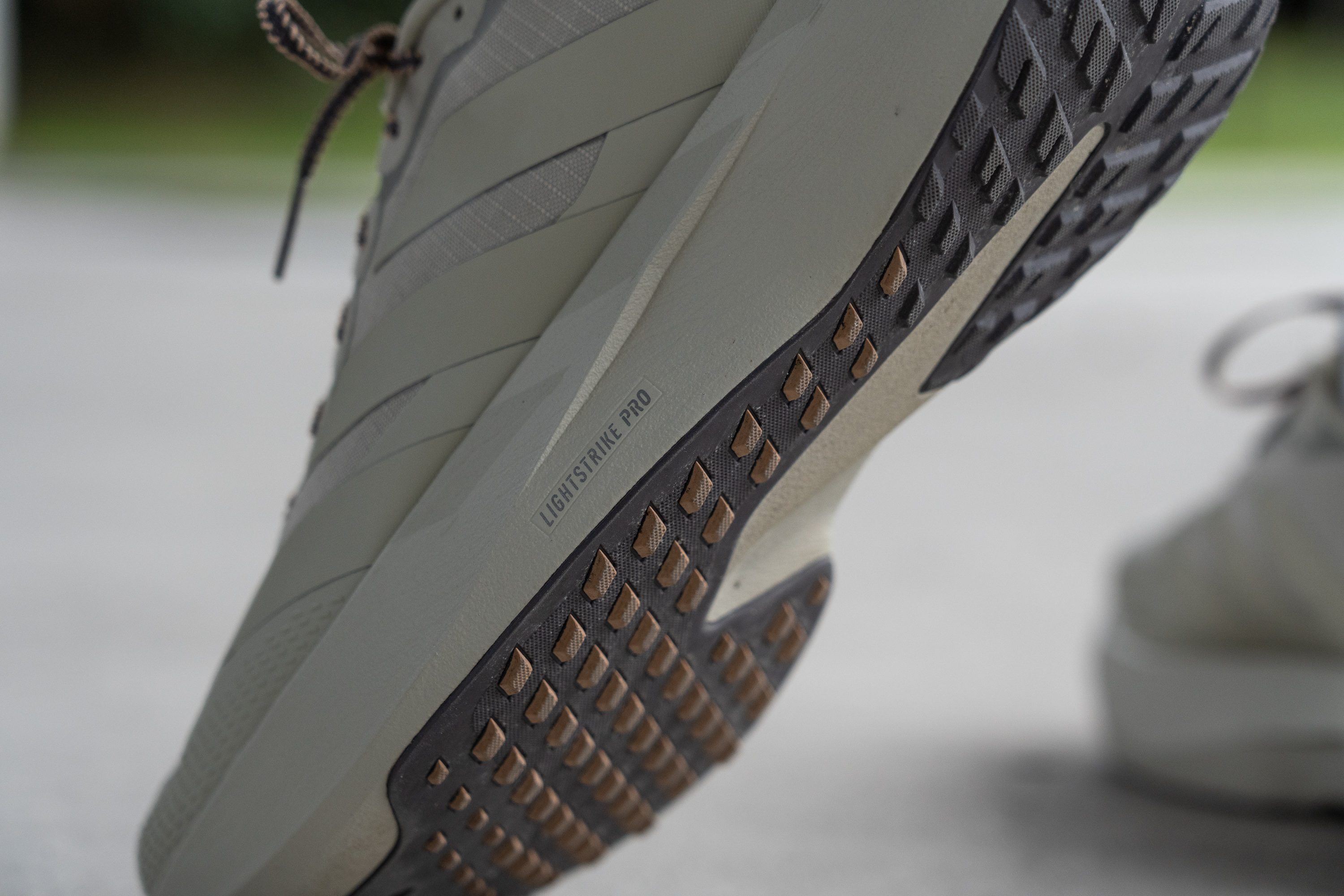
This revised outsole also adds dozens of small 1.5-mm lugs to boost traction beyond dry asphalt. Gravel, dirt roads, parks, and even easy trails are all fair game. As a result, the ATR becomes a far more versatile option than the standard model, while still gripping confidently on sunny road runs.
Flexibility / Stiffness
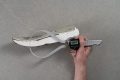
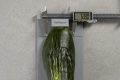
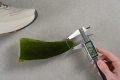
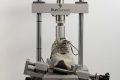
One of the first things we noticed during our initial strides in the EVO SL ATR was its higher stiffness. With the thicker outsole and water-repellent upper, it reached 14.6N, a 48% jump over the regular model, so expect a less natural feel underfoot.
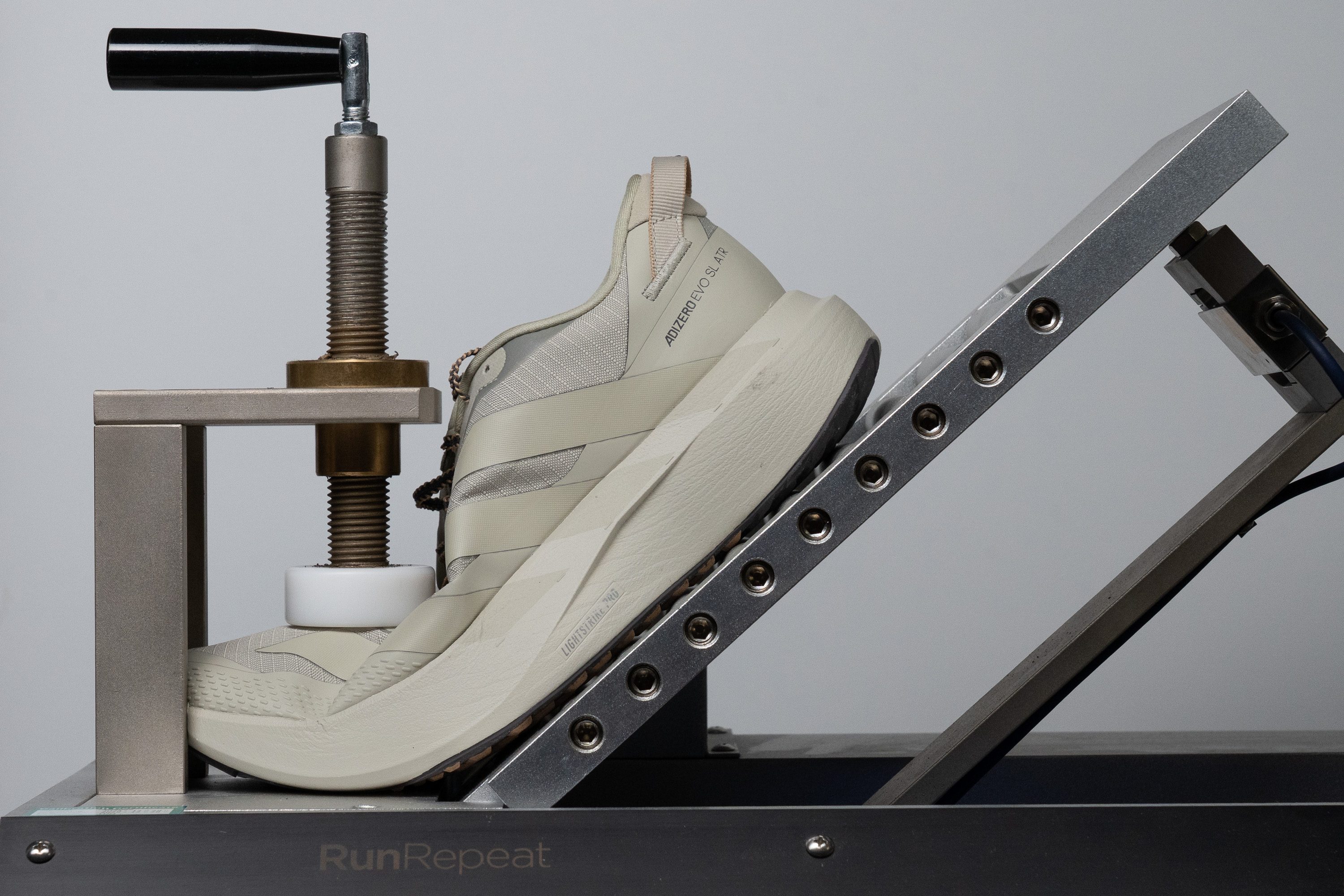
| Adizero EVO SL ATR | 14.6N |
| Average | 15.5N |
Weight
You don’t need to be a running shoe wizard to expect the EVO SL ATR to weigh more than the regular EVO SL. Anyone can see that the water-repellent upper and the more rugged outsole clearly add extra mass.
We measured an 18% increase in weight, bringing the shoe to 9.3 oz or 264g. While this is still a very reasonable number for the size of this shoe, it undeniably feels heavier than the original version while running, and that’s something you should keep in mind.
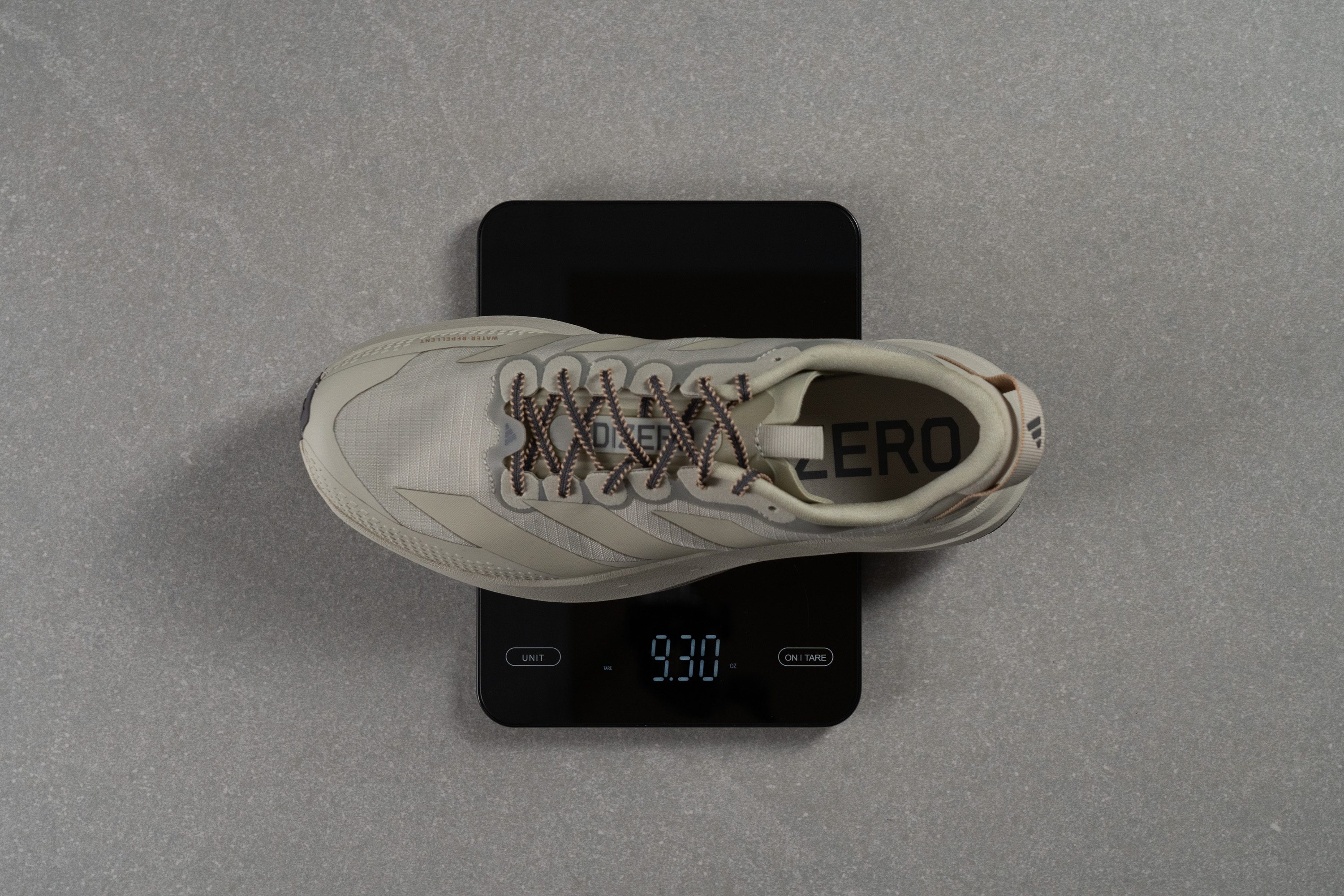
| Adizero EVO SL ATR | 9.3 oz (264g) |
| Average | 9.2 oz (261g) |
Breathability
Breathability test
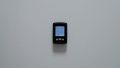
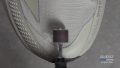
As a winter-focused version of the EVO SL, we expected breathability to take a noticeable hit. While the ATR isn't waterproof, it uses a water-repellent mesh that clearly favors protection over airflow.
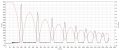
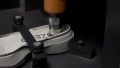
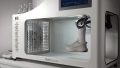
We confirmed that with our state-of-the-art breathability machine, which recorded a modest score of 52 BR. That's well below our current lab average, showing that ventilation was not a priority in this design.
| Adizero EVO SL ATR | 52 BR |
| Average | 75 BR |
Drying potential
NewOur drying potential test uses the same machine to evaluate how efficiently the upper releases trapped moisture over time. After exposing the EVO SL ATR to artificial sweat for 3 hours inside the chamber, we measured just 29% moisture evaporation. That's one of the lowest scores we've ever recorded!
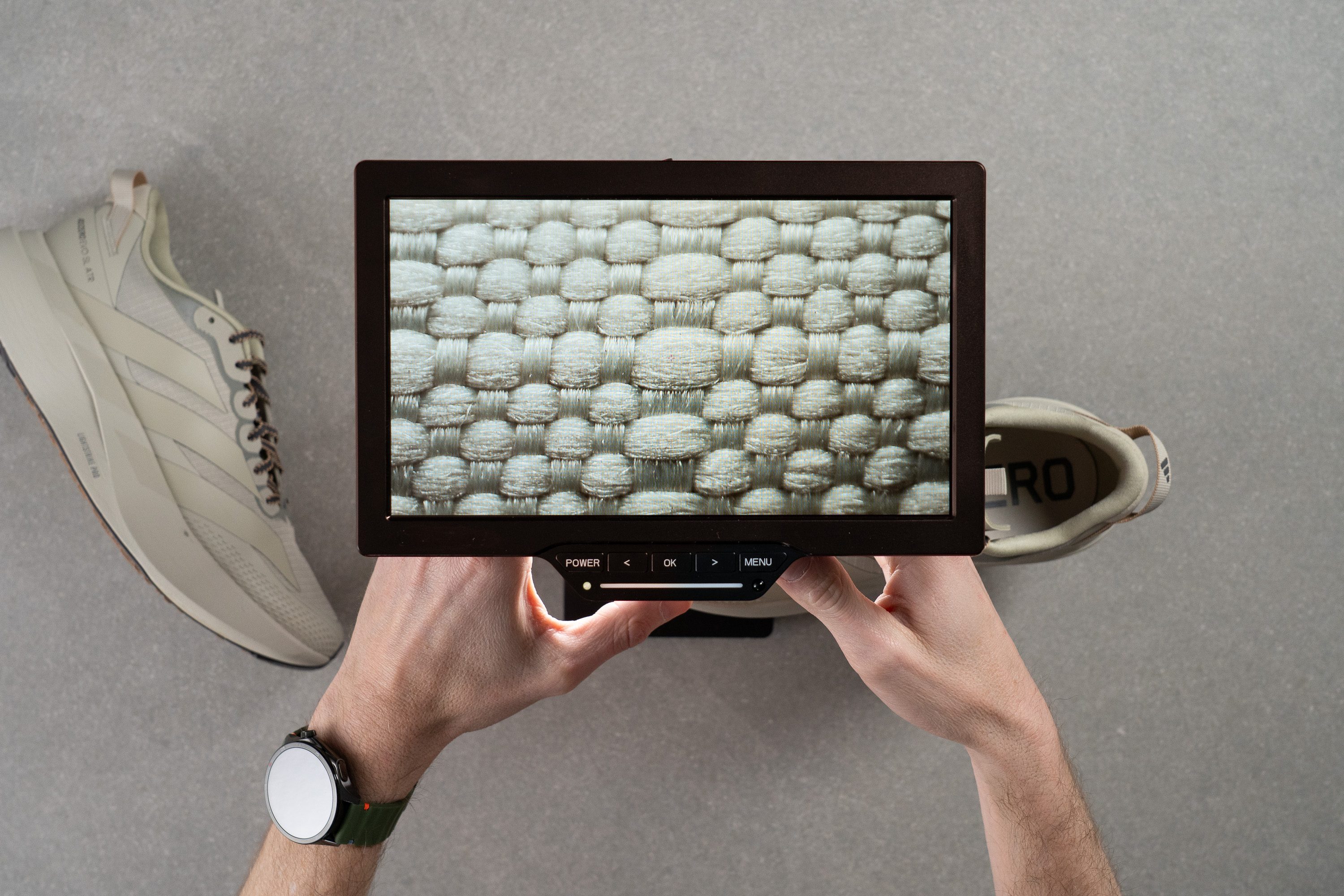
| Adizero EVO SL ATR | 29% |
| Average | 53% |
Stability
Lateral stability test
While the EVO SL ATR is still clearly a neutral shoe, this version brings a touch more inherent stability thanks to the reinforced upper and higher stiffness. It is easy to notice on the run, but those of you who truly need support will not find it here.
Torsional rigidity
The EVO SL ATR shows around-average torsional rigidity with a score of 14.3 Nm. In this test, we twist the shoe in both directions using our custom-made machine and record the torque required; we then sum the results to obtain the final value.
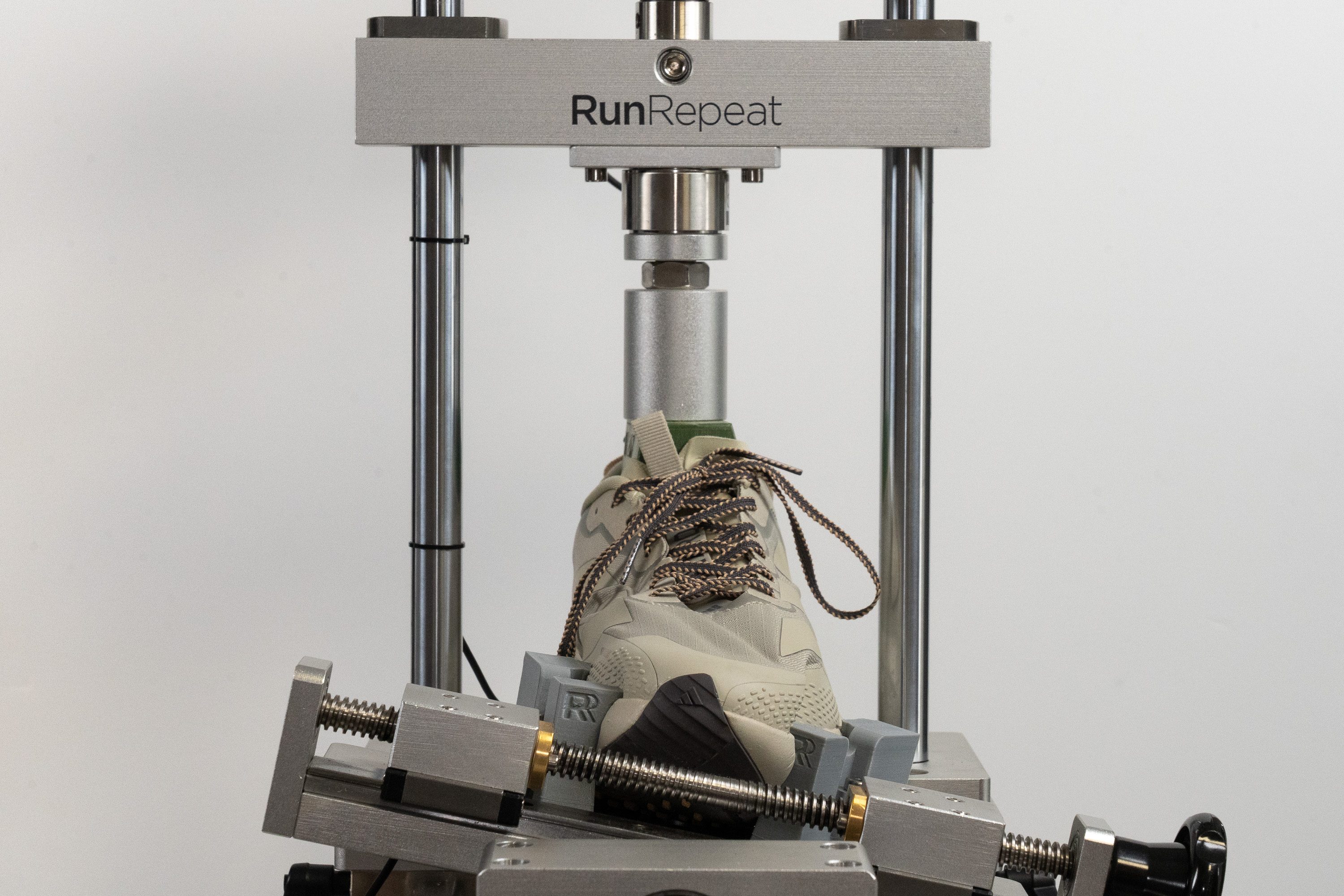
| Adizero EVO SL ATR | 14.3 Nm |
| Average | 14.3 Nm |
Heel counter stiffness
The heel counter feels very similar to the original, earning a 3 out of 5 in our manual assessment. It delivers standard support and solid comfort, exactly what you would expect from a daily trainer.
| Adizero EVO SL ATR | 3 |
| Average | 2.9 |
Midsole width - forefoot
Our first measurement showed a forefoot width of 116.4 mm, a sensible result for a shoe built around versatility. It avoids the bulky feel of many recent maximalist designs and keeps the ride agile, which we really appreciated.
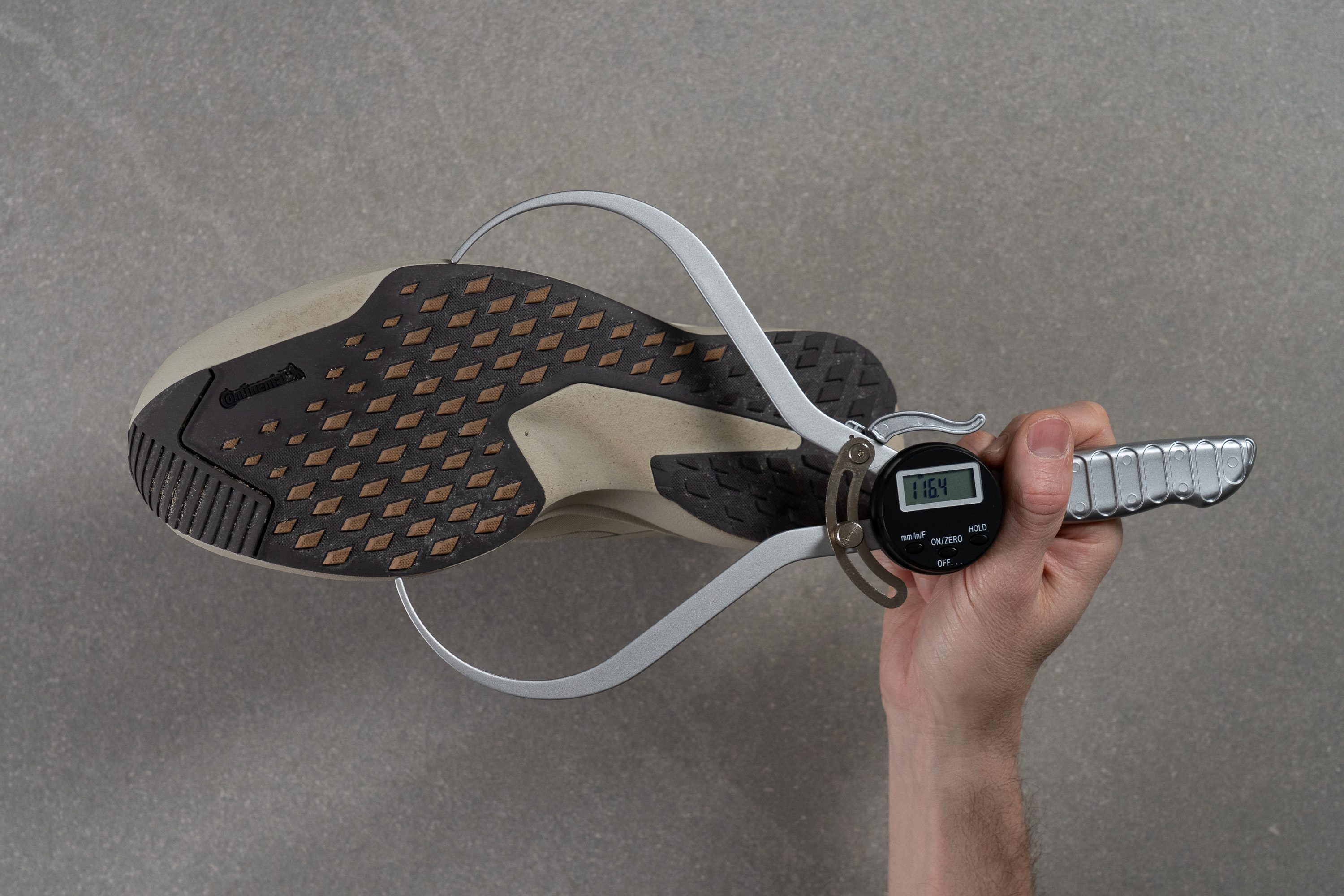
| Adizero EVO SL ATR | 116.4 mm |
| Average | 115.1 mm |
Midsole width - heel
The heel follows the aggressive design seen across most Adizero models.
At just 84.7 mm wide, it is one of the main reasons we do not recommend this shoe for runners who need support, especially those who land on the rearfoot.
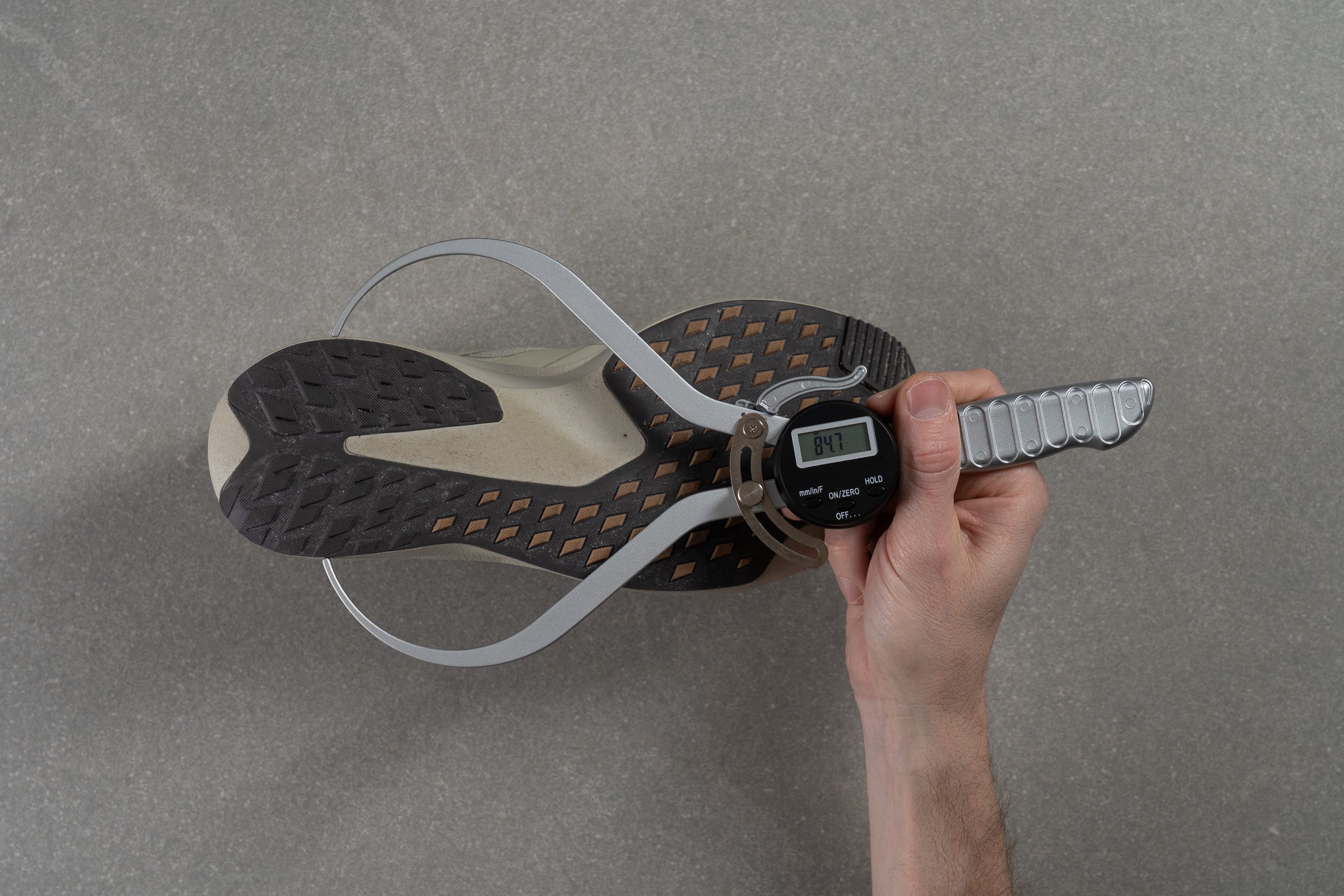
| Adizero EVO SL ATR | 84.7 mm |
| Average | 91.1 mm |
Durability
Toebox durability
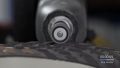
The ripstop mesh used by adidas helps prevent random tears and minor damage, but it is not built to be extremely tough. In our Dremel test, it earned a 2/5 score due to the thin material used in the toebox.
However, it is worth noting that the shoe uses several TPU reinforcements in key areas, which add a bit of weight but feel fully justified for the ATR version.
| Adizero EVO SL ATR | 2 |
| Average | 2.6 |
Heel padding durability
We expect no issues with heel padding durability, as the Dremel met strong resistance. Because of that, we awarded a solid 5/5 here. Excellent, let’s move on.
| Adizero EVO SL ATR | 5 |
| Average | 3.4 |
Outsole durability
The partnership between Continental and adidas works great for everyone. Both brands have collaborated for decades, and for us it usually means dependable traction and strong durability.
That is exactly what we found here, as our Dremel test removed only 0.7 mm of rubber. A very good result.
| Adizero EVO SL ATR | 0.7 mm |
| Average | 1.1 mm |
Outsole thickness
There has been some debate about whether the EVO SL ATR is a road or trail shoe because of its shallow 1.5 mm lugs. For us, it is clearly a winter-ready EVO SL that can handle very easy trails, but at its core, it remains a road shoe.
The outsole supports that idea. With a total thickness of 3.5 mm, it does not feel different from a road setup, especially when compared to something like the Pegasus 41 GTX.
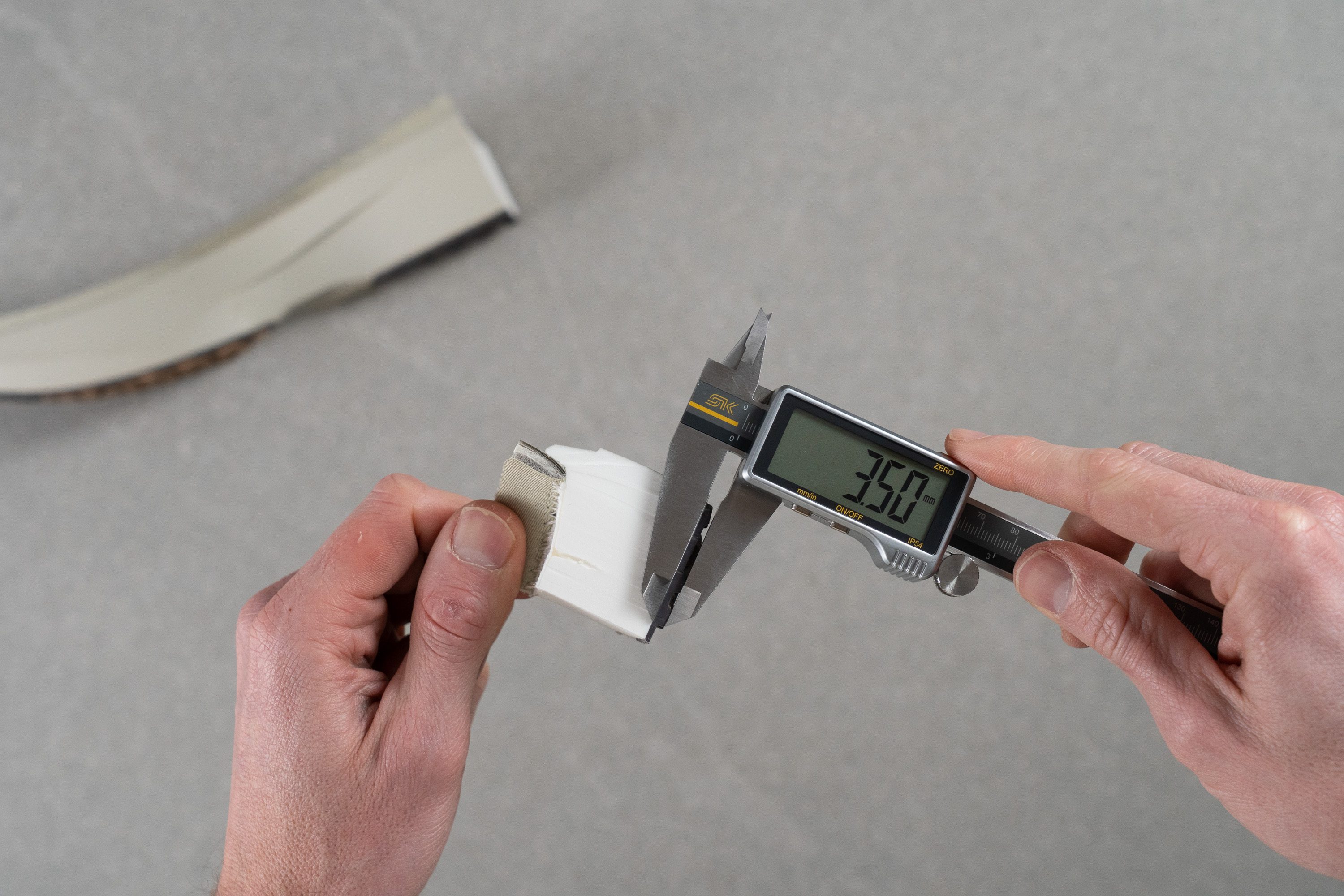
| Adizero EVO SL ATR | 3.5 mm |
| Average | 3.1 mm |
Misc
Insole thickness
We measured a thinner-than-average insole sitting on top of the Lightstrike Pro midsole, with just 3.1 mm of thickness. If that trade-off means more Lightstrike Pro underfoot, we are not complaining.
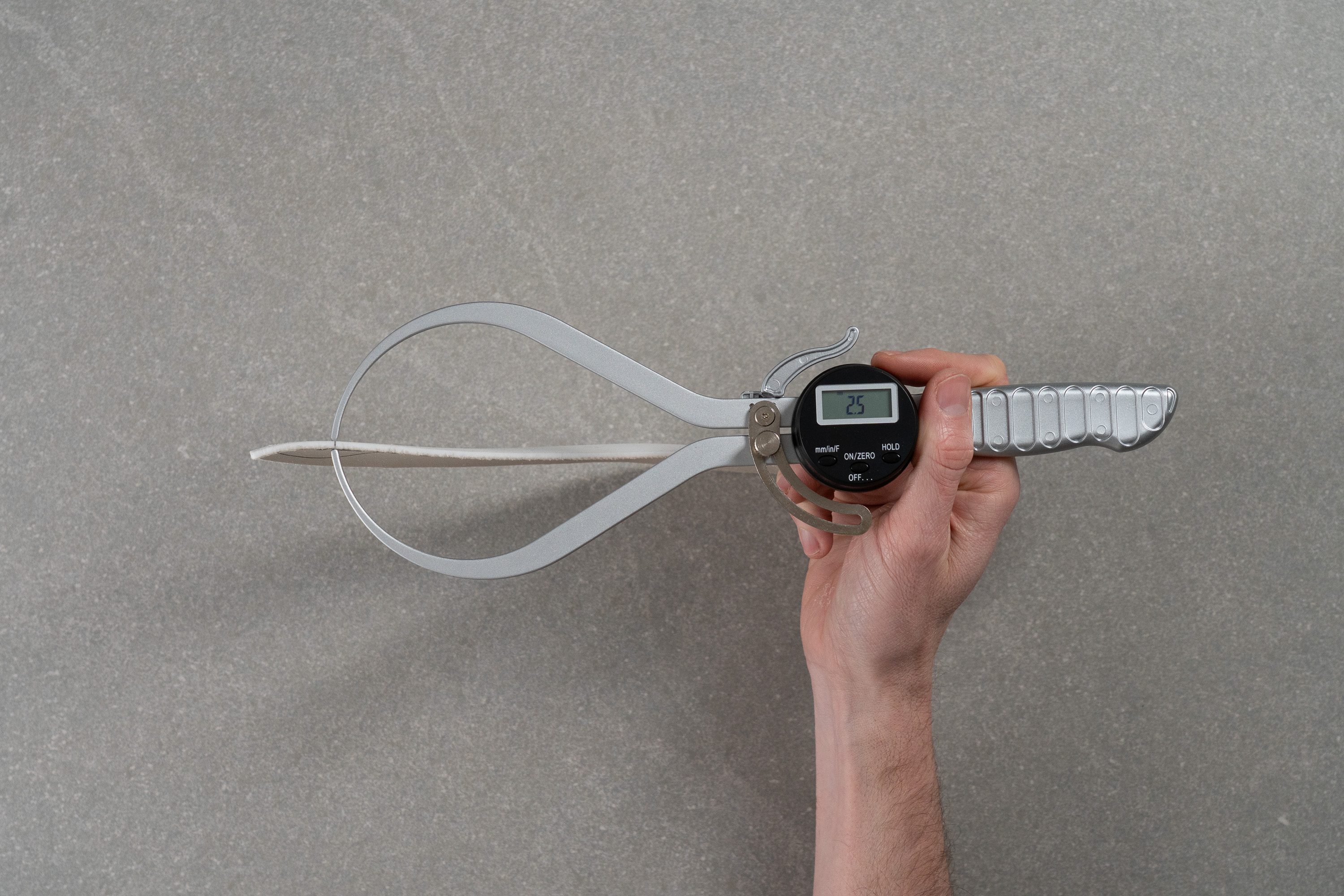
| Adizero EVO SL ATR | 3.1 mm |
| Average | 4.4 mm |
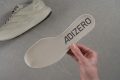
Removable insole
The insole is removable, but the Adizero EVO SL is not an ideal shoe for swapping it with a thicker alternative.
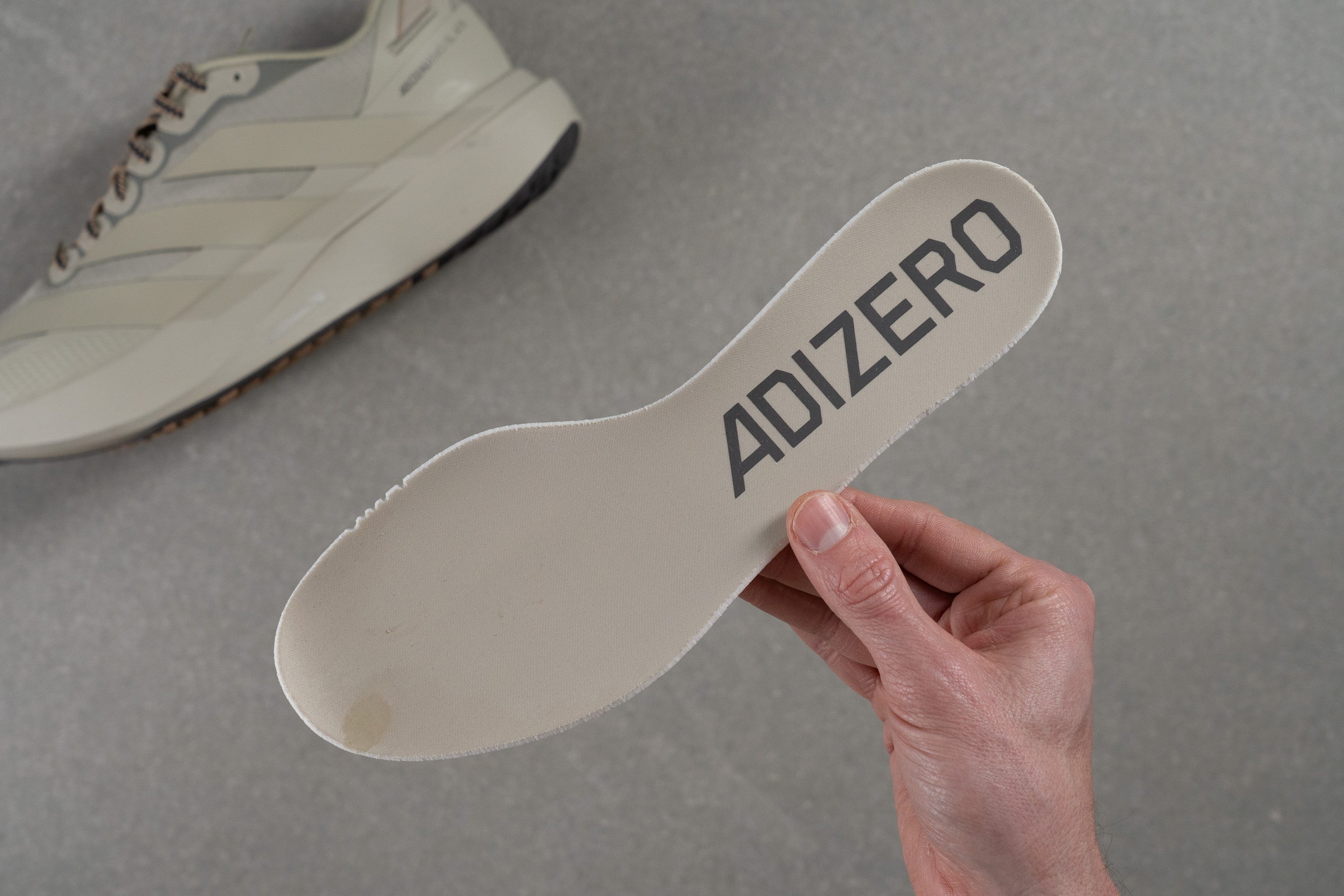
| Adizero EVO SL ATR | Yes |
Reflective elements
The EVO SL ATR lacks reflective elements, which is a bit disappointing. For a shoe positioned as more adventure-ready, having at least a few details that bounce light back would have been a welcome touch.
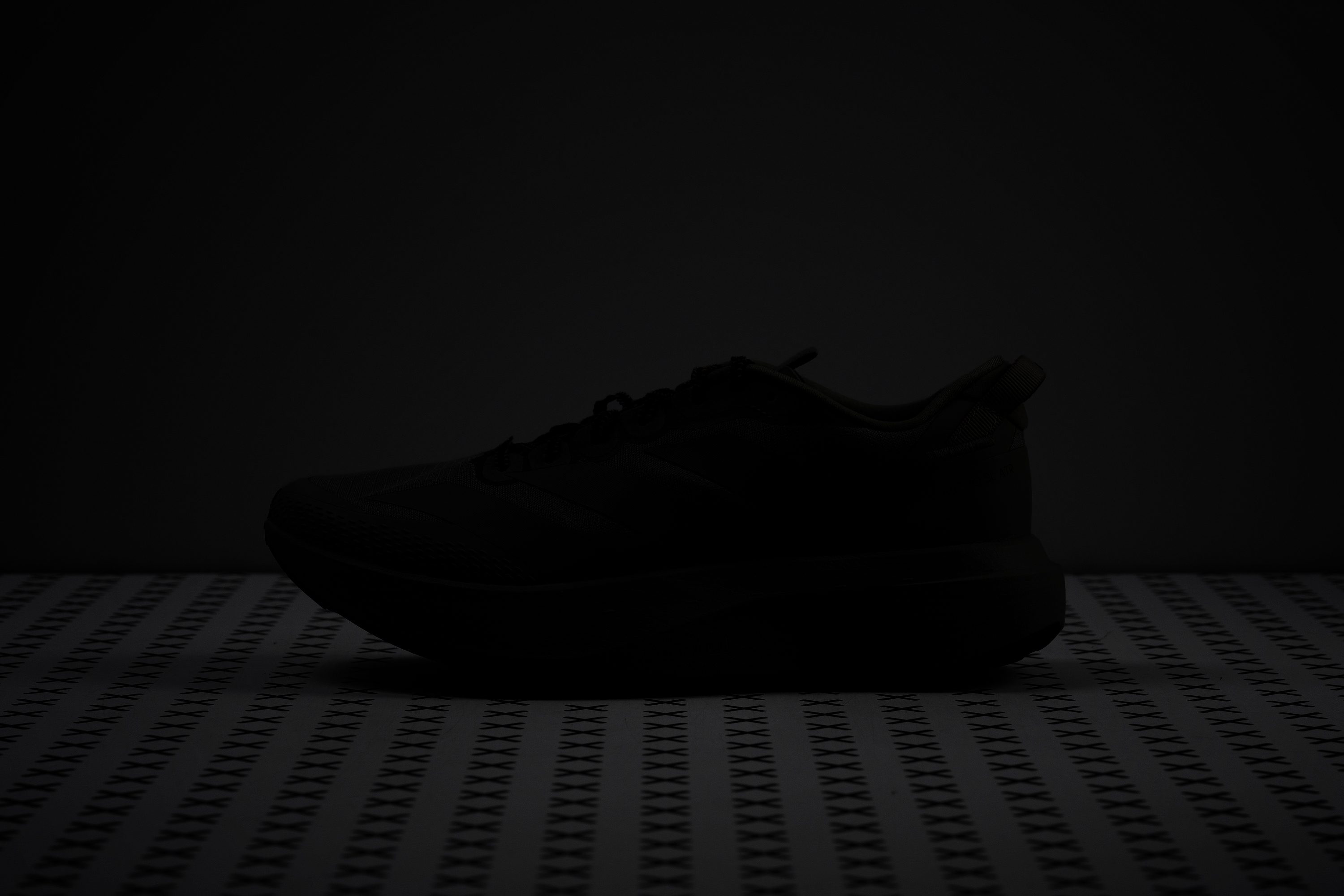
| Adizero EVO SL ATR | No |
Tongue padding
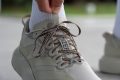
One of the biggest advantages of buying every shoe ourselves and not relying on brands is that we have zero bias. If you’re a RunRepeat regular, you’ll remember we’ve been very critical of adidas' lace choices, including on the EVO SL. Come on, even the ultra-expensive Pro Evo 2 came with cringey laces!
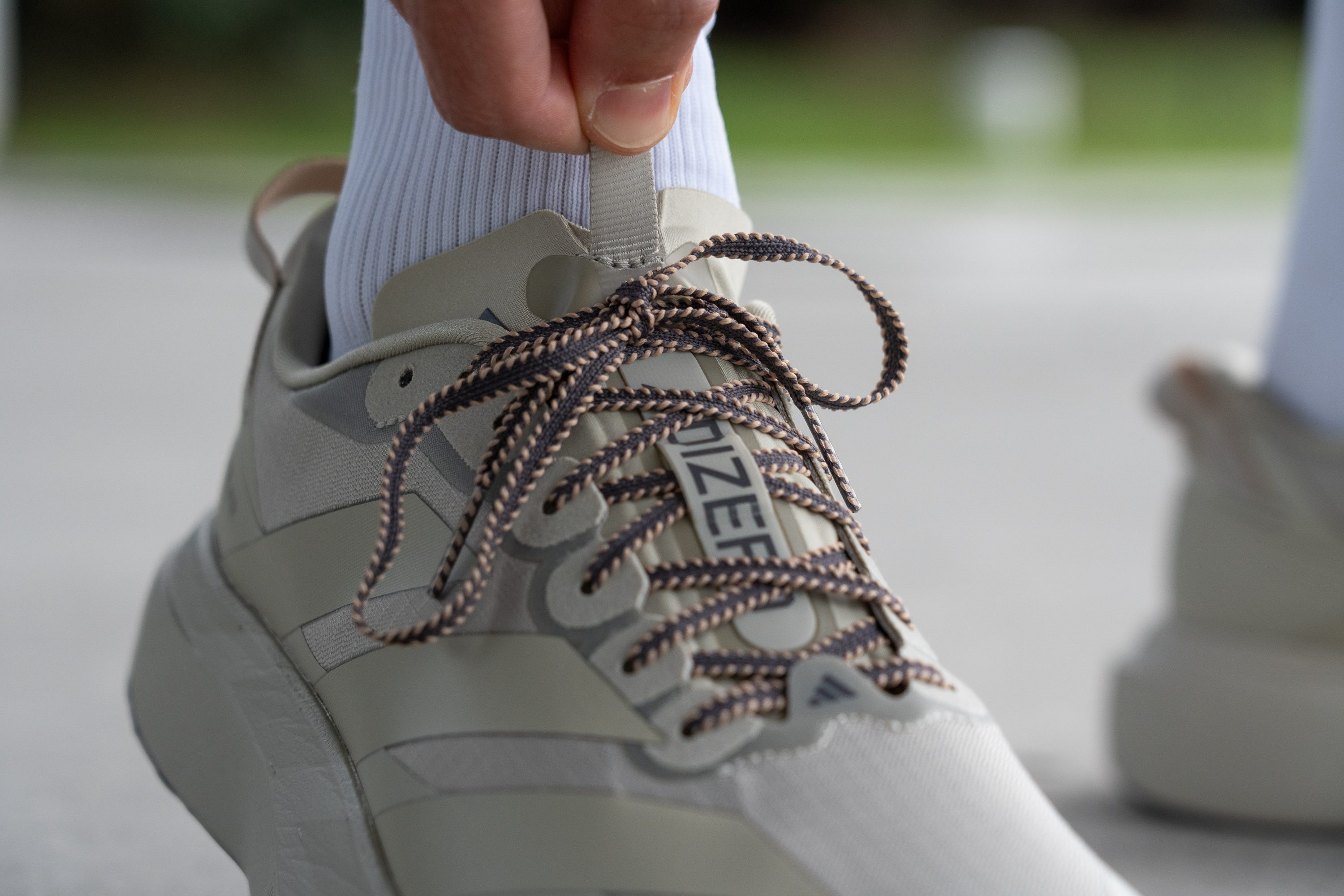
Thankfully, there’s real progress here. The EVO SL ATR uses textured laces that are simply excellent. They stay put, feel precise, and hold tension well. If you guys from Herzogenaurach are reading this, we’d love to see these on all future top-tier adidas shoes.
As for the tongue, we found a pull tab that could be a bit larger. We also noted that the design stays very slim, like most Adizero models, with just 1.7 mm of padding to keep weight as low as possible.
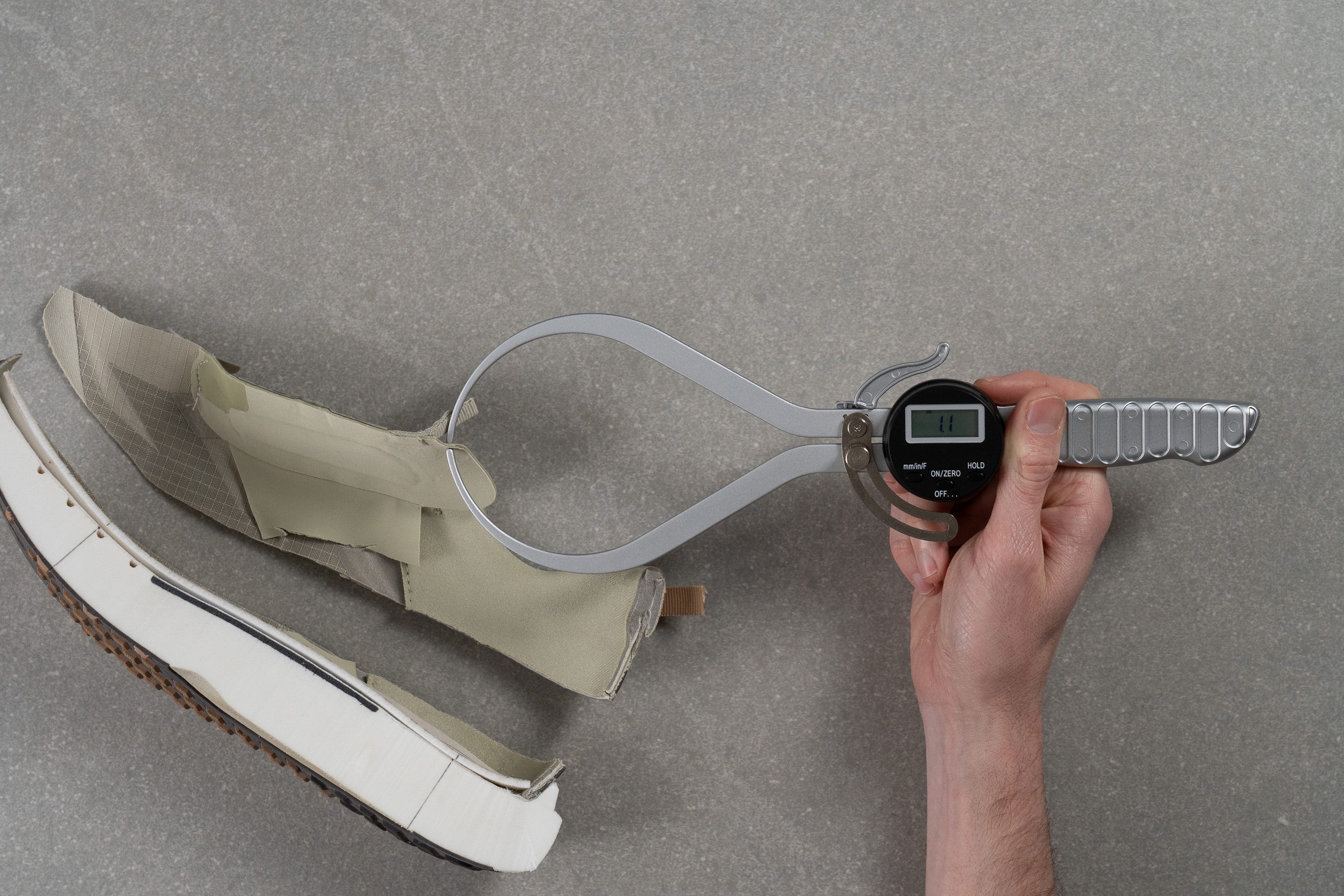
| Adizero EVO SL ATR | 1.7 mm |
| Average | 5.8 mm |
Tongue: gusset type
One of the biggest drawbacks of the first EVO SL was the tongue, which felt clearly subpar, especially when compared to the midsole. The EVO SL ATR improves this noticeably, adding a semi-gusseted tongue that stays in place instead of moving freely like before.
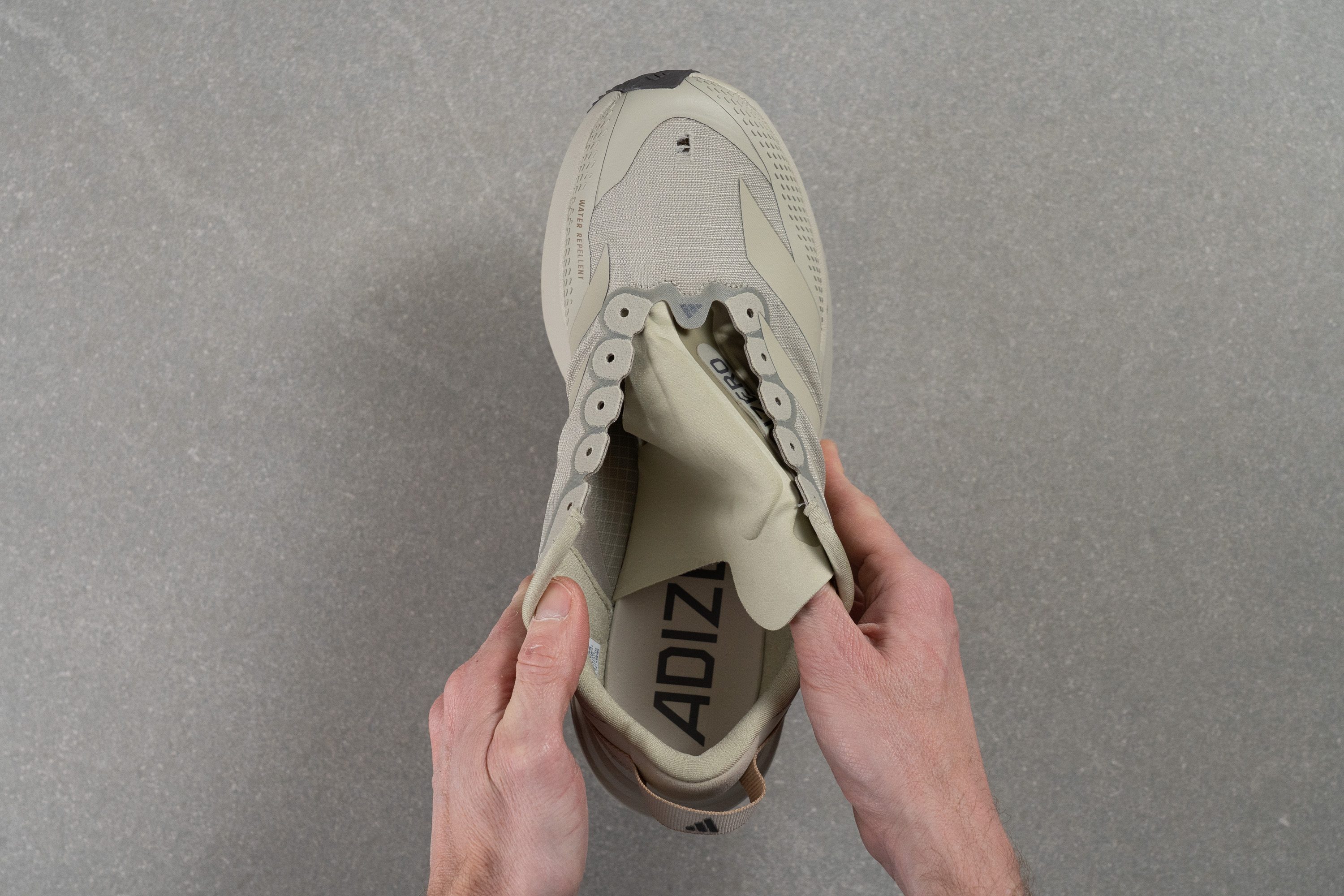
| Adizero EVO SL ATR | Both sides (semi) |
Heel tab
The horizontal fabric heel tab provides an easy pull-on point, keeps bulk to a minimum, and adds another all-terrain detail that sets this version apart from the regular version.
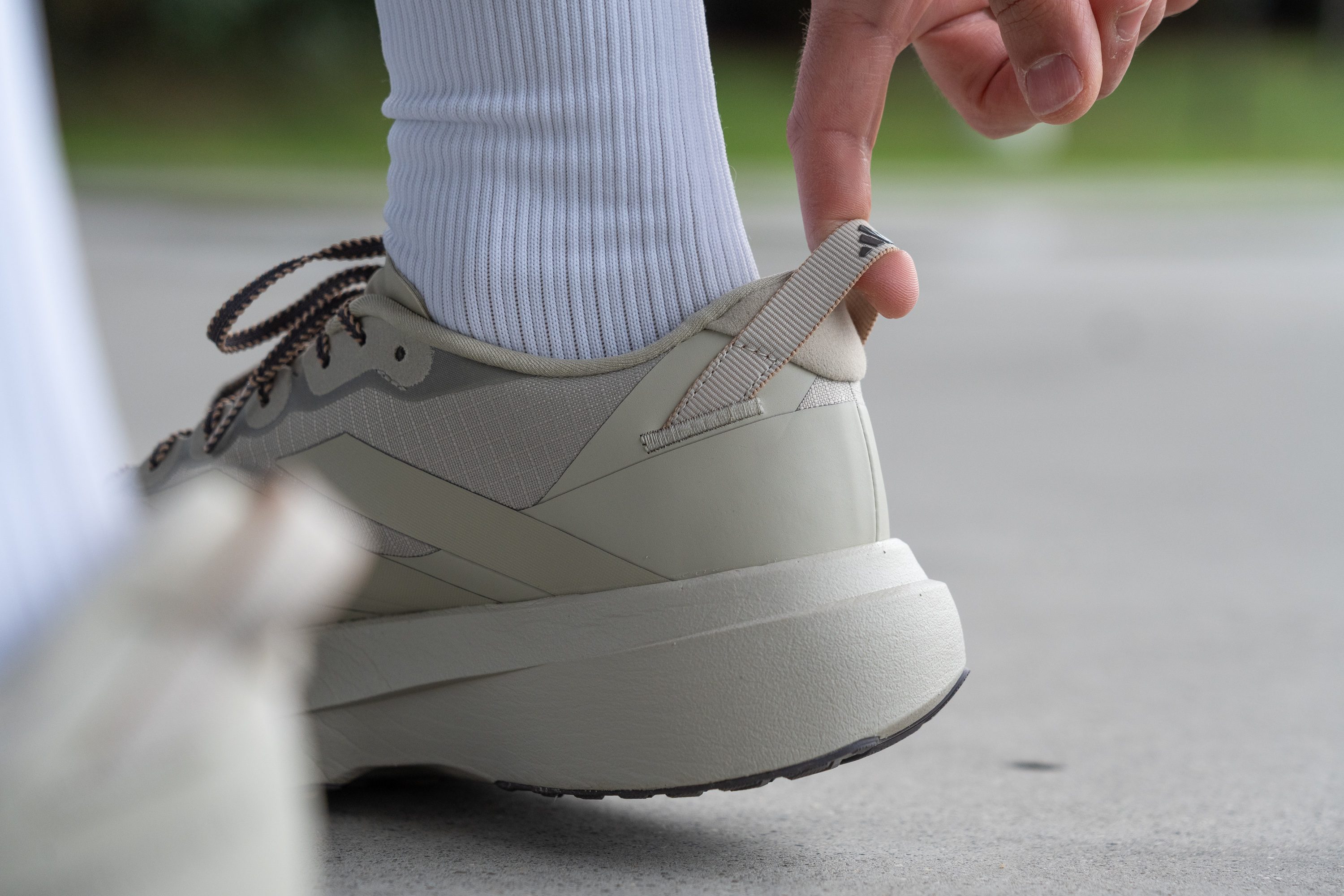
| Adizero EVO SL ATR | Finger loop |
Price
We believe the EVO SL ATR is priced fairly. It is not a cheap running shoe, but it pairs a world-class midsole with rugged upgrades to the upper and outsole that, in our view, fully justify the higher price.
| Adizero EVO SL ATR | $160 |
| Average | $158 |
Water Repellent
It’s pretty clear that adidas built the ATR version for the winter running crowd, and the water-repellent upper makes perfect sense for cold, wet months—especially for high-mileage runners training toward a spring marathon like Boston or London.