


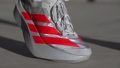







Our verdict
- Daily running 25
- Tempo 69
- Race 93
- Stability 45
Pros
- Insanely lightweight
- Fast and responsive
- Aggressive, efficient rocker
- Upper dries out fast
- Feels incredible at faster paces
- Specifically built for the marathon distance
- Uncompressed Lightstrike Pro Evo foam
- Ideal for midfoot and forefoot strikers
Cons
- Crazy high price
- Extremely narrow toebox
- Low durability
- We expected a bit more bounce!
Awards
- Top 27% most popular running shoes
Comparison
The most similar running shoes compared
+ + Add a shoe | |||||
|---|---|---|---|---|---|
| Our score | 84 Great | 92 Superb | 88 Superb | 92 Superb | |
| Price | $500 | $300 | $250 | $270 | |
| Pace | Competition | Competition | Competition | Competition | |
| Shock absorption | High | High | High | High | |
| Energy return | High | High | High | High | |
| Traction | High | High | High | High | |
| Arch support | Neutral | Neutral | Neutral | Neutral | |
| Weight lab Weight brand | 4.9 oz / 139g 4.9 oz / 138g | 6.1 oz / 173g 6 oz / 170g | 7.8 oz / 220g 7.4 oz / 210g | 5.7 oz / 163g 6 oz / 170g | |
| Lightweight | ✓ | ✓ | ✓ | ✓ | |
| Drop lab Drop brand | 7.8 mm 3.0 mm | 8.3 mm 8.0 mm | 10.0 mm 7.0 mm | 6.0 mm 5.0 mm | |
| Strike pattern | Mid/forefoot | Mid/forefoot | HeelMid/forefoot | Mid/forefoot | |
| Size | - | True to size | Slightly small | True to size | |
| Midsole softness | Balanced | Balanced | Balanced | Soft | |
| Difference in midsole softness in cold | Small | Small | Small | Small | |
| Toebox durability | Bad | Bad | Decent | Bad | |
| Heel padding durability | Good | Decent | Good | Good | |
| Outsole durability | Bad | Bad | Good | Decent | |
| Breathability | Breathable | Moderate | Breathable | Breathable | |
| Width / fit | Narrow | Narrow | Narrow | Narrow | |
| Toebox width | Narrow | Medium | Narrow | Narrow | |
| Stiffness | Stiff | Stiff | Stiff | Stiff | |
| Torsional rigidity | Moderate | Moderate | Moderate | Stiff | |
| Heel counter stiffness | Flexible | Flexible | Flexible | Flexible | |
| Plate | Carbon plate | Carbon plate | Carbon plate | Carbon plate | |
| Rocker | ✓ | ✓ | ✓ | ✓ | |
| Heel lab Heel brand | 38.4 mm 39.0 mm | 38.5 mm 40.0 mm | 39.6 mm 40.0 mm | 38.7 mm 39.5 mm | |
| Forefoot lab Forefoot brand | 30.6 mm 36.0 mm | 30.2 mm 32.0 mm | 29.6 mm 33.0 mm | 32.7 mm 34.5 mm | |
| Widths available | Normal | Normal | Normal | NormalWide | |
| Orthotic friendly | ✗ | ✗ | ✓ | ✓ | |
| Season | SummerAll seasons | All seasons | SummerAll seasons | SummerAll seasons | |
| Removable insole | ✗ | ✗ | ✓ | ✓ | |
| Ranking | #199 Top 31% | #12 Top 3% | #51 Top 13% | #11 Top 3% | |
| Popularity | #173 Top 27% | #54 Top 14% | #68 Top 17% | #1 Top 1% |
Who should buy
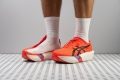
Based on our testing of the adidas Adizero Adios Pro Evo 2, we think it works well for:
- Those who do not worry about budget and simply want adidas’ latest hypershoe.
- Marathoners who want an extremely lightweight shoe and prioritize grams above all else.
- Runners who benefit from a strong forefoot rocker and feel more efficient with this geometry.
Who should NOT buy
In our view the insane price of the Adios Pro Evo 2 makes no sense for 99.9% of runners, even if the tech behind the shoe looks impressive. We believe there are better choices like the ASICS Metaspeed Ray or the PUMA Fast-R Nitro Elite 3, which deliver similar or even better performance at a lower cost.
From our perspective the limited durability also turns this ultra-premium, race-only model into a tough sell. We think it’s not the best choice when shoes like the adidas Adizero Adios Pro 4 or Saucony Endorphin Elite 2 strike a smarter balance of cost, longevity and performance.
Cushioning
Shock absorption
The adidas Adizero Adios Pro Evo 2 comes with a very substantial midsole of Lightstrike Pro Evo, which was expected given that this shoe is built as the ultimate marathon racer. And for such a grueling distance you need as much shock absorption as possible.
The Evo 2 delivers with 150 SA in the heel and 134 SA in the forefoot, both excellent values.
| Adizero Adios Pro Evo 2 | 150 SA |
| Average | 131 SA |
Energy return
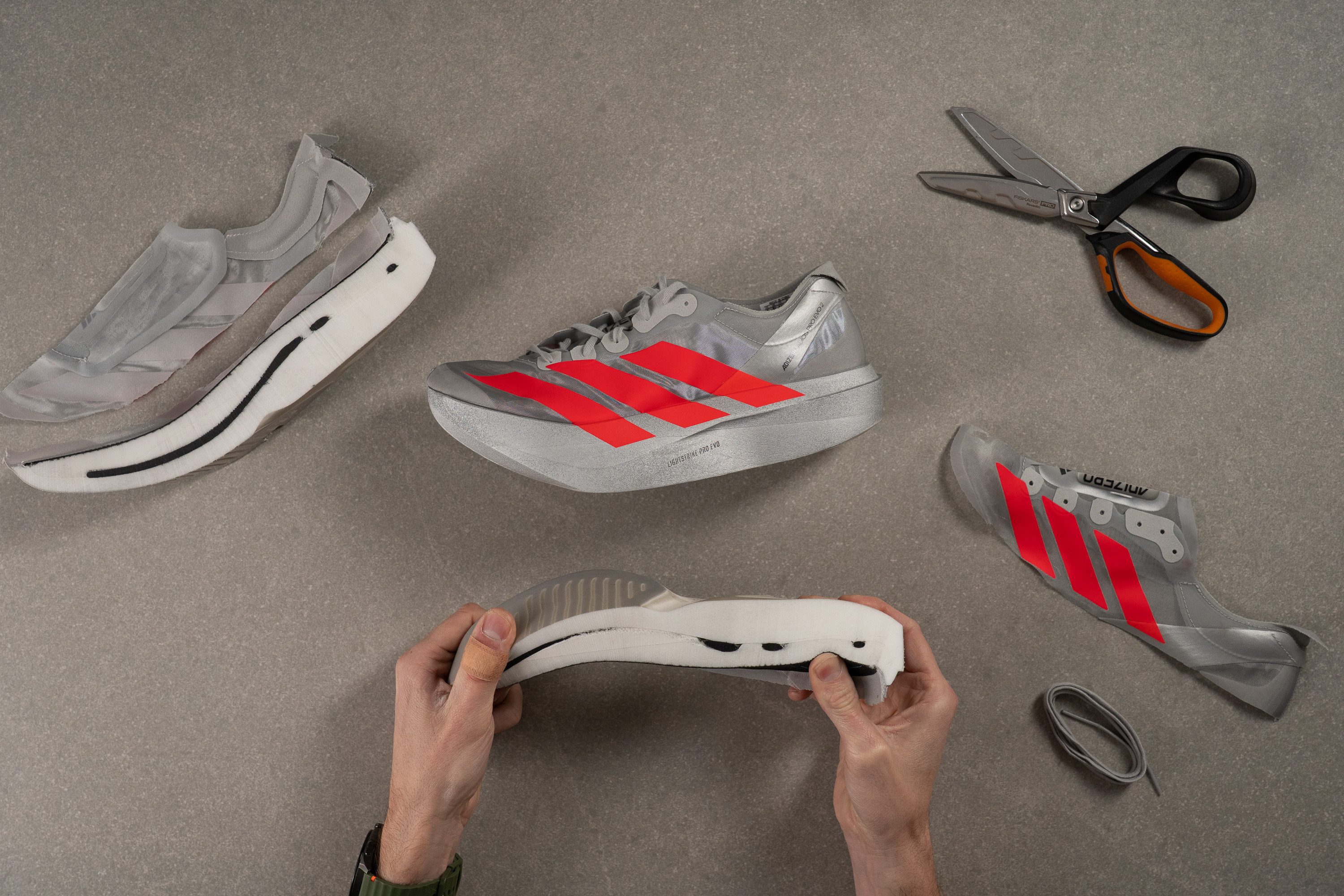
In terms of energy return, we can't hide that the result felt bittersweet. Reaching 73.5% in the heel and 74.4% in the forefoot is impressive and shows the quality of this TPEE-based superfoam, but at the same time, this bounce sits a little below current state-of-the-art foams like IncrediRUN or Nitro Elite, and we expected this shoe to reach the very top at this price.
What happens here comes down to trade-offs. adidas went all-in on weight savings with the Evo 2, making that the top priority even over energy return. And that’s why, while it is very good, it falls short of being exceptional.
| Adizero Adios Pro Evo 2 | 74.4% |
| Average | 61.5% |
Heel stack
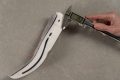
The heel stack comes very close to the 40 mm World Athletics limit but stays safely under it by 1.6 mm, giving us a measured value of 38.4 mm.

| Adizero Adios Pro Evo 2 | 38.4 mm |
| Average | 35.6 mm |
Forefoot stack
We also measured the forefoot and got 30.6 mm, which is plenty of foam to handle any distance without concern. However, it is slightly lower than adidas’ stated spec, so let’s take a look at why.
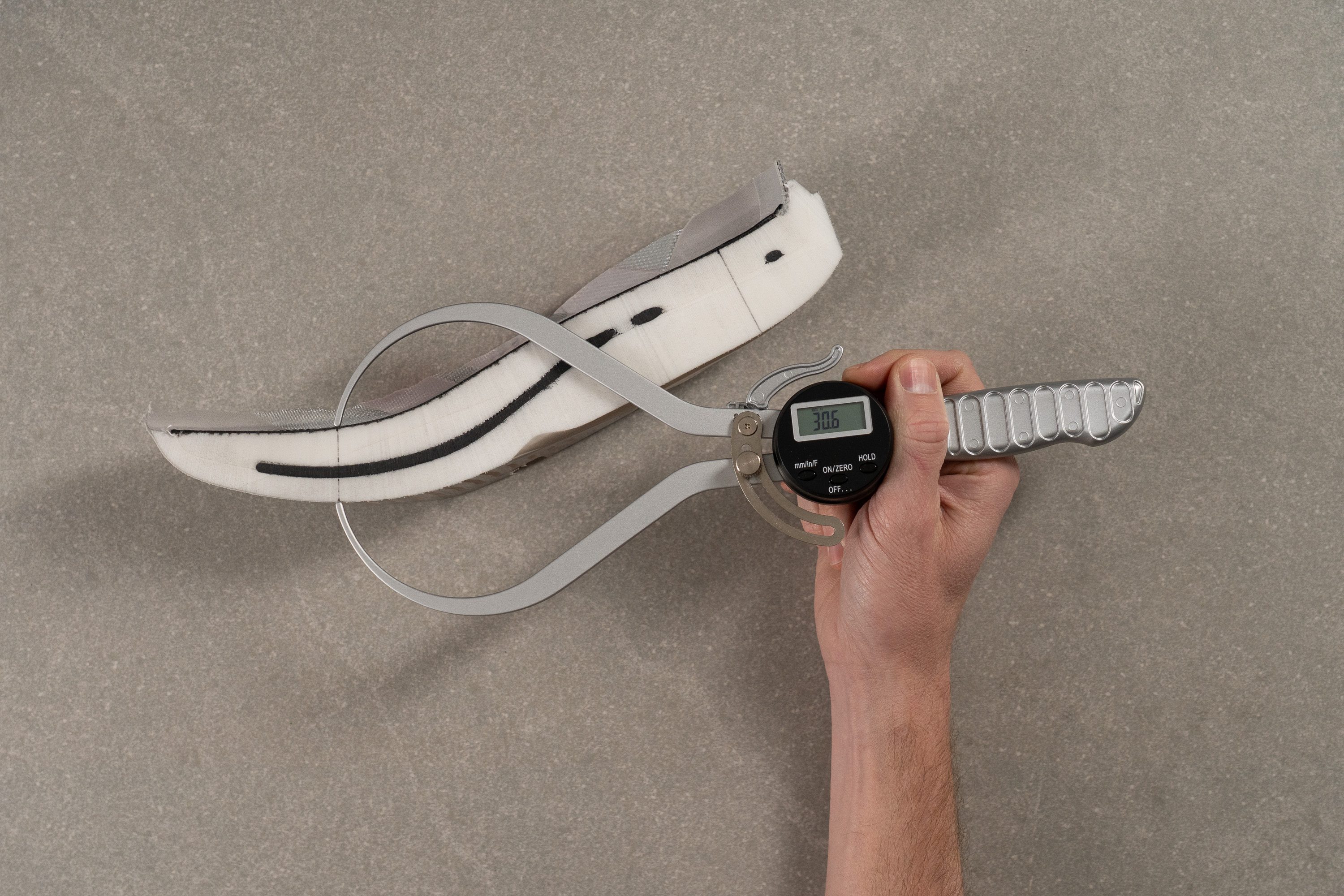
| Adizero Adios Pro Evo 2 | 30.6 mm |
| Average | 27.1 mm |
Drop
adidas advertises a rare 3 mm drop for this shoe, but we discovered 7.8 mm in our measurements. This happens because the forefoot rocker is extremely steep, so small changes in the angle can shift the forefoot stack a lot. However, to be triple-sure, we tested it several times using the exact World Athletics points.
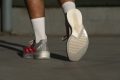
While running, the shoe feels more like a mid-drop design, but the sensation depends heavily on whether you land on your heel, midfoot or forefoot.

| Adizero Adios Pro Evo 2 | 7.8 mm |
| Average | 8.4 mm |
Midsole softness
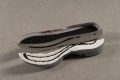
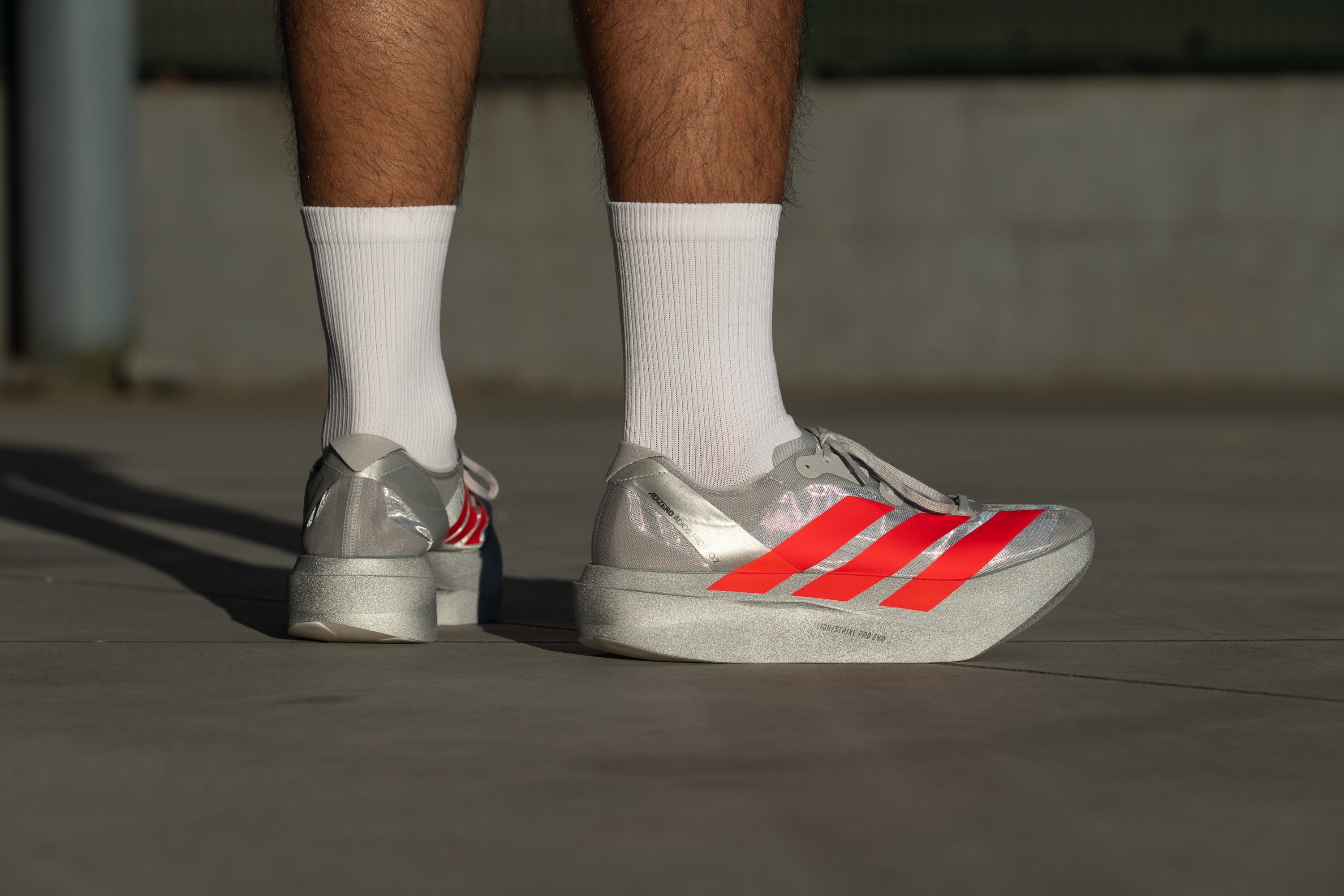
The midsole of the adidas Adizero Adios Pro Evo 2 is one of the features that truly makes this shoe unique. adidas uses an uncommon manufacturing technique (for running shoes) that pushes weight savings to the extreme. Instead of relying on classic injection or compression molding, the Lightstrike Pro Evo foam is carved individually with a CNC machine from a big block of foam.
This approach delivers huge weight savings thanks to a uniform, low-density foam, but it also makes each shoe extremely expensive since these midsoles cannot be batch manufactured in a simple way. In fact, adidas prints a unique identifier on each midsole, and in our case the marking shows that the pair we purchased is number 551 out of 1,253 from batch 7.

The softness feels balanced rather than ultra-soft, so take that into account if you may expect something cloud-like. That said, our durometer reading of 36.5 AC can seem a bit misleading, as the shoe feels softer in practice due to the almost complete lack of outsole rubber and the non-compressed foam that enhances the underfoot sensation.
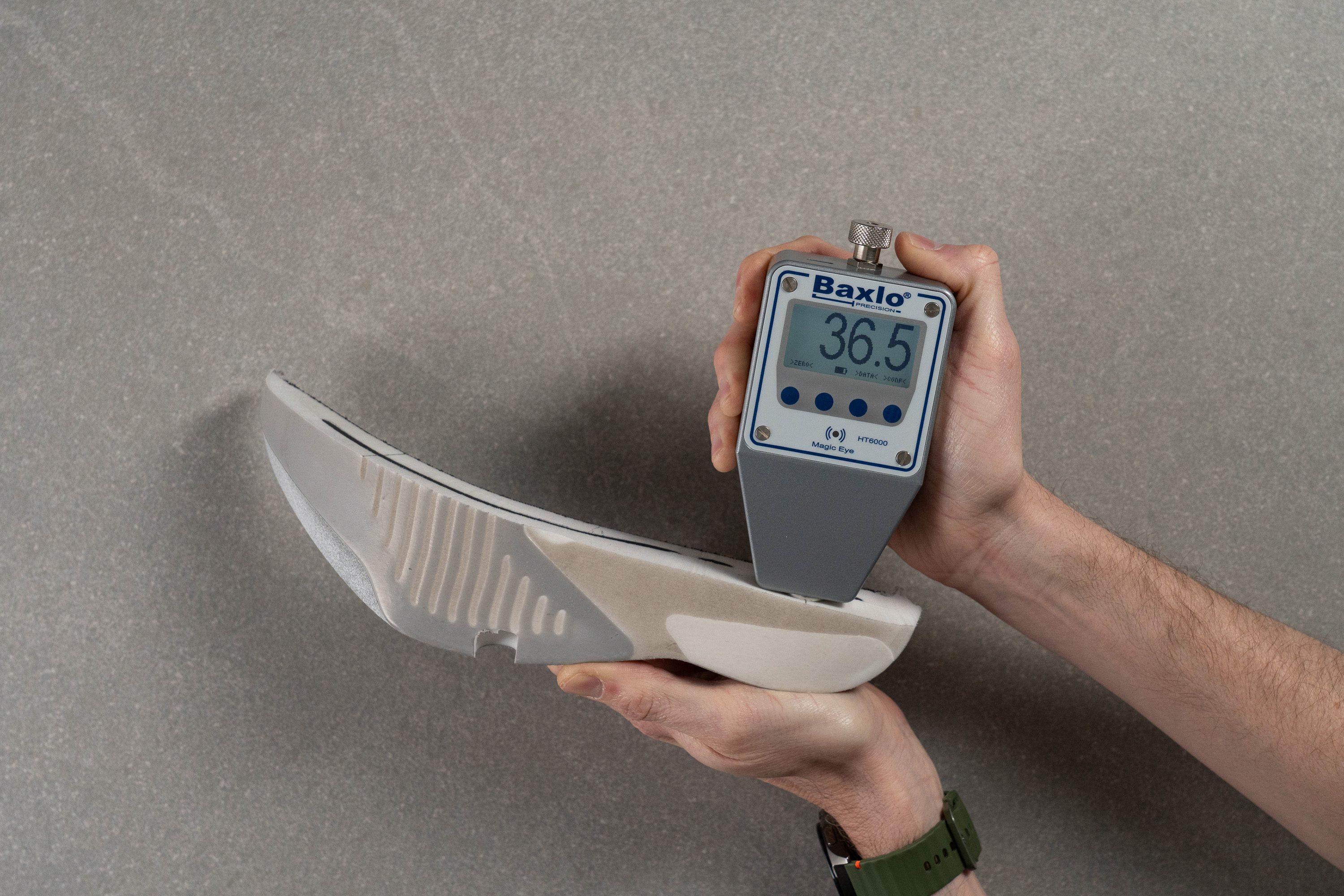
| Adizero Adios Pro Evo 2 | 36.5 AC |
| Average | 35.4 AC |
Rocker
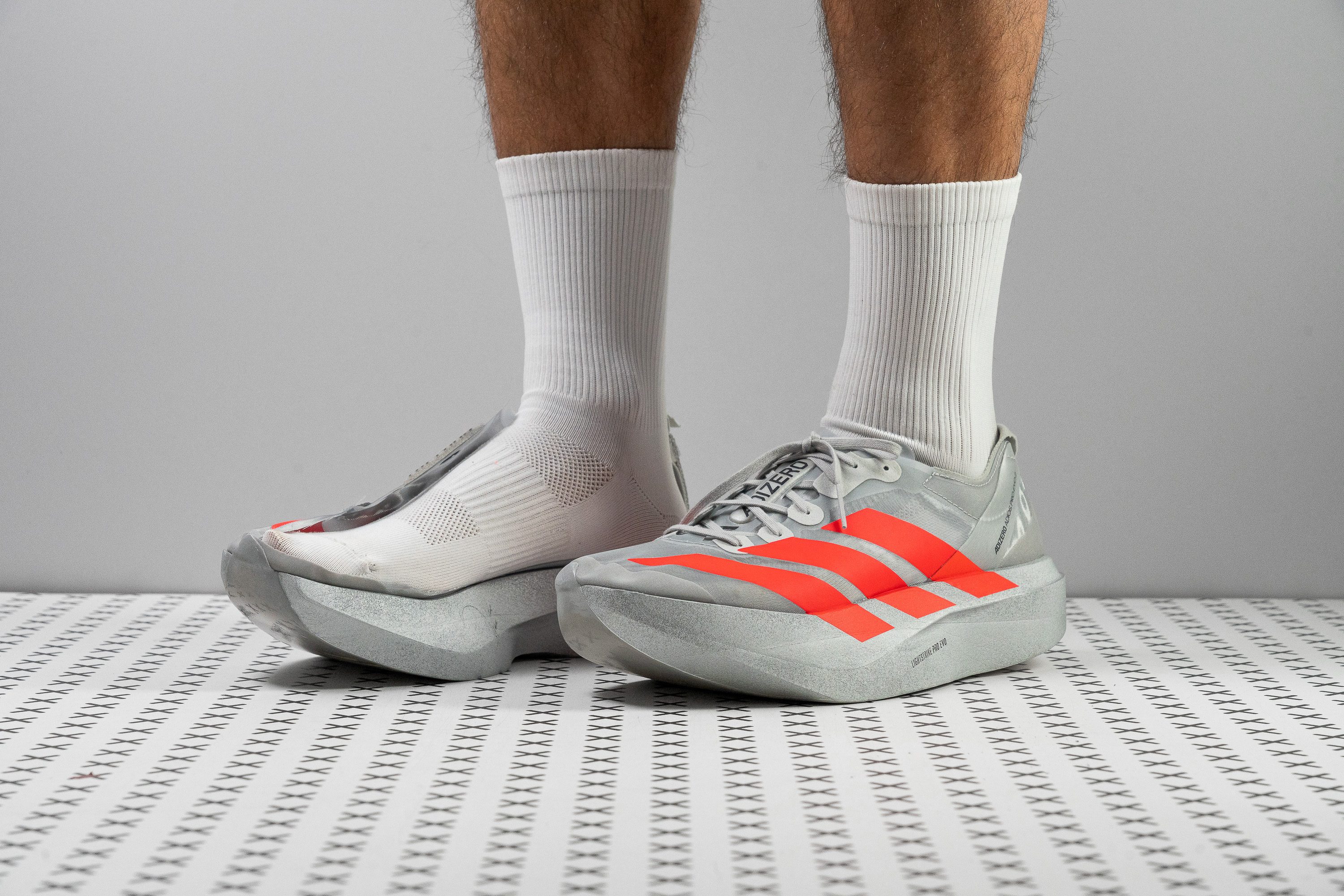
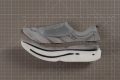
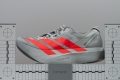
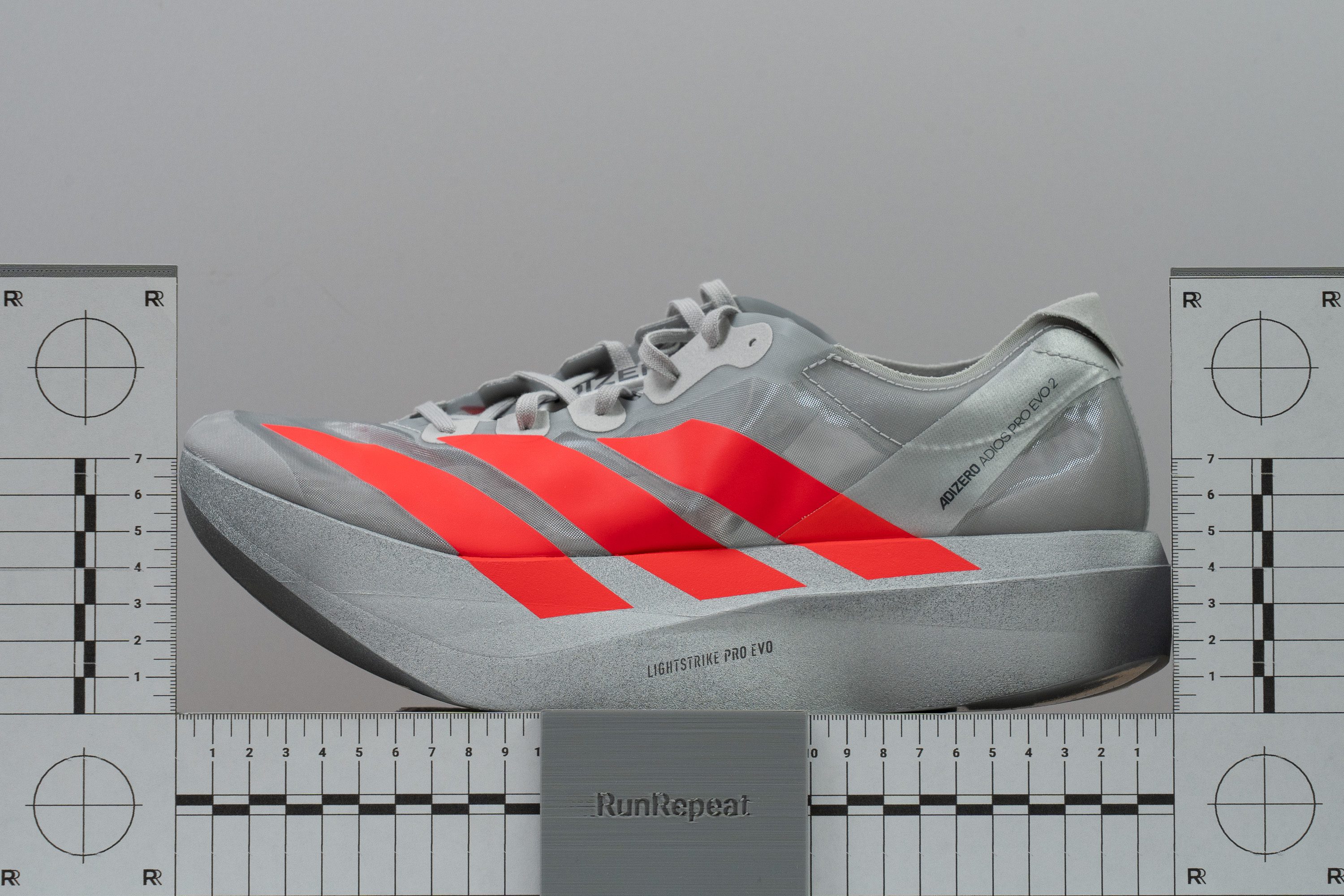
The forefoot rocker on this shoe is on another level. As the side-view clearly shows, the upward curve starts unusually late but rises sharply, giving it one of the most aggressive profiles we’ve ever tested. This extreme geometry will only suit runners who thrive on a heavily assisted, forward-rolling sensation.
If this feels like too much and you prefer a flatter forefoot, the Nike Alphafly 3 is a better super shoe for you.
Plate
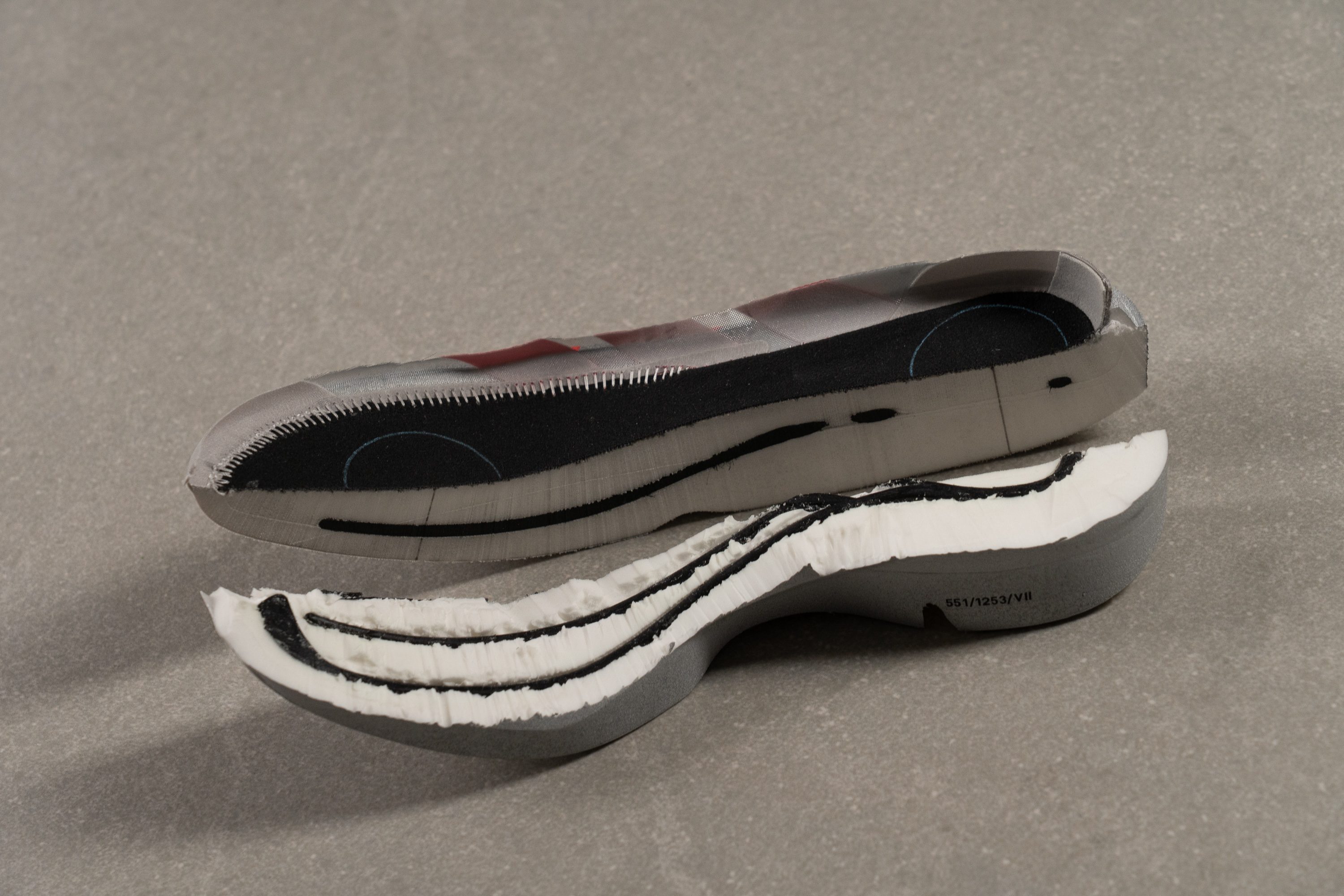
We discovered that adidas keeps the familiar Energy Rods 2.0 in the Evo 2 and still avoids using a full plate like most brands.
These carbon rods offer plate-like benefits while feeling slightly more forgiving underfoot, which some runners may prefer. However, we know that the rods are usually less durable than a plate because they can break over time, yet this should not be an issue here... unfortunately, the rest of the shoe will wear out far earlier.
Size and fit
Size
Width / Fit
This is one of those shoes we can confidently call super narrow even before doing our usual gel mold, but let’s measure it anyway.
Our first reading came in at 89.5 mm, confirming that this model is a true Formula 1 fit with very limited internal space.
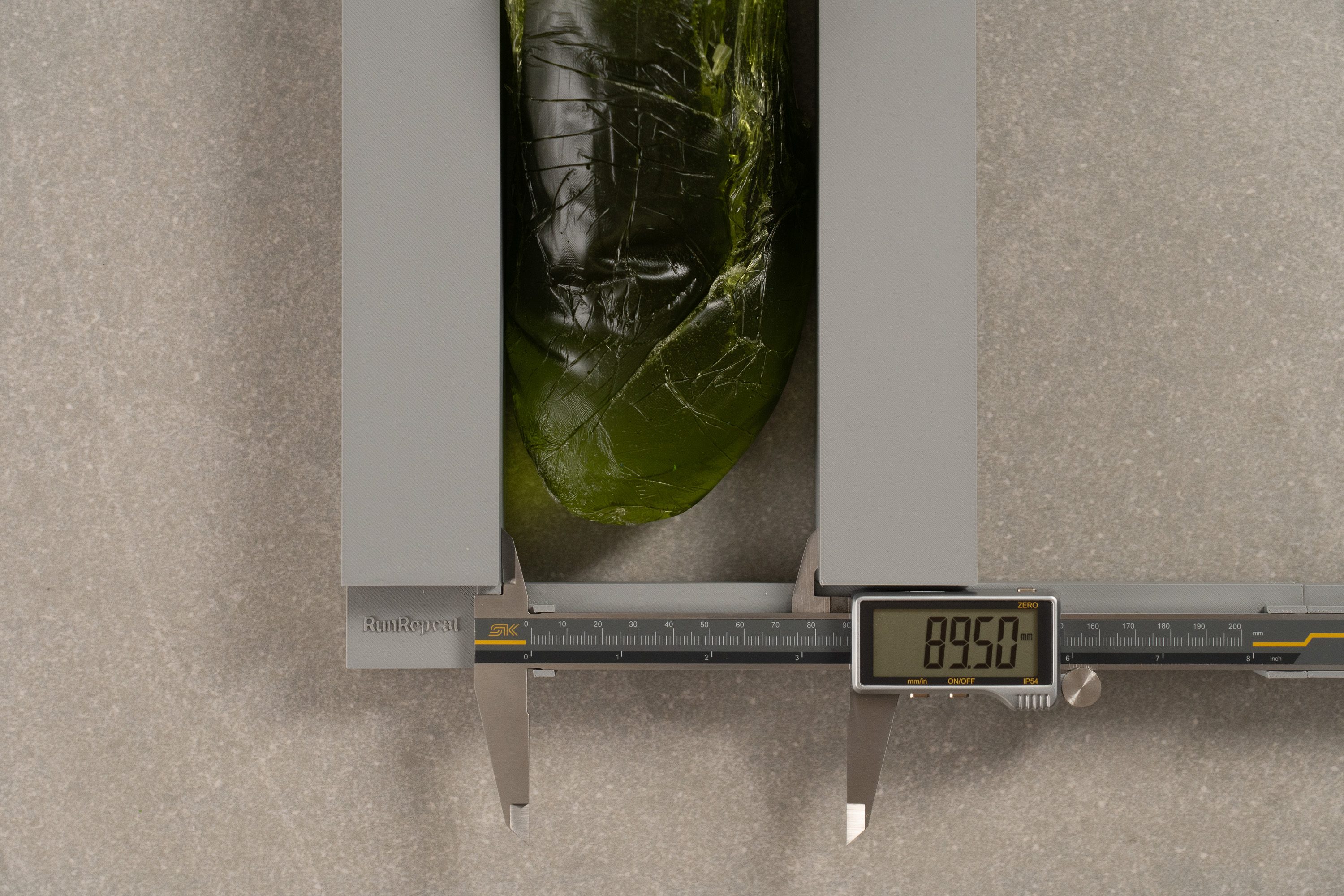
| Adizero Adios Pro Evo 2 | 89.5 mm |
| Average | 95.2 mm |
Toebox width
The second measurement matches the first and clearly confirms an ultra-snug fit that works best for runners with narrow feet or anyone who prefers a tight feel. However, this may be too much for a full marathon for many runners.
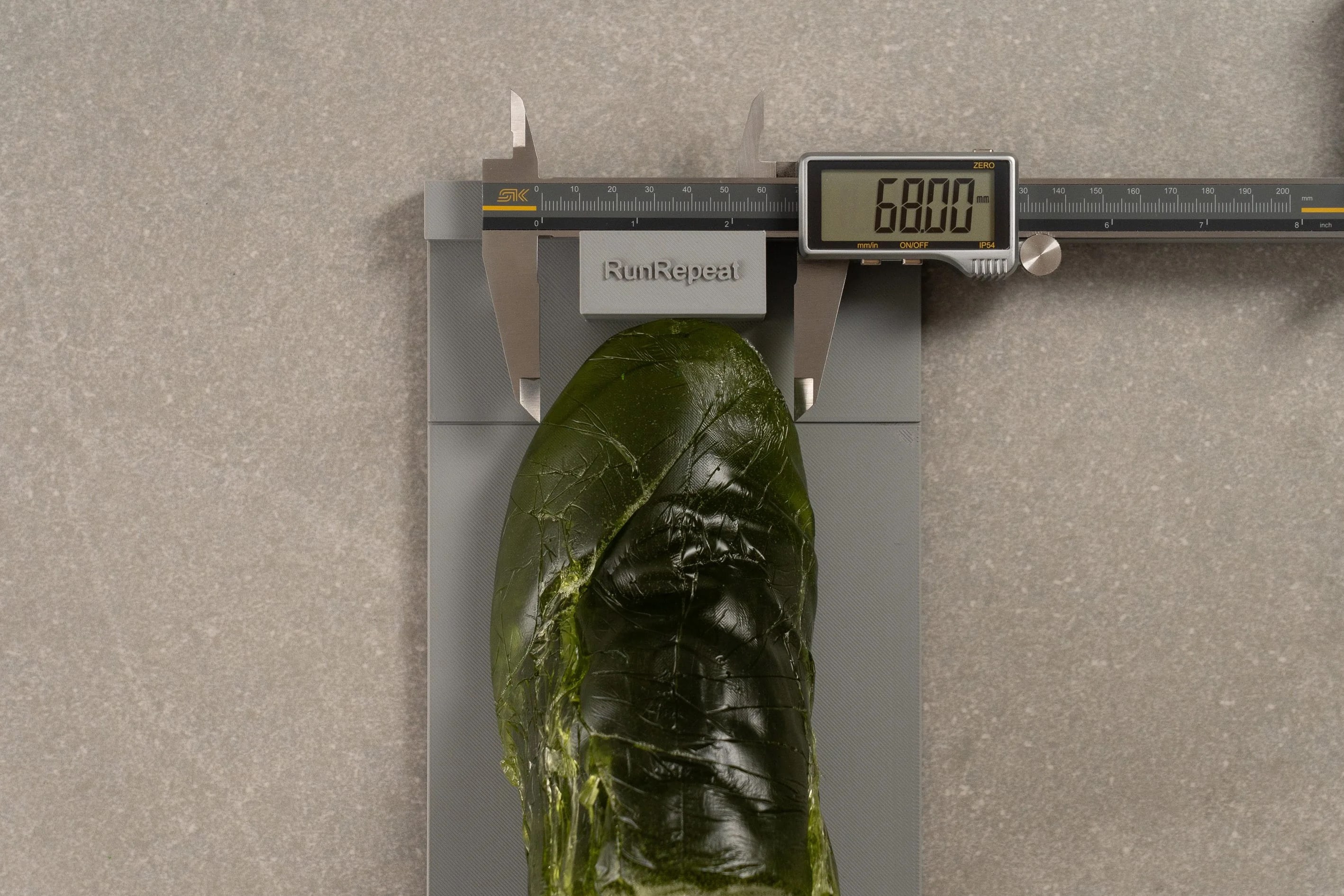
| Adizero Adios Pro Evo 2 | 68.0 mm |
| Average | 73.2 mm |
Toebox height
The entire upper has very low volume in every direction, including height.
There are only 23.4 mm of vertical clearance, so the foot feels secure, but as we mentioned earlier, this could be uncomfortable for some runners.

| Adizero Adios Pro Evo 2 | 23.4 mm |
| Average | 27.0 mm |
Traction / Grip
Traction test
We were excited to test this because the Evo 2 skips Continental rubber and, just like the Evo 1, uses a thin liquid rubber coating applied directly on the exposed midsole. We tested it and discovered a strong 0.64 result on wet concrete, which gave us excellent grip on dry ground and solid traction on wet surfaces.
Still, the very slim rubber layer and flat CNC-made midsole can cause a dangerous aquaplaning feel when running over very wet areas. This is why many elites use a slightly heavier Continental version that feels safer underfoot—and why we do not suggest this shoe for wet races or for marathoners finishing in more than 3 hours, as aid stations often become full of dangerous puddles.
| Adizero Adios Pro Evo 2 | 0.64 |
| Average | 0.53 |
Outsole design
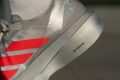
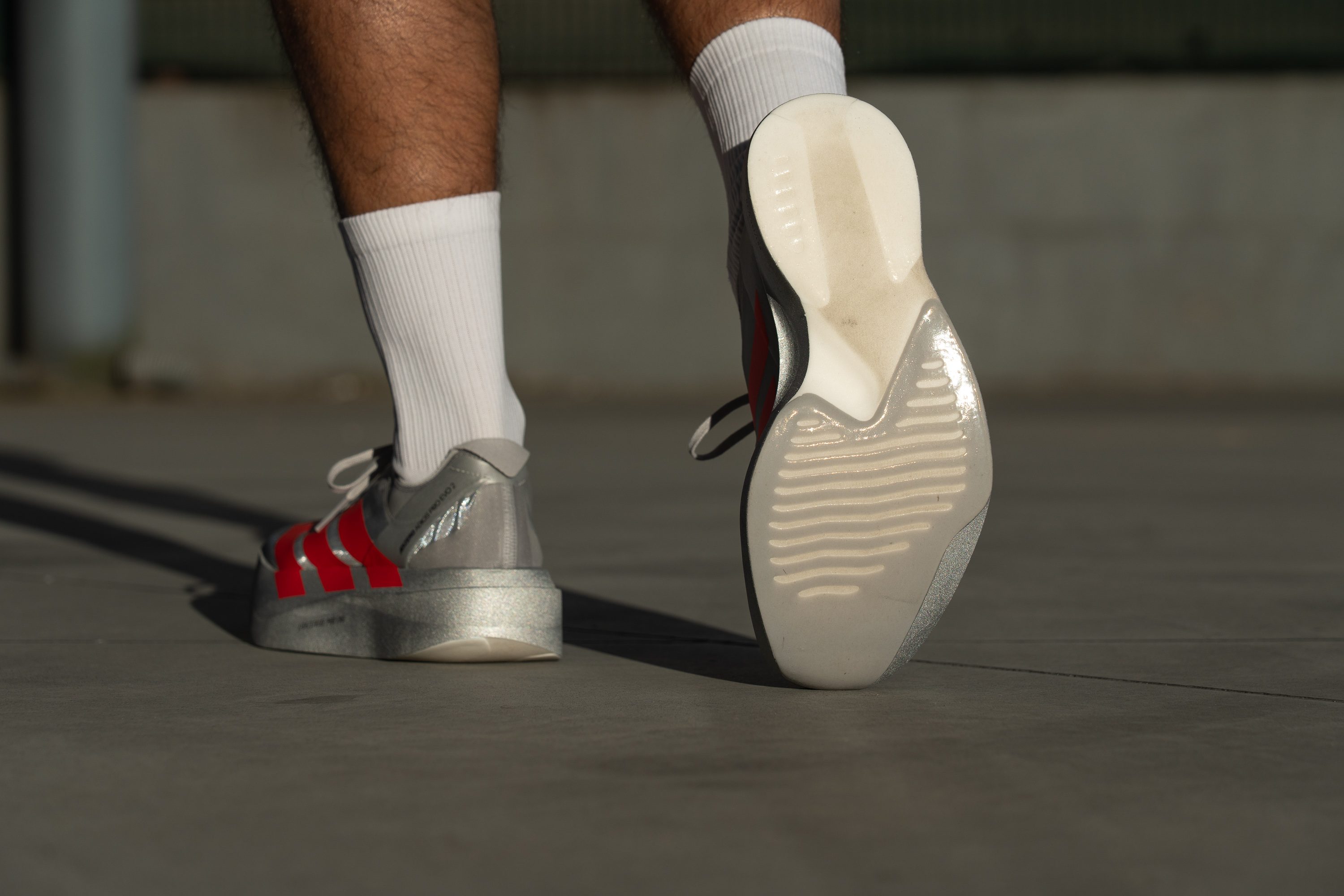
The outsole design is truly unique. The liquid rubber that adidas applies to the outsole is taken even further in this version, now featuring horizontal gaps to keep the weight low even though the midsole uses more foam than the Adios Pro Evo 1.
In the heel, there are two small rubber patches, but from a durability standpoint you should not rely on them, as they are mainly there to provide grip.
Flexibility / Stiffness
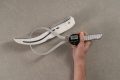
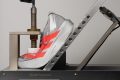
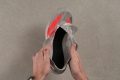
Like most super shoes, the adidas Adizero Adios Pro Evo 2 scores extremely high in our stiffness test. It actually ranks well above many competitors, mainly because the Energy Rods 2.0 are known for their strong longitudinal stiffness, which we confirmed with a 27.1N measurement.

| Adizero Adios Pro Evo 2 | 27.1N |
| Average | 15.5N |
Weight
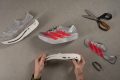
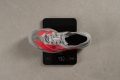
The Adios Pro Evo 1 kickstarted the hypershoe category with its crazy low weight, and the Evo 2 keeps that spirit alive at just 4.90 oz (139g).
As you can imagine, we felt the shoe was unbelievably light the moment we unboxed it, and even more so once we started running. For us, after testing the Evo 2, most other super shoes suddenly feel heavy...
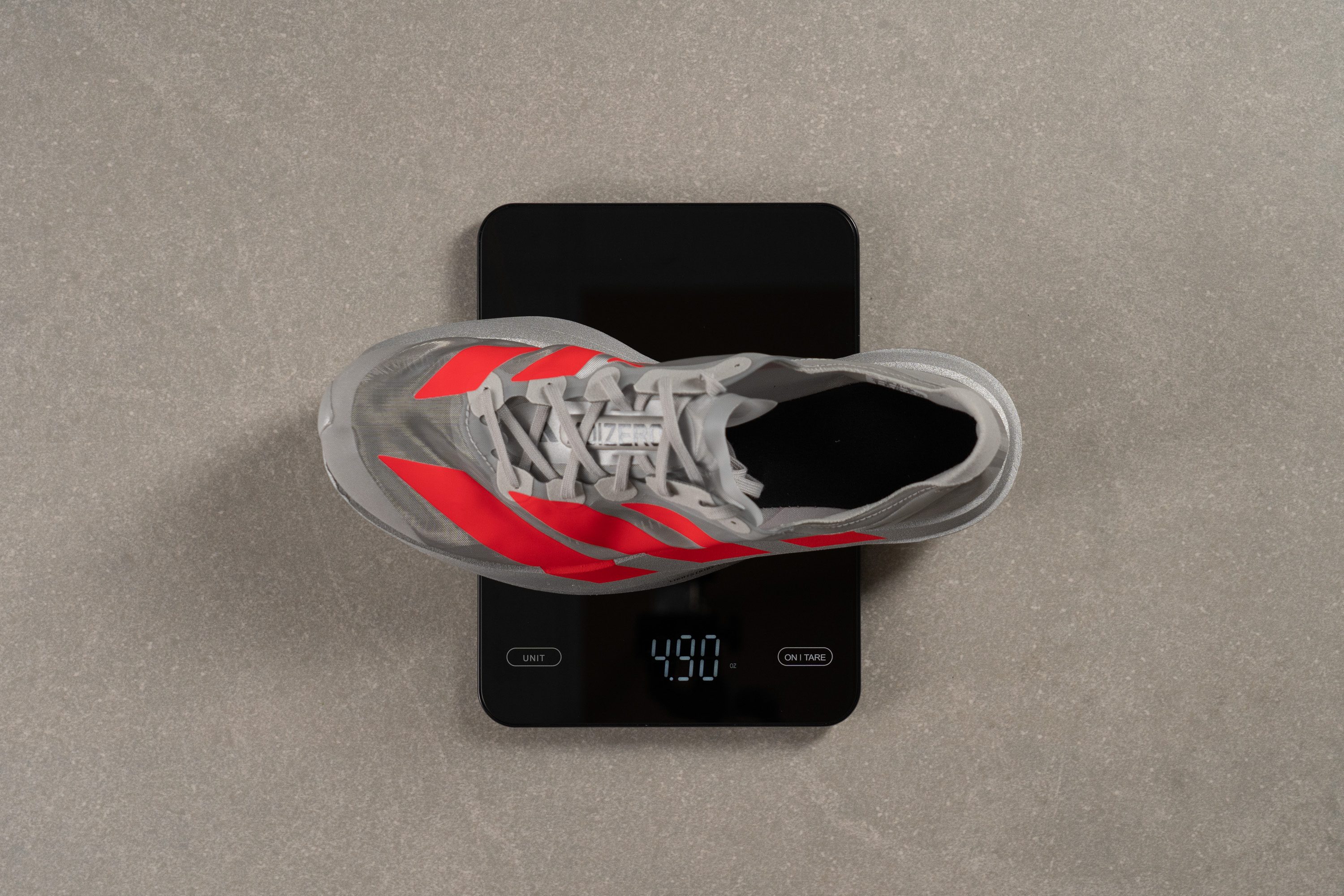
| Adizero Adios Pro Evo 2 | 4.9 oz (139g) |
| Average | 9.2 oz (261g) |
Breathability
Breathability test
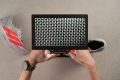
Despite its exceptionally thin upper, the adidas Adizero Adios Pro Evo 2 proved less breathable than we expected, earning a score of 67 BR in our lab.
While that's not a poor result, it shows that the shoe isn't especially effective at pulling sweat away from the skin, allowing moisture to build up more quickly during long races. For marathon runners who perspire heavily, that could lead to a less comfortable in-shoe environment, especially during the last miles of the race.
| Adizero Adios Pro Evo 2 | 67 BR |
| Average | 75 BR |
Drying potential
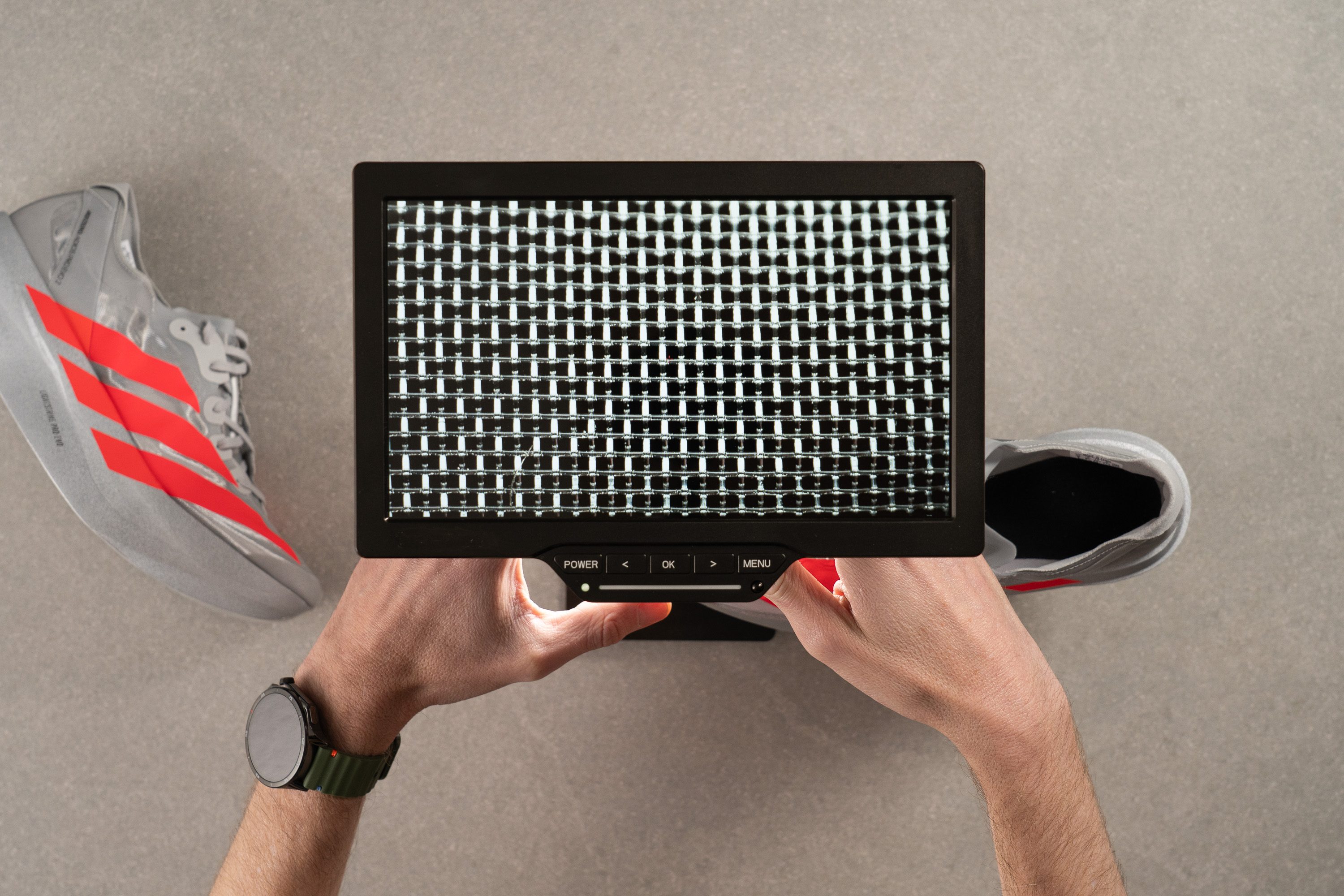
NewOn the other hand, the Evo 2 performed much better in our drying potential test.
Using the same breathability machine, we exposed the shoe to artificial sweat for 3 hours and measured how much moisture evaporated from the upper. With an above-average result of 62%, the Evo 2 releases moisture efficiently once it gets damp, a performance we believe is largely driven by its ultra-minimalist, razor-thin upper.
| Adizero Adios Pro Evo 2 | 62% |
| Average | 53% |
Stability
Lateral stability test
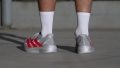
Stability is not a strong point of the Evo 2, but we doubt anyone expects it here. The upper offers very little support, the midsole feels compact, and aside from a bit of help in the heel, you are mostly on your own, which is normal in such an extreme shoe.
Torsional rigidity
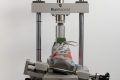
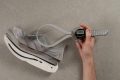
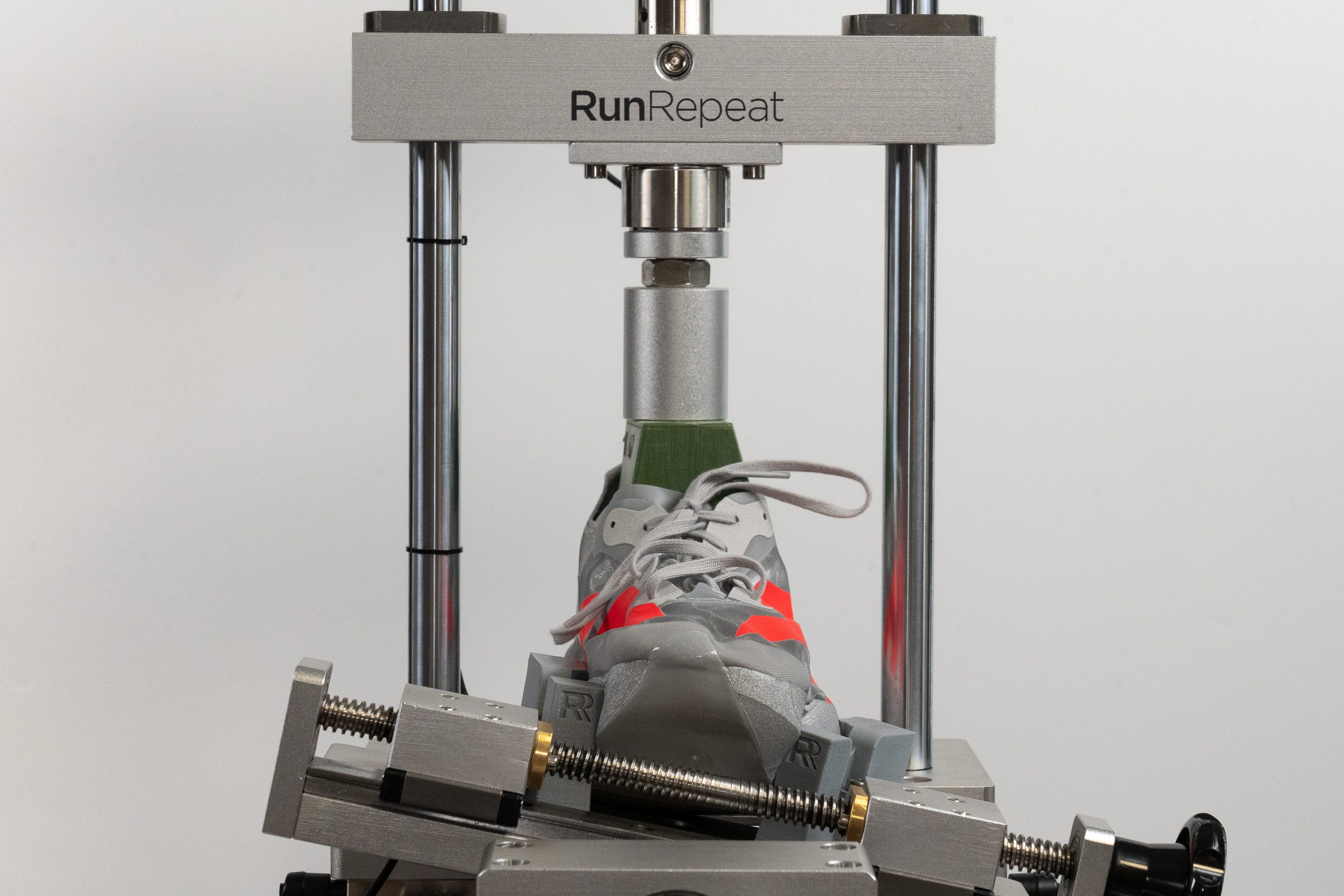
One feature of the Energy Rods 2.0 over a traditional carbon plate is slightly lower torsional rigidity. That’s why we found the Evo 2 scored 15.1 Nm in this test, placing it close to our current lab average.
| Adizero Adios Pro Evo 2 | 15.1 Nm |
| Average | 14.3 Nm |
Heel counter stiffness
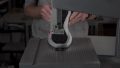
There is essentially no support in the heel, so we rated it 1 out of 5. This design leaves all the stabilizing work to your own mechanics, and honestly, that is exactly what we expect from a shoe this aggressive, so we are fine with it.
| Adizero Adios Pro Evo 2 | 1 |
| Average | 2.9 |
Midsole width - forefoot
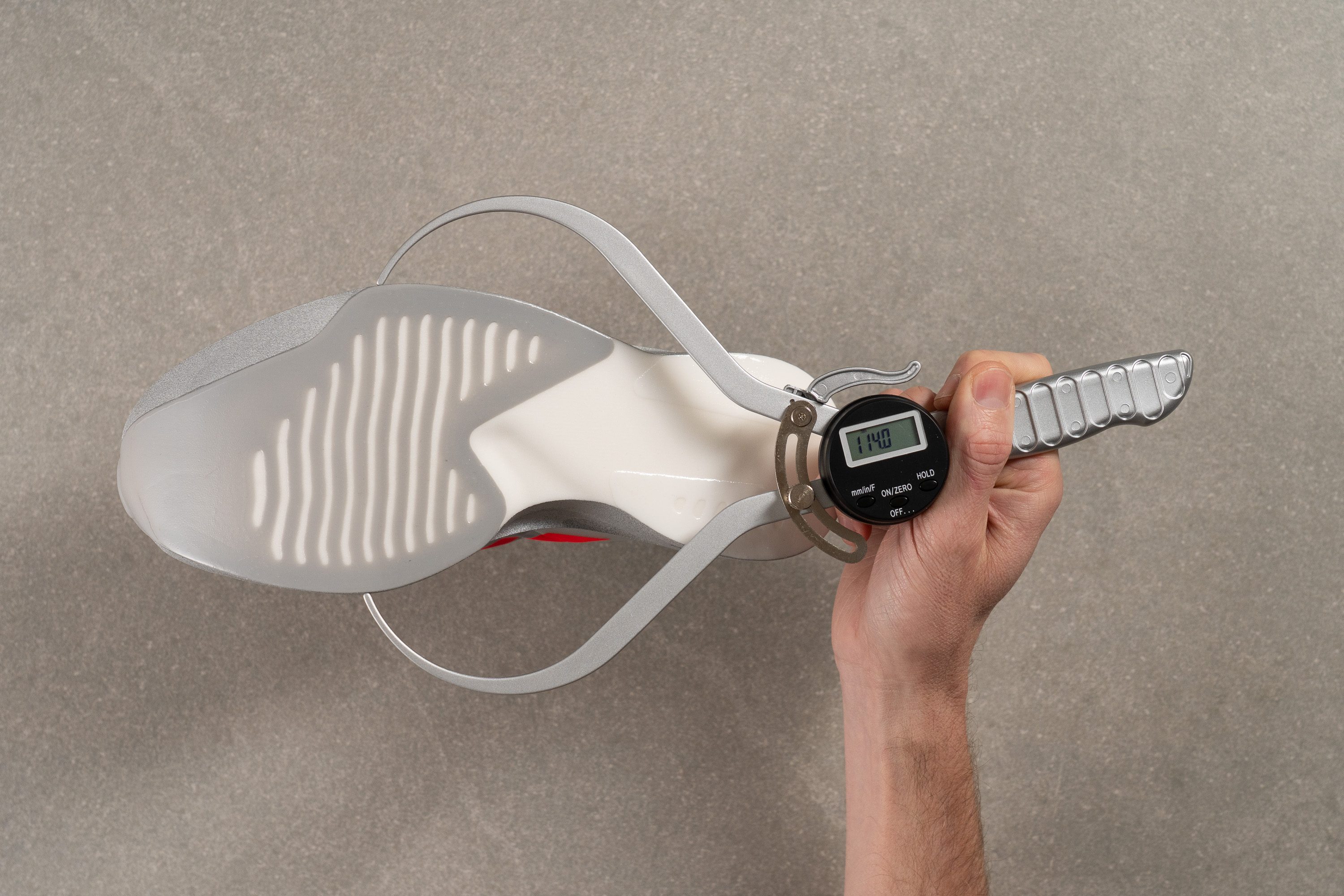
The forefoot appears wide and is indeed broader than many other super shoes, measuring 114.0 mm.
This offers a small touch of stability for midfoot and forefoot strikers, although it is still quite limited.
| Adizero Adios Pro Evo 2 | 114.0 mm |
| Average | 115.1 mm |
Midsole width - heel
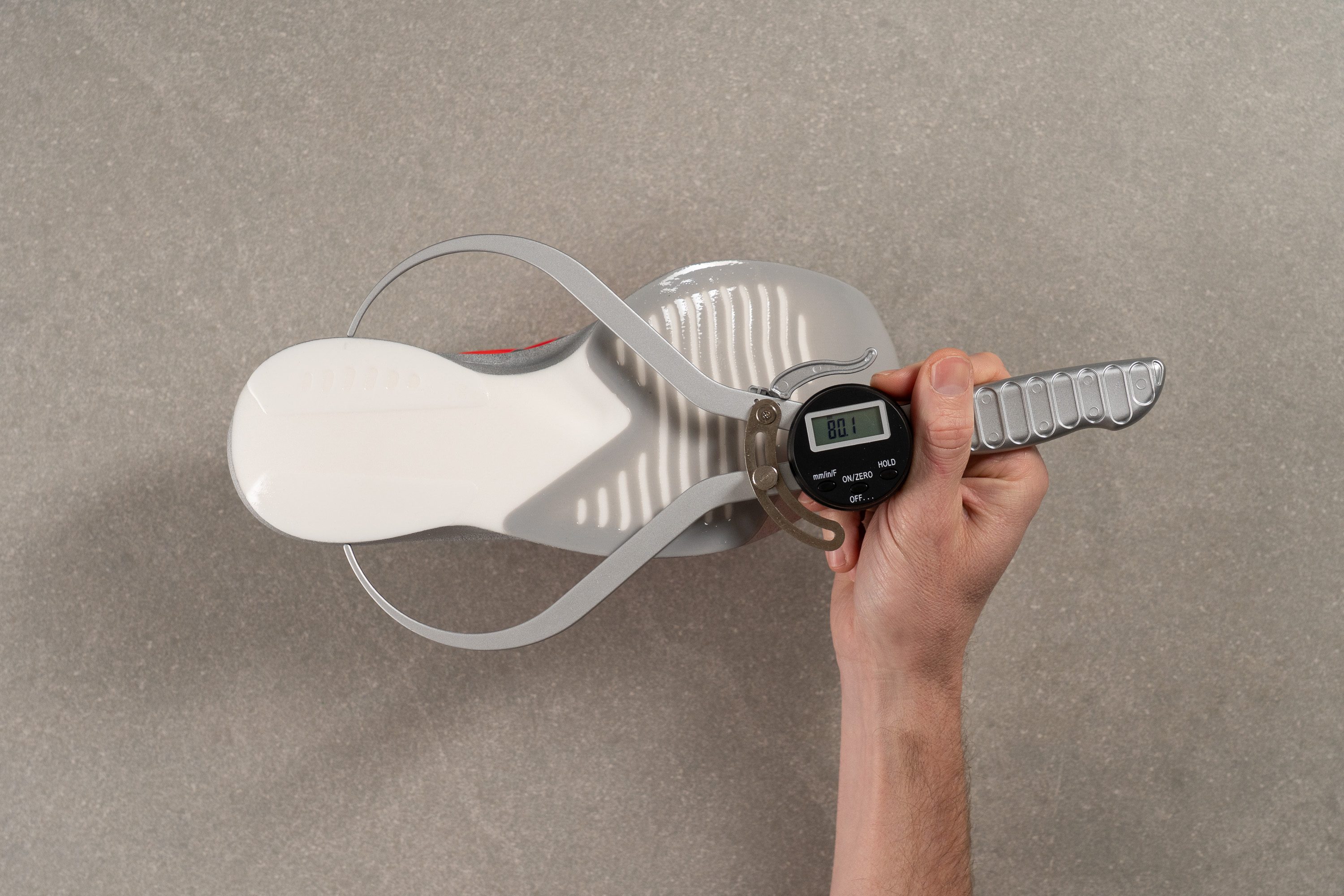
On the other hand, the heel measures only 80.1 mm in width, confirming that heel strikers are probably not an ideal match for the Evo 2.
| Adizero Adios Pro Evo 2 | 80.1 mm |
| Average | 91.1 mm |
Durability
Toebox durability
The toebox scored only 1/5 in our test, and that is simply because we do not award 0/5, although results like this make us consider it. Then again, nobody expected durability to be a priority with the Evo 2, right?
| Adizero Adios Pro Evo 2 | 1 |
| Average | 2.6 |
Heel padding durability
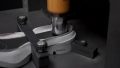
The heel includes a thin strip of foam padding that works well and holds up impressively against our Dremel. While the upper proved extremely fragile, this area delivered the opposite result with a strong 5/5.
| Adizero Adios Pro Evo 2 | 5 |
| Average | 3.4 |
Outsole durability
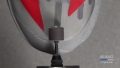
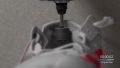
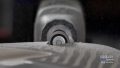
This result was just insane. We discovered 16.3 mm of wear, which is unlike anything we have tested before and more than double the worst number we found in the lab at the time of this review. It felt unreal to watch the Dremel dip so fast into the Lightstrike Pro Evo foam!
| Adizero Adios Pro Evo 2 | 16.3 mm |
| Average | 1.1 mm |
Outsole thickness
The outsole rubber layer is as minimal as it gets at only 0.5 mm, clearly aiming for pure weight savings and nothing more.
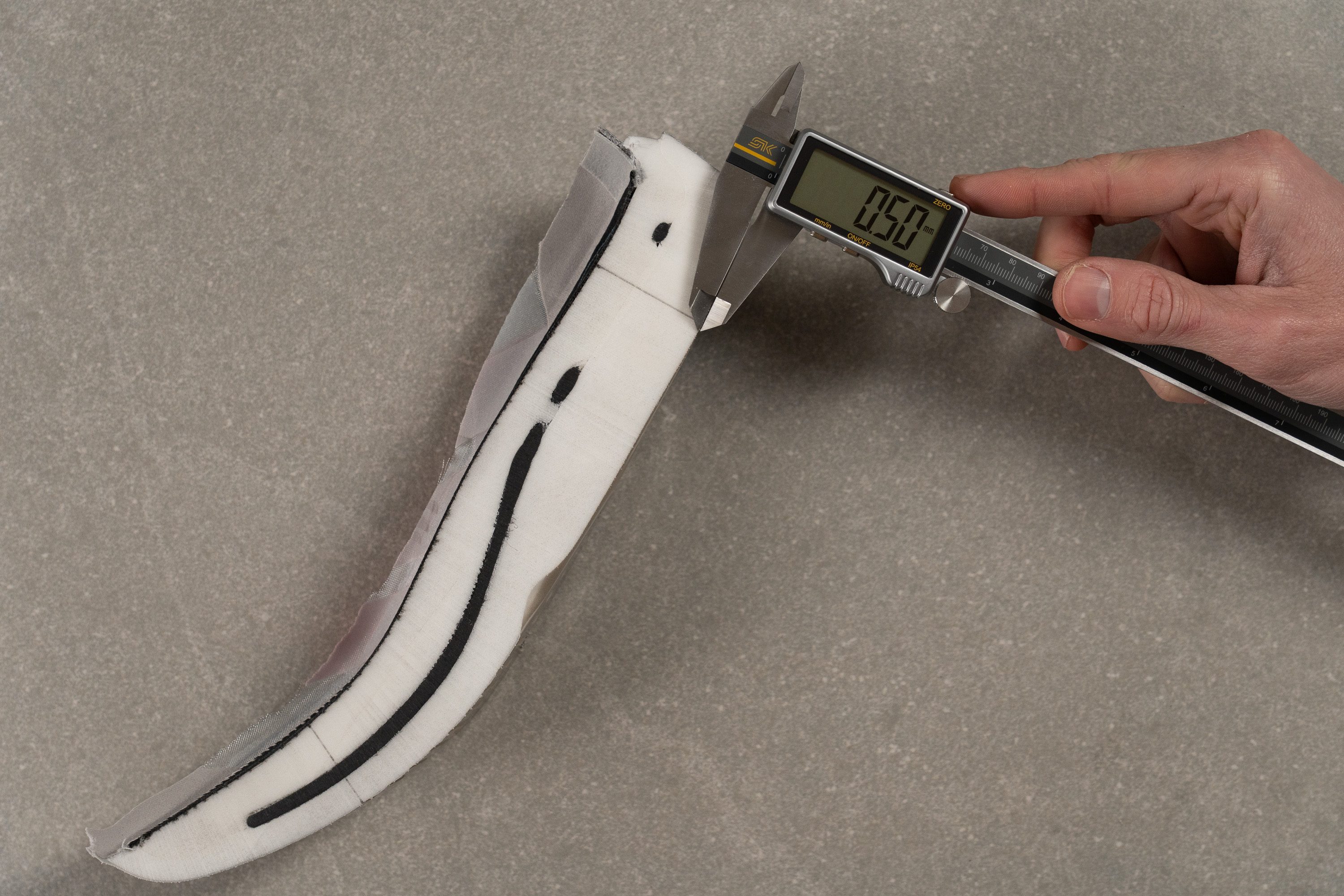
| Adizero Adios Pro Evo 2 | 0.5 mm |
| Average | 3.1 mm |
Misc
Removable insole
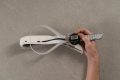
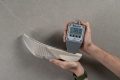
There is nothing to remove here. There is no insole at all, since your foot sits directly on top of the Lightstrike Pro foam.
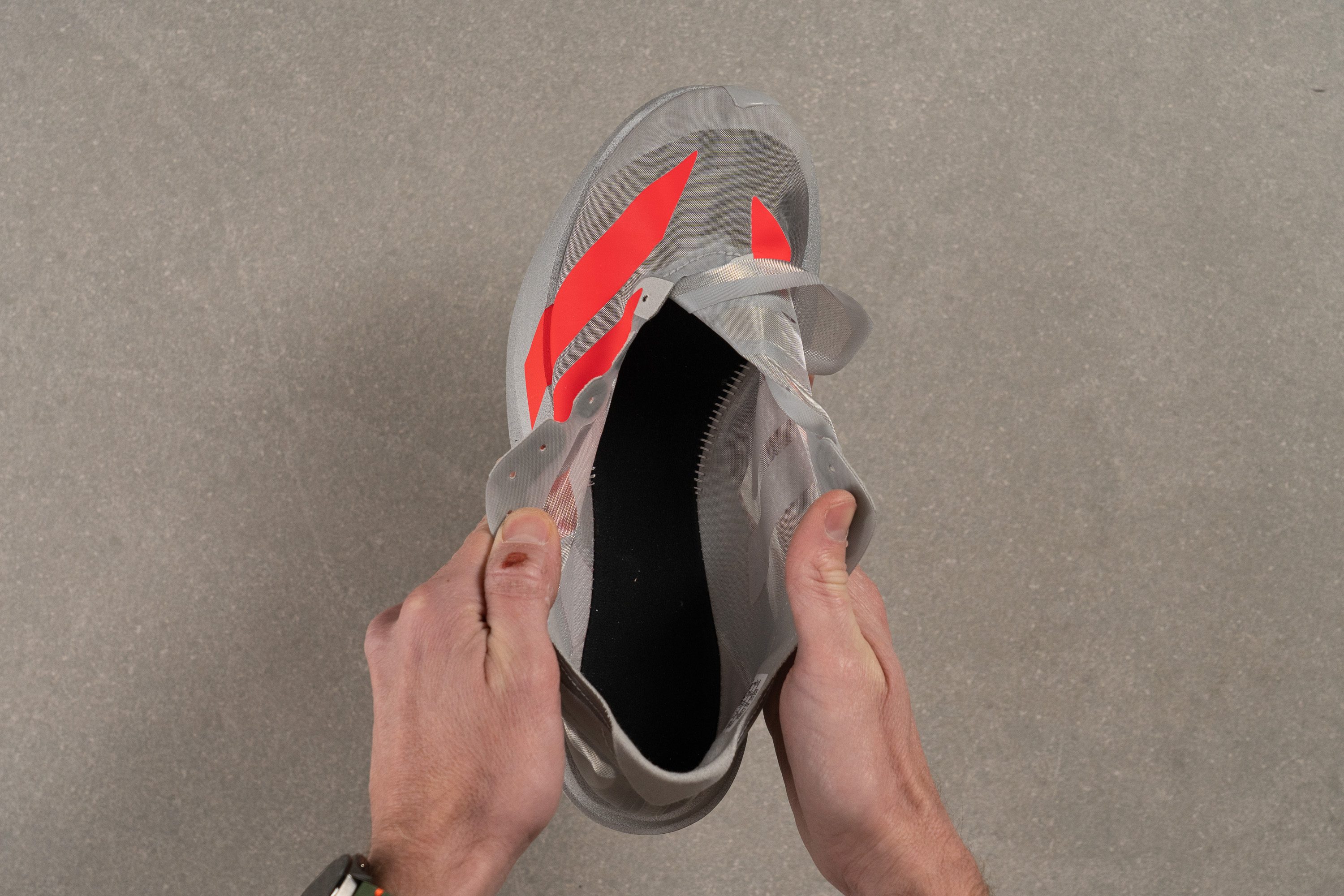
| Adizero Adios Pro Evo 2 | No |
Reflective elements
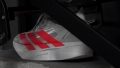
We discovered during our testing that the adidas Adizero Adios Pro Evo 2 includes small reflective elements.
| Adizero Adios Pro Evo 2 | Yes |
Tongue padding
One of the few weight-related concessions from adidas is the reinforced eyelet chain, added to prevent early tearing. We think it is absolutely worth spending a few extra grams here.
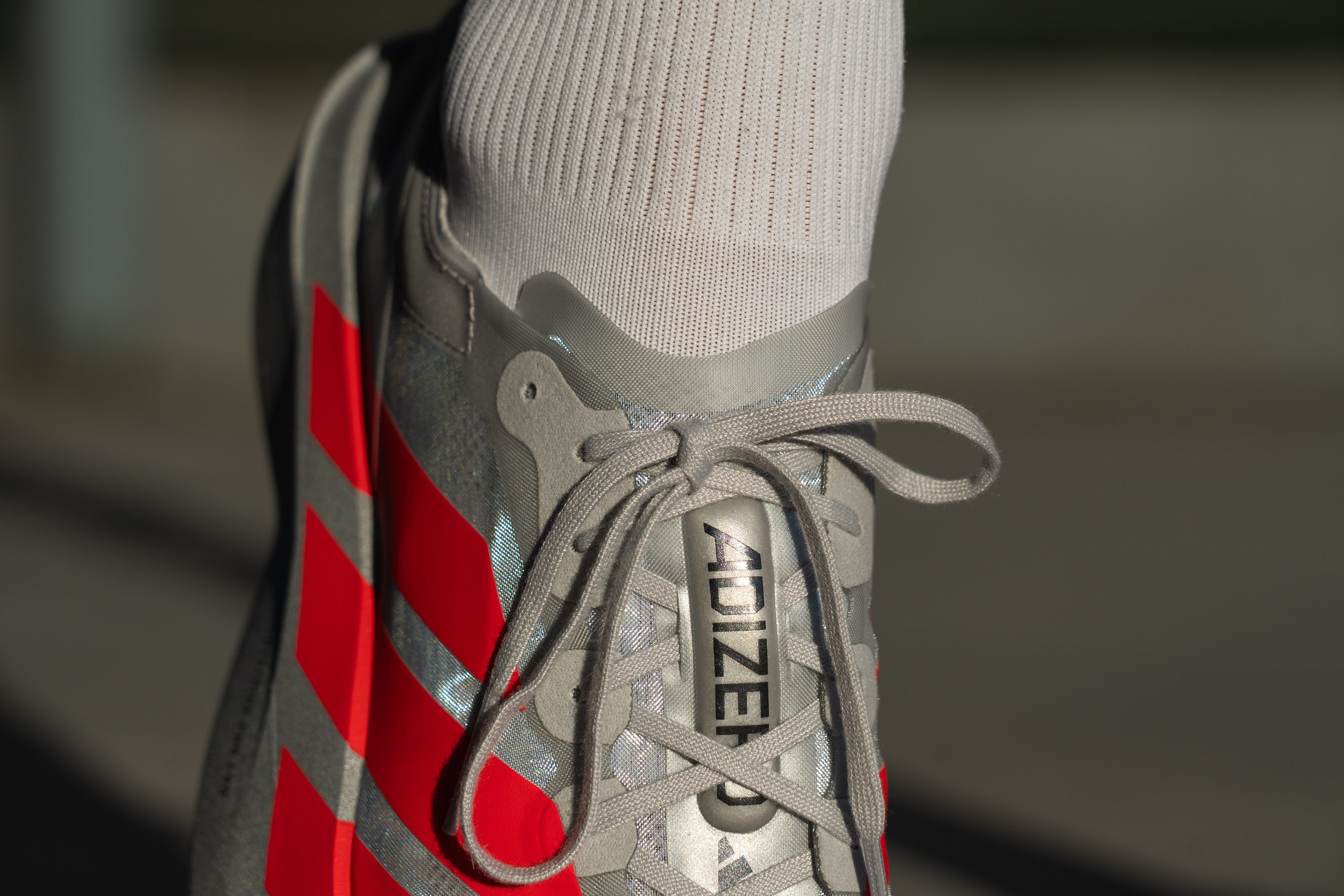
However, we were very disappointed to see adidas reuse the same flat laces you would expect on an entry-level model like the Duramo Speed. It is unbelievable that the most expensive shoe in their lineup still does not come with high-quality or textured laces like almost every other super shoe.
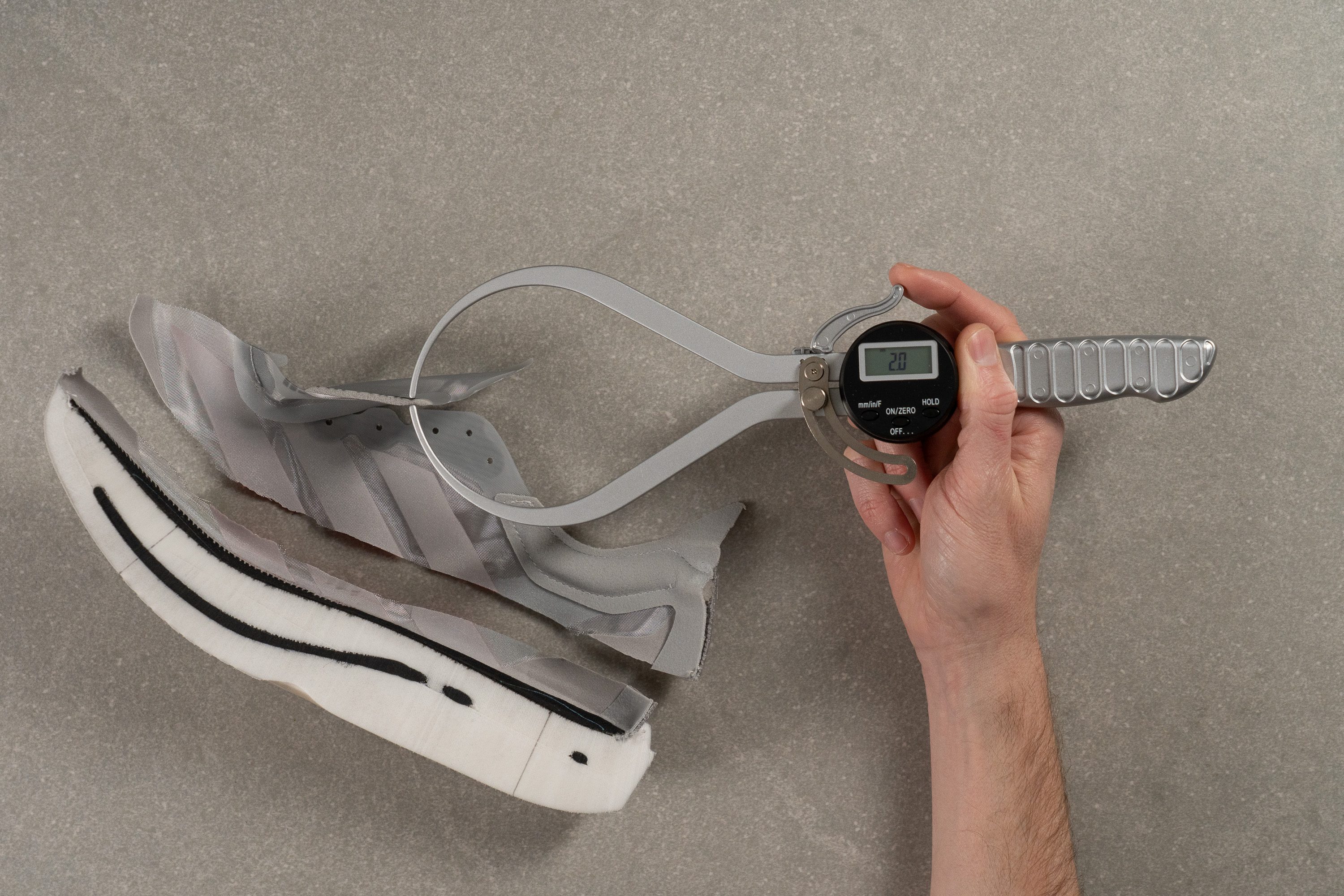
We appreciated that the tongue is extremely lightweight, with only 0.4 mm of padding at the top. At the same time, there is a small, comfort-focused area with 2.0 mm of foam on the instep, which should genuinely help during a marathon. However, it's so narrow that we can't consider as the main test result here.

| Adizero Adios Pro Evo 2 | 0.4 mm |
| Average | 5.8 mm |
Tongue: gusset type
Like most super shoes, the Evo 2 uses a non-gusseted tongue as part of its weight-saving approach. We also noticed that the new design from the Adios Pro 4, where the tongue is stitched directly to the upper without any extra fabric, is absent here as well.
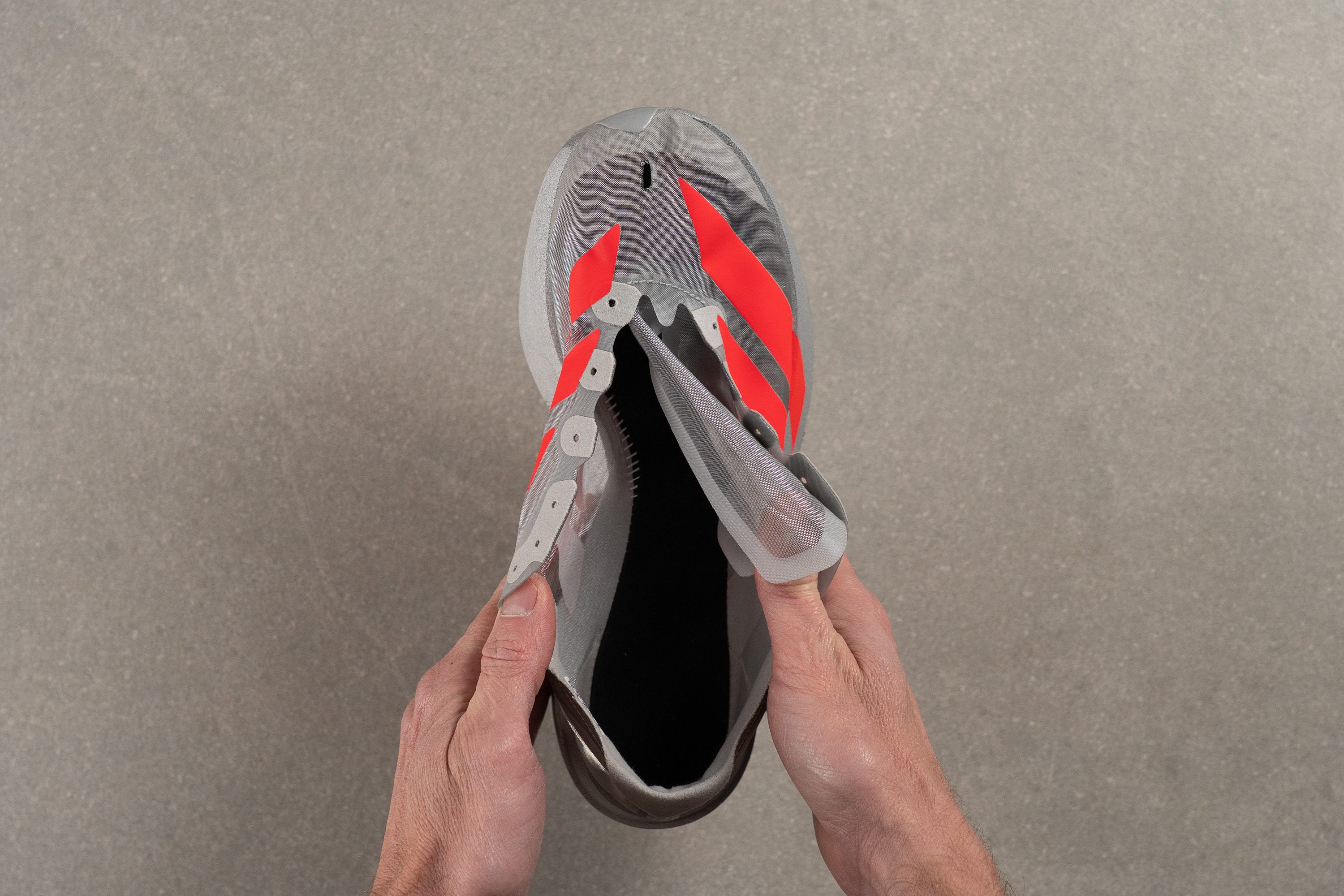
| Adizero Adios Pro Evo 2 | None |
Heel tab
The Adios Pro Evo 2 features the familiar heel flap that has become a signature of the Adizero line, and we think it is surprising that adidas continues to use this design on a shoe built for extreme weight savings.
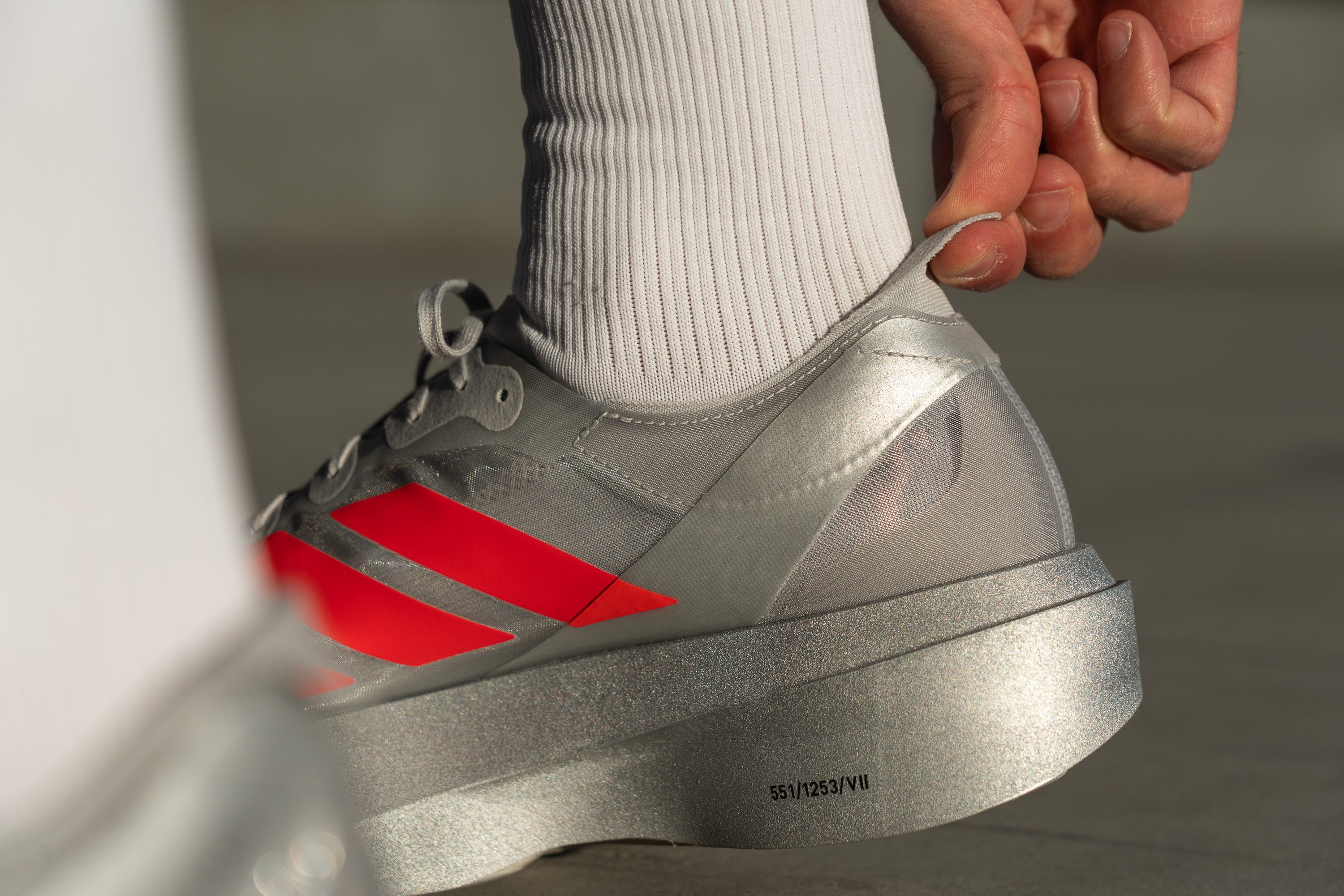
| Adizero Adios Pro Evo 2 | Pull tab |
Price
The price of this shoe is one of those things that truly sets it apart, and not in a way that helps us as customers. At 500 dollars or Euros, we are looking at a sky-high price tag that is incredibly hard to justify for any amateur runner. Moreover, this feels even tougher now because other super shoes deliver similar weight with far better durability and even stronger energy return.
| Adizero Adios Pro Evo 2 | $500 |
| Average | $158 |