


Our verdict
- Gravel 83
- Versatile 91
- Technical 59
Pros
- Grippy Vibram outsole
- Versatile for easy and moderate trails
- More flexible than it looks
- Improved comfort
- Soft ZoomX foam feels good for long days
- Low drop suits forefoot strikers
- Gentle rocker works well for runs and hikes
- Broader forefoot improves stability
- Good energy return for a trail shoe
- Better than expected on tarmac
Cons
- Needs to lose some weight
- Upper durability concerns
- Maybe too much exposed foam
- Not for heel strikers
Awards
- Top 6% in trail running shoes
- Top 15% in Nike running shoes
Comparison
The most similar running shoes compared
+ + Add a shoe | |||||
|---|---|---|---|---|---|
| Our score | 89 Superb | 88 Superb | 87 Great | 91 Superb | |
| Price | $180 | $145 | $145 | $180 | |
| Trail terrain | Gravel / Road-to-trailVersatile / Moderate terrain | Gravel / Road-to-trailVersatile / Moderate terrain | Gravel / Road-to-trailVersatile / Moderate terrain | Gravel / Road-to-trailVersatile / Moderate terrain | |
| Shock absorption | High | Moderate | Moderate | Moderate | |
| Energy return | Moderate | Moderate | Moderate | High | |
| Traction | High | High | High | - | |
| Arch support | Neutral | Neutral | Neutral | Neutral | |
| Weight lab Weight brand | 10.8 oz / 306g 11.1 oz / 315g | 9.8 oz / 278g 9.6 oz / 271g | 10 oz / 283g 9.9 oz / 281g | 10.7 oz / 302g 10.7 oz / 303g | |
| Drop lab Drop brand | 3.7 mm 4.0 mm | 4.8 mm 4.0 mm | 6.3 mm 8.0 mm | 4.0 mm 4.0 mm | |
| Strike pattern | Mid/forefoot | Mid/forefoot | Mid/forefoot | Mid/forefoot | |
| Size | True to size | Slightly small | True to size | True to size | |
| Midsole softness | Soft | Soft | Balanced | Soft | |
| Difference in midsole softness in cold | Small | Small | Small | Small | |
| Plate | ✗ | Rock plate | Rock plate | ✗ | |
| Toebox durability | Very bad | Bad | Decent | Good | |
| Heel padding durability | Decent | Decent | Good | Good | |
| Outsole durability | Good | Good | Decent | Good | |
| Breathability | Moderate | Moderate | Moderate | Moderate | |
| Width / fit | Medium | Medium | Wide | Medium | |
| Toebox width | Medium | Narrow | Wide | Wide | |
| Stiffness | Flexible | Stiff | Stiff | Flexible | |
| Torsional rigidity | Moderate | Flexible | Flexible | Stiff | |
| Heel counter stiffness | Moderate | Stiff | Stiff | Flexible | |
| Lug depth | 3.9 mm | 3.5 mm | 3.7 mm | 4.0 mm | |
| Heel stack lab Heel stack brand | 31.2 mm 38.0 mm | 31.7 mm 32.0 mm | 32.1 mm 36.0 mm | 30.3 mm 36.0 mm | |
| Forefoot lab Forefoot brand | 27.5 mm 34.0 mm | 26.9 mm 28.0 mm | 25.8 mm 28.0 mm | 26.3 mm 32.0 mm | |
| Widths available | NormalWide | NormalWide | Normal | NormalWide | |
| Season | All seasons | All seasons | All seasons | All seasons | |
| Removable insole | ✓ | ✓ | ✓ | ✓ | |
| Orthotic friendly | ✓ | ✓ | ✓ | ✓ | |
| Ranking | #44 Top 11% | #55 Top 14% | #68 Top 17% | #27 Top 7% | |
| Popularity | #184 Top 46% | #126 Top 32% | #139 Top 35% | #174 Top 44% |


Who should buy
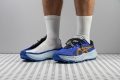
We believe that the Nike ACG Zegama Trail is a good match for:
- Midfoot and forefoot strikers looking for a low-drop, versatile trail shoe.
- Runners who enjoyed previous Zegamas and want the latest version.
- Those who hit the trails a few times per month and want one shoe that can handle a wide range of terrains.

Who should NOT buy
The Nike ACG Zegama Trail would score a few more points from us if it were lighter, as picking up the pace doesn't feel as dynamic as it does in other shoes. If you prefer a trail shoe that feels lighter and more agile underfoot, we suggest going for the Nike Kiger 10 instead.
We also think the high price tag may be hard to swallow for some runners. In our opinion, there are better-value trail shoes available, including the ASICS Trabuco 14 and adidas Terrex Agravic Speed.

Cushioning
Shock absorption
The Zegama has looked huge since its first generation, but shock absorption has always stayed around average rather than reaching the high levels we usually find in maximalist shoes.
With this third generation, we found that Nike sticks to the same approach, as 130 SA in the heel and 106 SA in the forefoot are solid results, but hardly impressive for such a big-looking shoe.

| ACG Zegama Trail | 130 SA |
| Average | 122 SA |
Energy return
We got mixed results in our energy return test. The forefoot dropped by 5.4% compared to the Nike Zegama 2, while the heel improved by 4.3% and now reaches 64.5%.
We preferred the results from v2 as energy return matters more in the forefoot, but the New Balance between ZoomX and Cushlon 3.0 seems to deliver a more even ride from heel to toe, whereas the previous version felt clearly bouncier up front with more ZoomX in that part.
| ACG Zegama Trail | 63.5% |
| Average | 59.7% |
Heel stack
Despite Nike claiming a 38 mm heel stack, we measured a much lower 31.2 mm. But how is such a big difference possible?

First, we measure stack height at the exact same points for every shoe, following World Athletics guidelines. In contrast, brands often use different measuring points, not only between companies but even between their own models, and that's exactly what happens with the ACG Zegama.

| ACG Zegama Trail | 31.2 mm |
| Average | 33.0 mm |
Forefoot stack
The difference in forefoot stack height is also substantial.
Nike states 34 mm, while we measured just 27.5 mm. But as we mentioned before, Nike is clearly measuring this shoe closer to the midfoot, where the ACG Zegama packs significantly more foam.

| ACG Zegama Trail | 27.5 mm |
| Average | 25.7 mm |
Drop
Where we found consistency with Nike's numbers is in the heel-to-toe drop. Our measurement landed at 3.7 mm, a tiny 0.3 mm deviation from the official figure.
That's the expected low-drop configuration that has defined the Zegama series since its launch four years ago.

| ACG Zegama Trail | 3.7 mm |
| Average | 7.2 mm |
Midsole softness
It seems to us that Nike has no intention of launching a ZoomX-only Zegama, because this third generation once again combines two different foams. The top layer is ZoomX, which measured 28.0 AC in our test and is the one boosting energy return.
Below the main layer sits a much firmer Cushlon 3.0 foam, which we registered at a whopping 55.9 AC. This more durable EVA slightly reduces energy return, and it's also the only foam exposed to the exterior, fully protecting the softer ZoomX from damage.

| ACG Zegama Trail | 28.0 AC |
| Average | 38.1 AC |
Rocker
The Nike ACG Zegama Trail doesn't feature a very aggressive rocker, instead keeping a gentle curvature at both the front and back of the shoe. In our experience, this conservative geometry works great at slow paces while also making the shoe more versatile than radical rockered options for other mountain activities like hiking.

Size and fit
Size
Nike ACG Zegama Trail fits true to size (58 votes).
Internal length

| ACG Zegama Trail | 272.5 mm |
| Average | 269.2 mm |
Width / Fit
The Zegama has consistently been one of the widest shoes in Nike's entire running lineup, and we were eager to see if that changed with the first version under the ACG name.
As always, we started by measuring the width. At 96.9 mm, the ACG Zegama Trail comfortably exceeds the average.

| ACG Zegama Trail | 96.9 mm |
| Average | 95.7 mm |
Toebox width
However, we found the toebox slightly narrower than in previous versions and more in line with other Nike shoes. For context, the previous Zegama reached 76.4 mm in this same test, while the new ACG version measured just 72.8 mm.

| ACG Zegama Trail | 72.8 mm |
| Average | 74.3 mm |
Toebox height
With the toebox height, we're back above the average, as we measured a roomy 28.8 mm.
This is a key result for runners who love using their trail shoes for all-day adventures, daily wear, or even as a versatile one-shoe option for travel.

| ACG Zegama Trail | 28.8 mm |
| Average | 27.0 mm |
Traction / Grip
Traction test
Many of us hoped Nike would eventually partner with Vibram, and that finally happened a few years ago with the Ultrafly. Since then, the collaboration has clearly expanded, and the ACG Zegama Trail is another shoe that benefits from it.
It's a win-win-win: Nike solved its lack of a top-tier trail outsole, Vibram gets its share, and runners gain much better traction. In our grip test, the ACG Zegama Trail scored a fantastic 0.81, leaving little doubt about the quality of its Vibram Megagrip outsole.
| ACG Zegama Trail | 0.81 |
| Average | 0.68 |
Lug depth
We see the Nike ACG Zegama Trail as one of the most versatile trail shoes we've tested this year, with 3.9 mm lugs that can easily handle anything from hardpack and gravel to moderate terrain.

The outsole also features Vibram's Traction Lug technology, adding tiny dots around the lugs to improve bite. Therefore, for runners who want a single trail shoe that can handle many different situations, we think the Zegama is a very compelling choice.

| ACG Zegama Trail | 3.9 mm |
| Average | 3.5 mm |
Outsole design
The outsole has more exposed foam than we expected given the high weight of the ACG Zegama, but now we understand why Nike chose Cushlon 3.0 for its abrasion resistance. Using a more delicate foam in such an exposed area would have been a terrible idea.
The lug design changes across the outsole, with each half using the proper orientation for traction and braking. Meanwhile, the lugs along the sides are wider and are positioned to provide extra bite when cornering.

Flexibility / Stiffness
This is exactly why lab testing shoes matters so much. Appearance, and sometimes even the feel during runs, can create misleading impressions. The Zegama may look like a tank, but it's surprisingly flexible, and we confirmed that with a low 9.9N result in our 30-degree bend test.
The lack of a full-length outsole and the decision to skip a rock plate both play a major role in this result.

| ACG Zegama Trail | 9.9N |
| Average | 14.8N |
Weight
The Nike ACG Zegama brings no improvements in terms of weight and remains a heavy trail shoe. In fact, it's slightly heavier than its predecessor, which may disappoint runners who were hoping Nike would finally shed some grams with this update. Maybe next time.

| ACG Zegama Trail | 10.8 oz (306g) |
| Average | 10.1 oz (285g) |
Stability
Lateral stability test
The ACG Zegama delivers good stability on easy trails and even some moderate terrain, but don't expect it to feel stable as a table. That said, Nike has done a great job balancing soft foam and trail-friendly flexibility with a broad landing base.
Torsional rigidity
We secured the ACG Zegama Trail to our custom-built torsional rigidity machine and recorded 15.5 Nm. That's right around the average and, in our view, a great match for the do-it-all versatility that seems to be the main purpose of this shoe.

| ACG Zegama Trail | 15.5 Nm |
| Average | 15.7 Nm |
Heel counter stiffness
The heel counter also avoids the extremes, feeling much like what we'd expect from a road-focused daily trainer. Therefore, we awarded it a 3/5.
| ACG Zegama Trail | 3 |
| Average | 2.9 |
Midsole width - forefoot
This is where Nike has changed the Zegama the most compared to previous versions, and we noticed it from the very first stride. The two previous versions were quite average in this test, but Nike has gone for a much broader forefoot this time.
We measured a massive 123.3 mm, and the wide-forefoot design is also immediately obvious from the shape of the outsole in our photo.

| ACG Zegama Trail | 123.3 mm |
| Average | 114.3 mm |
Midsole width - heel
The heel changes by less than 1 mm compared to its predecessor and now measures 93.8 mm, so there are no major differences here.
It's only in the forefoot where the shoe feels noticeably different and slightly more stable, although it's also fair to say that such a big width increase comes with a small agility penalty. There's no design change without a trade-off!

| ACG Zegama Trail | 93.8 mm |
| Average | 90.5 mm |
Durability
Toebox durability
We noticed that the upper delivers a huge comfort boost compared to the two previous versions, and the difference becomes even more obvious when holding all three generations side by side like we did.
Unfortunately, that extra comfort comes with poor durability, as the mesh basically disappeared in our test and left us no choice but to give it a 1/5.
| ACG Zegama Trail | 1 |
| Average | 3.1 |
Heel padding durability
The heel padding improves by two points over its predecessor, finally reaching what we consider a solid result with a 3/5 score.
| ACG Zegama Trail | 3 |
| Average | 3.1 |
Outsole durability
The outsole was less of a concern because, after testing so many Vibram outsoles in the lab, we know that Megagrip consistently delivers good results in both grip and durability.
True to its reputation, we measured just 0.9 mm of damage. It's not a stellar result, but it's far from concerning.
| ACG Zegama Trail | 0.9 mm |
| Average | 0.9 mm |
Outsole thickness
The outsole of the ACG Zegama lacks a rock plate, so having a solid amount of rubber underfoot is important.

We measured 1.9 mm, which combines with the midsole foam to deliver good protection, although you'll definitely still feel some rocks.

| ACG Zegama Trail | 1.9 mm |
| Average | 1.9 mm |
Comfort
Breathability test
Our smoke test earned the Nike ACG Zegama Trail a fairly average 3/5, confirming that breathability is adequate but far from exceptional.
However, we understand that durability and keeping debris out are also important for this type of trail shoe. We'll put the upper through our abrasion tests later to find out whether this compromise was worth it.

| ACG Zegama Trail | 3 |
| Average | 3.3 |
Tongue padding
Nike simplified the lacing system of the ACG Zegama Trail compared to the previous version. It now features a hybrid setup that combines punched eyelets with four loops.

We also measured thicker tongue padding, reaching 10.1 mm in this version compared to 6.0 mm in version 2. While this change works great for reducing lace pressure, we think it's excessive considering how much this shoe needs to shed some weight.

| ACG Zegama Trail | 10.1 mm |
| Average | 6.4 mm |
Tongue: gusset type
The tongue is attached to both sides, although the gusset doesn't extend all the way to the top. Nonetheless, this semi-gusseted setup is becoming the standard for trail shoes.

| ACG Zegama Trail | Both sides (semi) |
Insole thickness
Nike didn't invest much in the insole, opting for a basic one made from low-cost EVA foam and 4.0 mm of thickness.

| ACG Zegama Trail | 4.0 mm |
| Average | 4.6 mm |
Removable insole
If you usually swap a shoe's stock insole for a custom one, we found no issues doing so in the ACG Zegama Trail.

| ACG Zegama Trail | Yes |
Heel tab
One of the Zegama line's signature design features is its ankle-gaiter heel collar paired with a finger-loop heel tab, and Nike keeps this distinctive setup for the first version inside the ACG line.

| ACG Zegama Trail | Finger loop |
Misc
Reflective elements
We give Nike a 10/10 for reflectivity, as this shoe is one of the best at bouncing light back that we've seen in quite some time.
| ACG Zegama Trail | Yes |
Price
The Zegama continues to target the high-end trail market, and fortunately, it avoided a price hike. That said, we think a higher MSRP would have been difficult to justify and could have hurt sales, as this shoe is already pushing the limits of its price tag, especially against recent launches from competing brands.
| ACG Zegama Trail | $180 |
| Average | $160 |