
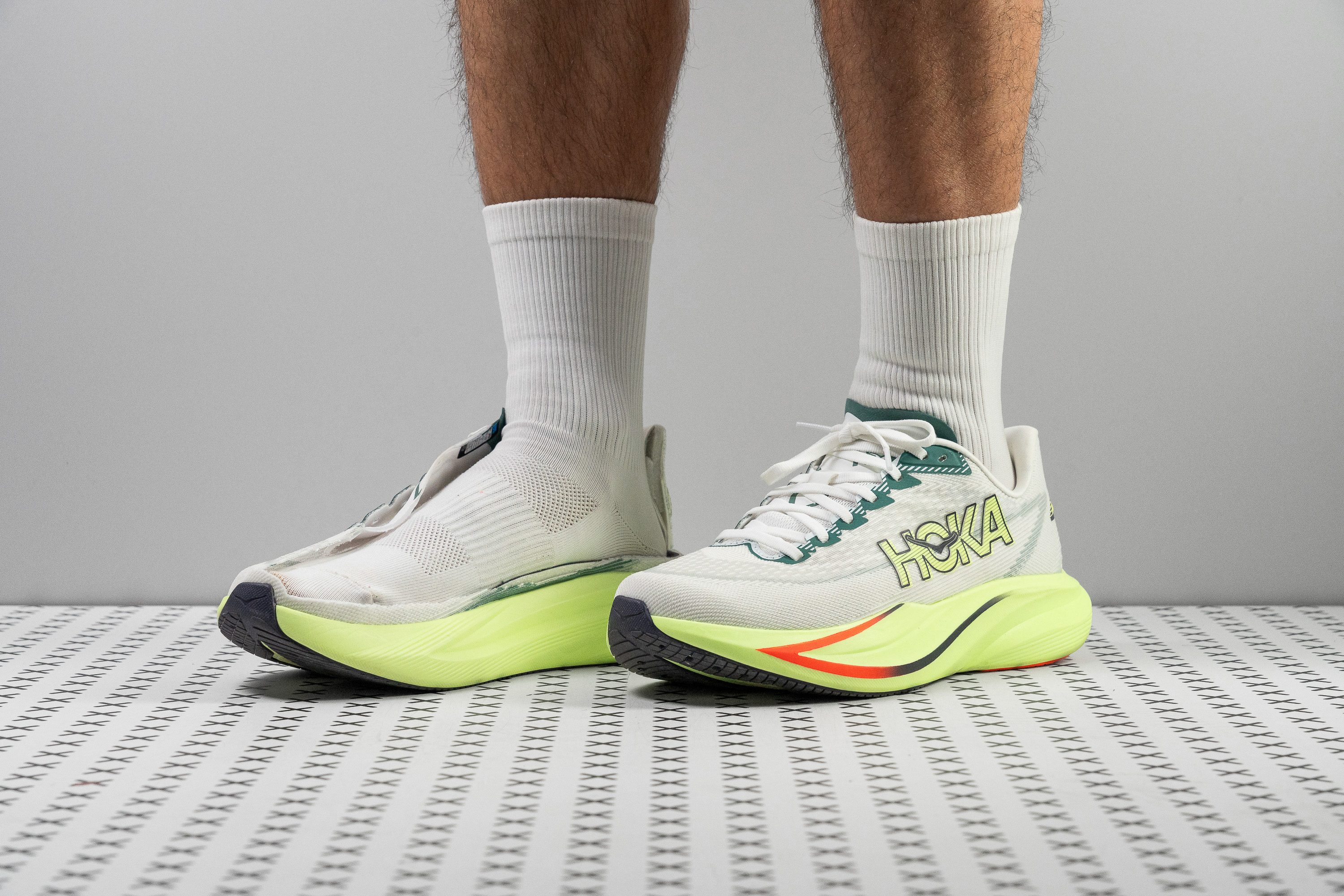
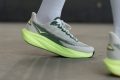

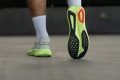
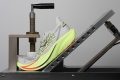
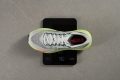



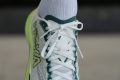
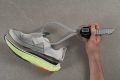
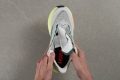
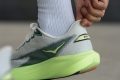
Our verdict
- Daily running 92
- Tempo 87
- Race 68
- Stability 80
Pros
- Very lightweight for a daily trainer
- Secure lockdown
- Versatile and fun
- Incredible breathability
- Works well for heel strikers
- Smooth, forward-rolling rocker
- Much better grip than before
- Perforated insole
Cons
- Snug fit can be a problem for some
- Stiff heel counter may irritate some Achilles tendons
- Ride could be a touch softer
Awards
- Top pick in best running shoes for plantar fasciitis
- Top pick in best long distance running shoes
- Top 11% in road running shoes
- Top 7% in HOKA running shoes
- Top 8% most popular running shoes
Comparison
The most similar running shoes compared
+ + Add a shoe | |||||
|---|---|---|---|---|---|
| Our score | 90 Superb | 85 Great | 86 Great | 94 Superb | |
| Price | $145 | $140 | $150 | $175 | |
| Pace | Daily runningTempo | Daily running | Daily running | Tempo | |
| Shock absorption | High | High | High | High | |
| Energy return | High | High | Moderate | High | |
| Traction | High | High | High | High | |
| Arch support | Neutral | Neutral | Neutral | Neutral | |
| Weight lab Weight brand | 7.9 oz / 224g 8.5 oz / 241g | 9.2 oz / 261g 9.2 oz / 261g | 10.2 oz / 289g 10.2 oz / 289g | 8.5 oz / 241g 8.4 oz / 238g | |
| Lightweight | ✓ | ✗ | ✗ | ✓ | |
| Drop lab Drop brand | 9.4 mm 5.0 mm | 9.5 mm 8.0 mm | 12.2 mm 10.0 mm | 10.6 mm 8.0 mm | |
| Strike pattern | HeelMid/forefoot | HeelMid/forefoot | Heel | Heel | |
| Size | Slightly small | True to size | True to size | Slightly small | |
| Midsole softness | Balanced | Soft | Balanced | Firm | |
| Difference in midsole softness in cold | Small | Big | Small | Normal | |
| Toebox durability | Decent | Decent | Decent | Decent | |
| Heel padding durability | Good | Good | Good | Good | |
| Outsole durability | Decent | Decent | Good | Good | |
| Breathability | Moderate | Moderate | Moderate | Breathable | |
| Width / fit | Narrow | Medium | Medium | Medium | |
| Toebox width | Medium | Medium | Narrow | Medium | |
| Stiffness | Moderate | Moderate | Moderate | Moderate | |
| Torsional rigidity | Moderate | Flexible | Flexible | Moderate | |
| Heel counter stiffness | Stiff | Moderate | Stiff | Stiff | |
| Rocker | ✓ | ✓ | ✗ | ✓ | |
| Heel lab Heel brand | 35.6 mm 37.0 mm | 36.9 mm 37.0 mm | 37.3 mm 36.0 mm | 37.4 mm 36.0 mm | |
| Forefoot lab Forefoot brand | 26.2 mm 32.0 mm | 27.4 mm 29.0 mm | 25.1 mm 26.0 mm | 26.8 mm 28.0 mm | |
| Widths available | NormalWide | NarrowNormalWideX-Wide | NarrowNormalWideX-Wide | NormalWide | |
| Orthotic friendly | ✓ | ✓ | ✓ | ✓ | |
| Season | All seasons | All seasons | All seasons | SummerAll seasons | |
| Removable insole | ✓ | ✓ | ✓ | ✓ | |
| Ranking | #32 Top 8% | #110 Top 28% | #81 Top 21% | #4 Top 1% | |
| Popularity | #30 Top 8% | #41 Top 11% | #18 Top 5% | #21 Top 6% |
Who should buy
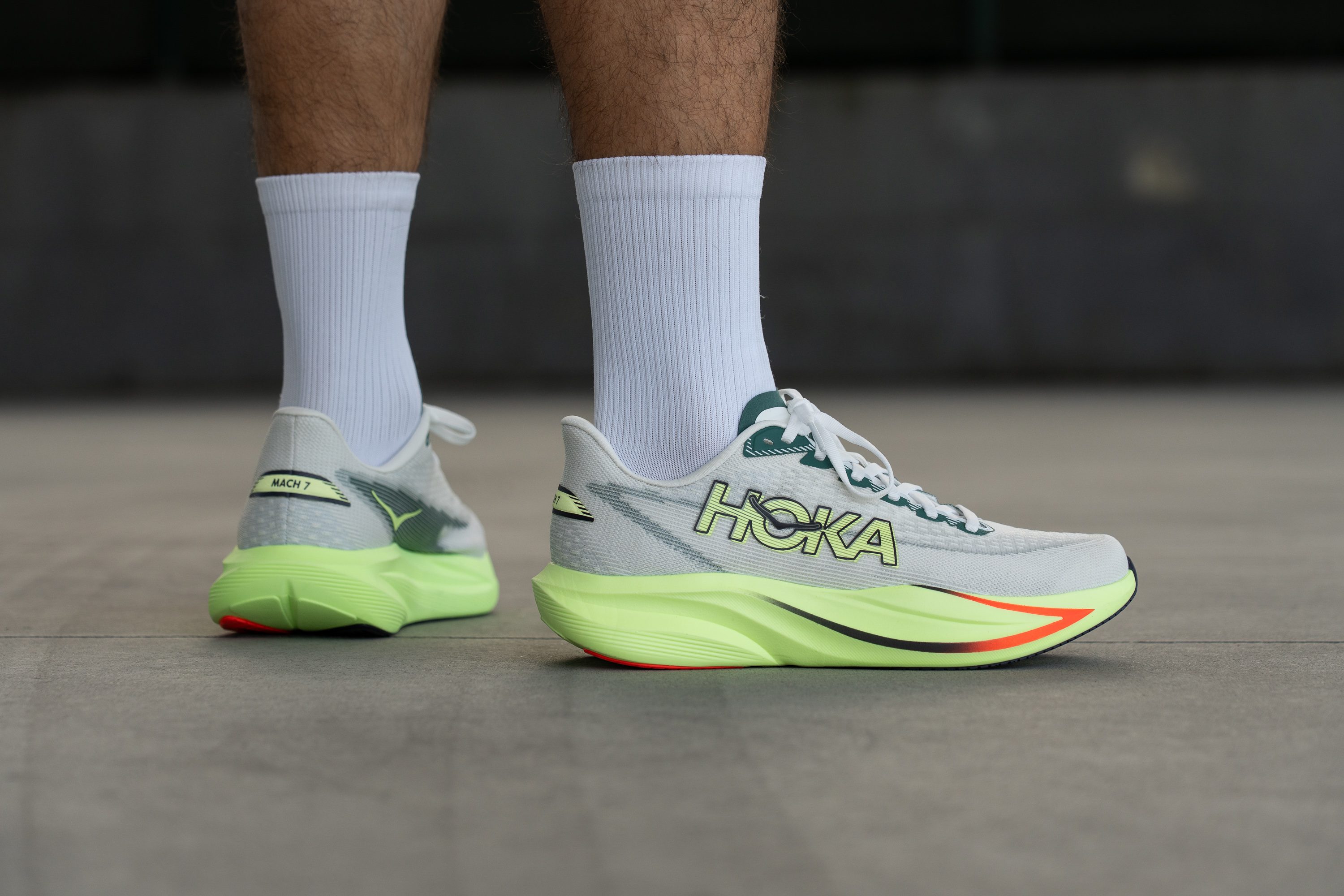
We think that the HOKA Mach 7 is an excellent match for runners who:
- Enjoyed the Mach 6 and wanted HOKA to preserve the same lightweight and agile character with only minor refinements.
- Want a neutral daily trainer that feels nimble, versatile, and fun.
- Have narrow feet and usually struggle to find a secure lockdown in daily trainers.
- Are newer runners searching for a one-shoe setup that can comfortably handle daily training and some faster workouts alike.
Who should NOT buy
Runners who prefer plush midsoles will likely find the Mach 7 too firm, as its supercritical EVA foam leans toward the firmer side. Instead, we recommend the adidas Supernova Rise 3 or the New Balance FuelCell Rebel v5 for those seeking a softer running experience.
We also believe that the snug fit of the Mach 7 won’t suit runners with wide feet particularly well. In that case, the ASICS Noosa Tri 16 or the Topo Cyclone 2 stand out as much better alternatives thanks to their more accommodating fit.
Cushioning
Shock absorption
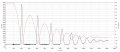
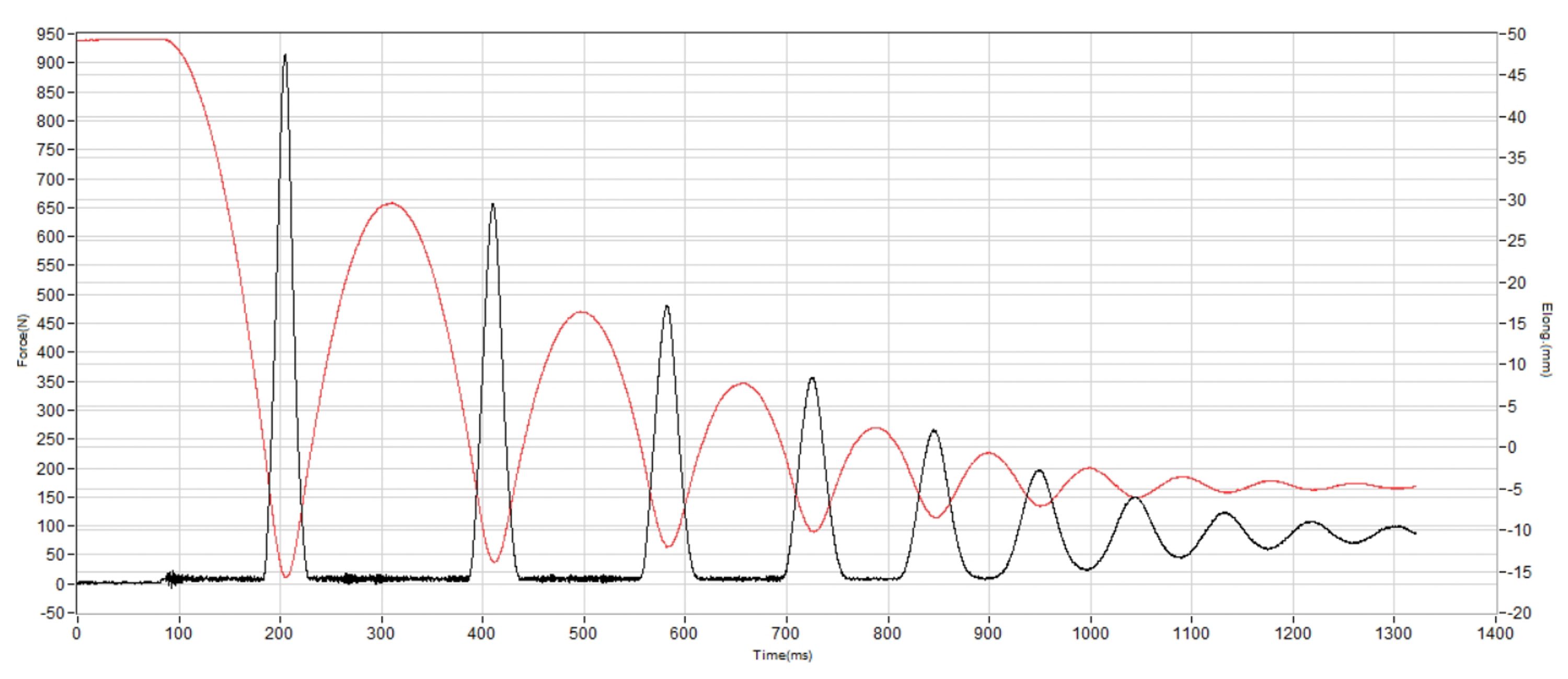
At 137 SA in the heel and 110 SA in the forefoot, the HOKA Mach 7 delivers nearly identical shock absorption to the HOKA Mach 6, with only tiny differences that we found impossible to notice underfoot.
We believe that this is a strong result for runners seeking a highly-versatile trainer that provides solid cushioning without entering max-stack territory.
| Mach 7 | 137 SA |
| Average | 131 SA |
Energy return
The Mach 7 retains its supercritical EVA midsole, which we believe is another strong point considering its retail price.
Although it can’t compete with premium PEBA or A-TPU foams, it performs really well for daily training and even occasional tempo-paced runs, delivering 60.6% energy return in the heel and 66.6% in the forefoot.
| Mach 7 | 66.6% |
| Average | 61.5% |
Heel stack
The market may be moving toward ever-higher stack heights, but we believe that every brand should still keep some models in the moderate-stack category, as many runners prefer a more grounded and less artificial feel underfoot especially for daily runs. And that’s exactly the audience the Mach 7 targets.
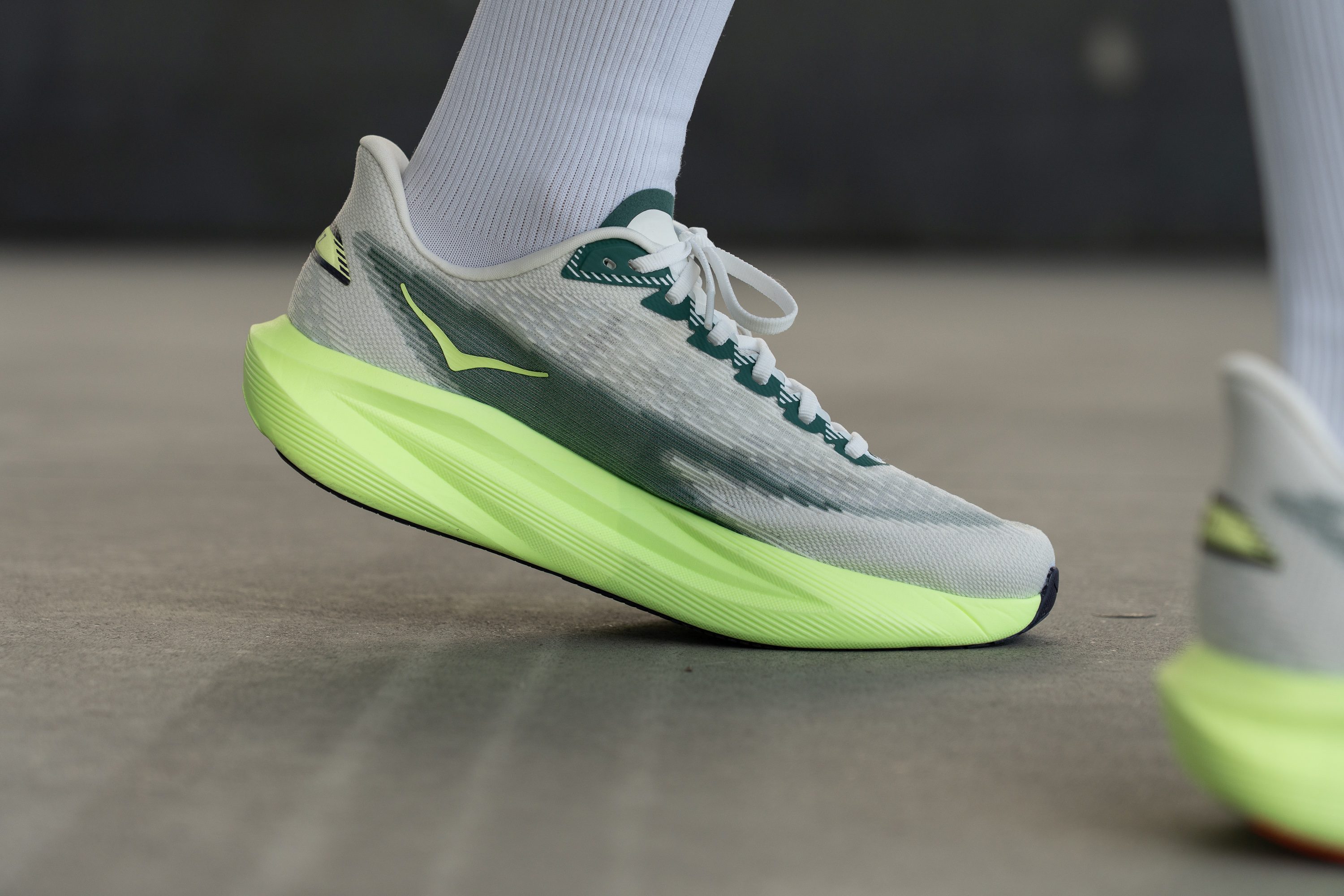
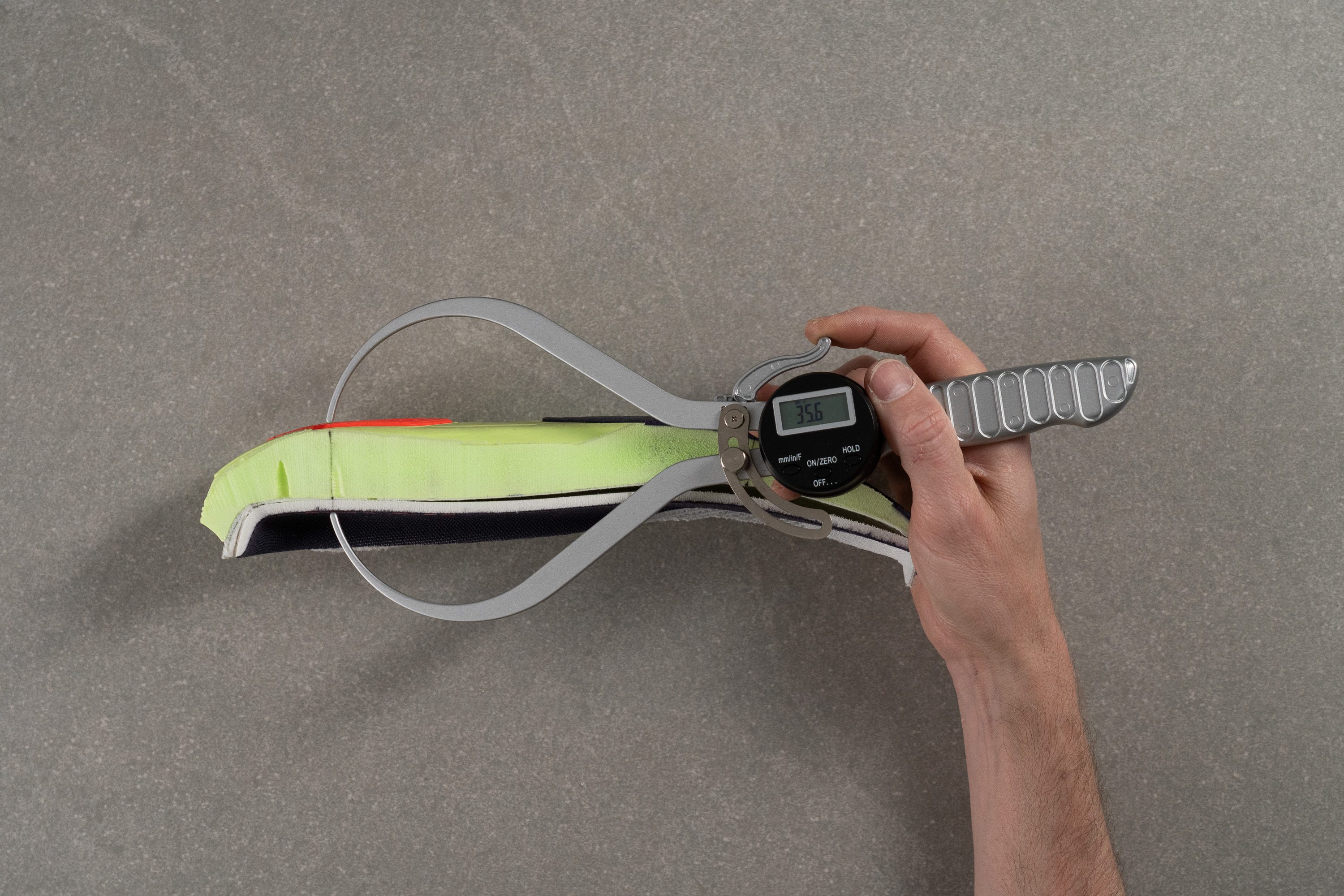
We measured 35.6 mm in the heel, which we found to be a sensible setup that, as highlighted in our shock absorption test, delivers a solid balance of protection while still preserving an agile ride.
| Mach 7 | 35.6 mm |
| Average | 35.6 mm |
Forefoot stack
The forefoot delivers similar vibes, because at 26.2 mm it clearly lands in that sweet-spot middle ground that feels approachable and easygoing for a wide range of runners. Moreover, it’s only 0.2 mm lower than the v6, so if you’re upgrading, we found it nearly impossible to notice any difference here.
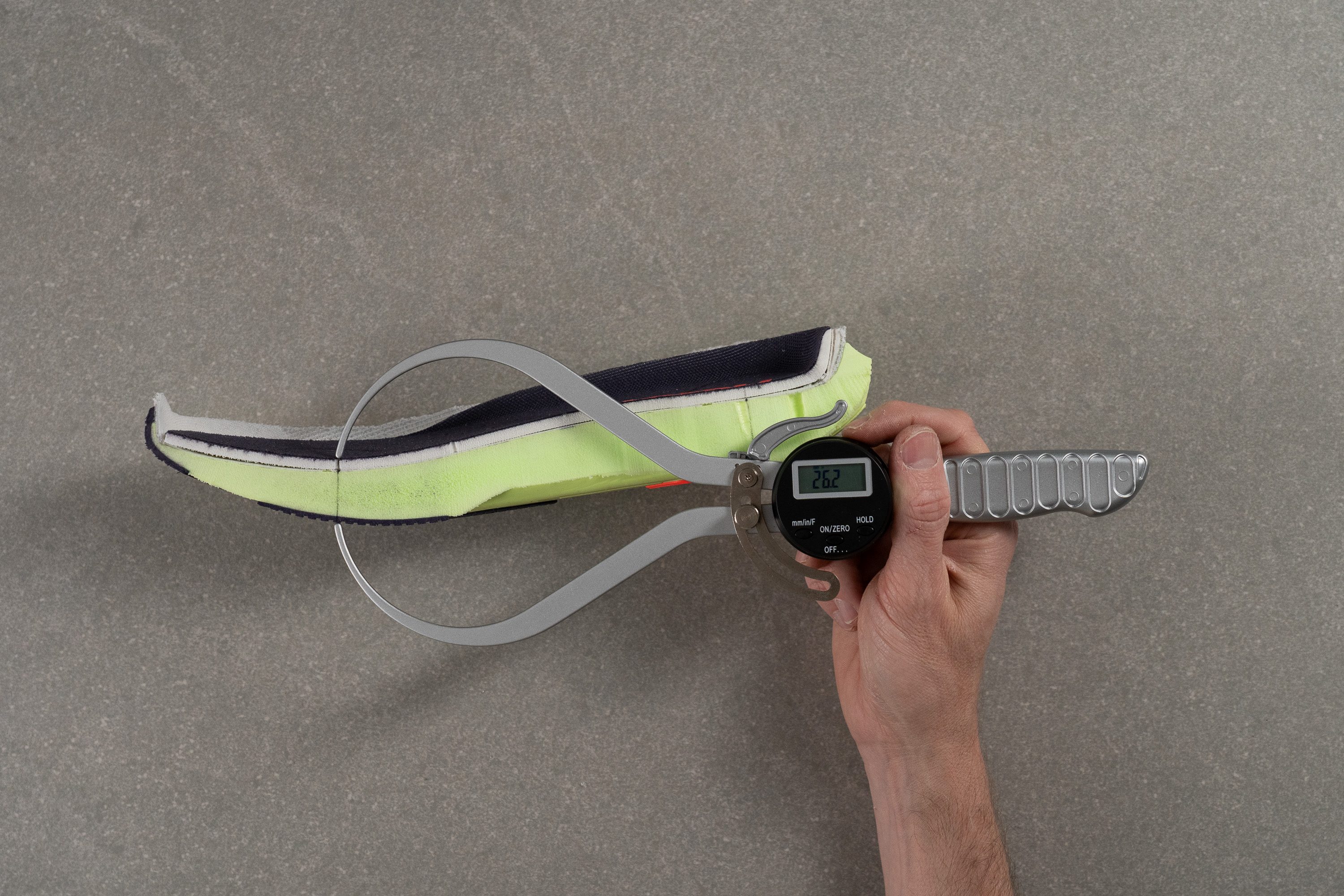
| Mach 7 | 26.2 mm |
| Average | 27.2 mm |
Drop
HOKA definitely has a unique way of measuring drop that doesn’t follow World Athletics guidelines, and we believe the brand likely measures closer to the midfoot, which also explains why its stated stack heights tend to come in much higher than what we actually find in the lab. In this case, HOKA lists the Mach 7 at 5 mm, but during our runs it felt far closer to an 8-mm shoe.
Back in the lab, we measured a 9.4 mm drop. Of course, the sensation will vary depending on your footstrike and running mechanics, but this shoe doesn’t feel like a 5-mm offset at all.
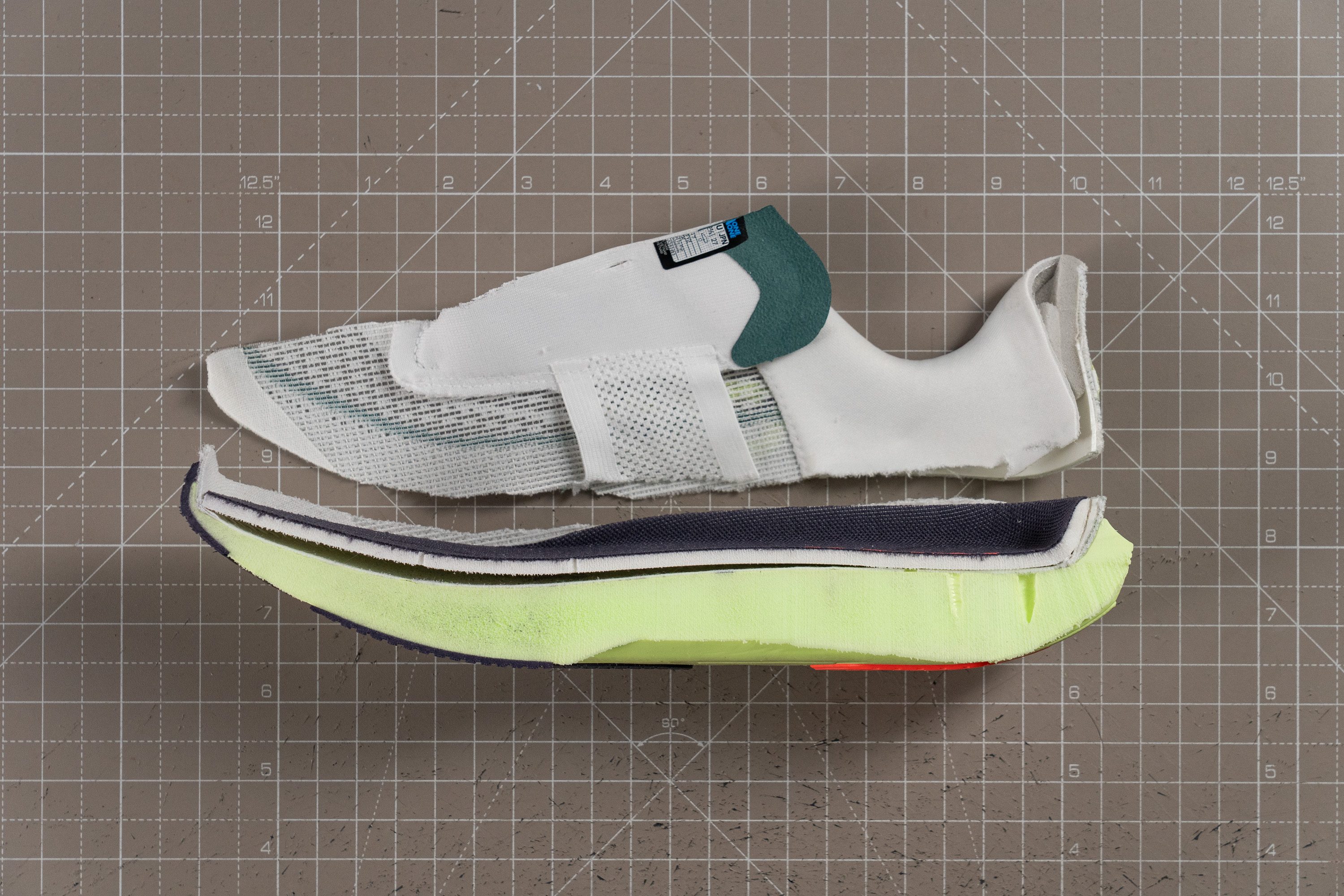
| Mach 7 | 9.4 mm |
| Average | 8.4 mm |
Midsole softness
As we mentioned earlier, the foam returns unchanged, and the underfoot sensation feels nearly identical to the previous version. We found that the midsole leans slightly toward the firm side, although never to the point of becoming uncomfortable.
Using our Asker C durometer, we recorded 41.7 AC. Therefore, this is clearly not a plush-foam setup for runners chasing an ultra-pillowy ride, but from a stability and control perspective, we think it’s actually an interesting choice.
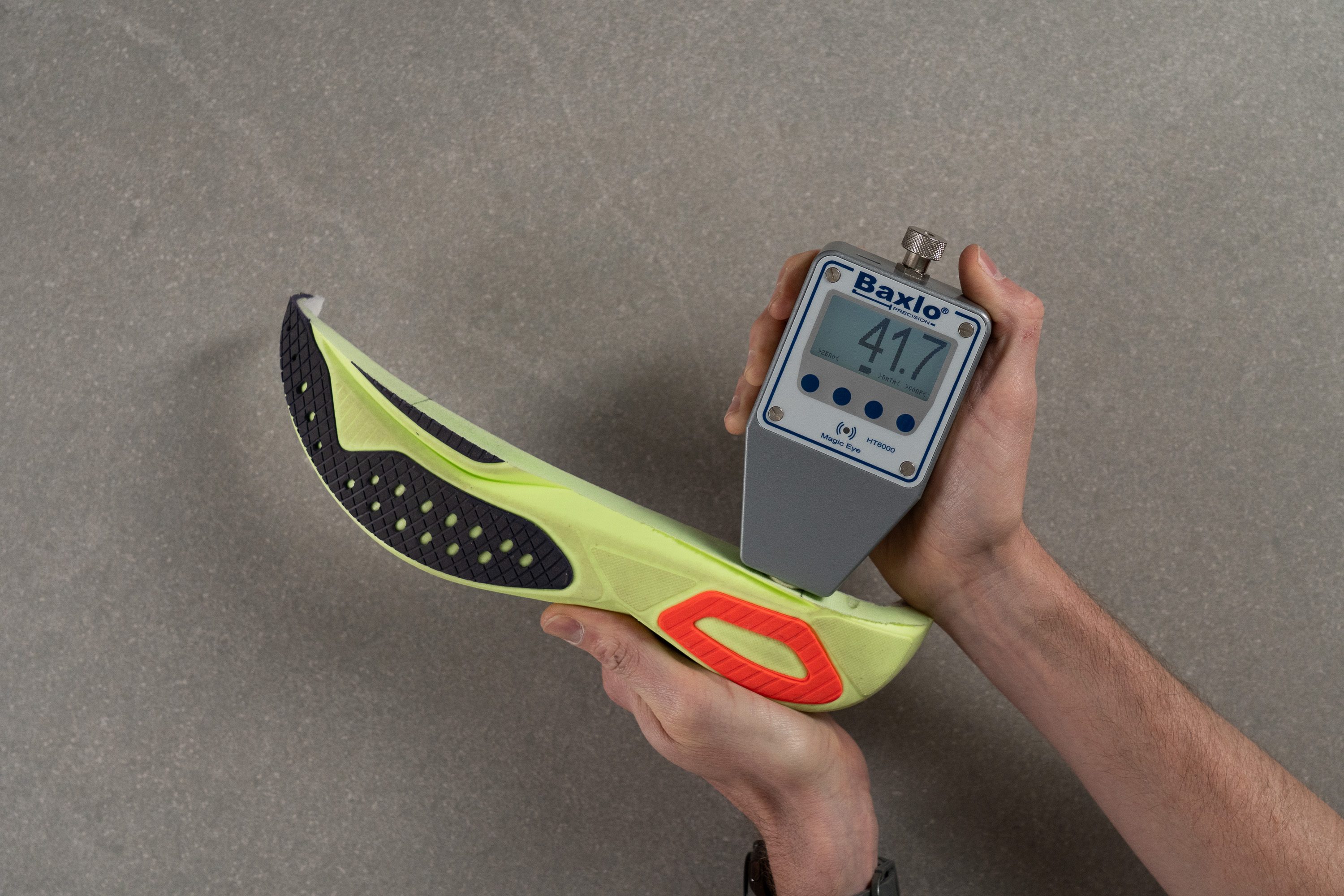
| Mach 7 | 41.7 AC |
| Average | 35.4 AC |
Rocker
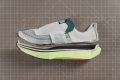
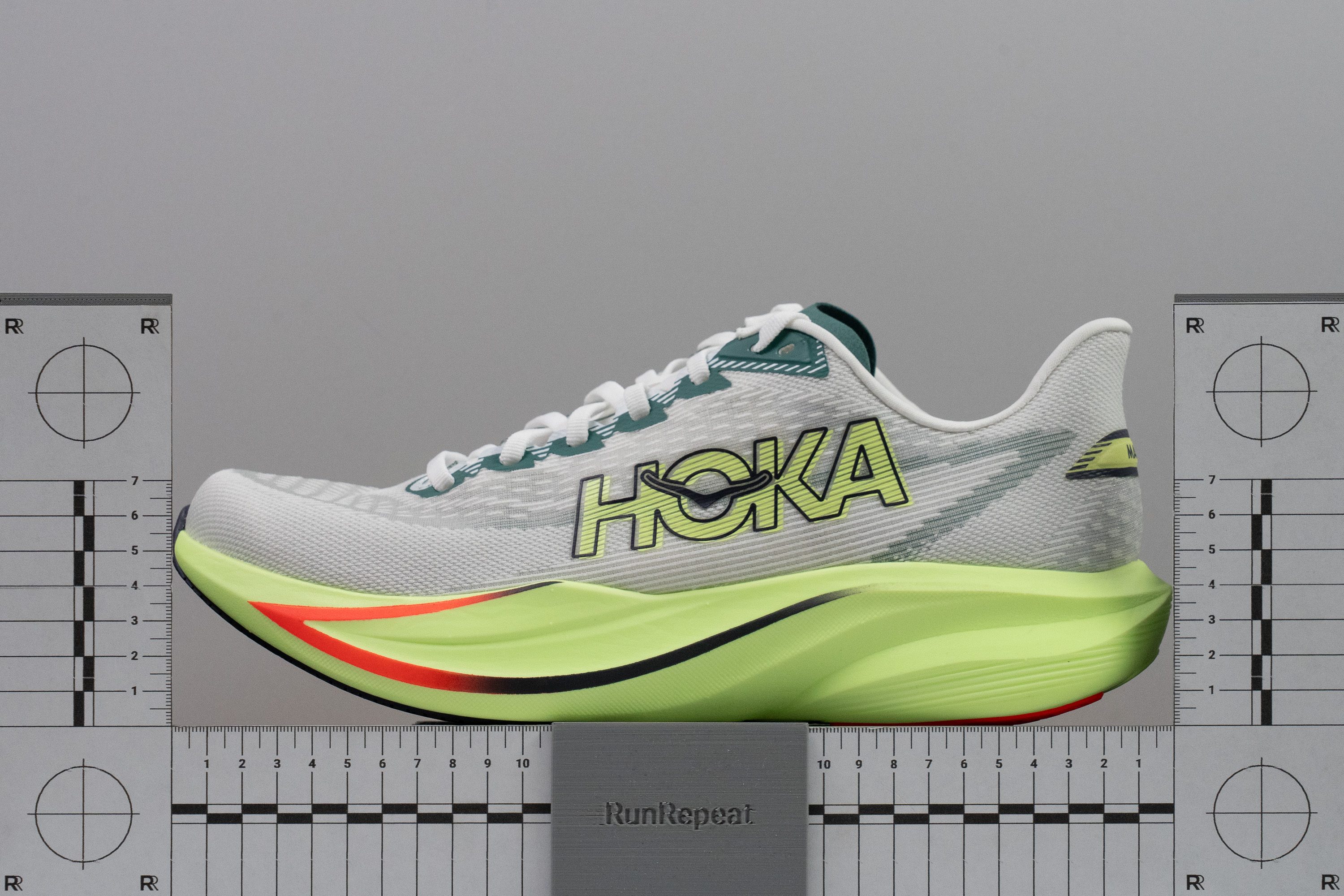
The rocker also remains mostly unchanged, with only tiny variations versus the previous version. Considering the stack height of the Mach 7 and its daily-training focus, we can confidently say that it delivers a fairly rockered ride, with a clearly noticeable forefoot curvature underfoot.
Still, this didn’t surprise us at all. If there’s one brand known for creating aggressive, forward-rolling rockers, it’s HOKA, as seen for example in the Cielo X1 3.0.
Size and fit
Size
HOKA Mach 7 fits slightly small (73 votes).
Internal length
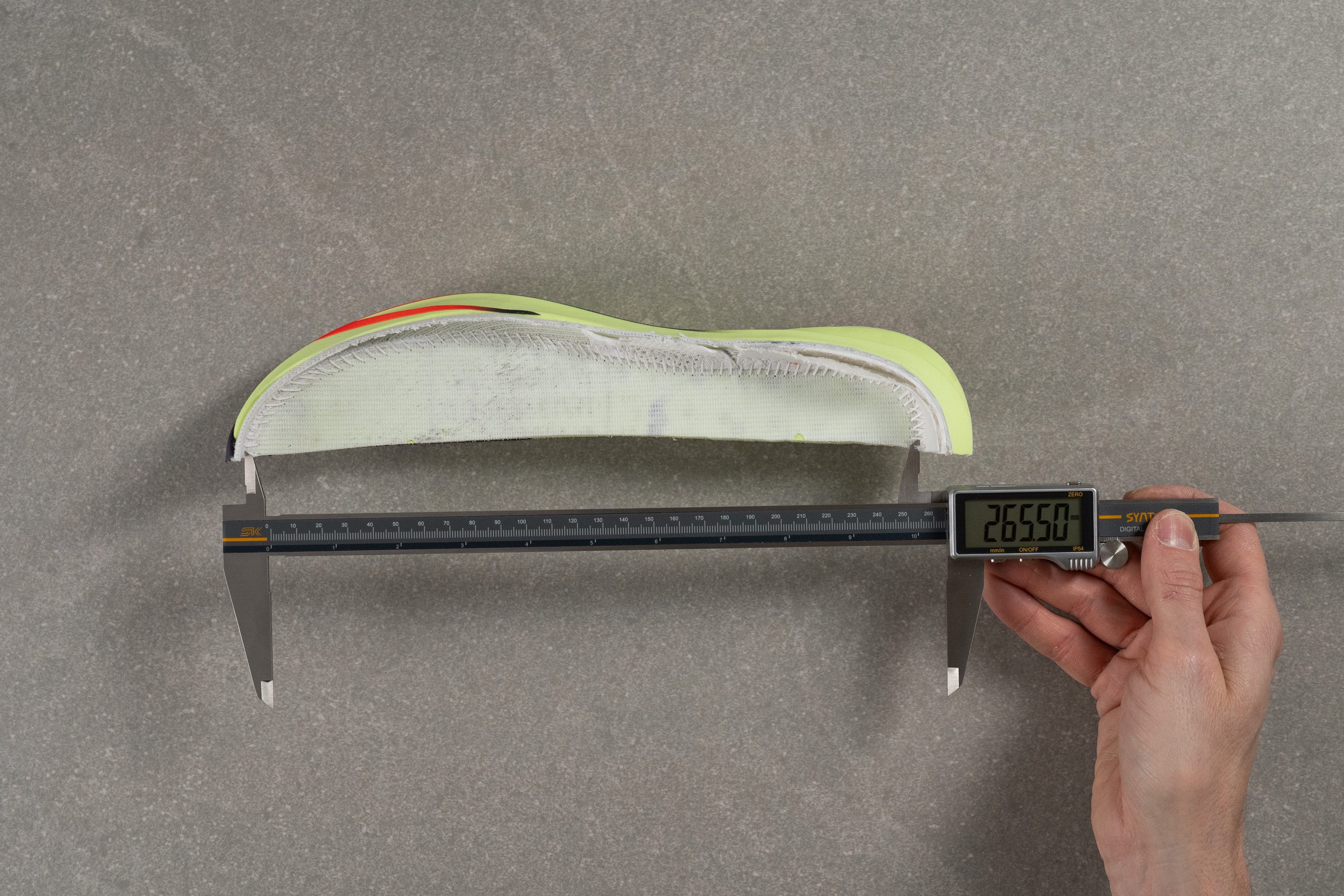
| Mach 7 | 265.5 mm |
| Average | 269.4 mm |
Width / Fit
HOKA is a brand that has traditionally worked especially well for runners with narrow feet, and we found that the Mach 7 proudly keeps that tradition alive.
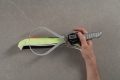
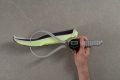
Thanks to our gel method, we’re able to accurately measure the available space inside the shoe, and unsurprisingly, our first reading came in well below average at just 92.5 mm.
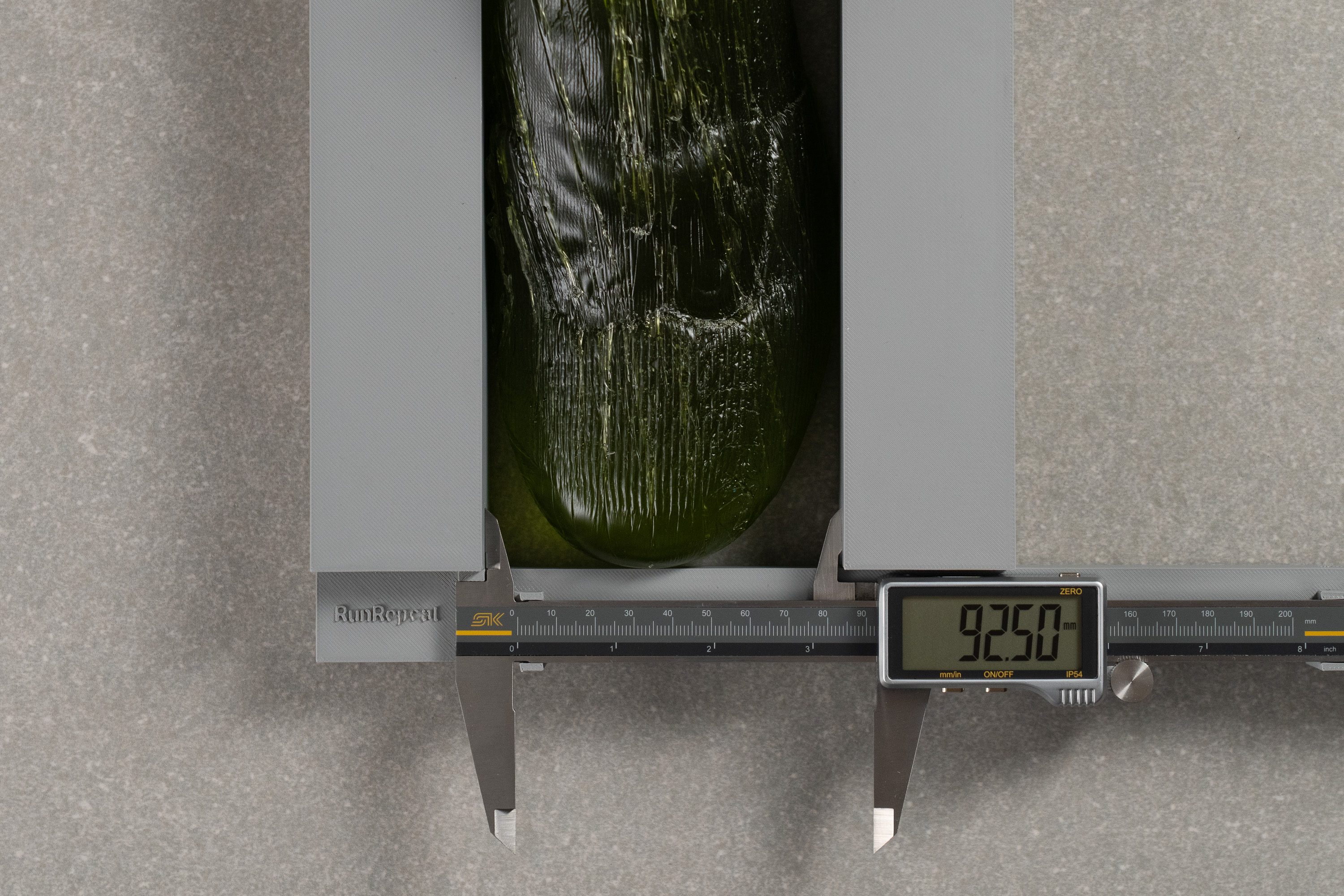
| Mach 7 | 92.5 mm |
| Average | 95.2 mm |
Toebox width
The taper of the toebox remains fairly standard, as our second measurement came in at 72.9 mm.
Combined with the previous result, we found that the Mach 7 works also very well for runners with regular-width feet who prefer a more secure and dialed-in fit.
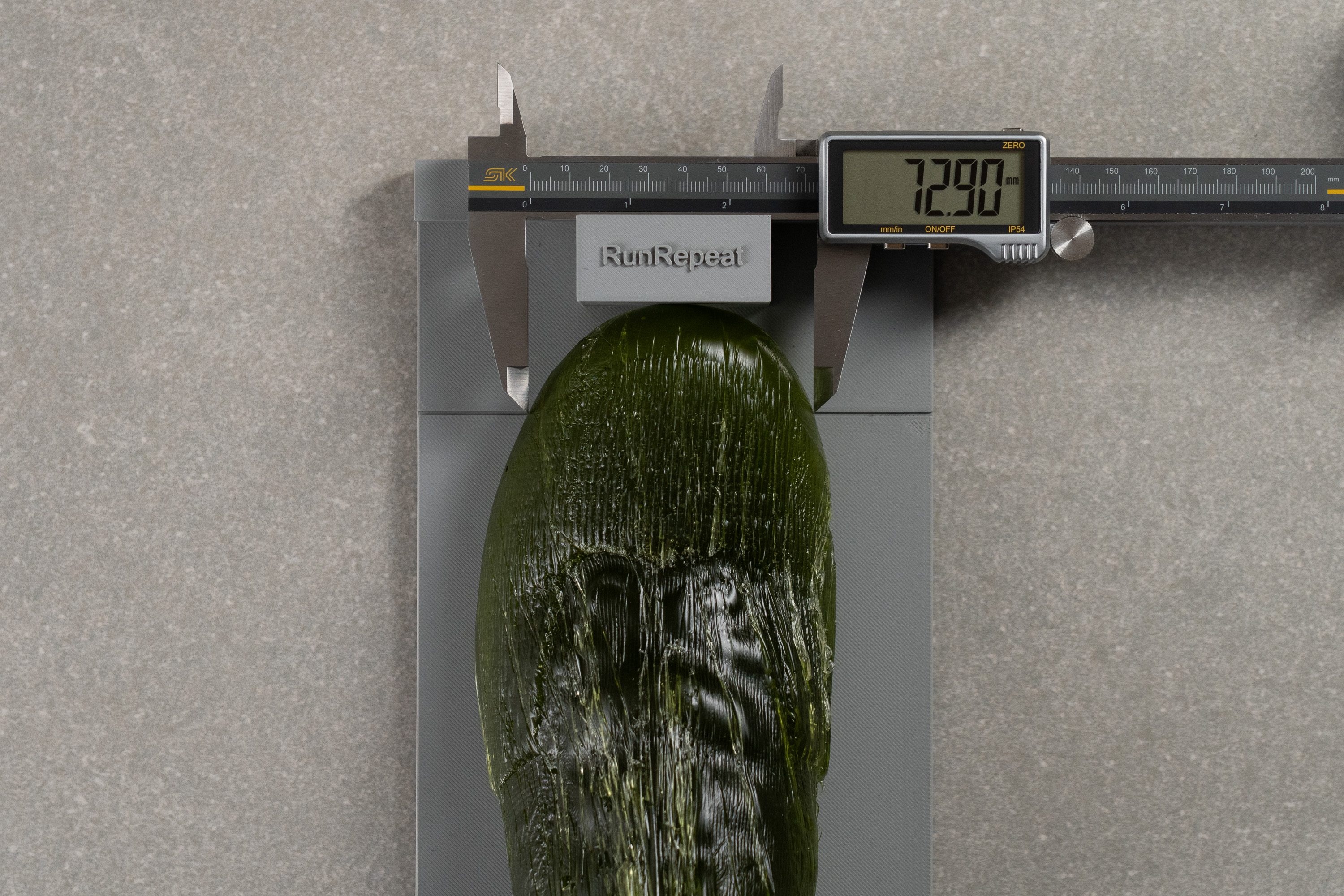
| Mach 7 | 72.9 mm |
| Average | 73.2 mm |
Toebox height
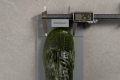
The toebox doesn’t feel restrictive vertically at all.
We measured a generous 29.1 mm height in this area, which in our view makes the shoe a great match for runners who want plenty of upward toe clearance.
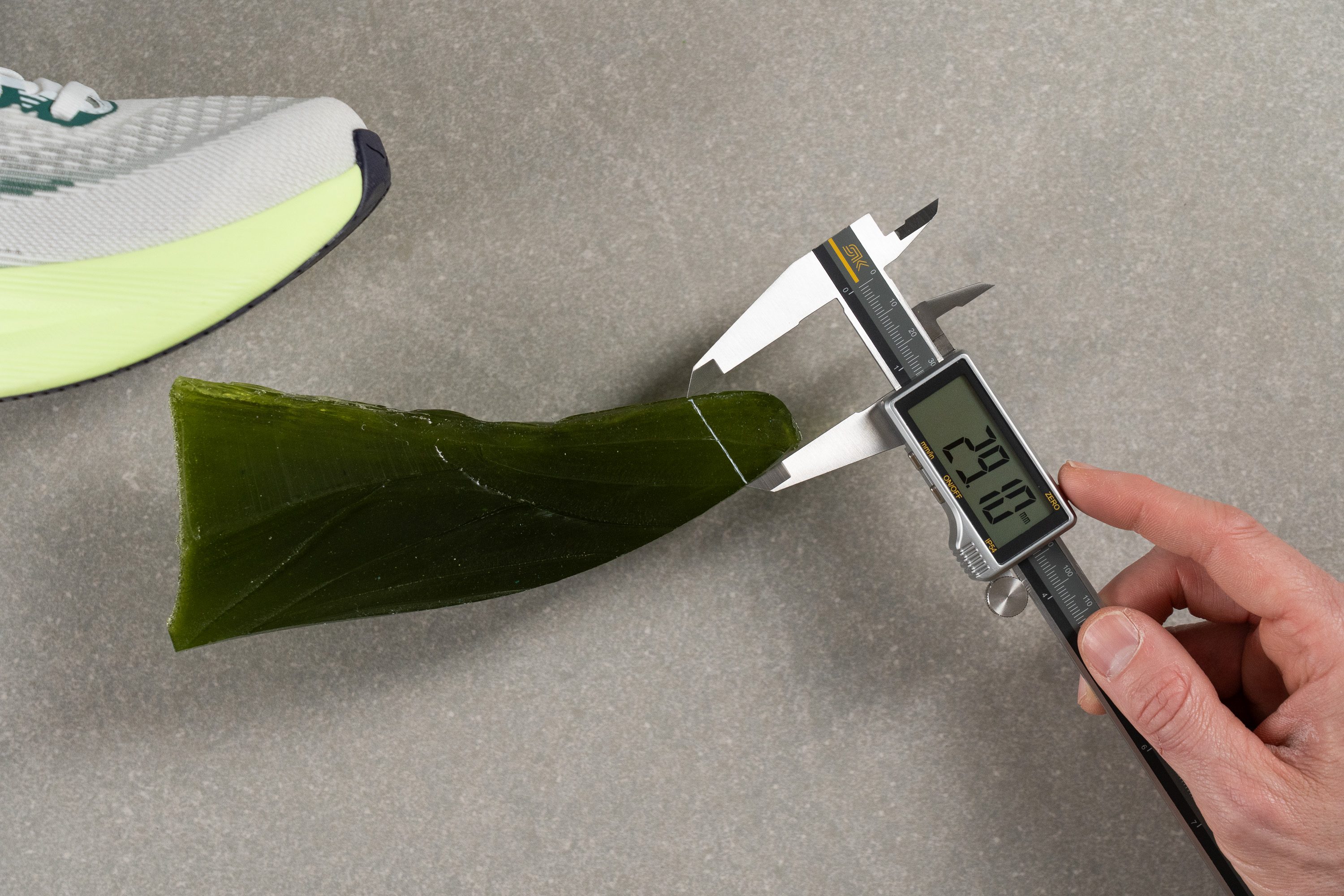
| Mach 7 | 29.1 mm |
| Average | 27.0 mm |
Traction / Grip
Traction test
The Mach 6 posted a decent 0.49 score in this same test, so the jump to 0.62 is genuinely good news. It's clear to us that HOKA has clearly refined its Sticky Rubber compound, and the Mach 7 now performs noticeably better, especially on wet surfaces.
| Mach 7 | 0.62 |
| Average | 0.53 |
Outsole design
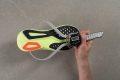
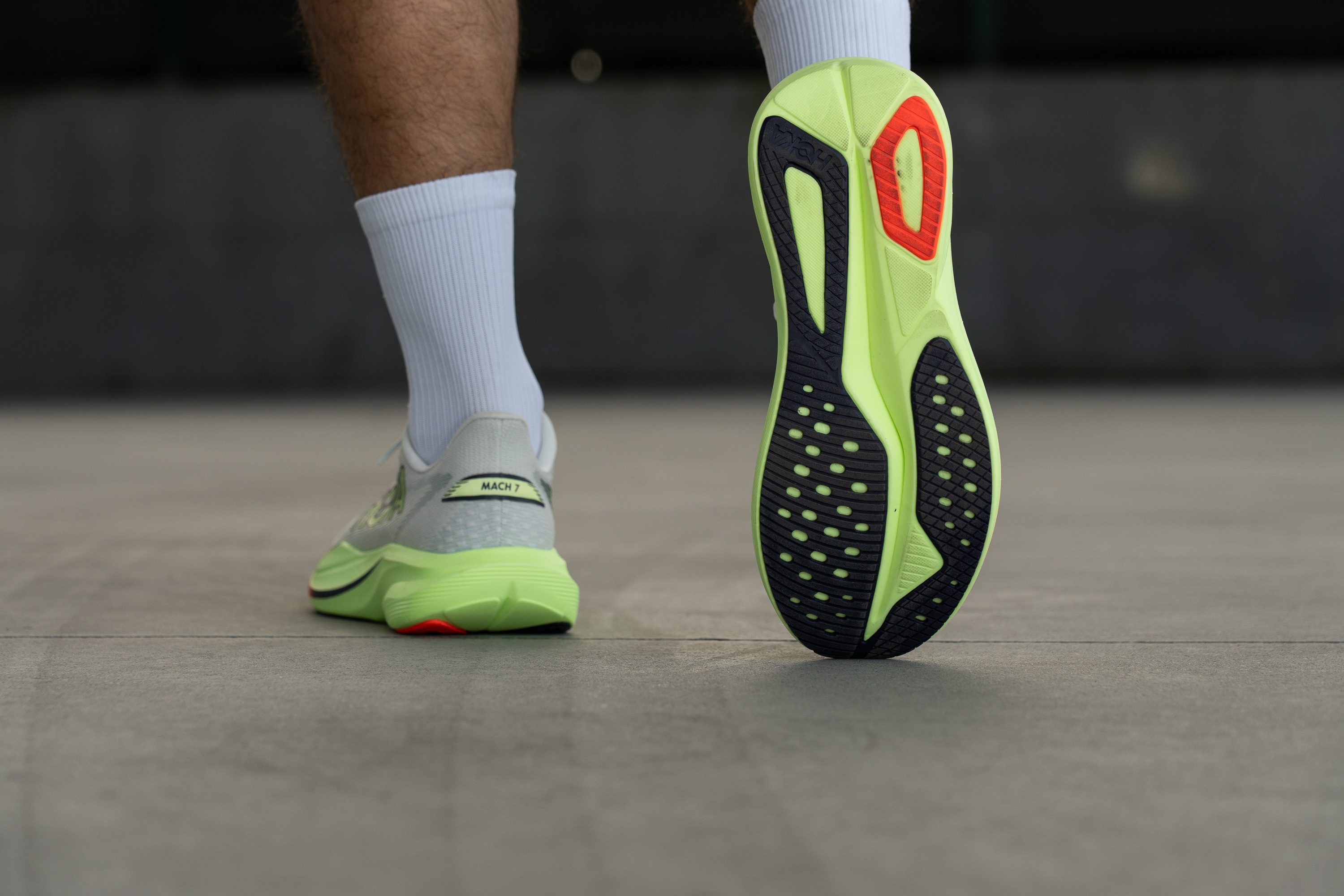
HOKA now uses two different rubber compounds, with the lateral heel featuring a distinct red rubber that's more focused on durability.
We also found that although the overall rubber coverage pattern remains similar to the previous version, it now extends slightly farther into the heel area, while the forefoot layout receives a few subtle tweaks as well. The central flex groove remains in place, and in our opinion, the coverage-to-weight ratio is impressively well-balanced for such a featherlight trainer.
Flexibility / Stiffness
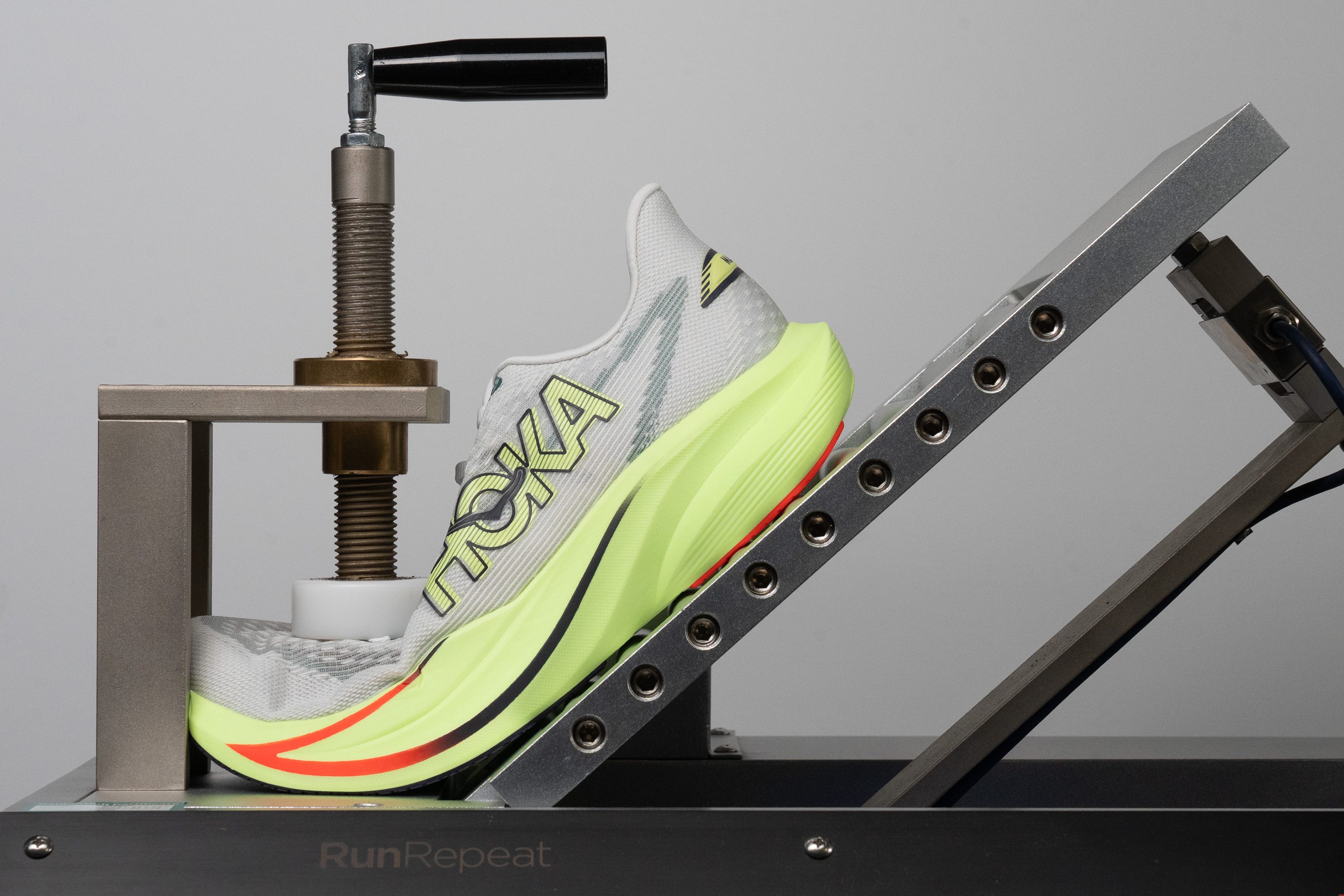
Designed as a highly-versatile training option, we think HOKA made a smart choice by keeping the Mach 7 close to average here with 14.2N. This balanced setup makes the shoe comfortable for everyday mileage while still adding enough stiffness to handle faster-paced efforts occasionally, improving both responsiveness and stability.
| Mach 7 | 14.2N |
| Average | 15.5N |
Weight
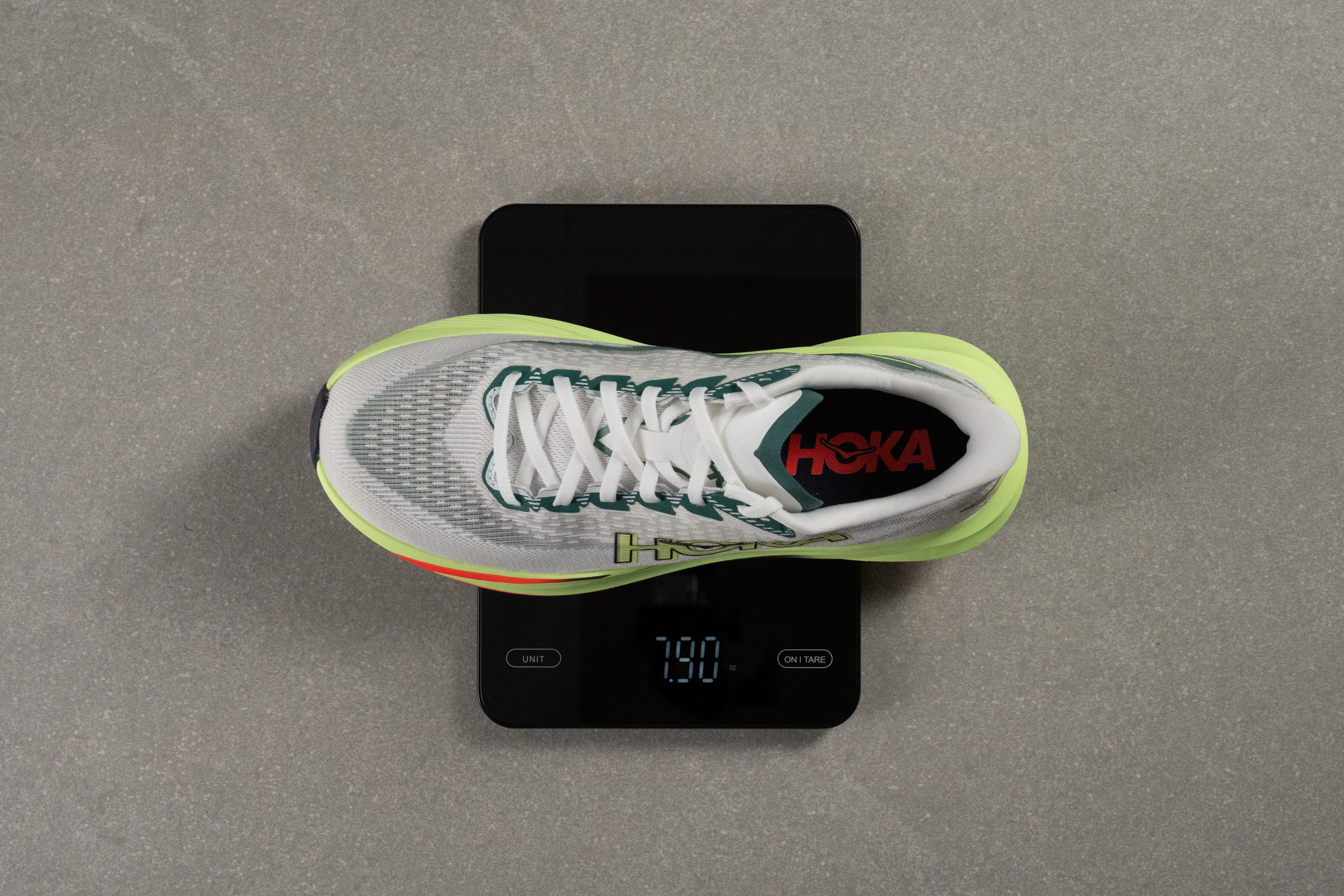
The HOKA Mach series has become extremely popular partly because it stands out as one of the top lightweight daily trainers on the market, and that clearly isn’t changing with the Mach 7. In fact, HOKA managed to push things even further, as this version drops additional weight and landed at just 7.9 oz (224g) on our scale.
That’s an impressively low weight for a daily trainer, and in our view, it highlights how important supercritical foams have become for modern running shoes. They bring very few compromises beyond a slightly higher production cost, while offering major advantages in both weight reduction and overall performance.
| Mach 7 | 7.9 oz (224g) |
| Average | 9.2 oz (261g) |
Breathability
Breathability test
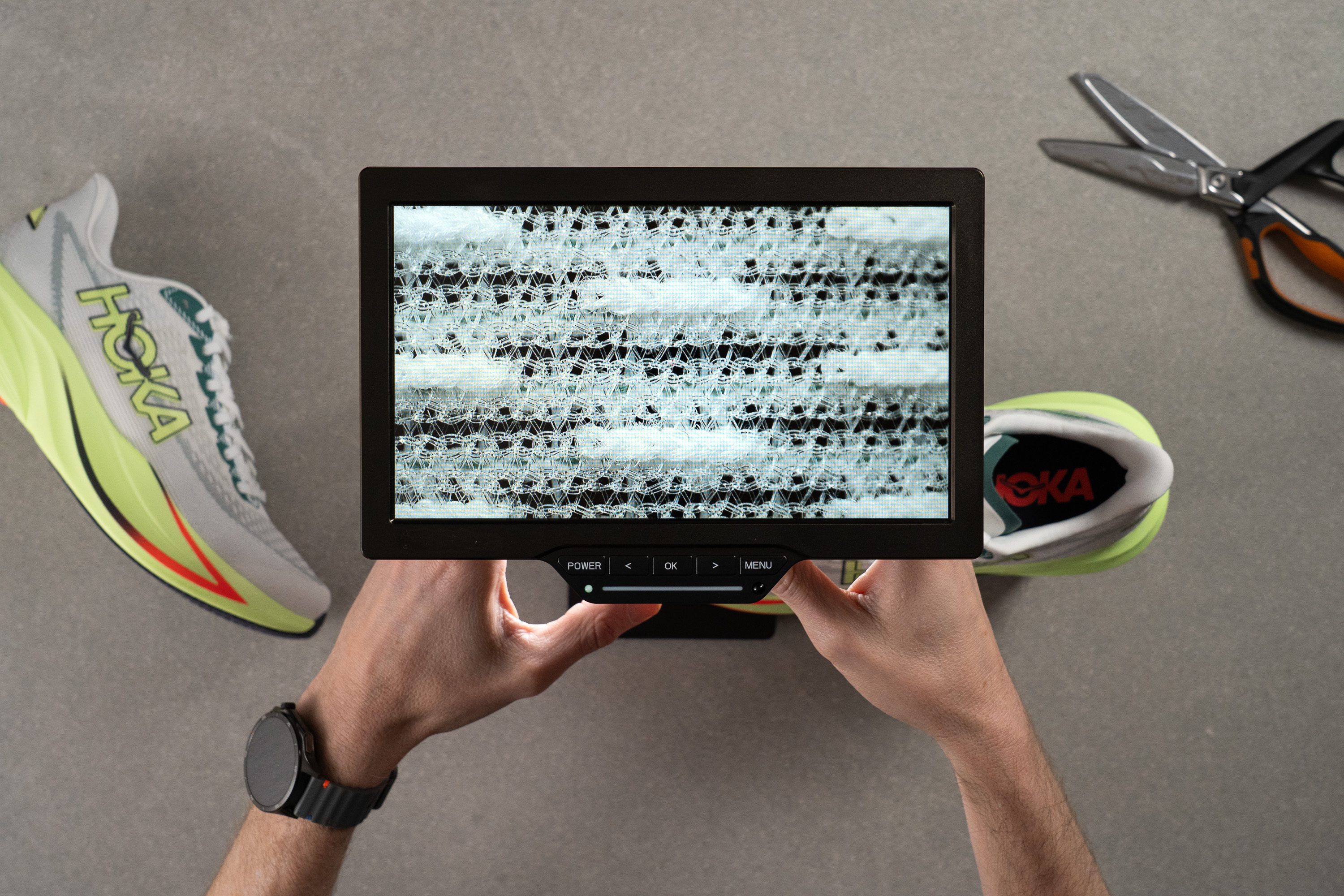
HOKA introduces a fully redesigned upper in the Mach 7, built around a new creel jacquard engineered mesh. However, this material is not entirely new to the brand, as we've already seen it deliver excellent results in several other models.
The upper plays a major role in what turned out to be an outstanding breathability result. The Mach 7 achieved an exceptional 96 BR in our test, showing an impressive ability to pull sweat away from the foot and maintain a dry, comfortable in-shoe environment. And while breathability depends on the entire shoe system and not just the upper, it's clear that this new mesh is the star of the show.
| Mach 7 | 96 BR |
| Average | 75 BR |
Drying potential
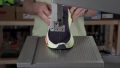
NewThe Mach 7 recorded a drying potential of 54%, but what exactly does that mean?
This test measures how much moisture evaporates from the shoe during our 3-hour protocol. In simple terms, it tells us how effectively the shoe avoids retaining sweat over time. With a result of 54%, the Mach 7 once again delivered a positive outcome, showing a good ability to release moisture and avoid becoming overly damp during longer runs.
| Mach 7 | 54% |
| Average | 53% |
Stability
Lateral stability test
The HOKA Mach 7 remains a neutral option within the brand’s lineup, and runners seeking additional support features should instead consider the Arahi 8.
That said, we definitely wouldn’t describe the Mach 7 as unstable, as the firm foam and supportive midsole sidewalls combine to deliver a steady and controlled ride.
Torsional rigidity
Just like in our longitudinal stiffness test, we found another conservative design choice from HOKA here, with the Mach 7 landing around average at 13.6 Nm.
In our view, the brand clearly aimed to avoid overdoing things in either direction, and that approach worked really well for the intended all-around character of the shoe.
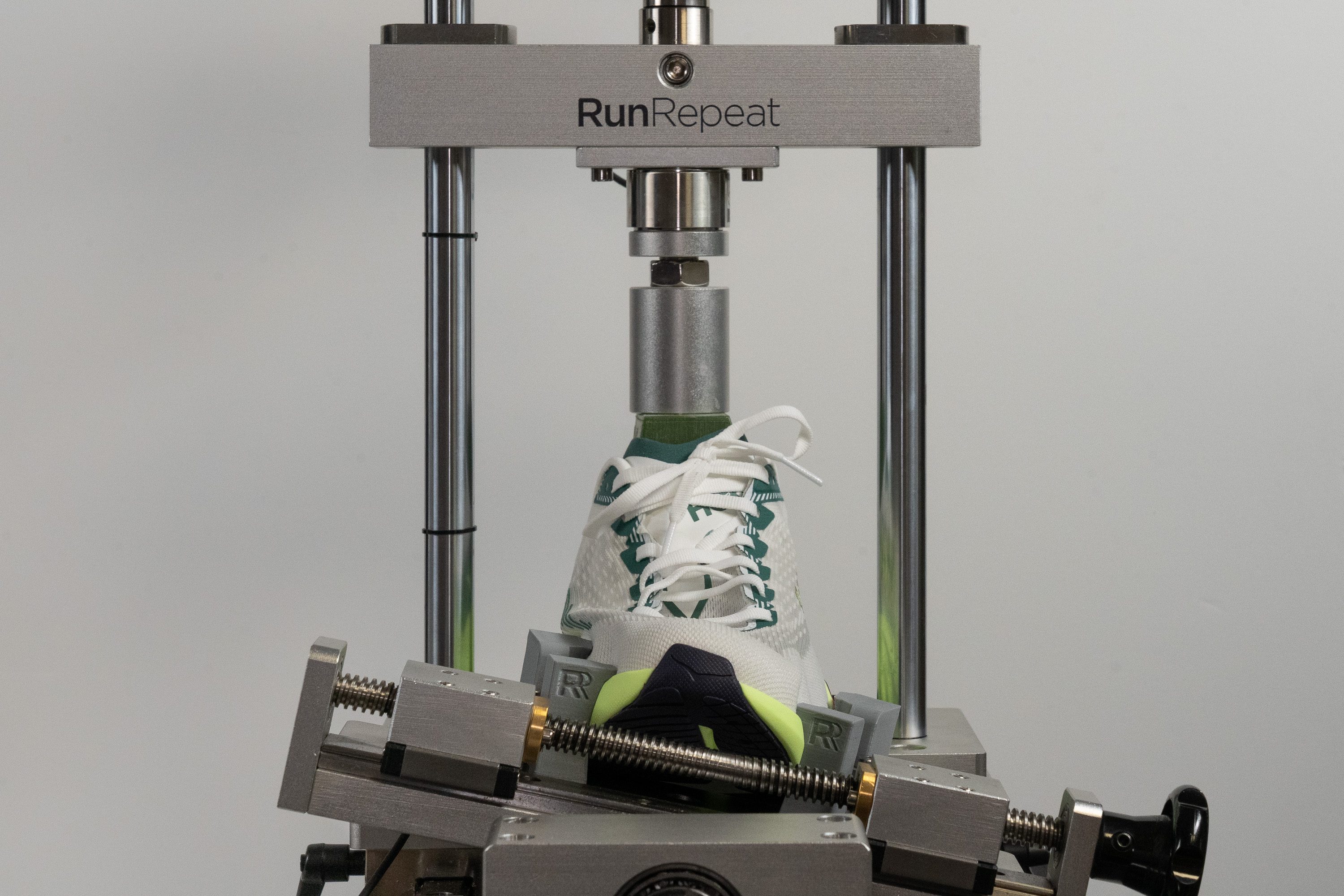
| Mach 7 | 13.6 Nm |
| Average | 14.3 Nm |
Heel counter stiffness
Here we encountered a small surprise, as the Mach 7 earned a maximum 5/5 score thanks to its extremely stiff heel counter. In our experience, this setup may not work as well for runners with sensitive Achilles tendons or for those who prefer a more natural and less guided heel landing sensation.
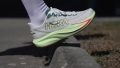
On the other hand, when combined with the shoe’s high drop, this ultra-rigid heel structure makes the Mach 7 arguably the most heel-striker-friendly model the Mach series has delivered so far.
| Mach 7 | 5 |
| Average | 3 |
Midsole width - forefoot
The forefoot follows the same no-nonsense design philosophy and once again lands almost perfectly around average at 115.5 mm. We think this is a smart choice for the Mach 7, as it preserves the agile and nimble character that many of us appreciated in the previous version.
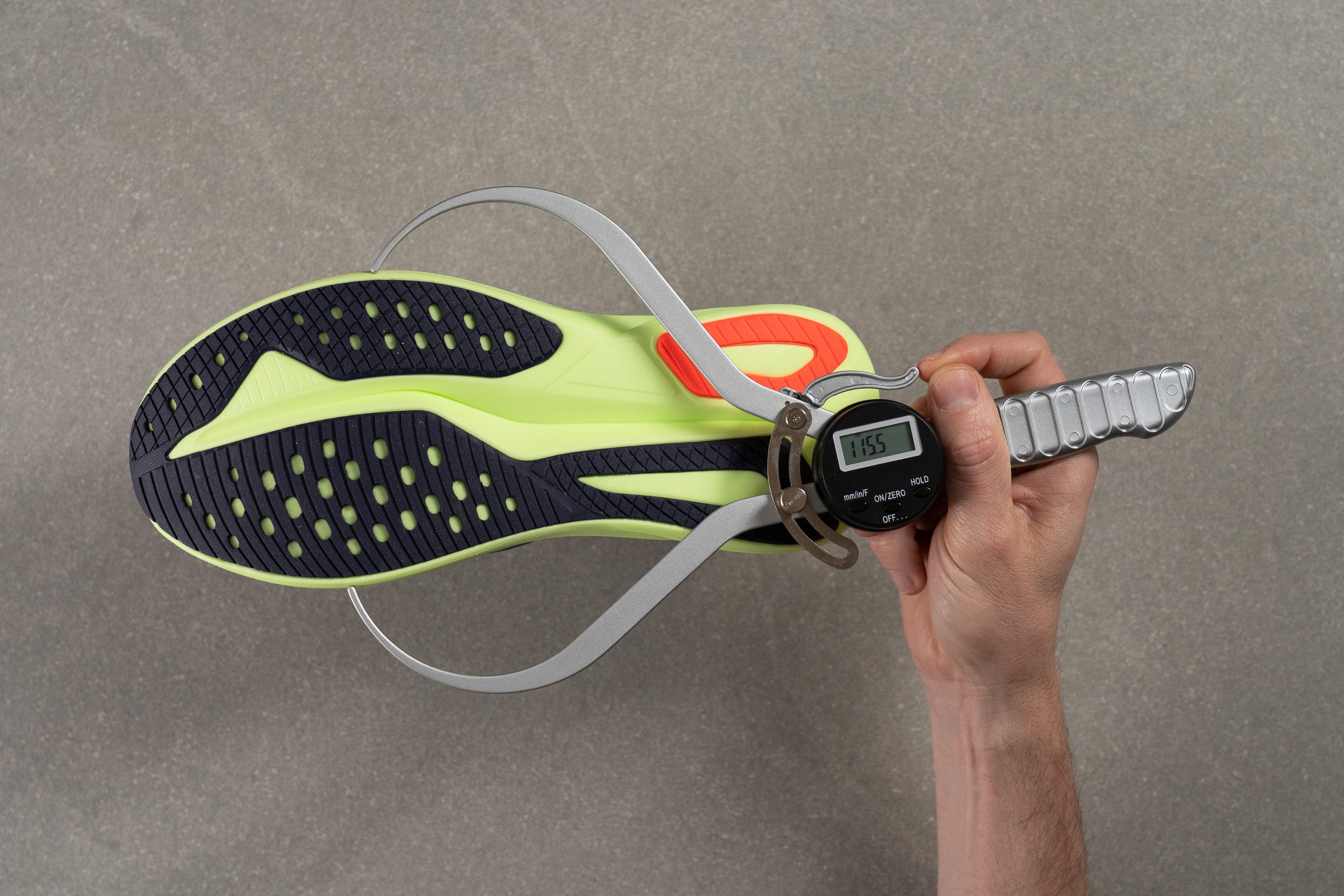
| Mach 7 | 115.5 mm |
| Average | 115.1 mm |
Midsole width - heel
With a measured heel width of 93.3 mm combined with its ultra-stiff heel counter, the Mach 7 delivers secure landings for neutral runners.
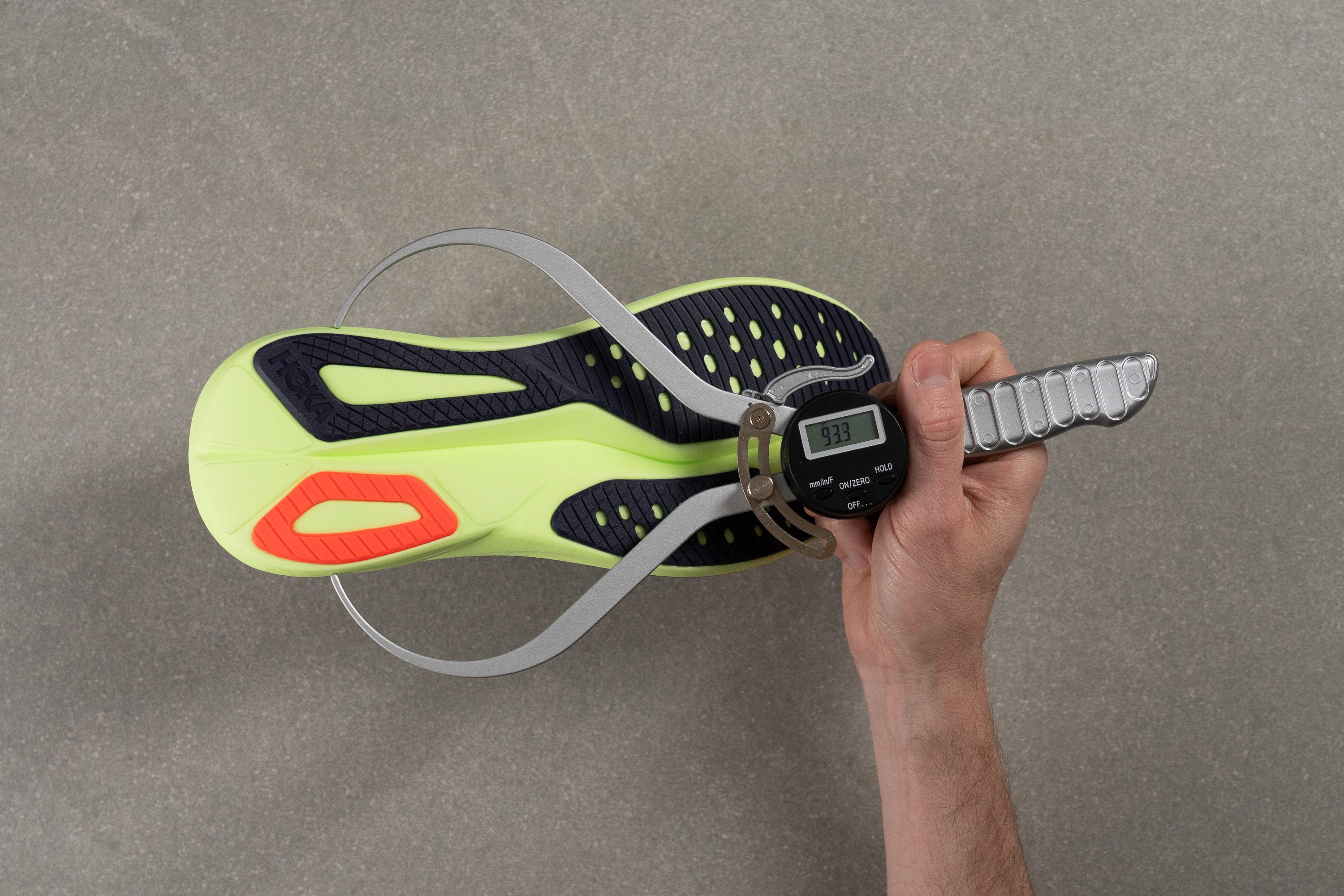
| Mach 7 | 93.3 mm |
| Average | 91.1 mm |
Durability
Toebox durability
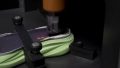
We had serious concerns about the durability of the ultra-thin toebox, and our Dremel test confirmed some of those fears with a modest 2/5 score. Still, it managed to avoid a truly poor result.
We don’t think this should become a major issue for most runners, especially because our earlier measurements revealed a generously tall toebox. That extra vertical space reduces the chances of the toenails constantly rubbing against the upper and eventually creating holes.
| Mach 7 | 2 |
| Average | 2.6 |
Heel padding durability
The heel padding performed noticeably better than the toebox in our durability testing, earning a strong 4/5 score.
| Mach 7 | 4 |
| Average | 3.4 |
Outsole durability
After completing our final Dremel test, we measured 1.1 mm of damage. In our view, that’s a perfectly acceptable result, although it still falls short of being truly standout in terms of durability.
| Mach 7 | 1.1 mm |
| Average | 1.1 mm |
Outsole thickness
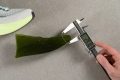
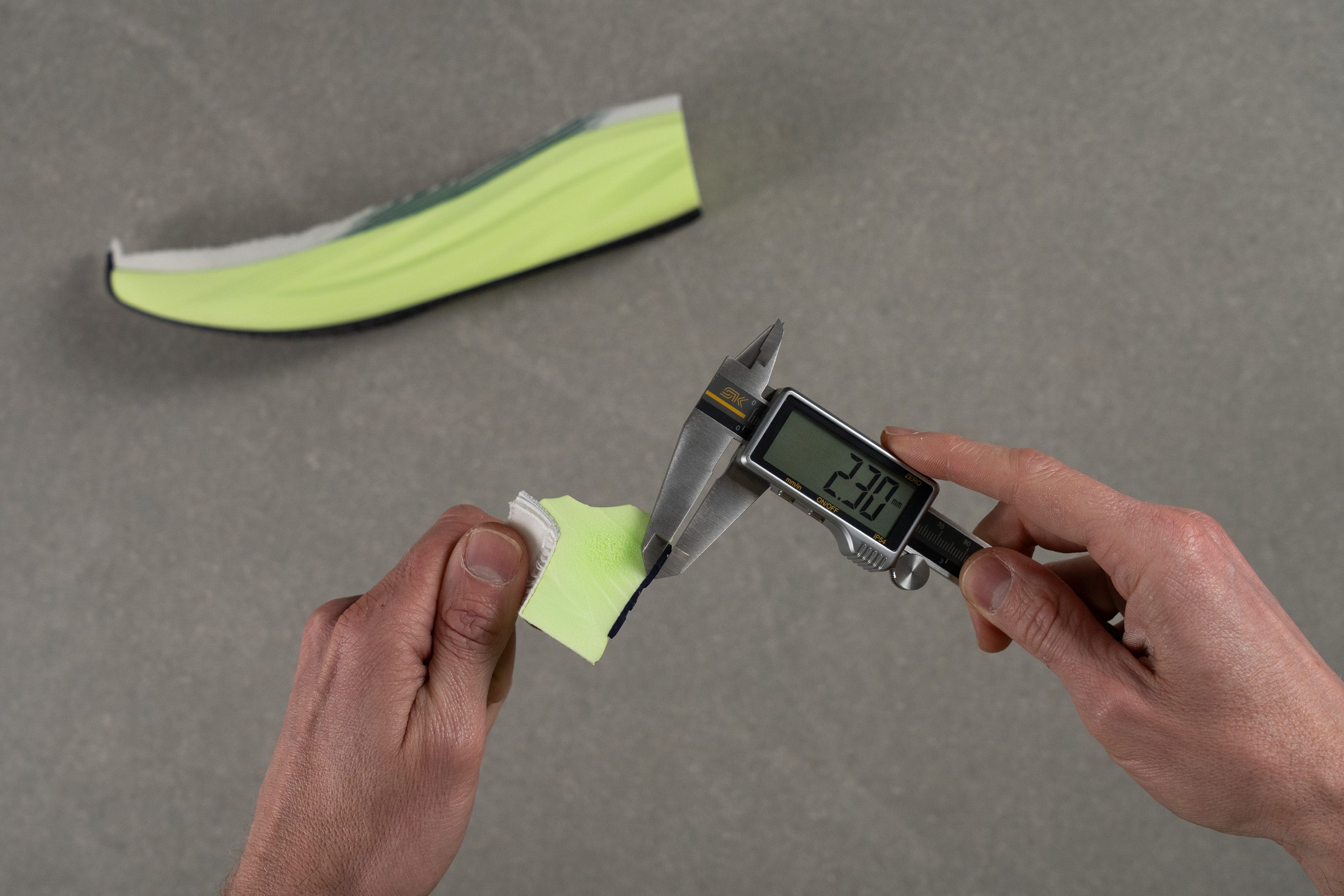
Reaching such a featherlight weight in a daily trainer inevitably requires a few compromises, and one of them comes here. We measured 2.3 mm of outsole thickness, which is a bit lower than average.
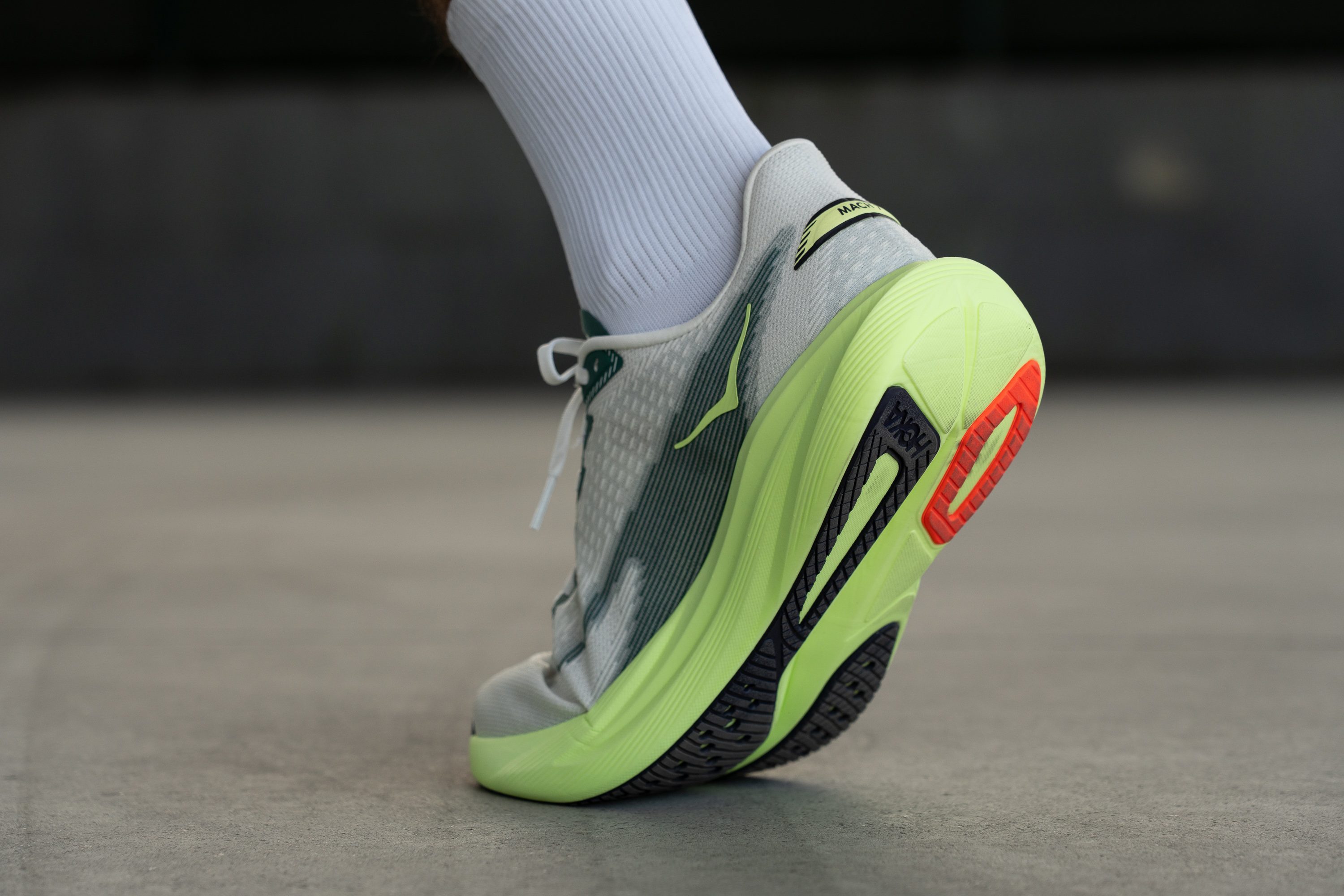
That said, this setup brings a side benefit, as thinner outsole rubber tends to create a more connected and ground-aware ride by reducing the filtered sensation found in some heavily-rubberized trainers.
| Mach 7 | 2.3 mm |
| Average | 3.1 mm |
Misc
Insole thickness
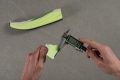
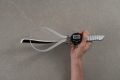
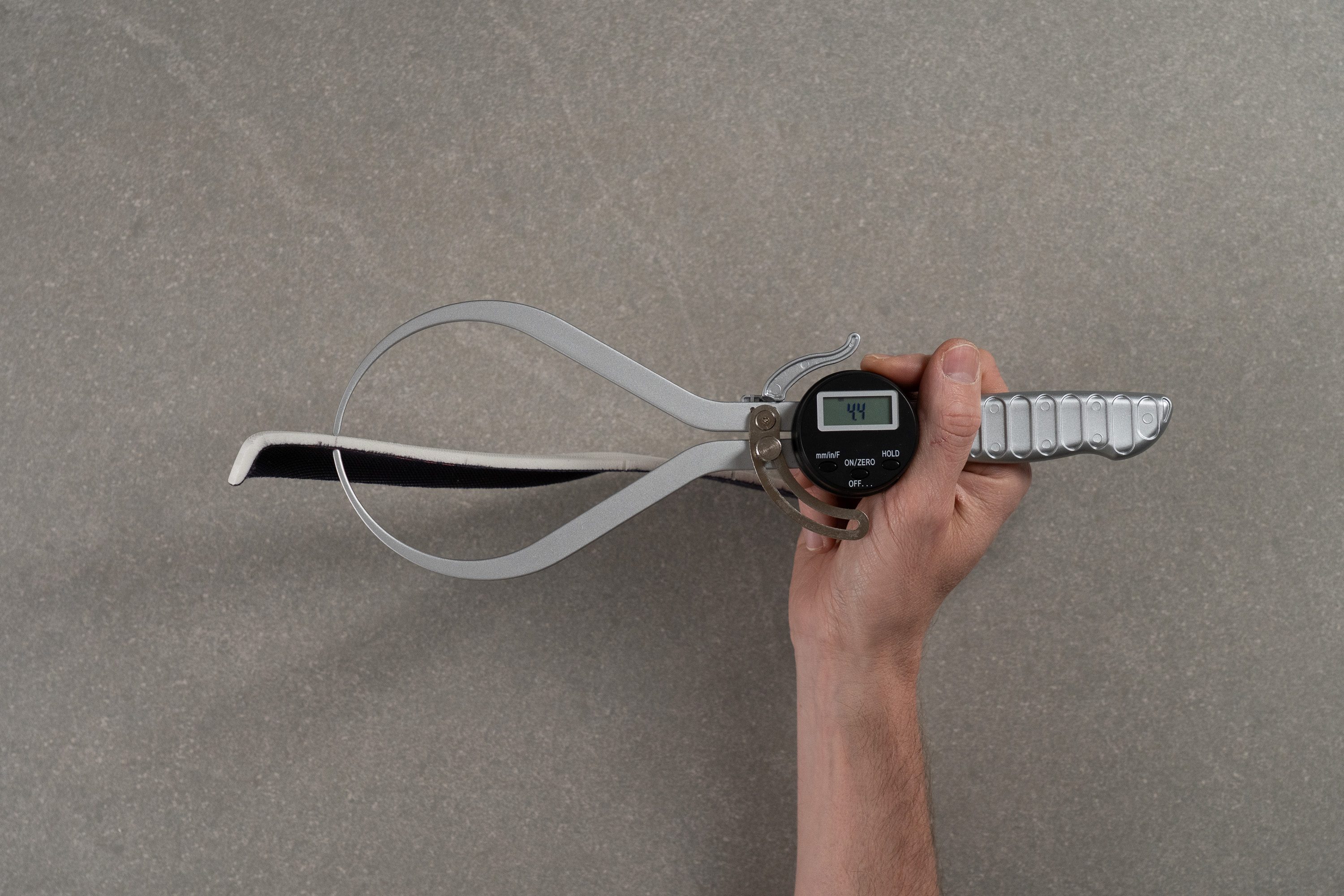
The insole feels fairly standard overall, and our calipers confirmed that impression with a measured thickness of 4.4 mm.
| Mach 7 | 4.4 mm |
| Average | 4.4 mm |
Removable insole
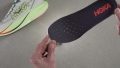
The insole is fully removable, so swapping it for another option is easy as long as it fits properly inside the Mach 7. However, doing so means losing the perforated forefoot design found on the stock insole, which contributes a bit of extra airflow.
| Mach 7 | Yes |
Reflective elements
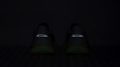
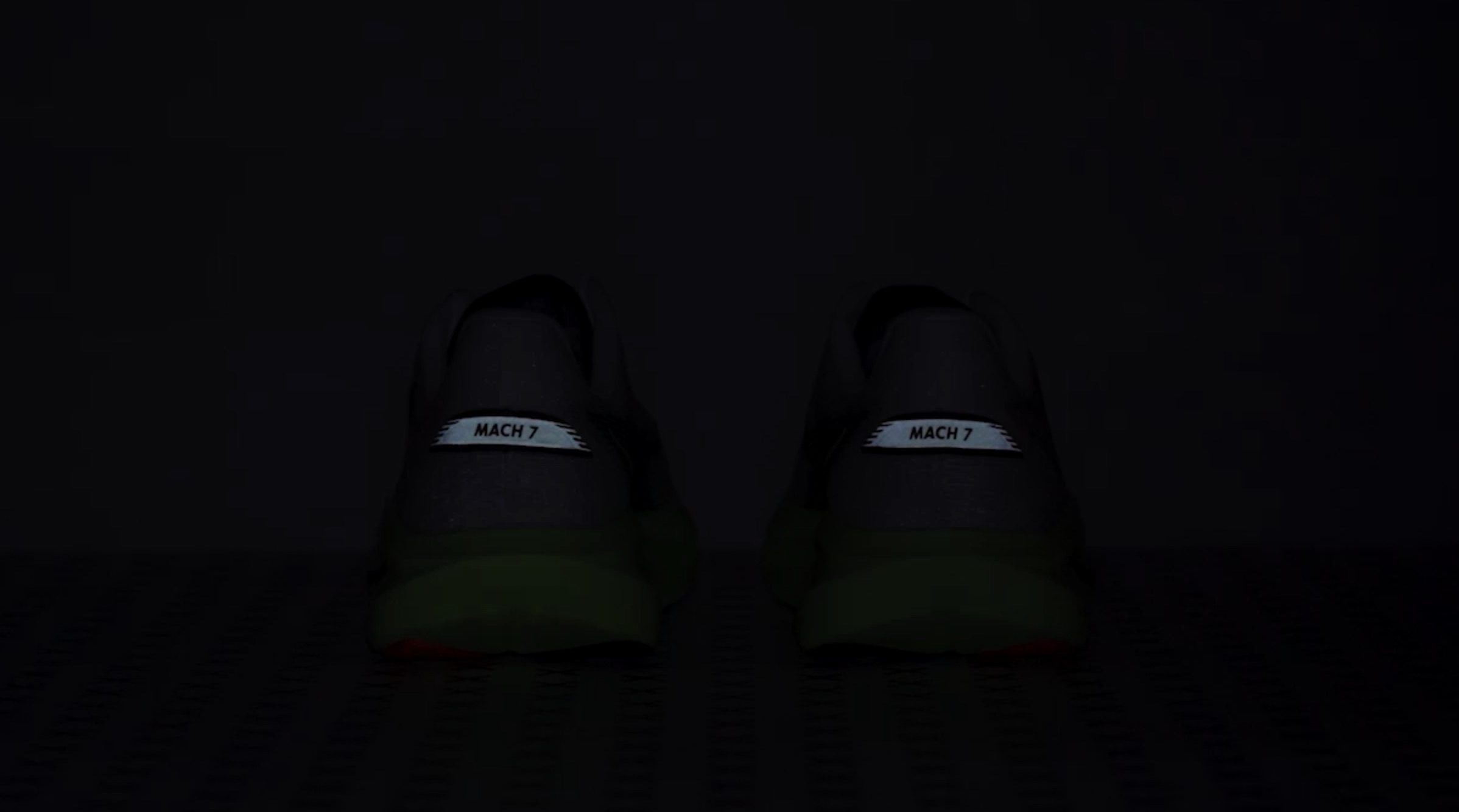
Drivers approaching from behind will easily notice the HOKA Mach 7 at night thanks to its reflective elements, and we always appreciate seeing this kind of safety-focused detail in a daily trainer.
| Mach 7 | Yes |
Tongue padding
The weight-saving philosophy of the Mach 7 is also clearly reflected in the lacing system and tongue construction, both of which feature an intentionally stripped-back design that prioritizes running performance over plush step-in comfort.
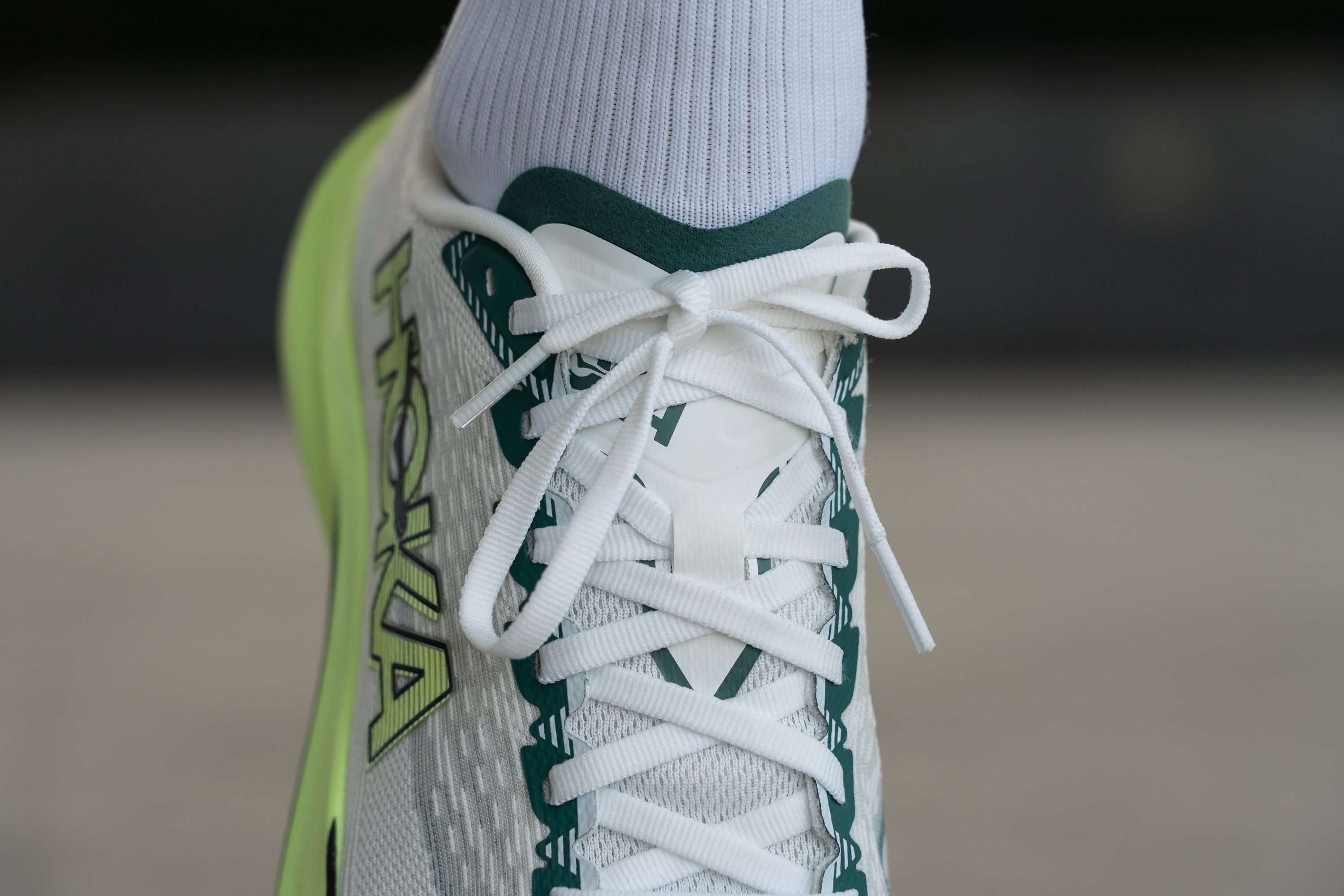
We measured just 3.1 mm of tongue padding, making this shoe a much better match for runners who dislike bulky, heavily-padded tongues with a sneaker-like feel. In our view, the Mach 7 is unmistakably built as a run-focused trainer first, with less focus on doubling as an everyday casual shoe.
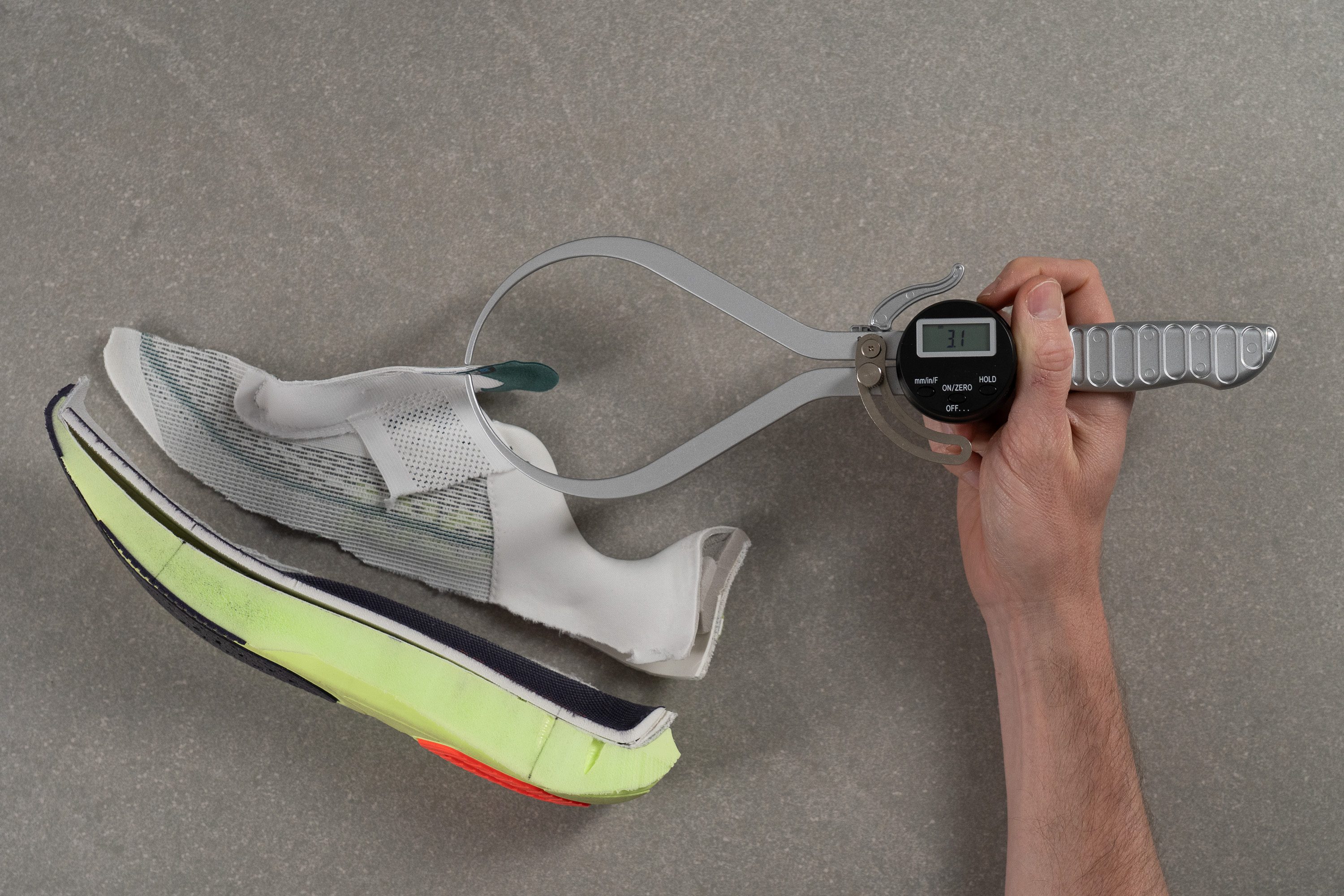
| Mach 7 | 3.1 mm |
| Average | 5.8 mm |
Tongue: gusset type
We found that the gusseted tongue is executed exceptionally well in the Mach 7. It adds almost no extra weight and barely impacts airflow, yet it keeps the tongue securely locked in place throughout every run.
In our opinion, this is the kind of lightweight-but-effective solution that many other brands should pay attention to.
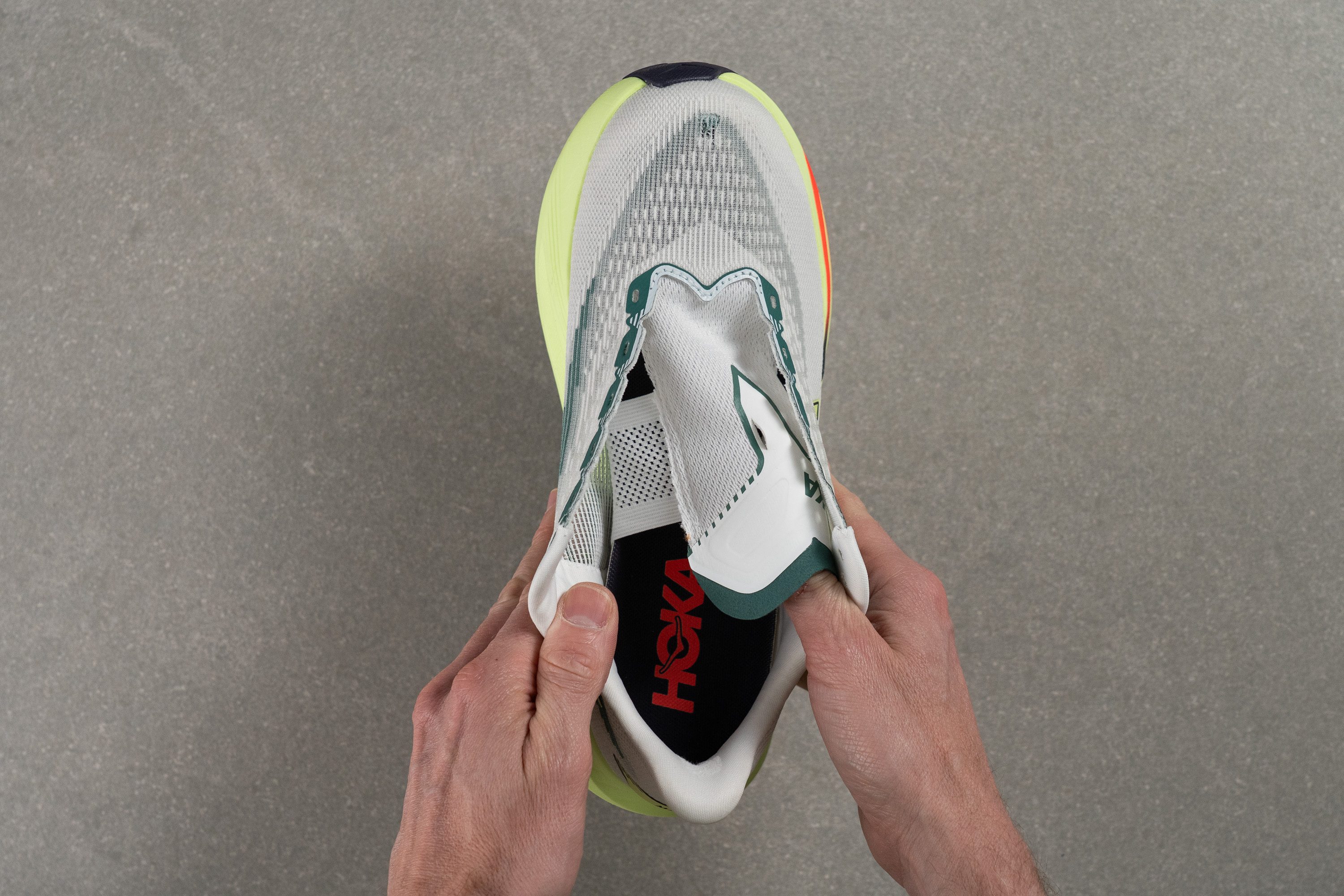
| Mach 7 | Both sides (semi) |
Heel tab
The HOKA Mach 7 skips a dedicated heel tab, although the slightly extended rear section still provides enough material to grab when putting the shoe on. However, the massively-extended heel collars that appeared on many HOKA models a few years ago are no longer part of the design here.
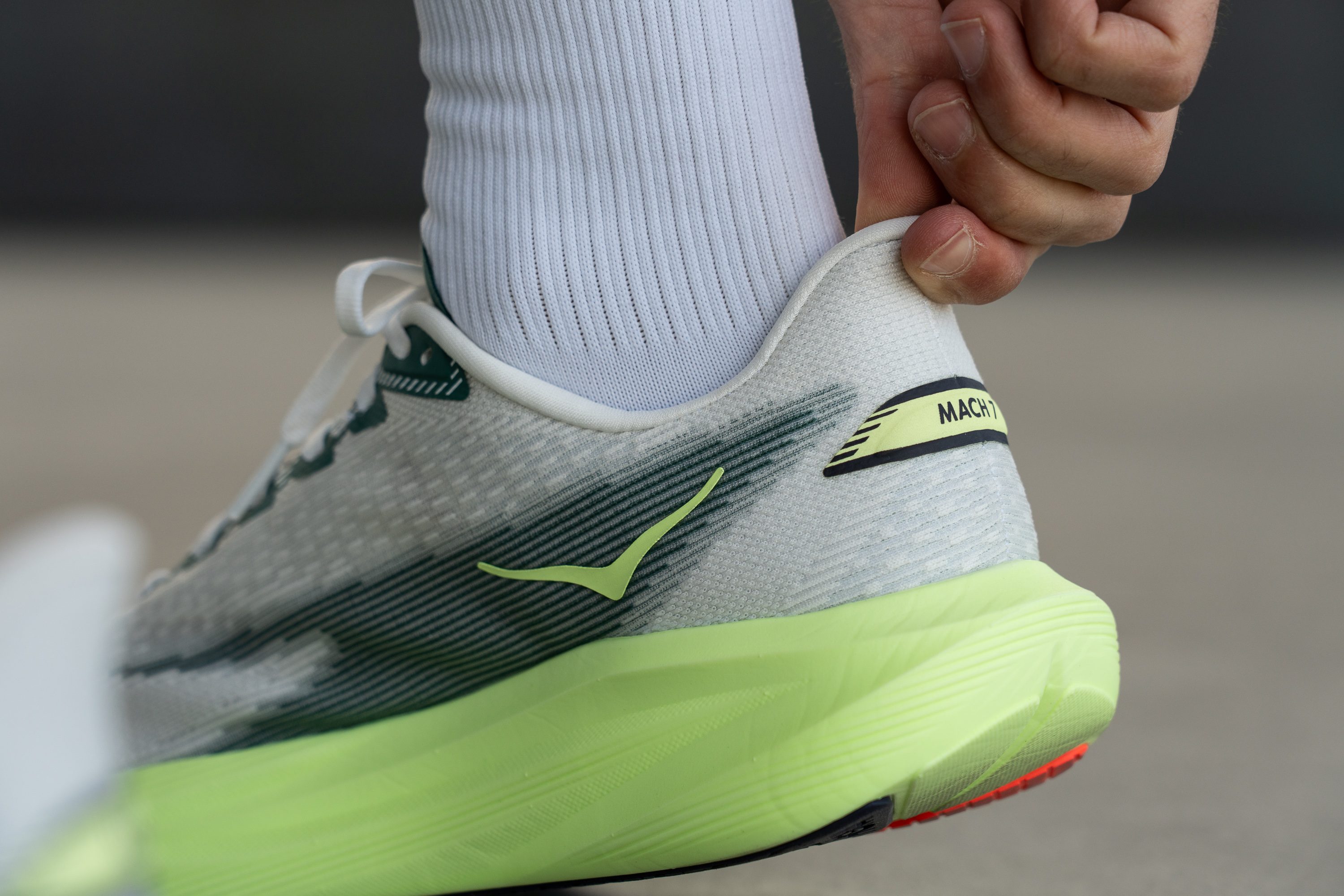
| Mach 7 | None |
Price
Like many other brands, HOKA continues to push prices upward, and the Mach 7 arrives with a $5 increase.
However, considering that the previous version launched back in 2024 and taking into account the meaningful upgrades, we still think the Mach 7 lands on the strong side in terms of overall value.
| Mach 7 | $145 |
| Average | $158 |