3 Best Closed-toe Hiking Sandals in 2026
We buy shoes ourselves. We earn commissions when you buy through us, at no extra cost. Why trust us
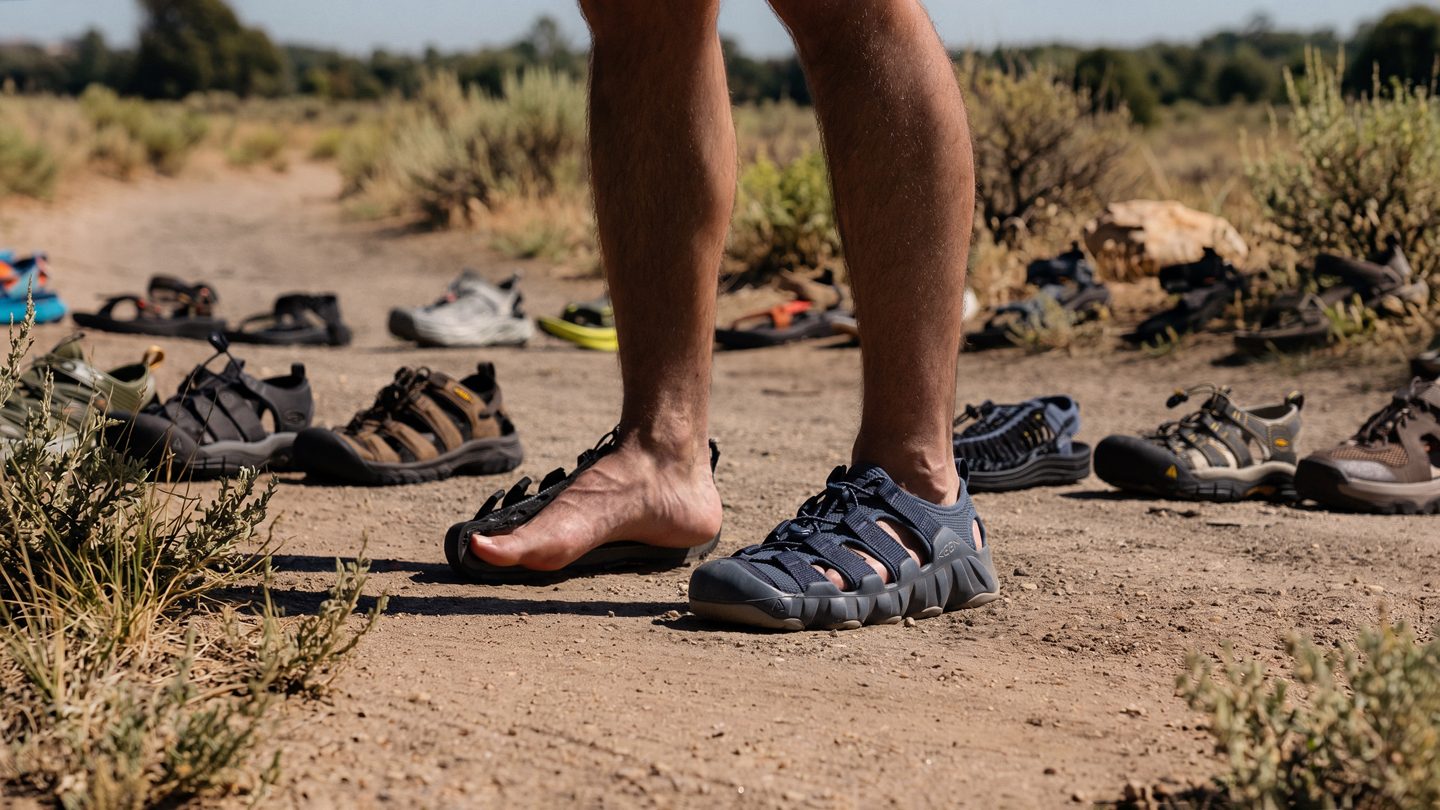
Closed-toe hiking sandals may raise a few eyebrows. If closed-toe, why not choose a proper hiking shoe? If you’re prioritizing breathability, why not choose an open-toe sandal? Or, “Wait, it can actually go underwater?”
We are here to answer all of those questions and highlight when the closed-toe sandals shine and when they simply underqualify. For those who want answers now, we selected the top picks in different categories and added our reasoning, backed by both field and lab testing.
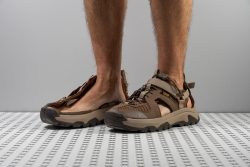
How we test closed-toe hiking sandals
Our testing is standardized. You can read about our protocols, standards, machines, and tools on our Methodology page, where we also list all the improvements.
Once the closed-toe hiking sandals are purchased and delivered, we take them to trails. Field testing is an important part of our process because we get to experience the sandals in their appropriate environments firsthand.
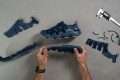
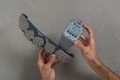
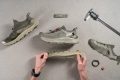
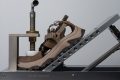
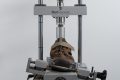
Then, we take the sandals to the lab. The most important detail, closed-toe protection, has to be put to the test. That’s why we perform a toebox durability test on these sandals, something we obviously can’t do on open-toe ones. It’s also important to check their breathability and drainage levels, which is something we always comment on in our reviews, too.
Best closed-toe hiking sandals overall









What makes it the best?
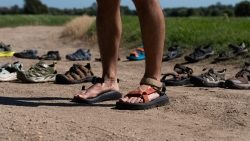
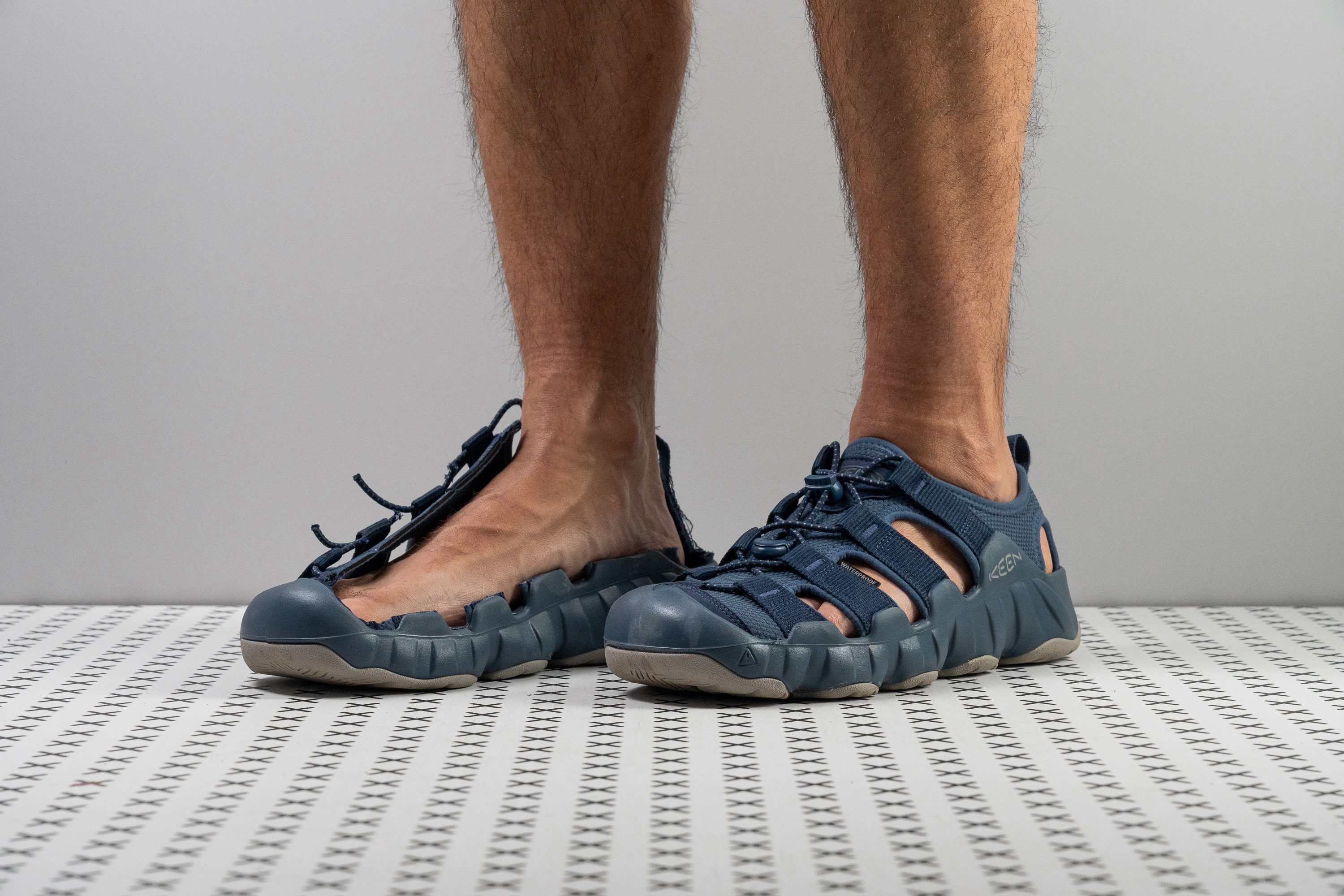
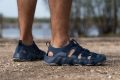
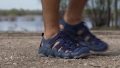
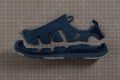
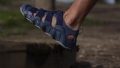
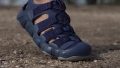
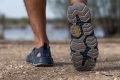
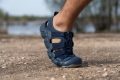
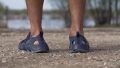
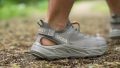
The KEEN Hyperport H2’s enclosed design isn’t just for style and protection; it actually adds tons of support to our treks. Lab tests show it’s impressively durable from top to bottom, keeping our feet away from harm. For added comfort, we enjoyed a lot of room in the sandals’ adjustable fit. Therefore, it’s our best closed-toe hiking sandal.
We didn’t feel suffocated in this sandal, with windows allowing us to breathe, and allowing water to flow in and out when we get wet. The upper and straps’ fabric feels stretchy and forgiving, adjusting to our foot shape better compared to other leather sandals. Moreover, the bungee toggle can be used to regulate its fit.
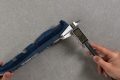
The straps connect with the raised midsole sidewalls to cradle our foot in place. Moreover, its contoured topsole delivers sturdy arch support, with a broad 93.9 mm heel that allows us to find our balance with every step.
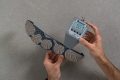
Hyperport H2 is our armor, with the KEEN.PROTECT toe bumper remaining fully intact after our abrasion test. Not only that, our Dremel only damaged the outsole by 0.9, making it 30% more durable than average.
We don’t advise using this pair in low-light situations. It has no visibility at night. Otherwise, reflective socks or clothing may help.
Pros
- Lively and responsive ride
- Stable and supportive build
- Highly protective toe bumper
- Generous toe space
- Light for a closed-toe sandal
- Good traction on dry and wet
Cons
- Not the best shock absorption
- Not very flexible
Closed-toe hiking sandals with the best shock absorption


















What makes it the best?
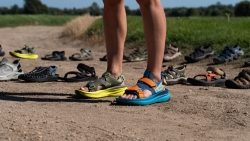
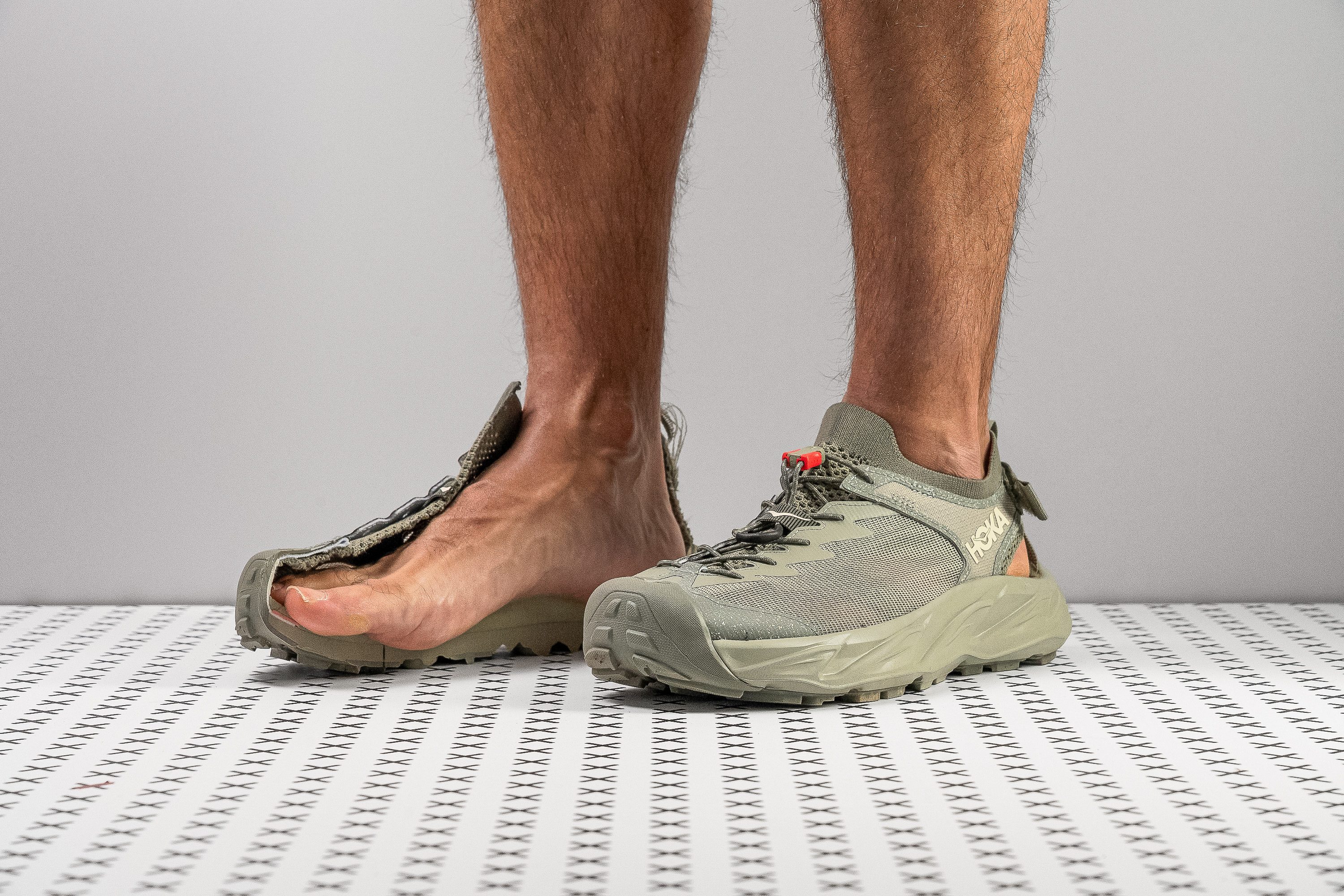
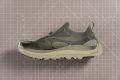
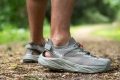
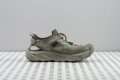
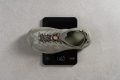
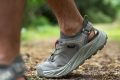
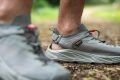
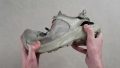
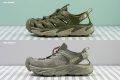
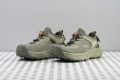
After thorough testing on the trails and in the lab, the HOKA Hopara 2 stands out as the best shock absorber among closed-toe hiking sandals. Protection is the name of the game with its sturdy upper, tough outsole, and superior cushioning that also delivers unparalleled comfort. To top it off, it’s complemented by substantial lugs.
True to HOKA's legacy of comfort, the cushioning offers optimal support and plushness without excessive height, making it a joy to wear all day long. Each landing is welcomed by a cushion that dampens impact better by 17.1% vs. average with its 123 SA score. With a touch of responsiveness, it creates a comfy and bouncy ride that mutes out underfoot trail debris.
The spacious closed-toe box, fortified with an oversized toe cap, ensures comprehensive protection for our feet. Even in less high-wear areas, Hopara 2 has sturdy Cordura mesh panels that bring unobstructed airflow and water drainage.
Underfoot, Hopara 2 continues to shine. The rubber resisted our Dremel impressively, showing a minimal 0.7 mm damage vs. the 2.1 mm average, promising durability. Lab tests reveal its multi-shaped 3-mm lugs, gripping firmly on various terrains from loose ground to smooth rocks.
However, we don’t recommend this sandal to narrow feet as its 121.9/98.4 mm platform is by far the widest we’ve measured vs. the 119.6/91.8 mm lab average.
Pros
- Comfortable cushioning
- Highly durable construction
- Light for a closed-toe sandal
- Unmatched cushioning and impact protection
- Feels stable and grounded
- Fantastic grip on slippery surfaces
- Plenty of toe room
- Sustainable materials
Cons
- Traps sand easily
- Not for narrow feet
- Color discrepancy
Closed-toe hiking sandals with the best traction




What makes it the best?
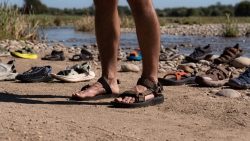
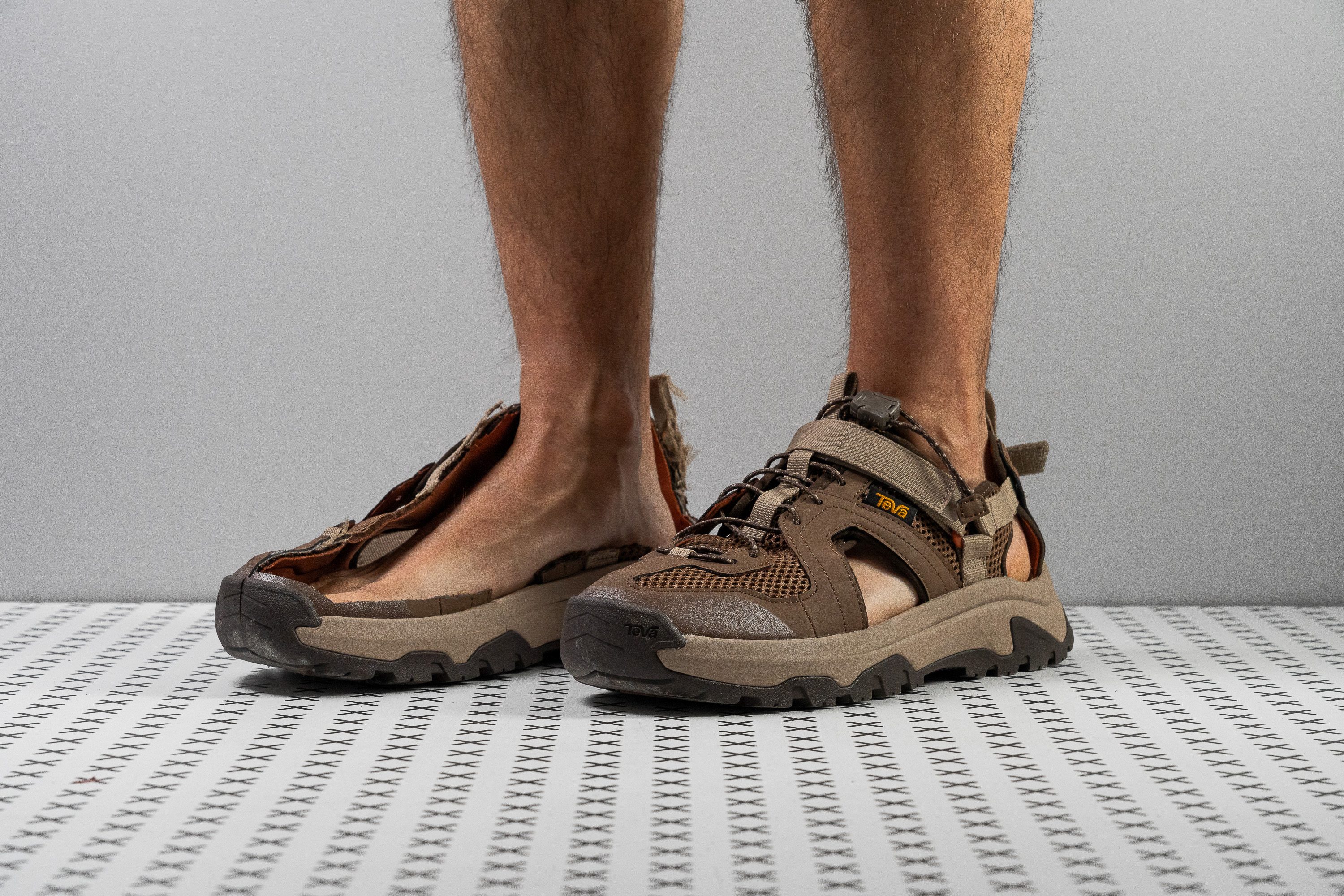
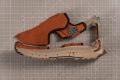
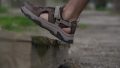
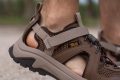
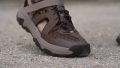
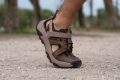
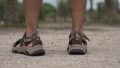
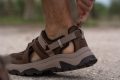
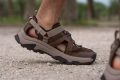
The Teva Hurricane XLT3 Closed Toe has a high-quality build, proven by its strong performance in our lab’s durability tests. It offers solid protection without discomfort, still giving our feet room to breathe and keeping the base tacky. We felt safe trekking along various surfaces in the wild, making it our closed-toe hiking sandal with the best traction.
In our wet-condition test, we recorded a solid 0.73 result for Hurricane XLT3 Close Toe, which indicates its readiness to tackle wet and slippery surfaces. For extra ground hold, it features 3.0 mm lugs that can cling to softer ground and inclined terrain.
Despite the outsole’s effective grip, it also proved to be exceptionally wear-resistant. Our Dremel only caused 0.6 mm damage, which is 53% less than average. This result shows we have an armor protecting our feet, since sharp rocks won't easily puncture the outsole.
Even the toebox proved to be protective, earning a solid 4/5 durability score. Despite its sturdiness, the sandal has ventilation pores to allow heat, sweat, and water to escape.
However, shock absorption is average. While this sandal is comfortable, we suggest a more cushioned alternative for all-day wear.
Pros
- Fantastic traction on dry and wet
- Amazingly durable materials
- Stable and grounded platform
- Soft topsole directly under the foot
- Solid shock absorption for a sandal
- Great breathability for a closed-toe sandal
- Convenient fit regulation
- Sustainable materials
Cons
- Heavier than average sandal
- Less cushioning than in the open-toe XLT3
Get familiar with closed-toe hiking sandals
The unique design of closed-toe hiking sandals comes with both pros and cons, naturally. Here’s what to specifically pay attention to because they sit so nicely between the 2 big (regular? normal? conventional?) categories: hiking shoes and hiking open-toe sandals.

This may also serve as a list for you to make sure you really need and want closed-toe hiking sandals. We list their pros and cons below.
6 reasons to buy closed-toe hiking sandals
All the things that make closed-toe sandals a good choice:
- With built-in toe protection, closed-toe hiking sandals are safer because they keep your toes protected from sharp obstacles and debris.
- They are also super handy when doing water hiking, because the water isn’t always clear enough, and you can hit sharp rocks or roots underwater.
- Closed-toe hiking sandals can also feel significantly warmer, depending on the materials used. This is great for hikes when you’re not sure of the weather, but want to stay on the warmer side, just in case.
- You will use less sunscreen because less of your skin is exposed.
- The closed-toe design is also great when your toes are not having their best days (e.g., you don’t have enough time to take care of them, get a pedicure, etc.).
- They also offer more lacing/lockdown options than their open-toe counterparts.
4 reasons NOT to buy closed-toe hiking sandals
On the other hand, these are the downsides:
- Given the extra coverage over the instep and forefoot, you should consider their breathability and water drainage. Their design dictates breathability, meaning it’s usually up to the upper cutouts to let the sweat and moisture out. However, you should be aware of the materials as well, especially if your feet sweat a lot or you plan to do water hiking. You will want those to drain ASAP.
- They also collect sand and small pebbles, so you should keep that in mind when deciding when you will be wearing them.
- During water hiking or other water activities like rafting or SUP, stuck pebbles may become very annoying because you’re not always in a position to stop, take the sandals off, and put them back on.
- In scorching heat, you may be wishing for an open-toe option.
Toebox durability: all the difference
In our lab, we run 2 durability tests: on the toebox and outsole. Naturally, we will focus on the toebox here, as that is the main feature.
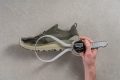
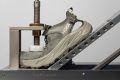
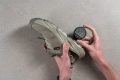
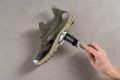
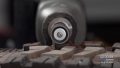
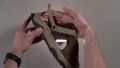
For this test, we set the Dremel to 5K RPM, and we press it using a force of 2N against the toebox for 12 seconds. This is the setting we use for all hiking sandals. We end up with a dent in the toebox, which we use to assess the toebox durability on a 1-5 scale, where 1/5 is the least durable and 5/5 the most.

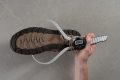
If you’re interested in the outsole durability, as you should be if you’re a severe overpronator or if you often hike on harsh trails, here’s how we do that test:
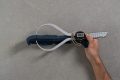
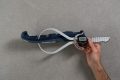
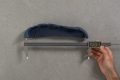
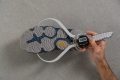
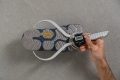
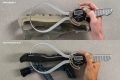
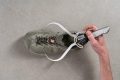
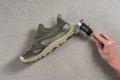
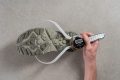
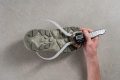
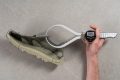
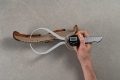
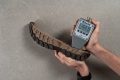
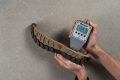
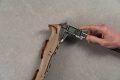
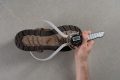
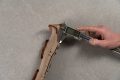
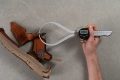
In this case, given that we’re dealing with hard rubber, we use a tire tread gauge to measure the depth of the dent.

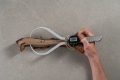
We don’t have to assess anything: the shallower the dent, the more durable the outsole!
Upper materials: breathability, drying time, weight
Some closed-toe hiking sandals are made of leather. Leather is very durable and can look even better as time goes by. But leather takes a long time to dry out. Mesh, on the other hand, is very thin and therefore light, and it can dry quite quickly.

This is also important for breathability. Some closed-toe hiking sandals have many cutouts, which is important when we want the heat and moisture to get out. However, sweat and water tend to soak the upper, and this becomes very important when going rafting, kayaking, crossing streams and rivers, or when your feet are simply sweating a lot.
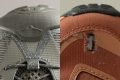
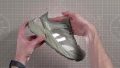
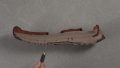
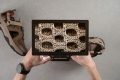
Examining the upper under the light allows us to notice more details on the upper.

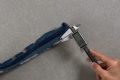
The upper's thickness affects both weight and drying time. More time is needed to dry, as we see in the image below, with a sandal that features bungee laces like the majority of other models, but it also has Velcro on top. A thick Velcro, one may notice.

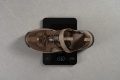
Finally, we can also look at the hiking sandal’s weight. We weigh all sandals that go through our lab and the numbers you see are given for men’s US 9 in standard width.

Traction in closed-toe hiking sandals
The thing about hiking sandals is that people use them for everything. Even when they are made for proper hiking, we see people use them around the city, while walking their dogs in the parks, going fishing, camping, traveling, and so on.
Regardless of the surface, you should be able to rely on them. For this purpose, we do a traction test in the lab. We do so following the SATRA TM144 methodology. The sandal is angled at 7 degrees and pressed against the wet concrete using a force of 500N. This allows us to measure the dynamic coefficient of friction.
This is not a complete story, though. To understand how some outsoles work, we have to look at their tread patterns too.

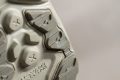
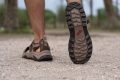
Lugs that are very aggressive, very deep, and placed further apart from each other work wonders in mud. Outsoles with razor-thin slits, instead of separate lugs, do a great job channeling water away.

When lug depth matters (doing proper hikes and not just going for a stroll around the city or city parks), we’ve got you covered.
Shock absorption in closed-toe hiking shoes
Going for a short walk or a short session on the water is fine, but what if you're actually hiking in these sandals? We have to look at shock absorption.
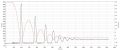
Shock absorption tells us how good the midsole is at reducing the stress sent to the hikers' legs by absorbing the impact forces. The higher the result of the test in SA, the better the shock absorption. This is a feature you should prioritize when going hiking, especially longer routes.
We consider shock absorption above 110 SA high, and above 95 SA moderate.
How should closed-toe sandals fit?
Comfortably! Just because they are closed-toe does not mean that the normal “rules” don’t apply. Your feet should not be sliding to the sides or back and forth within the sandal. Most importantly, the toebox should not be cramping your toes or pressing them from the top.

If you’re unsure about which size you need or you want to convert from one brand that you know fits you well to another, look at our comprehensive Size charts. If you’ve never measured your feet to learn your shoe size, maybe the time is now.
In our reviews, you can also find data on how the sandals fit (small, just right, or large) depending on how many people left such comments.
Similar buying guides