Behind the price tag of running shoes

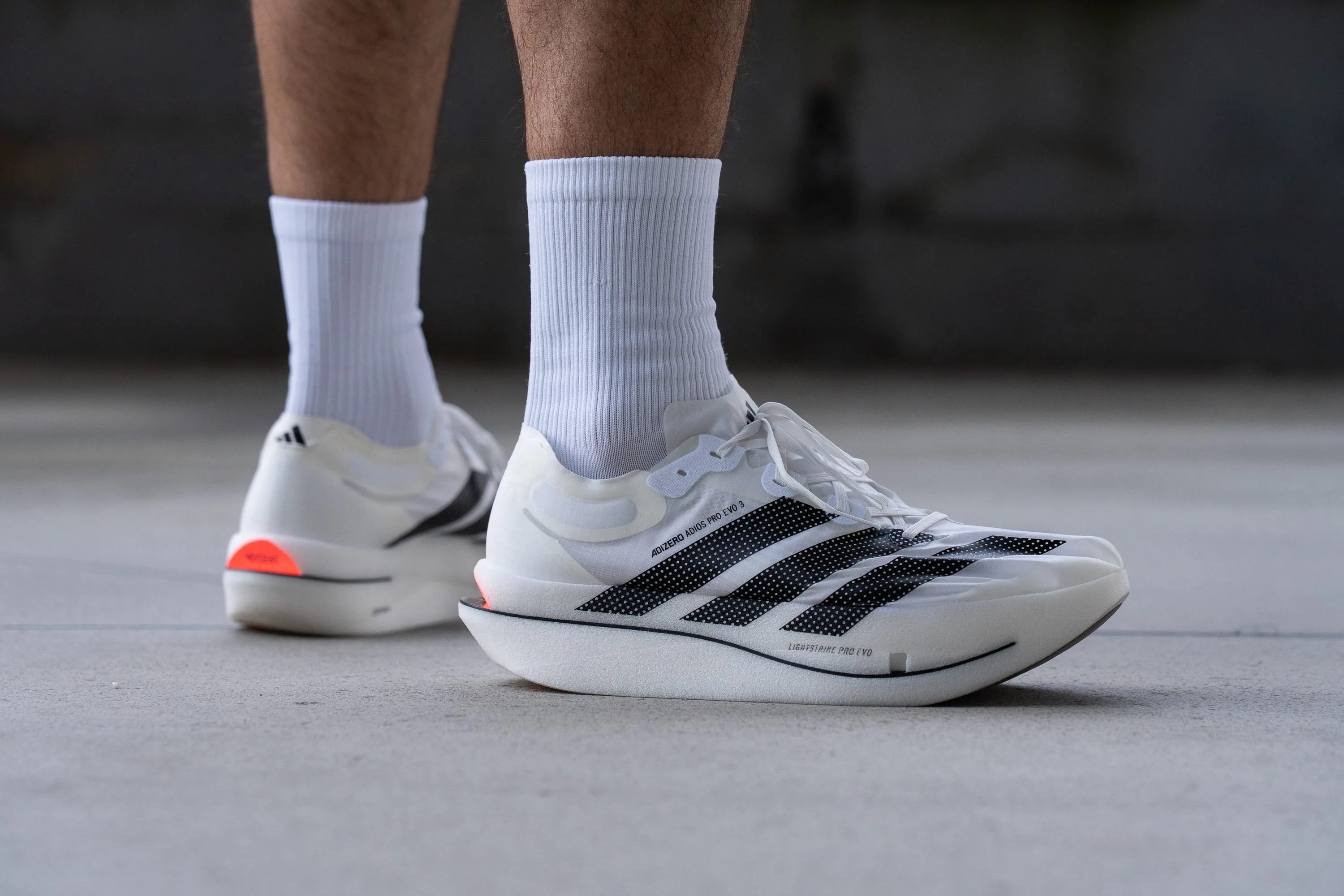
The running shoe market is far more vibrant today than it was 5 or 10 years ago. After testing countless models in the lab, we believe that modern superfoams entering daily trainers, advanced uppers, and higher-grip outsoles have created clear, measurable improvements across all categories.
We will explore in this guide the different tiers of running shoes, their role in the market, and which one might suit your needs. Understanding these tiers can help you make a smarter, better choice for your next purchase.
Main differences between running shoe tiers
Running shoes, at their core, are nothing more than an upper, a midsole, and an outsole. These three parts largely determine how the price goes up or down depending on the tier.
To illustrate these differences, we’re going to use three ASICS models as examples: the Versablast 4 ($80) for the cheap tier, the Novablast 5 ($140) for the standard tier, and the Megablast ($225) for the premium tier.
Midsole
The midsole is where most of the manufacturing cost differences appear. Our analysis focuses on energy return, and we avoid comparing shock absorption here because the stack heights of these shoes vary too much.
| Shoe | Foam | Energy Return (heel) | MSRP ($) |
| ASICS Versablast 4 | Amplifoam+ (EVA) | 53.2% | 80 |
| ASICS Novablast 5 | FF Blast Max (POE) | 63.6% | 140 |
| ASICS Megablast | FF Turbo² (A-TPU) | 73.0% | 225 |
As you can see, the highly-bouncy FF Turbo² foam in the Megablast delivers outstanding energy return. A-TPU is expensive to produce and shape, and that cost is reflected in the shoe’s final price. Meanwhile, the Novablast 5 uses FF Blast Max, a well-balanced compound in every aspect, and the Versablast 4 relies on the cheaper Amplifoam+, which is not even a supercritical foam but basic EVA.
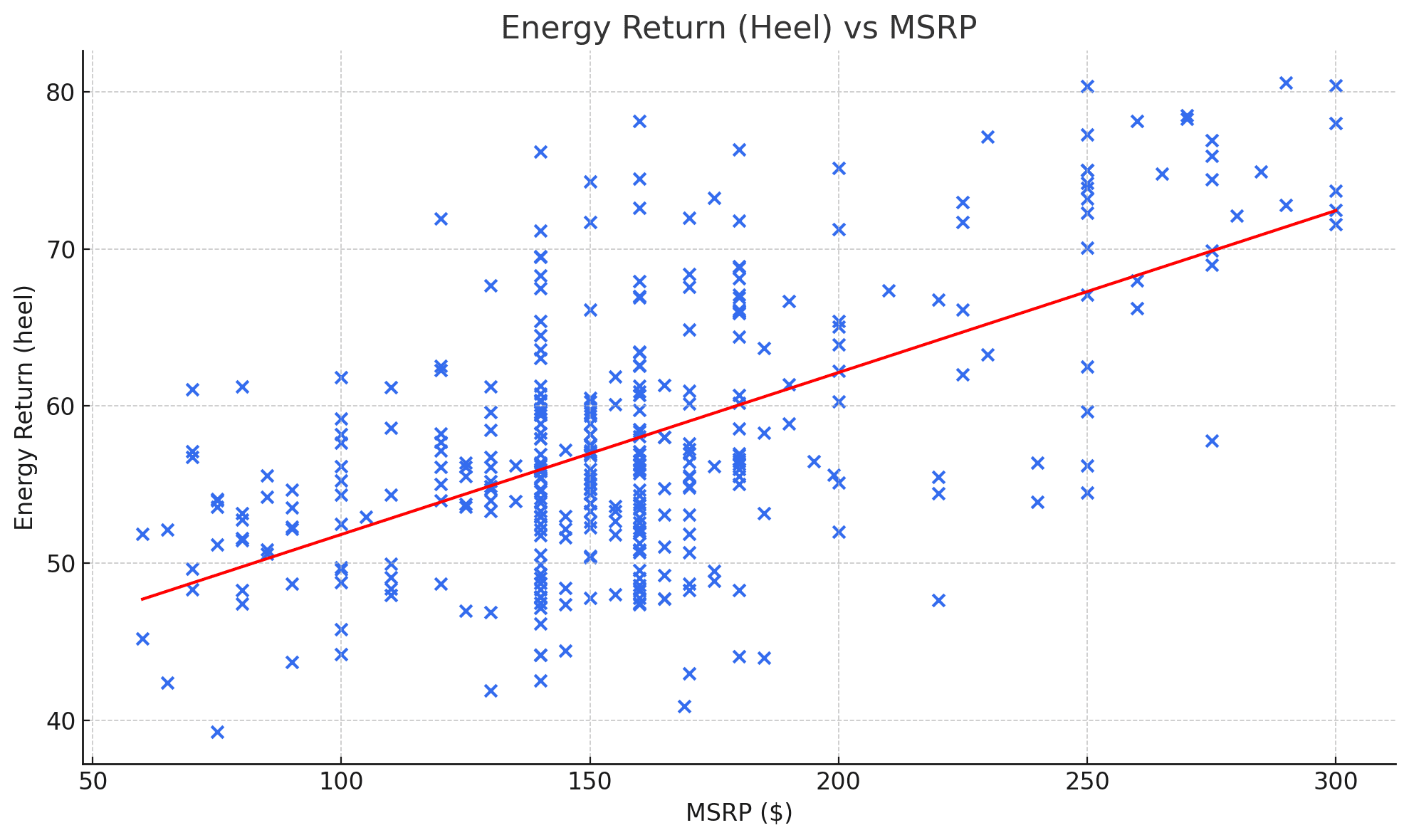
Our chart shows a positive relationship between MSRP and heel energy return. Cheaper shoes stay between 45% and 55%, with only a few budget models exceeding that range. As prices rise into the 150-180 dollar zone, energy return becomes more variable, but many models still sit near the median.
The strongest correlation appears above 200 dollars, where premium shoes like super shoes and super trainers consistently reach 70-80% energy return. And overall, while price isn’t a perfect predictor, it's clear to us that premium shoes do trend toward meaningfully higher energy return.
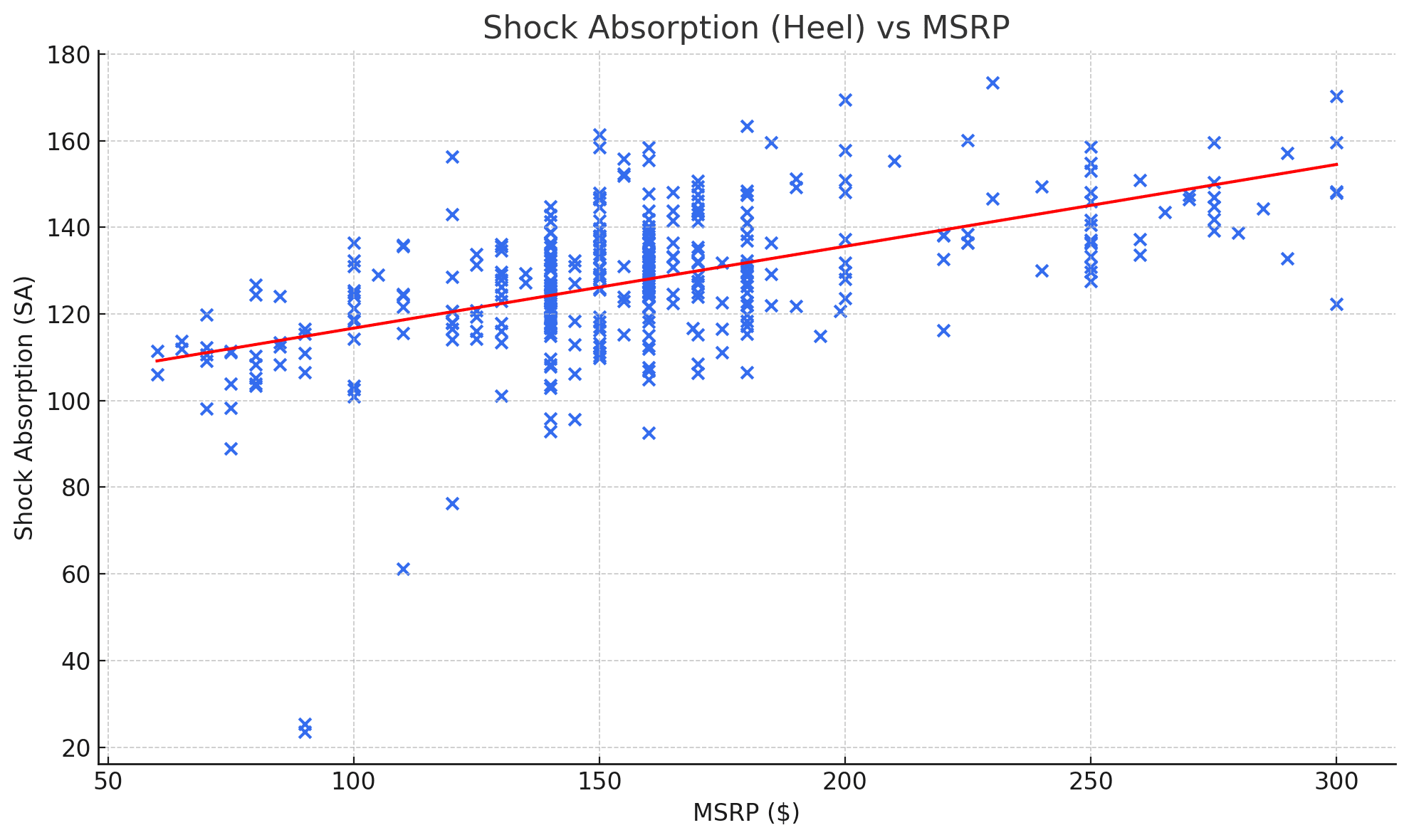
We also compared shock absorption from our lab reviews against shoe prices. Budget models usually have moderate stack heights and cluster around 95-115 SA. Standard-tier shoes occupy the mid-range, spreading between 115 and 135. Premium shoes, especially those above 200 dollars, frequently reach 140-165 SA, confirming that top-tier foams like PEBA and A-TPU, as well as higher stack heights offer superior cushioning.
Outsole
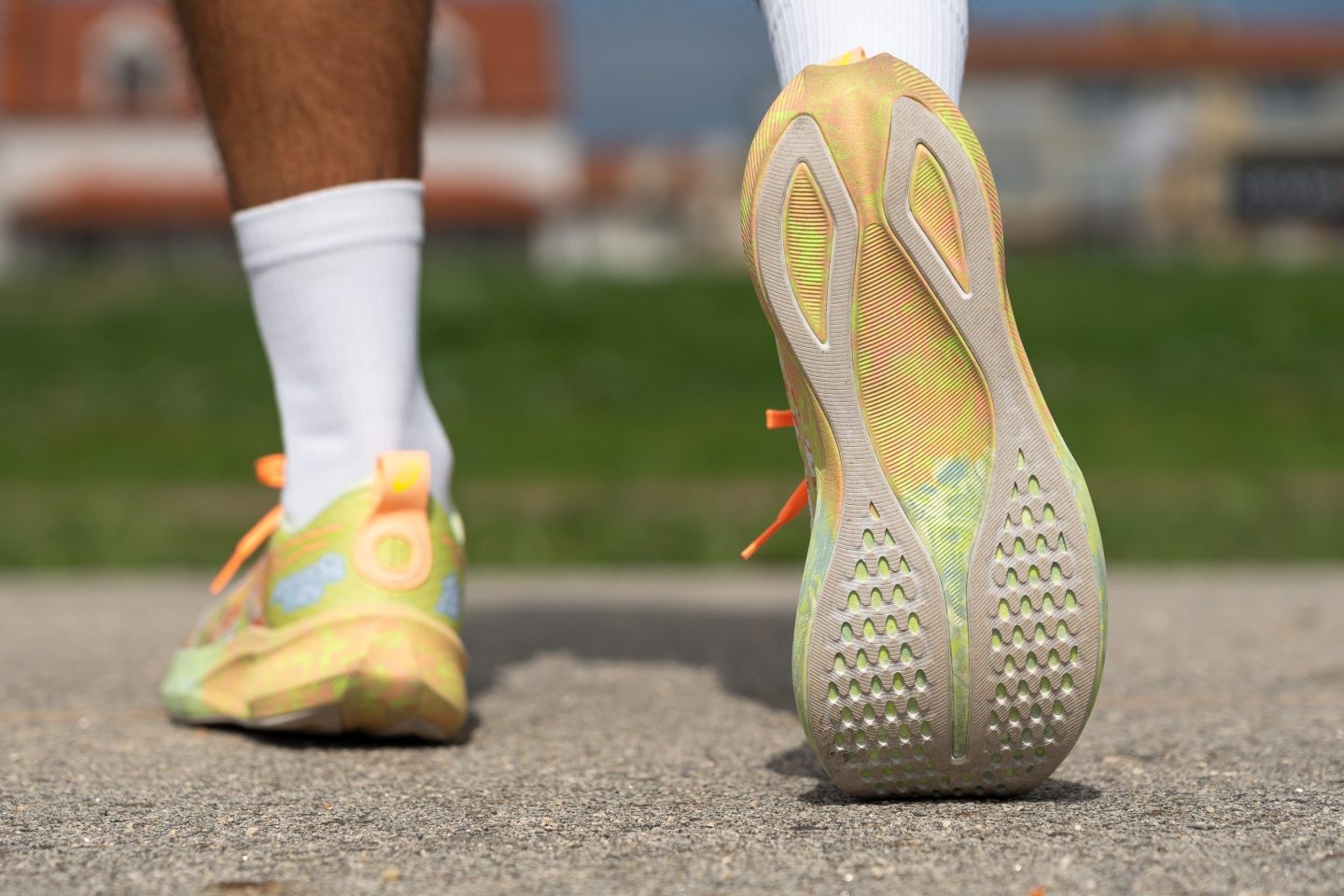
Those who often run in wet or unstable conditions know how essential a grippy compound can be for safety and confidence. As before, let’s compare the same three ASICS shoes:
| Shoe | Rubber | Forefoot traction | MSRP ($) |
| ASICS Versablast 4 | Generic | 0.41 | 80 |
| ASICS Novablast 5 | AHAR LO | 0.53 | 140 |
| ASICS Megablast | ASICSGRIP | 0.80 | 225 |
The results are crystal clear. The Megablast uses ASICS’ top-tier ASICSGRIP, which delivers excellent traction. To keep costs under control, the Novablast 5 relies on AHAR LO, a mid-level compound. The Versablast 4 closes the list with a generic rubber that performs noticeably worse but is far cheaper to produce.
This ASICS trio is a great example of how each price tier consistently reflects outsole performance. In other brands the separation between cheap and standard models can be less clear, but here the hierarchy is easy to see.
Upper
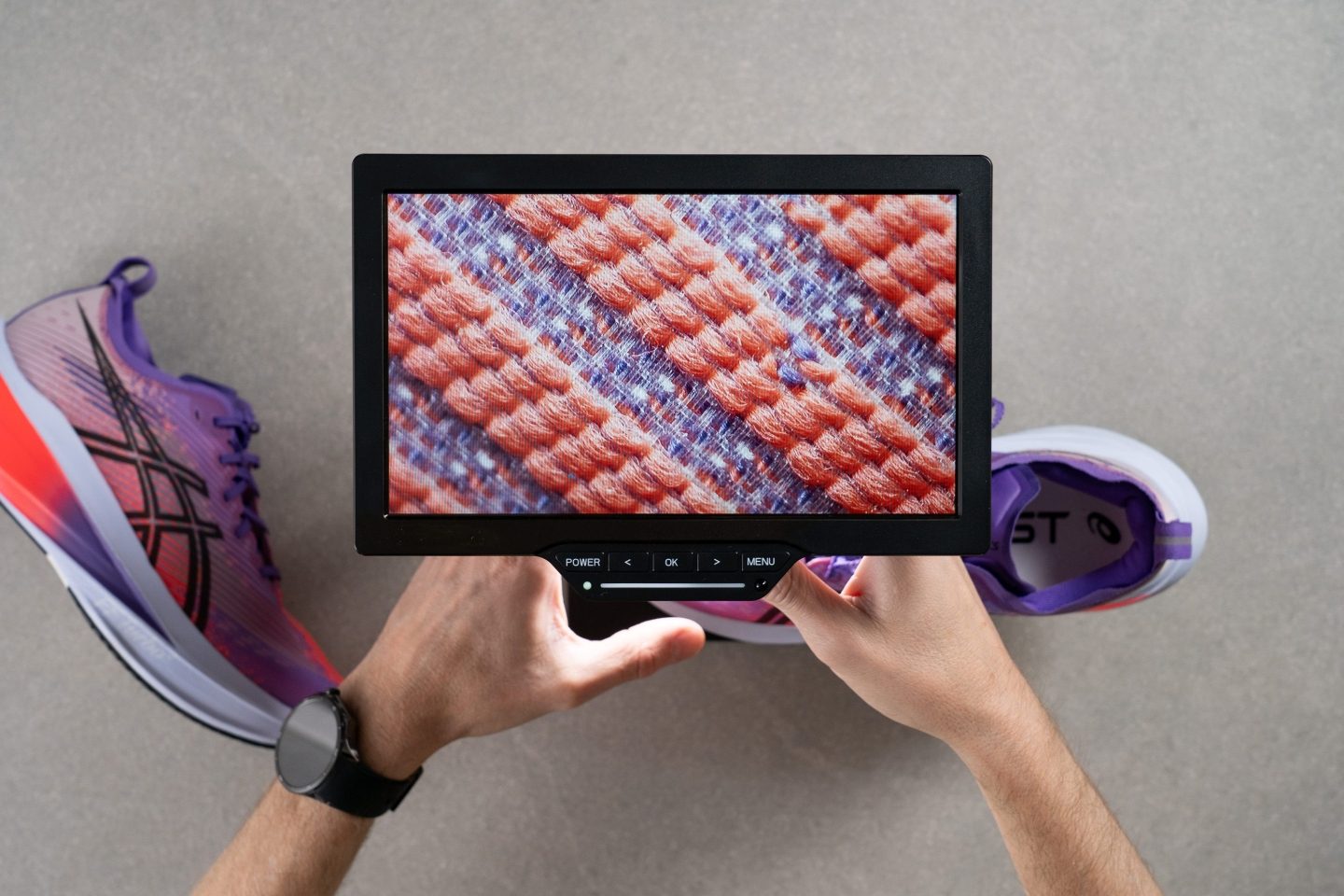
Cheap running shoes have improved a lot over the last five years, and their uppers are now far better than before, making the gap with standard shoes much smaller. Even some models from both tiers use the same materials today, but that depends on the brand. And the biggest price jumps with cheap or standard shoes usually appear in shoes with Gore-Tex or MATRYX uppers, since brands pay royalties and face higher manufacturing costs.
Premium shoes, however, still show a clear difference, and there is a good reason for that. Higher-end models rely on multi-layer constructions, stronger yarns, and more advanced weaving patterns that take longer to produce and cost more to manufacture. These designs usually offer better breathability, more targeted support, and even improved long-term durability.
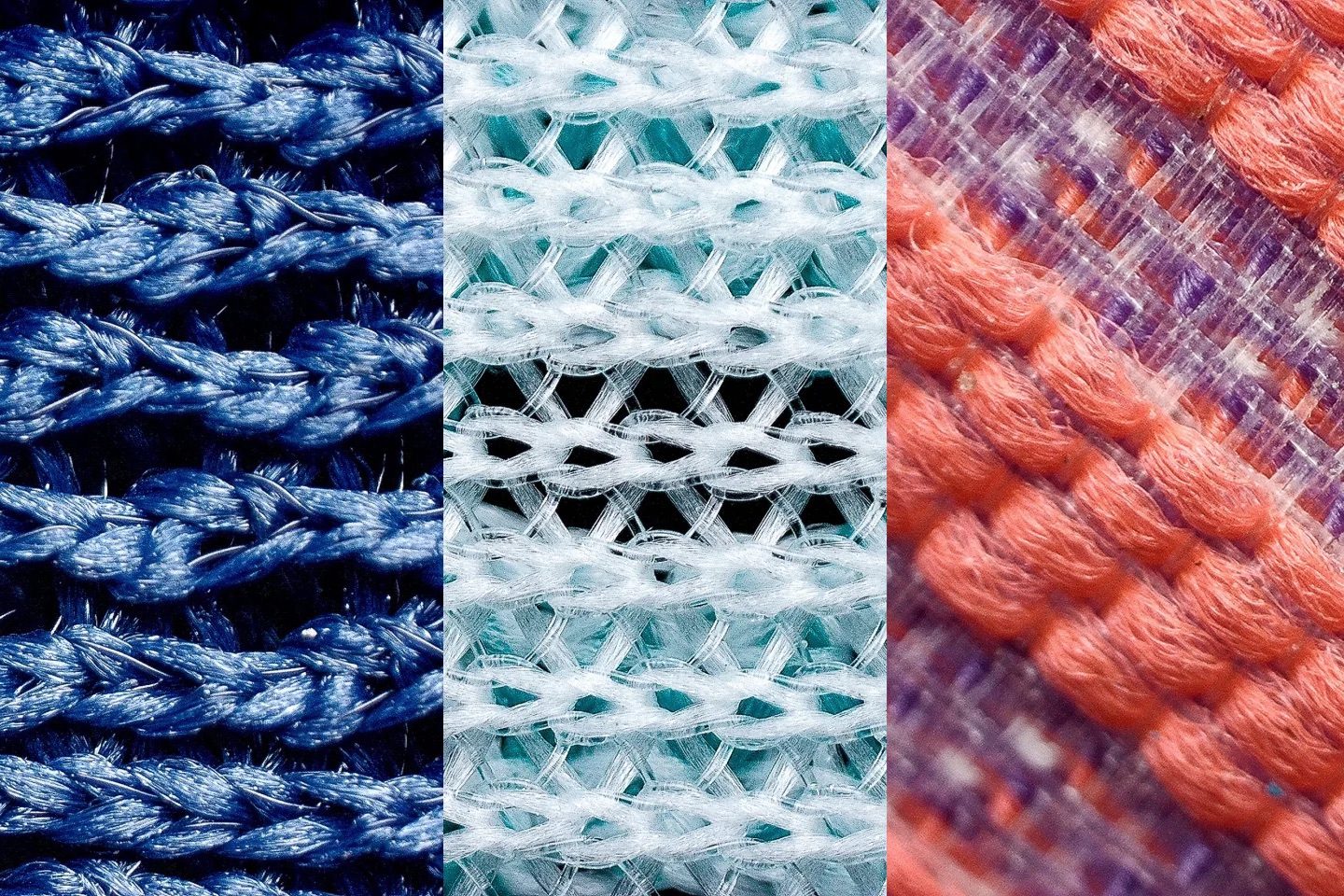
Our microscope makes this contrast clear. The Versablast 4 on the left uses a simple engineered mesh. The Novablast 5 in the center shows a more refined pattern. The Megablast on the right stands out with an amazing, multi-directional weave and more advanced fibers.
However, breathability shows only a moderate upward correlation with price. The values remain scattered between 1 and 5 across all MSRP levels in our analysis.
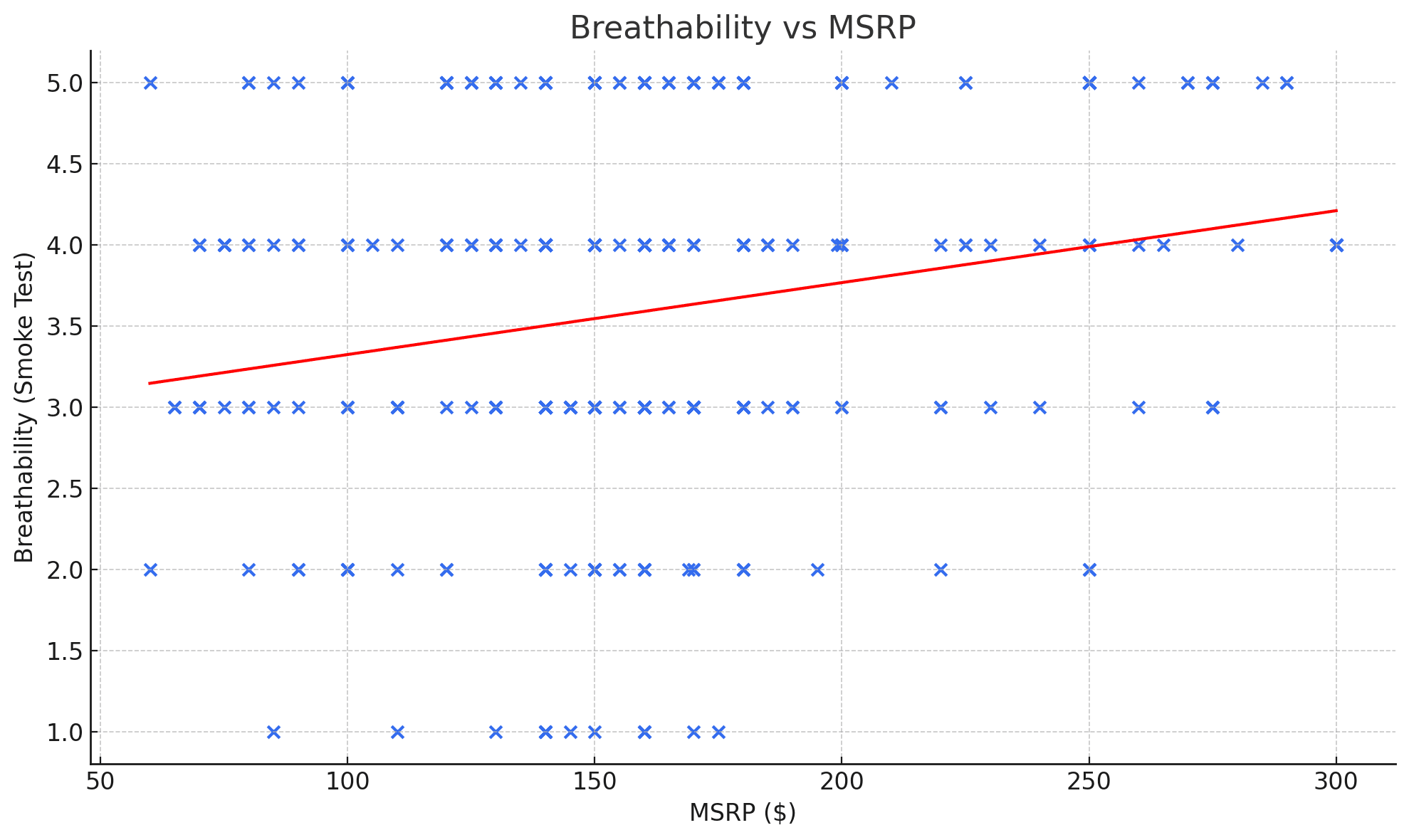
While the values still scatter between 1 and 5 across all MSRP levels, the trend line makes it clear that breathability tends to improve as shoes become more expensive. Most premium shoes cluster closer to 4-5, creating roughly a 20 percent jump from entry-level to top-tier designs. The relationship isn’t perfect, but it is noticeable. This pattern reflects the use of more advanced materials, ventilation zones, and higher-quality yarns in pricier models, all of which contribute to better airflow overall.
Choosing with purpose: spend where it matters most to you
One reason we love the lab testing we do at RunRepeat is that it helps you focus on what you actually need in your next running shoe, using real, comparable data rather than marketing claims.
You can save a lot of money when you know your priorities. For example, if you never struggle with upper comfort or hotspots but you absolutely want high energy return, you could spend over 200 dollars on a premium shoe, or you could pick a value-oriented shoe like the adidas Adizero EVO SL, which delivers a premium Lightstrike Pro midsole paired with a low-cost upper.
Or maybe traction is essential for you, but for two or three easy runs per week you don’t need huge bounce or extreme shock absorption. In that case, you can look for a shoe with a top-tier grip score while saving money on the midsole and upper, just as the ASICS Noosa Tri 16 does.
The 3 tiers of running shoes
In our view, we can separate the current market of running shoes in three different tiers of prices: cheap, standard and premium. To begin, we created a quick chart that clearly visualizes the differences between categories.
| Price category | Shock Absorption (SA) | Energy Return | Traction (CoF) |
| Cheap ($60-$120) | 111.1 | 52.6% | 0.42 |
| Standard ($120-$160) | 129.7 | 60.6% | 0.49 |
| Premium ($160+) | 141.6 | 65.8% | 0.57 |
The difference between categories is quite clear. In most cases, the higher the price, the better the shock absorption, energy return, and traction.
Cheap running shoes
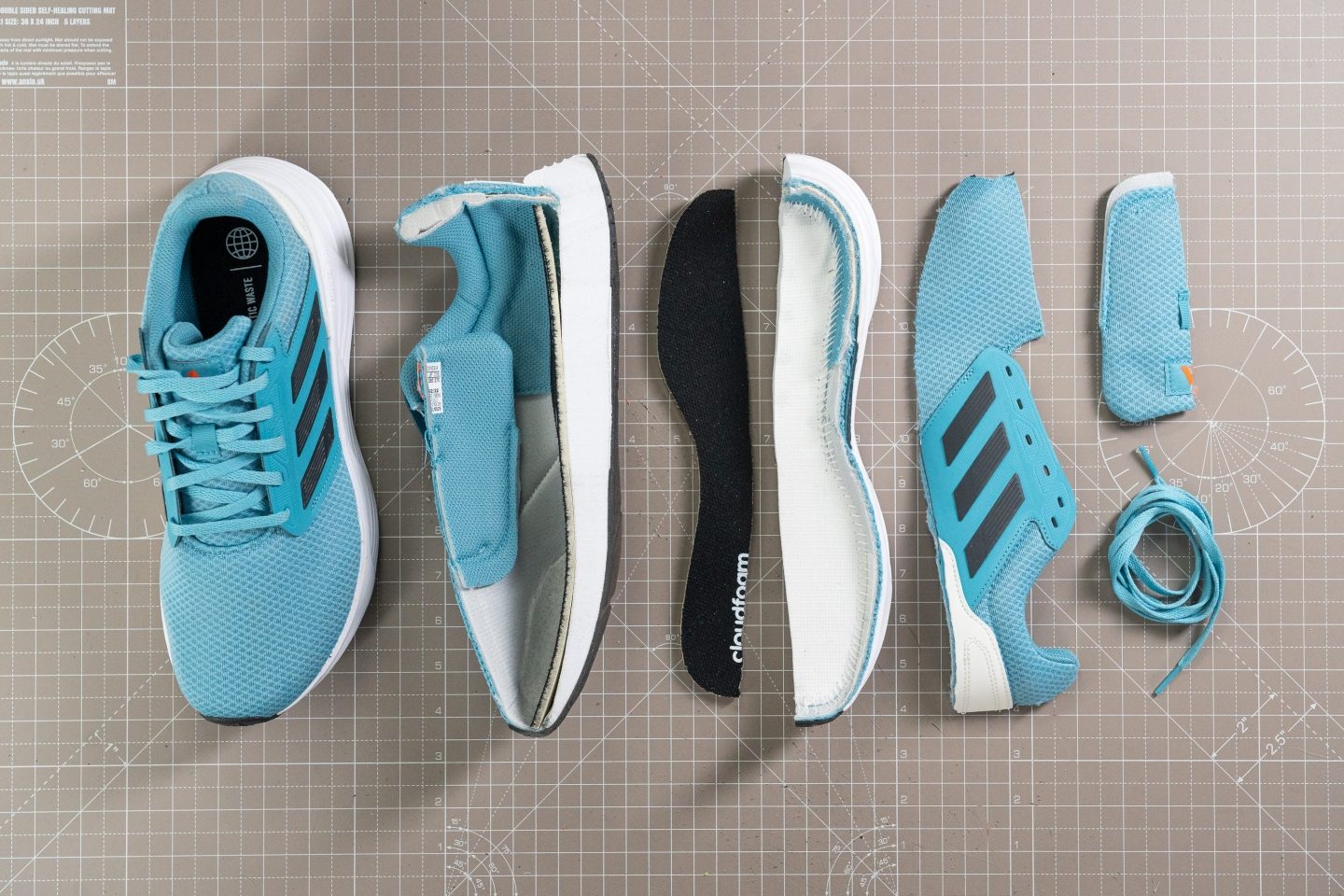
Cheap running shoes are still the best sellers, and they probably always will be. Since the 1970s and the rise of Nike, running shoes have become part of daily life and people use them for everything: shopping, going to the gym, commuting, working, or meeting friends for dinner… all on the same day. This shifted running shoes from being only a specialized tool to something really versatile.
If you walk into a local store, most of the models on the shelves will be cheap running shoes. If you visit a local park and look at the runners, most of them will be wearing budget models. That’s perfectly fine. It is important that shoes remain accessible for anyone, especially for people who do not care about high-tech features and simply want a dependable workhorse that can handle a full day.
It is also important to remember that in many developing countries across Africa, South America, and Asia, cheap running shoes absolutely dominate the market. Spotting a premium model in those regions is genuinely rare.
Standard running shoes
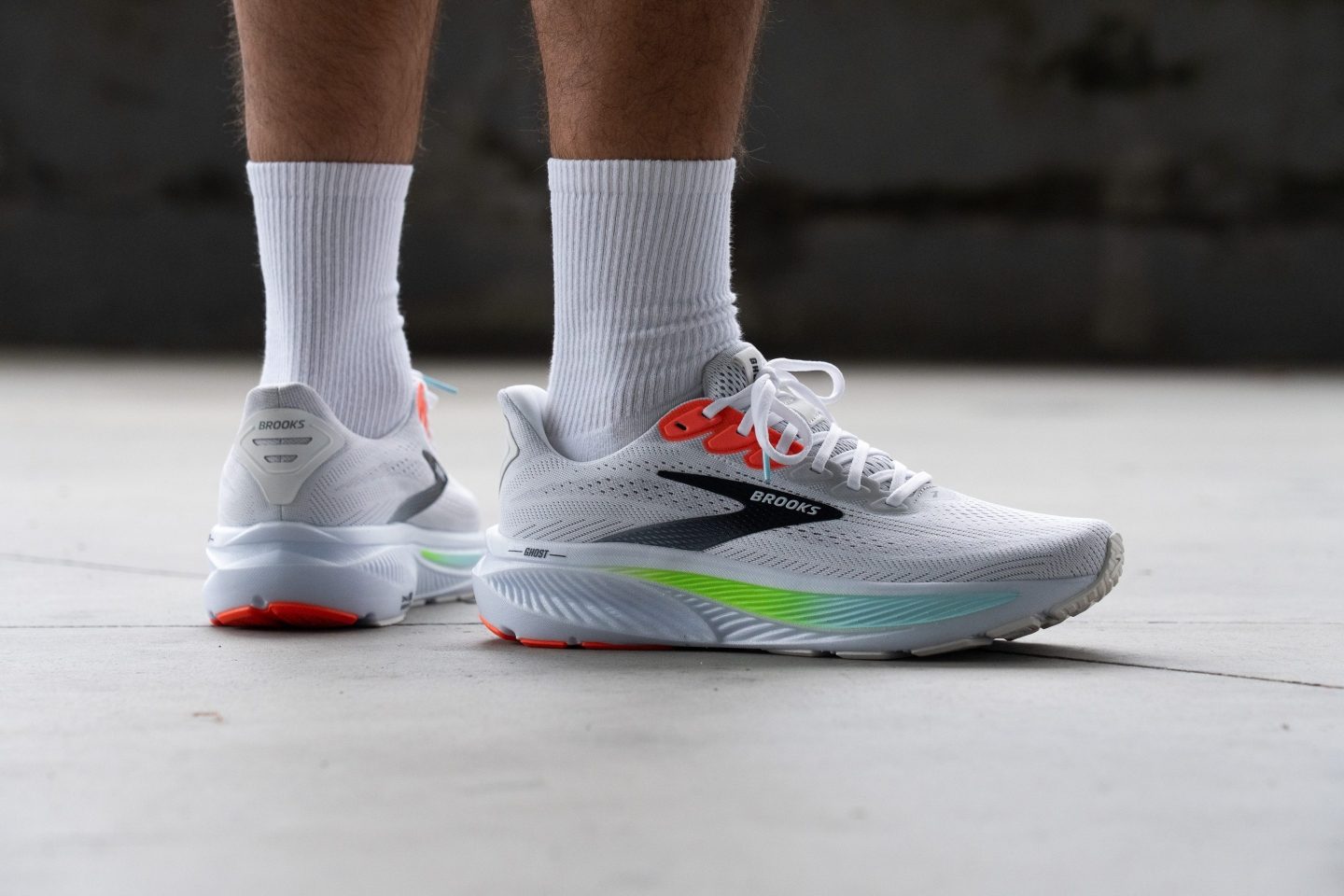
With the rise of running shoe prices in recent years (a Pegasus 33 retailed for $110), some models that once belonged to the cheap tier have moved into the standard category. However, to be fair to the industry, inflation explains most of these increases.
Some shoes in this tier offer one premium feature, such as a high-rebound foam, ultra-low weight, or a top-tier outsole, but never all of them at once. In our view, standard shoes today sit in the 120 to 160 dollar range and include the flagship daily trainers from most brands, such as the Brooks Ghost 17.
This category is also quite large, and in some countries the share of standard running shoes even surpasses that of cheap running shoes.
Premium running shoes
The premium group is particularly interesting because it was almost anecdotal not long ago. With the rise of super shoes and the tech inherited from them, brands quickly realized they could use that to manufacture training shoes (super trainers) priced even above 200 dollars.
A clear example is the Nike Vomero Premium. It literally carries "Premium" in its name, and although it is positioned as a training shoe, it comes packed with top-tier Nike tech, a striking design, and mind-blowing shock absorption capabilities.
Brands are clearly invested in this niche right now, as premium shoes usually generate higher profits. Think of it this way with a virtual example: If Nike’s margin is 40 percent per shoe, would you rather sell a 100 dollar budget model and make $40, or an Alphafly 3 at $275 and make $110?
Does all of this apply to trail shoes as well?
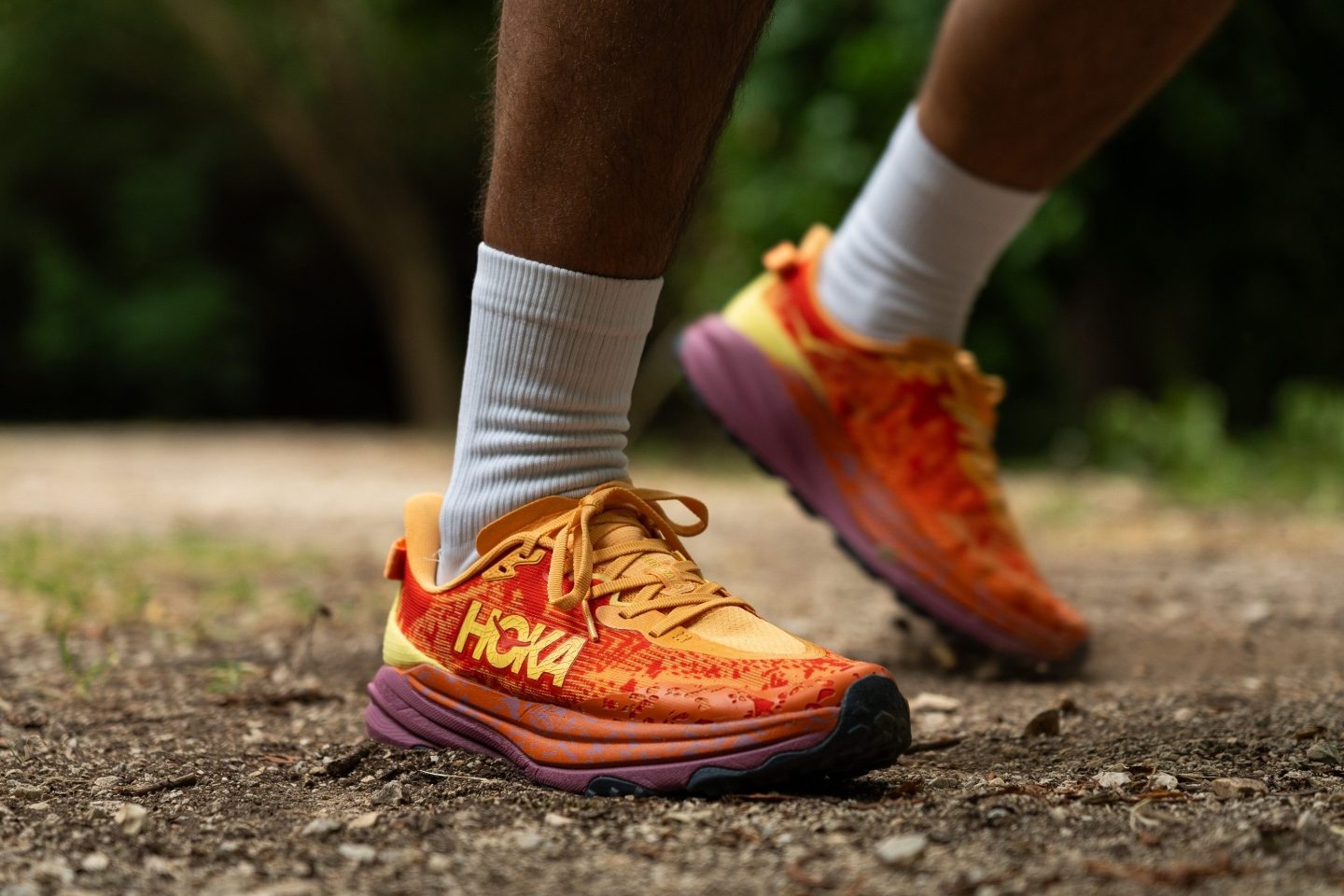
Yes, it does. Trail running shoes follow the same three tiers of cheap, standard, and premium. Here are some examples:
- Cheap: ASICS Gel Venture 10, New Balance DynaSoft Nitrel v6
- Standard: HOKA Speedgoat 6, Nike Wildhorse 10, Saucony Peregrine 15
- Premium: HOKA Mafate 5, Nike Zegama 2, Saucony Xodus Ultra 4
However, because trail shoes require stronger materials, protective layers, and more durable outsoles, the cheap tier is much smaller. And we think that in most cases, it makes sense to spend a bit more and go for a standard shoe, since trail models usually last a long time.
Discount patterns are similar as well. Prices start to drop a few months after launch and reach their best levels once the next version arrives. However, these discounts tend to be less aggressive than those seen in road running shoes.
3 Solid reasons to buy a premium running shoe
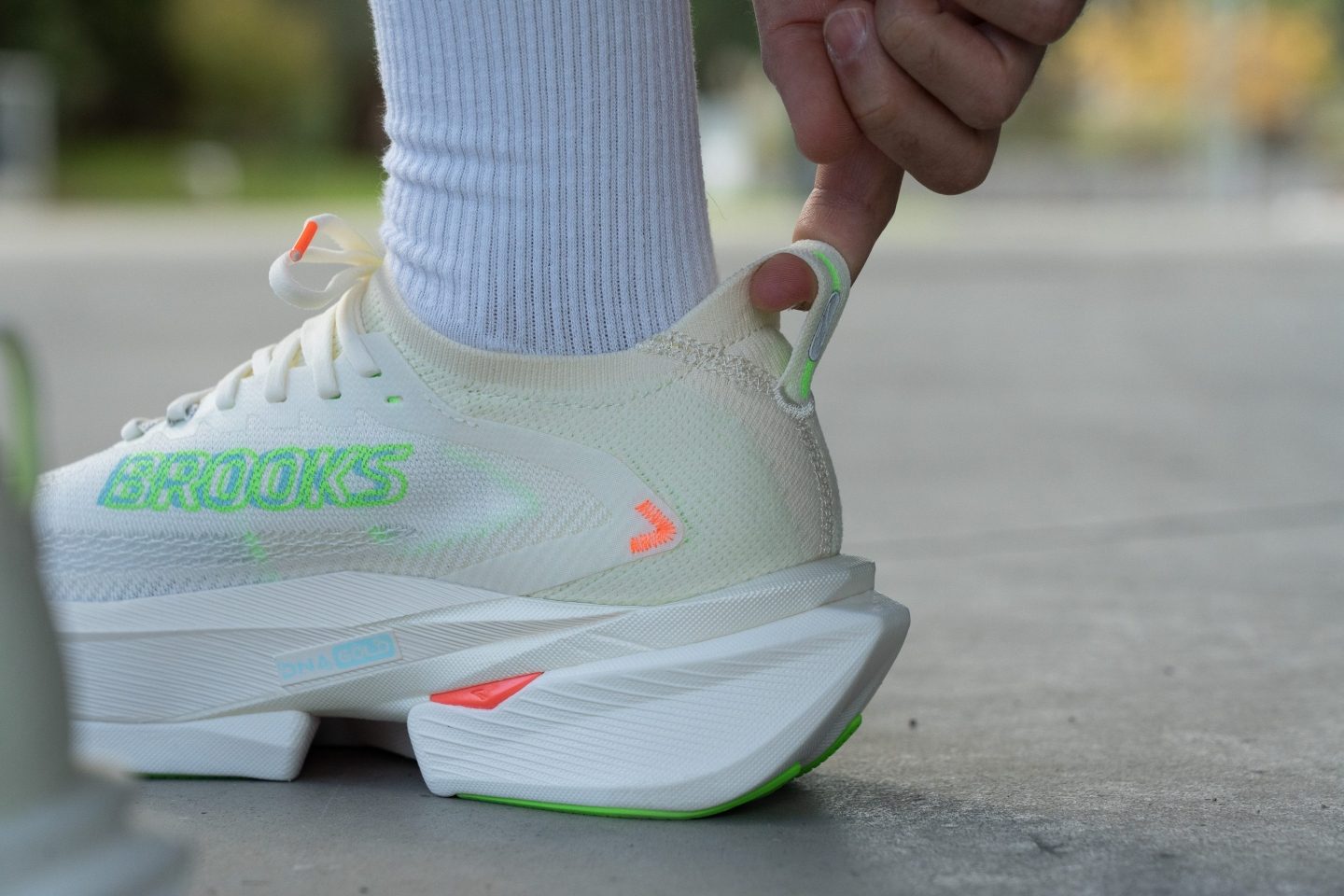
If you’re close to buying a premium shoe like a super trainer but still hesitating to hit the button, don't worry, we’re here to help!
High-mileage runners or marathon training
Anyone who runs 60 miles per week or more understands how crucial shock absorption and energy return become. A premium shoe with a state-of-the-art cushioning system can be the difference between waking up sore or feeling fresh enough to keep stacking miles.
A premium shoe won’t solve every problem, but upgrading from an EVA-based daily trainer like the HOKA Clifton 10 to a highly-cushioned premium model such as the Nike Vomero Plus or the ASICS Superblast 2 can make a real difference. Check our lab data, pick a shoe with excellent shock absorption and good energy return, and enjoy the benefits in your next training block. The investment is 100% worth it.
Tech-focused runners
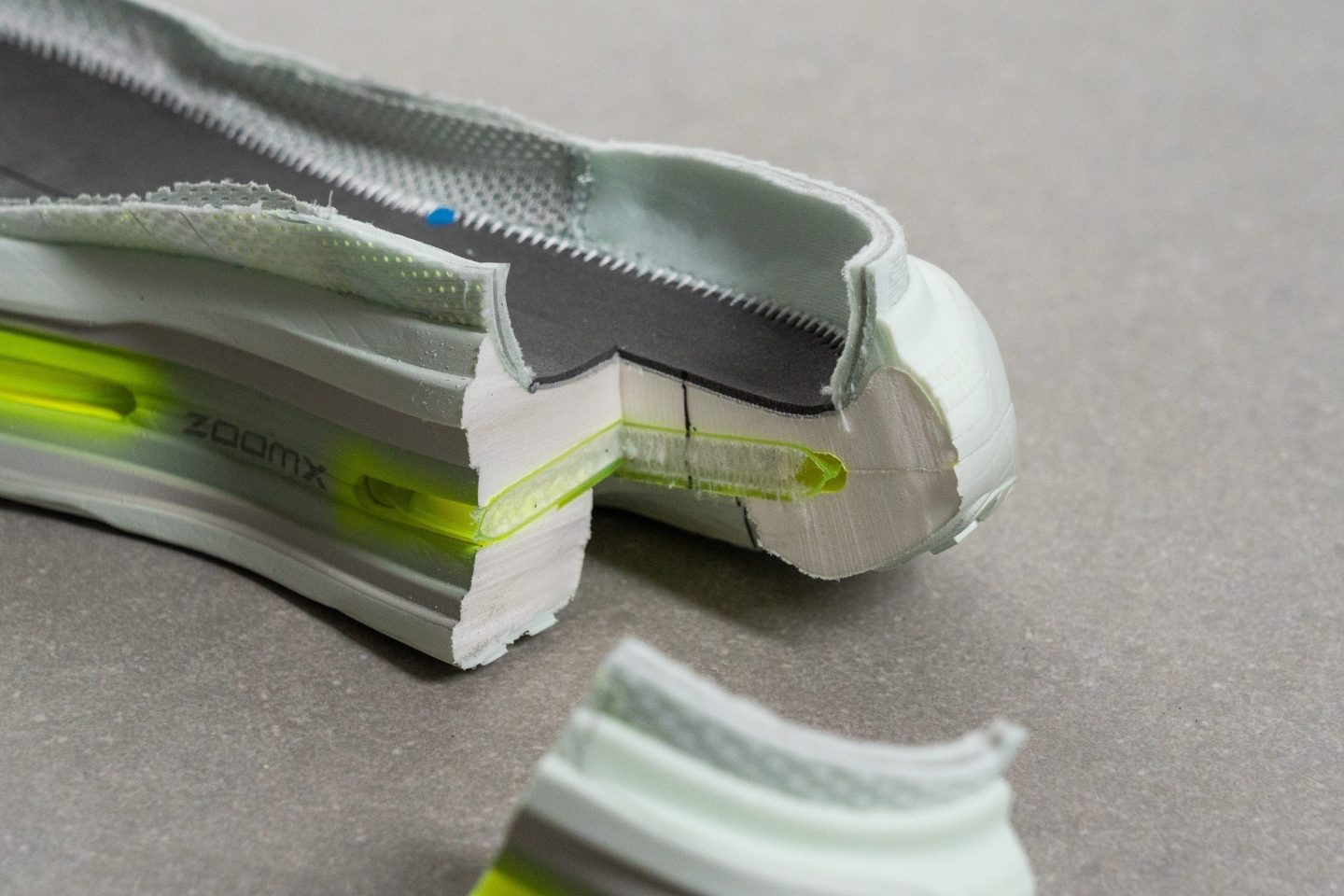
If you love running-shoe foams as much as we do, or you simply want the latest and greatest tech, premium models are where you need to look.
Brands always debut their newest innovations at the top tier, just like ASICS did with their first hypershoe, the Metaspeed Ray. It’s an ultra-featherlight racing shoe with a new FF Leap foam and a uniquely fun, bouncy ride. If you want that level of performance, you have to pay for it.
Enjoying your gear matters!
While prices keep climbing, running is still a relatively cheap sport. So why not indulge a little?
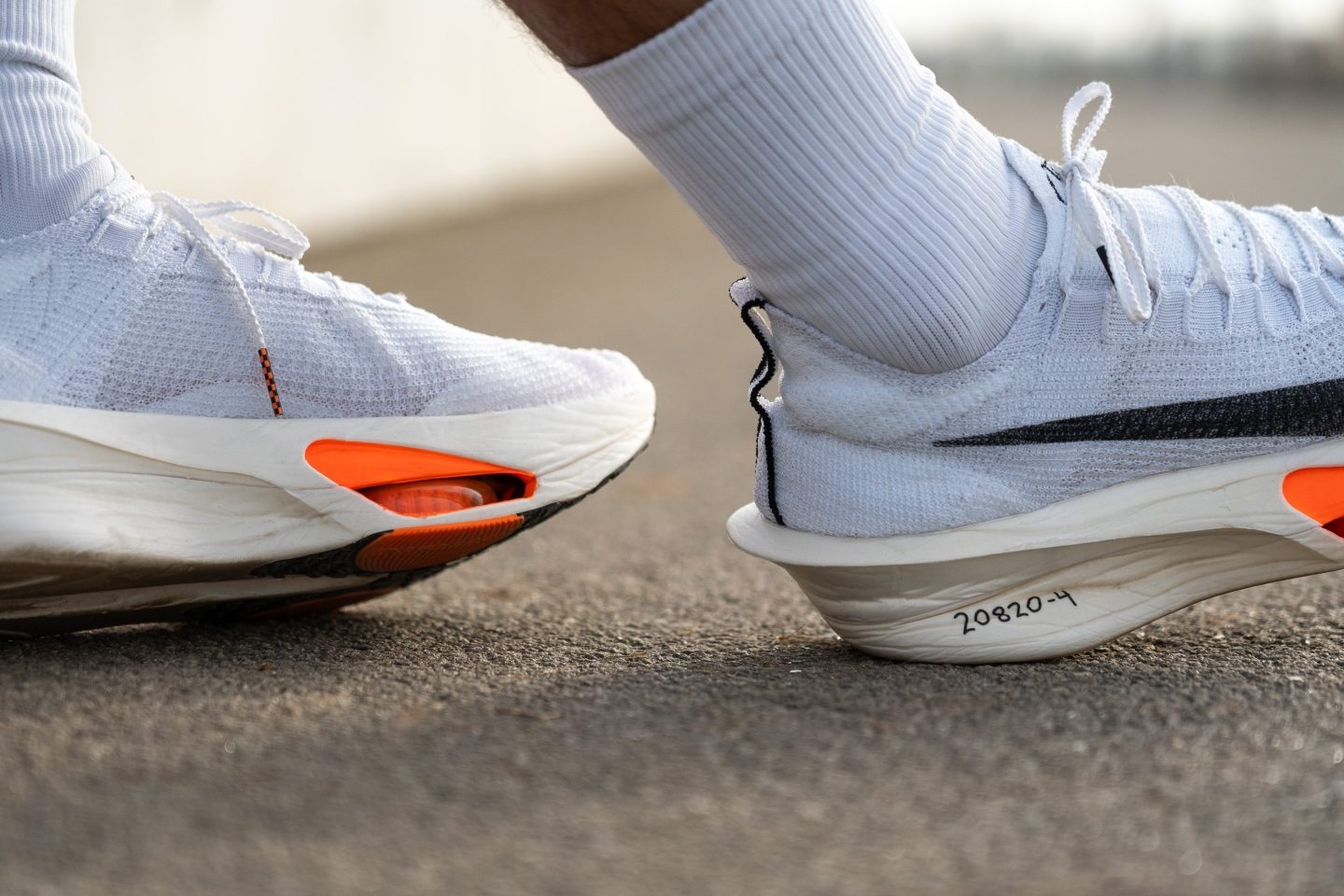
It’s a special feeling to wear the best shoe a brand can make, especially when it’s the same one used by world-class athletes. That kind of accessibility doesn’t exist in other endurance sports. Cyclists, for example, know very well that a top-tier S-Works Tarmac can reach over 15000 dollars…