

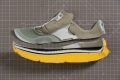

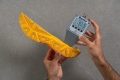
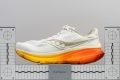
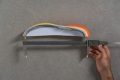
















Nuestra conclusión
- Tiradas diarias / rodajes 88
- Tempo 50
- Competición 34
- Estabilidad 93
Pros
- Muy transpirables
- Plataforma enorme que ofrece mucha sujeción
- Flexibles incluso siendo un modelo de estabilidad
- Suela exterior muy duradera
- Espuma más blandita que las hace más cómodas para el día a día
- Cierre seguro
- Cuestan lo mismo
- Estética mejorada
- Transiciones fluidas gracias al rocker
- Perfectas para los corredores de mediopié
Contras
- Pesan demasiado
- No son adecuadas para los talonadores más extremos
- La PWRRUN empieza a sentirse anticuada
Premios
- Entre mejores zapatillas de running para sobrepronación
- Entre mejores zapatillas Saucony de running
- Top 1% entre zapatillas de running Saucony Guide
- Top 30% entre Zapatillas de running para correr a diario
- Top 23% más vendidas zapatillas de running
Comparativa
Las zapatillas de running más parecidas
+ + Añadir unas zapatillas | |||||
|---|---|---|---|---|---|
| Nuestra puntuación | 84 Geniales | 91 Magníficas | 86 Geniales | 81 Geniales | |
| Precio | 160 € | 190 € | 200 € | 180 € | |
| Ritmo | Correr a diario | Correr a diario | Correr a diario | Correr a diario | |
| Absorción de impactos | Alta | Alta | Alta | Moderada | |
| Retorno de energía | Moderado | Alto | Moderado | Bajo | |
| Tracción | Alta | Alta | Alta | Alta | |
| Sujeción arco del pié | Estabilidad | Estabilidad | Estabilidad | Estabilidad | |
| Peso laboratorio Peso marca | 10.5 oz / 298g 9.7 oz / 275g | 9.6 oz / 272g 9.2 oz / 262g | 10.5 oz / 298g 10.5 oz / 298g | 10 oz / 283g 10 oz / 283g | |
| Drop laboratorio Drop marca | 6.0 mm 6.0 mm | 5.9 mm 6.0 mm | 8.5 mm 8.0 mm | 7.3 mm 6.0 mm | |
| Técnica de carrera | Medio/antepié | Medio/antepié | TalónMedio/antepié | Medio/antepié | |
| Talla | Tallan bien | Tallan bien | Tallan bien | Tallan bien | |
| Rigidez de la mediasuela | Blanda | Equilibrada | Blanda | Blanda | |
| Diferencia de la rigidez de la mediasuela en frío | Pequeña | Pequeña | Normal | Pequeña | |
| Durabilidad de la parte delantera | Buena | Decente | Decente | Decente | |
| Durabilidad del acolchado del talón | Media | Alta | Alta | Alta | |
| Durabilidad de la suela exterior | Buena | Buena | Decente | Buena | |
| Transpirabilidad | Alta | - | Media | Media | |
| Anchura / ajuste | Media | Media | Media | Media | |
| Anchura de la parte delantera | Media | Media | Media | Ancha | |
| Flexibilidad | Flexible | Rígida | Rígida | Rígida | |
| Rigidez torsional | Flexibles | Moderadas | Rígidas | Rígidas | |
| Rigidez del contrafuerte del talón | Moderado | Moderado | Rígido | Rígido | |
| Con rocker | ✓ | ✓ | ✗ | ✓ | |
| Talón laboratorio Talón marca | 37.4 mm 35.0 mm | 38.3 mm 41.0 mm | 36.8 mm 39.0 mm | 36.0 mm 39.0 mm | |
| Antepié laboratorio Antepié marca | 31.4 mm 29.0 mm | 32.4 mm 35.0 mm | 28.3 mm 31.0 mm | 28.7 mm 33.0 mm | |
| Anchuras disponibles | EstrechoEstándarAnchoExtra Ancho | EstándarAncho | EstrechoEstándarAnchoExtra Ancho | EstándarAnchoExtra Ancho | |
| Compatibles con plantillas personalizadas | ✓ | ✓ | ✓ | ✓ | |
| Estación | VeranoTodas las estaciones | - | Todas las estaciones | Todas las estaciones | |
| Plantilla extraíble | ✓ | ✓ | ✓ | ✓ | |
| Clasificación | #132 Top 33% | #25 Top 7% | #83 Top 21% | #197 Top 50% | |
| Popularidad | #89 Top 23% | #103 Top 26% | #32 Top 8% | #36 Top 9% |



Quién debería comprárselas
Las Saucony Guide 19 nos parecen una opción estupenda para:
- Los runners que quieren actualizar sus Guide y están buscando una pisada más blandita y moderna.
- Los deportistas que necesitan una durabilidad excelente y una pisada muy estable para el entrenamiento diario.
- Cualquiera que esté buscando una buena sujeción y una estructura flexible a un precio justo.
Quién NO debería comprárselas
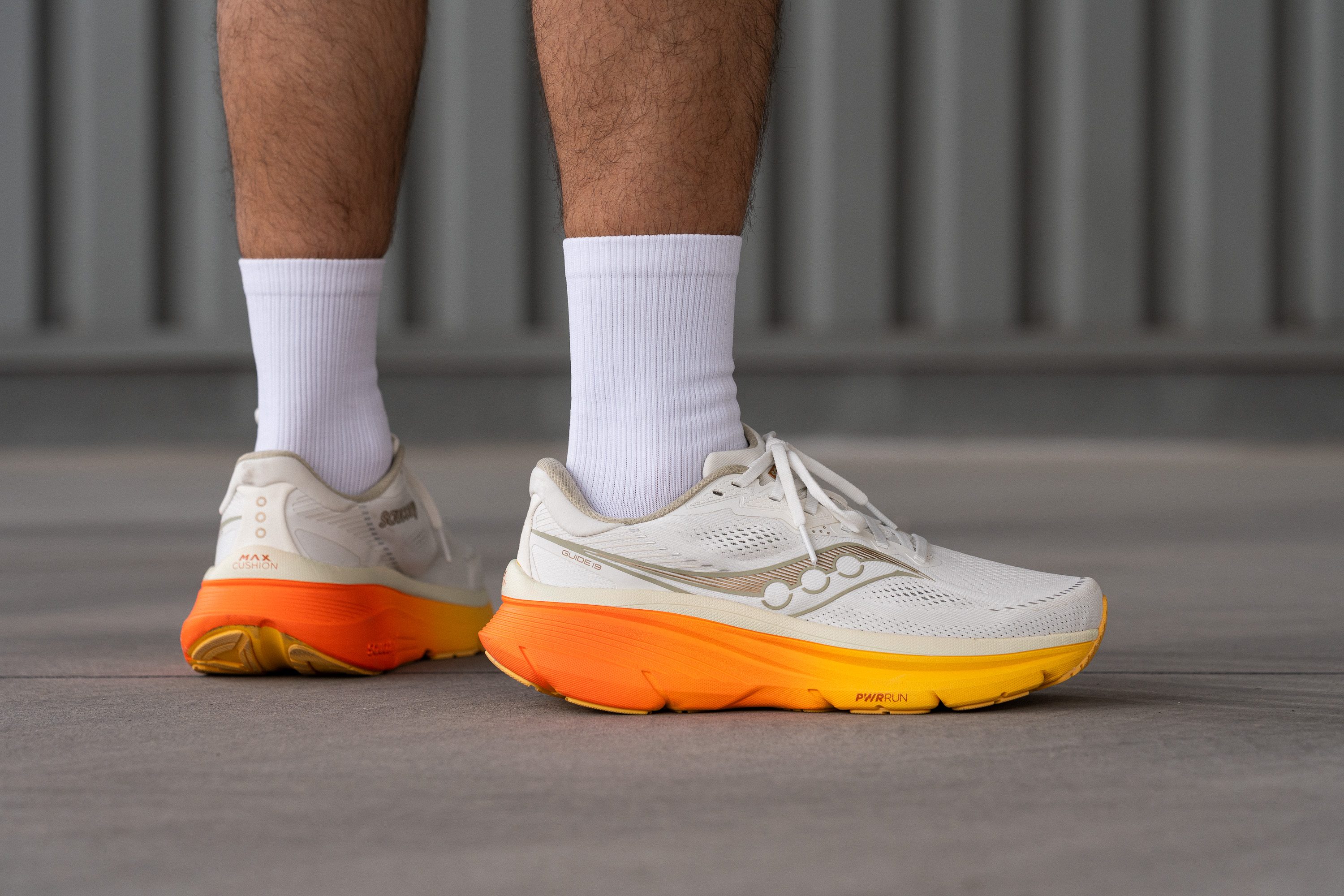
Las Saucony Guide 19 son más pesadas de lo que nos esperábamos de unas zapatillas de estabilidad modernas. Si estás buscando una pisada más ágil, creemos que hay mejores opciones, como las HOKA Arahi 8 o las ASICS GT 2000 14.
También creemos que su drop de 6 mm no les va a gustar a los runners que prefieren un diseño más centrado en el talón. Como alternativa, pensamos que los talonadores van a estar más contentos con la sensación conocida de las Nike Structure 26.
Amortiguación
Shock absorption
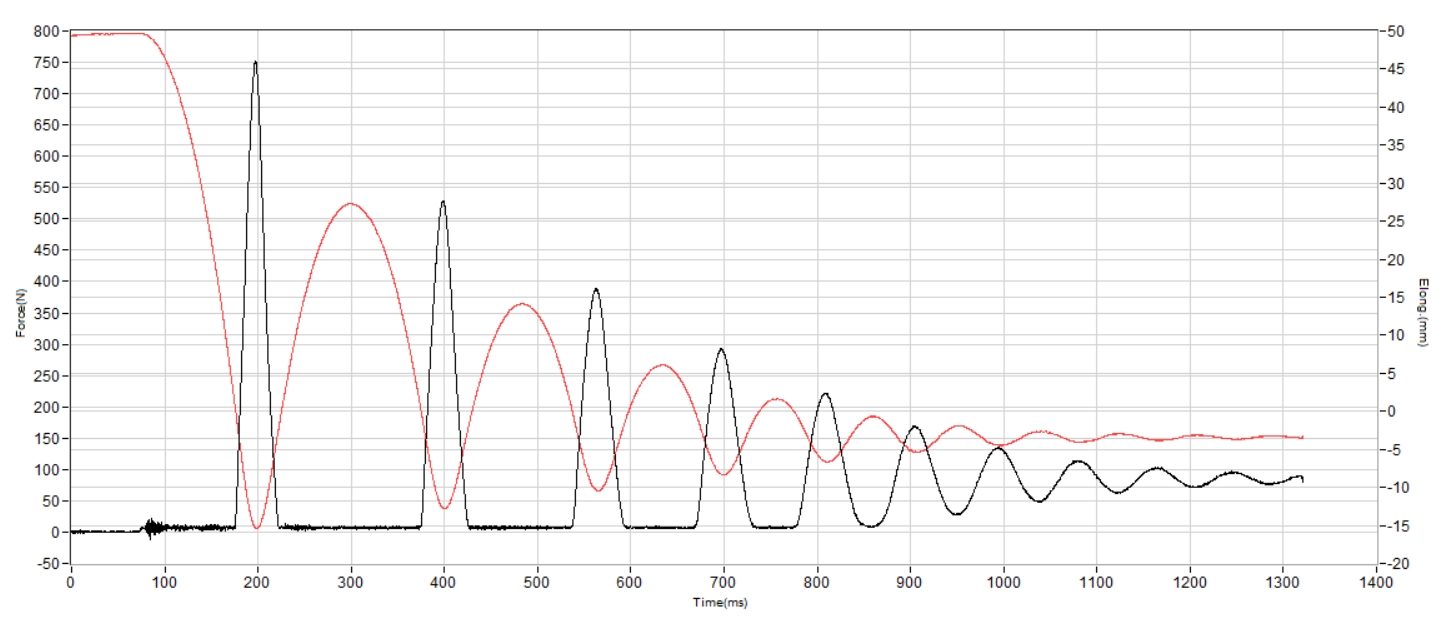
La absorción de impactos de las Guide 19 ha mejorado bastante en comparación con la de sus predecesoras. Las Guide 18 nos decepcionaron un poquito en este aspecto, con solo 124 SA en el talón, pero esta actualización soluciona ese problema y consigue que estas zapatillas se adapten mucho mejor a los runners más pesados o a los que quieren enfrentarse a distancias largas con sus 144 SA.
El antepié también mejoró bastante, ya que alcanza los 133 SA.
| Guide 19 | 144 SA |
| Media | 131 SA |
Energy return
Eso sí, no todos los cambios son positivos, ya que la nueva formulación de PWRRUN tiene un retorno de energía más bajo en el talón, con un 54,8 %, mientras que el antepié alcanza un 61,4 %, que es un resultado parecido. Sinceramente, creemos que la mayoría de los runners no se esperaba este rumbo, ya que reduce las posibilidades de uso de estas zapatillas a, básicamente, tiradas a ritmos suaves.
| Guide 19 | 61.4% |
| Media | 61.4% |
Altura de la suela en la zona del talón
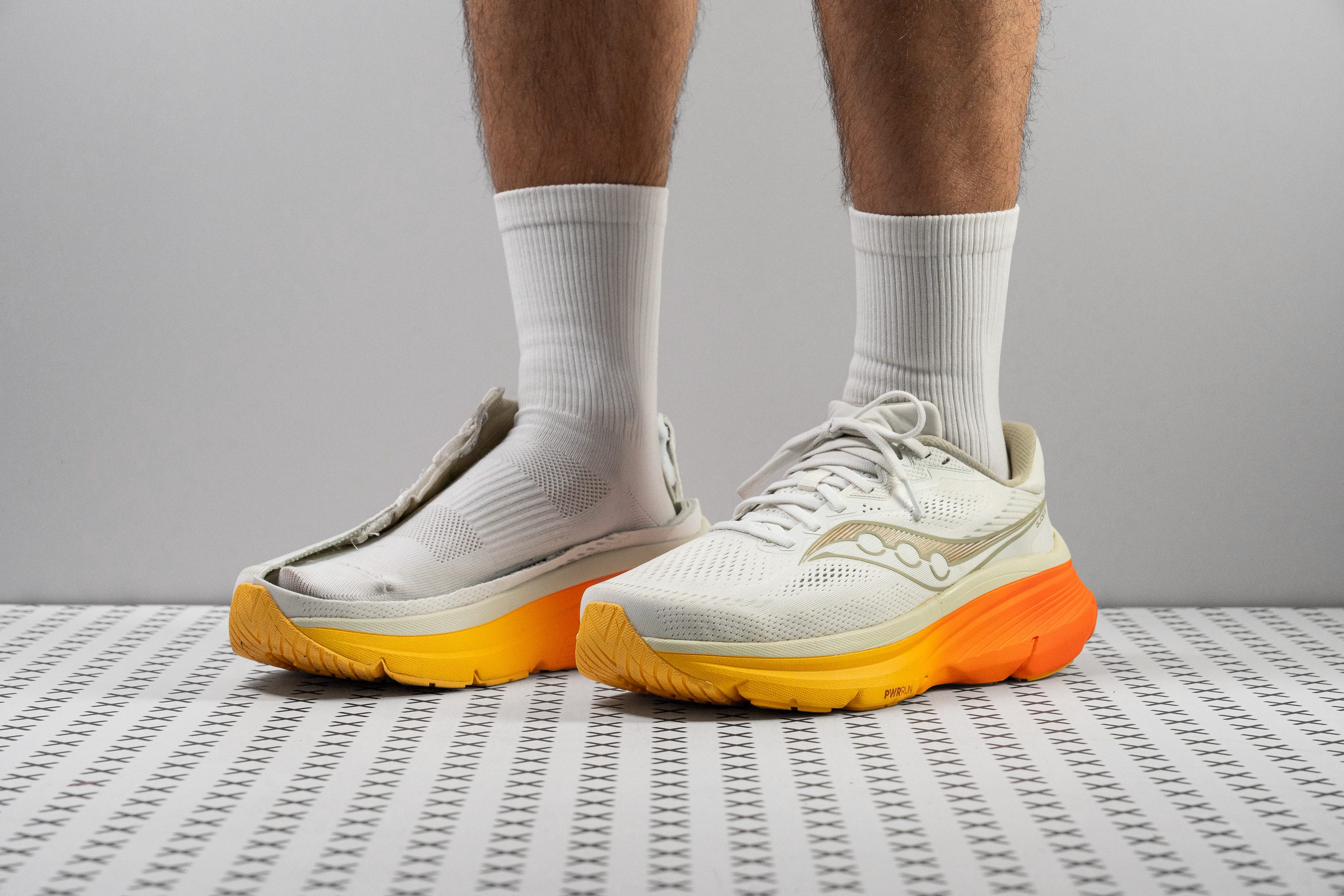
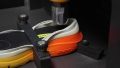
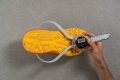
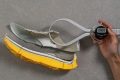
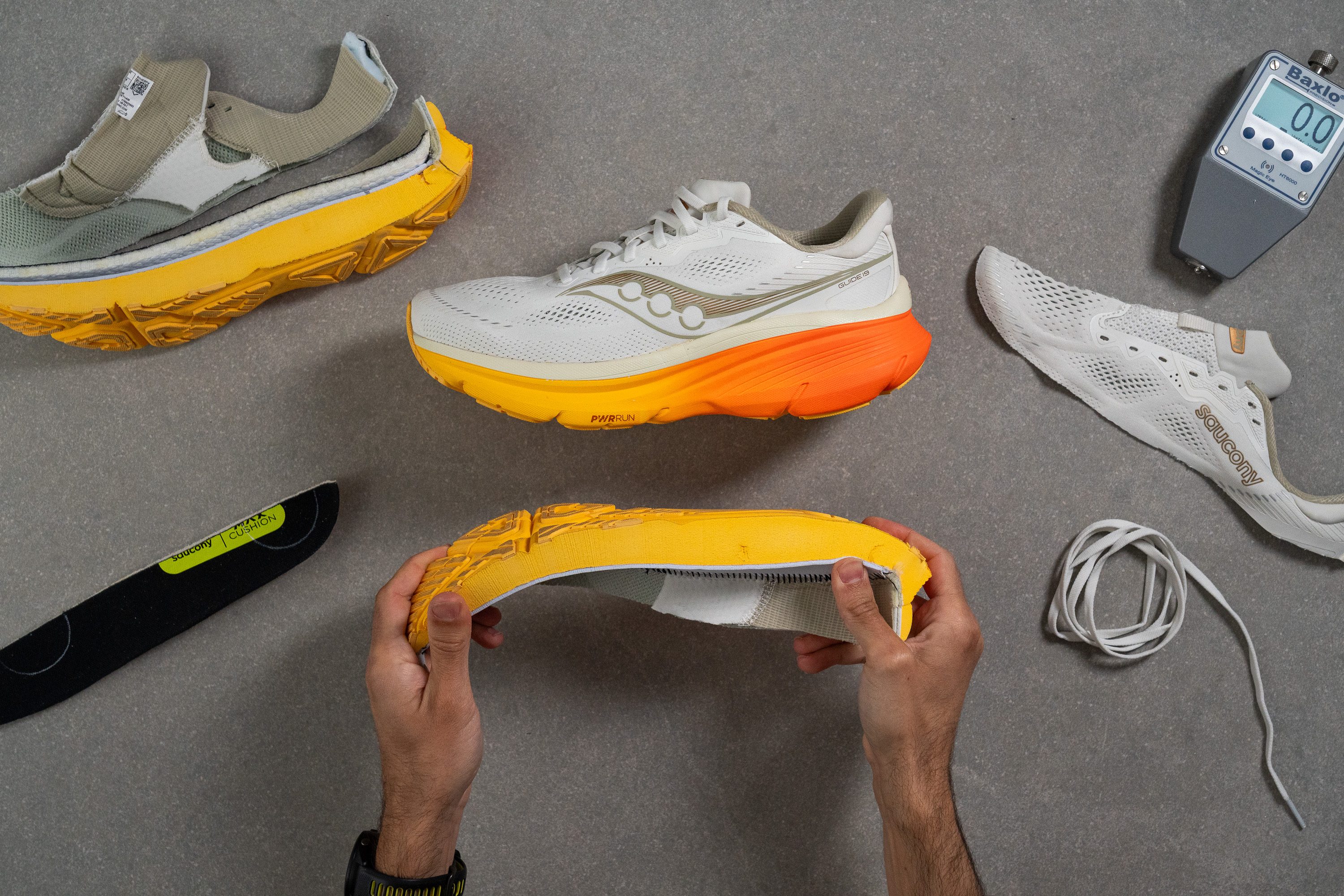
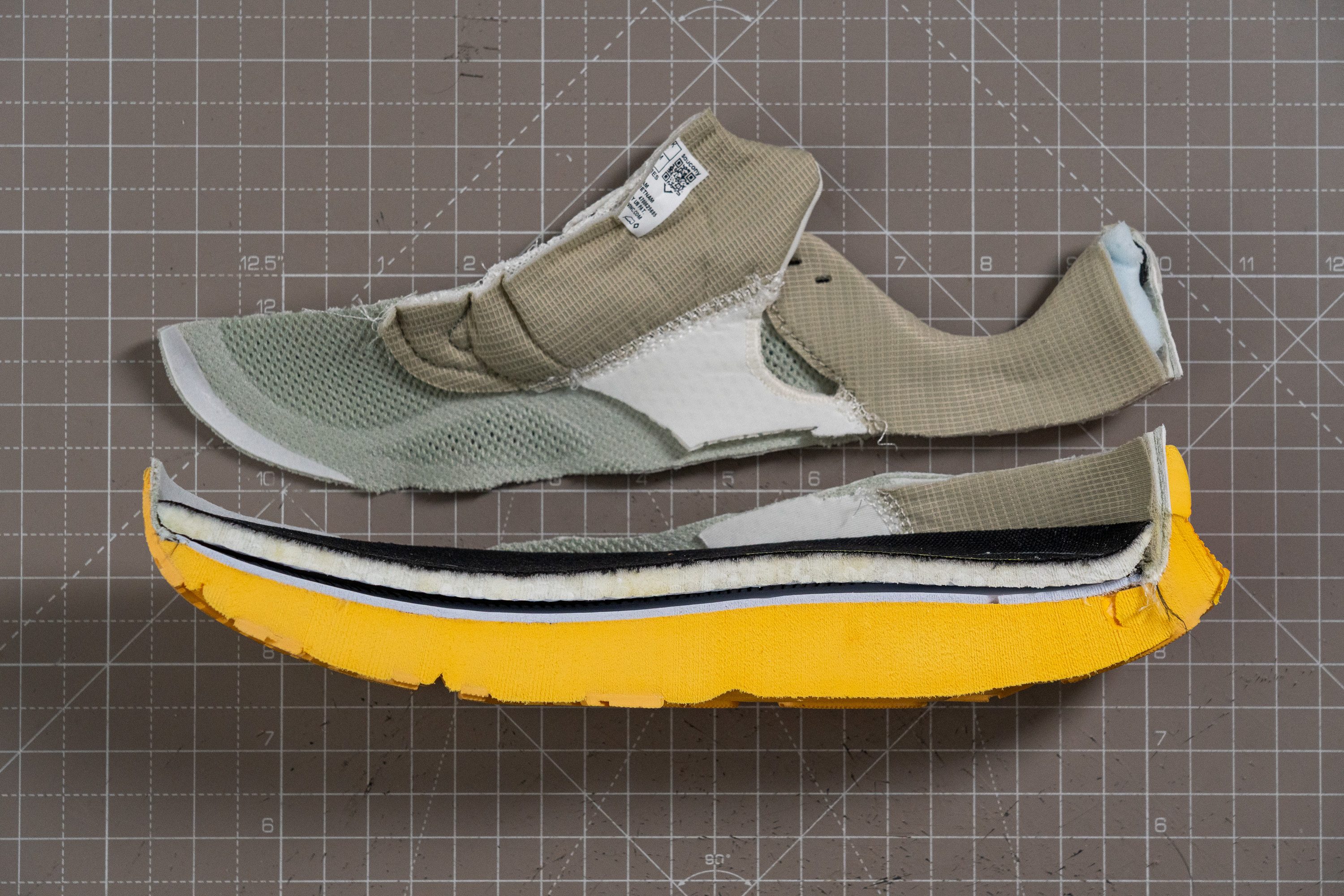
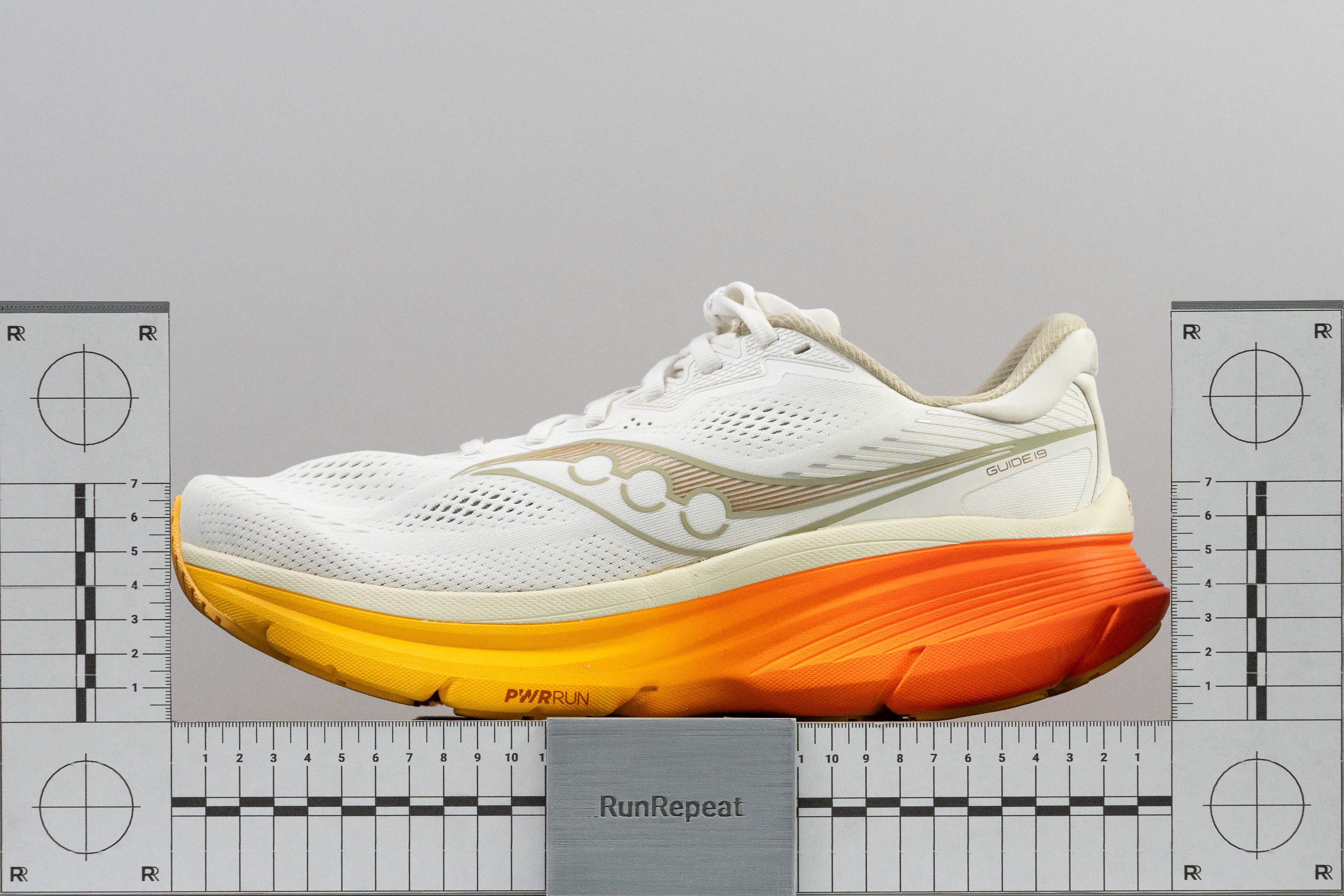
Las Guide suelen parecer más altas de lo que son por las paredes laterales sobredimensionadas de su mediasuela, pero ese es justo el motivo por el que cortamos las zapatillas por la mitad. ¡Es la única forma de poder medir la altura real de la suela!
La versión de este año ha crecido un poquito más, alcanzando 37,4 mm en el talón. Creemos que Saucony ha encontrado un equilibrio estupendo, ya que consigue que este modelo no se separe de la moda de máxima amortiguación actual, pero no hace que sea demasiado alto o inestable, cosa que chocaría de frente con el objetivo principal de las Guide 19.
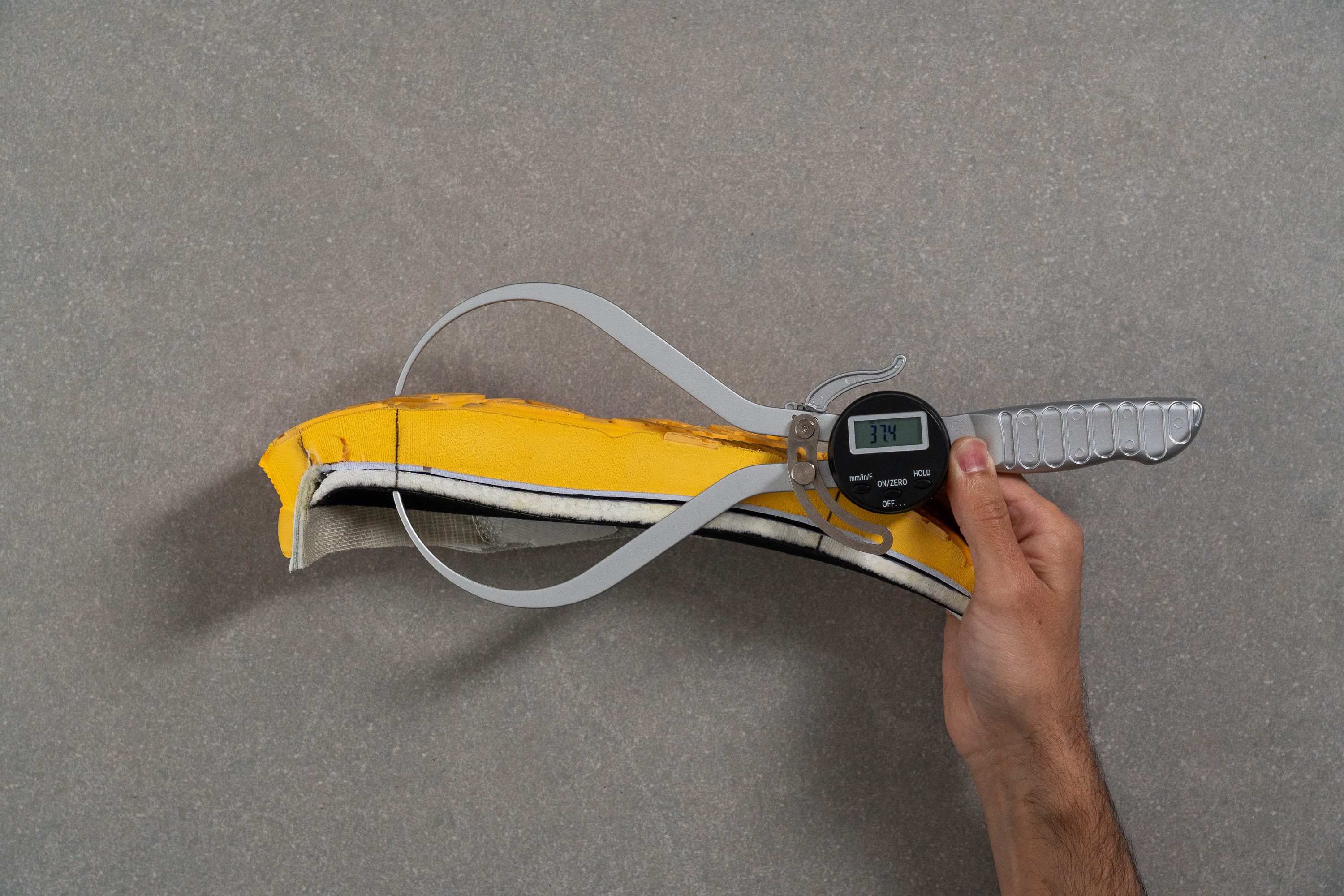
| Guide 19 | 37.4 mm |
| Media | 35.6 mm |
Altura de la suela en el antepié
Con 31,4 mm, el antepié también es bastante más alto que la media, que es justo lo que nos esperábamos de unas zapatillas que evitan los drops muy altos.
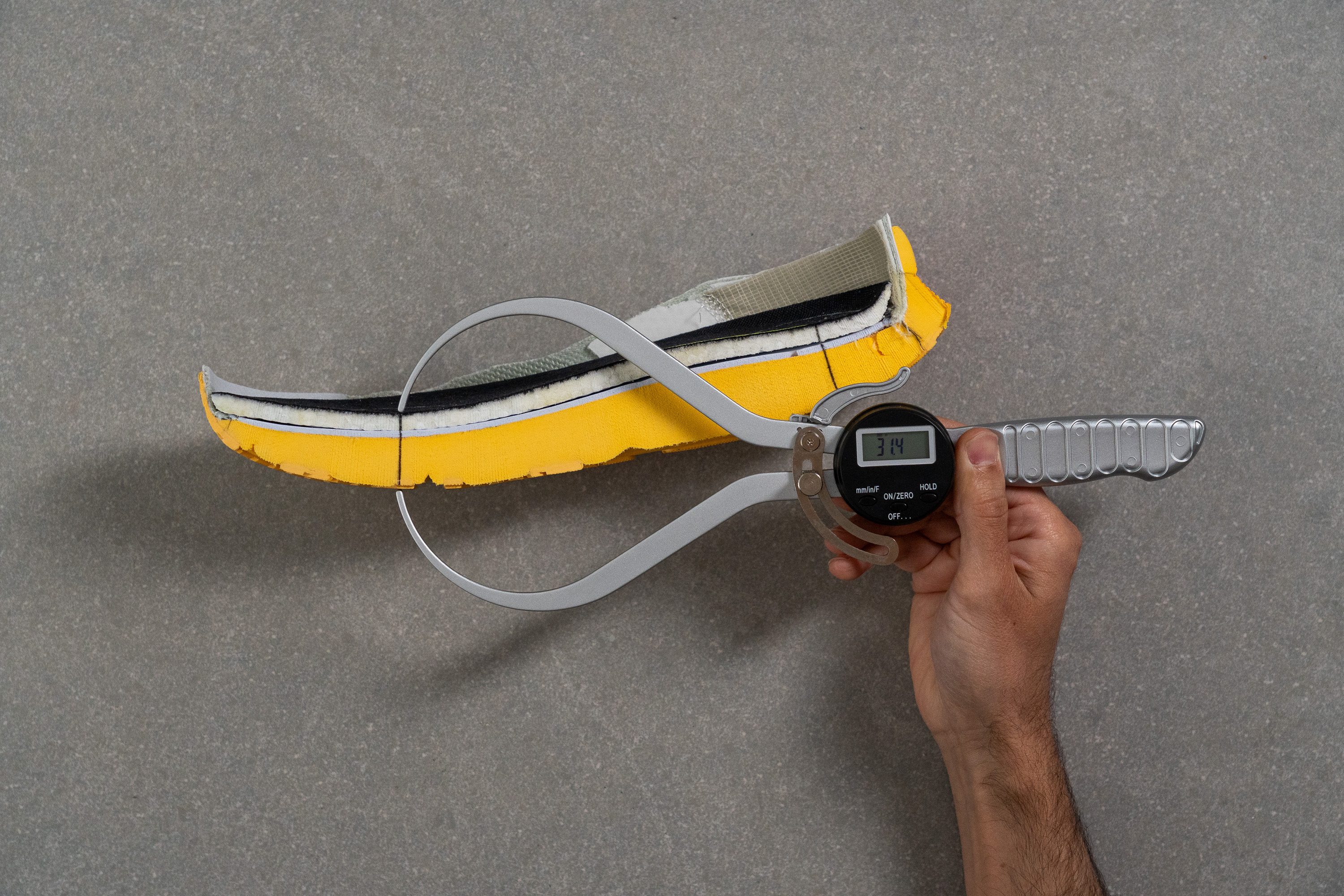
| Guide 19 | 31.4 mm |
| Media | 27.1 mm |
Drop
De hecho, el drop de este modelo, según Saucony, es de 6 mm, y a nosotros nos dio exactamente lo mismo en nuestro laboratorio. La verdad es que no es algo que ocurra muy a menudo, así que nos alegró mucho.
Con un drop moderado como este, las Guide 19 se sienten más naturales para los corredores de mediopié. Sin embargo, creemos que la marca diseñó su plataforma lo suficientemente bien como para ofrecerles una buena sujeción y comodidad a la mayoría de los runners.
| Guide 19 | 6.0 mm |
| Media | 8.4 mm |
Dureza de la mediasuela
La distinta suavidad de la mediasuela de las Guide 19 es una de las actualizaciones que más se notan. Esta nueva versión de PWRRUN es, claramente, más blandita que la de los modelos anteriores.
Nuestro durómetro Asker C marcó solo 30,5 AC. Aunque este resultado habría sido impensable para unas zapatillas de estabilidad hace no mucho, se está volviendo cada vez más común, ya que los modelos de sujeción modernos ahora buscan combinar comodidad y estabilidad utilizando una geometría más inteligente y otros elementos de sujeción.
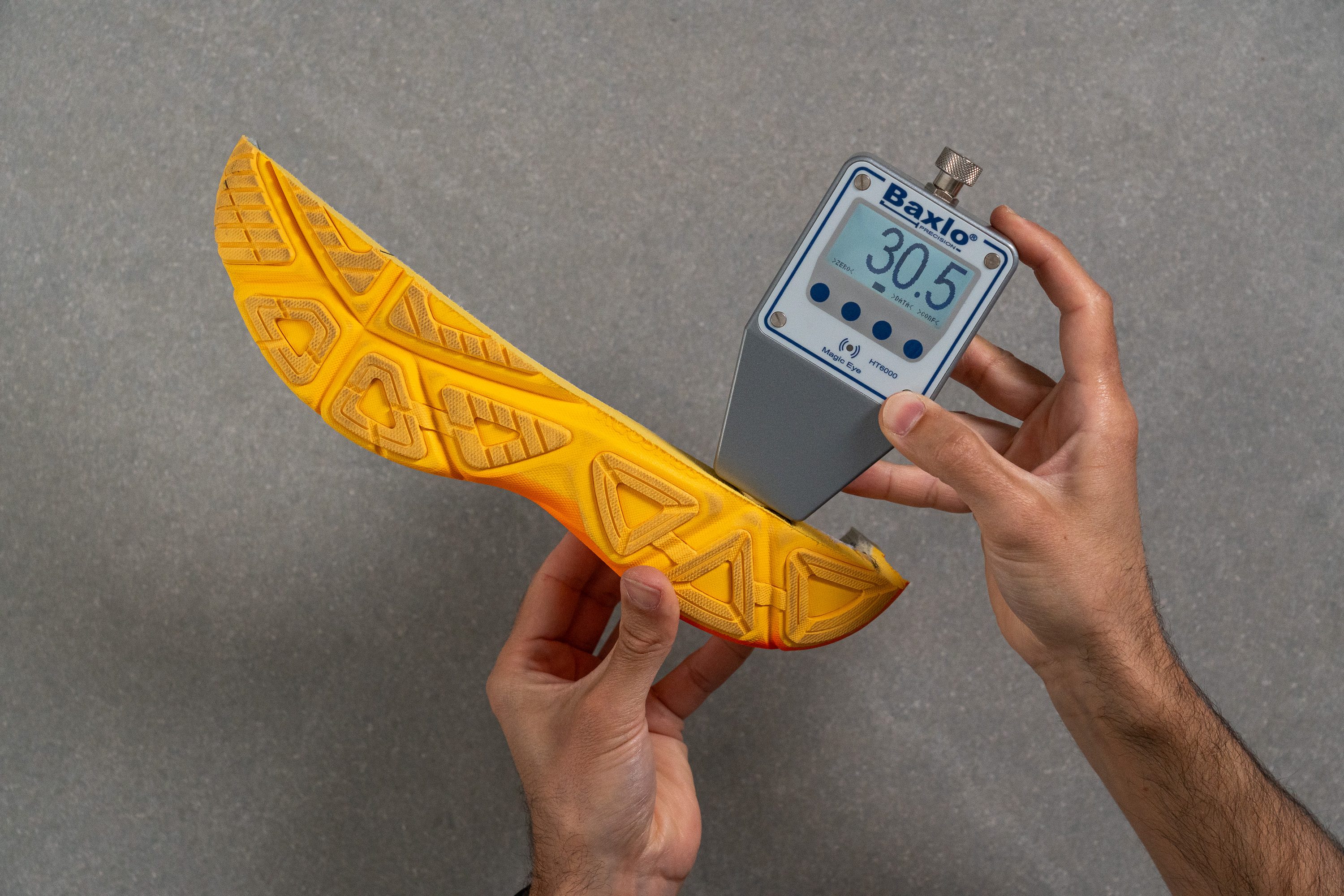
| Guide 19 | 30.5 AC |
| Media | 35.5 AC |
Rocker
Otra actualización que se nota en cada paso es el rocker rediseñado. El antepié se eleva de una forma mucho más agresiva que antes, mientras que el talón tiene una curvatura mucho más profunda para echarles una mano a los talonadores con las transiciones incluso con el moderado drop de 6 mm.
Tallaje y ajuste
Talla
Las Saucony Guide 19 tallan bien (29 votos).
Longitud interna
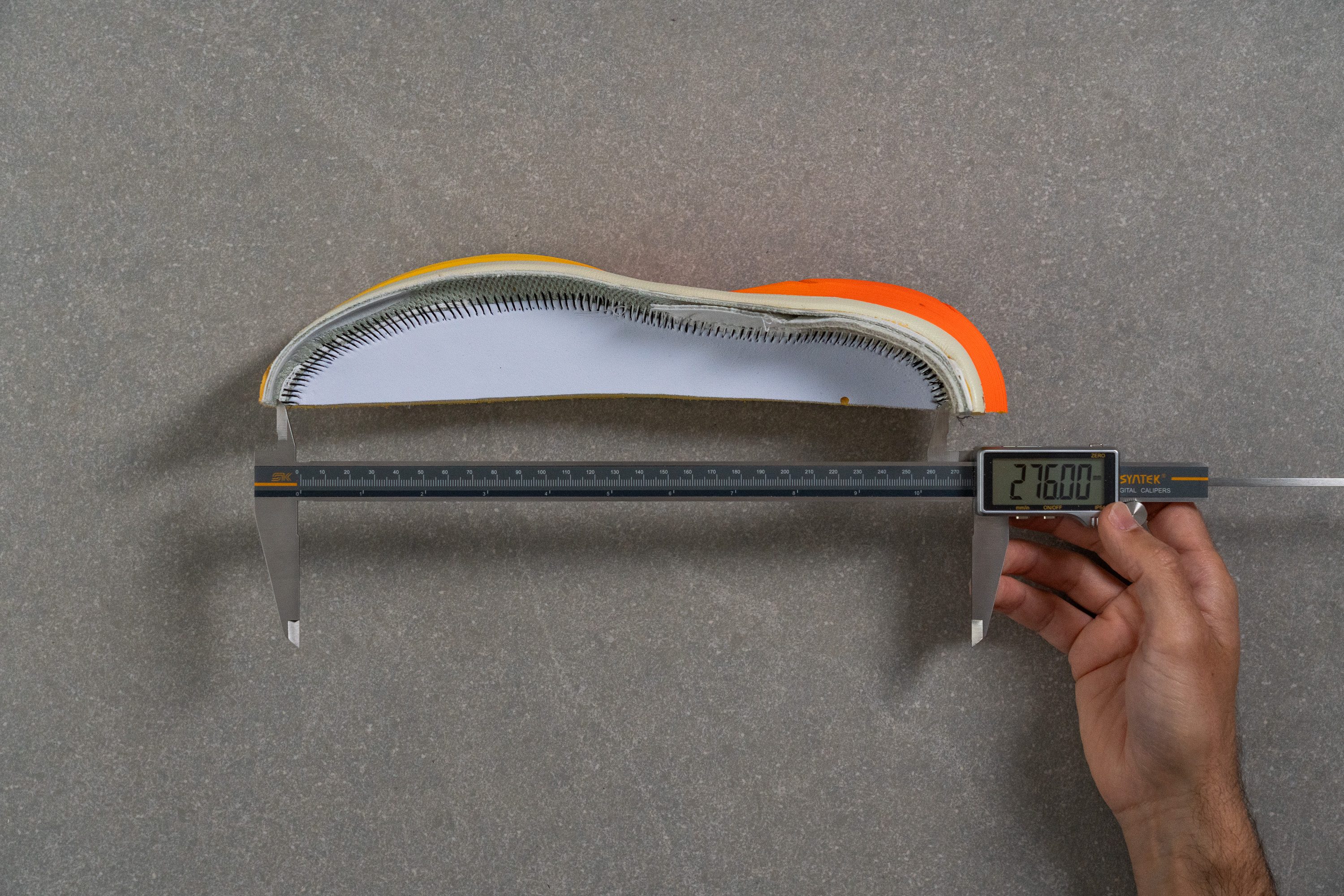
| Guide 19 | 276.0 mm |
| Media | 269.3 mm |
Anchura / Ajuste
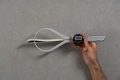
Lo que casi no cambió, por lo menos en nuestra experiencia corriendo con ellas, fue el ajuste. Incluso así, quisimos comprobarlo analizando el interior de las Guide 19 con nuestro gel.
Después de dejar que el material se solidificase, medimos el punto más ancho de la réplica del interior de estas zapatillas. Nuestro calibre marcó 96,2 mm, un resultado muy cercano a la media actual de nuestro laboratorio y casi idéntico al resultado del año pasado.
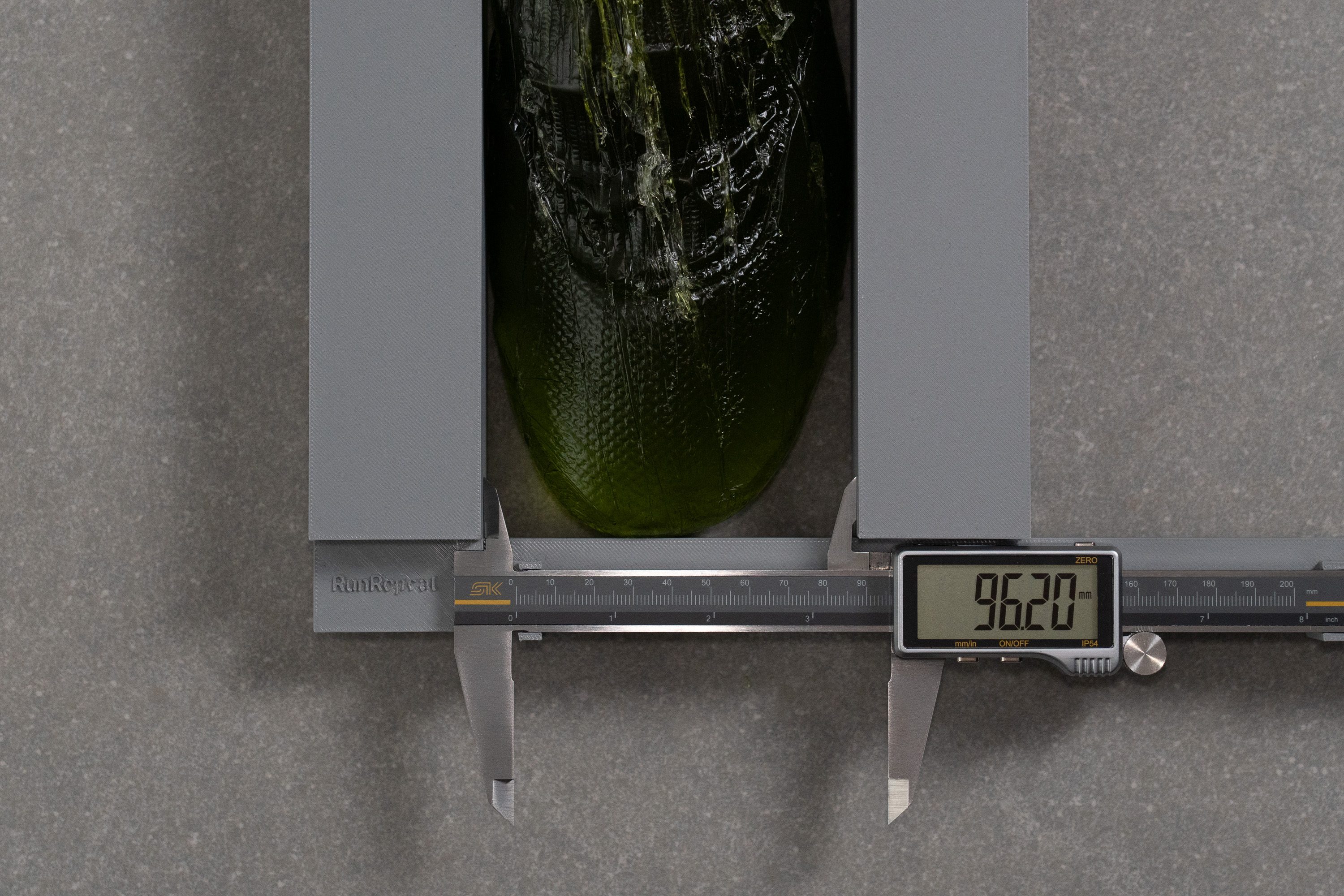
| Guide 19 | 96.2 mm |
| Media | 95.2 mm |
Anchura de la parte delantera
La parte delantera sigue la misma filosofía con sus 72,8 mm. Eso sí, es importante mencionar que Saucony ha sacado las Guide 19 en hasta tres anchuras diferentes, aunque la disponibilidad varía según el país.
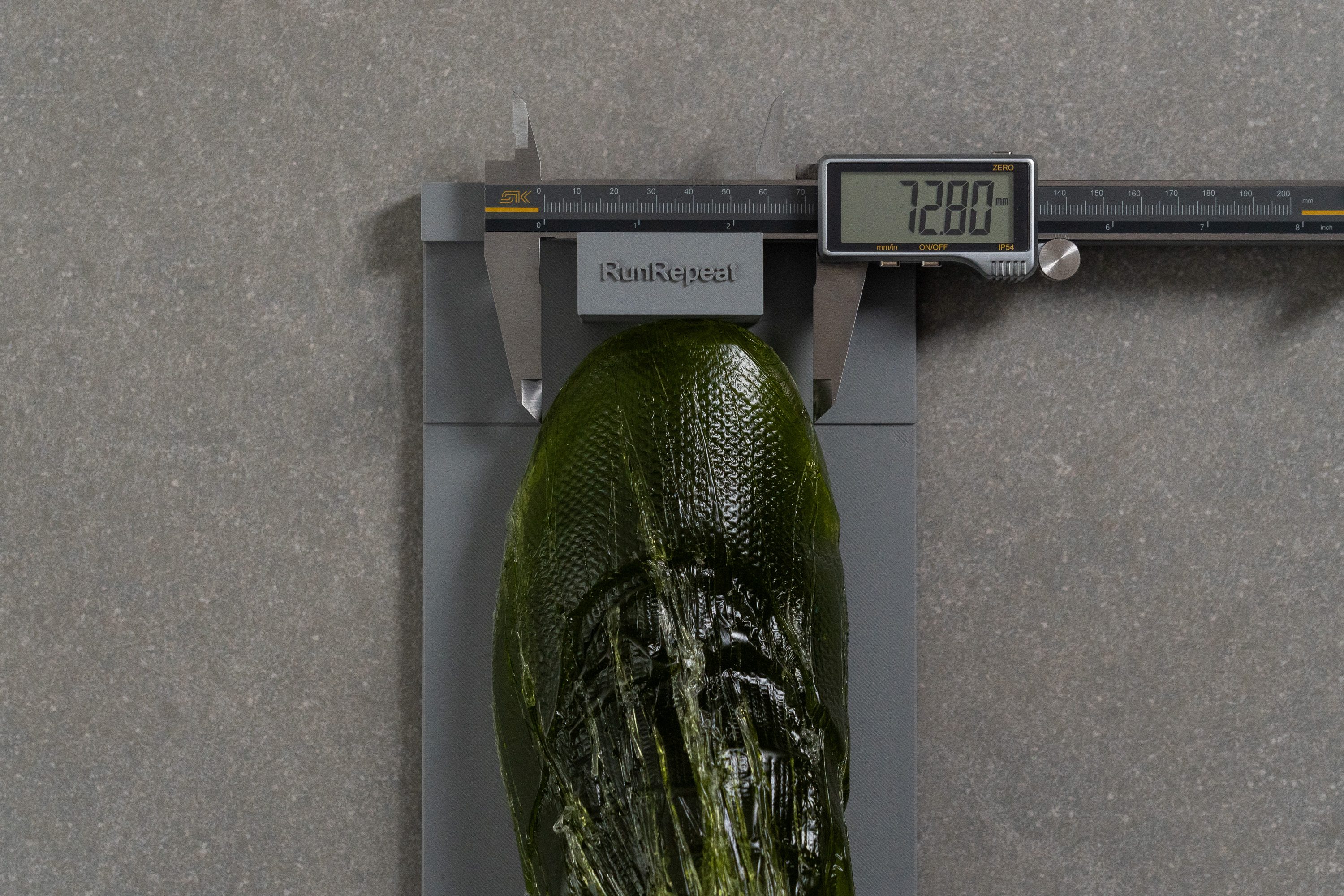
| Guide 19 | 72.8 mm |
| Media | 73.2 mm |
Altura de la parte delantera
La altura de la parte delantera también nos pareció cómoda, sin puntos de presión ni zonas de fricción.
Con 26,8 mm, Saucony no se la jugó, ya que esta medida sigue el enfoque seguro del resto del ajuste.
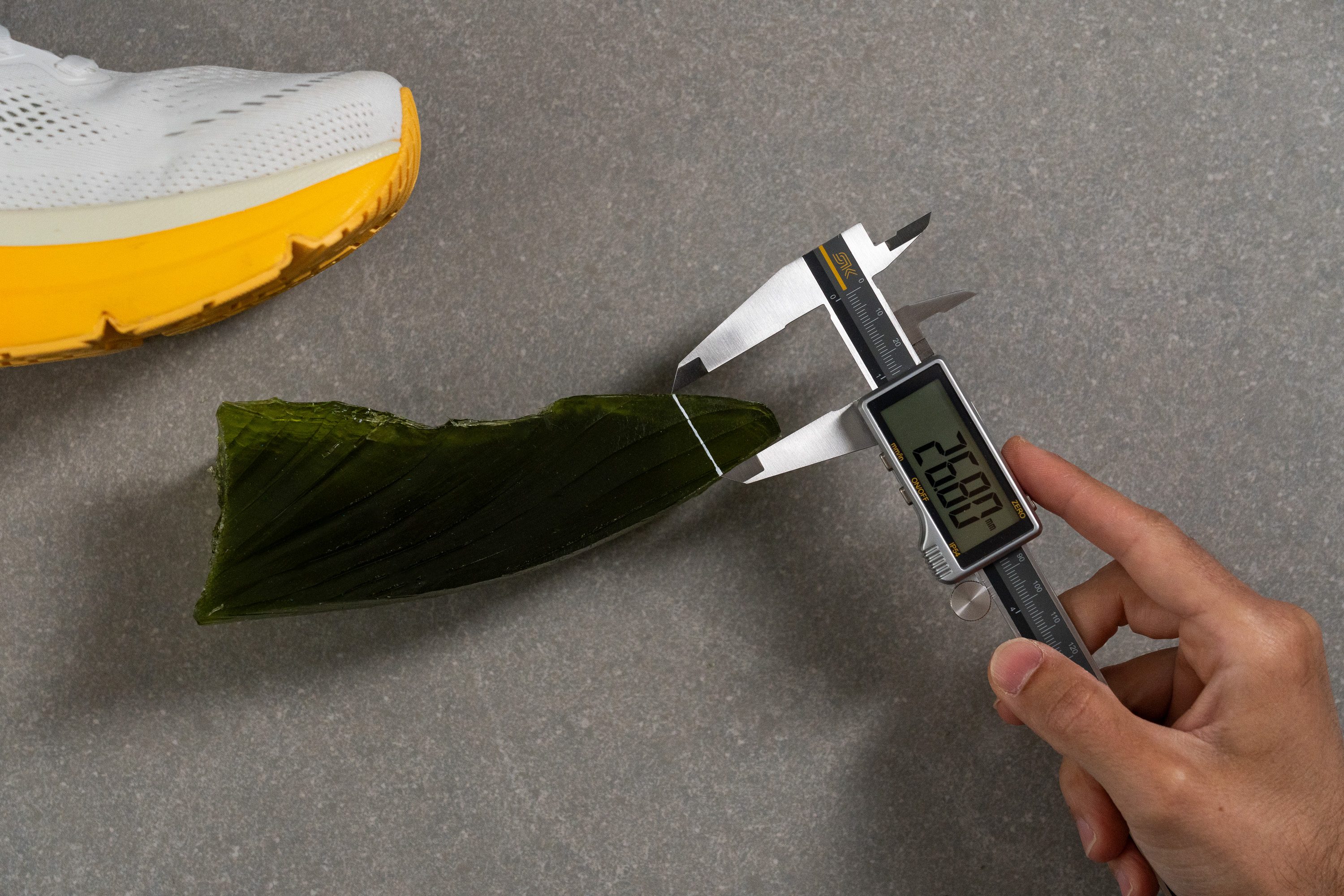
| Guide 19 | 26.8 mm |
| Media | 27.0 mm |
Tracción / Agarre
Traction test
La suela exterior de las Guide 19 también ha mejorado un poco en cuanto a tracción, alcanzando un 0,58 en nuestra prueba. Este resultado verifica que el agarre es confiable y que supera, por un poquito, la media actual de nuestro laboratorio. ¡Otro pasito positivo hacia adelante!
| Guide 19 | 0.58 |
| Media | 0.53 |
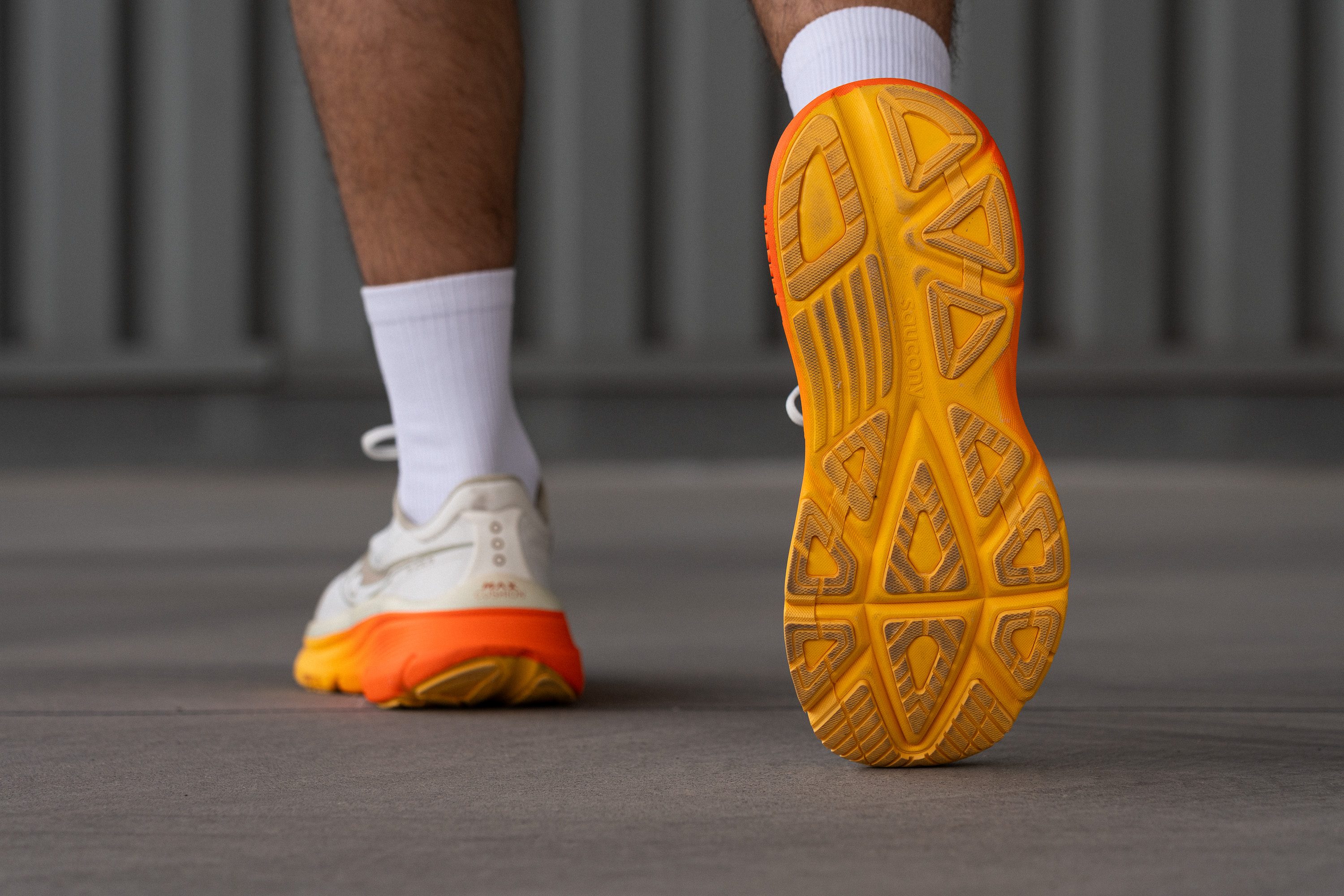
Diseño de la suela exterior
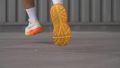
El diseño de la suela exterior es muy parecido al de las generaciones anteriores, aunque Saucony ha cambiado un par de cositas. En el centro del antepié, resulta que hay una capa de caucho, y no espuma expuesta, mientras que los laterales tienen pequeños cortes en el medio que ayudan a reducir un poquito el peso.
Flexibilidad / Rigidez
Algunos de los cambios en el diseño de la suela exterior, junto con la espuma PWRRUN, que es más blandita, hicieron que Saucony pudiese crear unas Guide 19 más flexibles. Con un resultado de solo 11,1 N en nuestra prueba, los runners que no son fans de las mediasuelas rígidas y prefieren las zapatillas que se doblan fácilmente porque son comodísimas para el día a día van a estar encantados.
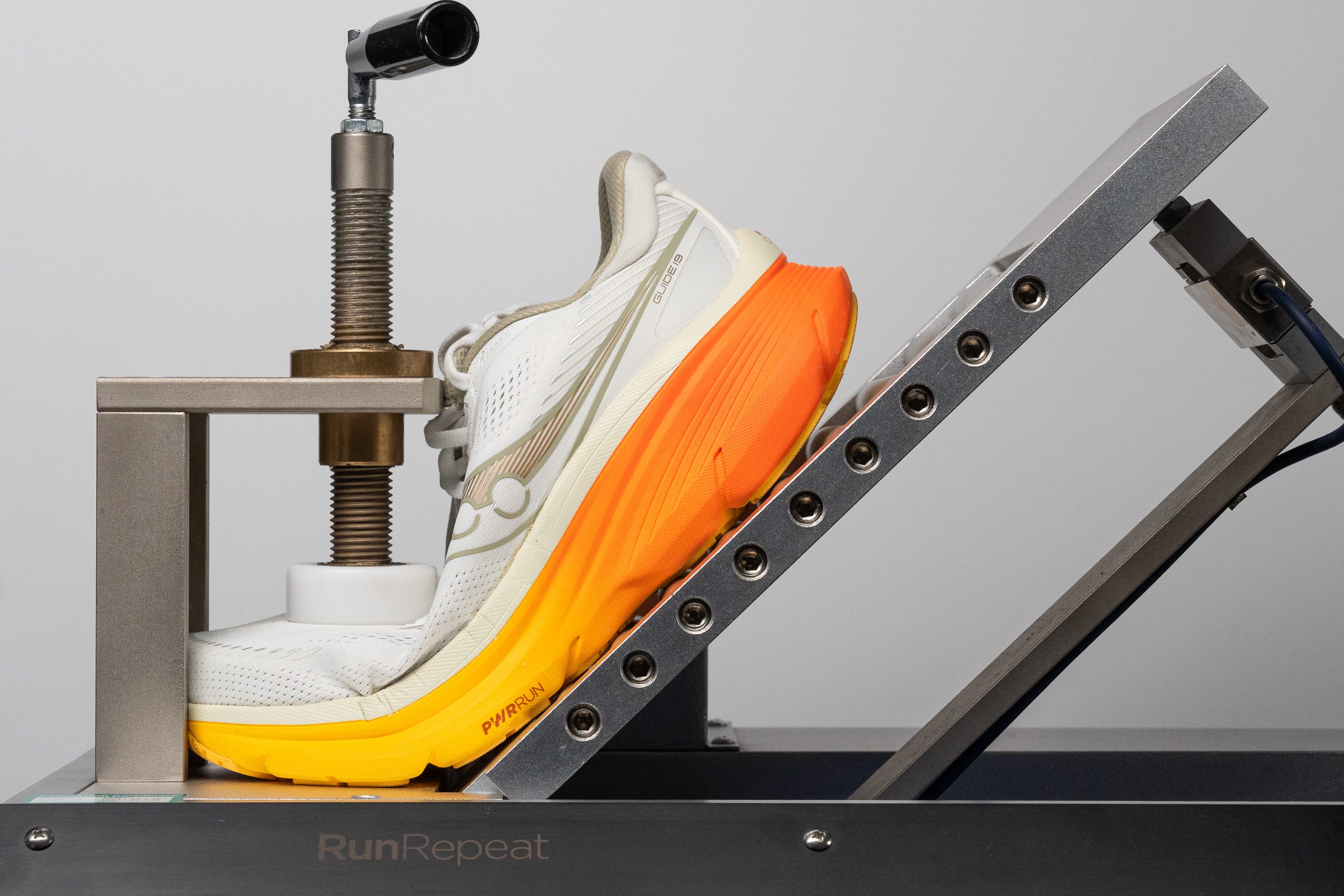
| Guide 19 | 11.1N |
| Media | 15.5N |
Peso
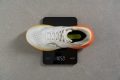
Lo mires como lo mires, 298 g es un peso demasiado alto para un modelo de entrenamiento diario. Además, esto hace que pese un 7 % más que la generación anterior. Saucony, todavía hay trabajo que hacer por aquí.
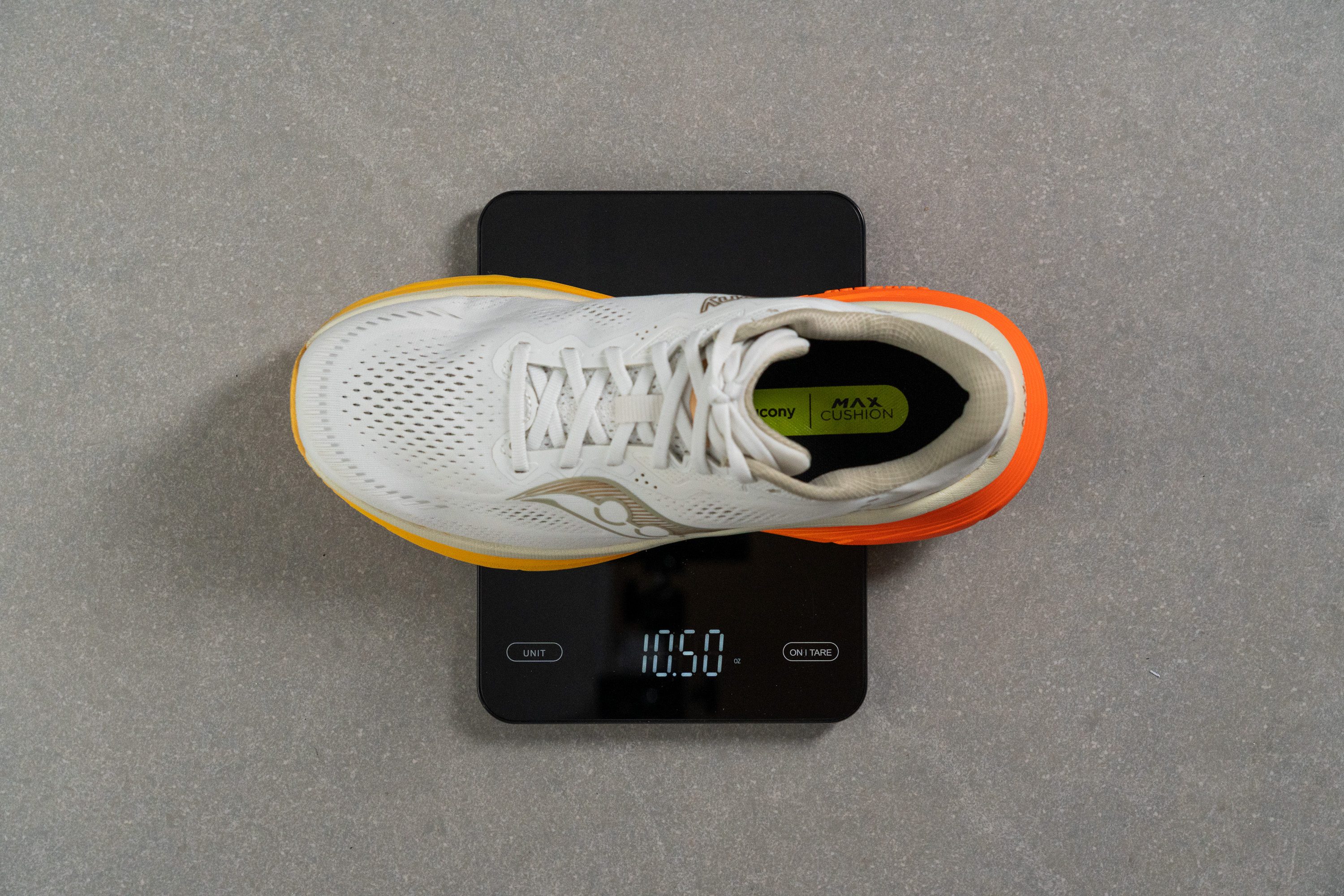
| Guide 19 | 10.5 oz (298g) |
| Media | 9.2 oz (261g) |
Transpirabilidad
Breathability test
ActualizadoLos agujeros grandotes para el flujo de aire de la parte delantera nos llamaron mucho la atención cuando sacamos a las Guide 19 de su caja, pero eso es solo el principio de su historia. La transpirabilidad depende de toda la estructura de las zapatillas y, en este caso, parece que cada parte trabaja codo con codo para poder gestionar bien la humedad.
Obtuvieron un resultado sobresaliente de 93 BR en nuestra prueba de laboratorio, lo que nos indica que se les da bien quitarles el sudor a los pies y conseguir que estén secos y cómodos.
| Guide 19 | 93 BR |
| Media | 75 BR |
Potencial de secado
NuevoTambién medimos cuánta humedad se evapora de las Guide 19 durante la misma prueba de 3 horas, y el resultado volvió a ser estupendo. Con un potencial de secado del 55 %, nos han demostrado que se les da de lujo liberar la humedad antes de que se acumule dentro de las zapatillas.
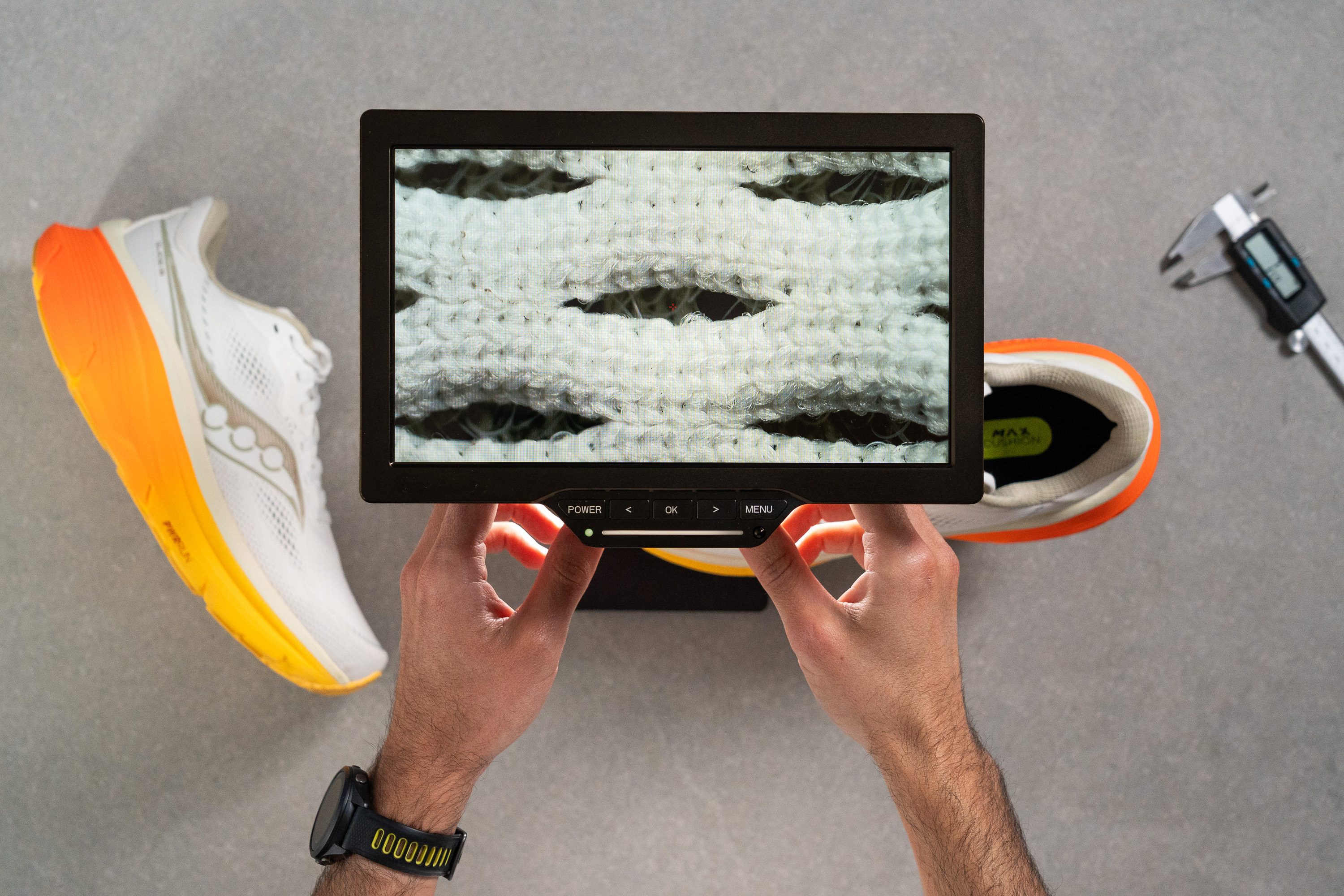
| Guide 19 | 55% |
| Media | 53% |
Estabilidad
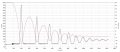
Prueba de estabilidad lateral
Saucony es una de esas marcas a las que les encanta ponerle un nombre a cada tecnología, y su sistema de estabilidad, que es parecido al GTS de Brooks o al 4D Guidance System de ASICS, se llama CenterPath.
Básicamente, combina una mediasuela extraancha con paredes laterales altas para conseguir una estabilidad estupenda sin tener que recurrir a métodos antiguos e intrusivos, como puede ser un refuerzo en la cara interna.
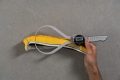
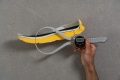
Rigidez torsional
Nos gustó mucho cómo Saucony consiguió que las Guide 19 fuesen flexibles en cualquier dirección, que es algo que muchas marcas no consiguen cuando sus zapatillas de running tienen mucha amortiguación. De hecho, con solo 10,7 Nm en nuestra prueba, son más fáciles de doblar que la media.
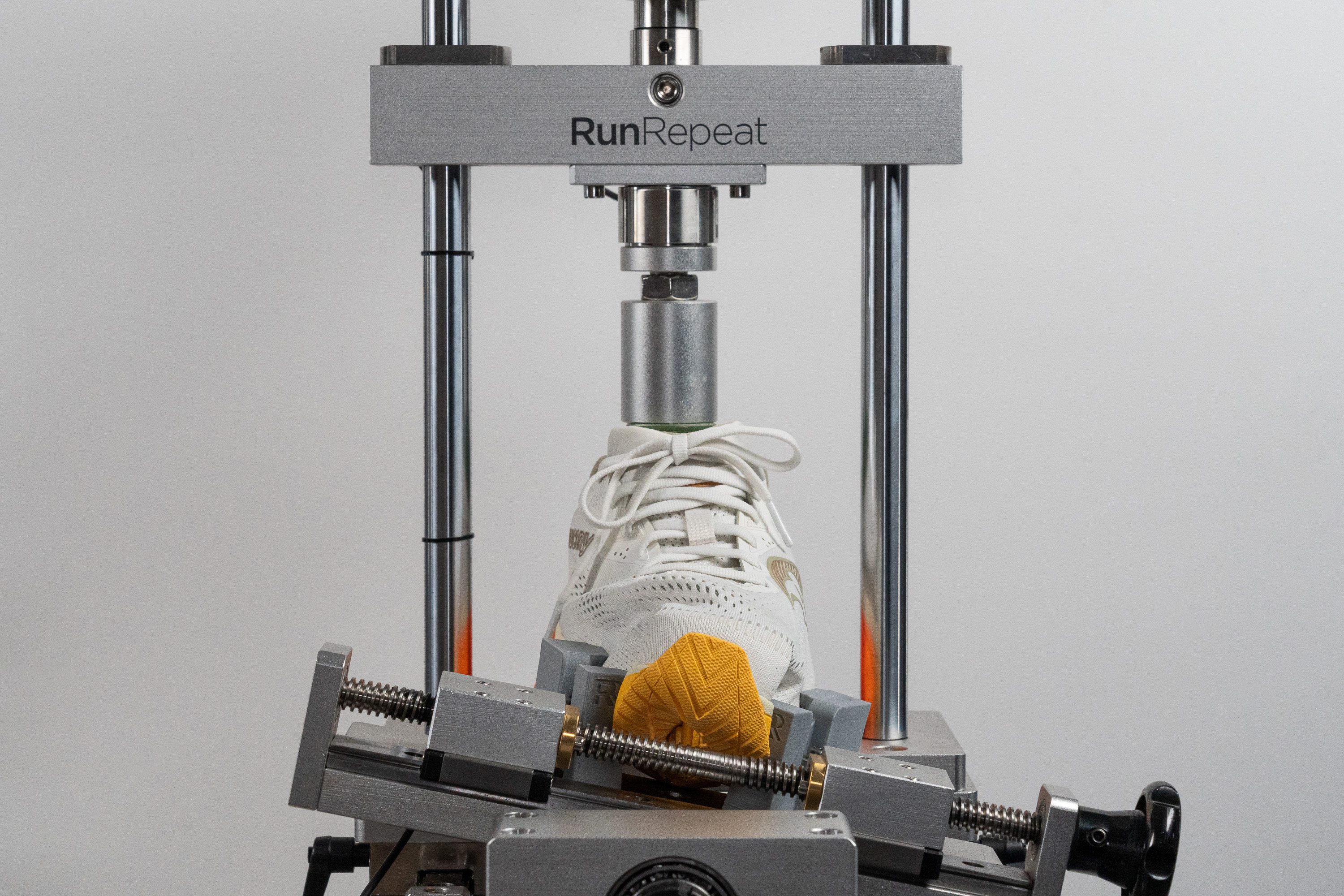
| Guide 19 | 10.7 Nm |
| Media | 14.3 Nm |
Rigidez del contrafuerte del talón
El contrafuerte del talón también pone la comodidad antes de una sujeción agresiva en su escala de prioridades, como vimos cuando obtuvo un moderado 3/5 en nuestra prueba.
En lugar de depender de las estructuras del talón rígidas que solemos ver en los modelos de estabilidad, Saucony confía, principalmente, en la plataforma ultraancha de este modelo en el talón, que ofrece tanto sujeción como control.
| Guide 19 | 3 |
| Media | 3 |
Anchura de la mediasuela - antepié
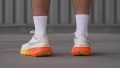
La base de las Saucony Guide 19 es enorme, cosa que queda totalmente clara en cuanto le echas un ojo a las zapatillas. El antepié, mediopié y talón son bastante más anchos de lo que solemos ver en las zapatillas de entrenamiento diario estándar.
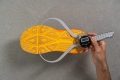
Para confirmar nuestras sensaciones, cogimos nuestro calibre y comprobamos que el antepié alcanza una anchura de 120,0 mm.
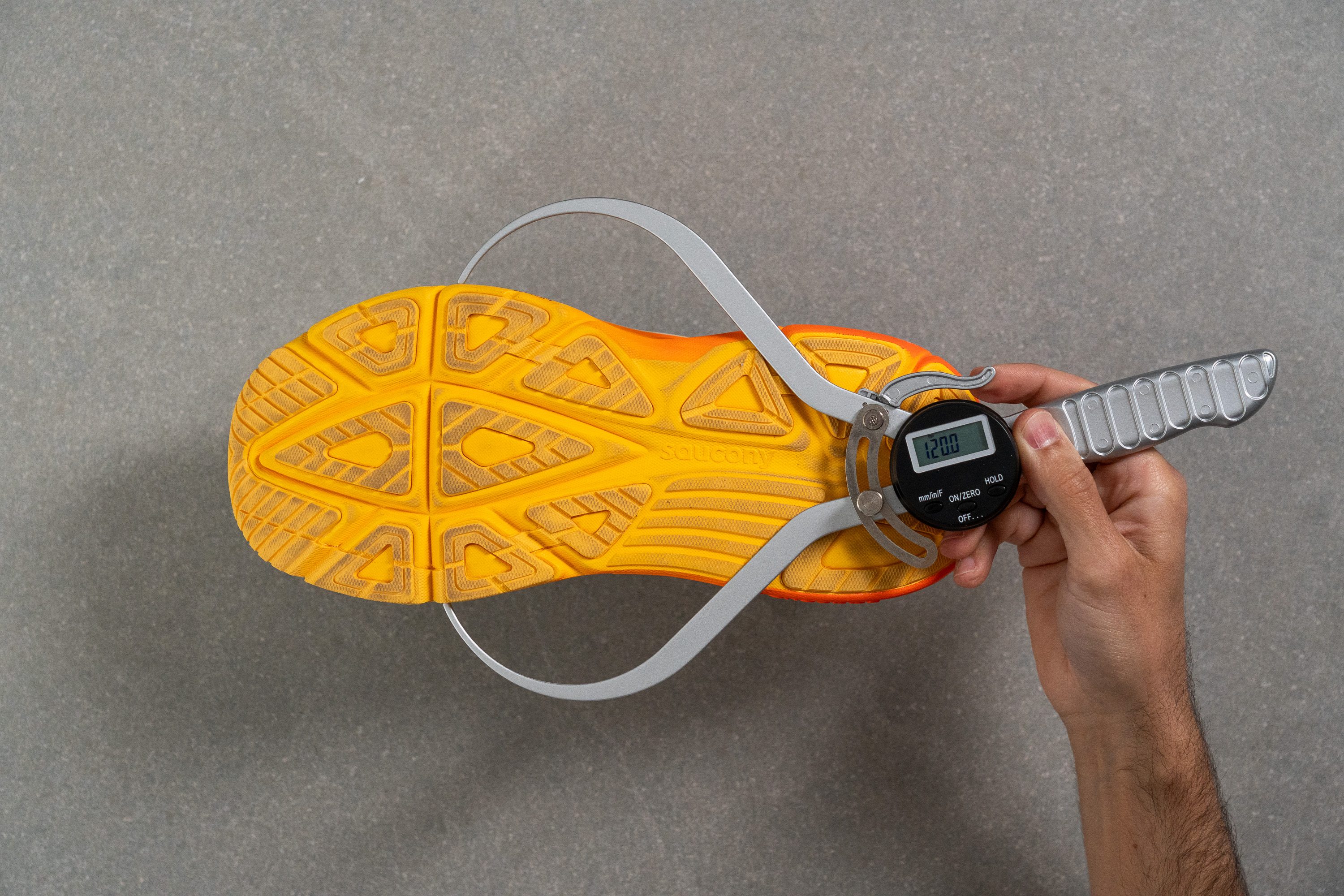
| Guide 19 | 120.0 mm |
| Media | 115.1 mm |
Anchura de la mediasuela - talón
Pero lo que más nos impresionó fue el talón. Sus 104,2 mm de ancho hacen que esta plataforma sea de las más amplias que hemos analizado en nuestro laboratorio.
Eso explica por qué cada paso fue tan estable, aunque lo malo es que estas zapatillas se sienten pesadas, grandotas y voluminosas en los pies.
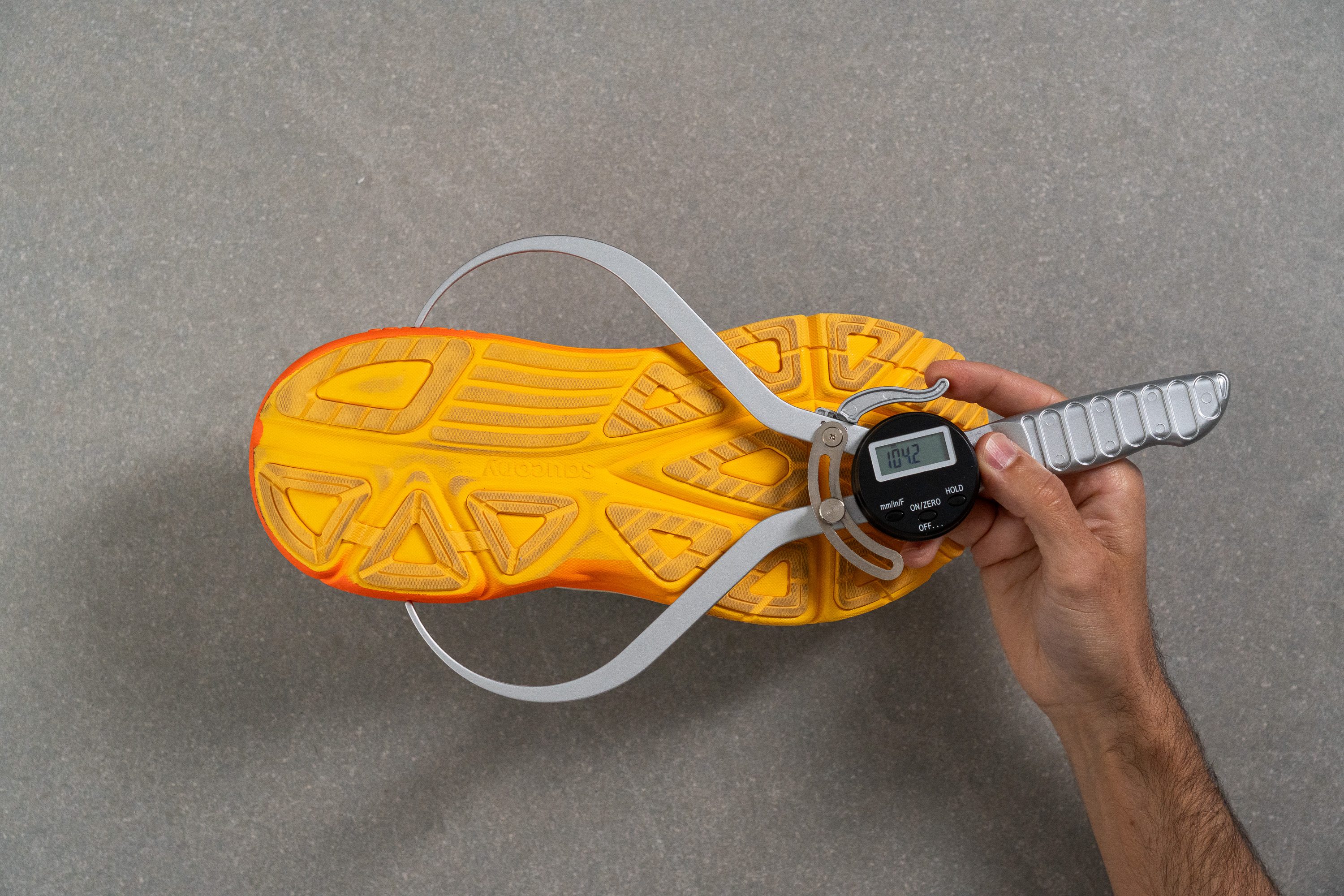
| Guide 19 | 104.2 mm |
| Media | 91.1 mm |
Durabilidad
Durabilidad de la parte delantera
La transpirabilidad y lo bonito que es el upper de este modelo ya nos había enamorado, pero su durabilidad fue lo que terminó de conquistarnos. Con un 5/5 perfecto, ¡no podríamos pedir más!
| Guide 19 | 5 |
| Media | 2.6 |
Durabilidad del acolchado del talón
La mayoría de las zapatillas rinden mejor en esta prueba que en la anterior pero, sorprendentemente, las Guide 19 van a contracorriente. Con solo un 2/5 en durabilidad... Saucony debería echarle un ojo al acolchado del talón para la próxima versión.
| Guide 19 | 2 |
| Media | 3.4 |
Durabilidad de la suela
El caucho XT-900 nos dejó boquiabiertos en nuestra prueba de durabilidad, ya que perdió solo 0,6 mm de material. Vamos, ¡que su durabilidad a largo plazo no nos preocupa ni un poquito!
| Guide 19 | 0.6 mm |
| Media | 1.1 mm |
Grosor de la suela
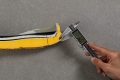
Saucony utilizó una capa de caucho de 3,2 mm, que no está nada mal, y creemos que la mediasuela sigue un diseño muy inteligente y seguro.
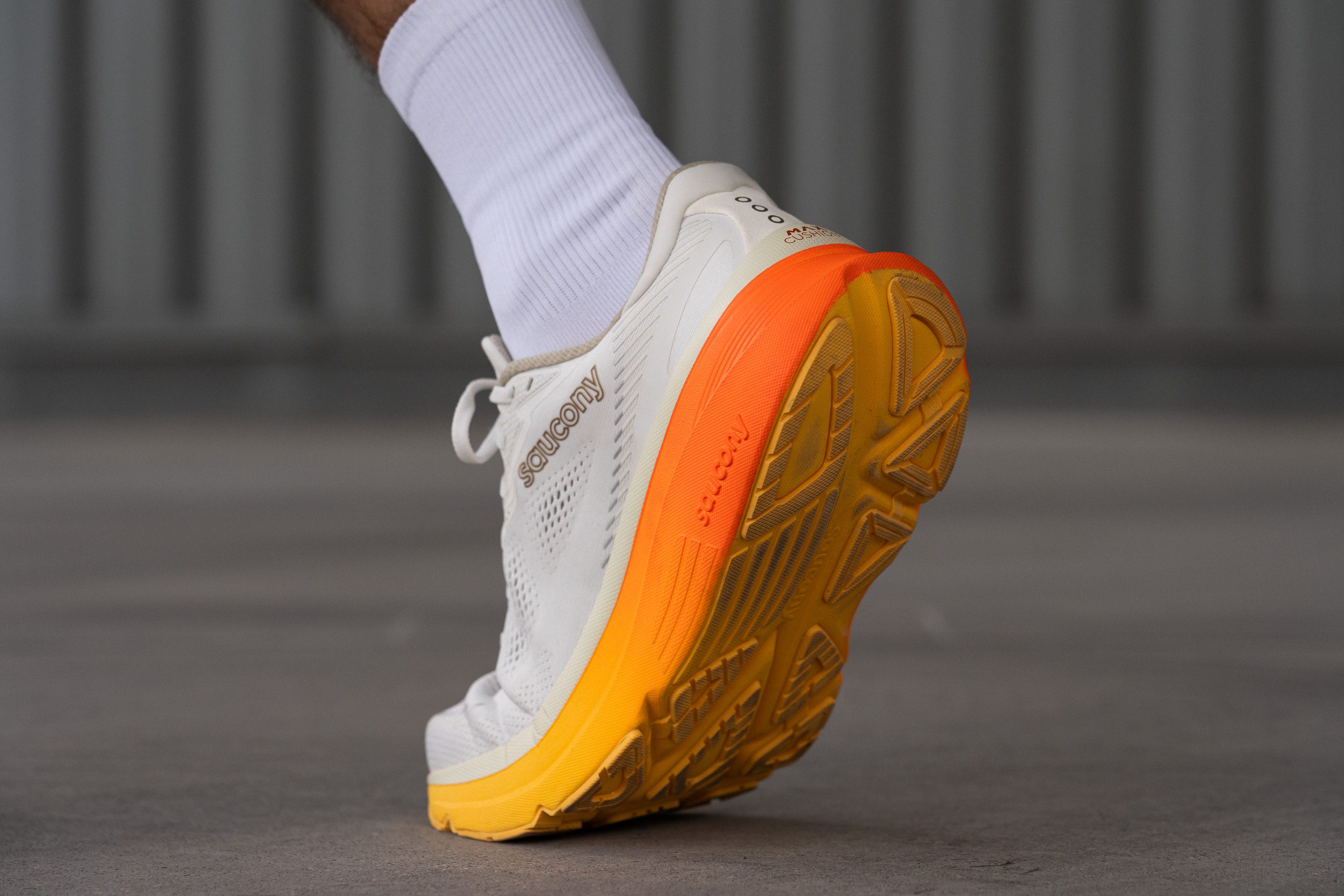
La marca podría haber reducido el grosor de esta pieza para conseguir que las zapatillas fuesen un poco más ligeras pero, por lo general, los modelos de estabilidad los utilizan los runners que desgastan las suelas en un abrir y cerrar de ojos, así que priorizar la durabilidad nos tiene todo el sentido del mundo.
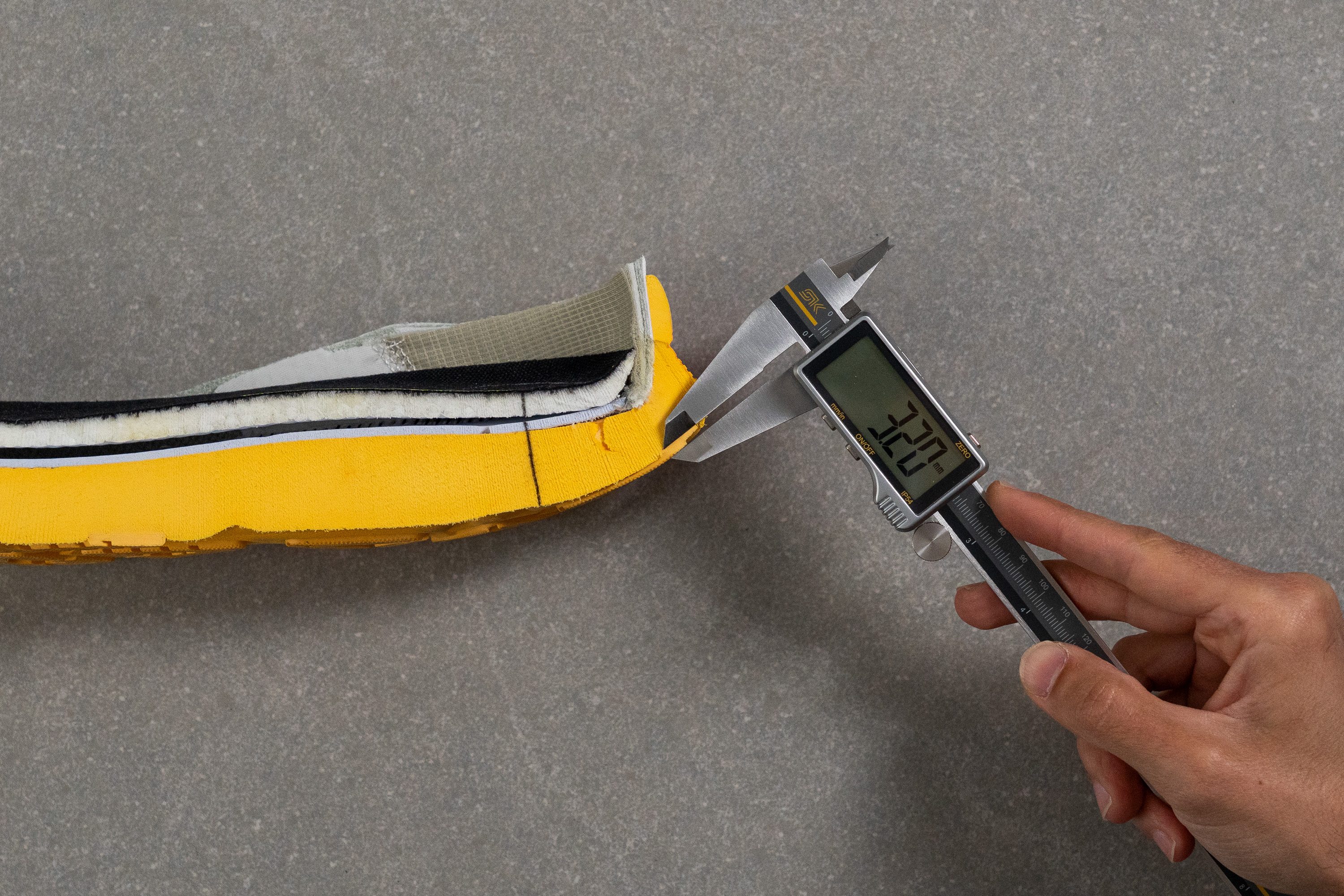
| Guide 19 | 3.2 mm |
| Media | 3.1 mm |
Varios
Grosor de la plantilla
La plantilla de TPU que traen las Guide 19 añade unos generosos 6,5 mm de amortiguación extra; es bastante más gruesa de lo que solemos ver en los modelos de entrenamiento diario.
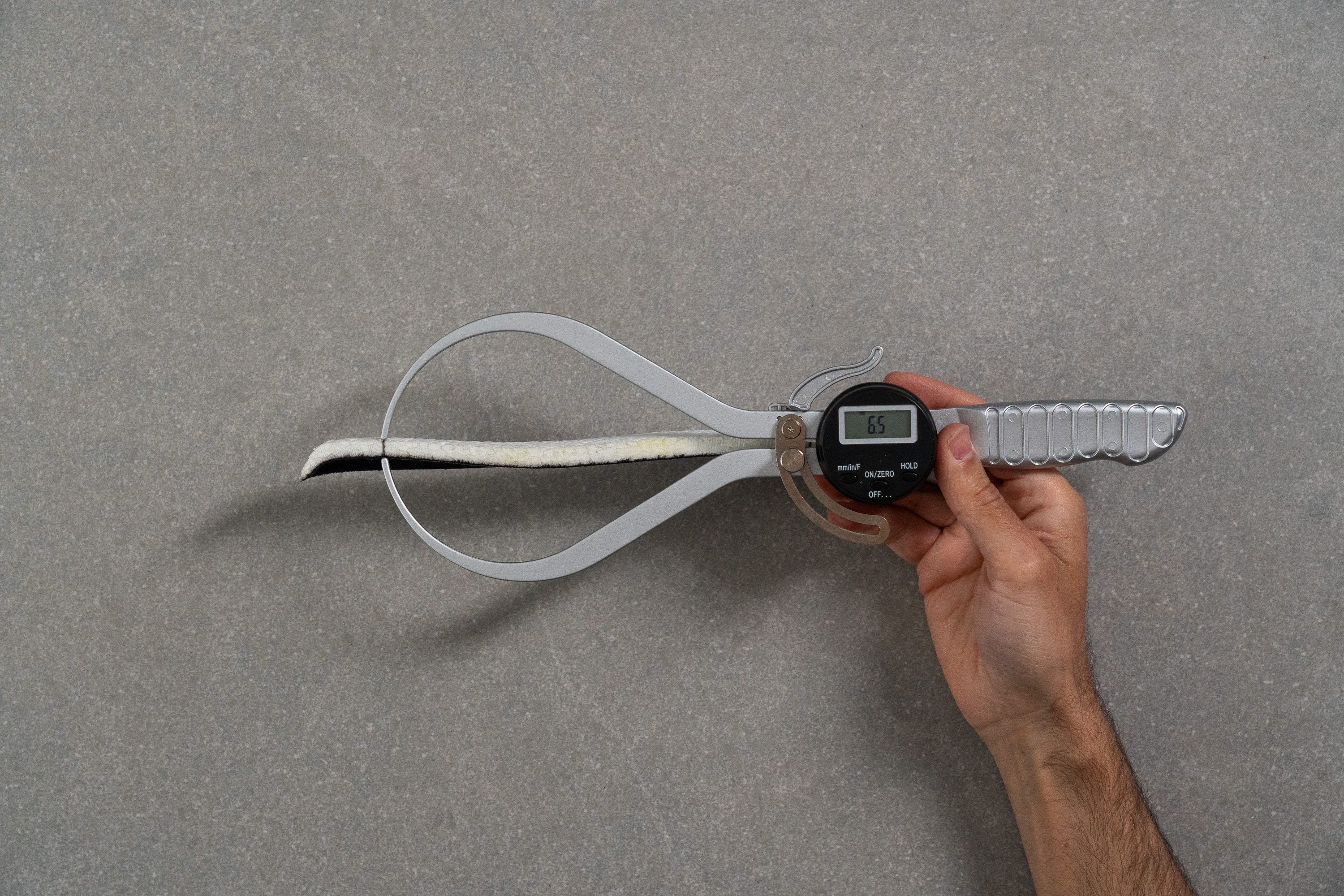
| Guide 19 | 6.5 mm |
| Media | 4.4 mm |
Plantilla extraíble
Aunque quitarla significa que perderías una de las características más distintivas de estas zapatillas, puedes hacerlo sin problema.
De hecho, cambiarla por otra más finita a lo mejor es un acierto para los runners a los que las Guide 19 les quedan un poco justas.
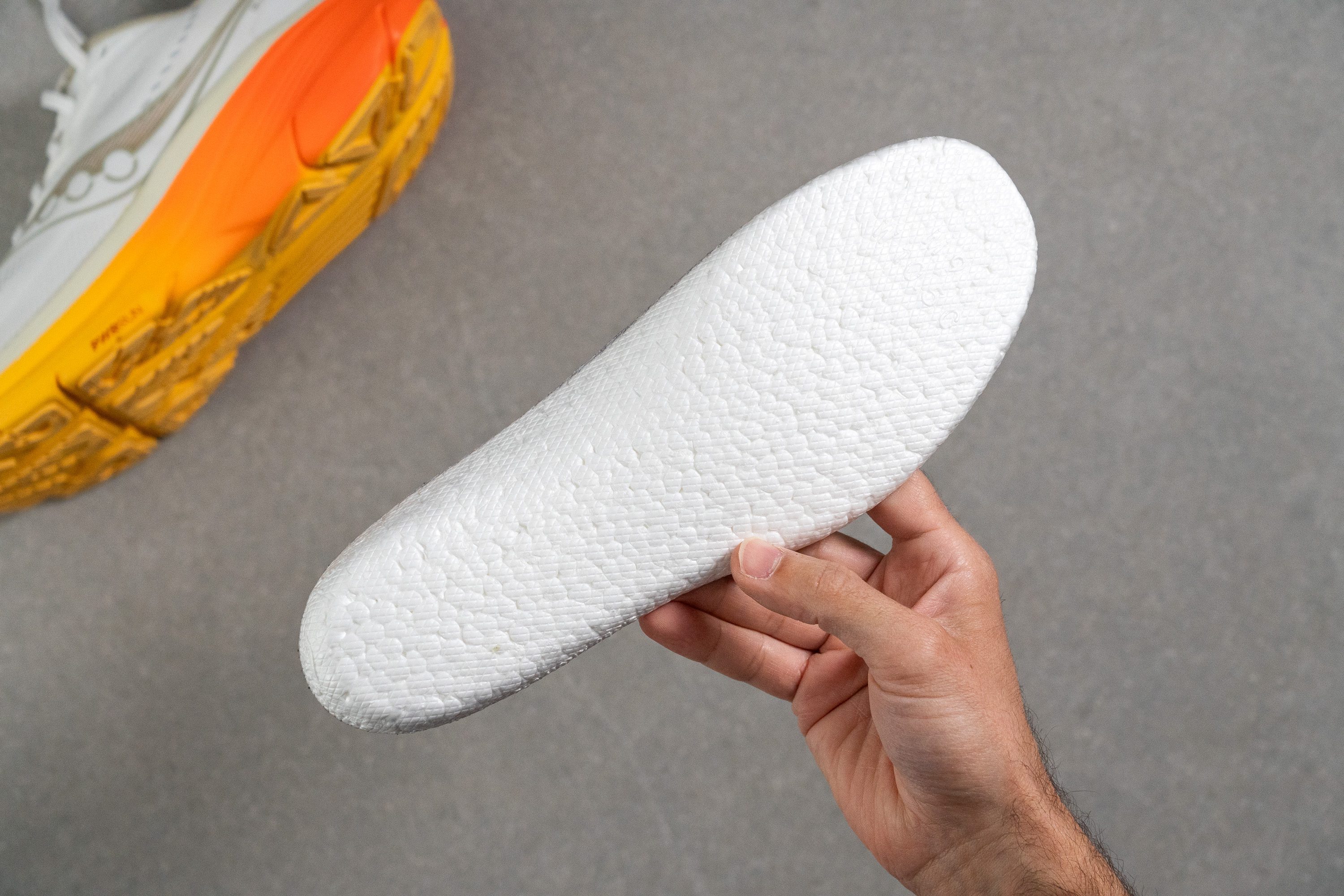
| Guide 19 | Sí |
Elementos reflectantes
Las Saucony Guide 19 no tienen elementos reflectantes. Una vez más, creemos que la marca ha perdido una oportunidad, ¡a ver si lo tienen en cuenta para la próxima versión!
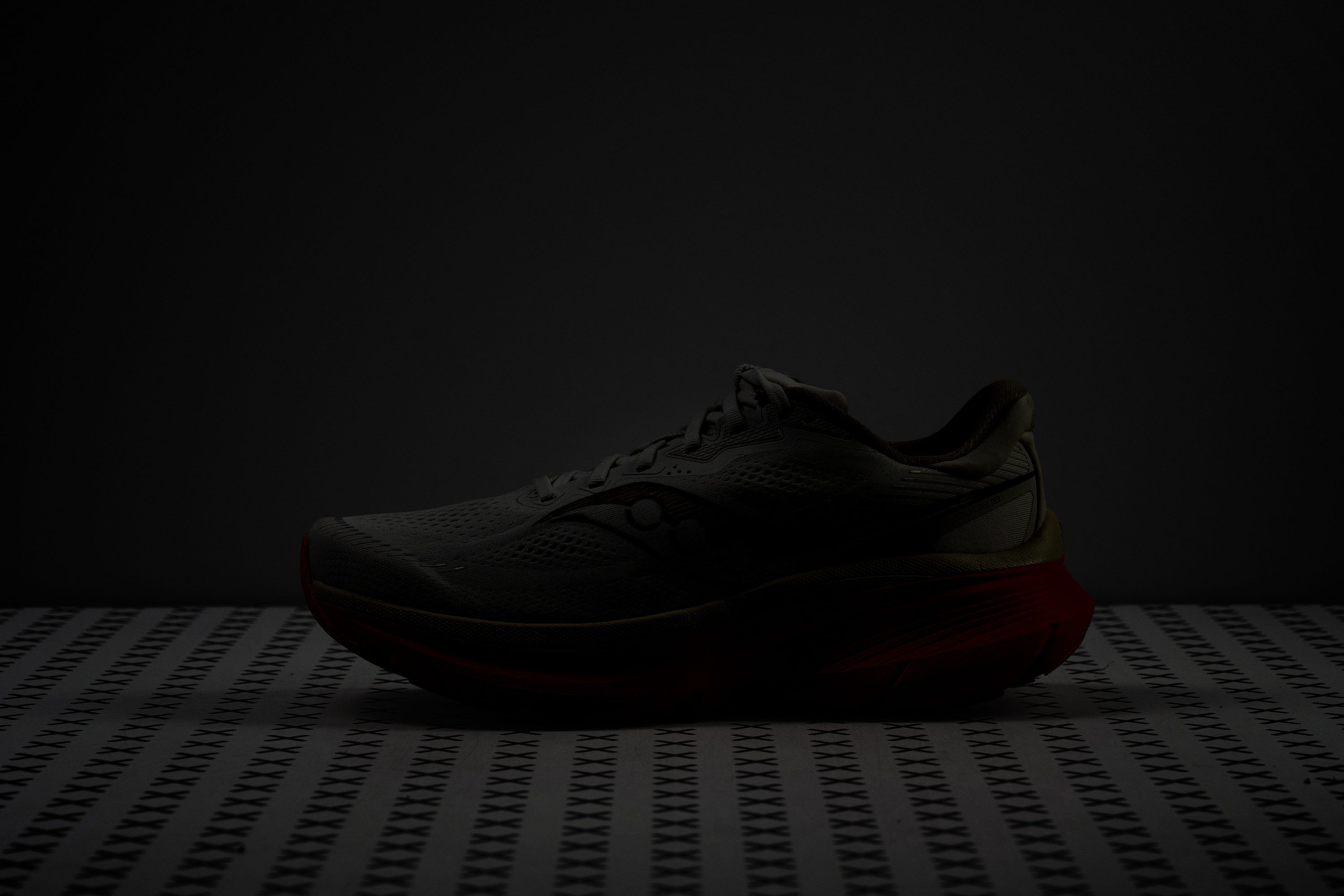
| Guide 19 | No |
Acolchado de la lengüeta
Saucony decidió que la lengüeta de este modelo fuese bastante finita, de 3,9 mm, y la verdad es que nos parece una buena decisión teniendo en cuenta el diseño, ya relativamente pesado, de las Guide 19.
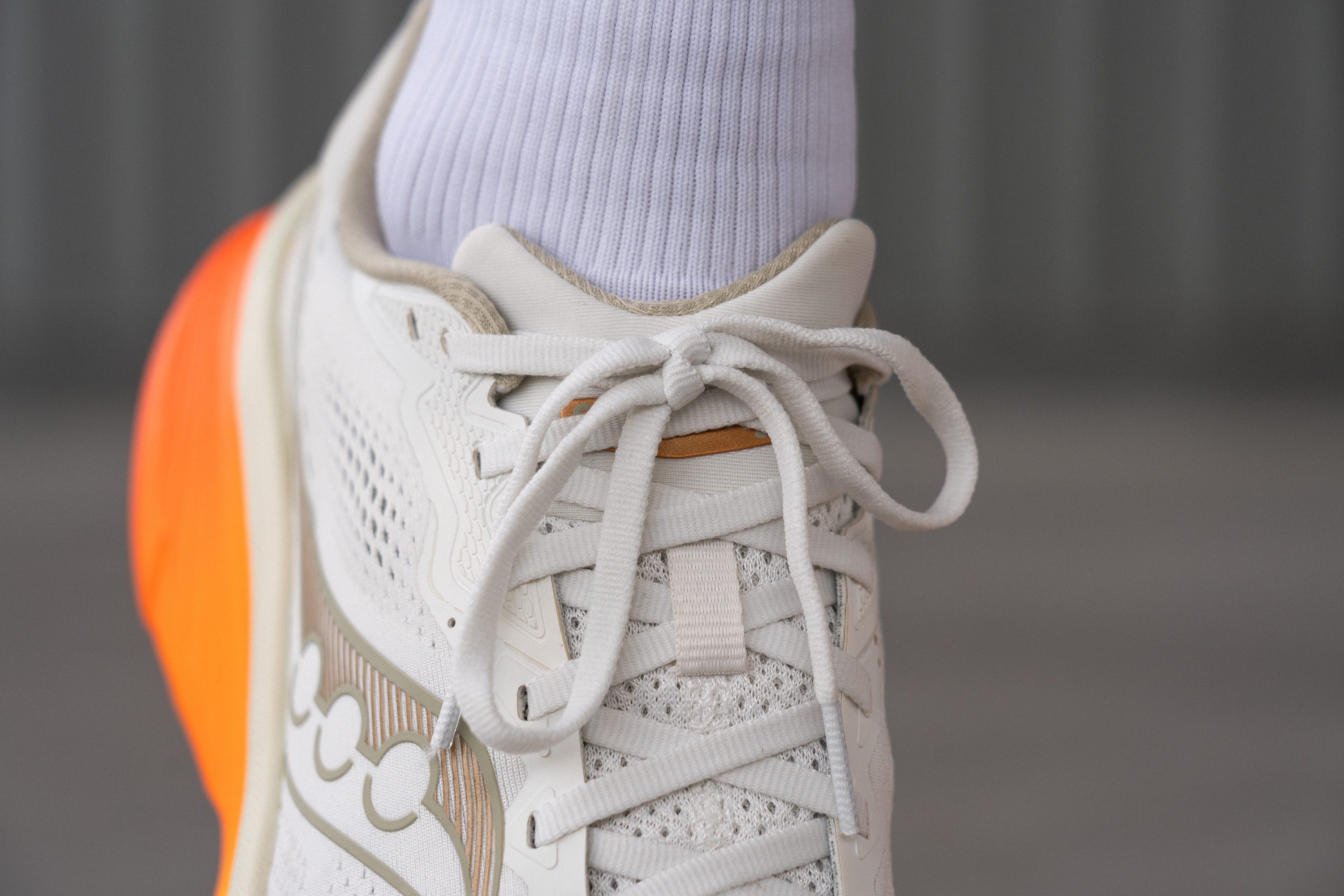
Pero bueno, sinceramente, la comodidad nunca fue un problema durante nuestras pruebas de uso, ya que el acolchado de esta zona consigue presumir de un fantástico equilibrio entre suavidad y ligereza. Por otro lado, si lo tuyo son las lengüetas ultramullidas y suaves como una almohada, como las de algunos modelos de entrenamiento diario, la de este par no te va a terminar de convencer.
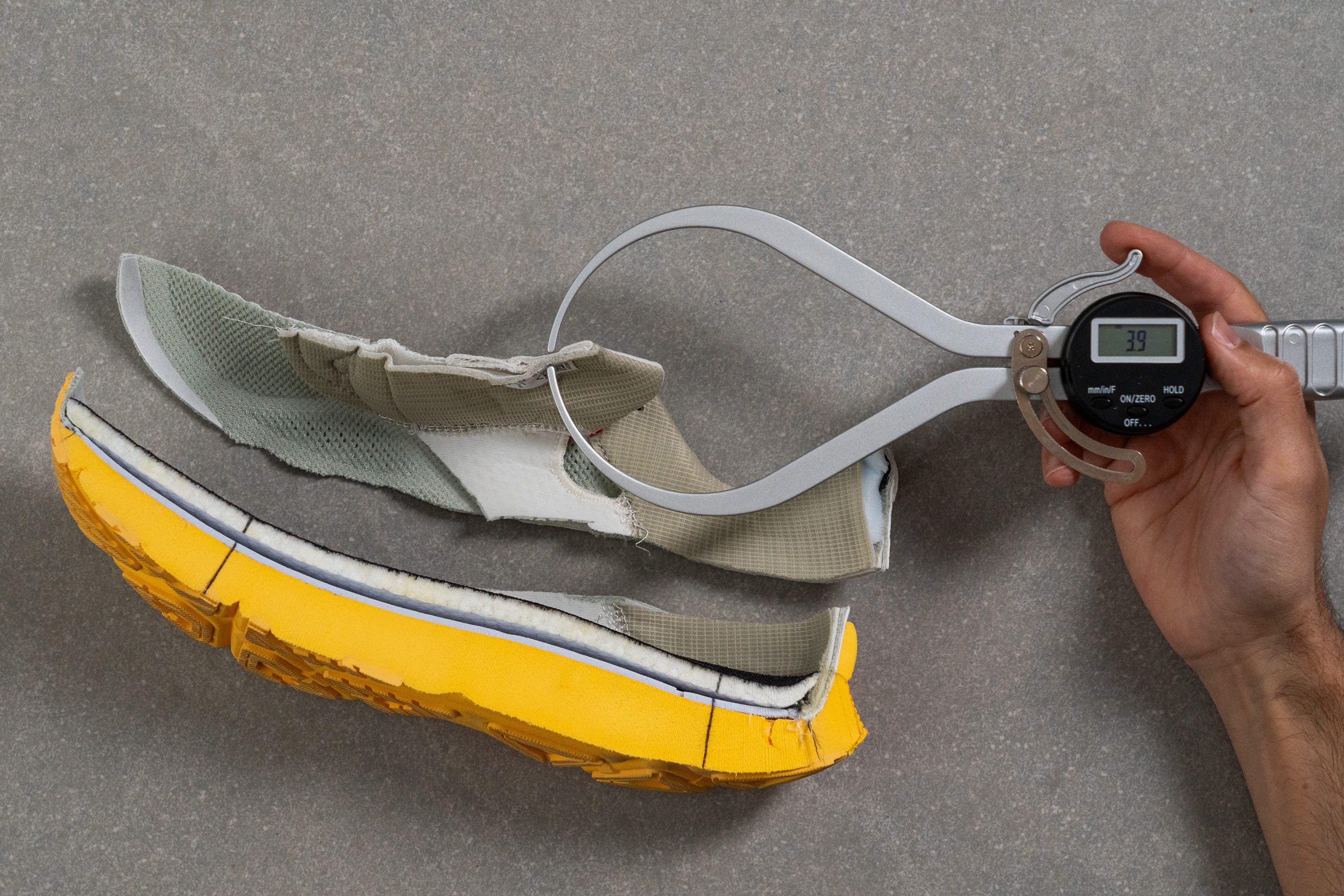
| Guide 19 | 3.9 mm |
| Media | 5.8 mm |
Lengüeta: tipo de refuerzo
La lengüeta está semirreforzada, y la verdad es que se nota que su diseño está currado, ya que está hecha con un material transpirable que ayuda a evitar las rozaduras.
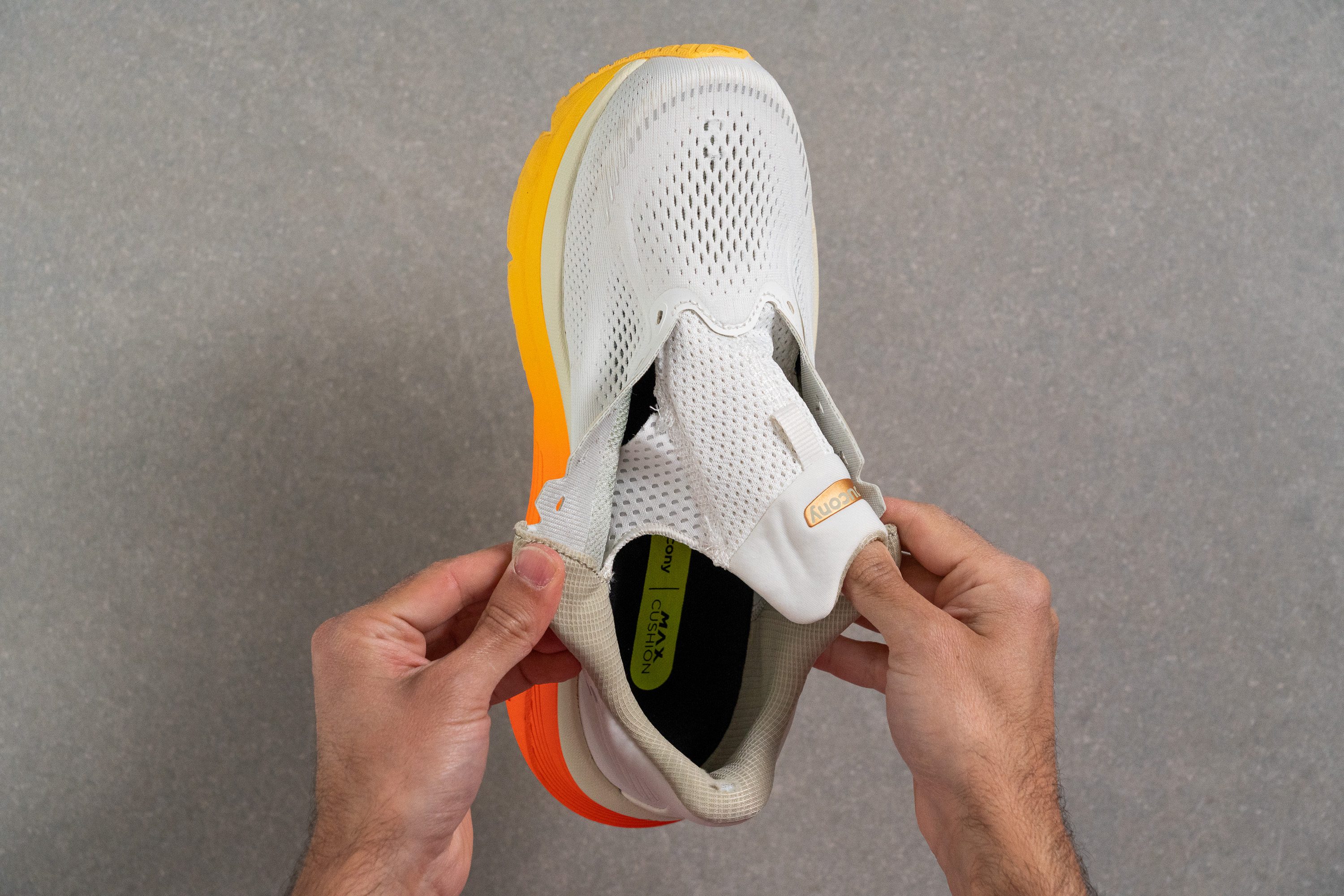
| Guide 19 | Ambos lados (semi) |
Tirador del talón
Saucony puso bastante acolchado en esta zona. Eso sí, nos hemos dado cuenta de que también eliminó el tirador para apostar por un diseño más limpio y aerodinámico.
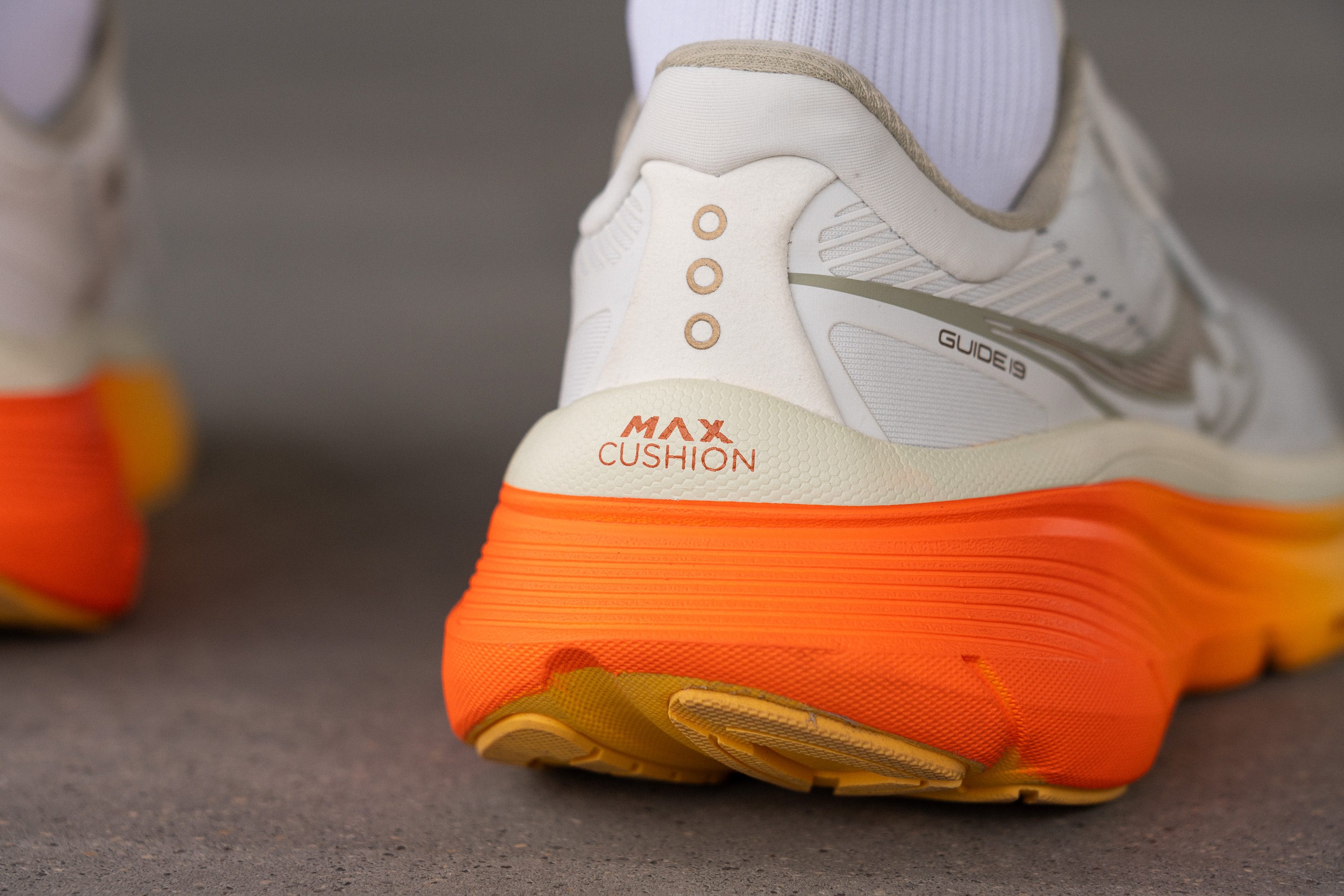
| Guide 19 | Ninguno |
Precio
Estamos encantados de poder decirte que Saucony ha mantenido el mismo precio que el de las Guide anteriores, y como ahora muchas marcas están sacando modelos de entrenamiento diario cada vez más caros, estamos hasta más contentos. Esto hace que las Guide 19 destaquen como una opción con una relación calidad-precio excelente dentro de su categoría.
| Guide 19 | $150 |