










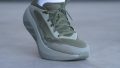












Our verdict
- Daily running 89
- Tempo 85
- Race 77
- Stability 76
Pros
- Amazing energy return and impact protection
- Highly versatile for multiple paces
- Lighter than most daily trainer rivals
- New outsole design with two Continental pods
- Secure lockdown
- High build quality
- Handles long runs with ease
- Definitely a fun ride
- Looks different from the crowd
- Better value than the Edge
Cons
- Very poor breathability
- Limited vertical toebox space
- Not for those with stability needs
Awards
- Top 23% most popular running shoes
Comparison
The most similar running shoes compared
+ + Add a shoe | |||||
|---|---|---|---|---|---|
| Our score | 84 Great | 75 Good | 83 Great | 86 Great | |
| Price | $180 | $55 | $165 | $170 | |
| Pace | Daily runningTempo | Daily running | Daily running | Daily running | |
| Shock absorption | High | Moderate | High | High | |
| Energy return | High | Low | Moderate | Low | |
| Traction | High | High | High | High | |
| Arch support | Neutral | Neutral | Neutral | Neutral | |
| Weight lab Weight brand | 8.7 oz / 247g 8.7 oz / 248g | 11.2 oz / 318g 11.5 oz / 326g | 10.1 oz / 286g 10.3 oz / 292g | 9.8 oz / 278g 10 oz / 283g | |
| Lightweight | ✓ | ✗ | ✗ | ✗ | |
| Drop lab Drop brand | 6.8 mm 6.0 mm | 6.9 mm 5.0 mm | 9.0 mm 6.0 mm | 5.2 mm 8.0 mm | |
| Strike pattern | Mid/forefoot | Mid/forefoot | HeelMid/forefoot | Mid/forefoot | |
| Size | True to size | True to size | True to size | True to size | |
| Midsole softness | Balanced | Balanced | Balanced | Balanced | |
| Difference in midsole softness in cold | Small | Small | Normal | Small | |
| Toebox durability | Decent | Decent | Bad | Decent | |
| Heel padding durability | Decent | Bad | Good | Decent | |
| Outsole durability | Good | Good | Good | Good | |
| Breathability | - | - | - | Moderate | |
| Width / fit | Medium | Medium | Medium | Medium | |
| Toebox width | Medium | Narrow | Medium | Medium | |
| Stiffness | Stiff | Stiff | Stiff | Stiff | |
| Torsional rigidity | Moderate | Stiff | Moderate | Stiff | |
| Heel counter stiffness | Flexible | Moderate | Moderate | Stiff | |
| Rocker | ✓ | ✓ | ✓ | ✓ | |
| Heel lab Heel brand | 38.6 mm 38.0 mm | 37.4 mm 37.0 mm | 38.6 mm 40.0 mm | 39.5 mm 43.5 mm | |
| Forefoot lab Forefoot brand | 31.8 mm 32.0 mm | 30.5 mm 32.0 mm | 29.6 mm 34.0 mm | 34.3 mm 35.5 mm | |
| Widths available | NormalWide | NormalWideX-Wide | NormalWideX-Wide | NormalWideX-Wide | |
| Orthotic friendly | ✓ | ✓ | ✓ | ✓ | |
| Season | - | - | - | All seasons | |
| Removable insole | ✓ | ✓ | ✓ | ✓ | |
| Ranking | #133 Top 34% | #321 Bottom 19% | #150 Top 38% | #82 Top 21% | |
| Popularity | #90 Top 23% | #259 Bottom 35% | #29 Top 8% | #28 Top 8% |



Who should buy
The Adidas Hyperboost Run is a great choice for runners who:
- Prioritize an energetic midsole and durable outsole, and don't mind sacrificing breathability.
- Want to experience the impressive Hyperboost Pro foam in a more balanced, less extreme package than the Hyperboost Edge.
- Are beginners and need a versatile trainer that feels equally comfortable on easy runs, tempo sessions, and even the occasional race.
- Enjoy a fun and protective ride without the bulky feel often associated with max-stack shoes.
Who should NOT buy
While the Hyperboost Run fits the super trainer category, we think it's not the best choice for runners seeking a max-stack shoe with ultra-deep cushioning. In that case, the adidas Hyperboost Edge or the ASICS Superblast 3 are better options.
We also do not recommend it for runners who prioritize breathability. We found in the lab that this is a major weakness, so those who run in hot weather or sweat a lot may be better served by the Saucony Triumph 23 or the HOKA Mach 7.
Cushioning
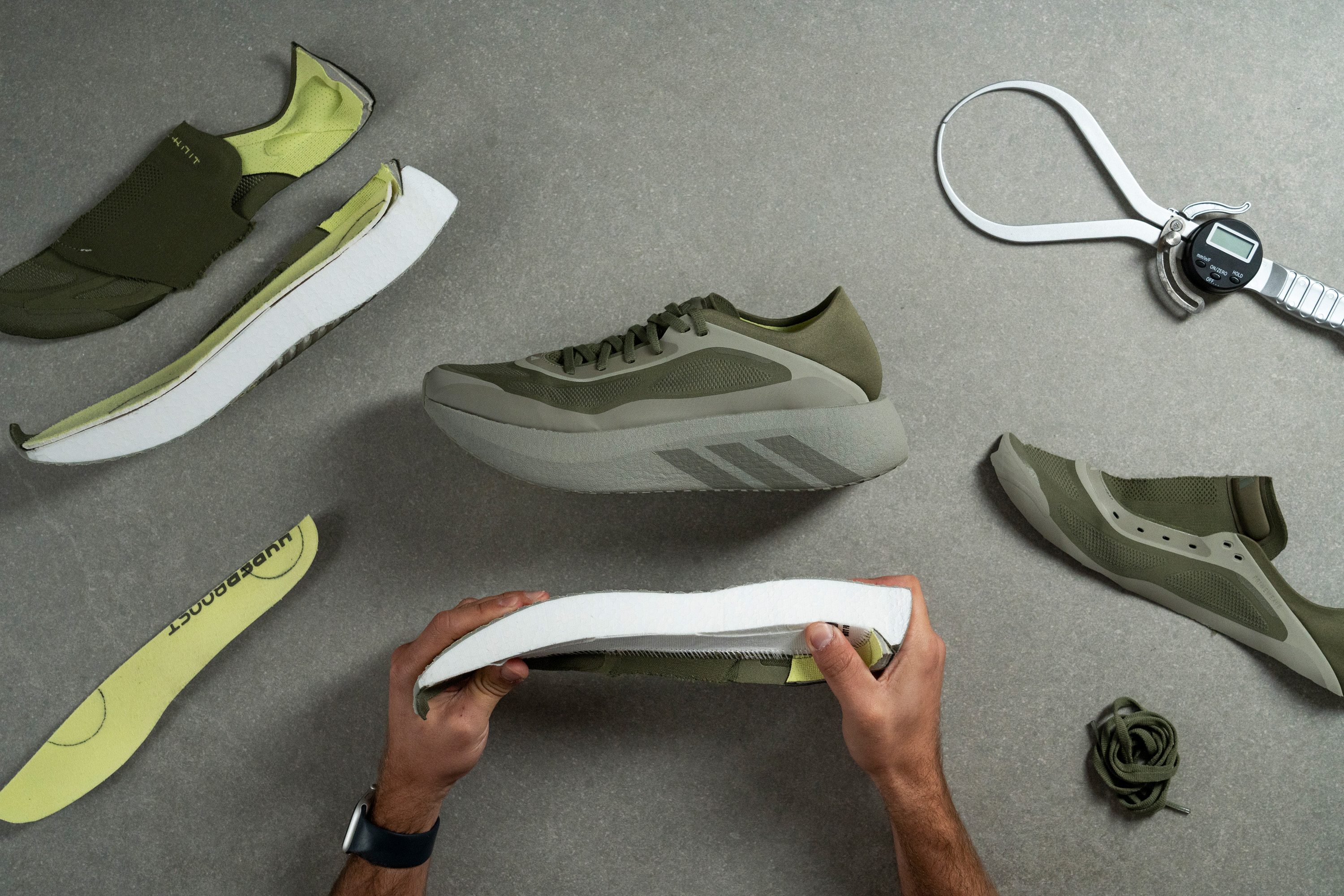
Shock absorption
For runners seeking impact protection, the Hyperboost Run truly delivers. It achieved 147 SA in the heel and 133 SA in the forefoot in our shock absorption test, both results comfortably surpassing our current lab average.
As a result, we believe this super trainer is a strong choice for runners of all sizes taking on anything from daily miles to long-distance efforts.
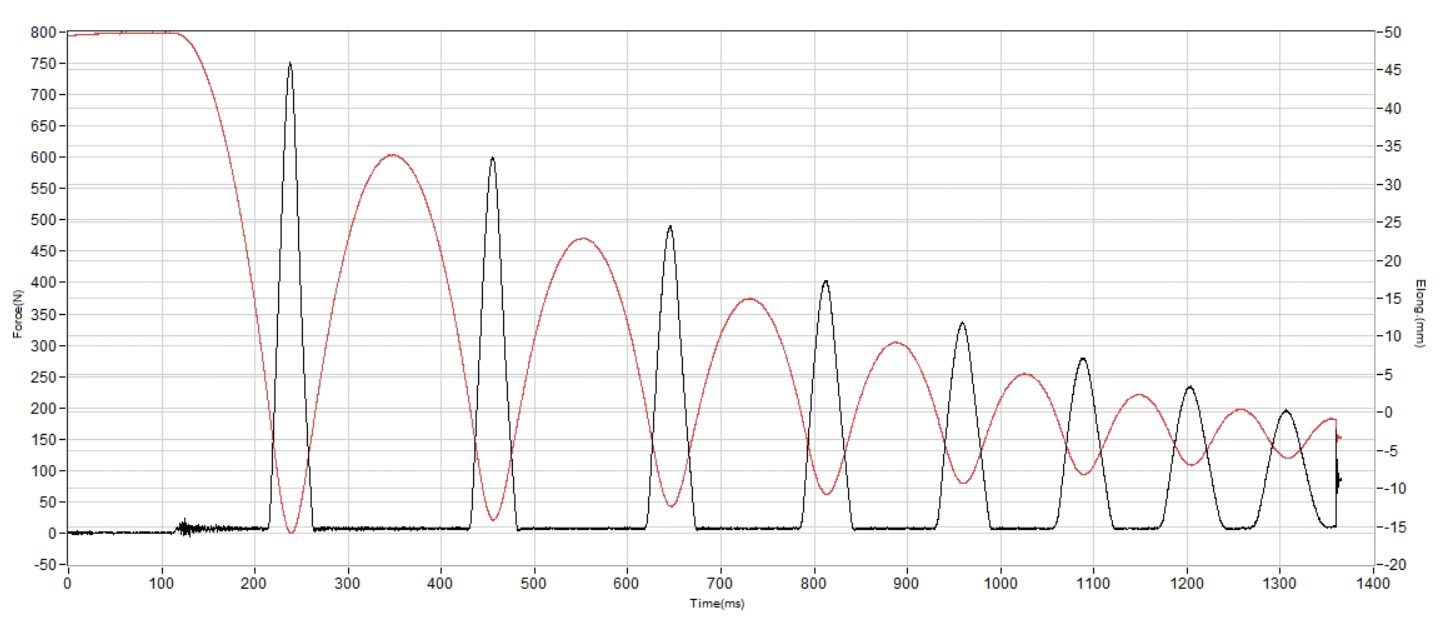
| Hyperboost Run | 147 SA |
| Average | 131 SA |
Energy return
The new ePEBA-based Hyperboost Pro is simply outstanding and, unlike Light Boost, this is the evolution that the old Boost deserved. While the upper has sparked mixed reactions in this new adidas lineup, there seems to be widespread agreement on one thing: the foam is exceptional.
Using the ASTM F1976 standard, we measured an impressive energy return of 71.6% in the heel and 72.8% in the forefoot. These are remarkable figures for a training shoe and, in our view, they unlock outstanding versatility, making the Hyperboost Run equally capable of handling both easy and hard paces with ease.
| Hyperboost Run | 72.8% |
| Average | 61.4% |
Heel stack
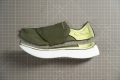
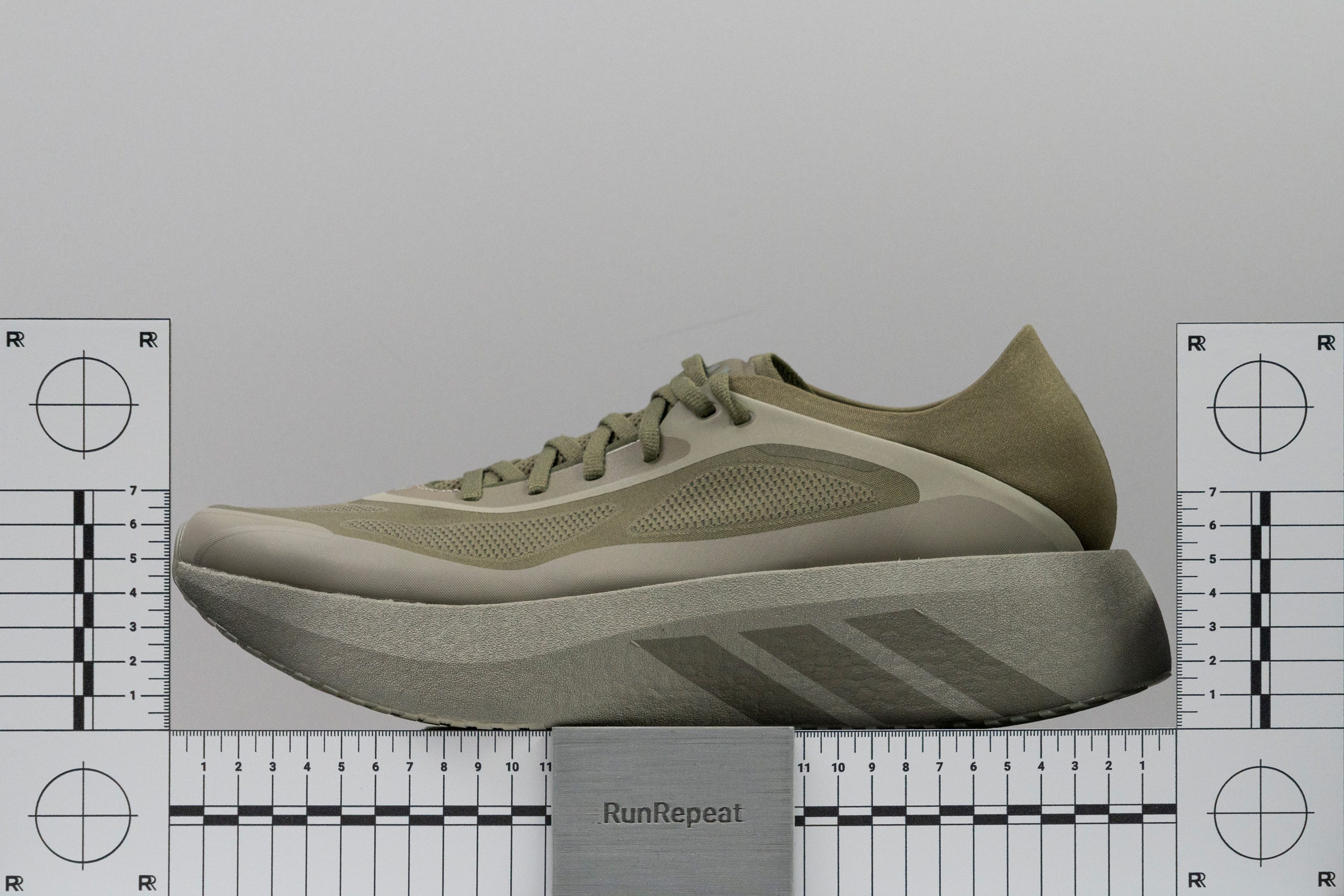
Adidas designed the Hyperboost Run as a less extreme alternative to the Edge, the model that introduced the Hyperboost lineup. We measured a stack height of 38.6 mm, which still sits above the current lab average and falls right in line with the higher profiles now common among modern daily trainers.
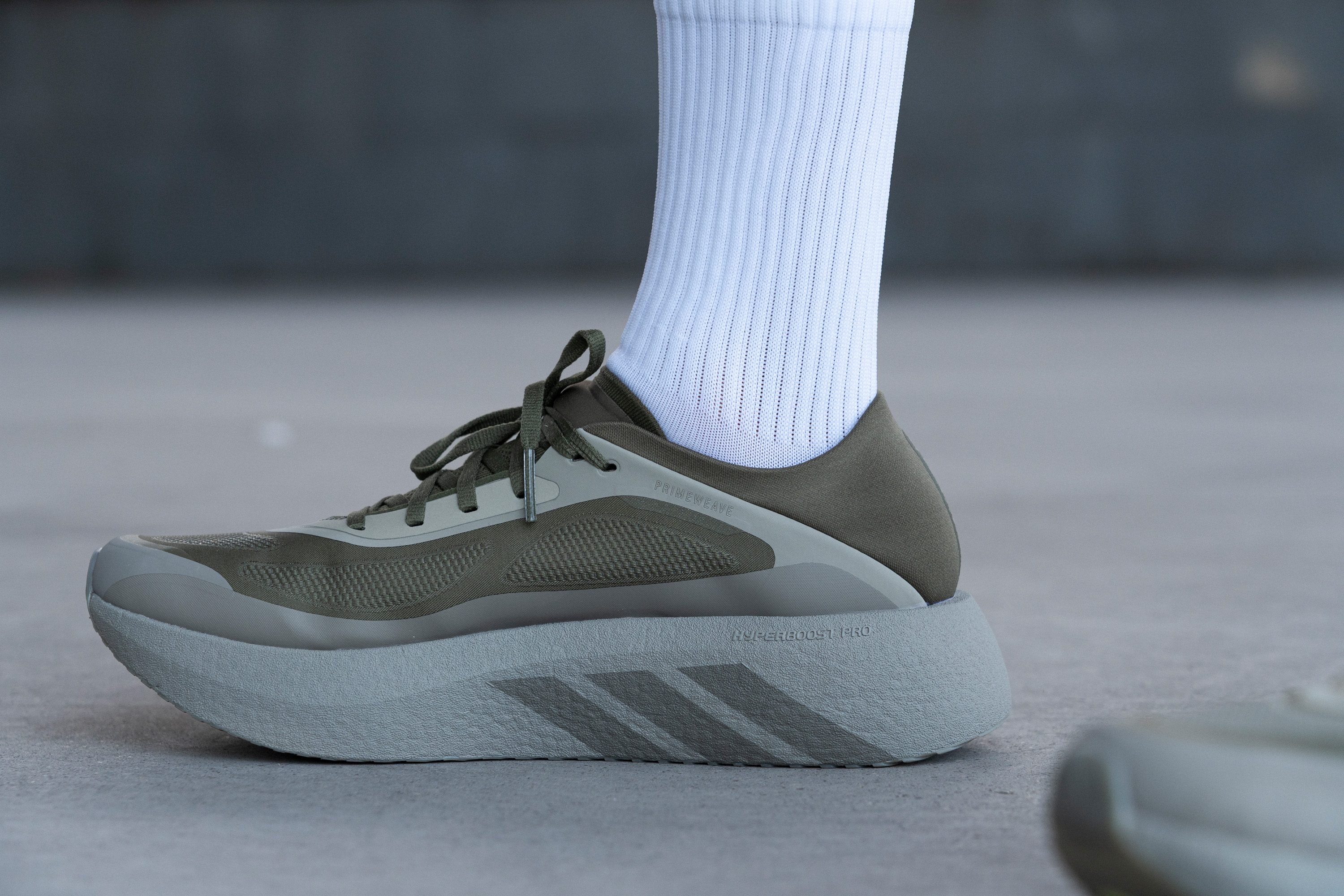
As a result, we found that the Hyperboost Run delivers a more versatile experience than the Edge. The lower platform enhances stability and control, and we believe that its more grounded design makes it the smarter choice for most runners seeking a do-it-all trainer.
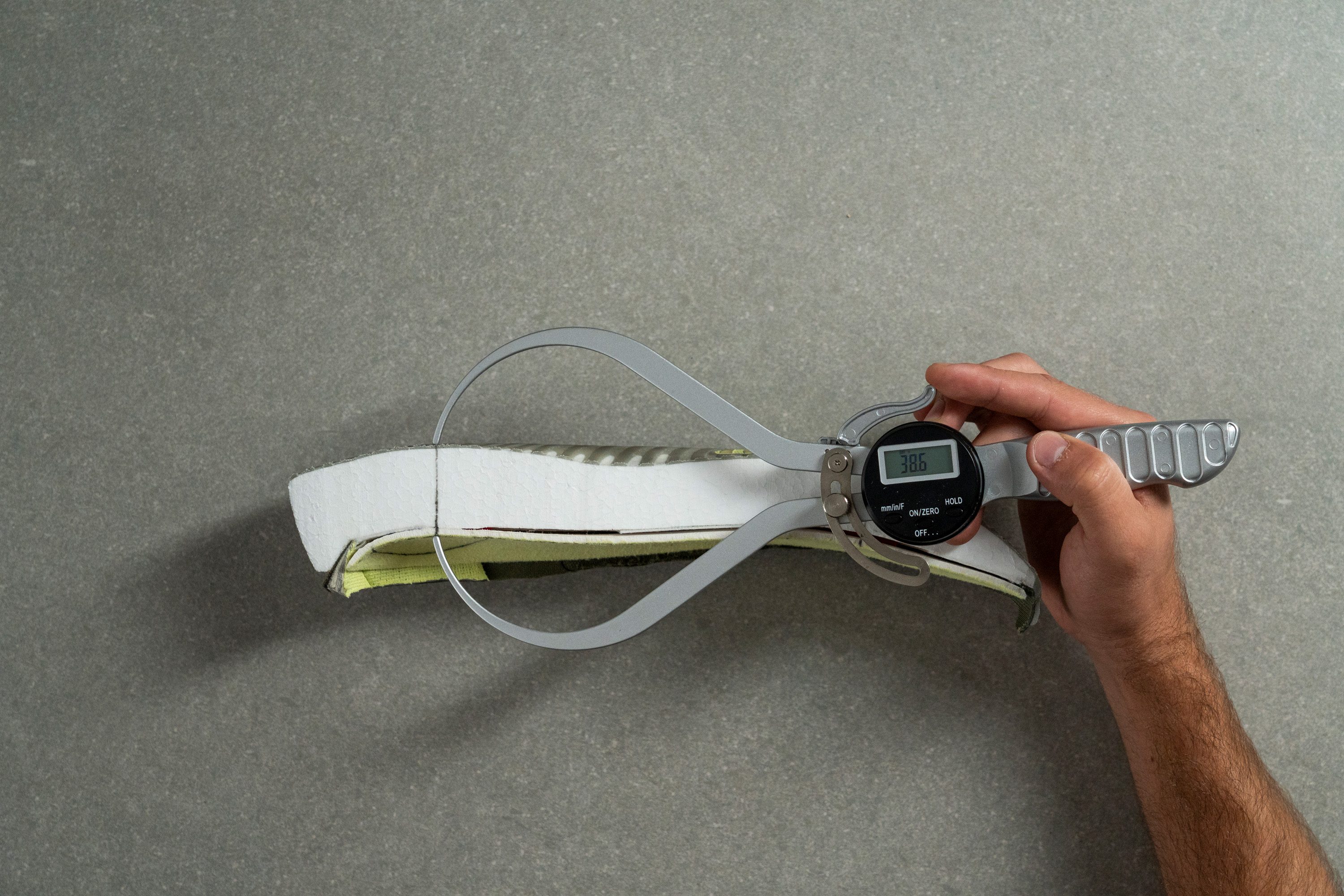
| Hyperboost Run | 38.6 mm |
| Average | 35.6 mm |
Forefoot stack
We measured 31.8 mm of forefoot stack in the Hyperboost Run, a substantial 6.3 mm less than the Hyperboost Edge. This difference clearly highlights the distinct approach adidas has taken with each model.
From our perspective, the Edge is best suited for runners who want a sky-high, ultra-cushioned experience with as much foam underfoot as possible. However, for everyone else, we found during our runs that the Run strikes a more balanced and sensible middle ground, and it also feels much better for beginners and lighter runners.
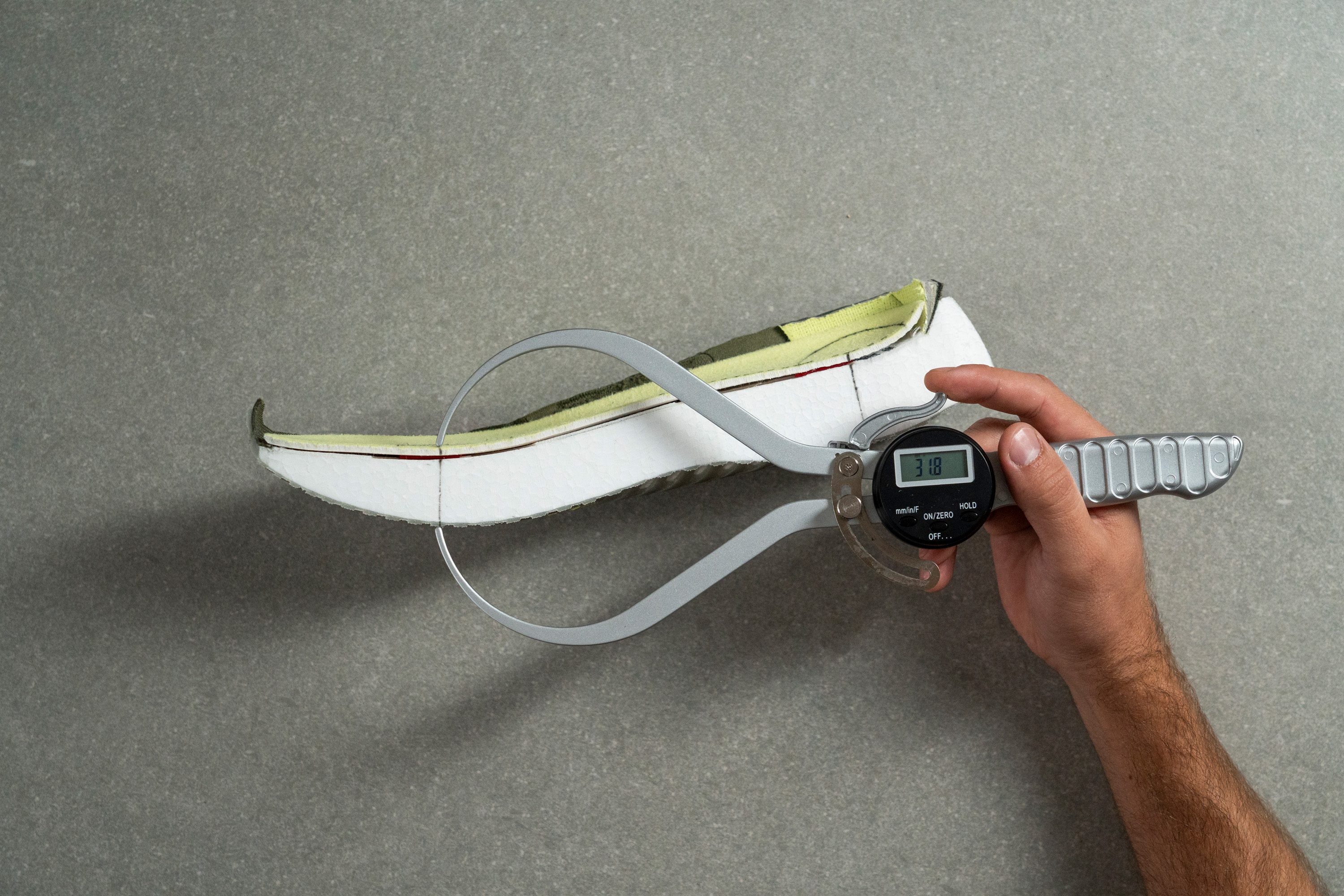
| Hyperboost Run | 31.8 mm |
| Average | 27.1 mm |
Drop
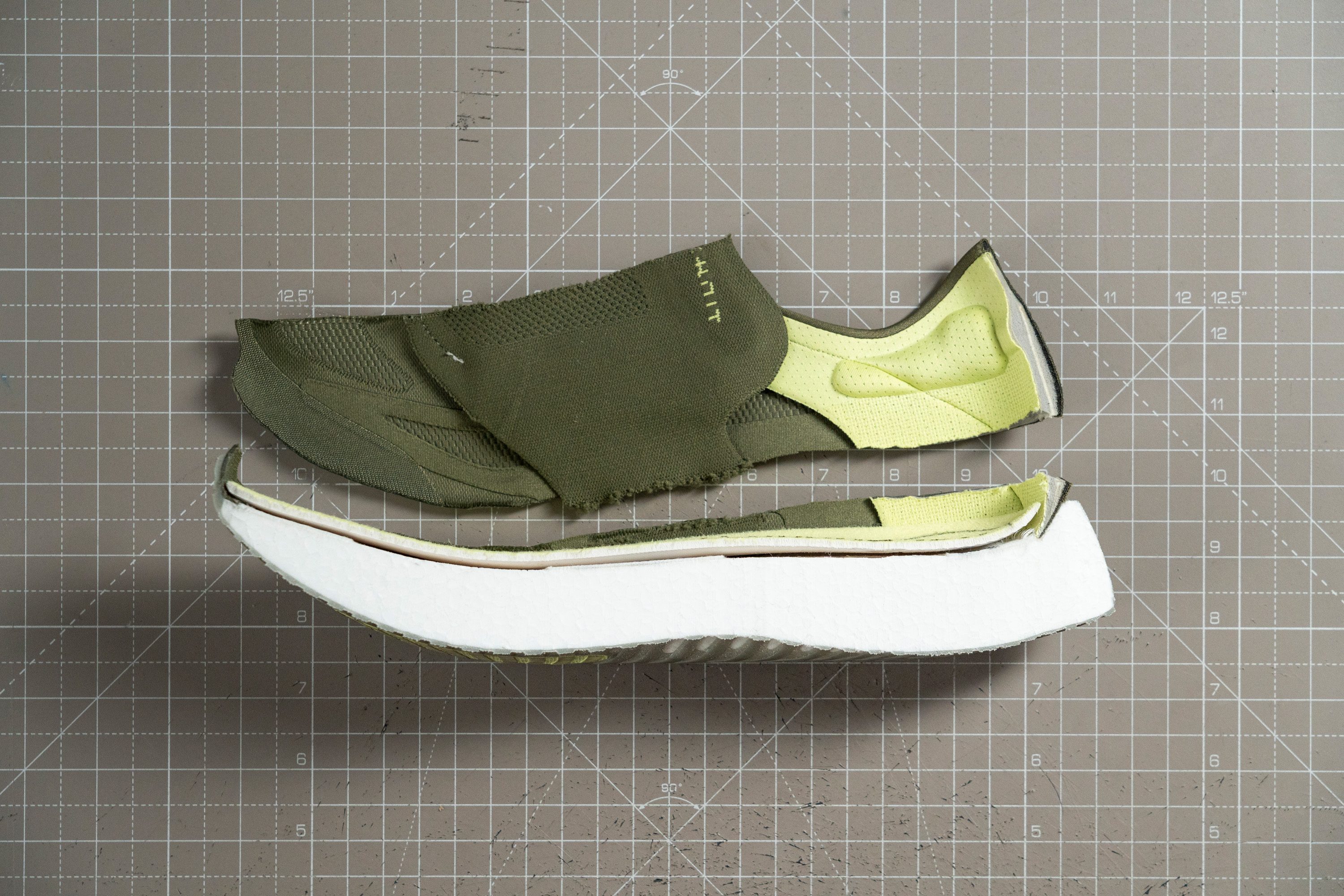
Our measurements showed a 6.8 mm heel-to-toe drop, closely matching the 6 mm specification provided by adidas.
As a result, the on-foot experience remains exactly as expected, offering a geometry that works especially well for midfoot strikers while still feeling comfortable and natural for heel and forefoot landings alike.
| Hyperboost Run | 6.8 mm |
| Average | 8.4 mm |
Midsole softness
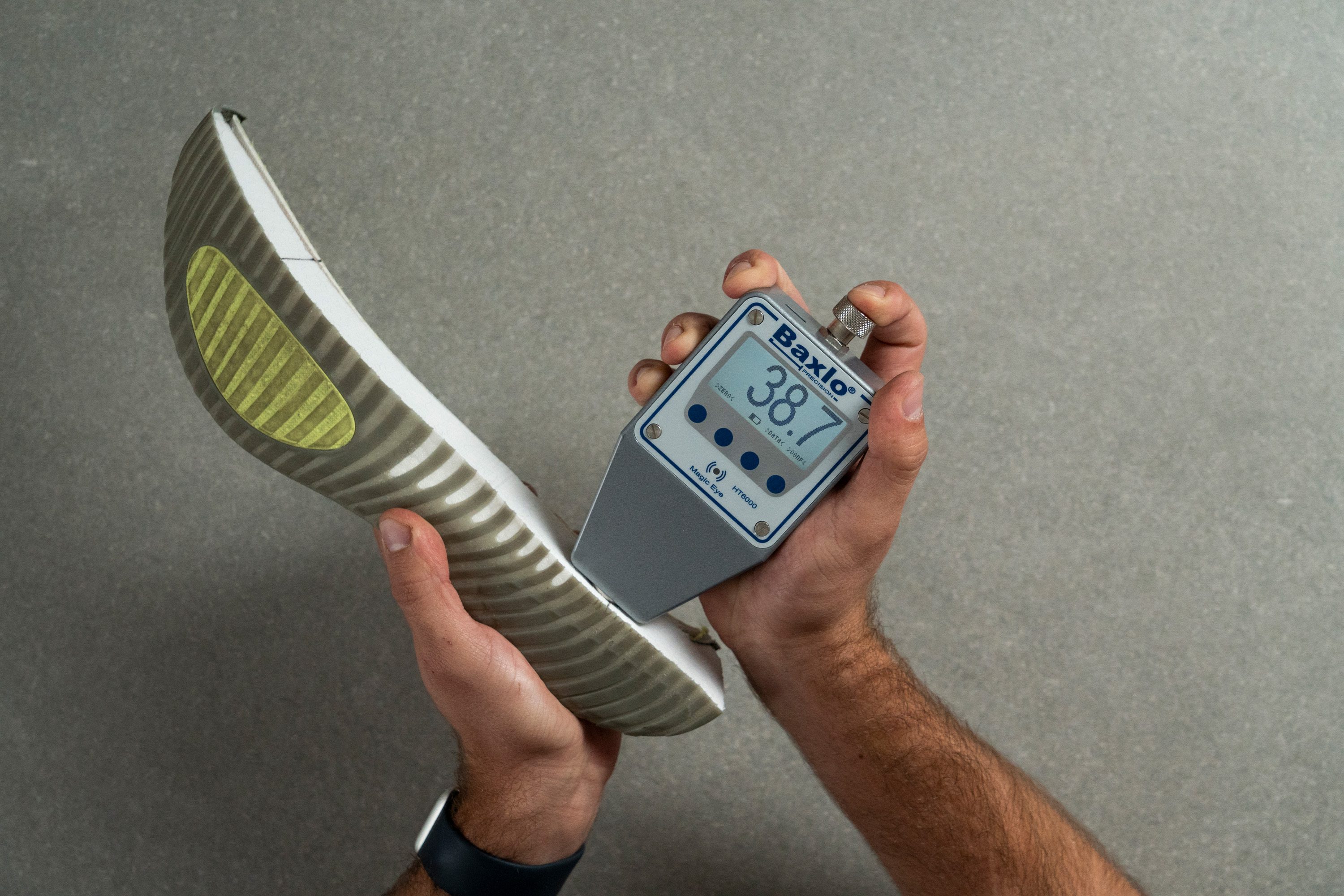
The Hyperboost Pro foam felt slightly firmer in the Hyperboost Run than in the Edge, and our lab measurements confirmed that impression. We recorded 38.7 AC on our Asker C durometer, a result that places it on the firmer side of the spectrum without making it feel harsh underfoot.
That said, the absence of a traditional rubber outsole plays a major role in the overall ride. In our experience, shoes with thick rubber coverage tend to feel noticeably firmer at ground contact, whereas modern designs using a lot of exposed foam or GCPU-based outsoles allow the midsole to shine through more clearly, creating a softer and more forgiving underfoot sensation.
| Hyperboost Run | 38.7 AC |
| Average | 35.5 AC |
Rocker
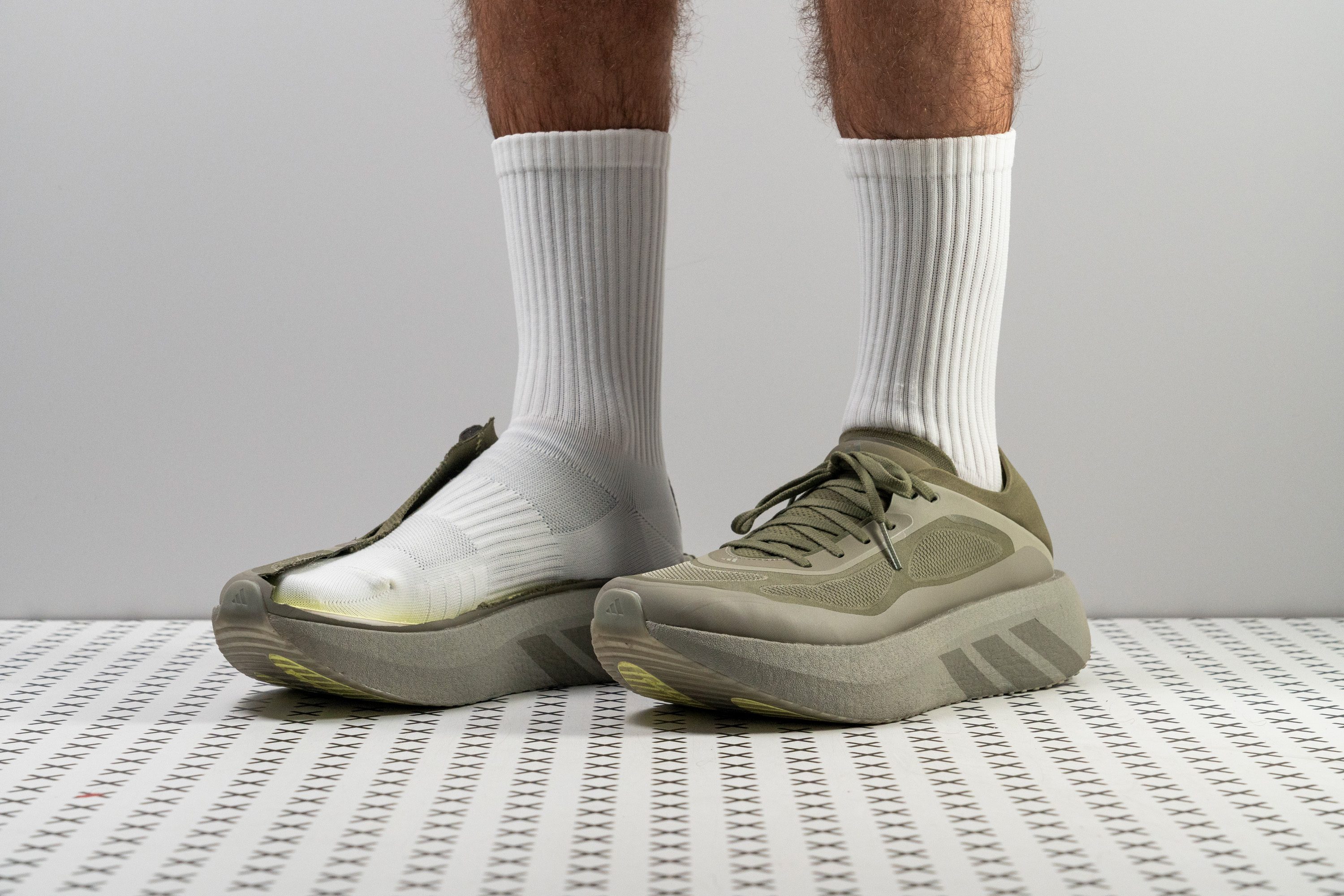
The Hyperboost Run uses a forefoot rocker that activates much later in the gait cycle. Instead of the smooth, continuously-curved geometry found in many modern super trainers, the midsole stays flatter for longer, creating a more traditional and less aggressively-assisted ride.
We also need to mention the shoe's massive heel flare, a design feature clearly aimed at accommodating even the most extreme heel strikers.
Size and fit
Size
adidas Hyperboost Run fits true to size (34 votes).
Internal length

| Hyperboost Run | 275.7 mm |
| Average | 269.3 mm |
Width / Fit
During our test runs, we found that the Hyperboost Run delivers a comfortably accommodating fit that never feels overly restrictive, a trait that aligns well with the direction adidas has taken in many of its recent releases.
Back in the lab, our measurements supported those impressions. We recorded 96.9 mm at our widest-point assessment.
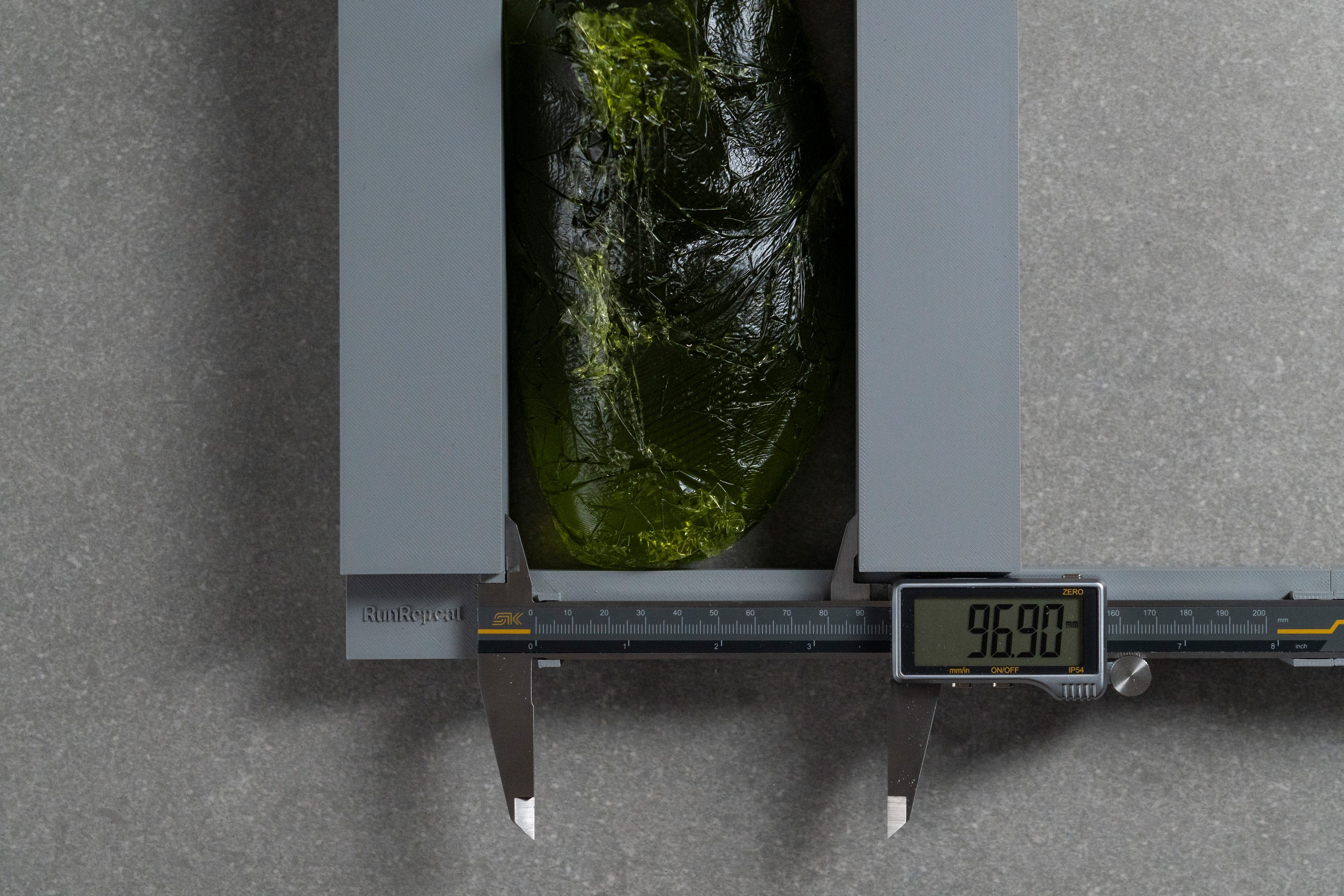
| Hyperboost Run | 96.9 mm |
| Average | 95.2 mm |
Toebox width
Our second measurement focused on the toebox and returned 73.6 mm, a result that should feel familiar and comfortable to most runners.
It doesn't offer the wide-open space of an Altra, yet it remains clear of the narrow, heavily-tapered designs that can restrict toe movement and can feel uncomfortable.
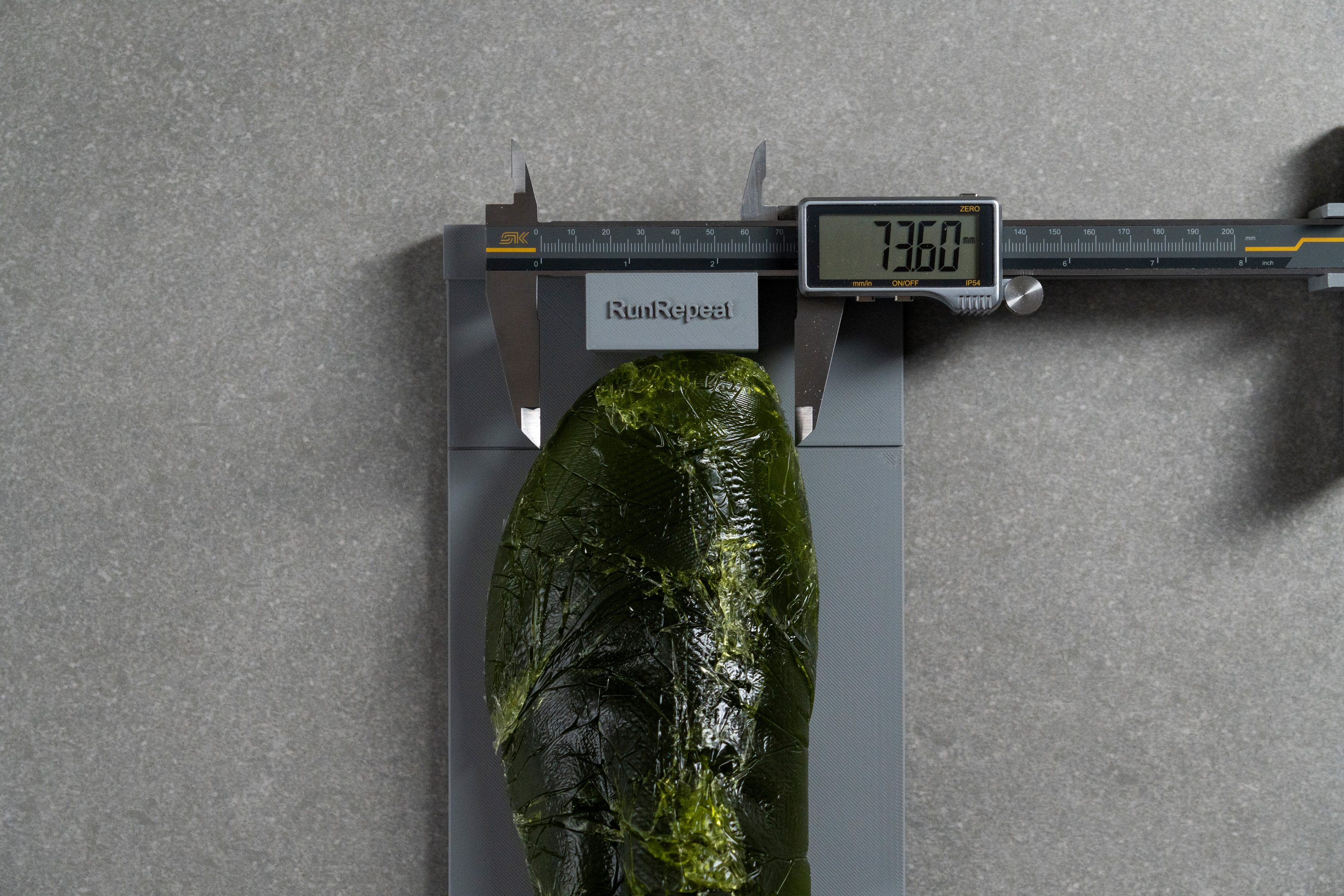
| Hyperboost Run | 73.6 mm |
| Average | 73.2 mm |
Toebox height
However, we did notice a somewhat low-volume fit during our test runs, with the upper providing less vertical space than expected.
Our lab measurements confirmed that impression, as we recorded just 23.7 mm of toebox height. In our view, this low-profile design will appeal to runners who prefer a snug, locked-in fit, though it may feel overly restrictive for those who enjoy extra room above the toes.
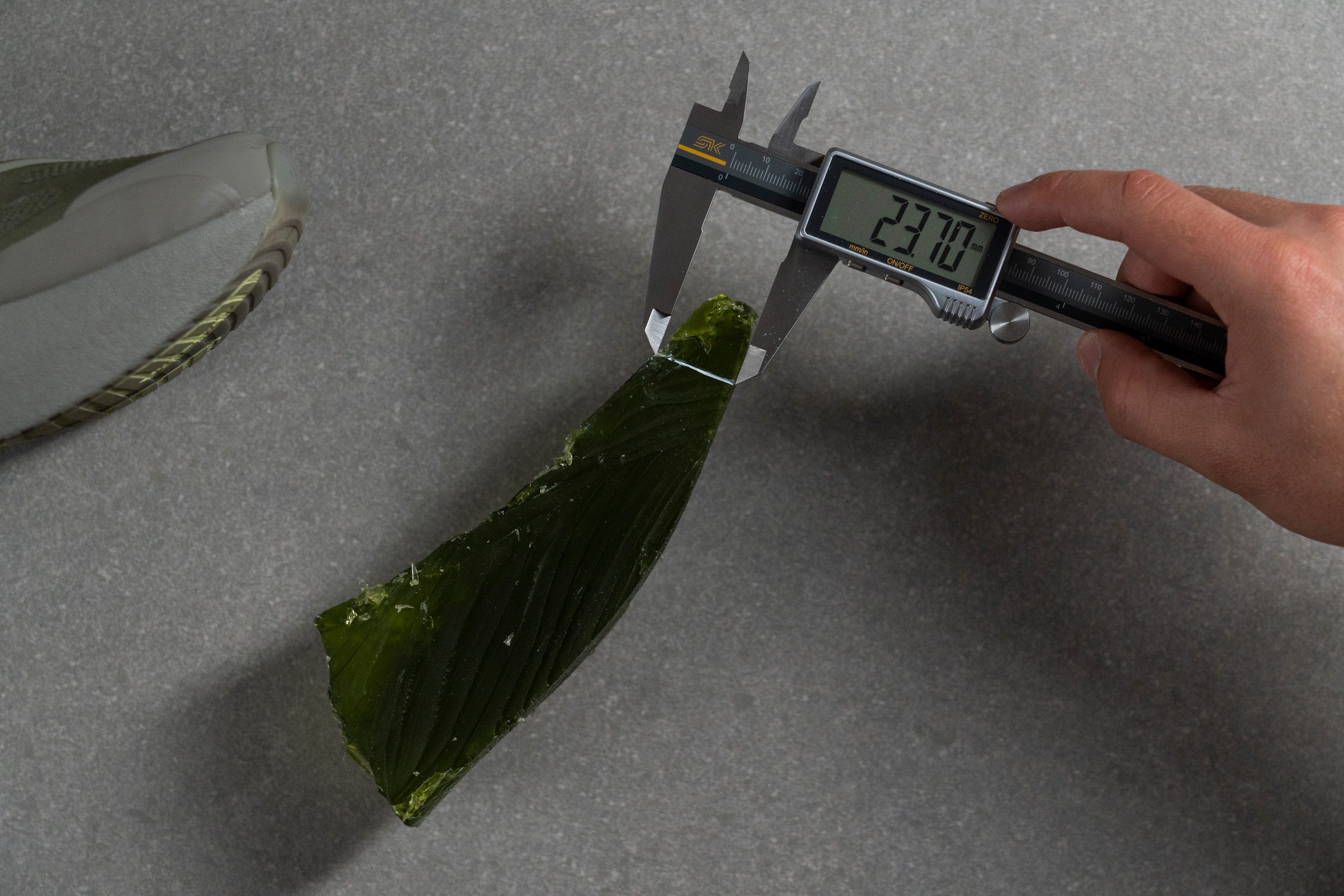
| Hyperboost Run | 23.7 mm |
| Average | 27.0 mm |
Traction / Grip
Traction test
The Adidas Hyperboost Run left a strong impression in our grip testing, posting an excellent 0.68 coefficient of friction on wet concrete. While it doesn't quite match the Hyperboost Edge, we think that's a reasonable tradeoff considering this model comes in at a lower price point.
| Hyperboost Run | 0.68 |
| Average | 0.53 |
Outsole design
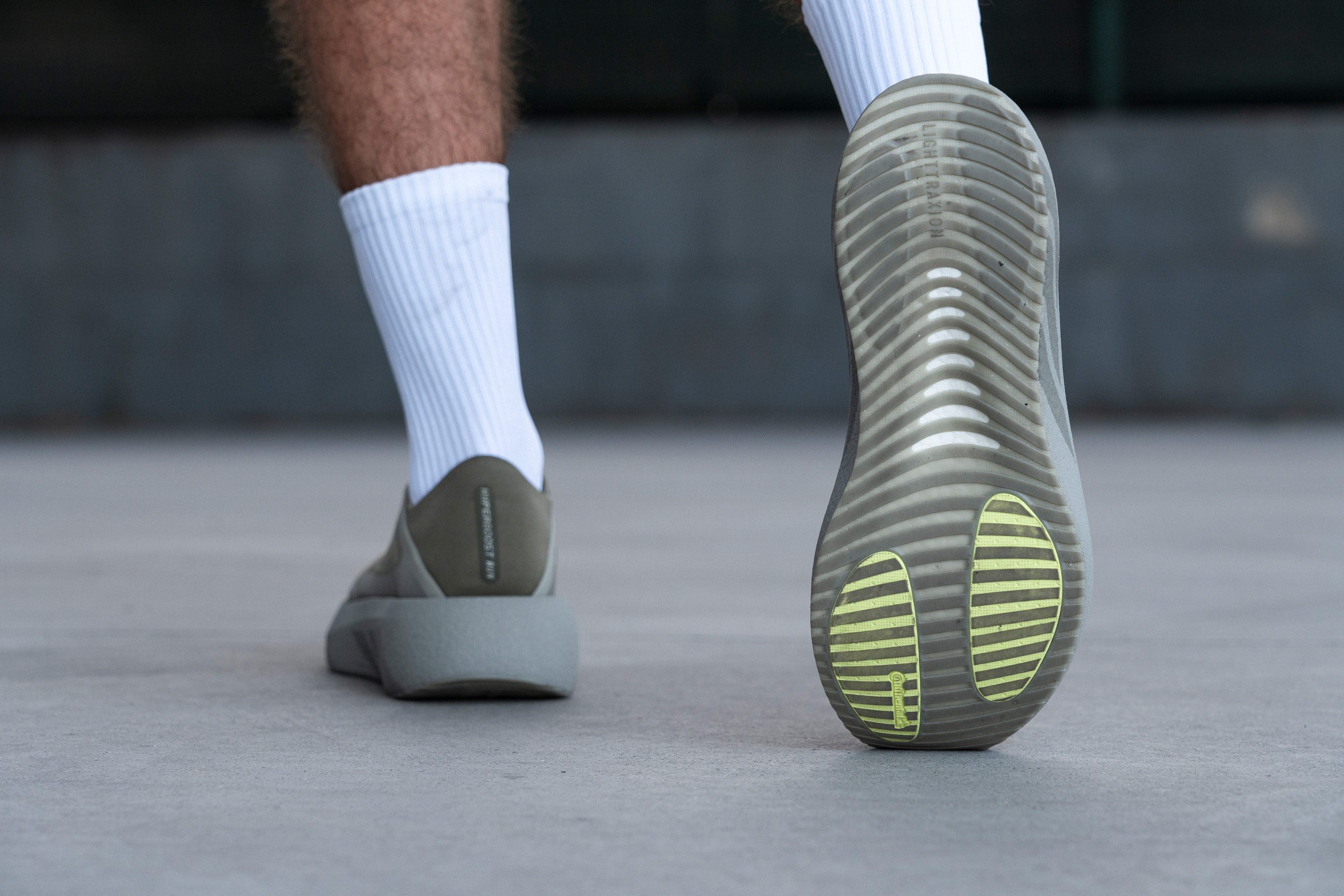
Despite carrying a lower price tag than the Edge, the Hyperboost Run still includes two Continental rubber pods in the forefoot, a feature we were genuinely pleased to see. The remainder of the outsole uses adidas' LIGHTTRAXION compound, a GCPU-based material that has become increasingly common across the brand's latest releases.
We found this setup especially effective because it delivers almost full-length outsole coverage while adding very little weight.
Flexibility / Stiffness
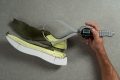
The Hyperboost Run is far from a flexible shoe, requiring 18.5N of force in our 30-degree bend test. That result came as no surprise, however, as shoes with more than 30 mm of foam beneath the forefoot rarely deliver a highly-flexible ride due to their substantial midsole volume.
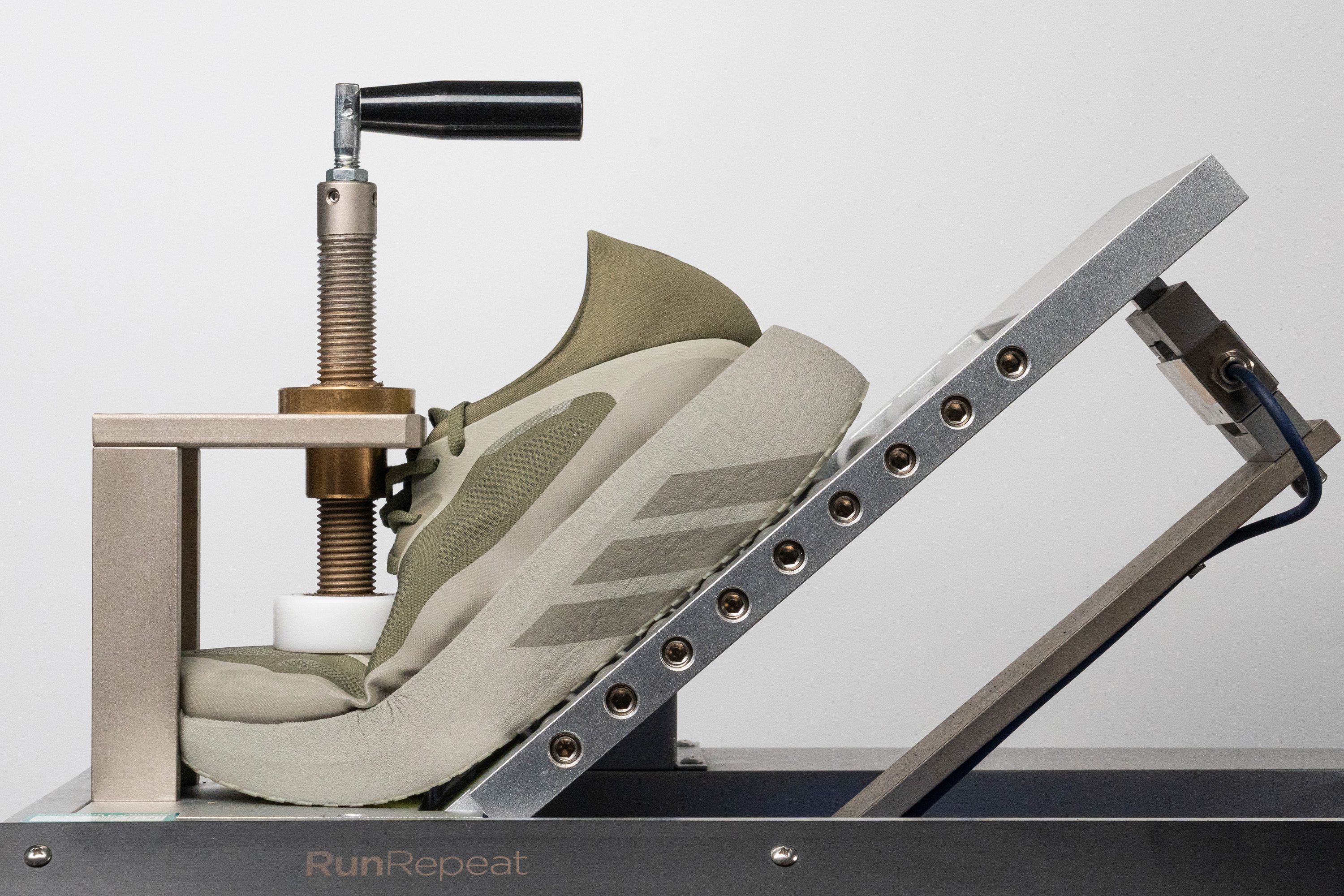
| Hyperboost Run | 18.5N |
| Average | 15.5N |
Weight
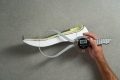
Interestingly, the Hyperboost Run tipped our scale at exactly the same weight as the Edge, coming in at 8.7 oz or 247g. At first glance, that seems surprising given the Edge's substantially taller stack height, right?
The explanation lies in a series of small design changes. The Hyperboost Run adds two Continental rubber pods in the forefoot, which contribute a few extra grams, and its upper also feels slightly more substantial.
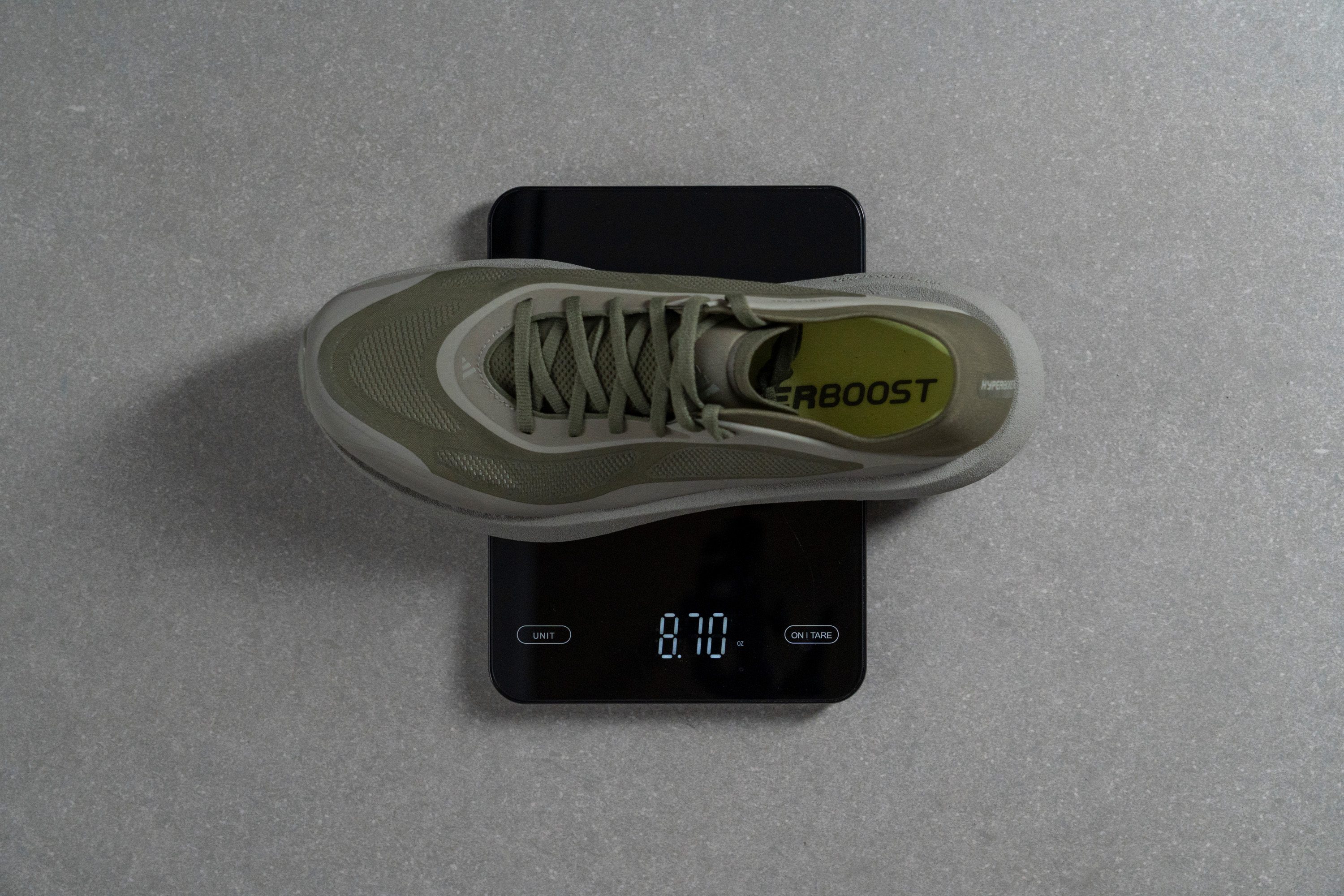
| Hyperboost Run | 8.7 oz (247g) |
| Average | 9.2 oz (261g) |
Breathability
Breathability test
UpdatedOur lab-based breathability test confirmed our concerns: the Hyperboost Run delivered a disappointing result, like the Edge. With a score of just 54 BR, it ranks among the poorest performers we've tested, scoring even lower than several winter-focused shoes equipped with waterproof membranes!
To be honest, we expected the Run version to bring a much-needed improvement in this area. However, adidas continues to push a different upper design here, and despite exposing more mesh than the Edge, we found that the shoe struggled to keep the foot dry throughout our three hours of testing.
| Hyperboost Run | 54 BR |
| Average | 75 BR |
Drying potential
NewThe drying potential was equally disappointing, as the Hyperboost Run managed to release only 38% of the moisture added during our test. That's an exceptionally poor result and one that also falls behind nearly every other shoe we've evaluated in the lab.

| Hyperboost Run | 38% |
| Average | 53% |
Stability
Lateral stability test
In our view, the Hyperboost Run is best suited just for neutral runners. The ride feels lively and energetic, but it prioritizes fun and speed over support.
That's not necessarily a drawback, as not every shoe needs intrusive stability features or an extra-wide platform to deliver a solid running experience. In fact, many runners prefer shoes that don't feel overly guided or restrictive.
Torsional rigidity
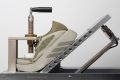
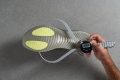
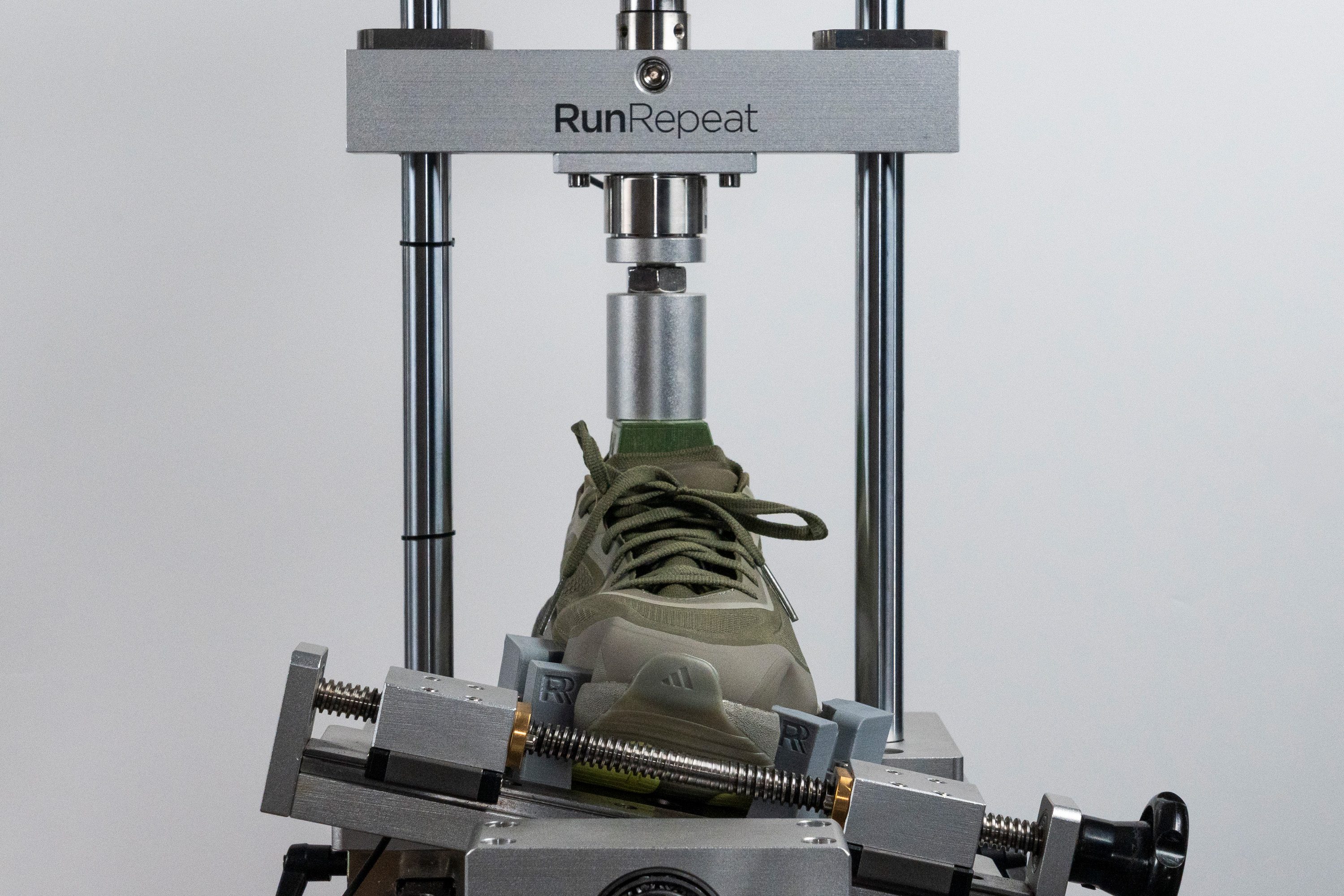
Despite its high-stack design, the Hyperboost Run retains a respectable amount of torsional flexibility thanks to the absence of a plate and the use of the LIGHTTRAXION outsole compound with plenty of flex grooves.
Using our custom-built testing machine, we measured a torsional stiffness value of 13.7 Nm, confirming that the shoe avoids the overly rigid feel often associated with high-stack trainers.
| Hyperboost Run | 13.7 Nm |
| Average | 14.3 Nm |
Heel counter stiffness
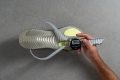
The unconventionally-designed heel is notably flexible, earning a 2/5 in our assessment. This design choice plays a key role in the overall ride, as it reinforces the Hyperboost Run's neutral character and its lack of aggressive guidance features.
| Hyperboost Run | 2 |
| Average | 3 |
Midsole width - forefoot
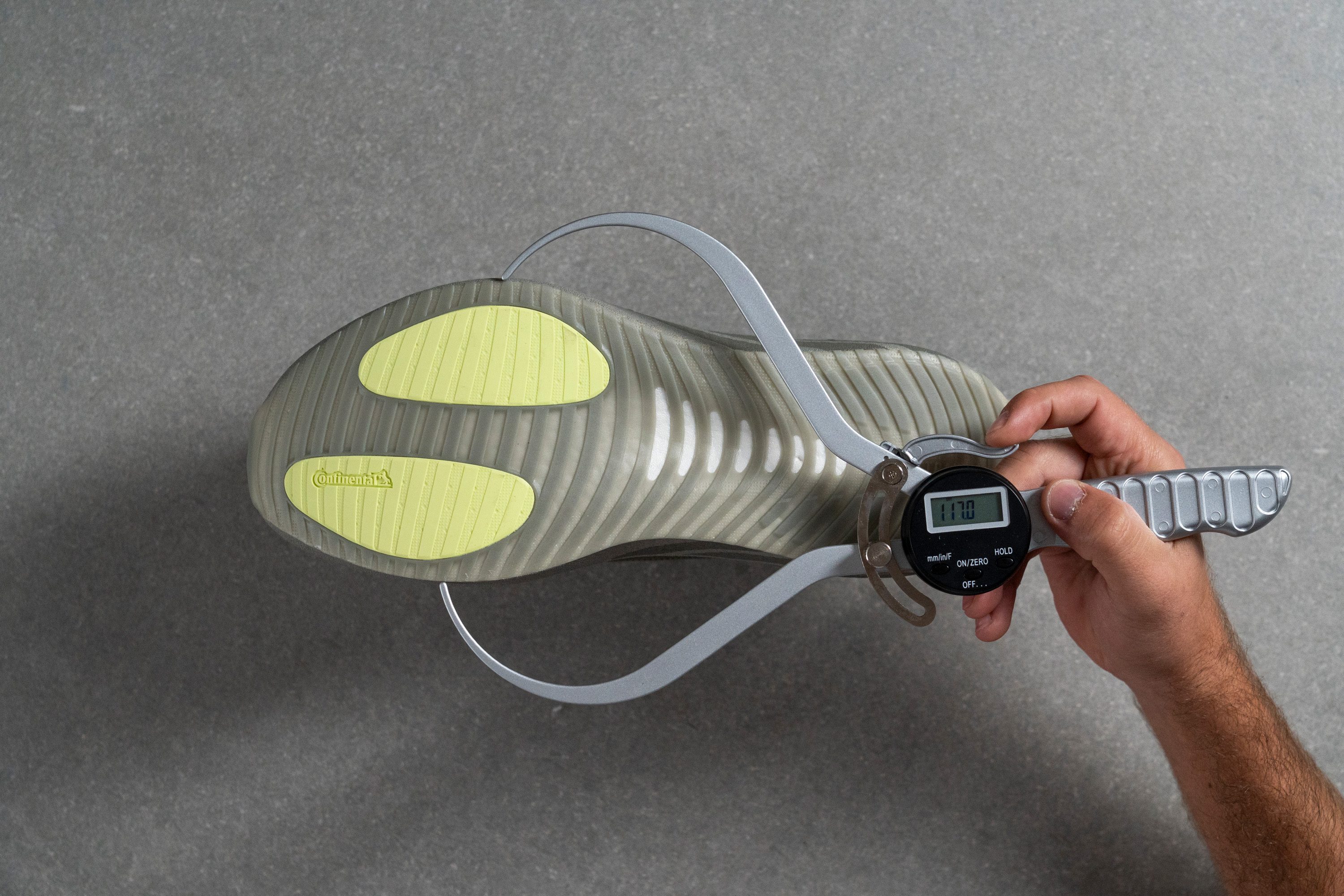
We found the forefoot wide enough to inspire confidence without sacrificing agility. It strikes a nice balance between stability and responsiveness, helping the shoe feel secure while maintaining a fun and nimble ride.
Our lab measurements backed up those impressions, as we recorded 117.0 mm in the forefoot, a result that sits slightly above the current average.
| Hyperboost Run | 117.0 mm |
| Average | 115.1 mm |
Midsole width - heel
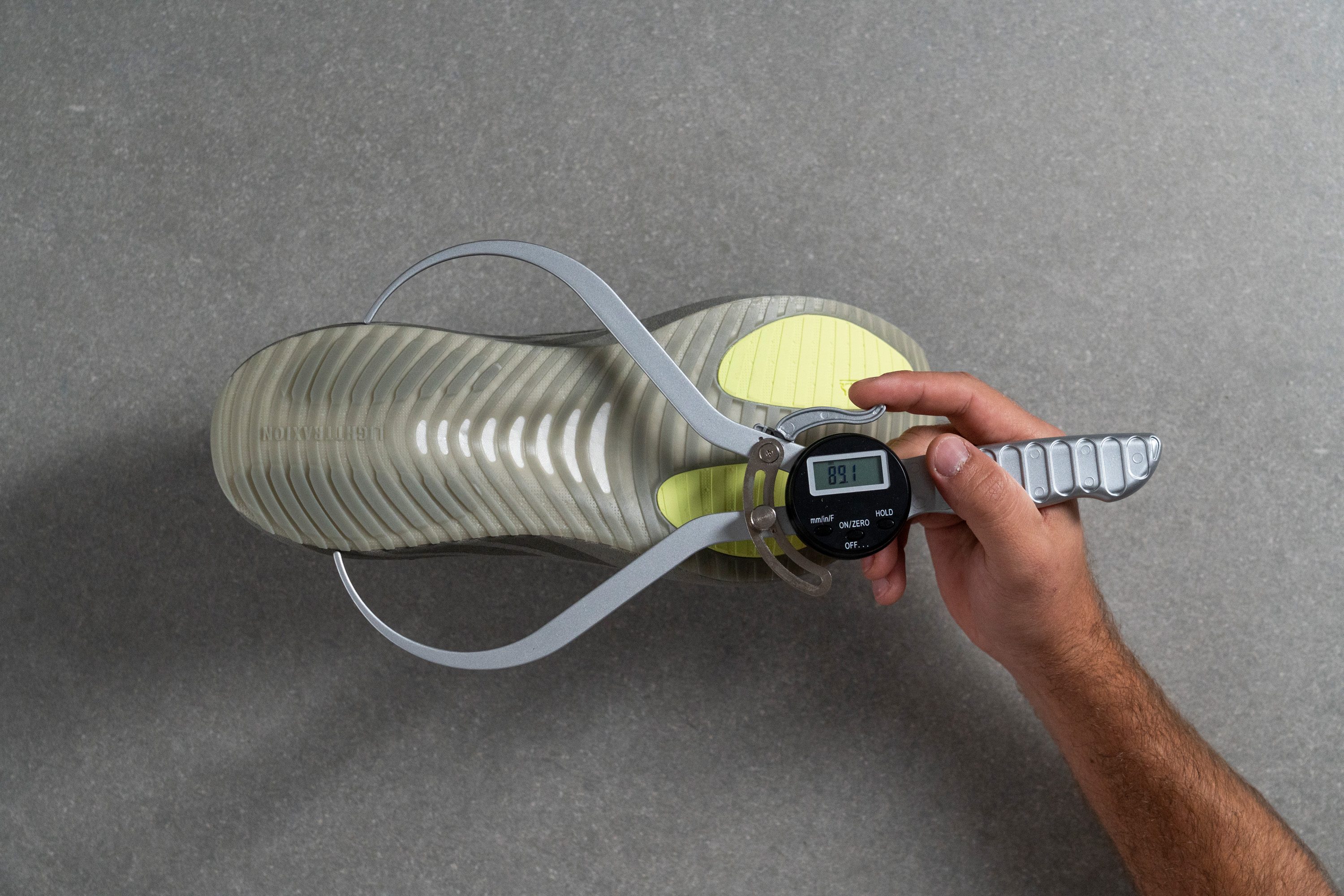
Like most adidas running shoes, the Hyperboost Run features a more aggressively-shaped midfoot and heel platform than many competing models.
This design enhances the lively, dynamic feel of the ride, though it comes at the expense of some inherent stability. Our measurements reflected that approach, with the heel coming in at 89.1 mm.
| Hyperboost Run | 89.1 mm |
| Average | 91.1 mm |
Durability
Toebox durability
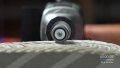
One of the strengths of the engineered mesh adidas selected for this shoe is its solid resistance to wear. Achieving a 3/5 score in our Dremel durability test is no easy task, yet the Hyperboost Run really handled the challenge.
| Hyperboost Run | 3 |
| Average | 2.6 |
Heel padding durability
The heel padding earned a 3/5 in our test, a decent result that avoids any major concerns but falls short of standing out.
| Hyperboost Run | 3 |
| Average | 3.4 |
Outsole durability
Despite appearing less robust than a traditional rubber outsole, the GCPU compound delivered an outstanding result in our durability test. We removed just 0.8 mm of material, an impressively low amount that highlights its excellent wear resistance.
| Hyperboost Run | 0.8 mm |
| Average | 1.1 mm |
Outsole thickness
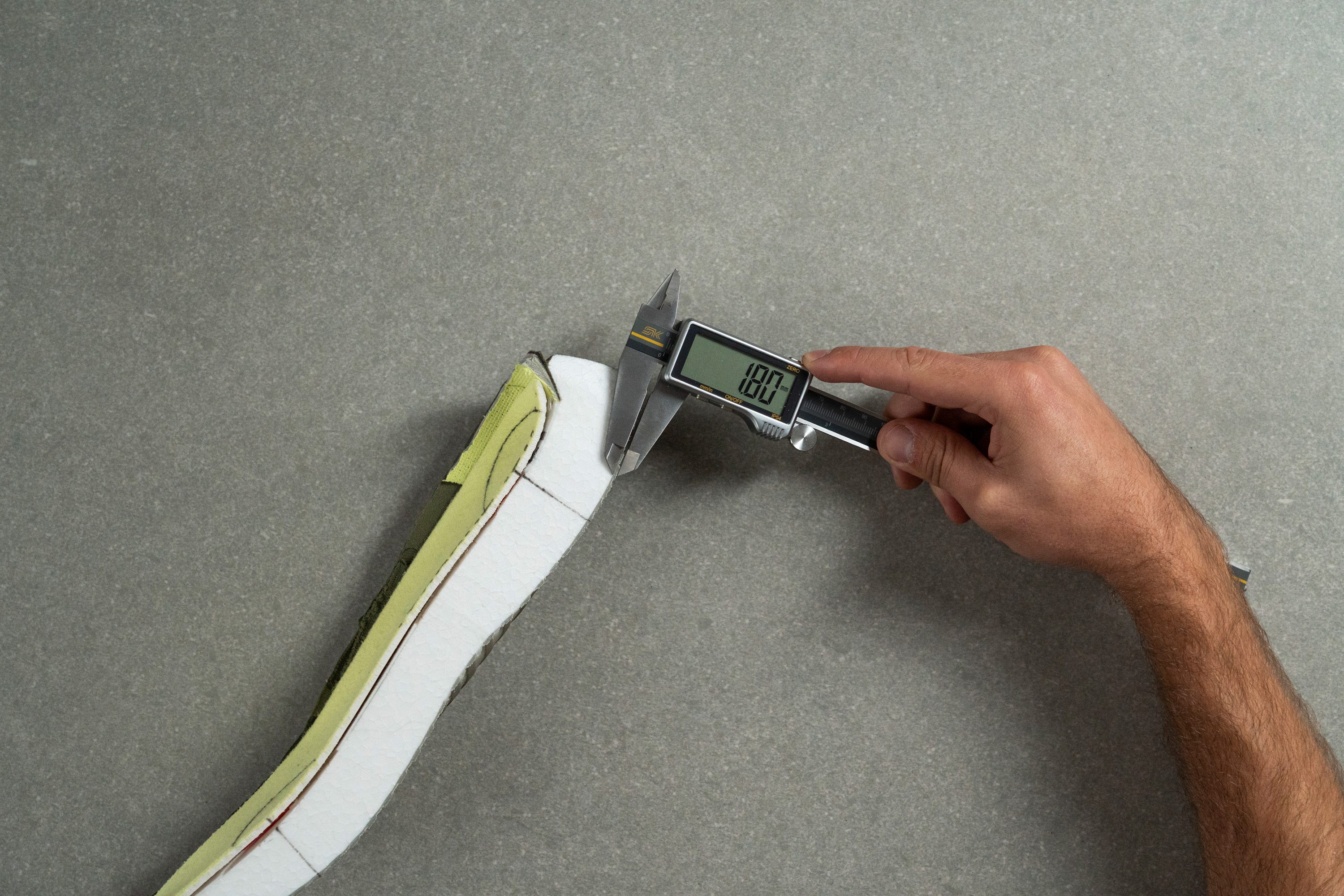
Another factor behind the Hyperboost Run's ride is its outsole design. The LIGHTTRAXION compound is not only softer than traditional rubber, but we also measured it at just 1.8 mm thick, significantly thinner than what we usually see in road running shoes.
| Hyperboost Run | 1.8 mm |
| Average | 3.1 mm |
Misc
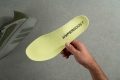
Insole thickness
At just 2.8 mm thick, the insole is remarkably slim, measuring nearly half the thickness we typically record in our lab.
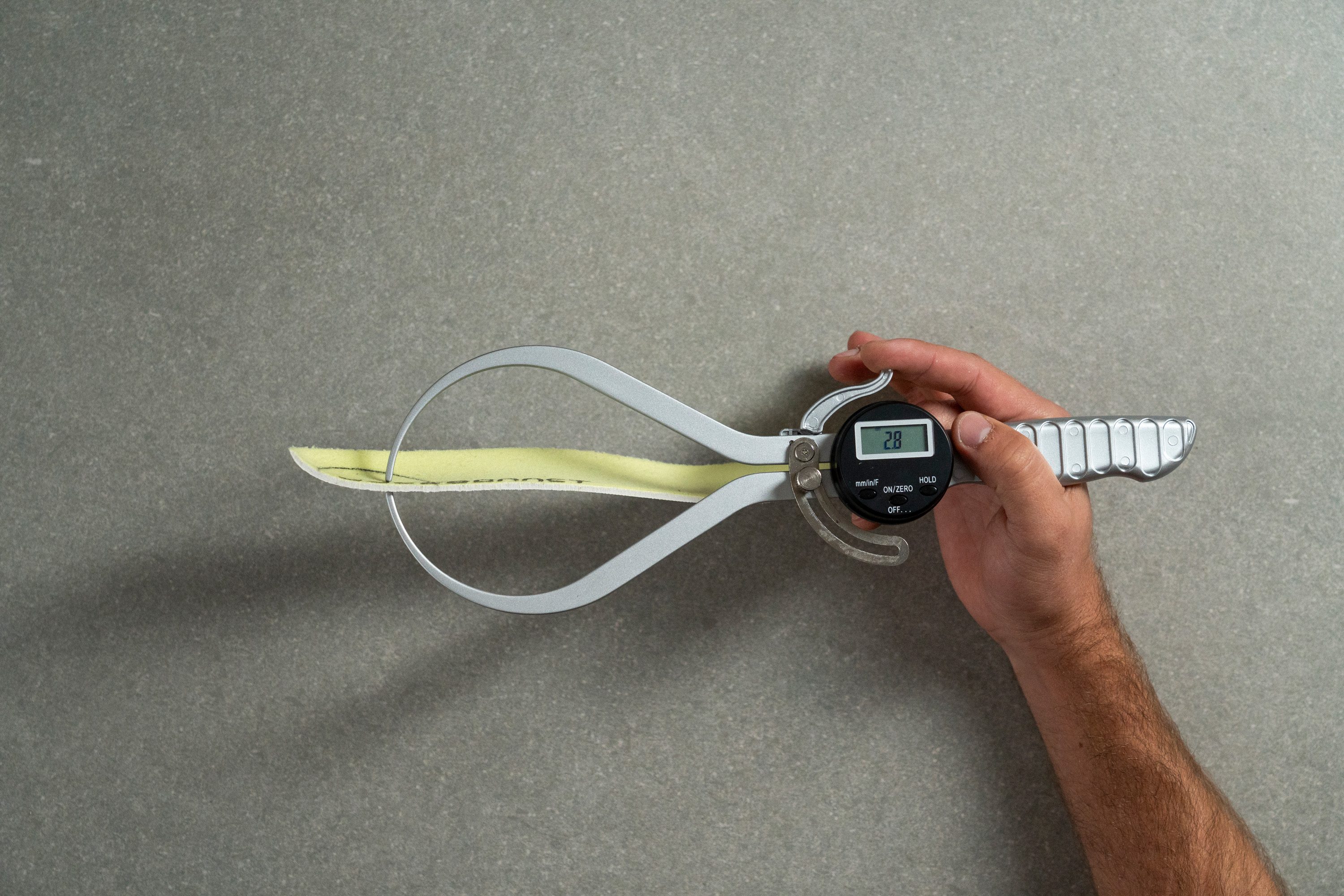
| Hyperboost Run | 2.8 mm |
| Average | 4.4 mm |
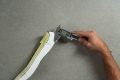
Removable insole
The Hyperboost Run comes with an insole that feels noticeably more premium than what we typically find in running shoes.
While it can technically be replaced, we strongly advise against doing so. Its ultra-thin design plays an important role in the fit, and given the limited vertical space available in the toebox, swapping it for a standard insole could create significant pressure and comfort issues.
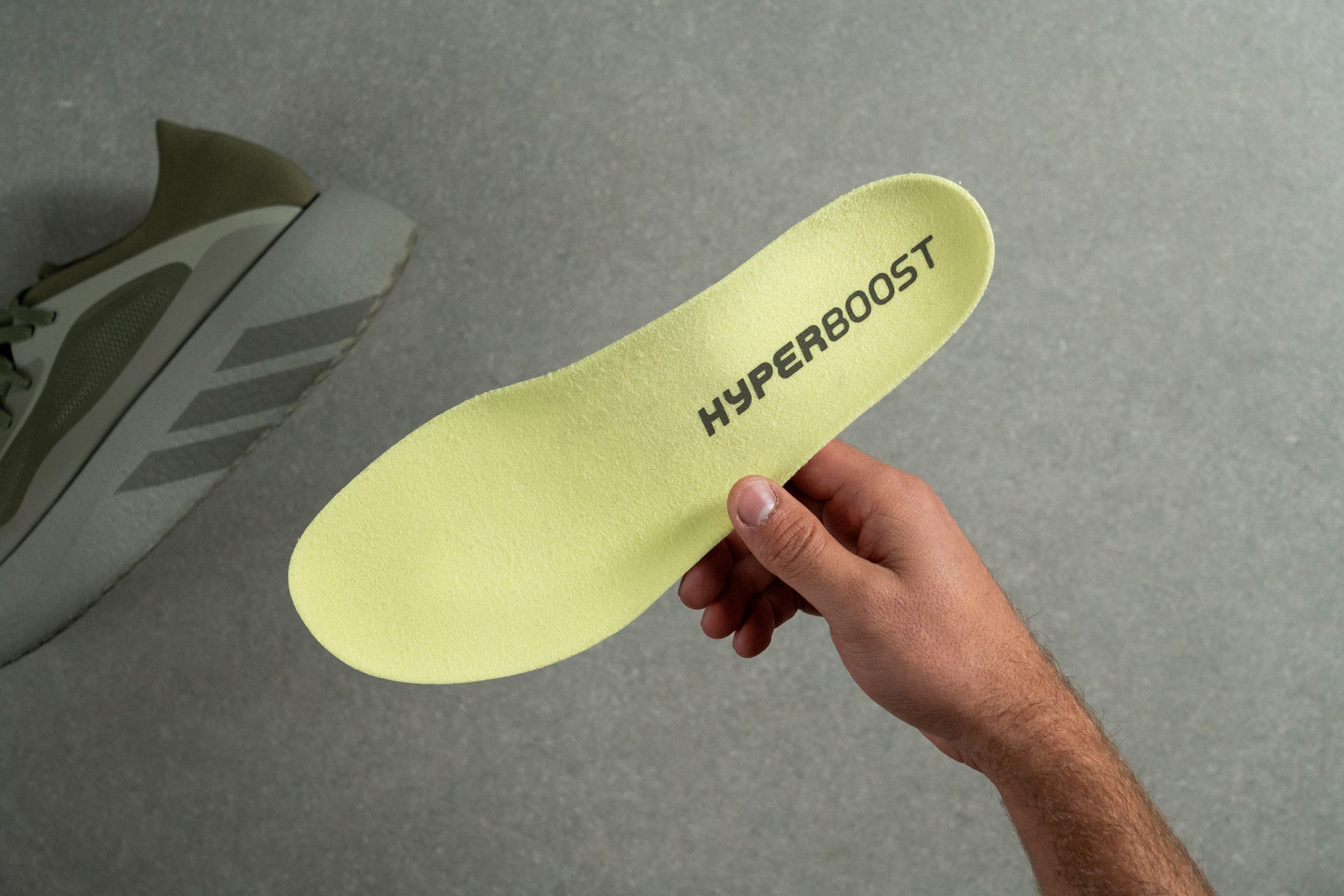
| Hyperboost Run | Yes |
Reflective elements
We always appreciate the inclusion of reflective details, and we're glad to see adidas incorporate them into the Hyperboost Run.
In this case, the brand cleverly uses an eyelet-chain reinforcement that helps maintain the upper's structure, finishing it with a reflective coating that enhances visibility in low-light conditions.
| Hyperboost Run | Yes |
Tongue padding
The Hyperboost Run features a more straightforward lacing setup than the Edge, opting for traditional punched eyelets instead of a hidden design. The tongue may feel slightly short for some runners, though we had no issues with it during testing.
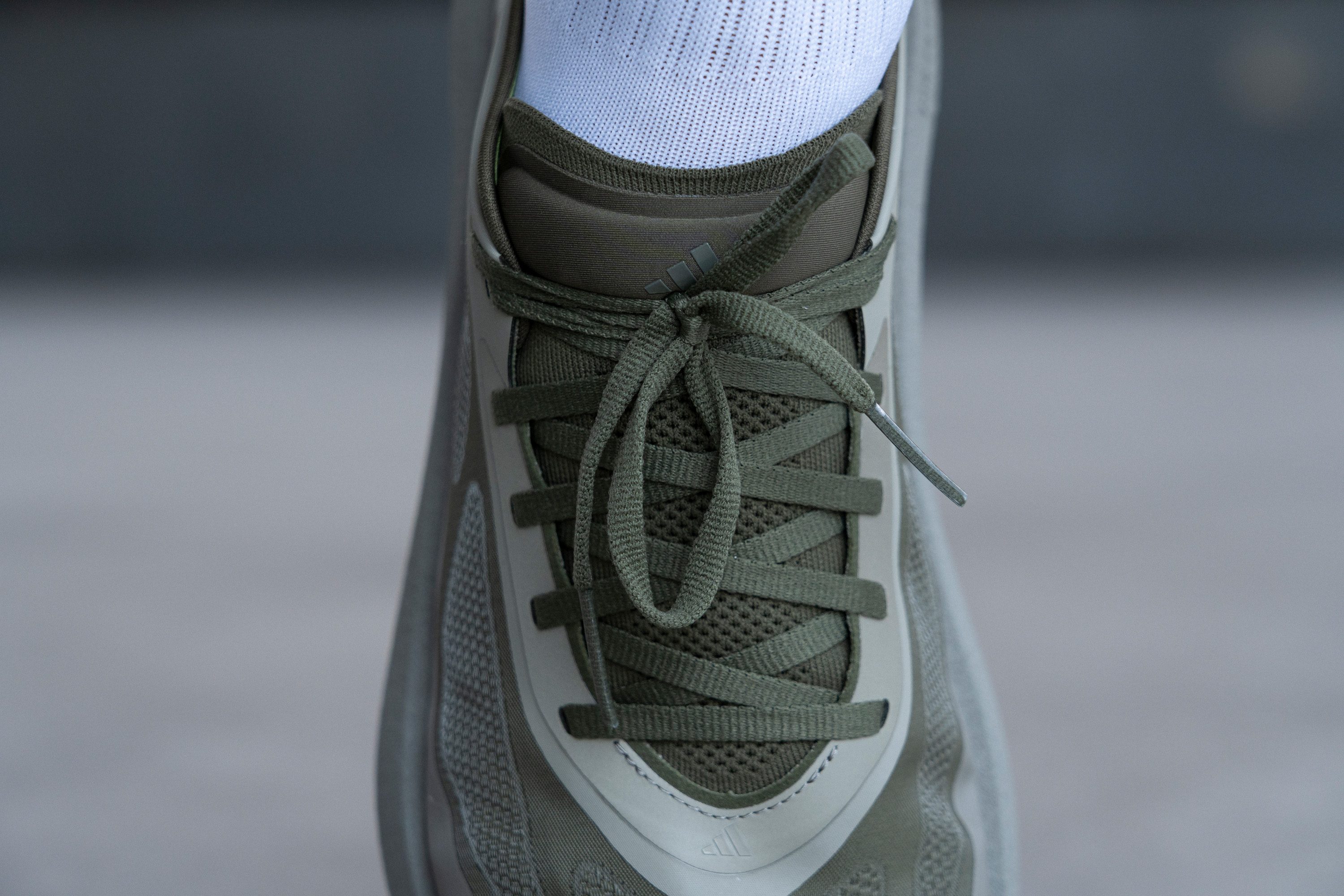
As for the tongue padding, we measured 5.5 mm, but it's important to note that the cushioning is concentrated in a very small area. Most of the padding sits near the top of the tongue, so achieving optimal comfort depends heavily on positioning the lace pressure in the right spot.
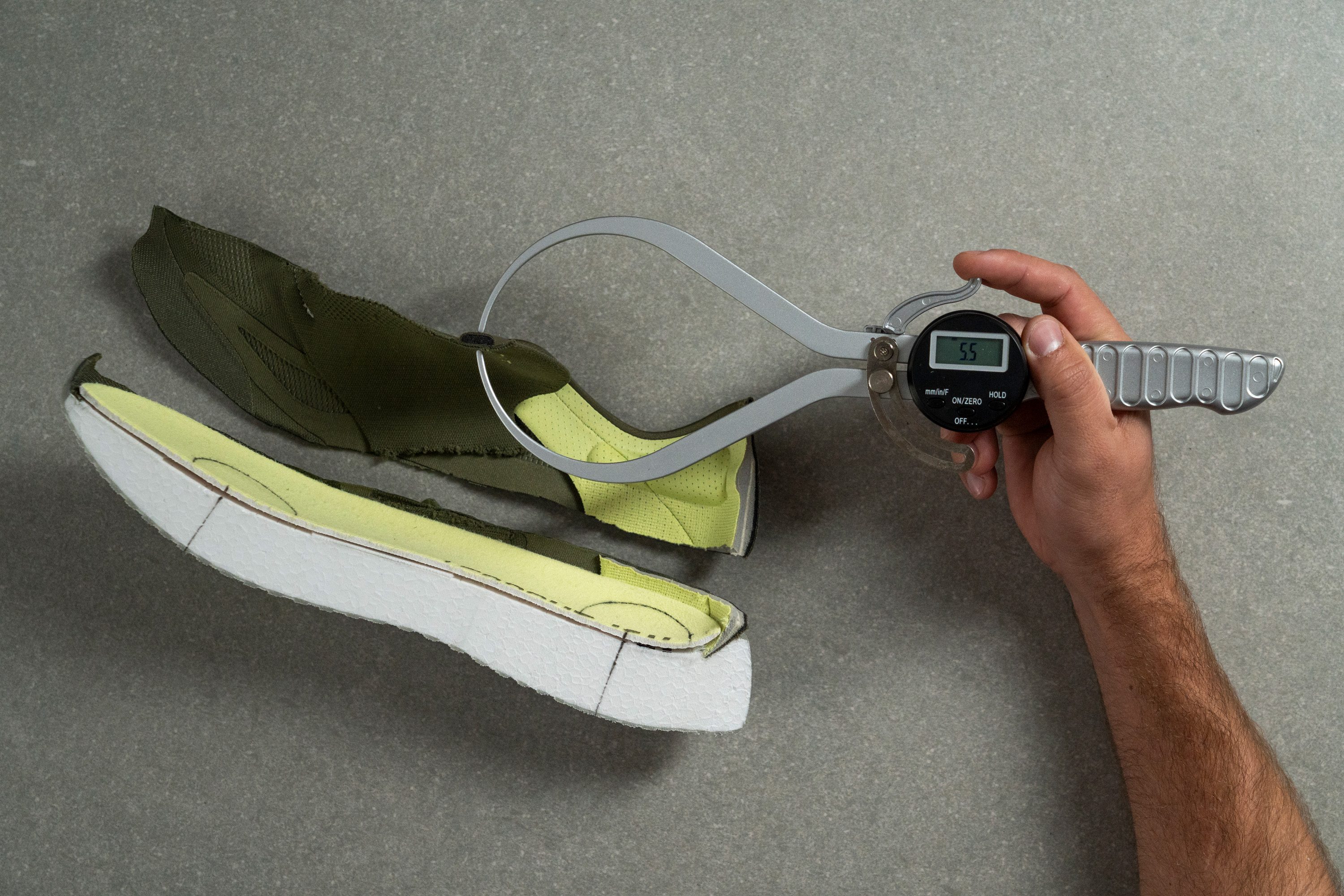
| Hyperboost Run | 5.5 mm |
| Average | 5.8 mm |
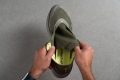
Tongue: gusset type
The tongue of the Hyperboost Run delivers an excellent lockdown thanks to its semi-gusseted construction, which securely wraps around the foot and enhances overall comfort.
In our view, this premium-focused design is exactly what runners should expect from a shoe positioned above the average price point.
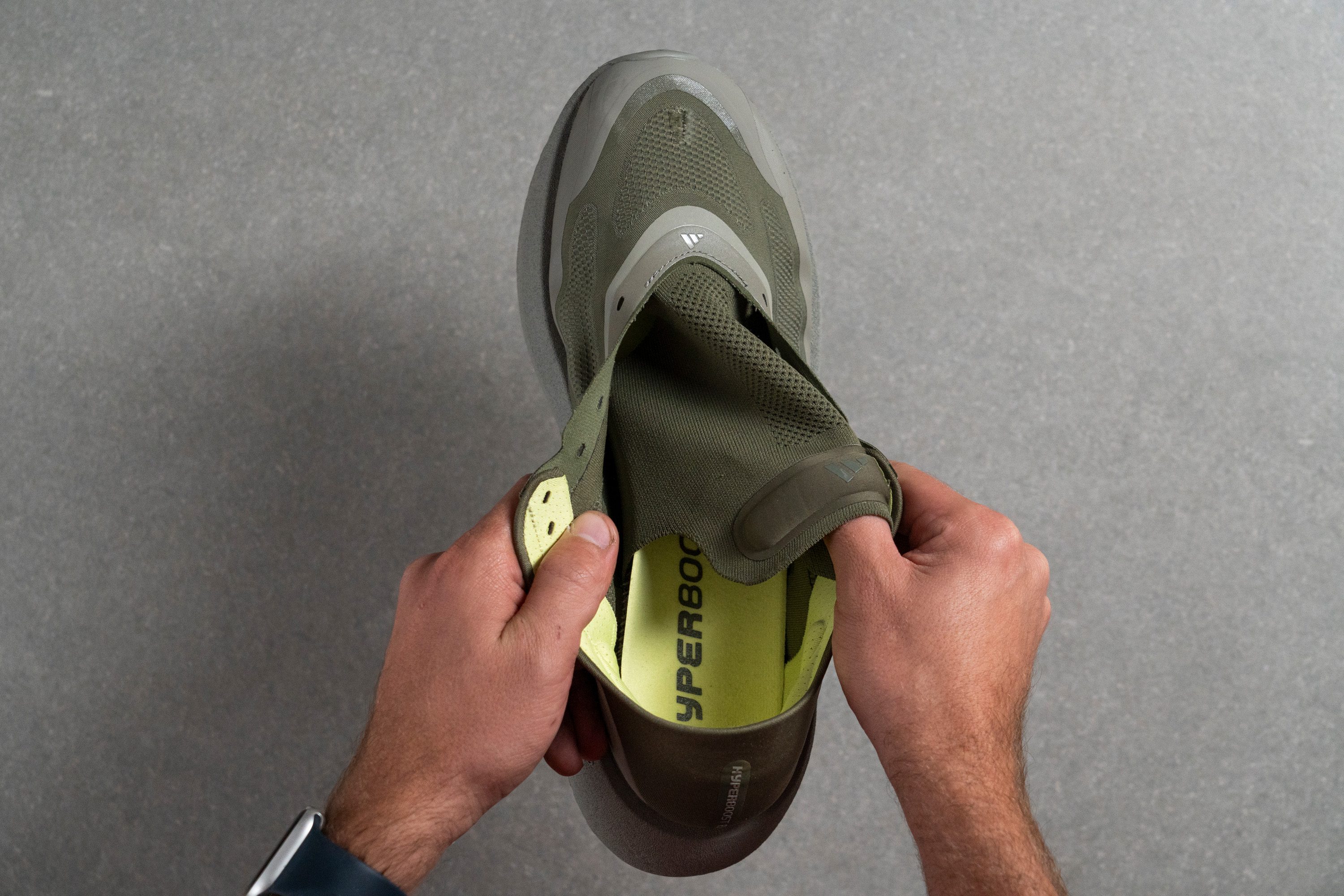
| Hyperboost Run | Both sides (semi) |
Heel tab
The Hyperboost Run features a clean and straightforward heel design. While adidas skipped a heel tab, the rear of the shoe looks nice thanks to the Hyperboost Run branding integrated into the heel area.
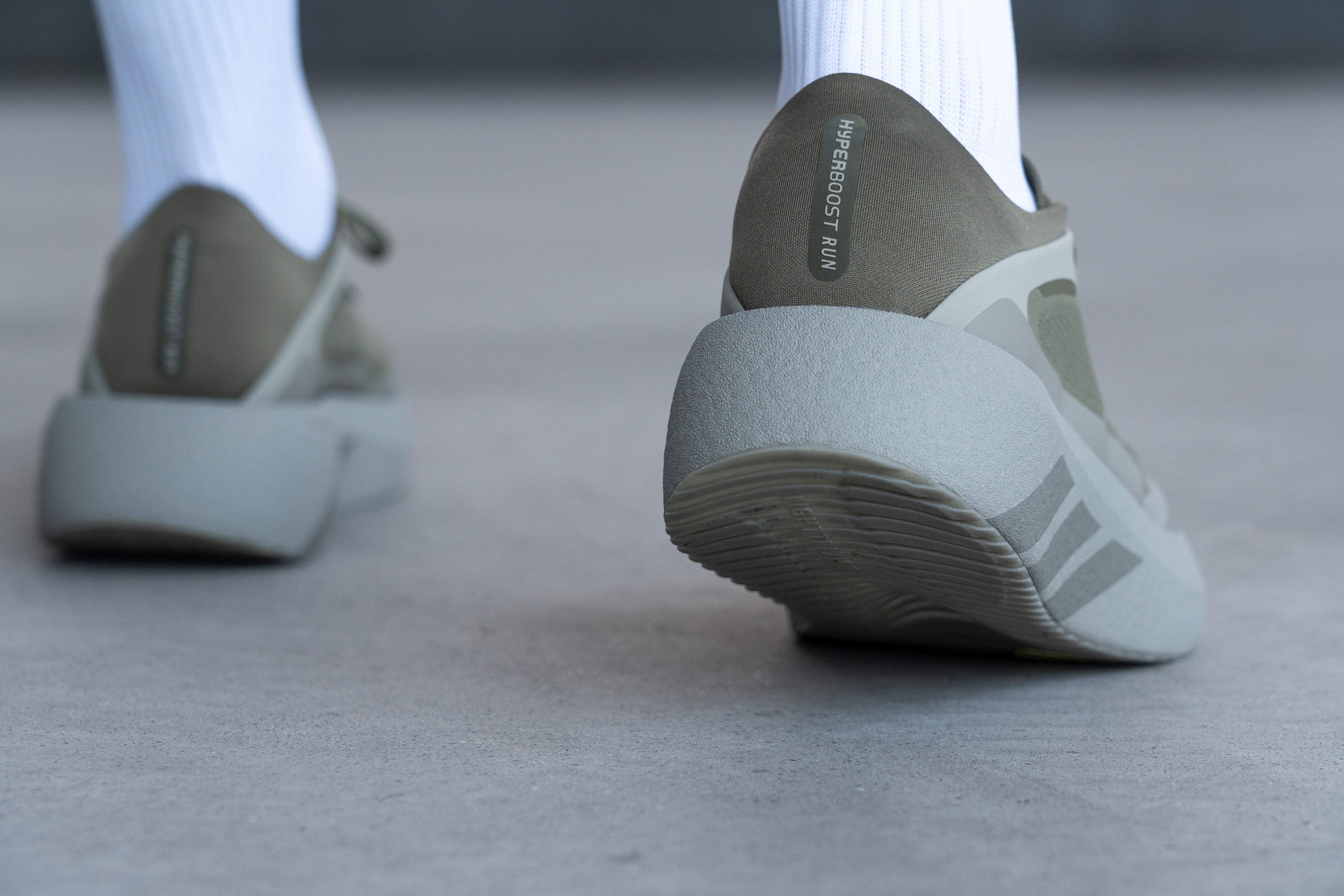
| Hyperboost Run | None |
Price
The Hyperboost Run sits one step below the Edge in adidas' lineup, yet it still firmly belongs to the premium segment. To be fair, its price is supported by the outstanding energy return and lively ride delivered by the Hyperboost Pro foam.
However, runners looking for a shoe that excels across the board may find its value proposition harder to justify, as the overall package feels somewhat inconsistent.
| Hyperboost Run | $180 |
| Average | $158 |