





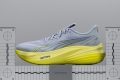












Our verdict
- Daily running 89
- Tempo 38
- Race 27
- Stability 88
Pros
- Massive stack height underfoot
- Very stable for its size
- Grippy PumaGrip outsole
- Comfortable heel padding
- Much lighter than version 1
- Good durability
- Solid airflow in toebox and tongue
- Excellent knit tongue
Cons
- Lacks bounce
- Narrow toebox limits toe splay
- Doesn't feel great at faster paces
Awards
- Top pick in best PUMA running shoes
Comparison
The most similar running shoes compared
+ + Add a shoe | |||||
|---|---|---|---|---|---|
| Our score | 83 Great | 91 Superb | 91 Superb | 84 Great | |
| Price | £160 | £140 | £155 | £160 | |
| Pace | Daily running | TempoDaily running | Daily running | Daily running | |
| Shock absorption | High | High | High | High | |
| Energy return | Low | High | High | Moderate | |
| Traction | High | High | High | High | |
| Arch support | Neutral | Neutral | Neutral | Neutral | |
| Weight lab Weight brand | 9.5 oz / 269g 9.7 oz / 275g | 8.5 oz / 241g 8.5 oz / 240g | 10.2 oz / 289g 10.1 oz / 285g | 9.6 oz / 272g 9.2 oz / 260g | |
| Lightweight | ✗ | ✓ | ✗ | ✗ | |
| Drop lab Drop brand | 10.5 mm 8.0 mm | 8.0 mm 8.0 mm | 9.6 mm 10.0 mm | 7.5 mm 6.0 mm | |
| Strike pattern | Heel | HeelMid/forefoot | HeelMid/forefoot | Mid/forefoot | |
| Size | True to size | True to size | True to size | True to size | |
| Midsole softness | Balanced | Balanced | Soft | Soft | |
| Difference in midsole softness in cold | Small | Small | Small | Small | |
| Toebox durability | Decent | Decent | Decent | Decent | |
| Heel padding durability | Decent | Good | Good | Good | |
| Outsole durability | Good | Good | Good | Good | |
| Breathability | Moderate | Moderate | Moderate | Moderate | |
| Width / fit | Medium | Medium | Medium | Wide | |
| Toebox width | Narrow | Medium | Medium | Medium | |
| Stiffness | Stiff | Moderate | Stiff | Stiff | |
| Torsional rigidity | Moderate | Moderate | Moderate | Moderate | |
| Heel counter stiffness | Moderate | Moderate | Moderate | Stiff | |
| Rocker | ✓ | ✓ | ✗ | ✓ | |
| Heel lab Heel brand | 45.5 mm 46.0 mm | 40.7 mm 40.0 mm | 42.3 mm 45.0 mm | 40.7 mm 42.0 mm | |
| Forefoot lab Forefoot brand | 35.0 mm 38.0 mm | 32.7 mm 32.0 mm | 32.7 mm 35.0 mm | 33.2 mm 36.0 mm | |
| Widths available | Normal | NarrowNormal | NarrowNormalWideX-Wide | NormalWide | |
| Orthotic friendly | ✓ | ✓ | ✓ | ✓ | |
| Season | All seasons | All seasons | All seasons | All seasons | |
| Removable insole | ✓ | ✓ | ✓ | ✓ | |
| Ranking | #164 Top 41% | #24 Top 6% | #18 Top 5% | #133 Top 34% | |
| Popularity | #151 Top 38% | #73 Top 19% | #2 Top 1% | #78 Top 20% |



Who should buy
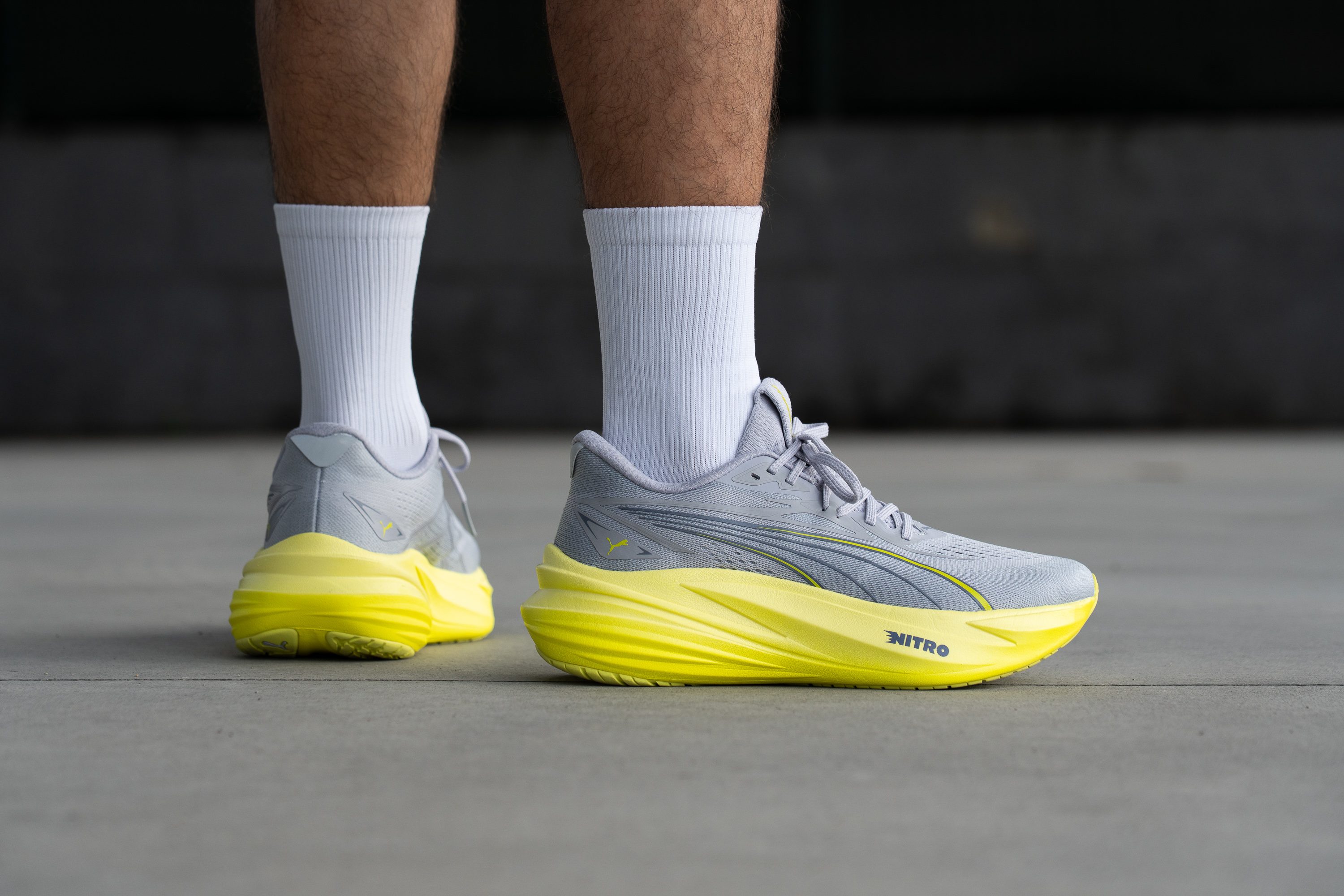
After testing the PUMA MagMax Nitro 2, we think it’s a good option for:
- Anyone who want a massive amount of foam underfoot combined with excellent traction.
- Those who liked the original MagMax but were disappointed by its heavy build, since this version fixes that and is noticeably lighter.
- Runners seeking a max-cushioned daily trainer that favours stability and grip over speed.
Who should NOT buy
We found in the lab that the PUMA MagMax Nitro 2 lacks energy return. The results that we found in the lab were lower than expected for a Nitro foam, so runners seeking a lively ride may prefer options like the Nike Vomero Premium or the ASICS Megablast.
We also think the MagMax Nitro 2 won't work well for runners with wide feet. During our testing the toebox felt restrictive and limited toe splay. In that case, the On Cloudboom Max is a solid alternative with a more accommodating fit.
Cushioning
Shock absorption
Few running shoes deliver the level of impact protection that the MagMax Nitro 2 provides in the forefoot, reaching 137 SA. However, the heel result was not as impressive as we expected at 141 SA. It still offers plenty of shock absorption for most runners, but given the shoe’s massive stack, we anticipated an even higher figure.
That said, it is clear to us that runners who want to take care of their muscles and joints during long miles or recovery days will enjoy this shoe.
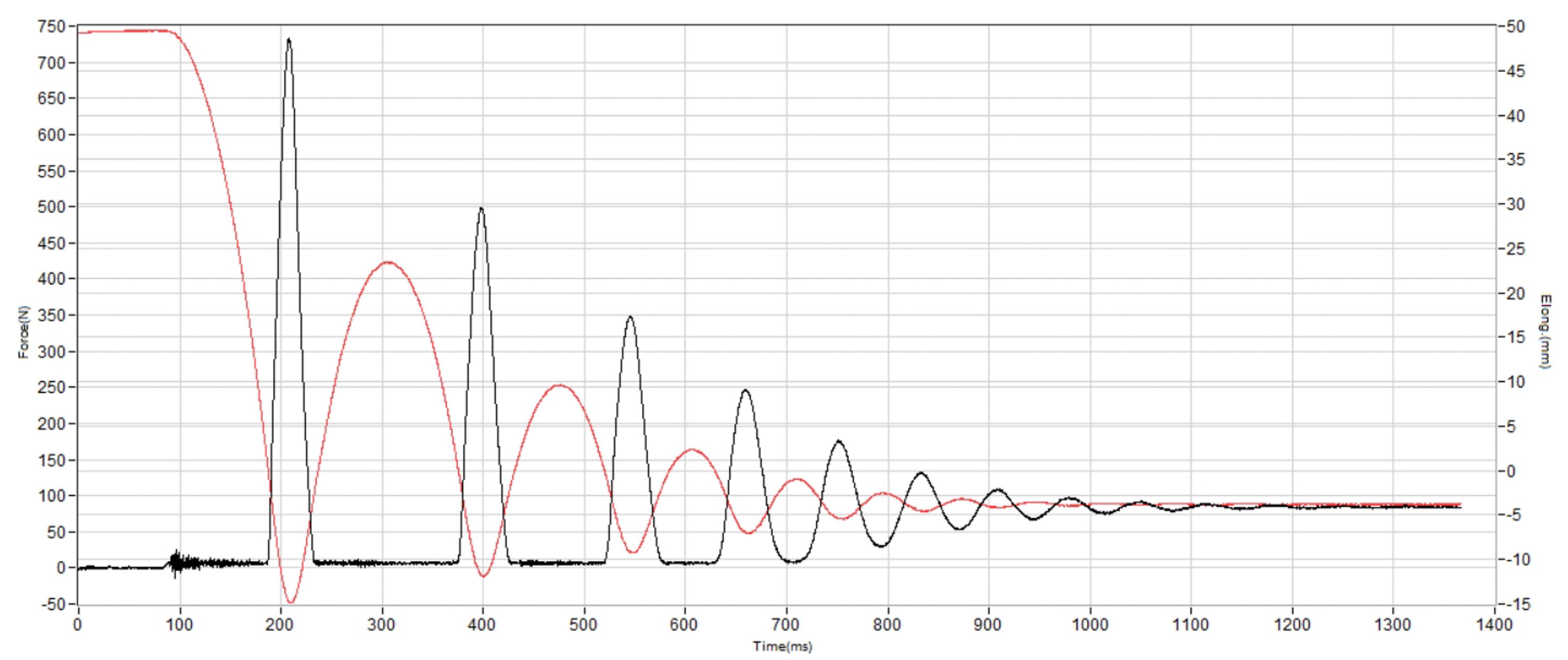
| MagMax Nitro 2 | 141 SA |
| Average | 131 SA |
Energy return
One thing we already clarified in our guide about foams is how brands sometimes reuse the same foam name—Nitro in this case—for very different compounds. This shoe is a perfect example, and our lab measurements clearly exposed that inconsistency.
Energy return is low at 50.1% in the heel and 54.6% in the forefoot. No matter how we look at it, these numbers are weak for a premium-priced shoe. Yet the PUMA Velocity Nitro 4—also labelled Nitro—scored 67.5% / 74.2%, which is close to super shoe bounce.
How is that possible? Well, both foams are nitrogen infused, yes... but the material composition is clearly not the same.
| MagMax Nitro 2 | 54.6% |
| Average | 61.5% |
Heel stack
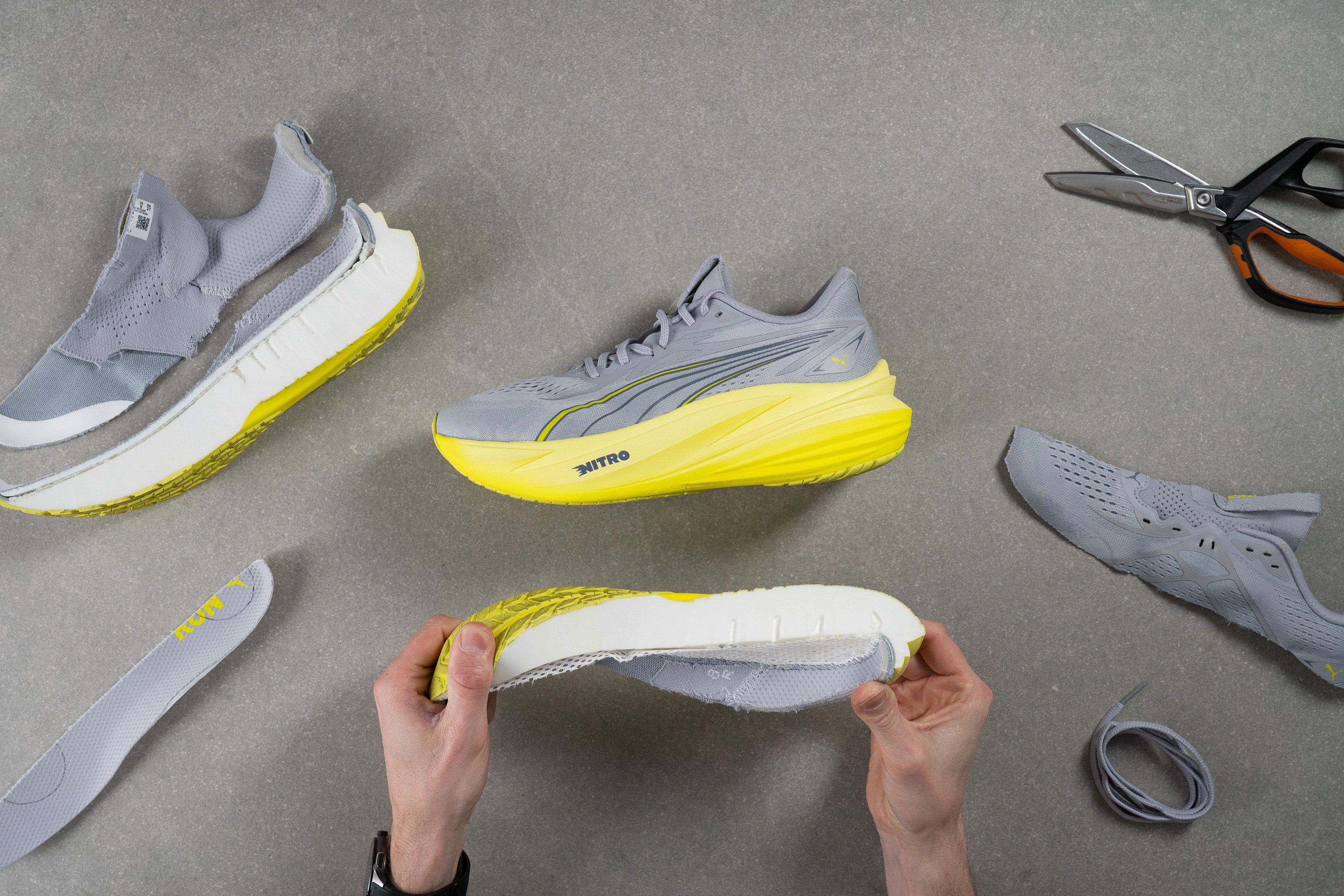
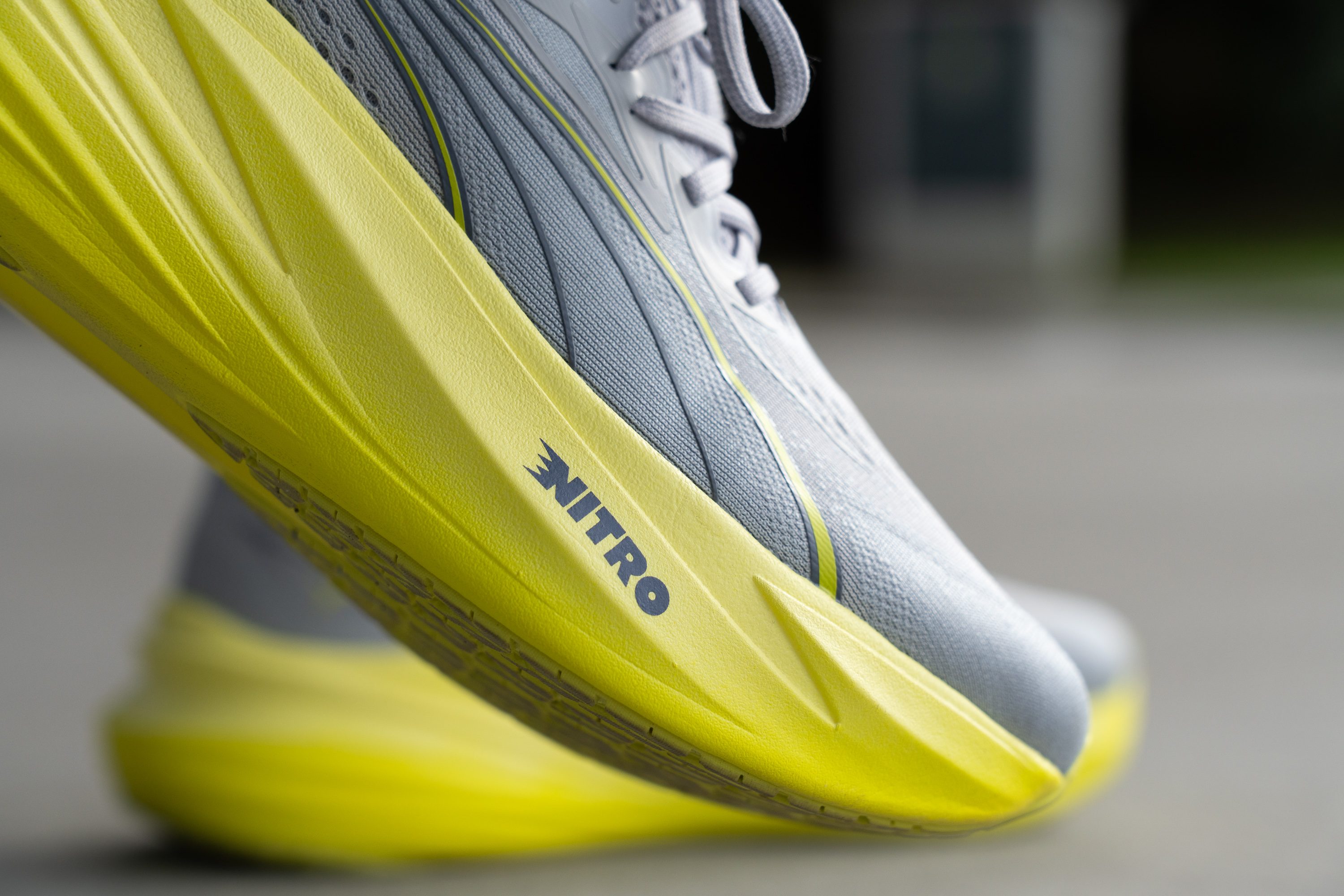
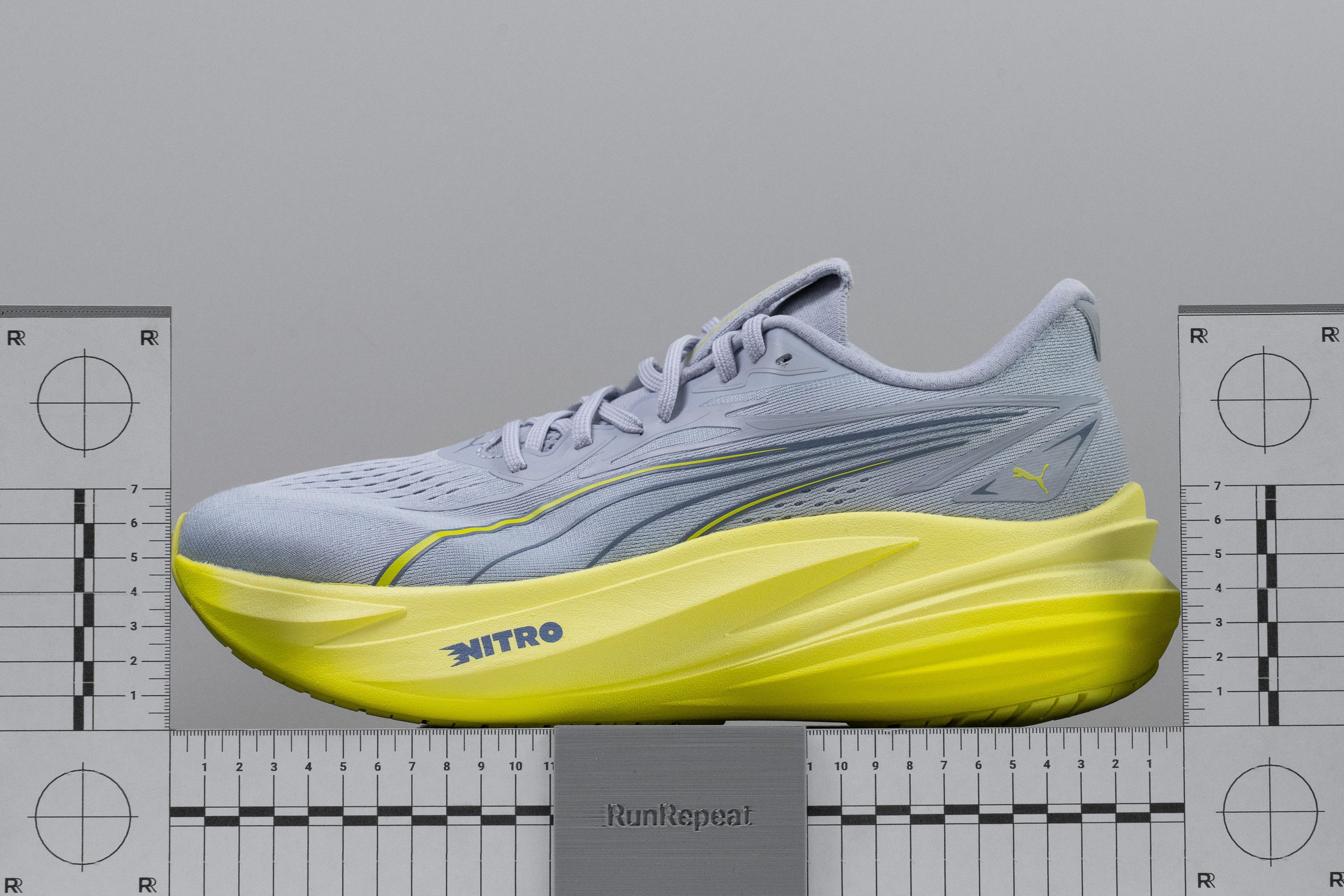
The MagMax Nitro 2 features a massive stack height of 45.5 mm, increasing by 2.6 mm compared to its predecessor. This confirms it as one of the tallest shoes ever produced, ensuring heel strikers will never feel a lack of foam underfoot.
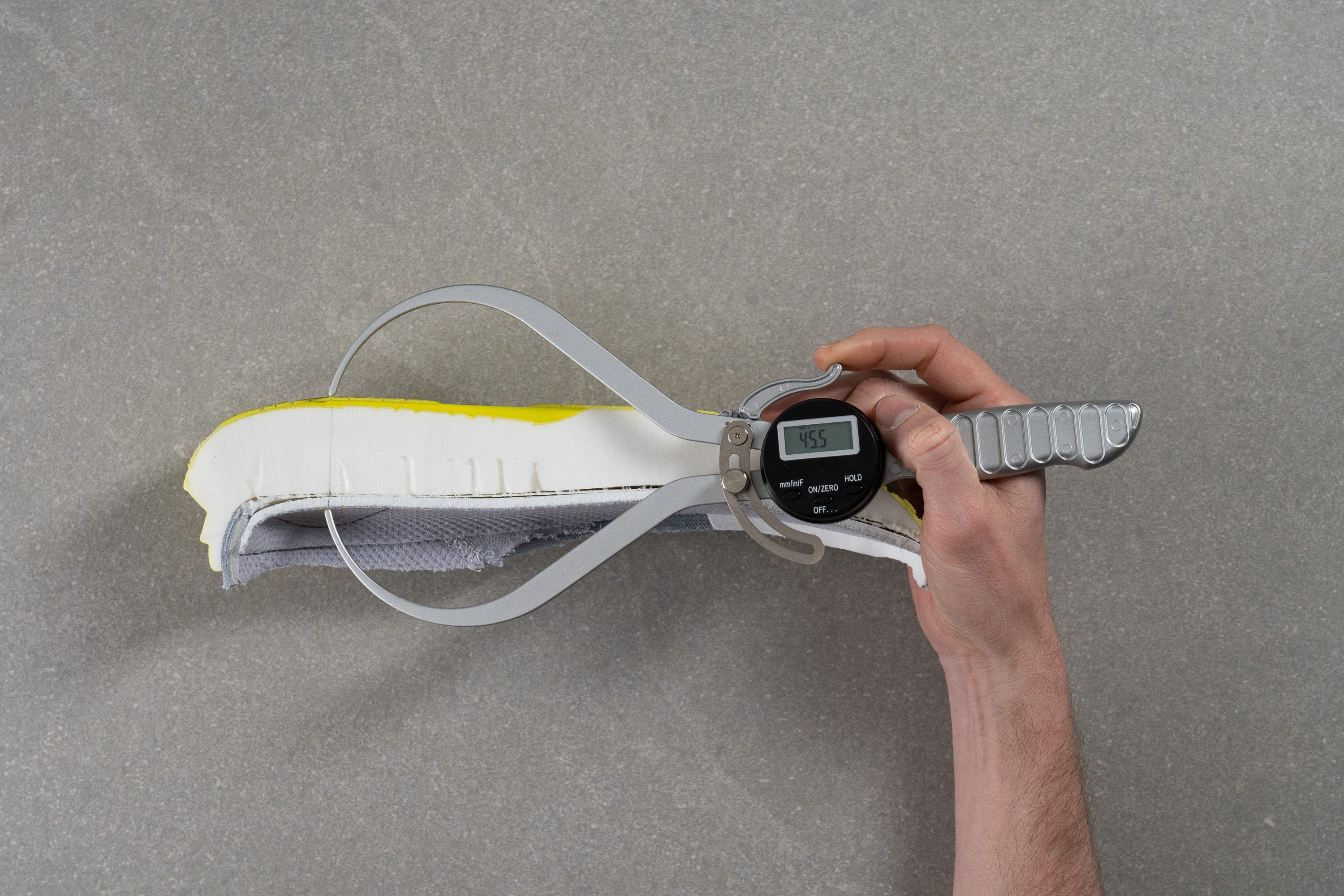
| MagMax Nitro 2 | 45.5 mm |
| Average | 35.6 mm |
Forefoot stack
This shoe lives up to its name in the forefoot as well, reaching 35.0 mm of stack height.
To put that into context, this figure is roughly equal to the current average heel stack in our lab. Quite wild, right? This new wave of maximalist running shoes pushes cushioning to extremes and is definitely not for runners who value ground feel underfoot.
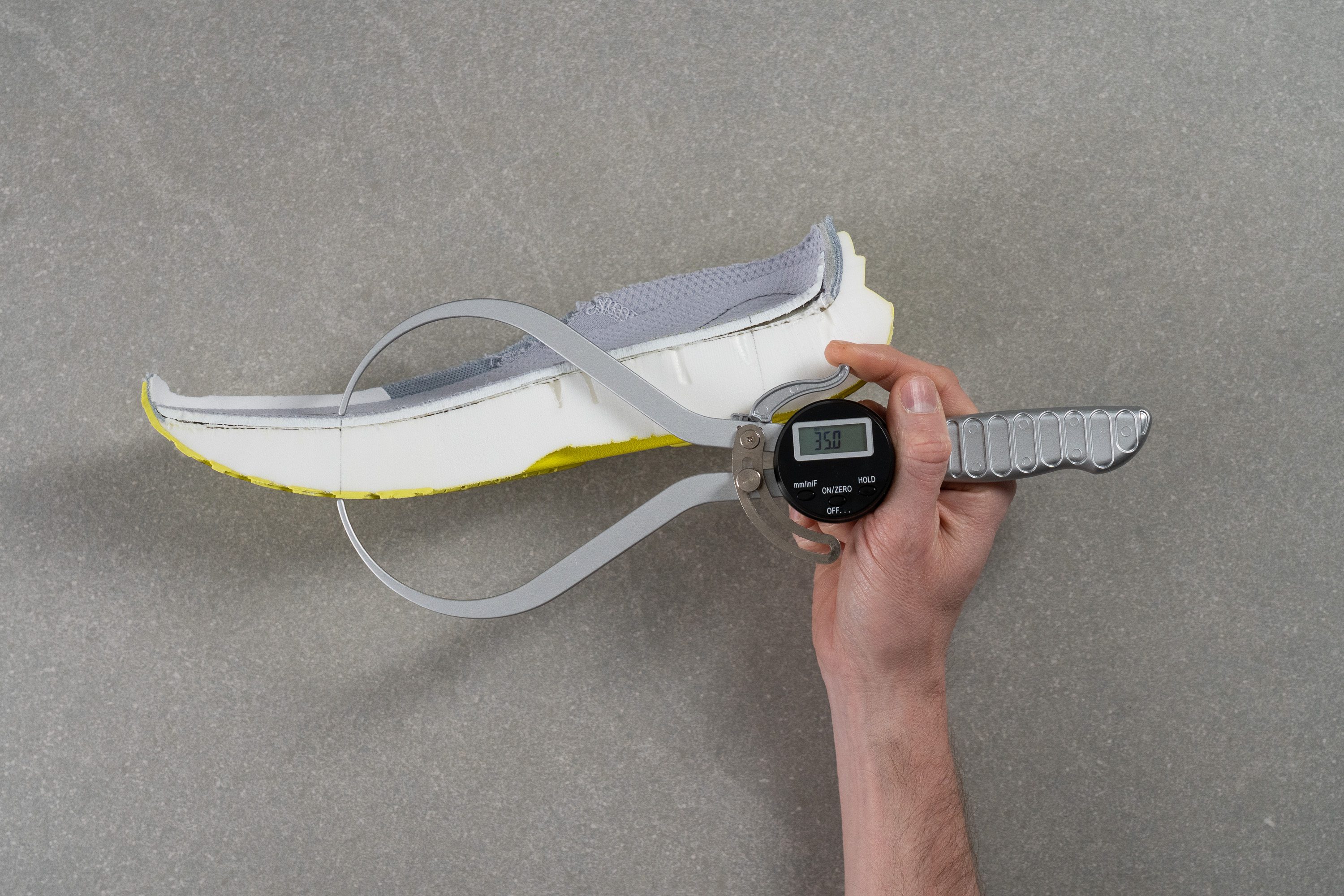
| MagMax Nitro 2 | 35.0 mm |
| Average | 27.2 mm |
Drop
After the previous two measurements, we calculated a real heel-to-toe drop of 10.5 mm for the MagMax Nitro 2. That is slightly higher than the 8 mm spec claimed by PUMA.
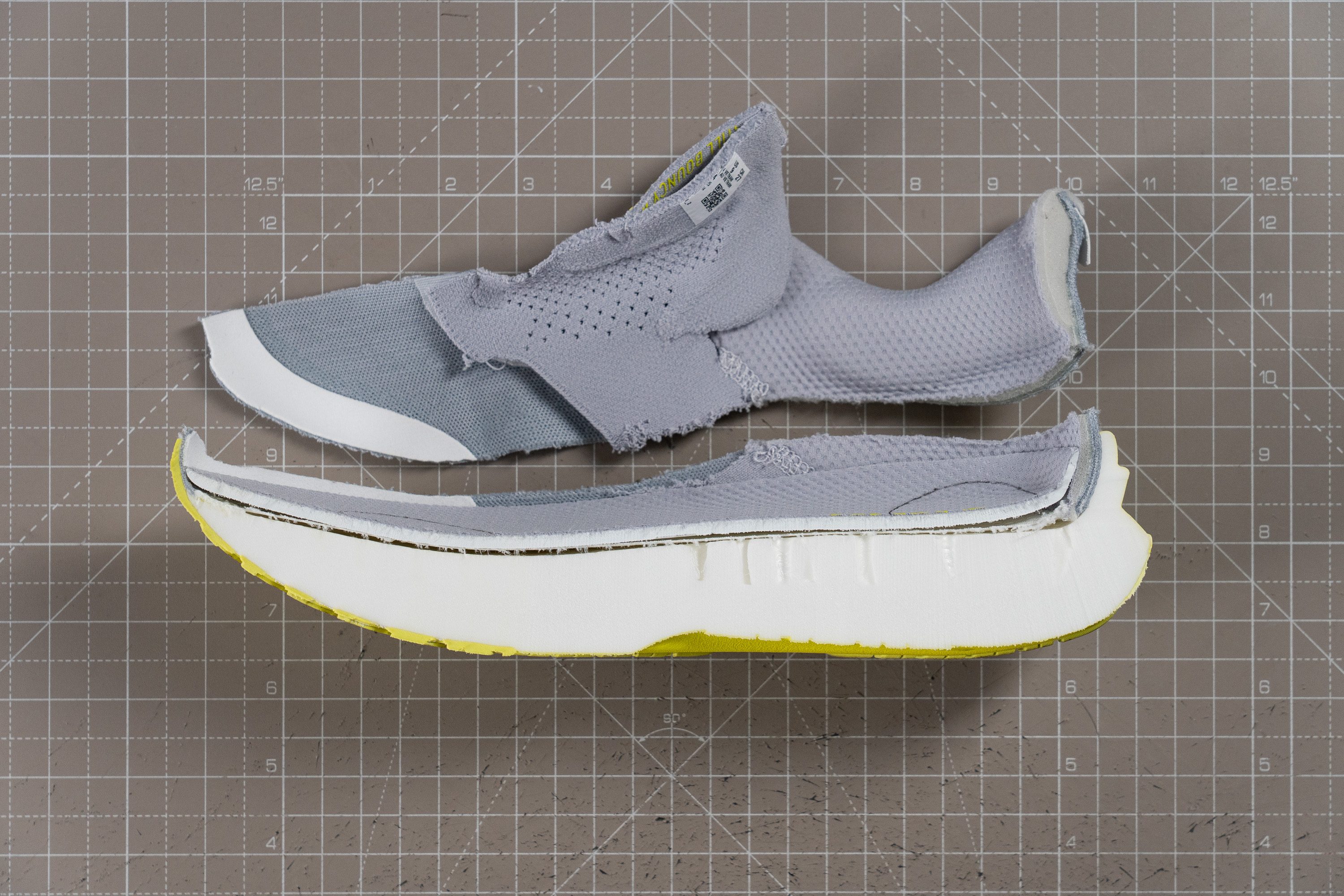
| MagMax Nitro 2 | 10.5 mm |
| Average | 8.4 mm |
Midsole softness
A common mistake that still persists is assuming that all max-stack shoes are plush. However, our experience shows that many of them lean firmer instead, which makes sense from a stability perspective.
The MagMax Nitro 2 follows that pattern. It is not a brick, but at 38.1 AC in our Asker C durometer it sits closer to firm than soft. Fans of pillow-soft foams may be disappointed, but we think that most of you can enjoy this Nitro foam.
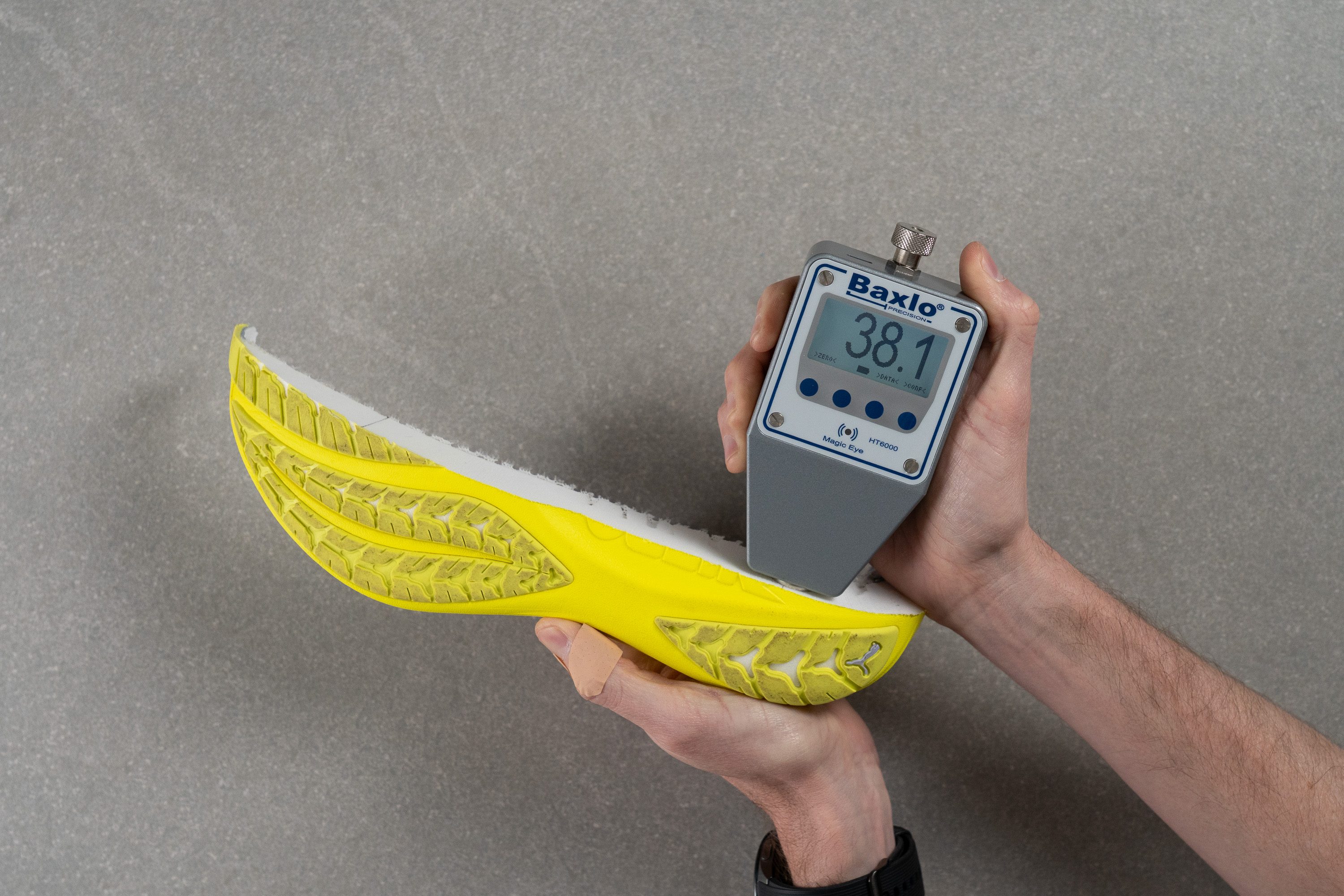
| MagMax Nitro 2 | 38.1 AC |
| Average | 35.4 AC |
Rocker
The MagMax Nitro 2 does feature a rocker geometry, but it is not as aggressive as in many other running shoes, likely due to the higher drop. That can be a good thing for runners planning to use this model as a daily trainer for easy miles or steady long runs where pace is not the priority.
Size and fit
Size
PUMA MagMax Nitro 2 fits true to size (22 votes).
Internal length
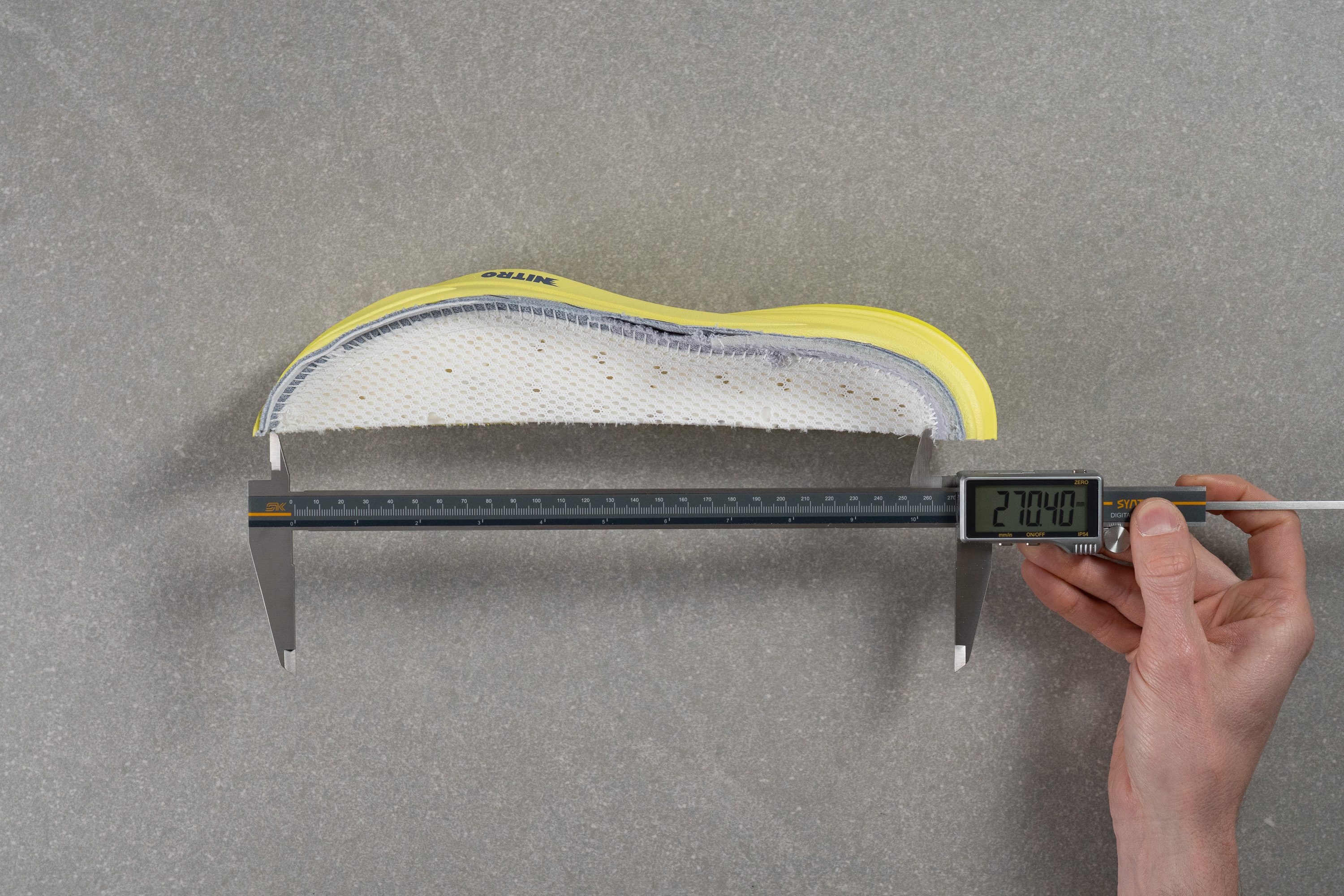
| MagMax Nitro 2 | 270.4 mm |
| Average | 269.4 mm |
Width / Fit
If you regularly run in PUMA shoes, you are probably familiar with the snug fit that tends to appear across much of the brand’s lineup.
To check if that trend continues in the MagMax Nitro 2, we created a gel mould of the interior and took our first measurement. At 93.4 mm, it starts below the average.
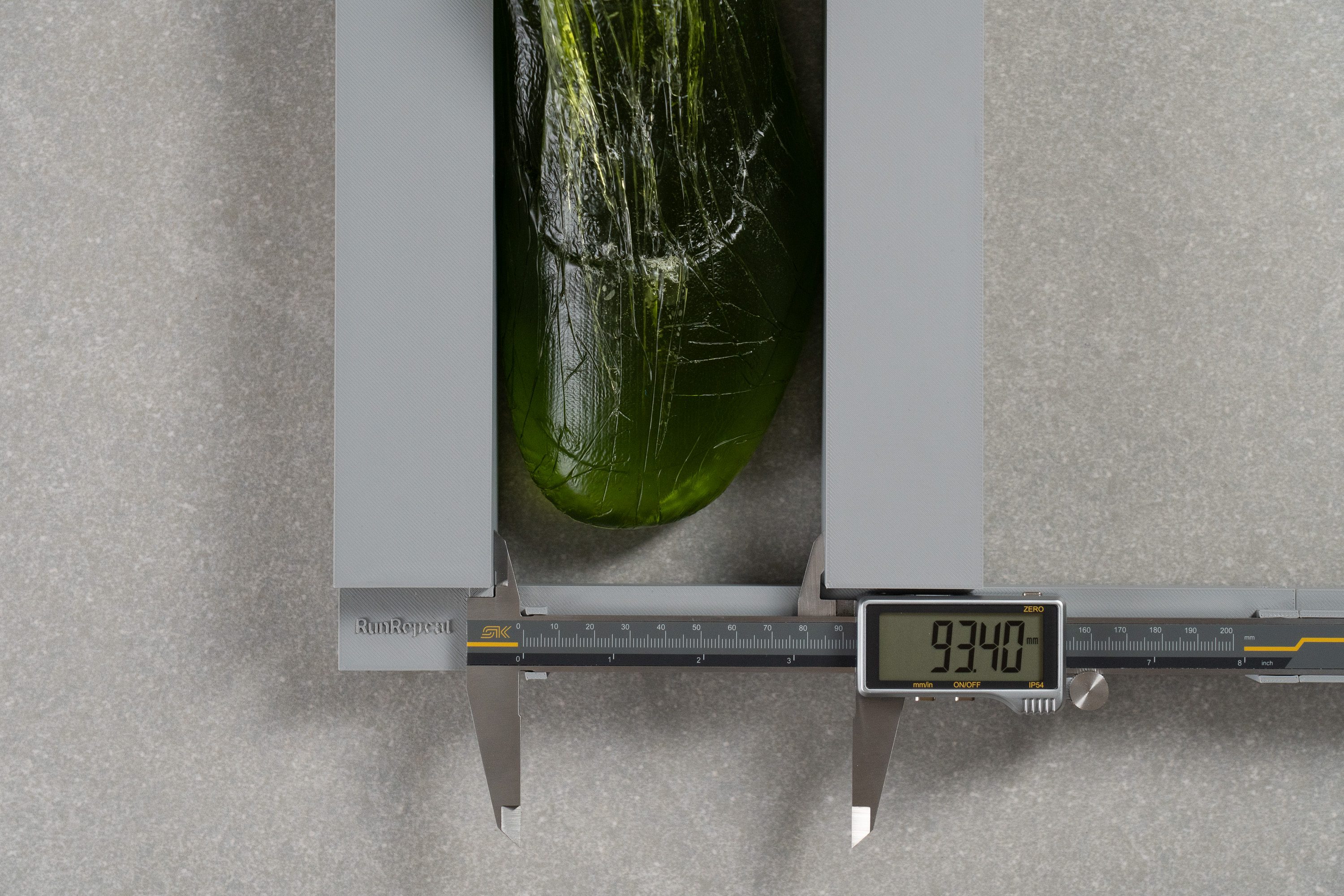
| MagMax Nitro 2 | 93.4 mm |
| Average | 95.2 mm |
Toebox width
The MagMax Nitro 2 features an aggressive taper (70.4 mm) that helps improve support and stability by holding the foot securely in place. However, it can also feel cramped, especially for runners with wide feet planning to use it on longer runs.
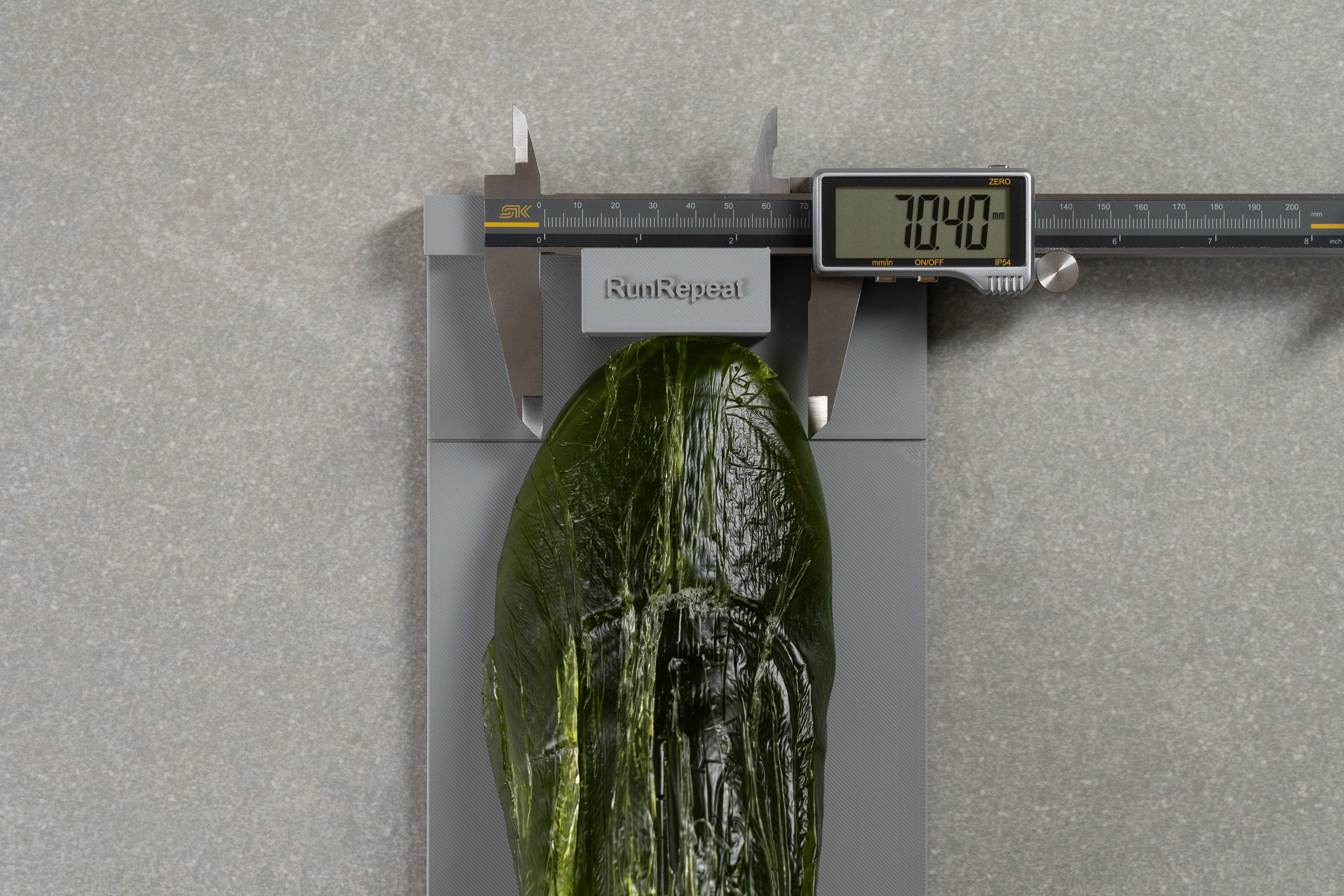
| MagMax Nitro 2 | 70.4 mm |
| Average | 73.2 mm |
Toebox height
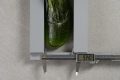
We found good vertical space for toe movement, and the shoe never placed pressure on our toenails during runs.
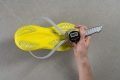
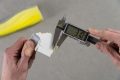
Back in the lab, our callipers confirmed that feeling with a generous height of 29.3 mm.
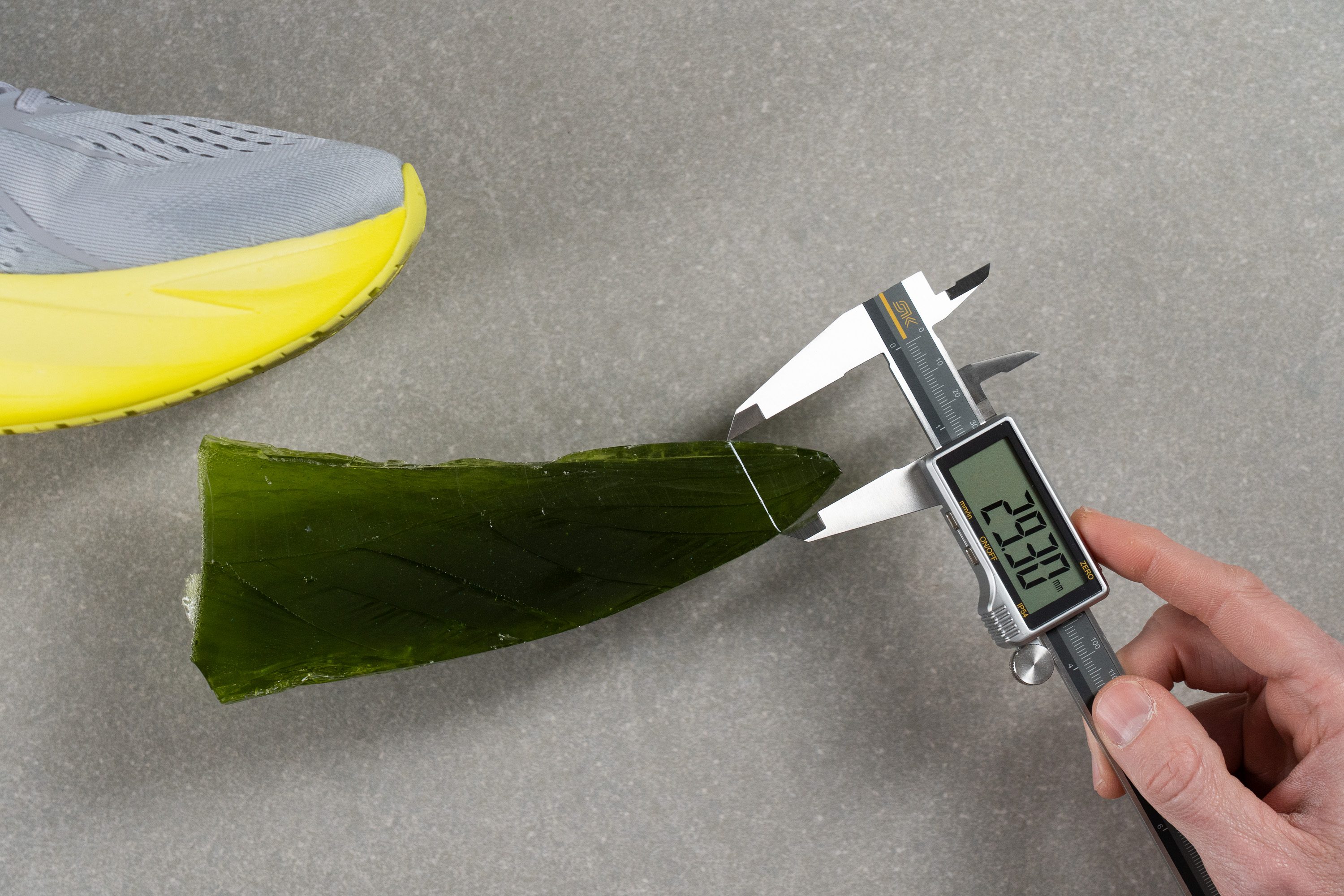
| MagMax Nitro 2 | 29.3 mm |
| Average | 27.0 mm |
Traction / Grip
Traction test
With PumaGrip rubber on the outsole, we expected a very high score in our SATRA TM144 test, which measures traction on wet concrete. The PUMA MagMax Nitro 2 met those expectations with a strong 0.77 result.
| MagMax Nitro 2 | 0.77 |
| Average | 0.53 |
Outsole design
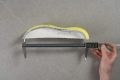
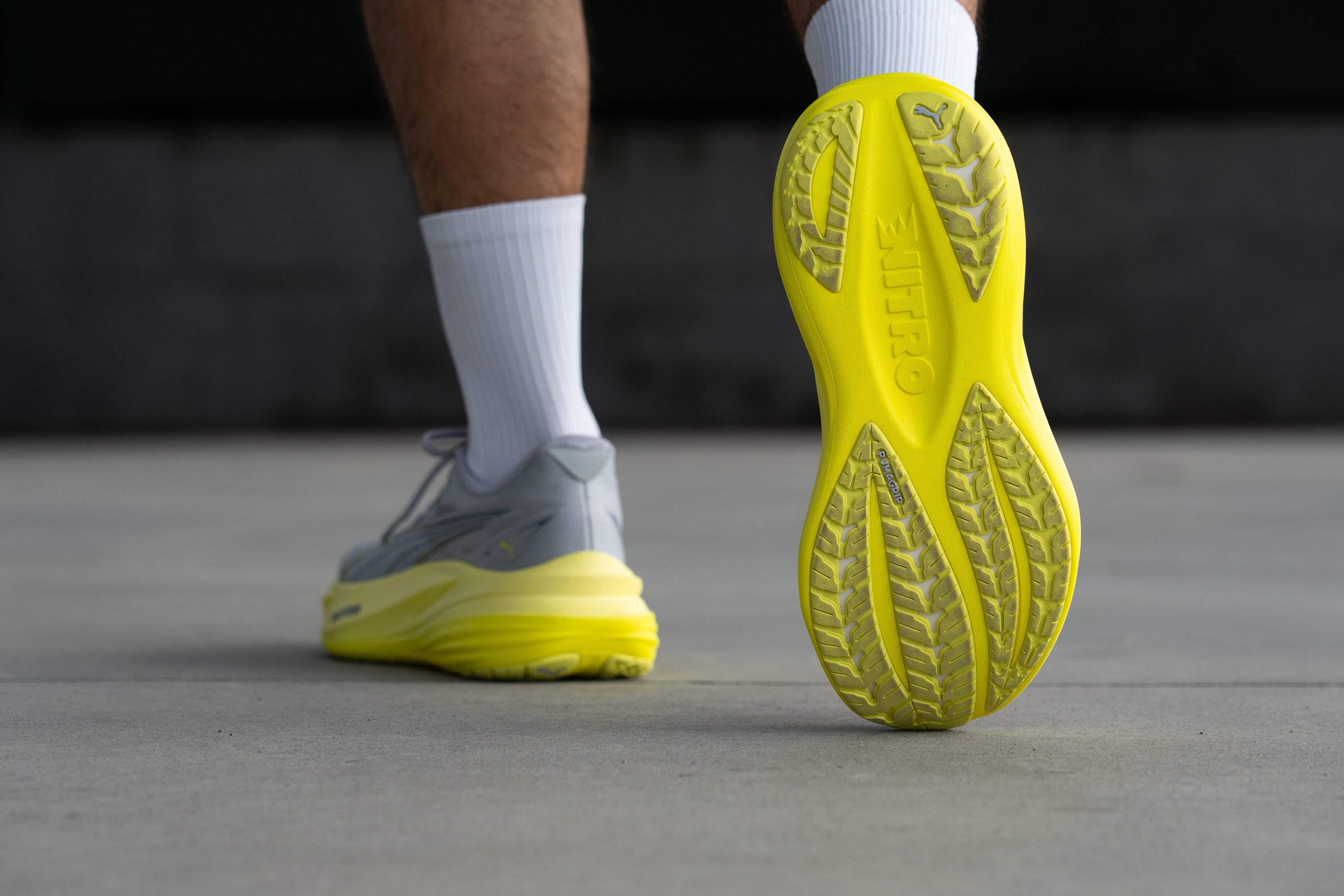
There is less outsole coverage compared to the first generation, which we expected since this version clearly aimed to reduce weight and become a lighter shoe. The design now features four large rubber pods, two in the heel and two in the forefoot, while the midfoot remains mostly exposed.
However, we do not see this as a drawback. Instead, it feels like a normalisation compared to many other maximalist running shoes, which already use similar layouts that focus rubber only on high-wear areas.
Flexibility / Stiffness
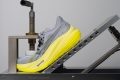
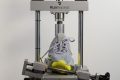
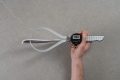
We tested the MagMax 2 using our custom machine and found that is 23% stiffer than its predecessor, which was already above average. Therefore, it may be a red flag for runners who prefer a more flexible feel underfoot.
Firm foam plus a massive stack height always results in a very stiff shoe, even without a carbon plate.
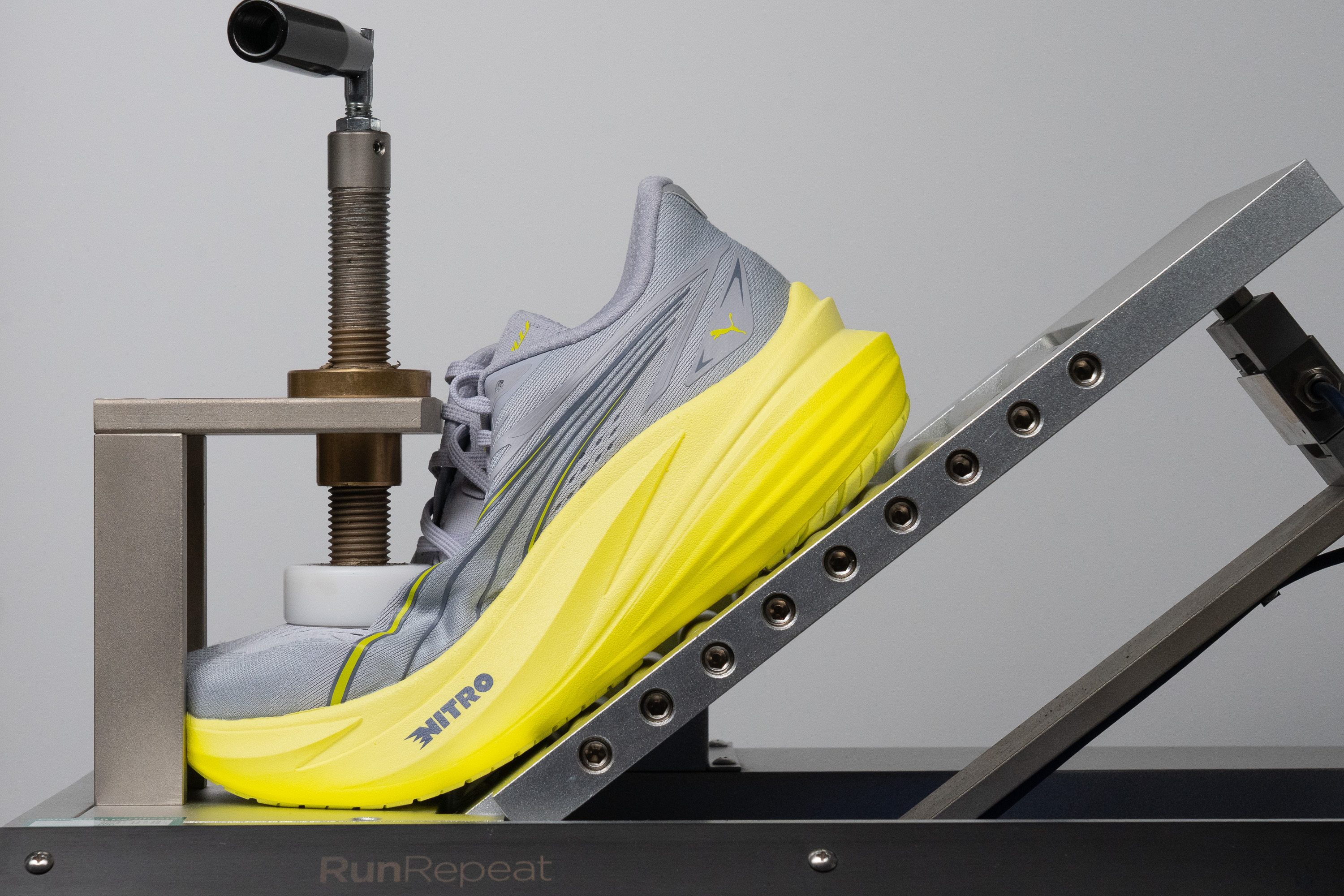
| MagMax Nitro 2 | 22.0N |
| Average | 15.5N |
Weight
For us, one of the main drawbacks of the first-gen MagMax Nitro was its high weight. Luckily, PUMA clearly focused on improving that area.
This time we measured 9.5 oz or 269g, which is an 8% improvement over v1 and a very solid result for a shoe with such a gargantuan stack height.
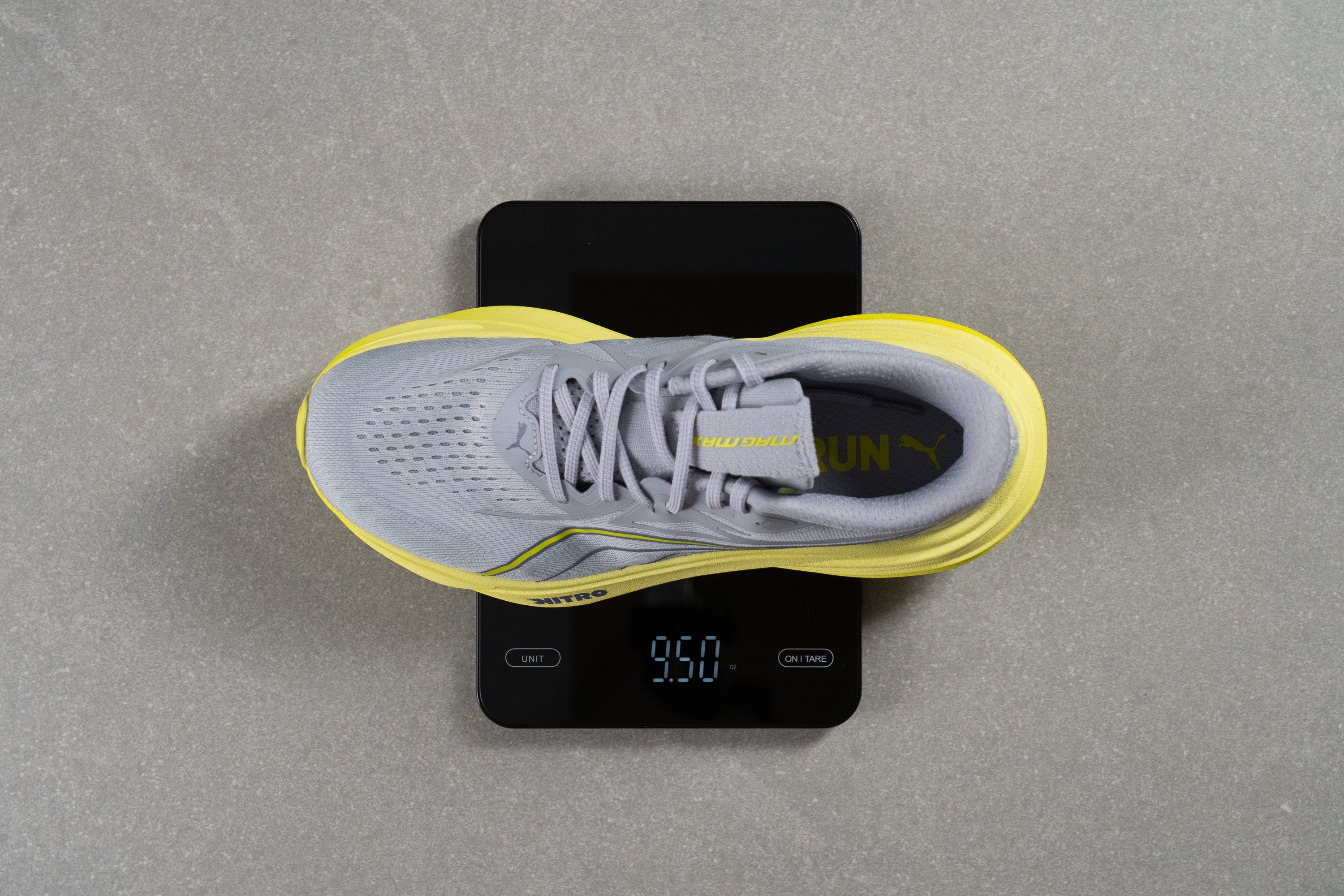
| MagMax Nitro 2 | 9.5 oz (269g) |
| Average | 9.2 oz (261g) |
Breathability
Breathability test
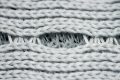
The upper of the PUMA MagMax Nitro 2 uses a two-layer engineered mesh. There is nothing flashy or experimental here, just a proven material that PUMA has already used in several models and that works well for comfort and airflow.
After running our smoke test, we were confident that this shoe deserved a 4 out of 5 score. That is a strong result for a daily trainer because it allows comfortable use throughout the entire year.
PUMA’s design strategy is quite clear. The toebox and tongue prioritise airflow, while the medial and lateral sections provide stronger structure and support. With such a towering stack height, that extra containment makes perfect sense.

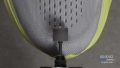
Afterward we examined the upper under the microscope to inspect the material closely. As we mentioned before, this is a classic engineered mesh structure without any unusual patterns or hidden layers.
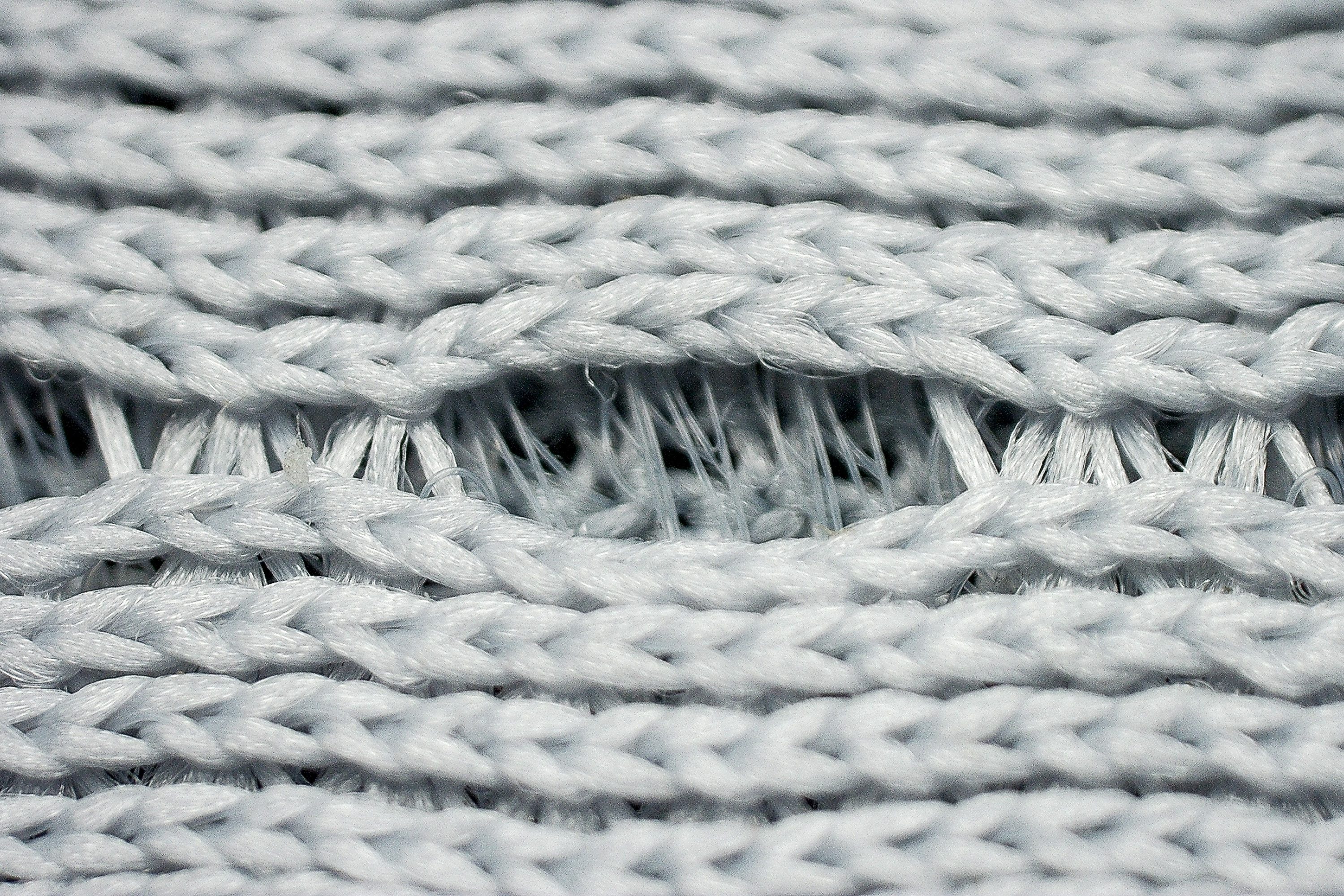
Sometimes brands try to reinvent the wheel with new upper designs. In this case, PUMA sticks with a reliable formula, and it works well, especially thanks to the comfortable and well-padded heel area.
| MagMax Nitro 2 | 4 |
| Average | 3.6 |
Stability
Lateral stability test
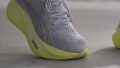
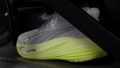
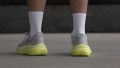
One of the pleasant surprises that we found with the PUMA MagMax Nitro 2 is how stable it feels despite its colossal stack height. The shoe is designed to provide support through both the upper and midsole, using a wide footprint and subtle adjustments that help it feel more stable than its size might suggest.
Torsional rigidity
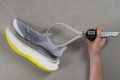
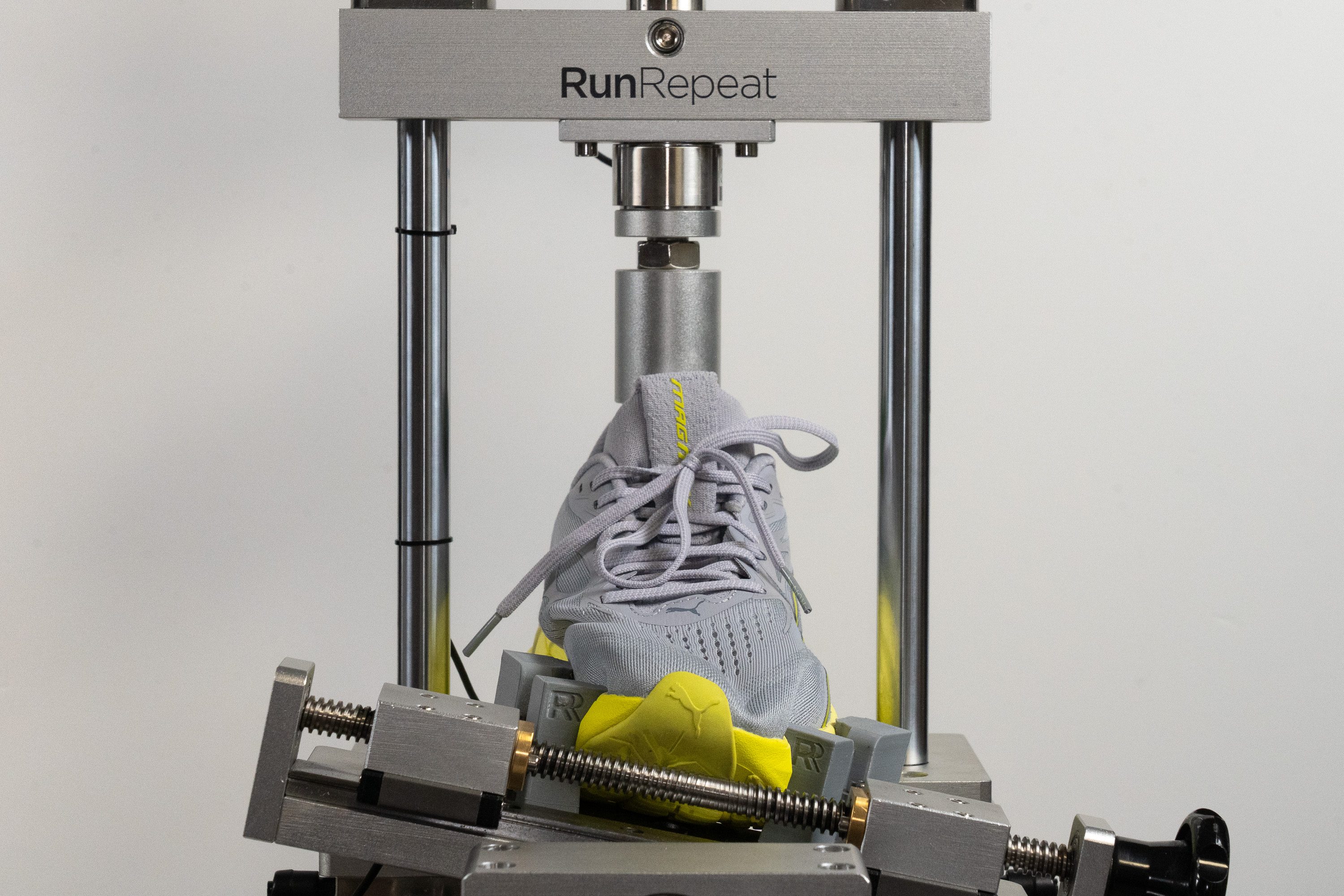
Despite its massive amount of foam and the absence of flex-oriented design features, the MagMax Nitro 2 surprised us by scoring just 13.1 Nm in our double-sided twisting test. This is great news for those seeking a bit more flex in a max-stack setup.
| MagMax Nitro 2 | 13.1 Nm |
| Average | 14.3 Nm |
Heel counter stiffness
On the other hand, PUMA chose a very standard heel counter that we rated 3 out of 5. This adds extra comfort, which makes sense since the shoe is already stable and does not need an especially stiff heel structure.
| MagMax Nitro 2 | 3 |
| Average | 3 |
Midsole width - forefoot
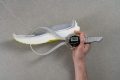
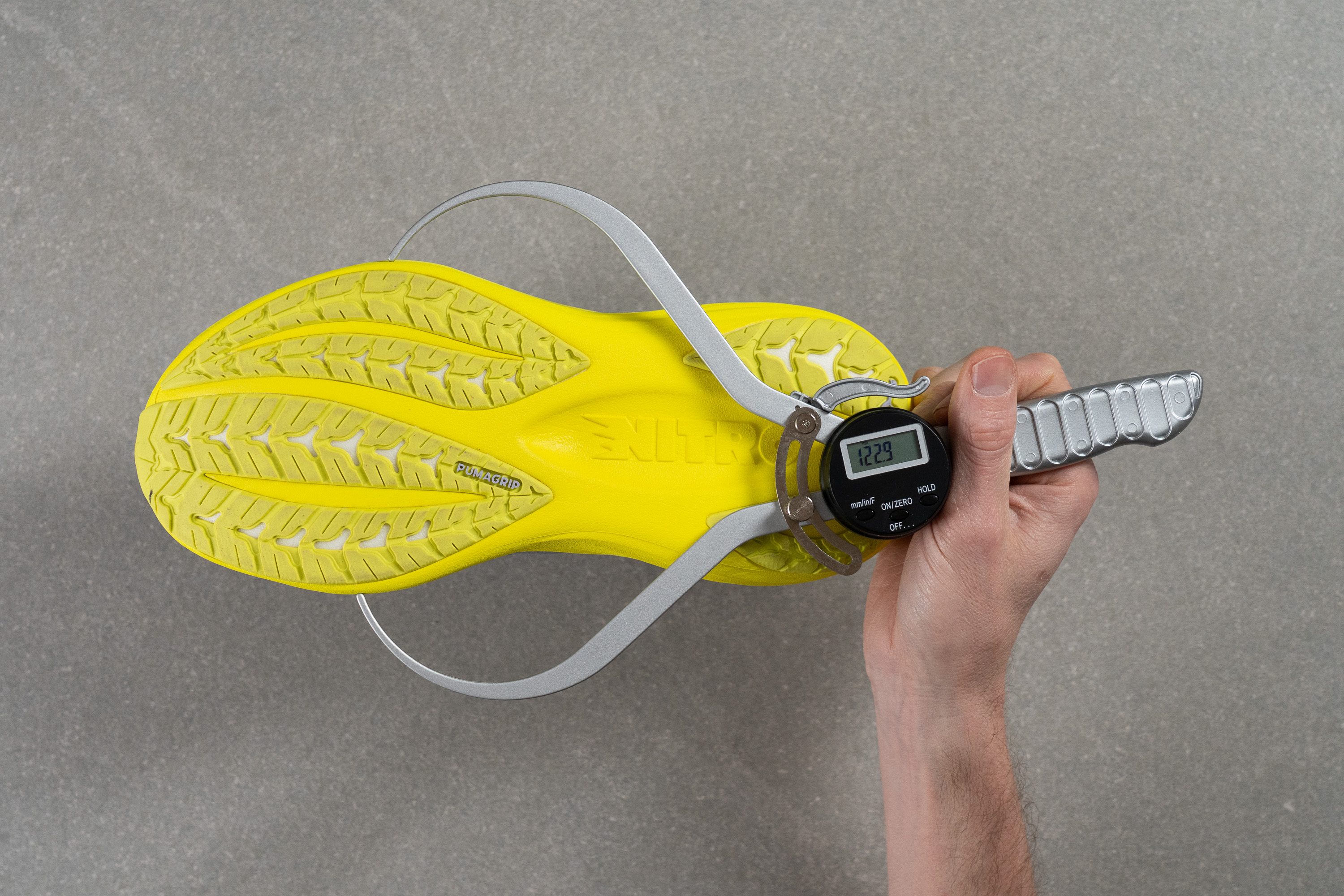
We mentioned earlier the massive footprint, and here it is. The shoe feels enormous in every direction when you hold it, and the forefoot reaches 122.9 mm which is mind-blowing.
| MagMax Nitro 2 | 122.9 mm |
| Average | 115.1 mm |
Midsole width - heel
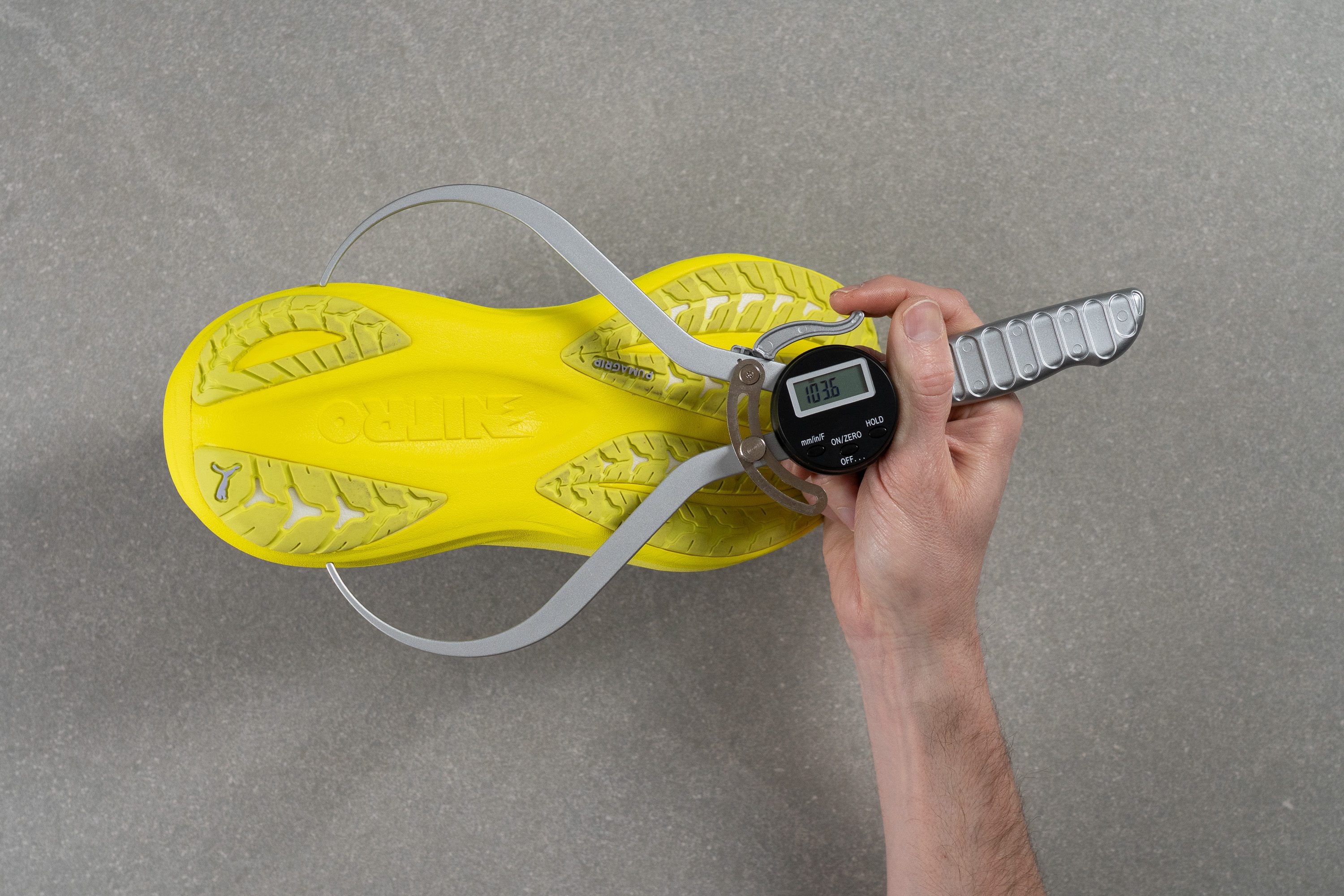
The heel also offers a much broader platform than the average shoe, measuring 96.7 mm. The midfoot follows the same approach, which helps the shoe feel more stable than it looks, although it does reduce agility compared to an average daily trainer. You just can't have it all!
| MagMax Nitro 2 | 96.7 mm |
| Average | 91.1 mm |
Durability
Toebox durability
Despite the clearly visible ventilation holes, the double-layer engineered mesh upper provides enough resilience to earn a 3 out of 5 in our durability test, resulting in a solid pass.
| MagMax Nitro 2 | 3 |
| Average | 2.6 |
Heel padding durability
The heel padding also performed reasonably well, although a score of 3 here is roughly equivalent to a 2 in the toebox. In other words, it passed the test, but only by a narrow margin.
| MagMax Nitro 2 | 3 |
| Average | 3.4 |
Outsole durability
One of the best things about PumaGrip rubber is that it not only delivers excellent traction, but also offers strong durability. In our latest Dremel test, we found that only 0.9 mm of rubber was removed.
| MagMax Nitro 2 | 0.9 mm |
| Average | 1.1 mm |
Outsole thickness
With an outsole thickness of 3.1 mm, we think early rubber wear is highly unlikely. However, keep in mind that coverage is limited in the MagMax Nitro 2, so if you tend to wear shoes in unusual spots like the midfoot, the rubber will not protect those areas.
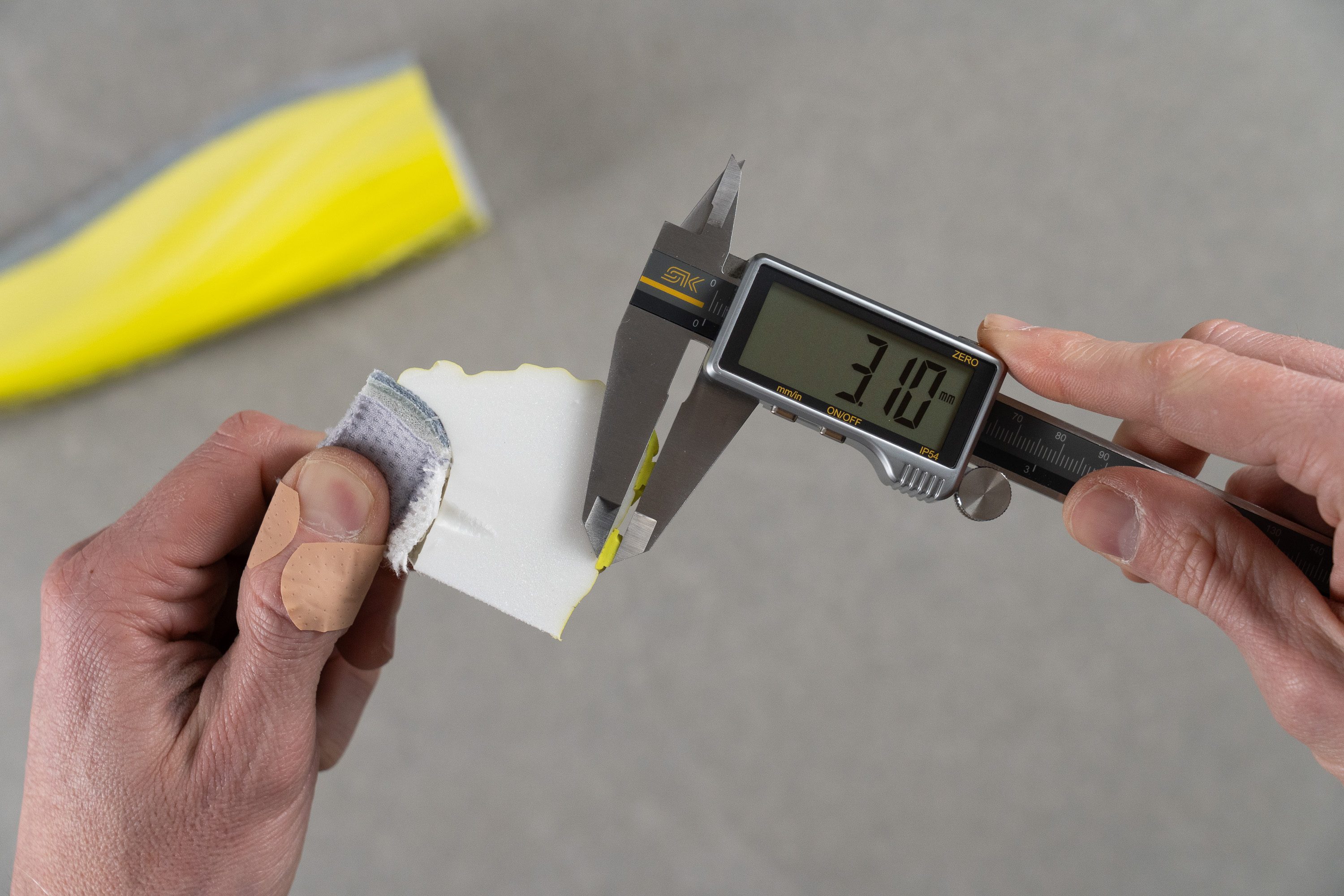
| MagMax Nitro 2 | 3.1 mm |
| Average | 3.1 mm |
Misc
Insole thickness
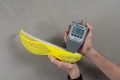
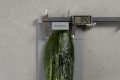
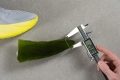
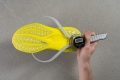
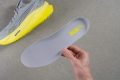
We measured the insole with our digital callipers and found it to be 3.9 mm thick.
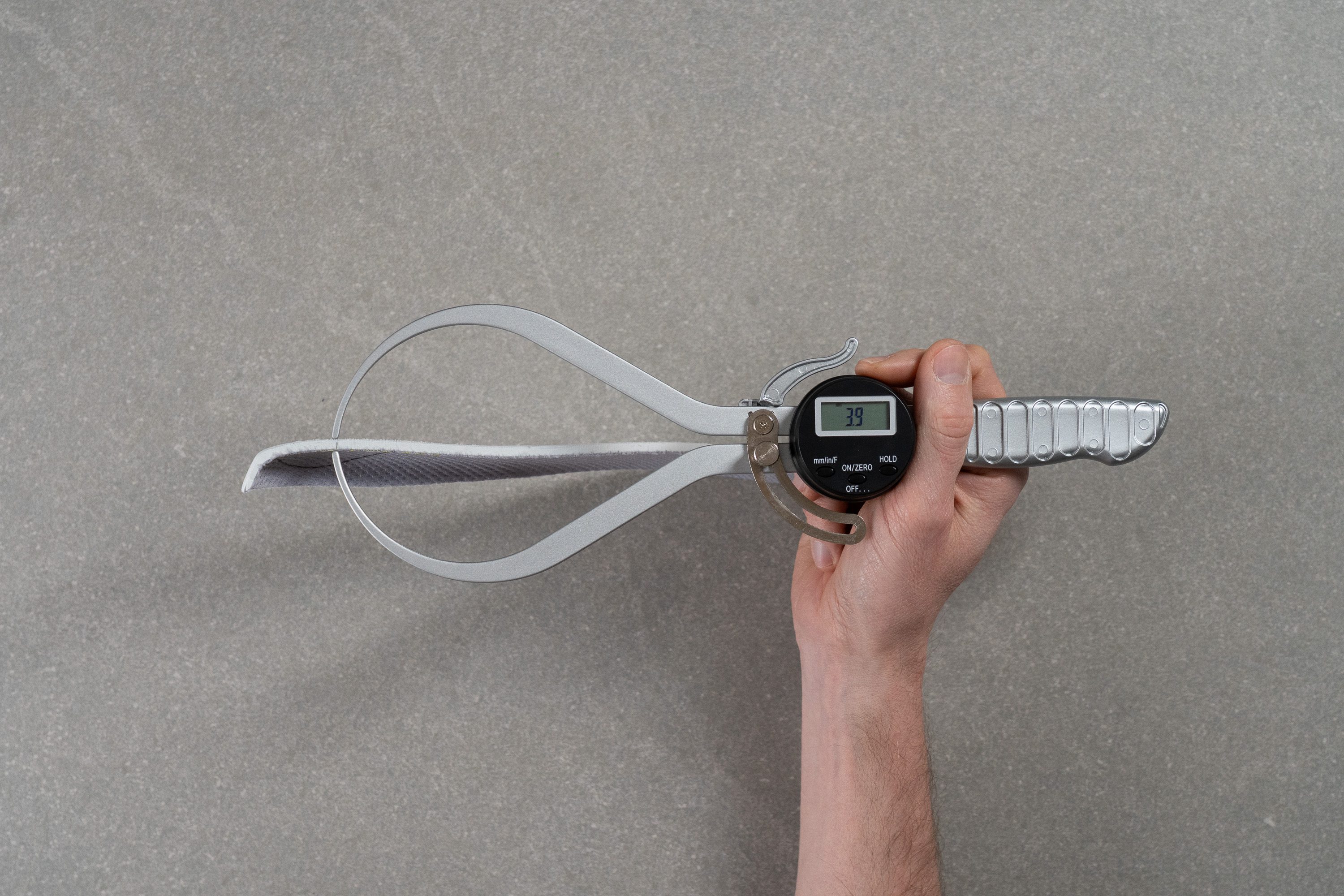
| MagMax Nitro 2 | 3.9 mm |
| Average | 4.4 mm |
Removable insole
The insole features a flared design that adds extra support, which you will lose if you decide to replace it with a different one.
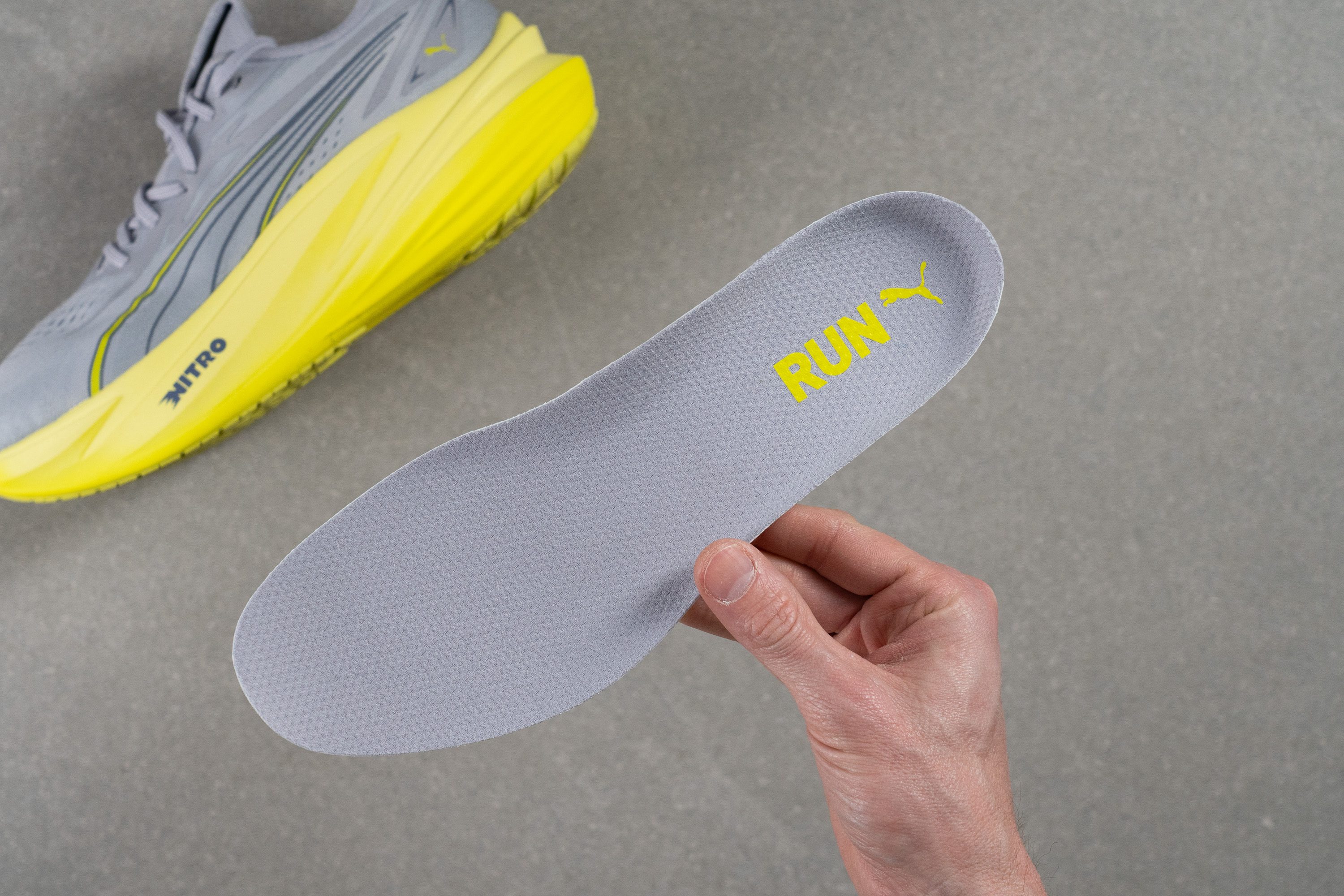
| MagMax Nitro 2 | Yes |
Reflective elements
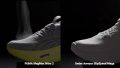
The MagMax Nitro 2 features bold reflective details on the heel, which we appreciate. It adds extra safety for cars approaching from behind.
| MagMax Nitro 2 | Yes |
Tongue padding
PUMA designers deserve credit because they managed to remove a significant amount of weight from the MagMax Nitro 2 without taking the easy route of reducing comfort. In fact, the stretchy, knit-based tongue feels excellent and genuinely premium, and we would not be surprised if almost every brand start adopting this kind of hybrid upper design for their high-end shoes.
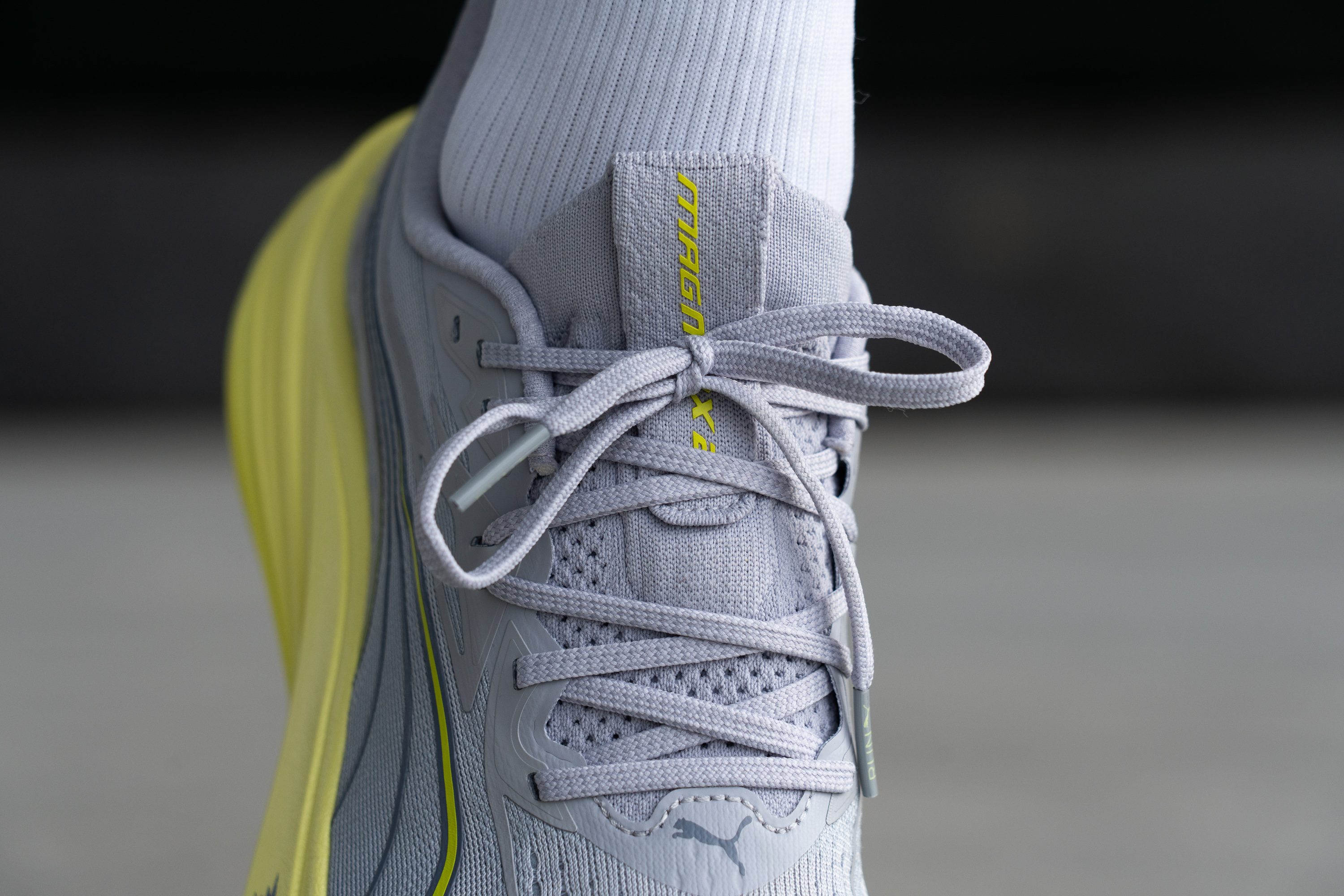
In terms of comfort, PUMA went even further by adding 9.1 mm of padding over the instep through two slabs of foam. Many knit tongues are extremely thin, but that is clearly not the case here.
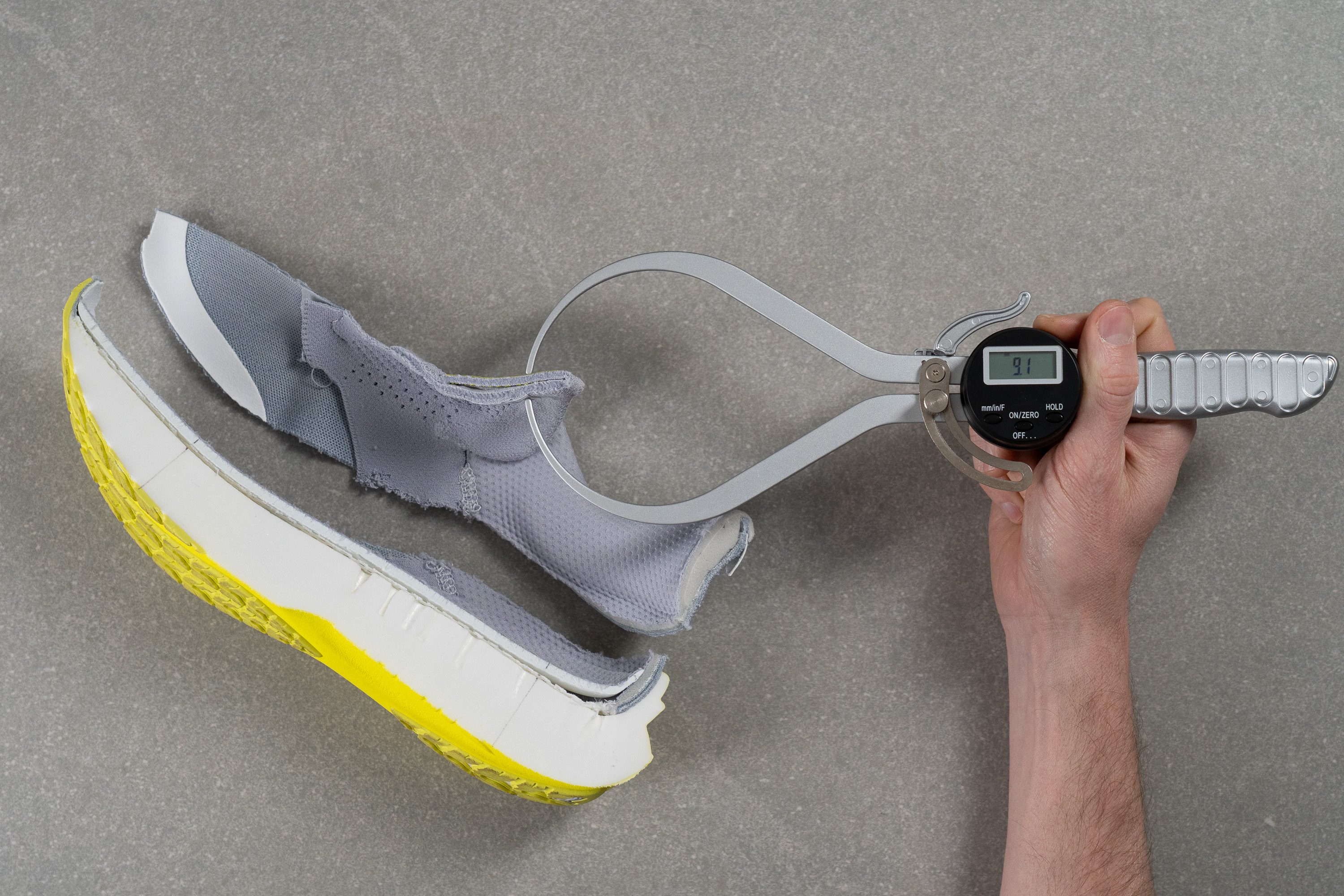
| MagMax Nitro 2 | 9.1 mm |
| Average | 5.8 mm |
Tongue: gusset type
The fit is spot on, helped in part by the excellent semi-gusseted tongue design. PUMA did a great job here.
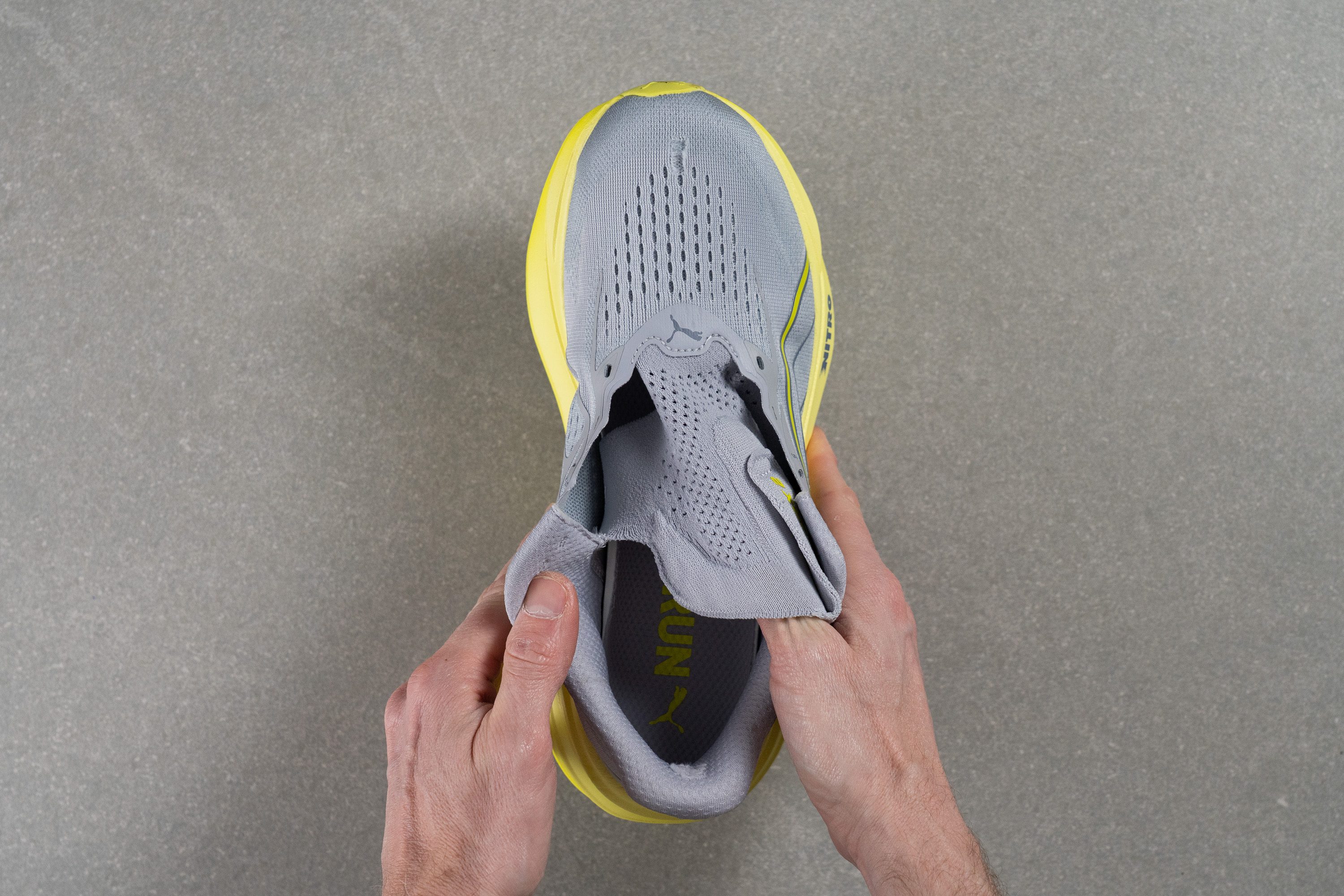
| MagMax Nitro 2 | Both sides (semi) |
Heel tab
The heel includes a small pull tab that, as you may have noticed, is the same small piece that previously reflected light.
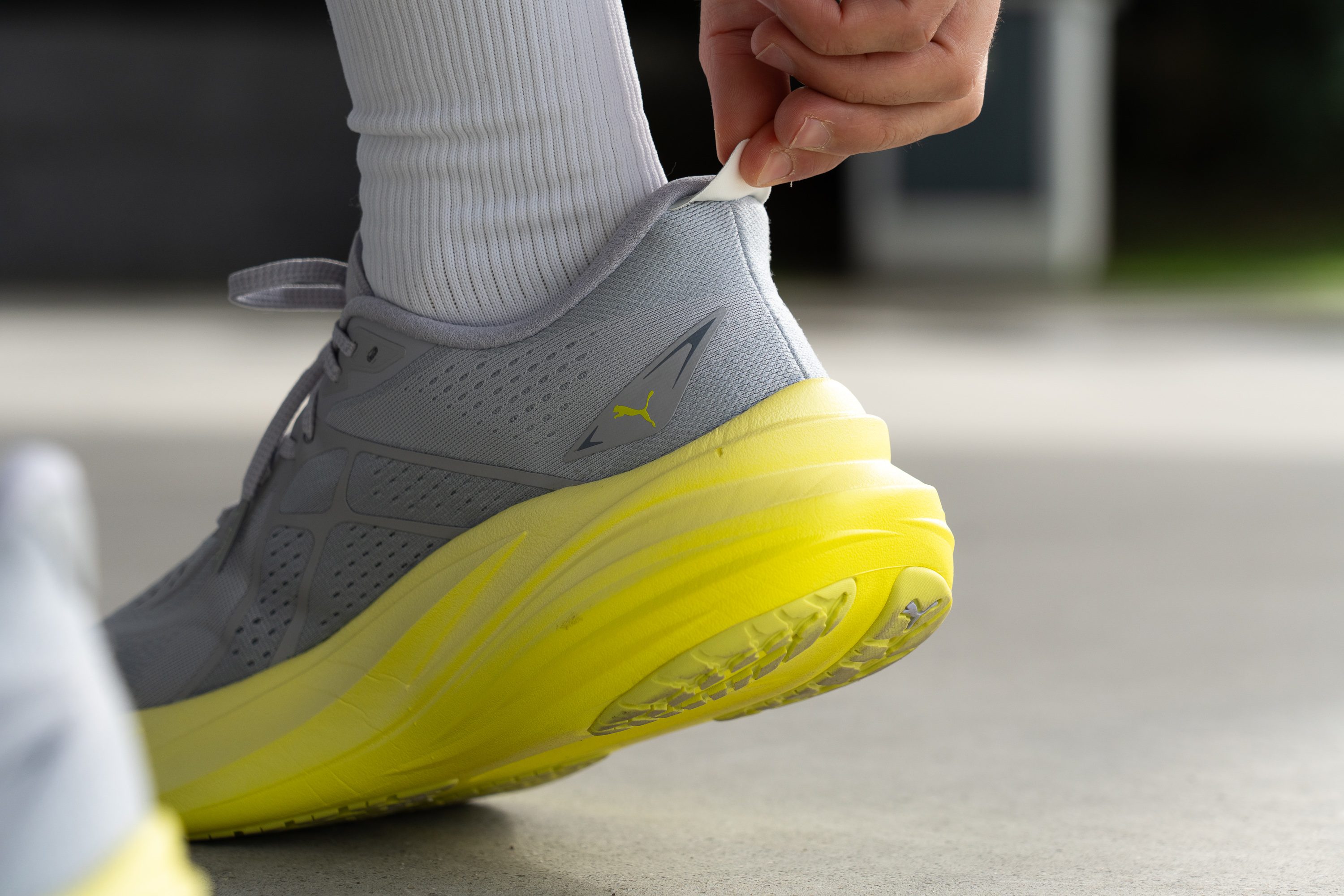
| MagMax Nitro 2 | Pull tab |
Price
The PUMA MagMax Nitro 2 keeps the same price as its predecessor, which in today’s market feels like a small win. However, from a performance standpoint, we think it will still be difficult for many runners to justify the cost. It mainly makes sense for those who do not prioritize energy return and instead value the other features that this shoe clearly delivers.
| MagMax Nitro 2 | $180 |