
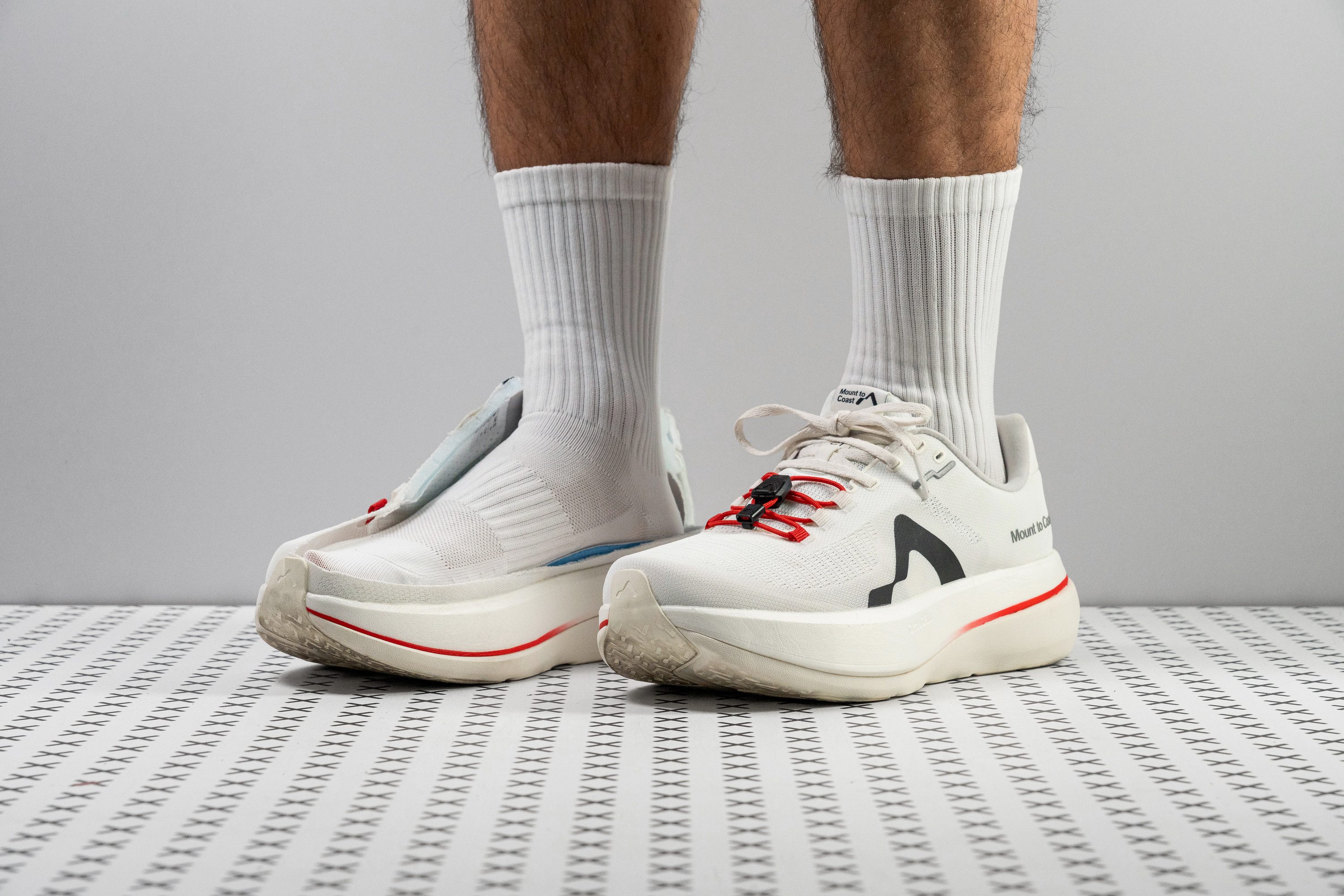


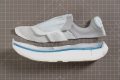

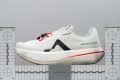


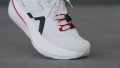












Our verdict
- Daily running 88
- Tempo 64
- Race 46
- Stability 84
Pros
- Real max-cushioned setup
- Plush CircleCELL foam feels comfy
- Clean, elegant aesthetics
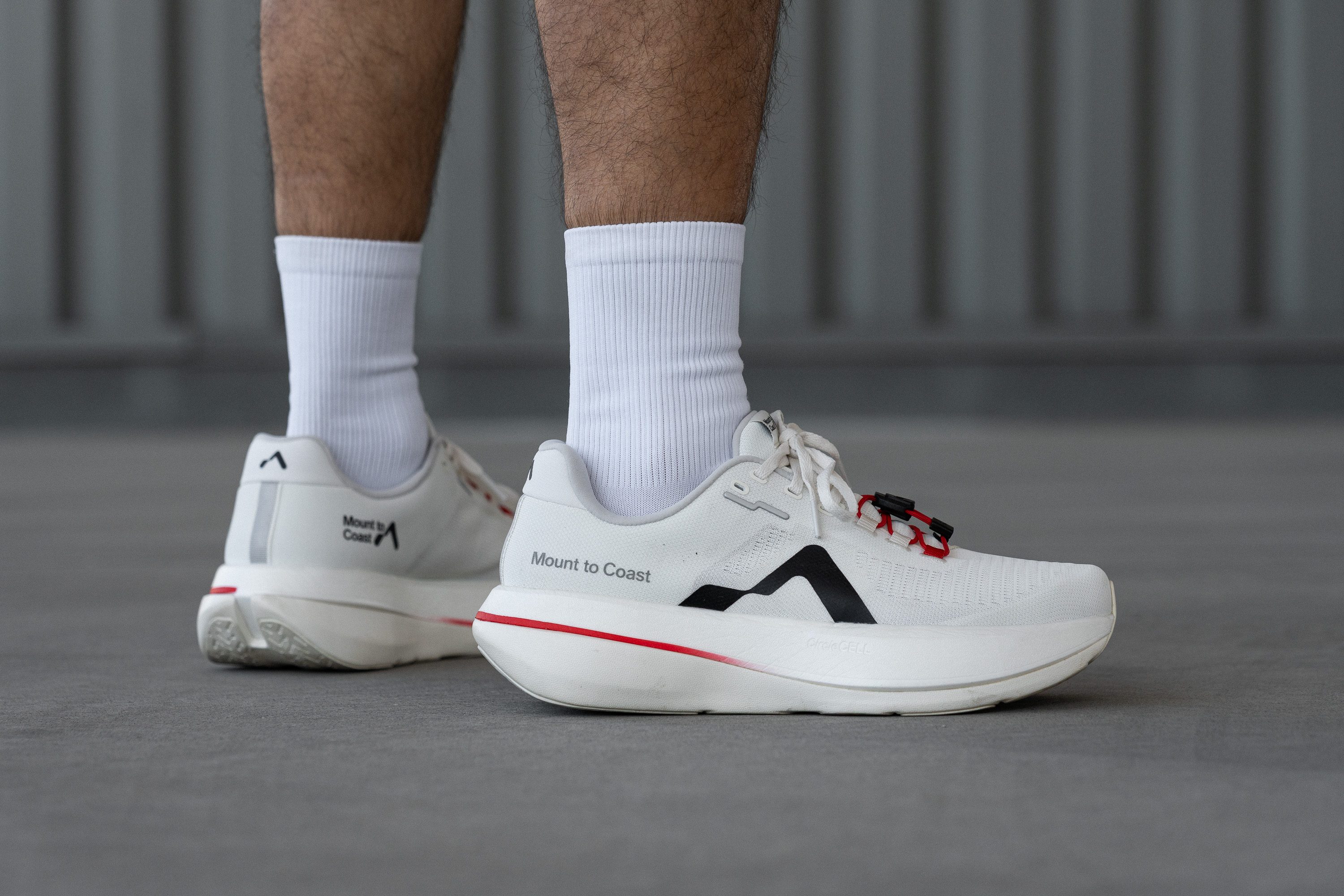
- Broad platform adds stability
- Breathable jacquard upper
- Amazing step-in feel
- Balanced drop suits most runners
- Solid traction
- TUNEDFIT lacing system allows custom pressure
Cons
- Premium price hurts overall value
- Not as fast as we hoped due to EVA layer
- Could be overly stiff for some
Awards
- Top 24% in running shoes for walking
- Top 30% in daily running shoes
- Top 20% most popular running shoes
Comparison
The most similar running shoes compared
+ + Add a shoe | |||||
|---|---|---|---|---|---|
| Our score | 84 Great | 91 Superb | 86 Great | 83 Great | |
| Price | £160 | £140 | £115 | £160 | |
| Pace | Daily running | TempoDaily running | Daily running | Daily running | |
| Shock absorption | High | High | High | High | |
| Energy return | Moderate | High | Moderate | Low | |
| Traction | High | High | High | High | |
| Arch support | Neutral | Neutral | Neutral | Neutral | |
| Weight lab Weight brand | 9.6 oz / 272g 9.2 oz / 260g | 8.5 oz / 241g 8.5 oz / 240g | 9.3 oz / 264g 9.2 oz / 260g | 9.5 oz / 269g 9.7 oz / 275g | |
| Lightweight | ✗ | ✓ | ✗ | ✗ | |
| Drop lab Drop brand | 7.5 mm 6.0 mm | 8.0 mm 8.0 mm | 7.6 mm 8.0 mm | 10.5 mm 8.0 mm | |
| Strike pattern | Mid/forefoot | HeelMid/forefoot | Mid/forefoot | Heel | |
| Size | True to size | True to size | True to size | True to size | |
| Midsole softness | Soft | Balanced | Balanced | Balanced | |
| Difference in midsole softness in cold | Small | Small | Normal | Small | |
| Toebox durability | Decent | Decent | Good | Decent | |
| Heel padding durability | Good | Good | Good | Decent | |
| Outsole durability | Good | Good | Good | Good | |
| Breathability | Moderate | Moderate | Moderate | Moderate | |
| Width / fit | Wide | Medium | Medium | Medium | |
| Toebox width | Medium | Medium | Medium | Narrow | |
| Stiffness | Stiff | Moderate | Moderate | Stiff | |
| Torsional rigidity | Moderate | Moderate | Moderate | Moderate | |
| Heel counter stiffness | Stiff | Moderate | Stiff | Moderate | |
| Rocker | ✓ | ✓ | ✗ | ✓ | |
| Heel lab Heel brand | 40.7 mm 42.0 mm | 40.7 mm 40.0 mm | 39.4 mm 39.0 mm | 45.5 mm 46.0 mm | |
| Forefoot lab Forefoot brand | 33.2 mm 36.0 mm | 32.7 mm 32.0 mm | 31.8 mm 31.0 mm | 35.0 mm 38.0 mm | |
| Widths available | NormalWide | NarrowNormal | Normal | Normal | |
| Orthotic friendly | ✓ | ✓ | ✓ | ✓ | |
| Season | All seasons | All seasons | All seasons | All seasons | |
| Removable insole | ✓ | ✓ | ✓ | ✓ | |
| Ranking | #131 Top 33% | #24 Top 6% | #93 Top 24% | #163 Top 41% | |
| Popularity | #78 Top 20% | #73 Top 19% | #208 Bottom 48% | #150 Top 38% |


Who should buy
After testing the MtC C1 in the lab, we think it's a good pick for:
- Runners who want to skip mainstream brands or support a promising project with a fresh approach.
- Anyone seeking a max-cushioned running shoe for daily miles and all-day comfort.
- Runners with a higher budget who want deep cushioning paired with a beautiful and clean design.
- Those who struggle to fine-tune lace pressure, as the TUNEDFIT system may work wonders here.
Who should NOT buy
The premium price of the Mount to Coast C1 could be hard to justify for many runners especially if it's just for daily or easy miles. From a value-first standpoint, the Saucony Endorphin Azura or the ASICS Novablast 5 are superior products.
We also think that the C1 lands a bit short of being a true super trainer. It's a bit heavy and lacks some energy return to truly compete in that league for a top spot. If that's what you are looking for, we suggest 2 options: the adidas Adizero EVO SL as a budget-friendly option or the ASICS Megablast if money is not an issue.
Cushioning
Shock absorption
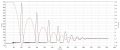
We found that the shock absorption level of the Mount to Coast C1 makes it suitable for runs of any distance. Scoring 136 SA in the heel and a huge 126 SA in the forefoot, this shoe feels highly versatile for everything from easy jogs to the Sunday long run.
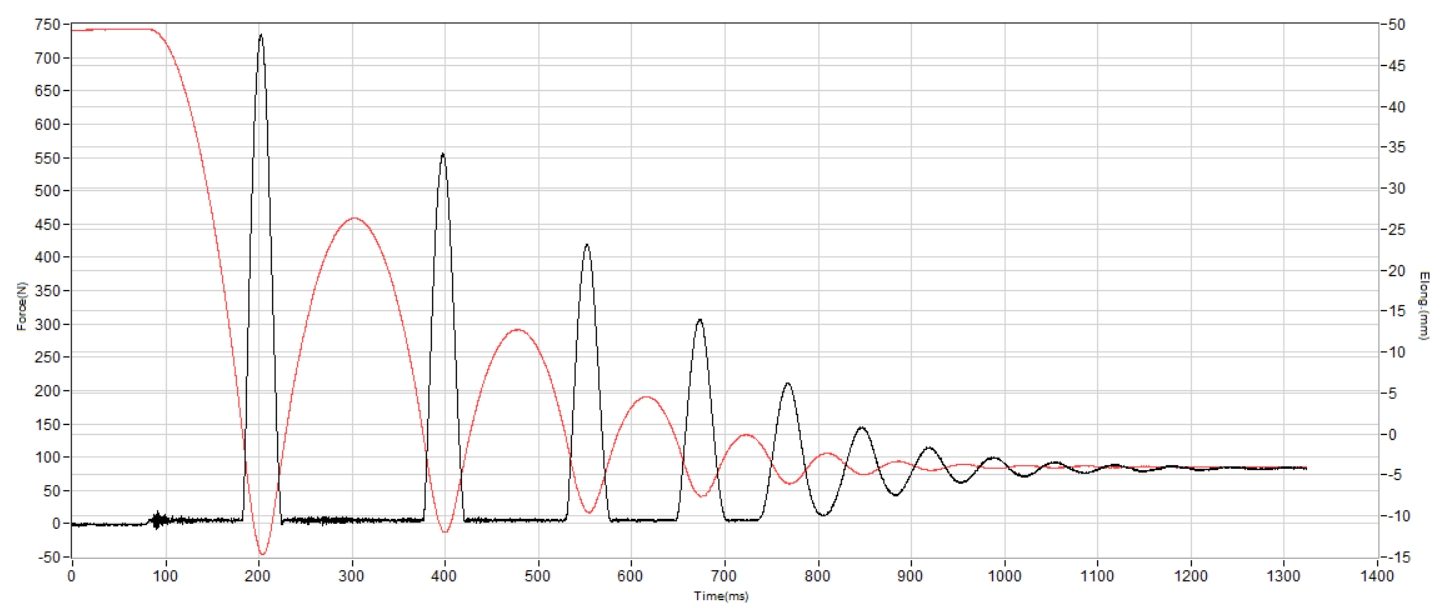
| C1 | 136 SA |
| Average | 131 SA |
Energy return
When we evaluated the trail-focused Mount to Coast H1 in the lab, we found the CircleCELL foam to be more responsive than standard EVA while still falling short of premium foams. The same story applies to the C1.
After testing the shoe, we recorded 59.7% energy return in the heel and 62.7% in the forefoot. These are solid numbers for daily runs, but we think getting closer to 70% should be the target for the next version, and some runners may find it lacking for faster paces.
| C1 | 62.7% |
| Average | 61.5% |
Heel stack
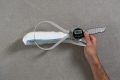
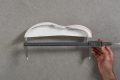
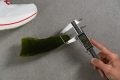
There is simply no doubt that the Mount to Coast C1 is a maximalist running shoe. That becomes clear as soon as you run in it, and our callipers confirmed it by measuring a huge stack height of 40.7 mm.
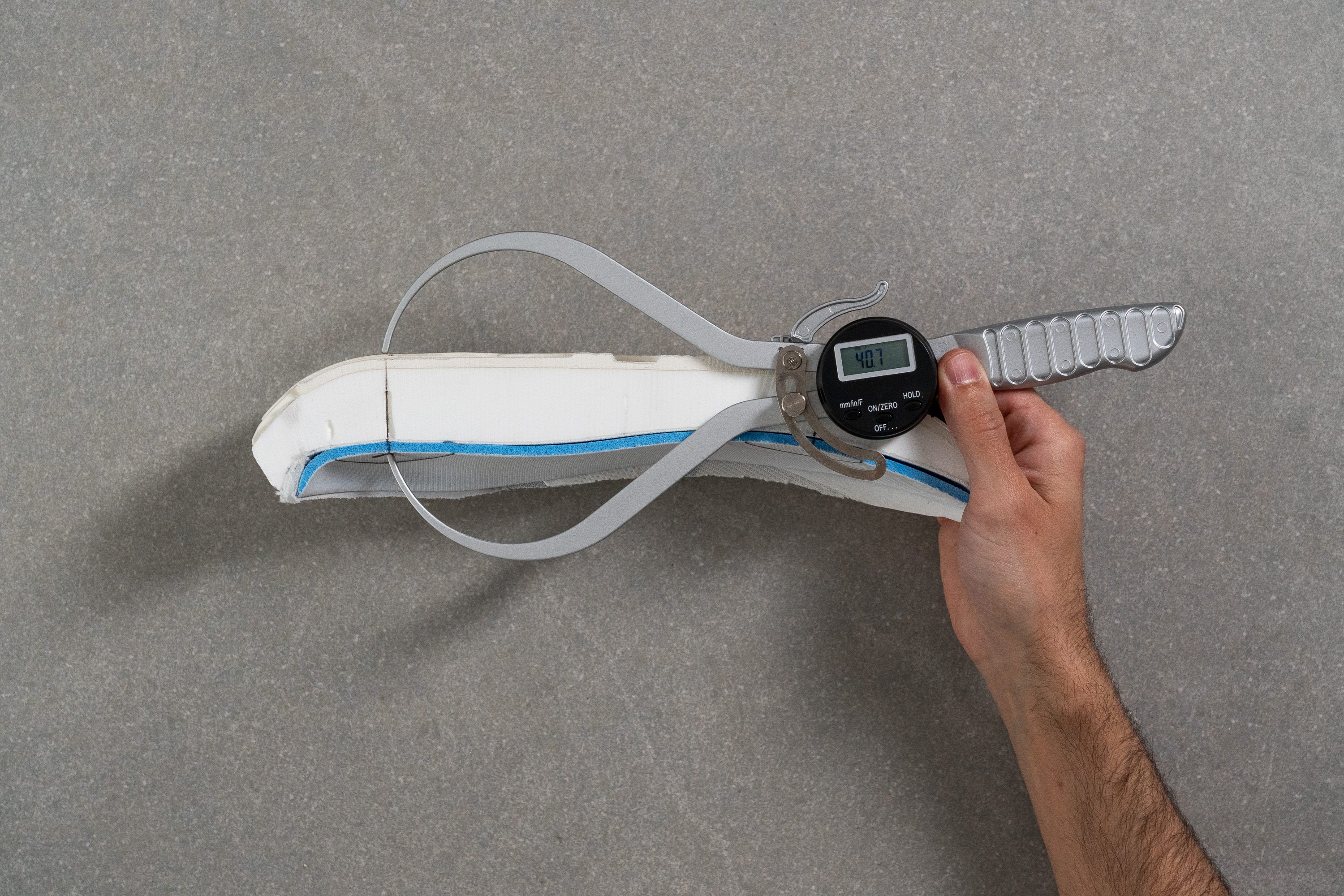
| C1 | 40.7 mm |
| Average | 35.6 mm |
Forefoot stack
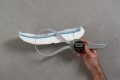
If it feels thick in the heel, that sensation is even more noticeable in the forefoot. With 33.2 mm of cushioning underfoot, good luck trying to find much ground feel on this beast.
Based on this measurement, it’s clear that this is not a shoe for runners who dislike a filtered or ultra-cushioned ride. If that sounds like you, we suggest something like the Topo Spectre 2 instead.
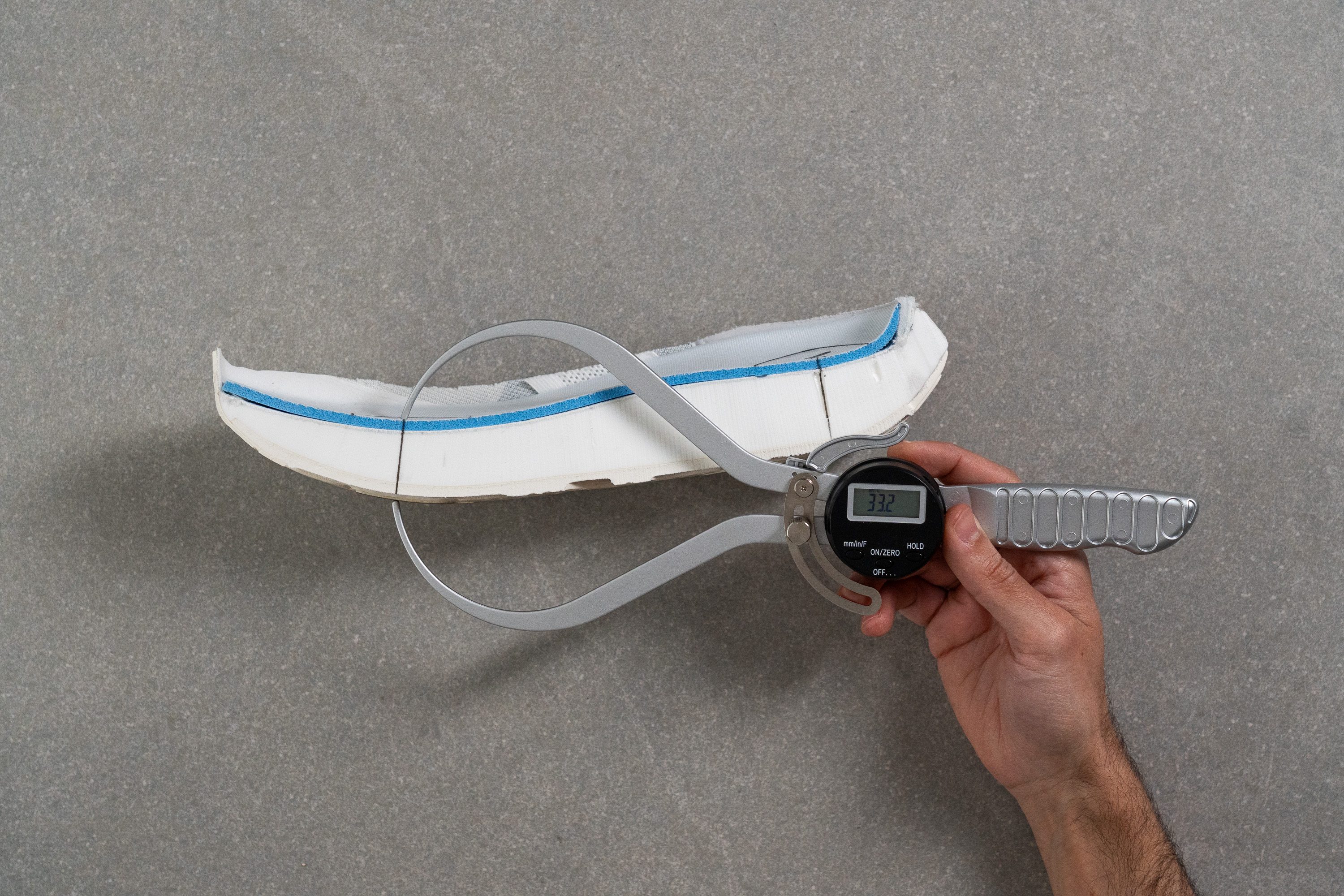
| C1 | 33.2 mm |
| Average | 27.2 mm |
Drop
We believe that the C1 accommodates most footstrikes with a balanced 7.5 mm drop. Extreme heel or forefoot strikers may prefer a different geometry, but most runners should feel comfortable in this shoe.
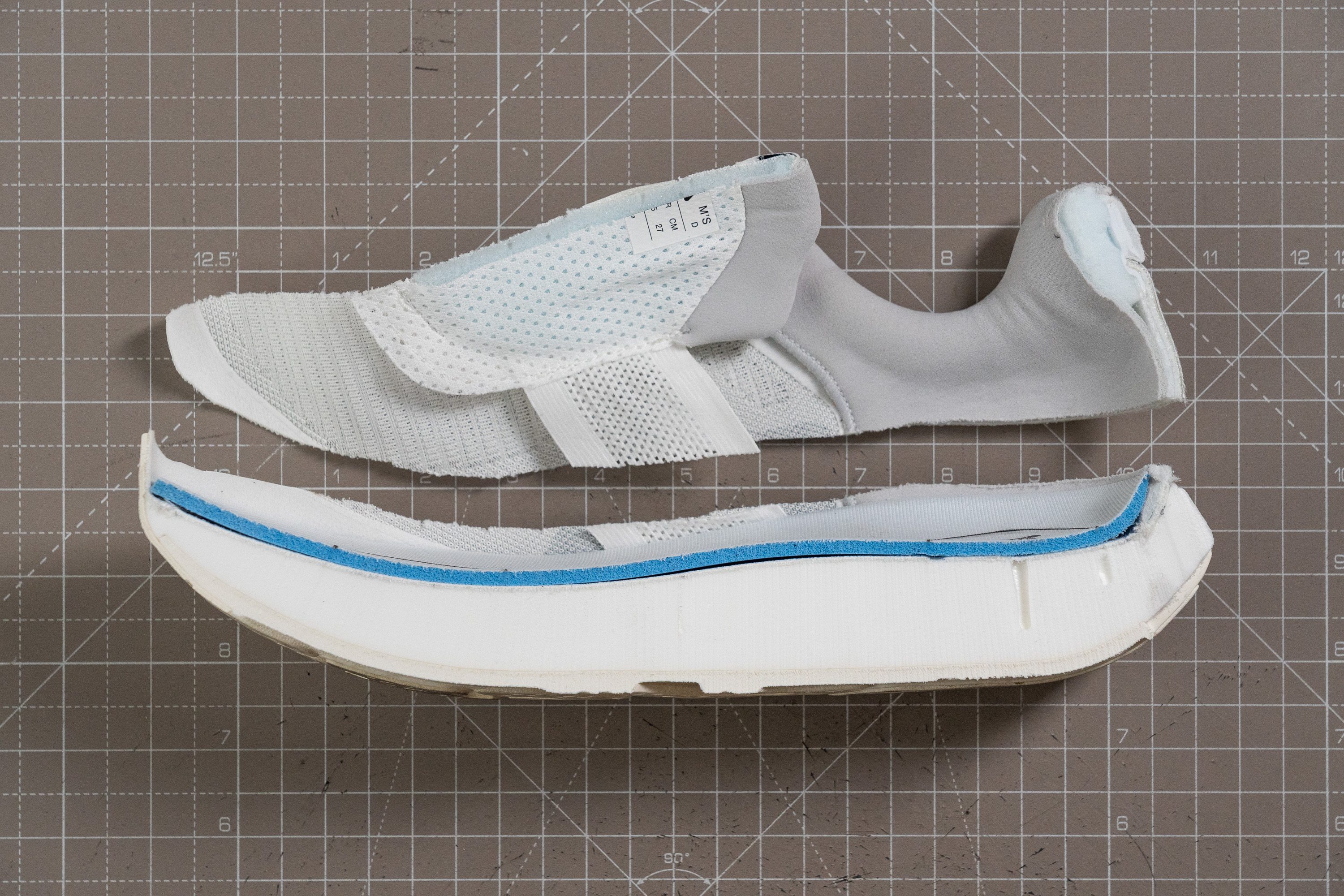
| C1 | 7.5 mm |
| Average | 8.4 mm |
Midsole softness
The CircleCELL foam may lack a bit of punch, but it feels very comfortable and performs especially well on long runs. It leans a bit to the softer side, so you need to prefer that sensation over a firm ride, but if you do, it can be a great match.
We used our Asker C durometer to verify the foam softness, and it returned 31.6 AC. That is clearly softer than average and confirmed what we felt during our runs. But there is another layer beneath...
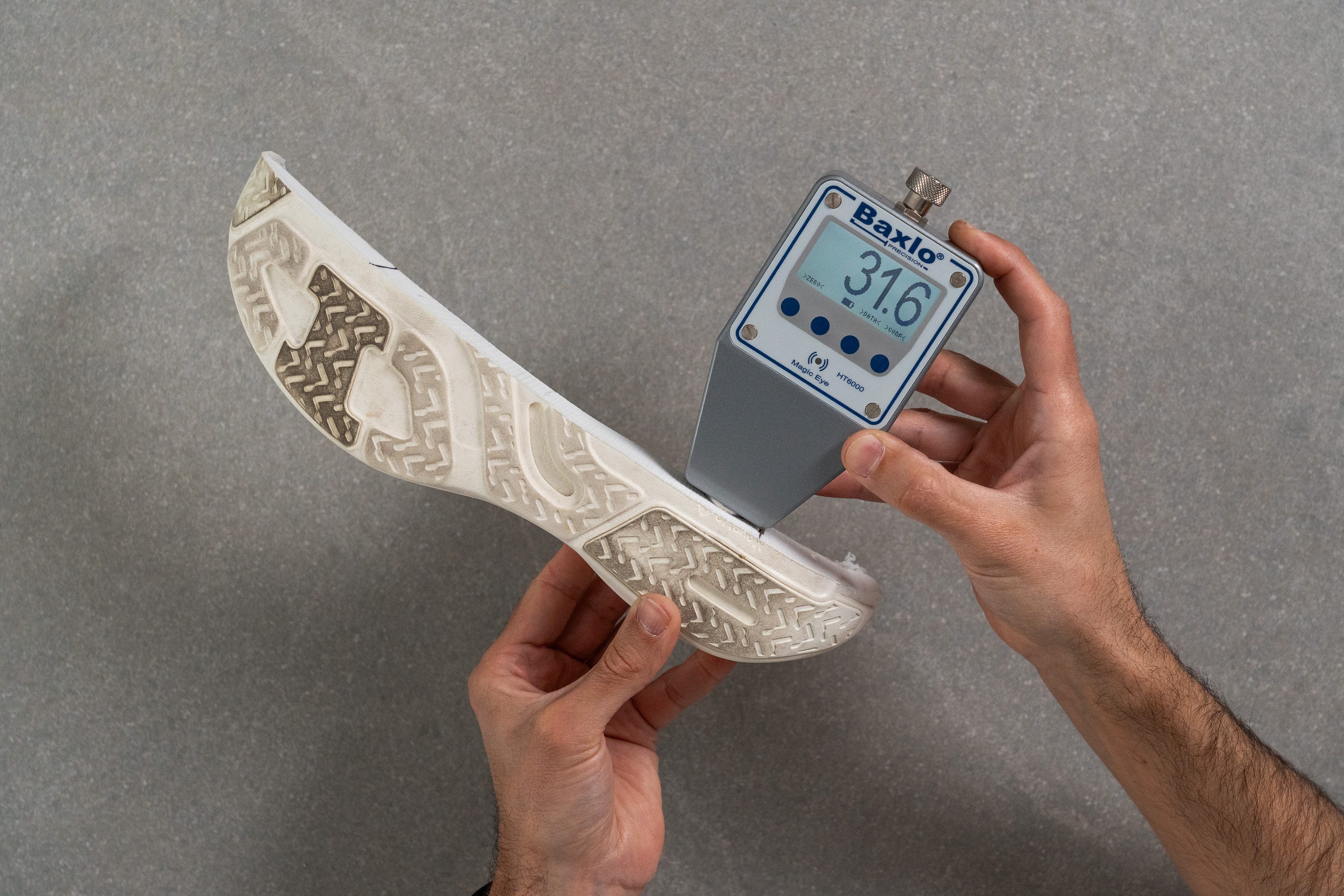
| C1 | 31.6 AC |
| Average | 35.4 AC |
Rocker
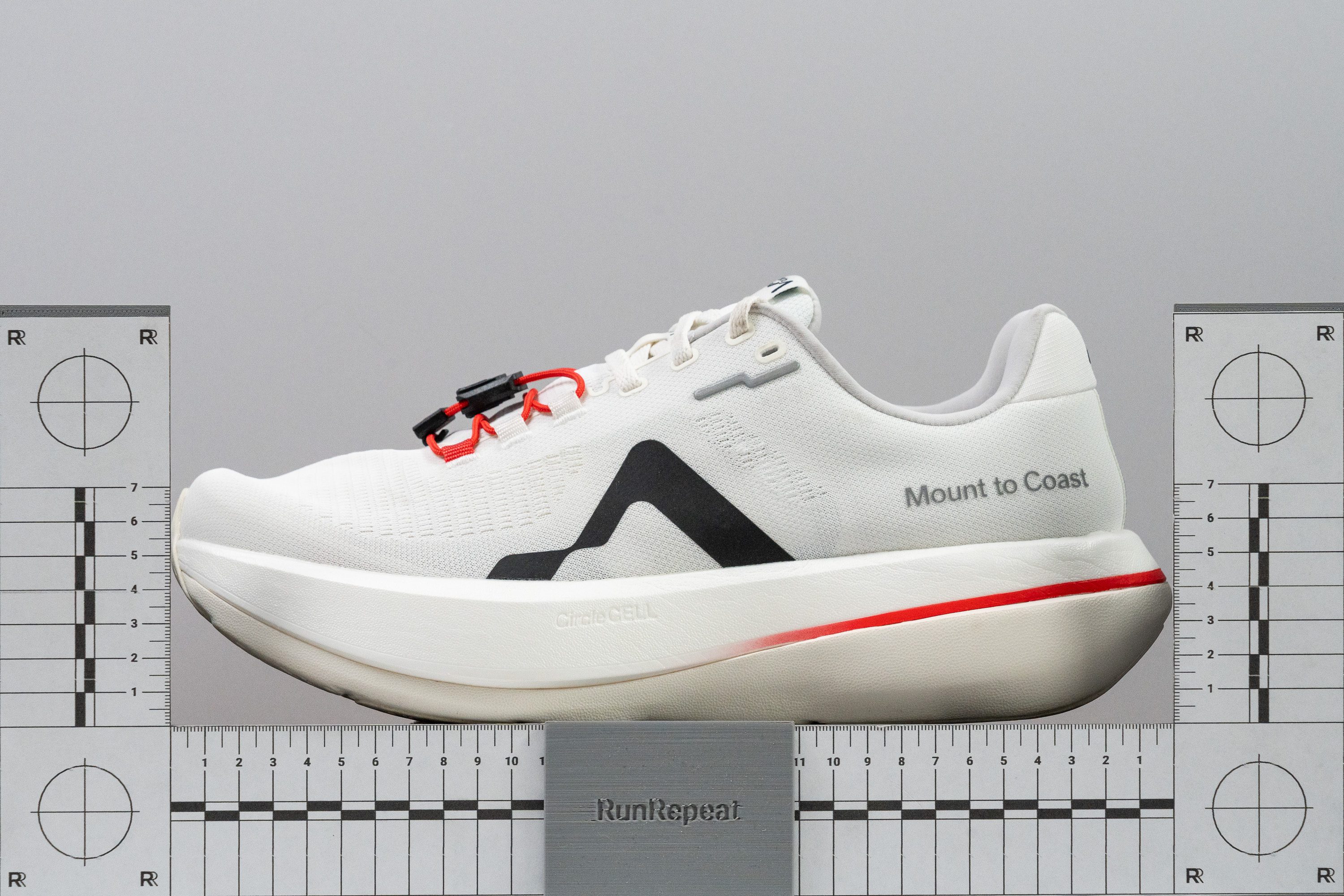
One of the clear design features of the C1 is its late rocker. It does not feel aggressive, but it also lacks the rolling sensation of rockers that start earlier.
We also found that the heel area extends a bit more than two centimetres beyond the calcaneus and features a very noticeable curvature, which makes sense given the moderate drop we measured earlier.
Size and fit
Size
Mount to Coast C1 fits true to size (24 votes).
Internal length
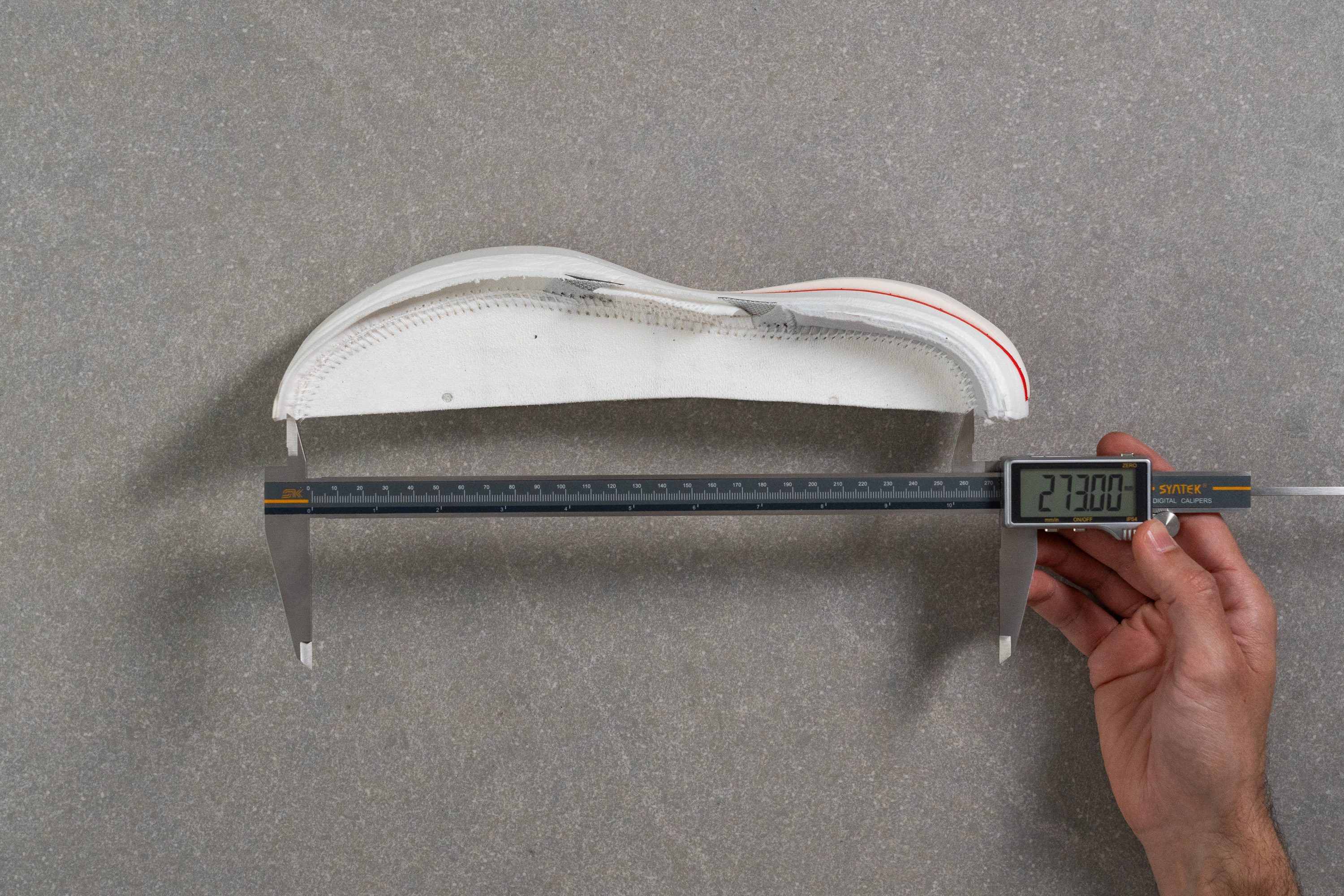
| C1 | 273.0 mm |
| Average | 269.4 mm |
Width / Fit
Mount to Coast states that the C1 is built with a wider-than-usual fit in mind, so we created our usual gel mould of the interior to take precise measurements and verify that claim.
Our first reading came in above average at 98.2 mm, confirming that the C1 is more accommodating than most running shoes on the market.
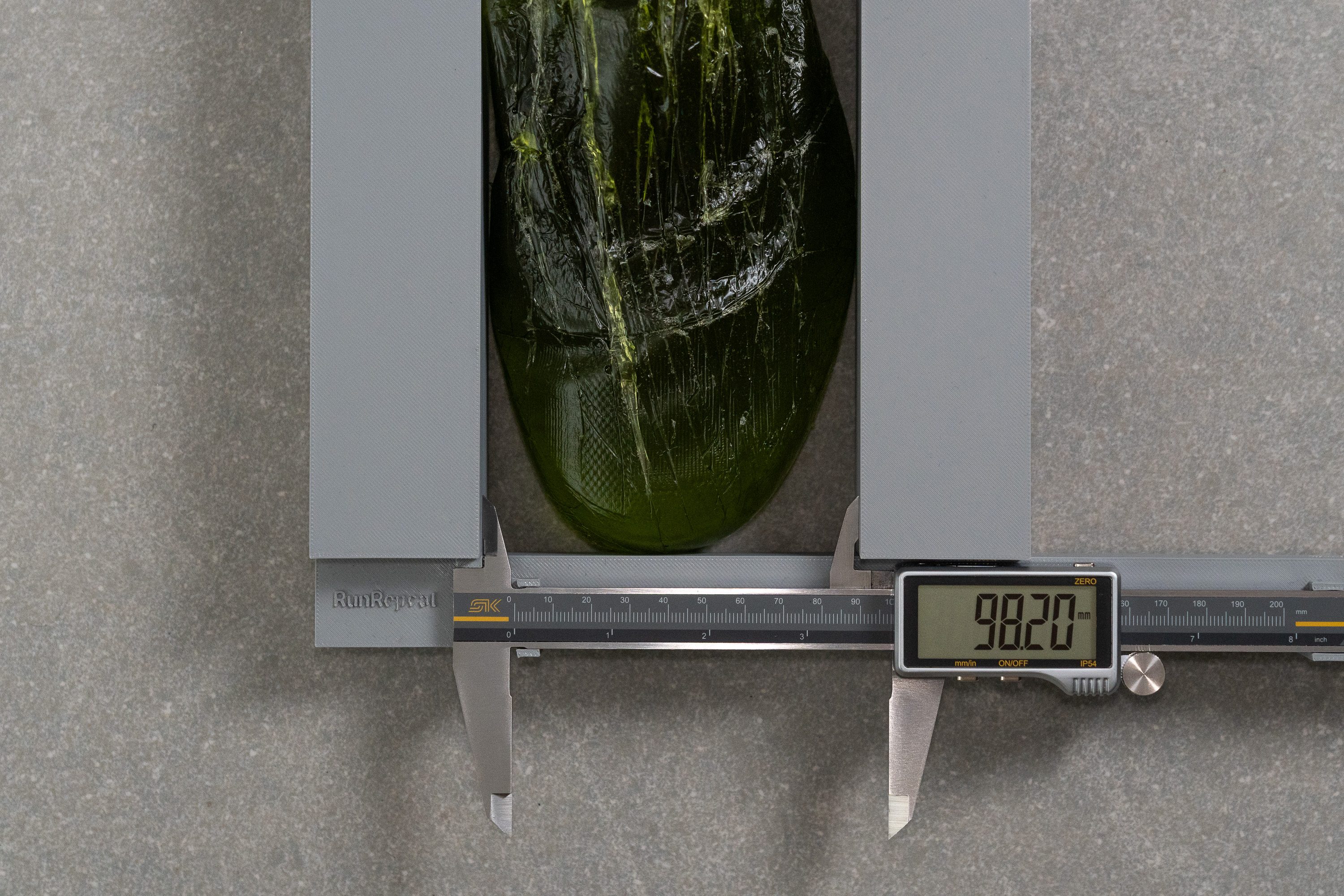
| C1 | 98.2 mm |
| Average | 95.2 mm |
Toebox width
However, we also found that the toebox follows a regular taper, measuring 73.2 mm here, so don’t expect an Altra or Topo-style fit. We’d say it sits somewhere between those brands and something like Nike.
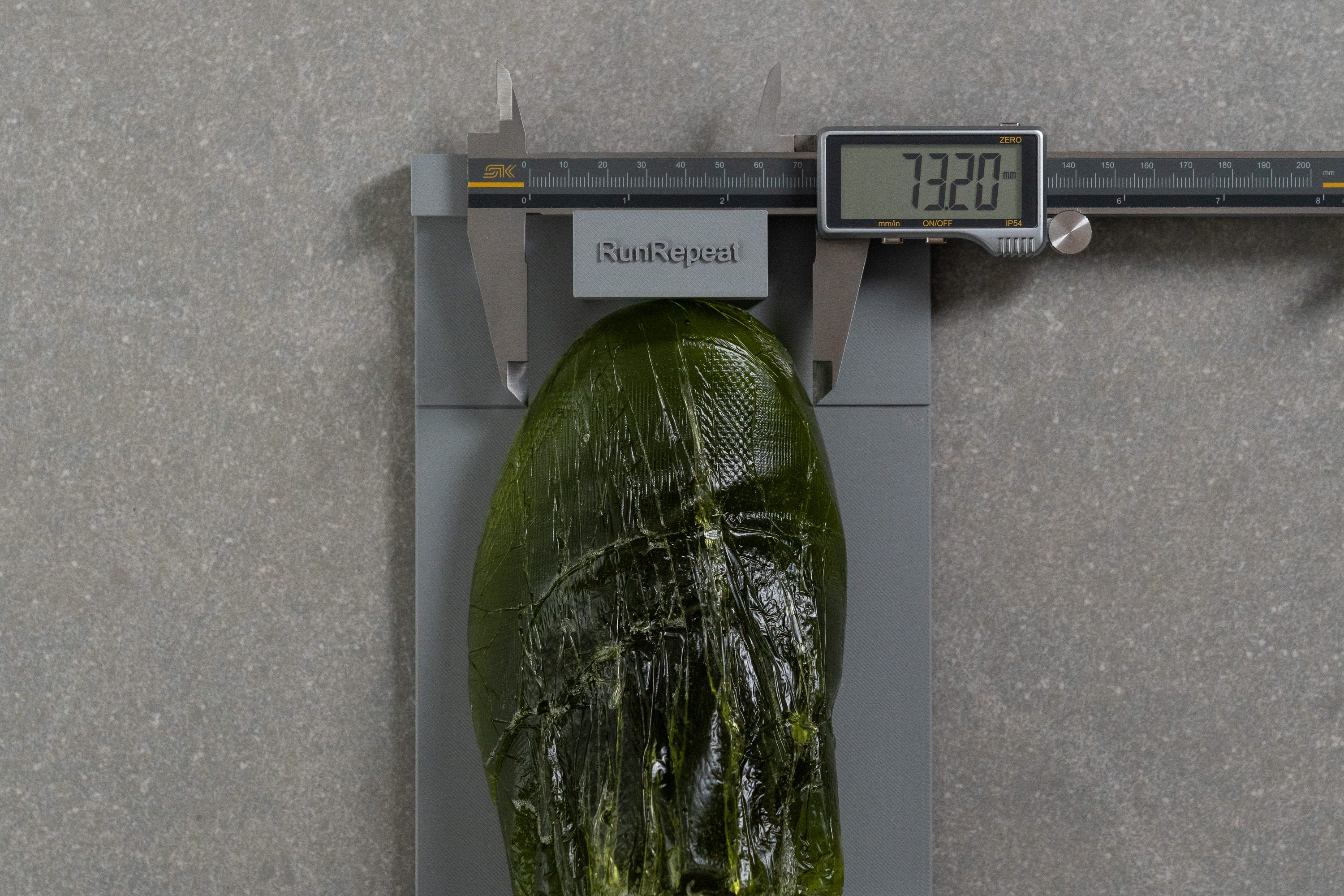
| C1 | 73.2 mm |
| Average | 73.2 mm |
Toebox height
Those considering the C1 for long runs will be pleased to know that the toebox height also measures above average at 28.2 mm.
That helps ensure a cramp-free experience for your toes.
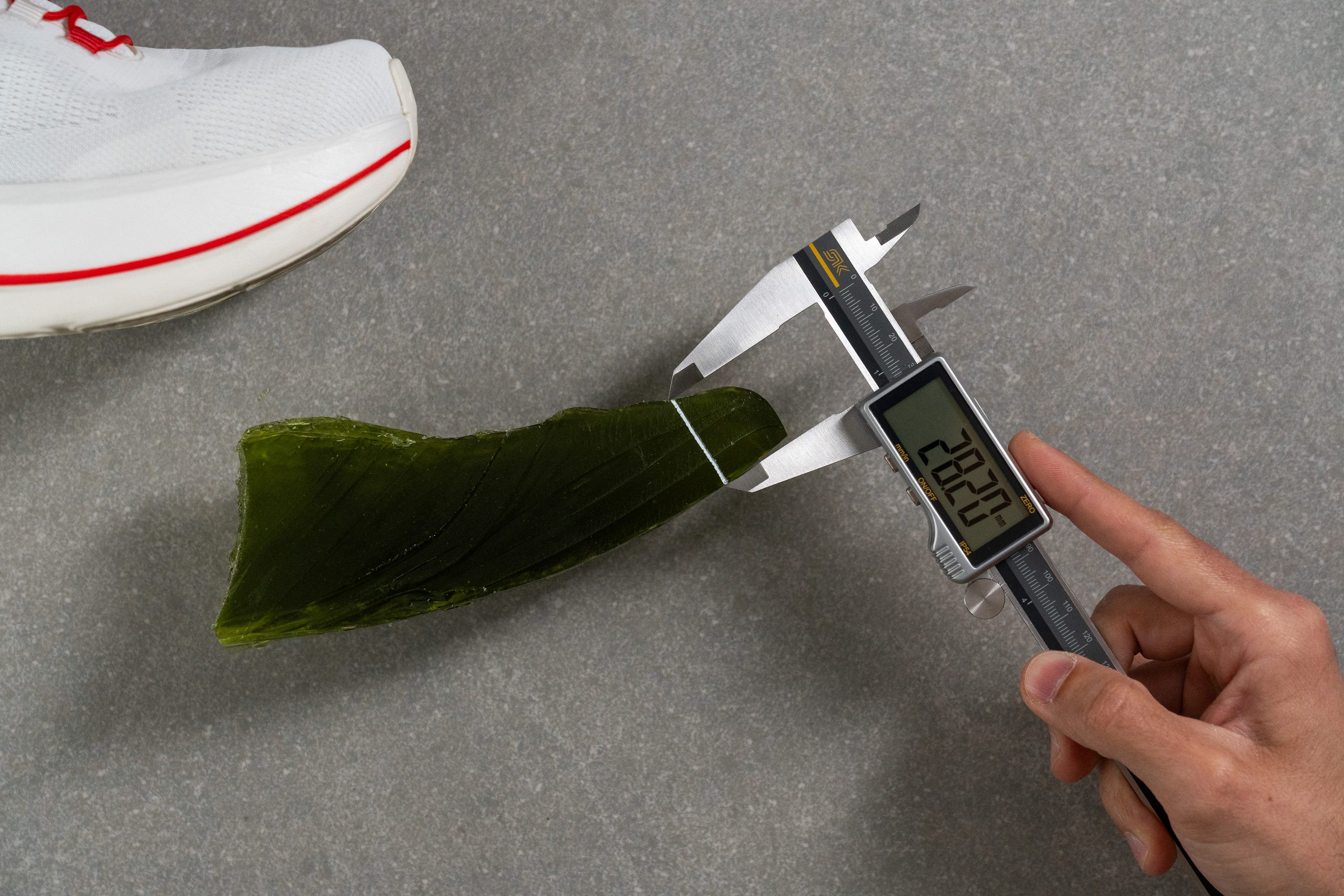
| C1 | 28.2 mm |
| Average | 27.0 mm |
Traction / Grip
Traction test
The outsole performed well in our SATRA TM144 traction test. Specifically, we recorded a score of 0.59, which ensures plenty of grip on dry roads and enough traction for rainy days, so no weather excuses here.
| C1 | 0.59 |
| Average | 0.53 |
Outsole design
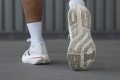
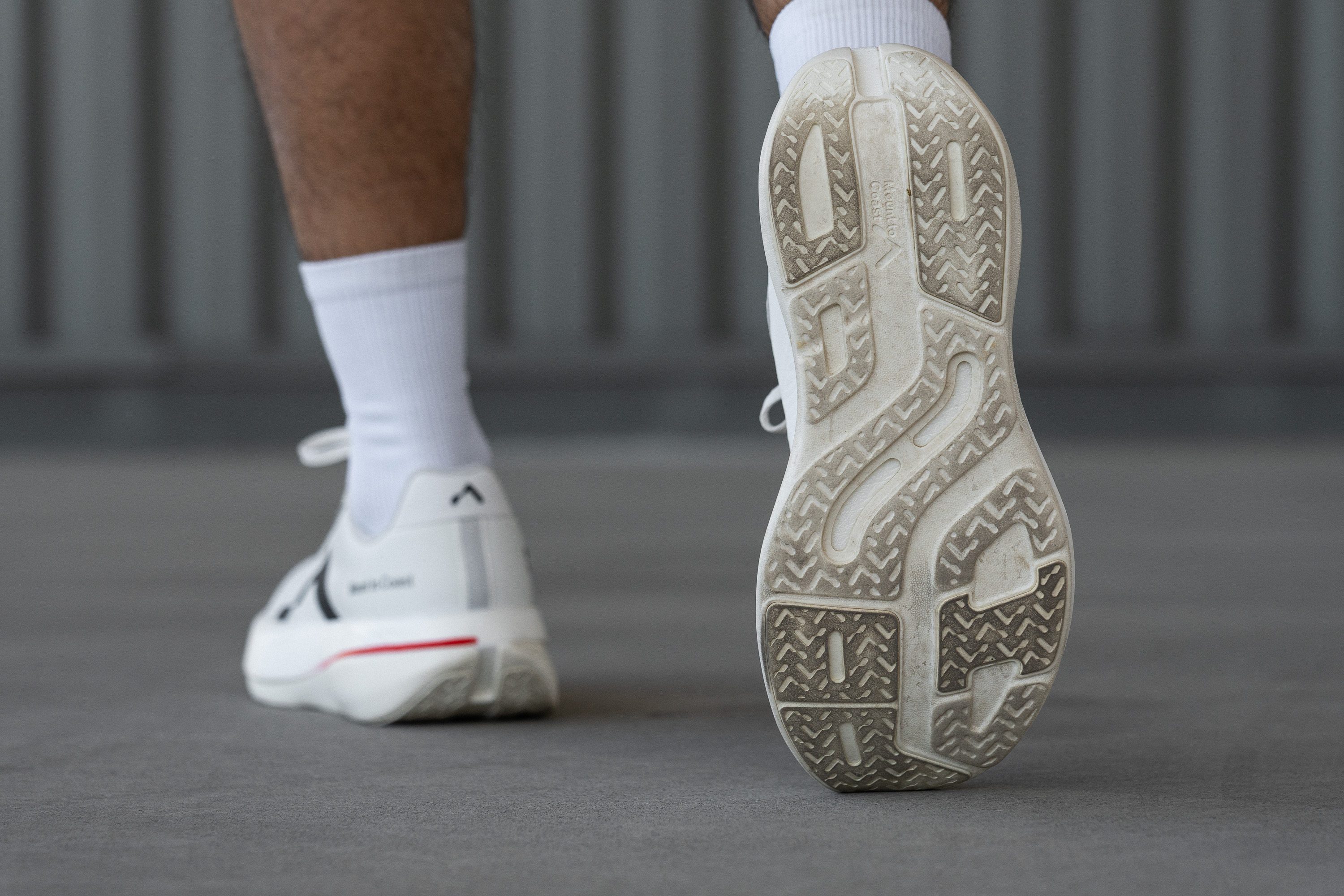
The outsole offers solid rubber coverage paired with multiple cutouts to reduce weight and improve torsional flexibility.
We like this design, as the highest-wear areas are fully protected, while the textured finish of the rubber patches and the large channels between them help improve traction on wet surfaces by channelling water away.
Flexibility / Stiffness
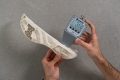
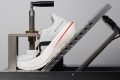
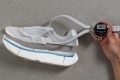
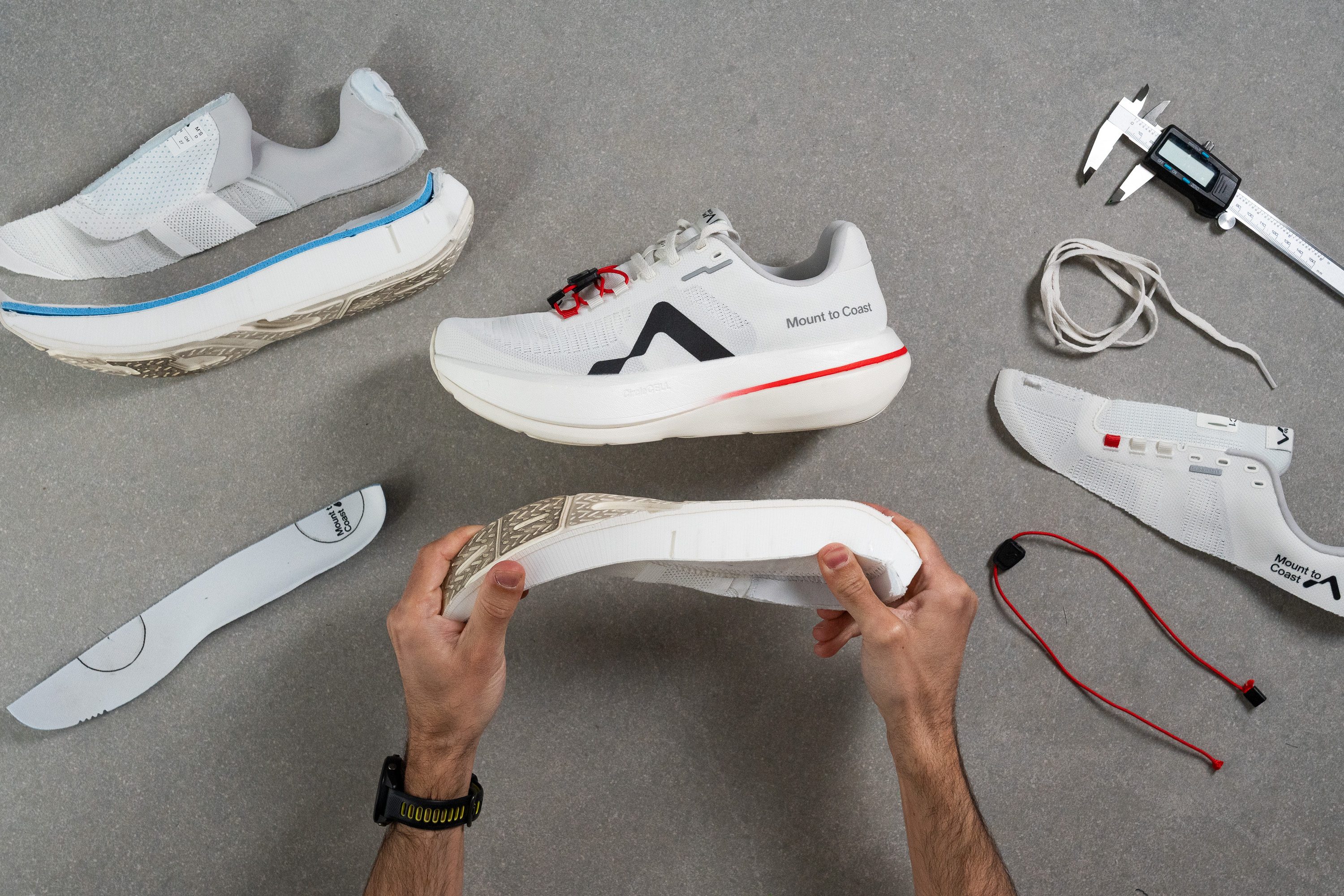
Even without a plate, the Mount to Coast C1 reaches a very high stiffness score due to its tall stack height. We had to apply 21.8N on our machine to bend it to 30 degrees, so you should be ready for a stiff ride.
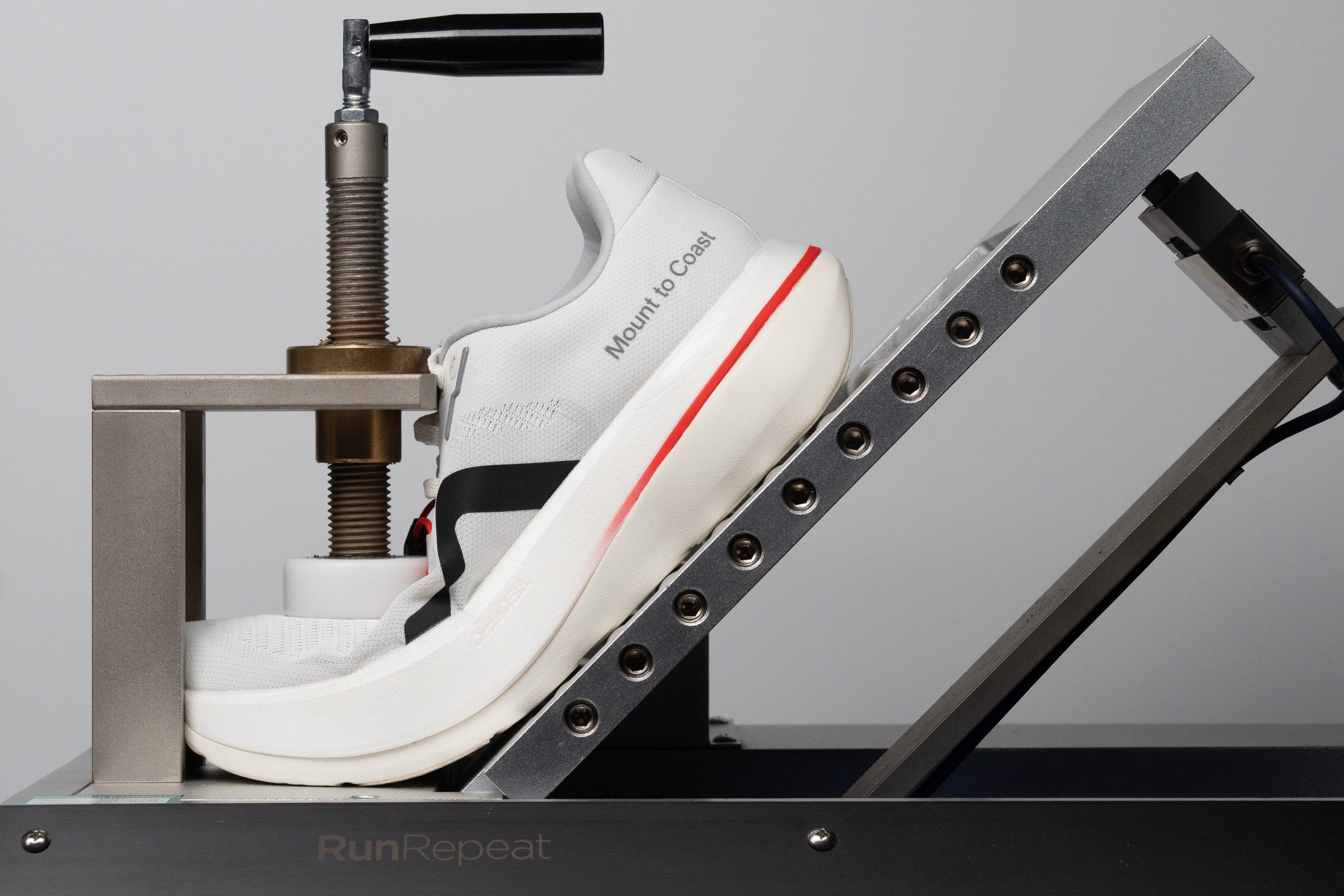
| C1 | 21.8N |
| Average | 15.5N |
Weight
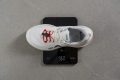
The Mount to Coast C1 has a reasonable weight for its size at 9.6 oz or 272g. However, given how quickly running shoe tech is advancing and the current options on the market, it may feel a bit heavy for tempo paces.
To put that into context, we think this shoe feels much closer to a Nike Vomero Plus than a Nike Zoom Fly 6.
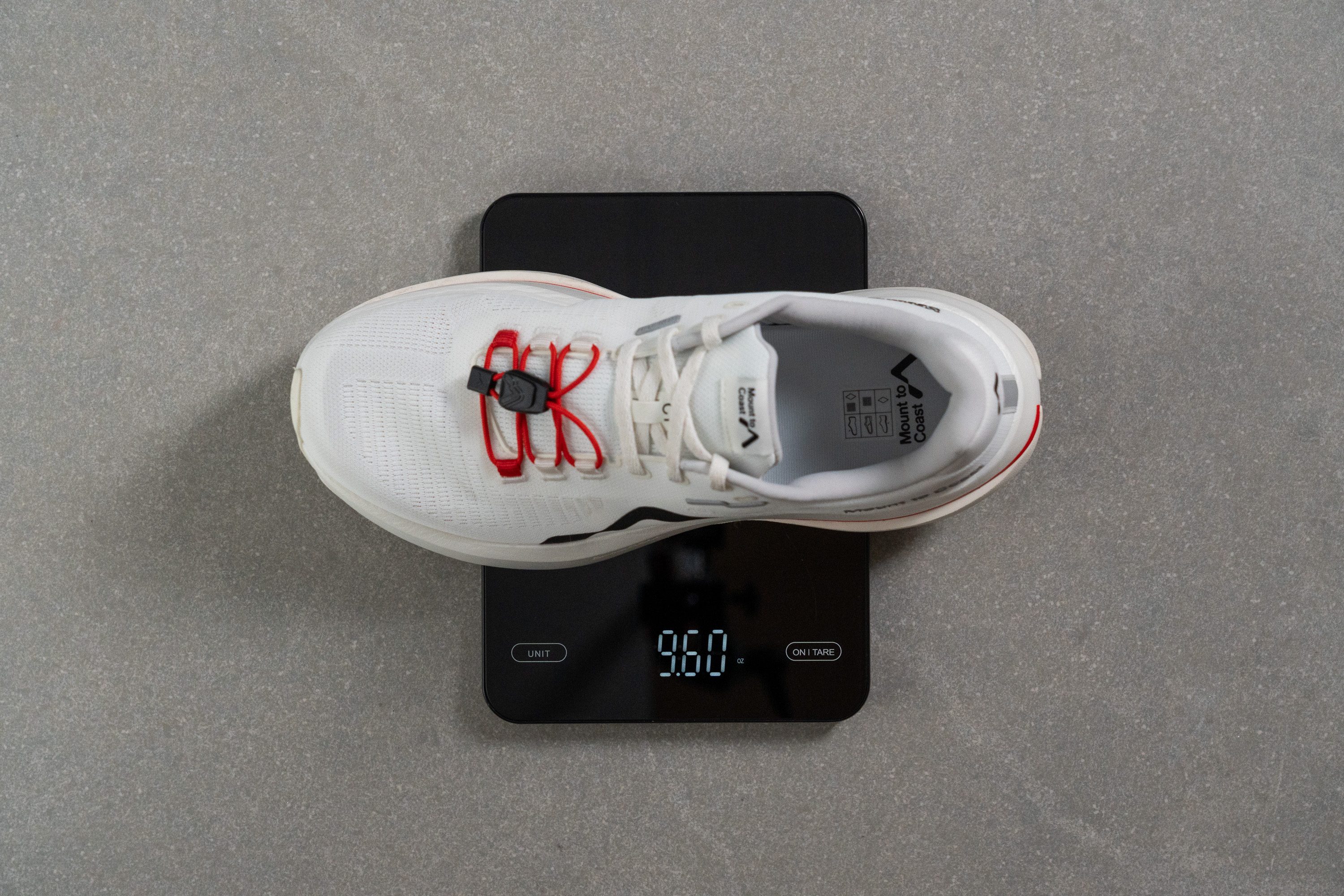
| C1 | 9.6 oz (272g) |
| Average | 9.2 oz (261g) |
Breathability
Breathability test
The Mount to Coast C1 comes with a jacquard upper that looked breathable as soon as we unboxed the shoe, but we still needed to confirm that in the lab.
And we have good news. After completing our tests, we awarded it a 4 out of 5 thanks to the airflow we found and the overall upper design. That is an ideal result for year-round comfort.
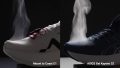
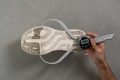
Using a light source, we found that ventilation is concentrated in the toebox and tongue, which is a common and effective layout in running shoes.
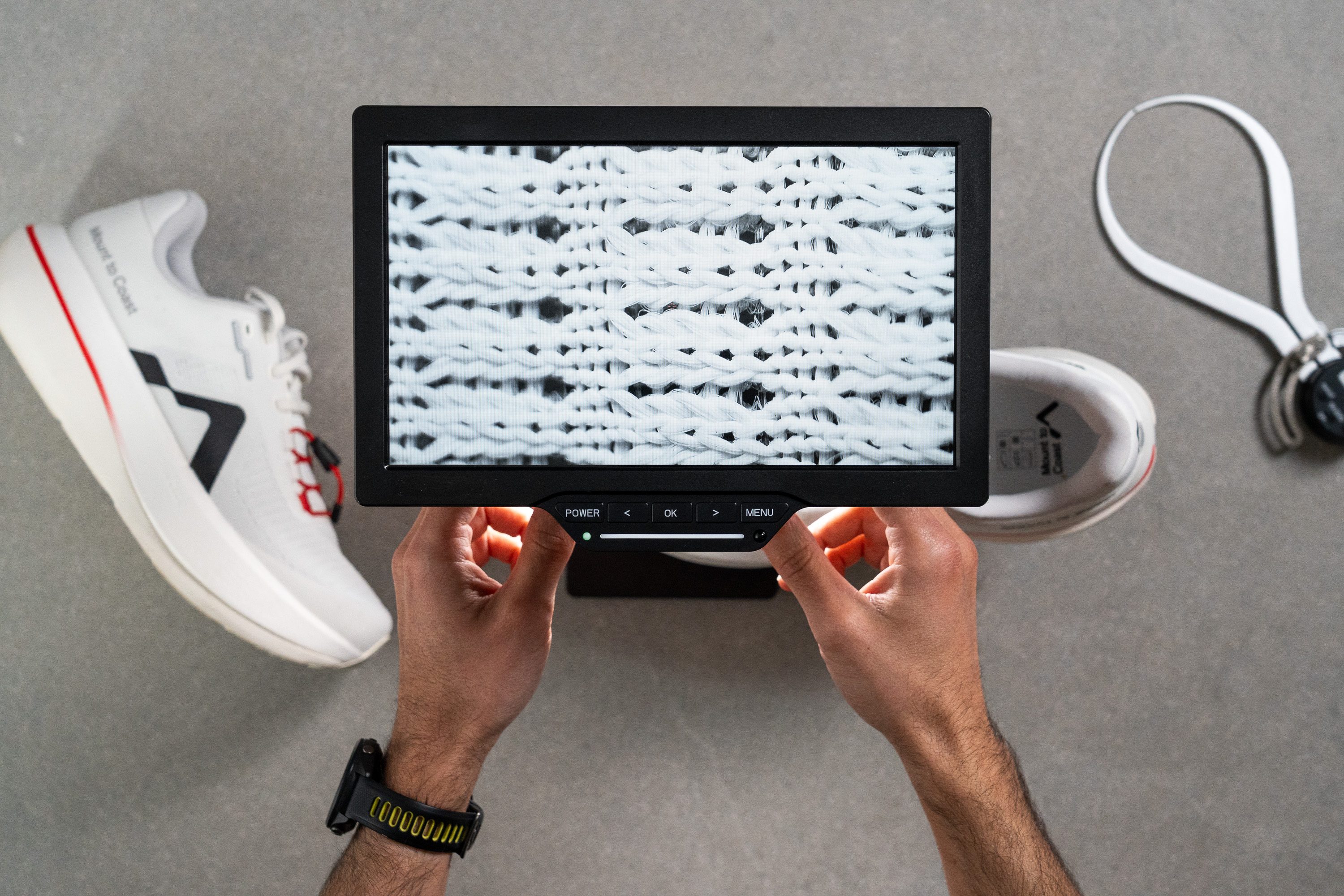
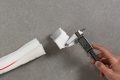
We also examined the material under our digital microscope. The upper appears very well built, with a level of quality that matches the price.
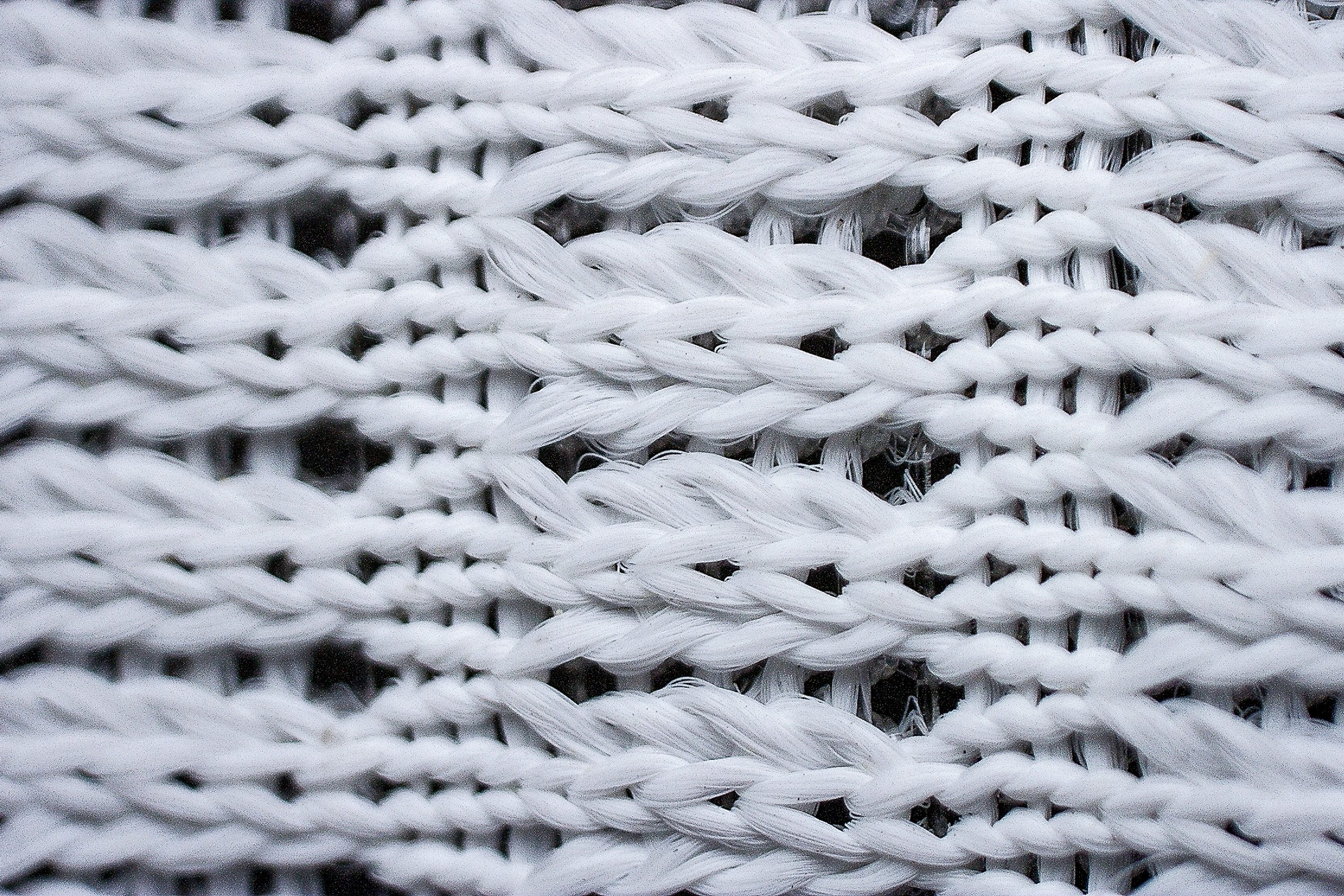
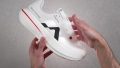
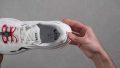
Finally, we inspected the upper by hand and noticed that comfort was clearly a top priority for MtC. The padding in the tongue and heel feels truly luxurious.
| C1 | 4 |
| Average | 3.6 |
Stability
Lateral stability test
Like most maximalist running shoes, the Mount to Coast C1 has a very broad midsole that ensures strong stability, more than many would expect just by reading the stack height. And we all better get used to this, as it is the new reality of running shoes, with the trade-off being larger overall designs that are not as agile as before.
We also noticed that the secondary layer of firm EVA foam provides a good amount of support by cradling the main, plush foam.
Torsional rigidity
Thanks to the outsole design with several cutouts, the C1 retains some torsional flex despite its size. We recorded a torque of 16.5 Nm after twisting the shoe left and right.
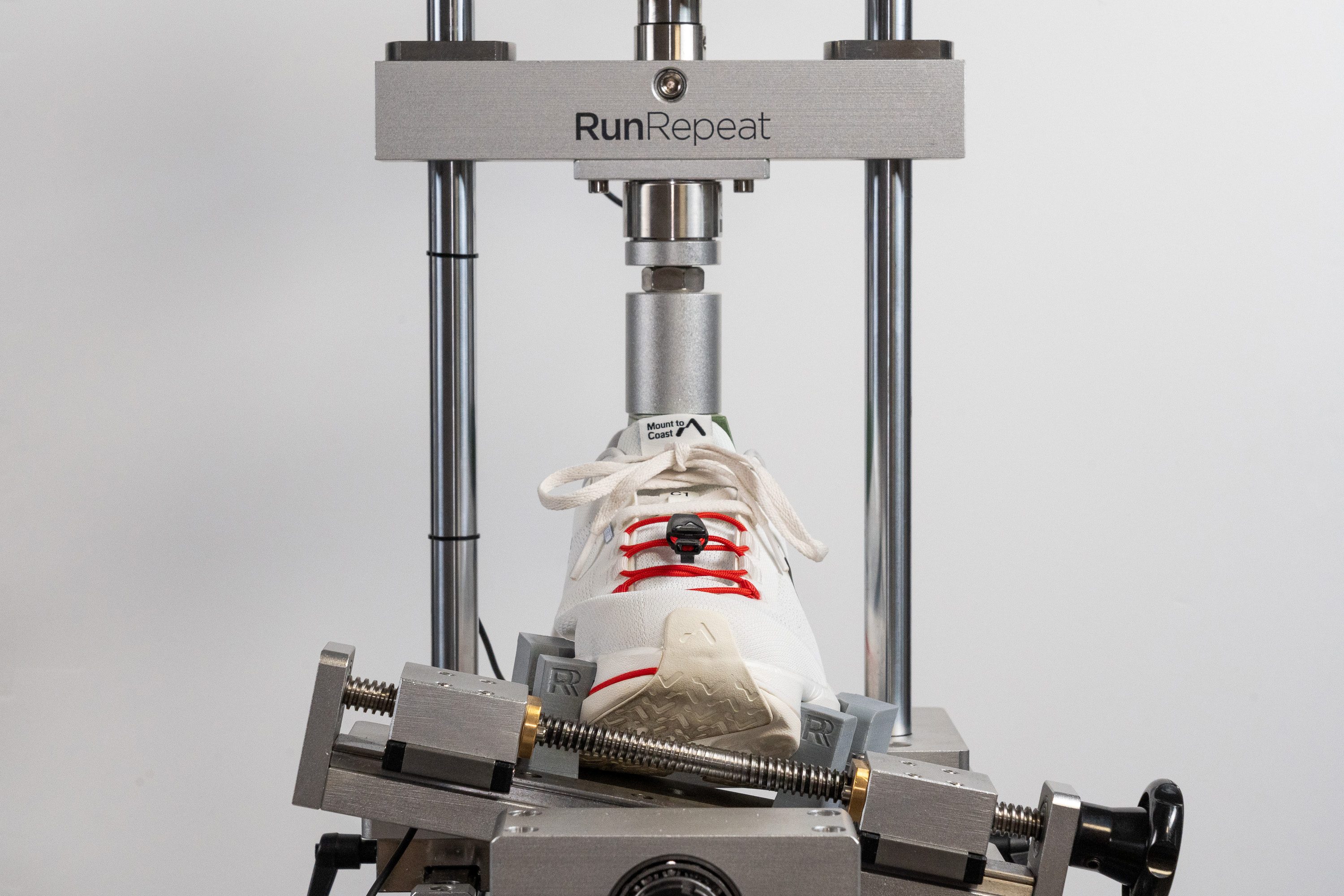
| C1 | 16.5 Nm |
| Average | 14.3 Nm |
Heel counter stiffness
The heel counter is highly structured and firm, adding substantial support, especially for heel strikers. In our books, this is a clear 4 out of 5.
| C1 | 4 |
| Average | 3 |
Midsole width - forefoot
We hinted earlier at the huge size of the midsole, and that is because it is easy to feel how the shoe extends to the sides in the forefoot area with every stride.
In the lab, we measured the forefoot at 121.9 mm. And for us, anything above 120 mm is definitely very generous in width.
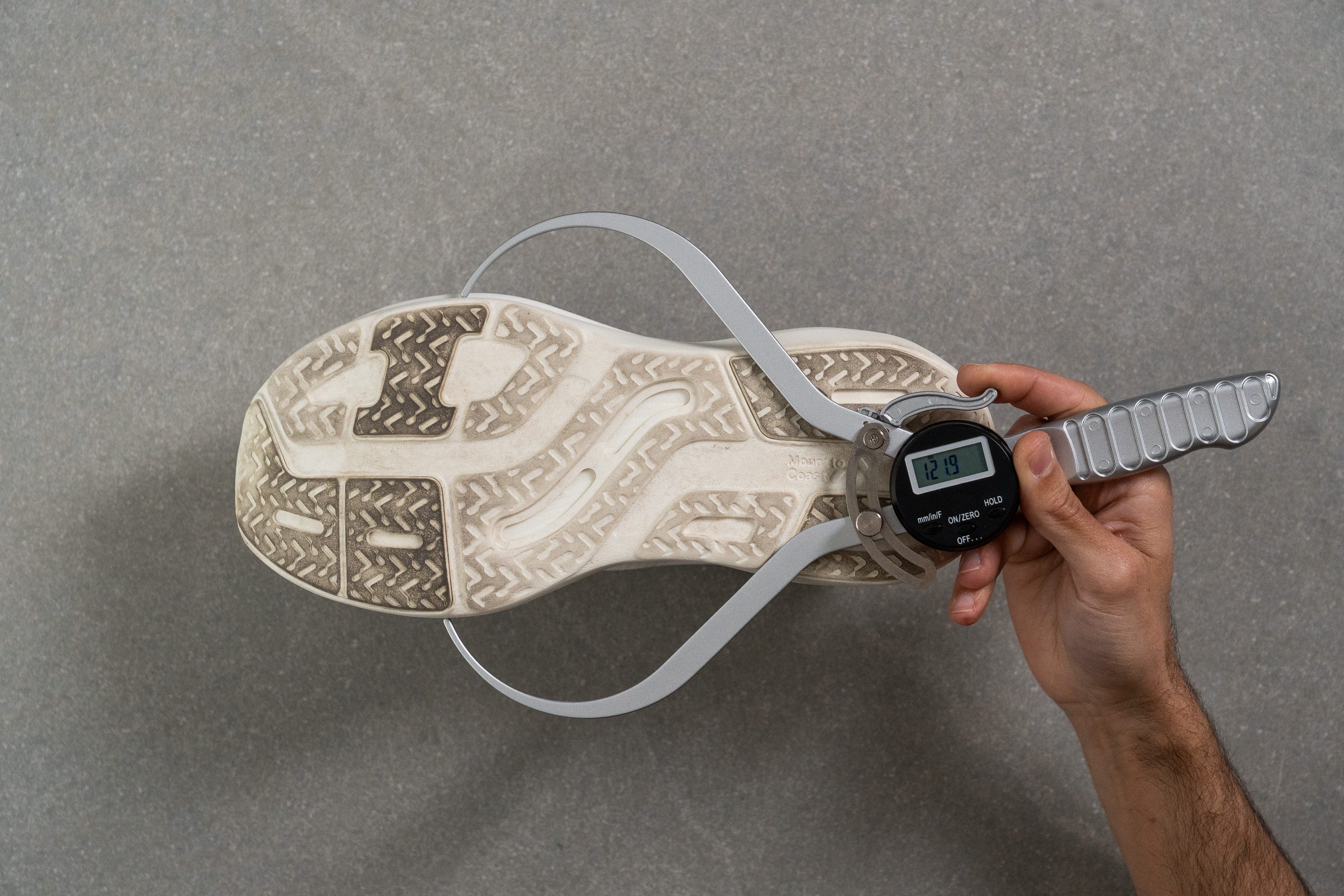
| C1 | 121.9 mm |
| Average | 115.1 mm |
Midsole width - heel
The heel is also super wide, even more so than the forefoot when compared to the average running shoe. Here we measured 98.0 mm, and this is the main reason why the shoe feels stable for heel strikers as well.
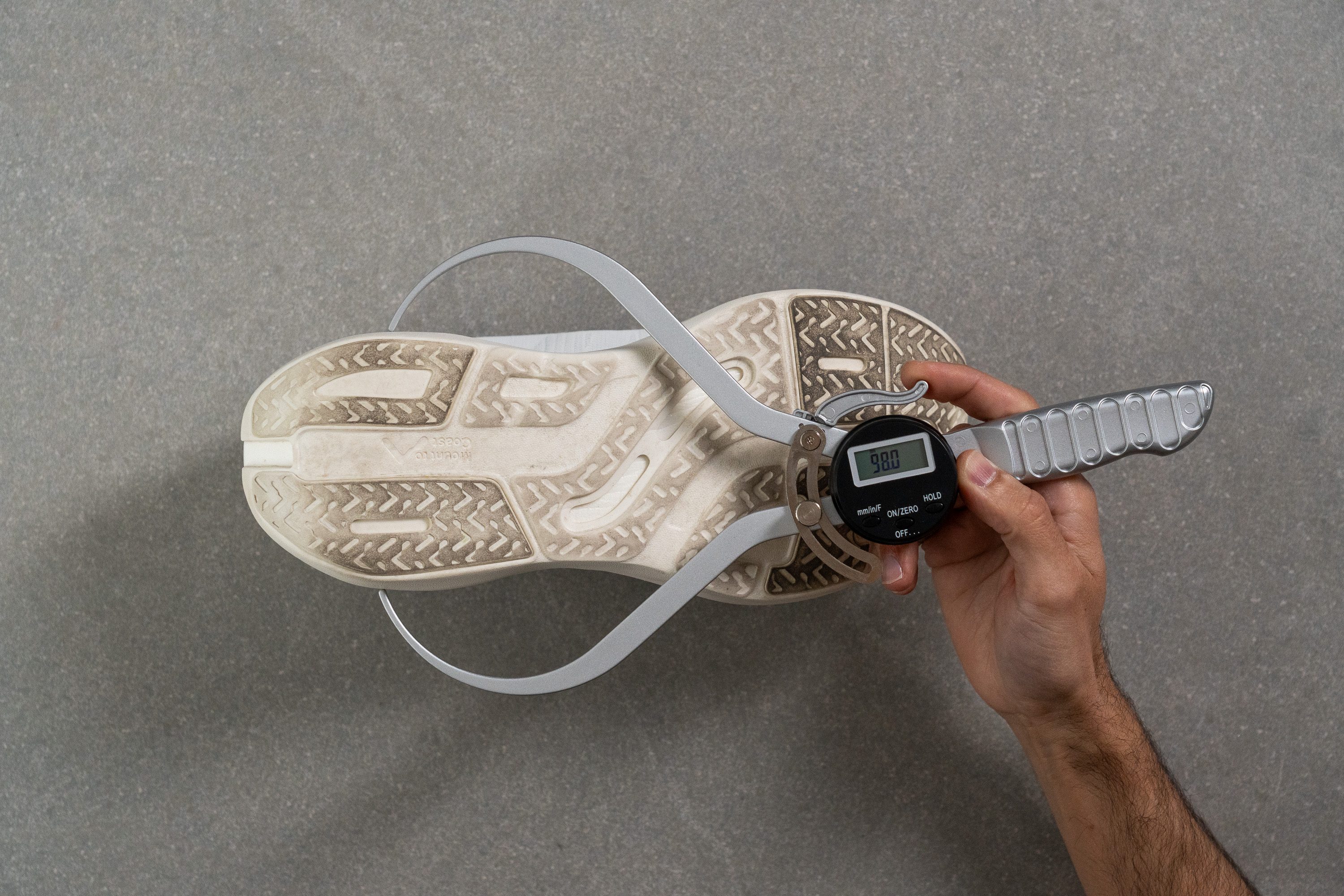
| C1 | 98.0 mm |
| Average | 91.1 mm |
Durability
Toebox durability
The jacquard upper of the Mount to Coast C1 is quite thin in the toebox, so a 2/5 score felt reasonable given its strong ventilation. Still, it is not ideal.
| C1 | 2 |
| Average | 2.6 |
Heel padding durability
Luckily for all of us, the ultra-comfortable heel padding improved the previous result by two points and reached a 4 out of 5. With such a score, we do not see the C1 letting anyone down here, at least not before normal wear would be expected like any other shoe.
| C1 | 4 |
| Average | 3.4 |
Outsole durability
The rubber used by Mount to Coast did a good job against our Dremel. A result of 1.0 mm is nothing to celebrate wildly, but it is pretty solid all things considered.
| C1 | 1.0 mm |
| Average | 1.1 mm |
Outsole thickness
And it better be good, because with only 1.5 mm of outsole, durability would be a disaster if the rubber did not stand up to the task.
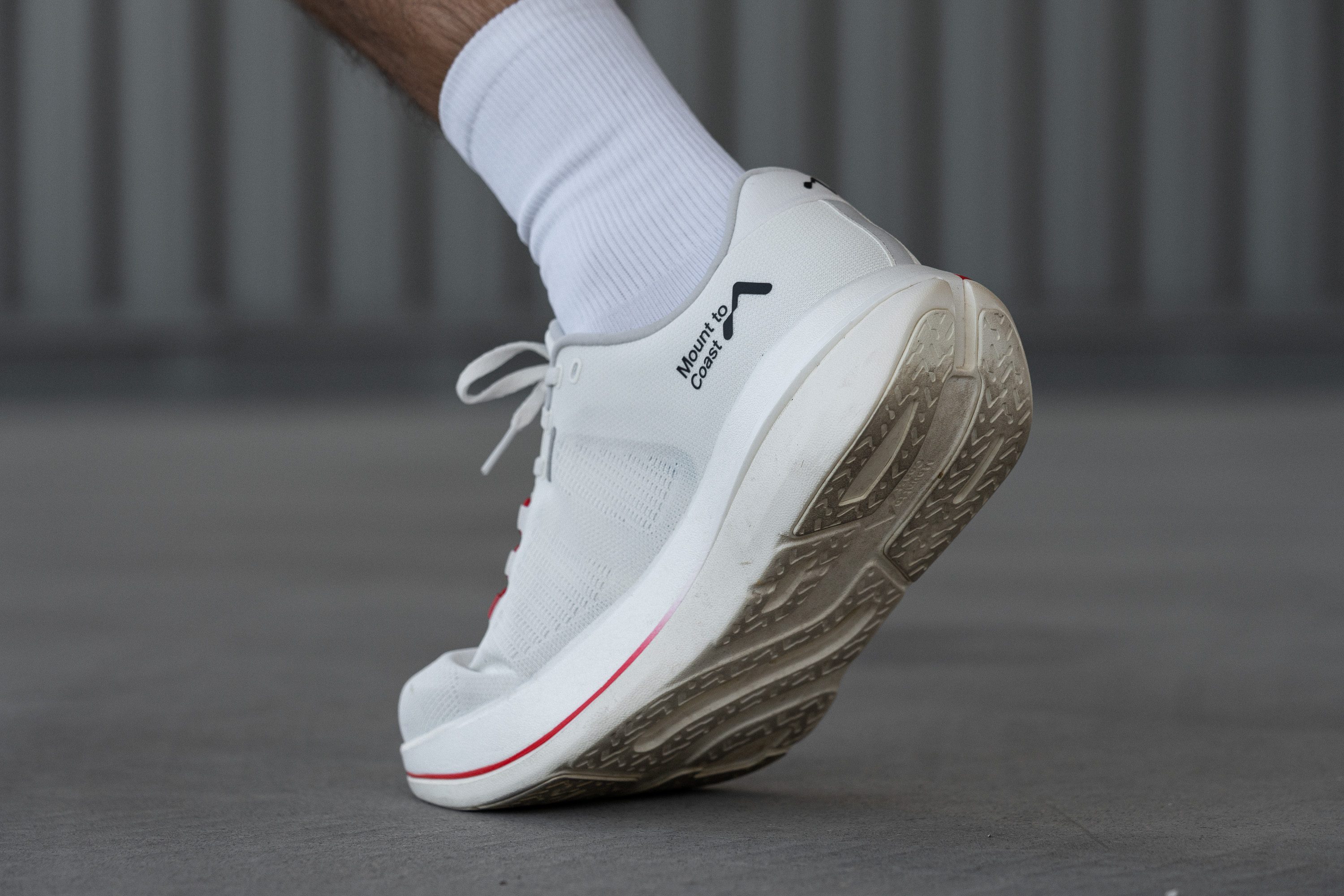
It is also worth mentioning that using a thin outsole usually makes the ride more pleasant, which is a positive trade-off here.
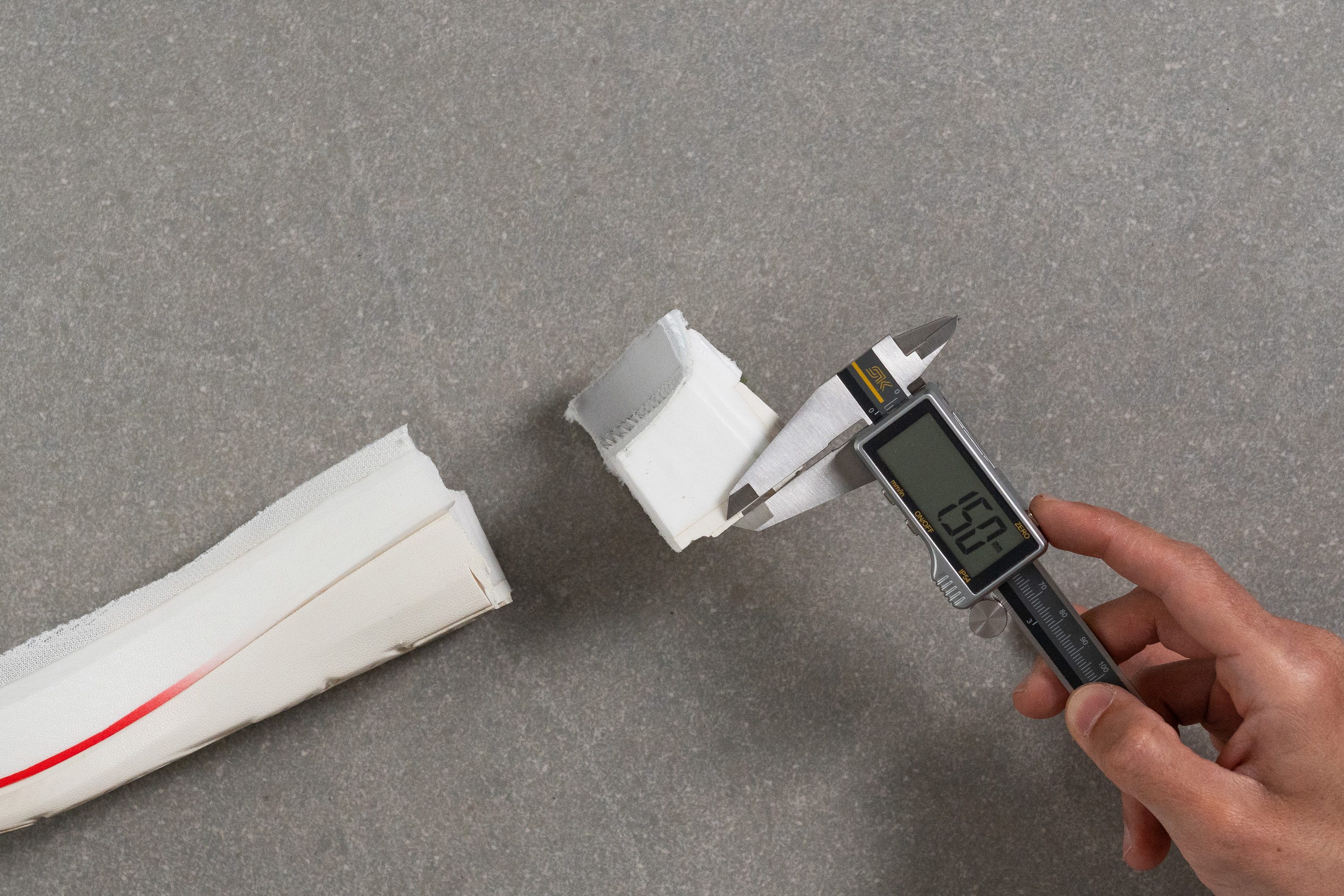
| C1 | 1.5 mm |
| Average | 3.1 mm |
Misc
Insole thickness
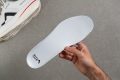
The insole has nothing special from a material standpoint, although its thickness is a bit lower than usual at 3.4 mm.
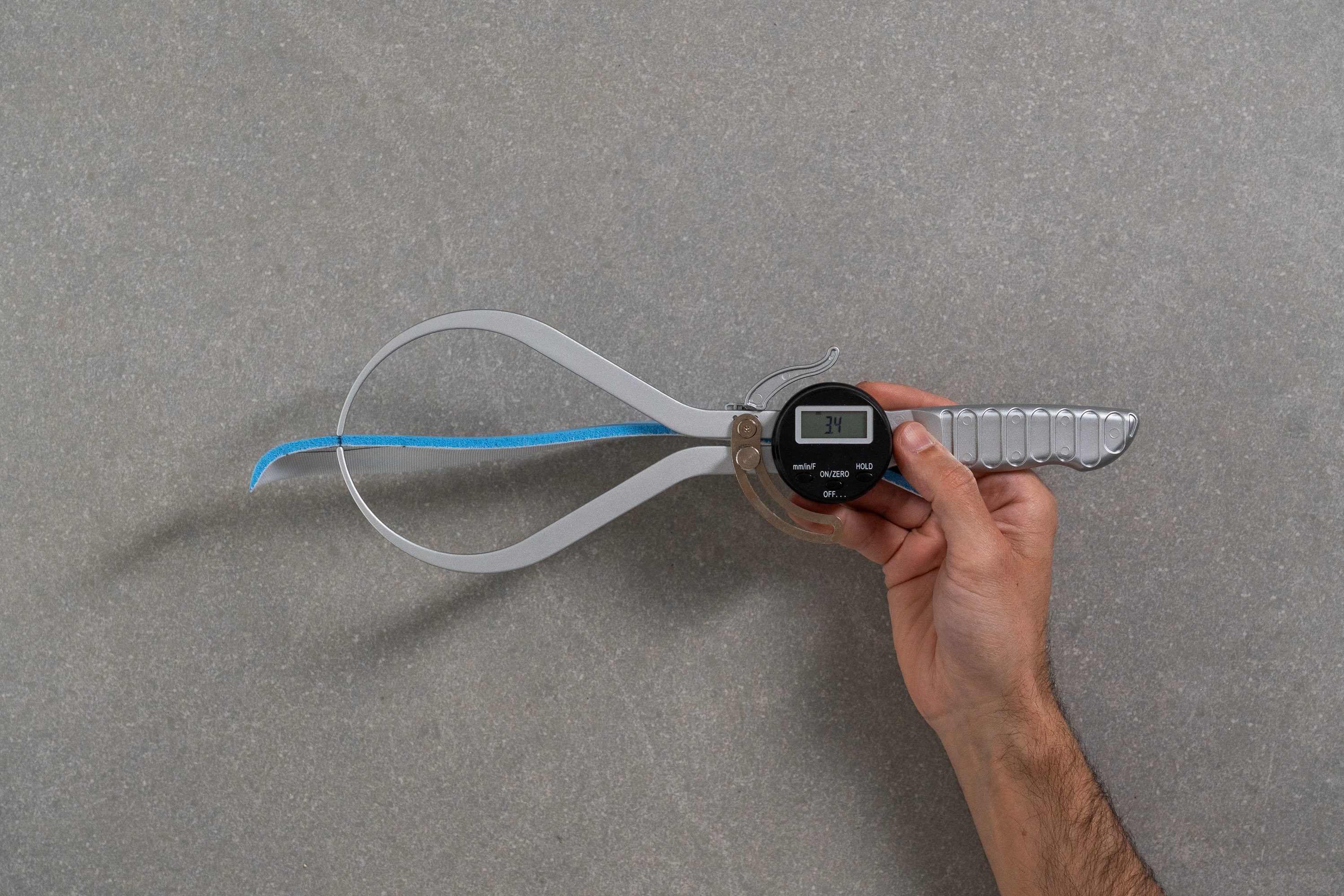
| C1 | 3.4 mm |
| Average | 4.4 mm |
Removable insole
If you want to use a thicker one to add even more height to the shoe, it is easy to do that here.
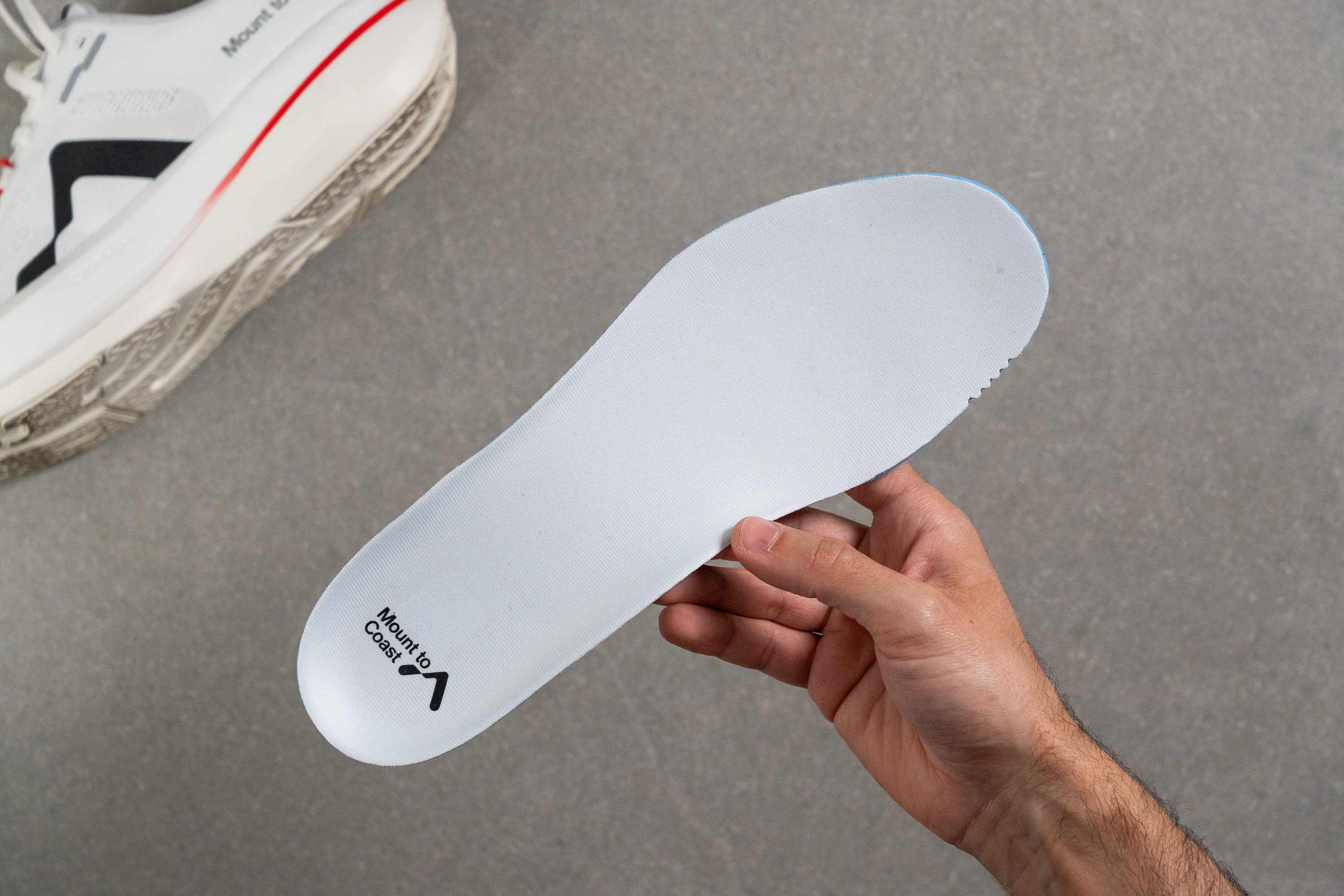
| C1 | Yes |
Reflective elements
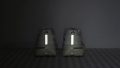
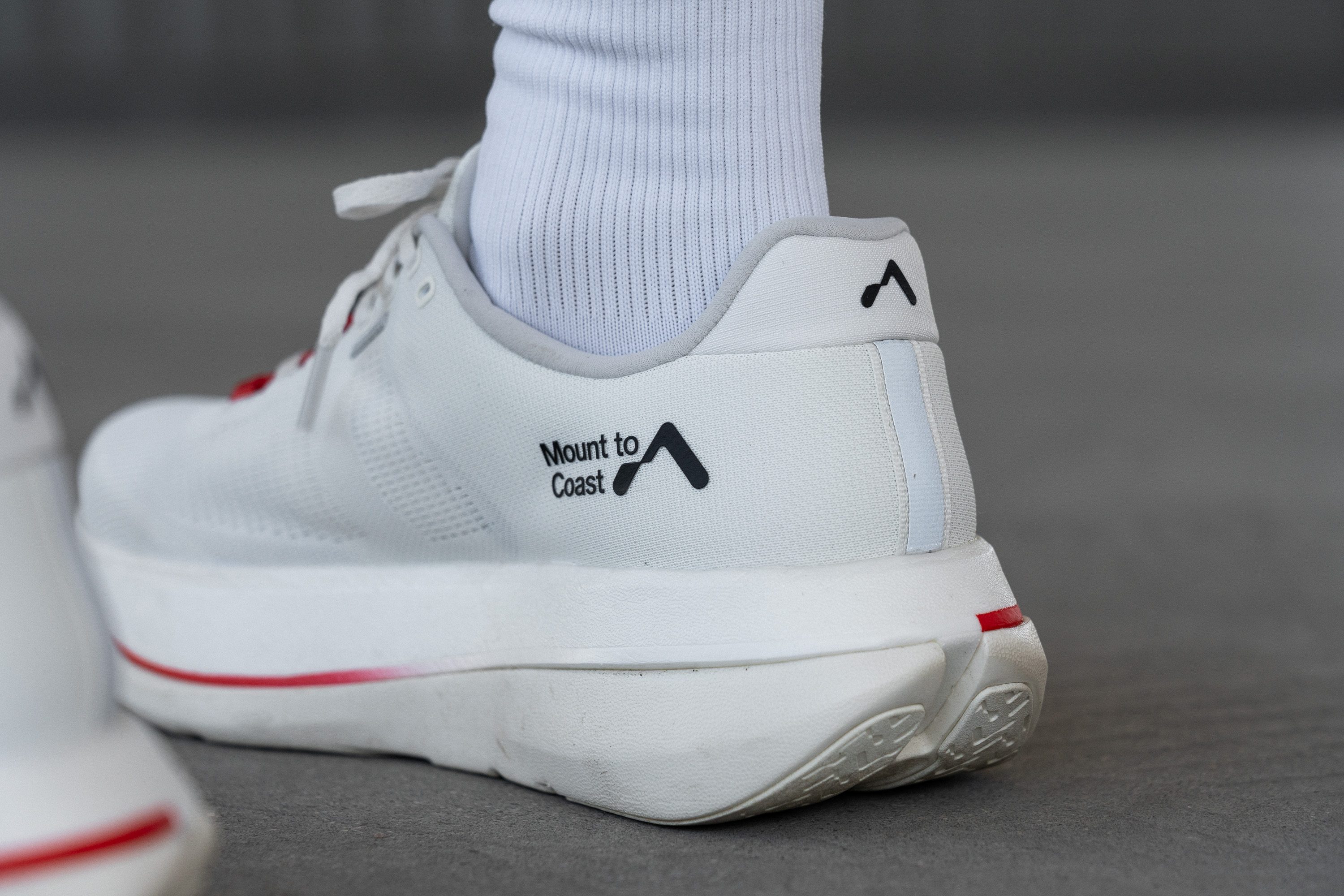
We love when brands use big, bold reflective elements, and MtC definitely pleased us with these large strips on the heel.
| C1 | Yes |
Tongue padding
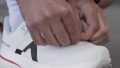
The Mount to Coast C1 goes a different route than usual with its unique TUNEDFIT dual-lacing system. We were able to adjust tension separately in two sections for a more customised fit, and while it takes some time to get used to, the extra precision was clear to us.
But we can also understand why this design could feel divisive for some runners. If that's an issue, you can always use classic laces instead.
With the tongue, we found that the C1 sacrifices a bit of weight to gain extra comfort. It has 8.0 mm of padding and is one of the most comfortable tongues we have used in quite some time. But at the same time, it does not feel as race-inspired as those found in more performance-focused shoes, which is another reason why we see this model as a stronger option for easy miles.
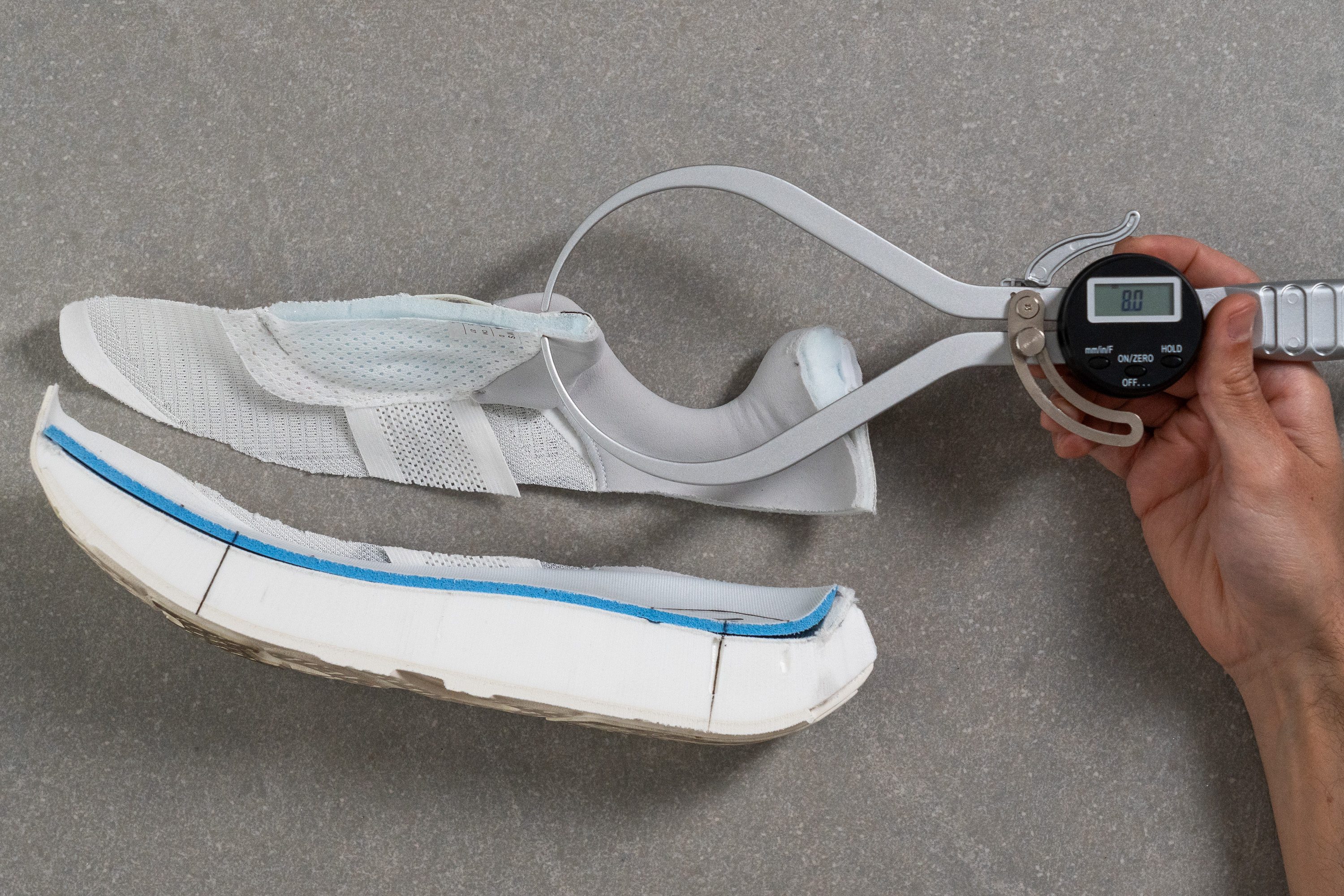
| C1 | 8.0 mm |
| Average | 5.8 mm |
Tongue: gusset type
The tongue features what we consider the ideal setup right now for most running shoes, a semi-gusseted design that uses perforated fabric. We loved this one!
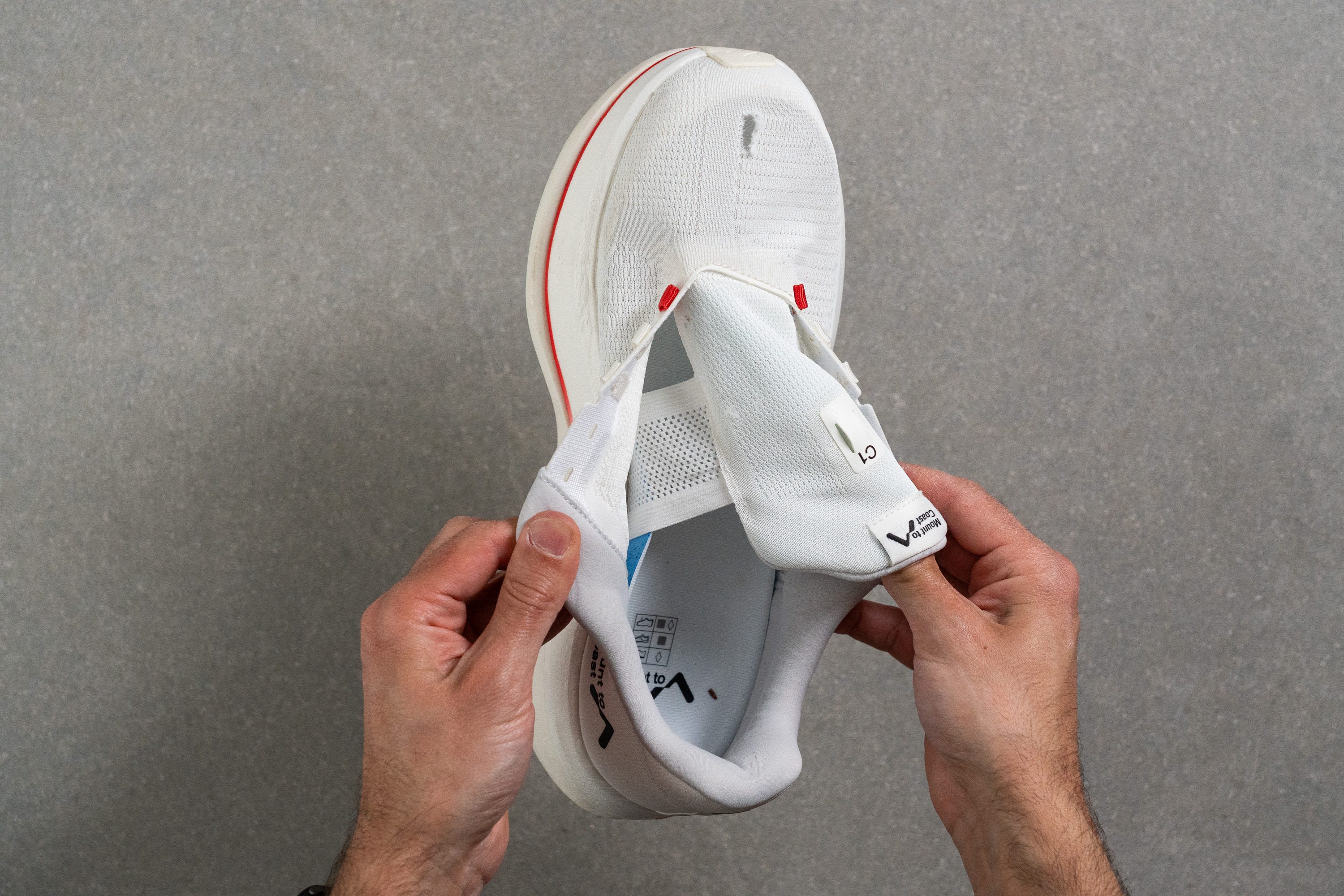
| C1 | Both sides (semi) |
Heel tab
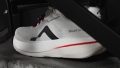
The heel comes without any kind of heel tab, featuring only the MtC logo and a clean design that we really liked.
| C1 | None |
Price
Those looking for a bargain or the ultimate value-oriented shoe will not find that here. The C1 is clearly a premium product that does not aim to compete with the standard Pegasus or the Novablast, instead targeting a higher tier.
| C1 | $180 |