
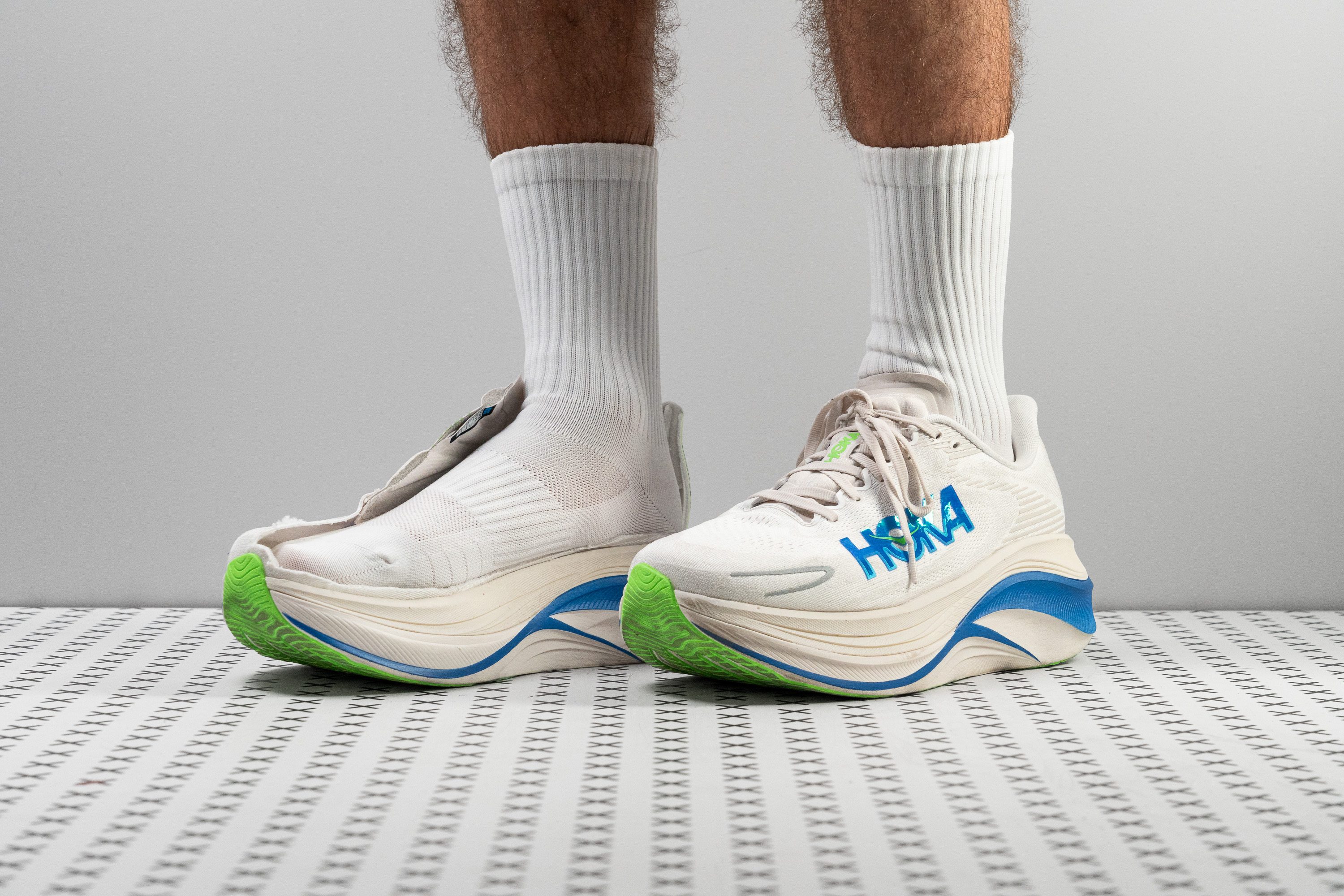
























Our verdict
- Daily running 93
- Tempo 73
- Race 61
- Stability 92
Pros
- Real max-cushioning experience
- Good energy return
- Exceptional stability for a high-stack shoe
- Excellent comfort
- Good breathability despite plush upper
- Secure fit
- Improved outsole redesign
- Fantastic for slow long runs
- Massive weight loss from v1
Cons
- Lacks versatility
- Stiff build may limit comfort for some
- Very expensive
Awards
- Top 19% in road running shoes
- Top 20% in HOKA running shoes
Comparison
The most similar running shoes compared
+ + Add a shoe | |||||
|---|---|---|---|---|---|
| Our score | 87 Great | 82 Great | 94 Superb | 69 Decent | |
| Price | $225 | $180 | $200 | $200 | |
| Pace | Daily running | Daily runningTempo | Daily runningCompetition | Daily running | |
| Shock absorption | High | High | High | - | |
| Energy return | High | High | High | - | |
| Traction | High | High | High | - | |
| Arch support | Neutral | Neutral | Neutral | Neutral | |
| Weight lab Weight brand | 10.1 oz / 286g 9.9 oz / 281g | 10.1 oz / 285g 10.1 oz / 286g | 7.3 oz / 207g 7.7 oz / 218g | 9.7 oz / 274g 8.8 oz / 250g | |
| Lightweight | ✗ | ✗ | ✓ | ✗ | |
| Drop lab Drop brand | 7.6 mm 5.0 mm | 6.9 mm 8.0 mm | 8.8 mm 4.0 mm | 9.4 mm 5.0 mm | |
| Strike pattern | Mid/forefoot | Mid/forefoot | HeelMid/forefoot | HeelMid/forefoot | |
| Size | Slightly small | True to size | Slightly small | True to size | |
| Midsole softness | Soft | Soft | Soft | - | |
| Difference in midsole softness in cold | Big | Small | Small | Small | |
| Toebox durability | Decent | Decent | Decent | Bad | |
| Heel padding durability | Decent | Decent | Good | Bad | |
| Outsole durability | Good | Good | Good | Good | |
| Breathability | Moderate | Breathable | Moderate | Breathable | |
| Width / fit | Medium | Narrow | Medium | Medium | |
| Toebox width | Medium | Narrow | Medium | Medium | |
| Stiffness | Stiff | Stiff | Moderate | - | |
| Torsional rigidity | Stiff | Stiff | Moderate | Stiff | |
| Heel counter stiffness | Stiff | Flexible | Flexible | Stiff | |
| Plate | Carbon plate | Carbon plate | Carbon plate | Carbon plate | |
| Rocker | ✓ | ✓ | ✓ | ✓ | |
| Heel lab Heel brand | 45.8 mm 44.0 mm | 38.9 mm 42.0 mm | 38.3 mm 40.0 mm | 40.2 mm 35.0 mm | |
| Forefoot lab Forefoot brand | 38.2 mm 39.0 mm | 32.0 mm 34.0 mm | 29.5 mm 36.0 mm | 30.8 mm 30.0 mm | |
| Widths available | Normal | Normal | NormalWide | NormalWide | |
| Orthotic friendly | ✓ | ✓ | ✓ | ✓ | |
| Season | All seasons | SummerAll seasons | All seasons | SummerAll seasons | |
| Removable insole | ✓ | ✓ | ✓ | ✓ | |
| Ranking | #66 Top 17% | #194 Top 49% | #5 Top 2% | #376 Bottom 6% | |
| Popularity | #146 Top 37% | #258 Bottom 35% | #97 Top 25% | #288 Bottom 28% |

Who should buy
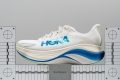
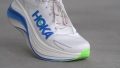
In our opinion, the HOKA Skyward X 2 is a perfect match for:
- Runners with deep pockets seeking maximum cushioning and comfort for easy daily miles.
- Mild overpronators looking for a highly-stable super trainer that feels stable despite its towering stack height.
- Fans of the original Skyward X who wanted a lighter, softer, and more refined version of the same concept.
- Marathoners needing a protective shoe for long runs at easy/moderate paces with occasional faster surges.
Who should NOT buy
We think that runners expecting one shoe to handle everything may find the Skyward X 2 too specialized. It shines at easy paces, but for nearly the same price, the ASICS Megablast offers a much wider performance range.
Additionally, we believe the Skyward X 2 is not the best choice for value-conscious runners. We found that shoes like the HOKA Bondi 9 deliver a similarly protective ride for less money, while the Saucony Endorphin Azura stands out as a cheaper and more versatile super trainer for those prioritizing maximum bang-for-your-buck.
Cushioning
Shock absorption
The Skyward X 2 looks like a shoe built for bottomless cushioning, and our lab results fully support that impression.
A remarkable 152 SA in the heel already places it among the most impact-protective shoes we've tested. However, the real surprise came from the forefoot, where we measured an outstanding 141 SA score, a jaw-dropping result achieved by only a handful of shoes in our database.
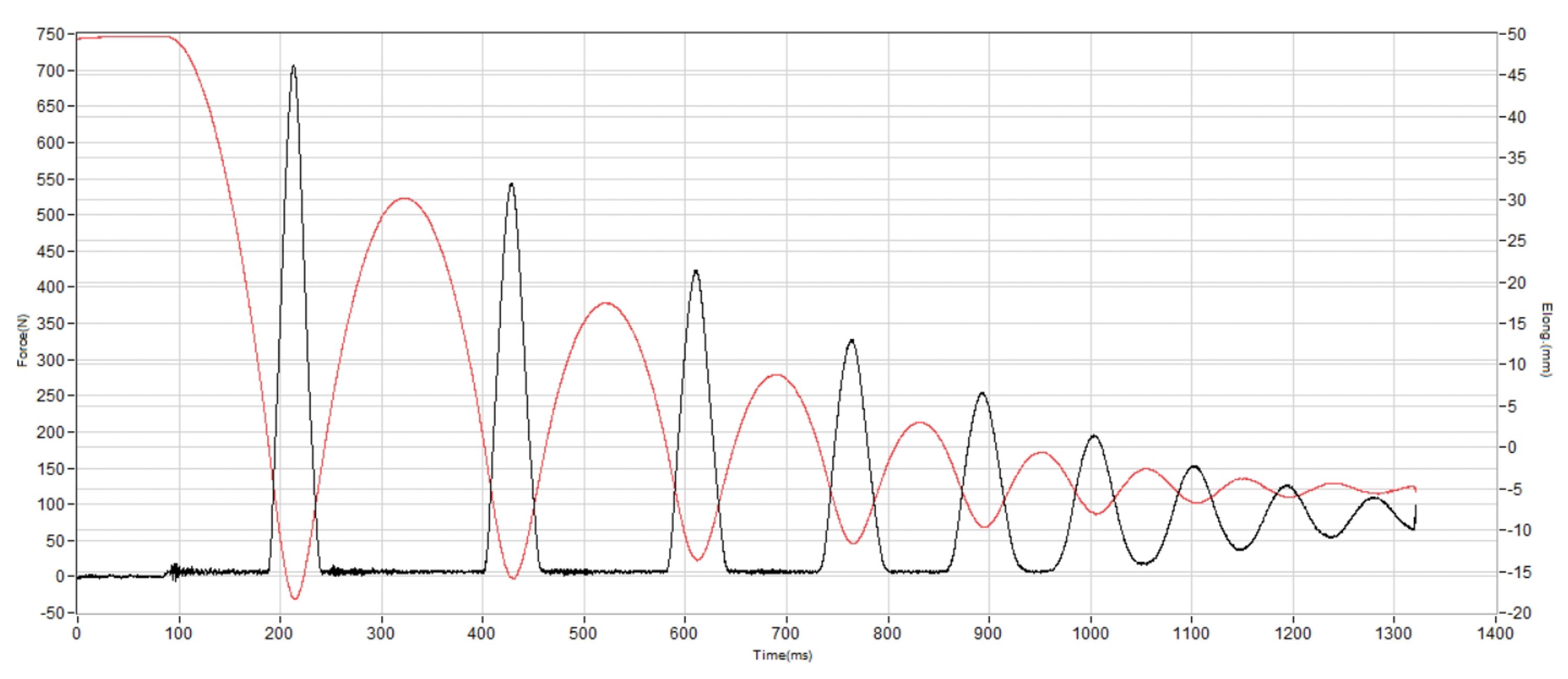
| Skyward X 2 | 152 SA |
| Average | 131 SA |
Energy return
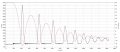
The PEBA-based top layer of foam plays a key role in the Skyward X 2's energetic ride.
Using the ASTM F1976 protocol, we recorded rebound figures of 64.3% in the heel and 67.6% in the forefoot, numbers that should prove especially valuable during long runs when tired legs can benefit from an extra boost in the closing miles.
| Skyward X 2 | 67.6% |
| Average | 61.4% |
Heel stack
While most brands continue adding stack height with every new version, HOKA decided to go in the opposite direction and slightly lower the platform of the Skyward X 2. In our view, that was the right call, as the first-generation model was probably... too much for too many.
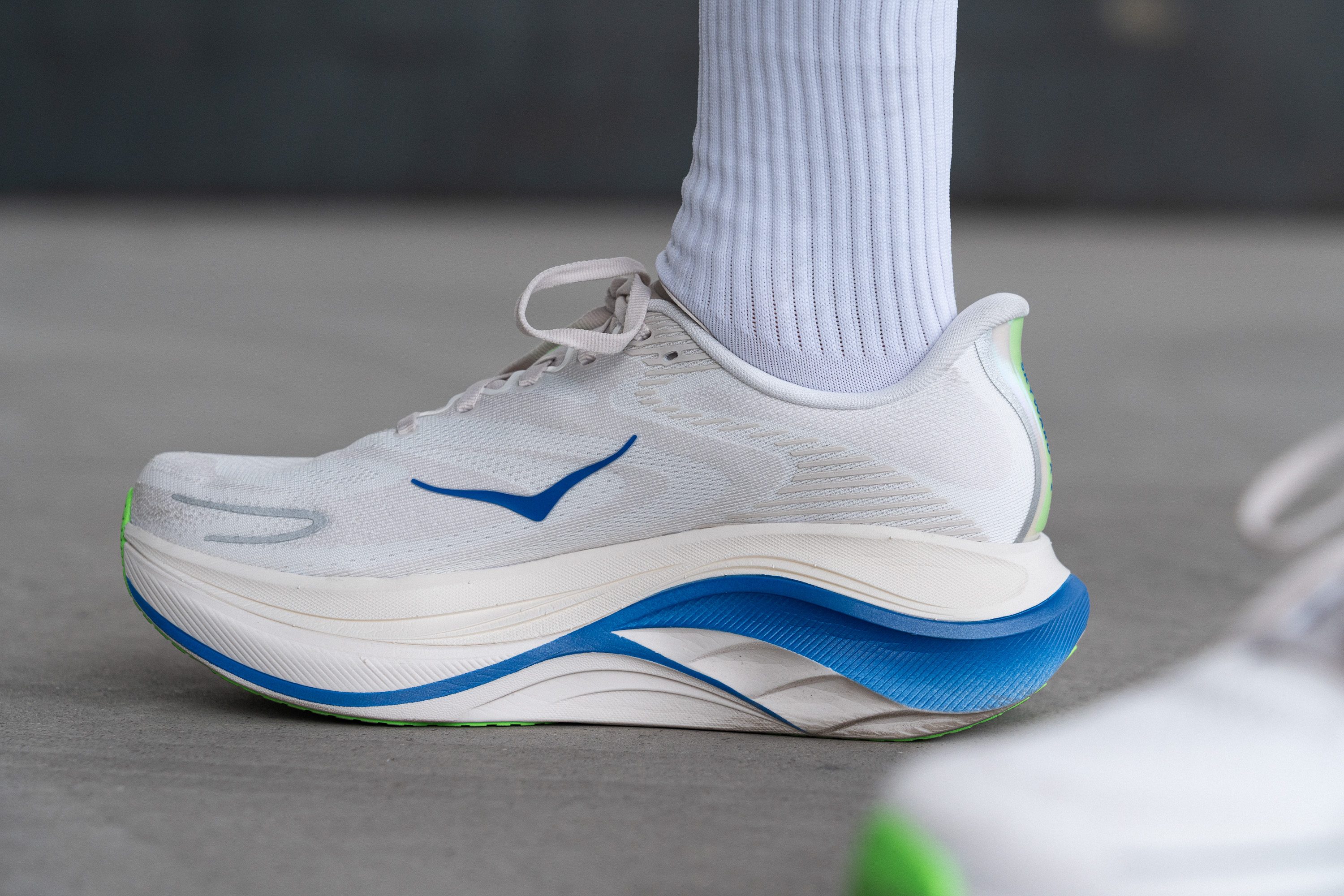
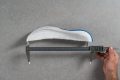
HOKA states that the stack height has been reduced by 4 mm, although our measurements suggest a more modest change. Even so, with 45.8 mm under the heel, this shoe remains firmly planted in the max-cushioned category.
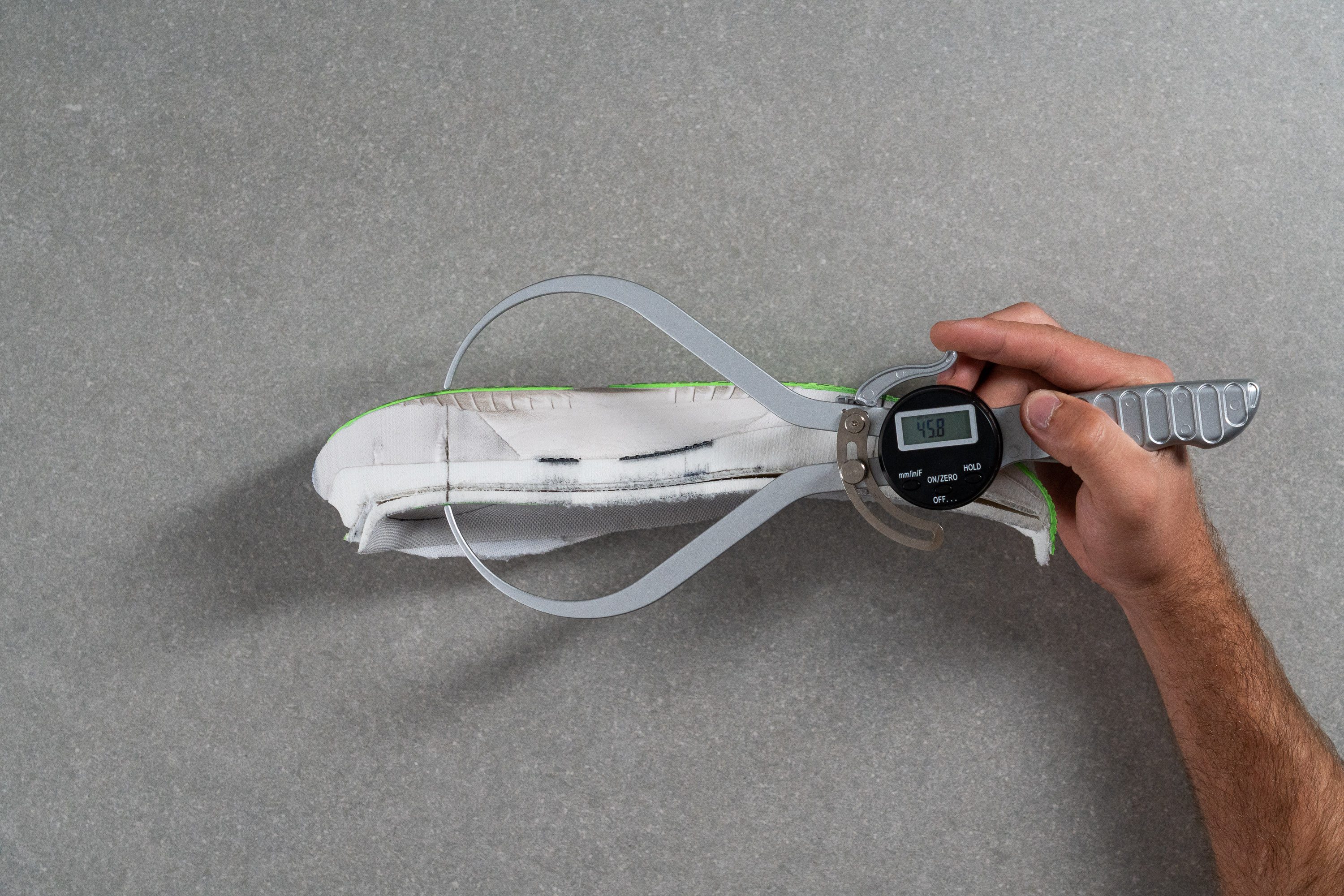
| Skyward X 2 | 45.8 mm |
| Average | 35.6 mm |
Forefoot stack
The heel stack is certainly impressive, but we believe the forefoot is the real headline feature of the Skyward X 2. At a towering 38.2 mm, it actually exceeds the current average heel stack height in our lab, highlighting just how much cushioning HOKA packed into this shoe.
As a result, this model is best suited for runners who actively seek a sky-high platform and a deeply-cushioned ride. However, those looking for a more balanced and ground-connected experience will likely be happier in a lower-stack (and cheaper) option such as the HOKA Mach 7.
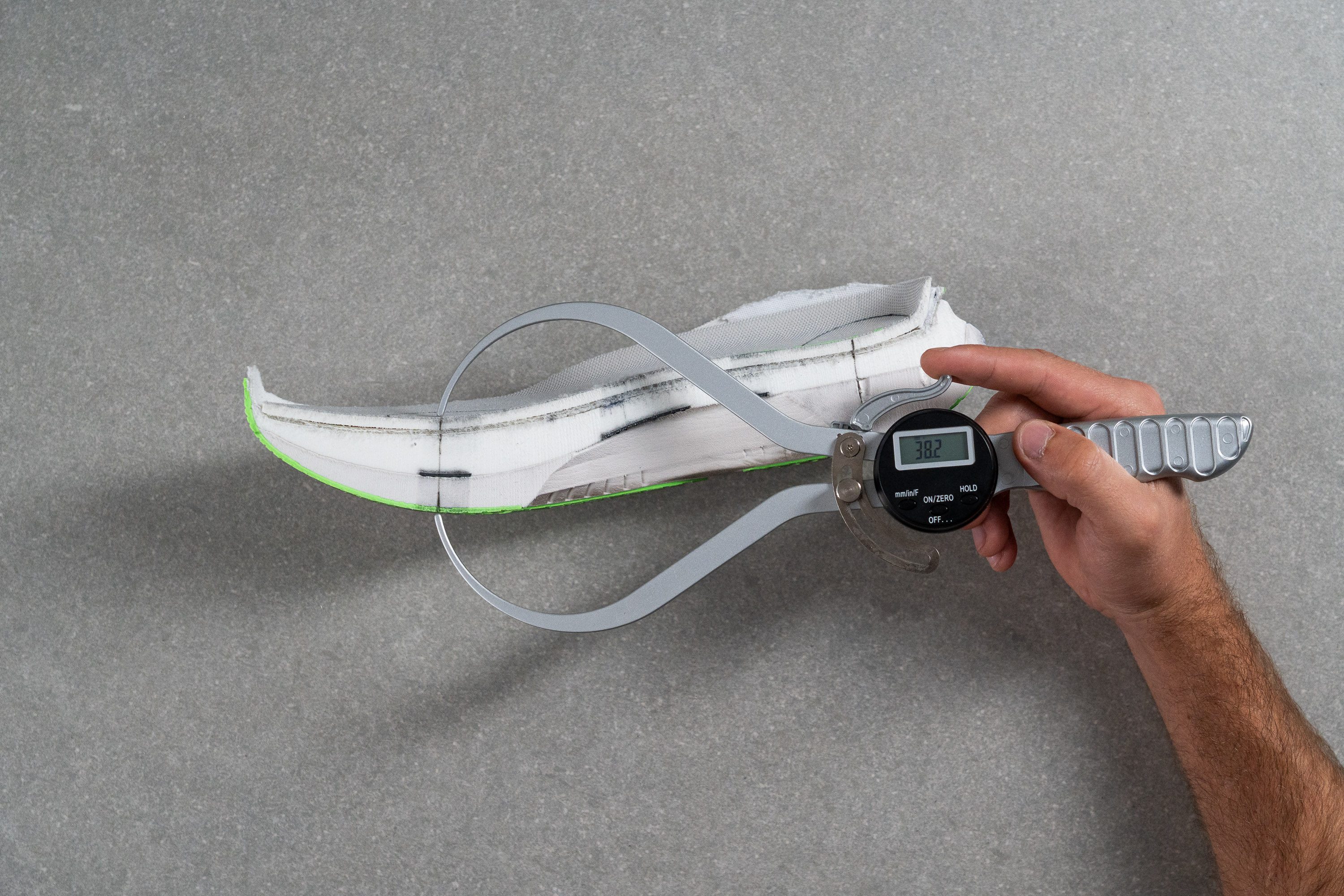
| Skyward X 2 | 38.2 mm |
| Average | 27.1 mm |
Drop
As with many HOKA models we've tested, our measurements revealed a noticeable difference between the advertised and actual drop. While the brand lists the Skyward X 2 at 5 mm, we recorded a substantially higher 7.6 mm following the World Athletics measurement protocol.
For heel strikers, we think that's a welcome surprise, as the higher-than-expected drop helps create a smoother transition through the gait cycle.
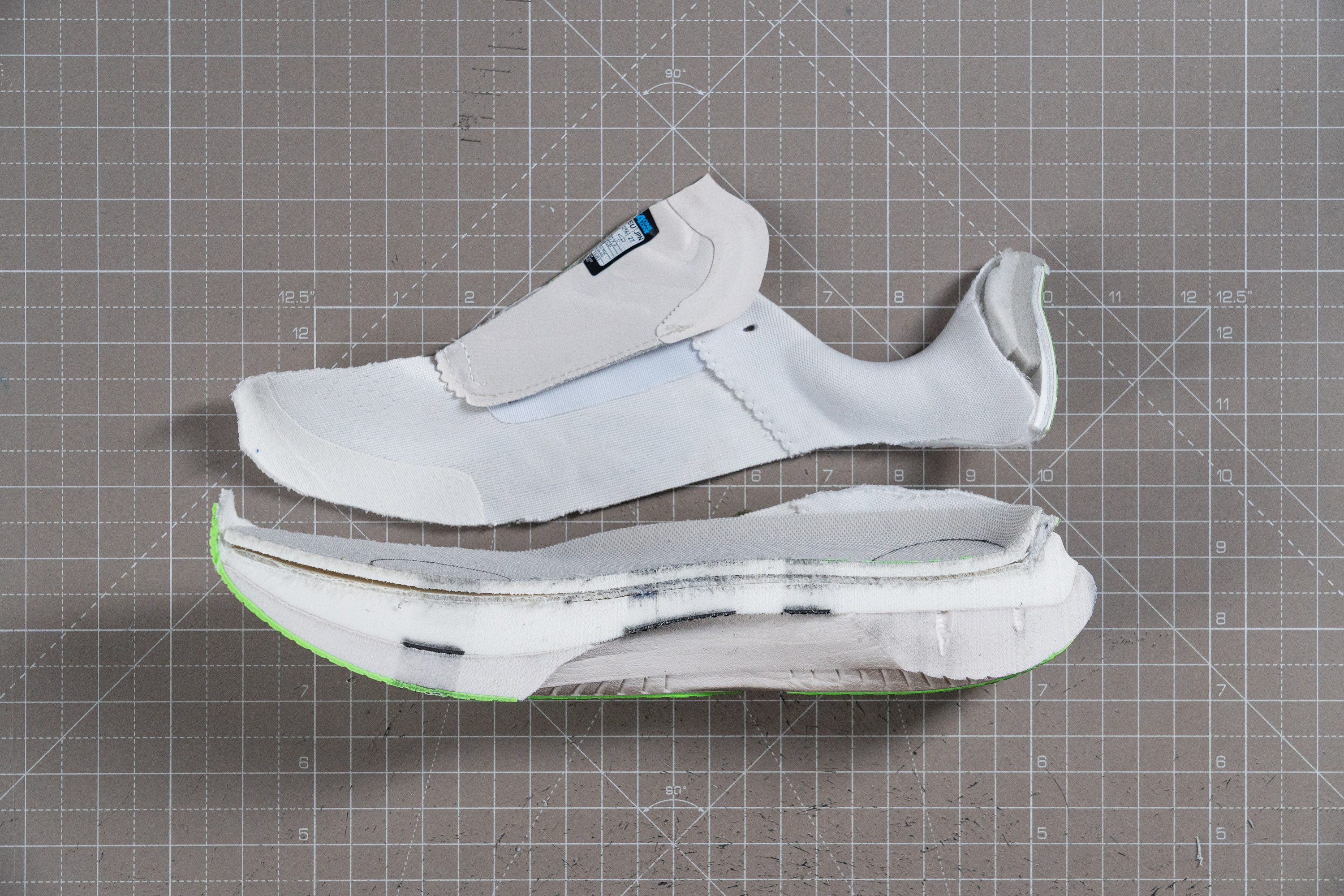
| Skyward X 2 | 7.6 mm |
| Average | 8.4 mm |
Midsole softness
HOKA combines again a dual-foam setup with a carbon fiber plate. The upper layer uses PEBA, the same premium compound found in the brand's flagship super shoes, including the Cielo X1 3.0.
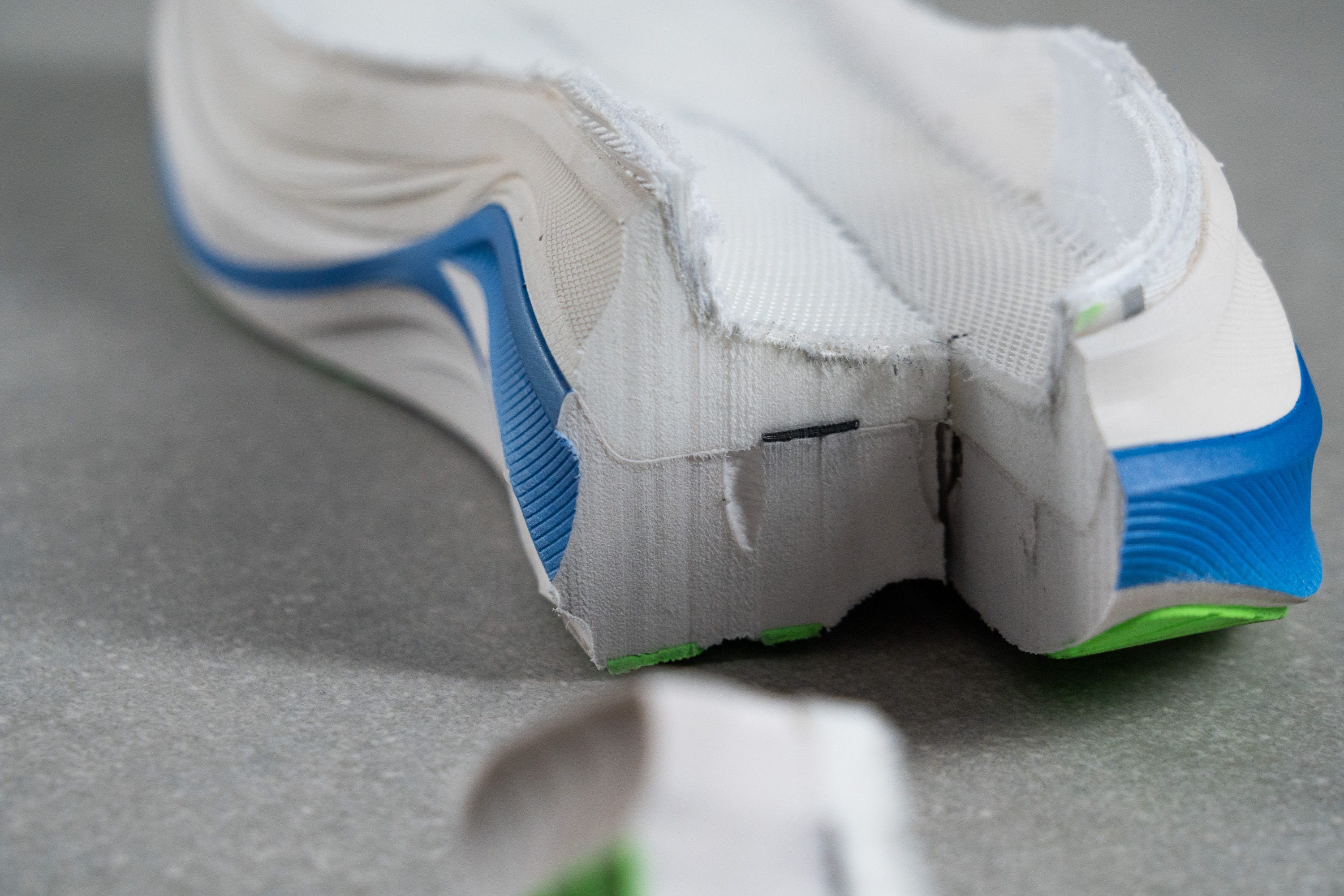
This PEBA layer is the softer of the two foams, registering just 31.9 AC in our test. We found that it contributes most of the rebound and lively feel underfoot, which explains why HOKA positioned it directly beneath the foot to maximize comfort and energy return.
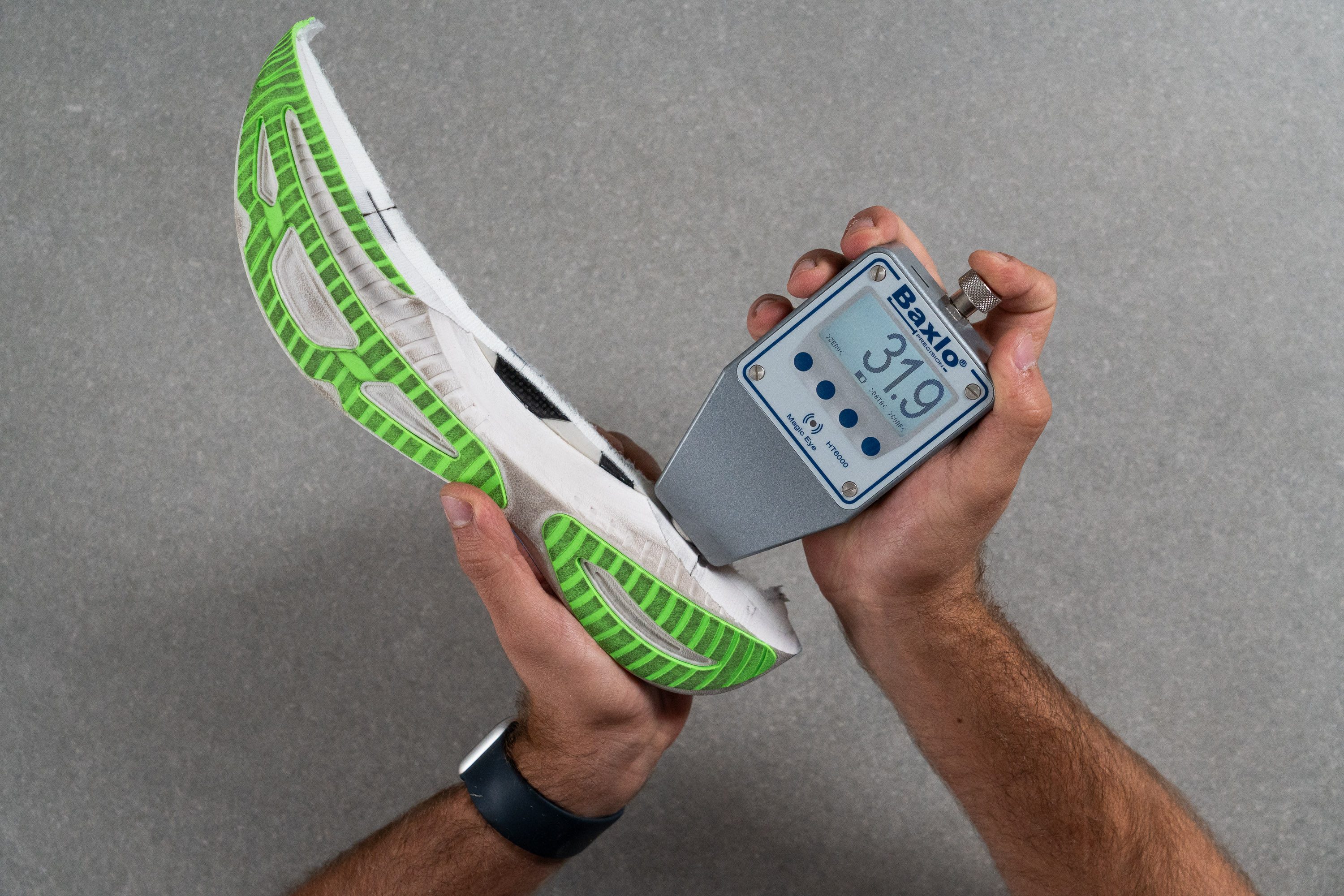
| Skyward X 2 | 31.9 AC |
| Average | 35.5 AC |
Rocker
Like most max-cushioned shoes, the Skyward X 2 relies on a pronounced rocker geometry. Combined with the added stiffness of the carbon fiber plate, HOKA had little choice but to incorporate smooth curvature at both ends of the shoe to keep transitions flowing naturally.
Without this design, the shoe would feel awkward underfoot, as its ultra-stiff midsole allow very little bending through the gait cycle. The rocker helps counterbalance that stiffness and makes the ride feel far more effortless.
Plate
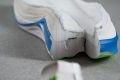
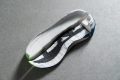
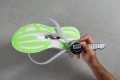
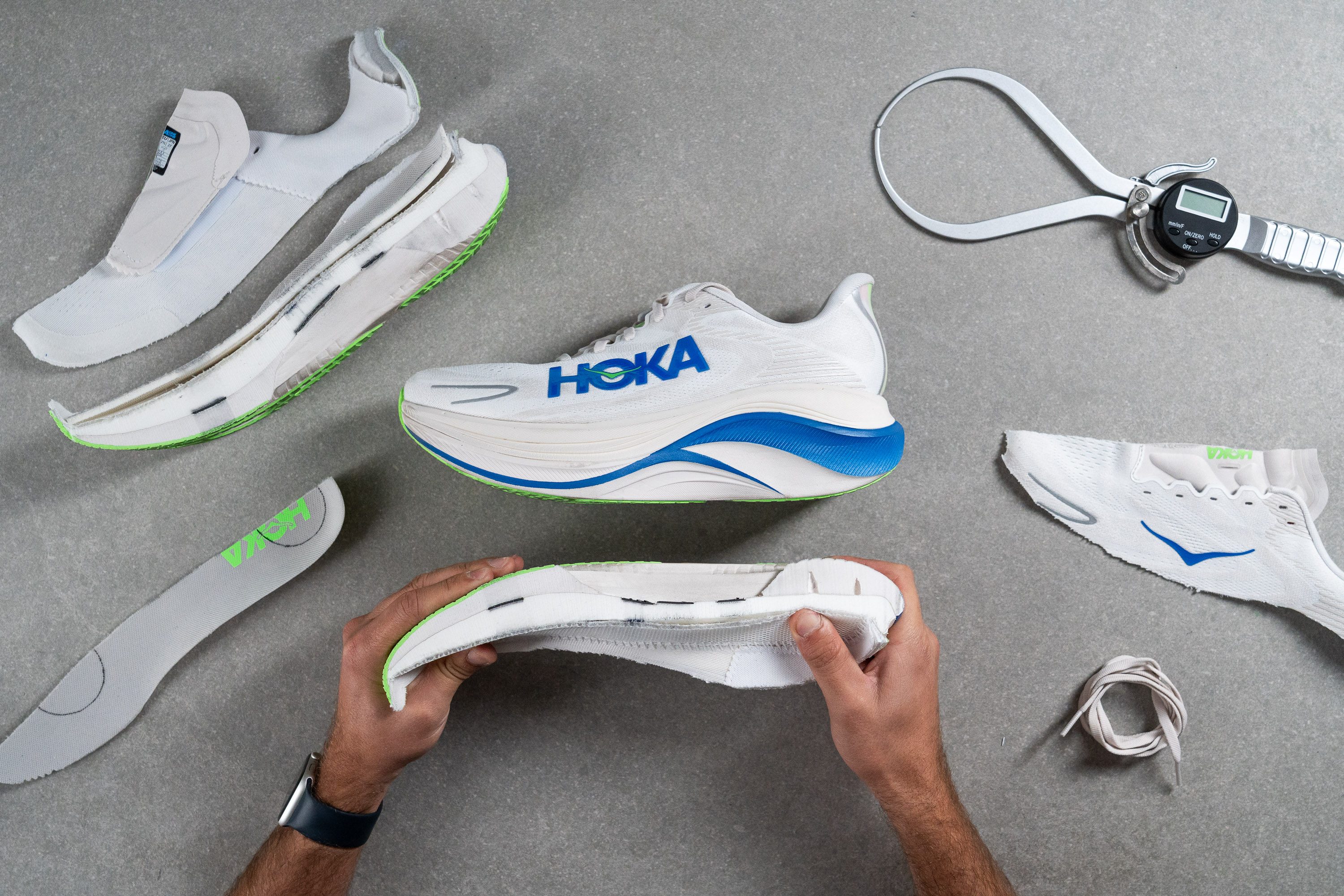
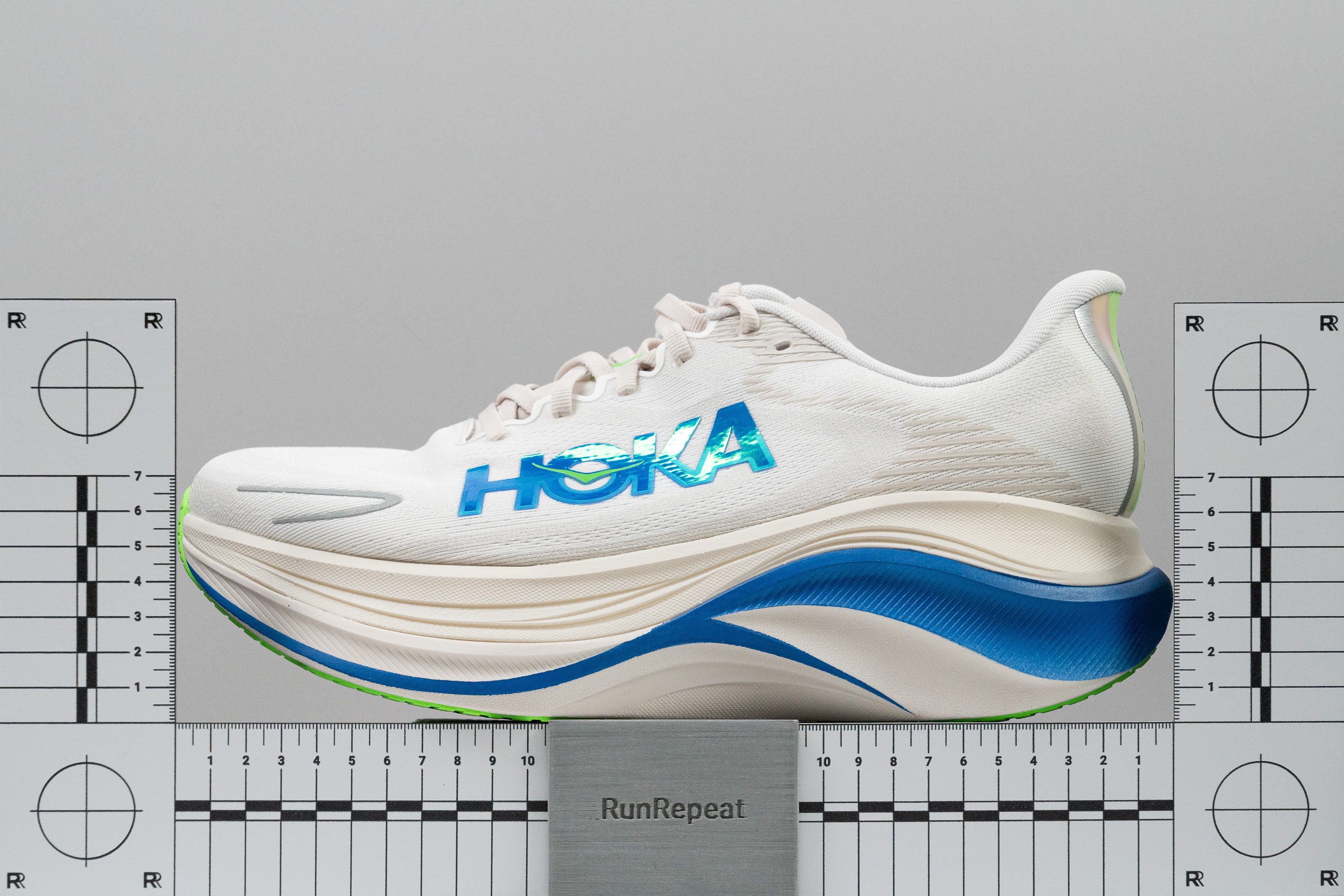
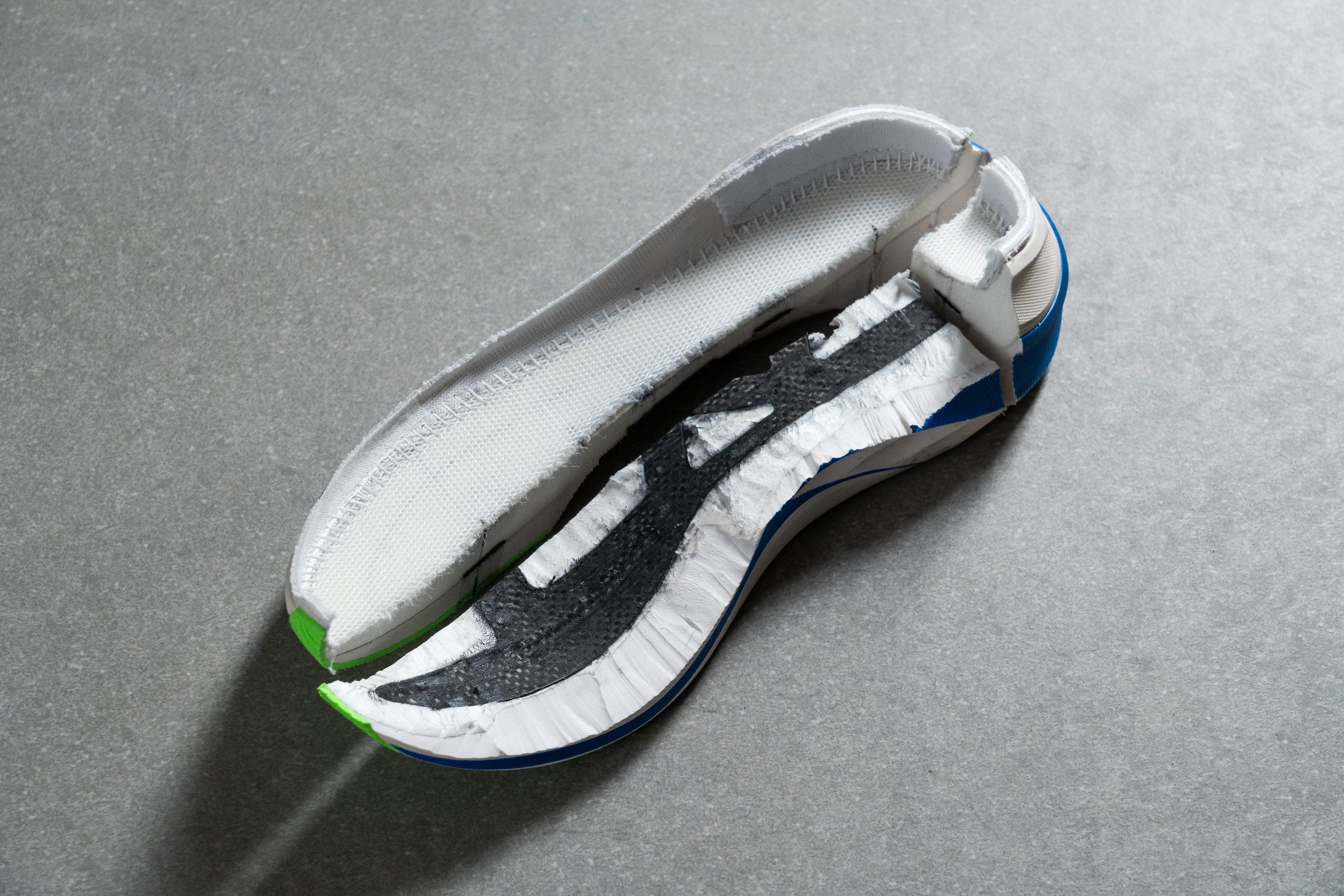
As for the carbon plate, this is anything but a basic implementation, and we dug deep into the midsole to expose the full design. Our investigation revealed a familiar H-shaped approach from HOKA, one we've seen before in models where stability takes priority over outright speed.
That choice makes perfect sense here. Rather than chasing an aggressive race-day feel, the plate is engineered to enhance guidance and control.
Size and fit
Size
HOKA Skyward X 2 fits slightly small (18 votes).
Internal length
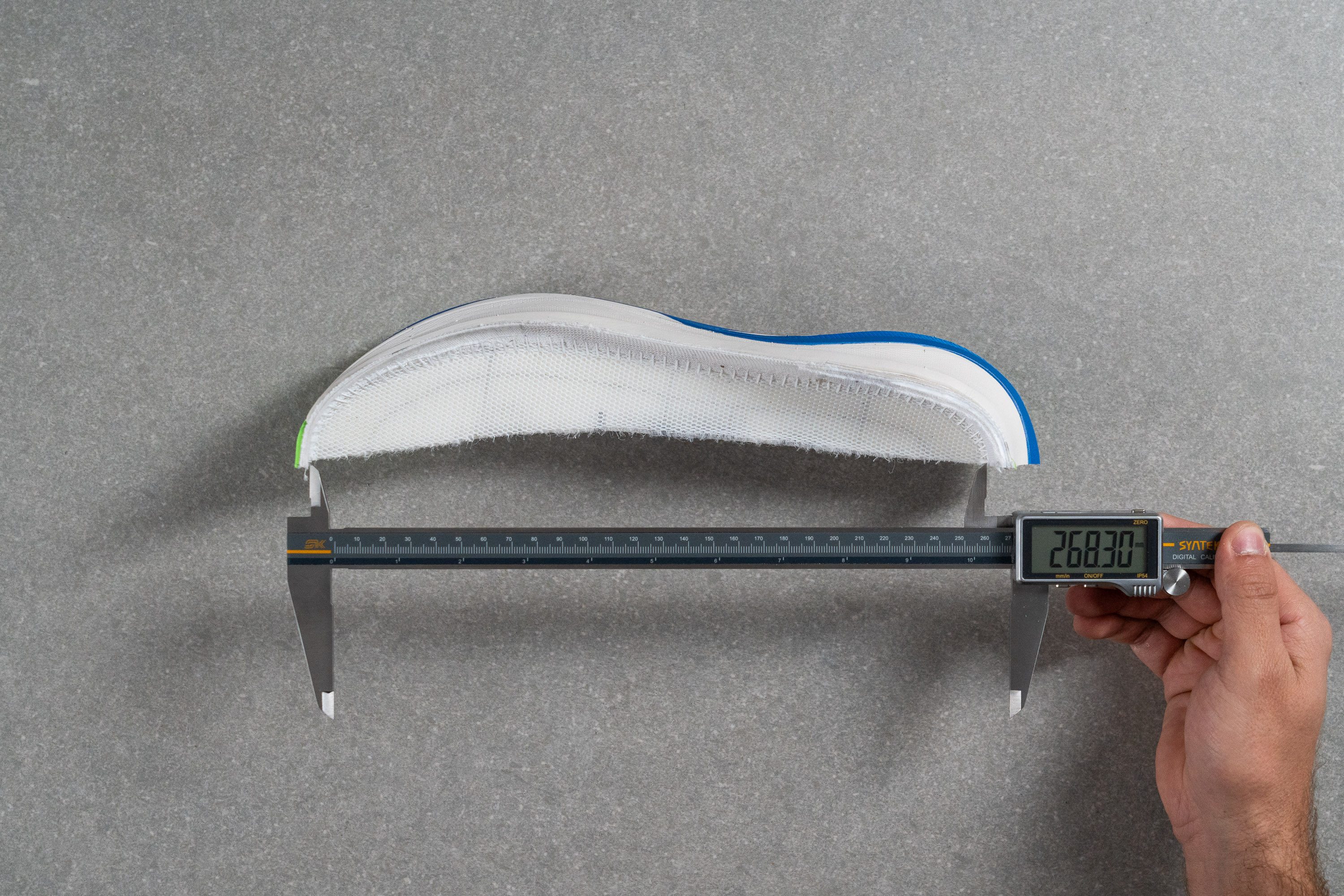
| Skyward X 2 | 268.3 mm |
| Average | 269.3 mm |
Width / Fit
During our test runs, the Skyward X 2 delivered the unmistakable fit we've come to expect from HOKA, one that leans more toward a snug and secure feel than a spacious one.
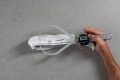
To verify our impression, we created a gel cast of the shoe and took our usual three measurements. The first result came in at 94.6 mm, slightly below the lab average and fully aligned with the fit we experienced on the run.
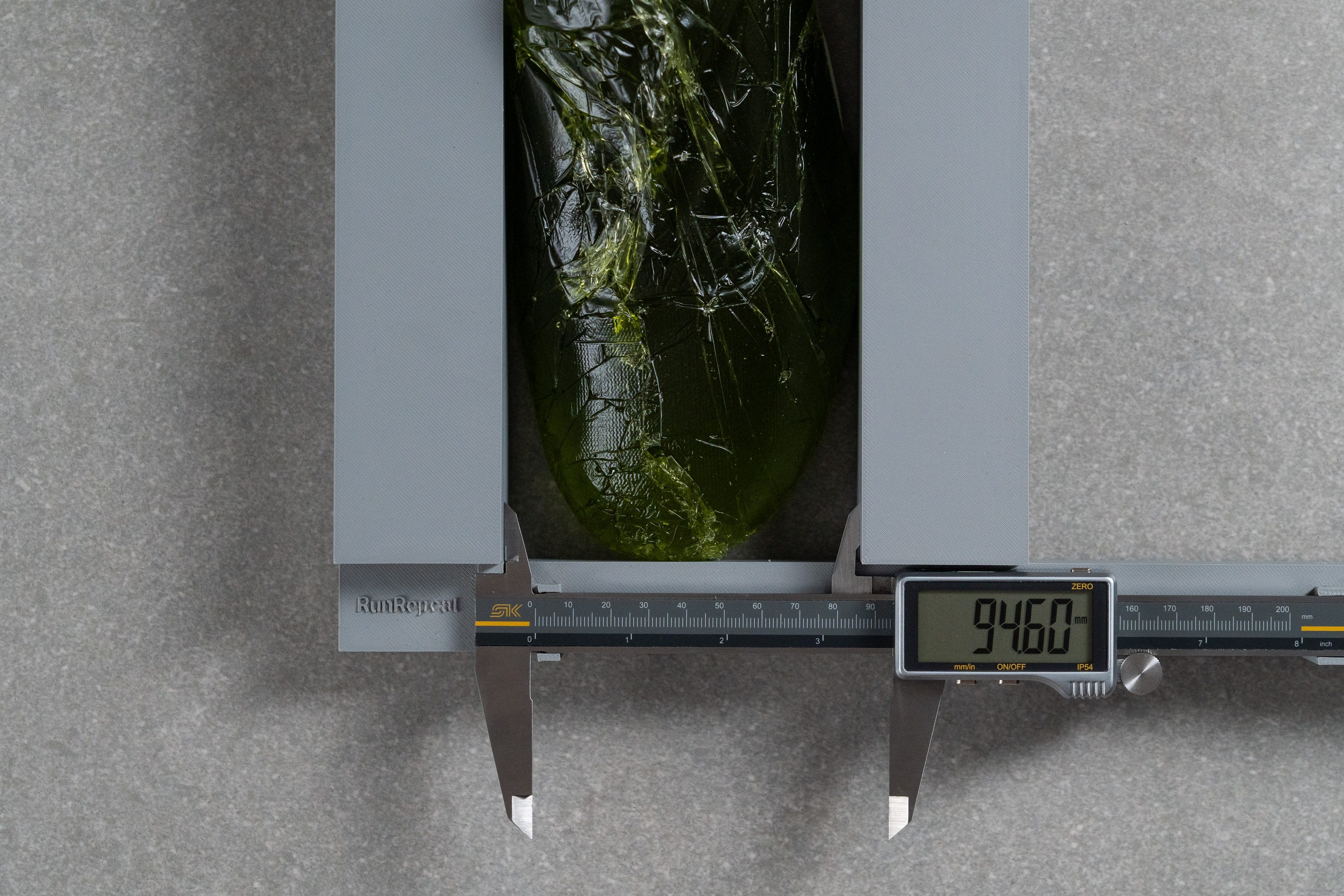
| Skyward X 2 | 94.6 mm |
| Average | 95.2 mm |
Toebox width
Our second measurement pointed in the same direction. At 72.7 mm, the toebox remains slightly narrower than average, reinforcing the secure and moderately snug fit.
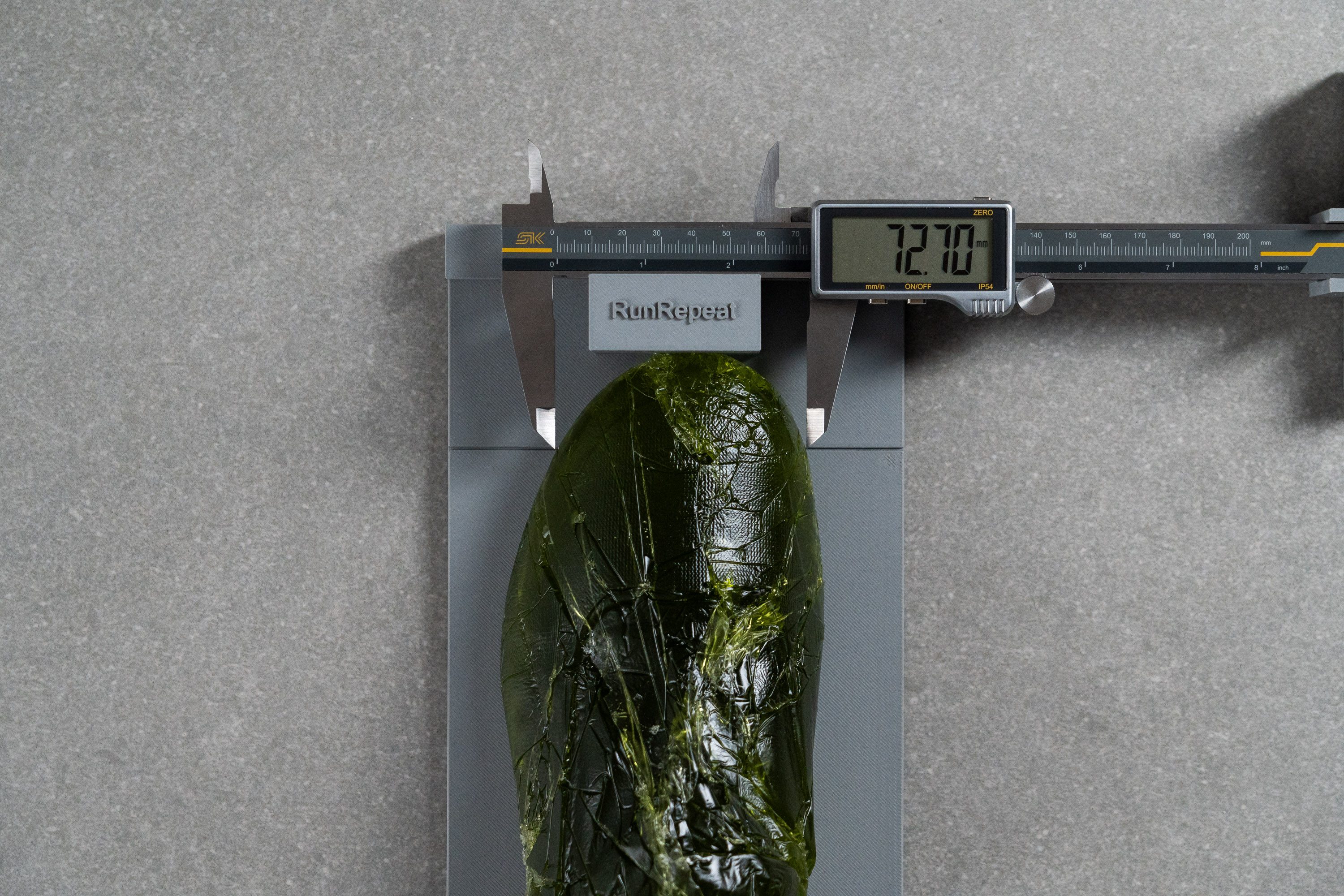
| Skyward X 2 | 72.7 mm |
| Average | 73.2 mm |
Toebox height
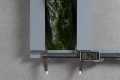
We recorded a generous 28.4 mm of vertical space, and comfort was never an issue throughout our test runs.
Interestingly, that figure matches the previous version exactly, showing that HOKA saw no reason to change a proven design.
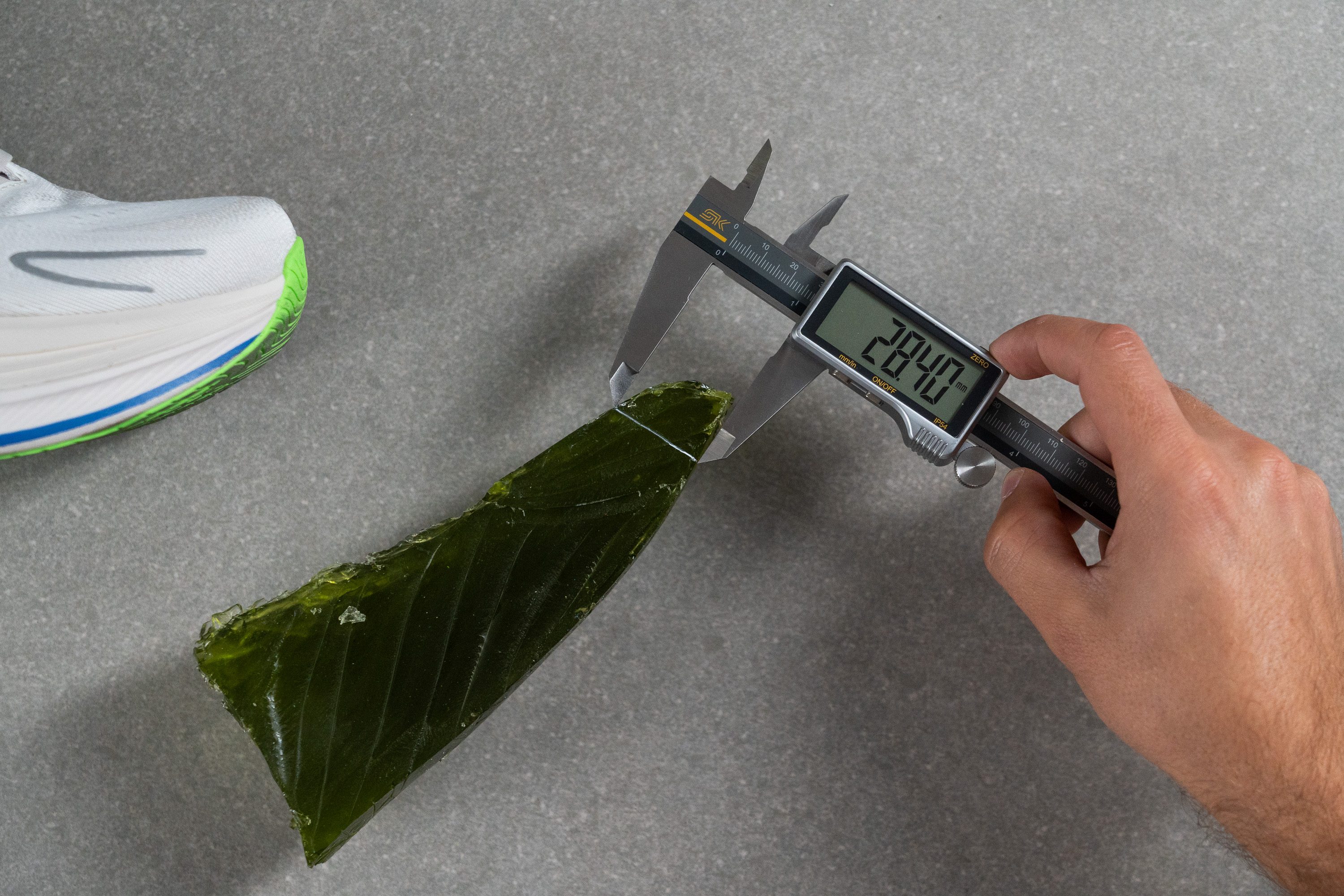
| Skyward X 2 | 28.4 mm |
| Average | 27.0 mm |
Traction / Grip
Traction test
With a coefficient of friction of 0.61, the HOKA Skyward X 2 performed clearly above the lab average. Based on our testing, it delivers reliable grip on wet pavement while feeling especially confidence-inspiring in dry conditions, making it a dependable choice for everyday running.
| Skyward X 2 | 0.61 |
| Average | 0.53 |
Outsole design
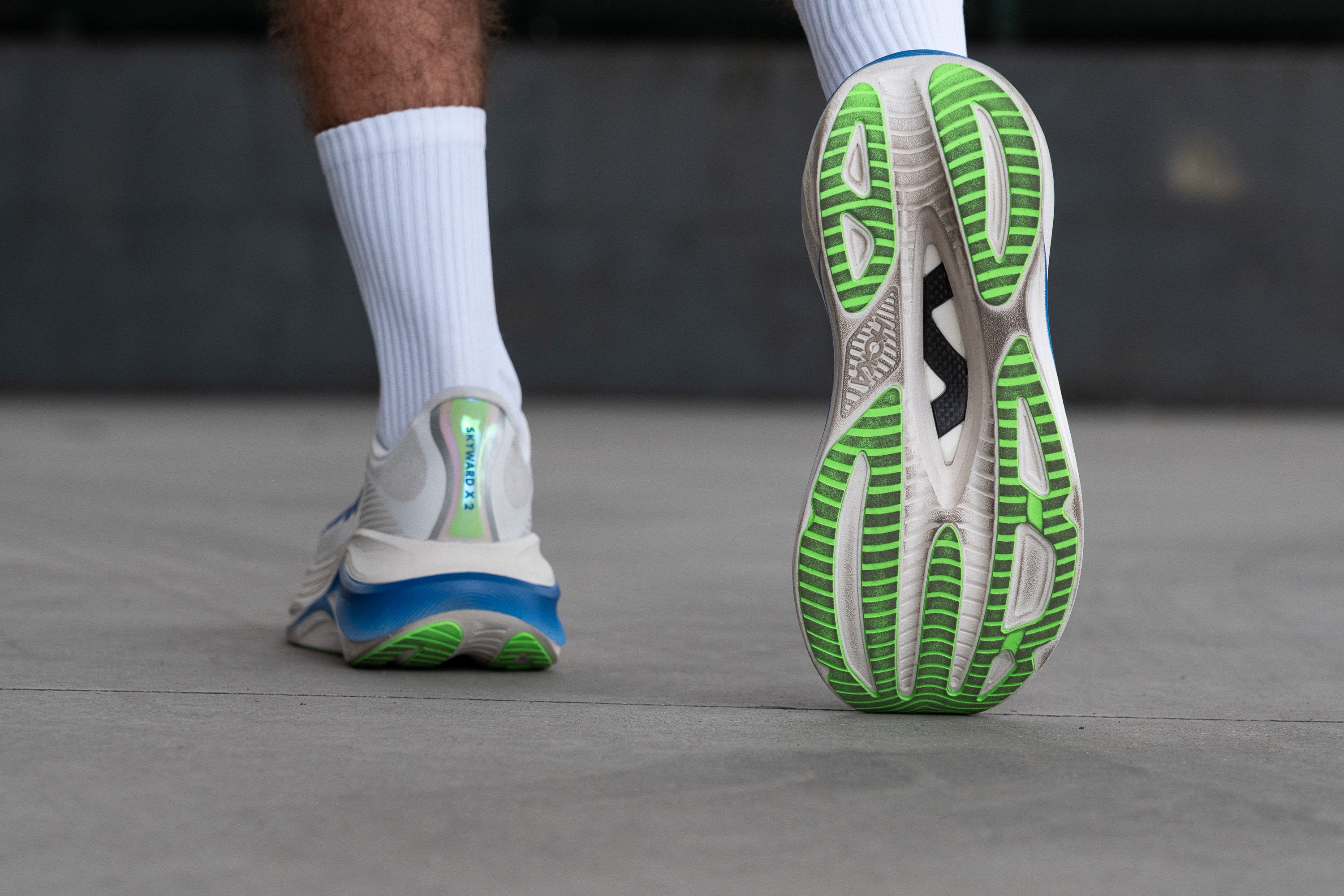
We were genuinely surprised by the outsole design of the Skyward X 2. It marks a clear departure from HOKA's usual approach and, in our view, bears a striking resemblance to something Saucony might have developed a few years ago.
Beyond appearances, the design works well. It provides generous rubber coverage across all key impact zones, and we found it noticeably more protective than several competing max-cushioned shoes.
Flexibility / Stiffness
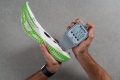
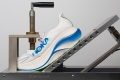
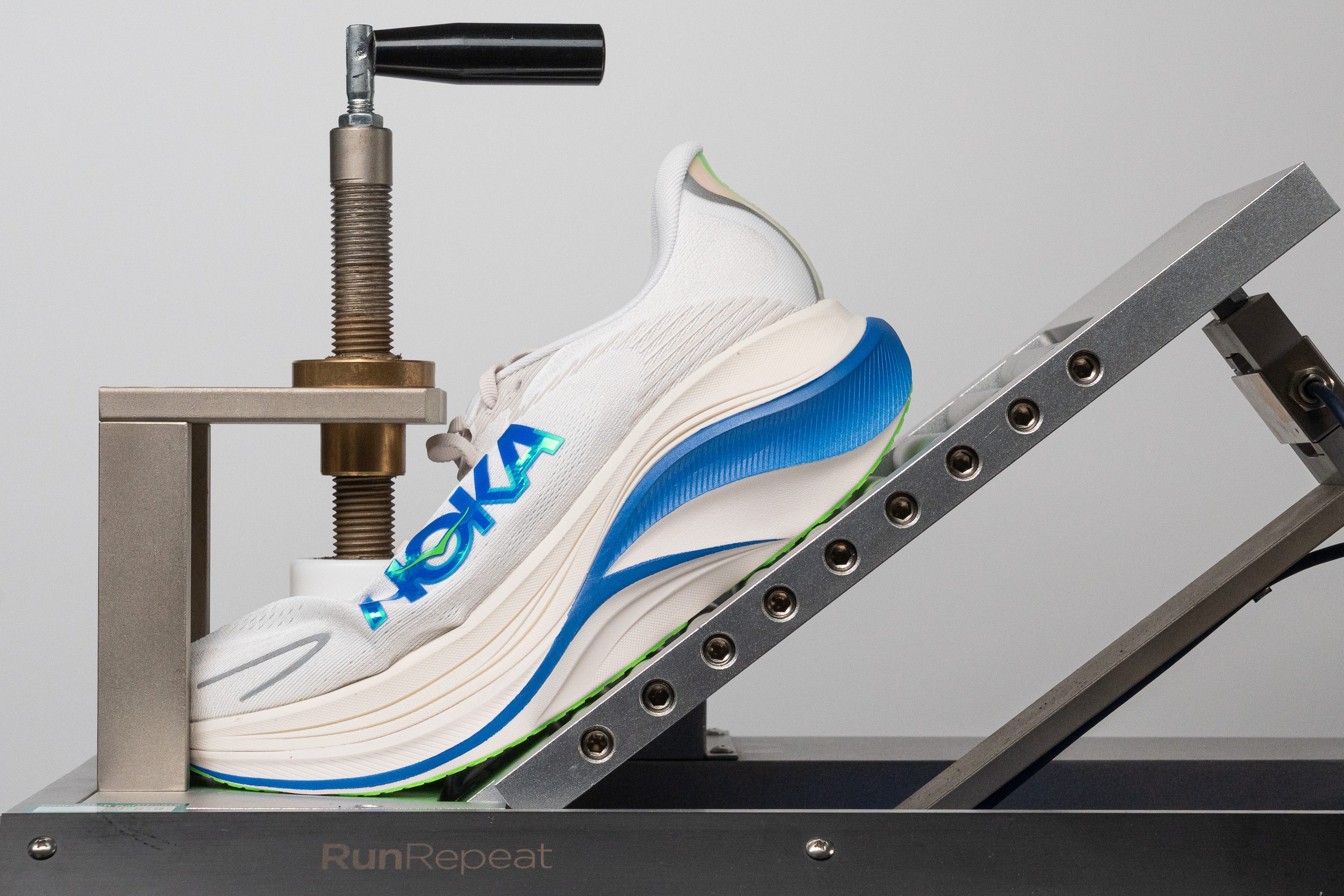
As expected from its towering build and carbon-plated design, the Skyward X 2 is exceptionally stiff.
In our 30-degree bending test, it required 23.0N of force, a result that places it among the most rigid shoes we've evaluated in the lab and confirms that it's far from an ideal choice for runners seeking a flexible and free-moving ride.
| Skyward X 2 | 23.0N |
| Average | 15.5N |
Weight
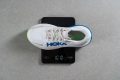
Price aside, the biggest criticism of the original Skyward X was its excessive weight.
HOKA addressed that concern by trimming roughly 9% of the bulk, bringing the Skyward X 2 down to 10.1 oz or 286g. While it still sits firmly on the heavier side of the spectrum, we think the final weight feels much more reasonable when viewed in the context of this max-stack design.
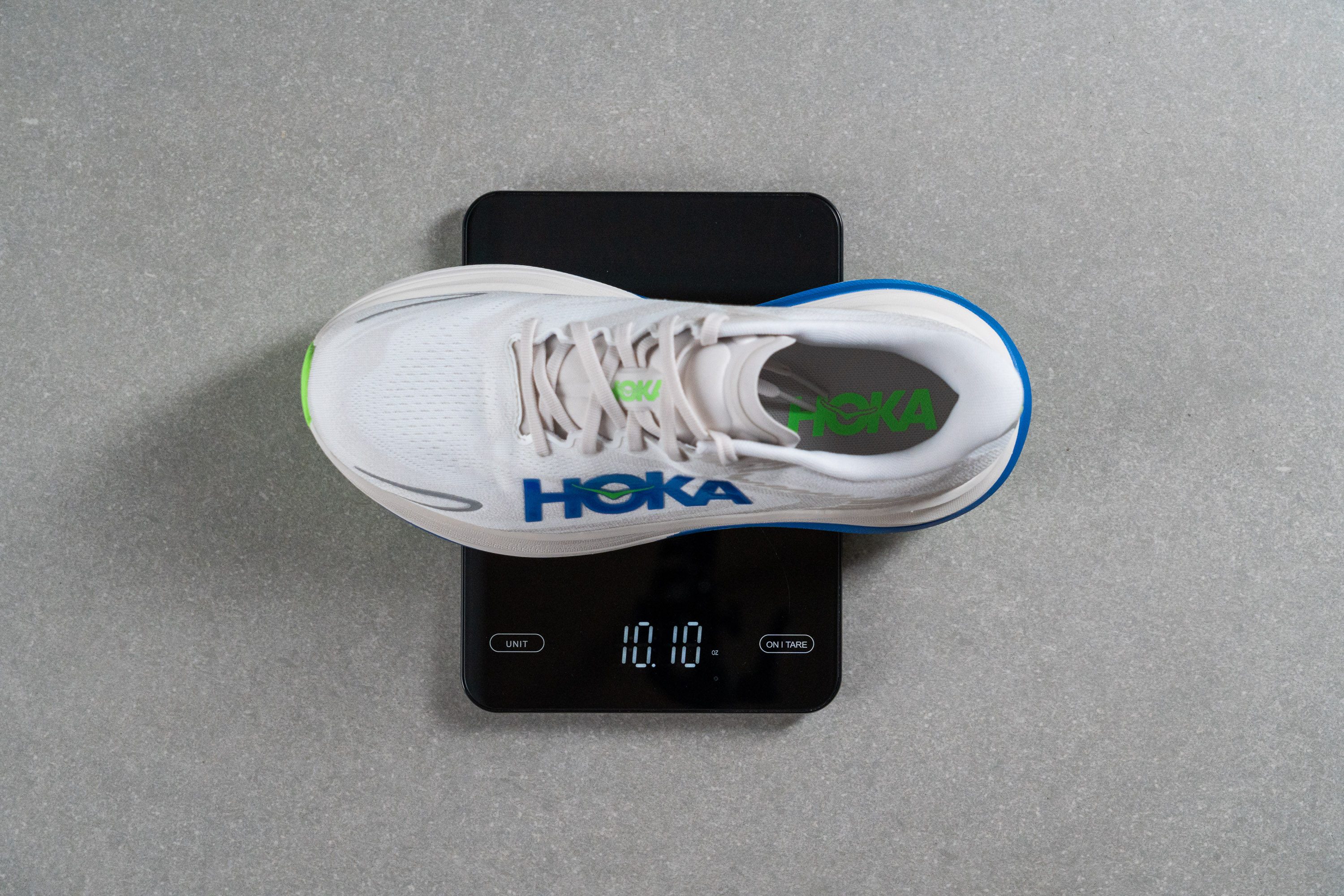
| Skyward X 2 | 10.1 oz (286g) |
| Average | 9.2 oz (261g) |
Breathability
Breathability test
UpdatedWe were pleased to discover that the Skyward X 2's soft and comfy jacquard mesh upper doesn't compromise the overall breathability of the shoe.
After our three-hour chamber test, it achieved a strong 74 BR score, confirming that this max-cushioned giant does an effective job of moving moisture away from the foot and helping maintain a dry in-shoe environment.
| Skyward X 2 | 74 BR |
| Average | 75 BR |
Drying potential
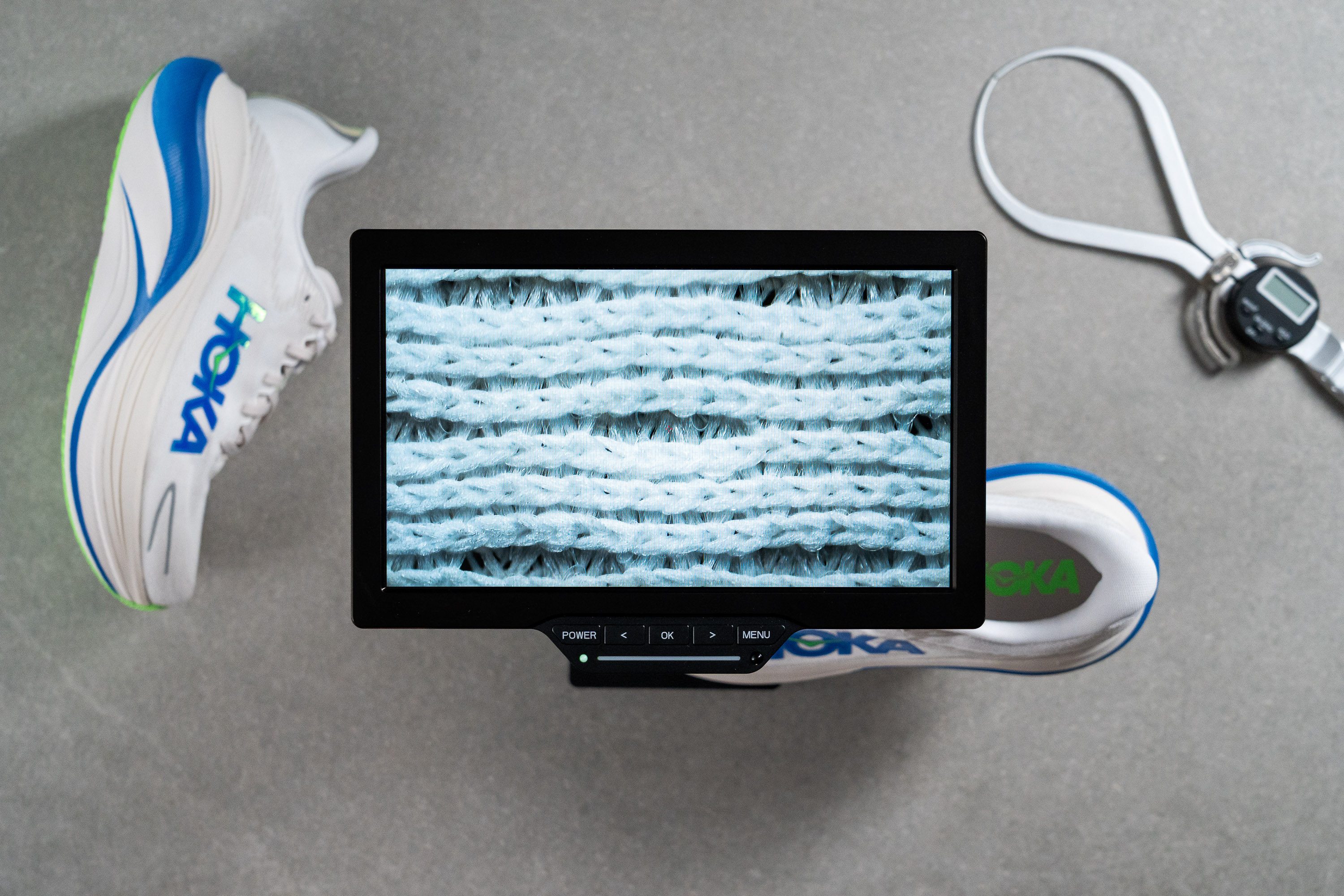
NewThe second test conducted in the same chamber delivered another encouraging result. Once the three-hour cycle was complete, we found that the Skyward X 2 had evaporated 57% of the accumulated moisture, a strong performance!
| Skyward X 2 | 57% |
| Average | 53% |
Stability
Lateral stability test
The transformation we've seen in the running shoe industry over the last few years has been remarkable. Not long ago, a shoe over 40 mm of stack height would have been considered wildly unstable, yet models like the Skyward X 2 prove just how far design has evolved.
Thanks to its towering midsole sidewalls, ultra-wide platform, and plate-assisted ride, HOKA has created a surprisingly supportive experience despite the massive amount of foam underfoot. In our opinion, even runners with mild to moderate pronation can enjoy this shoe with confidence.
Torsional rigidity
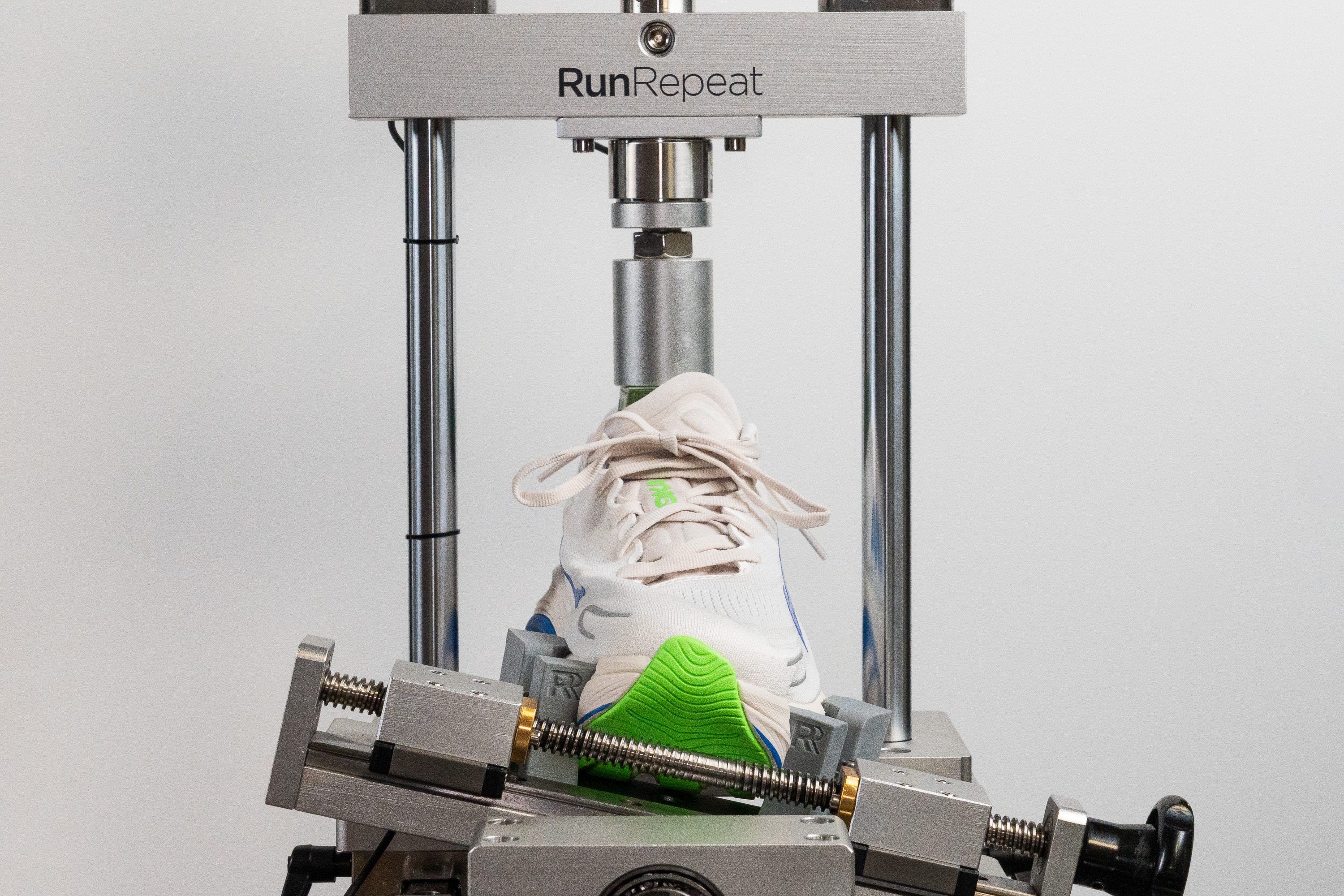
Another major contributor to the stable ride is the shoe's exceptional torsional rigidity. Requiring 19.0 Nm of force in our test, the Skyward X 2 proved extremely resistant to twisting, a result that helps keep the platform controlled and confidence-inspiring underfoot.
Like we said before, fans of natural-feeling shoes may find it overly rigid, but this design works remarkably well from a stability perspective.
| Skyward X 2 | 19.0 Nm |
| Average | 14.3 Nm |
Heel counter stiffness
The heel counter follows the same trend. It doesn't reach the maximum level of rigidity, scoring 4/5 in our assessment, but it still provides a substantial amount of rearfoot support. Therefore, heel strikers seeking extra guidance should find plenty to like here.
| Skyward X 2 | 4 |
| Average | 3 |
Midsole width - forefoot
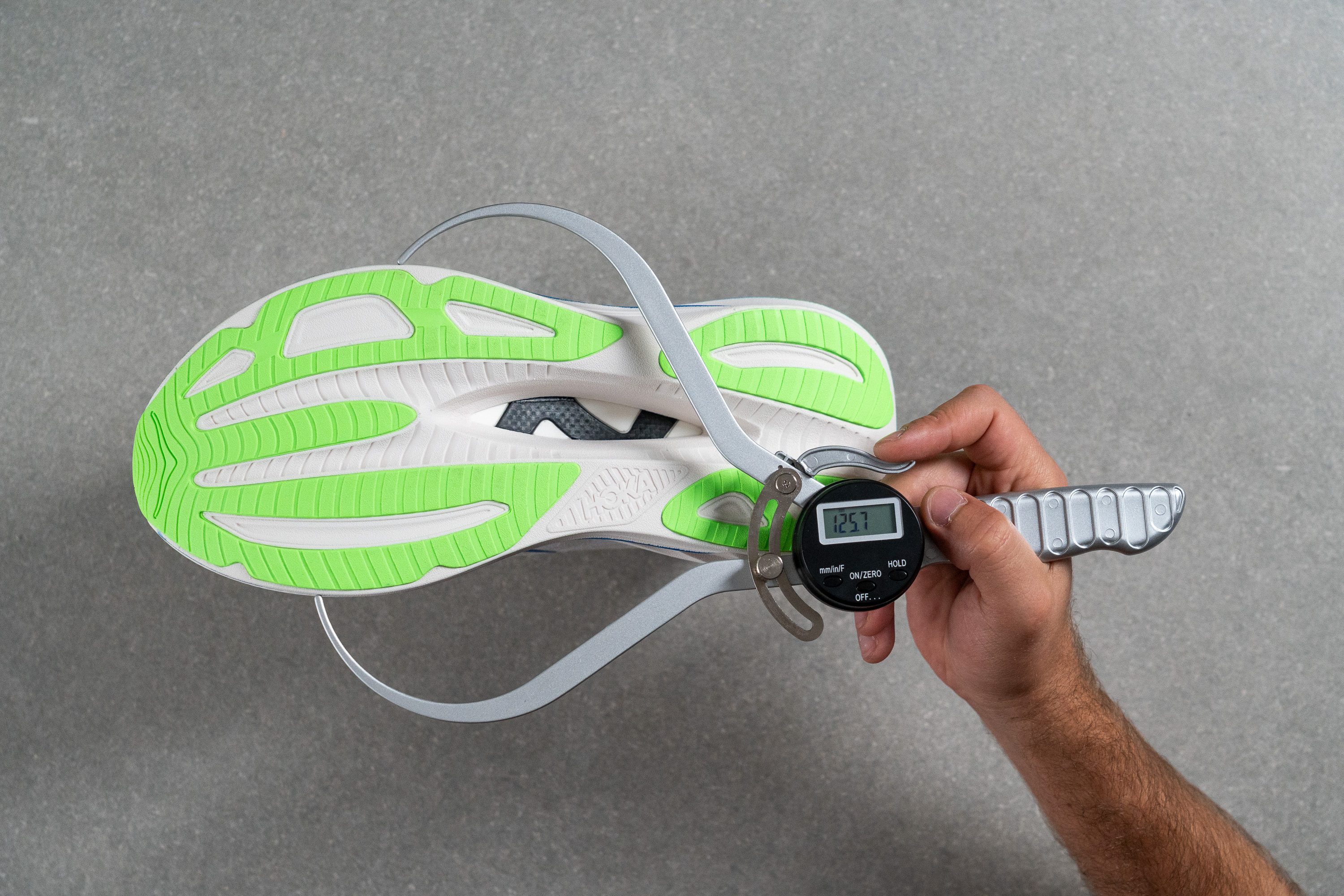
Now we get to the main reason why the Skyward X 2 feels so remarkably stable underfoot. With a forefoot platform measuring 125.7 mm, this shoe is simply enormous, providing an exceptionally broad base that helps keep all that foam under control.
It's 2 mm wider than the previous generation. And even more impressively, at the time of this review, fewer than 10 shoes out of ~500 we've tested featured a wider forefoot platform. That's a crazy result in our lab!
| Skyward X 2 | 125.7 mm |
| Average | 115.1 mm |
Midsole width - heel
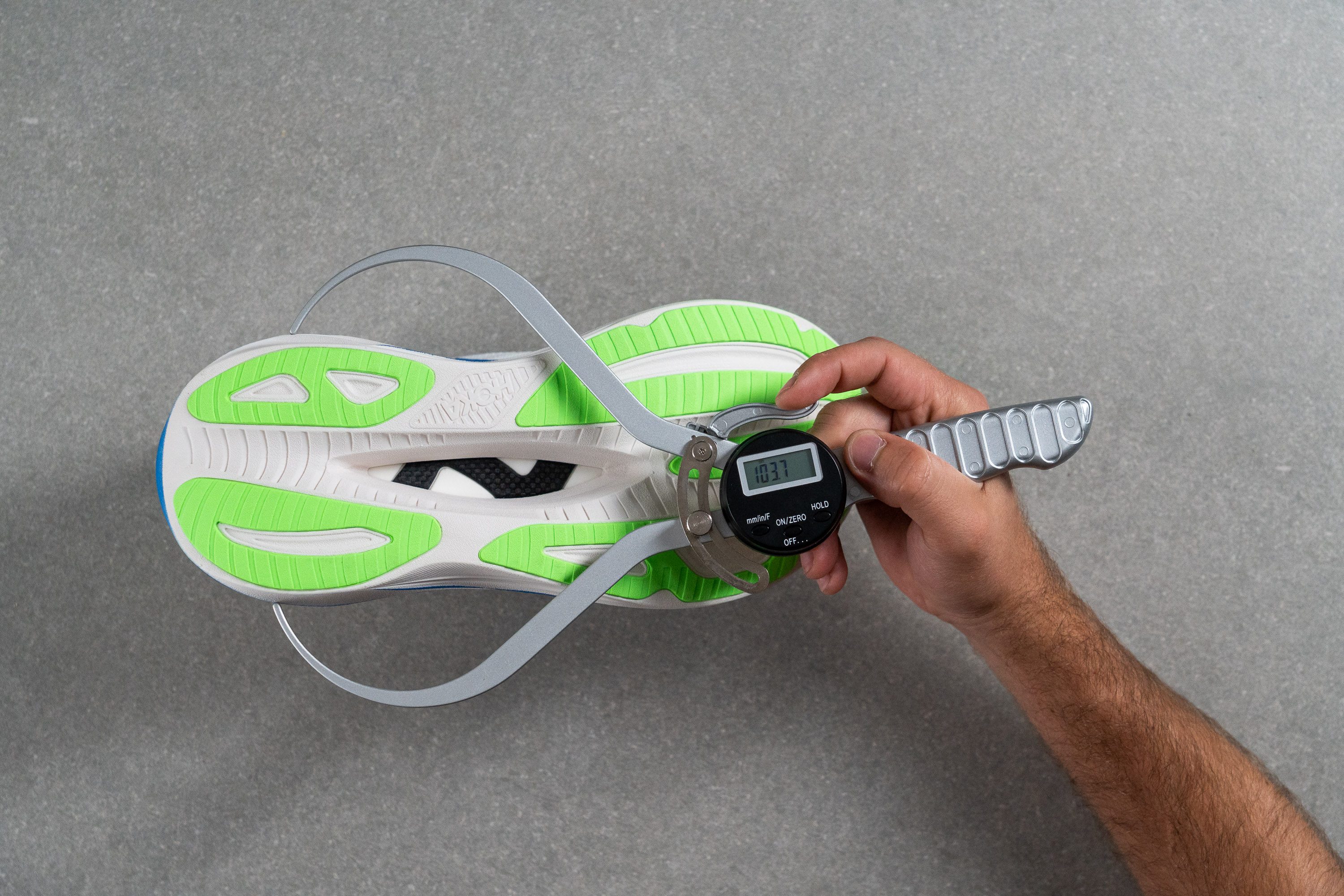
The heel follows the same design philosophy we observed in the forefoot, stretching to an enormous 103.7 mm. Once again, HOKA expanded the platform compared to the original Skyward X, this time by a substantial 3.6 mm, further reinforcing the shoe's ultra-stable feel.
| Skyward X 2 | 103.7 mm |
| Average | 91.1 mm |
Durability
Toebox durability
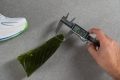
In our first durability test, the toebox held up well against the Dremel's abrasive attack, earning a respectable 3/5 score.
| Skyward X 2 | 3 |
| Average | 2.6 |
Heel padding durability
A 2/5 score in our heel padding durability test is a disappointing result and falls well below the lab average. Therefore, runners who frequently wear through the lining in this area should take note, as the Skyward X 2 may show signs of wear sooner than expected.
| Skyward X 2 | 2 |
| Average | 3.4 |
Outsole durability
We're back in positive territory here, as the outsole delivered a solid durability result. Our Dremel test removed just 0.9 mm of rubber, a reassuring outcome that suggests strong long-term wear resistance.
| Skyward X 2 | 0.9 mm |
| Average | 1.1 mm |
Outsole thickness
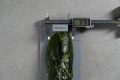
HOKA clearly prioritized weight savings here, opting for a much thinner outsole at only 2.1 mm.
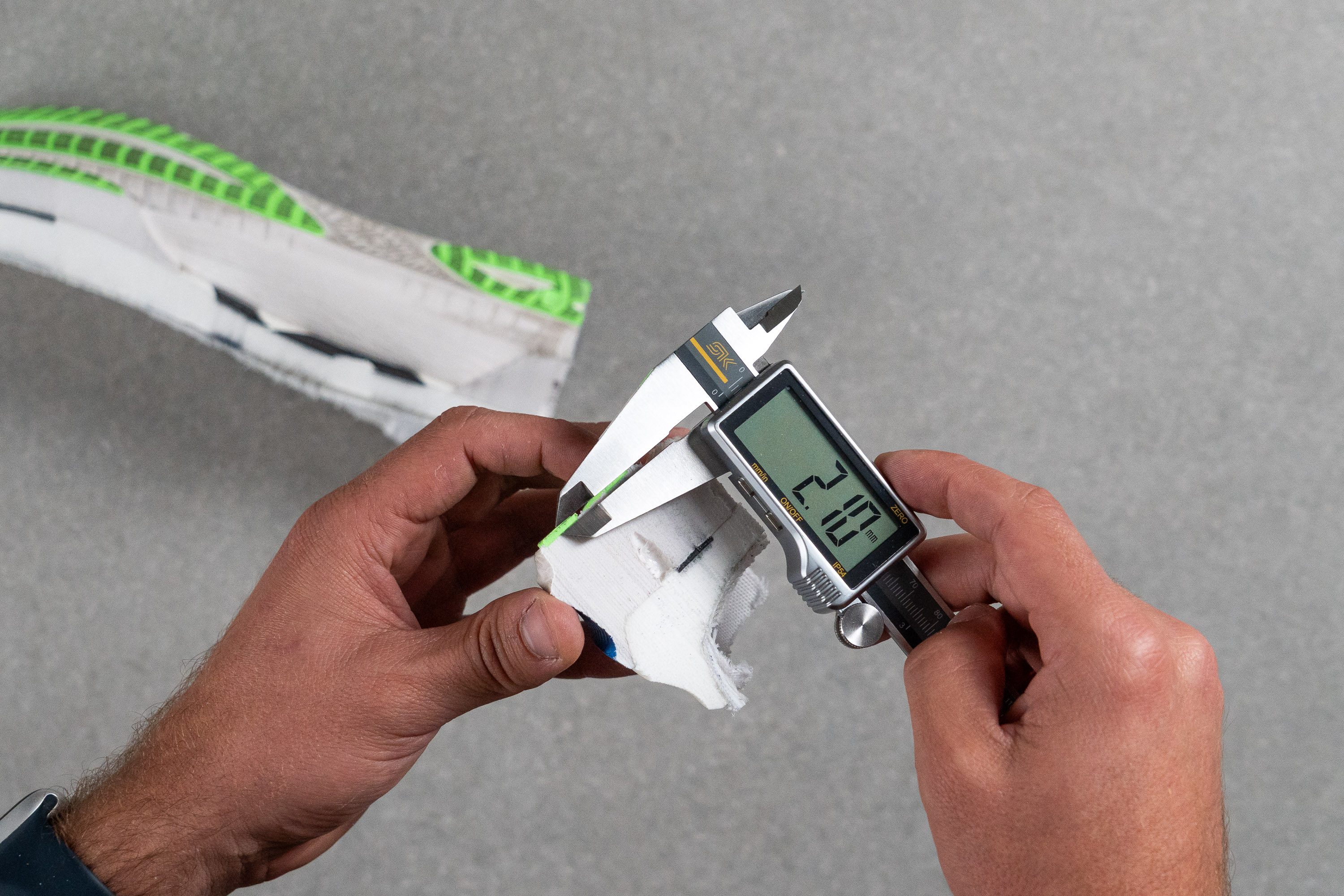
| Skyward X 2 | 2.1 mm |
| Average | 3.1 mm |
Misc
Insole thickness
We measured the insole at 4.4 mm thick, which lands almost exactly in line with the average. In other words, there's nothing particularly unusual or noteworthy about it.
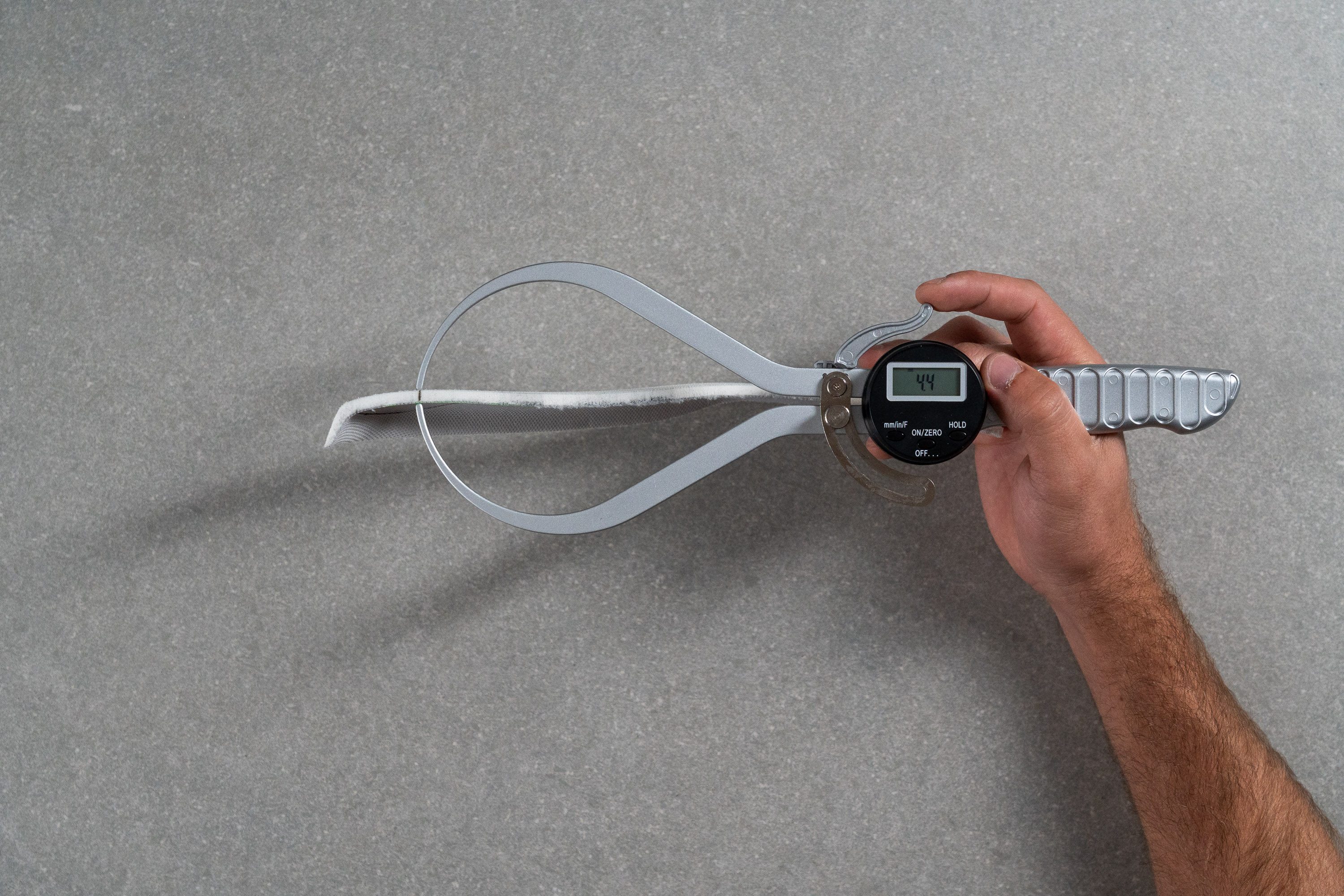
| Skyward X 2 | 4.4 mm |
| Average | 4.4 mm |
Removable insole
The insole is removable, although replacing it may come with a trade-off. Most aftermarket options won't replicate the raised sidewalls and bathtub-style design of the original, a feature that contributes an extra layer of stability to the overall ride.
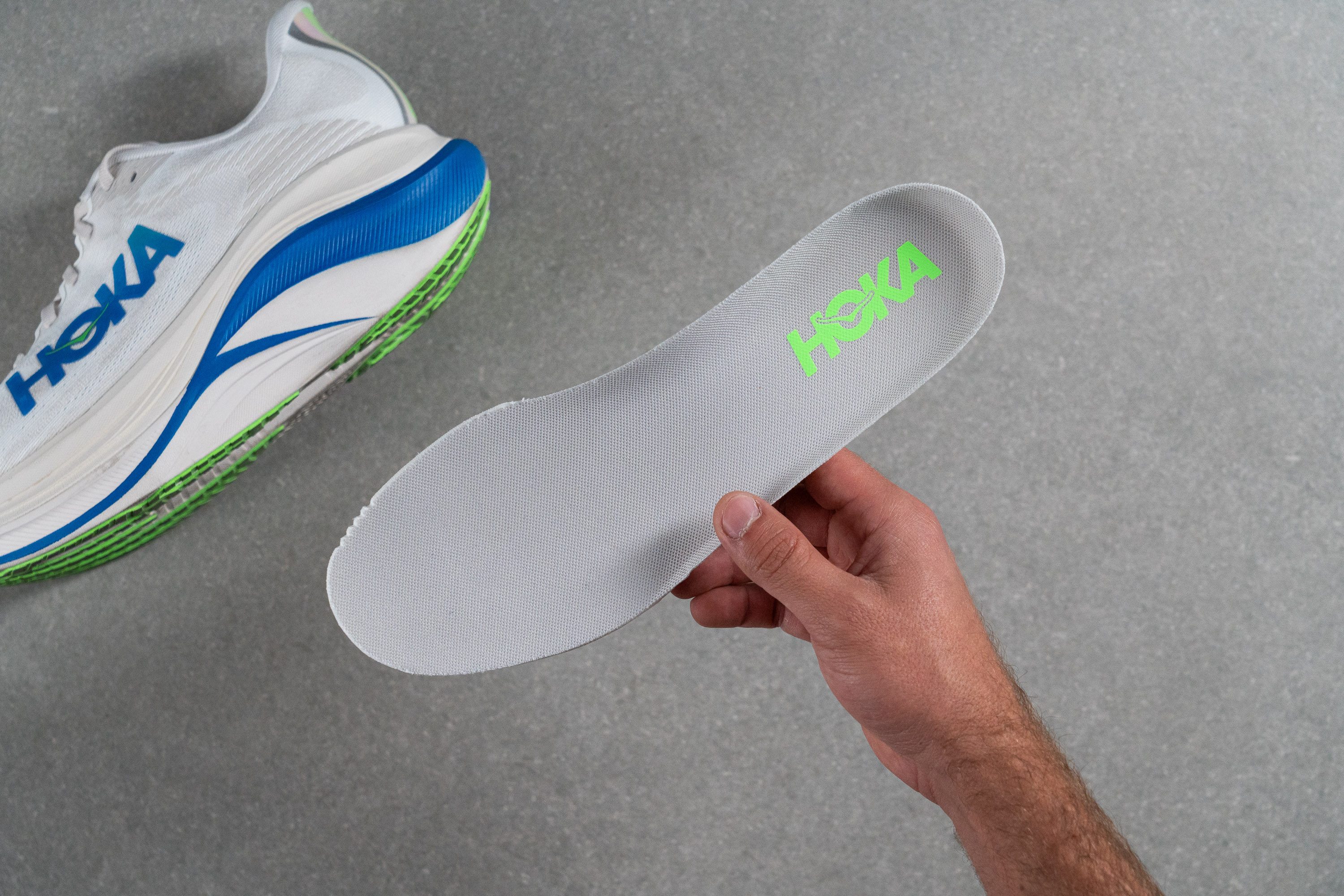
| Skyward X 2 | Yes |
Reflective elements
HOKA included a pair of reflective elements, and they proved effective enough for the Skyward X 2 to earn a pass in this test.
| Skyward X 2 | Yes |
Tongue padding
We found the lacing system to be simple yet highly effective, combining classic punched eyelets with an extra top eyelet that allows to use alternative lacing techniques for a more personalized fit.
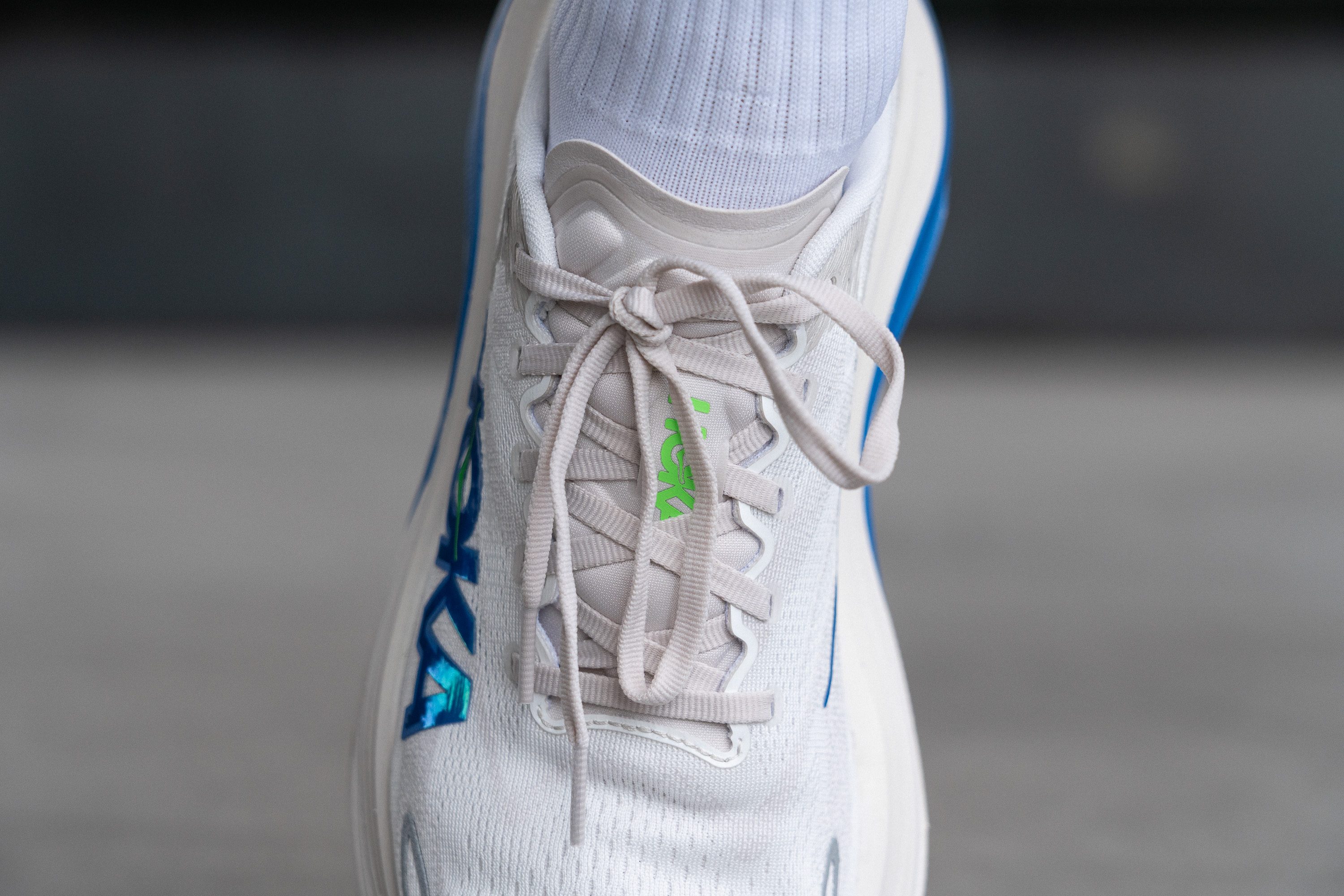
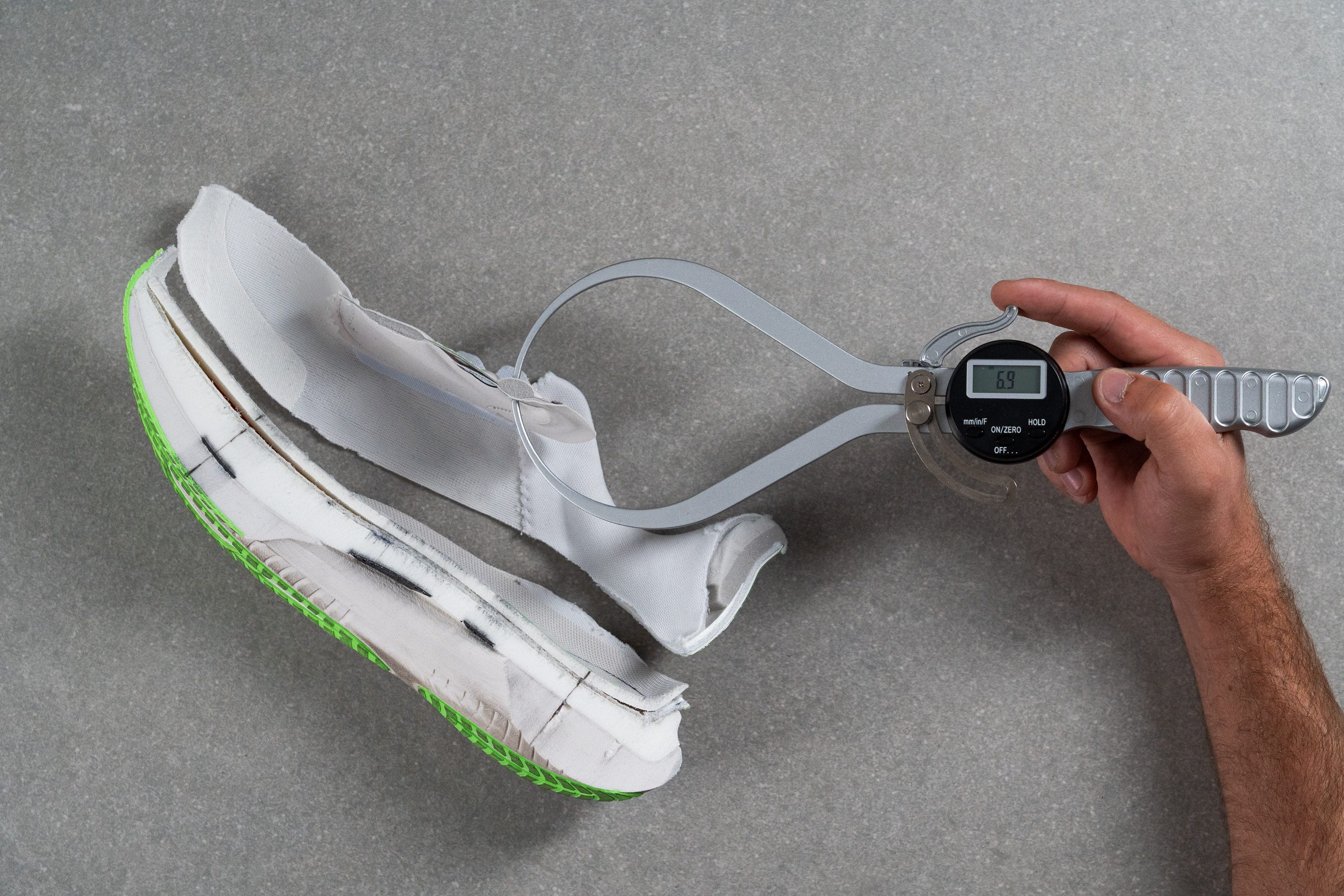
As for the tongue, the 6.9 mm measurement may suggest a heavily-padded design at first glance. However, most of that foam is concentrated in a small area to keep weight under control. Therefore, we recommend tightening the laces primarily over the padded sections to maximize comfort and avoid unwanted pressure across the instep.
| Skyward X 2 | 6.9 mm |
| Average | 5.8 mm |
Tongue: gusset type
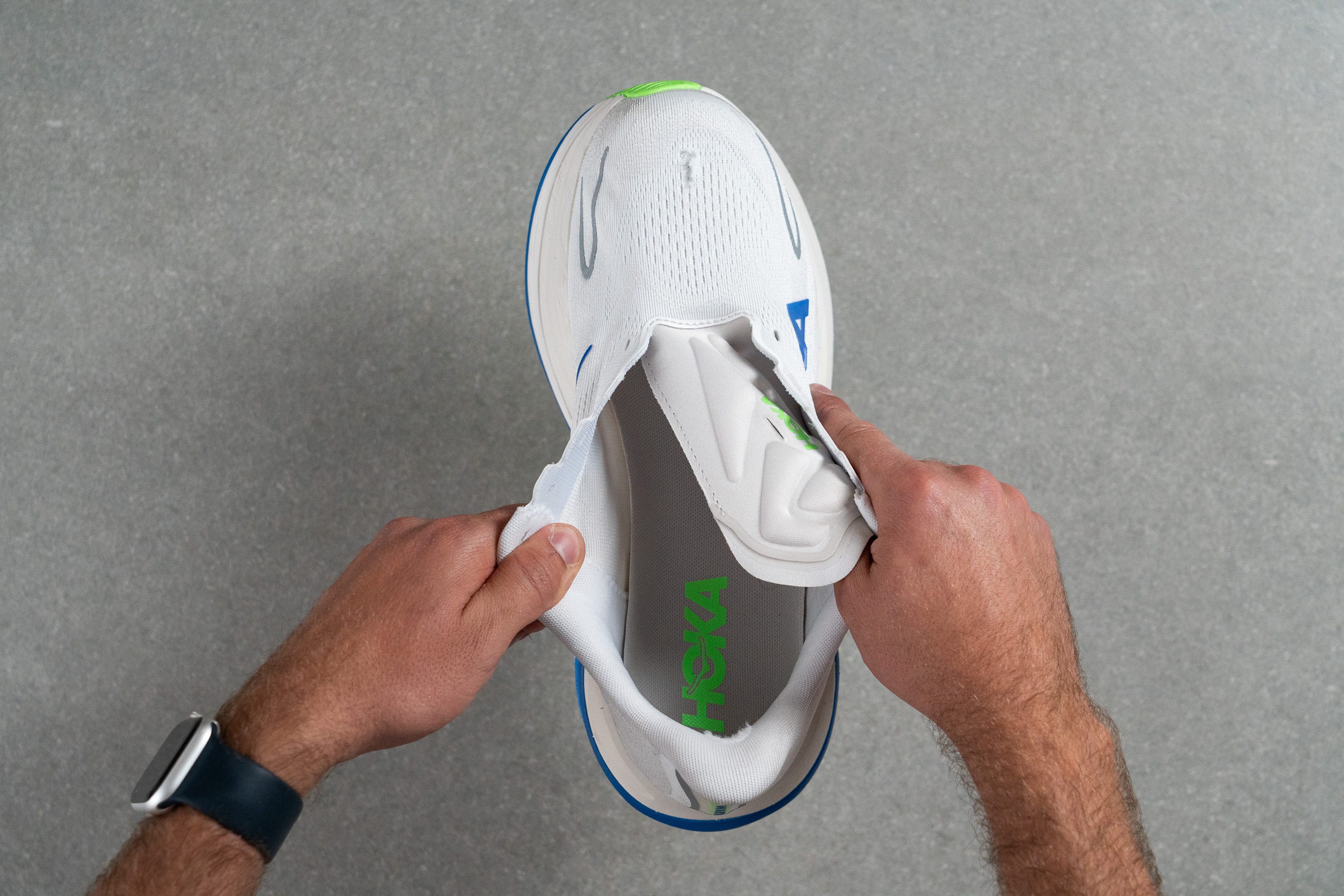
Like most HOKA models, the Skyward X 2 delivers excellent midfoot lockdown, and we experienced zero tongue shifting during our runs.
However, we still believe that omitting a gusseted tongue is a questionable choice at this price point, and one that some runners may find hard to overlook.
| Skyward X 2 | None |
Heel tab
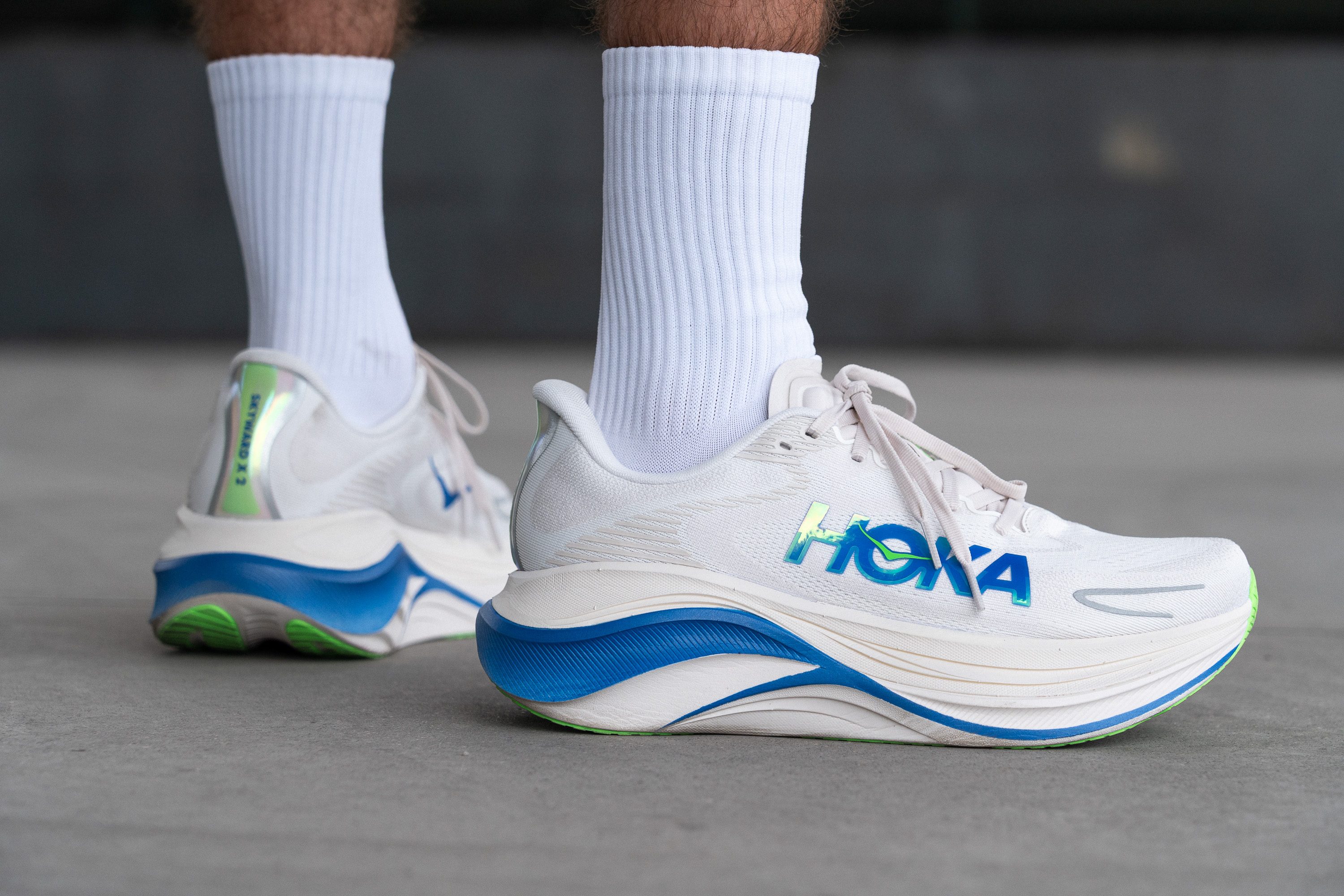
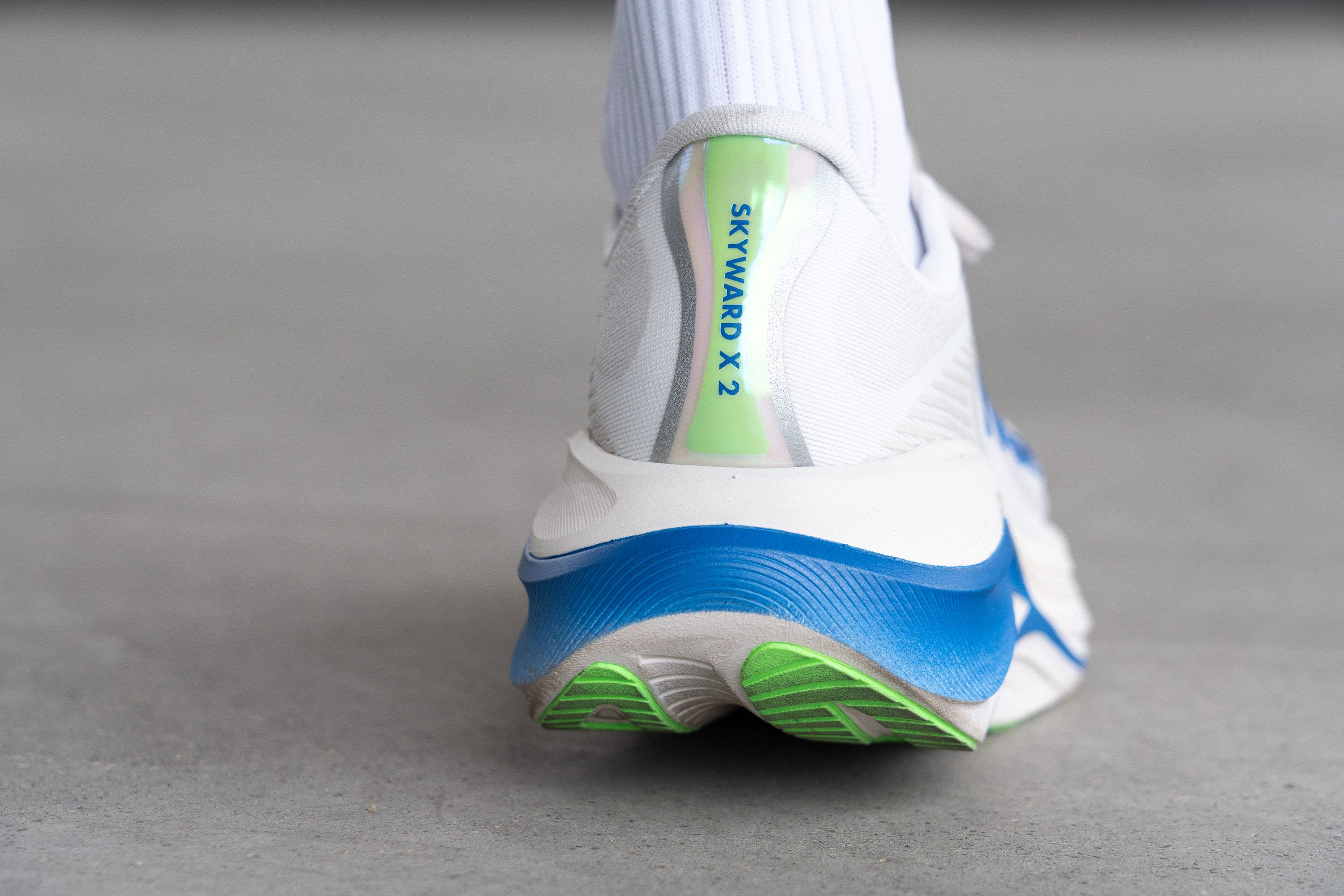
The heel skips the increasingly common pull tab and instead features the model name prominently displayed, just in case you need a reminder of what you spent your money on.
| Skyward X 2 | None |
Price
The Skyward X 2 carries a premium price tag, and that's a real problem. Given its limited versatility, runners focused primarily on easy miles may find better value in more affordable max-cushioned alternatives. At the same time, those willing to spend over $200 will likely expect a shoe capable of handling a wider range of paces and workouts.
As a result, the Skyward X 2 occupies a fairly narrow niche. However, that is probably not a concern for HOKA. In fact, we assume the original model performed well enough to justify a second generation...
| Skyward X 2 | $225 |
| Average | $158 |