
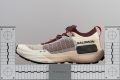

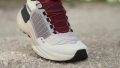
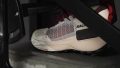

Nuestra conclusión
- Grava 62
- Versátiles 86
- Técnico 75
Pros
- Muy ligeras
- Upper MATRYX premium
- Muy buen cierre
- Lengüeta mullida y bien acolchada
- Sistema de cordones Quicklace rápido y eficaz
- Para correr y para hacer senderismo
- Suela Contagrip versátil con una placa antirrocas
- Estética única
- Muy buenas sensaciones en las bajadas rápidas
Contras
- A la mediasuela de EVA le falta rebote
- Caras para la tecnología que ofrecen
- La durabilidad del upper podría ser mejor
- Transpirabilidad baja
Premios
- Top 28% entre zapatillas de running para barro / terreno blando
Comparativa
Las zapatillas de running más parecidas
+ + Añadir unas zapatillas | |||||
|---|---|---|---|---|---|
| Nuestra puntuación | 84 Geniales | 83 Geniales | 81 Geniales | 81 Geniales | |
| Precio | 200 € | 165 € | 150 € | 140 € | |
| Terreno de trail | Barro / Terreno blandoVersátiles / Terreno de dificultad moderada | Terreno rocoso / técnicoBarro / Terreno blandoVersátiles / Terreno de dificultad moderada | Terreno rocoso / técnicoBarro / Terreno blandoVersátiles / Terreno de dificultad moderada | Terreno rocoso / técnicoBarro / Terreno blandoVersátiles / Terreno de dificultad moderada | |
| Absorción de impactos | Moderada | Moderada | - | Baja | |
| Retorno de energía | Moderado | Bajo | - | Bajo | |
| Tracción | Alta | Alta | - | - | |
| Sujeción arco del pié | Neutral | Neutral | Neutral | Neutral | |
| Peso laboratorio Peso marca | 8.8 oz / 249g 9.1 oz / 258g | 9.8 oz / 278g 9.8 oz / 278g | 10.2 oz / 289g 10.2 oz / 290g | 9.6 oz / 271g 10.2 oz / 290g | |
| Ligero | ✓ | ✗ | ✗ | ✗ | |
| Drop laboratorio Drop marca | 7.8 mm 8.0 mm | 11.5 mm 6.0 mm | 7.8 mm 6.0 mm | 3.0 mm 4.0 mm | |
| Técnica de carrera | Medio/antepié | Talón | Medio/antepié | Medio/antepié | |
| Talla | Tallan bien | Tallan bien | Media talla más pequeñas | Tallan bien | |
| Rigidez de la mediasuela | Equilibrada | Equilibrada | - | - | |
| Diferencia de la rigidez de la mediasuela en frío | Pequeña | Pequeña | Pequeña | Normal | |
| Placa | Rock plate | Rock plate | ✗ | ✗ | |
| Durabilidad de la parte delantera | Mala | Decente | Muy mala | Buena | |
| Durabilidad del acolchado del talón | Media | Media | Alta | Media | |
| Durabilidad de la suela exterior | Decente | Buena | Buena | Buena | |
| Transpirabilidad | Media | Media | Baja | Baja | |
| Anchura / ajuste | Media | Media | Ancha | Media | |
| Anchura de la parte delantera | Media | Estrecha | Ancha | Media | |
| Flexibilidad | Moderada | Moderada | - | Moderada | |
| Rigidez torsional | Moderadas | Moderadas | Moderadas | Rígidas | |
| Rigidez del contrafuerte del talón | Flexible | Moderado | Flexible | Flexible | |
| Profundidad del dibujo de la suela | 4.3 mm | 5.0 mm | 5.4 mm | 4.0 mm | |
| Altura de la suela en la zona del talón laboratorio Altura de la suela en la zona del talón marca | 31.9 mm 33.0 mm | 36.1 mm 32.0 mm | 34.2 mm 31.0 mm | 27.6 mm 31.0 mm | |
| Antepié laboratorio Antepié marca | 24.1 mm 25.0 mm | 24.6 mm 26.0 mm | 26.4 mm 25.0 mm | 24.6 mm 27.0 mm | |
| Anchuras disponibles | Estándar | EstándarAncho | EstándarAncho | Estándar | |
| Para corredores pesados | ✓ | ✗ | ✗ | ✗ | |
| Estación | Todas las estaciones | Todas las estaciones | Todas las estaciones | Invierno | |
| Plantilla extraíble | ✓ | ✓ | ✓ | ✓ | |
| Compatibles con plantillas personalizadas | ✓ | ✓ | ✓ | ✓ | |
| Clasificación | #147 Top 37% | #165 Top 42% | #213 46% inferior | #206 48% inferior | |
| Popularidad | #357 10% inferior | #152 Top 38% | #382 4% inferior | #294 26% inferior |
Who should buy
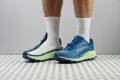
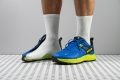
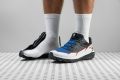
In our view, the S/Lab Genesis is an excellent choice for:
- Runners who enjoy a lightweight feel, whether for short runs, hiking, or ultra racing.
- Those seeking a versatile trail shoe that performs well on varied terrain, offering an exceptional lockdown... and who don’t mind the premium price.
- Salomon enthusiasts who loved the Genesis and now want its top-tier S/Lab version.
Who should NOT buy
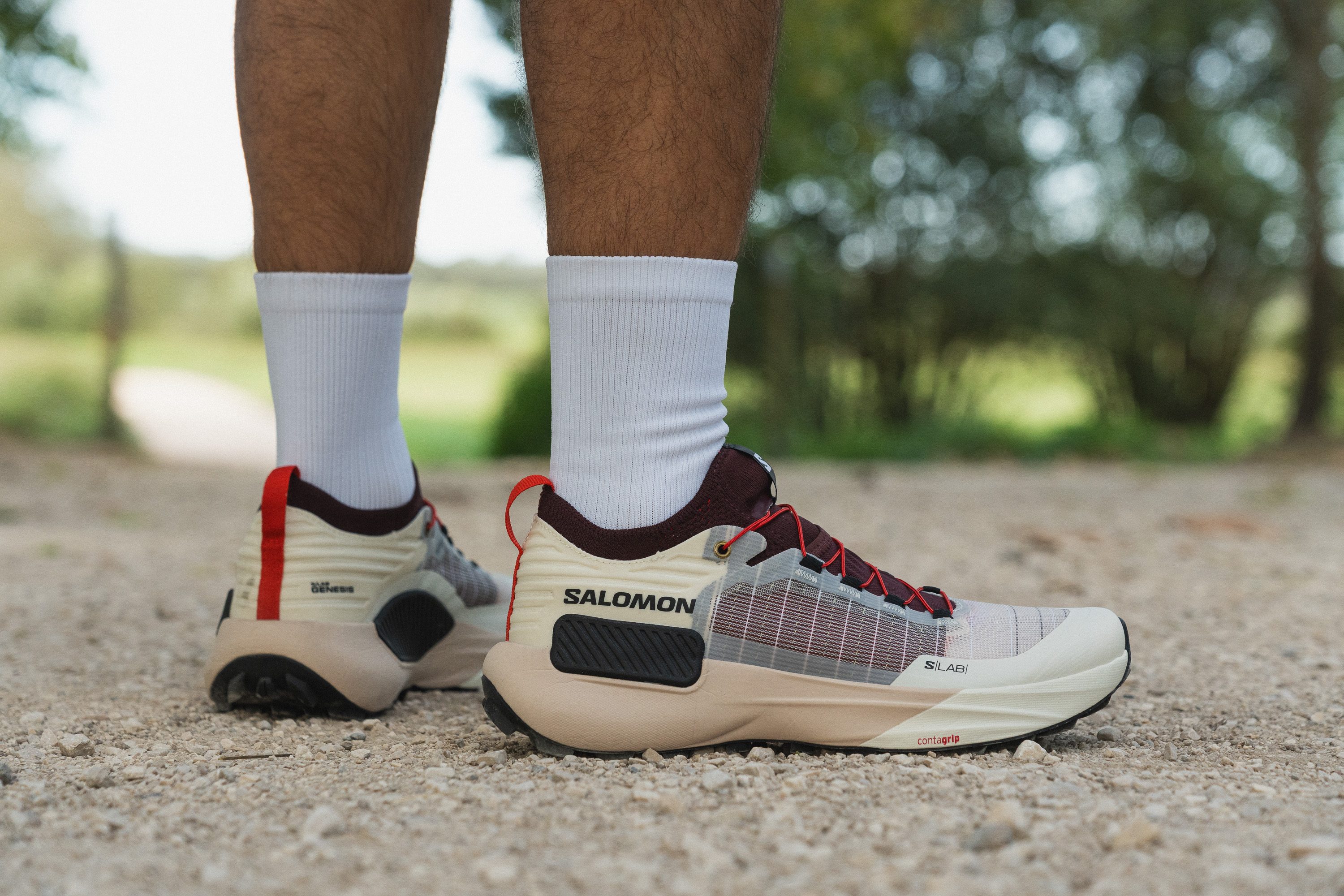
We believe the biggest problem with the S/Lab Genesis is right in its name. Much like S-Works for Specialized, the S/Lab badge signals top-tier innovation and materials, but also a high price. And we think runners could easily find better value in models like the HOKA Speedgoat 6 or Nike Wildhorse 10, which offer strong all-around performance while saving a decent amount of money.
After testing, we also found that the energy return is underwhelming for its price tag. The EVA-based foam simply can’t compete with PEBA or A-TPU compounds found in other high-performance trail shoes. Those who crave an energy-charged feel should consider the HOKA Tecton X 3 or adidas Terrex Agravic Speed Ultra instead.
Amortiguación
Shock absorption
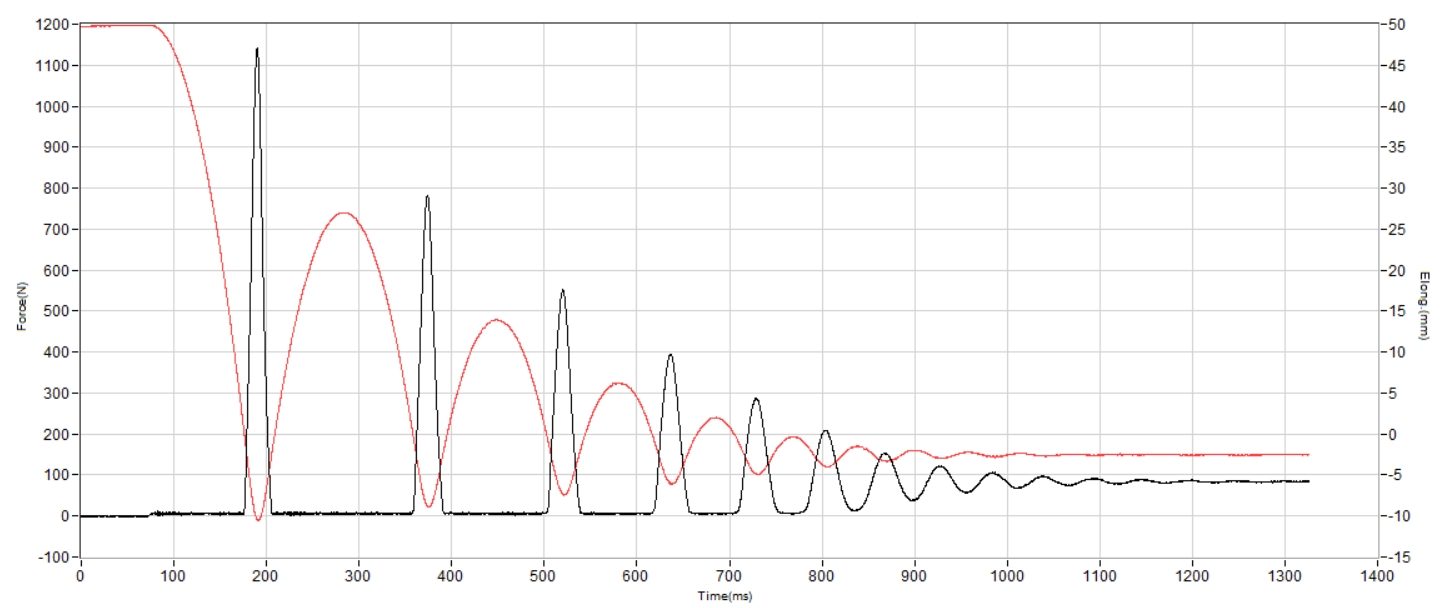
Based on our lab tests, we discovered that the S/Lab Genesis feels better suited for lightweight runners or those who don’t mind limited cushioning, as it scored 121 SA in the heel and 87 SA in the forefoot.
Still, these results aren’t negative. This lower-shock, ground-connected midsole is often preferred by runners seeking a more natural ride that enhances control especially on technical terrain.
| S/Lab Genesis | 121 SA |
| Media | 123 SA |
Energy return
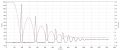
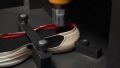
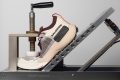
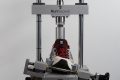
The main drawback we found in the S/Lab Genesis is its low energy return. Using our testing machine based on the ASTM F1976 standard, we measured how much rebound the foam delivers, and it’s noticeably limited.
In our lab tests, we recorded 55.6% in the heel and 59.4% in the forefoot, and both numbers fall into the average range for trail shoes. Considering its premium price, we expected a more responsive feel, to be honest. Hopefully, Salomon will move the next version to the faster EnergyFoam EVO compound we’ve already seen in the Aero Glide 3.
| S/Lab Genesis | 59.4% |
| Media | 59.7% |
Altura de la suela en la zona del talón
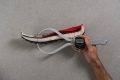
The S/Lab Genesis stands out in today’s trail running landscape with its moderate stack height. While most brands push toward 35 mm or even 40 mm as the new standard, we appreciate how Salomon keeps this model closer to the ground, offering a more connected feel with the terrain.
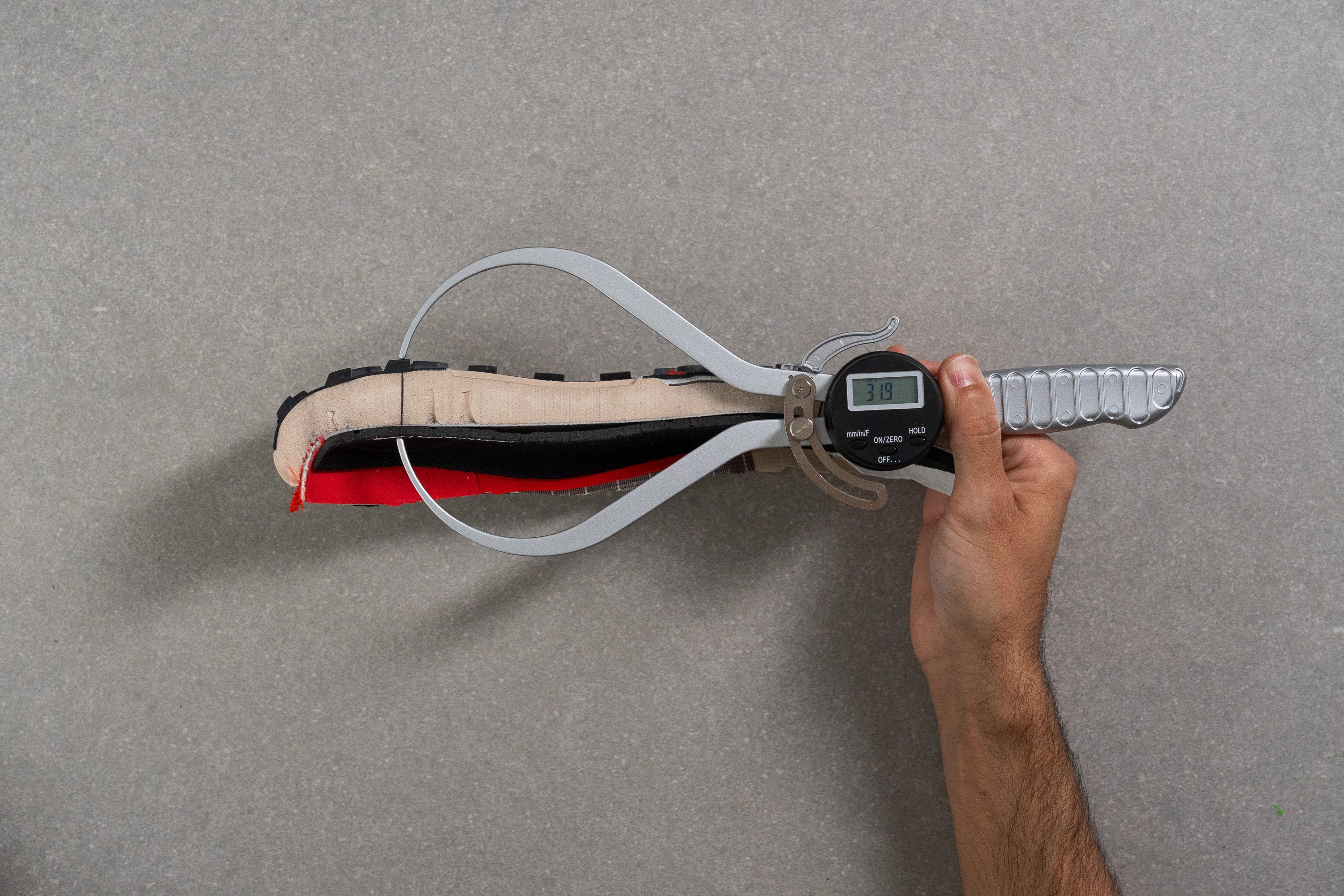
| S/Lab Genesis | 31.9 mm |
| Media | 33.1 mm |
Altura de la suela en el antepié
The forefoot follows the same approach with just 24.1 mm of stack height.
In our opinion, this isn’t a shoe for runners chasing maximum foam underfoot (look at the ASICS Metafuji Trail for that) but rather for those who appreciate a balanced blend of cushioning, ground feel, and precise control.
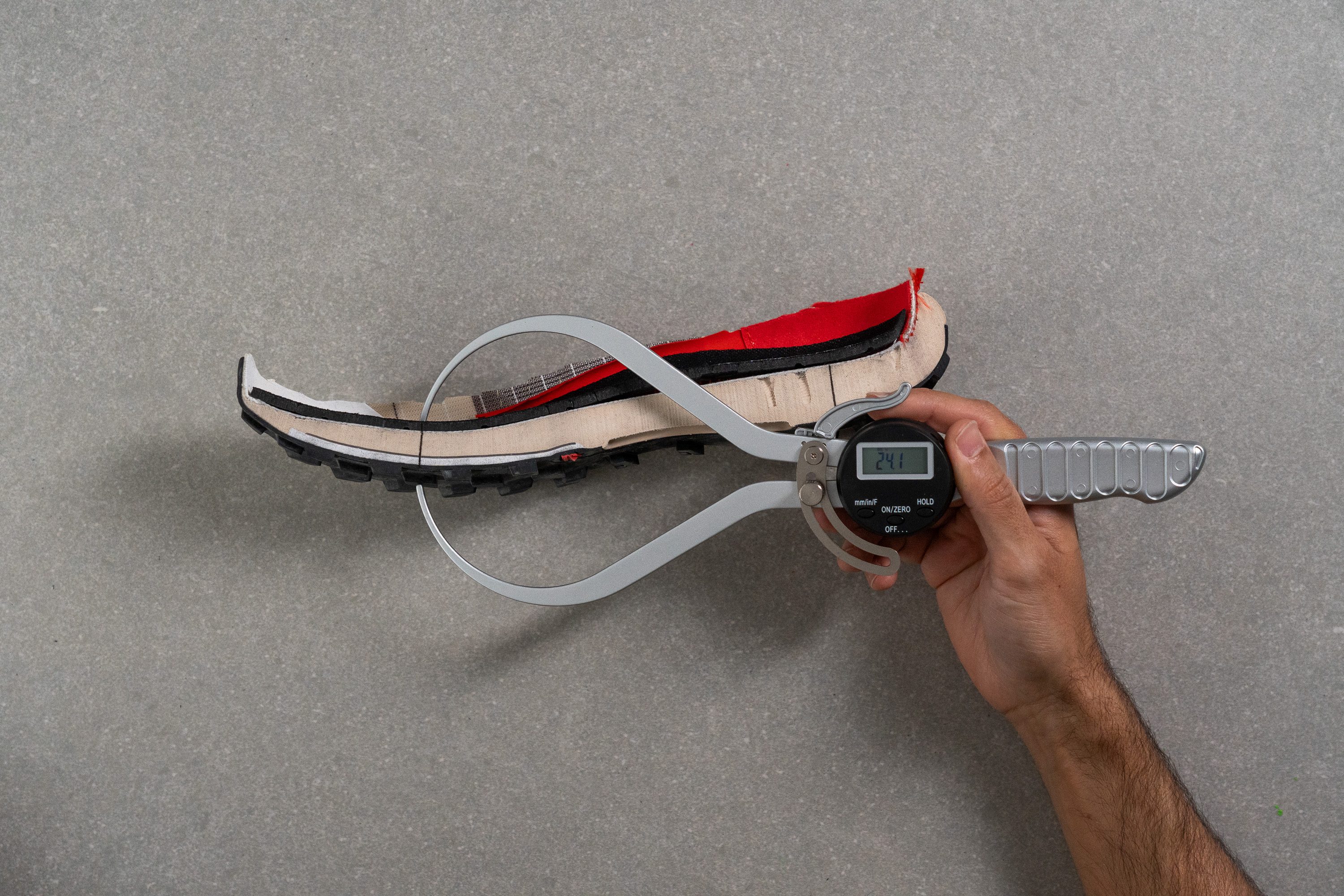
| S/Lab Genesis | 24.1 mm |
| Media | 25.8 mm |
Drop
Salomon lists the S/Lab Genesis with an 8 mm drop, and our measurements revealed a real difference of 7.8 mm between heel and forefoot.
This confirms the shoe’s versatility for any footstrike, and we appreciate the near-perfect 0.2 mm accuracy.
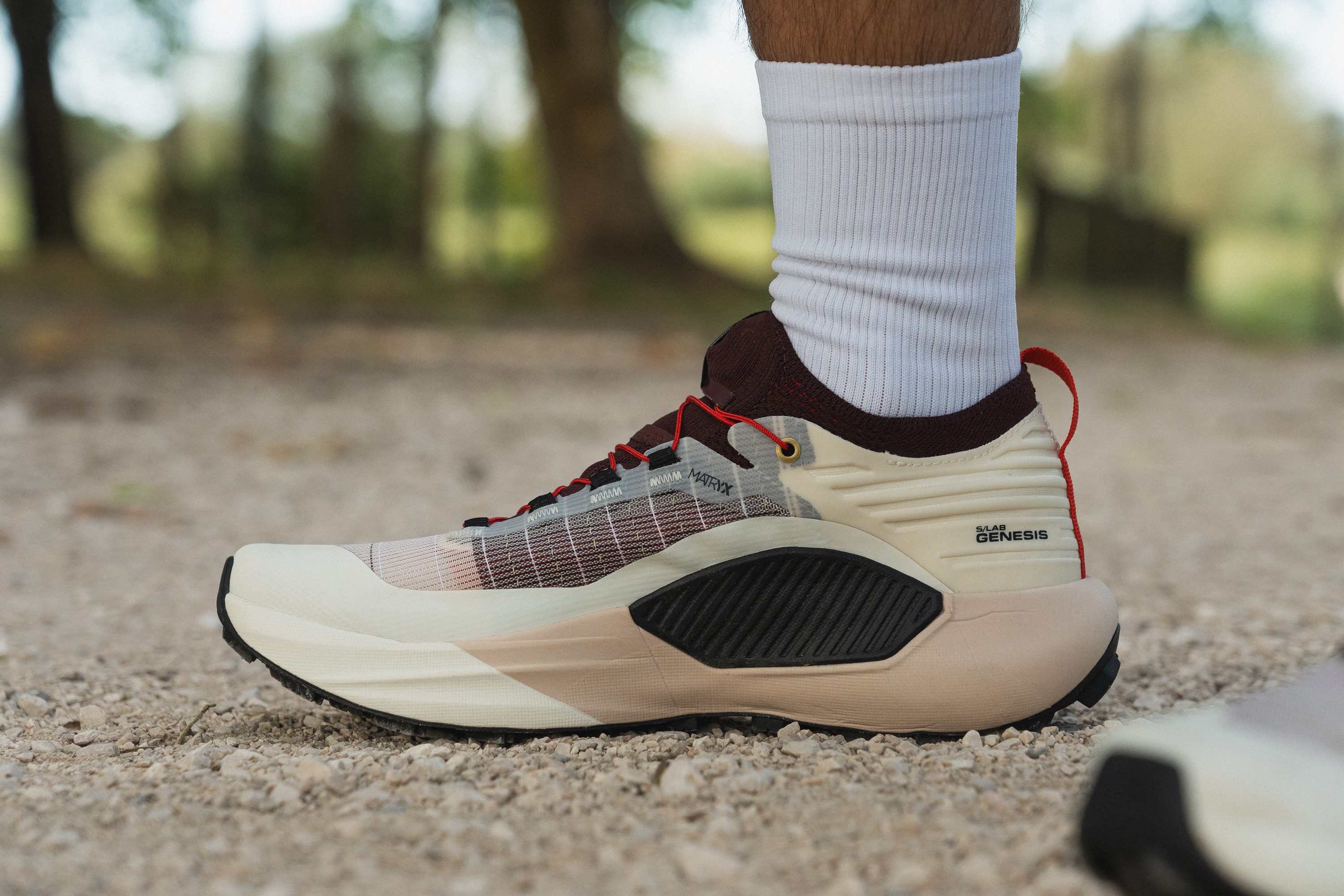
| S/Lab Genesis | 7.8 mm |
| Media | 7.3 mm |
Dureza de la mediasuela
Despite its premium price, the S/Lab Genesis uses Salomon’s EVA-based optiFOAM compound. That's a slight disappointment for us due to its moderate energy return, as we explained before.
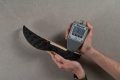
But setting that aside, we measured 36.9 AC on our Asker C durometer, placing it near the average softness for a trail shoe. However, combined with its lower stack height and integrated rock plate, it delivers a feel closer to a standard road daily trainer.
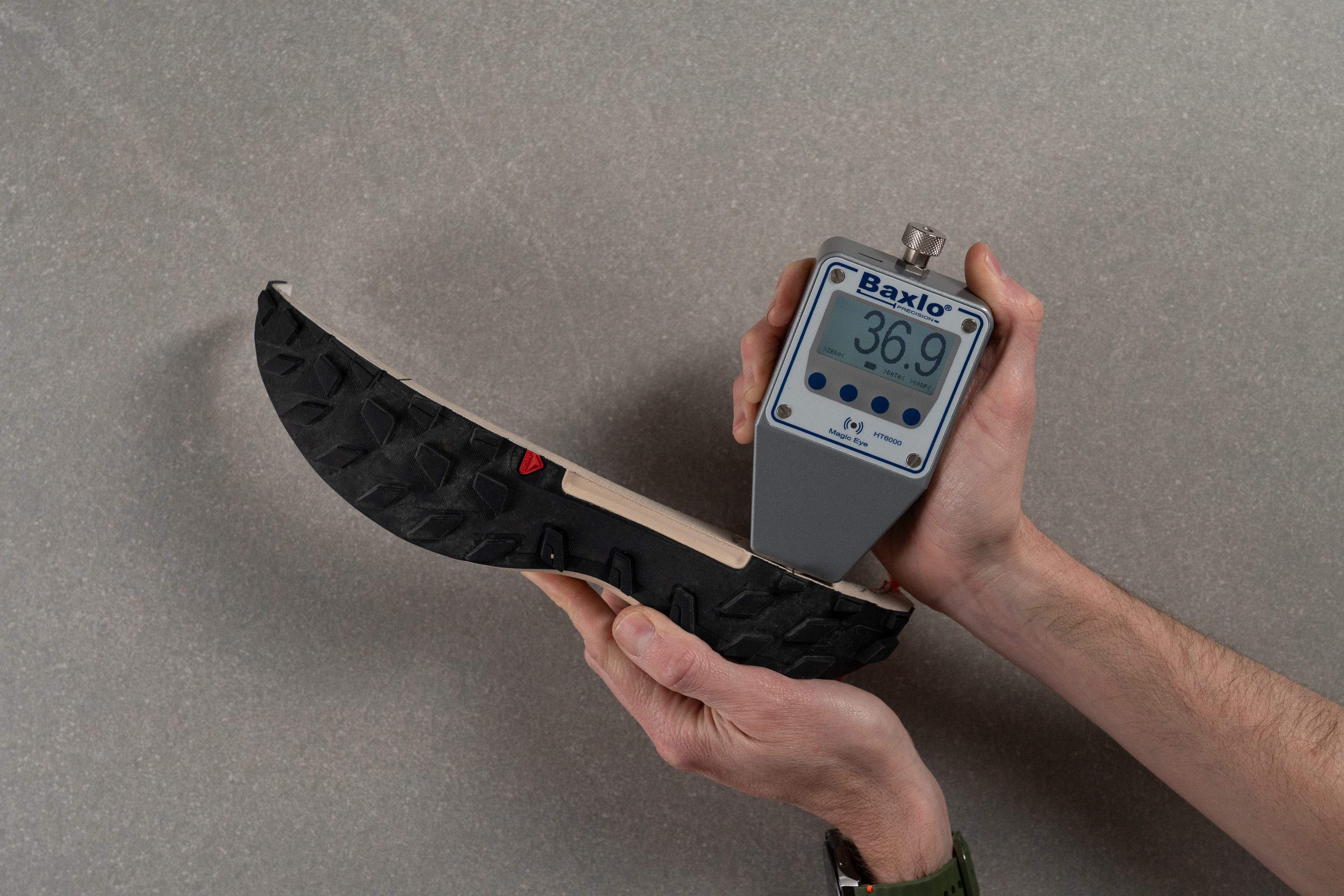
| S/Lab Genesis | 36.9 AC |
| Media | 38.3 AC |
Rocker
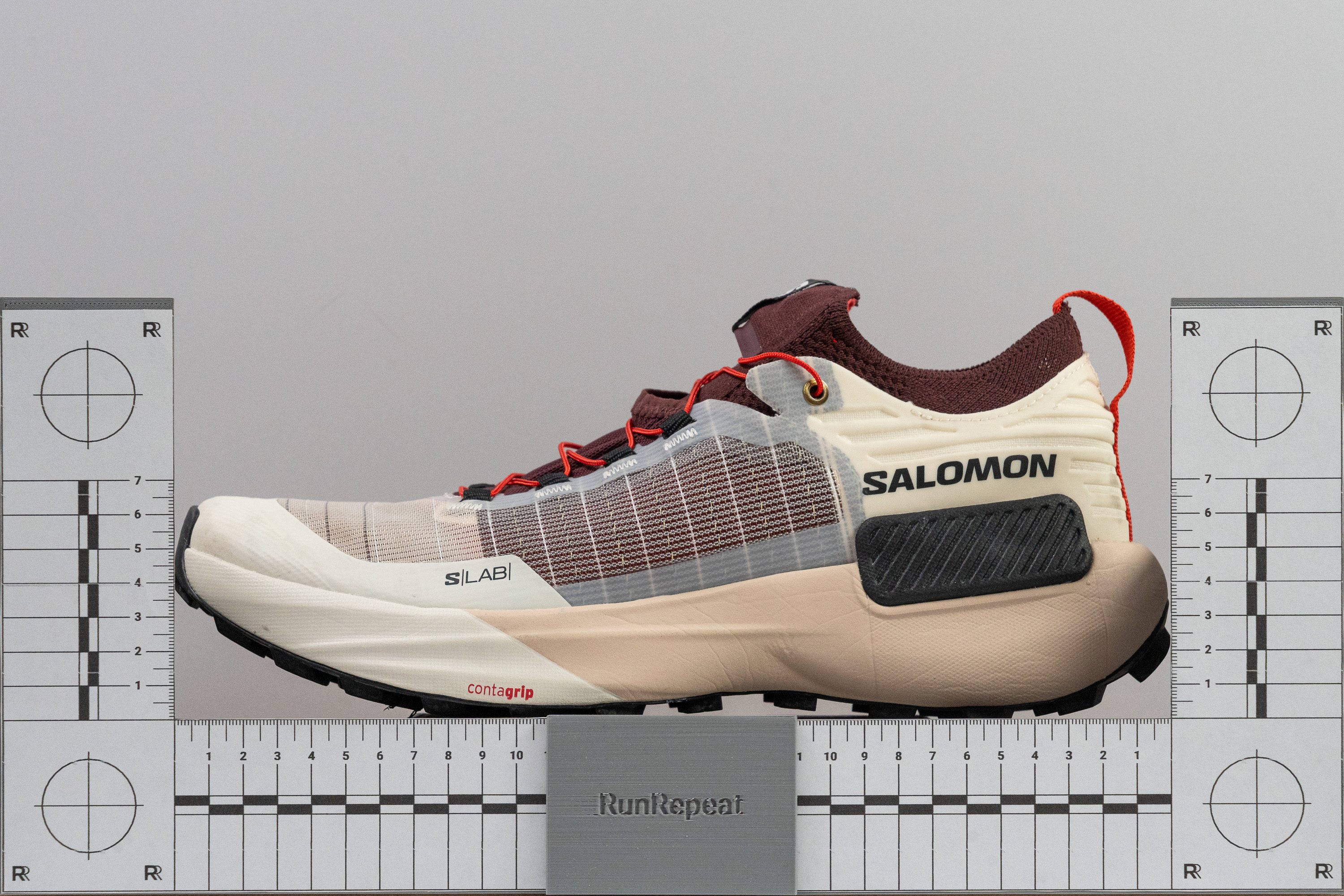
The rocker of the S/Lab Genesis isn’t particularly pronounced, yet it doesn’t need to be given its near-average stack height. However, heel strikers will clearly notice the curved heel, which slightly smooths transitions for those who land heavily on their heels.
Placa
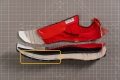
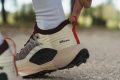
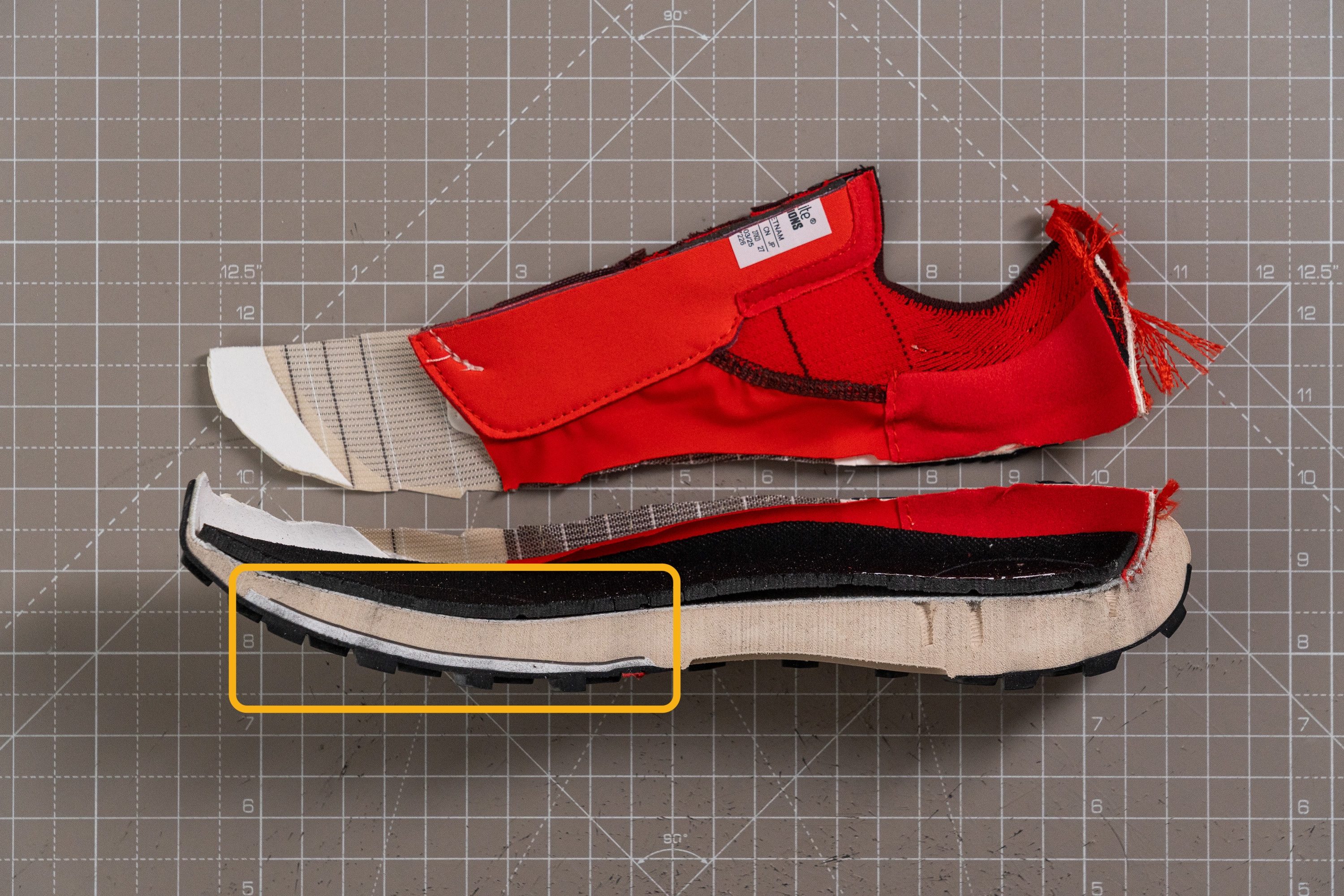
The Salomon S/Lab Genesis features a rock plate called profeelFILM, which serves as both a protective barrier against sharp objects and a stabilizing element for runners who land on their forefoot.
Tallaje y ajuste
Talla
Las Salomon S/Lab Genesis tallan bien (24 votos).
Anchura / Ajuste
Salomon is known for designing race-oriented, snug-fitting S/Lab shoes, but this model breaks that trend.
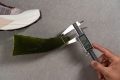
After creating our signature gel mold, we measured 94.2 mm, definitely closer to average than narrow. Still, we kept measuring, as most runners often report tightness in the toebox rather than this area...
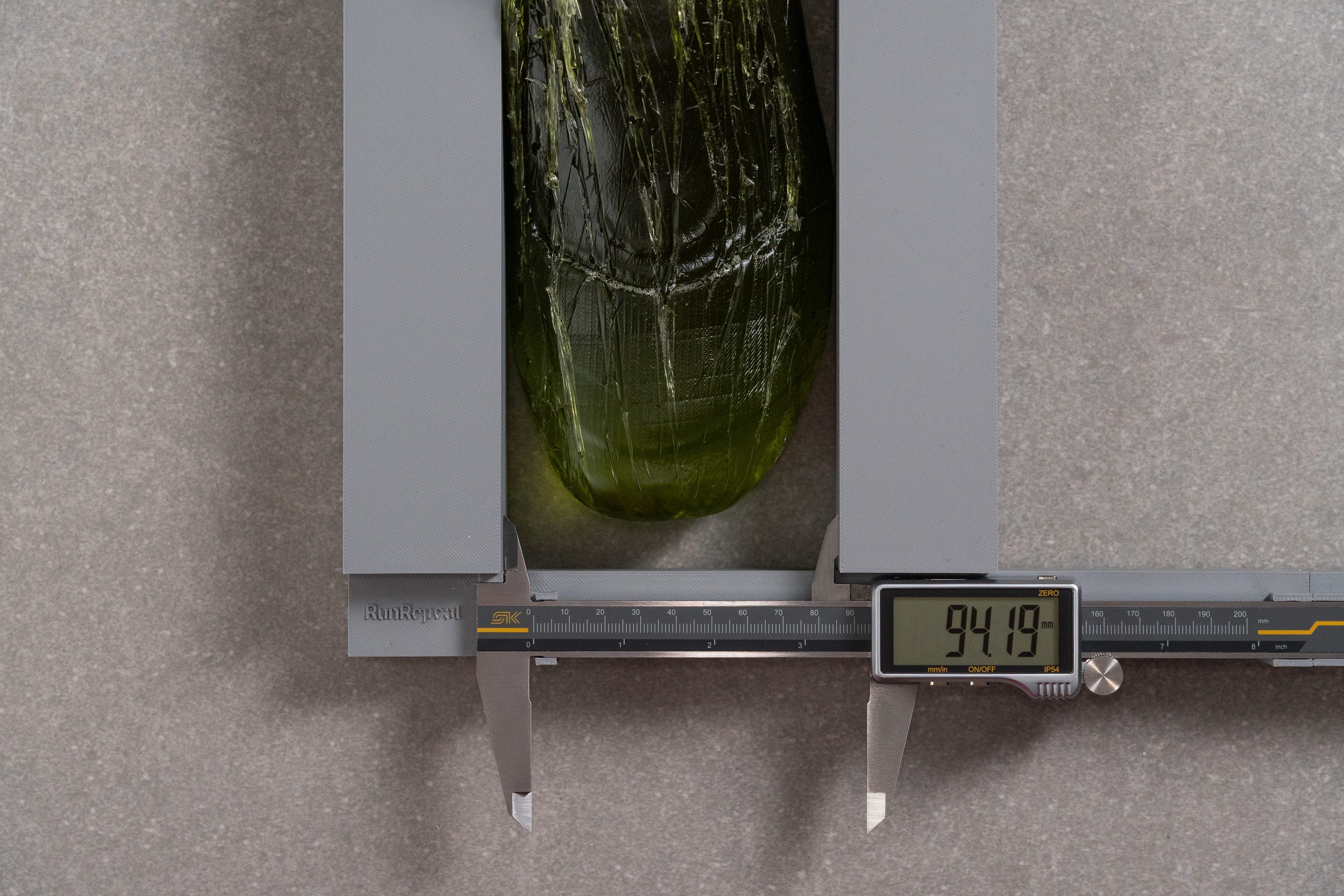
| S/Lab Genesis | 94.2 mm |
| Media | 95.7 mm |
Anchura de la parte delantera
The toebox offers plenty of room at 74.8 mm, so it's far from restrictive. Obviously, it’s not as spacious as an Altra, but the shoe’s shape clearly avoids a toe-crushing design, marking a positive shift for Salomon.
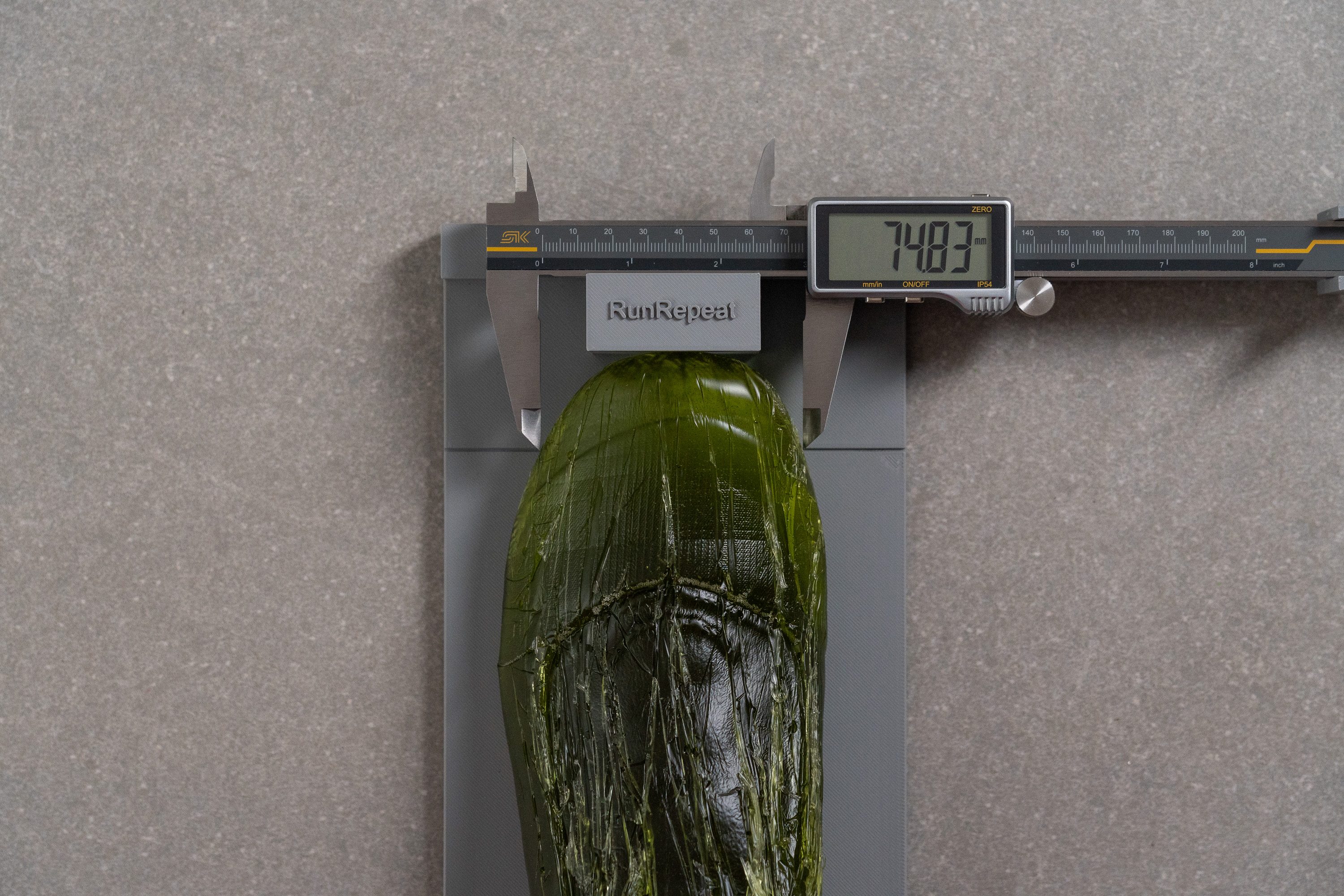
| S/Lab Genesis | 74.8 mm |
| Media | 74.3 mm |
Altura de la parte delantera
The S/Lab identity remains more evident in the toebox height.
With 25.1 mm of vertical space, it maintains that precise, race-oriented feel that some runners love and others dislike. In our view, since this model is often used in competitive ultras, this design choice makes sense.
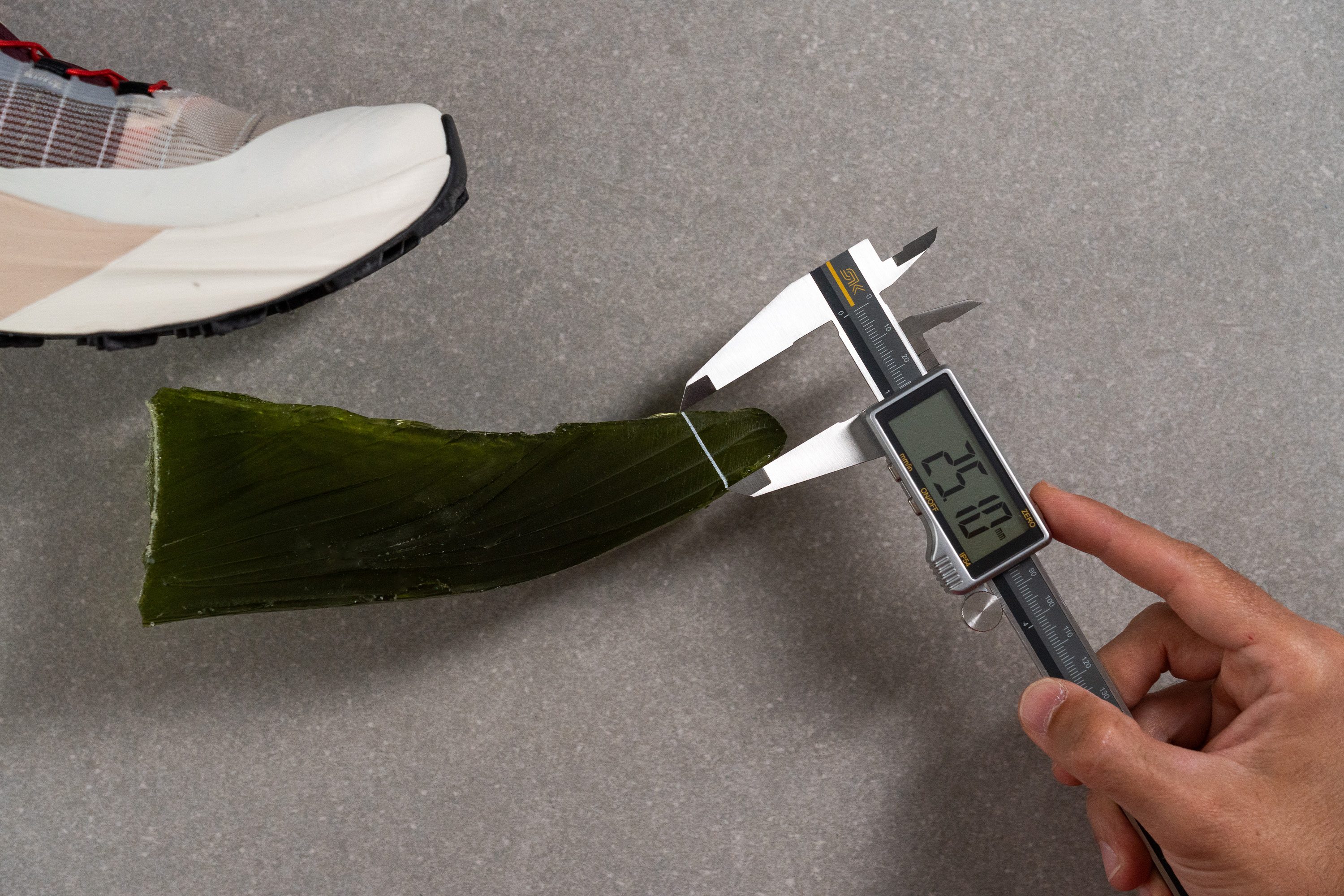
| S/Lab Genesis | 25.1 mm |
| Media | 26.9 mm |
Tracción / Agarre
Traction test
Contagrip rubber has never matched the bite of Vibram Megagrip, but Salomon remains committed to its own compound, and that likely won’t change soon. With a 0.55 score, though, it still provides enough traction to feel confident in most conditions.
| S/Lab Genesis | 0.55 |
| Media | 0.68 |
Profundidad del dibujo de la suela
This could be a letdown for many, but Salomon keeps insisting with their Contagrip rubber instead of partnering with Vibram, something that in our view, would made sense for their higher-end trail shoes. Just like Nike did a few years ago with the Ultrafly.
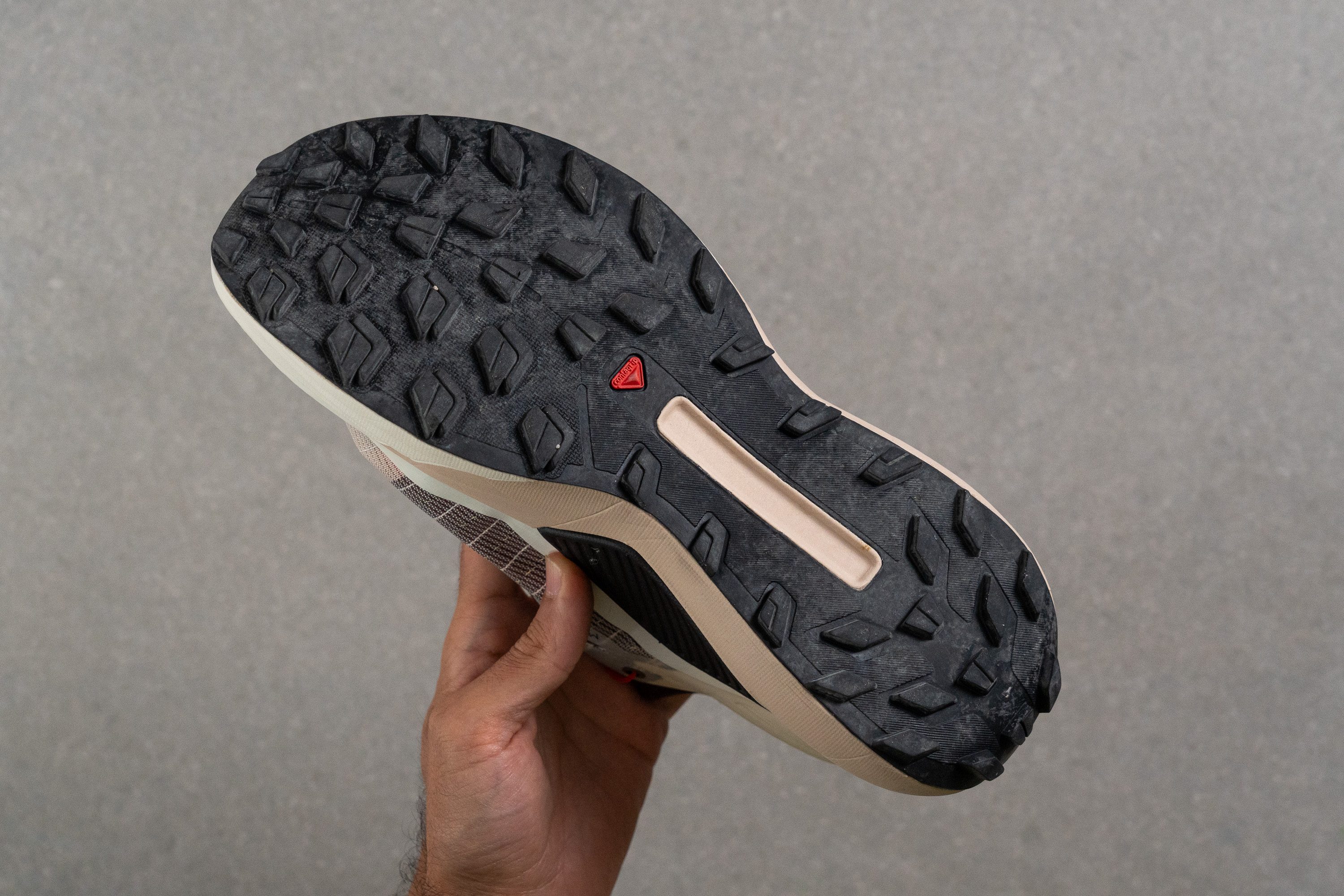
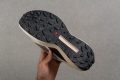
Instead, Salomon sticks with the same Contagrip outsole that, while not exceptional, performs reliably well. Its 4.5-mm lugs are strategically angled for multidirectional grip, with generous spacing (especially in the midfoot) that enhances traction on loose trails and slightly muddy surfaces. In our experience, the only potential weak point for this outsole are wet rocks.
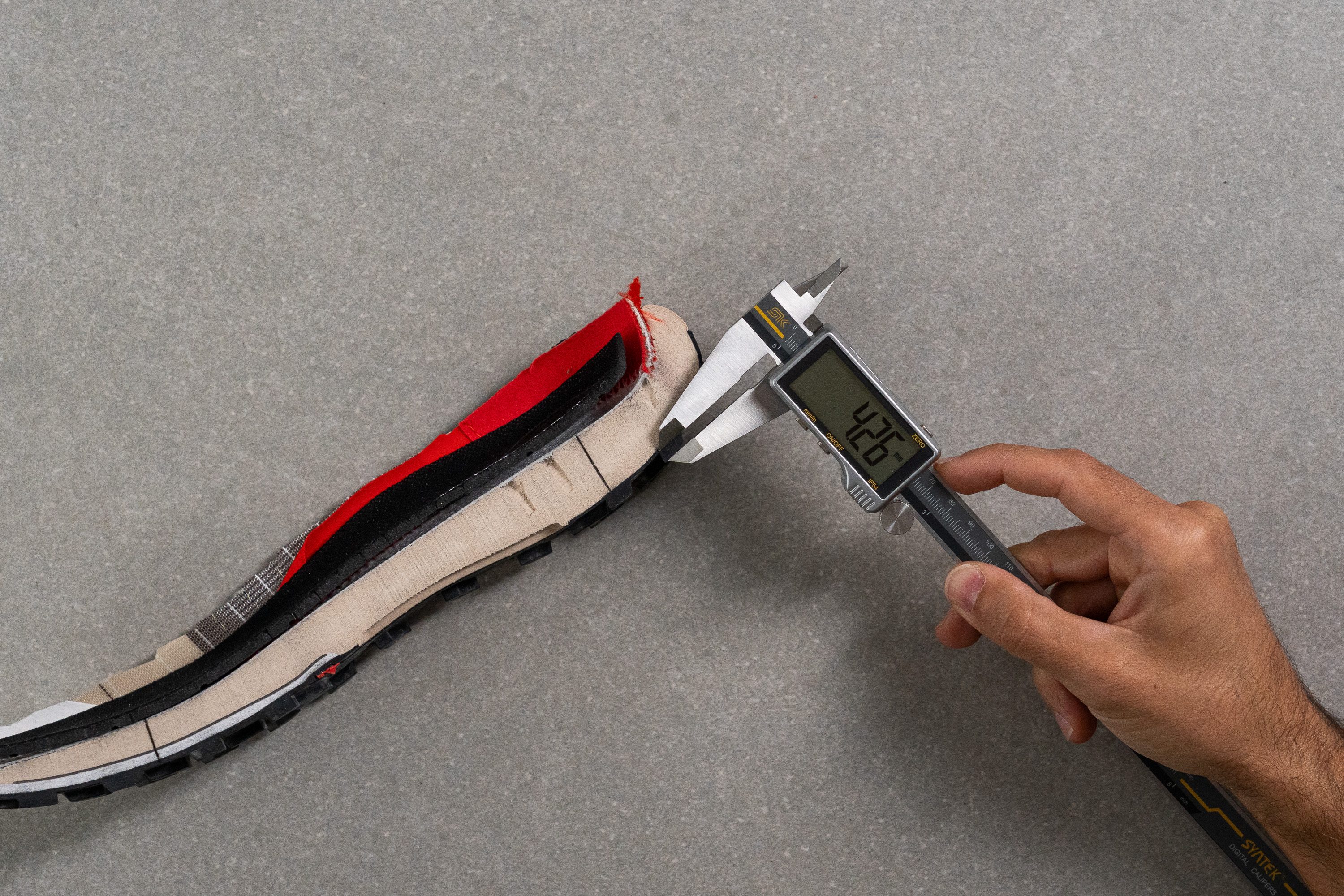
| S/Lab Genesis | 4.3 mm |
| Media | 3.5 mm |
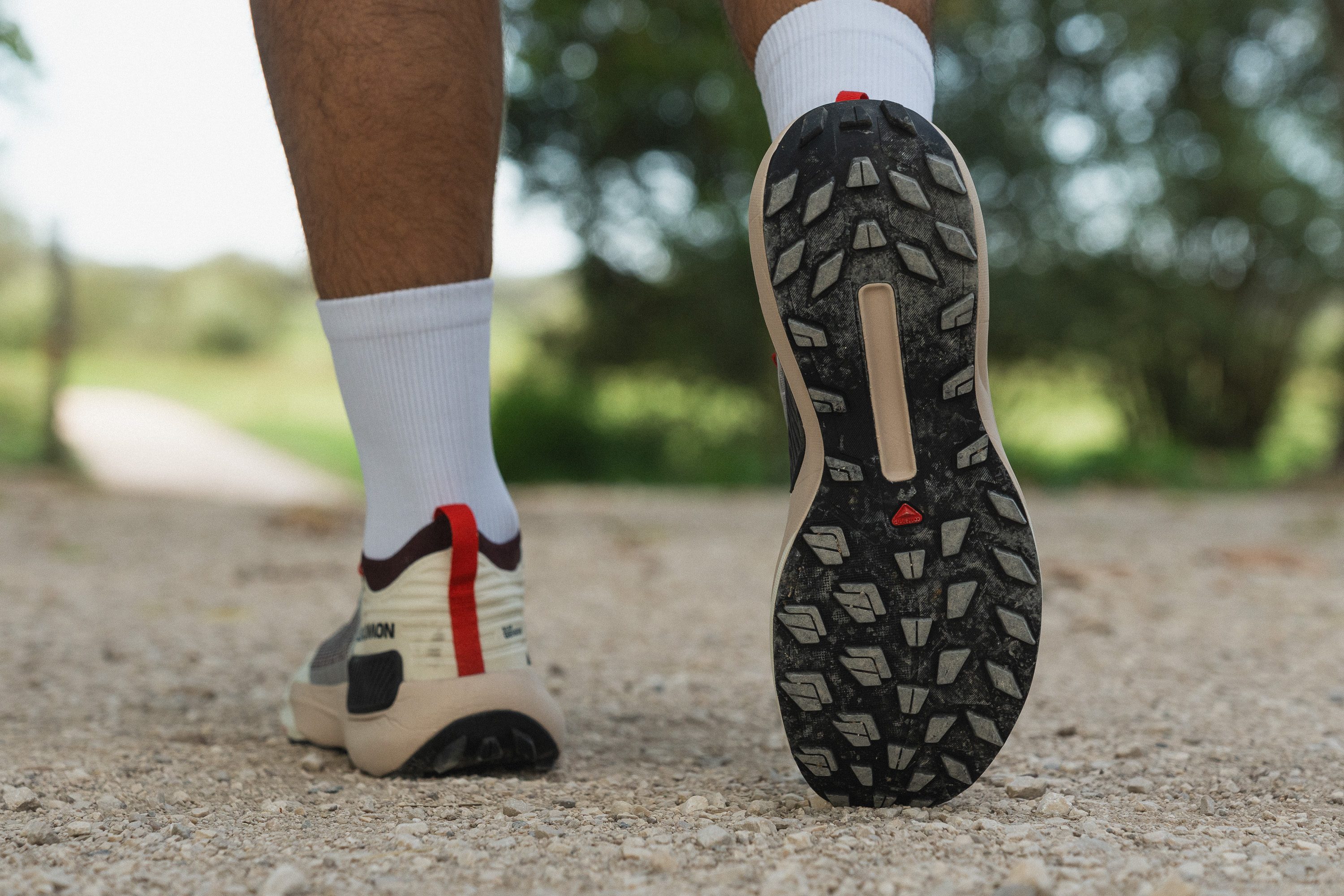
Diseño de la suela exterior
We appreciated that Salomon maintained nearly full rubber coverage, leaving only a small channel in the midfoot area that doesn’t affect durability. It’s even surprising to see no cutouts, unlike most brands currently trimming weight that way.
Flexibilidad / Rigidez
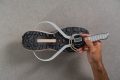
With its moderate stack height, the S/Lab Genesis delivers solid flexibility, measuring 13.7N in our test. Impressively, it achieves this without relying on outsole cutouts, which are often used to enhance flex.
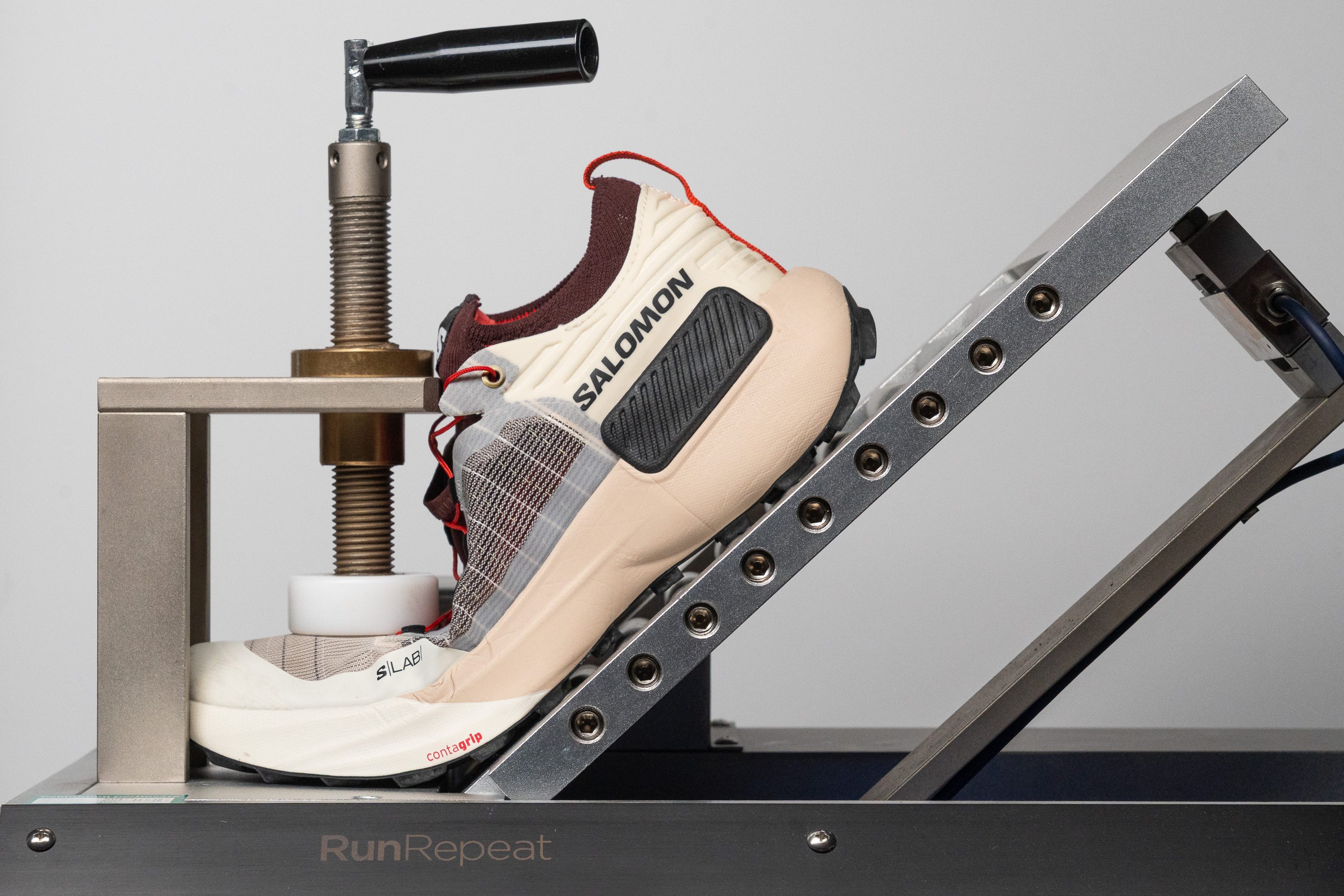
| S/Lab Genesis | 13.8N |
| Media | 14.8N |
Peso
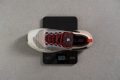
One of the standout features of the S/Lab Genesis is its remarkably low weight, as we measured just 8.8 oz or 249g. That’s truly impressive for a shoe with full rubber coverage and a heavy EVA-based midsole.
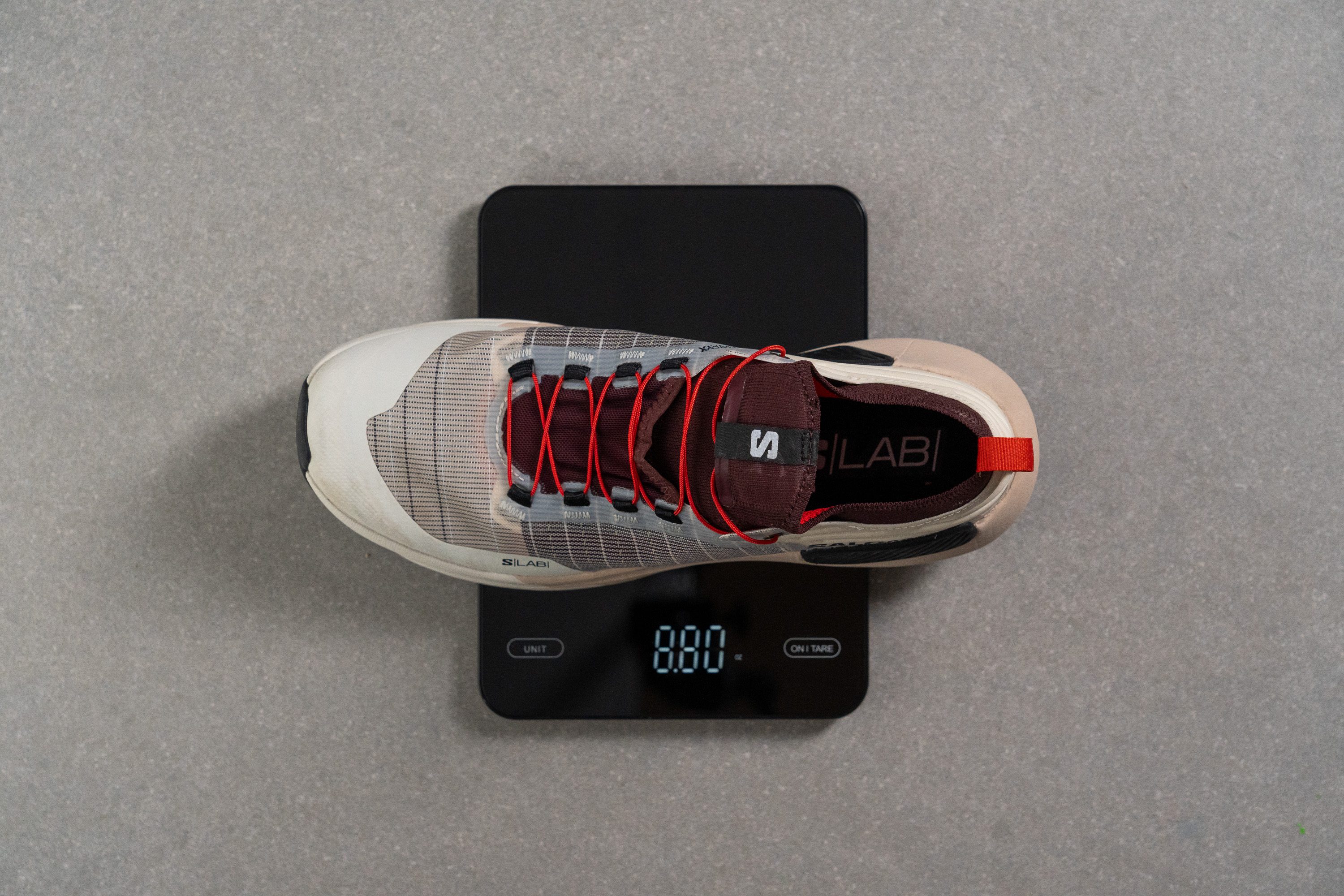
| S/Lab Genesis | 8.8 oz (249g) |
| Media | 10.1 oz (285g) |
Transpirabilidad
Breathability test
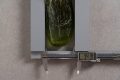
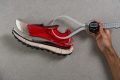
ActualizadoThe S/Lab Genesis comes with a flashy, premium-looking design, but its breathability left us somewhat disappointed in the lab. Using our climate-controlled chamber and a heated footform maintained at 38°C, we measured how effectively the shoe pulled artificial sweat away from the foot over a 3-hour period. The final outcome was a modest 50 BR!
As a result, the S/Lab Genesis may not be the best option for hot-weather adventures, especially for runners who tend to generate a lot of sweat during long efforts.
| S/Lab Genesis | 50 BR |
| Media | 71 BR |
Potencial de secado
NuevoWe also found the shoe's drying potential to be underwhelming. During our 3-hour test, it managed to evaporate just 42% of the accumulated moisture, a result that falls well below what we've measured in most competing trail shoes.
This means moisture tends to linger in the upper, insole and midsole for longer, making it more likely to feel damp during extended outings.
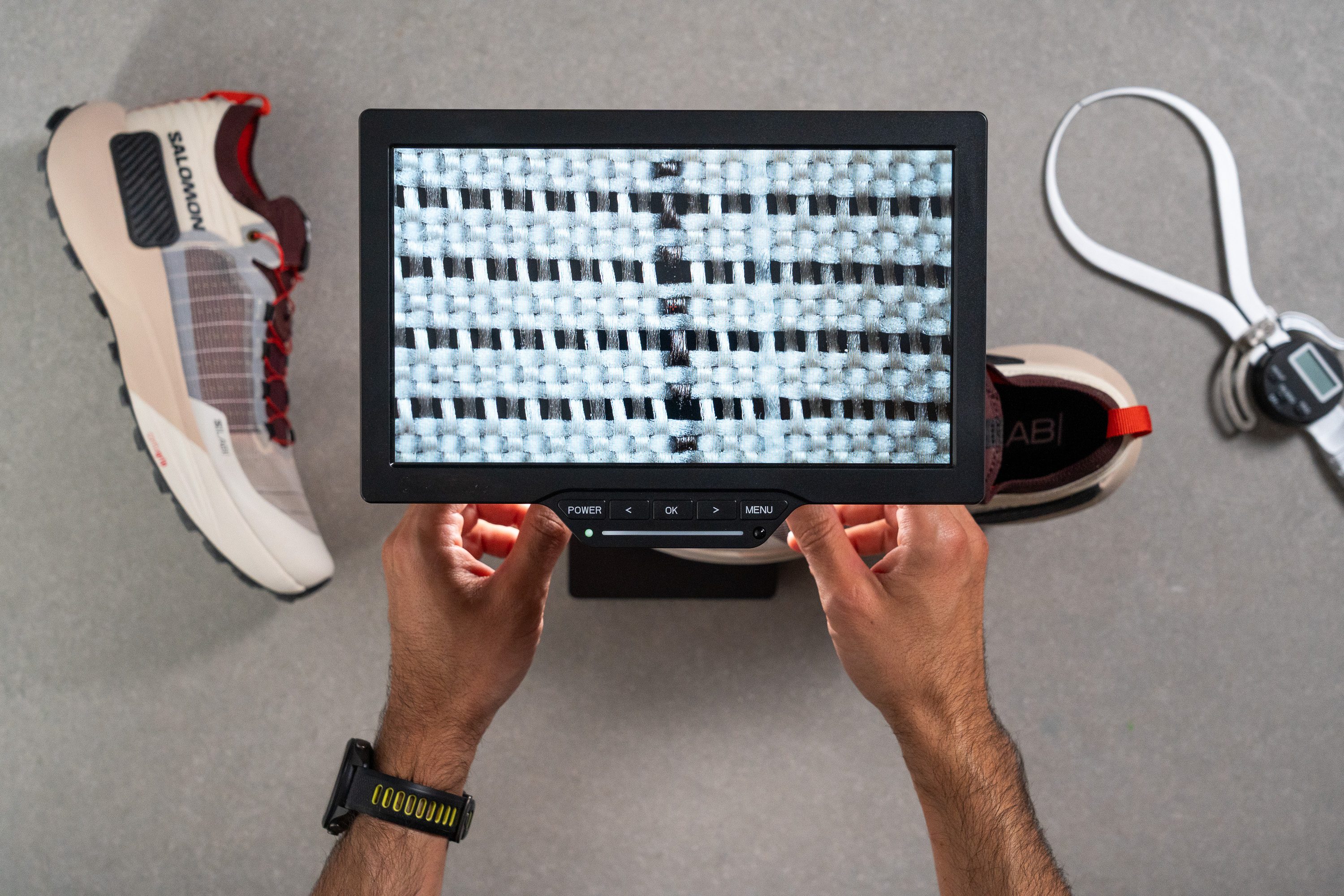
| S/Lab Genesis | 42% |
| Media | 51% |
Estabilidad
Prueba de estabilidad lateral
One thing we really liked about the S/Lab Genesis is that it feels like an honest shoe. What you see is what you get.
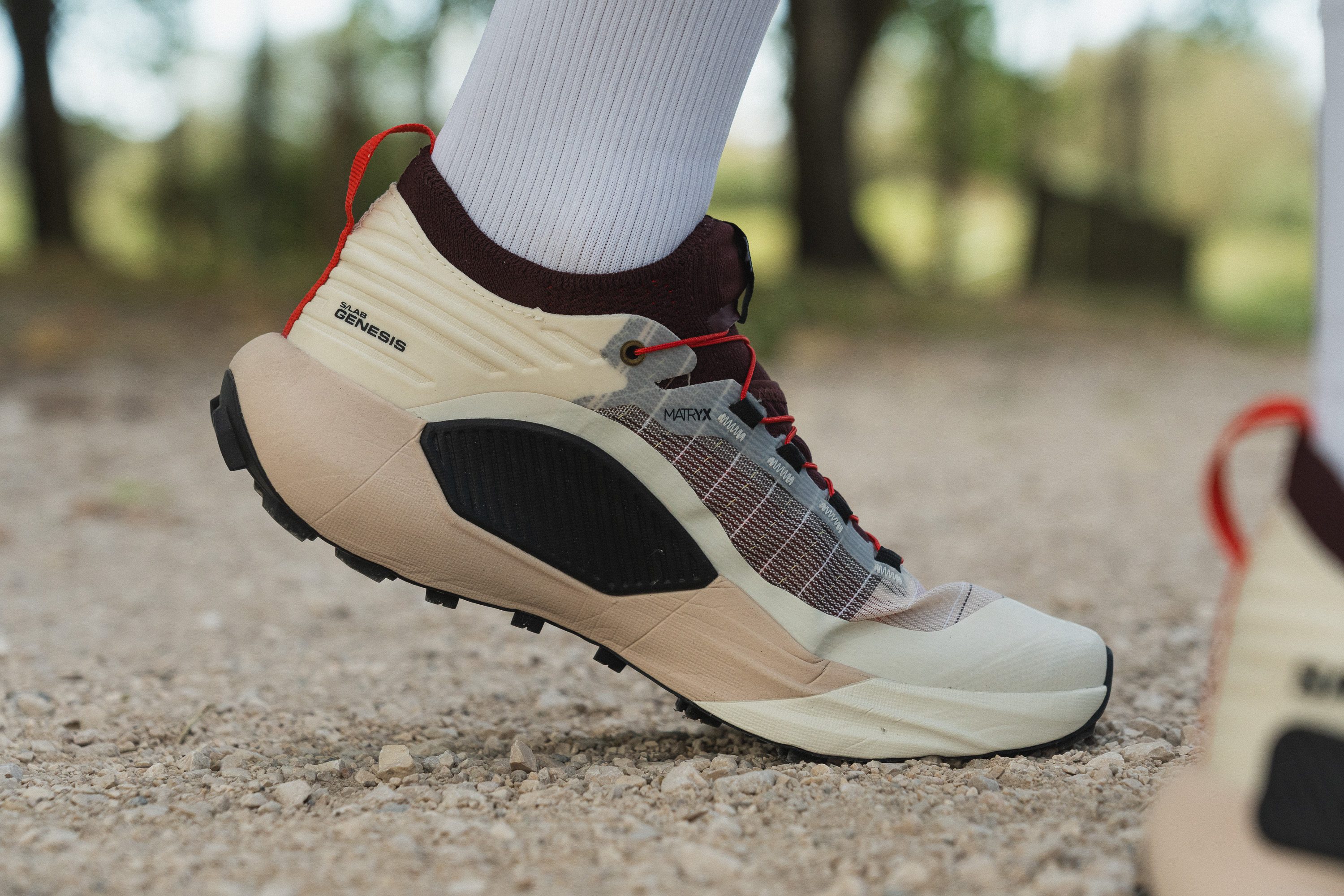
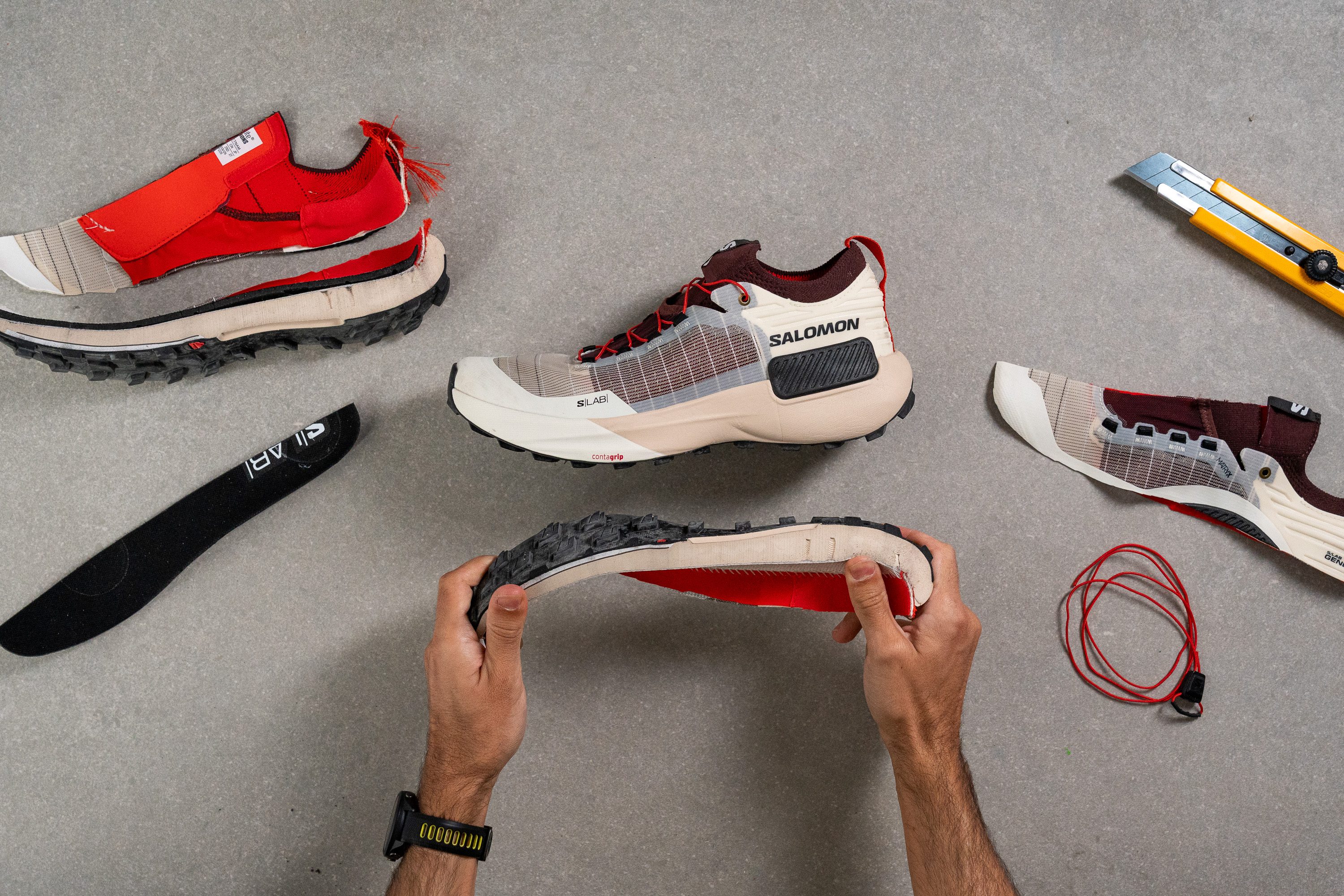
There are no hidden stability tricks, just two large black foam pads that keep the foot securely centered and a big TPU piece that wraps the heel. We liked this approach and found it provides a stable ride for neutral runners, though those needing extra support may find it lacking due to the average dimensions of the midsole.
Rigidez torsional
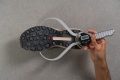
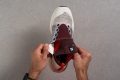
The S/Lab Genesis skips both a full-length plate and a bulky midsole, which makes it noticeably easier to bend and twist than most modern trail shoes and renders it as an interesting option for walking or hiking. In our torsional rigidity test, it scored a below-average 13.4 Nm.
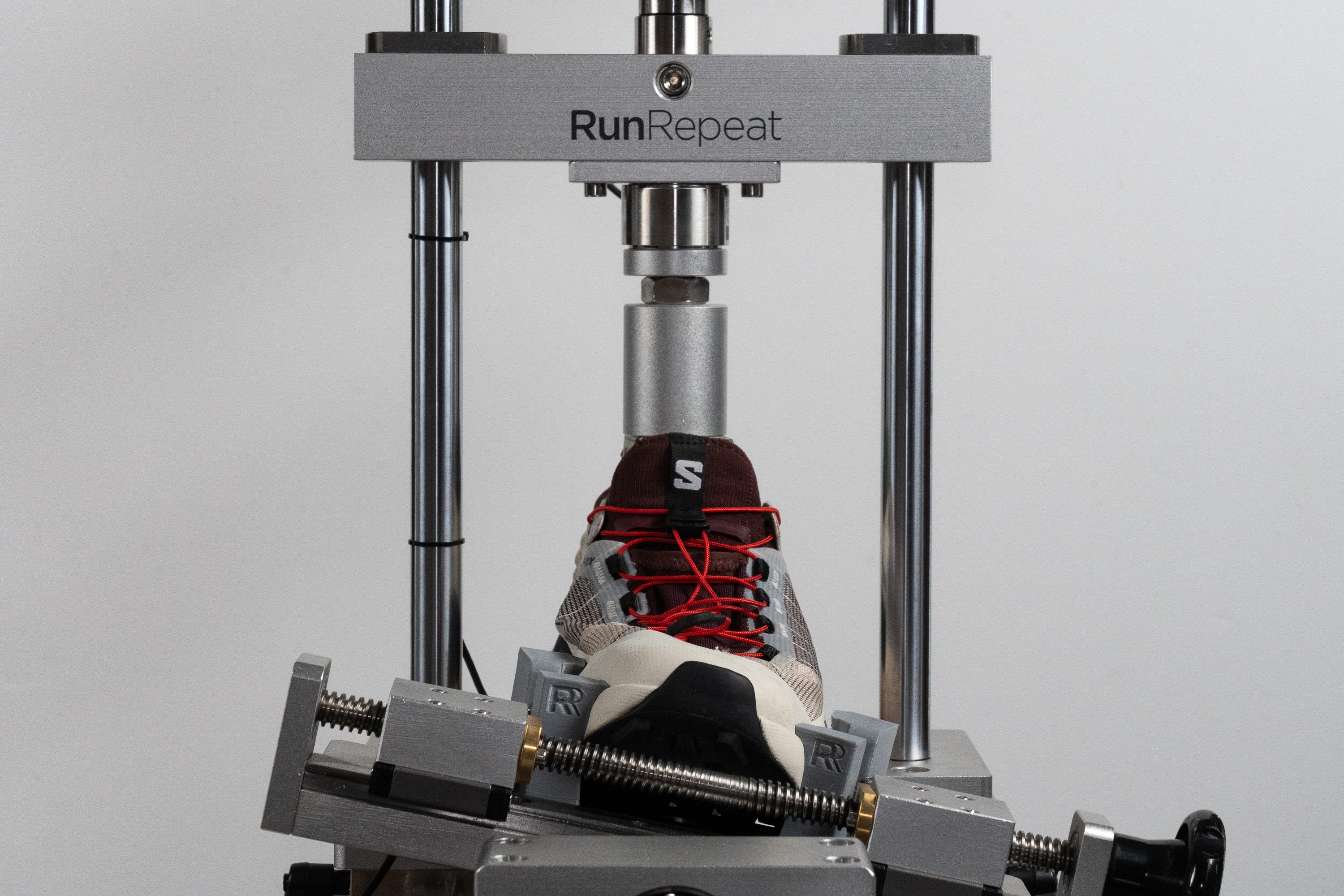
| S/Lab Genesis | 13.4 Nm |
| Media | 15.8 Nm |
Rigidez del contrafuerte del talón
We found during our runs that the heel hold is excellent, thanks to a smart combination of a built-in gaiter and thick interior foam pads. And despite this padding, the heel counter stays pliable (2/5) and never feels intrusive or uncomfortable.
| S/Lab Genesis | 2 |
| Media | 3 |
Anchura de la mediasuela - antepié
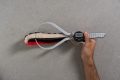
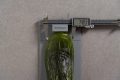
The shoe never feels bulky, whether in height or width. Using our calipers, we measured just 109.1 mm in the forefoot, confirming its compact, performance-focused shape.
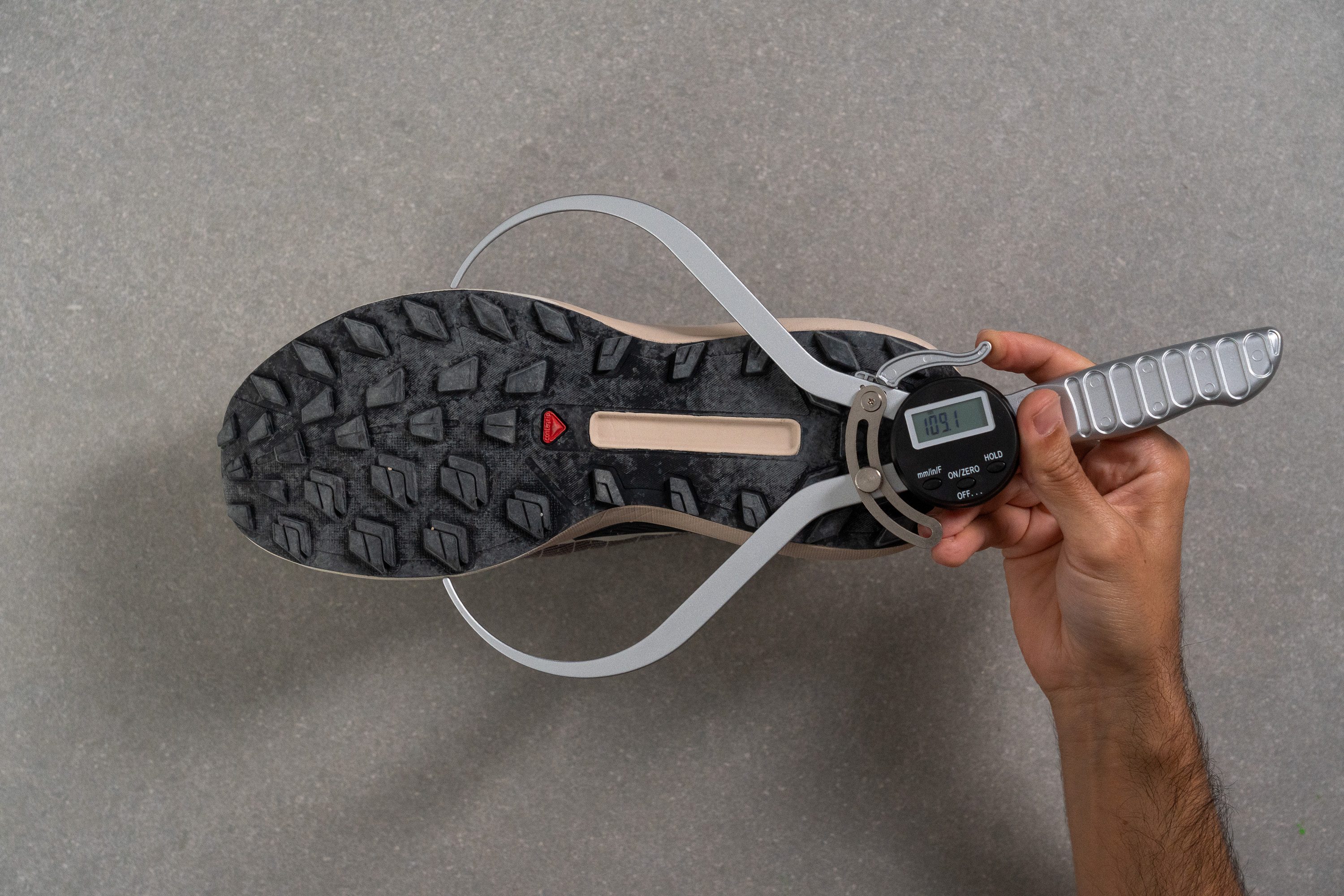
| S/Lab Genesis | 109.1 mm |
| Media | 114.3 mm |
Anchura de la mediasuela - talón
The heel dimensions are fairly average too at 91.3 mm, which explains why it doesn’t feel particularly stable for heel strikers with pronation issues. Still, we believe making it wider would’ve ruined its versatile, agile character.
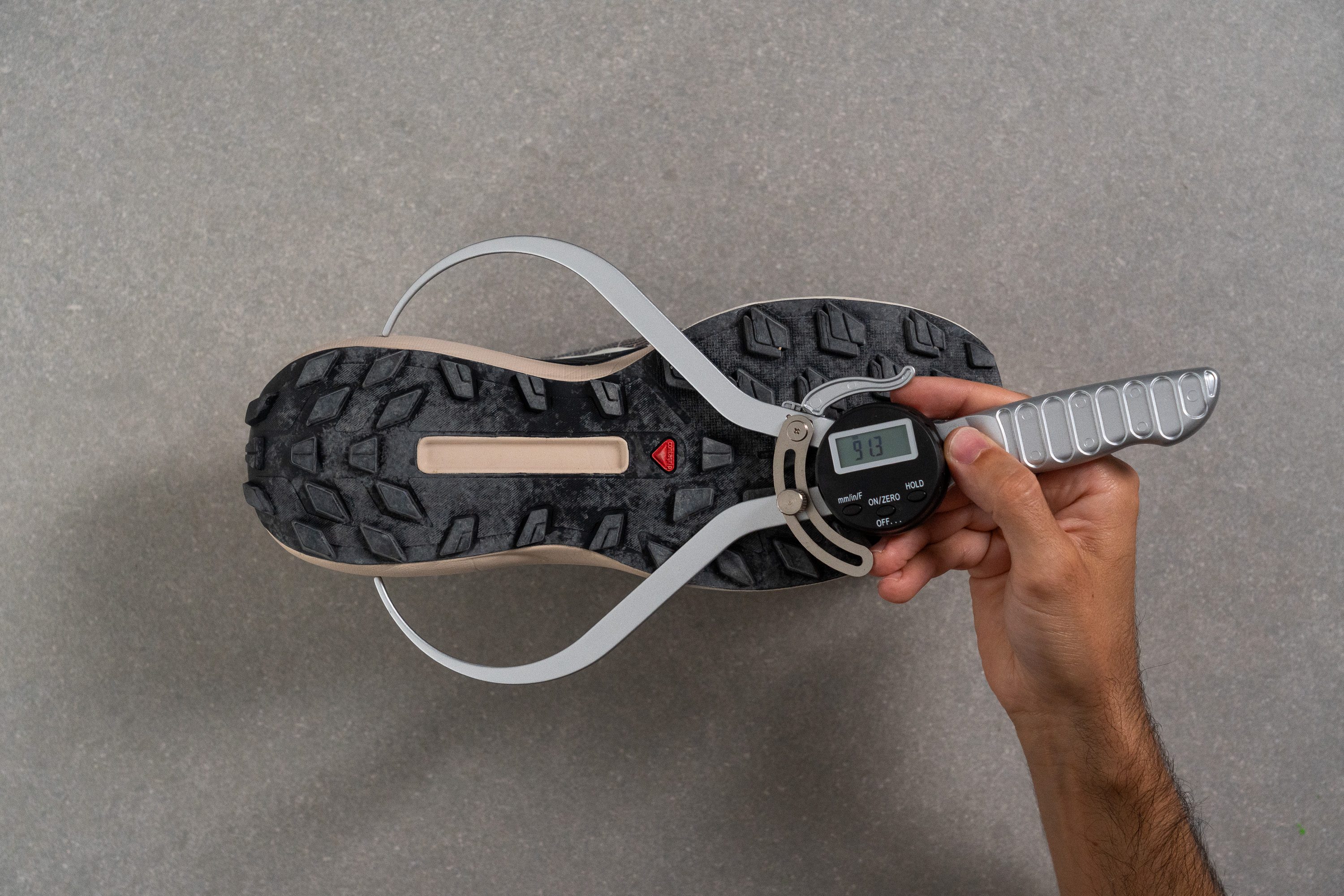
| S/Lab Genesis | 91.3 mm |
| Media | 90.5 mm |
Durabilidad
Durabilidad de la parte delantera
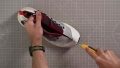
The TPU reinforcement around the toebox is impressively generous, shielding the foot from most accidental impacts with rocks. However, the MATRYX material prioritizes ultra-light construction over toughness, so we weren’t surprised when the upper scored just 2/5 in our initial Dremel test.
| S/Lab Genesis | 2 |
| Media | 3.1 |
Durabilidad del acolchado del talón
This result caught us off guard, as we expected a stronger performance than a modest 2/5 for heel padding durability. There’s definitely room for improvement in this area.
| S/Lab Genesis | 2 |
| Media | 3.1 |
Durabilidad de la suela
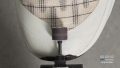
The Contagrip outsole performed decently in our Dremel test, showing only 1.1 mm of wear. This confirms that the rubber offers good durability, so longevity shouldn’t be a concern for most runners.
| S/Lab Genesis | 1.1 mm |
| Media | 0.9 mm |
Grosor de la suela
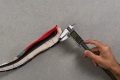
The rock plate plays an even more crucial role in this shoe because of its thin outsole. Excluding the lugs, there’s only 1.2 mm of rubber—a clear reflection of the S/Lab series.
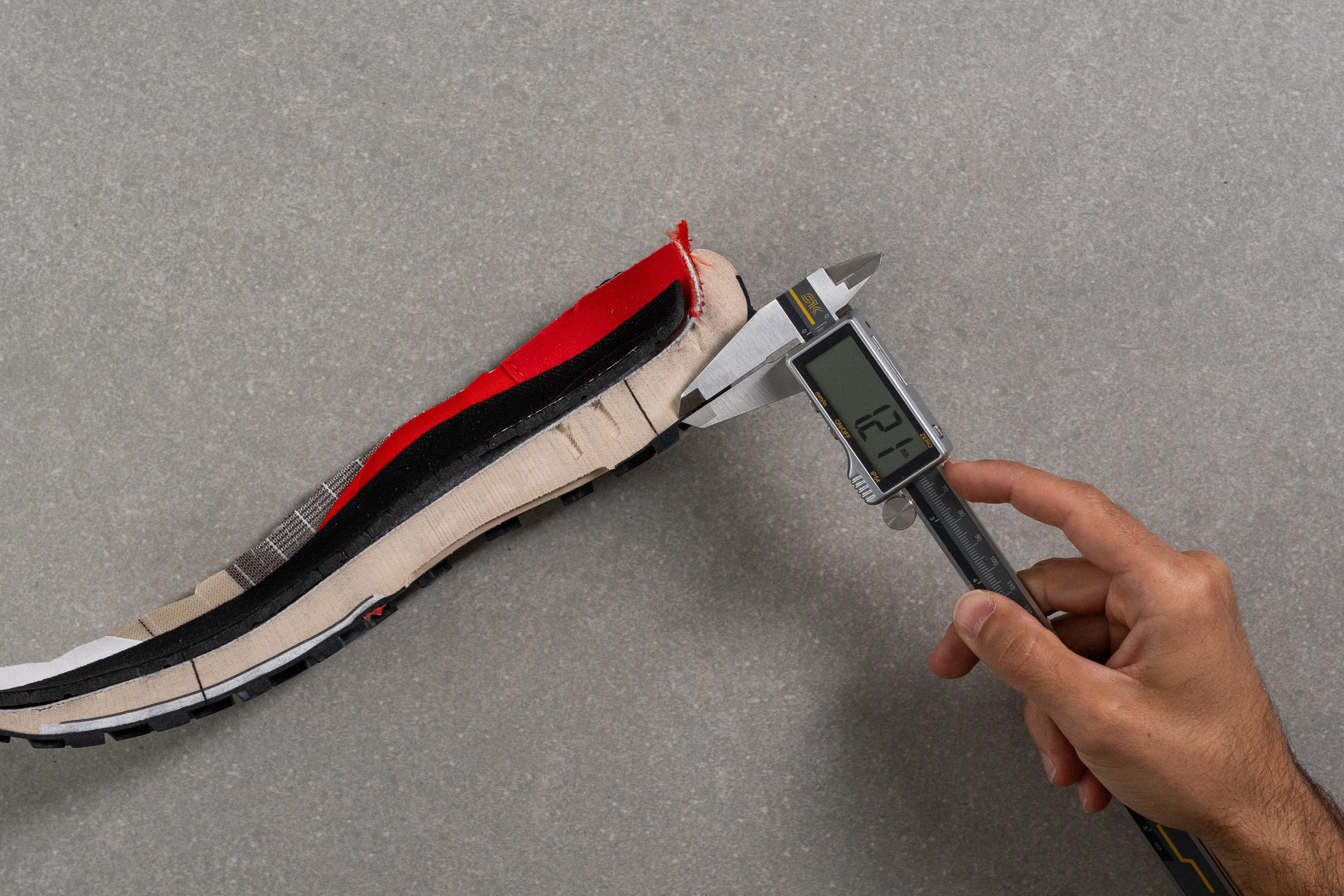
| S/Lab Genesis | 1.2 mm |
| Media | 1.9 mm |
Varios
Grosor de la plantilla
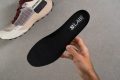
We found during testing that the footbed is slightly thinner than average at 4.0 mm.
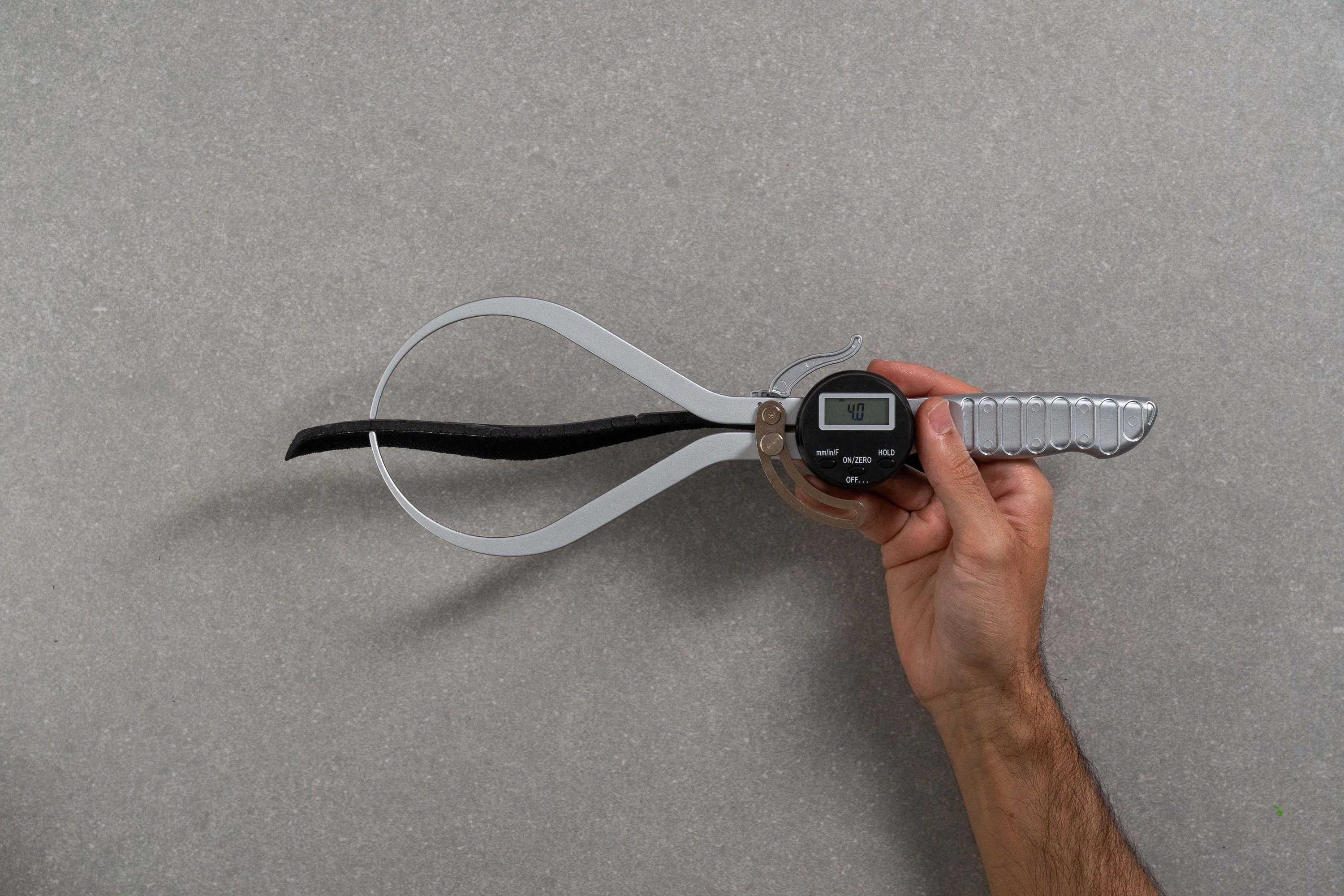
| S/Lab Genesis | 4.0 mm |
| Media | 4.6 mm |
Plantilla extraíble
The insole isn’t glued and removes effortlessly, making replacements quick and hassle-free.
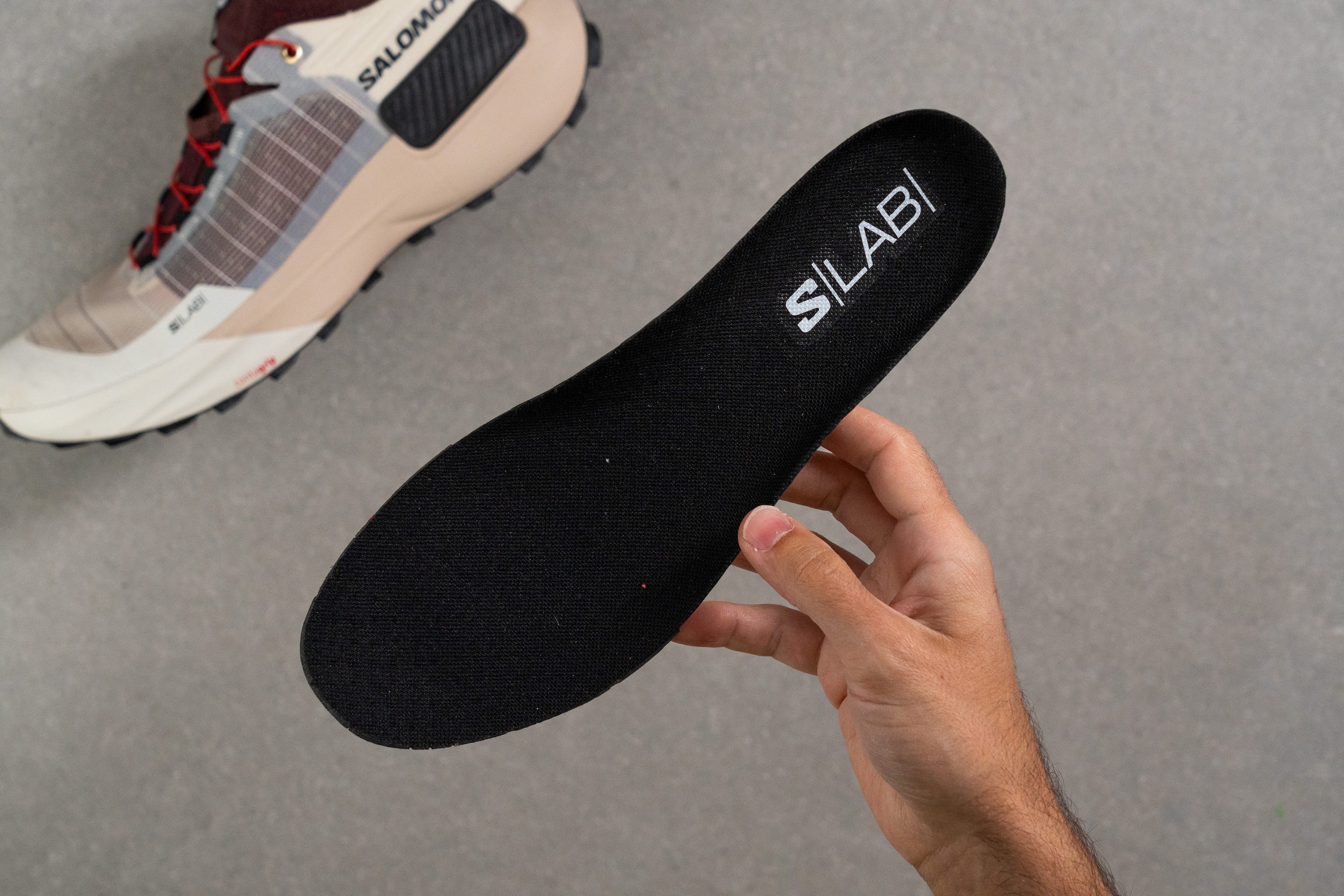
| S/Lab Genesis | Sí |
Elementos reflectantes
Unfortunately, the S/Lab Genesis lacks any reflective elements. For us it's a bit of a letdown, especially since this shoe is a fan favorite used for 24-hour ultras.
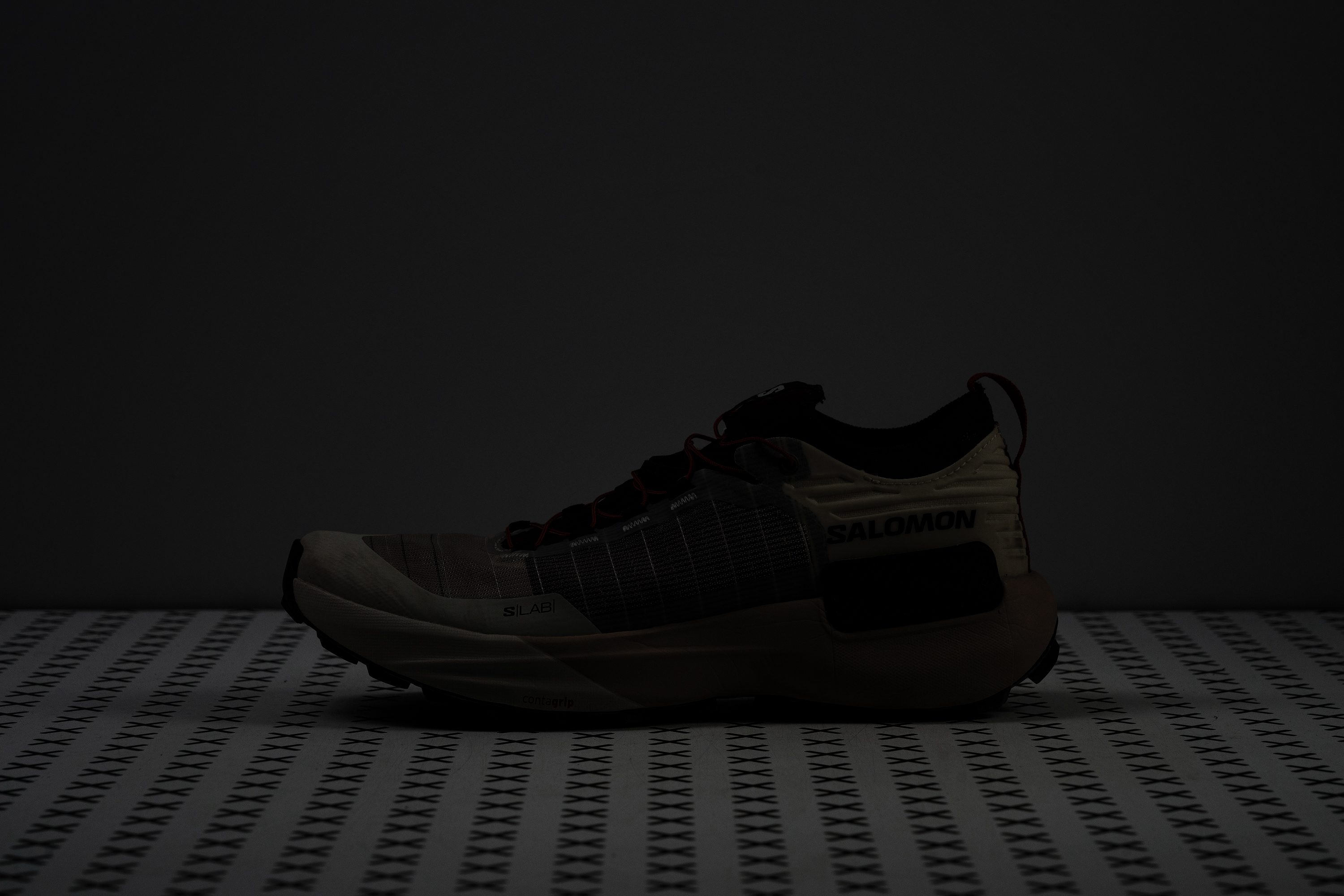
| S/Lab Genesis | No |
Acolchado de la lengüeta
The tongue of the S/Lab Genesis delivers a surprising boost in comfort with its generous 10.5 mm padding. It’s an unexpected touch, especially for such a lightweight trail shoe.
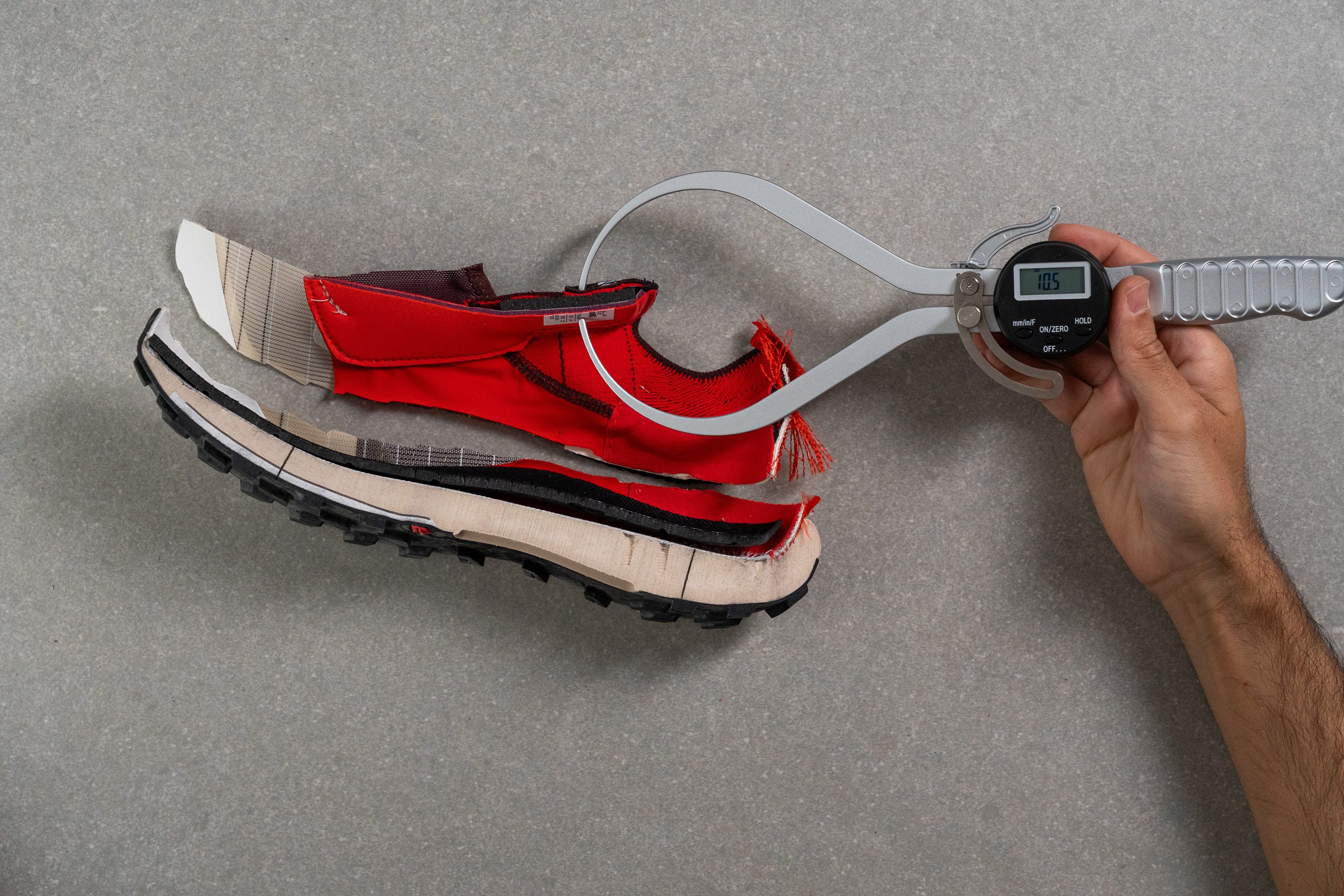
| S/Lab Genesis | 10.5 mm |
| Media | 6.4 mm |
Lengüeta: tipo de refuerzo
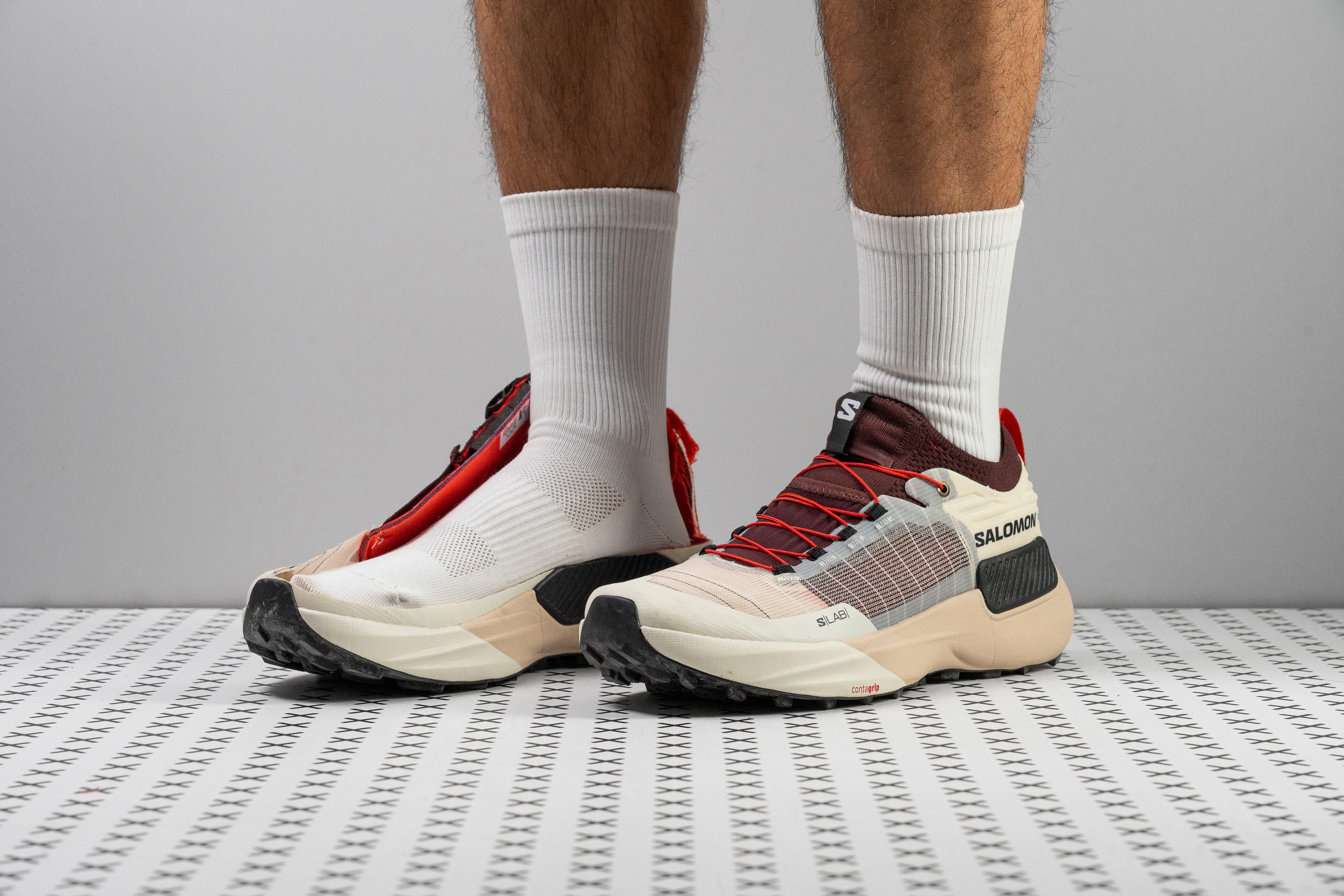
The outstanding fit of the S/Lab Genesis comes partly from its sock-like tongue design, which wraps the foot securely from every angle, keeps debris out of the toebox and stays perfectly in place. Salomon also reinforced the instep with an extra layer that's visually unusual.
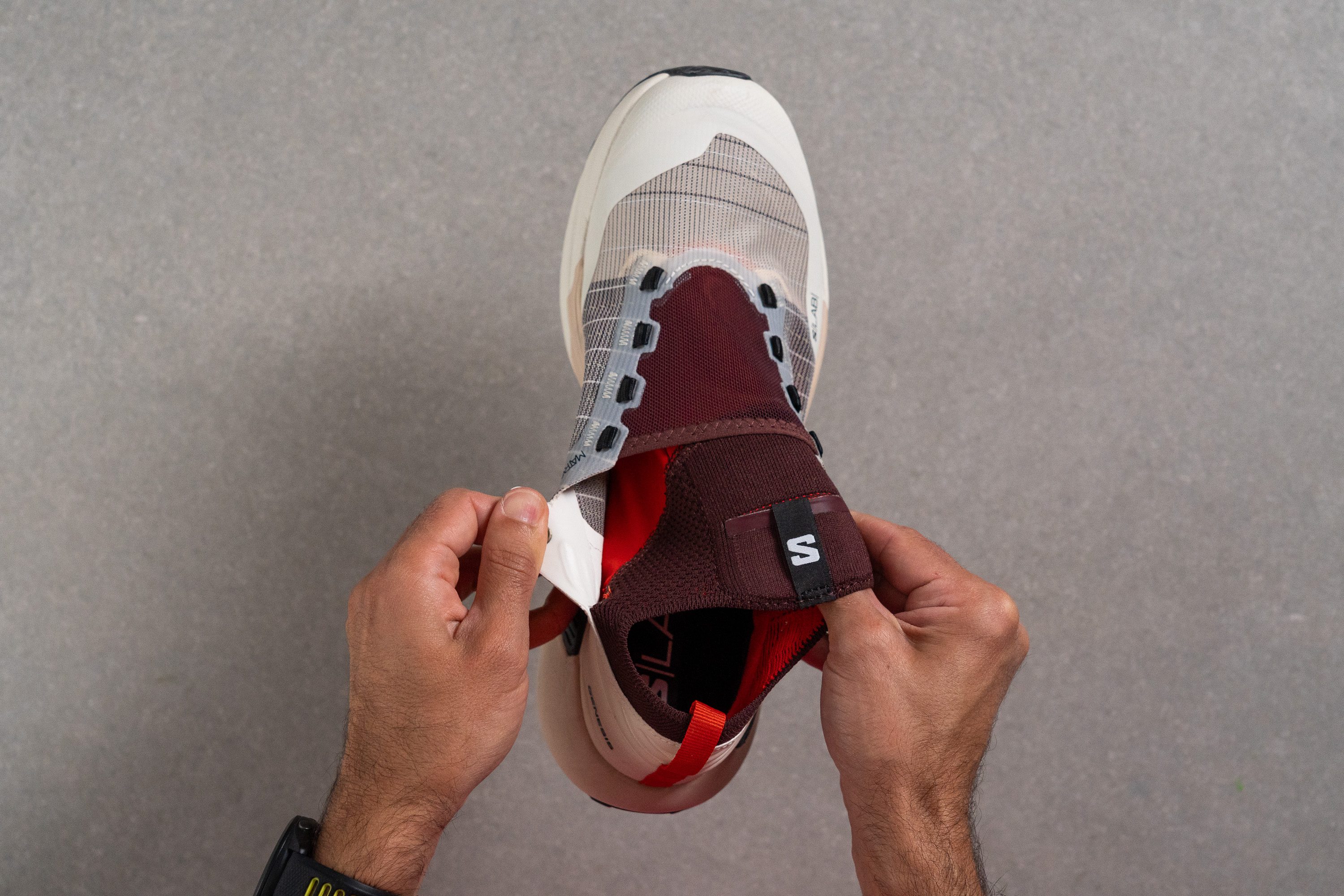
| S/Lab Genesis | Tipo calcetín |
Tirador del talón
The S/Lab Genesis features a finger-loop heel tab seamlessly integrated into the collar. It’s securely attached and cleverly hides the upper’s stitching, adding both functionality and a clean look.
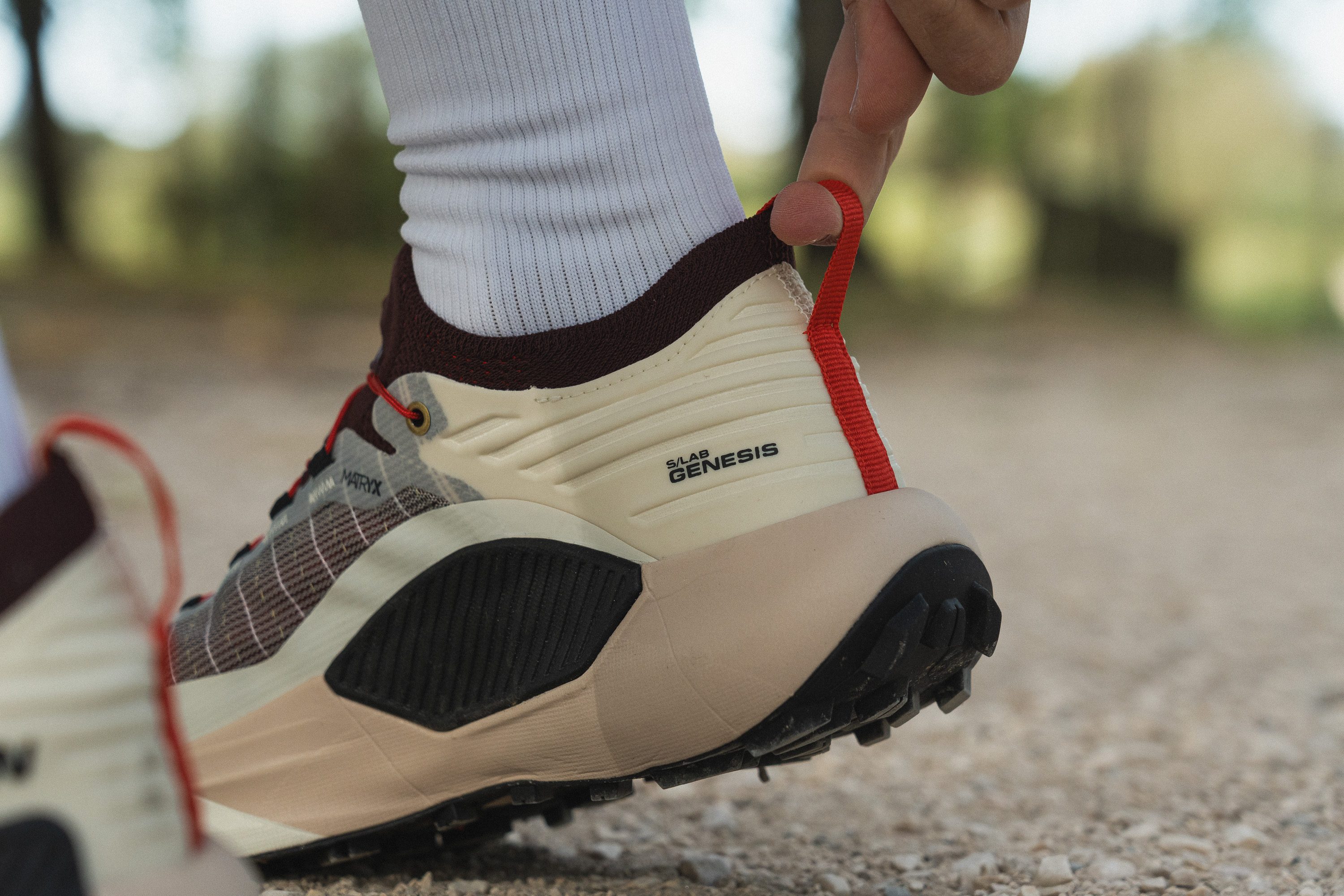
| S/Lab Genesis | Tirador circular |
Precio
The price of this shoe is quite intriguing, as it sits in a middle ground. It’s cheaper than most trail super shoes but still on the expensive side of the spectrum. And for its moderate energy return, it's not easy to justify.
| S/Lab Genesis | $199 |
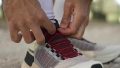
Quicklace
The QuickLace system performs flawlessly, just as we expected from Salomon. It delivers an effortless, precision-tightening experience that feels really secure and user-friendly.
We also loved the well-crafted lace garage, smartly integrated into the tongue and providing a clean, clutter-free finish.