
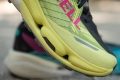





Nuestra conclusión
- Grava 75
- Versátiles 94
- Técnico 72
Pros
- Tracción excepcional en terrenos distintos
- Upper transpirable
- Las Merrell más reactivas hasta la fecha
- Ajuste seguro
- Diseño ágil que destaca en el trail running rápido
- Materiales de primera calidad
- Placa de carbono con un diseño equilibrado
- Plantilla TPEE premium
- Rocker moderado que se adapta hasta los principiantes
- Diseño bicolor atrevido
- Diseño bicolor atrevido
Contras
- Caras que flipas
- Más pesadas que sus rivales
- Poca amortiguación en el antepié
Premios
- Entre zapatillas de running con la mejor tracción
- Entre mejores zapatillas de trail running para hombre
- Top 19% entre zapatillas de trail running
- Top 26% entre zapatillas de running neutras
Comparativa
Las zapatillas de running más parecidas
+ + Añadir unas zapatillas | |||||
|---|---|---|---|---|---|
| Nuestra puntuación | 86 Geniales | 90 Magníficas | 88 Magníficas | 87 Geniales | |
| Precio | 290 € | 225 € | 250 € | 250 € | |
| Terreno de trail | Versátiles / Terreno de dificultad moderada | Grava / Trail y asfalto | Grava / Trail y asfalto | Grava / Trail y asfalto | |
| Absorción de impactos | Alta | Alta | Alta | Alta | |
| Retorno de energía | Moderado | Alto | Alto | Moderado | |
| Tracción | Alta | Alta | Alta | Alta | |
| Sujeción arco del pié | Neutral | Neutral | Neutral | Neutral | |
| Peso laboratorio Peso marca | 10.7 oz / 303g 10.8 oz / 305g | 8.9 oz / 252g 9.2 oz / 261g | 9.8 oz / 278g 9.5 oz / 269g | 9 oz / 255g 9 oz / 255g | |
| Drop laboratorio Drop marca | 10.9 mm 6.0 mm | 11.3 mm 6.0 mm | 10.7 mm 8.5 mm | 7.3 mm 5.0 mm | |
| Técnica de carrera | Talón | Talón | Talón | Medio/antepié | |
| Talla | - | - | Tallan bien | - | |
| Rigidez de la mediasuela | Equilibrada | Equilibrada | Blanda | Blanda | |
| Diferencia de la rigidez de la mediasuela en frío | Pequeña | Pequeña | Pequeña | Pequeña | |
| Placa | Placa de carbono | Placa de carbono | Placa de carbono | Placa de carbono | |
| Durabilidad de la parte delantera | Decente | Decente | Mala | Decente | |
| Durabilidad del acolchado del talón | Baja | Alta | Alta | Alta | |
| Durabilidad de la suela exterior | Buena | Buena | Buena | Buena | |
| Transpirabilidad | - | - | Baja | - | |
| Anchura / ajuste | Media | Media | Media | Media | |
| Anchura de la parte delantera | Media | Estrecha | Ancha | Estrecha | |
| Flexibilidad | Moderada | Rígida | Moderada | Rígida | |
| Rigidez torsional | Moderadas | Moderadas | Moderadas | Rígidas | |
| Rigidez del contrafuerte del talón | Moderado | Moderado | Rígido | Flexible | |
| Profundidad del dibujo de la suela | 3.7 mm | 2.8 mm | 3.0 mm | 3.2 mm | |
| Altura de la suela en la zona del talón laboratorio Altura de la suela en la zona del talón marca | 37.0 mm 32.0 mm | 41.6 mm 42.0 mm | 38.1 mm 38.0 mm | 40.7 mm 41.5 mm | |
| Antepié laboratorio Antepié marca | 26.1 mm 26.0 mm | 30.3 mm 36.0 mm | 27.4 mm 29.5 mm | 33.4 mm 36.5 mm | |
| Anchuras disponibles | Estándar | Estándar | Estándar | Estándar | |
| Para corredores pesados | ✓ | ✓ | ✗ | ✗ | |
| Estación | - | - | Todas las estaciones | - | |
| Plantilla extraíble | ✓ | ✓ | ✗ | ✓ | |
| Compatibles con plantillas personalizadas | ✓ | ✓ | ✗ | ✓ | |
| Clasificación | #99 Top 25% | #37 Top 10% | #54 Top 14% | #70 Top 18% | |
| Popularidad | #343 14% inferior | #230 42% inferior | #145 Top 37% | #184 Top 46% |



Who should buy
The Merrell MTL SpeedArc Peak is a huge candidate for:
- Merrell fans wanting a high-tech trail shoe that fits them well.
- Runners seeking top-tier traction and excellent breathability no matter the cost.
- Those who prefer nimble shoes with responsive, agile handling.
- Trail aficionados with deep pockets wanting premium MATRYX and Vibram tech.
Who should NOT buy
We found the Merrell MTL SpeedArc Peak more appealing for heel strikers, while runners who land farther forward may want higher shock absorption and a lower drop. For them, we recommend the adidas Terrex Agravic Speed Ultra 2.
We also think the shoe's high price will put it out of reach for most runners. If you want a high-performing trail shoe at a lower cost, we suggest the Saucony Xodus Ultra 4 or the KIPRUN Kipsummit Max instead.
Amortiguación
Shock absorption
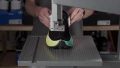
We discovered in the lab that the Merrell MTL SpeedArc Peak delivers two very different levels of shock absorption. The heel provides very good protection at 135 SA, while the forefoot falls notably below our current lab average at just 88 SA and may feel under-protective for heavier runners or those going to ultra-distance events.
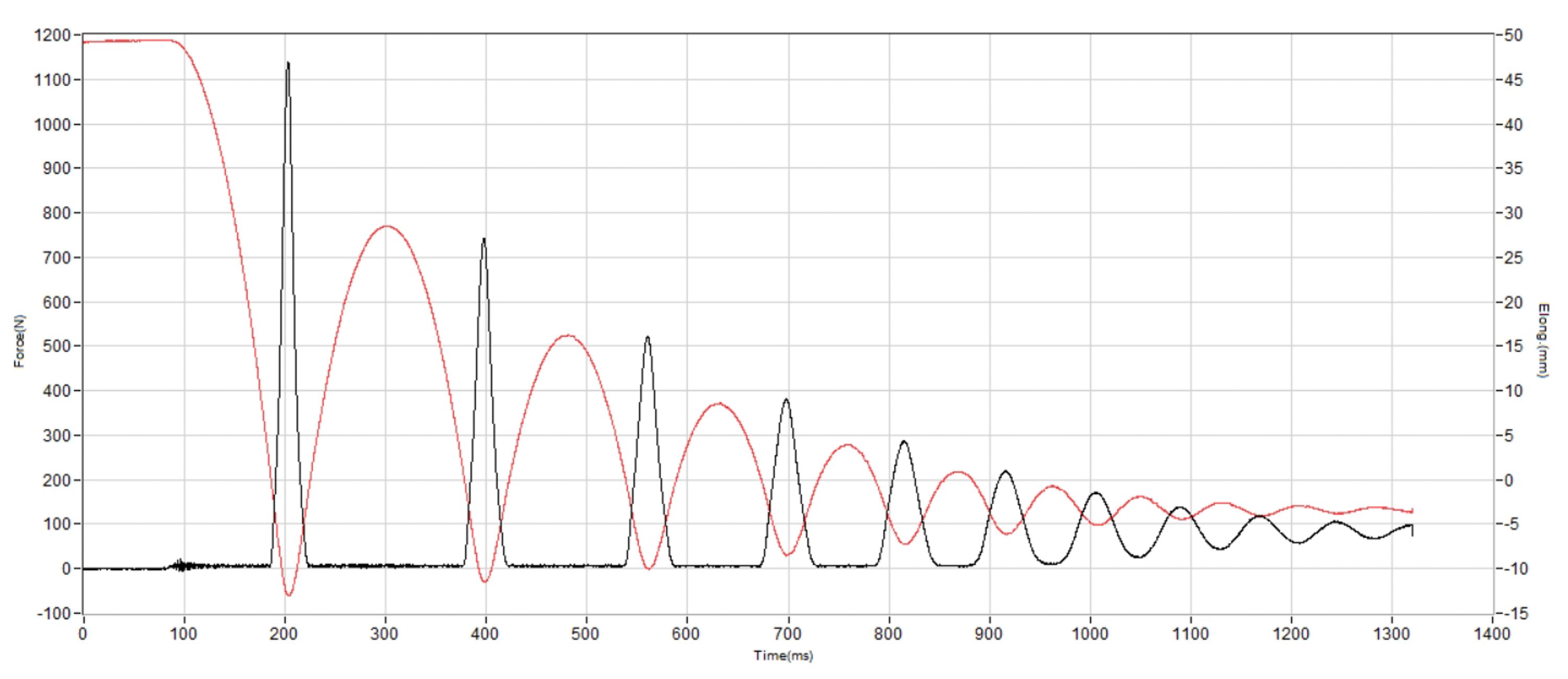
| MTL SpeedArc Peak | 135 SA |
| Media | 123 SA |
Energy return
We've been waiting for Merrell to improve energy return in its shoes, and the MTL SpeedArc Peak finally takes a step in that direction.
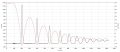
But it's not quite there yet, as 61.9% in the heel and 64.1% in the forefoot fall a bit short for such an expensive shoe. Nonetheless, the addition of PEBA foam to this dual-layer midsole marks a meaningful step forward for the brand.
| MTL SpeedArc Peak | 64.1% |
| Media | 59.7% |
Altura de la suela en la zona del talón
The heel features a notably high stack height, with 37.0 mm separating the foot from the ground.
Because of this design, heel strikers will rarely feel the ground, and the sense of protection is clear from the very first step.
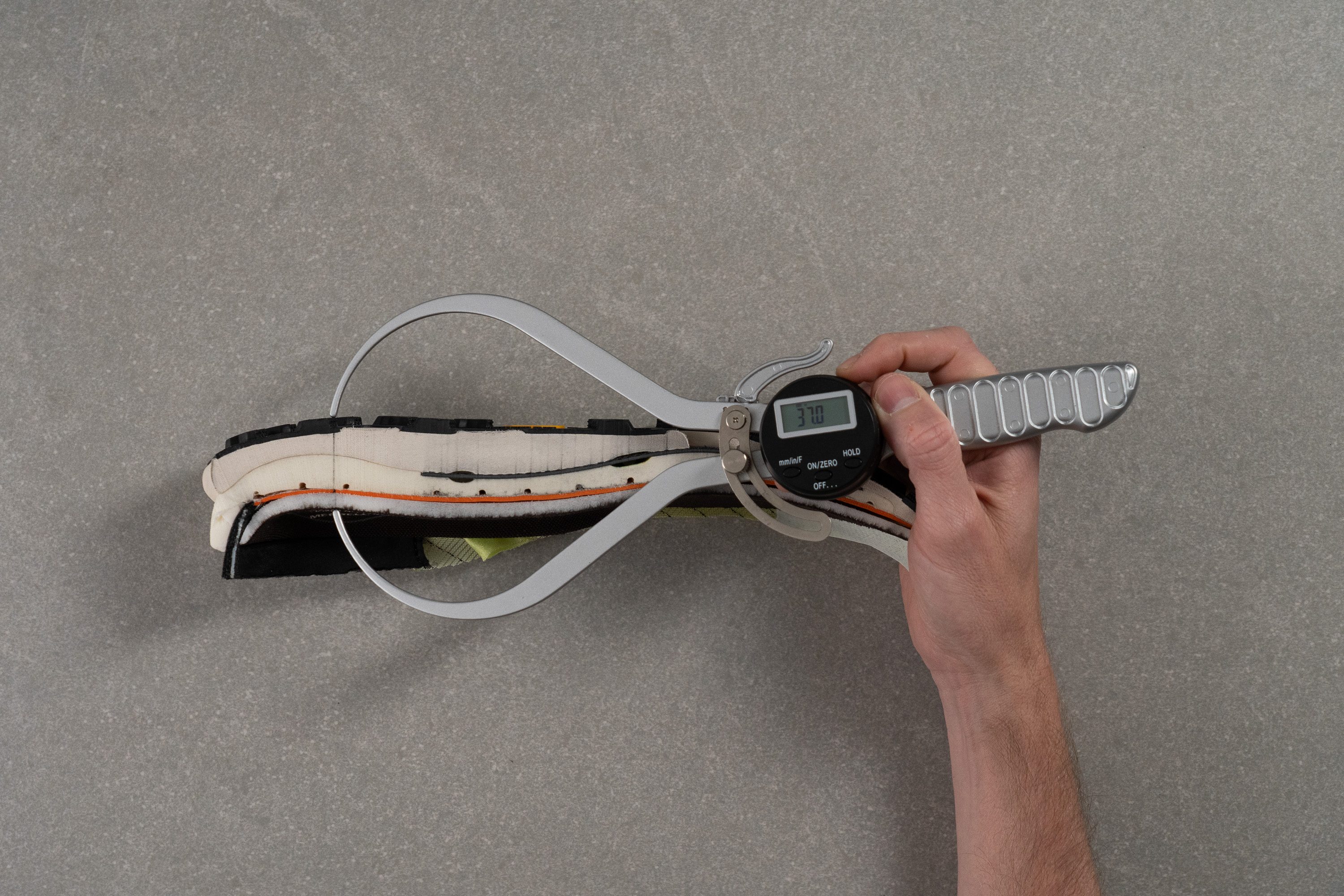
| MTL SpeedArc Peak | 37.0 mm |
| Media | 33.1 mm |
Altura de la suela en el antepié
The forefoot measures 26.1 mm, which is more or less in line with our lab average.
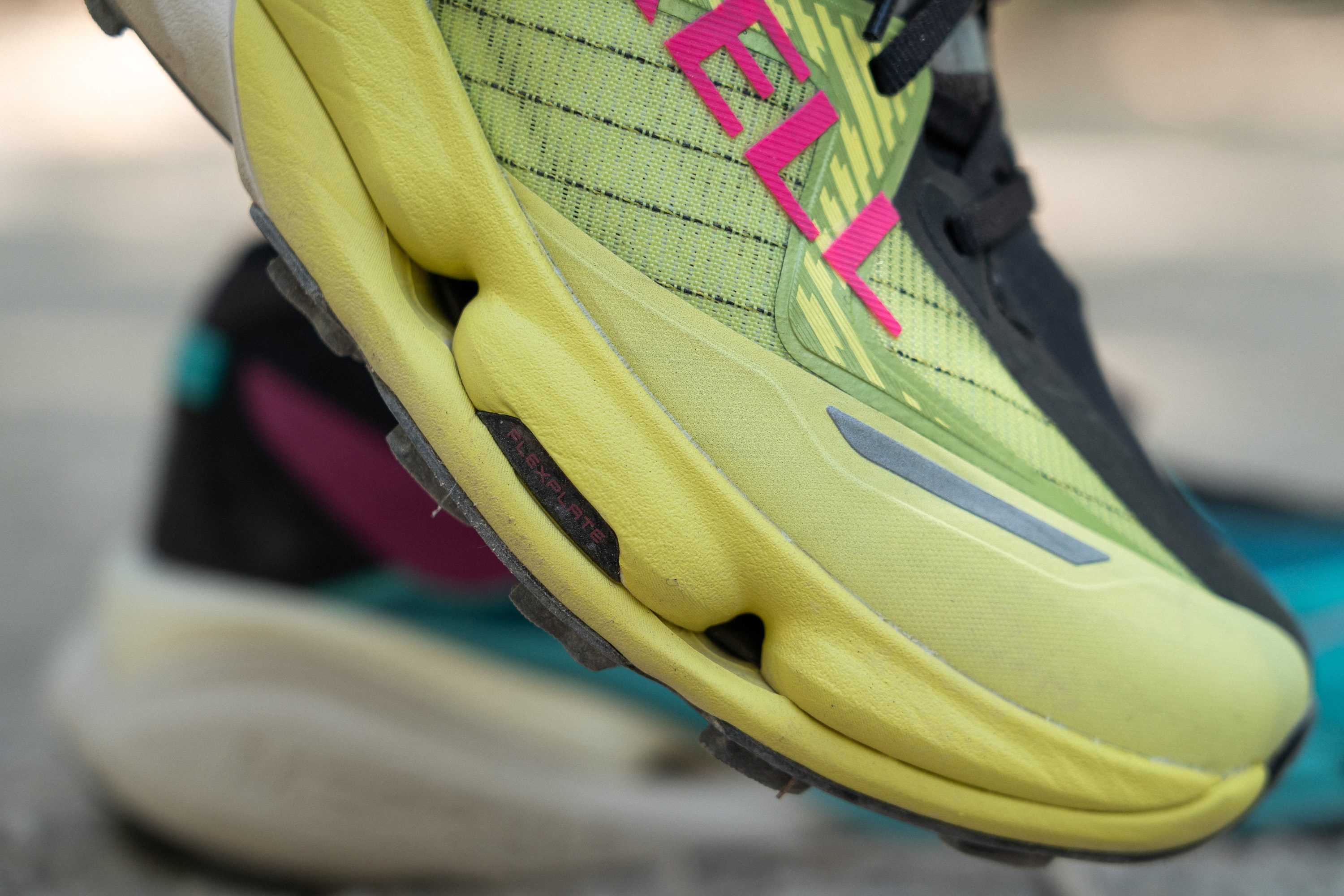
This can make the low shock absorption we found earlier somewhat surprising for you, but remember that the thick outsole and lugs add almost 6 mm without contributing much to impact cushioning.
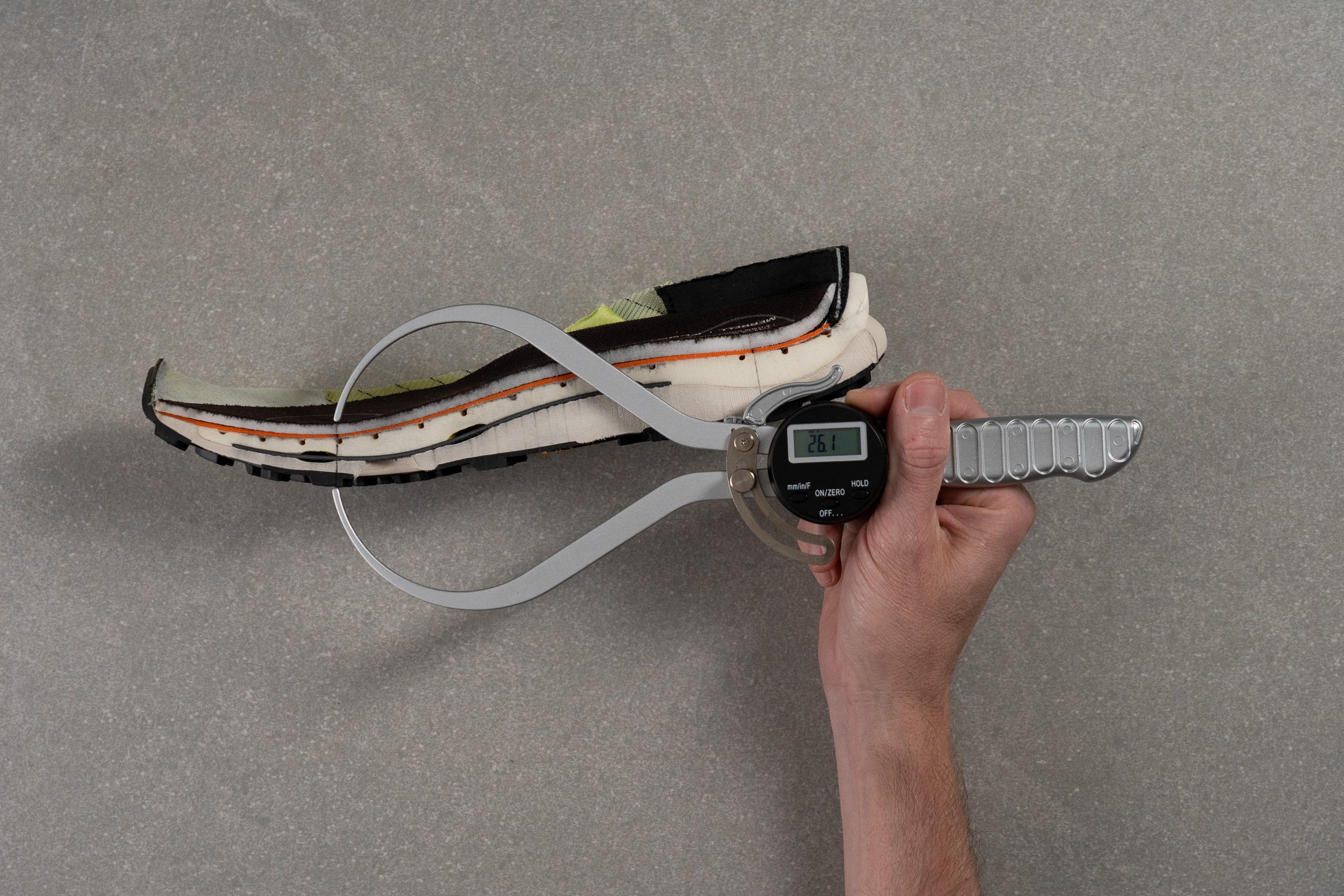
| MTL SpeedArc Peak | 26.1 mm |
| Media | 25.8 mm |
Drop
The drop we measured is 10.9 mm, almost twice as high as the figure stated by Merrell in the spec sheet.
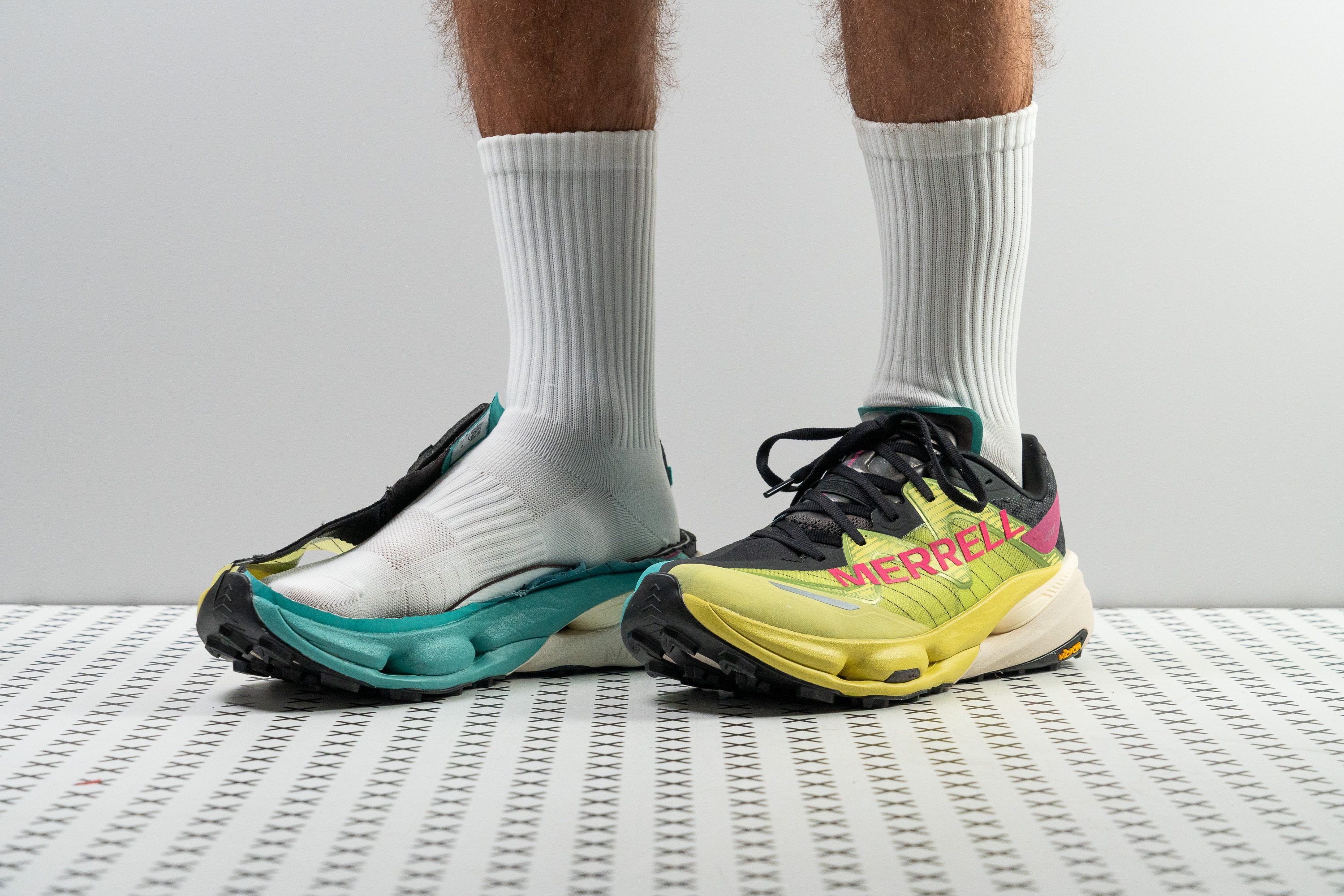
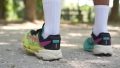
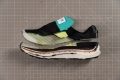
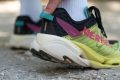
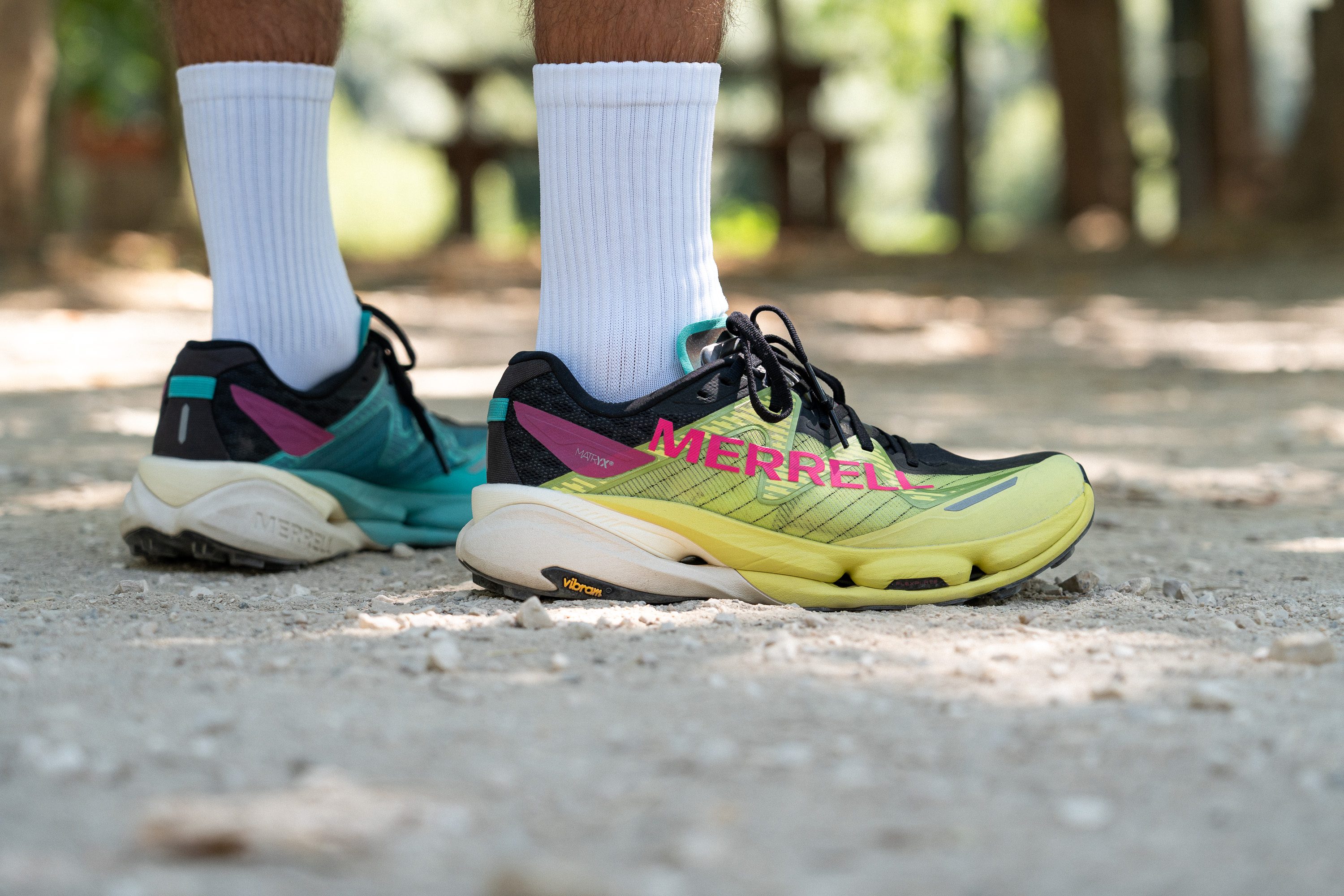
And anyone looking at this photo or simply running in the shoe would likely agree with us that it feels like a high-drop shoe, with the heel noticeably elevated above the forefoot, making it a much better option for heel strikers.
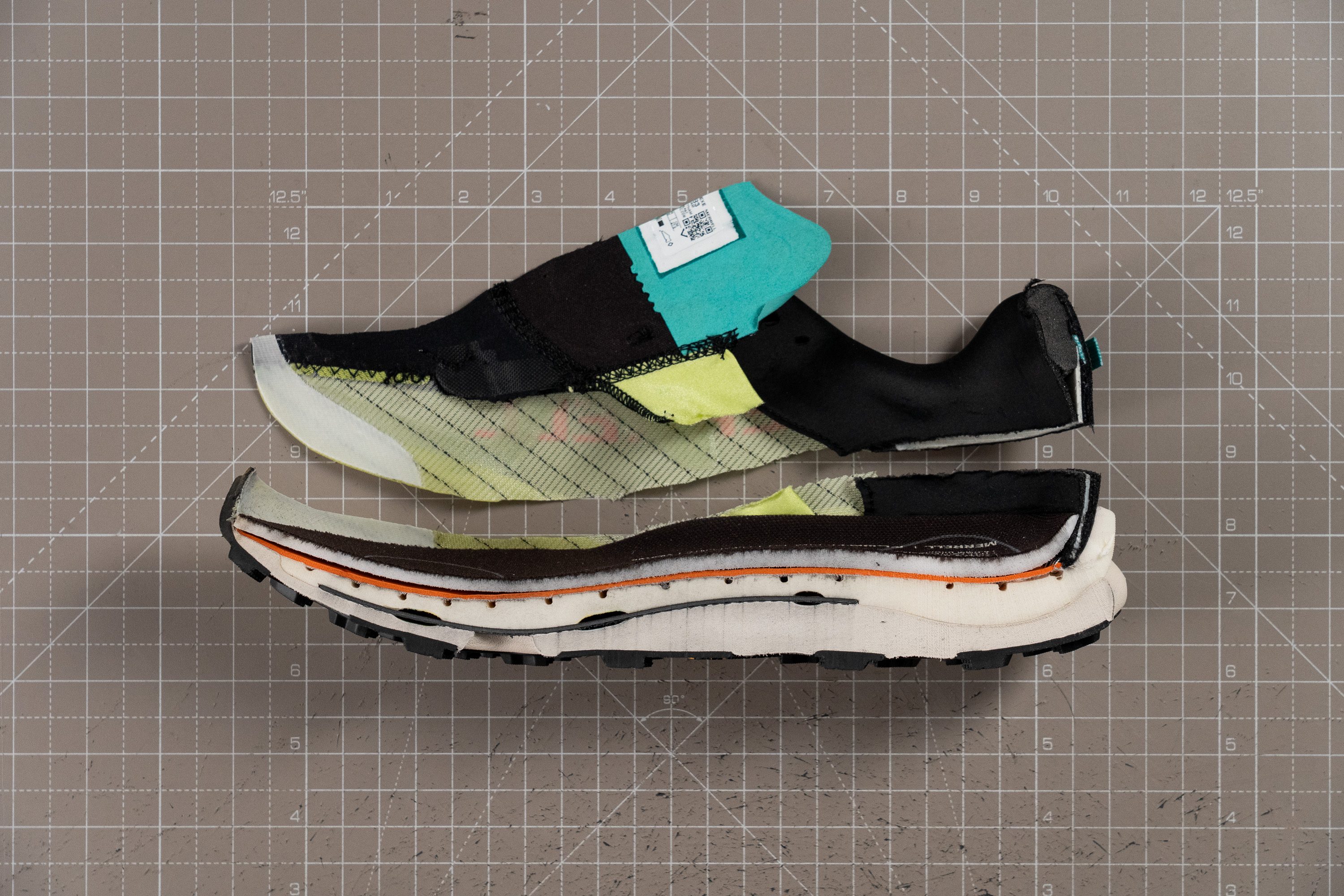
| MTL SpeedArc Peak | 10.9 mm |
| Media | 7.3 mm |
Dureza de la mediasuela
One of the most exciting features of the Merrell MTL SpeedArc Peak is its top layer of PEBA foam, which is responsible for pushing energy return above 60%. For comparison, the Merrell Agility Peak 6 with basic FloatPro foam returned just 41.9% in our lab, one of the lowest scores we've ever recorded. So yes, this is a major change.
We measured this layer at 34.8 AC for softness, putting it slightly on the softer side, but it never feels overly plush.
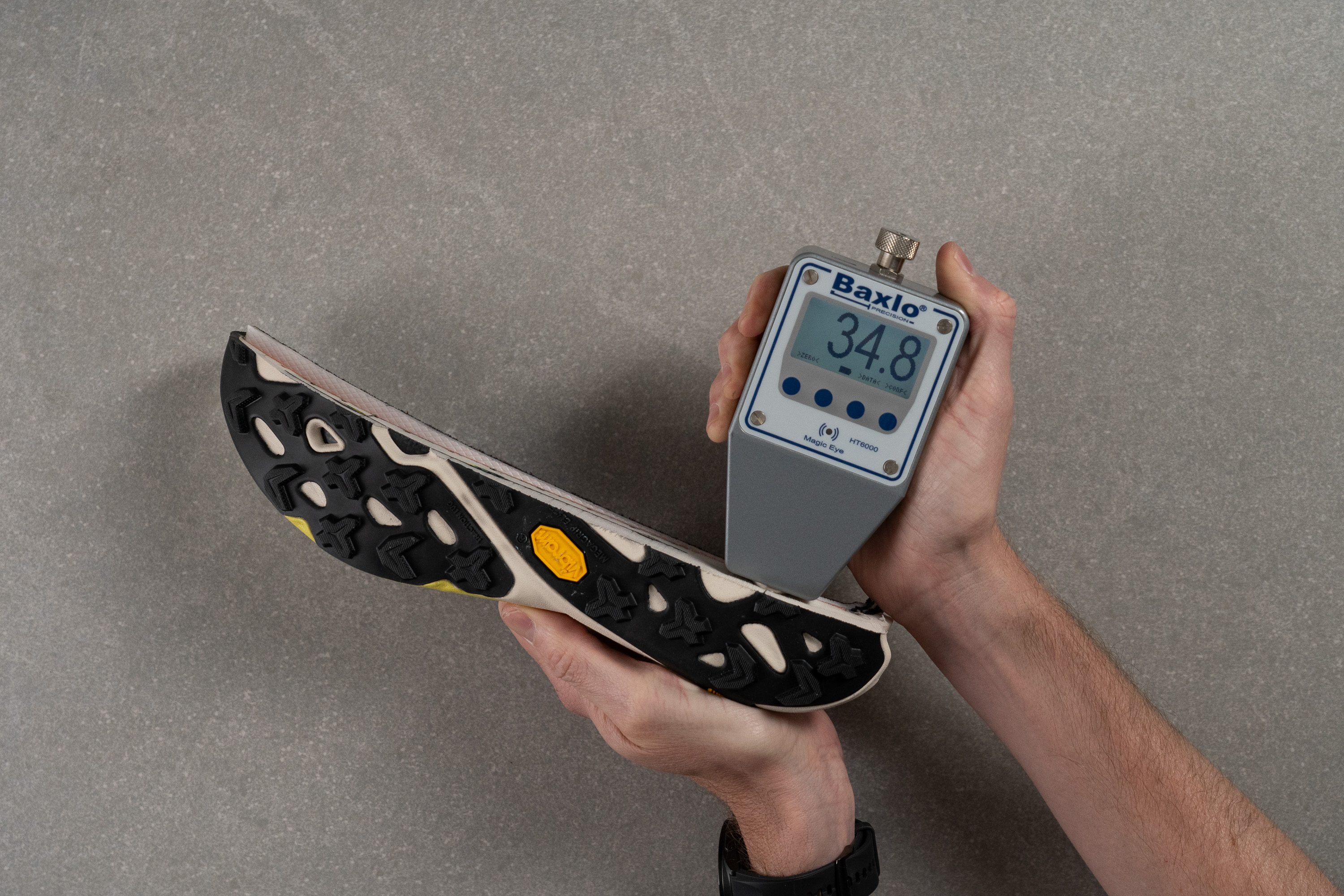
| MTL SpeedArc Peak | 34.8 AC |
| Media | 38.3 AC |
Rocker
The Merrell MTL SpeedArc Peak features a moderate forefoot rocker that may surprise runners used to modern trail super shoes. However, it makes sense given that the forefoot stack height isn't particularly tall.
The heel also has a slight curvature, but it's far from extreme, making the shoe feel more controlled than more aggressive designs.
Placa
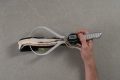
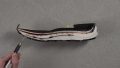
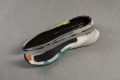
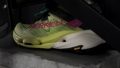
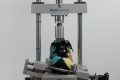
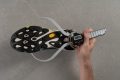
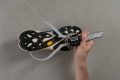
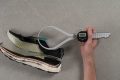
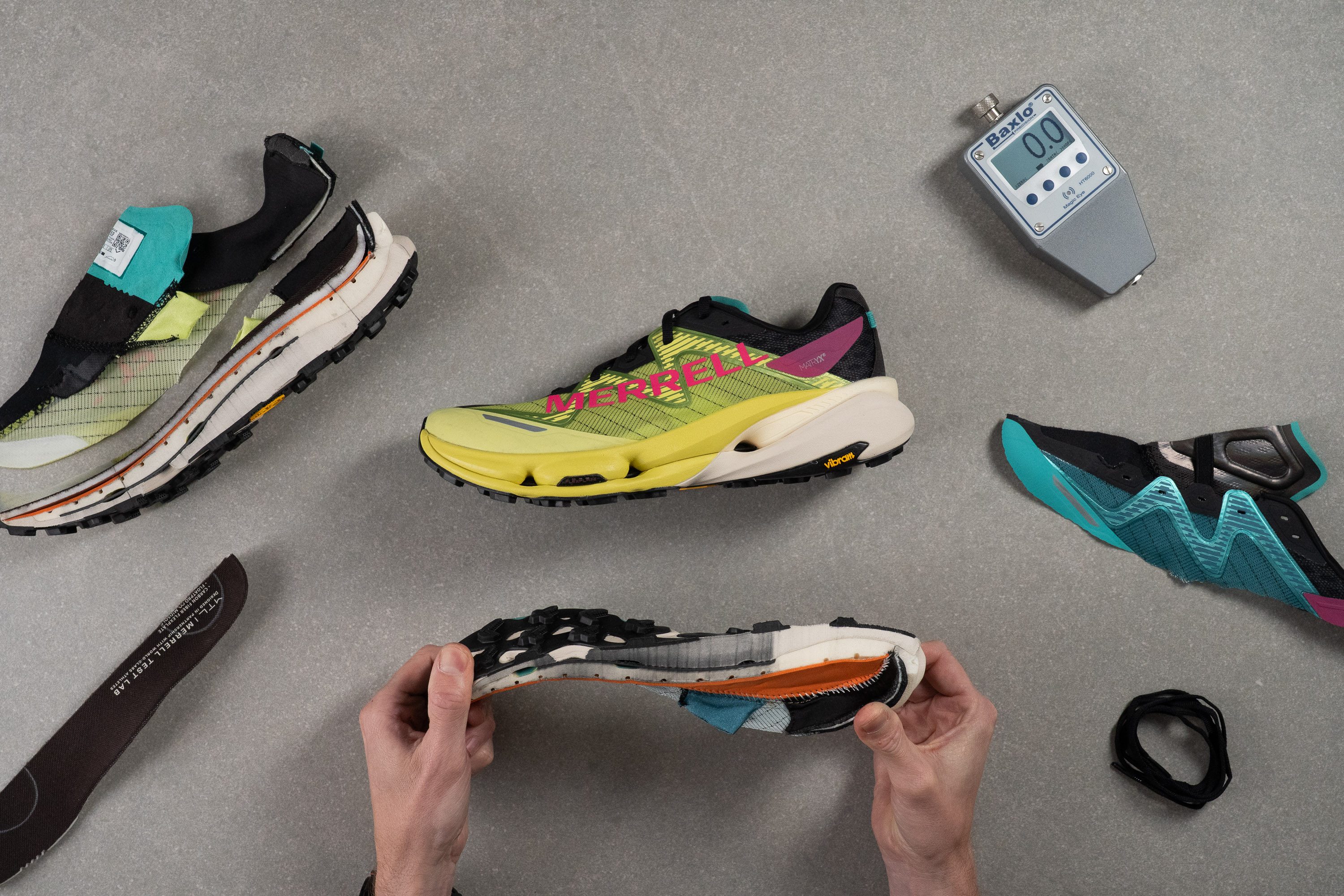
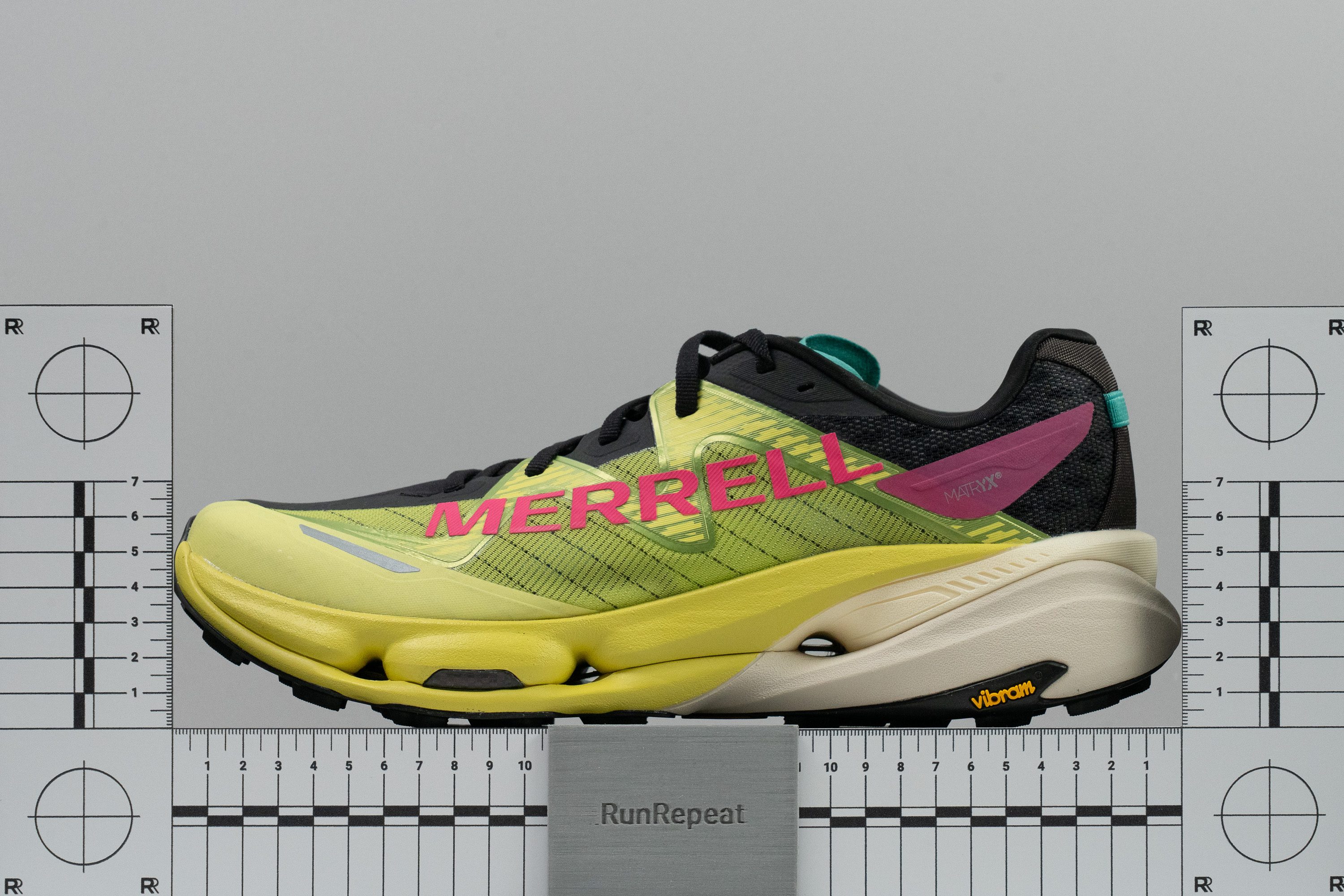
There's some interesting stuff going on here, so we took our time carefully cutting the shoe open to fully expose the plate. As you can see, Merrell uses a ¾-length carbon-fiber plate that forks toward the forefoot.
Merrell calls it FlexPlate, and we think it's a smart approach to adding a carbon plate to a trail shoe. The forked design allows the forefoot to adapt better when tackling rocky sections, where a full-length, non-forked plate could feel too rigid and less versatile.
Tallaje y ajuste
Talla
Anchura / Ajuste
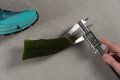
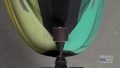
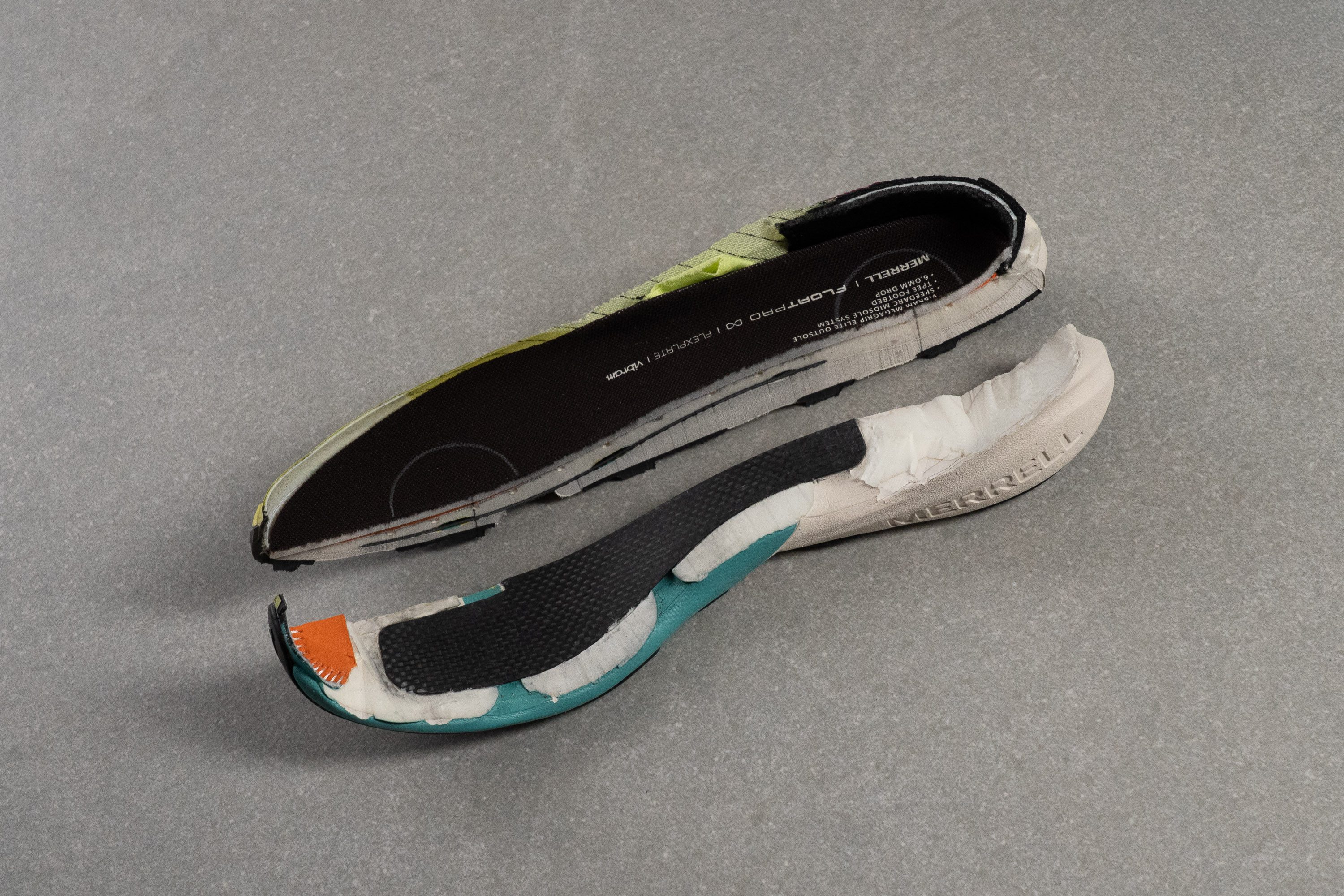
Merrell has built a reputation in our lab for delivering snug fits across its lineup, so we wanted to see whether the MTL SpeedArc Peak would follow that same approach or take a different path. And we started by creating our usual gel replica of the interior to map the shoe's internal shape.
The first reading came in at 94.0 mm, placing it clearly below our lab average.
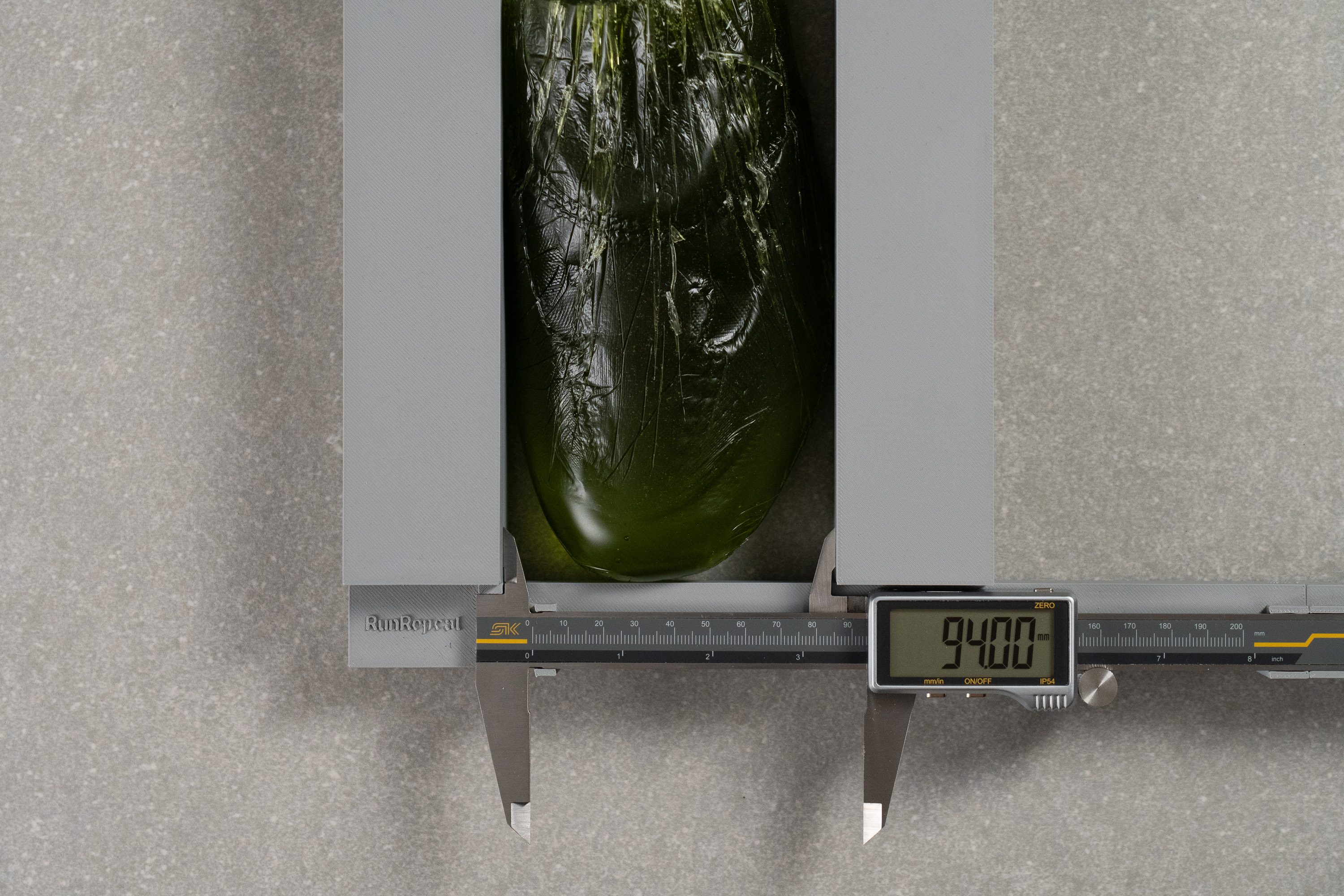
| MTL SpeedArc Peak | 94.0 mm |
| Media | 95.7 mm |
Anchura de la parte delantera
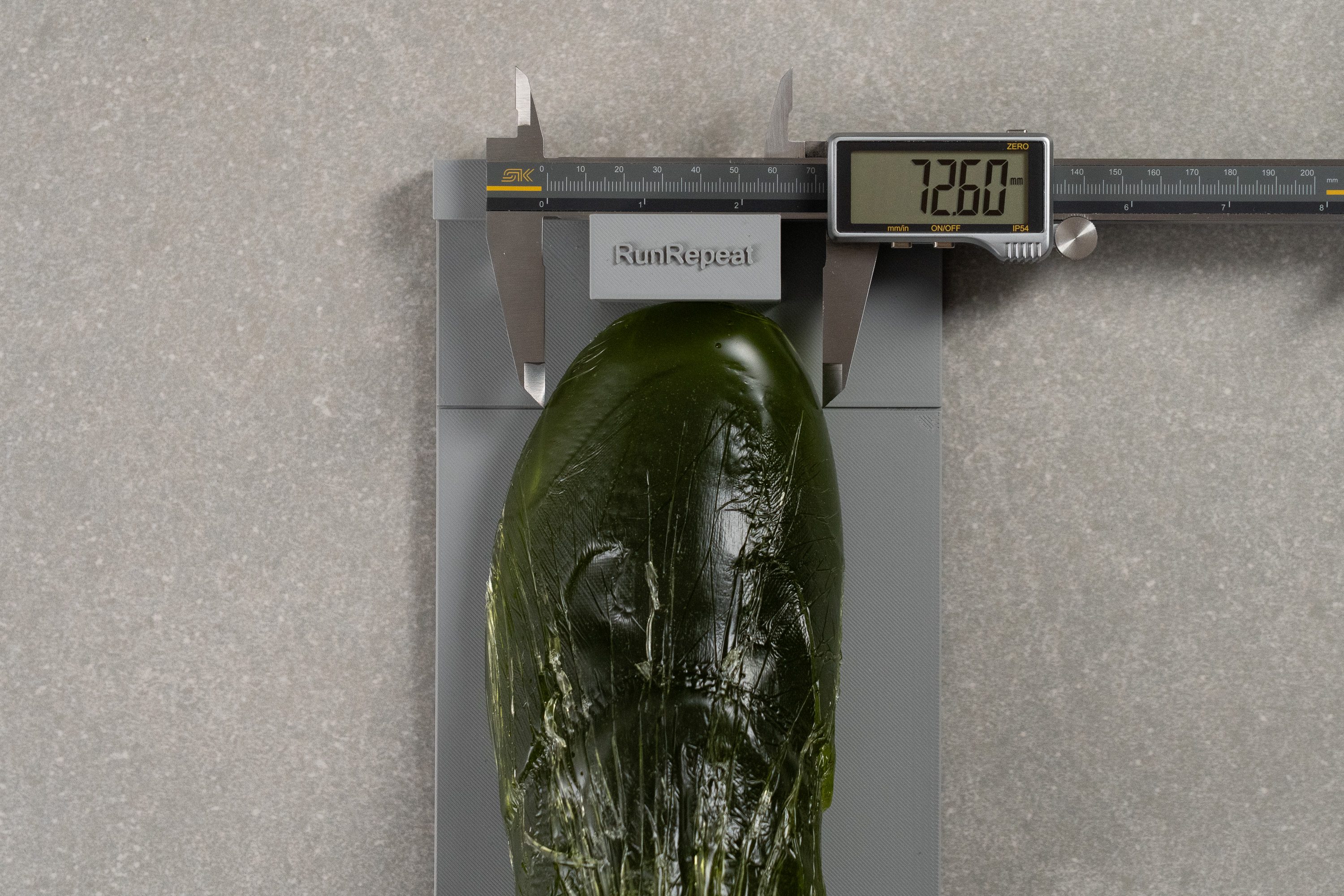
At 72.6 mm, our toebox measurement confirms that the MTL SpeedArc Peak takes a narrow approach up front too.
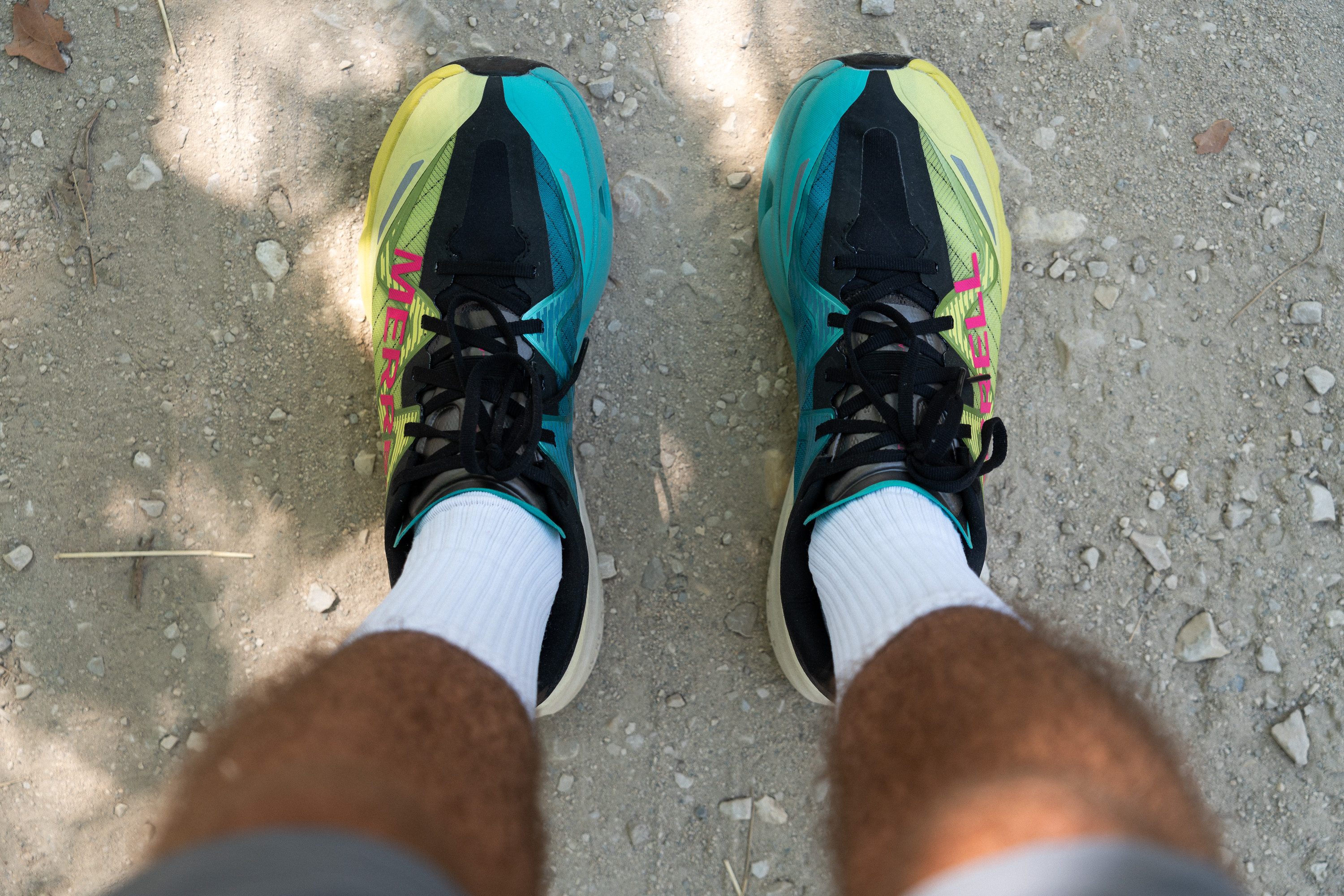
This tapered shape leaves limited room for natural toe splay, making the shoe a better fit for runners with narrower feet or those who prefer a snug fit for the added sense of security it provides.
| MTL SpeedArc Peak | 72.6 mm |
| Media | 74.3 mm |
Altura de la parte delantera
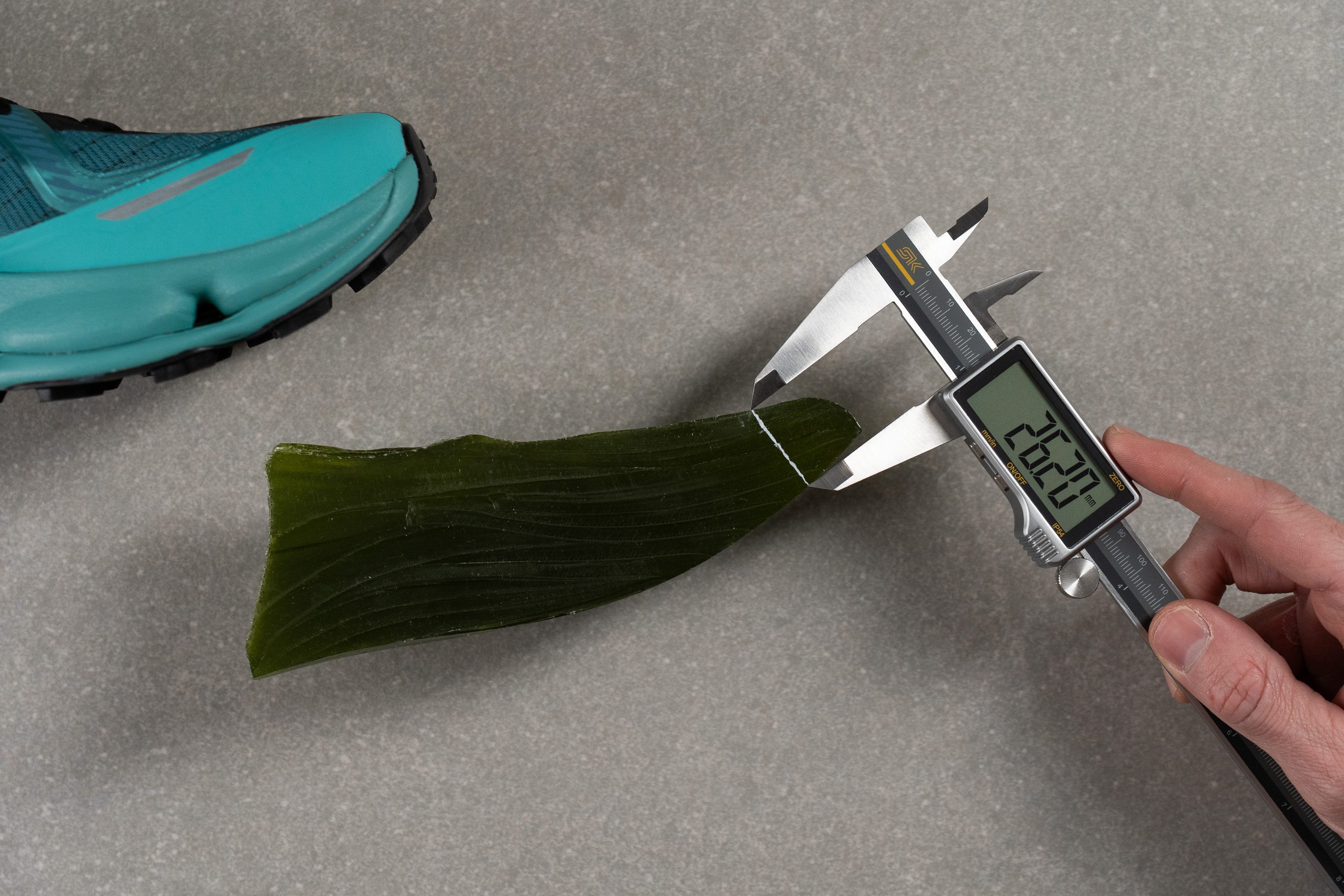
With 26.2 mm of toebox height, the SpeedArc Peak avoids unwanted pressure on the toes.
At the same time, the fit remains secure rather than sloppy!
| MTL SpeedArc Peak | 26.2 mm |
| Media | 26.9 mm |
Tracción / Agarre
Traction test
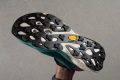
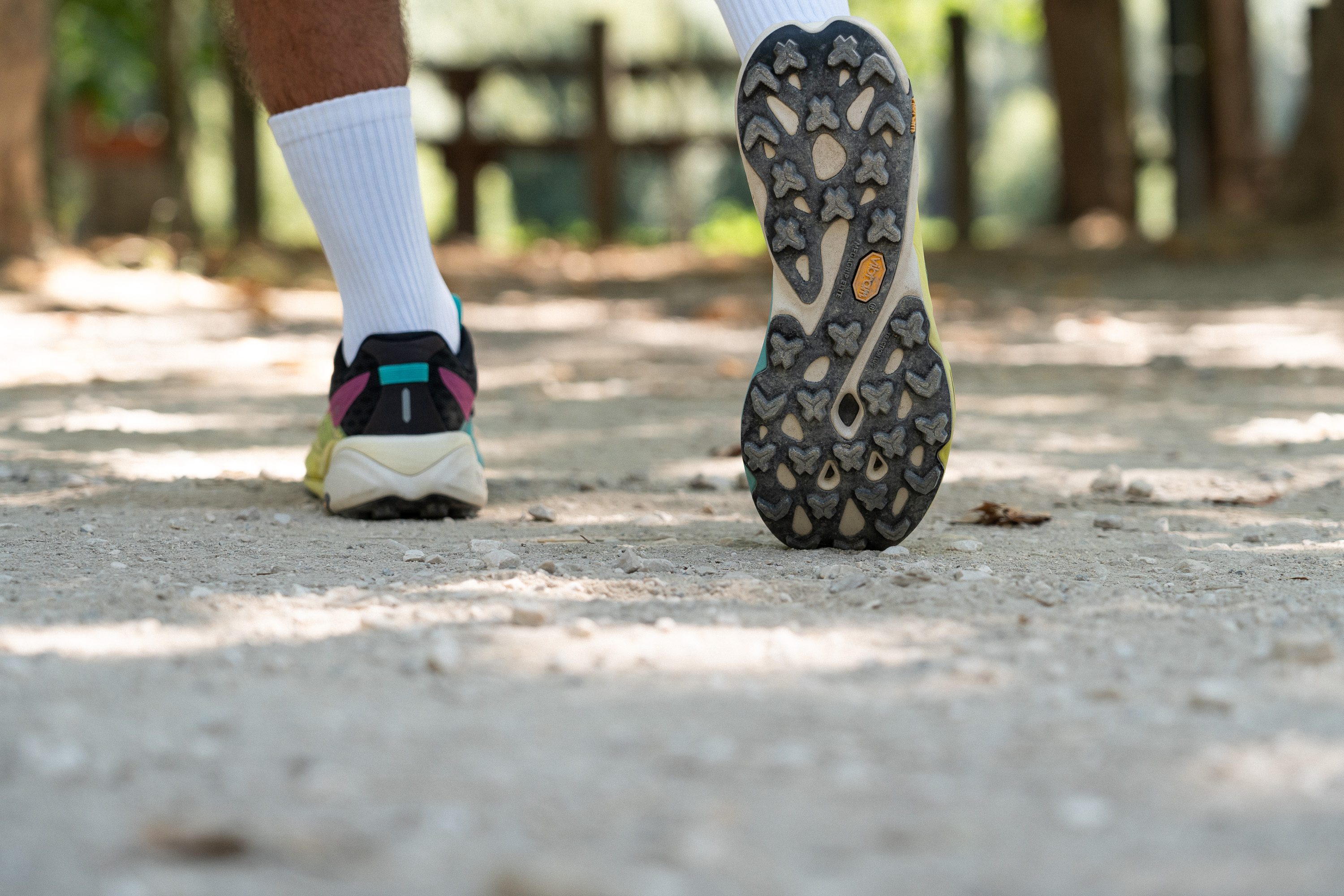
One of the most impressive features of the Merrell MTL SpeedArc Peak is its new Vibram Megagrip Elite outsole. One step above the trusted Vibram Megagrip, it delivers state-of-the-art traction across a wide range of surfaces and weather conditions.
In our lab, we put it through our traction test and recorded a coefficient of friction of 1.02. At the time of this review, that's only the second running shoe we've tested to break the 1.00 mark, only behind the Brooks Cascadia Elite, which also features Vibram Megagrip Elite rubber.
| MTL SpeedArc Peak | 1.02 |
| Media | 0.68 |
Profundidad del dibujo de la suela
Merrell designed two types of lugs for this shoe:
- Butterfly-shaped lugs provide multi-directional traction and excel during quick turns.
- Chevron-shaped lugs change orientation 180º depending on their purpose, helping with climbing and braking.
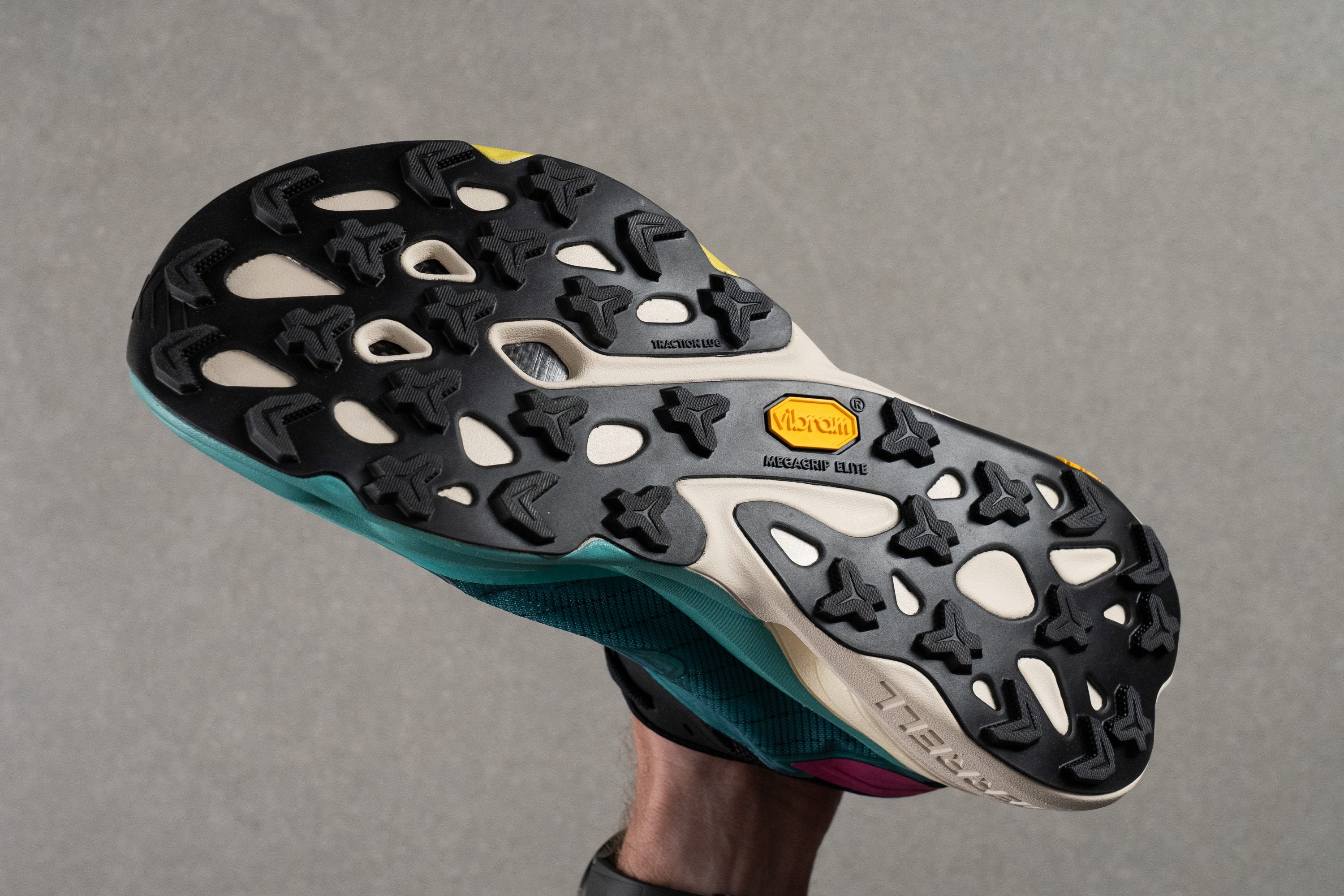
Combined with the outstanding grip of Vibram Megagrip Elite, they create an impressive outsole that, for us, is the true highlight of the shoe.
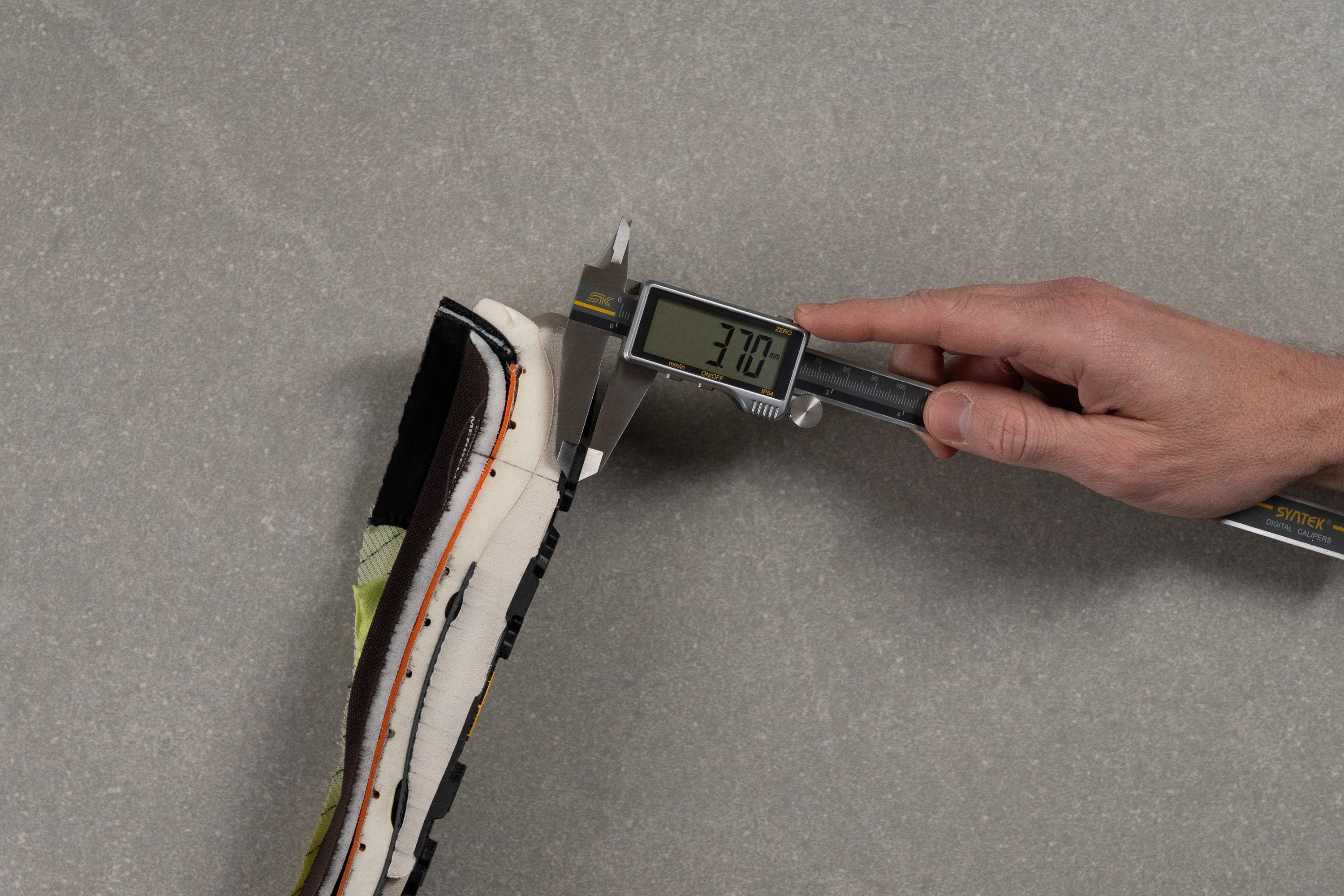
| MTL SpeedArc Peak | 3.7 mm |
| Media | 3.5 mm |
Diseño de la suela exterior
The only potential drawbacks are the three small forefoot cutouts, which can trap small rocks, and the less extensive outsole coverage. However, if you can live with those tiny compromises, the overall outsole performance is excellent.
Flexibilidad / Rigidez
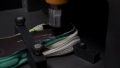
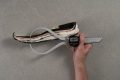
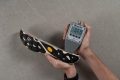
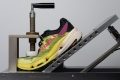
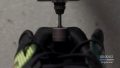
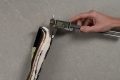
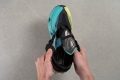
We fixed the Merrell MTL SpeedArc Peak to our custom-made machine, which bends the shoe 30 degrees while recording the force required to reach that angle. At 16.7N, it is slightly stiffer than average, but that's no surprise for a shoe with a carbon plate.
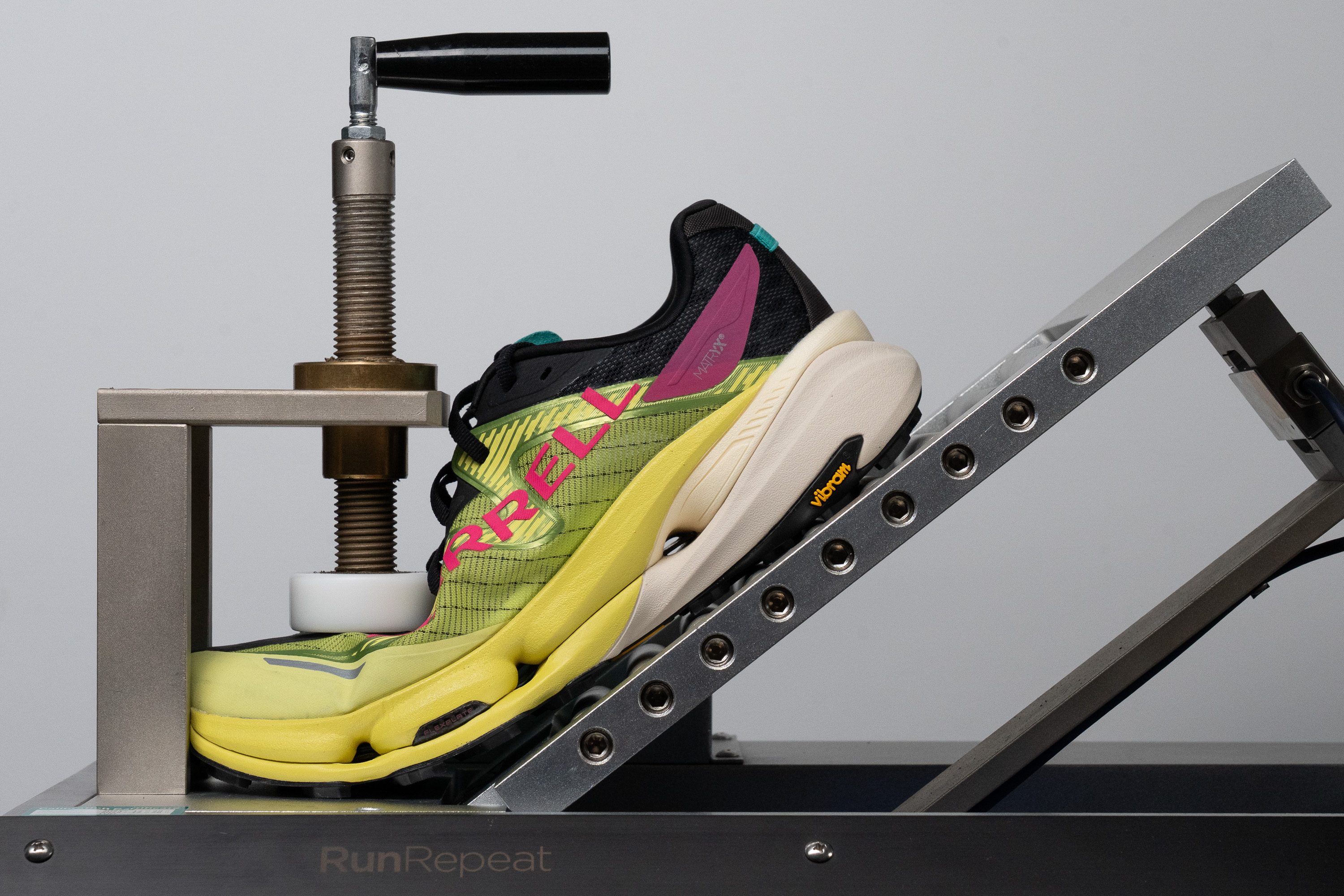
| MTL SpeedArc Peak | 16.7N |
| Media | 14.8N |
Peso
If we consider the outsole the highlight of the shoe, then weight is definitely a letdown for us. This shoe is designed as a trail super shoe, and in our humble opinion, 10.7 oz (303g) is simply too much, making it feel heavier than its main competitors.
In our view, this is yet another reason to go full-PEBA with the midsole. It won't happen with this version, but we have high hopes for a full-PEBA setup in version 2.
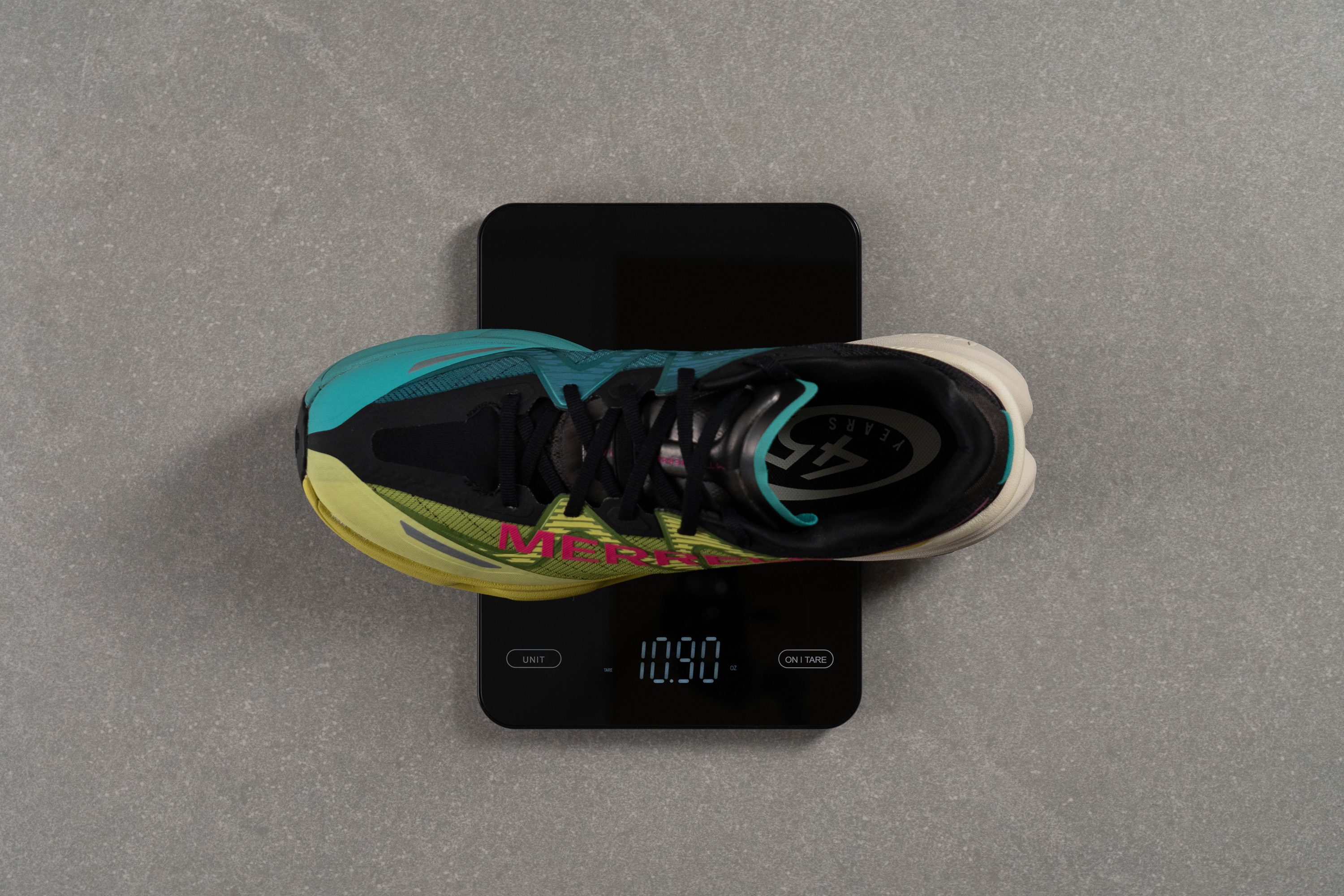
| MTL SpeedArc Peak | 10.7 oz (303g) |
| Media | 10.1 oz (285g) |
Transpirabilidad
Breathability test
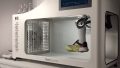
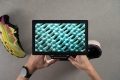
ActualizadoThe outsole is a big plus, while the weight holds the shoe back a bit. However, here's another major strength worth highlighting: the MATRYX upper is phenomenal in terms of performance. By combining Kevlar threads with polyamide, it helps the shoe achieve an impressive breathability score of 79 BR in our 3-hour test.
Therefore, we can confirm that the Merrell MTL SpeedArc Peak does an excellent job of keeping the foot dry, reducing the risk of unwanted blisters or discomfort during long runs.
| MTL SpeedArc Peak | 79 BR |
| Media | 71 BR |
Potencial de secado
NuevoThe MATRYX upper is not only excellent at keeping the foot dry, but it also handles moisture with ease. After spending 3 hours in the closed chamber of our breathability-testing machine, we found that the shoe released 65% of the added moisture, easily outperforming most trail shoes.
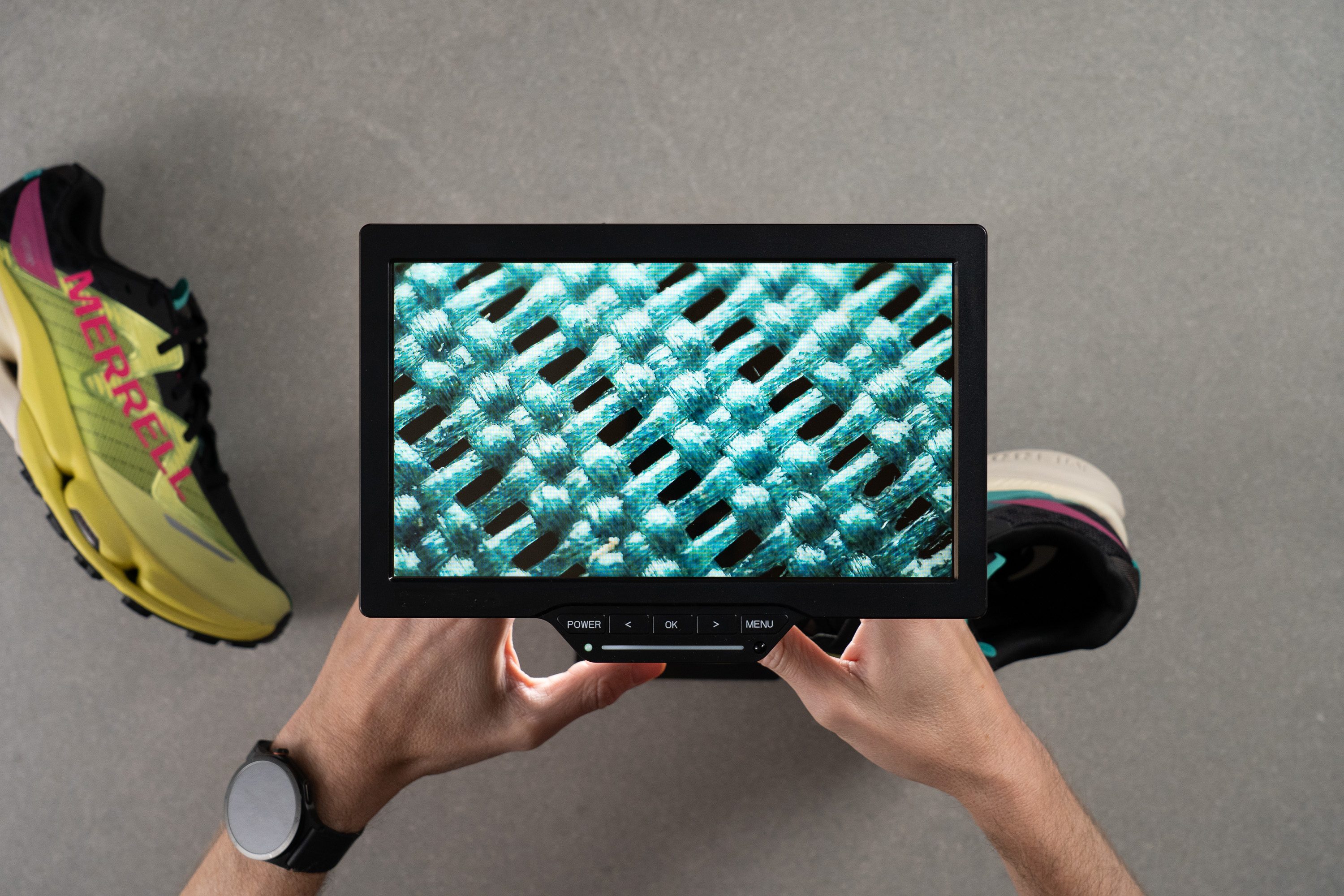
| MTL SpeedArc Peak | 65% |
| Media | 51% |
Estabilidad
Prueba de estabilidad lateral
After our runs, we had very clear that the Merrell MTL SpeedArc Peak isn't for runners who usually need extra support. It's designed to stay agile and nimble, making fast turns easy, but that comes at the cost of feeling less planted than shoes with wider midsoles.
And that's totally fine. Not every runner needs a super-sized midsole, and on the trails, many runners prefer a shoe that can quickly maneuver through challenging courses. That's exactly where the SpeedArc Peak shines.
Rigidez torsional
This shoe could have been too stiff, but Merrell avoided that by using a forked carbon plate. In our torsional rigidity test, it scored close to average at 16.9 Nm.
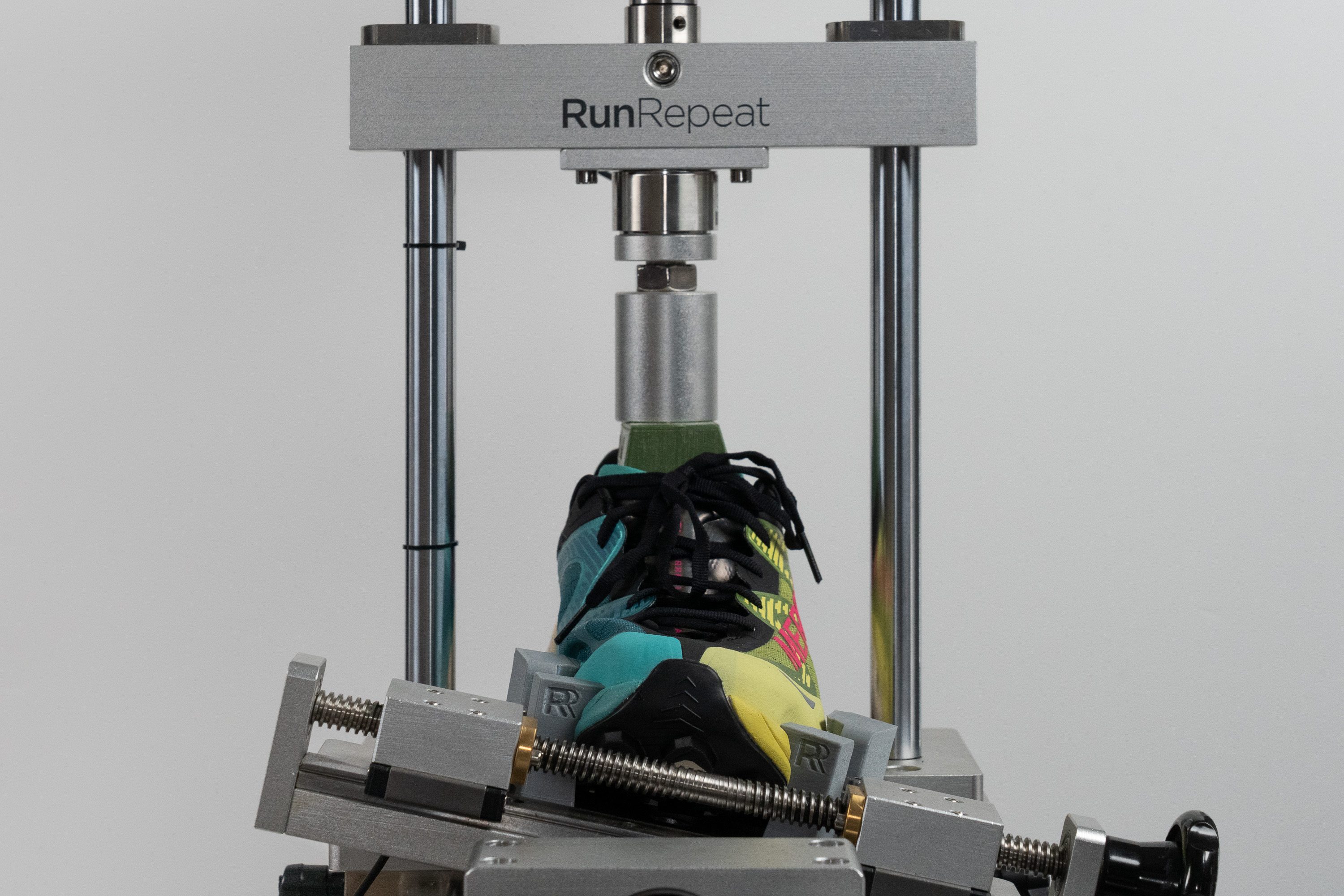
| MTL SpeedArc Peak | 16.9 Nm |
| Media | 15.8 Nm |
Rigidez del contrafuerte del talón
The heel counter is another reason why we don't think runners seeking support will find it here. It scored 3/5 in our manual assessment, which is the most common setup for neutral shoes.
| MTL SpeedArc Peak | 3 |
| Media | 3 |
Anchura de la mediasuela - antepié
The MTL SpeedArc Peak clearly opts for a more traditional midsole shape and dimensions, something we noticed both during our runs and later in the lab.
At 112.6 mm, it even falls slightly below our current lab average.
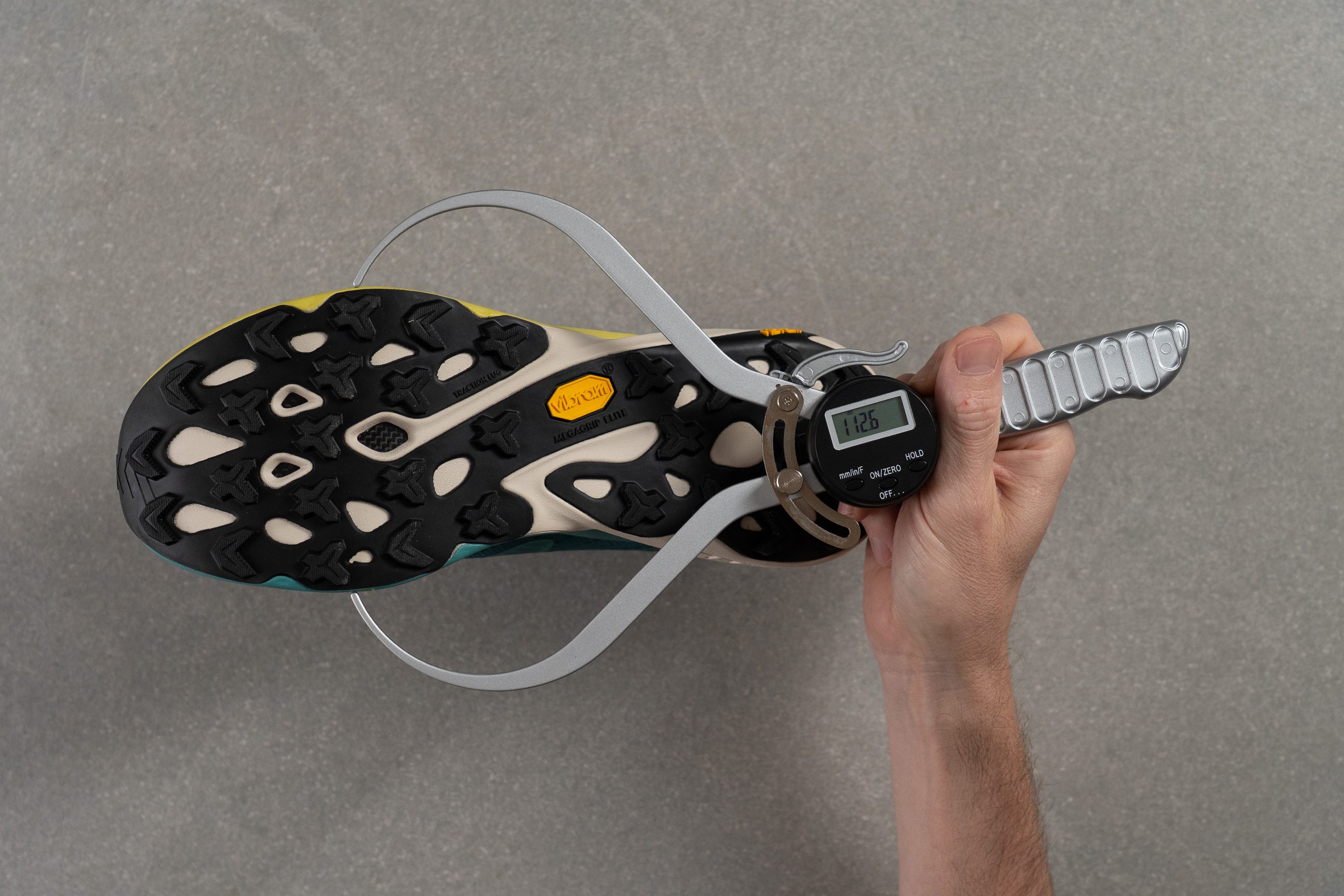
| MTL SpeedArc Peak | 112.6 mm |
| Media | 114.3 mm |
Anchura de la mediasuela - talón
The heel is slightly wider than average, but it still feels nimble. We never felt the shoe getting in the way of our stride or downhill running. If anything, it felt like the opposite.
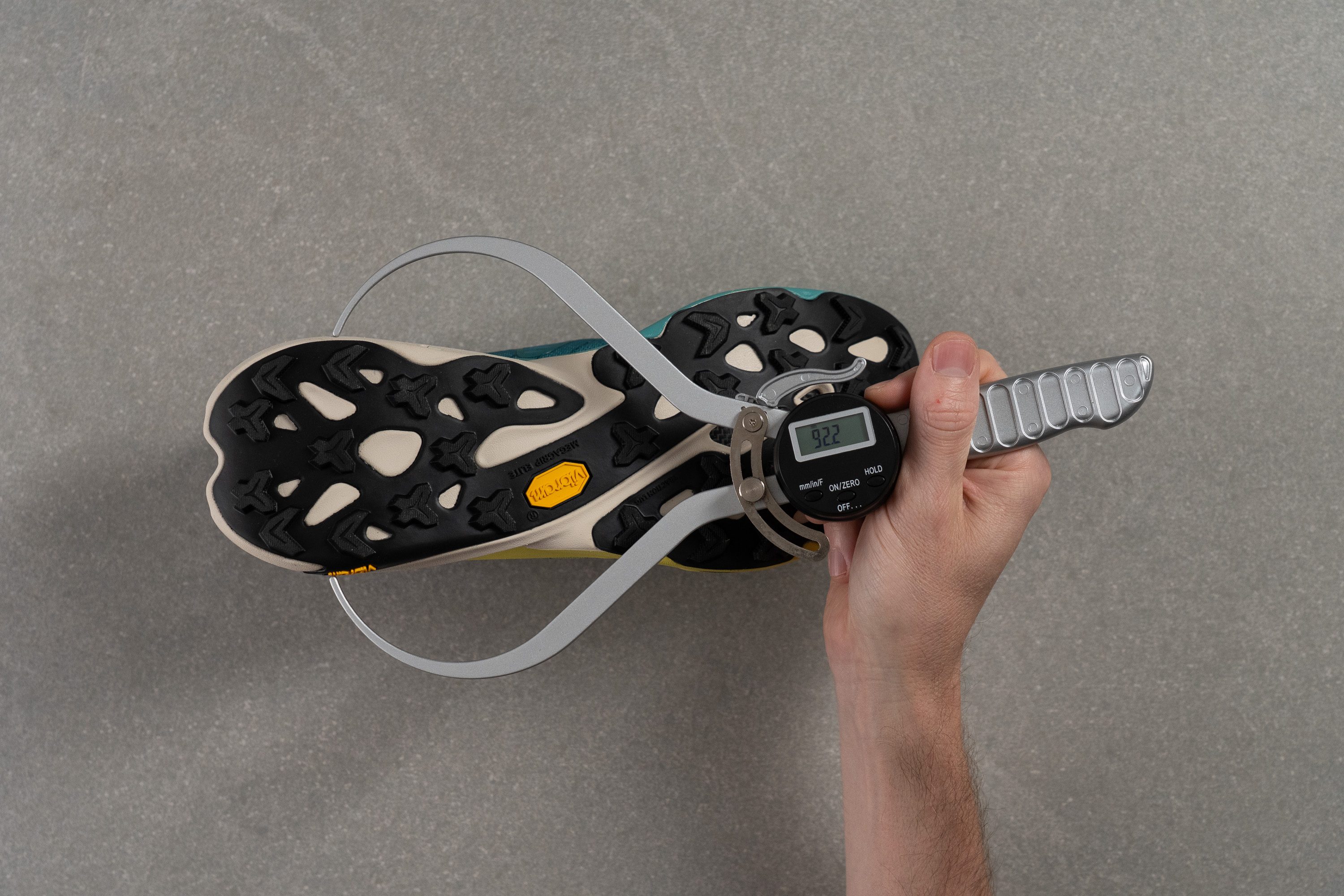
| MTL SpeedArc Peak | 92.2 mm |
| Media | 90.5 mm |
Durabilidad
Durabilidad de la parte delantera
It's very clear to us that Merrell prioritized upper durability here, using plenty of protective layers in the toebox. Fortunately, this doesn't hurt breathability, as we proved earlier, and it helped the SpeedArc Peak earn a solid 3/5 in our durability test.
| MTL SpeedArc Peak | 3 |
| Media | 3.1 |
Durabilidad del acolchado del talón
On the other hand, the heel was much less resistant to abrasion. In fact, it barely held up during our test and earned the lowest possible score of 1/5.
| MTL SpeedArc Peak | 1 |
| Media | 3.1 |
Durabilidad de la suela
Back to the good vibes, the Vibram Megagrip Elite delivered another masterclass, losing just 0.8 mm of material by the end of our Dremel test. That's an excellent result and very reassuring for the shoe's long-term durability.
| MTL SpeedArc Peak | 0.8 mm |
| Media | 0.9 mm |
Grosor de la suela
One reason the Merrell MTL SpeedArc Peak is a bit heavier than we'd hoped could be the outsole.
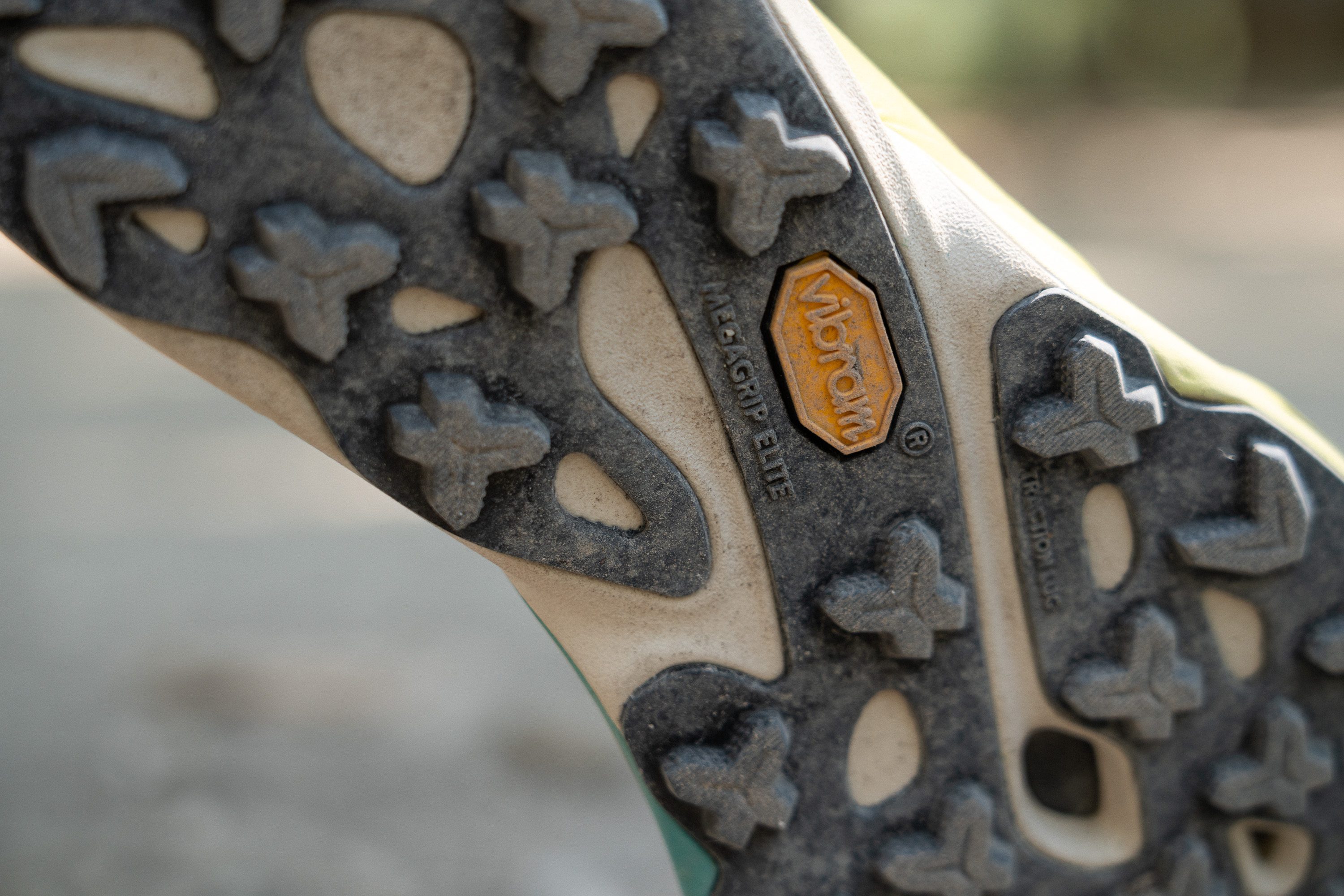
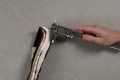
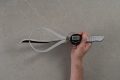
At 2.5 mm thick, we think that's a bit much for a shoe focused on racing. It has its advantages, but we're pretty sure most runners would gladly sacrifice 1 mm here.
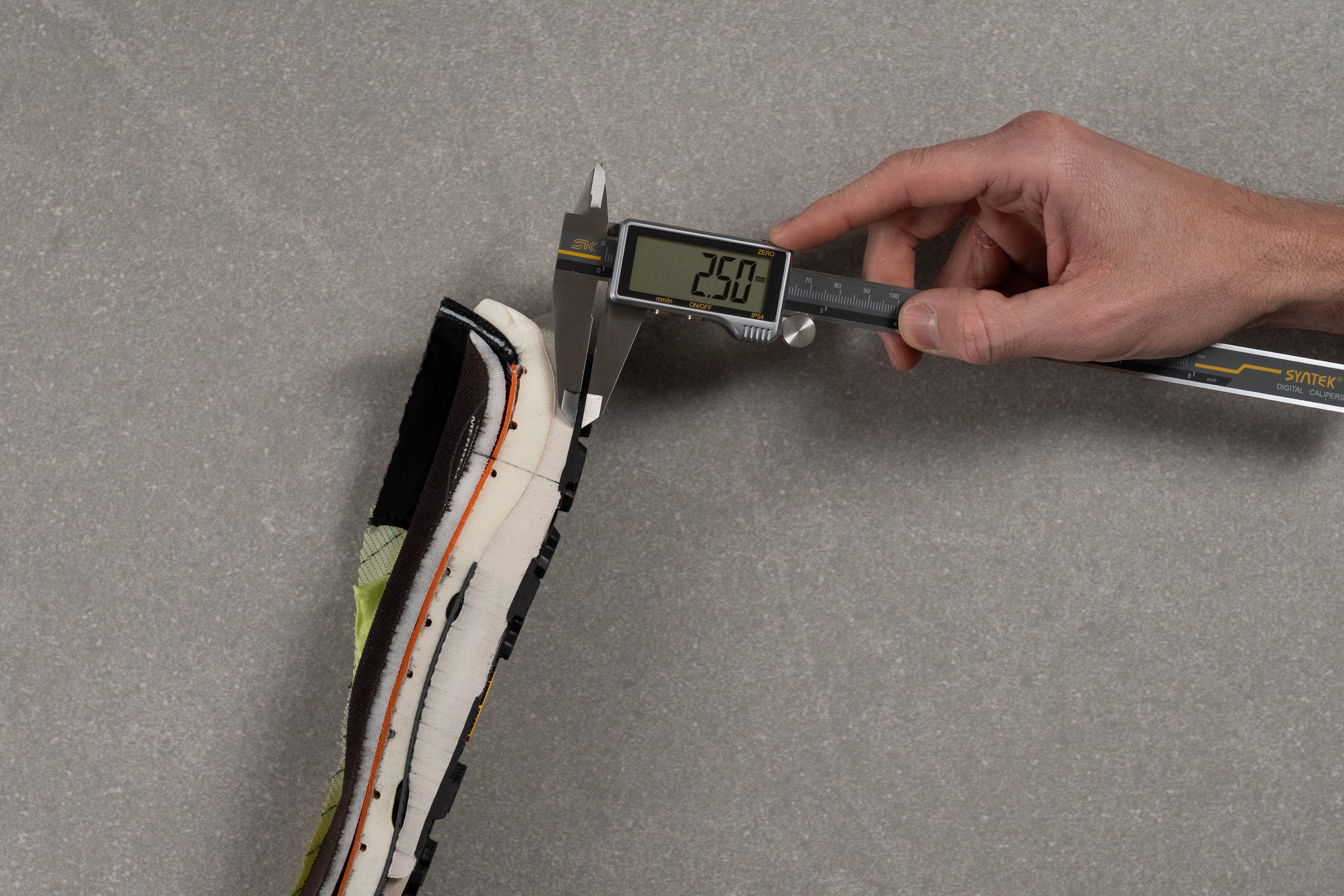
| MTL SpeedArc Peak | 2.5 mm |
| Media | 1.9 mm |
Varios
Grosor de la plantilla
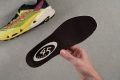
Merrell also took the opportunity to use a premium insole, made from TPEE instead of EVA, with a substantial 6.1 mm thickness.
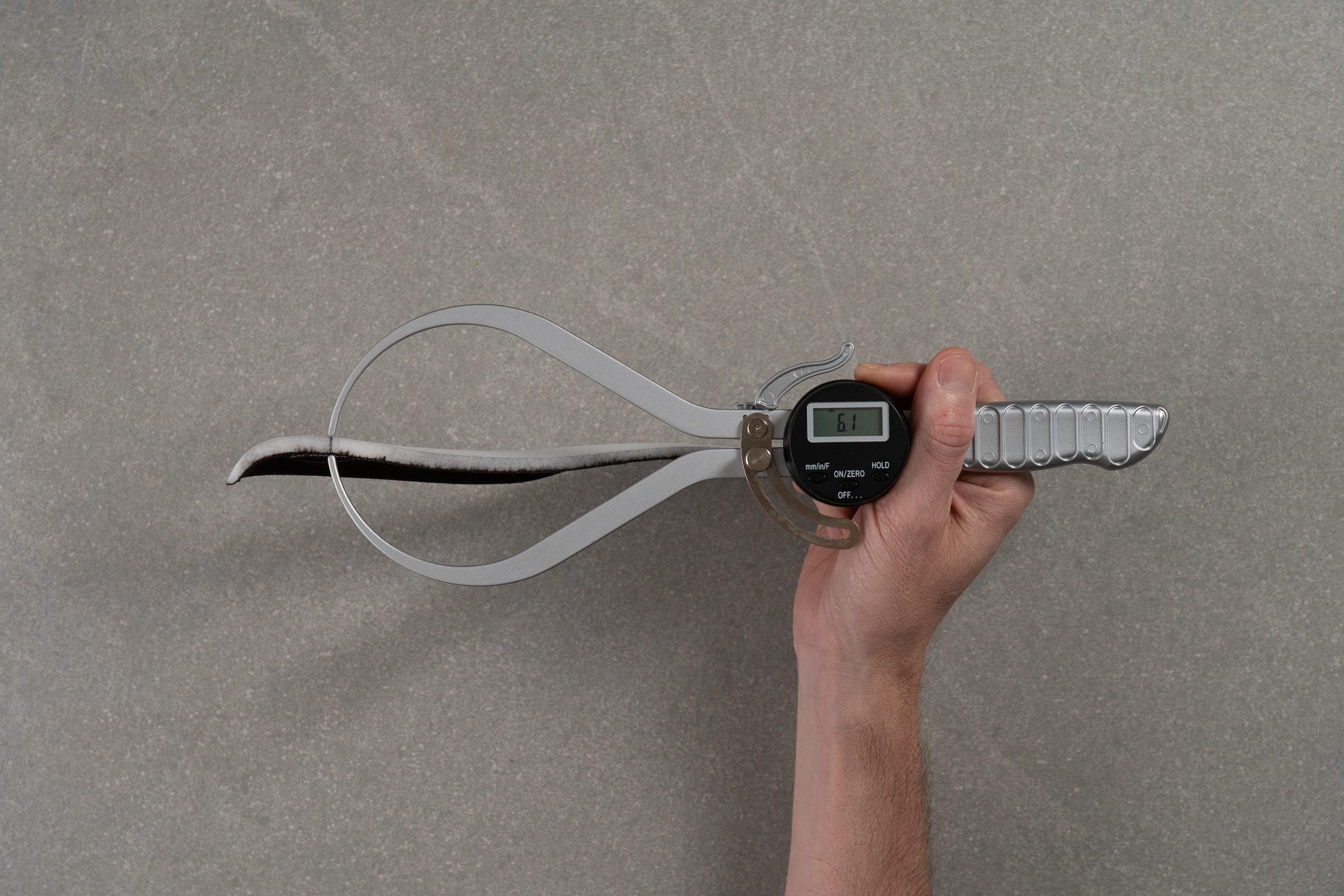
| MTL SpeedArc Peak | 6.1 mm |
| Media | 4.6 mm |
Plantilla extraíble
The insole is fully removable, and since it's quite thick, swapping it for a thinner one creates extra room in the toebox. However, you'll lose the 45th-anniversary logo celebrating Merrell's founding!
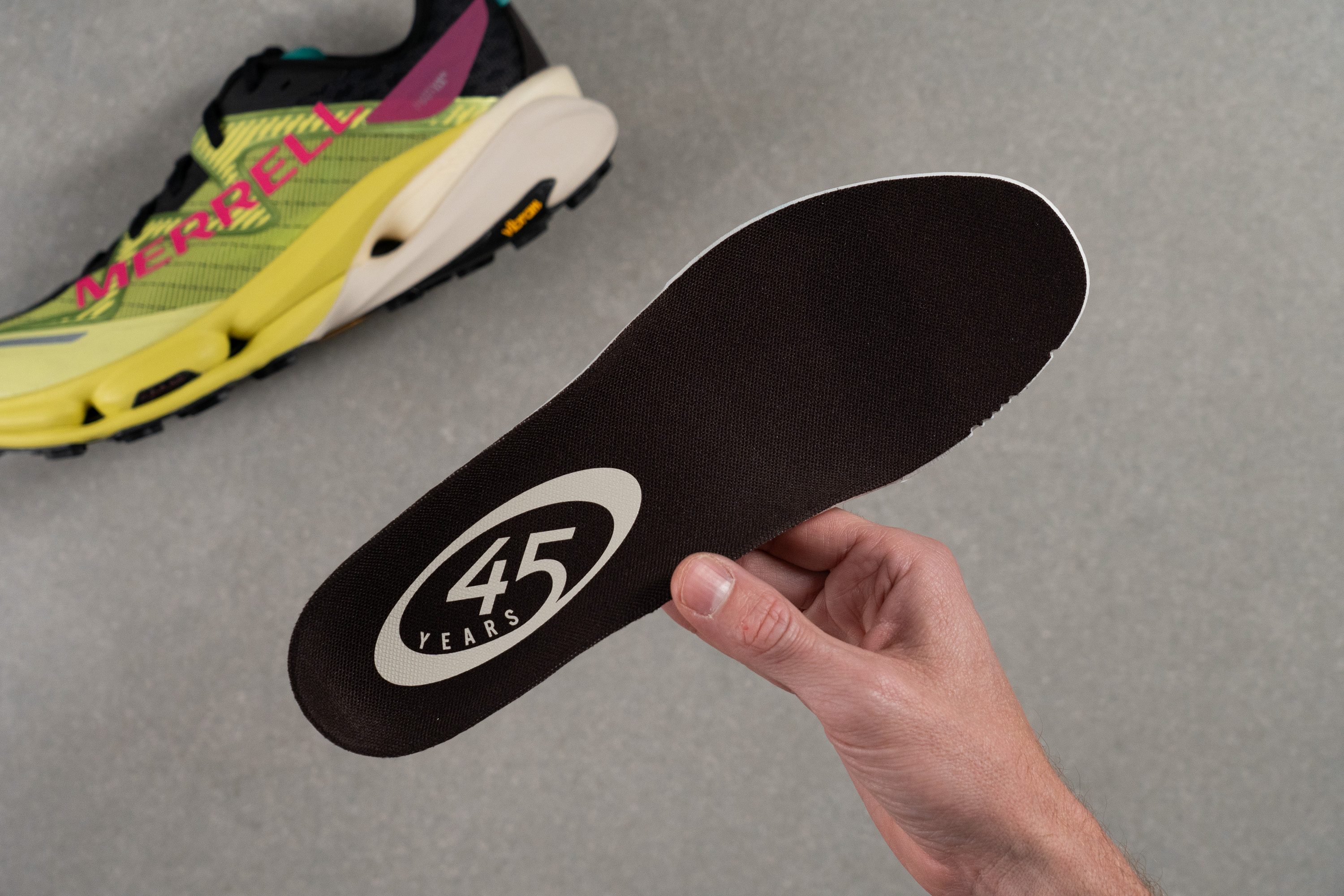
| MTL SpeedArc Peak | Sí |
Elementos reflectantes
While these reflective elements aren't very large, they do the job well for cars approaching from behind!
| MTL SpeedArc Peak | Sí |
Acolchado de la lengüeta
Merrell used a lacing system that does a very good job of distributing pressure, but we have to say that we expected better laces given the massive price of this model.
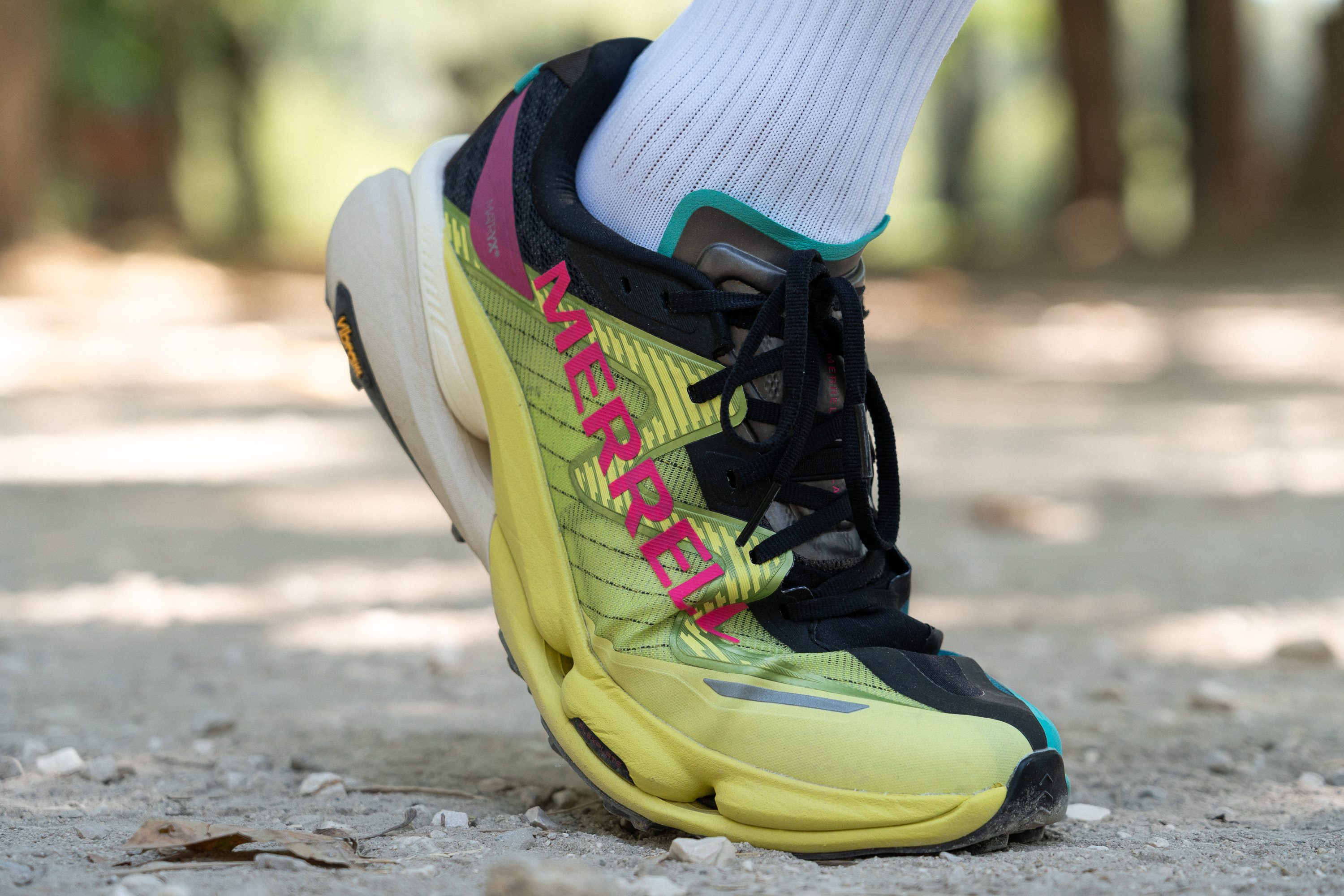
As for tongue comfort, it reaches a maximum thickness of 4.7 mm but doesn't extend the full length of the tongue, so it's important to be careful when tightening the laces.
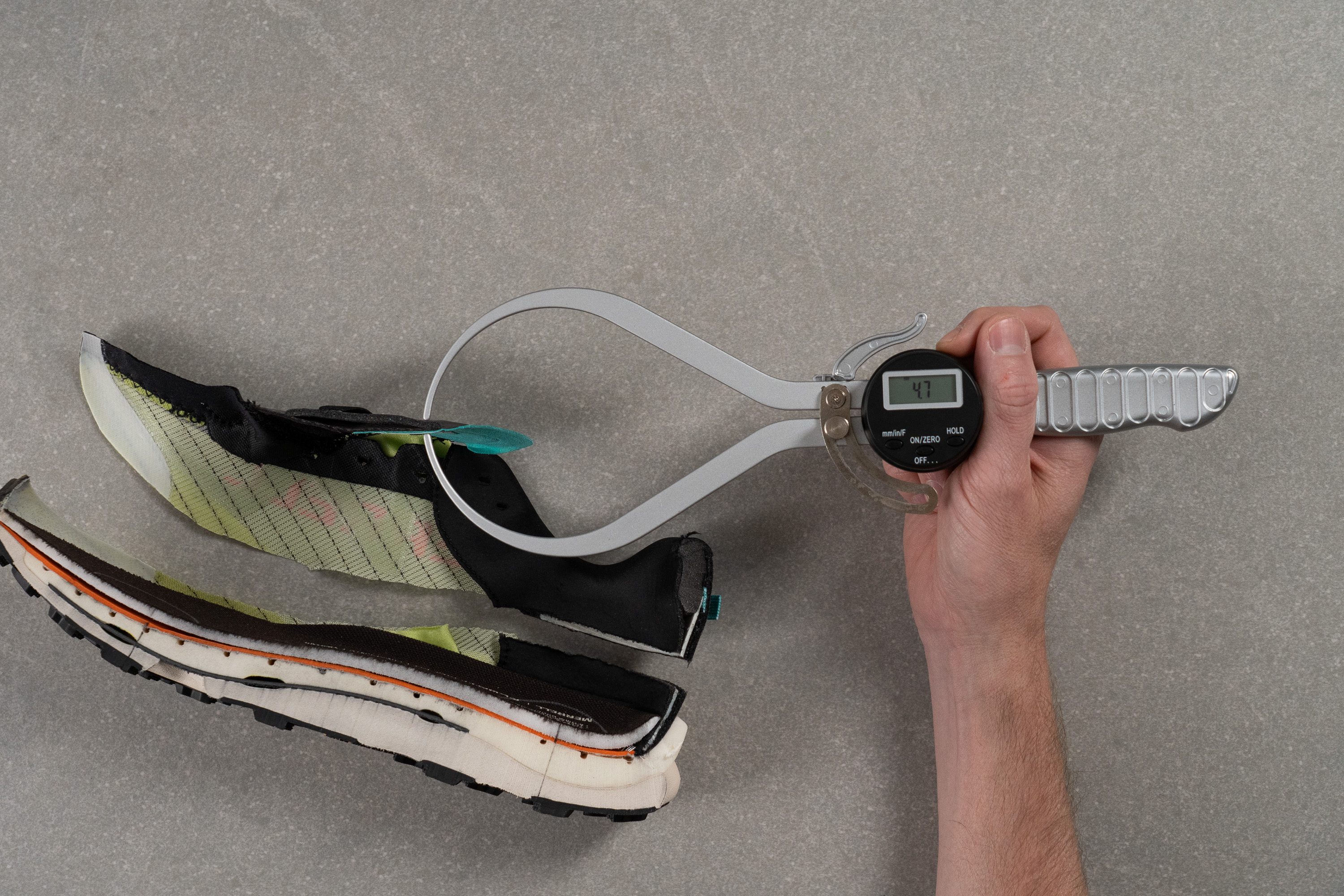
| MTL SpeedArc Peak | 4.7 mm |
| Media | 6.4 mm |
Lengüeta: tipo de refuerzo
The tongue is semi-gusseted, with relatively small (compared with many other trail shoes) fabric panels on both sides. While it won't block debris as effectively as a fully gusseted tongue, it allows better breathability inside the MTL SpeedArc Peak, as we confirmed earlier, while also improving lockdown.
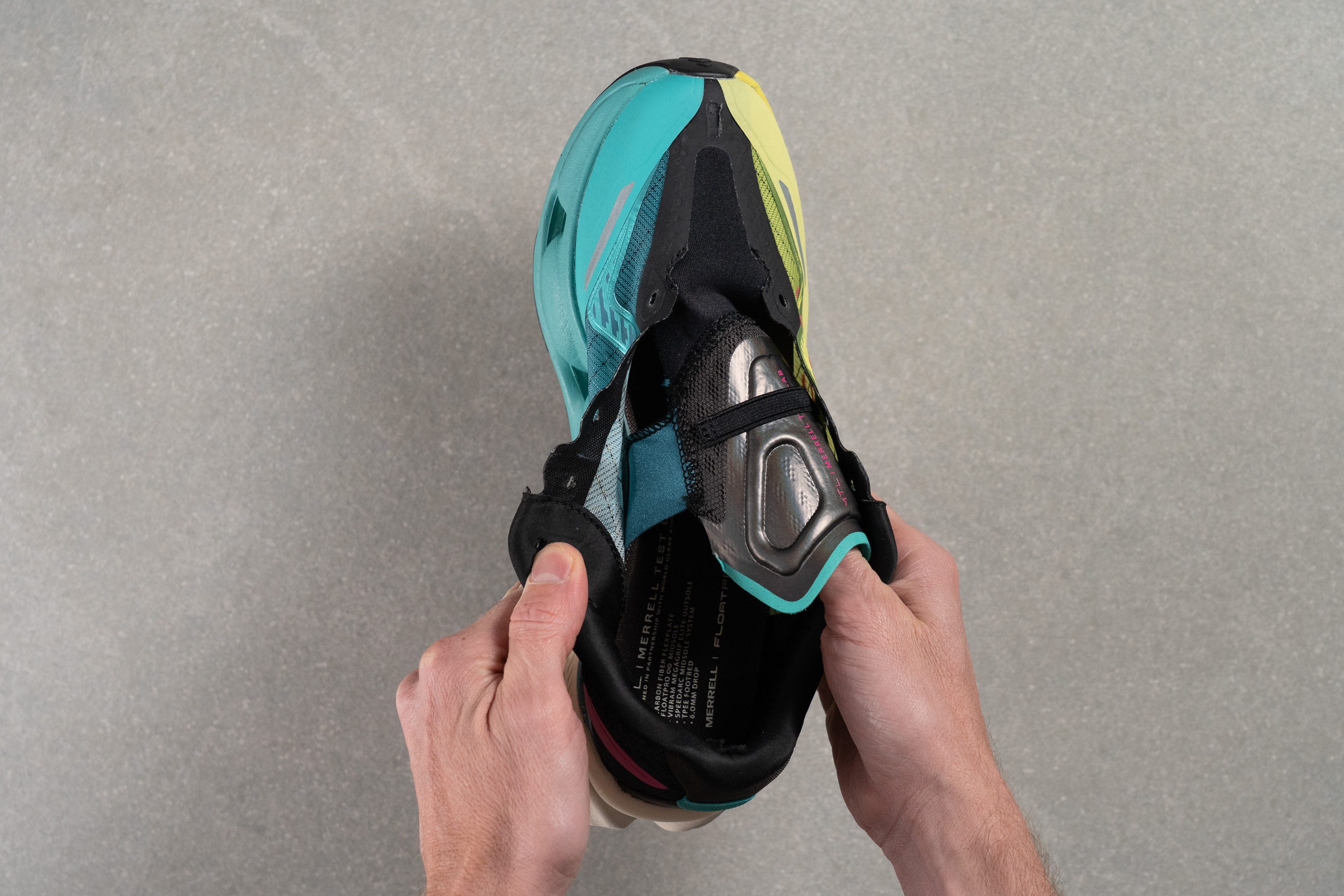
| MTL SpeedArc Peak | Ambos lados (semi) |
Tirador del talón
The heel features a horizontal pull tab that we found easier to grab than a vertical one, while also integrating seamlessly with the MTL SpeedArc Peak's design.
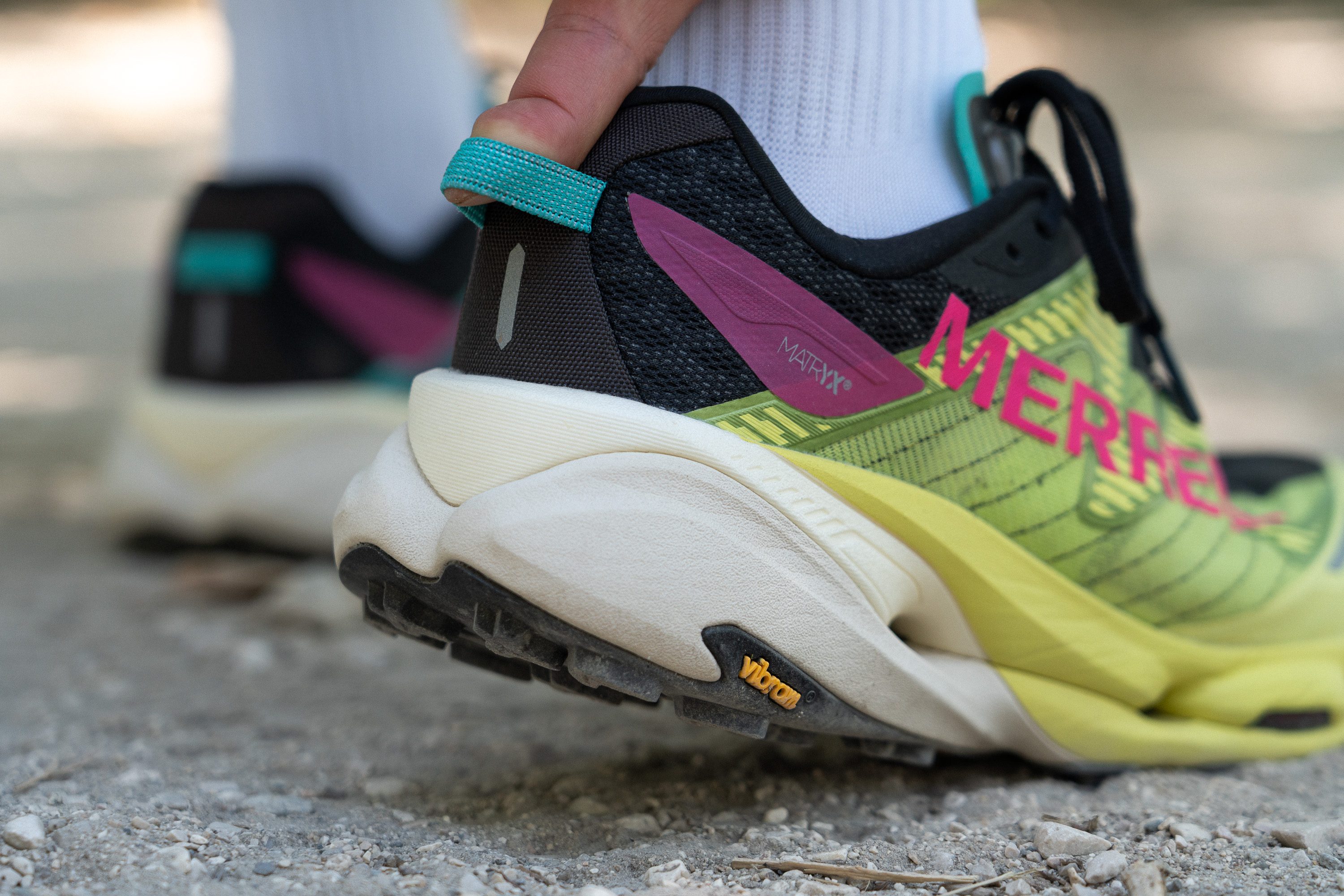
| MTL SpeedArc Peak | Tirador circular |
Precio
Merrell didn't cut any corners with the SpeedArc Peak, using premium materials like a Vibram Megagrip Elite outsole and MATRYX upper. However, those high-end components also send the price skyrocketing.
Seeing it so close to €310 makes it hard to recommend for most amateur runners, unless you have a deep budget and specifically want top-tier materials.
| MTL SpeedArc Peak | $290 |