















Our verdict
- Urban 76
- Speed 82
- Day hiking 88
- Backpacking 60
Pros
- One of the lightest GTX hiking shoes
- Great shock absorption
- Comfortable step-in feel
- High-quality suede upper
- Excellent grip on mixed terrain
- Stable for moderate hikes
- Protective rock plate
Cons
- Not for wide feet
- Steep heel-to-toe drop
- A bit overpriced
Awards
- Top pick in best waterproof hiking shoes
- Top pick in best lightweight waterproof hiking shoes
- Top 30% in lightweight hiking shoes
Comparison
The most similar hiking shoes compared
+ + Add a shoe | |||||
|---|---|---|---|---|---|
| Our score | 85 Great | 88 Superb | 87 Great | 84 Great | |
| Price | $210 | $220 | $180 | $150 | |
| Trail terrain | Light terrainVersatile / Moderate terrain | Light terrainVersatile / Moderate terrain | Light terrainVersatile / Moderate terrain | Light terrainVersatile / Moderate terrain | |
| Shock absorption | High | High | High | High | |
| Energy return heel | Low | High | Moderate | Moderate | |
| Traction | High | High | High | Moderate | |
| Weight lab Weight brand | 12.4 oz / 352g 13.5 oz / 383g | 12.9 oz / 366g | 13.1 oz / 371g | 11.9 oz / 337g | |
| Lightweight | ✓ | ✓ | ✓ | ✓ | |
| Breathability | Warm | - | - | - | |
| Use | Day HikingSpeed Hiking | Day HikingSpeed HikingUrban hiking | Day HikingSpeed HikingUrban hiking | Day HikingSpeed HikingUrban hiking | |
| Orthotic friendly | ✓ | ✓ | ✓ | ✓ | |
| Drop lab | 14.9 mm | 12.7 mm | 14.4 mm | 11.2 mm | |
| Size | Slightly small | Slightly small | True to size | True to size | |
| Midsole softness | Balanced | Balanced | Balanced | Soft | |
| Difference in midsole softness in cold | Normal | Normal | Normal | Small | |
| Torsional rigidity | Stiff | Stiff | Stiff | Stiff | |
| Heel counter stiffness | Flexible | Flexible | Stiff | Flexible | |
| Stiffness | Stiff | Stiff | Stiff | Stiff | |
| Waterproofing | Waterproof | Waterproof | Waterproof | Waterproof | |
| Material | Leather | Mesh | Mesh | Mesh | |
| Season | Winter | - | - | - | |
| Toebox durability | Good | Decent | Decent | Decent | |
| Heel padding durability | Decent | Good | Decent | Good | |
| Outsole durability | Good | Good | Good | Good | |
| Width / fit | Narrow | Medium | Medium | Medium | |
| Toebox width | Medium | Medium | Medium | Narrow | |
| Lug depth | 3.8 mm | 3.9 mm | 3.7 mm | 3.0 mm | |
| Heel stack lab | 35.2 mm | 39.4 mm | 41.8 mm | 40.4 mm | |
| Forefoot | 20.3 mm | 26.7 mm | 27.4 mm | 29.2 mm | |
| Widths available | NormalWide | NormalWide | Normal | Normal | |
| Technology | Gore-TexOrtholiteVibram | Gore-Tex | Gore-Tex | Gore-TexOrtholite | |
| Heel tab | Finger loop | Finger loop | Finger loop | Finger loop | |
| Removable insole | ✓ | ✓ | ✓ | ✓ | |
| Ranking | #18 Top 40% | #6 Top 14% | #10 Top 22% | #19 Top 42% | |
| Popularity | #22 Top 48% | #2 Top 5% | #3 Top 7% | #41 Bottom 10% |


Who should buy
We believe that the Danner Trail 2650 GTX is right up your alley if:
- you expect sneaker-like comfort in your hiking shoes
- you need high shock absorption for long hikes on moderate terrain
- you want a durable leather shoe that weighs lighter than average
Who should NOT buy
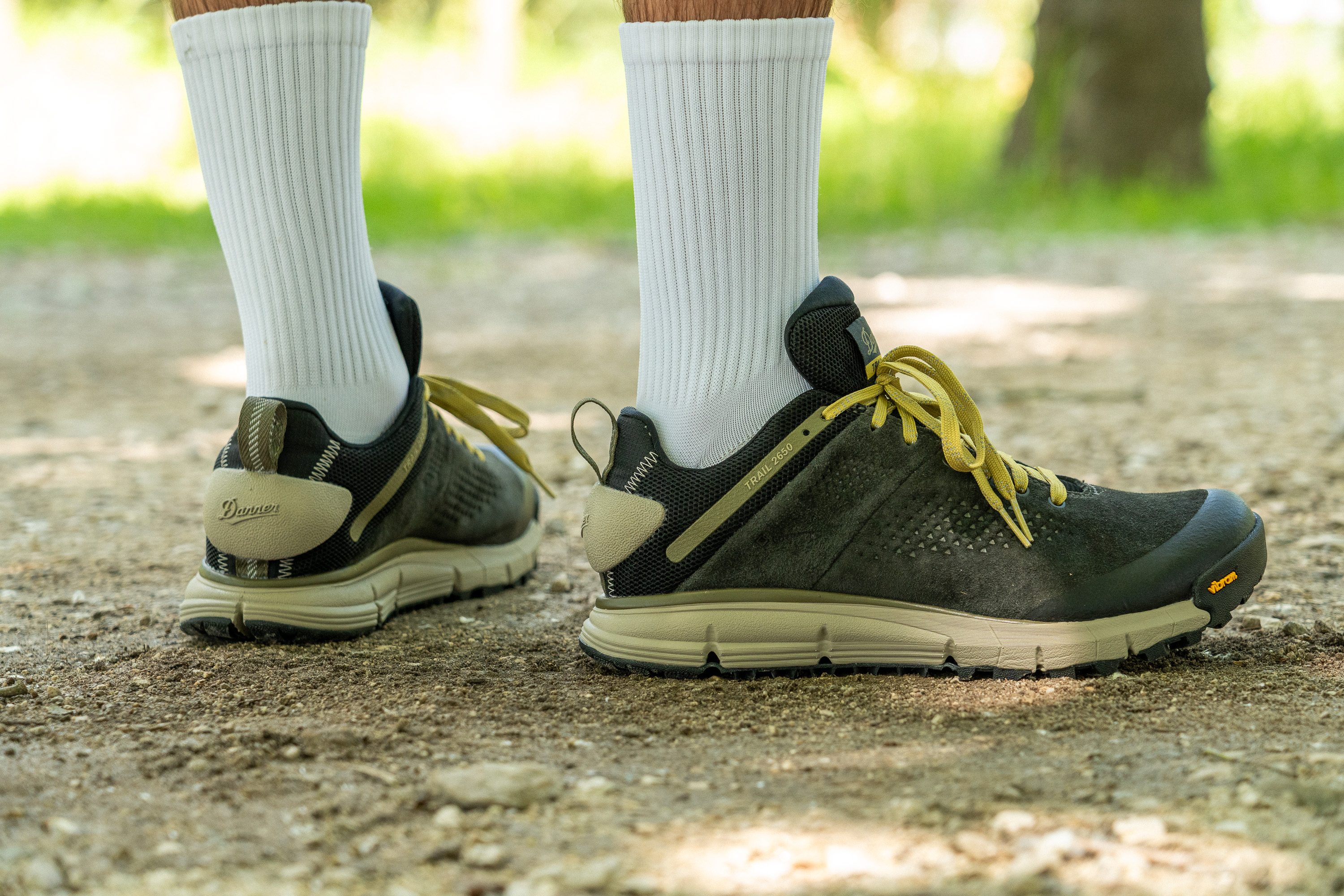
Its high price may deter some people from choosing the Trail 2650 GTX. But luckily, there are other well-cushioned waterproof options that accommodate long adventures on mixed terrain, like the HOKA Anacapa 2 Low GTX (a bit heavier, though) and the Merrell Moab Speed 2 GTX (with a synthetic upper instead).
And if you are after a more stability-focused shoe for technical routes, the same price range can get you much more structured options like the La Sportiva Ultra Raptor II GTX and the La Sportiva Spire GTX.
Cushioning
Shock absorption
At 118 SA in the heel, the Danner Trail 2650 GTX offers enough shock absorption to reduce fatigue and joint stress, even during longer hikes.
While it shows a slightly lower result than its non-waterproof counterpart (124 SA), this Danner shoe remains one of the better-cushioned hiking shoes in our lab. The Gore-Tex membrane is most likely responsible for this minor difference, as it adds structure to the shoe.
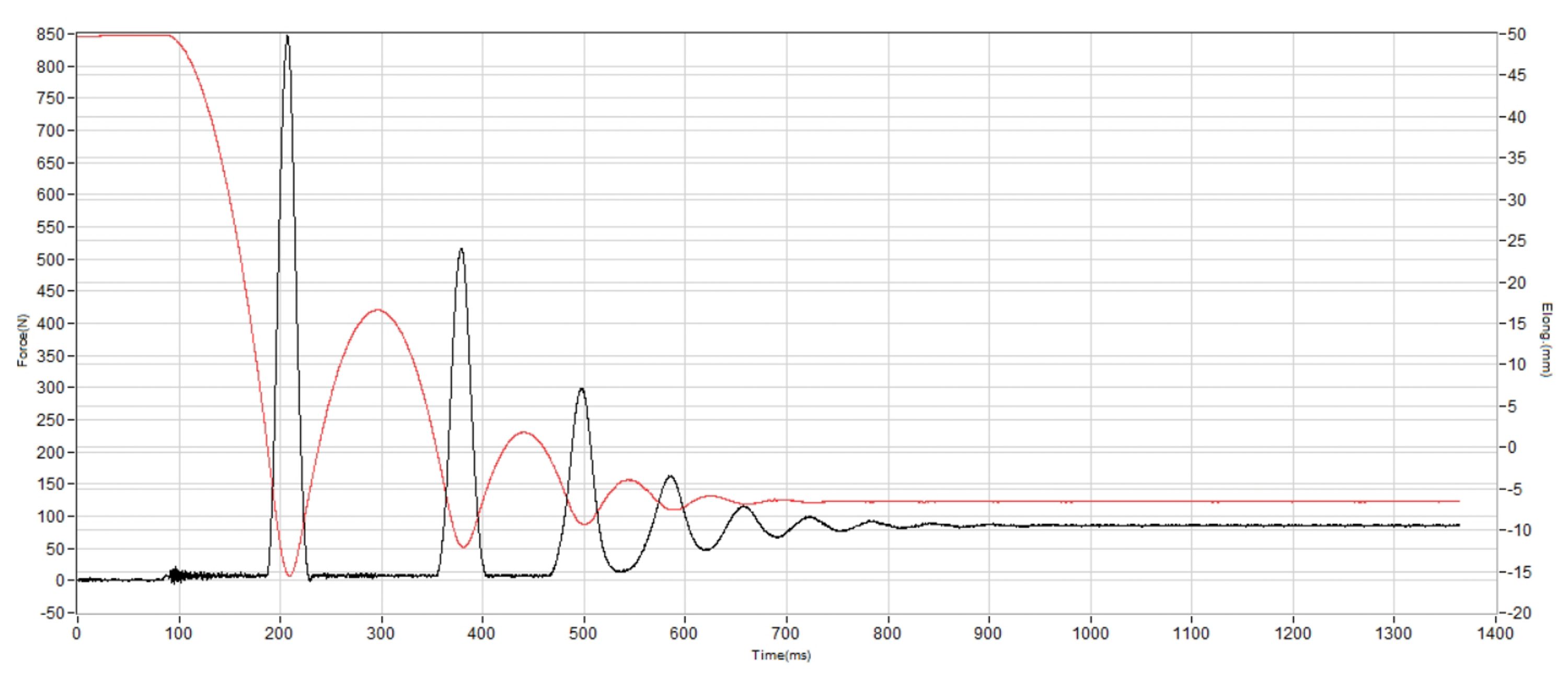
| Trail 2650 GTX | 118 SA |
| Average | 108 SA |
Energy return
Made of basic EVA foam, the Trail 2650 GTX's midsole has no tangible rebound. With a below-average energy return of 43.8%, it offers more of a static, yet stable and controlled, ride.
| Trail 2650 GTX | 43.8% |
| Average | 49.6% |
Heel stack
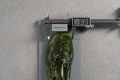
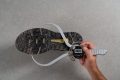
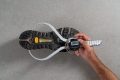
At 35.2 mm on our caliper, this Danner shoe's heel stack falls at the higher end of the hiking shoe category. It's not as towering as some HOKA shoes (40+ mm!), but surely tall enough to buffer the sticks and stones.
P.S. A layer of waterproofing raises the platform 2 mm above the non-GTX version.
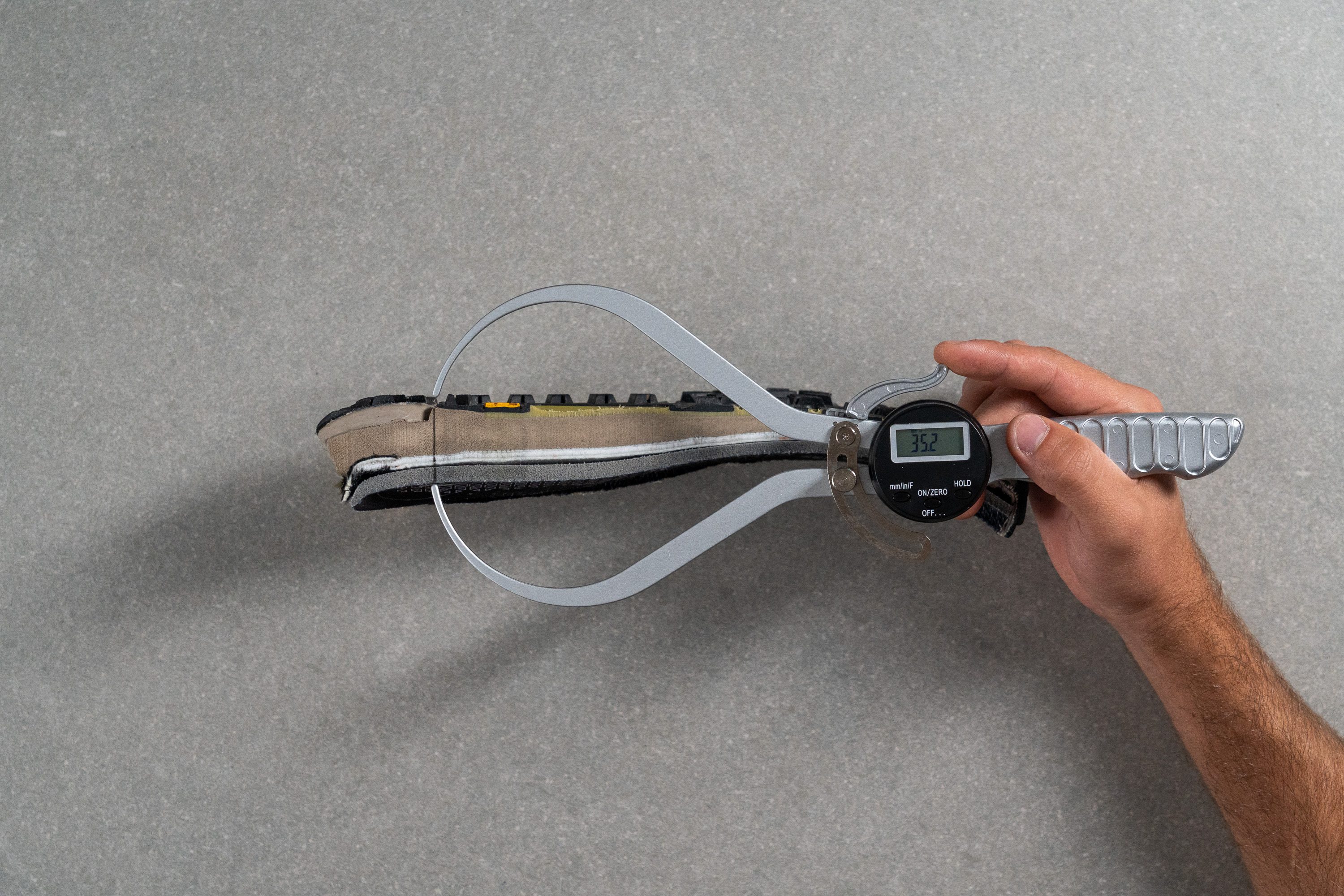
| Trail 2650 GTX | 35.2 mm |
| Average | 34.0 mm |
Forefoot stack
Its forefoot stack, on the other hand, is more on par with the average at 20.3 mm. That puts the ball of the foot sufficiently close to the ground for stability and control.
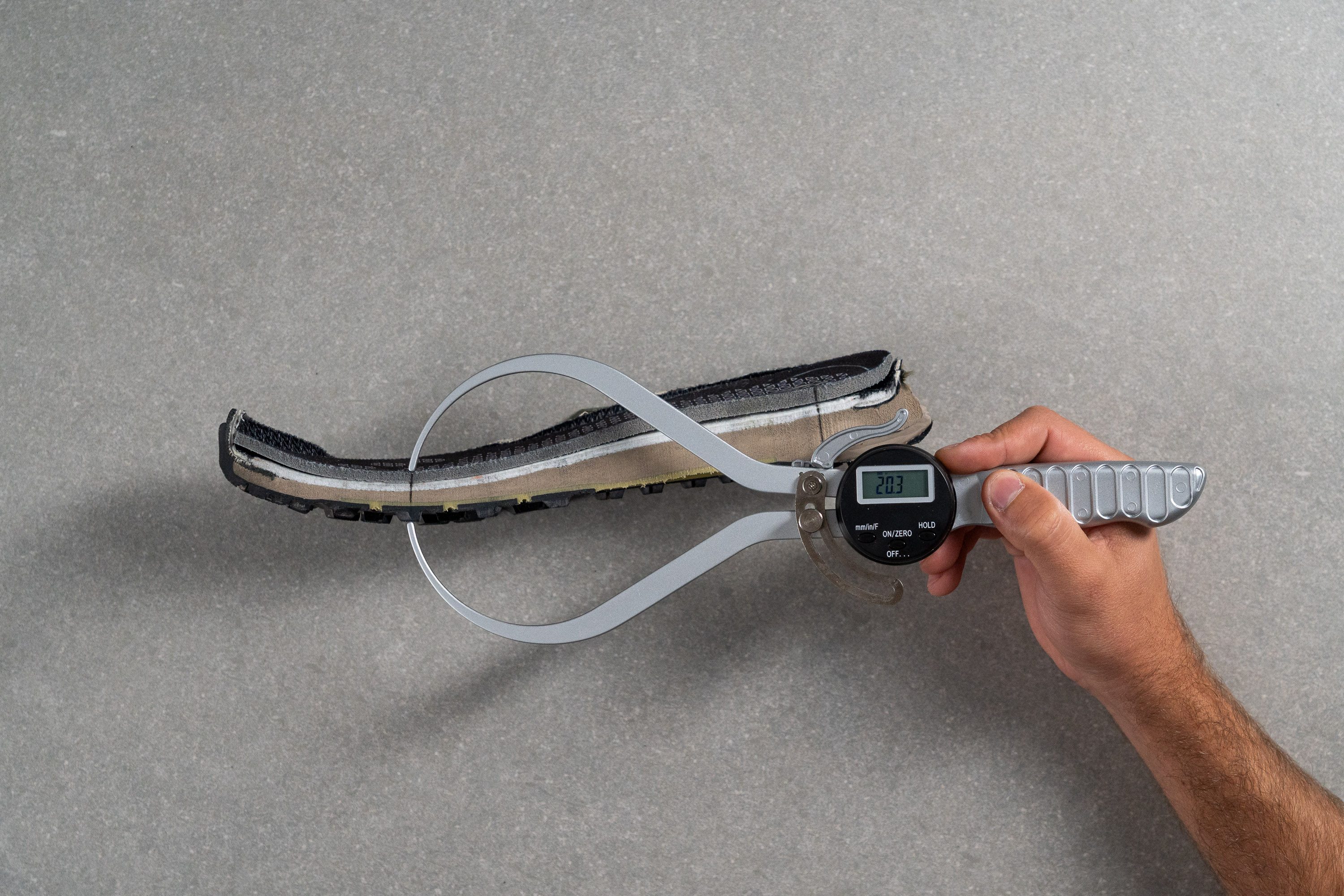
| Trail 2650 GTX | 20.3 mm |
| Average | 22.9 mm |
Drop
The notable difference in its stack heights is reflected in the shoe's whopping 14.9 mm drop. That's significantly taller than the officially stated 8 mm and the category average.
Although it offers added cushioning in the heel and reduced stress on the Achilles and calves, it can feel way too elevated on descents and uneven terrain. The forward pitch is just too tangible and is likely to result in some undesirable toe jamming and heel slipping.
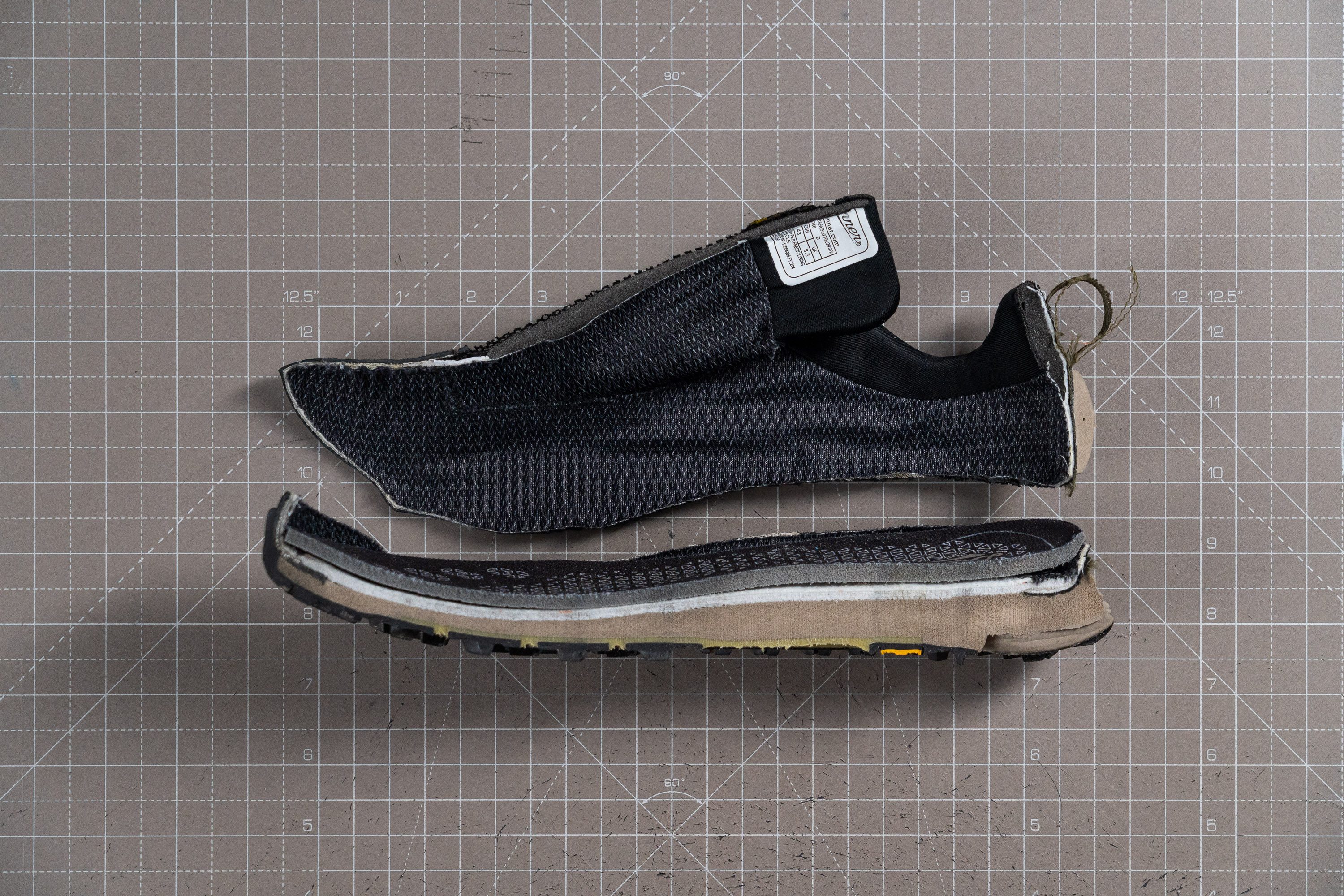
| Trail 2650 GTX | 14.9 mm |
| Average | 11.2 mm |
Midsole softness
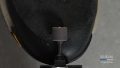
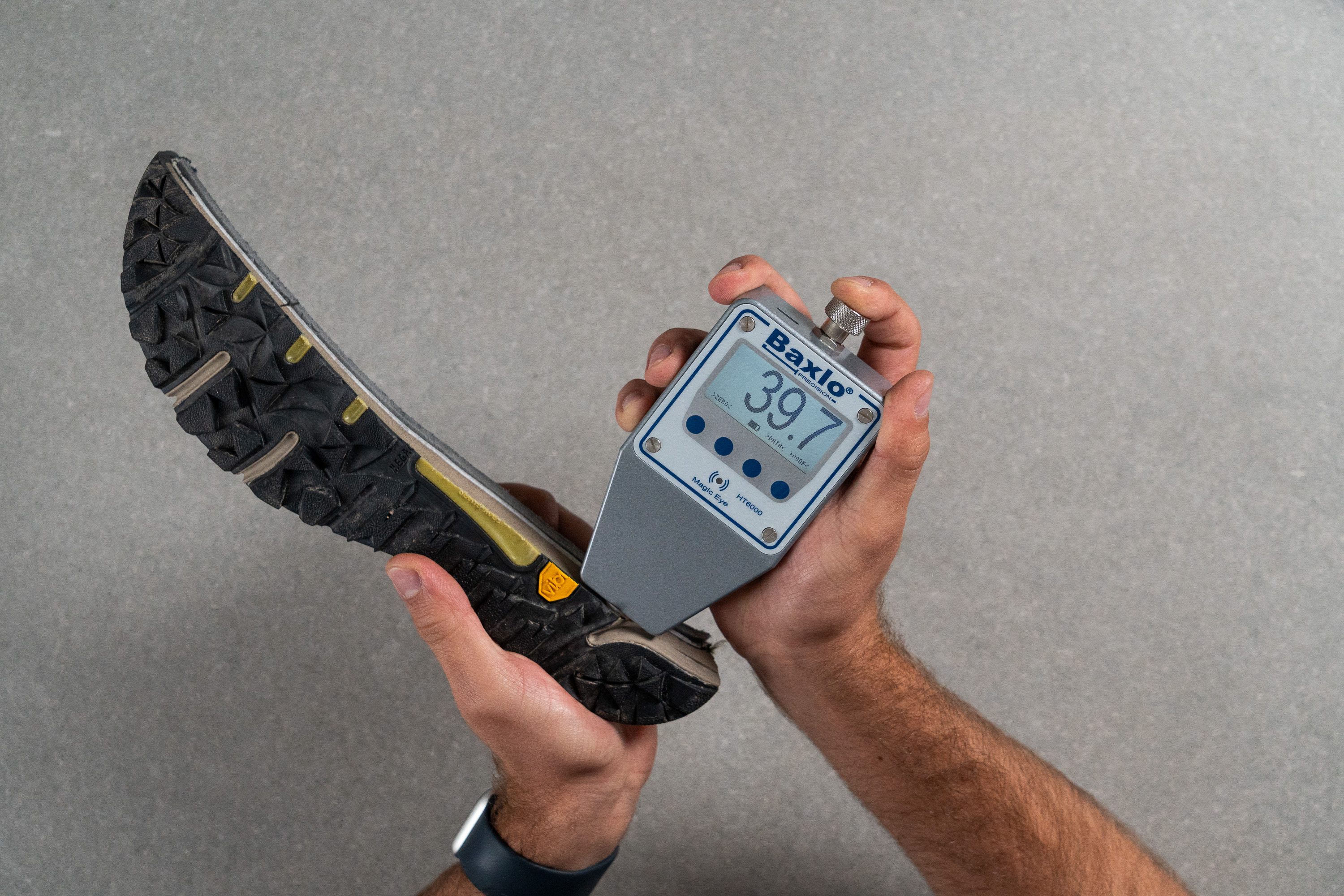
Pressing our durometer against the shoe's primary midsole foam, we got a balanced reading of 39.7 AC.
Slightly softer than average, it makes the ride a bit more forgiving than that of a typical hiking shoe, but still far from plush or mushy. That's in part because the rock plate adds firmness to the platform.
| Trail 2650 GTX | 39.7 AC |
| Average | 43.9 AC |
Rock plate
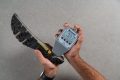
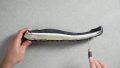
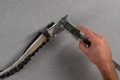
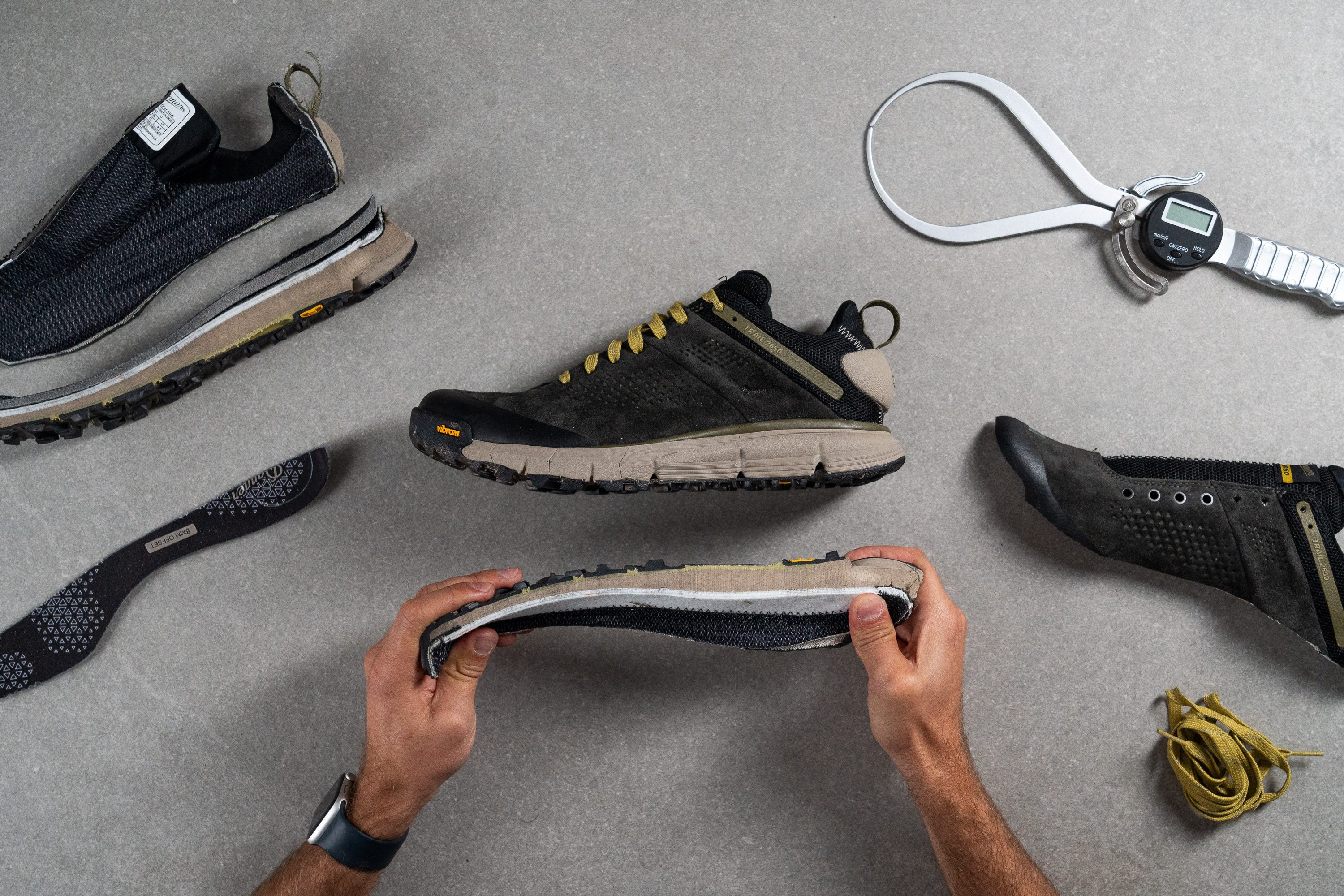
A Trailguard shank takes up almost the entire length of this Danner shoe's sole. It is made of rigid yet lightweight TPU, protecting the foot from trail debris while adding torsional stiffness for side-to-side stability.
Size and fit
Size
Danner Trail 2650 GTX fits slightly small (37 votes).
Internal length
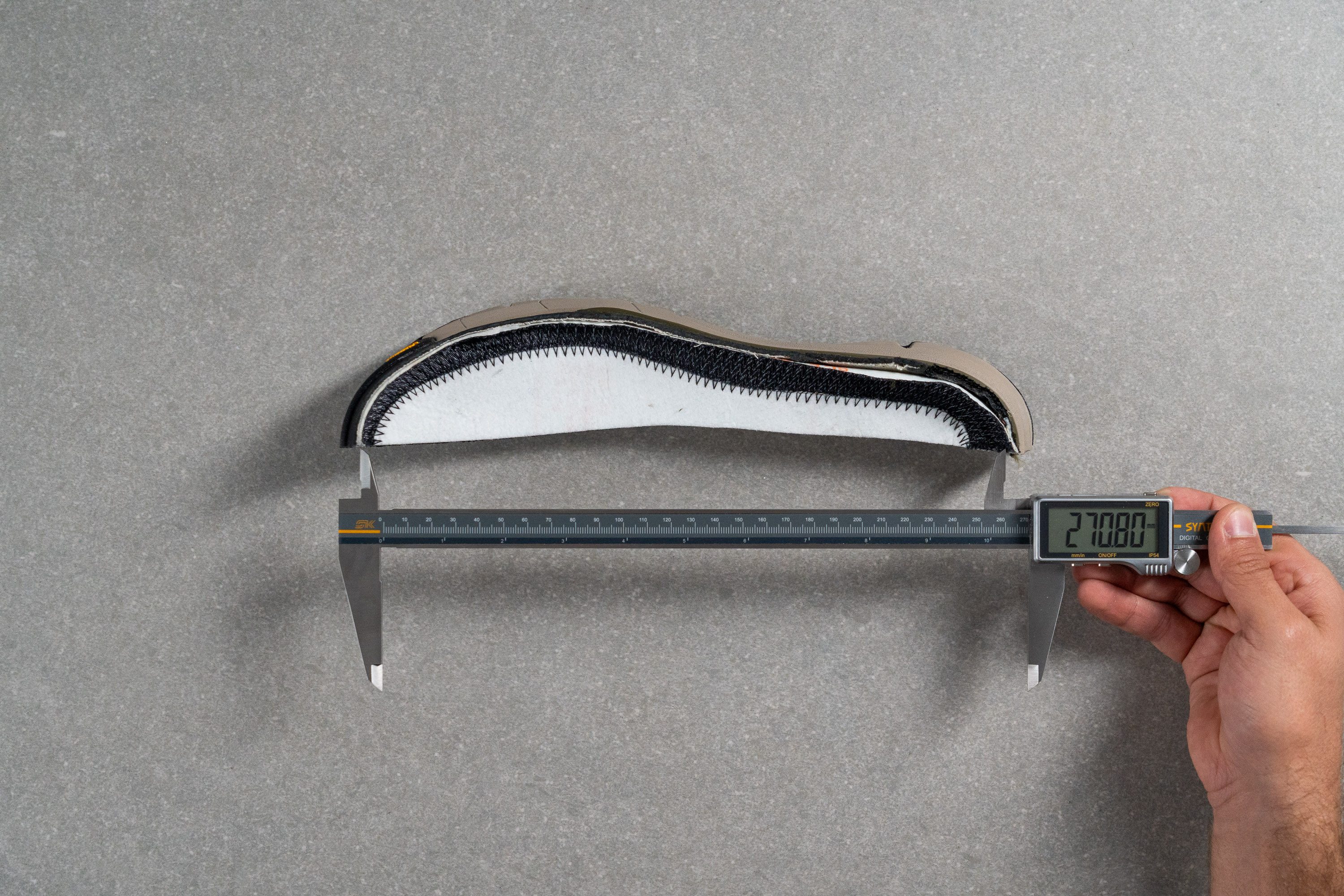
| Trail 2650 GTX | 270.8 mm |
| Average | 268.9 mm |
Width / Fit
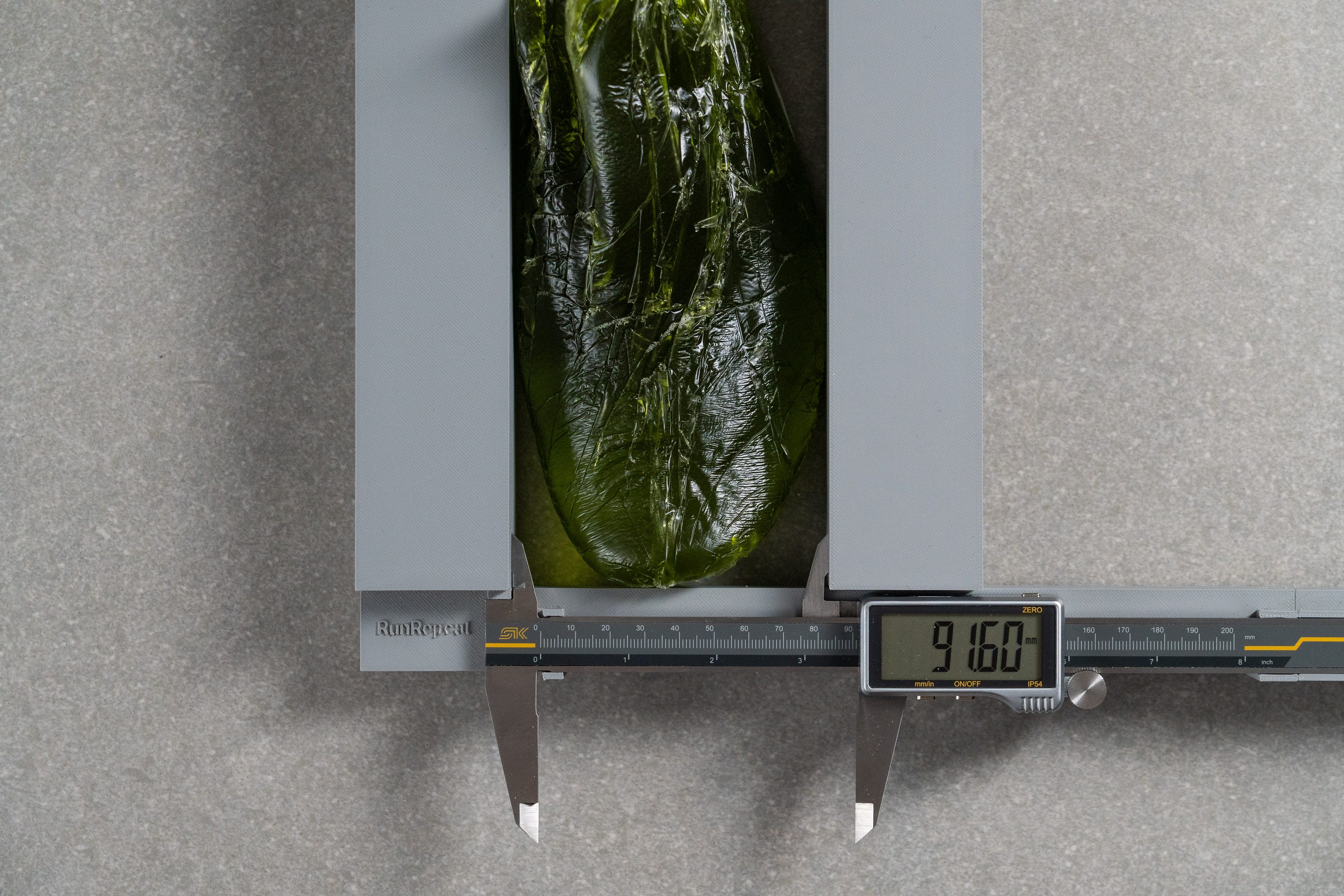
Using special liquid, we created a one-to-one gel replica of the shoe's interiors to see how it measures up against the average.
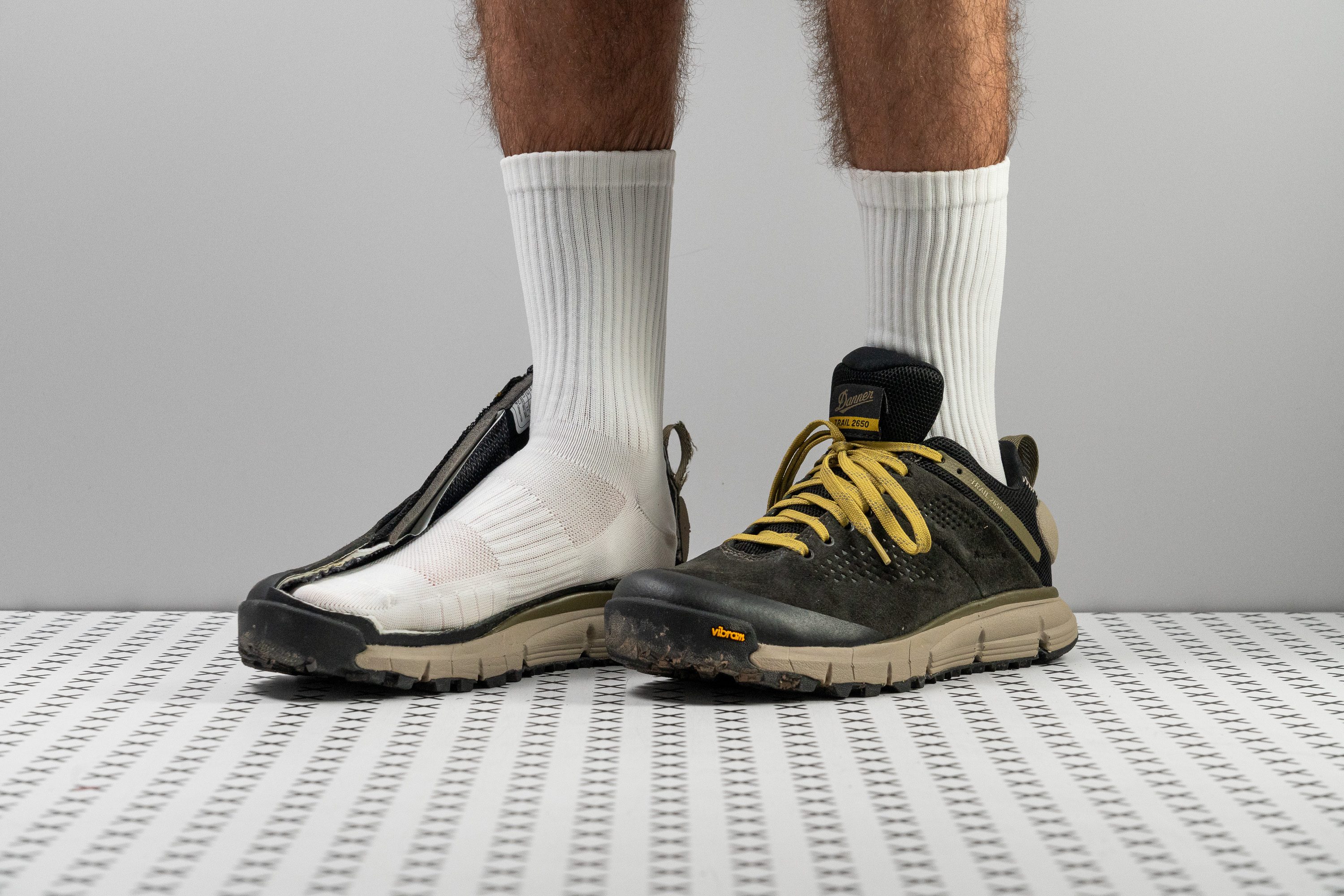
And much like its non-waterproof counterpart, the Danner Trail 2650 GTX fits on the narrow side. Showing only 91.6 mm between the most extended points of its ball-of-foot area, it borders on medium and narrow.
But, thankfully, this Danner shoe is also available in a wide width, offering more space for those who need it.
| Trail 2650 GTX | 91.6 mm |
| Average | 94.0 mm |
Toebox width
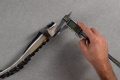
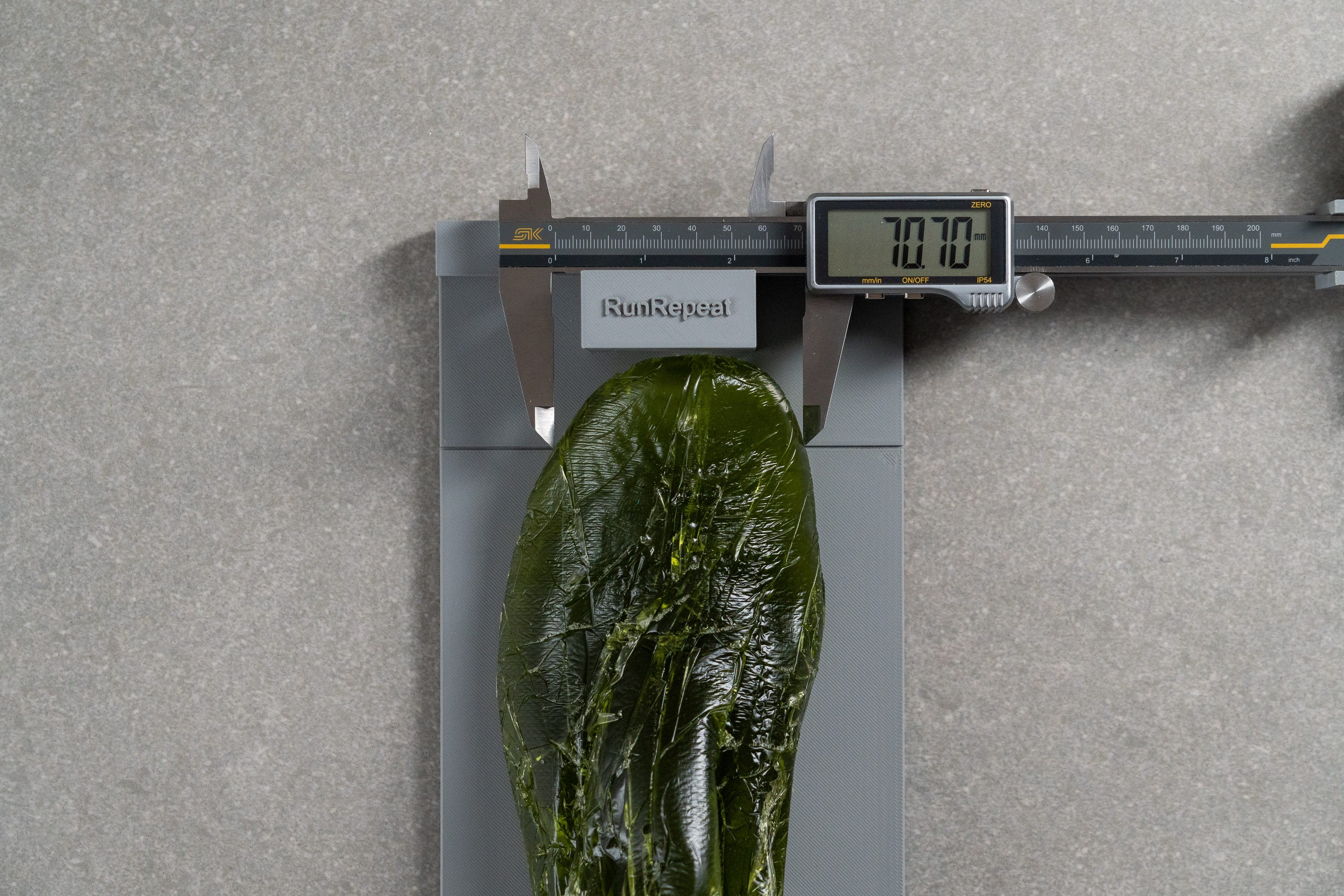
Although its toebox shape is not critically tapered, it showed a narrower measurement on our caliper as well. It can feel a bit restrictive with a moderate width of 70.7 mm in the big toe area.
| Trail 2650 GTX | 70.7 mm |
| Average | 71.9 mm |
Toebox height
Hikers with toe deformities like hammertoes or toenail concerns are less likely to feel comfortable in the Trail 2650 GTX.
That's because its vertical space proved to be quite limited with a low toebox height of only 23.6 mm.
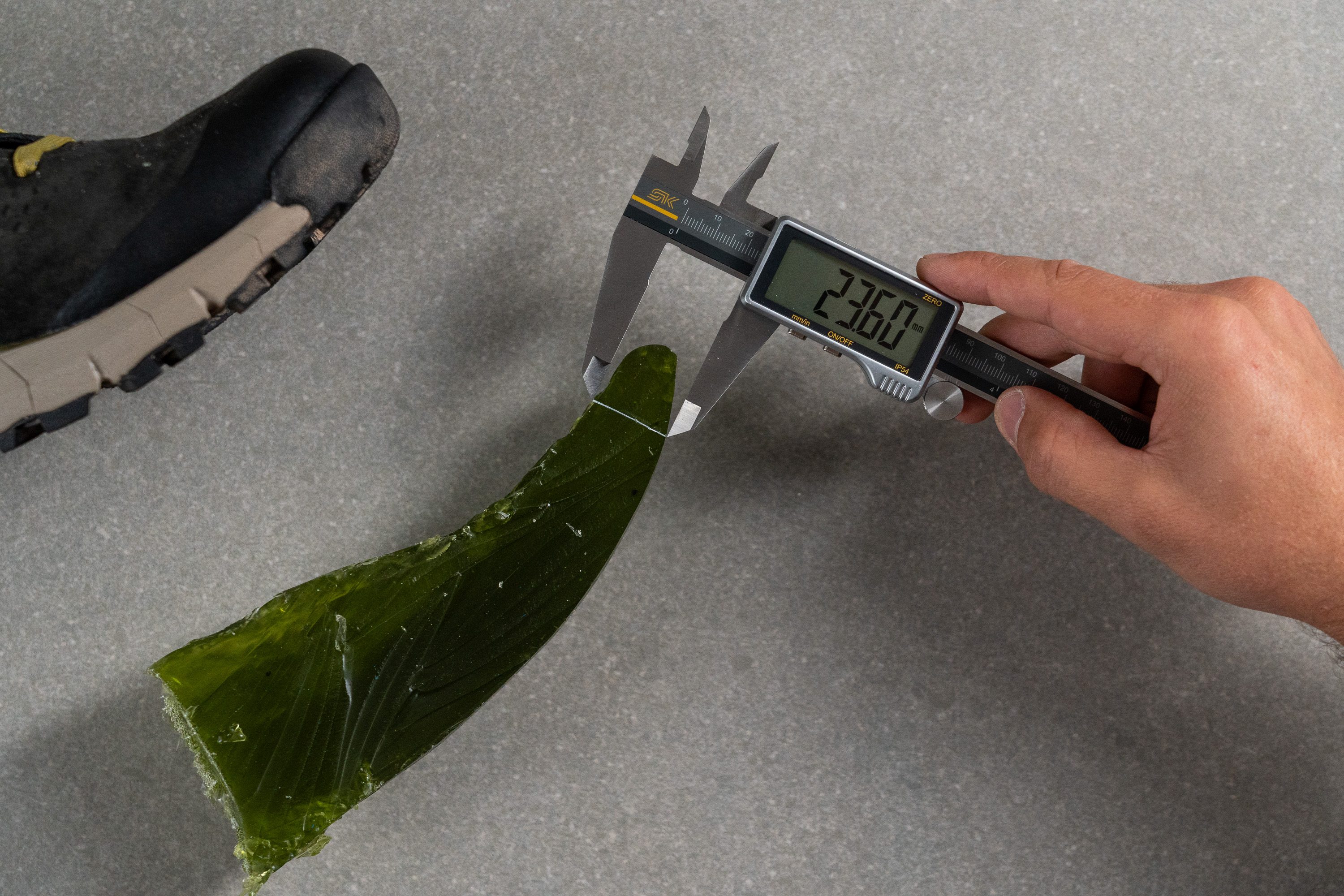
| Trail 2650 GTX | 23.6 mm |
| Average | 27.5 mm |
Traction / Grip
Traction test
With a solid friction coefficient of 0.67, this Danner shoe offers reliable outsole grip on smooth trail surfaces like polished rocks and boulders. It can also be trusted on wet stones and roots by the river or after the rain.
| Trail 2650 GTX | 0.67 |
| Average | 0.68 |
Lug depth
This Danner shoe feels most at home on moderate terrain with a mix of gravel, light dirt, sand, grass, roots, and occasional rocks and boulders you may encounter on a singletrack or a forest trail.
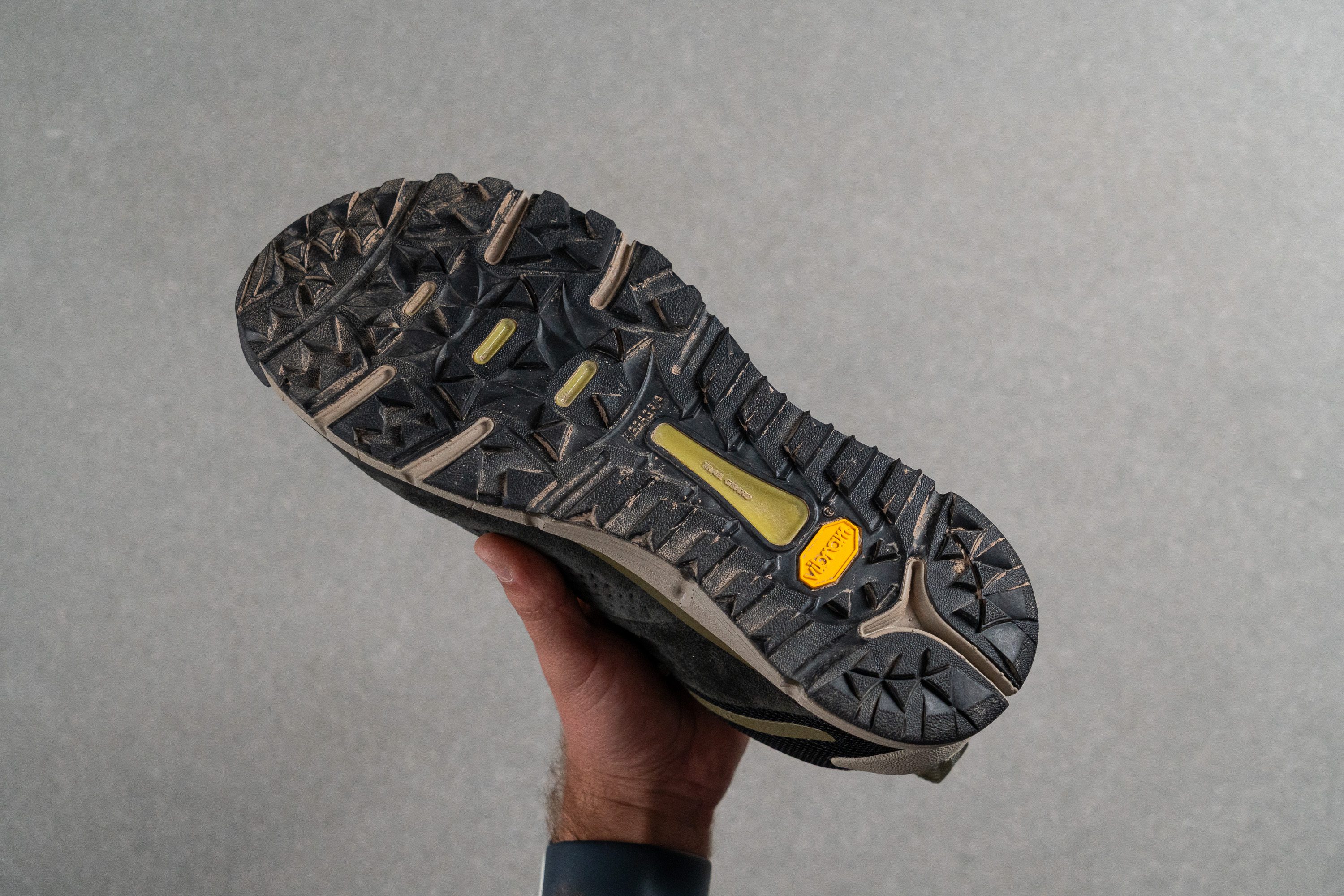
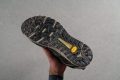
Its Vibram 460 MegaGrip outsole is studded with average-sized lugs (3.8 mm deep), offering good bite on various surfaces without feeling too sharp on hard-packed trails and city streets.
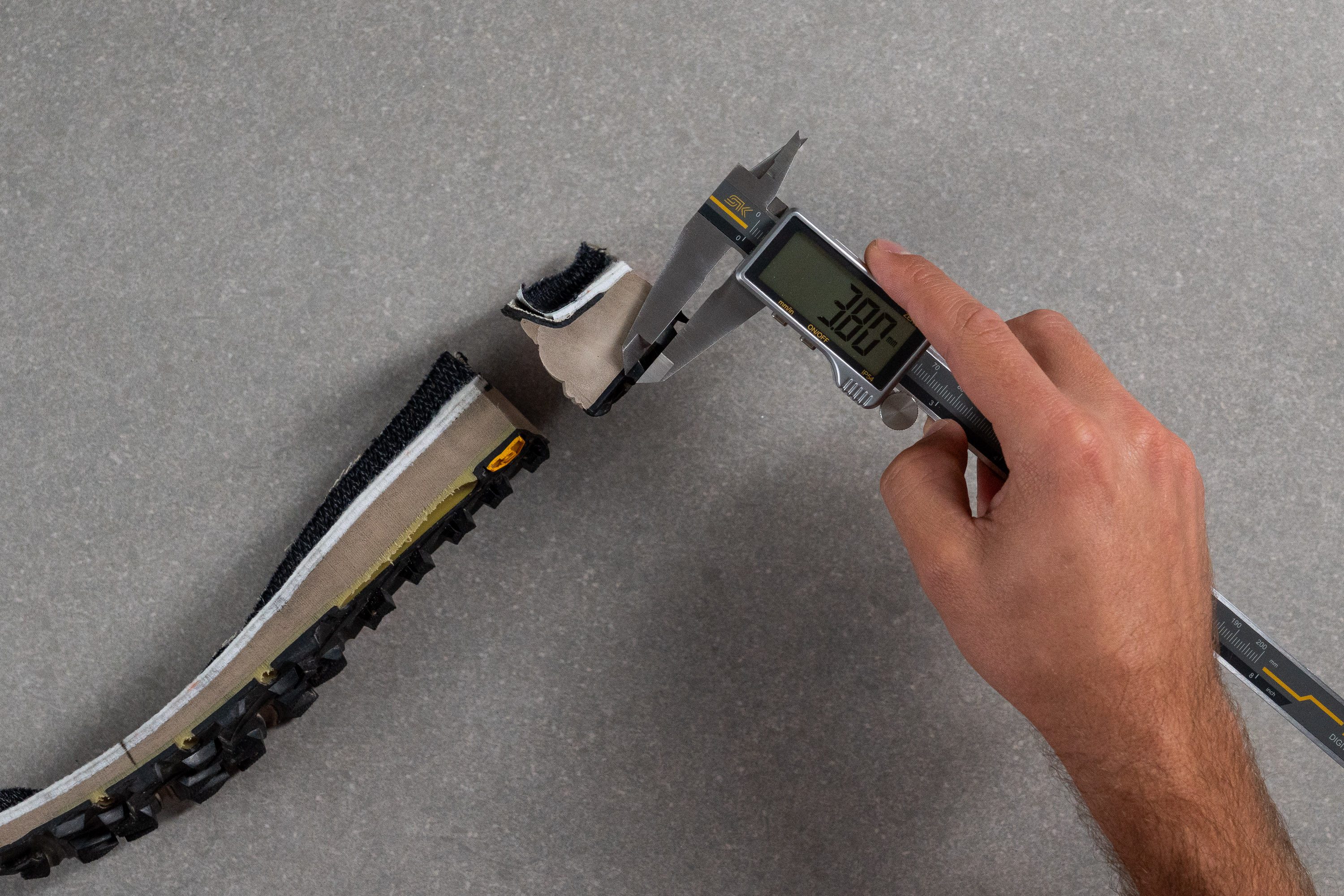
| Trail 2650 GTX | 3.8 mm |
| Average | 3.9 mm |
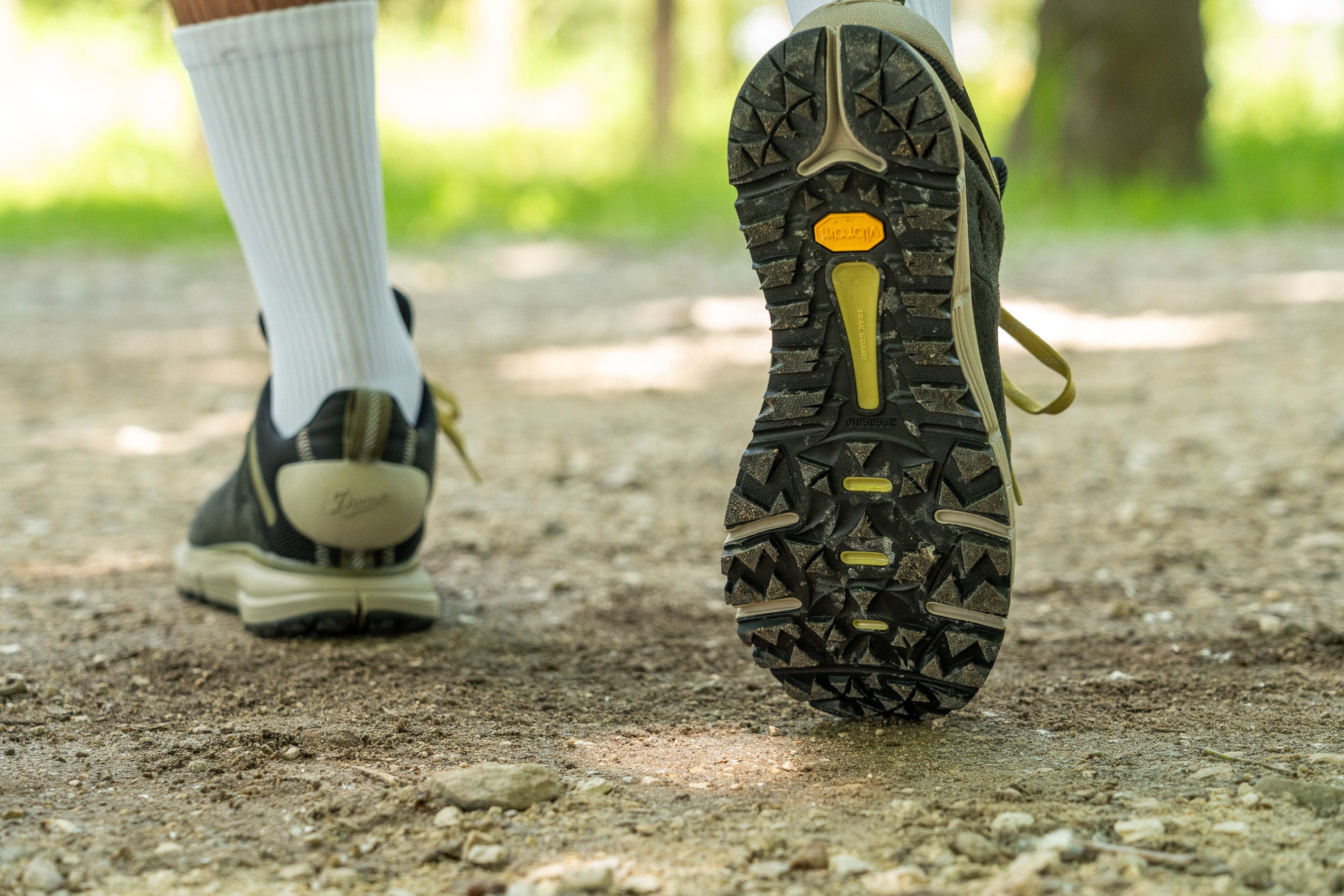
Outsole design
The shoe's 'self-adapting lugs,' as the brand calls them, become more aggressive and triangular in the heel and forefoot to provide stronger grip on ascents and descents.
Flexibility / Stiffness
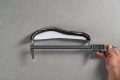
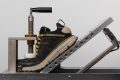
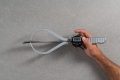
When we say that waterproofing can add rigidity to the shoe's construction, we mean it can almost double the shoe's stiffness!
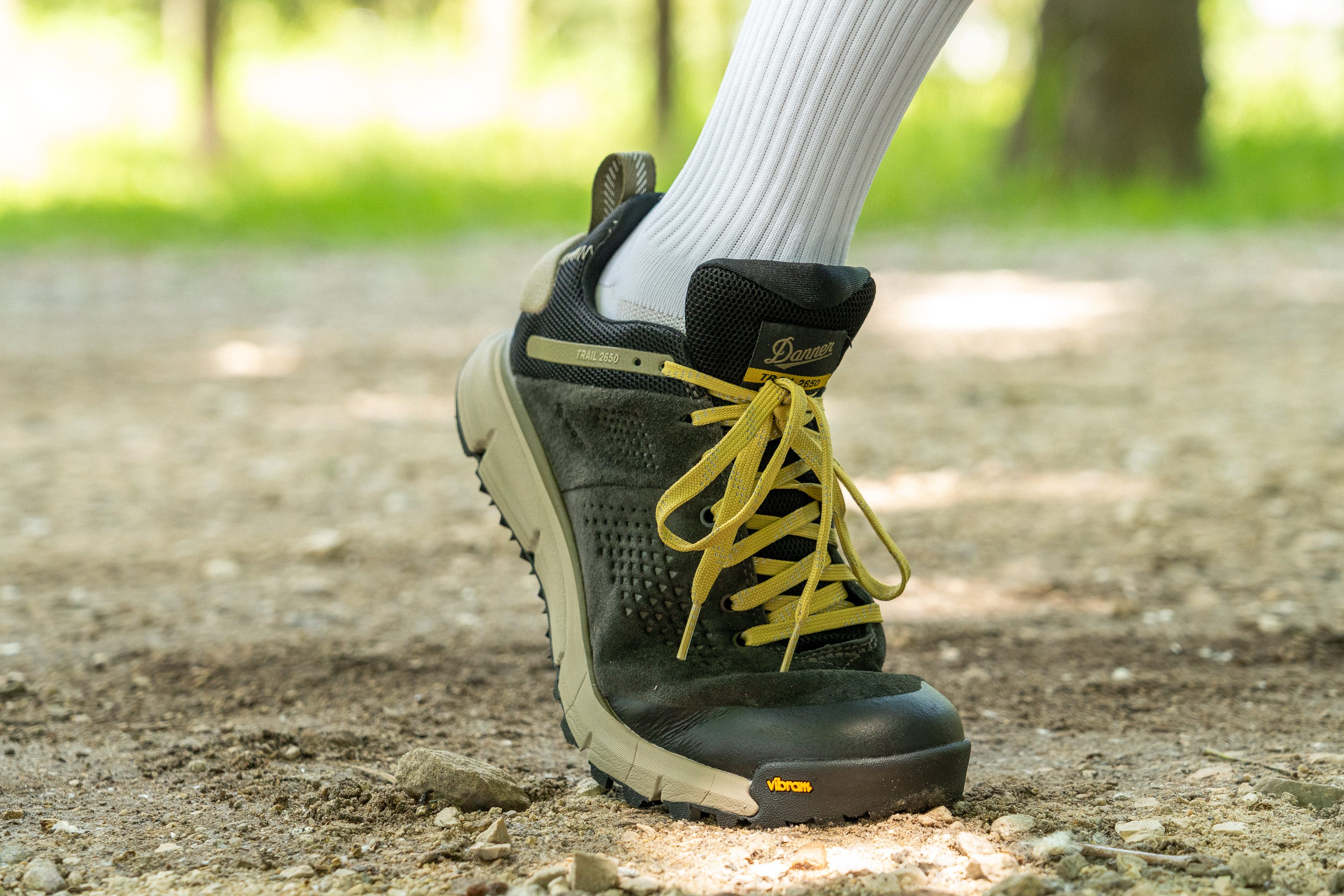
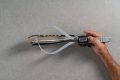
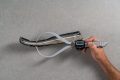
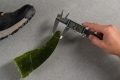
Measuring the force required to bend the Danner Trail 2650 GTX by 30 degrees, we couldn't believe it took as much as 19.5 N, whereas the non-waterproof shoe needed only 10.4N.
Even though it's not as pliable as the regular version, it is still on par with the category average. It has a decent amount of flex to keep foot transitions comfortable and fluid.
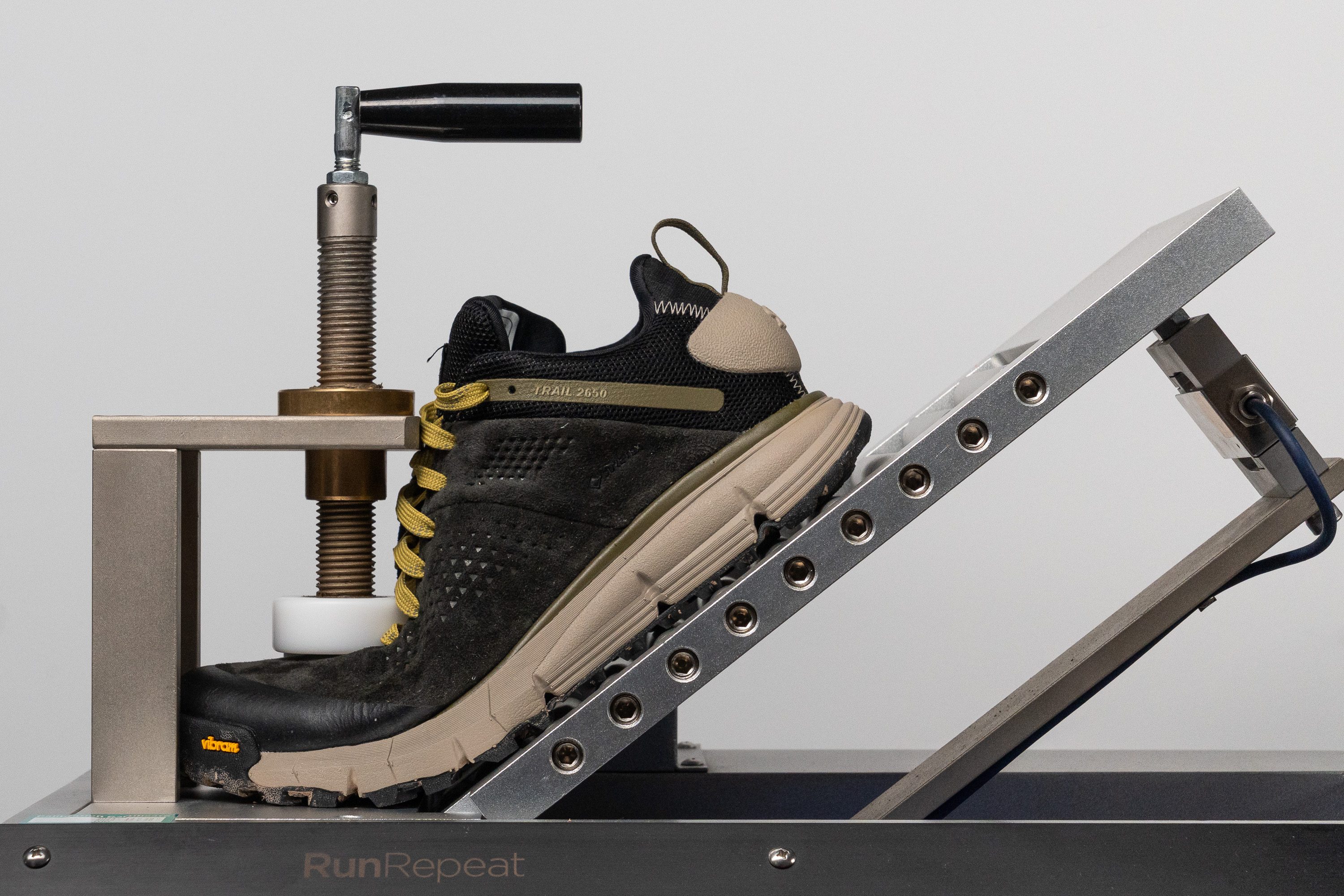
| Trail 2650 GTX | 19.5N |
| Average | 18.8N |
Weight
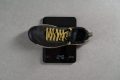
The waterproofing obviously added some weight to the Trail 2650 GTX, but not enough to exceed the hiking shoe average.
Only 1.4 oz (40g) heavier than the regular Trail 2650, it is still one of the lightest waterproof hiking shoes in our lab.
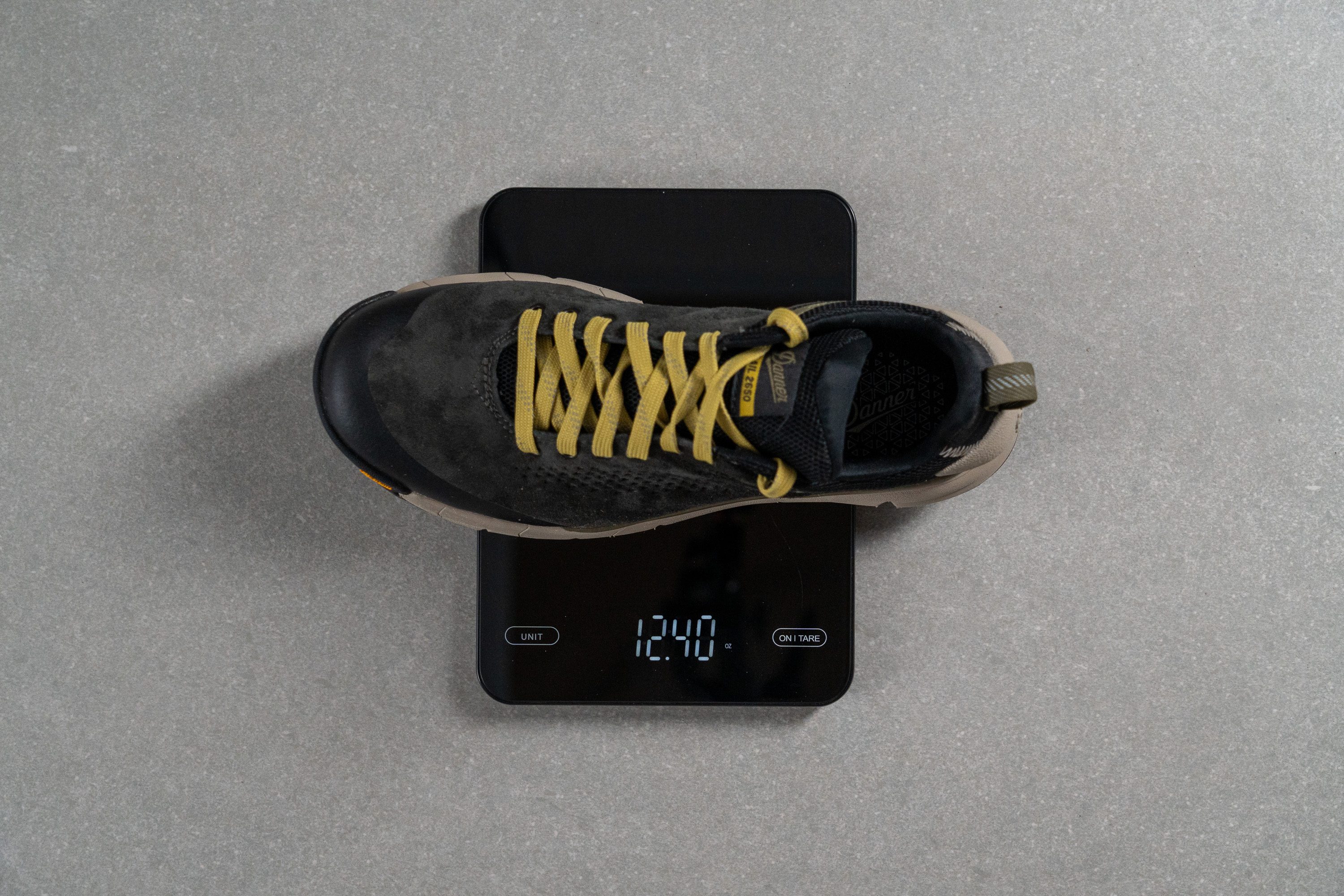
| Trail 2650 GTX | 12.4 oz (352g) |
| Average | 13.2 oz (375g) |
Breathability
Breathability test
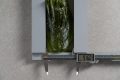
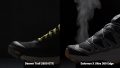
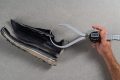
The Danner Trail 2650 GTX showed no hint of permeability in our smoke-pumping breathability test. Its fully sealed construction blocks air from entering or leaving the shoe's interior as freely.
A zoomed-in microscope shot of the shoe's fuzzy suede upper showed no perforations or air channels either.
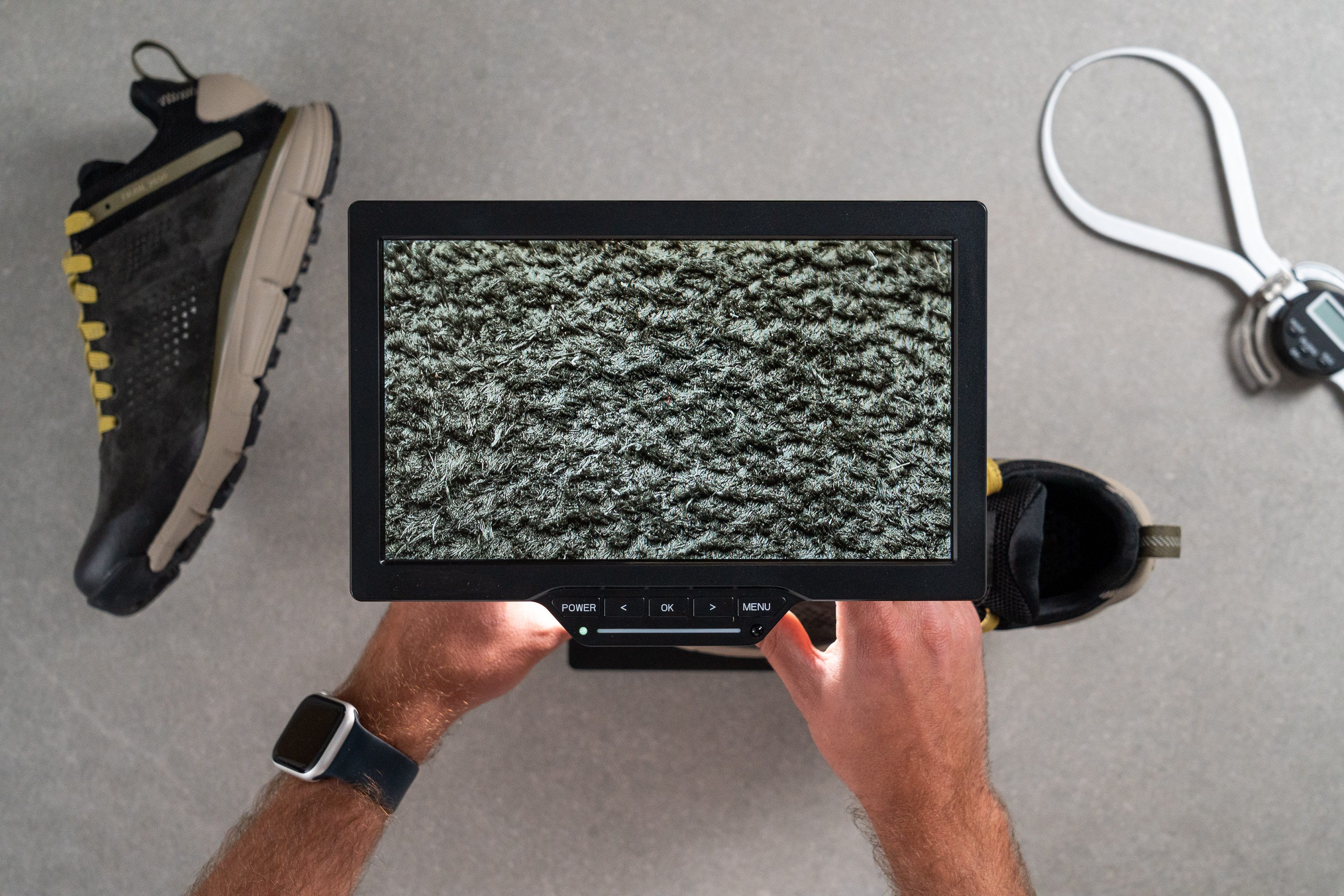
With all that said, we rated this Danner shoe's breathability with the lowest score of 1 out of 5.
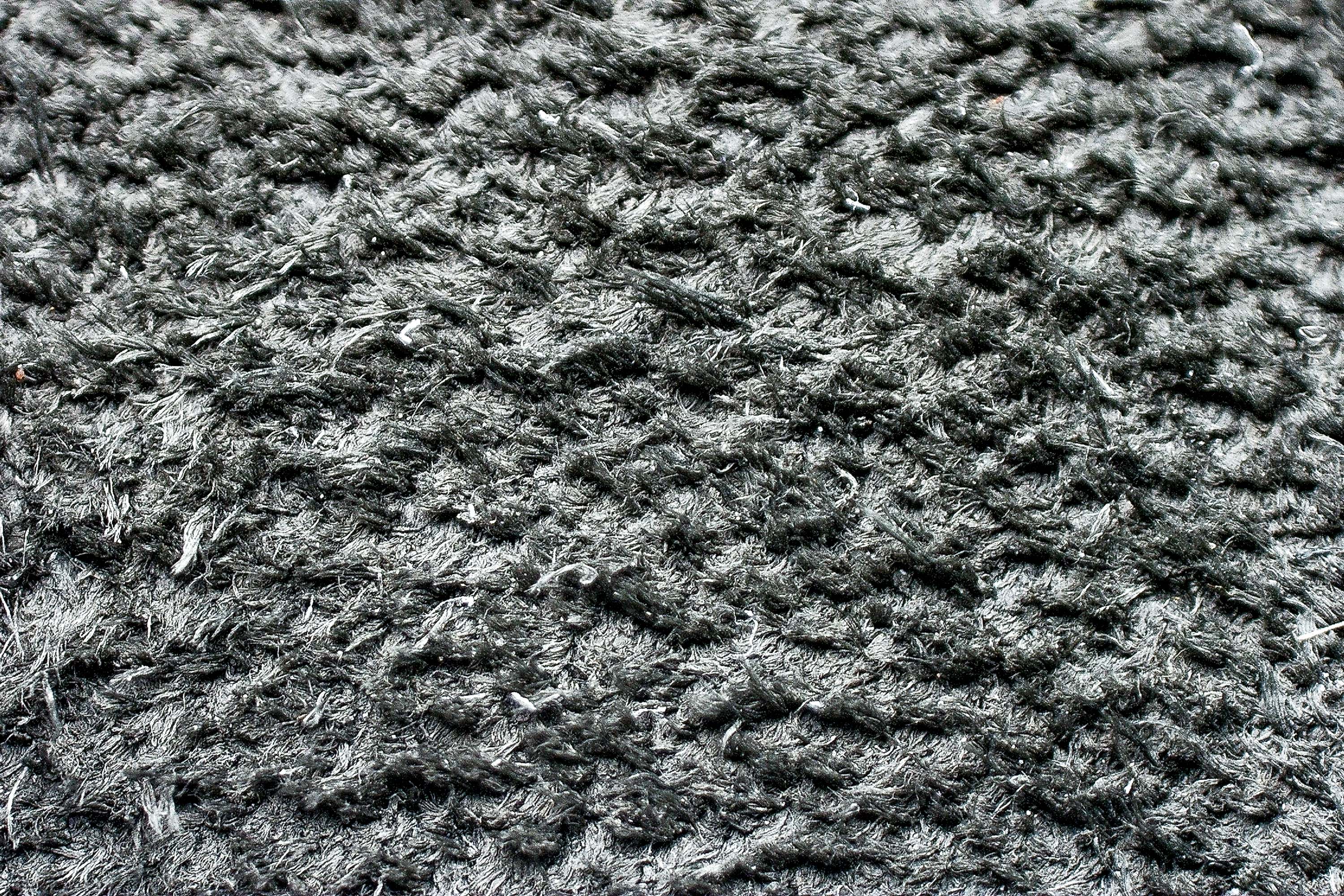
| Trail 2650 GTX | 1 |
| Average | 2.2 |
Stability
Lateral stability test
We were pleased to see that the Gore-Tex version of the Danner Trail 2650 is notably more structured than the regular version. But still, we wouldn't describe it as a stability-first hiking shoe.
It offers enough lateral support for non-technical landscapes and lighter loads.
Torsional rigidity
The waterproofing elements of the Trail 2650 GTX also add a good amount of torsional rigidity to the shoe's construction.
While the non-GTX shoe required a moderate 15.8 Nm of torque to twist in either direction, the GTX version takes as much as 24% more at 19.6 Nm! That surely contributes to a more secure and surefooted experience in the Danner Trail 2650 GTX.
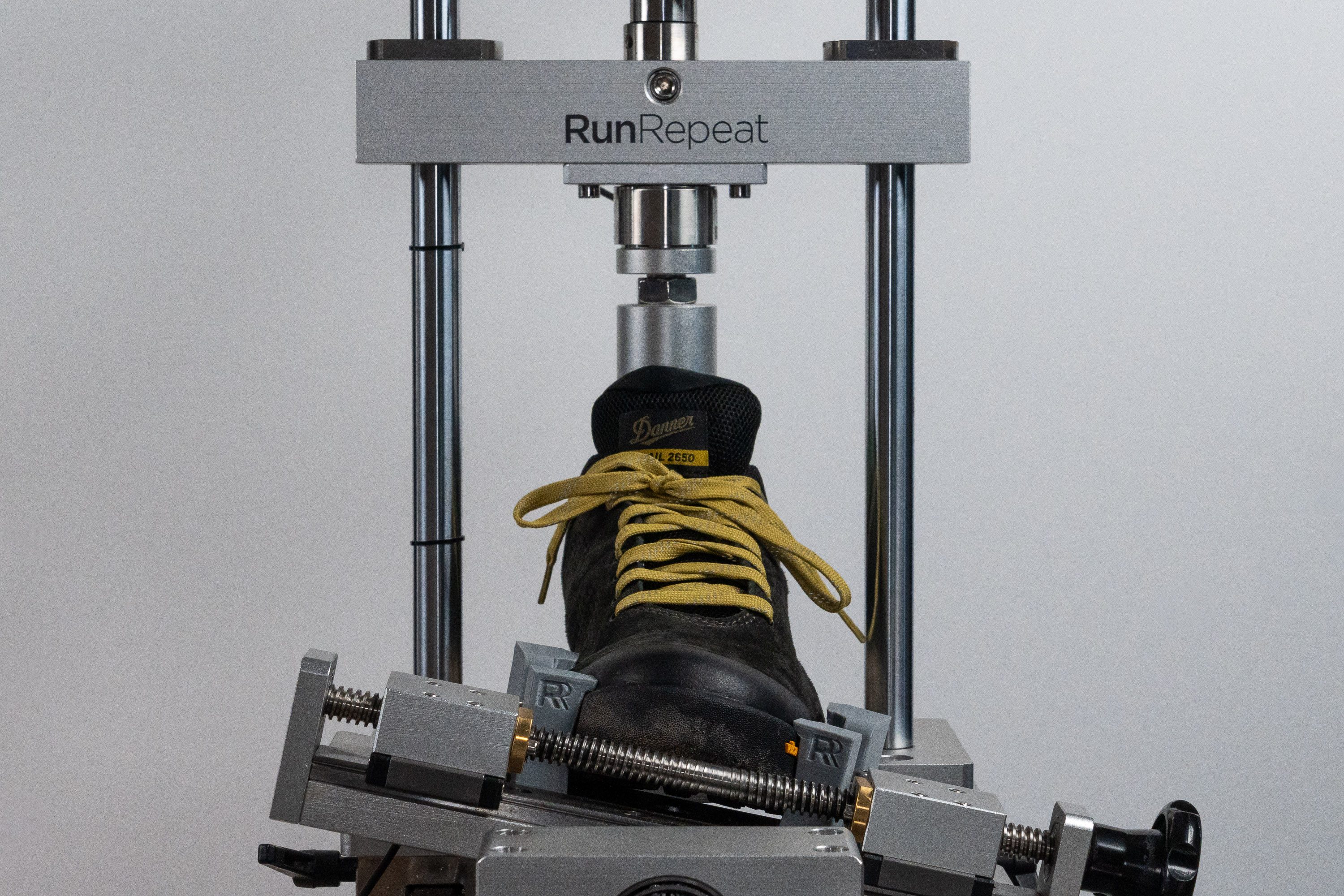
| Trail 2650 GTX | 19.6 Nm |
| Average | 19.1 Nm |
Heel counter stiffness
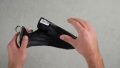
However, the shoe's heel counter stiffness was unaffected in the GTX version, as it scored an equally low 1 out of 5 in our manual test.
Pliable and unstructured, it doesn't hold the rearfoot as securely as some of the other hiking shoes. And the firm EXO Heel cap hardly adds any support at the back. We found it a bit gimmicky, to be honest.
| Trail 2650 GTX | 1 |
| Average | 3.7 |
Midsole width - forefoot
As part of the brand's DT-6 last design, the Trail 2650 GTX features an extended forefoot midsole width. Our caliper measurement confirmed it at an above-average 116.7 mm.
This greater surface area contributes to the Danner shoe's groundedness and stability.
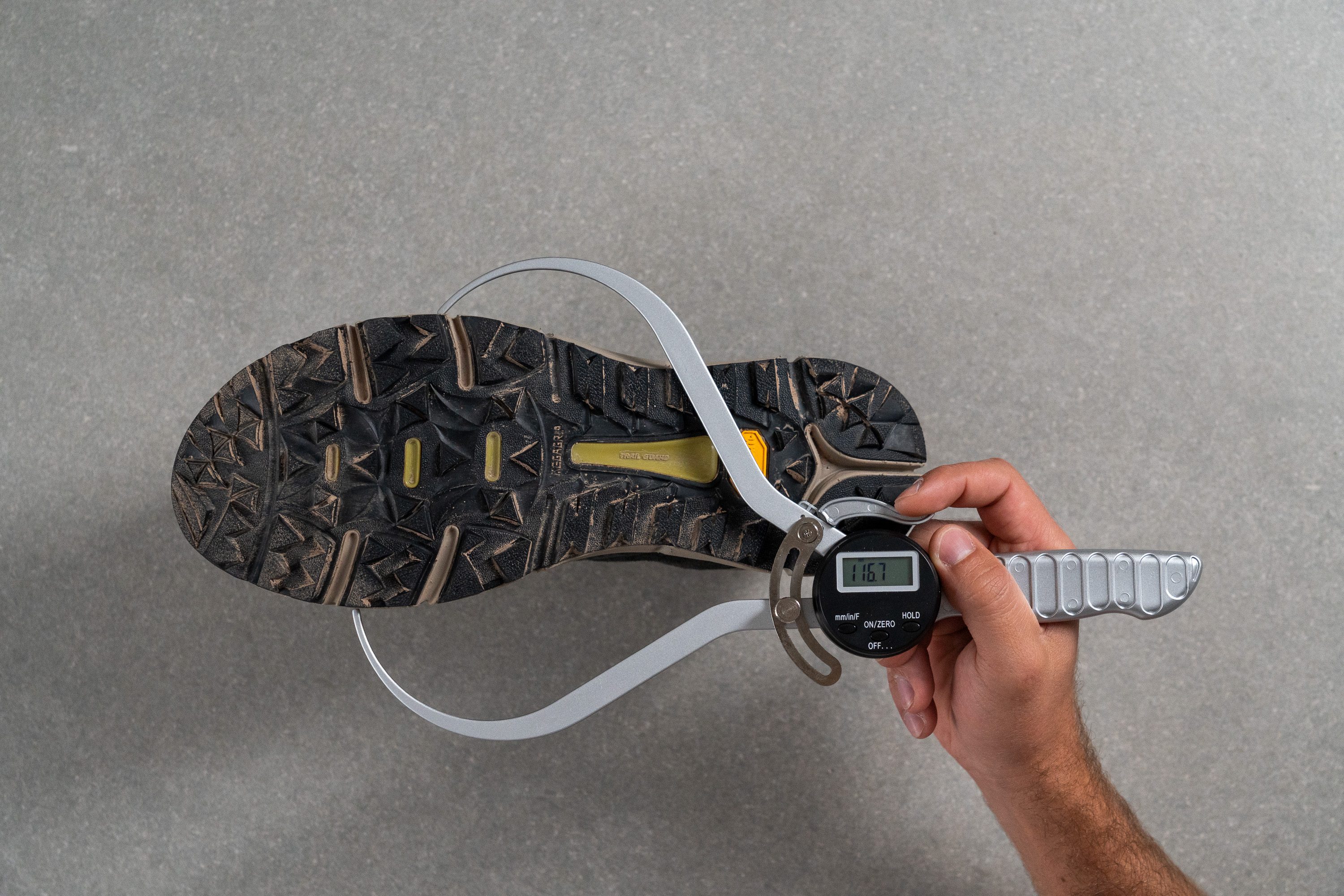
| Trail 2650 GTX | 116.7 mm |
| Average | 112.6 mm |
Midsole width - heel
The heel, however, maintains an average width of 85.2 mm. It is sufficiently stable without feeling too broad or clunky.
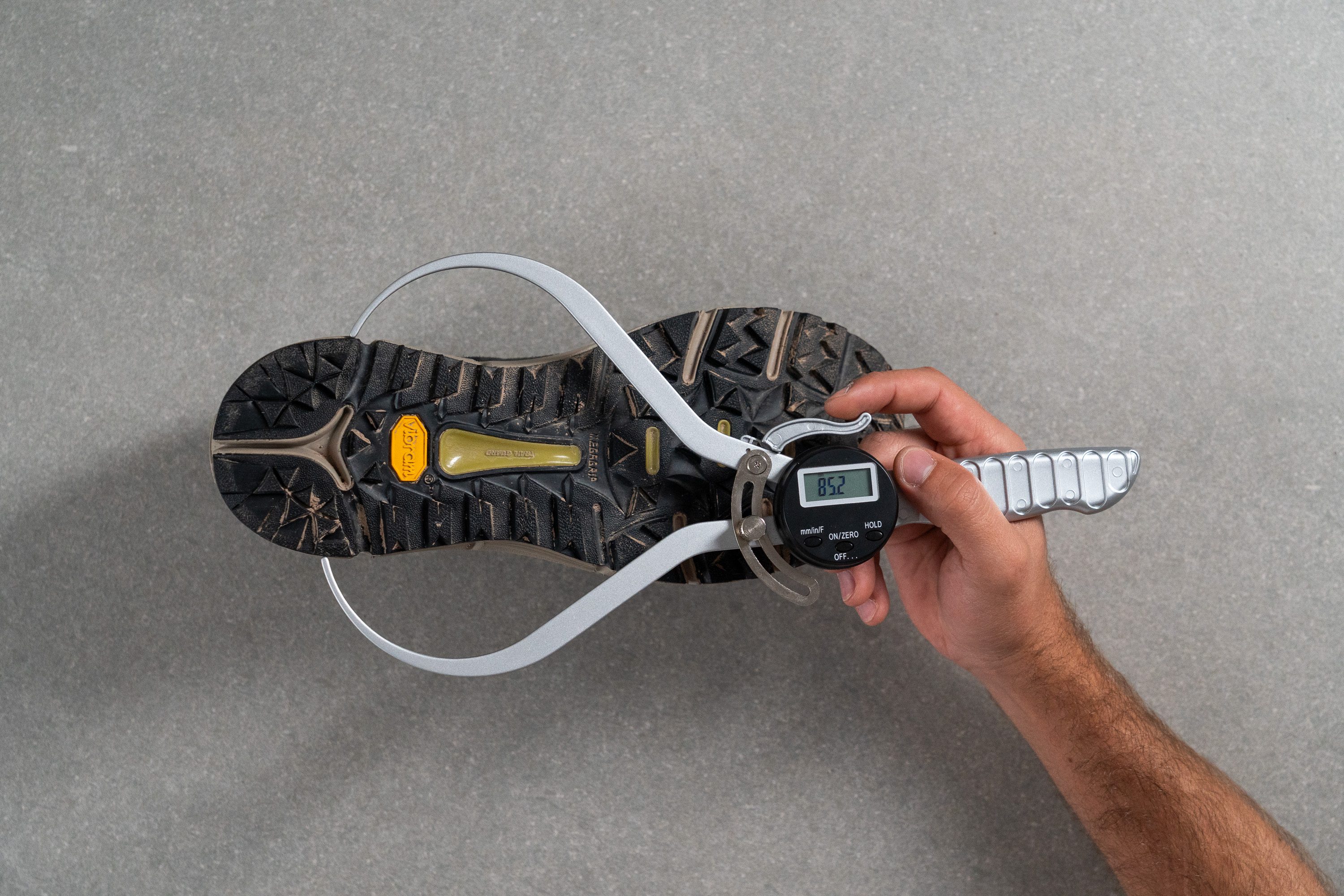
| Trail 2650 GTX | 85.2 mm |
| Average | 88.6 mm |
Durability
Toebox durability
This Danner shoe's suede upper can take a lot of beating before it shows any serious signs of wear or gives up entirely.
Testing the material with sandpaper, we found the damage so minor that we readily gave the Trail 2650 GTX a high toebox durability score of 4 out of 5.
And it's good to see a thick rubberized rand protecting the shoe's toebox from bumps and scratches.
| Trail 2650 GTX | 4 |
| Average | 3.6 |
Heel padding durability
Unfortunately, the inner lining of the shoe's heel collar wasn't as promising.
Developing tangible wear and tear in a matter of seconds, it lowered our heel padding durability score to 2 out of 5.
This will most likely be the first area to show deterioration in this Danner shoe.
| Trail 2650 GTX | 2 |
| Average | 3 |
Outsole durability
We are satisfied with the abrasion resistance of this shoe's rubber outsole. Measuring the dent depth at 0.9 mm, we found it to be equally durable as the average hiking shoe outsole. Albeit, we did expect a slightly better result considering the shoe's high price point.
| Trail 2650 GTX | 0.9 mm |
| Average | 0.9 mm |
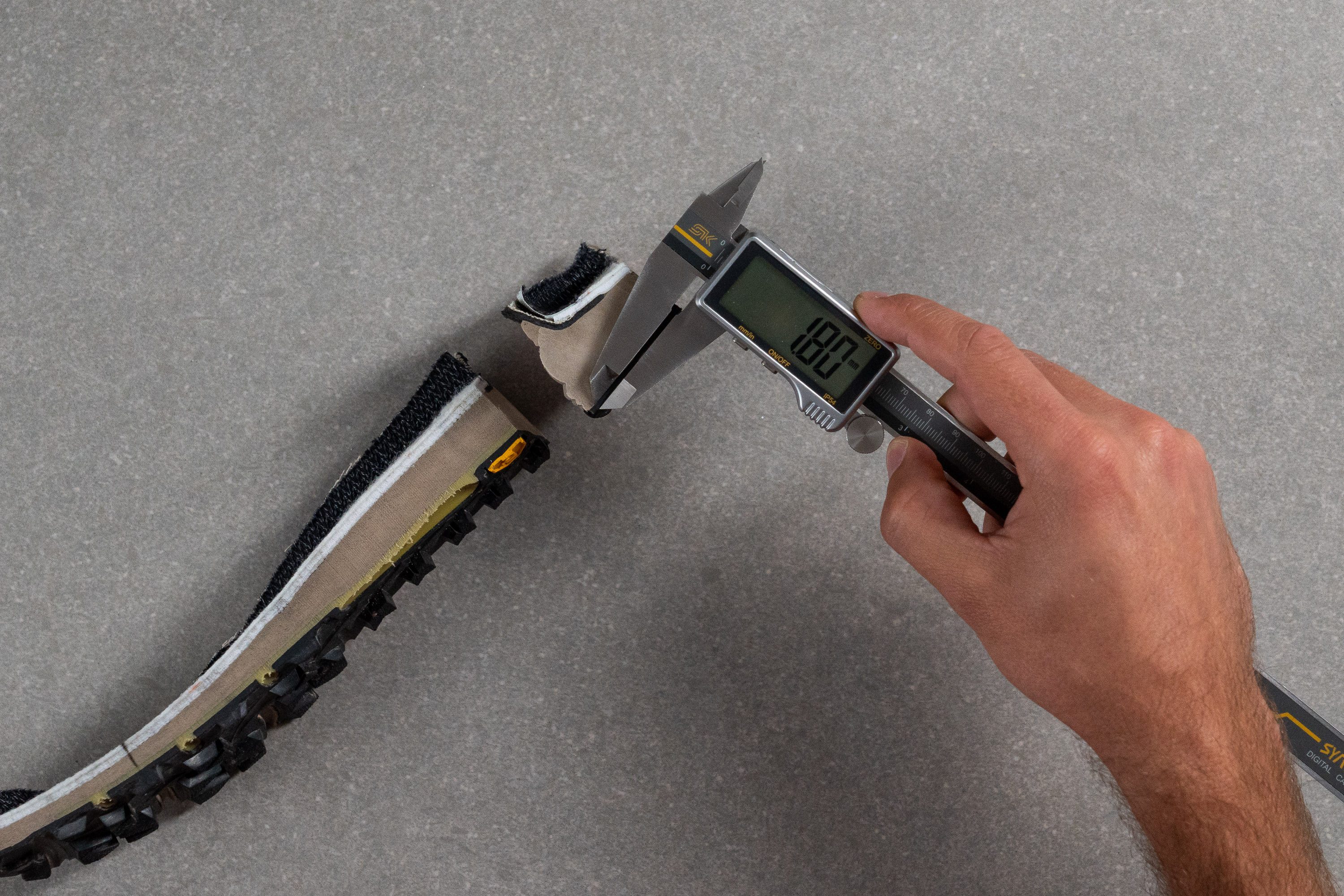
Outsole thickness
We also found its outsole to be slightly thinner than average at 1.8 mm, adding to long-term durability concerns.
| Trail 2650 GTX | 1.8 mm |
| Average | 2.3 mm |
Misc
Insole thickness
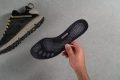
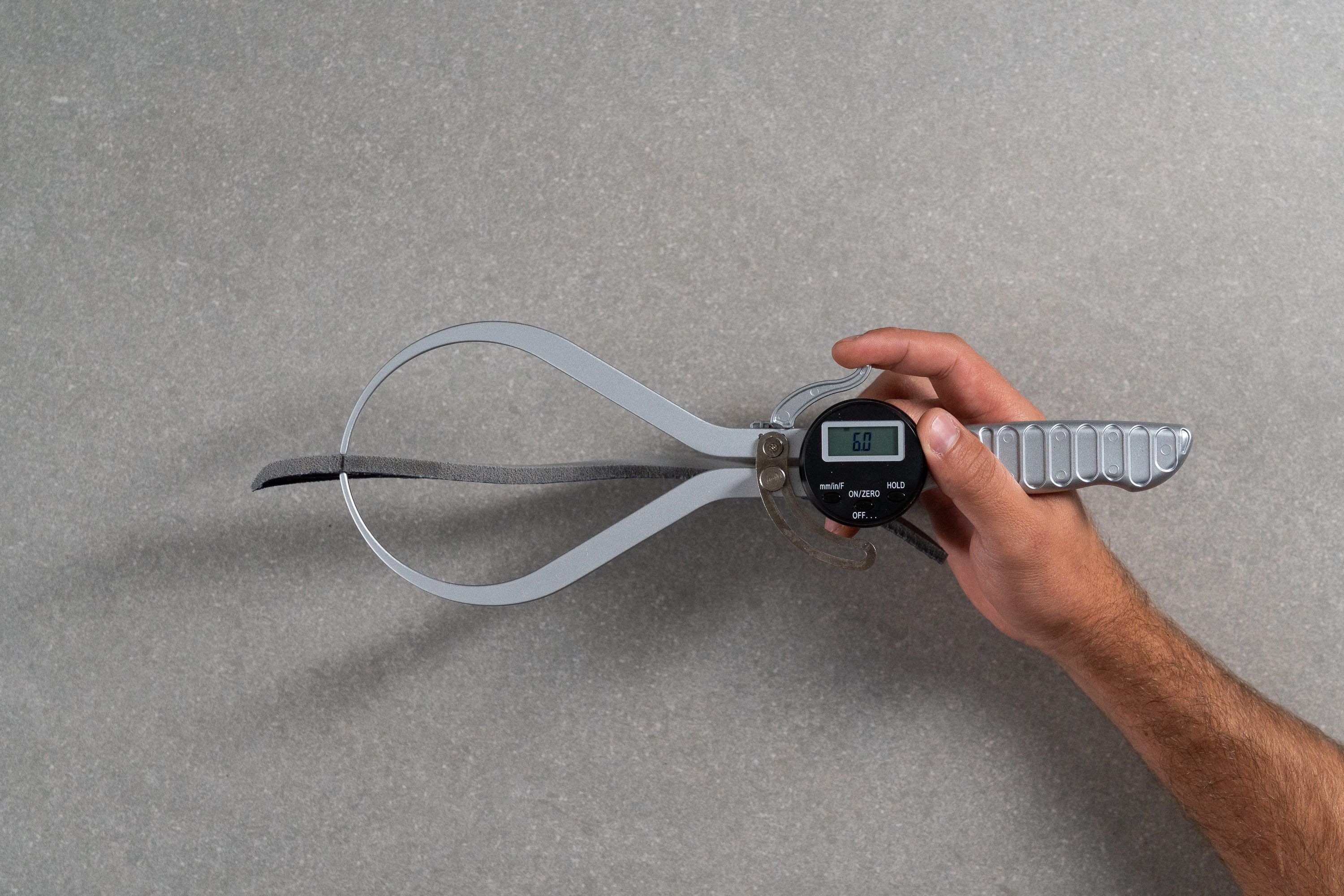
The Danner Trail 2650 offers a very pleasant step-in feel from the start, making it feel more like a casual sneaker than a sturdy hiking shoe. This is in part thanks to its well-padded OrthoLite Footbed, which measures up to 6.0 mm at the heel.
| Trail 2650 GTX | 6.0 mm |
| Average | 5.3 mm |
Removable insole
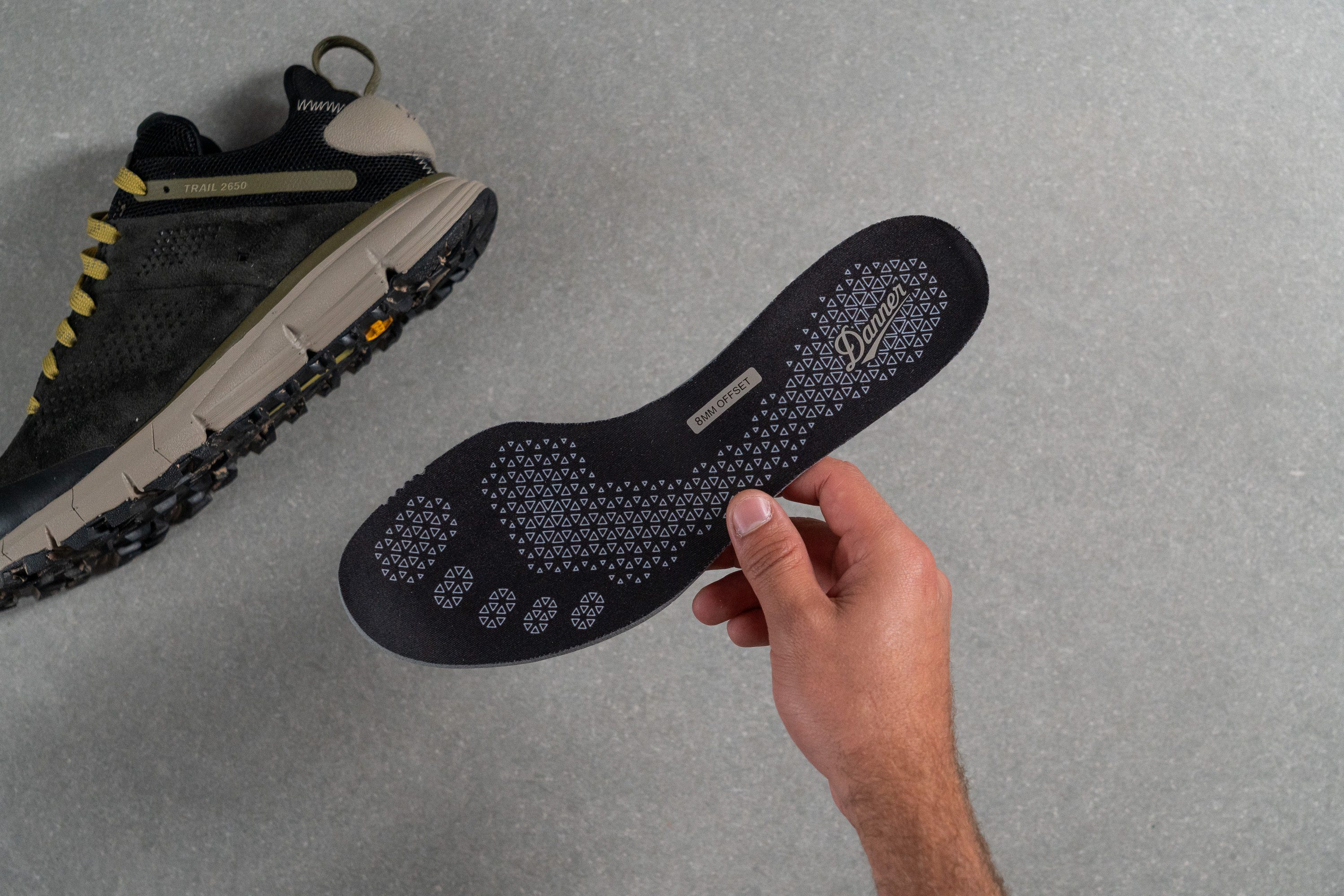
If necessary, the insole can be replaced with a custom orthotic for added support and cushioning. Just be mindful of the shoe's overall snugger fit, which may not accommodate every insert.
| Trail 2650 GTX | Yes |
Midsole softness in cold (%)
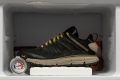
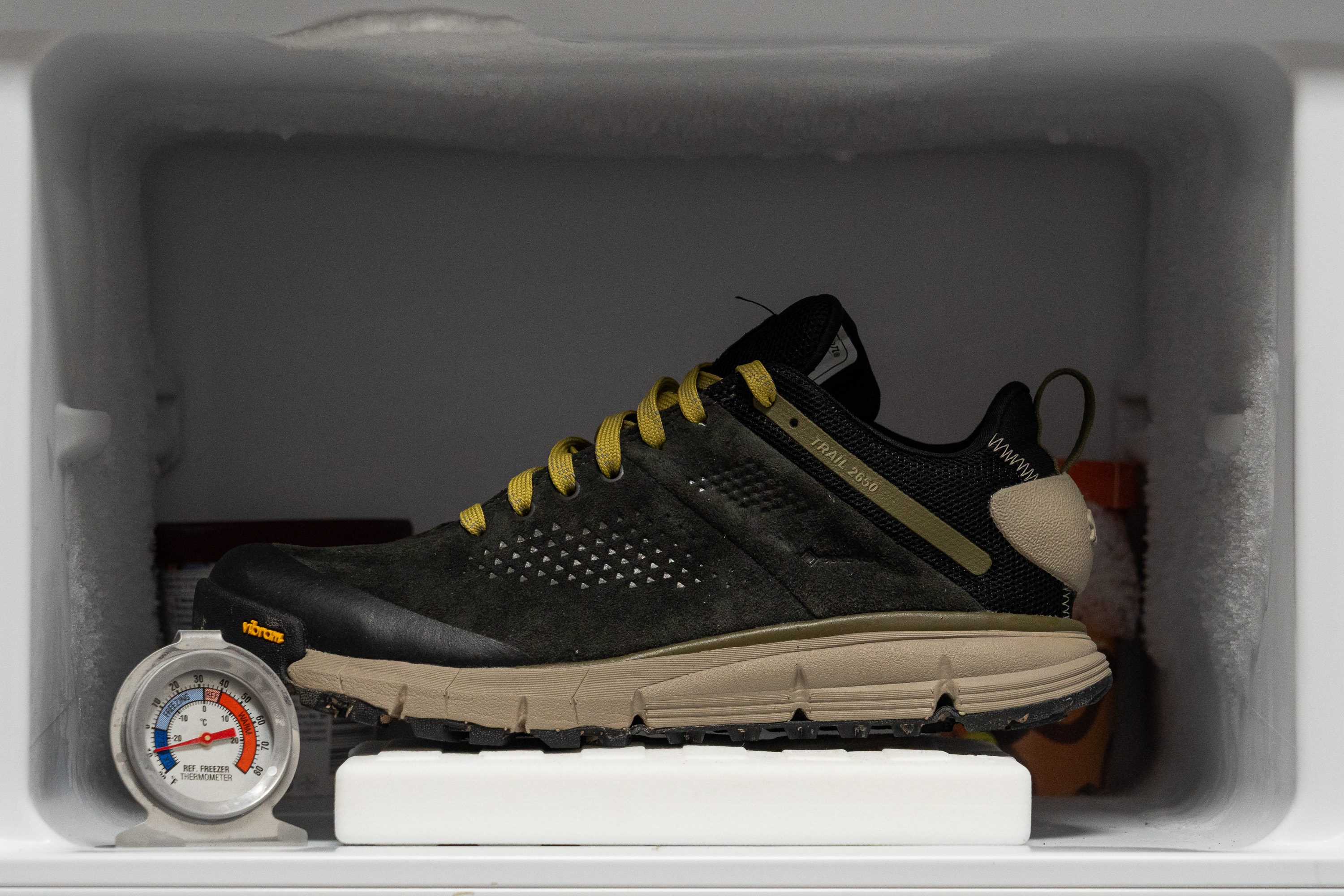
We kept this Danner shoe in the freezer for 20 minutes to see how its cushioning softness changes at low temperatures. With a 17% difference in our durometer measurement, we found that it went from balanced to firm (46.5 AC). But gladly, not too firm to make it brick-like.
| Trail 2650 GTX | 17% |
| Average | 18% |
Reflective elements
The Trail 2650 GTX doesn't have any large reflective components, but some of the threads in its laces and heel pull tab reflect light in the dark.
| Trail 2650 GTX | Yes |
Tongue padding
We found the shoe's tongue and collar sufficiently padded to prevent pressure and chafing against the skin.
The tongue, in particular, showed 6.4 mm of thickness. It is slightly thinner than average, but just enough to reduce the risk of lace bites.
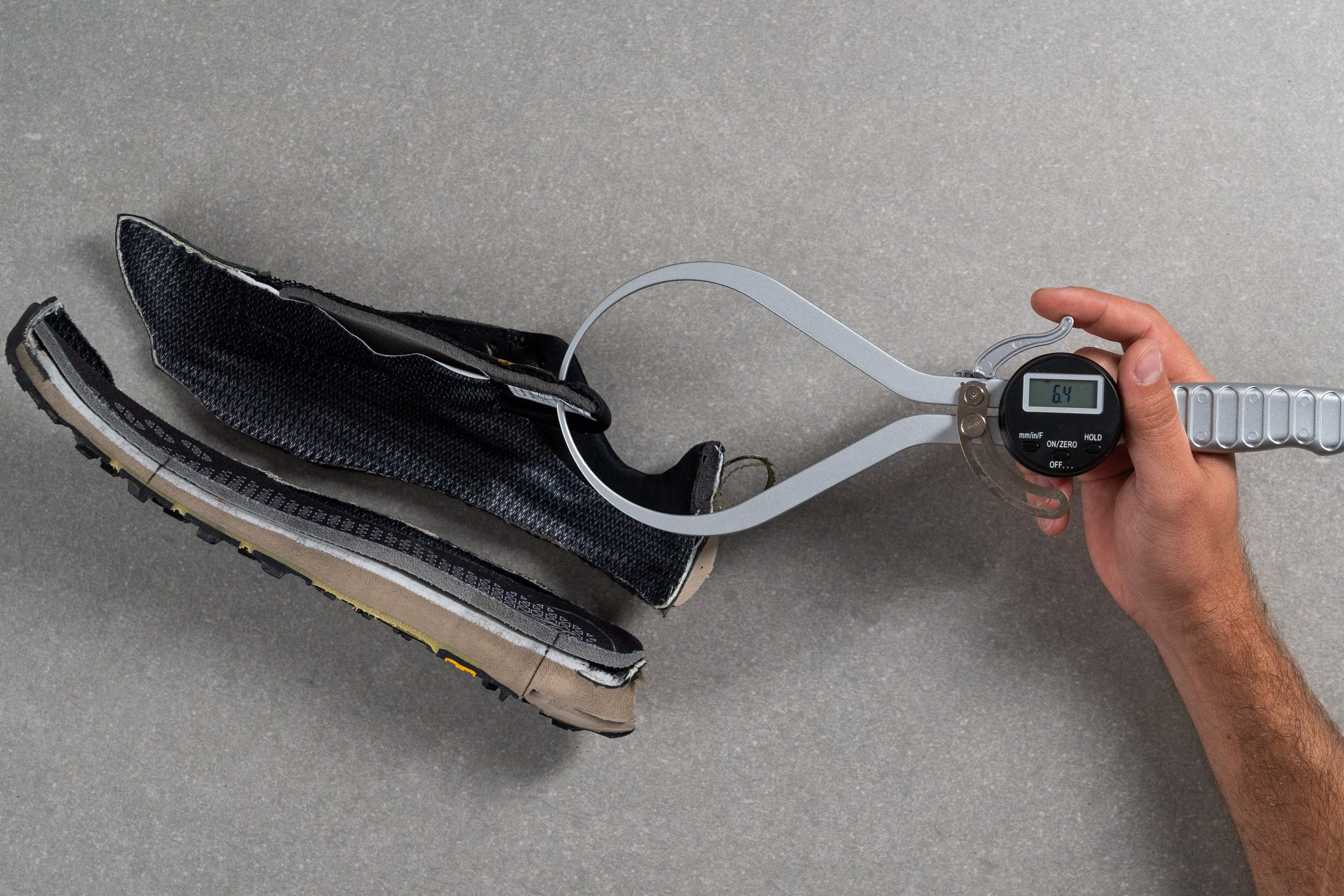
| Trail 2650 GTX | 6.4 mm |
| Average | 9.8 mm |
Tongue: gusset type
A fully gusseted tongue complements the shoe's sealed, waterproof construction. It prevents water from seeping inside the shoe.
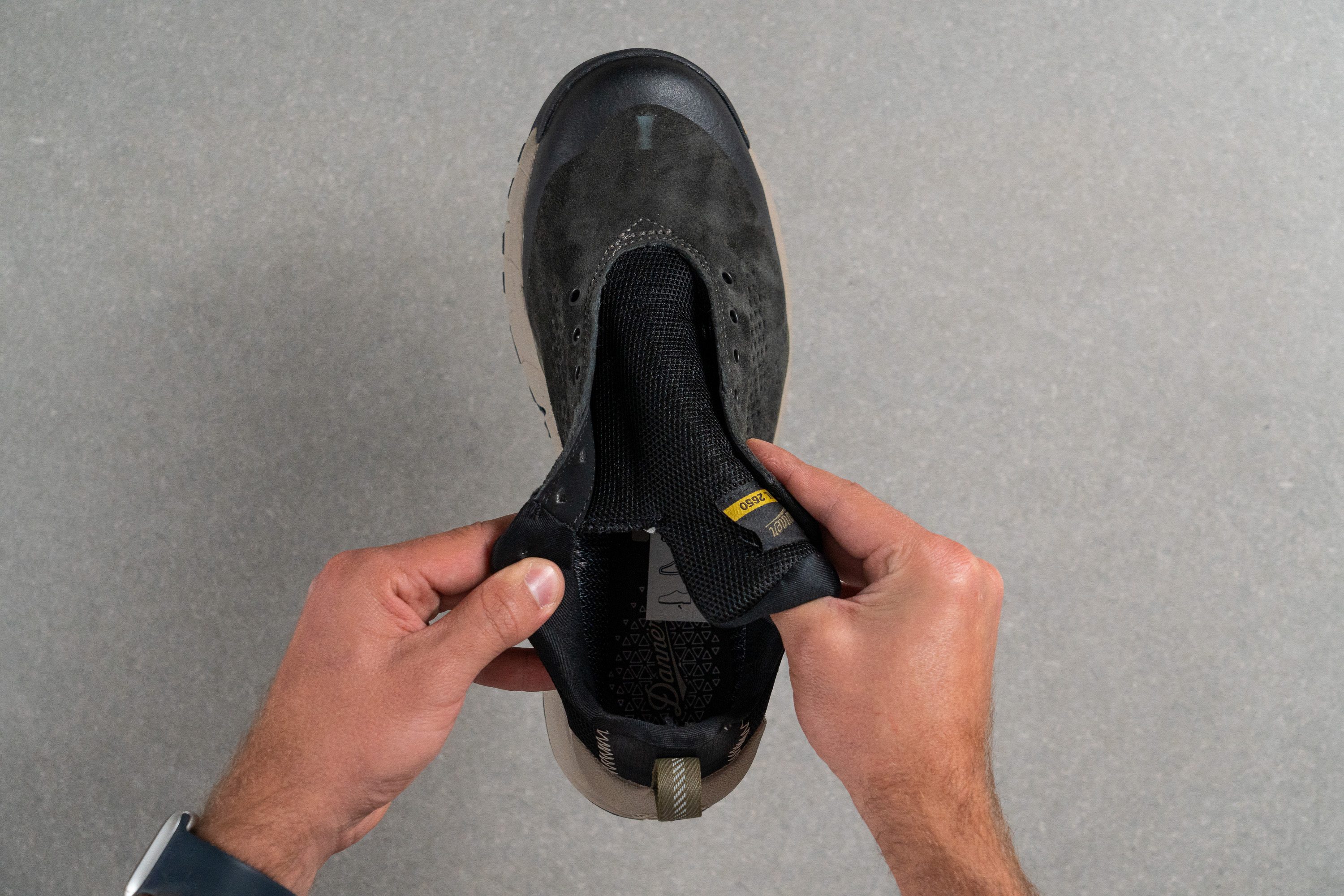
| Trail 2650 GTX | Both sides (full) |
Heel tab
A woven finger loop at the back of the shoe helps make entry easier.
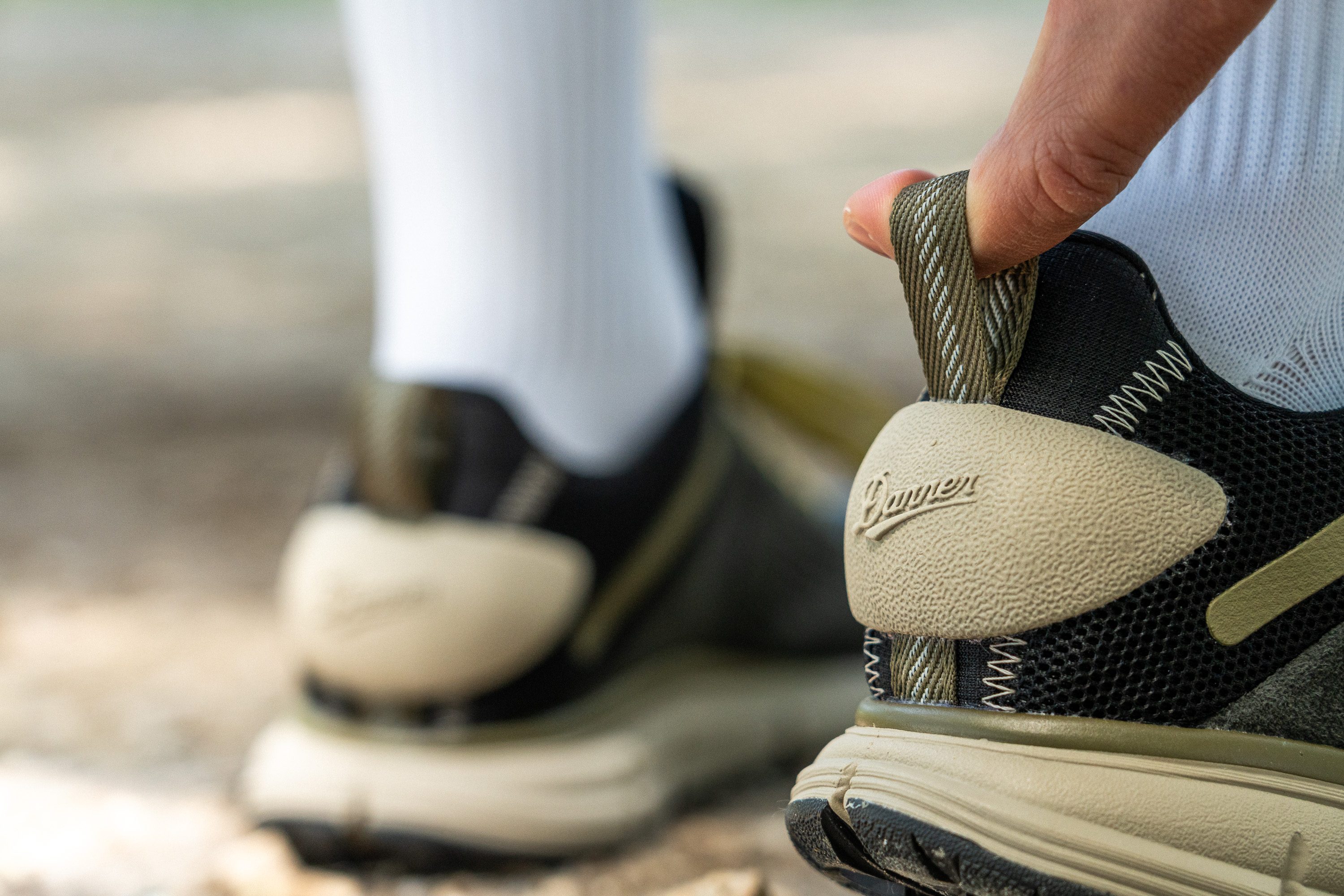
| Trail 2650 GTX | Finger loop |
Price
The Danner Trail 2650 GTX offers great value with its high-quality suede upper, rock plate, fantastic comfort, and shock absorption. But we still don't think its high price is fully justified because it doesn't quite match the performance of similarly priced yet more technical shoes.
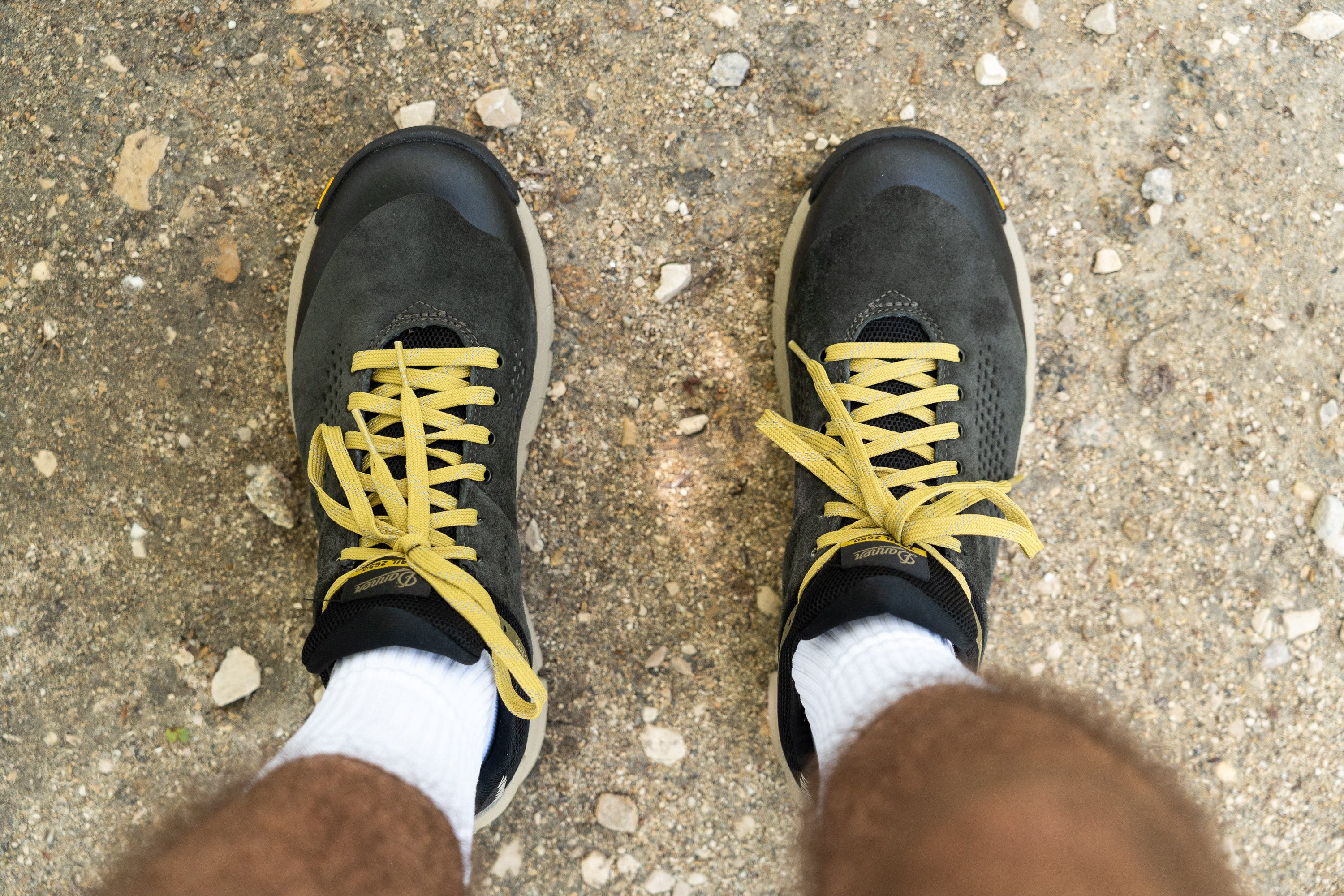
| Trail 2650 GTX | $210 |
| Average | $157 |