





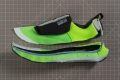















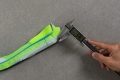

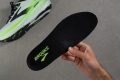
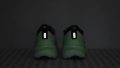


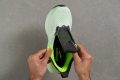

Our verdict
- Daily running 89
- Tempo 51
- Race 36
- Stability 89
Pros
- Excellent comfort
- Strong durability from top to bottom
- Soft, easy ride
- Improved fit
- Reliable grip on wet and dry surfaces
- Premium knit upper with great build quality
- Excellent heel lockdown
- Versatile for casual use
- Lower drop appeals more footstrikes
Cons
- Heavy compared to most rivals
- Lacks energy return
- Missing gusseted tongue at this price point
- Price bump
Awards
- Top pick in best Brooks running shoes
- Top pick in best Brooks walking shoes
- Top 29% in road running shoes
- Top 27% in neutral running shoes
- Top 4% most popular running shoes
Comparison
The most similar running shoes compared
+ + Add a shoe | |||||
|---|---|---|---|---|---|
| Our score | 85 Great | 88 Superb | 85 Great | 86 Great | |
| Price | £150 | £140 | £170 | £130 | |
| Pace | Daily running | Daily running | Daily running | Daily running | |
| Shock absorption | High | High | High | High | |
| Energy return | Moderate | High | Low | Moderate | |
| Traction | High | High | High | High | |
| Arch support | Neutral | Neutral | Neutral | Neutral | |
| Weight lab Weight brand | 10.7 oz / 303g 10.7 oz / 303g | 9.8 oz / 278g 9 oz / 255g | 11.2 oz / 318g 11 oz / 311g | 10.2 oz / 289g 10.2 oz / 289g | |
| Drop lab Drop brand | 8.2 mm 8.0 mm | 8.5 mm 8.0 mm | 8.1 mm 6.0 mm | 12.2 mm 10.0 mm | |
| Strike pattern | HeelMid/forefoot | HeelMid/forefoot | HeelMid/forefoot | Heel | |
| Size | Slightly small | True to size | True to size | True to size | |
| Midsole softness | Soft | Balanced | Soft | Balanced | |
| Difference in midsole softness in cold | Normal | Small | Small | Small | |
| Toebox durability | Decent | Decent | Decent | Decent | |
| Heel padding durability | Good | Good | Good | Good | |
| Outsole durability | Good | Good | Decent | Good | |
| Breathability | Moderate | Breathable | Moderate | Moderate | |
| Width / fit | Medium | Medium | Medium | Medium | |
| Toebox width | Medium | Medium | Medium | Narrow | |
| Stiffness | Moderate | Stiff | Stiff | Moderate | |
| Torsional rigidity | Moderate | Moderate | Stiff | Flexible | |
| Heel counter stiffness | Stiff | Stiff | Stiff | Stiff | |
| Rocker | ✓ | ✓ | ✓ | ✗ | |
| Heel lab Heel brand | 37.2 mm 38.0 mm | 38.7 mm 36.0 mm | 45.4 mm 45.0 mm | 37.3 mm 36.0 mm | |
| Forefoot lab Forefoot brand | 29.0 mm 30.0 mm | 30.2 mm 28.0 mm | 37.3 mm 39.0 mm | 25.1 mm 26.0 mm | |
| Widths available | NormalWideX-Wide | NarrowNormalWide | NormalWide | NarrowNormalWideX-Wide | |
| Orthotic friendly | ✓ | ✓ | ✓ | ✓ | |
| Season | All seasons | SummerAll seasons | All seasons | All seasons | |
| Removable insole | ✓ | ✓ | ✓ | ✓ | |
| Ranking | #102 Top 26% | #48 Top 12% | #110 Top 28% | #81 Top 21% | |
| Popularity | #14 Top 4% | #56 Top 14% | #44 Top 11% | #18 Top 5% |



Who should buy
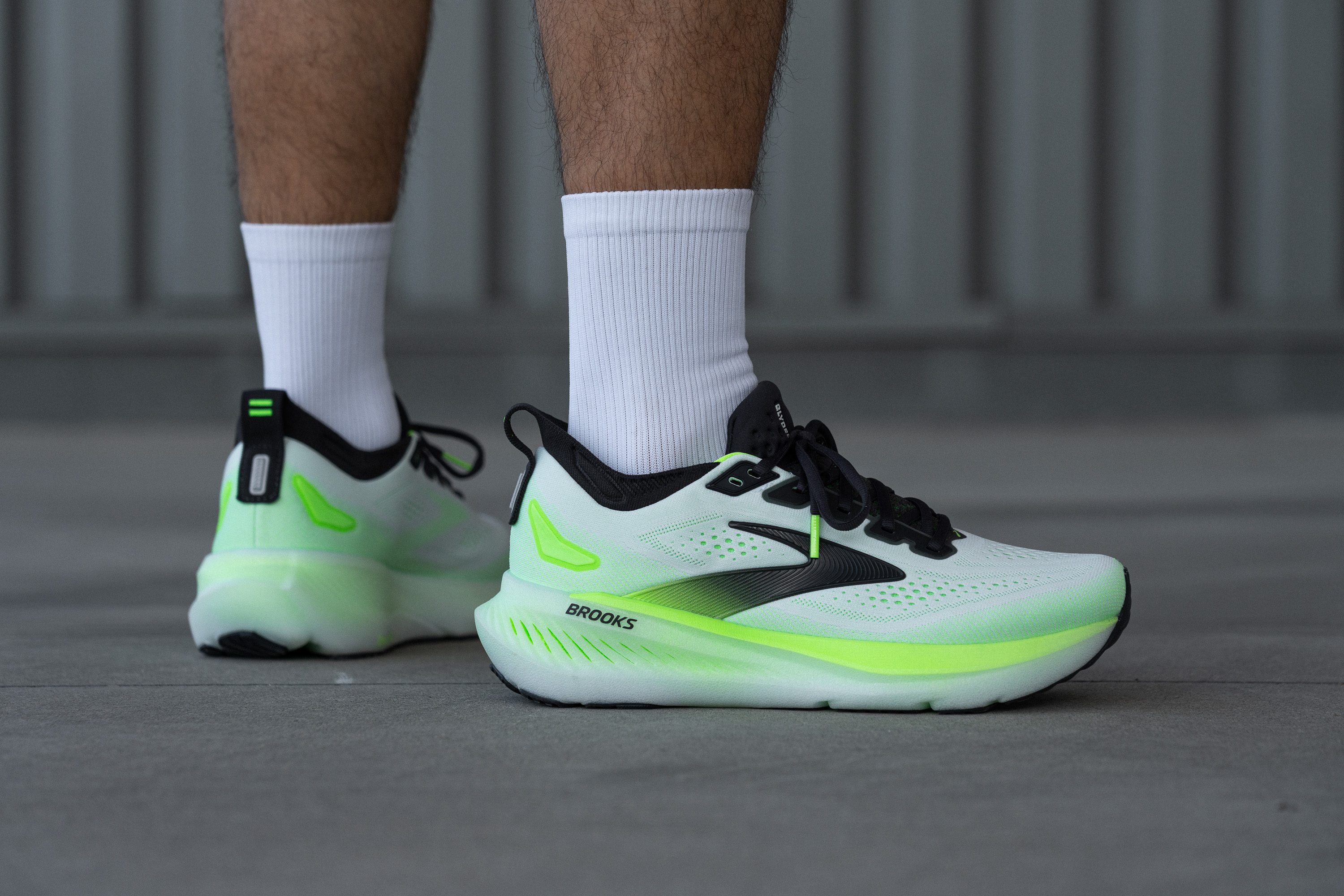
We tested the Brooks Glycerin 23 and concluded that:
- Runners looking for a premium daily trainer with high comfort and strong durability will enjoy this model.
- Those who avoided the Glycerin before due to the high drop will find this version more balanced.
- Owners of previous versions who want a safe upgrade will feel right at home, as it keeps the same Glycerin DNA.
- Casual runners wanting one shoe for easy runs and daily wear, and who have a higher budget, will find it a great fit. It looks better than ever too!
Who should NOT buy
Runners that dislike heavy shoes will not enjoy the Glycerin 23. We found in the lab that its weight is too high, and we believe lighter options like the Mizuno Neo Zen 2 or New Balance 1080 v15 can be better choices for you.
The ride also lacks a lively bounce, with a more comfort-first feel instead. We think it’s not the best option for runners seeking energy return, and we recommend the adidas Ultraboost 5 or 5X for a more responsive experience.
Cushioning
Shock absorption
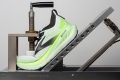
After the full revamp of the Glycerin 22, we did not expect major changes, so a similar shock absorption result made sense here. Once we finished testing the Glycerin 23, we recorded 140 SA in the heel and 116 SA in the forefoot, a small but welcome 5% improvement over its predecessor.
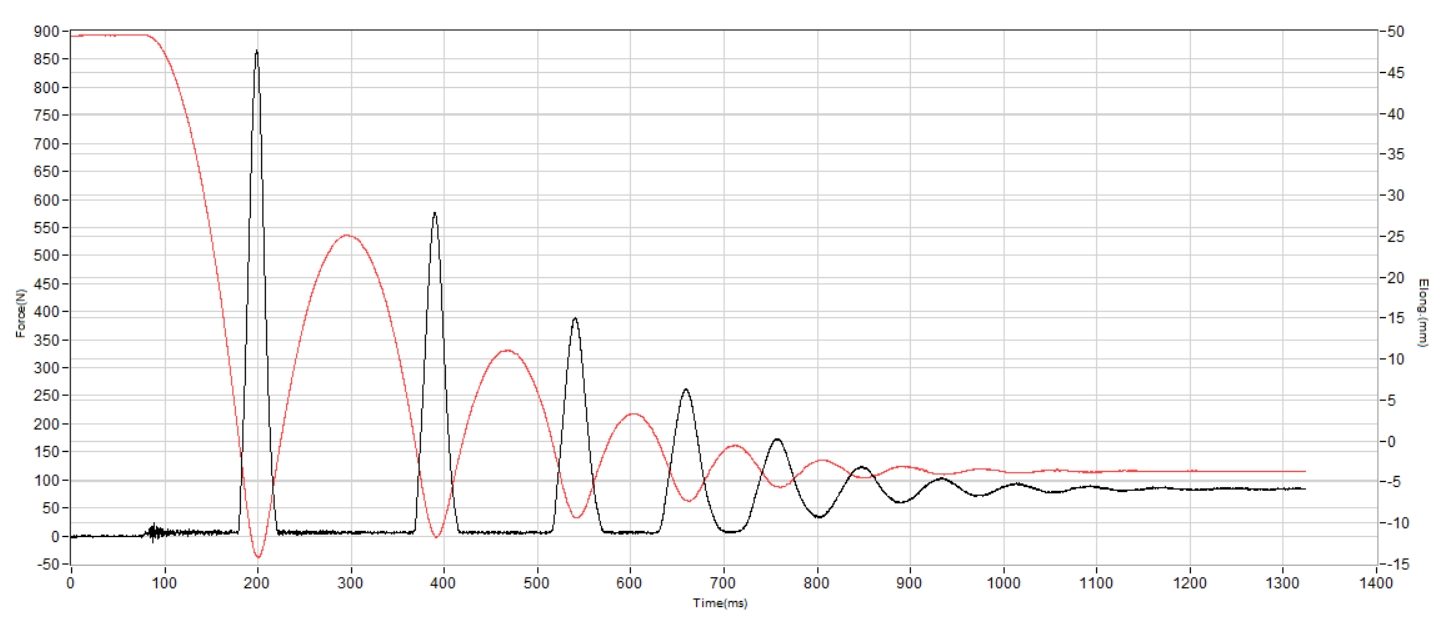
| Glycerin 23 | 140 SA |
| Average | 131 SA |
Energy return
The midsole still uses the same DNA Tuned compound, which already fell short for us in terms of bounce. So, as expected, energy return remains below average, reaching only 54.1% in the heel and 57.7% in the forefoot.
While this may not be an issue for runners using the shoe for easy weekly miles without performance goals, we still believe that at this price point Brooks should offer a foam that delivers over 65% in this test.
| Glycerin 23 | 57.7% |
| Average | 61.4% |
Heel stack
The Glycerin 23 reflects the current trend of daily trainers moving close to 40 mm of stack height.
In this update, we measured 37.2 mm, which keeps the shoe just below the maximalist category while offering better versatility and a slightly improved connection to the ground.
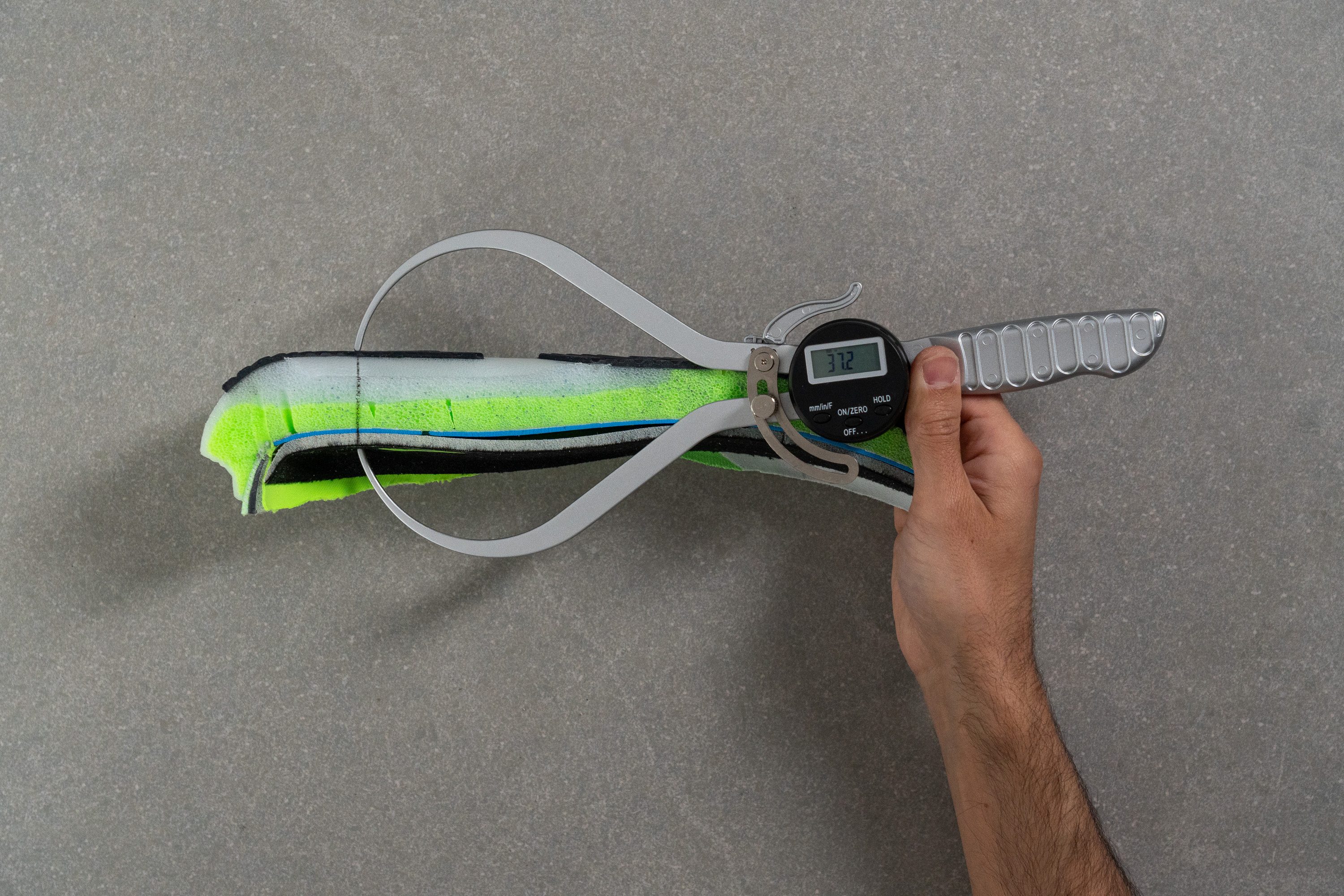
| Glycerin 23 | 37.2 mm |
| Average | 35.5 mm |
Forefoot stack
The forefoot also approaches the 30 mm mark, landing at 29.0 mm, which is slightly higher than the previous version. Therefore, there is plenty of foam here as well for both midfoot and forefoot strikers.
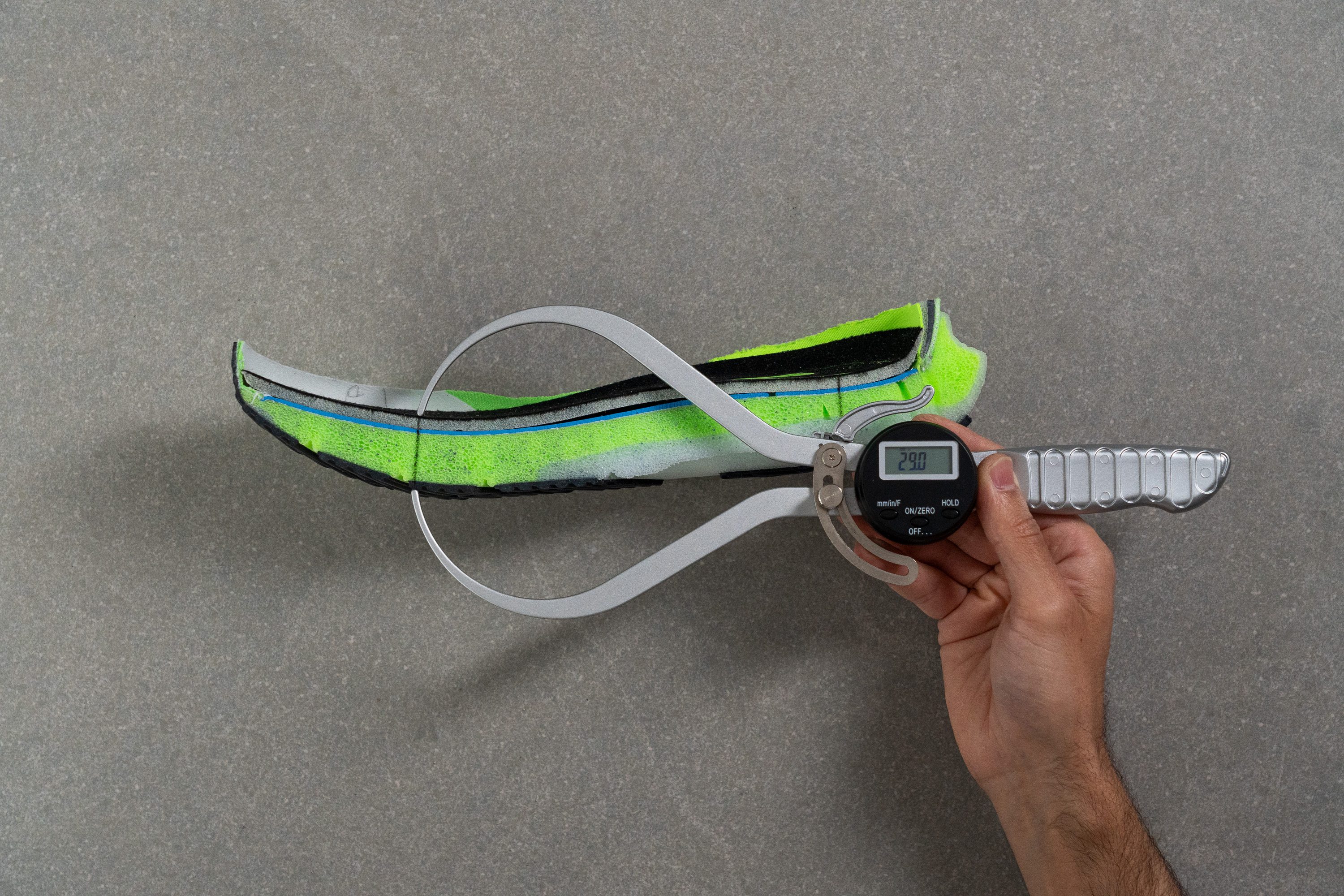
| Glycerin 23 | 29.0 mm |
| Average | 27.1 mm |
Drop
Brooks followed the same approach as in the Adrenaline GTS 25, reducing it by 2 mm, so it now features an official 8 mm drop instead of 10 mm.
In our lab, we measured a minimal difference at 8.2 mm, which makes this shoe feel more balanced for all footstrikes rather than mainly focused on heel strikers. We think that this is a positive change.
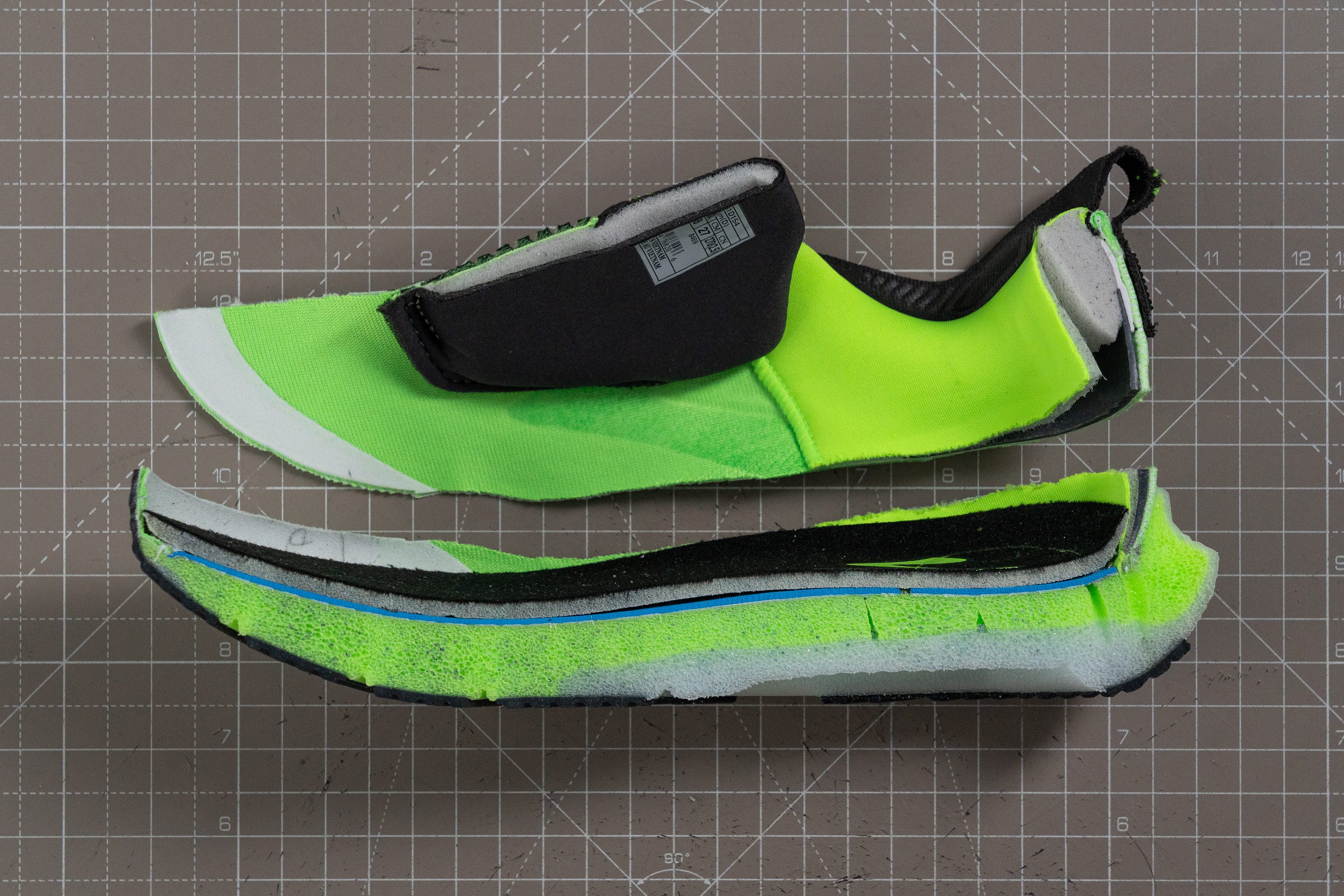
| Glycerin 23 | 8.2 mm |
| Average | 8.4 mm |
Midsole softness
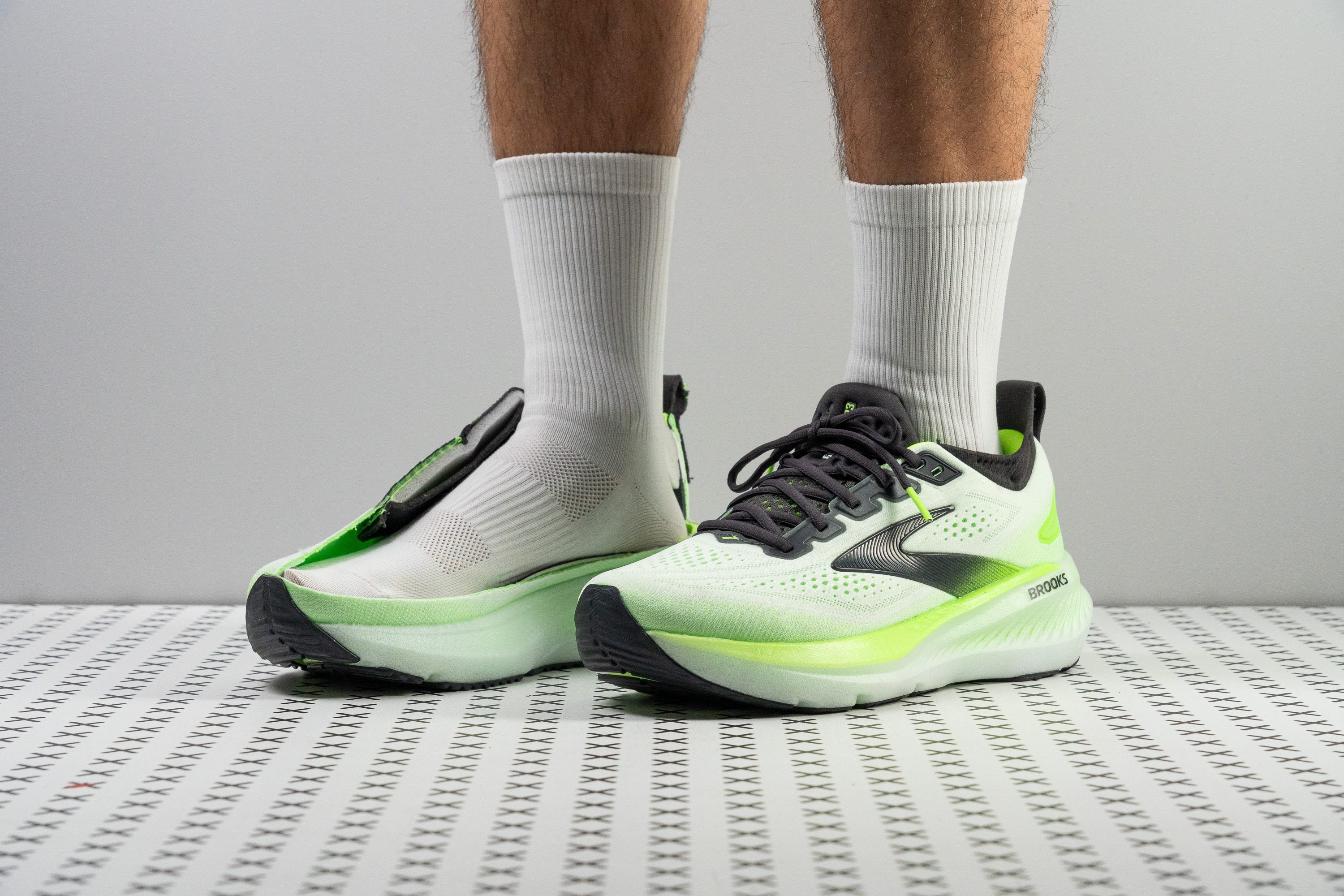
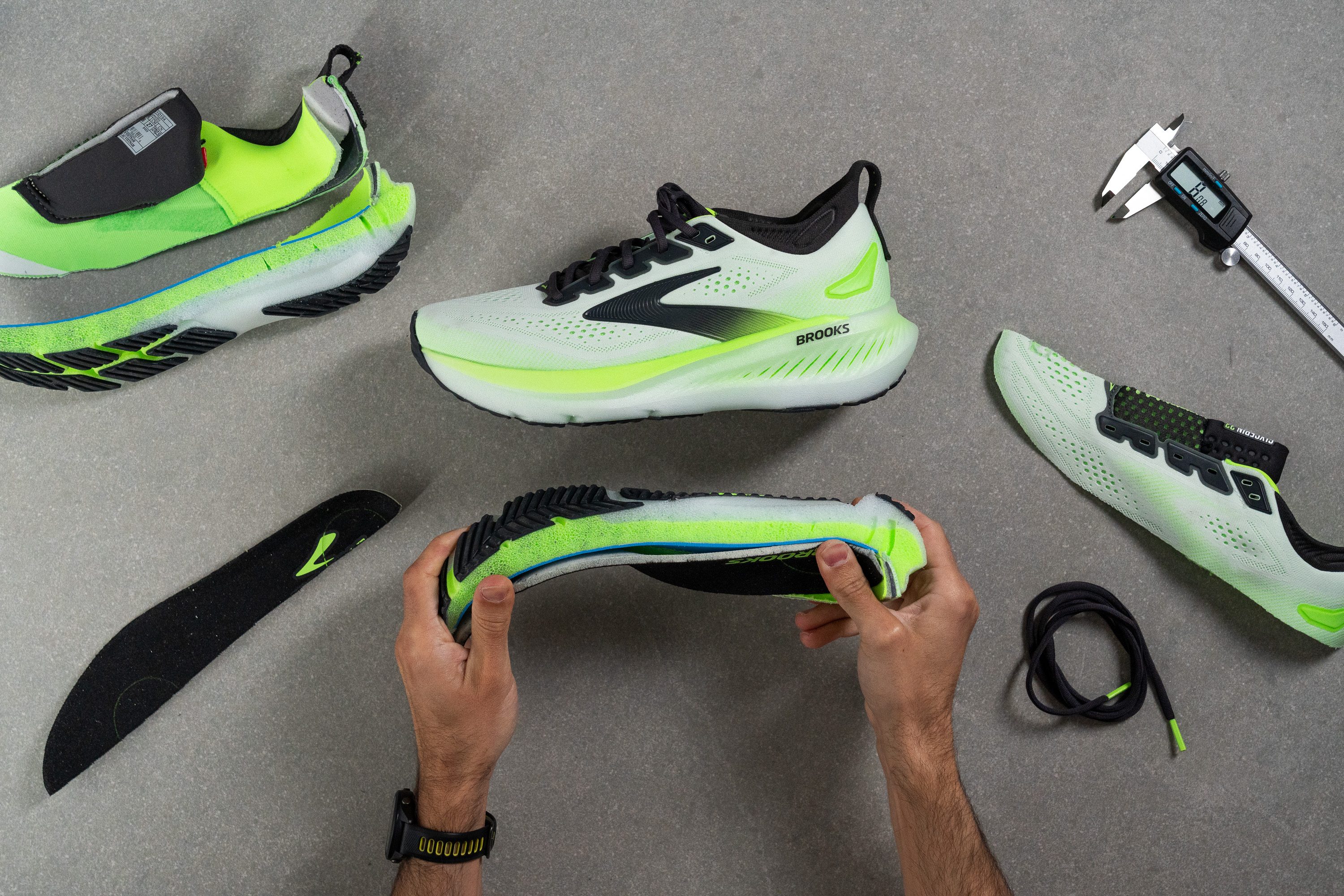
As we noted earlier when discussing the disappointing energy return, this is the same DNA Tuned foam from last year. For that reason, it keeps the dual-density setup, but Brooks uses a custom process that bonds both layers without glue.
The main foam layer runs through the entire forefoot and midfoot, plus the top part of the heel. This helps explain why the shoe feels softer than previous Glycerin models, measuring only 29.2 AC in our tests.
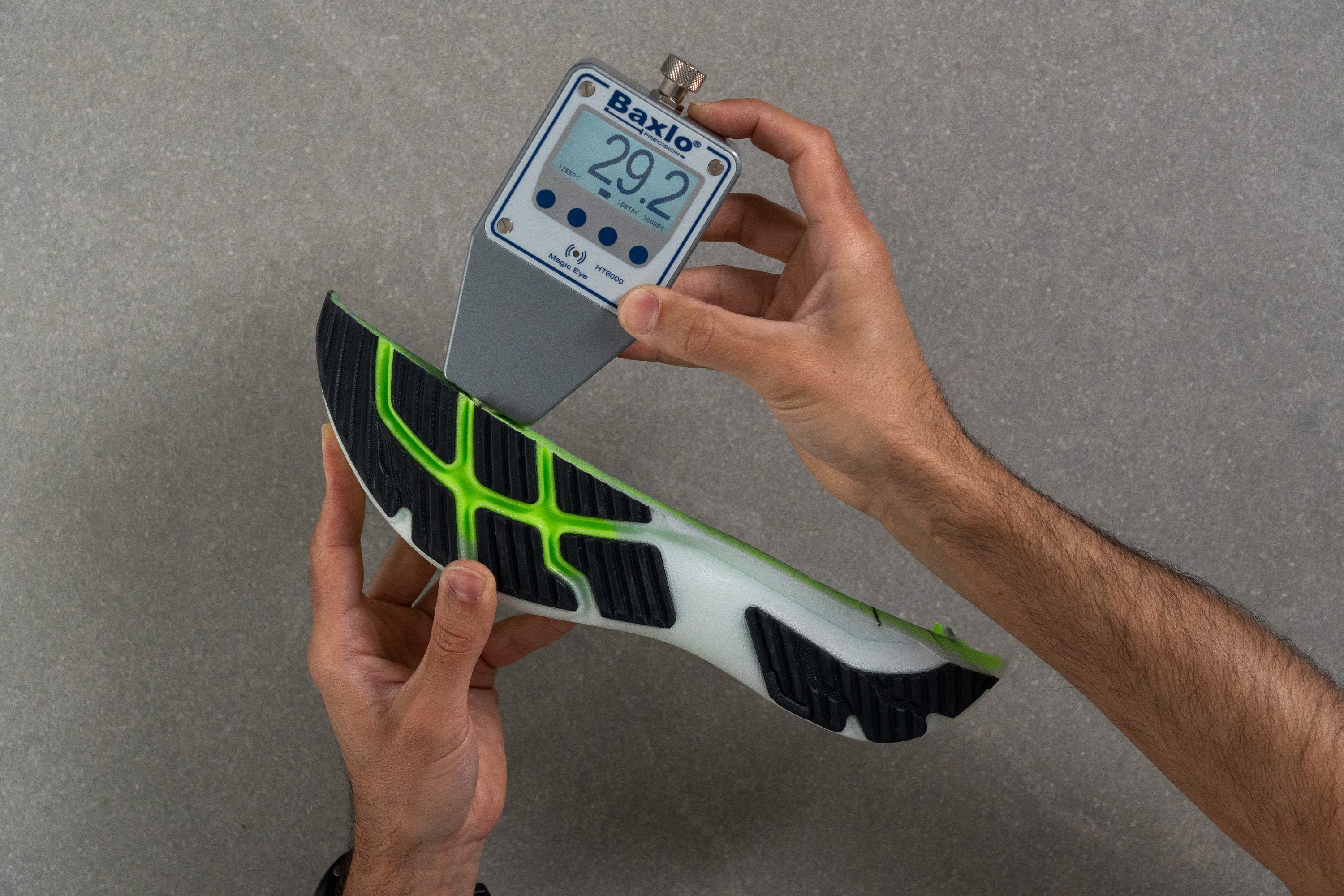
| Glycerin 23 | 29.2 AC |
| Average | 35.5 AC |
Rocker
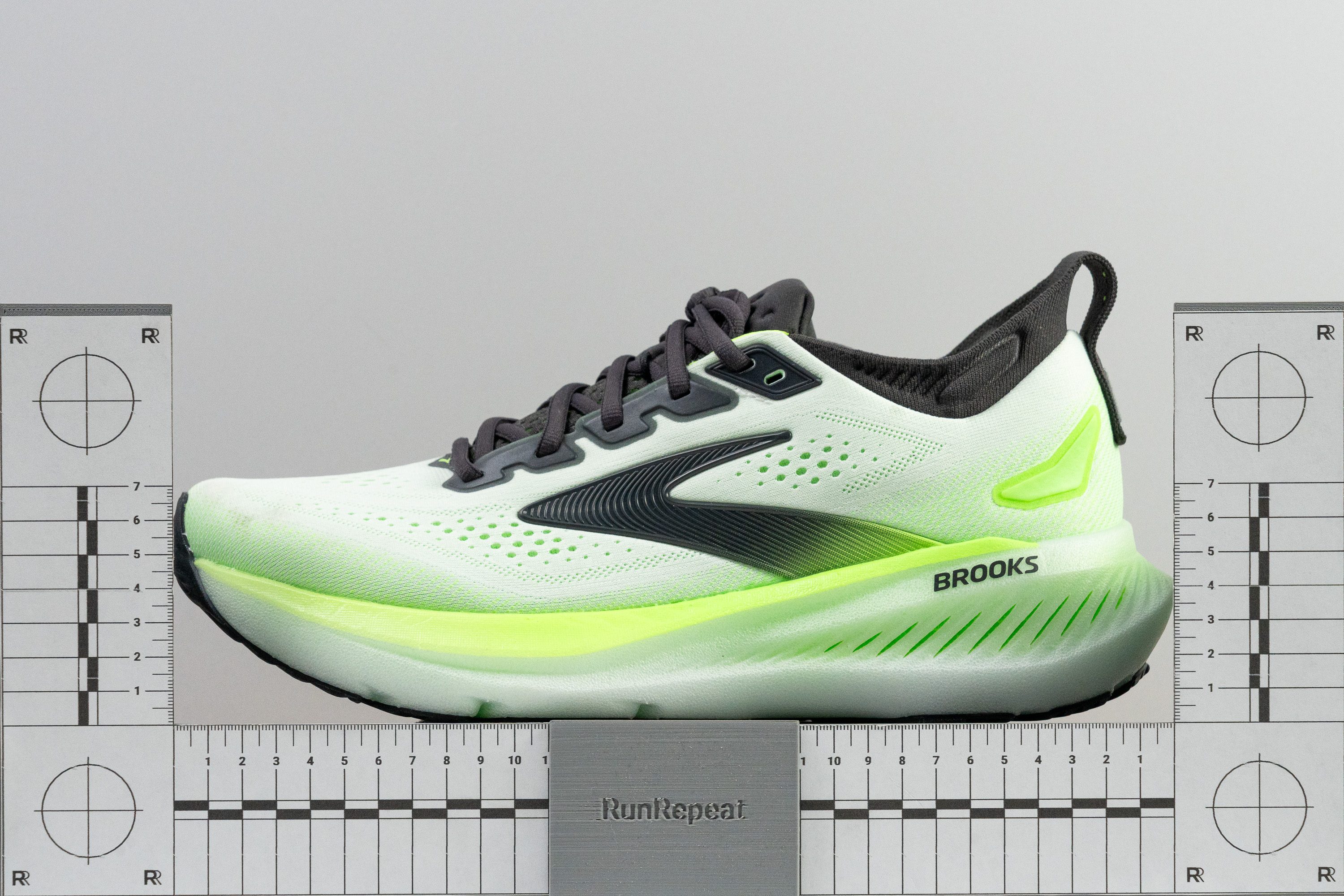
The Brooks Glycerin 23 has a moderate amount of curvature in both the forefoot and heel, but nothing that feels forced or unusual underfoot. This makes it a great option for easy runs and daily use, as heavily rockered shoes can feel awkward in those situations.
However, our precise measurements showed that the toes now sit slightly higher 5 mm higher, which is not surprising given the new, lower drop. Brooks needed to offset that change, and they did.
Size and fit
Size
Brooks Glycerin 23 fits slightly small (105 votes).
Internal length
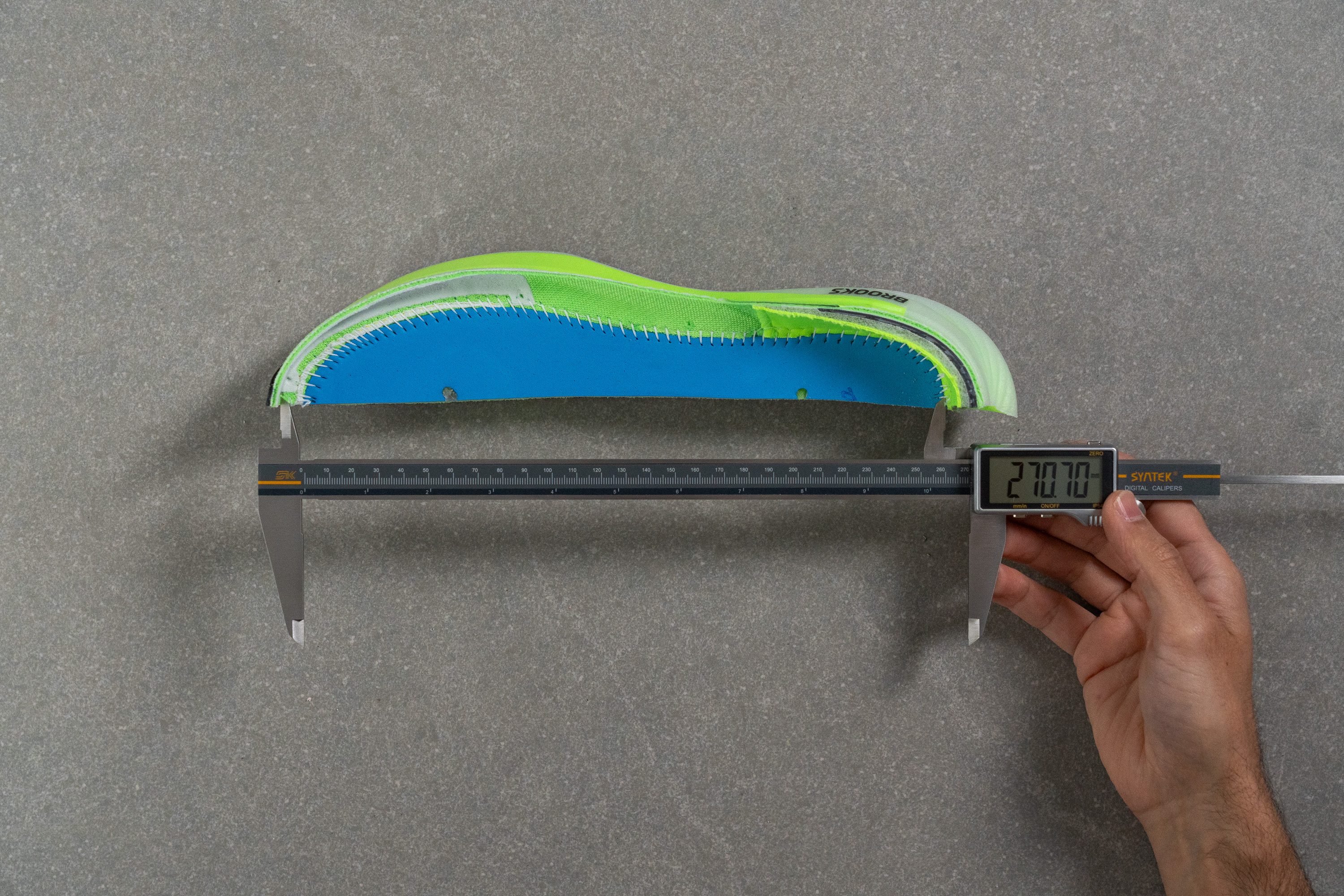
| Glycerin 23 | 270.7 mm |
| Average | 269.4 mm |
Width / Fit
The fit of the Glycerin has always leaned toward a conservative approach. That means accommodating as many feet as possible and staying close to average in our measurements.
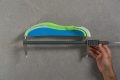
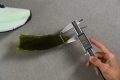
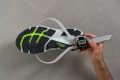
To confirm this, we recreated the interior of the shoe using our custom gel method. Once it cooled, our first measurement came in at 96.1 mm, more or less around the current average.
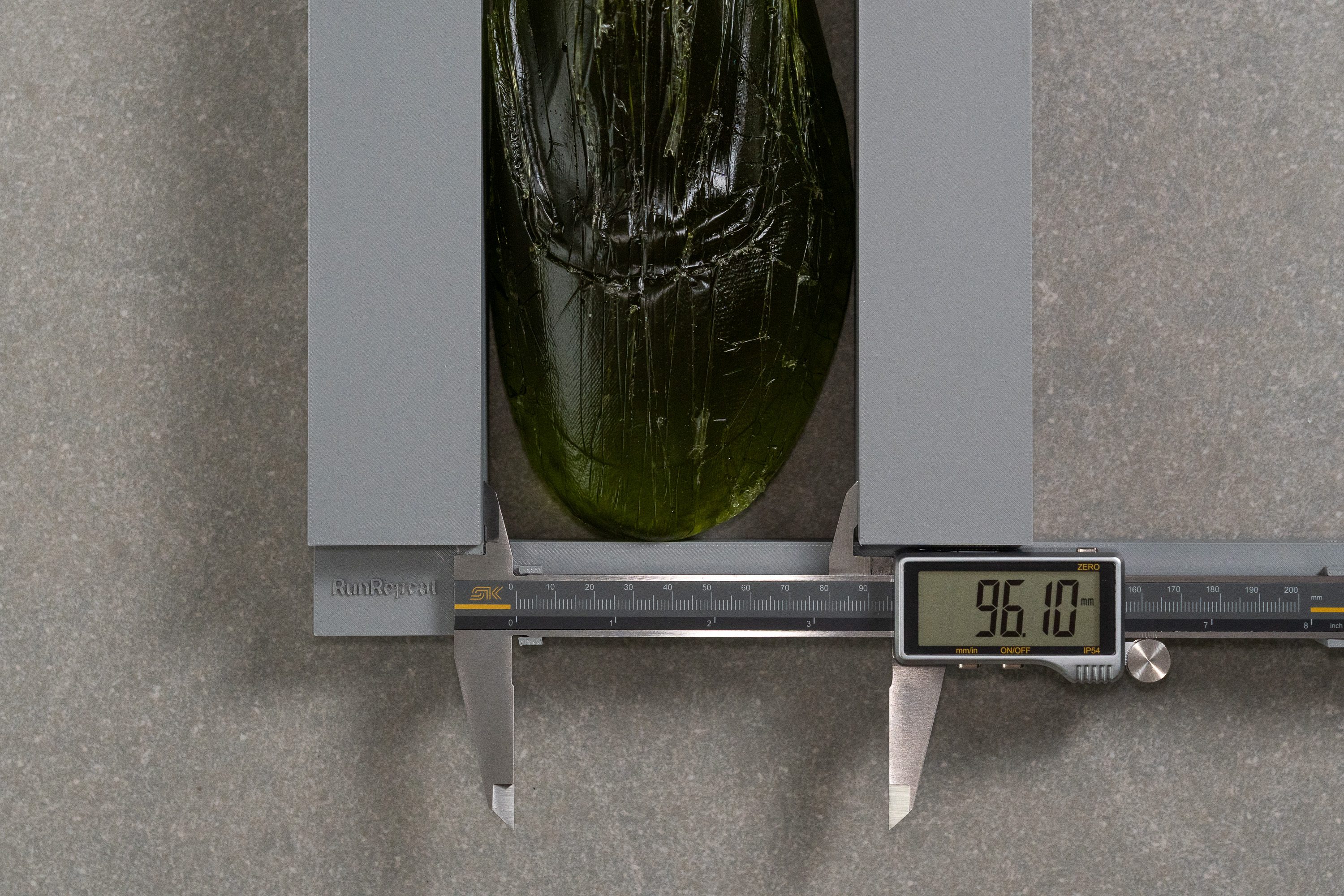
| Glycerin 23 | 96.1 mm |
| Average | 95.2 mm |
Toebox width
The toebox width also sits close to the lab average at 73.9 mm, offering solid comfort and working well for most feet. As usual with the Glycerin, Brooks also offers wide sizes, although not in every market.
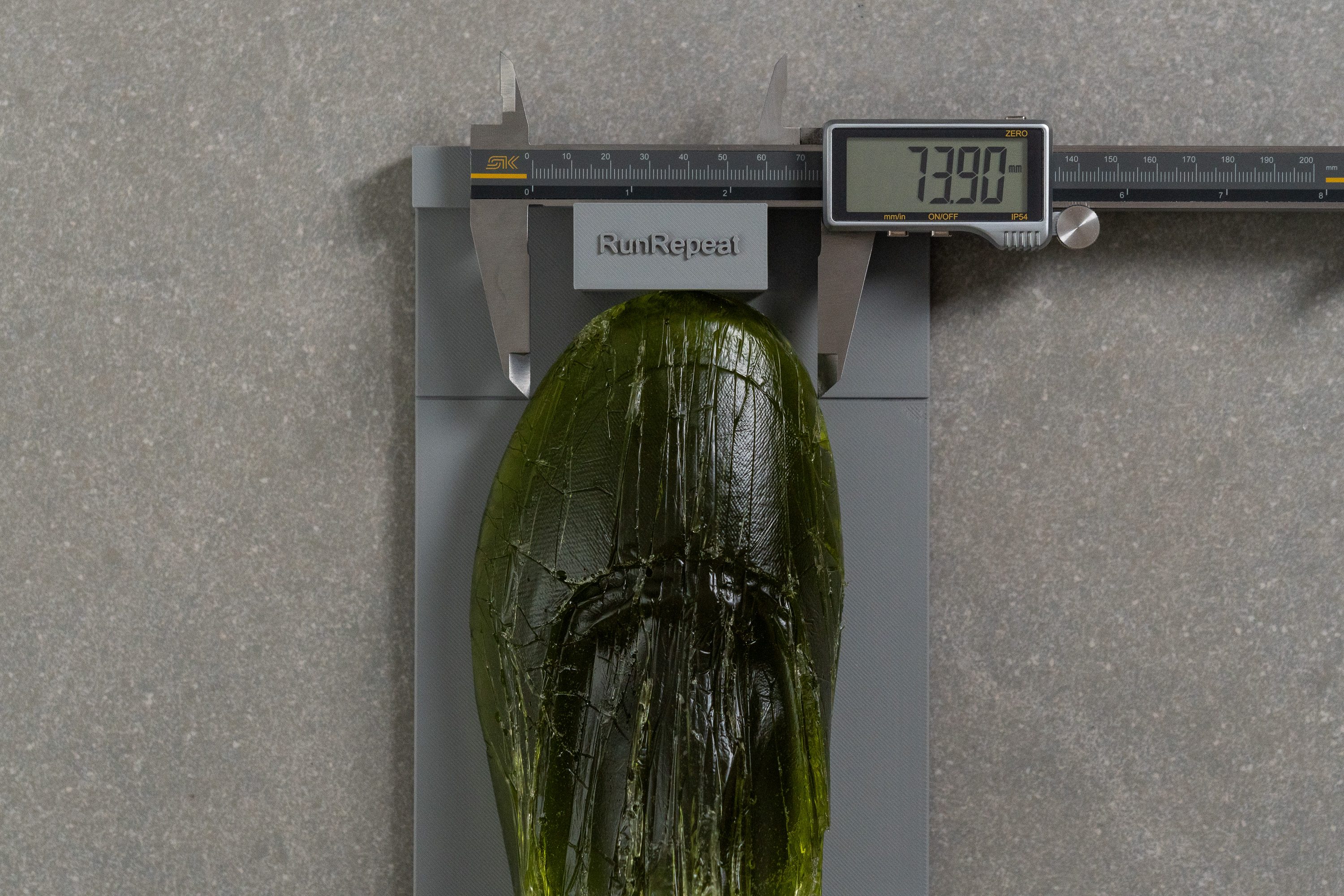
| Glycerin 23 | 73.9 mm |
| Average | 73.2 mm |
Toebox height
One area that changes is the toebox height.
We found this to be a potential issue in version 22 at only 23.6 mm, but Brooks addressed it by increasing it to a more reasonable 27.7 mm here, reducing pressure on the toes.
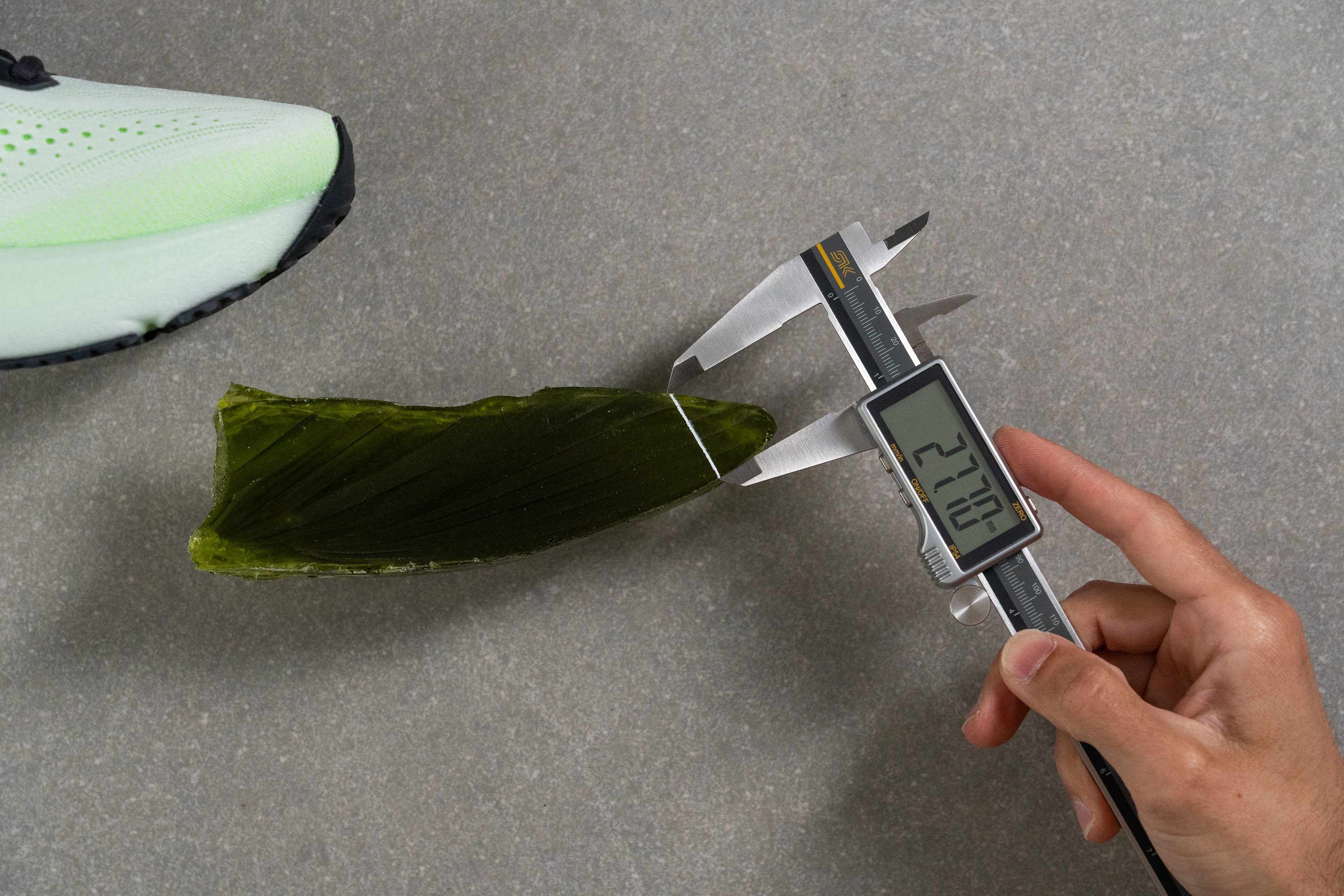
| Glycerin 23 | 27.7 mm |
| Average | 27.0 mm |
Traction / Grip
Traction test
Some modern daily trainers are performing very well in traction, but the Brooks Glycerin 23 does not quite reach that crazy-good level.
That said, we found that a 0.66 score is good enough to deliver high grip even in rainy conditions, and it also marks a clear improvement from the 0.44 of its predecessor. And with Brooks raising the price of the shoe, delivering some improvements is clearly needed.
| Glycerin 23 | 0.66 |
| Average | 0.53 |
Outsole design
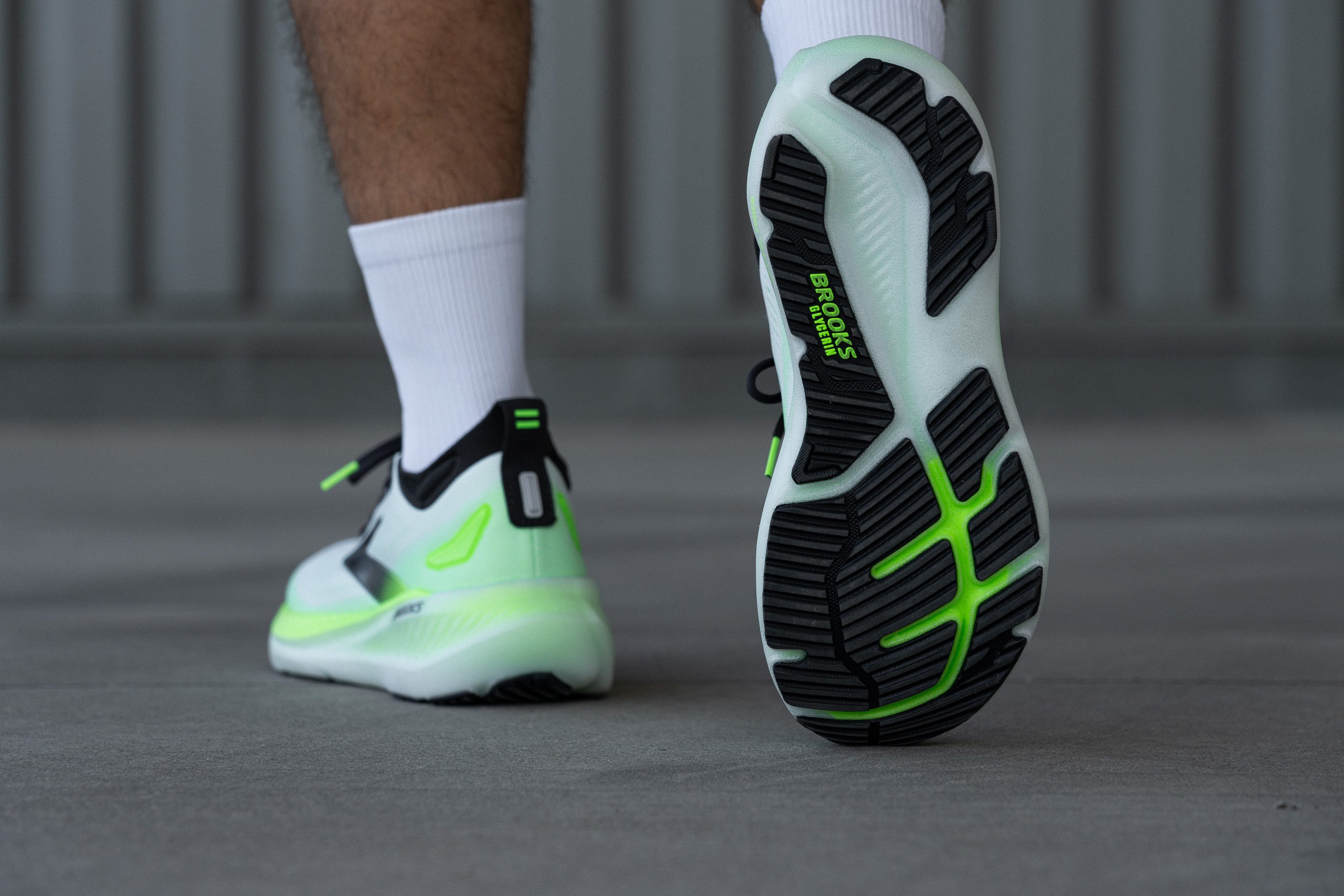
The outsole has plenty of rubber coverage and improves on the previous version, which was already good.
It now features more defined horizontal flex grooves and two new longitudinal ones that were not present before, helping maintain a similar level of stiffness despite having slightly more foam up front due to the reduced drop.
Flexibility / Stiffness
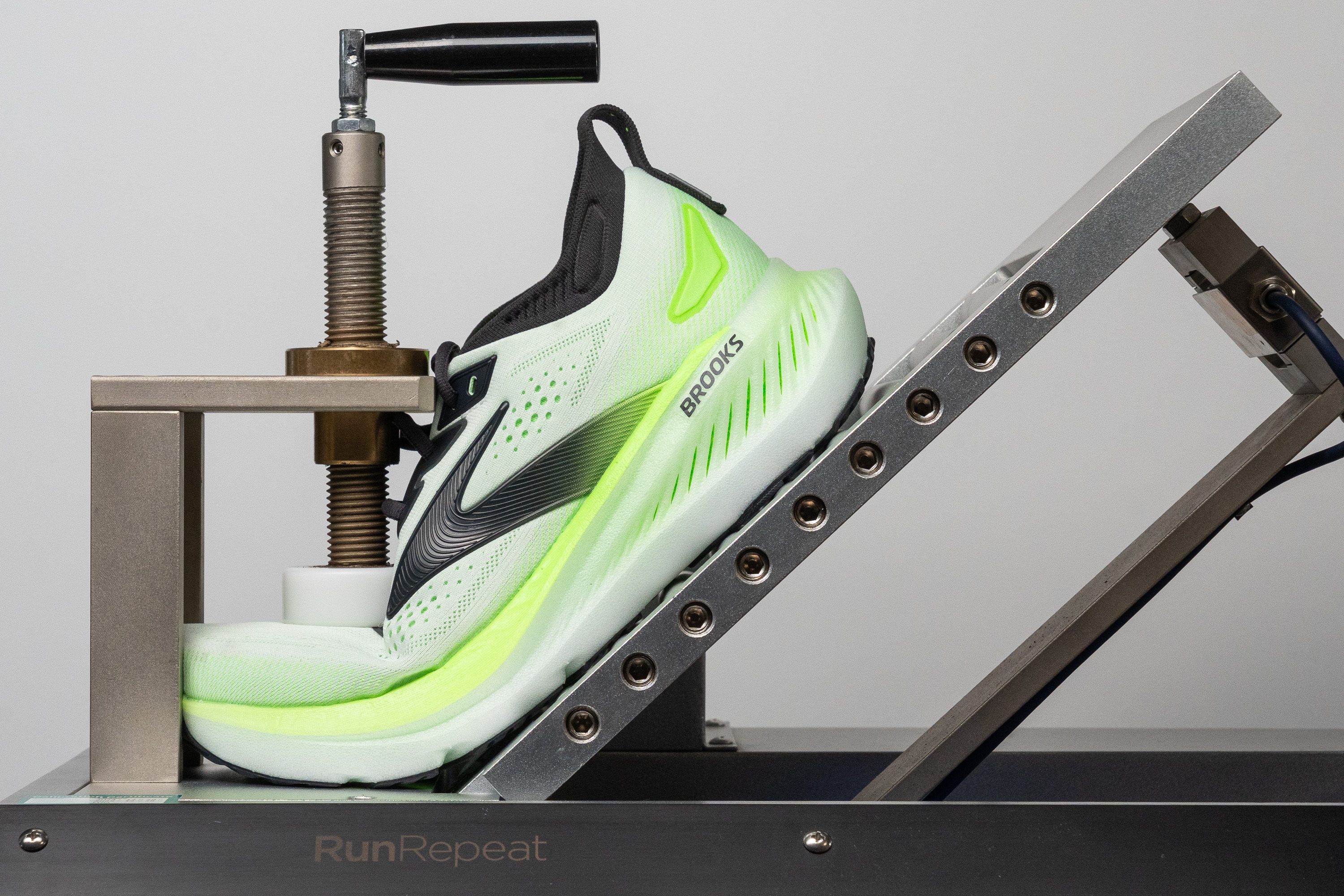
The stiffness result is practically the same as last year, reaching 15.2N to bend the shoe to 30 degrees. It is another result that does not stand out and reflects very well the balanced character of the Glycerin 23.
| Glycerin 23 | 15.2N |
| Average | 15.5N |
Weight
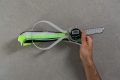
Where Brooks clearly struggles is weight—and it is not just this model. Other lines like the Ghost or the Adrenaline also trend heavier than most competitors.
Here we measured 10.7 oz or 303g, and we can say that the Glycerin 23 feels heavy on foot. Brooks prioritises outsole durability and upper comfort, but those choices work against reducing weight and limit overall agility.
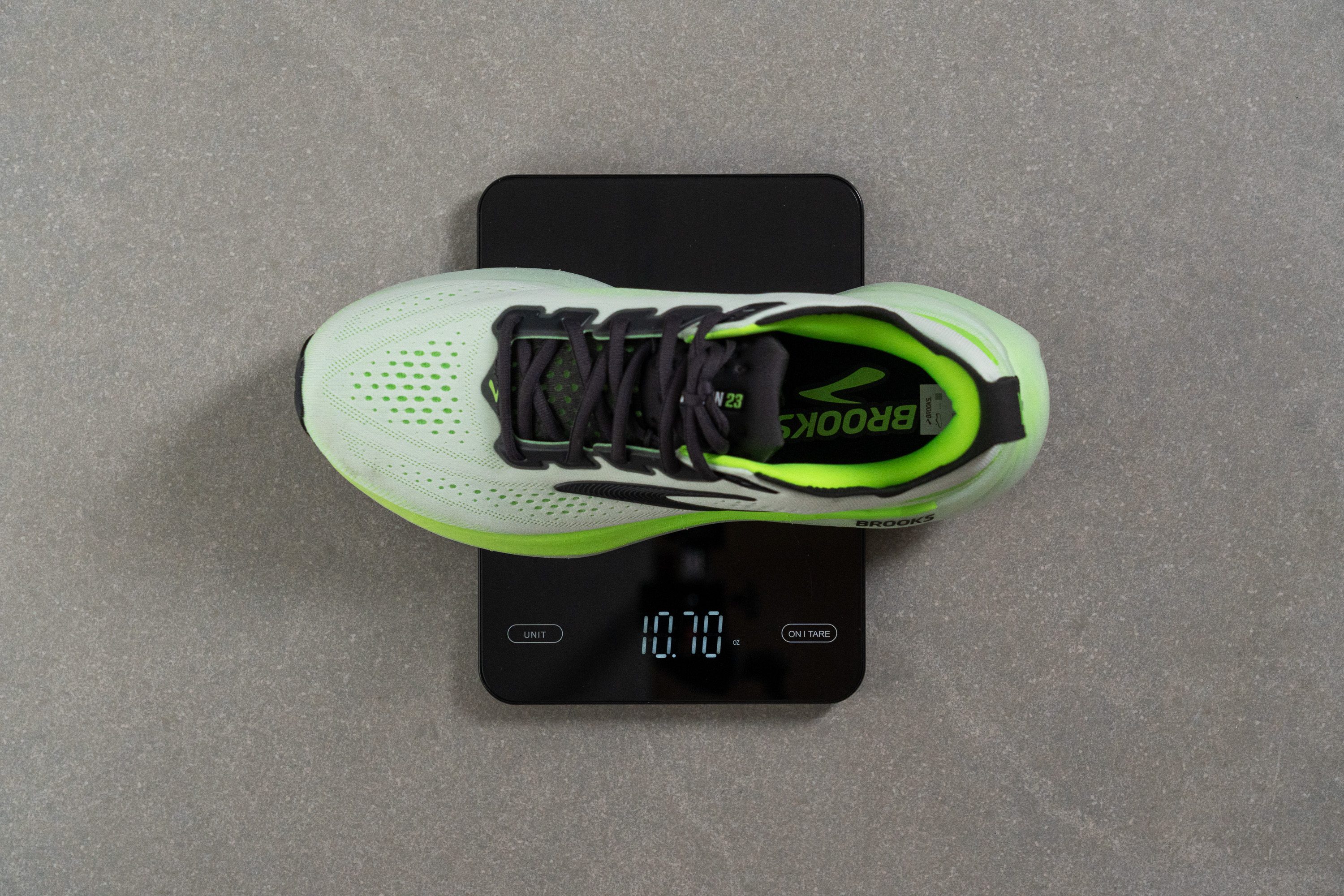
| Glycerin 23 | 10.7 oz (303g) |
| Average | 9.2 oz (261g) |
Breathability
Breathability test
UpdatedWe found in the lab that the Glycerin 23 delivers slightly below-average breathability, earning a result of 67 BR in our test.
While that's far from concerning, it indicates that the shoe doesn't move sweat away from the foot quite as effectively as we'd hoped, allowing a bit more moisture to build up during longer runs.
| Glycerin 23 | 67 BR |
| Average | 75 BR |
Drying potential
NewWe found a more encouraging outcome in the drying potential test, which is good news for runners planning to use the Glycerin 23 on longer efforts.
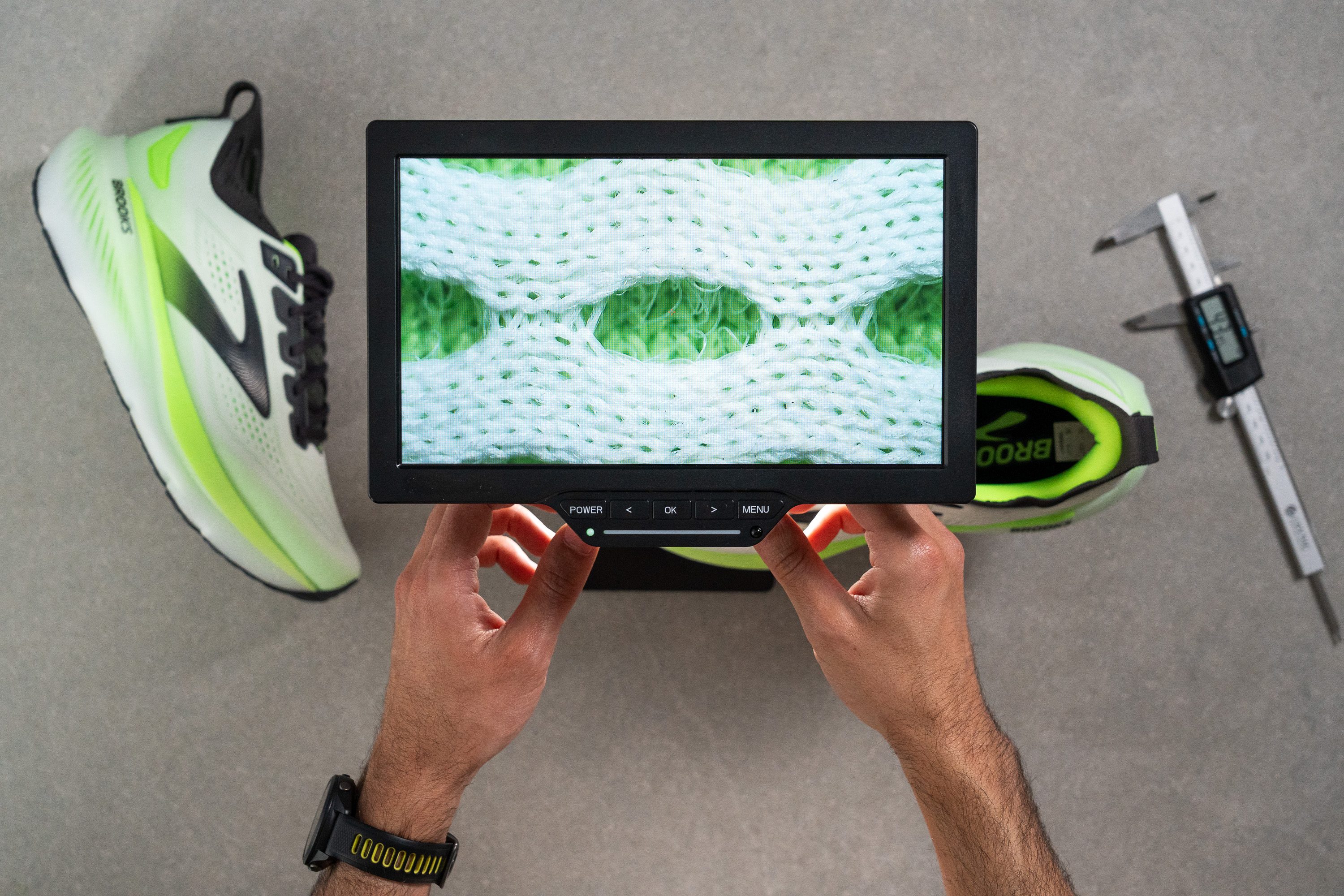
This test measures how much moisture evaporates from the shoe after 3 hours of continuous exposure to artificial sweat, and the Glycerin 23 achieved a solid result of 53%.
| Glycerin 23 | 53% |
| Average | 53% |
Stability
Lateral stability test
The Glycerin 23 is clearly aimed at neutral runners, as it does not include GTS in the name like Brooks models designed for support, and that is reflected in its design. We do not recommend it for those with stability needs at all.
That said, it's plenty stable and a safe option for neutral runners.
Torsional rigidity
Thanks to the outsole design and a still reasonable stack height, we found that the Glycerin 23 maintains moderate torsional rigidity and delivers a balanced feel in that sense. In other words, it is not overly flexible, but also far from uncomfortable for daily use or easy runs.
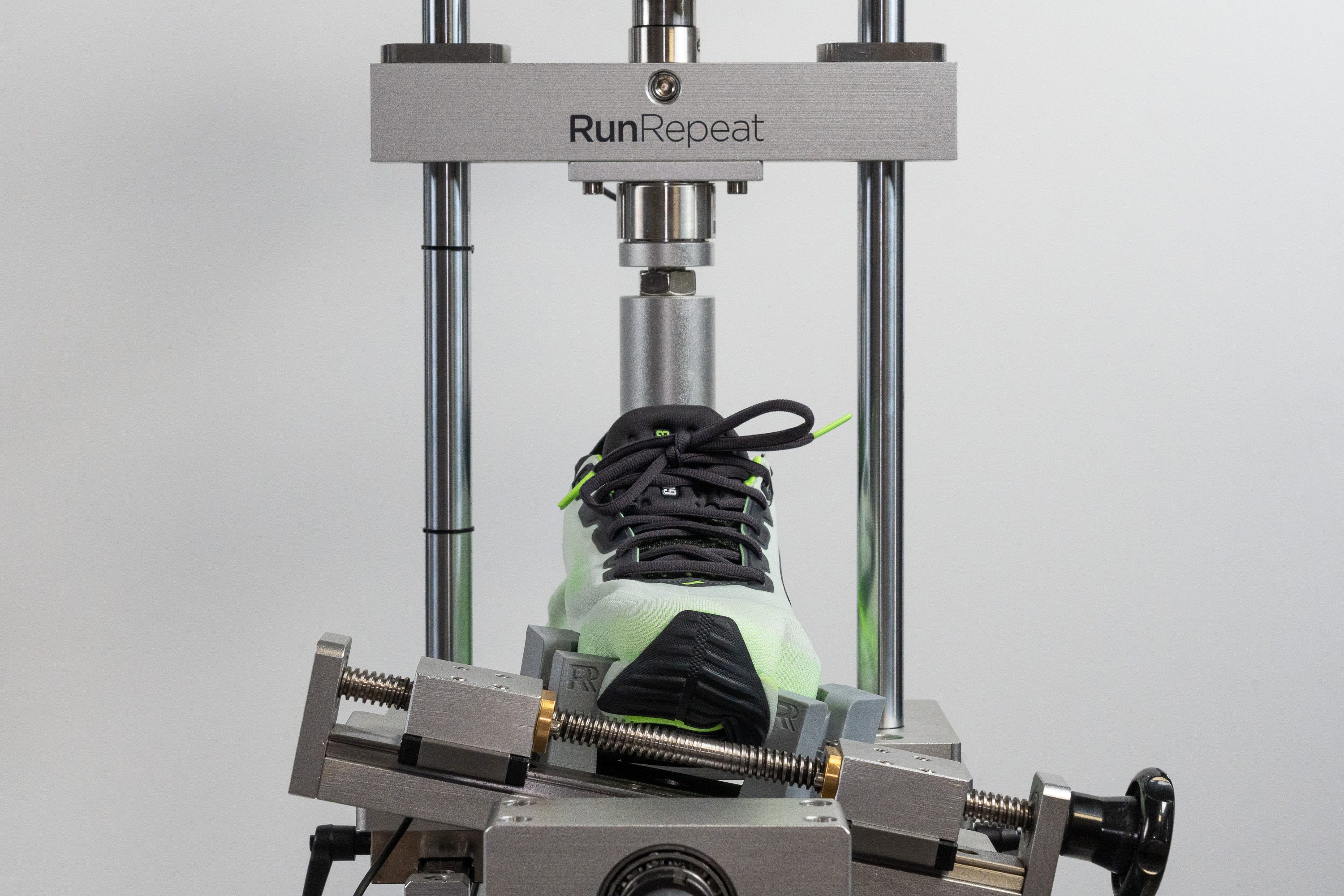
| Glycerin 23 | 14.0 Nm |
| Average | 14.4 Nm |
Heel counter stiffness
Brooks used a moderately rigid heel counter that we rated at 4/5. This is not uncommon for the brand, as they often do this in the Glycerin or Adrenaline series, likely because they offset the added rigidity with the ultra-plush padding we mentioned earlier.
| Glycerin 23 | 4 |
| Average | 3 |
Midsole width - forefoot
It is no secret that running shoes are getting taller, but also much wider. That is clearly reflected in the Glycerin 23, as we measured a huge 120.4 mm, something that only a few years ago would have been more common in stability shoes. This is simply the new normal now.
With Brooks making the Glycerin softer each year, we think this was likely a necessary design change. The shoe still feels good, but do not expect it to behave as agile as models from five years ago.
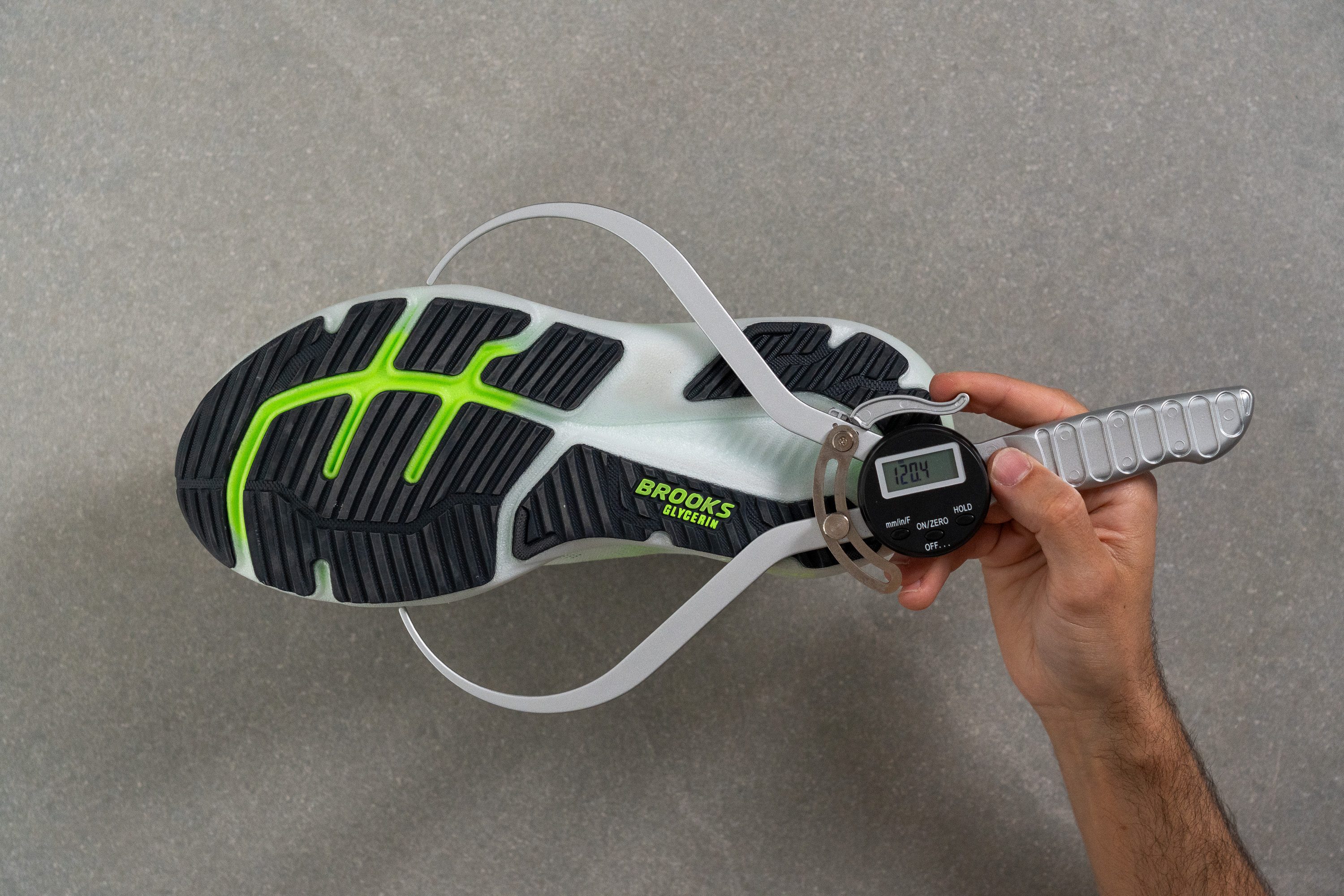
| Glycerin 23 | 120.4 mm |
| Average | 115.1 mm |
Midsole width - heel
The heel expands from 89.7 mm in version 22 to a broad 98.6 mm in version 23. As a result, you can expect more stable heel landings in this update.
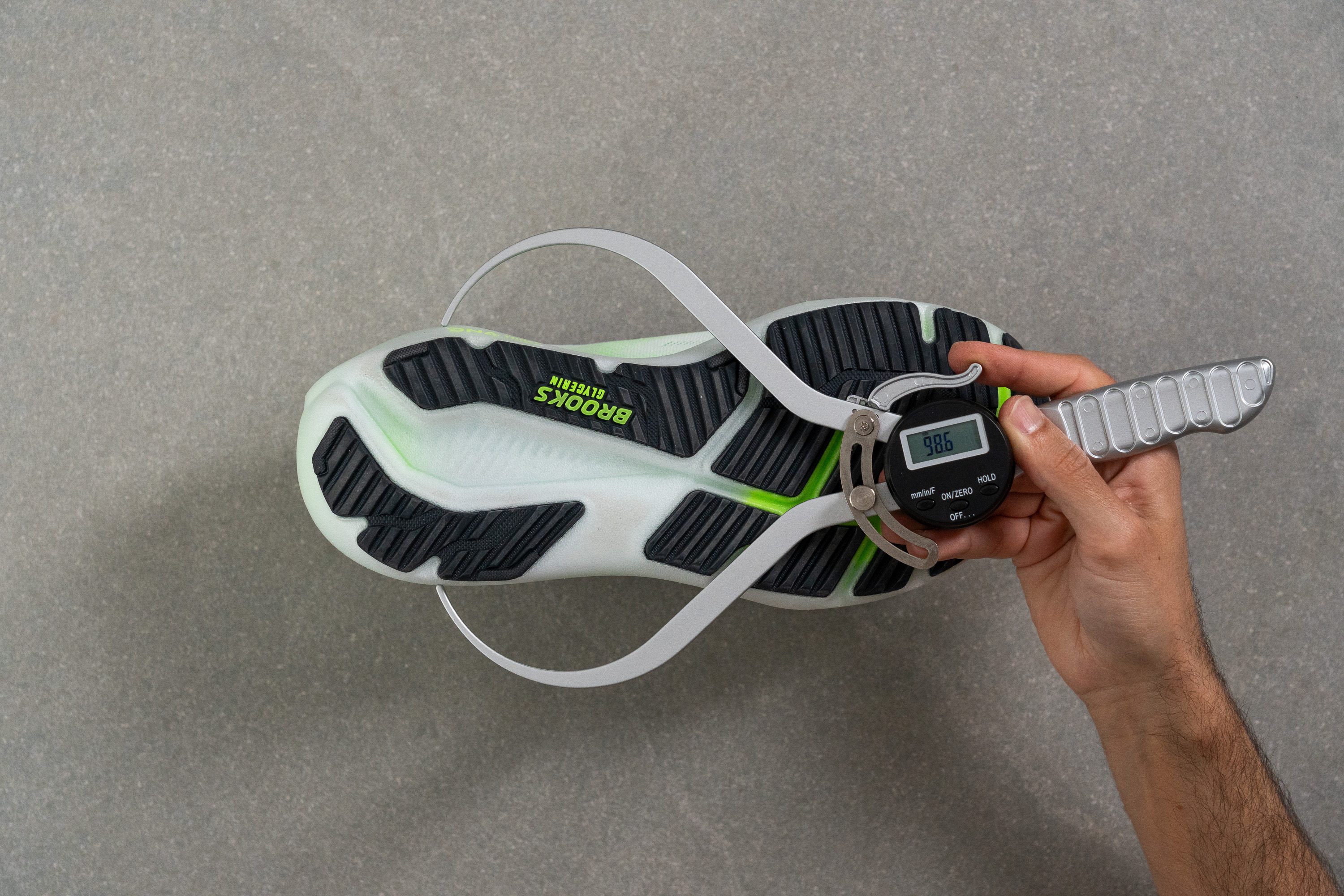
| Glycerin 23 | 98.6 mm |
| Average | 91.1 mm |
Durability
Toebox durability
Knit-based uppers sometimes struggle with toebox durability, but that is not the case with the Glycerin 23. The material used by Brooks feels aligned with the premium price of the shoe and delivers excellent comfort along with a solid 3 out of 5 durability score.
That combination is not easy to find!
| Glycerin 23 | 3 |
| Average | 2.6 |
Heel padding durability
The heel padding also performed well, earning a 4/5 score. It surpasses the current lab average and removes any concerns about long-term wear.
| Glycerin 23 | 4 |
| Average | 3.4 |
Outsole durability
To complete the trifecta of durability tests, we powered up the Dremel and tested the outsole. The rubber performed very well, as we measured only 0.7 mm of wear and were left more than satisfied.
| Glycerin 23 | 0.7 mm |
| Average | 1.1 mm |
Outsole thickness
Brooks tends to use thick outsoles in its daily trainers, and that is clear again here.
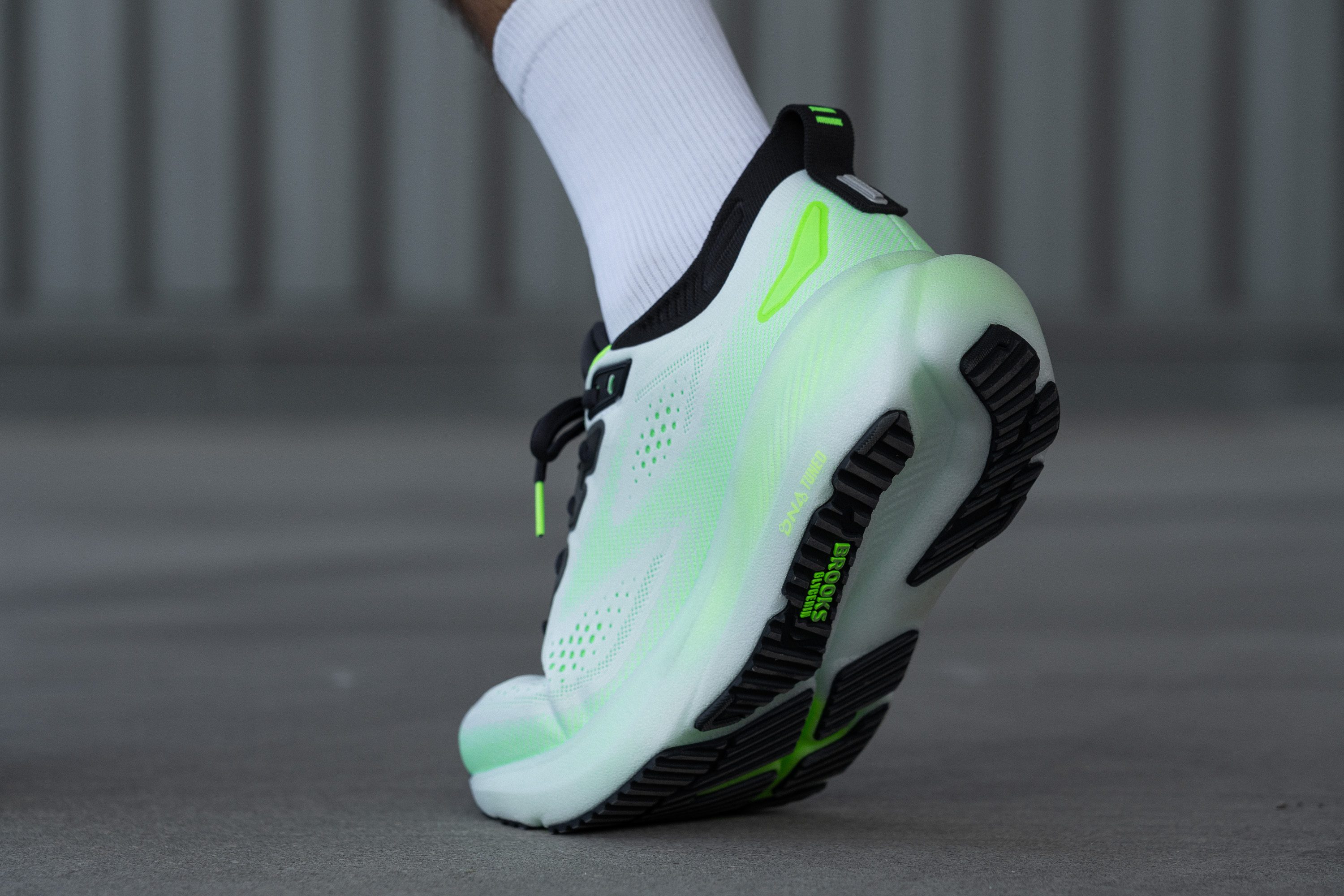
This 3.3 mm rubber layer adds an obvious weight penalty compared to some competitors, but those looking for a durability-first daily trainer will appreciate it.
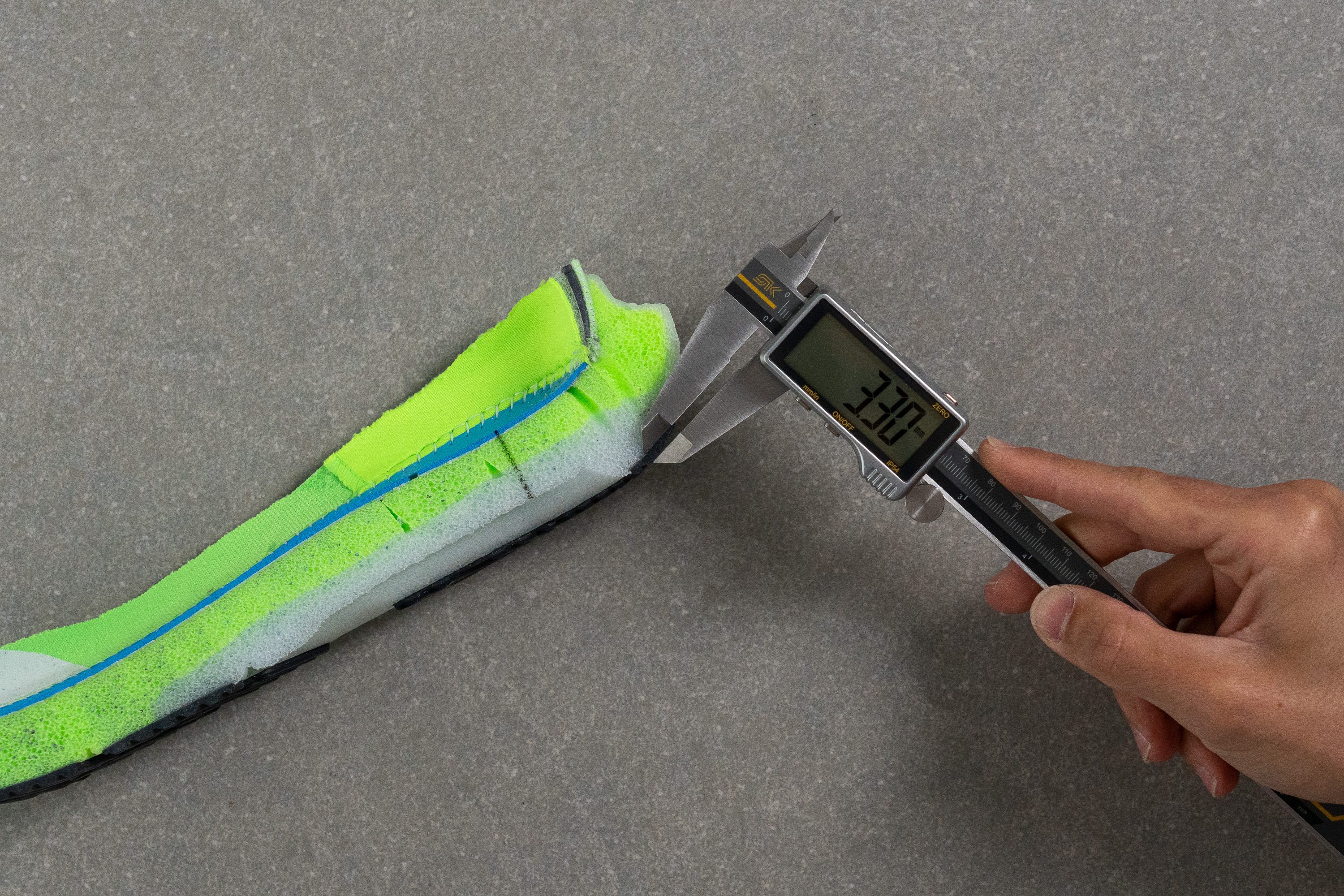
| Glycerin 23 | 3.3 mm |
| Average | 3.1 mm |
Misc
Insole thickness
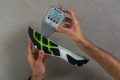
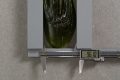
We used our digital callipers to measure the insole thickness, and it came in at 4.4 mm. Nothing unusual here.
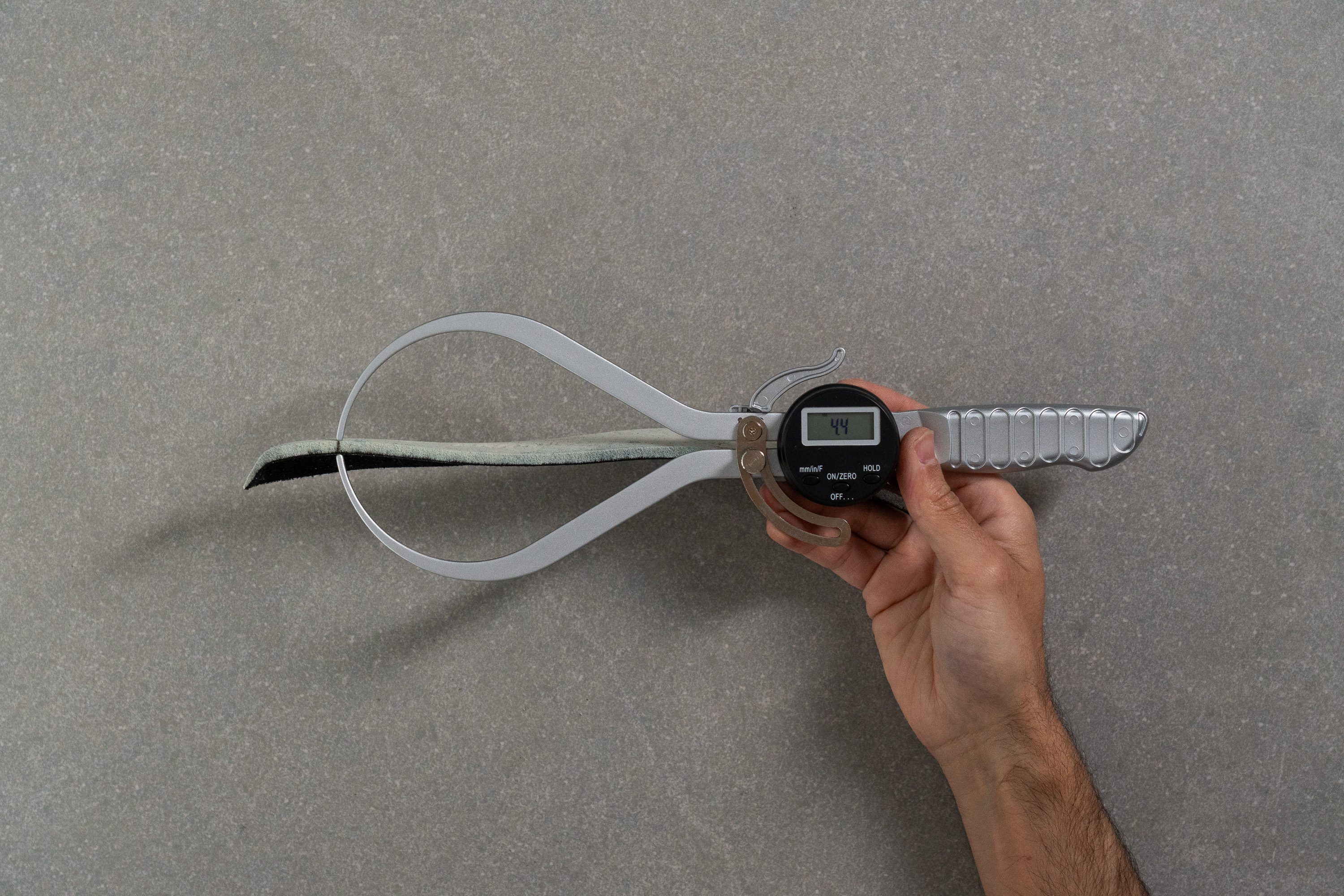
| Glycerin 23 | 4.4 mm |
| Average | 4.4 mm |
Removable insole
The insole can be removed, and with the improved vertical clearance in the toebox, using a slightly thicker one is also an option.
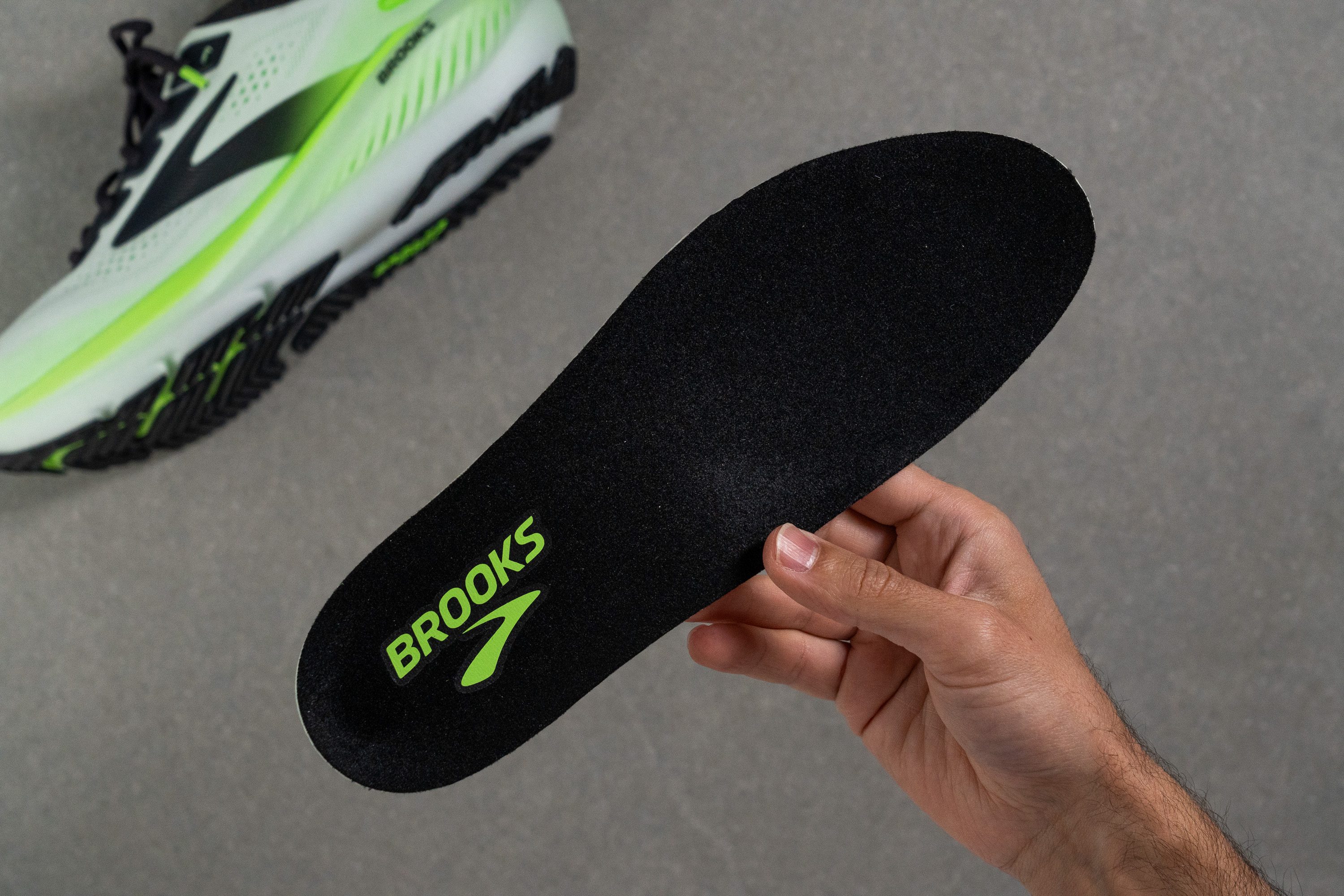
| Glycerin 23 | Yes |
Reflective elements
It is always nice to find reflective elements, even if they are just two small pieces in the heel.
| Glycerin 23 | Yes |
Tongue padding
Even the laces are clearly tuned for comfort, as Brooks moves away from thin flat laces and uses thicker ones with a lightly padded feel. This choice adds some weight, showing again that reducing grammes is not a priority here.
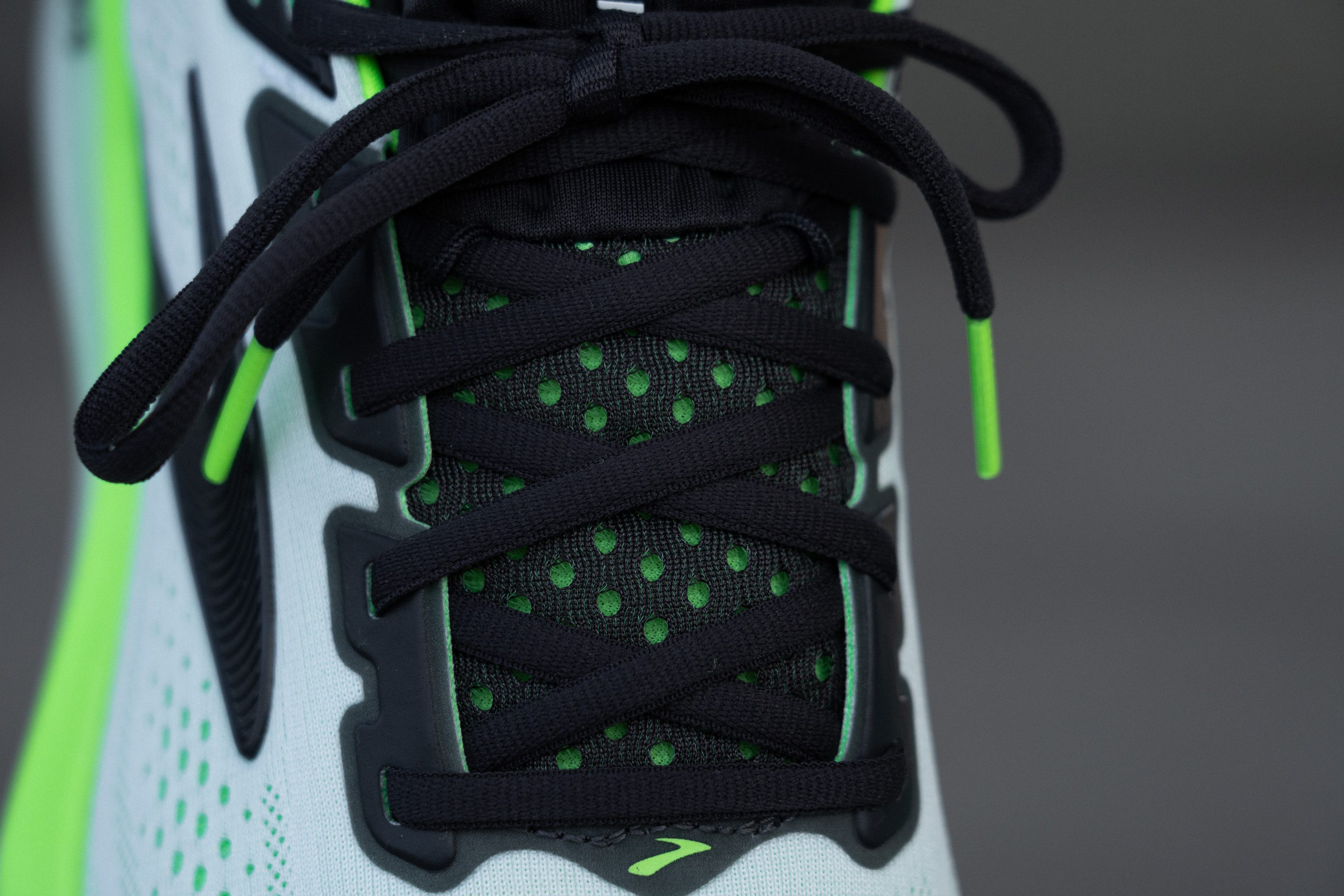
We also found that the tongue delivers outstanding comfort, using a single piece of low-density, soft foam that reaches 9.0 mm in thickness. The added perforations improve airflow, and the green secondary layer gives it a striking look.
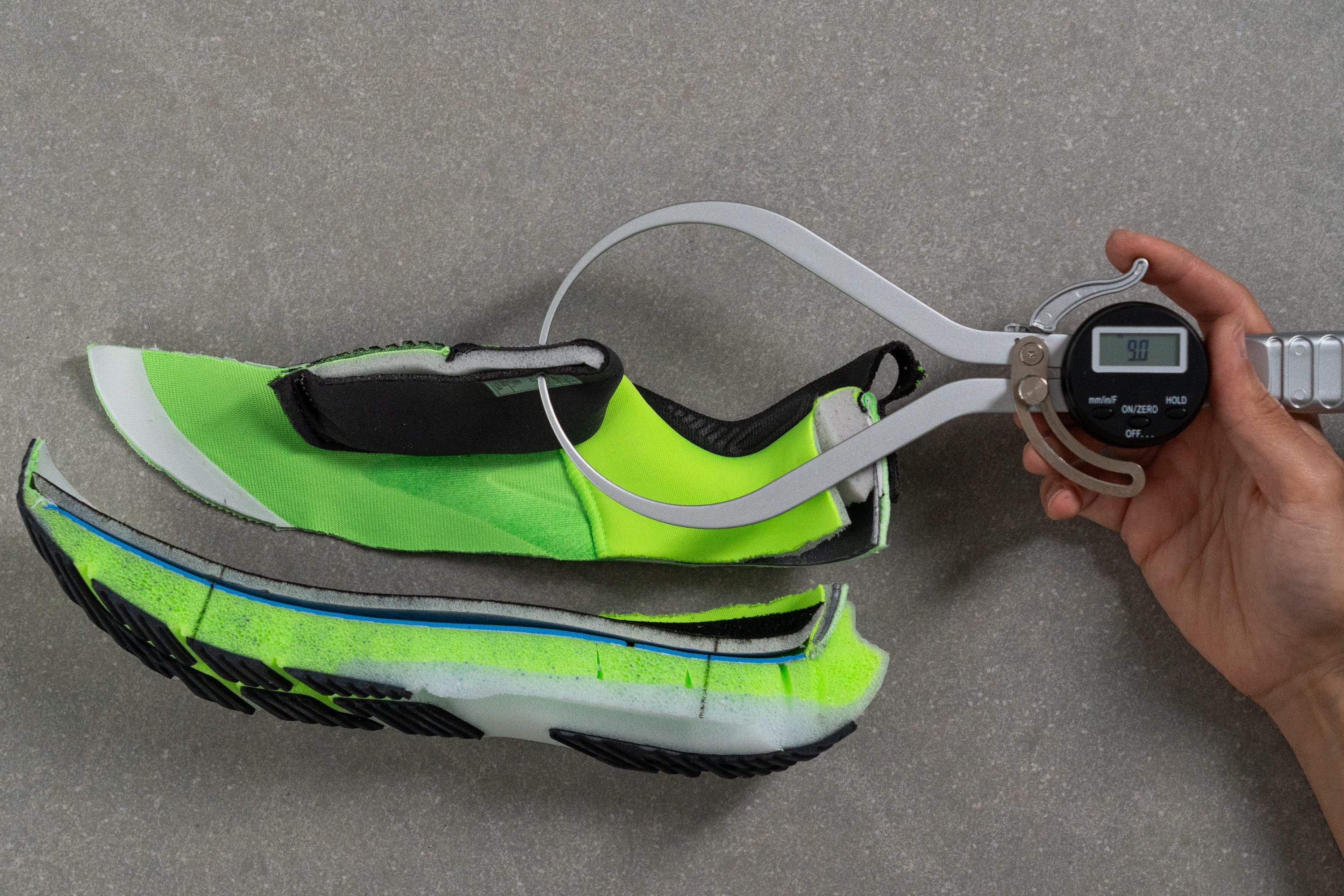
| Glycerin 23 | 9.0 mm |
| Average | 5.8 mm |
Tongue: gusset type
However, we found it disappointing that the tongue is not gusseted given the high price of the shoe. It is not surprising, as Brooks has been following this approach in several recent models we tested, but it still feels like a miss for us.
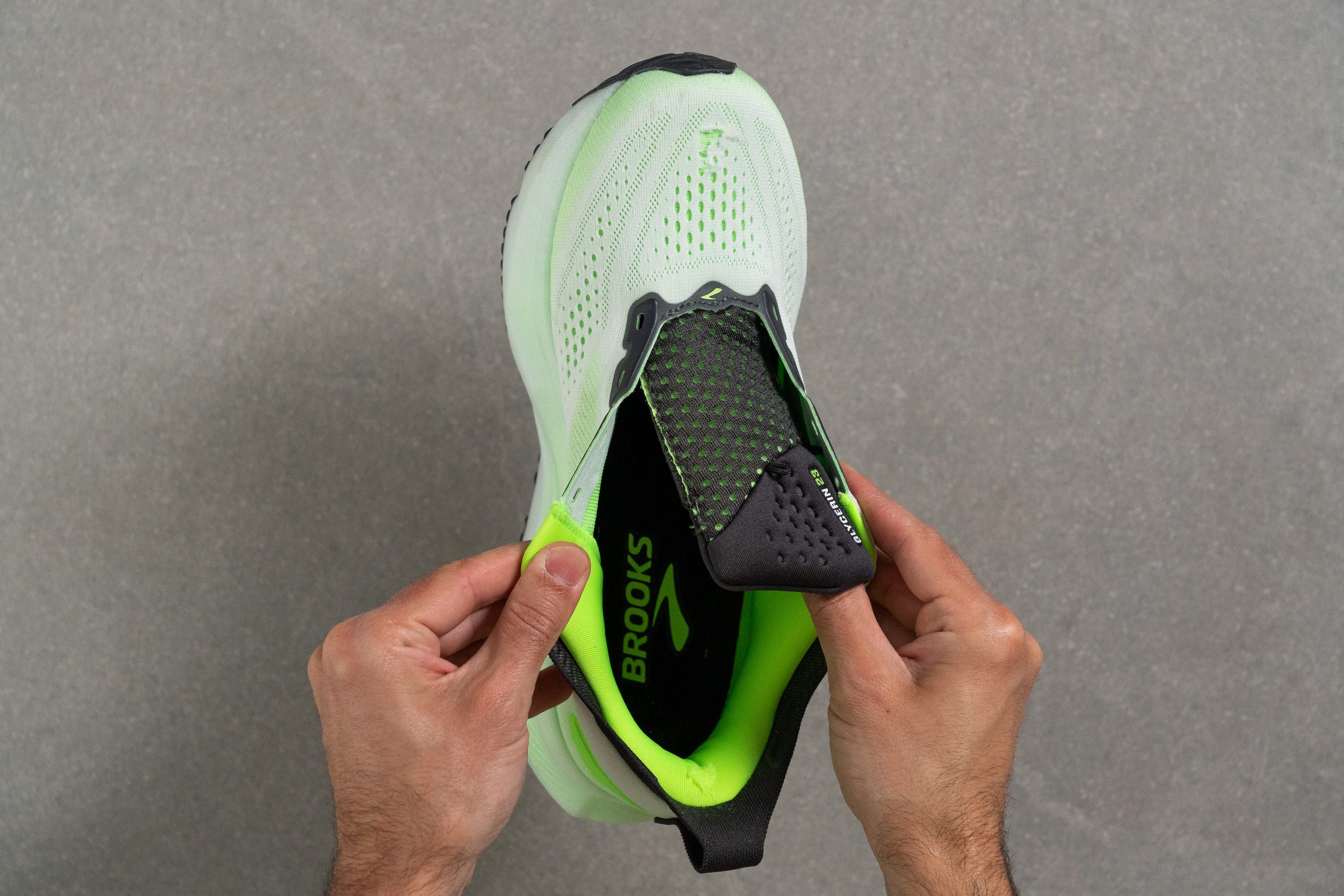
| Glycerin 23 | None |
Heel tab
The heel features a finger-loop tab that takes advantage of the knit material and feels somewhat similar to recent ASICS designs like the Gel Nimbus 28. As they say, imitation is a form of flattery...
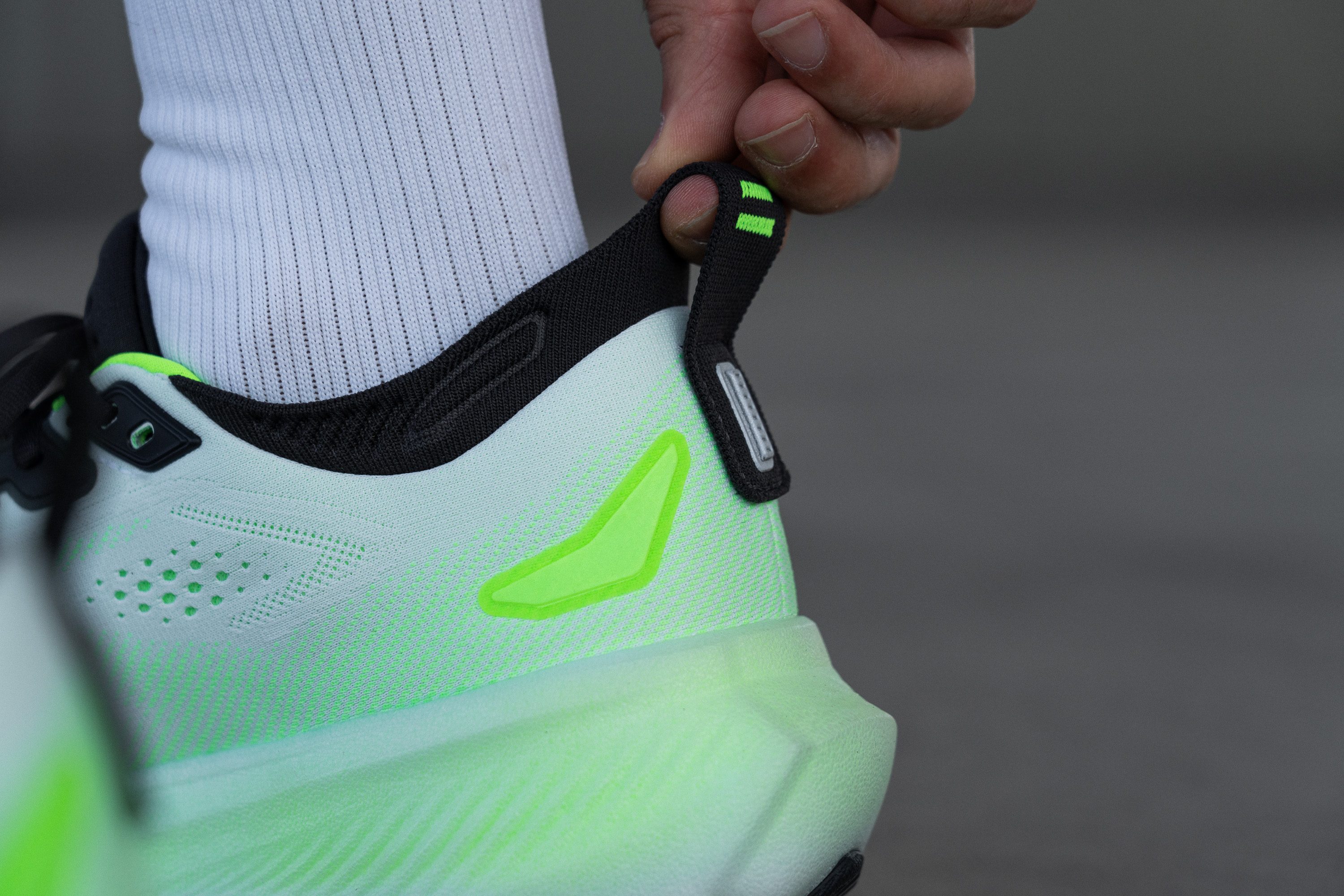
| Glycerin 23 | Finger loop |
Price
The Glycerin 23 brings some positive updates, but it also comes with a price increase. While it is true that this model has been more affordable than some competitors in recent years, we think a real tech upgrade is needed to justify the higher cost in this version.
| Glycerin 23 | $175 |