














Our verdict
- Daily running 94
- Tempo 75
- Race 57
- Stability 63
Pros
- Exceptional plush comfort from top to bottom
- Long-awaited foam upgrade
- Noticeable weight reduction
- Reliable fit with multiple width options
- Dependable traction
- Feels more capable at faster paces
- Flexible and agile build
- Premium upper
- Superior reflective elements
Cons
- Slight price increase
- Ultra-plush foam will not suit everyone
- Limited stability
- Disappointing breathability
Awards
- Top pick in best running shoes
- Top pick in best long distance running shoes
- Top 7% in road running shoes
- Top 7% in New Balance running shoes
- Top 7% most popular running shoes
Comparison
The most similar running shoes compared
+ + Add a shoe | |||||
|---|---|---|---|---|---|
| Our score | 91 Superb | 91 Superb | 91 Superb | 82 Great | |
| Price | £170 | £130 | £155 | £110 | |
| Pace | Daily running | Daily running | Daily running | Daily runningTempo | |
| Shock absorption | High | High | High | High | |
| Energy return | High | High | High | Moderate | |
| Traction | High | High | High | Moderate | |
| Arch support | Neutral | Neutral | Neutral | Neutral | |
| Weight lab Weight brand | 9 oz / 255g 9.2 oz / 261g | 9.2 oz / 261g 9.3 oz / 264g | 10.2 oz / 289g 10.1 oz / 285g | 9.5 oz / 269g 9.7 oz / 275g | |
| Drop lab Drop brand | 6.4 mm 6.0 mm | 11.5 mm 10.0 mm | 9.6 mm 10.0 mm | 6.7 mm 6.0 mm | |
| Strike pattern | Mid/forefoot | Heel | HeelMid/forefoot | Mid/forefoot | |
| Size | True to size | True to size | True to size | Slightly small | |
| Midsole softness | Soft | Soft | Soft | Soft | |
| Difference in midsole softness in cold | Small | Small | Small | Normal | |
| Toebox durability | Good | Good | Decent | Bad | |
| Heel padding durability | Decent | Decent | Good | Bad | |
| Outsole durability | Decent | Decent | Good | Decent | |
| Breathability | Moderate | Breathable | Moderate | Breathable | |
| Width / fit | Medium | Medium | Medium | Medium | |
| Toebox width | Medium | Medium | Medium | Medium | |
| Stiffness | Moderate | Stiff | Stiff | Flexible | |
| Torsional rigidity | Flexible | Flexible | Moderate | Moderate | |
| Heel counter stiffness | Stiff | Moderate | Moderate | Moderate | |
| Rocker | ✓ | ✗ | ✗ | ✗ | |
| Heel lab Heel brand | 37.0 mm 40.0 mm | 37.4 mm 40.0 mm | 42.3 mm 45.0 mm | 35.2 mm 37.0 mm | |
| Forefoot lab Forefoot brand | 30.6 mm 34.0 mm | 25.9 mm 30.0 mm | 32.7 mm 35.0 mm | 28.5 mm 31.0 mm | |
| Widths available | NarrowNormalWideX-Wide | NormalWide | NarrowNormalWideX-Wide | NormalWide | |
| Orthotic friendly | ✓ | ✓ | ✓ | ✓ | |
| Season | All seasons | SummerAll seasons | All seasons | SummerAll seasons | |
| Removable insole | ✓ | ✓ | ✓ | ✓ | |
| Ranking | #20 Top 5% | #29 Top 8% | #18 Top 5% | #197 Top 49% | |
| Popularity | #27 Top 7% | #229 Bottom 43% | #2 Top 1% | #269 Bottom 33% |


Who should buy
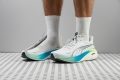
After pushing the New Balance 1080 v15 to the limit, we concluded that it’s amazing for:
- Neutral runners who want a plush daily trainer that stays comfortable over long, easy miles.
- Longtime fans of the 1080 series who were waiting for a real upgrade in foam and overall feel. It's here!
- Runners who love ultra-soft midsoles and are fine paying a bit more for a premium daily trainer with strong cushioning and comfort.
Who should NOT buy
We think the cloud-like midsole of the 1080 v15 can be a deal-breaker for runners who prefer a more balanced and controlled ride. If that's you, we believe there are better choices like the Saucony Ride 19 or the HOKA Clifton 10.
We also do not recommend the 1080 v15 for runners with stability needs. From our perspective, the ride can feel wobbly, even at easy paces. We are convinced that options such as the Saucony Tempus 2 or the ASICS Gel Kayano 32 are superior daily trainers for those seeking support.
Cushioning
Shock absorption
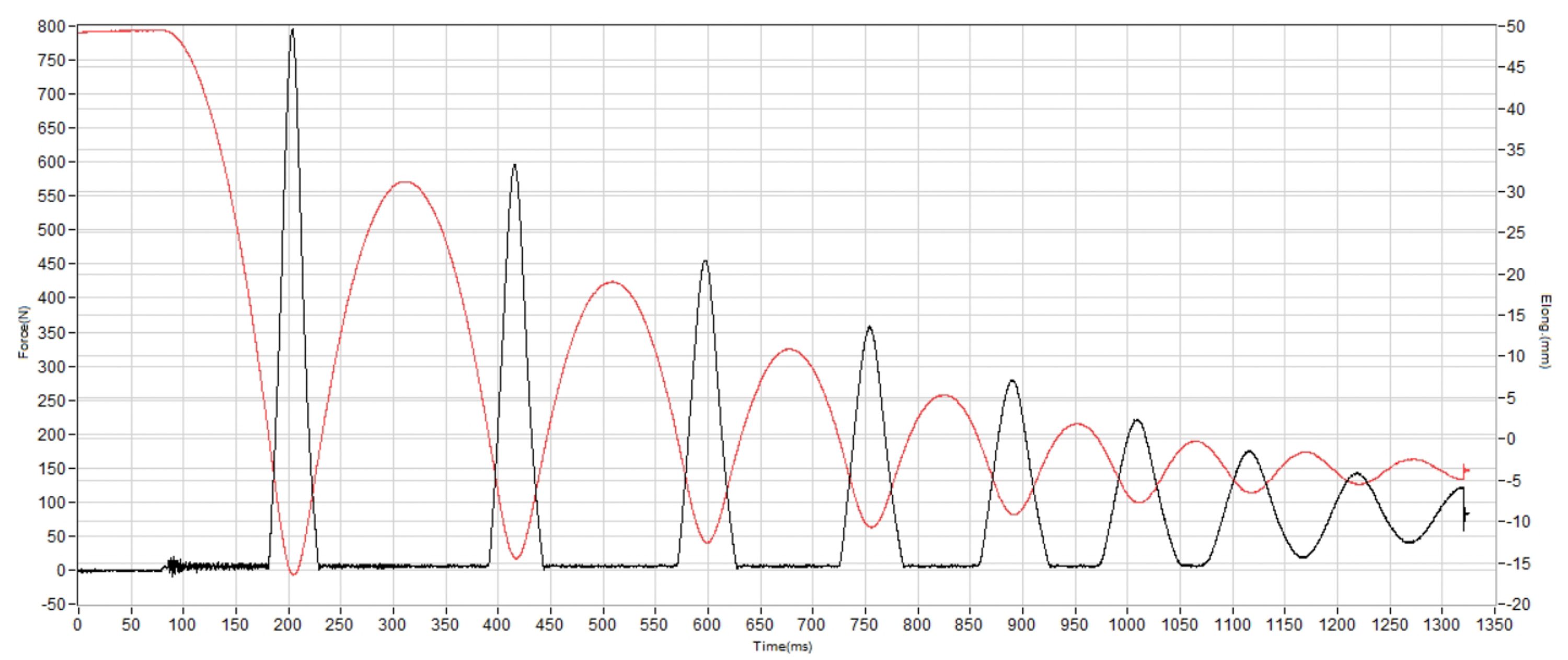
One thing loyal users of the 1080 series expect is top-tier shock absorption, and our lab testing confirms that the new midsole delivers.
With 147 SA in the heel and 126 SA in the forefoot, it clearly beats the average and feels like an ideal option for heavier runners or long run fans.
| 1080 v15 | 147 SA |
| Average | 131 SA |
Energy return
Fresh Foam X was long due for a replacement, as many competitors had already moved ahead with more advanced foams in training shoes, with the adidas Adizero EVO SL and Nike Vomero Plus as clear examples. In 2026, New Balance finally responds.
The 1080 v15 introduces the new Infinion foam. It is a TPEE-based foam, similar to Lightstrike Pro, blended with 20% EVA and offering a clear jump in energy return over the previous version. In our lab, it reached 65.9% of bounce in the heel and 69.1% in the forefoot, making the 1080 series more versatile and better suited for runners who want performance during training.
| 1080 v15 | 69.1% |
| Average | 61.5% |
Heel stack
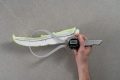
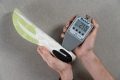
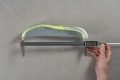
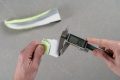
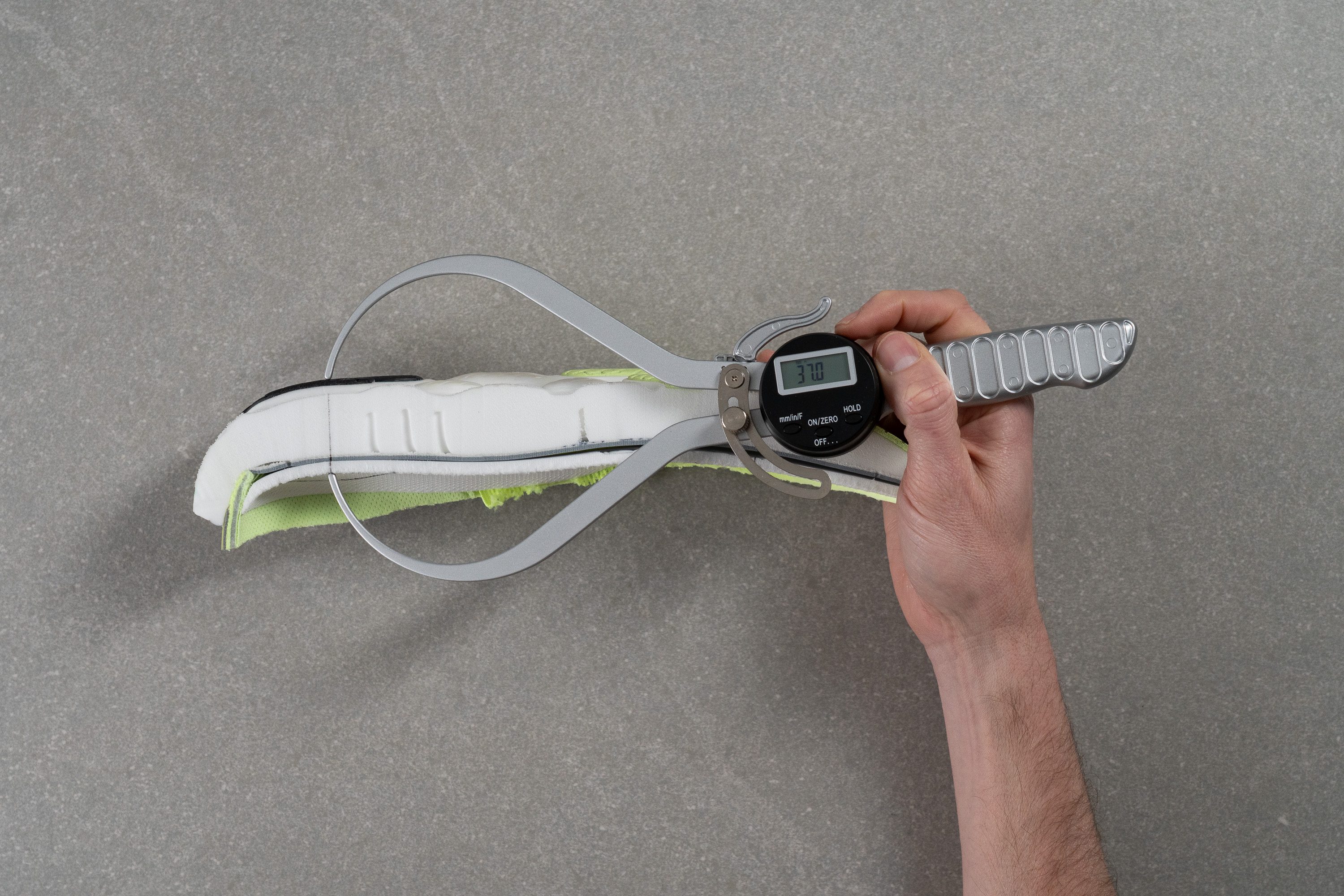
Leaving complex equipment aside, we used our digital callipers to check the real stack height of the 1080 v15. We measured 37.0 mm, which matches exactly what we recorded last year.
In our view, this is a positive outcome. Many brands now push past 40 mm even in daily trainers, but the 1080 v15 feels better with a less extreme setup.
| 1080 v15 | 37.0 mm |
| Average | 35.6 mm |
Forefoot stack
Since New Balance keeps the drop at 6 mm, a forefoot measurement close to 30 mm was what we anticipated, especially given how the drop feels on the run. After testing, we measured 30.6 mm, confirming there is plenty of foam up front too.
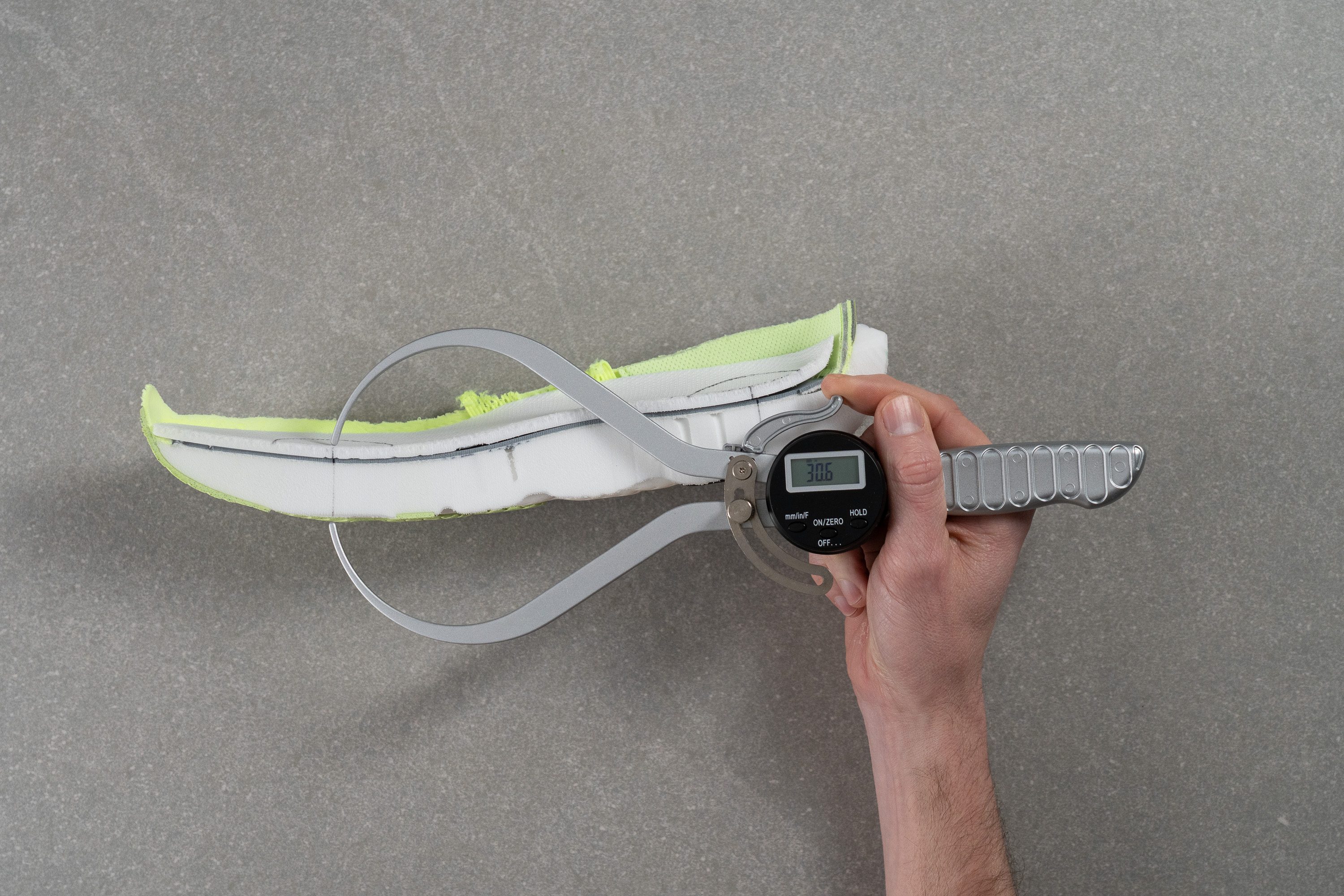
| 1080 v15 | 30.6 mm |
| Average | 27.1 mm |
Drop
Last year we saw a larger gap between the stated drop and the measured value, but with the new Infinion foam, the NB 1080 v15 shows a real drop of 6.4 mm. This stays true to the series DNA and makes the shoe an appealing option for midfoot strikers.
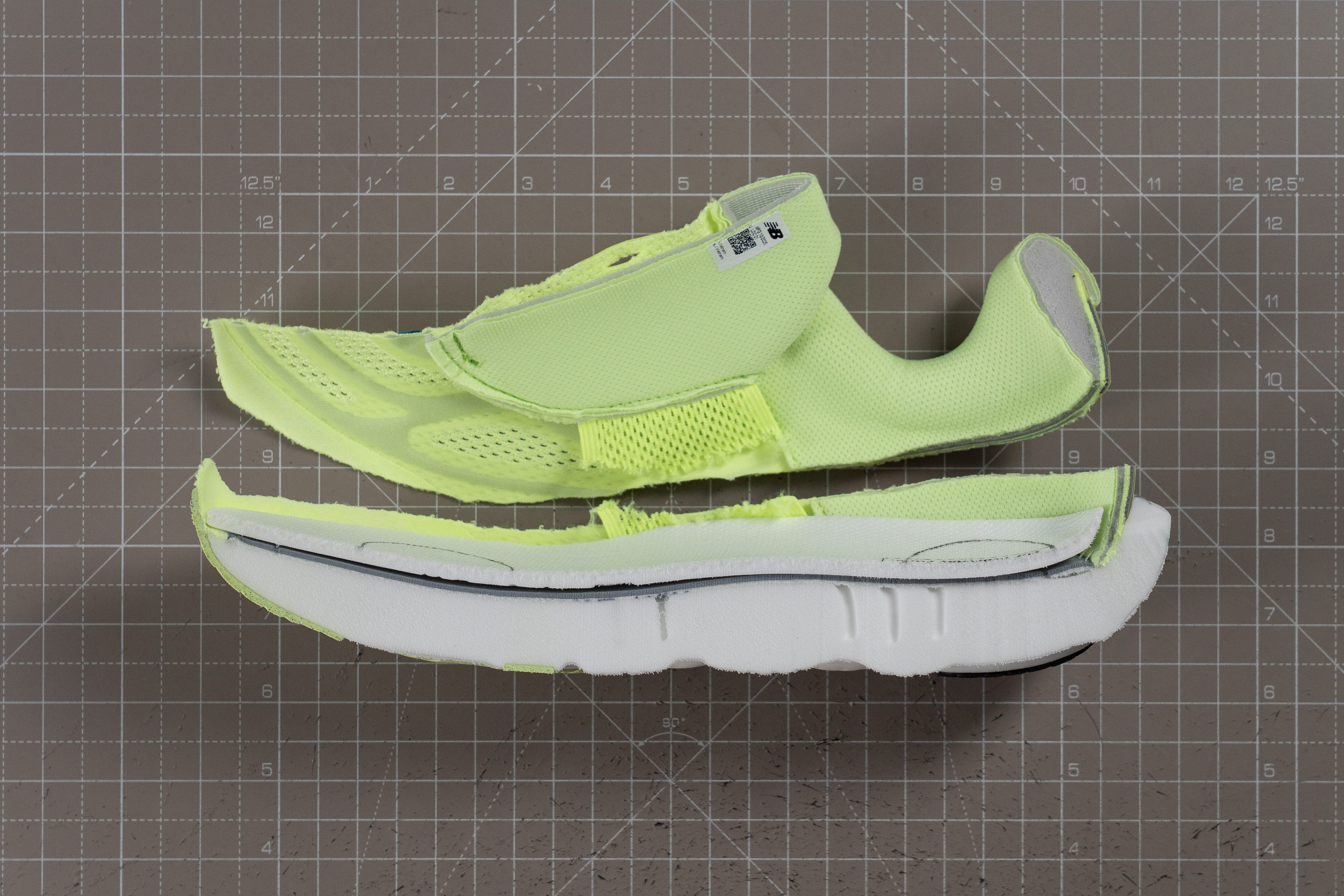
| 1080 v15 | 6.4 mm |
| Average | 8.4 mm |
Midsole softness
In recent years, the most polarising trait of the 1080 series has been its extremely plush feel underfoot. For fans of that sensation, we confirmed in the lab and during our runs that this shoe still feels like running on clouds.
The new Infinion foam felt very soft on the run, and our lab testing backed that up with a 21.5 AC reading. That is 29% softer than the 1080 v14, so anyone worried about losing that marshmallow-like feel can relax, as it goes even further.
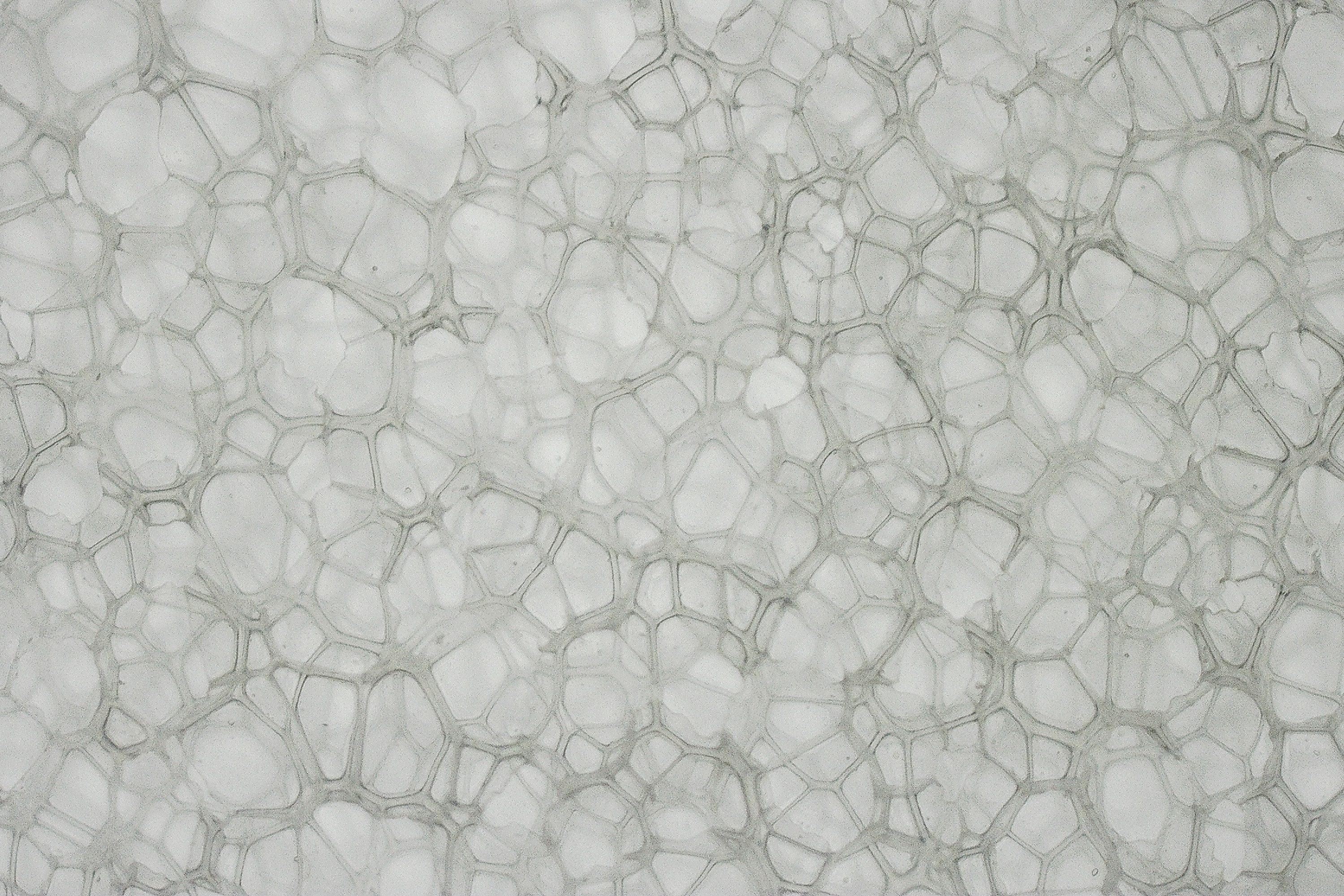
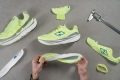
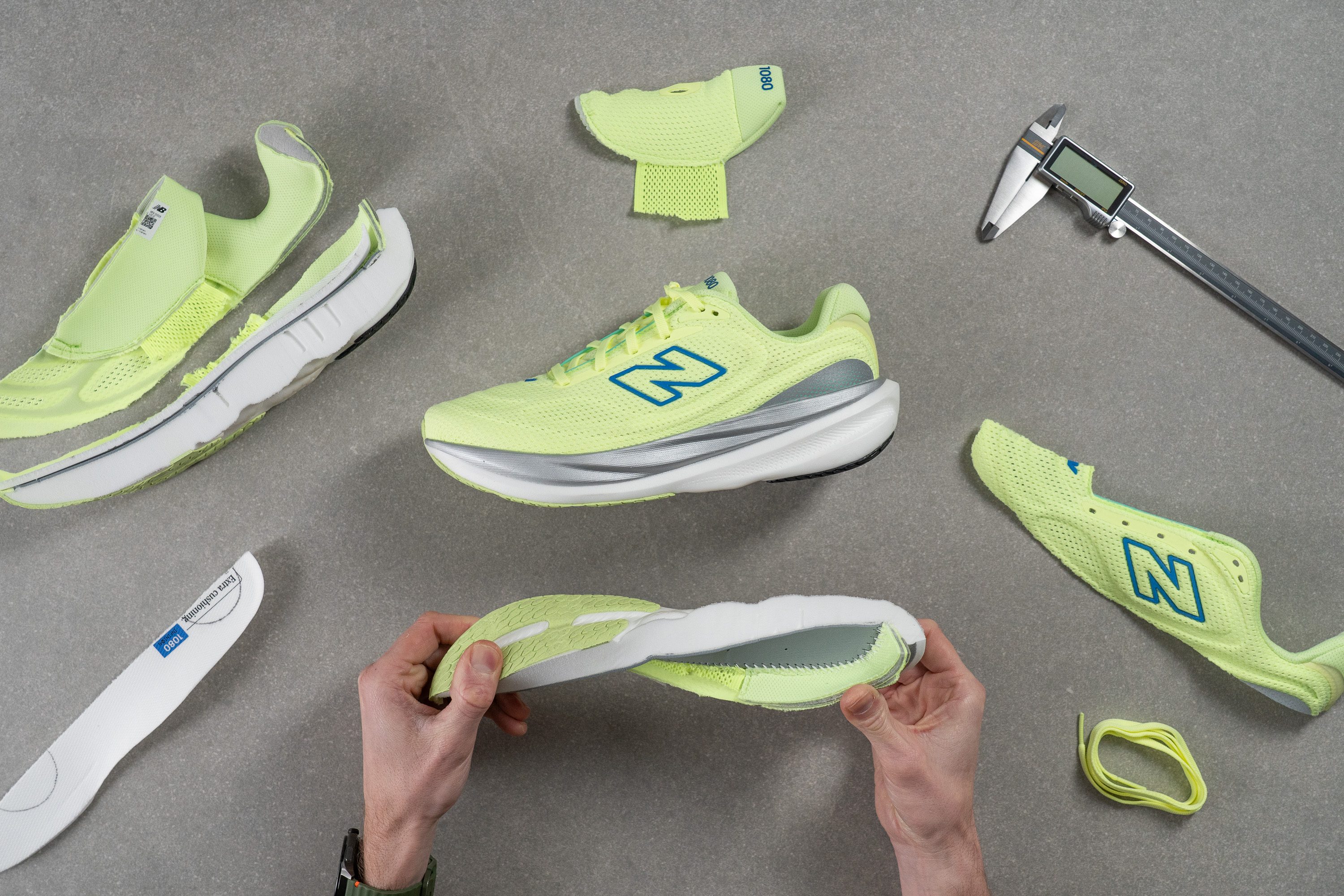
Since this is a completely new foam, we also cut a small piece and examined it under the microscope. What we saw was a very lightweight, open cell structure, marking the first use of a supercritical process in the 1080 series.
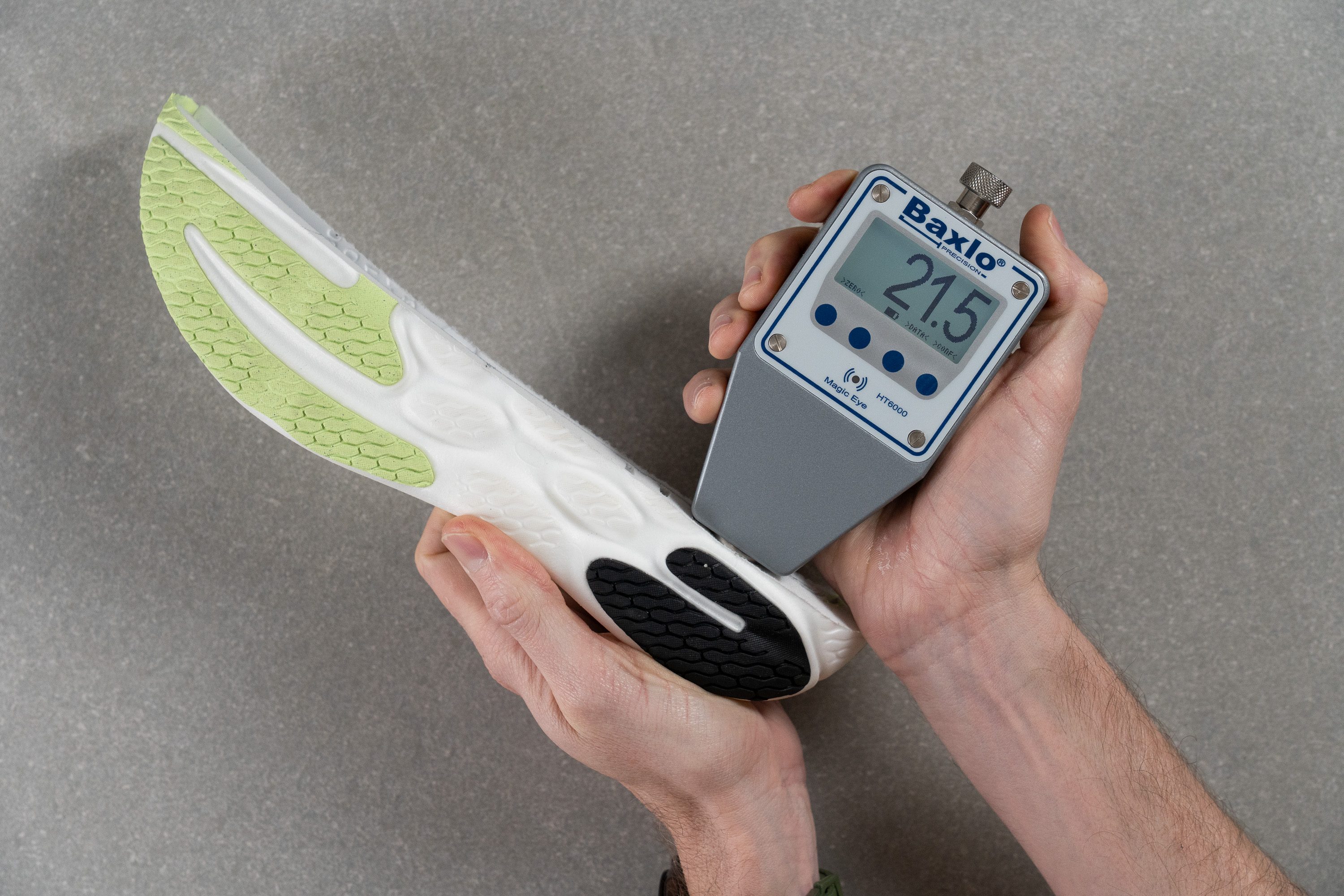
| 1080 v15 | 21.5 AC |
| Average | 35.4 AC |
Rocker
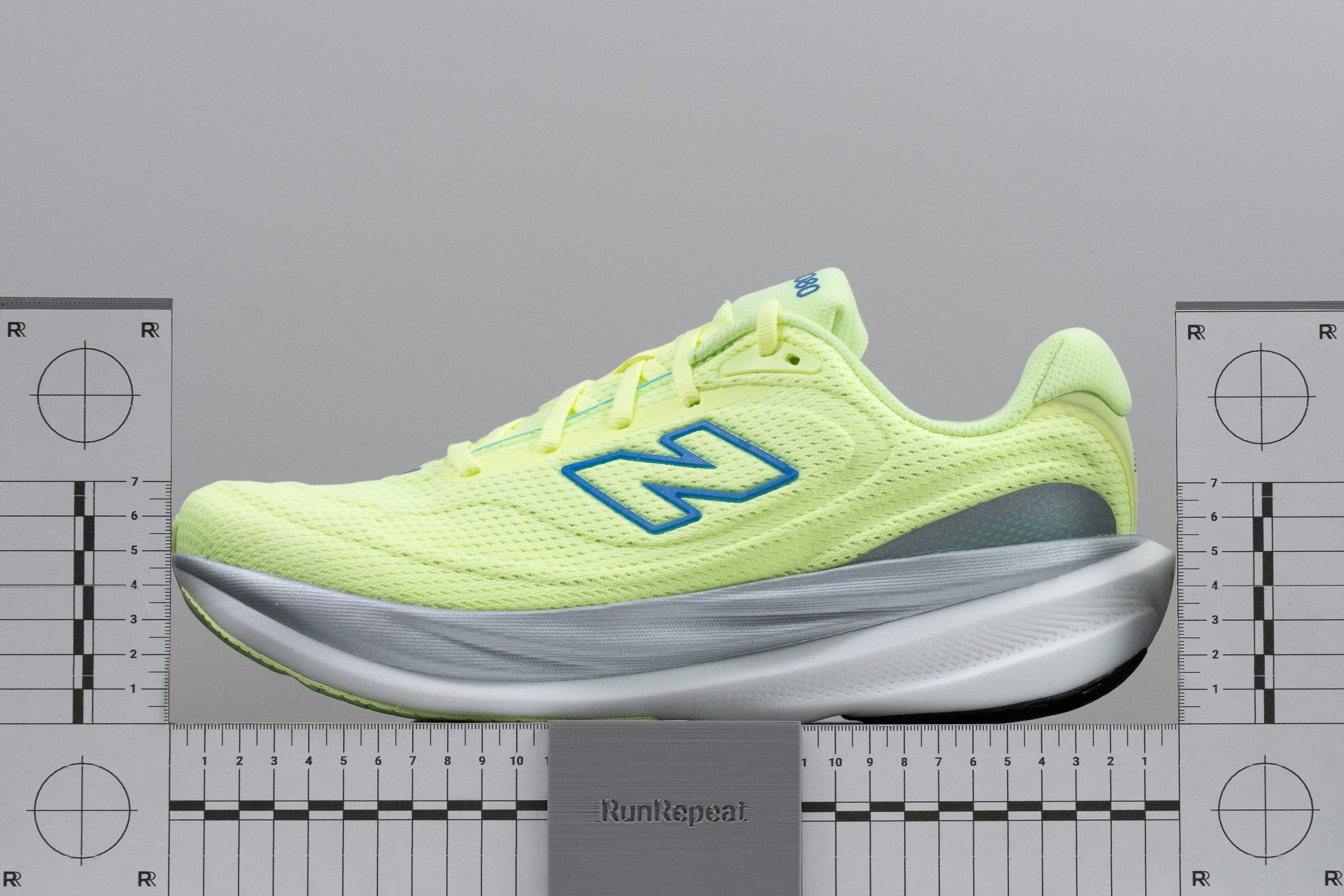
The 1080 v15 uses a moderate forefoot rocker and a large, aggressive heel bevel that helps the rolling motion for heel strikers, especially with its mid-drop setup.
We are glad that New Balance avoided going fully super-rockered like some competitors. Thanks to a non-maximalist stack height and decent flexibility, the ride feels more natural and less artificial underfoot.
Size and fit
Size
New Balance 1080 v15 fits true to size (135 votes).
Internal length
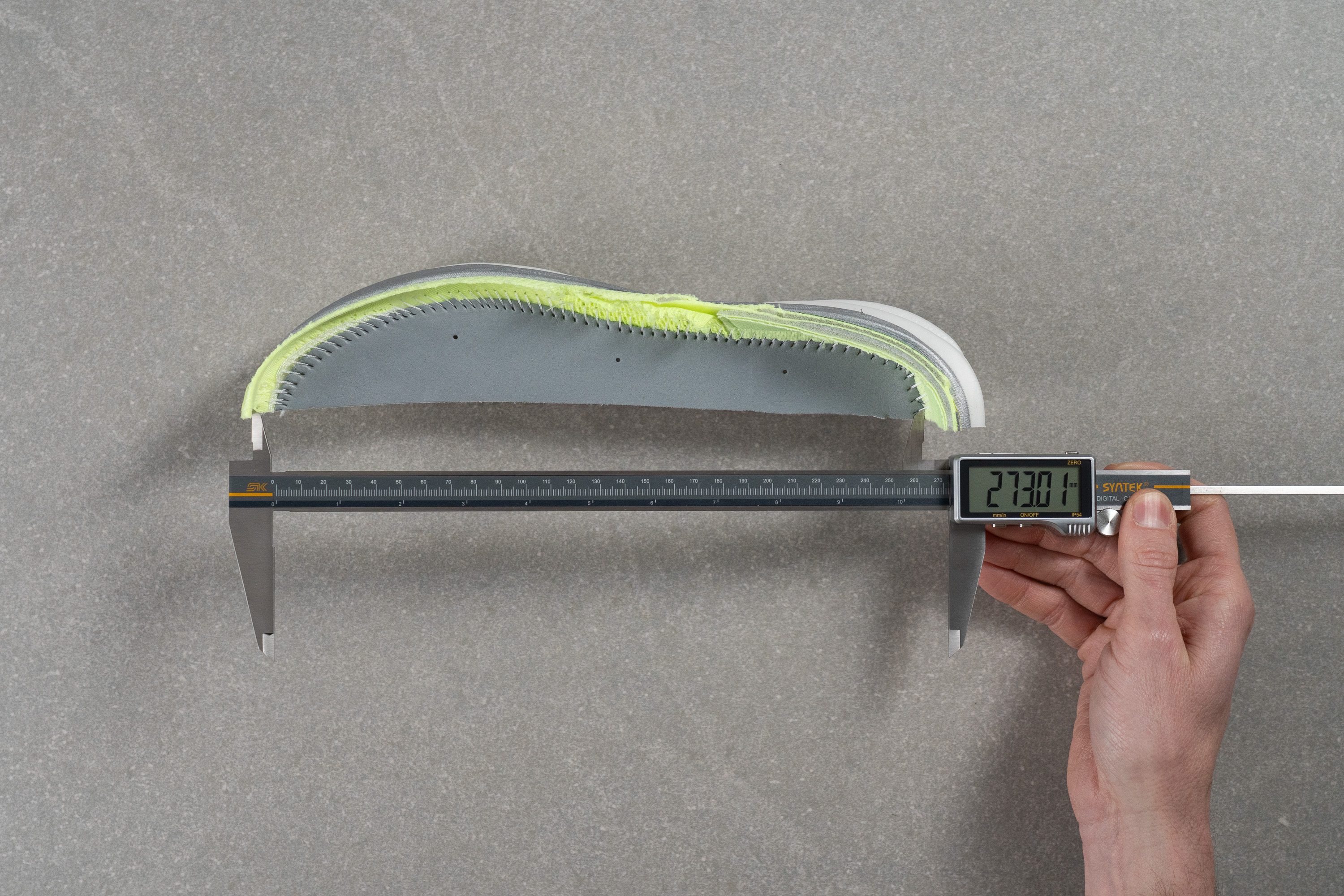
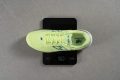
| 1080 v15 | 273.0 mm |
| Average | 269.3 mm |
Width / Fit
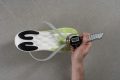
We created a gel mould to check the fit of the 1080 v15, as we do with every shoe. From our testing, the first measurement came out at a near-average 94.8 mm of width.
It is also worth noting that New Balance stands out for offering multiple width options in the 1080 series, including standard, wide (2E), and even extra-wide (4E) in some markets like the US.
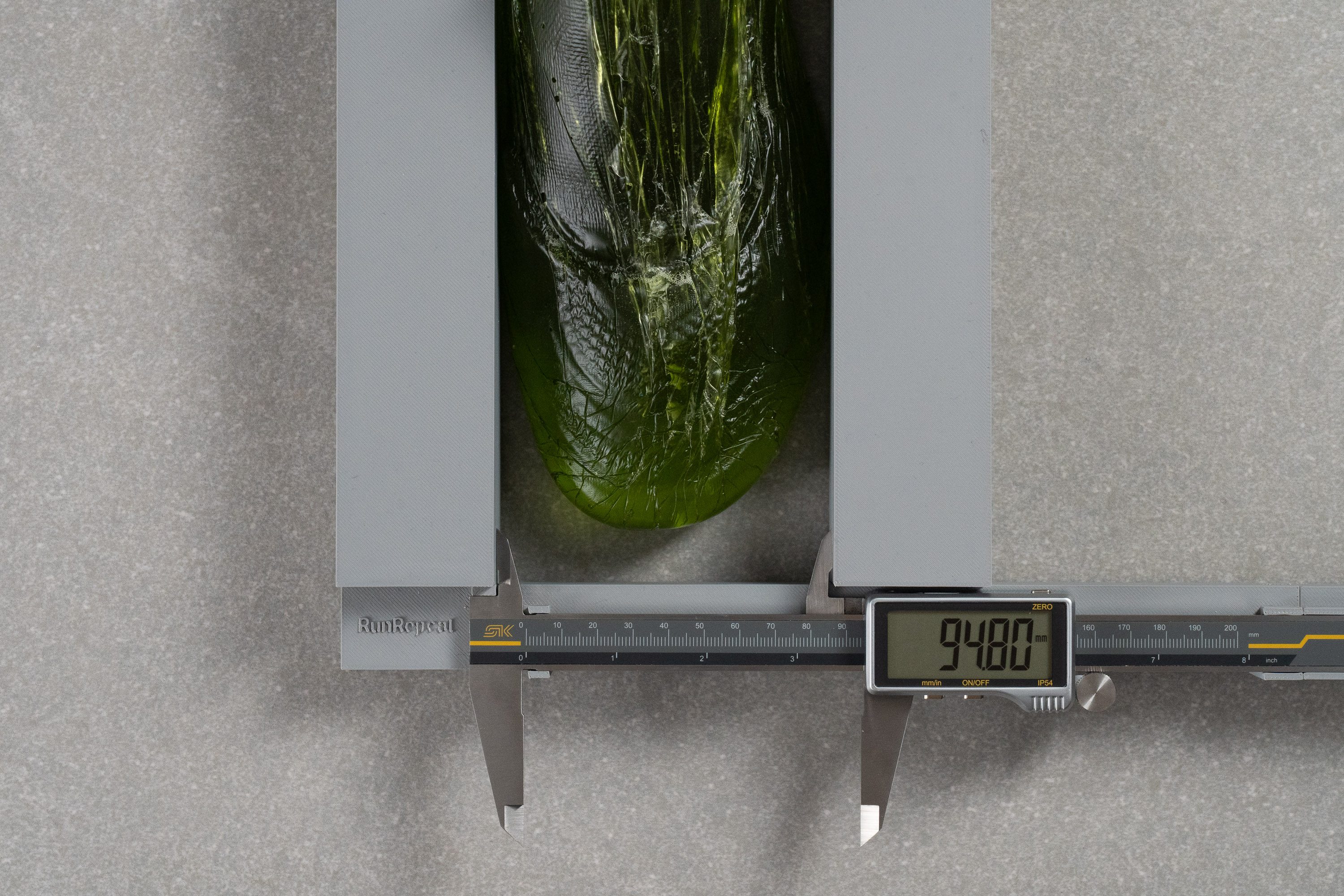
| 1080 v15 | 94.8 mm |
| Average | 95.2 mm |
Toebox width
It feels clear that New Balance aimed to make the 1080 v15 work for as many feet as possible, as we again measured an average result. Our digital callipers recorded 73.2 mm when checking the toebox.
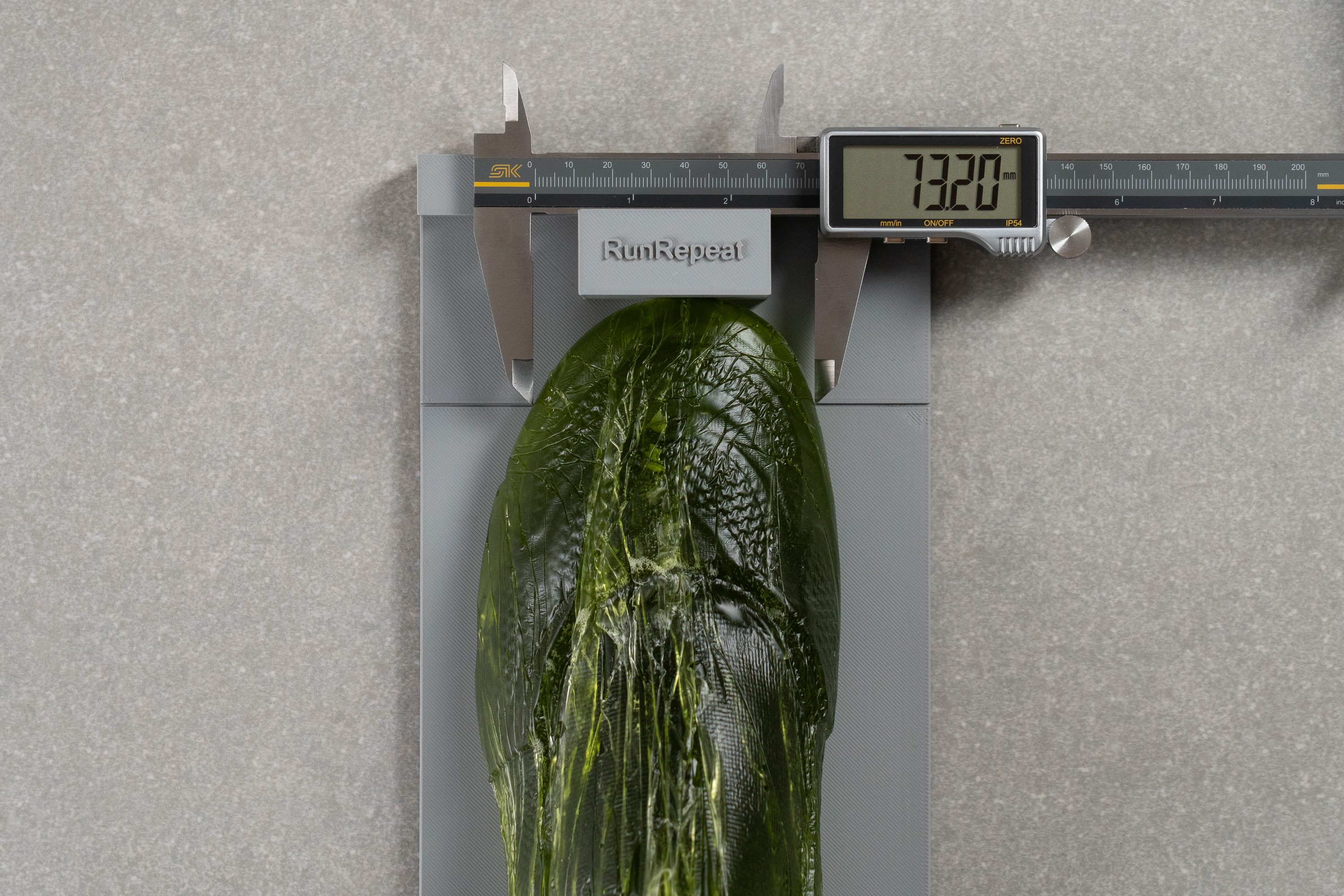
| 1080 v15 | 73.2 mm |
| Average | 73.2 mm |
Toebox height
It almost feels like they designed the shoe around our lab averages, because we measured a toebox height of 27.1 mm.
Combined with the soft and stretchy upper, this setup leaves plenty of room and avoids pressure, and with these measurements plus multiple width options, the 1080 v15 fit should suit most runners.
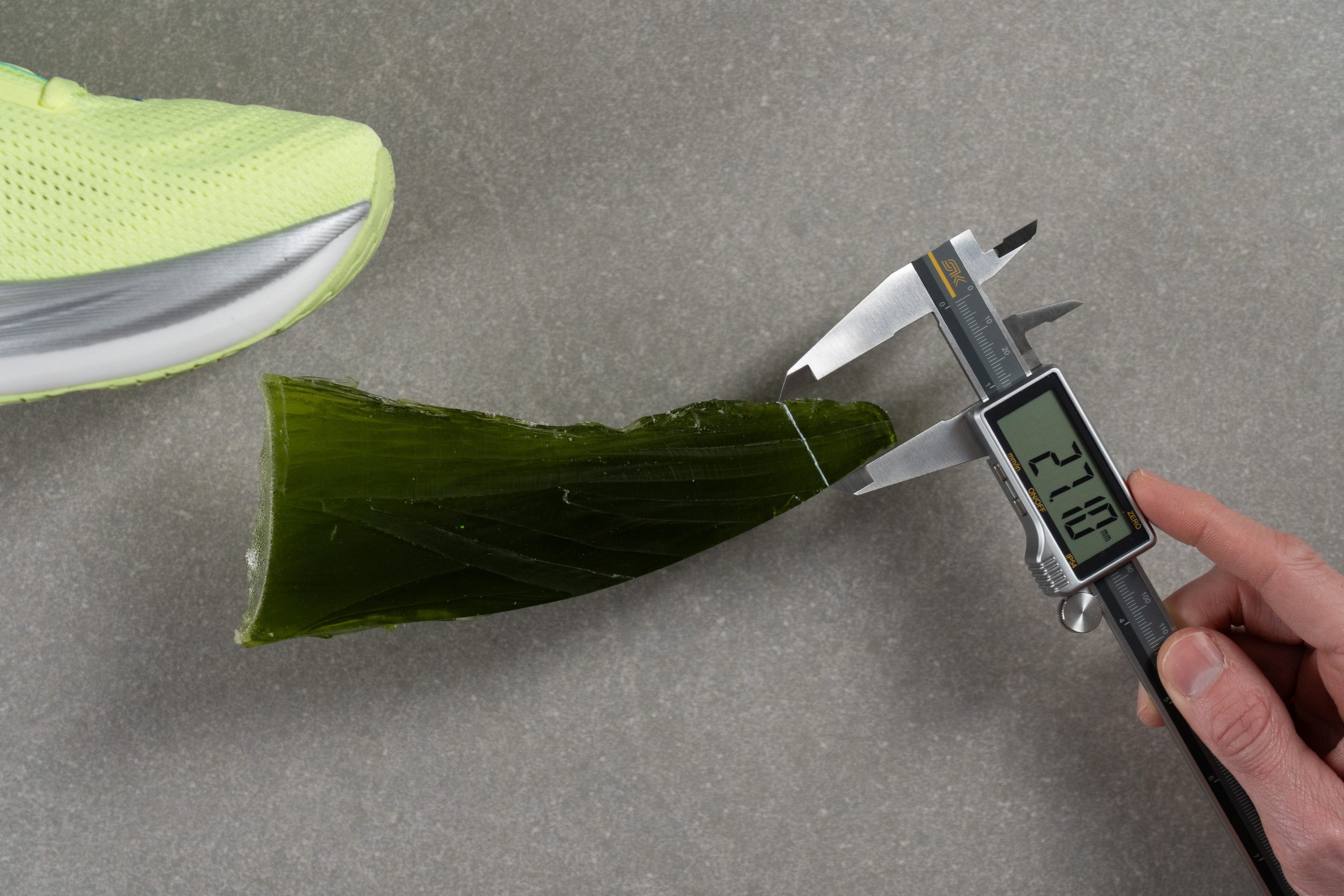
| 1080 v15 | 27.1 mm |
| Average | 27.0 mm |
Traction / Grip
Traction test
New Balance has many strengths as a brand, but road outsoles are usually not where they stand out. That said, the 1080 v15 posts a solid 0.59 grip score, working well on both dry and wet roads.
We know it is not outstanding, but in our view, is clearly good enough and also a small step up from the 0.52 we measured on version 14.
| 1080 v15 | 0.59 |
| Average | 0.53 |
Outsole design
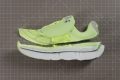
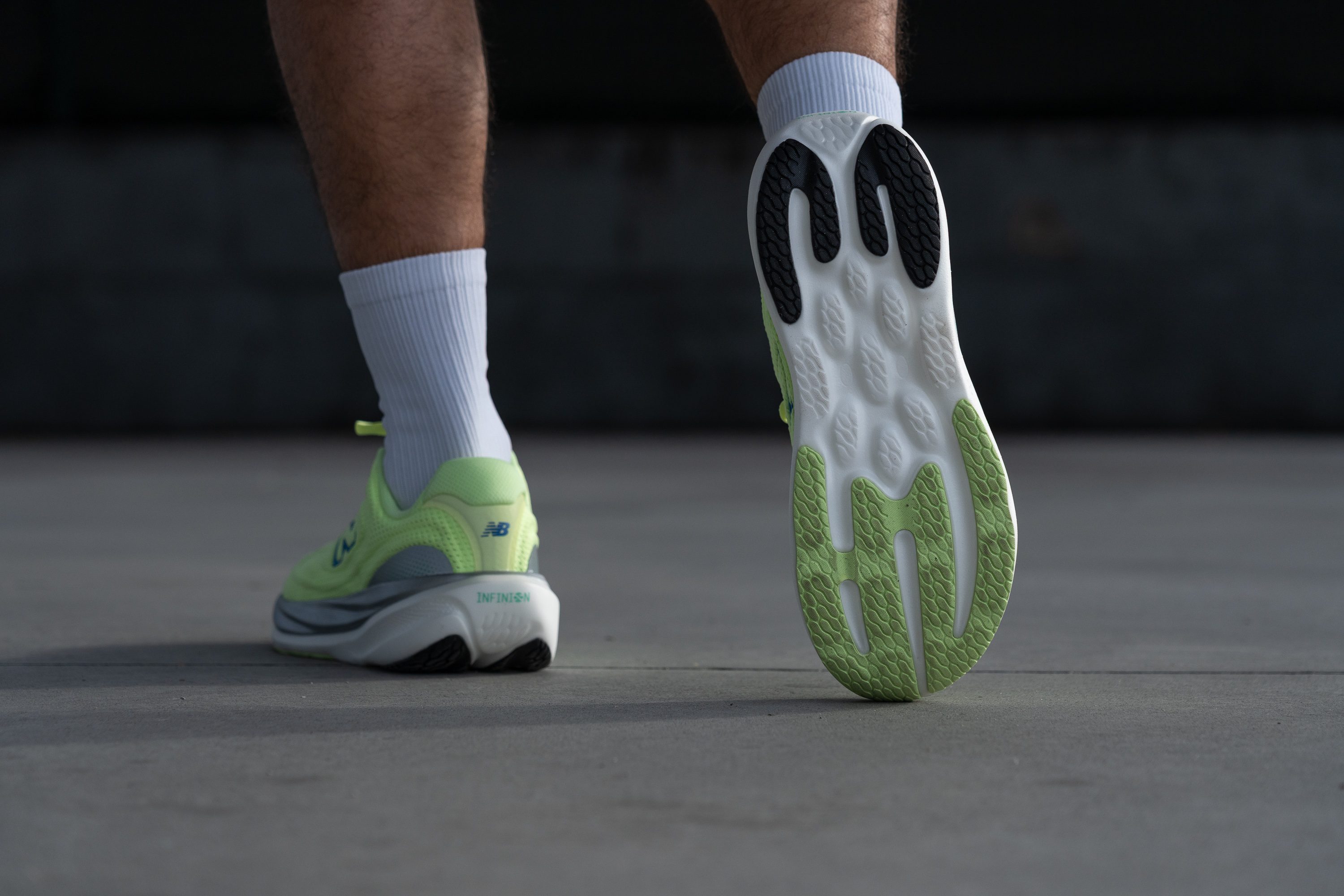
The outsole combines exposed Infinion foam through the midfoot with segmented rubber patches placed only in key contact areas.
Two black rubber pods sit under the heel, while green rubber covers the forefoot. Long vertical cutouts split the foam to allow flex, and the midfoot shows pod-like shapes that are slightly textured for better grip.
Flexibility / Stiffness
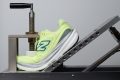
Running shoes keep getting stiffer year after year, so it is refreshing to see New Balance pushing the other way. The 1080 v15 is slightly less stiff than its predecessor and posted a reasonable 15.1N result.
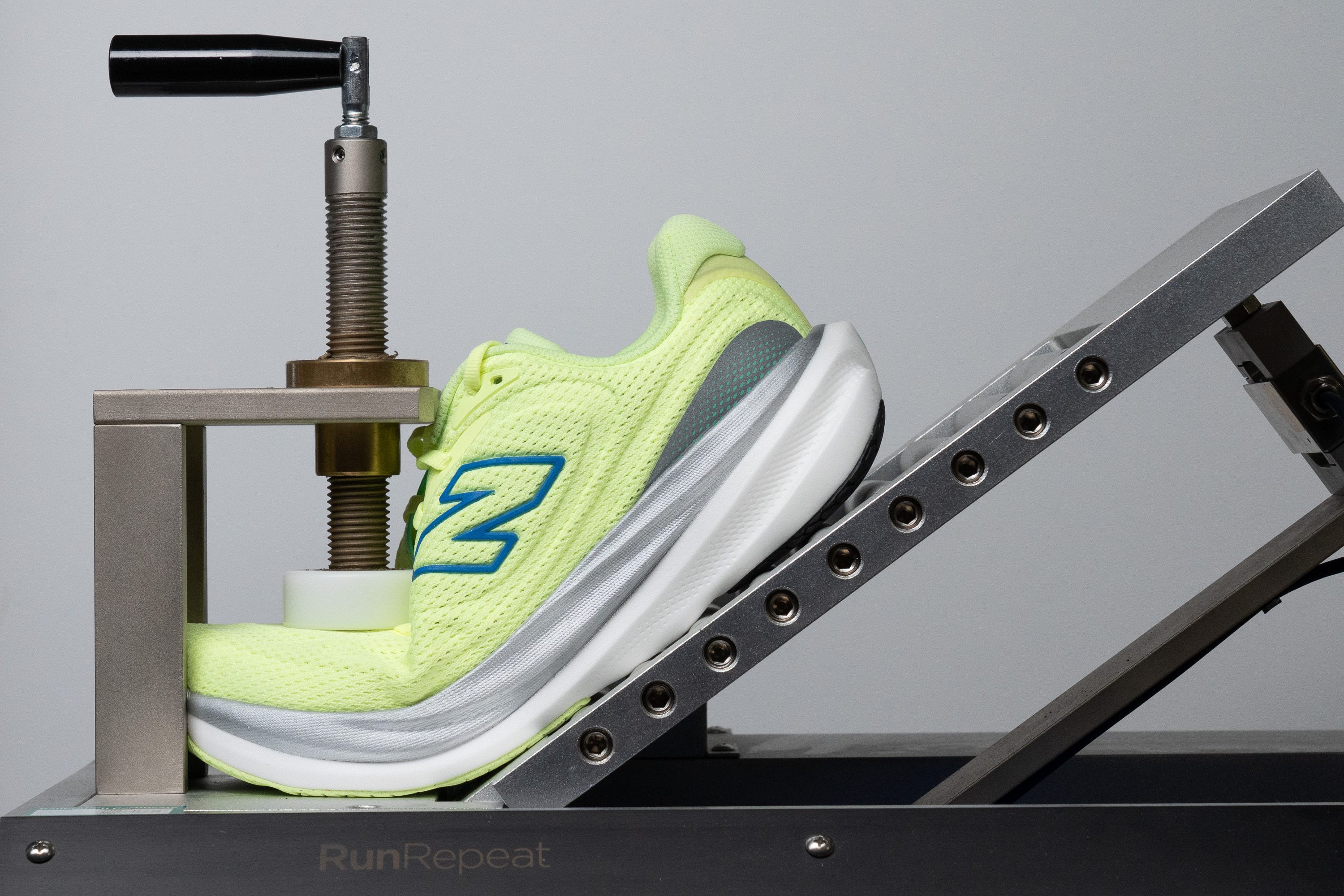
| 1080 v15 | 15.1N |
| Average | 15.5N |
Weight
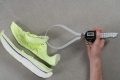
The good news with the 1080 v15 keeps coming. We found a major weight drop thanks to the new Infinion foam, going from 10.1 oz or 285g in the 1080 v14 to just 9.0 oz or 255g in version 15. That is a strong 10% improvement that highlights the value of advanced, supercritical foams.
The difference while running is striking. In this weight range, a 10% reduction is easy to feel underfoot, even more so than in heavier shoes where similar changes can go unnoticed.
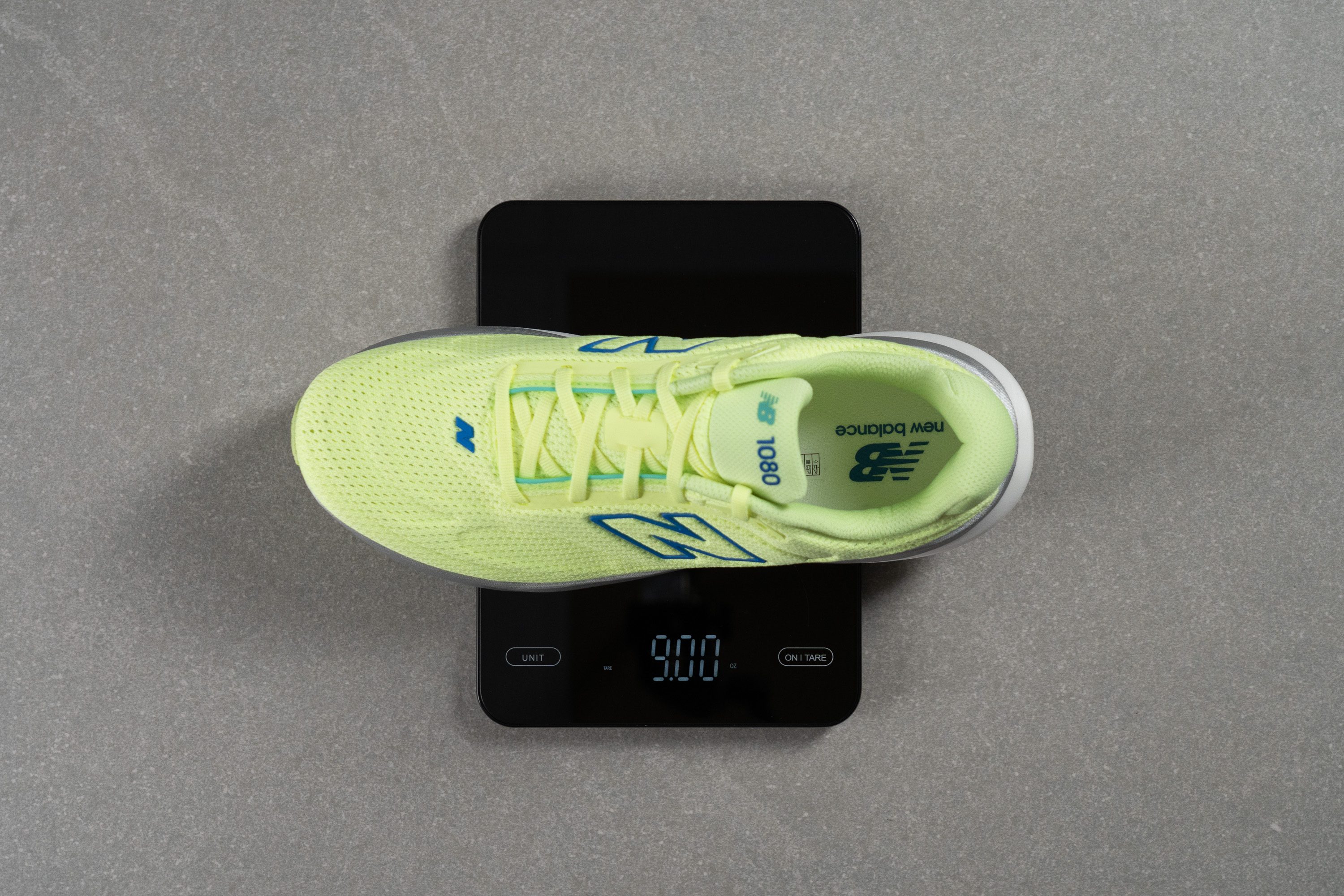
| 1080 v15 | 9.0 oz (255g) |
| Average | 9.2 oz (261g) |
Breathability
Breathability test
The 1080 v15 delivered a solid result in our breathability test, earning 67 BR. While it doesn't rank among the most breathable running shoes we've tested, it does a good job of helping feet stay dry during long runs.
That said, we think this is one area where New Balance still has room to improve for version 16.
| 1080 v15 | 67 BR |
| Average | 75 BR |
Drying potential
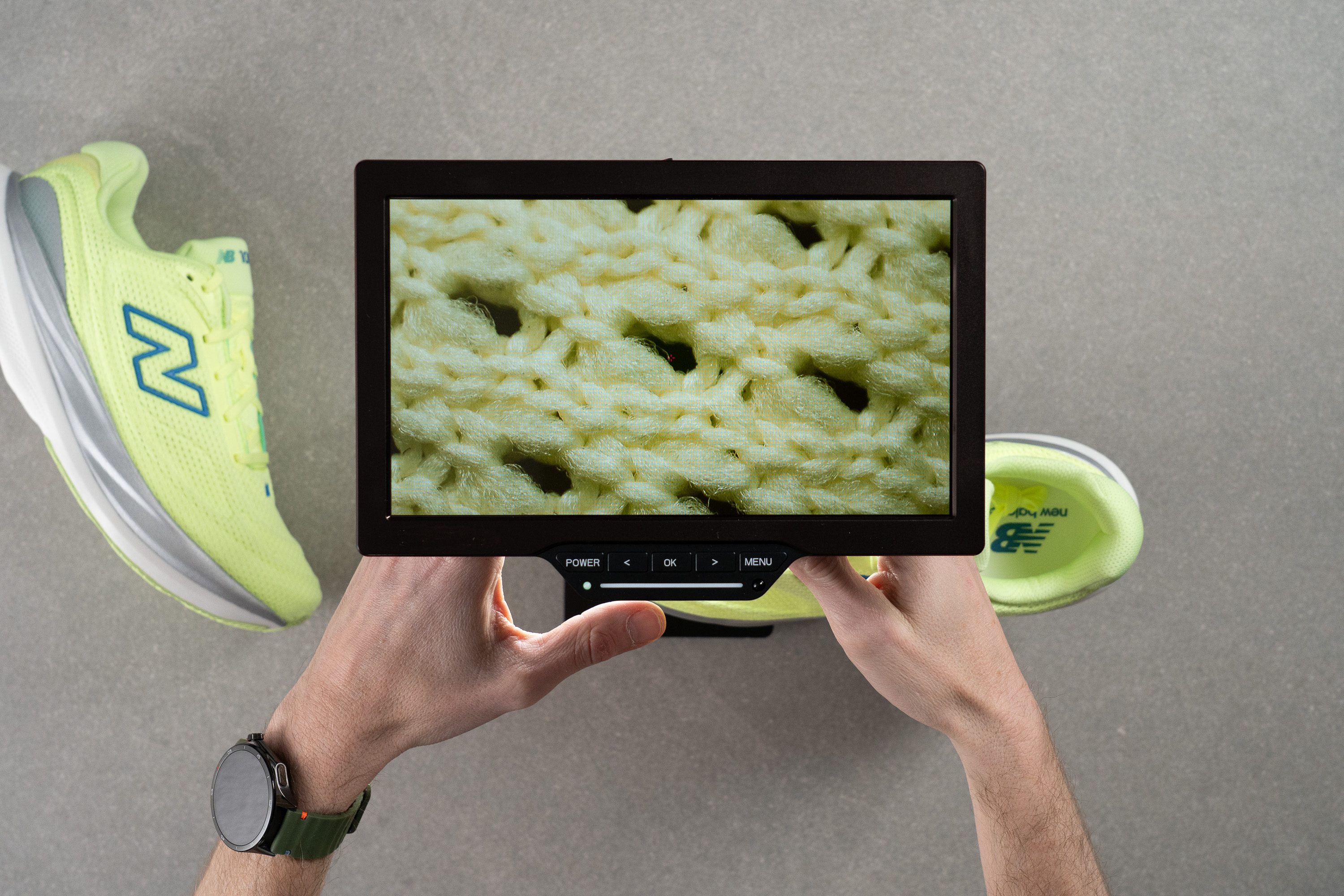
NewThe thick upper and ultra-comfy heel padding of the 1080 v15 comes with a few tradeoffs, and drying potential is one of them. During our 3-hour test, the shoe recorded a result of just 40%, indicating that it retains more moisture than most of its competitors.
In our view, the plush and comfort-first materials used by New Balance are largely responsible for this outcome. As a result, the 1080 v15 may not be the best choice for runners who sweat heavily or frequently tackle long runs in warm conditions.
| 1080 v15 | 40% |
| Average | 53% |
Stability
Lateral stability test
The 1080 v15 returns to a more compact design than recent versions, which is why we recommend it only for fully neutral runners. The very plush foam also matters here, and runners with support needs, even mild ones, should look elsewhere.
Torsional rigidity
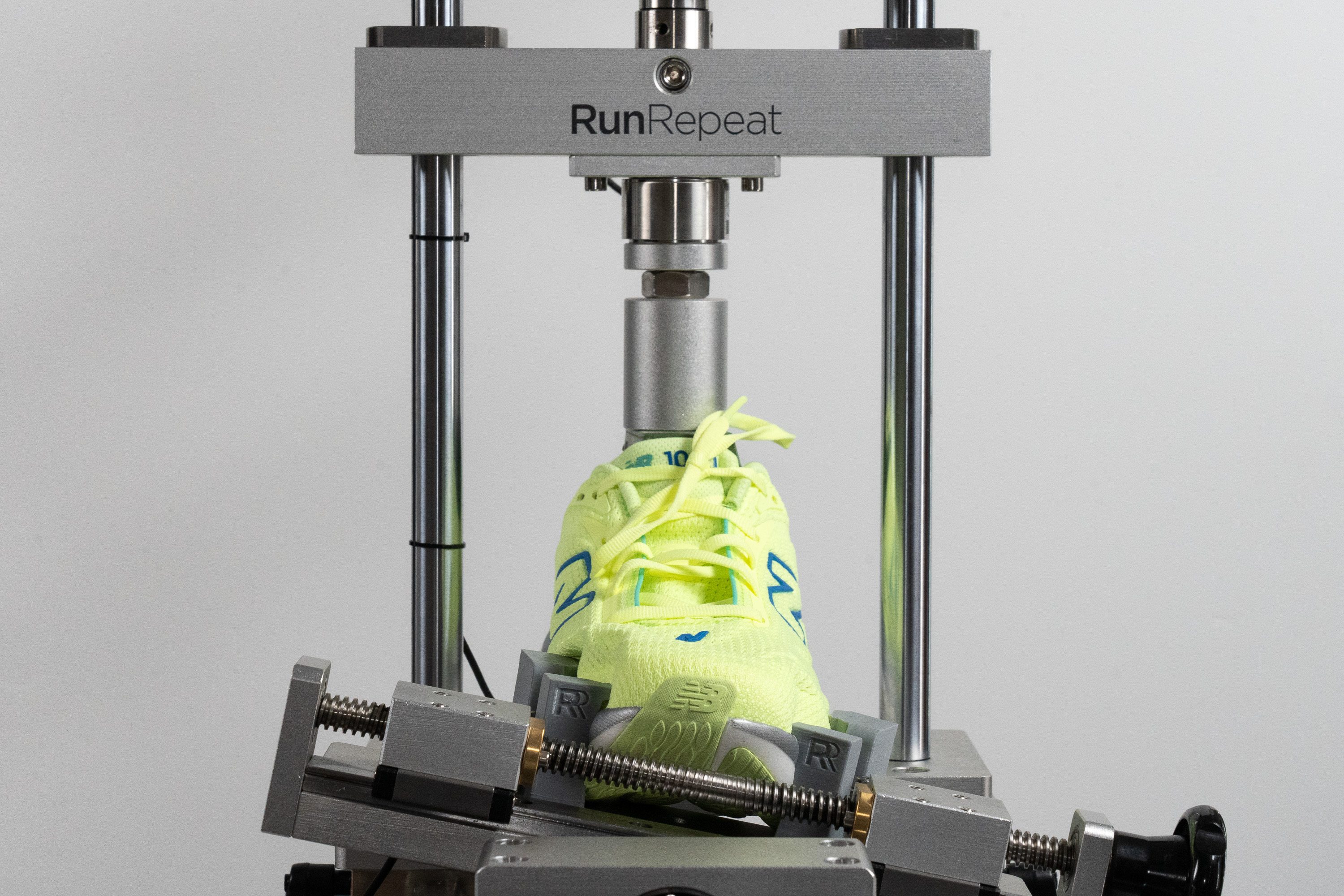
The softer foam and the new outsole design bring a more flexible build, which we see as a positive change, as many shoes are moving in the opposite direction. As a result, this 10.3 Nm feels refreshing and boosts comfort during easy runs, which make up a large part of the 1080’s use.
| 1080 v15 | 10.3 Nm |
| Average | 14.3 Nm |
Heel counter stiffness
New Balance used a firm heel counter that earned a 4/5 rating, adding extra stability to the rear of the shoe. At the same time, generous padding with high-quality foam keeps it comfortable and pleasant.
| 1080 v15 | 4 |
| Average | 2.9 |
Midsole width - forefoot
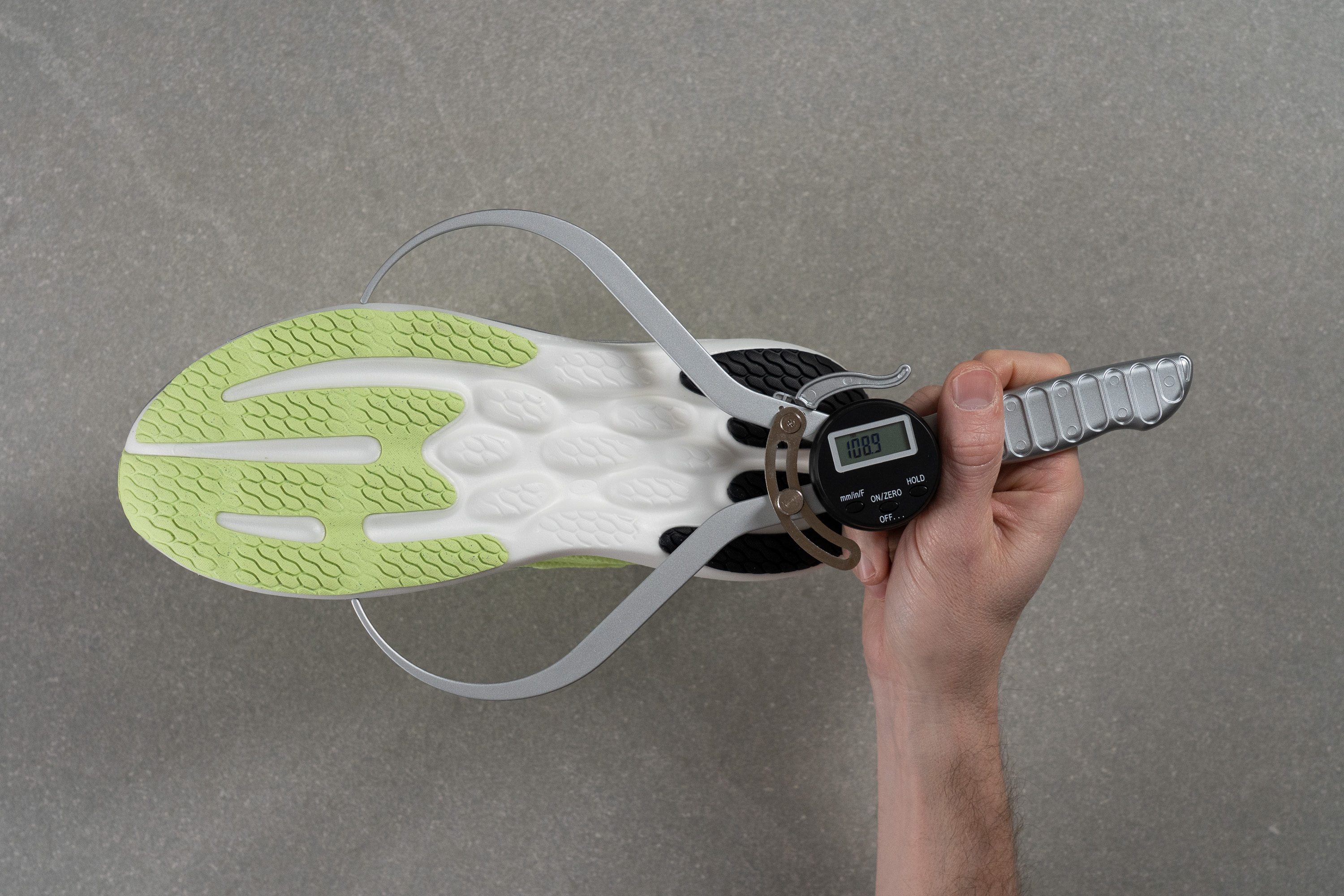
We clearly felt during our runs that the 1080 v15 has a more compact shape than most competitors and earlier versions, and our lab measurements confirm it. With just 108.9 mm in the forefoot, this shoe truly goes against the current trend.
| 1080 v15 | 108.9 mm |
| Average | 115.1 mm |
Midsole width - heel
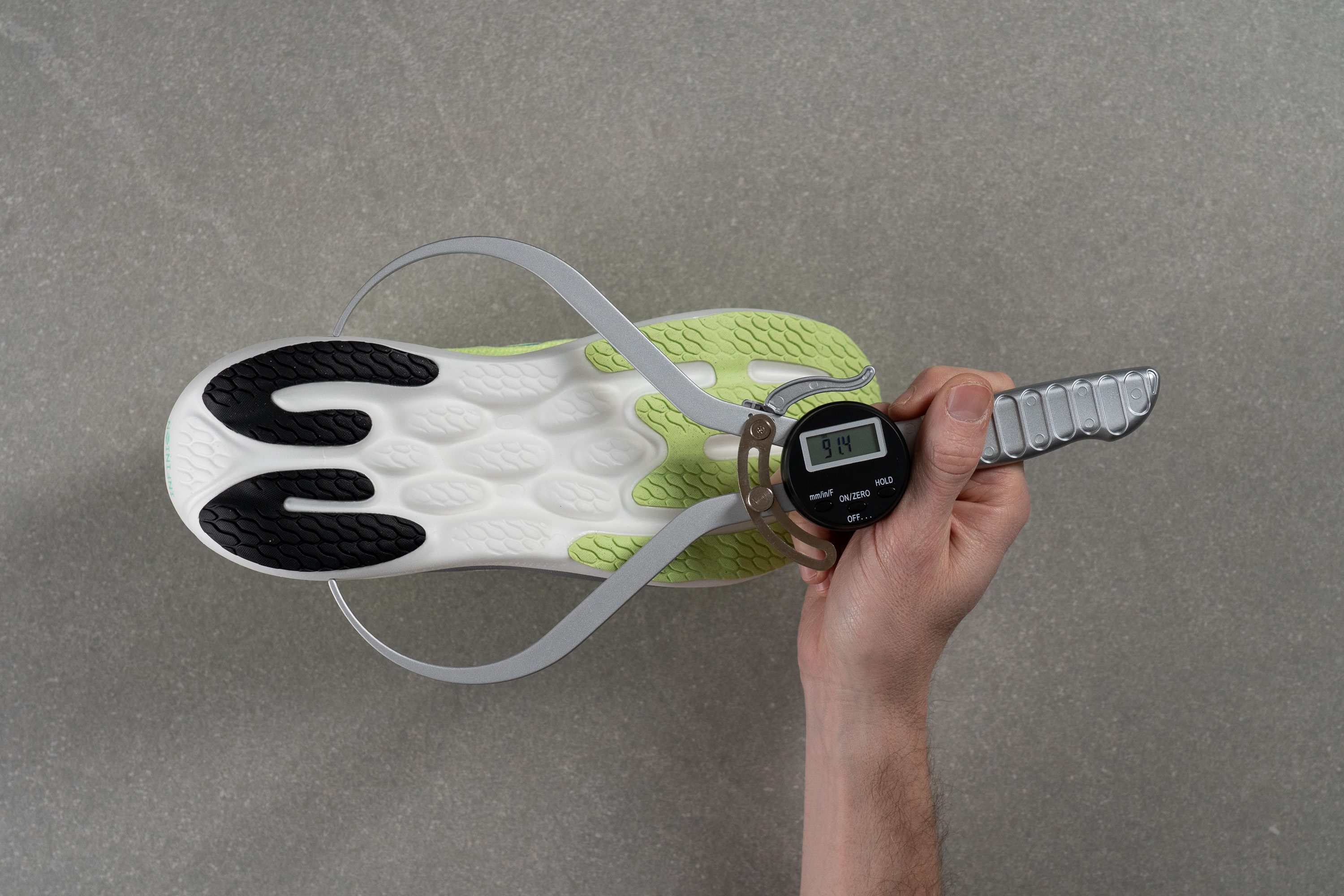
The 1080 v15 is also narrower than its predecessor in the heel, measuring just 91.4 mm.
While this sits around the average range, the ultra-plush Infinion foam limits stability, so as noted earlier, it is best suited for neutral runners.
| 1080 v15 | 91.4 mm |
| Average | 91.1 mm |
Durability
Toebox durability
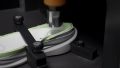
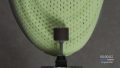
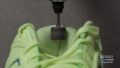
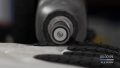
After running the Dremel at 5K RPM, damage was minimal, which earned the 1080 v15 an excellent 4 out of 5 score.
| 1080 v15 | 4 |
| Average | 2.6 |
Heel padding durability
To our surprise, the heel padding earned a lower 3/5 score. This is one of the few shoes we have tested where the toebox outperformed the heel.
| 1080 v15 | 3 |
| Average | 3.4 |
Outsole durability
When it comes to outsole durability, the New Balance 1080 v15 delivered an acceptable result. Using a tyre tread gauge, we measured 1.0 mm of wear.
| 1080 v15 | 1.0 mm |
| Average | 1.1 mm |
Outsole thickness
Everyone expects a daily trainer to handle at least 500 miles, and New Balance clearly played it safe with the 1080 v15.
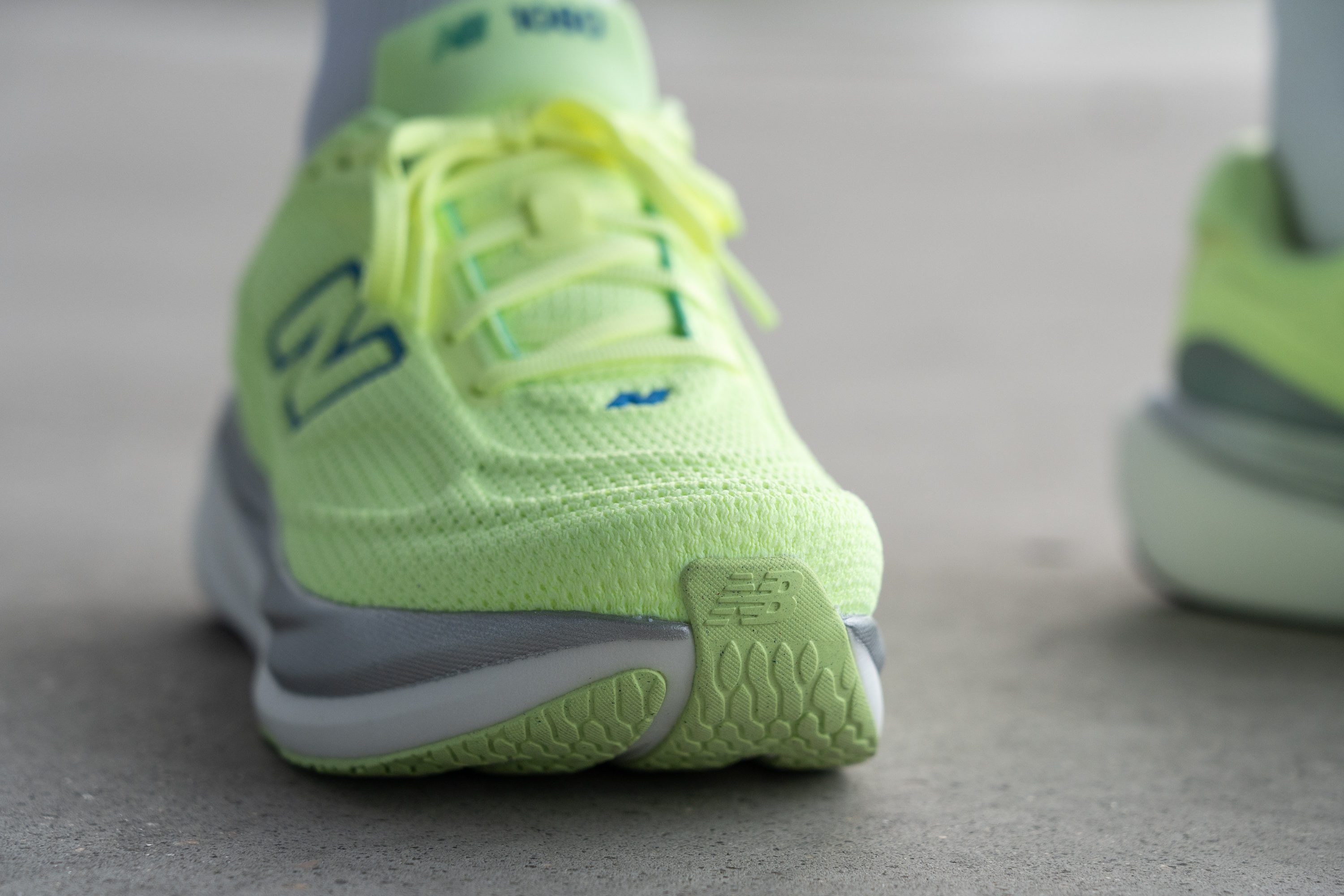
We noted that NB placed 3.0 mm of rubber under the Infinion foam, a smart move given the shoe’s low weight and one that could allow future versions to trim rubber if durability improves.
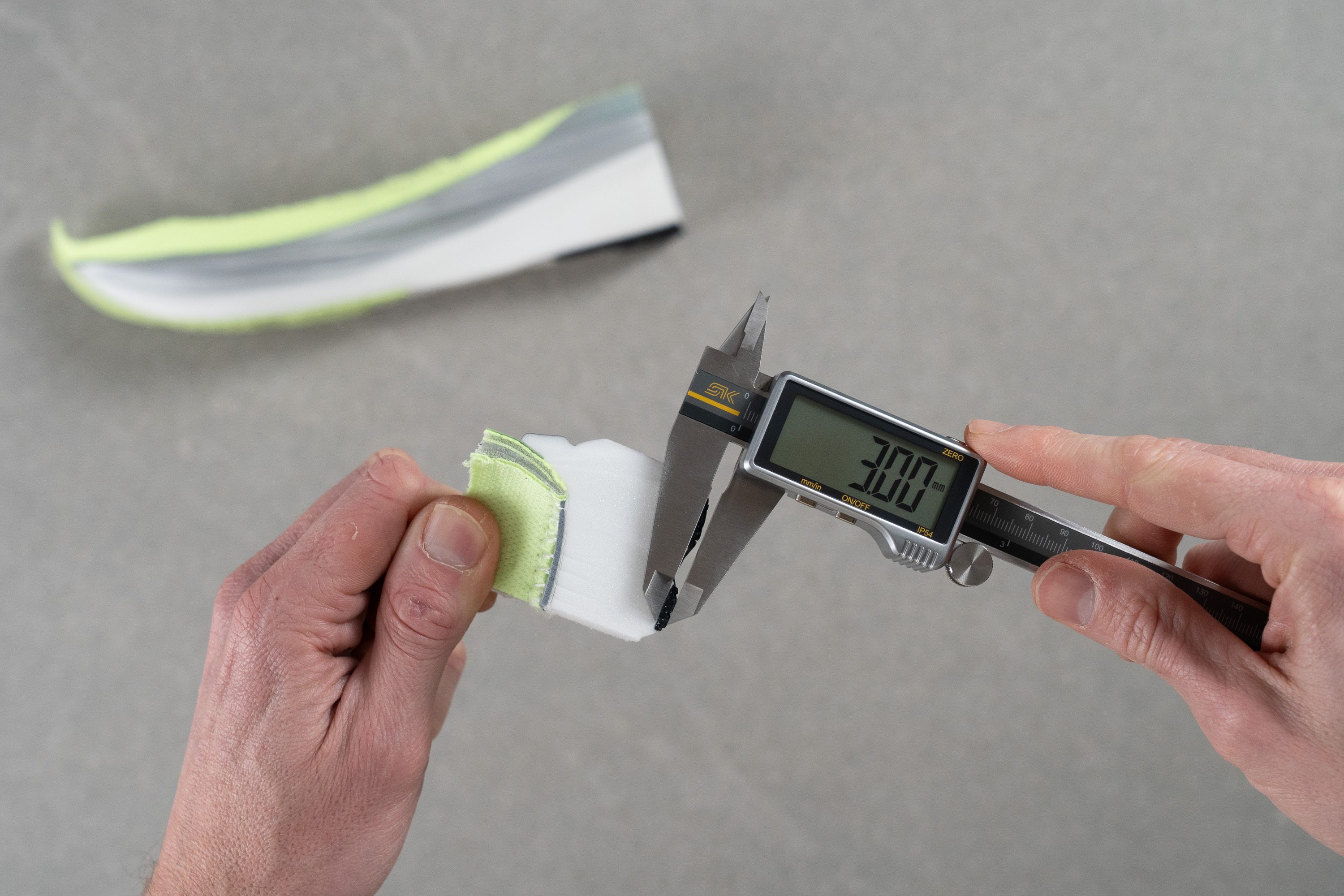
| 1080 v15 | 3.0 mm |
| Average | 3.1 mm |
Misc
Insole thickness
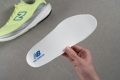
The insole landed in the common range we see in the lab, between 4 and 5 mm. More precisely, we measured 4.3 mm.
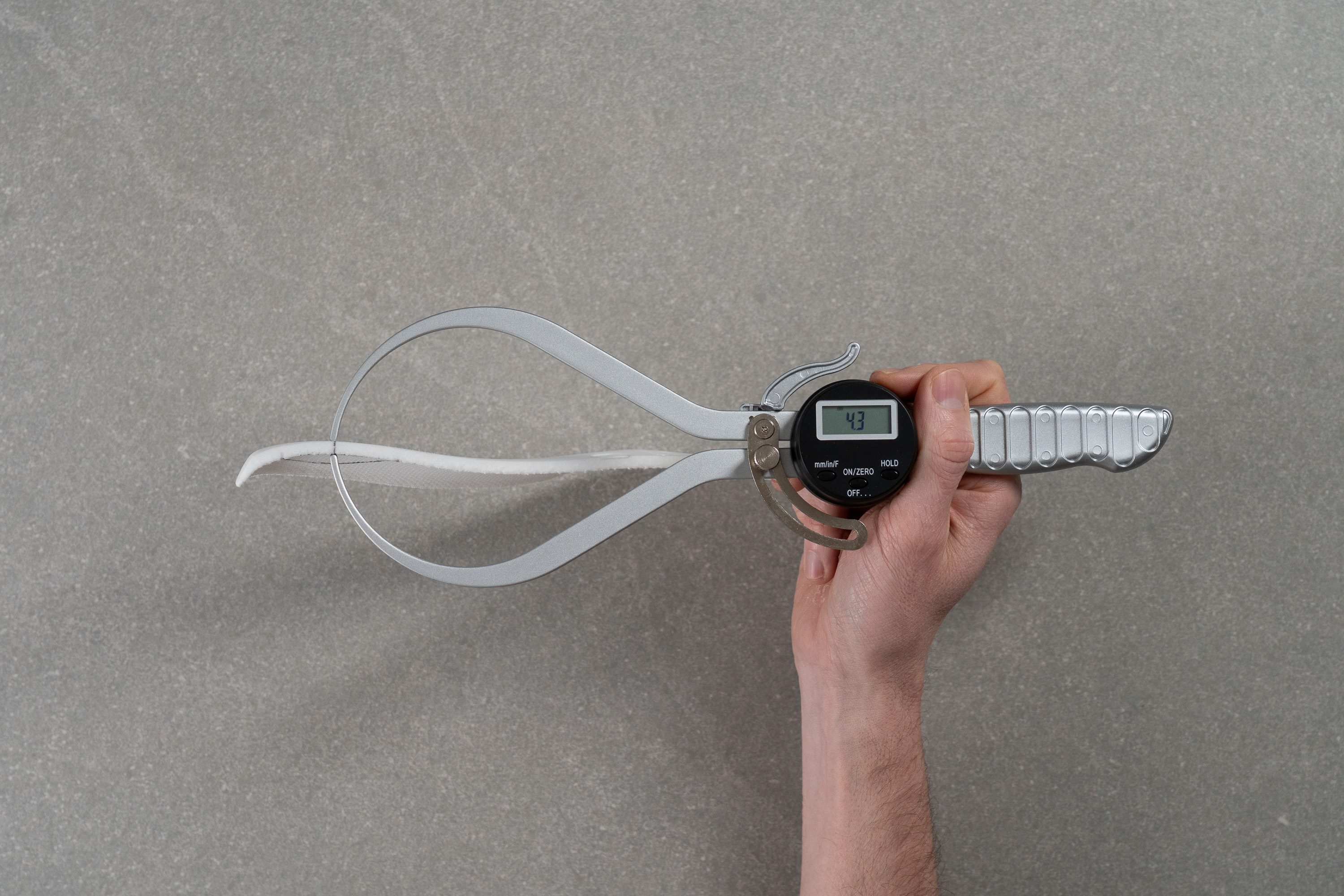
| 1080 v15 | 4.3 mm |
| Average | 4.4 mm |
Removable insole
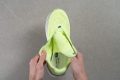
The insole is fully removable, so swapping it for a thinner or thicker option is easy if you want to fine-tune the fit.
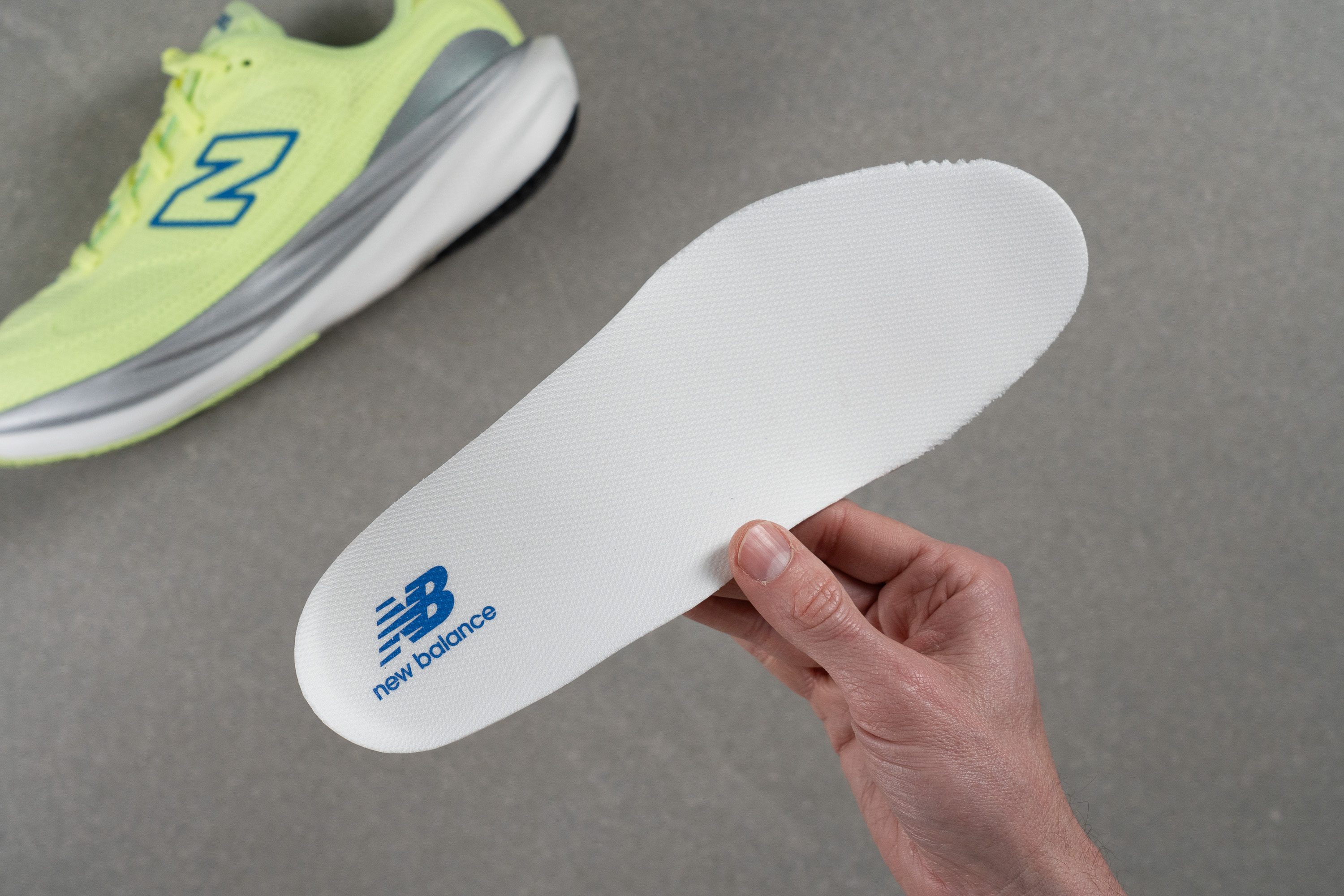
| 1080 v15 | Yes |
Reflective elements
The 1080 v15 delivers excellent reflectivity and ranks among the best shoes we have seen in recent months for visibility during night runs.
| 1080 v15 | Yes |
Tongue padding
There are no major changes to the lacing system, as New Balance sticks with flat laces running through reinforced eyelets, along with a tongue loop that helps keep everything centred and secure.
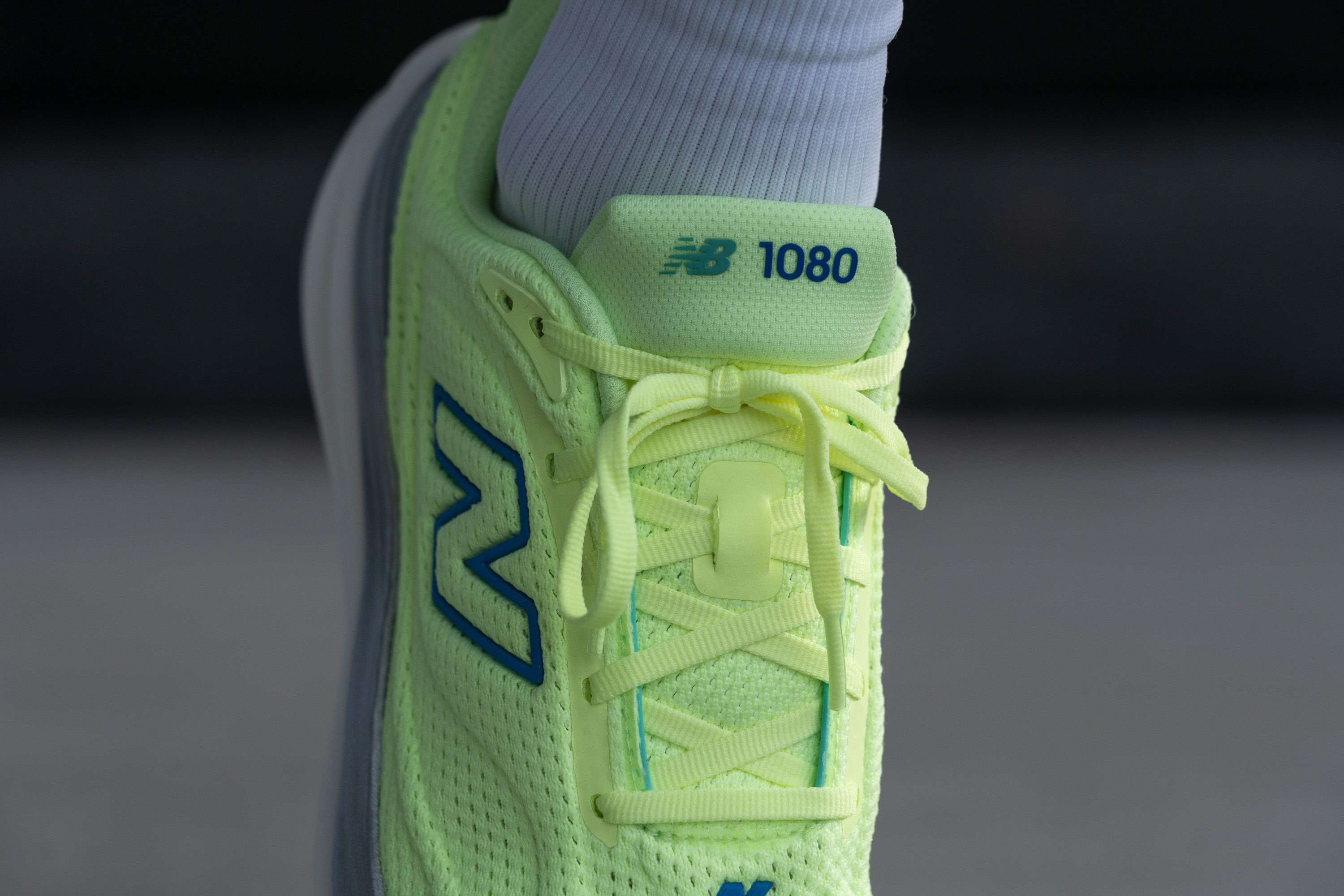
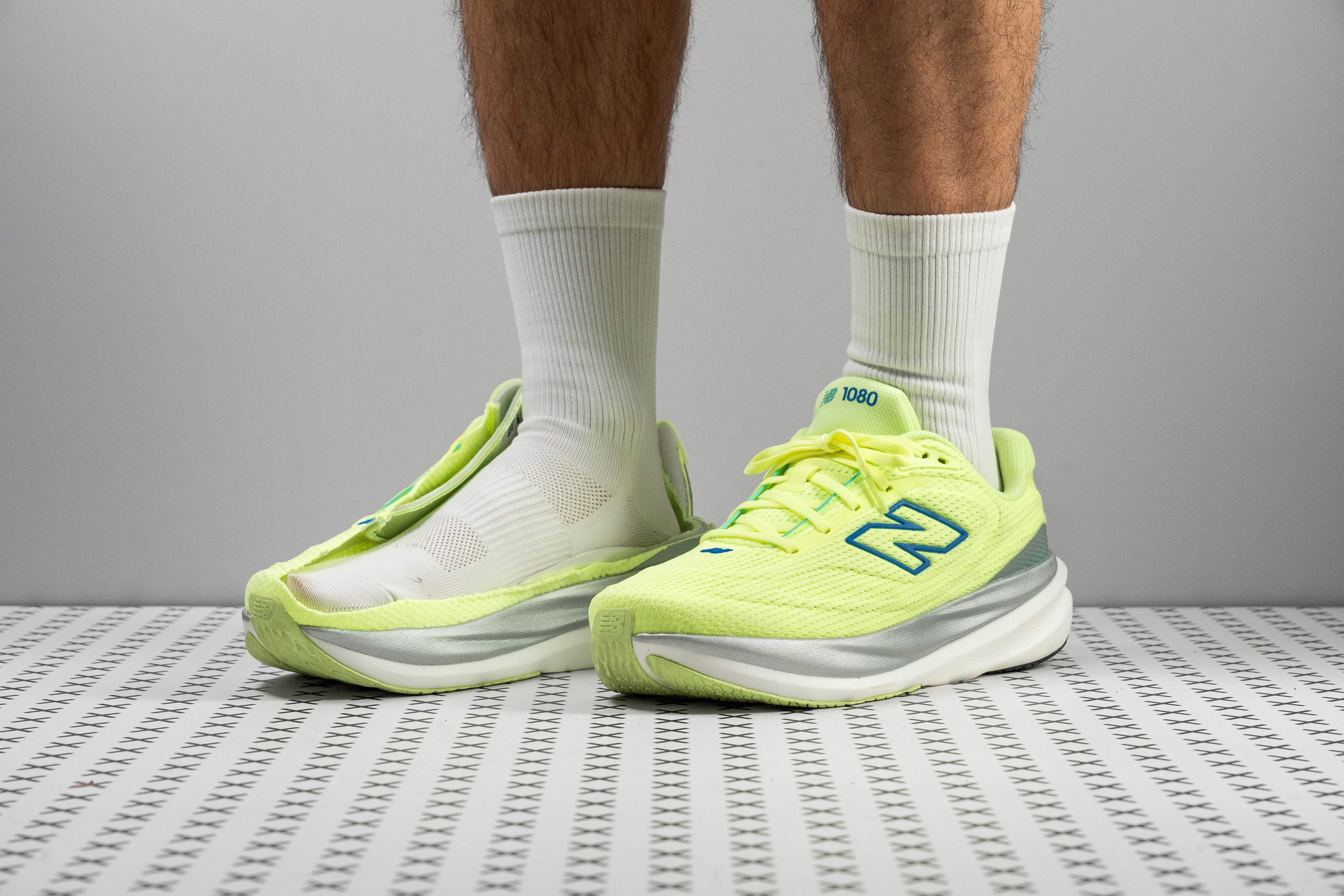
The tongue is a key part of the 1080 v15, as it strongly shapes the premium step-in feel buyers expect. Its 8.5 mm thickness works very well here, especially thanks to the high-quality foam New Balance used.
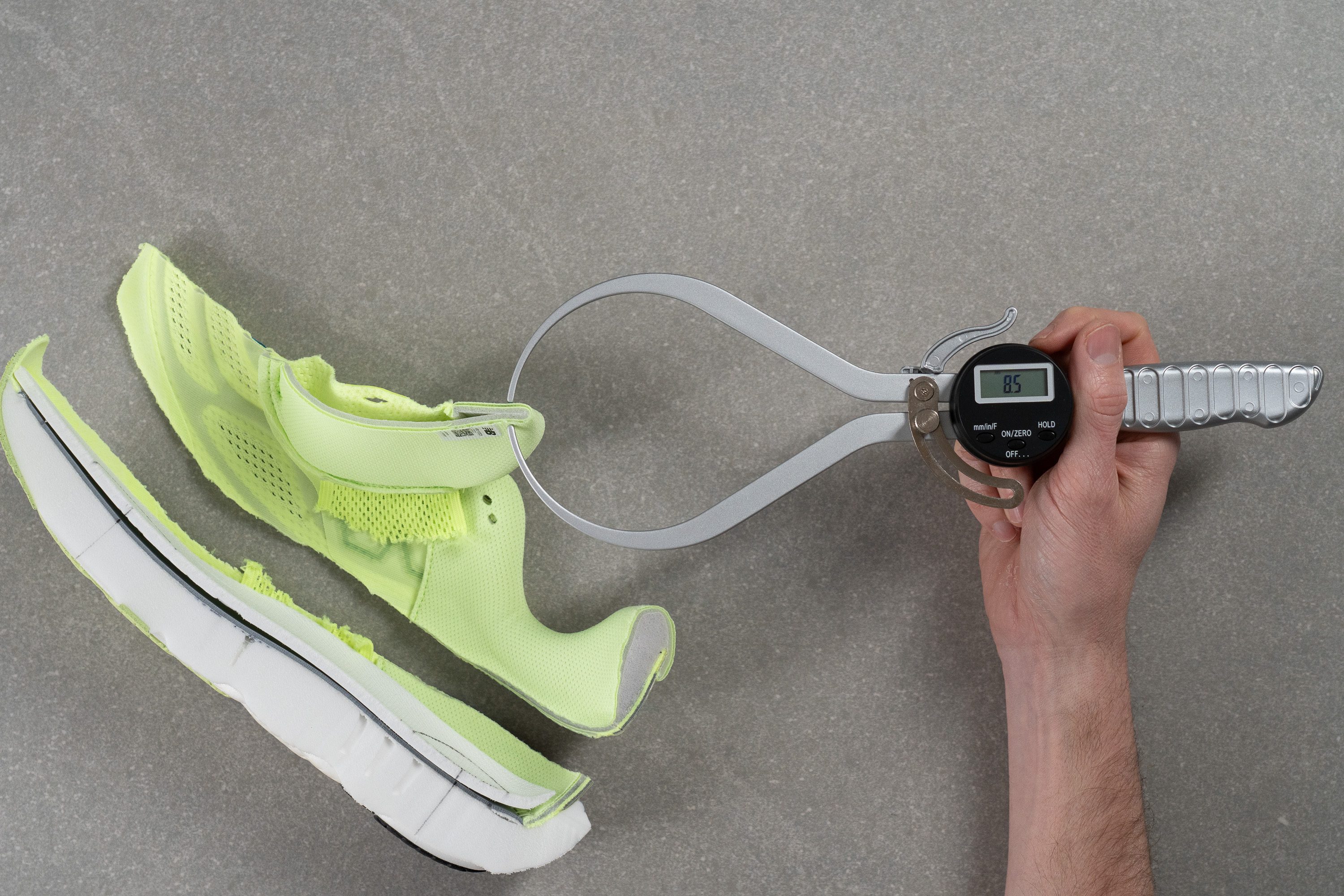
| 1080 v15 | 8.5 mm |
| Average | 5.8 mm |
Tongue: gusset type
We also liked the semi-gusseted design with two elastic straps that are ventilated as well. These are the kind of premium details we expect from a high-end daily trainer, and they are not always included.
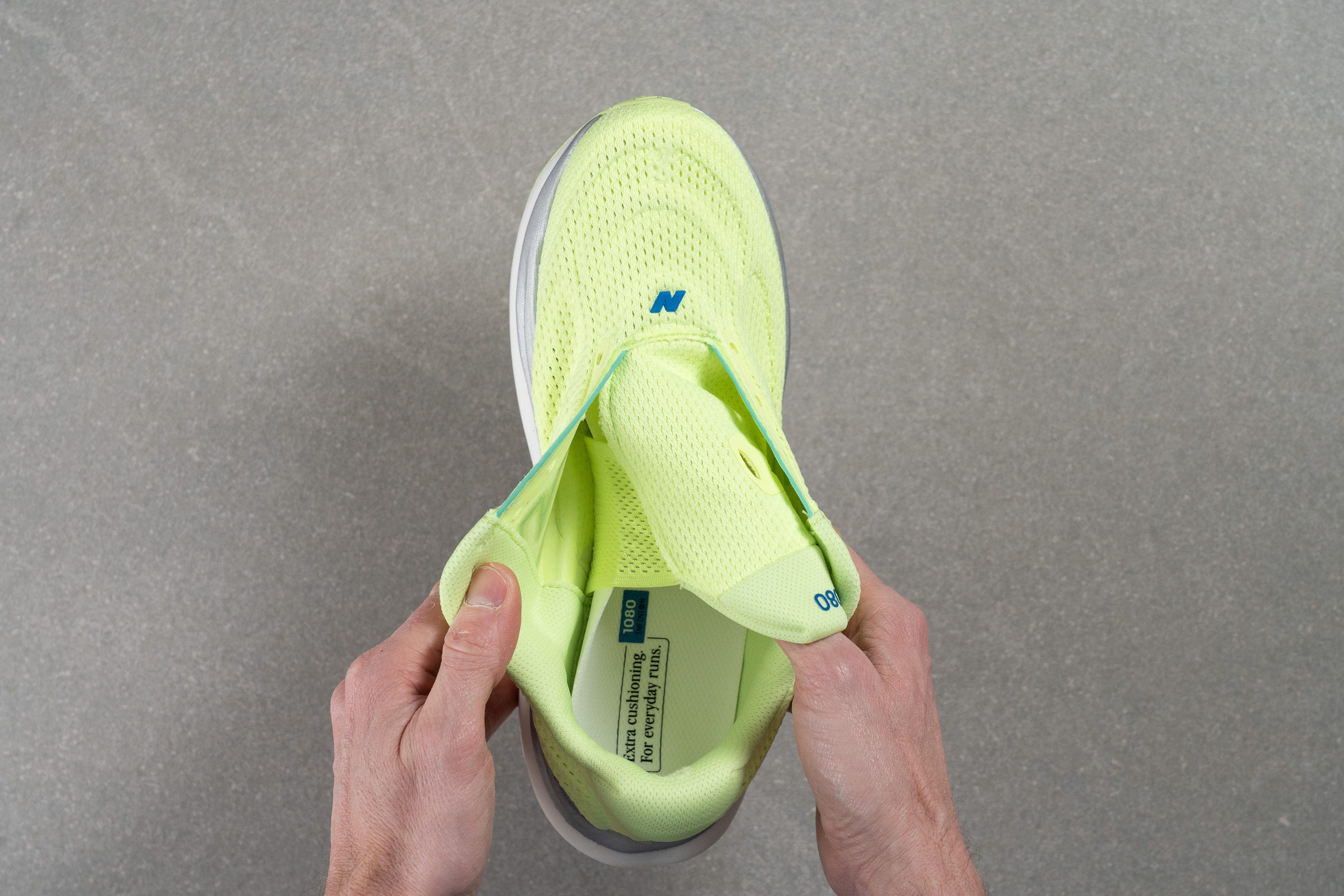
| 1080 v15 | Both sides (semi) |
Heel tab
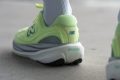
Aesthetically, the heel design of the 1080 v14 was not the most appealing we had seen. This update fully addresses that, showing more detail, better materials, and added comfort, while still skipping a pull tab.
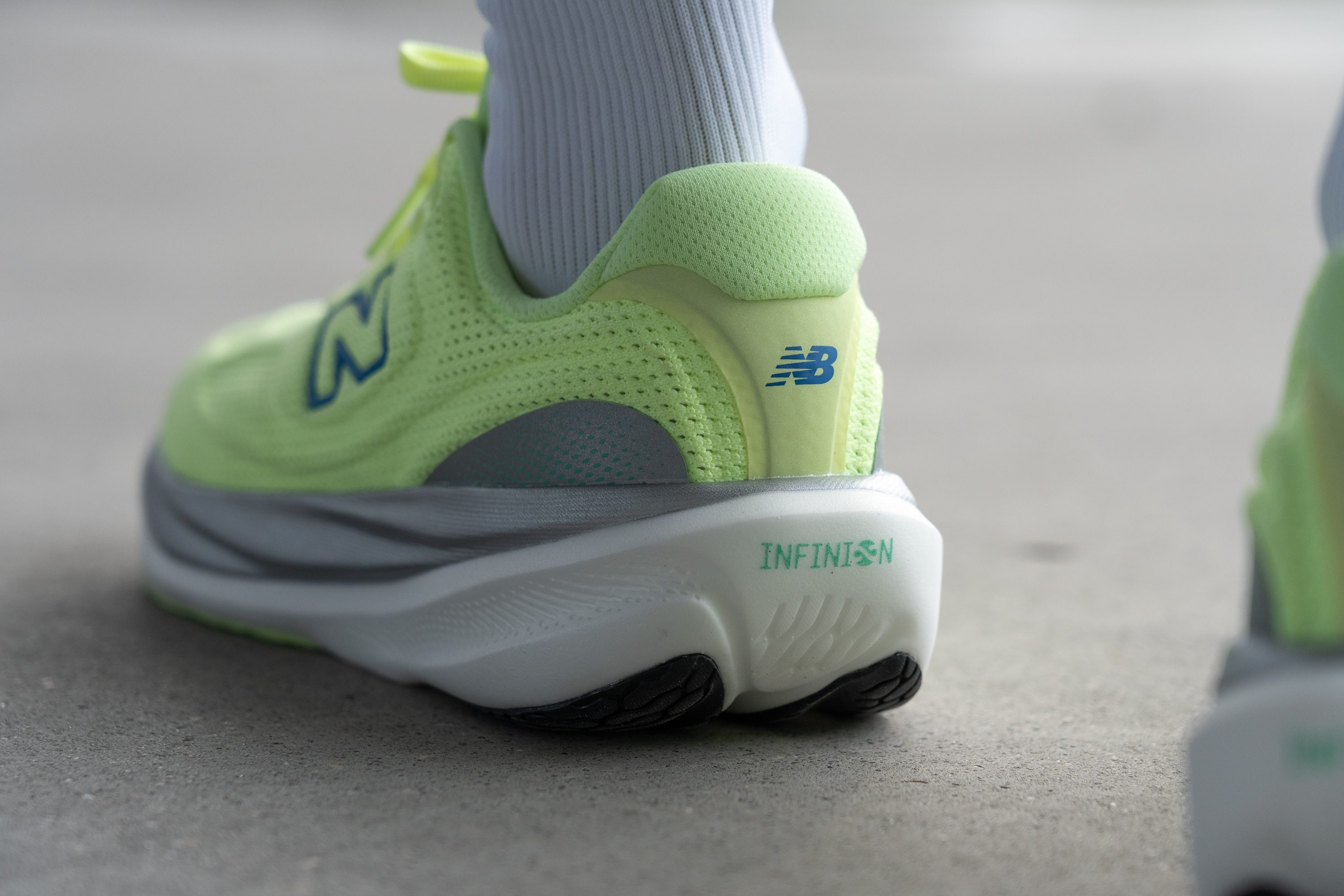
| 1080 v15 | None |
Price
The 1080 v15 comes with a small price increase, which is never great to see, but in this case it feels justified. For just 5 more dollars than last year, you get a clearly improved foam, a premium-quality upper, and a noticeable weight reduction—all in the same shoe. And now it feels like a fair deal for runners who care about energy return.
However, it’s also worth noting that New Balance’s unusual currency conversion can make the 1080 feel overpriced in some markets outside the US.
| 1080 v15 | $170 |