


















Our verdict
- Daily running 92
- Tempo 73
- Race 56
- Stability 89
Pros
- High energy return
- Even more foam underfoot than v18
- Excellent durability overall
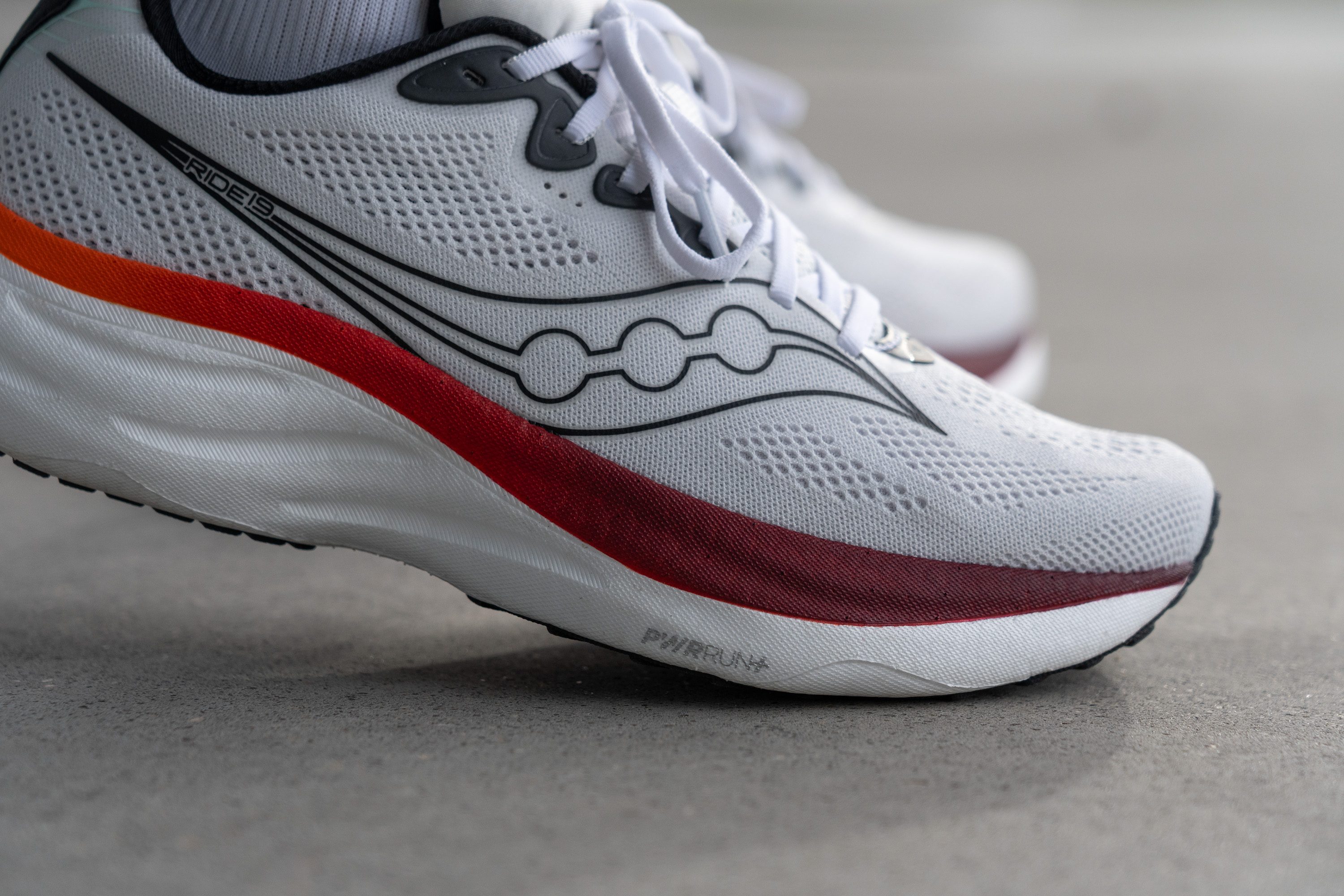
- Keeps its dependable DNA
- Outstanding breathability
- Wide and stable platform
- XT-900 rubber delivers good grip
- Secure fit with semi-gusseted tongue
- Excellent value
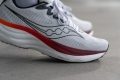
- Clean, improved aesthetics
Cons
- Heavier than previous version
- Limited rubber coverage
- Minor price increase
- Minor price increase
Awards
- Top pick in best running shoes for plantar fasciitis
- Top pick in best running shoes for high arches
- Top 15% in road running shoes
- Top 13% in neutral running shoes
- Top 14% most popular running shoes
Comparison
The most similar running shoes compared
+ + Add a shoe | |||||
|---|---|---|---|---|---|
| Our score | 88 Superb | 86 Great | 86 Great | 86 Great | |
| Price | £140 | £220 | £115 | £180 | |
| Pace | Daily running | Daily runningTempo | Daily running | Daily running | |
| Shock absorption | High | Moderate | High | High | |
| Energy return | High | High | Moderate | Low | |
| Traction | High | High | High | High | |
| Arch support | Neutral | Neutral | Neutral | Neutral | |
| Weight lab Weight brand | 9.8 oz / 278g 9 oz / 255g | 10.1 oz / 286g 10.4 oz / 296g | 9.3 oz / 264g 9.2 oz / 260g | 9.8 oz / 278g 10 oz / 283g | |
| Drop lab Drop brand | 8.5 mm 8.0 mm | 9.2 mm 8.0 mm | 7.6 mm 8.0 mm | 5.2 mm 8.0 mm | |
| Strike pattern | HeelMid/forefoot | HeelMid/forefoot | Mid/forefoot | Mid/forefoot | |
| Size | True to size | True to size | True to size | True to size | |
| Midsole softness | Balanced | Balanced | Balanced | Balanced | |
| Difference in midsole softness in cold | Small | Small | Normal | Small | |
| Toebox durability | Decent | Decent | Good | Decent | |
| Heel padding durability | Good | Good | Good | Decent | |
| Outsole durability | Good | Good | Good | Good | |
| Breathability | Breathable | Moderate | Moderate | Moderate | |
| Width / fit | Medium | Medium | Medium | Medium | |
| Toebox width | Medium | Wide | Medium | Medium | |
| Stiffness | Stiff | Stiff | Moderate | Stiff | |
| Torsional rigidity | Moderate | Stiff | Moderate | Stiff | |
| Heel counter stiffness | Stiff | Stiff | Stiff | Stiff | |
| Rocker | ✓ | ✓ | ✗ | ✓ | |
| Heel lab Heel brand | 38.7 mm 36.0 mm | 39.2 mm 40.0 mm | 39.4 mm 39.0 mm | 39.5 mm 43.5 mm | |
| Forefoot lab Forefoot brand | 30.2 mm 28.0 mm | 30.0 mm 32.0 mm | 31.8 mm 31.0 mm | 34.3 mm 35.5 mm | |
| Widths available | NarrowNormalWide | NormalWide | Normal | NormalWideX-Wide | |
| Orthotic friendly | ✓ | ✓ | ✓ | ✓ | |
| Season | SummerAll seasons | All seasons | All seasons | All seasons | |
| Removable insole | ✓ | ✓ | ✓ | ✓ | |
| Ranking | #49 Top 13% | #93 Top 24% | #95 Top 24% | #82 Top 21% | |
| Popularity | #55 Top 14% | #174 Top 44% | #215 Bottom 46% | #23 Top 6% |



Who should buy
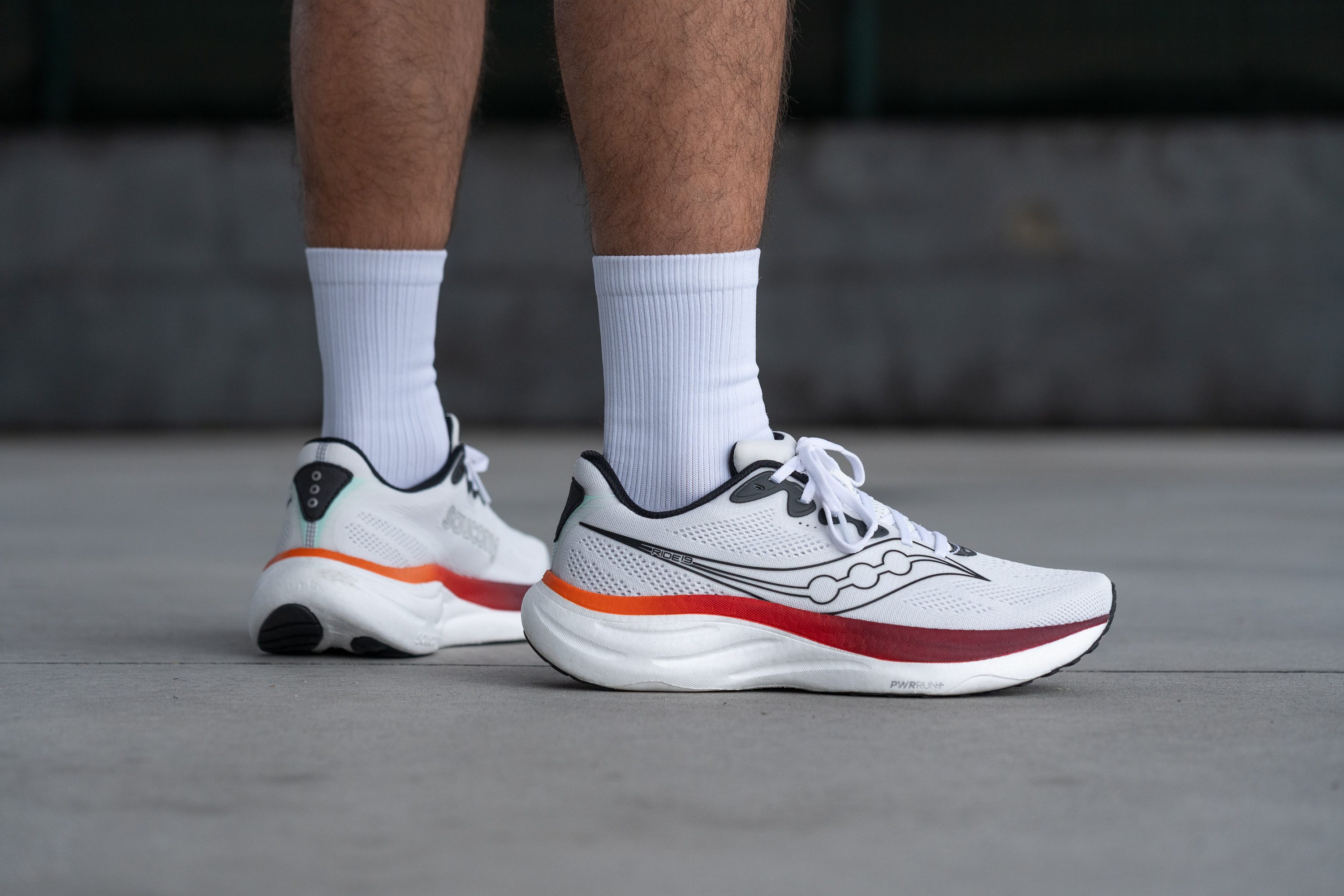
The Saucony Ride 19 could be a perfect match for:
- Runners looking for a solid, dependable daily trainer who do not mind a slightly heavier and stiffer ride based on our lab results.
- Those who value strong energy return in everyday runs, as the PWRRUN+ foam consistently delivers noticeable rebound.
- Neutral runners who want bounce, durability and stability in one package, all at a reasonable cost.
Who should NOT buy
We found in the lab that the PWRRUN+ foam shines in durability and bounce, but its weight makes the Ride 19 a bit heavier than before. From our perspective, we do not recommend it if weight worries you. Instead, the HOKA Mach 6 or the adidas Supernova Rise 2 feel lighter and more agile.
In our opinion, the Ride 19 is not the best match for runners who want a natural, compact, and flexible feel. If you want high energy return without that tank-like sensation, the PUMA Velocity Nitro 4 is your next daily trainer.
Cushioning
Shock absorption
Shock absorption is not a concern with the Ride 19, as it feels generously cushioned during runs, and that feeling came backed by our lab data too. A score of 132 SA in the heel and 118 SA in the forefoot removes any doubt and works well for daily training and even long runs.
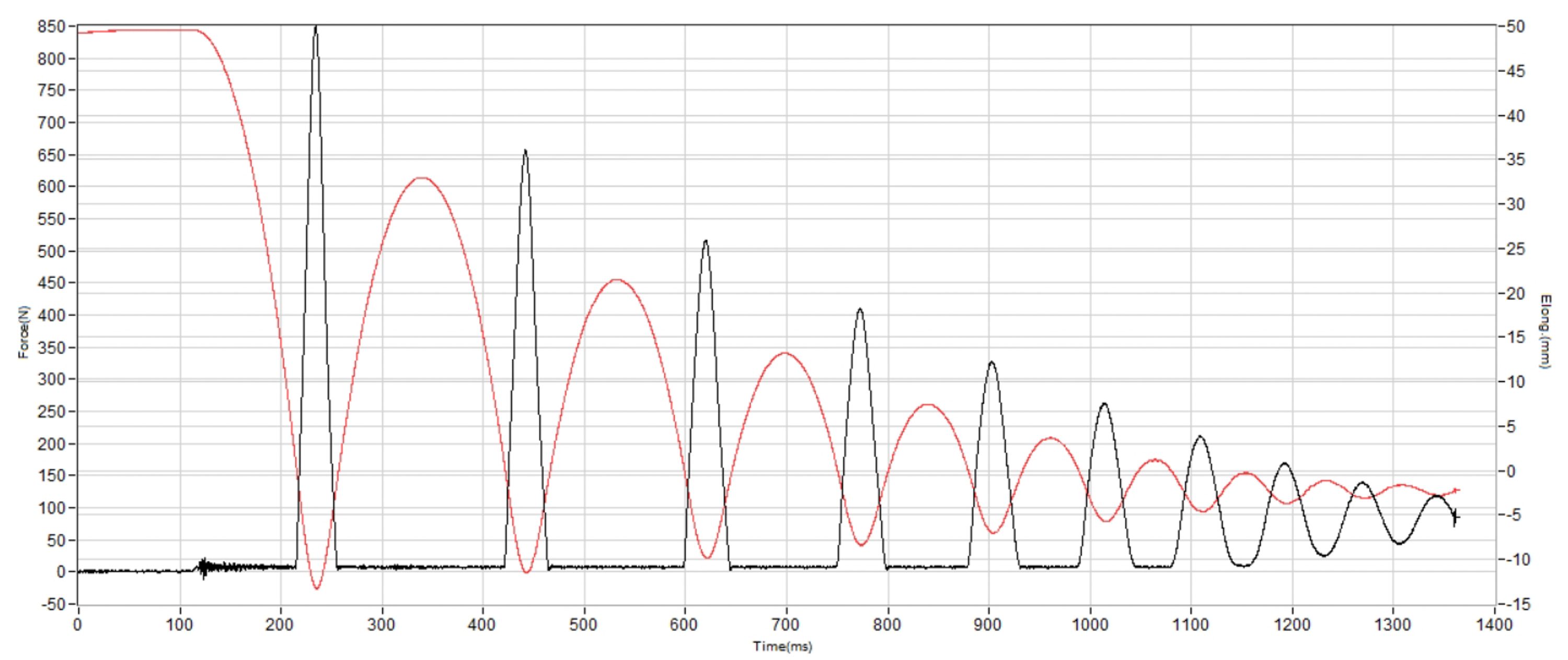
| Ride 19 | 132 SA |
| Average | 131 SA |
Energy return
After the huge success that adidas achieved with the Adizero EVO SL by combining a high-energy foam with a shoe capable of daily runs at an affordable price, most brands now know they cannot rely on an cheap and dull EVA foam anymore.
That was not the case with Saucony, as they have used PWRRUN+ in the Ride series, clearly enhancing what an EVA-based foam can deliver. And the 19th version features a reformulated eTPU material that delivers excellent energy return for the price, reaching 66.7% in the heel and an impressive 70.7% in the forefoot.
| Ride 19 | 70.7% |
| Average | 61.5% |
Heel stack
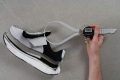
The Ride 19 moves closer to the maximalist category by reaching 38.7 mm of stack height in the heel. That places it just below 40 mm and clearly above the 35.0 mm we measured on the Ride 18 last year.
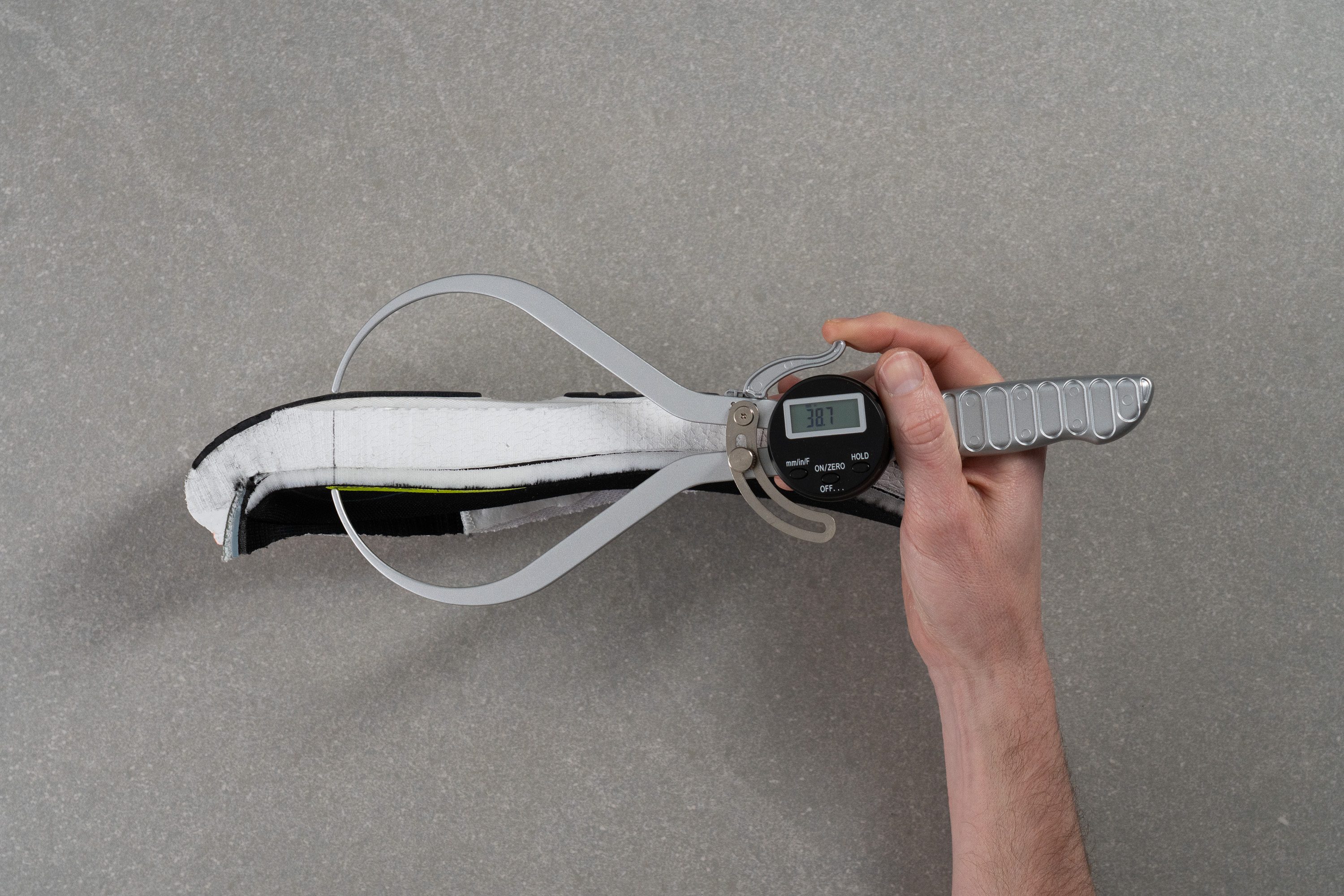
| Ride 19 | 38.7 mm |
| Average | 35.6 mm |
Forefoot stack
We found a very similar increase in foam under the forefoot, now reaching 30.2 mm.
Not long ago, this would have been unthinkable for the Ride series, but Saucony is clearly following the current market trend, and that is understandable from a business point of view. That said, we think this should be the limit for the Ride.
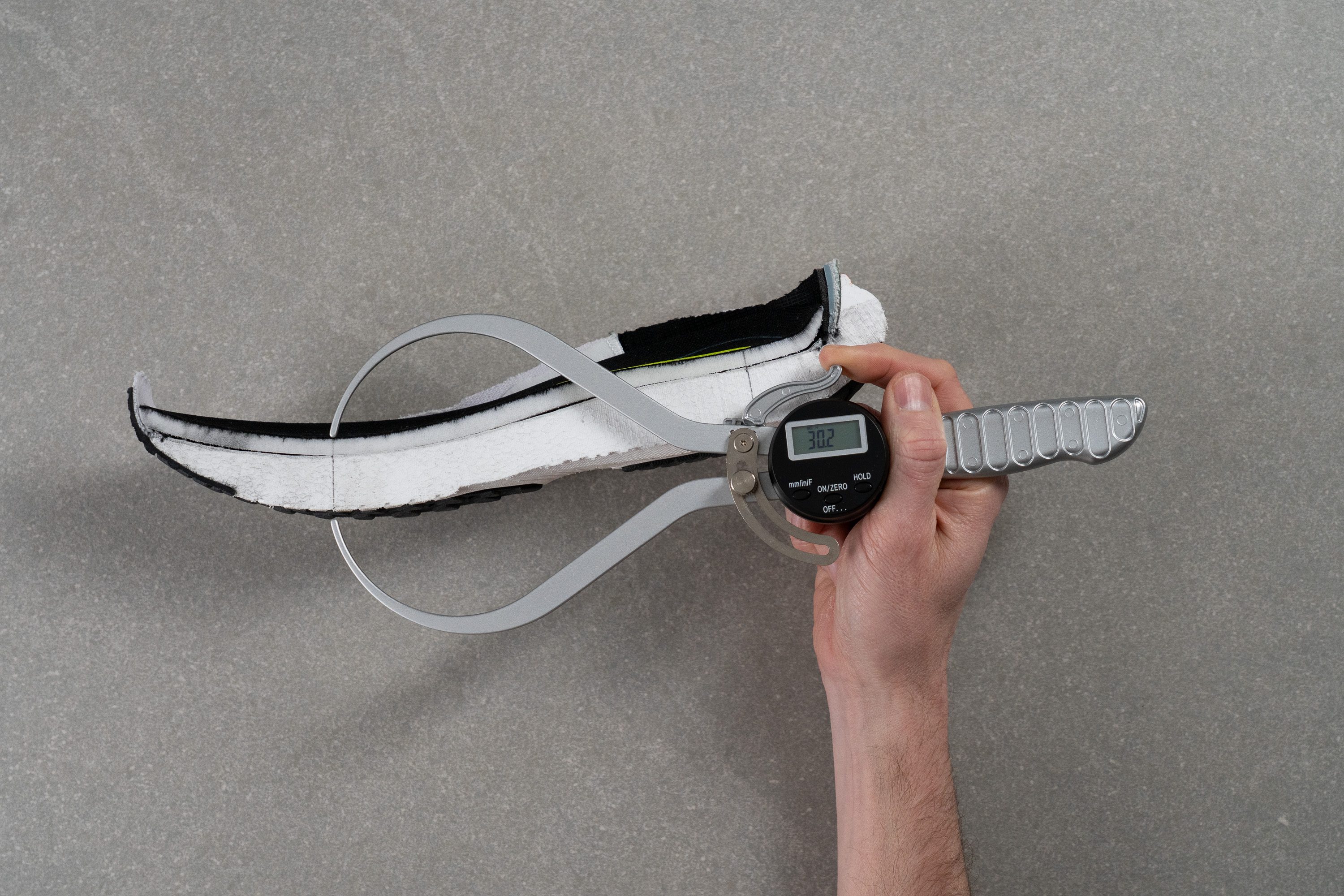
| Ride 19 | 30.2 mm |
| Average | 27.1 mm |
Drop
It’s always a plus when the measured drop closely matches the brand’s claim. In this case, we recorded 8.5 mm in the Ride 19, which is very close to the stated 8 mm and widely seen as the most versatile design to suit different foot strikes—a 6 mm drop can feel a bit flat for heel runners, while 10 mm may be too much for forefoot strikers.
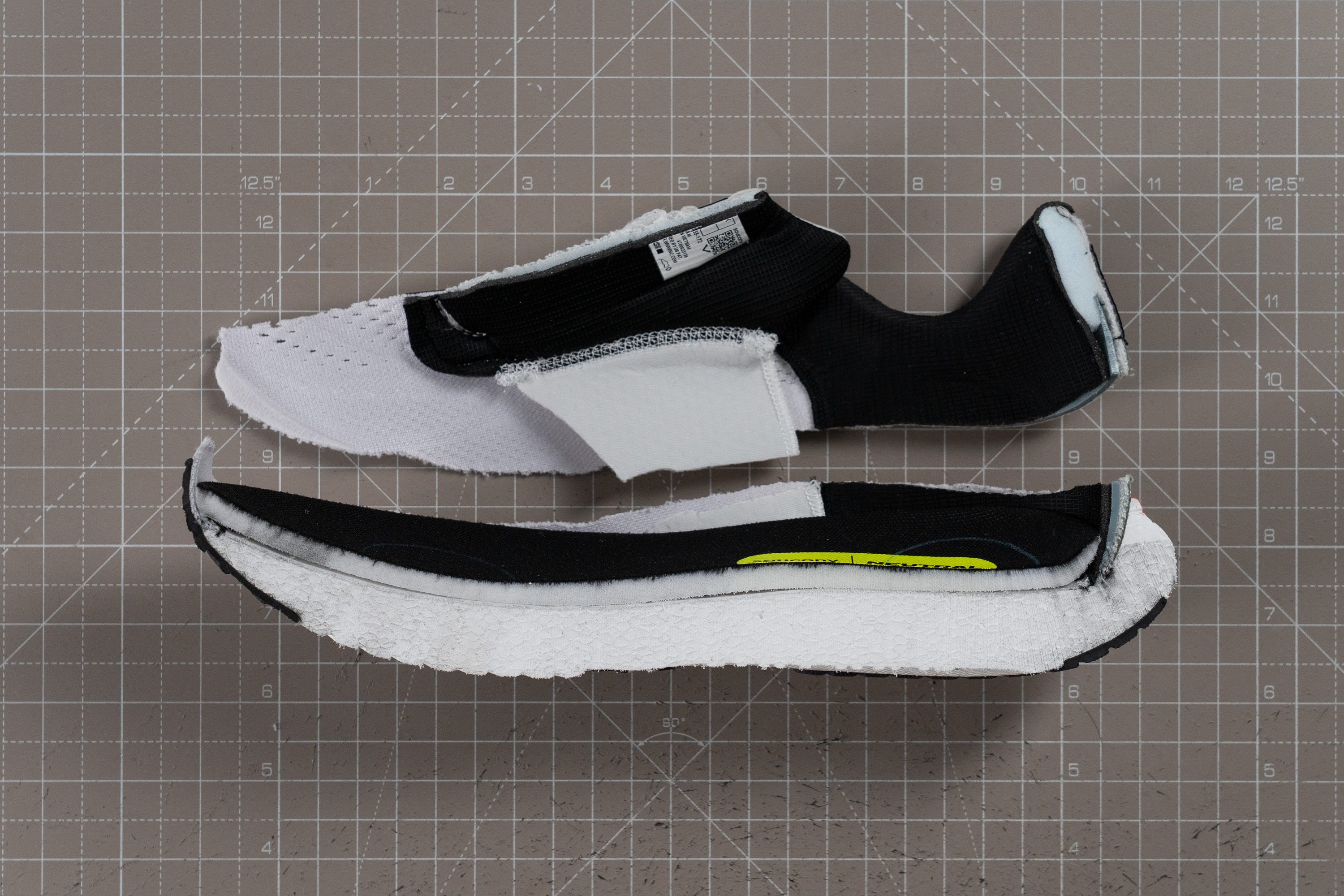
| Ride 19 | 8.5 mm |
| Average | 8.4 mm |
Midsole softness
The new PWRRUN+ foam uses an updated eTPU compound that is very similar to Light Boost from adidas. It relies on the same beaded foam structure with strong energy return and, as expected from PWRRUN+, skips a plush feel underfoot.
This time, we measured 37.1 AC, although the ride feels slightly softer than the number suggests because the insole is a bit softer than the PWRRUN+ foam. Instead of calling it firm, we would describe the ride as moderate or average in terms of softness.
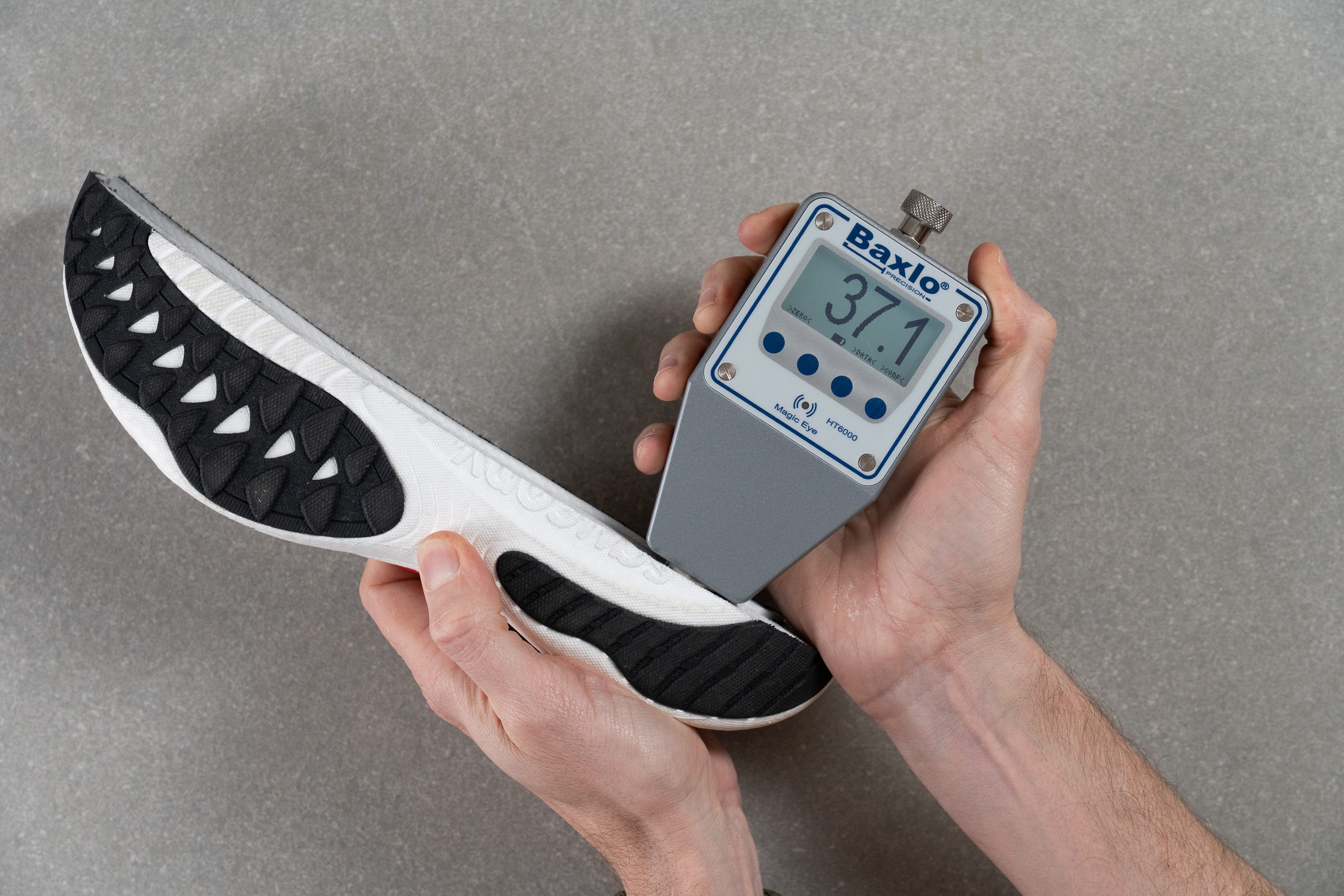
| Ride 19 | 37.1 AC |
| Average | 35.4 AC |
Rocker
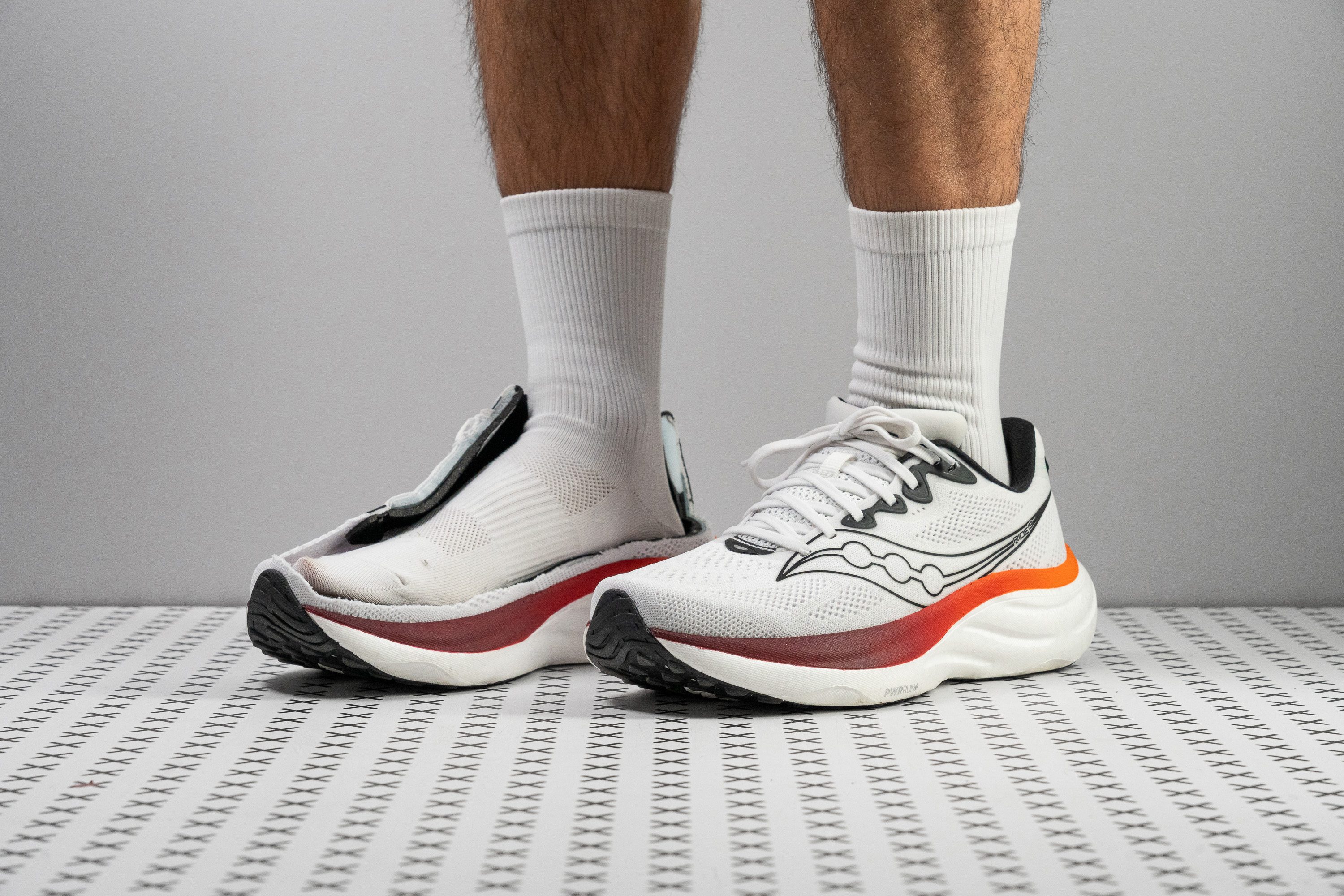
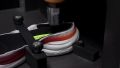
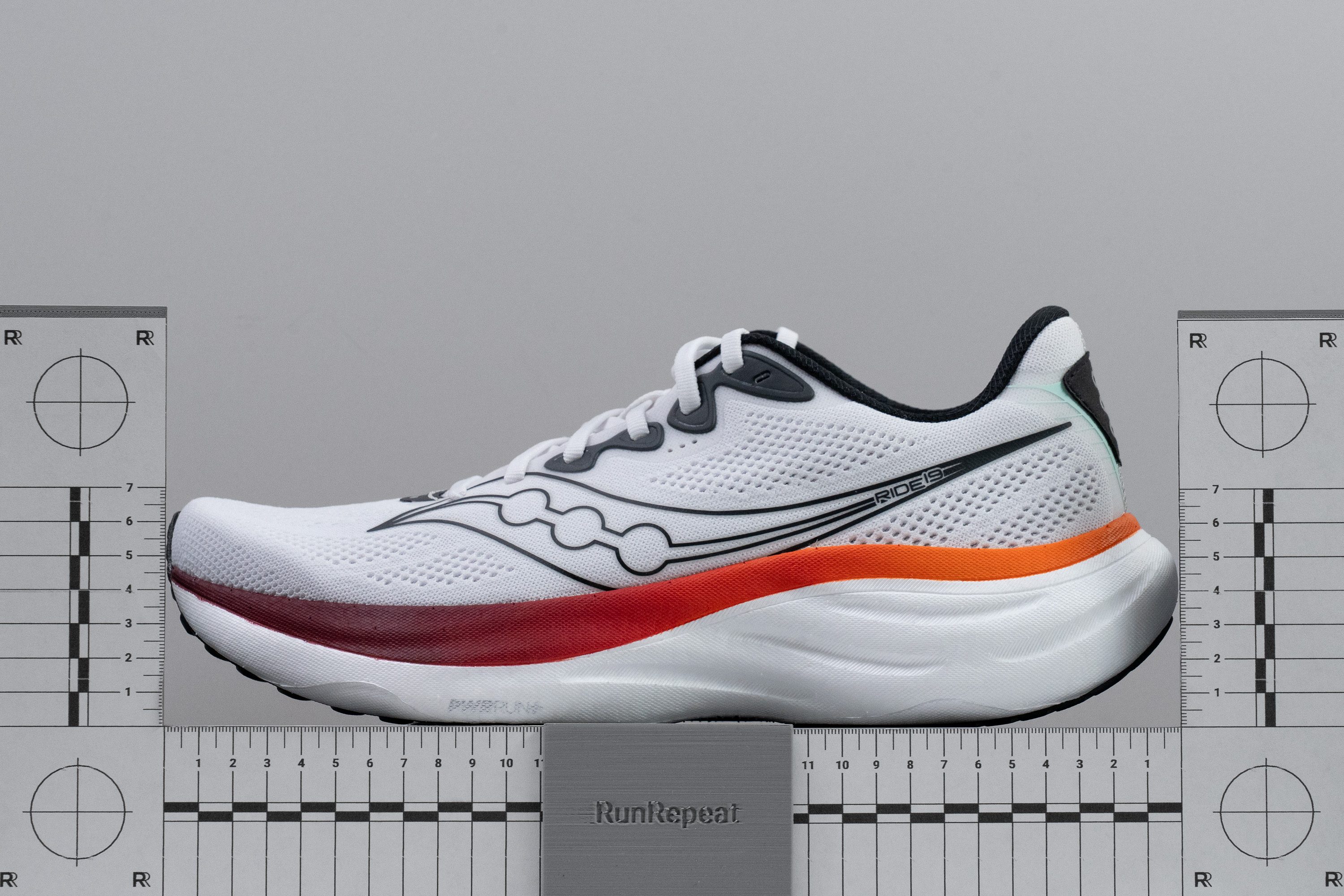
One side effect of the higher stack height is that the rocker has become more pronounced with each update of the Ride series. While it still avoids the ultra-rockered category, we can now clearly see an aggressive heel bevel along with a moderate, late-start forefoot curvature.
Size and fit
Size
Saucony Ride 19 fits true to size (38 votes).
Internal length
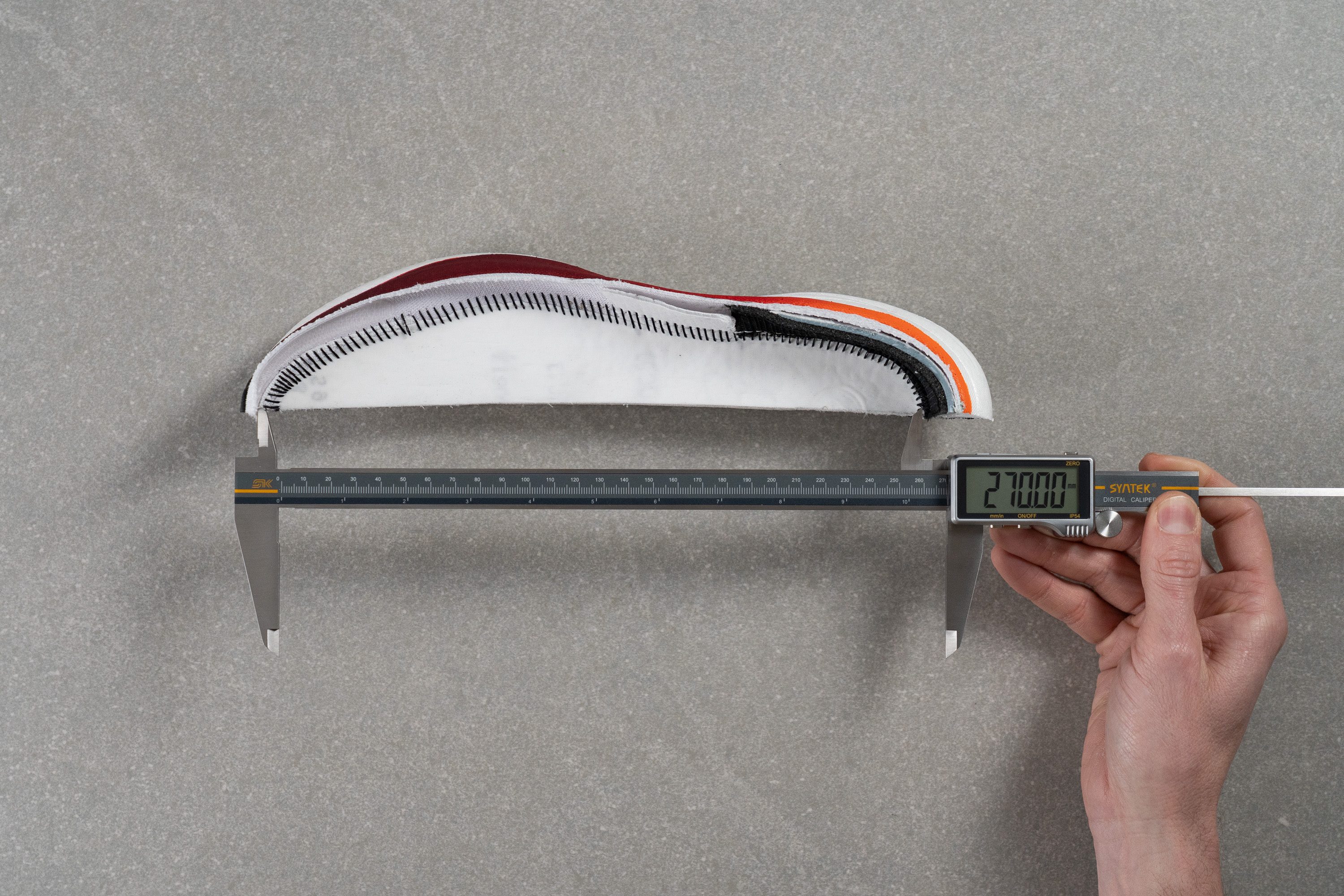
| Ride 19 | 270.0 mm |
| Average | 269.3 mm |
Width / Fit
One of the main strengths of the Ride series has always been its dependable fit that works for most runners, avoiding extremes. After running in the shoe, we felt that version 19 keeps the same clear philosophy.
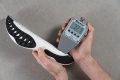
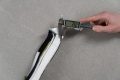
Since you likely come here because we measure and quantify running shoes, we made a gel mould and took precise measurements to make comparisons clearer and more accurate, starting with a reasonable 96.3 mm reading for width.
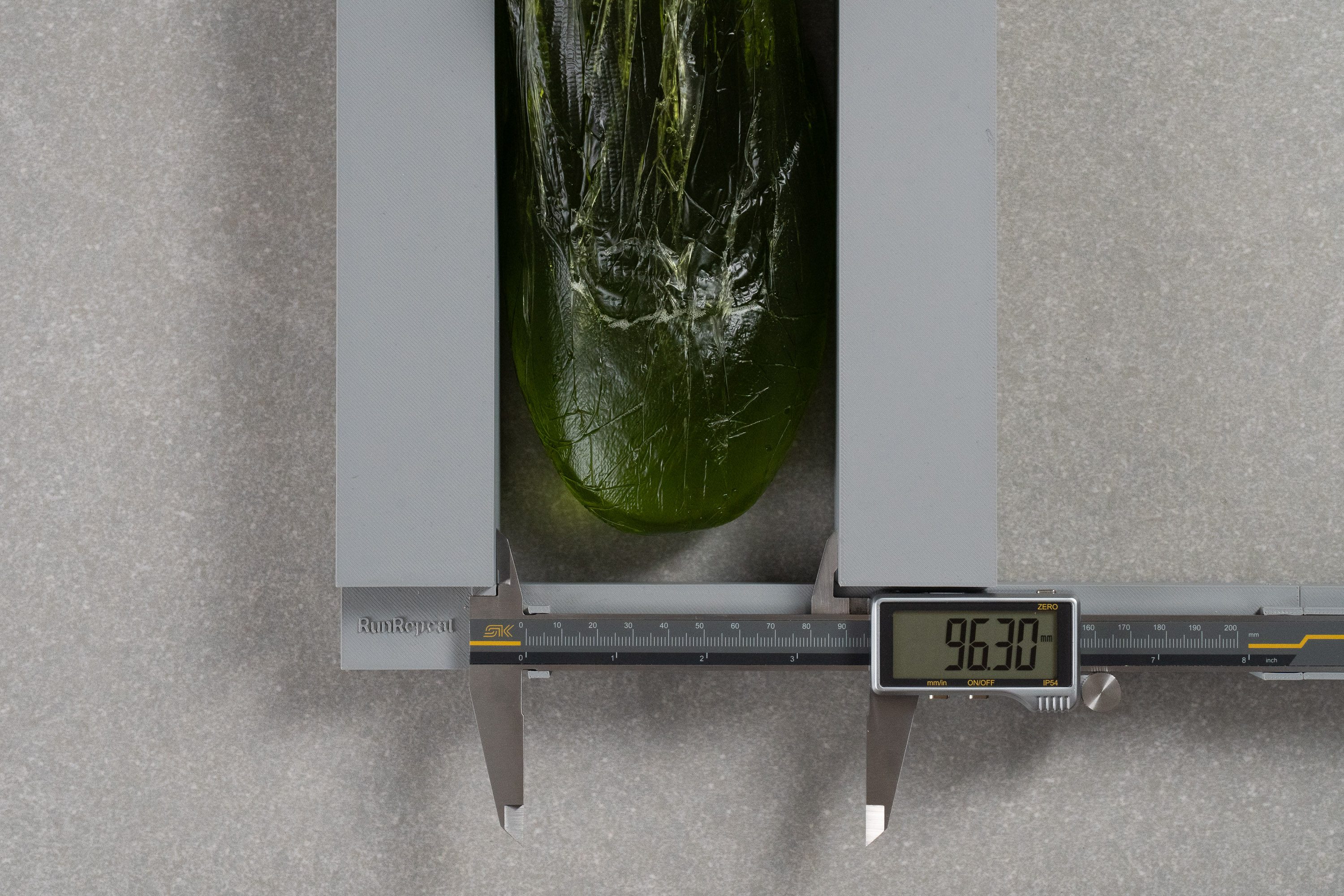
| Ride 19 | 96.3 mm |
| Average | 95.2 mm |
Toebox width
The toebox width also landed, as expected, close to the average range for running shoes. Our digital callipers measured 72.8 mm, which should suit most runners, with the added benefit that this shoe is available in wide sizing in select countries.
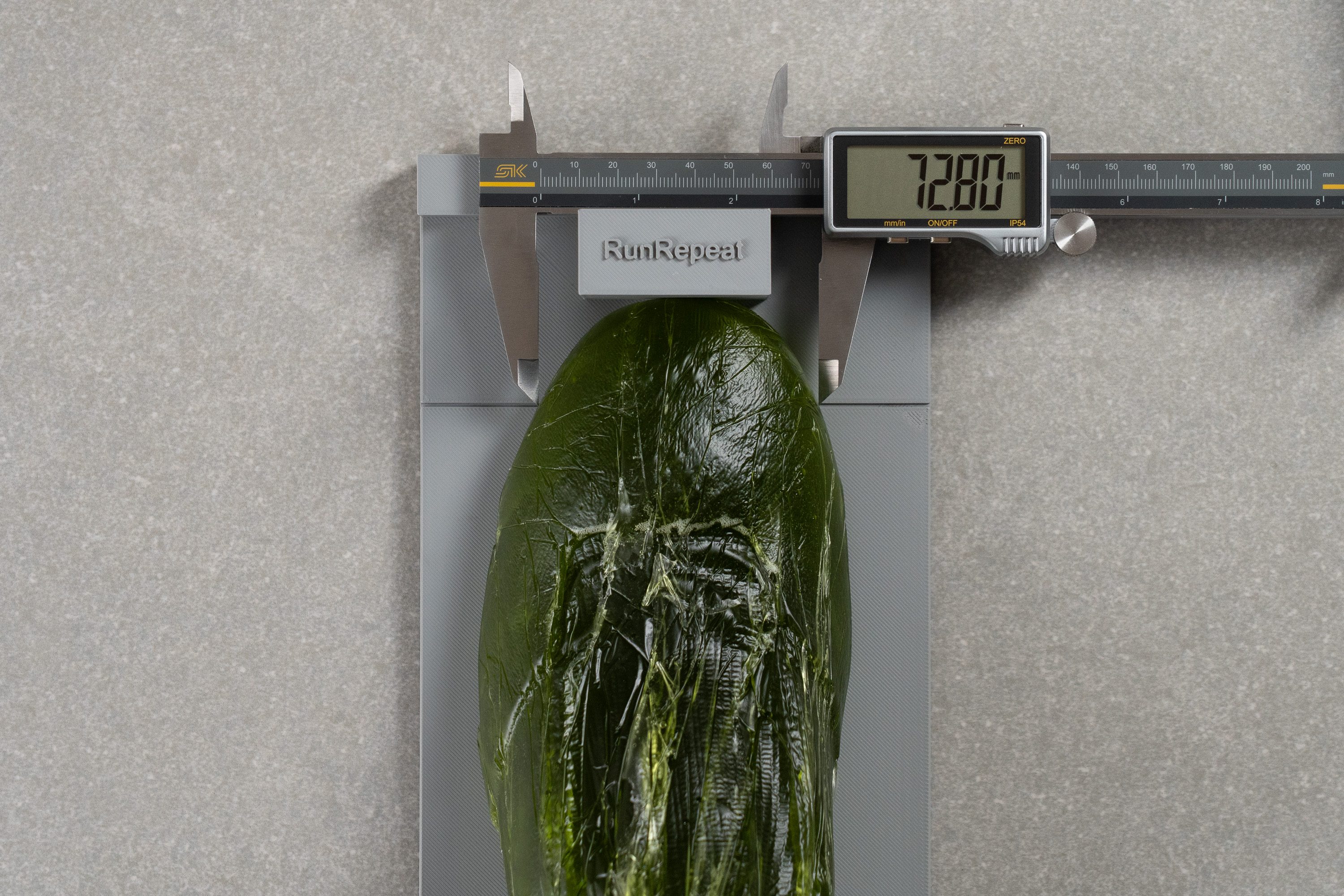
| Ride 19 | 72.8 mm |
| Average | 73.2 mm |
Toebox height
The overall toebox volume is quite generous, and we never felt pressure on our toenails.
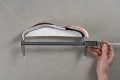
With a toebox height of 28.8 mm plus a stretchy mesh, the Ride 19 clears another potential concern.
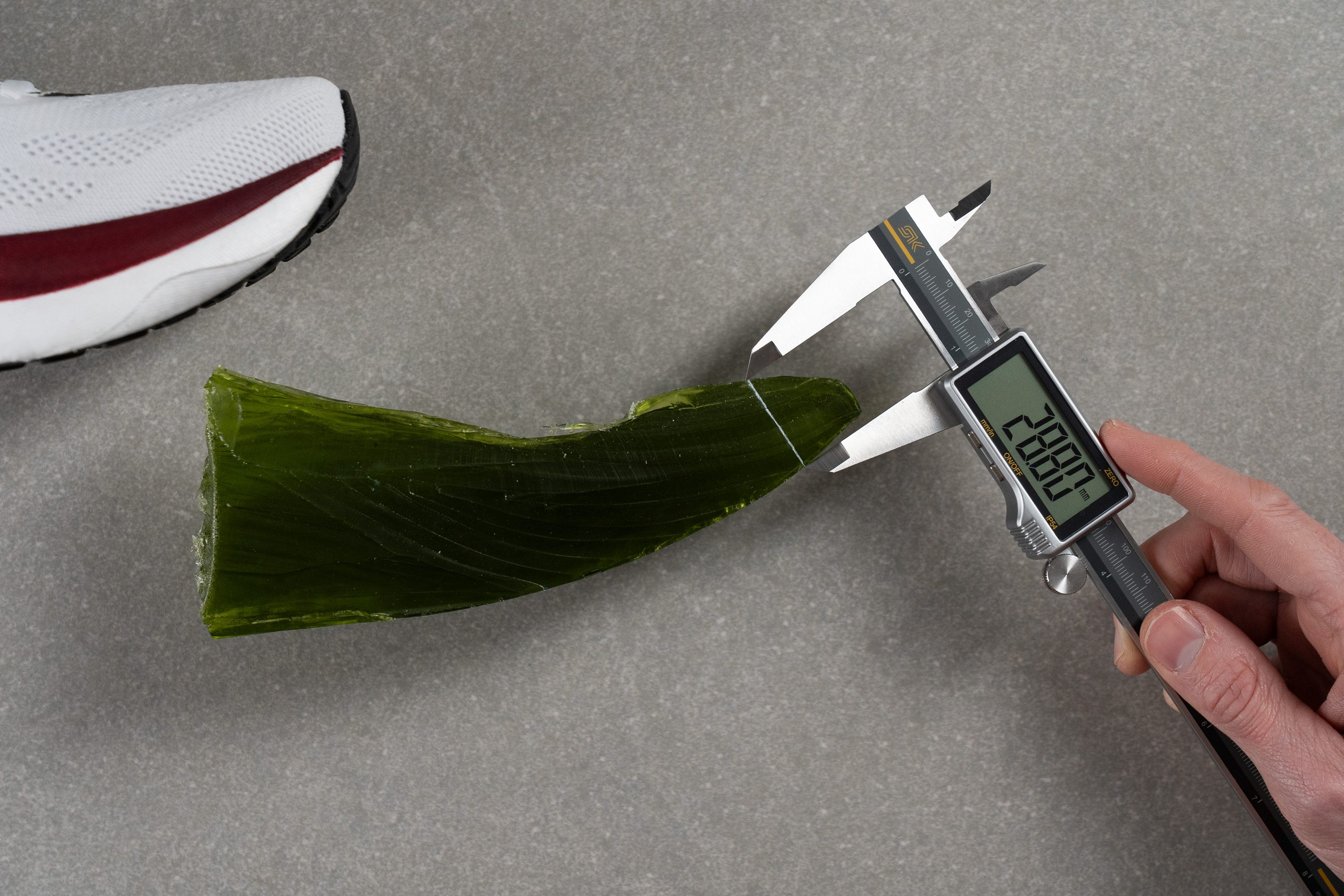
| Ride 19 | 28.8 mm |
| Average | 27.0 mm |
Traction / Grip
Traction test
Our lab tests showed a 0.52 grip score for the Ride 19, placing it right in the ideal range for reliable traction.
During runs on dry asphalt, wet concrete, and even smooth dirt roads, the XT-900 rubber felt secure and predictable at all times. And compared to version 18, this represents a tiny step forward, which is always good to see despite being impossible to notice the difference underfoot.
| Ride 19 | 0.52 |
| Average | 0.53 |
Outsole design
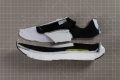
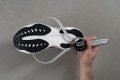
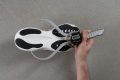
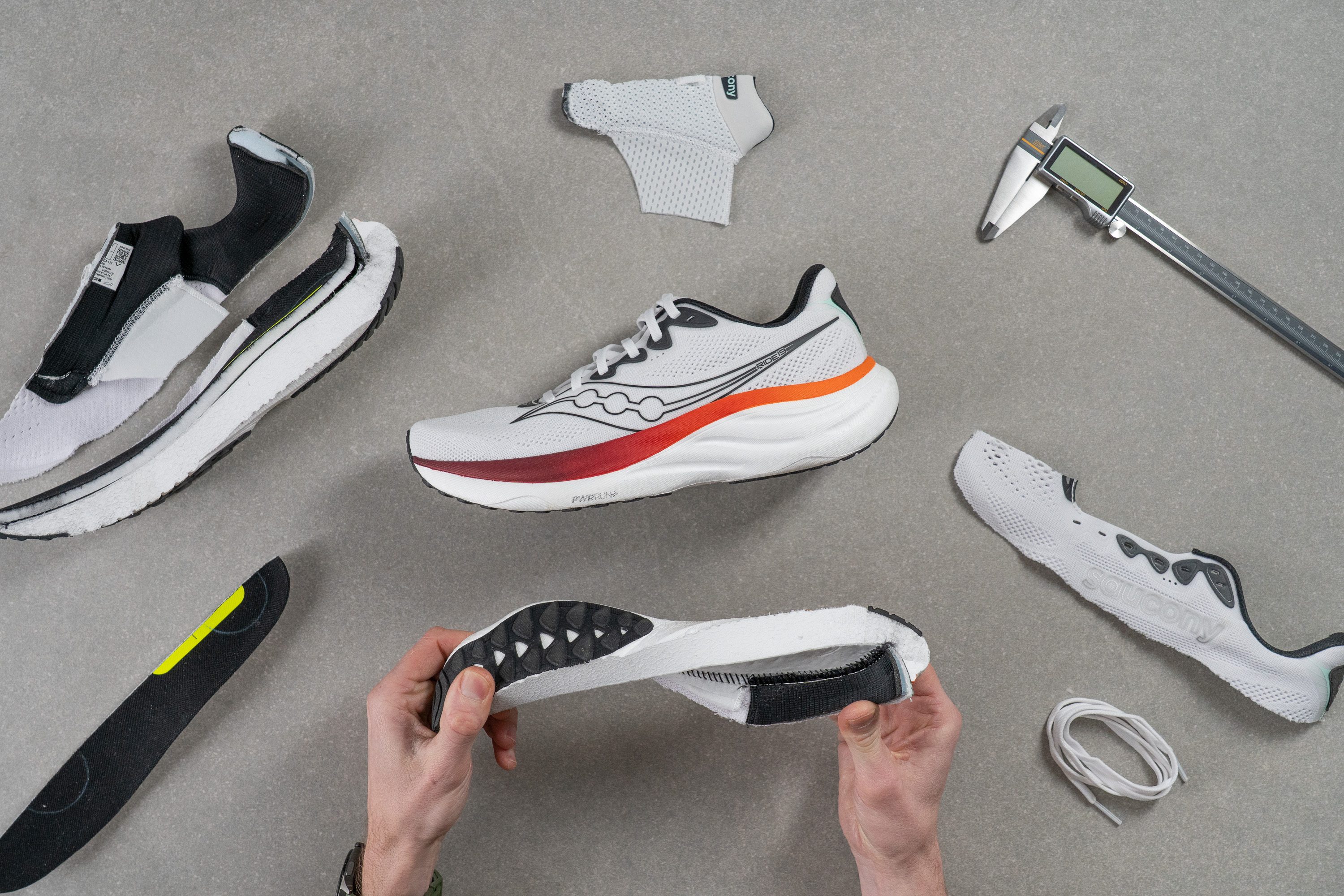
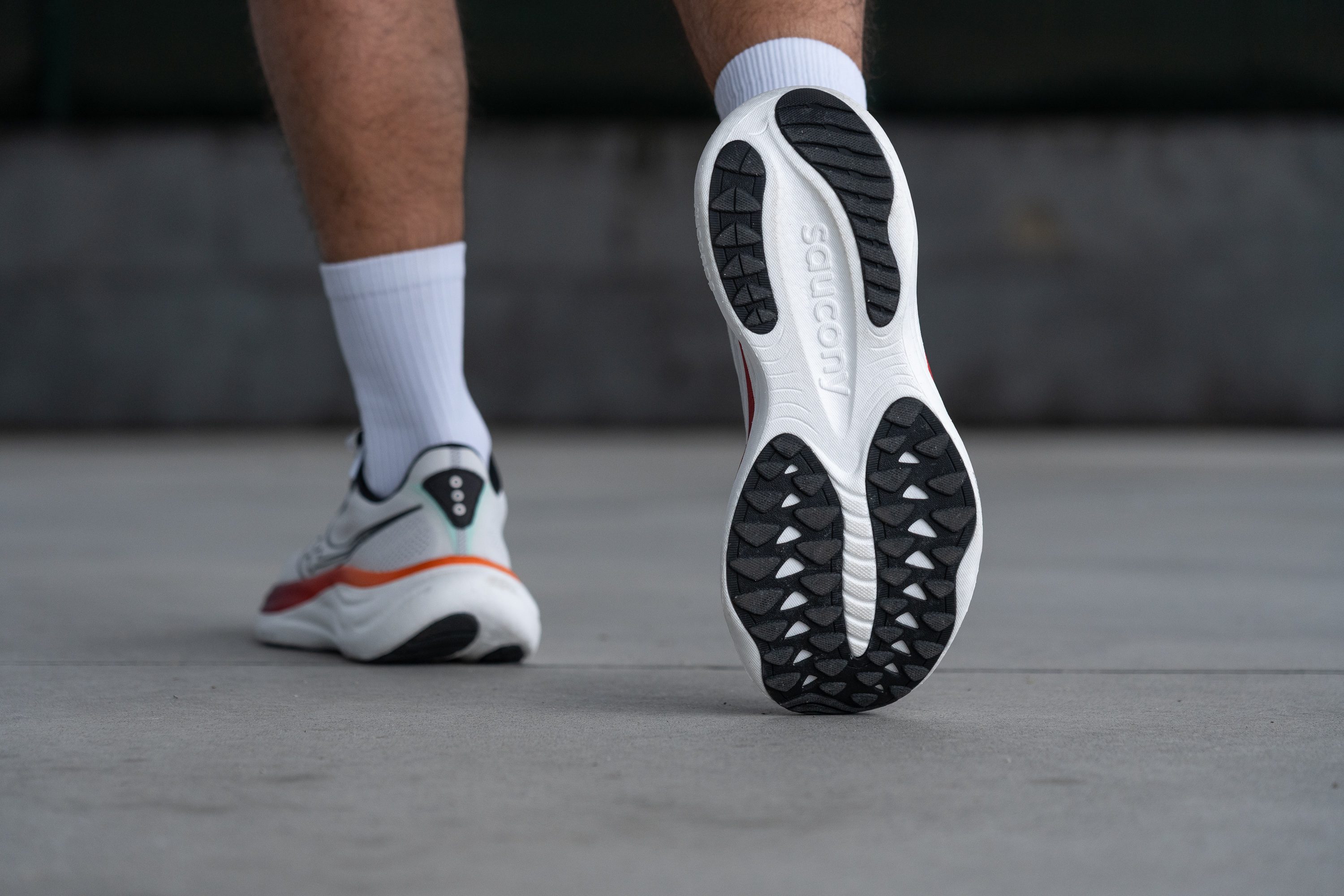
The outsole design is one of the biggest changes in the Ride 19. Saucony has fully reworked it with a clear focus on saving weight, which allows more foam underfoot without adding a noticeable weight penalty.
Coverage is now limited in the midfoot and heel, while the forefoot receives slightly more rubber. This shoe was also a good test of our visual memory, because as soon as it arrived in the lab, it looked familiar. Maybe Saucony took some inspiration from the ASICS Gel Pulse 16, what do you think?
Flexibility / Stiffness
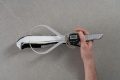
Increasing the stack height comes with the side effect of higher stiffness. This is not a small change, as the Ride 19 reaches 19.1N, a 73% increase compared to version 18, and a shift that some runners may not enjoy.
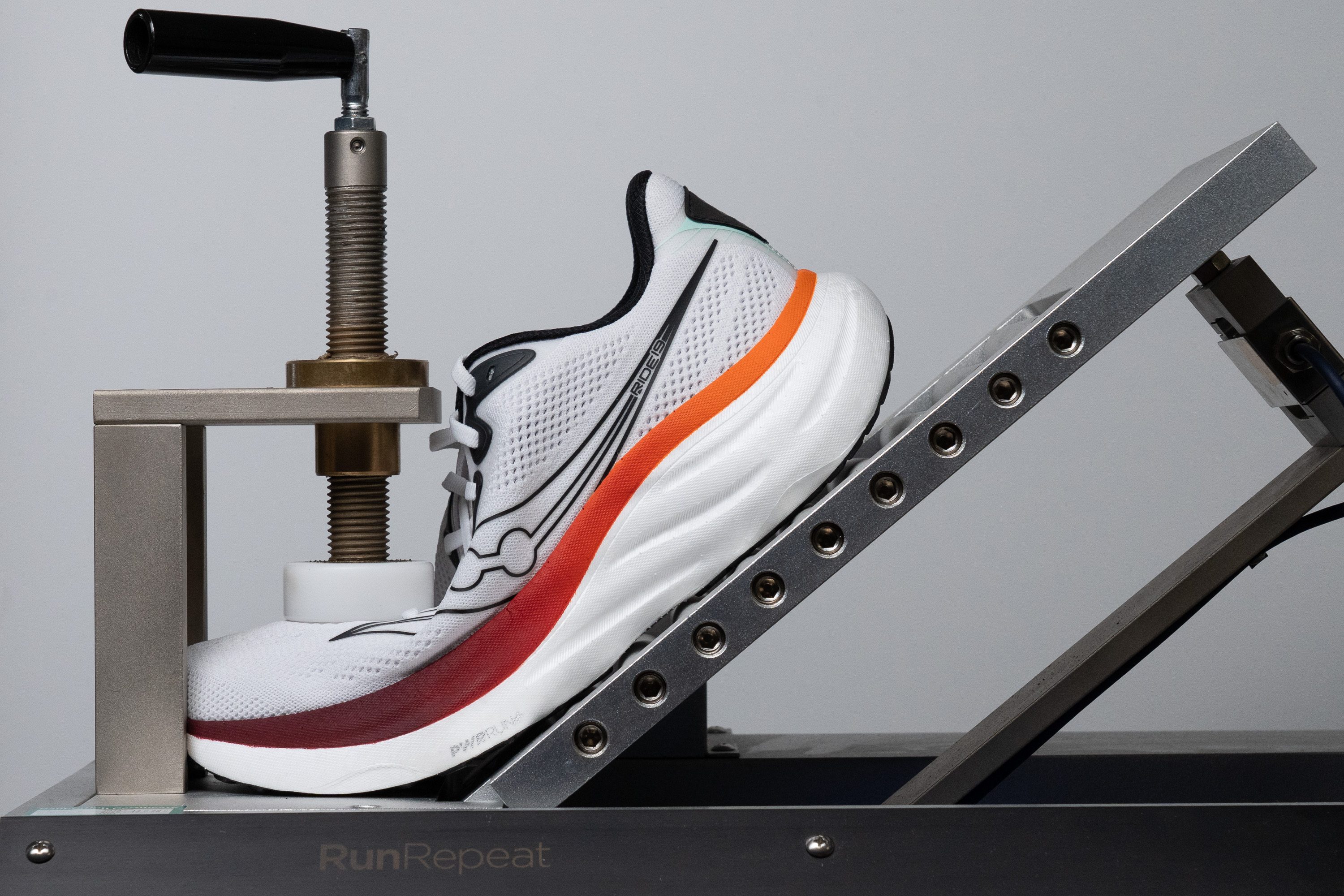
| Ride 19 | 19.1N |
| Average | 15.5N |
Weight
Despite Saucony’s effort to tweak the outsole and cut some weight, the Ride 19 still gained noticeable mass. After testing, it now weighs 9.8 oz or 278g, up from 9.0 oz or 255g in version 18, which is a clear jump.
While the PWRRUN+ foam brings strong durability and solid energy return, its main drawback has long been weight. That tradeoff shows up again here, as adding just a few extra millimetres led to a clearly heavier shoe.
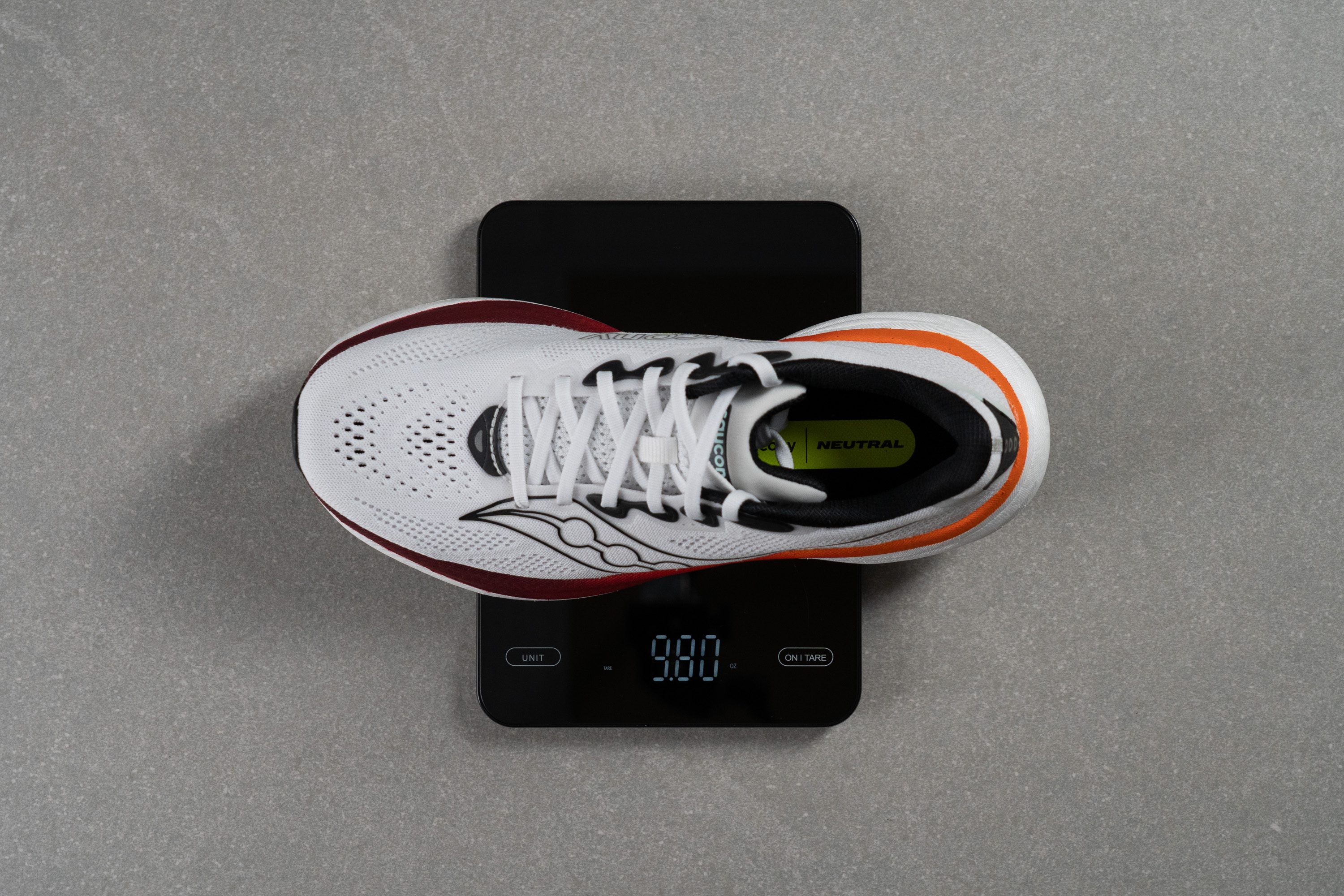
| Ride 19 | 9.8 oz (278g) |
| Average | 9.2 oz (261g) |
Breathability
Breathability test
The Ride series has consistently been a reliable performer in our breathability tests, and version 19 continues that trend without any surprises.
We confirmed that during our lab evaluation, where we measure how effectively the shoe pulls sweat away from the foot over 3 hours. The Ride 19 earned a strong result of 74 BR, exactly the kind of performance we expected from this dependable daily trainer.
| Ride 19 | 74 BR |
| Average | 75 BR |
Drying potential
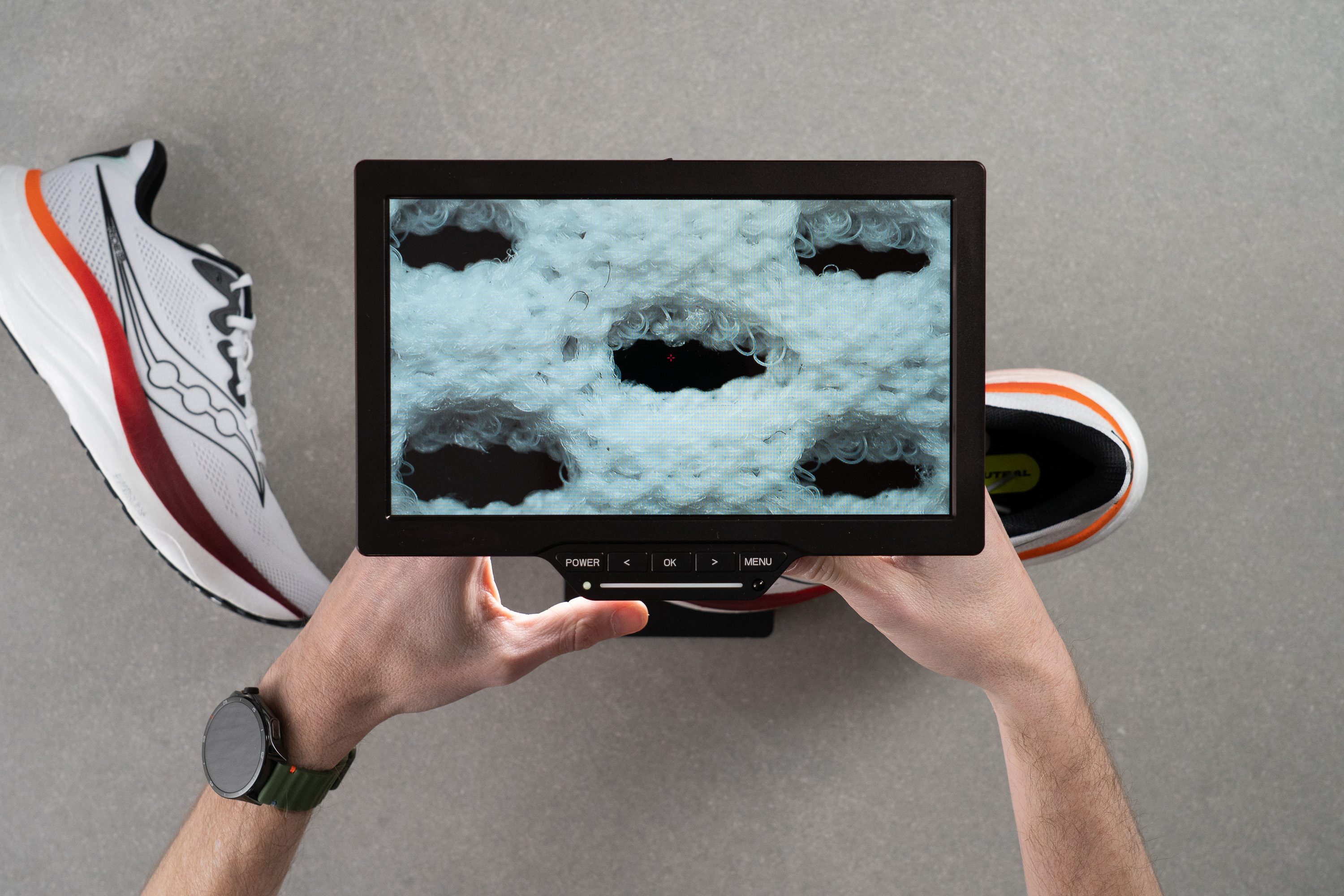
NewThe Ride 19 also delivered an encouraging result in our drying potential test. With a figure of 54%, it evaporates moisture at a solid rate, helping prevent sweat from accumulating in the shoe during long runs.
| Ride 19 | 54% |
| Average | 53% |
Stability
Lateral stability test
Going higher in stack height naturally challenges stability, but Saucony has made clear adjustments. The Ride 19 is now wider in the forefoot than before, and it features a fully redesigned heel that is... yep, broader as well.
For us, it remains a neutral shoe, and runners with moderate support needs may want to look at the Tempus 2 as a better option. That said, the Ride 19 still delivers a stable ride for most runners.
Torsional rigidity
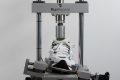
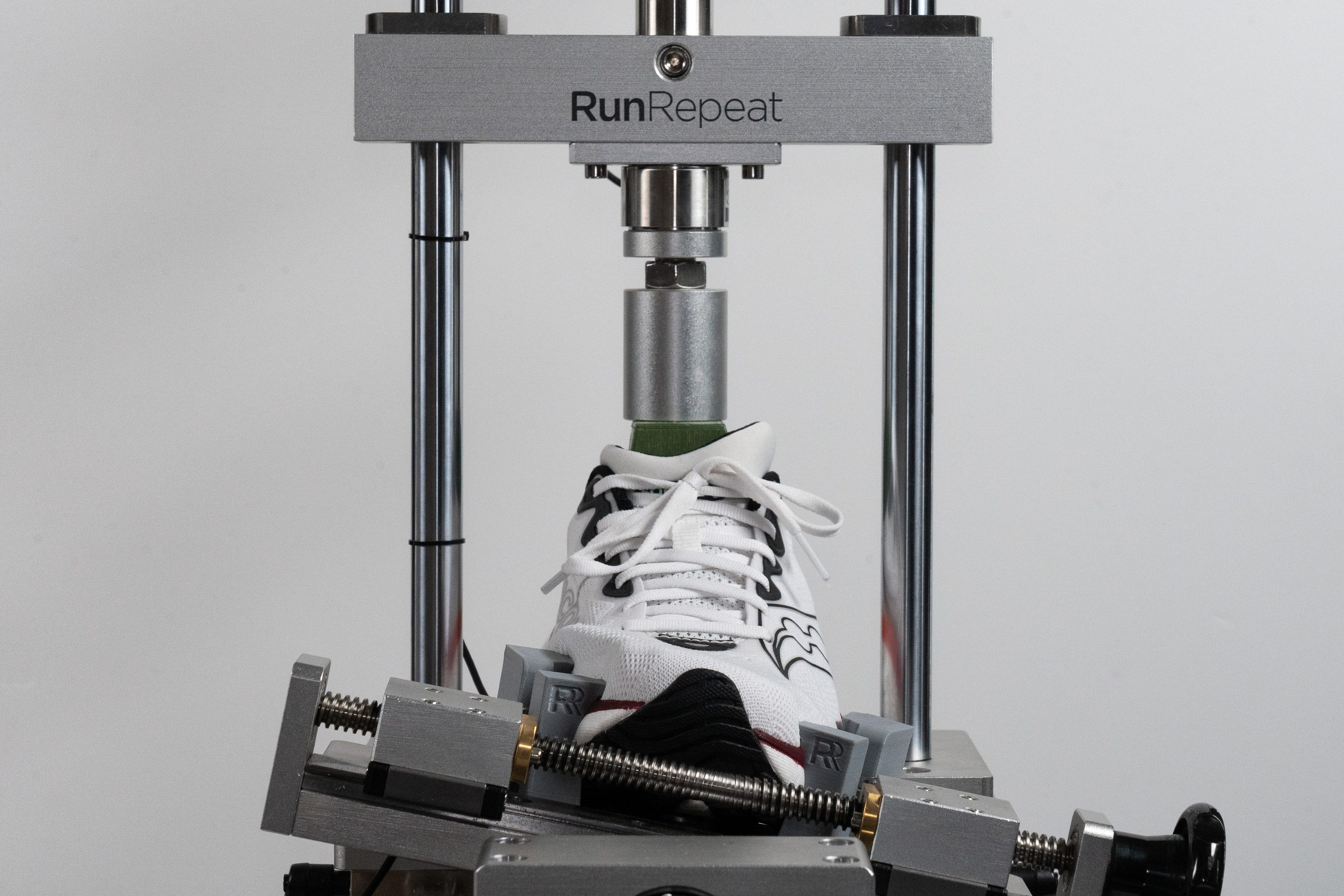
We measured high longitudinal stiffness earlier, and now found a more moderate result in our torsional rigidity test at 13.5 Nm, so at least it does not feel excessively stiff in every direction.
| Ride 19 | 13.5 Nm |
| Average | 14.3 Nm |
Heel counter stiffness
Stiffness defines the Ride 19, as the heel counter earned a maximum 5/5 score. This is clearly Saucony’s attempt to add as much heel stability as possible, though again, it may feel excessive for some runners.
| Ride 19 | 5 |
| Average | 2.9 |
Midsole width - forefoot
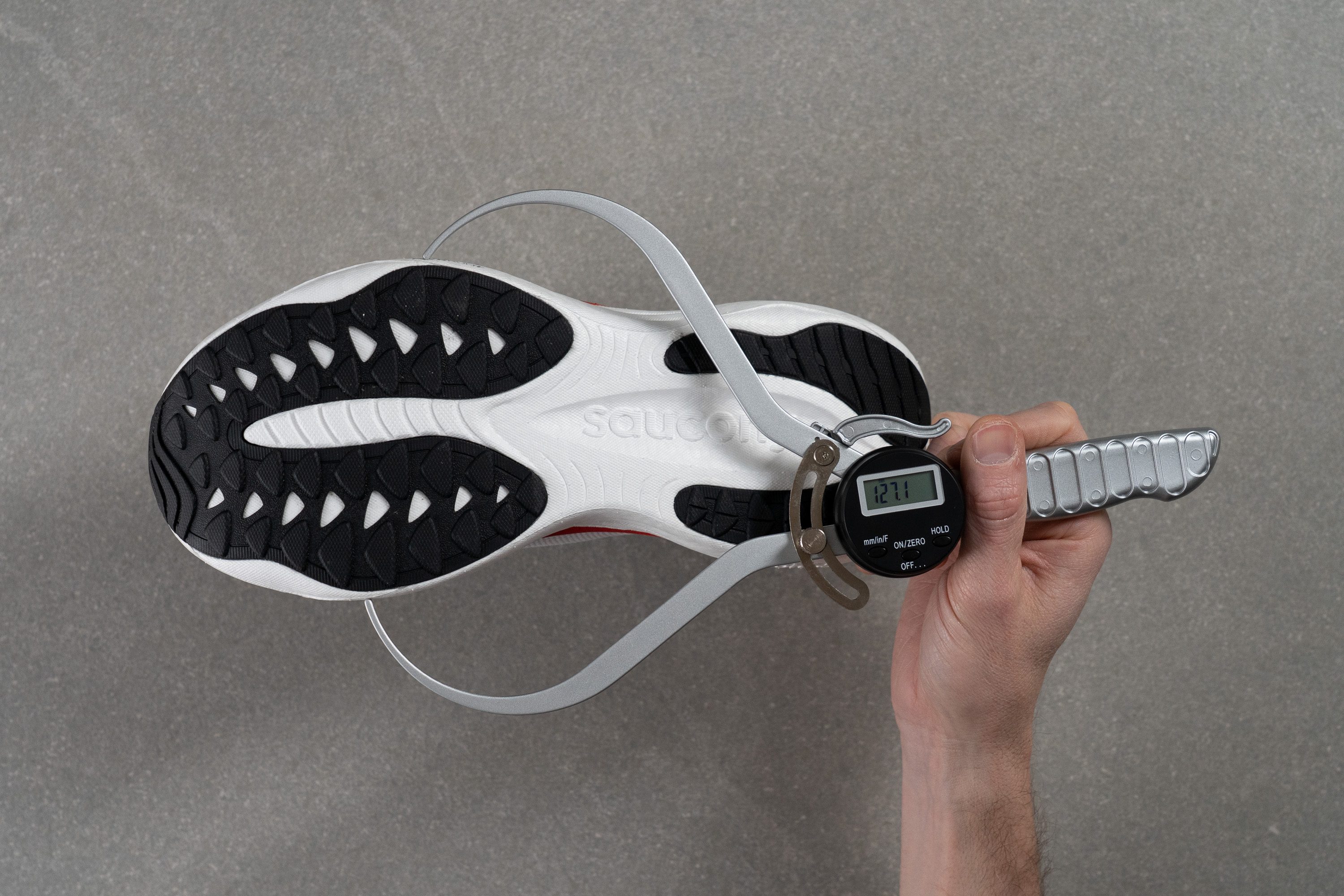
If someone had told us five years ago that Saucony’s "Pegasus" would reach 127.1 mm of width in the forefoot, we would have called that idea crazy.
Yet here we are, close to 130 mm even in a neutral running shoe.
| Ride 19 | 127.1 mm |
| Average | 115.1 mm |
Midsole width - heel
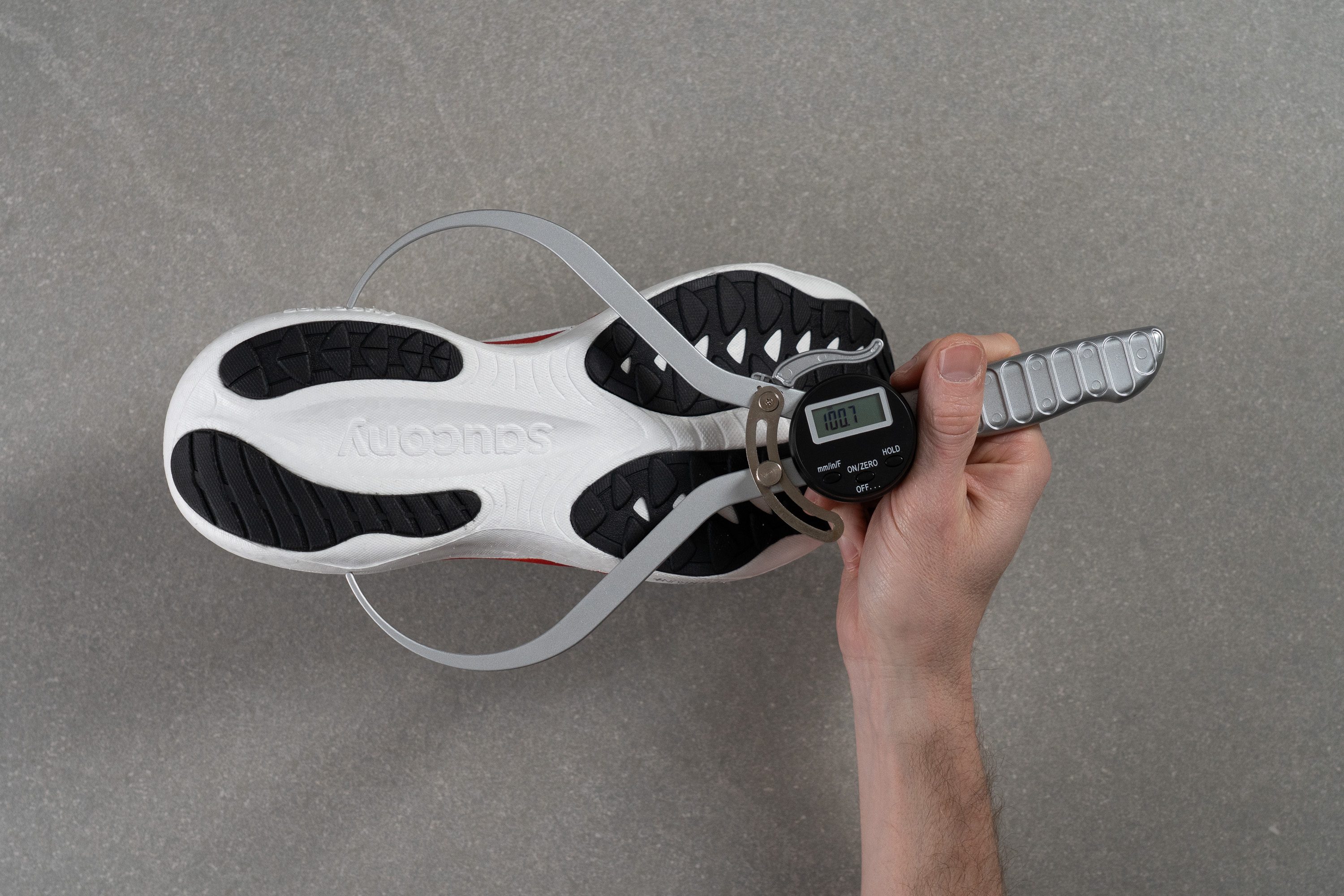
While the forefoot is only a few millimetres wider than before, the heel has changed dramatically. The previous version measured 91.9 mm here in the lab, whereas version 19 jumps to a striking 100.7 mm.
Is it more stable? Yes, that is easy to notice. However, the shoe is clearly shifting its DNA toward a more maximalist and stiffer design, and that is something to keep in mind.
| Ride 19 | 100.7 mm |
| Average | 91.1 mm |
Durability
Toebox durability
The engineered mesh used by Saucony on the Ride 19 stands out as a dependable choice. It feels comfortable, allows plenty of airflow, and still offers solid durability.
A 3/5 score may not look impressive at first, but it is a positive result, especially when we consider the large ventilation holes that often reduce toebox durability.
| Ride 19 | 3 |
| Average | 2.6 |
Heel padding durability
The heel area stood out with generous padding and a unique texture that helps to avoid slippage. On top of that, it showed strong durability by earning a 4/5 score.
| Ride 19 | 4 |
| Average | 3.4 |
Outsole durability
We wrapped up our durability tests with the outsole, and the results were positive as well. With just 0.6 mm of wear, the XT-900 rubber shows it can hold up even for runners who are hard on outsoles.
| Ride 19 | 0.6 mm |
| Average | 1.1 mm |
Outsole thickness
Saucony played it safe with the Ride 19 by using a thick 3.5 mm rubber layer. Considering the shoe’s weight gain and the strong durability results, trimming about 1 mm here could be an interesting move for version 20.
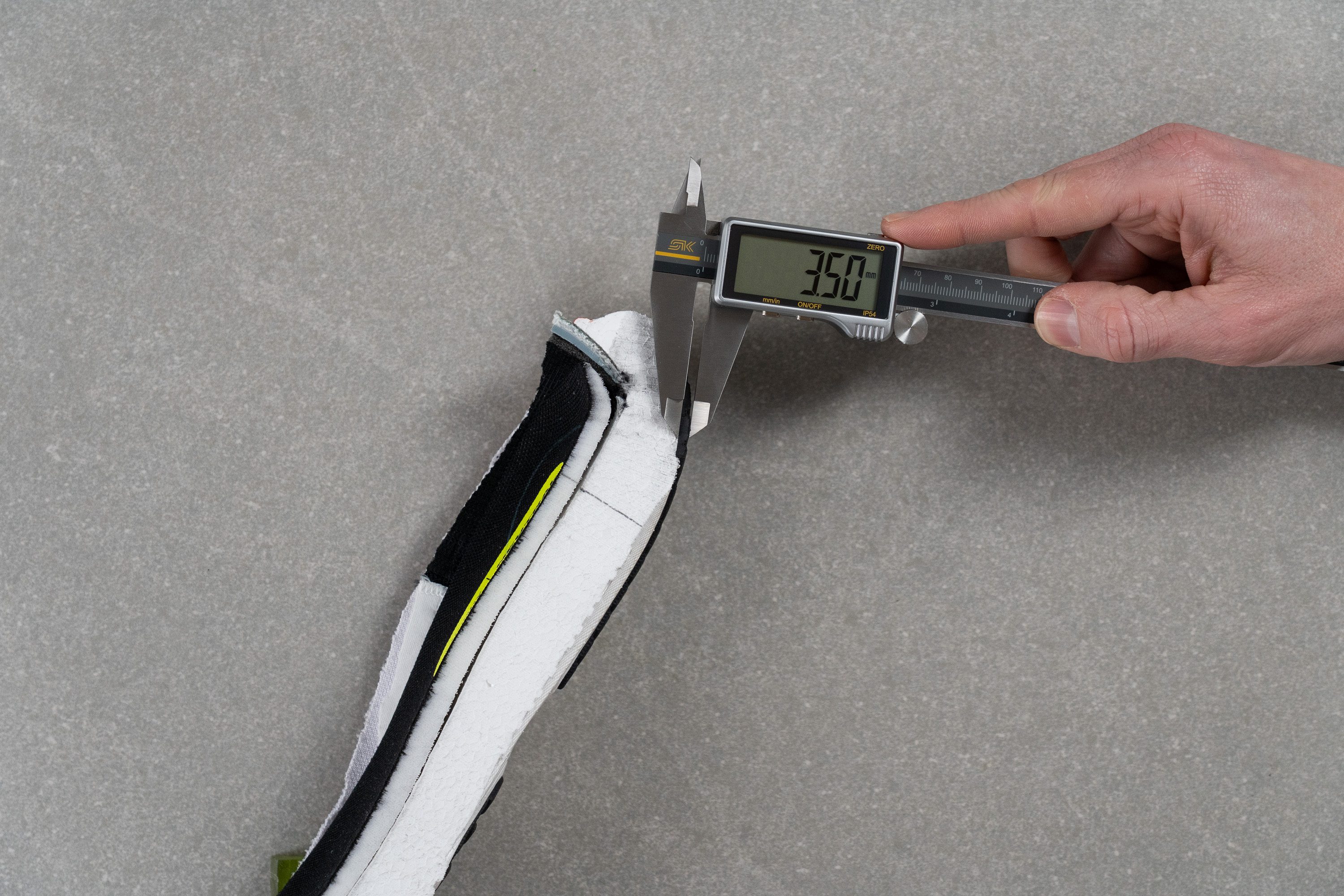
| Ride 19 | 3.5 mm |
| Average | 3.1 mm |
Misc
Insole thickness
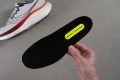
While most brands rarely give the insole the attention it deserves, Saucony usually does. That said, they appear to be moving away from PWRRUN+ in the insole, likely due to weight, as we found a lighter and softer material instead.
In the Ride 19, Saucony kept a higher-than-average thickness of 6.5 mm.
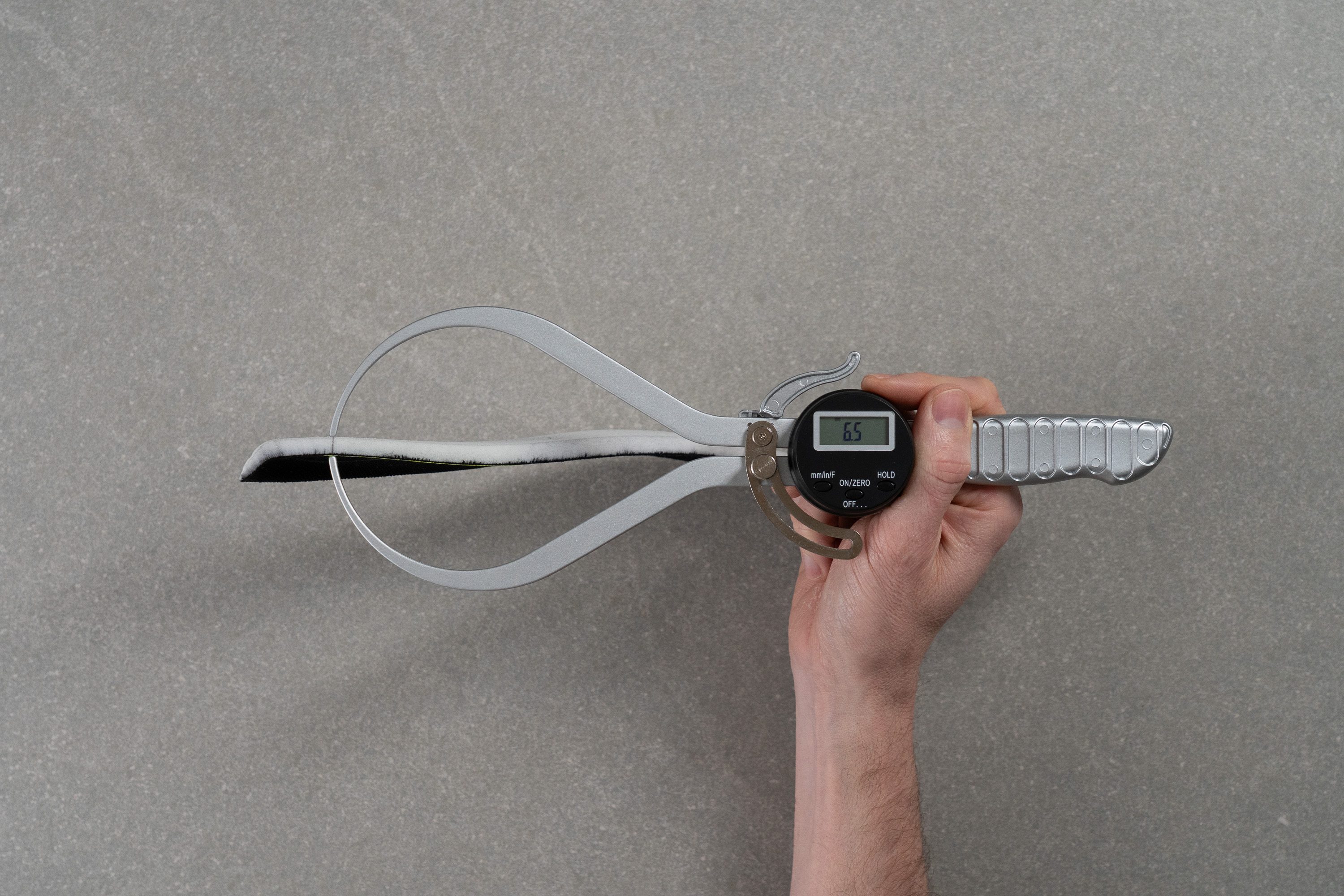
| Ride 19 | 6.5 mm |
| Average | 4.4 mm |
Removable insole
We had no trouble removing the included insole, which can be a useful option for runners who want a bit more room in the toebox. Since it is quite thick, swapping it for a thinner one gives the toes more space to move.
And thanks to Saucony for clearly stating that the Ride 19 remains a neutral shoe!
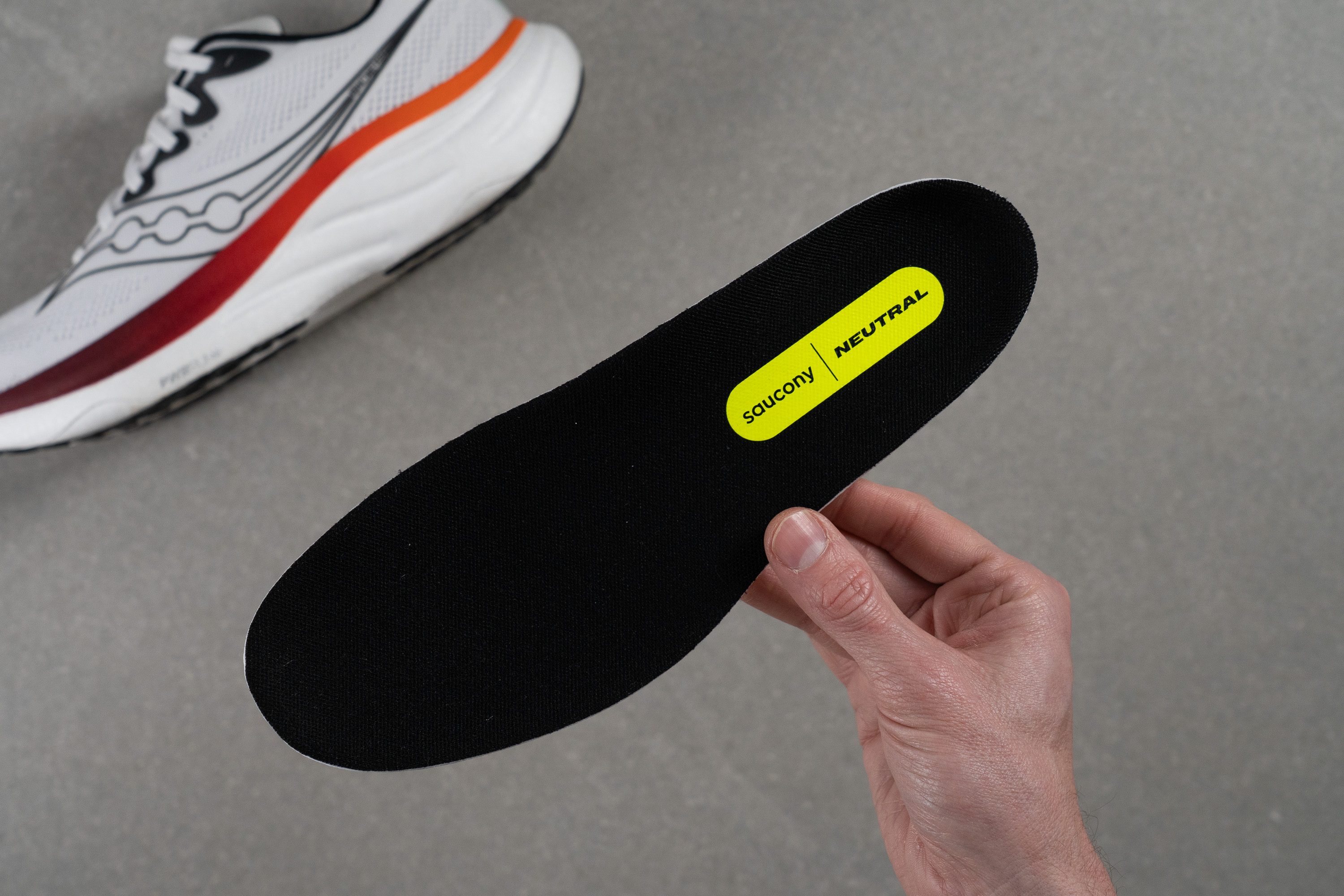
| Ride 19 | Yes |
Reflective elements
We always appreciate reflective elements in running shoes, and Saucony delivered with the Ride 19, as we spotted light bouncing back from both the heel and the forefoot.
| Ride 19 | Yes |
Tongue padding
To play it safe, Saucony moved away from the lace loops used in version 18 and returned to a more traditional setup with punched eyelets in version 19, which should be more durable.
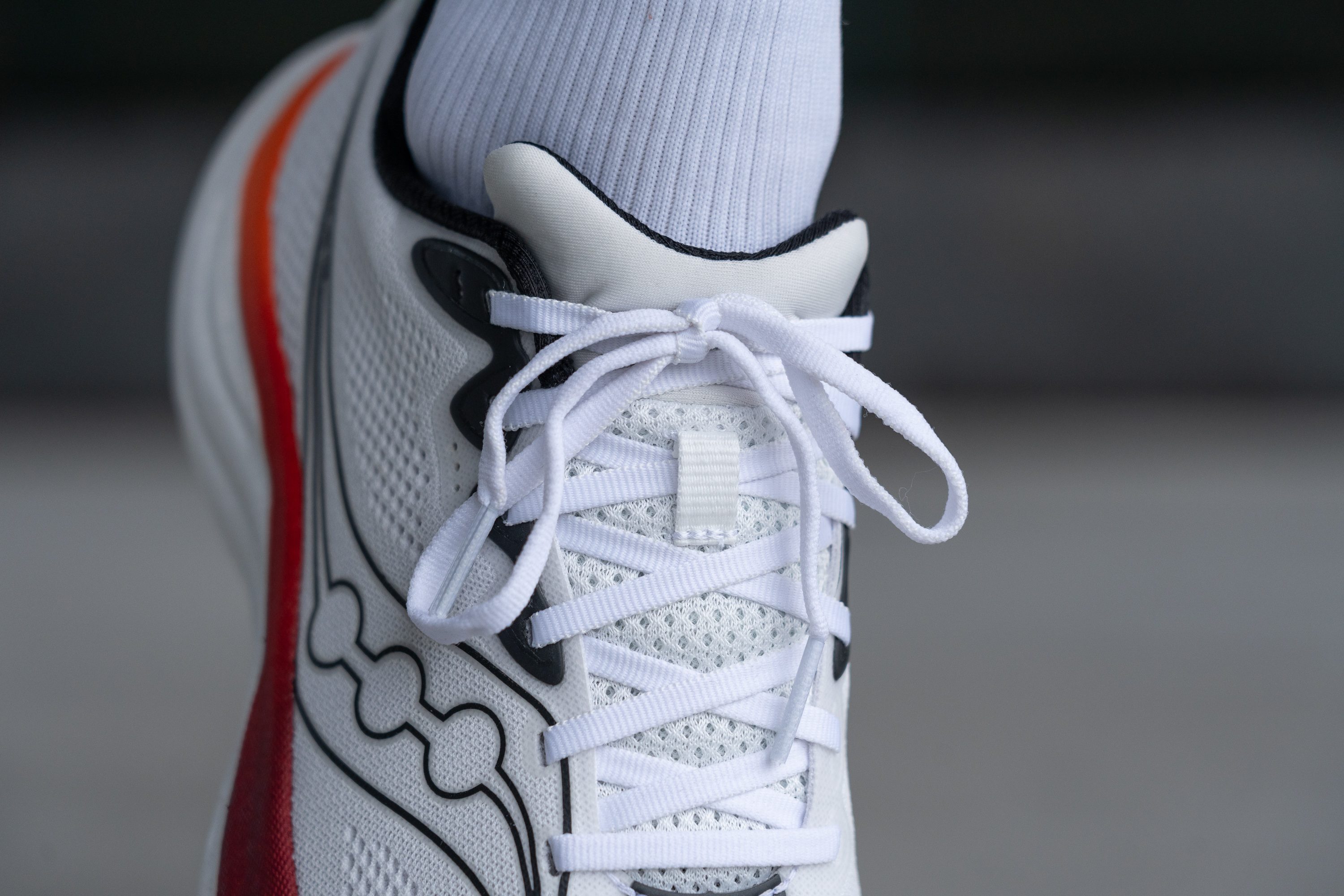
The tongue follows a balanced approach as well. It includes enough padding for a comfortable step-in feel, but it avoids feeling bulky or excessive with 7.3 mm of padding.
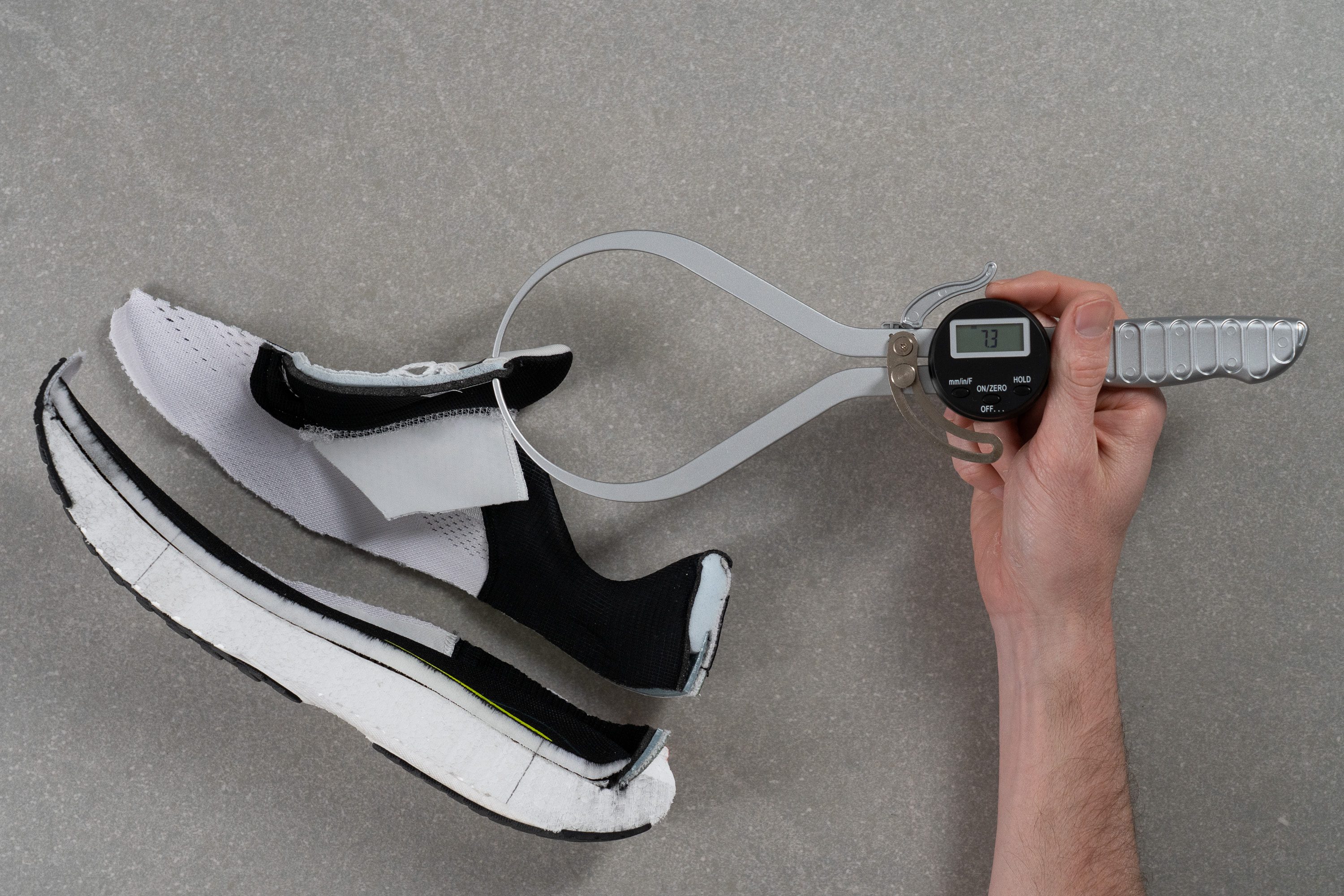
| Ride 19 | 7.3 mm |
| Average | 5.8 mm |
Tongue: gusset type
We found that the Ride 19’s tongue delivers excellent lockdown thanks to its semi-gusseted design, with no caveats or compromises.
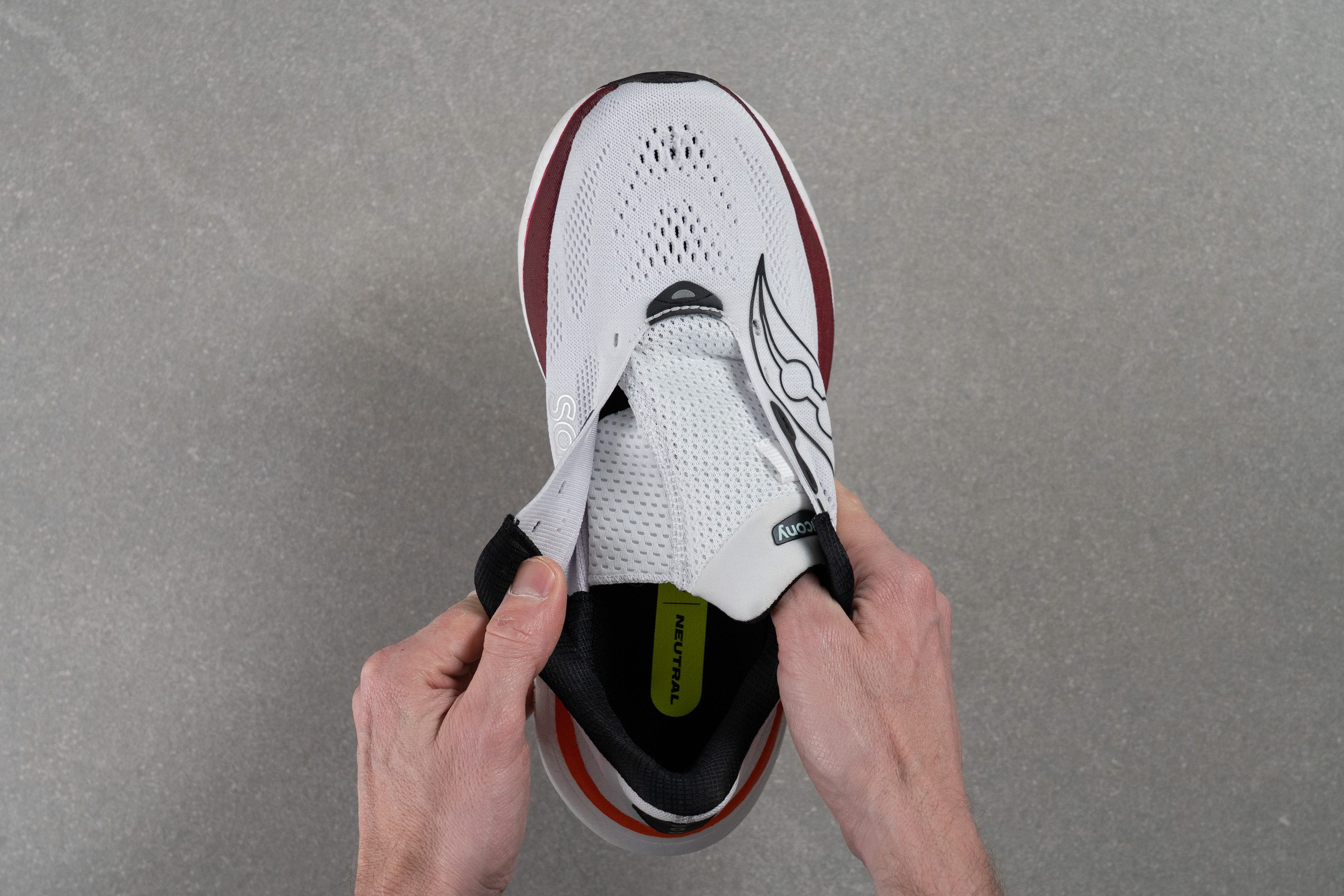
| Ride 19 | Both sides (semi) |
Heel tab
The heel does not include a finger-loop tab, but it features a small external overlay that acts as a light structural element and partially covers the unattractive upper stitching.
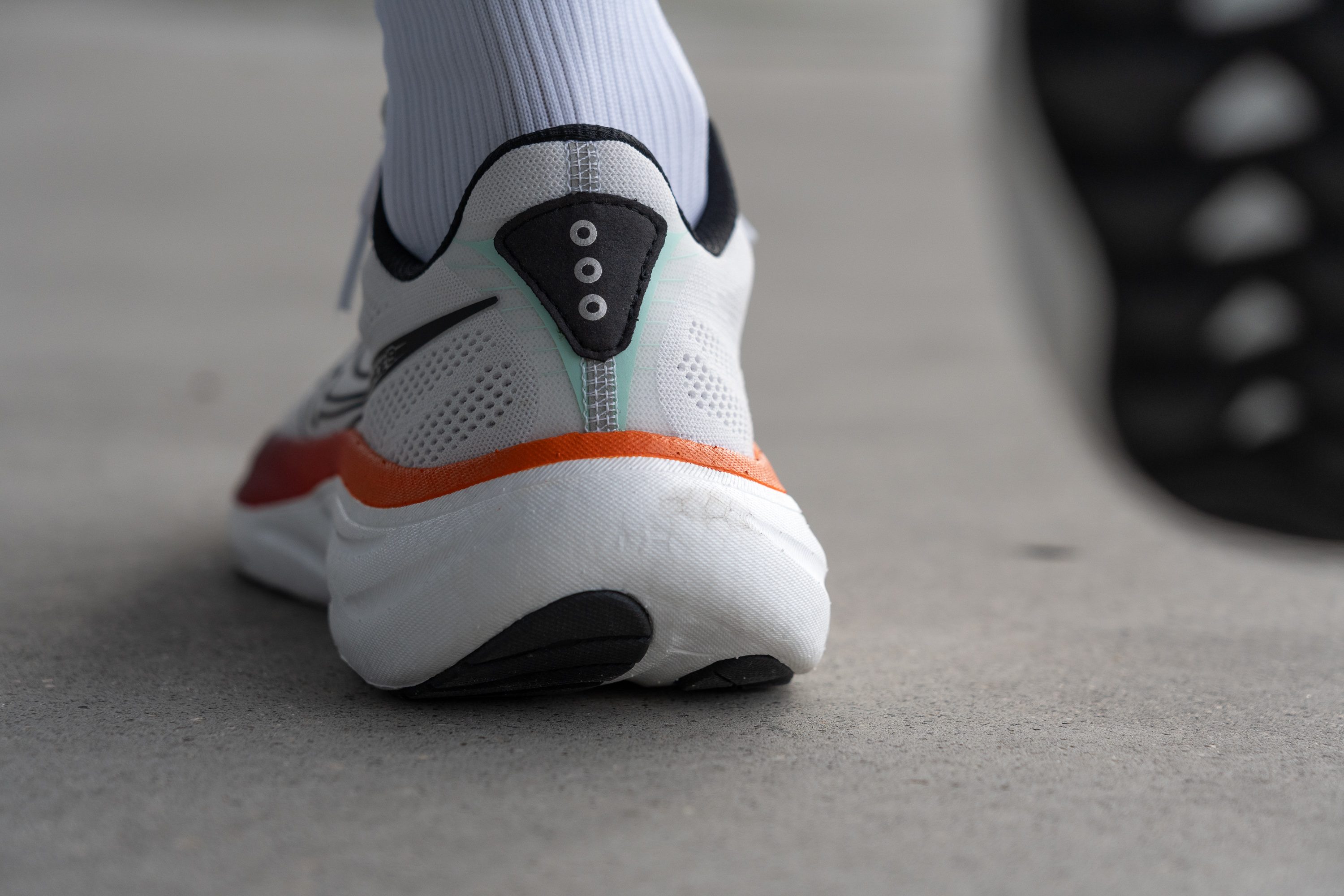
| Ride 19 | None |
Price
The Ride 19 comes with a small price increase, but it feels reasonable given the updates and the wider trend of rising prices across brands. And to be fair to Saucony, we think the shoe is priced appropriately for what it offers, especially its high energy return and excellent upper.
| Ride 19 | $145 |