
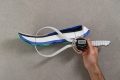
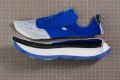
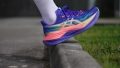




Our verdict
- Daily running 93
- Tempo 91
- Race 86
- Stability 93
Pros
- Exceptional shock absorption
- Improved energy return
- Softer FF Leap foam
- Lightweight despite maximal stack height
- Best traction we've seen to date
- Solid durability from top to bottom
- Keeps a very stable underfoot feel
- Versatile for multiple paces
Cons
- FF Blast+ limits energy return
- Unexpected price bump
- Limited toebox breathability
Awards
- Top pick in best running shoes for supination
- Top pick in best running shoes for underpronation
- Top 1% in road running shoes
- Top 7% in ASICS running shoes
- Top 2% most popular running shoes
Comparison
The most similar running shoes compared
+ + Add a shoe | |||||
|---|---|---|---|---|---|
| Our score | 94 Superb | 86 Great | 84 Great | 95 Superb | |
| Price | £180 | £210 | £160 | £200 | |
| Pace | Daily runningTempo | Daily running | Daily running | TempoCompetition | |
| Shock absorption | High | High | High | High | |
| Energy return | High | Moderate | Moderate | High | |
| Traction | High | High | High | High | |
| Arch support | Neutral | Neutral | Neutral | Neutral | |
| Weight lab Weight brand | 8.3 oz / 235g 8.8 oz / 249g | 11.5 oz / 326g 12.4 oz / 351g | 9.6 oz / 272g 9.2 oz / 260g | 7.7 oz / 218g 7.9 oz / 224g | |
| Lightweight | ✓ | ✗ | ✗ | ✓ | |
| Drop lab Drop brand | 8.1 mm 8.0 mm | 8.8 mm 10.0 mm | 7.5 mm 6.0 mm | 9.9 mm 8.0 mm | |
| Strike pattern | HeelMid/forefoot | HeelMid/forefoot | Mid/forefoot | HeelMid/forefoot | |
| Size | True to size | True to size | True to size | True to size | |
| Midsole softness | Soft | Balanced | Soft | Soft | |
| Difference in midsole softness in cold | Small | Small | Small | Small | |
| Toebox durability | Decent | Decent | Decent | Bad | |
| Heel padding durability | Good | Good | Good | Good | |
| Outsole durability | Good | Good | Good | Good | |
| Breathability | Moderate | Moderate | Moderate | Moderate | |
| Width / fit | Medium | Medium | Wide | Medium | |
| Toebox width | Medium | Narrow | Medium | Medium | |
| Stiffness | Moderate | Stiff | Stiff | Stiff | |
| Torsional rigidity | Stiff | Stiff | Moderate | Stiff | |
| Heel counter stiffness | Stiff | Stiff | Stiff | Moderate | |
| Rocker | ✓ | ✓ | ✓ | ✓ | |
| Heel lab Heel brand | 45.8 mm 45.0 mm | 50.1 mm 55.0 mm | 40.7 mm 42.0 mm | 45.1 mm 45.0 mm | |
| Forefoot lab Forefoot brand | 37.7 mm 37.0 mm | 41.3 mm 45.0 mm | 33.2 mm 36.0 mm | 35.2 mm 37.0 mm | |
| Widths available | Normal | NormalWide | NormalWide | Normal | |
| Orthotic friendly | ✓ | ✓ | ✓ | ✓ | |
| Season | All seasons | All seasons | All seasons | All seasons | |
| Removable insole | ✓ | ✓ | ✓ | ✓ | |
| Ranking | #2 Top 1% | #80 Top 20% | #134 Top 34% | #1 Top 1% | |
| Popularity | #6 Top 2% | #8 Top 2% | #71 Top 18% | #30 Top 8% |

Who should buy
In our opinion, the ASICS Superblast 3 shines for runners that:
- Enjoyed version 1 and 2 but found them a bit too firm. This new version delivers a much softer ride!
- Want a super trainer that blends bounce, stability, durability, and strong grip in a single package.
- Run high mileage and need maximum protection for muscles and joints while still enjoying an impressively lightweight shoe.
- Are willing to pay a premium price to get top-tier technology even for daily training.
Who should NOT buy
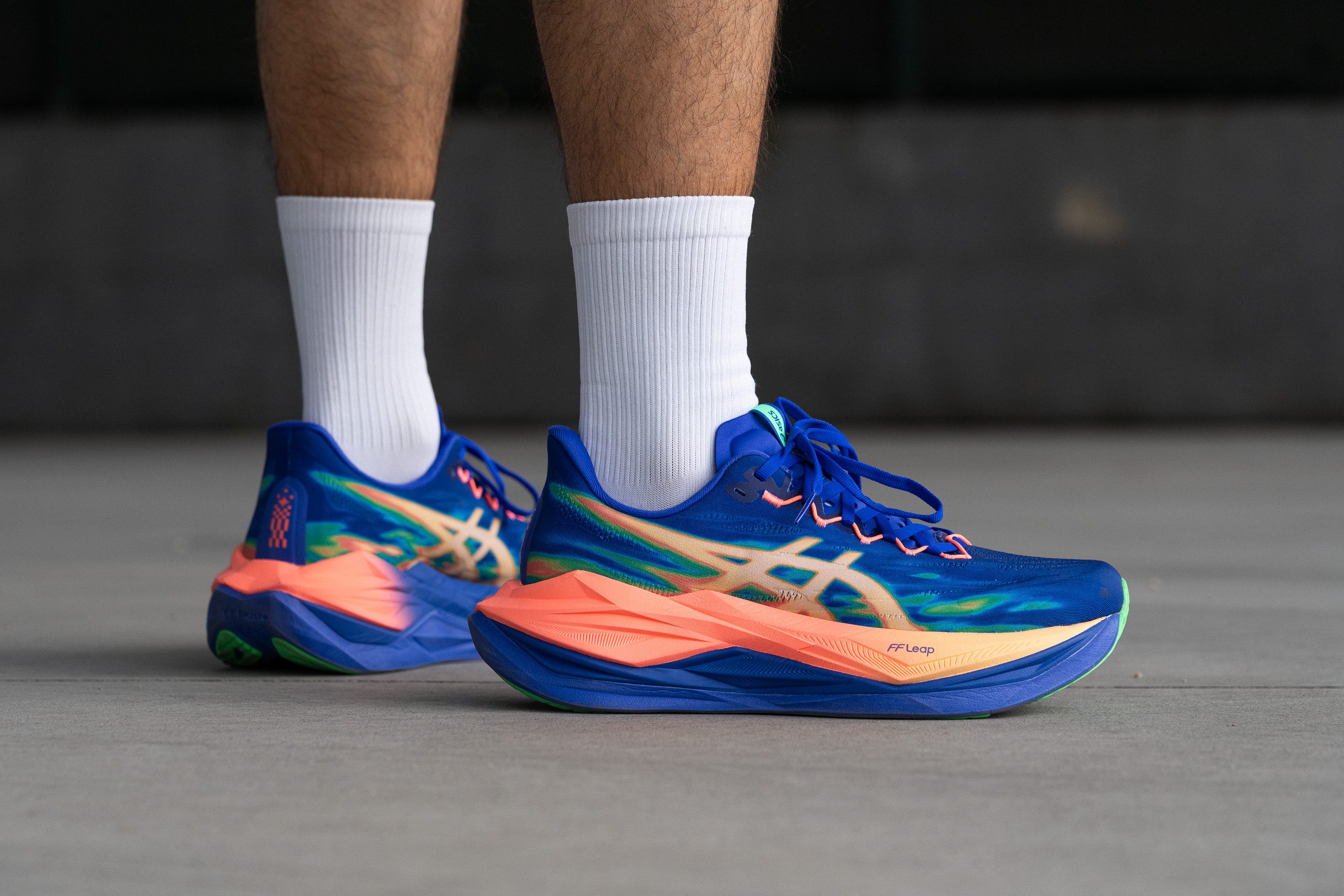
The ASICS Superblast 3 comes slightly short of the most energetic super trainers, and that happens because ASICS still included FF Blast+ in the lower section of the midsole. If maximum bounce is what you are looking for, take a look at the ASICS Megablast.
We also think that the high price of the Superblast 3 can be a deal-breaker for many runners. Luckily, there are now more affordable super trainers like the adidas Adizero EVO SL or the Saucony Endorphin Azura that deliver top-tier bounce and shock absorption at a very reasonable price.
Cushioning
Shock absorption
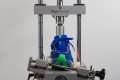
The biggest update in the Superblast 3 comes from FF Leap, a soft A-TPU foam that replaces the firmer FF Turbo+. And it is in terms of shock absorption where this change makes a real difference.
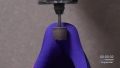
In our lab test, we found that the ASICS Superblast 3 displayed world-class levels with 154 SA in the heel and 153 SA in the forefoot. Yes, you read it right: at the time of this review, this is the shoe that provides more protection in the forefoot, even more than the Nike Vomero Premium!
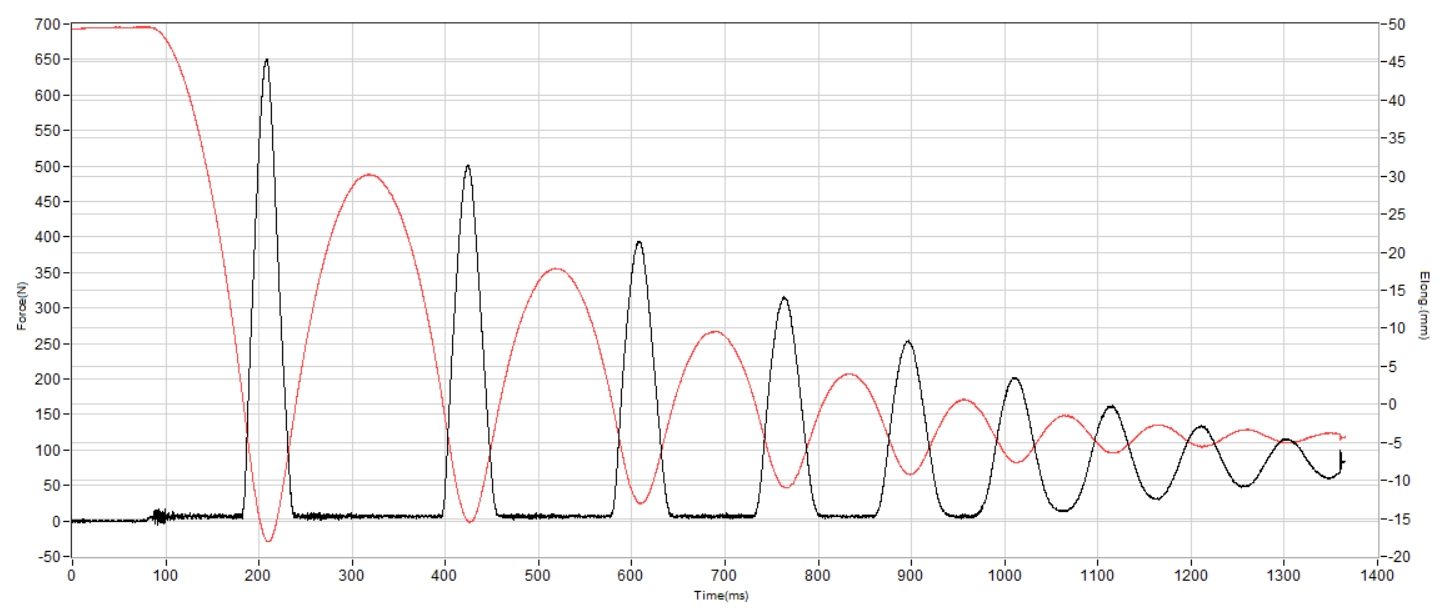
| Superblast 3 | 154 SA |
| Average | 131 SA |
Energy return
The Superblast 3 also improves in energy return, although here the change is less noticeable. It registered 67.8% of energy return, which is +2.3% than the Superblast 2 and +3.5% compared to the original Superblast.
This leaves us with a slightly bittersweet taste. While this is a very solid number, we cannot help but think of what this shoe could have been with FF Blast Max in the lower layer instead of FF Blast+. Based on how the Novablast 5 improved +5.3% over the Novablast 4 when switching from FF Blast+ to FF Blast Max, this shoe had the potential to go over 70% of bounce.
| Superblast 3 | 67.5% |
| Average | 61.5% |
Heel stack
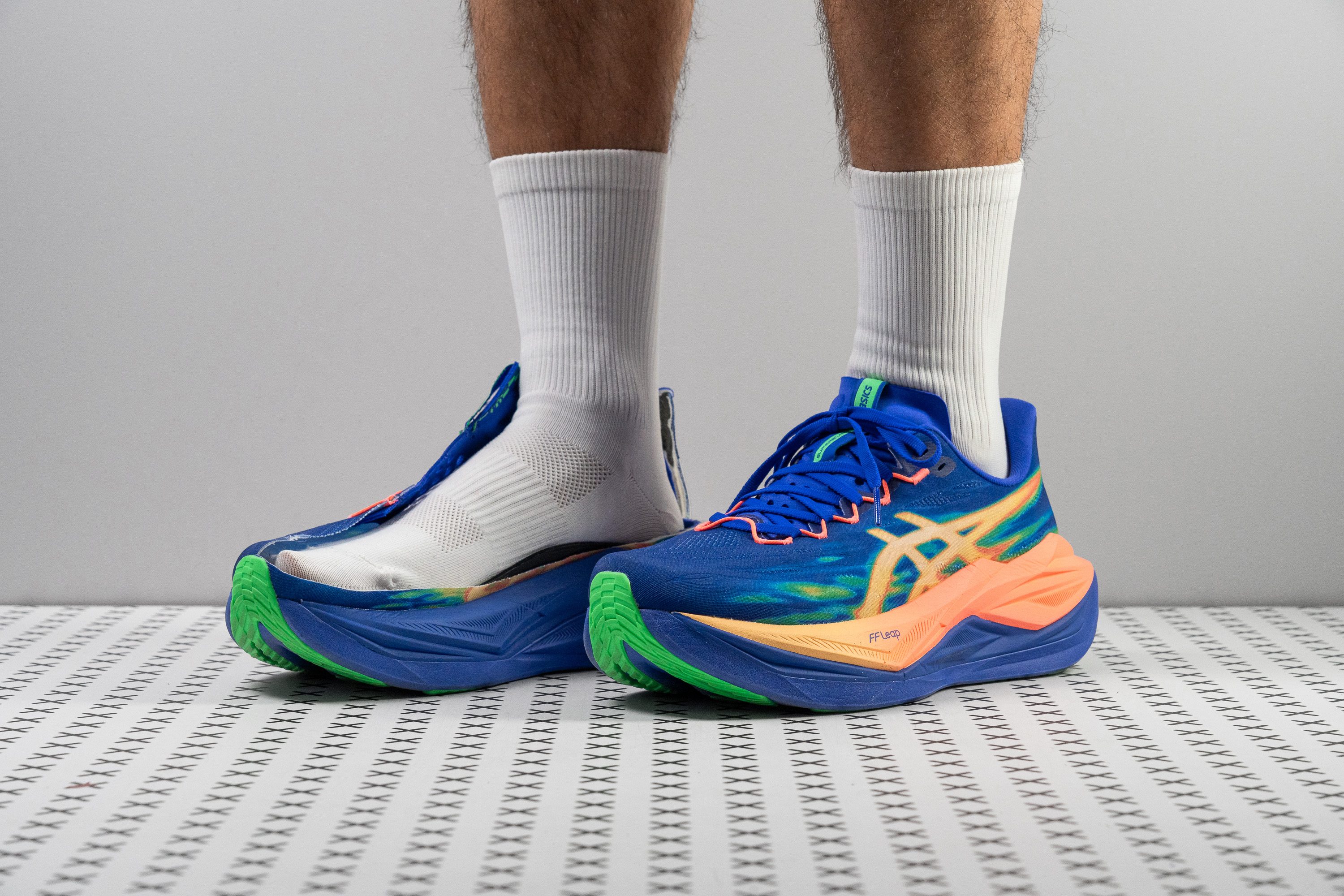
The Superblast 3 keeps its familiar max-stack geometry that once shocked the market, although it no longer feels as intimidating today compared to how v1 looked like in 2022.
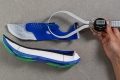
There are 45.8 mm of cushioning under the heel, so we believe that rearfoot strikers will find plenty of joint protection here.
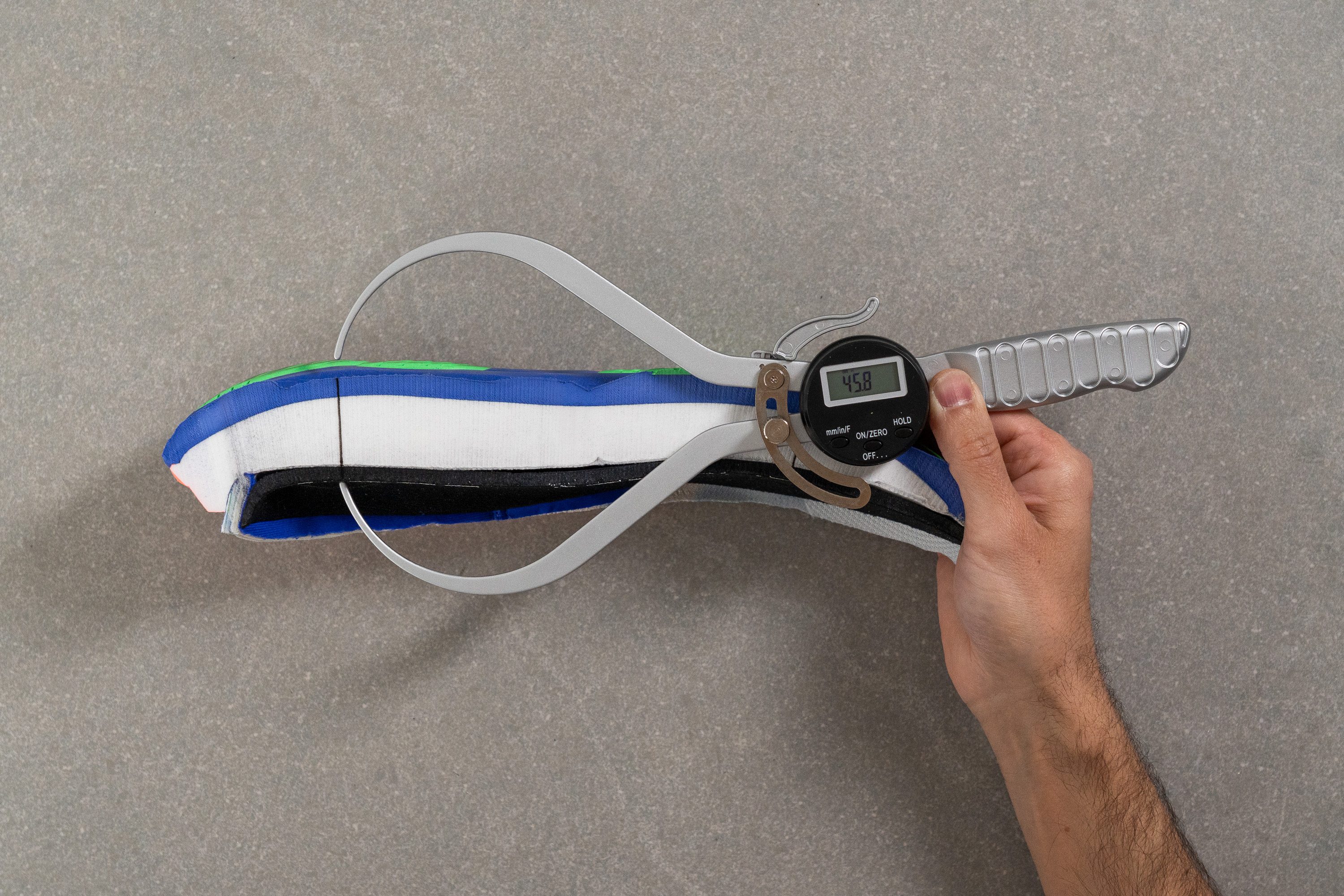
| Superblast 3 | 45.8 mm |
| Average | 35.6 mm |
Forefoot stack
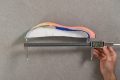
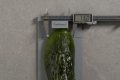
The shoe also keeps its impressive stack in the forefoot, as we registered 37.7 mm here.
For midfoot and forefoot strikers looking to maximise cushioning underfoot, this is as good as it gets. On the other hand, runners who prefer a more natural feel should skip the SB3, as it offers virtually no ground feedback and feels quite stiff.
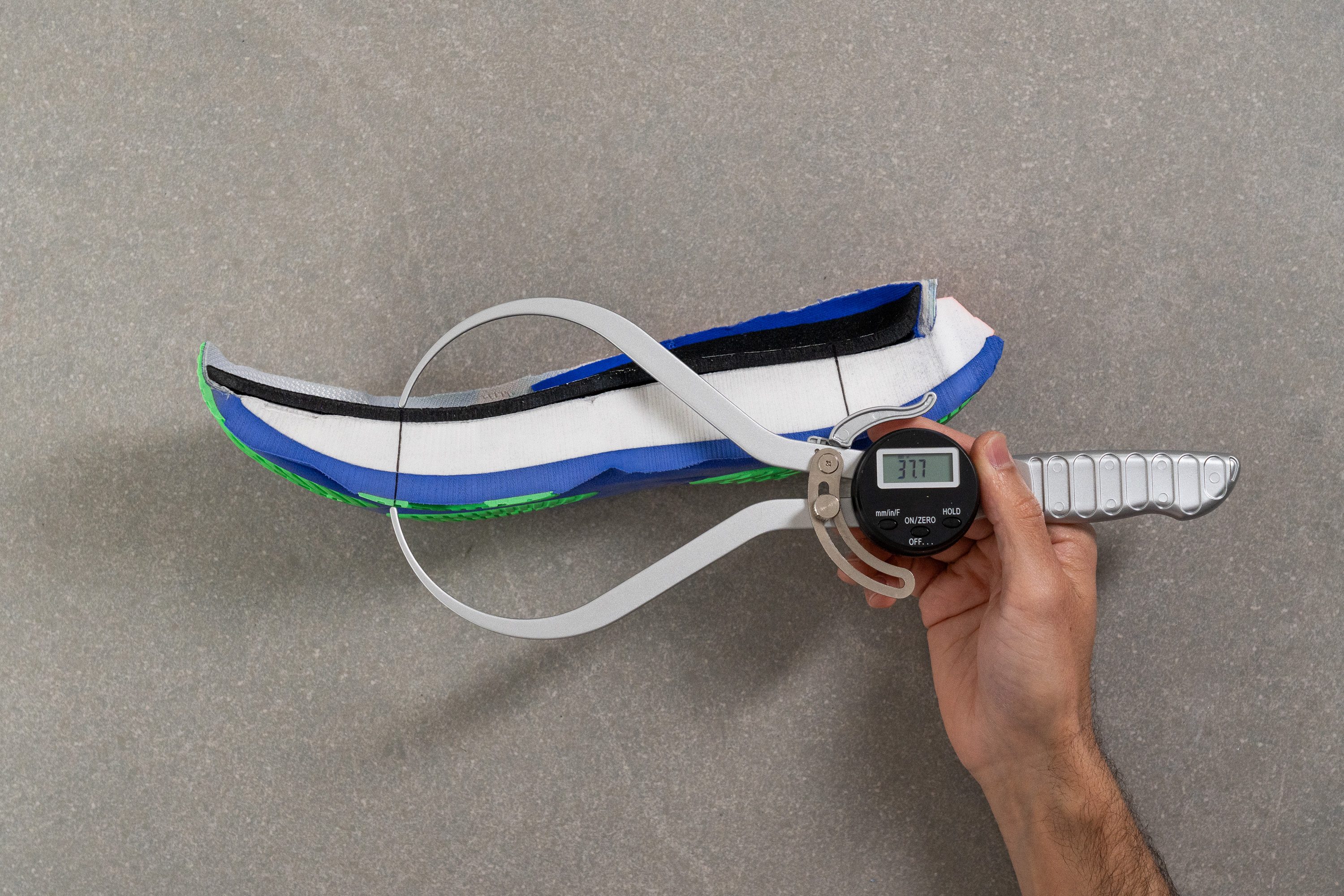
| Superblast 3 | 37.7 mm |
| Average | 27.1 mm |
Drop
This is what we call Japanese precision. ASICS states an 8 mm drop, and we measured a very minor difference at 8.1 mm.
It is clear to us that ASICS does not want to disappoint runners who love the Superblast series, keeping the same idea from both the first and second generation.
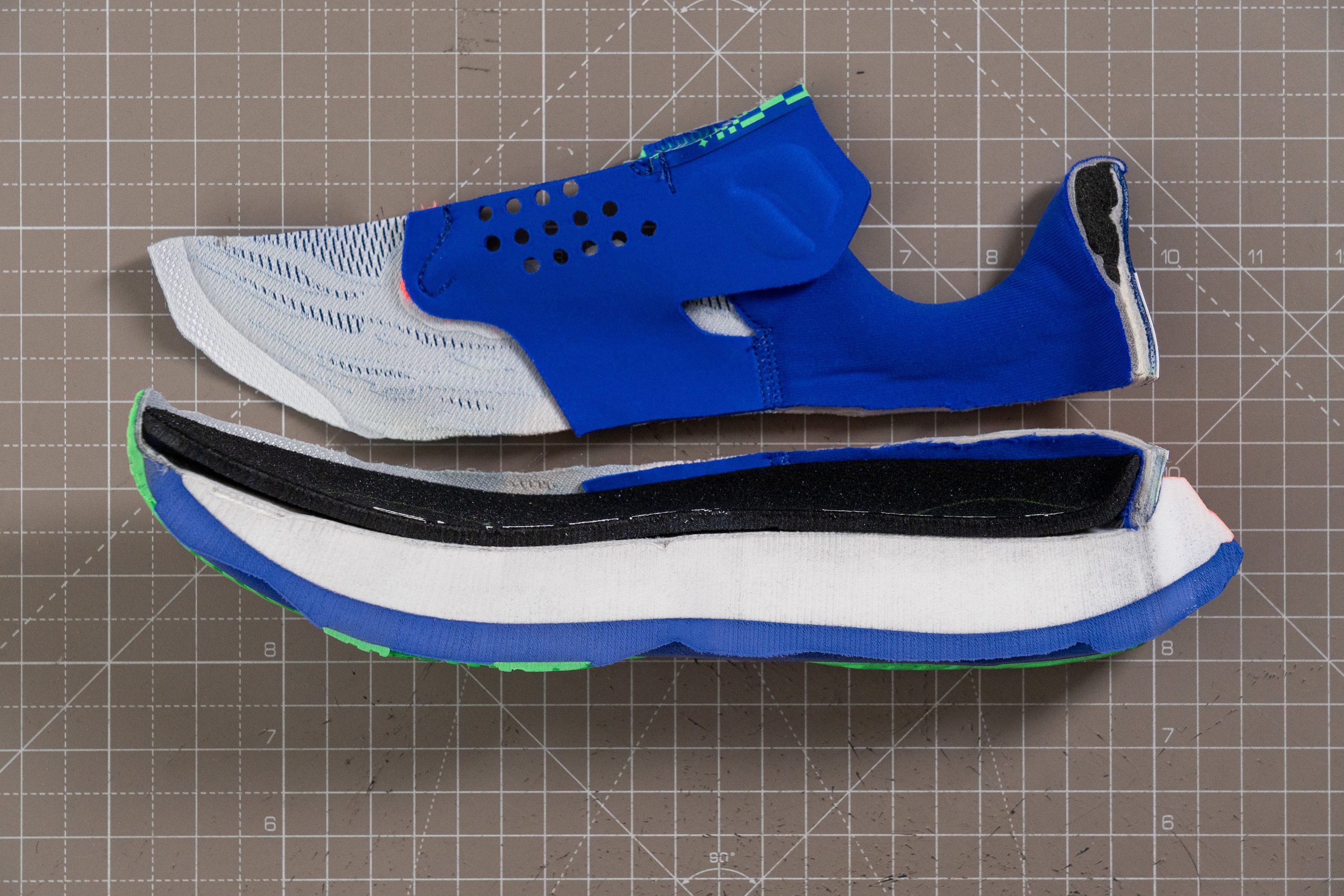
| Superblast 3 | 8.1 mm |
| Average | 8.4 mm |
Midsole softness
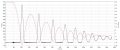
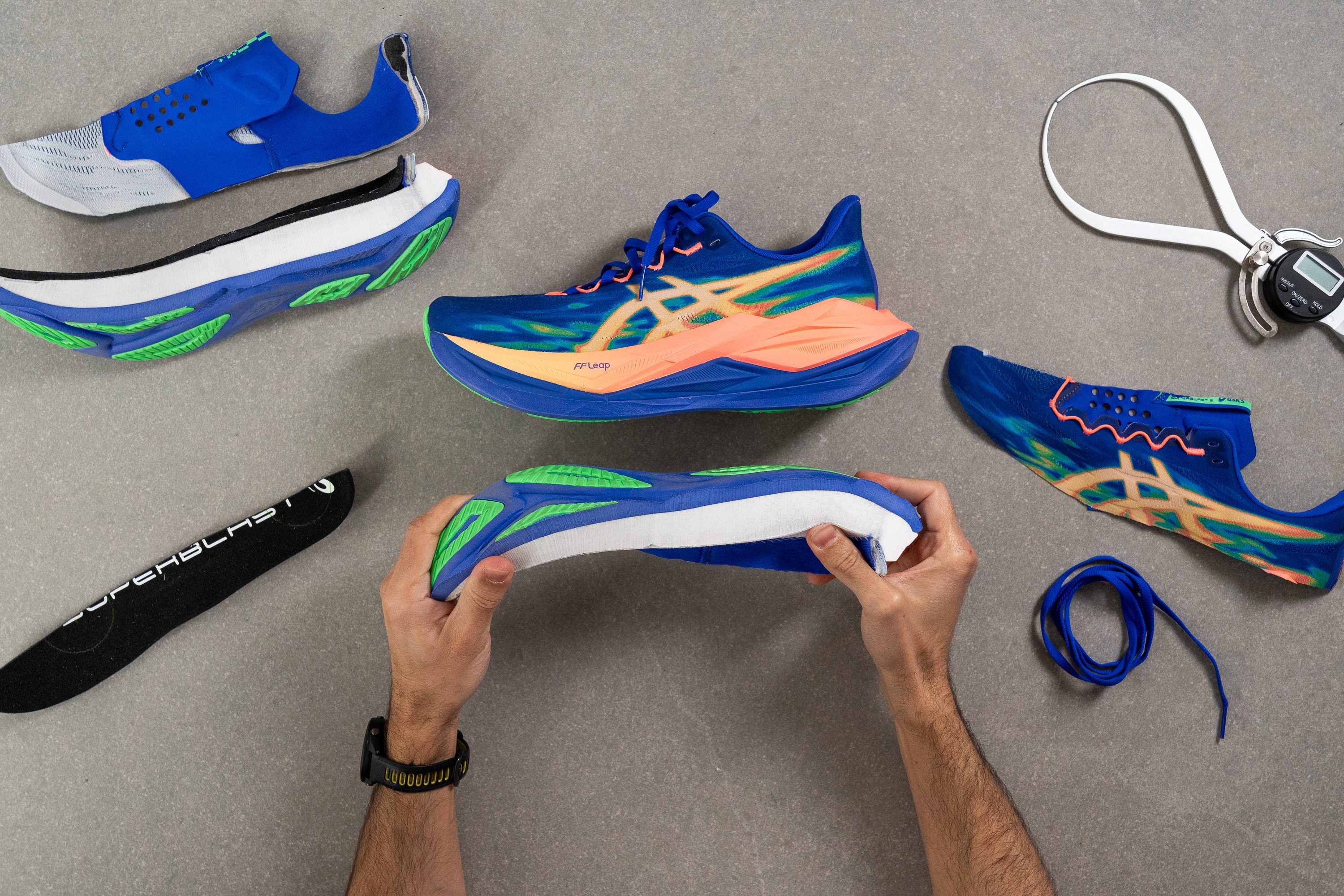
While the SB1 and SB2 felt fairly similar underfoot, the SB3 delivers a noticeably different sensation with every step. This is because ASICS has moved away from the firmer top layer of PEBA foam used in previous versions (FF Turbo / FF Turbo+) and introduced the ultra-plush FF Leap compound.
For runners who found the Superblast 1 and 2 a bit firm underfoot, this is exactly the change they were looking for, and ASICS really delivered. The foot now sinks deeper into the foam, and the positive side is that FF Leap rebounds with impressive energy.
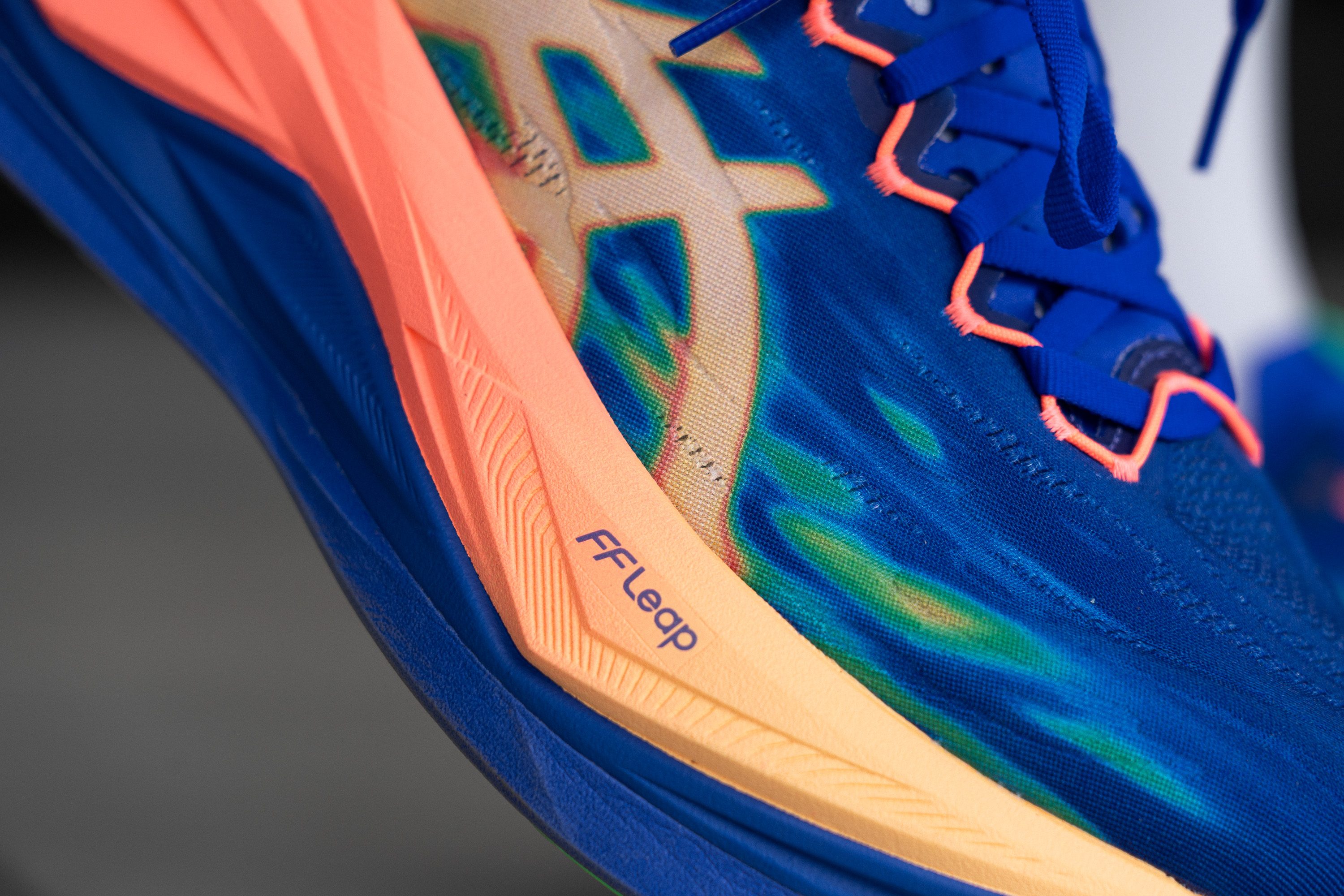
Back in September 2025 when we reviewed the impressive ASICS Metaspeed Ray, we wondered in the lab if ASICS would bring FF Leap into the Superblast or go with FF Turbo². And to be honest with you, we are surprised they went with FF Leap!
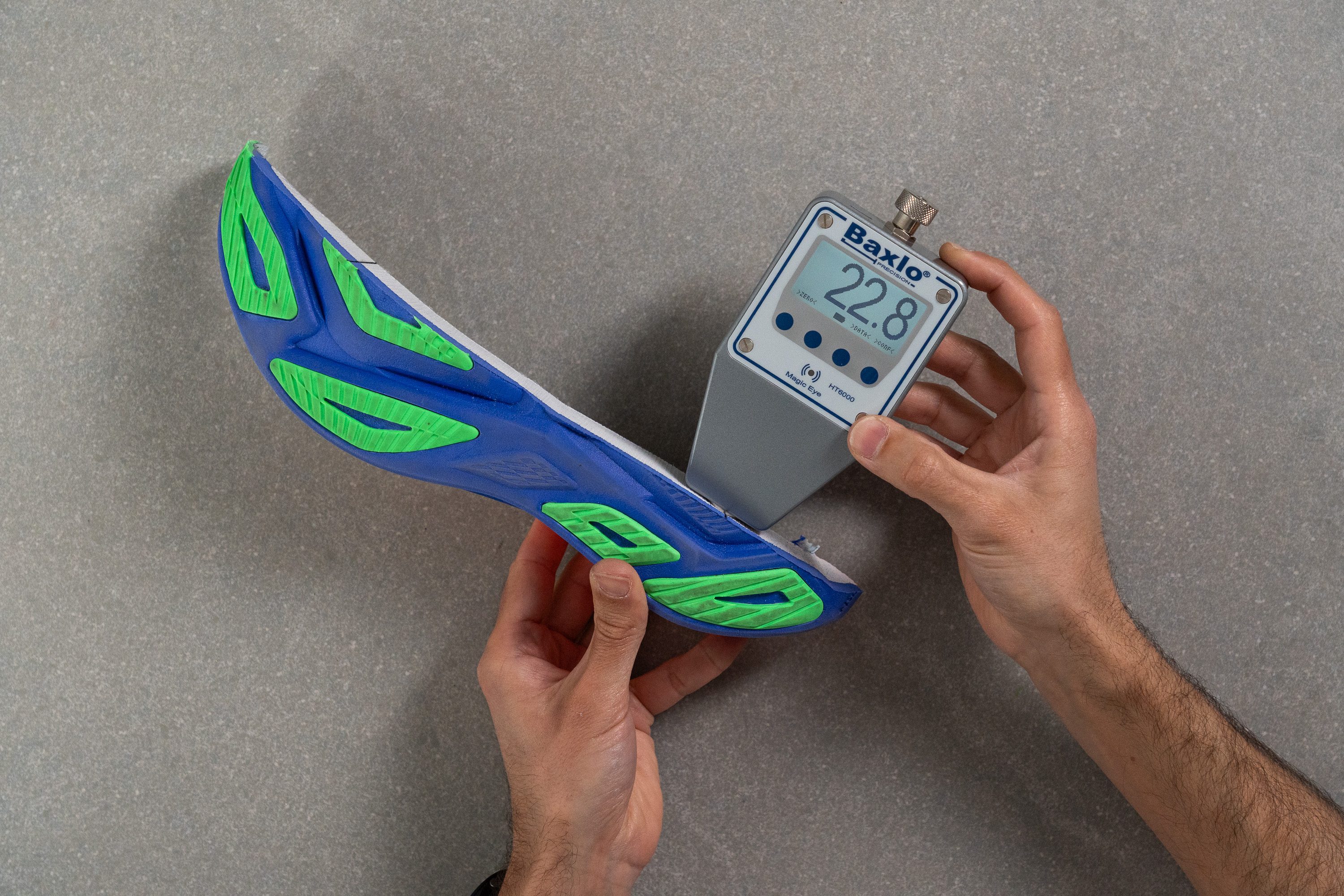
| Superblast 3 | 22.8 AC |
| Average | 35.4 AC |
Rocker
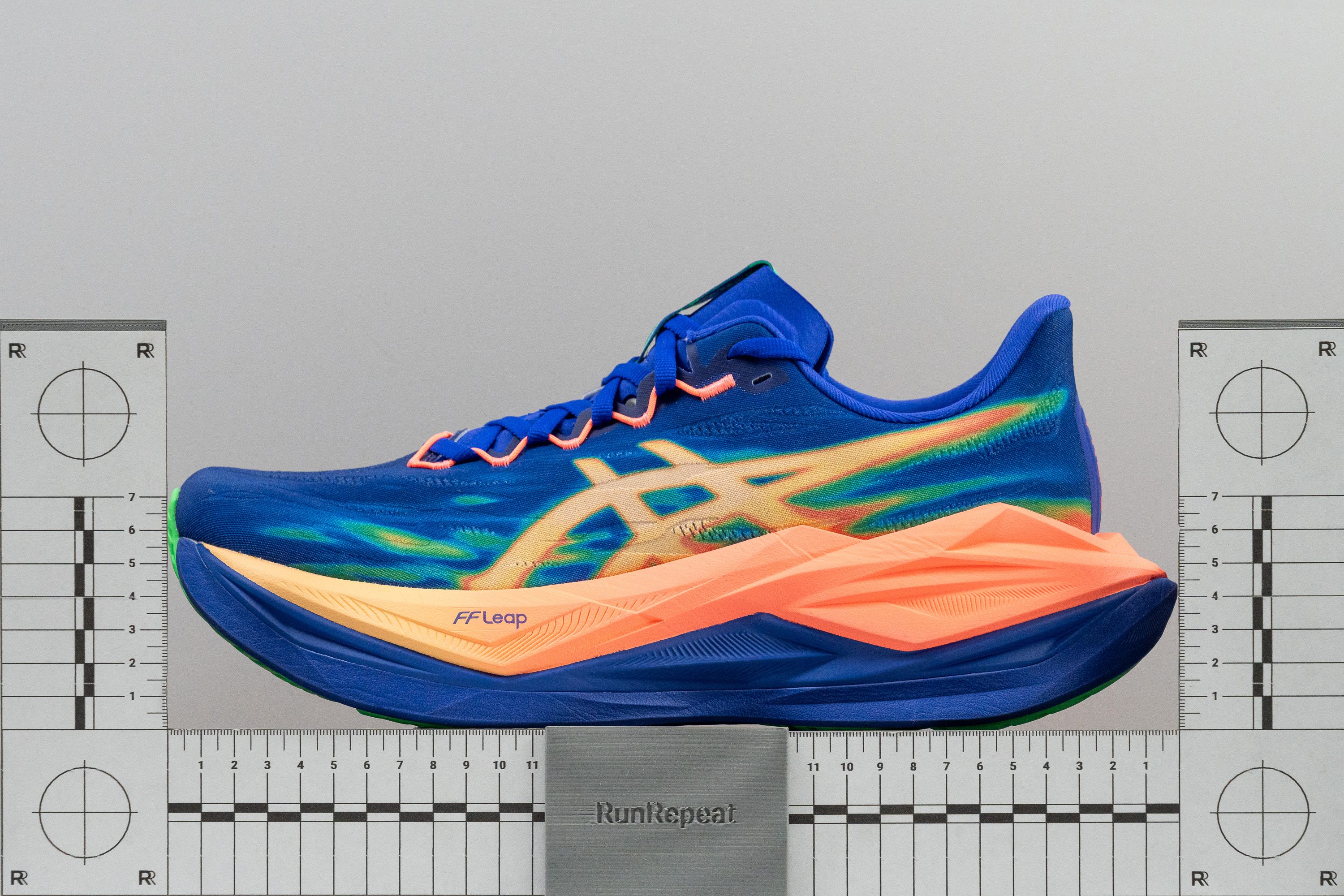
Another iconic design feature from the Superblast series that carries into version 3 is the rockered shape from heel to toe. In particular, the large flared heel and aggressive bevel make the shoe feel very dynamic for rearfoot strikers.
In the forefoot area, we noticed that the rocker starts quite late compared to other super trainers. As a result, the toe-off phase feels a bit more aggressive, and if you prefer an earlier rocker, the SB3 might not be the best match for you.
Size and fit
Size
ASICS Superblast 3 fits true to size (108 votes).
Internal length
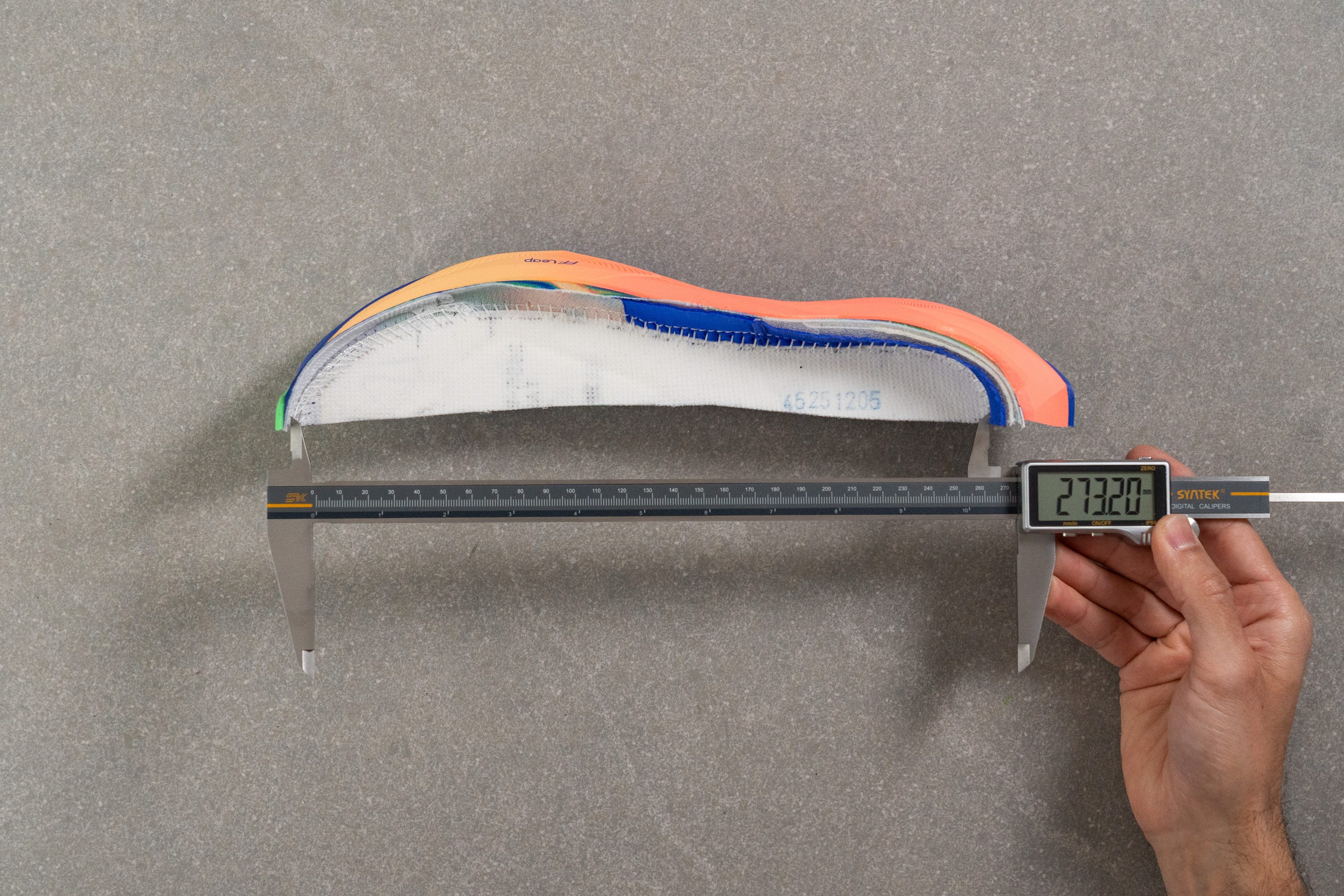
| Superblast 3 | 273.2 mm |
| Average | 269.3 mm |
Width / Fit
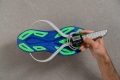
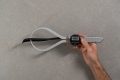
The ASICS Superblast 3 keeps the familiar fit from previous versions. There are minor differences, but they are very subtle, and we are talking about just 1-2 mm due to changes in the upper materials.
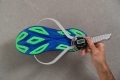
After crafting our gel mould as we do with every running shoe, we started taking measurements. The first one came in close to the average at 95.7 mm.
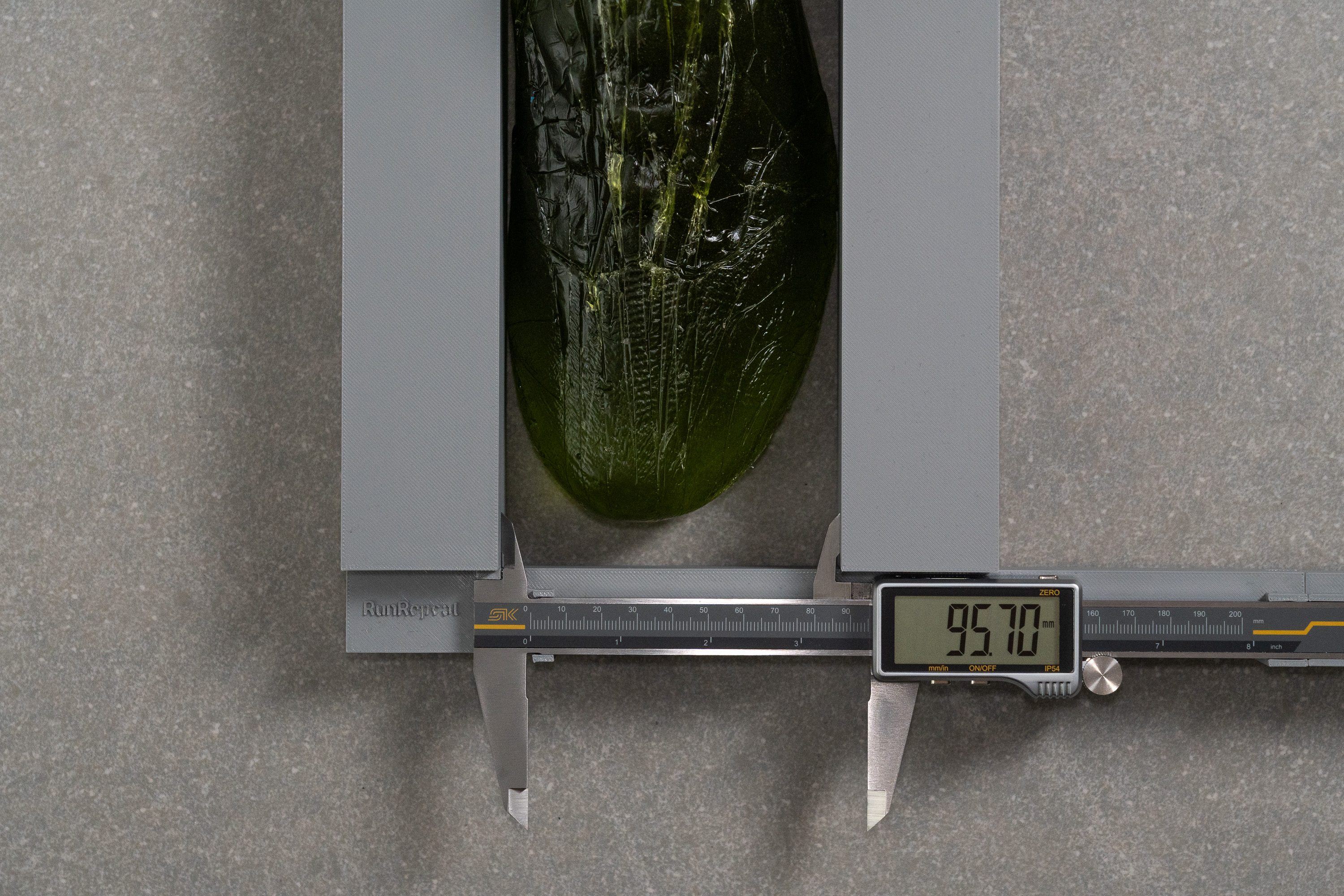
| Superblast 3 | 95.7 mm |
| Average | 95.2 mm |
Toebox width
The second measurement confirmed that ASICS continues to favour a toebox that does not open much, targeting runners who prefer a secure and snug fit. In fact, it falls below our lab average at 71.6 mm.
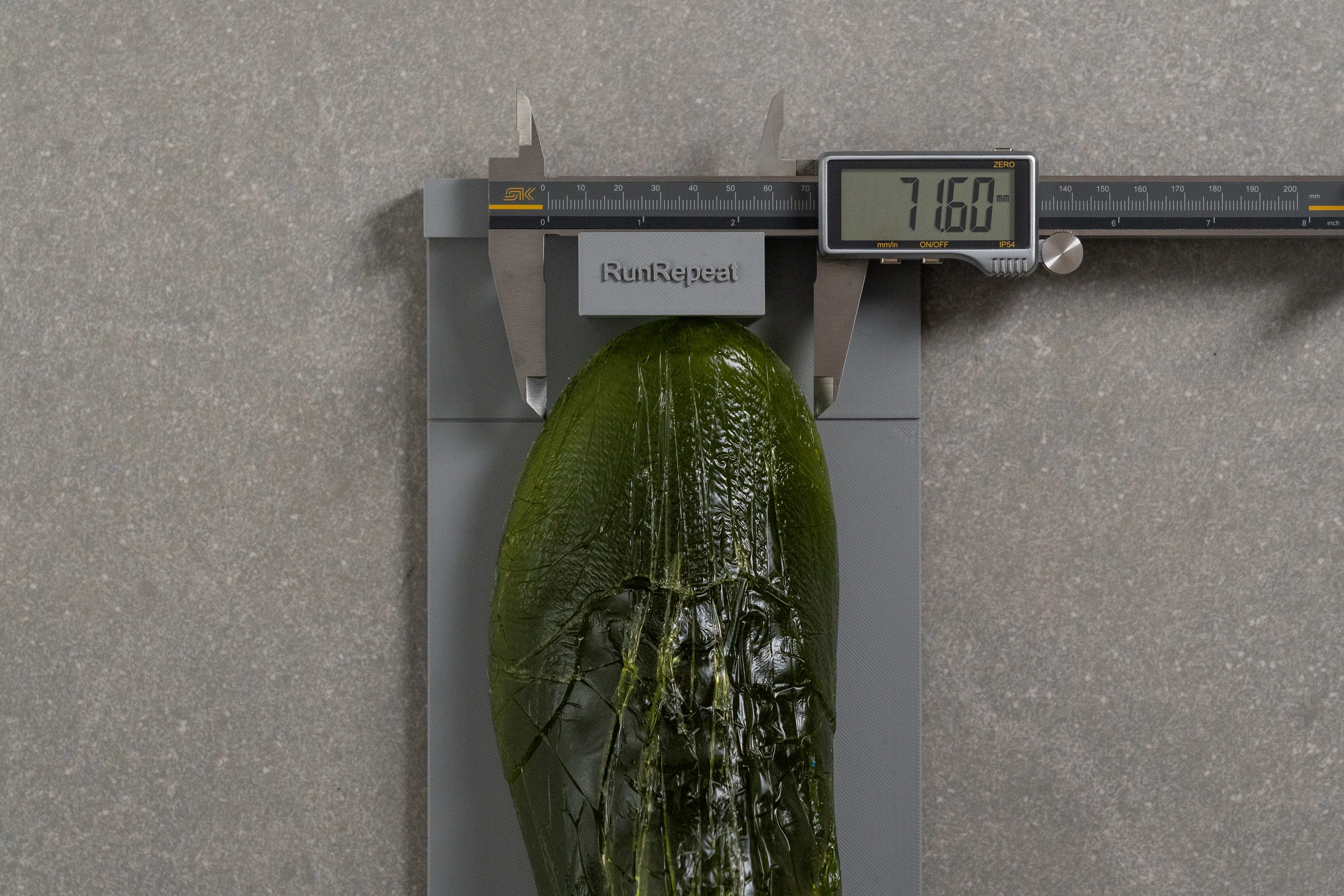
| Superblast 3 | 71.6 mm |
| Average | 73.2 mm |
Toebox height
In terms of toebox height, it is clear to us that ASICS designed this shoe with demanding long runs and extended tempo efforts in mind rather than very easy runs, although the softer foam now makes it more capable in that role than ever.
We measured 25.1 mm in this area, but the soft upper material makes it unlikely to create pressure on the toenails.
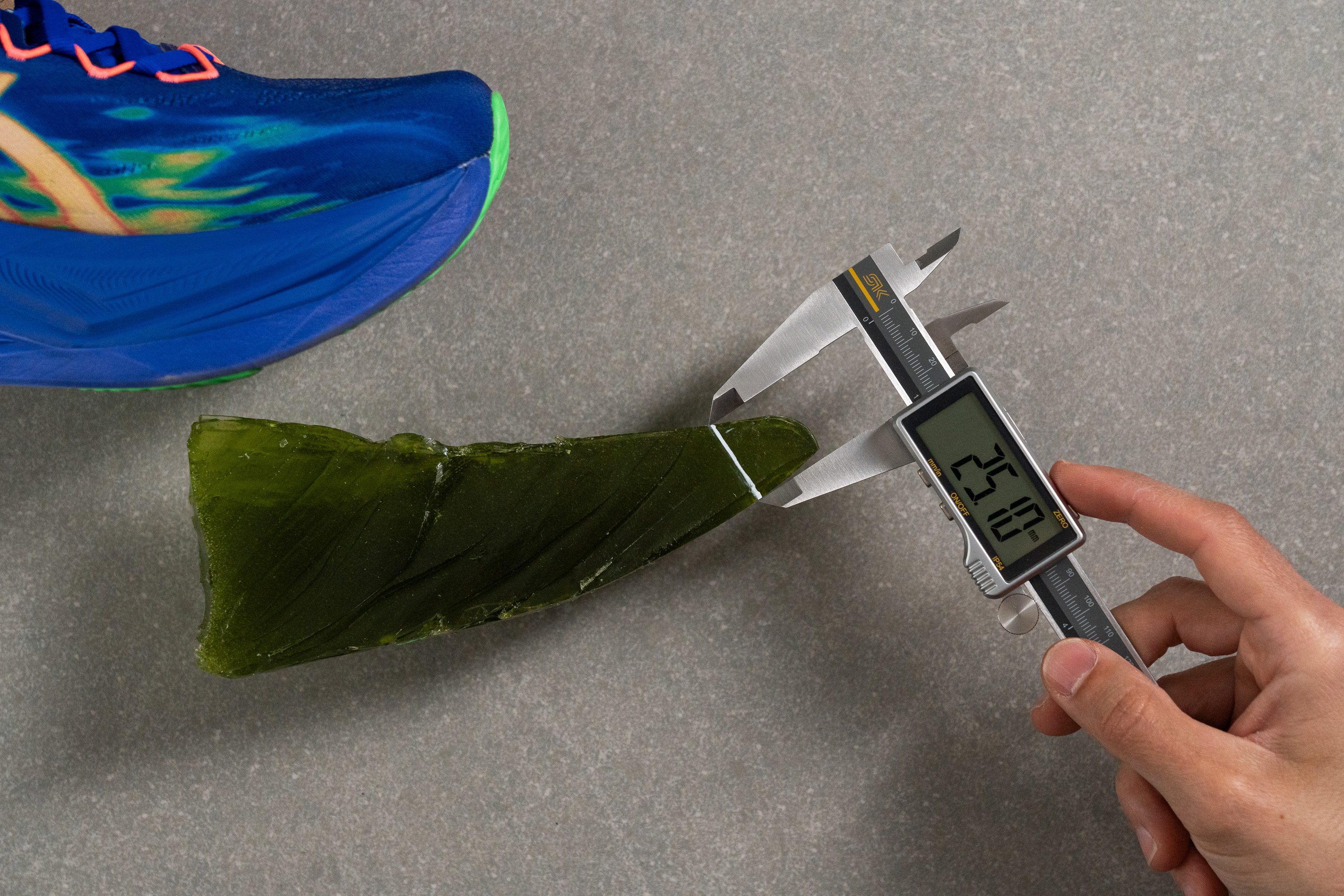
| Superblast 3 | 25.1 mm |
| Average | 27.0 mm |
Traction / Grip
Traction test
The Superblast series showed how important a good rubber compound is for achieving excellent grip, as traction was poor in the first generation and ASICS fully fixed that in version 2. It moved the needle from 0.33 in v1 to an impressive 0.83 in v2.
And ASICS improved again with version 3. In our lab test, following the exact same method as its siblings, this one reached an outstanding 1.05 score that makes it the top rated running shoe at least to this date.
| Superblast 3 | 1.05 |
| Average | 0.53 |
Outsole design
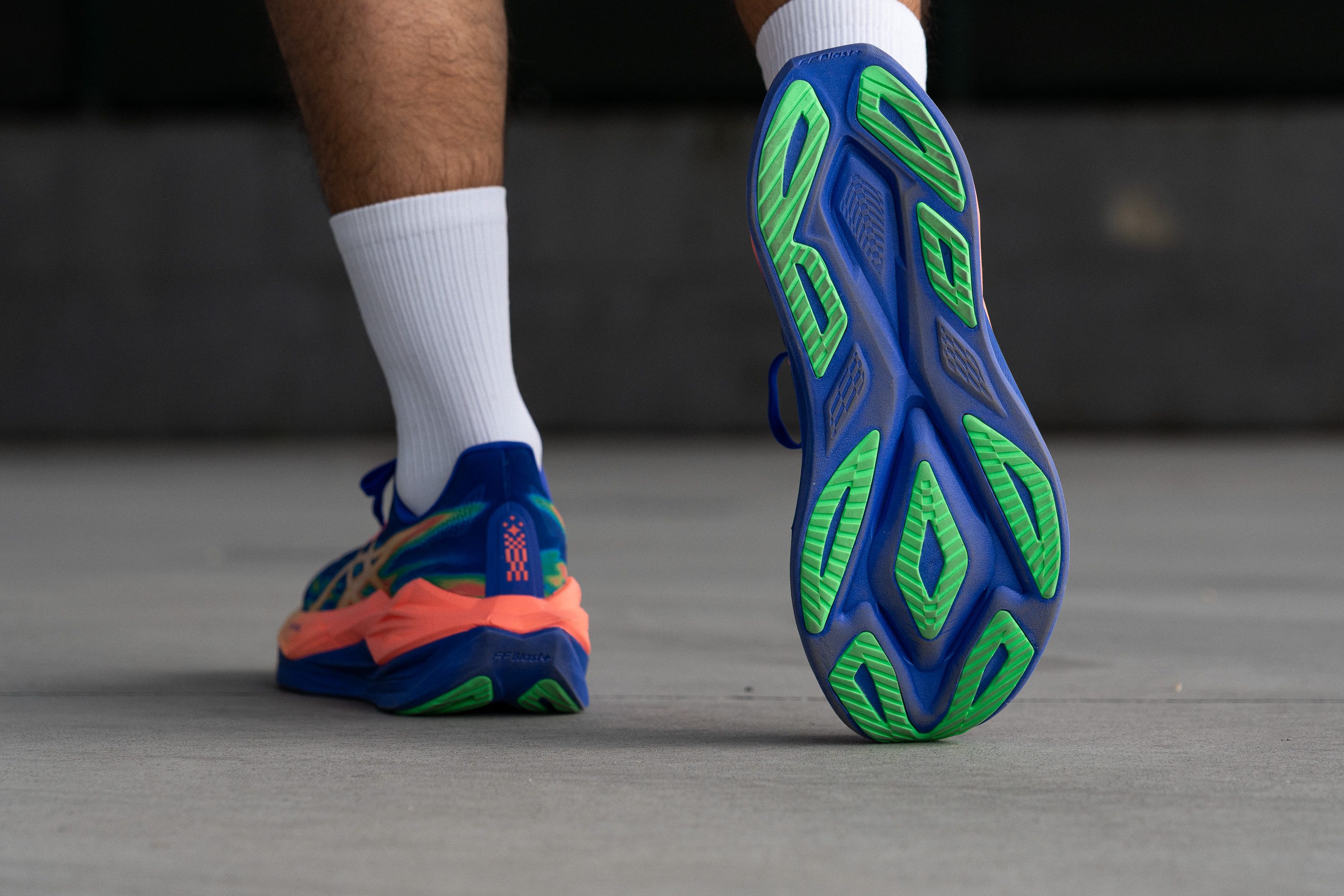
The outsole keeps the same design concept that is unmistakable Superblast DNA, but with a few small updates. There is now a more pronounced pod in the centre of the forefoot, similar to the third-generation Novablast, along with redesigned rubber patches aimed at improving grip.
In terms of compounds, the shoe uses a combination of AHAR LO in the heel and ASICSGRIP in the forefoot.
Flexibility / Stiffness
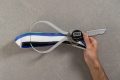
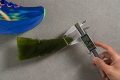
Despite keeping a similar design, the Superblast 3 is slightly more flexible than its predecessor. It drops from 18.4N to 16.5N in our 30-degree bend test thanks to the new FF Leap foam, as its more open-cell structure naturally reduces stiffness.
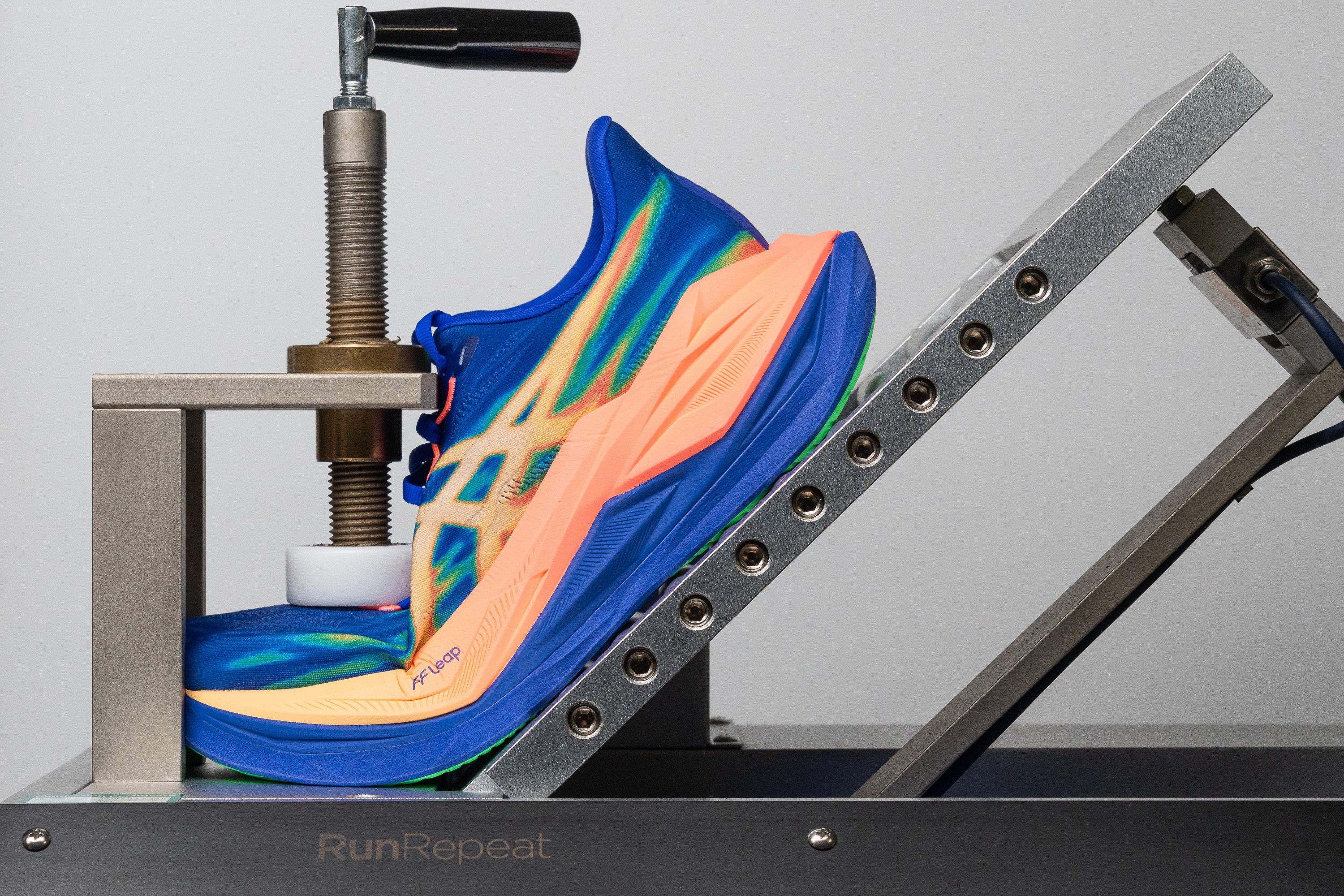
| Superblast 3 | 16.5N |
| Average | 15.5N |
Weight
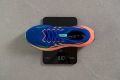
Here comes another improvement. While the Superblast 2 had a very reasonable weight for its large size at 8.9 oz or 252g, the Superblast 3 improves further with 8.3 oz or 235g.
The combination of a new upper and the lighter FF Leap foam made this upgrade possible, adding another strong reason to move to this version.
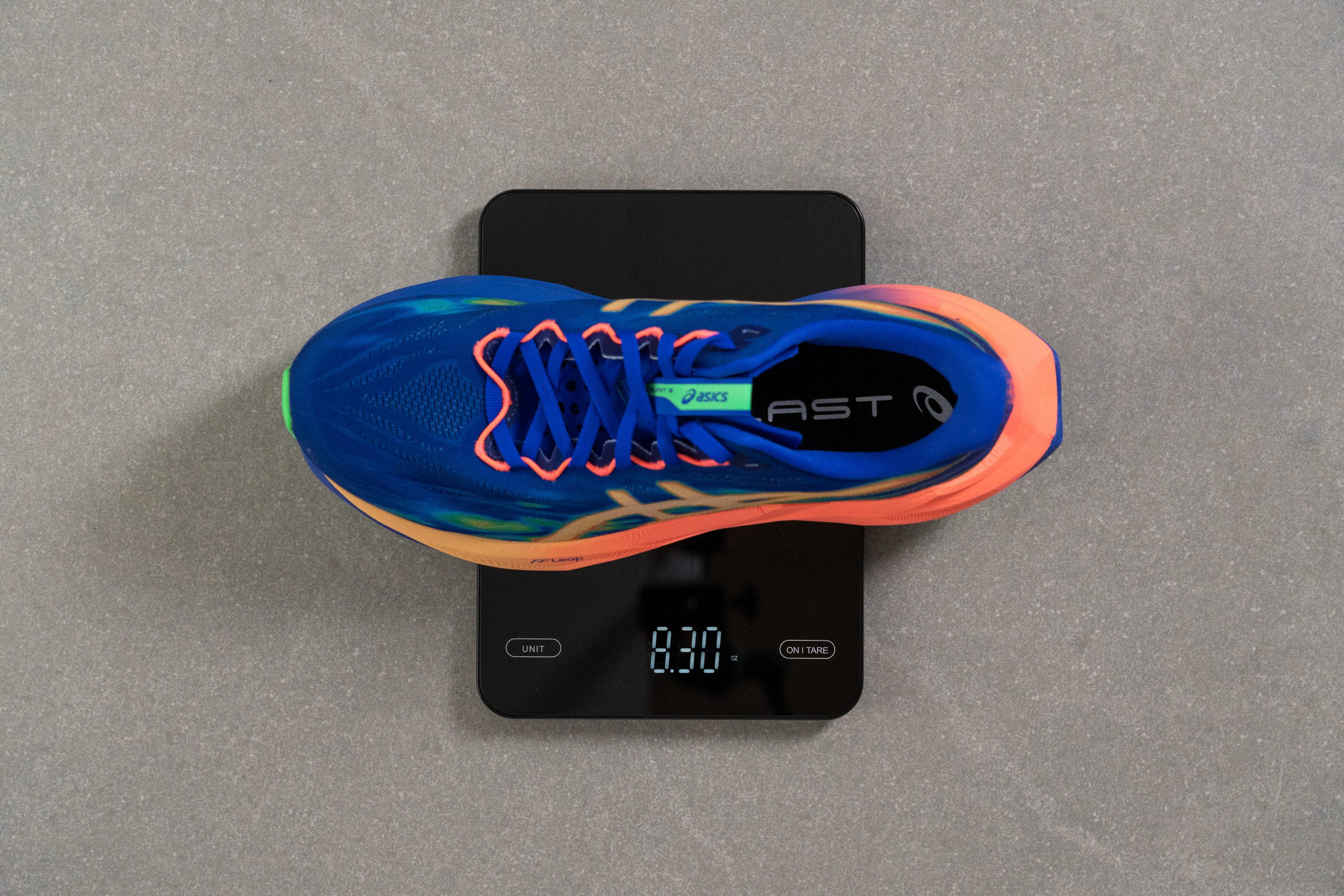
| Superblast 3 | 8.3 oz (235g) |
| Average | 9.2 oz (261g) |
Breathability
Breathability test
ASICS keeps evolving the Superblast upper with every version. The first generation was clearly race-inspired, borrowing ideas from the MOTIONWRAP upper seen in the Metaspeed series, while the second version focused much more on structure and comfort.
This third version is lighter than its predecessor, but once again introduces a new material with a woven mesh. The challenge for some runners is that ventilation is mostly concentrated in the tongue, as ASICS added oversized ventilation holes there but skipped them in the toebox.
For this reason, we rated the Superblast 3 with moderate breathability, as we believe that airflow in the toebox is essential for those running in hot climates. The SB3 directs most of the ventilation toward the tongue, but since it sits so close to the instep, there is limited space for air to circulate effectively.
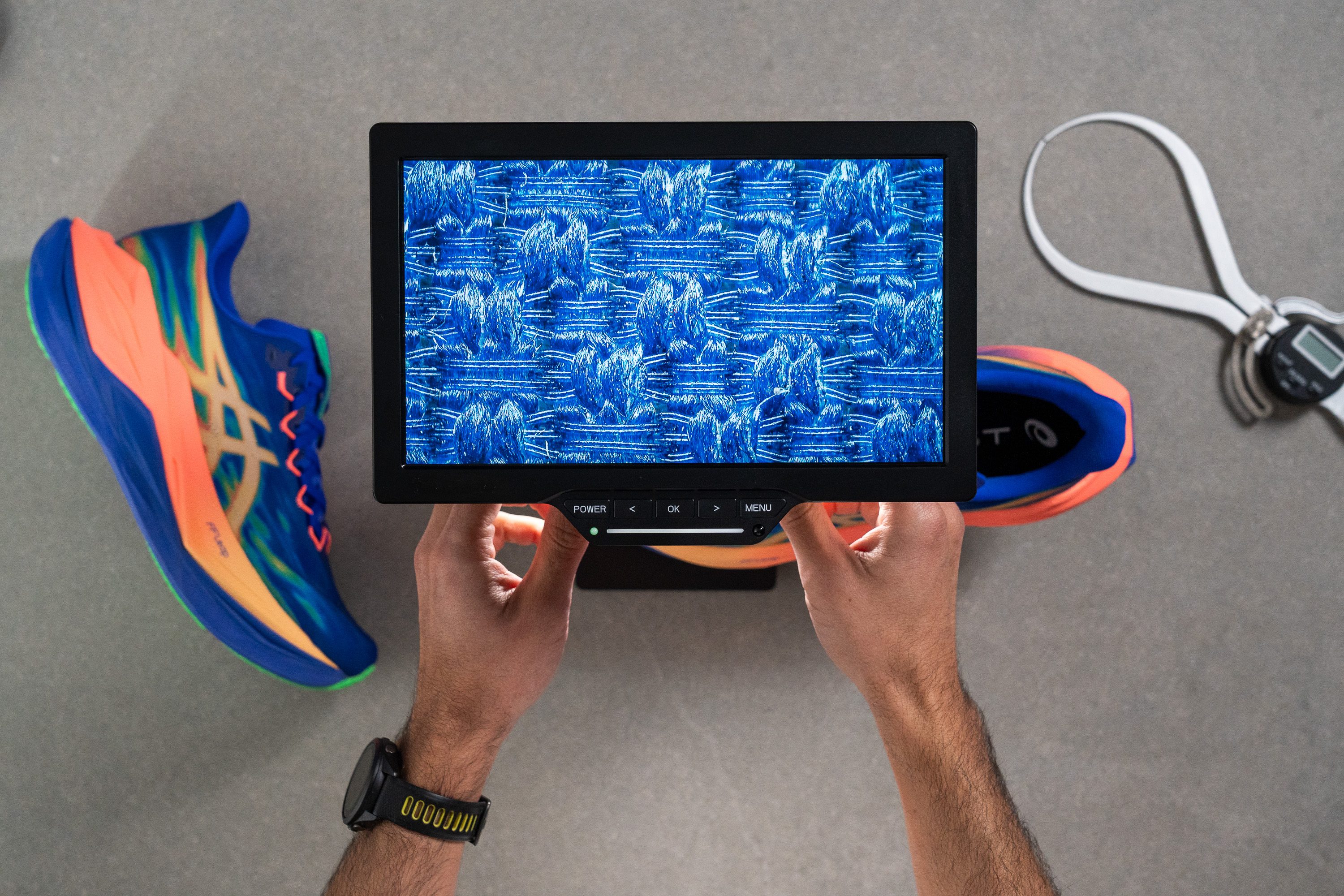
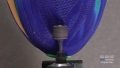
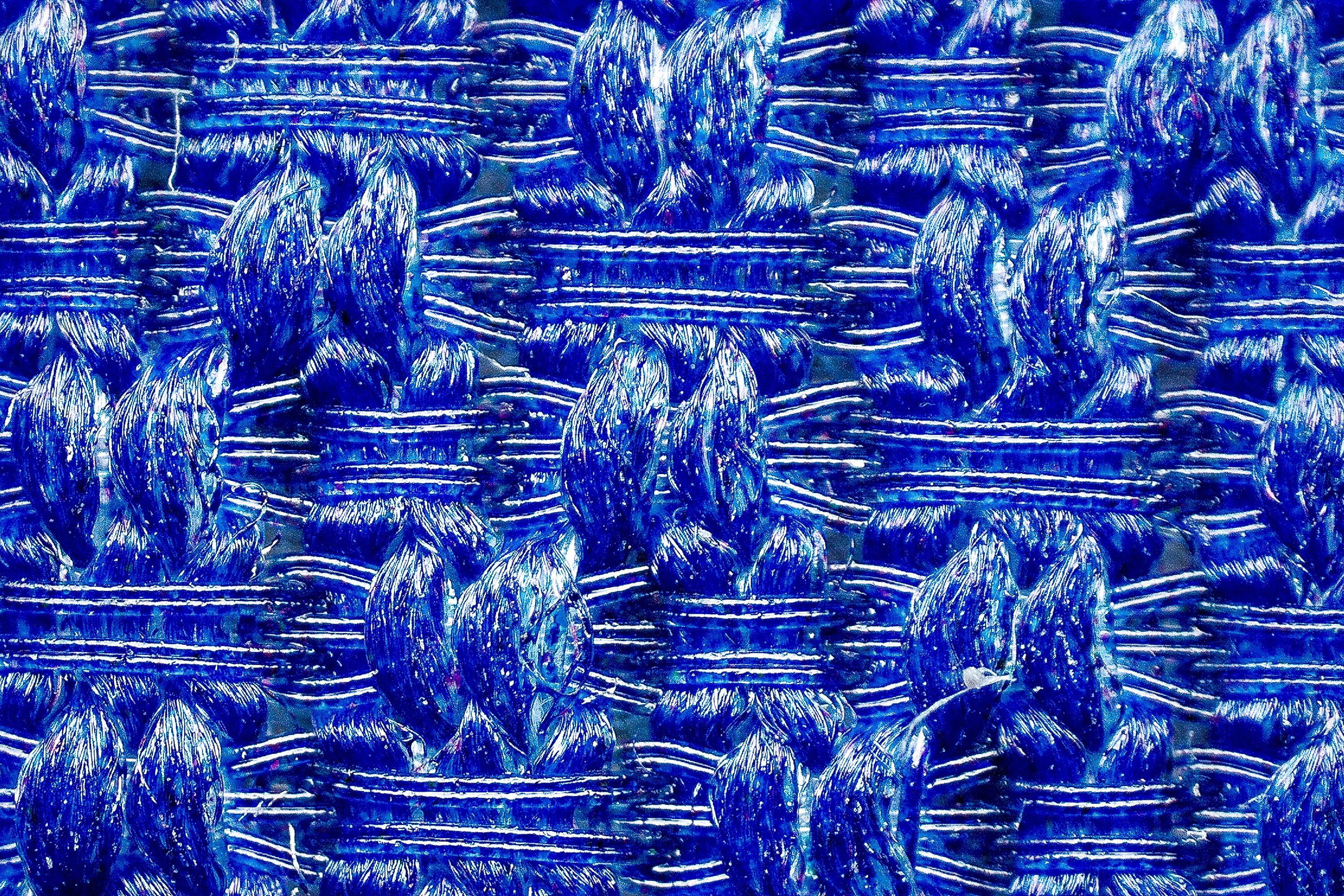
The mesh looks impressive under the microscope and feels more premium than a standard engineered mesh upper.
In terms of comfort, this version is also an upgrade. It features improved and more generous padding in the heel area, which stands out immediately, especially considering how lightweight the shoe remains.
| Superblast 3 | 3 |
| Average | 3.6 |
Stability
Lateral stability test
One of the features that made the Superblast a groundbreaking shoe in 2022 was its ability to combine a maximal stack height with excellent stability. Naturally, switching the midsole to the ultra-soft FF Leap foam, along with a softer version of FF Blast+, could have challenged that balance. However, ASICS had a clever solution.
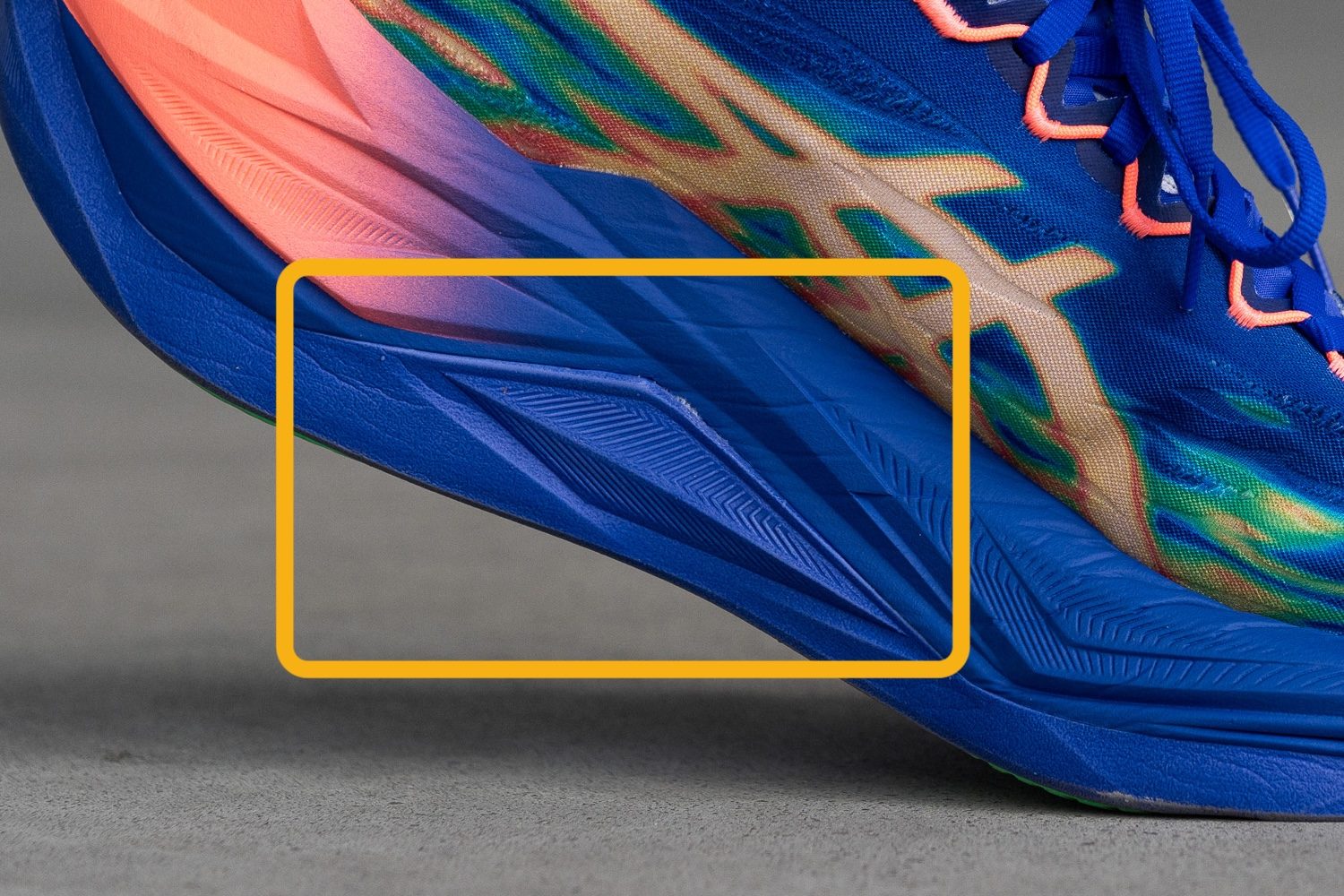
The Superblast 3 slightly adjusts the midsole design by adding more FF Blast+ under the arch, helping reduce excessive compression from FF Leap in that area for runners with pronation tendencies. The rest of the usual methods employed by ASICS are still present, like the raised midsole sidewalls in the heel and midfoot areas.
Torsional rigidity
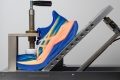
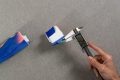
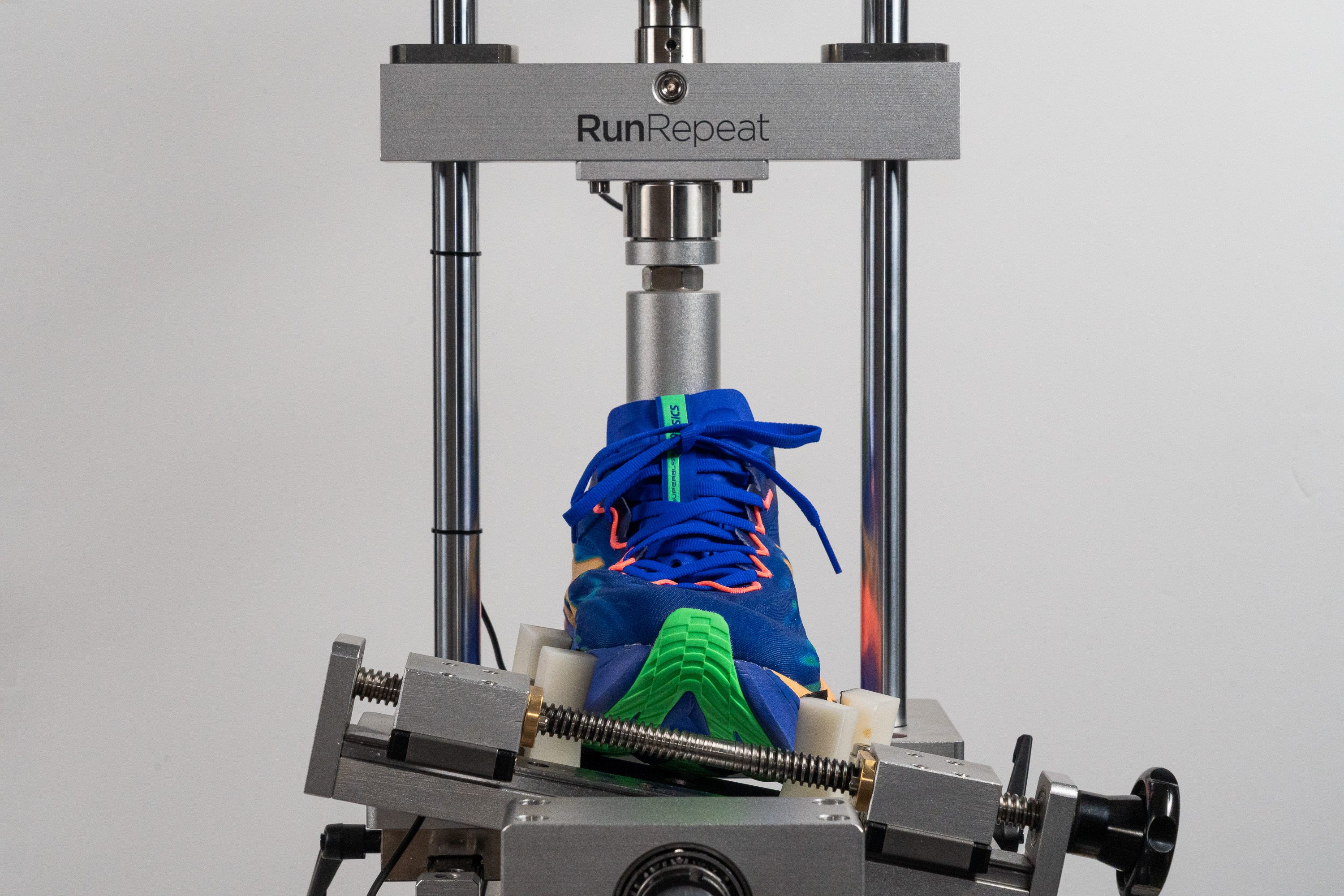
In this test, we measure the force needed to twist the shoe 10 degrees in both directions.
As expected, given its sky-high stack height and wide midsole, the ASICS Superblast 3 scored very high in our torsional rigidity test, reaching 18.2 Nm despite lacking a carbon plate.
| Superblast 3 | 18.2 Nm |
| Average | 14.3 Nm |
Heel counter stiffness
The heel counter is slightly stiffer than the previous version, now scoring 4/5 in our manual assessment. That said, this is likely why ASICS added improved padding in this area, so you will probably not notice any difference in comfort.
| Superblast 3 | 4 |
| Average | 2.9 |
Midsole width - forefoot
Another trademark design feature of the Superblast series is the wide base of the midsole, and it's just the same in version 3.
Starting with the forefoot, we recorded 120.7 mm of width. That is clearly above an average daily trainer and one of the key reasons why landings feel so controlled despite having almost 40 mm of stack height in the front.
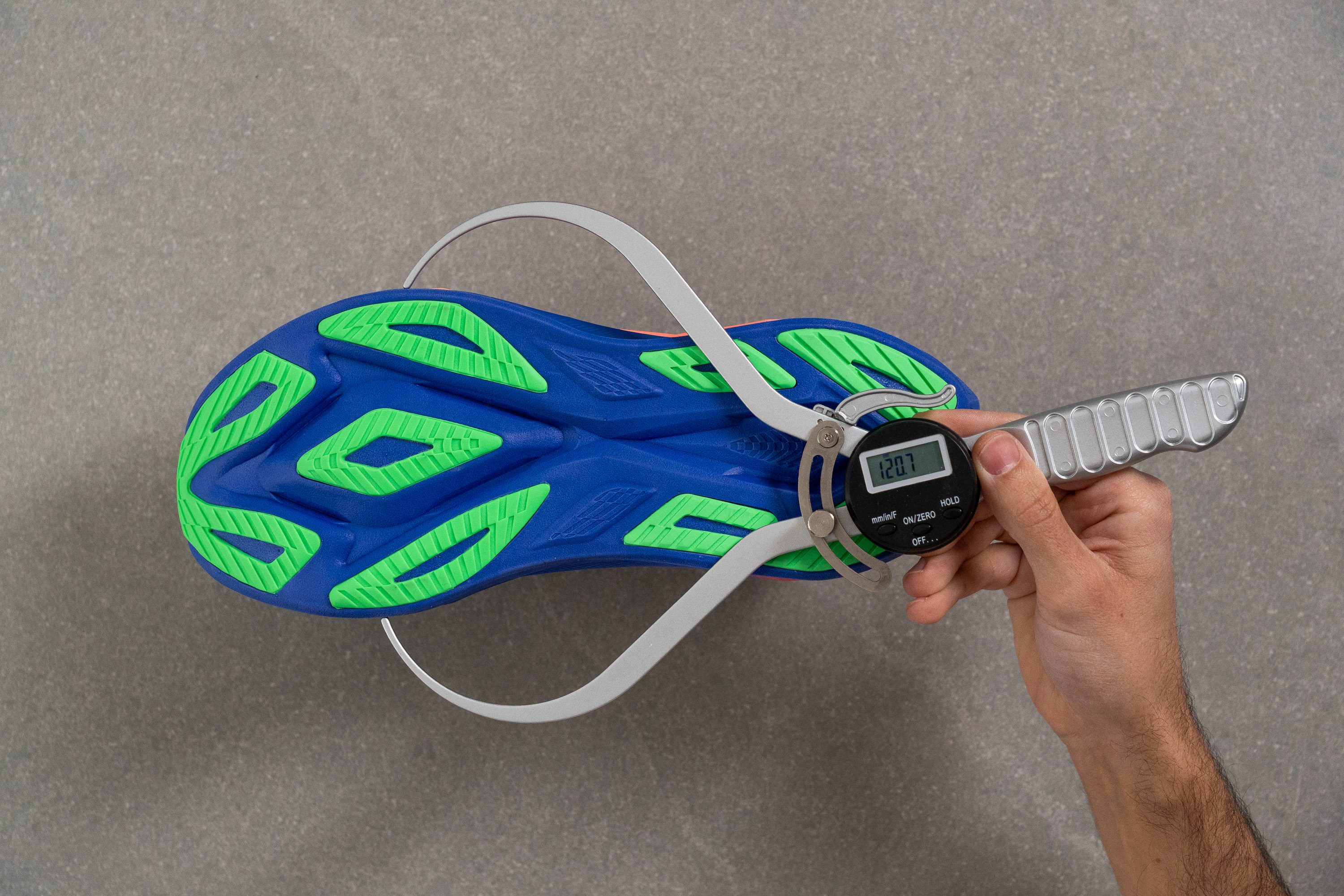
| Superblast 3 | 120.7 mm |
| Average | 115.1 mm |
Midsole width - heel
The heel also feels very wide while running, and we confirmed that with a 95.0 mm measurement.
You should not expect a nimble or agile feel underfoot, as this shoe rides more like a luxury sedan than a 2-seat roadster despite its low weight.
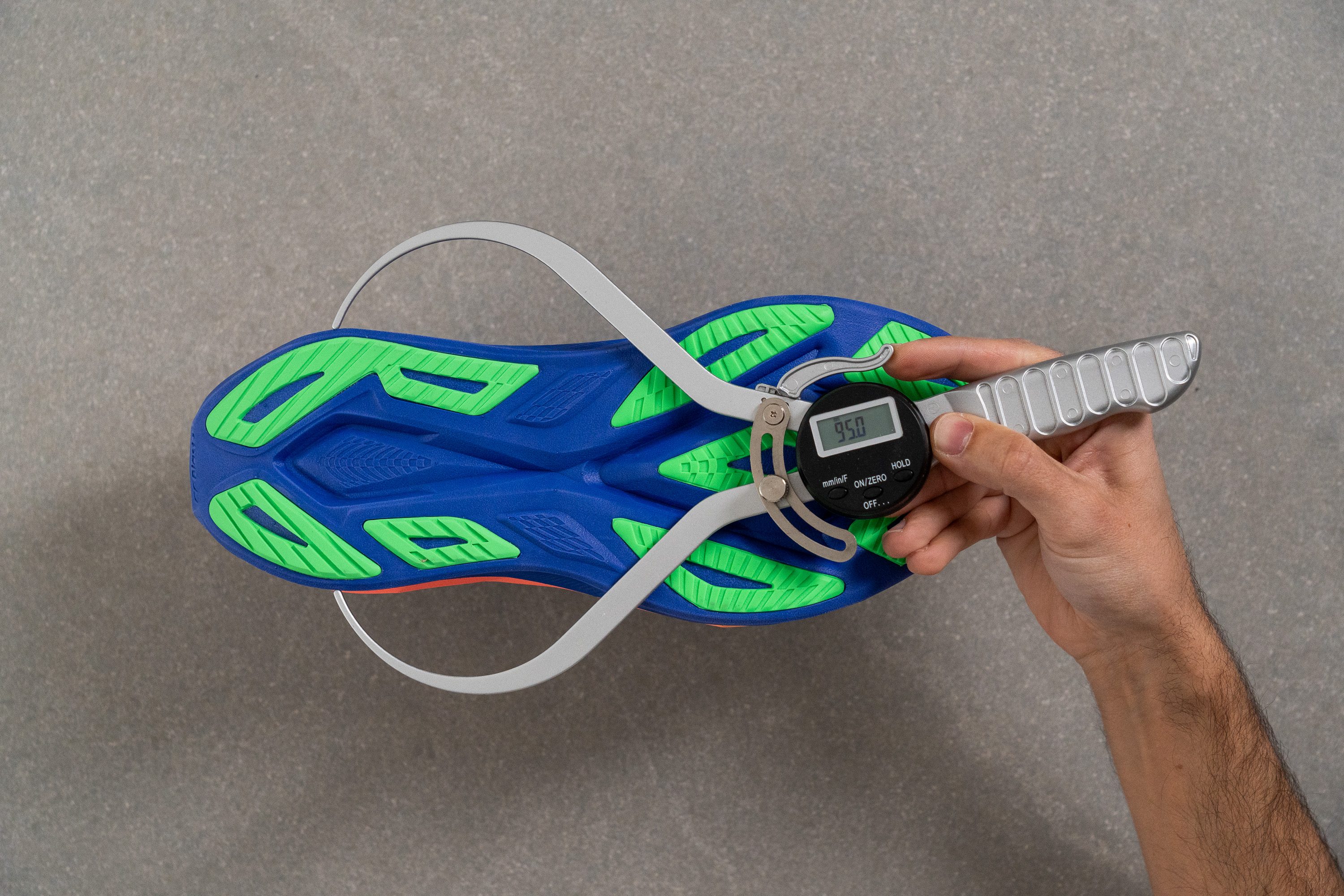
| Superblast 3 | 95.0 mm |
| Average | 91.1 mm |
Durability
Toebox durability
The lack of ventilation holes in the toebox comes with a clear upside, delivering solid durability for such a lightweight and thin upper. It is not easy to achieve a 3/5 score here.
| Superblast 3 | 3 |
| Average | 2.6 |
Heel padding durability
The heel padding also showed strong resistance in our Dremel test. A 4/5 score clearly points to excellent durability and no expected long-term issues.
| Superblast 3 | 4 |
| Average | 3.4 |
Outsole durability
The outsole of the Superblast 3 is clearly in line with the premium price of the shoe.
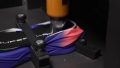
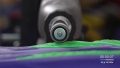
It delivers excellent grip and also shows outstanding durability, as confirmed in our Dremel test where we removed only 0.5 mm of rubber.
| Superblast 3 | 0.5 mm |
| Average | 1.1 mm |
Outsole thickness
With 2.4 mm of outsole thickness and such a durable rubber, we believe this is an excellent super trainer for runners who, when spending a lot on a shoe, also expect an outsole that will last a very long time.
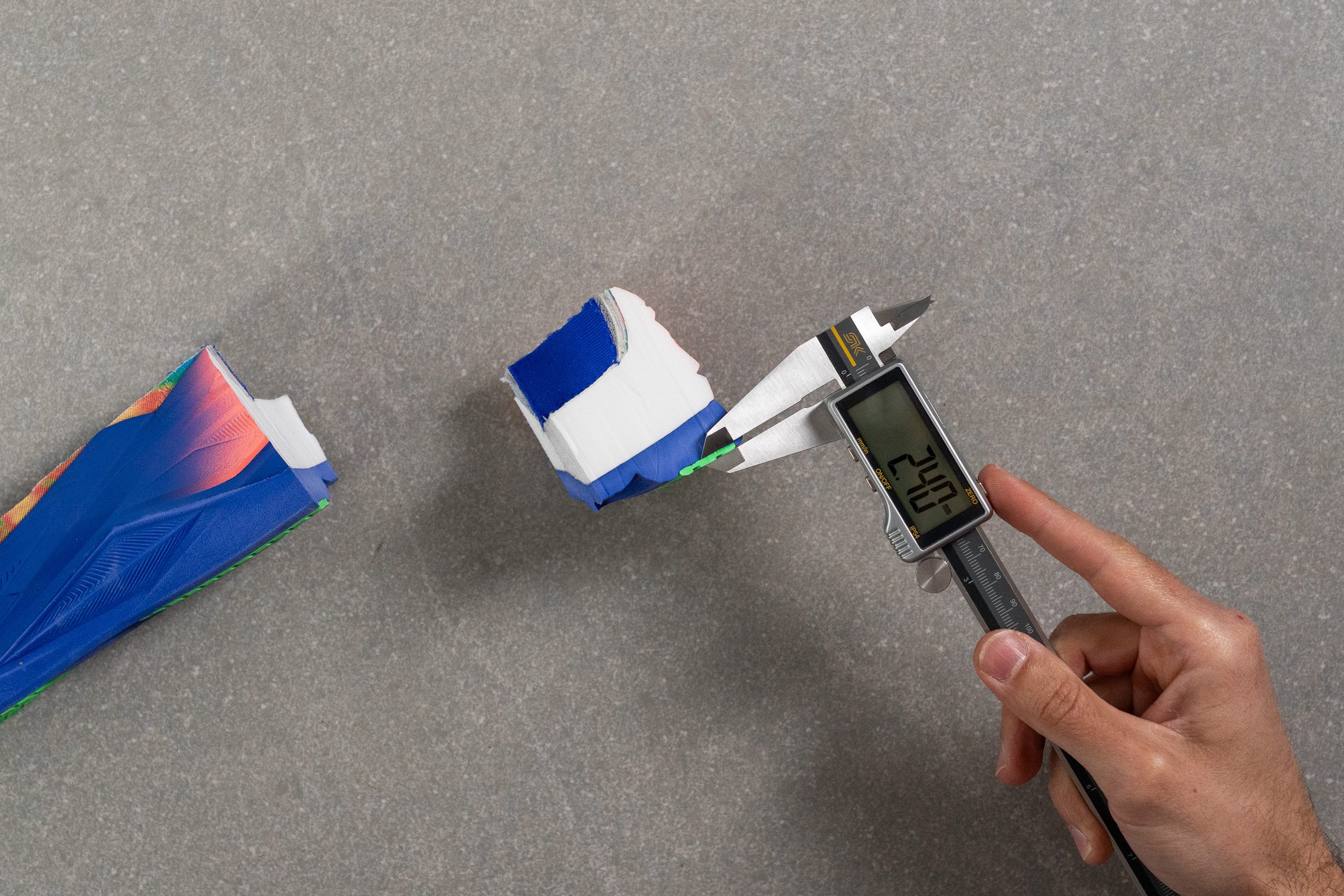
| Superblast 3 | 2.4 mm |
| Average | 3.1 mm |
Misc
Insole thickness
The insole has a very standard thickness of 4.2 mm, closely matching what we usually see in a regular daily trainer.
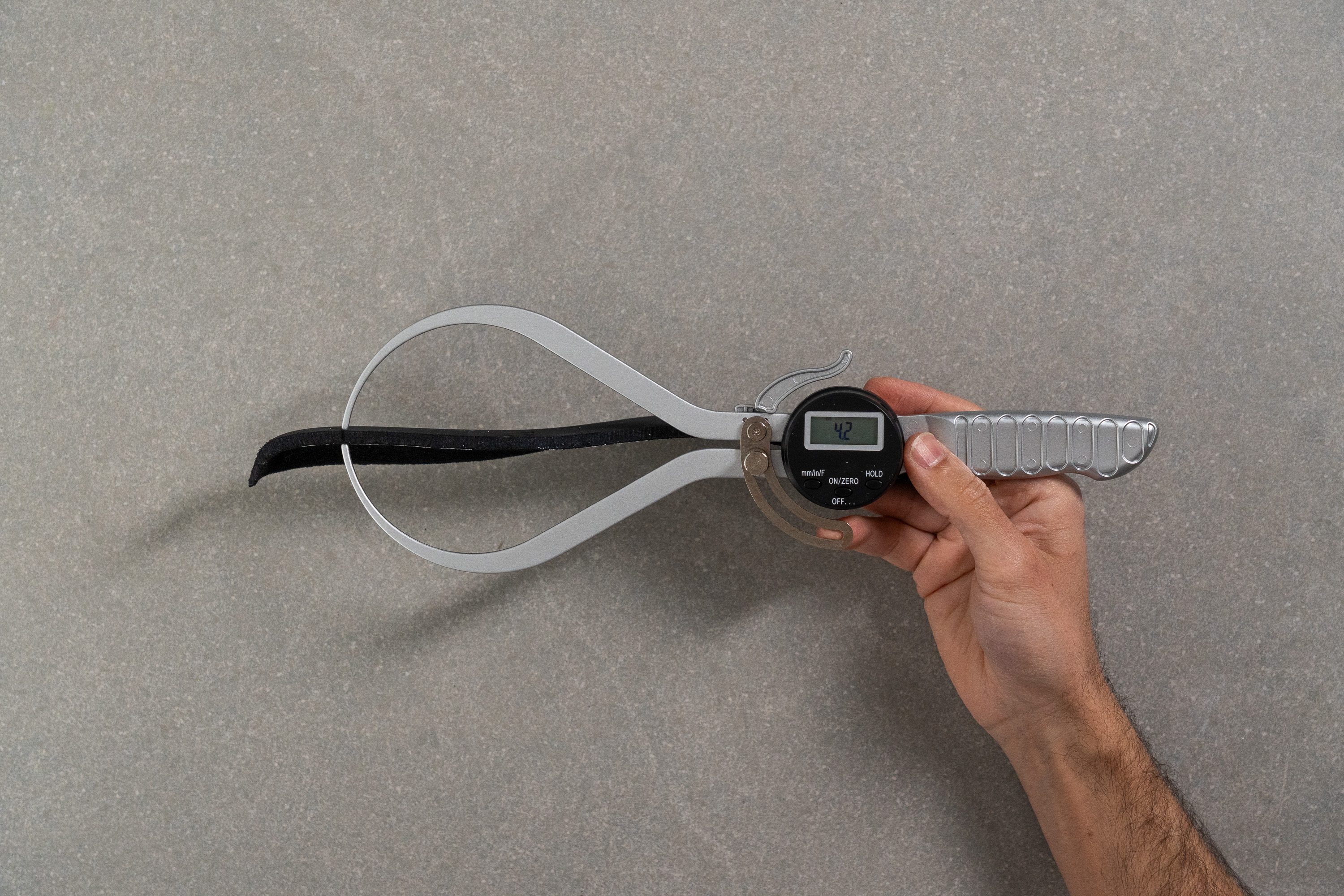
| Superblast 3 | 4.2 mm |
| Average | 4.4 mm |
Removable insole
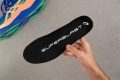
The insole can be removed without any issue. We also noticed that ASICS has not included the carbon footprint, as they do in many other shoes, perhaps because it was not especially impressive.
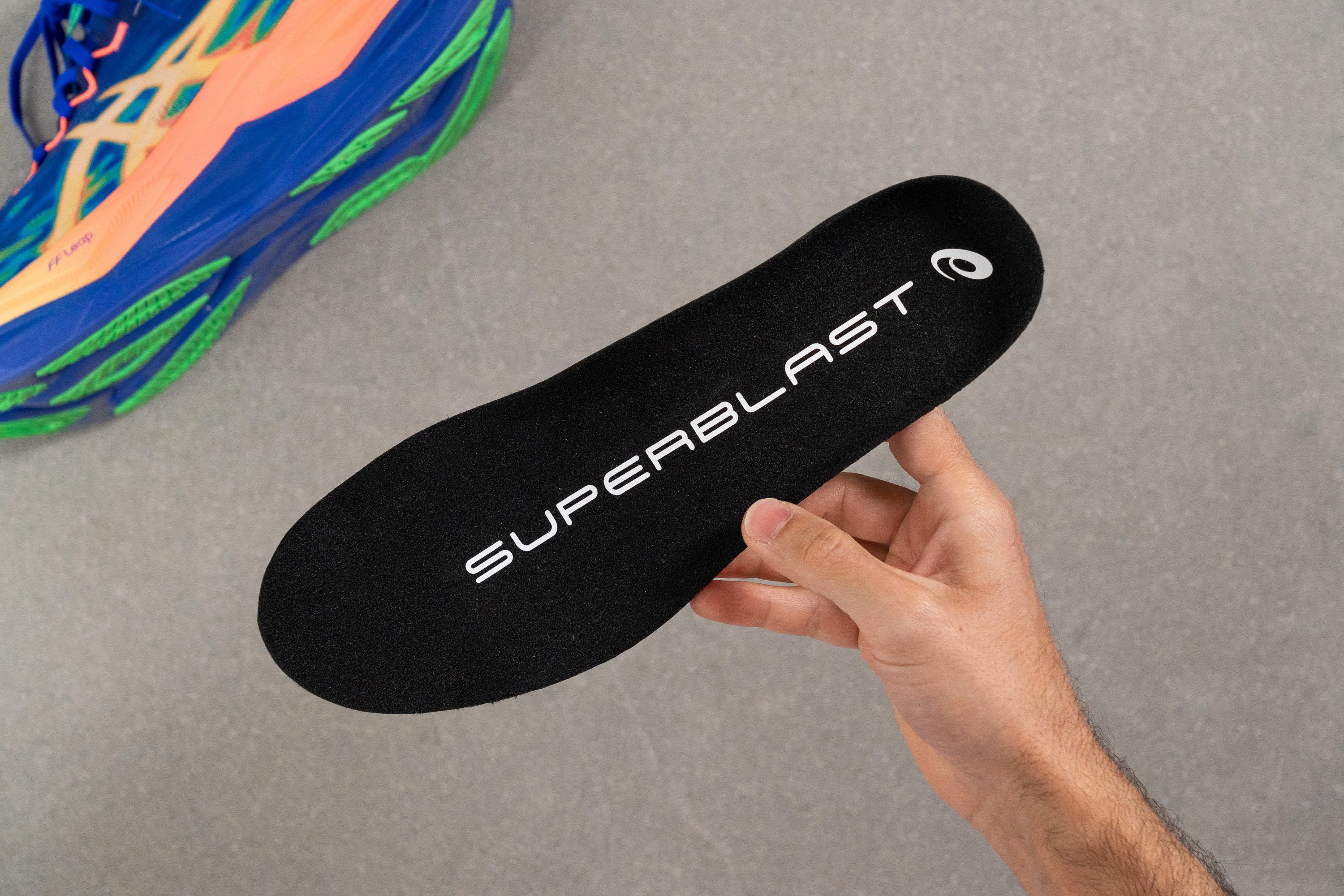
| Superblast 3 | Yes |
Reflective elements
We appreciate when brands include reflective elements in their running shoes, and ASICS has added them in the heel area.
| Superblast 3 | Yes |
Tongue padding
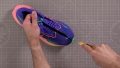
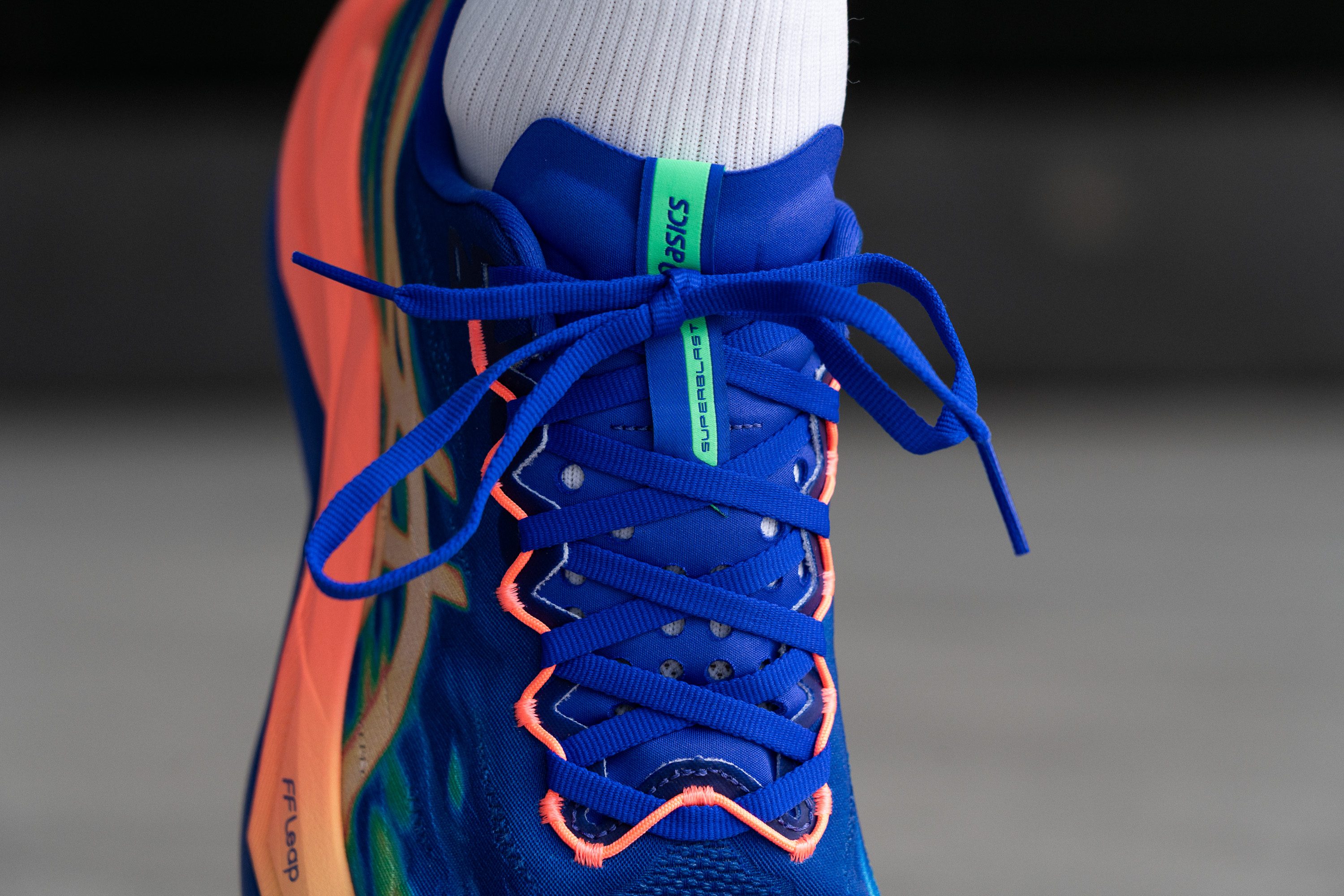
ASICS has fully revamped the lacing system and opted this time for the so-called "lace in lace" setup. It's a unique design, as it features an elastic cord that runs across the entire eyelet chain while being stitched to form the eyelets. The top half uses punched eyelets too, while the bottom relies only on this cord-based structure.
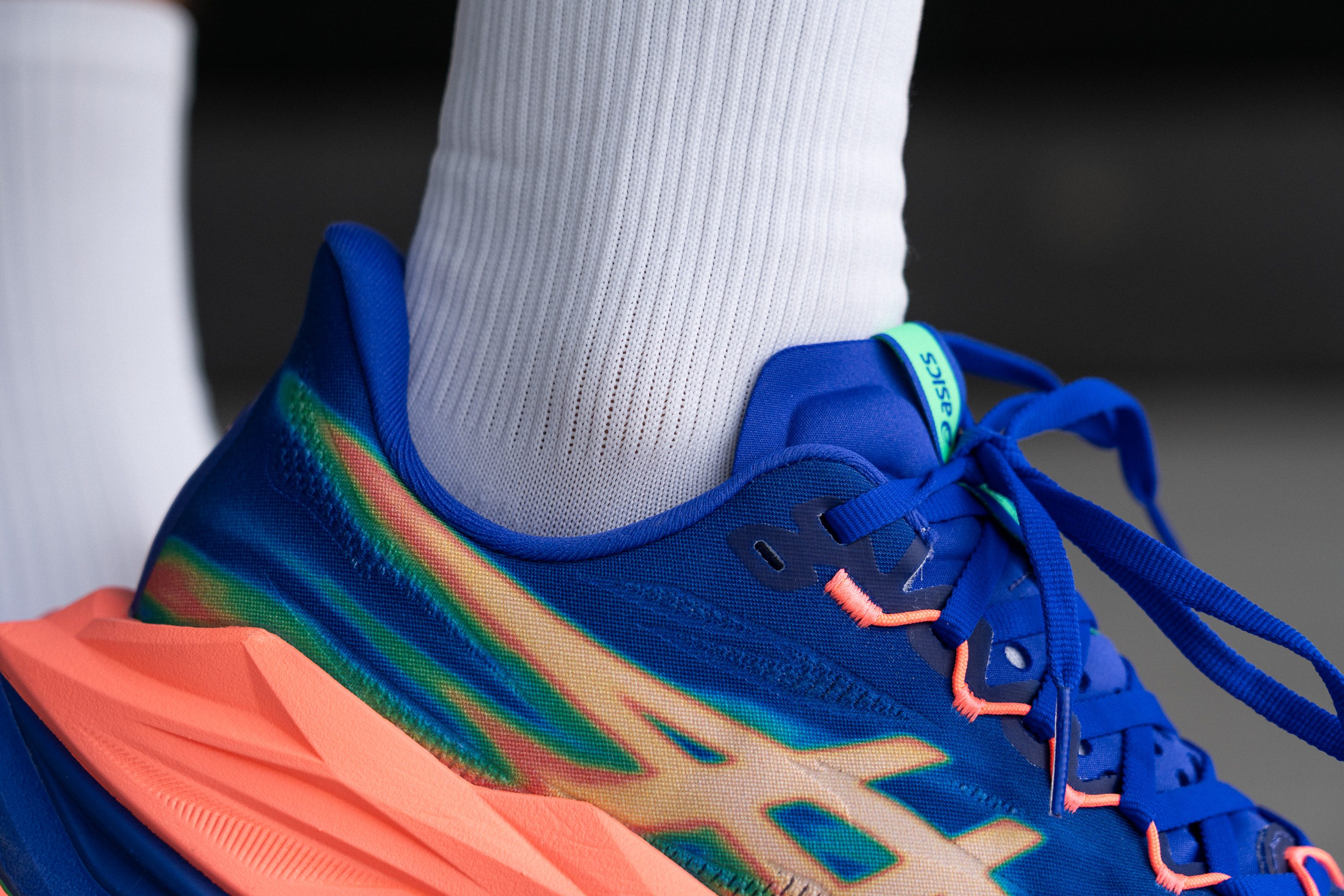
It is excellent for pressure control, but long-term durability remains an open question. However, ASICS seems confident, as this is not the first shoe where we have seen it in the lab, with the Trabuco 14 featuring a similar design.
The tongue keeps the same low thickness seen in recent ASICS shoes, which has been working well for the brand. It helps keep weight low, although for those seeking a more plush step-in feel, having only 1.9 mm of padding may feel underwhelming.
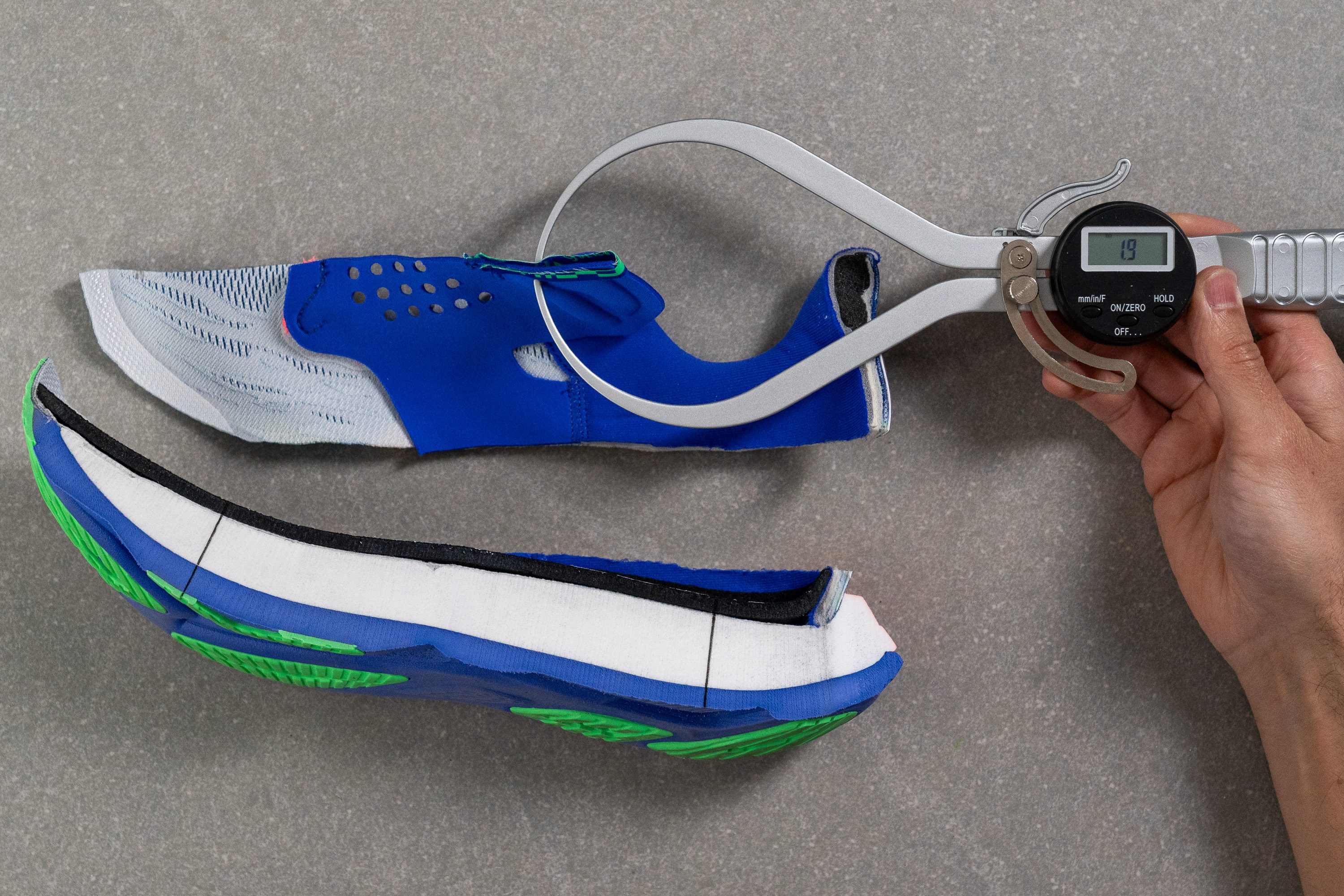
| Superblast 3 | 1.9 mm |
| Average | 5.8 mm |
Tongue: gusset type
The tongue execution is excellent, although that is expected at such a high price point. We liked the semi-gusseted design as it provides a more secure and stable lockdown.
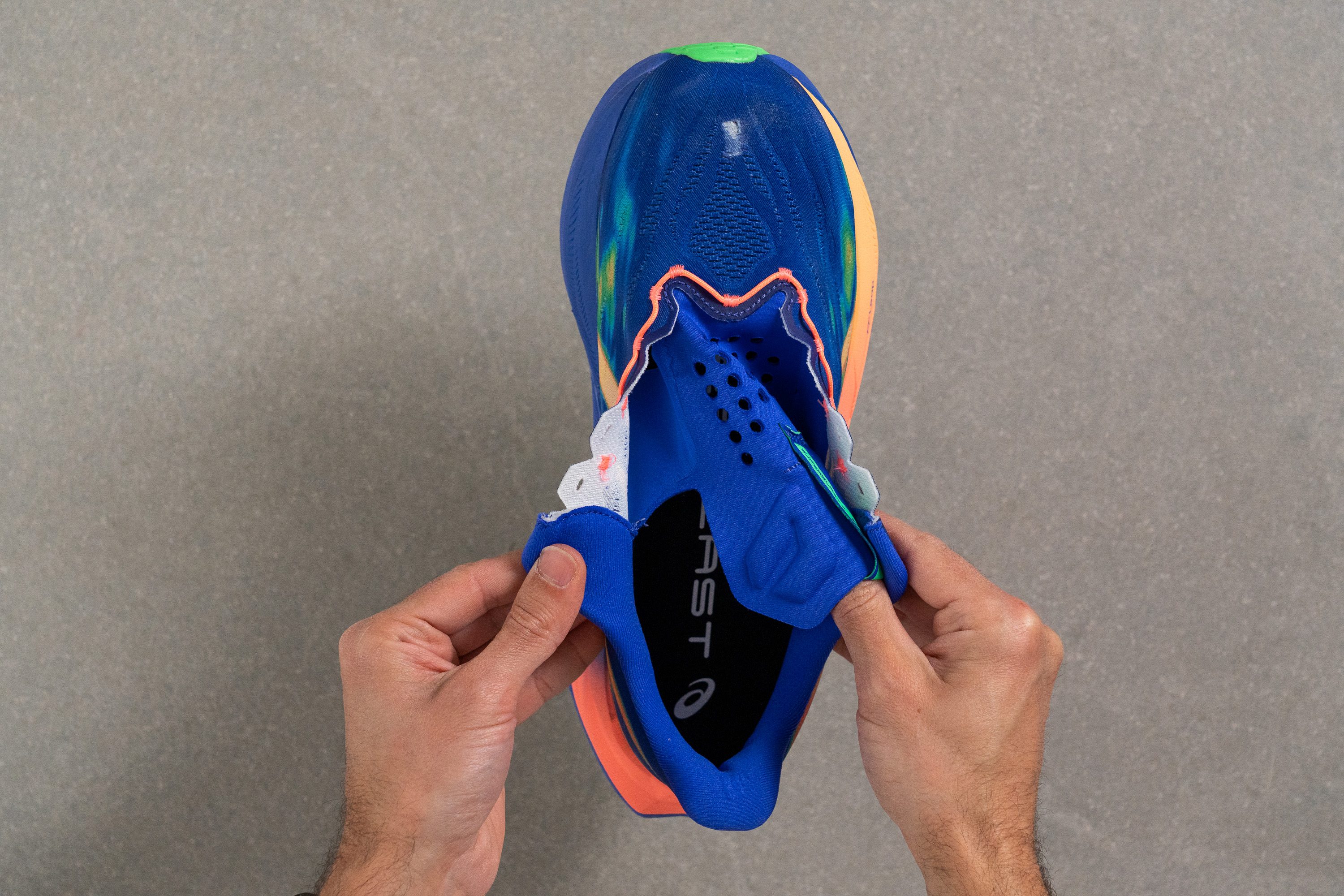
| Superblast 3 | Both sides (semi) |
Heel tab
The heel design features an extended collar with a dual purpose: reducing pressure on the Achilles tendon while also making it easier to grab the shoe when needed.
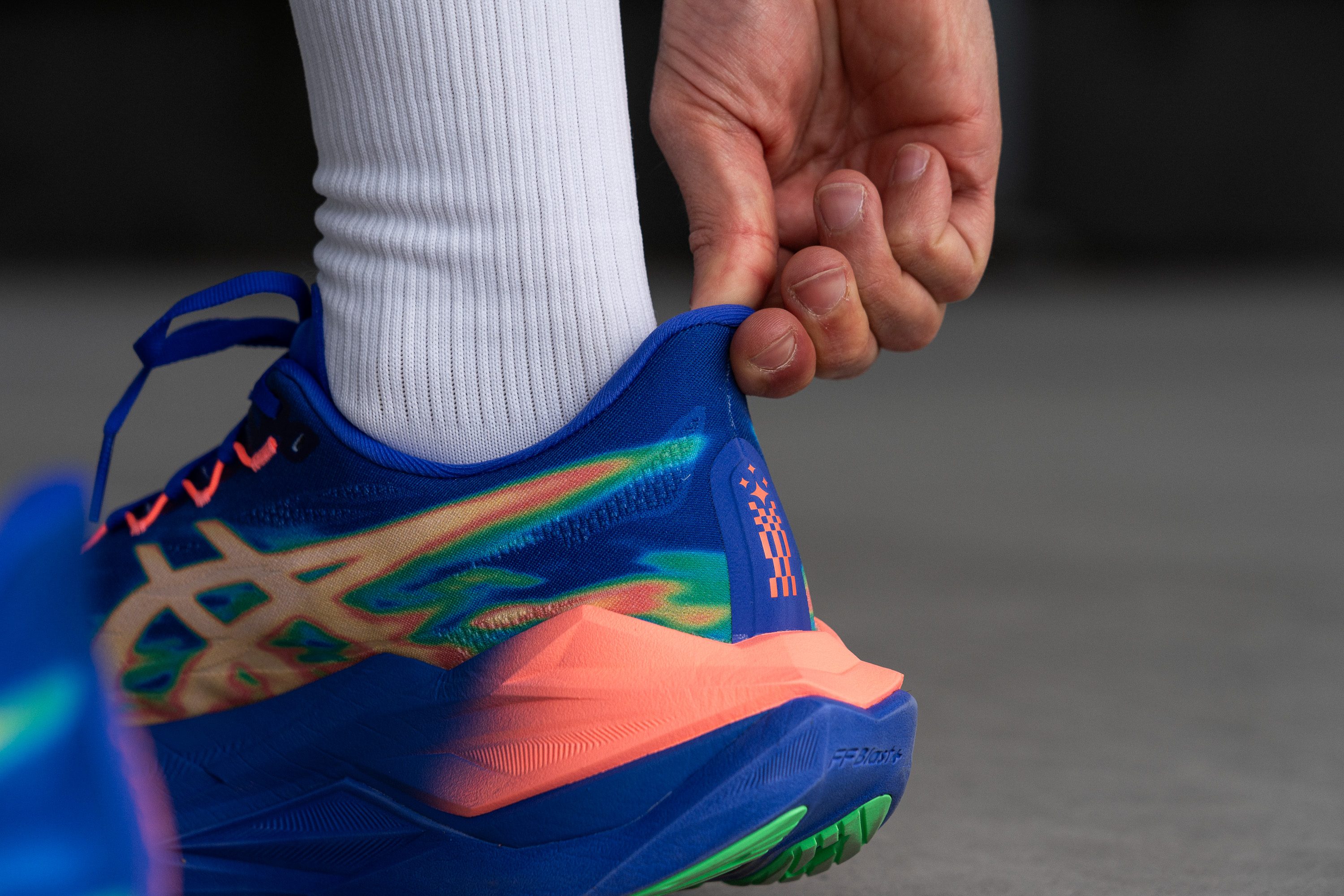
| Superblast 3 | Extended heel collar |
Price
When the original Superblast was released, many runners threw their hands to their heads due to its massive price for a training shoe. However, ASICS was right by arguably creating the super trainer category, as it is clear that there is strong demand for it.
Unfortunately, the Superblast 3 comes with a slight price increase and more than ever feels like an option aimed at runners with deep pockets. However, it no longer feels like an isolated option as most brands have joined the expensive super trainer trend.
| Superblast 3 | $200 |