6 Best Minimalist Running Shoes in 2026


We buy shoes ourselves. We earn commissions when you buy through us, at no extra cost. Why trust us
Minimalist running shoes are a perfect middle ground between barefoot running shoes and traditional running shoes for runners who love that natural feeling while running and a good amount of ground feel.
The definition says, “Footwear providing minimal interference with the natural movement of the foot due to its high flexibility, low heel-to-toe drop, weight and stack height, and the absence of motion control and stability devices.”
In this guide, we analyze feature by feature, look at lab data, and highlight the best performers among minimalist running shoes.
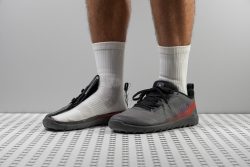
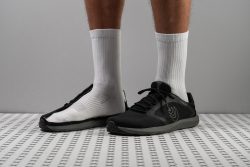
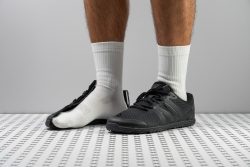
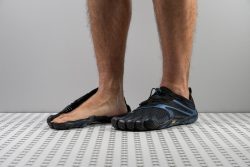

How we test minimalist running shoes
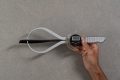
Minimalist running shoes are all about the 5 features defined in the Minimalist Index. Naturally, we do test those (longitudinal flexibility, torsional rigidity, heel stack height, heel drop, and stabilizing technologies), but we don’t stop there.
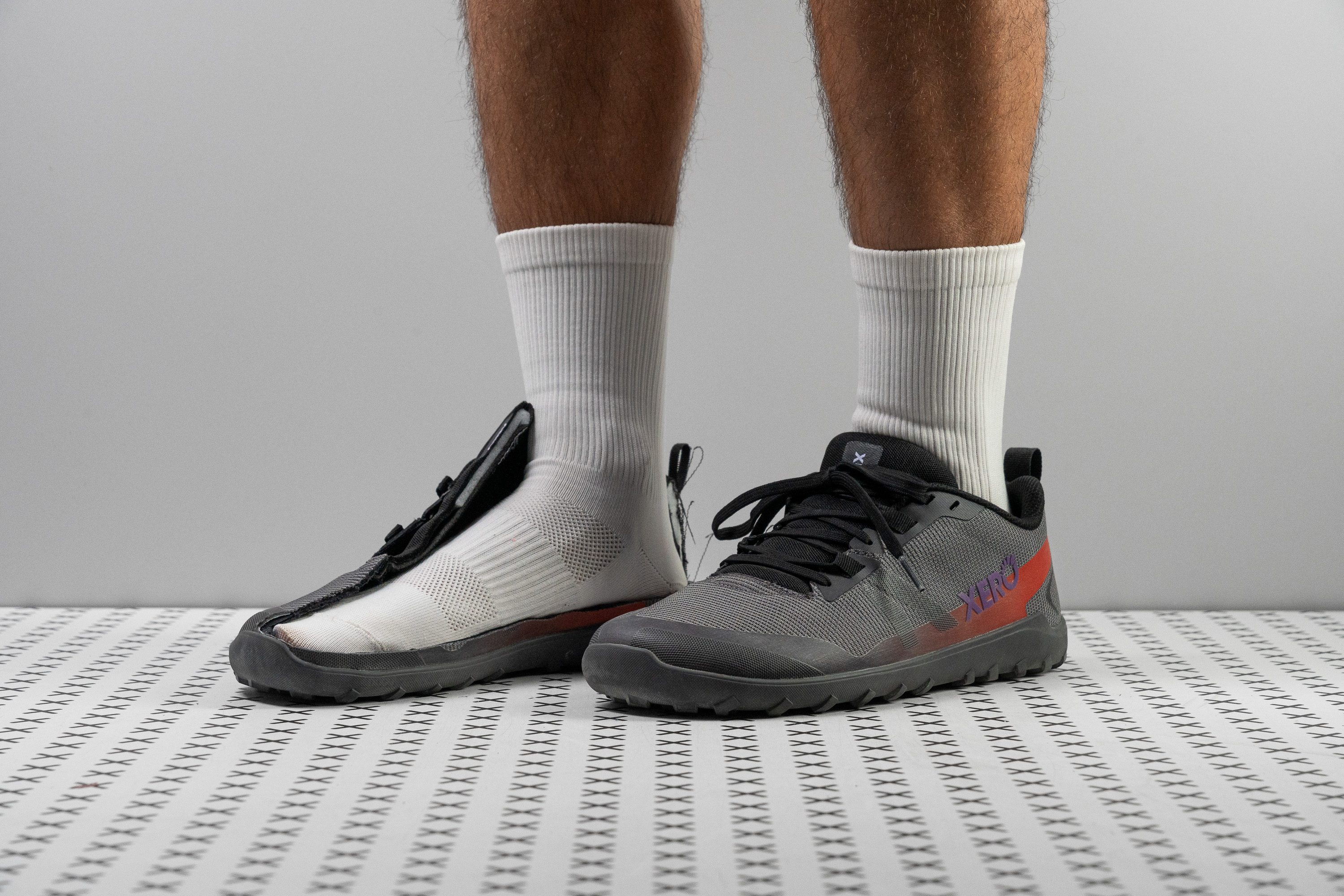
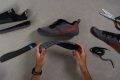
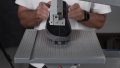
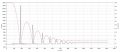
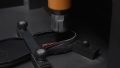
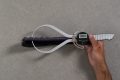
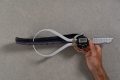
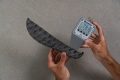
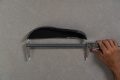
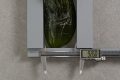
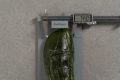
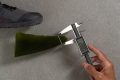
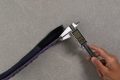
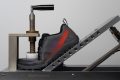
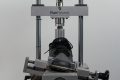
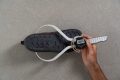
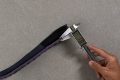
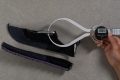
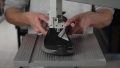
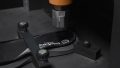
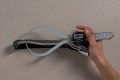
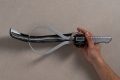
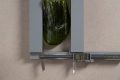
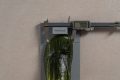
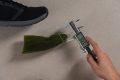
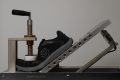
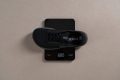
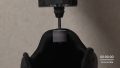
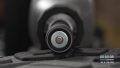
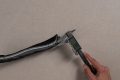
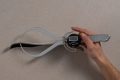
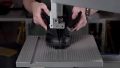
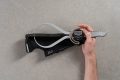
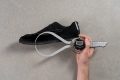
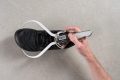
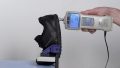
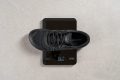
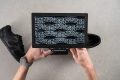
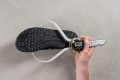
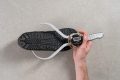
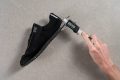
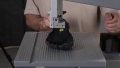
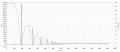
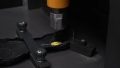
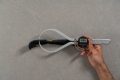
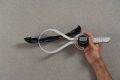
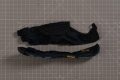
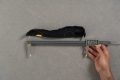
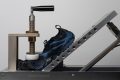
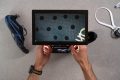
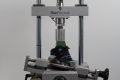
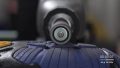
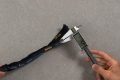
We don’t rely on the MI, but on lab data. We use specialized machines to measure longitudinal stiffness and torsional rigidity of minimalist running shoes. We then cut the shoes in half using a band saw and use digital calipers to measure the stack heights. This allows us to calculate the heel drop. We perform other lab tests as well, like weighing the shoes or testing their energy return, traction, and shock absorption.
We don’t calculate the minimalist index for each shoe but let our lab data speak for itself. You can use this data to compare minimalist shoes across different features or find alternatives that you did not know existed.
Best minimalist running shoes overall


What makes it the best?
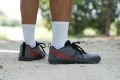
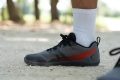
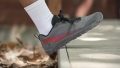
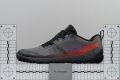
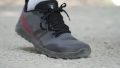
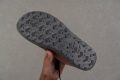
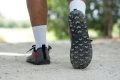
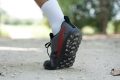
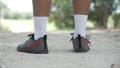
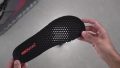
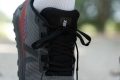
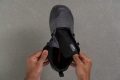
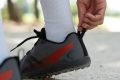
Runners searching for a lightweight, loose, and light-in-the-pocket shoe can’t go wrong with the Xero Shoes Mesa Summit. It stood out in our lab tests and runs as a no-frills shoe with low weight, resistance, and price tag, and high ground feel, making it our best minimalist running shoe overall. At only $125, it offers unmatched value with its hard-wearing outsole and adaptive build.
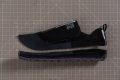
Mesa Summit features a very low 13.6/13.3 mm stack, which results in a barely-there 0.3 mm heel drop. It offers strong surface connection, evidenced by some of the lowest shock absorption scores we’ve seen: 35 SA in the heel and 38 SA in the forefoot.
Mesa Summit’s airy construction results in less burdened strides, allowing us to move with minimal effort. Our scales reveal it’s only 9.9 oz (281g), staying just below the average trail running shoe. Adding to its weightless feel is the flexible midsole, which emerged 72% more pliable than average in our bend test.
For its weight and price, we were pleasantly surprised by its durable outsole. Our Dremel only shaved off 0.6 mm of rubber, indicating it can take on friction against rough pavements. However, its minimal cushioning may feel harsh for extended runs or heavier athletes. Those who need more impact protection should check alternatives.
Pros
- Excellent flexibility for minimalist trail running
- Natural, stable feel on easy terrain
- Comfortable fit with pressure-relieving lacing
- Great agility on twisty terrain
- Durable outsole handles regular trail use
- Excellent toe cap protection
- Keeps feet close to ground (and protected!)
- Strong option for gravel and parks
- Fair price for the overall package
- Zero-drop geometry promotes natural movement
Cons
- Limited toe splay for wide feet
- Traction falls short on moderate/technical trails
- Heavier than expected
Best foot-shaped minimalist running shoes
What makes it the best?
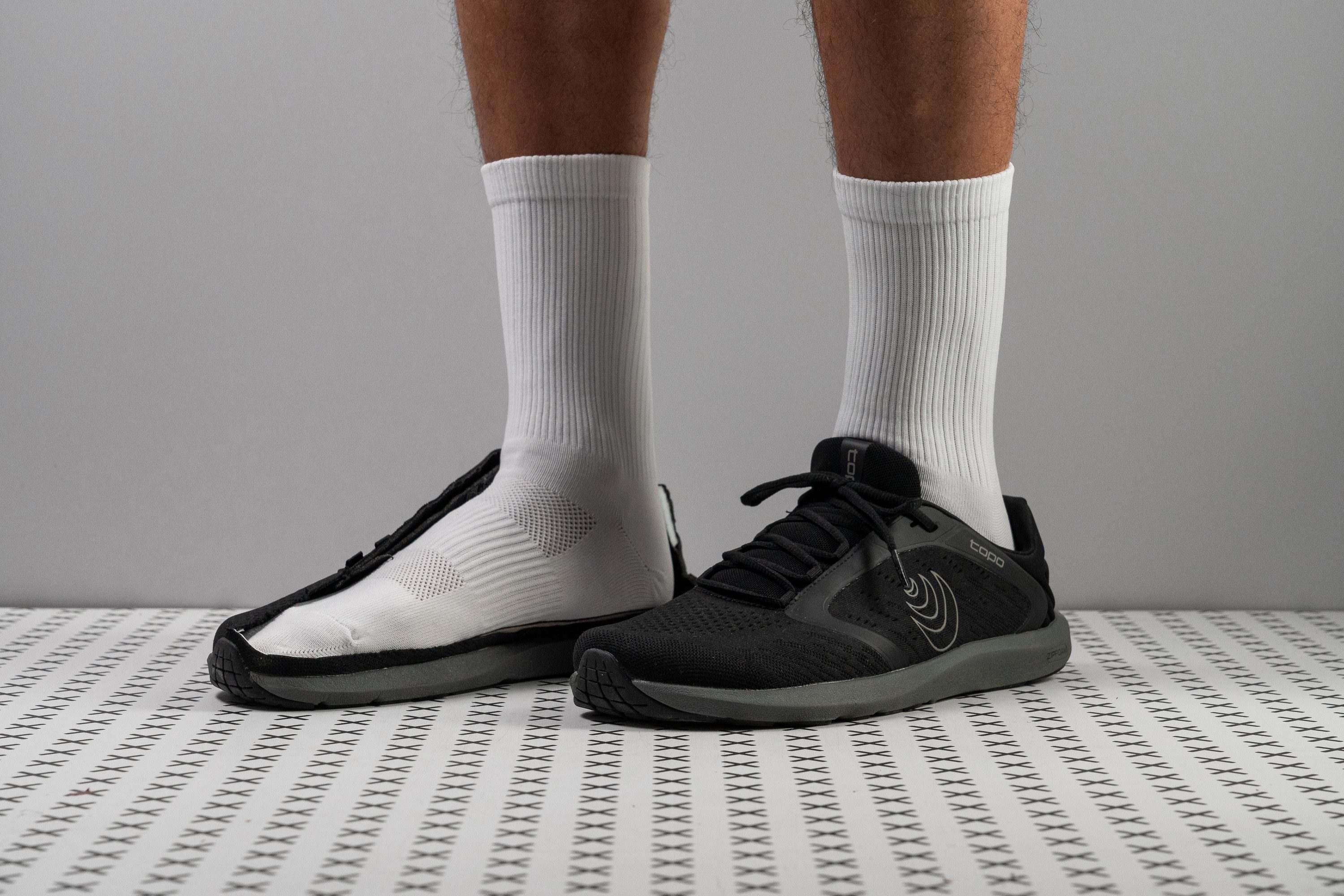
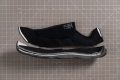
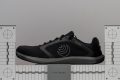
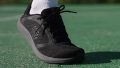
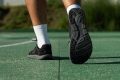
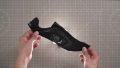
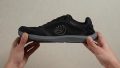
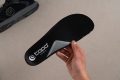
The Topo ST-5 is designed entirely to stay out of our way. Lab results highlight its minimal cushion, light build, high flexibility, and spacious design, which adapts to our natural strides and lets us do the running. Given all its features, it's our best foot-shaped minimalist running shoe.
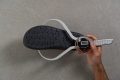
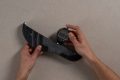
We already noticed right off the bat how wide the shoe is, yet we still created a gel mold to measure its exact dimensions. We recorded the toe box at 79.0 mm wide, which verifies its ergonomic design as it’s 7% broader than average. With a generous 30.2 mm of vertical clearance, we didn’t have any pressure points.
Moving to the midsole, we measured a very thin 13.7/13.9 mm cushion, with a resulting -0.2 mm drop. Altogether, it keeps us closely connected to the surface, as seen with its low shock absorption of 50 SA in the heel and 39 SA in the forefoot.
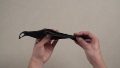
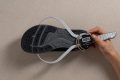
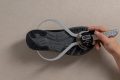
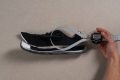
With a stack so thin, it barely offers any resistance to bending. Our flex test verifies the ST-5 is a staggering 74% more pliable than average, keeping us as the main driver of our runs. Like a breath of fresh air, this shoe also weighs 6.8 oz (193g), 26% below average.
However, with minimal cushioning and support, ST-5 is limited to shorter runs since it feels too harsh for anything beyond an hour.
Pros
- True minimalist design
- Exceptionally flexible
- Outstanding durability from top to bottom
- Very wide, foot-shaped toebox
- Lightweight
- Ideal for daily use or gym workouts
- Fair price
- Real zero-drop geometry
- Good grip
Cons
- Only for short distances
- Low energy return from EVA foam
- Too roomy for low-volume feet
Best versatile minimalist running shoes


What makes it the best?
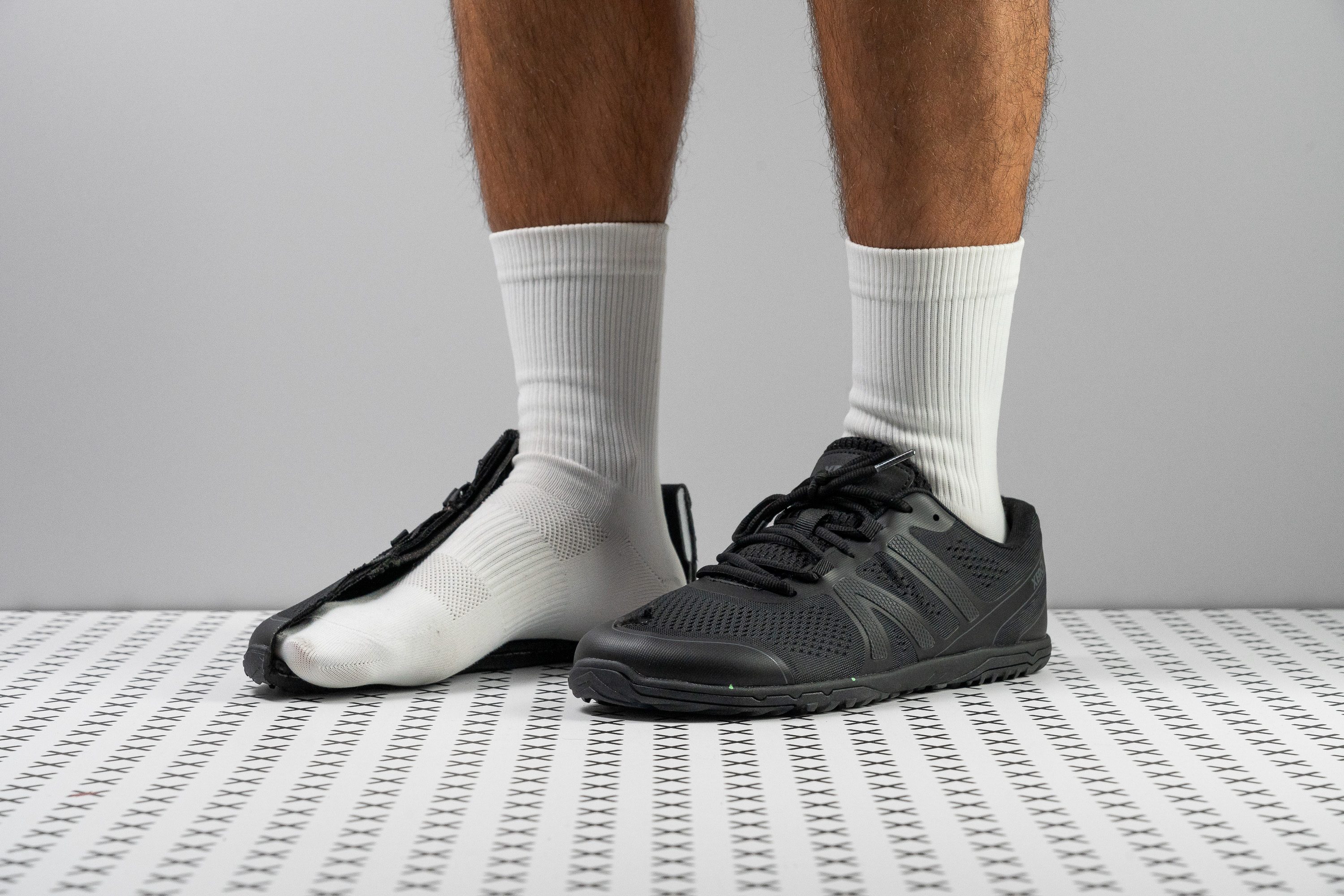
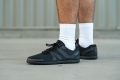
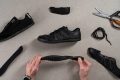
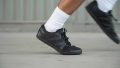
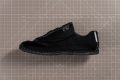
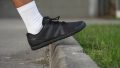
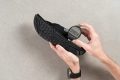
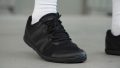
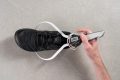
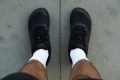
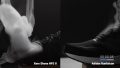
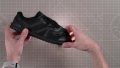
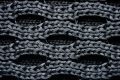
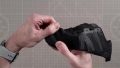
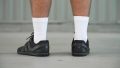
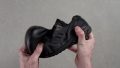
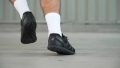
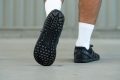
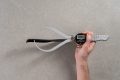
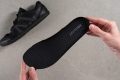
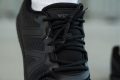
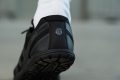
A minimalist shoe feels like it can’t do much, yet the Xero Shoes HFS II proves otherwise. In fact, it displays the best versatility in the minimalist running category. Our lab tests show its low stack and low drop offer low resistance to bending during our runs while ensuring lots of space for wide or swollen feet.
We received a heightened sense of surface feedback with the shoe’s low 13.1/12.1 mm profile. We remained close to the ground and only had a 1.0 mm heel drop that already felt flat and barefoot-like.
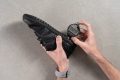
What further enhanced its natural feel was its high level of flexibility. In our bend test, it emerged 60% more malleable than average. At this rate, it’s very easy to maneuver the shoe.
We felt so free to move because our feet felt at home thanks to the shoe's less tapered design. We measured its toebox width to be 10% wider than average, offering breathing room for those who need the extra space.
However, we’re surprised to find a weight of 8.6 oz (244g). Given its below-average measurements, we expected to see a lower figure on the scale. Those who want an even lighter experience should try other options.
Pros
- Anatomical toebox for natural toe splay
- Real minimalist design
- Reasonably priced
- Versatile for roads and light trails
- Amazing at gym workouts
- Ultra-flexible and easy to pack
- Full-length outsole coverage
- Superior ground feel
- Promotes feet strength
Cons
- Midsole lacks energy return
- Heavier than most minimalist shoes
- Durability still needs improvements
Best barefoot running shoes
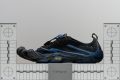
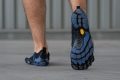

What makes it the best?
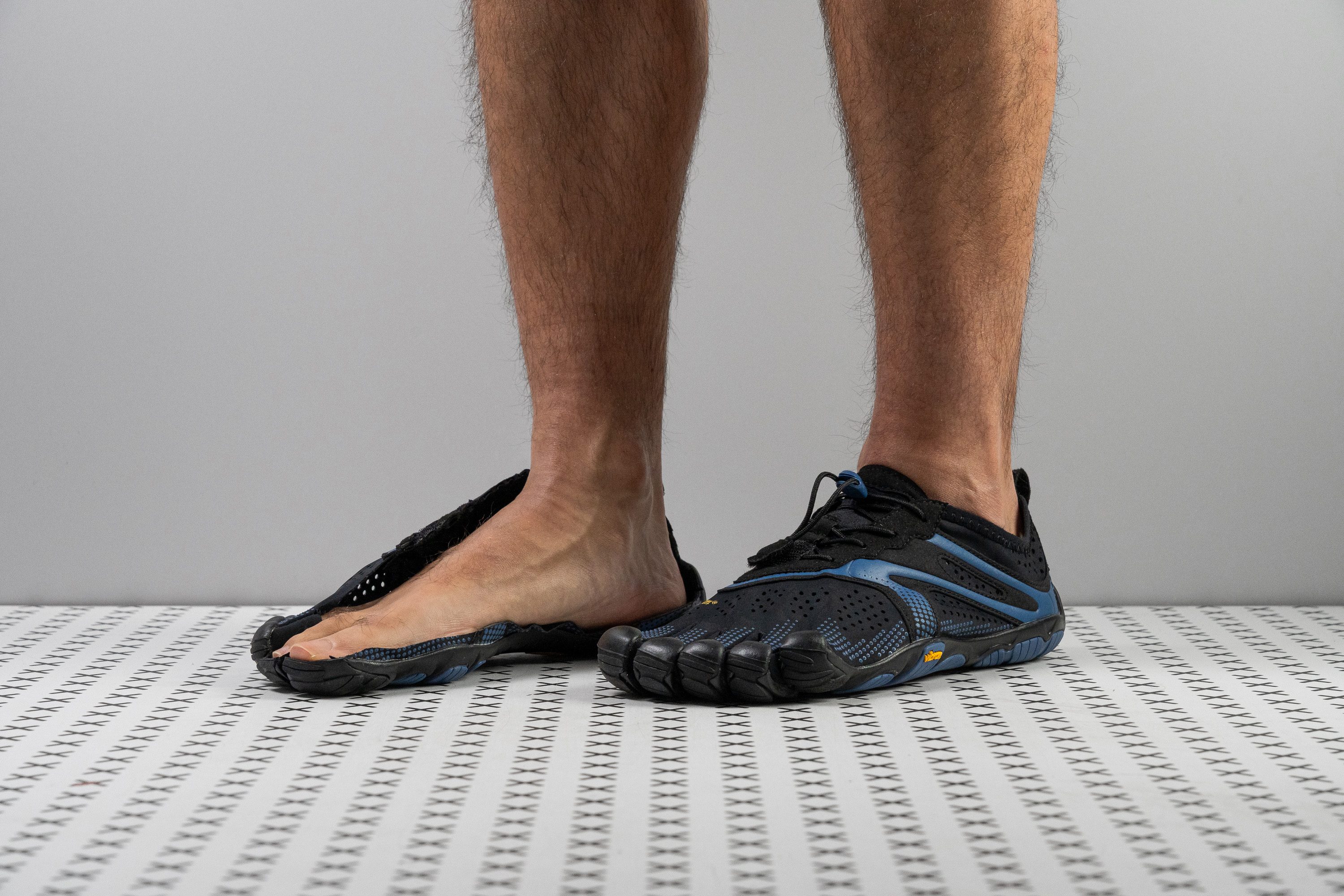
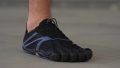
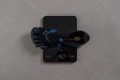
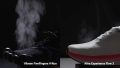
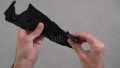
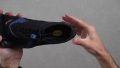
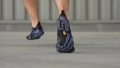
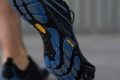
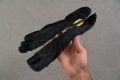
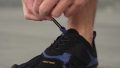
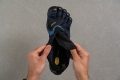
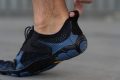
We felt fully unrestricted in every direction while wearing the Vibram FiveFingers V-Run, with lab results validating its exceptionally light and fluid construction. It offers low resistance and cushioning, which results in strong ground connection. In the minimalist running category, it offers a barefoot experience like no other.
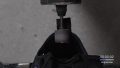
The shoe melts away and doesn't demand any attention. We experienced strong surface feedback because of the low stack we measured, precisely at 7.8/7.9 mm. The resulting drop is -0.1 mm, offering a parallel-to-the-ground sensation that really feels like we’re barefoot. It also offers ultra-low impact protection, with a shock absorption score of 26 SA both in the heel and forefoot.
Because of its thin midsole, it only weighs 4.6 oz (130g), 50% lighter than average. It quite literally disappears on foot!
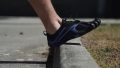
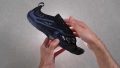
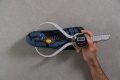
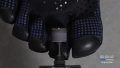
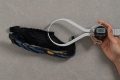
Moreover, its weightlessness is amplified by its zero resistance in all angles. The midsole twisted easily in our assessment, needing 76% less force to do so. Meanwhile, in our bend test, it emerged as a whopping 94% more pliable than average! It shattered lab records as the most flexible shoe we’ve tested so far!
Just a note that it takes time to achieve the right fit and get used to its unique toe-pocket design. Runners who prefer a traditional toebox may skip this pair.
Pros
- Authentic barefoot experience
- Incredible flexibility and natural feel
- Exceptionally lightweight
- Impressive breathability
- True zero-drop geometry
- Versatile for multiple activities beyond running
- Ground feel is out of this world
- Promotes feet strength
- Single-pull quick-lacing system
Cons
- Demands strong feet, calves, and Achilles
- Toe pocket length will be long for some
- You'll definitely get some weird looks
Best zero-drop minimalist running shoes



What makes it the best?
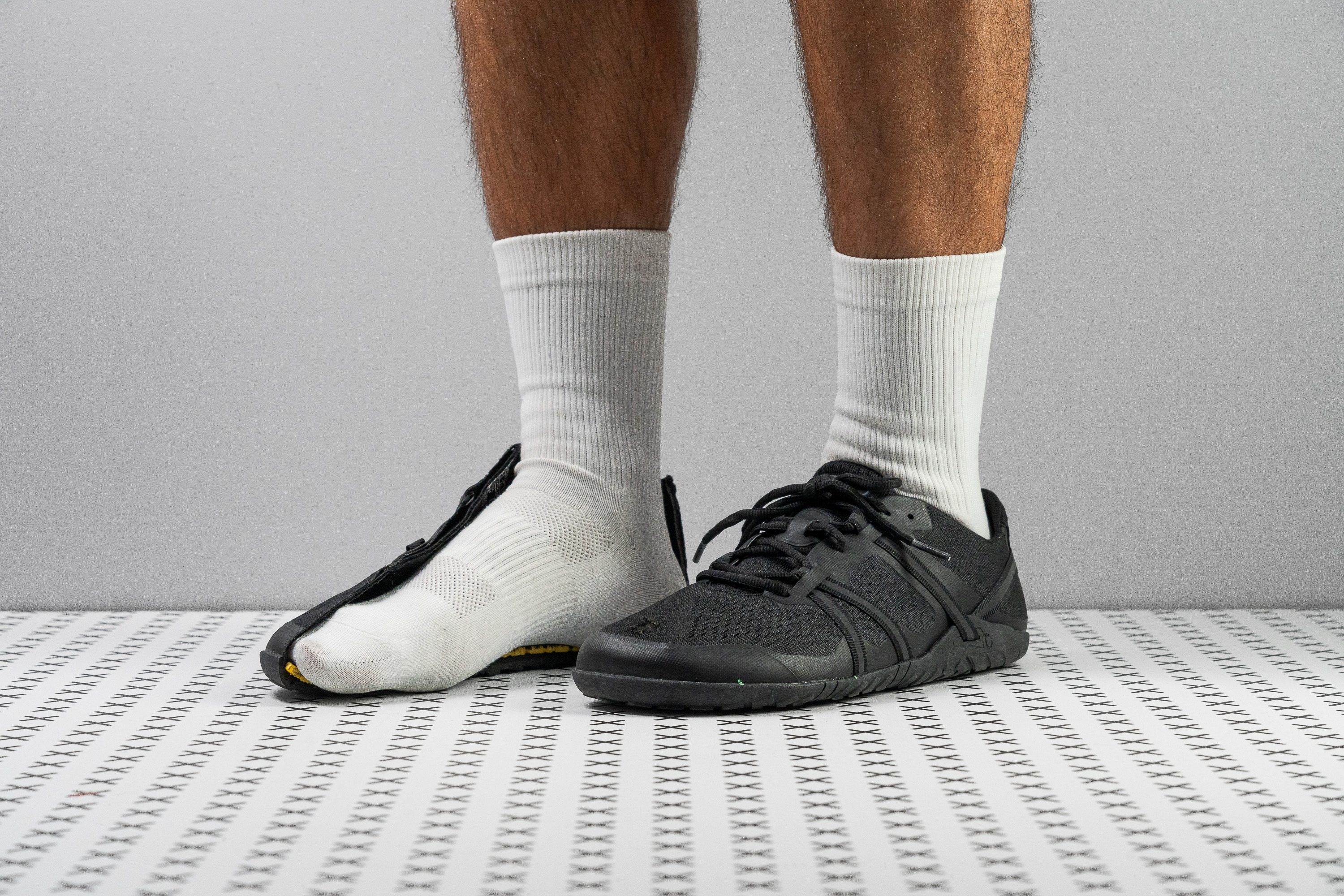
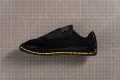
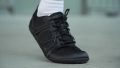
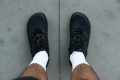
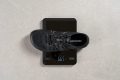
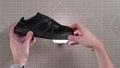
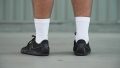
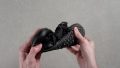
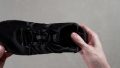
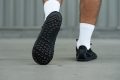
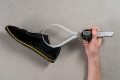
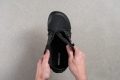
Tested by our feet and verified in the lab, the Xero Shoes Speed Force II features a low profile and nearly flat offset, making it the best zero-drop minimalist running shoe. We found it offers strong ground connection and minimal resistance in its lightweight package, fostering muscle strengthening and freedom of movement.
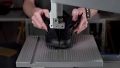
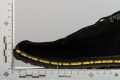
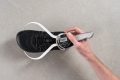
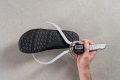
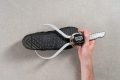
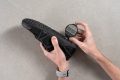
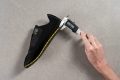
We measured the stack height at a grounded 10.6/10.5 mm, with far less material between our feet and the ground than the 35.5/27.1 mm average. The resulting 0.1 mm offset delivers a virtually flat sensation that feels like we’re barefoot.
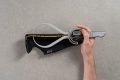
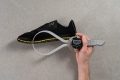
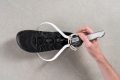
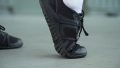
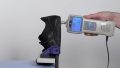
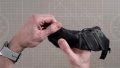
Because the midsole is so thin, it moves as one with our feet. Our bend test verifies it’s a staggering 87% more flexible than average! Moreover, it stays light at 6.7 oz (189g) and feels almost invisible on foot. Compared to the average, it’s 27% lighter.
However, Speed Force II demands foot strength and proper form, as it has zero stabilizing features. Runners dealing with overpronation should find a more stable trainer.
Pros
- Excels at walking and casual use
- Well-priced for its features
- Anatomical toebox for exceptional toe splay
- Adjustable strap system
- Capable on dirt roads and light trails
- Lighter than the HFS series
- True zero-drop platform
- Exceptional flexibility
- Great traction
- Breathable upper
Cons
- Slightly heavy for its size
- Outsole durability could be better
- Not the most comfortable
Best water-resistant minimalist running shoes


What makes it the best?
In our runs, it was immediately apparent that the Vivobarefoot Primus Trail III All Weather FG offers a barefoot-like experience, and lab tests verify its low stack, zero drop, and high flexibility. It delivers effective weatherproofing that keeps our feet safe and dry, making it our best water-resistant minimalist running shoe.
The water-resistant upper ensures not a single drop of water can enter the shoe. What we could undeniably feel, however, is strong ground connection. We measured a barely-there 11.3/11.3 mm “midsole” beneath our feet, resulting in a genuine flat 0.0 mm offset that very few shoes can offer.
Moreover, we recorded some of the lowest shock absorption scores we’ve seen, at only 29 SA in the heel and 31 SA in the forefoot. We had tons of feedback from whatever surface we were on.
Its razor-thin stack translates to freedom of movement, since there’s very little material to resist foot-bending. Our flex test confirms this shoe is 62% more bendable than average, allowing us to take control of our strides.
A fair warning: the shoe’s maximum width is massive at 100.5 mm, so people with narrow feet may not achieve the snug fit they prefer.
Pros
- Excellent grip
- Comfortable for wide feet
- High-quality materials
- Strong outsole durability
- Solid construction feels premium
- Excellent flexibility for natural foot movement
- Water-resistant upper
- True barefoot feel for the trails
- Ideal for gravel roads and easy trails
- True 0-mm drop
Cons
- Should be lighter
- Heel padding durability is a concern
- High price
- Non-gusseted tongue
Why lab data means more than a minimalist index
When researchers worked on defining minimalist shoes, they created a so-called Minimalist Index, or MI. It ranks running shoes on a 0-100% scale based on how minimalist they are. Here’s what’s included: weight, stack height, heel drop, flexibility (both torsional and longitudinal), and the existence of motion control or stability technologies. Per the document linked above, these features are measured/assessed on men’s shoes in US 9, exactly what we use in the lab too.
MI score = sum of the 5 subscores x 4.

The more points collected (based on the scale below), the more minimalist the shoe.
| Minimalist index: features, values, & scores | |||
| Weight grams, men US 9 |
|||
| 0 pts | 325g or more | 1 pt | 275-324g |
| 2 pts | 225-274g | 3 pts | 175-224g |
| 4 pts | 125-174g | 5 pts | under 125g |
| Heel stack mm, with insole |
|||
| 0 pts | 32 mm or more | 1 pt | 26-31.9 mm |
| 2 pts | 20-25.9 mm | 3 pts | 14-19.9 mm |
| 4 pts | 8-13.9 mm | 5 pts | under 8 mm |
| Heel drop | |||
| 0 pts | 13 mm or more | 1 pt | 10-12.9 mm |
| 2 pts | 7-9.9 mm | 3 pts | 4-6.9 mm |
| 4 pts | 1-3.9 mm | 5 pts | under 1 mm |
| Stability devices count of 6 techs |
|||
| 0 pts | 5-6 devices | 1 pt | 4 devices |
| 2 pts | 3 devices | 3 pts | 2 devices |
| 4 pts | 1 device | 5 pts | none |
| Longitudinal flex bend test |
|||
| 0 pts | barely bends | 0.5 pts | under 45° |
| 1 pt | 45-90° | 1.5 pts | past 90° |
| 2 pts | folds shut | 2.5 pts | rolls past 360° |
| Torsional flex twist test |
|||
| 0 pts | barely twists | 0.5 pts | under 45° |
| 1 pt | 45-90° | 1.5 pts | past 90° |
| 2 pts | 180-360° | 2.5 pts | full 360° twist |
We covered stabilization technologies (dual-density midsoles, medial posts, stiff heel counters, side walls, as well as trademarked designs) for overpronation in great detail in our guide on overpronation.
Is there a widely known consensus on how high the shoe should score to be considered minimalist? Not really. Just: the higher, the better. You can easily get sucked into a rabbit hole trying to figure out why some runners are saying model X is too cushioned to be called minimalist, or model Y is too stiff to be called barefoot. The MI gives us ranges, and there’s a lot of wiggle room there.
|
Why does lab data overpower the MI in this case? First, you won’t see the MI on the brand’s websites. And there’s no clear cut-off line set by the MI creators, so you don’t know where the limit is, and you do know that the same score can mean 2 quite different shoes. Second, looking at the MI in % only does not tell you the whole picture. And third, if you’re diving into the separate sections anyway, why not use lab data, which allows you to compare to the category average and any other shoe on the market? |

Minimalist vs. barefoot vs. zero drop vs. cushioned running shoes
Given their features, all barefoot running shoes are minimalist, but the vice versa does not apply. But there is some confusion here, thanks to Altra. They entered the market with cushioned zero-drop running shoes when we were used to seeing zero-drop shoes only in barefoot or minimalist designs.

Do not be fooled. Zero drop does not make a shoe barefoot or minimalist, as we’ve seen above when talking about the shoe features. Some informal limit is set at 70% (for a shoe to be considered minimalist, it needs to score higher).

Above, we see how 4 shoes and their Minimalist Indexes: a barefoot shoe: Vibram Fivefingers V-Run, a minimalist one: Xero Shoes Scrambler Low, a cushioned yet zero-drop shoe: Altra Torin 8, and a traditional daily trainer: ASICS Novablast 6. You can see exactly which features allowed them to score high on the MI (or get penalties).
Who should not buy minimalist running shoes
Don’t buy minimalist running shoes if you’re new to them and not patient enough to adjust to their design in a way that allows you to stay uninjured. These things take time. Also, runners who have already experienced foot or Achilles injuries need to be super careful, as these shoes utilize foot muscles the most. While this is great for muscle strengthening, it’s also dangerous for aggravating old injuries or worsening current ones.
Runners who can’t train without stability features in their running shoes won’t find minimalist shoes comfortable, but they can be pain-inducing if they overdo it. We always recommend a gradual transition + strengthening exercises.
Who minimalist shoes are great for
Minimalist running shoes are great for people who are willing to reduce the weekly mileage or who don’t need it to be high anyway. They are great for runners who want to strengthen different leg muscles, and that’s why they are rotating different shoes on a weekly basis. In this case, it’s the foot muscles that do most of the work, so that’s the area that can significantly improve if the transition is done properly.
Minimalist running shoes are also great for runners who love that natural feeling when running, meaning the shoes can flex naturally with their feet and they can feel the ground they are running on.
What happens when you wear minimalist running shoes: mixed scientific evidence
Minimalist running shoes minimally affect natural gait because of their low drop, low stack height, low weight, high flexibility, and lack of stability features. As a result, when runners switch from traditional running shoes to minimalist ones, we see changes in footstrike, proprioception, and cadence. Here’s what science says about that:
- Wearing minimalist shoes during daily activities or running may increase foot strength and foot muscle size. It also makes the shift in foot strike toward the forefoot (Peters-Dickie et al., 2025).
- Runners who transitioned to minimalist shoes over a 10-week period showed greater increases in bone marrow edema and more stress injuries than those who stayed in traditional running shoes. Because of this, authors recommend a longer transition period (Sarah T. Ridge et al., 2013).
- Runners used to traditional running shoes who started wearing minimalist running shoes reported more shin and calf pain than those who kept wearing traditional shoes (source).
- 30 runners ran in traditional shoes and 31 runners gradually increased the use of minimalist shoes over a 26-week period. Researchers looked at running-related pain and time to first running-related injury. Greater pain was noted when running in minimalist running shoes, especially when the weekly mileage exceeded 35km/wk (Fuller et al., 2017).
- Gradually introducing minimalist running shoes to 35% of running over 6 weeks can improve running economy and performance (Fuller et al., 2017). Continuing to use minimalist running shoes during the next 20 weeks to get to 100% of their usage did not show further improvements (Fullet et al., 2018).
As you can see, the evidence is mixed, and it heavily depends on the transition (how gradual), the shoe of choice, the runners’ current shape and injury history, and their current shoes (their features and how different they are from the minimalist running shoes).
How to transition to minimalist shoes
Looking at the most documented research (from Fuller et al.) when it comes to transitioning to minimalist shoes, we can see that other researchers addressed this challenge as well (table below).
|
Methods of transitioning from conventional to minimalist footwear used in literature |
||||
|
Study |
Shoe |
Week 1 |
Progression |
What happened |
|
Salomon Sense S-Lab |
33% |
Increase by 3-17%/wk until reaching 100% by wk 4 |
Impact-reduction focus; fastest ramp in the literature |
|
|
FiveFingers |
3–13% |
Increase by 3-13%/wk until wk 3, then "as comfortable" during wk 4-10 |
Bone marrow edema, stress injuries |
|
|
FiveFingers + Nike Free 5.0 |
19% |
Gradual until runners reached 58% by wk 12 |
More injuries, shin/calf pain vs. neutral shoes |
|
|
NB Minimus, Merrell Pace/ Trail Glove |
7% |
Increase by <10%/wk during 12 weeks (reached up to 43%) |
Foot muscle + arch strengthening |
|
|
FiveFingers |
10% |
Gradual until 25% reached by wk 4 |
Running economy improved |
|
|
FiveFingers |
3–10 miles |
Increase by ≤20%/wk, no conventional shoes at all |
Footstrike/loading changes |
|
|
Fuller 2015–17 |
ASICS Piranha (racing flat) |
5% |
+5%/wk until reaching 100% by wk 20 |
Economy + 5K gains; injuries tied to body mass & mileage |
As we can see, doing 5% increments throughout the 20-week period is a good starting point; however, this was done using a racing flat, ASICS Piranha, a model old enough that we can’t test it now in the lab to find out how minimalist it actually was.
It may happen that runners who are heel-striking and overpronating need more time to adjust to minimalist running shoes because they will have to do more work. Those who are already forefoot/midstrikers will find it easier to transition to minimalist running shoes. Some prefer taking it easy in terms of not choosing a highly minimalist running shoe immediately, but choosing something in between, like Altra Escalante. It’s an (almost) zero-drop shoe that’s lower to the ground and quite flexible.
Heather K. Vincent, PhD, Brandon Mackenzie, BS, and Kevin R. Vincent, MD, PhD wrote guidelines for runners who want to transition to minimalist running shoes with 2 options:
- If you don’t want to reduce the mileage: for the first 3-4 weeks, wear the transition shoes (heel drop between 6 and 12 mm) around the house and when walking. Then, start by incorporating the new shoe with no more than 10% of the run time or distance. Increase by 10% per week until the transition to the new shoe is done.
- If you want to reduce the mileage while transitioning: wear the minimalist shoe during the first 4 weeks when walking. Then go through the 8-week transition period with reduced mileage:
|
Week |
Running |
Walking |
Max total |
|
1 |
1 |
3 |
30 |
|
2 |
2 |
3 |
30 |
|
3 |
3 |
2 |
30 |
|
4 |
4 |
2 |
30 |
|
5 |
5 |
2 |
30 |
|
6 |
6 |
2 |
30 |
|
7 |
8 |
2 |
30 |
|
8 |
10 |
2 |
36 |
Once done with this 8-week period, start increasing the running volume by no more than 10% per week. If you want, add the 4th day as well.
As seen in the research and from our experience, transitioning to minimalist running shoes can take months. Buckle up!
Shoe rotation involving minimalist running shoes
We recommend rotating different shoes, meaning that minimalist ones can be only a part of your rotation and not its entirety. This will help you strengthen different foot and leg muscles along the way and lower injury risk.
Cushioning: stack height lab data
Minimalist running shoes offer a good (to great) amount of ground feel, which is why they have to be low to the ground. How low? We cut the shoes in half, mark the 12% and 75% of the inner shoe length, and use digital calipers to find out.

The average heel stack height of minimalist shoes that went through our lab up until now is 13.6 mm.
Heel drop in minimalist running shoes: (almost) zero drop
We use the stack height data to calculate the heel drop (heel stack height minus forefoot stack height). Beginner runners usually don’t pay attention to the heel drop (and it’s not something they should overthink for sure), however, it does play an important role in the running shoe design and sudden big changes in heel drop may result in premature fatigue, strain, or even injury.

|
We wrote about heel drop in great detail in our guide Heel to Toe Drop: The Ultimate Guide. |
Because of this, it’s important to know the actual heel drop, not just the one stated by the brand. They can be wrong! We’re not talking about being off by 0.1 mm or 0.3 mm. For example, New Balance Fresh Foam X 1080 v12 was supposed to have an 8.0 mm drop, but we measured 3.3 mm. adidas claims Terrex Agravic Speed Ultra has an 8.0 mm drop, but we measured 0.3 mm.

Given how big of an impact heel drop can have on our foot strike, gait, and legs in general, and that minimalist shoes should really have a low or a zero drop, it’s imperative to know the actual numbers.
The average heel drop of minimalist running shoes we’ve tested so far is 0.9 mm.
Why do minimalist shoes have low shock absorption?
Because they are low stacked. For the midsole to be great at impact protection and absorbing the forces at each landing, it has to be thick. Minimalist running shoes are too low to the ground to score high on our shock absorption test.
This means that your legs will have to do more work because more stress will be sent to them. On a brighter note, some runners move from heel striking towards forefoot (or midfoot) striking, which makes them “lighter” at landing and reduces painful heel stomping.
On average, minimalist running shoes score 40.8 SA on this test. That’s very low compared to the overall average of 130.5 SA.
High energy return + low stack = how is that possible?
Minimalist running shoes are low-stacked. They have almost no material to absorb the impact forces, which is why the shock absorption is so low. On the other hand, we don't see a thick slab of squishy foam that would dissipate energy on deformation. A thin and firm midsole barely deforms, so there are no big losses there! The real springs we see at work here are the arch and the Achilles.
The average energy return of all minimalist shoes we've tested so far is 52%, while it's 61% for all the other running shoes (road and trail).
Flexibility of minimalist running shoes
Minimalist running shoes stand between barefoot and traditional running shoes. We expect them to be very flexible, but not insanely flexible (we leave that to the barefoot ones).


The stiffest running shoes often feature carbon-fiber plates. Minimalist running shoes, on the other hand, support the natural bending of the feet, so they are very flexible.

Again, we expect minimalist running shoes to be very torsionally flexible due to the lack of stabilizing technologies (or carbon plates, for other purposes, obviously).
Are they actually footshaped? Lab data on shoe width, toebox width, and toebox height
When researchers discussed Minimalist Index, they wanted to add the toebox width, but the consensus was not reached. That seems logical, given that even narrow-footed runner enjoy barefoot and minimalist running shoes. However, the design that promotes the natural gait dictates that the toes should not be cramped, so we do expect these to be wider.
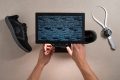
In the lab, we use a special liquid and pour it into the shoes. Into the freezer they go. Once the gel has set, we take a perfect gel cast out of the shoes and use it to get our measurements, given that it represents a perfect replica of the shoes’ interiors.

You can use this data to find more or less room exactly where you need it. Your big toes are pointing up? Look for more vertical clearance. Your toes love to splay? Look for a wider toebox.

For context, we should also look at the averages:
- Average toebox width | traditional: 73.3 mm
- Average toebox width | minimalist: 76.2 mm
- Average width | traditional: 95.3 mm
- Average width | minimalist: 94.2 mm
- Average toebox height | traditional: 26.9 mm
- Average toebox height | minimalist: 31.2 mm
Weight of minimalist shoes
Every shoe that goes through our lab gets weighed. The lab data we publish is always given for shoes in Men’s US 9, standard width.

The average weight of minimalist running shoes is 7.9 oz or 225g, compared to the average weight of all running shoes (road+trail), which sits at 9.4 oz or 267g. Per Minimalist Index, the highest minimalist weight scores are given when the shoe weighs less than 125g, and it’s 0 points when the shoe weighs more than 325g.
Can you run marathons or ultras in minimalist shoes?
Some individuals can. We advise against this if minimalist running shoes are new to you and if you are not patient and ready to devote a significant amount of time to transitioning, adaptation, and strength exercises.
Similar buying guides