5 Tennis Shoes With The Best Shock Absorption in 2026

We buy shoes ourselves. We earn commissions when you buy through us, at no extra cost. Why trust us
It’s hard to overestimate the importance of great shock absorption in a tennis shoe. The high-impact nature of this dynamic sport puts significant stress on the player’s muscles, bones, and joints, especially on a hard court.
But when you find a well-cushioned pair of shoes to match your powerful serves, that becomes the least of your worries!
You can always expect to find tennis shoes with the best shock absorption in our top picks below.
How we test tennis shoes with the best shock absorption
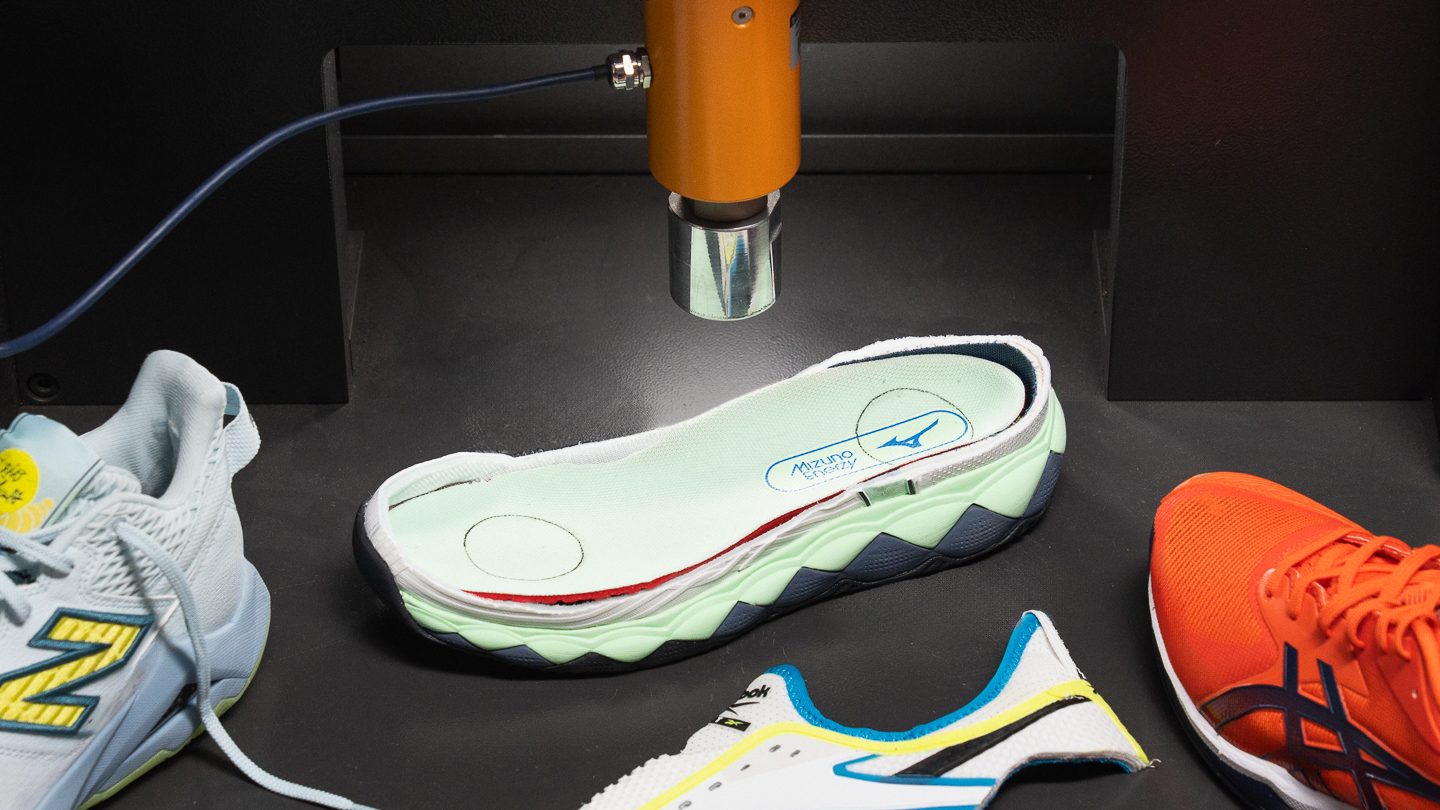
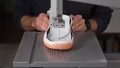
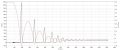
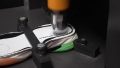
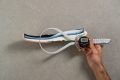
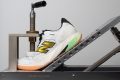
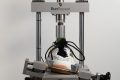
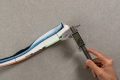
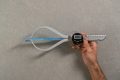
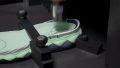
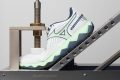
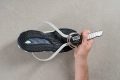
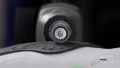
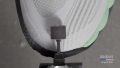
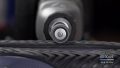
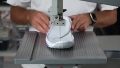
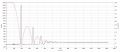
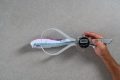
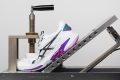
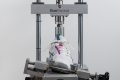
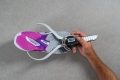
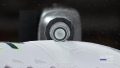
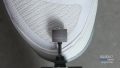
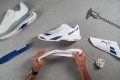
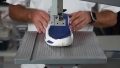
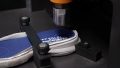
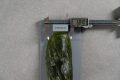
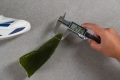
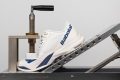
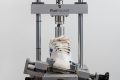
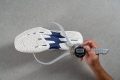
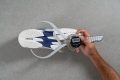
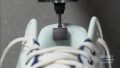
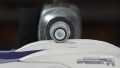
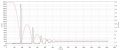
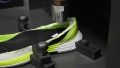
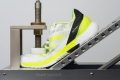
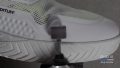
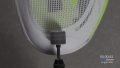
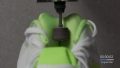
We follow a standardised ASTM F1976 protocol to measure the shock-absorbing capacity of all tennis shoes in our lab. Widely used by labs and universities, it is one of the most acclaimed tests to date.
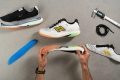
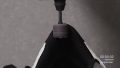
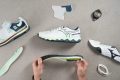
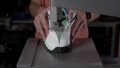
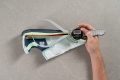
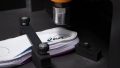
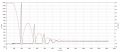
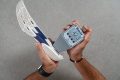
Cutting away the upper, we mark the areas of impact on both the heel and the forefoot (12% and 75% of the shoe length, respectively). We then fix the shoe inside the machine and drop an 8.5kg mass from a 50 mm height with a 2-second interval. The drop is repeated 30 times: 25 reps to break in the foam and 5 to record the results. The latter are presented as adjusted SA numbers, with higher SA readings indicating better shock absorption.
In addition to this essential test, each tennis shoe undergoes 30+ other tests and measurements, resulting in the most comprehensive, data-driven reviews.
We also purchase each tested pair with our own funds to stay unbiased and independent.
Best tennis shoes with high shock absorption overall




What makes it the best?
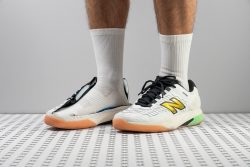
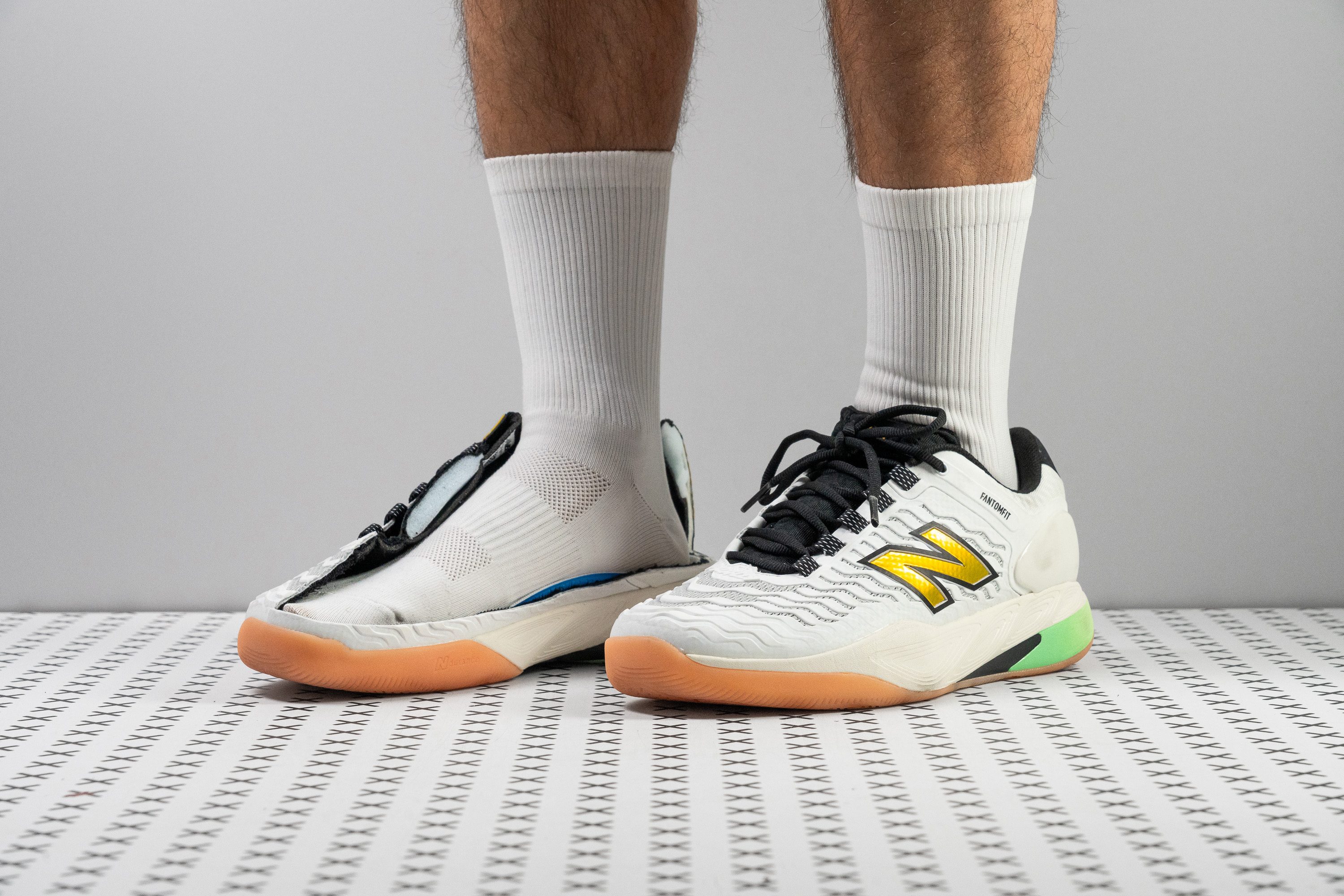
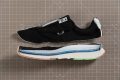
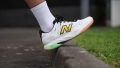
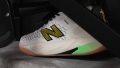
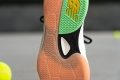
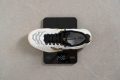
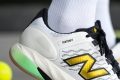
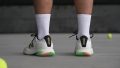
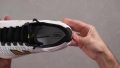
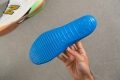
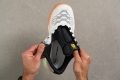
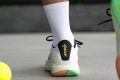
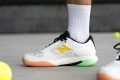
The New Balance Fresh Foam X CT-Rally v2 is truly one-of-a-kind, offering unmatched cushioning on the courts. It supports the most aggressive cuts and movements because lab assessments show its exceptionally stable build. However, it truly stands out as the best high shock absorption tennis shoe we’ve tested.
The midsole features the Fresh Foam X, often associated with top-tier comfort. Truly, it took care of our muscles and joints even during explosive landings and sudden stops, backed up by above-average shock absorption scores of 116 SA in the heel and 78 SA in the forefoot. Even during a long day of rallying, our legs can easily recover the next day.
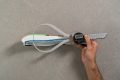
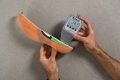
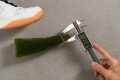
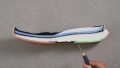
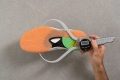
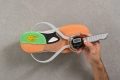
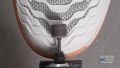
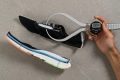
Slicing the midsole in the lab, we discovered a stiff TPU shank, which inherently makes it more stable. Testing for torsional rigidity, we gave it the maximum 5/5 because of its strong twist resistance. On hard stops and sliding, we didn’t experience any wobbling and spillovers, especially since the broad 115.7 mm forefoot allowed us to plant our feet well.
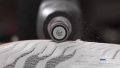
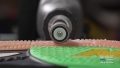
The upper also features the Fantomfit technology, which delivers strong ankle support and foot containment since the laces are connected to the base. Moreover, we found the materials to be exceptionally abrasion-resistant in our Dremel test, scoring a solid 4/5 in the toe guard and the maximum 5/5 in the toebox.
However, the midsole absorbs the power we exert rather than returning it. Those seeking more propulsion should find a more energetic tennis shoe.
Pros
- Outstanding shock absorption
- Heavenly step-in comfort
- Fantastic lateral support and stability
- Perfect medium fit with wide width options
- Impressive upper durability
- Balanced grip and give
- Excellent lockdown and containment
- Unbelievably breathable and quick-drying
Cons
- Heavier than average
- Low toebox height
Best tennis shoes with high shock absorption and energy return












What makes it the best?
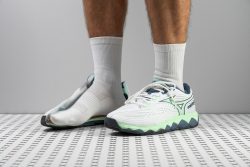
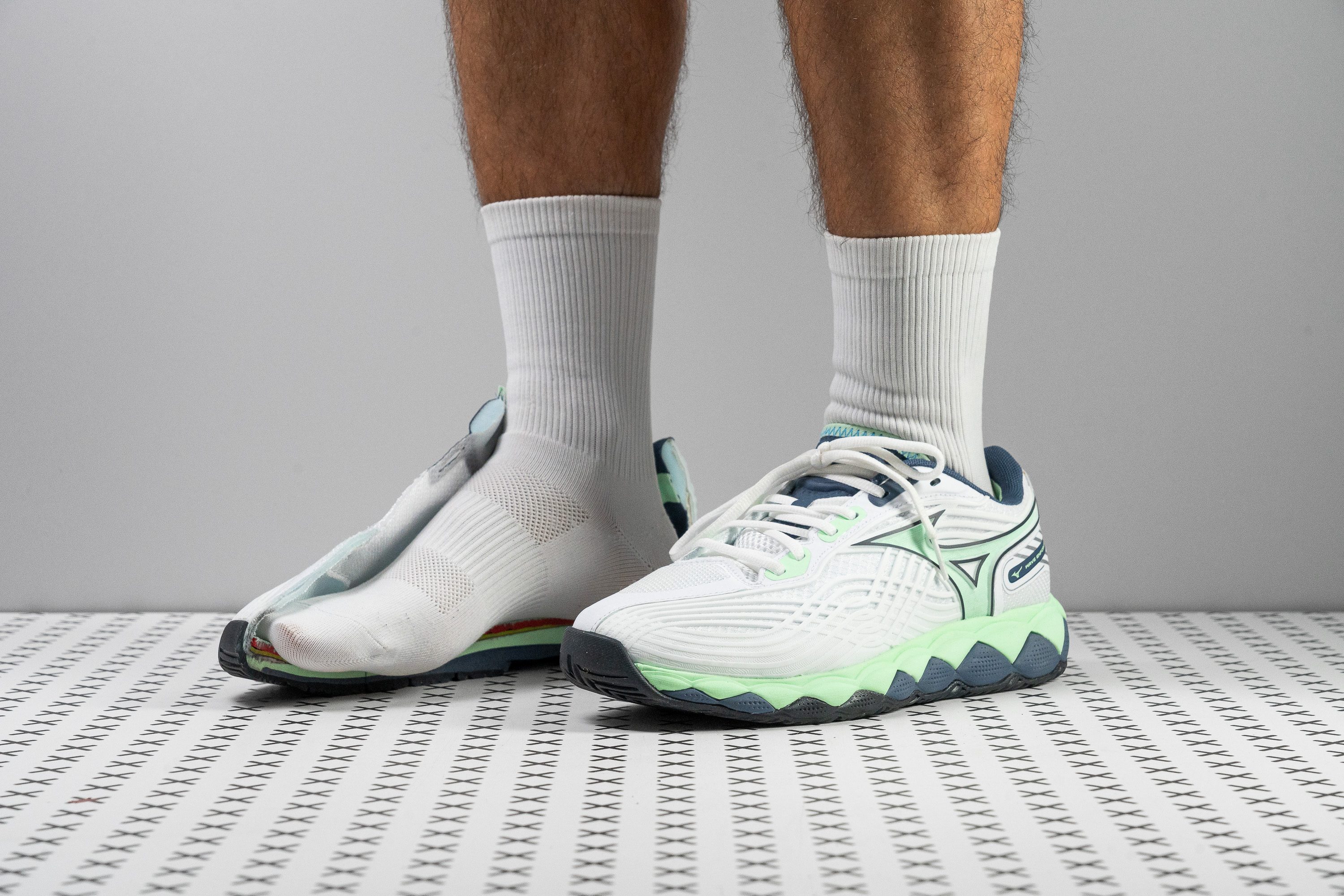
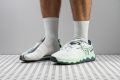
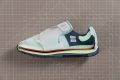
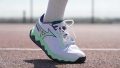
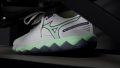
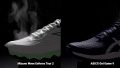
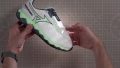
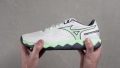
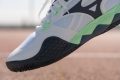
The Mizuno Wave Enforce Tour 2 feels pretty dynamic underfoot, allowing us to chase the ball with no worries because of the shoe’s stability and impact protection. We verified all these features in the lab, yet WET 2 stands out the most with the best energy return among high shock absorption tennis shoes.
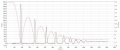
When we wanted to push off to sprint for the ball, the midsole gave us a pleasant spring. Testing for energy return, we recorded impressive scores of 60.6% in the heel and 62.0% in the forefoot, boosting the shoe’s agility.
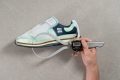
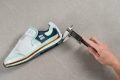
With every explosive jump, a cushioned landing awaits. The stack didn’t have to be too thick to feel comfortable, since we measured it only at a near-average 31.0/20.1 mm. However, it feels joint-friendly because of its ability to reduce the forces of the ground. In our shock absorption test, the heel impressed with an above-average 105 SA.
During our match, we performed quick lateral footwork and crossovers with ease. WET 2 offers strong lateral support, proven by its solid 4/5 torsional rigidity score. The heel counter emerged with the maximum stiffness of 5/5, which helped keep us centered.
The second version of this shoe lost its double collar, which makes it harder to get the fit right. If this will be an issue, we advise checking alternatives.
Pros
- Amazing shock absorption in the heel
- Energetic ride
- Comfortable step-in feel
- Good grip on hard court
- Sufficiently flexible
- Solid lateral stability
- Wide and surefooted base
- Fantastic durability
Cons
- The double collar is gone (harder to lock down the foot)
- A bit heavier than average
Best speed tennis shoes with high shock absorption


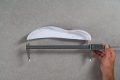











What makes it the best?
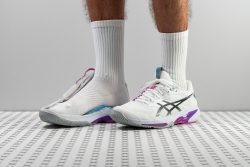
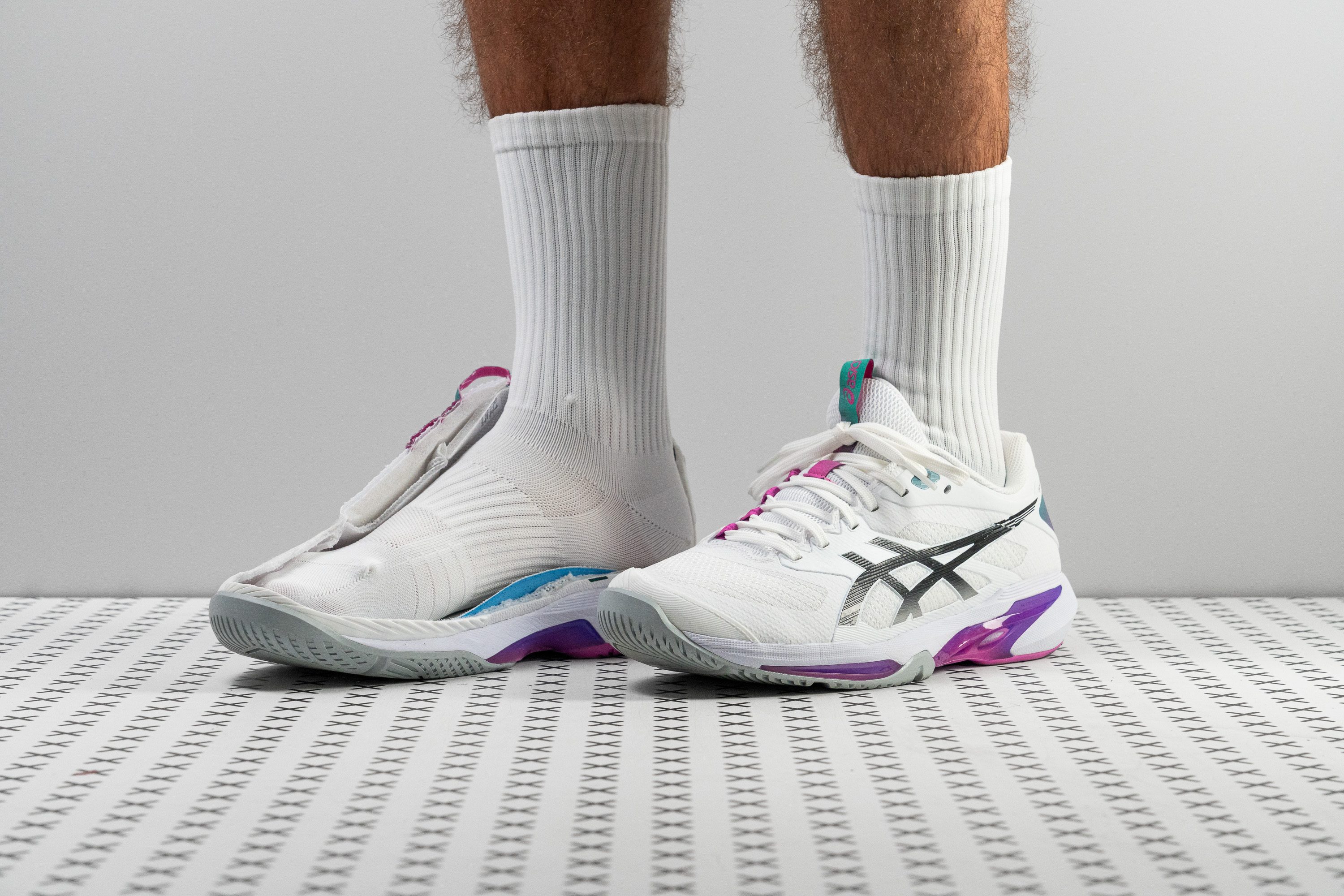
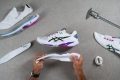
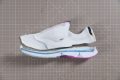
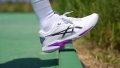
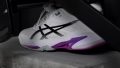
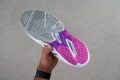
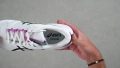
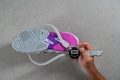
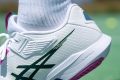
The ASICS Solution Speed FF 4 treated our feet well on court, delivering reliable impact protection and stability without compromising agility or speed. Lab results confirm its agreeable persona, while also distinguishing it as the best speedy tennis shoe in the high shock absorption category.
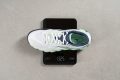
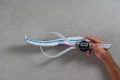
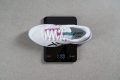
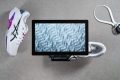
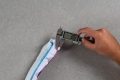
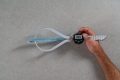
With its light build, this shoe is ready for speedy all-court play. It weighs only 11.9 oz (337g), making it 7% lighter than the average tennis shoe. Moreover, its high flexibility enhances its ease on foot. Our bend test verifies it’s 3% more pliable than average.
We measured the stack height at a moderate 30.9/19.9 mm. It offers good court connection in the forefoot, while the heel absorbs more impact. Lab results confirm a high 113 SA rating, making the heel feel 14% more cushioned than average.
We observed the Speedtruss shank in the midsole, which enhances both stability and propulsion. It generates stiffness in the right areas, as seen in how 9% more torque is needed to twist the shoe compared to average.
However, the limited height of the toebox feels restrictive, especially for broad feet or during longer rallies. Players looking for a more accommodating shoe should check elsewhere.
Pros
- Unbeatable ASICSGRIP traction
- Excellent shock absorption
- Still lighter than average
- Exceptionally durable
- Good forefoot flex for agility
- Solid lockdown and support
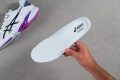
- Softer and cushier step-in feel
Cons
- Low toebox height
- Serious lack of breathability
Best tennis shoes with high shock absorption and traction









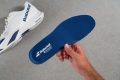


What makes it the best?
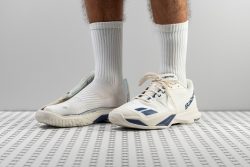
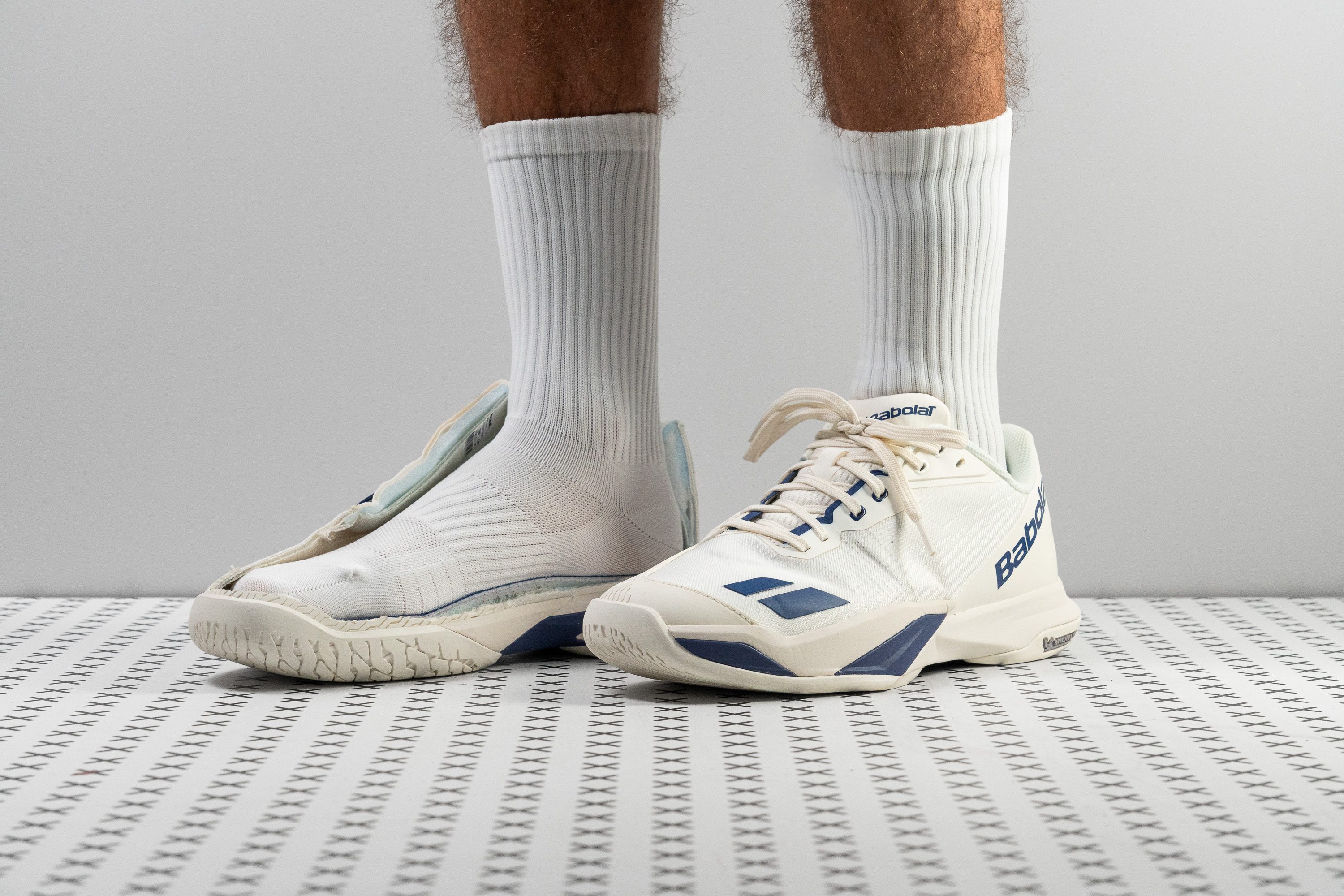
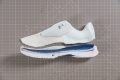
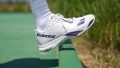
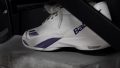
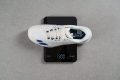
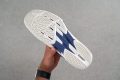
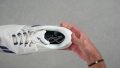
The Babolat Jet Mach 4 strikes a balance of comfort and control on court. Our lab tests highlighted its plush cushioning and protective upper, while its exceptionally tacky outsole delivers standout grip, offering the best traction among high shock absorption tennis shoes.
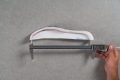
During hard stops and quick direction changes, the shoe would follow in a heartbeat with no slips on the court. With a high friction coefficient of 1.11 in our traction test, its on-court performance made sense since it’s 46% grippier than average.
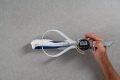
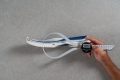
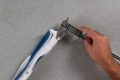
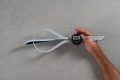
We enjoyed a huge buffer of protection against the ground, specifically with caliper measurements of 32.5/22.2 mm. Besides its above-average height, its ability to reduce impact also exceeds the standard, reaching 116 SA in the heel and 72 SA in the forefoot. Even after a full day of training, our legs didn’t feel too tired.
The upper displayed impressive durability in the lab. We had no hesitations sliding and dragging our feet because of the toe guard, which scored a remarkable 4/5 durability rating in our Dremel test. Even the toebox scored the same!
However, Jet Mach 4 has a close-fitting design that suits medium to narrow feet best. We suggest broad-footed players go for a wider shoe.
Pros
- Exceptionally tacky outsole grip
- Abundant shock absorption
- Leveled-up durability
- Secure foothold and lockdown
- Extended forefoot outrigger
- Stiff snappy forefoot
- Comfortable step-in feel
Cons
- Underwhelming energy return
- Snug narrow fit
- Heavier than v3
Tennis shoes with high shock absorption with the best value
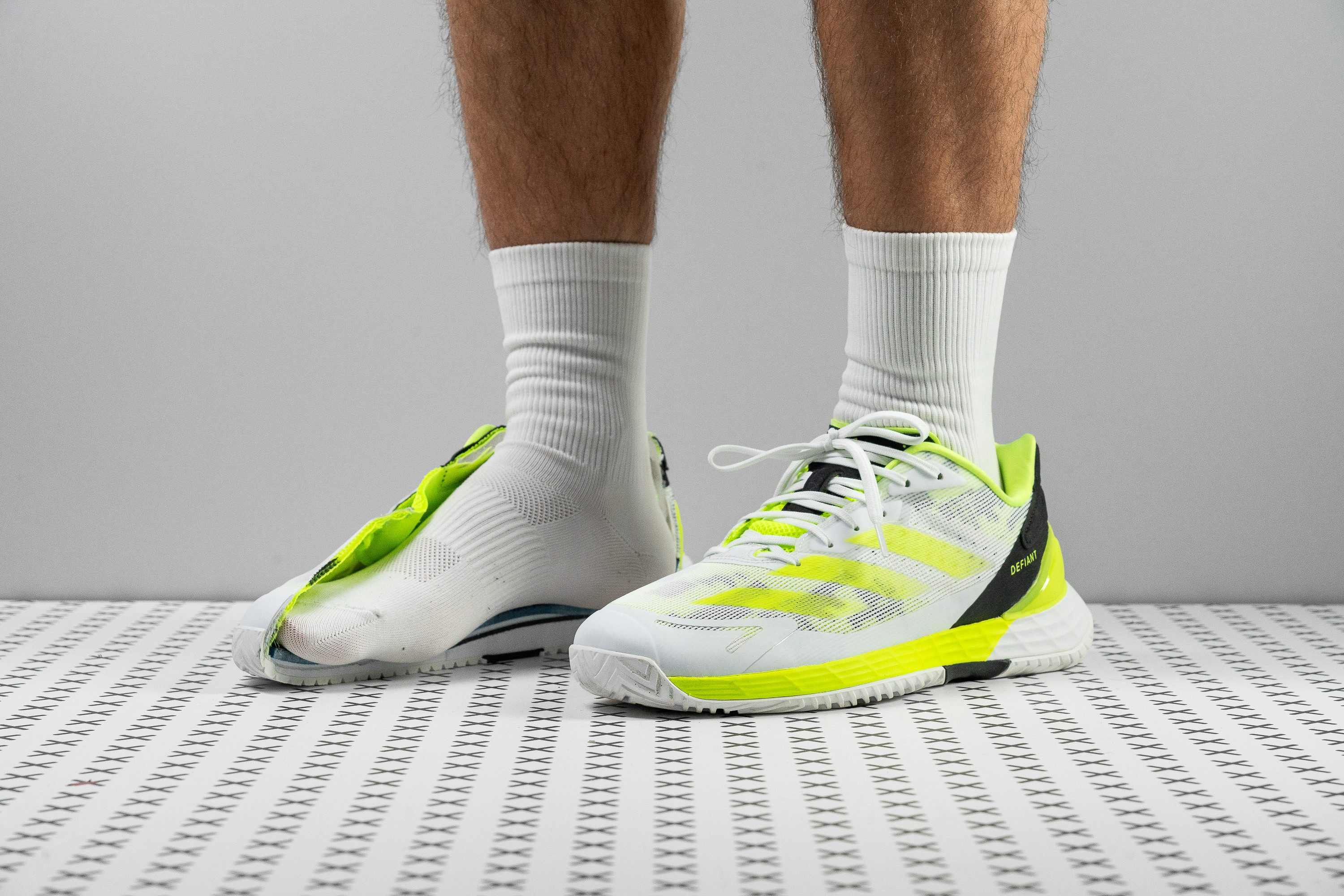








What makes it the best?
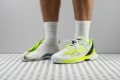
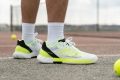
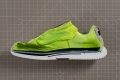
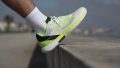
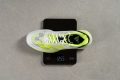
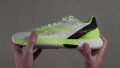
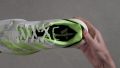
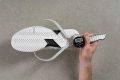
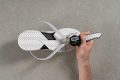
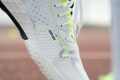
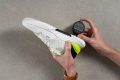
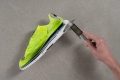
For only $120, the adidas Defiant Speed 2 delivers premium features such as agility, impact protection, and durability. Compared to the $136 average tennis shoe, every cent is worth it because it brings us to the top of our game, making it our best value high shock absorption tennis shoe.
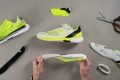
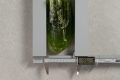
The cushioning seamlessly blends comfort and court connection well. Its below-average 28.8/17.0 mm stack height makes the surface feel evident. However, we’re amazed by how it reduces the impact of landings, evidenced by an above-average shock absorption score of 105 SA in the heel.
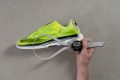
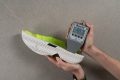
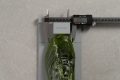
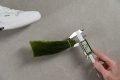
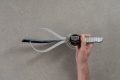
Light in the pocket and on foot, our scales reveal an airy 12.2 oz (347g) build, 4.7% below average. Its pliability also allowed us to maneuver the midsole easily during quick footwork. Our flex test reveals it’s 19.9% more bendable than average.
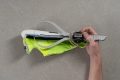
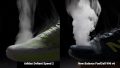
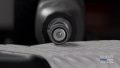
We effortlessly shifted directions, braked, and slid through the court with the robust outsole looking practically new after. It showed minimal 0.5 mm damage in our Dremel test compared to the 0.7 mm average, proving its hard-wearing nature.
Regrettably, it was difficult to get the fit of the collar right. It felt quite loose on our ankles, and its slippery feel didn’t help. Achieving a secure lockdown takes more effort than usual.
Pros
- Grounded platform with good court feel
- Stable base for a speed shoe
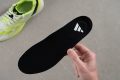
- Generously padded insole
- Fairly flexible forefoot
- Impressive durability for the money
- Great balance of grip and give
Cons
- Not everyone can achieve a secure lockdown (especially skinny feet)
- Higher drop may cause toe jamming
Why is shock absorption so important in tennis shoes
Shock absorption refers to the shoe’s ability to absorb and distribute impact forces, preventing them from being fully transferred to the player’s body. In other words, it’s the shoe’s impact protection.
It differs from energy return, which reflects the amount of energy stored in the shoe’s foam and then released during the toe-off. The higher the shoe’s energy return, the bouncier the ride.
In a high-impact activity like running, the peak ground reaction forces reach 2-2.9 times the body weight per step, but in tennis, these forces can be anywhere from 2 times the body weight (side shuffling) up to 4 times the body weight (hard forehand stop), and even higher (serves and overhead smashes)!
It doesn’t seem like much, but repeat these moves several hundred times a week, and you will understand why so many studies associate frequent repetition of high-impact forces with a higher risk of injury.
Shock absorption becomes increasingly important on hard courts, whose unforgiving nature absorbs roughly 10% less force compared to softer clay and grass courts.
Testing shock absorption and energy return in our lab
It is important to consider shock absorption in both the heel and forefoot of tennis shoes. That’s because the biomechanics of tennis are not as straightforward as those of running, and peak pressure varies depending on the type of movement.
Flat-foot landing, hard plant stops, and deceleration put more initial impact on the heel area, while ball-of-foot landing, lateral cuts, shuffles, and sprints to the net load the forefoot more.
And just because the initial force peak falls on one side of the shoe, it doesn’t mean that the subsequent load doesn’t go to the other side as well. For example, during hard stops, the first braking shock hits the heel, but then the player’s weight shifts forward, and the forefoot also absorbs some of the forces.
Choosing tennis shoes with high shock absorption will benefit both beginner and seasoned tennis players who want to reduce stress on their bones and joints and feel more comfortable on the court.
However, it becomes a MUST for athletes who:
- play tennis 3+ times a week or play long matches, particularly on a hard court
- have a history of injuries, joint pain, or back pain
- heel spurs, plantar fasciitis, achilles tendonitis (higher heel SA is recommended)
- metatarsalgia, toe joint arthritis, Morton’s neuroma (higher forefoot SA is advised)
- are of a heavier body weight
- are senior players
Stack height and shock absorption in tennis shoes
It is true that a low-stack, minimalist tennis shoe can’t provide much cushioning because it simply lacks the material to do so.
But after measuring stack height and shock absorption in dozens of tennis shoes, we found that an extra millimeter of foam does NOT necessarily translate into more impact protection.
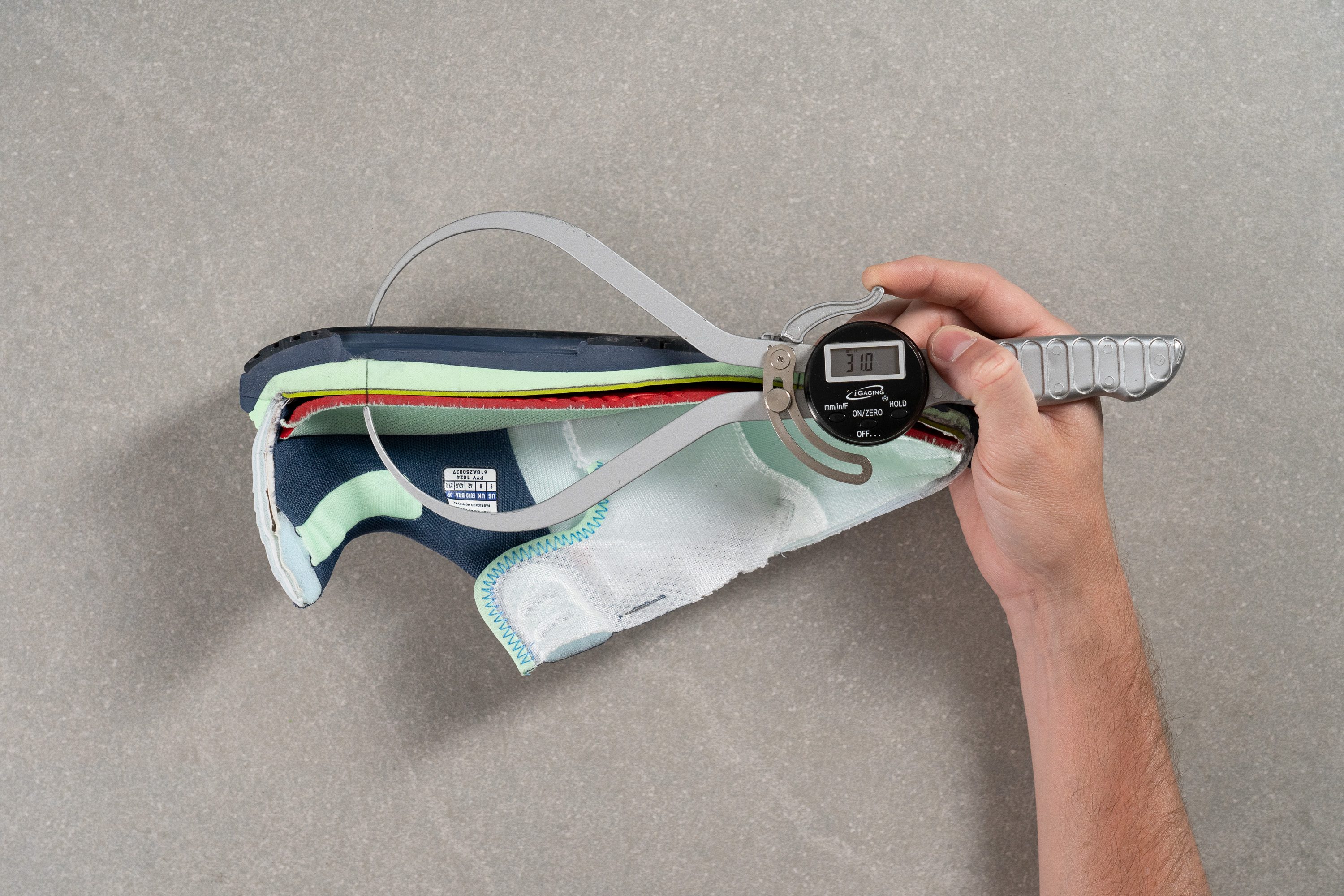
Although some brands can increase shock absorption by adding more foam, the quality of that foam matters a lot as well. More advanced compounds can provide better protection without being overly thick.
Unlike running shoes, tennis footwear can’t afford to pack an unlimited amount of underfoot foam to exponentially increase shock absorption. There can never be a court shoe with a staggering heel stack of 40-50 mm!
Powerful lateral moves and dynamic, nonstop side-to-side shuffles in this court sport make it impossible to exceed the 33-mm heel stack without compromising stability. That’s why the average SA numbers for tennis shoes are also well below those of running shoes.
Does more shock absorption mean a softer midsole?
No, both soft and firm tennis shoe midsoles can provide high shock absorption, according to our extensive data.
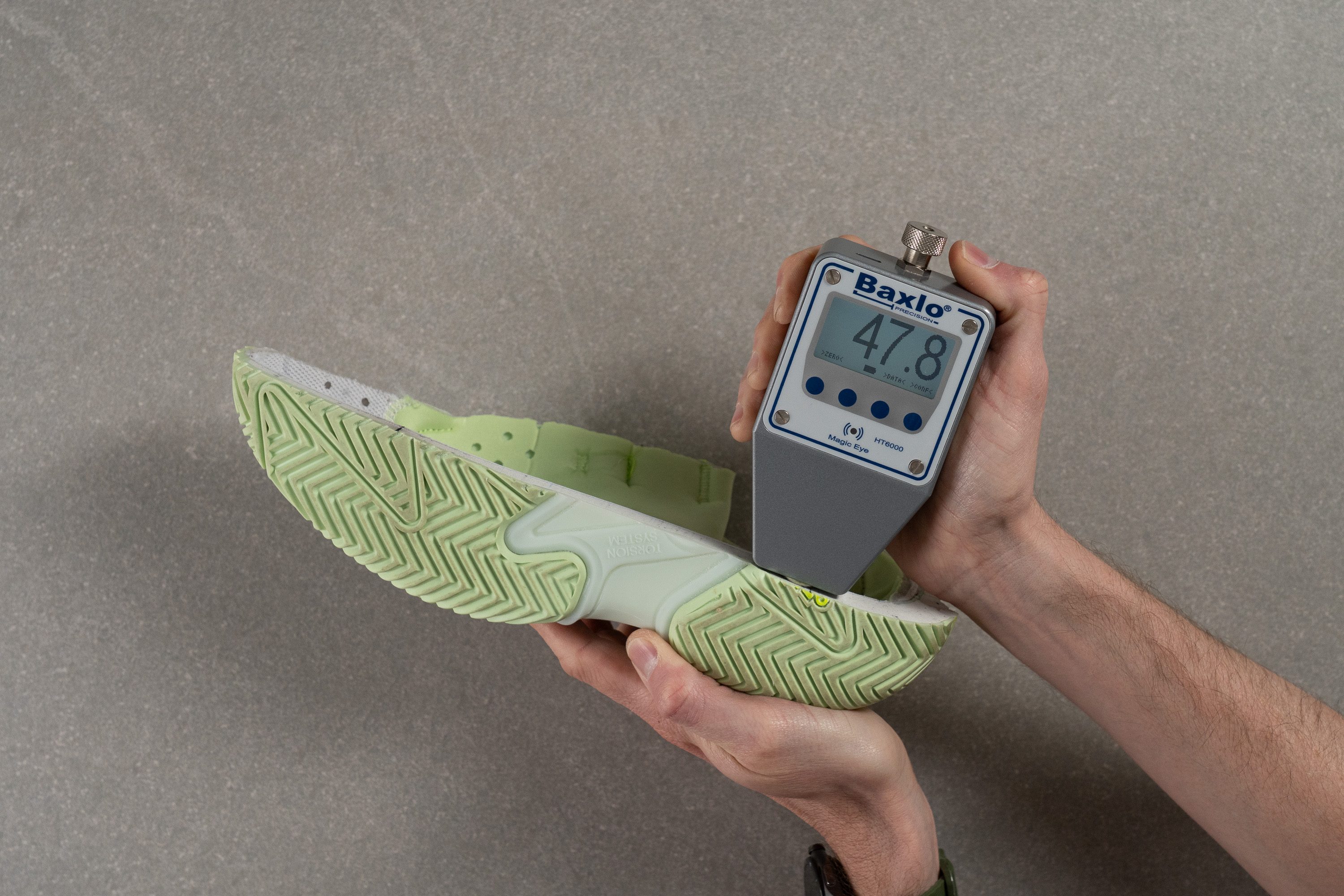
As you can see, even midsoles as firm as 30 HA have shown great results in our shock absorption tests.
Are tennis shoes with high shock absorption heavy?
Not necessarily! Our data showed that there is no direct correlation between a shoe’s weight and its ability to protect a player from harsh impacts.
In fact, the weight of shoes with very similar SA readings can still differ by 2-3 ounces!
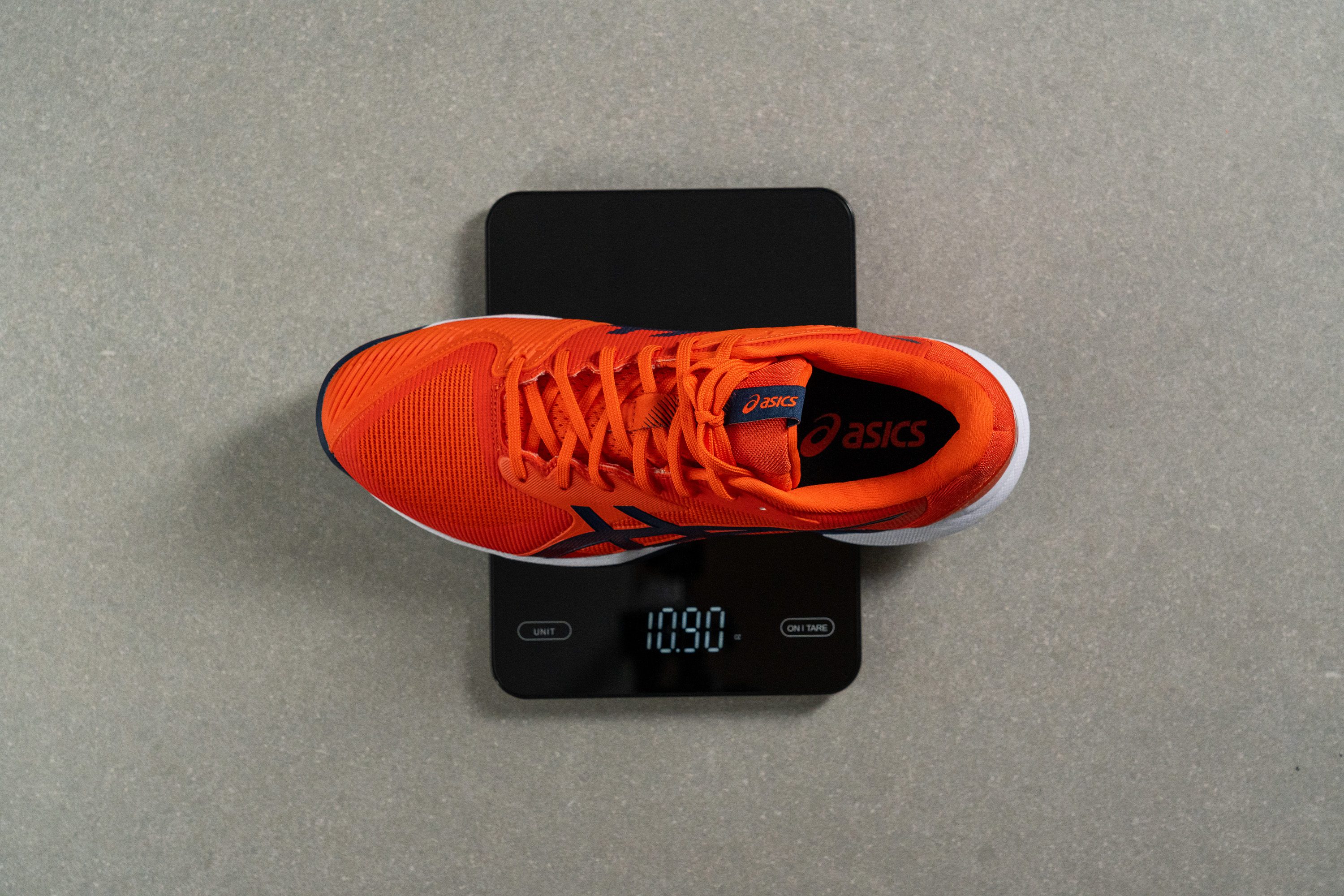
Price: Do we pay more for high shock absorption?
The quality of cushioning, and consequently shock absorption, is not the factor that influences the retail price of a pair of tennis shoes.
But there is a clear tendency for cheaper shoes to provide less impact protection, given the lack of more advanced cushioning materials and technologies. And yet, tennis shoes with the highest SA readings are not necessarily the most expensive ones either.
| Shock absorption | Average MSRP |
| Low | $116 |
| Moderate | $137 |
| High | $132 |
Other features to consider in tennis shoes
Undoubtedly, the right amount of shock absorption is essential to staying comfortable and protected on the court. However, other features should also be considered if you want to find a pair of tennis shoes that matches perfectly.
A high level of outsole traction and durability for your court type, a roomier fit for wide feet, a more breathable upper…You can filter shoes by these and other parameters in our tennis shoe catalog.
Similar buying guides