7 Best Barefoot Shoes in 2026
We buy shoes ourselves. We earn commissions when you buy through us, at no extra cost. Why trust us
In this guide, we go past the hype and cover what makes barefoot shoes different, why extra caution is recommended, how to transition to barefoot shoes, and other details that are relevant for anyone going from conventional shoes to barefoot ones.
Should you be barefoot when wearing barefoot shoes? Can you wear them if you have flat feet? Socks: yay or nay? There are no irrelevant questions. In case you want to skip all that and look at our crème de la crème selections, look at our highlighted top picks.
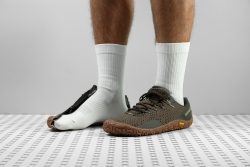
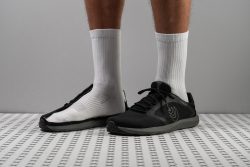

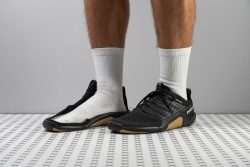
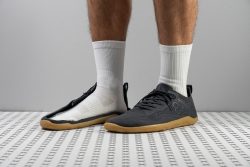
How we test barefoot shoes
First, we have to decide which shoes will be tested. The footwear market is too big, so we had to decide on how to give more value to certain shoes. We explain this process here.
We hope it goes without saying that we buy all the shoes with our own funds. This allows us to stay unbiased and to keep our lab independent. Once the shoes are bought, we test them outside the lab. We insist on personally experiencing everything the shoes have to offer and criticizing things they do not offer.
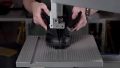
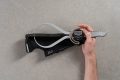
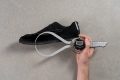
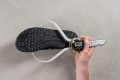
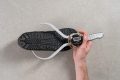
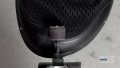
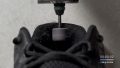
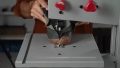
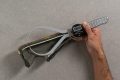
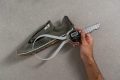
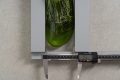
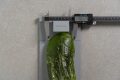
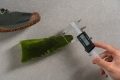
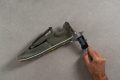
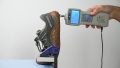
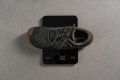
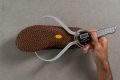
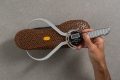
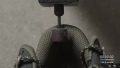
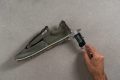
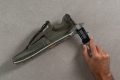
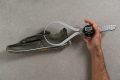
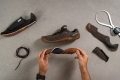
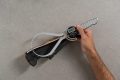
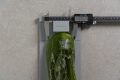
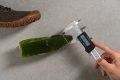
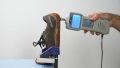
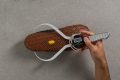
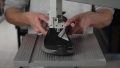
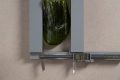
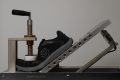
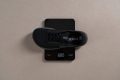
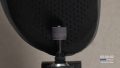
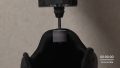
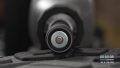
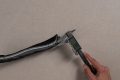
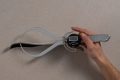
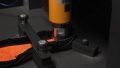
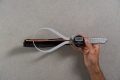
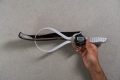
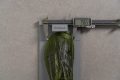
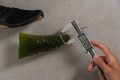
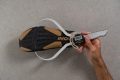
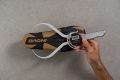
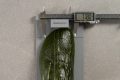
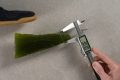
Then, we go to the lab. Although we perform the same tests on all shoes, it is obvious that in the case of barefoot walking shoes, we won't be highlighting midsole softness or its shock absorption. Simply because the stack heights are so low! But, we do use specialized machines to measure longitudinal stiffness and torsional rigidity; we put the shoes into a climate-controlled chamber for 3 hours while releasing artificial sweat to measure their breathability; we use digital calipers to check whether the heel to toe drops match the brands' statements, and so on.
Once both the field tests and lab tests are done, we publish everything on our website. It feels great to be able to publish everything we run into, regardless of how good or bad. This is only possible when the lab is independent and has no contracts with the brands.
Best barefoot shoes overall
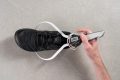
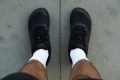
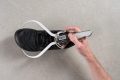
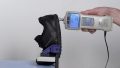
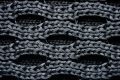
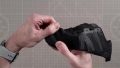
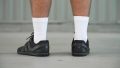
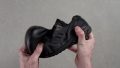


What makes it the best?
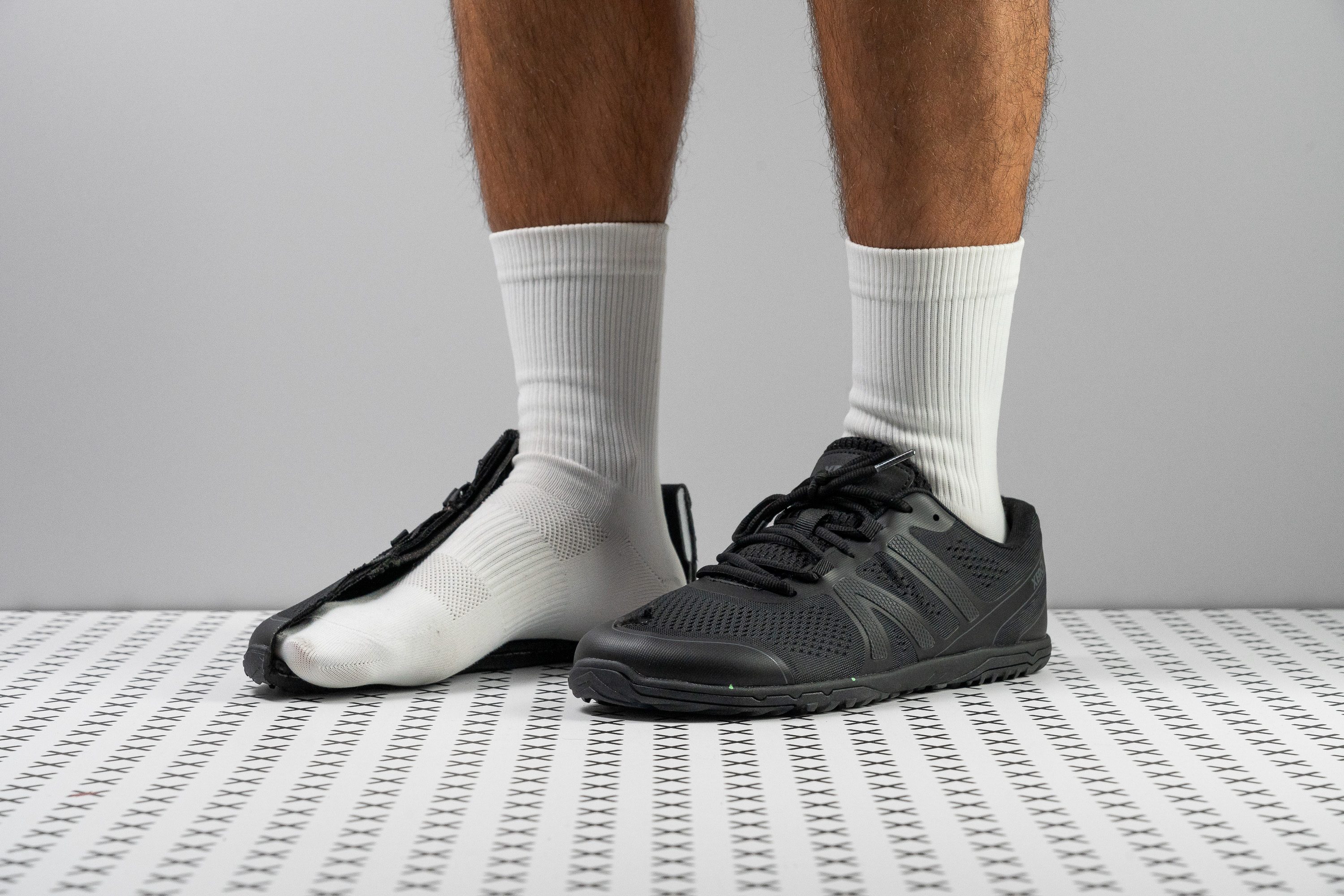
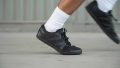
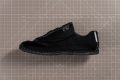
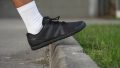
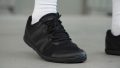
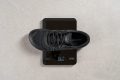
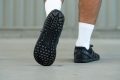
The Xero Shoes HFS II feels barely there with its low stack, high flexibility, and spacious and breathable toebox. Our lab results back up what we experienced: this shoe is all about minimalism and freedom of movement. Therefore, it’s our top barefoot walking shoe.
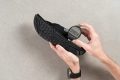
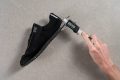
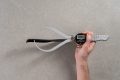
A main reason why the shoe melts away on foot is because of its minimal cushion. Using our caliper, we measured a low profile of 13.1/12.1 mm, offering raw contact to the surface. Moreover, its low 1.0 mm drop encourages strengthening our feet and ankles.
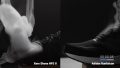
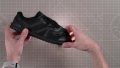
Because its platform is so thin, HFS II bends with almost no resistance to our feet. As confirmed by our flex test, the midsole is 62.6% more pliable than average, enhancing the natural feel during our strolls.
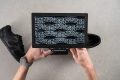
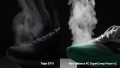
All five of our toes rested comfortably within the shoe, and our toebox measurement shows it’s 10.6% wider than average, preventing any pressure points. Moreover, the upper’s unhampered airflow enhances comfort, evidenced by its 5/5 breathability score in our smoke test.
Although lighter than average, we found its 8.6 oz (244g) build heavier than expected for such a streamlined design. Those who are aiming for even lighter shoes should check alternatives.
Pros
- Anatomical toebox for natural toe splay
- Real minimalist design
- Reasonably priced
- Versatile for roads and light trails
- Amazing at gym workouts
- Ultra-flexible and easy to pack
- Full-length outsole coverage
- Superior ground feel
- Promotes feet strength
Cons
- Midsole lacks energy return
- Heavier than most minimalist shoes
- Durability still needs improvements
Best barefoot shoes for trail
What makes it the best?
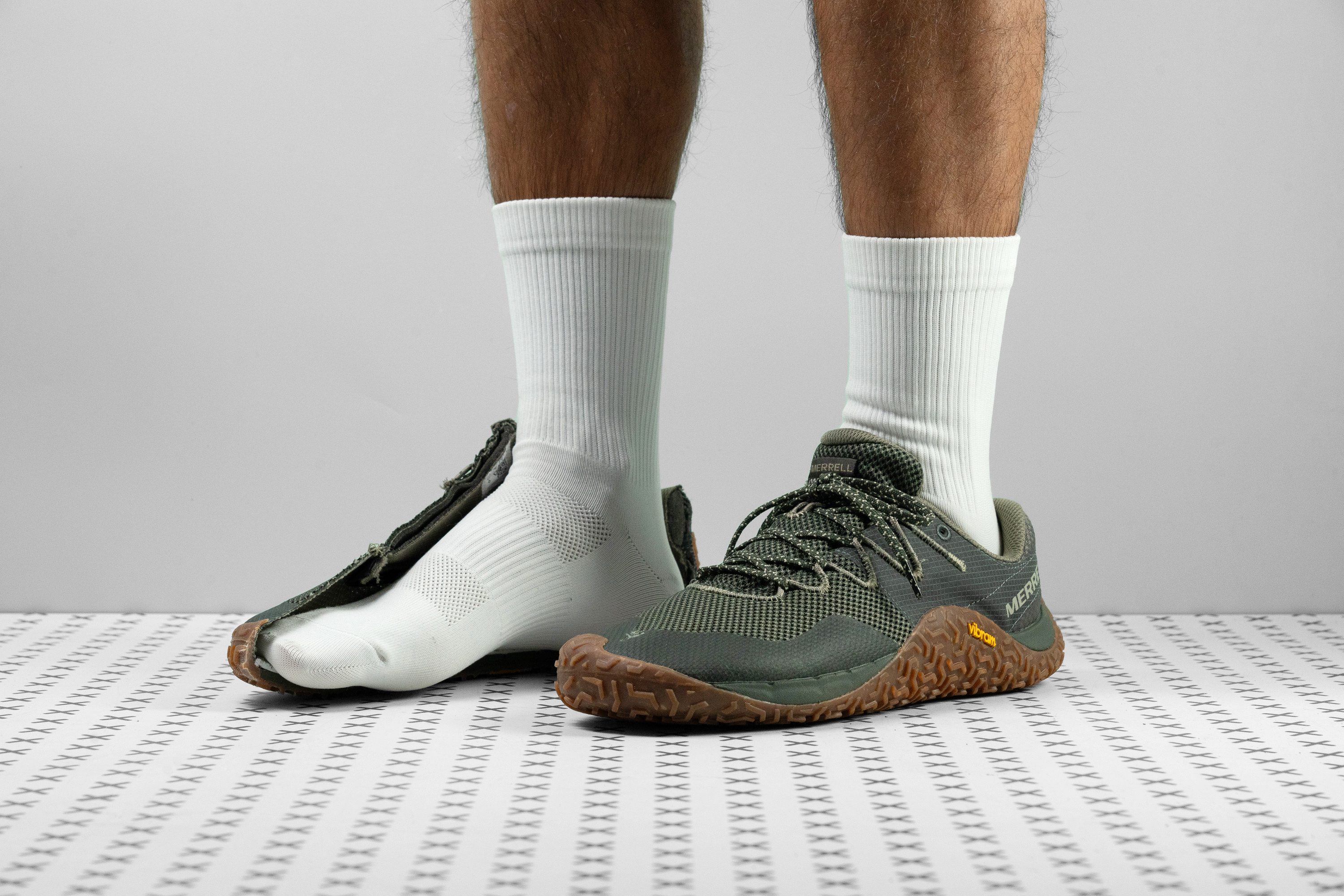
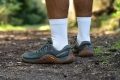
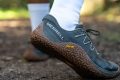
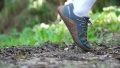
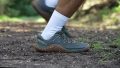
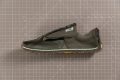
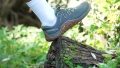
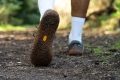
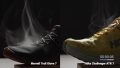
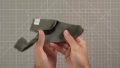
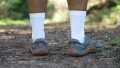
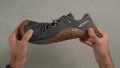
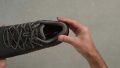
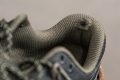
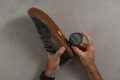
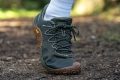
The Merrell Trail Glove 7 boasts an airy and maneuverable build, as well as strong traction and ground connection on our treks. Lab tests show it offers a barefoot feel with its non-existent drop and minimal resistance. It made us feel in control and connected to the surface—making it our best barefoot walking shoe for the trail.
Lifting each foot feels effortless with its superior lightness. Our scales reveal a mere 7.8 oz (221g) figure, 23.5% below the average. This is attributed to its low profile of 16.1/16.0 mm, which has significantly less foam than average. It's essentially a zero-drop design that delivers direct surface feedback, allowing us to adapt to various terrains.
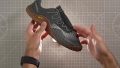
Trail Glove 7 increases its flexibility to boost comfort and agility on uneven trails. It literally melts away on foot since it doesn’t resist our movements. Our bend test verifies it’s 61.3% more pliable than average.
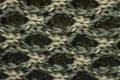
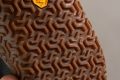
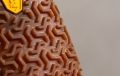
Underfoot lies the very dependable Vibram rubber. It offers excellent grip through its maze-like pattern. To further ensure its strong bite, it’s dotted with 2.5 mm lugs that cling to loose gravel and moderate trails.
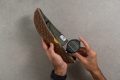
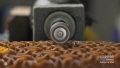
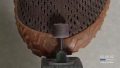
Unfortunately, its dismal performance in our Dremel test suggests the softer rubber may wear out faster than average. We recommend avoiding abrasive surfaces like concrete when wearing this shoe.
Pros
- Authentic minimalist experience
- Genuine zero-drop design
- Provides a good amount of cushioning
- Doubles as hiking and walking shoe
- Sturdy and long-lasting upper
- Perfect for summer adventures
- Exceptionally flexible
- Super quick and agile on corners
- Ideal for both experts and beginners
Cons
- Completely unsuitable for winter conditions
- Outsole durability is a letdown
- Might be excessively narrow for some runners
Best lightweight barefoot shoes


What makes it the best?
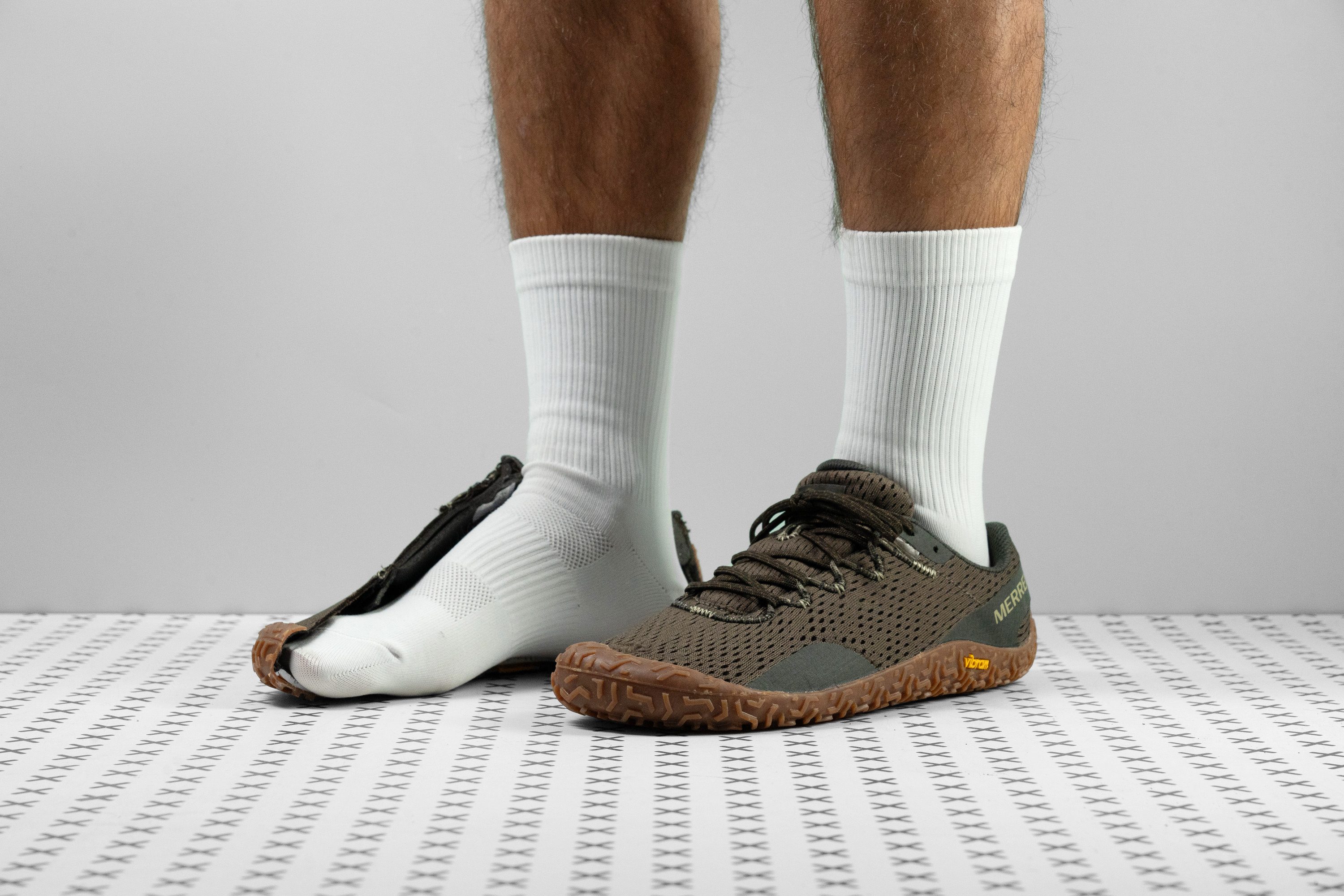
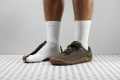
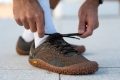
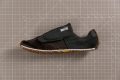
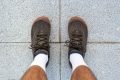
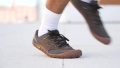
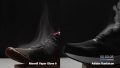
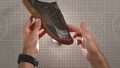
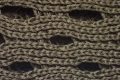
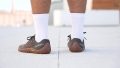
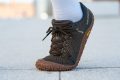
While most barefoot walking shoes already embody minimalism, the Merrell Vapor Glove 6 is in a league of its own, leading the lightweight category. It truly offers the most authentic experience in our strolls, and lab tests verify its weightless feel, genuine zero drop, and maximum flexibility. Despite its remarkable character, this shoe remains committed to minimalism, exemplified by its accessible price point of just $90.
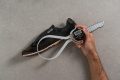
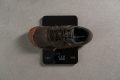
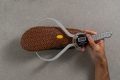
Offering the true barefoot experience, its feather-light 5.6 oz (159g) design is nearly half the weight of its counterparts (9.3 oz/264g). This featherweight quality is attributed to its barely-there 7.6-mm stack height in both the heel and forefoot, significantly lower than the 34.8/26.2 mm average. Its true zero-drop configuration ensures maximum ground feedback, enabling us to feel even the slightest variations in terrain and adapt quickly. With minimal cushion separating our feet from the ground, stability is greatly enhanced.
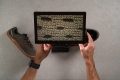
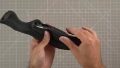
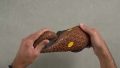
Complementing the barefoot sensation is the highly adaptable midsole, which effortlessly moves to our demands with essentially no resistance. During our bend test, it demonstrated remarkable flexibility that’s 92.2% above average. It truly captured our hearts with its freedom of movement.
However, the VG6's stripped-down design may feel too harsh for people accustomed to cushioned footwear. This shoe works best for those whose muscles are already used to low-drop shoes.
Pros
- Foot-shaped toebox
- Exceptional ground feel
- Fairly priced at $90
- Super agile
- Extremely flexible design
- Maintains grip, even on wet surfaces
- Sockless ready
- Perfect for road running or tackling easy trails
- Versatile enough for hiking, walking, or even gym workouts
Cons
- Overly spacious for those with narrow feet
- Outsole shows wear quickly
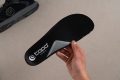
- The cushioned insole detracts from a true barefoot experience
Best barefoot shoes with a wide toebox
What makes it the best?
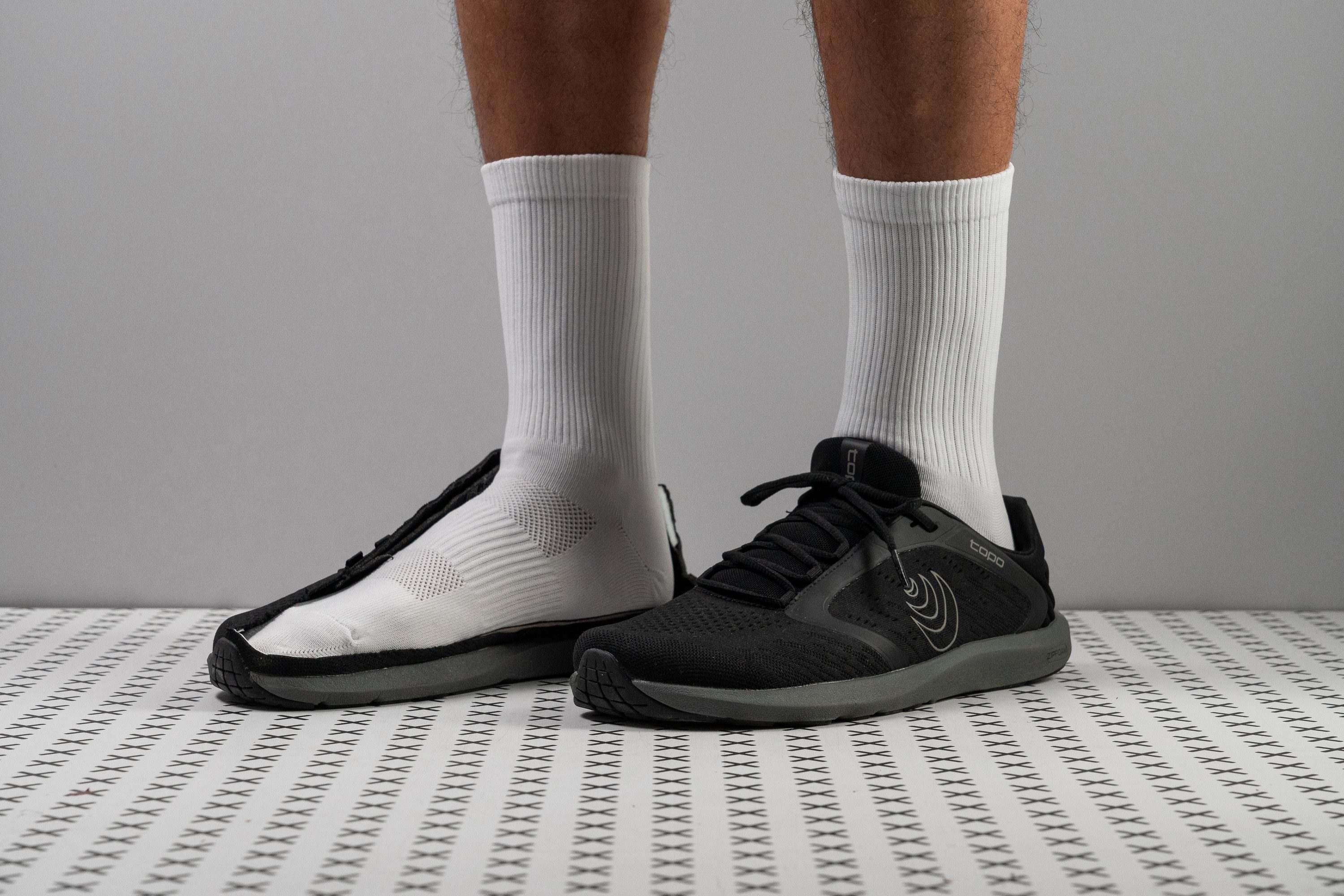
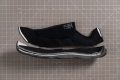
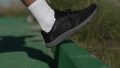
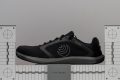
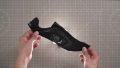
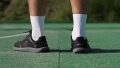
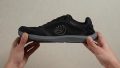
The Topo ST-5 doesn’t overcomplicate things, with its stripped-down design keeping it all natural in our strolls. Lab tests show its strong ground connection, courtesy of the low profile and high flexibility of the shoe. Moreover, it offers a generous room up front despite its light package, making it our best with a wide toebox barefoot walking shoe.
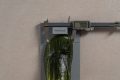
We instantly recognized its foot-shaped design since all five of our toes rested comfortably, and this was further verified by measuring our solidified gel mold. At the widest part of the toebox, we recorded a massive 79.0 mm, making it 7.9% above average.
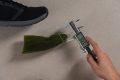
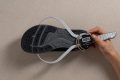
The midsole offers the minimum cushioning, just enough to keep us safe from the ground. We measured the stack height at 13.7/13.9 mm, with a resulting -0.2 mm drop. This configuration activates our lower leg muscles and enhances the barefoot feeling.
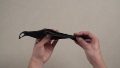
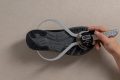
ST-5’s minimalism is highlighted through its minimal resistance to our movement. In our flex test, we found it to be 74.5% more bendable than average, offering freedom of movement. Even to twisting, it easily surrenders, shown by its 1/5 torsional rigidity score. The shoe also melts away on foot because of its low 6.8 oz (193g) build, 26.9% below average.
However, we don’t recommend using this pair all day because it lacks support and cushioning, which could easily tire us out.
Pros
- True minimalist design
- Exceptionally flexible
- Outstanding durability from top to bottom
- Very wide, foot-shaped toebox
- Lightweight
- Ideal for daily use or gym workouts
- Fair price
- Real zero-drop geometry
- Good grip
Cons
- Only for short distances
- Low energy return from EVA foam
- Too roomy for low-volume feet
Best water-resistant barefoot walking shoes


What makes it the best?
The Vivobarefoot Primus Trail III All Weather FG shows high resistance to water and wear and low resistance to movement, making it our ultimate water-resistant barefoot walking shoe. In the lab, we verified it’s a true minimalist shoe with its low profile, true zero drop, and strong ground feel.
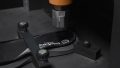
As its name suggests, this shoe can stay out in the rain with its effectively water-resistant upper. Underfoot, the rubber delivers strong slip resistance, proven by its high 0.84 traction result. It also proved to be protective, since our Dremel shaved off only 0.5 mm of rubber compared to the 0.9 mm average.
The midsole, though, feels far from protective. We measured a mere 11.3/11.3 mm of material separating our feet from the ground, leading to a perfectly flat offset that enhances the barefoot sensation. Because it’s so low to the ground, impact protection also dips to 29 SA in the heel and 31 SA in the forefoot.
This shoe melts away on foot as it doesn’t resist our movements. Our bend test proves it’s 62% more flexible than average, so it literally just flows with our motions.
However, its premium $170 price is a clear drawback for people on a budget. Those who expect a low price tag for a minimalist shoe will be disappointed in this case.
Pros
- Excellent grip
- Comfortable for wide feet
- High-quality materials
- Strong outsole durability
- Solid construction feels premium
- Excellent flexibility for natural foot movement
- Water-resistant upper
- True barefoot feel for the trails
- Ideal for gravel roads and easy trails
- True 0-mm drop
Cons
- Should be lighter
- Heel padding durability is a concern
- High price
- Non-gusseted tongue
Best barefoot shoes for cross-training

What makes it the best?
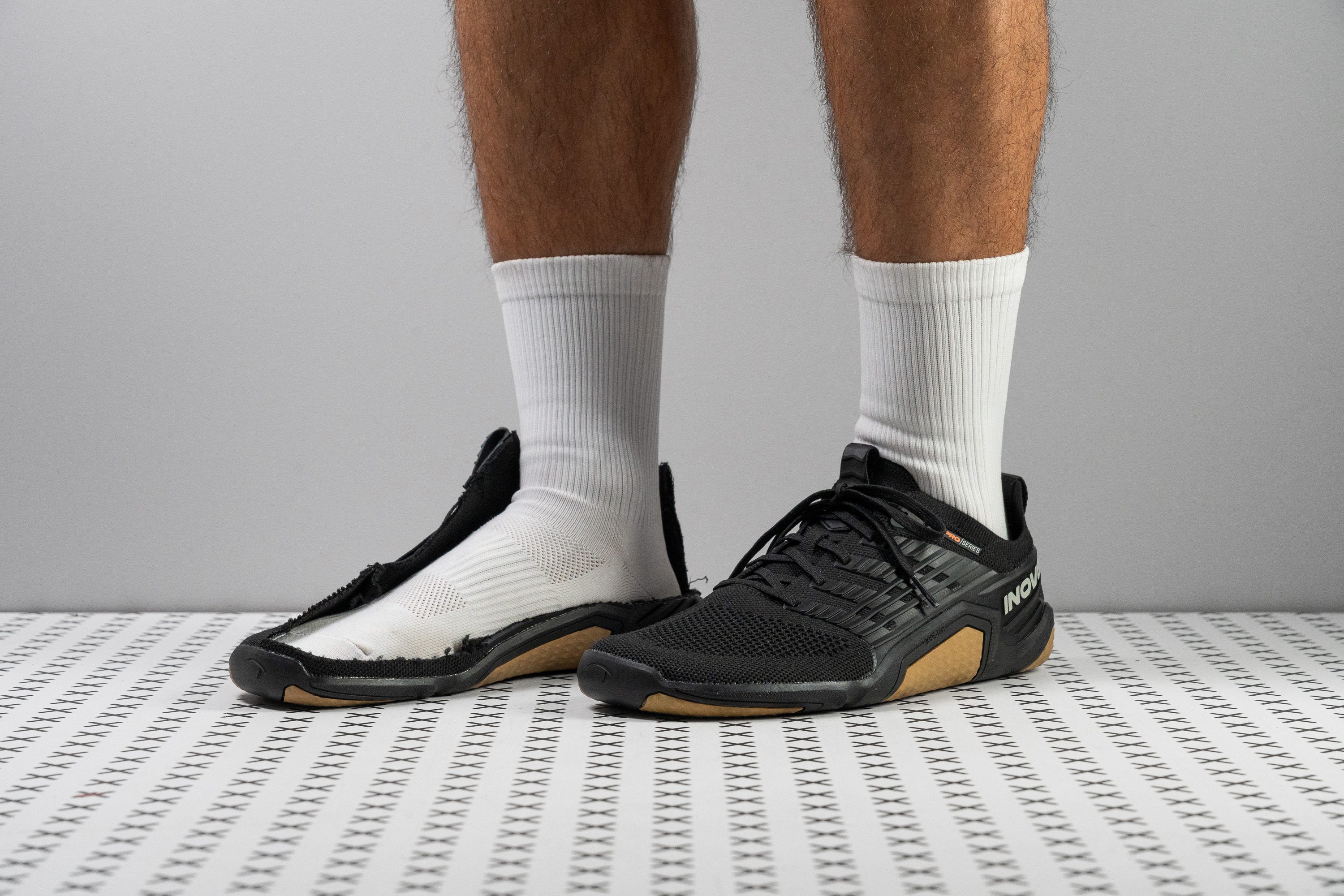
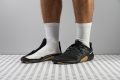
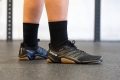
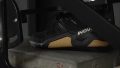
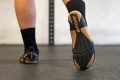
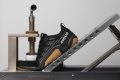
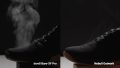
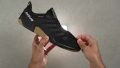
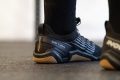
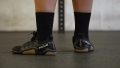
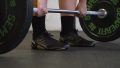
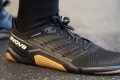
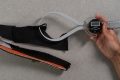
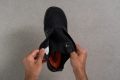
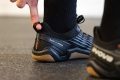
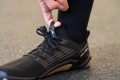
We discovered the Inov8 Bare-XF Pro is the best cross-trainer among barefoot walking shoes we evaluated in the lab and on our strolls. Its low-profile design enhances flexibility and stability while keeping weight to a minimum.
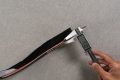
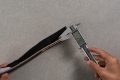
The shoe‘s direct ground feedback is undeniable. Measuring the stack height reveals one of the lowest we’ve seen: 6.9/6.8 mm. This minimal cushion, together with its true zero drop, enhances our surefootedness and builds foot strength.
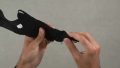
With its ultra-thin cushioning, the Bare-XF Pro allows unrestricted multi-directional movement, offering virtually no resistance to twisting or bending. It rated the lowest 1/5 in our torsional rigidity assessment. And in our bend test, it emerged as one of the most flexible shoes we’ve ever tested, needing 63.9% less force than average to bend to our desired angle.
Capturing its name well, the shoe essentially disappears on foot as soon as we start walking. At 8.7 oz (248g), it’s 19.2% lighter than the average trainer.
That said, its moderate ventilation may fall short in hot and humid environments, making it less ideal for those who prioritize breathability.
Pros
- True barefoot-like experience
- Foot-shaped and roomy toebox
- Super lightweight
- Extremely flexible
- Sock-like in-shoe feel
- Promising durability
- Protection for rope climbs
Cons
- Pricey for its kind
- Moderate breathability
- Subpar outsole girp
Barefoot shoes with the best durability

What makes it the best?
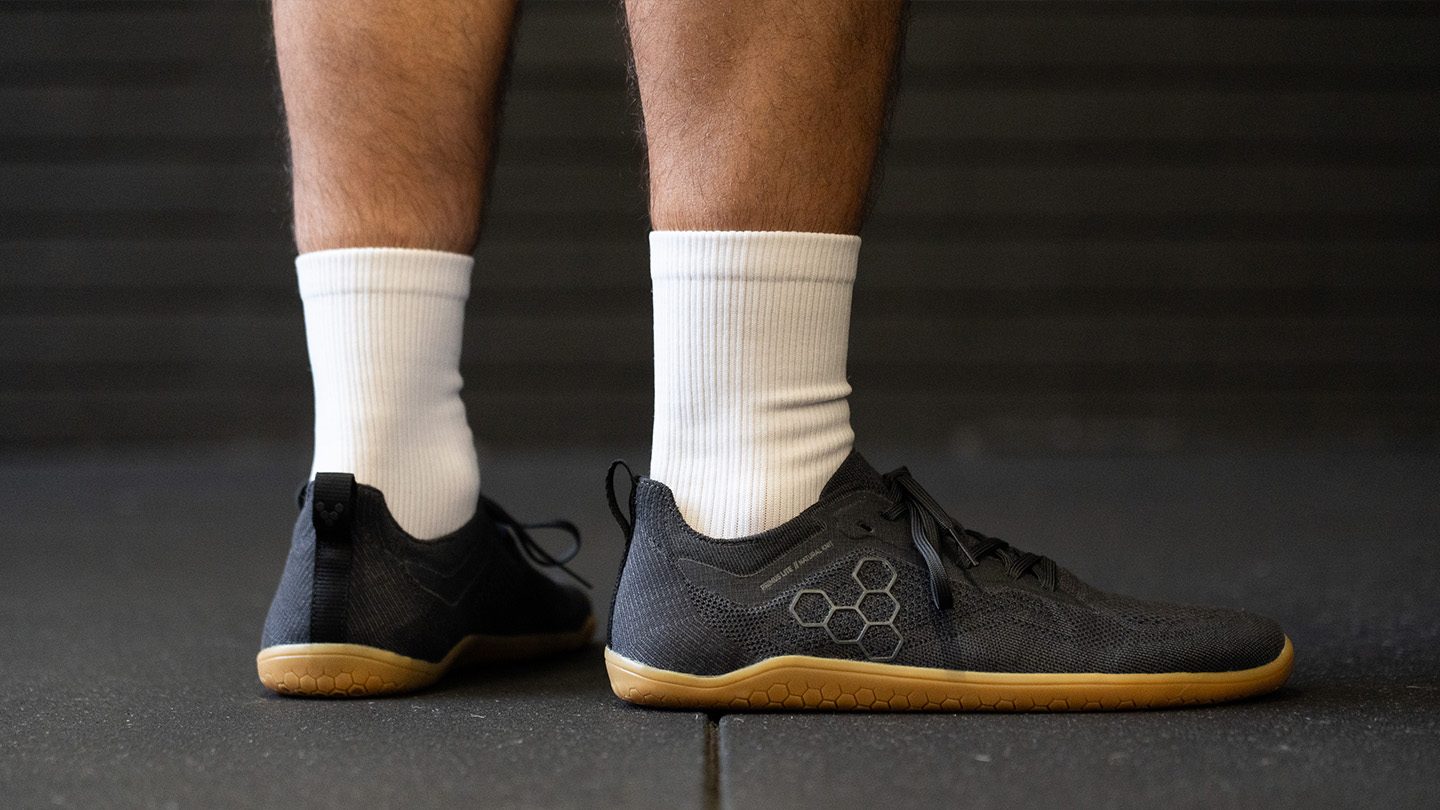
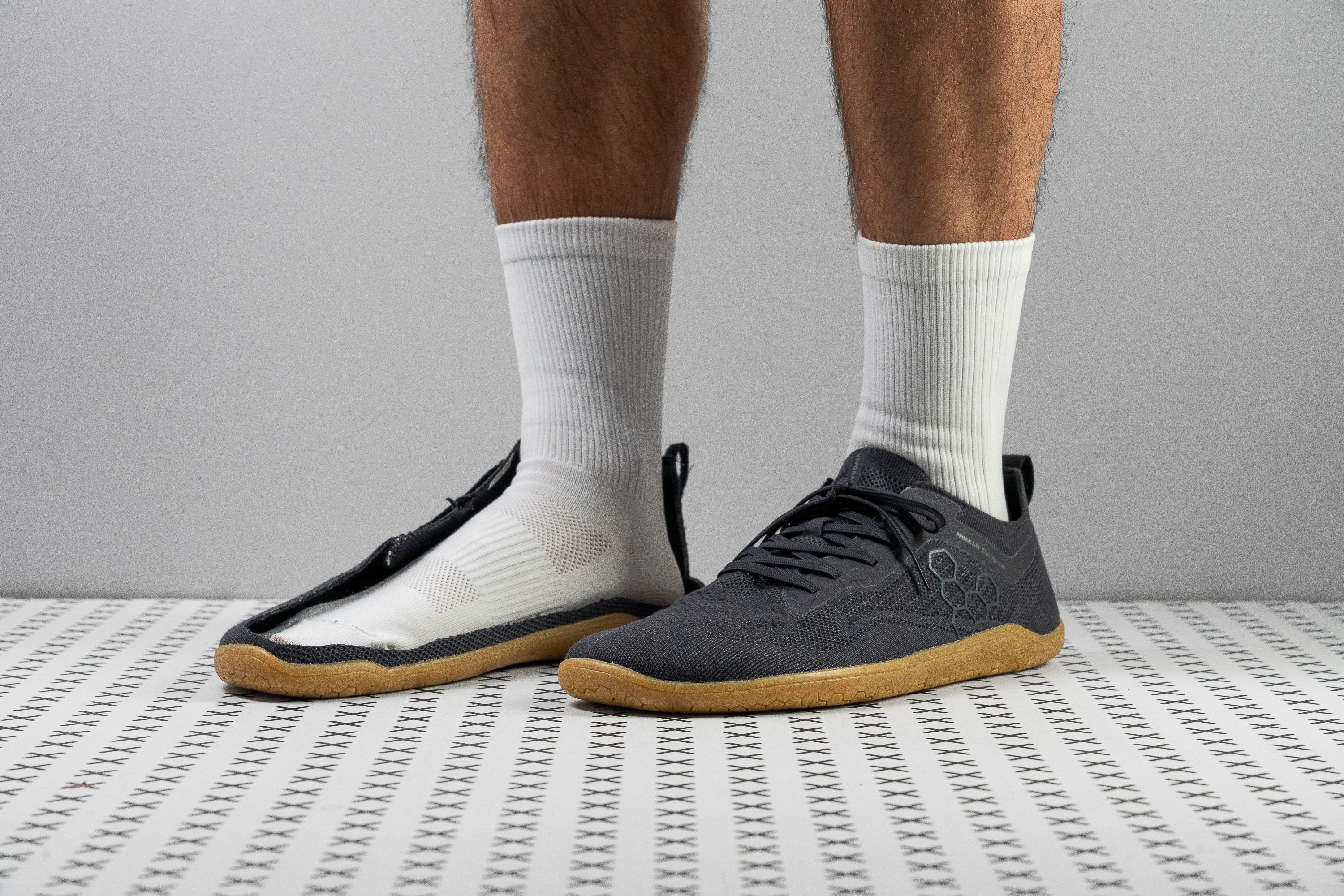
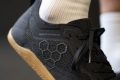
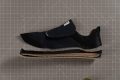
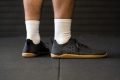
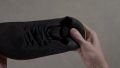
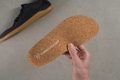
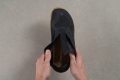
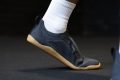
The Vivobarefoot Primus Lite Knit feels gentle on the inside yet rugged on the outside. The sensation it offers stays true to its name, delivering a breathable, weightless, flexible, and grounded experience in our strolls. However, in the lab, it was impressive with 5-star ratings in our abrasion test, making it our best durable barefoot walking shoe.
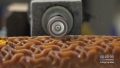
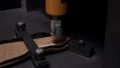
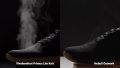
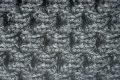
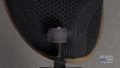
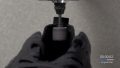
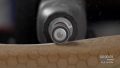
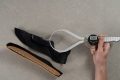
The outsole looked untouched after our wear tests, with its longevity further proven by our Dremel's minimal 0.9 mm dent. Furthermore, this harsh tool barely affected the inner lining and toebox, earning the top 5/5 durability score. What’s impressive is how the sturdy knit allows strong ventilation at the maximum level (5/5), a rare combination in the lab.
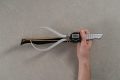
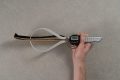
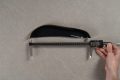
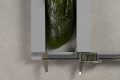
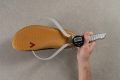
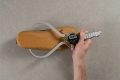
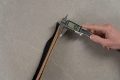
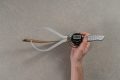
Moving to the midsole, the platform feels close to the ground, and our caliper verifies 8.5 mm in the heel and forefoot. With the resulting zero drop, it feels like we don’t have any shoes on! It’s like we don’t have cushioning underneath since shock absorption is very low at 17 SA, making the surface connection 78.5% stronger than average.
Given its thin stack height, weight decreases and flexibility increases. Our scales show it’s only 8.3 oz (235g). It also feels invisible on foot because it doesn’t resist our movements. In our bend test, it emerged 75.7% more flexible than average.
Note that the heel runs narrow at 81.8 mm, so we can’t rely on it for support. Those who need more stability should find structured shoes, because this one has none.
Pros
- True barefoot-like experience
- Relaxed fit with a spacious toebox
- Super lightweight build
- Excellent upper and outsole durability
- Highly breathable
- Extremely flexible
- Solid grip on gym floors
Cons
- Overpriced for a barefoot shoe
- Lacks gusseted tongue for lockdown
What are barefoot shoes?
Barefoot shoes are shoes that allow users to experience a barefoot feeling, meaning they can move or perform different physical activities while feeling as if they were barefoot. The purpose of the barefoot shoe is to offer minimal protection so that people don’t get hurt by walking on sharp objects or scratching the instep on debris-covered surfaces, and so on.
Barefoot shoes are found in different disciplines and we see them as sneakers, or in training as gym shoes, in running, hiking, walking, etc.
5 features of barefoot shoes
All barefoot shoes have these 5 things in common:
- Very thin soles. They often feature no or minimal cushioning (midsole) and are very close to the ground. This means that the ground feel is at its maximum (for a shoe).
- Very flexible soles! You can easily twist them and bend them. Not just bend, but most likely curl up in a roll.
- Wide toebox. The idea behind barefoot shoes is to offer that barefoot feel and when we’re barefoot, nothing is cramping our toes. They can splay freely. That’s what you can expect in barefoot shoes as well.
- Heel to toe drop is 0 mm or very close to that. This means that the forefoot and the heel are at the same height; the heel is not positioned higher than it is in most conventional shoes. For example, in running shoes, the average heel drop is 8.6 mm and it goes as high as 16.1 mm.
- These shoes feature no stabilizing technologies. These technologies, when found in conventional shoes, help people with flat feet and overpronation, as well as those who simply prefer extra stability.
We will explain all of these features in detail below.
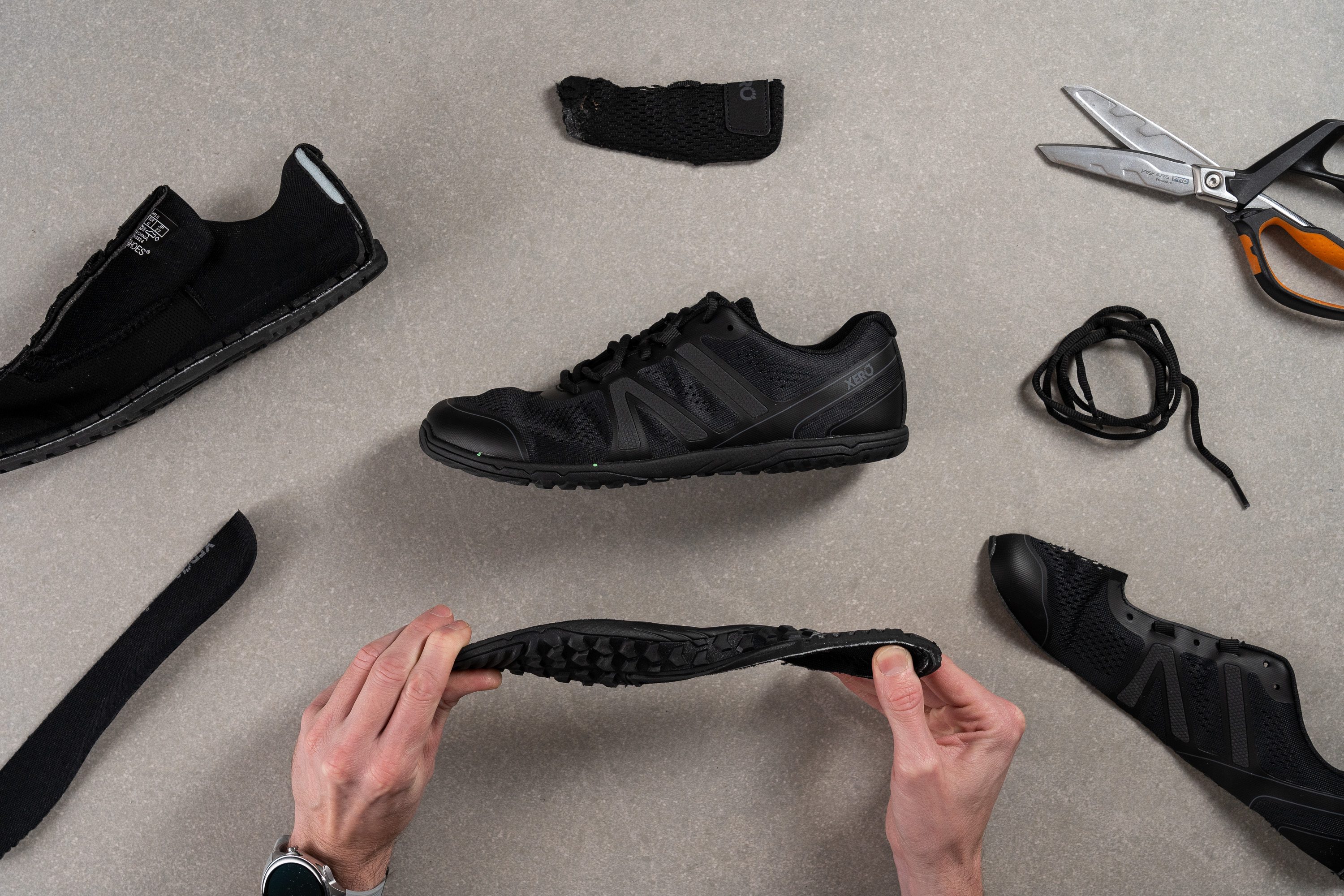
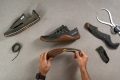
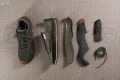
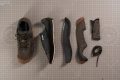
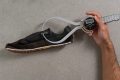
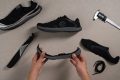
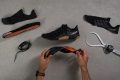
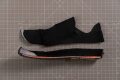
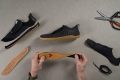
In order to properly test barefoot shoes in the shoe lab, we have to remove their upper, cut them in half, and cut them into smaller pieces.
MUST KNOW before you buy barefoot shoes
What makes barefoot shoes unique is their design. By that, we mean: extremely thin and flexible soles, no stabilizing technologies, and zero drop. This is a huge difference compared to traditional shoes, which feature at least some cushioning (often a lot of it), higher drop, and maybe even some stability elements.
Here’s what that means for our legs:
- Foot muscles have to adapt to feeling every little pebble, crack, basically everything. Soles are very thin, and our feet start feeling everything, all of a sudden. This can result in foot fatigue and even pain if you overdo it.
- Heel-to-toe drop of 0 mm means that barefoot shoes send most of the stress to your foot muscles and Achilles. This is wildly different from what we’re used to because the majority of shoes on the market have a higher drop, which utilizes thighs, glutes, and hips the most. That’s why when the transition to barefoot shoes is not gradual enough, the pain appears in exactly those regions: feet, Achilles tendons, and maybe calves.
- The transition period is long. Of course, it depends on your starting point, but better to accept immediately that it may take months or even more than a year, than to invest money and time into it, thinking you’ll be done in 2 weeks. You will most certainly not be done in 2 weeks.
If all of this does not scream CAUTION enough for you, read a study done by Ridge et al., 2013. They followed 36 runners who transitioned to minimalist (so only minimalist, not barefoot) running shoes during the 10-week period. 10 out of 19 runners in the experimental group showed increases in bone marrow edema in at least one bone.
Are barefoot shoes better and healthier?
There's no consensus and it heavily depends on the starting point: current and past injuries, foot conditions and similar issues, biomechanics, and so on. Let's look at the research:
- In running, barefoot shoes increase the cadence, shorten the stride length, and encourage forefoot strike. Ankle plantar flexion is higher, and the range of motion at the hips and knees is decreased. De Wit et al., 2000; Divert et al., 2005; Lieberman et al., 2010
- In 2014, researchers looked at 23 studies, but could not conclude which footwear is safer and better: barefoot, minimalist, or cushioned. Perkins et al., 2014
- Comparing runners who run barefoot and who run in cushioned shoes showed that the barefoot runners have stronger foot muscles, better ankle dorsiflexion range of motion and a thicker plantar fascia. García-Arrabé et al., 2024
- A systematic review of 25 studies has shown that it is more energy-efficient to run in minimalist shoes or barefoot than in conventional cushioned running shoes. However, it was also shown that this efficiency could be improved by increasing the stiffness or cushioning. Xu et al., 2025
- Walking barefoot or in minimalist shoes has been shown to increase activation in different muscles like tibialis anterior, peroneus longus, and gastrocnemius versus conventional shoes. This indicates potential benefits for foot and ankle strength and proprioception. Franklin et al., 2018
- It took only 5 weeks of minimalist-shoe training for the oxygen consumption in minimalist footwear to become similar to barefoot walking and running at all tested speeds. This suggests that minimalist shoes may be less economical at first, but with adaptation, the efficiency improves. Bellar, Judge, 2015
- Compared to barefoot walking, brief walking in ultra-minimalist shoes on a rugged surface boosts foot sensory input and postural stability while reducing pain. These shoes improved sensory feedback and balance without increasing muscle strain linked to a higher injury risk. This may be a good low-risk exercise to train foot sensation and stability at home or in a gym. Biscarini et al., 2024
- A systematic review of 7 studies involving 213 participants looked at the effects of barefoot and minimalist footwear and concluded that most interventions led to significant improvements in intrinsic and extrinsic foot muscle volume, medial arch function, and toe flexor strength. Rodríguez-Longobardo et al., 2025
There are more studies on barefoot running shoes, but there's no consensus either.
How to transition to barefoot shoes
As mentioned above, the start point for people transitioning to barefoot shoes can be anything from minimalist shoes or low-stacked running shoes to high heels or chunky dad shoes. This is why there’s no one protocol that fits everyone. Add to that the fact that people may suffer from different foot conditions and injuries, and we’re talking about endless combinations that one protocol simply can’t cover.
But we do know what usually works and how to stay on the safe side:
- Start slowly. It might sound ridiculous but for the first few days and weeks, use barefoot shoes only a few minutes a day, while walking around the house and the backyard.
- Level up by doing different errands in barefoot shoes, be it going to the supermarket, for a (very) short walk, playing with the dog in the park, and similar.
- Start adding more minutes/mileage to your time spent in barefoot shoes.
| Here’s how you’ll know whether you’re ready for the next step (upping the minutes/miles in barefoot shoes): you should not feel any discomfort or pain at any time during the process. |
2 important things to do when transitioning to barefoot shoes:
- When you start increasing the time spent in barefoot shoes, always carry a spare pair with you. These should be your favorite shoes that you are very comfortable in. In case you start feeling the pain, stop, switch the shoes immediately.
- Some runners who were able to run 10 miles in barefoot shoes injured themselves by doing 16 miles on the next run. That change is too big. Small increments matter.
If you keep using barefoot shoes while feeling pain and discomfort, you will get injured.
How long does the transition last?
You may hate the answer, but again, it depends on your starting point and your goal (end point). Do you aim to be able to go to the supermarket in barefoot shoes, to spend all day on your feet while traveling and sightseeing, or maybe even run/hike for multiple days? With heavy backpacks? As you can see, goals can vary.
In general, it’s safe to assume that the transition period for some daily goal (in the realm of light daily use) can take from a few months to a year. If it's anything more serious, it's best to think that it will take more than a year.
How should barefoot shoes fit
If you’ve been wearing high heels, average running shoes, or sneakers with a pointy toebox, and similar footwear all your life, your first contact with barefoot shoes may feel very weird! First, you’ll most likely think that the shoes are too big because the toebox is spacious. Don’t worry, the toebox is supposed not to cramp your toes!
Second, going from a high heel drop to a zero one for the first time often feels as if you’re negative (the heel is lower than the forefoot). It’s not! You just need to get used to it, and it will go away; in time, you will experience it as flat and not negative.
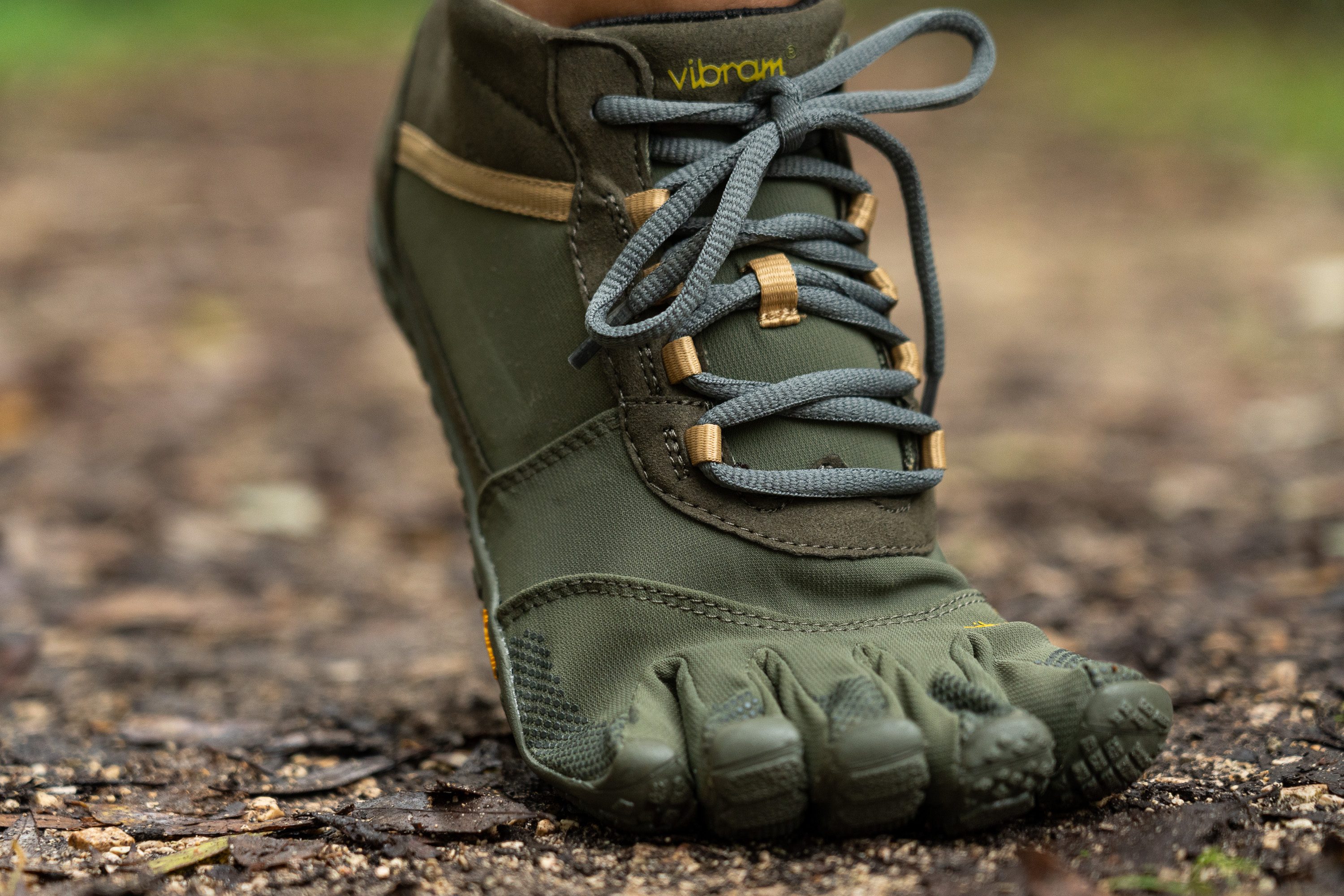
When it comes to how barefoot shoes should fit, here are a few tips:
- Find shoes in your size or look for the brand’s recommendations. We always recommend measuring your foot length in centimeters or millimeters, then finding the corresponding size on the brand’s size chart.
- Don’t immediately go for a smaller size if the shoe feels slightly bigger in the forefoot. Barefoot shoes may feel too large only because finally, nothing is pushing on your toes from the sides or from the top, or trying to make your feet fit into an aggressively designed shoe.
- The shoes are most likely too large if you have too much room on the sides and if your feet can slide forward and backward in the shoes.
- Barefoot shoes should feel comfortable, although not cushion-level comfortable because there’s no midsole. Many think of them as thicker socks or extensions of their feet because, in a matter of minutes, one forgets they are wearing them.
If you’re not sure how to measure your shoe size, see our guide that explains all the details.
Stack height of barefoot shoes
Stack height tells us how high off the ground our feet are when we’re wearing the shoes. To measure this accurately, shoes have to be cut in half lengthwise.
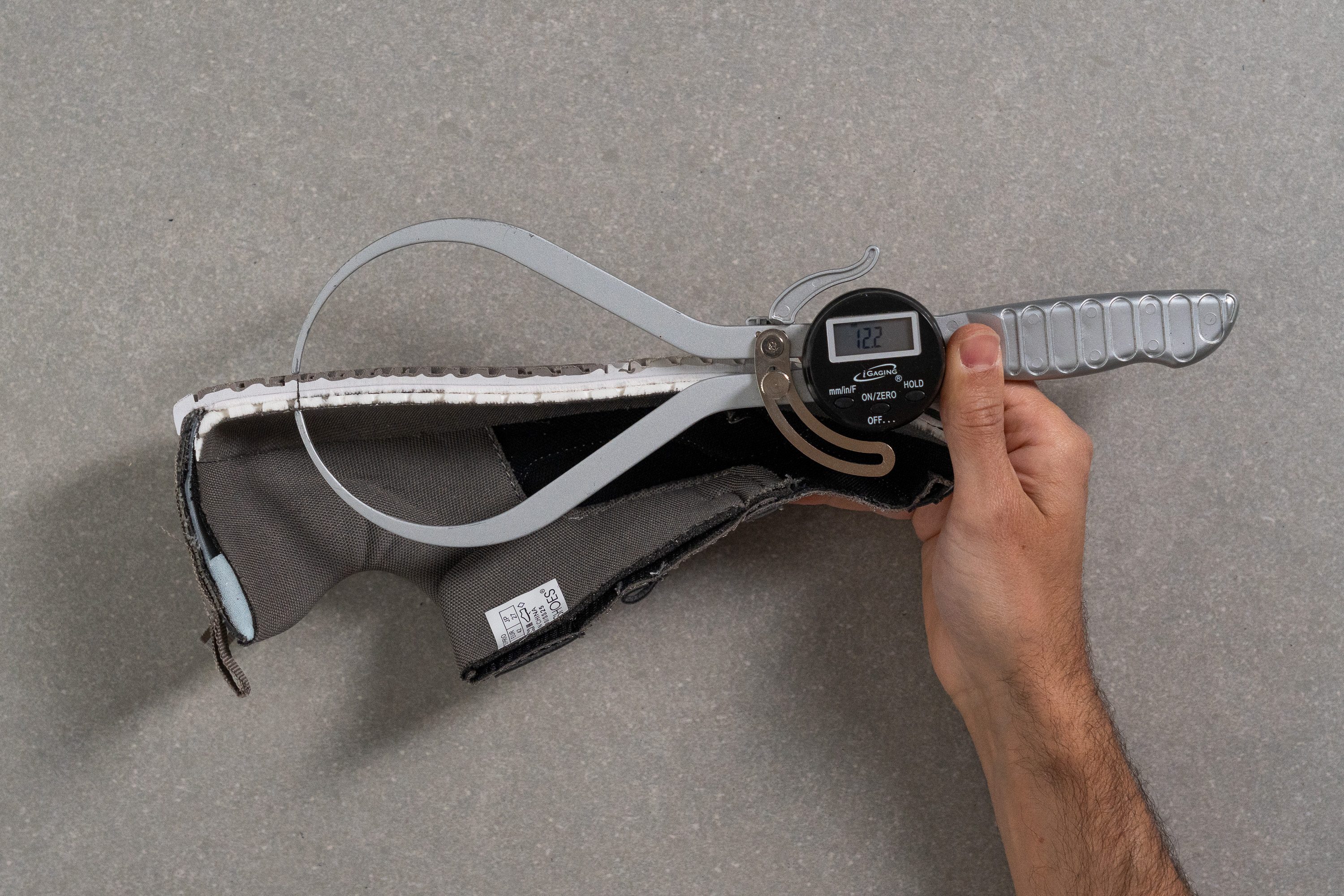
Barefoot shoes are very close to the ground, often less than 10-12 mm. If that sounds a lot, look at the average heel stack height of shoes in specific categories: road running 34.8 mm, sneakers 30.7 mm, hiking shoes 32.8 mm, tennis shoes 29.2 mm, basketball shoes 28.8mm.
Heel to toe drop is zero or very close to that
Heel-to-toe drop is the difference in height between the forefoot and the heel. Given that we’re talking about barefoot shoes that are as close to the ground as it gets, and that the idea is to promote the barefoot feeling, heel-to-toe drop has to be, and it is zero (or very close to that).
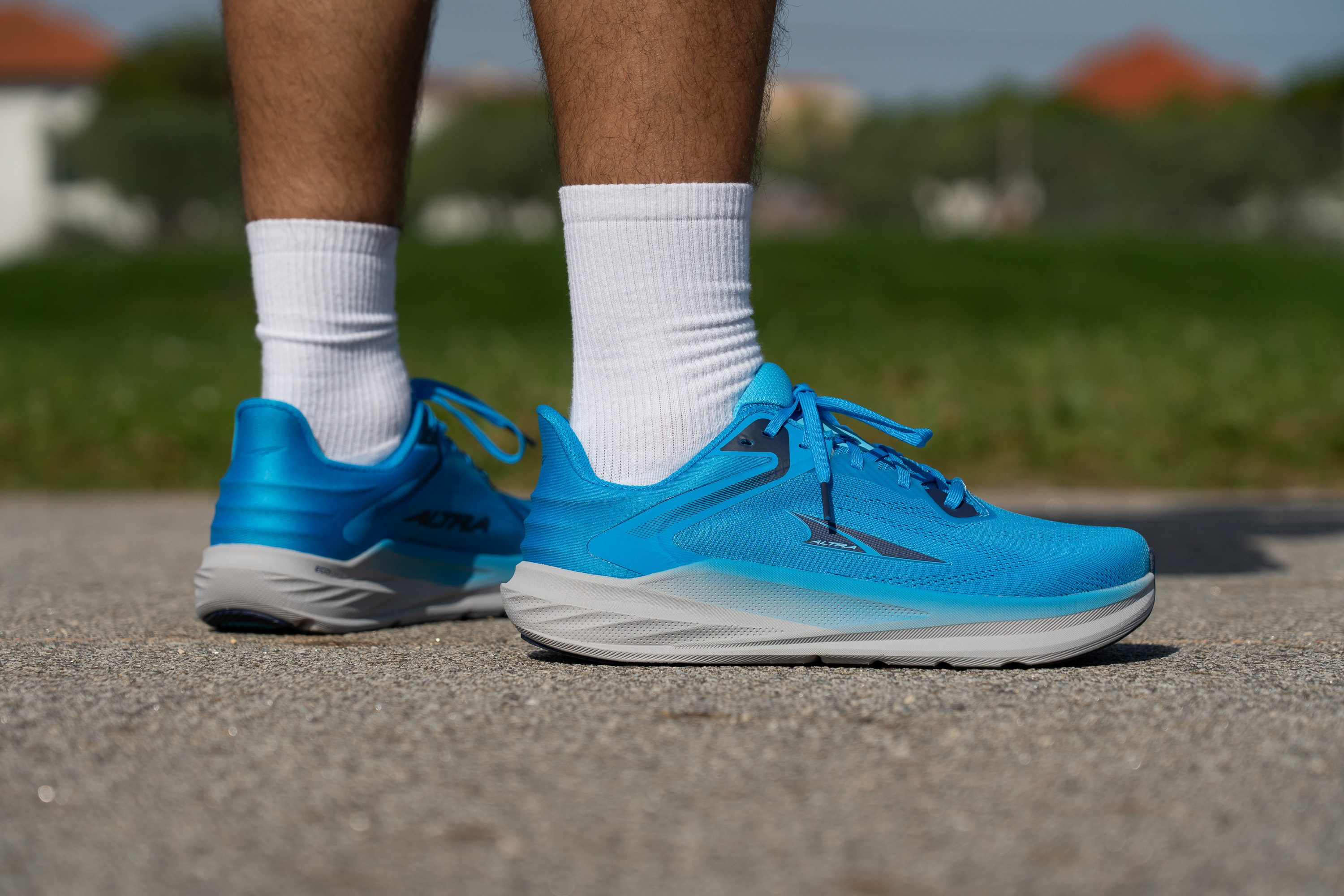
Why do we say “or very close to zero?” Because mistakes happen. In the lab, we found cases of shoes that had heel drop twice as big or half the number that the brand promoted. In barefoot shoes, though, we found very small deviations. If you’d like to learn more about these mistakes made by the brands, we welcome you to our nerdy world: How brands' heel-to-toe drop measurements differ from reality in running shoes.
Flexibility of barefoot shoes
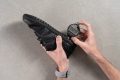
This is an easy one: all barefoot shoes are ridiculously easy to twist and bend. Not just bend, but curl up! Given the thickness of the platform and the fact that they can’t have any stabilizing technologies, there’s nothing that would stop them from being the most flexible footwear in the world.
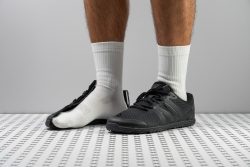
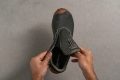
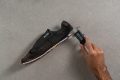
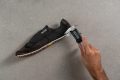
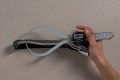
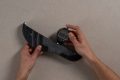
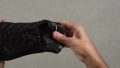
This barefoot shoe scored 1/5 on our torsional rigidity test, meaning it’s very flexible
Now compare what you see above with this very stiff shoe below.
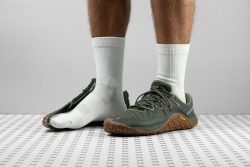
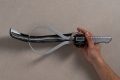
This shoe scored 5/5 on our torsional rigidity test, meaning it's almost impossible to twist
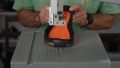
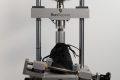
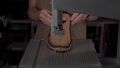
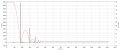
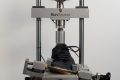
The same applies to the longitudinal stiffness. This is something we test using a specialized machine by locking the forefoot in place, adjusting for the rocker, and then measuring how much force is needed to bend the shoe to 30 degrees.
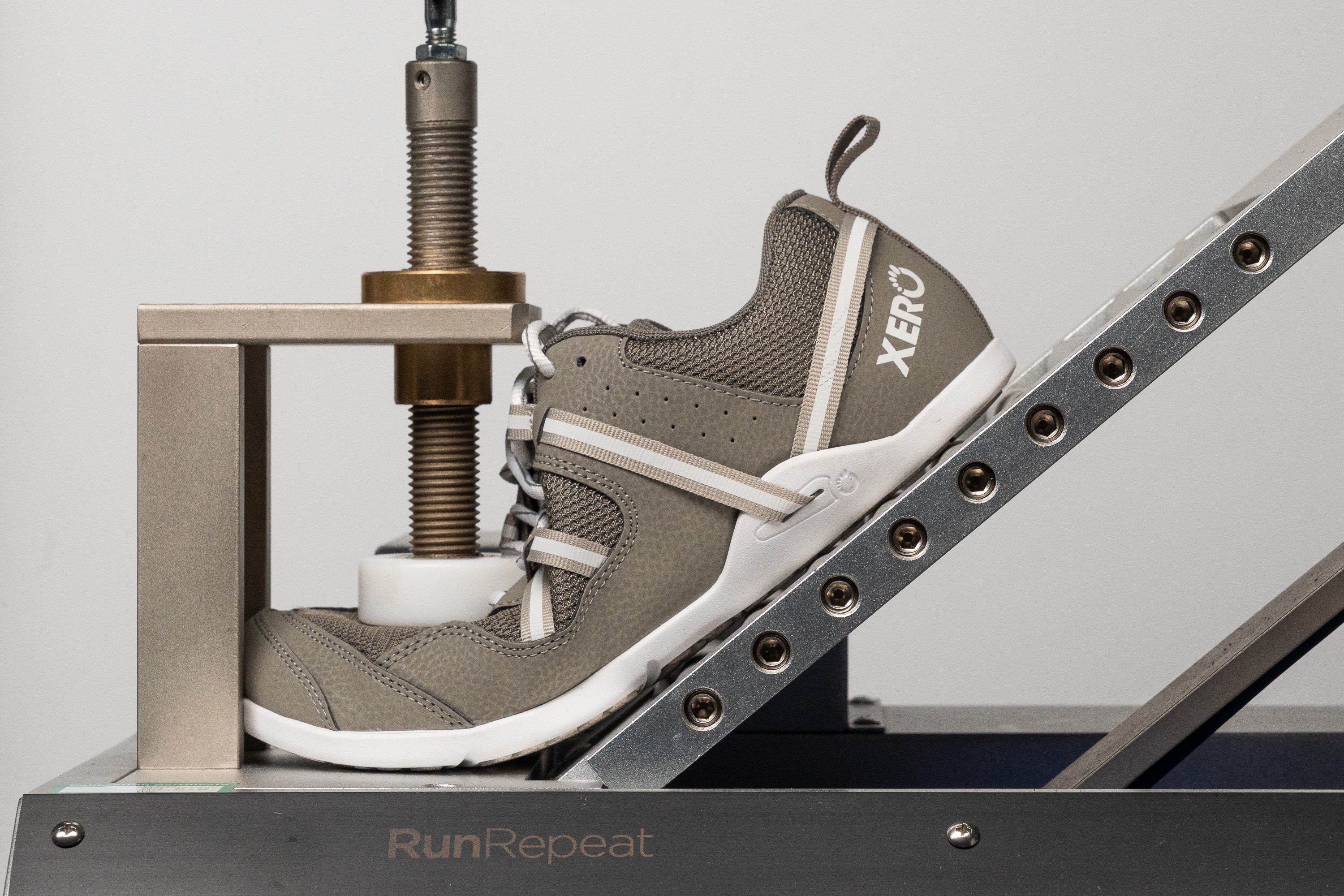
For reference, in the world of running shoes, barefoot ones average at 1.4/5.0 for torsional rigidity, while cushioned running shoes average at 3.8/5.0!
How wide are barefoot shoes?
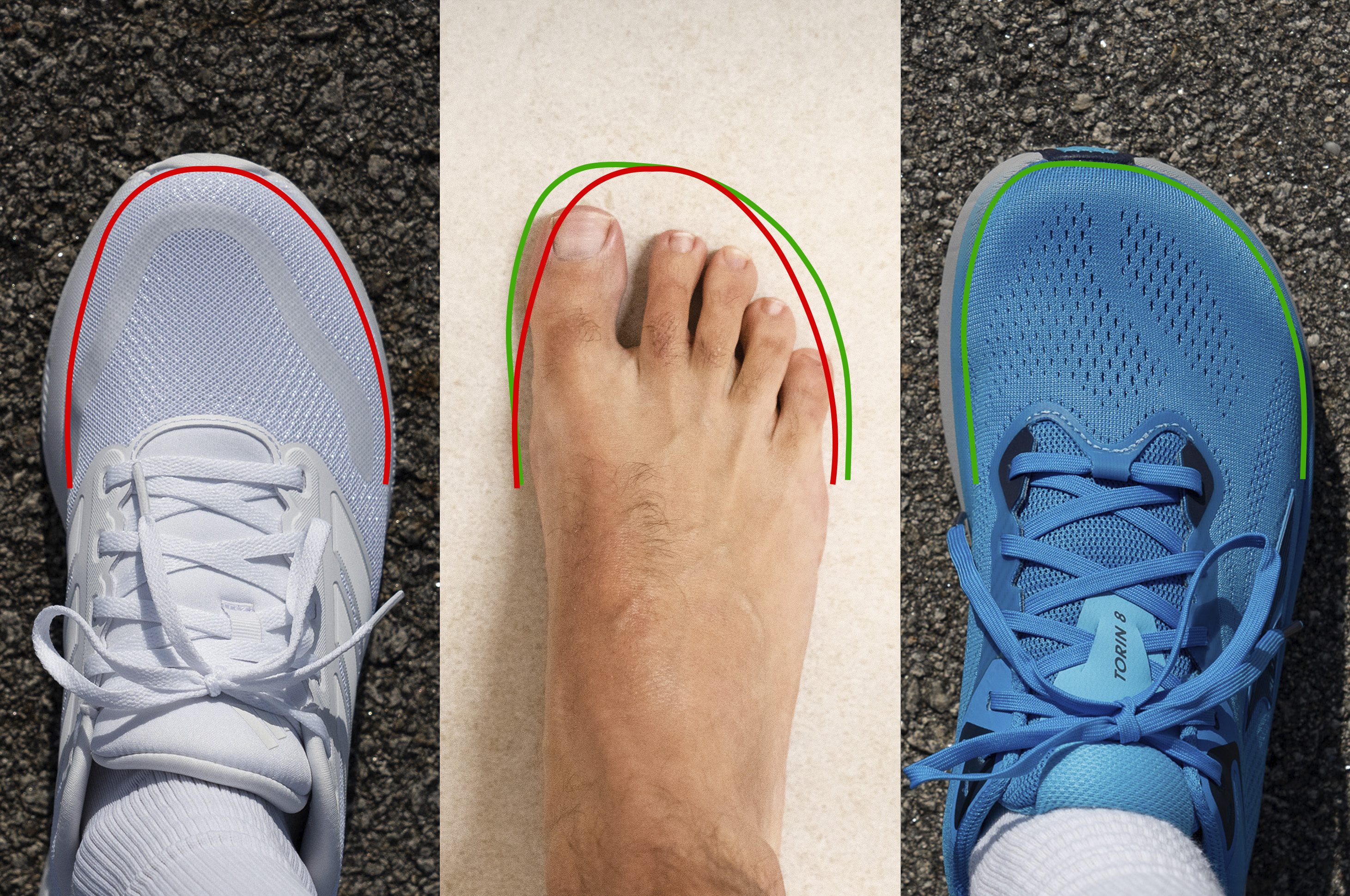
The extra width is most evident in the toebox. Barefoot shoes are all about the toe freedom! You should be able to spread them in the toebox normally, or, to better phrase it, the toebox should not be cramping your toes on either side.
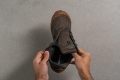
In the lab, we measure the width of the shoe and the toebox by making a cast of the shoe’s interior first. This allows us to get the actual measurements of the inner shoe volume
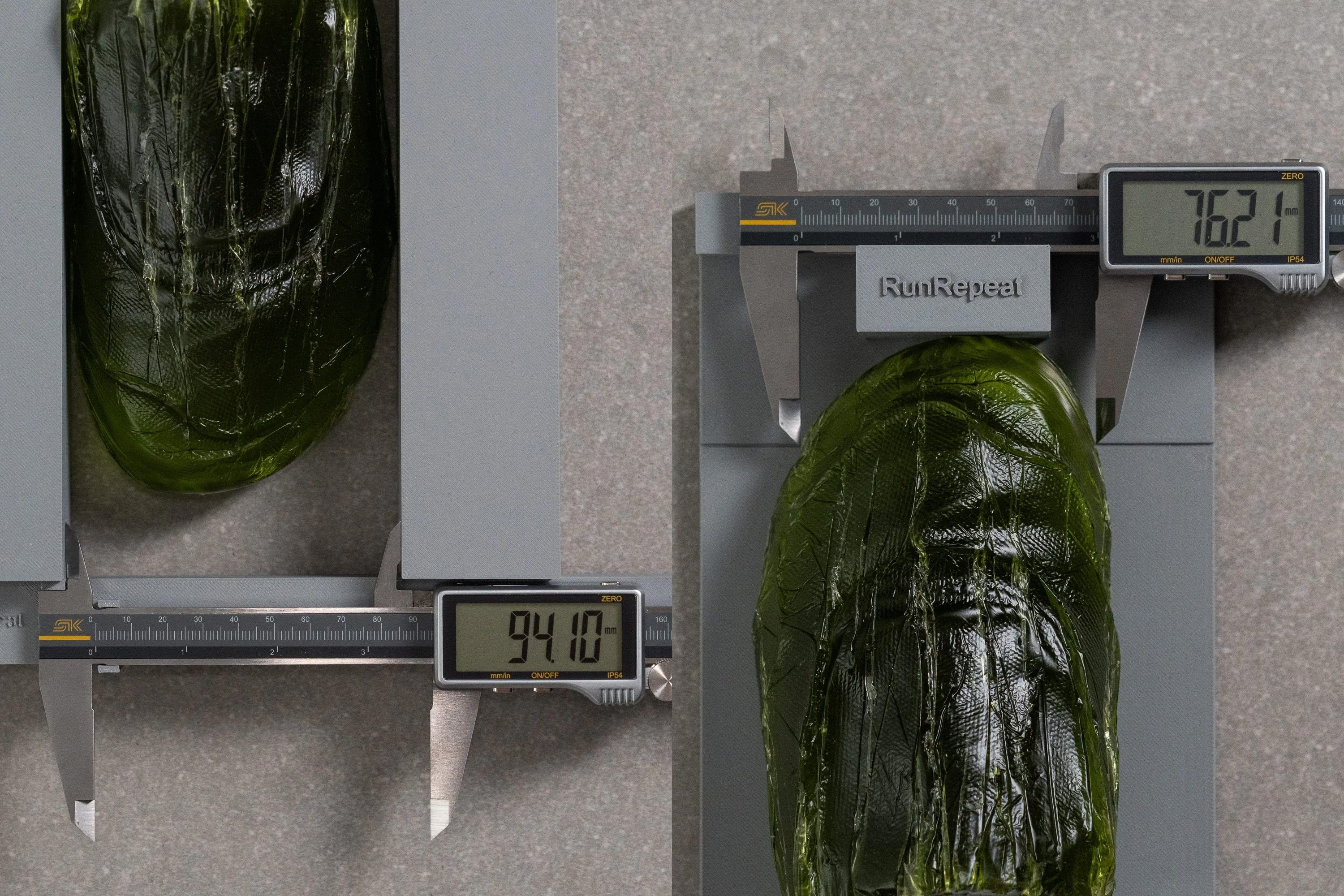
All these measurements and numbers allow you to look up the shoe on our website and find out which shoe has enough room for your toes.
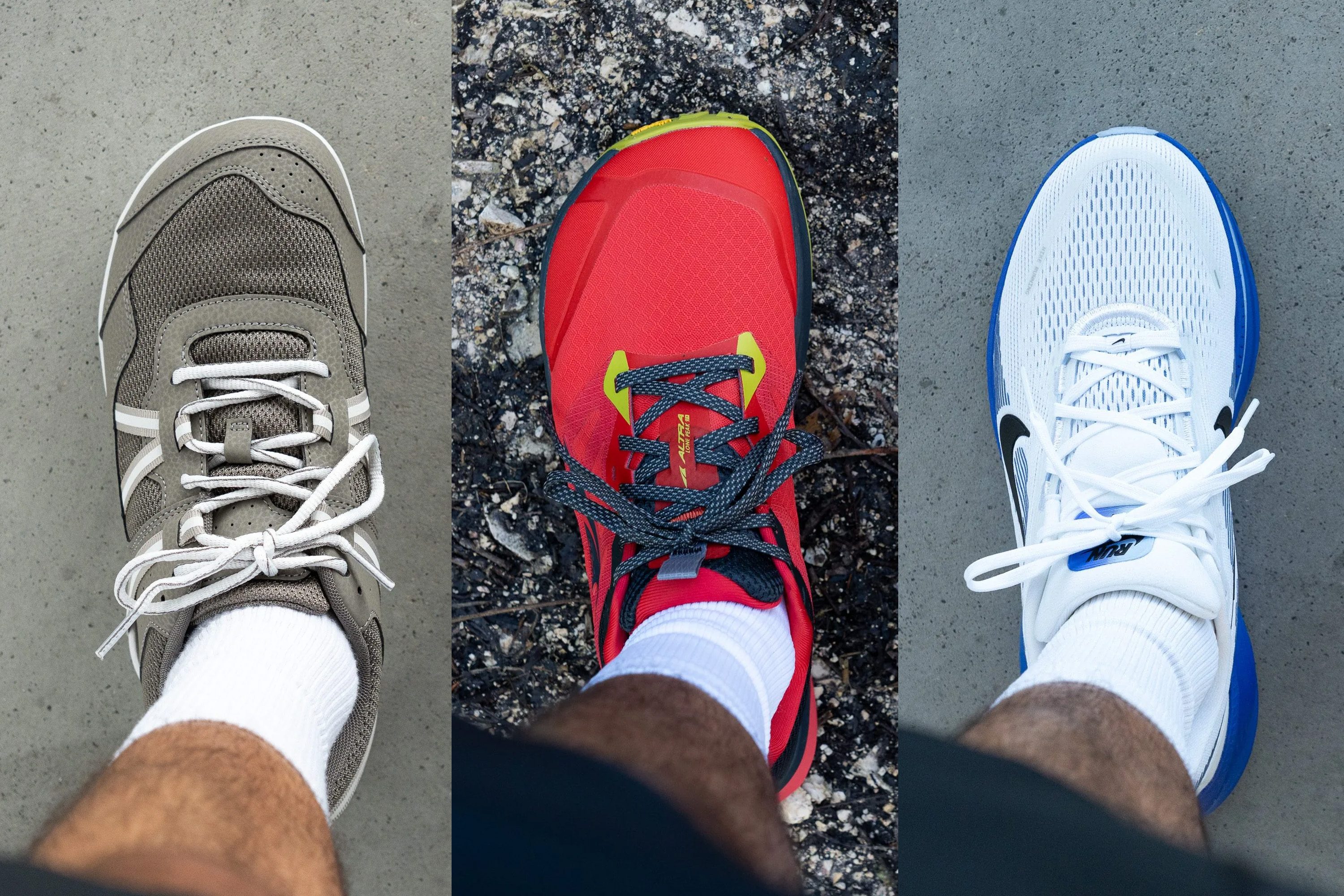
In the image above, we can see examples of toeboxes in barefoot shoes (left), zero-drop shoes with a FootShaped toebox (center), and the most common pointy toebox in running shoes (right).
Popularity of barefoot shoes
Barefoot shoes are at their peak when it comes to popularity. It seems that many people are researching, considering, or buying barefoot shoes. How do we know this? We look at Google Trends:
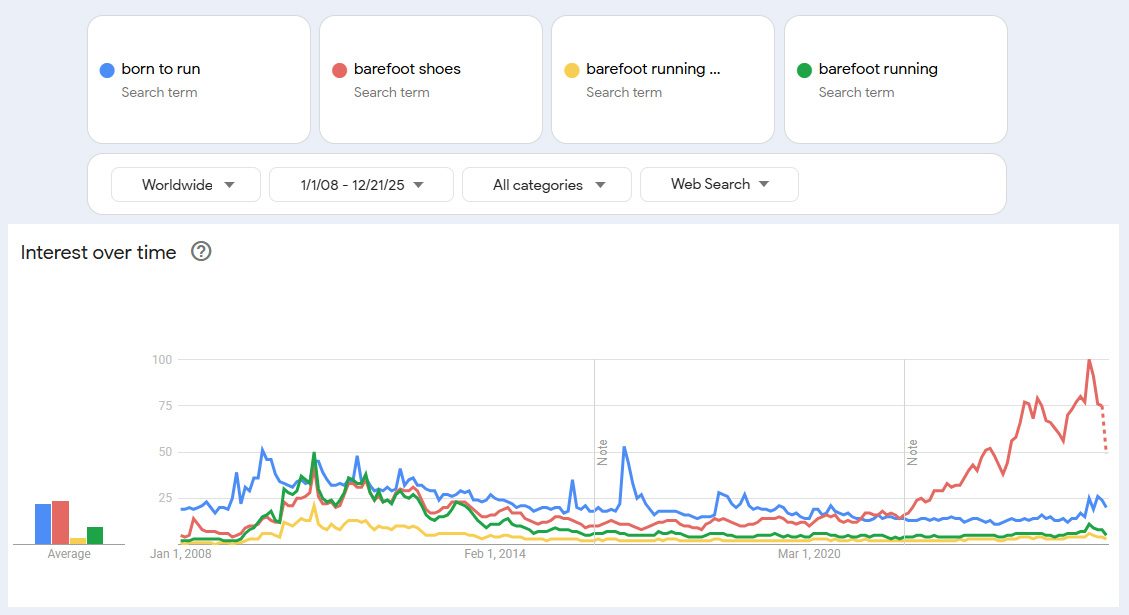
We also included the release of the book Born to run here, because in the world of running, it made people talk about the barefoot approach. It inspired many runners to learn more about barefoot running shoes and maybe even give them a try.
Looking at the red line, it’s apparent that the barefoot shoes are all the craze in the 2nd part of 2025!
Should you wear socks with barefoot shoes?
This entirely depends on you. If you become a hard-core barefoot devotee, you’ll most likely end up buying five-toe socks, which may look ridiculous but are great for toe splay and even blister prevention (Injinji socks are the most popular, but they are also more expensive; budget-friendly brands are easy to find, though).
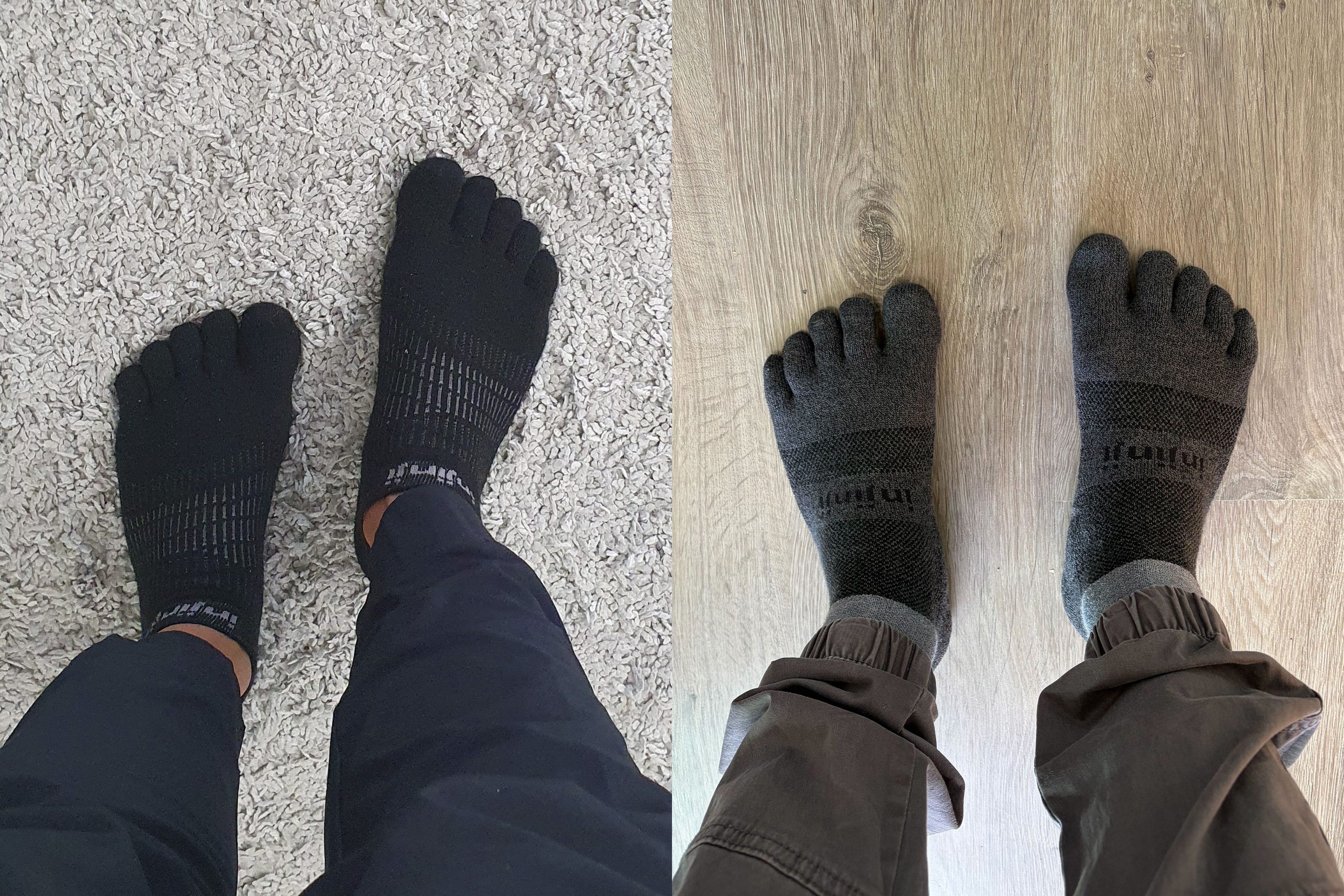
The issue with the regular socks is that often they compress our fit instead of letting them breathe and occupy the space they need and they would take if barefoot. So, if you want socks that don’t undo all the benefits of barefoot shoes, look for non-restrictive socks or go sockless.
Are barefoot shoes good for standing all day?
They can be. But it may take a long time to get there!
In order to feel comfortable standing all day in barefoot shoes, you will need to transition to them gradually and your foot muscles and Achilles tendons will have to get significantly stronger. Usually, when it comes to “shoes for standing all day”, we look at very cushioned and supportive ones. They are protective, have good shock absorption, and they may even have some stability elements (even a wide platform means a lot after hours of standing), not to mention a stiff heel counter or a medial post.
Barefoot shoes are the opposite. You’re left with nothing, as if you were literally barefoot in terms of support or stability. Your feet and legs have to do everything. It’s definitely possible but get ready for a ride because it is a long one.
Are barefoot shoes good for bunions?
According to the scientific research, there is no consensus: for some, cushioned shoes with arch support work, for others, barefoot ones. Let’s dive in.
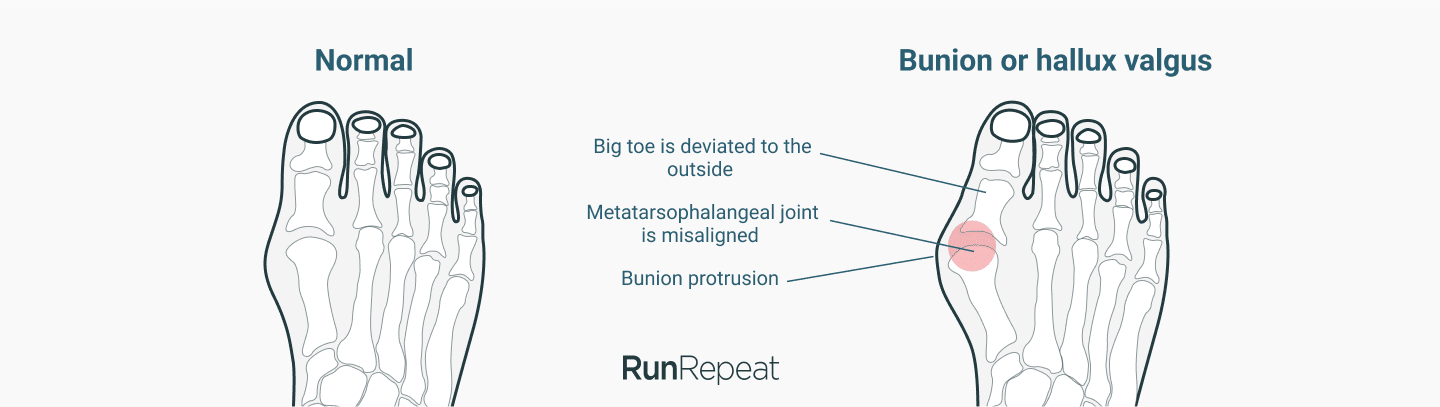
Barefoot shoes can be good for bunions because their toeboxes offer enough room for the bunions, and they don’t push the big toe towards the pinkie one. Depending on the severity of the bunions, they may not fix the root issue; they will simply feel comfortable, as there will be no pain caused by a pointy toebox.
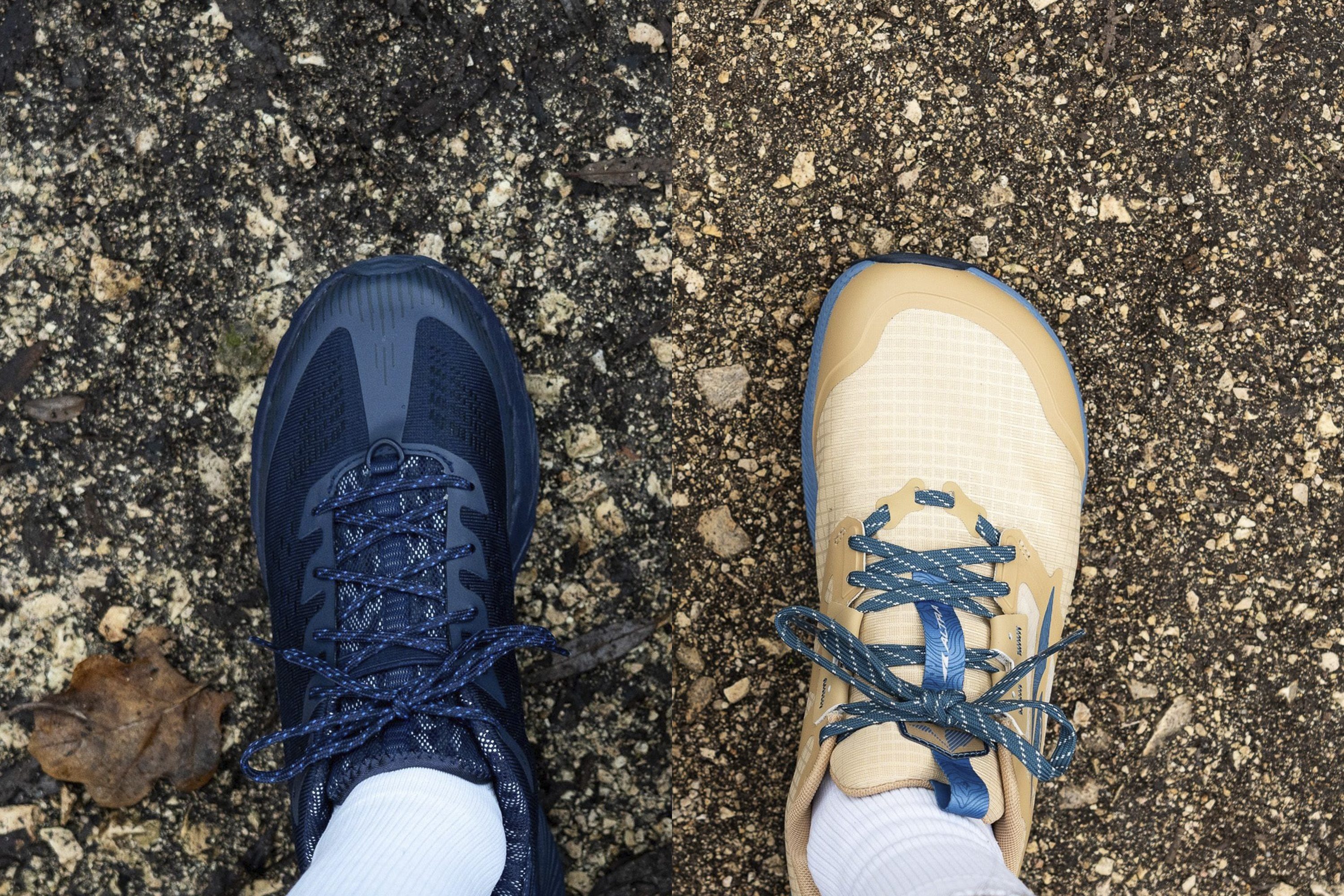
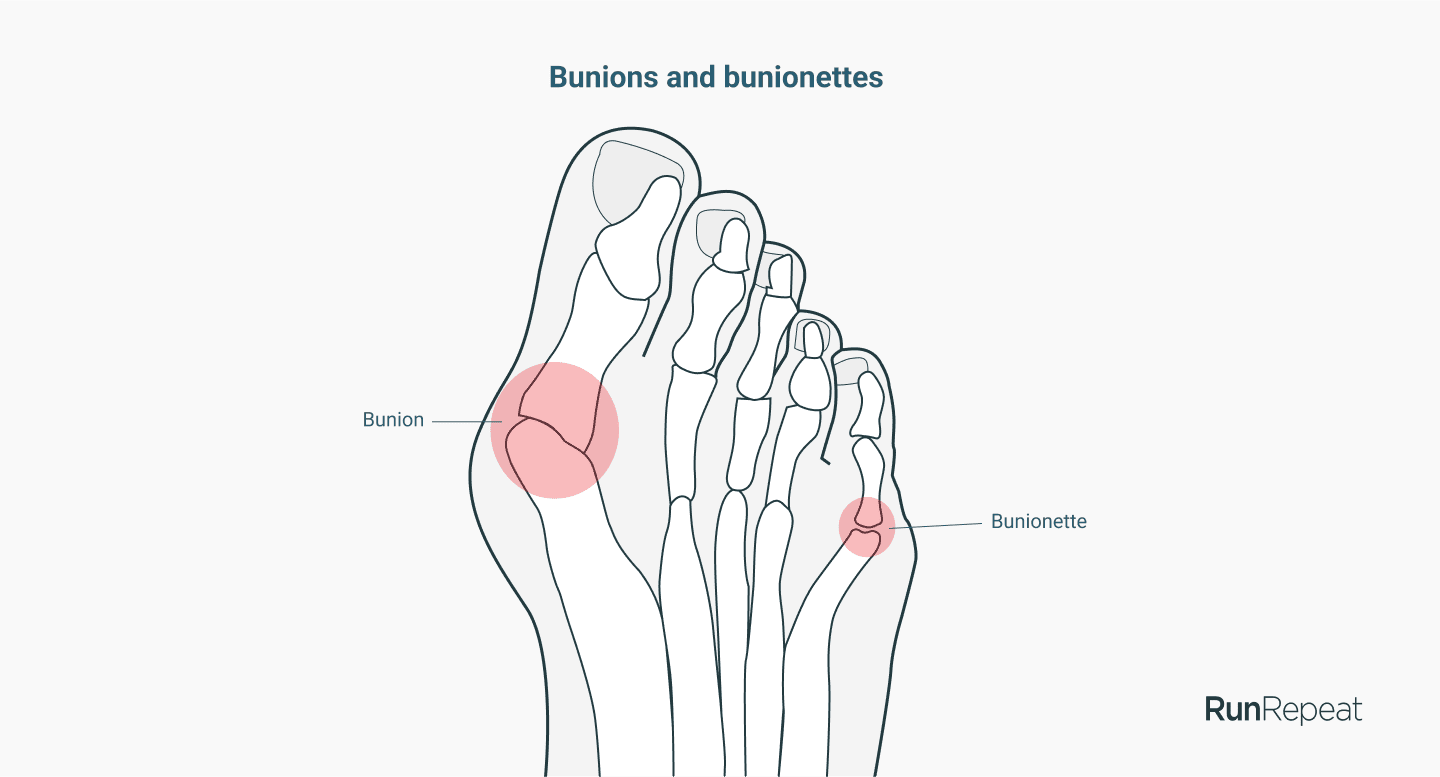
It is up to you to decide whether barefoot shoes are a good idea for your bunions. That’s because the scientific world is not on the same page. We already covered studies that show that barefoot shoes strengthen the foot muscles, but there’s also research (Farzadi et al., 2015) suggesting that medial arch support (foot orthosis worn for 4 weeks) may be an effective way to reduce stress on painful areas in feet with bunions.
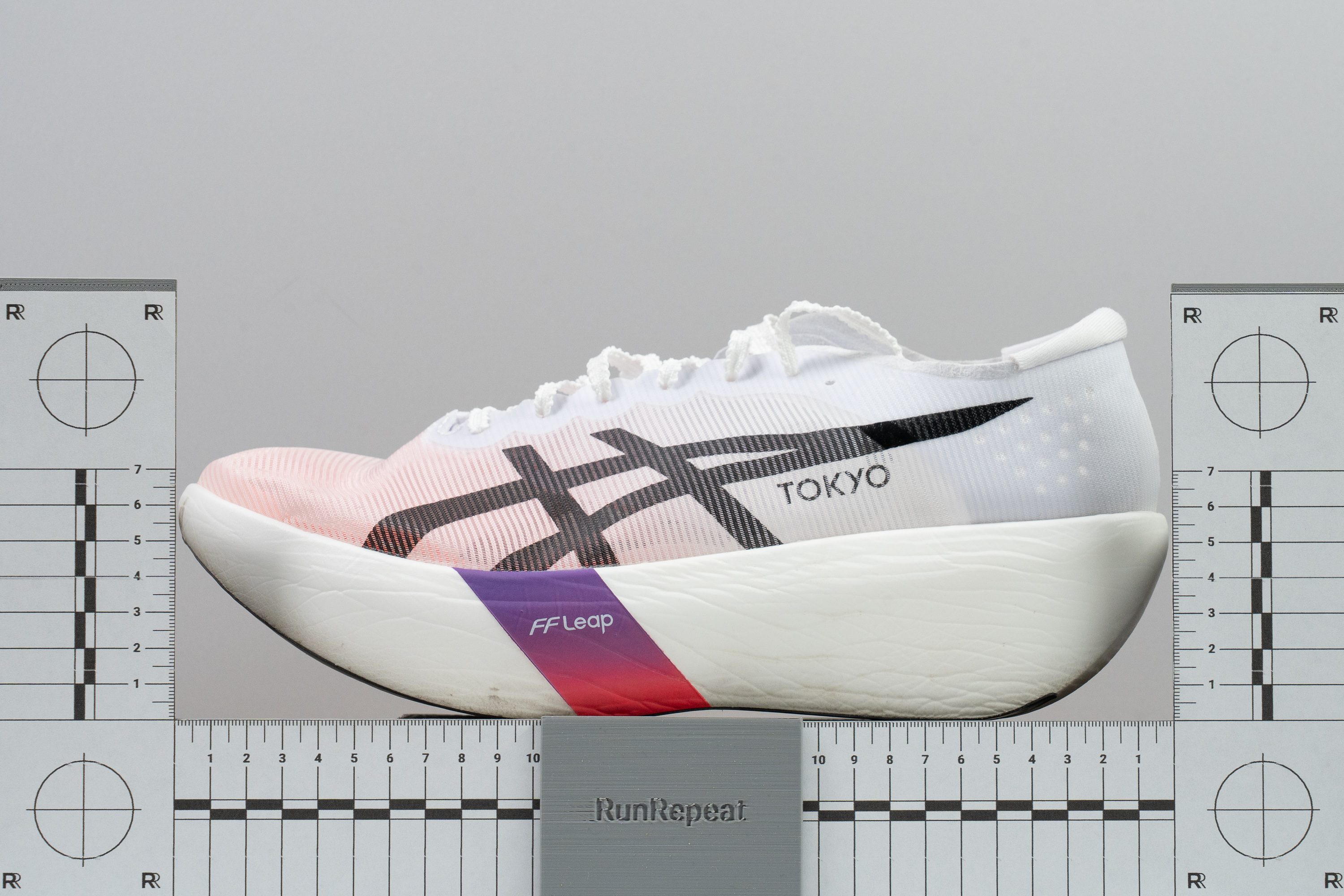
Furthermore, people with forefoot pain often find rockered running shoes comfortable because the unique rockered geometry makes the forefoot work less (Sichting et al., 2020). A systematic review of 26 studies (Munim et al., 2025) has shown that rockered shoes may help reduce the risk of overuse injuries, especially in the forefoot. We hope that, by now, it goes without saying that barefoot shoes can not feature a rockered geometry. They are flat.
Are barefoot shoes good for plantar fasciitis?
Science says no. The research is focused on cushioned shoes, sometimes with rocker geometry and cushioned/contoured insoles.
- Feet with plantar fasciitis need shoes with thick soles and arched or cushioned insoles. People with plantar fasciitis who wear inappropriate footwear experience more severe heel pain. Umar et al., 2022
- Rocker shoes and foot orthoses can reduce pain and heel pressure, but what works even better is using them together. Fong et al., 2012
- This systematic review (Schuitema et al., 2019) looked at 43 studies and found that a combination of insoles and rocker shoes or night splints let to greater pain relief than using the treatments (heel cups, countoured insoles, taping, night splints) alone.
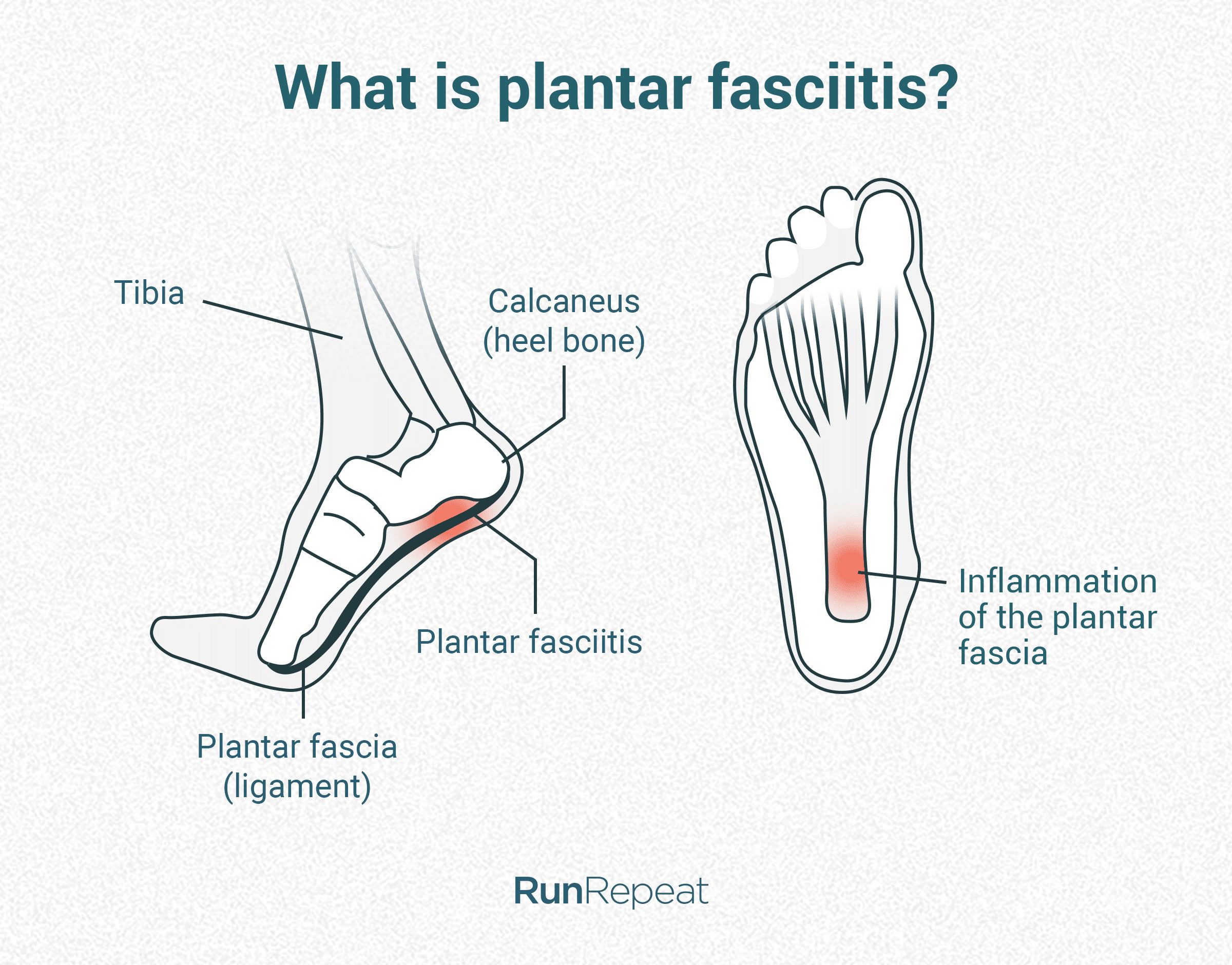
Barefoot shoes can help you strengthen your foot muscles, but again, it’s important how severe your foot condition is, and we don’t recommend embarking on the barefoot journey without consulting a specialist first.
Are barefoot shoes good for flat feet?
They can be.
There was a study (Holowka et al., 2018) that compared people who grew up barefoot or wearing minimal shoes with those who wore cushioned shoes. The first group had stiffer arches, stronger foot muscles, and a lower prevalence of flat feet than people who wear conventional shoes. This makes sense because their feet developed without decades of pointy toeboxes, high-drop platforms, and heavily cushioned shoes in childhood, at work, during sports activities, and so on. Most of the population today is accustomed to conventional shoes, so the starting point between us and those in the study is fundamentally different.
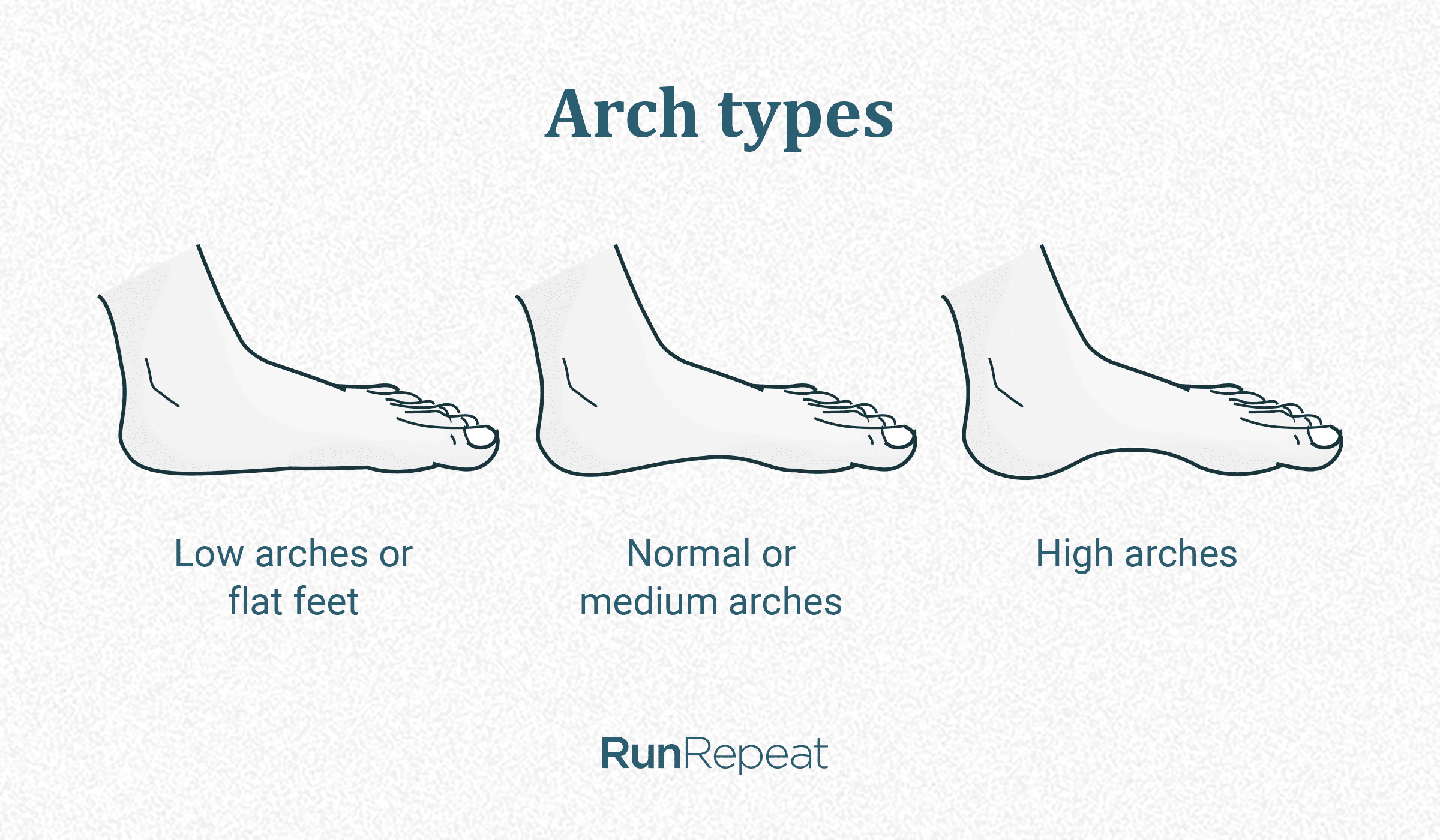
We know that barefoot shoes strengthen the foot muscles and, yes, they may help to some extent with flat feet in terms of making your feet stronger and activating different muscles that have maybe been “forgotten”. As always, this is very individual and depends on the condition: are your flat feet painful? Do you experience discomfort when active? Have you had any injuries that may cause your feet or legs to overcompensate? Have you had any foot/ankle/Achilles injuries that would ask for an even slower transition to barefoot shoes or that would make barefoot shoes quite risky for you at this moment?
Another thing to consider here is strengthening not (only) the foot muscles but also the glute medius and hip muscles. Studies have shown that combining these exercises with foot strengthening can improve medial arch height and reduce signs of flat feet more effectively than foot-only exercises. We recommend further reading: Chhabra et al., 2024; Engkananuwat et al., 2023; Goo et al., 2016.
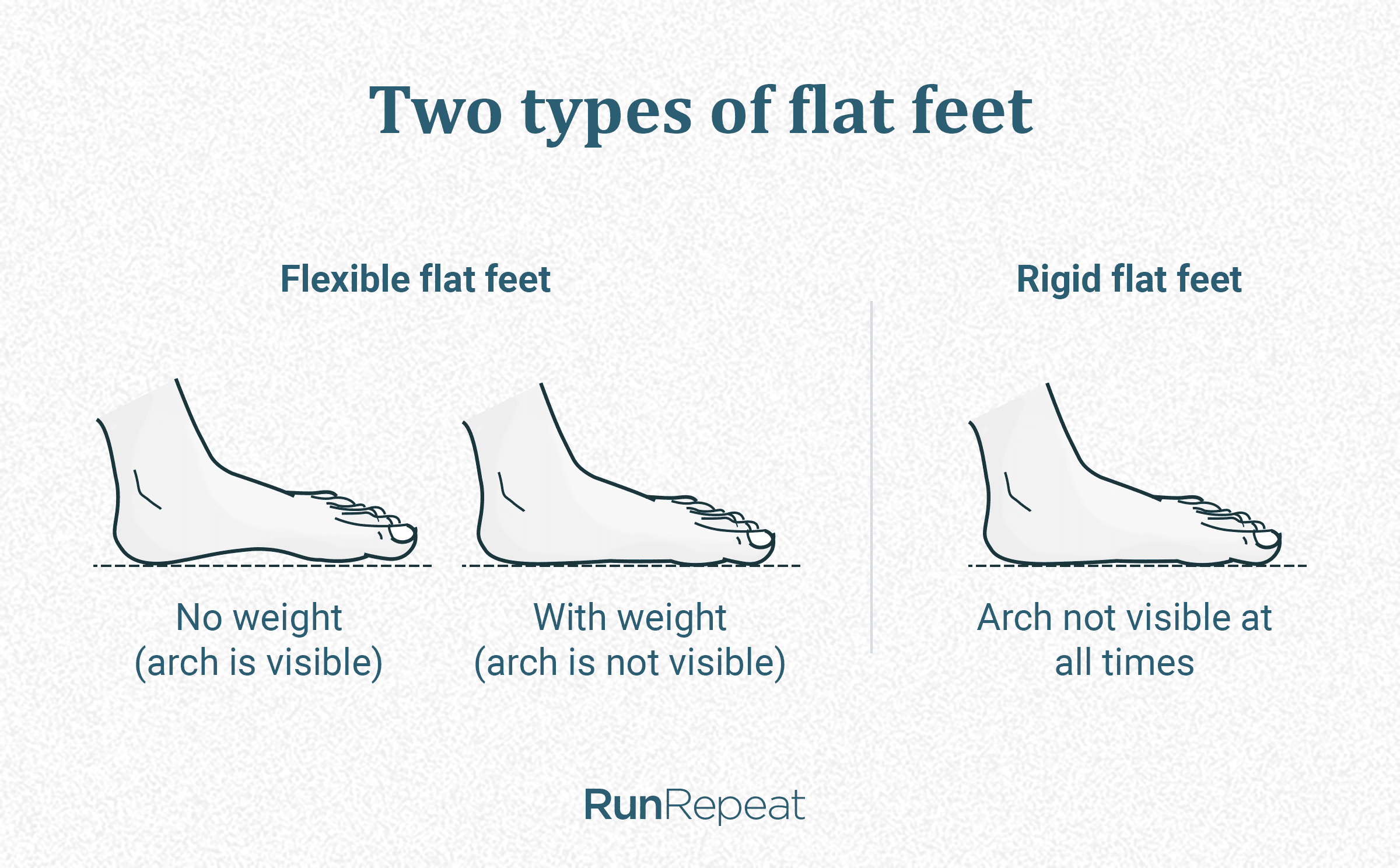
To conclude, barefoot shoes can be good for flat feet when introduced gradually and as long as you are pain-free. There’s a reason stability shoes exist (for flat feet), and there’s enough scientific evidence saying that it would be better if other strengthening exercises are added to this training regime. Because of this, we suggest consulting your specialist of choice (PT or orthopedist) before embarking on the barefoot journey.
Similar buying guides