

















Nuestra conclusión
- Grava 77
- Versátiles 88
- Técnico 68
Pros
- Ahora presumen de una espuma supercrítica
- Más amortiguación para distancias largas o ultramaratones
- Ajuste seguro con una buena sujeción del pie
- Suela exterior Vibram Megagrip confiable
- Transpirabilidad efectiva
- Rinden bien incluso si hace frío
- Se sienten estables
- Parte delantera y suela exterior muy duraderas
- Contrafuerte del talón más cómodo
Contras
- Bastante más caras
- Siguen perdiendo agilidad
- Parte delantera estrecha que no te deja estirar mucho los dedos
Premios
- Entre mejores zapatillas de trail running
- Entre mejores zapatillas de running para la Spartan Race (OCR)
- Top 22% entre zapatillas de trail running
- Top 28% entre zapatillas de running neutras
- Top 9% más vendidas zapatillas de running
Comparativa
Las zapatillas de running más parecidas
+ + Añadir unas zapatillas | |||||
|---|---|---|---|---|---|
| Nuestra puntuación | 85 Geniales | 79 Buenas | 84 Geniales | 91 Magníficas | |
| Precio | 165 € | 150 € | 190 € | 200 € | |
| Terreno de trail | Versátiles / Terreno de dificultad moderada | Grava / Trail y asfaltoVersátiles / Terreno de dificultad moderada | Versátiles / Terreno de dificultad moderada | Versátiles / Terreno de dificultad moderada | |
| Absorción de impactos | Alta | Moderada | Alta | Alta | |
| Retorno de energía | Moderado | Bajo | Moderado | Alto | |
| Tracción | Alta | Alta | Alta | Alta | |
| Sujeción arco del pié | Neutral | Neutral | Neutral | Neutral | |
| Peso laboratorio Peso marca | 9.9 oz / 281g 9.7 oz / 275g | 10.4 oz / 295g | 11.1 oz / 315g 11.7 oz / 332g | 9.7 oz / 275g 9.9 oz / 280g | |
| Drop laboratorio Drop marca | 7.4 mm 4.0 mm | 7.5 mm | 9.0 mm 8.0 mm | 6.8 mm 4.0 mm | |
| Técnica de carrera | Medio/antepié | Medio/antepié | TalónMedio/antepié | Medio/antepié | |
| Talla | Media talla más pequeñas | Tallan bien | Tallan un poquito pequeño | Tallan un poquito pequeño | |
| Rigidez de la mediasuela | Equilibrada | Equilibrada | Equilibrada | Equilibrada | |
| Diferencia de la rigidez de la mediasuela en frío | Pequeña | Pequeña | Pequeña | Pequeña | |
| Durabilidad de la parte delantera | Buena | Buena | Decente | Muy mala | |
| Durabilidad del acolchado del talón | Media | Media | Media | Alta | |
| Durabilidad de la suela exterior | Buena | Buena | Buena | Buena | |
| Transpirabilidad | - | Media | Media | - | |
| Anchura / ajuste | Media | Media | Media | Media | |
| Anchura de la parte delantera | Media | Media | Media | Media | |
| Flexibilidad | Moderada | Rígida | Rígida | Moderada | |
| Rigidez torsional | Rígidas | Moderadas | Rígidas | Moderadas | |
| Rigidez del contrafuerte del talón | Moderado | Rígido | Moderado | Moderado | |
| Profundidad del dibujo de la suela | 4.5 mm | 3.9 mm | 4.4 mm | 4.3 mm | |
| Altura de la suela en la zona del talón laboratorio Altura de la suela en la zona del talón marca | 37.7 mm 37.0 mm | 38.6 mm | 42.9 mm 45.0 mm | 38.8 mm 36.5 mm | |
| Antepié laboratorio Antepié marca | 30.3 mm 33.0 mm | 31.1 mm | 33.9 mm 37.0 mm | 32.0 mm 32.5 mm | |
| Anchuras disponibles | EstrechoEstándarAncho | EstándarAncho | Estándar | Estándar | |
| Para corredores pesados | ✓ | ✓ | ✓ | ✓ | |
| Estación | - | Todas las estaciones | Todas las estaciones | - | |
| Plantilla extraíble | ✓ | ✓ | ✓ | ✓ | |
| Compatibles con plantillas personalizadas | ✓ | ✓ | ✓ | ✓ | |
| Clasificación | #107 Top 27% | #238 40% inferior | #139 Top 35% | #21 Top 6% | |
| Popularidad | #35 Top 9% | #116 Top 29% | #162 Top 41% | #44 Top 11% |



Quién debería comprárselas
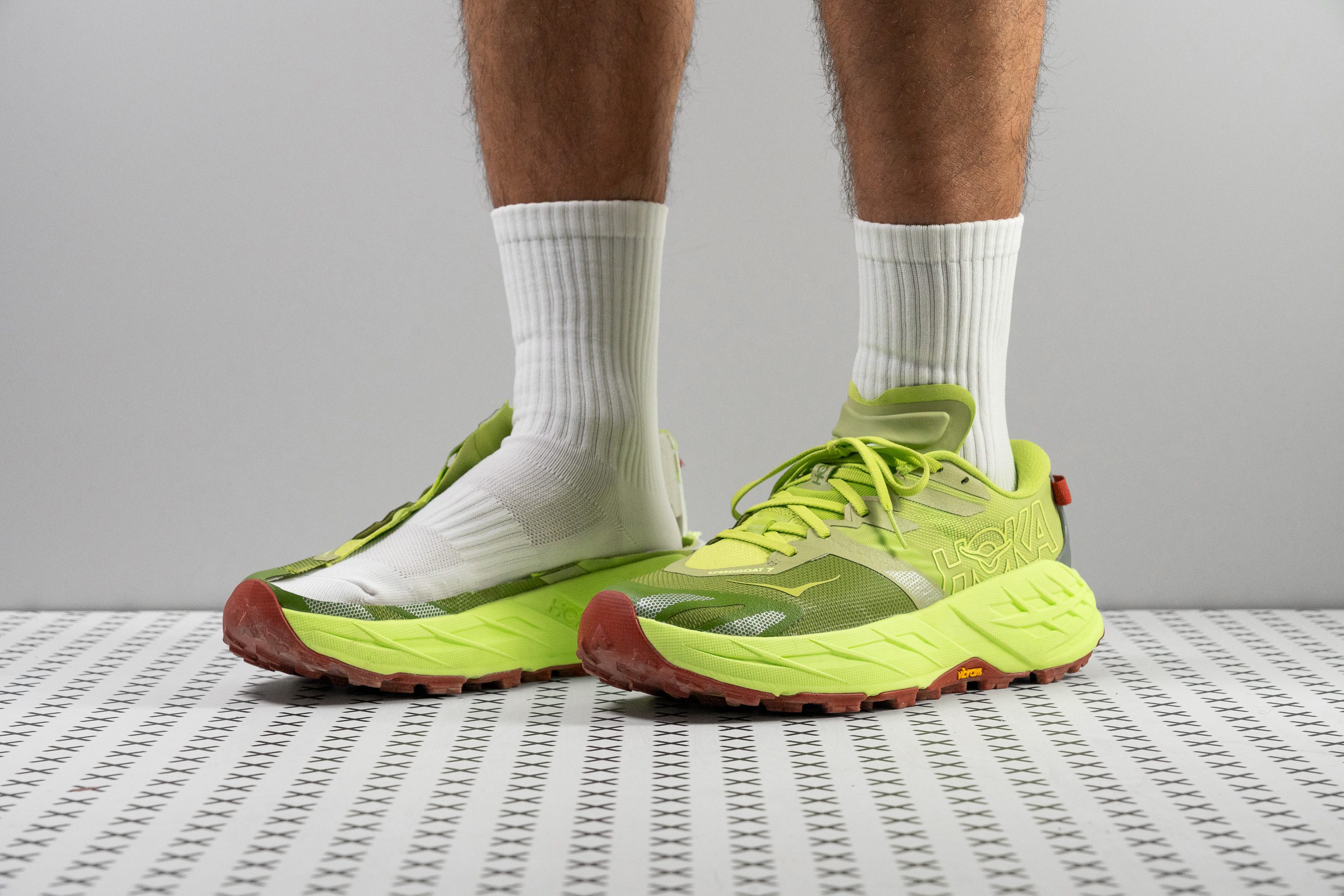
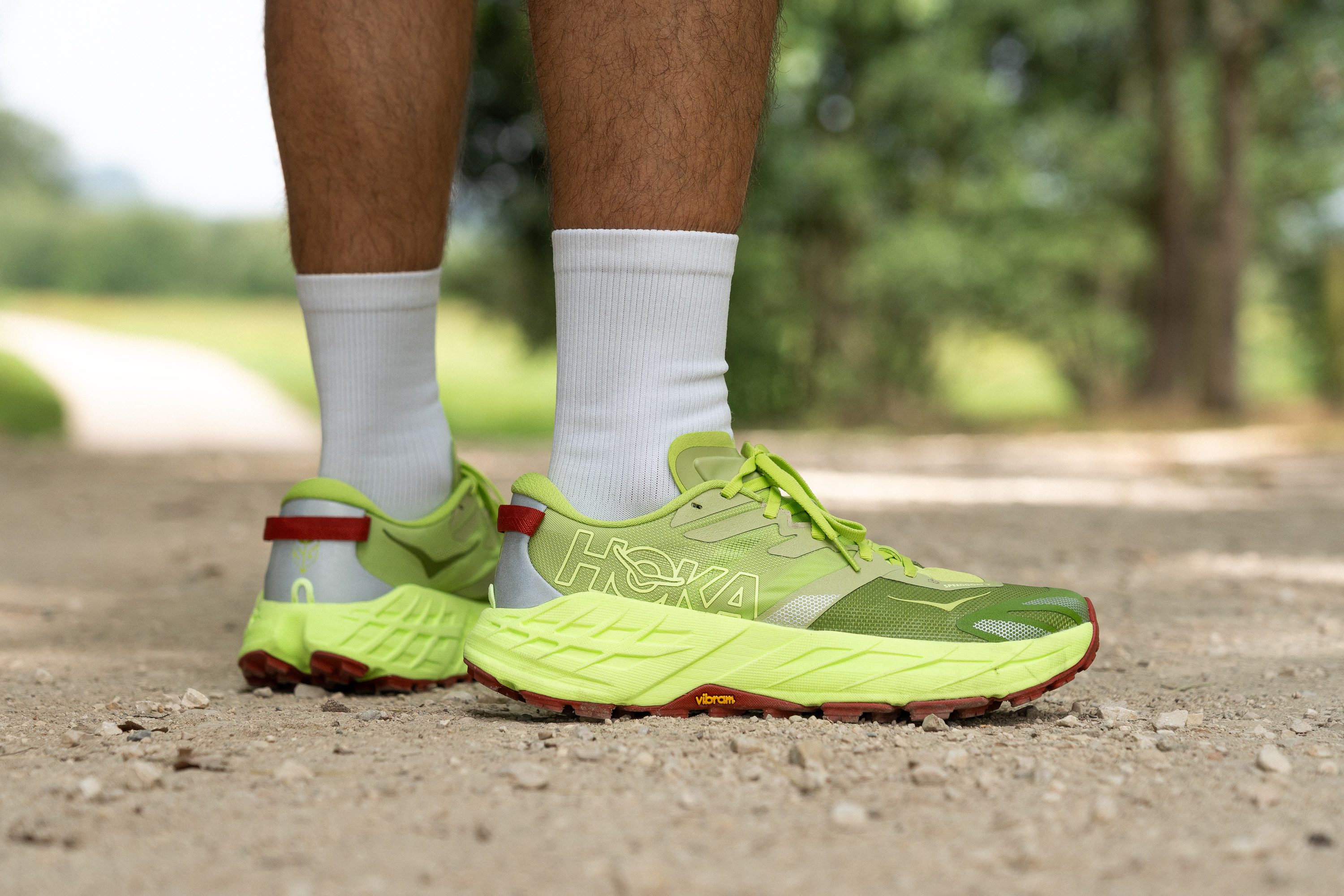
Las HOKA Speedgoat 7 han vuelto cargaditas de mejoras, y se las recomendamos a:
- Los fans de las Speedgoat que querían una actualización con espuma supercrífica, ¡y aquí está!
- Los que están buscando unas zapatillas de trail muy versátiles para entrenamientos diarios, ultramaratones y rutas largas.
- Los runners que prefieren un ajuste seguro y ceñido que mantiene los movimientos del pie en el interior de las zapatillas al mínimo.
- Cualquiera que esté buscando sus primeras zapatillas de trail y que quiera una opción duradera y estable con la tracción de eficacia probada del caucho Vibram Megagrip.
Quién NO debería comprárselas
La mítica parte delantera estrecha que ha definido la línea de trail de HOKA durante años no se ha ido a ningún lado, y las Speedgoat 7 lo saben. Si prefieres un ajuste que siga más la forma estándar de los pies y que te deje estirar los dedos, creemos que las Altra Olympus 275 son una opción más adecuada.
También creemos que el aumento de precio puede echar para atrás a algunos corredores. Si estás buscando unas buenas zapatillas de trail a un precio más bajo, las ASICS Trabuco 14 y las Saucony Peregrine 16 ofrecen un rendimiento sólido y equilibrado incluso siendo más baratas.
Amortiguación
Shock absorption
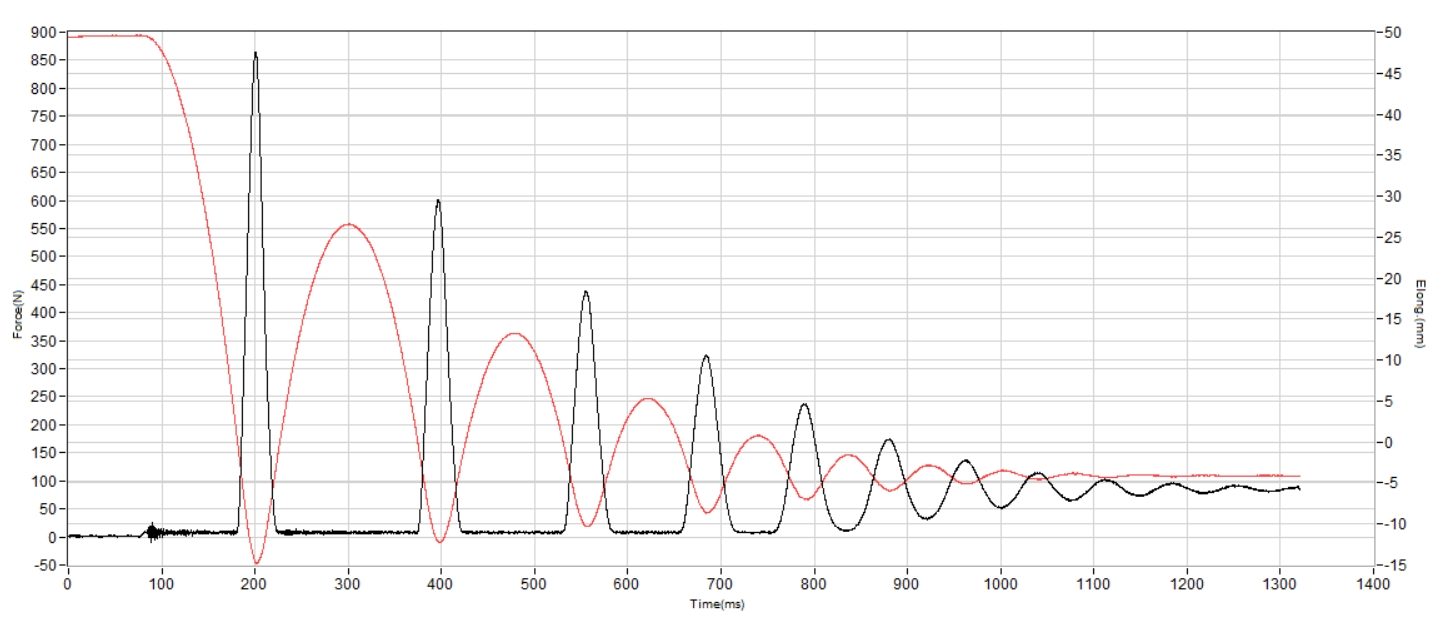
Las Speedgoat 7 nos impresionaron en nuestra prueba de absorción de impactos con sus 131 SA en el talón y 116 SA en el antepié.
Estas cifras no solo superan las de la versión anterior, sino que también superan la media actual de nuestro laboratorio, destacando sobre todo su mejora en el antepié.
| Speedgoat 7 | 131 SA |
| Media | 123 SA |
Energy return
Pero la absorción de impactos no es lo único que ha mejorado. Las Speedgoat 7 también presumen de un estupendo retorno de energía que nos llevaba ya sabiendo a poco varias generaciones. Es más, después de 6 versiones diseñadas con espuma CMEVA, HOKA al fin ha decidido utilizar EVA supercrítica.
Vimos que el retorno de energía alcanzaba el 54,4 % en el talón y el 60,4 % en el antepié. Estos resultados no están nada mal y se adaptan mejor al precio de las zapatillas, pero creemos que sigue habiendo margen de mejora, ya que acercarse al rango del 65 % situaría a las Speedgoat exactamente donde creemos que deberían estar.
| Speedgoat 7 | 60.4% |
| Media | 59.7% |
Altura de la suela en la zona del talón
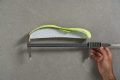
Las Speedgoat 7 se inclinan más hacia una sensación amortiguada. En el laboratorio vimos que su mediasuela era 5,6 mm más alta que la de la v6, así que superan por bastante la media actual de esta categoría.
Personalmente, creemos que este ya no es el modelo con amortiguación moderada que era antes, ya que estos mm extra marcan un cambio interesante que rompe con la anterior filosofía de diseño.
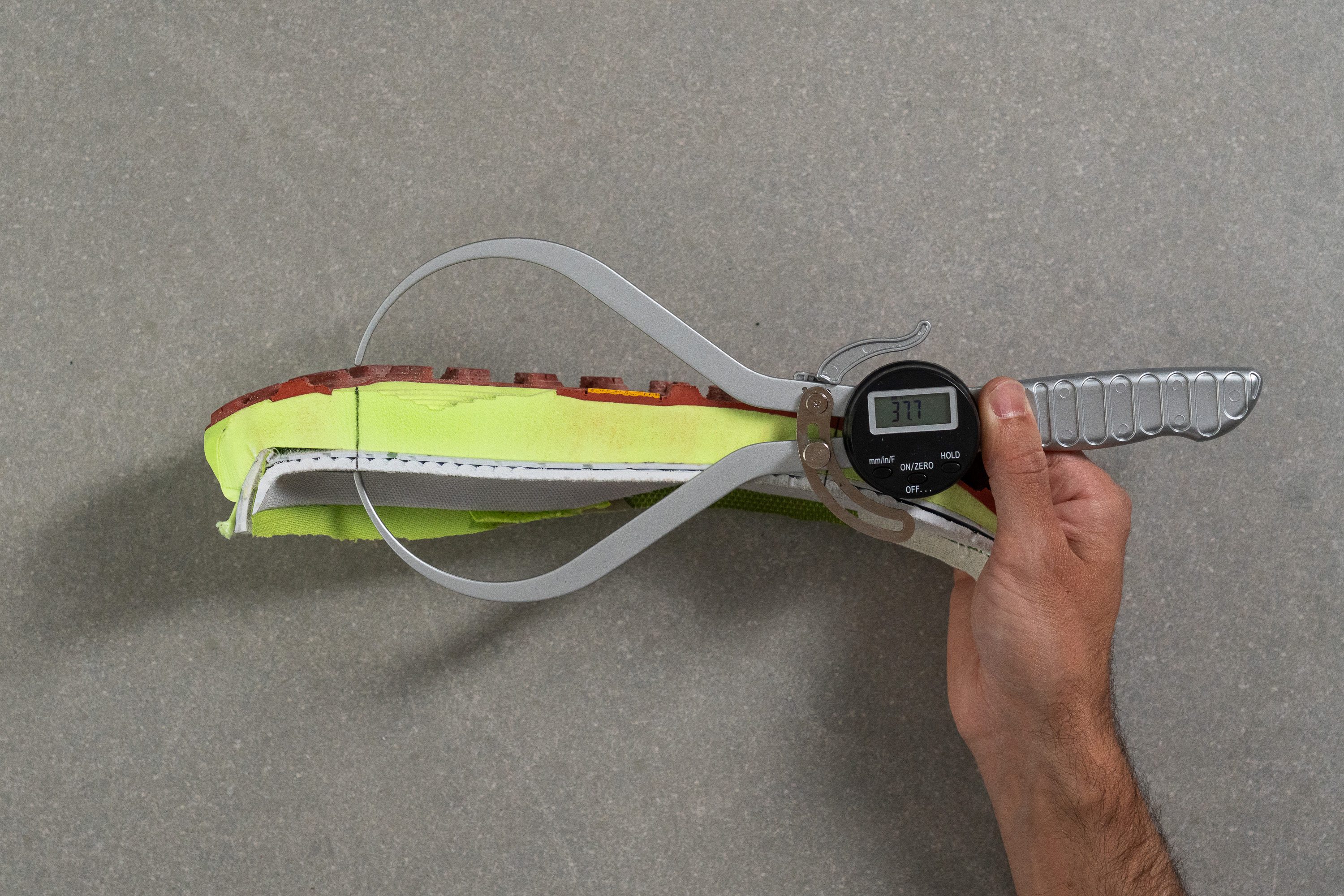
| Speedgoat 7 | 37.7 mm |
| Media | 33.1 mm |
Altura de la suela en el antepié
El antepié también presume de más amortiguación que la versión anterior con sus 30,3 mm.
En nuestra opinión, esta actualización hace que a estas zapatillas se les den mejor las distancias largas, aunque los runners que prefieren una sensación más conectada con el suelo a lo mejor no están tan contentos con esta amortiguación extra.
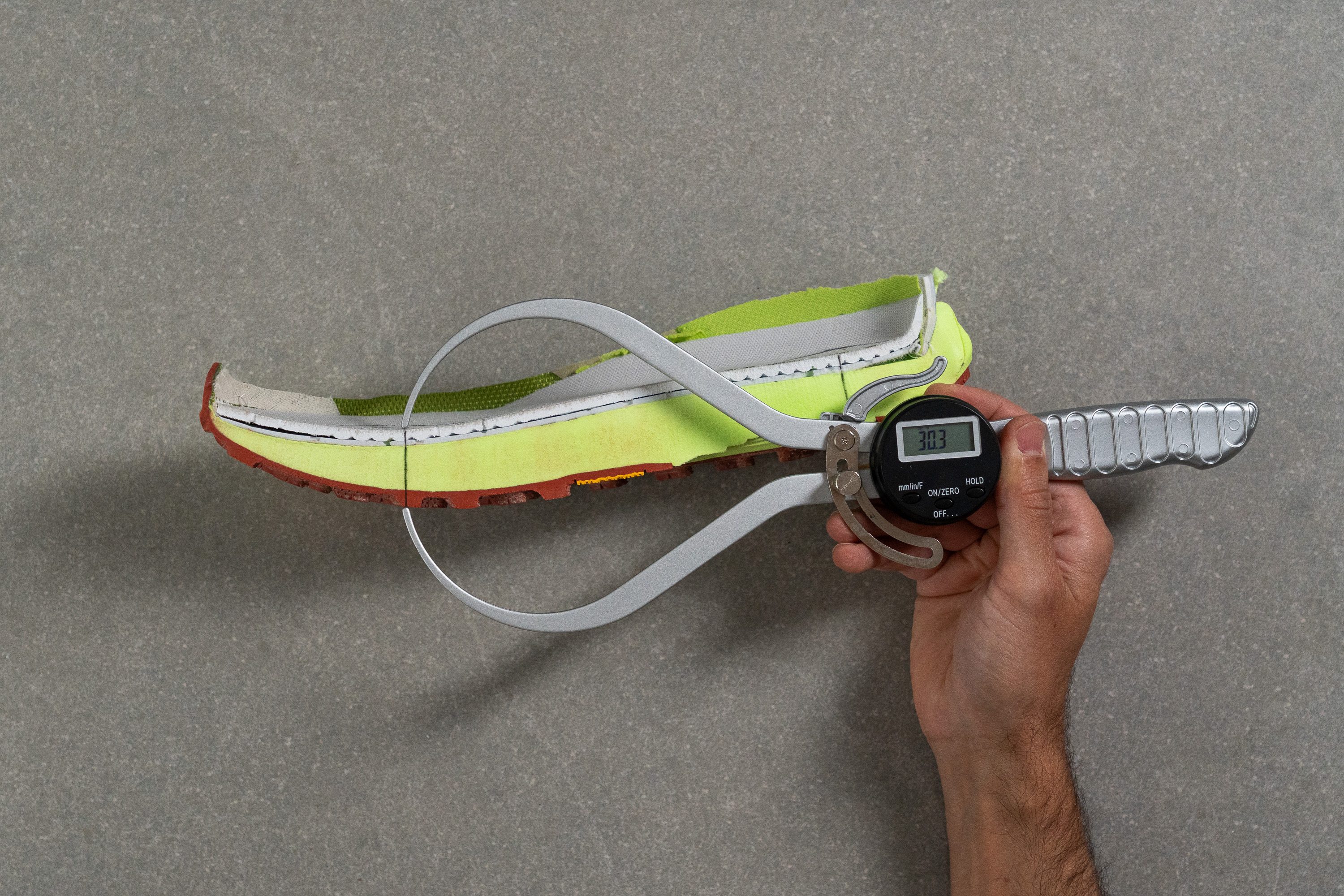
| Speedgoat 7 | 30.3 mm |
| Media | 25.8 mm |
Drop
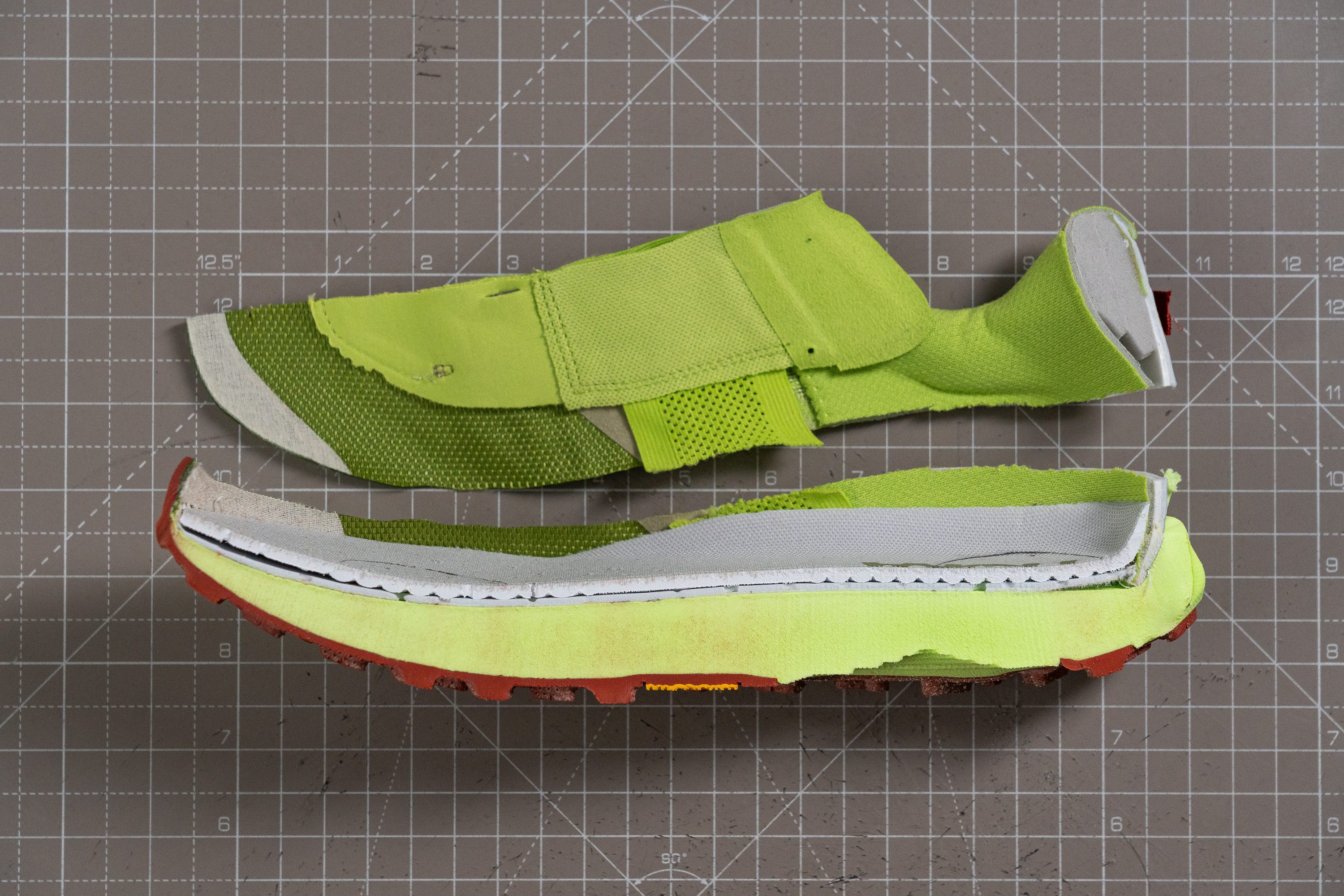
Después de hacer nuestros cálculos, vimos que estas zapatillas tienen un drop de 7,4 mm, que es un poco más de los 5 mm que anuncia HOKA en su página oficial. Lo más probable es que los talonadores estén encantados con esto, la verdad.
Pero lo mejor de todo es que esto hace que las zapatillas se adapten mejor a cualquier técnica de carrera, ya que los modelos de trail con un drop de entre 6 y 8 mm suelen ser más versátiles y cómodos para los runners.
| Speedgoat 7 | 7.4 mm |
| Media | 7.3 mm |
Dureza de la mediasuela
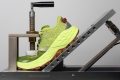
La nueva espuma EVA supercrítica es un poquito más blanda que la CMEVA de la versión anterior, aunque lo mejor es que no te esperes algo ultramullido. HOKA ha optado por un diseño más controlado que prioriza la estabilidad y la previsibilidad en el trail.
Nuestro durómetro marcó 38,5 AC, así que las Speedgoat 7 están en un punto intermedio ideal que equilibra comodidad y sujeción. Creemos que este enfoque debería irles como anillo al dedo a la mayoría de los runners, sobre todo teniendo en cuenta que una mediasuela tan mullida no suele ser la mejor opción para unas zapatillas de trail diseñadas para enfrentarse a varios terrenos distintos.
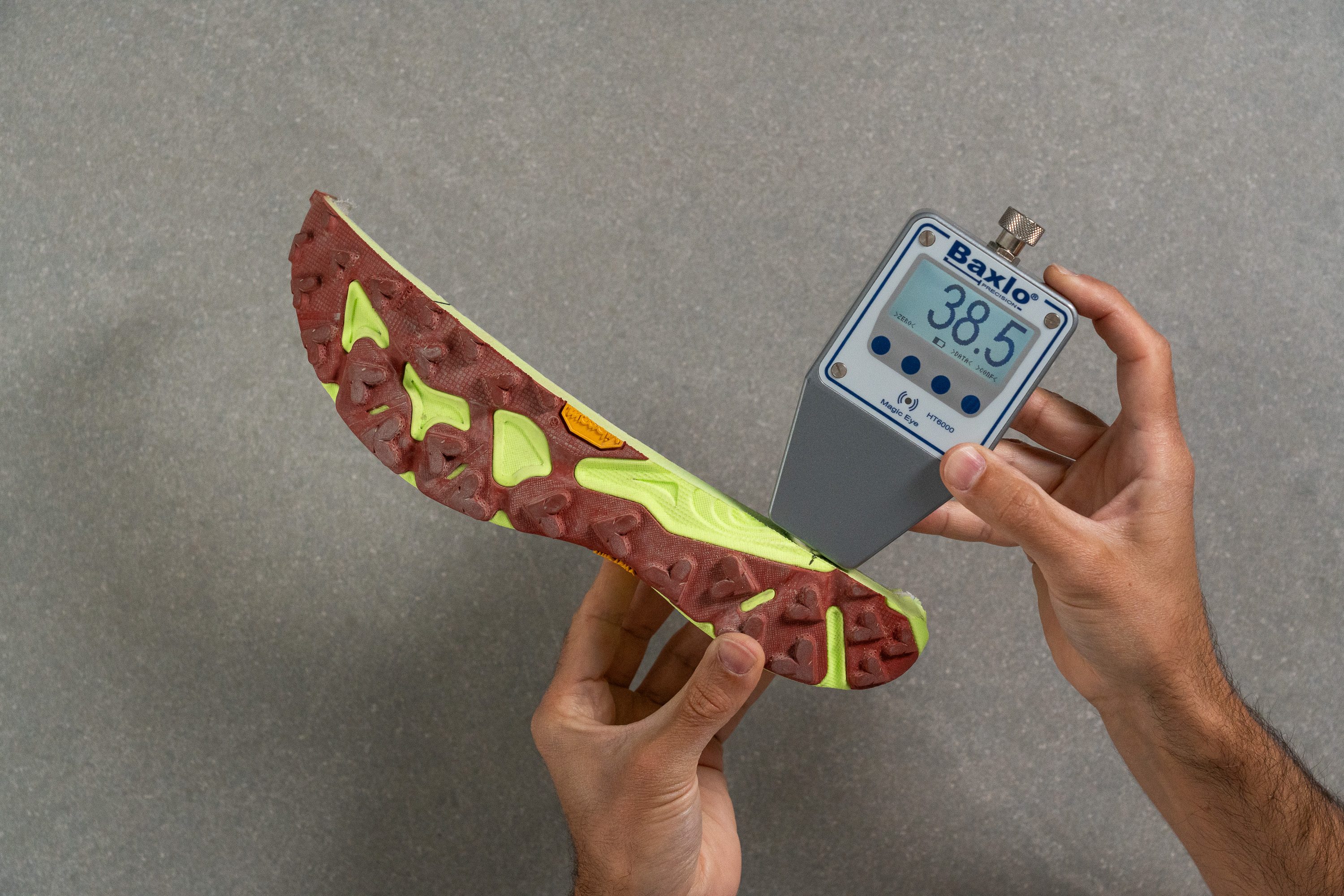
| Speedgoat 7 | 38.5 AC |
| Media | 38.3 AC |
Rocker
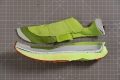
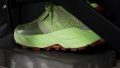
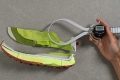
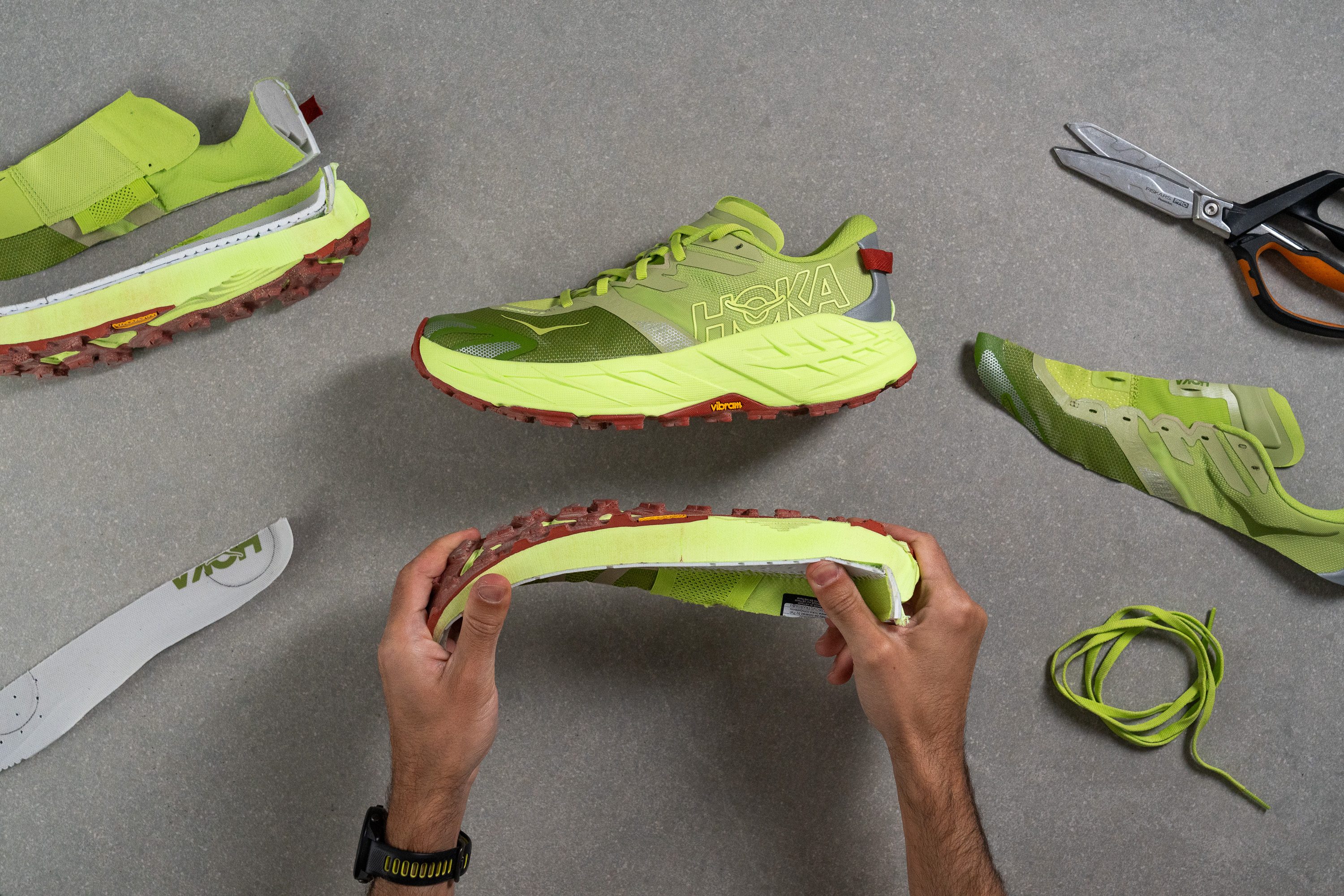
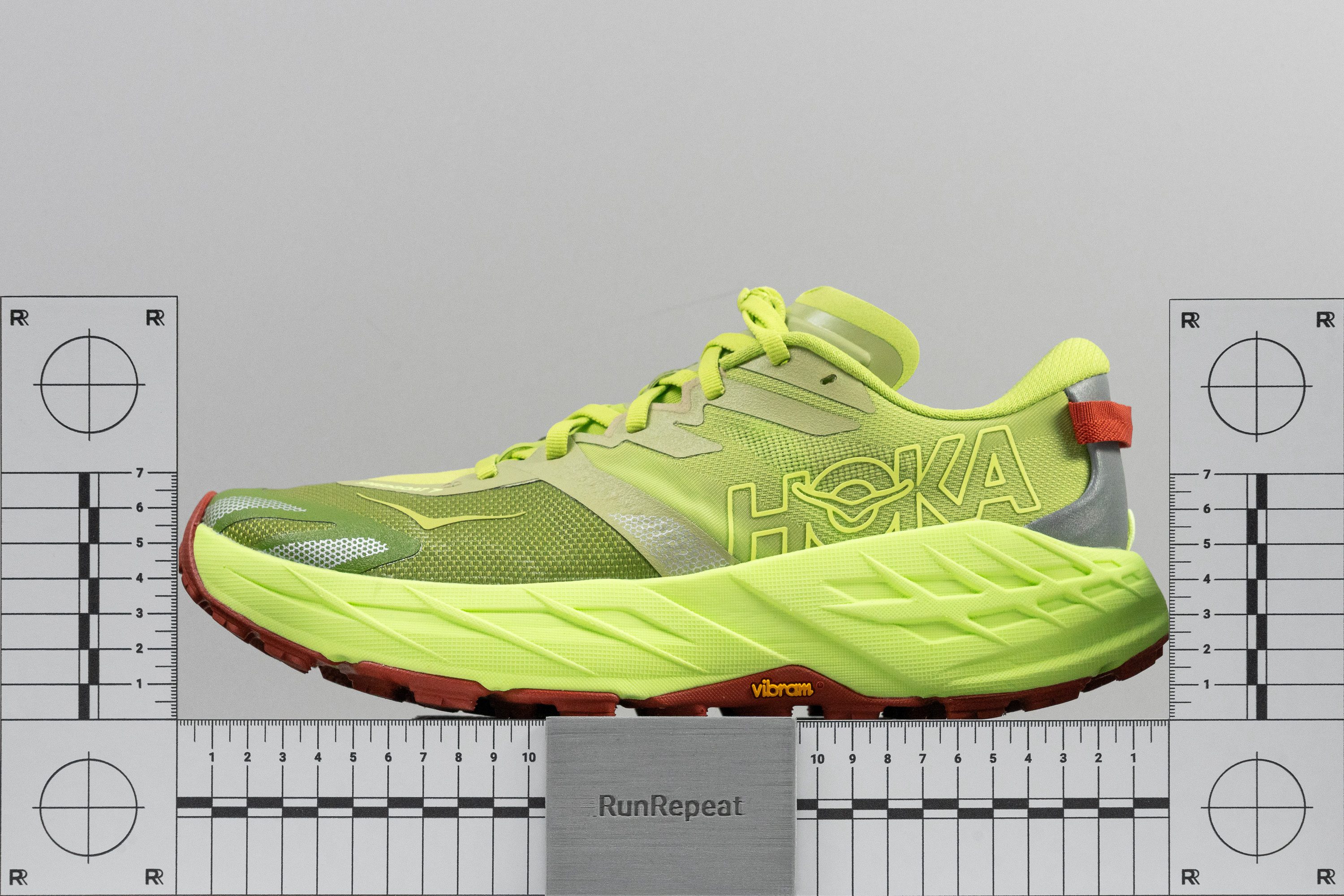
Las zapatillas con rocker son las reinas del mercado del running, así que, al aumentar el tamaño de la suela de este modelo, no nos sorprendió nada que HOKA le pusiese una curvatura suave. Como puedes ver en esta foto que te dejamos aquí, la geometría está diseñada para que las transiciones (talón-punta) sean fluidas e impulsarte hacia adelante.
Creemos que este tipo de diseño es ideal para las distancias más largas, donde la fatiga suele empezar a afectar tanto a la forma como a la eficiencia de tu técnica.
Tallaje y ajuste
Talla
Las HOKA Speedgoat 7 son media talla más pequeñas (81 votos).
Plantéate subir media talla
Longitud interna
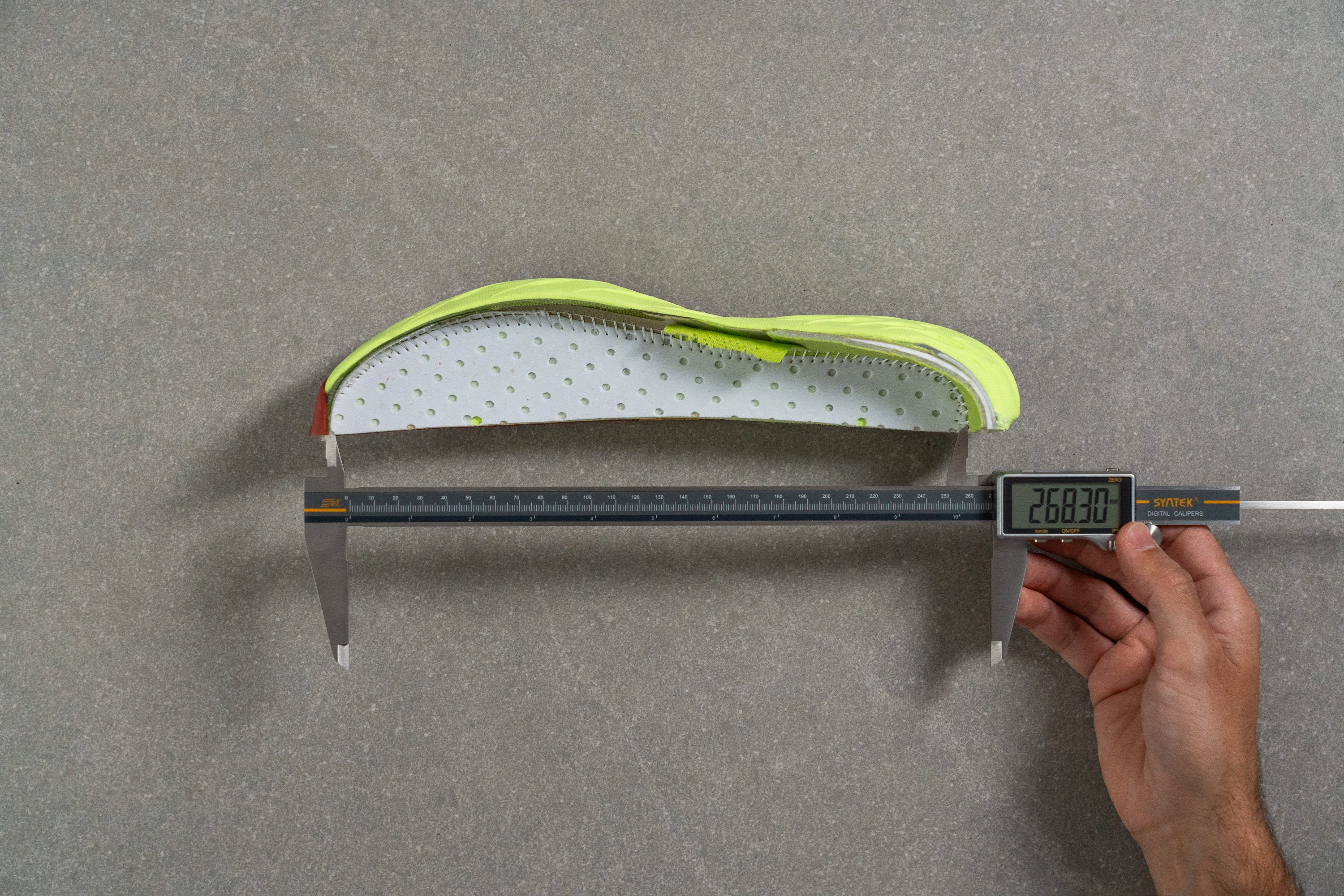
| Speedgoat 7 | 268.3 mm |
| Media | 269.2 mm |
Anchura / Ajuste
HOKA sigue manteniendo su reputación como una marca ideal para las personas con pies estrechos, y nuestro calibre tiene claro que las Speedgoat 7 son un buen ejemplo. Aunque están disponibles en versión ancha, estas zapatillas tienen un ajuste bastante ceñido.
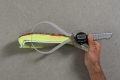
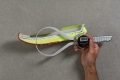
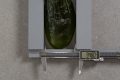
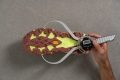
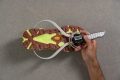
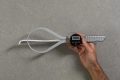
Para que no se nos escape ni un detalle, creamos una réplica de su interior con nuestro gel y medimos 3 puntos clave. Las Speedgoat 7 nunca consiguieron superar la media, como nos demostraron al tener una anchura de solo 94,8 mm.
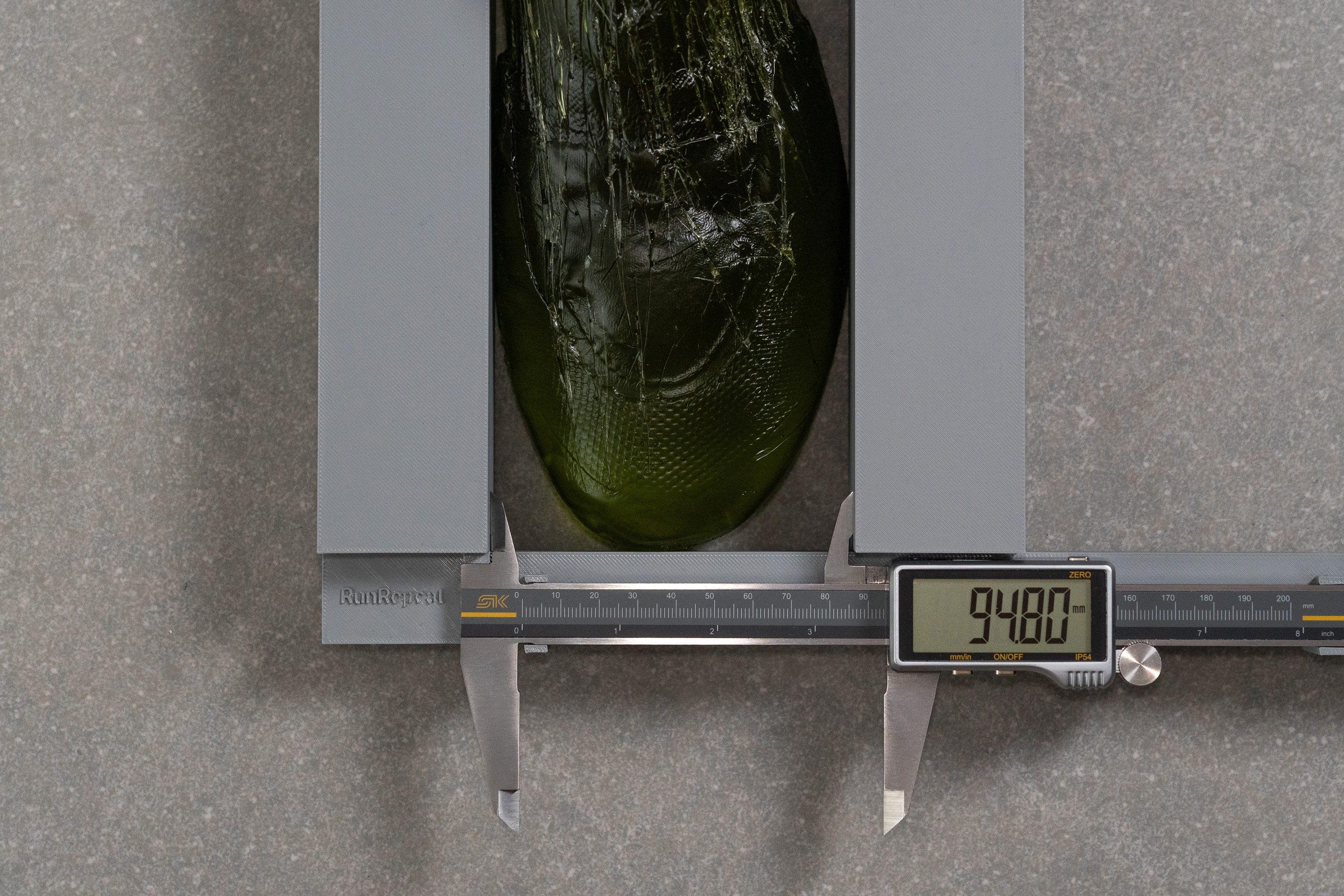
| Speedgoat 7 | 94.8 mm |
| Media | 95.7 mm |
Anchura de la parte delantera
Después medimos la anchura de la zona de los dedos para poder ver si se estrecha mucho hacia la punta o si deja que puedas estirar los dedos tranquilamente.
Como ya nos esperábamos de HOKA, las Speedgoat 7 son más estrechas que otra cosa. Con solo 71,4 mm, tienen un ajuste ceñido y seguro que debería gustarles a los corredores con pies estrechos o a los que ponen la sujeción del pie antes de una mayor libertad de movimiento de los dedos en su lista de prioridades.
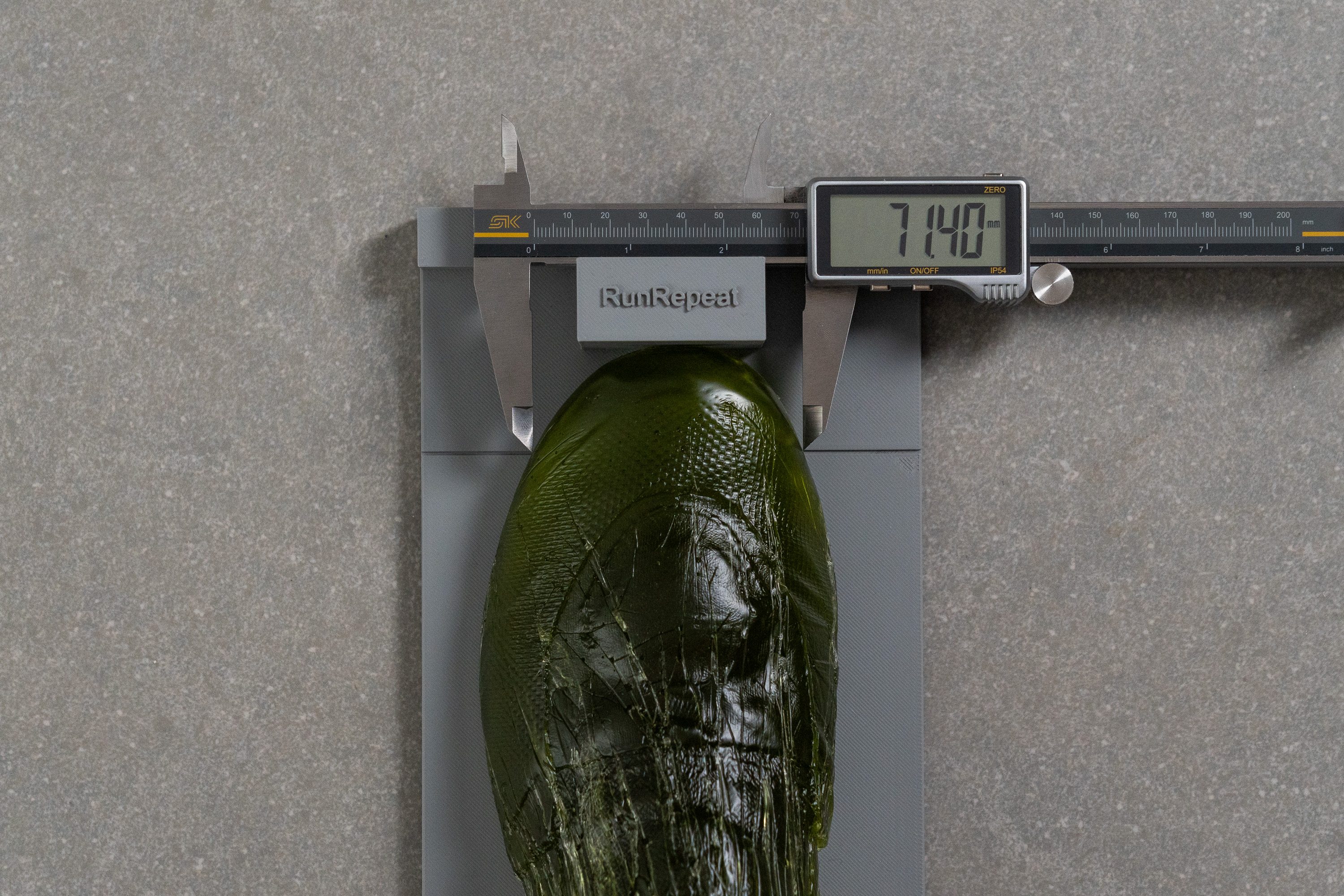
| Speedgoat 7 | 71.4 mm |
| Media | 74.3 mm |
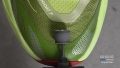
Altura de la parte delantera
Los runners preocupados por el espacio vertical de la zona de los dedos pueden estar tranquilos, ya que alcanza 28,2 mm, que no está nada mal.
Esta altura extra también hace que pueda circular más aire dentro y fuera de las zapatillas, que es algo importante para que los pies estén fresquitos.
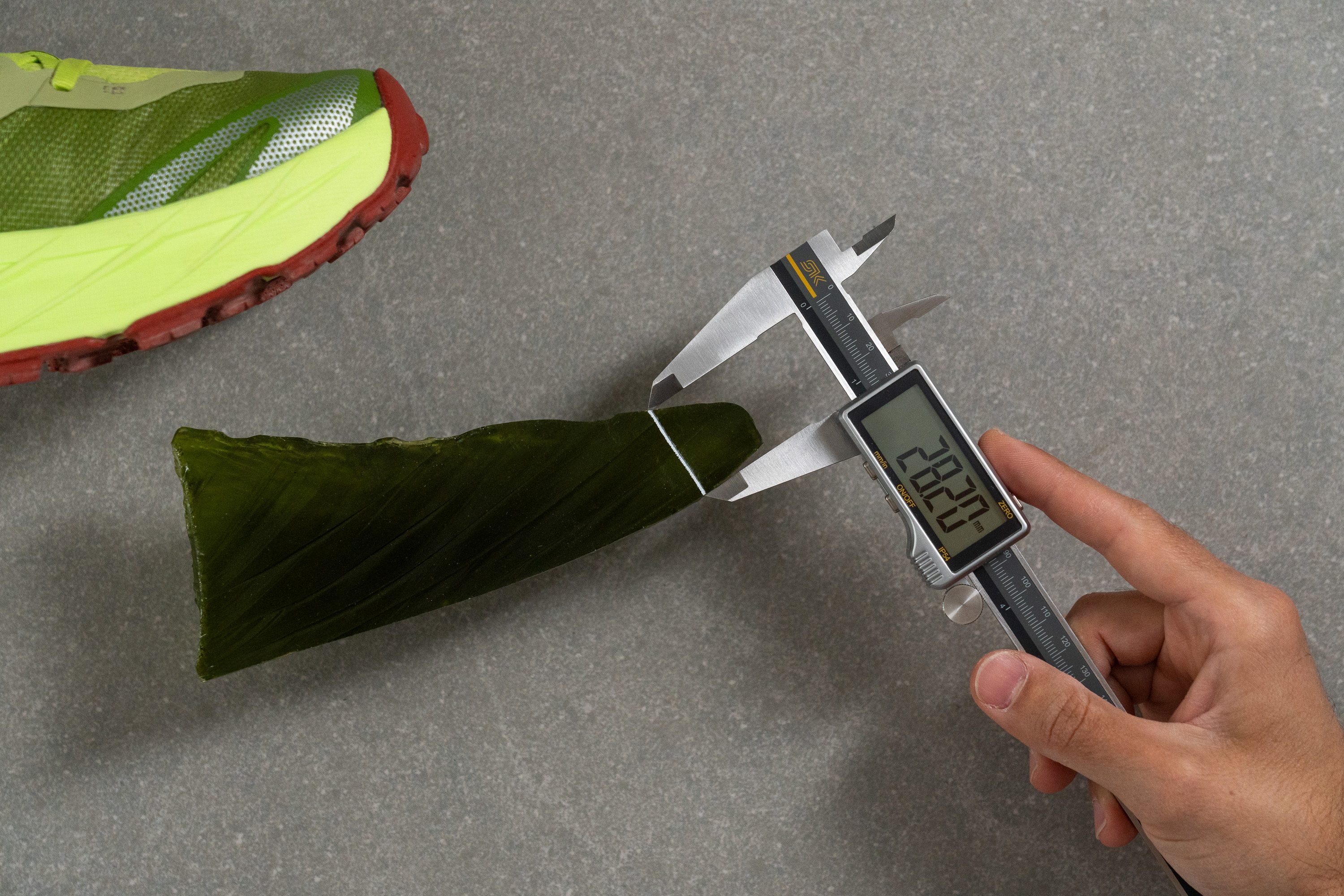
| Speedgoat 7 | 28.2 mm |
| Media | 26.9 mm |
Tracción / Agarre
Traction test
Las Speedgoat 7 han vuelto a subir el listón, alcanzando un extraordinario coeficiente de fricción de 0,77 en nuestra prueba de tracción. Equipadas con la excelente suela Vibram Megagrip y tecnología Traction Lug, nos ofrecieron un agarre fenomenal que inspira una confianza total, tanto cuando caminamos por rocas mojadas como si nos tocaba enfrentarnos a zonas más fáciles.
| Speedgoat 7 | 0.77 |
| Media | 0.68 |
Profundidad del dibujo de la suela
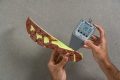
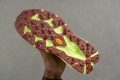
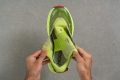
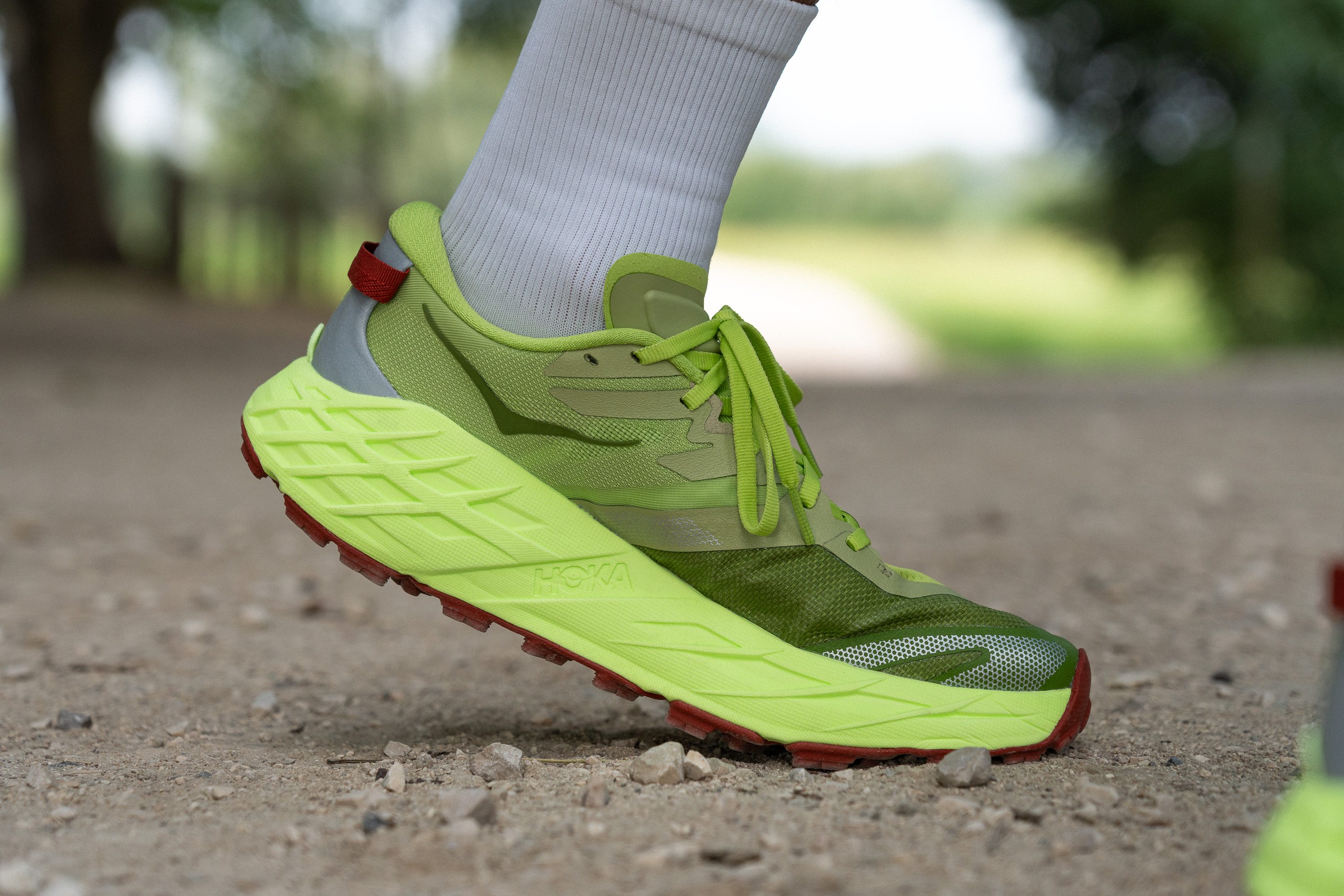
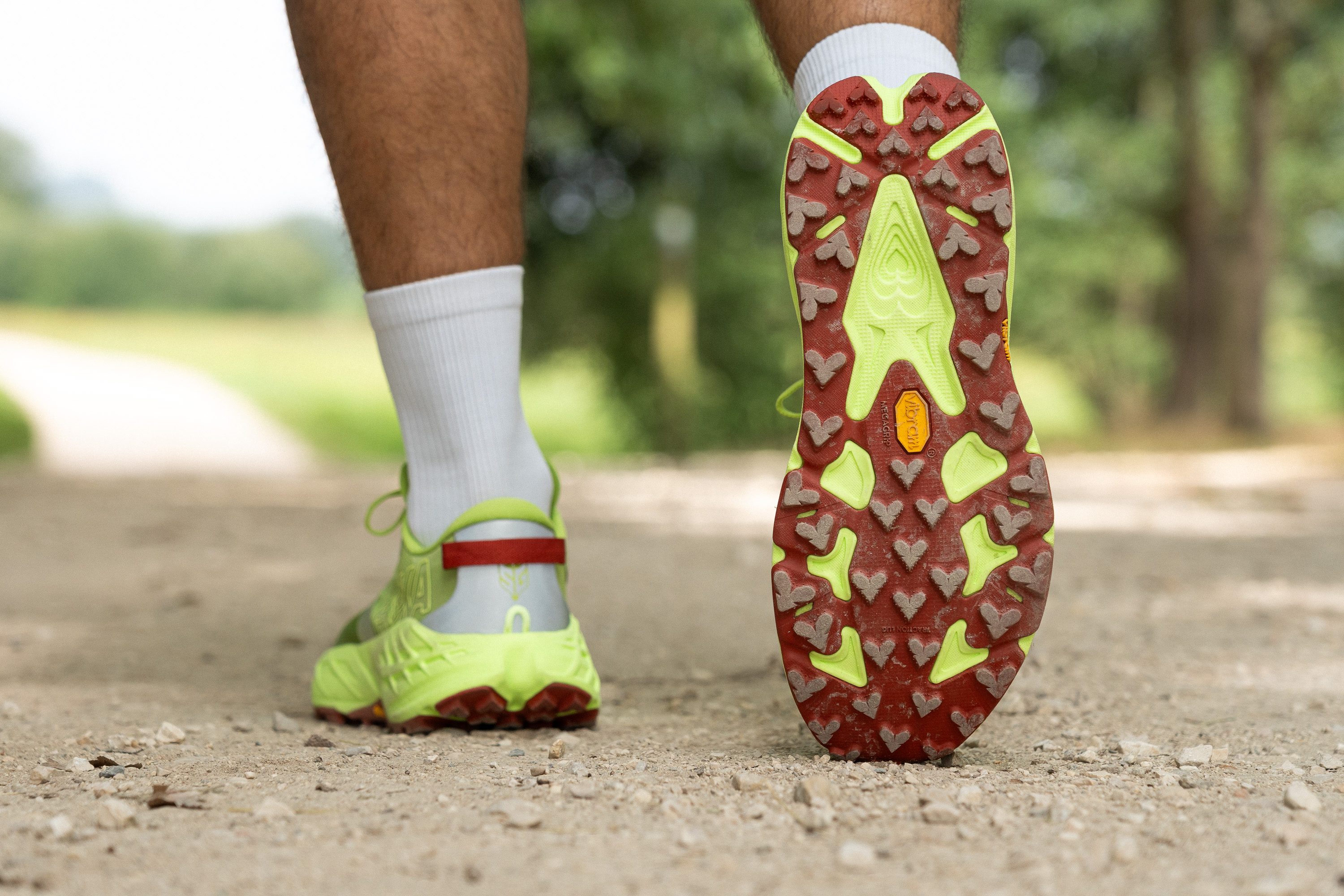
Las Speedgoat 7 presumen de la tecnología Traction Lug de Vibram con sus tacos nuevos y ese diseño en forma de corazón que va variando en tamaño y orientación a lo largo de toda la suela. Como puedes ver en la foto que te dejamos por aquí abajo, el patrón es multidireccional; sin duda, es un diseño pensado para mejorar la tracción en varias zonas distintas.
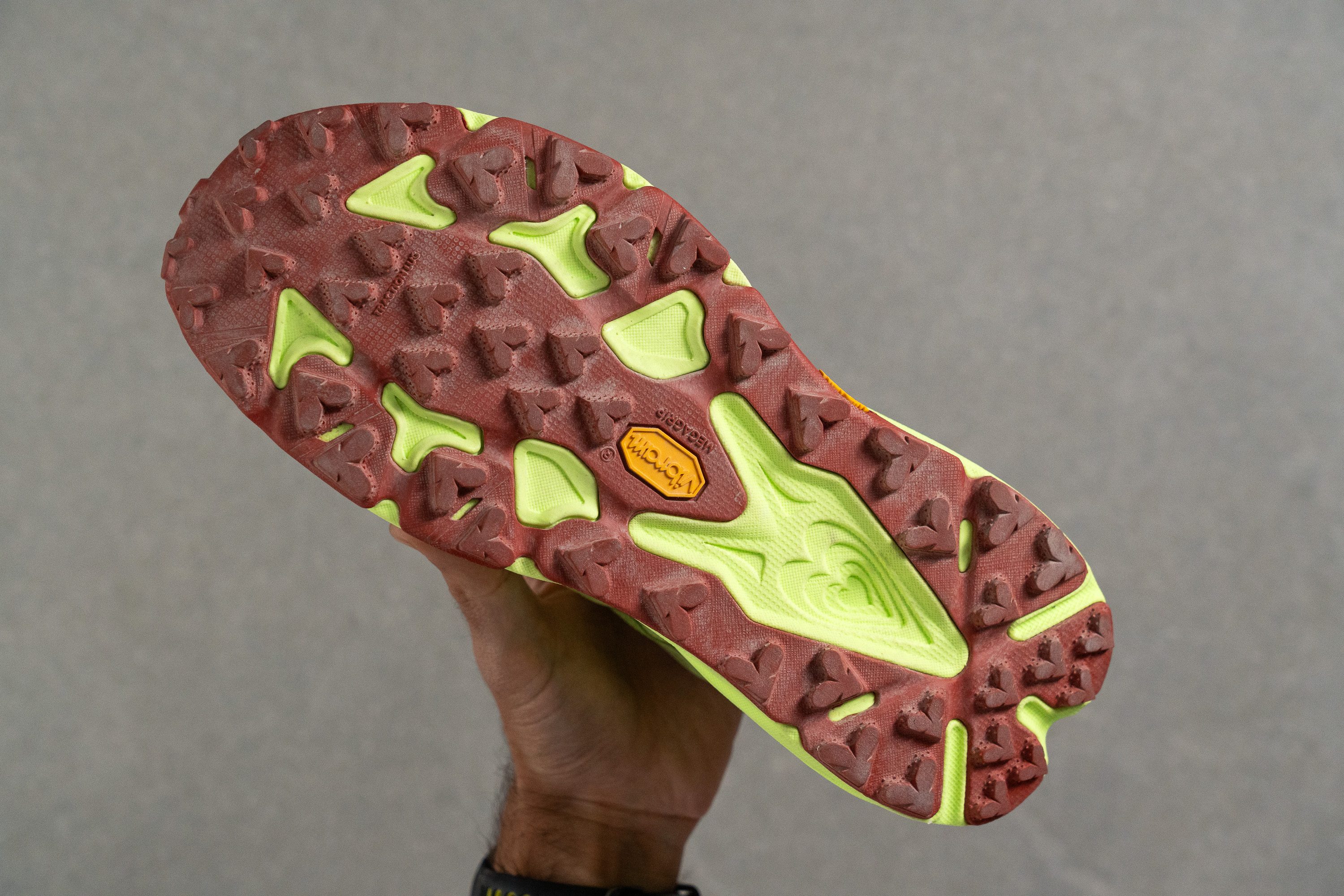
Los tacos miden 4,5 mm, un resultado casi igual que el que nos da HOKA en su página oficial (5,0 mm). Este tamaño los hace ideales para varios terrenos distintos, tanto gravilla como zonas secas y estables o incluso rutas moderadamente técnicas. Eso sí, los runners que se suelen enfrentar a barro profundo o a terreno montañoso exigente deberían echarle un ojo a otras zapatillas con unos tacos más agresivos.

| Speedgoat 7 | 4.5 mm |
| Media | 3.5 mm |
Diseño de la suela exterior
HOKA sigue el mismo enfoque en este modelo que en sus predecesoras, utilizando amplias secciones de la mediasuela expuestas. Si bien es cierto que, si hablamos de protección contra rocas afiladas u otros peligros del trail, no es el mejor enfoque, sí que ayuda a reducir el peso y a mejorar la flexibilidad longitudinal de las zapatillas.
Flexibilidad / Rigidez
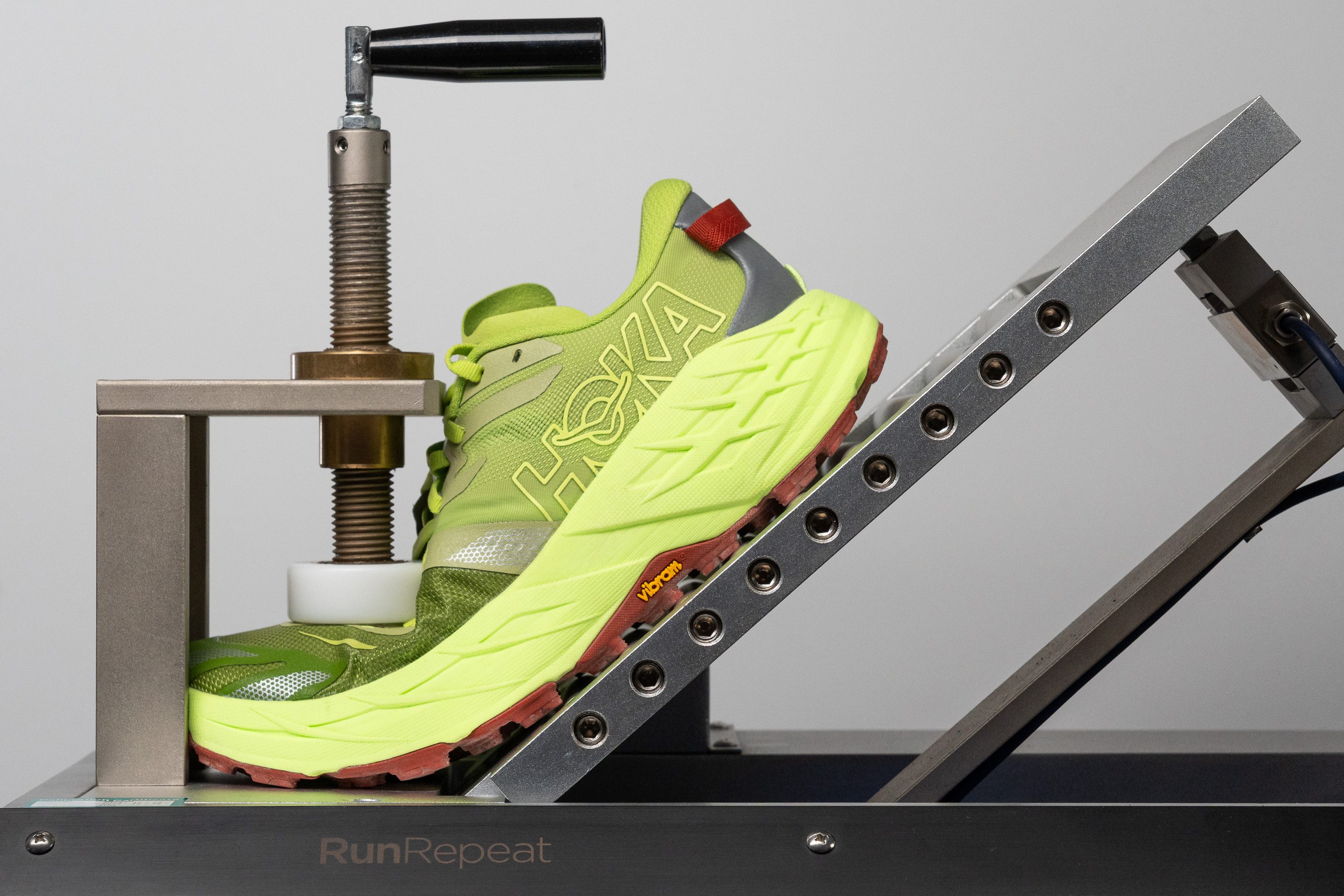
Y así fue, ya que, en nuestra prueba de flexión de 30 grados, las Speedgoat 7 necesitaron solo 14,4 N de fuerza, un resultado moderado que nos recuerda lo versátiles que son los modelos de esta serie.
| Speedgoat 7 | 14.4N |
| Media | 14.8N |
Peso
Una de las mayores ventajas de una espuma supercrítica es que mejora tanto el retorno de energía como la absorción de impactos sin añadir peso, así que HOKA pudo aumentar la cantidad de amortiguación de este modelo.
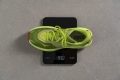
Las Speedgoat 7 pesan 281 g, que es prácticamente lo mismo que sus predecesoras.
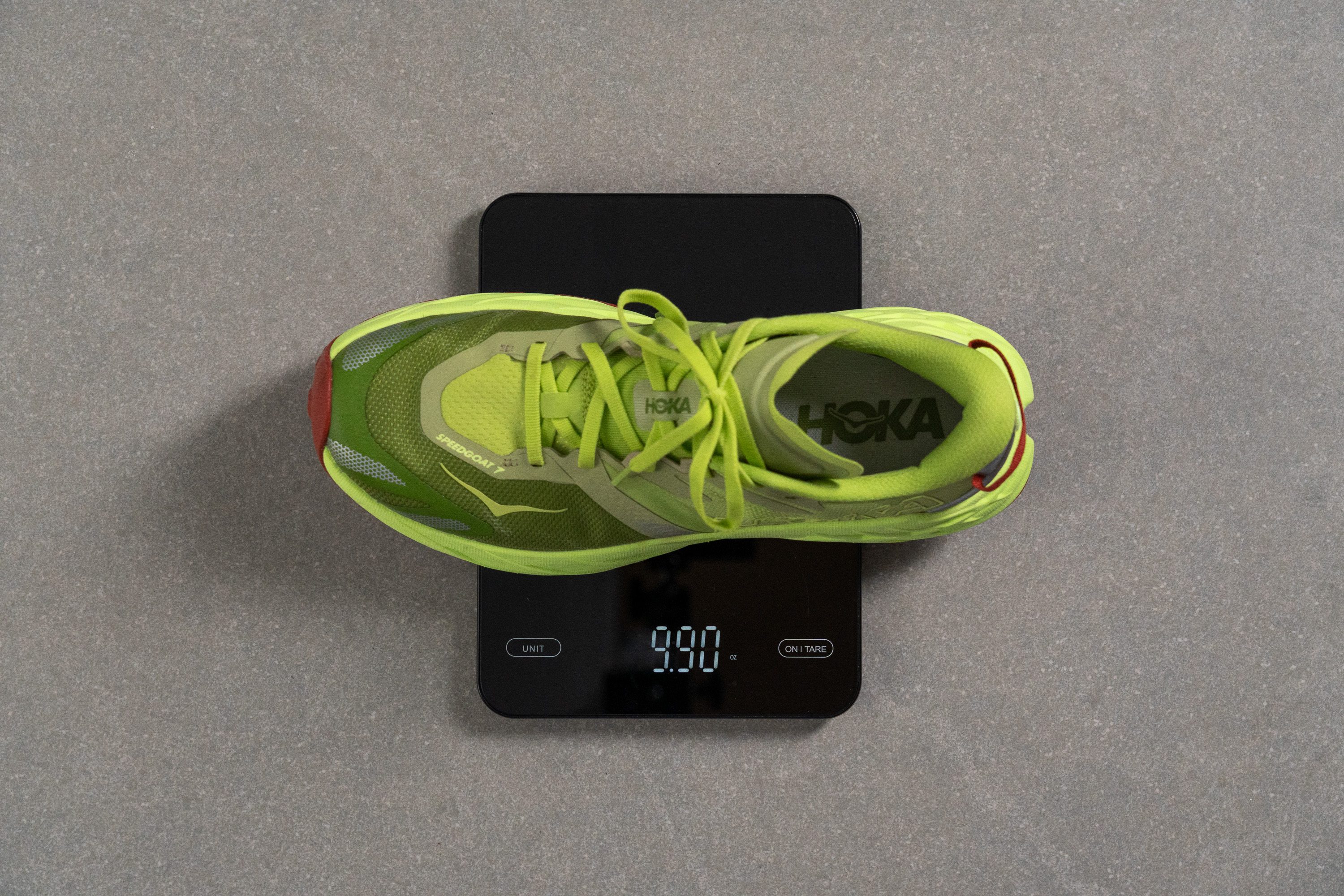
| Speedgoat 7 | 9.9 oz (281g) |
| Media | 10.1 oz (285g) |
Transpirabilidad
Breathability test
Normalmente, la gente se compra las Speedgoat porque son unas todoterreno, ya que están diseñadas para rendir durante todo el año, ya sea corriendo o haciendo senderismo. Por eso es importante que su transpirabilidad sea sólida.
Nuestra máquina mide cómo de bien se les da a las zapatillas quitarle el sudor a los pies en una prueba de tres horas en las que les suministramos constantemente sudor artificial. Las Speedgoat 7 obtuvieron un sólido resultado de 69 BR, confirmando que consiguen que los pies se mantengan bastante secos.
| Speedgoat 7 | 69 BR |
| Media | 71 BR |
Potencial de secado
NuevoTambién nos quedamos bastante contentos con el potencial de secado de estas zapatillas. Además de medir la transpirabilidad, nuestra prueba de tres horas también evalúa cómo de bien se libra cada par de la humedad.
Las Speedgoat 7 consiguieron que se evaporase el 51 % de la humedad acumulada, un resultado sólido que debería ayudar a los corredores a mantener una experiencia más cómoda durante salidas largas o días lluviosos.
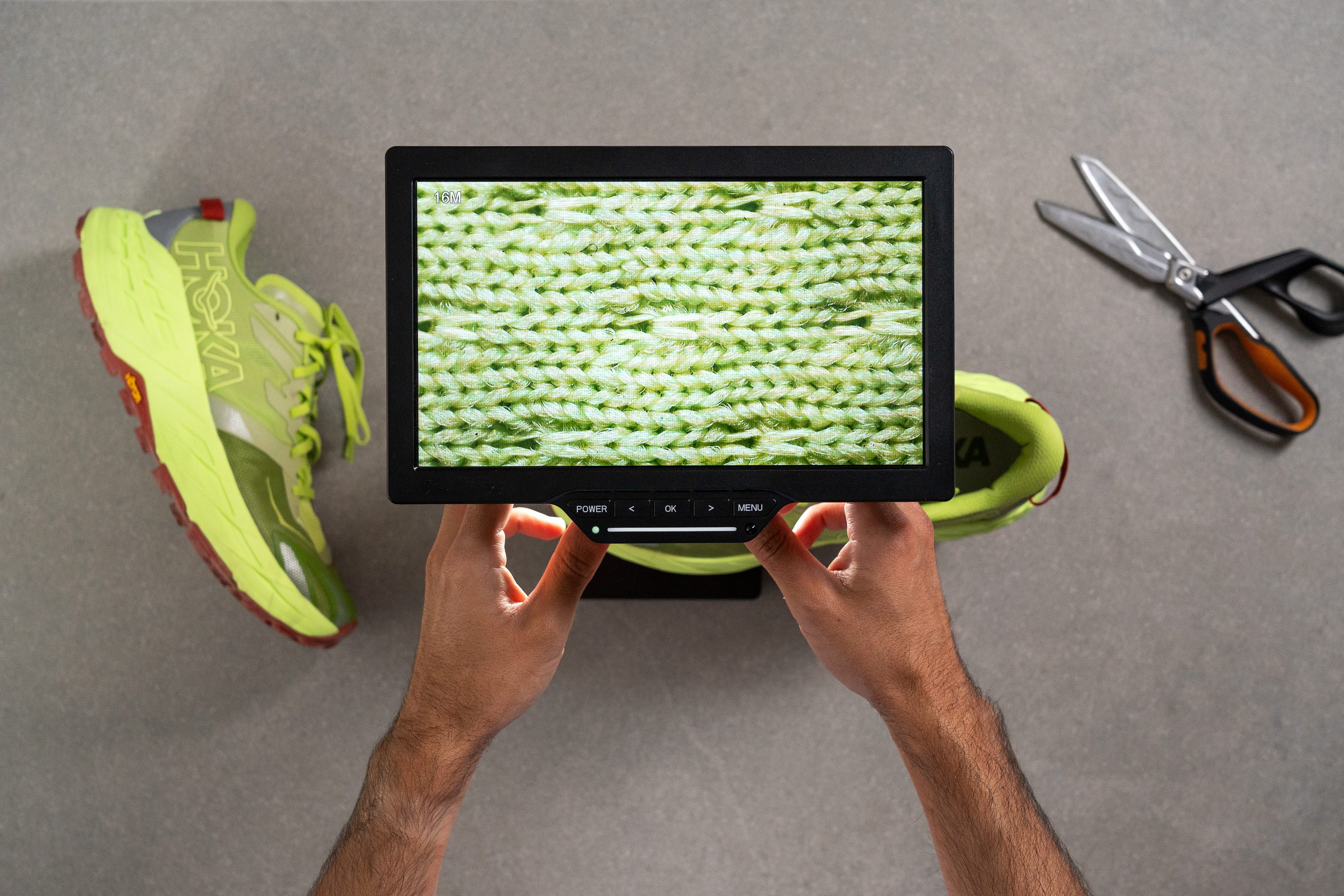
| Speedgoat 7 | 51% |
| Media | 51% |
Estabilidad
Prueba de estabilidad lateral
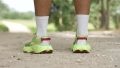
Después de analizar las Speedgoat 7, podemos decir con toda confianza que su pisada es estable incluso con su mullida espuma scEVA, y gran parte de ello se lo deben a la forma en la que HOKA diseñó la mediasuela. Su plataforma es anchísima, y las paredes laterales de la mediasuela son altas tanto en la cara interna como en la externa, creando un diseño que abraza al pie y se asegura de que no se mueva de su sitio.
En nuestra experiencia, esta estructura hace que la pisada sea un poquito menos natural, ya que el pie se puede sentir un poquito guiado, pero creemos que es un sacrificio necesario para mantener la estabilidad en unas zapatillas con una mediasuela tan alta.
Rigidez torsional
Los últimos modelos de Speedgoat se han ido volviendo más rígidos, y nuestra máquina confirmó que la séptima generación se mantiene fiel a esa fórmula.
Marcó 18,6 Nm, así que están entre las zapatillas de trail con la rigidez torsional más alta que hemos analizado. Por lo tanto, los runners que estén buscando una pisada muy flexible deberían considerar otras opciones.
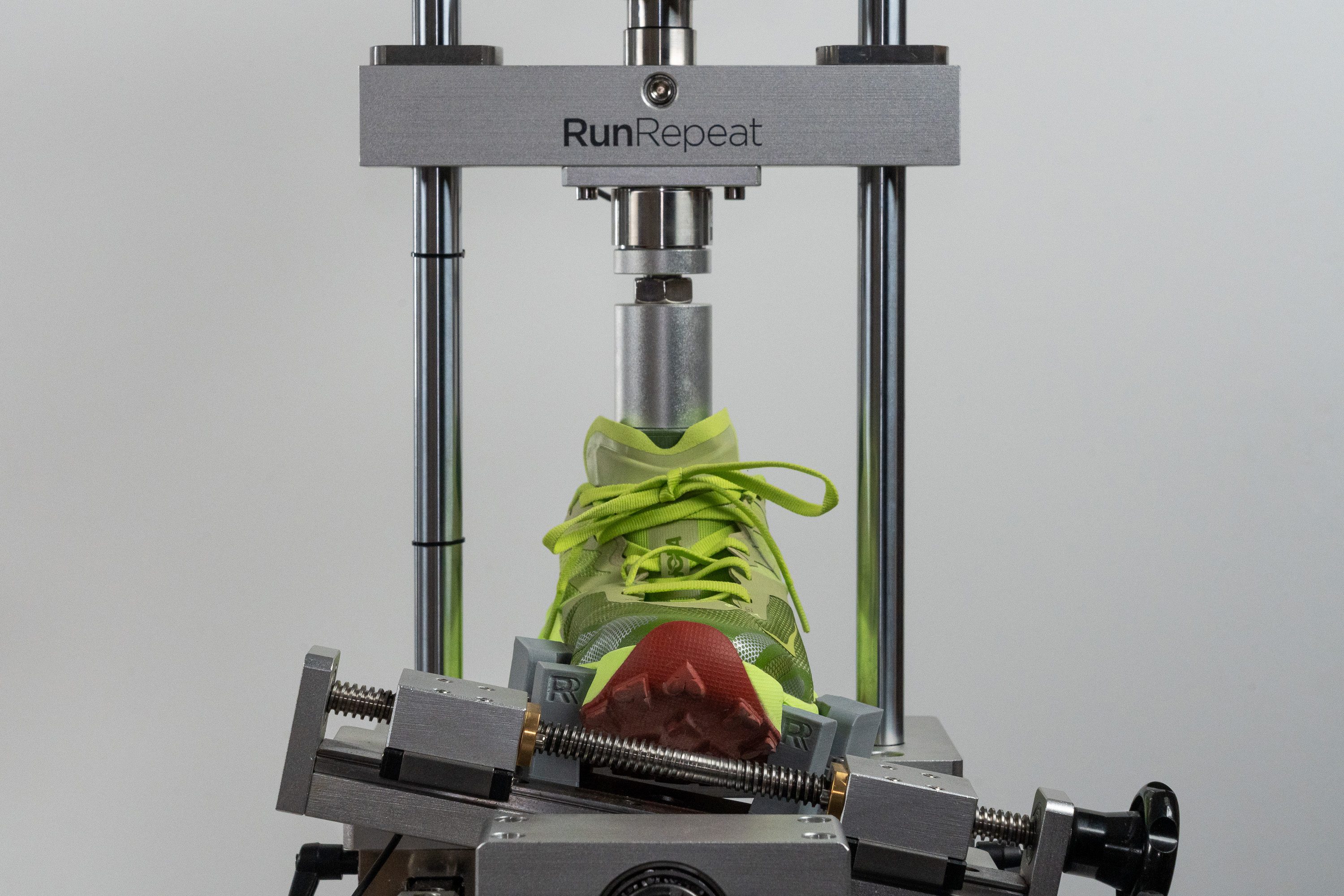
| Speedgoat 7 | 18.6 Nm |
| Media | 15.8 Nm |
Rigidez del contrafuerte del talón
En esta zona sí que vimos un cambio importante. El contrafuerte del talón de las Speedgoat 6, que obtuvo un 5/5 en rigidez, ha hecho bomba de humo, y la marca lo ha cambiado por otro mucho más cómodo que obtuvo un 3/5 en esta misma prueba.
Personalmente, a nosotros nos parece todo un acierto, sobre todo para los runners que se pasan muchas horas en el trail... incluso si también significa reducir un poco la sujeción en esa zona.
| Speedgoat 7 | 3 |
| Media | 3 |
Anchura de la mediasuela - antepié
Hay algunas excepciones, pero la mayoría de las marcas les ponen plataformas anchas a sus zapatillas de trail, y las Speedgoat 7 no son una excepción.
Con 117,4 mm en el antepié, presumen de una base espaciosa que ayuda a que los aterrizajes sean estables. ¿Lo malo? Pues que, como siempre, la velocidad es menor, así que estas zapatillas no se sienten muy ágiles en terrenos técnicos.
Eso sí, nosotros creemos que la mayoría de los amantes del trail running van a estar contentos con este sacrificio para conseguir más estabilidad. Pero bueno, si este diseño con una base ancha no te convence, a lo mejor las HOKA Zinal 2 te gustan más.
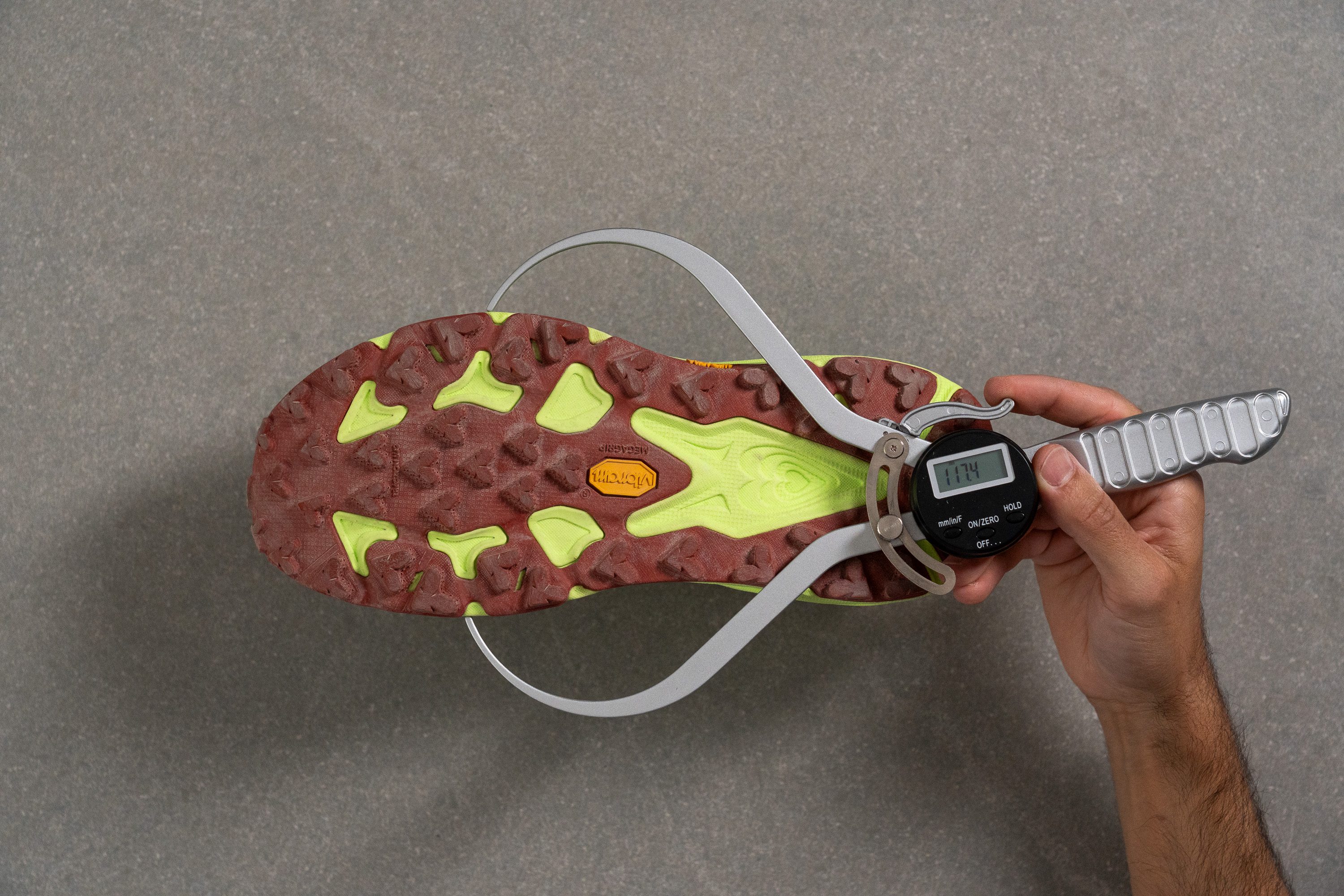
| Speedgoat 7 | 117.4 mm |
| Media | 114.3 mm |
Anchura de la mediasuela - talón
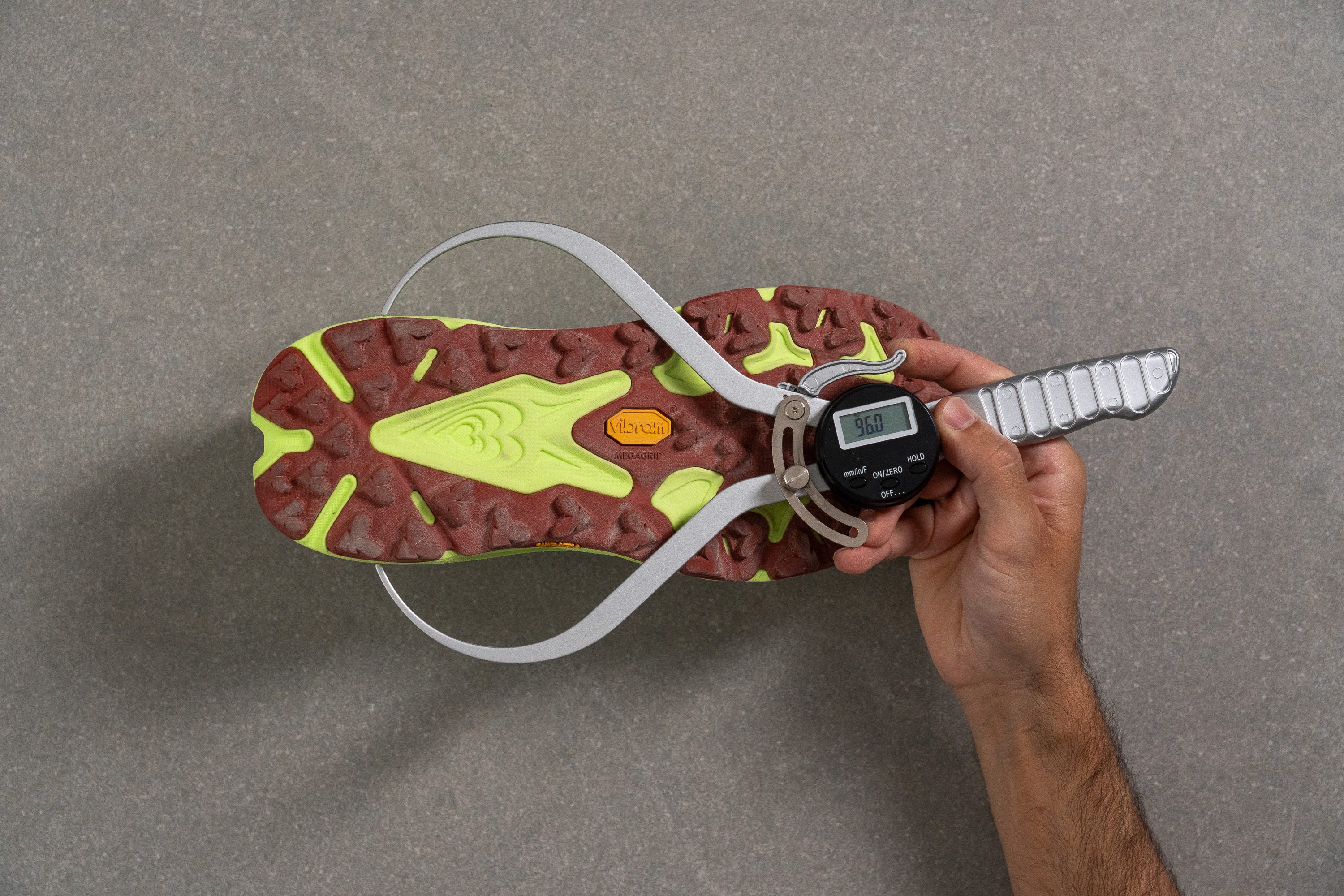
El diseño del talón sigue la misma filosofía. Con 96,0 mm de ancho, es 1,9 mm más ancho que el de las Speedgoat 6, así que sigue avanzando hacia los 100,0 mm.
Aunque, mira, si te somos sinceros... eso sería pasarse. La estructura actual ya ofrece una pisada increíblemente estable y segura, así que, personalmente, creemos que HOKA debería dejarlo tal cual está.
| Speedgoat 7 | 96.0 mm |
| Media | 90.5 mm |
Durabilidad
Durabilidad de la parte delantera
La durabilidad de la parte delantera es importantísima en las zapatillas de trail, ya que el upper está expuesto, muy constantemente, a la abrasión, impactos y posibles desgarros en los terrenos accidentados.
Después de darle caña con el Dremel, consiguió superar el desafío y llevarse un impresionante 4/5 en durabilidad, ya que el upper está muy reforzado.
| Speedgoat 7 | 4 |
| Media | 3.1 |
Durabilidad del acolchado del talón
Por otro lado, el forro del talón se centra en ser cómodo desde el minuto 1, así que ya sabíamos que no iba a ser una armadura. Vamos, que no nos sorprendió que obtuviese solo un 2/5 en durabilidad.
| Speedgoat 7 | 2 |
| Media | 3.1 |
Durabilidad de la suela
También analizamos la suela Vibram Megagrip para comprobar si estaba a la altura de su excelente reputación, y una vez más, cumplió con creces.
Solo perdió 0,6 mm de caucho en nuestra prueba Dremel, un resultado excepcional que demuestra por qué tantas marcas están dejando de lado sus compuestos patentados y asociándose con Vibram.
| Speedgoat 7 | 0.6 mm |
| Media | 0.9 mm |
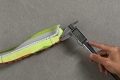
Grosor de la suela
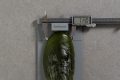
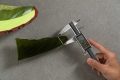
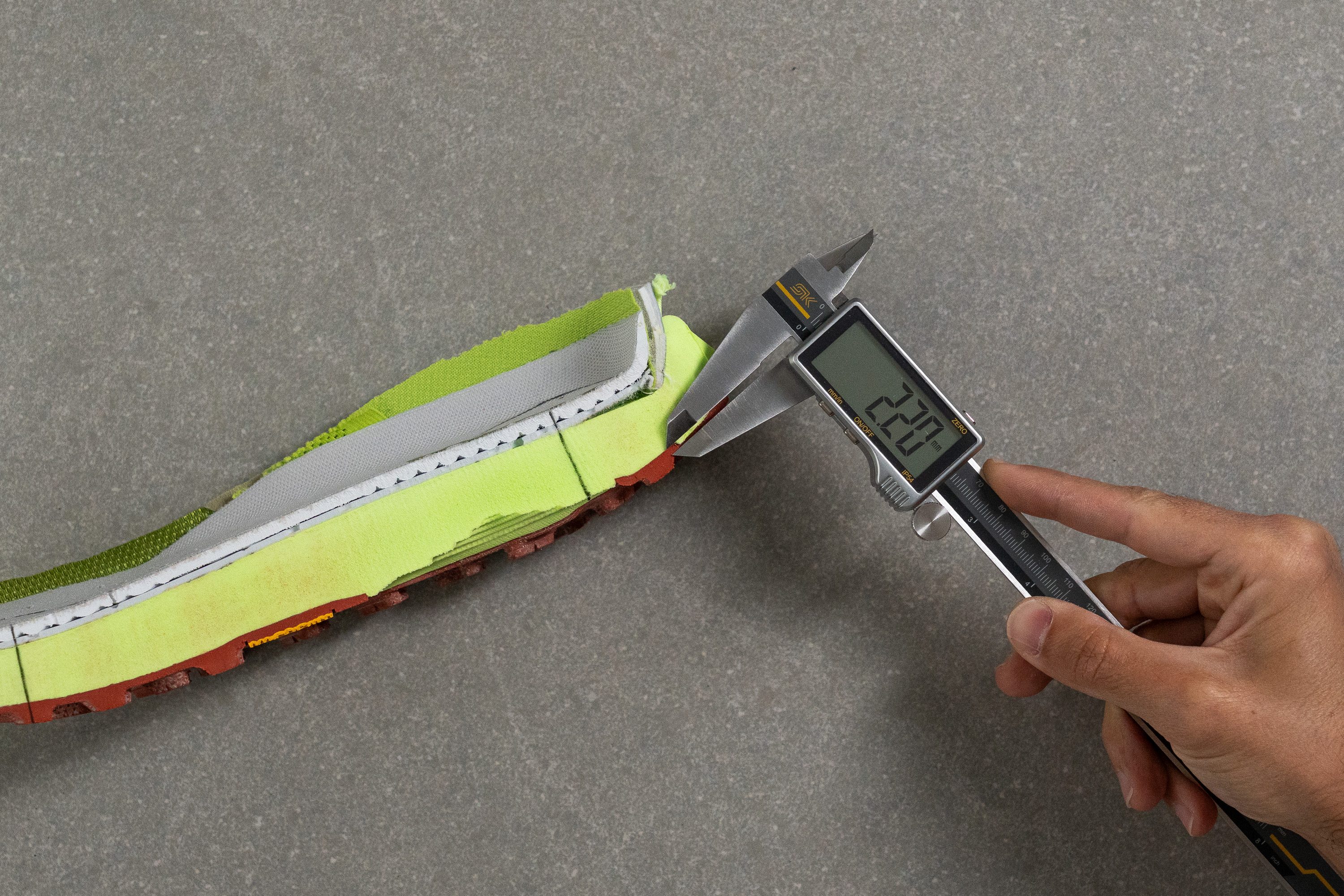
La suela tiene un grosor considerable, 2,2 mm, lo que no solo mejora la durabilidad a largo plazo, sino que también añade una capa adicional de protección contra los obstáculos del trail. La verdad es que esto nos parece muy importante, porque este modelo no tiene una placa antirrocas, así que esta estructura ayuda a proteger tanto la mediasuela como los pies en los terrenos escarpados.
| Speedgoat 7 | 2.2 mm |
| Media | 1.9 mm |
Varios
Grosor de la plantilla
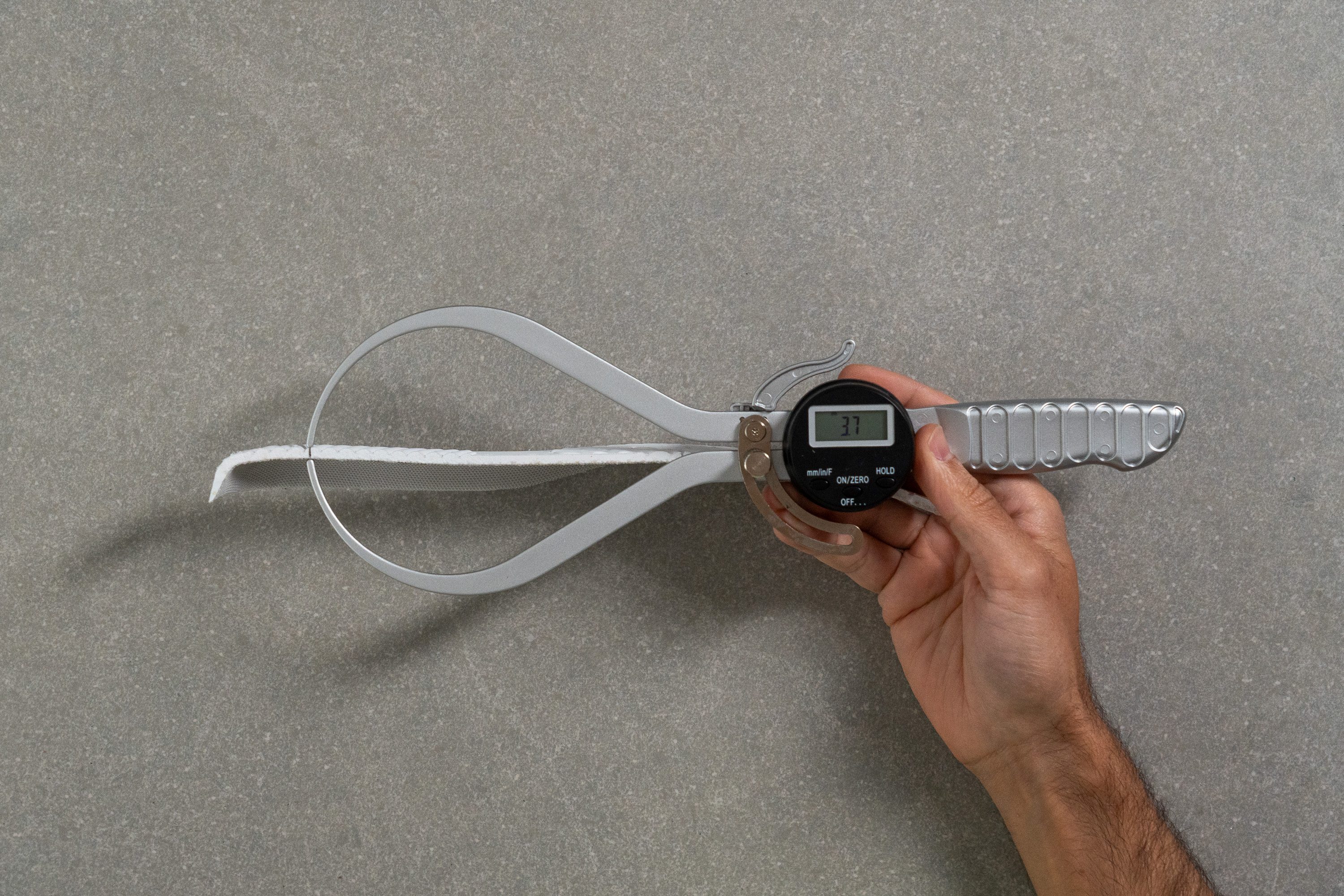
La plantilla tiene un grosor de solo 3,7 mm, así que es un poquito más finita de lo que solemos ver en el laboratorio.
| Speedgoat 7 | 3.7 mm |
| Media | 4.6 mm |
Plantilla extraíble
La plantilla de las Speedgoat 7 está perforada. Este pequeño detalle puede pasar desapercibido fácilmente, pero sigue siendo sorprendentemente poco común entre las zapatillas de trail, mejorando su transpirabilidad.
| Speedgoat 7 | Sí |
Elementos reflectantes
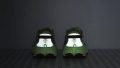
Los elementos reflectantes grandotes nos encantan, y parece que HOKA lo sabe. Las Speedgoat 7 tienen dos enormes parches reflectantes en el talón que garantizan una excelente visibilidad nocturna.
| Speedgoat 7 | Sí |
Acolchado de la lengüeta
El sistema de cordones también está diseñado pensando en la durabilidad, ya que tiene muchos refuerzos superpuestos que reducen el riesgo de desgarros. También nos gustó que HOKA optara por dos lacitos en la lengüeta en lugar de poner solo uno, que es lo más normal, ya que así no se mueve tanto al correr.
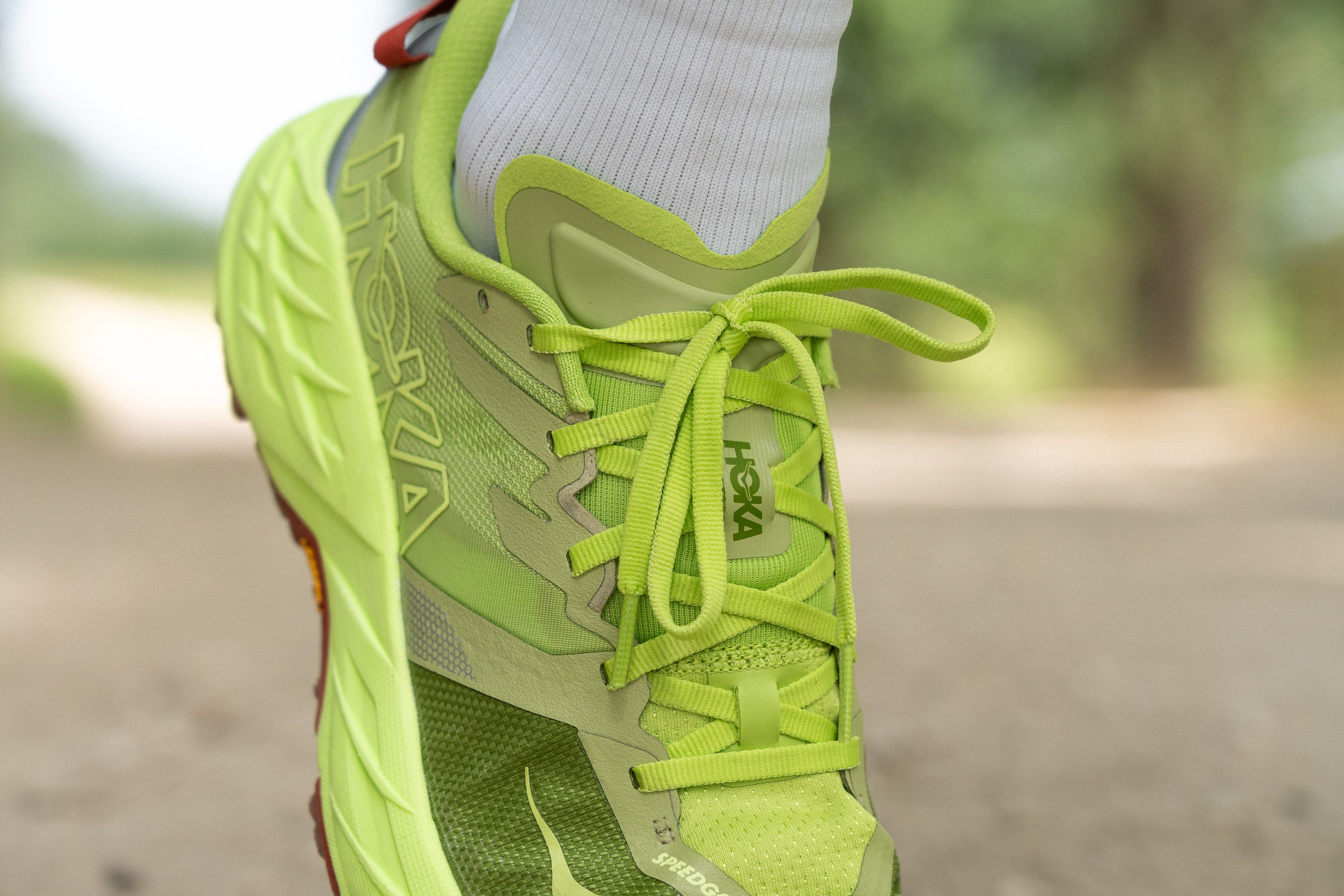
Lo que sí que creemos que no les va a hacer mucha gracia a algunos corredores es la lengüeta ultrafina de este modelo, y menos a los que les suele doler el empeine. Con solo 2,1 mm de grosor, mejora bastante la transpirabilidad y reduce el peso, pero sacrifica algo de comodidad en las distancias largas.
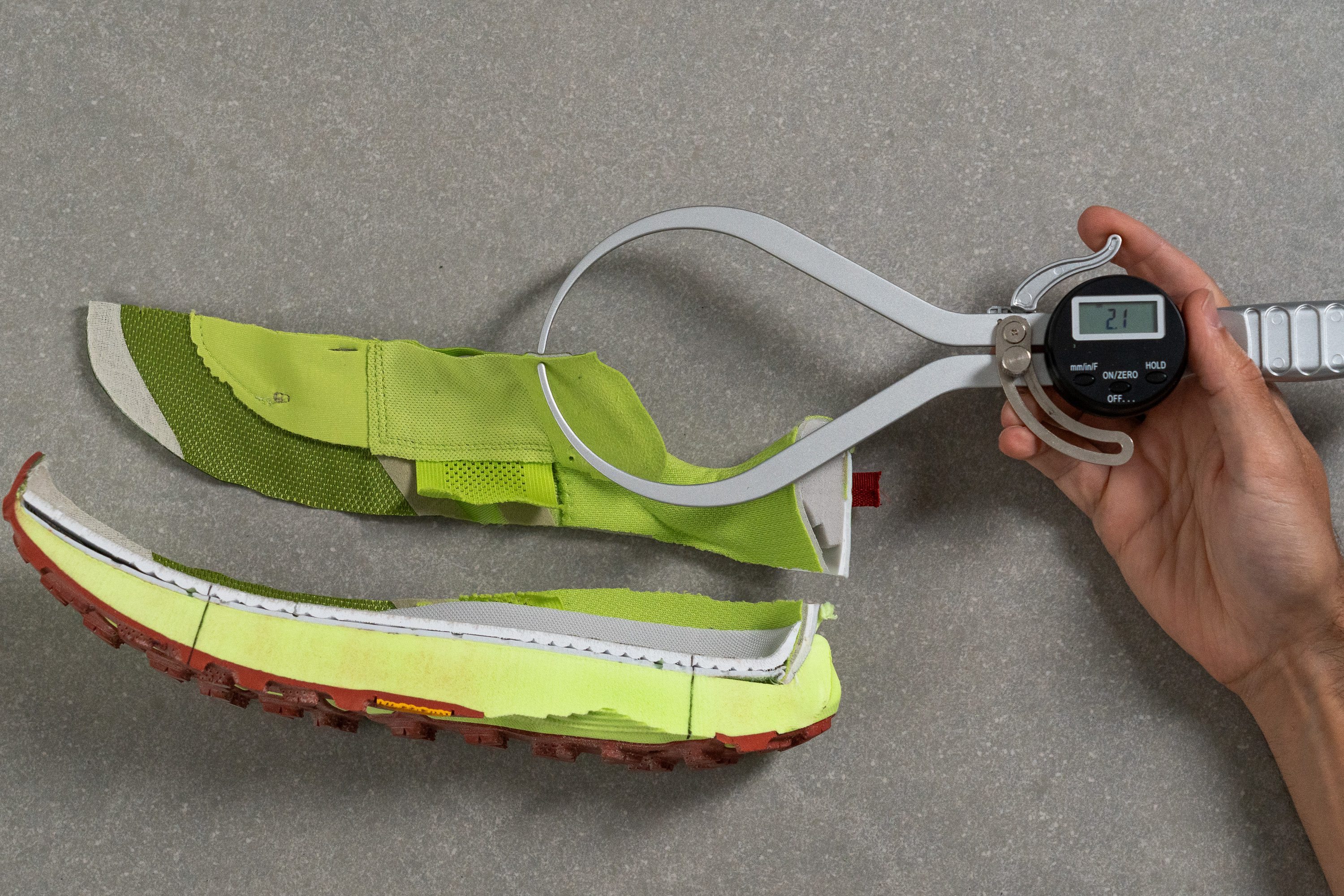
| Speedgoat 7 | 2.1 mm |
| Media | 6.4 mm |
Lengüeta: tipo de refuerzo
La lengüeta tiene un diseño semirreforzado muy parecido al de las zapatillas de running para asfalto. Aunque no impide que se te cuele tierra o piedrecillas con la misma eficacia, mejora el flujo de aire, reduce el peso y consigue que el ajuste sea más seguro al correr.
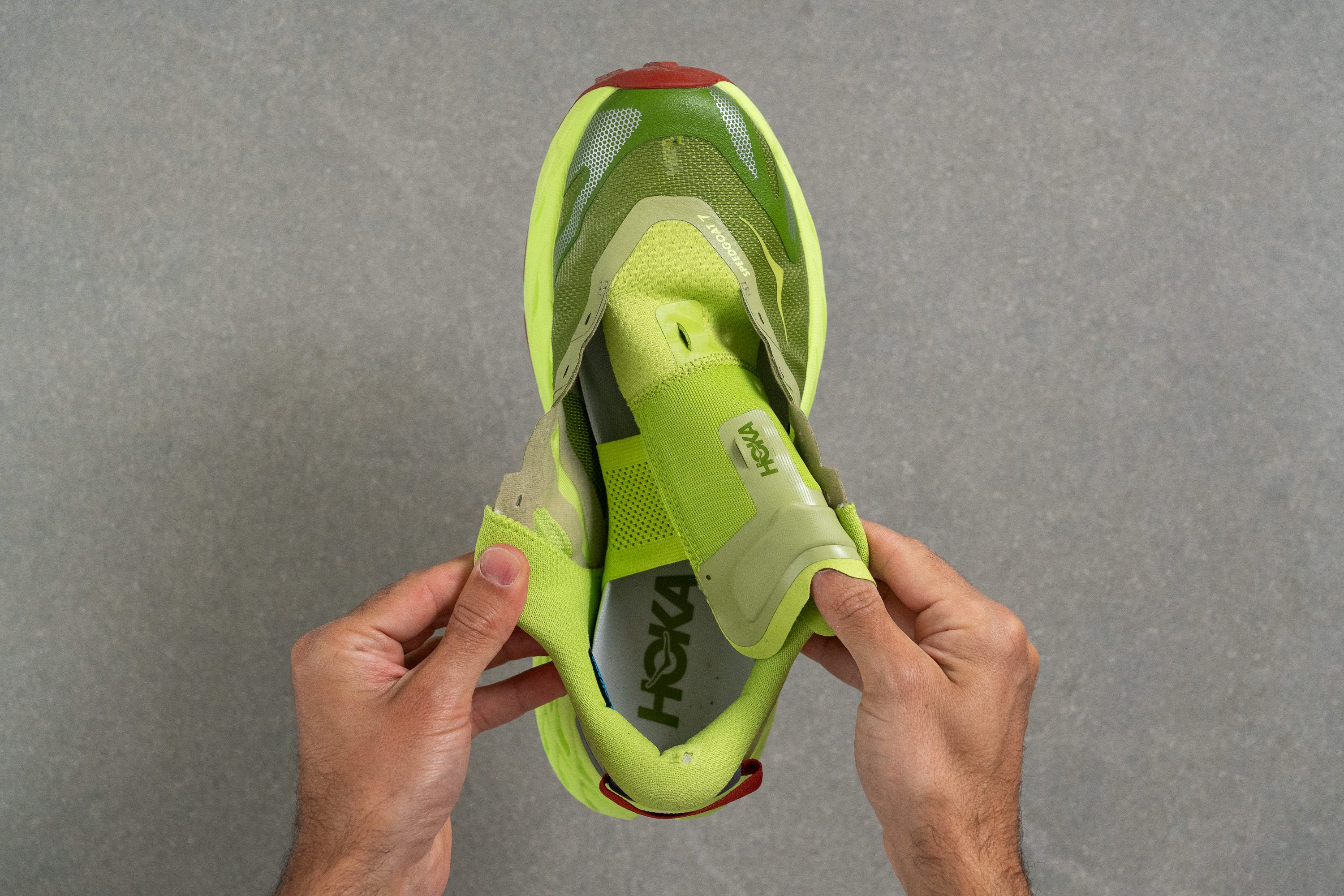
| Speedgoat 7 | Ambos lados (semi) |
Tirador del talón
Tenemos más claro que el agua que HOKA se tomó su tiempo perfeccionando el diseño del talón. ¿El resultado? Un tirador integrado que no solo tiene una estética muy chula, sino que también es funcional. ¡Hace que calzarse sea mucho más fácil!
Ah, y las Speedgoat 7 también tienen un punto de enganche para polainas en la parte de atrás.
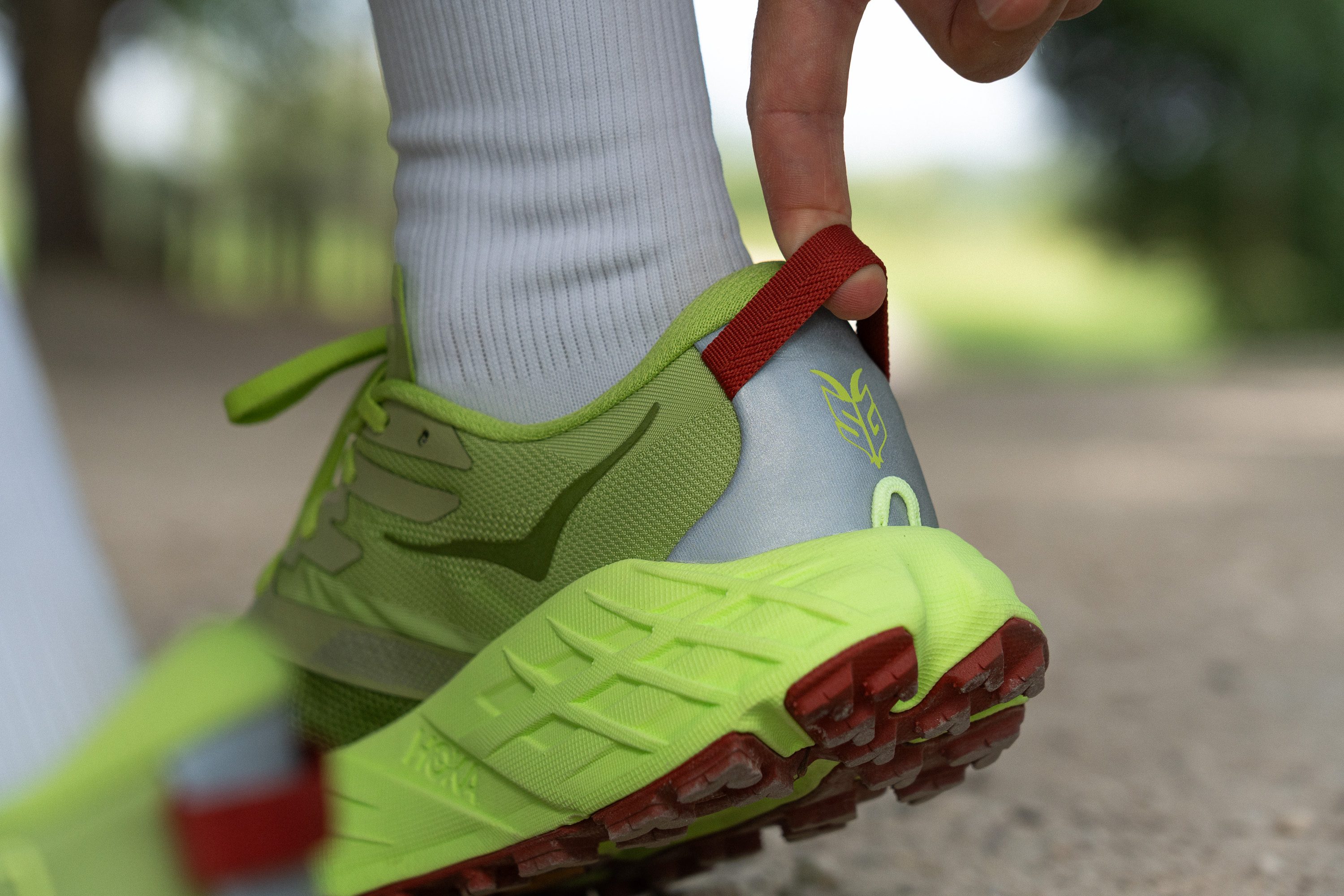
| Speedgoat 7 | Tirador circular |
Precio
Pasar de la espuma CMEVA a una espuma EVA supercrítica tiene un precio, eso está claro, y las Speedgoat 7 lo han pagado... siendo más caras. Vamos, que a los runners con un presupuesto más reducido muy probablemente no les llamen mucho la atención.
Pero bueno, personalmente, nosotros creemos que la mejora en la calidad de la pisada por sí sola hace que merezca la pena pagar esos euros extra, sobre todo teniendo en cuenta lo anticuada que está ya la espuma CMEVA.
| Speedgoat 7 | $165 |