








Our verdict
- Daily running 84
- Tempo 42
- Race 29
- Stability 84
Pros
- Nice, waterproof upper
- Versatile for daily runs and regular use
- Excellent durability from top to bottom
- Stable platform
- Roomier than the regular Ghost
- Solid upper comfort
- Waterproof Gore-Tex membrane
Cons
- Heavy build
- Energy return clearly below lab average
- Steep GTX price premium
Awards
- Top pick in best Brooks walking shoes
- Top pick in best waterproof running shoes
Comparison
The most similar running shoes compared
+ + Add a shoe | |||||
|---|---|---|---|---|---|
| Our score | 80 Good | 82 Great | 82 Great | 85 Great | |
| Price | $170 | $160 | $160 | $180 | |
| Pace | Daily running | Daily running | Daily running | Daily running | |
| Shock absorption | High | Moderate | Moderate | High | |
| Energy return | Moderate | Moderate | Moderate | Moderate | |
| Traction | High | Moderate | High | High | |
| Arch support | Neutral | Neutral | Neutral | Neutral | |
| Weight lab Weight brand | 10.9 oz / 309g 11.3 oz / 320g | 11.1 oz / 315g 10 oz / 283g | 9.2 oz / 261g 9.1 oz / 257g | 10.8 oz / 306g 10.9 oz / 310g | |
| Drop lab Drop brand | 11.0 mm 10.0 mm | 11.9 mm 10.0 mm | 11.3 mm 8.0 mm | 10.7 mm 10.0 mm | |
| Strike pattern | Heel | Heel | Heel | Heel | |
| Size | True to size | True to size | True to size | Half size small | |
| Midsole softness | Balanced | Balanced | - | Soft | |
| Difference in midsole softness in cold | Small | Normal | Normal | Small | |
| Toebox durability | Decent | Decent | Good | Decent | |
| Heel padding durability | Good | Good | Decent | Good | |
| Outsole durability | Good | Bad | Good | Good | |
| Breathability | Warm | Warm | Warm | Warm | |
| Width / fit | Medium | Medium | Medium | Medium | |
| Toebox width | Medium | Medium | Medium | Medium | |
| Stiffness | Moderate | Moderate | Moderate | Moderate | |
| Torsional rigidity | Moderate | Moderate | Stiff | Stiff | |
| Heel counter stiffness | Stiff | Moderate | Stiff | Stiff | |
| Rocker | ✗ | ✓ | ✗ | ✗ | |
| Heel lab Heel brand | 36.0 mm 36.5 mm | 36.3 mm 37.0 mm | 35.4 mm 31.0 mm | 42.2 mm 46.0 mm | |
| Forefoot lab Forefoot brand | 25.0 mm 26.5 mm | 24.4 mm 27.0 mm | 24.1 mm 23.0 mm | 31.5 mm 36.0 mm | |
| Widths available | Normal | Normal | NormalWide | Normal | |
| Orthotic friendly | ✓ | ✓ | ✓ | ✓ | |
| Season | Winter | Winter | Winter | Winter | |
| Removable insole | ✓ | ✓ | ✓ | ✓ | |
| Ranking | #223 Bottom 44% | #192 Top 48% | #191 Top 48% | #129 Top 33% | |
| Popularity | #186 Top 47% | #246 Bottom 38% | #240 Bottom 40% | #305 Bottom 23% |


Who should buy
We found in the lab that the Brooks Ghost 17 GTX is a good choice for:
- Runners who love the Ghost 17 and want a similar shoe for rainy days or winter training in consistently wet weather.
- Heel strikers looking for a stable and durable Gore-Tex road running shoe for daily mileage.
- Anyone who wants a dependable trainer that also works well for casual wear, city walks, or commuting.

Who should NOT buy
We think the Brooks Ghost 17 GTX may feel too expensive for some runners. If that's your case, consider the Nike Winflo 11 GTX, which offers a similar winter-ready design with Gore-Tex but at a considerably lower price.
We also found in the lab that the DNA Loft v3 midsole delivers a somewhat dull-feeling ride with modest energy return. From our perspective, runners seeking a lively-and-fun experience will feel underwhelmed. In that case, we believe the adidas Adizero EVO SL ATR could be your next shoe.

Cushioning
Shock absorption
With 131 SA in the heel and 98 SA in the forefoot, we believe the Brooks Ghost 17 GTX provides solid cushioning for daily runs and regular use, although it may feel slightly limited for demanding long runs. However, this type of shoe is not usually designed for performance-focused sessions or intense workouts anyway.

| Ghost 17 GTX | 131 SA |
| Average | 131 SA |
Energy return
Energy return is not the main feature of this shoe, so we recommend keeping expectations fairly low. With 51.3% in the heel and 55.9% in the forefoot, the Brooks Ghost 17 GTX clearly falls below our lab average. It works fine for daily runs, but pushing the pace does not feel very good.
We really think that this shoe should offer a better foam given its price—even if performance is not a priority for the Ghost series. It's time for DNA Loft v4.
| Ghost 17 GTX | 55.9% |
| Average | 61.5% |
Heel stack
Running shoes keep getting taller, and this model is a good example. It features 36.0 mm of stack height in the heel, which sits around the average today but would have been considered truly maximalist just a few years ago.
If you're used to modern daily trainers, or even have a max-stack shoe like the Brooks Glycerin Max in your rotation, this height will not feel especially tall.

| Ghost 17 GTX | 36.0 mm |
| Average | 35.6 mm |
Forefoot stack
We recorded 25.0 mm of stack height in the forefoot, which sits close to the average. We think it suits this type of versatile shoe well, as for many people it will serve more as a casual daily option than a dedicated running tool.

| Ghost 17 GTX | 25.0 mm |
| Average | 27.1 mm |
Drop
As expected from the Brooks Ghost family, we found a high heel-to-toe drop. The brand states 10.0 mm and we measured 11.0 mm, a 1.0 mm difference that is basically impossible to notice underfoot.
Given this measurement, those who prefer a low-drop shoe may struggle with this geometry.

| Ghost 17 GTX | 11.0 mm |
| Average | 8.4 mm |
Midsole softness
The DNA Loft v3 foam in the Ghost 17 GTX delivers a softness level that does not stand out in any direction compared to other shoes. It is not firm as a brick, but it is also far from plush.
In our view, this is likely a sensible choice for Brooks’ best-selling shoe, as it maintains a feel similar to previous models while adding a slightly softer touch underfoot to better match modern expectations.

| Ghost 17 GTX | 36.6 AC |
| Average | 35.4 AC |
Rocker
Speaking of modern standards, we found that Brooks took a conservative approach here, using a regular forefoot rocker without much curvature. For a shoe that does not have a max-stack build and will likely be used for much more than running by many future owners, this choice works well.

Size and fit
Size
Brooks Ghost 17 GTX fits true to size (316 votes).
Internal length

| Ghost 17 GTX | 270.0 mm |
| Average | 269.3 mm |
Width / Fit
The upper of the Ghost 17 GTX differs from the regular version, so we crafted a new gel mold to take our usual three measurements and evaluate the fit.
With 97.6 mm in the first measurement, it is clear to us that this winterized version offers a bit more room inside, something we also noticed during our test runs.

| Ghost 17 GTX | 97.6 mm |
| Average | 95.2 mm |
Toebox width
We took a second measurement in the toebox and recorded 74.4 mm. This is again a higher reading than the regular version, offering a bit more room for toe splay and added comfort.

| Ghost 17 GTX | 74.4 mm |
| Average | 73.2 mm |
Toebox height
Where the upper remains similar to the regular edition is in terms of toebox height.
We measured 24.3 mm, which is not especially roomy, but we think it should not be a problem for most runners. It is 0.5 mm less in this GTX version, likely due to the thickness of the Gore-Tex membrane.

| Ghost 17 GTX | 24.3 mm |
| Average | 27.0 mm |
Traction / Grip
Traction test
Some Gore-Tex variants do not change the outsole, but Brooks redesigned it for the Ghost 17 GTX to improve performance in wet conditions, which is common for waterproof running shoes. And indeed, it increases from 0.55 in the regular version to a stronger 0.67 in our test over wet concrete. That’s a welcome upgrade.
| Ghost 17 GTX | 0.67 |
| Average | 0.53 |
Outsole design
As we already mentioned, Brooks changed the outsole to better adapt to wet environments. The Ghost 17 GTX features substantially more rubber coverage, with new patterns that improve water drainage and help prevent aquaplaning.

Flexibility / Stiffness
The changes in the outsole and the thicker upper of the Ghost 17 GTX clearly affect its flexibility. In our 30-degree bend test, we found that the shoe lost 52% of its flexibility, now reaching 16.6N and delivering a stiffer ride.

| Ghost 17 GTX | 16.6N |
| Average | 15.5N |
Weight
Weight also crept up, as happens with nearly every Gore-Tex running shoe. However, in our measurements we found an increase of just 7% over the regular version, so the change is not dramatic.
The issue is that the Ghost 17 is already a heavy daily trainer. In this version it climbs to 10.9 oz or 309g, which again stands out as one area we wish had been better.

| Ghost 17 GTX | 10.9 oz (309g) |
| Average | 9.2 oz (261g) |
Breathability
Breathability test
UpdatedIf you're a RunRepeat regular, you probably already know that the marketing claims from Gore-Tex about combining breathability and waterproof protection do not really hold up. At least not by what most runners would consider true breathability.
Our lab test highlighted that difference clearly. The standard Ghost 17 achieved an outstanding 92 BR in this evaluation, whereas this Gore-Tex version scored only 55 BR. As a result, it is far less effective at pulling sweat away from the foot, allowing moisture to build up inside the shoe at a noticeably faster rate.
| Ghost 17 GTX | 55 BR |
| Average | 75 BR |
Drying potential
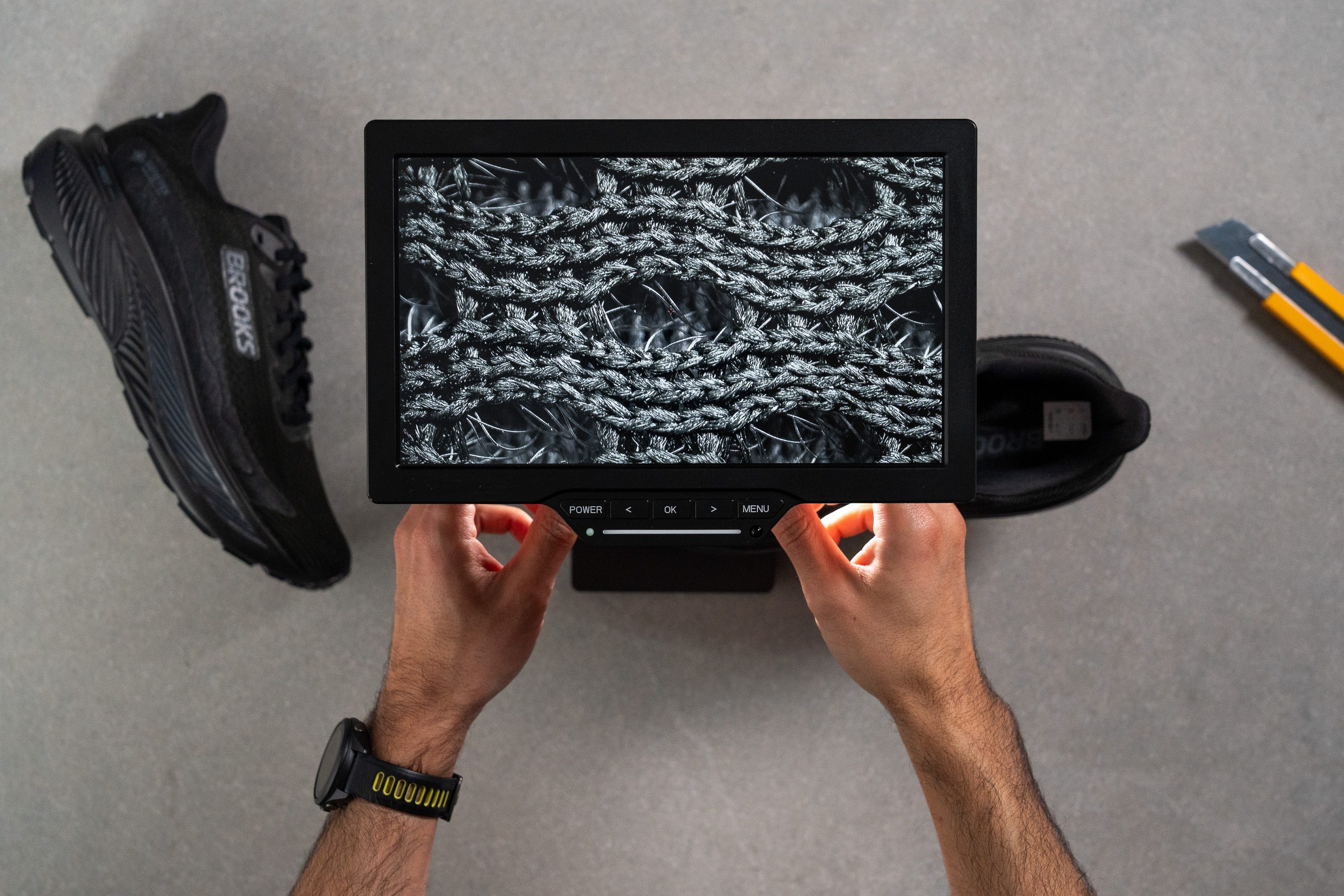
NewWe also found that the Ghost 17 GTX delivers noticeably weaker drying potential than its non-waterproof counterpart. During our 3-hour test, it managed to evaporate just 39% of the accumulated moisture, a result that falls well behind the standard version.
That outcome was hardly surprising, though. Waterproof Gore-Tex membranes are excellent at keeping external water out, but they also make it harder for moisture to escape. In this case, the tradeoff is clear.
| Ghost 17 GTX | 39% |
| Average | 53% |
Stability
Lateral stability test
Good stability remains one of the key characteristics of the Ghost. During our testing, the shoe felt predictable regardless of footstrike pattern, offering a dependable platform throughout our runs.
In this GTX version, the Gore-Tex upper adds extra structure and stiffness, which slightly increases the sense of support compared to the regular model.
Torsional rigidity
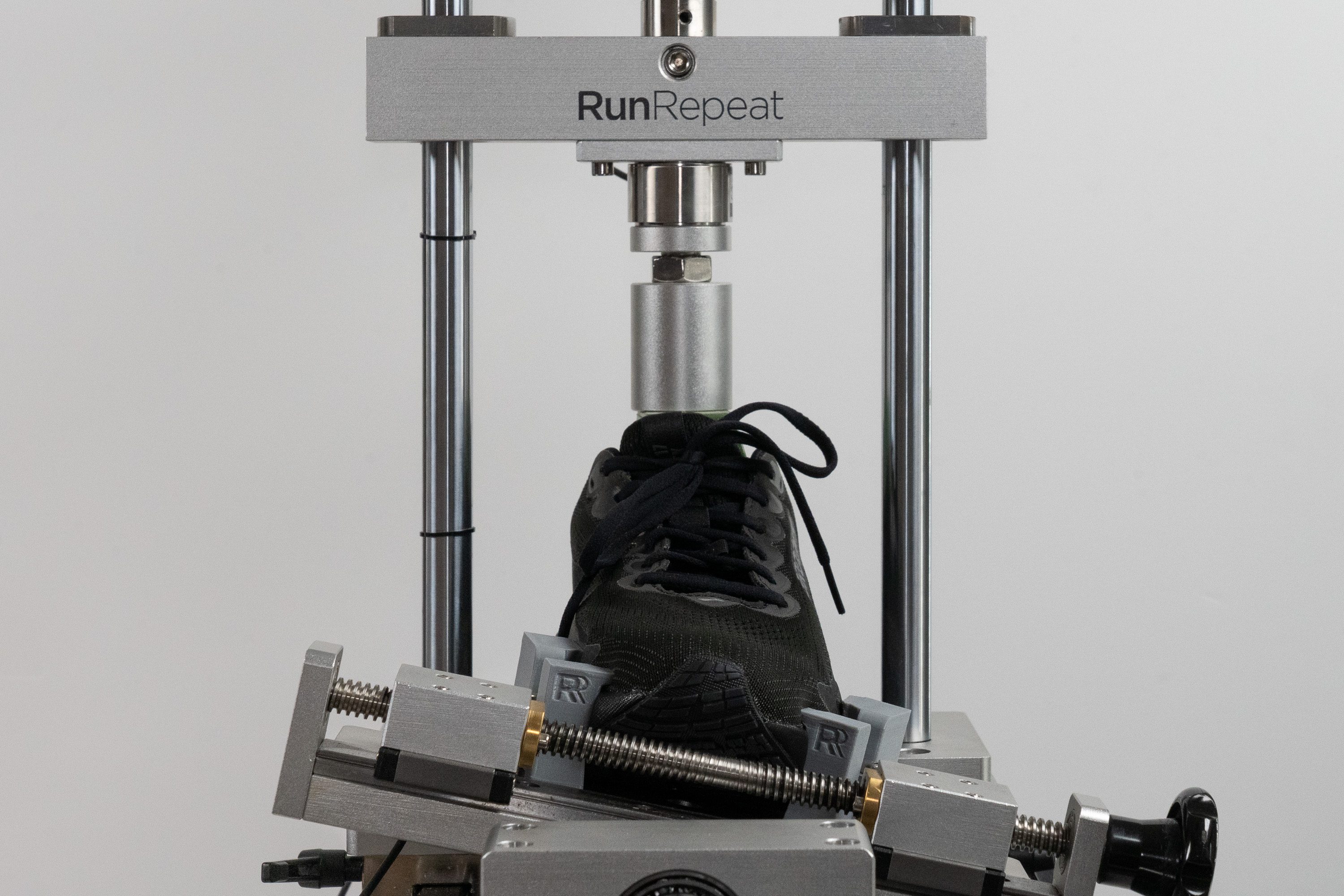
The Ghost 17 GTX is 34% more rigid than its standard counterpart, reaching 17.0 Nm in our torsional rigidity test due to the waterproof upper and winter-ready outsole.
| Ghost 17 GTX | 17.0 Nm |
| Average | 14.3 Nm |
Heel counter stiffness
The heel counter is extremely stiff, and we clearly gave it a 5/5 score here, so keep this in mind if you do not like a stone-like heel feel. It has plenty of padding to offset it, but it is noticeable that it does not flex at all.
| Ghost 17 GTX | 5 |
| Average | 3 |
Midsole width - forefoot
The Ghost 17 GTX features the same midsole design as the regular version, so there are no major changes here. With 116.7 mm of width, it offers a solid footprint that provides good stability without making the shoe feel bulky or uncomfortable, and it also works well for walking.

| Ghost 17 GTX | 116.7 mm |
| Average | 115.1 mm |
Midsole width - heel
The midsole width registered 95.0 mm on our digital caliper. It is another key reason why the Ghost 17 GTX delivers the stable feel we mentioned earlier, as those extra millimeters add more support for heel strikers.

| Ghost 17 GTX | 95.0 mm |
| Average | 91.1 mm |
Durability
Toebox durability
We were satisfied after recording a 3/5 in our toebox durability test. While some Gore-Tex shoes improve durability compared to the regular version, here Brooks used the same outer material and placed the membrane inside, so getting the same score made sense.
| Ghost 17 GTX | 3 |
| Average | 2.6 |
Heel padding durability
In our second durability test, the thick heel padding held up very well and received a 4/5 score from us. Again, same result as the Ghost 17 and it reassures us that premature wear in this area is unlikely to become a problem for any runner.
| Ghost 17 GTX | 4 |
| Average | 3.4 |
Outsole durability
The RoadTack rubber performed admirably in our outsole durability test and left us very pleased, as we measured only 0.5 mm of rubber worn away from the shoe. It outperforms the regular Ghost 17 and also surpasses most other running shoes.
| Ghost 17 GTX | 0.5 mm |
| Average | 1.1 mm |
Outsole thickness
Brooks played it safe with a thick layer of rubber that measured 3.6 mm on our vernier caliper. That may even be a bit excessive given the shoe’s already high weight and excellent durability. However, we also recognize that for a winter-oriented shoe, adding extra protection from the ground makes sense.

| Ghost 17 GTX | 3.6 mm |
| Average | 3.1 mm |
Misc
Insole thickness
The insole in the Ghost 17 GTX is slightly thinner than the one we found in the regular version, possibly to compensate for the thicker upper and maintain space inside the shoe.

| Ghost 17 GTX | 4.7 mm |
| Average | 4.4 mm |
Removable insole
The insole is removable, so you can take it out without any issue and slide in a third-party option.

| Ghost 17 GTX | Yes |
Reflective elements
This was a bit of a letdown, as we believe a shoe designed for bad weather and winter runs should include strong, 360-degree reflective elements. However, that is not the case here.

| Ghost 17 GTX | No |
Tongue padding
We found small modifications in the tongue of the Brooks Ghost 17 GTX, keeping the same lace loop in the top half but now adding a trail-inspired elastic band to hold the laces in place during runs.

The rest of the tongue stays unchanged, offering a very plush step-in feel with 8.8 mm of padding, and during our testing we found it especially comfortable for daily use.

| Ghost 17 GTX | 8.8 mm |
| Average | 5.8 mm |
Tongue: gusset type
The tongue comes partially gusseted, not fully. Since this shoe is designed to block water, we would have preferred a full gusset here, similar to what most trail shoes offer.

| Ghost 17 GTX | Both sides (semi) |
Heel tab
Some brands add a finger-loop tab when releasing a variant to create more differentiation, but Brooks kept the Ghost 17 GTX with the same heel design, which does not include a pull tab.

| Ghost 17 GTX | None |
Price
Brooks decided to add a $20 premium to the price of the Ghost 17 for the GTX version, and it feels a bit steep. In our view, a $10 increase would be the sweet spot, as otherwise the MSRP starts getting uncomfortably close to $200.
| Ghost 17 GTX | $170 |
| Average | $158 |