









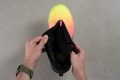
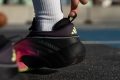
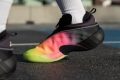
Our verdict
- Cushioning 78
- Speed 87
- Stability 94
- Outdoor 56
Pros
- Amazing outsole traction
- Fantastic lateral stability and support
- Wide platform with reliable outriggers
- Balanced court feel and cushioning
- Feels a bit softer underfoot
- More flexible forefoot adds agility
- Predictable medium-width fit
Cons
- Gained weight (but still average)
- Frail inner mesh
- Poor breathability
Awards
- Top pick in best adidas basketball shoes
- Top pick in basketball shoes with the best traction
- Top 8% in basketball shoes
- Top 17% in adidas basketball shoes
Comparison
The most similar basketball shoes compared
+ + Add a shoe | |||||
|---|---|---|---|---|---|
| Our score | 91 Superb | 88 Great | 86 Great | 87 Great | |
| Price | $120 | $135 | $120 | $105 | |
| Signature | Donovan Mitchell | Luka Doncic | Damian Lillard | LeBron James | |
| Shock absorption | Moderate | Low | Moderate | Low | |
| Energy return | Low | Moderate | Low | High | |
| Traction | High | Low | Low | High | |
| Top | Low | Low | Low | Low | |
| Ankle support | ✓ | ✓ | ✓ | ✓ | |
| Weight lab | 14 oz / 397g | 12.9 oz / 366g | 14.7 oz / 417g | 15.1 oz / 428g | |
| Lightweight | ✗ | ✓ | ✗ | ✗ | |
| Breathability | Moderate | Moderate | Moderate | Warm | |
| Outsole durability | Decent | Good | Good | Good | |
| Drop lab | 9.0 mm | 7.6 mm | 7.7 mm | 6.2 mm | |
| Heel stack lab | 28.4 mm | 26.6 mm | 27.8 mm | 27.4 mm | |
| Forefoot | 19.4 mm | 19.0 mm | 20.1 mm | 21.2 mm | |
| Size | Slightly small | True to size | True to size | Slightly small | |
| Midsole softness | Balanced | Firm | Balanced | Balanced | |
| Stiffness | StiffModerate | Stiff | Stiff | Stiff | |
| Torsional rigidity | Stiff | Stiff | Stiff | Stiff | |
| Heel counter stiffness | Moderate | Moderate | Moderate | Stiff | |
| Width / fit | Medium | Medium | Wide | Wide | |
| Toebox width | Medium | Medium | Medium | Medium | |
| Midsole width - forefoot | Average | Average | Average | Average | |
| Midsole width - heel | Wide | Average | Average | Average | |
| Heel padding durability | Decent | Good | Good | Good | |
| Toebox durability | Decent | Decent | Decent | Decent | |
| Insole thickness | Average | Average | Average | Average | |
| Outsole hardness | - | - | Average | - | |
| Outsole thickness | Thin | Very thin | Very thin | Average | |
| Heel tab | Finger loop | None | Finger loop | Pull tab | |
| Ranking | #3 Top 8% | #10 Top 24% | #16 Top 39% | #14 Top 34% | |
| Popularity | #22 Bottom 47% | #33 Bottom 21% | #2 Top 5% | #24 Bottom 42% |

Who should buy
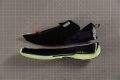
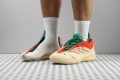
The adidas D.O.N. Issue 7 is a solid moderately priced hoop shoe for players who value these features above all else:
- strong ankle support and a wide, stable platform
- top-class traction that can handle dusty courts
Who should NOT buy
If you love what the D.O.N. Issue 7 has to offer but wonder if there is an adidas shoe with better features, the Harden Vol. 9 will get you better shock absorption and energy return.
And if you are wondering if there is an equally supportive and grippy hoop shoe in a lighter package, try the PUMA All Pro Nitro 2 or the Nike Book 1.
Cushioning
Shock absorption
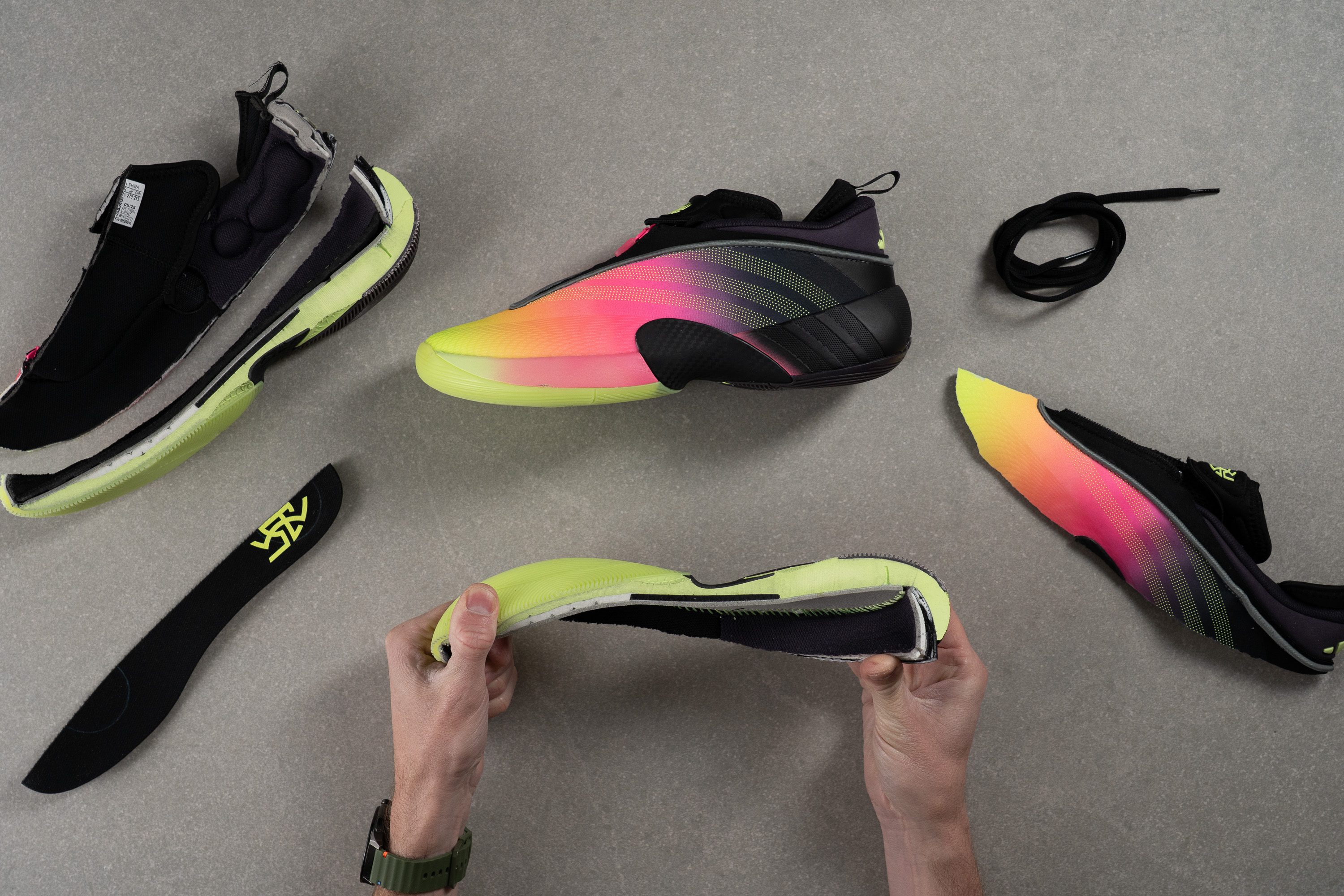
Having sliced the Issue 7 in half, we found that it packs the same cushioning setup as the Issue 6 – a full-length Lightrstrike foam with a piece of Lightstrike Pro in the forefoot.
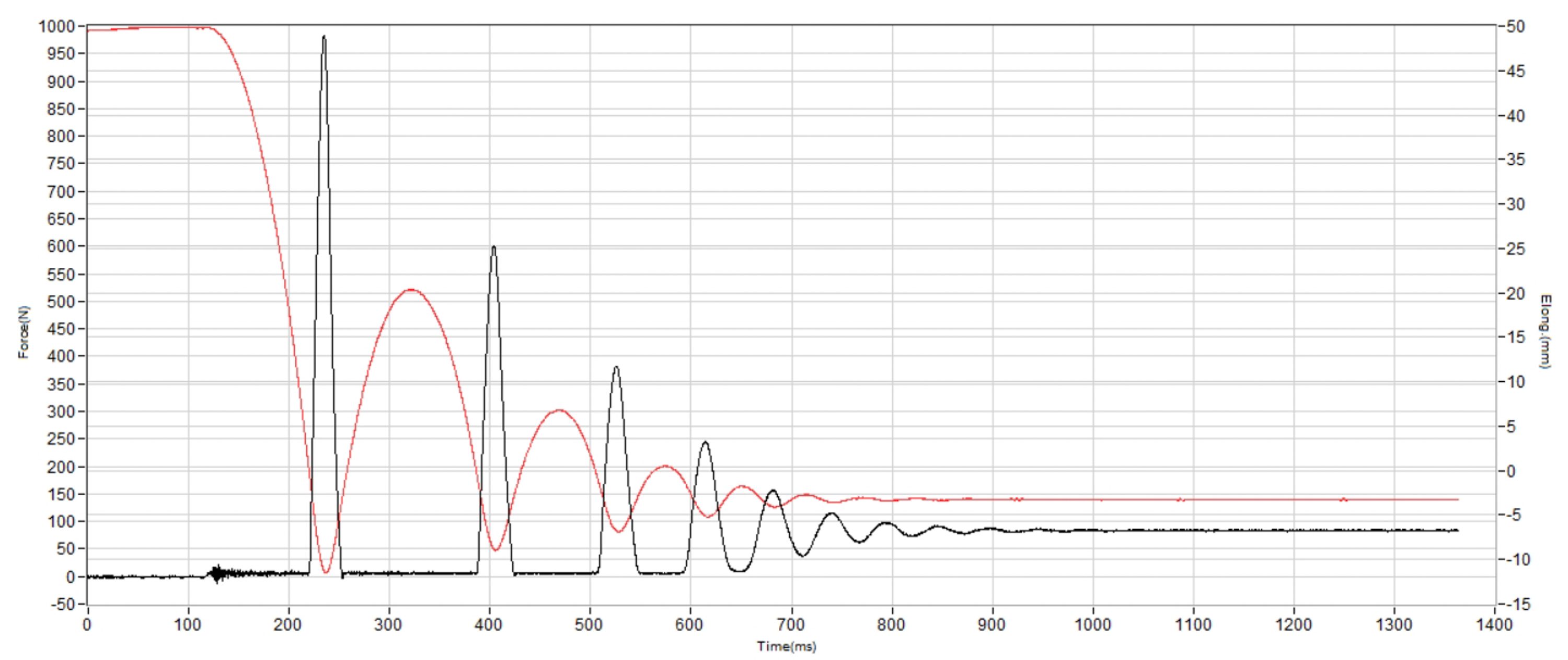
And because there were no drastic updates to the shoe's stack height or platform design, we observed no notable changes to the new iteration's shock absorption either. The D.O.N. Issue 7 returned the same 101 SA in the heel and 76 SA in the forefoot as its predecessor. Both measurements are also on par with the category average, offering protected landings without muting out the court feel.
| D.O.N. Issue 7 | 101 SA |
| Average | 104 SA |
Energy return
The Lightstrike used in this adidas D.O.N. shoe is not as springy and responsive as the brand's Boost foam (used in the AE and Harden shoes). And its low rebound nature is reflected in a very low energy return of 47.7% in the heel area.
The forefoot, however, feels a bit livelier thanks to the presence of the Lightstrike Pro unit. But does it 'help you fly up and down the hardwood at top speed' as the product info promises? Not so much because the energy return here also showed a below-average reading of 54.5%. You would have to rely on your own athleticism to achieve Donovan Mitchell's elite vertical burst here.
But while it's not as propulsive as the description suggests, the Issue 7 feels amazingly planted, offering great court feel and control.
| D.O.N. Issue 7 | 54.5% |
| Average | 62.3% |
Heel stack
The platform thickness of this adidas shoe turned out to be no different from that of the previous version or the basketball shoe average.
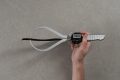
Measuring its heel stack, our caliper recorded a fairly standard reading of 28.4 mm.
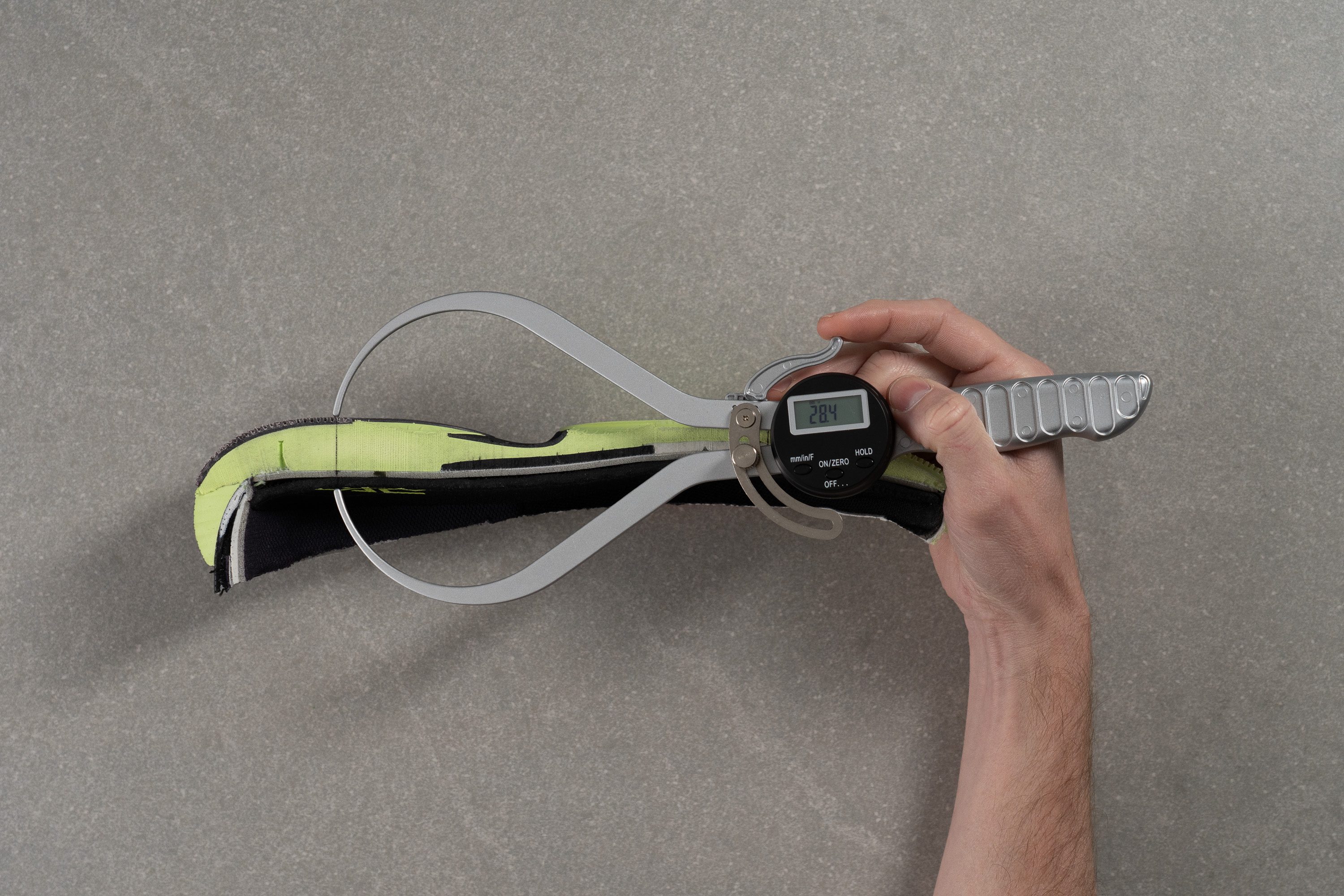
| D.O.N. Issue 7 | 28.4 mm |
| Average | 28.6 mm |
Forefoot stack
The forefoot stack, however, is on the lower end of the hoop shoe spectrum, measuring 19.4 mm on our caliper. This puts the ball of the foot closer to the court for a more grounded experience.
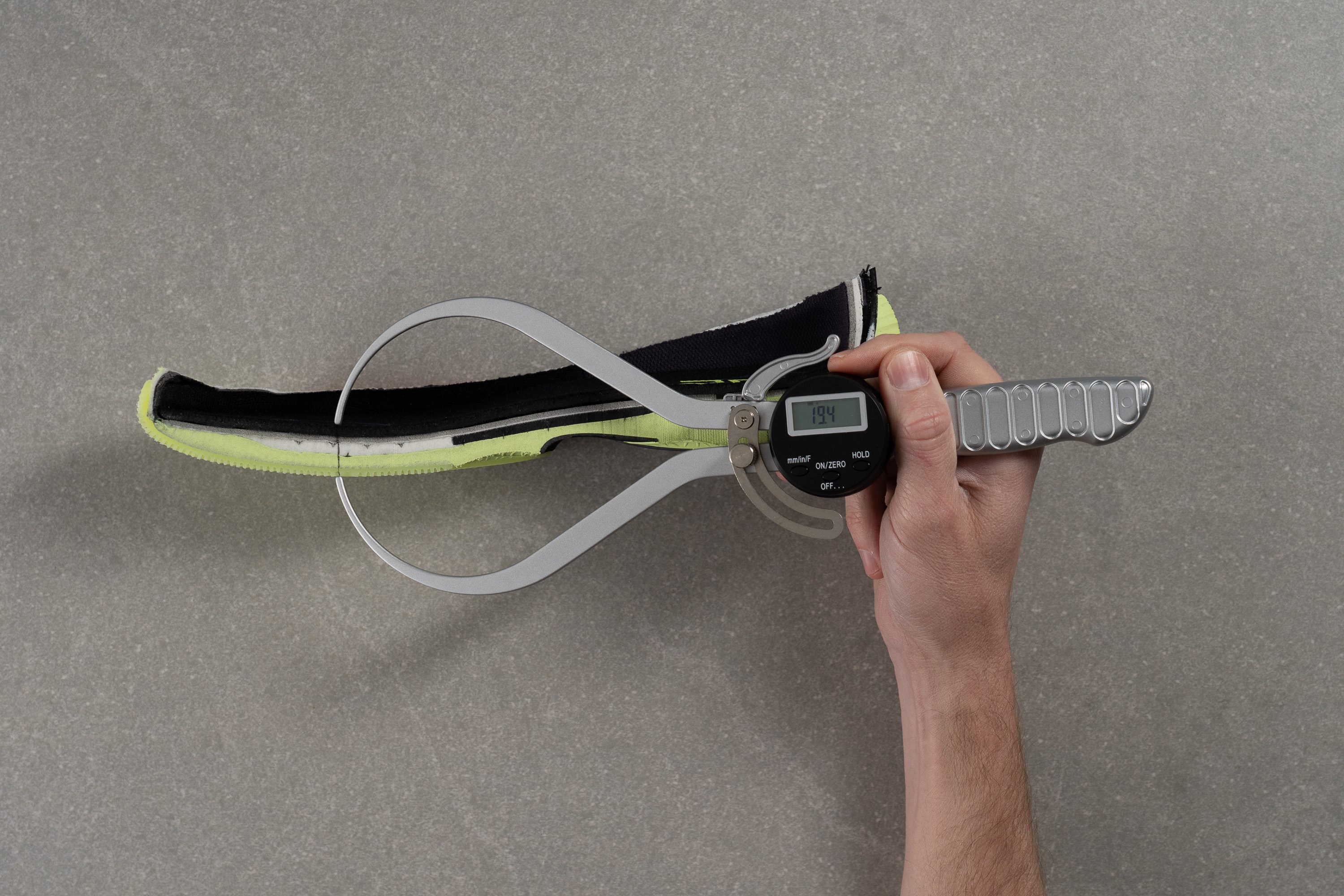
| D.O.N. Issue 7 | 19.4 mm |
| Average | 21.4 mm |
Drop
This difference in the shoe's stack heights forms a drop of 9.0 mm. Slightly higher than average, it encourages a natural forward pitch for sprints, run-and-gun, and other offensive moves, while keeping the heel better cushioned and reducing the load on the Achilles.
But it's not high enough for most players to even notice the elevation.
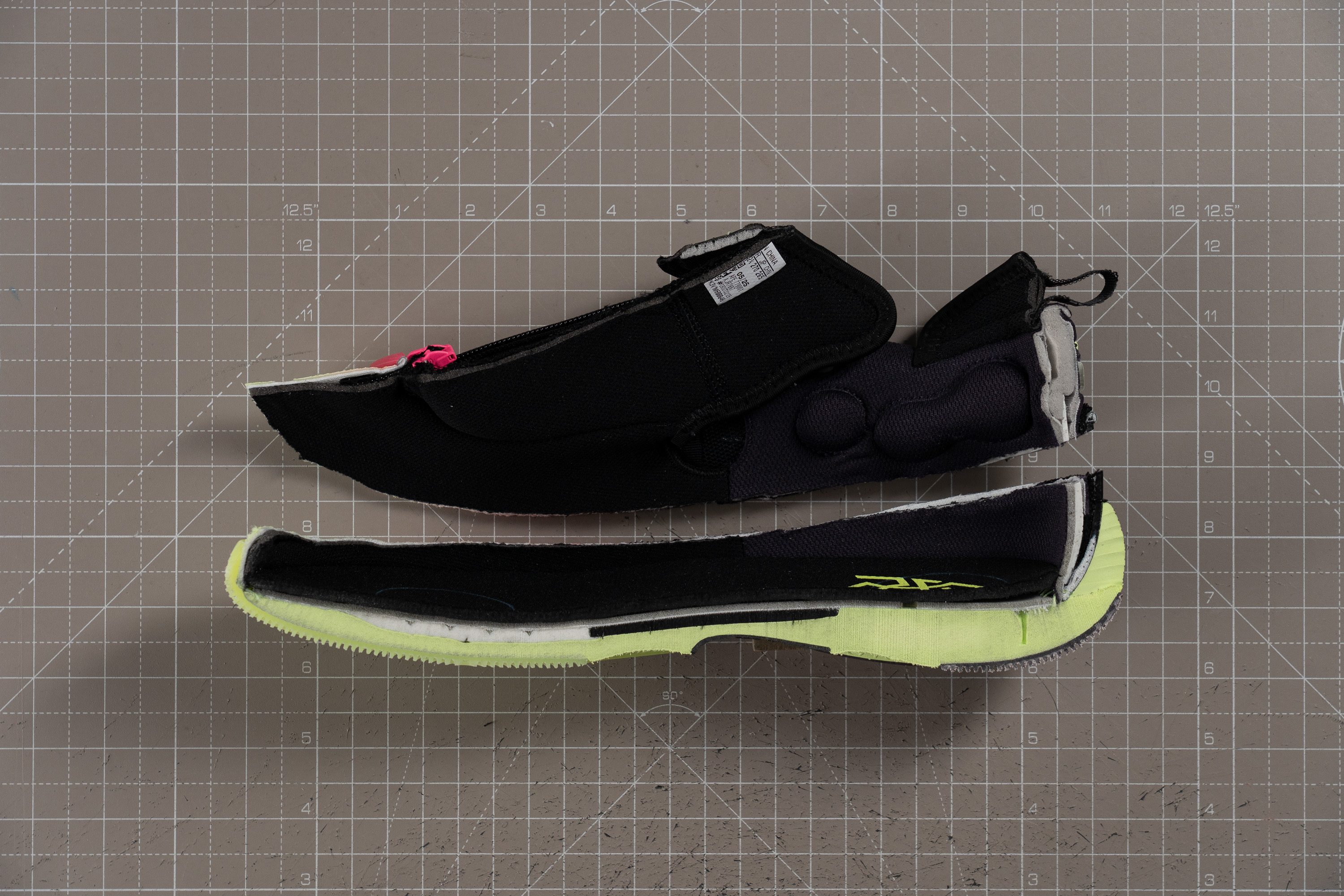
| D.O.N. Issue 7 | 9.0 mm |
| Average | 7.2 mm |
Midsole softness
The D.O.N. Issue 6 offered a rather firm ride, but the Issue 7 changes things up to make the underfoot experience more comfortable and forgiving.
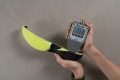
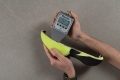
Where its predecessor showed a high durometer reading, the Issue 7 surprised us with a notably lower measurement of 35.5 AC! That took this adidas shoe from the firm range of cushioning foams to a softer one.
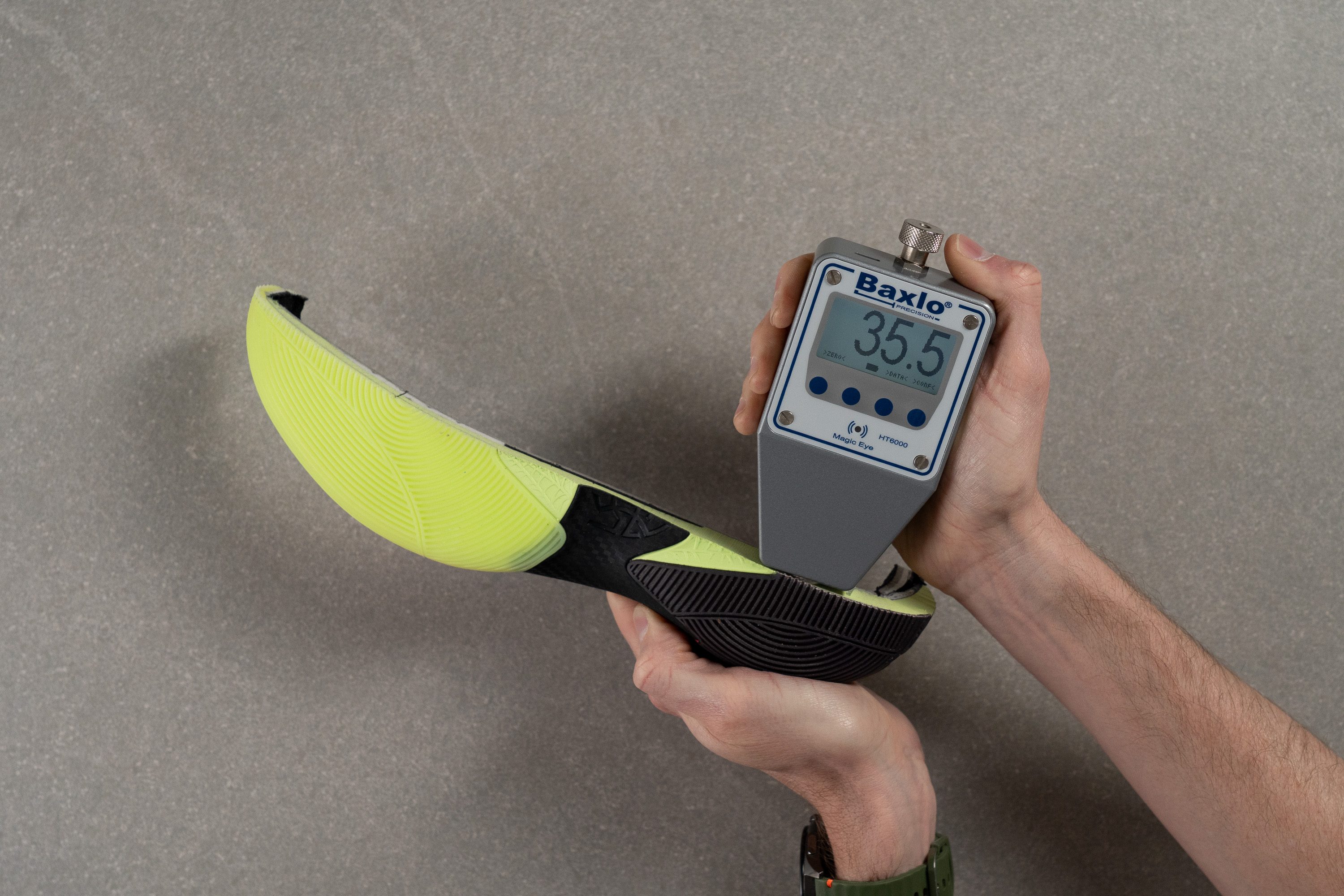
| D.O.N. Issue 7 | 35.5 AC |
| Average | 40.7 AC |
Secondary foam
However, the thin layer of Lightsrike Pro in the forefoot proved to be on the firmer side, showing 57.3 AC on our durometer. But in return, this compound exhibits some of the best durability among superfoams.
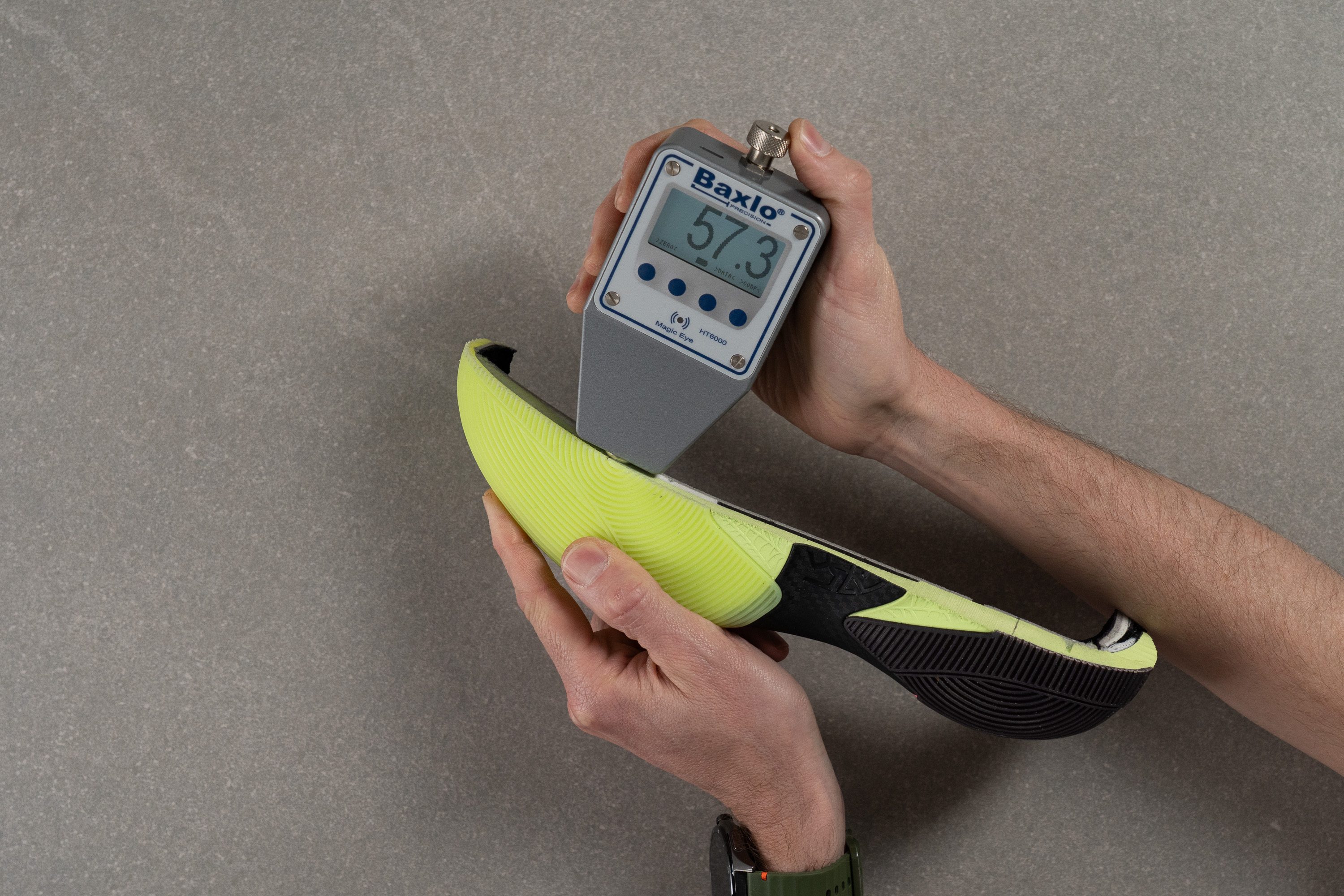
| D.O.N. Issue 7 | 57.3 AC |
| Average | 45.6 AC |
Size and fit
Size
adidas D.O.N. Issue 7 fits slightly small (17 votes).
Width / Fit
We were pleased to find that adidas didn't mess with the fit and sizing of the D.O.N. Issue 7, keeping it consistent with the preceding model.
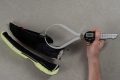
A custom liquid helped us create a gel mold of the shoes' interiors and measure their dimensions precisely with a caliper.
The widest part of the mold showed a medium-range width of 94.0 mm.
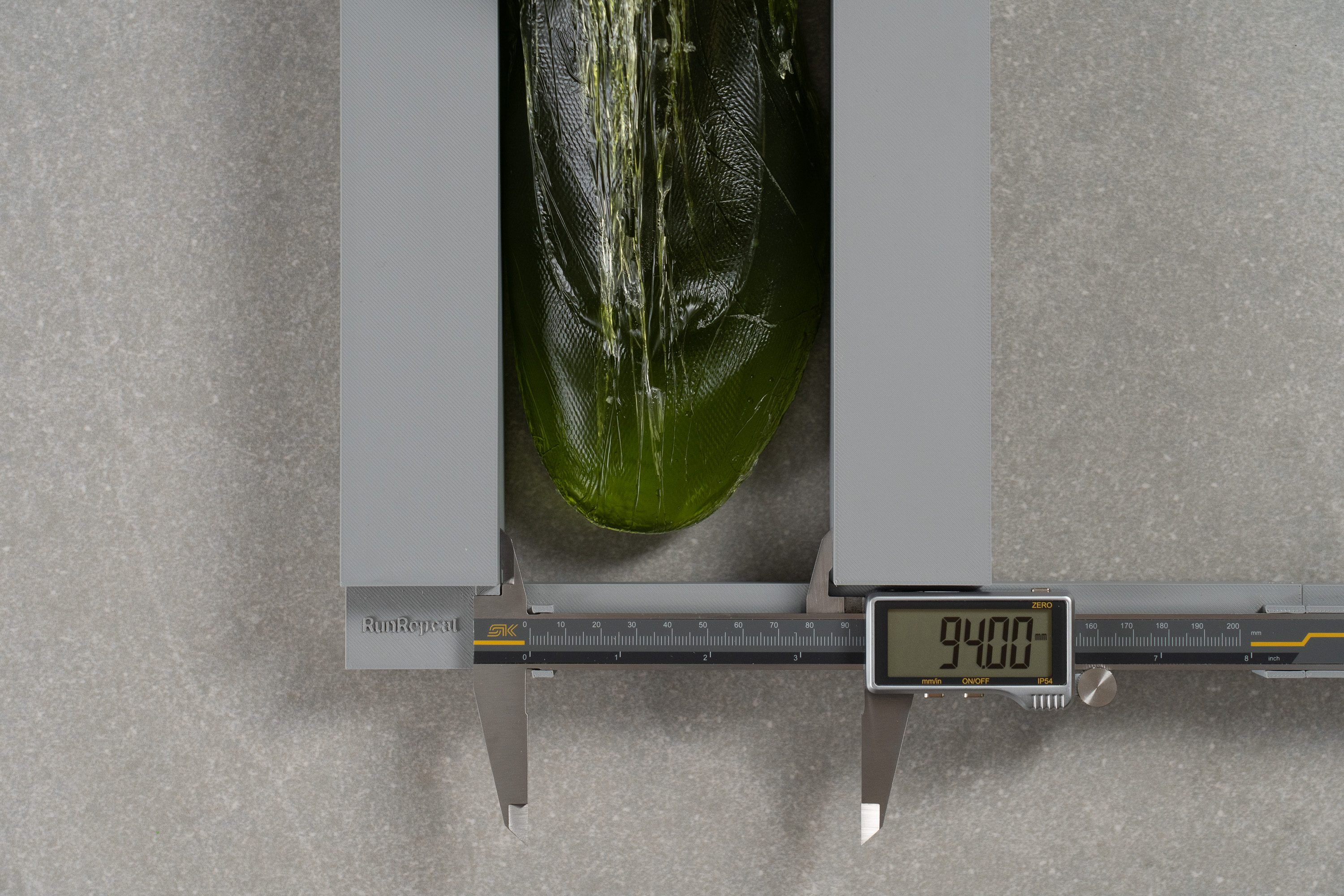
| D.O.N. Issue 7 | 94.0 mm |
| Average | 92.6 mm |
Toebox width
The shoe's toebox didn't deviate from the average either. It showed a standard, medium-width reading of 69.8 mm in the big-toe area of the mold.

| D.O.N. Issue 7 | 69.8 mm |
| Average | 69.2 mm |
Toebox height
While the enclosed upper design of this adidas shoe might seem claustrophobic to some, our measurements confirmed that it offers sufficient toe room both horizontally and vertically.
The Issue 7's toebox height came in at a standard 23.5 mm.
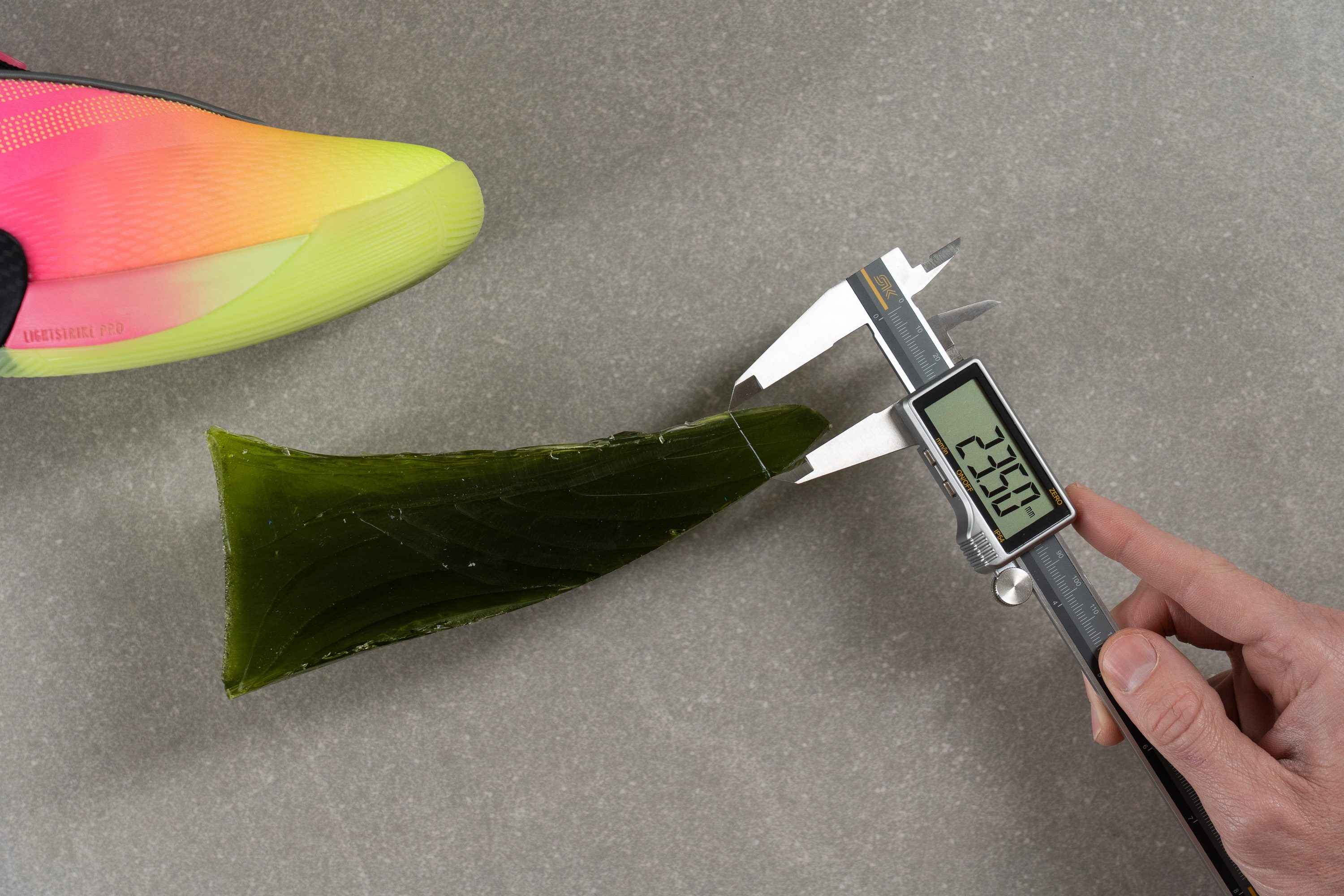
| D.O.N. Issue 7 | 23.5 mm |
| Average | 23.4 mm |
Traction / Grip
Traction test
We are happy to report that the top-tier outsole traction of the D.O.N. Issue 7 clings to hardwood like hungry!
With a very high friction coefficient of 0.87, the shoe demonstrates consistent grip for all sorts of cuts, dynamic eurosteps, plant-and-gos, and other multi-directional movements.
| D.O.N. Issue 7 | 0.87 |
| Average | 0.76 |
Outsole design
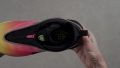
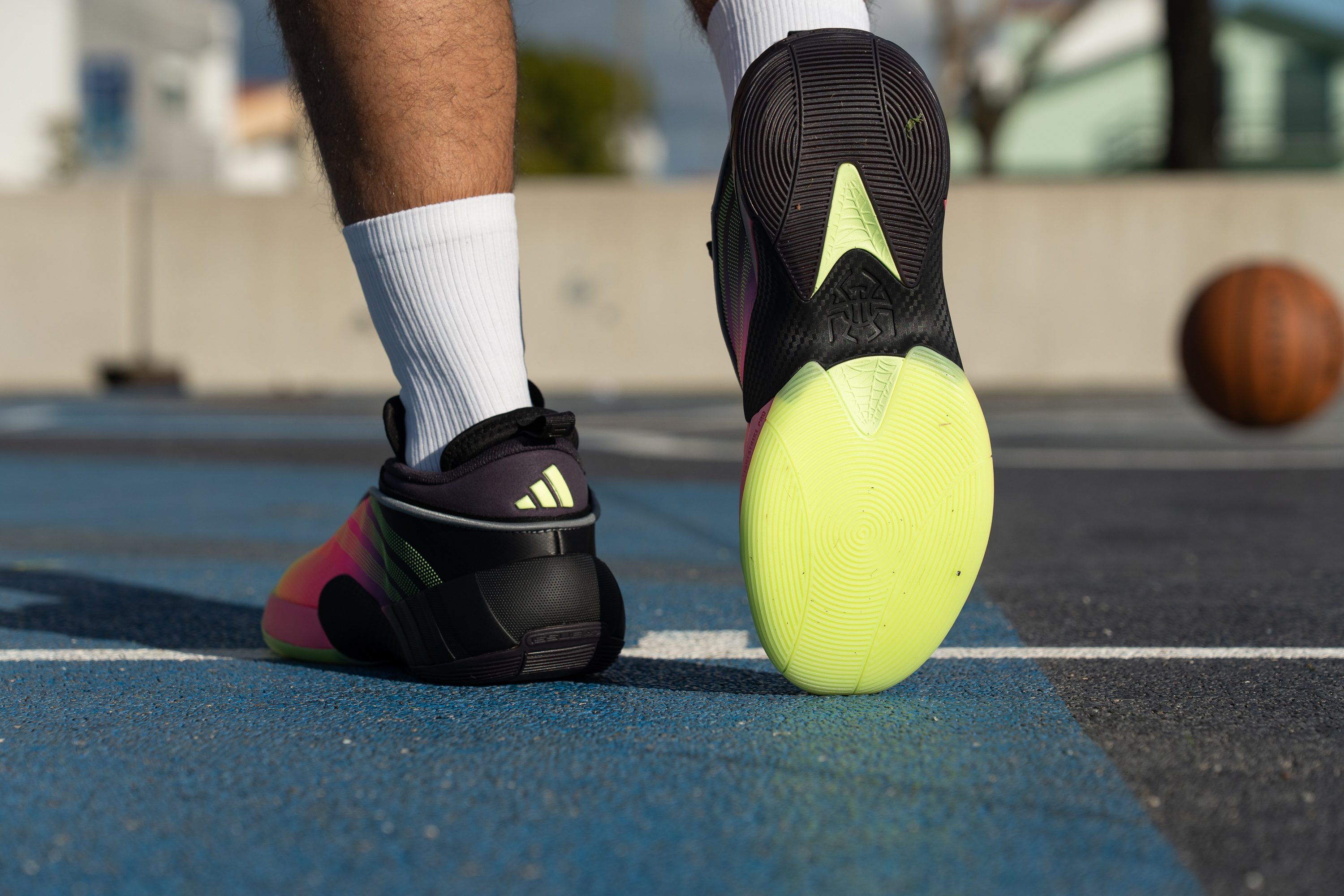
Examining the shoe's outsole design, we found that it's nearly identical to that of the Issue 6.
It is still comprised of two sections and a raised midfoot and features a circular tread pattern in the forefoot. The heel, on the other hand, received a linear pattern for better front-to-back stopping power.
Flexibility / Stiffness
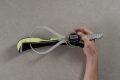
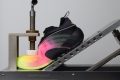
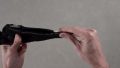
The break-in period will be much shorter and easier in the D.O.N. Issue 7, as the shoe got notably more pliable in the forefoot than its predecessor.
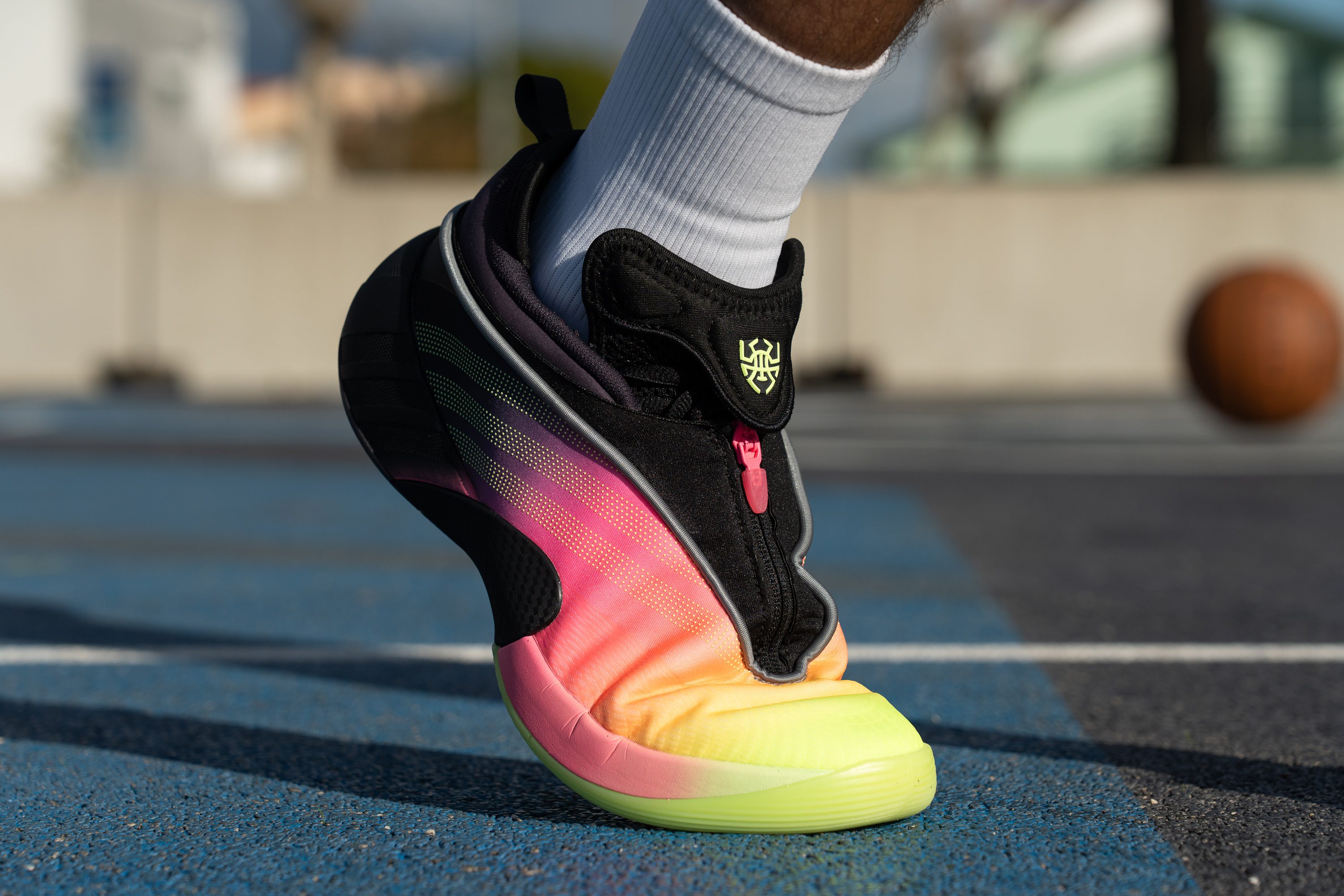
Our stiffness test showed that Issue 7 needed only 17.0N to bend by 30 degrees, whereas the Issue 6 required up to 21.3N.
The added give in the forefoot surely enhanced maneuverability and a sense of control over our footwork in the new D.O.N. shoe.
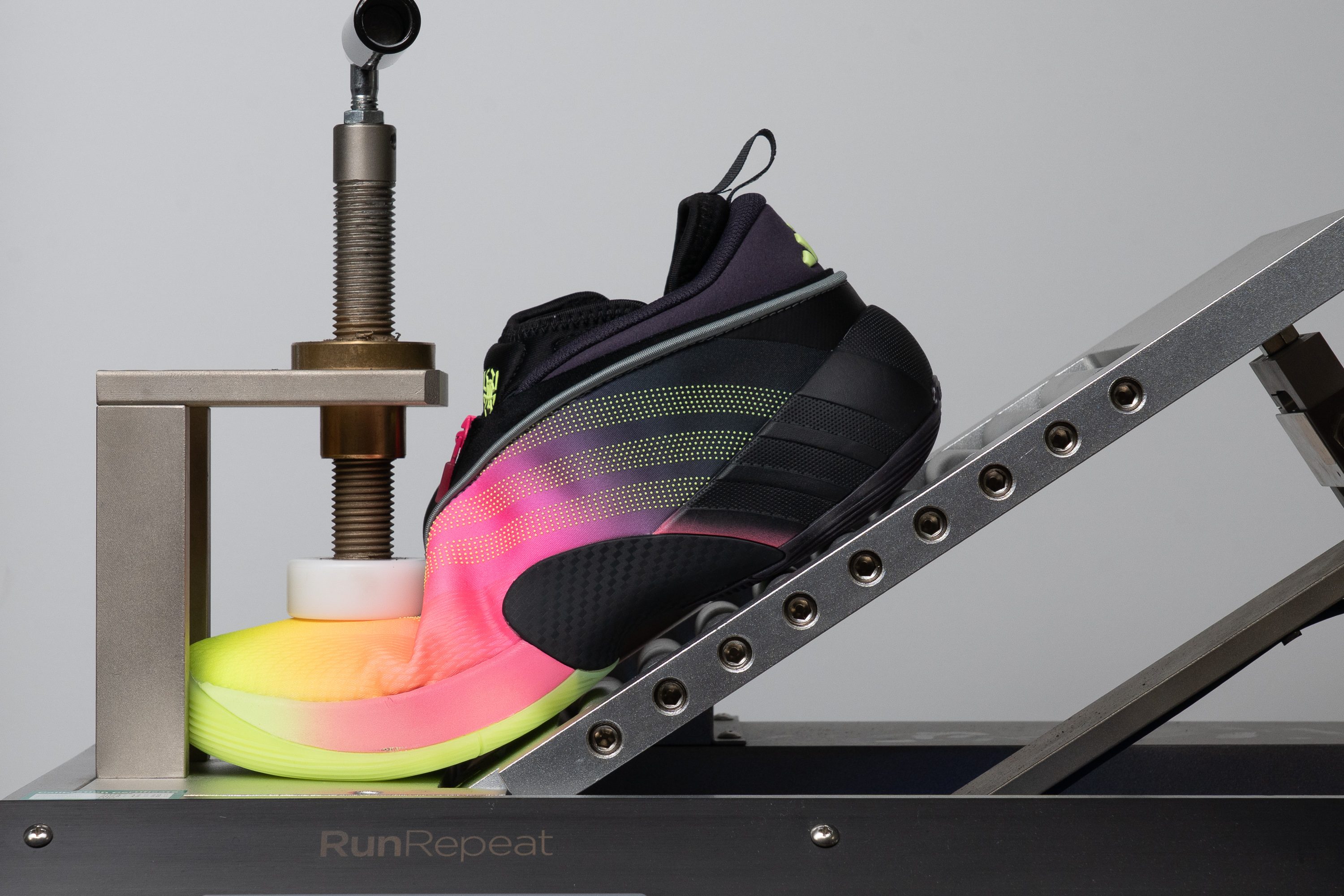
| D.O.N. Issue 7 | 17.0N |
| Average | 20.6N |
Weight
On the downside, the D.O.N. Issue 7 gained an ounce of weight over the previous iteration, reaching 14.0 oz (397g) in a men's US size 9.
But we wouldn't say that the extra grams made this adidas shoe feel clunky or bottom-heavy. Its weight is now merely on par with the average hoop shoe.
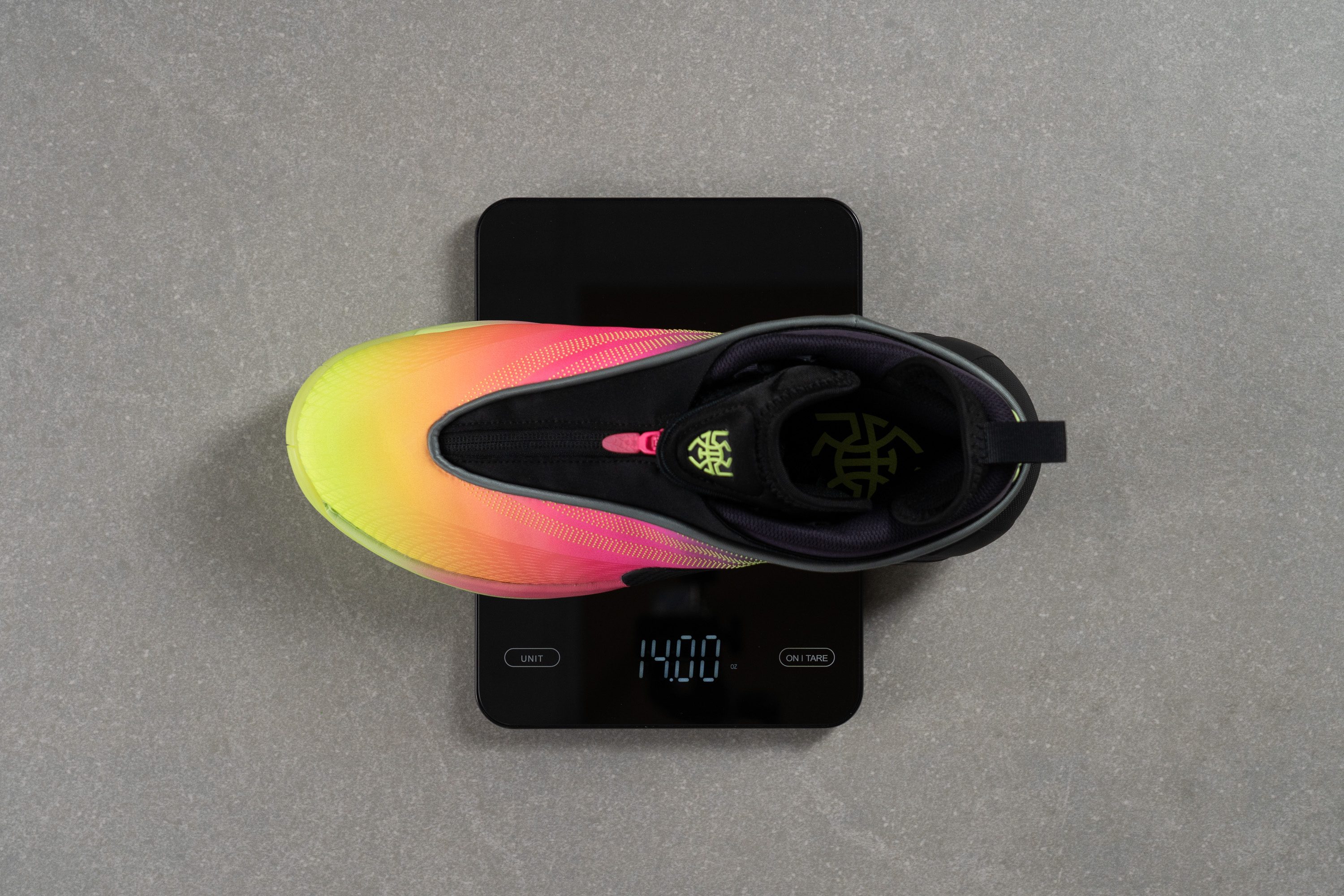
| D.O.N. Issue 7 | 14.0 oz (397g) |
| Average | 13.9 oz (393g) |
Breathability
Breathability test
The D.O.N. Issue 7's enclosed upper design doesn’t look particularly breathable, and our lab test confirmed it with a low score of 53 BR. It is, in fact, one of the least breathable hoop shoes we’ve tested, with its materials struggling to pull sweat away from the player’s skin.
Because of this, moisture builds up quickly inside the shoe, increasing the risk of impromptu foot sliding, hot spots, and even blisters, especially with heavy perspiration.
| D.O.N. Issue 7 | 53 BR |
| Average | 74 BR |
Drying potential
NewTo make matters worse, this adidas shoe is not very effective at evaporating sweat either. After keeping the Issue 7 on a warmed footform with simulated perspiration inside a special chamber for 3 hours, we recorded that it evaporated only 26% of the total moisture.
As one of the slowest-drying basketball shoes in our lab, it is very likely to feel wet or even soaking wet by the end of a long practice or game. And there is little chance it will dry the next day.

| D.O.N. Issue 7 | 26% |
| Average | 36% |
Stability
Lateral stability test
True to the D.O.N. Issue lineage, the 7th iteration keeps lateral stability and ankle support high up its priority list.
The shoe retains the stiff TPU shank with lateral wings, but it's been enlarged to take up an even greater area of the midfoot.
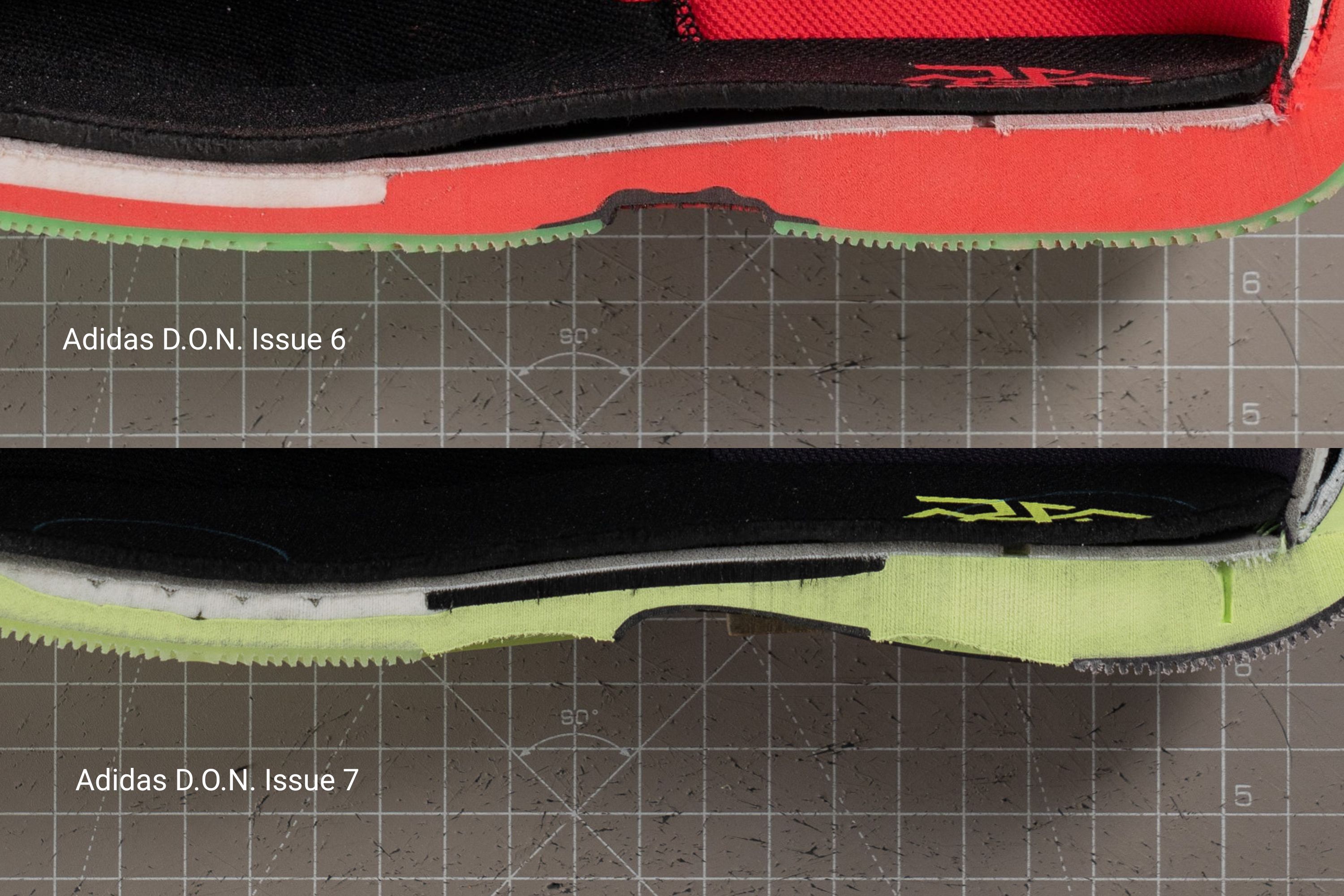
We also noticed that the external foam carrier got beefed up in the rearfoot, and the inner collar received puffy Achilles pillows to lock the heel and ankle even more securely in place.
Another obscure support feature includes nylon lace cables that connect the laces to the shoe's footbed, with one pair extending to the heel for a more solid lockdown.
Put this whole ensemble on a broad platform, and you get a recipe for an immensely stable shoe to support your most forceful shuffles, stepbacks, and backdoor cuts.
Torsional rigidity
Despite the strong clench of its midfoot shank, the Issue 7 actually requires a moderate torque of 17.7N to twist it by 10°. That puts this adidas shoe into the balanced range of hoop shoes, mixing support with fluid movement.
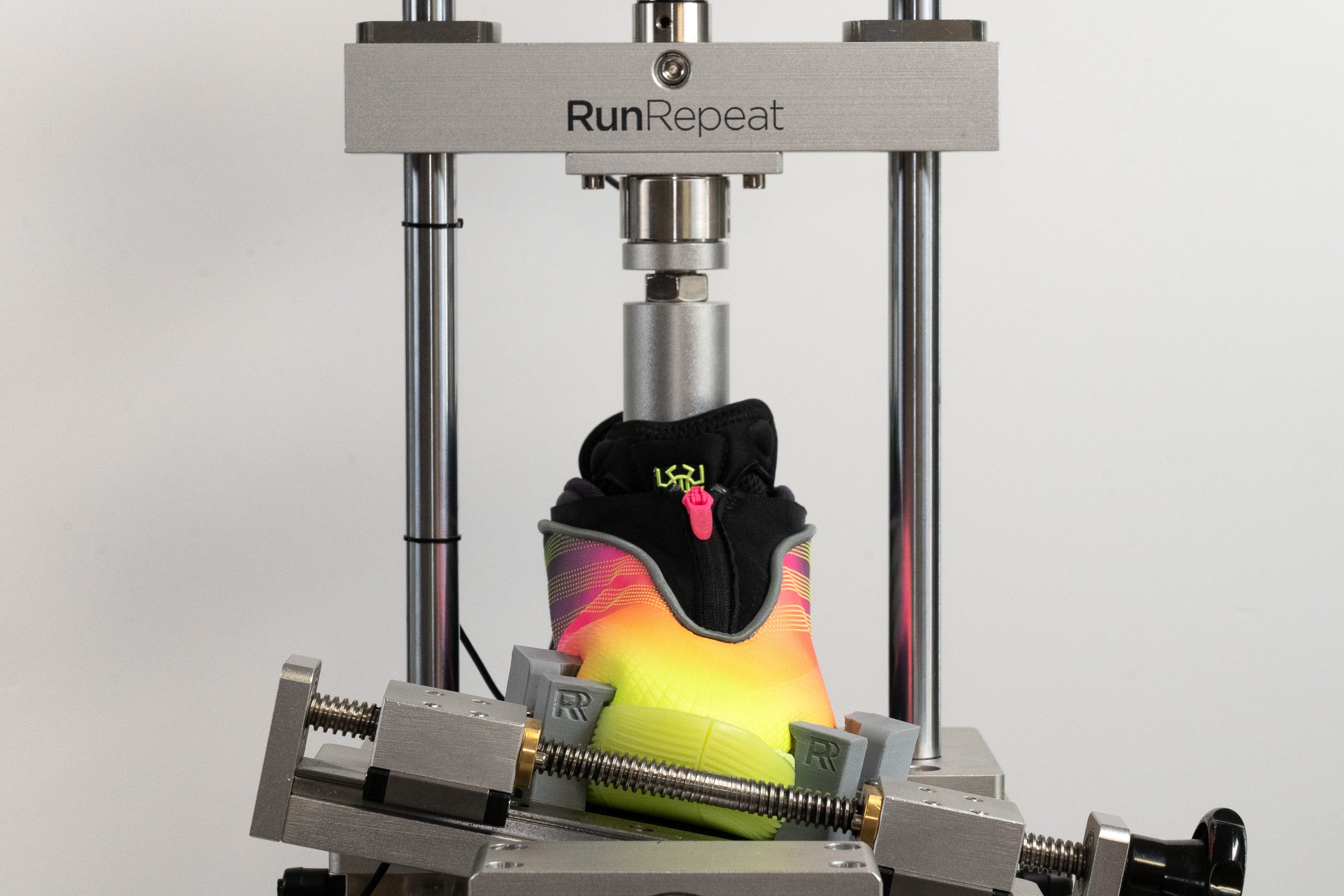
| D.O.N. Issue 7 | 17.7 Nm |
| Average | 19.5 Nm |
Heel counter stiffness
The shoe's heel counter also remains as stout and sculpted as it gets, thanks to all the supportive layers packed into it (padded Achilles pillows, an internal heel counter, and an external heel cup).
Its strong resistance to our manual pushing and squeezing resulted in a high stiffness score of 4/5. Heel wobbles are not part of the deal in this adidas shoe.
| D.O.N. Issue 7 | 4 |
| Average | 3.9 |
Midsole width - forefoot
Stability is further reinforced with the Issue 7's broad base that reaches 115.5 mm in the widest area of the forefoot. It forms sufficiently large outriggers to rely on when side-to-side action gets intense.
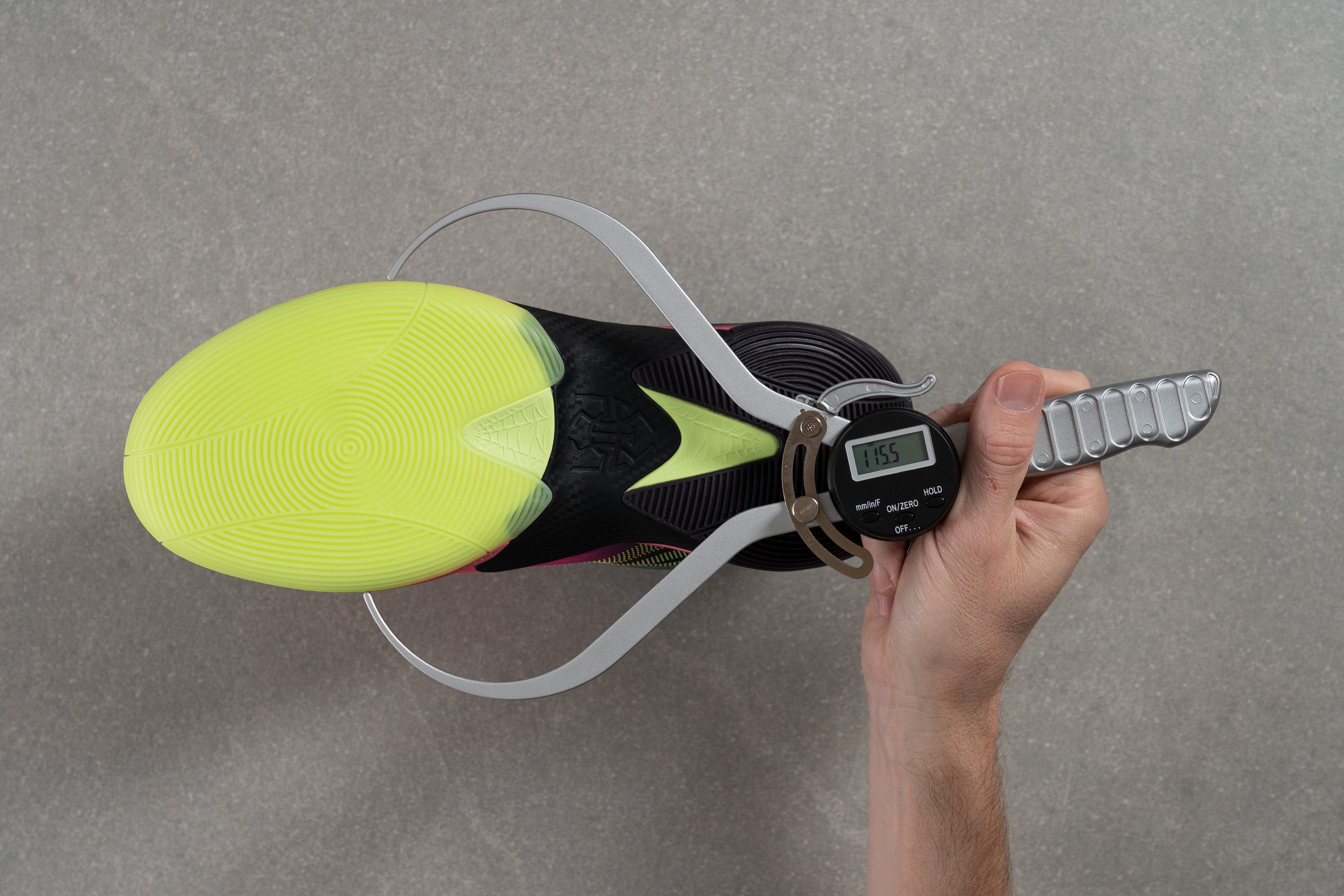
| D.O.N. Issue 7 | 115.5 mm |
| Average | 115.4 mm |
Midsole width - heel
But the shoe's heel extends even wider than the average at 95.2 mm in its broadest part.
It forms a safe landing area for decelerating from a sprint, squaring up for a jumper, or planting the foot at an odd angle.
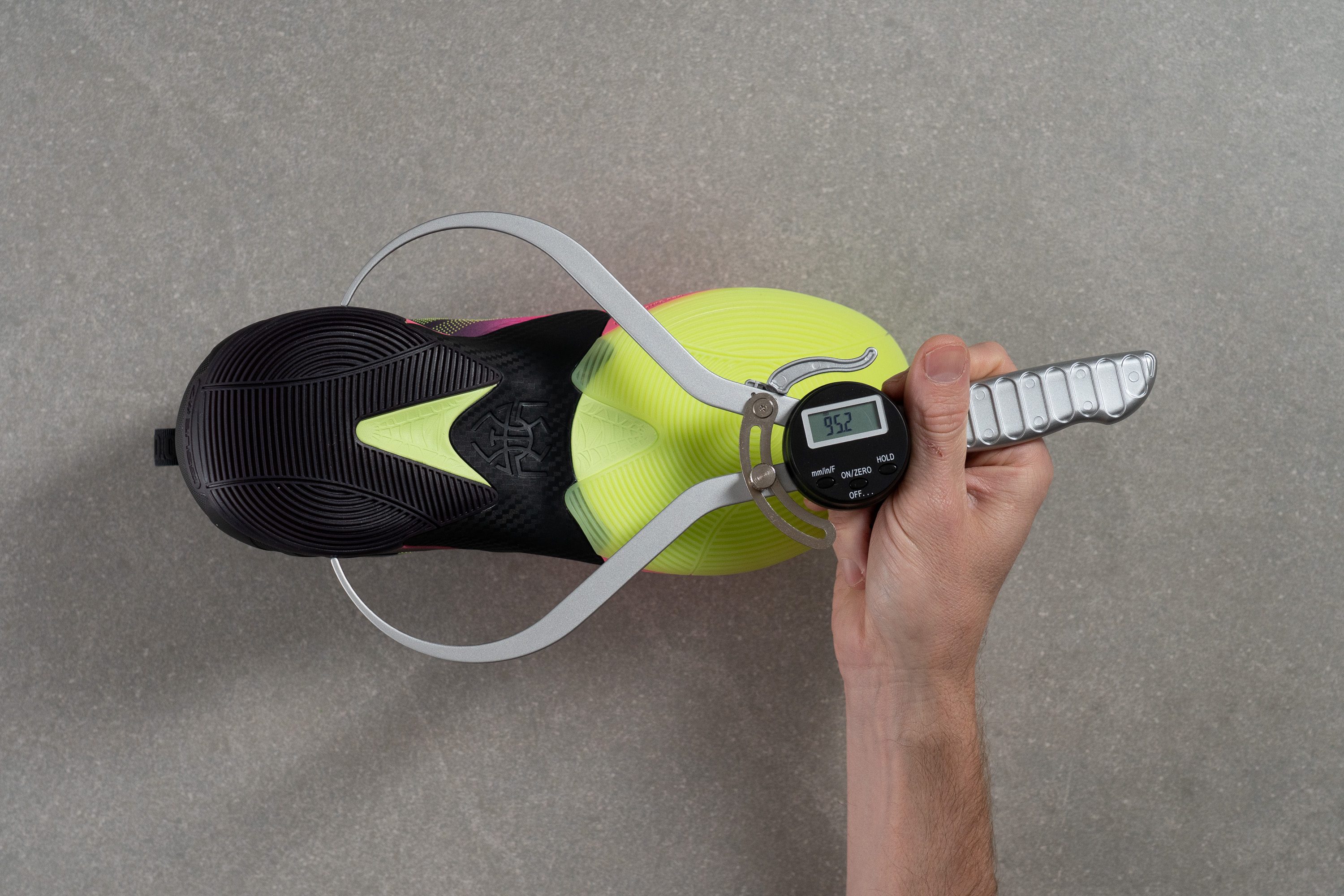
| D.O.N. Issue 7 | 95.2 mm |
| Average | 89.3 mm |
Durability
Toebox durability
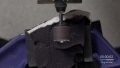
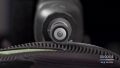
The micro mesh on the Issue 7's upper proved to be moderately wear-resistant in our Dremel test.
While it didn't tear easily, it sustained visible damage after 12 seconds of drilling. Thus, we assessed the shoe's toebox durability with a middle-ground score of 3/5.
| D.O.N. Issue 7 | 3 |
| Average | 3.7 |
Heel padding durability
The mesh lining inside the shoe didn't fare well in the sandpaper challenge. Torn apart in a matter of seconds, it scored low on our heel padding durability test (only 2 out of 5).
| D.O.N. Issue 7 | 2 |
| Average | 3.8 |
Outsole durability
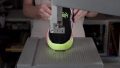
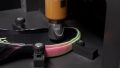
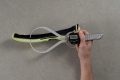
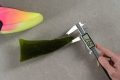
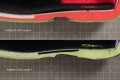
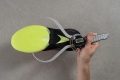
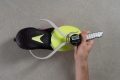
With a mix of regular rubber in the heel (black) and translucent rubber in the forefoot (green), we were curious to see if both materials are equally durable.
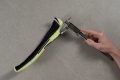
Having drilled both rubbers under the same conditions (10K RPM with 2N force for 18 seconds) and measured the dents, we found practically no difference: 1.1 mm at the heel and 0.9 mm at the forefoot.
That way, we anticipate average long-term outsole durability for the adidas D.O.N. Issue 7.
| D.O.N. Issue 7 | 1.1 mm |
| Average | 1.0 mm |
Outsole thickness
The amount of outsole rubber also proved to be close to the category average, with a caliper measurement of 3.4 mm.
But overall, we wouldn't recommend this adidas shoe for regular outdoor use because of its thin tread lines.
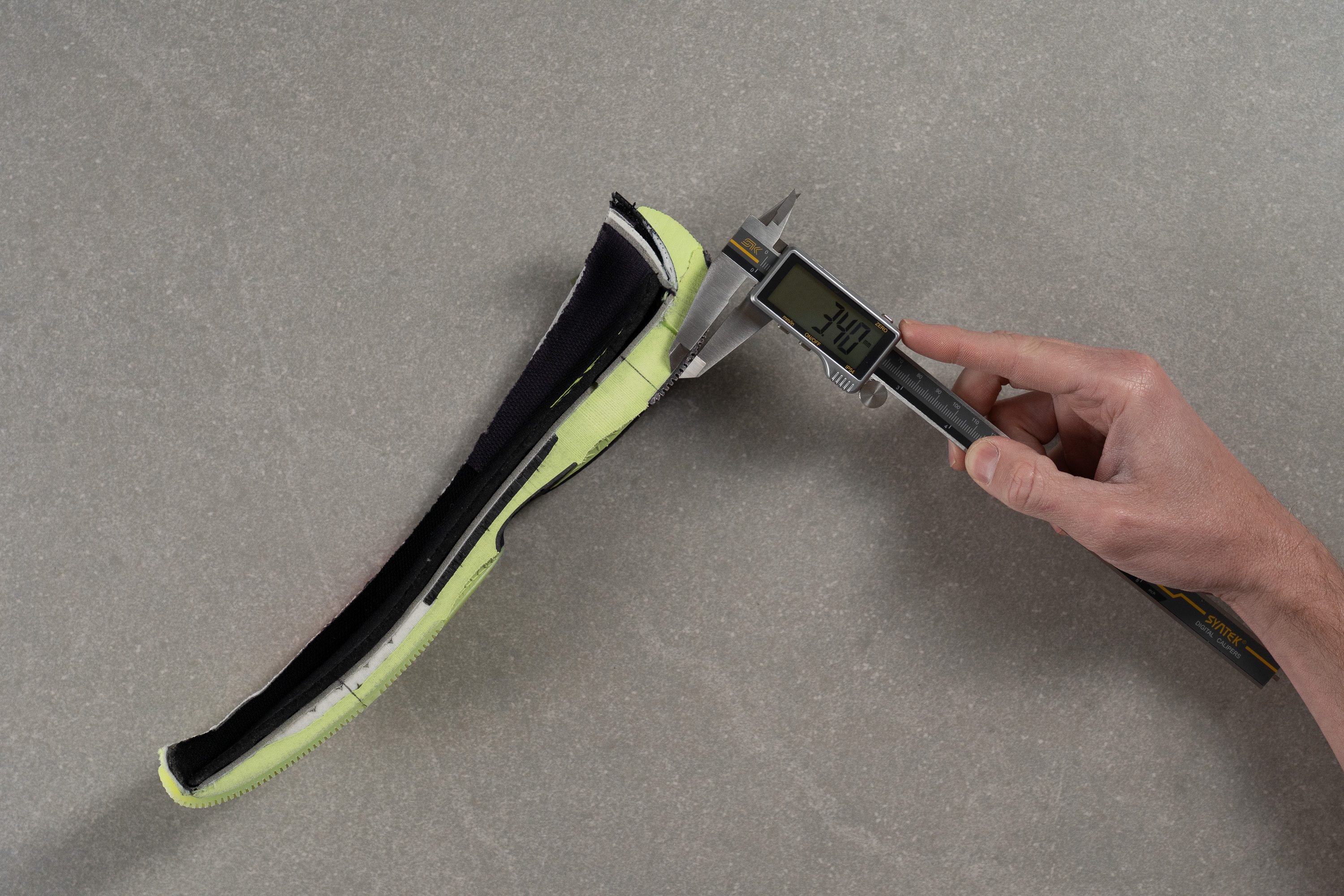
| D.O.N. Issue 7 | 3.4 mm |
| Average | 4.0 mm |
Misc
Insole thickness
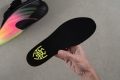
With an insole thickness of 3.8 mm, the shoe's underfoot padding is minimal yet sufficient for comfort.
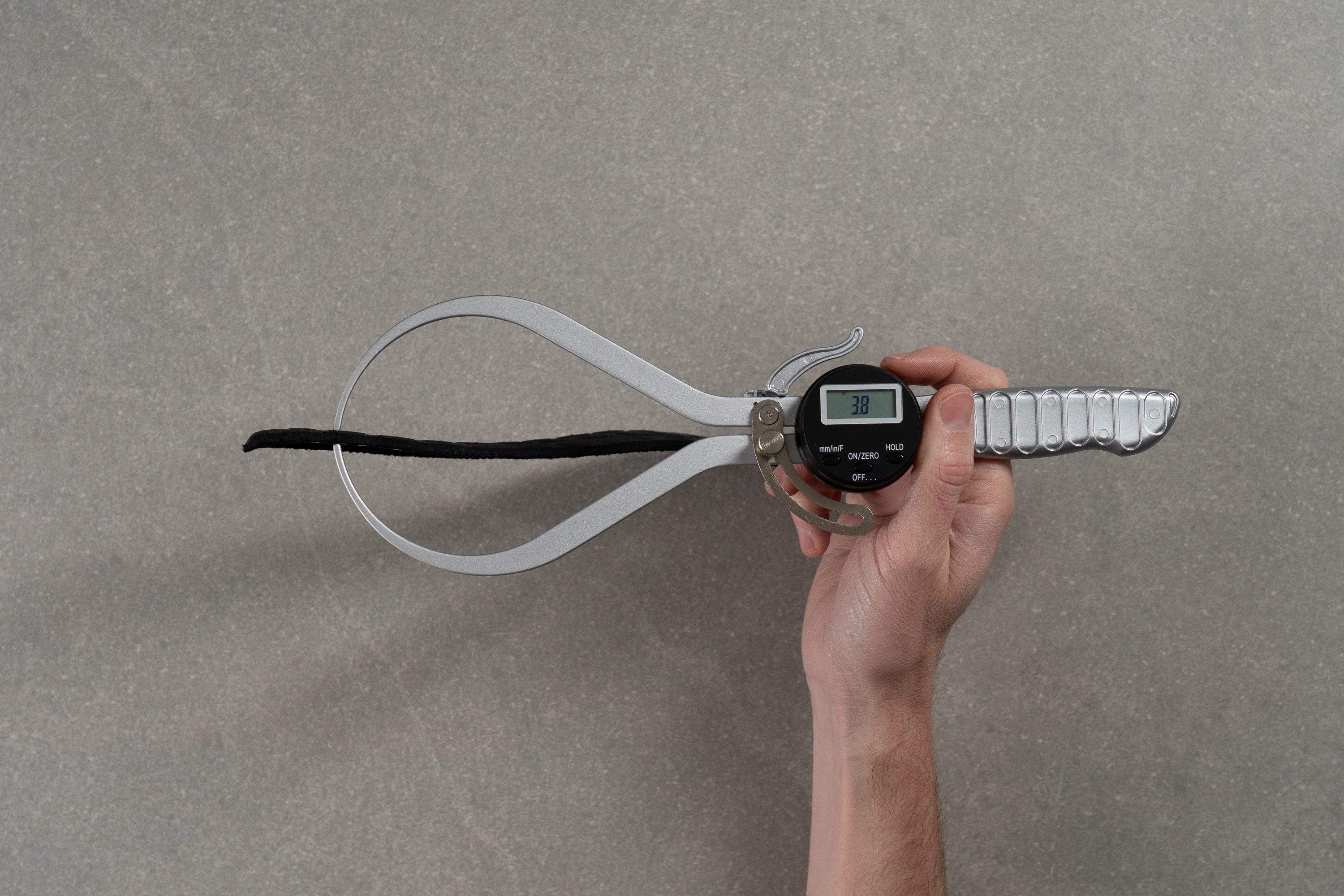
| D.O.N. Issue 7 | 3.8 mm |
| Average | 5.1 mm |
Removable insole
But because it is not attached to the bottom of the shoe, it can be taken out and swapped for an orthotic or another insole of choice.
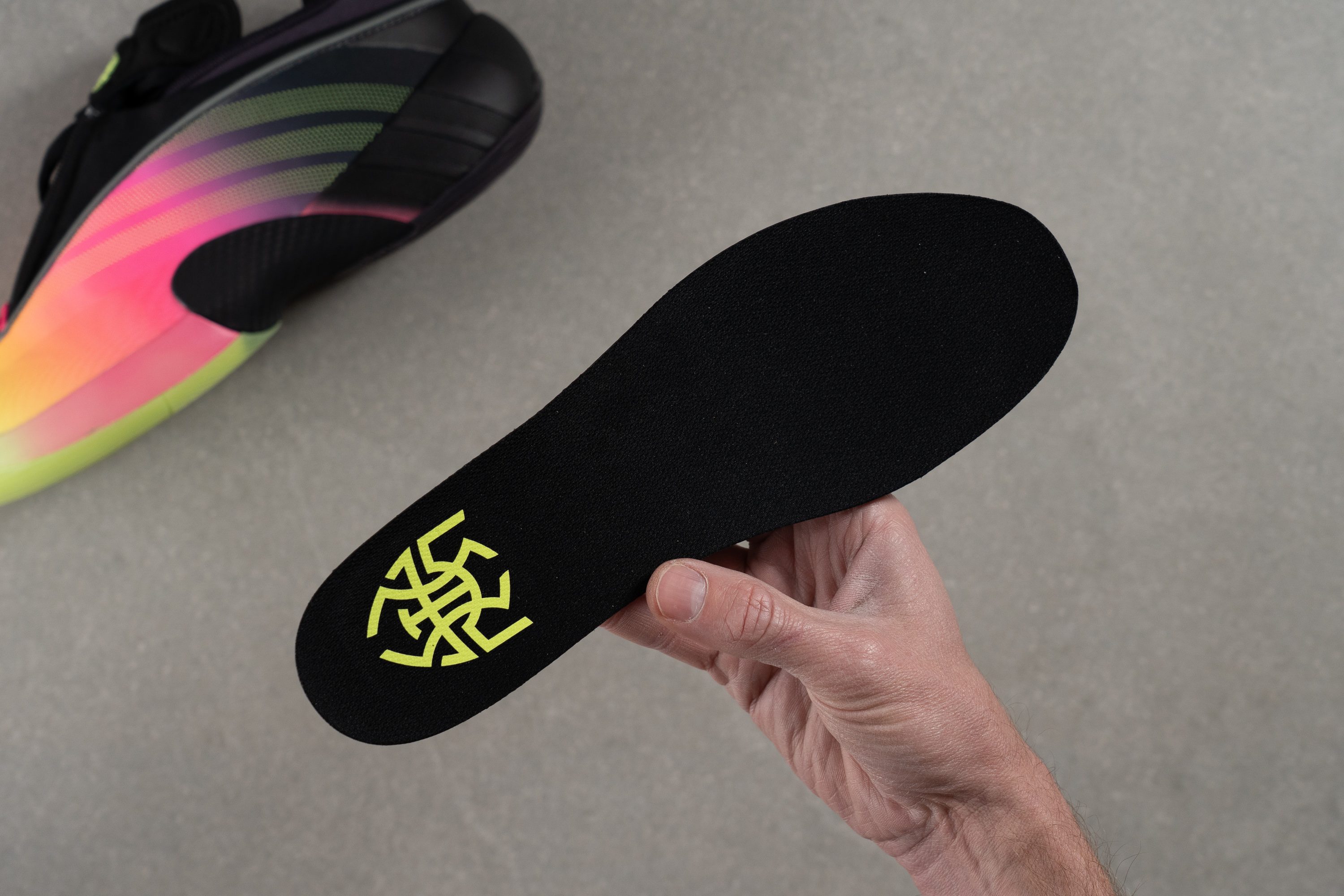
| D.O.N. Issue 7 | Yes |
Tongue padding
It's not only the shoe's heel collar that is generously padded in the D.O.N. Issue 7, but also the tongue. Measuring its thickest part, we got an above-average reading of 12.0 mm.
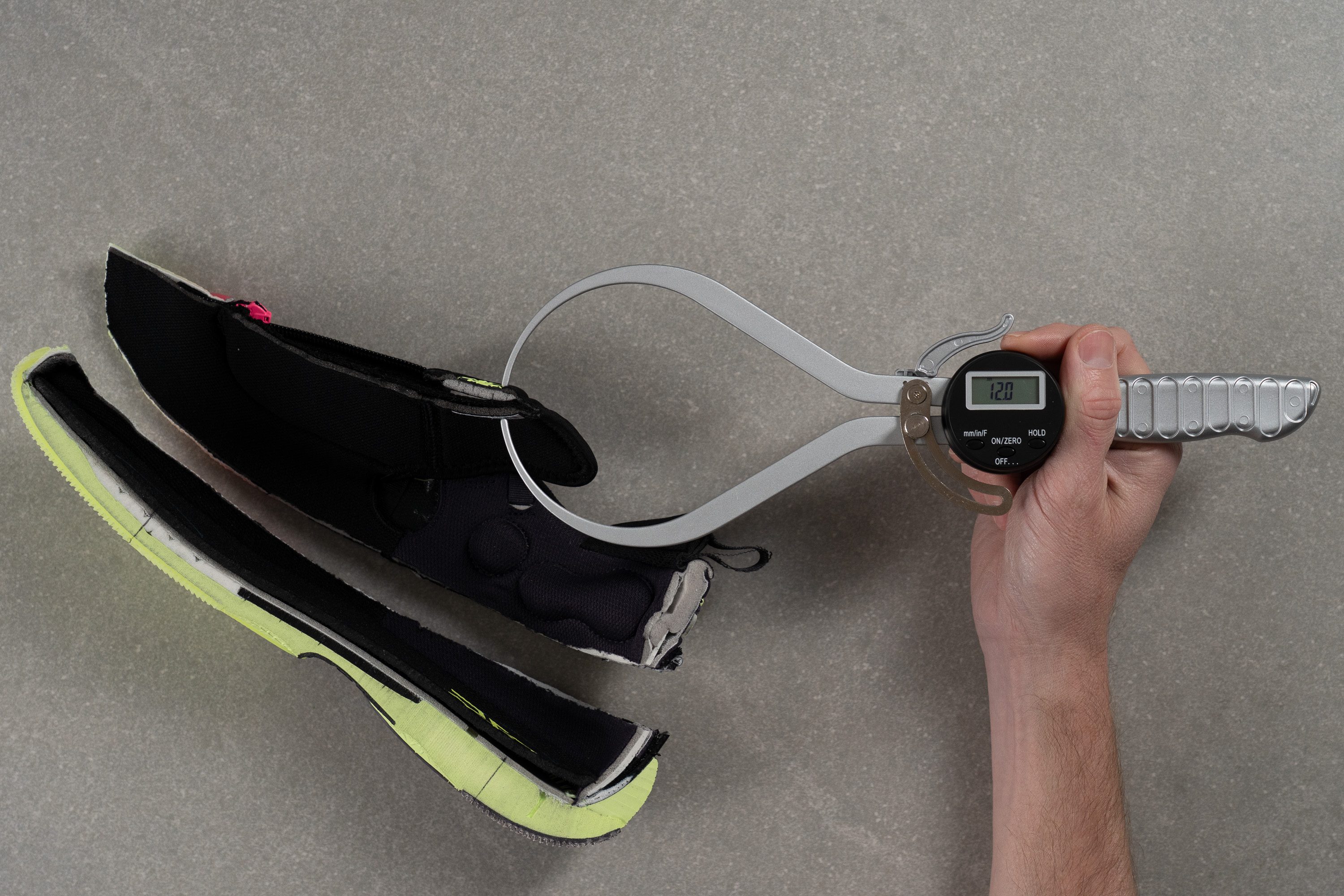
| D.O.N. Issue 7 | 12.0 mm |
| Average | 9.4 mm |
Tongue: gusset type
Be prepared to feel like you're in a race car bucket seat, thanks to the shoe's semi-gusseted tongue, shroud, and a zipper on top.
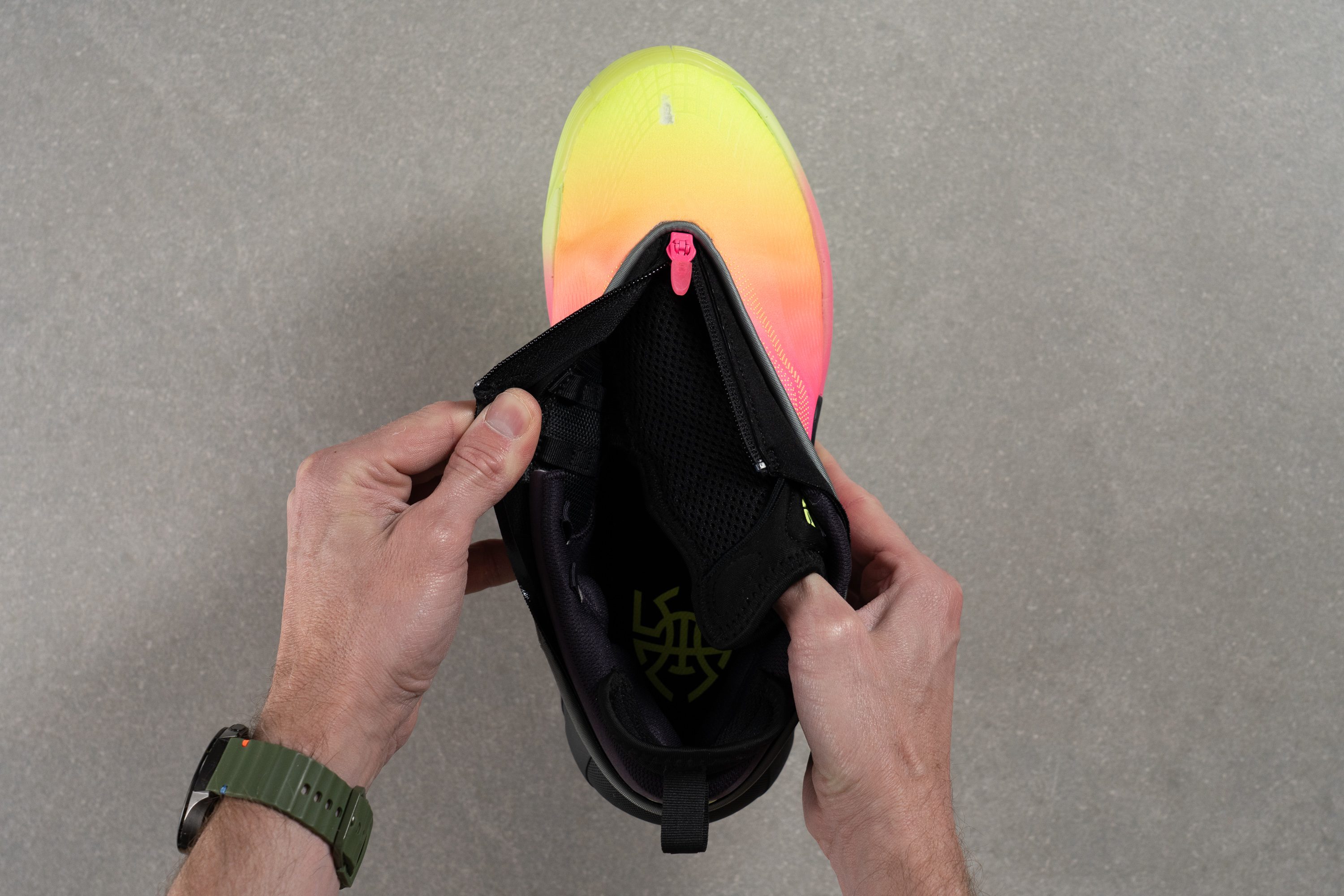
| D.O.N. Issue 7 | Both sides (semi) |
Heel tab
A large finger loop at the back of the heel collar helps with getting the shoe on.
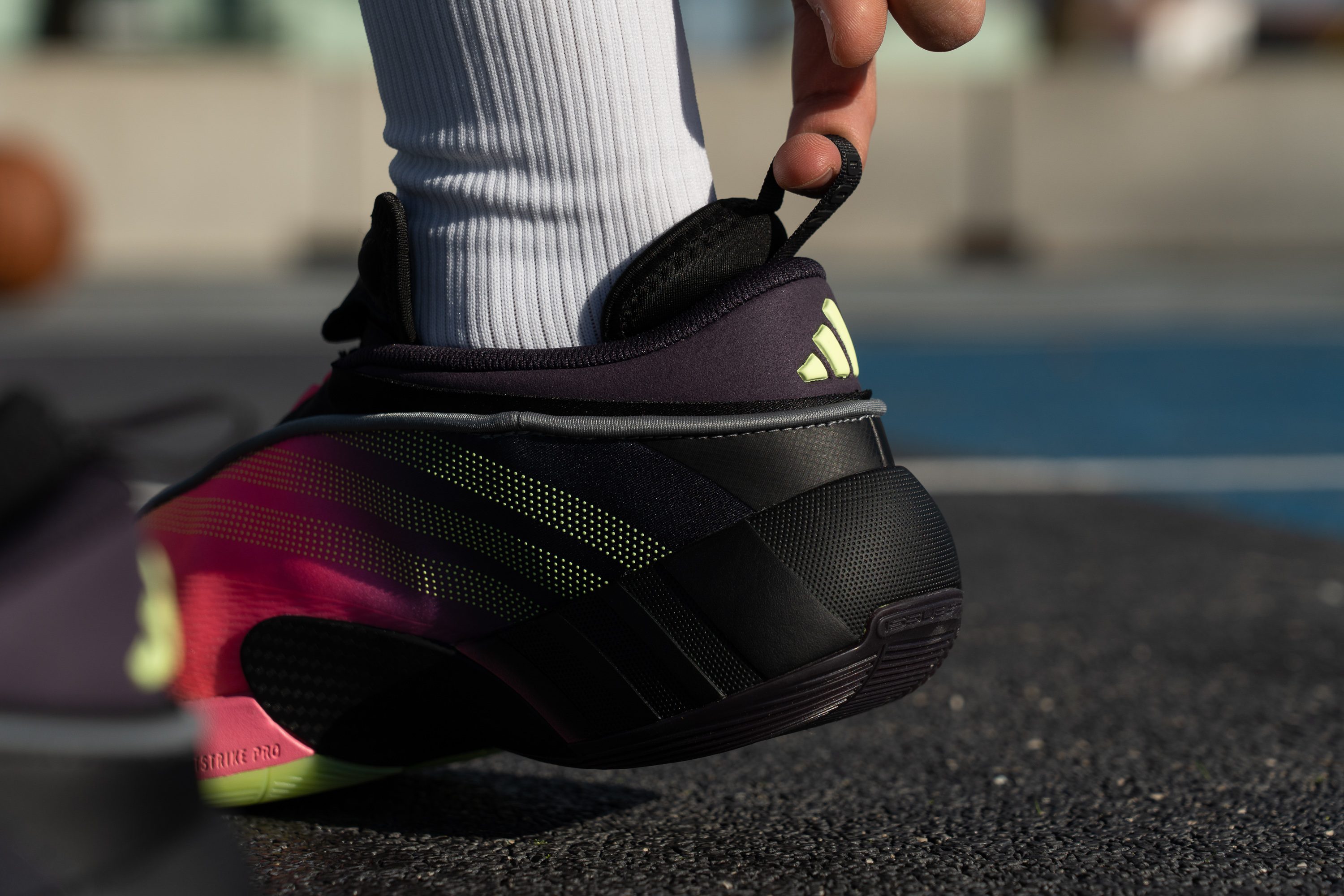
| D.O.N. Issue 7 | Finger loop |
Price
adidas hasn't raised the retail price of its D.O.N. Issue shoes for several iterations in a row, and it remains unchanged for the Issue 7 as well. Meanwhile, the shoe feels like an improved version of its predecessor, further enhancing its excellent value for money.
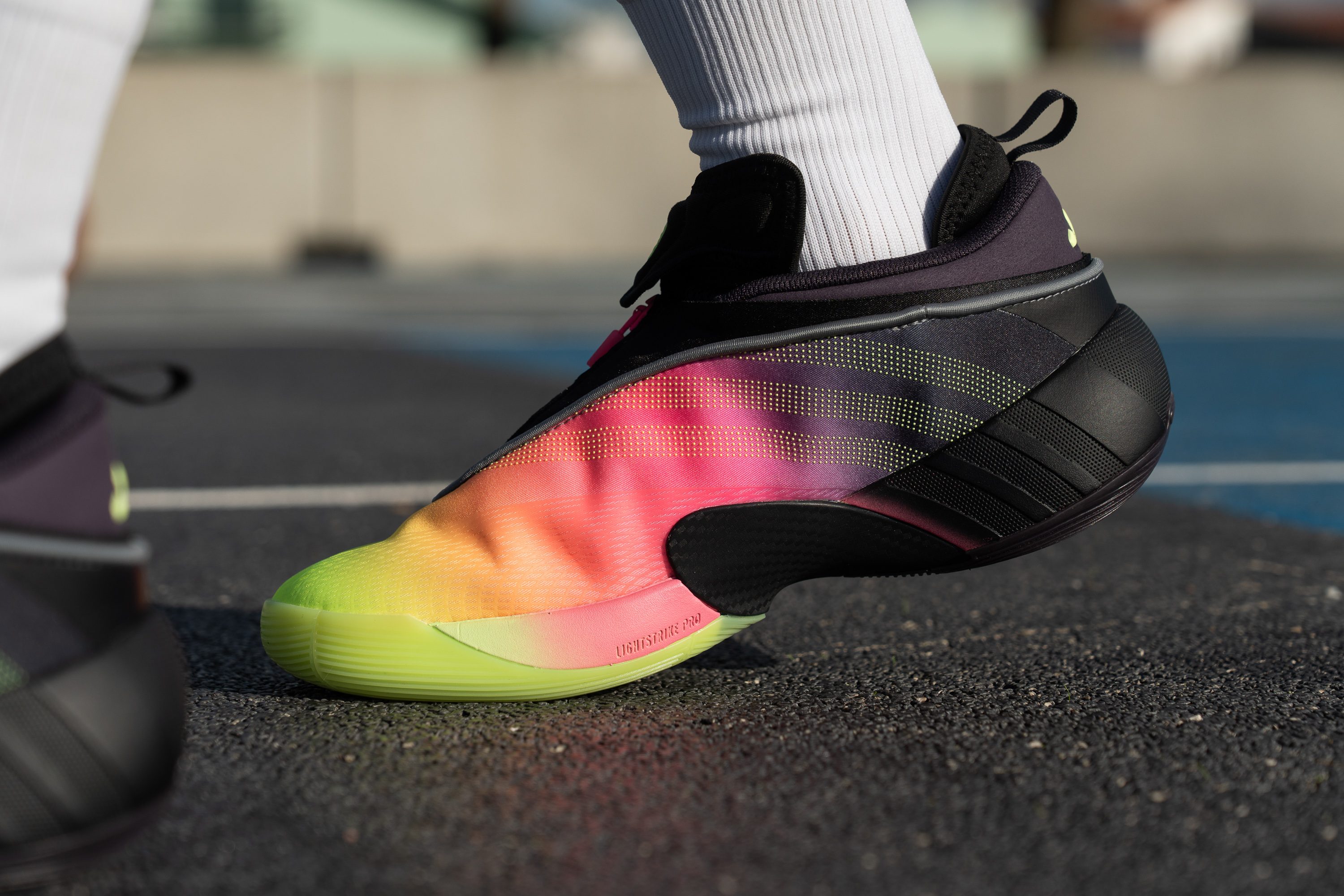
| D.O.N. Issue 7 | $120 |
| Average | $140 |