
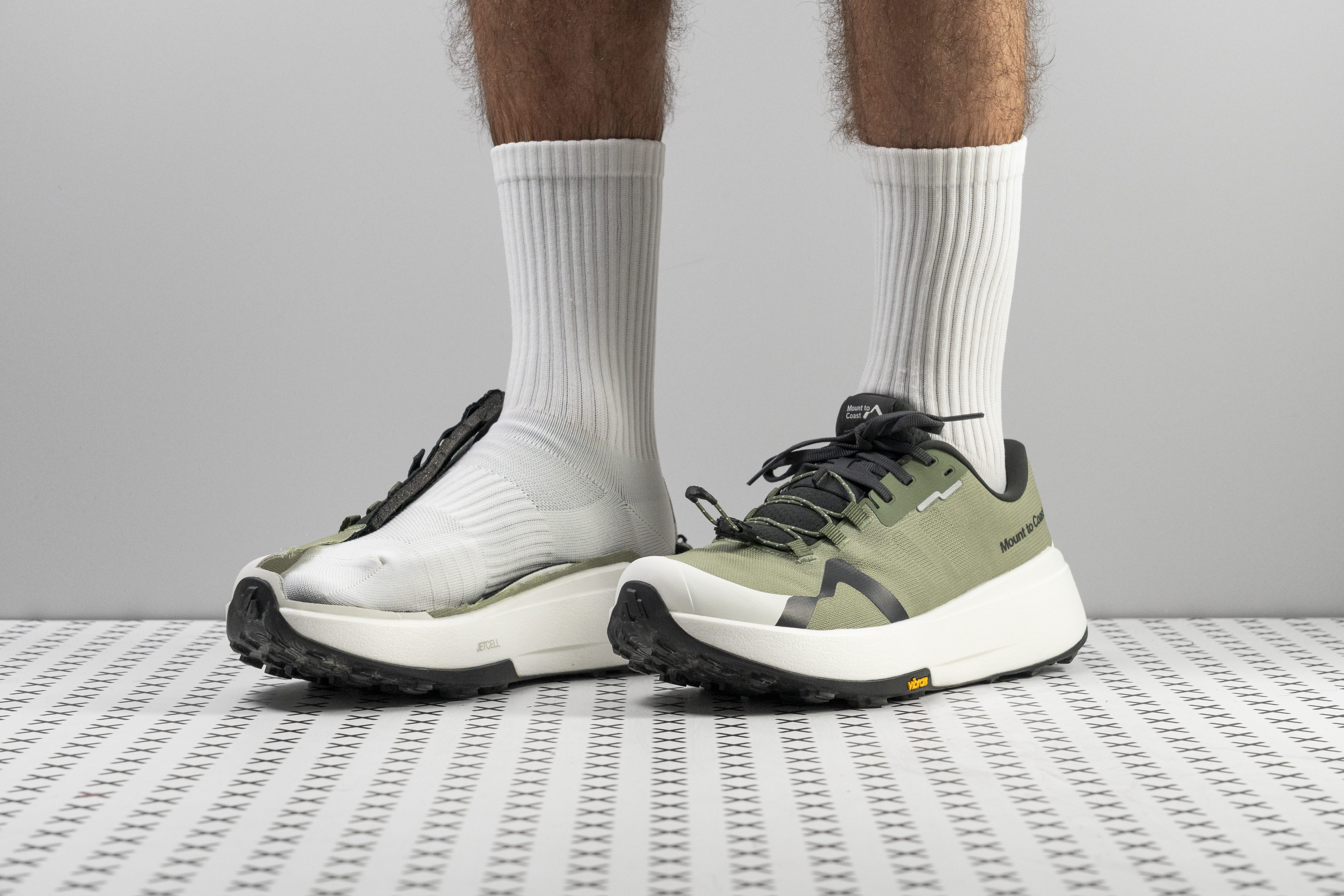





















Our verdict
- Gravel 78
- Versatile 94
- Technical 81
Pros
- Incredible energy return
- Crafted to excel at ultras
- Protective midsole foam
- Vibram Megagrip outsole
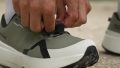
- TunedFit lacing allows precise adjustments
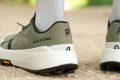
- Clean, beautiful design
- Smooth rocker geometry
- Versatile lug depth for varied terrain
- Cheaper than top trail super shoes
- Fantastic breathability
Cons
- Poor toebox durability
- Premium price may deter budget runners
- Some may miss a carbon plate here
Awards
- Top 2% in trail running shoes
- Top 6% in neutral running shoes
- Top 11% most popular running shoes
Comparison
The most similar running shoes compared
+ + Add a shoe | |||||
|---|---|---|---|---|---|
| Our score | 91 Superb | 85 Great | 84 Great | 87 Great | |
| Price | £180 | £145 | £160 | £230 | |
| Trail terrain | Versatile / Moderate terrain | Versatile / Moderate terrain | Versatile / Moderate terrain | Versatile / Moderate terrain | |
| Shock absorption | High | High | High | High | |
| Energy return | High | Moderate | Moderate | High | |
| Traction | High | High | High | High | |
| Arch support | Neutral | Neutral | Neutral | Neutral | |
| Weight lab Weight brand | 9.7 oz / 275g 9.9 oz / 280g | 9.9 oz / 281g 9.7 oz / 275g | 11.1 oz / 315g 11.7 oz / 332g | 9.4 oz / 266g 9.7 oz / 275g | |
| Drop lab Drop brand | 6.8 mm 4.0 mm | 7.4 mm 4.0 mm | 9.0 mm 8.0 mm | 4.6 mm 6.0 mm | |
| Strike pattern | Mid/forefoot | Mid/forefoot | HeelMid/forefoot | Mid/forefoot | |
| Size | Slightly small | Half size small | Slightly small | True to size | |
| Midsole softness | Balanced | Balanced | Balanced | Balanced | |
| Difference in midsole softness in cold | Small | Small | Small | Small | |
| Toebox durability | Very bad | Good | Decent | Bad | |
| Heel padding durability | Good | Decent | Decent | Good | |
| Outsole durability | Good | Good | Good | Good | |
| Breathability | - | - | Moderate | - | |
| Width / fit | Medium | Medium | Medium | Medium | |
| Toebox width | Medium | Medium | Medium | Medium | |
| Stiffness | Moderate | Moderate | Stiff | Moderate | |
| Torsional rigidity | Moderate | Stiff | Stiff | Moderate | |
| Heel counter stiffness | Moderate | Moderate | Moderate | Flexible | |
| Lug depth | 4.3 mm | 4.5 mm | 4.4 mm | 4.3 mm | |
| Heel stack lab Heel stack brand | 38.8 mm 36.5 mm | 37.7 mm 37.0 mm | 42.9 mm 45.0 mm | 35.7 mm 39.0 mm | |
| Forefoot lab Forefoot brand | 32.0 mm 32.5 mm | 30.3 mm 33.0 mm | 33.9 mm 37.0 mm | 31.1 mm 33.0 mm | |
| Widths available | Normal | NarrowNormalWide | Normal | Normal | |
| For heavy runners | ✓ | ✓ | ✓ | ✓ | |
| Season | - | - | All seasons | - | |
| Removable insole | ✓ | ✓ | ✓ | ✓ | |
| Orthotic friendly | ✓ | ✓ | ✓ | ✓ | |
| Ranking | #21 Top 6% | #106 Top 27% | #138 Top 35% | #74 Top 19% | |
| Popularity | #43 Top 11% | #35 Top 9% | #161 Top 41% | #249 Bottom 37% |


Who should buy
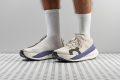
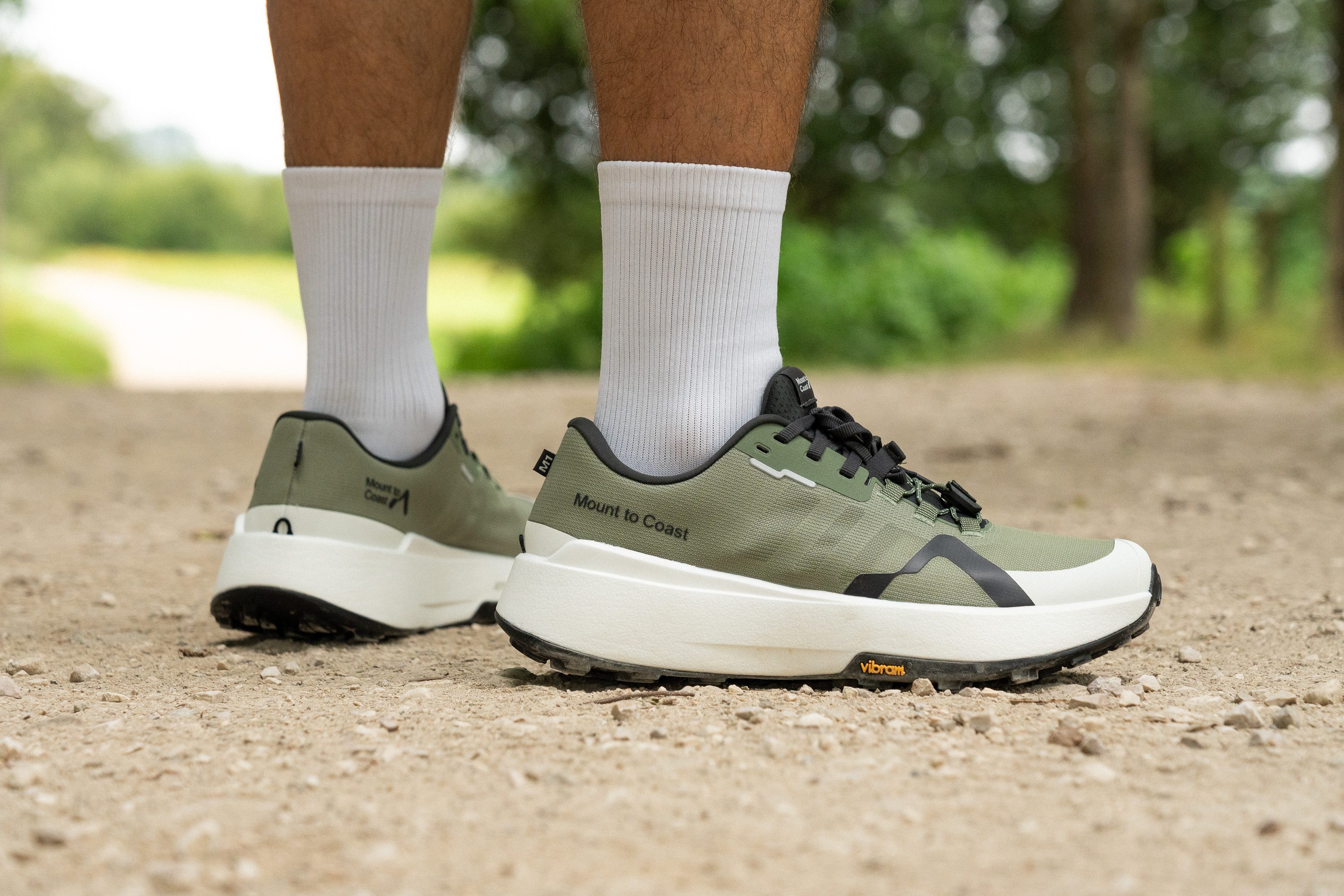
The Mount to Coast M1 is an excellent option for:
- Trail runners looking for a highly versatile shoe that can tackle everything from daily runs to ultra-distance races.
- Anyone who prioritise performance and want one of the most energetic and advanced foams currently available.
- Ultra runners seeking a fast and efficient ride without relying on a stiff carbon plate.
- Runners who often struggle with fit issues and want extra control.
Who should NOT buy
The M1's aggressive lug pattern makes it less appealing for runners who spend most of their time on smooth gravel roads or non-technical trails. It also adds some weight compared to the Mount to Coast H1, which we believe remains the better choice for those tackling easier terrain.
We also think that runners who strongly associate performance with the presence of a carbon plate may prefer a design that feels closer to a road super shoe. In that case, options such as the Nike ACG Ultrafly Trail or the HOKA Tecton X 3 could prove more appealing.
Cushioning
Shock absorption
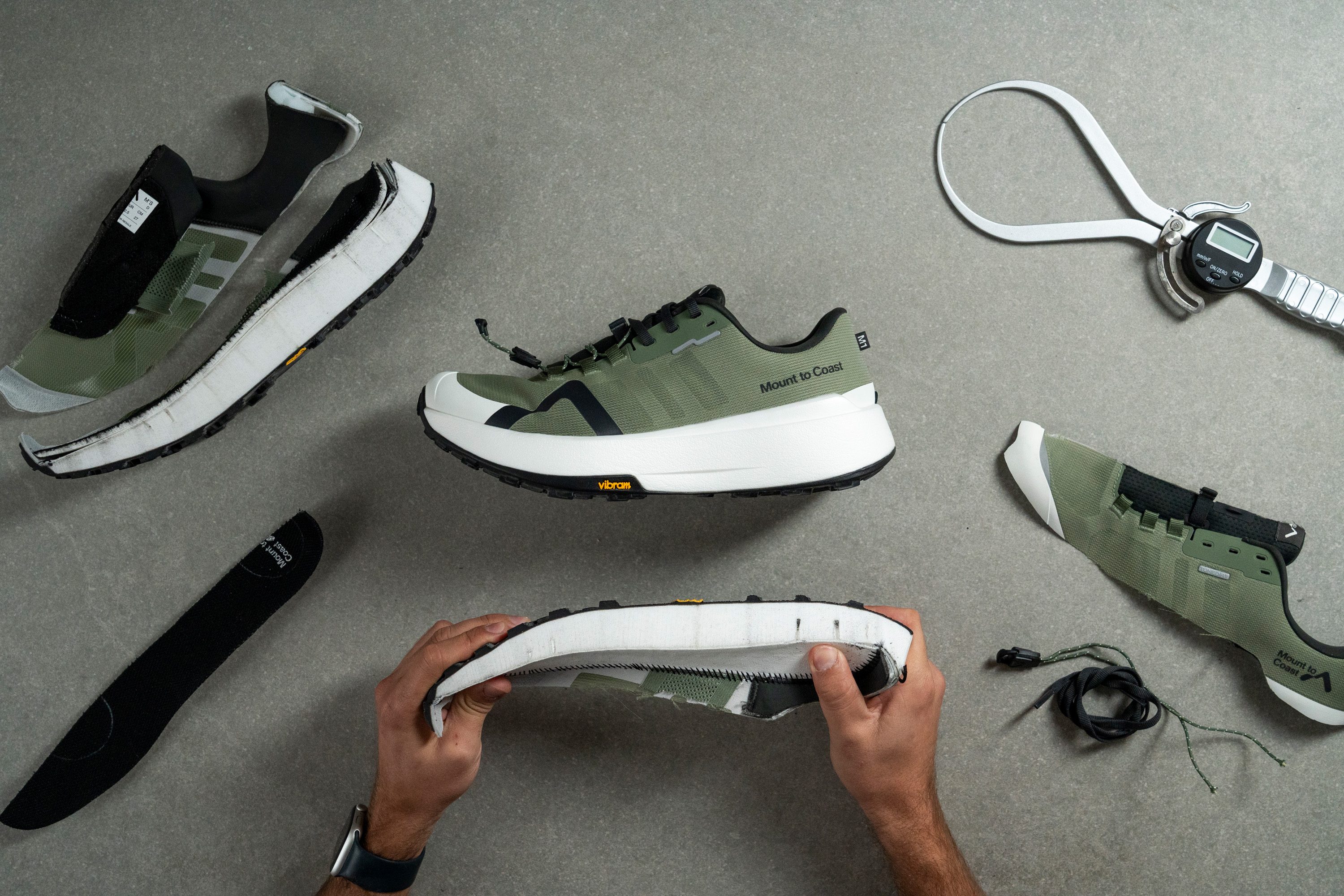
The Mount to Coast M1 appears exceptionally well suited for ultra-distance racing thanks to its impressive impact protection.
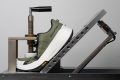
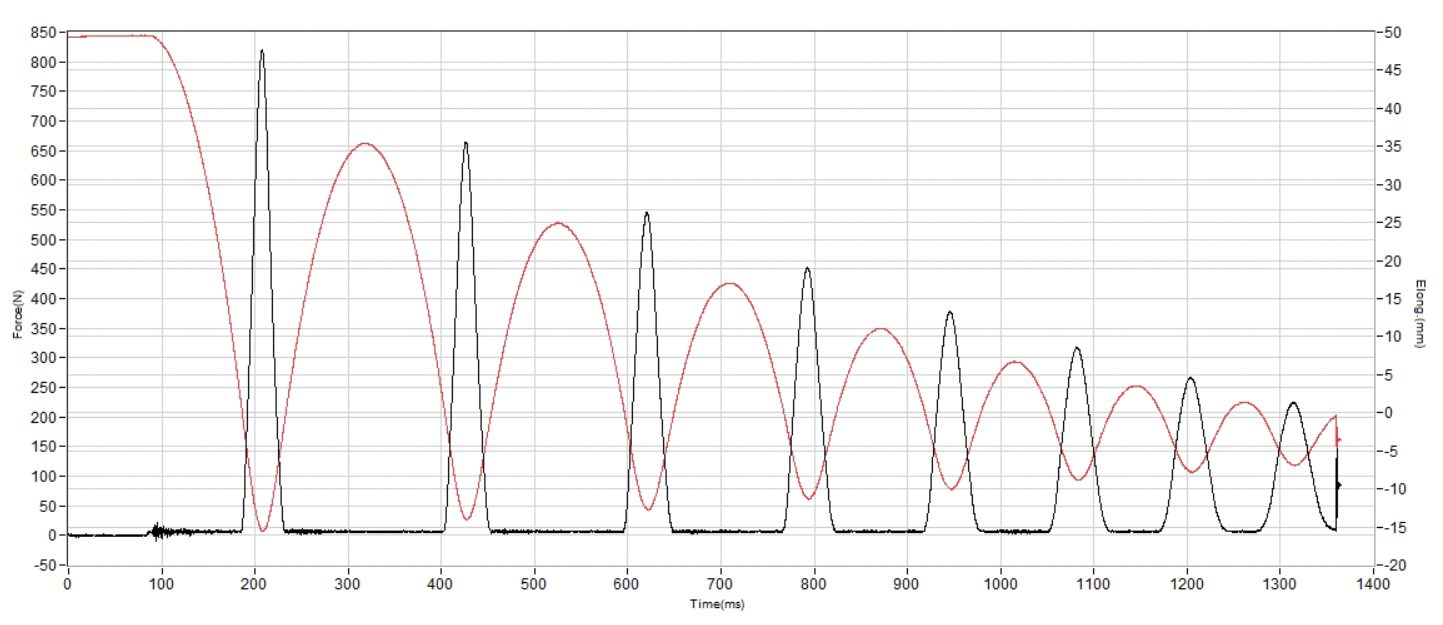
In our lab testing, it delivered 139 SA of shock absorption in the heel and an outstanding 122 SA in the forefoot, providing enough cushioning to keep even heavier runners comfortable deep into the longest events.
| M1 | 139 SA |
| Average | 123 SA |
Energy return
What truly impressed us was the new JetCell foam. We already knew it was based on aliphatic TPU, a material that has consistently produced outstanding results in our energy return testing, and we're delighted to see Mount to Coast embrace this technology.
The results speak for themselves. We measured 71.8% energy return in the heel and a mind-blowing 75.8% in the forefoot. This is hard data from controlled testing, confirming that the M1 features a midsole at the same level of premium foams found in many modern road super shoes.
| M1 | 75.8% |
| Average | 59.7% |
Heel stack
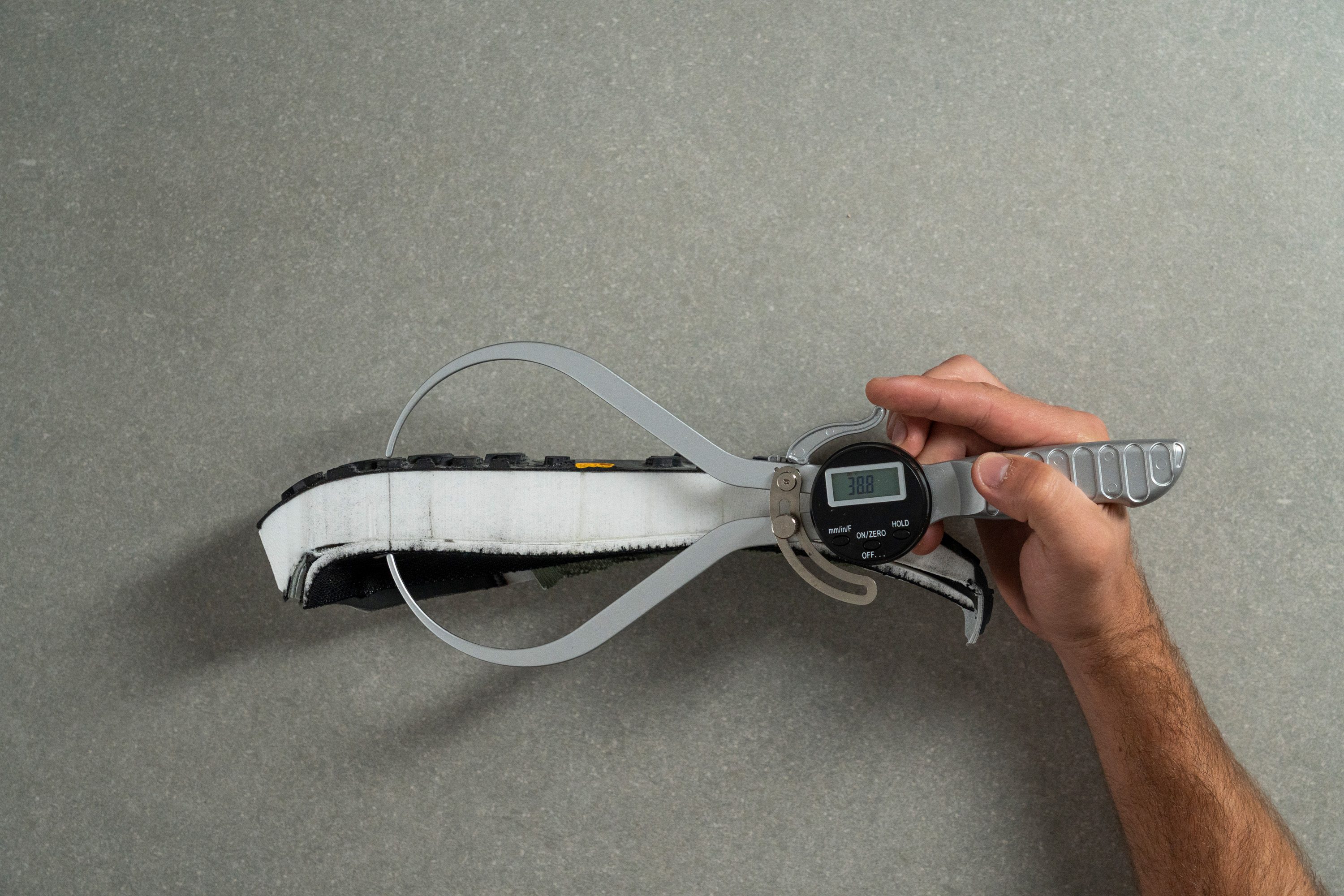
Trail models tend to feature lower stacks than their road counterparts, often by 3-4 millimetres on average, and since we generally consider 40 mm the threshold for maximalist road shoes, the M1's platform certainly qualifies as max-stack territory in the trail world.
This substantial amount of foam helps explain the outstanding shock absorption figures we recorded earlier. However, stack height is only part of the equation. The premium JetCell foam also plays a major role, delivering a level of impact protection that would be difficult to achieve through a more basic EVA foam.
| M1 | 38.8 mm |
| Average | 33.1 mm |
Forefoot stack
The forefoot is even more impressive, boasting a measured stack height of 32.0 mm. In our view, that amount of cushioning leaves no doubt about the M1's intended purpose, as multi-hour runs and ultra-distance races stretching across dozens (or even hundreds!) of miles are exactly where this shoe should shine.
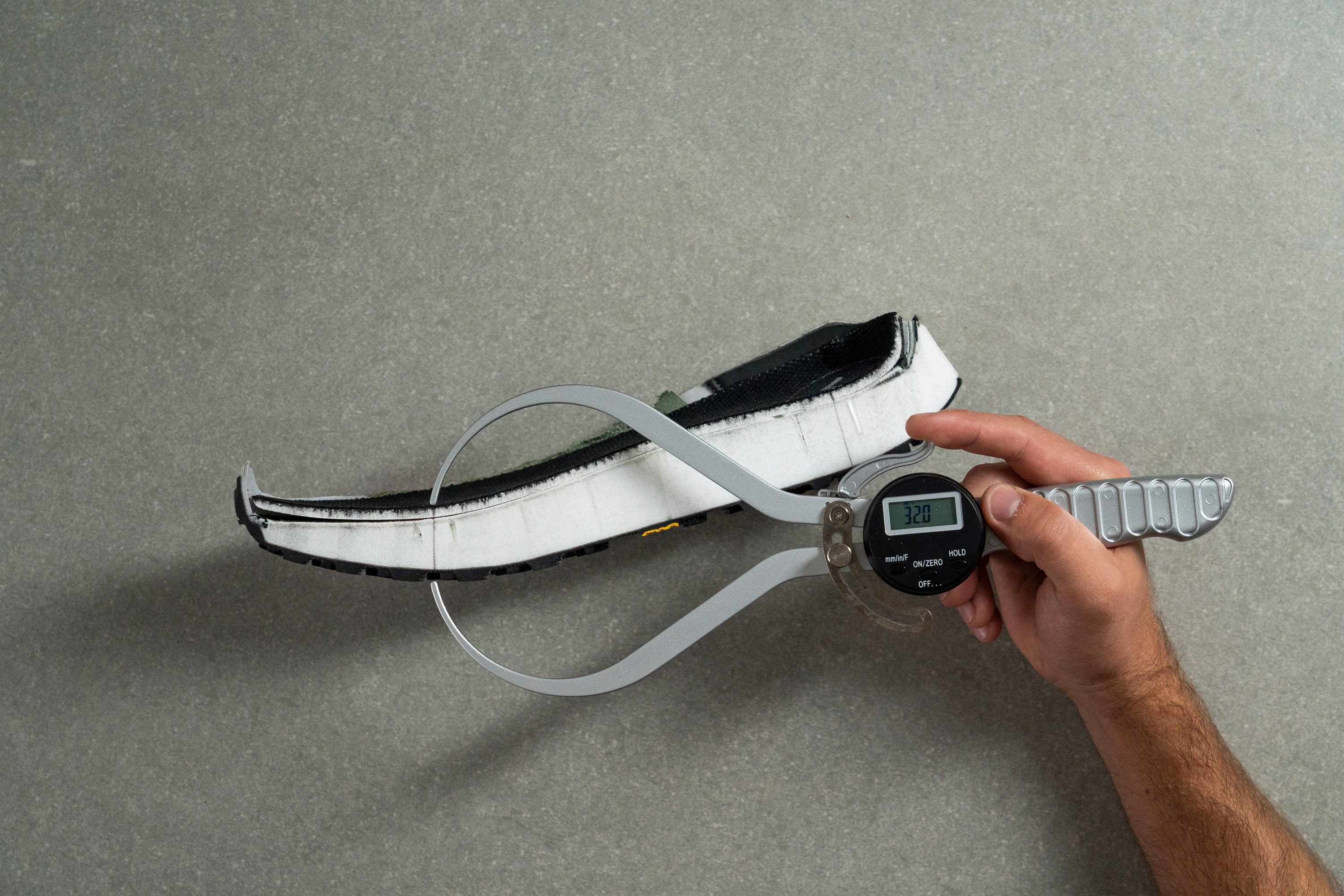
| M1 | 32.0 mm |
| Average | 25.8 mm |
Drop
Like most trail shoes, the M1 features a lower drop than the average road trainer. We measured 6.8 mm, a result that lands in a sweet spot that should work well for a wide range of footstrike patterns.
That said, it's worth noting that Mount to Coast lists the shoe with a 4 mm drop in its official specifications, so our measurements revealed a modest discrepancy and makes it better suited for midfoot and heel strikers.
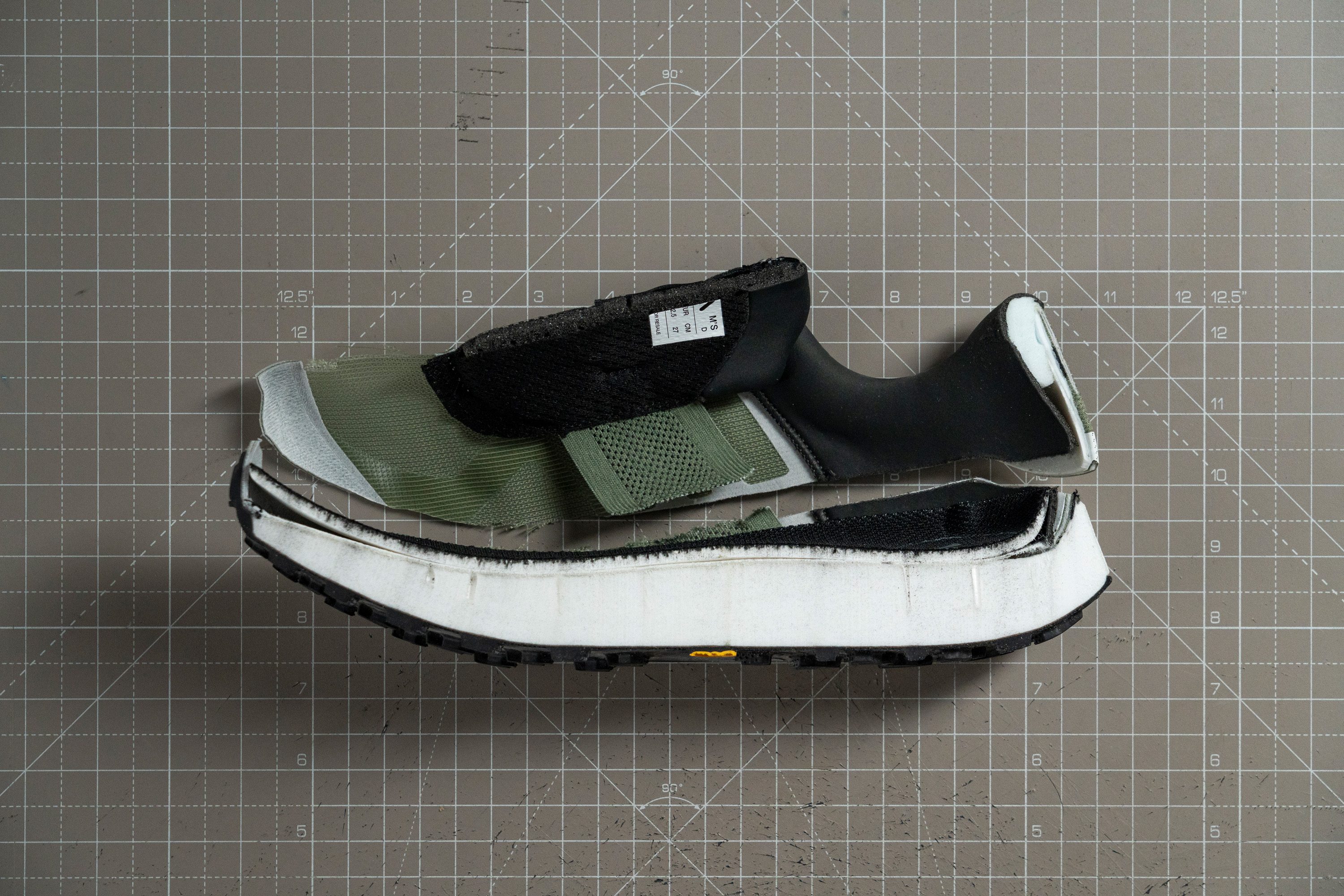
| M1 | 6.8 mm |
| Average | 7.3 mm |
Midsole softness
The new JetCell foam making its debut in the M1 left a fantastic impression on us. It delivers a highly energetic ride, absorbs impact with ease, and offers a remarkably comfortable underfoot experience that feels tailor-made for ultras.
From a softness perspective, we measured a well-balanced 34.0 AC. In our view, this strikes an ideal middle ground, avoiding both the unstable sensation of overly plush foams and the harsh feel of firmer compounds. As a result, we think that is exceptionally well suited for long hours spent tackling demanding mountain terrain.
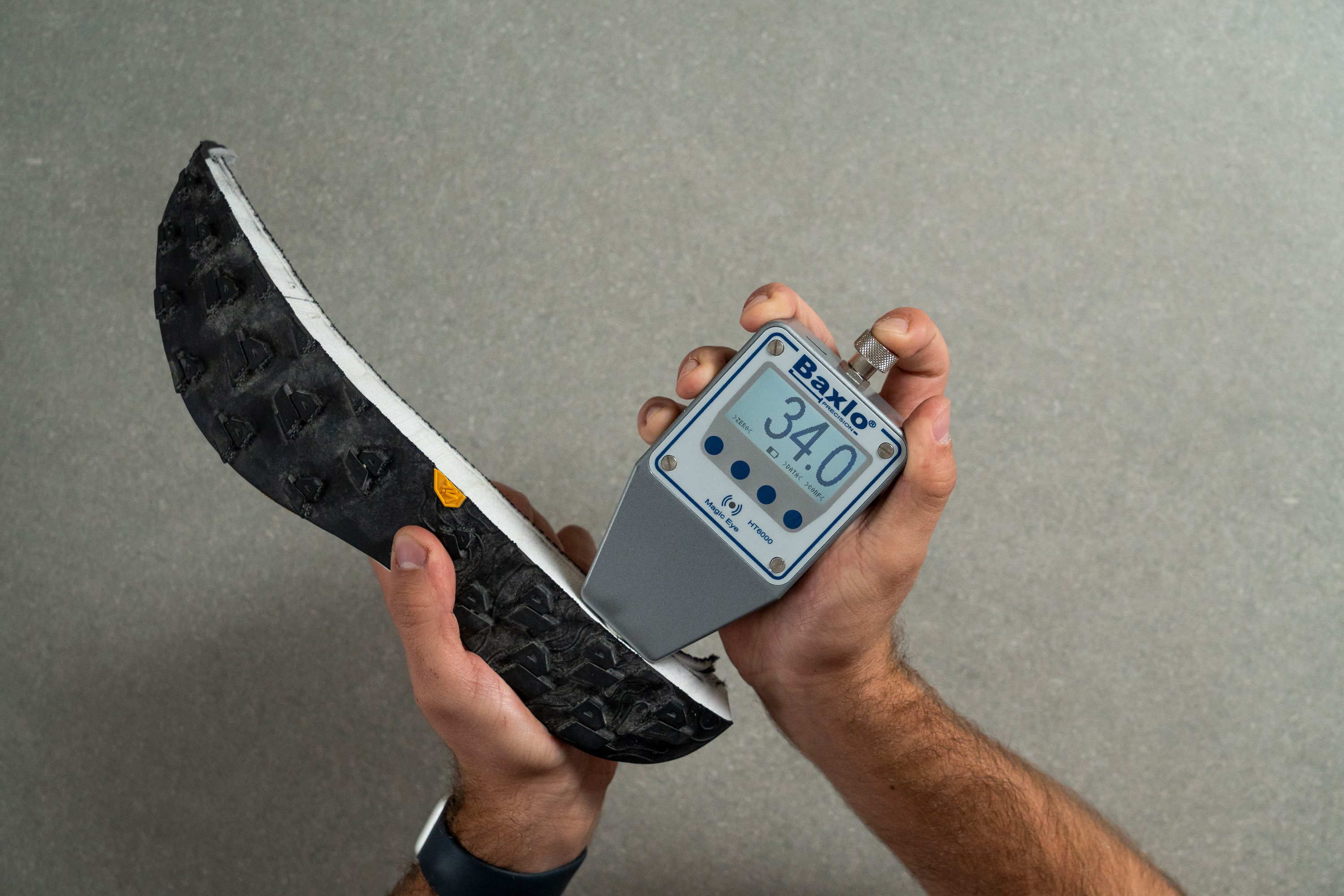
| M1 | 34.0 AC |
| Average | 38.3 AC |
Rocker
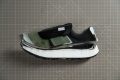
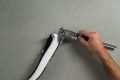
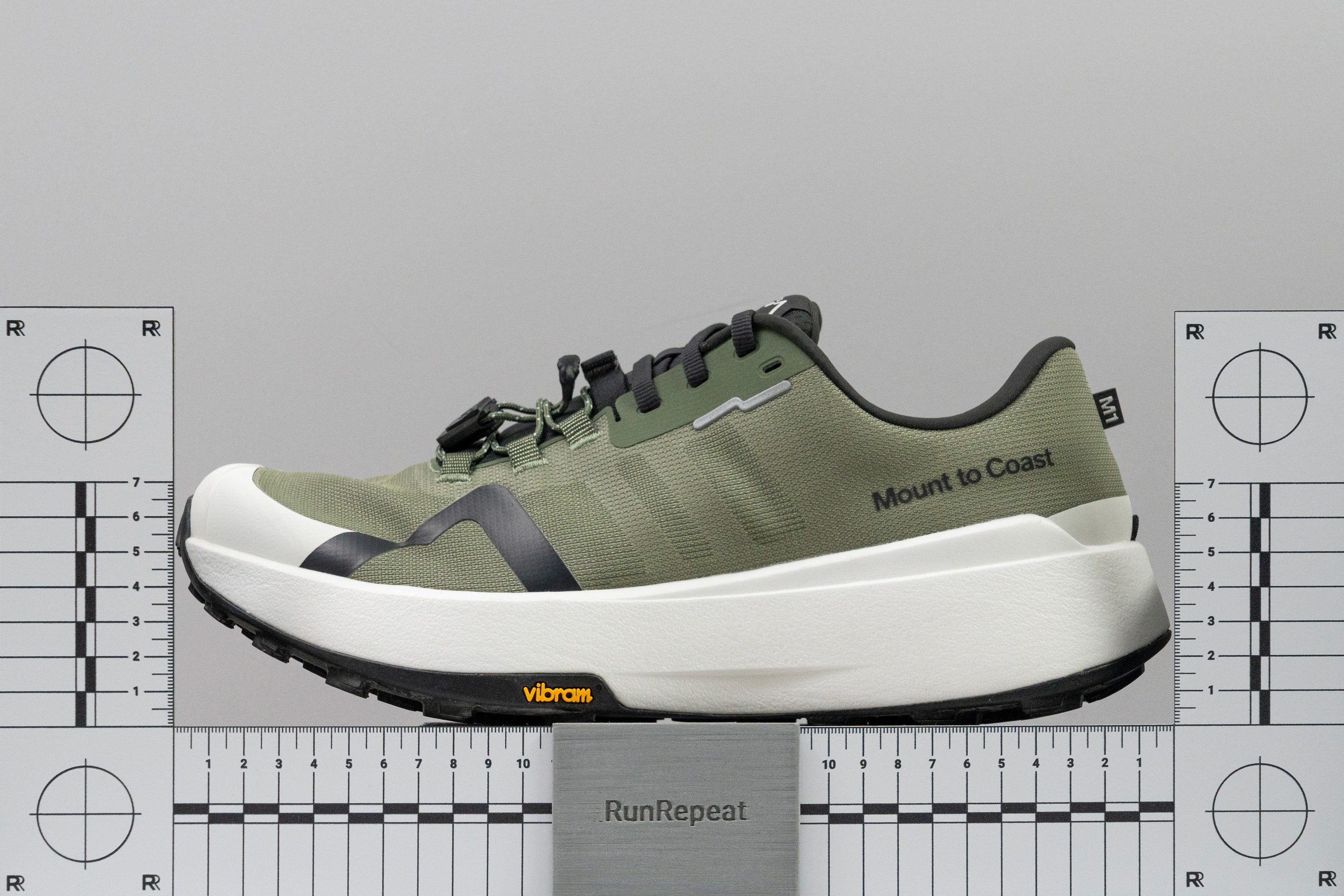
Mount to Coast gave the M1 a distinctly rockered profile that closely mirrors the H1, featuring an aggressive toe spring that creates a noticeable rolling sensation and helps the foot move smoothly through each stride, especially for runners accustomed to more traditional geometries.
The rear of the shoe follows the same philosophy. A gently upturned heel works alongside a moderate heel flare to soften landings and improve transitions, making the M1 especially helpful during the second half of an ultra, when fatigue begins to take a toll on running form.
Size and fit
Size
Mount to Coast M1 fits slightly small (46 votes).
Internal length
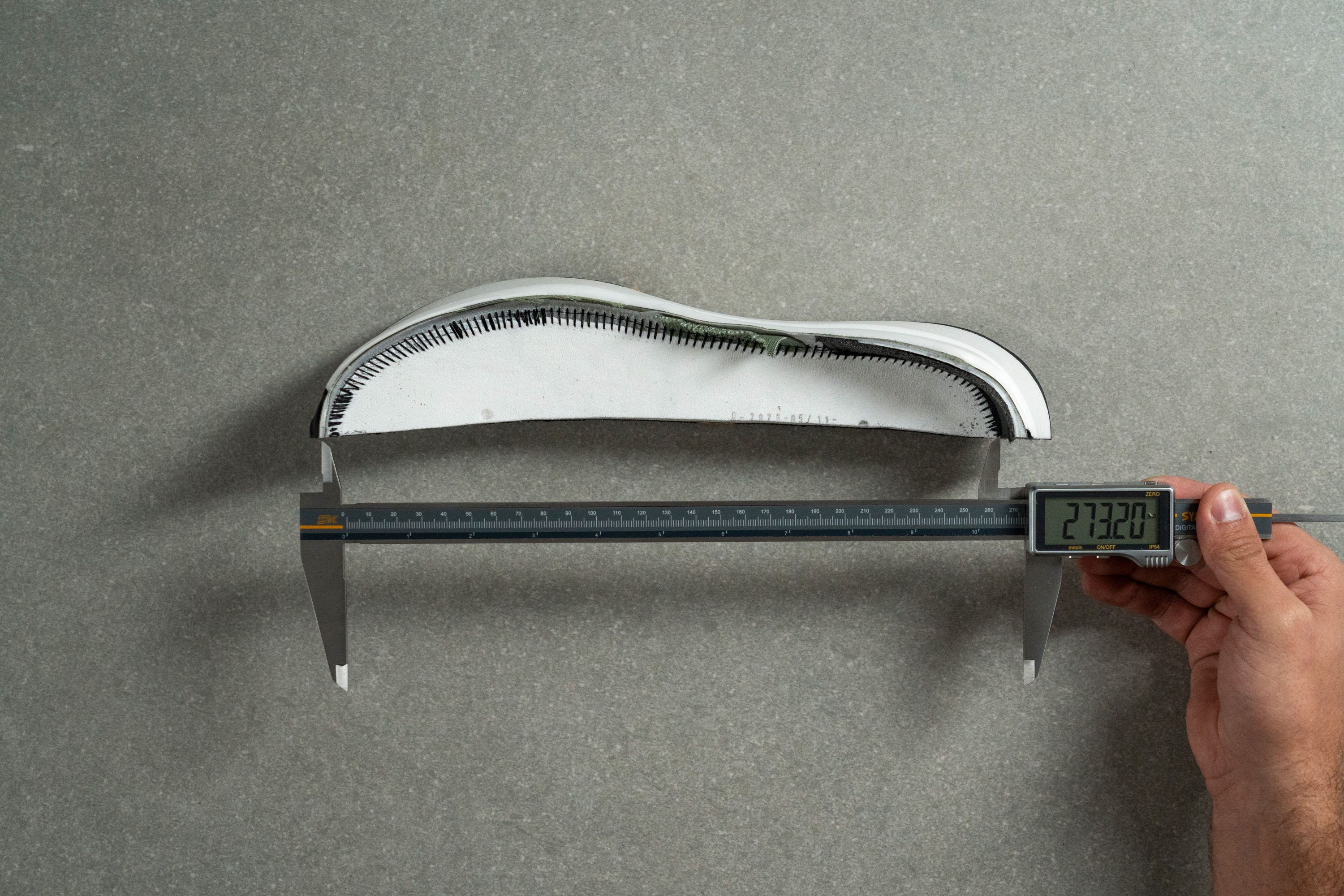
| M1 | 273.2 mm |
| Average | 269.2 mm |
Width / Fit
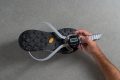
To accurately assess the fit of the Mount to Coast M1, we used our gel method, filling the shoe with liquid gel and allowing it to solidify before taking precise measurements.
Our first reading came in at 95.6 mm, a result that landed almost exactly where we expected and points to a fit that should accommodate a broad range of runners.
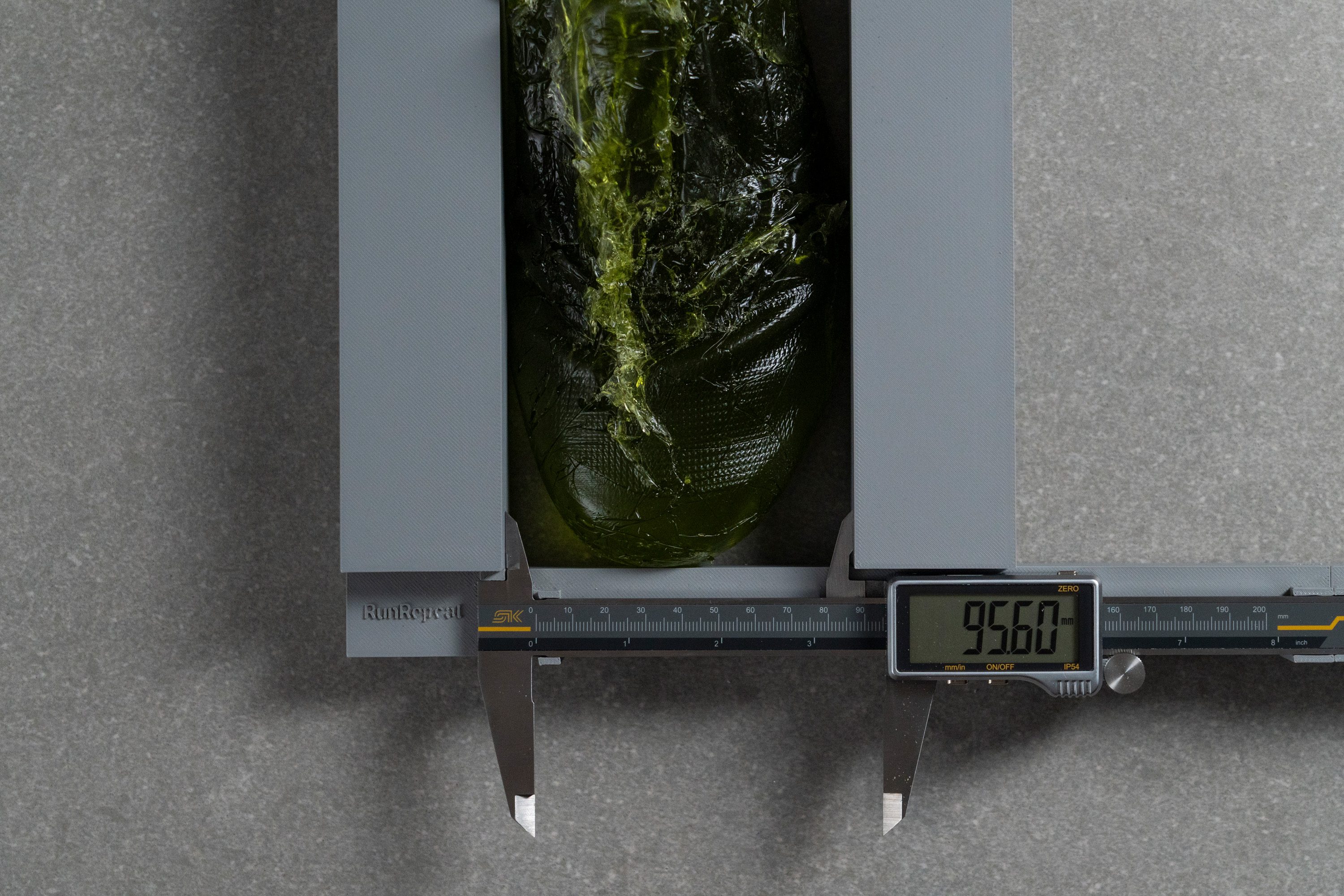
| M1 | 95.6 mm |
| Average | 95.7 mm |
Toebox width
When we tested the H1, we were somewhat surprised by its tapered toebox, as we expected a bit more room for natural toe splay during long efforts. The M1 takes a step in the right direction, and our 73.0 mm measurement confirms that the forefoot offers noticeably more space than before.
That said, we still wouldn't classify it as a shoe designed for wide feet at all. Instead, MtC has simply added some welcome breathing room up front, creating a more accommodating fit without sacrificing the secure feel expected from a mountain-focused trail shoe.
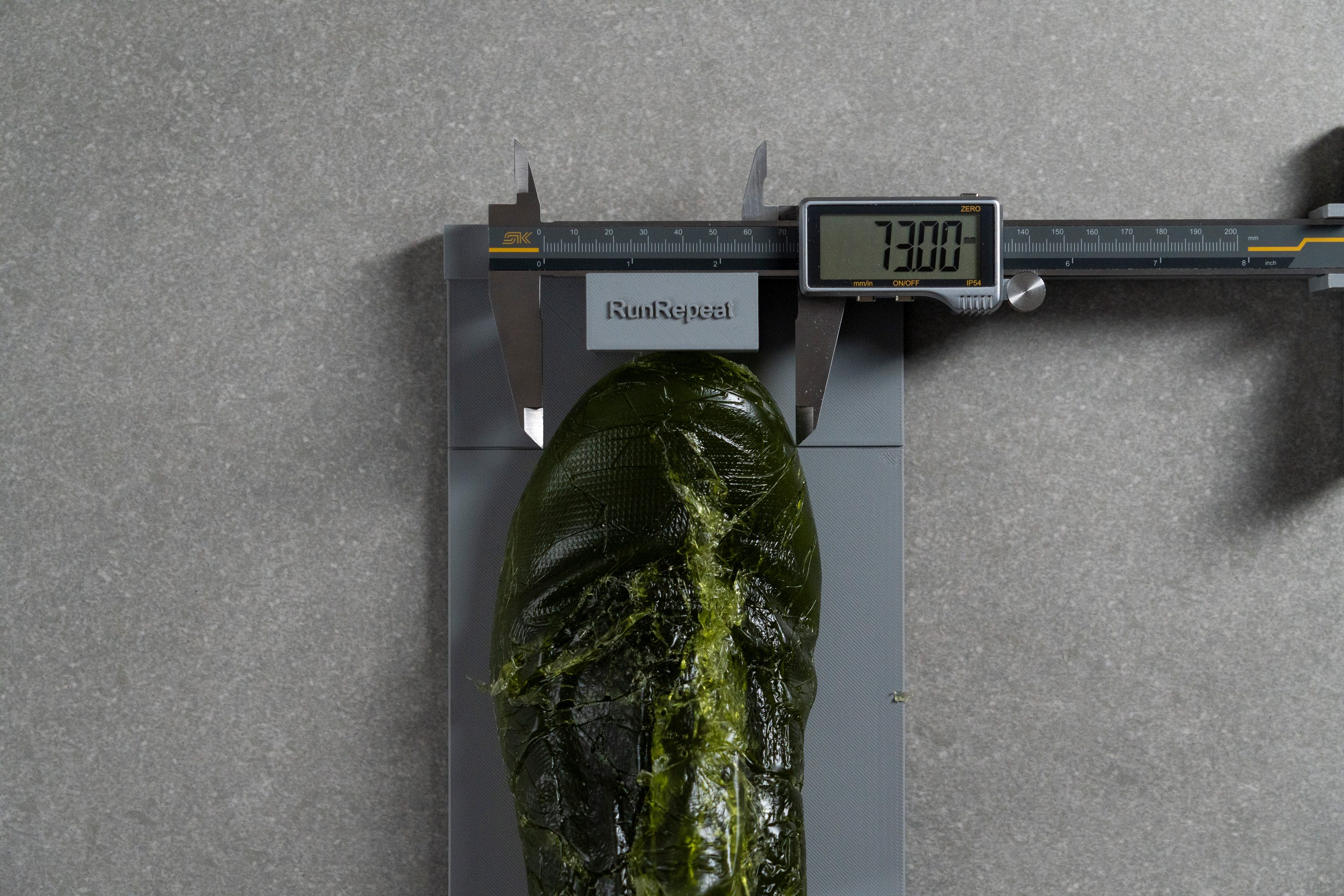
| M1 | 73.0 mm |
| Average | 74.3 mm |
Toebox height
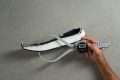
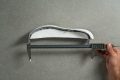
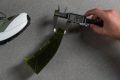
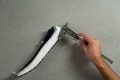
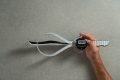
There's also a touch more vertical space available, with our callipers measuring 28.4 mm of toebox height. This added clearance gives the shoe a more accommodating feel too.
With a result like this, we believe Mount to Coast struck a good balance, offering enough room for comfort without compromising the secure foothold needed on technical terrain.
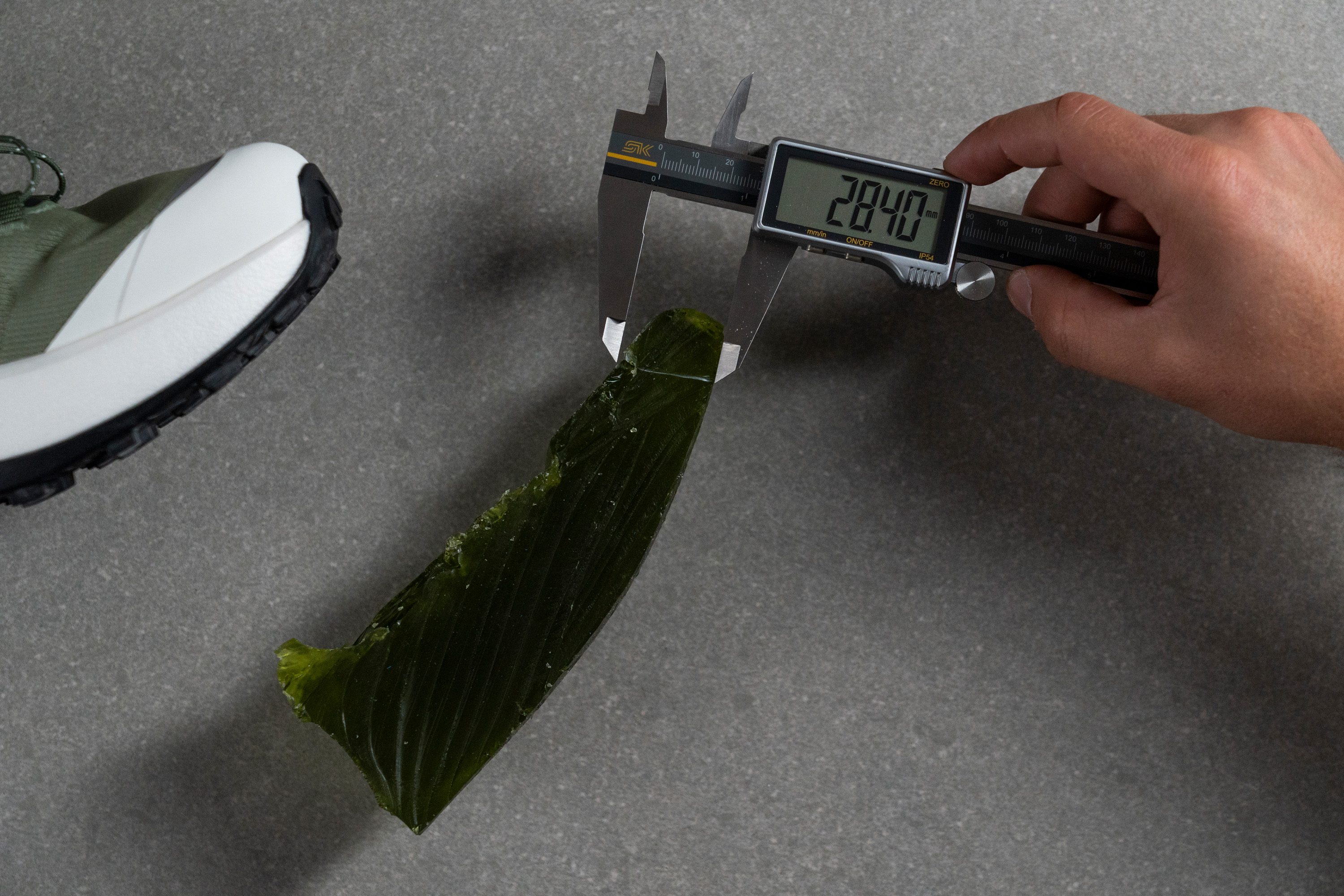
| M1 | 28.4 mm |
| Average | 27.0 mm |
Traction / Grip
Traction test
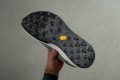
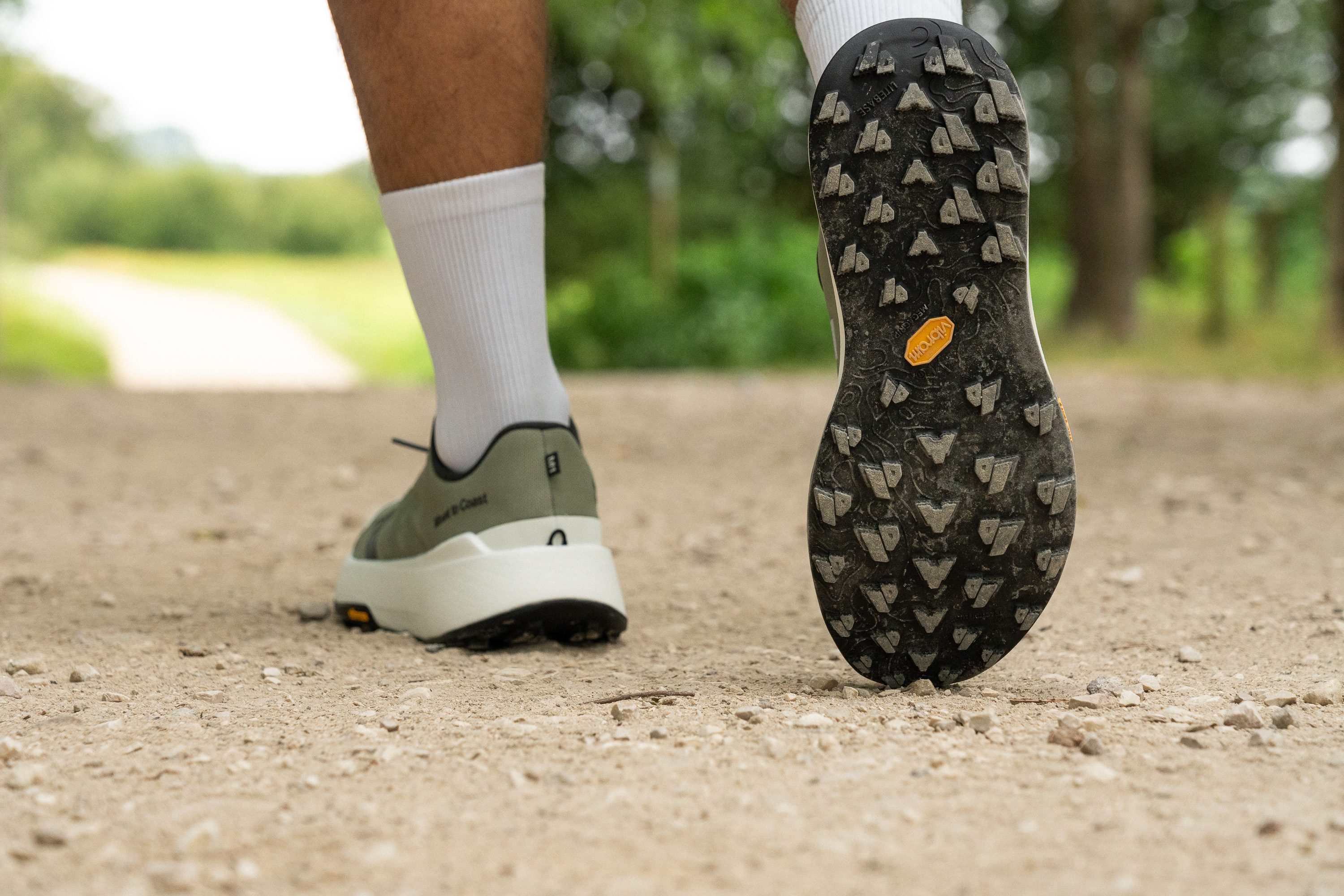
The Mount to Coast M1 achieved an exceptional 0.77 coefficient of friction, scoring over our lab average. That's exactly the level of performance we'd expect from a Vibram Megagrip outsole, which delivered outstanding traction on loose and wet surfaces throughout our testing.
| M1 | 0.77 |
| Average | 0.67 |
Lug depth
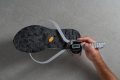
The Mount to Coast M1 addresses one of the biggest limitations of the H1 by introducing a far more trail-capable Vibram Megagrip outsole. We measured the lugs at 4.3 mm deep, creating a highly versatile setup that performs exceptionally well on moderate terrain while still offering enough bite and confidence for gravel roads and more technical sections.
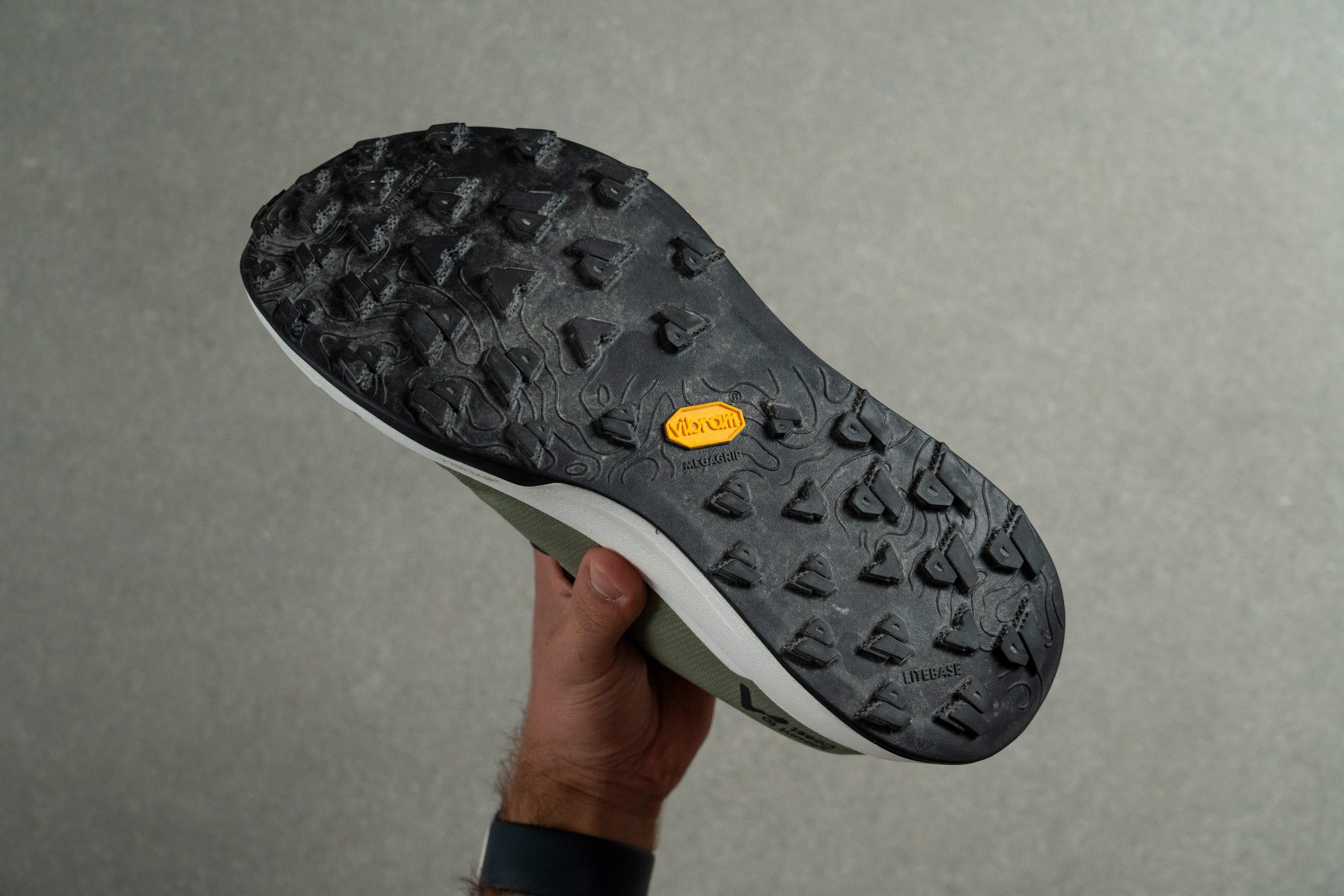
That approach makes perfect sense given the M1's ultra-distance focus. Long races rarely stick to a single surface or difficulty, and we think Mtc does the right thing here by balancing traction, efficiency, and versatility to handle the varied terrain.
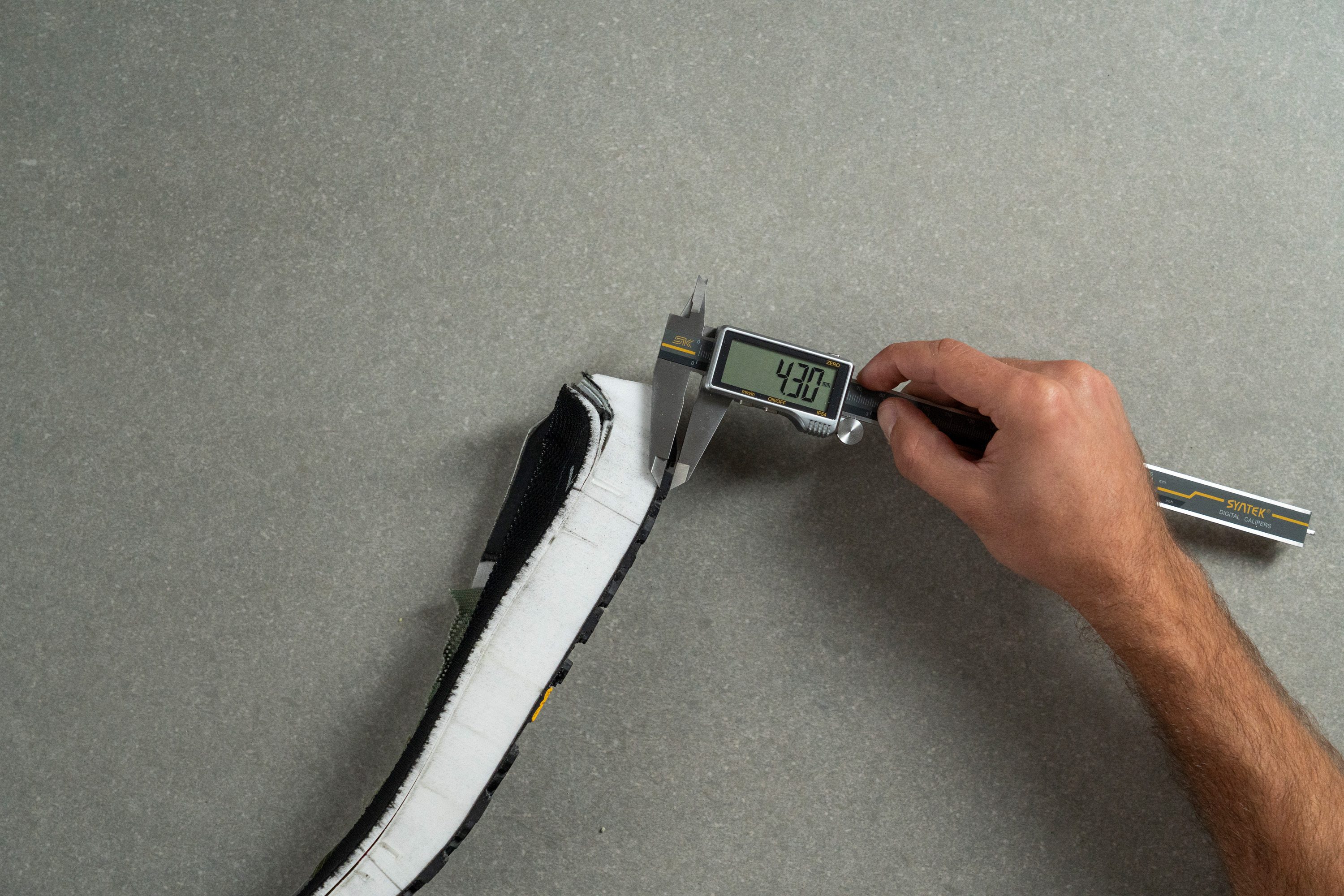
| M1 | 4.3 mm |
| Average | 3.5 mm |
Outsole design
The outsole layout has been completely redesigned as well. This time, we found full-length rubber coverage with no exposed sections or cutouts, resulting in a continuous layer of Vibram Megagrip Litebase from heel to toe.
Flexibility / Stiffness
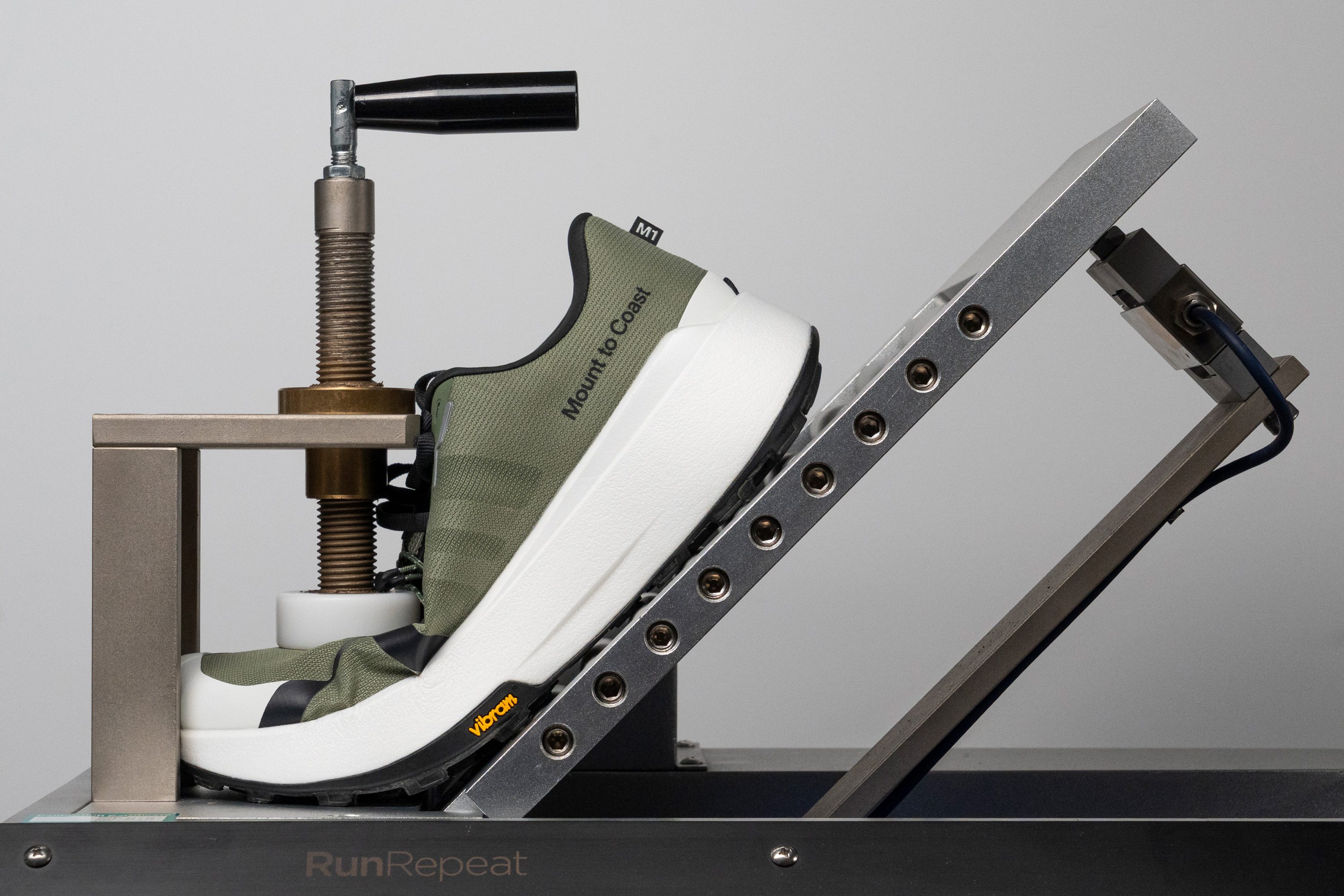
As expected, the M1 is somewhat stiffer (16.8N) than both the average trail shoe and its sibling due to its towering stack height and full-length outsole design without cutouts.
Even so, we found that it remains comfortably within a range that feels appropriate for long-distance running, avoiding the overly rigid sensation that can become tiring over many hours on the trail.
| M1 | 16.8N |
| Average | 14.8N |
Weight
The combination of a full-length rubber outsole and a taller midsole inevitably adds some weight compared to the H1, despite the inherently lightweight nature of the A-TPU foam. In our view, this trade-off was virtually unavoidable given the M1's focus on protection, traction, and ultra-distance performance, resulting in a final weight of 9.7 oz or 275g.
Even so, the M1 remains highly competitive within the premium trail category and never felt excessively heavy during our testing. However, runners prioritising the lightest possible setup will find that this shoe is not made for that.

| M1 | 9.7 oz (275g) |
| Average | 10.1 oz (285g) |
Breathability
Breathability test
UpdatedKeeping the feet dry and ventilated is absolutely essential during an ultra race, especially in summer events such as UTMB. To see how the M1 performed, we put it through our 3-hour test protocol, where we challenge the shoe and measure how effectively artificial sweat moves away from the foot.
We found that the M1 delivered an outstanding result. With a score of 111 BR, it ranks among the most impressive performances we've recorded in our lab... across all categories!
| M1 | 111 BR |
| Average | 71 BR |
Drying potential
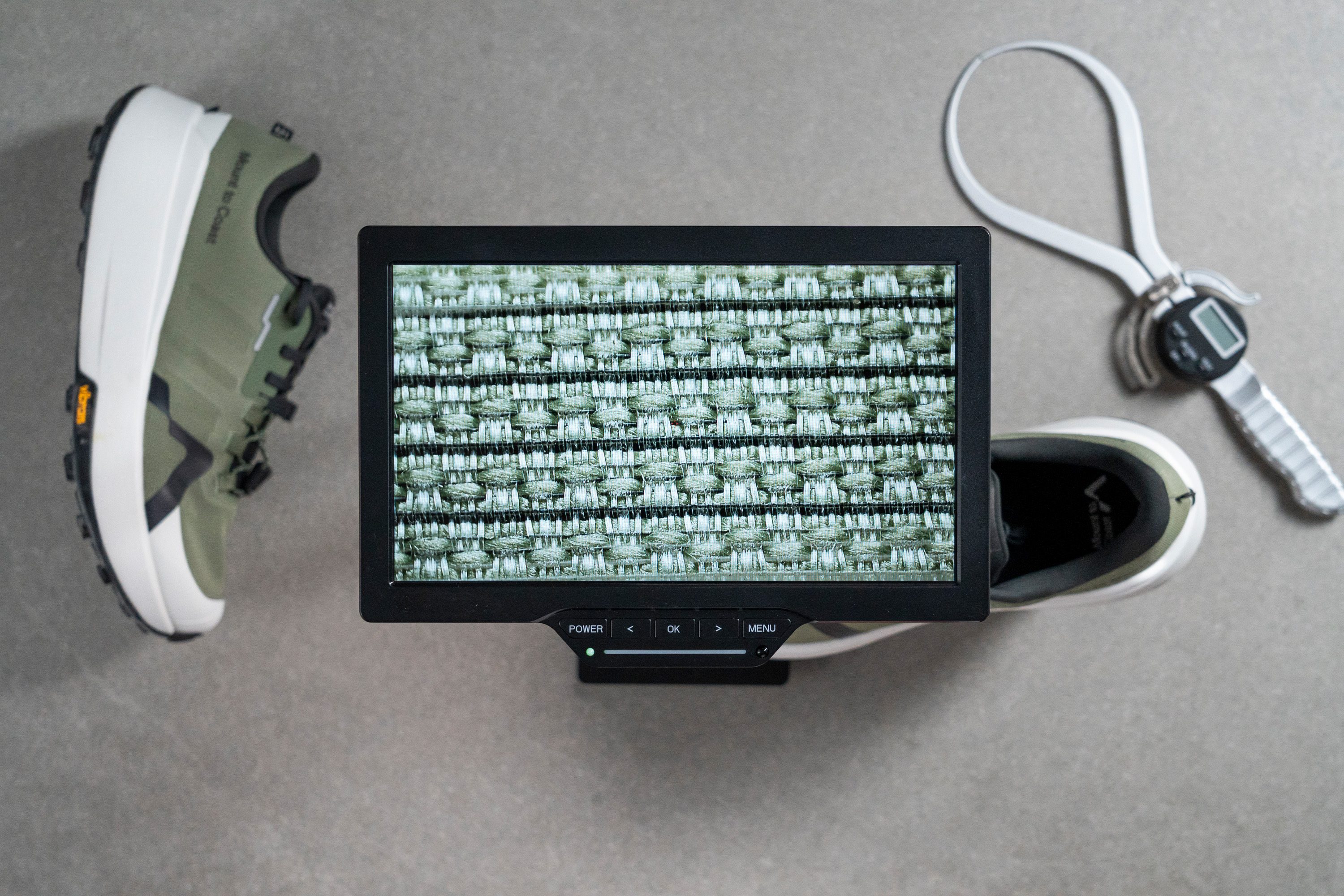
NewWe also measured how effectively the shoe was able to dry over the same 3-hour period. The results were less impressive (though still good) this time, as the M1 released 49% of the moisture weight we added during testing.
| M1 | 49% |
| Average | 51% |
Stability
Lateral stability test
The Mount to Coast M1 is best suited to runners with neutral mechanics. However, despite its substantial stack height, we believe that some runners with mild to moderate overpronation may also find it stable enough.
Mount to Coast clearly made support a priority, incorporating prominent midsole sidewalls on both sides of the shoe along with a broad platform. This approach is especially noticeable through the midfoot and forefoot.
Torsional rigidity
The M1 landed here again almost exactly around our current lab average.
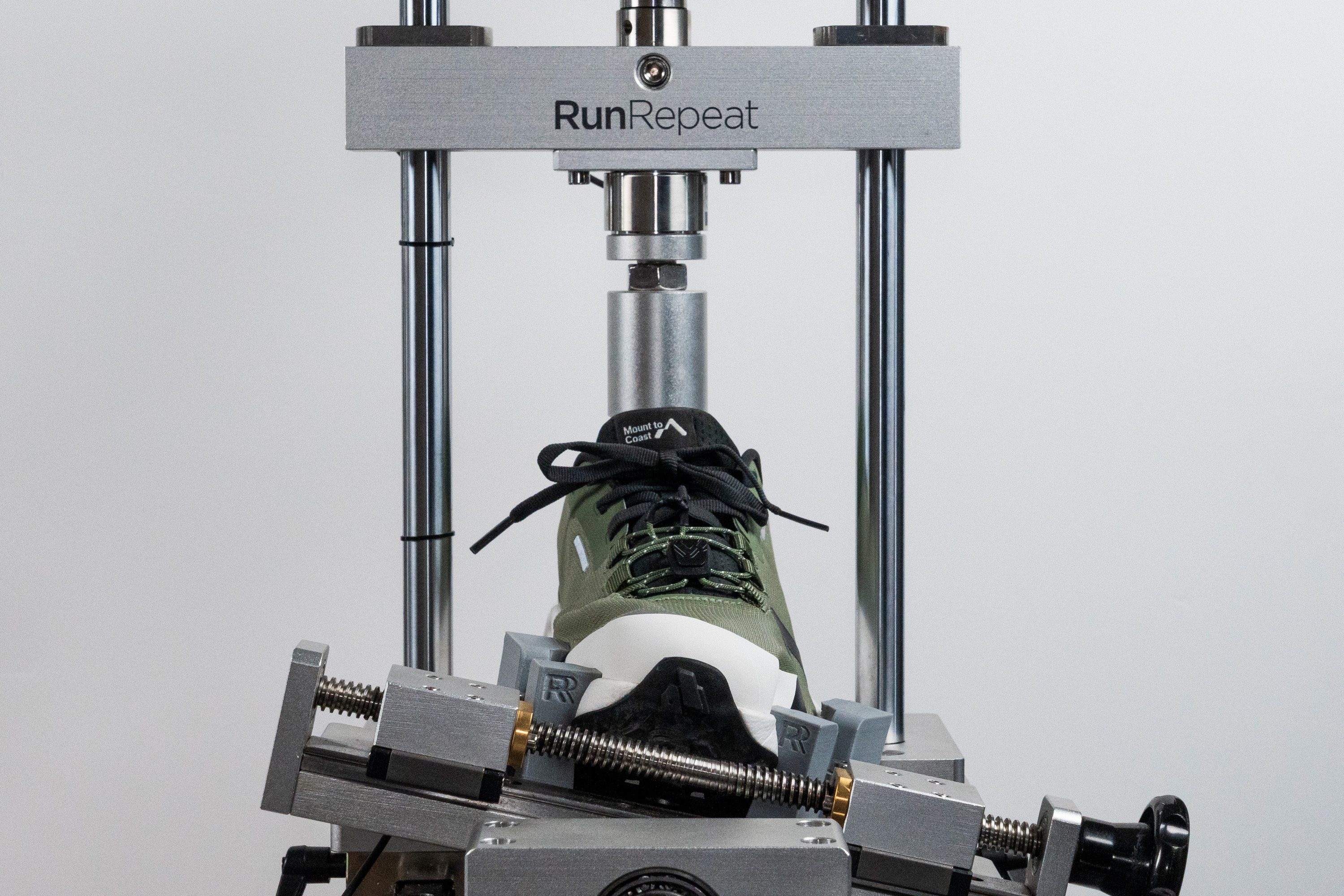
The main reason is the A-TPU foam, which twists more easily than traditional EVA compounds. As a result, despite its towering stack height and full-length Vibram outsole, the shoe retains a surprisingly adaptable character and registered a moderate 16.2 Nm in our torsional rigidity test.
| M1 | 16.2 Nm |
| Average | 15.8 Nm |
Heel counter stiffness
We found the heel counter to be moderate as well, earning a 3/5 in our manual assessment. Rather than feeling overly structured or restrictive, it delivers a level of support that closely resembles what we'd expect from a road daily trainer.
| M1 | 3 |
| Average | 2.9 |
Midsole width - forefoot
Runners who prefer narrow and nimble shoes may not appreciate this approach, but we believe it was a necessary choice given the shoe's high stack height and its focus on delivering a stable ride.
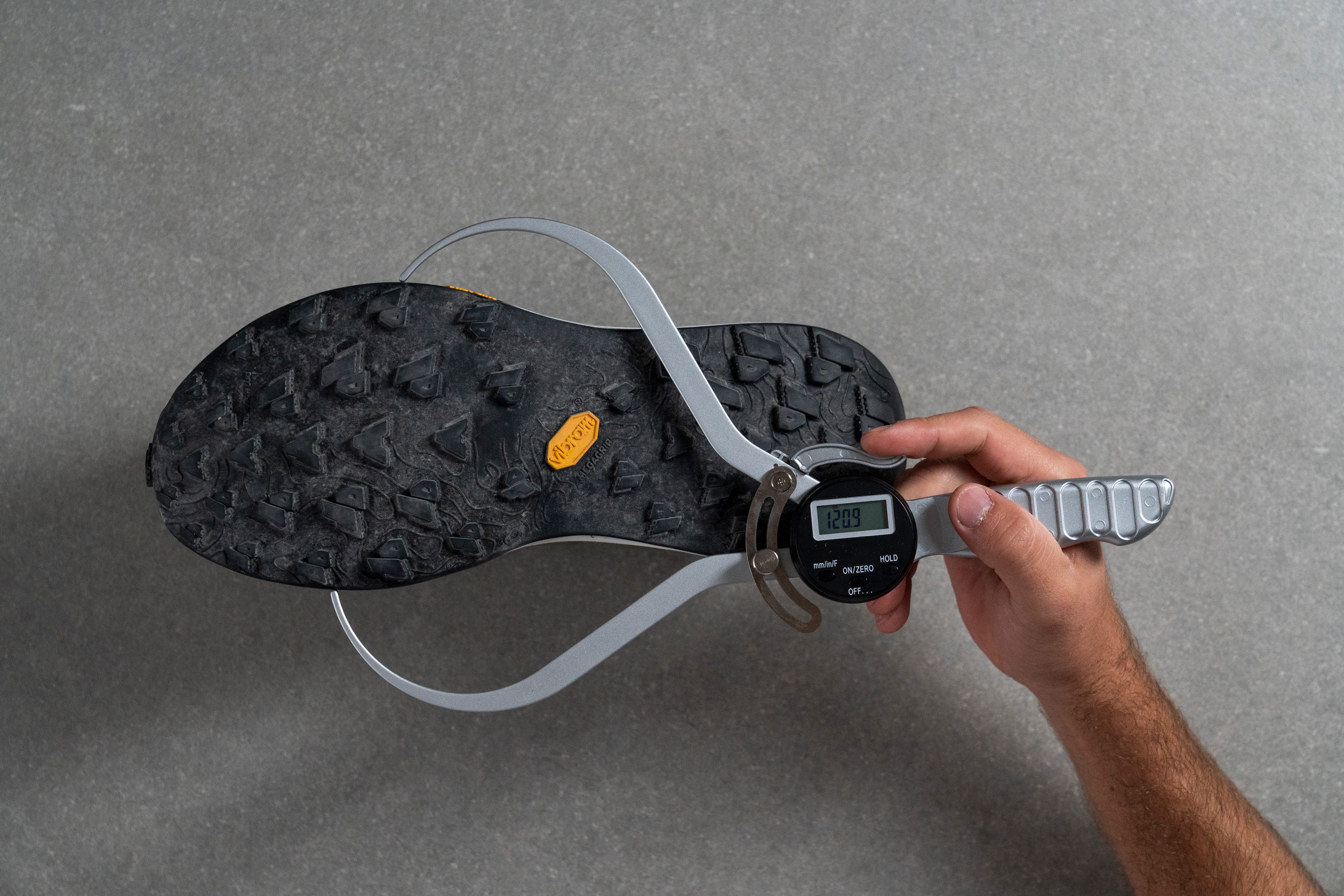
At 120.9 mm in the forefoot, the platform feels exceptionally broad underfoot and plays a major role in creating the secure, planted sensation we experienced especially in flat or runnable terrain.
| M1 | 120.9 mm |
| Average | 114.3 mm |
Midsole width - heel
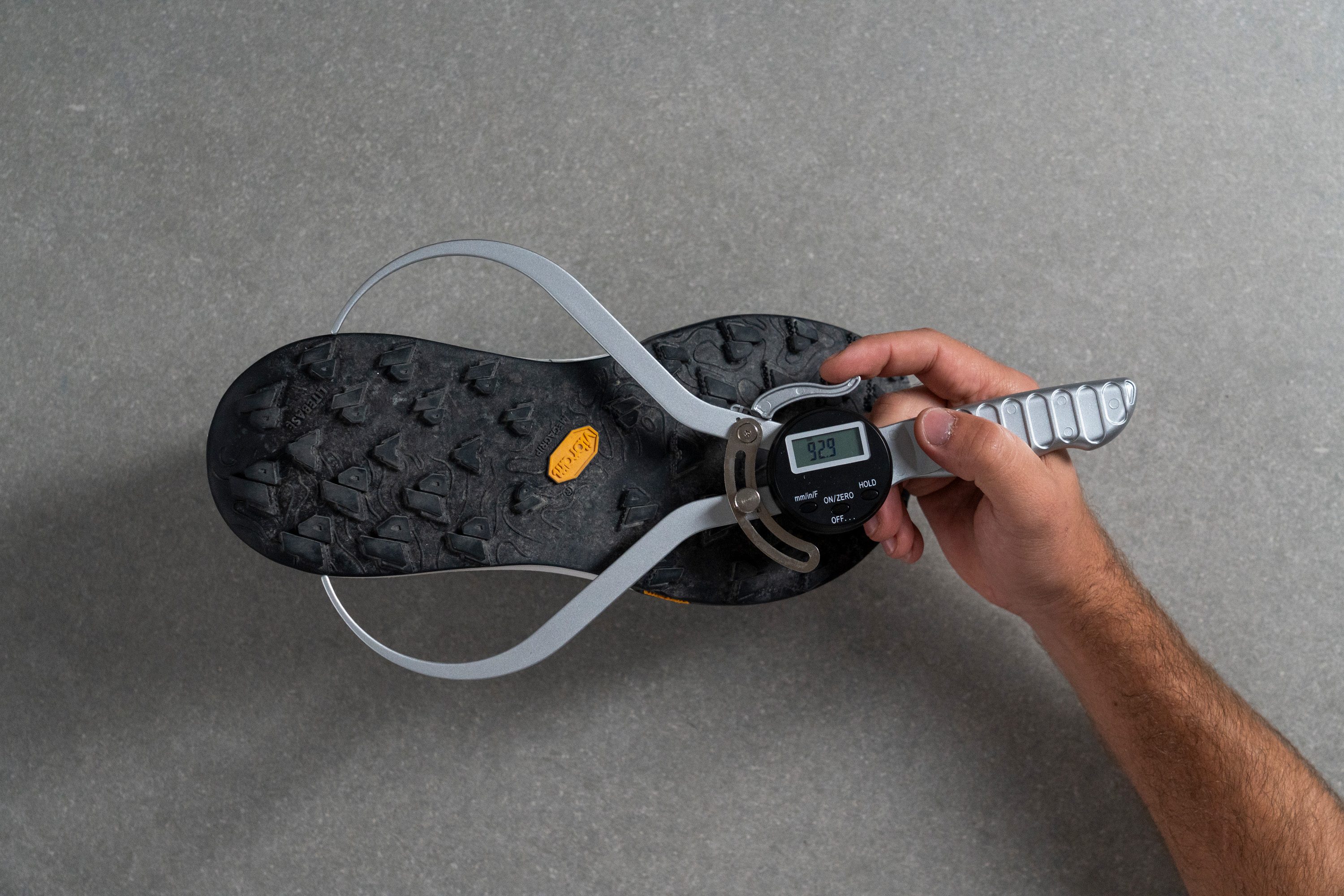
Interestingly, the heel remains much more restrained, measuring 92.9 mm and landing close to our current lab average.
However, thanks to the pronounced rocker geometry from heel to toe and its inherent forward momentum, the M1 never struck us as unstable in the rear despite its substantial stack height.
| M1 | 92.9 mm |
| Average | 90.5 mm |
Durability
Toebox durability
Up to this point, the M1 had impressed us in nearly every area, but our first durability test revealed a weak spot. The lightweight upper didn't put up much of a fight, resulting in a disappointing 1/5 score.
Fortunately, Mount to Coast reinforced the front of the shoe with a substantial protective bumper that wraps around the toebox.
| M1 | 1 |
| Average | 3.1 |
Heel padding durability
We then shifted our attention to the heel padding, and the results couldn't have been better. In our second durability test, it achieved a flawless 5/5 score, delivering the best outcome possible.
| M1 | 5 |
| Average | 3.1 |
Outsole durability
While the upper left some uncertainty, we had no such concerns about the outsole.
Even in its weight-saving Litebase configuration, Vibram Megagrip continues to deliver the durability we've come to expect, and our testing confirmed that with just 0.8 mm of rubber worn away.
| M1 | 0.8 mm |
| Average | 0.9 mm |
Outsole thickness
Mount to Coast opted for just 1.5 mm of outsole rubber, and we believe that was a smart decision.
The Vibram compound is durable enough that additional thickness wasn't necessary, while the towering midsole provides ample underfoot protection even without the help of a rock plate.
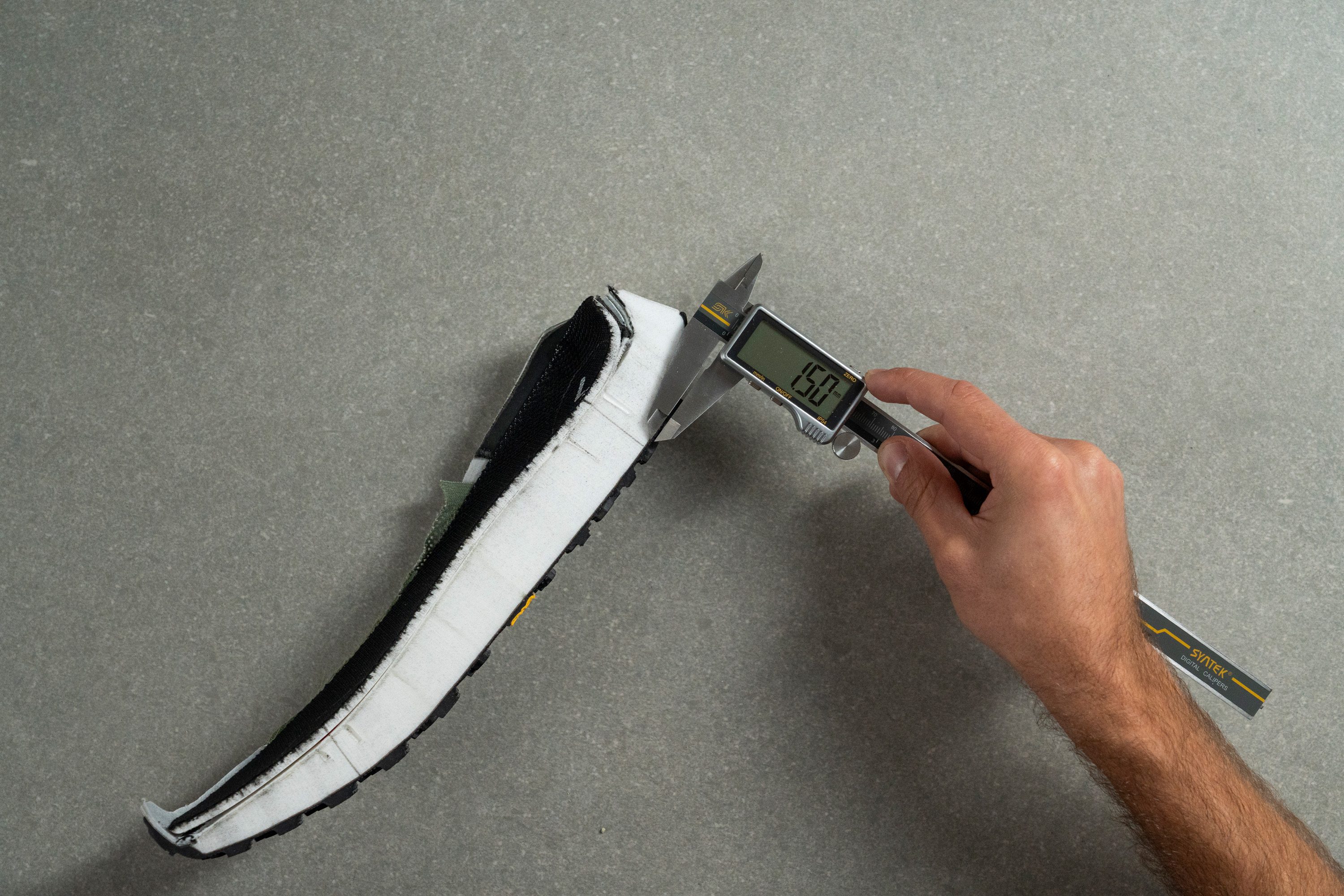
| M1 | 1.5 mm |
| Average | 1.9 mm |
Misc
Insole thickness
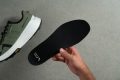
The insole measures 3.9 mm in thickness, making it just slightly thinner than the current lab average.
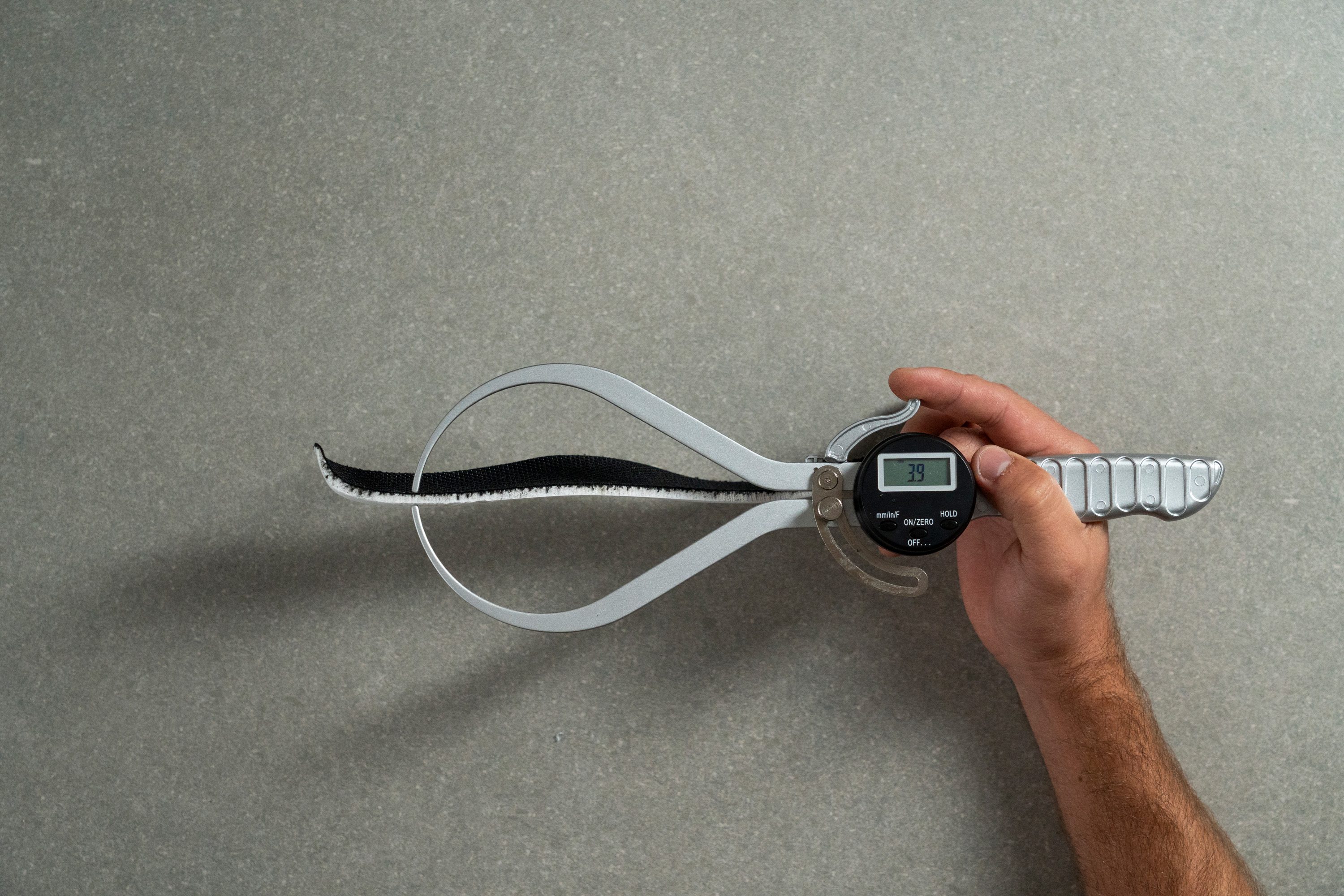
| M1 | 3.9 mm |
| Average | 4.6 mm |
Removable insole
The insole can be removed and replaced without any issues. We found enough room inside the shoe to accommodate a slightly thicker aftermarket option if that's your preference.
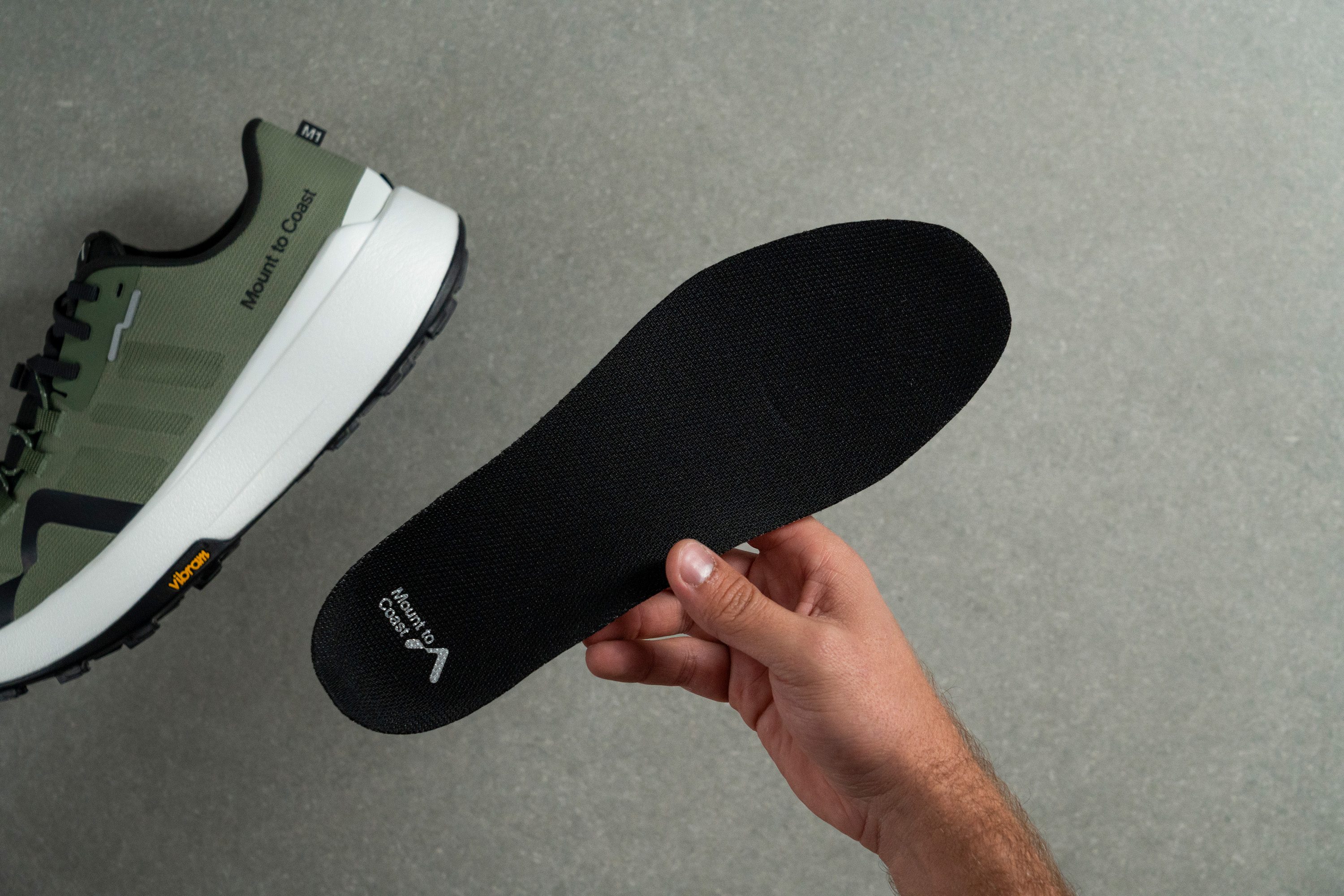
| M1 | Yes |
Reflective elements
Mount to Coast included reflective details on both sides of the upper, a nice touch that enhances visibility and one that not every brand takes the time to add.
| M1 | Yes |
Tongue padding
Mount to Coast continues to use its TunedFit dual-lacing system, allowing runners to adjust tension independently for a more customised fit. It may take you a bit of time to master, but the added adjustability is evident, and those who prefer a traditional setup can easily switch to one anyway.
We also found the tongue to strike a nice balance at 5.6 mm thick. It provides enough padding to protect the instep without feeling overly bulky, a fitting choice for a shoe that still prioritises performance over plush step-in comfort.
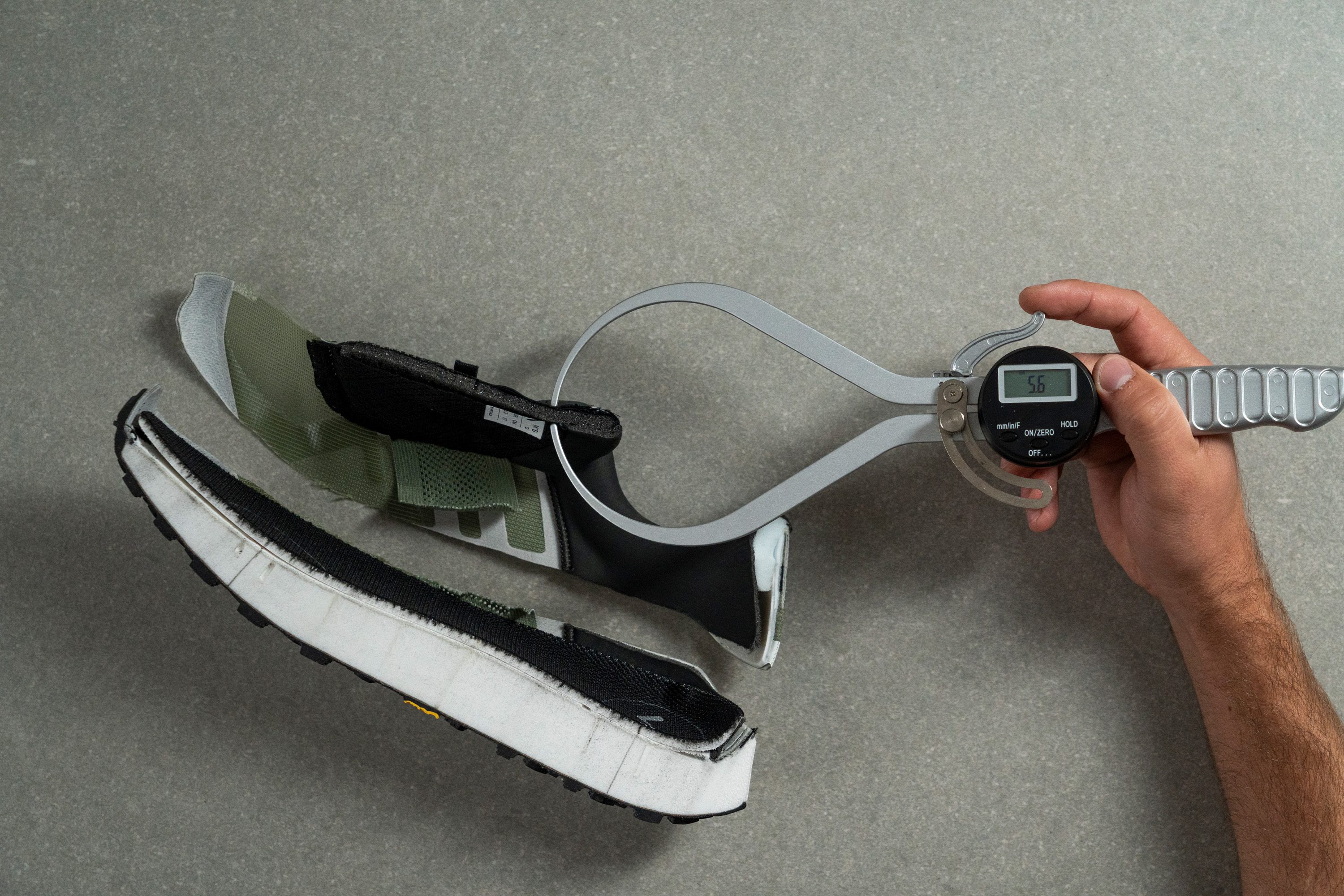
| M1 | 5.6 mm |
| Average | 6.4 mm |
Tongue: gusset type
The tongue is partially gusseted using a lightweight perforated fabric similar to what we often see in road running shoes. This design plays a key role in the excellent breathability we measured earlier, although it won't keep out trail debris quite as effectively as a fully gusseted construction.
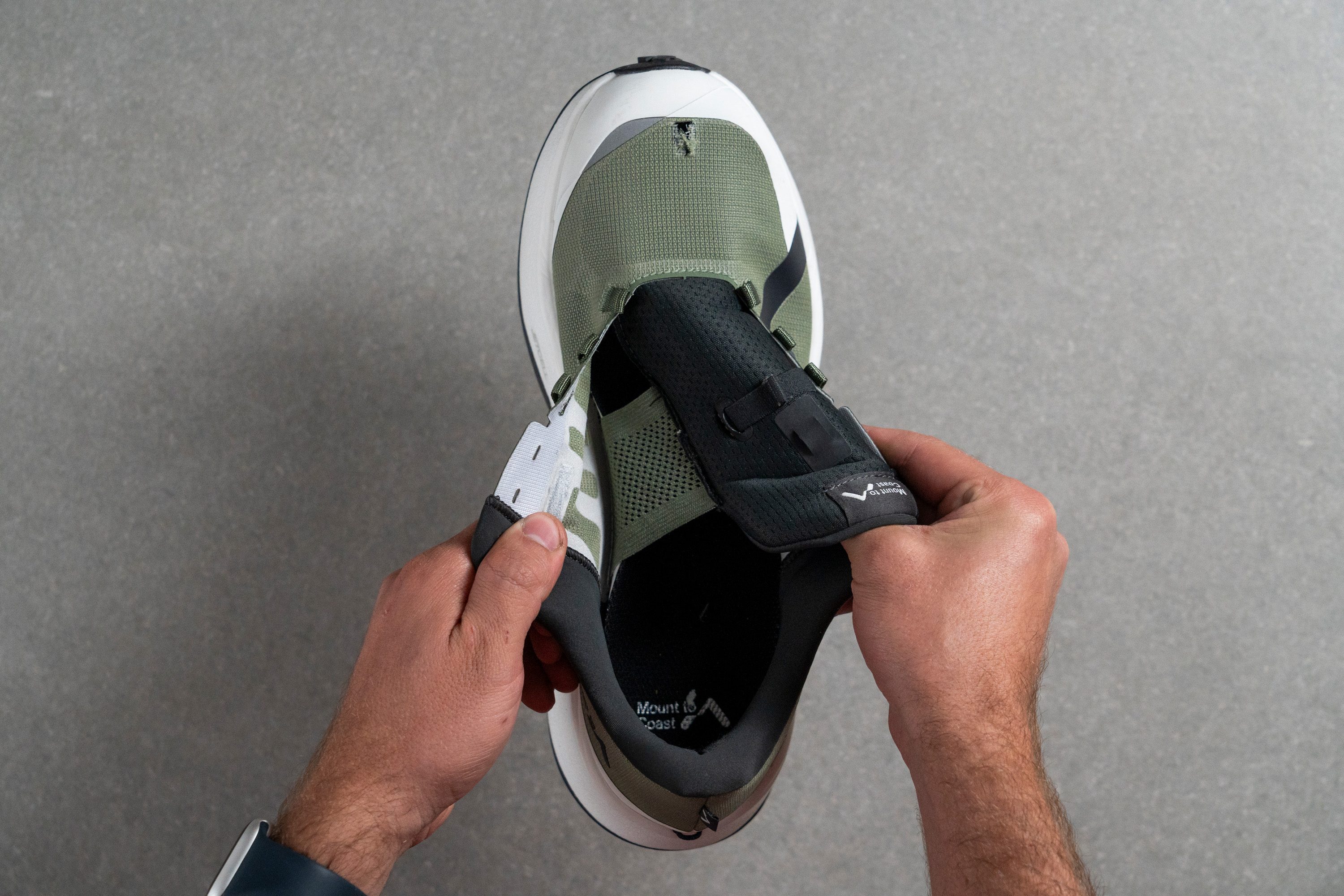
| M1 | Both sides (semi) |
Heel tab
The M1 uses the same heel design we've seen in other Mount to Coast models, featuring the shoe's name on the rear and an integrated attachment point for a gaiter at the base of the heel.
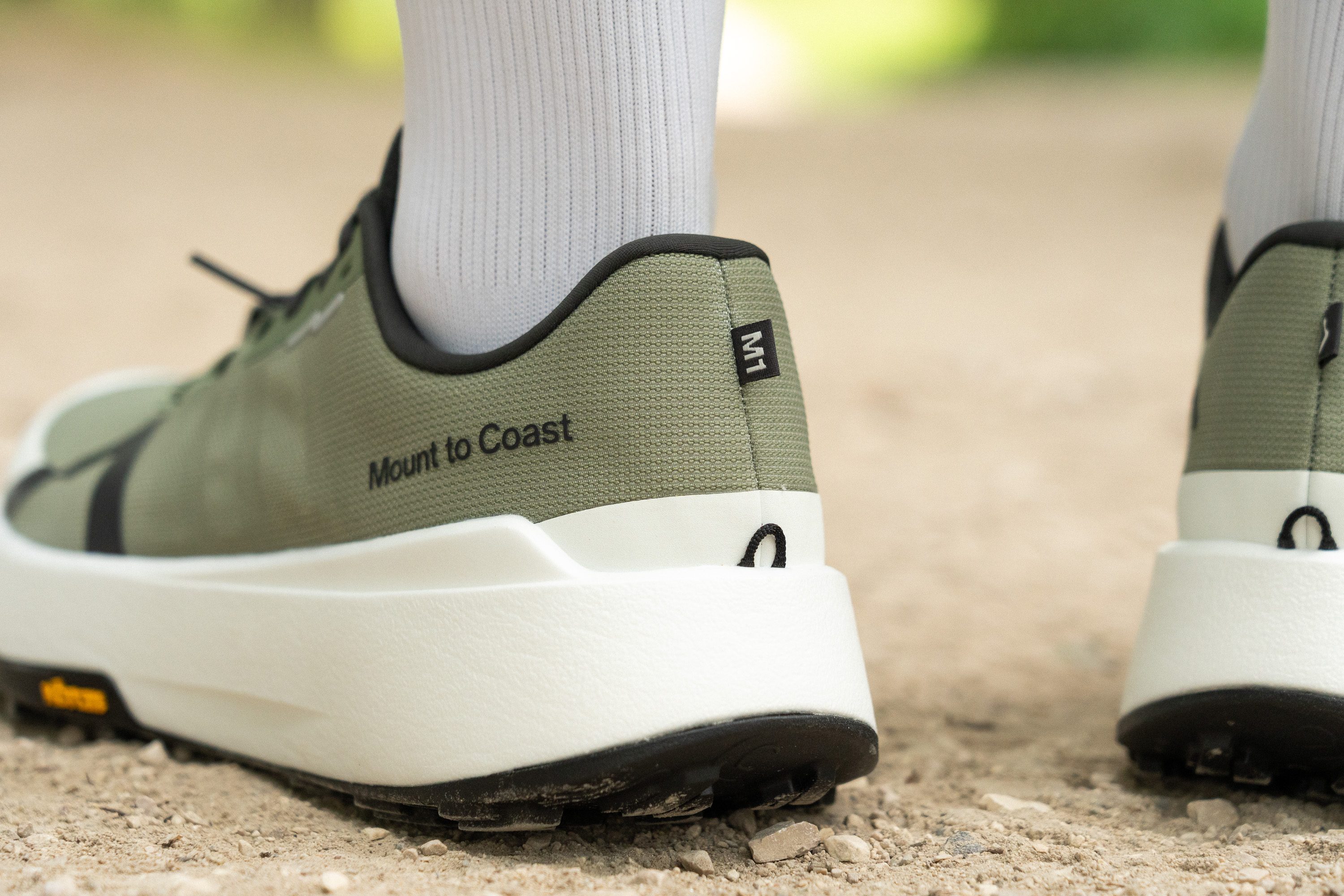
| M1 | None |
Price
Two things can be true at the same time: the M1 sits firmly in the premium-price category, yet its technology package does an excellent job justifying that cost.
From the high-end materials to the outstanding energy return delivered by the JetCell foam, this shoe is packed with top-tier technology. In fact, compared to some rivals, we believe the M1 offers real value for the money.
| M1 | $195 |