



















Our verdict
- Gravel 77
- Versatile 88
- Technical 68
Pros
- Upgraded supercritical foam
- More cushioning for long distances or ultras
- Secure fit with strong foot lockdown
- Reliable Vibram Megagrip outsole
- Effective breathability
- Handles cold temperatures well
- Stable feel
- Excellent toebox and outsole durability
- Improved heel counter comfort
Cons
- Notable price increase
- Keeps losing agility
- Tapered toebox limits natural toe splay
Awards
- Top pick in best trail running shoes
- Top pick in best running shoes for Spartan Race (OCR)
- Top 22% in trail running shoes
- Top 28% in neutral running shoes
- Top 9% most popular running shoes
Comparison
The most similar running shoes compared
+ + Add a shoe | |||||
|---|---|---|---|---|---|
| Our score | 85 Great | 84 Great | 91 Superb | 79 Good | |
| Price | £145 | £160 | £180 | £130 | |
| Trail terrain | Versatile / Moderate terrain | Versatile / Moderate terrain | Versatile / Moderate terrain | Gravel / Road-to-trailVersatile / Moderate terrain | |
| Shock absorption | High | High | High | Moderate | |
| Energy return | Moderate | Moderate | High | Low | |
| Traction | High | High | High | High | |
| Arch support | Neutral | Neutral | Neutral | Neutral | |
| Weight lab Weight brand | 9.9 oz / 281g 9.7 oz / 275g | 11.1 oz / 315g 11.7 oz / 332g | 9.7 oz / 275g 9.9 oz / 280g | 10.4 oz / 295g | |
| Drop lab Drop brand | 7.4 mm 4.0 mm | 9.0 mm 8.0 mm | 6.8 mm 4.0 mm | 7.5 mm | |
| Strike pattern | Mid/forefoot | HeelMid/forefoot | Mid/forefoot | Mid/forefoot | |
| Size | Half size small | Slightly small | Slightly small | True to size | |
| Midsole softness | Balanced | Balanced | Balanced | Balanced | |
| Difference in midsole softness in cold | Small | Small | Small | Small | |
| Toebox durability | Good | Decent | Very bad | Good | |
| Heel padding durability | Decent | Decent | Good | Decent | |
| Outsole durability | Good | Good | Good | Good | |
| Breathability | - | Moderate | - | Moderate | |
| Width / fit | Medium | Medium | Medium | Medium | |
| Toebox width | Medium | Medium | Medium | Medium | |
| Stiffness | Moderate | Stiff | Moderate | Stiff | |
| Torsional rigidity | Stiff | Stiff | Moderate | Moderate | |
| Heel counter stiffness | Moderate | Moderate | Moderate | Stiff | |
| Lug depth | 4.5 mm | 4.4 mm | 4.3 mm | 3.9 mm | |
| Heel stack lab Heel stack brand | 37.7 mm 37.0 mm | 42.9 mm 45.0 mm | 38.8 mm 36.5 mm | 38.6 mm | |
| Forefoot lab Forefoot brand | 30.3 mm 33.0 mm | 33.9 mm 37.0 mm | 32.0 mm 32.5 mm | 31.1 mm | |
| Widths available | NarrowNormalWide | Normal | Normal | NormalWide | |
| For heavy runners | ✓ | ✓ | ✓ | ✓ | |
| Season | - | All seasons | - | All seasons | |
| Removable insole | ✓ | ✓ | ✓ | ✓ | |
| Orthotic friendly | ✓ | ✓ | ✓ | ✓ | |
| Ranking | #107 Top 27% | #139 Top 35% | #21 Top 6% | #238 Bottom 40% | |
| Popularity | #35 Top 9% | #162 Top 41% | #44 Top 11% | #116 Top 29% |



Who should buy
The HOKA Speedgoat 7 returns with meaningful upgrades, and we recommend it for:
- Speedgoat lovers waiting for a supercritical foam upgrade. It's here.
- Those who want a highly-versatile trail shoe that can handle everything from daily runs to ultramarathons and long hikes.
- Runners who prefer a secure, foot-locking fit that keeps movement inside the shoe to a minimum.
- Anyone searching for their first trail shoe and wanting a durable, stable option with proven Vibram Megagrip traction.
Who should NOT buy
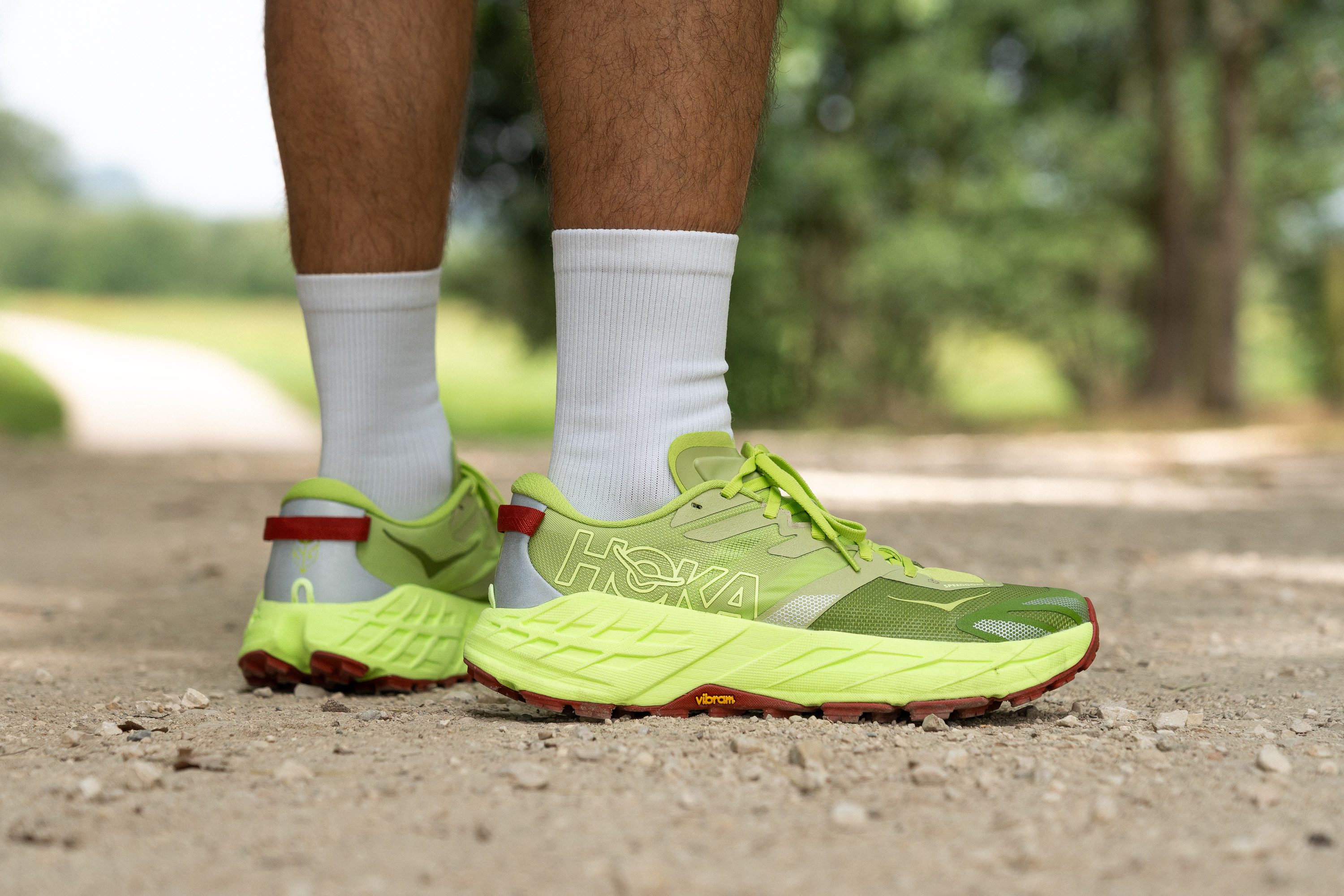
The trademark tapered toebox that has defined HOKA's trail lineup for years remains firmly in place, and the Speedgoat 7 fully embraces that design philosophy. If you prefer a more foot-shaped fit that allows greater toe splay, we believe the Altra Olympus 275 is a better match.
We also think that the price increase may give some runners pause. If you're looking for a capable trail shoe at a lower price, the ASICS Trabuco 14 and Saucony Peregrine 16 both deliver strong all-around performance while costing less.
Cushioning
Shock absorption
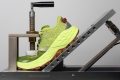
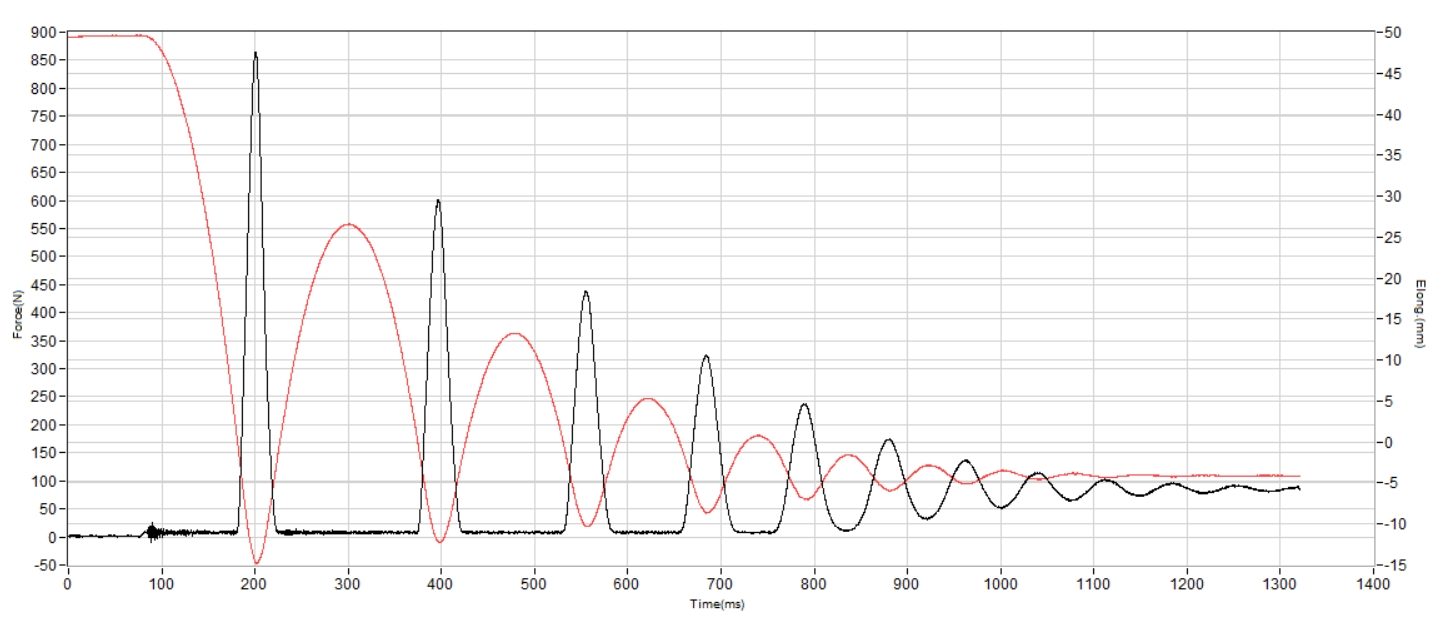
The Speedgoat 7 impressed us in our shock absorption test, posting 131 SA in the heel and 116 SA in the forefoot.
These figures not only surpass those of the previous version but also outperform the current lab average, with the forefoot showing a particularly noteworthy improvement.
| Speedgoat 7 | 131 SA |
| Average | 123 SA |
Energy return
The gains in shock absorption are not the only upgrade. The Speedgoat 7 also delivers a welcome improvement in energy return, an area that we believe had been lagging behind for several generations. In fact, after six versions built around CMEVA foam, HOKA has introduced a supercritical EVA compound. Finally.
We measured 54.4% energy return in the heel and 60.4% in the forefoot. These are respectable figures that better align with the shoe's price point. However, we think there's still room for growth, as pushing closer to the 65% range would place the Speedgoat exactly where we think it needs to be.
| Speedgoat 7 | 60.4% |
| Average | 59.7% |
Heel stack
The Speedgoat 7 shifts toward a more cushioned feel. We found in the lab that the stack height increased by 5.6 mm compared to the v6, moving it well above the current category average.
In our view, this is no longer the moderate platform it once was, and we think the added cushioning marks a noticeable departure from the shoe's earlier design philosophy.
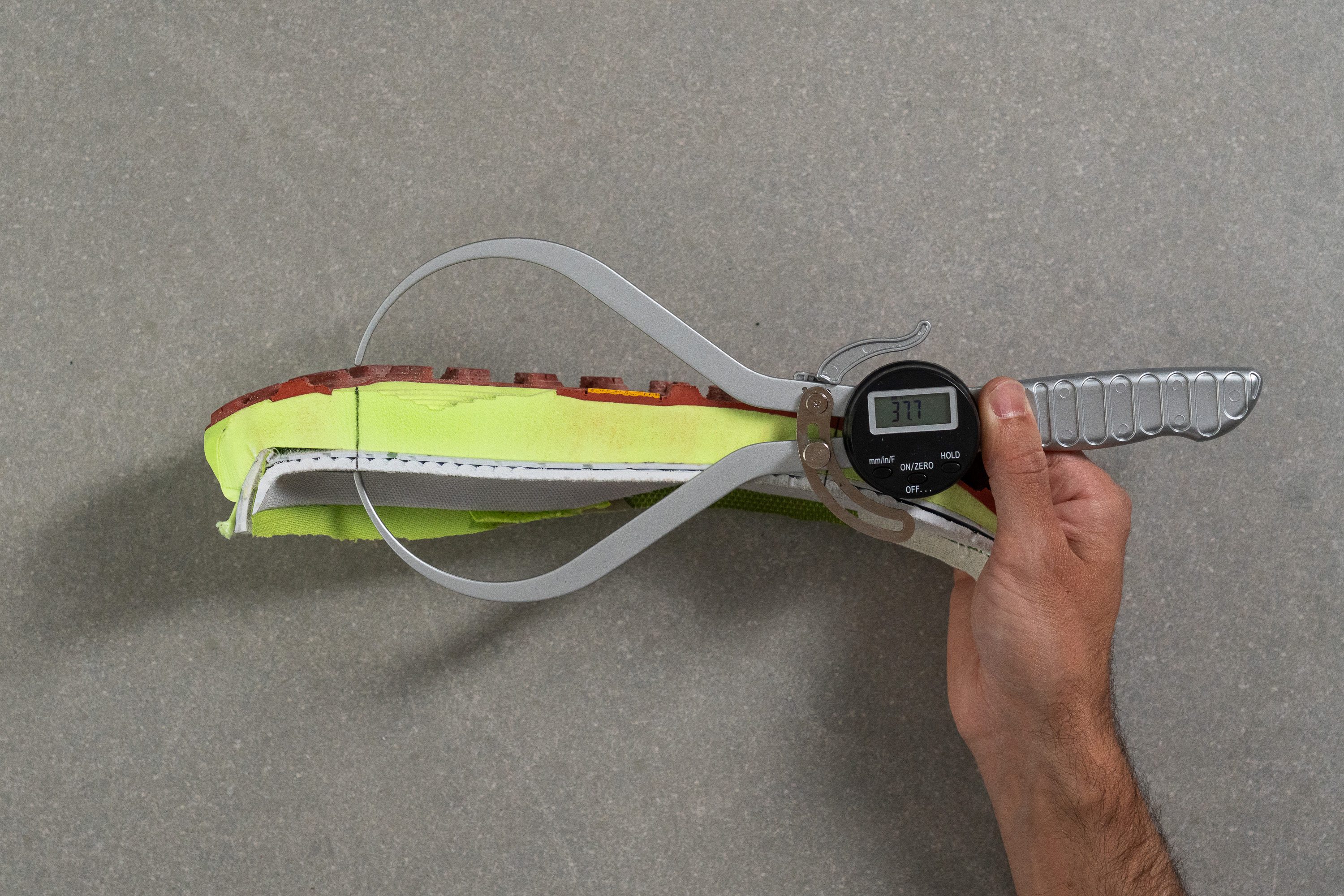
| Speedgoat 7 | 37.7 mm |
| Average | 33.1 mm |
Forefoot stack
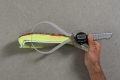
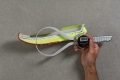
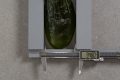
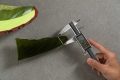
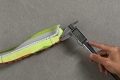
The forefoot also gains extra cushioning compared to the previous version, reaching 30.3 mm on our digital calliper.
In our opinion, this update enhances the shoe's long-distance capabilities, although runners who prefer a more connected or feedback-rich ride may find the added stack less appealing.
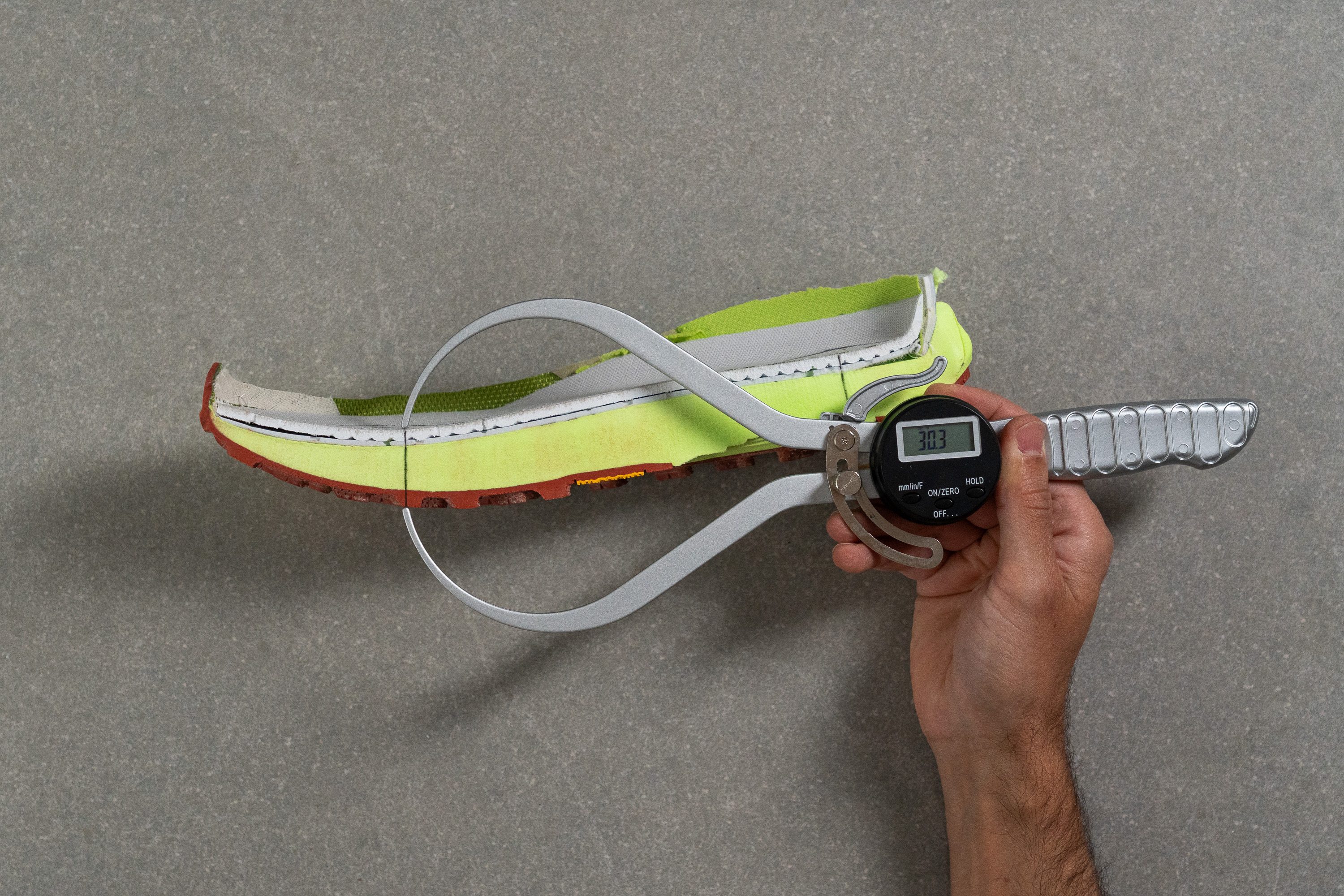
| Speedgoat 7 | 30.3 mm |
| Average | 25.8 mm |
Drop
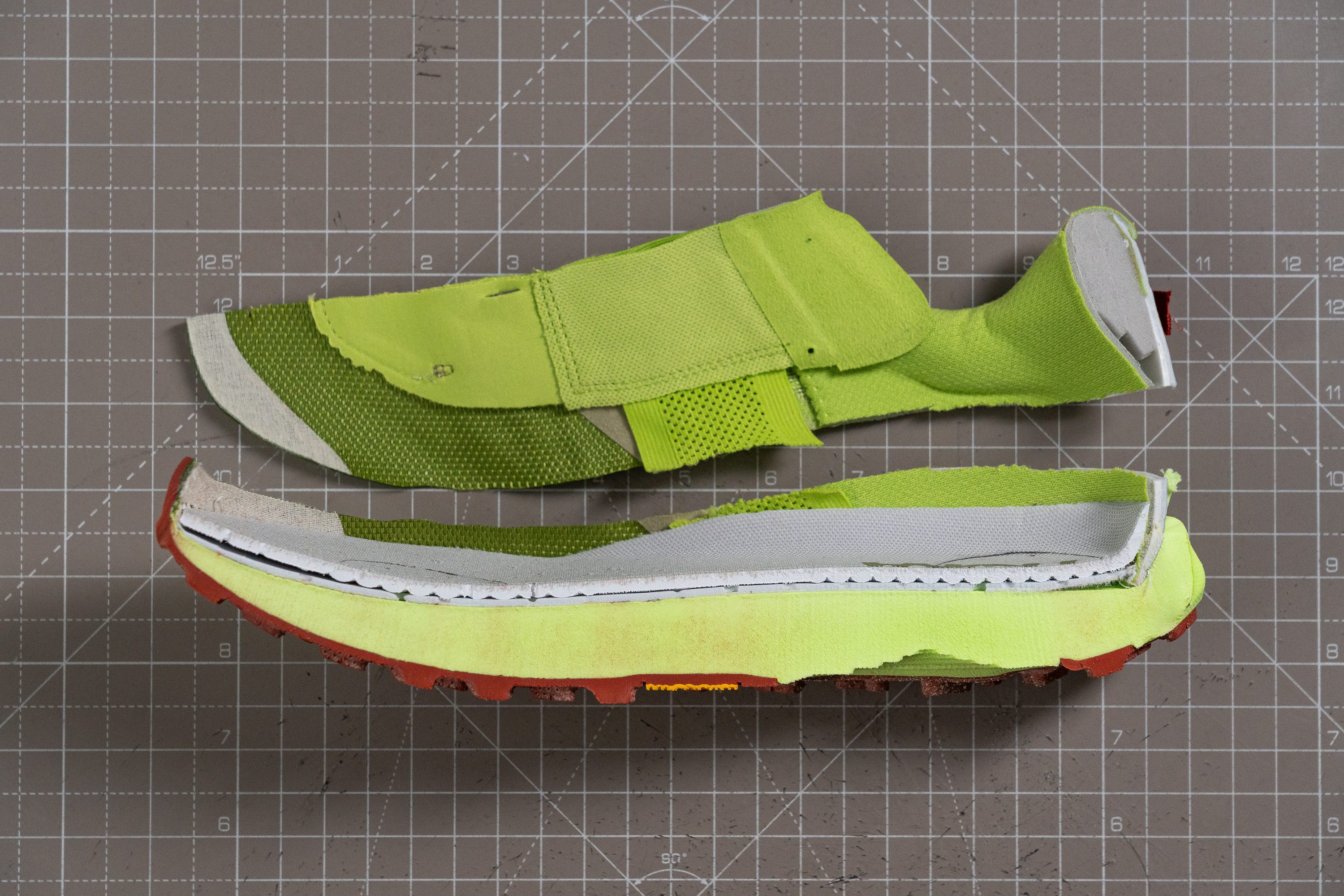
We measured an actual drop of 7.4 mm from heel to toe, slightly higher than the 5 mm advertised by HOKA. We believe that heel strikers will particularly appreciate this setup.
However, it's now more suitable for all landing patterns, as trail shoes with a 6-8 mm drop often deliver one of the most versatile and runner-friendly configurations.
| Speedgoat 7 | 7.4 mm |
| Average | 7.3 mm |
Midsole softness
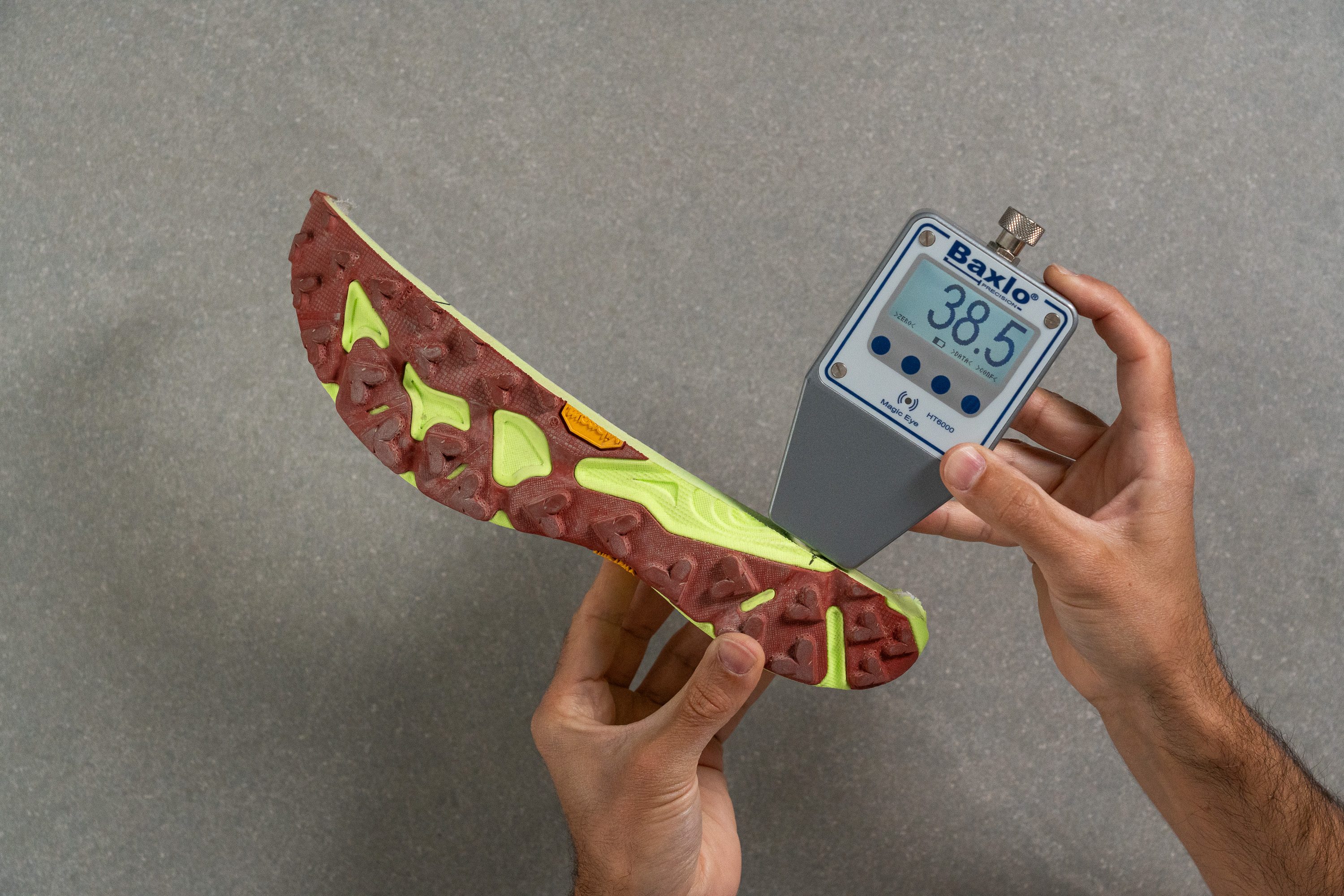
The new supercritical EVA foam is slightly softer than the CMEVA compound used in the previous version, although nobody should not expect a sink-in feel. Instead, HOKA has opted for a more controlled setup that prioritises stability and predictability on the trails.
Our durometer returned a reading of 38.5 AC, placing the Speedgoat 7 in a sweet-spot zone that balances comfort and support. We think this approach should work well for most runners, especially considering that an ultra-soft midsole is rarely the best choice for a trail shoe designed to handle a wide range of terrain.
| Speedgoat 7 | 38.5 AC |
| Average | 38.3 AC |
Rocker
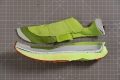
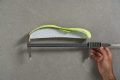
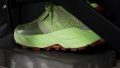
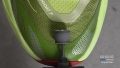
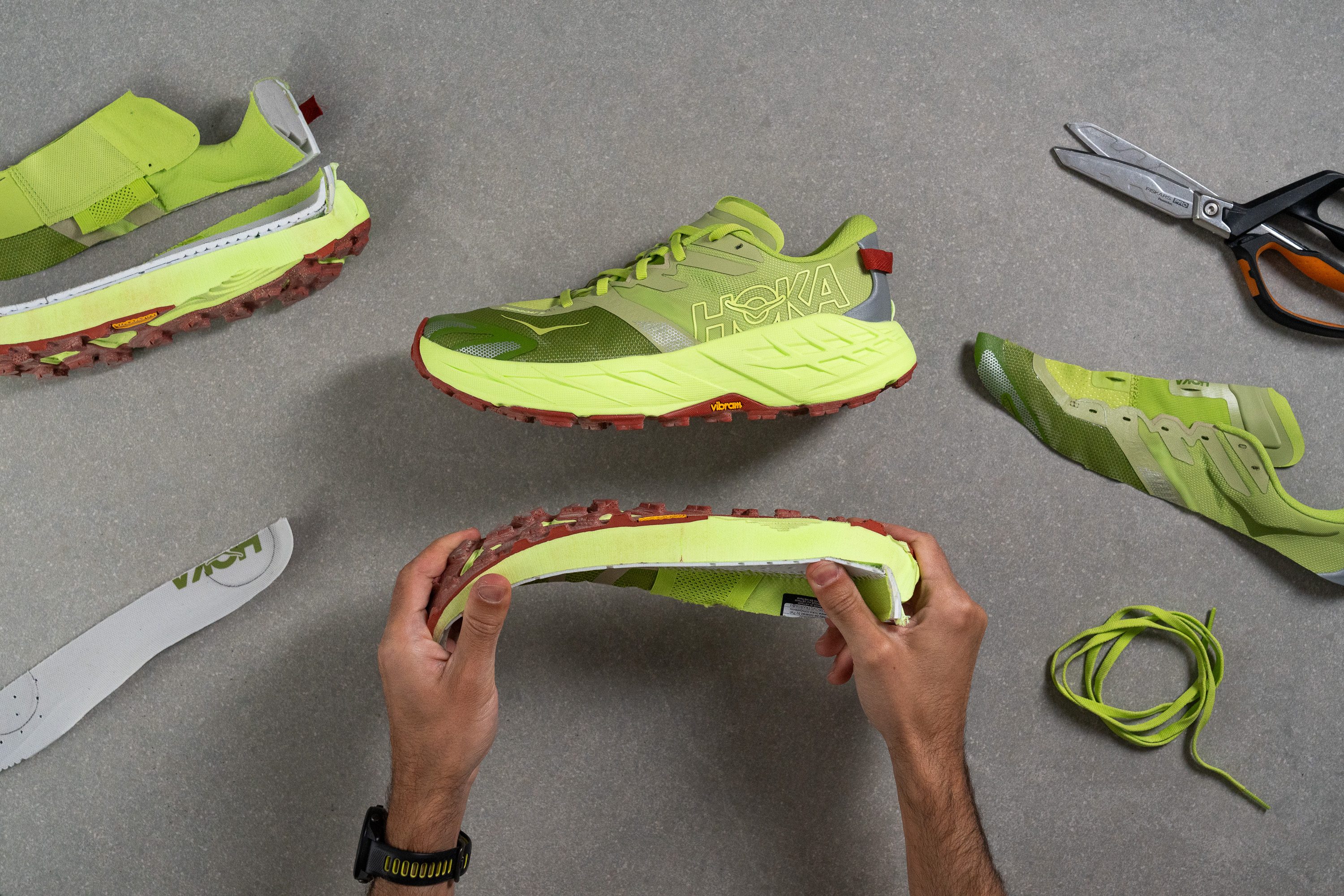
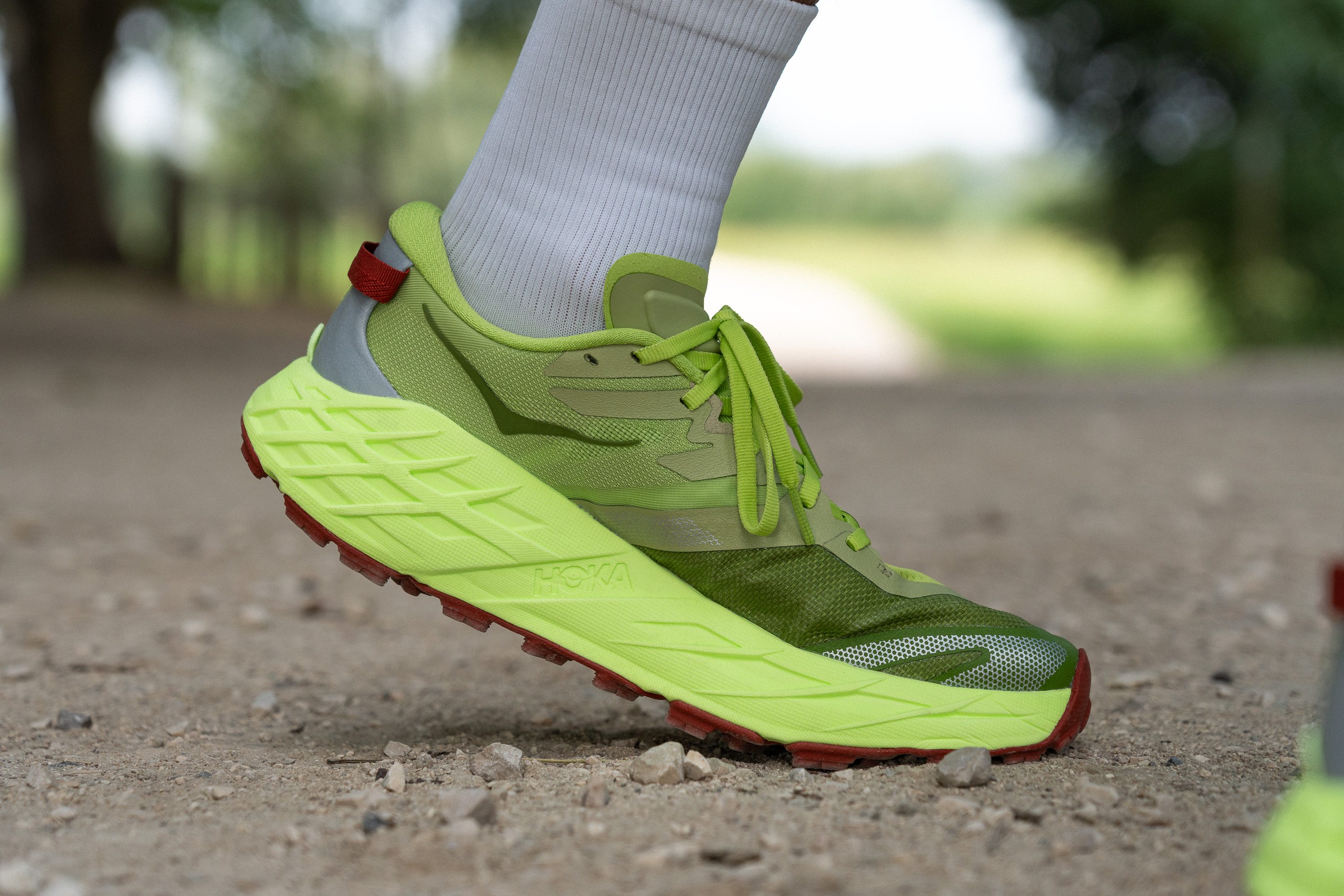
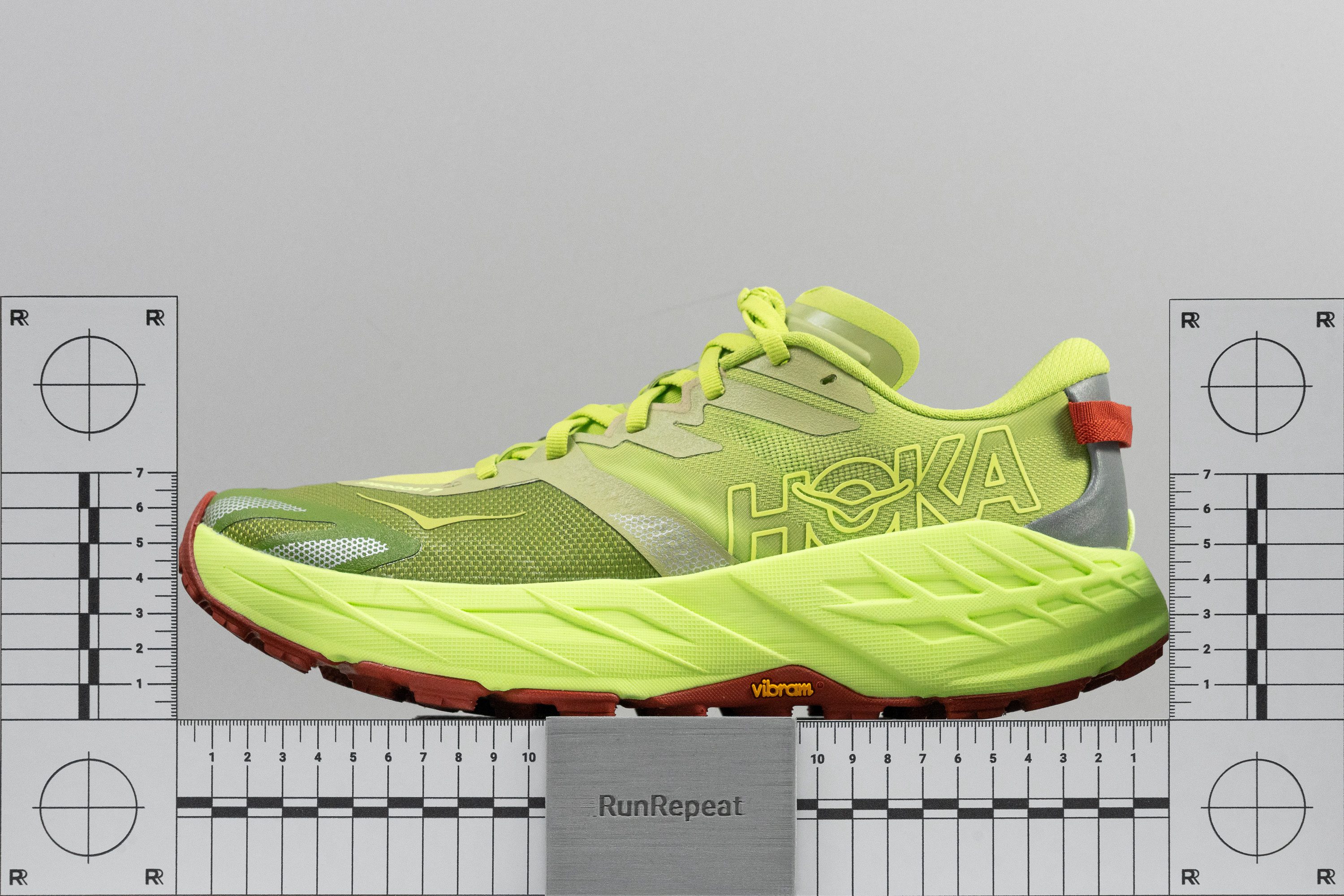
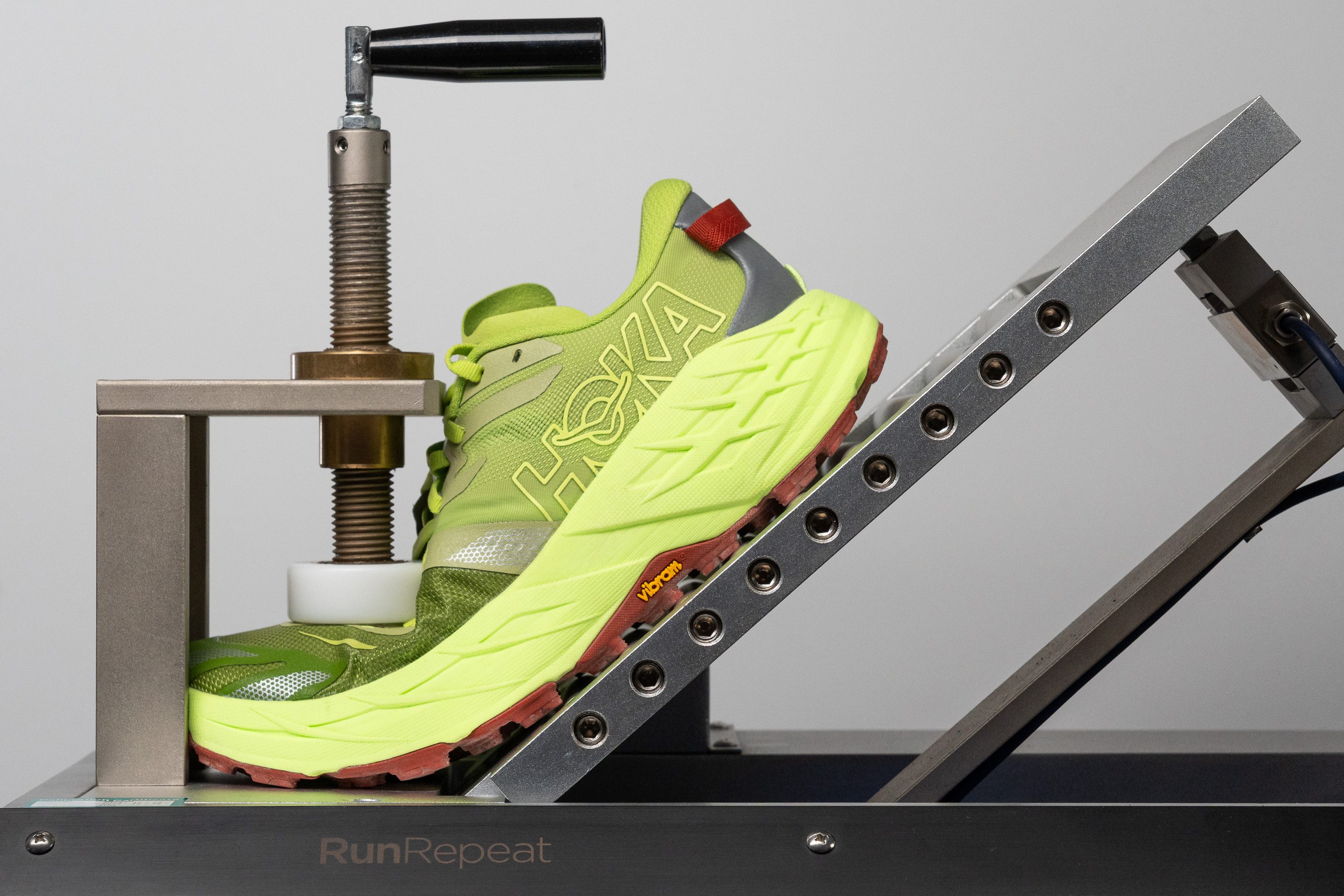
The running shoe market is increasingly dominated by rockered designs, so with the added stack height, it came as no surprise to us that HOKA introduced a gentle rocker to the Speedgoat 7. As our photo clearly shows, the geometry is designed to encourage smooth heel-to-toe transitions and maintain forward momentum.
We think that this design choice will prove especially valuable over longer distances, where fatigue often begins to affect running form and efficiency.
Size and fit
Size
HOKA Speedgoat 7 fits half size small (81 votes).
Consider sizing up
Internal length
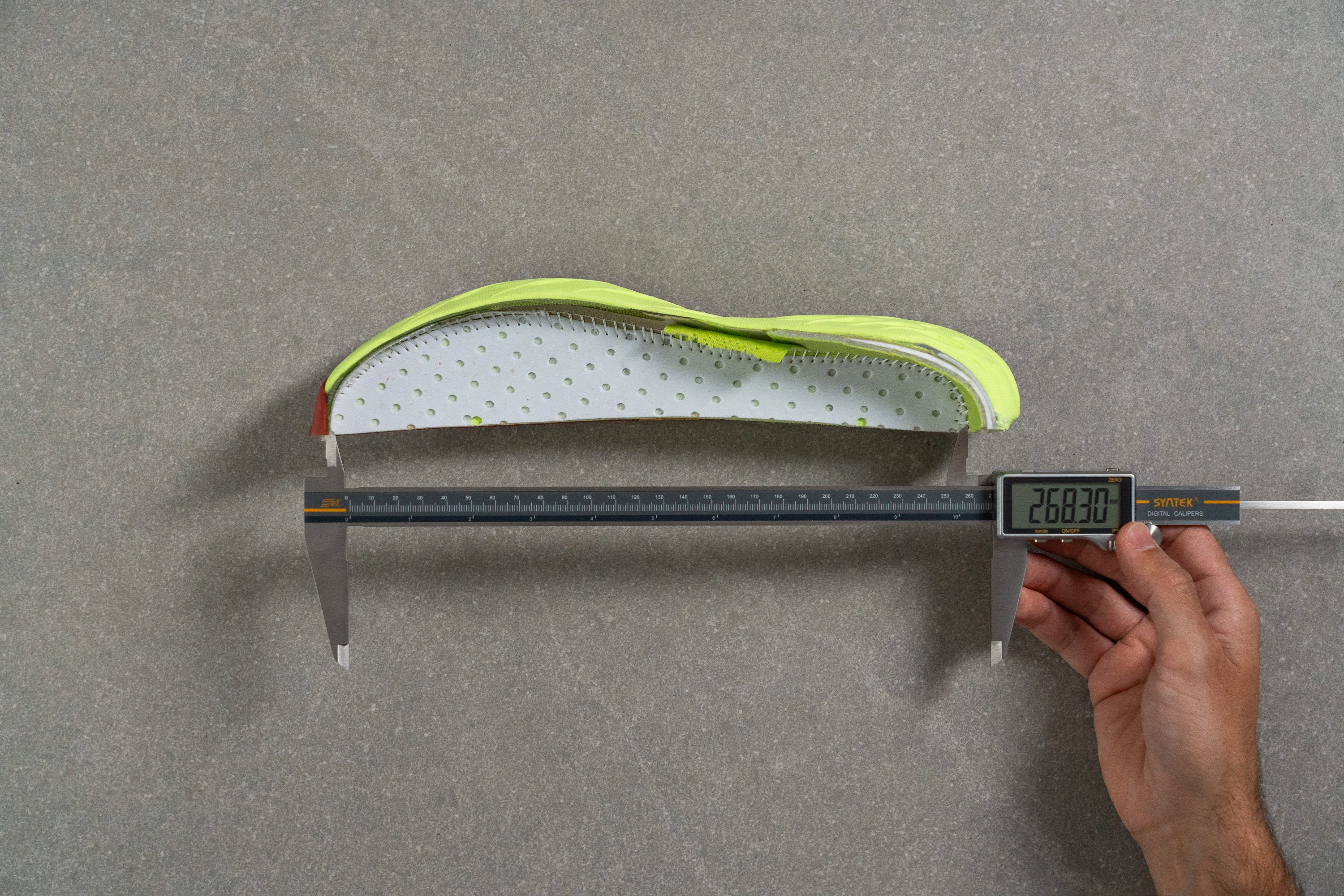
| Speedgoat 7 | 268.3 mm |
| Average | 269.2 mm |
Width / Fit
HOKA has long had a reputation for favouring runners with narrower feet, and our measurements suggest that little has changed with the Speedgoat 7. Although the brand continues to offer a wide version, the standard model maintains a fairly snug fit.
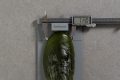
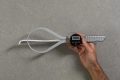
To evaluate its shape with precision, we created a detailed replica of the shoe's interior and took our three standard measurements. Right from the start, the Speedgoat 7 came in below the lab average at just 94.8 mm of width.
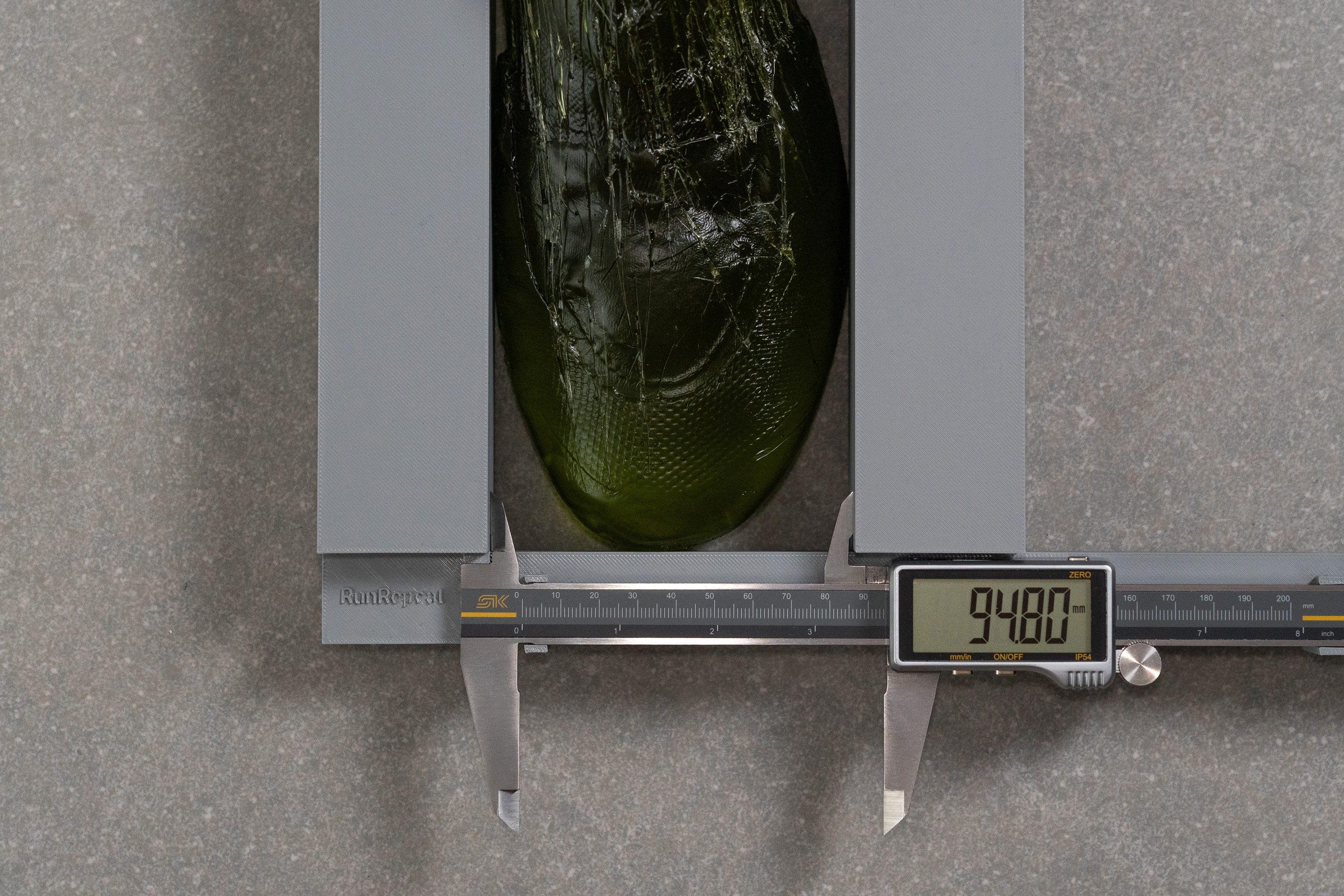
| Speedgoat 7 | 94.8 mm |
| Average | 95.7 mm |
Toebox width
Our second measurement focuses on the shape of the toebox, revealing whether it allows the toes to spread naturally or narrows aggressively toward the front.
As expected from HOKA, the Speedgoat 7 follows the latter approach. At just 71.4 mm, it offers a close-fitting, locked-in feel that should appeal to runners with narrow feet or those who prioritise foot security over unrestricted toe splay.
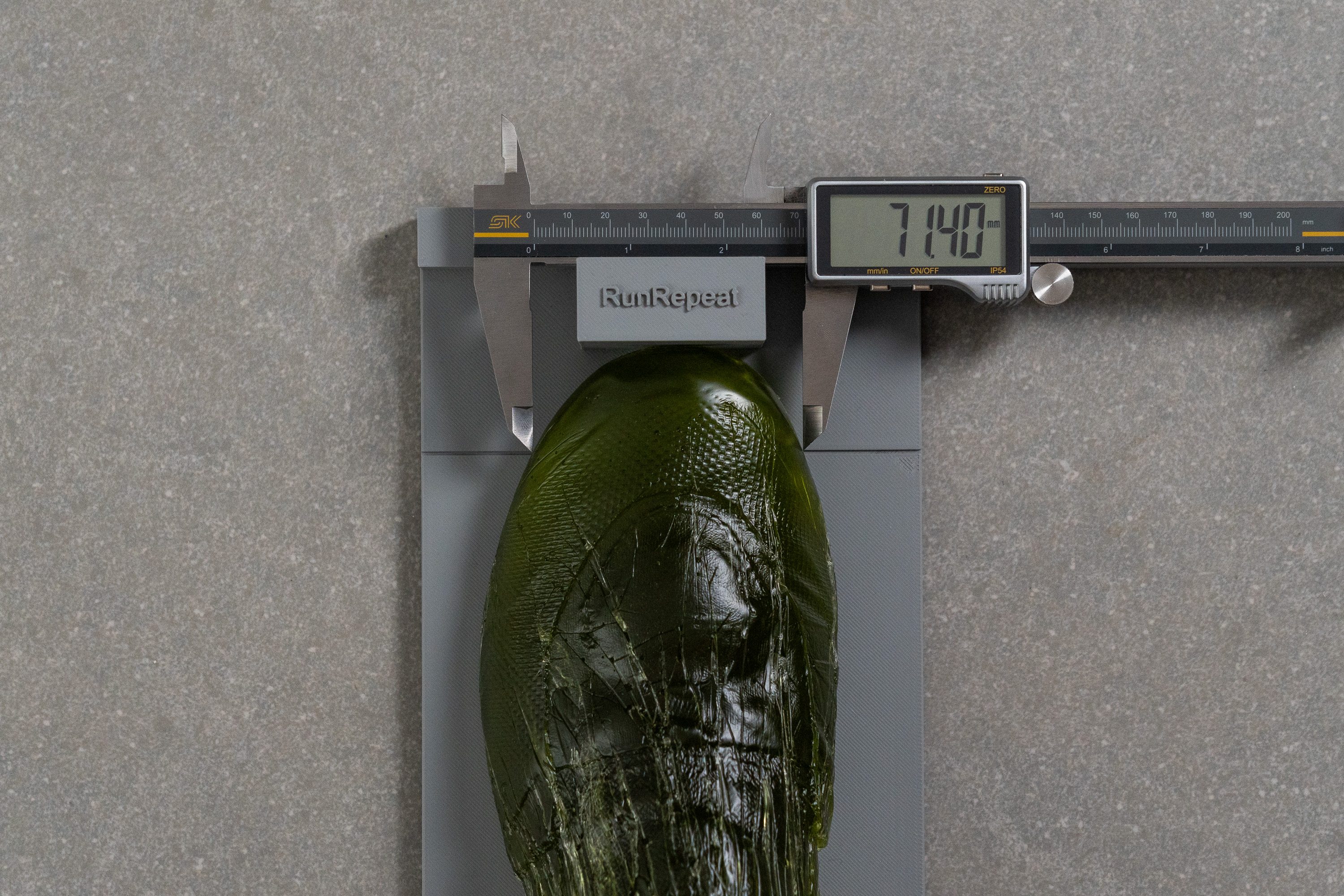
| Speedgoat 7 | 71.4 mm |
| Average | 74.3 mm |
Toebox height
Runners concerned about vertical space in the toebox can relax, as we measured a fairly accommodating 28.2 mm.
The added height also creates more space for air to circulate throughout the shoe, an important factor when it comes to breathability.
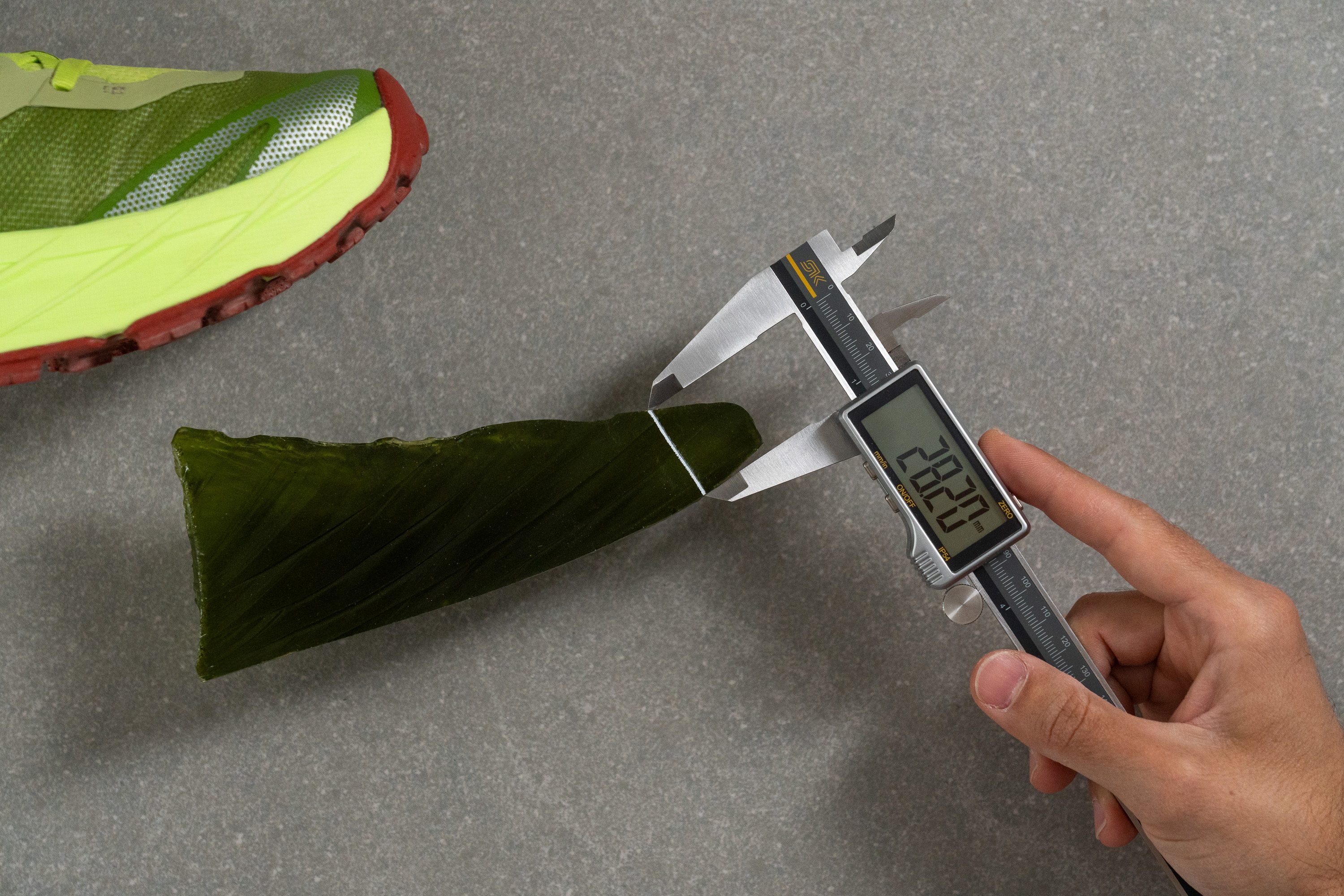
| Speedgoat 7 | 28.2 mm |
| Average | 26.9 mm |
Traction / Grip
Traction test
The Speedgoat 7 raised the bar once again, achieving a remarkable 0.77 coefficient of friction in our testing. Equipped with the excellent Vibram Megagrip and Traction Lug technology, it delivered phenomenal grip that inspires complete confidence, whether scrambling over wet rocks or tackling easier terrain.
| Speedgoat 7 | 0.77 |
| Average | 0.68 |
Lug depth
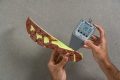
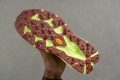
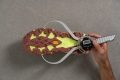
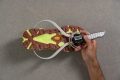
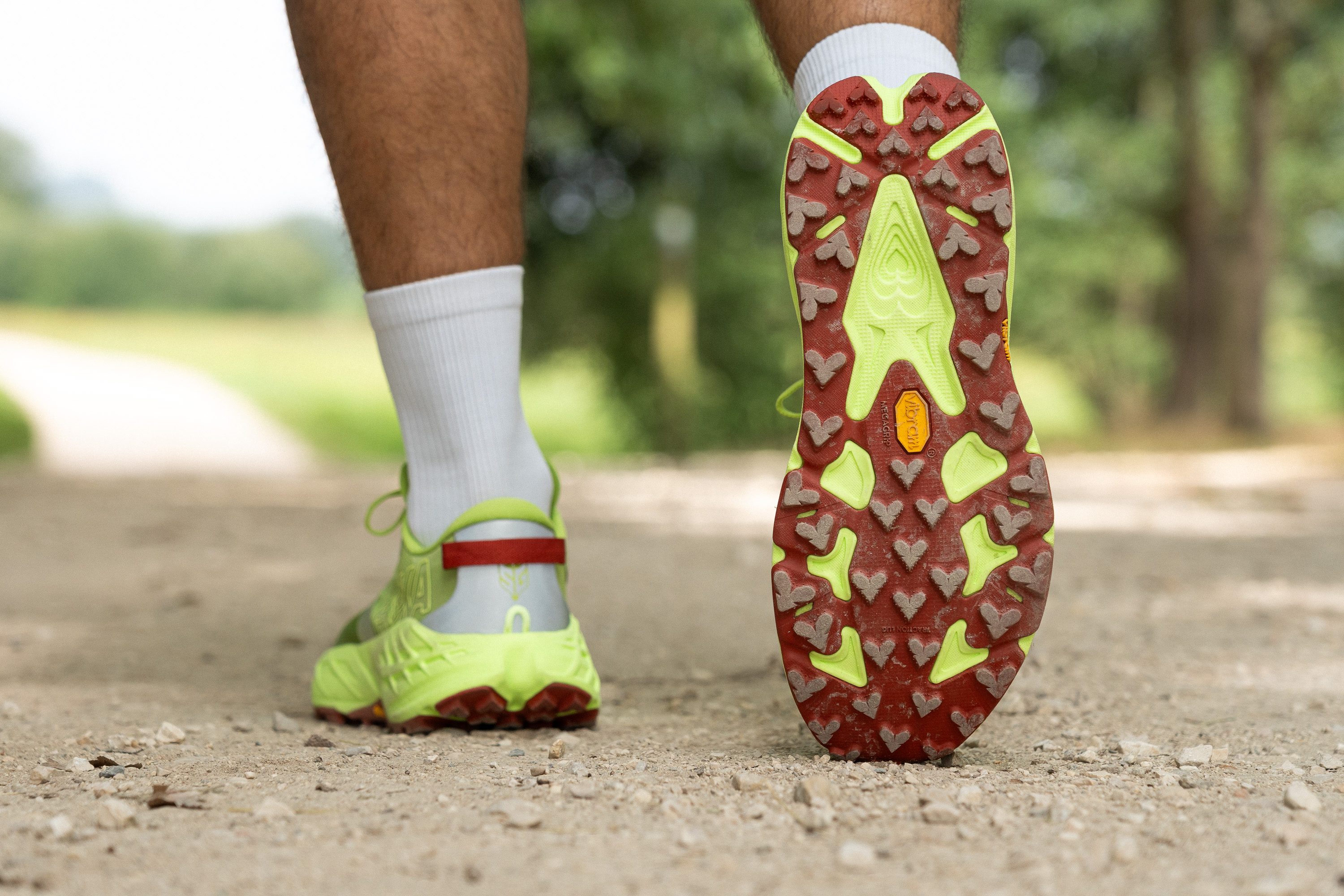
The Speedgoat 7 features updated lugs with Vibram's Traction Lug technology, with a heart-shaped design that vary in size and orientation throughout the outsole. As shown in our photo, the pattern is multi-directional, a design aimed at enhancing grip across a wide range of trail conditions.
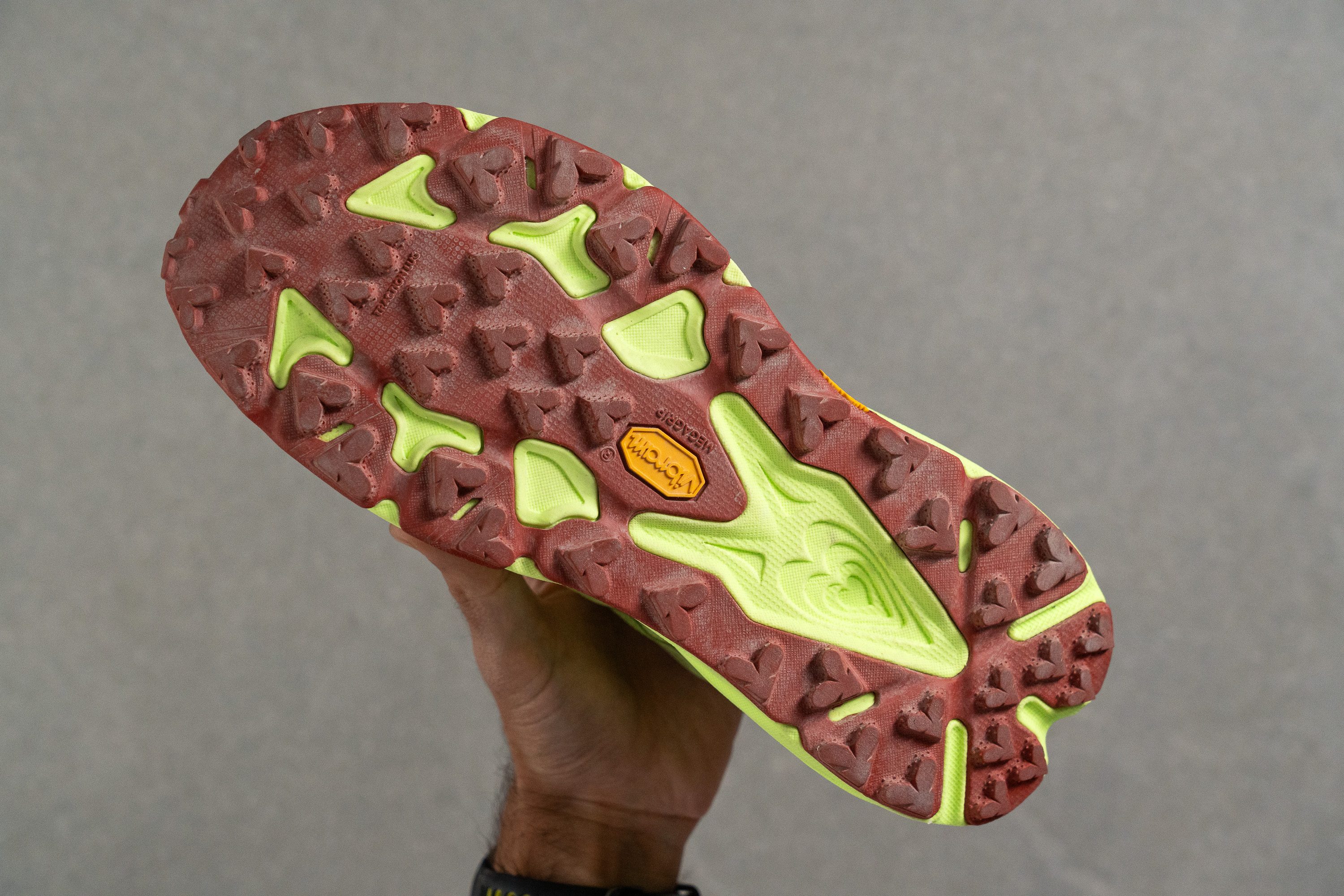
We measured the lug depth at 4.5 mm, closely matching HOKA's stated 5.0 mm specification. We found this depth strikes an excellent balance for a wide range of terrain, from gravel roads and dry trails to moderately technical routes. However, runners who regularly encounter deep mud or highly demanding mountain terrain may be better served by a shoe with more aggressive and deeper lugs.

| Speedgoat 7 | 4.5 mm |
| Average | 3.5 mm |
Outsole design
HOKA once again relies on large sections of exposed midsole, following the same approach as its predecessor. While this design is not the most protective against sharp rocks and other trail hazards that can accelerate foam wear, it helps keep weight in check and improves a bit the longitudinal flexibility of the shoe.
Flexibility / Stiffness
And that design choice clearly pays off. In our 30-degree bend test, the Speedgoat 7 required just 14.4N of force, a moderate result that reinforces the versatile nature of this trail series.
| Speedgoat 7 | 14.4N |
| Average | 14.8N |
Weight
One of the biggest advantages of a supercritical foam is that it boosts both energy return and shock absorption without adding weight. As a result, HOKA was able to increase the amount of cushioning here.
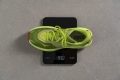
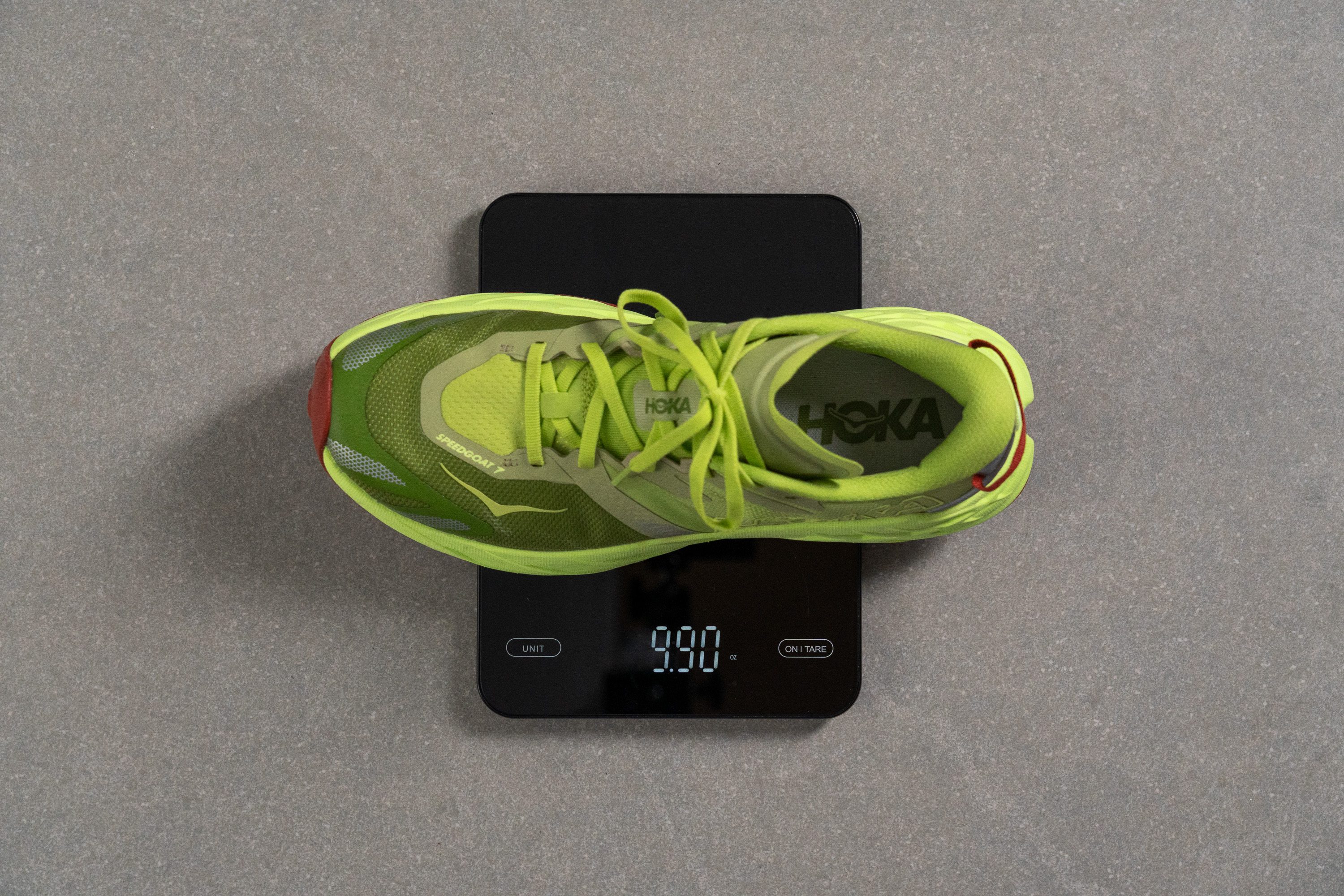
The Speedgoat 7 weighed 9.9 oz (281g) on our scale, virtually identical to its predecessor.
| Speedgoat 7 | 9.9 oz (281g) |
| Average | 10.1 oz (285g) |
Breathability
Breathability test
The Speedgoat series is often chosen as a do-it-all trail shoe, expected to perform year-round whether you're running or hiking. For that reason, effective ventilation should be an essential part of its design.
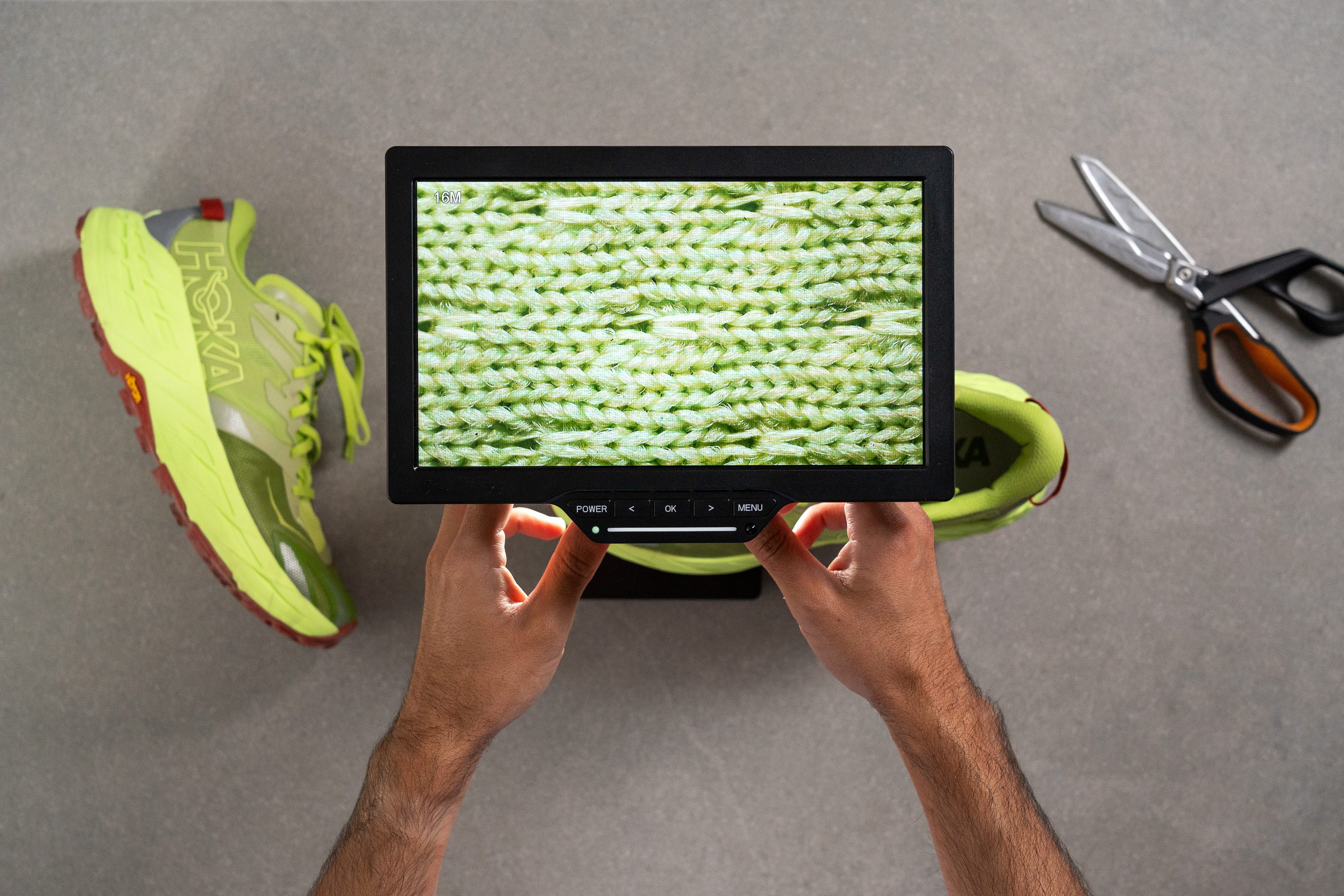
Using our breathability machine, we measured how efficiently the shoe moves sweat away from the foot over a three-hour test while continuously supplying artificial sweat. And the Speedgoat 7 earned a solid 69 BR score, confirming its ability to maintain a reasonably dry environment inside the shoe.
| Speedgoat 7 | 69 BR |
| Average | 71 BR |
Drying potential
NewWe were also pleased with the shoe's drying potential. In addition to measuring breathability, our three-hour test also evaluates how effectively moisture escapes from the shoe and dissipates into the environment.
The Speedgoat 7 managed to release 51% of the accumulated moisture, a solid result that should help runners maintain a more comfortable experience during long outings or rainy days.
| Speedgoat 7 | 51% |
| Average | 51% |
Stability
Lateral stability test
After testing the Speedgoat 7, we can confidently say that it delivers a stable ride despite the softer scEVA foam, and much of that comes down to the way HOKA engineered the midsole. The platform is exceptionally wide, while the tall sidewalls on both the medial and lateral sides create a foot-hugging design that keeps the foot securely centred throughout the stride.
In our experience, this setup slightly reduces the natural feel of the ride, as the foot can feel somewhat guided, but we believe that this tradeoff is necessary to maintain stability given the shoe's higher stack height.
Torsional rigidity
Recent Speedgoat models have consistently leaned toward the rigid side, and our specialised testing machine confirmed that the seventh generation stays true to that formula.
Requiring 18.6 Nm of force to twist, the Speedgoat 7 ranks among the most torsionally-stiff trail shoes we've tested. Therefore, runners seeking a highly-flexible ride should look elsewhere.
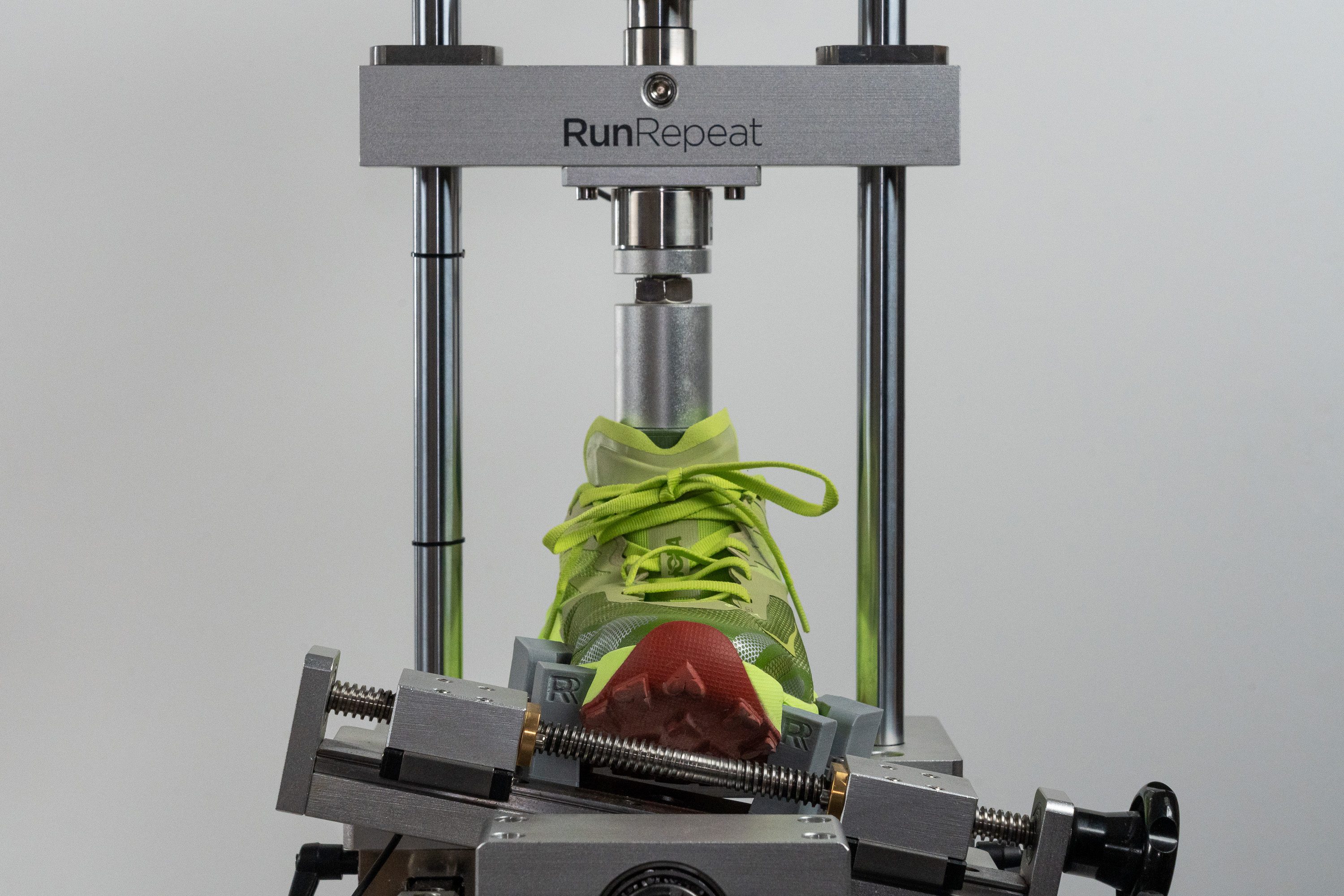
| Speedgoat 7 | 18.6 Nm |
| Average | 15.8 Nm |
Heel counter stiffness
On the other hand, we found a notable change in this area. The 5/5 heel counter from the Speedgoat 6 is gone, replaced by a far more comfortable design that earned a 3/5 in our assessment.
In our opinion, this is a welcome update, especially for runners spending long hours on the trails, even if it comes at the expense of a small amount of rearfoot support.
| Speedgoat 7 | 3 |
| Average | 3 |
Midsole width - forefoot
There are a few exceptions, but most brands have embraced the wide-platform approach for trail shoes, and the Speedgoat 7 is no different.
Measuring 117.4 mm in the forefoot, it offers a broad base that helps create stable landings. The trade-off, as always, is a reduction in agility, making the shoe feel less nimble on technical terrain.
However, we believe that for most trail runners, this extra stability is a worthwhile compromise. And if this wide-base design does not appeal to you, perhaps the HOKA Zinal 2 is the better match.
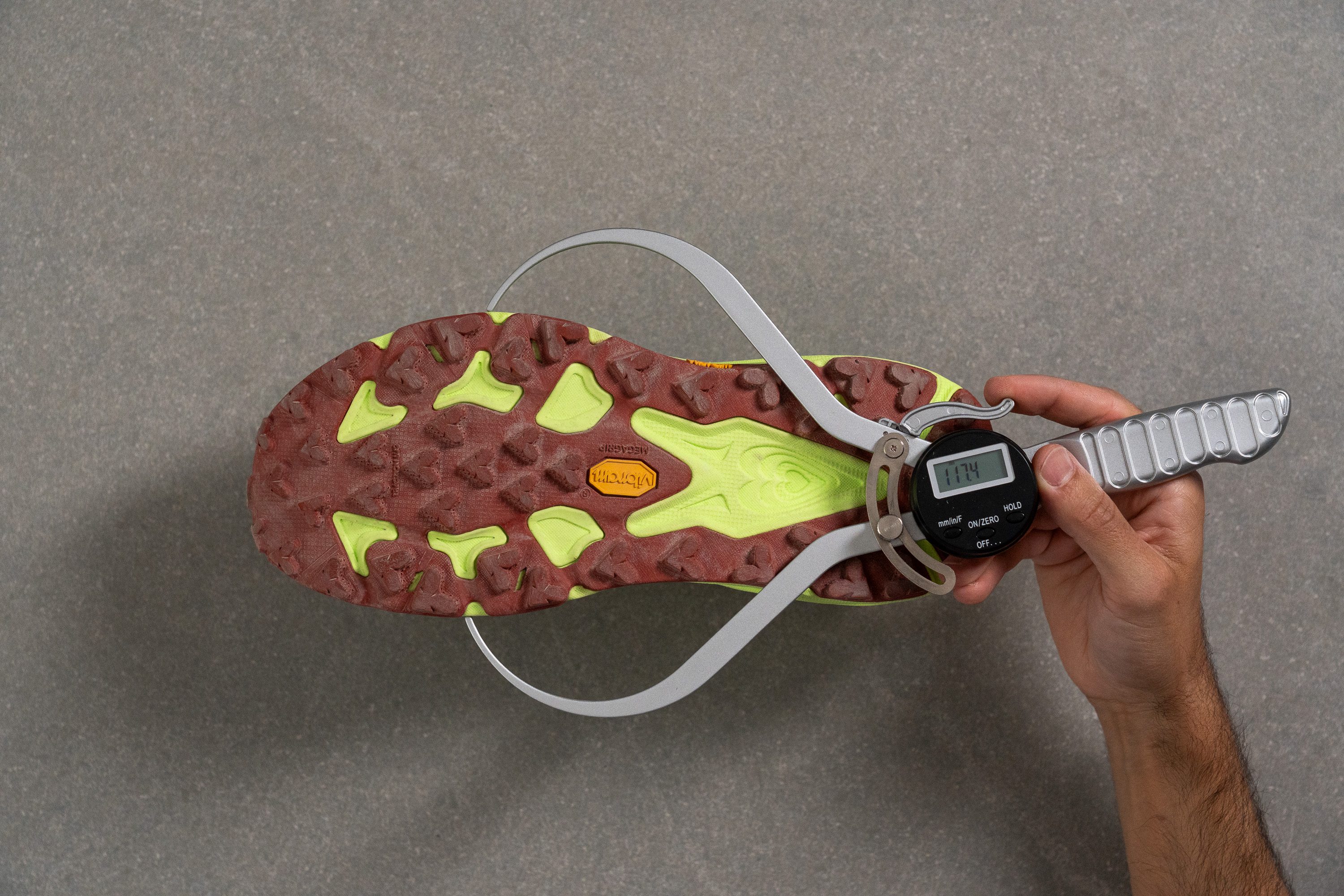
| Speedgoat 7 | 117.4 mm |
| Average | 114.3 mm |
Midsole width - heel
We found that the heel follows the same design philosophy. At 96.0 mm wide, it measures 1.9 mm wider than the Speedgoat 6 and continues its steady march toward the 100.0 mm mark.
Truth be told... that would be pushing things a bit too far. The current setup already delivers a remarkably stable and sure-footed ride, so we think HOKA must stay here.
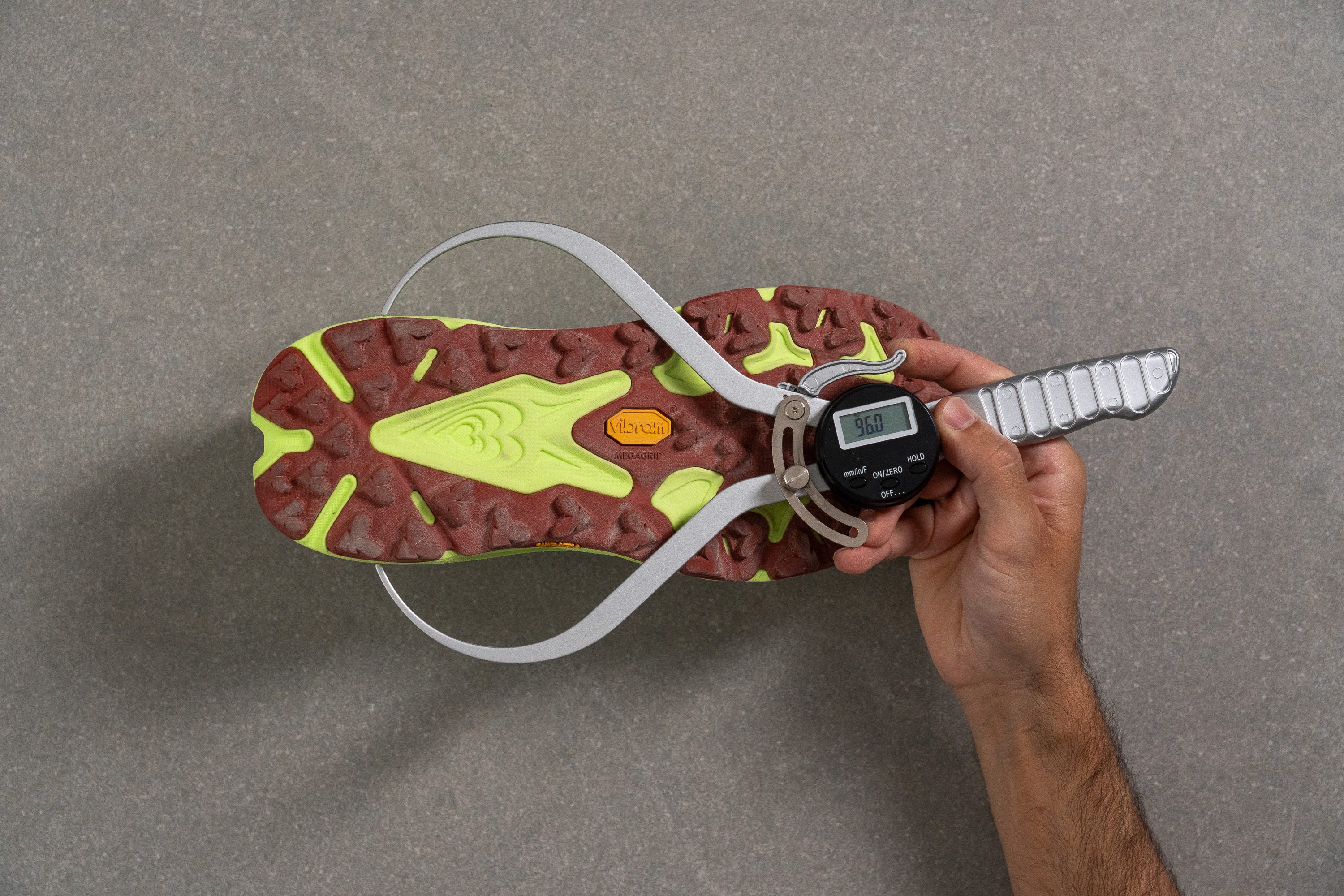
| Speedgoat 7 | 96.0 mm |
| Average | 90.5 mm |
Durability
Toebox durability
Toebox durability is always a critical factor in trail shoes, as the upper is constantly exposed to abrasion, impacts, and potential tearing on rugged terrain.
After testing, we discovered that the Speedgoat 7 handled this challenge with ease, earning an impressive 4/5 in our Dremel test thanks to its heavily-reinforced upper construction.
| Speedgoat 7 | 4 |
| Average | 3.1 |
Heel padding durability
On the other hand, the heel lining is so focused on step-in comfort that we found it less durable than expected, earning just a 2/5 in our test.
| Speedgoat 7 | 2 |
| Average | 3.1 |
Outsole durability
We also evaluated the Vibram Megagrip outsole to see if it could live up to its outstanding reputation, and it delivered once again.
Our Dremel test removed just 0.6 mm of rubber, an exceptional result that reinforces why so many brands are moving away from proprietary compounds and partnering with Vibram instead.
| Speedgoat 7 | 0.6 mm |
| Average | 0.9 mm |
Outsole thickness
The outsole comes in at a substantial 2.2 mm, which not only boosts long-term durability but also adds an extra layer of protection against sharp trail hazards. We believe this is especially important given the absence of a rock plate, helping shield both the midsole and your feet from rough terrain.
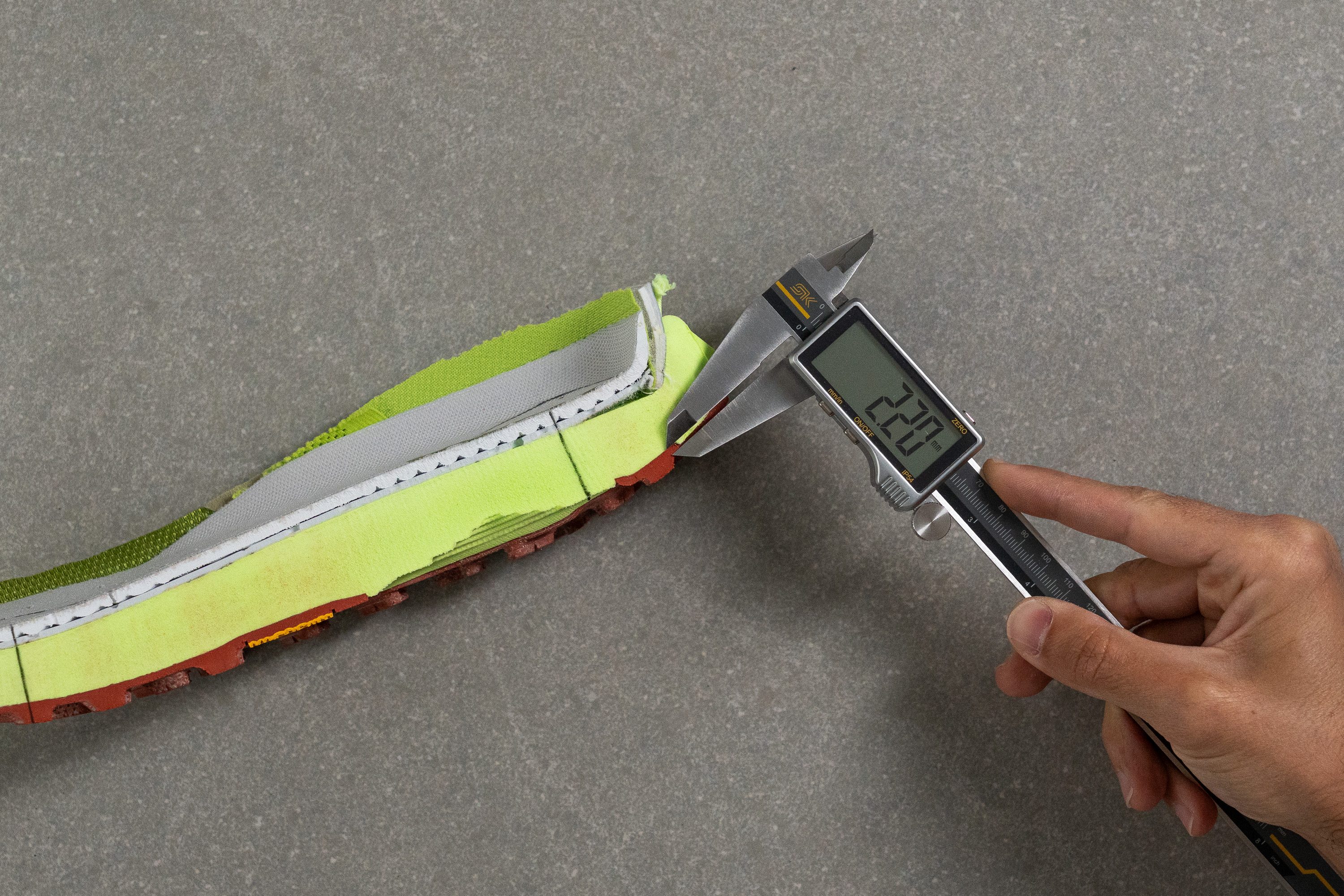
| Speedgoat 7 | 2.2 mm |
| Average | 1.9 mm |
Misc
Insole thickness
The insole measures just 3.7 mm thick, making it slightly thinner than what we typically encounter in the lab.
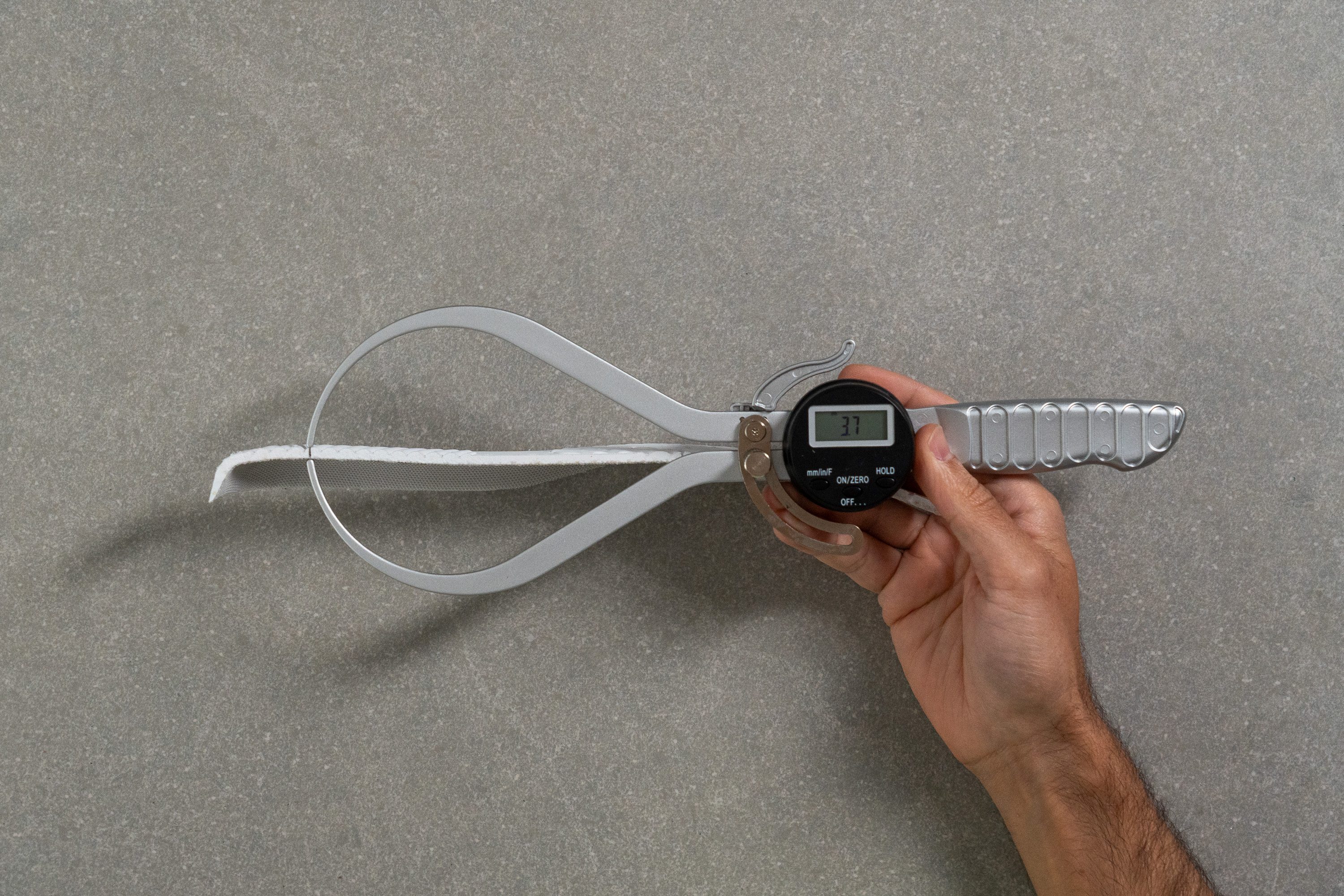
| Speedgoat 7 | 3.7 mm |
| Average | 4.6 mm |
Removable insole
The Speedgoat 7 includes a perforated insole. It's a small detail that's easy to overlook, yet one that remains surprisingly uncommon in trail shoes and adds a welcome boost to breathability.
| Speedgoat 7 | Yes |
Reflective elements
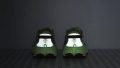
We love seeing large reflective elements, and HOKA didn't hold back. The Speedgoat 7 features two huge reflective patches on the heel that make nighttime visibility an easy win.
| Speedgoat 7 | Yes |
Tongue padding
The lacing system is also built with durability in mind, featuring multiple reinforced overlays designed to reduce the risk of tearing. We also appreciated that HOKA opted for two tongue loops instead of the usual single one, helping keep the tongue securely centred throughout the run.
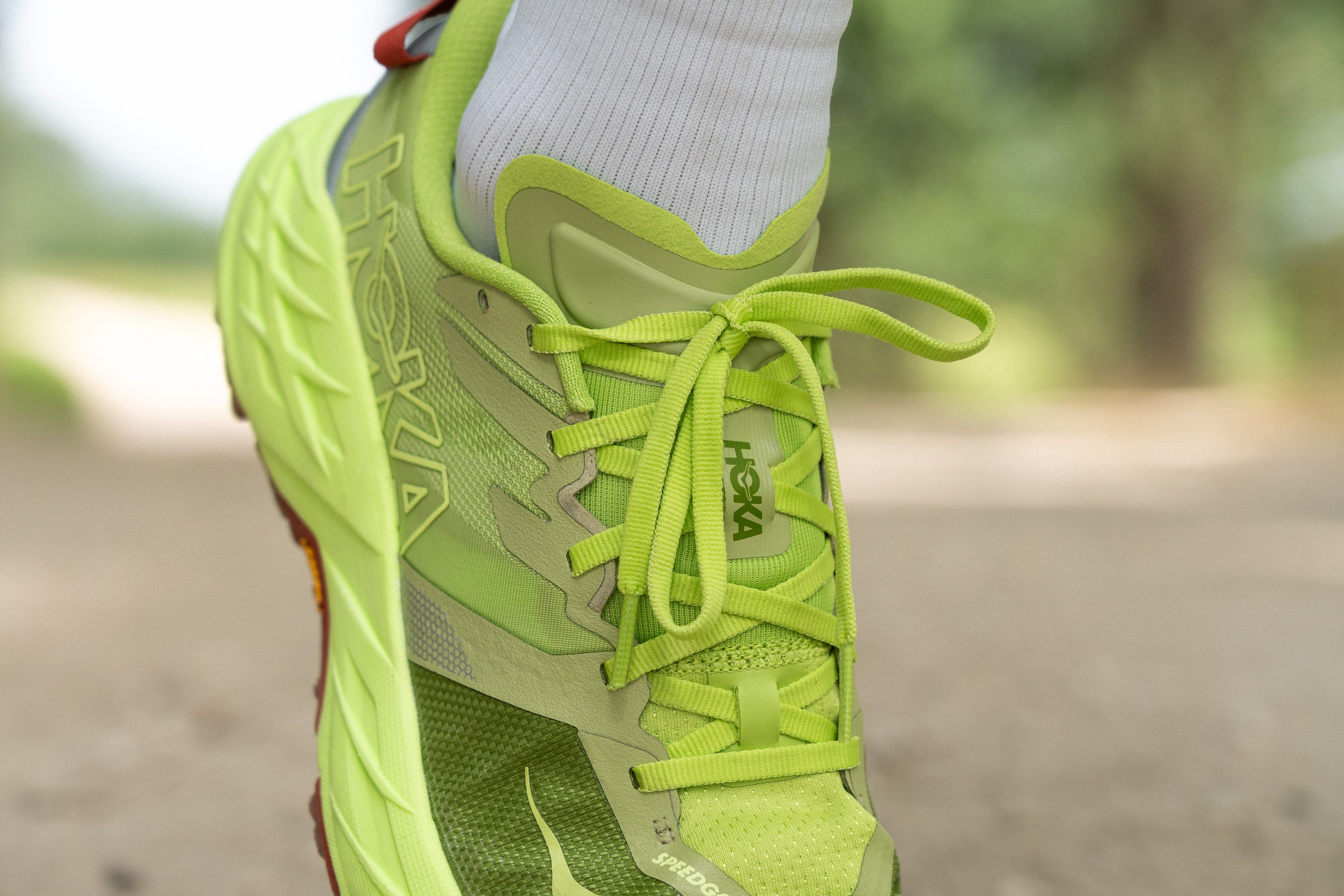
However, we think that many runners may not enjoy the paper-thin tongue used here, especially those prone to instep pain. Measuring just 2.1 mm thick, it excels at boosting breathability and trimming weight, but it comes at the cost of some long-distance comfort.
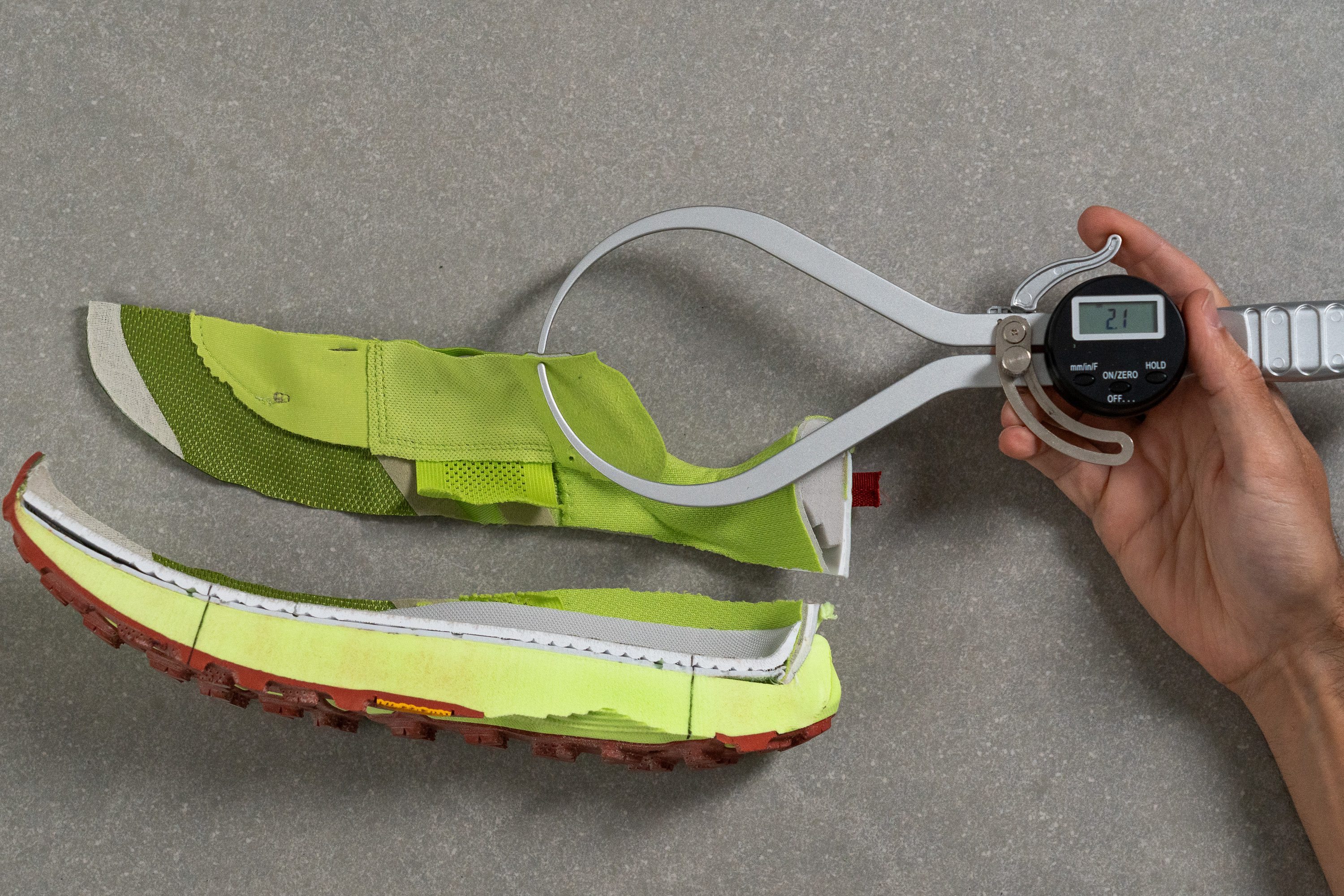
| Speedgoat 7 | 2.1 mm |
| Average | 6.4 mm |
Tongue: gusset type
The tongue uses a semi-gusseted design that's very similar to those from road running shoes. While it doesn't seal out debris as effectively as a fully gusseted setup, it enhances airflow, helps reduce weight, and delivers a secure fit throughout the run.
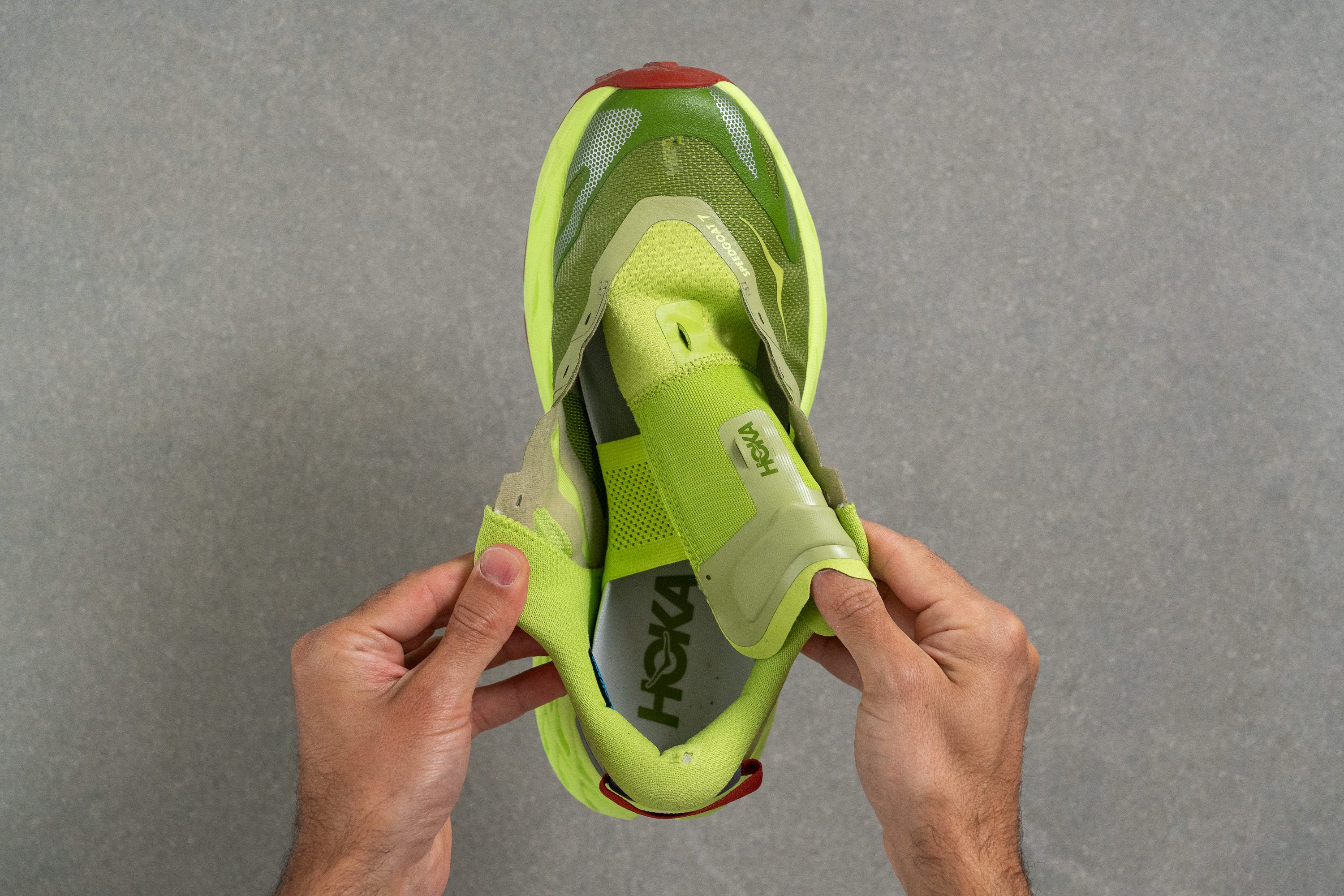
| Speedgoat 7 | Both sides (semi) |
Heel tab
HOKA clearly invested time refining the heel design, and the result is a seamlessly integrated finger-loop tab that feels both practical and visually appealing. It makes slipping the shoe on noticeably easier!
The Speedgoat 7 also includes a rear gaiter attachment point.
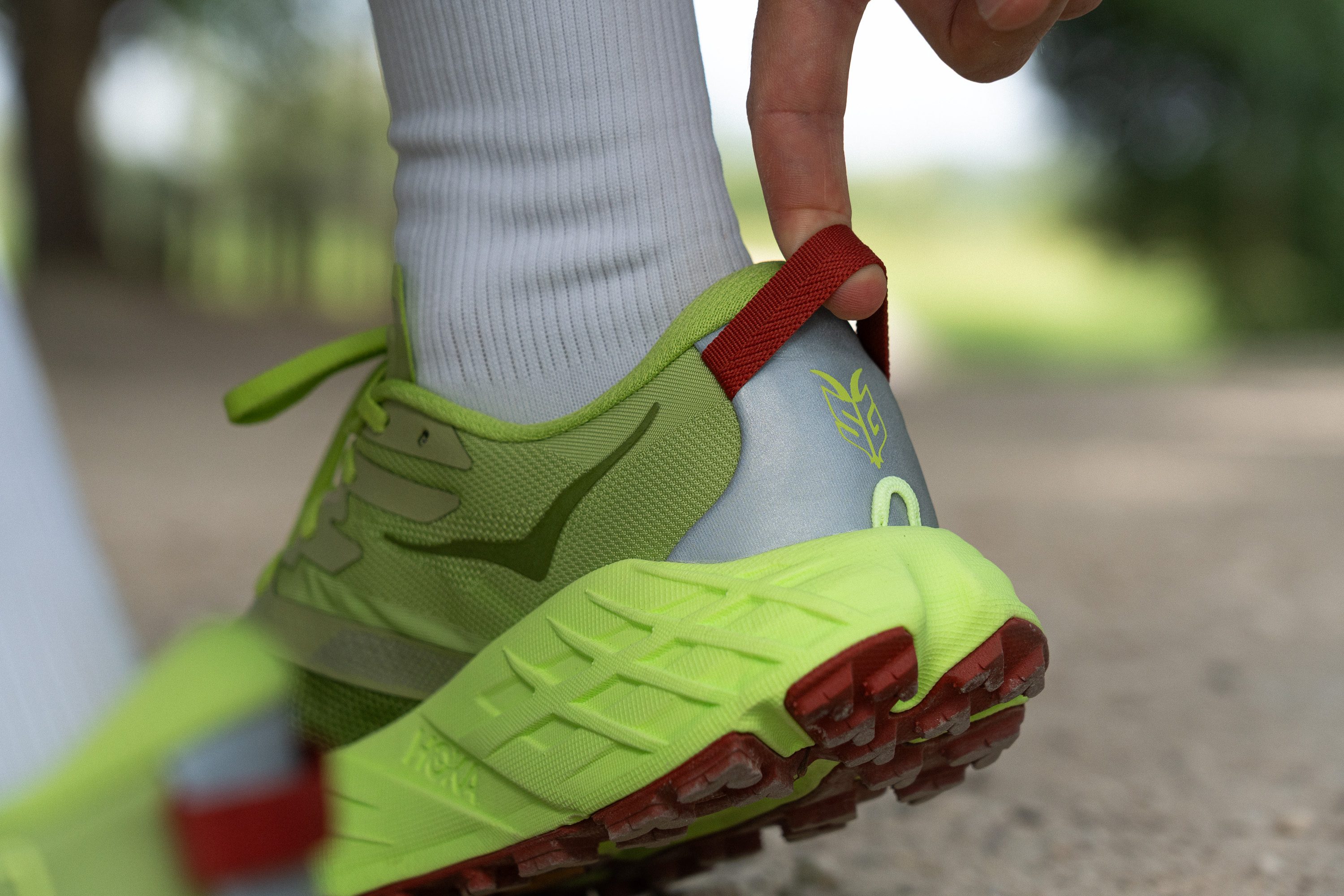
| Speedgoat 7 | Finger loop |
Price
Switching from CMEVA to a supercritical EVA foam comes at a cost, and the Speedgoat 7 arrives with a noticeable price increase. As a result, it's a less compelling option for runners shopping on a tighter budget.
That said, we think the improved ride quality alone makes the extra £10 feel like money well spent, especially considering that CMEVA feels so dated now.
| Speedgoat 7 | $165 |