


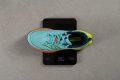


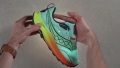

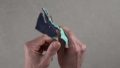
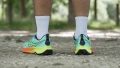



Our verdict
- Gravel 94
- Versatile 81
- Technical 62
Pros
- Vibram Megagrip is in da house
- Stable ride
- Secure, confidence-inspiring fit
- Dependable workhorse for trail training
- Better than before on gravel roads
- Can handle hiking with ease
- Premium PWRRUN+ insole
- Comfortable foam
- Modern look
- Reasonable price
Cons
- Slight weight gain
- Tapered toebox
- Low drop limits appeal for some
Awards
- Top pick in best Running shoes for knee pain
- Top pick in best gravel running shoes
- Top 7% in trail running shoes
- Top 14% in neutral running shoes
- Top 30% most popular running shoes
Comparison
The most similar running shoes compared
+ + Add a shoe | |||||
|---|---|---|---|---|---|
| Our score | 88 Superb | 74 Good | 87 Great | 89 Superb | |
| Price | £140 | £130 | £140 | £175 | |
| Trail terrain | Gravel / Road-to-trailVersatile / Moderate terrain | Gravel / Road-to-trailVersatile / Moderate terrain | Gravel / Road-to-trailVersatile / Moderate terrain | Gravel / Road-to-trailVersatile / Moderate terrain | |
| Shock absorption | Moderate | Moderate | Moderate | High | |
| Energy return | Moderate | Low | Moderate | Moderate | |
| Traction | High | High | High | High | |
| Arch support | Neutral | Neutral | Neutral | Neutral | |
| Weight lab Weight brand | 9.8 oz / 278g 9.6 oz / 271g | 9.4 oz / 266g 10.3 oz / 293g | 10 oz / 283g 9.9 oz / 281g | 10.8 oz / 306g 11.1 oz / 315g | |
| Drop lab Drop brand | 4.8 mm 4.0 mm | 6.1 mm 4.0 mm | 6.3 mm 8.0 mm | 3.7 mm 4.0 mm | |
| Strike pattern | Mid/forefoot | Mid/forefoot | Mid/forefoot | Mid/forefoot | |
| Size | Slightly small | True to size | True to size | True to size | |
| Midsole softness | Soft | - | Balanced | Soft | |
| Difference in midsole softness in cold | Small | Normal | Small | Small | |
| Plate | Rock plate | ✗ | Rock plate | ✗ | |
| Toebox durability | Bad | Decent | Decent | Very bad | |
| Heel padding durability | Decent | Good | Good | Decent | |
| Outsole durability | Good | Good | Decent | Good | |
| Breathability | Moderate | Warm | Moderate | - | |
| Width / fit | Medium | Wide | Wide | Medium | |
| Toebox width | Narrow | Wide | Wide | Medium | |
| Stiffness | Stiff | Flexible | Stiff | Flexible | |
| Torsional rigidity | Flexible | Flexible | Flexible | Moderate | |
| Heel counter stiffness | Stiff | Flexible | Stiff | Moderate | |
| Lug depth | 3.5 mm | 3.5 mm | 3.7 mm | 3.9 mm | |
| Heel stack lab Heel stack brand | 31.7 mm 32.0 mm | 32.3 mm 32.0 mm | 32.1 mm 36.0 mm | 31.2 mm 38.0 mm | |
| Forefoot lab Forefoot brand | 26.9 mm 28.0 mm | 26.2 mm 28.0 mm | 25.8 mm 28.0 mm | 27.5 mm 34.0 mm | |
| Widths available | NormalWide | Normal | Normal | NormalWide | |
| Season | All seasons | All seasons | All seasons | - | |
| Removable insole | ✓ | ✓ | ✓ | ✓ | |
| Orthotic friendly | ✓ | ✓ | ✓ | ✓ | |
| Ranking | #52 Top 14% | #333 Bottom 16% | #69 Top 18% | #41 Top 11% | |
| Popularity | #120 Top 31% | #191 Top 48% | #159 Top 40% | #113 Top 29% |

Who should buy
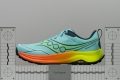
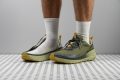
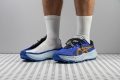
The Saucony Peregrine 16 is a fantastic option for:
- Longtime Peregrine fans who have been waiting for the addition of Vibram Megagrip.
- Trail runners seeking a dependable shoe with strong durability, good stability, and the versatility to handle a wide range of activities.
- Runners who prefer a low-drop design but prefer the secure, locked-in feel of a classic tapered toebox.
Who should NOT buy
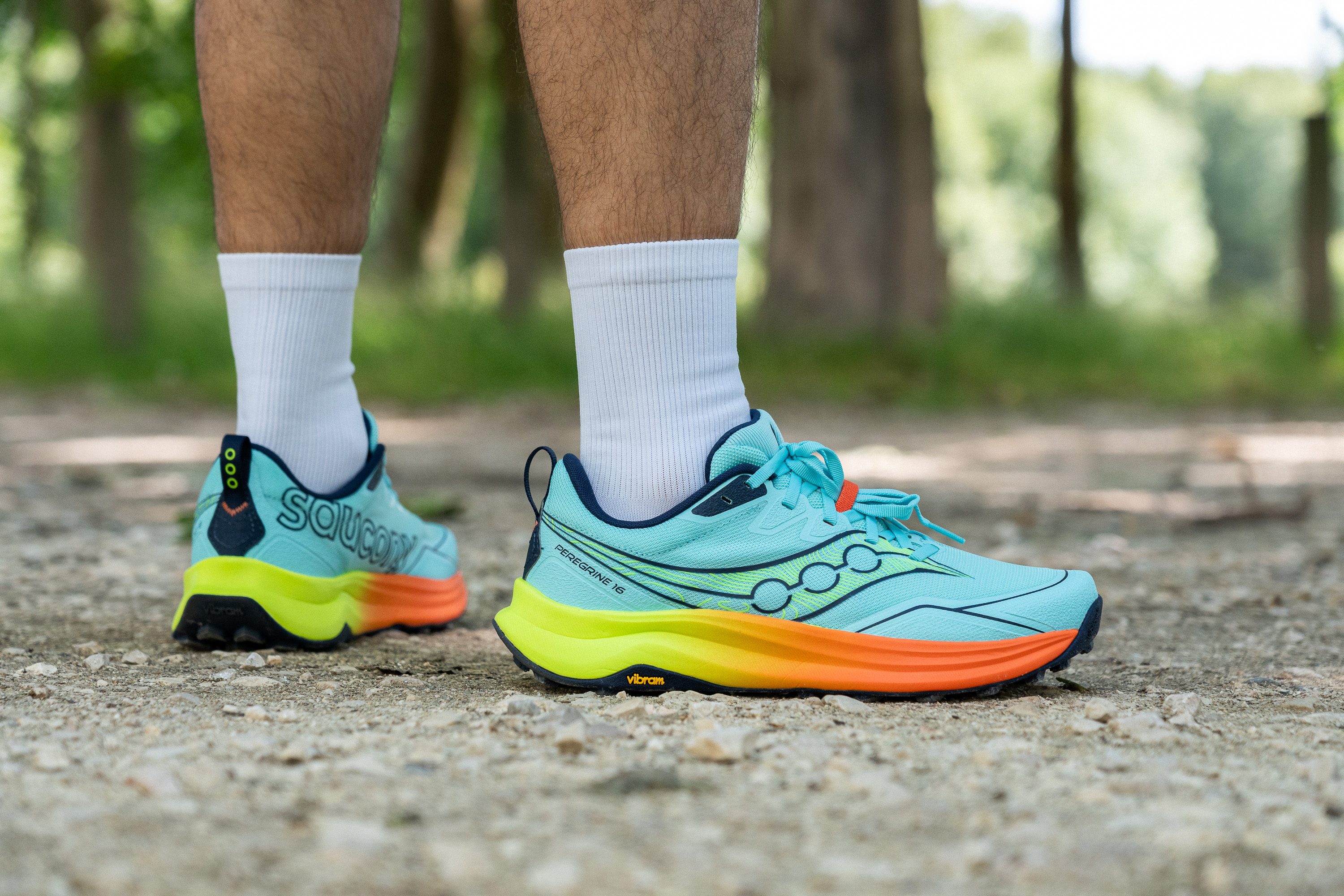
The Peregrine 16 remains firmly committed to its traditional low-drop design, which may not suit runners who prefer a medium or high drop. If that's you, we recommend taking a look at the ASICS Trabuco 14 or the Brooks Cascadia 19, both of which offer a higher offset while retaining strong trail versatility.
We also believe that runners who need substantial room for toe splay may struggle with the Peregrine's tapered fit. In that case, the Altra Experience Wild 2 or the Topo Ultraventure 4 are better options.
Cushioning
Shock absorption
The Saucony Peregrine line has always focused on all-around trail performance, aiming to handle a wide range of terrain instead of excelling in just one area. Because of that balanced approach, we often find shock absorption levels close to the lab average, leaving the extreme cushioning to max-stack shoes.
Following the ASTM F1976 protocol, we measured 124 SA in the heel and 106 SA in the forefoot.
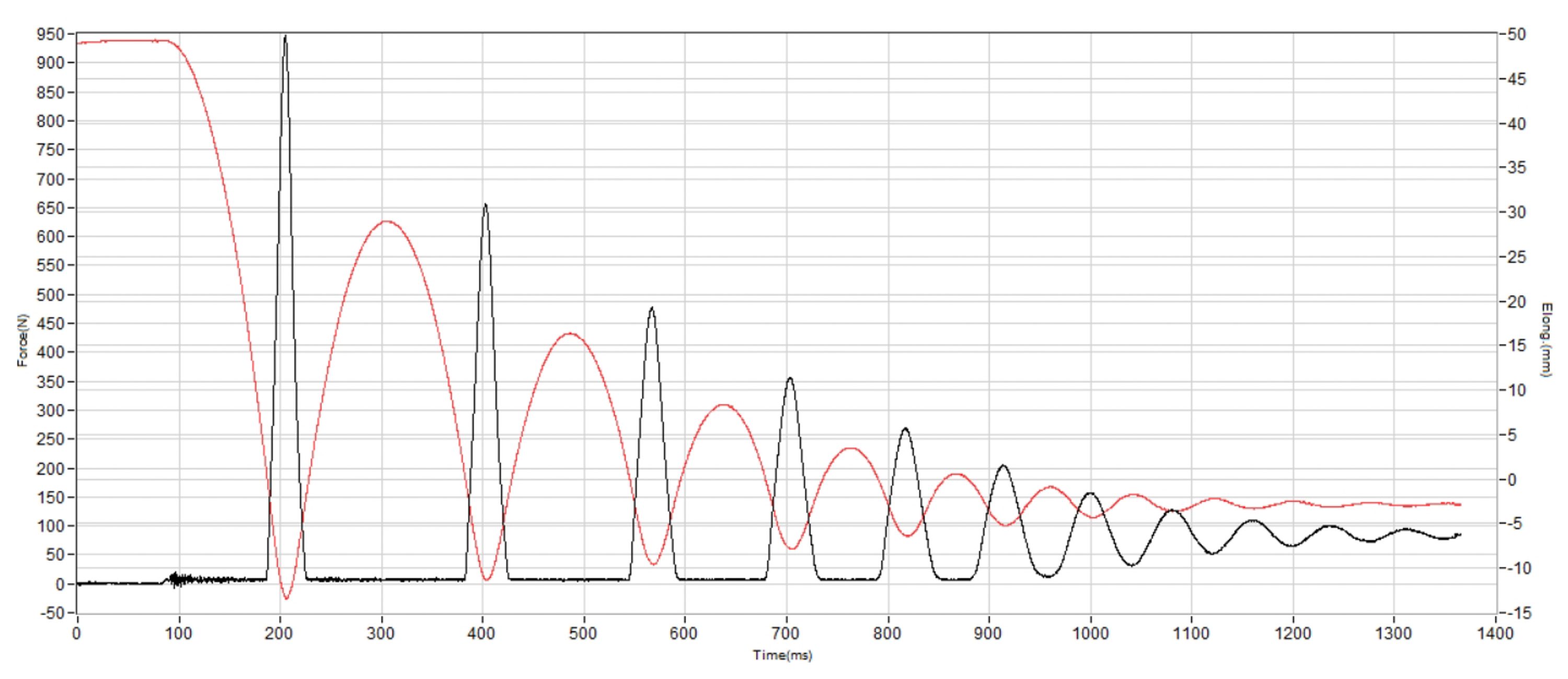
| Peregrine 16 | 124 SA |
| Average | 123 SA |
Energy return
Energy return is also quite solid for a trail shoe in this price range. We measured 58.1% in the heel and 64.5% in the forefoot, numbers that won't challenge the most energetic superfoams but still deliver a pleasantly responsive ride.
Those results surpass the current lab average and outperform several direct competitors.
| Peregrine 16 | 64.5% |
| Average | 59.7% |
Heel stack
One thing we really liked about the Peregrine 16 is that Saucony resisted the temptation to chase the max-stack trend. Instead, the brand stayed true to the formula that has made this shoe so popular, preserving the balanced geometry and trail-ready versatility that define the Peregrine line.
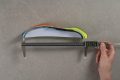
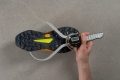
When we measured the heel stack in our lab, the digital callipers returned 31.7 mm. That's remarkably close to the 32 mm claimed by Saucony, showing excellent accuracy between the advertised and real-world specifications.
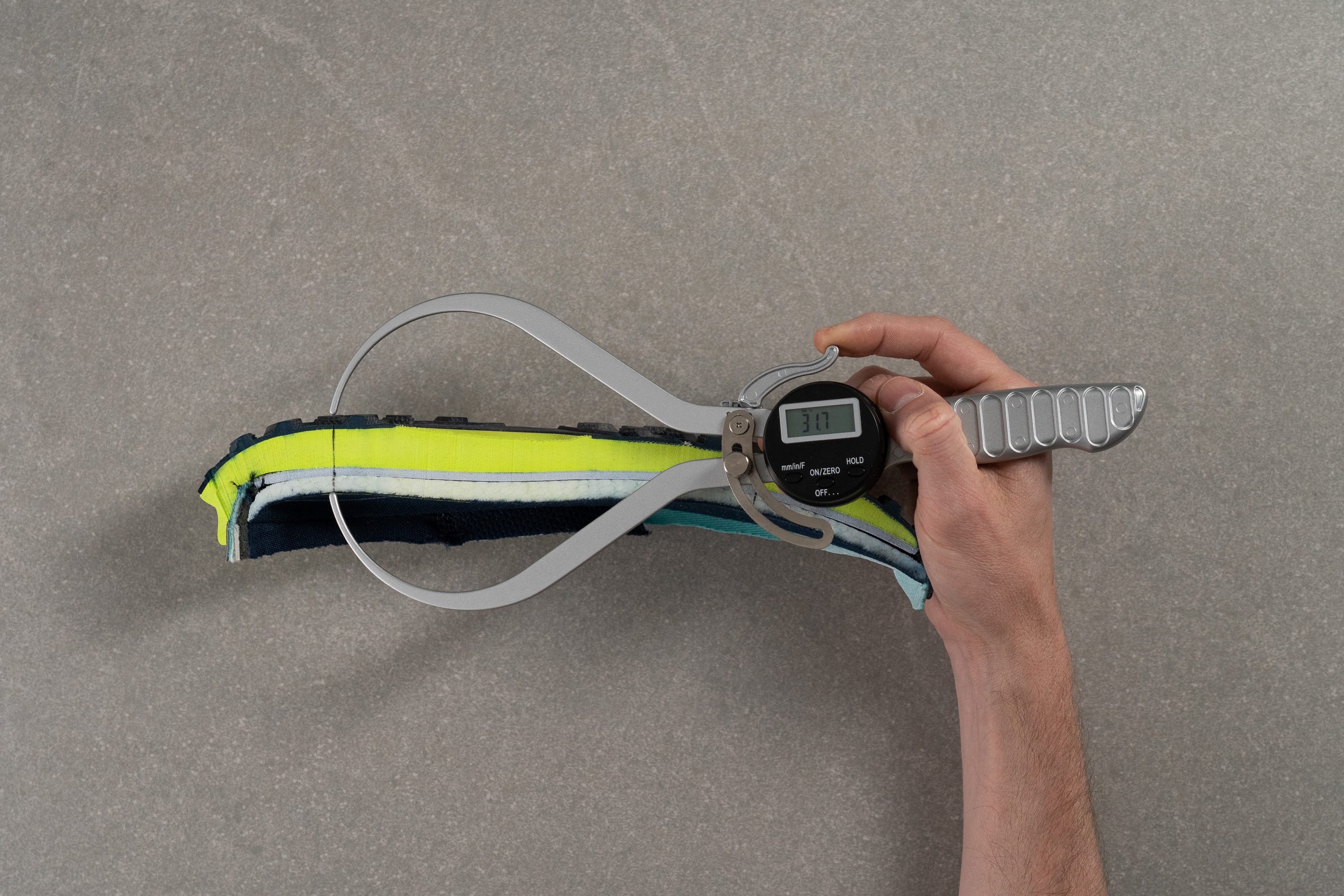
| Peregrine 16 | 31.7 mm |
| Average | 33.1 mm |
Forefoot stack
We then moved our callipers to the forefoot and took the measurement at the exact location specified by the World Athletics stack-height guidelines.
There, we recorded 26.9 mm, giving the Peregrine 16 a solid amount of cushioning up front.
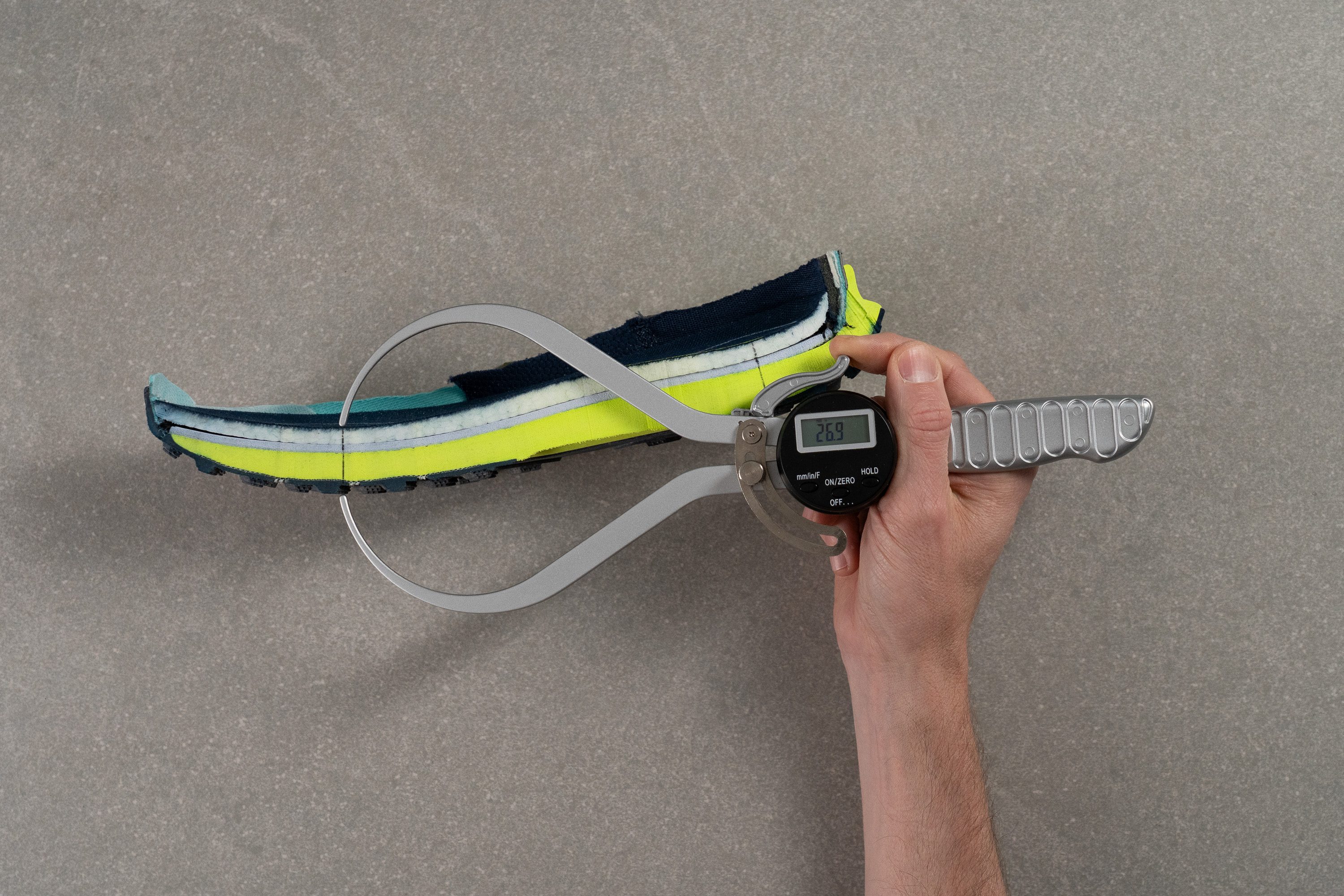
| Peregrine 16 | 26.9 mm |
| Average | 25.8 mm |
Drop
The Peregrine 16 retains the low-drop geometry that has been a hallmark of the series for years. Saucony lists a 4 mm heel-to-toe drop, and our measurements came in at 4.8 mm. That's an extremely small difference that no runner is likely to notice on the trail, and certainly we didn't.
Some runners may have expected Saucony to move toward a slightly higher drop this time around, and we think a shift into the 6 mm range could have worked well. However, keeping the geometry unchanged ensures that the loyal fanbase built across 15 previous versions will feel right at home from the very first run.
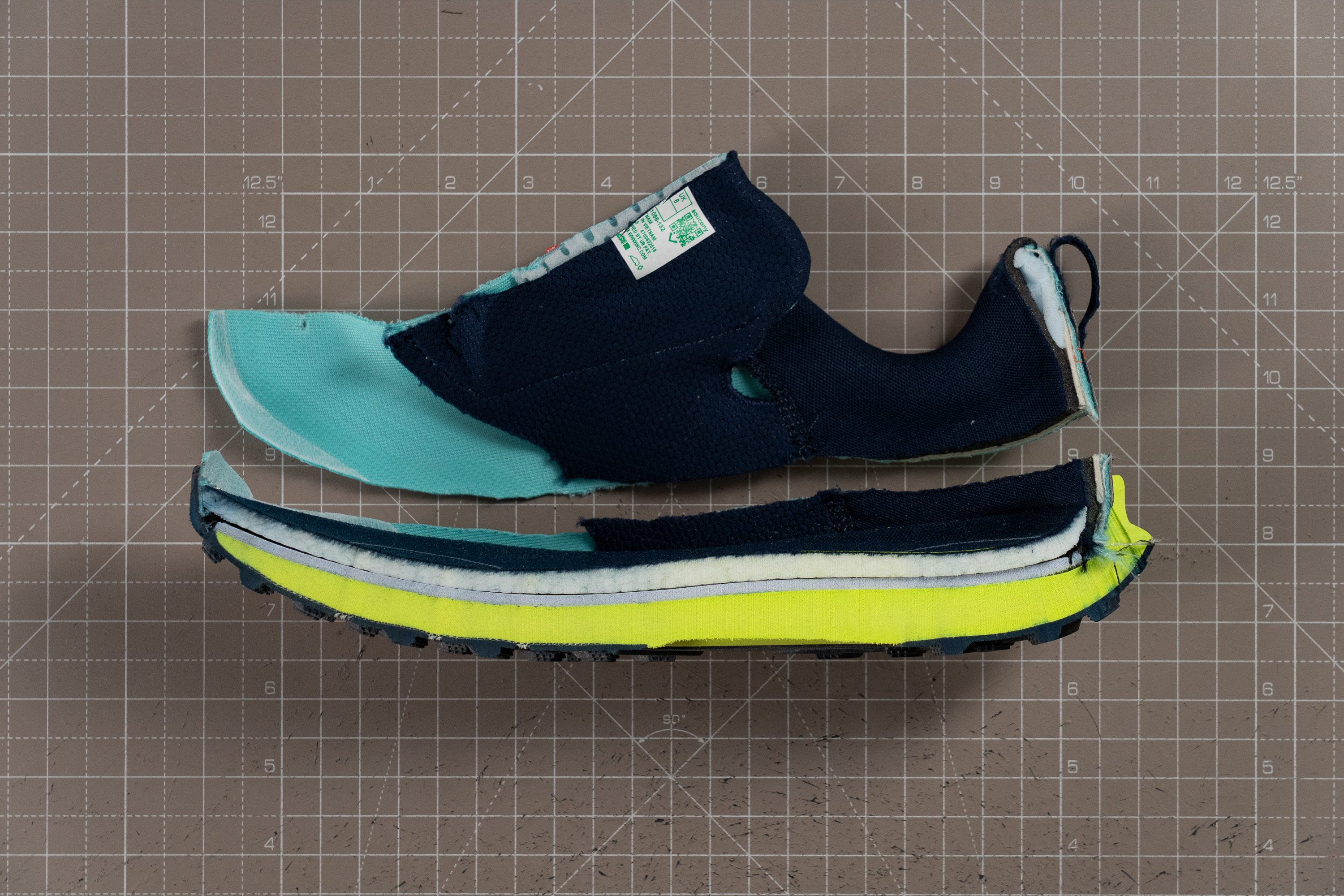
| Peregrine 16 | 4.8 mm |
| Average | 7.3 mm |
Midsole softness
Midsole softness is another area where Saucony chose consistency over change. Using our Asker C durometer, we measured 31.3 AC in the Peregrine 16, almost identical to the 31.6 AC we recorded in the Peregrine 15.
For runners who enjoy a softer trail shoe, that's good news. However, keep in mind that the Peregrine 16 will still feel firmer than a road-running shoe with a similar durometer reading due to the rugged outsole.
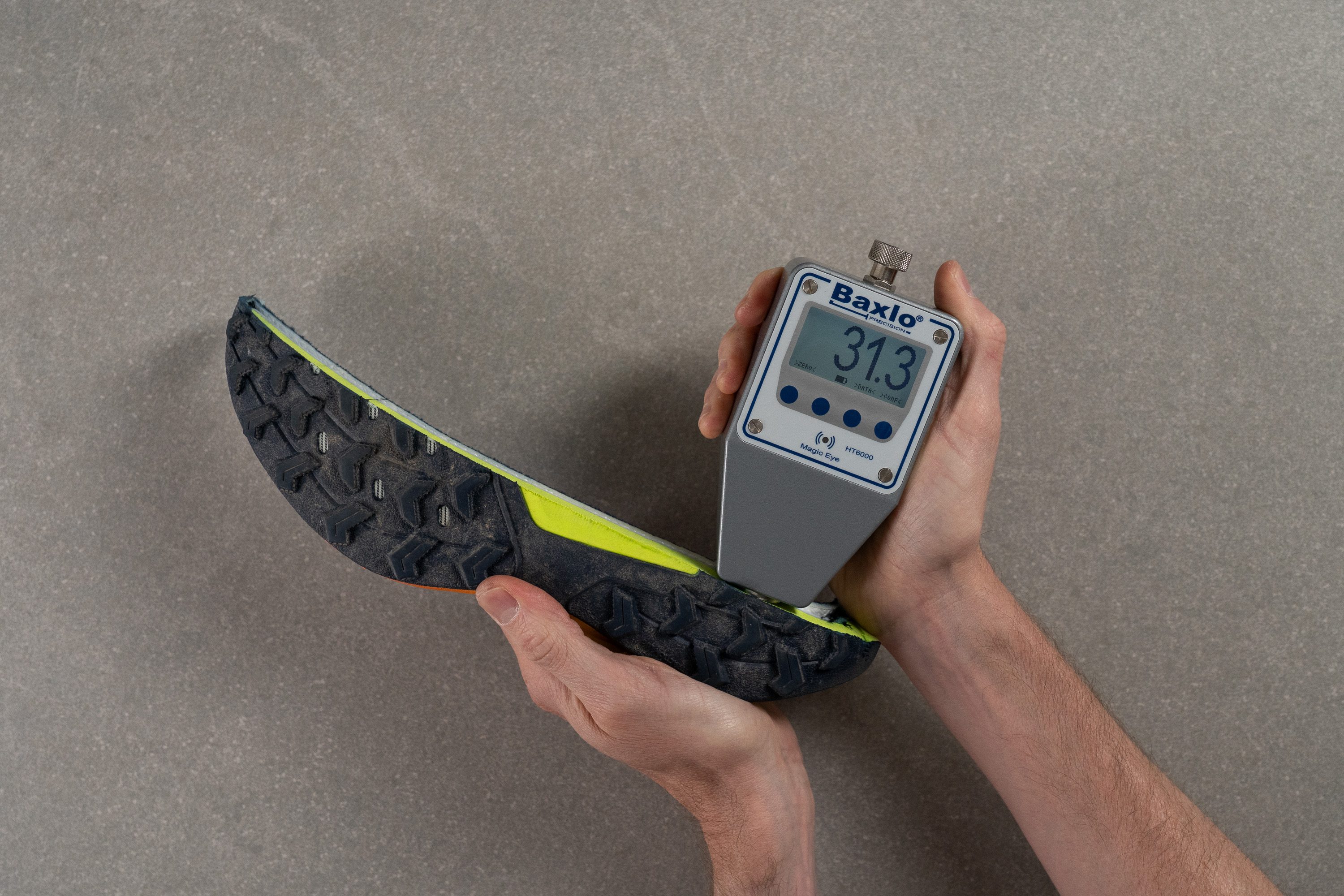
| Peregrine 16 | 31.3 AC |
| Average | 38.3 AC |
Rocker
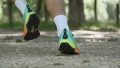
The Peregrine 16 naturally favours midfoot and forefoot strikers thanks to its low-drop geometry and the absence of an aggressive rocker.
In our view, this approach actually enhances versatility. By avoiding a rockered midsole, the Peregrine 16 feels equally at home across a wide variety of terrain, allowing runners to adapt naturally to whatever the trail throws at them.
Plate
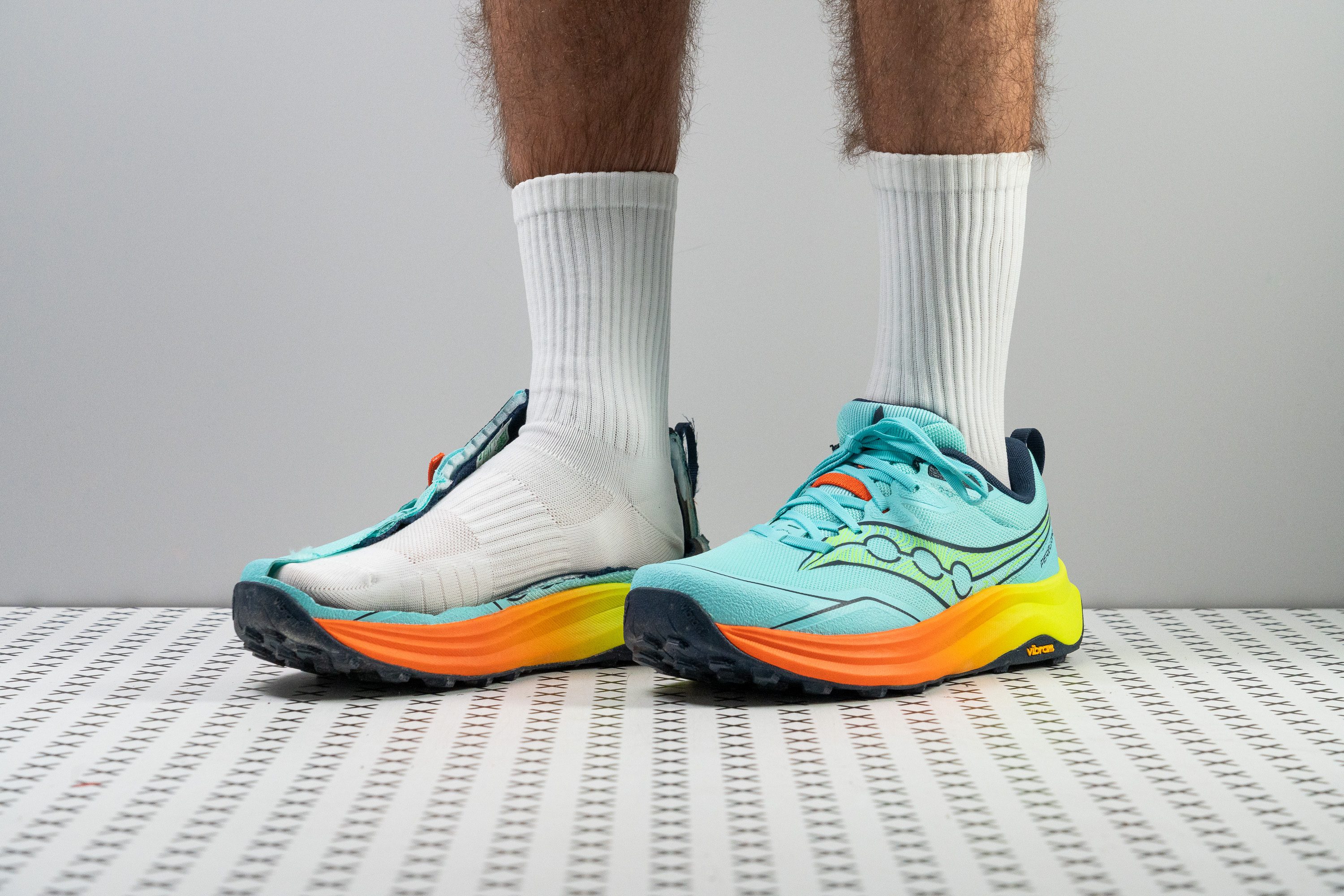
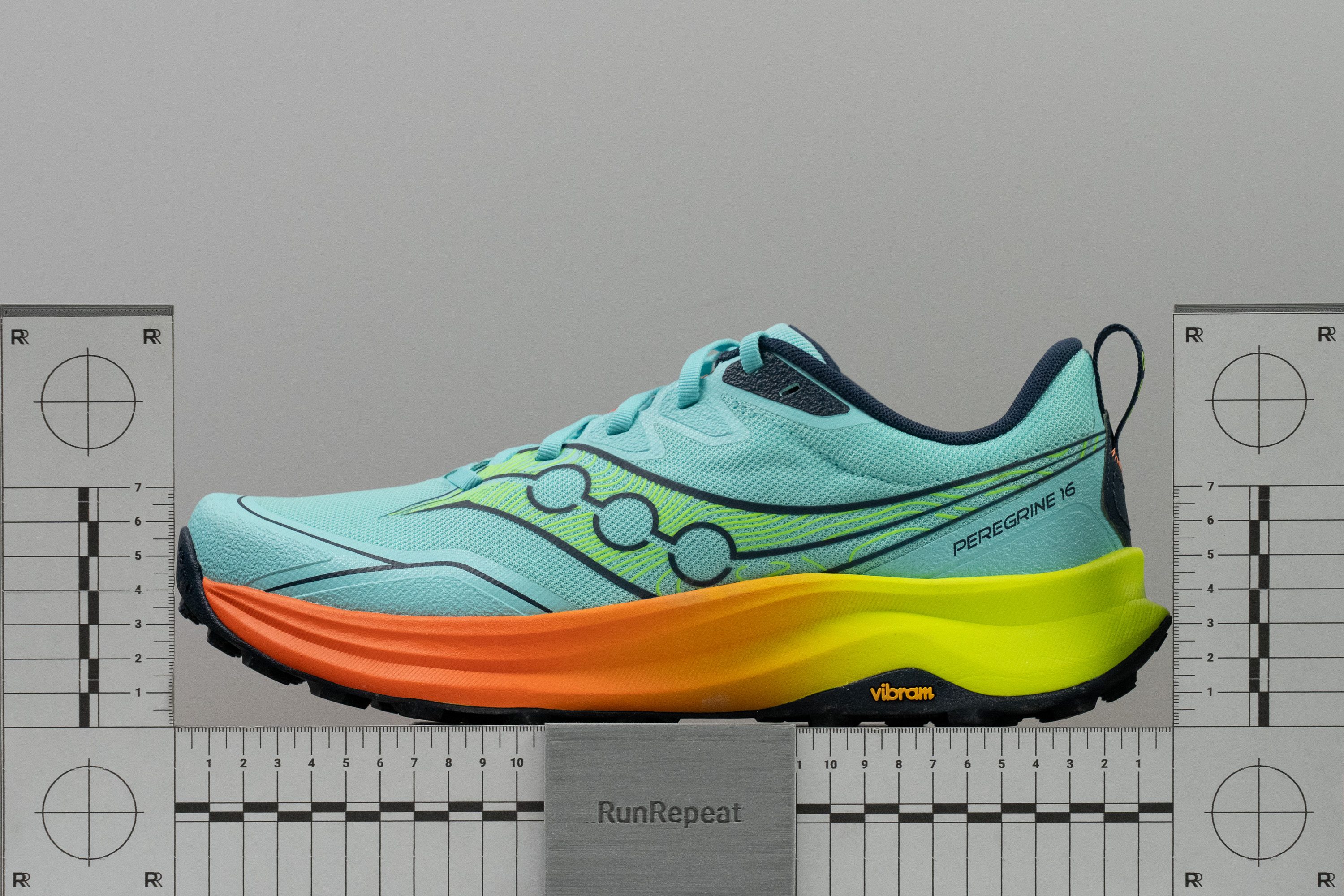
Another feature we found in the Peregrine 16 that doesn't change from its predecessor is the forefoot-only rock plate made from a lightweight plastic material. And Saucony created 10 small cutouts in the midsole, making it easy to spot.
Size and fit
Size
Saucony Peregrine 16 fits slightly small (26 votes).
Internal length
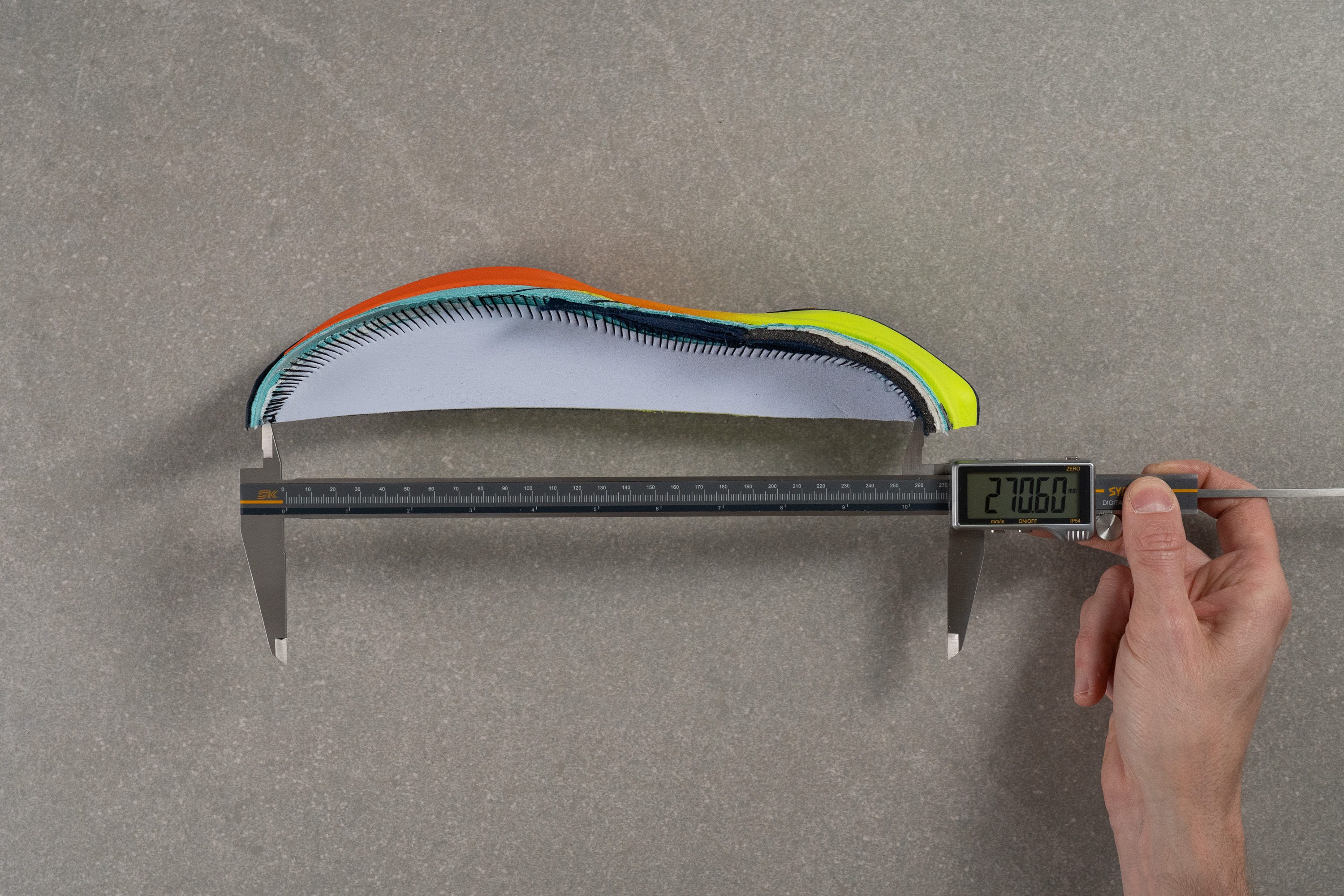
| Peregrine 16 | 270.6 mm |
| Average | 269.2 mm |
Width / Fit
The moment we slipped on the Peregrine 16, the fit felt strikingly familiar to its predecessor. To us, that's another sign that Saucony is prioritising smooth and seamless updates, allowing longtime Peregrine users to transition between versions without any surprises.
After creating a replica of the shoe's interior, we took three measurements to evaluate the fit. The first came in at 96.9 mm, placing it slightly above the current lab average.
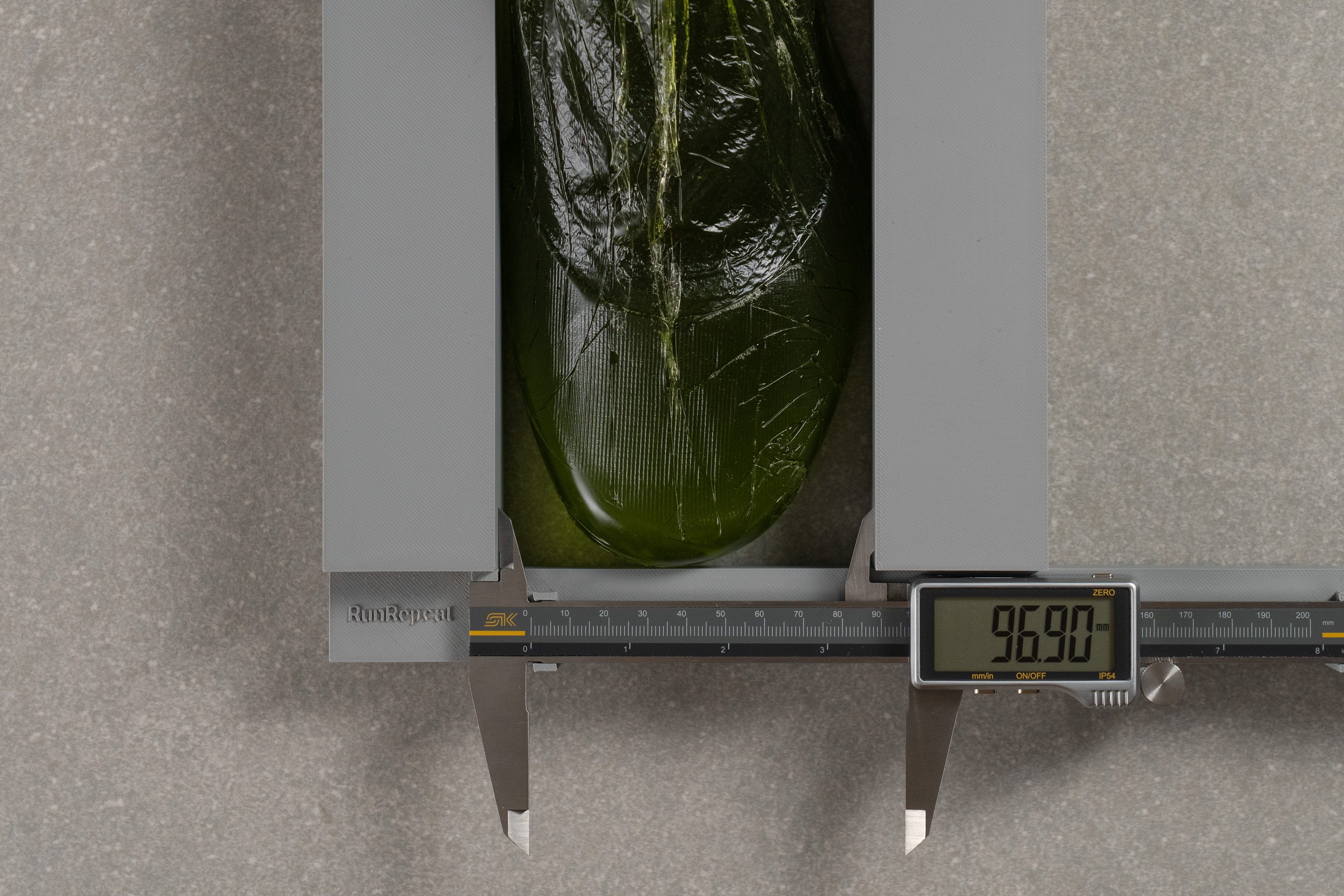
| Peregrine 16 | 96.9 mm |
| Average | 95.7 mm |
Toebox width
Our second measurement came in at 70.3 mm, nearly identical to the 70.9 mm we recorded in the previous version. This confirms that Saucony has retained the same tapered toebox shape, a design that enhances foot security on technical trails and during quick direction changes.
The trade-off is that toe splay remains somewhat limited, so runners who prefer a roomier forefoot may find the fit a bit restrictive on longer outings.
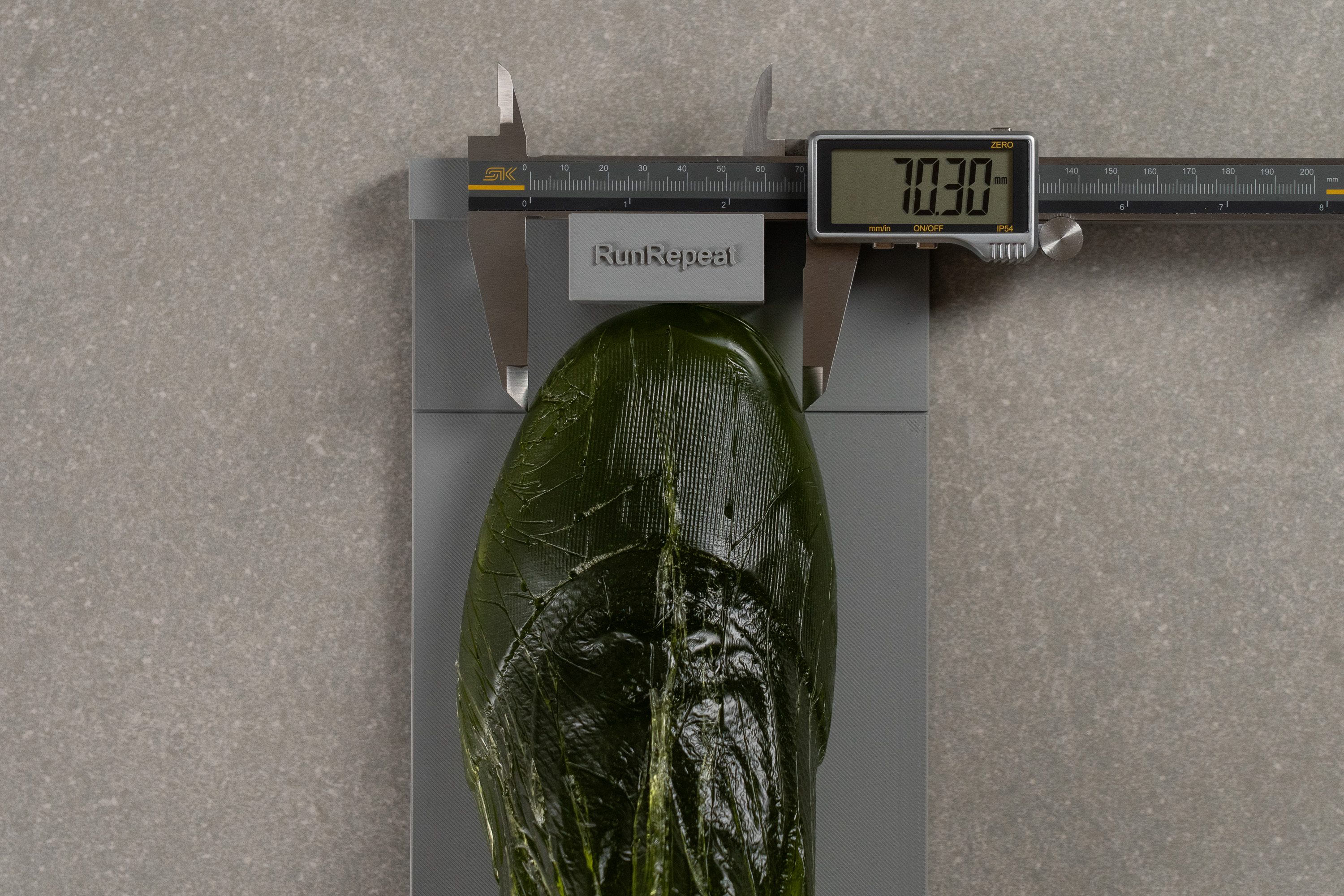
| Peregrine 16 | 70.3 mm |
| Average | 74.3 mm |
Toebox height
While the tapered shape may limit space across the forefoot, we found no such issue when it came to vertical volume.
Our measurement reached 27.4 mm, striking a well-balanced middle ground that should accommodate most foot shapes without creating unwanted pressure over the toes.
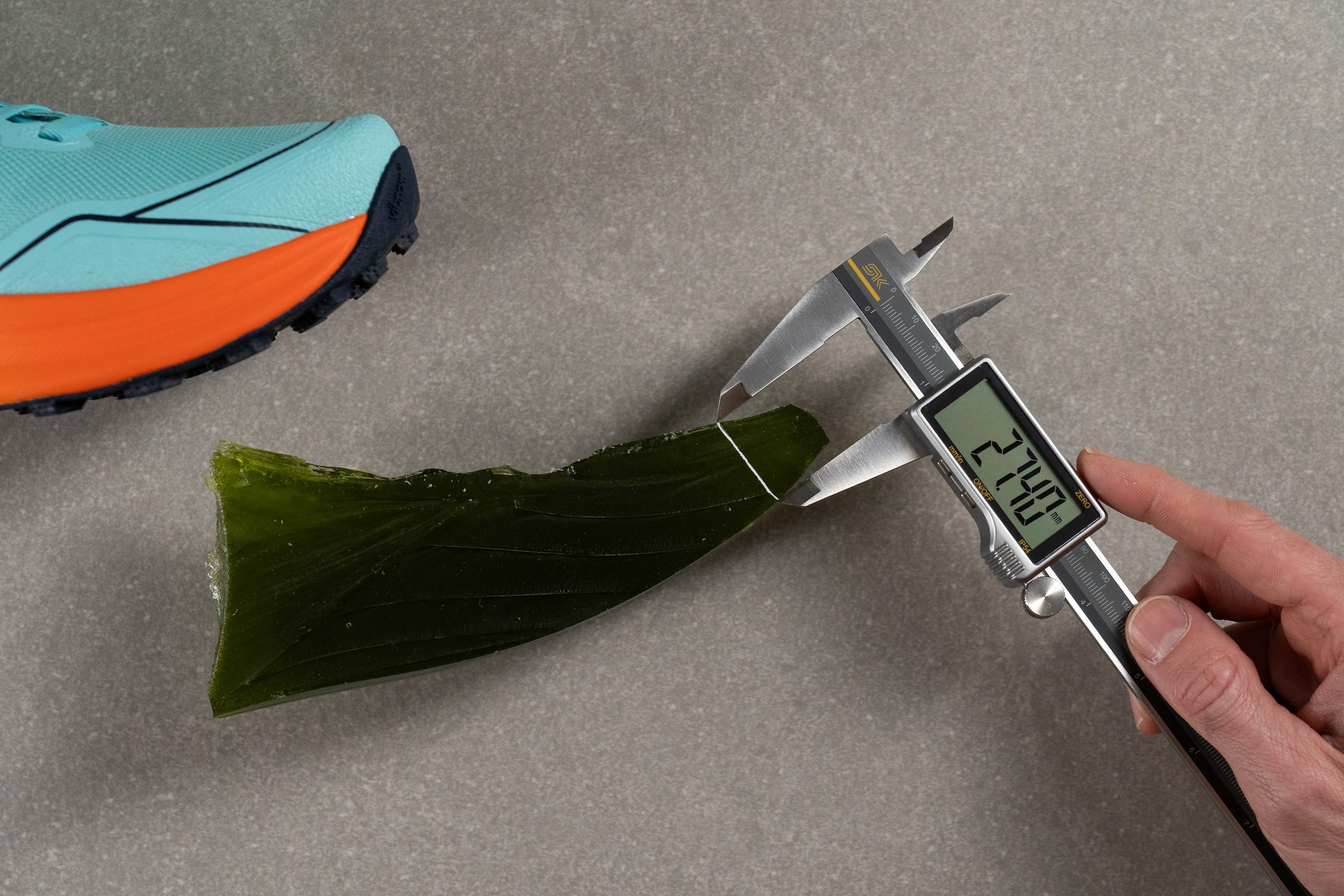
| Peregrine 16 | 27.4 mm |
| Average | 27.0 mm |
Traction / Grip
Traction test
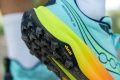
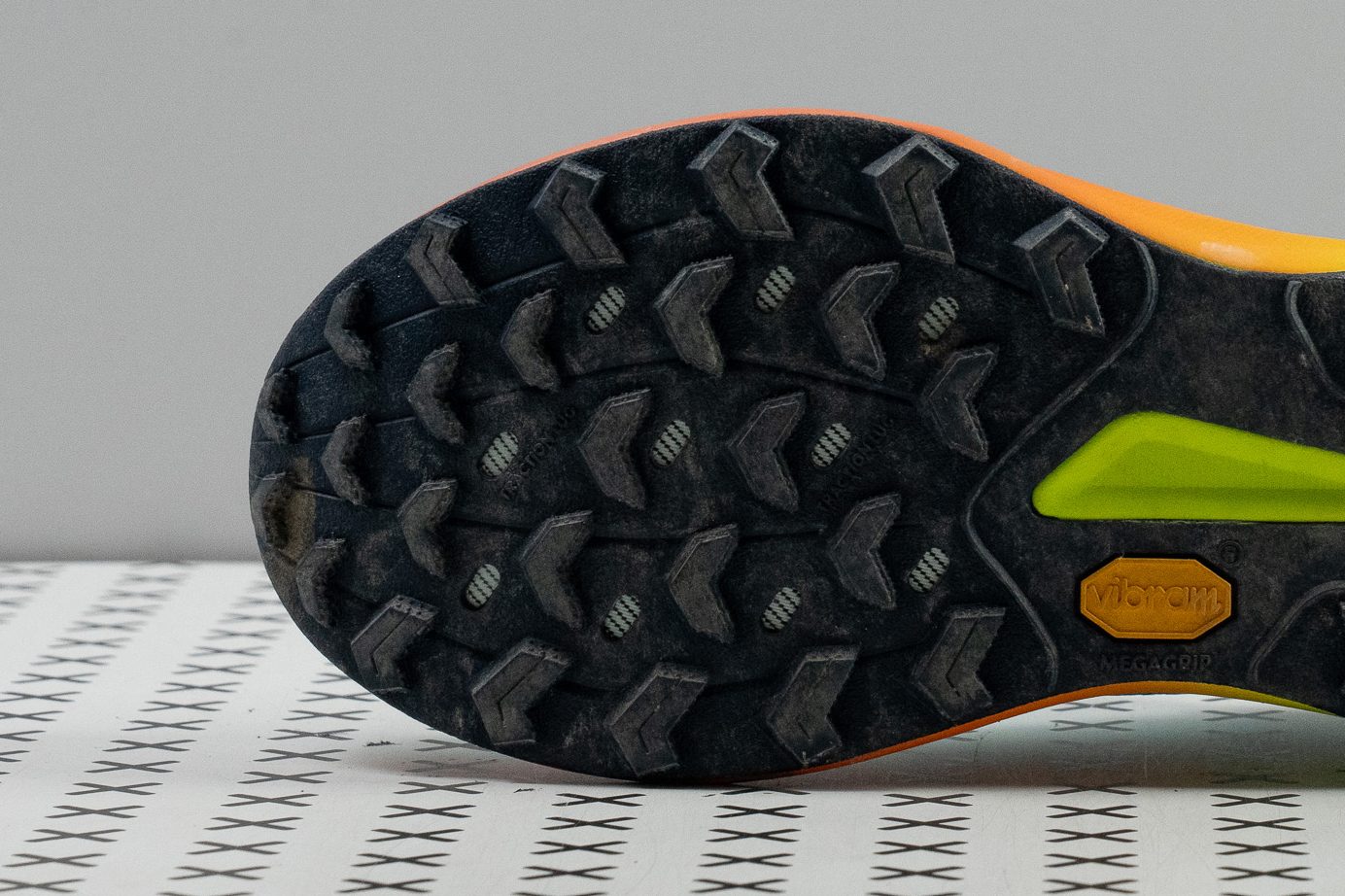
The biggest reason to upgrade to the Peregrine 16—or to choose it over a discounted Peregrine 15—is the outsole. Saucony finally partnered with Vibram and brought its famous Megagrip compound to the Peregrine lineup.
While the result may be slightly lower than in other Vibram-equipped shoes due to the Peregrine 16's lug design, it still scored comfortably above the lab average and provided dependable traction with a coefficient of friction of 0.72.
| Peregrine 16 | 0.72 |
| Average | 0.67 |
Lug depth
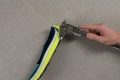
We found that Saucony opted for 3.5 mm lugs this time instead of the 4.7 mm from version 15, a change that favours easy terrain and helps make the Peregrine 16 a strong option for everything from classic trails to gravel roads, a category that continues to grow in popularity.
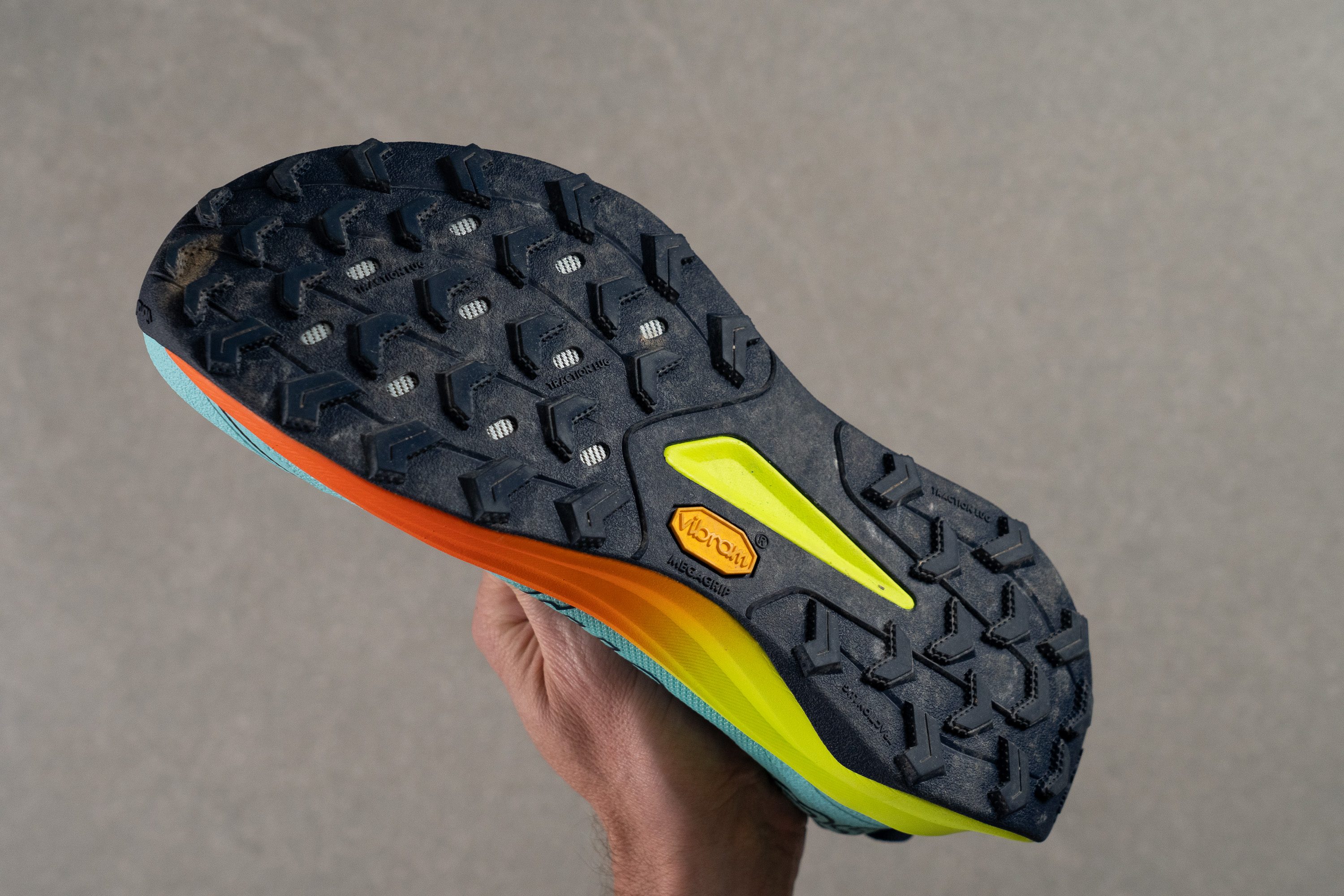
However, that balanced approach comes with some trade-offs. While the shoe performs well across a wide range of surfaces, runners tackling deep mud or wet grass may want more aggressive lugs, as these conditions typically demand greater bite than the Peregrine 16 is designed to provide.
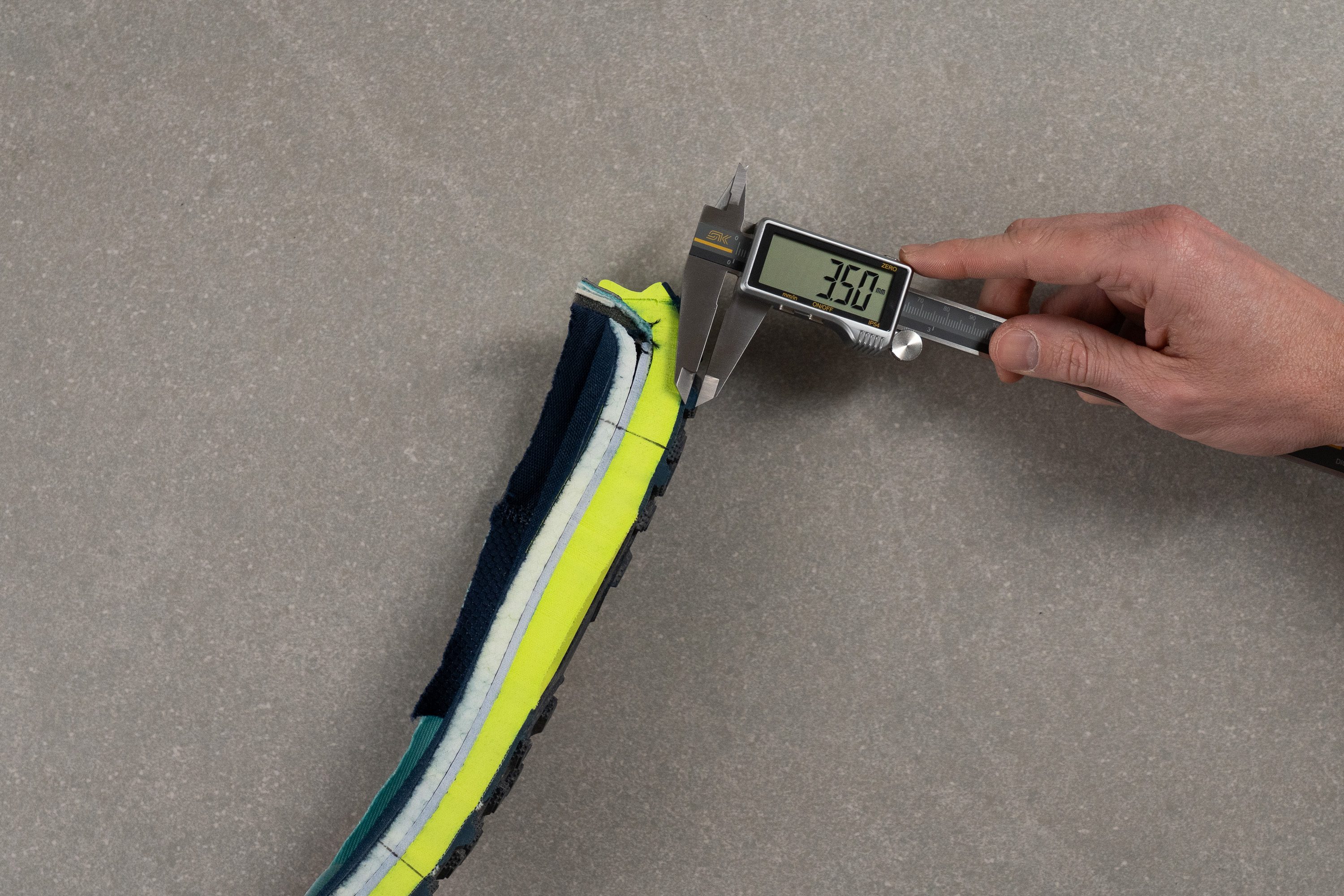
| Peregrine 16 | 3.5 mm |
| Average | 3.5 mm |
Outsole design
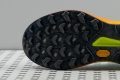
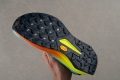
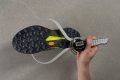
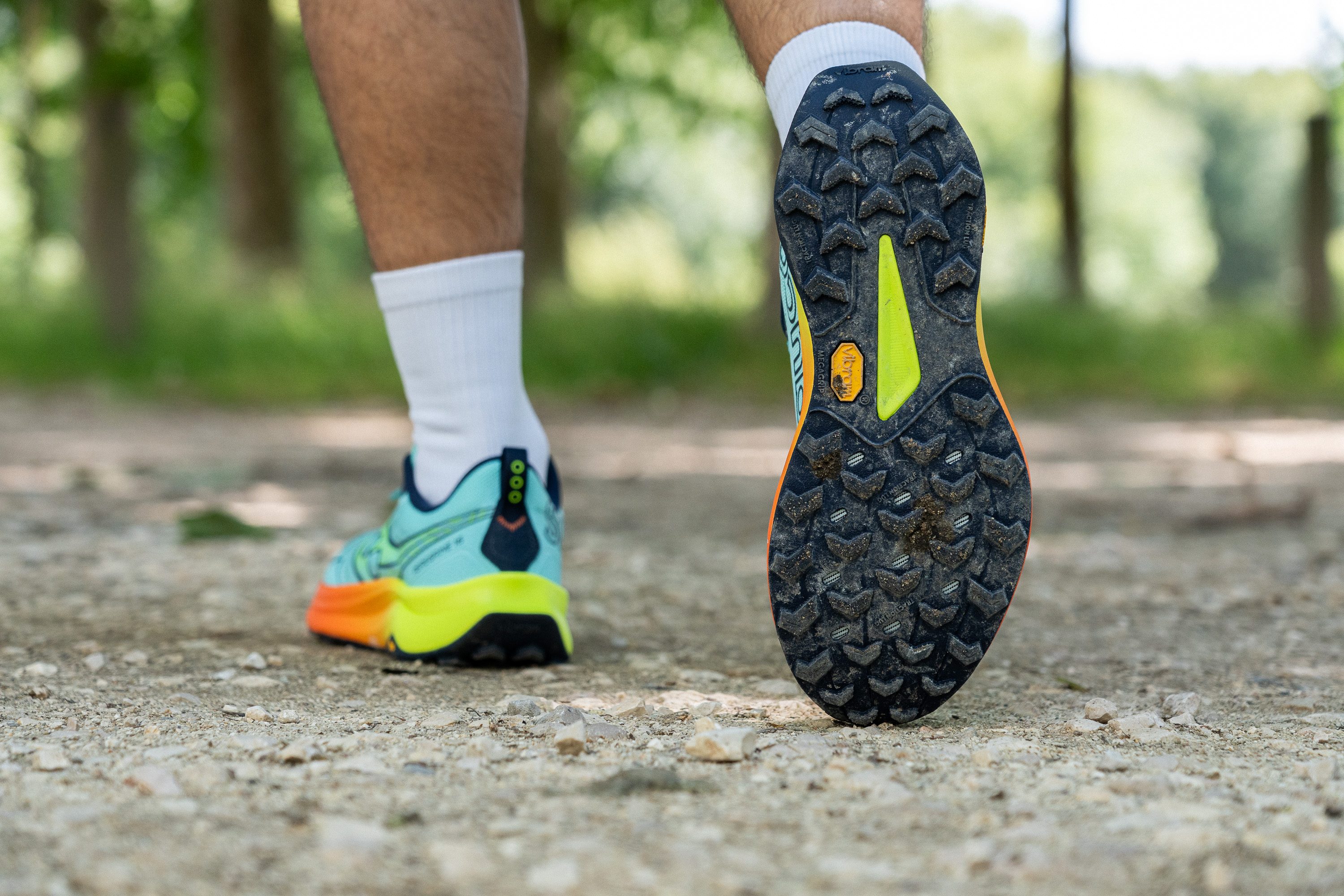
Saucony continues to use its usual chevron-shaped lug pattern, reversing the orientation between the forefoot and heel to enhance both climbing and braking traction. And now with Vibram's Traction Lug technology.
Beyond that, we were pleased with the outsole coverage. Nearly the entire bottom of the shoe is protected by rubber, with only a small section of exposed midsole through the centre, far too limited to raise any durability concerns.
Flexibility / Stiffness
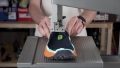
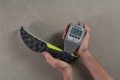
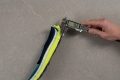
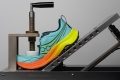
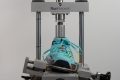
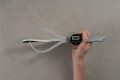
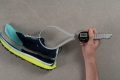
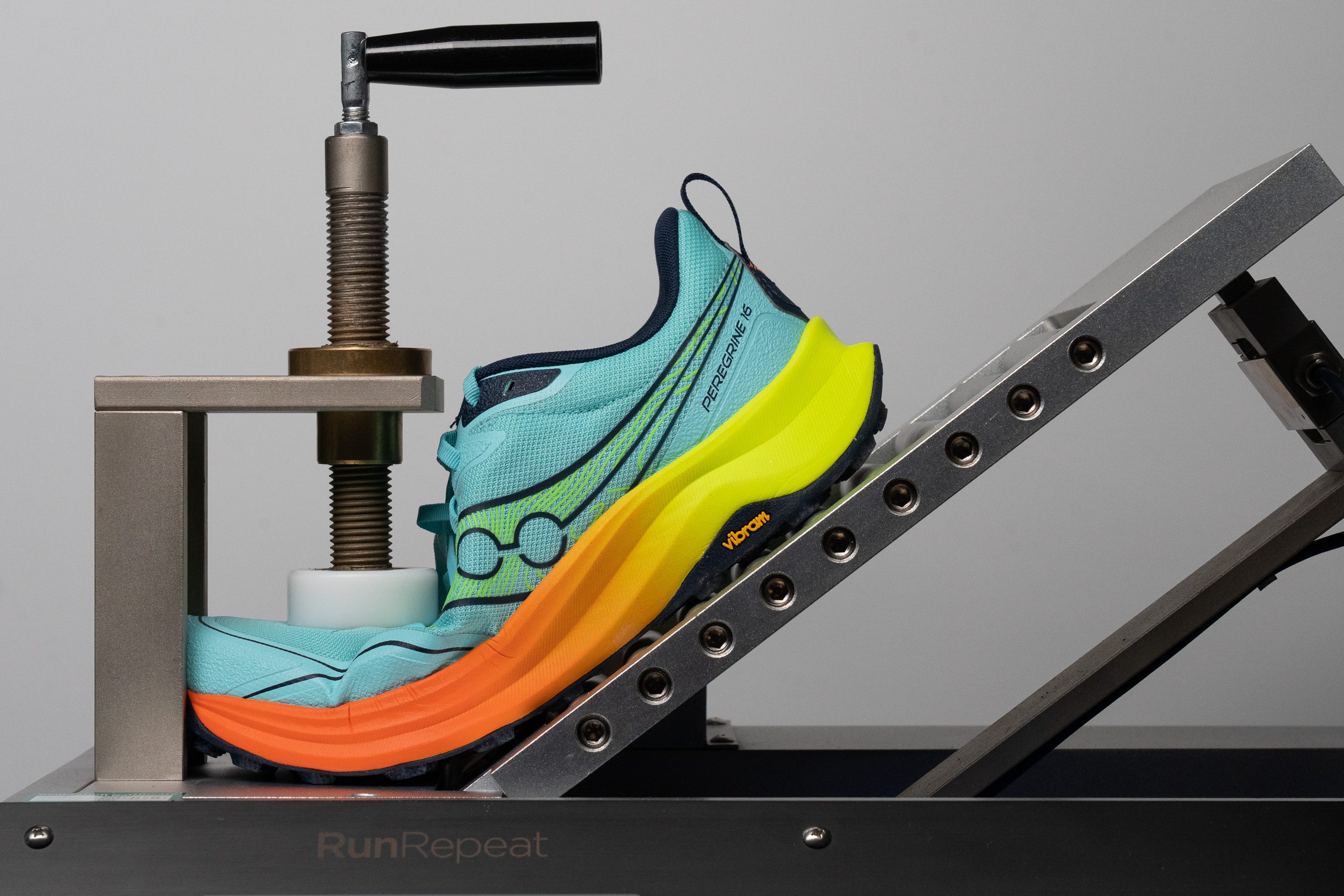
The forefoot rock plate and the absence of deep flex grooves give the Peregrine 16 a noticeably stiff platform. Our 30-degree bend test confirmed this, requiring 24.7N of force.
| Peregrine 16 | 24.7N |
| Average | 14.8N |
Weight
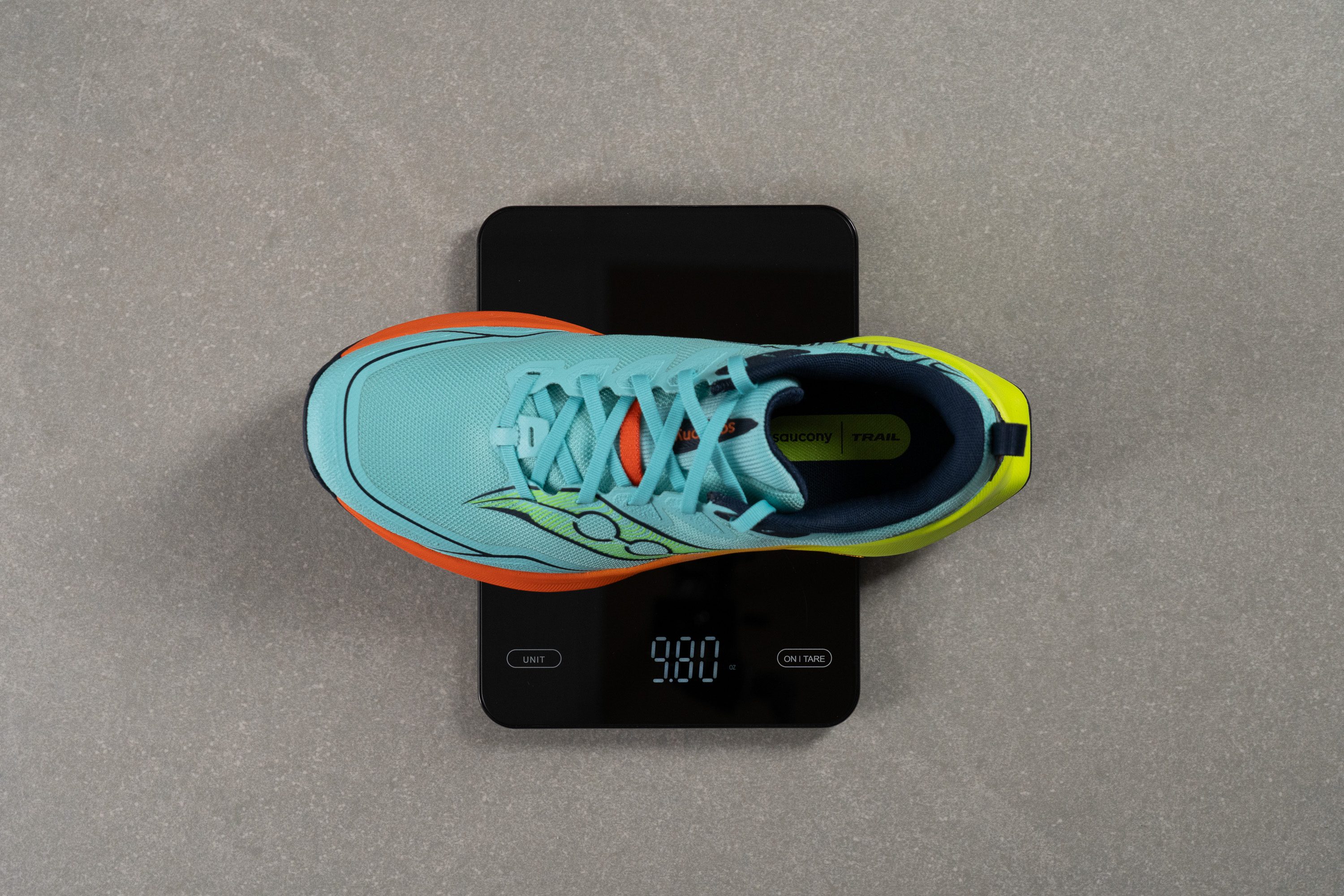
One area where the Peregrine 16 takes a small step backward is weight. At 9.8 oz (278g), it comes in slightly heavier than its predecessor. The increase is modest at just 4.5%, and unlikely to be noticeable for most runners. But still an increase.
| Peregrine 16 | 9.8 oz (278g) |
| Average | 10.1 oz (285g) |
Breathability
Breathability is often a difficult balancing act in trail shoes, as brands usually prioritize durability and protection over airflow.
With the Peregrine 16, we found that Saucony achieved a respectable result, earning a 3/5 score in our breathability test. It's not among the most ventilated shoes we've tested, but it should provide enough airflow to keep most of you comfortable on the trail.
We also noticed that Saucony avoided using large ventilation openings, which can become weak points in rugged environments. Instead, the brand relied on a lightweight mesh across the forefoot to promote airflow while maintaining durability.
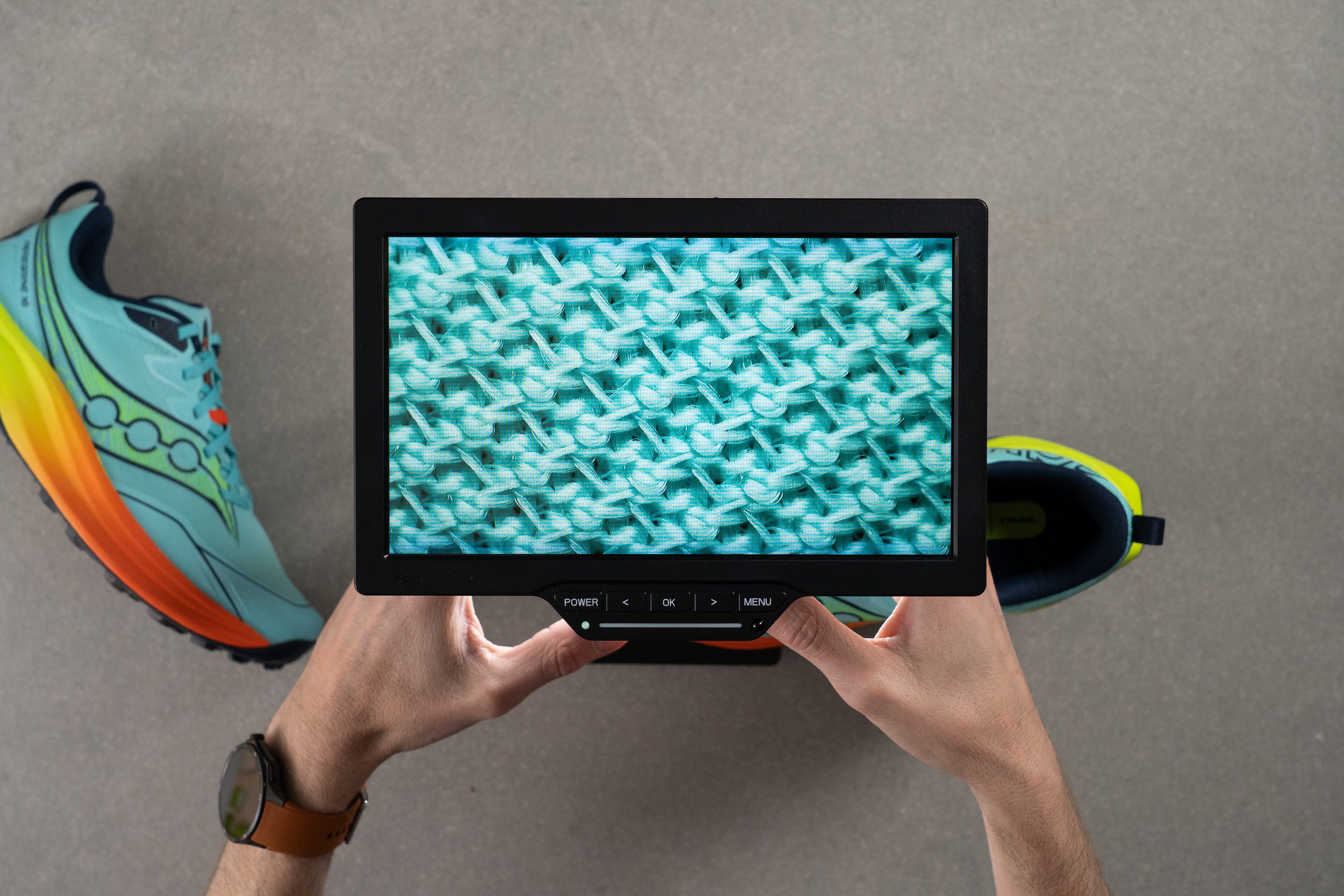
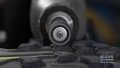
Under our microscope, we confirmed that air escapes through the tiny openings naturally formed within the weave of the mesh, rather than through dedicated perforations or large vents.
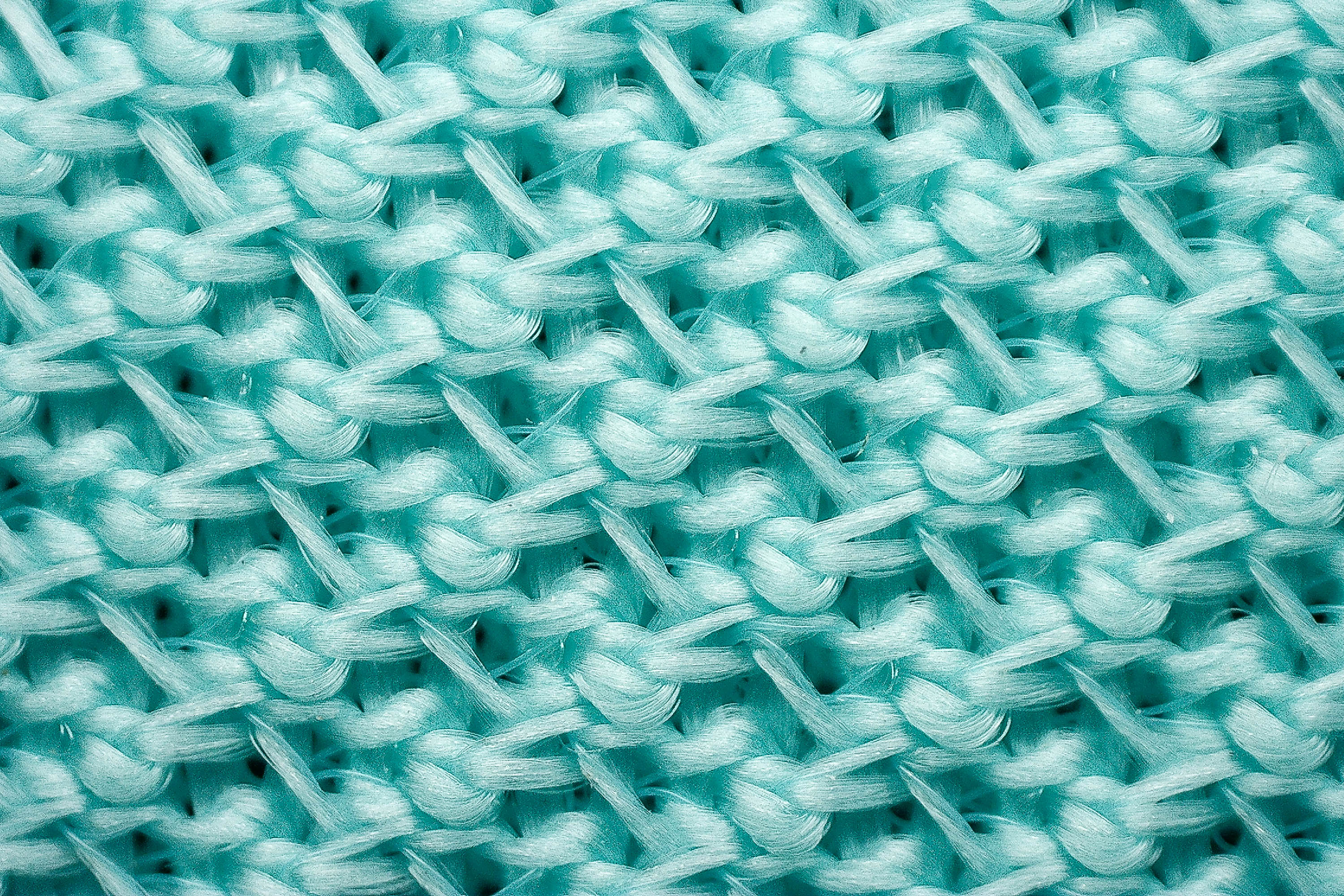
As for overall construction, the upper feels robust, comfortable, and built to handle demanding trails.
| Peregrine 16 | 3 |
| Average | 3.2 |
Stability
Lateral stability test
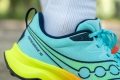
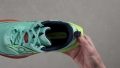
One area where the Peregrine series has consistently worked well is stability, and the Peregrine 16 continues that tradition. Saucony has created a shoe that feels remarkably secure for neutral runners, inspiring confidence across a wide variety of trails.
The platform is now wider than ever, the drop remains low and the redesigned upper delivers reliable lockdown and does an excellent job of keeping the foot centred through uneven terrain and sharp direction changes.
Torsional rigidity
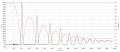
With 12.0 Nm of torsional rigidity, the Saucony Peregrine 16 delivers a good amount of twist. It's also an interesting contrast to its high longitudinal stiffness, as the shoe is noticeably easier to twist than it is to bend.
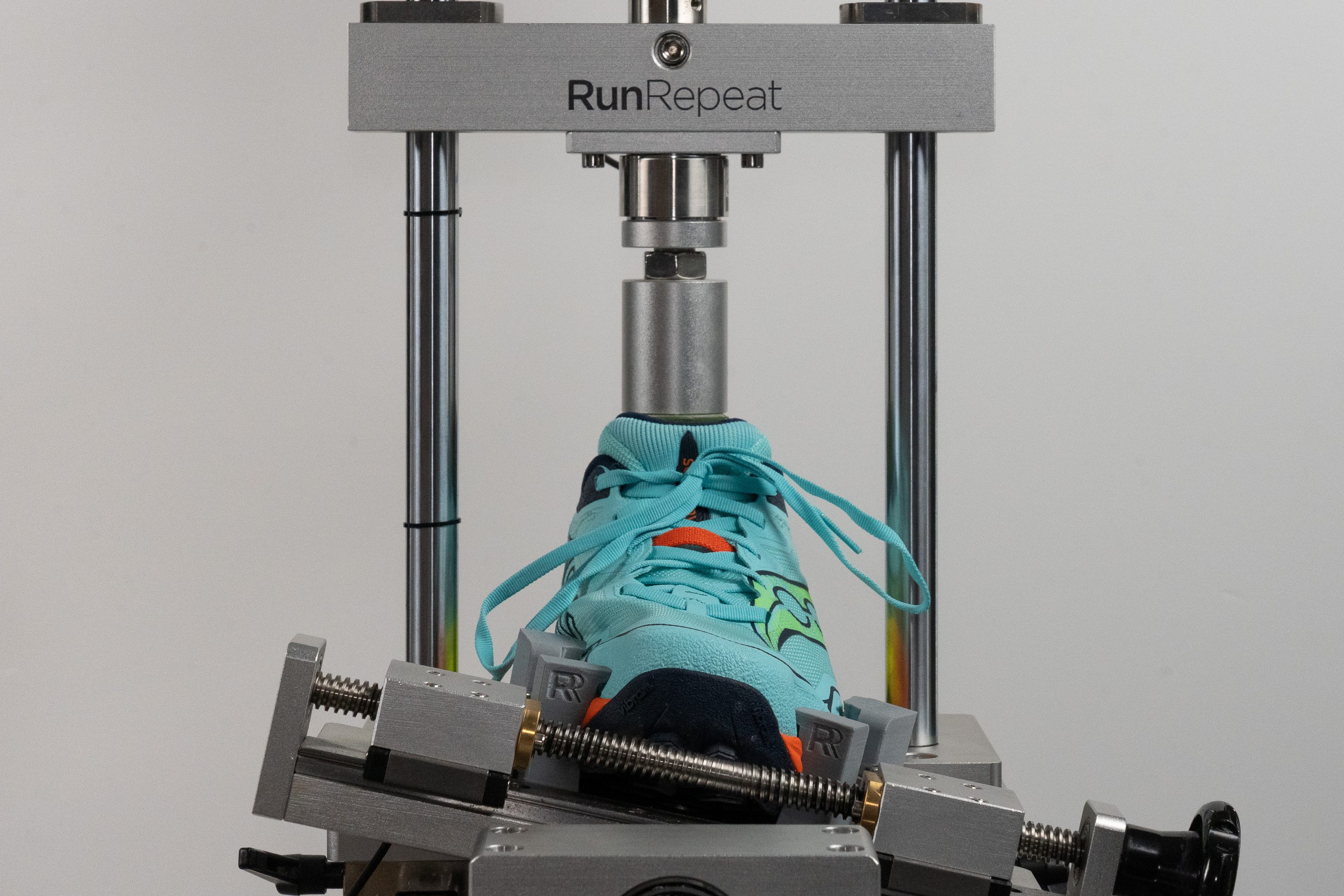
| Peregrine 16 | 12.0 Nm |
| Average | 15.8 Nm |
Heel counter stiffness
Another contributor to the Peregrine 16's stable ride is its exceptionally rigid heel counter, which earned a maximum 5/5 score in our assessment.
While runners who prefer a softer or less structured rearfoot may find it a bit excessive, there's no denying that it performs its job remarkably well by enhancing security and rearfoot control on the trail.
| Peregrine 16 | 5 |
| Average | 2.9 |
Midsole width - forefoot
Earlier in this review, we highlighted how Saucony widened the Peregrine 16 compared to its predecessor. Now it's time to back that up with actual measurements.
Using our callipers in the forefoot area, we recorded 118.4 mm. That's a notably wide platform for a trail shoe and helps explain the stable, confidence-inspiring feel we experienced whenever landing on the front half of the shoe.
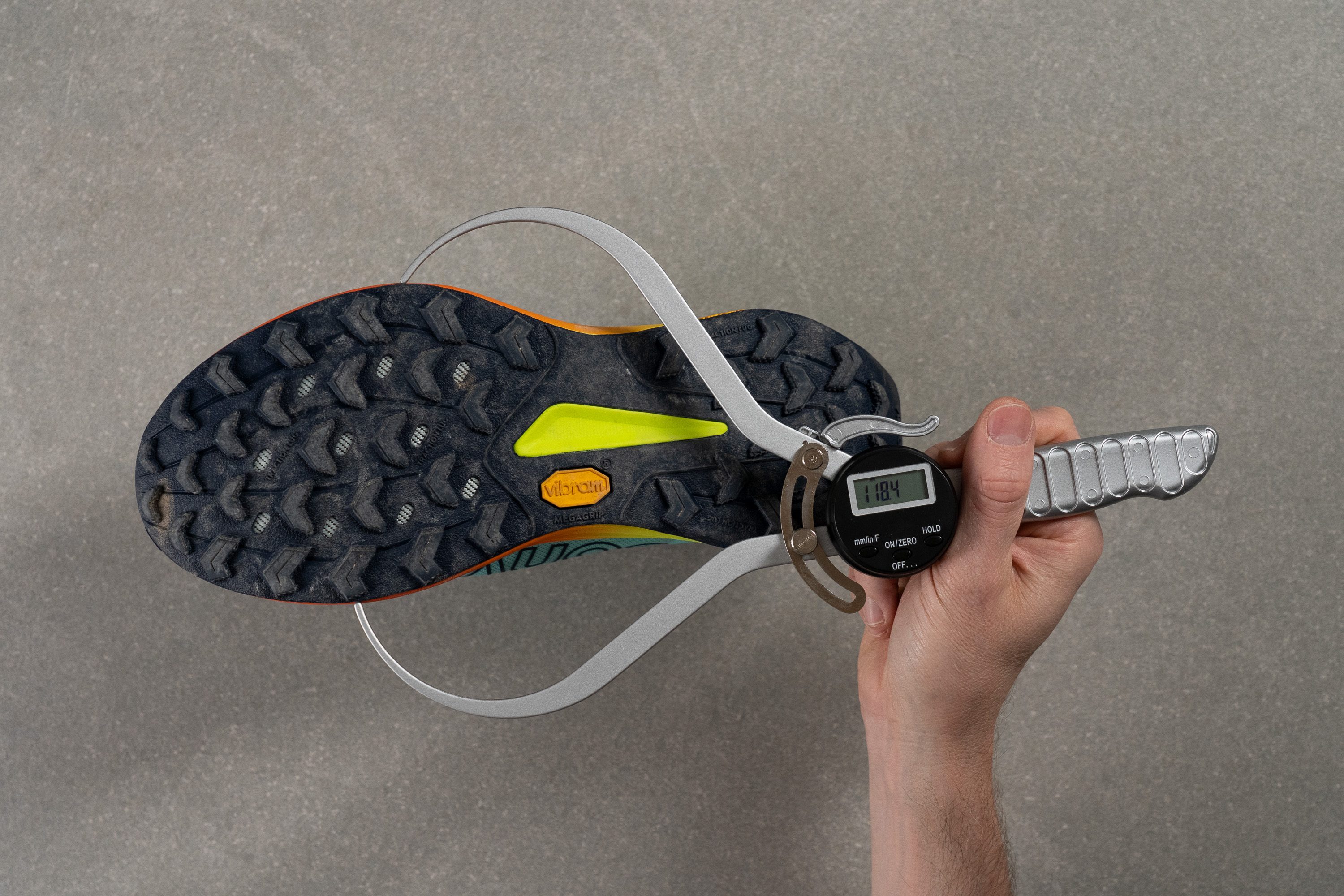
| Peregrine 16 | 118.4 mm |
| Average | 114.3 mm |
Midsole width - heel
The heel platform also grows slightly compared to the previous version. However, Saucony took a more conservative approach here, keeping the measurement close to the lab average at 92.2 mm.
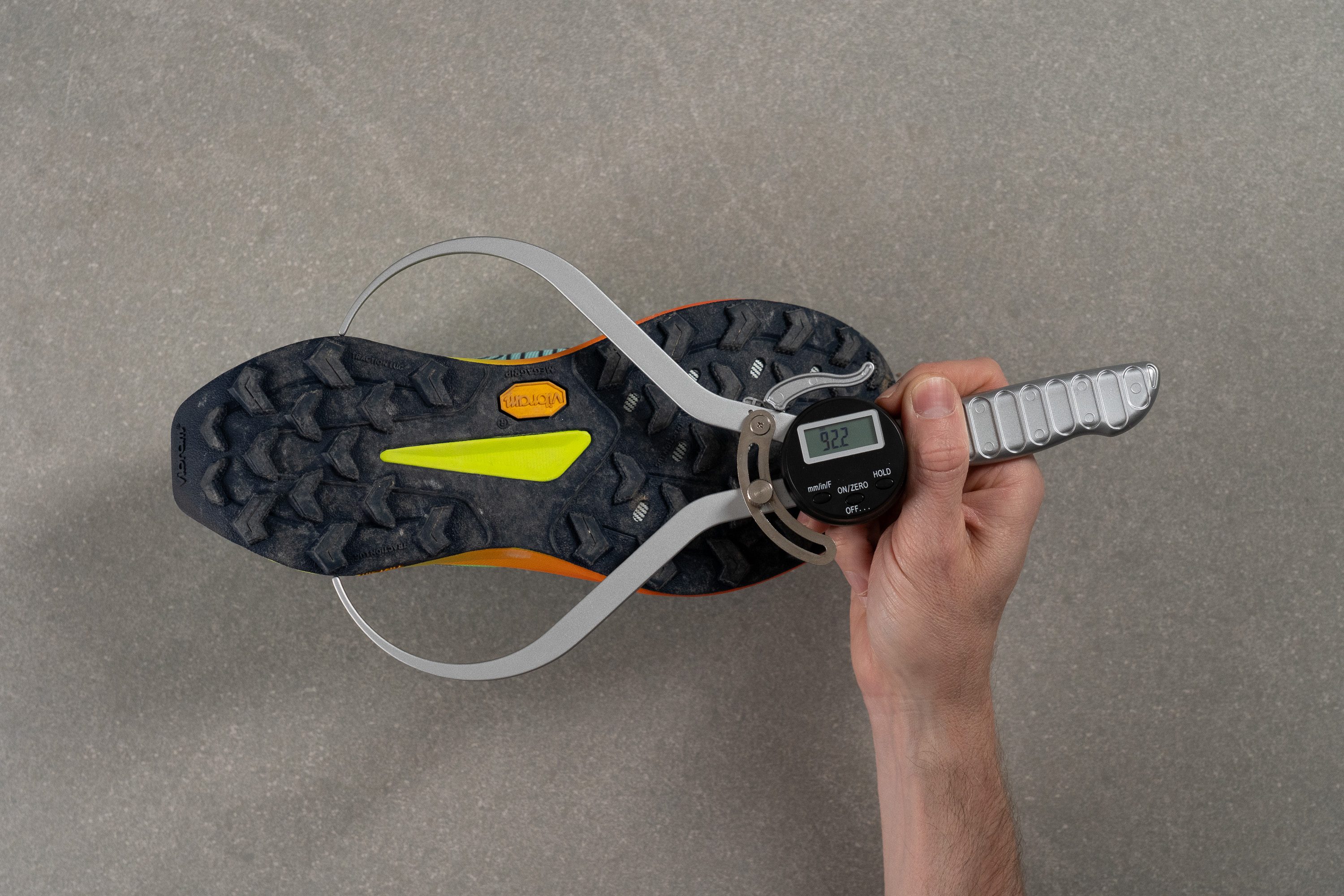
| Peregrine 16 | 92.2 mm |
| Average | 90.5 mm |
Durability
Heel padding durability
The heel padding held up reasonably well against our Dremel test, earning a middle-of-the-road 3/5 score. It's a solid result that neither stands out nor raises concerns.
| Peregrine 16 | 3 |
| Average | 3.1 |
Outsole durability
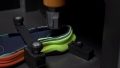
Equipping the Peregrine 16 with Vibram Megagrip is not only a major upgrade for traction, but also a meaningful improvement in durability. The 0.5 mm result from our Dremel test is outstanding, nearly doubling the wear resistance we measured in the Peregrine 15.
| Peregrine 16 | 0.5 mm |
| Average | 0.9 mm |
Outsole thickness
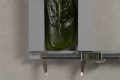
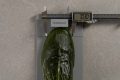
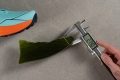
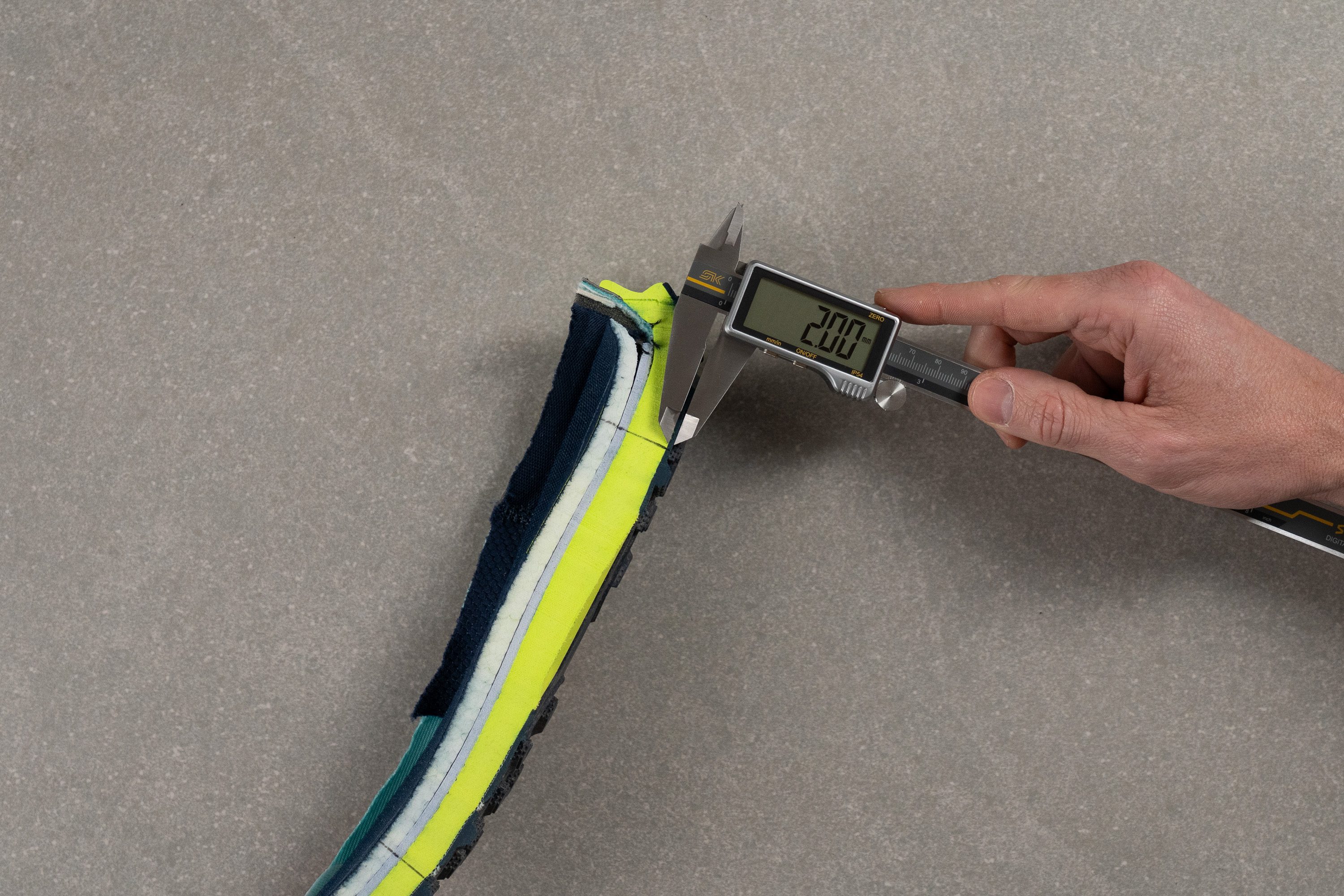
We also measured the outsole thickness and recorded 2.0 mm.
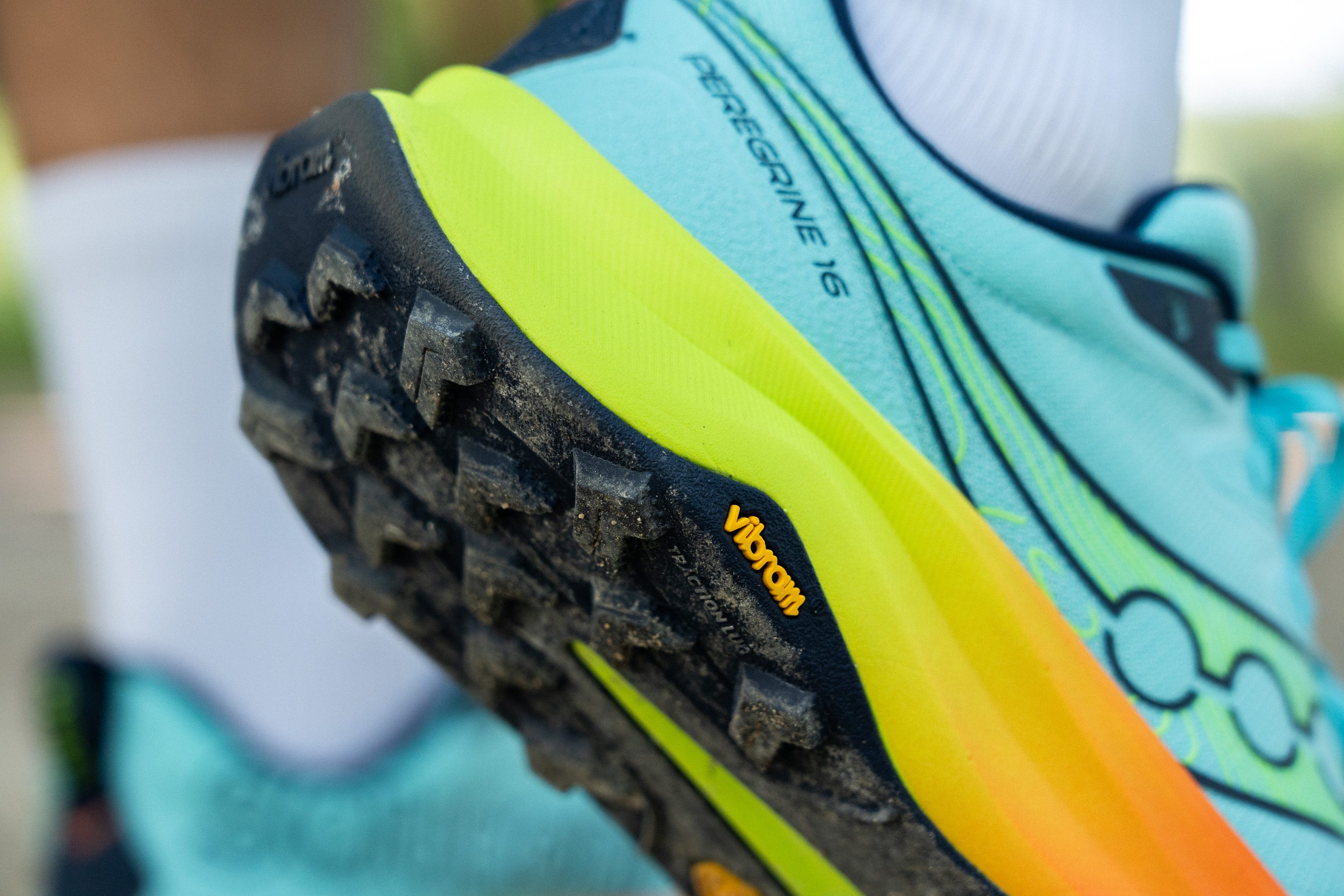
Given that the forefoot already benefits from the protection of the rock plate, Saucony could likely have trimmed a bit of rubber here to save some weight without significantly affecting trail performance.
| Peregrine 16 | 2.0 mm |
| Average | 1.9 mm |
Misc
Insole thickness
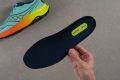
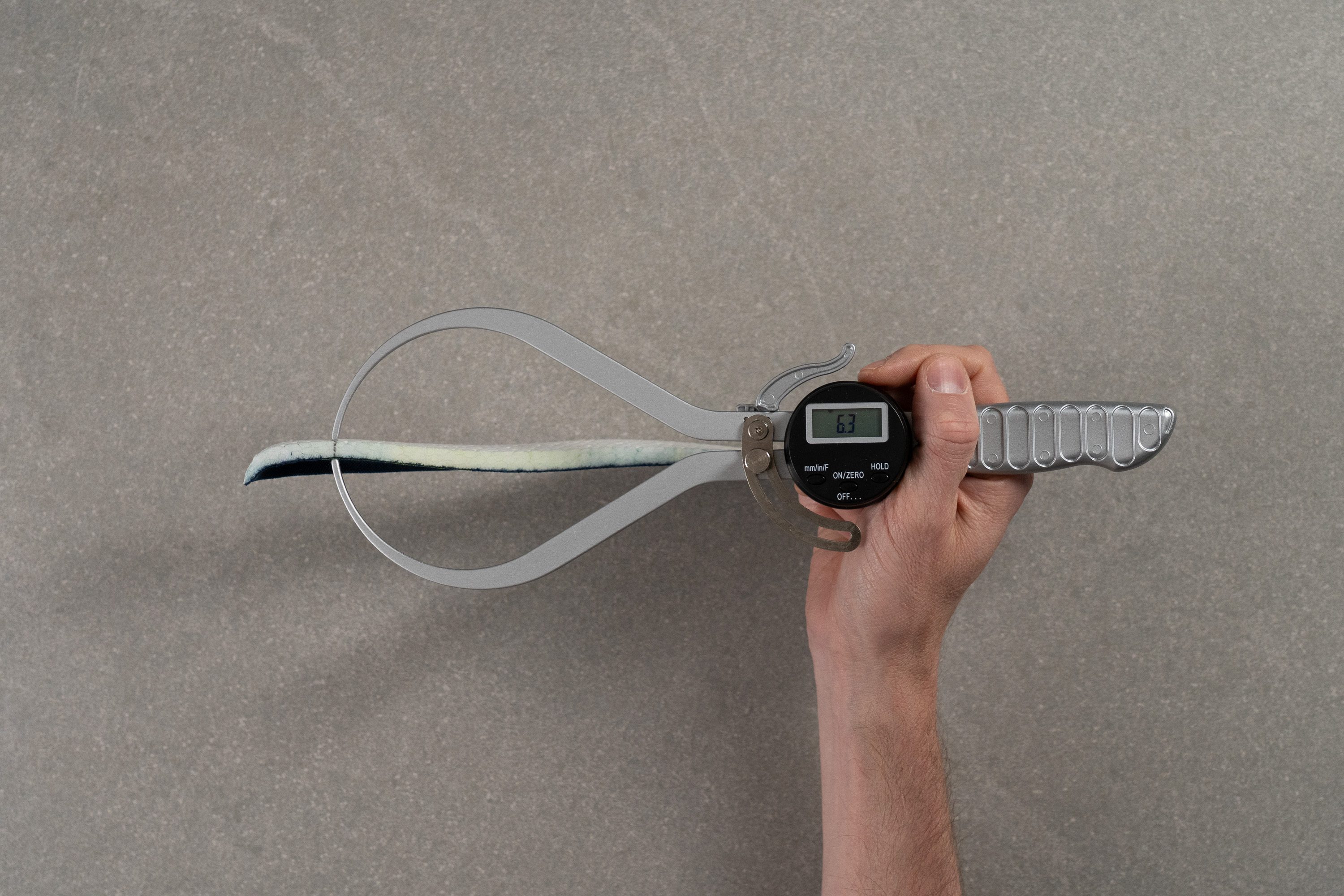
We measured the PWRRUN+ insole at an impressive 6.3 mm thick.
| Peregrine 16 | 6.3 mm |
| Average | 4.6 mm |
Removable insole
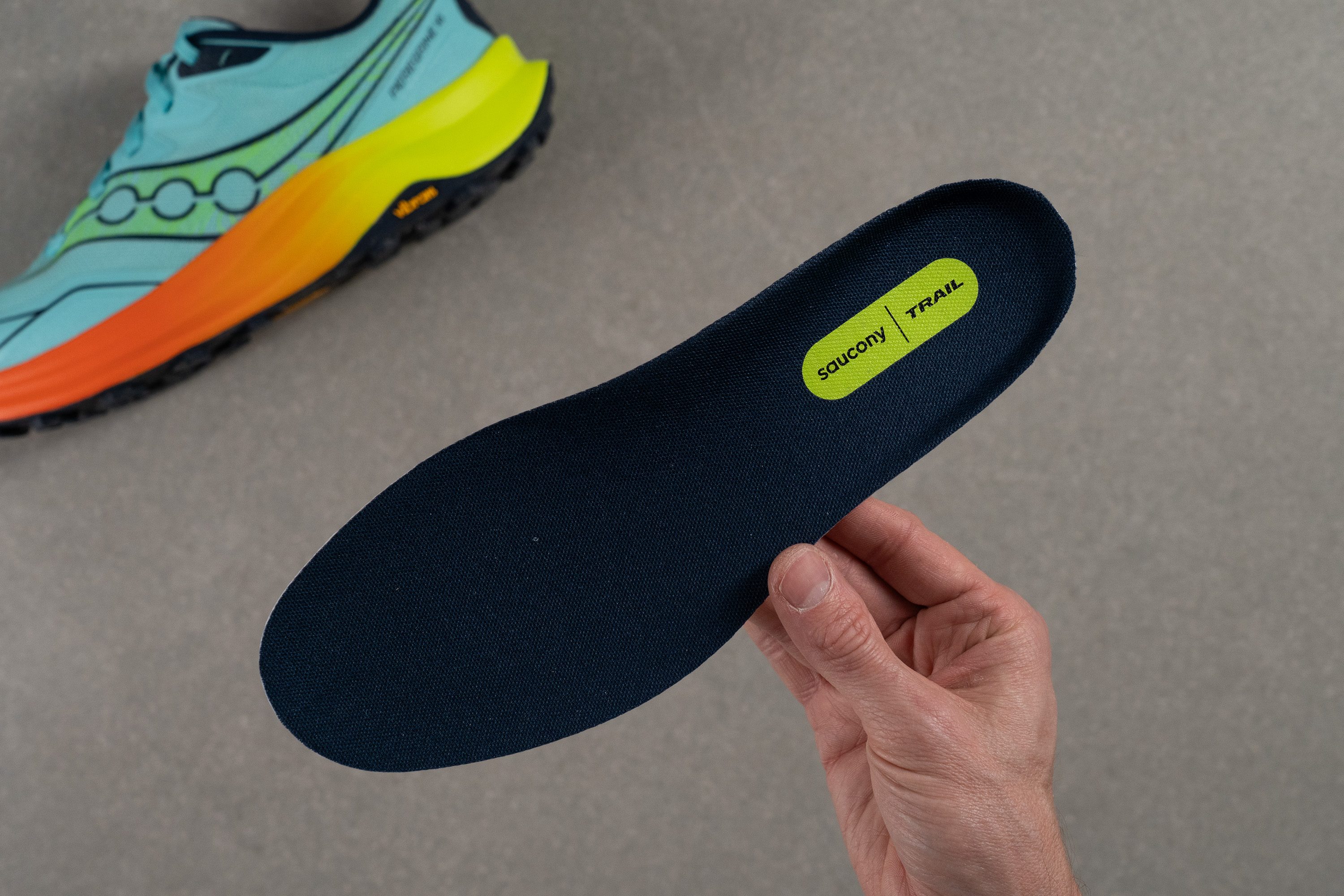
You can remove the generously padded insole and swap a slimmer option if you need extra room inside the shoe, but we'd think twice before doing so. It contributes a noticeable amount of cushioning and underfoot comfort.
| Peregrine 16 | Yes |
Reflective elements
We found no reflective elements anywhere on the Peregrine 16. That's a minor omission, but it's also the kind of inexpensive and easy-to-implement upgrade that Saucony could address without much effort in version 17.
| Peregrine 16 | No |
Tongue padding
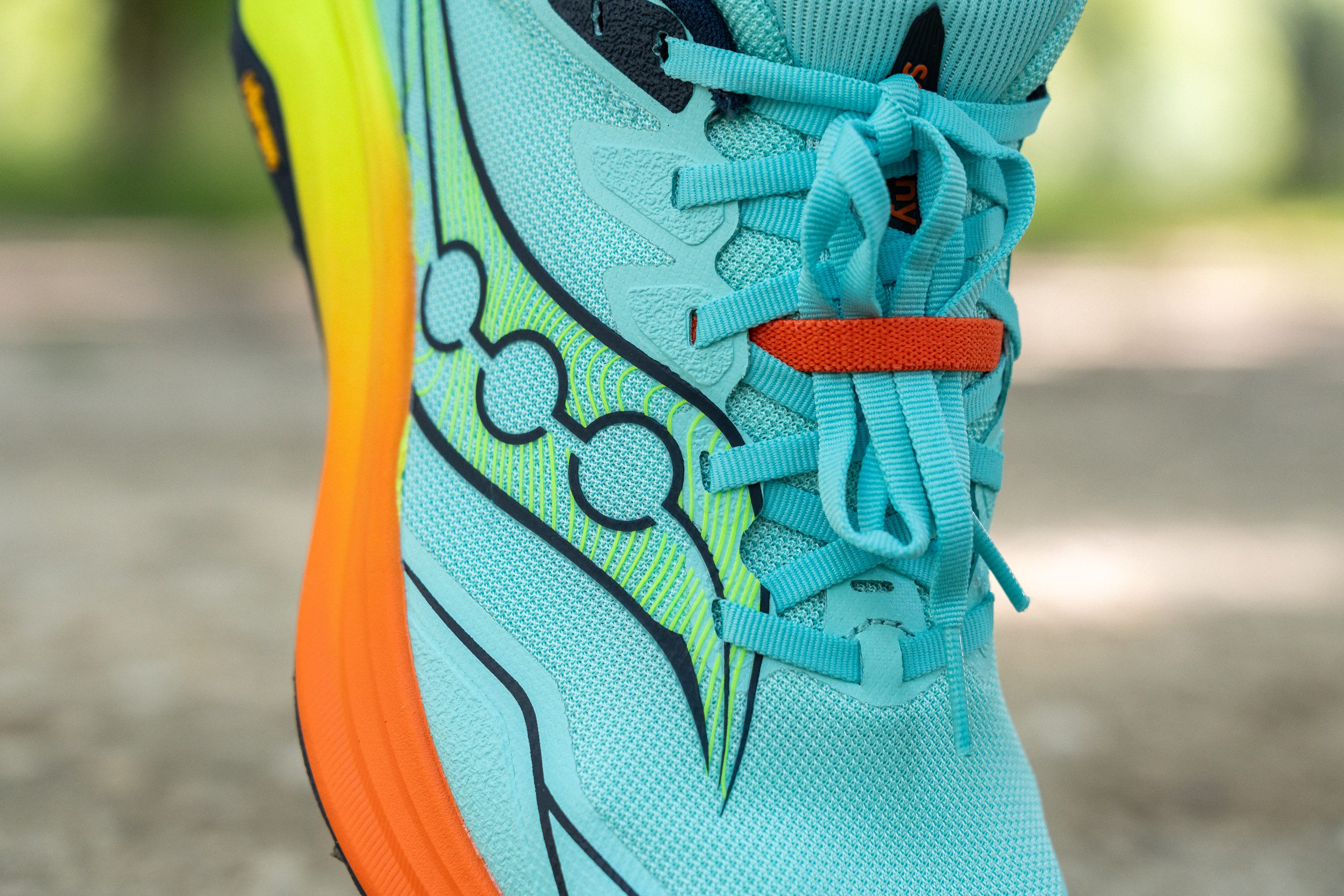
Saucony dropped the offset lace loop introduced in the Peregrine 15, and we think that's a smart move. It added unnecessary complexity and created another potential point of failure. The Peregrine 16 returns to a simpler setup while retaining the convenient elastic band, making it easy to secure the laces and keep them out of the way on the trail.
As for tongue padding, very little has changed. We measured 6.5 mm, a dependable amount that strikes an excellent balance between comfort and weight for a trail shoe like this.
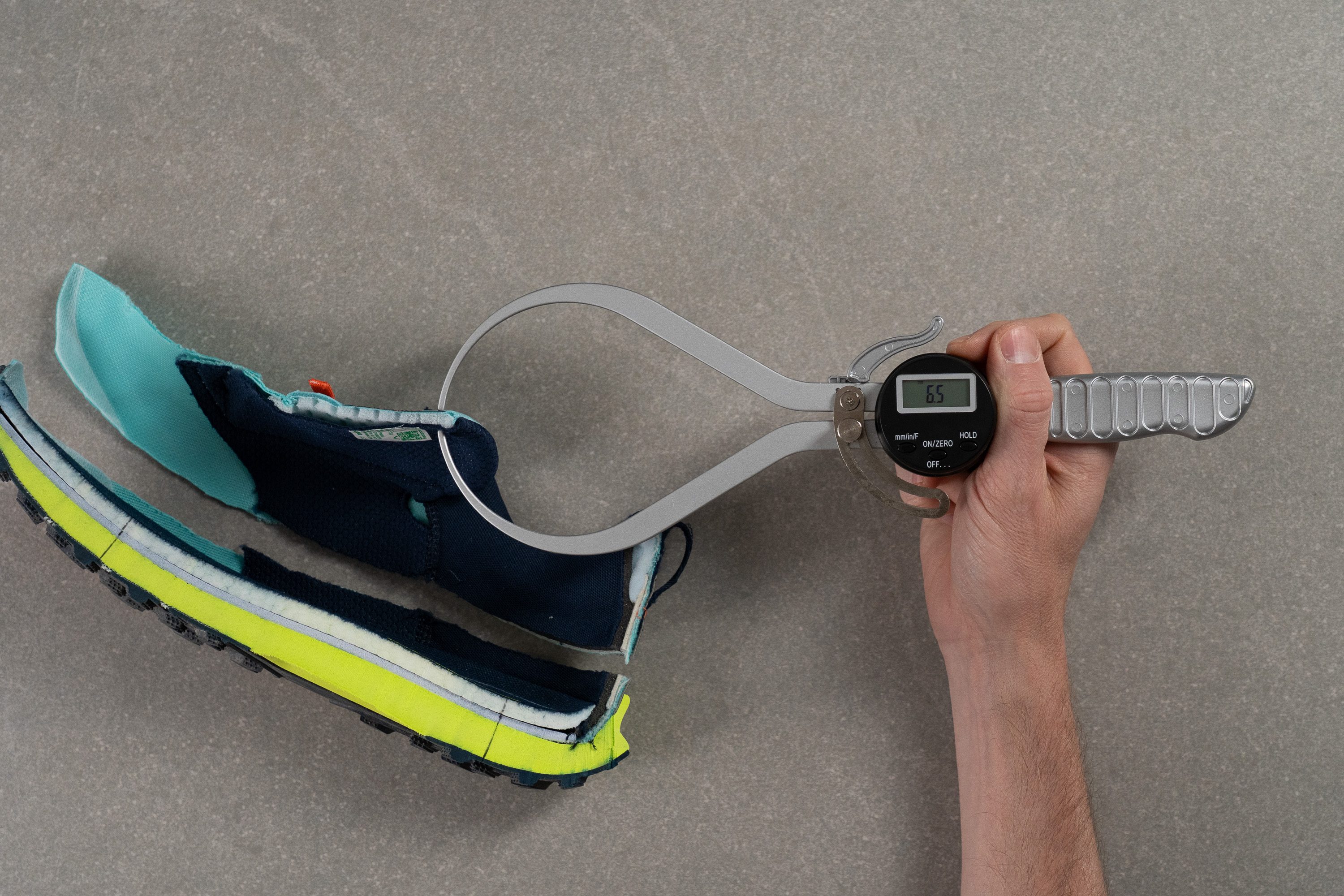
| Peregrine 16 | 6.5 mm |
| Average | 6.4 mm |
Tongue: gusset type
The tongue features a fully-gusseted design, which is exactly what we like to see in a trail shoe. It helps keep debris out while also improving midfoot lockdown, delivering two meaningful benefits from a single feature.
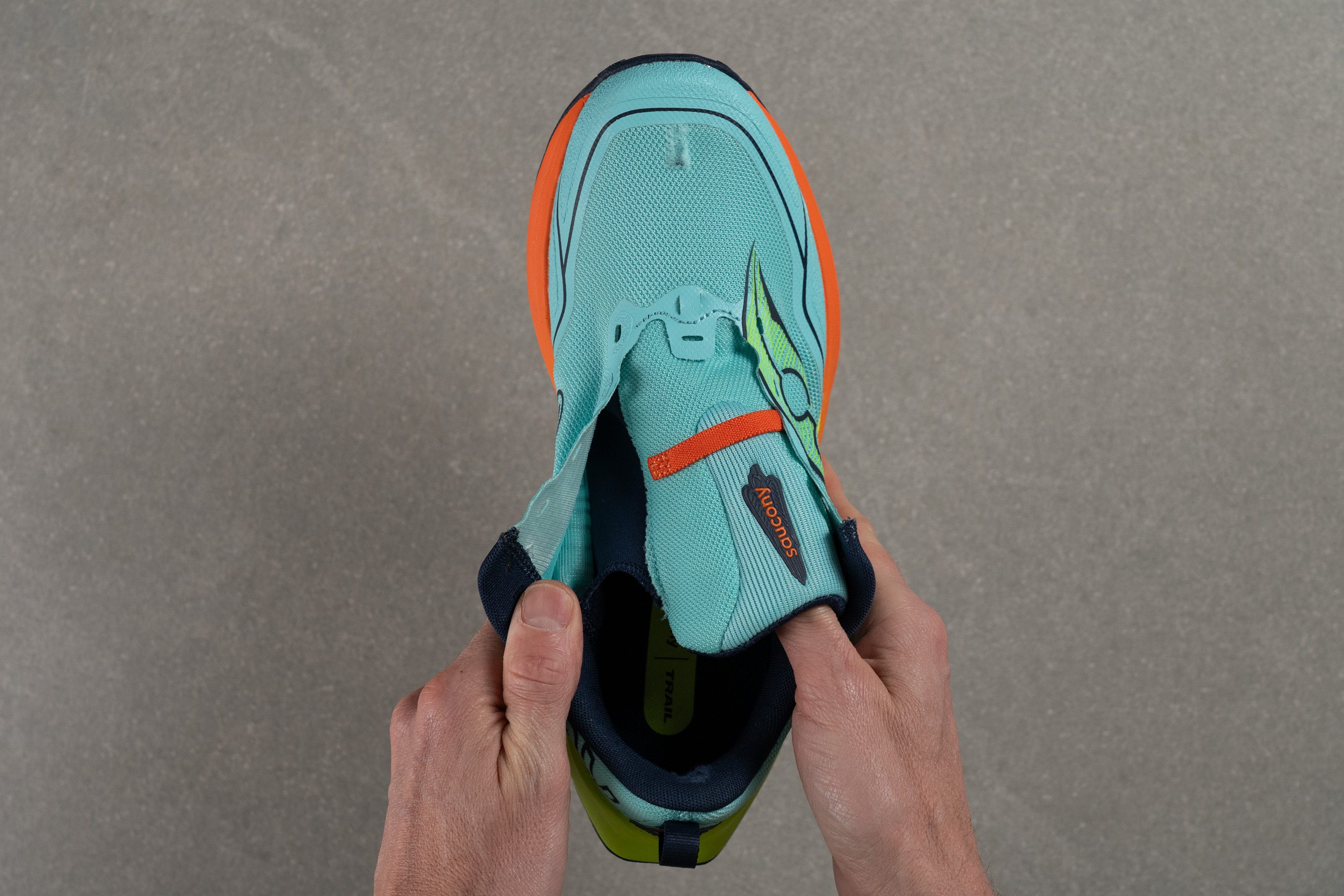
| Peregrine 16 | Both sides (full) |
Heel tab
Saucony integrated a reinforced finger loop directly into the heel structure, making the shoe easier to pull on while maintaining durability. We really loved how the stitched-in design blends seamlessly with the heel counter and upper, there's some attention to detail here!
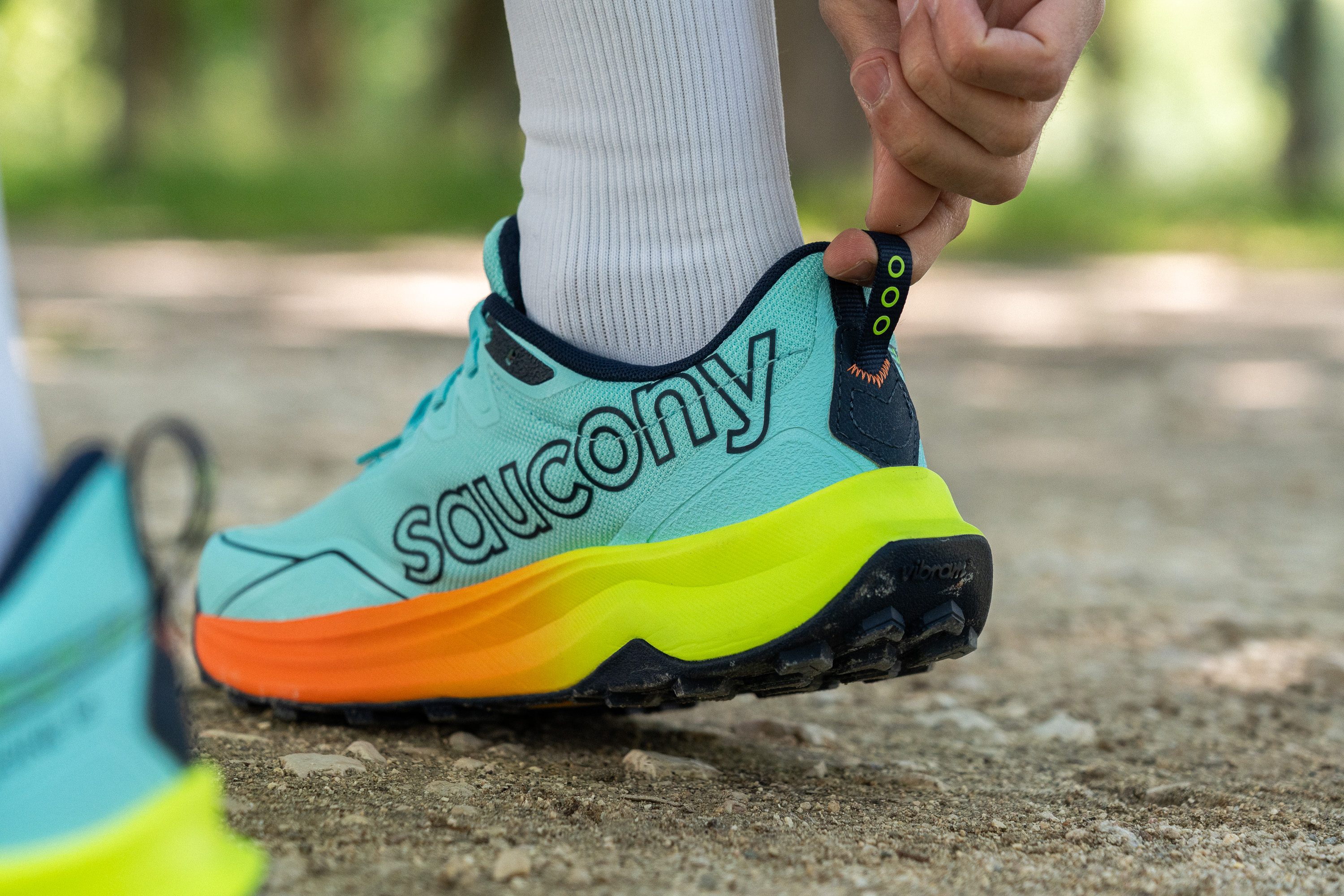
| Peregrine 16 | Finger loop |
Price
The Saucony Peregrine series has long stood out as one of the best values in trail running, and version 16 only strengthens that reputation. We still believe it's among the strongest trail shoe options available at its MSRP, delivering a balanced mix of comfort, versatility, durability, and performance.
And the addition of a Vibram outsole makes the package even more compelling, addressing one of the few areas where we really think there was real room for improvement.
| Peregrine 16 | $145 |