7 Best Running Shoes For Achilles Tendonitis in 2026

We buy shoes ourselves. We earn commissions when you buy through us, at no extra cost. Why trust us
The burning sensation in the Achilles tendons is annoying, especially when it comes and goes or happens when you're supposed to be at your training peak. There are a few running shoe features that may help in this case, next to resting or taking things slower (moving to daily trainers for sure). We discuss these features here, and we highlight the best running shoes for painful Achilles tendons.
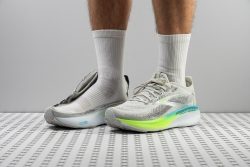
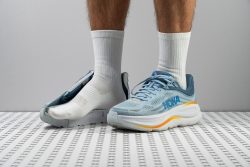
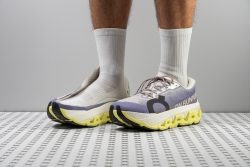
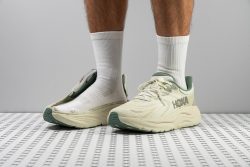
How we test running shoes for Achilles tendonitis
To make our shoe reviews as objective as possible, we make sure to: buy all the running shoes on our own, test them on our test runs in various weather conditions and surfaces, and test them in our lab.
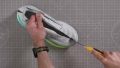
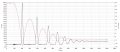
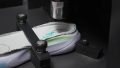
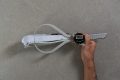
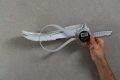
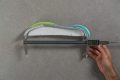
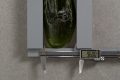
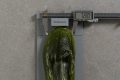
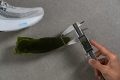
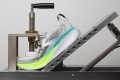
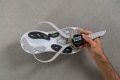
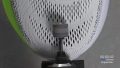
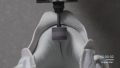
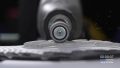
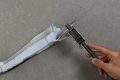
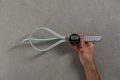
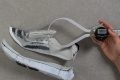
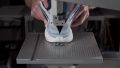
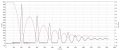
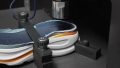
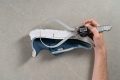
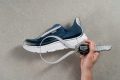
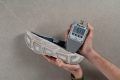
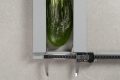
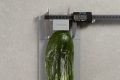
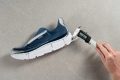
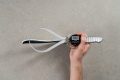
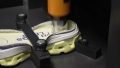
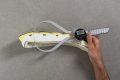
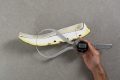
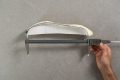
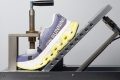
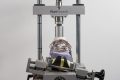
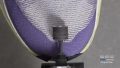
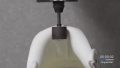
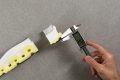
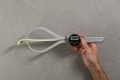
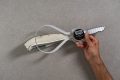
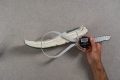
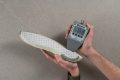
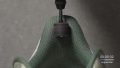
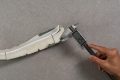
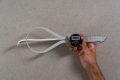
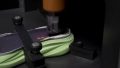
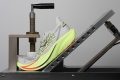
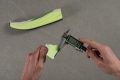
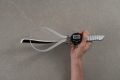
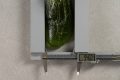
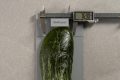
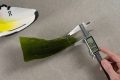
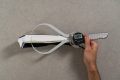
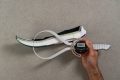
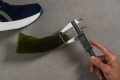
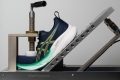
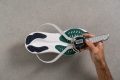
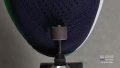
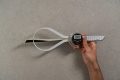
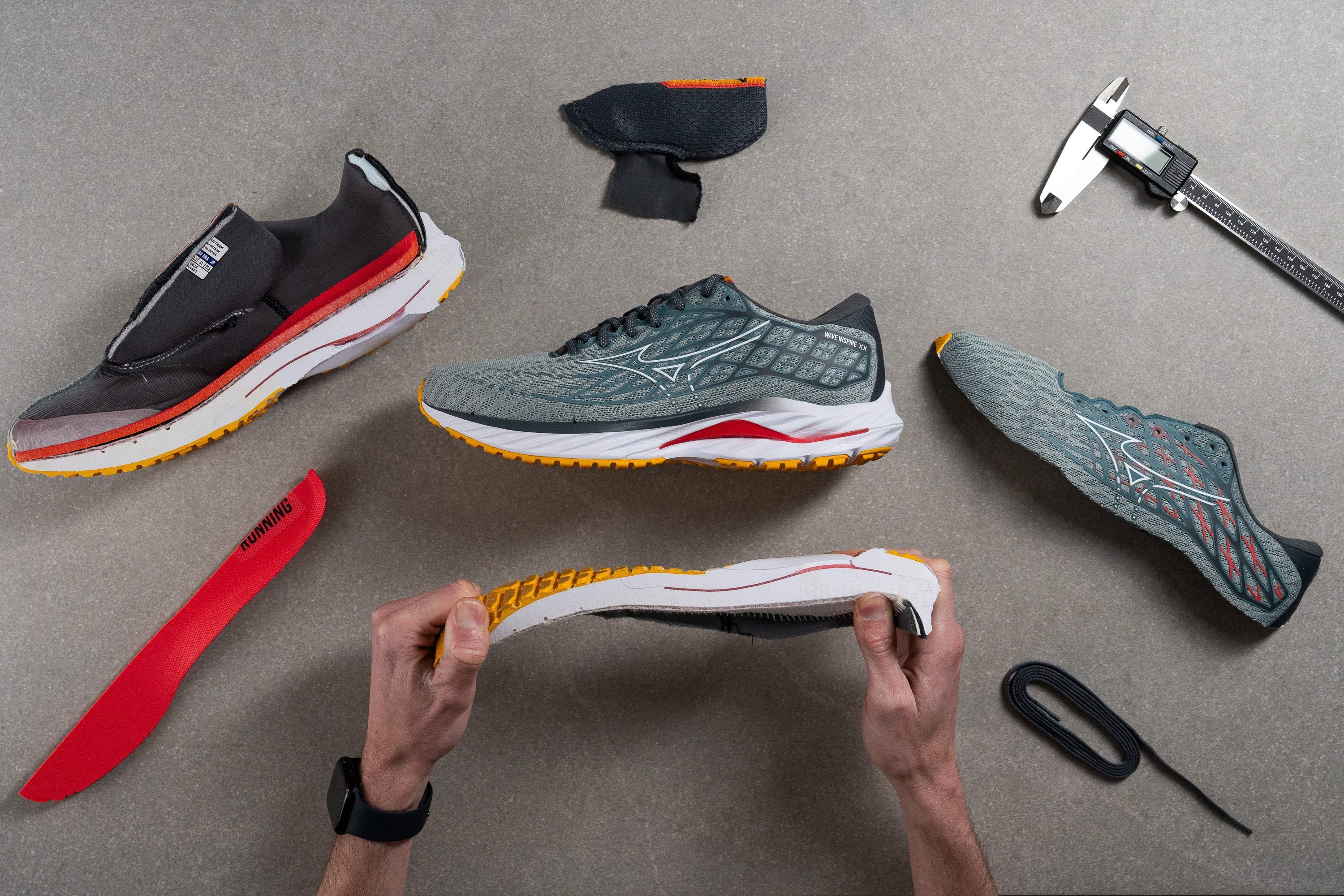
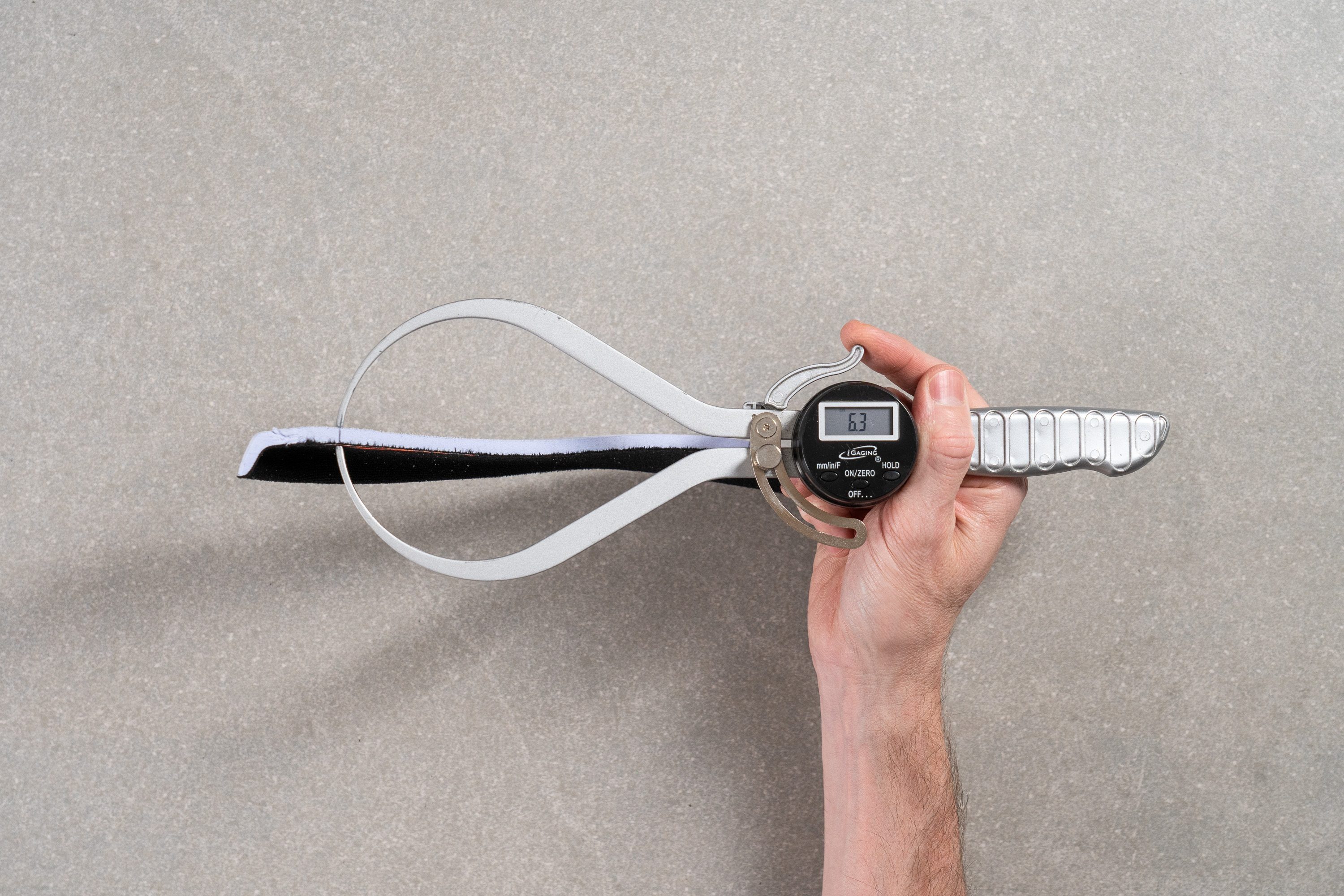
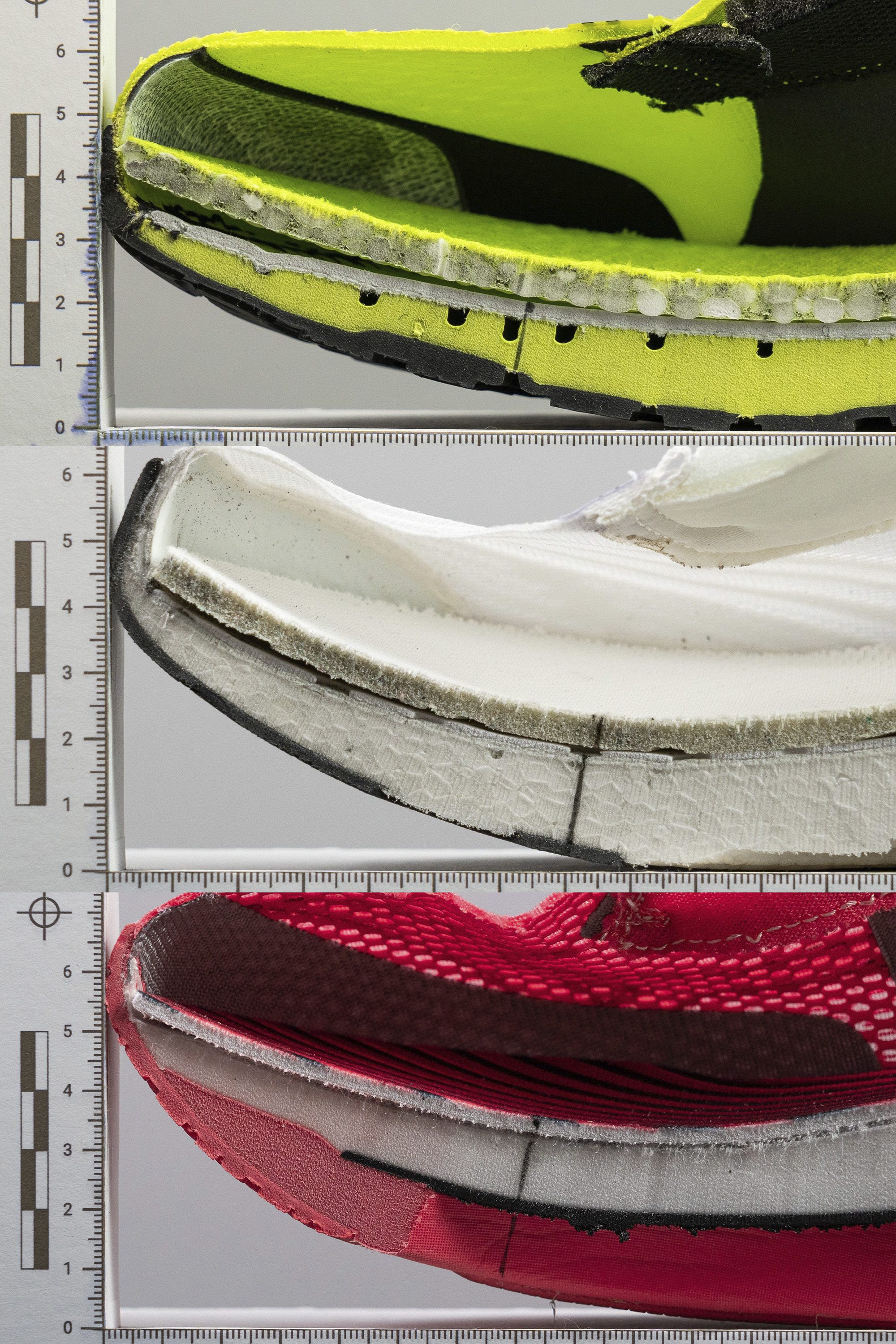
We standardised our lab tests, so each shoe is treated the same. When doing durability tests, we always apply the same pressure, RPMs, and time duration; when freezing the shoes to measure how their softness changes in cold weather, we keep all the shoes in the freezer for the same amount of time. For Achilles tendinopathy, you may be specifically interested in good shock absorption (which we measure following the ASTM F1976-13 methodology), high heel drop (which we measure per guidelines from the WorldAthletics using digital callipers on shoes cut in half), stiffness of the heel counter, and overall shoe rigidity (for which we use a specialised machine).
We always use the same tools and publish our reviews on the website, along with all the lab data we gather.
Best running shoe for Achilles tendonitis overall


What makes it the best?
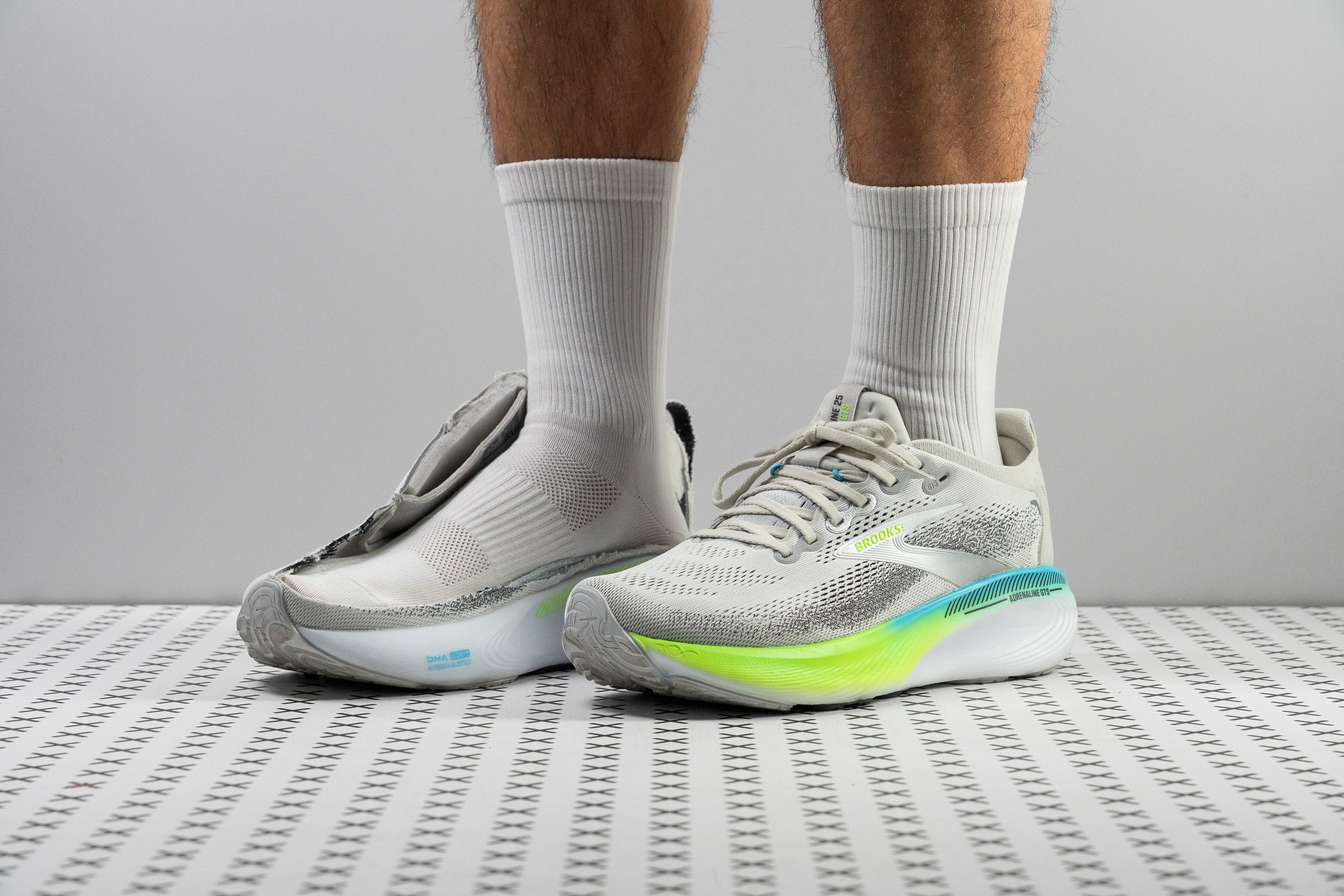
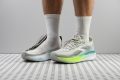
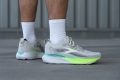
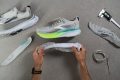
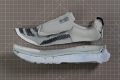
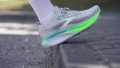
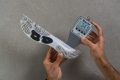
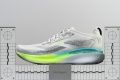
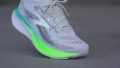
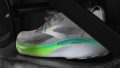
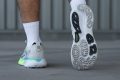
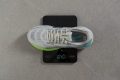
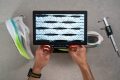
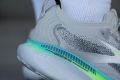
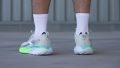
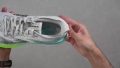
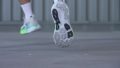
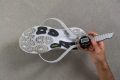
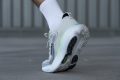
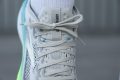
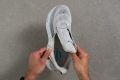
Runners dealing with Achilles Tendonitis need both comfort and support, and that’s exactly what the Brooks Adrenaline GTS 25 delivered in our runs, making it a clear winner in this category. It’s cushioned with a high drop, which reduces muscle fatigue and load in the lower legs. Meanwhile, our lab work shows that its massive base and GuideRails technology effectively enhance stability.
Beneath our feet lies a well-cushioned platform with a stack height of 36.1/25.9 mm. The resulting drop is steep at 10.2 mm, putting us in a raised position that shifts the load to our hips and knees. In effect, we avoid overworking and triggering pain in our ankles and Achilles.
Meanwhile, each landing is dampened by the shock-absorbing base, reaching strong scores of 138 SA in the rear and 101 SA up front.
The tall sidewalls from the GuideRails technology create a more centred ride. It avoids excessive lateral movement, along with the expansive 117.7/110.7 mm base we measured. At this width, it’s hard to spill over the platform.
However, the toebox has limited room vertically and horizontally. Those with wide or high-volume feet may find this a bother.
Pros
- Excellent stability with subtle support
- Softer midsole foam
- Improved shock absorption
- World-class outsole durability
- Excellent upper comfort
- Better traction
- Reduced drop adds versatility
- Still ideal for heel strikers
- Comfy and durable for daily wear
Cons
- Needs to lose weight ASAP
- Modest energy return in the heel
- Minor price increase
Running shoes for Achilles tendonitis with the best shock absorption





What makes it the best?
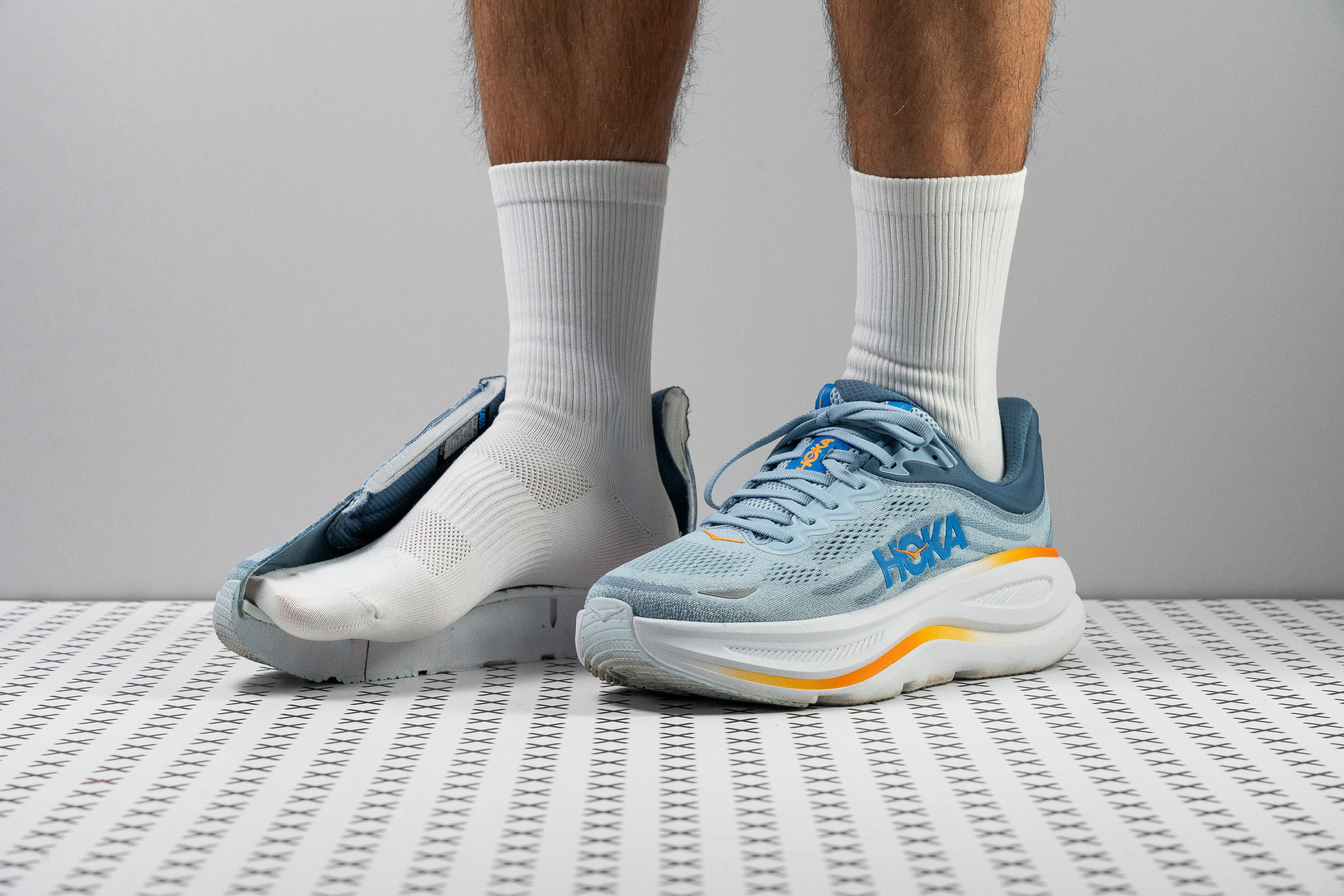
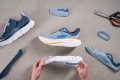
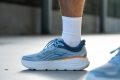
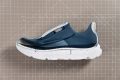
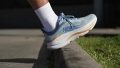
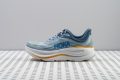
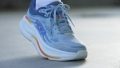
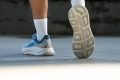
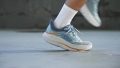
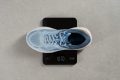
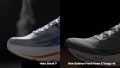
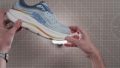
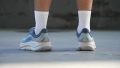
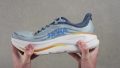
The HOKA Bondi 9 is an oversized trainer that took the load off our feet and put the fun in our runs. Lab results show it features a heavily cushioned yet responsive midsole, with broad measurements to enhance support. In our runs, we immediately felt the comfort it offers, making it our best shock absorption for runners dealing with Achilles Tendonitis.
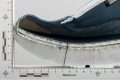
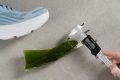
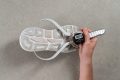
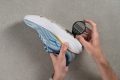
Our calliper reveals a massive 41.3/32.2 mm stack beneath our feet, verifying the bottomless comfort we enjoyed. The foam’s plush nature made each touchdown kind to our legs, proven by high shock absorption scores of 146 SA in the heel and 133 SA in the forefoot. Its performance suggests all foot strikers will enjoy less muscle stress.
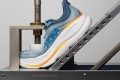
What makes the ride so much more impressive is its ability to return the force we put in the midsole. In our energy return test, the heel returned 60.2% while the forefoot returned 60.3%, showing that we don’t have to think about having a dull ride in this trainer.
Bondi 9 features an exceptionally broad platform, making our jaws drop with its 123.2/100.9 mm base. Built with elevated sidewalls, it supports our footing and keeps us planted inside the shoe. This minimises the chances of losing balance and triggering muscle or joint pain.
However, its toebox is surprisingly narrow compared to its oversized platform. Those who want more room for wide feet or comfortable toe splay should try another pair.
Pros
- Endless cushioning
- New supercritical EVA midsole
- Amazing step-in comfort
- Doubles as a walking shoe
- Stable for its height
- Built to last
- Excels at slow-and-steady paces
- Well-designed heel collar
- Lighter than v8
Cons
- Not for wide feet
- Still feels heavy and clunky underfoot
- Drop measurement differs from stated
- Non-gusseted tongue
Best super trainers for Achilles tendonitis

What makes it the best?
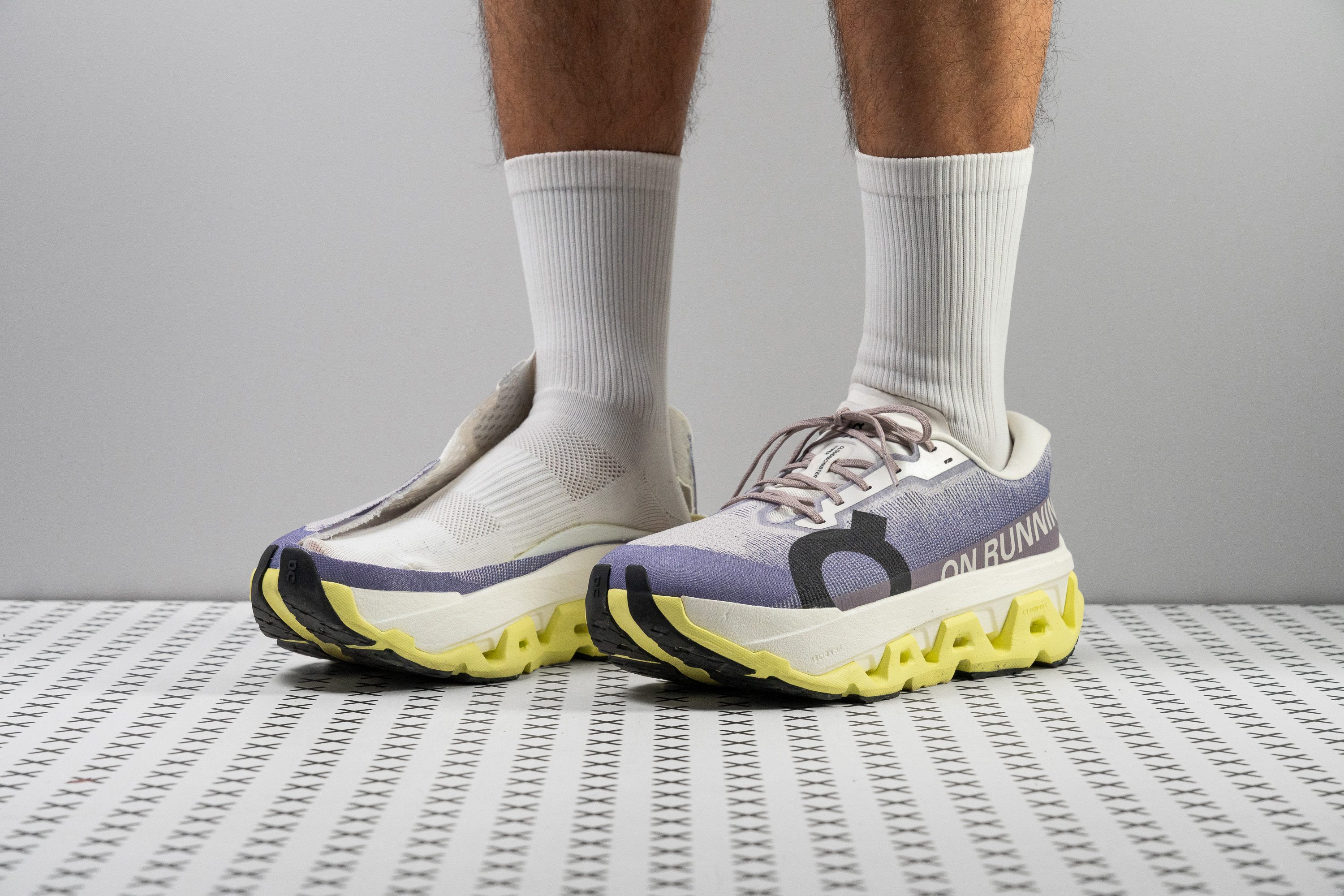
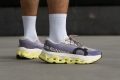
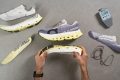
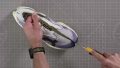
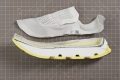
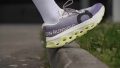
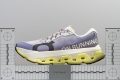
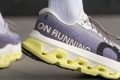
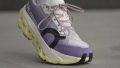
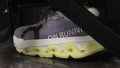
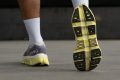
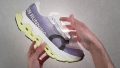
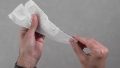
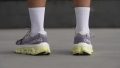
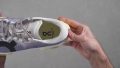
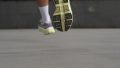
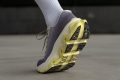
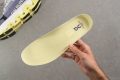
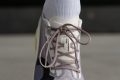
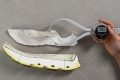
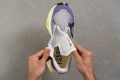
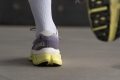
The On Cloudmonster 3 Hyper is a beast on the streets, bringing us up to speed without excessive ground impact and the discomfort of a carbon plate. With its responsive Helion foam, protective cushioning, and stable base, it’s the best super trainer for runners dealing with Achilles Tendonitis.
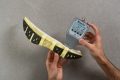
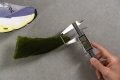
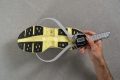
Cloudmonster 3 Hyper features a max-stacked 43.4/34.2 mm dual-cushioned base that strikes the sweet spot between impact protection and energy return. We tested the midsole’s power output and recorded strong results of 66.1% in the heel and 69.4% in the forefoot, making the shoe feel lighter despite its size.
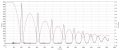
With every dynamic toe-off, a gentle touchdown follows. The platform feels softer due to the compression of the CloudTec pods, which explains its impressive shock absorption ratings of 139 SA in the rear and 122 SA in the forefoot. These figures help prevent triggering our muscle and joint pain, while the steep 9.2 mm drop puts less pressure on our calves and ankles.
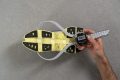
This speedy trainer draws stability from its broad base, huge guidance line in the outsole, and structured upper. All these elements allow us to go full throttle without worrying about any imbalances, especially since the platform is 118.6/94.8 mm wide.
However, the upper disappointed with subpar breathability (2/5), which could lead to blistering and hotspots during long runs in warm weather. It's wise to consider a more suitable alternative for these conditions.
Pros
- Improved energy return (finally!)
- Highly cushioned for all distances
- Maximal stack height
- Excellent build quality
- Looks... beautiful
- Wide platfrom boost stability
- Excellent upper and outsole durability
- Good value despite high price
- Amazing step-in feel
- Multiple improvements vs. Cloudmonster 3
Cons
- Slightly heavier than key competitors
- Limited breathability
- Firm ride may not suit everyone
- High price
Running shoes for Achilles tendonitis with the best stability
What makes it the best?
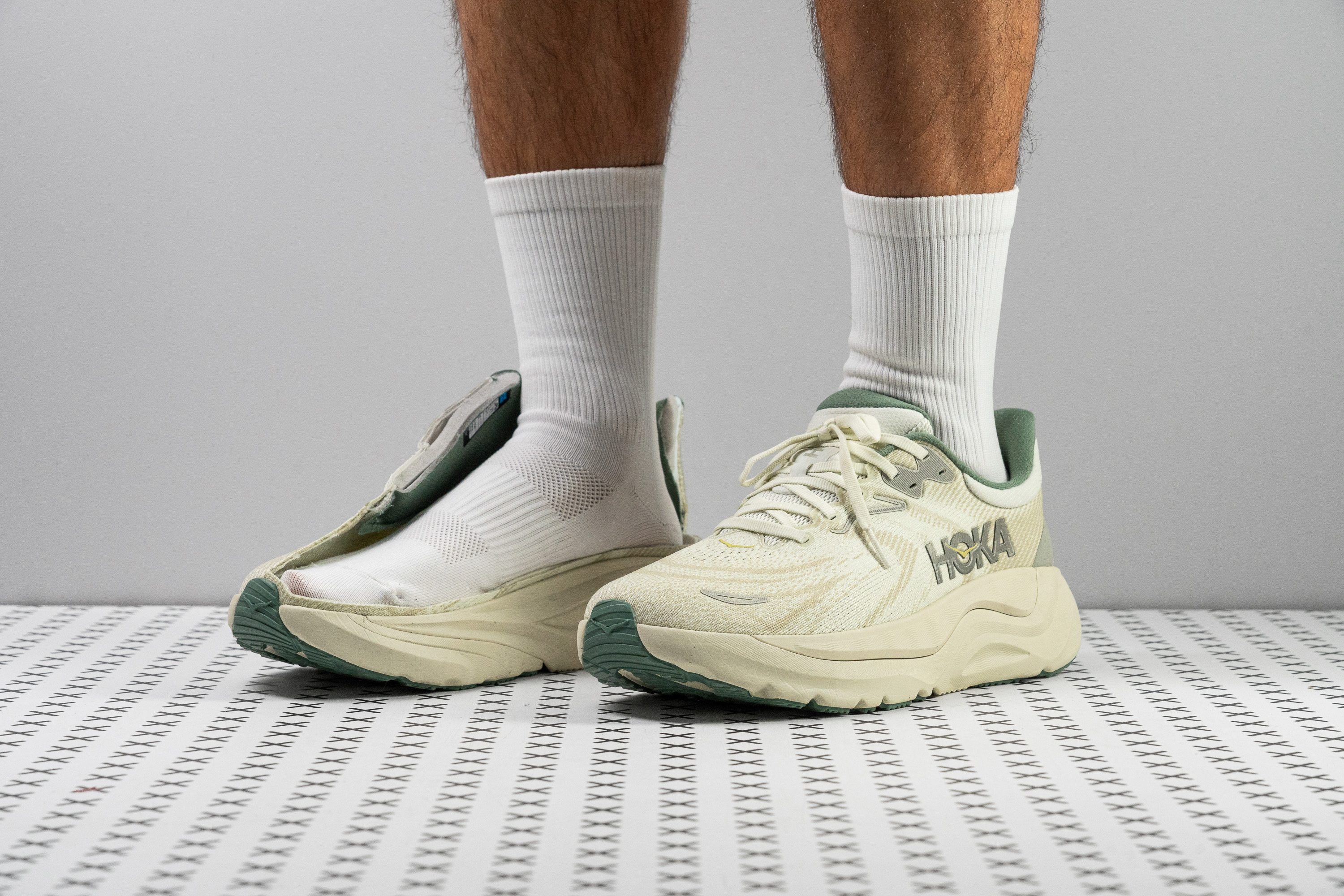
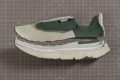
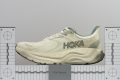
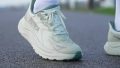
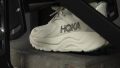
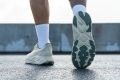
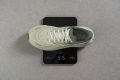
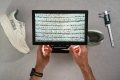
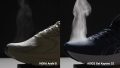
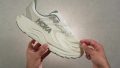
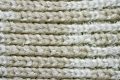
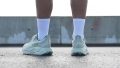
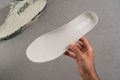
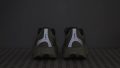
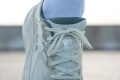
The HOKA Arahi 8 offers an incredible mix of soft foam, steady strides, and all-around durability. Proven by lab tests, it offers the best stability among Achilles Tendonitis running shoes through its H-Frame technology. We never felt any wobbles, pain, or discomfort during our runs, proving Arahi 8’s supportive nature.
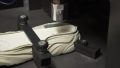
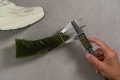
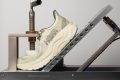
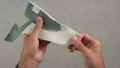
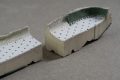
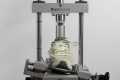
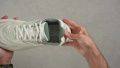
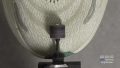
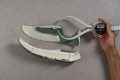
We sliced the midsole and found the H-Frame stability system, which includes a firmer foam for better lateral control. Our torsional rigidity test confirms this support with 33% stronger resistance to twisting than average. Since these elements are so effective, Arahi 8 managed to increase its height and soften its foam.
Beneath our feet lies a generously cushioned midsole, with an impressive stack height of 39.4/28.1 mm. Even with its maximum cushion, the shoes don’t feel wobbly. It keeps our feet in place even on fast turns. The resulting drop is steep at 11.3 mm, putting us in a raised position that utilises our higher leg muscles more. In effect, we avoid overworking our ankles and Achilles.
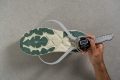
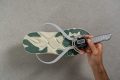
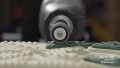
Arahi 8 also proved its high-quality build by overcoming our Dremel test with the highest 5/5 durability score, both in the toebox and heel padding. Moreover, the outsole showed 54% less damage than average, cementing its wear resistance.
Pros
- Impressively lightweight for its size
- Strong shock absorption
- Wider fit than previous versions
- Outstanding durability across upper and outsole
- Early-Stage Meta Rocker smooths transitions
- Higher drop suits better heel strikers
- Comfy and plush for everyday use
- H-Frame stability system
- Comfortable heel counter
Cons
- Very poor breathability
- Grip needs to improve
- Still no supercritical foam
- Minor price bump
Best lightweight running shoes for Achilles tendonitis

What makes it the best?
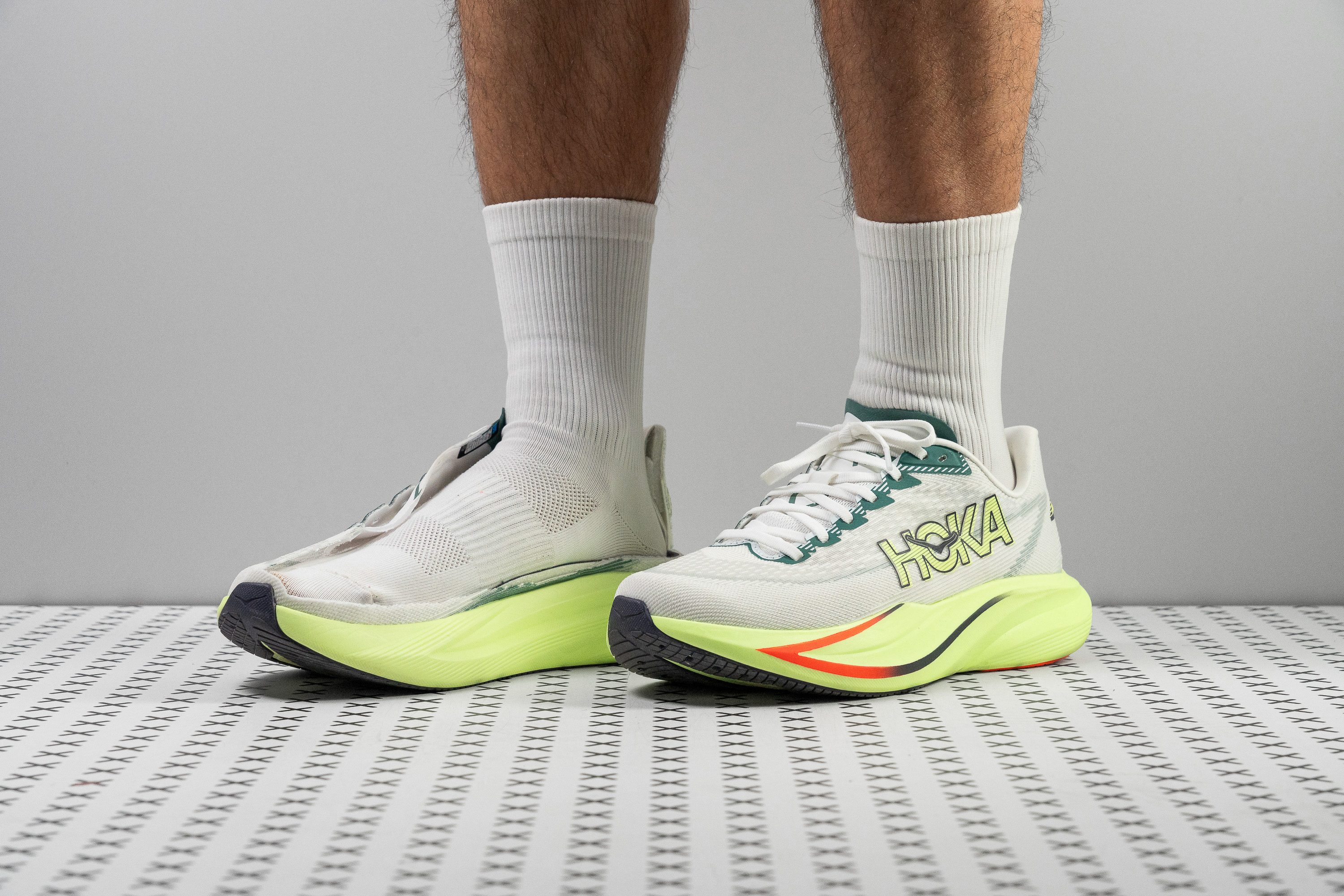
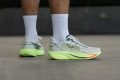
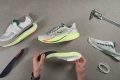
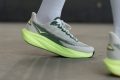
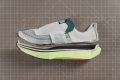
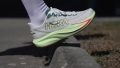
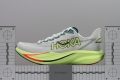
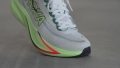
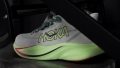
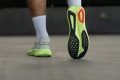
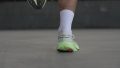
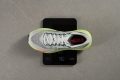
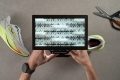
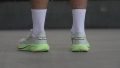
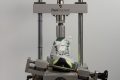
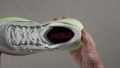
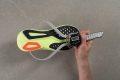
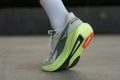
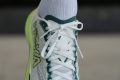
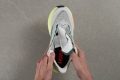
The HOKA Mach 7 provides a soothing sensation during our runs with its impact-protective cushioning and minimal design. It has structure in the right areas, creating a safer environment for our feet. Proven by our lab work, the Mach 7 is the best lightweight shoe for runners dealing with Achilles Tendonitis.
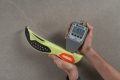
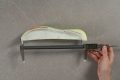
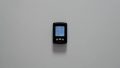
It's easy to pick up speed when we want to. At 7.9 oz (224g), it’s impressively 14% lighter than the average running shoe! It also feels effortless to move with its fluid midsole, which is 8% more flexible than average.
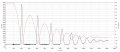
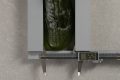
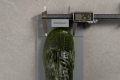
Mach 7 doesn’t need tonnes of foam to protect our joints, as it is only average at 35.6/26.2 mm. However, testing for its shock-absorbing capabilities, the heel returned a strong 137 SA and the forefoot a solid 110 SA, verifying the gentle landings we had. At this level, the landing force is reduced, thereby putting less strain on our bodies.
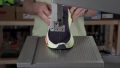
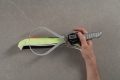
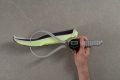
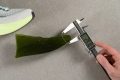
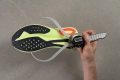
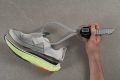
Measuring the resulting heel drop, our calliper returned a steep 9.4 mm, which encourages rear striking and lessens the load on our Achilles. To ensure stable strides, the heel counter scored the maximum 5/5 in stiffness. This result helps avoid overworking our muscles and mitigates excessive lateral movement.
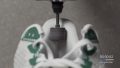
However, our Dremel easily damaged the upper, which makes durability a significant issue. If this is a dealbreaker, we suggest exploring more rugged pairs.
Pros
- Very lightweight for a daily trainer
- Secure lockdown
- Versatile and fun
- Incredible breathability
- Works well for heel strikers
- Smooth, forward-rolling rocker
- Much better grip than before
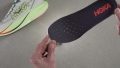
- Perforated insole
Cons
- Snug fit can be a problem for some
- Stiff heel counter may irritate some Achilles tendons
- Ride could be a touch softer
Best tempo running shoes for Achilles tendonitis



What makes it the best?
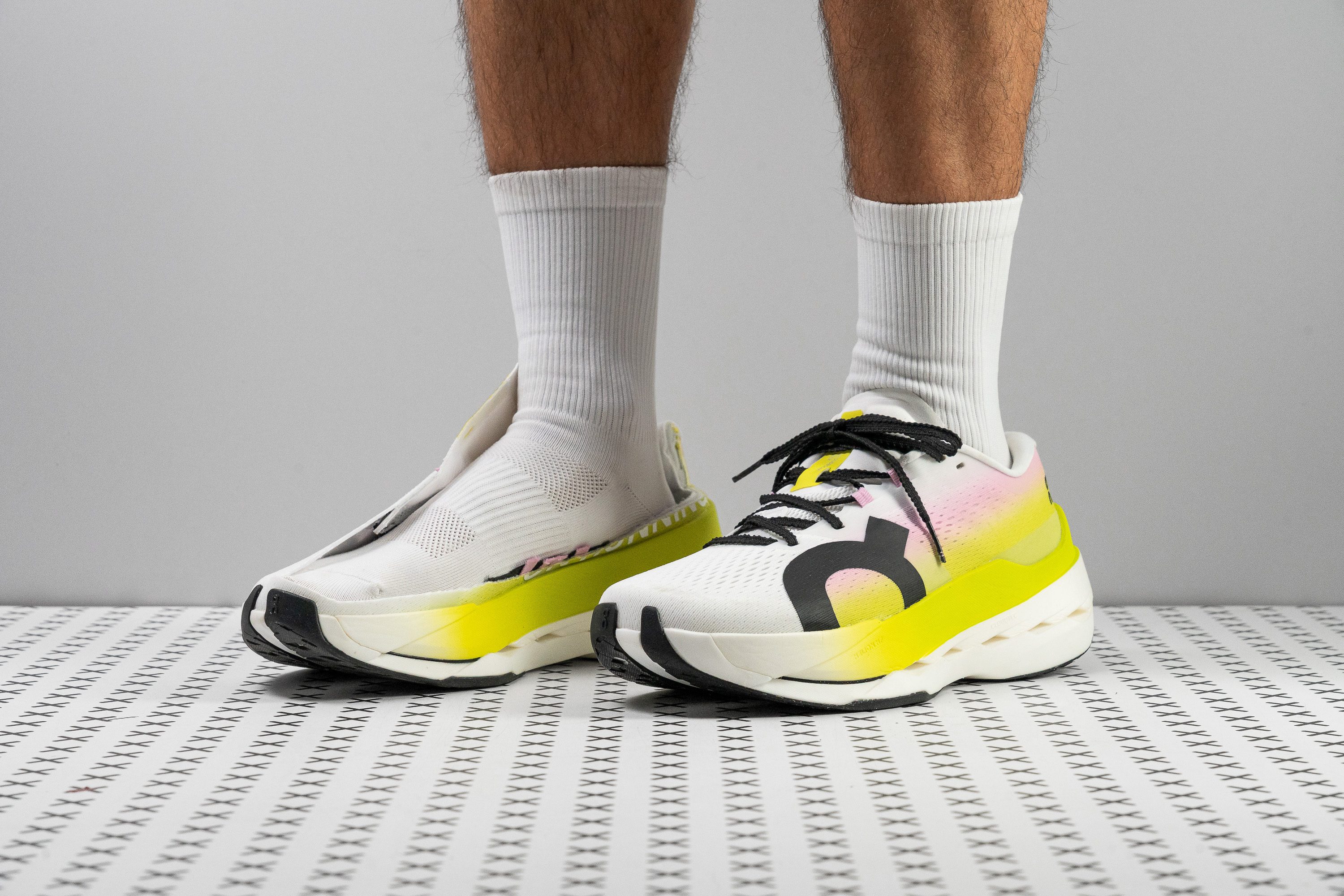
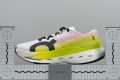
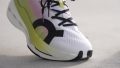
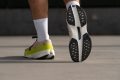
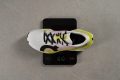
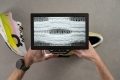
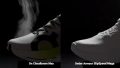
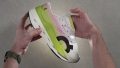
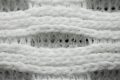
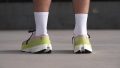
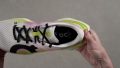
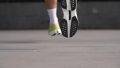
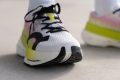
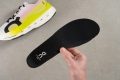
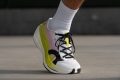
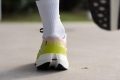
Giving justice to its name, the On Cloudboom Max propelled us seamlessly in our runs, offering speed through its responsive midsole, comfort through its generous cushioning, and protection through its strong lateral support. Among Achilles Tendonitis running shoes we tested on foot and in the lab, it stood out as our top tempo trainer.
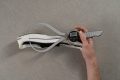
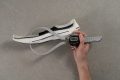
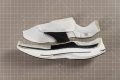
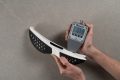
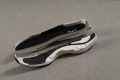
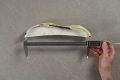
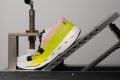
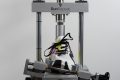
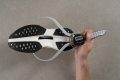
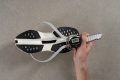
The responsive dual-foam midsole offers an enjoyable ride, scoring solid energy return scores of 61.9% in the heel and 69.7% in the forefoot. Its Speedboard plate in the midsole adds stiffness and snappiness to our strides, as our bend test verifies Cloudboom Max is 23% more rigid than average.
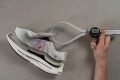
Cloudboom Max never felt harsh during landings. We credit the comfort to the midsole’s impressive shock absorption of 126 SA in the heel and 111 SA in the forefoot. The shoe also features a steep 9.2 mm offset, which reduces the load on our lower leg muscles, like the ankles and Achilles.
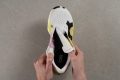
To avoid putting more strain on our feet, Cloudboom Max has a firm foothold and a centred ride. Its broad base of 117.2/101.5 mm and high twist resistance avoid excess lateral movement. It also has a firm clip wrapping the midfoot and heel areas, which minimises awkward footing.
However, this trainer took maximum literally on the scales. At 10.1 oz (286g), it takes more effort to pick up the pace than other lightweight trainers.
Pros
- Excellent durability from top to bottom
- Finally improved energy return
- Stable as a table
- High-quality materials
- Solid traction
- A real max-stack shoe
- Generous rubber coverage
- Upper mixes comfort and ventilation
- Excellent lockdown
Cons
- Heavier than most competitors
- Very expensive
- Shock absorption is lower than expected
- Feels a bit too firm
Best budget running shoes for Achilles tendonitis















What makes it the best?
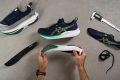
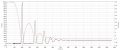
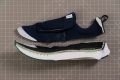
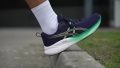
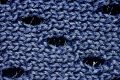
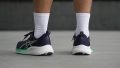
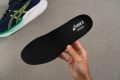
Running with the Gel Pulse 16 made us feel safe and in control, yet testing it in the lab and finding out its weight and price further excited us. For only £90, it offers stability, grip, and an outsole that can truly last. Being 35% cheaper than the average road trainer, it’s our best budget running shoe for those with Achilles Tendonitis.
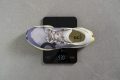
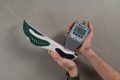
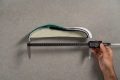
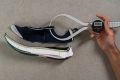
We confirmed the ease we felt when we found the Gel Pulse 16 only weighs 8.5 oz (241g), making it 8% lighter than average. Moreover, the midsole features a steep 10.2 mm drop, which effectively shifts the load to our hips and knees, keeping pain in the Achilles area at bay.
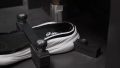
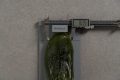
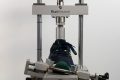
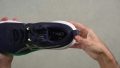
Contrary to what the scales show, the landing base runs wide, which keeps our strides steady and secure. Our calliper confirms that its 119.3/97.8 mm is edging closer to dedicated stability shoes. The platform feels well-balanced and doesn’t give in easily to awkward landings or spill-overs, proven by its 10% stronger twist resistance than average.
Underfoot, the AHARPLUS rubber displays reliable performance in terms of durability and grip. Scoring 0.66 in our traction test, it proved to be 29% grippier than average. It also proved its resistance to wear in our Dremel test by showing an insignificant 0.8 mm dent.
Unfortunately, its moderate shock absorption makes it less viable for long runs. Runners who need extra comfort should find a more cushioned trainer for added muscle and joint protection.
Pros
- Very stable ride
- Surprisingly lightweight
- Durable and grippy outsole
- Good cushioning
- Upper features recycled materials
- Excellent value for money
- Beginner-friendly
Cons
- Upper needs improvements
- Very low energy return
- Tapered toebox
This guide serves its educational purpose and is in no way here to give medical advice. If you’re experiencing discomfort or pain, consult a specialist.
|
Here we cover the features of shoes that might help runners experiencing pain in the Achilles tendons. However, we must highlight that dealing with Achilles tendonitis is all about rehab, not shoes. That is why it is important to get properly diagnosed and treated. |
Painful Achilles tendons
Pain in the Achilles tendon is also known as Achilles tendinopathy or Achilles tendinosis (shortened AT). This tendon, which connects a calf to the heel bone, starts hurting because it is being overused. If a runner insists on running with the Achilles tendinopathy, this can lead to the tendon rupture, which may need to be fixed with surgery.
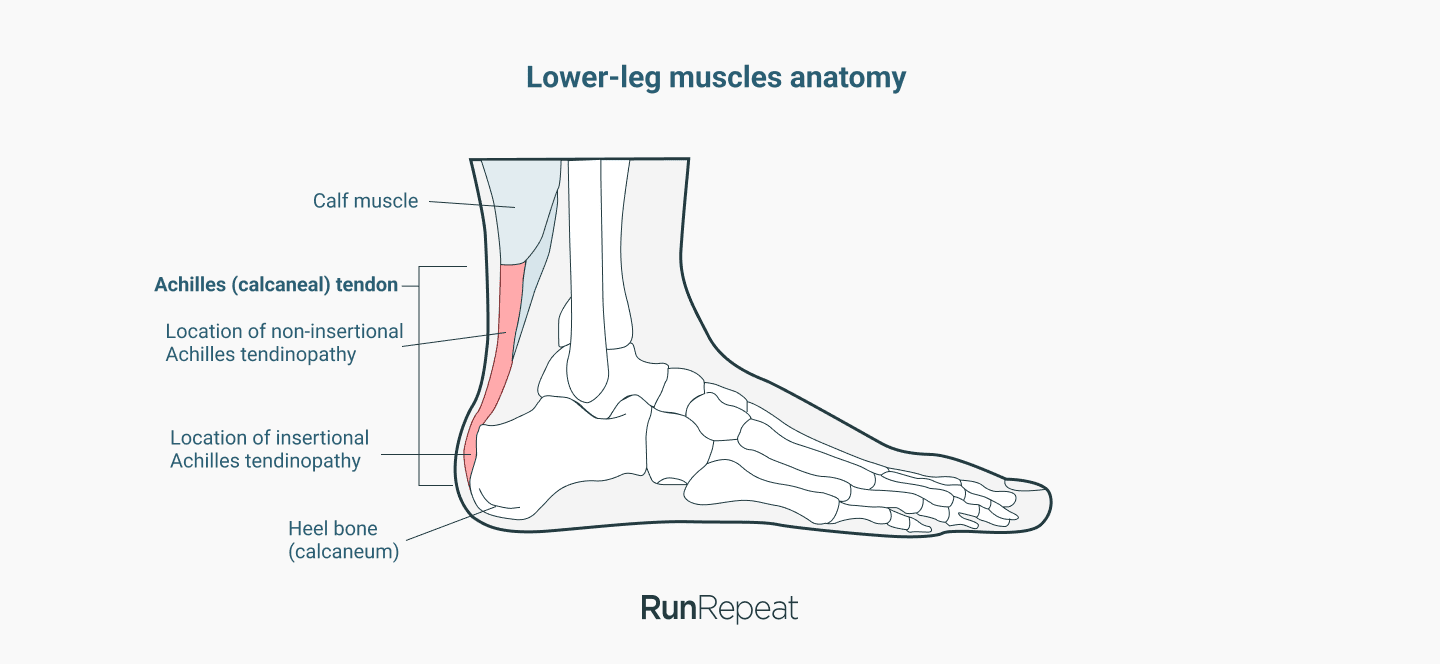
When runners experience AT, it’s usually non-insertional Achilles tendinopathy. The injury and pain occur around the middle of the tendon, which is why it is sometimes called midportion AT, and it mostly happens due to repetitive trauma (stress), exactly like running. We also have insertional Achilles tendinopathy, which occurs where the tendon inserts into the heel bone. It’s often caused by wearing the wrong footwear or having calcifications.
Based on a study that looked at 1,700 runners, Achilles tendon injury is the 2nd most frequent one, with 23.5% of runners experiencing it. It’s also interesting that the highest frequency of injury was found in runners who run in carbon-plated shoes (19.3%).
Just how important is Achilles tendinitis and why should you care about its healing process?
Not talking about the obvious - like not being able to move at all without our Achilles tendons - it’s also interesting that one study looked at the energy returned from the tendon itself and concluded it was higher in a stiffer shoe. The difference was very similar to those 4% Nike talked about: a 3.9% difference in the mechanical energy required per step. So, stiffer running shoes might improve the running performance because the energy returned from the Achilles tendon is increased!
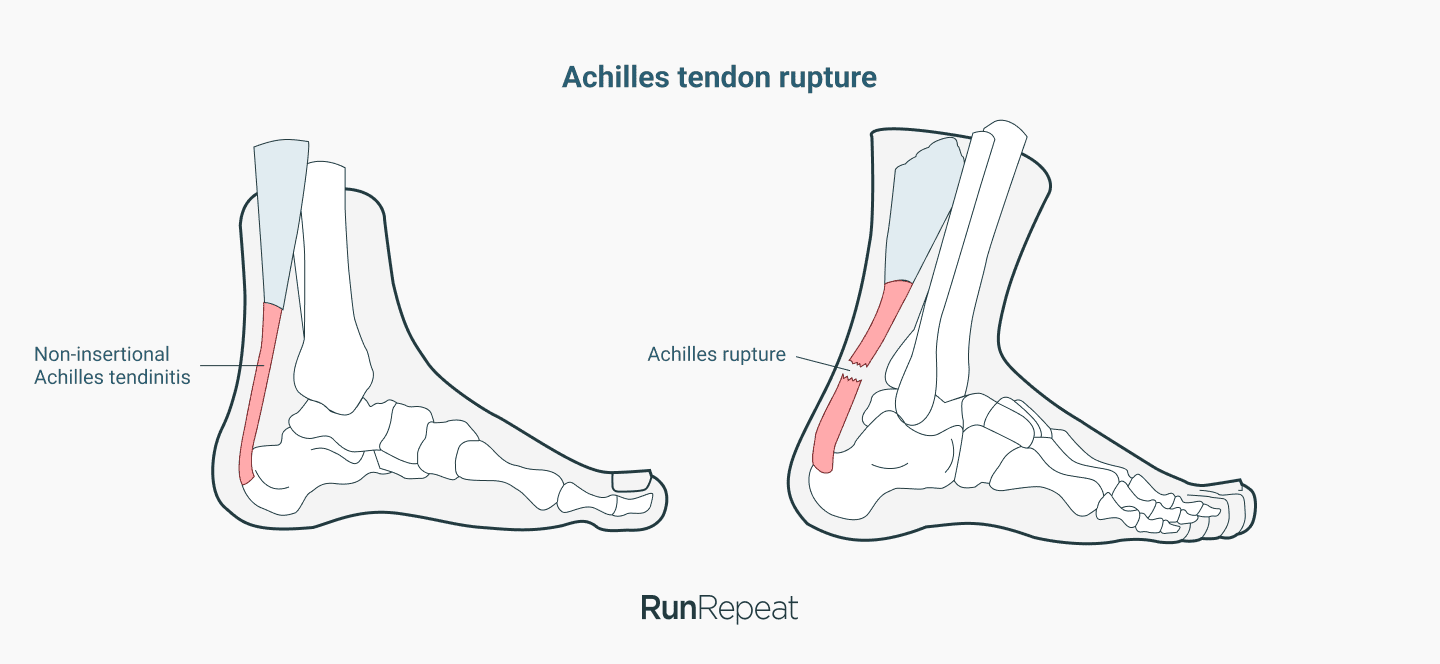
Even if you’re not into chasing PBs or running competitively, it’s important to focus on rehab and therapy because 5% of people with Achilles tendonitis end up with a tendon rupture as well. Then, it’s surgery time and, potentially, an even longer recovery period.
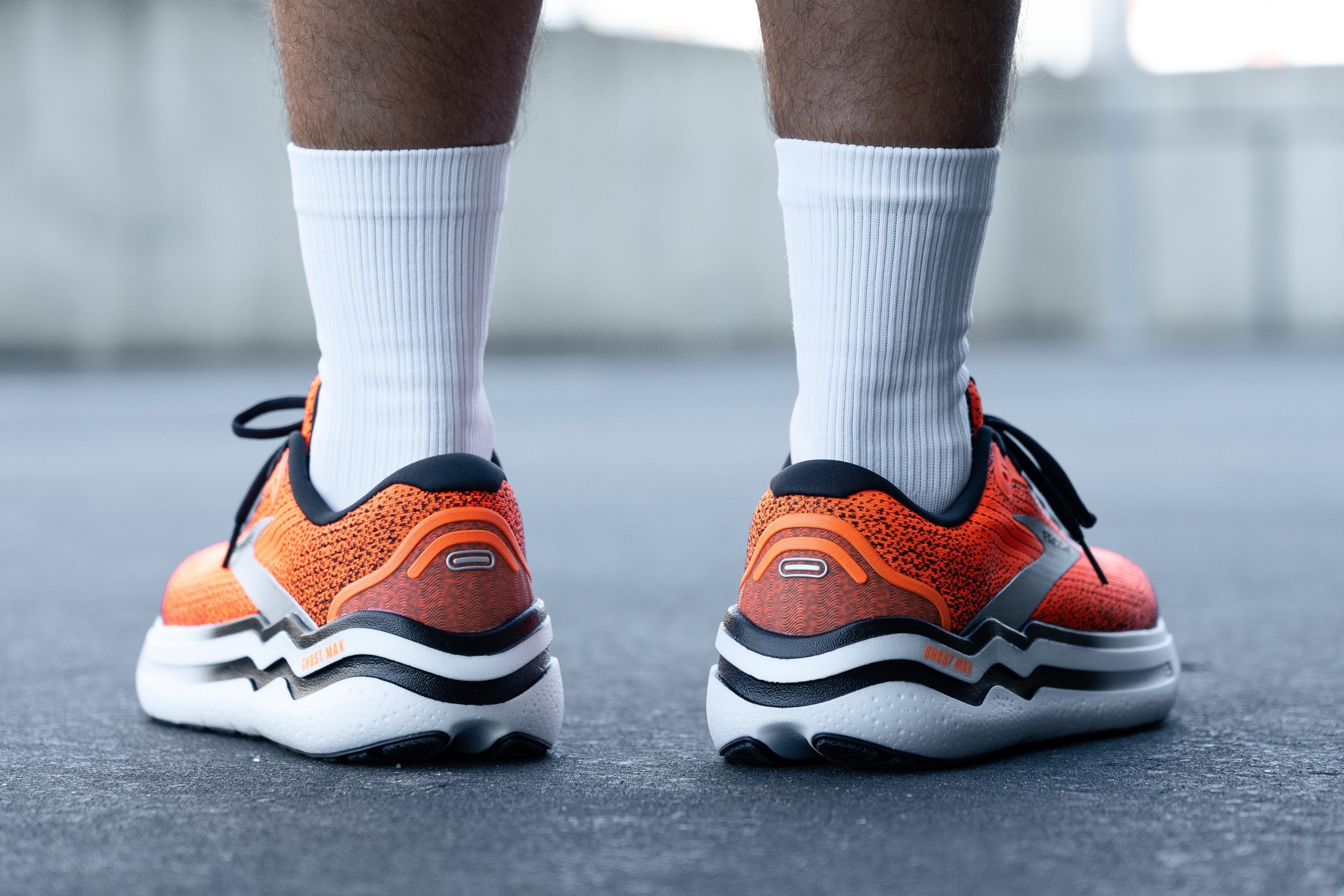
6 shoe features to look for if you’re experiencing Achilles tendinopathy
As mentioned at the beginning, rehabilitation is a priority when dealing with the AT. Sure, shoes can help to a certain degree which is why we will discuss the next features throughout the guide:
- Cushioned running shoes with good shock absorption (higher than 110 SA)
- High heel drop - 9 mm or higher
- Torsionally rigidity - running shoes that scored 4/5 or 5/5 on our lab tests
- Stiff heel counters - heel counters that scored 4/5 or 5/5 on our lab tests
- Firmer midsoles - those that scored 33 or higher on an Asker C durometer
- Daily trainers without a carbon plate - avoid tempo and race shoes.
1) Protective running shoes for Achilles pain are great for heel strikers
If you’re experiencing Achilles tendinopathy, we recommend using running shoes that have shock absorption higher than 110 SA (we classify these running shoes as cushioned). Having foam below your heels that is protective (it's great at dampening the impact forces at the landing) feels good because less stress is sent from the heels to the Achilles tendons (and other parts of the legs) that way.
To measure the shock absorption, we honour the ASTM F1976 13 methodology, a golden standard this area! We drop an 8.5kg mass from a height of 50mm, with a total energy input of 5 J. Althought we test this both at the forefoot and the heel, you may be curious about the heel numbers more, given our foot strike.
Why minimalist/barefoot running shoes could be bad for you
If you are a heel striker who runs in cushioned running shoes and you intentionally switch to minimalist or barefoot running shoes and, therefore, change your foot strike to the forefoot one, this change may increase the risk of tendinopathy. Another study confirmed this, showing that, for heel strikers, the peak Achilles tendon loading rate is significantly higher in minimalist shoes than cushioned shoes.
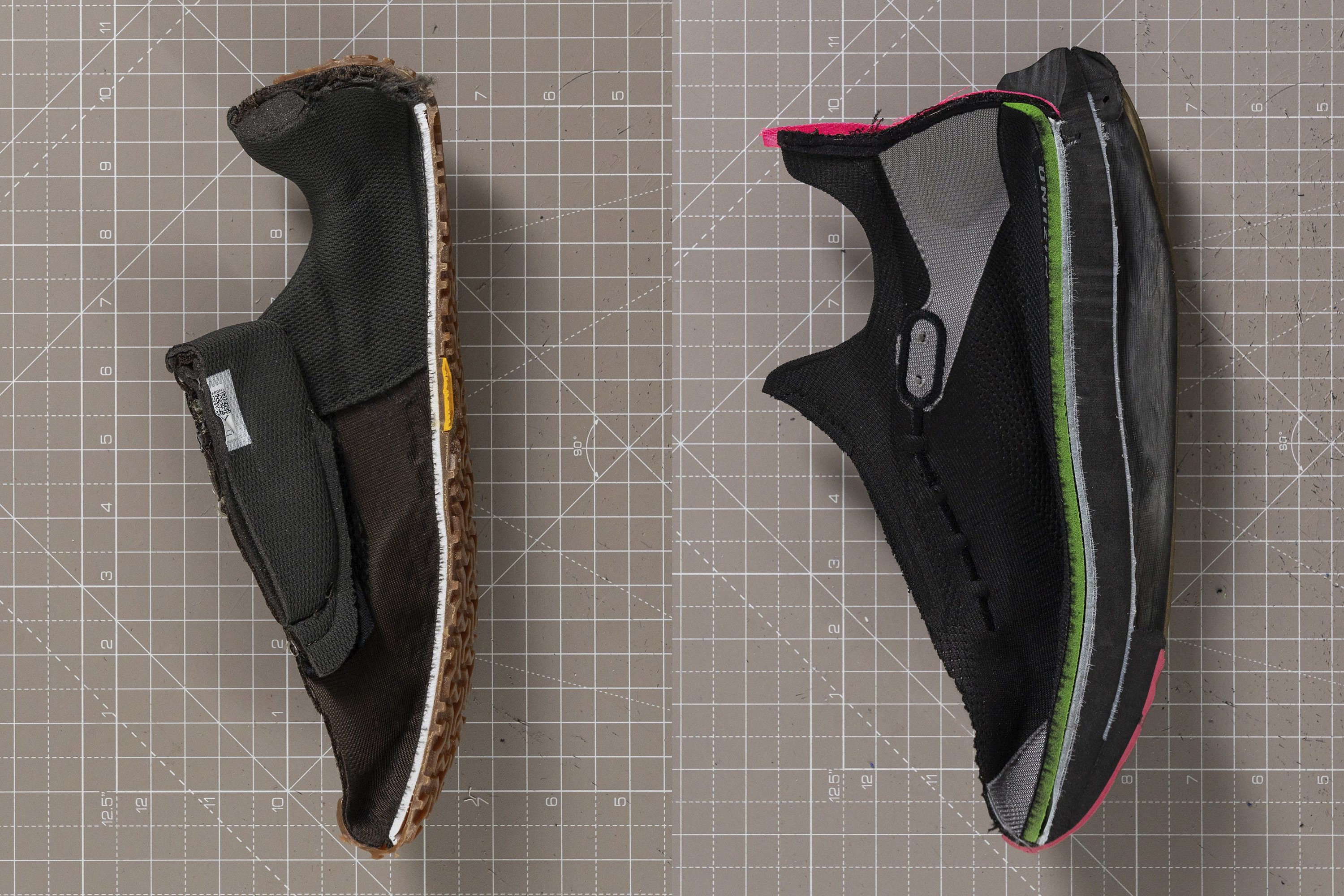
Why forefoot strike is good AND bad for Achilles tendinopathy
A few bullets you should know when it comes to the foot strike and Achilles tendinopathy:
- The majority of runners who experience painful Achilles are forefoot strikers, which makes sense given that the forefoot strike puts the most stress on the Achilles tendons, as found in this study.
- The majority of AT-affected runners run in carbon-plated shoes, which makes sense as most carbon-plated shoes are made for fast runs and forefoot strikers. Slower runs are actually better for the Achilles so no wonder fast shoes made things worse.
A forefoot strike can do your Achilles both good and bad. It depends on your goals.
The bad
If you’re already experiencing Achilles tendinopathy, forefoot strike may harm you even more. Many studies have shown that forefoot strikers put more stress on the Achilles tendons (1, 2, 3, 4, 5).
One study looked at 550 runners with running-related injuries and found that midfoot strike had the highest correlation with Achilles tendon injuries.
The good
What many of these studies also show is that a gradual transition toward a forefoot strike can help with strengthening the Achilles tendons which is important if you want to prevent (another) injury. It’s important for the transition to be gradual so that your whole body adapts to the new strike and what it brings - different landings, toe offs, foot muscles being activated (much) more, higher-leg muscles being utilised less, your overall body position, etc.
2) Higher heel drop is recommended for Achilles tendonitis
We recommend a heel drop of 9 mm or more. This higher drop usually means a heel strike because there’s a lot of foam at the back that can come between you and your forefoot strike, so you land on the heel. But, it also means that higher-leg muscles are utilised more!
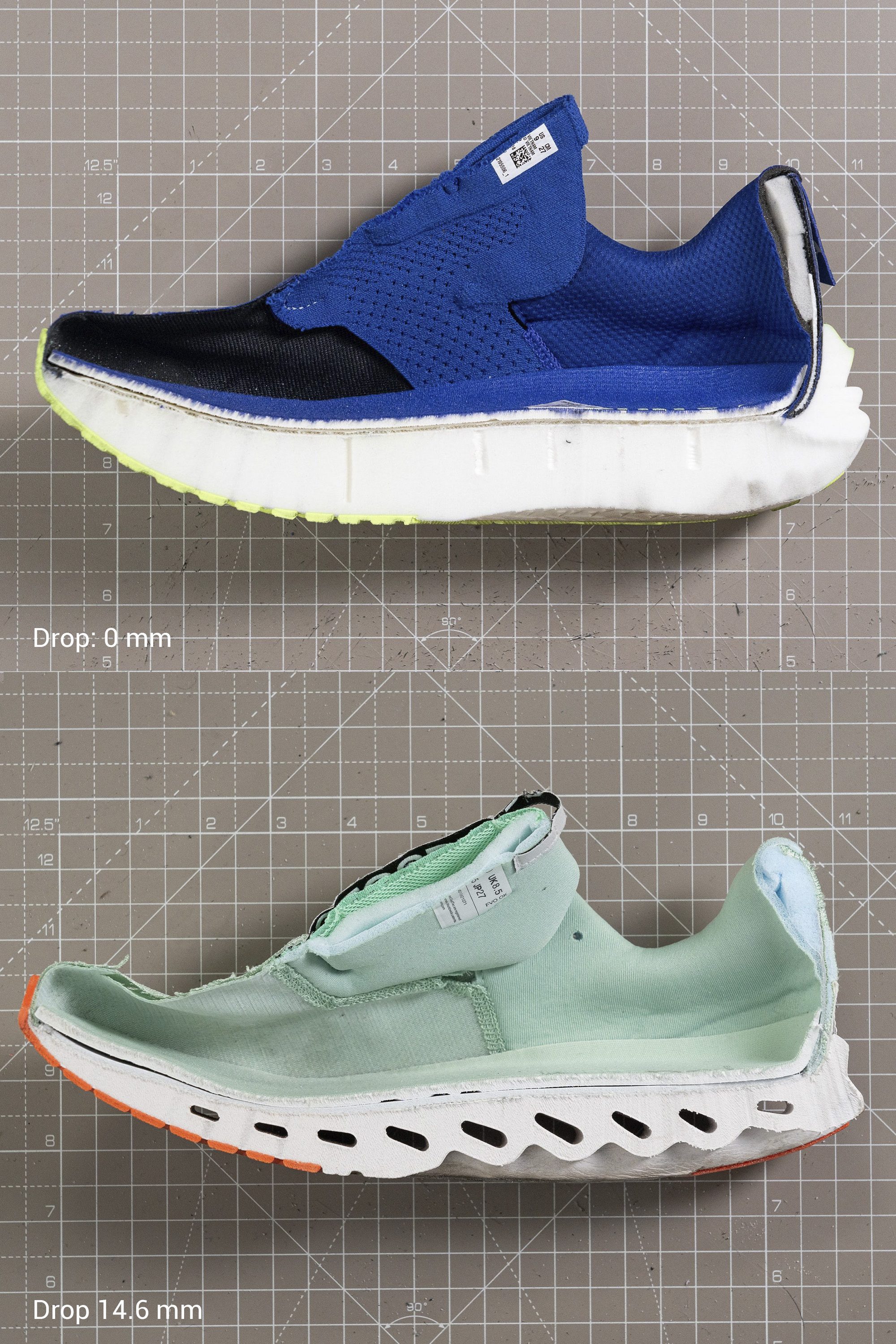
Thanks to our stack height measurements, we calculate the heel drop by subtracting the forefoot stack height from the heel stack height.
In contrast, in zero- and low-drop running shoes, more stress is put on foot muscles and lower-leg muscles. And that’s exactly why we recommend higher-drop shoes, to let the Achilles tendons work less and let the thighs, hip muscles, and glutes work more.
We have covered this topic (heel to toe drop and it’s effect on runners, be it a foot strike or muscle use and injuries) in great detail in our guide Heel to Toe Drop: The Ultimate Guide. We highly recommend reading it!
|
One study focused on the heel drop specifically by using 2 cm heel lifts. The study showed that the lifts immediately reduced the pain in people with insertional AT and that they significantly improved symptoms after 2 weeks of wearing the lifts. |
3) Torsional rigidity is good for AT
Torsionally rigid running shoes are those shoes that you can’t twist easily. They fight back. As a contrast, torsionally flexible running shoes are twisted easily and a lot.
For painful Achilles tendons, we recommend rigid running shoes. Ideally, those that scored 4/5 or 5/5 on our assessments. And here’s why, such shoes won’t have your feet wobbling on uneven surfaces, when cornering, and similar. They will give extra support and stability that are much appreciated by the Achilles tendons!
It’s important to note that, while shoes can be quite torsionally rigid, they can still be longitudinally flexible. This flexibility helps with the natural running feel because our feet are flexible on their own and many runners prefer a similar feel, not a stiff platform (like many approach shoes and hiking boots have).
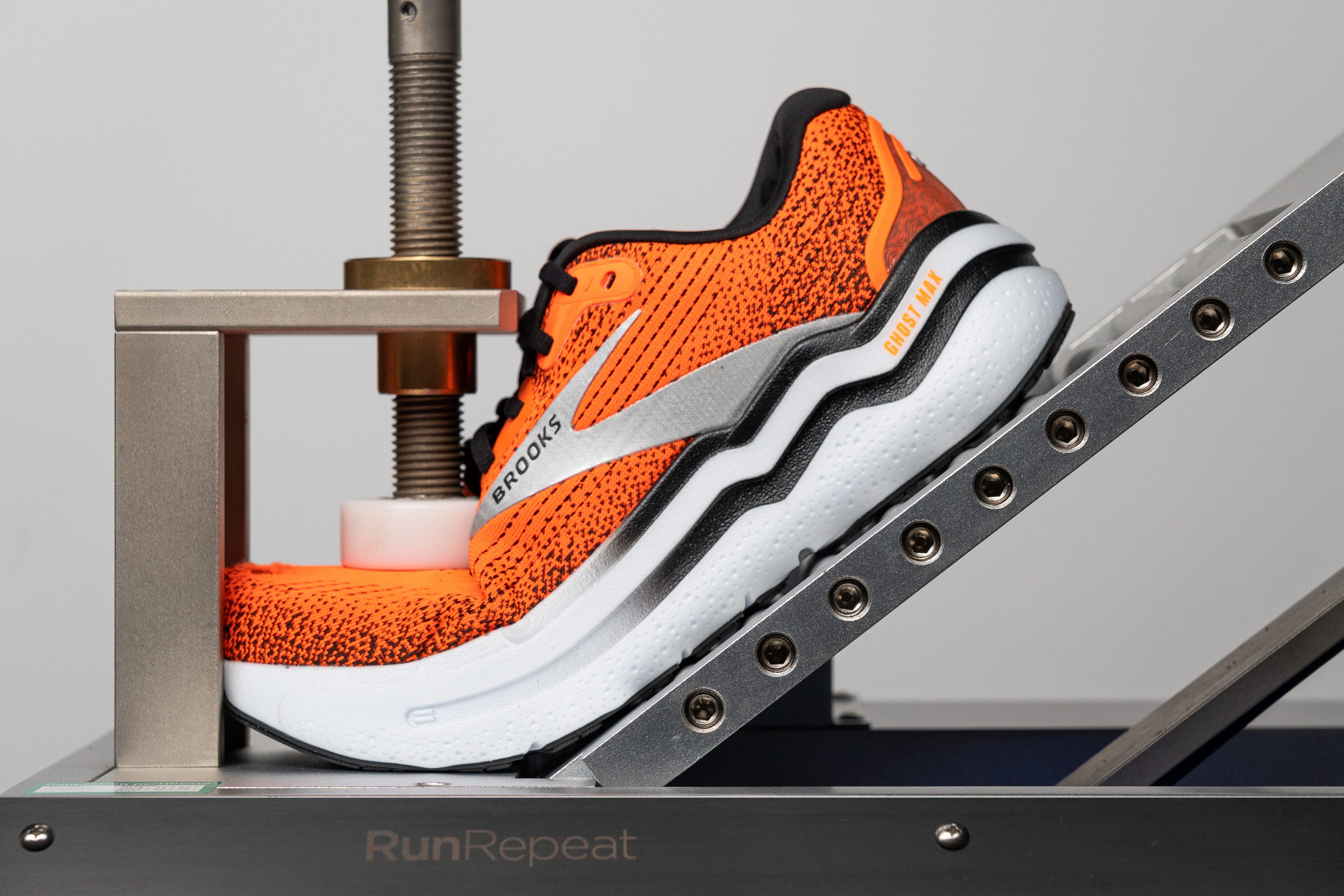
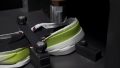
In the lab, we use a machine to clamp the forefoot to the surface, adjust for the rocker, and then bend the shoe 30 degrees. The more force the machine needs to do that, the stiffer the shoe and the higher the number on the display. Knowing this, it’s easier to decide how rigid and stiff/flexible you want your platform to be.
4) Stiff heel counters but not harsh heel cups
Stiff but not harsh? What we mean is actually heel counters that offer support but do not hurt your heels and Achilles even more. To cradle the heel, running shoes often have a lot of padding.
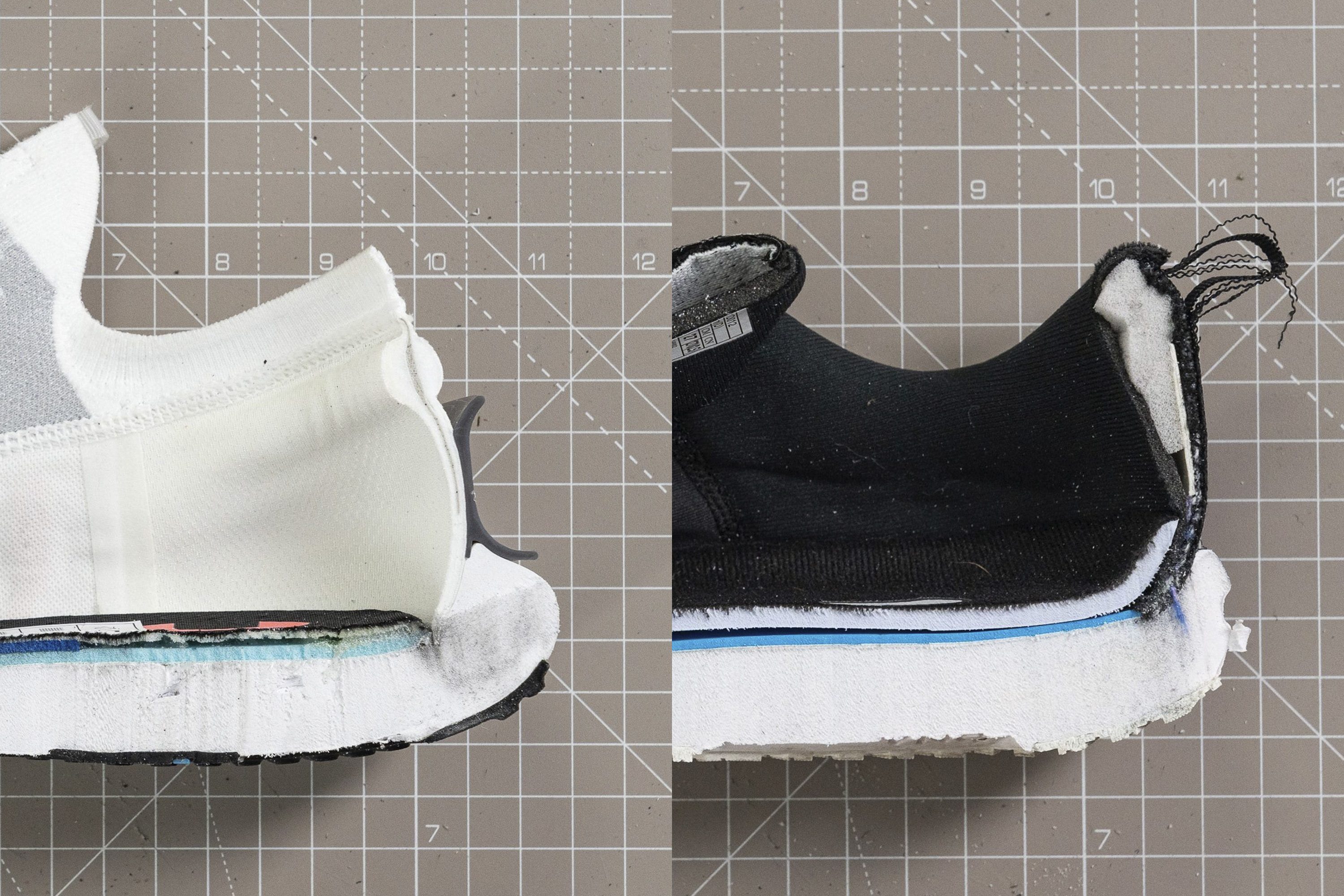
Now that we know your heels should be hugged, that hug should be firm. This means that the heel counter should be stiff. The stiffer it is, the better the lockdown of the heel. This immobility makes the tendons work less or, at least, not overwork.
We found that the heel counters who scored 4/5 or 5/5 give the best support for painful Achilles. This stiffness comes from internal and/or external heel counters. Internal ones are noticed when shoes are cut in half and external ones are easy to see.
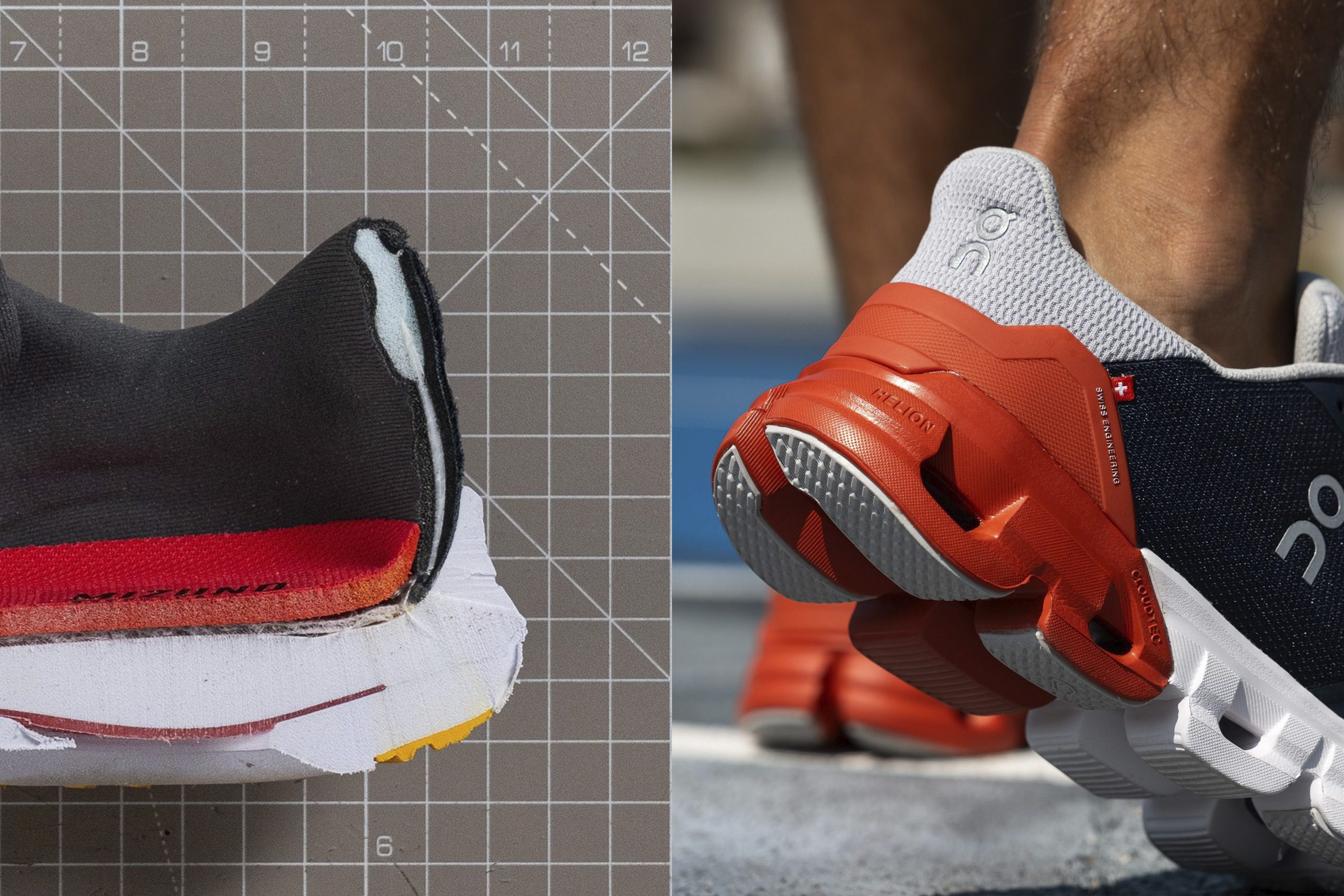
Padded and stiff is usually a great combination, until it isn’t. Even with the padding, some heel cups can be very harsh and irritate your tendons.
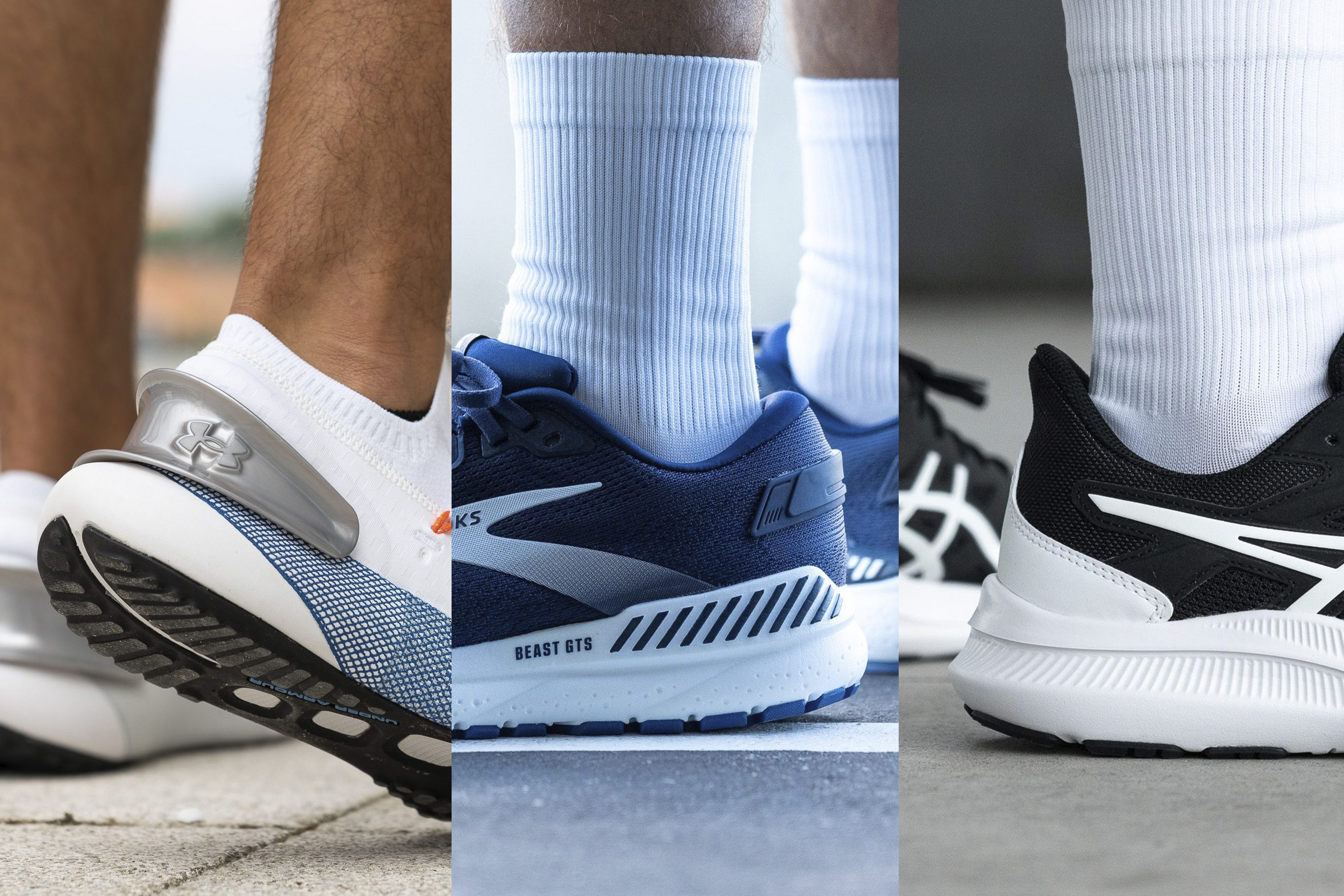
If you notice discomfort in this area, we recommend choosing a different pair of shoes.
5) Extremely soft midsoles are a NO
Some foams are very soft, and they feel great, but in the long run, they are not so great for Achilles tendinitis. Softer foams also mean more movements and more muscle work in our feet, however small. That’s why we recommend slightly firmer foams: those who got at least 33 on the Asker C durometer.

We always perform this test on running shoes cut in half because the durometer needle needs to be stuck into the raw foam. If we were doing it on the outside, on shoes that are not cut in half, the numbers would also reflect protective overlays, colours, and similar factors, and the results would be wildly inaccurate.
Given that the current midsole softness average for road running shoes sits around 36 AC, this is not a big restraint, but more like a word of caution.
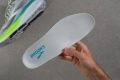
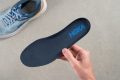
Keep in mind that we measure the softness of the midsole itself. Many running shoes for painful Achilles feature a cushy insole.
If this is your cup of tea, here’s a selection of shoes with the thickest insoles:
6) Running slower can help with Achilles tendonitis
Running at faster paces seems to increase the stress on the Achilles tendons for heel strikers, as shown in this study. Specifically, the study looked at the runners running on a treadmill at 2m/s to 5m/s.
If you own tempo and race shoes, it might make sense to move to the daily trainers while recovering from Achilles tendonitis. We also recommend shoes with no carbon-fibre plates when you’re dealing with Achilles tendonitis.
Rocker technology might help runners dealing with painful Achilles
When researchers worked with people who have been suffering from non-insertional Achilles tendinopathy for at least 3 months (although the average duration was 22.5 months), they discovered that rockered shoes reduced the plantar flexion moment by 13%, both when walking and running. The Achilles tendon load rises proportionally to the plantar flexion moment, which is why this is related to Achilles injuries.
This 13% reduction is significant and tells us that rockered shoes might help runners dealing with Achilles tendinopathy.
Arch support in running shoes for Achilles tendon pain
Regardless of the foot condition, runners still overpronate (or not). In case you do overpronate, you might enjoy the support and stability that is found in stability running shoes. These running shoes are made for runners whose ankles collapse inward at the landing, which is why they use the inner side of the shoe more, which can be easily noticed when looking at the bottom of the shoes.
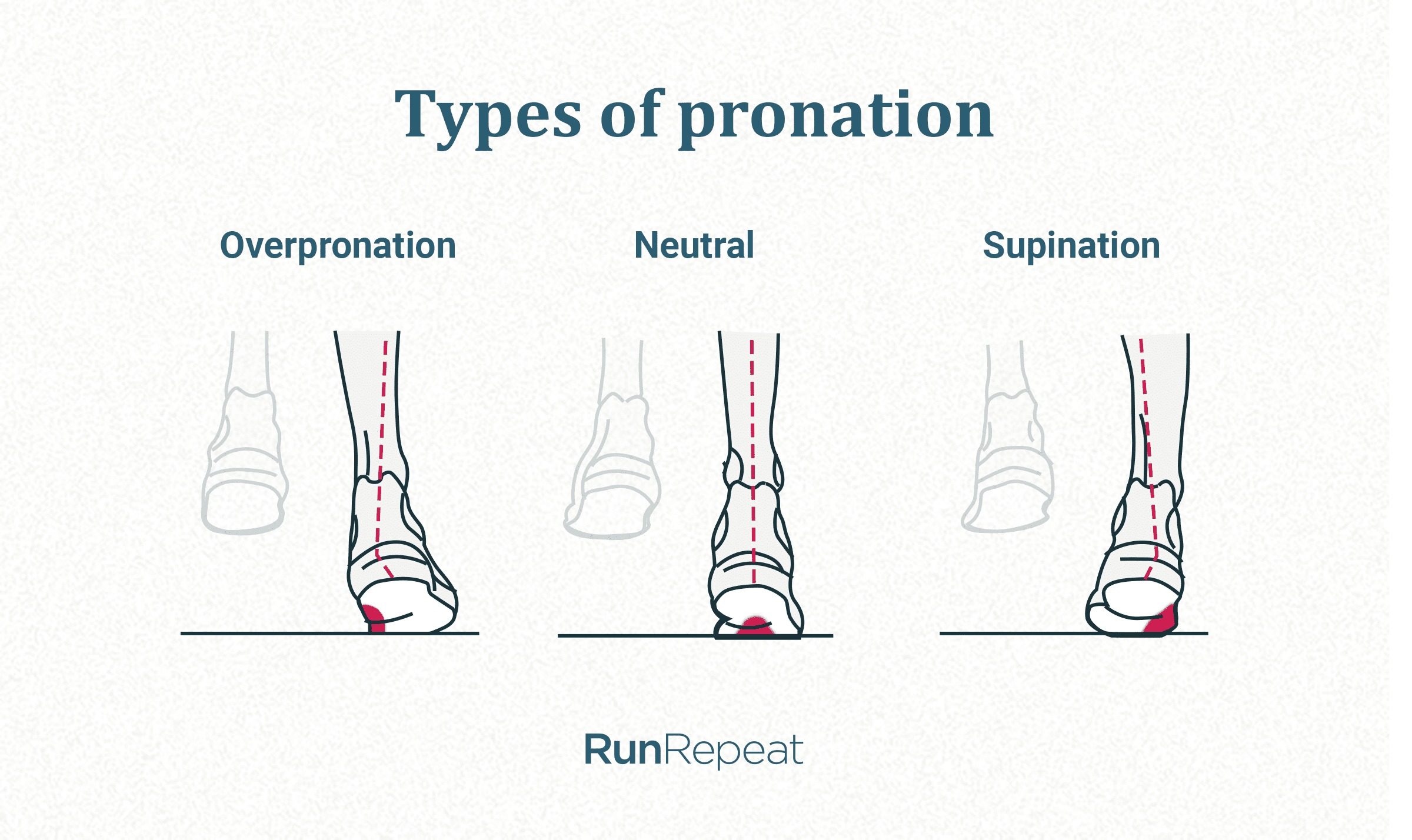
The majority of runners who overpronate have flat feet.
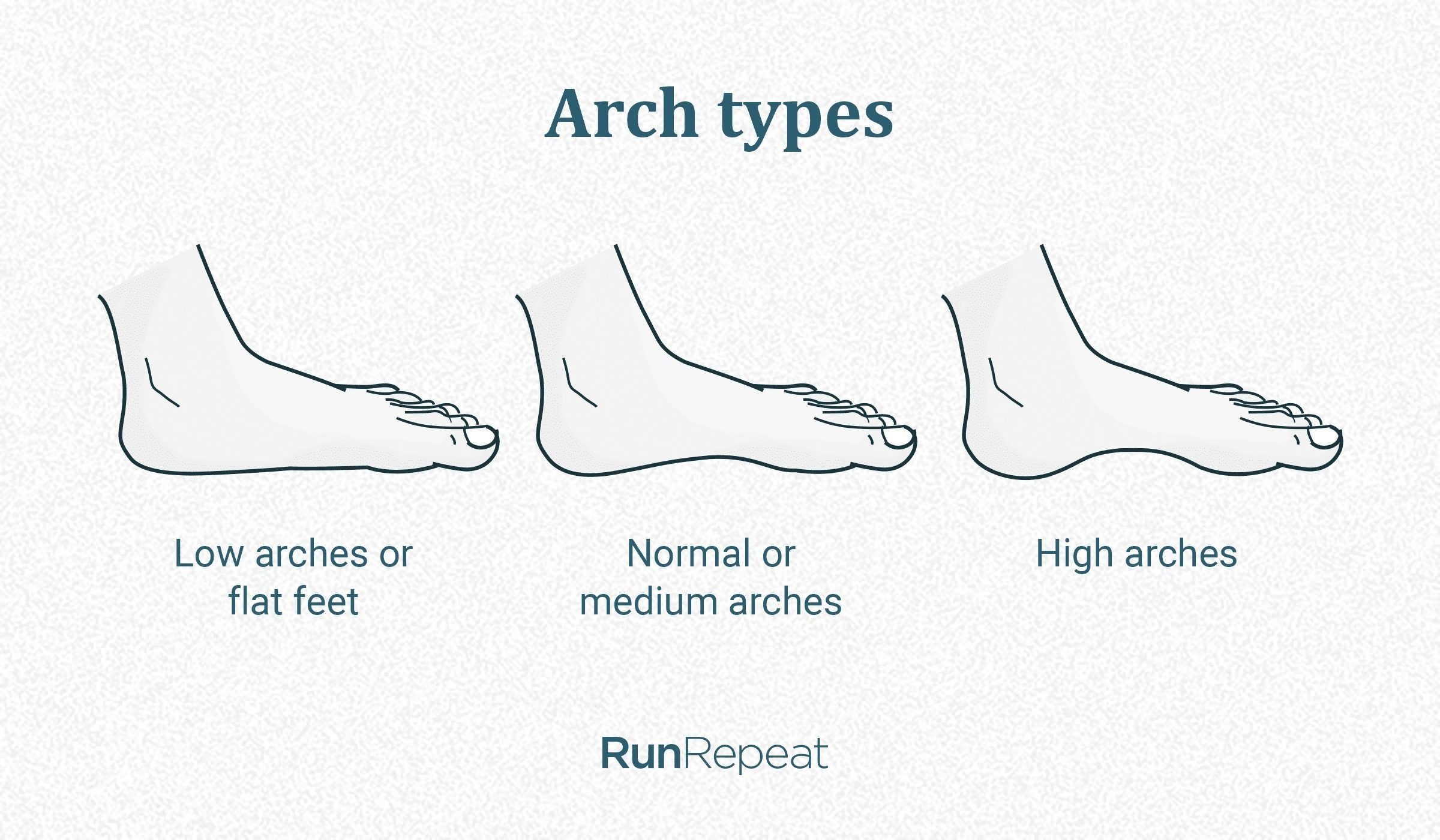
Running shoes that are made for overpronators offer extra arch support by integrating a) trademarked technologies, or b) geometrical shoe elements. These running shoes are always clearly marked as stability shoes and brands love promoting these specific elements.
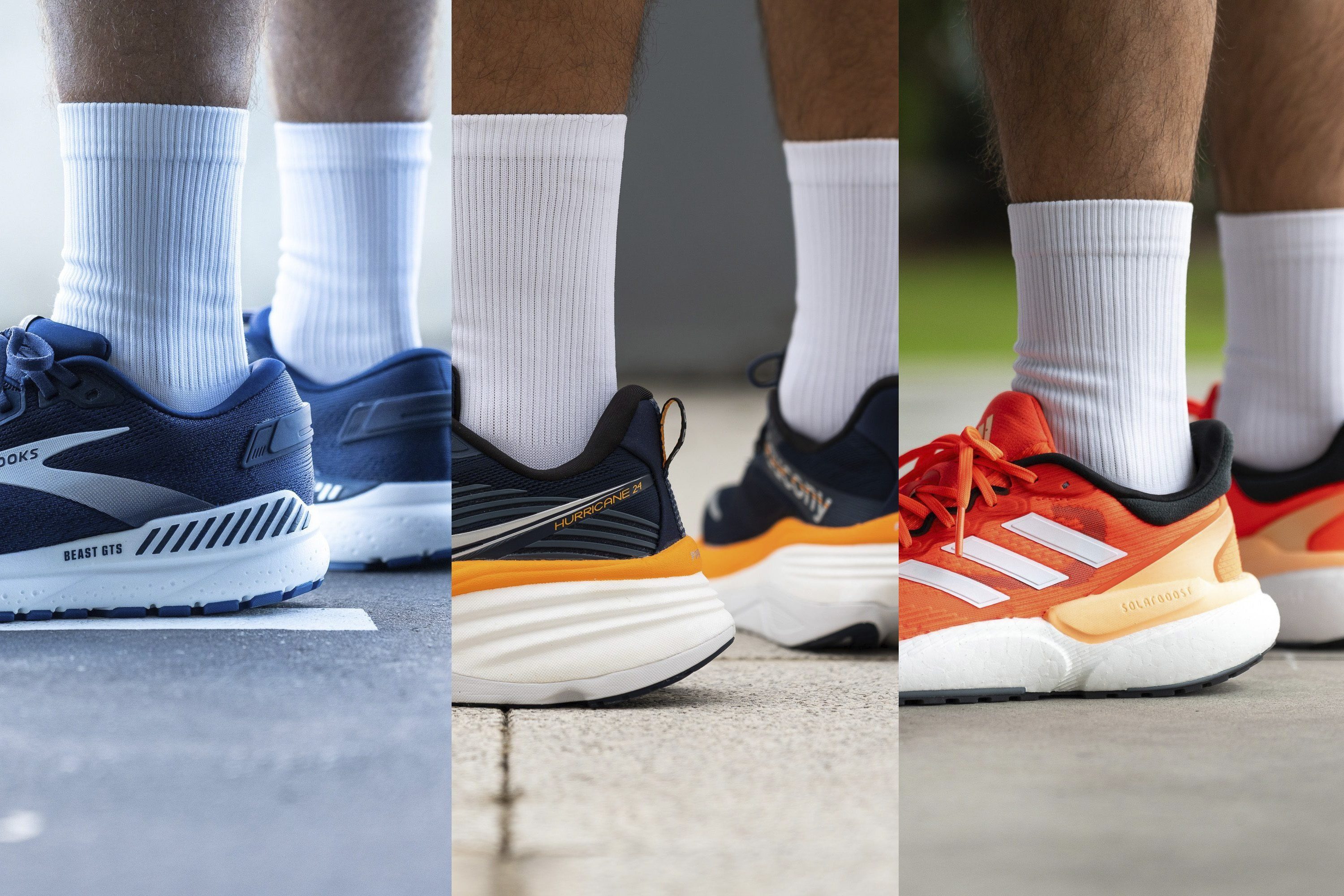
Super-stable running shoes for AT
One of the features that makes all running shoes stable, regardless of the pronation, is a wide platform. This is something we always measure in our lab so you can always check the numbers and compare to the averages, at least.
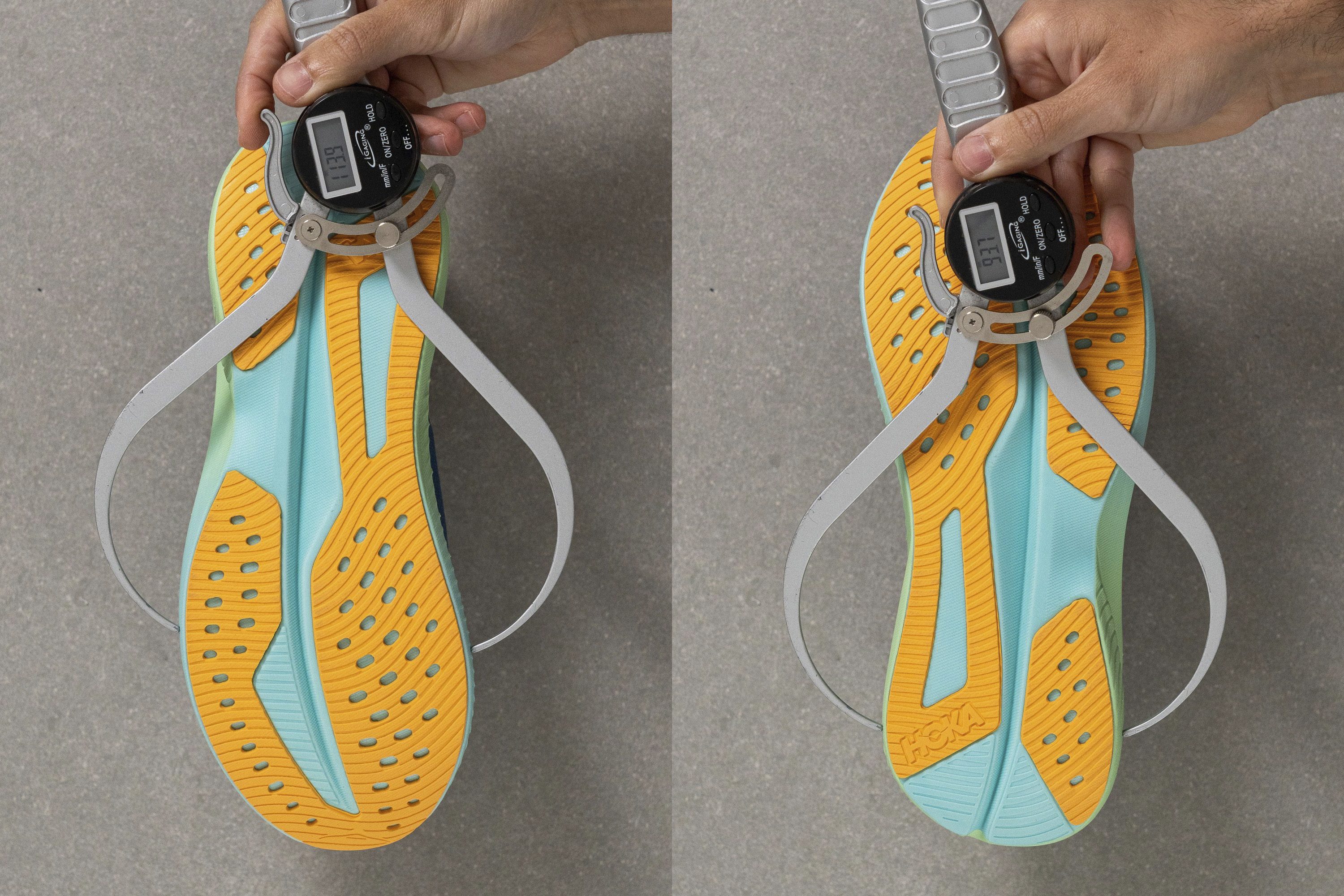
Daily trainers often have a wide platform, unlike race-day shoes which are narrow and often so tall that they are unstable.
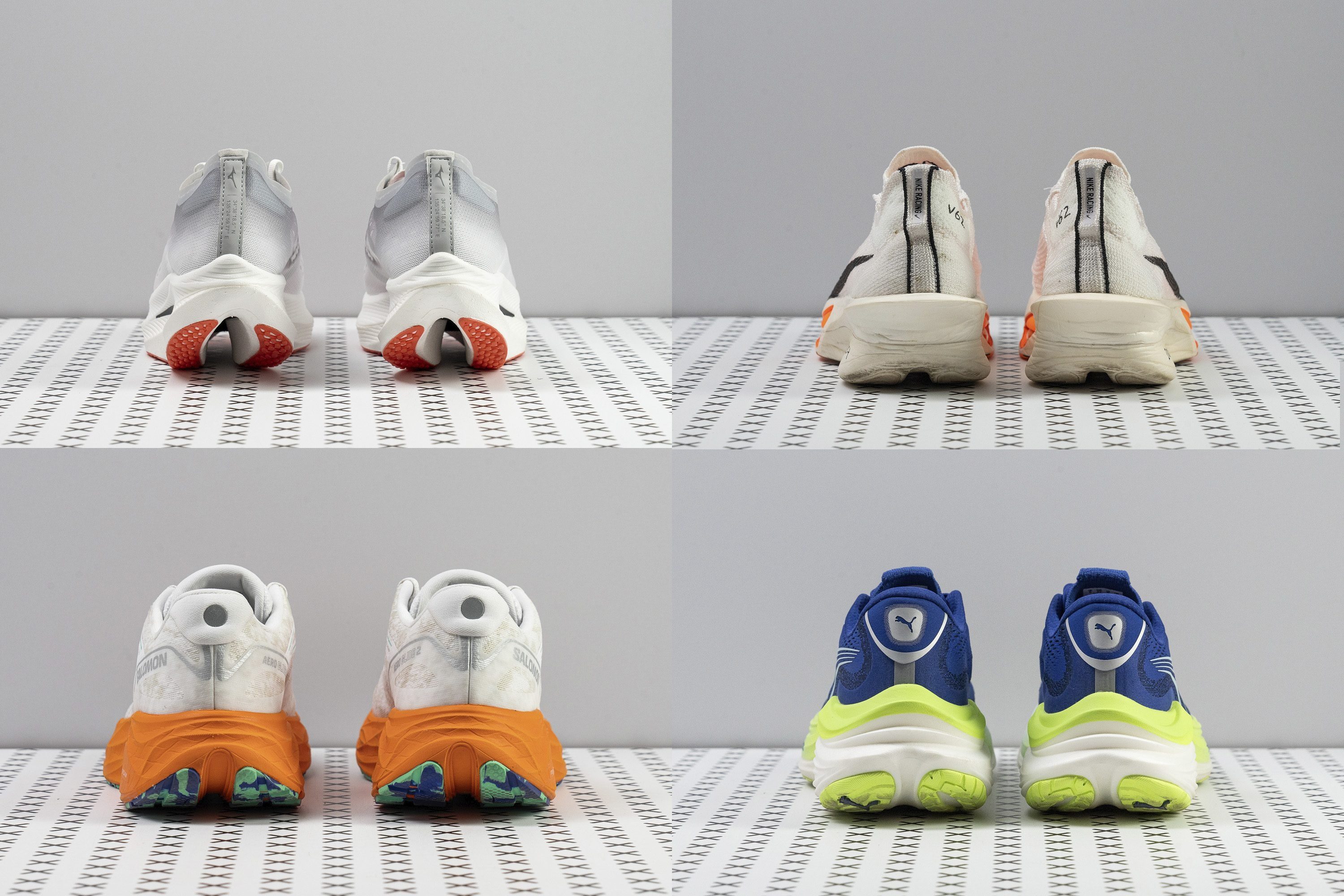
If this stability matters to you, look for the widest platforms found in running shoes for painful Achilles tendons.
Wide, narrow, or a tall toebox?
We all have different needs because we all have different feet and toes. Here, we offer running shoes for Achilles tendonitis that have a wide toebox, a narrow toebox, and a tall toebox. While the first two might be self-explanatory, the 3rd option is here because no one should have black or bleeding toenails!
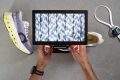
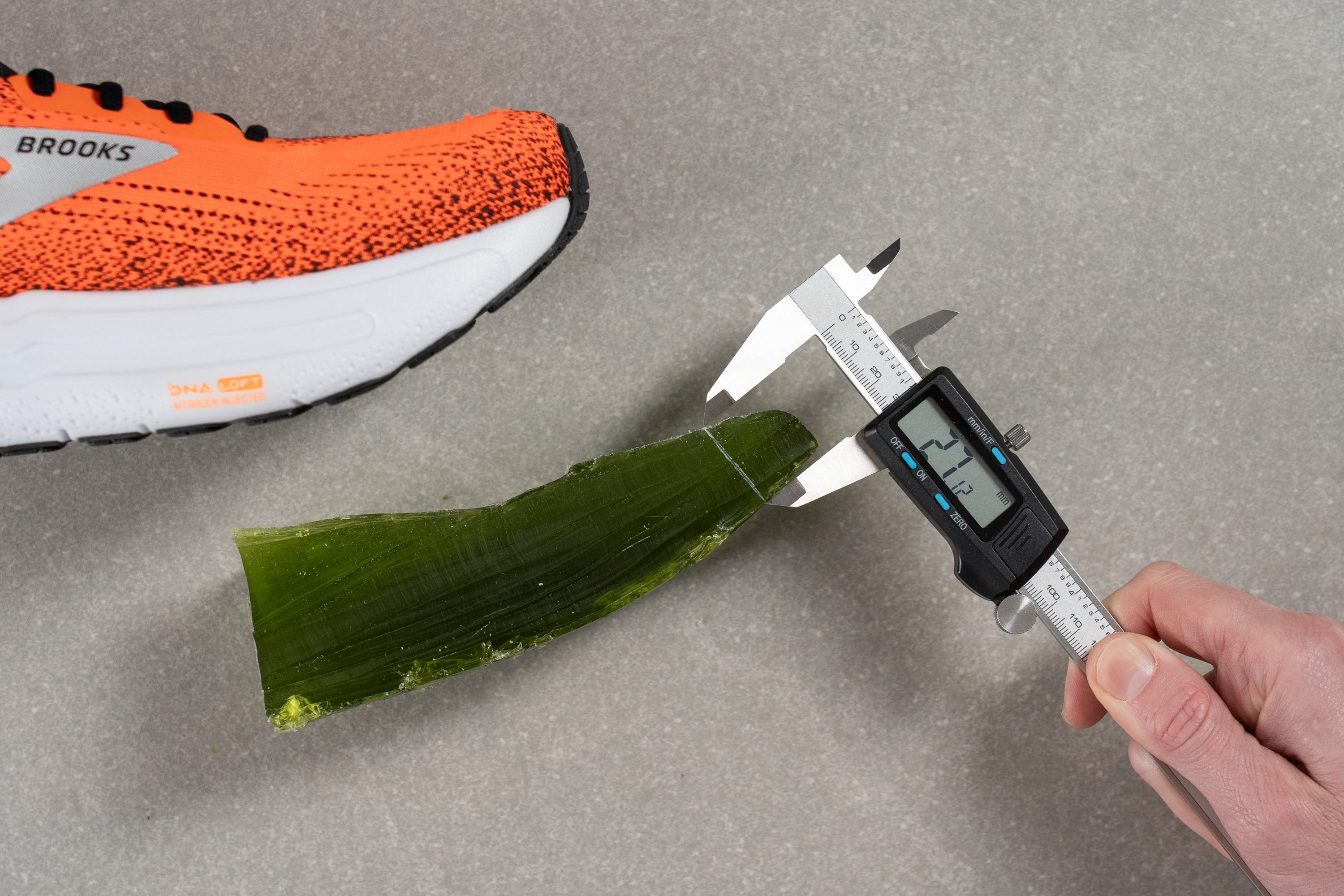
Once the cast is ready, it is easy to measure the width of the shoe and the width of the toebox.
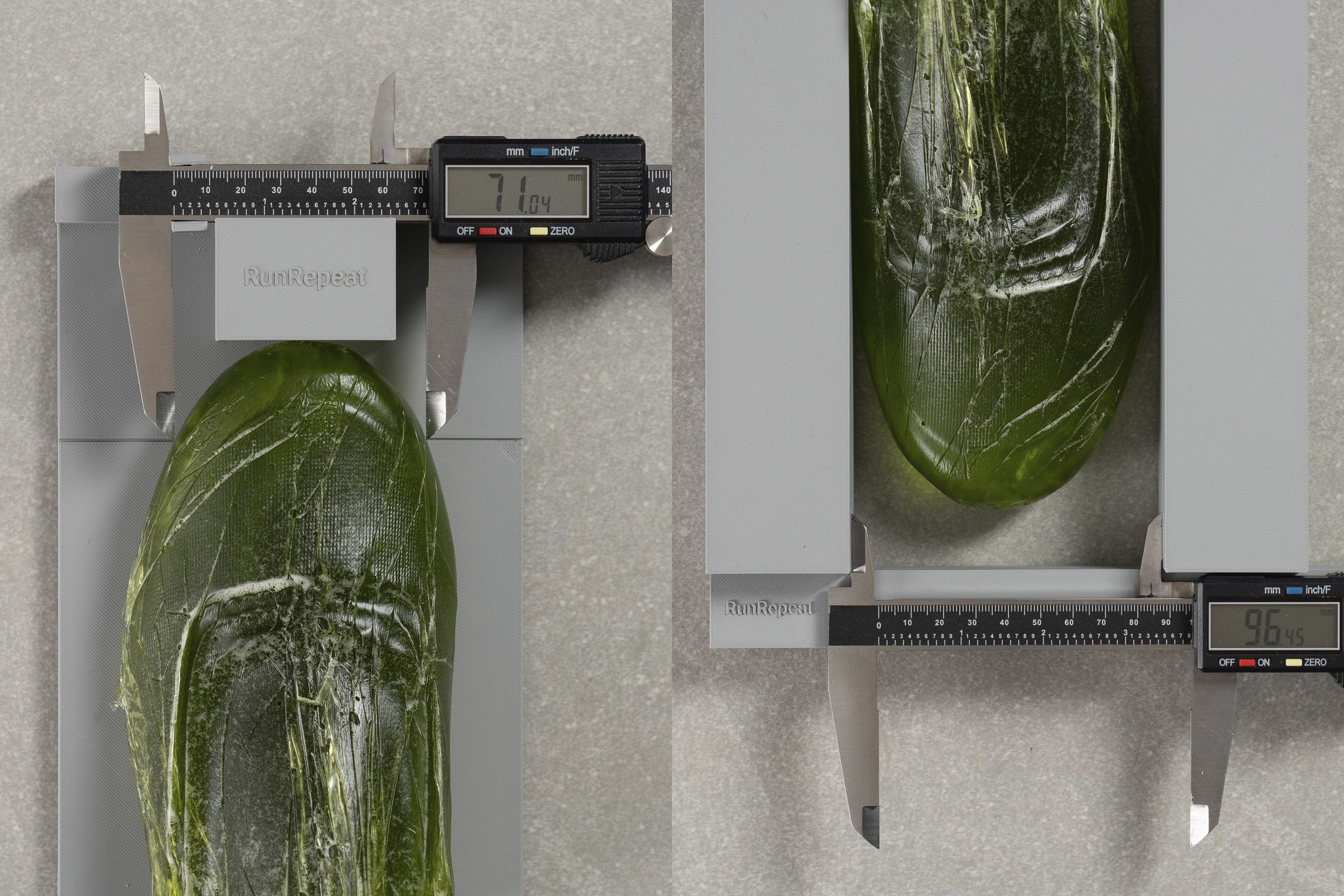
Given that you may need more room around the ball of the foot or at the big toe, we will offer both options.
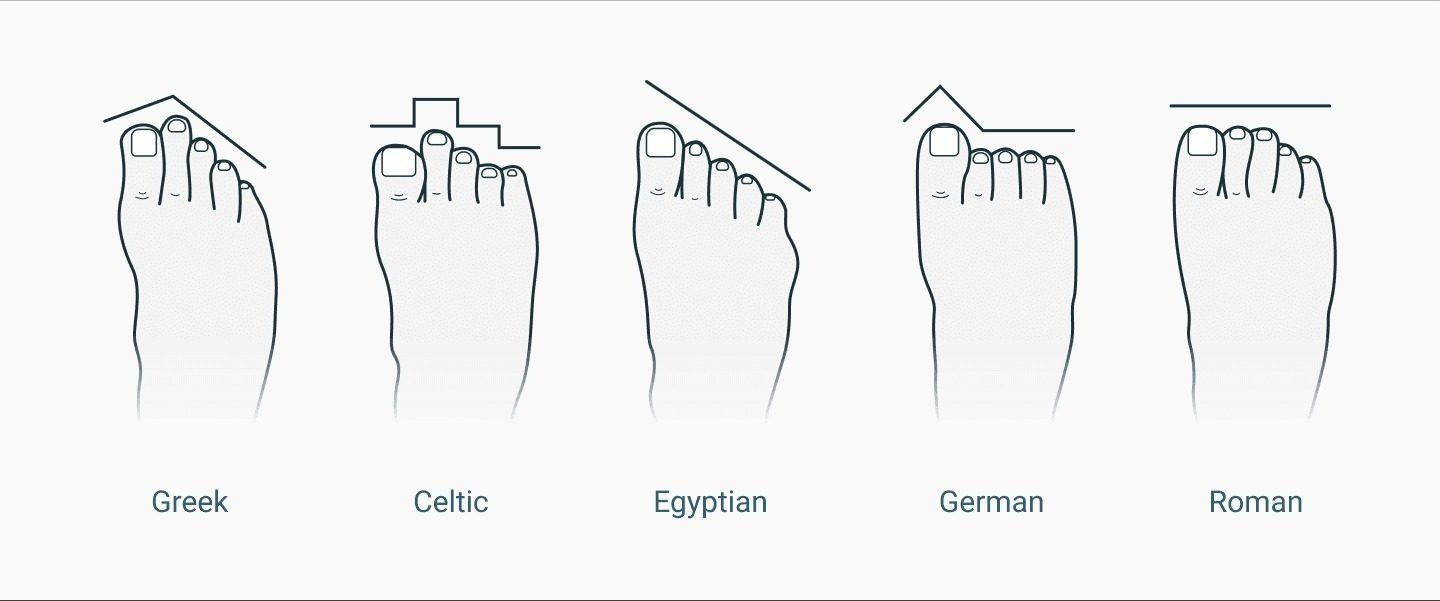
If your big toe is pointing up, look for more vertical space in the toebox.
Avoid a lace bite when dealing with painful Achilles tendons
We all know a superb lockdown is a must when running. However, when runners struggle with painful Achilles, they might tighten the laces even more, because they want to be extra sure that their heel won’t slip or that their feet won't do any extra work. This may lead to a lace bite though.
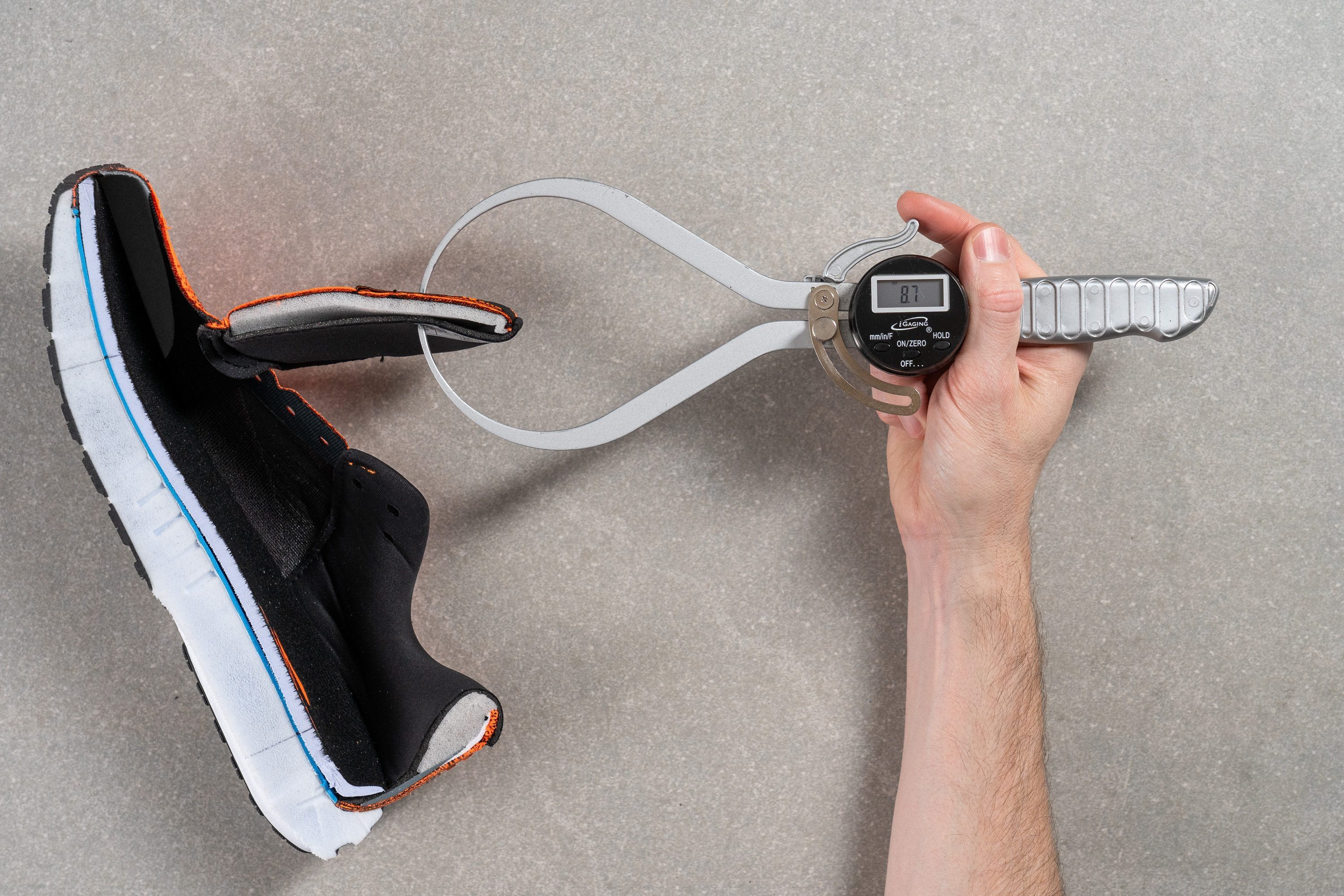
If you’re one of these runners and you feel like you need thicker tongues for tighter knots, these running shoes have the fattest padding in the tongue that you may enjoy:
What happens if you keep running with the Achilles tendinitis
We’ve all been there. There’s a race you want to participate in, and the Achilles start flaring up. But you really want to do the race, maybe even at the cost of harming your Achilles tendons even more. You try to calm them down with ice packs. But the pain persists.
So, what will it be, ibuprofen or rest+rehab?
If you keep running through the pain, 3 things may happen:
- Injuring the tendons even more (more pain, more rehab needed)
- Injuring the tendons to the point where they rupture, which is usually taken care of surgically
- Altering your gait biomechanics because you’re favouring the uninjured leg, makes things even worse for the injured Achilles tendon.
We recommend visiting a specialist, getting a proper diagnosis, and doing rehab!
Similar buying guides