



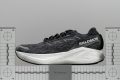






Our verdict
- Daily running 91
- Tempo 85
- Race 70
- Stability 83
Pros
- Amazing foam upgrade
- Deep cushioning feels great on long runs
- Stable enough (without being intrusive)
- Reasonable weight for its stack height
- Excellent value for price
- Amazing ride for heel strikers
- Ideal for those who hate rockered shoes
- Cheaper alternative to most super trainers
- Impressive versatility
Cons
- High drop may bother forefoot strikers
- Oversized tongue won't work for everyone
- Outsole durability falls below average
Awards
- Top pick in best Salomon running shoes
- Top pick in best shoes for Haglund's deformity
- Top 6% in road running shoes
- Top 5% in Salomon running shoes
- Top 28% most popular running shoes
Comparison
The most similar running shoes compared
+ + Add a shoe | |||||
|---|---|---|---|---|---|
| Our score | 92 Superb | 85 Great | 86 Great | 83 Great | |
| Price | $160 | $100 | $150 | $180 | |
| Pace | Daily runningTempo | Daily running | Daily running | Daily running | |
| Shock absorption | High | High | High | High | |
| Energy return | High | Low | Moderate | Low | |
| Traction | High | High | High | High | |
| Arch support | Neutral | Neutral | Neutral | Neutral | |
| Weight lab Weight brand | 9 oz / 255g 8.8 oz / 250g | 9.7 oz / 275g 9.7 oz / 275g | 10.2 oz / 289g 10.2 oz / 289g | 9.5 oz / 269g 9.7 oz / 275g | |
| Drop lab Drop brand | 11.7 mm 8.0 mm | 11.5 mm 8.0 mm | 12.2 mm 10.0 mm | 10.5 mm 8.0 mm | |
| Strike pattern | Heel | Heel | Heel | Heel | |
| Size | True to size | True to size | True to size | True to size | |
| Midsole softness | Balanced | Balanced | Balanced | Balanced | |
| Difference in midsole softness in cold | Small | Small | Small | Small | |
| Toebox durability | Decent | Decent | Decent | Decent | |
| Heel padding durability | Good | Decent | Good | Decent | |
| Outsole durability | Decent | Good | Good | Good | |
| Breathability | Moderate | Moderate | Moderate | Moderate | |
| Width / fit | Medium | Medium | Medium | Medium | |
| Toebox width | Medium | Narrow | Narrow | Narrow | |
| Stiffness | Stiff | Stiff | Moderate | Stiff | |
| Torsional rigidity | Moderate | Moderate | Flexible | Moderate | |
| Heel counter stiffness | Flexible | Moderate | Stiff | Moderate | |
| Rocker | ✗ | ✓ | ✗ | ✓ | |
| Heel lab Heel brand | 43.2 mm 41.0 mm | 39.3 mm 41.5 mm | 37.3 mm 36.0 mm | 45.5 mm 46.0 mm | |
| Forefoot lab Forefoot brand | 31.5 mm 33.0 mm | 27.8 mm 33.5 mm | 25.1 mm 26.0 mm | 35.0 mm 38.0 mm | |
| Widths available | NormalWide | NormalWide | NarrowNormalWideX-Wide | Normal | |
| Orthotic friendly | ✓ | ✓ | ✓ | ✓ | |
| Season | All seasons | All seasons | All seasons | All seasons | |
| Removable insole | ✓ | ✓ | ✓ | ✓ | |
| Ranking | #15 Top 4% | #120 Top 30% | #80 Top 20% | #163 Top 41% | |
| Popularity | #111 Top 28% | #147 Top 37% | #18 Top 5% | #150 Top 38% |



Who should buy
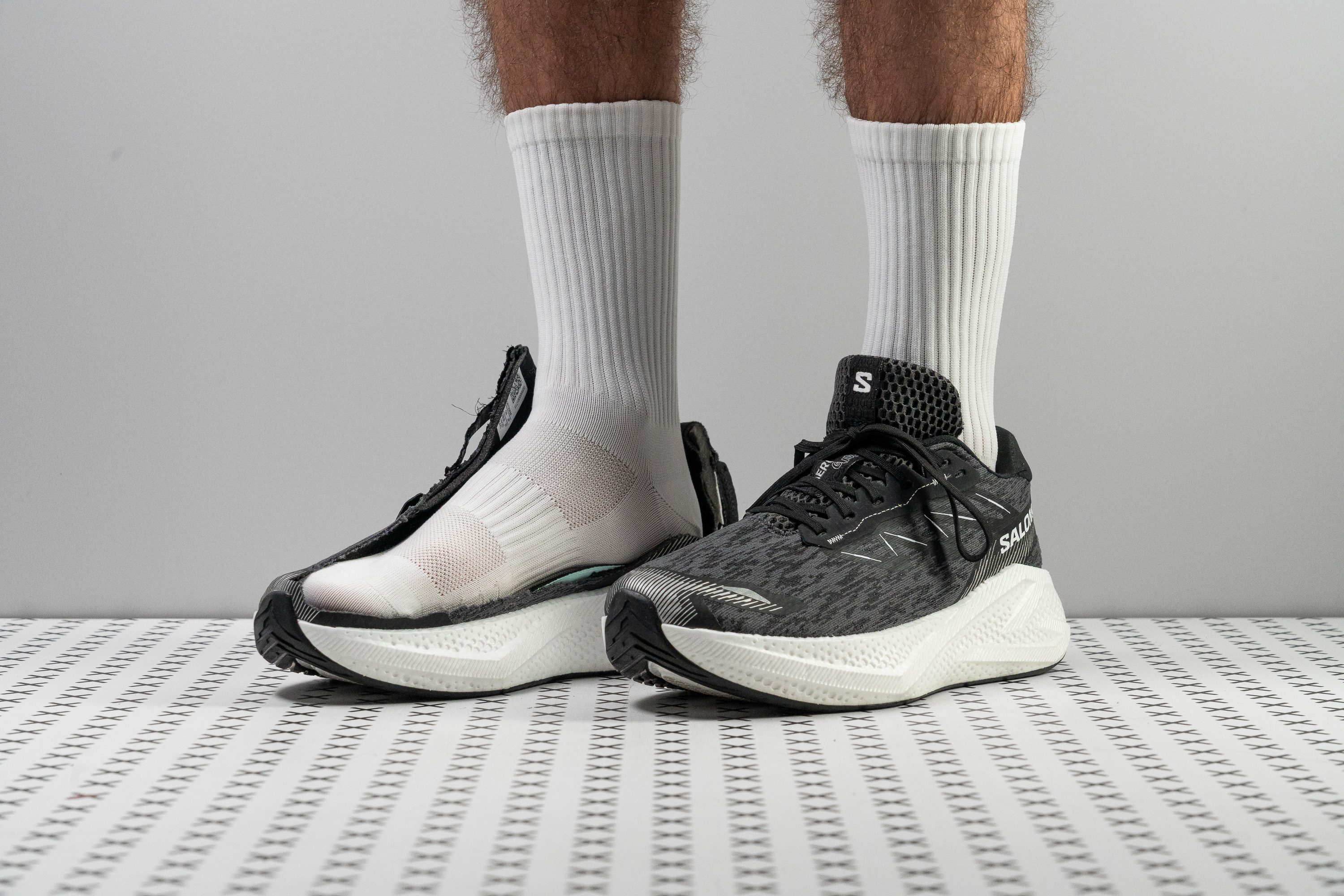
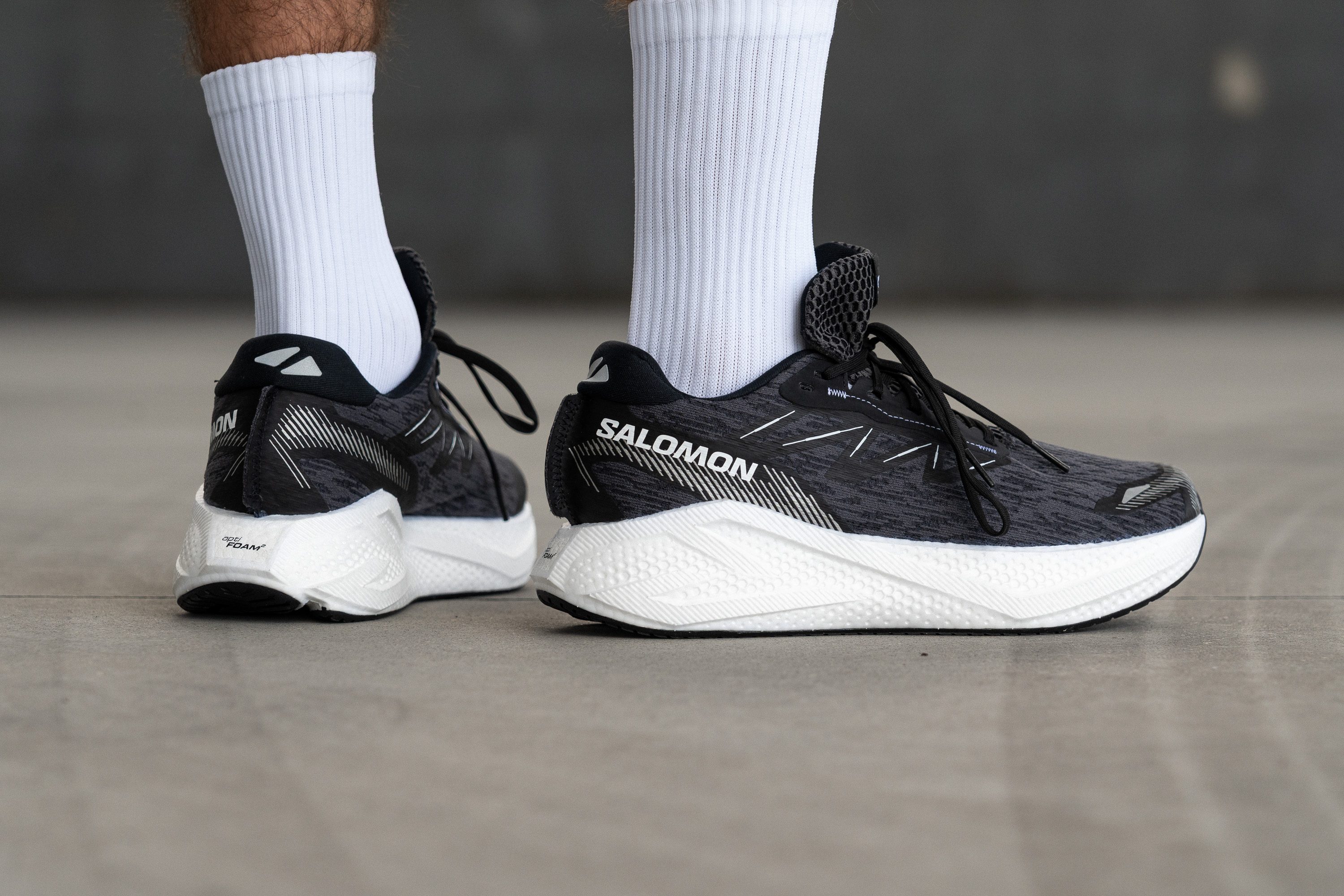
After testing the Salomon Aero Glide 4, we think that:
- It’s perfect for runners chasing massive bounce without premium-level prices.
- Fans of the Aero Glide 3 should upgrade immediately.
- Heel strikers wanting a higher-drop EVO SL alternative will love this shoe.
- Marathoners seeking long-run protection and high energy return will enjoy it.
Who should NOT buy
We think the Aero Glide 4 may frustrate runners who land farther forward on their feet, as we really felt the towering heel and high-drop geometry. Shoes like the adidas Adizero EVO SL or the Saucony Endorphin Azura deliver a single-digit drop while still offering explosive bounce for daily runs.
We also believe the Aero Glide 4 is not the best option for runners who prioritize room for toe splay. We found in the lab that the tapered forefoot limits space up front, so some runners may feel restricted. In this case, the On Cloudboom Max feels like a smarter alternative.
Cushioning
Shock absorption
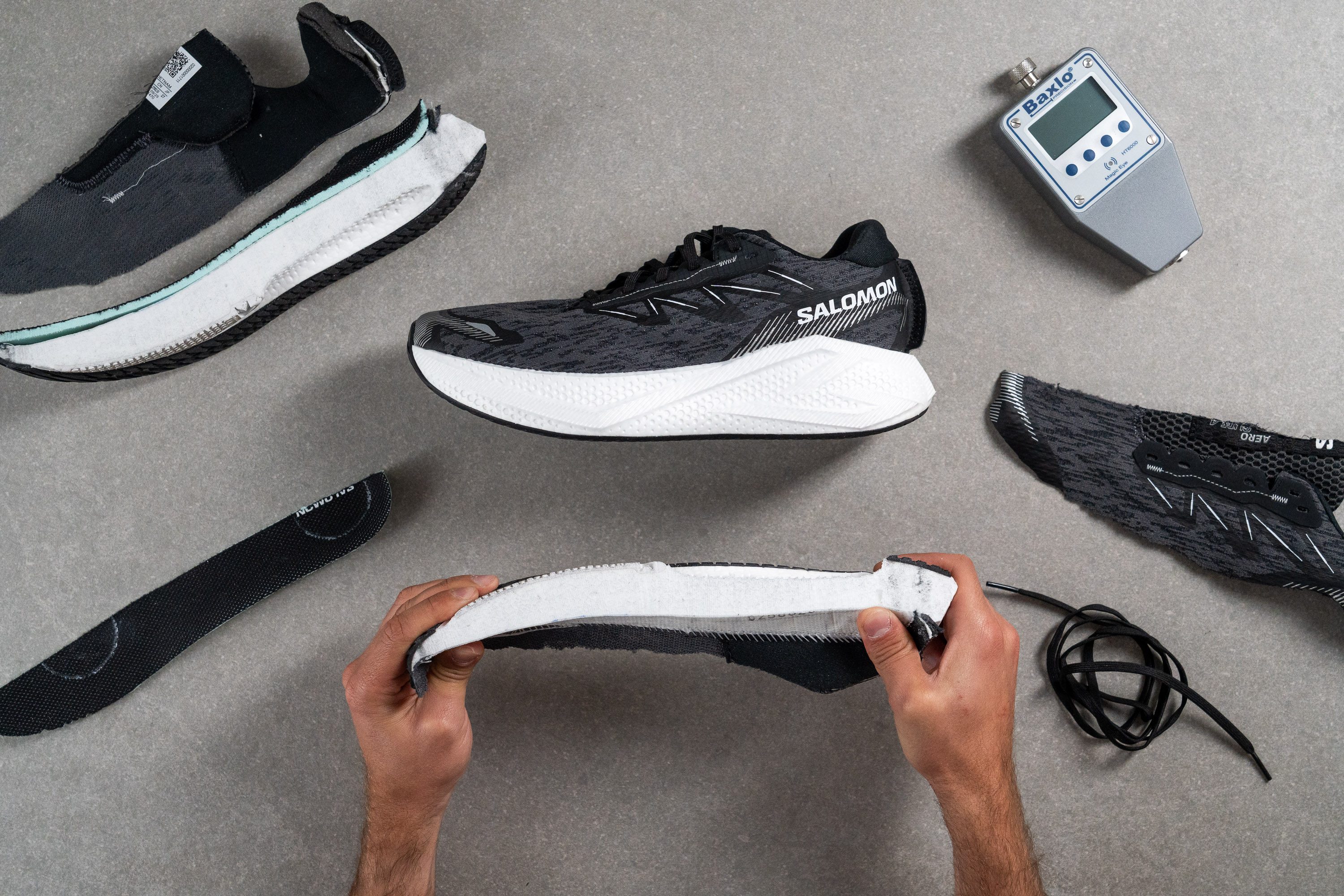
The Salomon Aero Glide 4 felt to us like a perfect companion for the Sunday long run thanks to its deeply cushioned ride. Once we brought it back to the lab, the numbers fully supported that impression, as we measured excellent shock absorption results of 152 SA in the heel and 120 SA in the forefoot.
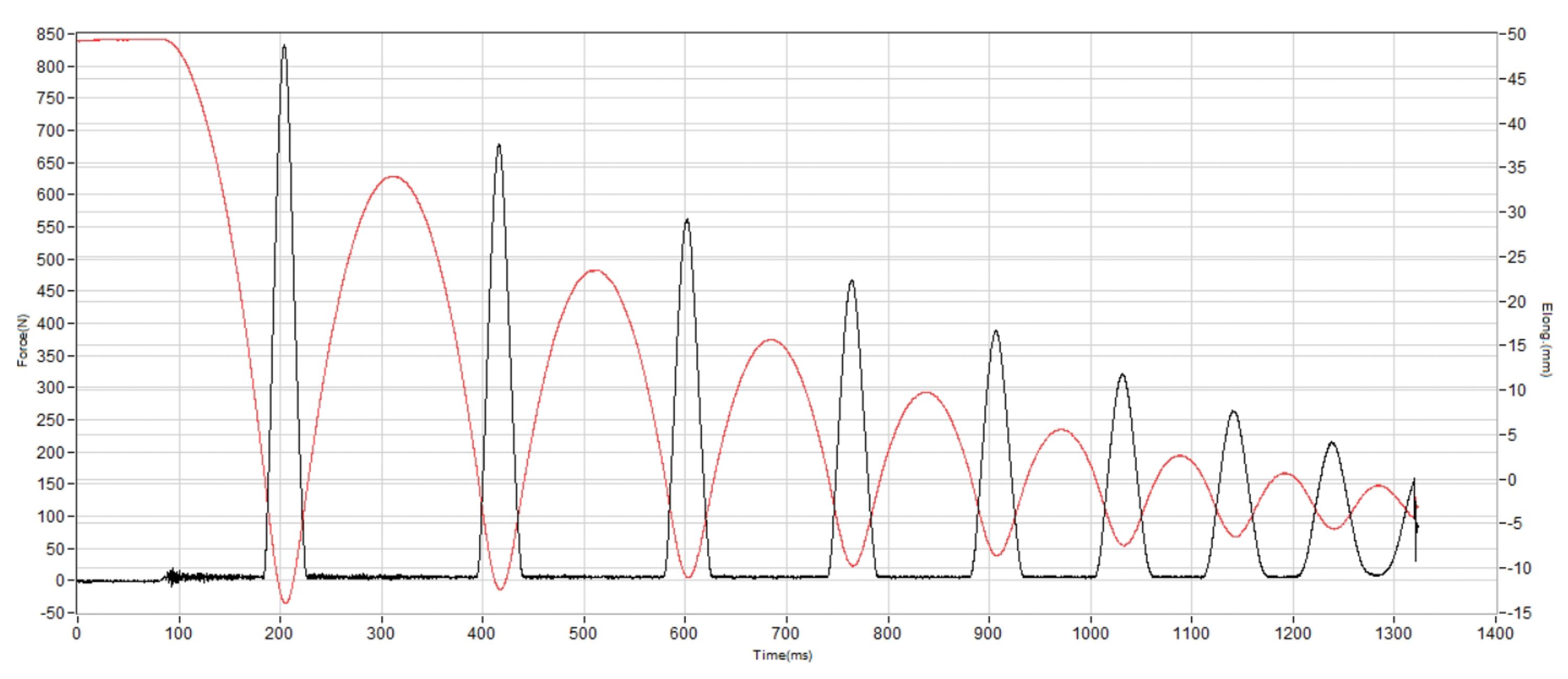
| Aero Glide 4 | 152 SA |
| Average | 131 SA |
Energy return
Salomon already took a major step forward with the Energy Foam EVO in the Aero Glide 3, delivering energy return results above 65% that felt genuinely competitive. However, instead of staying comfortable with that success for a few years, the brand showed a forward-thinking approach and introduced another foam upgrade—a supercritical eTPU compound called optiFOAM².
And we found that the update absolutely paid off. We measured another jump in energy return, reaching 72.2% in the heel and 73.2% in the forefoot. Those are outstanding numbers for a training shoe, getting remarkably close to what we usually see in premium super shoes, yet at a far more accessible price point.
| Aero Glide 4 | 73.2% |
| Average | 61.4% |
Heel stack
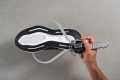
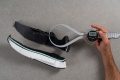
Usually, we measure stack heights that come in slightly below the brand’s official numbers. This time, however, Salomon actually played things conservatively, as our digital calipers reached 43.2 mm while the brand officially states 41 mm.
That helps explain why the Aero Glide 4 feels like it has an almost endless amount of cushioning underfoot.
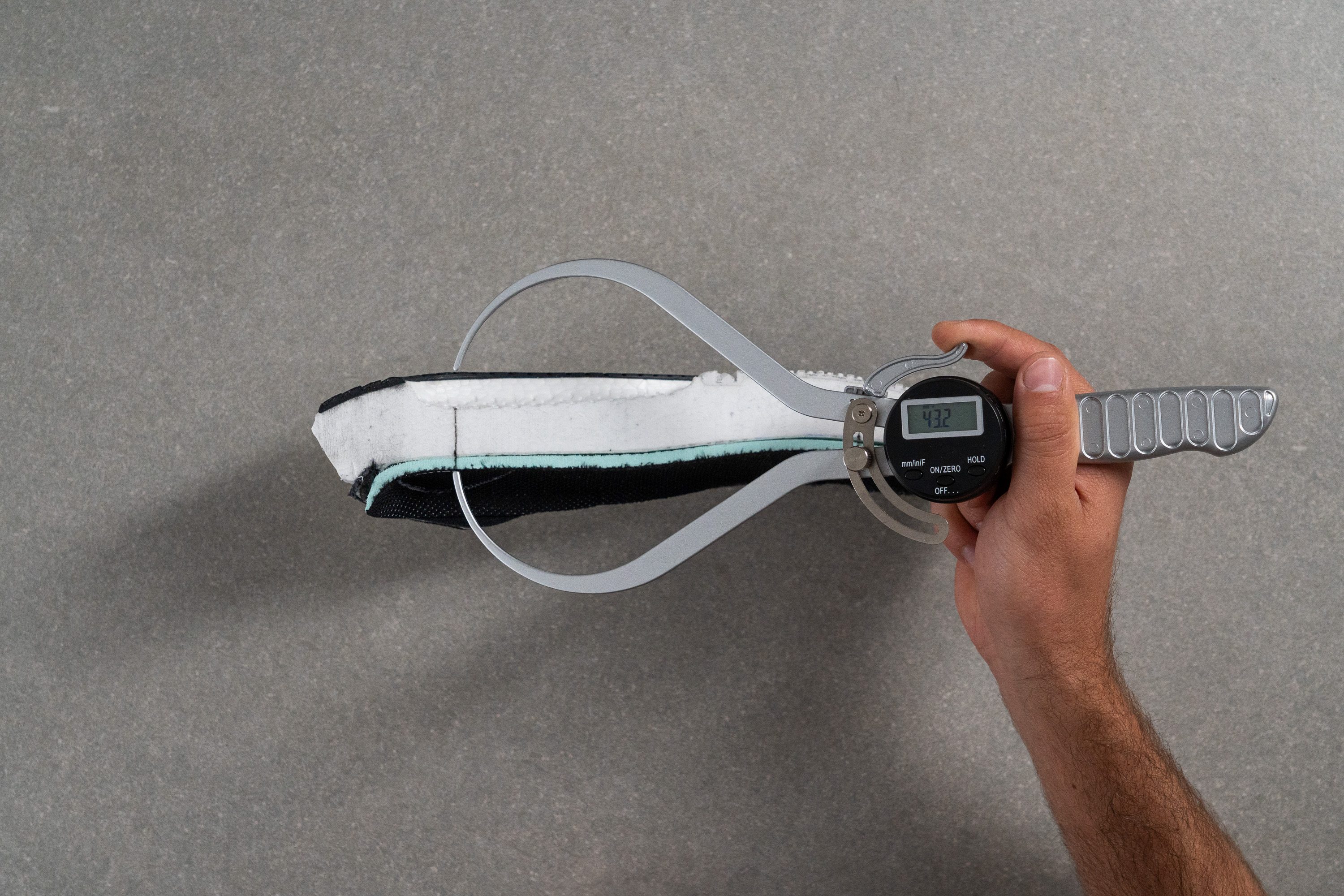
| Aero Glide 4 | 43.2 mm |
| Average | 35.6 mm |
Forefoot stack
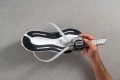
The forefoot also packs a substantial amount of cushioning, although it does not feel quite as towering as the heel. Even so, with 31.5 mm underfoot, this kind of setup is quickly becoming the new standard for modern daily trainers.
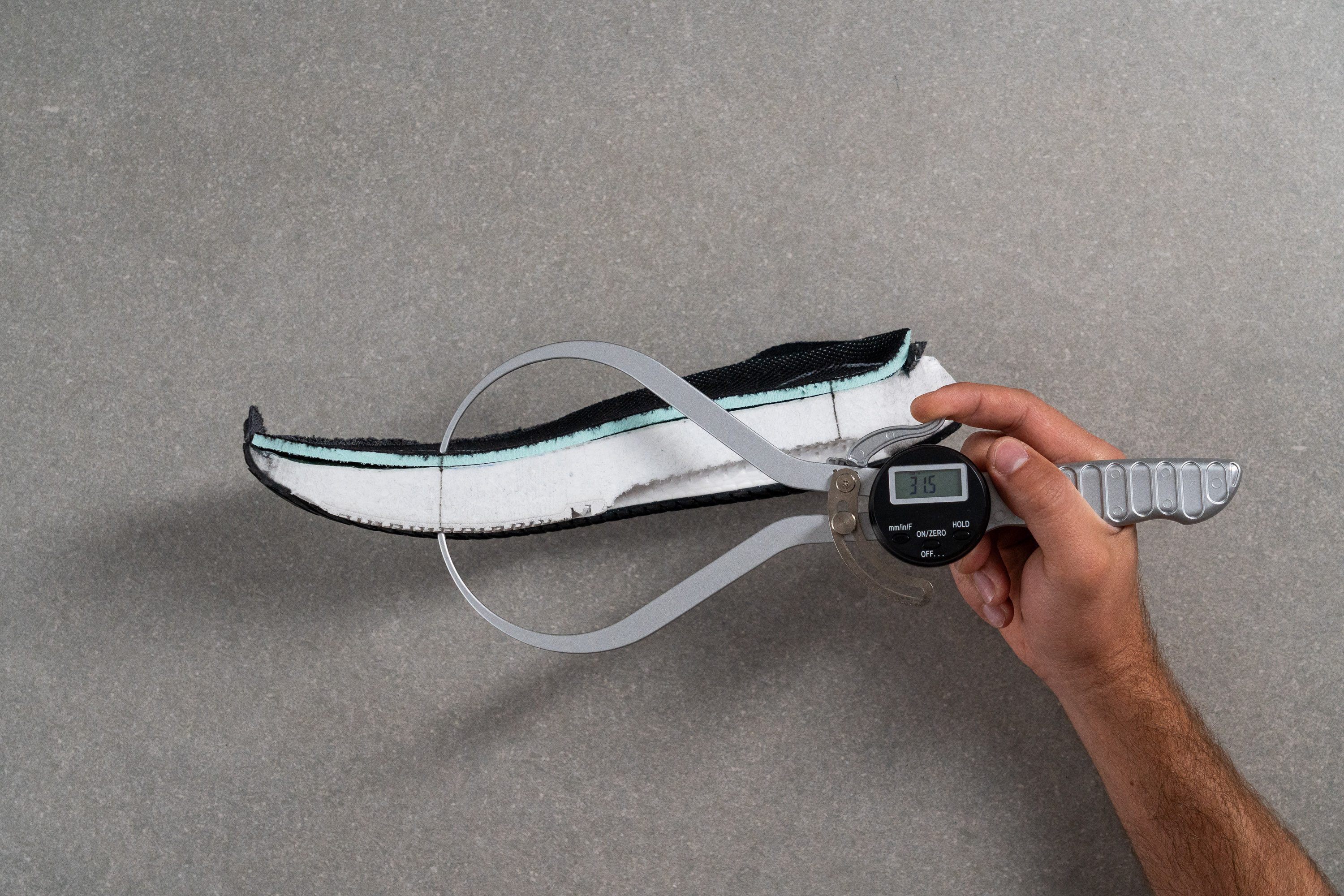
| Aero Glide 4 | 31.5 mm |
| Average | 27.1 mm |
Drop
We measured a significantly higher heel-to-toe drop than the 8 mm officially stated by Salomon, as our lab result reached 11.7 mm.
That’s likely good news for heel strikers, but we can also understand why some midfoot and forefoot strikers may have preferred a lower setup, unless they specifically seek a higher drop to reduce stress on the Achilles tendon.
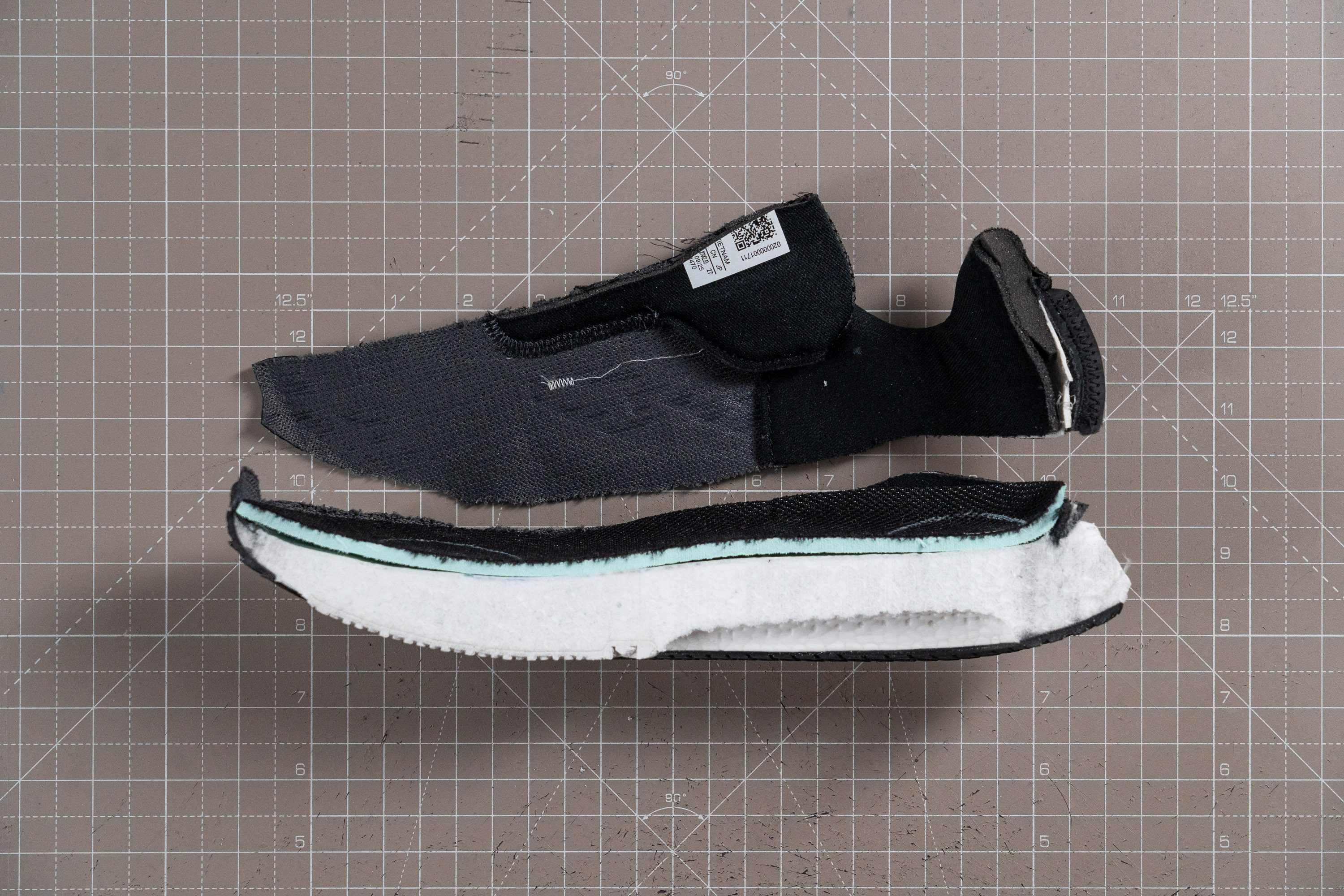
| Aero Glide 4 | 11.7 mm |
| Average | 8.4 mm |
Midsole softness
The new optiFOAM² is slightly more energetic than the previous compound, although the overall softness remains remarkably similar. In fact, we measured only a tiny difference in our Asker C durometer test, with this version registering 38.5 AC while its predecessor landed at 40.0 AC.
Some runners may still prefer an ultra-plush setup, but from a versatility standpoint we think Salomon made a really smart choice here. The foam feels balanced enough to handle everything from easy runs to faster-paced training without becoming overly soft or unstable.
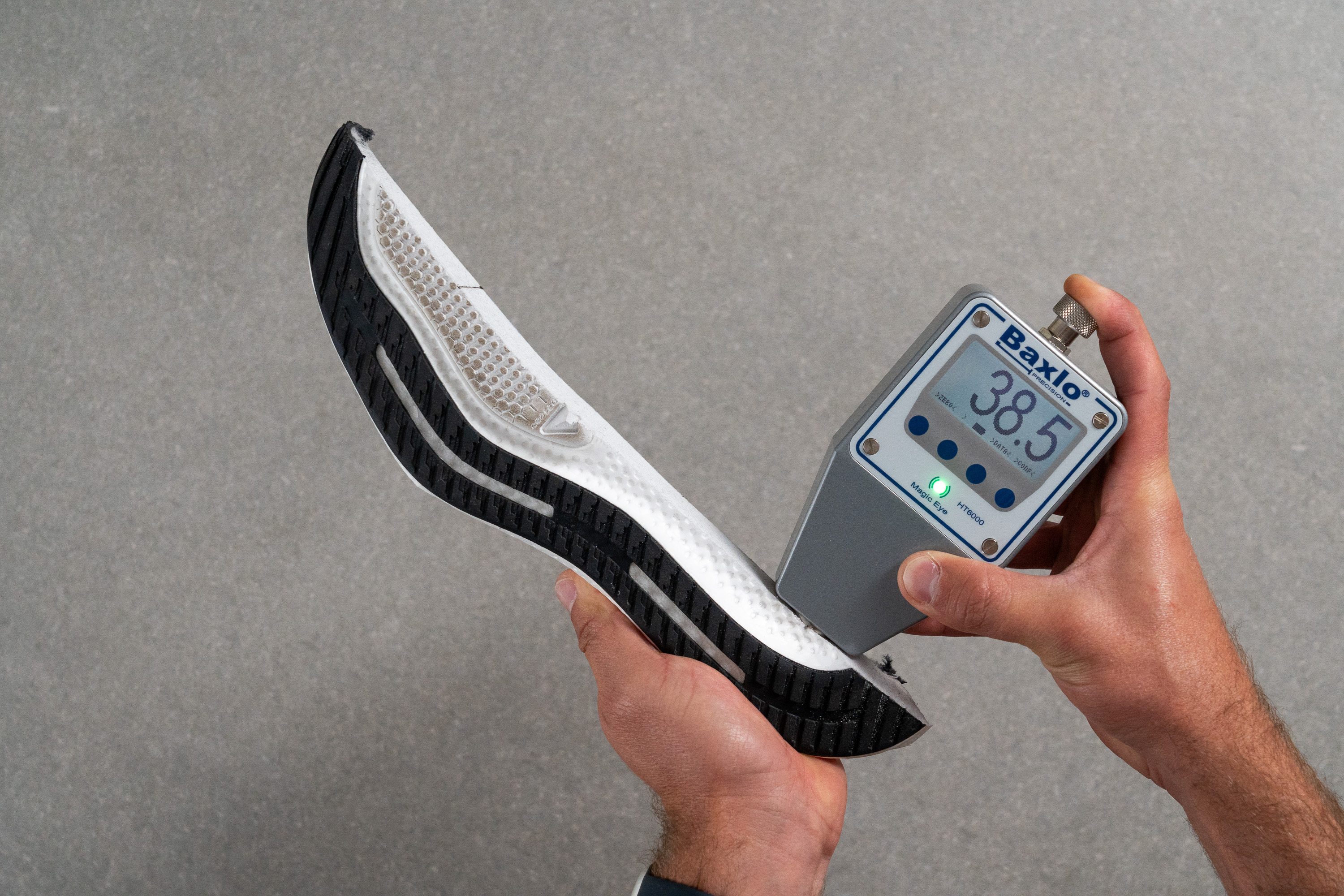
| Aero Glide 4 | 38.5 AC |
| Average | 35.5 AC |
Rocker
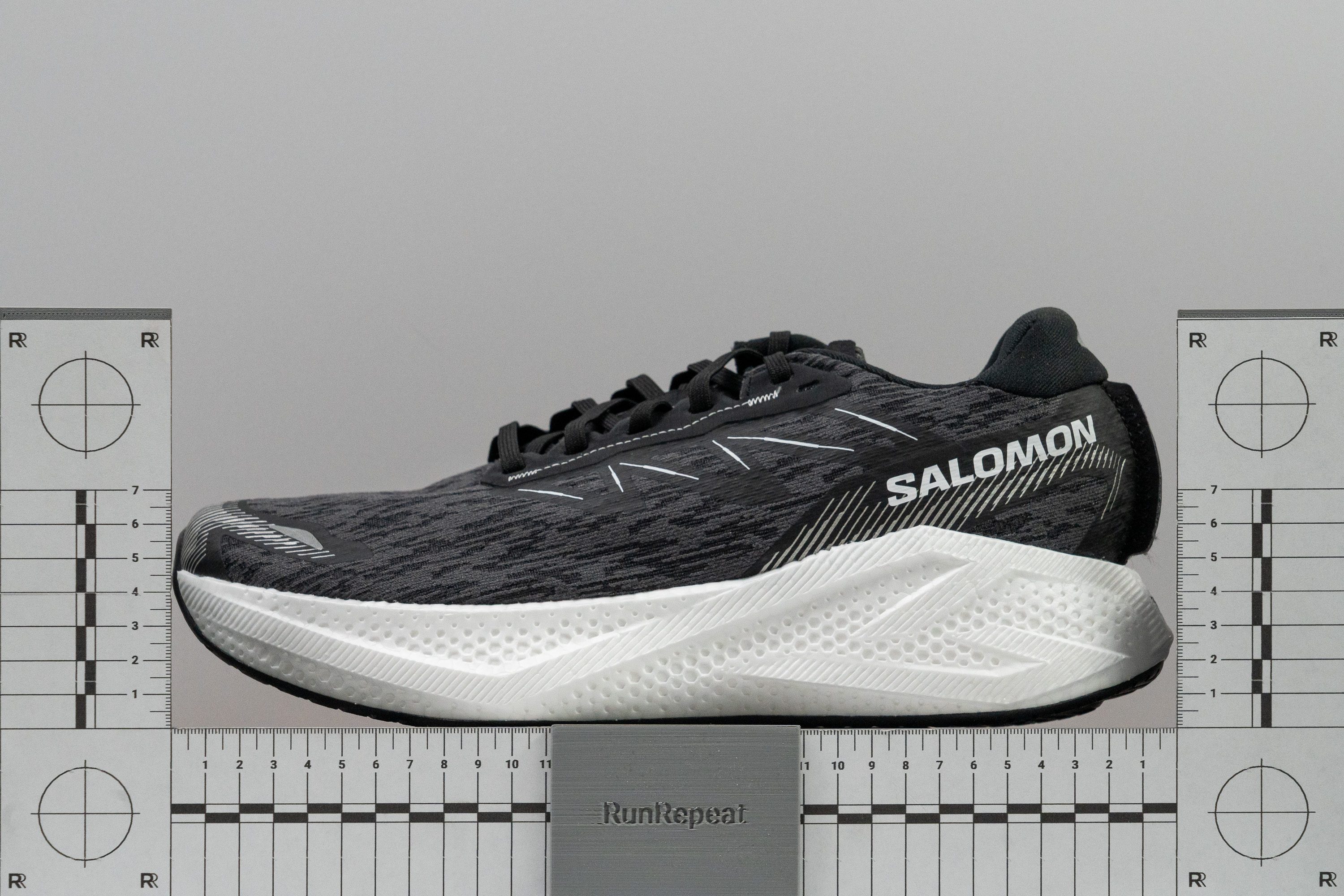
One of the hidden advantages of the high heel-to-toe drop is that Salomon did not need to rely on an exaggerated rocker geometry like many modern super trainers do. We think that’s a refreshingly old-school approach that many runners will appreciate, especially now that it’s becoming increasingly difficult to find a fast and fun shoe with a more natural-feeling ride like this one.
Size and fit
Size
Salomon Aero Glide 4 fits true to size (22 votes).
Internal length
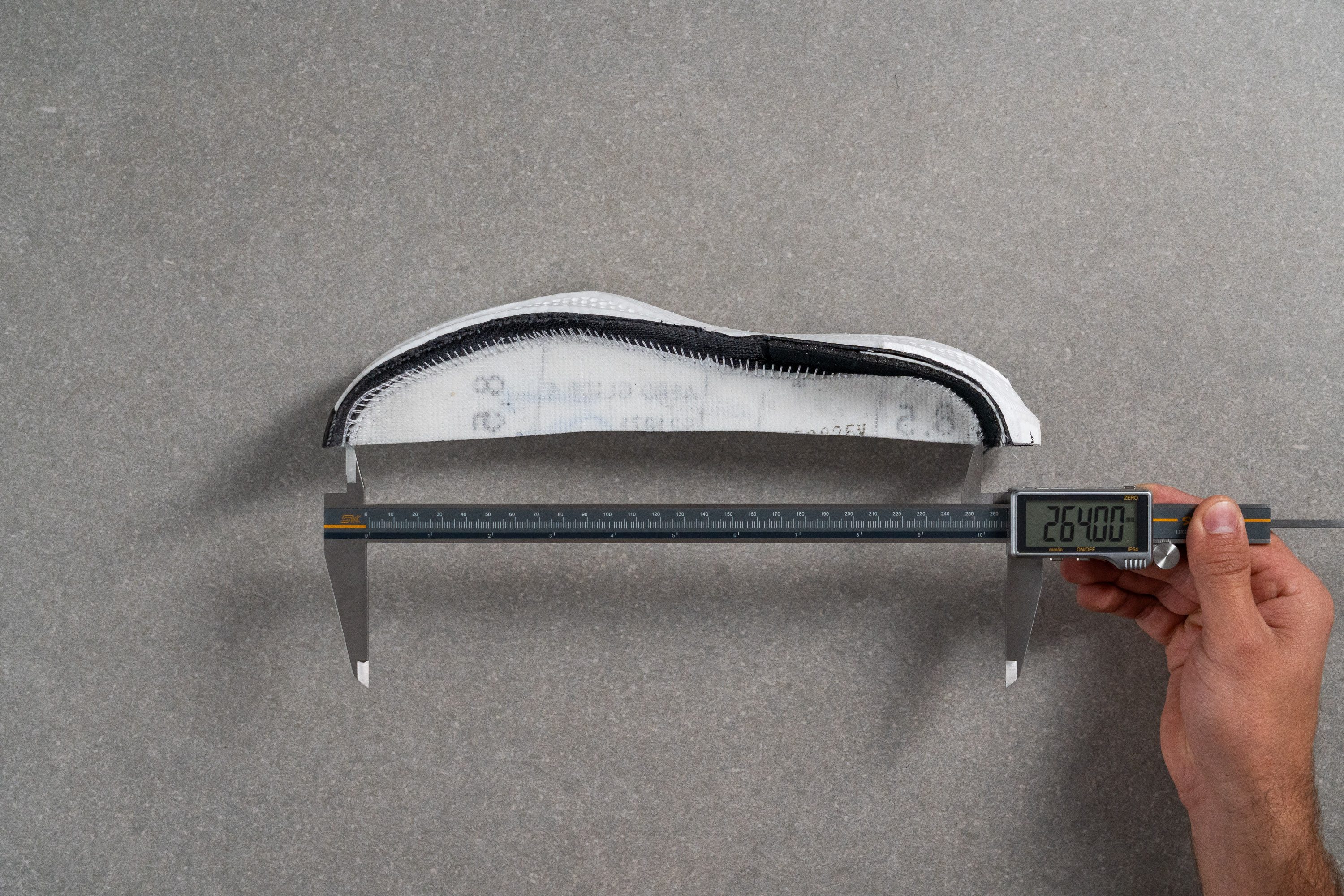
| Aero Glide 4 | 264.0 mm |
| Average | 269.3 mm |
Width / Fit
One of the biggest complaints some runners had with the Aero Glide 3 was its narrow-fitting design, and Salomon made an effort to address that in version 4. That said, the change is not dramatic, as the brand has always favored a more secure and close-fitting approach in its shoes, which is perfectly fine to us because different brands naturally cater to different foot shapes.
Starting with our measurements, we recorded 95.7 mm at the widest part of the forefoot. That’s a clear increase over the 92.8 mm we measured in the previous version.
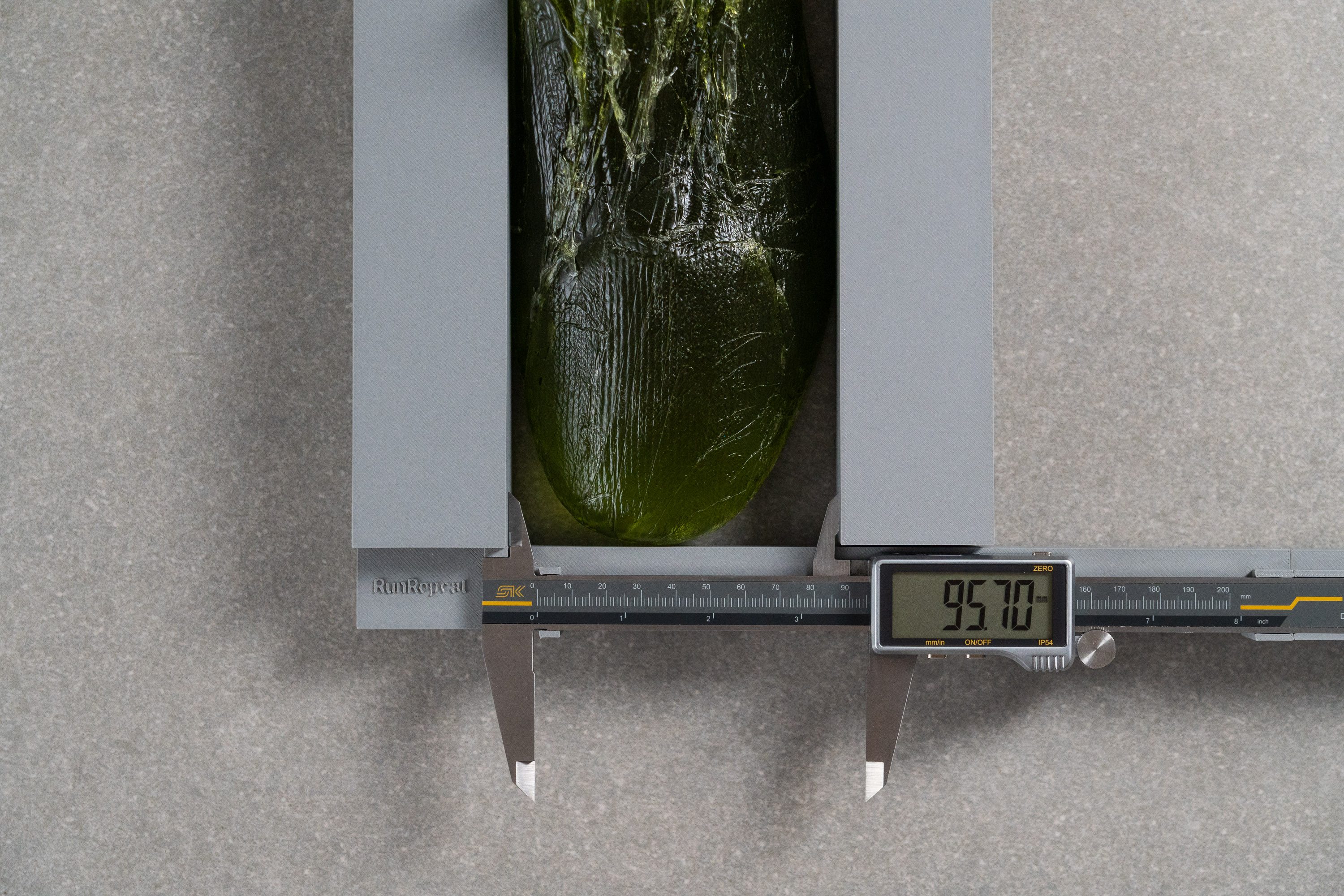
| Aero Glide 4 | 95.7 mm |
| Average | 95.2 mm |
Toebox width
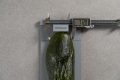
The toebox still keeps the classic tapered shape that Salomon is known for, although it feels less aggressive than in version 3. We recorded 71.2 mm in this area.
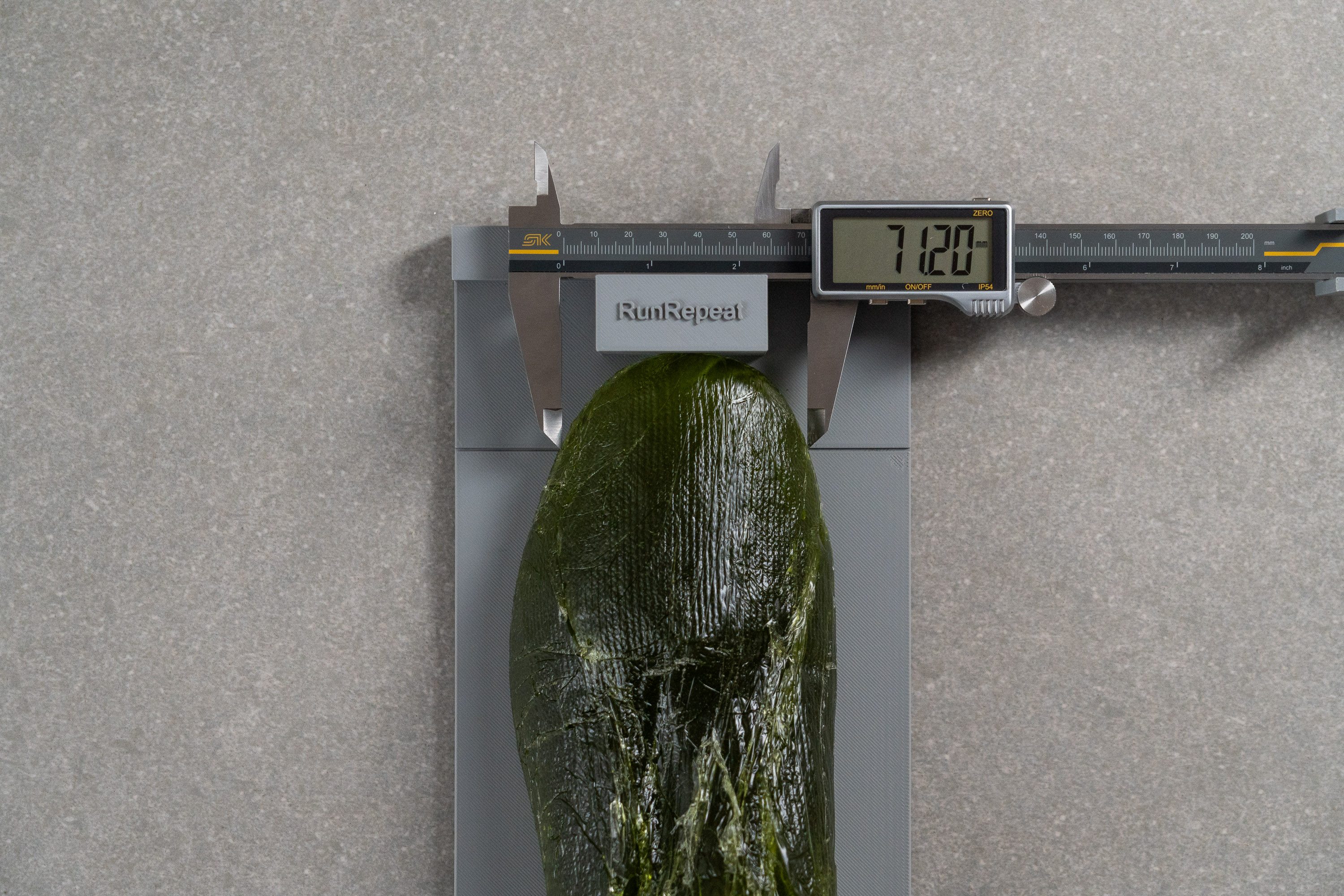
| Aero Glide 4 | 71.2 mm |
| Average | 73.2 mm |
Toebox height
We found absolutely no issues with the toebox height of the Aero Glide 4 during our runs.
At 28.1 mm, it feels secure enough to avoid any sloppy sensation while still offering enough vertical room to stay comfortable during long runs in hot conditions.
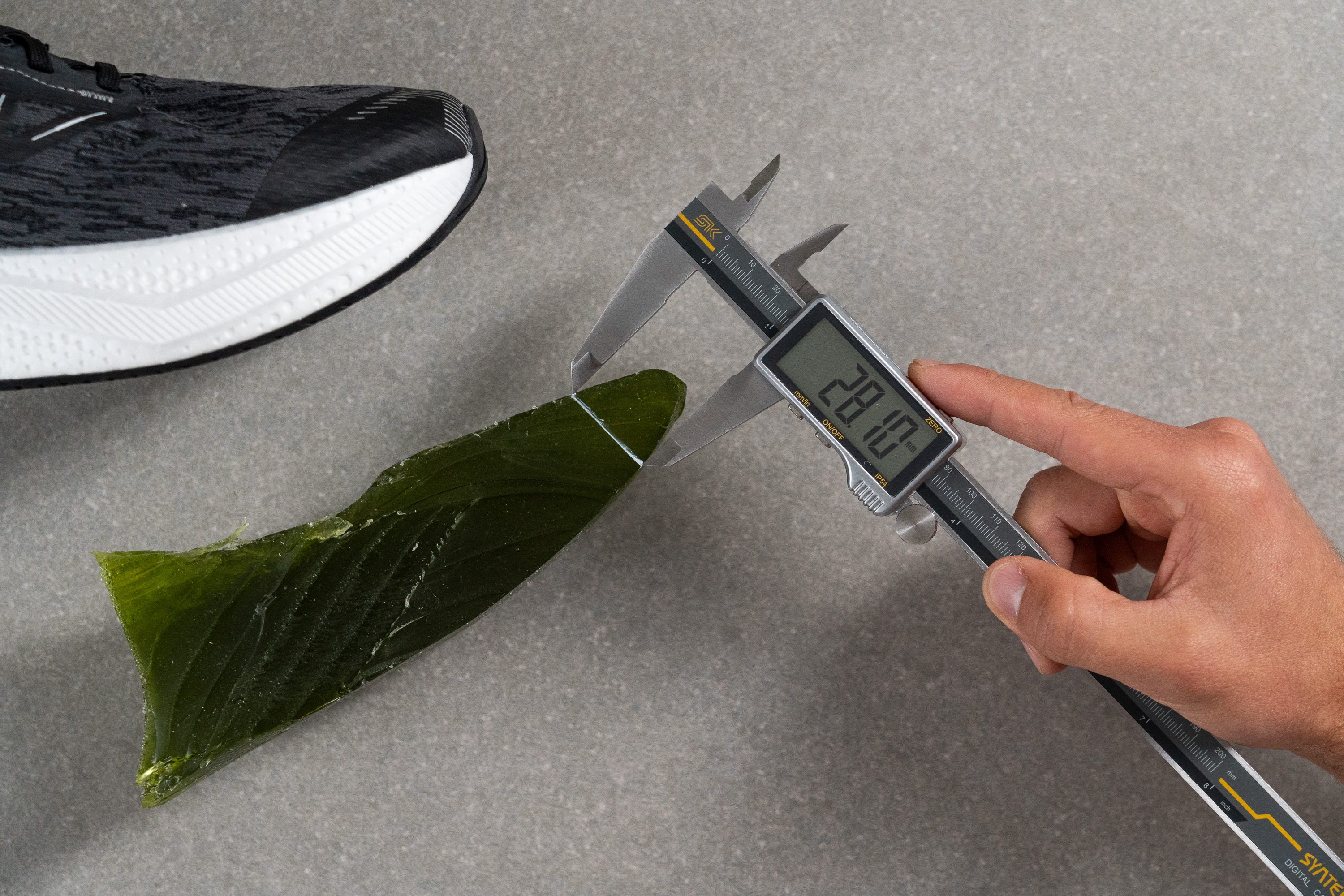
| Aero Glide 4 | 28.1 mm |
| Average | 27.0 mm |
Traction / Grip
Traction test
Salomon keeps using the Road contaGRIP compound in version 4, adapting its well-known trail rubber technology for road running. And it performs really well, scoring 0.65 in our wet-concrete traction test and making it clear that the Aero Glide 4 can be trusted confidently regardless of the weather conditions.
| Aero Glide 4 | 0.65 |
| Average | 0.53 |
Outsole design
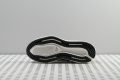
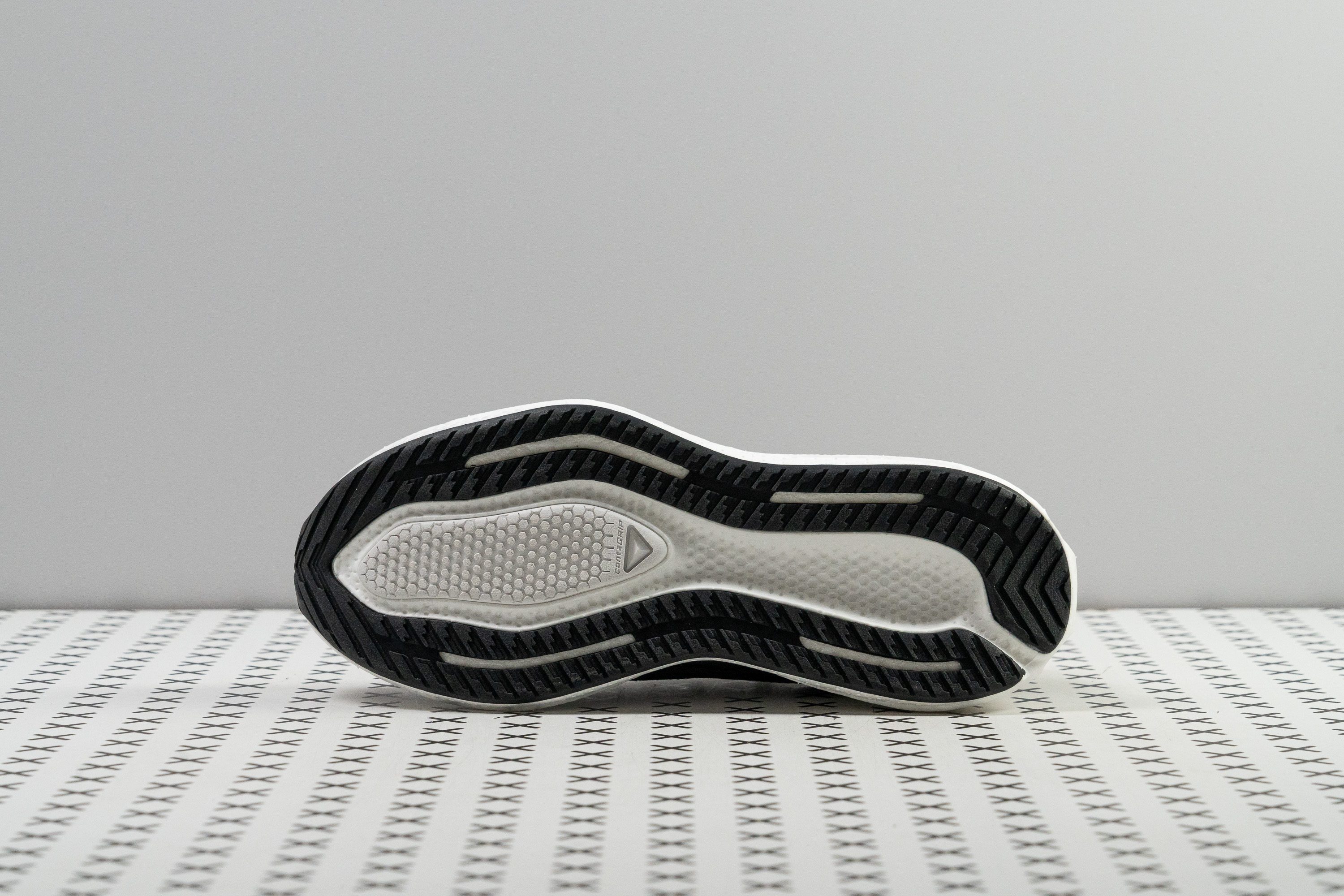
The outsole of the Salomon Aero Glide 4 keeps the same distinctive layout as its predecessor, using Road contaGRIP rubber mainly around the perimeter while leaving a huge section of exposed foam through the center.
It’s definitely not the most conventional design on the market, but the aggressive grooves and circumferential rubber placement still deliver reliable grip while helping Salomon keep the shoe lightweight for its towering stack height.
Flexibility / Stiffness
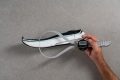
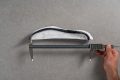
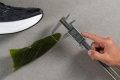
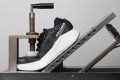
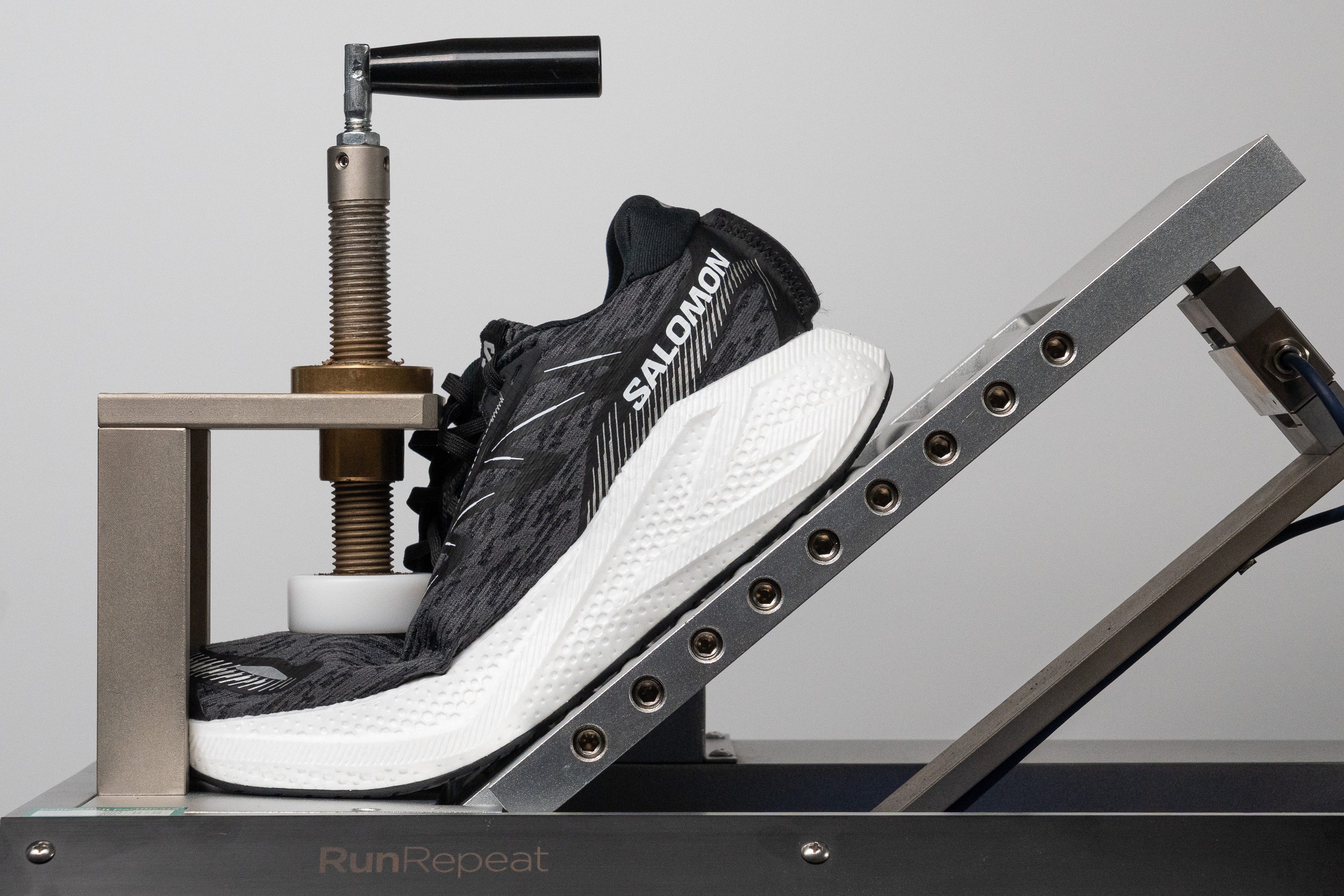
Like most modern super trainers, the Aero Glide 4 delivers a noticeably stiff ride due to its towering stack height. In our 30-degree bend test, performed using a machine custom-built for our lab, we measured a solid 18.3N result.
| Aero Glide 4 | 18.3N |
| Average | 15.5N |
Weight
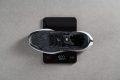
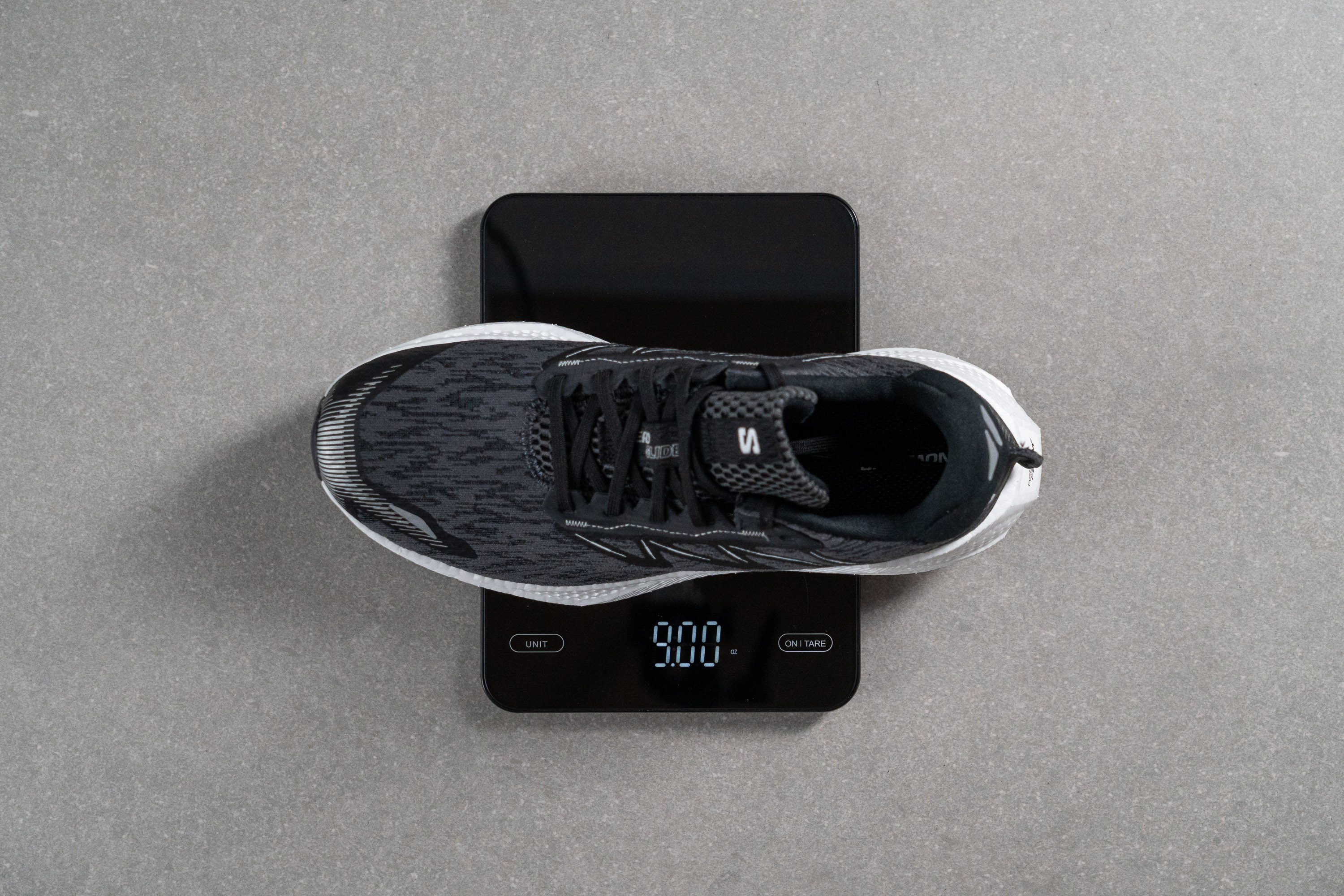
The Salomon Aero Glide 4 weighs 9.0 oz or 255g, which feels perfectly reasonable for this category.
It’s not an exceptionally lightweight result by any means (that would be a shoe like the ASICS Megablast), but it never feels problematic either given the massive amount of cushioning.
| Aero Glide 4 | 9.0 oz (255g) |
| Average | 9.2 oz (261g) |
Breathability
Breathability test
The engineered mesh upper of the Salomon Aero Glide 4 delivered moderate breathability in our testing, earning a 3/5 score.
Instead of relying on oversized ventilation openings, Salomon went with a more evenly-distributed airflow design that spreads breathable zones throughout the entire upper. It works well overall, although it falls short of truly exceptional ventilation.
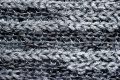
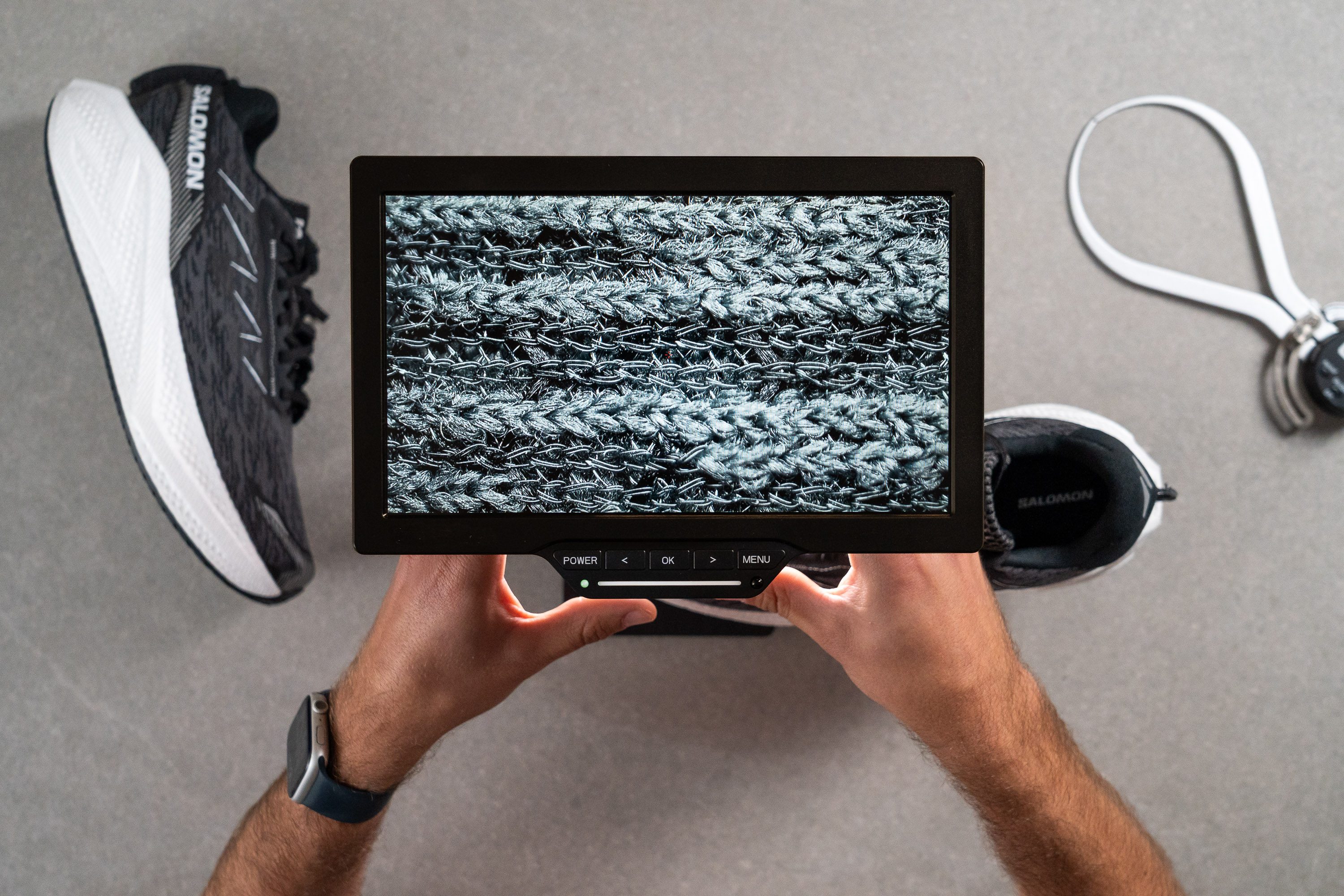
Once we placed the material under the microscope, we discovered that the mesh becomes remarkably thin in the key airflow sections. That was definitely a smart move by Salomon, because otherwise the dense construction could have restricted ventilation much more.
For us, this is still a really solid upper considering the price point of the Aero Glide 4, especially since it sits below today’s premium category.
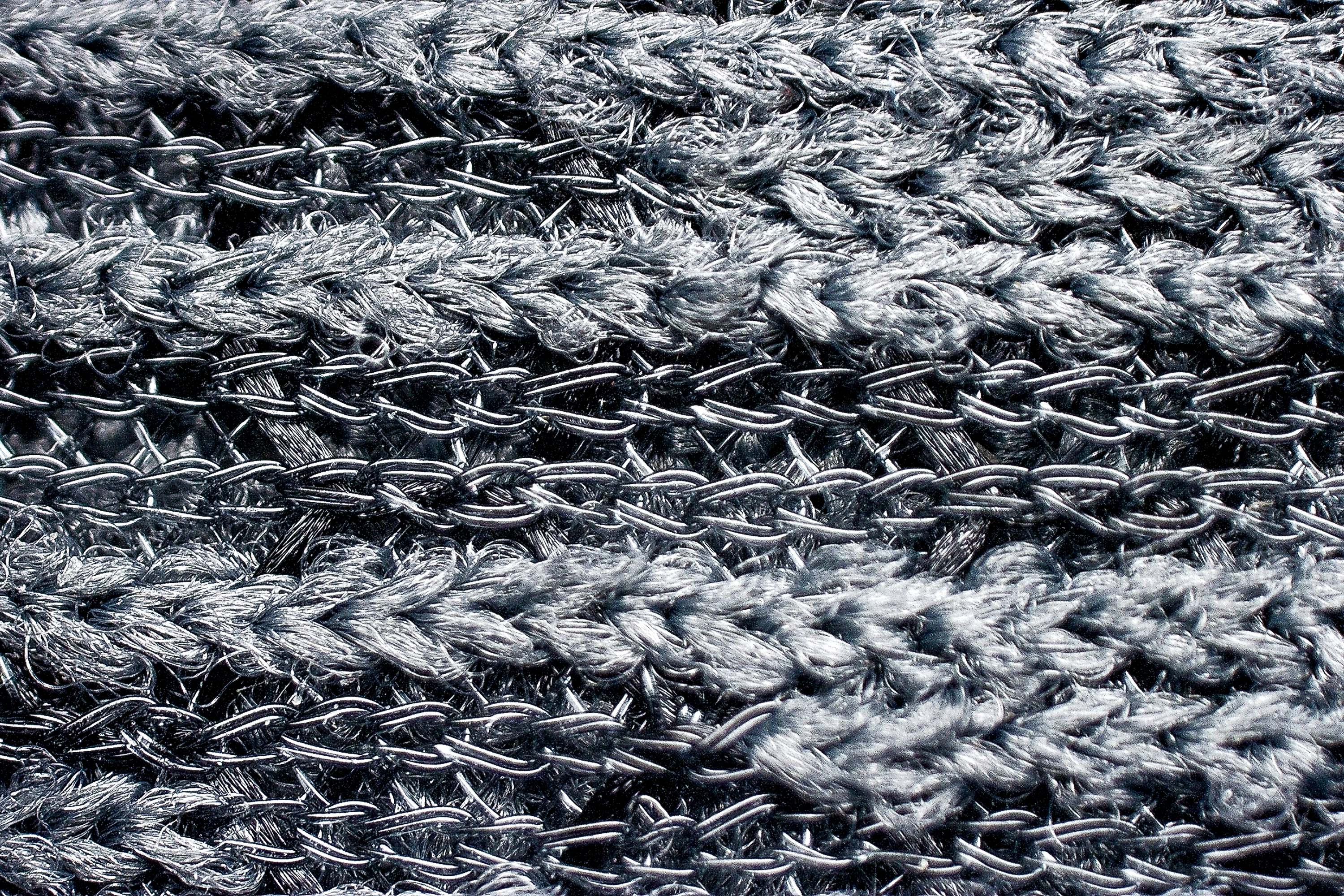
Even so, we can clearly see some room for improvement in future versions!
| Aero Glide 4 | 3 |
| Average | 3.6 |
Stability
Lateral stability test
We found the ride of the Aero Glide 4 best suited for neutral runners, although those with a mild tendency toward pronation should also feel comfortable here.
The broad platform, elevated stiffness, and moderately supportive sidewalls clearly help improve stability, yet it also feels obvious that Salomon intentionally avoided making the ride overly guided, which we think was the right choice for this shoe.
Torsional rigidity
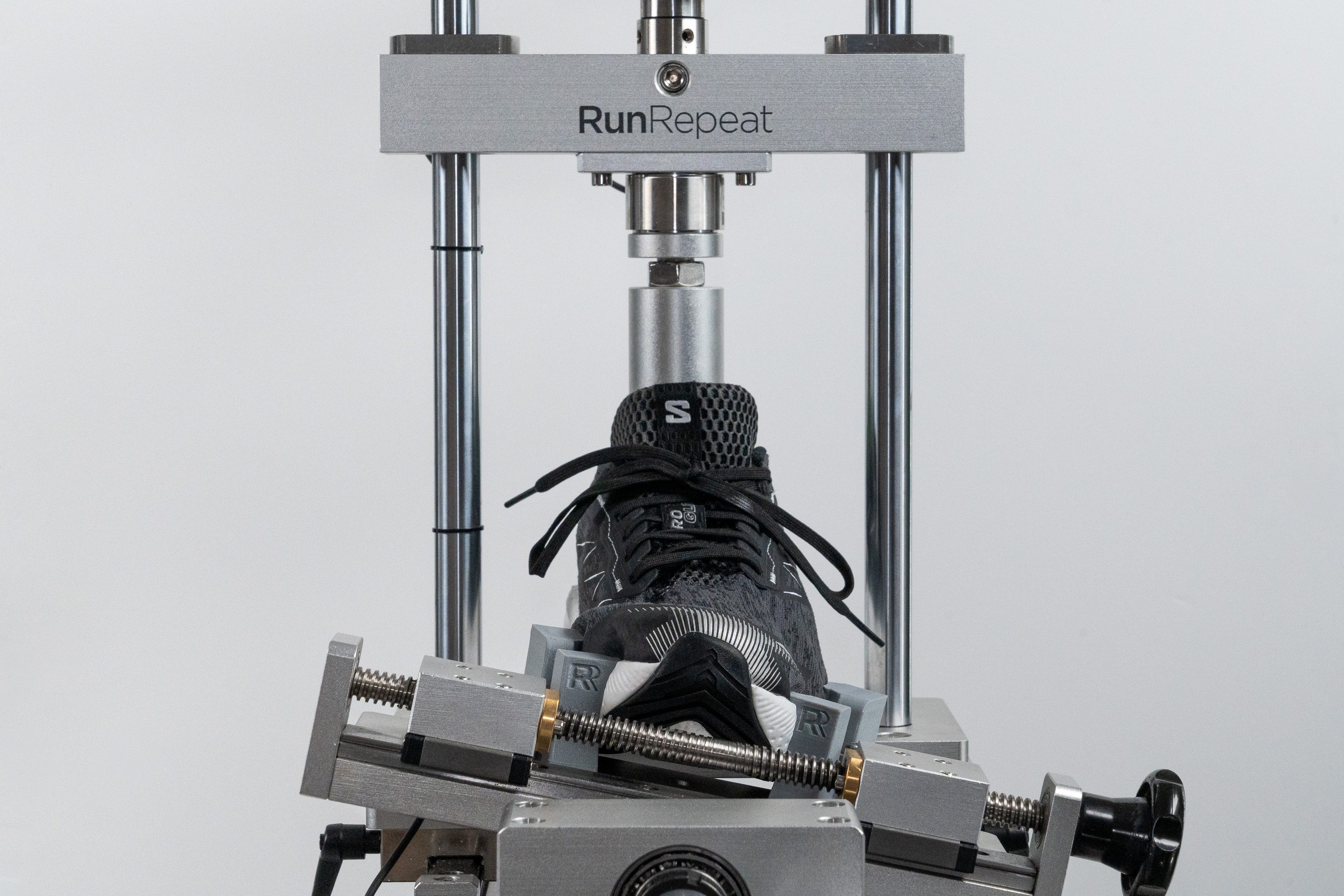
As we already noticed in our longitudinal stiffness test, the Aero Glide 4 also delivered an above-average result here at 16.6 Nm.
Honestly, there was little chance for a different outcome considering the towering stack height and the absence of dedicated flex grooves or other flexibility-focused design elements.
| Aero Glide 4 | 16.6 Nm |
| Average | 14.3 Nm |
Heel counter stiffness
The heel counter feels remarkably flexible with a low 2/5 score, which helps it almost disappear while running and creates a very unobtrusive sensation around the heel.
However, that also means the shoe provides less rearfoot support than some competitors, and it’s one of the main reasons why the Aero Glide 4 feels slightly less stable through the heel area.
| Aero Glide 4 | 2 |
| Average | 3 |
Midsole width - forefoot
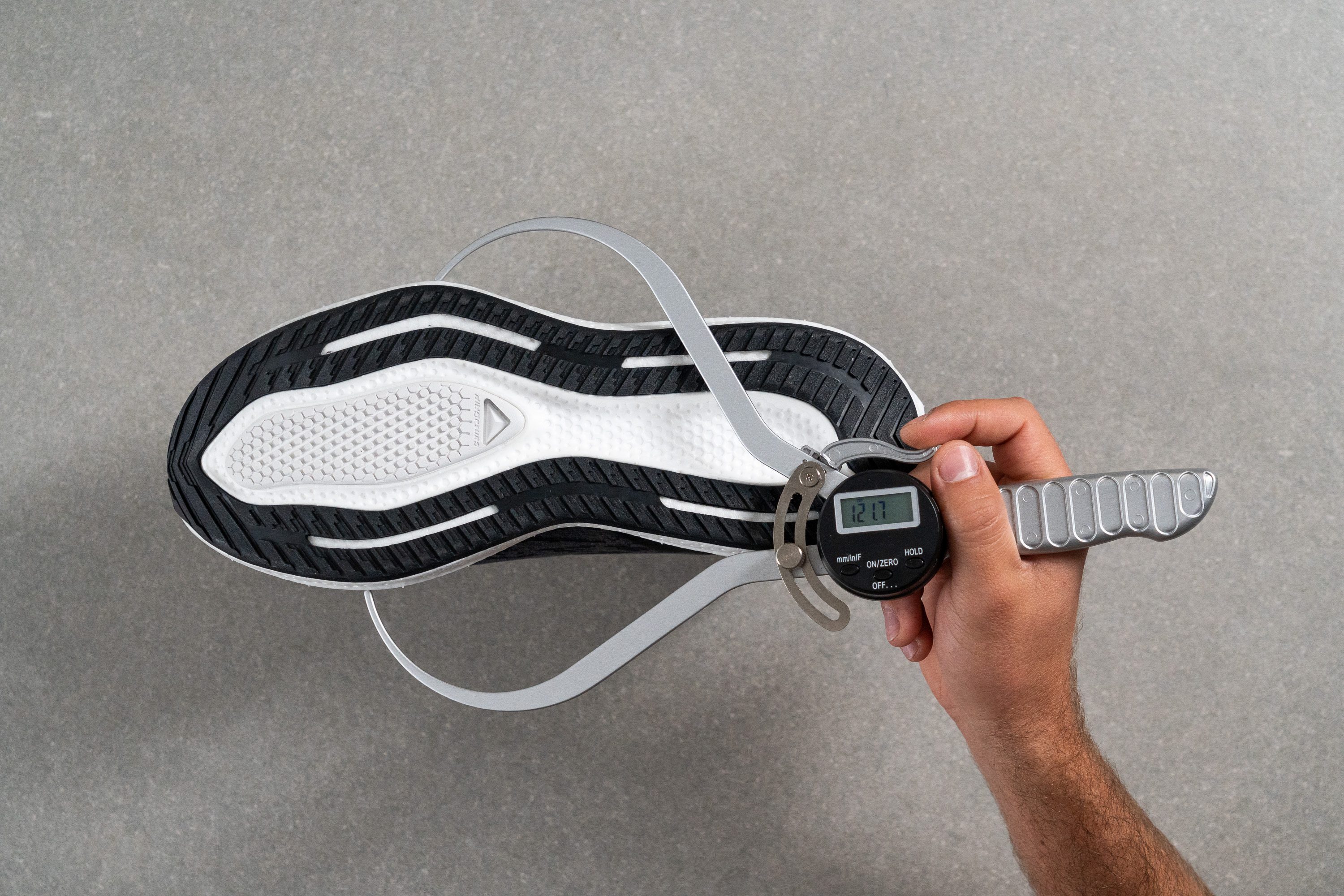
The Aero Glide 4 clearly features a broad platform, as confirmed by our massive 121.7 mm forefoot measurement. Even so, it never feels as oversized or bulky as many other max-stack trainers in this category.
That’s largely because Salomon chose a more streamlined geometry, combining a noticeably tapered midfoot with a forefoot that narrows more aggressively toward the front of the shoe.
| Aero Glide 4 | 121.7 mm |
| Average | 115.1 mm |
Midsole width - heel
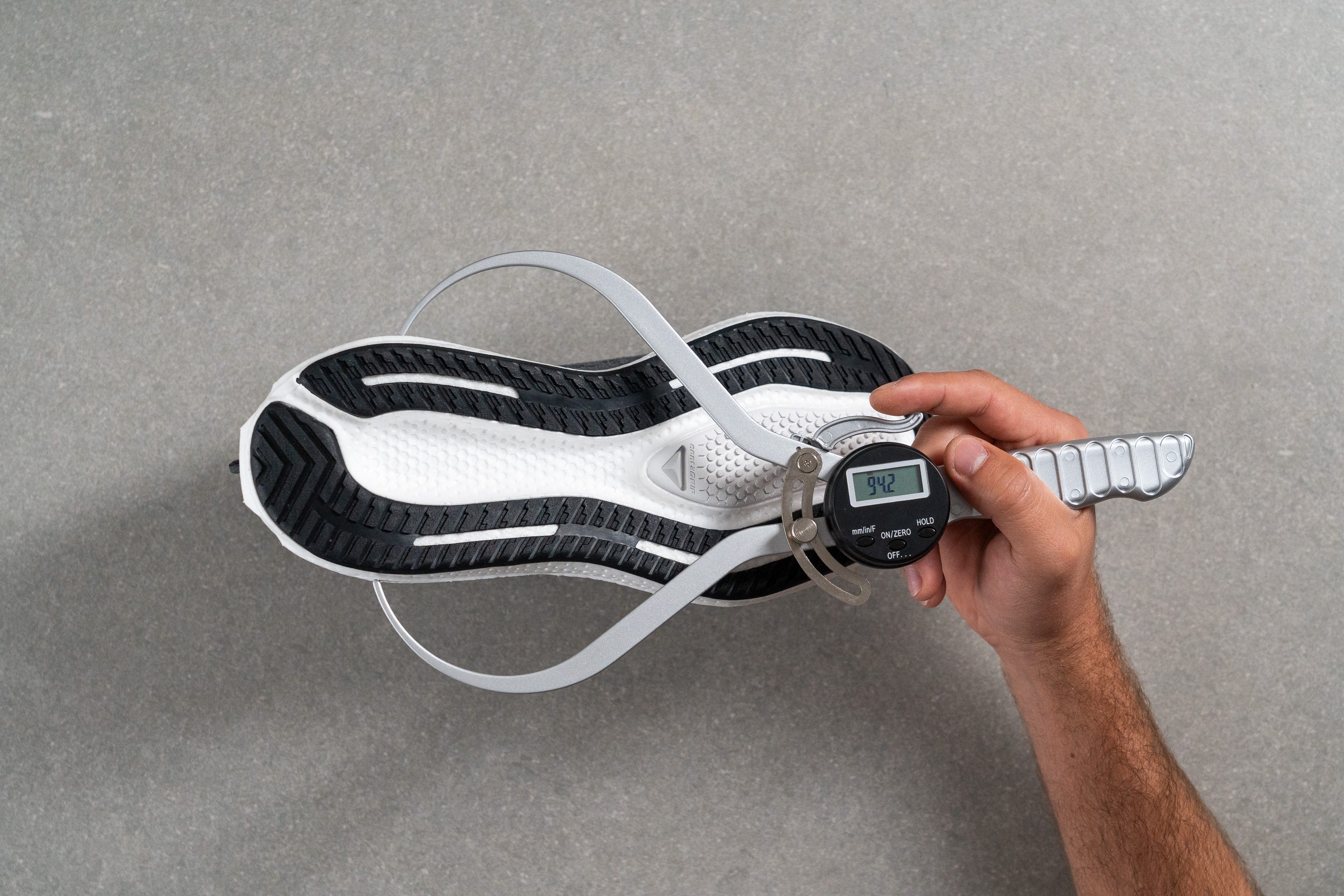
The heel also comes in wider than our current lab average, although not by a dramatic amount, measuring 94.2 mm in our caliper test.
| Aero Glide 4 | 94.2 mm |
| Average | 91.1 mm |
Durability
Toebox durability
The toebox left us hoping for slightly better durability after scoring just 2/5 in our test.
Still, it’s important to mention that Salomon added a massive TPU overlay (trail heritage again!) around the toe area, which does a great job protecting the upper and helping prevent damage if you accidentally strike sharp rocks or other obstacles on the run.
| Aero Glide 4 | 2 |
| Average | 2.6 |
Heel padding durability
To compensate, the heel padding delivered a flawless 5/5 result in our durability test and completely removed any concerns about long-term wear in this area.
| Aero Glide 4 | 5 |
| Average | 3.4 |
Outsole durability
When we moved the Dremel to the outsole rubber, the result once again landed slightly below our expectations. We measured 1.4 mm of damage, which is a bit worse than our current lab average and could point toward earlier outsole wear over time...
| Aero Glide 4 | 1.4 mm |
| Average | 1.1 mm |
Outsole thickness
But Salomon clearly understands the rubber compound they’re working with, which explains why the brand decided to use a thicker outsole than what we usually see in this category.
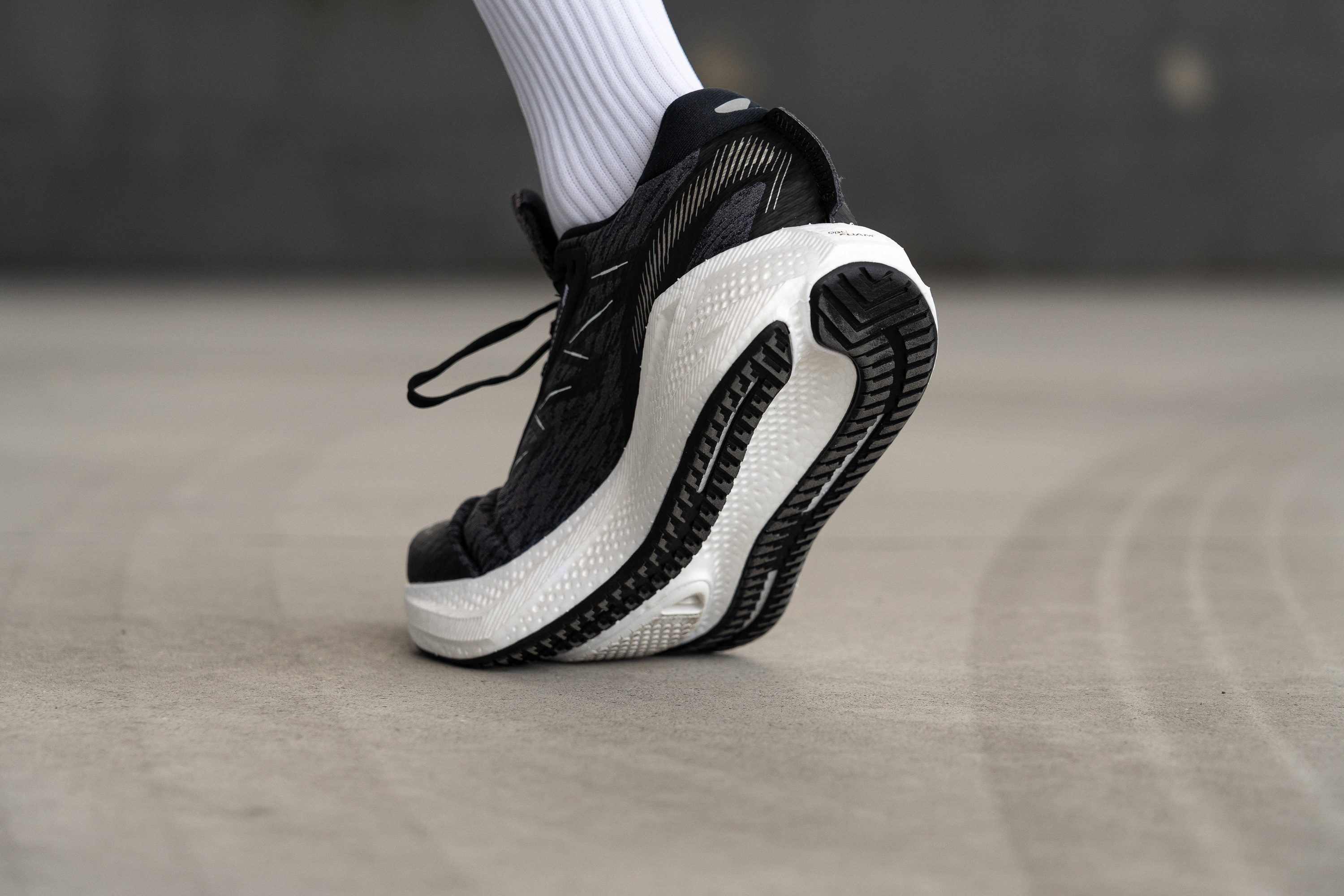
At 3.8 mm, the added rubber should help offset the slightly below-average durability result and likely deliver a lifespan comparable to most other daily trainers.
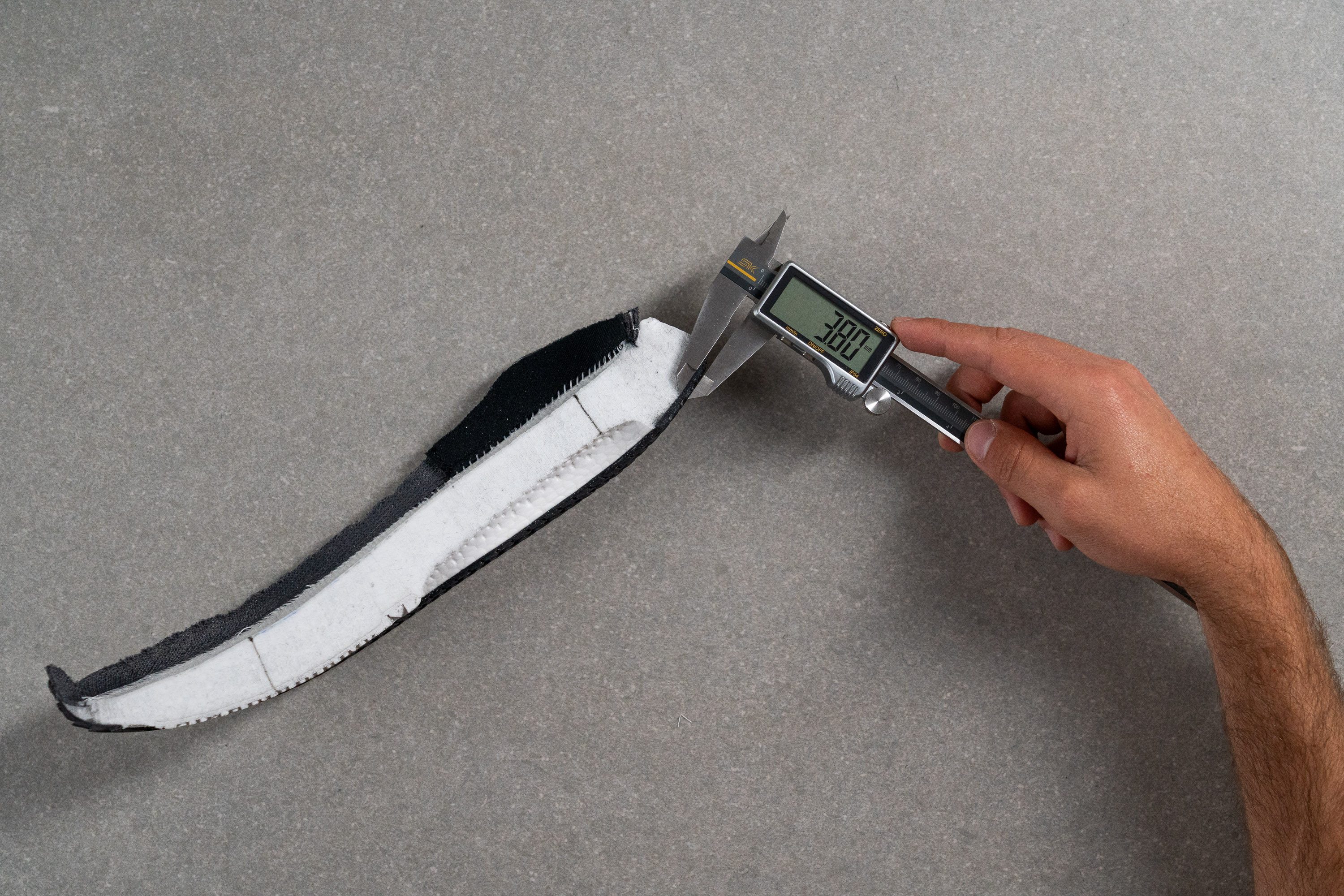
| Aero Glide 4 | 3.8 mm |
| Average | 3.1 mm |
Misc
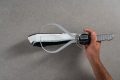
Insole thickness
The insole measures 4.8 mm thick, which places it very close to what we usually see in most modern road running shoes.
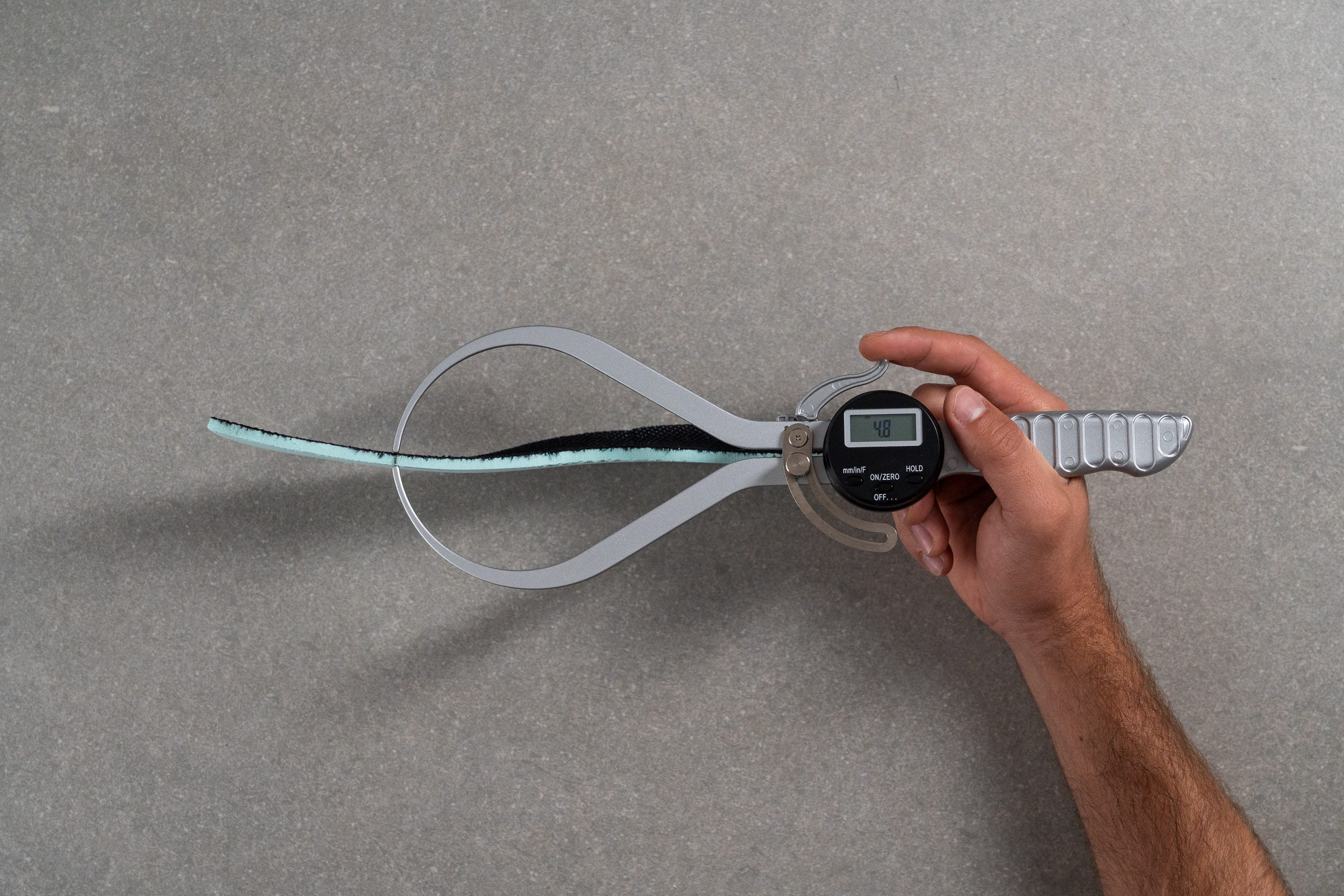
| Aero Glide 4 | 4.8 mm |
| Average | 4.4 mm |
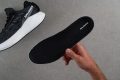
Removable insole
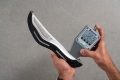
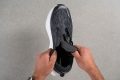
The included insole can be removed easily, as Salomon decided not to glue it to the strobel board.
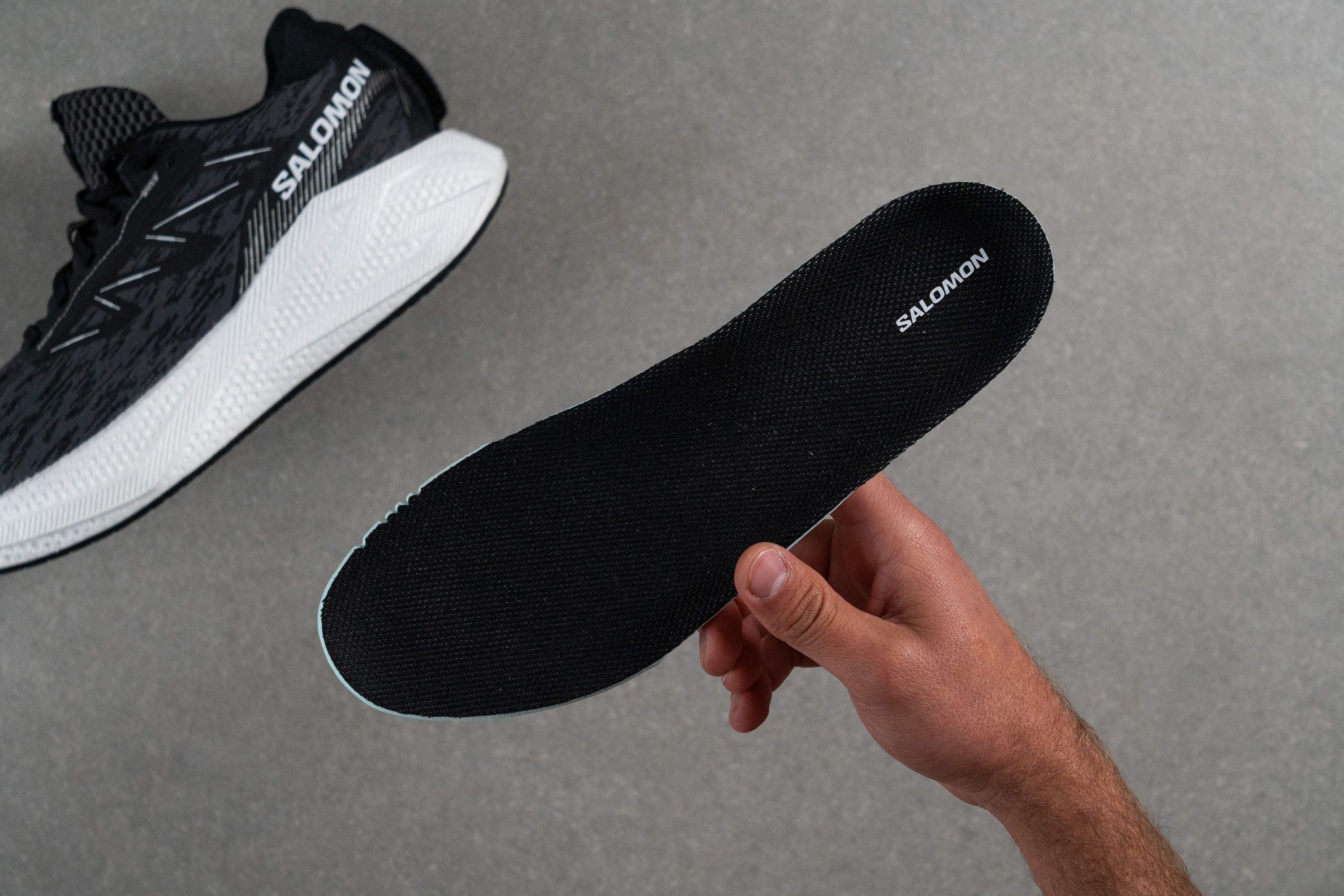
| Aero Glide 4 | Yes |
Reflective elements
Good job by Salomon here, as the brand added reflective elements to both the forefoot and heel areas of the shoe. Honestly, we wish more companies paid attention to details like this.
| Aero Glide 4 | Yes |
Tongue padding
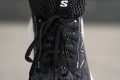
The tongue will only appeal to runners who enjoy oversized designs, because it is undeniably large. We really wish Salomon had gone for a smaller tongue, and honestly, this feels like one of the clearest areas to refine for version 5.
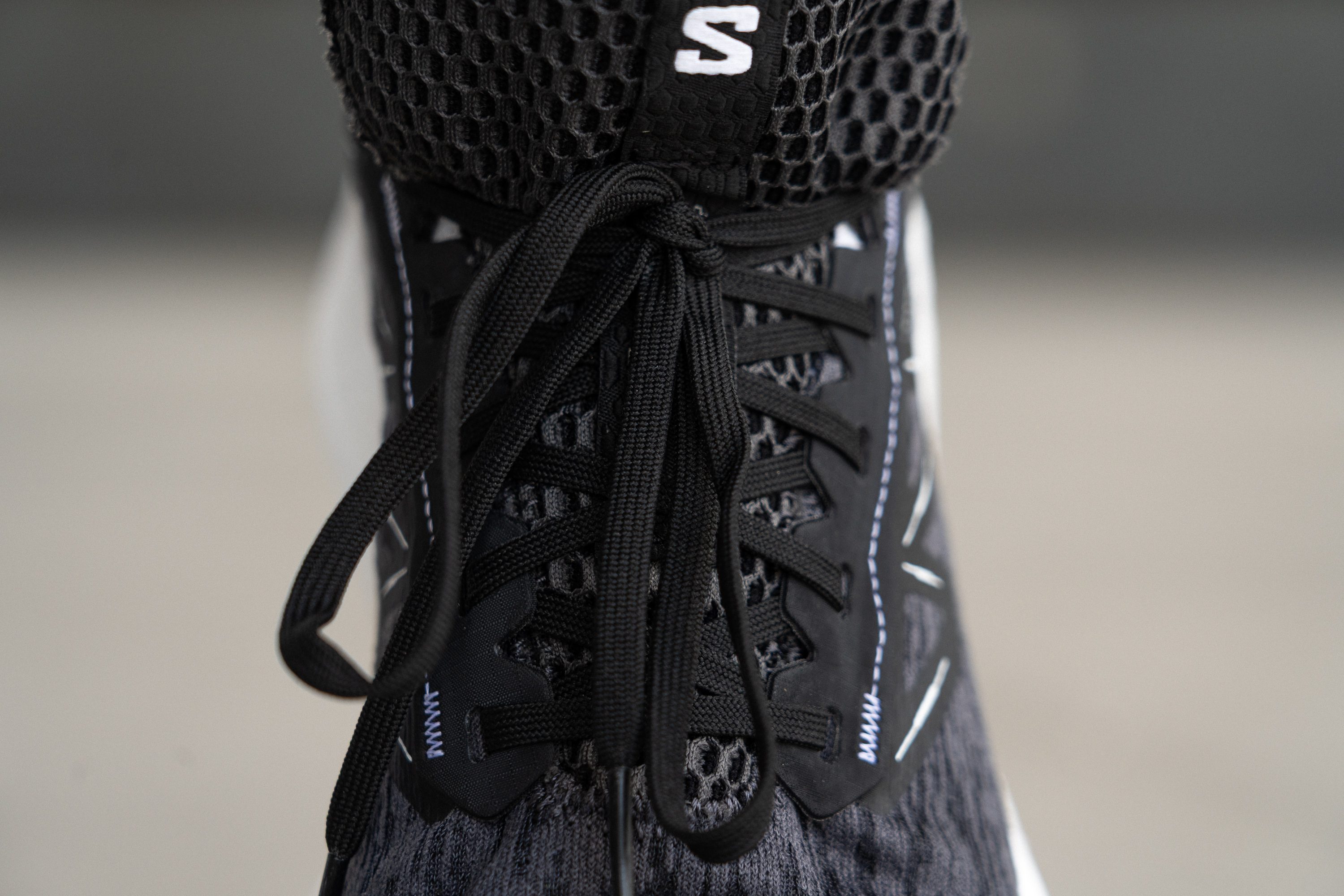
That said, the padding itself is well judged at 3.9 mm. It delivers enough comfort for daily miles while still feeling lean enough for tempo runs, avoiding the unnecessary bulk that could compromise the lightweight character of the Aero Glide 4.
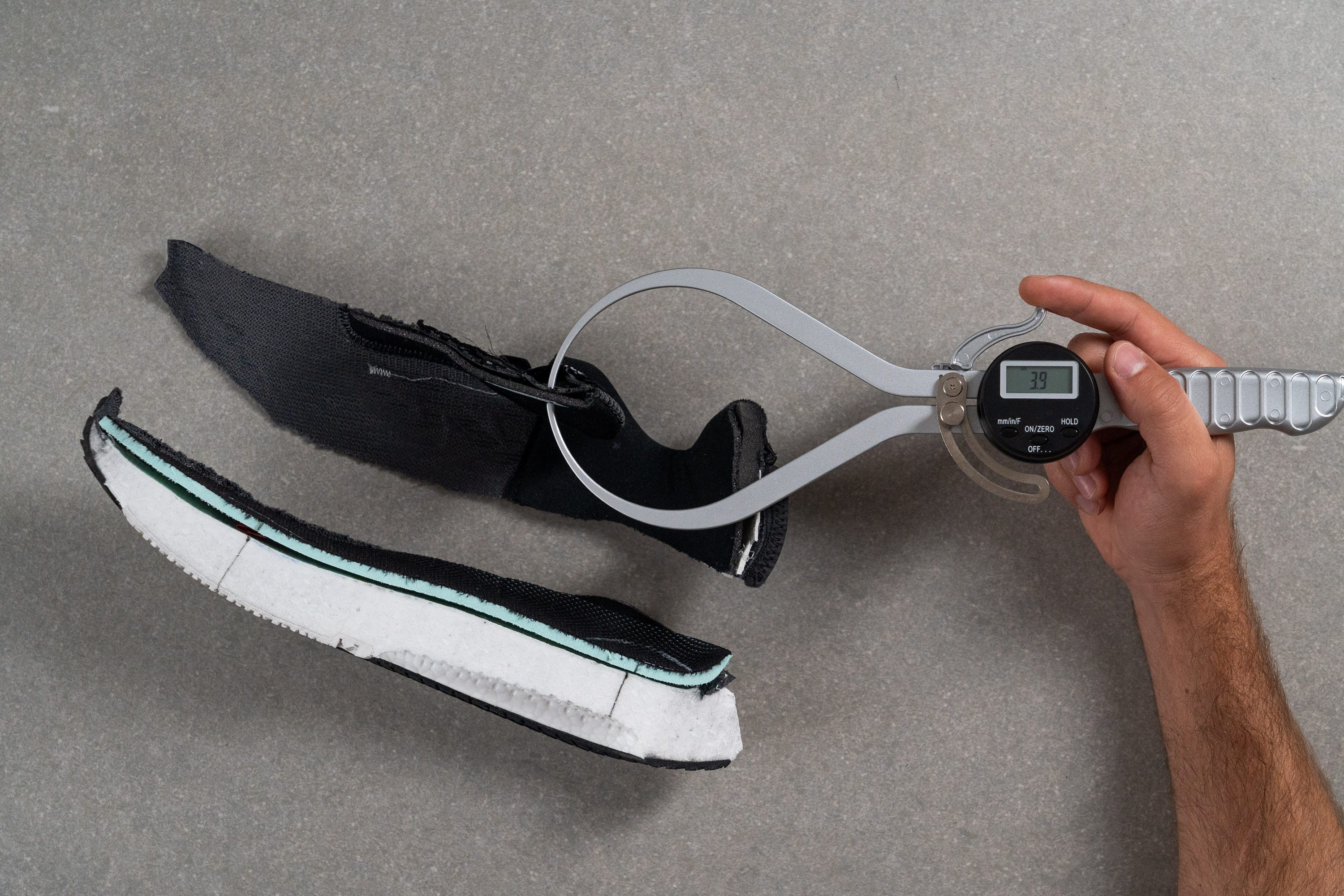
| Aero Glide 4 | 3.9 mm |
| Average | 5.8 mm |
Tongue: gusset type
The tongue stays attached to the upper through most of its length, helping reduce unwanted lateral movement during runs. However, it avoids the classic gusseted construction and instead showcases a more trail-inspired design approach that clearly reflects Salomon’s roots.
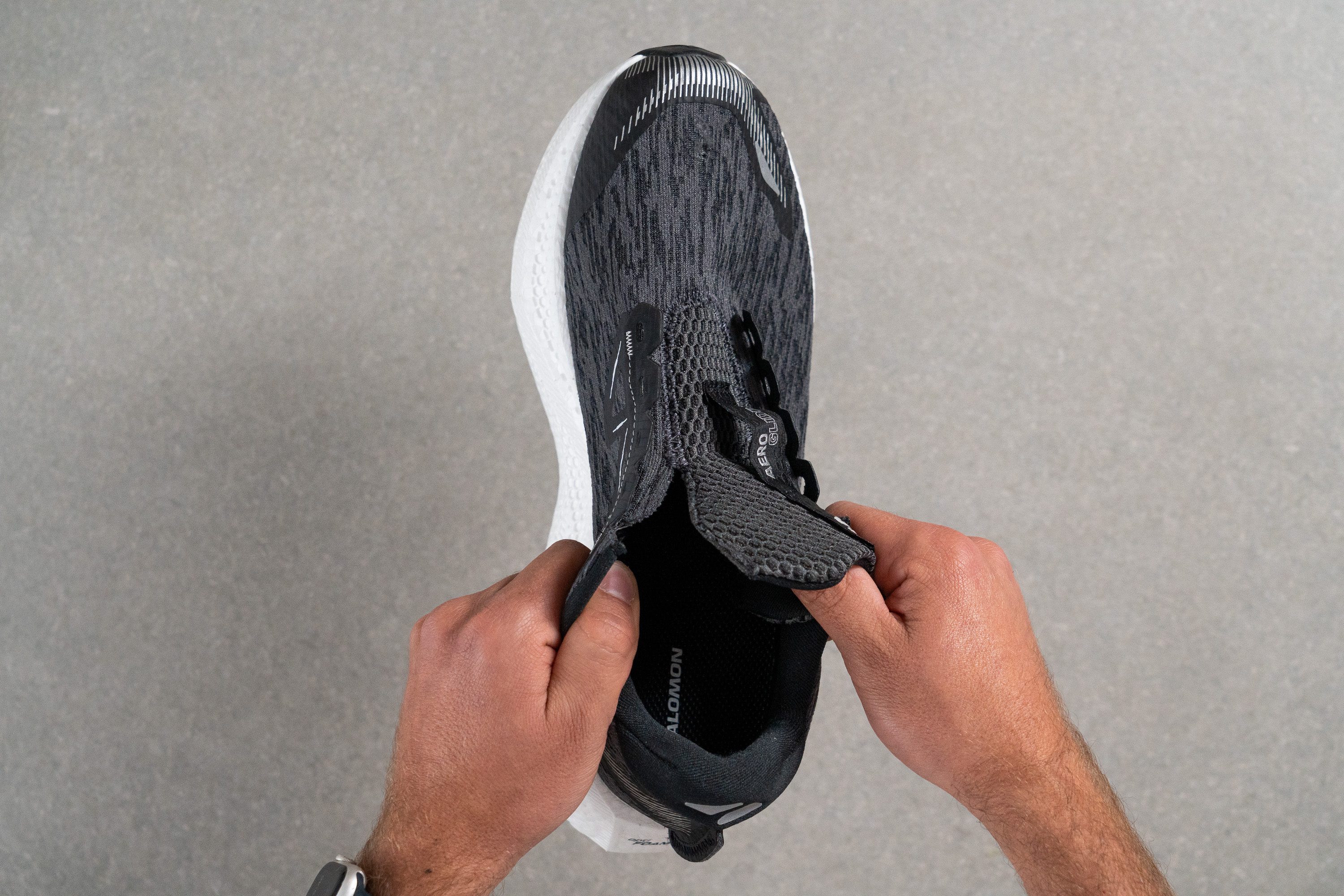
| Aero Glide 4 | Both sides (semi) |
Heel tab
The same iconic heel design from version 3 returns in this update, using a rare construction that places the upper stitching on the exterior of the heel. That gives the Aero Glide 4 a look that stands apart from almost everything else on the market.
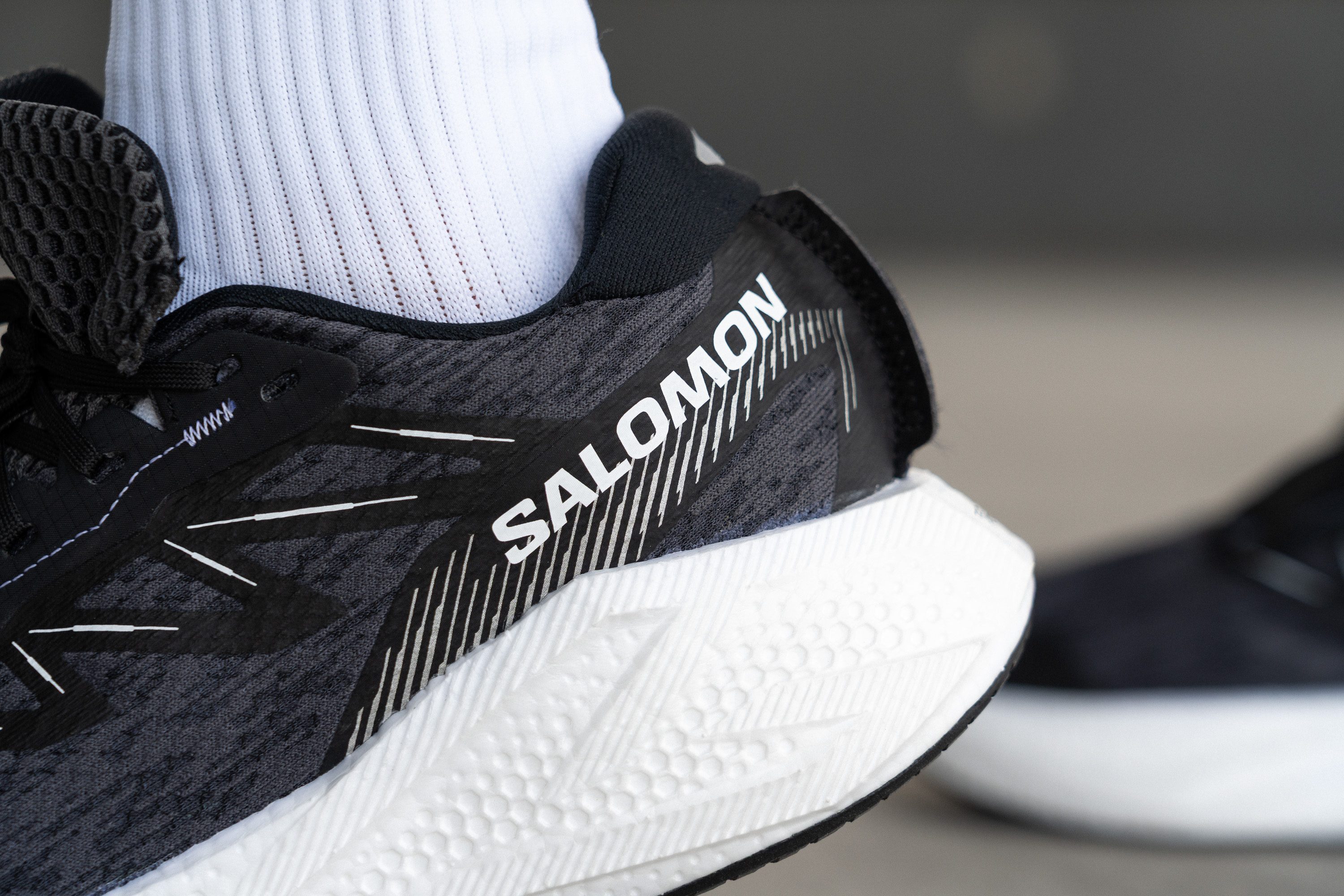
| Aero Glide 4 | None |
Price
Considering both the specifications and our lab results, we think the Salomon Aero Glide 4 delivers excellent value for the price. In fact, very few shoes we’ve tested offer better energy return at this cost, and the overall build quality also feels fully in line with what we expect from premium daily trainers.
| Aero Glide 4 | $160 |
| Average | $158 |