










Our verdict
- Cushioning 78
- Speed 76
- Stability 91
- Outdoor 56
Pros
- Exceptional outsole grip
- Solid stability and lateral support
- Great shock absorption
- Wide width available
- Fantastic durability
- Well-padded interiors
Cons
- Non-existent energy return
- Too snug in medium width
- Not for outdoor courts
- Poor breathability
Awards
- Top 29% most popular basketball shoes
Comparison
The most similar basketball shoes compared
+ + Add a shoe | |||||
|---|---|---|---|---|---|
| Our score | 85 Great | 87 Great | 91 Superb | 88 Great | |
| Price | $120 | $210 | $120 | $135 | |
| Signature | - | LeBron James | Donovan Mitchell | Luka Doncic | |
| Shock absorption | High | High | Moderate | Low | |
| Energy return | Low | High | Low | Moderate | |
| Traction | High | Moderate | High | Low | |
| Top | Low | Low | Low | Low | |
| Ankle support | ✗ | ✓ | ✓ | ✓ | |
| Weight lab | 13.5 oz / 383g | 15.5 oz / 439g | 14 oz / 397g | 12.9 oz / 366g | |
| Lightweight | ✗ | ✗ | ✗ | ✓ | |
| Breathability | Moderate | Warm | Moderate | Moderate | |
| Outsole durability | Good | Good | Decent | Good | |
| Drop lab | 10.0 mm | 7.7 mm | 9.0 mm | 7.6 mm | |
| Heel stack lab | 32.9 mm | 31.1 mm | 28.4 mm | 26.6 mm | |
| Forefoot | 22.9 mm | 23.4 mm | 19.4 mm | 19.0 mm | |
| Size | - | True to size | Slightly small | True to size | |
| Midsole softness | Balanced | Balanced | Balanced | Firm | |
| Stiffness | Stiff | Stiff | StiffModerate | Stiff | |
| Torsional rigidity | Stiff | Stiff | Stiff | Stiff | |
| Heel counter stiffness | Flexible | Stiff | Moderate | Moderate | |
| Width / fit | Narrow | Wide | Medium | Medium | |
| Toebox width | Medium | Medium | Medium | Medium | |
| Midsole width - forefoot | Average | Average | Average | Average | |
| Midsole width - heel | Average | Average | Wide | Average | |
| Heel padding durability | Decent | Good | Decent | Good | |
| Toebox durability | Decent | Good | Decent | Decent | |
| Insole thickness | Average | Very thick | Average | Average | |
| Outsole thickness | Average | Average | Thin | Very thin | |
| Heel tab | None | None | Finger loop | None | |
| Ranking | #21 Top 50% | #11 Top 27% | #3 Top 8% | #10 Top 24% | |
| Popularity | #12 Top 29% | #8 Top 20% | #22 Bottom 47% | #33 Bottom 21% |

Who should buy
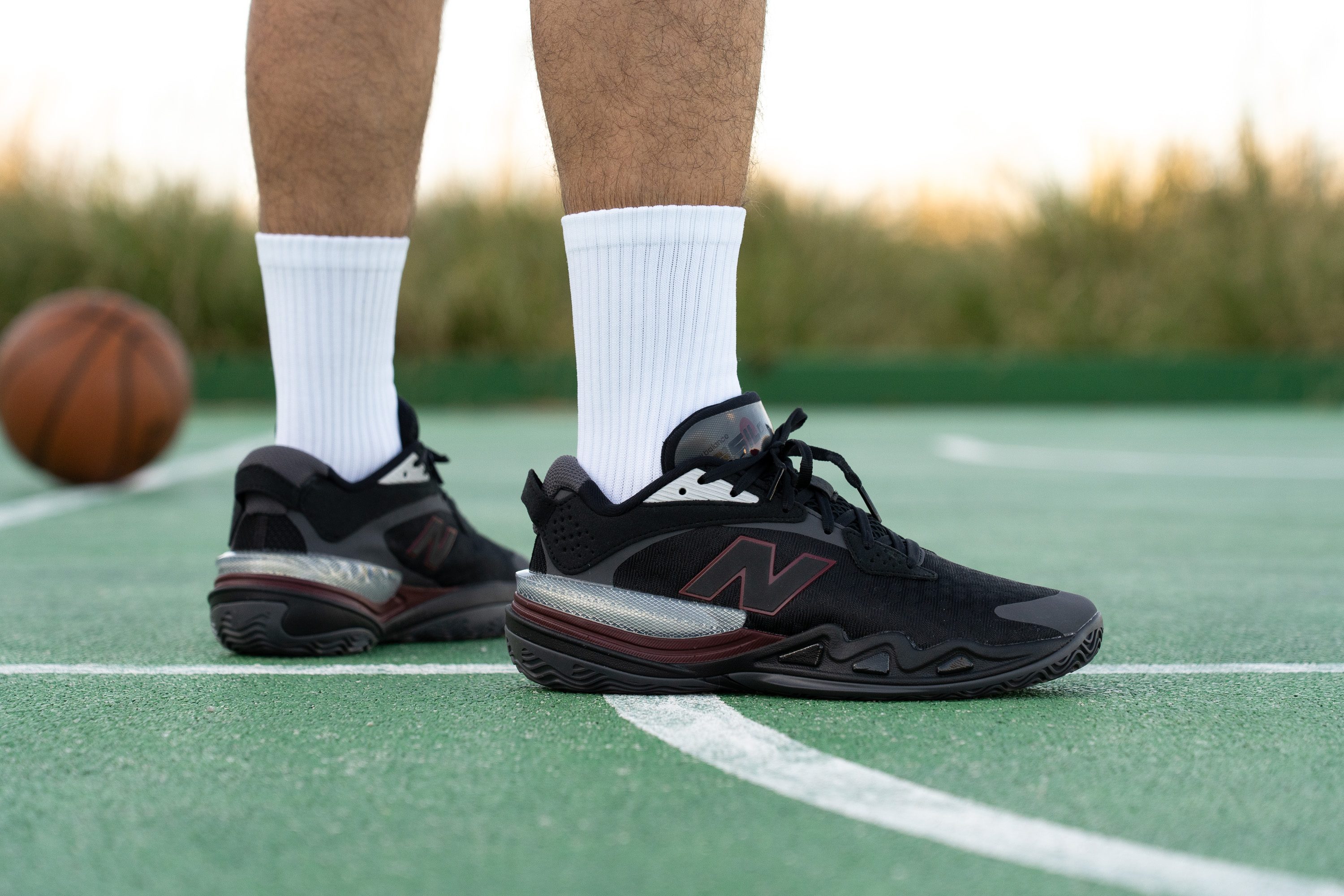
Having analyzed the pros and cons of the New Balance Hesi Low v2, we believe that it will benefit players who:
- prioritise tacky grip
- need a versatile shoe that offers agility without compromising impact protection
- want a highly durable shoe at a moderate price point
Who should NOT buy
The low-rebound nature of the Hesi Low v2's cushioning can make it feel dead and uninspiring. If you want a similar shoe setup with a more propulsive ride, try the Jordan Zion 4 or the Nike A'One.
And if you're after a shoe for playing pickup on the blacktop, see our guide on the best outdoor basketball shoes.
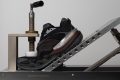
Cushioning
Shock absorption
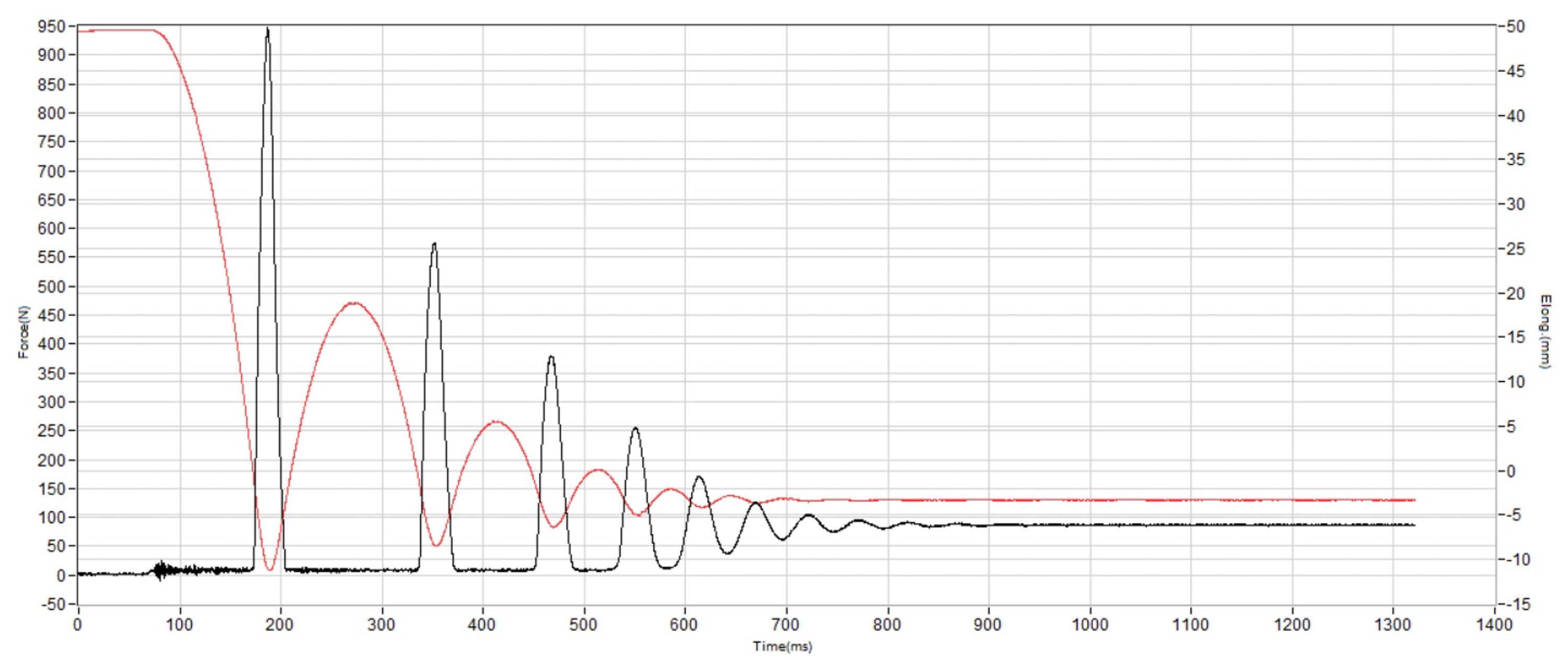
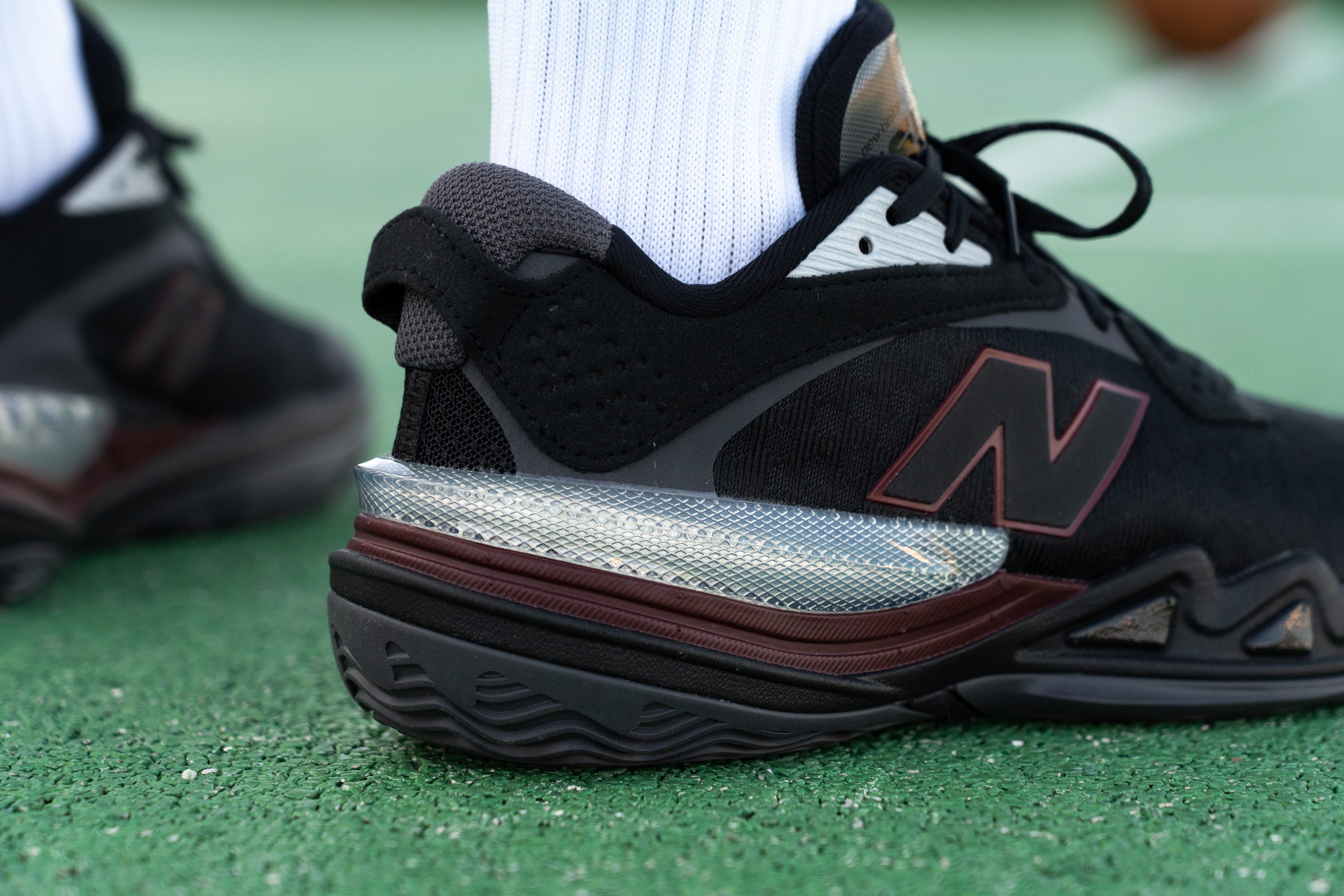
The NB Hesi Low v2 features a full-length FuelCell midsole, which showed standard shock absorption in the heel (106 SA) and an above-average one in the forefoot (90 SA). This makes it rather versatile for different types of hoopers.
Inside the New Balance shoe range, it offers a bit more impact protection than the TWO WXY V5 (101/88 SA) but notably less than the Fresh-Foam-packed BB v3 (127/101 SA).
| Hesi Low v2 | 106 SA |
| Average | 104 SA |
Energy return
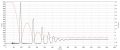
We felt rather underwhelmed by the lack of rebound in the Hesi Low v2's. With some of the lowest energy return measurements of 44.8% in the heel and 48.2% in the forefoot, it feels flat and practically dead underfoot. So, jumps and first steps can feel a bit more labored in this shoe.
But there is an upside to it as well, as you get a highly stable and planted experience in return.
| Hesi Low v2 | 48.2% |
| Average | 62.3% |
Heel stack
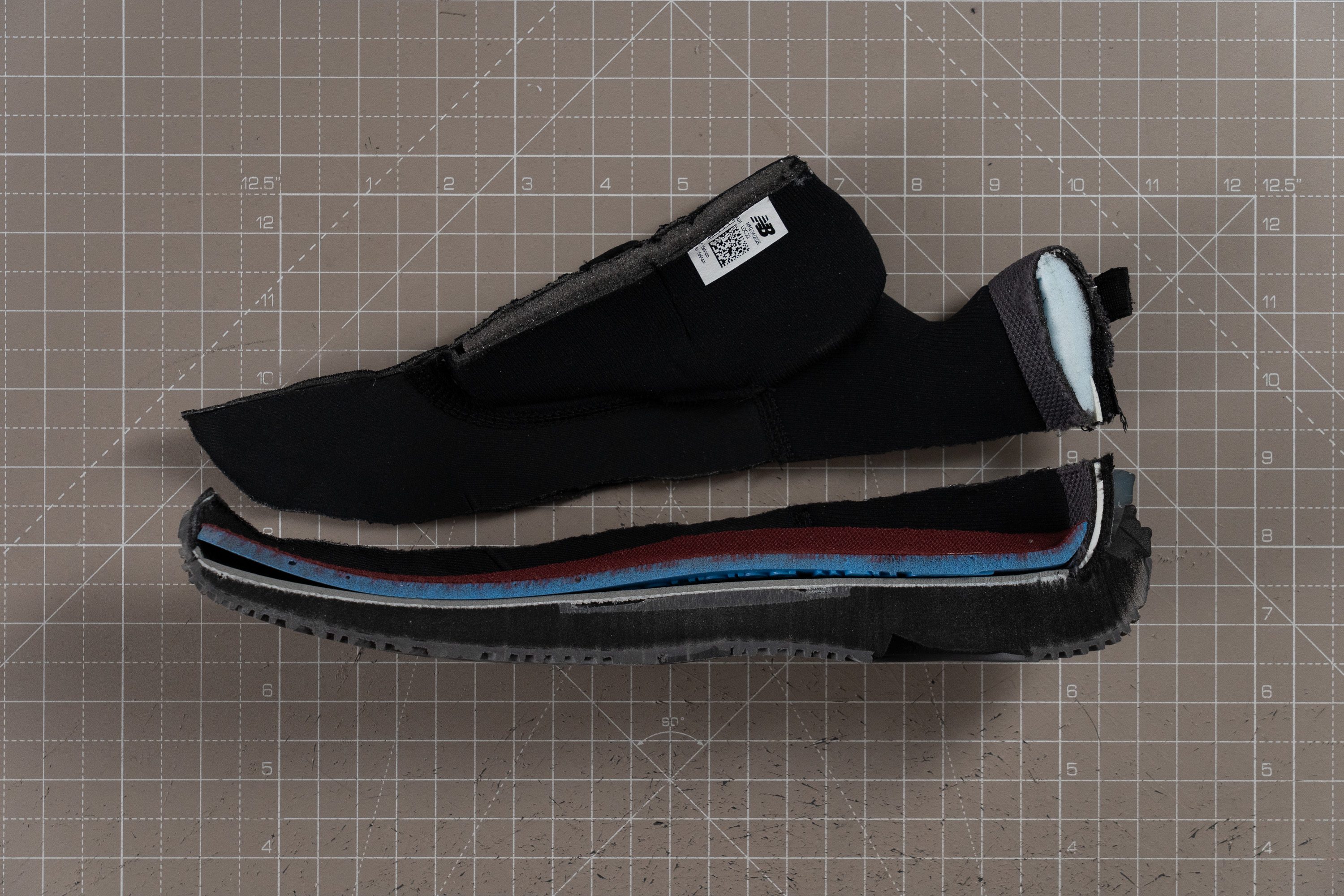
The Hesi Low v2 caught us off guard with its additional 6.8 mm of stack height in the heel! At 32.9 mm, it is no longer the low-stack platform we experienced in the first Hesi Low.
It is also a few millimeters taller than the basketball shoe average and is almost on par with the BB v3 (34.3 mm)!
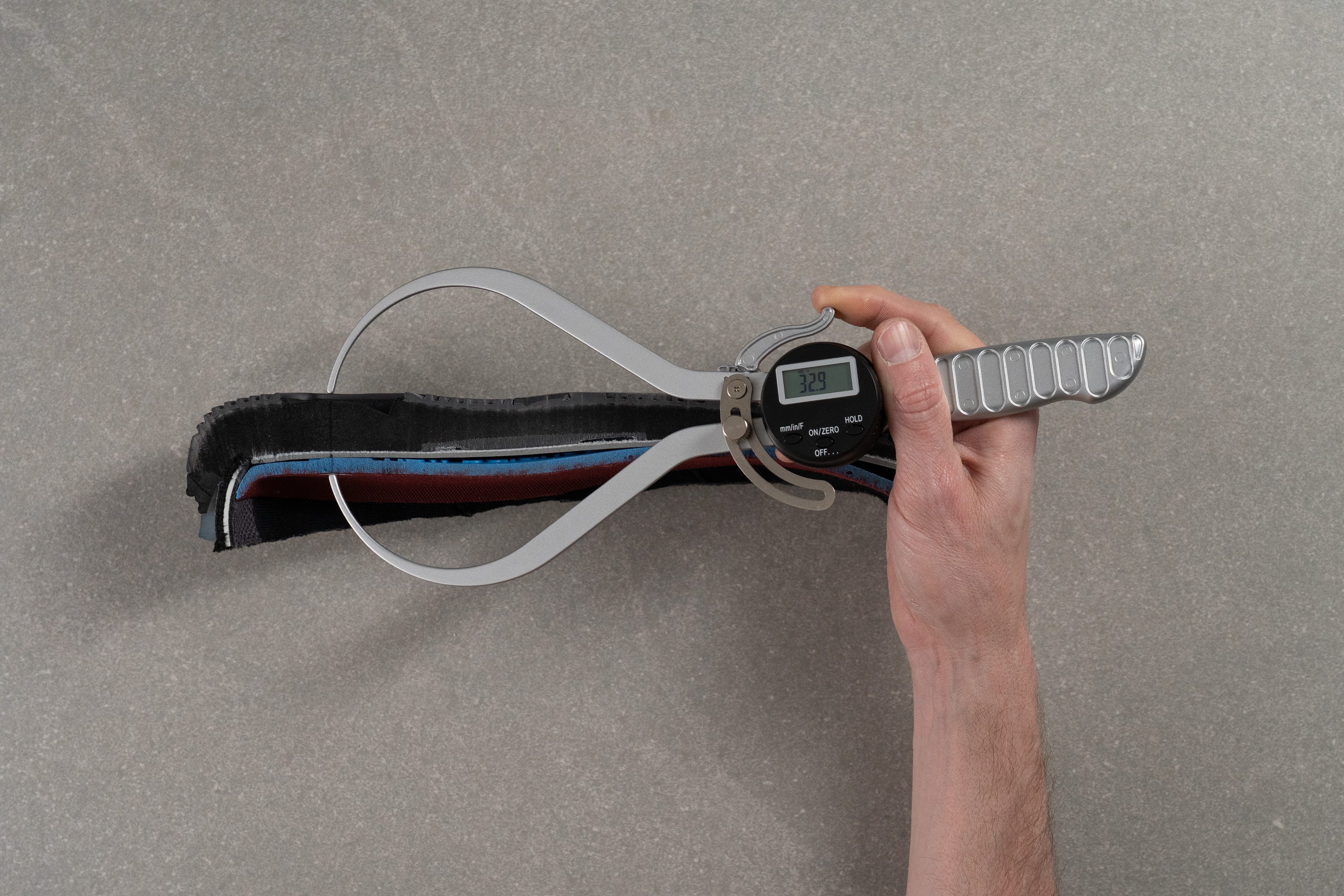
| Hesi Low v2 | 32.9 mm |
| Average | 28.6 mm |
Forefoot stack
Even the shoe's forefoot stack grew a bit taller, exceeding the average at 22.9 mm. This helps to explain an improvement in the shoe's impact protection as well.
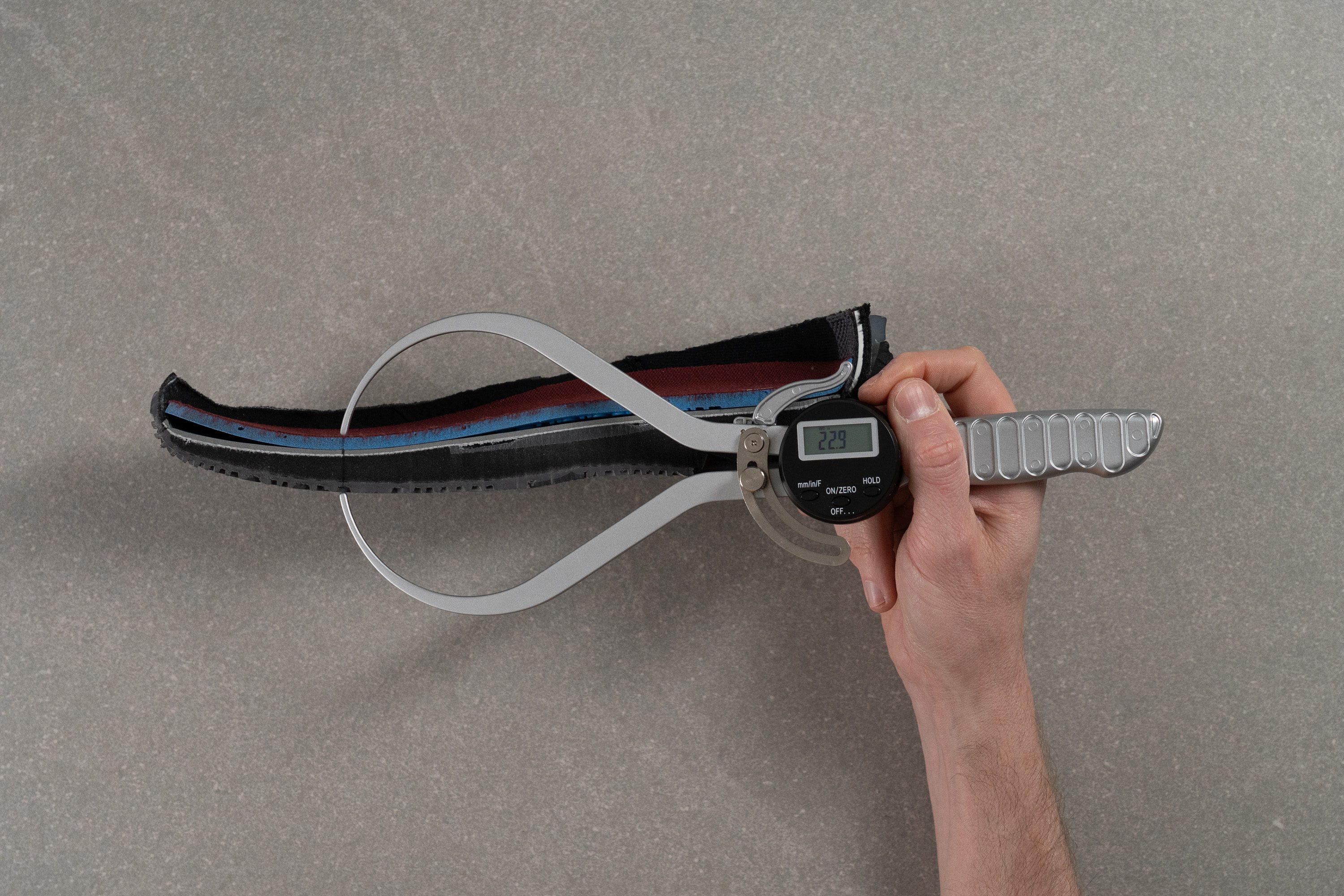
| Hesi Low v2 | 22.9 mm |
| Average | 21.4 mm |
Drop
The difference in stack heights also results in the shoe's slightly above-average 10.0 mm drop. It's not too steep to cause a forward-leaning pitch, but it helps take some strain off the Achilles and calves.
| Hesi Low v2 | 10.0 mm |
| Average | 7.2 mm |
Midsole softness
According to our durometer measurements, the FuelCell foam of the Hesi Low v2 is firmer than the brand's Fresh Foam X cushioning, especially the one used in the BB v3.
For context, we recorded a moderately firm reading of 39.1 AC in the Hesi Low v2, which is 53% firmer than the BB v3's 25.6 AC!
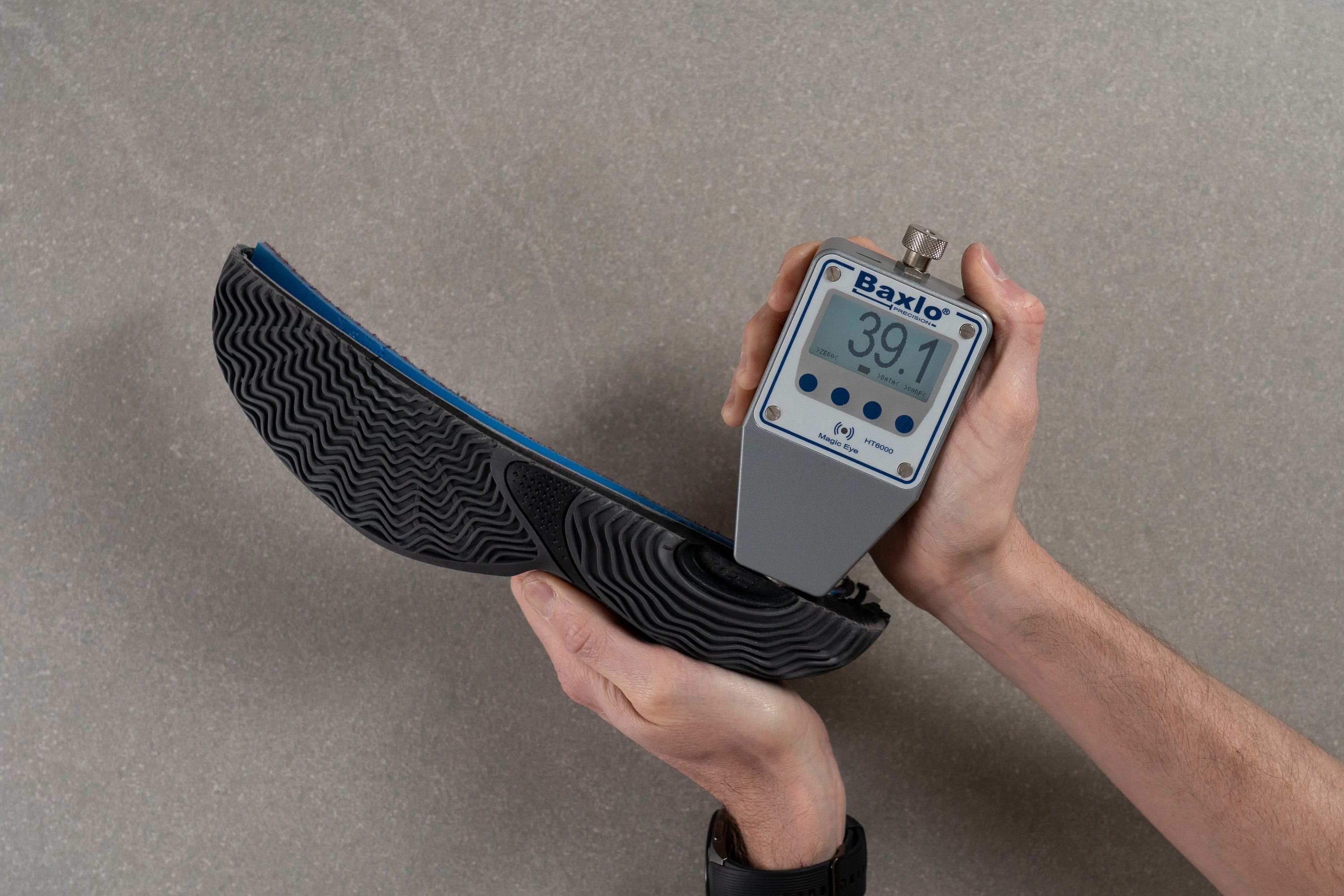
| Hesi Low v2 | 39.1 AC |
| Average | 40.7 AC |
Size and fit
Size
Internal length
| Hesi Low v2 | 267.9 mm |
| Average | 271.7 mm |
Width / Fit
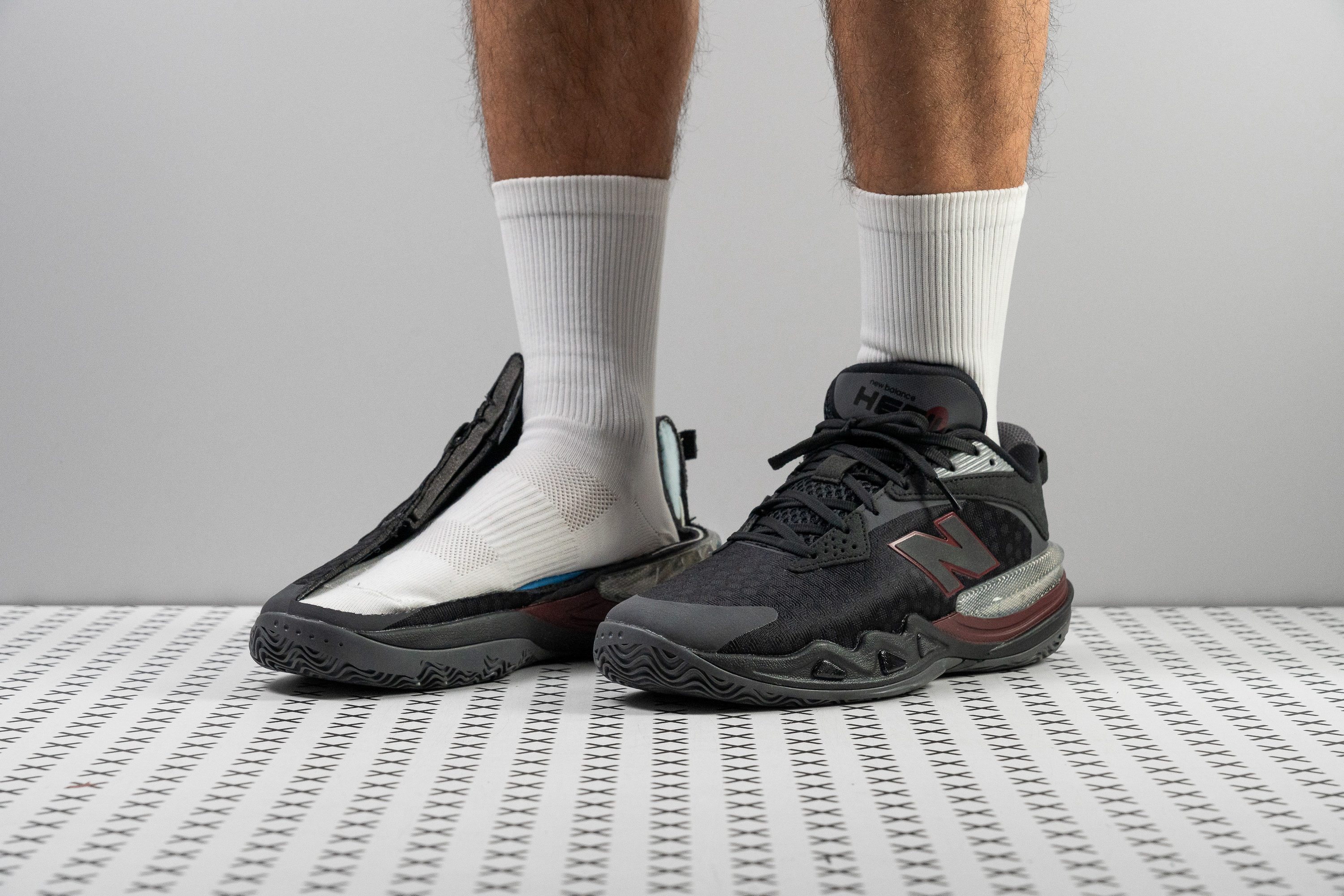
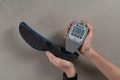
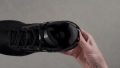
Sliding into the New Balance Hesi Low v2, we couldn't believe how tight-fitting its forefoot is for our regular men's US size 9 (medium width)!
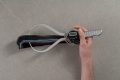
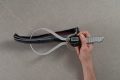
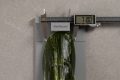
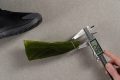
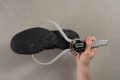
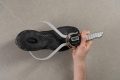
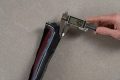
But when we extracted a solidified gel mold of its interiors, it all fell into place...Our caliper measured the replica's widest part at an exceptionally narrow 89.3 mm!
Good thing this NB shoe is also available in a wide (2E) alternative because we think that even hoopers with medium-width feet may have trouble wearing it for long training sessions or all four quarters.
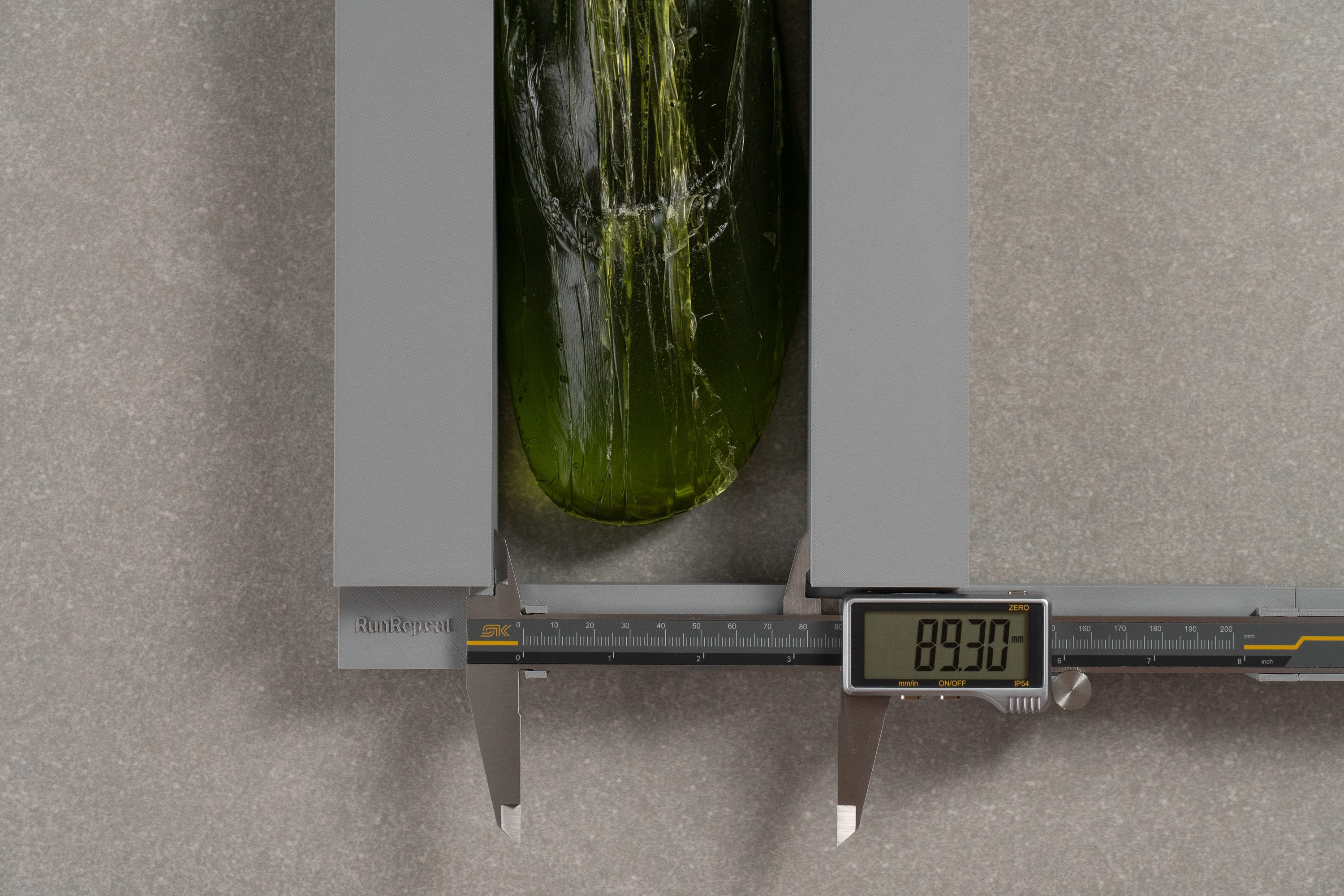
| Hesi Low v2 | 89.3 mm |
| Average | 92.6 mm |
Toebox width
Thankfully, the shoe's toebox shape doesn't exacerbate the situation as it's not so aggressively tapered. Our caliper showed a standard width of 71.0 mm in its big toe area.
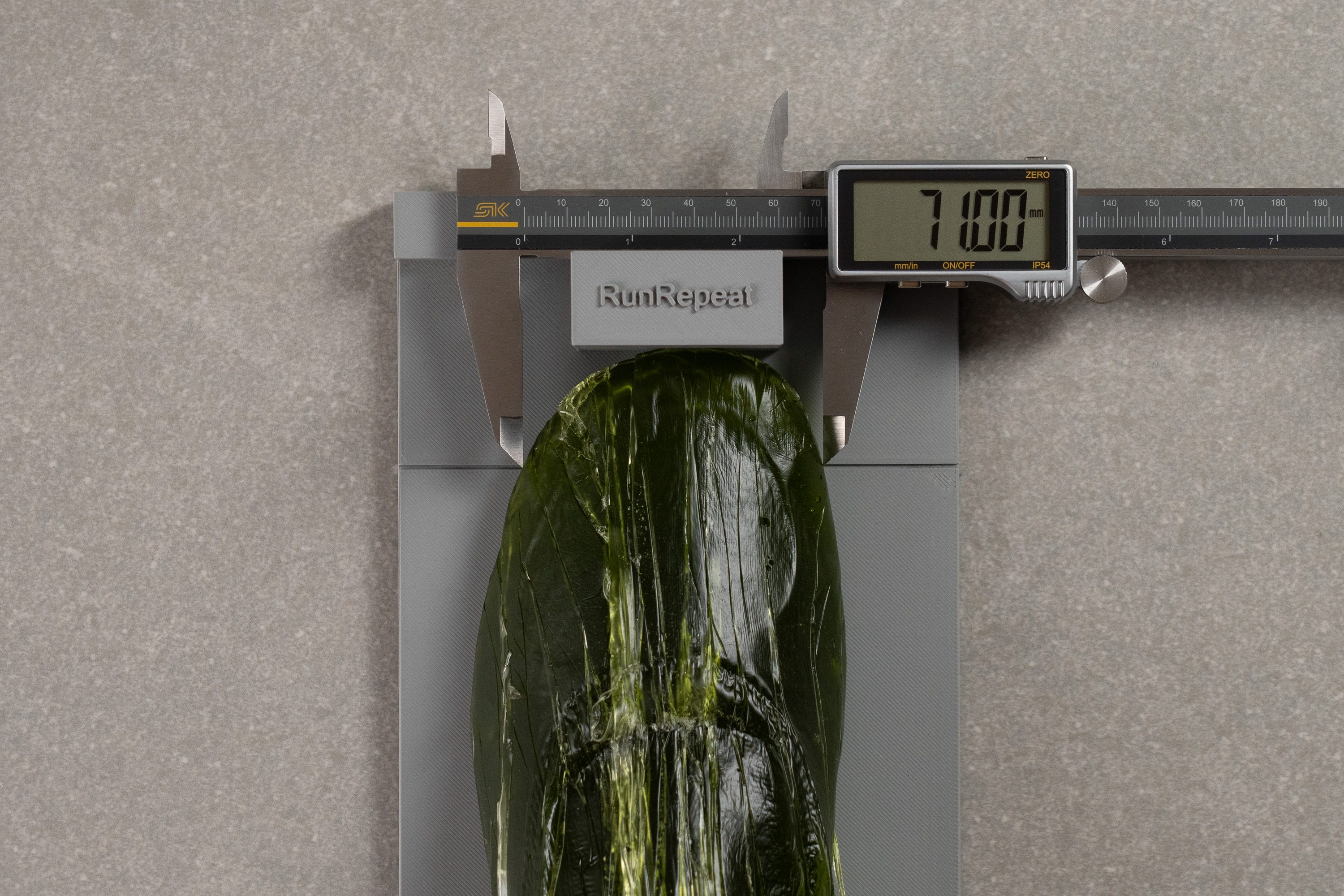
| Hesi Low v2 | 71.0 mm |
| Average | 69.2 mm |
Toebox height
There is no lack of vertical space either.
Our toenails didn't feel pressured thanks to the shoe's ample toebox height of 24.9 mm.
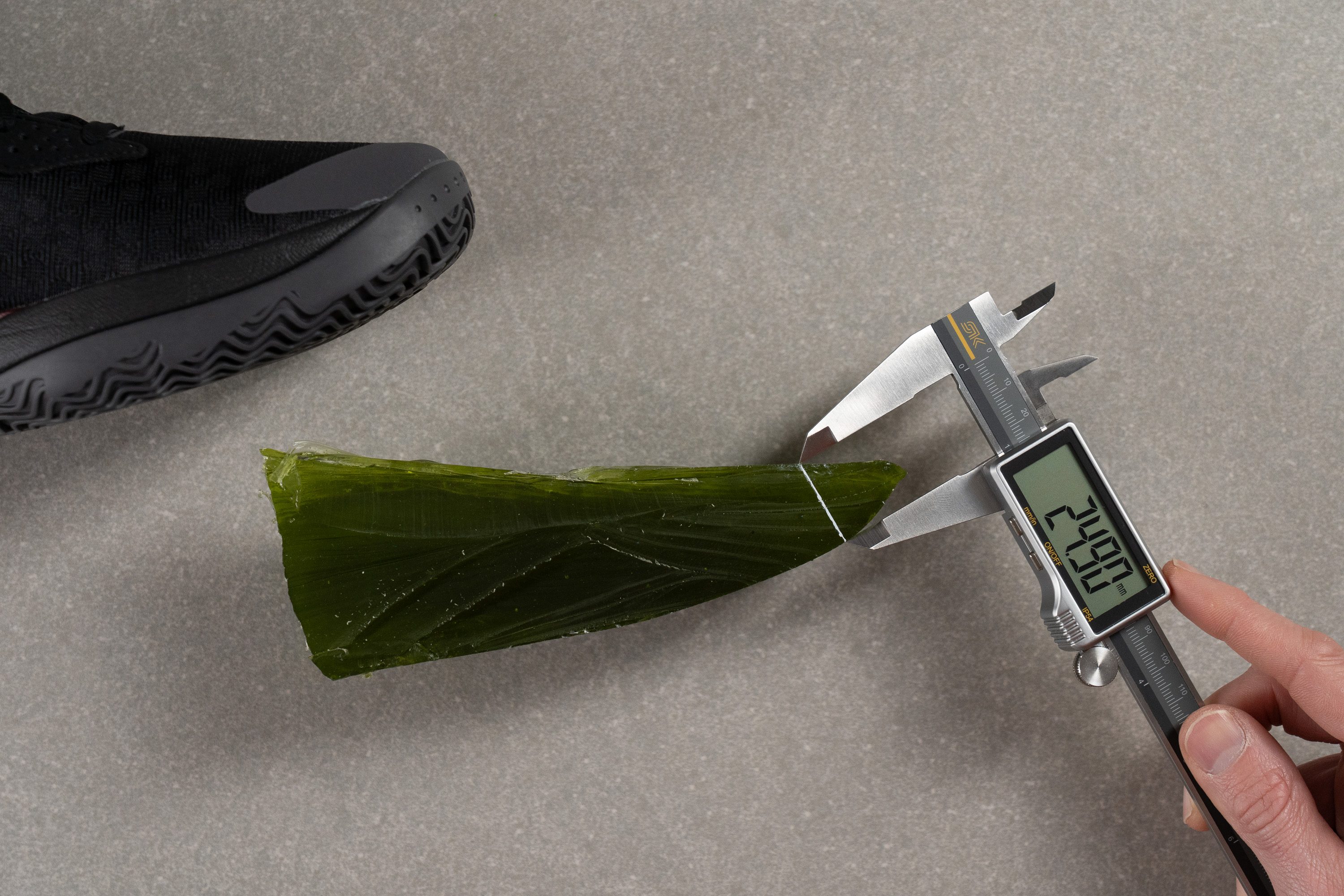
| Hesi Low v2 | 24.9 mm |
| Average | 23.4 mm |
Traction / Grip
Traction test
The Hesi Low v2's sticky outsole clings to hardwood like few other basketball shoes do. Showing a particularly high, above-average friction coefficient of 0.84, it actually exceeds the category average!
Hard stops, linear moves like sprints, and all sorts of lateral moves all felt amazingly supported in this New Balance shoe.
| Hesi Low v2 | 0.84 |
| Average | 0.76 |
Outsole design
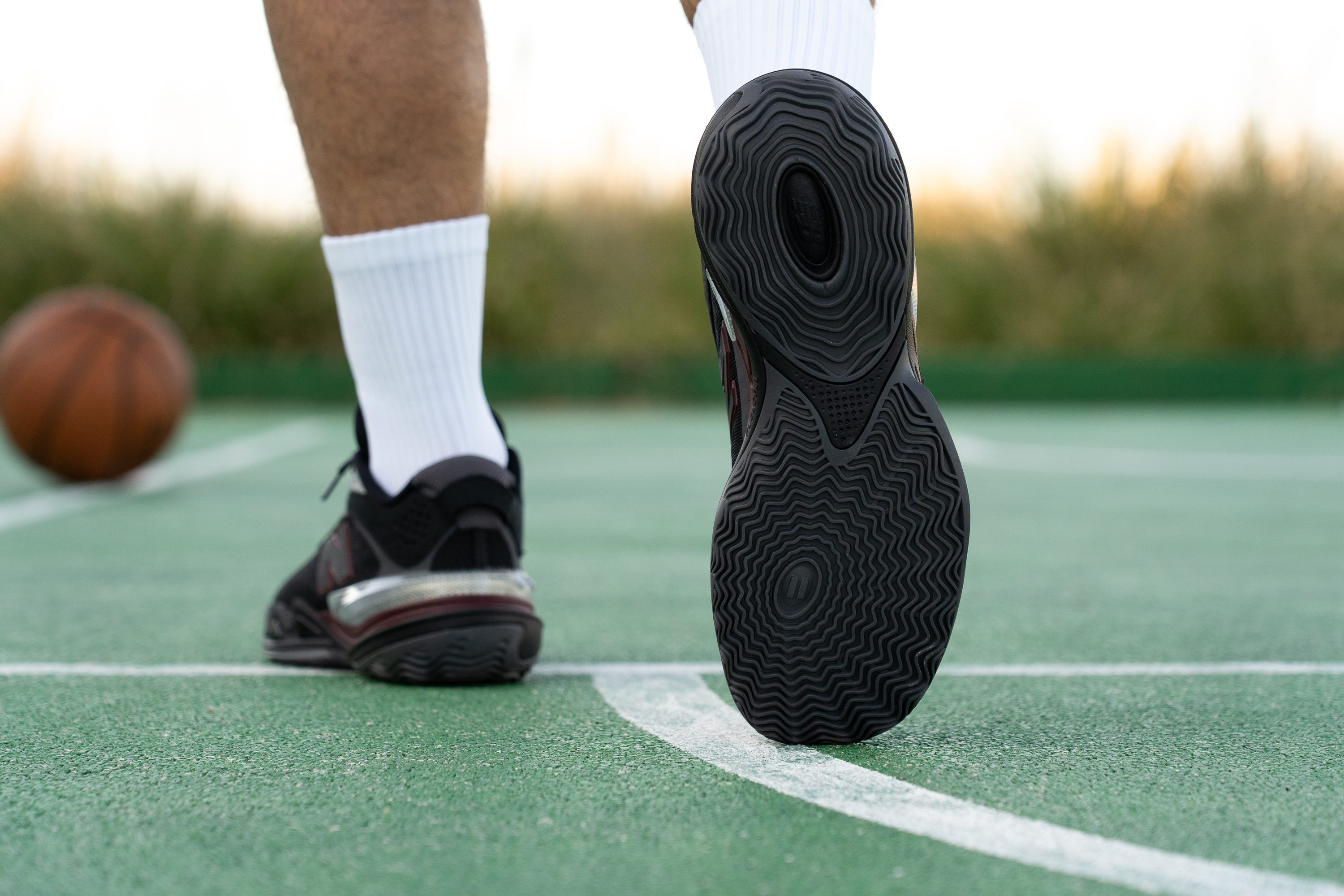
The shoe uses a simple, circular, wavy tread pattern that radiates outward in both the forefoot and the heel.
The pivot point in its ball-of-foot area features a pause symbol, echoing the shoe's name and the deceiving hesi move it excels at.
Flexibility / Stiffness
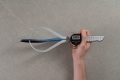
The shoe's forefoot section has decent pliability, allowing smooth transitions without overflexing. We measured that it takes a regular amount of force to bend the Hesi Low v2 by 30 degrees. That way, it hits a sweet spot between adaptability and support, like most basketball shoes.
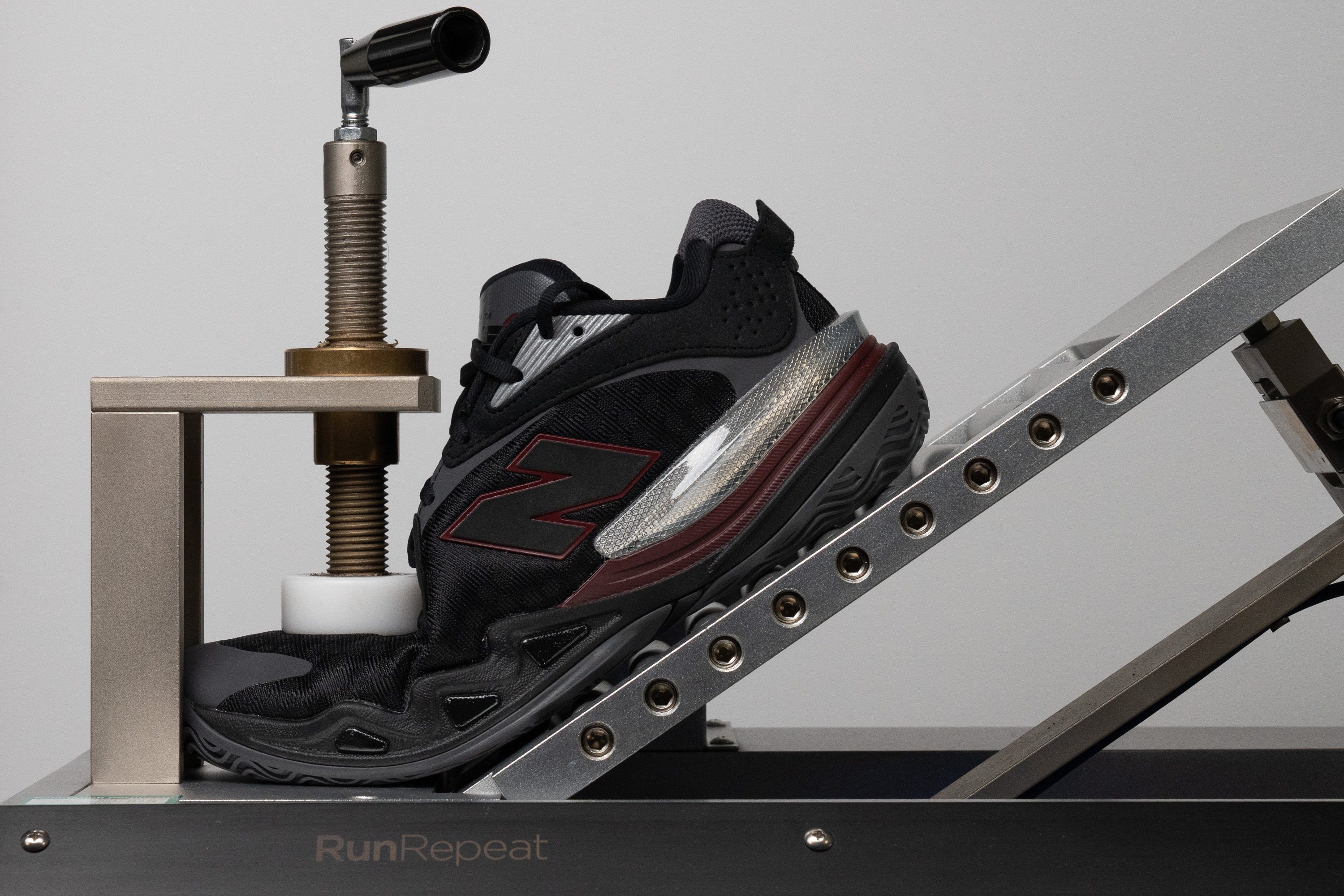
| Hesi Low v2 | 18.3N |
| Average | 20.6N |
Weight
The Hesi Low v2's increased stack height also added half an ounce of weight, bringing the total to 13.5 oz (383g) in a men's US size 9.
And even though it didn't exceed the category average, it no longer feels as speedy and nimble on foot as the previous version.
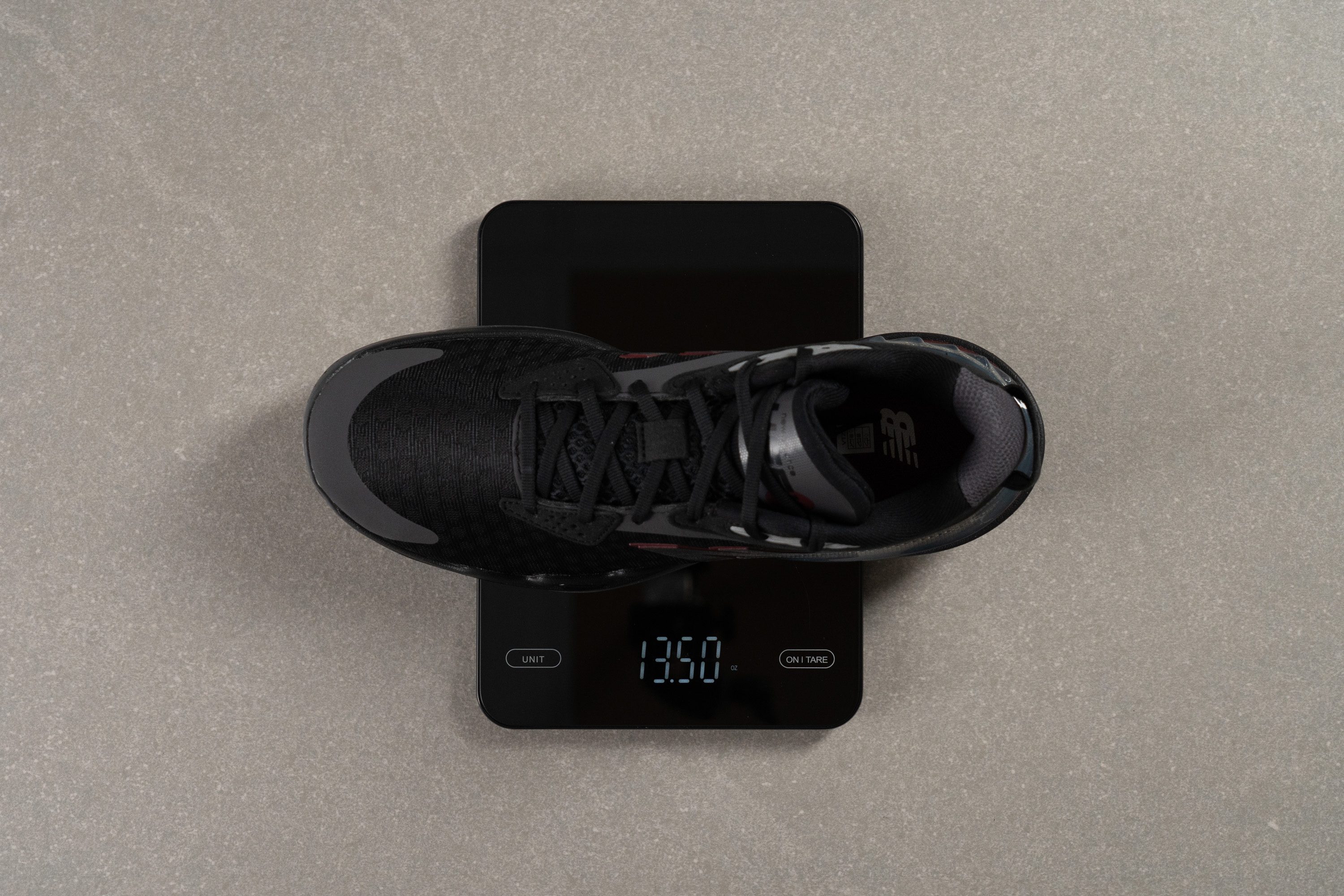
| Hesi Low v2 | 13.5 oz (383g) |
| Average | 13.9 oz (393g) |
Breathability
Breathability test
UpdatedBreathability leaves much to be desired in the Hesi Low v2, as our lab test showed that it wicks sweat away from the foot very slowly. With a particularly low result of 52 BR, its materials don’t absorb moisture well enough to keep the foot dry and fresh.
There's a good chance your feet will end up swimming in sweat during intense games and practices, especially in warm conditions.
| Hesi Low v2 | 52 BR |
| Average | 74 BR |
Drying potential
NewWhile this NB shoe's materials are slow to absorb moisture, they make up for it by drying rather quickly. Running our breathability testing machine for 3 hours, we recorded that the shoe evaporated a solid 37% of the total sweat.
It’s still going to feel damp for back-to-back games, but there is a higher chance that it will get dry by the next day.
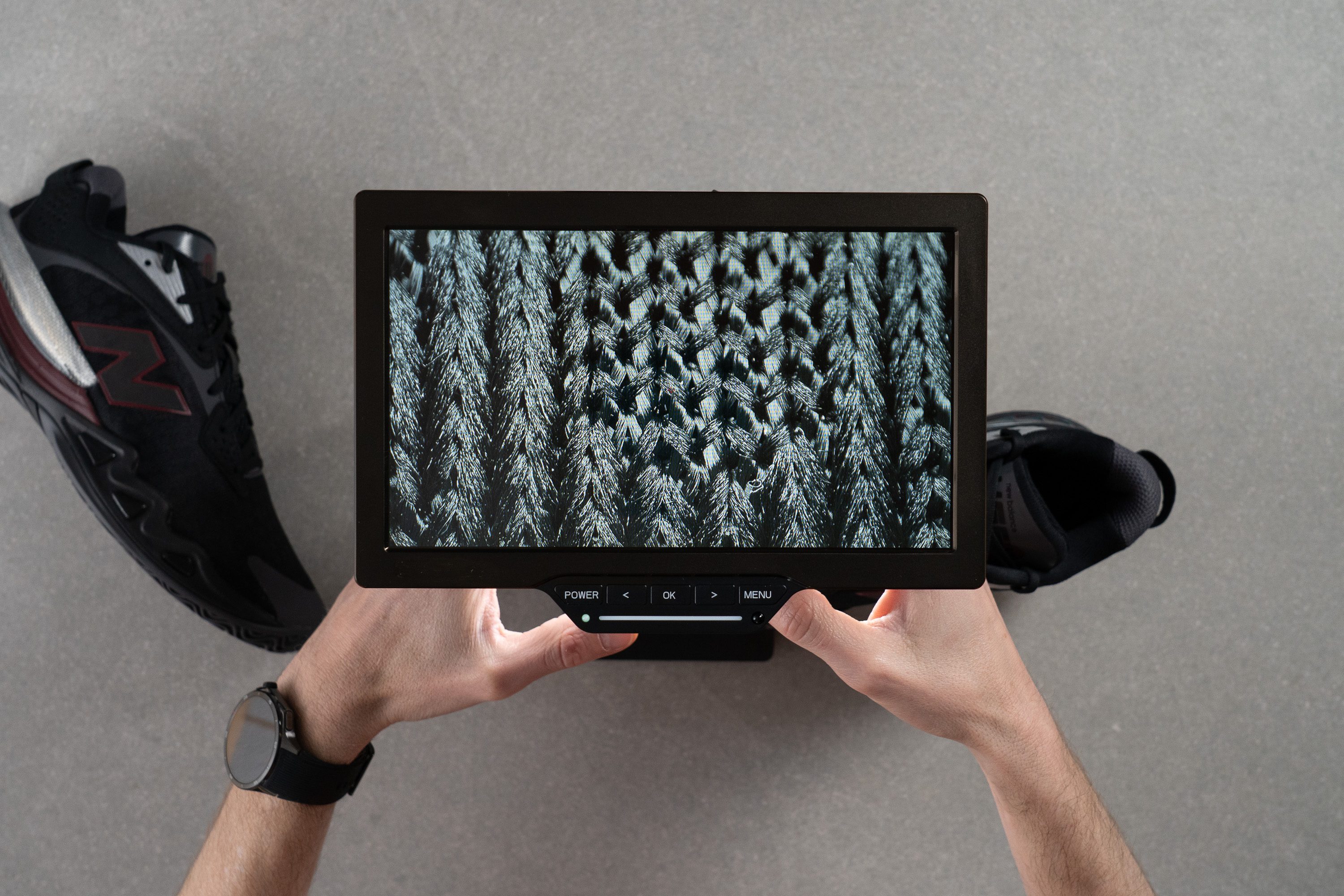
| Hesi Low v2 | 37% |
| Average | 36% |
Stability
Lateral stability test
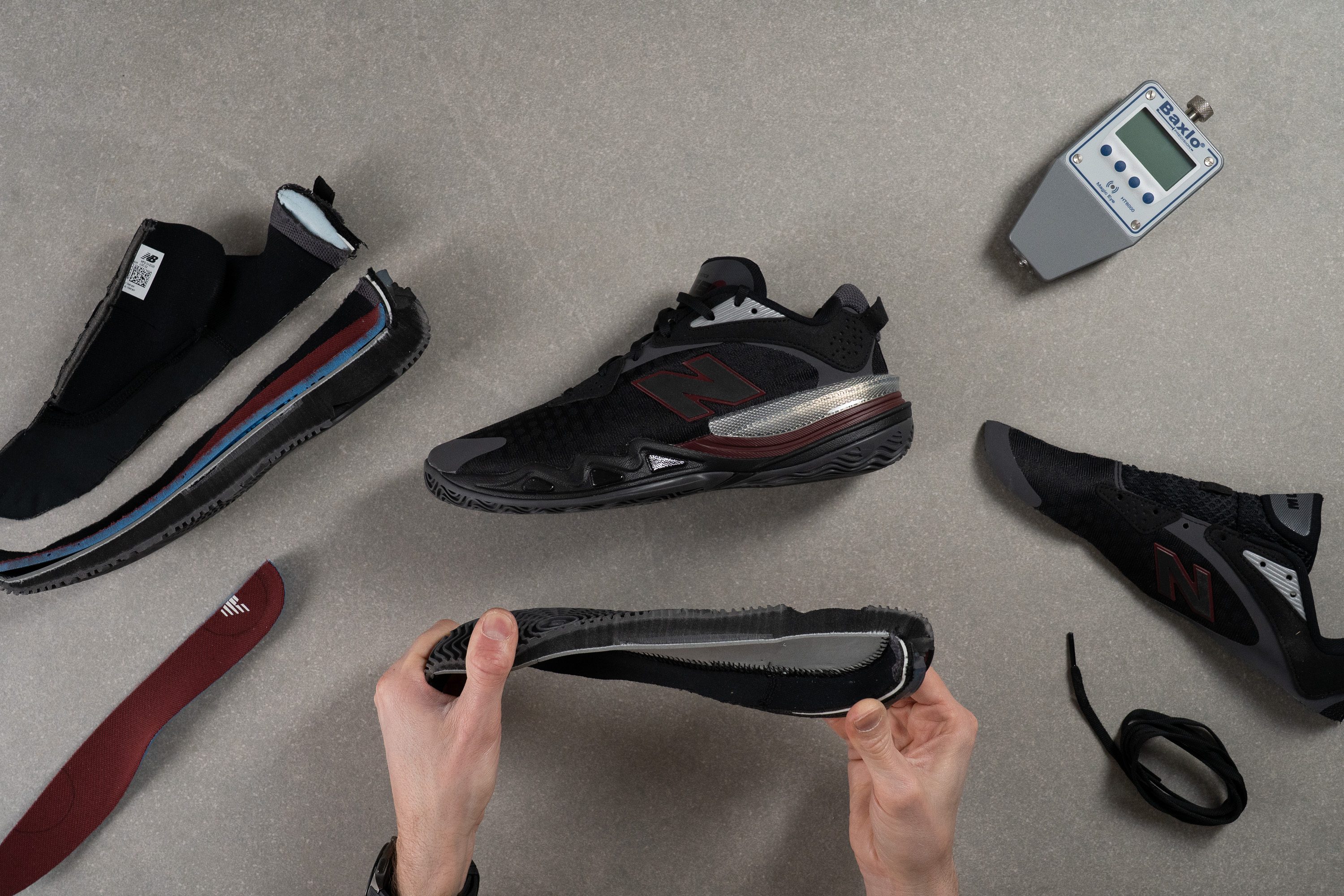
The New Balance Hesi Low v2 looks and feels more externally reinforced than its predecessor. It now packs a sturdy nylon shank that extends from the midfoot back to the heel, a rigid TPU heel clip, and a more prominent midsole topline.
We also couldn't help but notice the more rounded edges of its heel, making side-to-side transitions feel smoother during shuffles, crossovers, and defensive slides.
Torsional rigidity
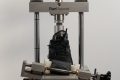
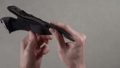
The aforementioned components add a lot of structure to the shoe, elevating its torsional rigidity above average. Having fixed the Hesi Low v2 both in the forefoot and the heel, we measured that it takes a significant torque of 21.0 Nm to twist it by 10°.
This ensures zero wobbling on sharp directional cuts and minimizes the risk of unwanted foot or ankle twisting.
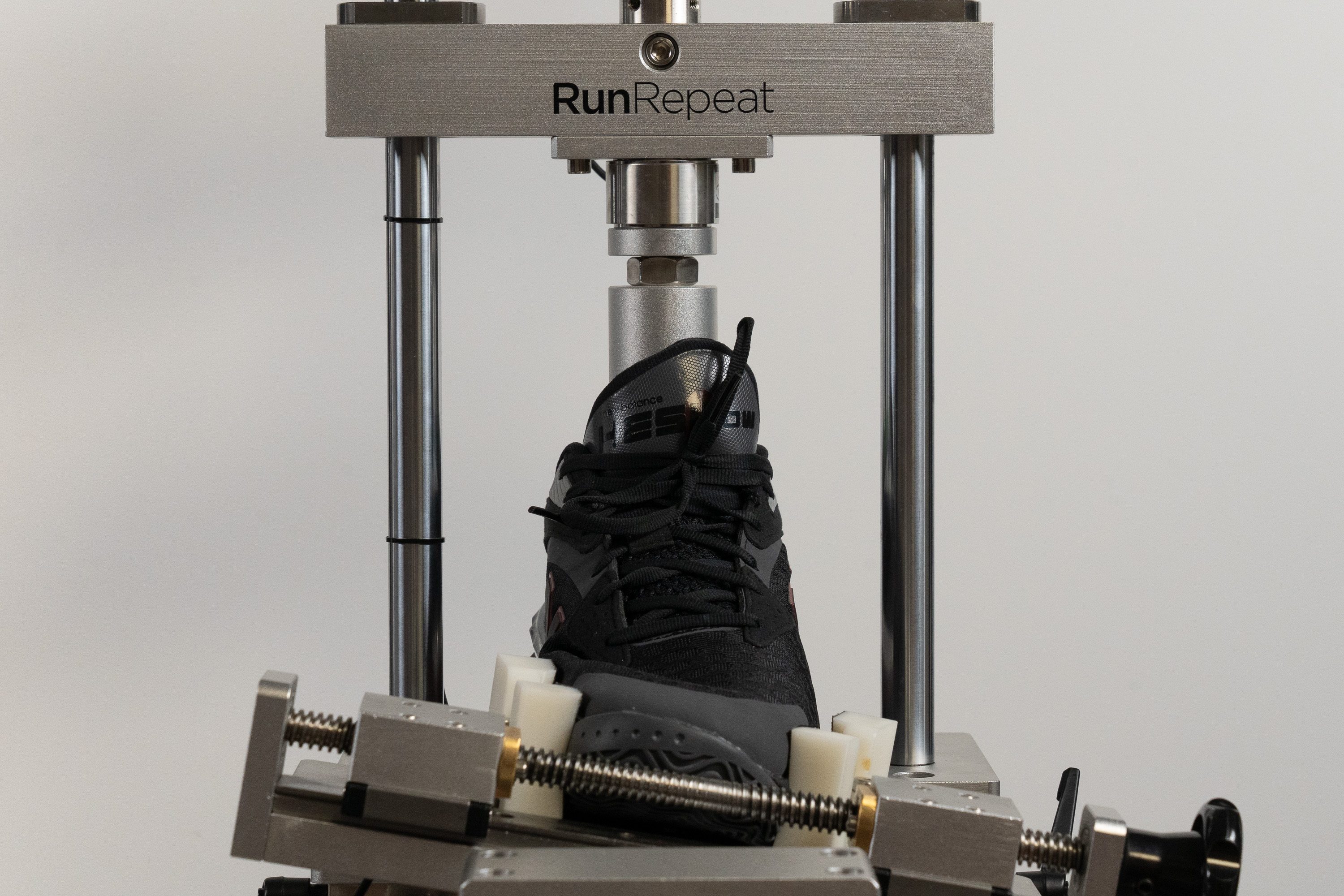
| Hesi Low v2 | 21.0 Nm |
| Average | 19.5 Nm |
Heel counter stiffness
The shoe's external TPU heel clip increases rigidity at the base of the rearfoot, leaving some pliability in the top of the collar. That ensures a secure lockdown without putting too much pressure on the Achilles.
This compromise is reflected in our middle-ground stiffness score of 3 out of 5.
| Hesi Low v2 | 3 |
| Average | 3.9 |
Midsole width - forefoot
And as for the shoe's platform width, our digital caliper shows that it's been trimmed slightly and now falls within the typical range for a basketball shoe.
The widest part of its forefoot showed a regular 113.3 mm.
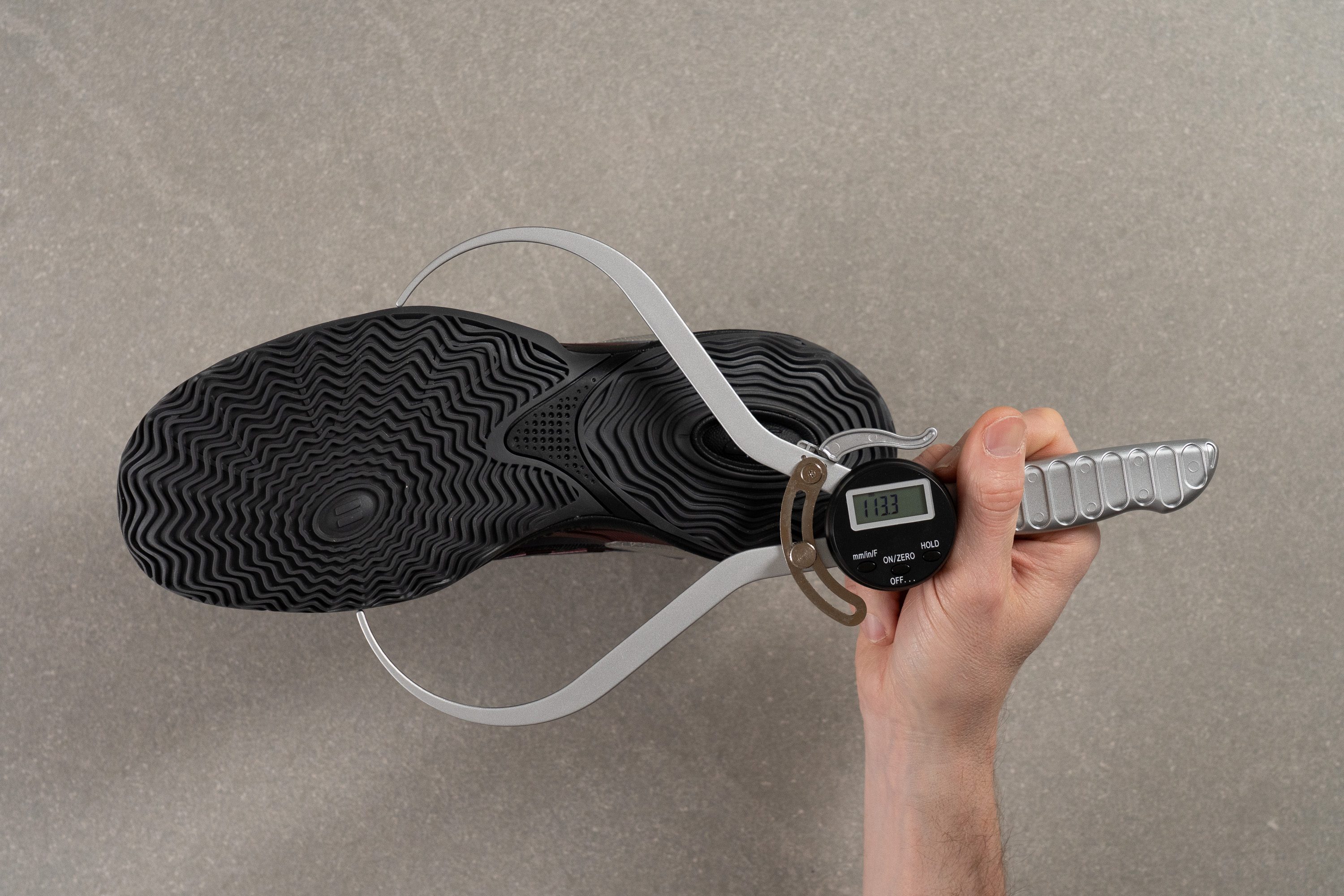
| Hesi Low v2 | 113.3 mm |
| Average | 115.4 mm |
Midsole width - heel
The shoe's heel width also proved to be on par with the average, with a normal measurement of 88.0 mm.
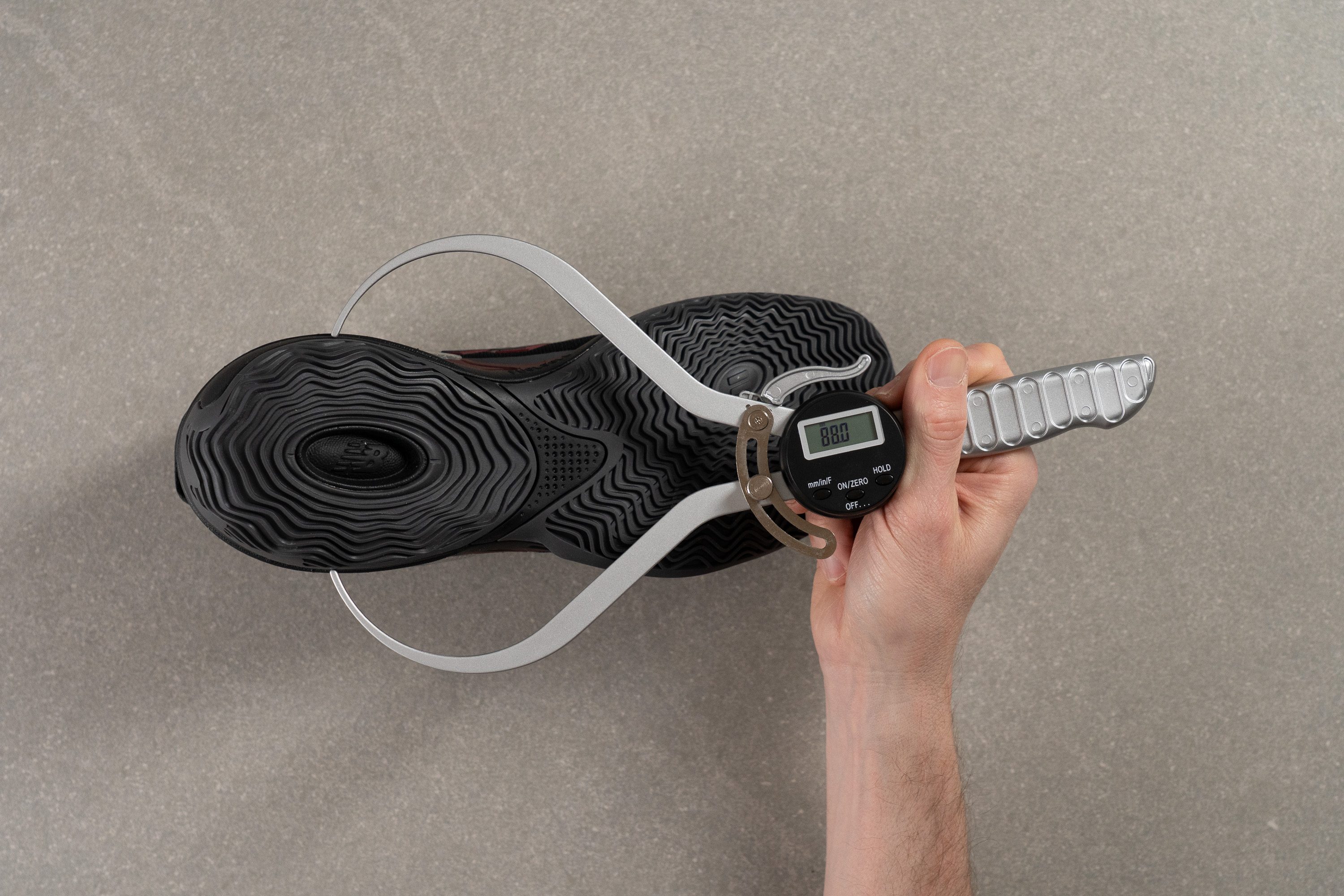
| Hesi Low v2 | 88.0 mm |
| Average | 89.3 mm |
Durability
Toebox durability
The lack of upper breathability clearly paid off in the Hesi Low v2's stronger abrasion resistance. Having applied our Dremel to the toebox area, we saw very minimal damage and raised the shoe's toebox durability score to 4 out of 5.
| Hesi Low v2 | 4 |
| Average | 3.7 |
Heel padding durability
The textile lining inside the shoe wasn't a disappointment either! Showing only moderate wear and tear after the Dremel test, we assessed its heel padding durability as 3 out of 5.
| Hesi Low v2 | 3 |
| Average | 3.8 |
Outsole durability
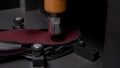
And most importantly, we were pleased to see just how well this New Balance shoe's outsole stood up against the Dremel test! With a fairly shallow dent depth of 0.7 mm, this rubber promises a long and happy lifespan!
| Hesi Low v2 | 0.7 mm |
| Average | 1.0 mm |
Outsole thickness
Pair that with the shoe's outsole thickness of 4.0 mm, and you get a recipe for a very strong outsole for the price!
But please note that we still wouldn't recommend the Hesi Low v2 for hooping outdoors because of how thin and prominent its treadlines are.
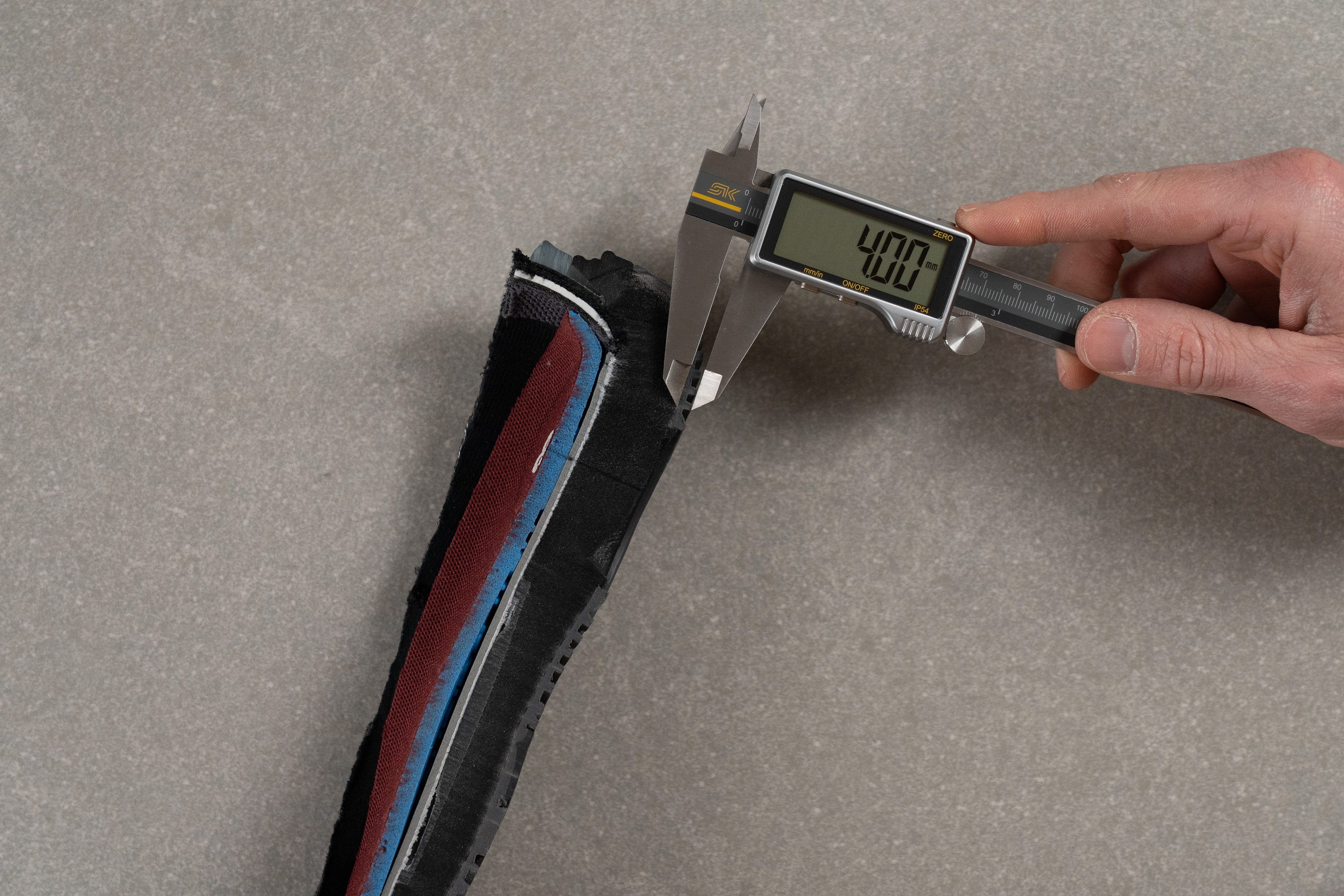
| Hesi Low v2 | 4.0 mm |
| Average | 4.0 mm |
Misc
Insole thickness
From our experience with New Balance shoes, the brand consistently adds a touch of comfort to make the in-shoe experience more pleasant.
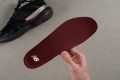
So we are not surprised to find a generously padded 5.9 mm insole inside the Hesi Low v2.
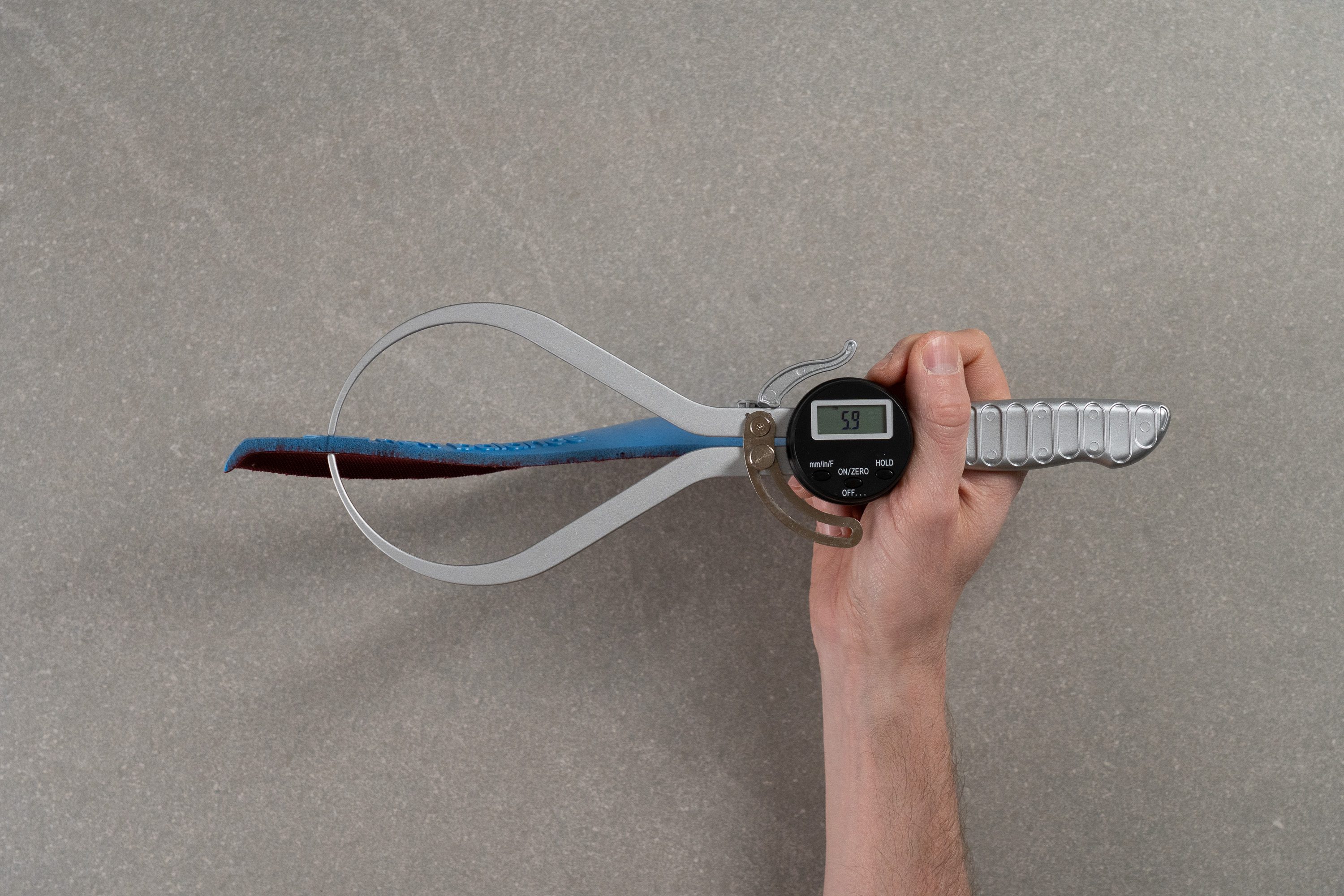
| Hesi Low v2 | 5.9 mm |
| Average | 5.1 mm |
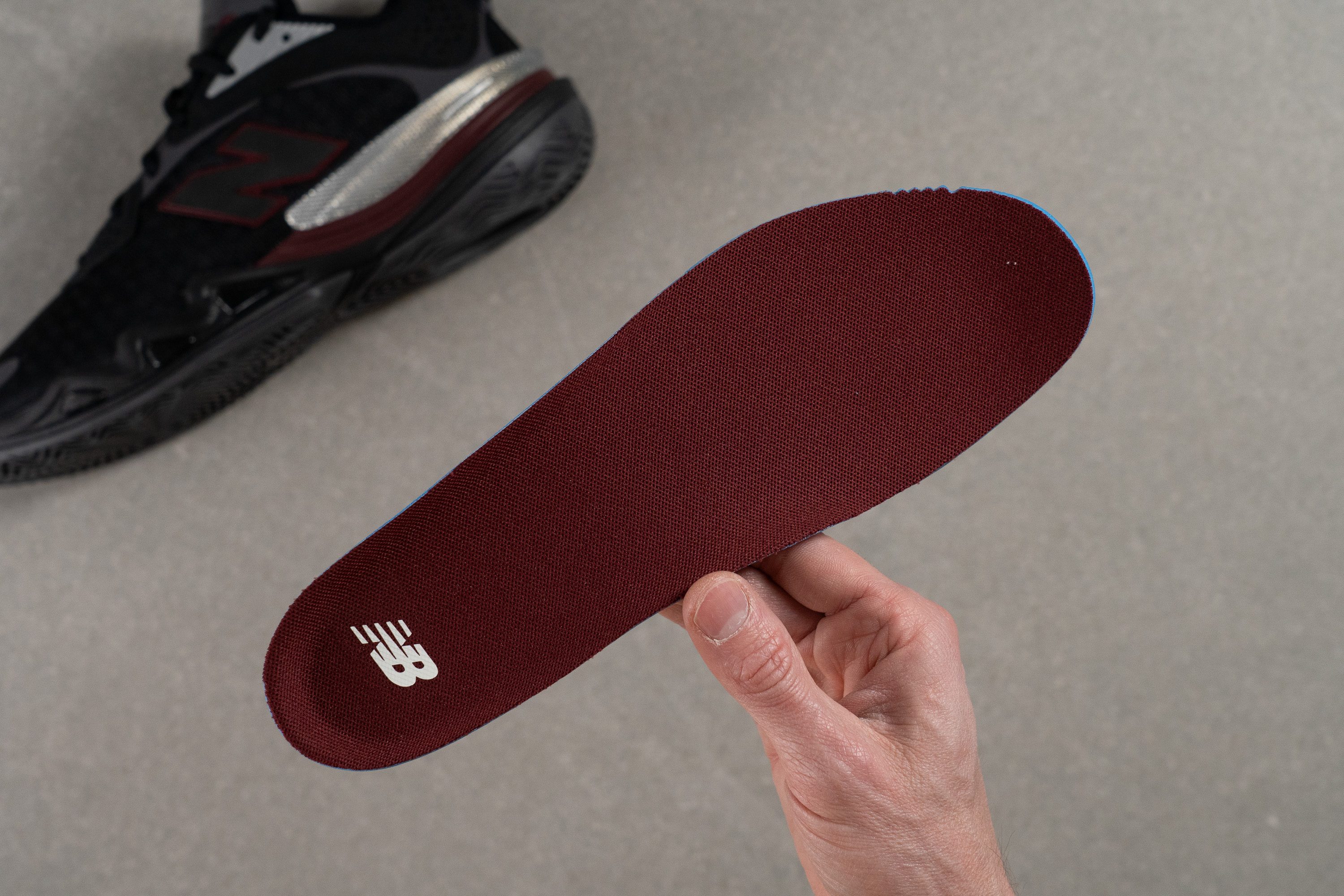
Removable insole
But it's also easily removable in case you opt for a custom insert or arch support.
| Hesi Low v2 | Yes |
Reflective elements
A small eyestay around the shoe's topmost eyelets happens to be reflective.
| Hesi Low v2 | Yes |
Tongue padding
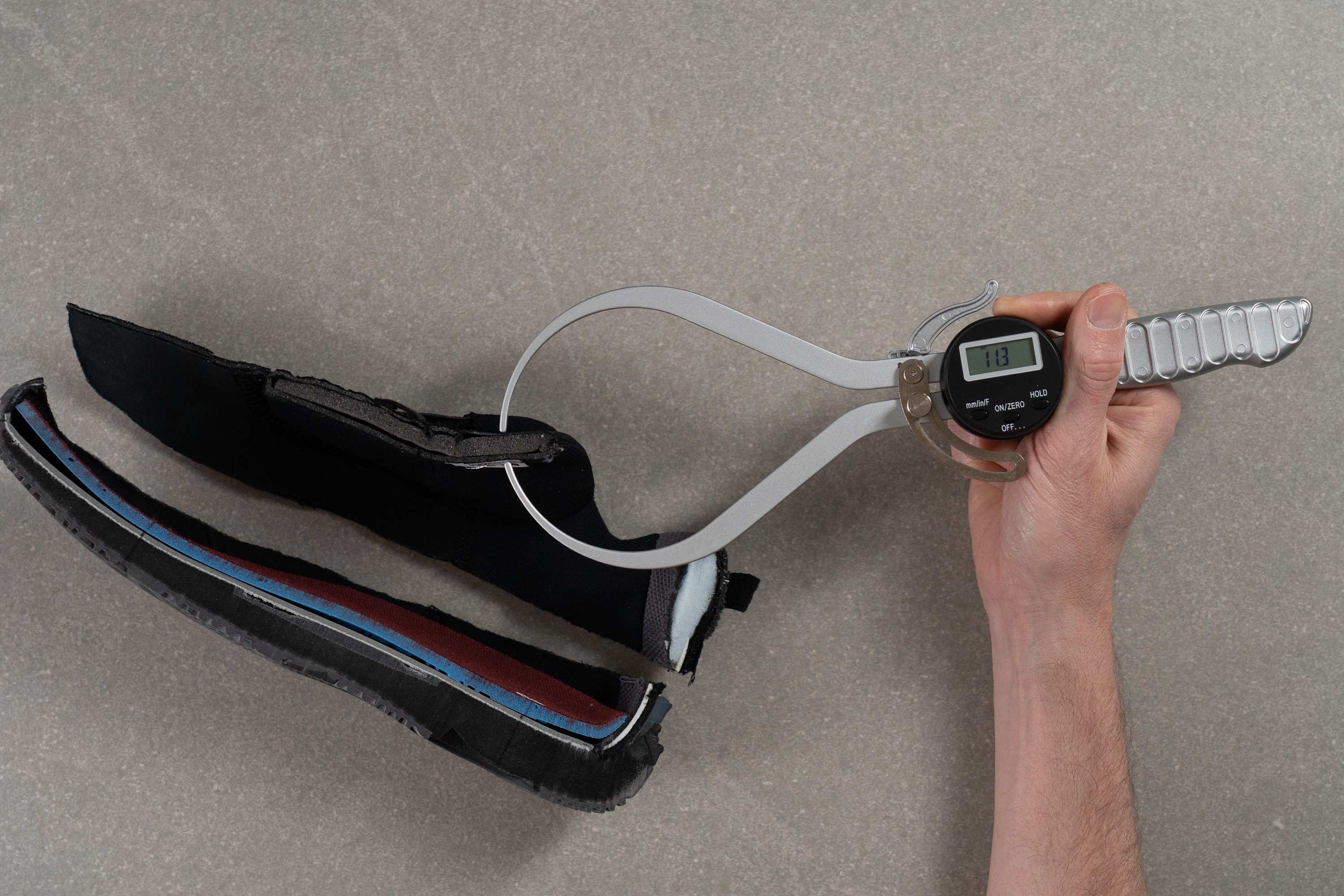
The shoe's tongue and collar also turned out to be heavily padded for comfort and containment.
Its tongue, in particular, showed an above-average thickness of 11.3 mm on our digital caliper.
| Hesi Low v2 | 11.3 mm |
| Average | 9.4 mm |
Tongue: gusset type
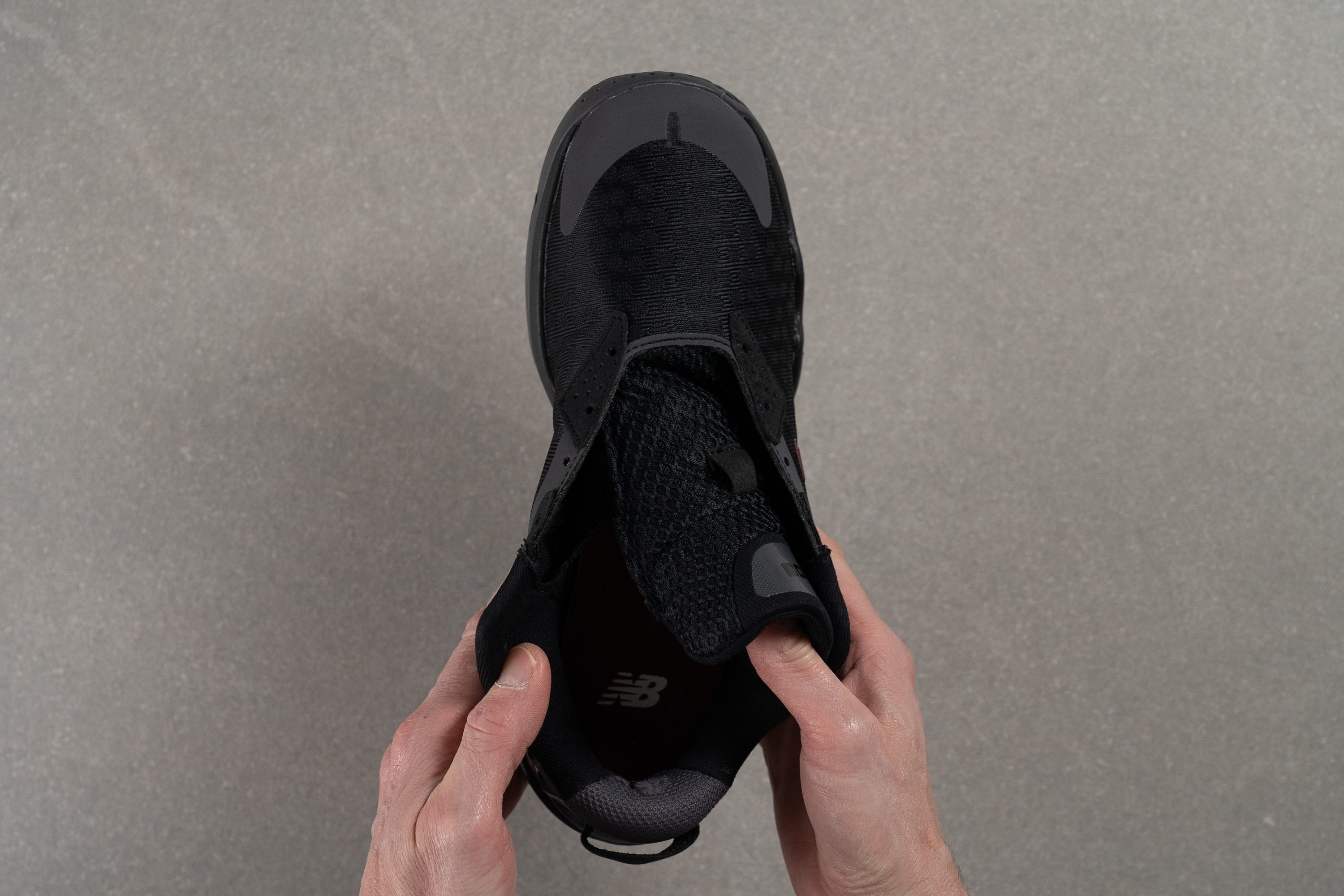
The black colorway makes it hard to see, but the Hesi Low v2's tongue is fully gusseted, contributing to its secure containment.
| Hesi Low v2 | Both sides (full) |
Heel tab
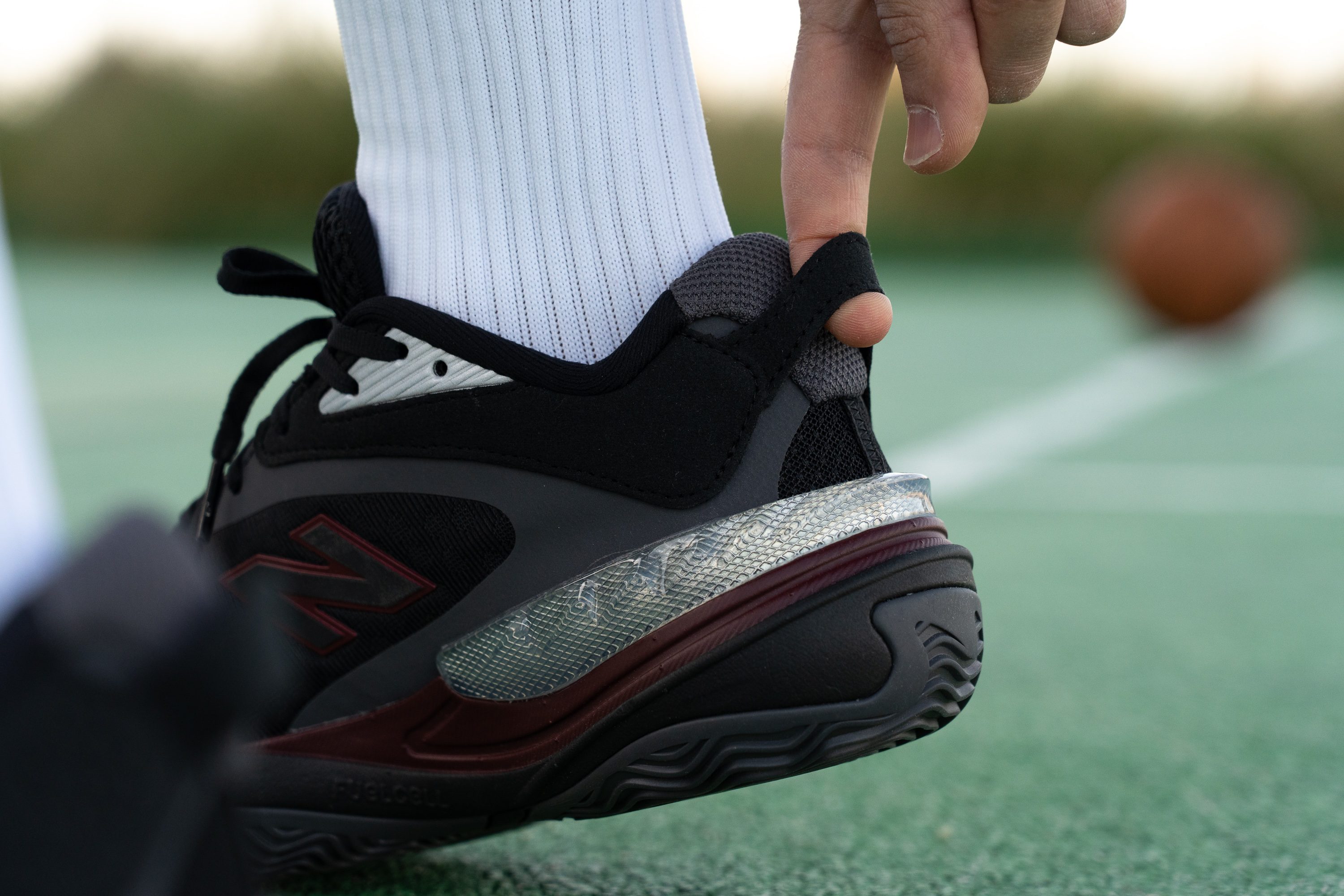
A large suede finger loop at the back of the shoe helps with putting it on.
| Hesi Low v2 | None |
Price
Even with a small $10 increase, the Hesi Low v2's retail price remains below the average of basketball shoes. And yet, the build quality and performance it offers for the money are fantastic!
| Hesi Low v2 | $120 |
| Average | $140 |