
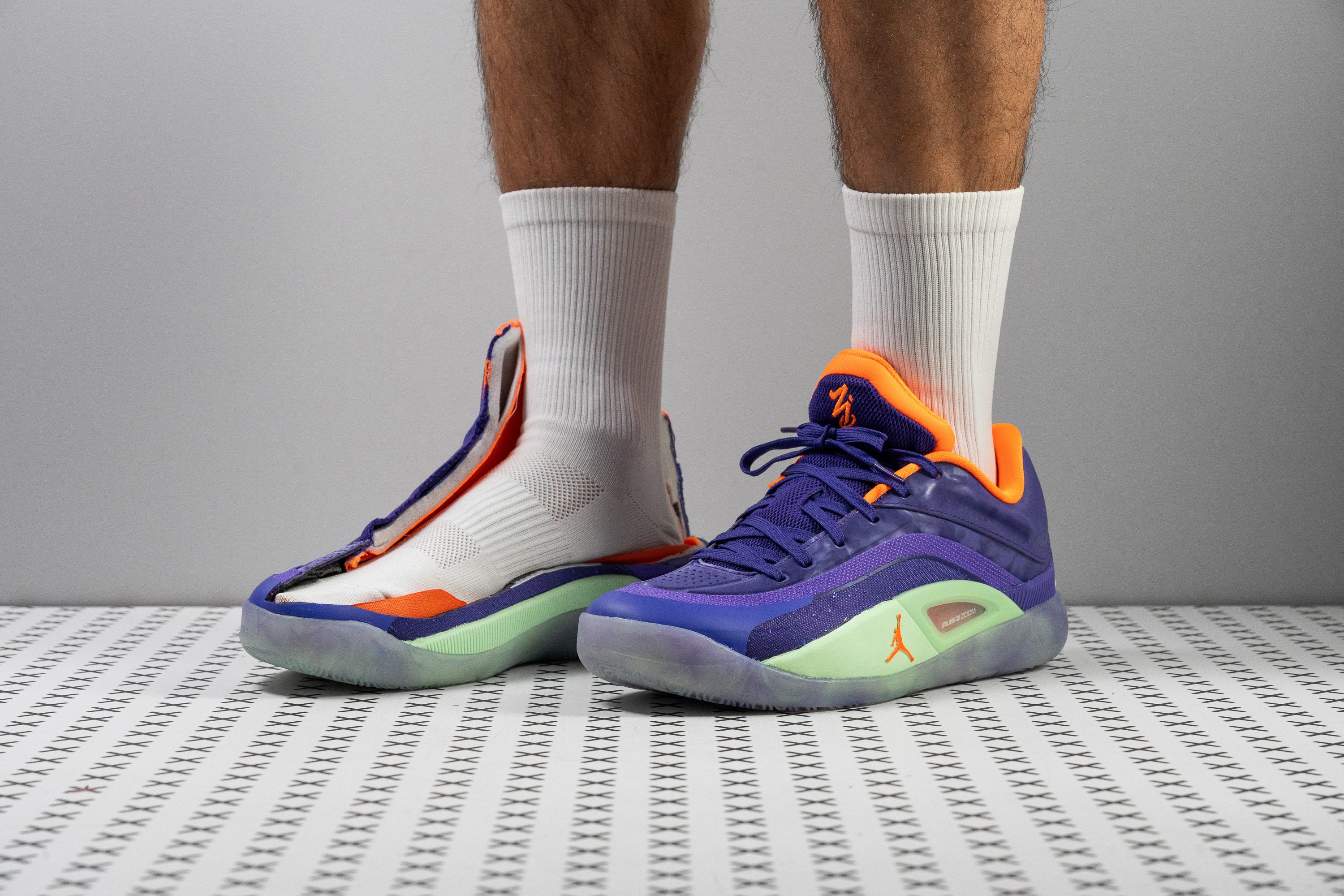











Our verdict
- Cushioning 94
- Speed 81
- Stability 84
- Outdoor 73
Pros
- Above-average shock absorption
- Propulsive ride with full-length Air Zoom
- Cushioning doesn't mute court feel
- Balanced outsole traction
- Feels agile and maneuverable
- Good lateral support
- Fantastic upper and outsole durability
- Excellent breathability
Cons
- Fit is still snug
- Got heavier than average
Awards
- Top pick in best basketball shoes for ankle support
- Top pick in best Jordan basketball shoes
- Top 1% in Zion Williamson basketball shoes
Comparison
The most similar basketball shoes compared
+ + Add a shoe | |||||
|---|---|---|---|---|---|
| Our score | 86 Great | 88 Great | 88 Great | 89 Great | |
| Price | $145 | $205 | $135 | $105 | |
| Signature | Zion Williamson | Michael Jordan | Luka Doncic | Luka Doncic | |
| Shock absorption | High | Low | Low | Low | |
| Energy return | High | Moderate | Moderate | Low | |
| Traction | Moderate | High | Low | High | |
| Top | Low | Low | Low | Low | |
| Ankle support | ✓ | ✓ | ✓ | ✓ | |
| Weight lab | 14.4 oz / 408g | 15.5 oz / 439g | 12.9 oz / 366g | 12.3 oz / 349g | |
| Lightweight | ✗ | ✗ | ✓ | ✓ | |
| Breathability | Moderate | Warm | Moderate | Moderate | |
| Outsole durability | Good | Decent | Good | Good | |
| Drop lab | 6.5 mm | 4.9 mm | 7.6 mm | 6.3 mm | |
| Heel stack lab | 25.2 mm | 25.4 mm | 26.6 mm | 26.6 mm | |
| Forefoot | 18.7 mm | 20.5 mm | 19.0 mm | 20.3 mm | |
| Size | Half size small | Half size small | True to size | Slightly small | |
| Midsole softness | - | Soft | Firm | Firm | |
| Stiffness | Moderate | Stiff | Stiff | Stiff | |
| Torsional rigidity | Stiff | Stiff | Stiff | Stiff | |
| Heel counter stiffness | Moderate | Moderate | Moderate | Moderate | |
| Width / fit | Medium | Medium | Medium | Medium | |
| Toebox width | Narrow | Wide | Medium | Wide | |
| Midsole width - forefoot | Average | Average | Average | Average | |
| Midsole width - heel | Very narrow | Narrow | Average | Narrow | |
| Heel padding durability | Good | Good | Good | Good | |
| Toebox durability | Decent | Decent | Decent | Decent | |
| Insole thickness | Average | Average | Average | Average | |
| Outsole thickness | Average | Average | Very thin | Thin | |
| Heel tab | None | None | None | None | |
| Ranking | #19 Top 46% | #9 Top 22% | #10 Top 24% | #5 Top 12% | |
| Popularity | #21 Top 50% | #4 Top 10% | #33 Bottom 21% | #16 Top 39% |

Who should buy
The Jordan Zion 4 is a clear-cut choice for the following players:
- guards, wings, and forwards who need great bounce and cushioning for linear speed (full-court sprints, drives, run-and-gun offense, etc.)
- nimble players who want a pliable, less blocky shoe for unhindered maneuverability
- folks with narrow feet who prefer one-to-one fit

Who should NOT buy
Its tight fit surely narrows the Jordan Zion 4's target audience. If you want a shoe with similar characteristics but a more forgiving fit, try the Nike KD 18.
For a more lightweight alternative that feels nimble and dynamic, the Nike Sabrina 3 is the way to go.
Cushioning
Shock absorption
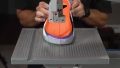
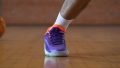
Cushioning is arguably the top reason to choose the Jordan Zion 4.
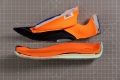
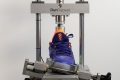
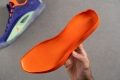
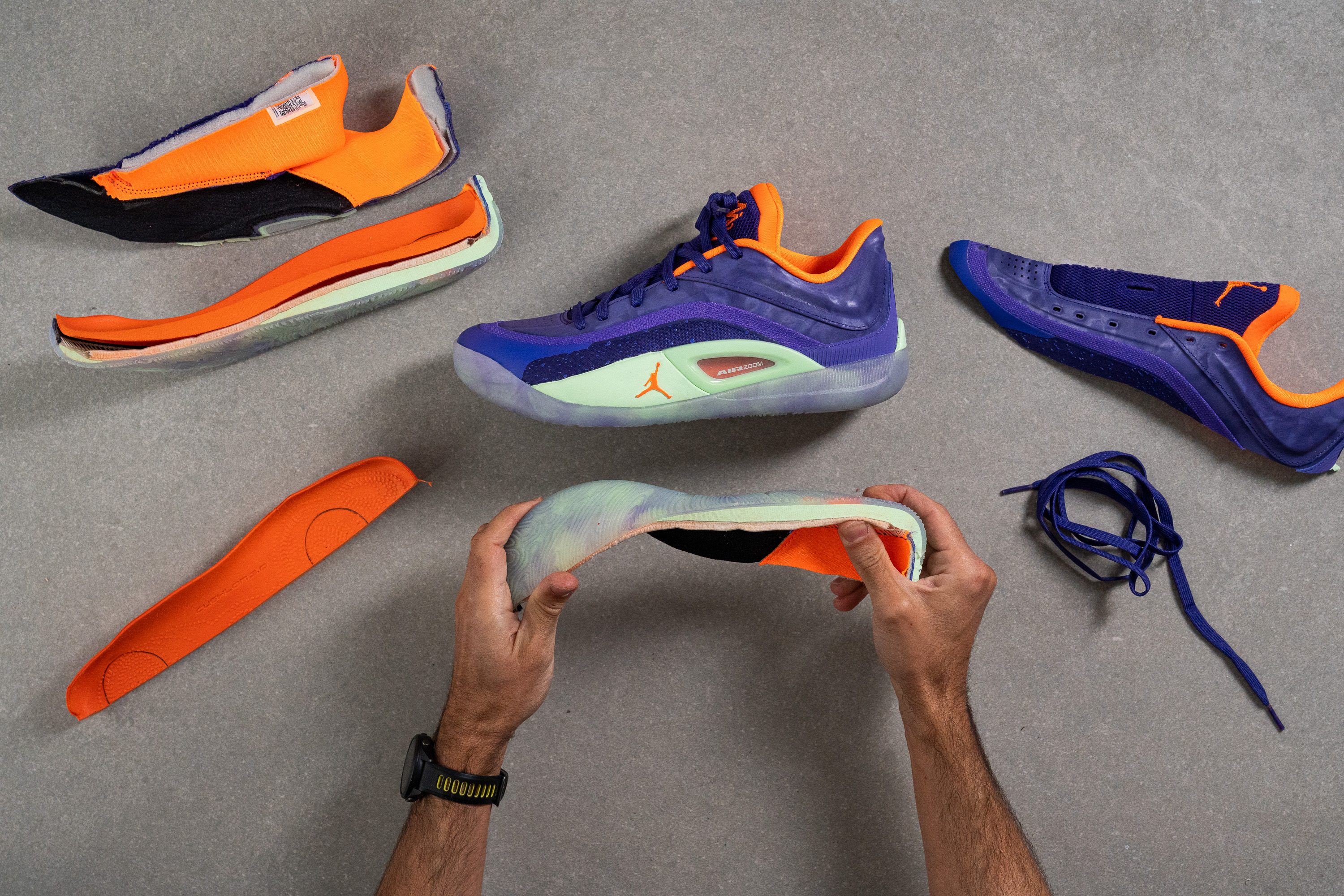
This iteration features a full-length Air Zoom strobel with a drop-in midsole made of Cushlon 3.0. It is a winning combo that delivered some of the highest shock-absorption readings among our lab-tested basketball shoes.
We recorded above-average readings of 113 SA at the heel and 93 SA at the forefoot, confirming that the Zion 4 offers reliable impact protection during hard landings and abrupt stops.
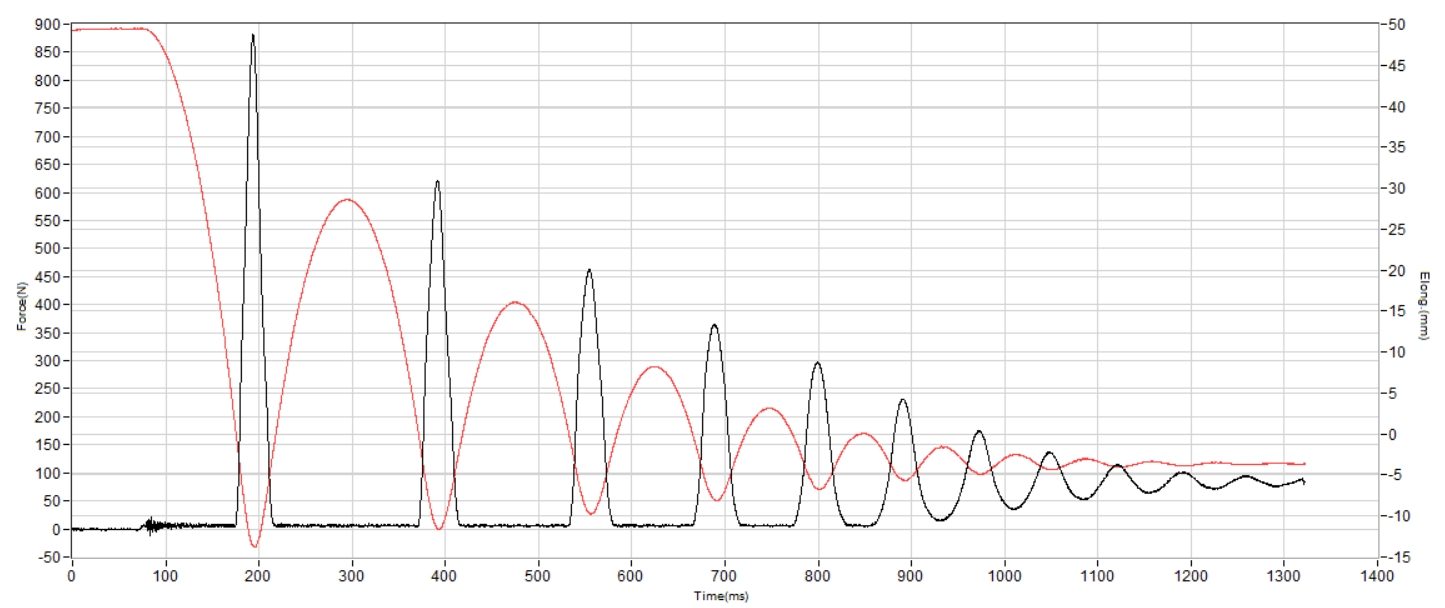
| Zion 4 | 113 SA |
| Average | 104 SA |
Energy return
In addition to its comfortable underfoot protection, this Jordan shoe also delivers a highly responsive, springy ride thanks to its above-average energy return.
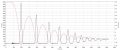
Our lab measurements showed impressive results of 63.5% at the heel and 71.8% in the forefoot, confirming the brand's promise to help 'power an explosive game' with the Zion 4.
Comparing its rebound to other hoop shoes, we found that it sits up high, between the KD 18 and the LeBron 23.
| Zion 4 | 71.8% |
| Average | 62.3% |
Heel stack
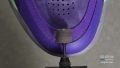
We were amazed at how much cushioning this Jordan shoe provides, given its relatively low platform.
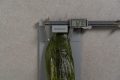
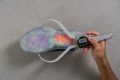
Our caliper measured a below-average heel stack of 25.2 mm, making it one of the lowest heel stacks among the basketball shoes we tested.
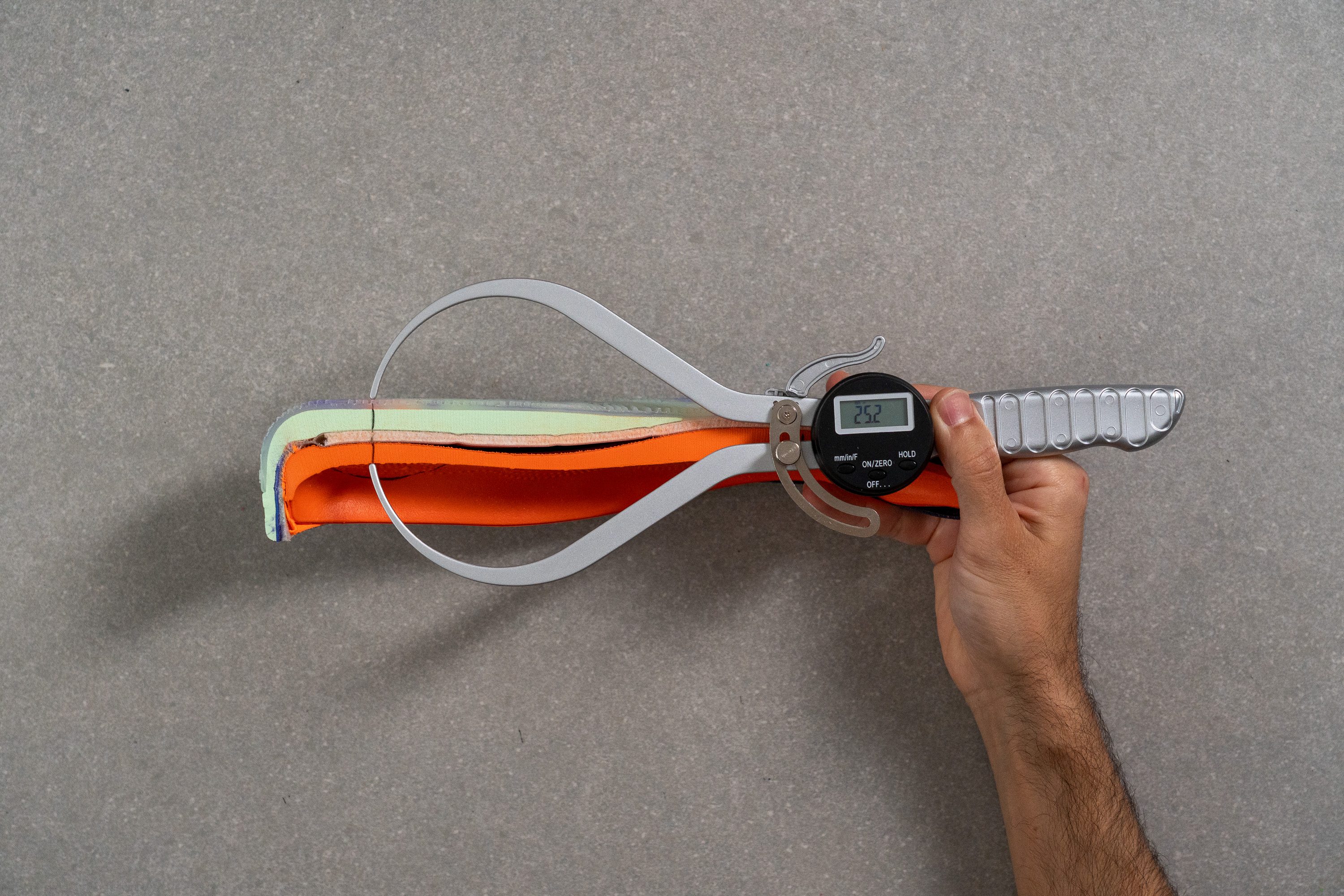
| Zion 4 | 25.2 mm |
| Average | 28.6 mm |
Forefoot stack
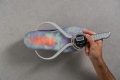
The shoe's forefoot stack also sits far below the average with a caliper reading of 18.7 mm. But at least it's not as low as the previous Zion 3 (15.5 mm), offering a little more protection for the ball of the foot and the toe joints.
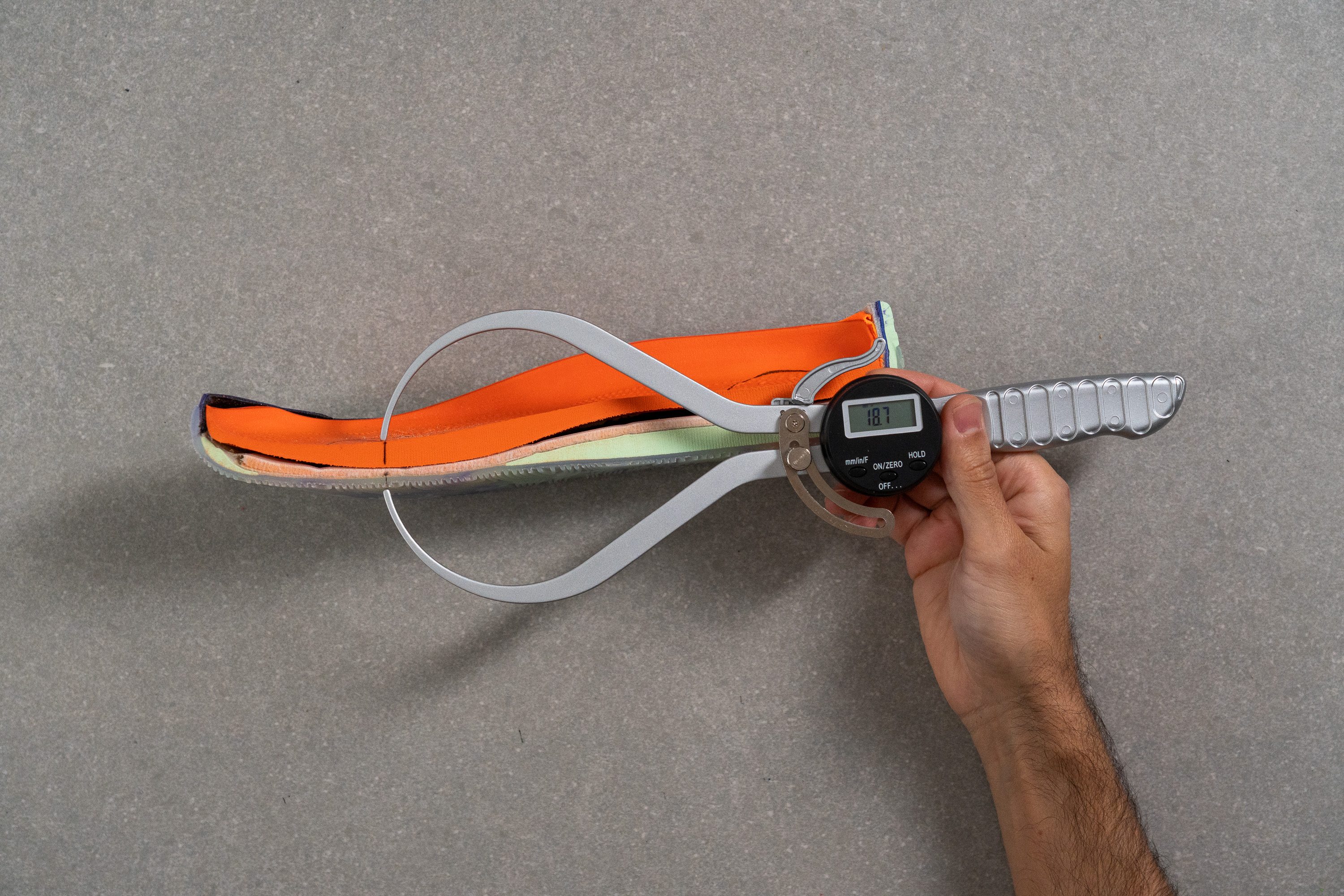
| Zion 4 | 18.7 mm |
| Average | 21.4 mm |
Drop
A moderate difference in height between the shoe's heel and forefoot stacks results in a middle-ground drop of 6.5 mm.
It is neither too flat to put a strain on the Achilles and calves nor too high to cause too much forward leaning. It's going to hit home for most players without causing any discomfort.
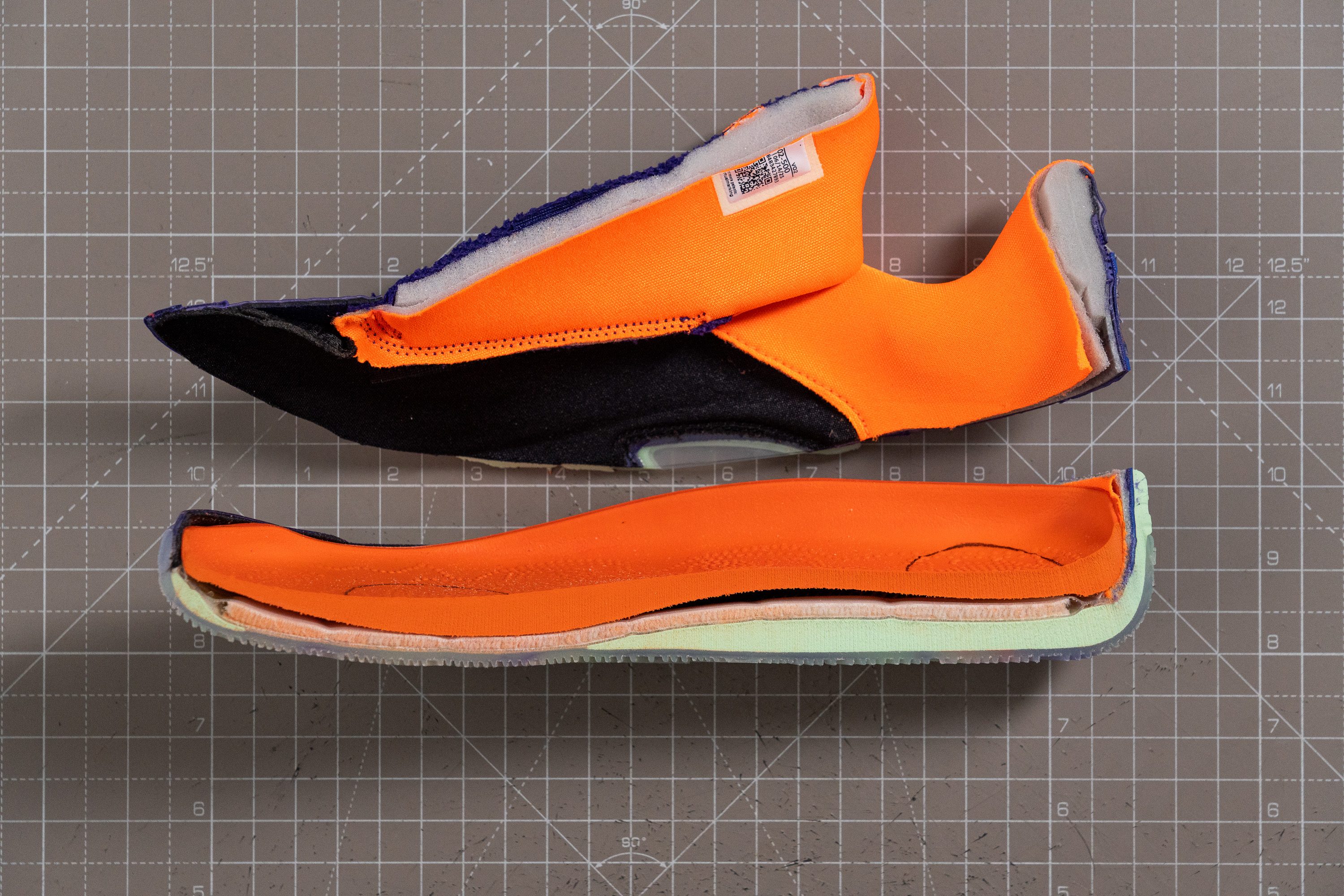
| Zion 4 | 6.5 mm |
| Average | 7.2 mm |
Midsole softness
Made from the brand's Cushion 3.0 foam (durable, responsive, rubberized EVA), the Zion 4's drop-in midsole proved to be moderately soft. With a durometer reading of 23.0 HA, it is on par with most other cushioning foams found in basketball shoes.
But it's not too plush to feel mushy or mute out some of that essential court feel.
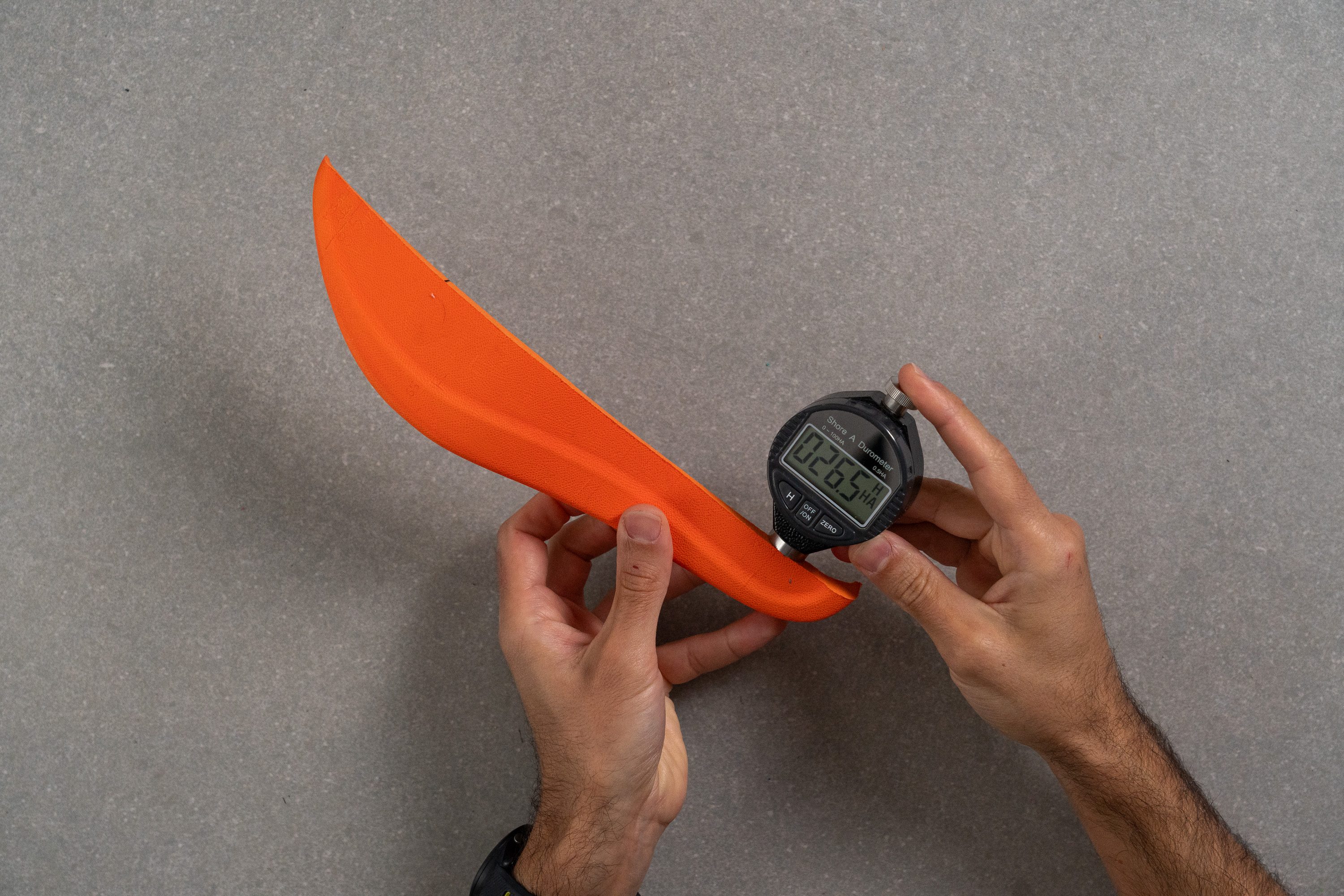
| Zion 4 | 26.0 HA |
| Average | 24.0 HA |
Secondary foam
The drop-in midsole sits inside a slightly firmer carrier made of Nike's standard Phylon EVA foam. It gives the Jordan Zion 4 an essential structural integrity for stability.
Pressing our durometer against the carrier foam indeed showed a higher reading of 26.0 HA. Even though it doesn't fall into the firm range (30 HA or higher), it has sufficient firmness to prevent wobbling.
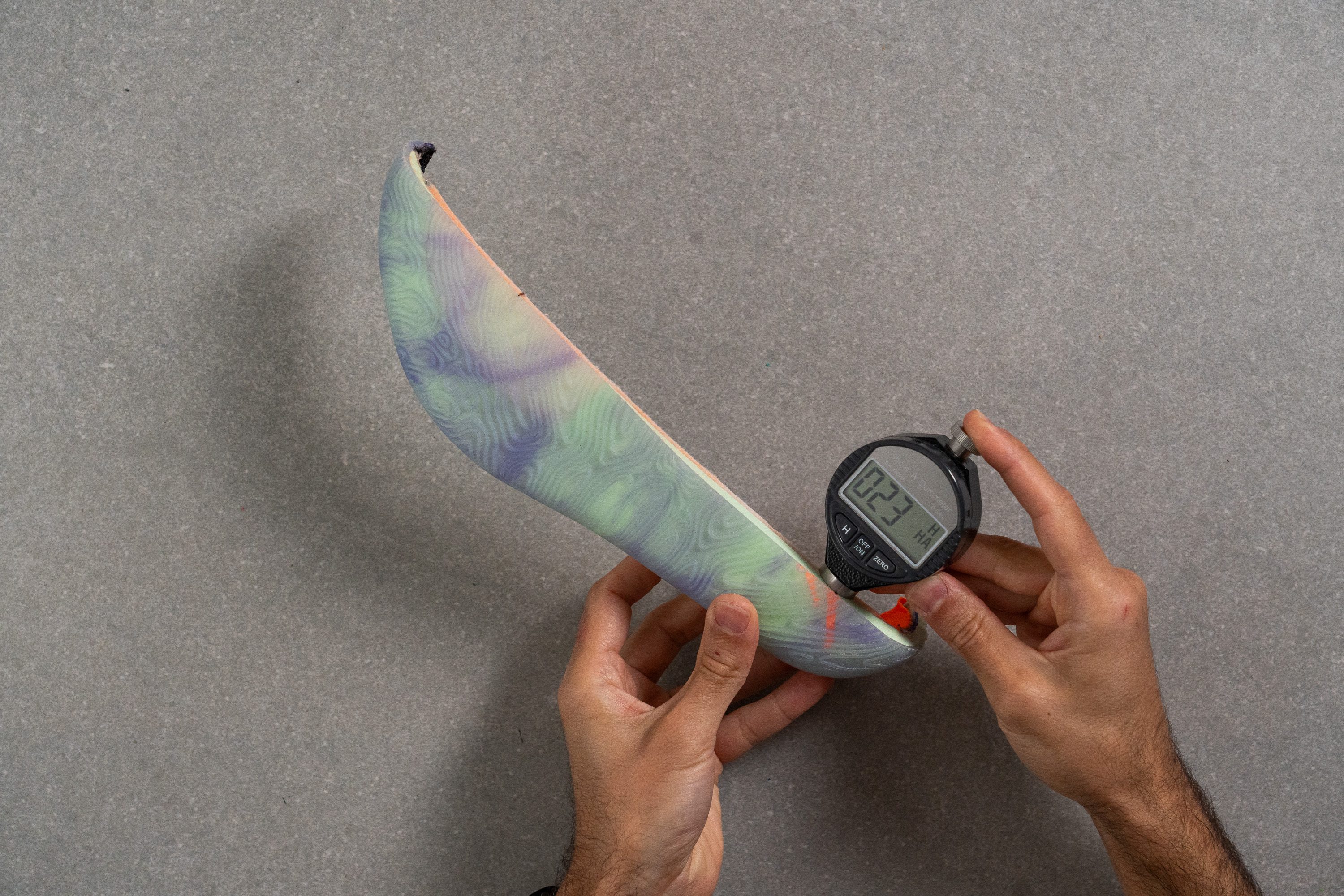
| Zion 4 | 23.0 HA |
| Average | 28.5 HA |
Size and fit
Size
Jordan Zion 4 fits half size small (26 votes).
Consider sizing up
Width / Fit
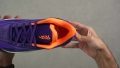
There is no denying the fact that the Jordan Zion 3 was illegally tight and narrow. But did the new Zion 4 get any roomier? Well, it's a mixed bag.
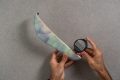
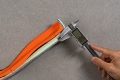
By creating one-to-one molds of both shoes with a proprietary liquid, we were able to measure their interior dimensions precisely with a digital caliper.
Fortunately, the widest part of the Zion 4 did increase slightly in the ball-of-foot area, from 88.9 mm to 91.4 mm. So at least the shoe made it into the medium-width range.
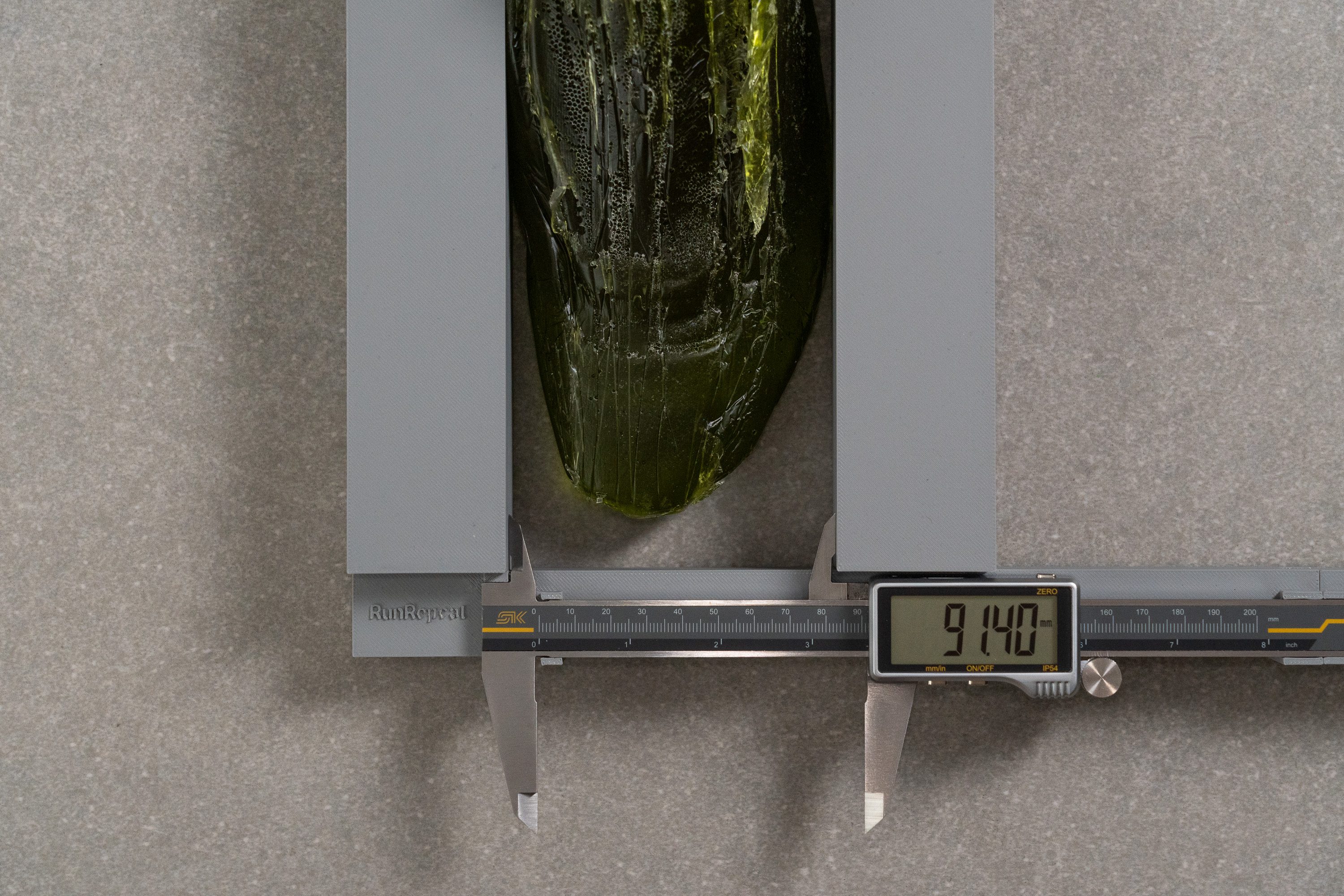
| Zion 4 | 91.4 mm |
| Average | 92.6 mm |
Toebox width
Win some, lose some.
The toe-crushingly narrow toebox of the Zion 3 got even tighter in the Zion 4! Believe it or not, but the shoe's big toe area width went from 64.8 mm to an even narrower 62.7 mm!
So yet again, we see the Jordan Zion shoe at the snugger end of the basketball shoe spectrum.
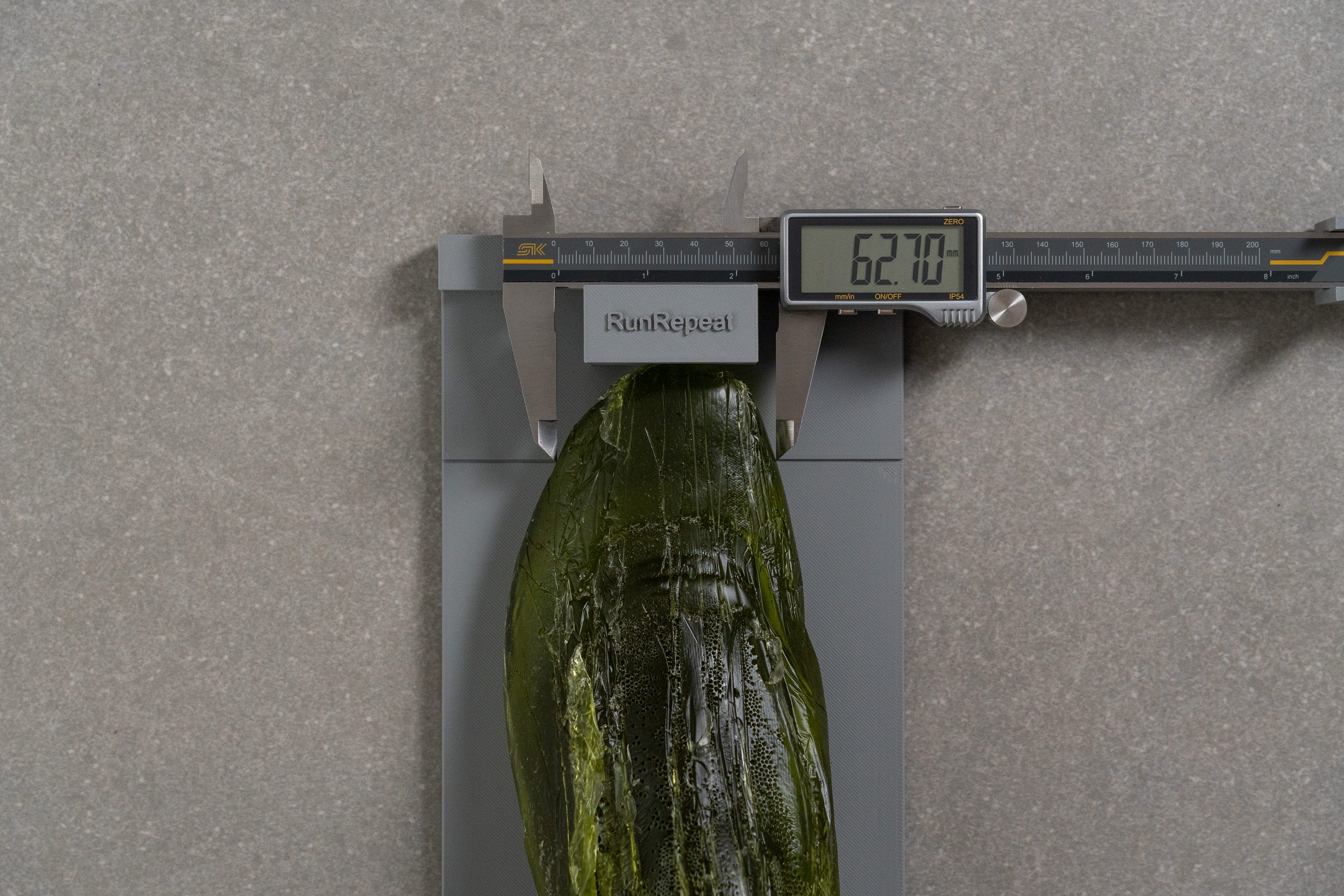
| Zion 4 | 62.7 mm |
| Average | 69.2 mm |
Toebox height
On a positive note, the shoe doesn't skimp on the vertical space.
Its toebox height showed some of the highest readings of 27.4 mm, leaving us wondering why it couldn't use some of those millimeters to broaden the ZIon 4's horizontally.
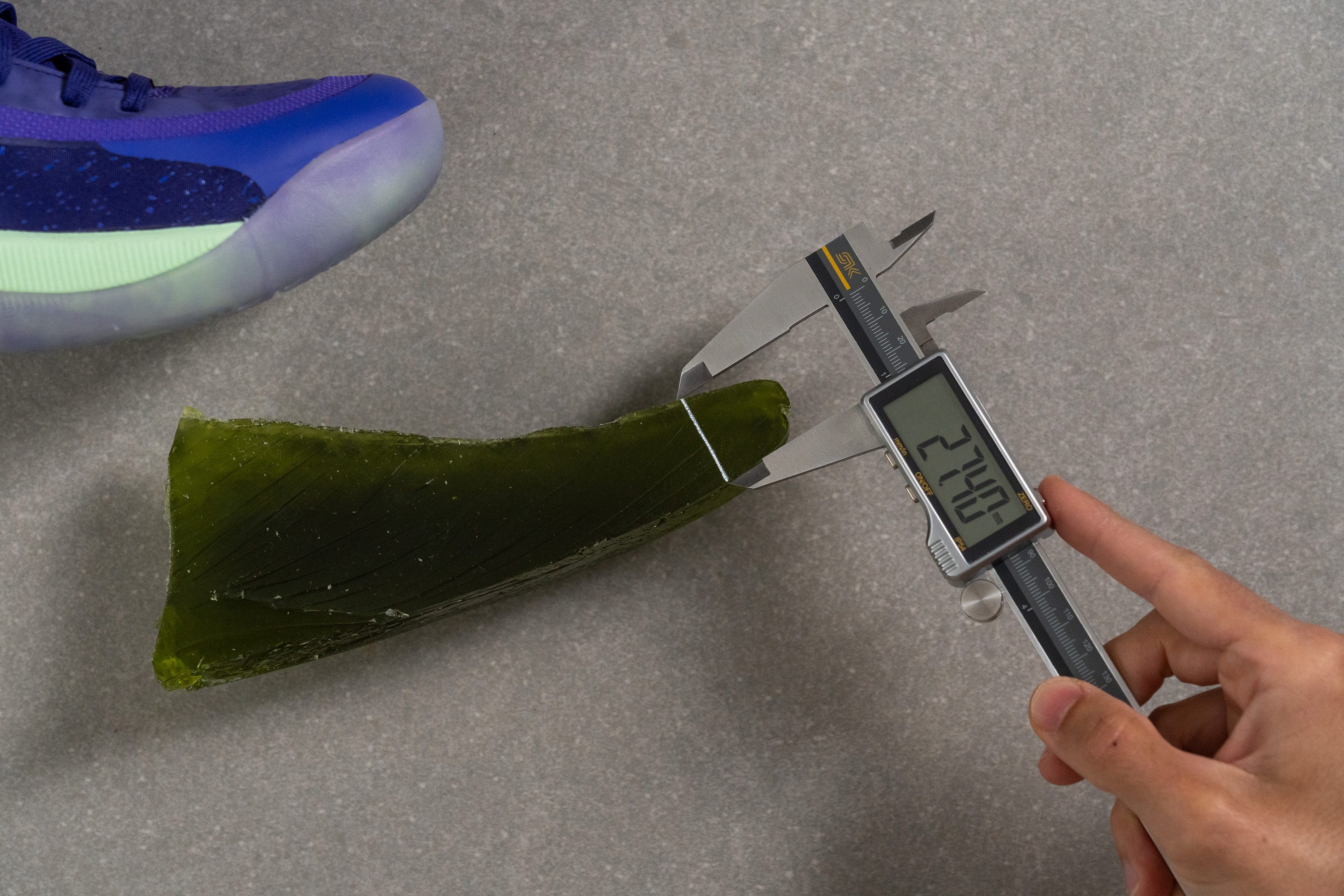
| Zion 4 | 27.4 mm |
| Average | 23.4 mm |
Traction / Grip
Traction test
The Jordan Zion 4 may not have the stickiest, most elite-level traction, but it is good enough to support dynamic cuts, crossovers, and hard stops.
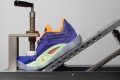
Sliding the shoe's forefoot across a slab of professional hardwood in our traction-testing machine, we recorded a slightly below-average friction coefficient of 0.71. This indicates a more balanced, grip-and-give type of traction.
| Zion 4 | 0.71 |
| Average | 0.76 |
Outsole design
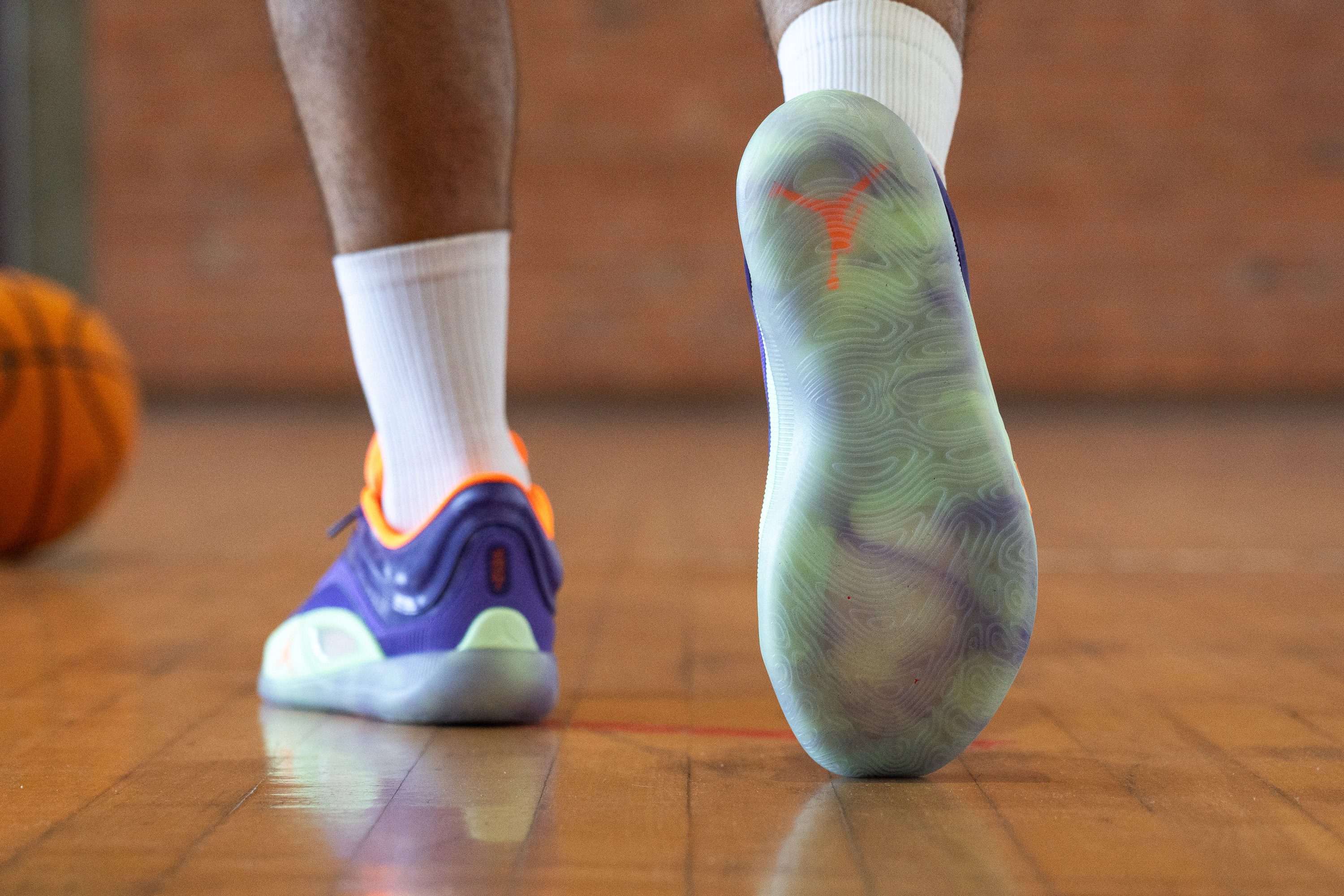
The Jordan Zion 4 introduces an entirely revamped outsole design with a new wavy topographical traction pattern on a fully translucent rubber.
Flexibility / Stiffness
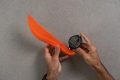
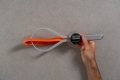
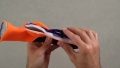
With no internal shank or heavy upper overlays, nothing holds the Zion 4 back from bending freely and easily with the foot.
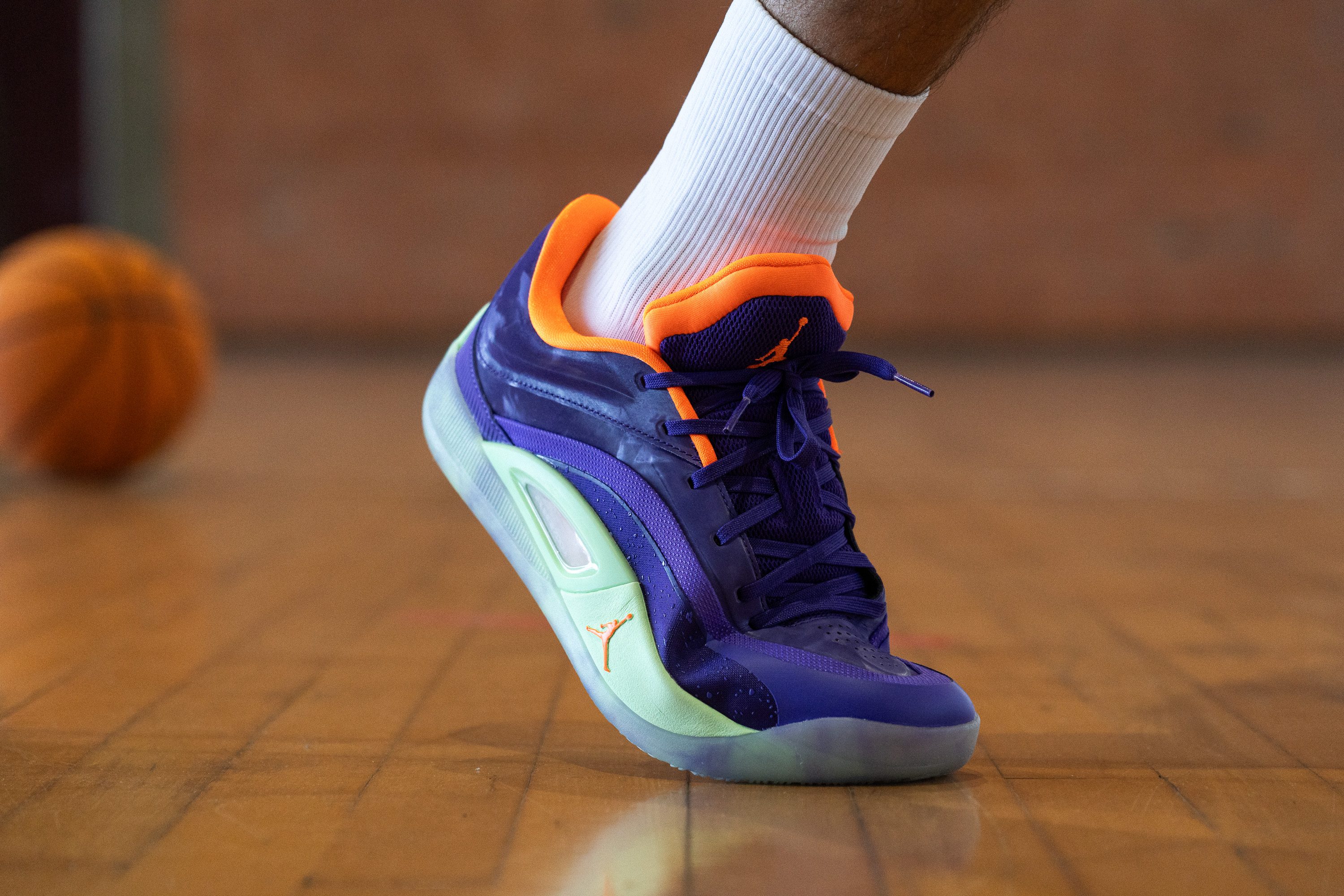
When measuring the force required to bend this Jordan shoe by 30 degrees, our shoe stiffness gauge returned a lower reading of 16.1N.
Together with the shoe's below-average forefoot stack, this pliability enhances proprioception and maneuverability during quick cuts and direction changes.
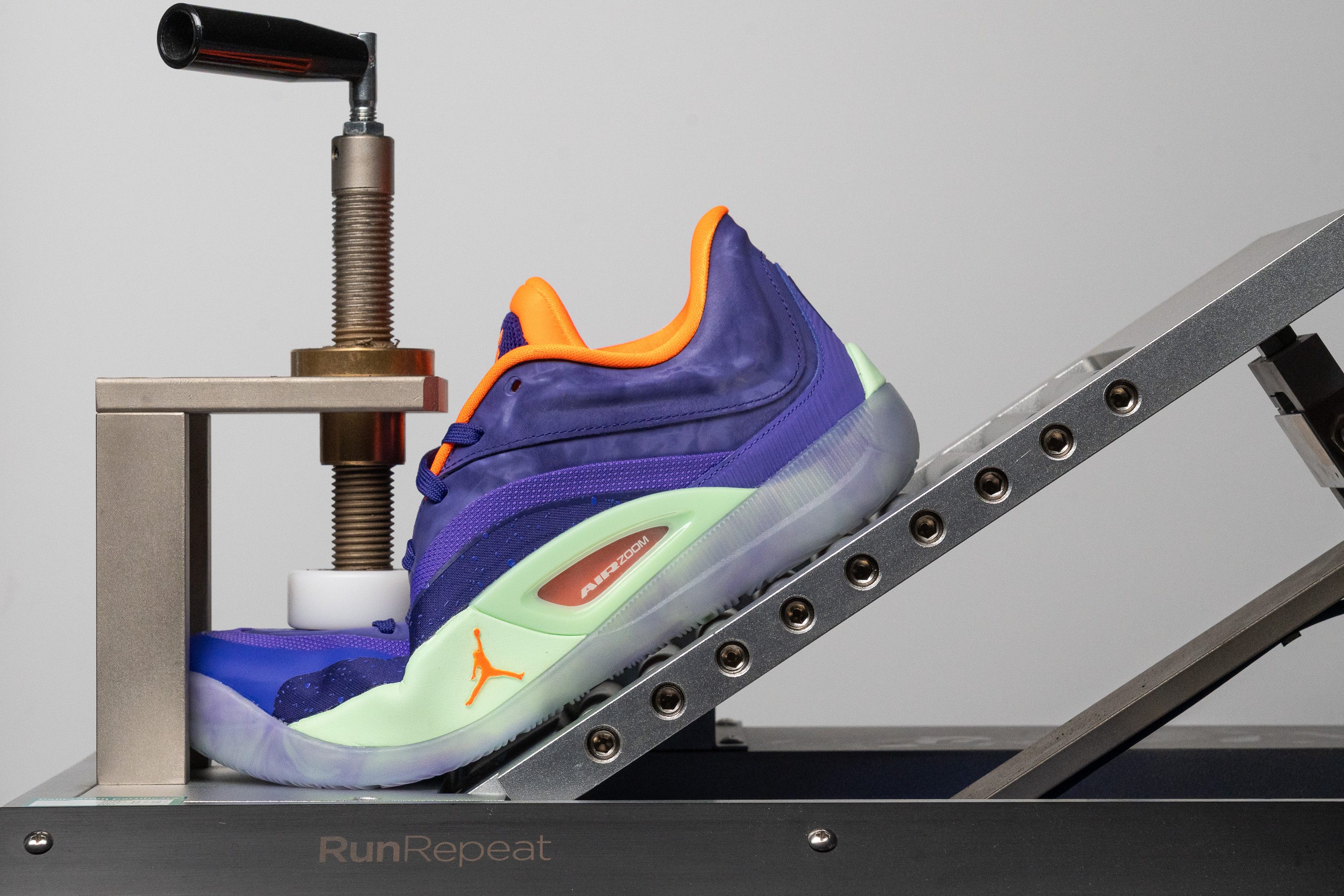
| Zion 4 | 16.1N |
| Average | 20.6N |
Weight
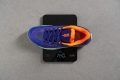
Our scale readings confirmed that the new Zion 4 gained almost an ounce of weight over its predecessor. It now comes in at an above-average 14.4 oz (408g) per shoe in a men's US size 9.
We wouldn't say that it drags the foot down, but visually, its construction suggests a lighter weight.
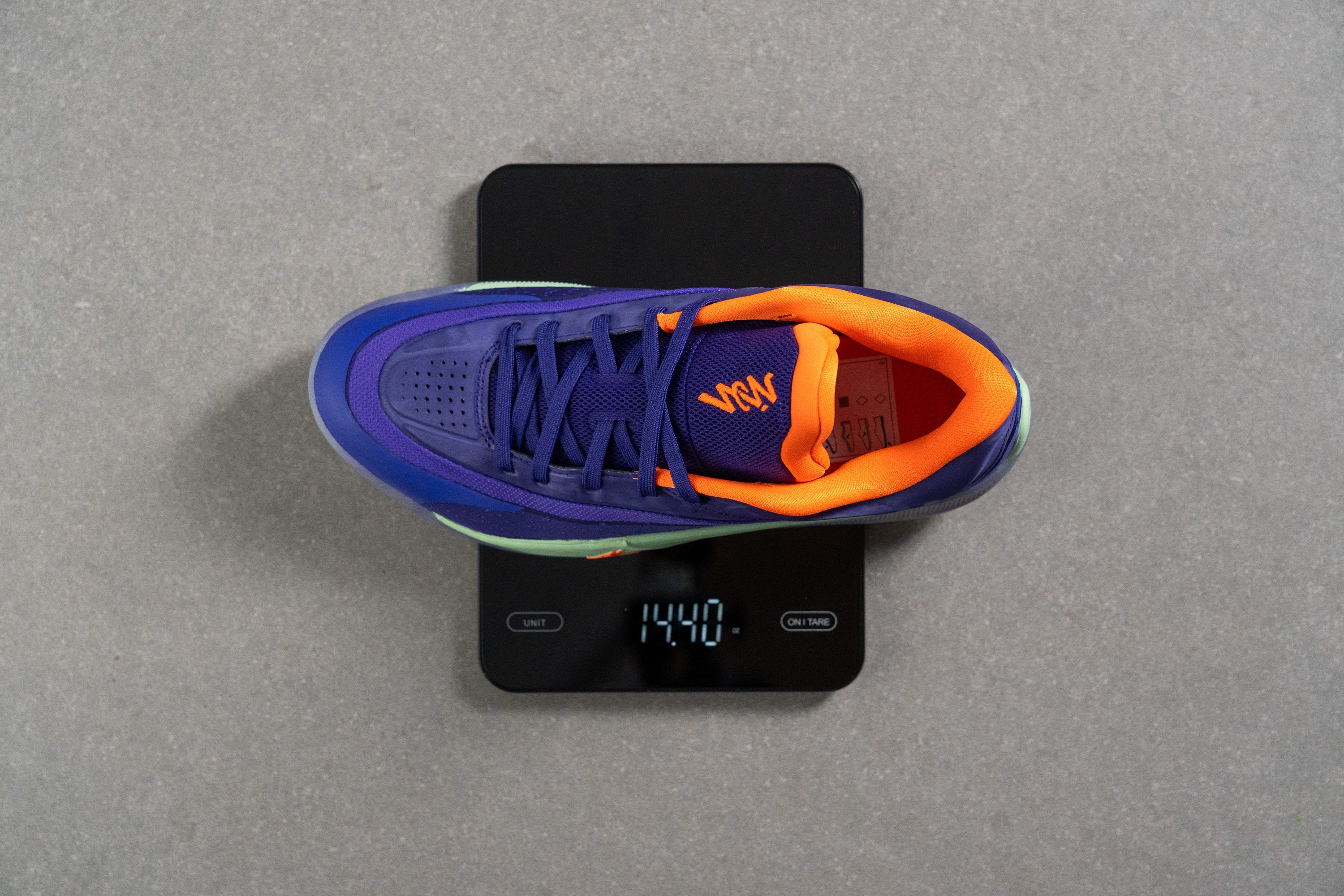
| Zion 4 | 14.4 oz (408g) |
| Average | 13.9 oz (393g) |
Breathability
Breathability test
UpdatedAlthough its heavily layered design doesn't scream breathability, our lab test showed the exact opposite! With a high score of 98 BR, the Jordan Zion 4 is much more effective at keeping the foot dry than most other hoop shoes!
It absorbs sweat from the skin quickly enough to prevent moisture from pooling inside the shoe. This, in turn, keeps the interior comfortable and reduces the risk of blisters.
| Zion 4 | 98 BR |
| Average | 74 BR |
Drying potential
NewBut you don’t want all that sweat to stay trapped inside the shoe’s materials either. That’s why we also measured the amount of moisture the Zion 4 evaporated while sitting on a heated footform in a special chamber for 3 hours.
At 35%, this Jordan shoe showed a normal drying potential for a basketball shoe, right in line with the category average. That’s why it is likely to still feel damp on two-a-day practices and back-to-back games.
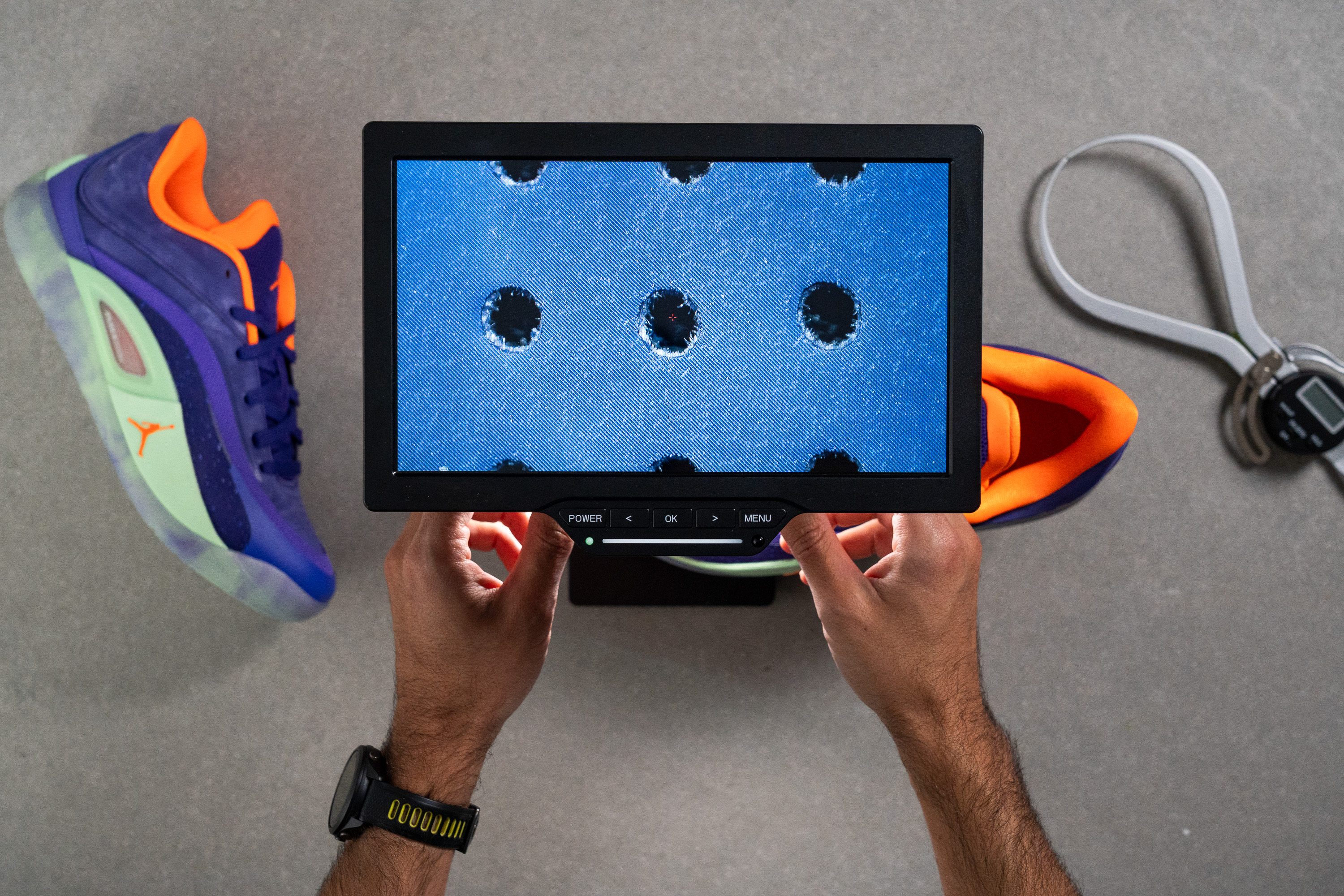
| Zion 4 | 35% |
| Average | 36% |
Stability
Lateral stability test
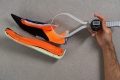
With no shank or plate embedded in its midsole, we found that the Jordan Zion 4 still provides some decent lateral support through its stiff TPU sidewalls and grounded platform.
In addition to the external frame, the drop-in midsole of this Jordan shoe also features raised edges that form a cradle around the foot on the inside.
However, the shoe's narrower base and the absence of any strong stability components make it a better choice for nimble players who don't expect top-tier ankle support and stability from their hoop shoes.
Torsional rigidity
But even light and agile guards and forwards require strong side-to-side containment for their dynamic cuts, crossovers, and eurosteps. And the good news is that the Zion 4 delivers that.
The shoe proved to be immensely hard to twist in our lab test, requiring an above-average torque of 21.1 Nm. Quick and forceful changes of direction feel well-supported in this Jordan shoe.
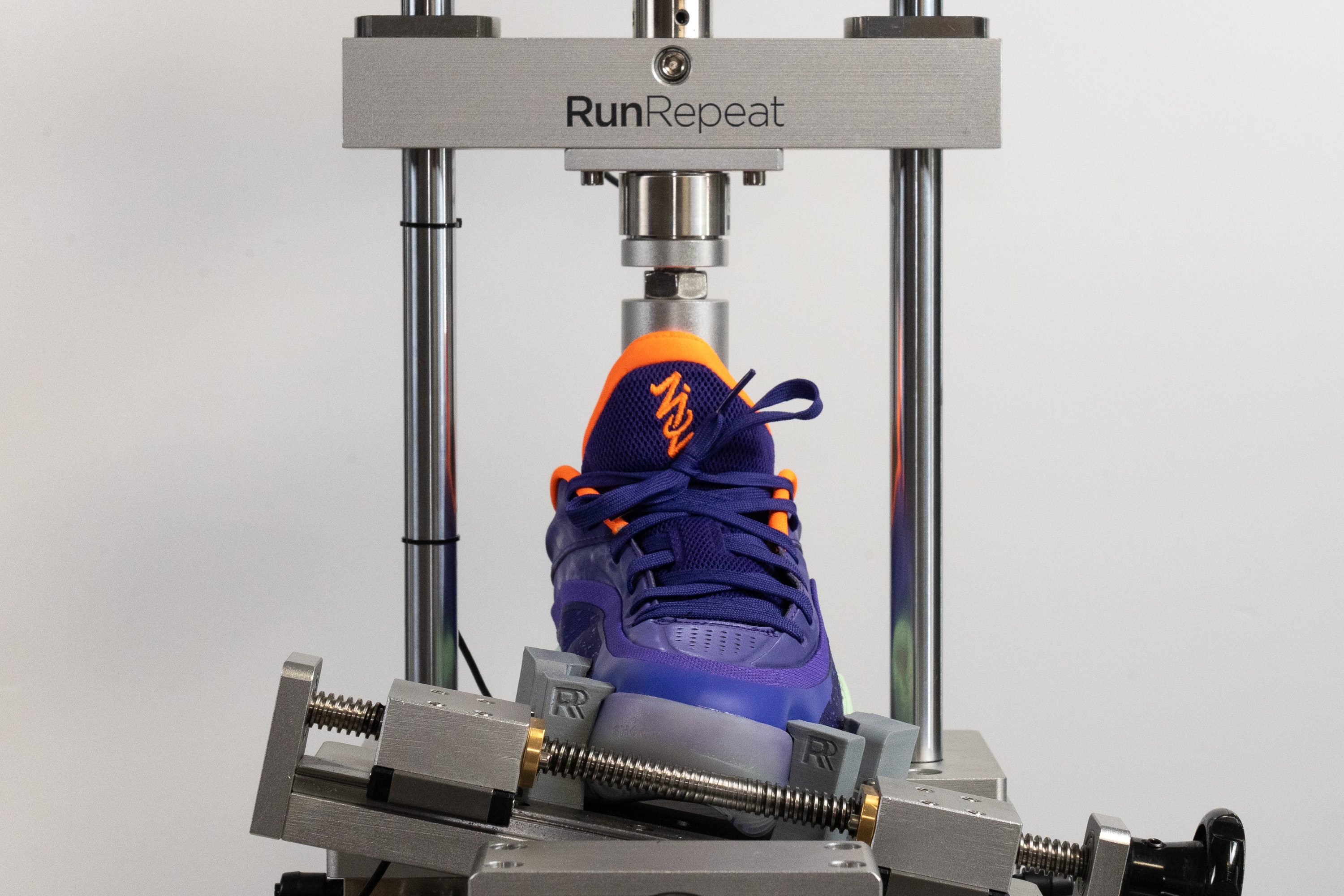
| Zion 4 | 21.1 Nm |
| Average | 19.5 Nm |
Heel counter stiffness
The heel counter got a touch more pliable in the Zion 4, but we kept it at the same 4/5 stiffness score as the Zion 3.
The new version still provides a decent heel hold, but the slight changes to its shape and collar padding made the lockdown feel less rigid.
The containment is still secure for those who generate a lot of torque during cuts, but the new design also lowers pressure on the Achilles and offers a lighter, more agile-feeling setup.
| Zion 4 | 4 |
| Average | 3.9 |
Midsole width - forefoot
Just like its predecessor, the Jordan Zion 4 relies on a slimmer platform to accommodate high-speed drives and crafty footwork.
But we were glad to find that the shoe's forefoot outrigger is still prominent enough to support landings at odd angles. The distance between its widest points showed 112.2 mm on our caliper.
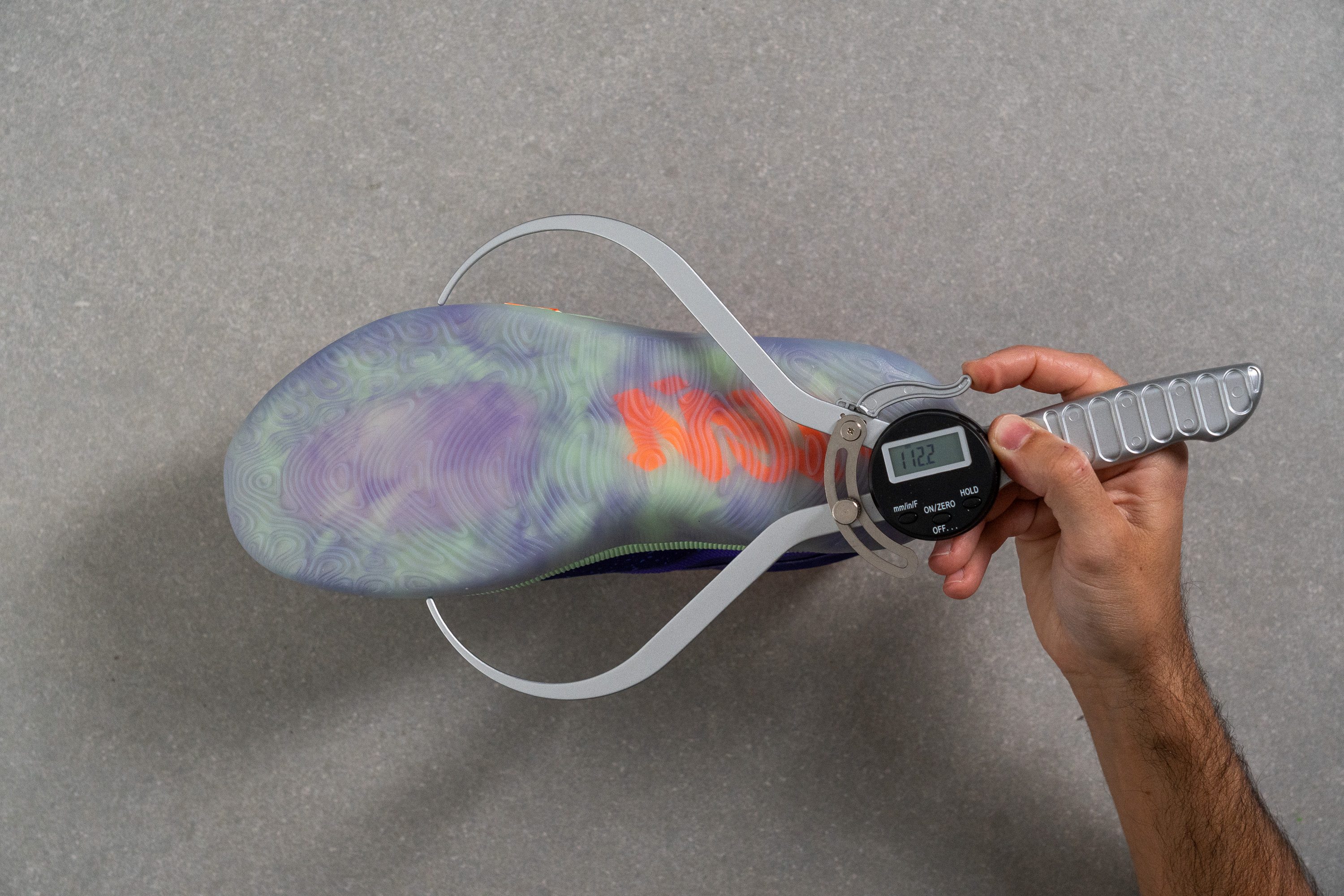
| Zion 4 | 112.2 mm |
| Average | 115.4 mm |
Midsole width - heel
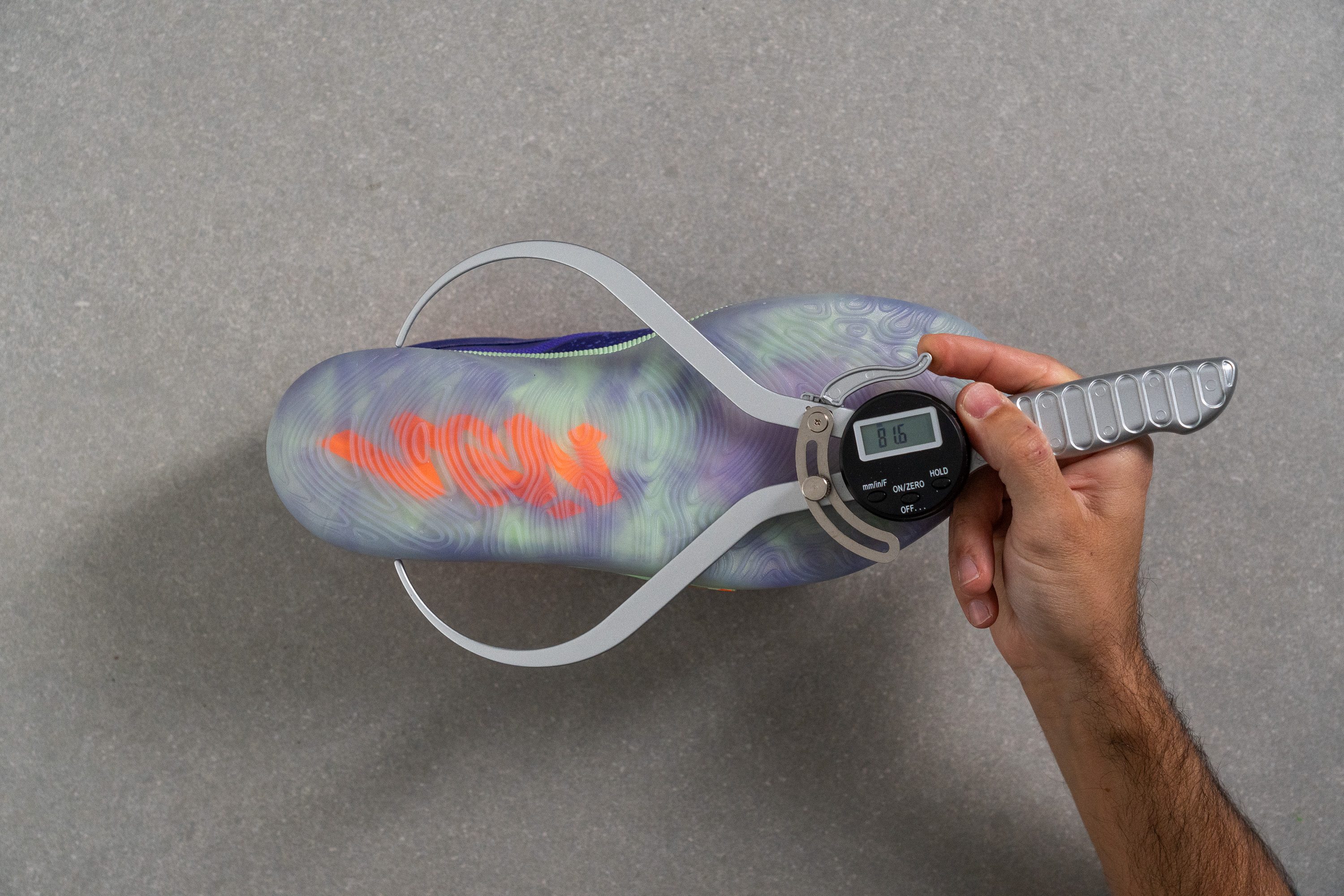
The heel, on the other hand, proved to be one of the slimmest, measuring only 81.6 mm at its widest.
While it contributes to Zion 4's maneuverability, it's not the most reliable surface area for hard stops and off-center landings.
| Zion 4 | 81.6 mm |
| Average | 89.3 mm |
Durability
Toebox durability
Overlapping synthetic overlays help this Jordan shoe's upper resist abrasion rather effectively.
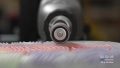
Even the textile panels proved to be hard-wearing, based on the results of our Dremel test. Sustaining very mild damage, the shoe's toebox durability earned a high score of 4/5.
| Zion 4 | 4 |
| Average | 3.7 |
Heel padding durability
We also found that the inner lining of the Jordan Zion 4's heel collar is ready for some rigorous in-shoe friction.
Remaining practically unscathed in a battle with sandpaper, we rated the shoe's heel padding durability as 4/5.
| Zion 4 | 4 |
| Average | 3.8 |
Outsole durability
But it was the shoe's outsole rubber that impressed us the most!
Even with the Dremel set to 10K RPM and the test time extended to 18 seconds, the outsole blend refused to give in! We recorded a barely noticeable dent depth of 0.4 mm, indicating excellent durability compared to the category average.
| Zion 4 | 0.4 mm |
| Average | 1.0 mm |
Outsole thickness
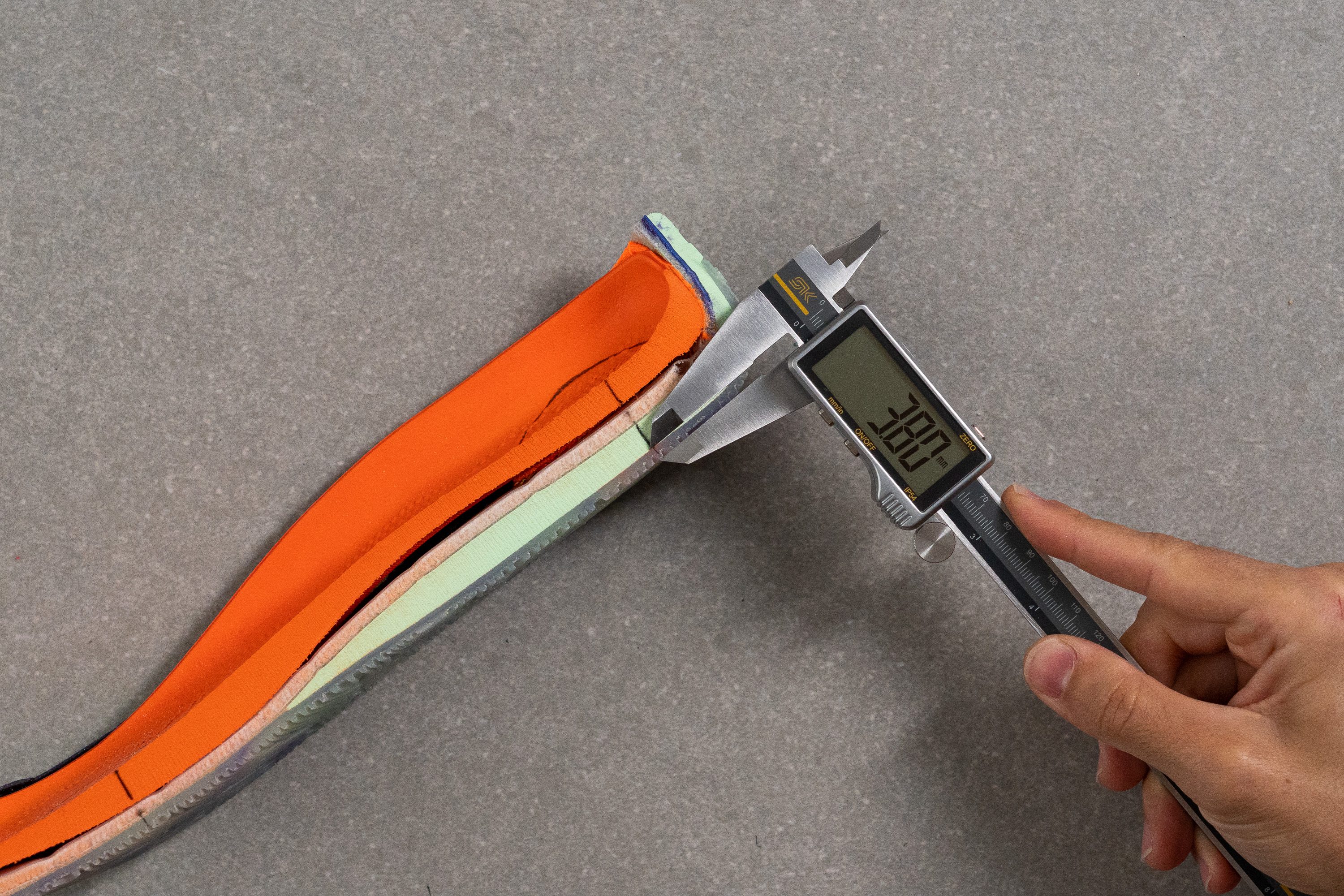
In addition to being hard-wearing, the Zion 4's outsole is also quite thick. Our caliper measured 3.8 mm of rubber at the heel.
We could almost recommend this Jordan sheo for outdoor use, but we have reservations about the thin nature of its treadlines. They may not fare well on the blacktop over the long term.
| Zion 4 | 3.8 mm |
| Average | 4.0 mm |
Misc
Insole thickness
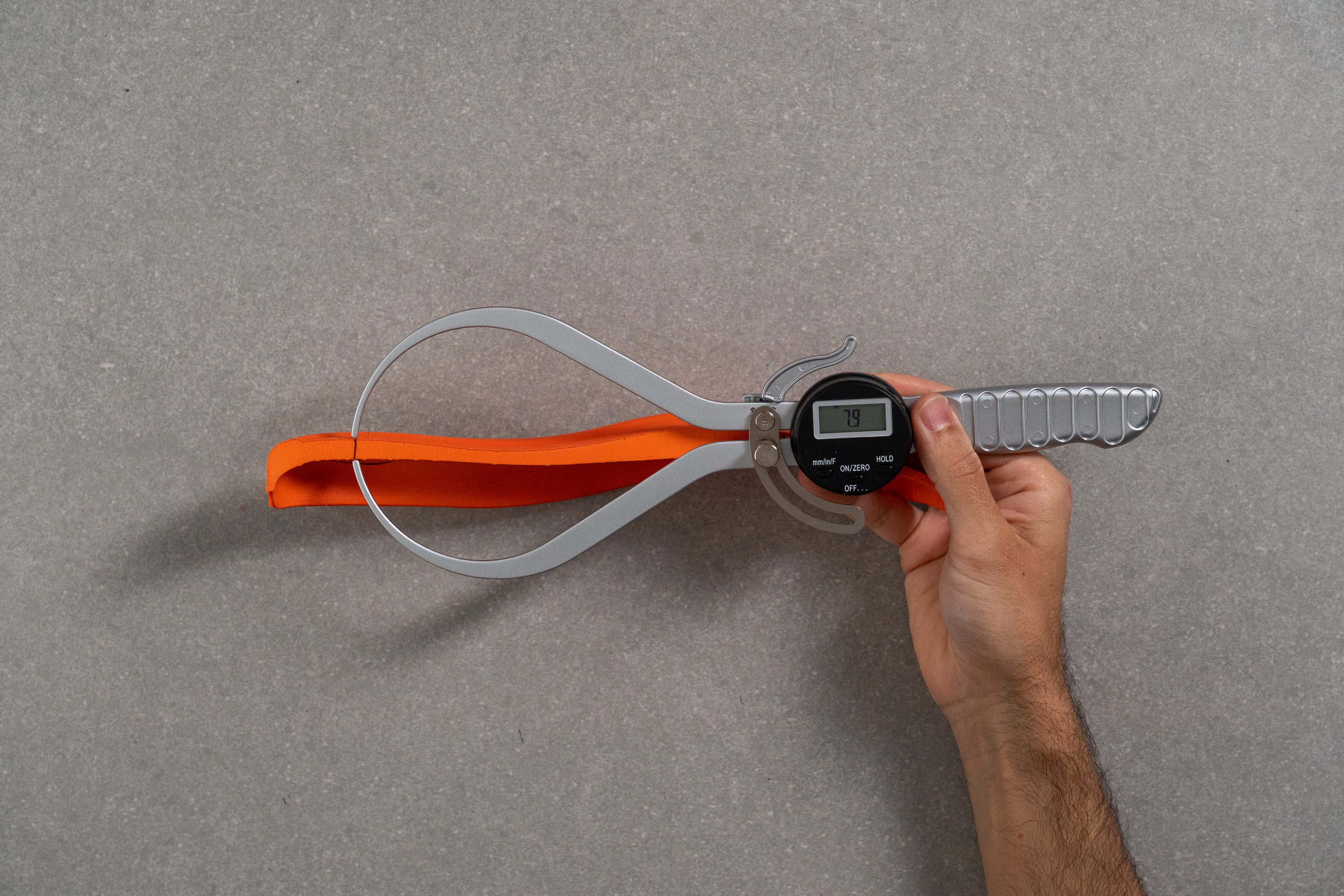
Technically, there is no insole in the Zion 4 because it features a thick drop-in midsole. Measuring its thickness in the feel returned 7.9 mm.
| Zion 4 | 7.9 mm |
| Average | 5.1 mm |
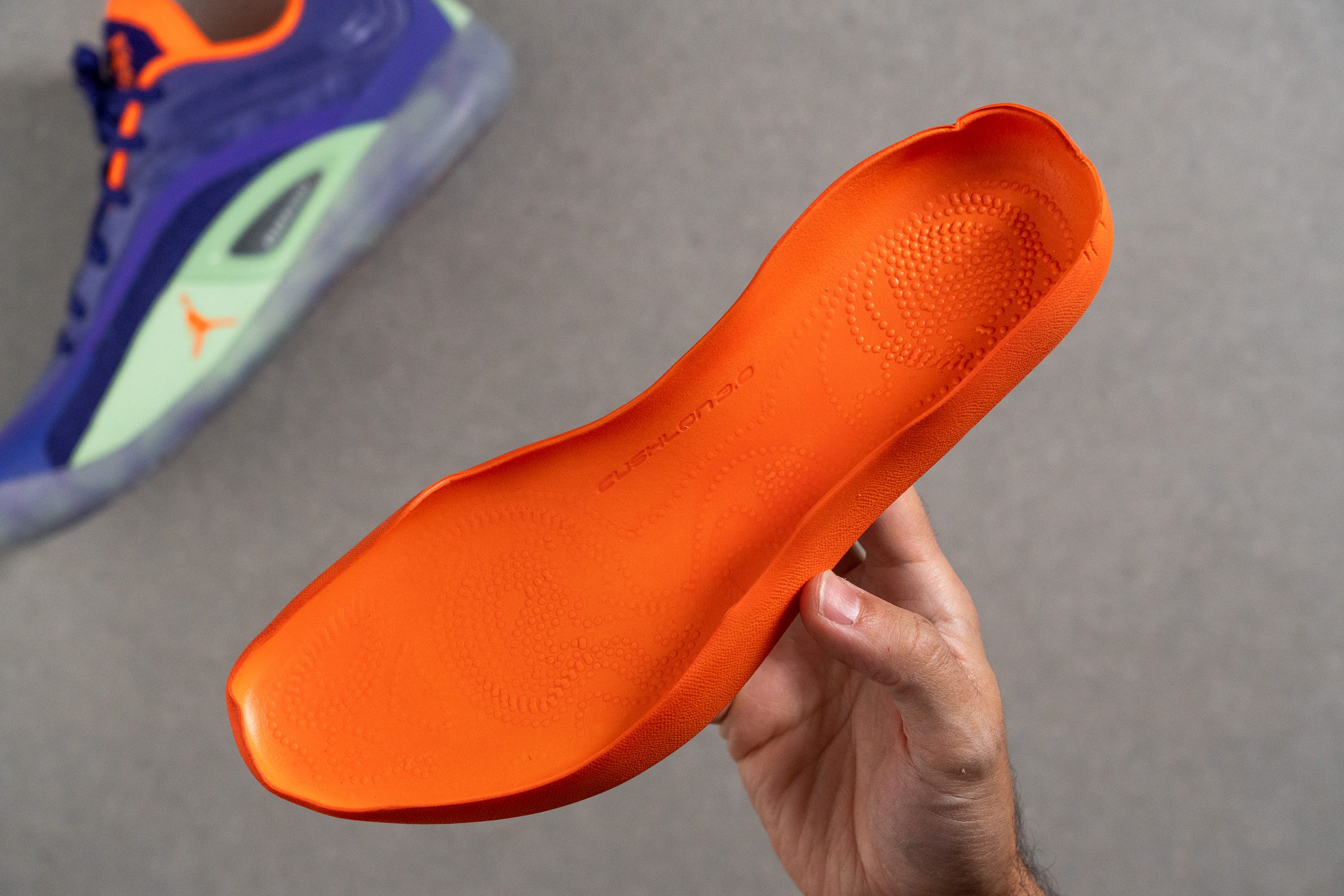
Removable insole
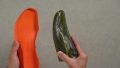
You don't want to take it out because it is essentially the core of this Jordan shoe's cushioning.
| Zion 4 | Yes |
Reflective elements
We rarely see reflective elements on basketball shoes, but the Jordan Zion 4 treated us to a reflective Zion Williamson signature logo on the back.
| Zion 4 | Yes |
Tongue padding
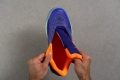
Padded interiors envelop the foot and ankle inside the Jordan Zion 4.
Measuring the thickness of its tongue, our caliper recorded a standard reading of 8.9 mm.
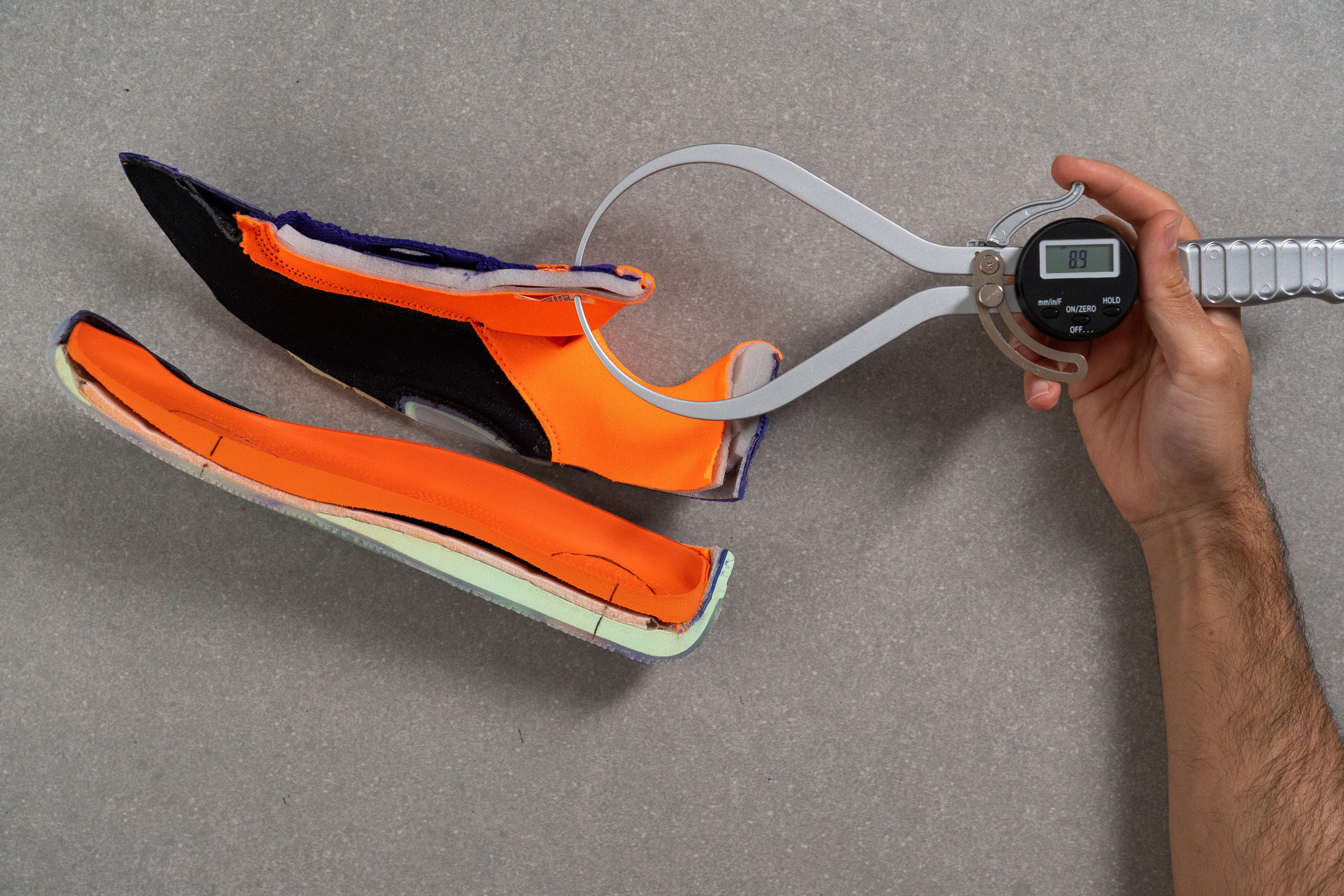
| Zion 4 | 8.9 mm |
| Average | 9.4 mm |
Tongue: gusset type
The shoe's tongue is non-gusseted, so you might experience some mild tongue shifting.
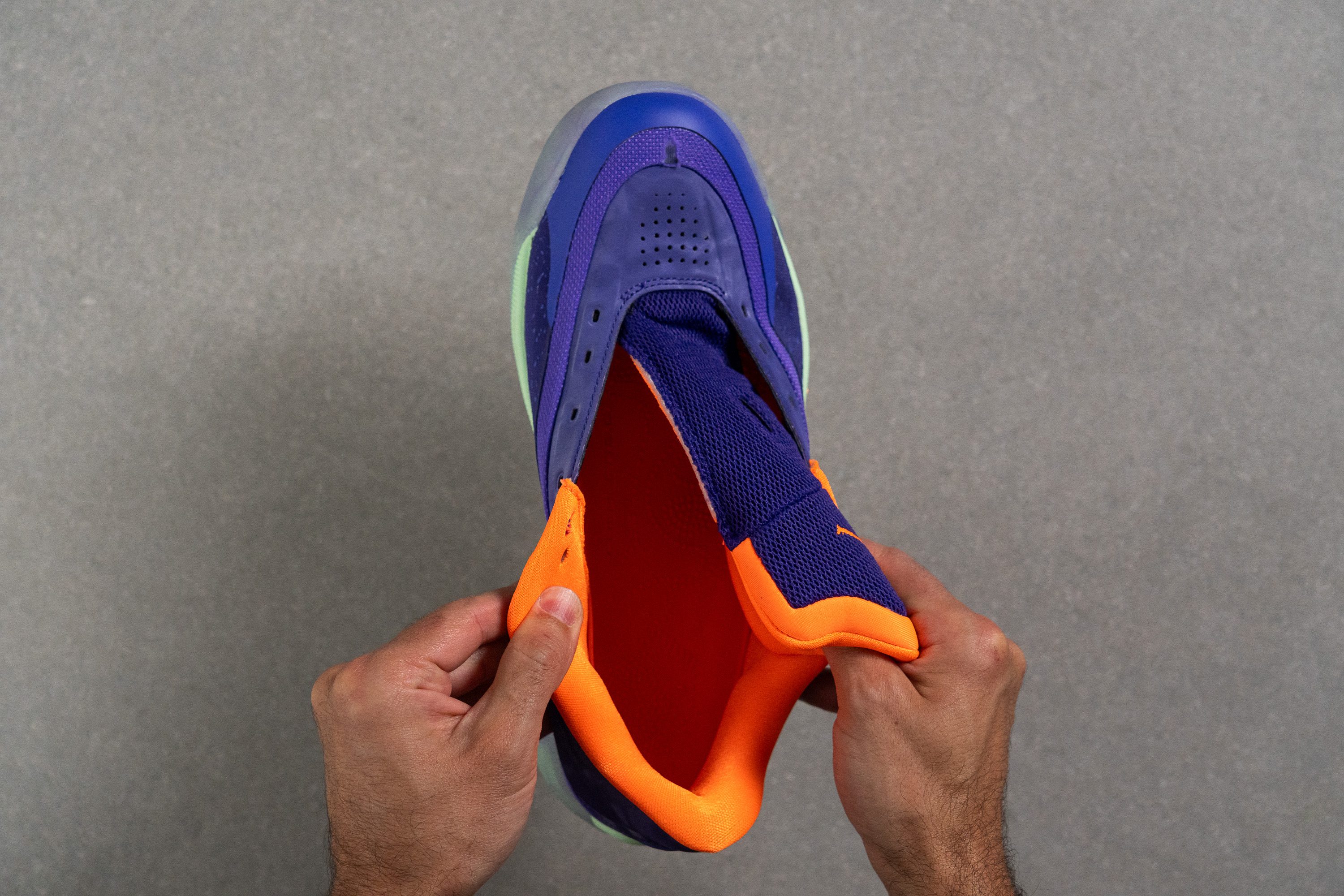
| Zion 4 | None |
Heel tab
The shoe features no heel tabs or finger loops.
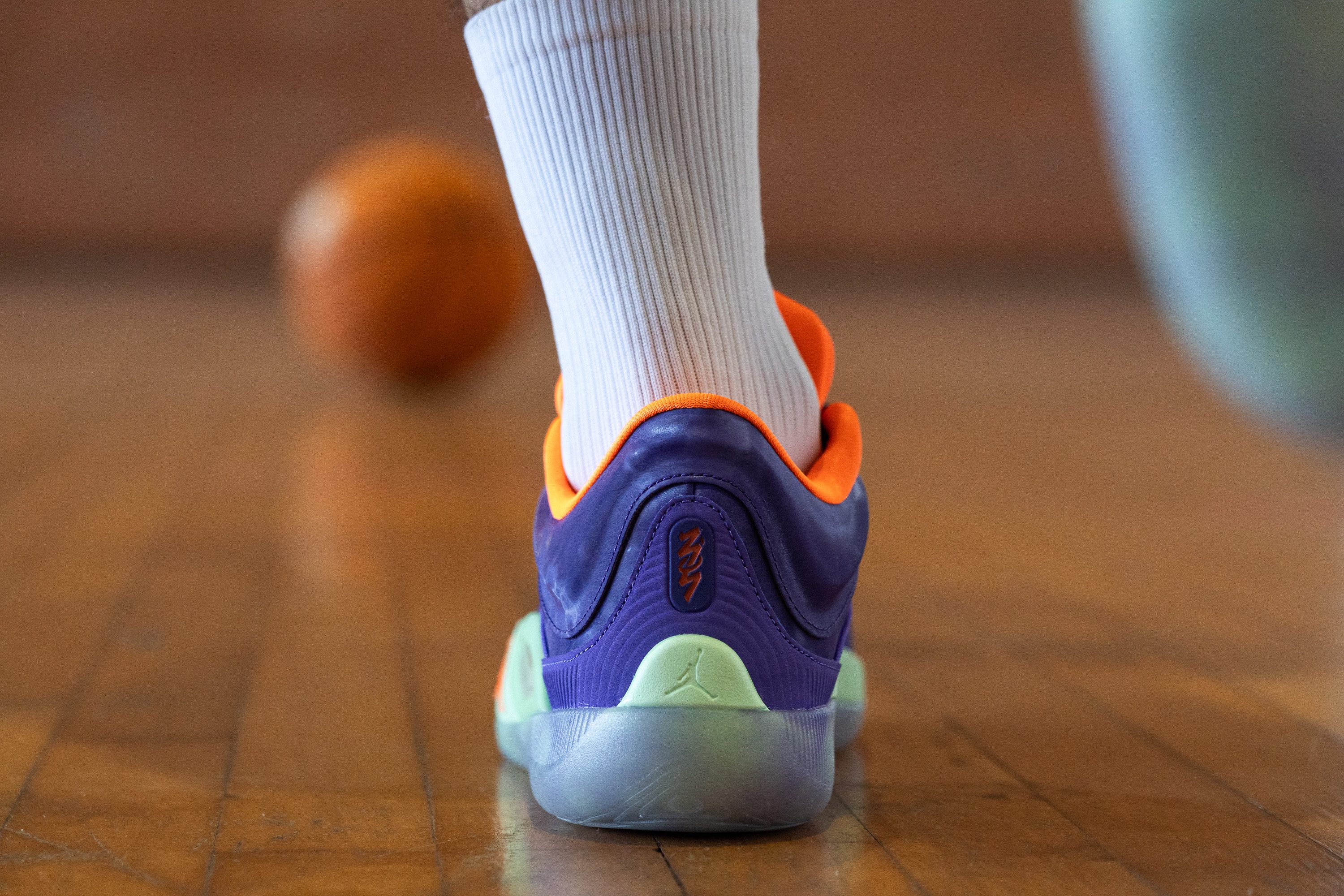
| Zion 4 | None |
Price
With a slight $5 price increase, the Jordan Zion 4 stays in the same price range as its predecessors. We believe that the shoe's overall performance, technologies (i.e., full-length Air Zoom strobel), and material quality justify the price tag.
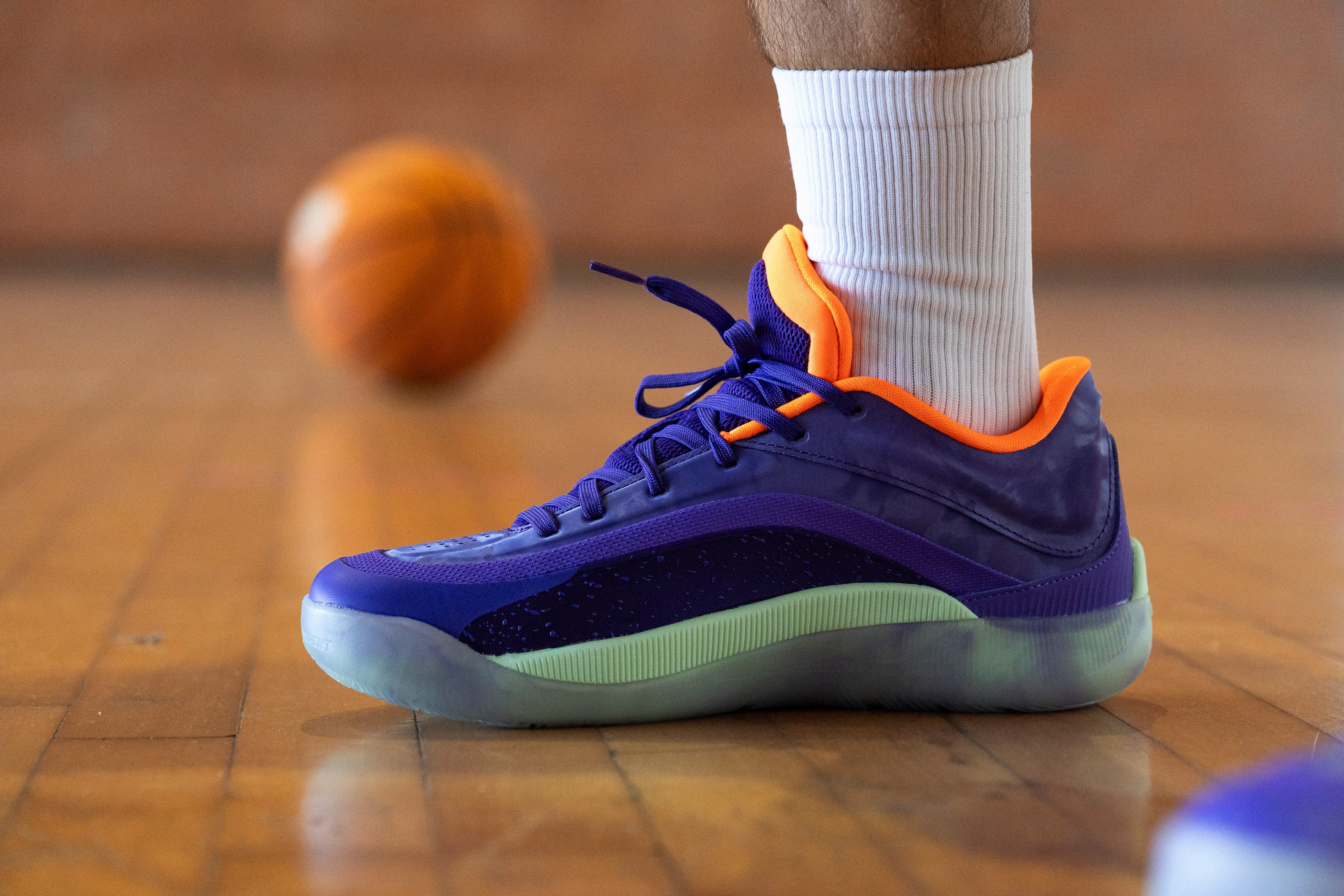
| Zion 4 | $145 |
| Average | $140 |