








Our verdict
- Urban 40
- Speed 50
- Day hiking 84
- Backpacking 95
Pros
- Fantastic stability for technical terrain
- Excellent grip on various surfaces
- Flexible forefoot for a backpacking boot
- Highly secure lockdown and containment
- Durable materials and construction
- Stays warm in cold weather
- Effective waterproofing
Cons
- Heavier than average
- Poor breathability
Awards
- Top pick in best hiking boots
- Top pick in best backpacking boots
- Top 14% in hiking boots
- Top 13% in waterproof hiking boots
Comparison
The most similar hiking boots compared
+ + Add a shoe | |||||
|---|---|---|---|---|---|
| Our score | 90 Superb | 87 Great | 87 Great | 88 Great | |
| Price | $240 | $185 | $249 | $249 | |
| Trail terrain | Snow / Icy terrainRocky / Technical terrainVersatile / Moderate terrain | Rocky / Technical terrainVersatile / Moderate terrain | Snow / Icy terrainRocky / Technical terrainVersatile / Moderate terrain | Snow / Icy terrainRocky / Technical terrainVersatile / Moderate terrain | |
| Shock absorption | Moderate | Moderate | - | - | |
| Energy return | Moderate | Moderate | - | - | |
| Traction | High | Low | - | - | |
| Weight lab Weight brand | 20.7 oz / 587g | 15.4 oz / 437g 15.5 oz / 440g | 20 oz / 567g 19.6 oz / 555g | 20.3 oz / 575g 19 oz / 539g | |
| Lightweight | ✗ | ✓ | ✗ | ✗ | |
| Breathability | - | Warm | Warm | Warm | |
| Use | Backpacking | BackpackingDay Hiking | Backpacking | Day Hiking | |
| Orthotic friendly | ✓ | ✓ | ✓ | ✓ | |
| Drop lab | 14.0 mm | 12.7 mm | 18.5 mm | 15.1 mm | |
| Size | - | True to size | True to size | True to size | |
| Midsole softness | Firm | Firm | Firm | Firm | |
| Difference in midsole softness in cold | Small | Small | Small | Small | |
| Heel counter stiffness | Stiff | Flexible | Stiff | Moderate | |
| Stiffness | Stiff | Stiff | - | - | |
| Outsole hardness | - | - | Hard | Hard | |
| Waterproofing | Waterproof | Waterproof | Waterproof | Waterproof | |
| Material | Leather | Textile | LeatherSuedeTextile | Leather | |
| Season | Winter | Winter | Winter | Winter | |
| Toebox durability | Decent | Decent | Good | Good | |
| Heel padding durability | Good | Decent | Good | Good | |
| Outsole durability | Decent | Bad | Decent | Decent | |
| Width / fit | Medium | Medium | Wide | Medium | |
| Toebox width | Narrow | Medium | Medium | Narrow | |
| Lug depth | 3.8 mm | 3.5 mm | 4.0 mm | 4.0 mm | |
| Heel stack lab | 36.6 mm | 32.5 mm | 41.8 mm | 32.1 mm | |
| Forefoot | 22.6 mm | 19.8 mm | 23.3 mm | 17.0 mm | |
| Widths available | NormalWide | NormalWide | Normal | NormalWide | |
| Technology | Gore-TexOrtholite | Gore-Tex | Gore-Tex | Gore-TexVibram | |
| Cut | High cut | Mid cut | High cut | High cut | |
| Removable insole | ✓ | ✓ | ✓ | ✓ | |
| Ranking | #6 Top 14% | #14 Top 32% | #16 Top 37% | #12 Top 28% | |
| Popularity | #17 Top 39% | #1 Top 3% | #32 Bottom 27% | #29 Bottom 34% |
Who should buy
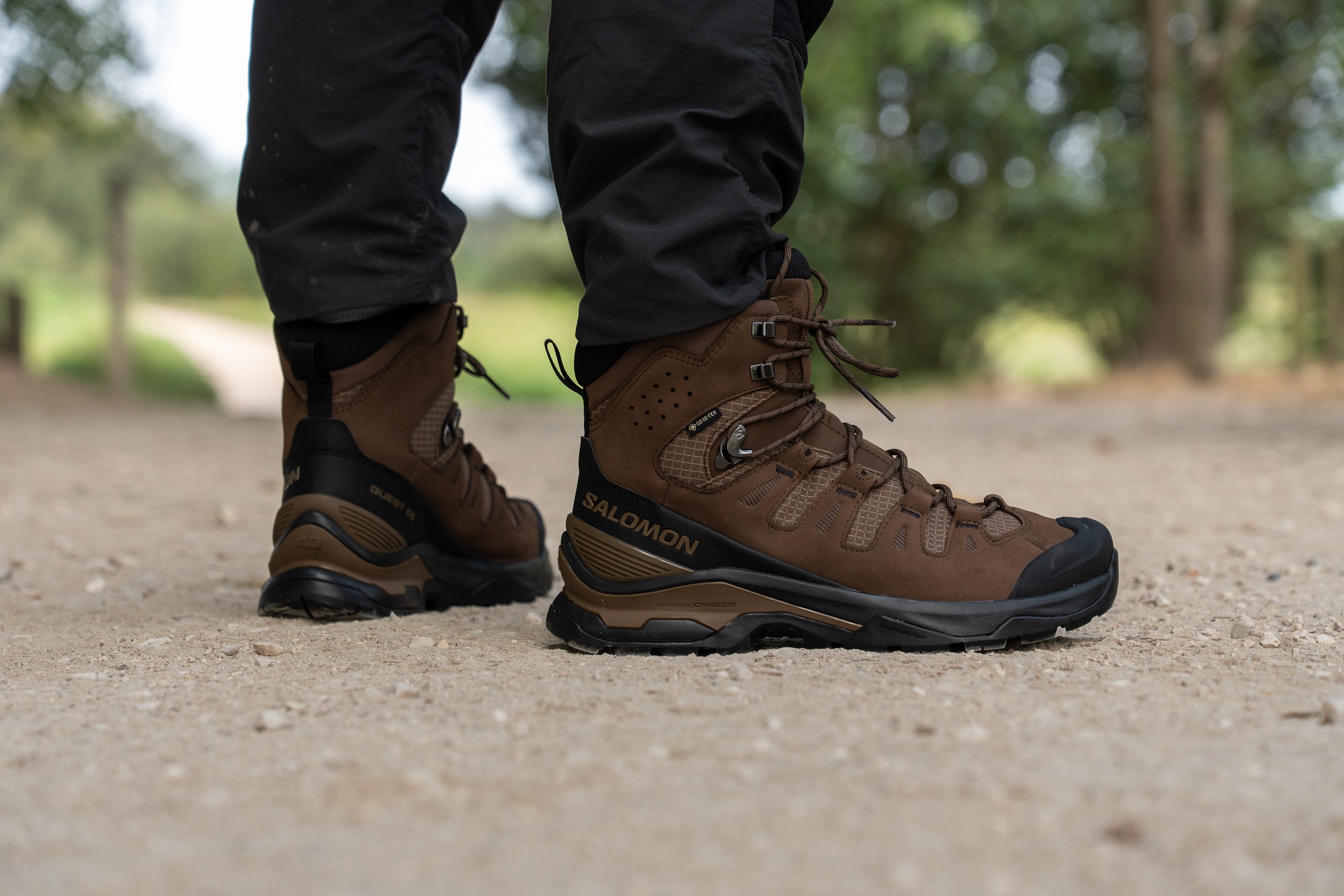
The Salomon Quest 5 GTX is one of the top-performing boots that suits hikers who:
- want a highly stable backpacking boot for demanding multi-day hikes
- don't mind less cushioning in exchange for higher stability
- need a warm, waterproof boot for colder seasons
Who should NOT buy
We don't think it makes sense to invest in the Quest 5 GTX if you need a boot for day hikes or fast-paced adventures. The Salomon X Ultra 5 Mid GTX fits that use case much better with its lighter build.
And if you do need a multi-day boot but feel like this Salomon boot could feel too harsh and bare-bones, the HOKA Kaha 3 GTX will treat your legs to exceptional cushioning and impact protection.
Cushioning
Shock absorption
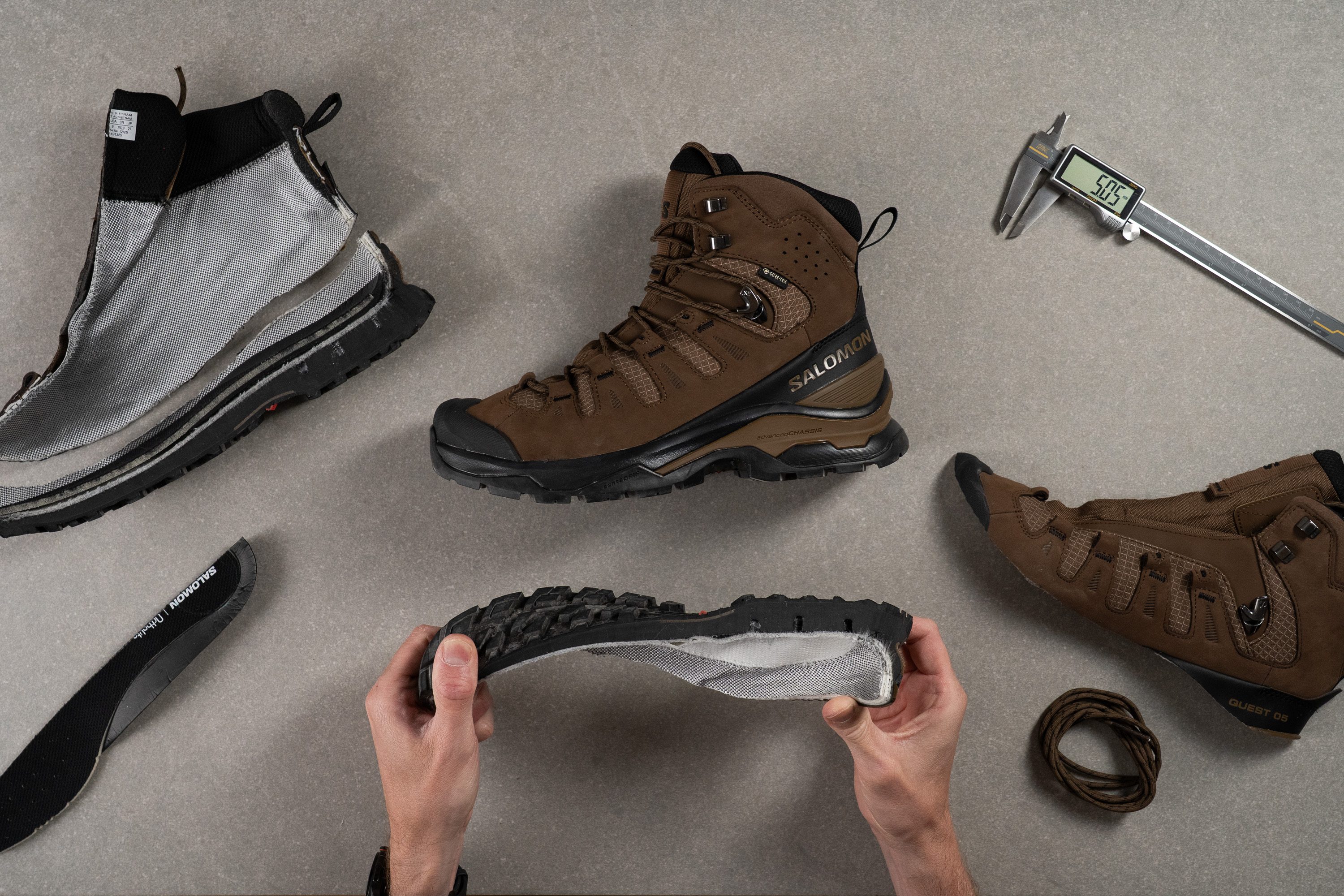
Tough and stability-oriented, Salomon Quests have never been about cushy comfort, and that reflects in the Quest 5 GTX's below-average shock absorption of 85 SA.
But while this boot is nowhere near as cushioned as the HOKA Kaha 3 GTX (119.8 mm), it still has decent impact protection to support carrying 30+ lb on multi-day trips.
| Quest 5 GTX | 85 SA |
| Average | 94 SA |
Energy return
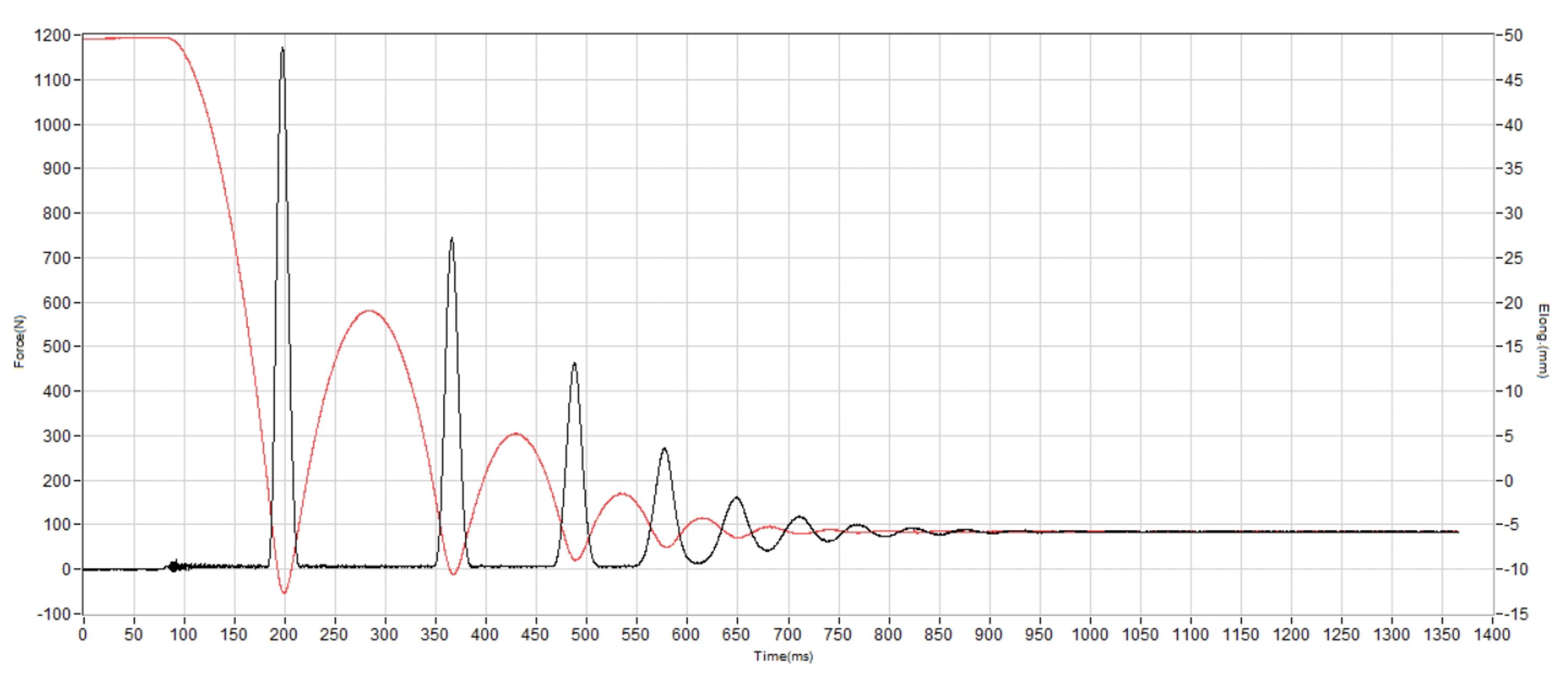
Despite being called EnergyCell, the boot's EVA foam is far from feeling responsive. With a below-average energy return of 47.5%, it offers a dull yet stable and predictable underfoot experience.
| Quest 5 GTX | 47.5% |
| Average | 50.4% |
Heel stack
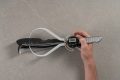
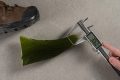
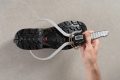
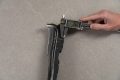
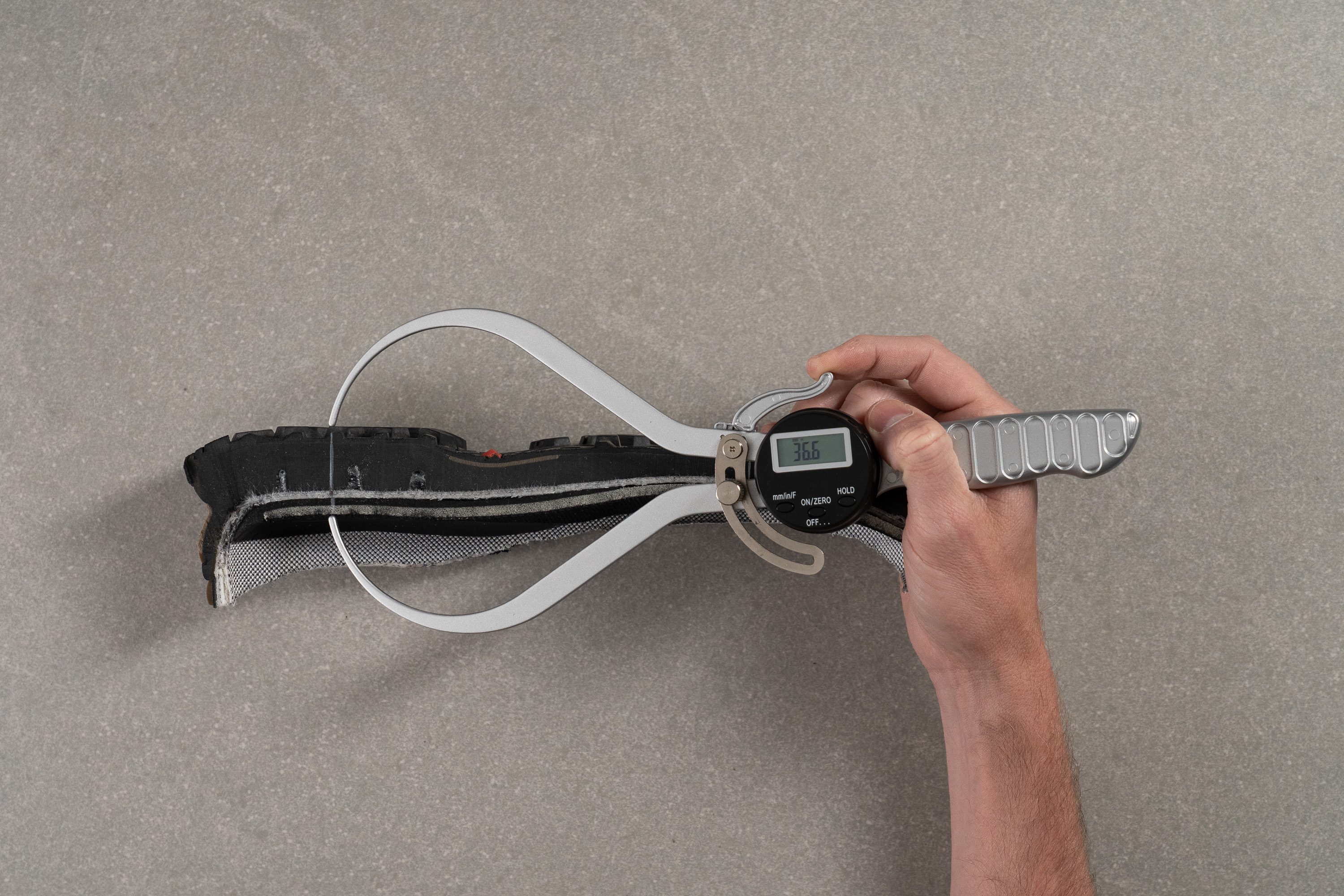
Our caliper measured the Quest 5 GTX's heel stack at 36.6 mm, confirming that its platform thickness is right on par with the average for hiking boots.
| Quest 5 GTX | 36.6 mm |
| Average | 36.0 mm |
Forefoot stack
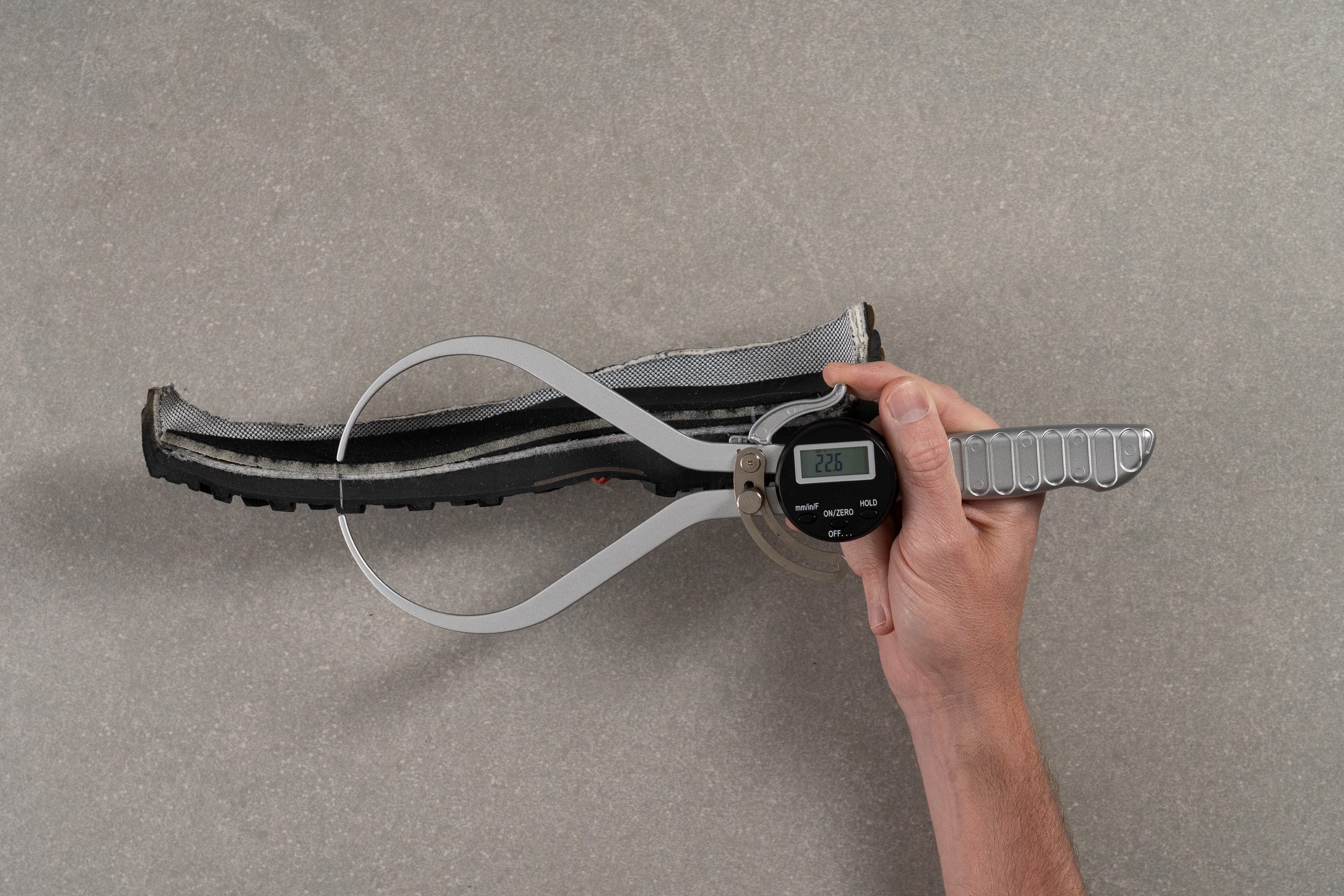
Its forefoot stack brought no surprises either, showing a perfectly average 22.6 mm on our caliper.
That means just enough platform thickness to buffer the foot from harsh trails, but not so much that it completely mutes ground feel or compromises forefoot flex.
| Quest 5 GTX | 22.6 mm |
| Average | 23.5 mm |
Drop
Measuring the boot's heel-to-toe drop at 14 mm, we found it slightly taller than the stated 12 mm.
However, both offsets feel similar on foot, elevating the heel slightly above the toes to ease the strain on the Achilles and calves, especially if you tackle long distances with a heavy pack.
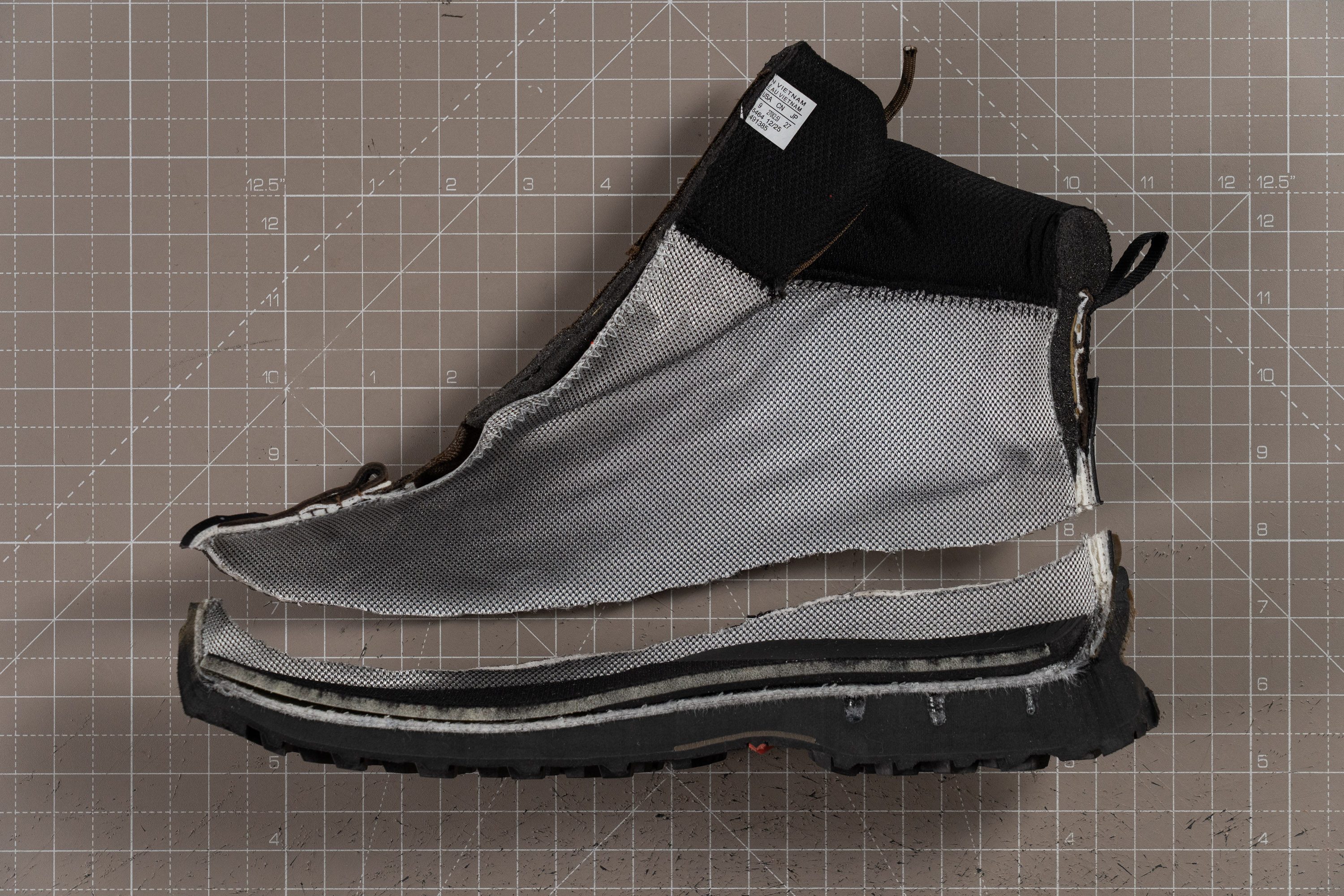
| Quest 5 GTX | 14.0 mm |
| Average | 12.4 mm |
Midsole softness
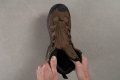
We were surprised to see Salomon describe the Quest 5 GTX's midsole as 'soft and protective' because there is absolutely nothing soft about this boot's midsole foam.
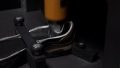
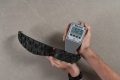
Pressing our durometer against it, we recorded a very high reading of 52.5 AC, making it much firmer than the average hiking boot platform. Hardly compressible, it made our landings feel very stable and surefooted in this Salomon boot.
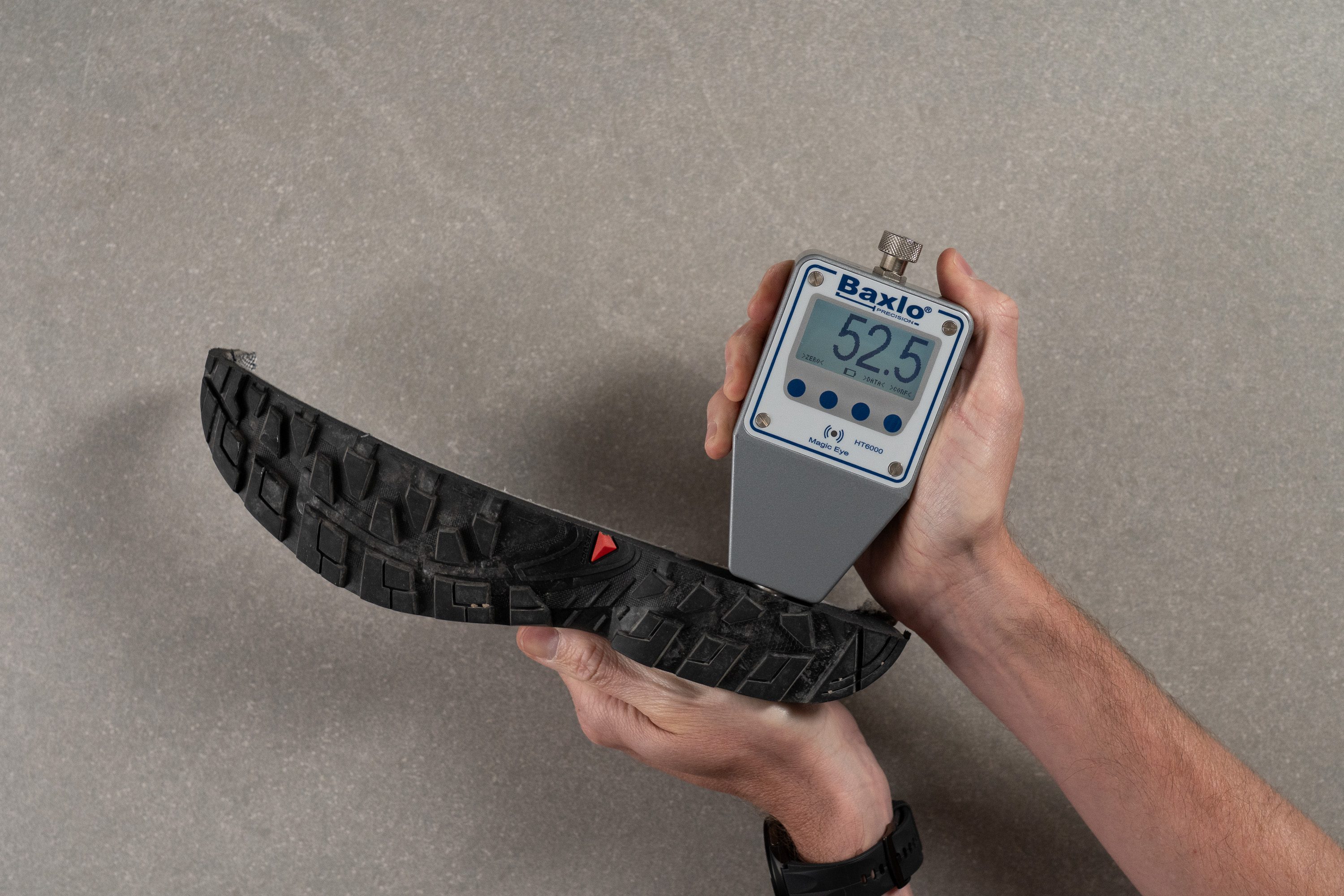
| Quest 5 GTX | 52.5 AC |
| Average | 45.9 AC |
Size and fit
Size
Internal length
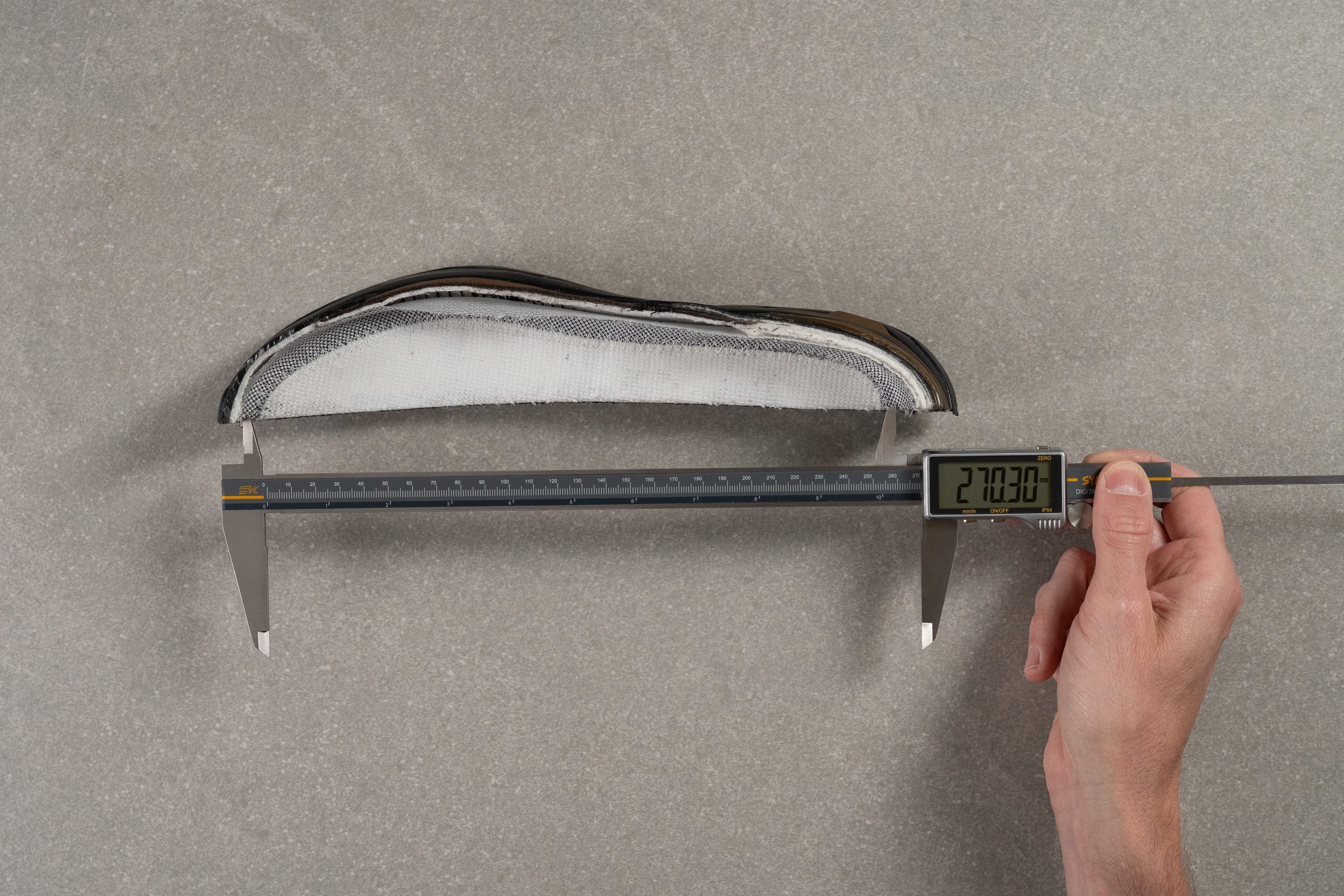
| Quest 5 GTX | 270.3 mm |
| Average | 270.8 mm |
Width / Fit
The Salomon Quest 5 GTX is offered in a standard medium width only, but it nails the fit to a T!
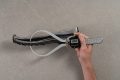
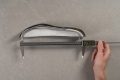
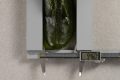
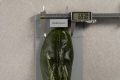
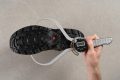
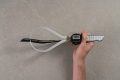
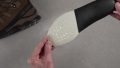
Measuring a solidified gel cast of the boot's interiors, our caliper recorded 94.6 mm in its widest part. That puts the shoe squarely in the middle of the hiking shoe spectrum!
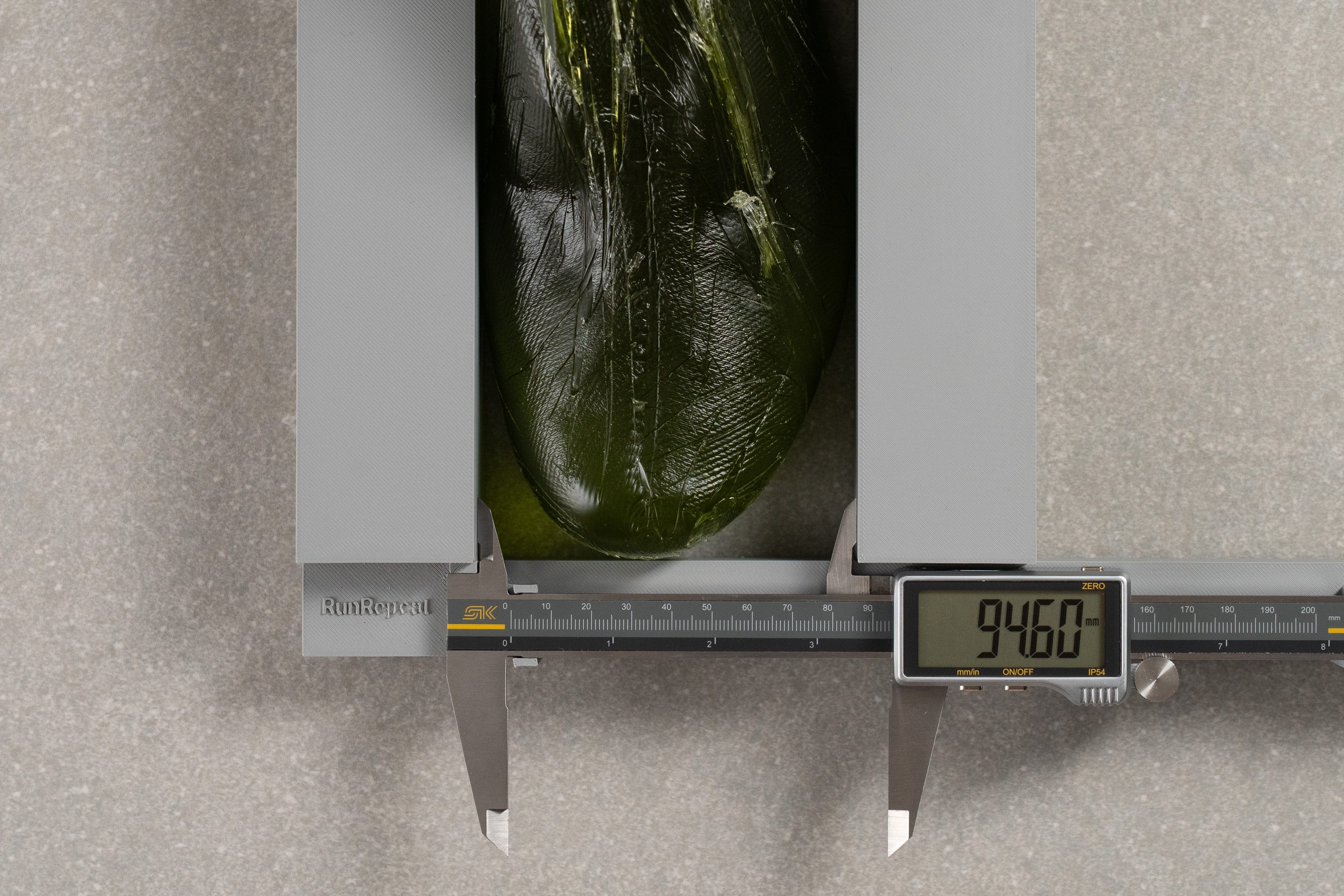
| Quest 5 GTX | 94.6 mm |
| Average | 94.2 mm |
Toebox width
As for the boot's toebox shape, we found it slightly tapered compared to both the average hiking boot and the previous Quest 4. Our caliper confirmed it, measuring the Quest 5 GTX's big-toe area width at 69.3 mm.
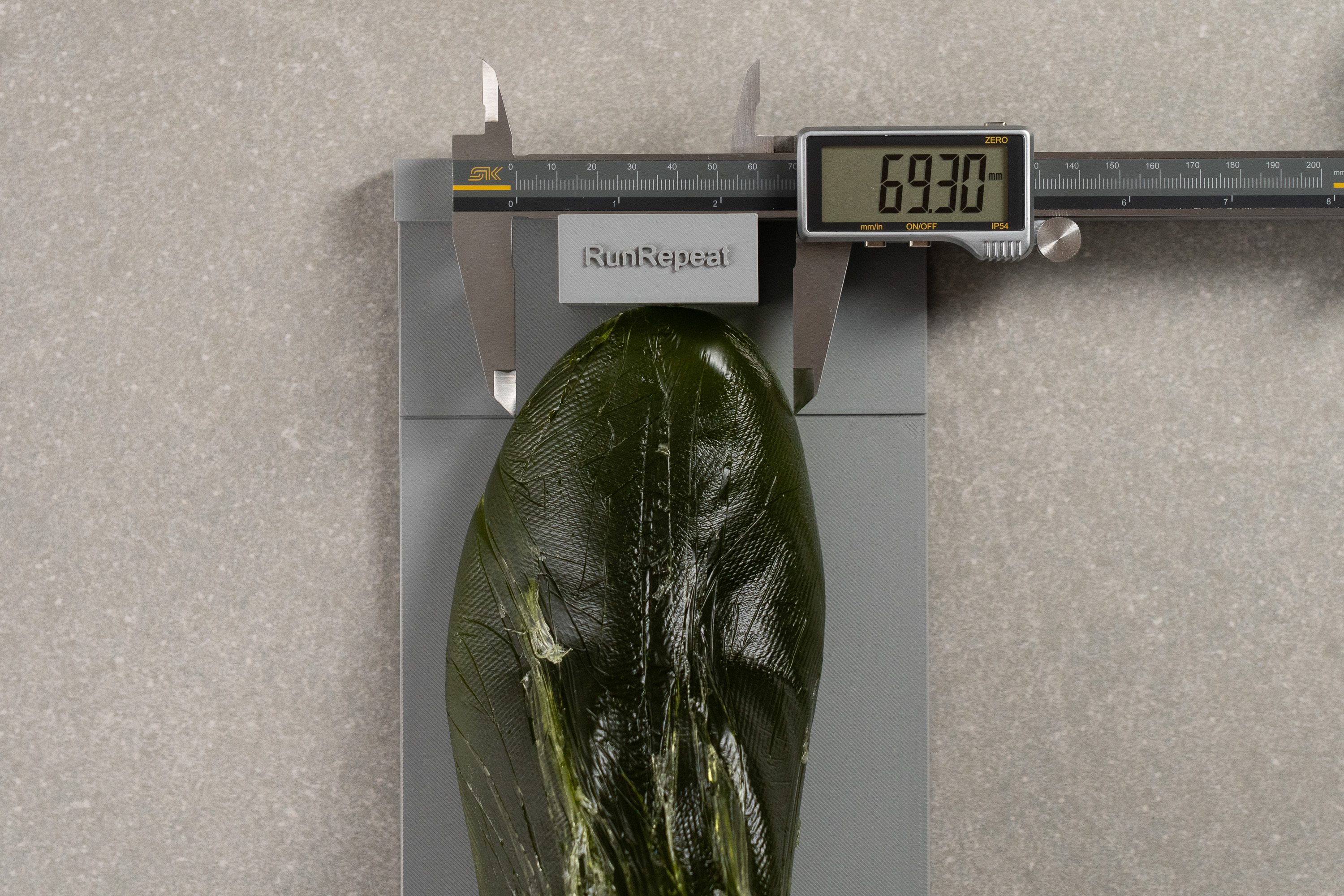
| Quest 5 GTX | 69.3 mm |
| Average | 71.8 mm |
Toebox height
On a positive note, this Salomon boot doesn't feel overly restrictive in the toe area thanks to its generous vertical space.
With a toebox height of 30.6 mm, it prevents the boot's burly toe bumper and tough leather from pressing directly on the toes and toenails.
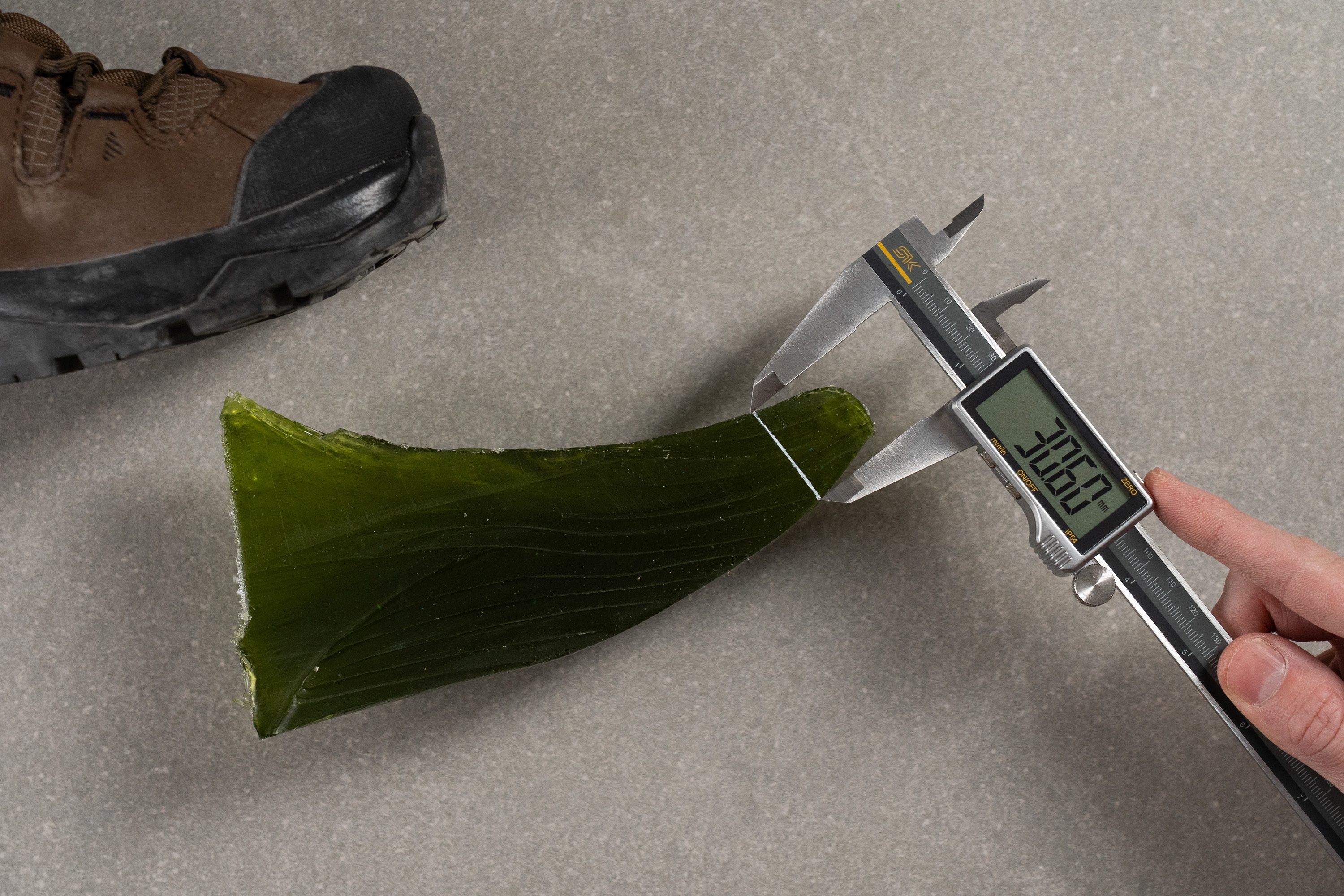
| Quest 5 GTX | 30.6 mm |
| Average | 27.6 mm |
Traction / Grip
Traction test
The brand goes for its premium All-Terrain contaGRIP rubber that has already proved its worth in the Quest's earlier versions and didn't disappoint us this time either.
With a good friction coefficient of 0.67, it has enough bite for polished rocks and boulders, even if they are wet.
| Quest 5 GTX | 0.67 |
| Average | 0.63 |
Lug depth
Just like its predecessors, the Salomon Quest 5 GTX is capable of tackling various types of terrain, but shines on rocky and technical trails.
With a moderate lug depth of 3.8 mm, it can transition from hard-packed singletrails to rooty and mossy forest paths and finish with scree slopes and talus fields.
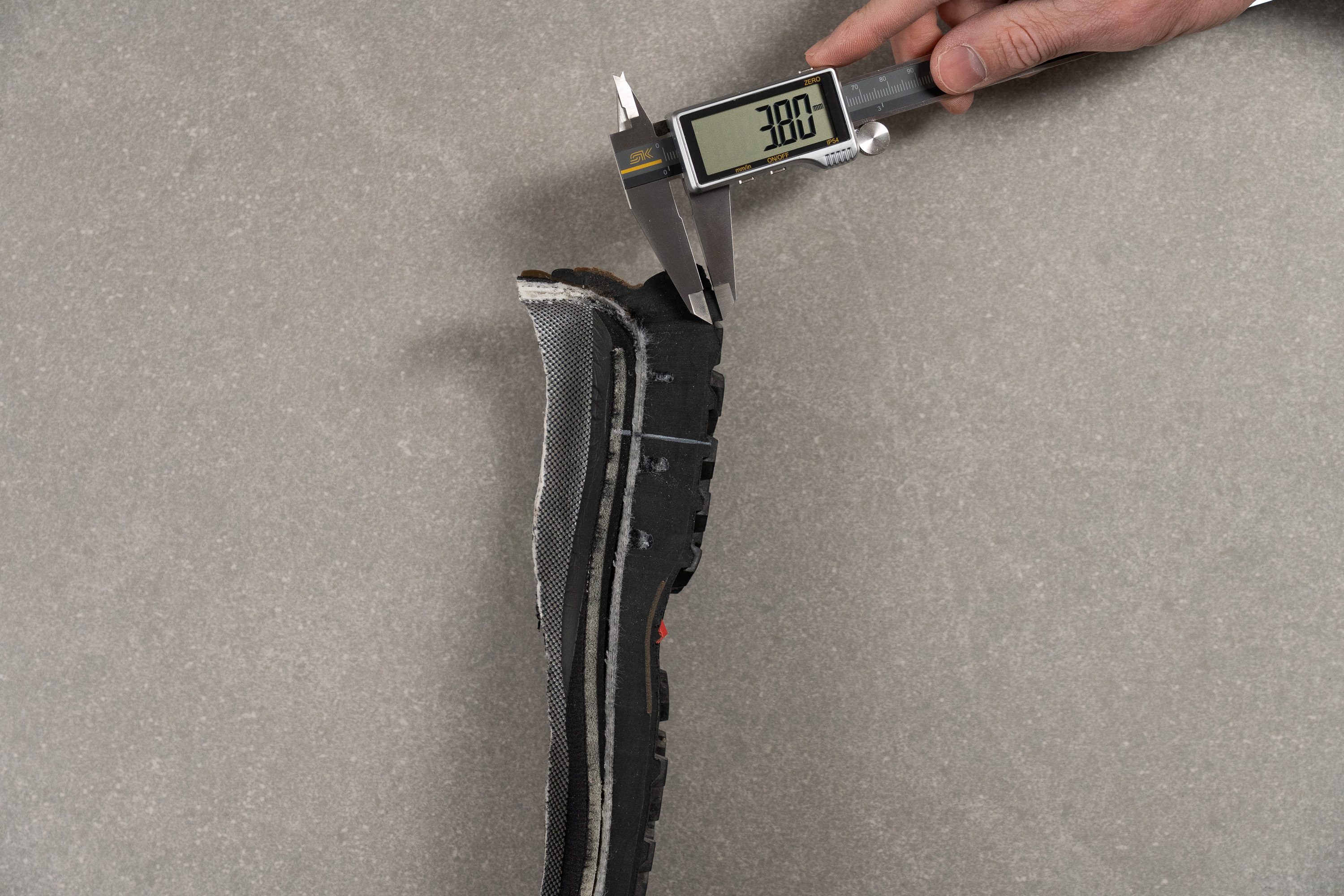
| Quest 5 GTX | 3.8 mm |
| Average | 4.2 mm |
Outsole design
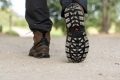
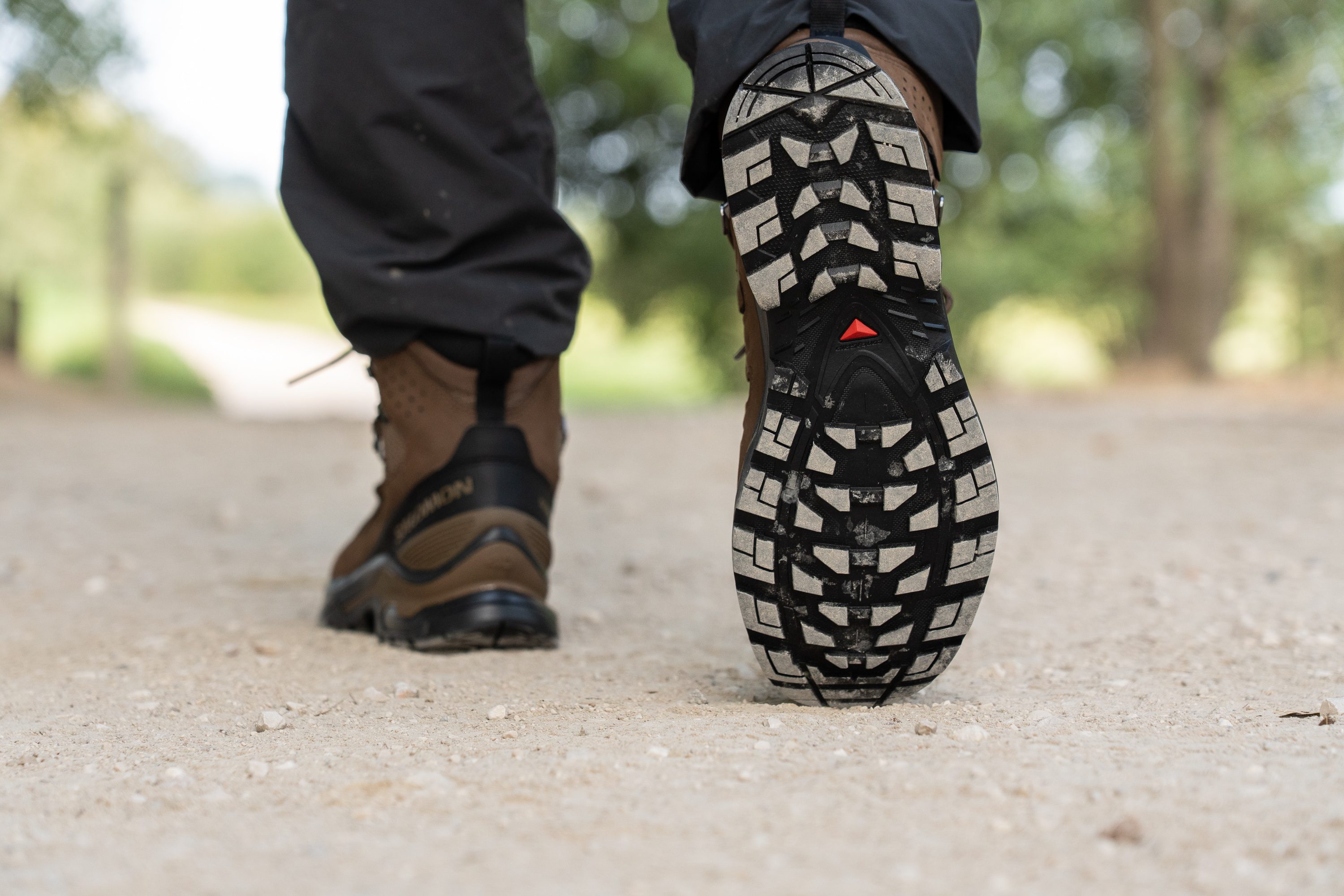
Salomon didn't mess with what worked in the previous boot's outsole, featuring a nearly identical lug shape and pattern in the Quest 5 GTX. The boot offers a mix of pointier treads that dig into dirt, sand, grass, and similar surfaces, along with flatter and blockier ones that feel secure on rocks and boulders. Meanwhile, a pronounced heel brake adds confidence on steep descents.
Flexibility / Stiffness
According to Salomon, the Quest 5 GTX 'respects natural foot flex' as the boot's agile design was inspired by the brand's trail running shoes.
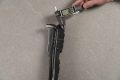
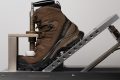
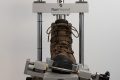
And as our stiffness test showed, it is indeed one of the most pliable backpacking boots in our lab! Requiring a below-average force of 26.0N to bend by 30 degrees, it flexes more easily than classic boots like the LOWA Renegade GTX Mid (38.4N).
And that's what makes the Quest 5 GTX a bit more maneuverable on tricky ground or even some occasional scrambling here and there.
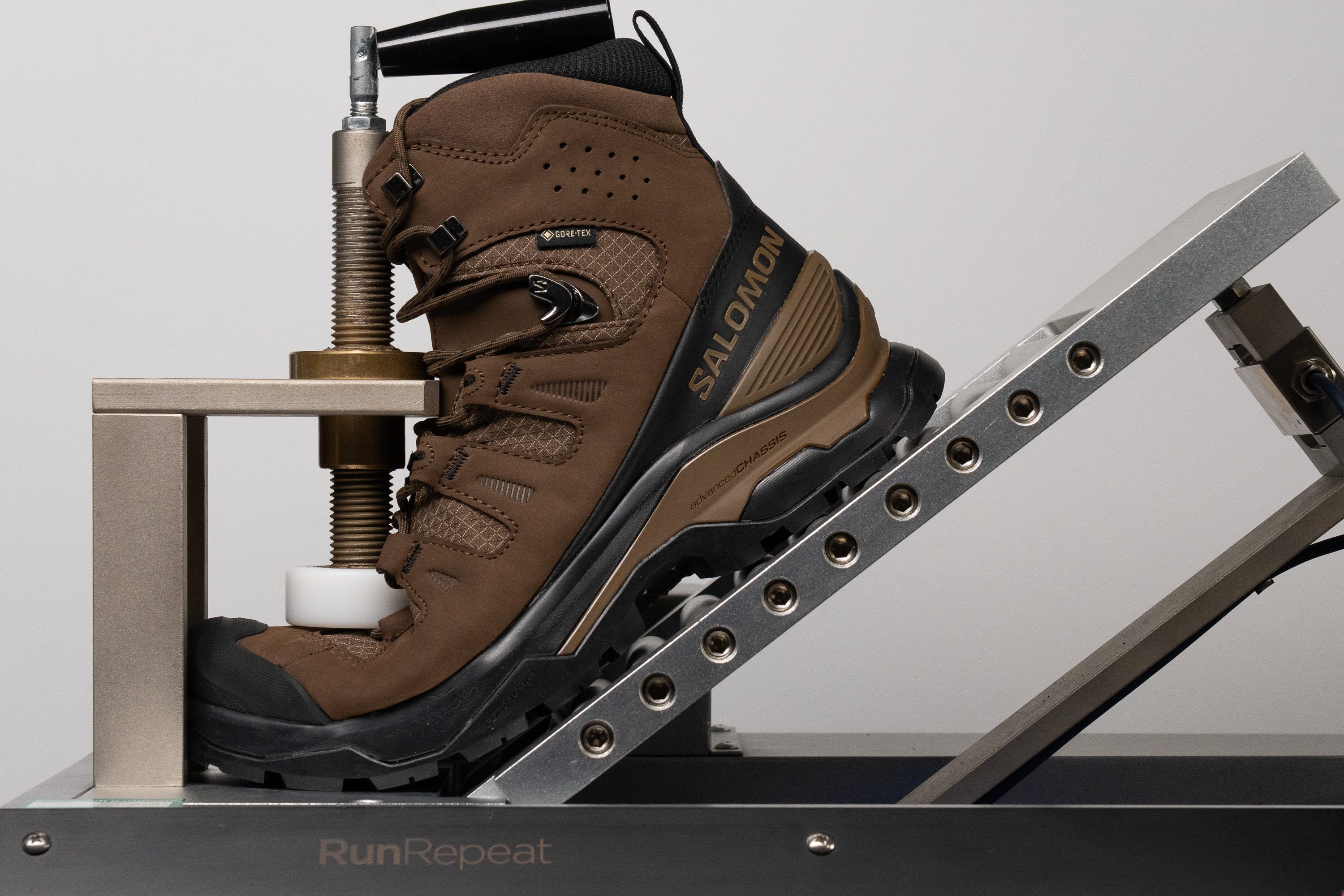
| Quest 5 GTX | 23.0N |
| Average | 28.3N |
Weight
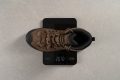
Salomon also positions the Quest 5 GTX as a lightweight boot, but the number on our scale proves otherwise. At 20.7 oz (587g), it is heavier than both the average hiking boot and the average backpacking boot.
But to be fair, this new iteration is a tangible 2.7 oz lighter than its predecessor! And it doesn't feel like a drag on foot thanks to its streamlined, performance-oriented build.
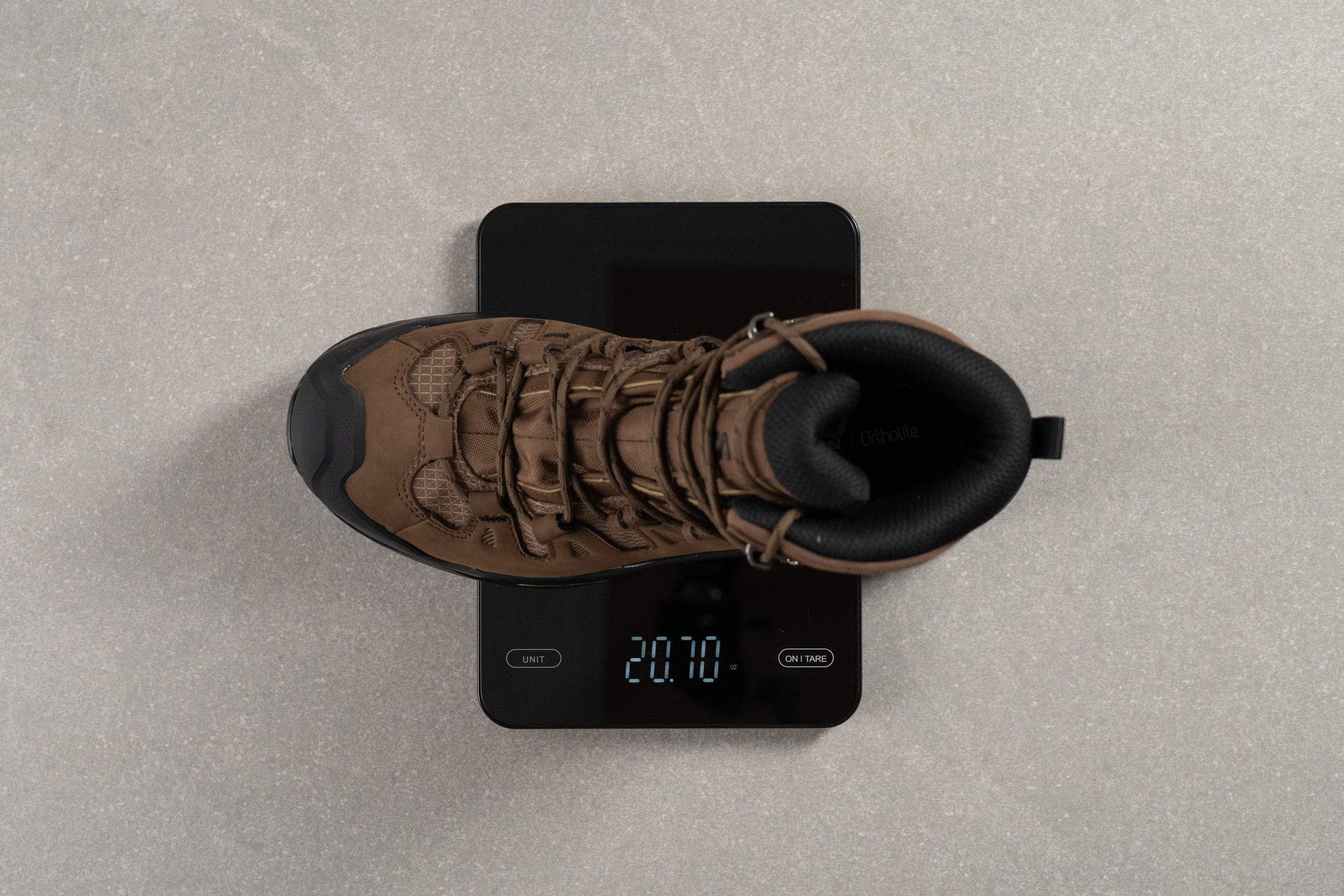
| Quest 5 GTX | 20.7 oz (587g) |
| Average | 18.2 oz (517g) |
Breathability
Breathability test
As expected, breathability remains low in this highly reinforced waterproof boot.
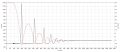
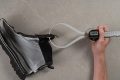
Keeping the Quest 5 GTX on a heated footform and exposing it to artificial sweat for 3 hours, we found that its materials are pretty slow at wicking sweat away from the skin. With a low breathability result of 42 BR, this Salomon boot is very likely to get socks damp from sweat pretty quickly.
| Quest 5 GTX | 42 BR |
| Average | 46 BR |
Drying potential
NewAnd as is often the case with waterproof boots, they take forever to dry once the interiors get wet from sweat or water.
By the end of our 3-hour chamber test, the Salomon Quest 5 GTX evaporated merely 24% of moisture. This increases the likelihood of stepping into wet boots in the morning on a multi-day hike.
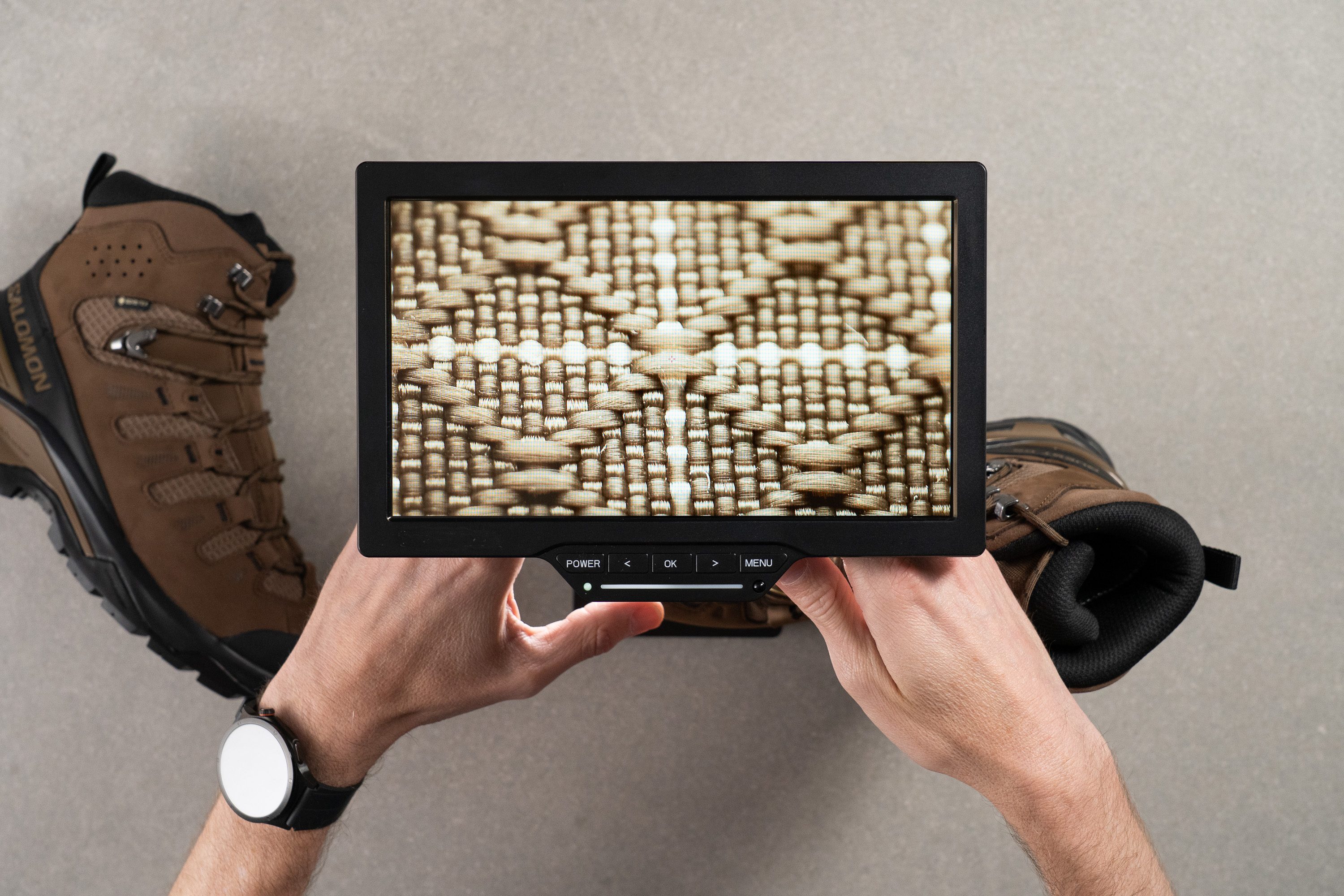
| Quest 5 GTX | 24% |
| Average | 25% |
Insulation
On the upside, the boot's heavily layered, padded, and waterproof construction makes it a warmer option for chilly weather!
With a high insulation result of 0.304 m² K/W, the Quest 5 GTX retains heat much better than the other hiking boots we've tested.
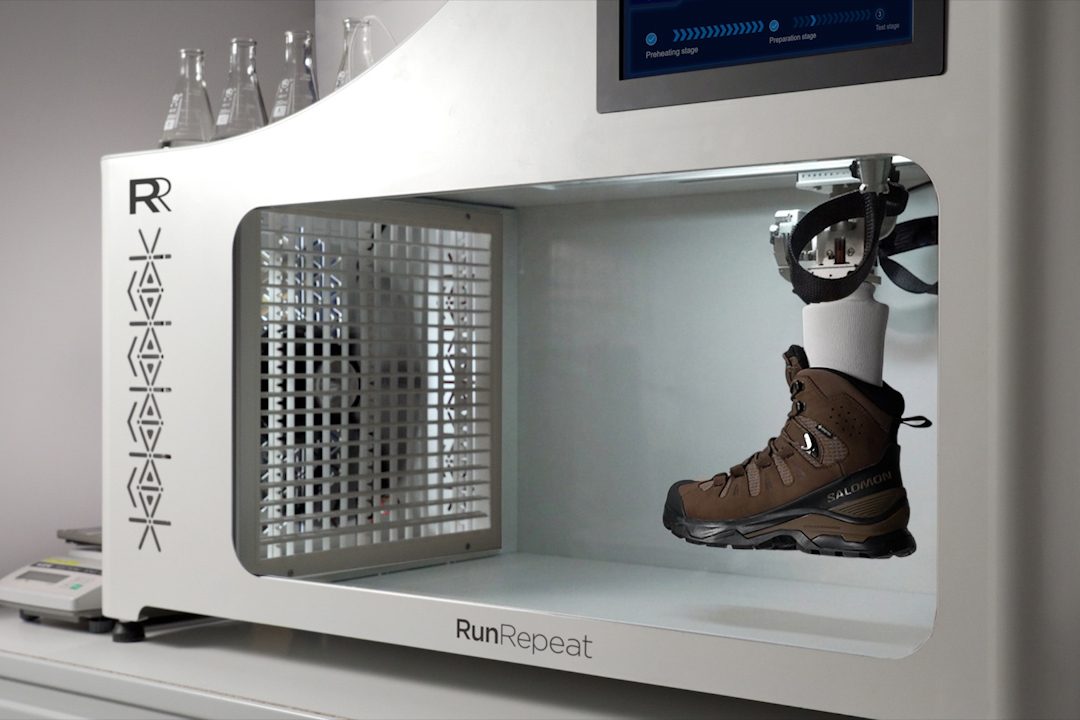
| Quest 5 GTX | 0.304 |
| Average | 0.263 |
Stability
Lateral stability test
If you are looking for top-of-the-line stability on mixed and technical terrain, the Salomon Quest 5 GTX is your hero!
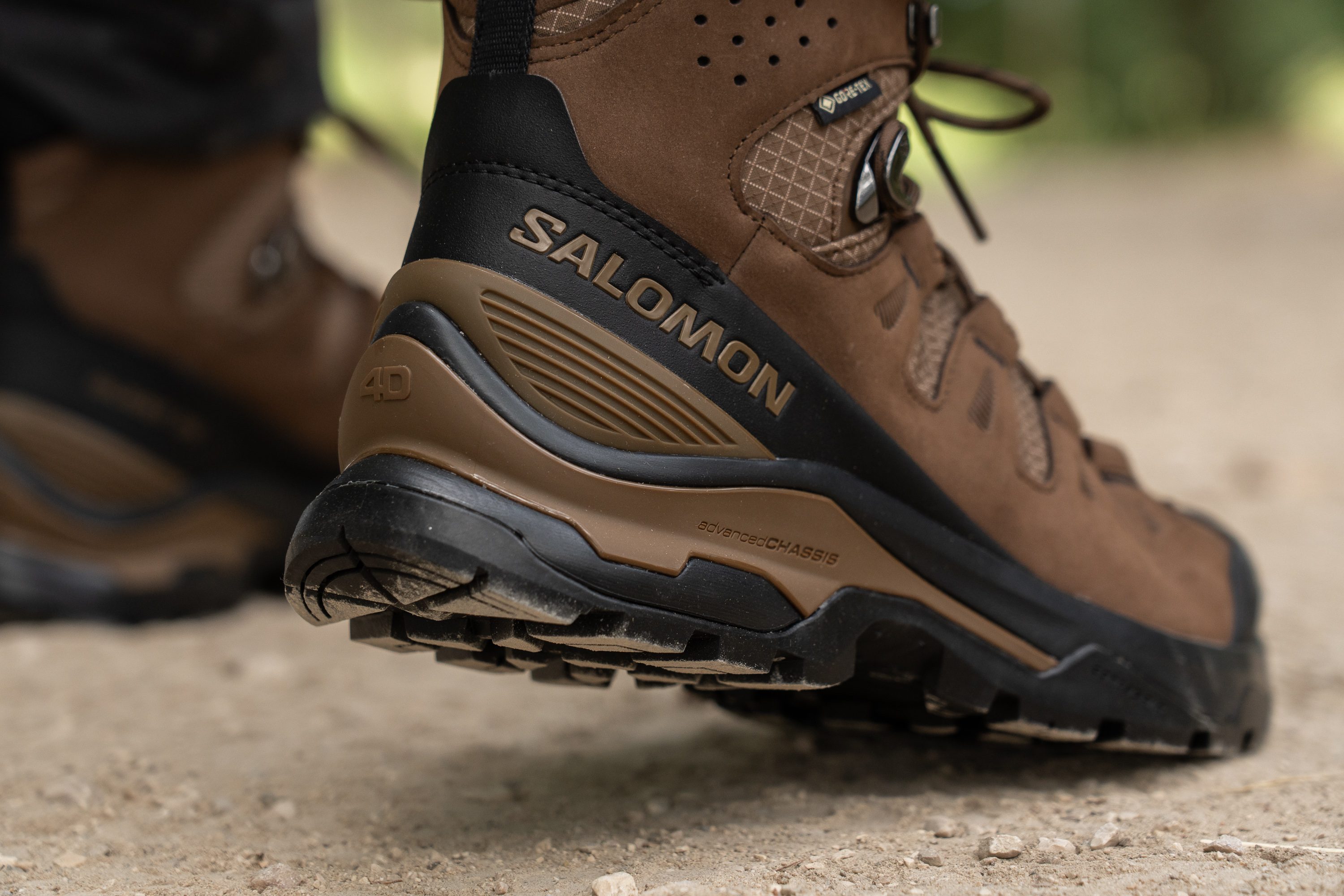
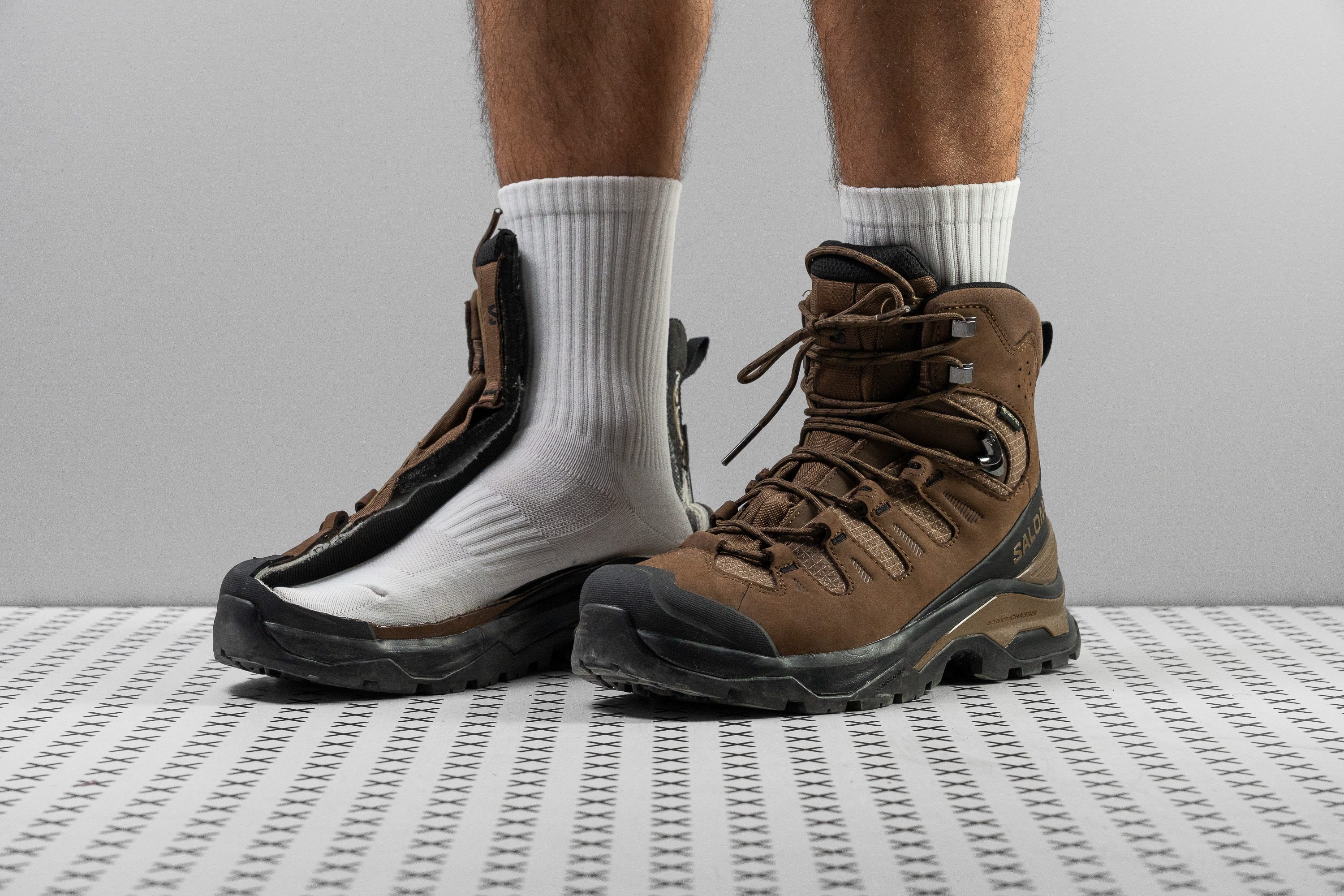
Building on the platform of its highly regarded predecessor, the boot features a sturdy 4D Advanced Chassis that wraps all around the midfoot and heel, bracing them in a very secure clutch.
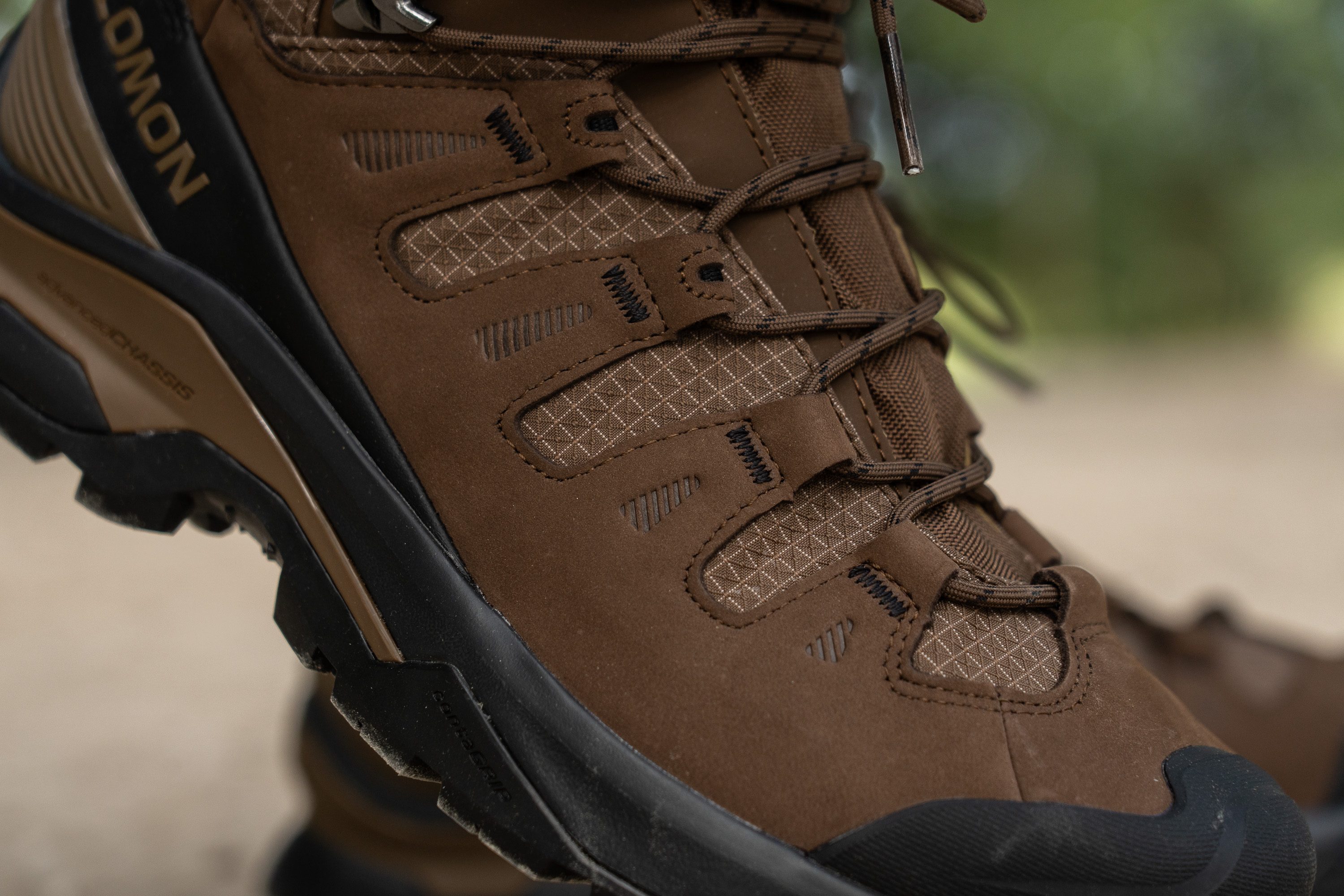
The chassis is enhanced by a sensiFIT upper design. Connecting the sole with the lacing system, it embraces the midfoot in a snug cage, minimizing all foot shifting inside the boot.
Torsional rigidity
Wrapping the boot both externally and internally, the Advanced Chassis adds significant rigidity to the Quest 5 GTX, making it nearly impossible to twist.
With an above-average torque of 27.4 Nm, the boot offers fantastic side-to-side containment even when the trail gets steep and rugged, and you are carrying a 30+ lb backpack.
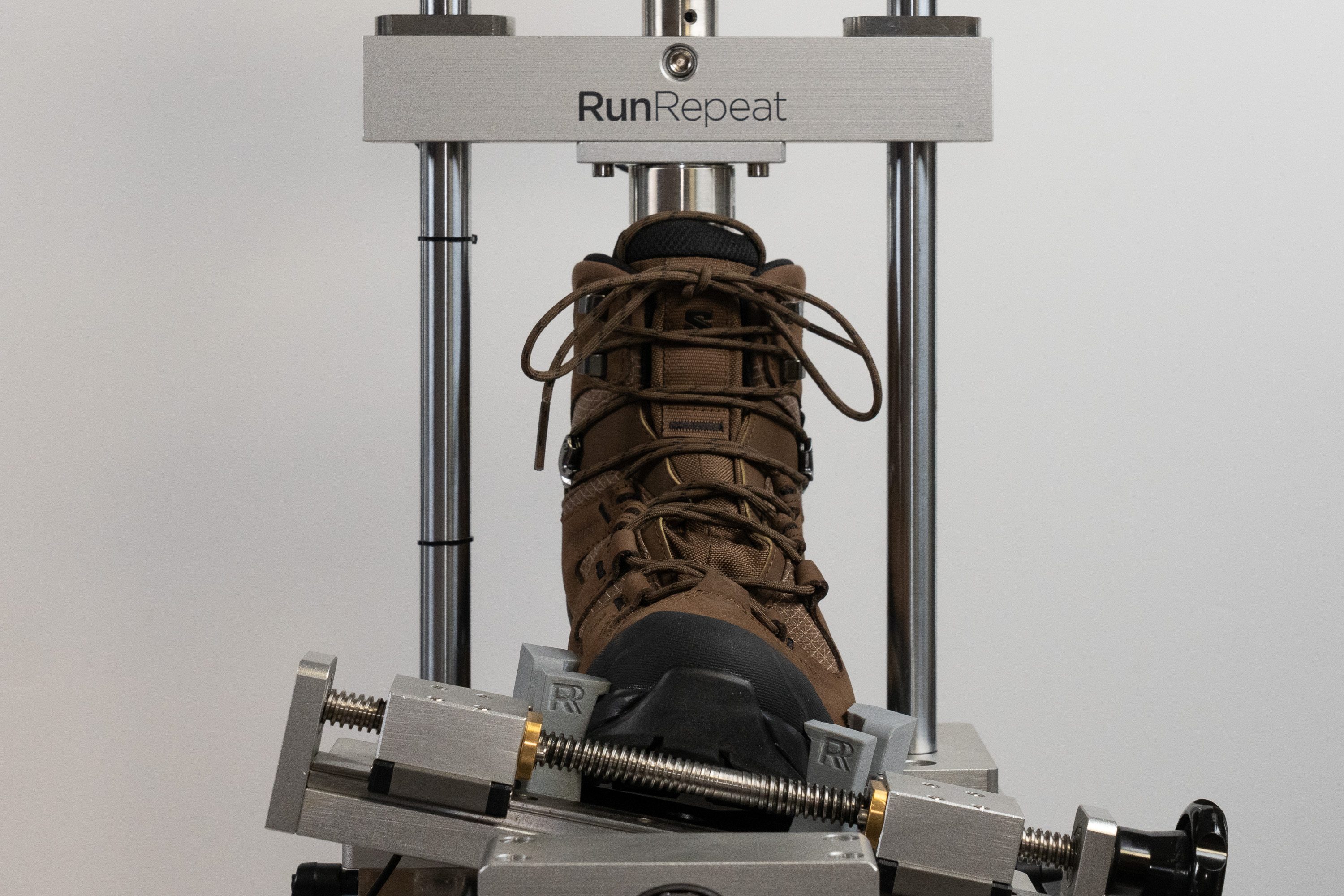
| Quest 5 GTX | 27.4 Nm |
| Average | 23.6 Nm |
Heel counter stiffness
In the rearfoot, the chassis pairs with a tough TPU cup, elevating the boot's heel counter stiffness to a maximum of 5 out of 5.
That helps secure the heel and ankle more firmly inside the boot, minimizing undue shifting and sliding.
| Quest 5 GTX | 5 |
| Average | 3.7 |
Midsole width - forefoot
Although this Salomon boot's platform doesn't look very bulky, it relies on a broad forefoot area for added stability.
Measuring its widest part at 117.4 mm, we were surprised to see one of the widest readings among backpacking boots!
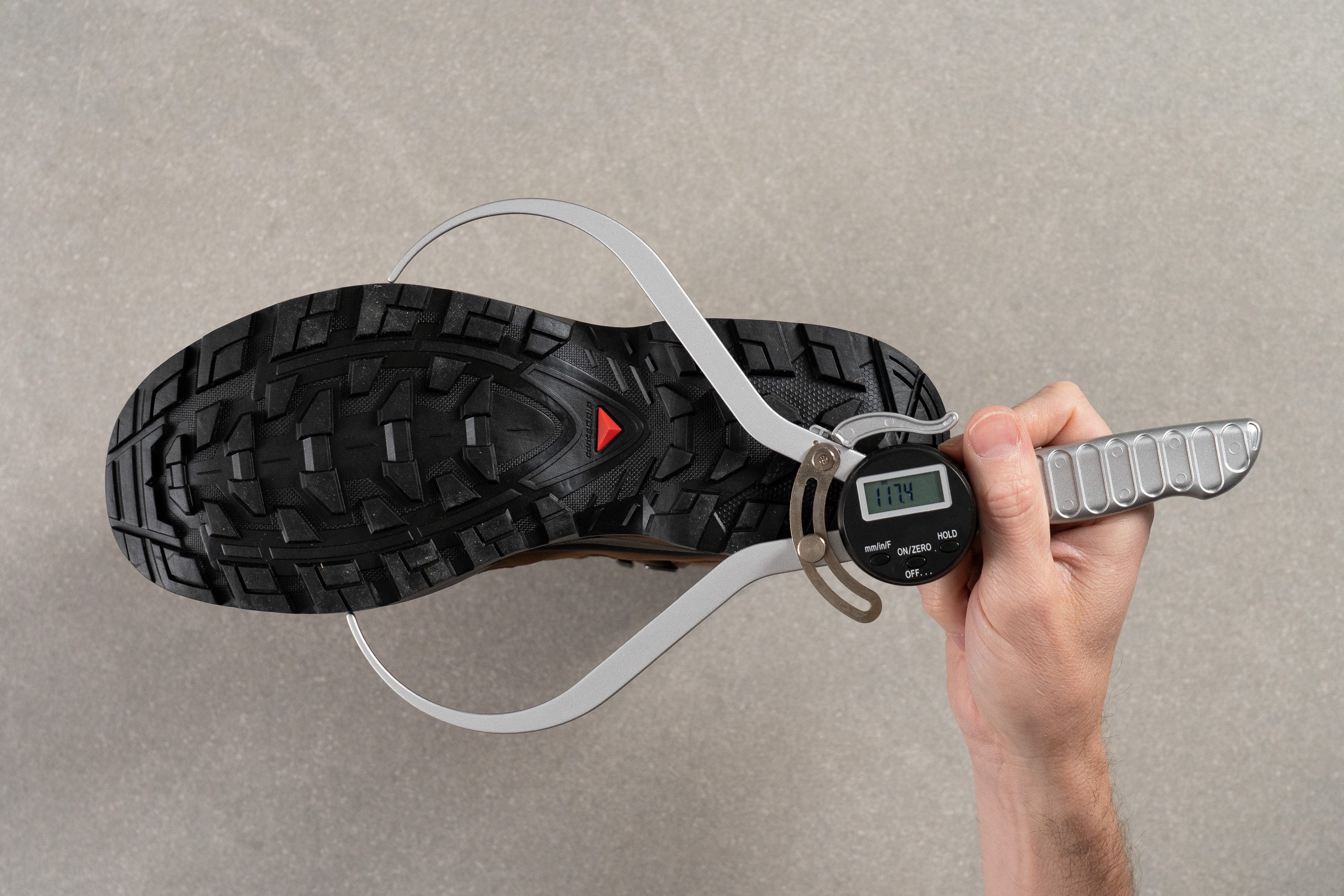
| Quest 5 GTX | 117.4 mm |
| Average | 112.3 mm |
Midsole width - heel
The heel, on the other hand, is slimmer, measuring a moderate 85.4 mm at its widest point. It helps the Quest 5 GTX stay maneuverable on tricky ground and doesn't get stuck between rocks.
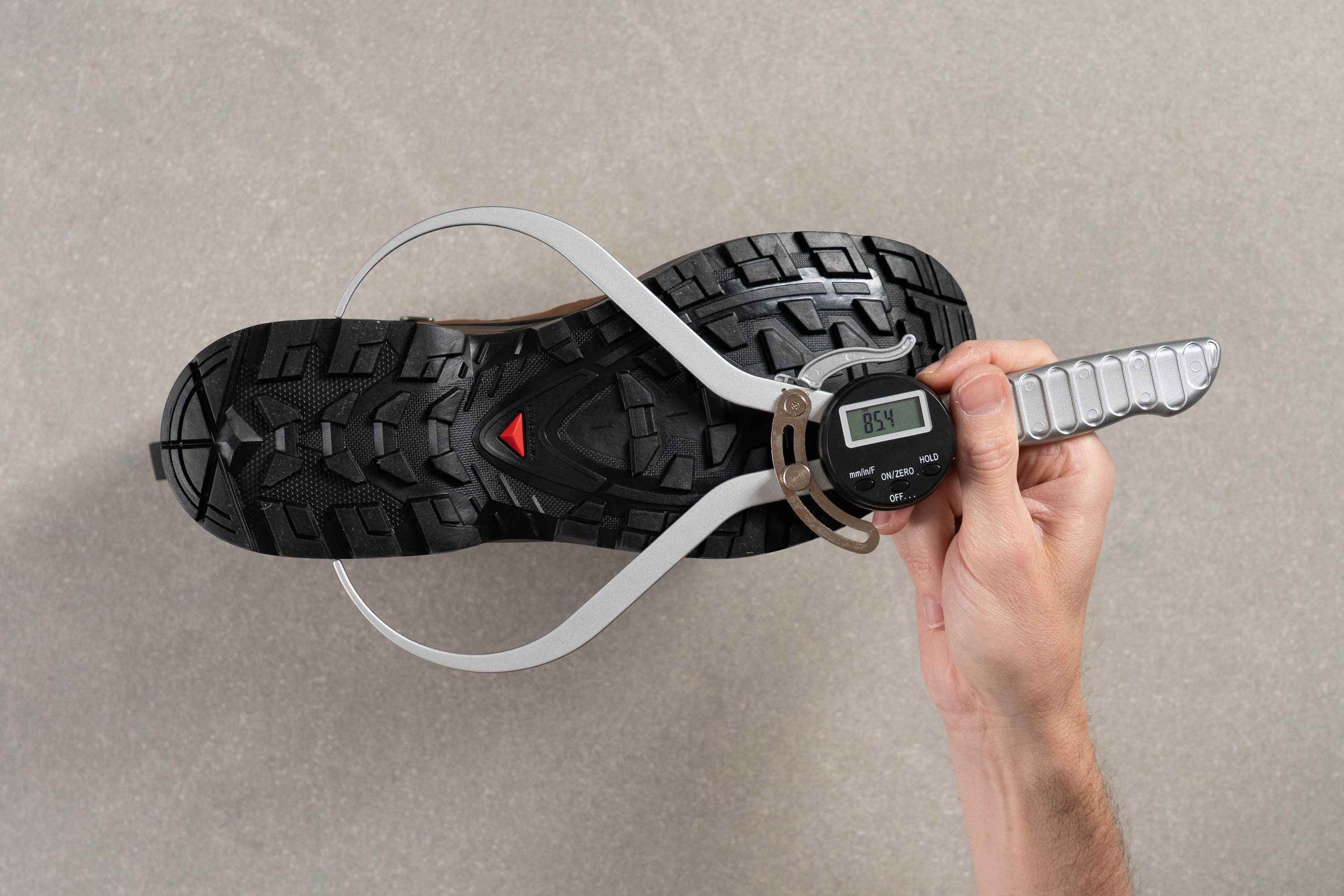
| Quest 5 GTX | 85.4 mm |
| Average | 88.0 mm |
Durability
Toebox durability
Each layer of this rugged Salomon boot's upper is built to last multiple seasons, if not years!
And its most high-wear areas, such as the toebox, receive extra reinforcements in the form of a tough rubber mudguard for added protection.
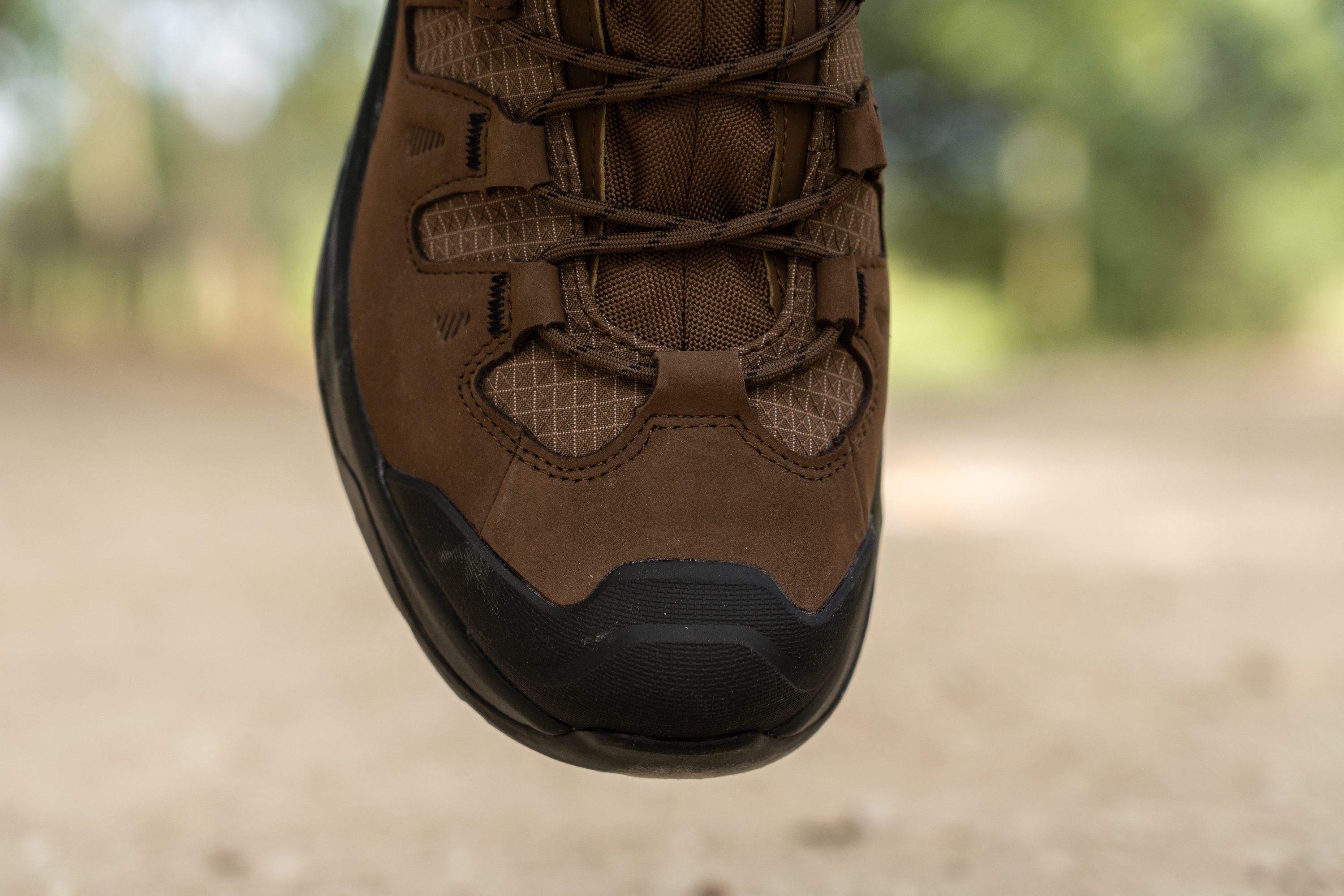
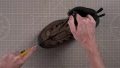
Drilling the latter with sandpaper, we saw very minimal damage and raised the boot's toebox durability score to 4 out of 5.
The rest of the boot's upper is made of full-grain nubuck leather and hard-wearing ripstop fabric.
| Quest 5 GTX | 4 |
| Average | 4.2 |
Heel padding durability
The internal lining of this Salomon boot did not disappoint either, showing excellent resistance to our Dremel. That earned its heel padding durability another high score of 4 out of 5.
| Quest 5 GTX | 4 |
| Average | 3.5 |
Outsole durability
And as for the Contagrip rubber outsole, it showed a solid result with a moderate damage of 1.0 mm. Not particularly impressive, but right on par with the average for hiking boots.
| Quest 5 GTX | 1.0 mm |
| Average | 0.8 mm |
Outsole thickness
You can rest assured that the Quest 5 GTX has enough rubber coverage to hold up for a good while. The boot features a 2.6 mm rubber layer on top of its 3.8 mm lugs.
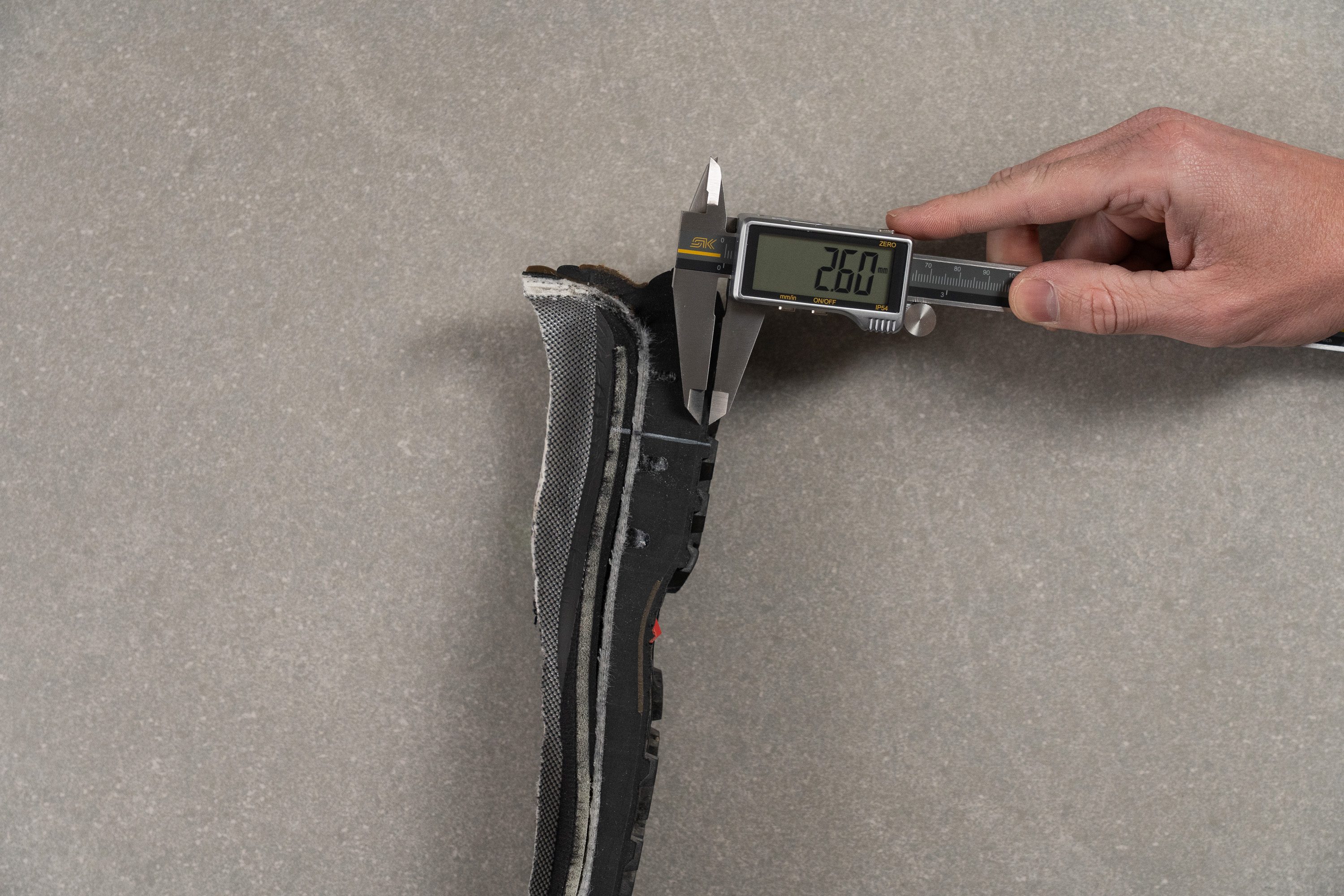
| Quest 5 GTX | 2.6 mm |
| Average | 2.7 mm |
Misc
Insole thickness
The boot features a high-quality Molded OrthoLite insole, providing a ton of padding over its otherwise hard platform. Measuring its thickness in the heel returned an above-average reading of 6.9 mm.
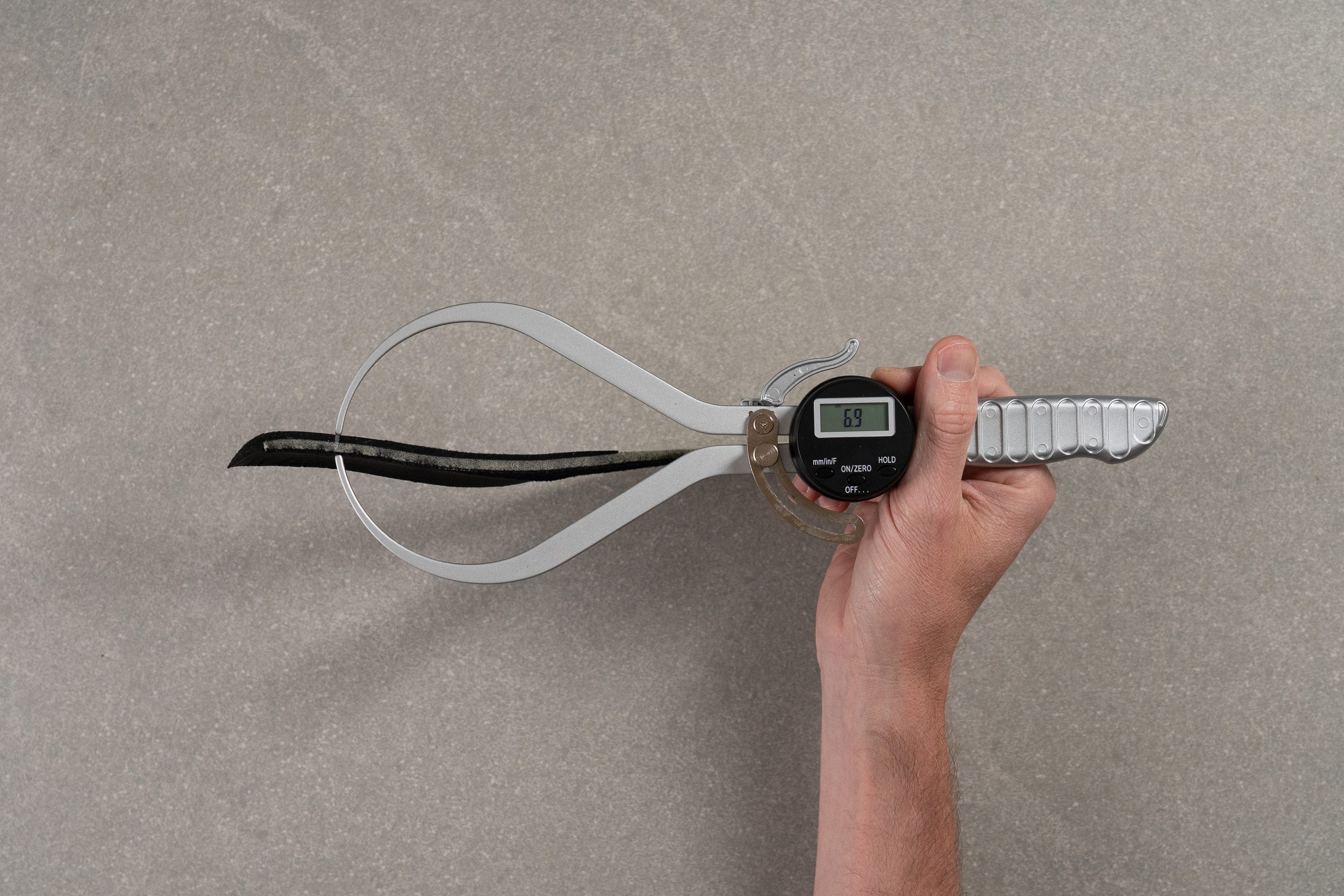
| Quest 5 GTX | 6.9 mm |
| Average | 5.9 mm |
Removable insole
For those in need of more customized cushioning and support, the boot's insole is removable.
| Quest 5 GTX | Yes |
Midsole softness in cold (%)
The Salomon Quest 5 GTX's warm and waterproof construction makes it a great choice for the colder season. But how does its platform behave when the temperature drops?
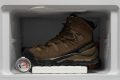
Repeating our durometer measurement after keeping the boot in the freezer for 20 minutes, we recorded a barely noticeable 14% difference in firmness.
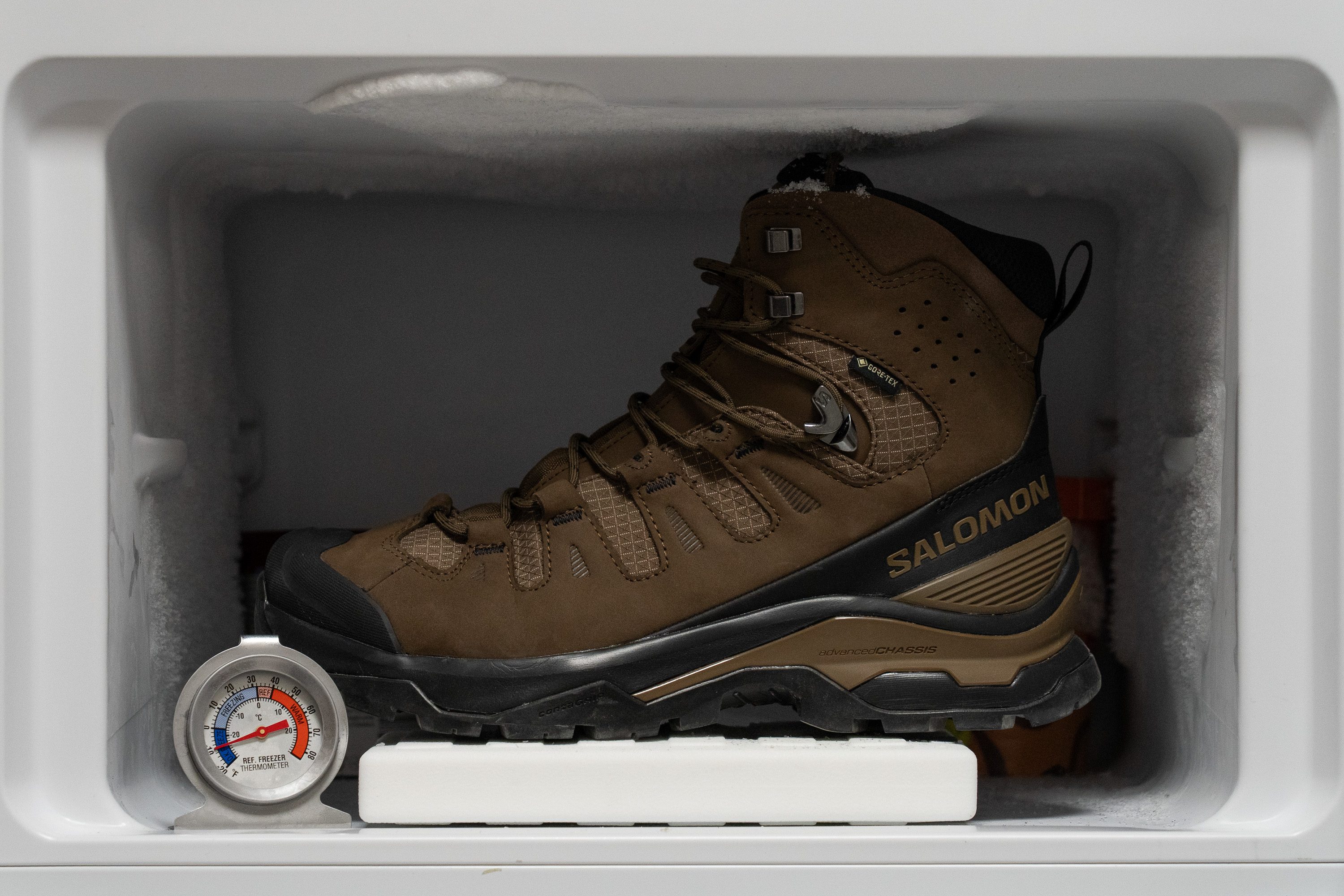
| Quest 5 GTX | 14% |
| Average | 20% |
Reflective elements
None of the boot's components proved to be reflective in our dark room test.
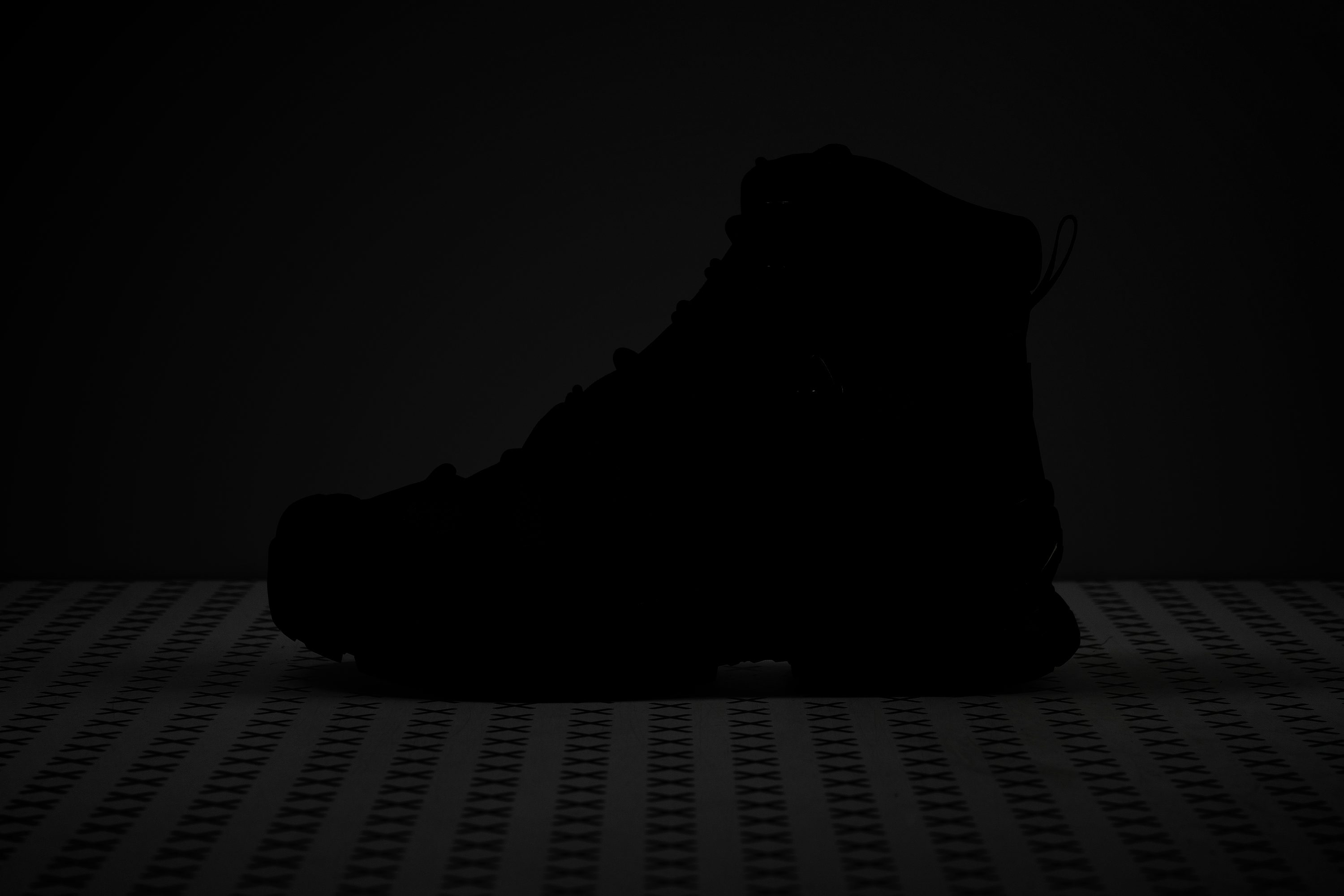
| Quest 5 GTX | No |
Tongue padding
The tongue padding of this Salomon boot is just as generous as its predecessor's. At 12.5 mm, it offers plenty of foam to buffer the lace pressure, keeping the instep shin comfortable over long distances.
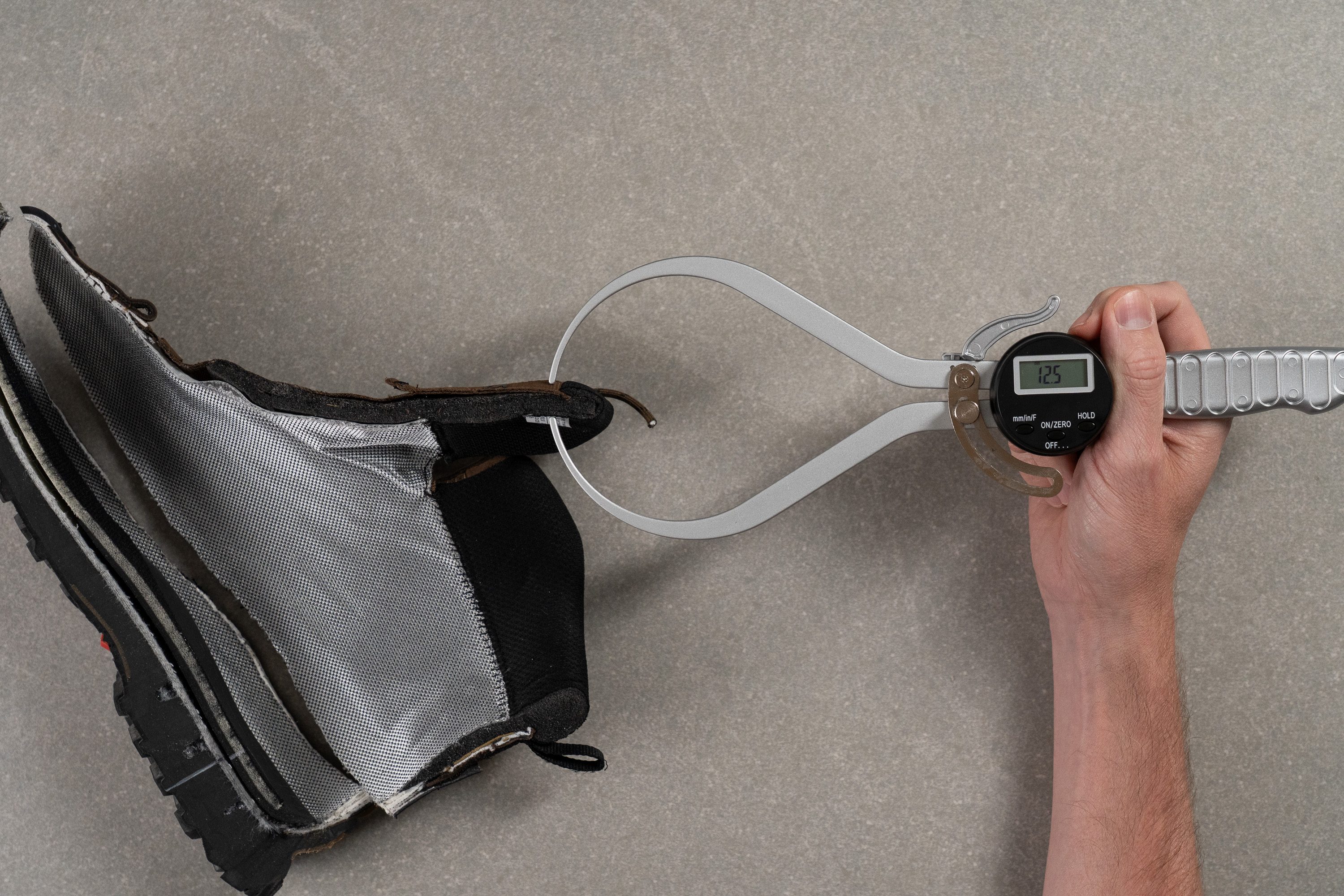
| Quest 5 GTX | 12.5 mm |
| Average | 10.8 mm |
Tongue: gusset type
Fully integrated with the rest of the upper, the tongue enhances the boot's waterproofing and protection from debris.
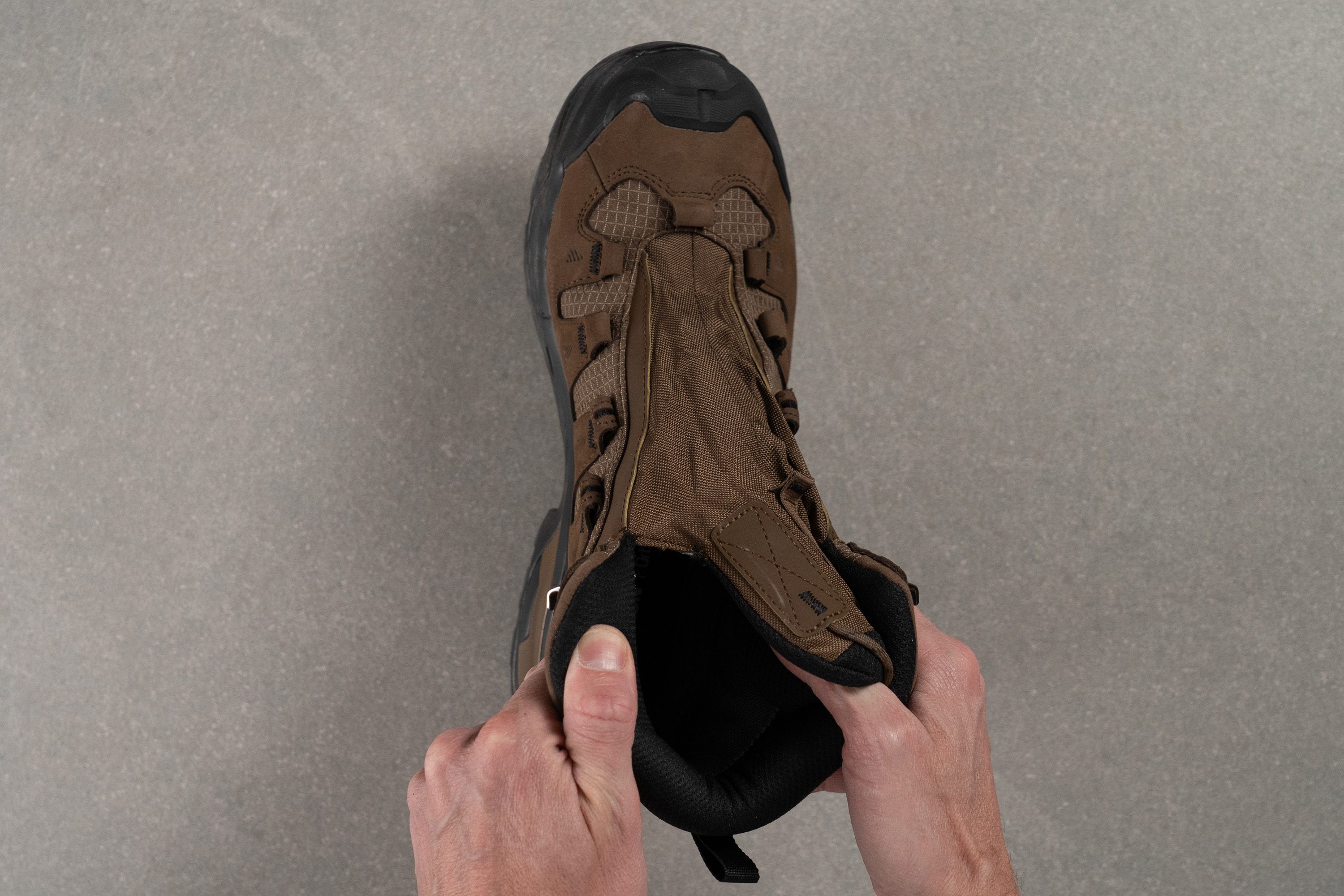
| Quest 5 GTX | Both sides (full) |
Heel tab
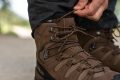
The Quest 5 GTX is quite easy to get on and off, thanks to a large finger loop at the back and a webbed pull loop on the tongue.
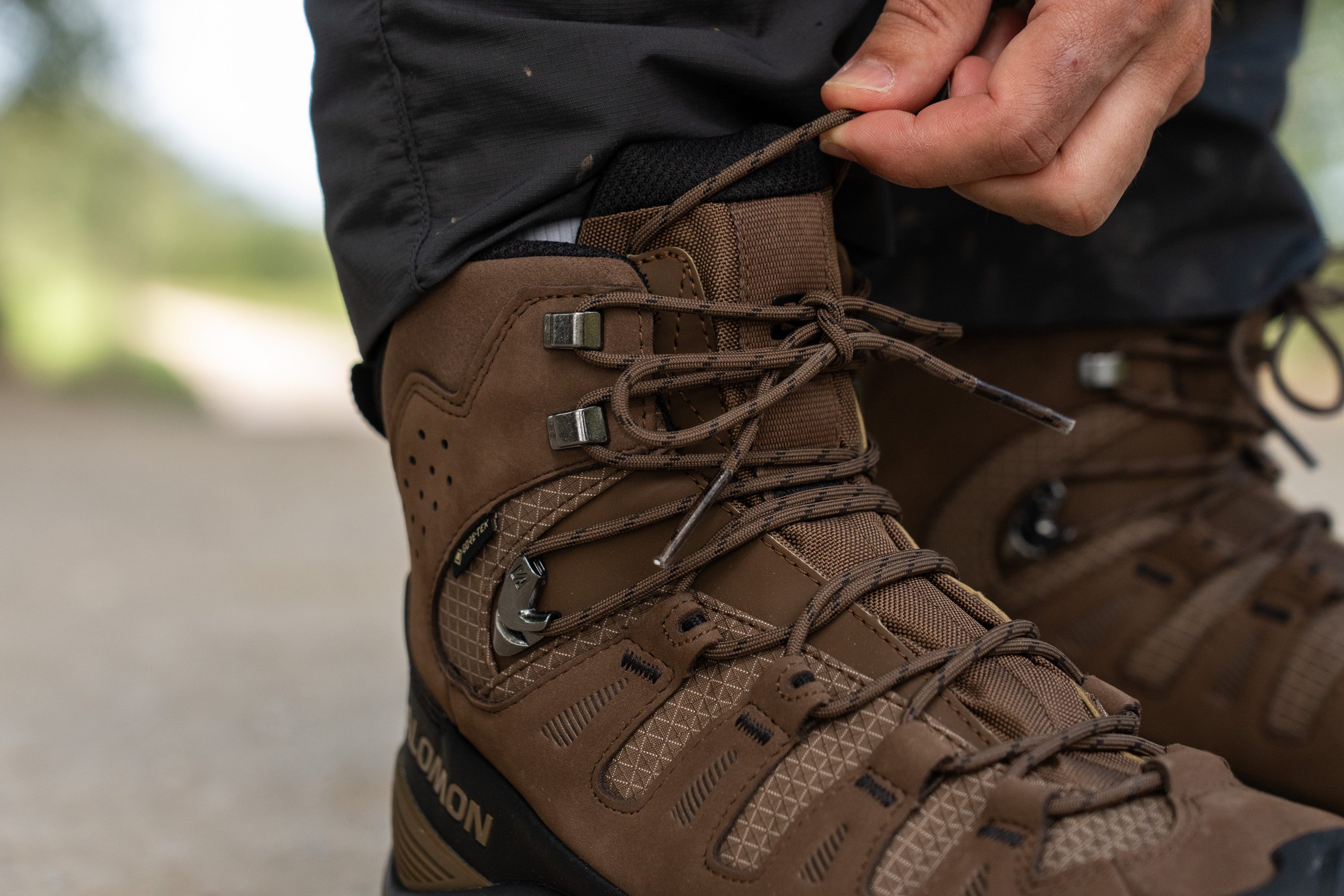
On top of that, three metal lace hooks help tighten and loosen the fit quickly.
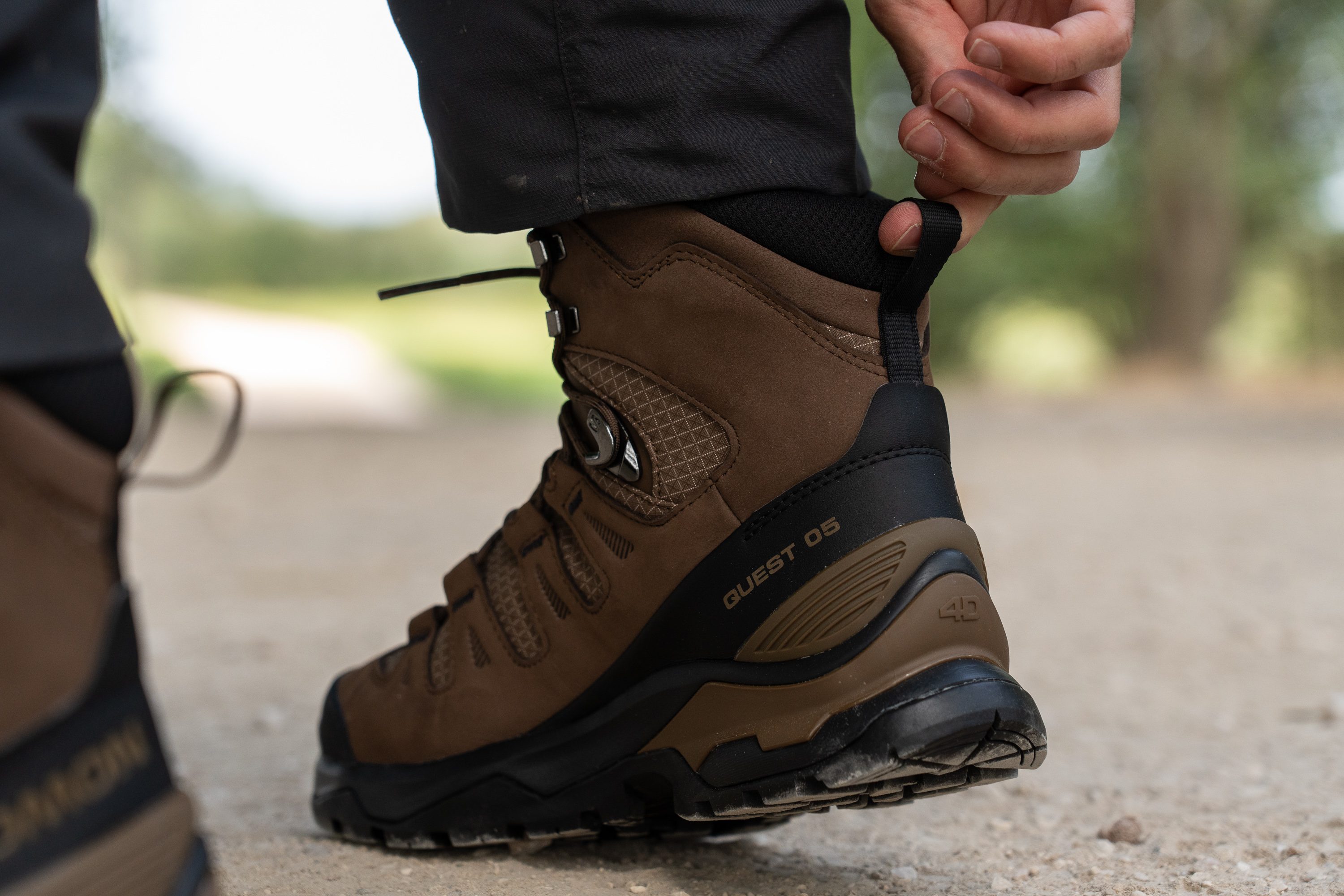
| Quest 5 GTX | Finger loop |
Price
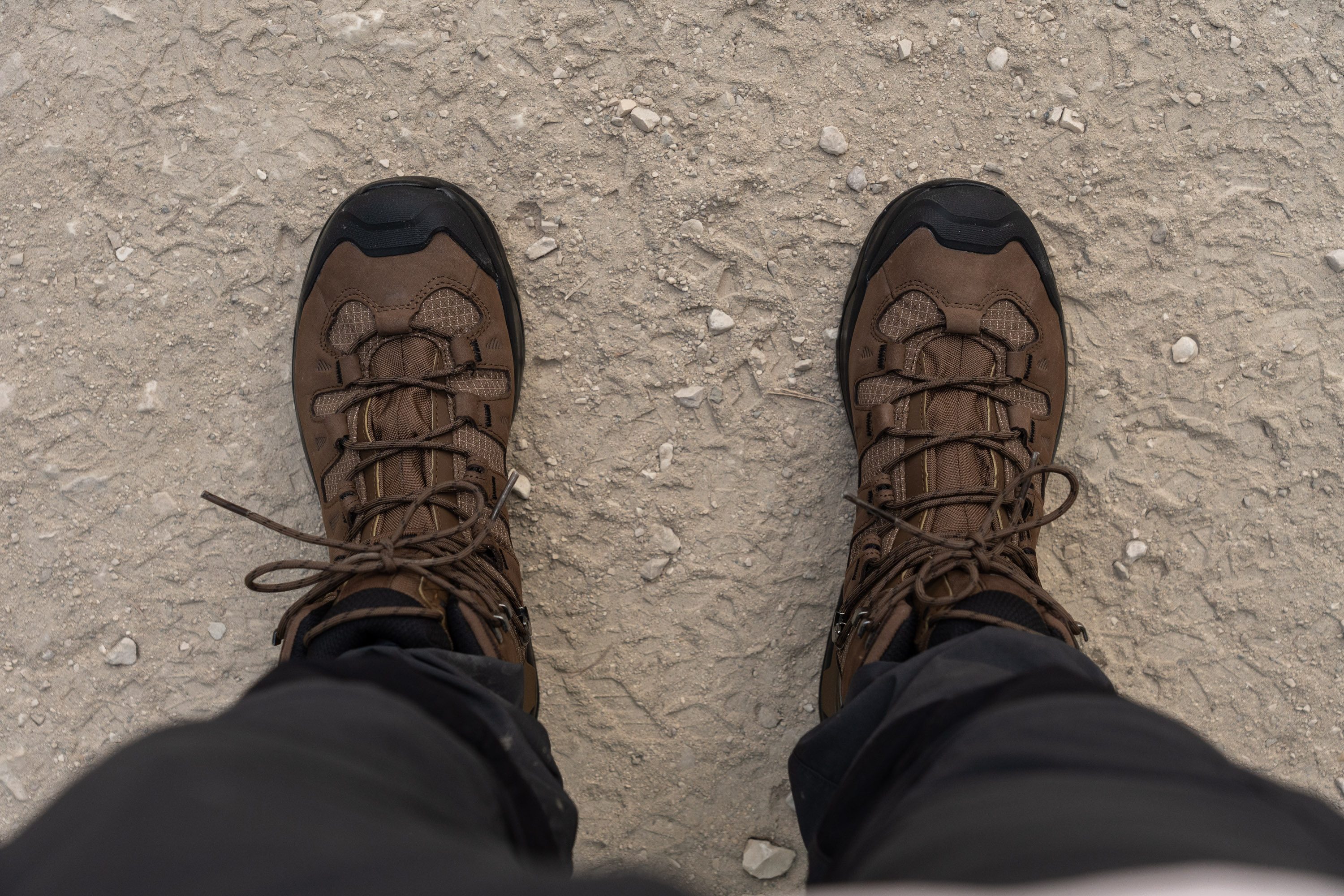
Although it was released 5 years after its predecessor, the Quest 5 GTX saw a minor $10 price hike. Yet, it is competitively priced compared to other high-performance backpacking boots.
| Quest 5 GTX | $240 |
| Average | $212 |