












Our verdict
- Sprint 20
- Middle distance 68
- Long distance 70
Pros
- Comfortable in-shoe feel
- Great arch support
- Awesome for beginners
- Lightweight
- Allows natural flex
- Perfect for workouts
- Great value for price
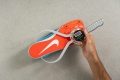
- Spike tool and drawstring bag included
- Spike tool and drawstring bag included
Cons
- Firm ride lacks cushioning comfort
- Low forefoot stack reduces protection
- Below-average breathability for running spikes
- Limited performance
Comparison
The most similar running spikes compared
+ + Add a shoe | |||||
|---|---|---|---|---|---|
| Our score | 72 Decent | 80 Good | 77 Good | 91 Great | |
| Price | £70 | £130 | £80 | £150 | |
| Weight lab | 5.7 oz / 161g | 4.8 oz / 135g | 6.2 oz / 176g | 4.7 oz / 133g | |
| Breathability | Moderate | Breathable | Moderate | Breathable | |
| Use | Long DistanceMid Distance | Long DistanceMid Distance | Long DistanceMid Distance | Long DistanceMid Distance | |
| Removable spikes | ✓ | ✓ | ✓ | ✓ | |
| Width / fit | Wide | Wide | Wide | Narrow | |
| Toebox width | - | Narrow | Medium | Medium | |
| Drop lab | 4.1 mm | 3.6 mm | 5.1 mm | 2.0 mm | |
| Size | Slightly small | Slightly small | Slightly small | Slightly small | |
| Midsole softness | Firm | Firm | Firm | Balanced | |
| Tongue padding | Average | Thin | Average | Average | |
| Stiffness | Flexible | Flexible | Moderate | Flexible | |
| Torsional rigidity | Flexible | Flexible | Flexible | Flexible | |
| Heel counter stiffness | Flexible | Flexible | Flexible | Flexible | |
| Outsole thickness | Average | Average | Thin | Average | |
| Outsole hardness | Soft | - | - | Very soft | |
| Heel tab | None | None | None | None | |
| Heel stack lab | 15.0 mm | 15.6 mm | 17.3 mm | 19.8 mm | |
| Forefoot | 10.9 mm | 12.0 mm | 12.2 mm | 17.8 mm | |
| Insole thickness | Thin | Average | Thick | Average | |
| Midsole width - forefoot | Average | Average | Average | Average | |
| Midsole width - heel | Average | Average | Average | Average | |
| Ranking | #23 Bottom 4% | #20 Bottom 16% | #21 Bottom 12% | #5 Top 21% | |
| Popularity | #22 Bottom 8% | #17 Bottom 29% | #7 Top 30% | #10 Top 42% |



Who should buy
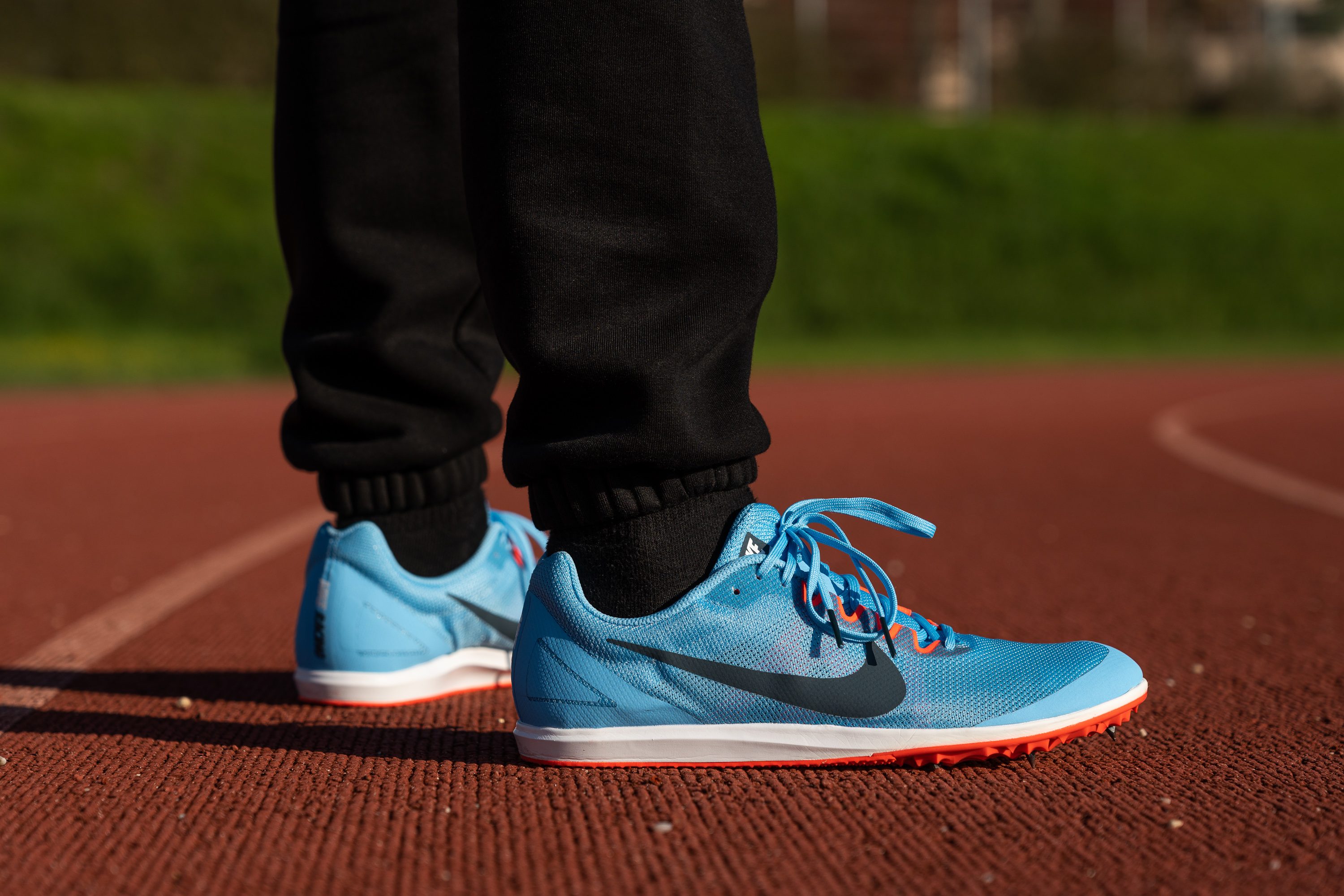
In our opinion, the Nike Zoom Rival D 10 is ideal for:
- Heel strikers who want a track spike with some drop instead of a completely flat, aggressive design.
- Budget-conscious or beginners looking for a solid spike without spending much.
- Runners who visit the track occasionally and don’t need high-end tech for just a few sessions each year.
Who should NOT buy
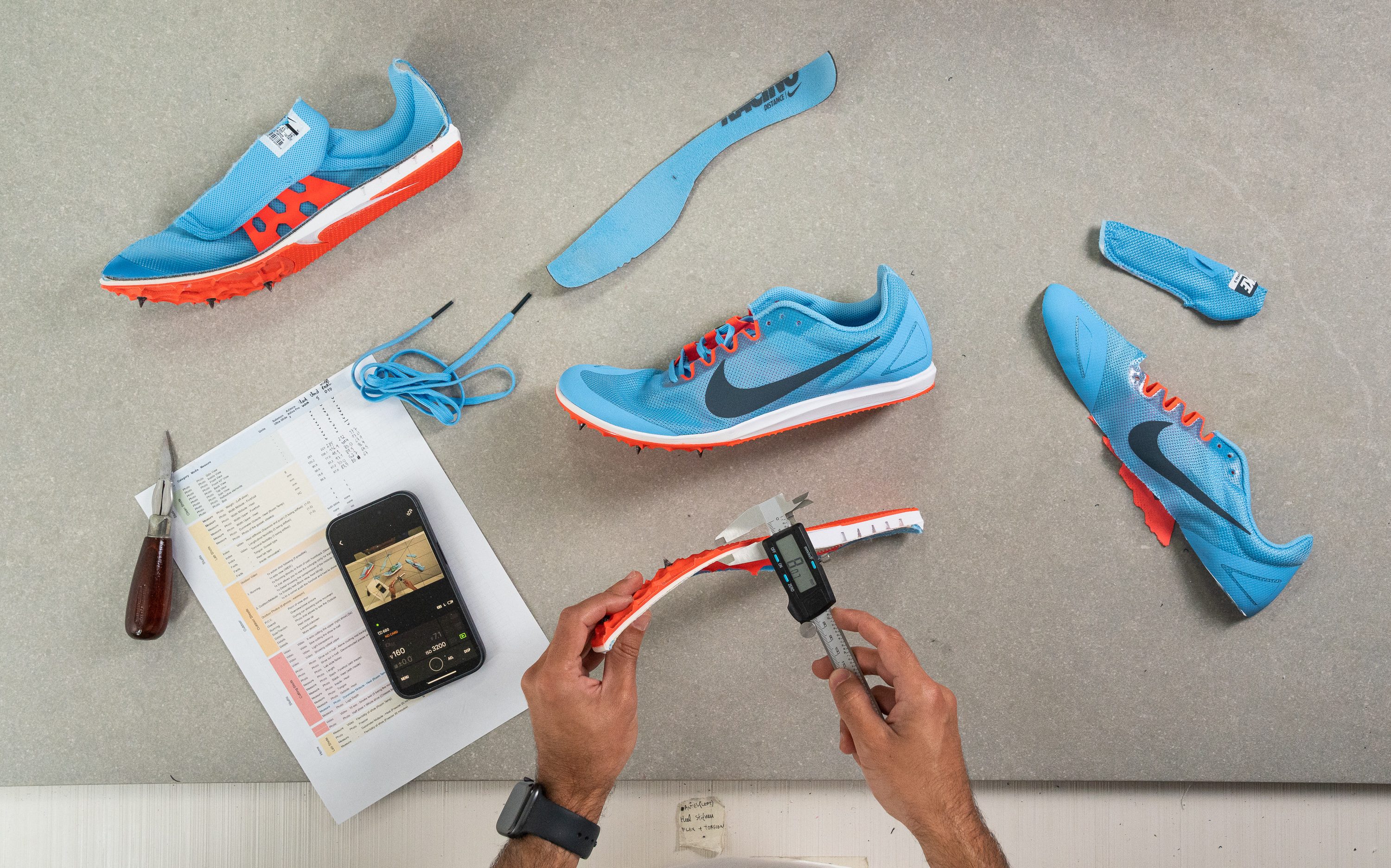
Performance is not the strongest aspect of the Rival D 10, so if that’s your main priority, it’s worth spending more for the Nike Dragonfly 2. Alternatively, the Nike Streakfly 2 could even be a better choice if you consider using a road shoe instead of a spike for track workouts.
We also believe that forefoot strikers will benefit more from a spike with a flatter midsole and a more traditional geometry, such as the Nike Ja Fly 4.
Cushioning
Heel stack
The Nike Zoom Rival D 10 features a moderate stack height, measuring 15.0 mm in the heel. While it stays below the current World Athletics limit of 20 mm, it still provides a noticeable amount of foam underfoot for being a track spike.
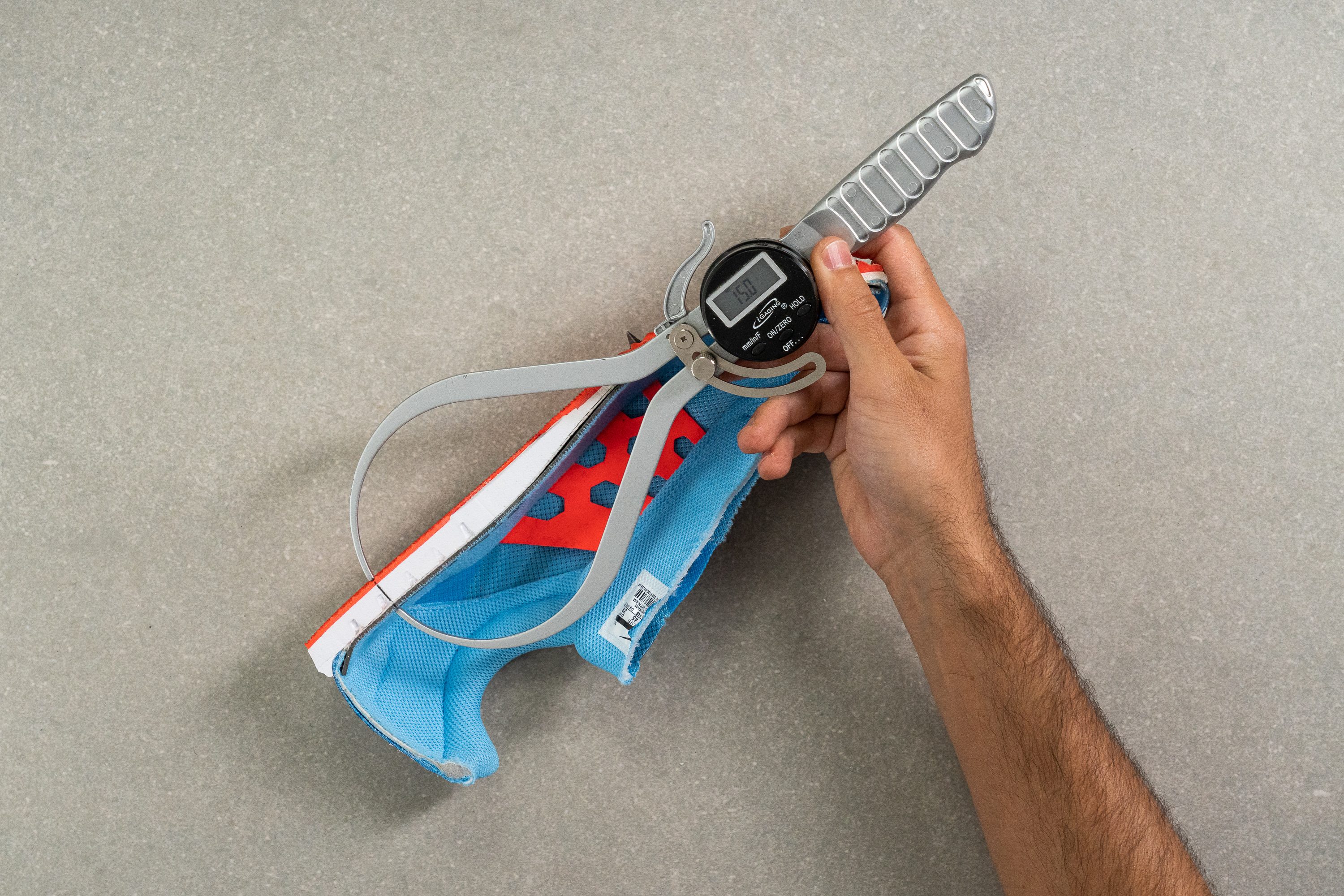
| Zoom Rival D 10 | 15.0 mm |
| Average | 16.8 mm |
Forefoot stack
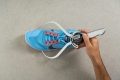
The forefoot measures just 10.9 mm, so don’t expect much protection for your joints and muscles, as most of the impact load is handled directly by your body.
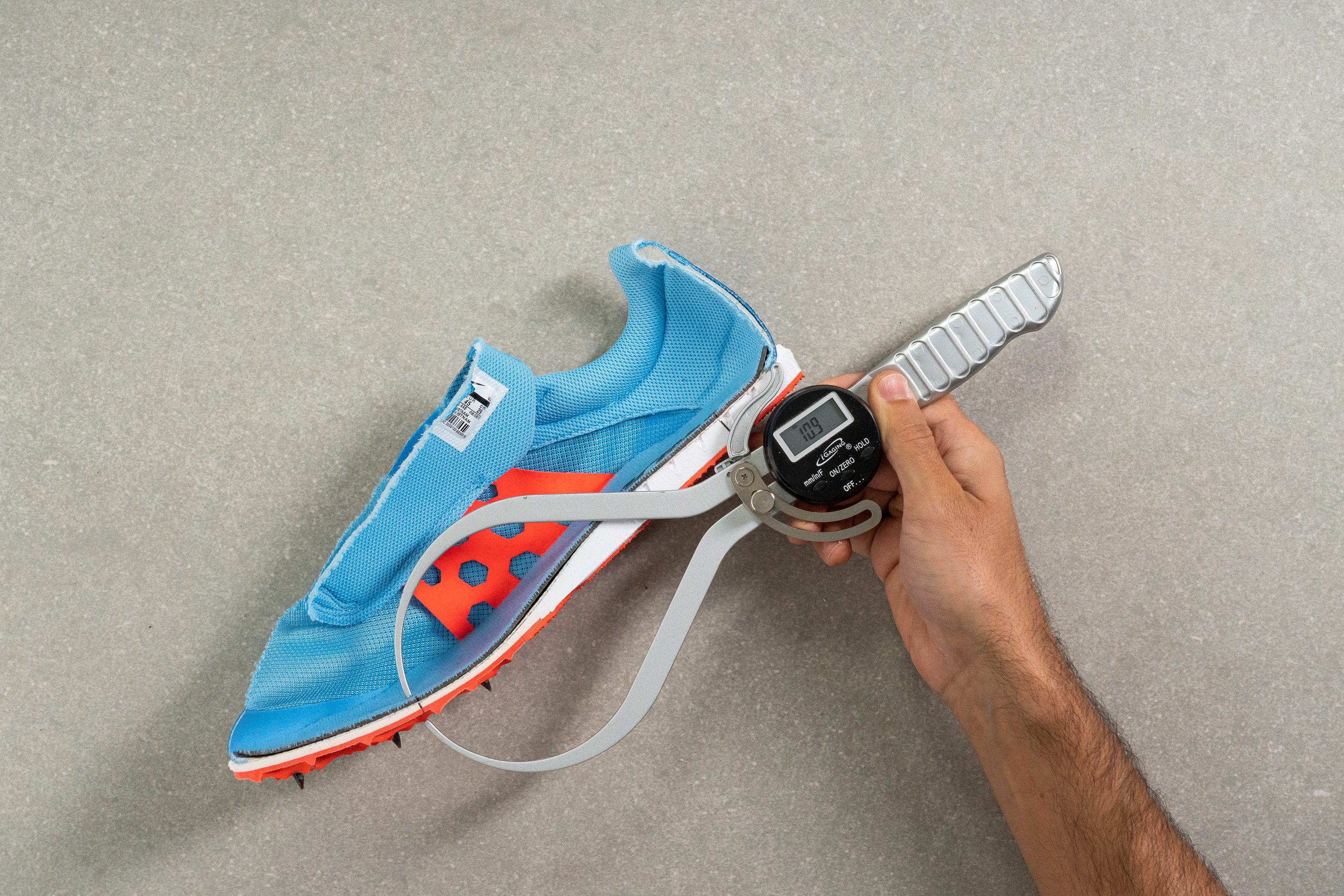
| Zoom Rival D 10 | 10.9 mm |
| Average | 15.8 mm |
Drop
While some running spikes even feature a negative drop, the beginner-friendly nature of the Zoom Rival D 10 stands out with a relatively high 4.1 mm drop. As a result, it feels more accommodating for heel strikers than most alternatives.
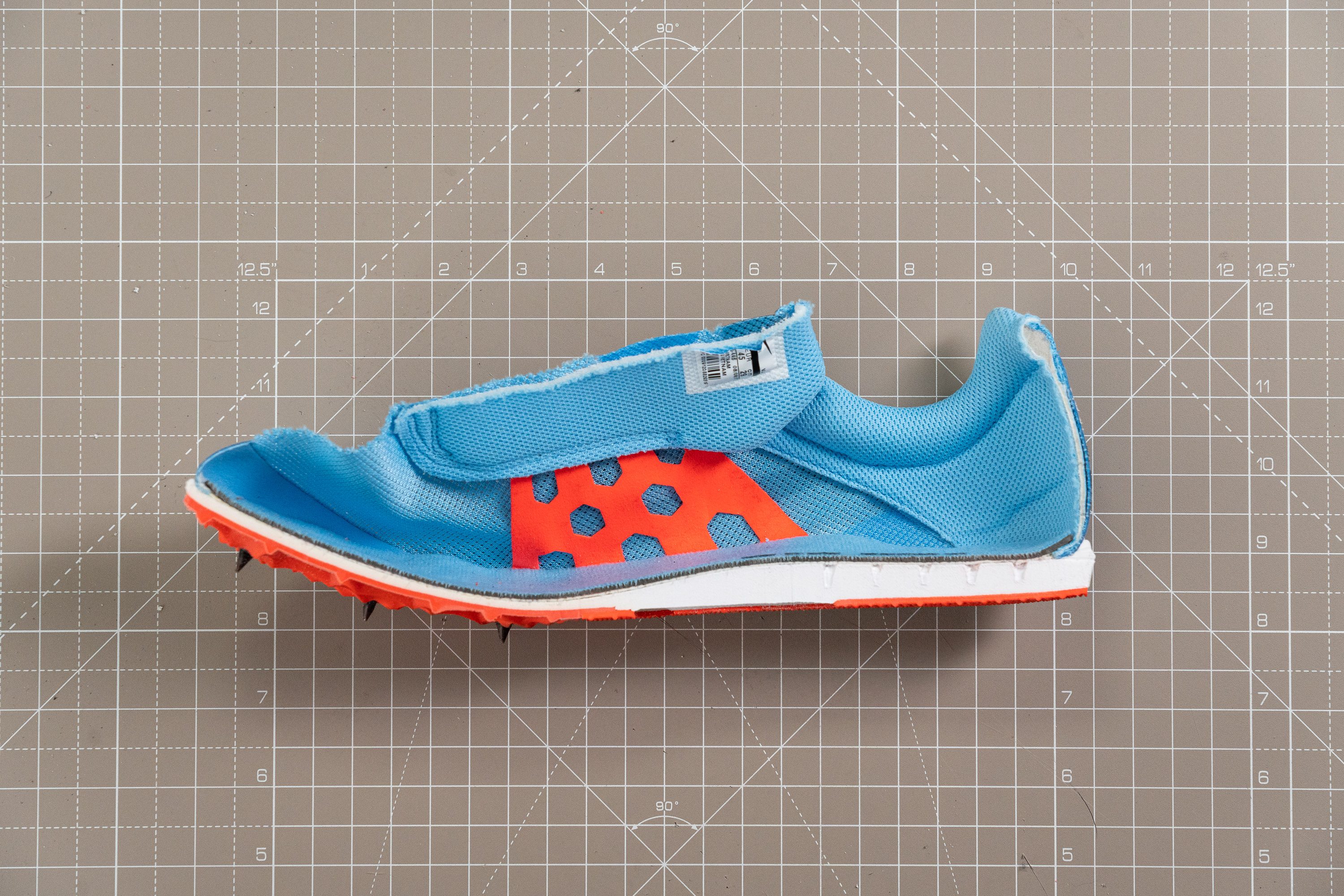
| Zoom Rival D 10 | 4.1 mm |
| Average | 1.0 mm |
Midsole softness
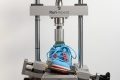
The Nike Zoom Rival D 10 features a firm foam that scored 48.0 AC on our Asker C durometer. It’s not the plushest ride we’ve seen in a track spike, but it’s likely a smart choice, especially for adding some stability.
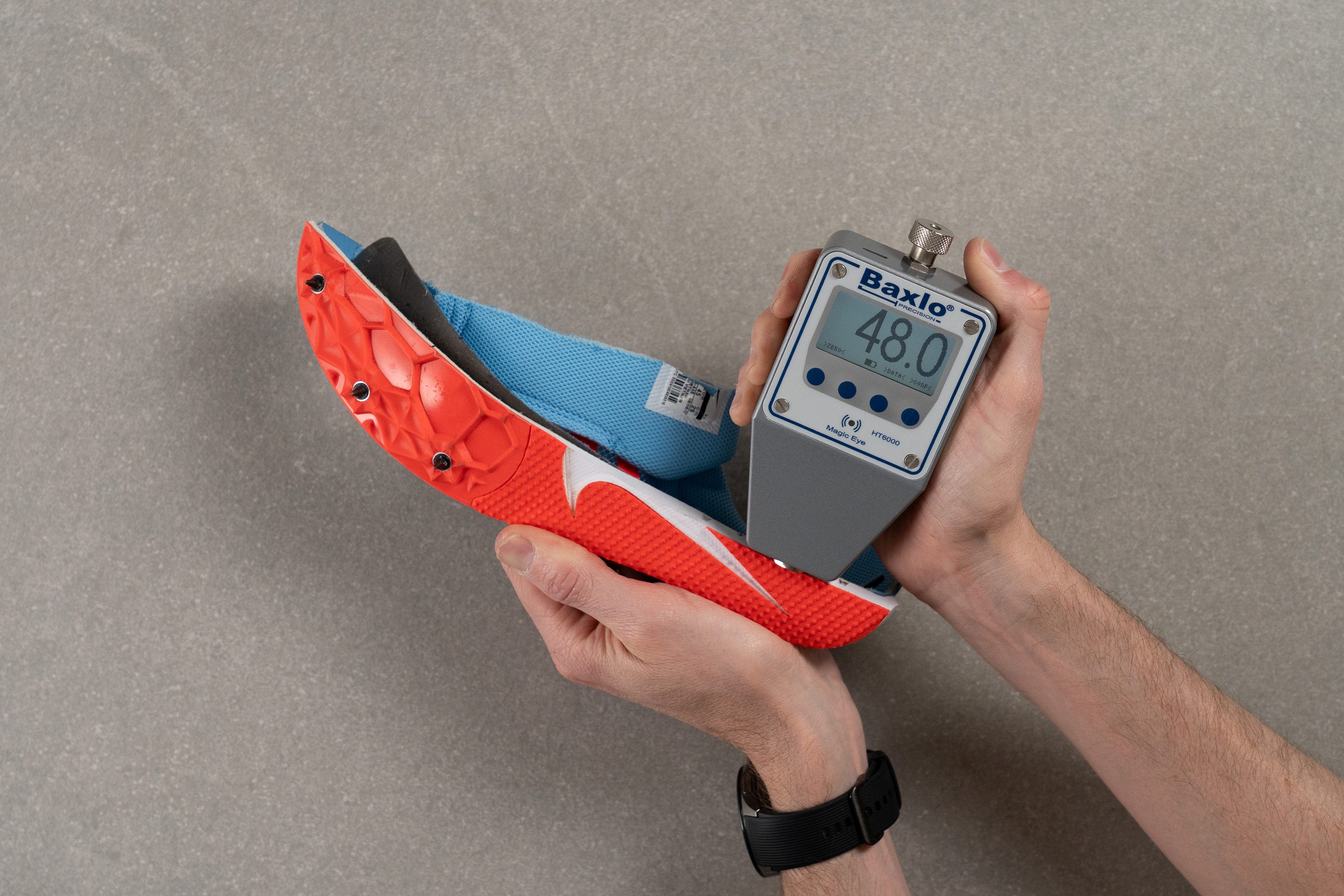
| Zoom Rival D 10 | 48.0 AC |
| Average | 42.9 AC |
Size and fit
Size
Nike Zoom Rival D 10 fits slightly small (22 votes).
Width / Fit
The Rival D 10 provides generous space for the foot, measuring 96.4 mm in our width test.
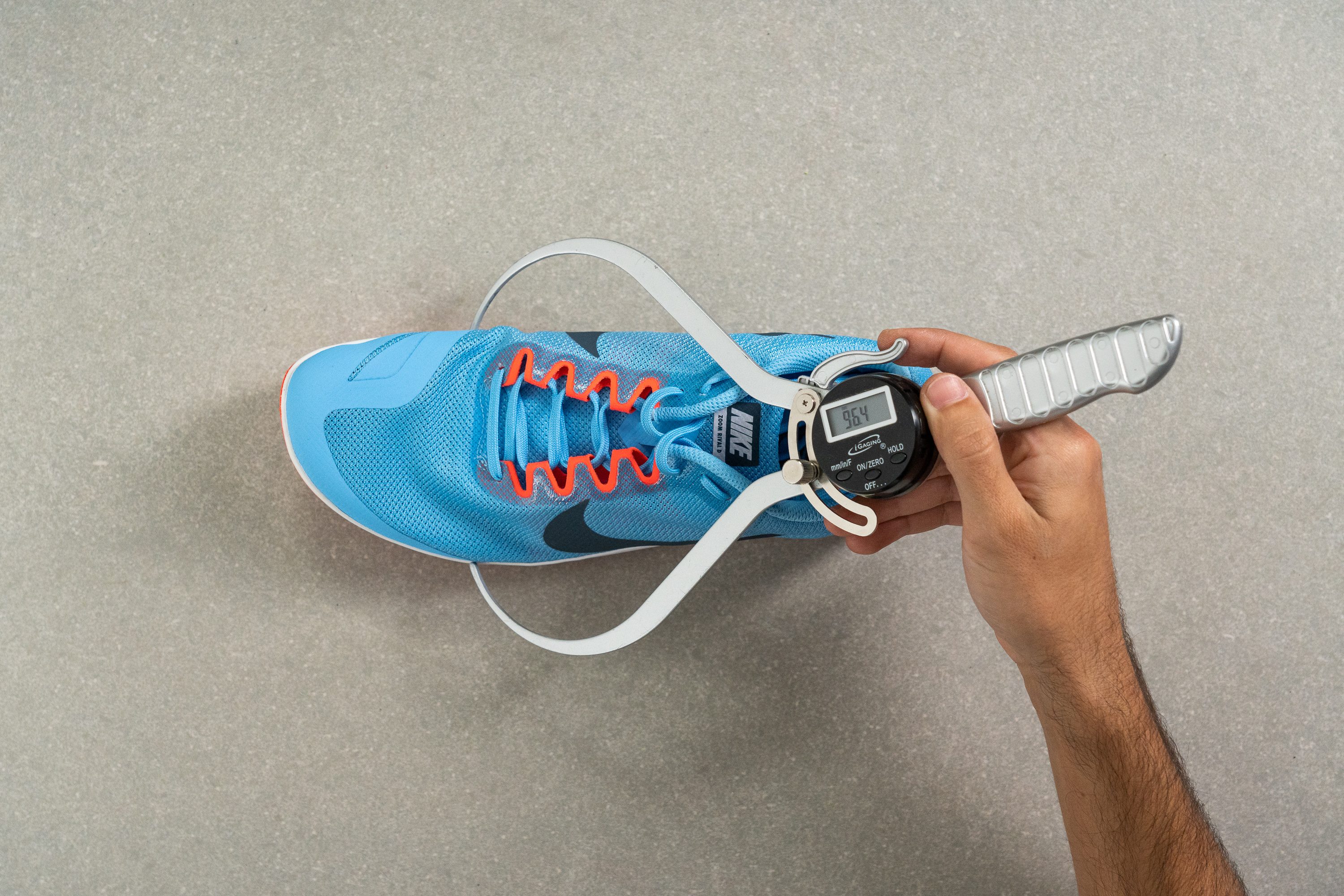
This test follows an older methodology, which is why you don't see recently tested shoes in the chart. Results from different methodologies can not be compared.
| Zoom Rival D 10 | 96.4 mm |
| Average | 88.9 mm |
Flexibility / Stiffness
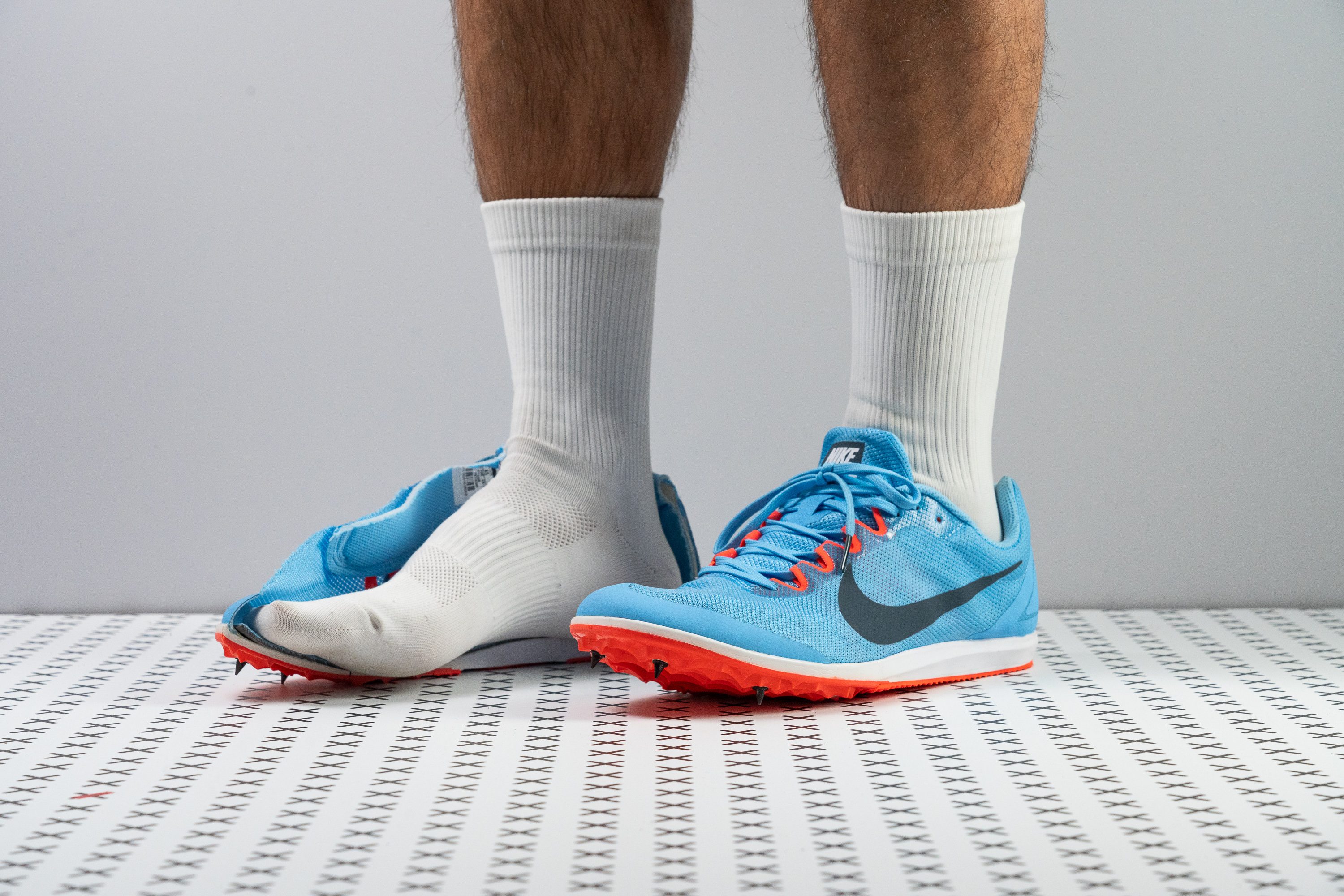
The Pebax plate proved exceptionally pliable in the Nike Zoom Rival D 10.
The shoe's forefoot required as little as 3.4N force to bend by 30%! That makes it the most flexible track spike in our lab!
| Zoom Rival D 10 | 3.4N |
| Average | 14.5N |
Weight
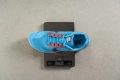
The Zoom Rival D 10 is not the lightest track spike we’ve tested, but its weight remains impressively low at 5.7 oz or 161g, especially considering its budget-friendly price point.
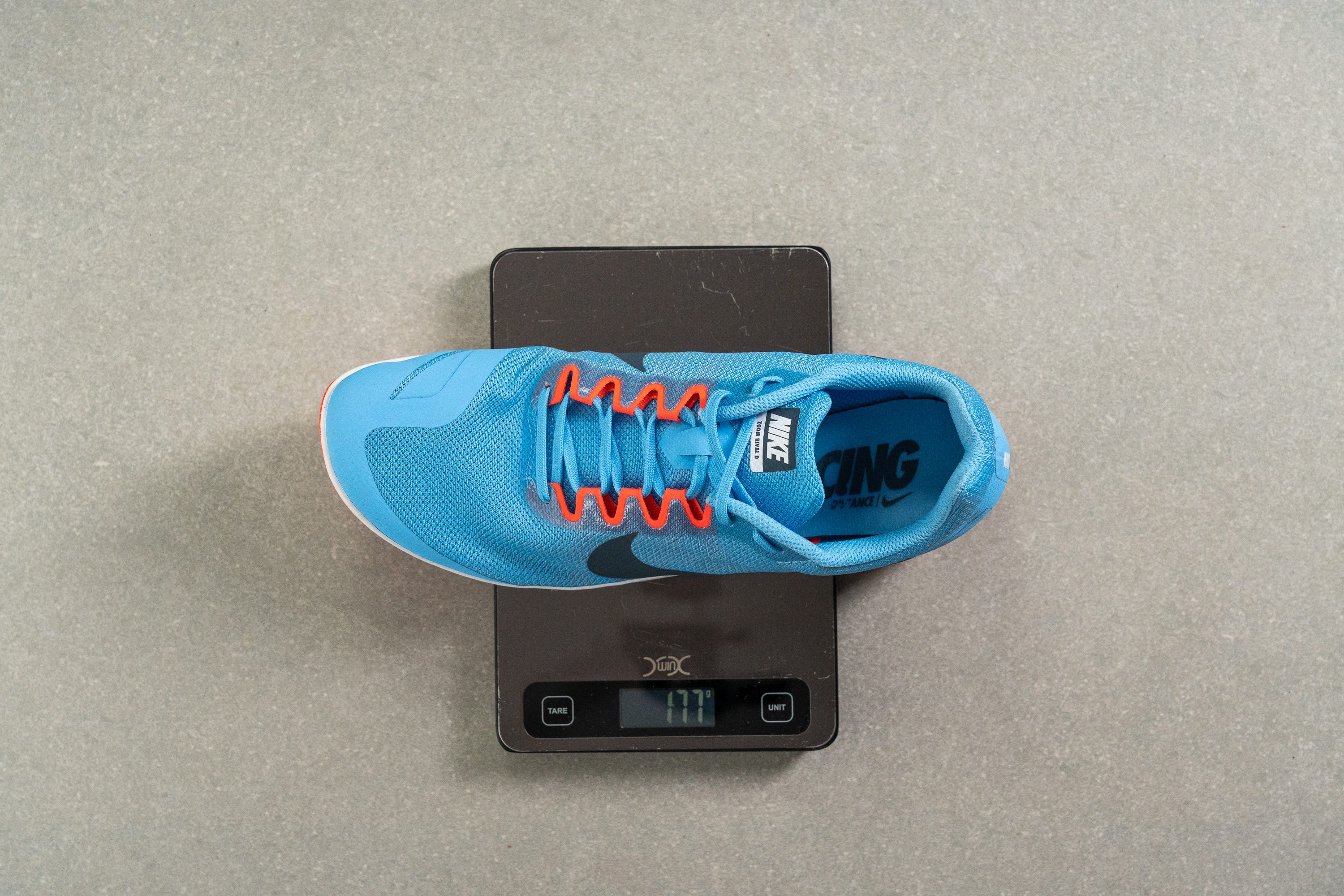
| Zoom Rival D 10 | 5.7 oz (161g) |
| Average | 5.7 oz (162g) |
Breathability
The Rival D 10 delivers decent breathability, although it falls short of what we typically expect from running spikes.
This could become an issue during longer summer workouts, yet we don’t anticipate any drawbacks when it comes to racing.
From a quality standpoint, the upper feels fairly basic, which was entirely expected at this price point, and anything more premium would have been quite surprising.
| Zoom Rival D 10 | 3 |
| Average | 3.9 |
Stability
Torsional rigidity
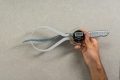
Flexibility stands out in the Zoom Rival D 10, largely because it skips a plate altogether. In our test, we only needed 8.5 Nm to twist it using our machine.
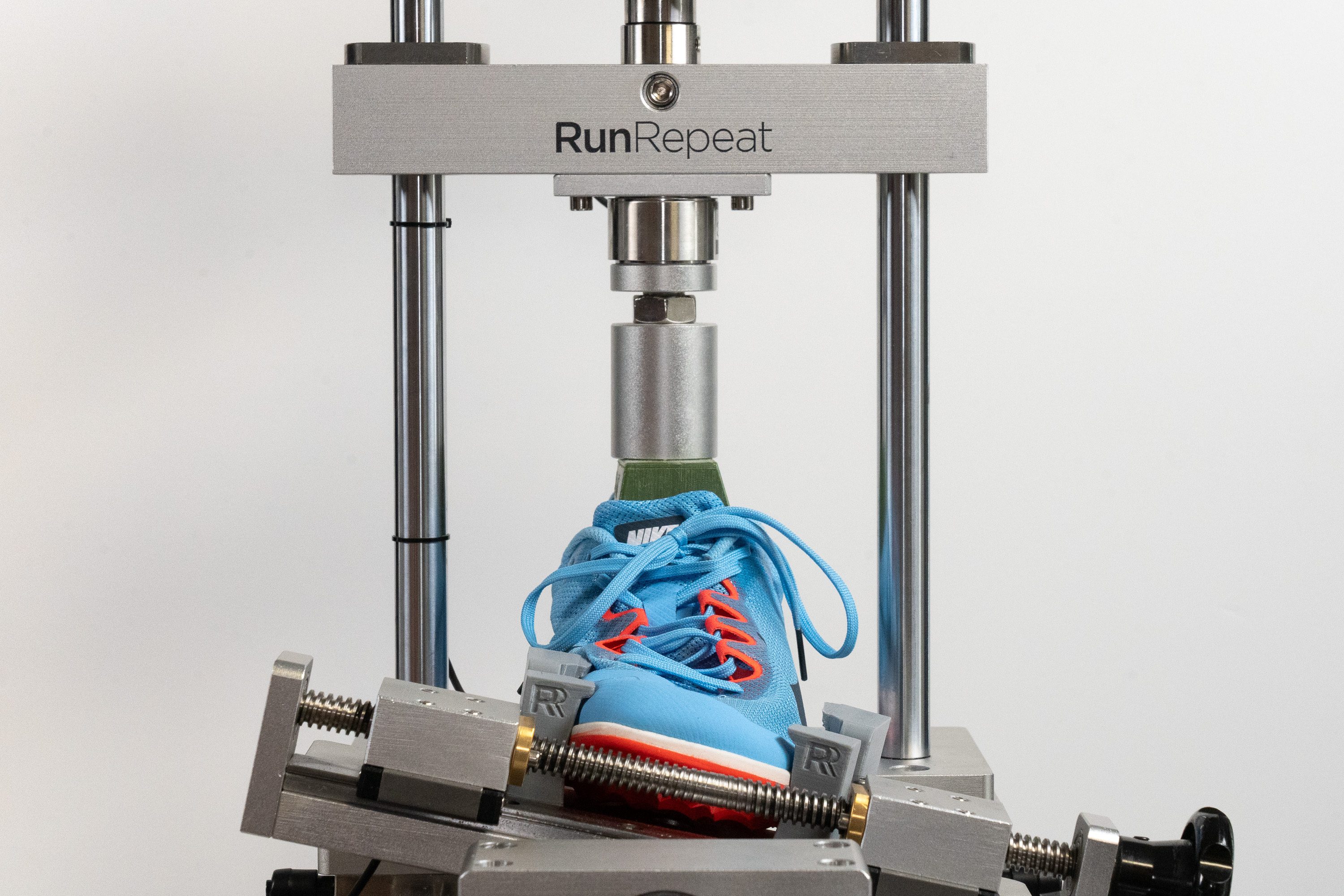
| Zoom Rival D 10 | 8.5 Nm |
| Average | 10.7 Nm |
Heel counter stiffness
Another subtle design choice that reinforces the beginner-friendly nature of the Rival D 10 is its 2/5 heel counter. While running spikes typically feature ultra-flexible heels, this model introduces a bit more structure for added support.
| Zoom Rival D 10 | 2 |
| Average | 1.6 |
Midsole width - forefoot
We found that the forefoot of the D 10 expands to 97.0 mm, offering a stable landing platform that closely matches other spikes and feels familiar underfoot.
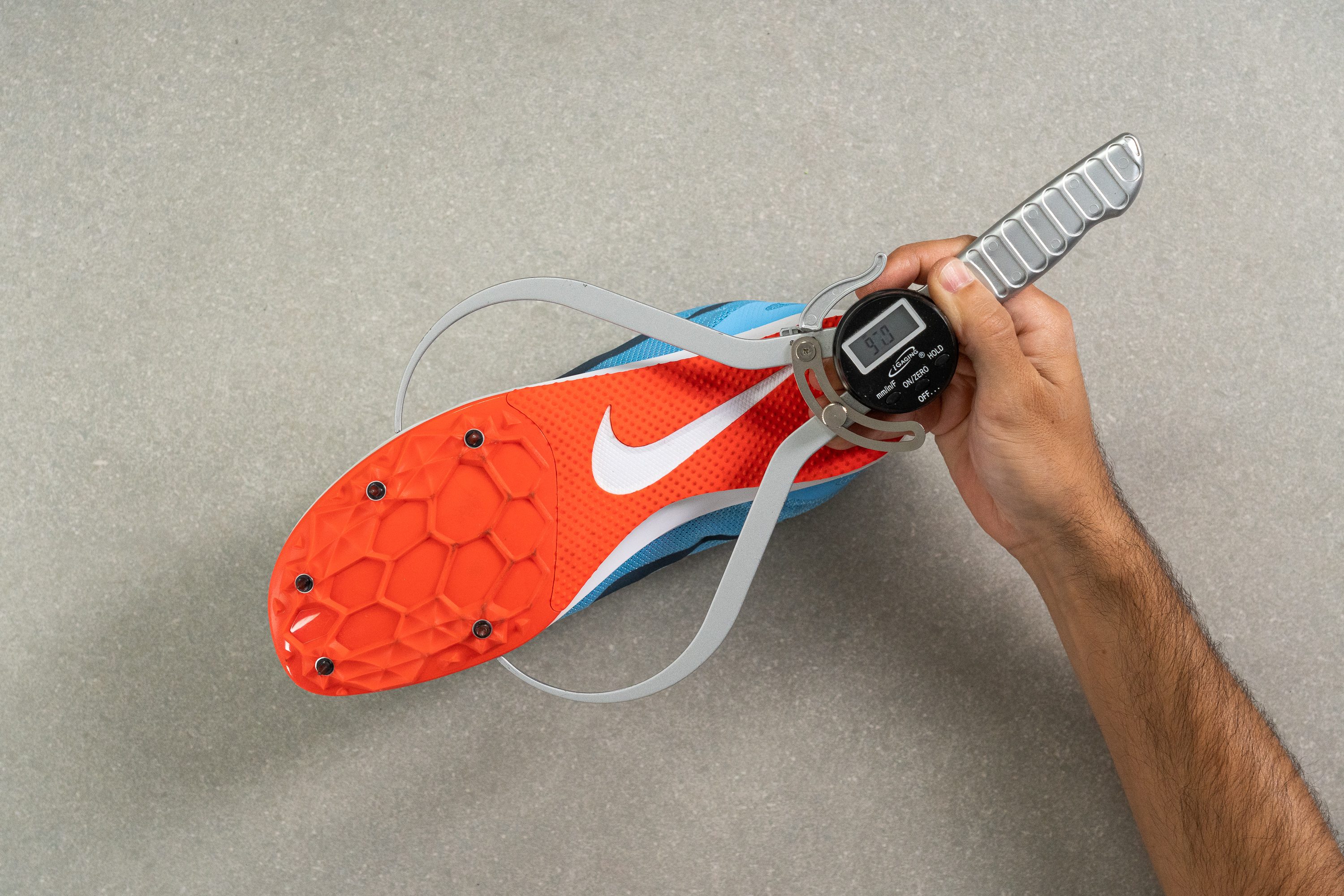
| Zoom Rival D 10 | 97.0 mm |
| Average | 96.1 mm |
Midsole width - heel
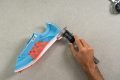
We also measured the heel at 67.9 mm using our digital callipers, which is slightly wider than average and aligns with its more relaxed, less aggressive design compared to other spikes.
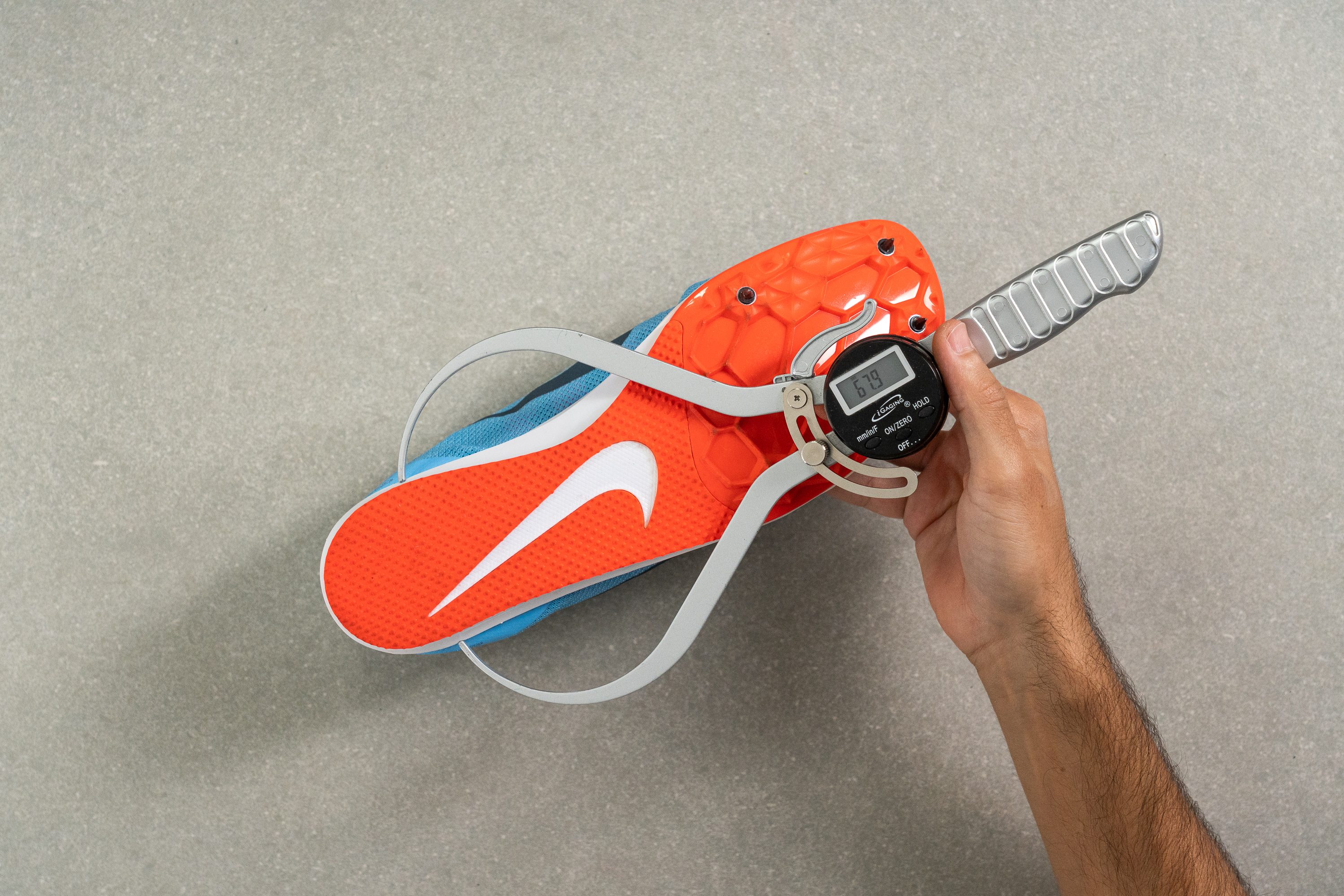
| Zoom Rival D 10 | 67.9 mm |
| Average | 63.8 mm |
Durability
Outsole thickness
We found just 2.2 mm of outsole thickness, which partly explains the reasonable weight of the Zoom Rival D 10, yet it still appears sufficient to handle a fair amount of mileage.
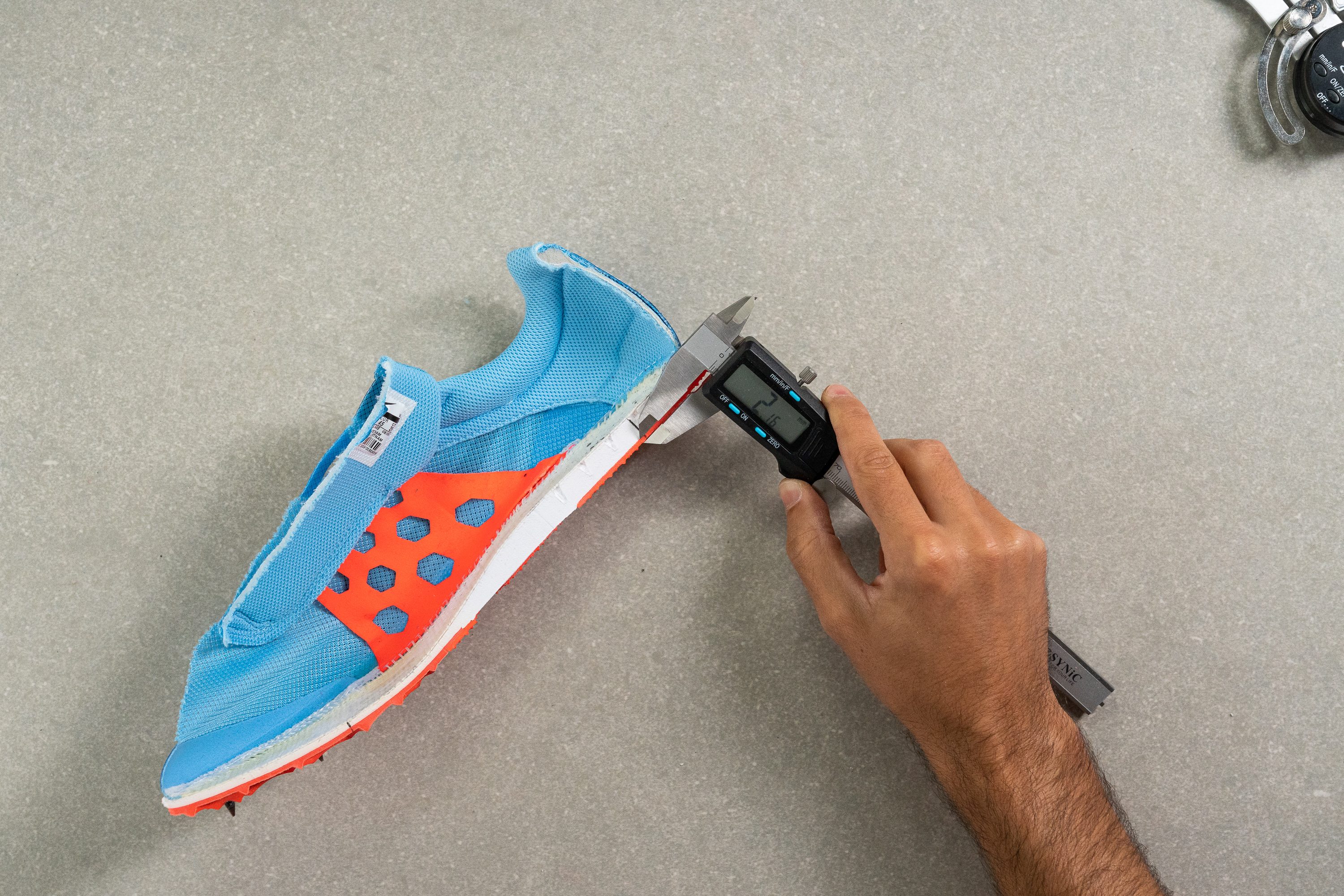
| Zoom Rival D 10 | 2.2 mm |
| Average | 2.6 mm |
Misc
Insole thickness
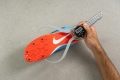
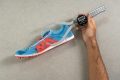
The insole measures just 1.8 mm thick, making it one of the thinnest we’ve ever tested in the lab, even when compared to road shoes.
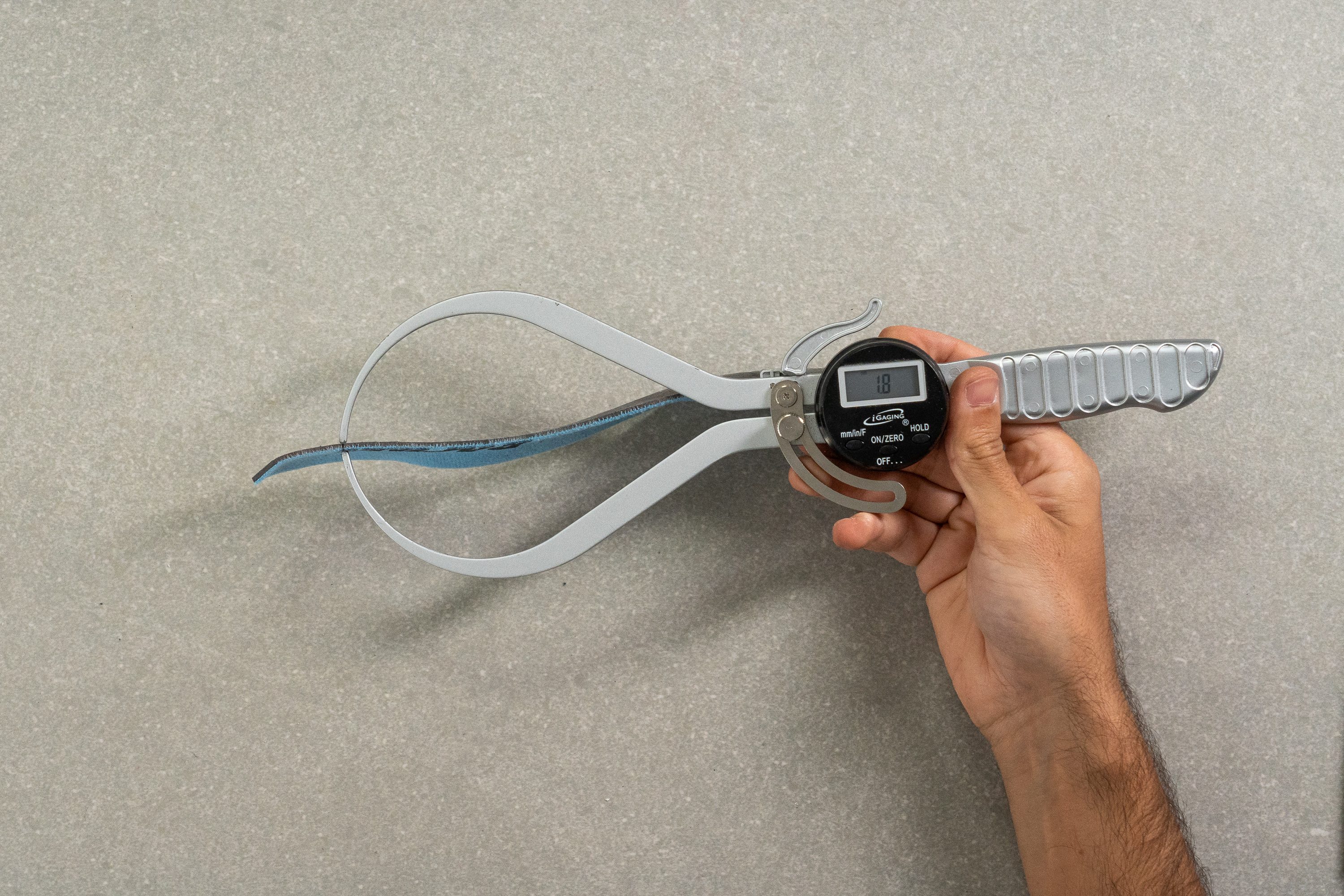
| Zoom Rival D 10 | 1.8 mm |
| Average | 2.6 mm |
Tongue padding
Track warriors who typically struggle with the minimal comfort of spikes may appreciate the Rival D 10, as the tongue includes slightly more foam than usual, reaching 3.4 mm of padding.
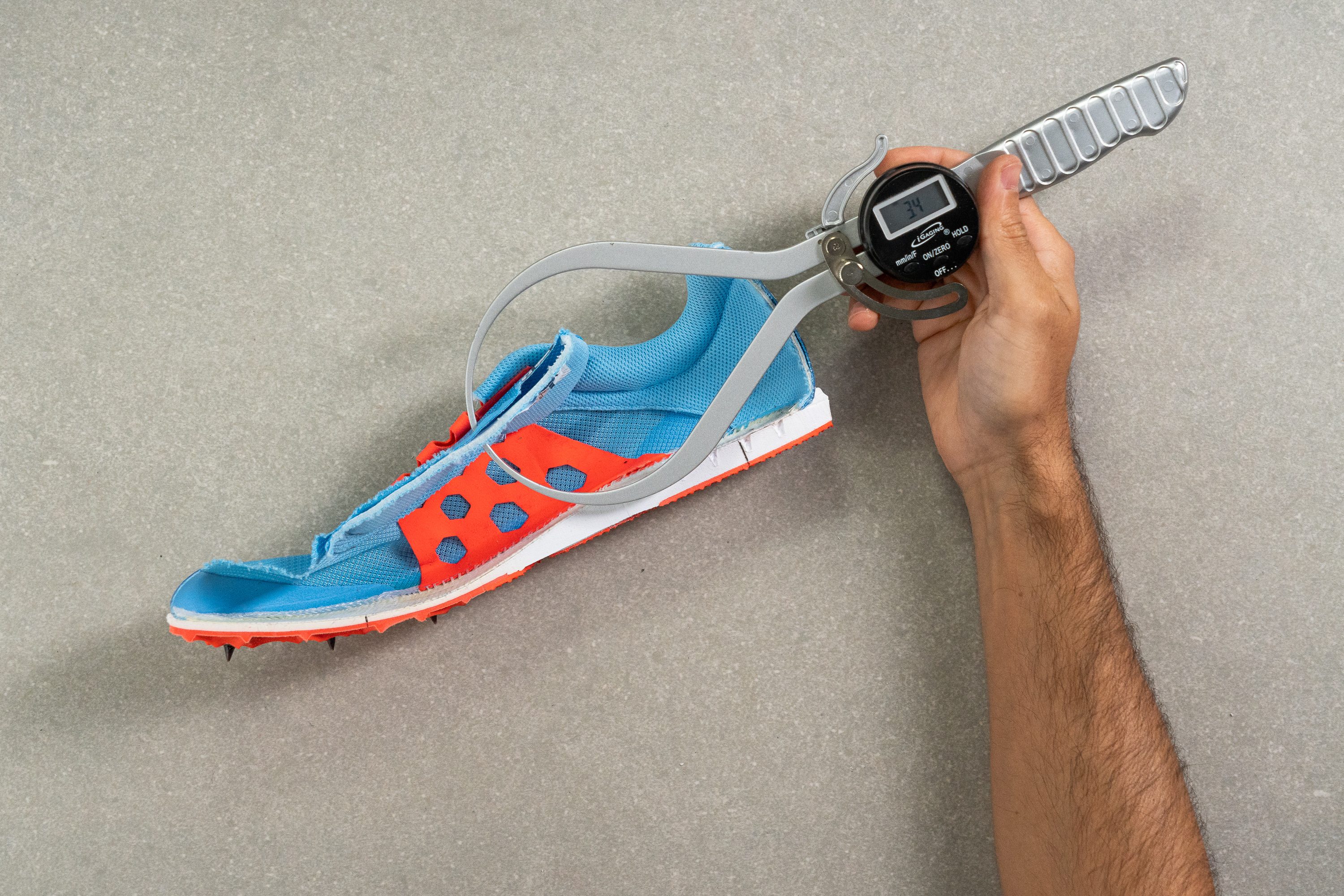
| Zoom Rival D 10 | 3.4 mm |
| Average | 2.3 mm |
Heel tab
The heel design is clean and minimal, as is common in most running spikes, with no tab included, yet for such an affordable shoe, it delivers a surprisingly polished look.
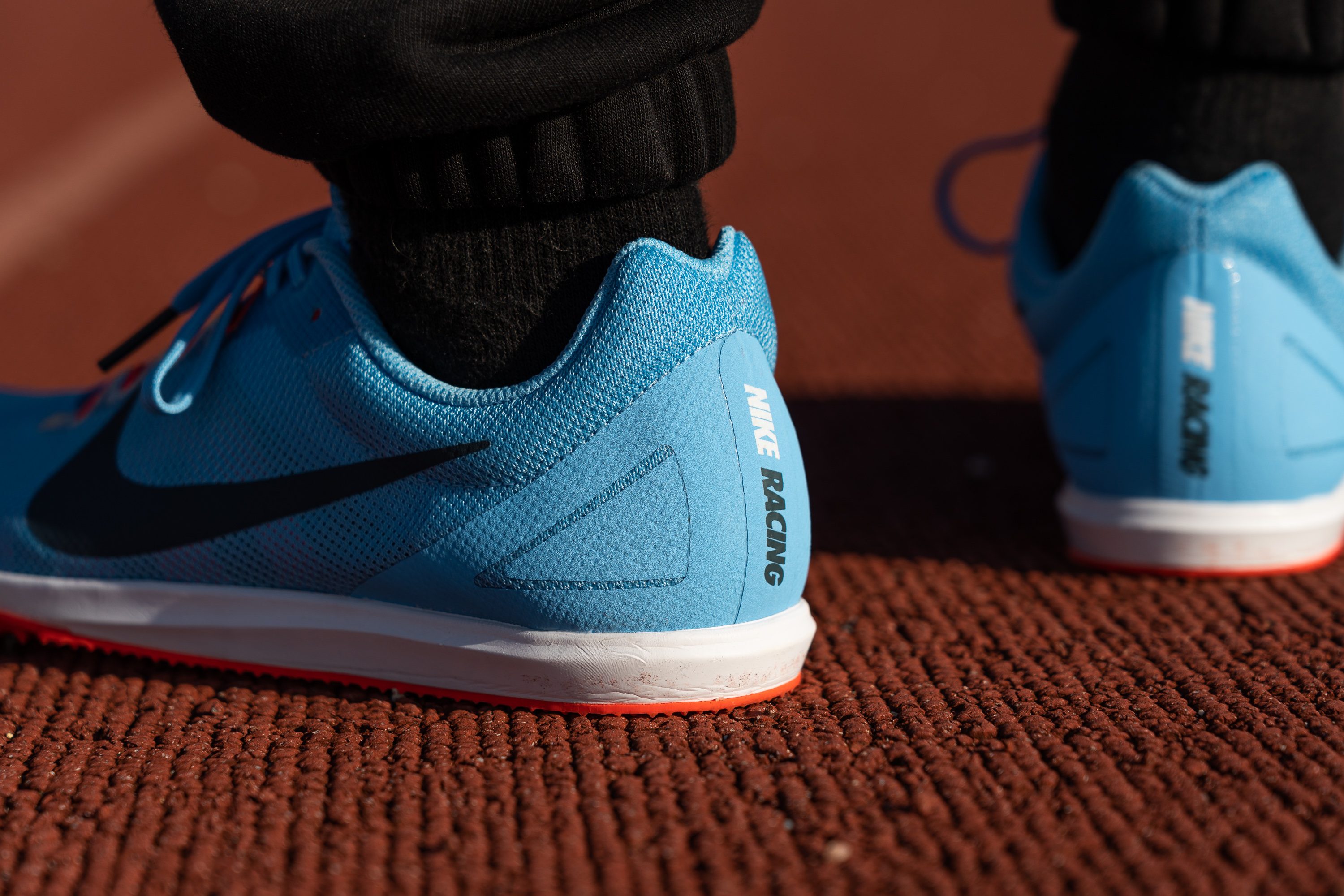
| Zoom Rival D 10 | None |
Price
The biggest appeal of the Nike Zoom Rival D 10 is its ultra-affordable price, making it hard to beat in that category. While it lacks the explosive performance of more advanced options, it stands out as a compelling choice for runners on a tight budget.
| Zoom Rival D 10 | $65 |