



























Our verdict
- Dry 22
- Wet 72
- Mixed 84
Pros
- Wallet-friendly price
- Flexible, comfortable build
- Rock-solid durability
- Plush foam
- Premium look
- Beginner-friendly design
- Ideal for long XC races
Cons
- Faster racers may want more speed
- Maybe too flexible for some
- Plush foam can feel weird for XC
Awards
- Top 29% most popular tracking shoes
Comparison
The most similar cross country shoes compared
+ + Add a shoe | |||||
|---|---|---|---|---|---|
| Our score | 85 Great | 88 Great | 72 Decent | 77 Good | |
| Price | £80 | £120 | £70 | £80 | |
| Weight lab Weight brand | 6.5 oz / 184g 6.1 oz / 172g | 6.7 oz / 190g 6.3 oz / 179g | 5.7 oz / 161g | 6.2 oz / 176g | |
| Breathability | Breathable | Breathable | Moderate | Moderate | |
| Outsole | Spikes | Spikes | - | - | |
| Use | - | - | Long DistanceMid Distance | Long DistanceMid Distance | |
| Surface | DirtGrass | DirtGrass | - | - | |
| Width / fit | Medium | Wide | Wide | Wide | |
| Toebox width | Medium | Wide | - | Medium | |
| Drop lab | 2.7 mm | -0.1 mm | 4.1 mm | 5.1 mm | |
| Size | - | True to size | Slightly small | Slightly small | |
| Midsole softness | Soft | Balanced | Firm | Firm | |
| Tongue padding | Average | Average | Average | Average | |
| Stiffness | Flexible | Moderate | Flexible | Moderate | |
| Torsional rigidity | Flexible | Stiff | Flexible | Flexible | |
| Heel counter stiffness | Flexible | Flexible | Flexible | Flexible | |
| Outsole thickness | Average | Average | Average | Thin | |
| Outsole hardness | - | - | Soft | - | |
| Heel tab | None | Pull tab | None | None | |
| Heel stack lab | 17.5 mm | 19.2 mm | 15.0 mm | 17.3 mm | |
| Forefoot | 14.8 mm | 19.3 mm | 10.9 mm | 12.2 mm | |
| Insole thickness | Average | Average | Thin | Thick | |
| Midsole width - forefoot | Wide | Very wide | Average | Average | |
| Midsole width - heel | Very wide | Average | Average | Average | |
| Ranking | #4 Bottom 42% | #3 Top 43% | #23 Bottom 4% | #21 Bottom 12% | |
| Popularity | #2 Top 29% | #4 Bottom 42% | #22 Bottom 8% | #7 Top 30% |



Who should buy
The New Balance FuelCell XC7 v5 is ideal for:
- Runners seeking a budget-friendly cross-country shoe that still delivers a well-rounded racing experience.
- Anyone who enjoys soft, forgiving foams and wants that same underfoot feel in an XC model.
- Value-focused athletes who prioritise durability and long-term use over chasing the lightest or most aggressive option available.
- Beginners wanting to try cross country for the first time.
Who should NOT buy
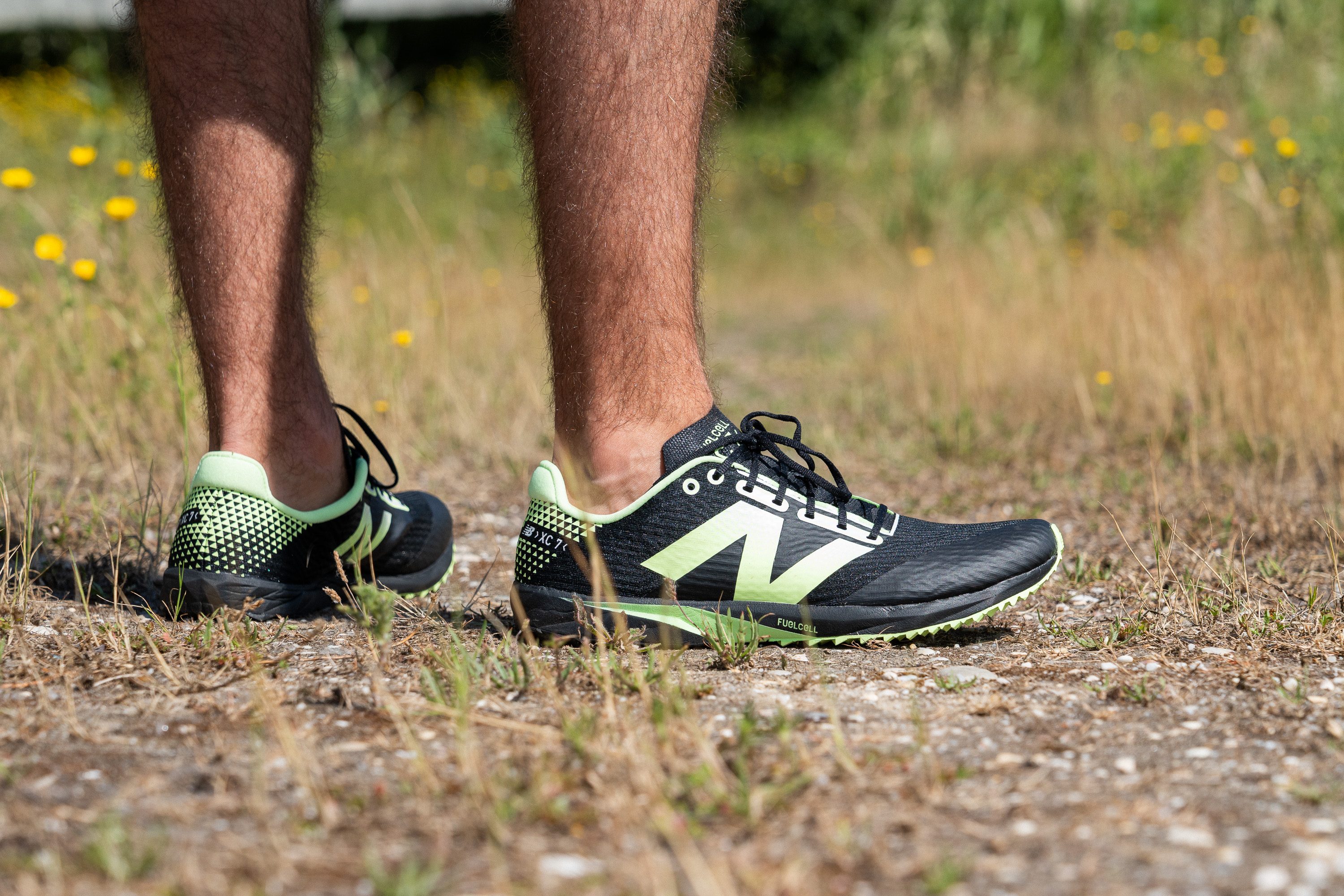
For runners who put performance above everything else, we think that the XC7 v5 is not the strongest choice. In that case, the Nike Dragonfly XC offers better energy return and higher speed.
We also believe that runners who prefer a stiffer platform for a more aggressive feel should look elsewhere. The highly-flexible design of the XC7 v5 won't suit everyone, and the On Cloudspike XC is a better option.
Cushioning
Heel stack
Foam technology is changing cross-country racing, allowing shoes to offer more protection and reduce muscle fatigue over longer distances.
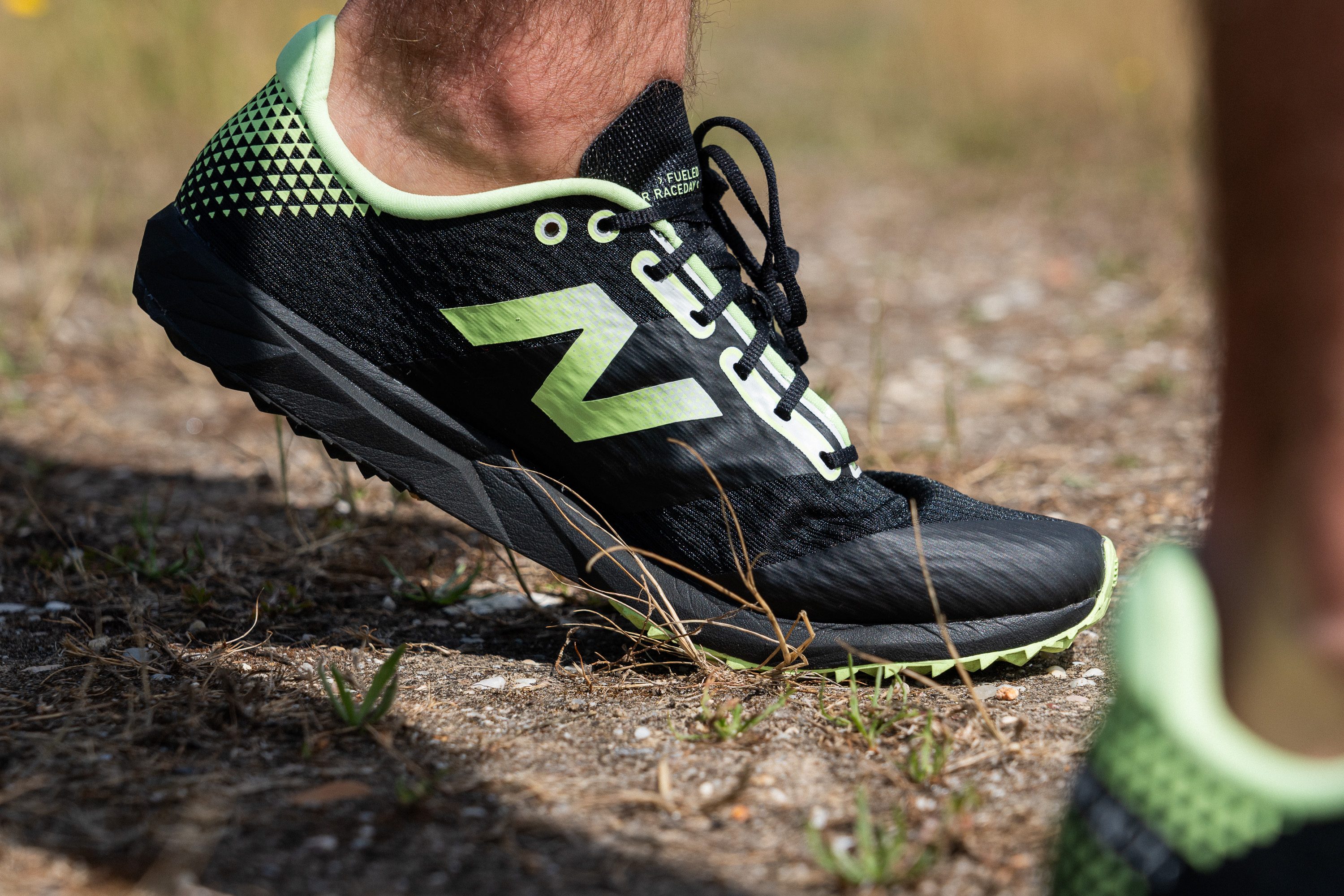
New Balance embraced that trend with the FuelCell XC7 v5, designing it to handle extended races more comfortably than traditional XC models. As a result, we measured a generous 17.5 mm of stack height in the heel.
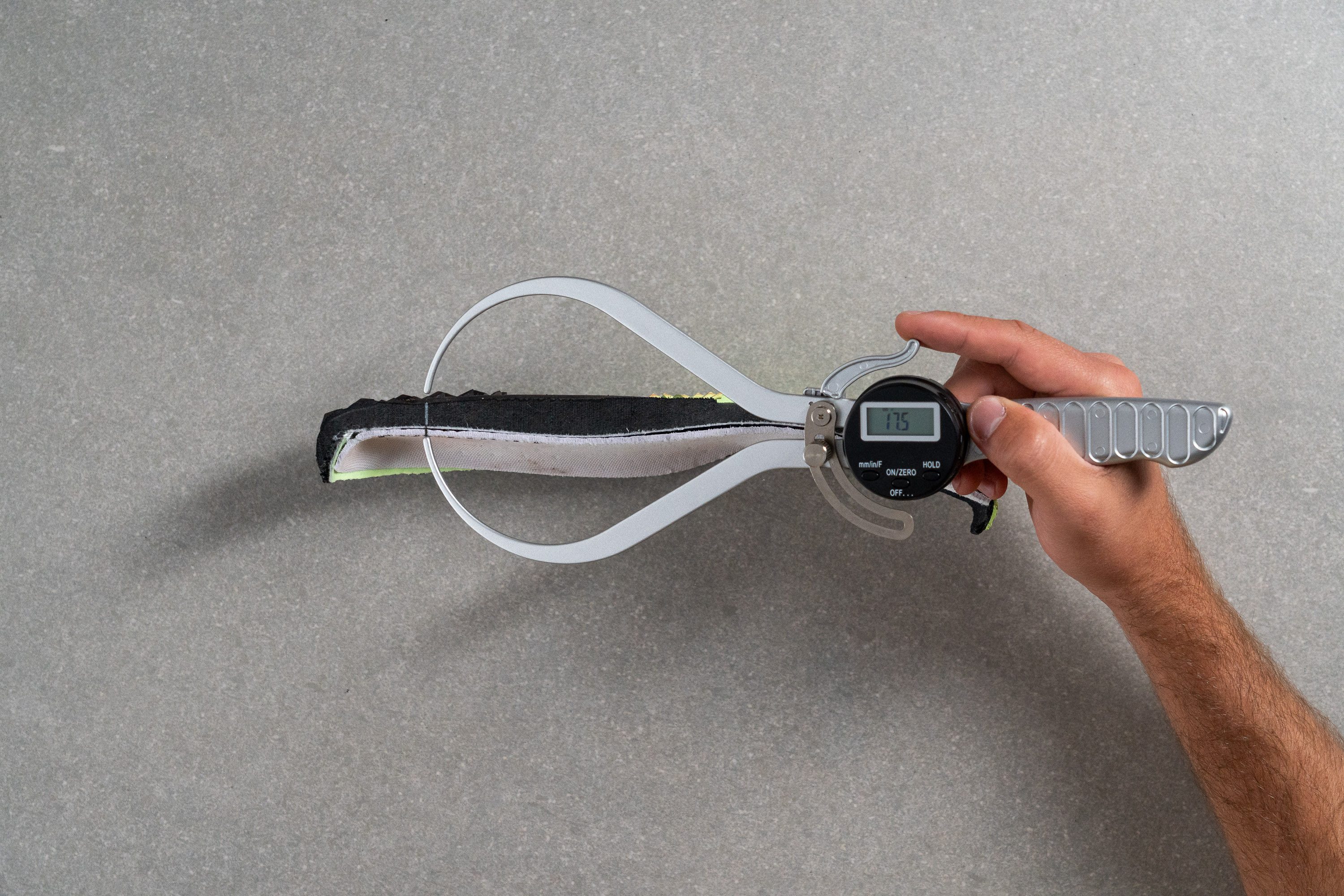
| FuelCell XC7 v5 | 17.5 mm |
| Average | 16.8 mm |
Forefoot stack
The forefoot sits slightly lower at 14.8 mm, yet that's still an impressive amount of cushioning for a cheap cross-country shoe. We were especially surprised given the budget-friendly price, as entry-level XC models typically offer less underfoot protection than their premium counterparts.
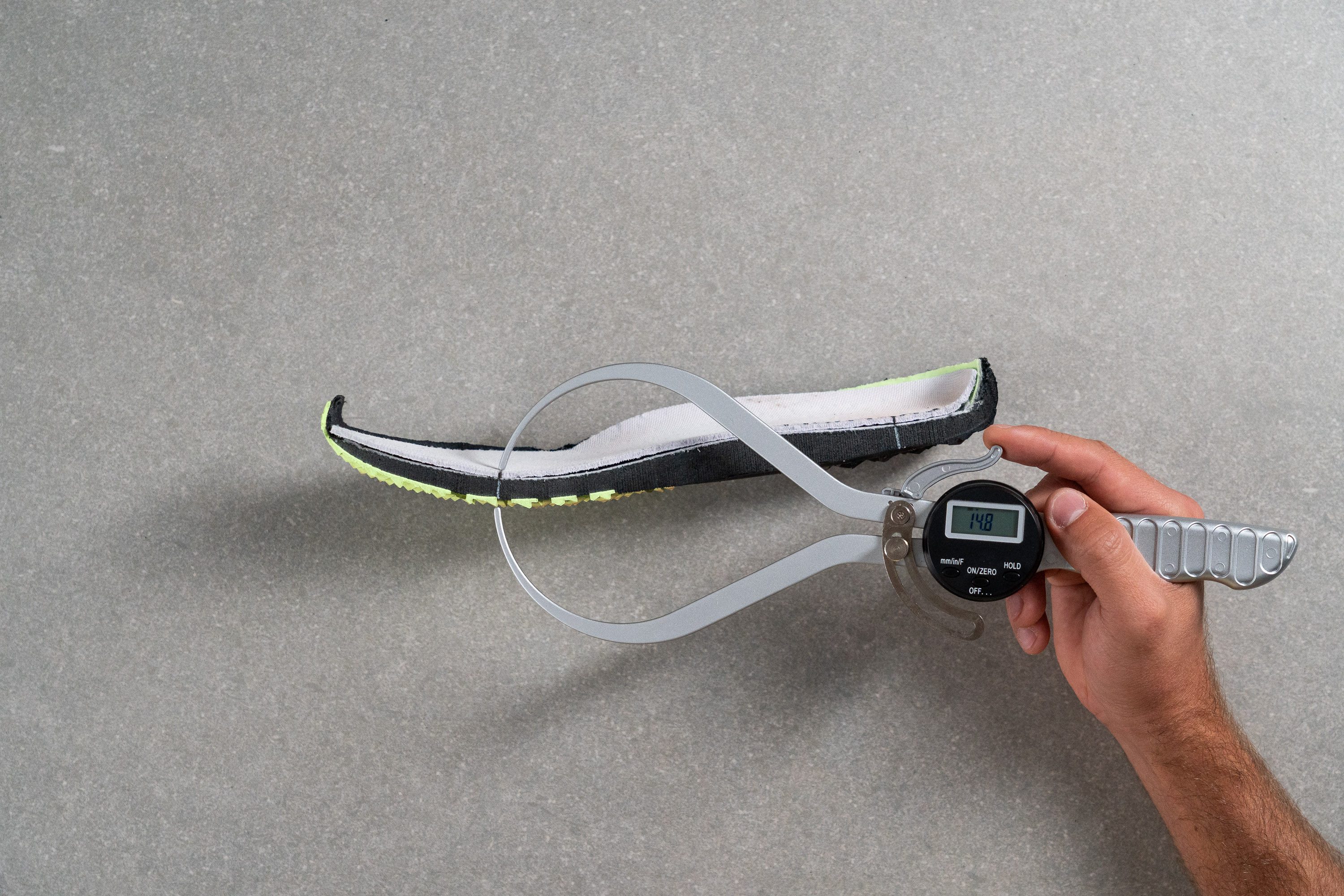
| FuelCell XC7 v5 | 14.8 mm |
| Average | 15.8 mm |
Drop
The difference between the heel and forefoot results in a modest 2.7 mm drop.
That's slightly higher than what we typically measure in cross-country spikes, but considering this shoe targets beginners and value-conscious runners, we think that New Balance made a sensible choice.
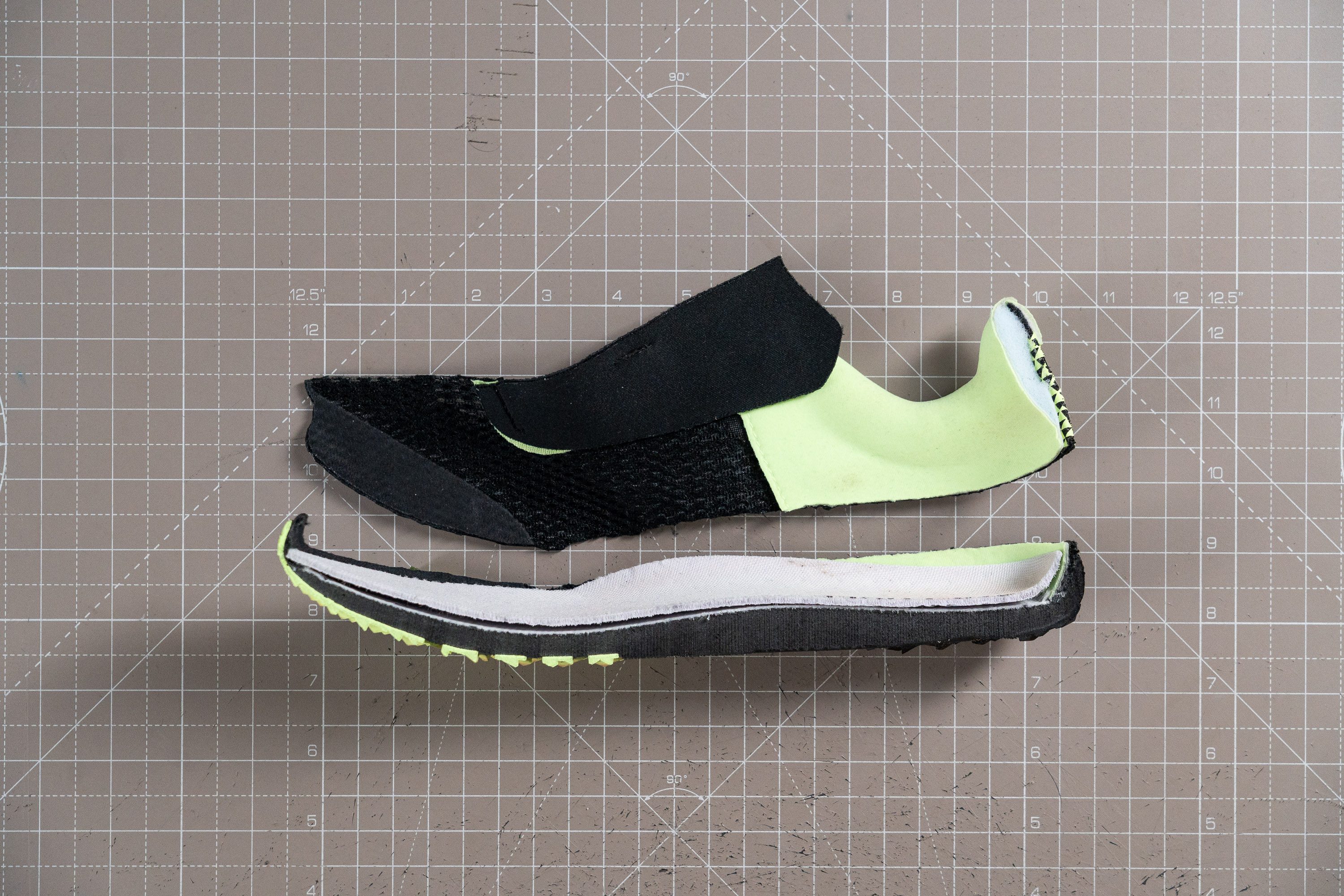
| FuelCell XC7 v5 | 2.7 mm |
| Average | 1.0 mm |
Midsole softness
New Balance has built a reputation around soft, comfort-focused foams, and the FuelCell XC7 v5 stays true to that philosophy despite being a cross-country shoe.
Using our Asker C durometer, we measured the black FuelCell foam at just 27.8 AC. That's an exceptionally soft result for this category, and while it won't appeal to everyone, we like seeing brands offer different ride experiences instead of following the same formula.
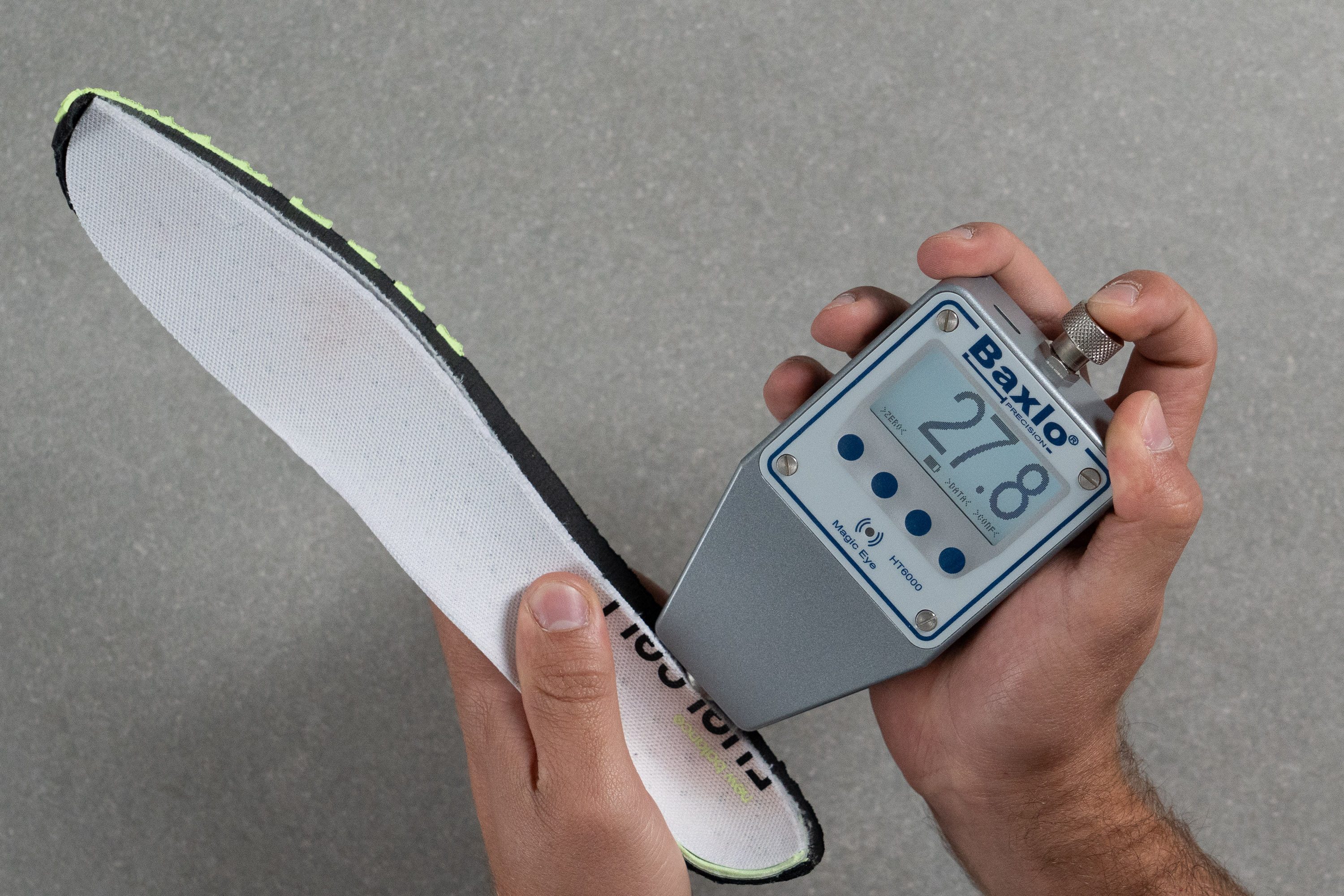
| FuelCell XC7 v5 | 27.8 AC |
| Average | 42.9 AC |
Size and fit
Size
Internal length
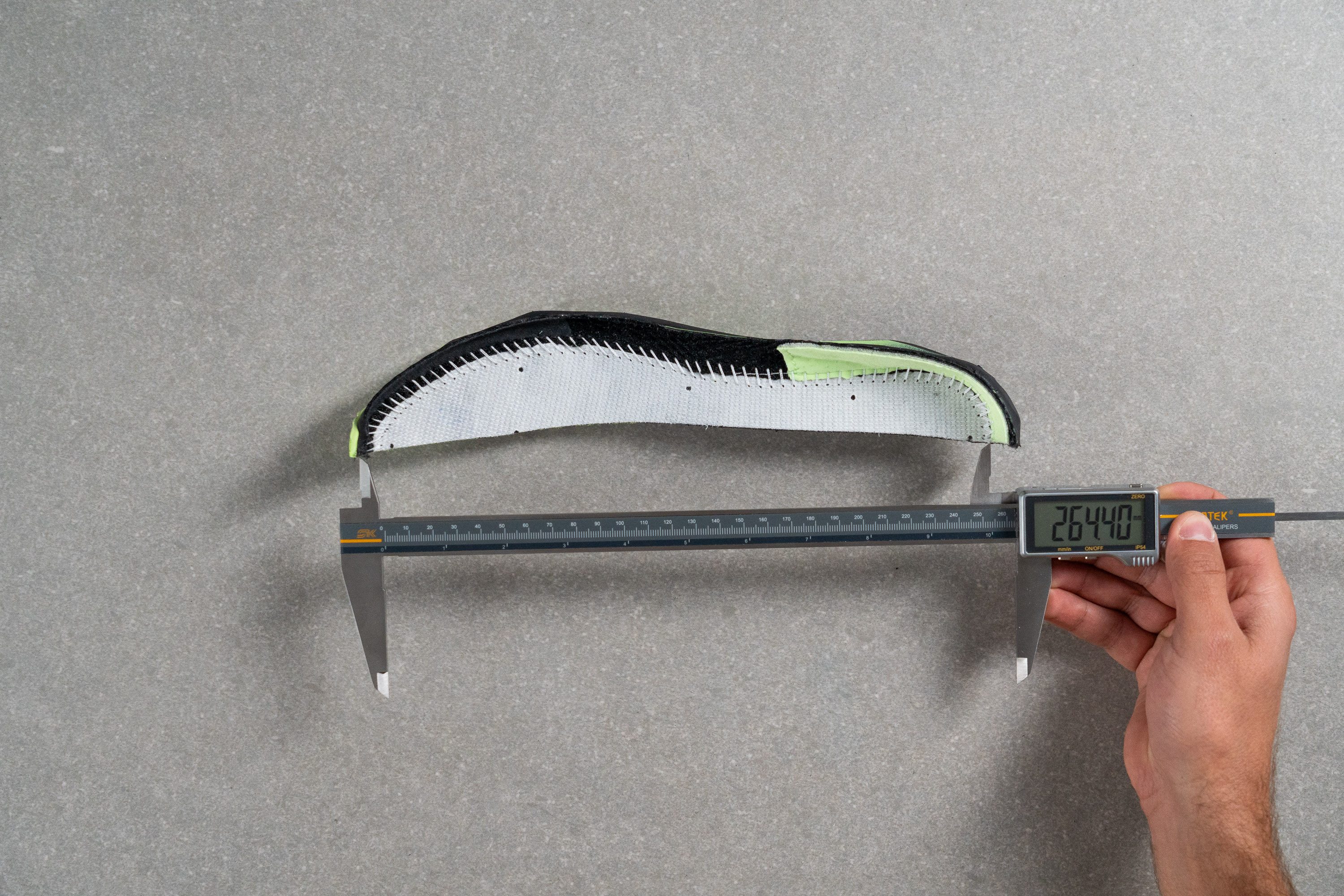
| FuelCell XC7 v5 | 264.4 mm |
| Average | 260.9 mm |
Width / Fit
We used the same gel-based method that we apply to road running shoes to evaluate the fit of the New Balance FuelCell XC7 v5.
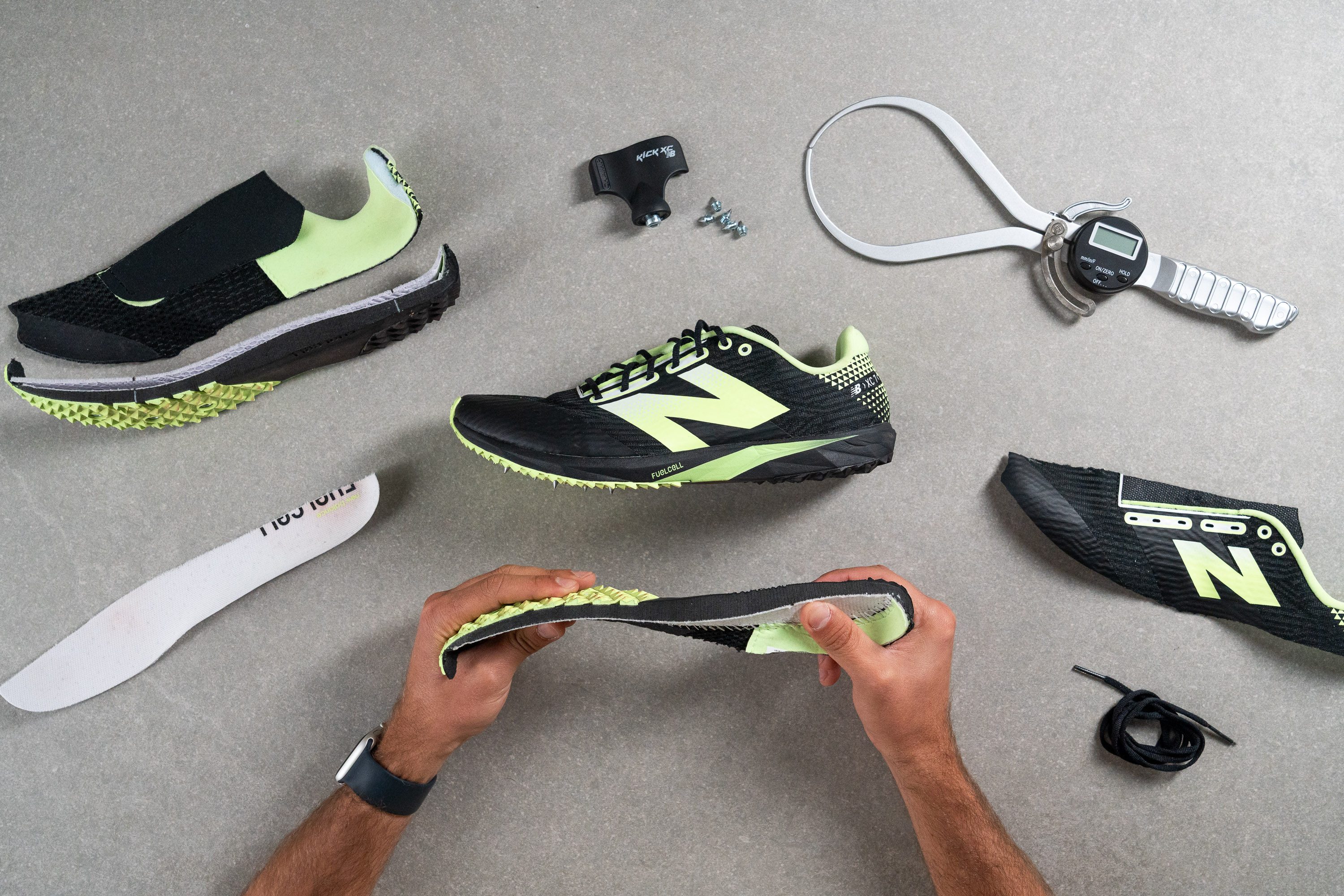
Using our custom 3D-printed tool and digital callipers, the first measurement came in at 89.7 mm, revealing an average fit compared to other peers.
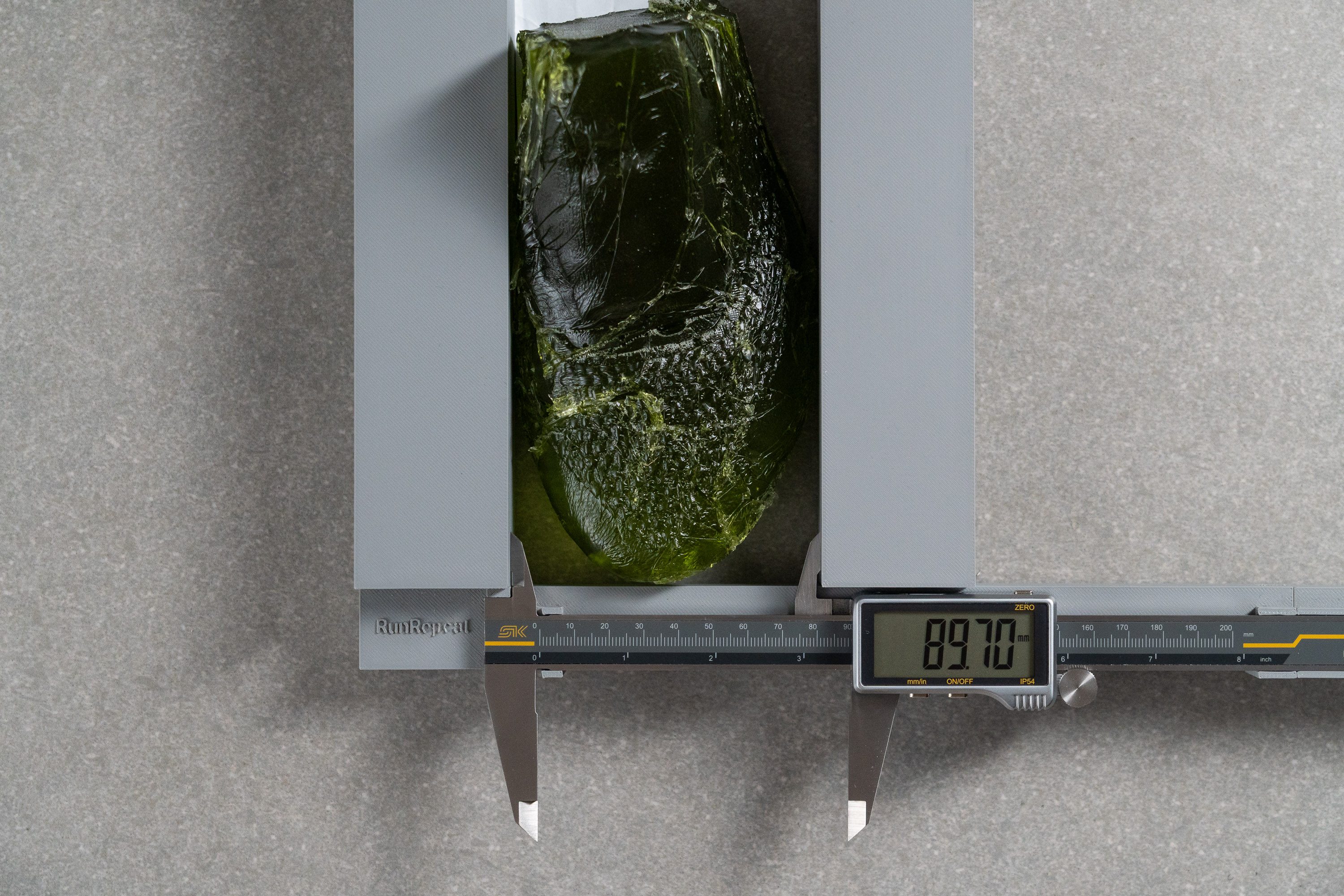
| FuelCell XC7 v5 | 89.7 mm |
| Average | 88.7 mm |
Toebox width
We also found exactly what we expected in the toebox, recording a width of 68.0 mm.
That's a fairly standard result for a cross-country spike and aligns well with the secure, race-focused fit we experienced on our runs.
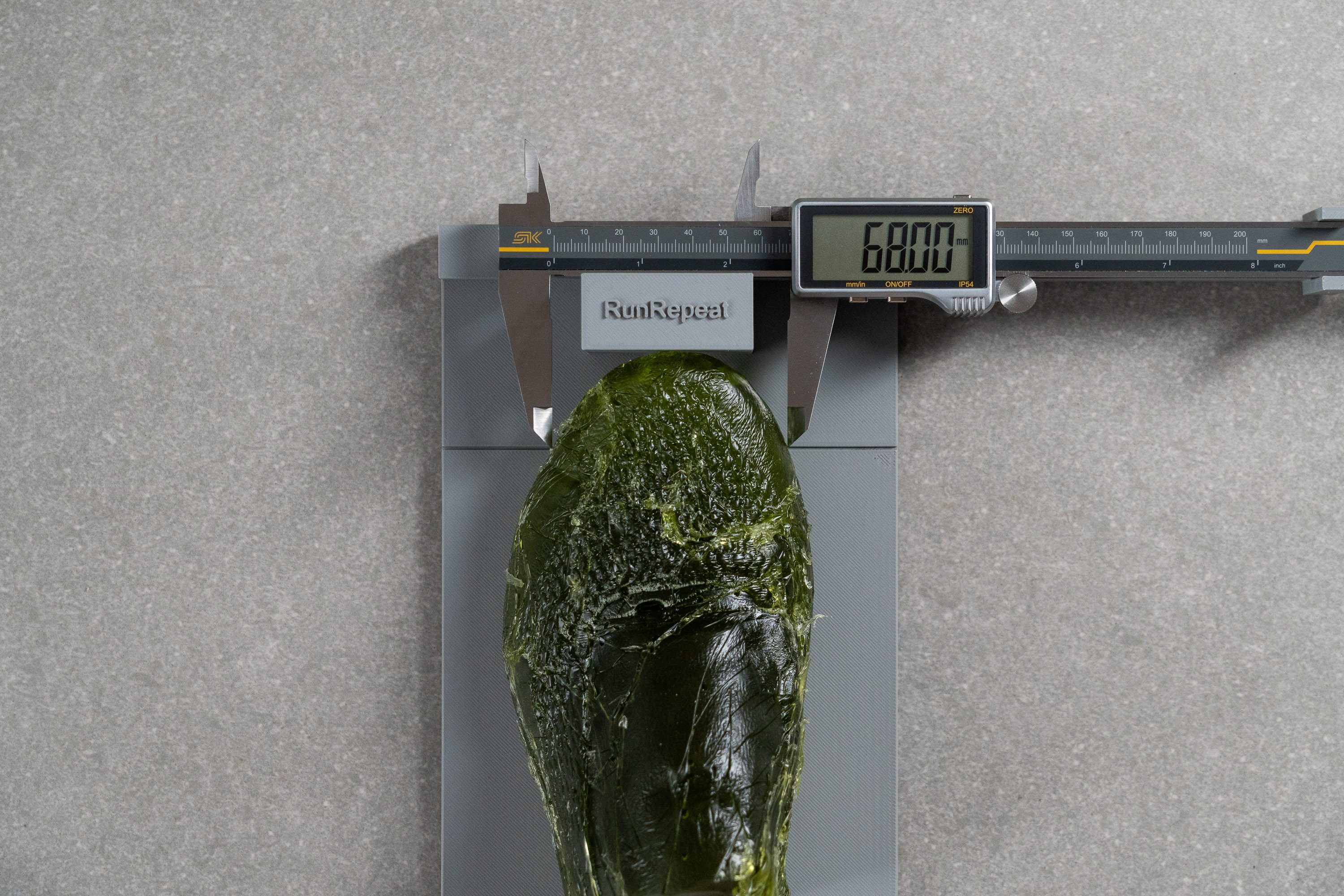
| FuelCell XC7 v5 | 68.0 mm |
| Average | 68.8 mm |
Toebox height
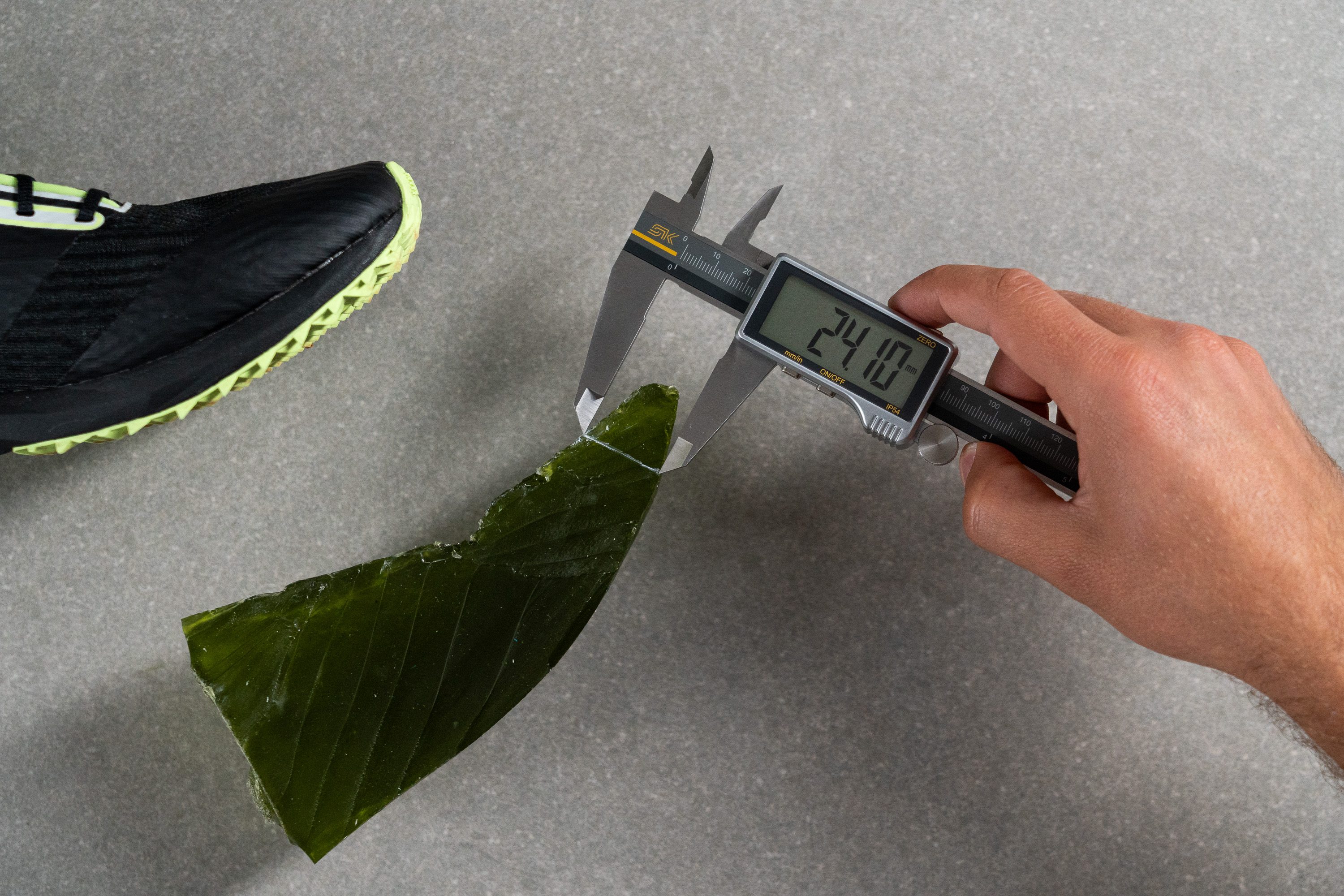
New Balance took a more aggressive approach with the vertical space, as we measured just 24.1 mm in toebox height.
Even so, we never found it uncomfortable. In fact, runners who prefer a secure fit, especially for the twists, turns, and rolling terrain of cross-country courses, will likely appreciate this design.
| FuelCell XC7 v5 | 24.1 mm |
| Average | 25.9 mm |
Flexibility / Stiffness
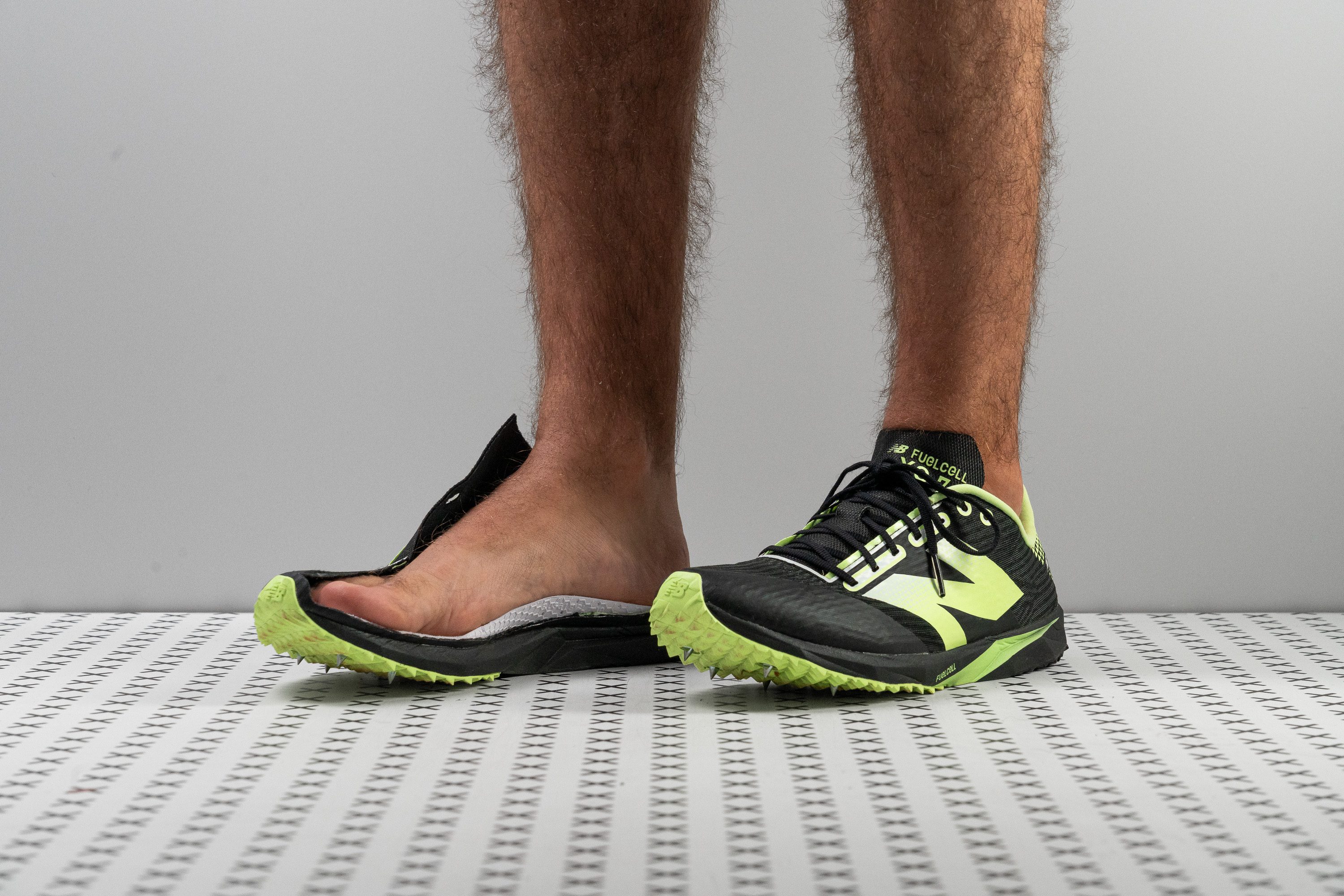
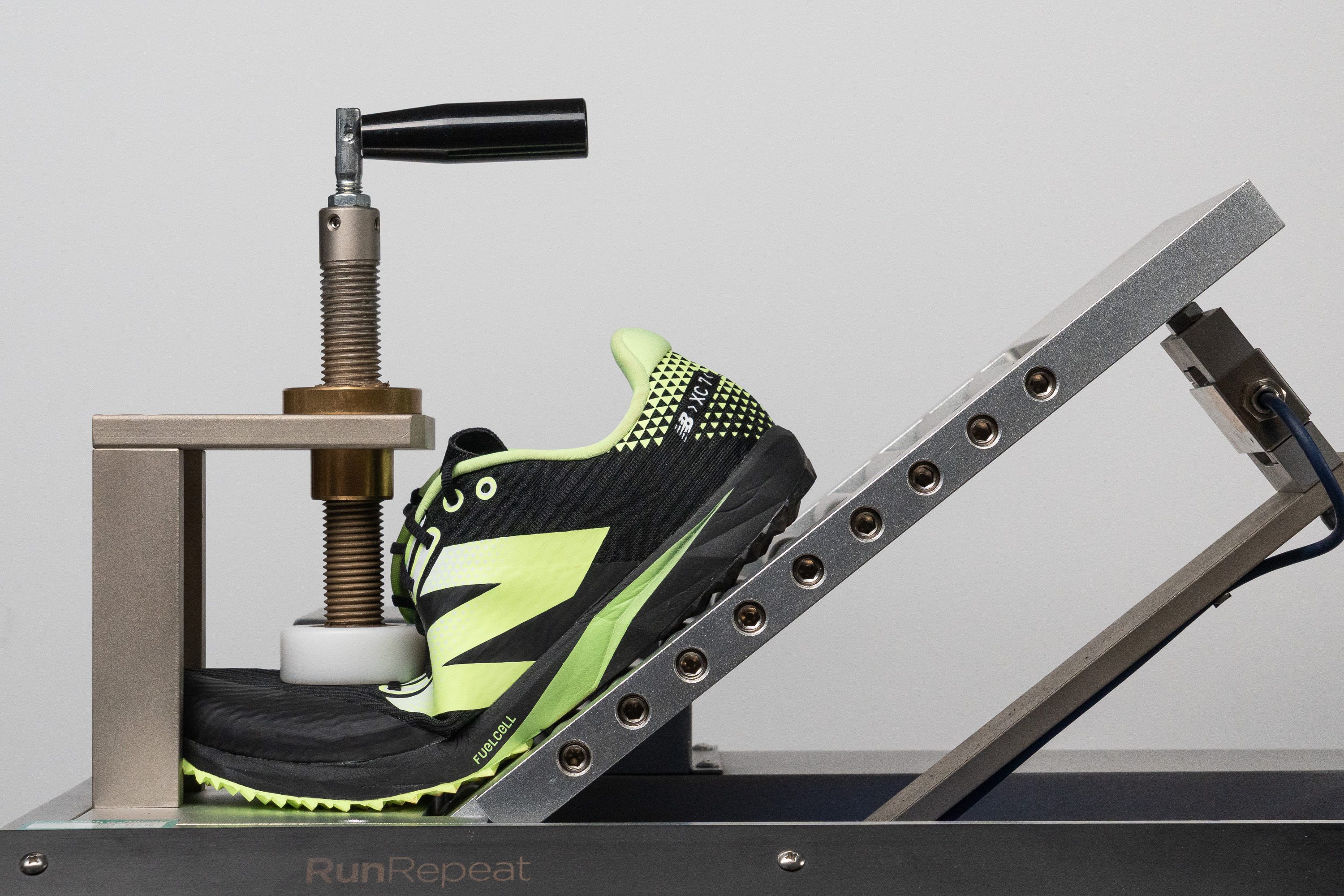
Because it lacks a plate or any other stiffening element, the New Balance FuelCell XC7 v5 delivers a highly natural feel that many runners will enjoy.
The shoe moves effortlessly with the foot instead of resisting it, making it especially appealing for those who value flexibility on uneven terrain. Our 30-degree bend test confirmed this impression, requiring a ridiculously low 3.9N of force.
| FuelCell XC7 v5 | 3.9N |
| Average | 14.5N |
Weight
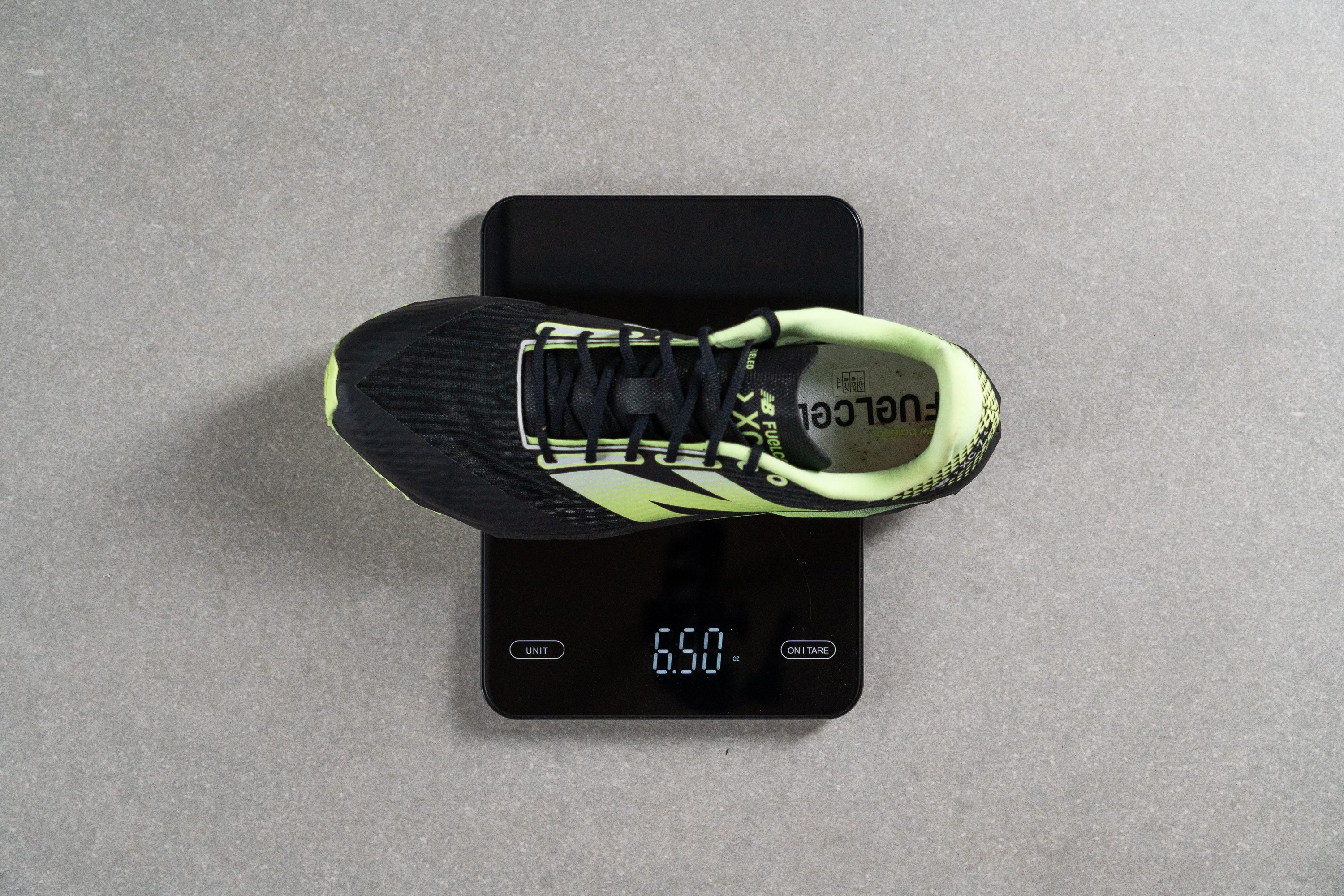
Up to this point, the FuelCell XC7 v5 had been delivering an impressively strong package for the price. And while 6.5 oz (184g) is by no means heavy for a cross-country shoe, this is where we start to see some of the compromises needed to keep the price comfortably below the £90 mark.
| FuelCell XC7 v5 | 6.5 oz (184g) |
| Average | 5.7 oz (162g) |
Breathability
To keep the price under control, New Balance used a simpler upper material. Even so, we think it works well for the intended purpose.
Breathability scored a solid 4/5 in our tests, delivering enough airflow without making the shoe feel overly exposed in colder conditions.
In fact, we think that a 5/5 score would have been less appropriate given that cross-country season usually takes place in cool weather.
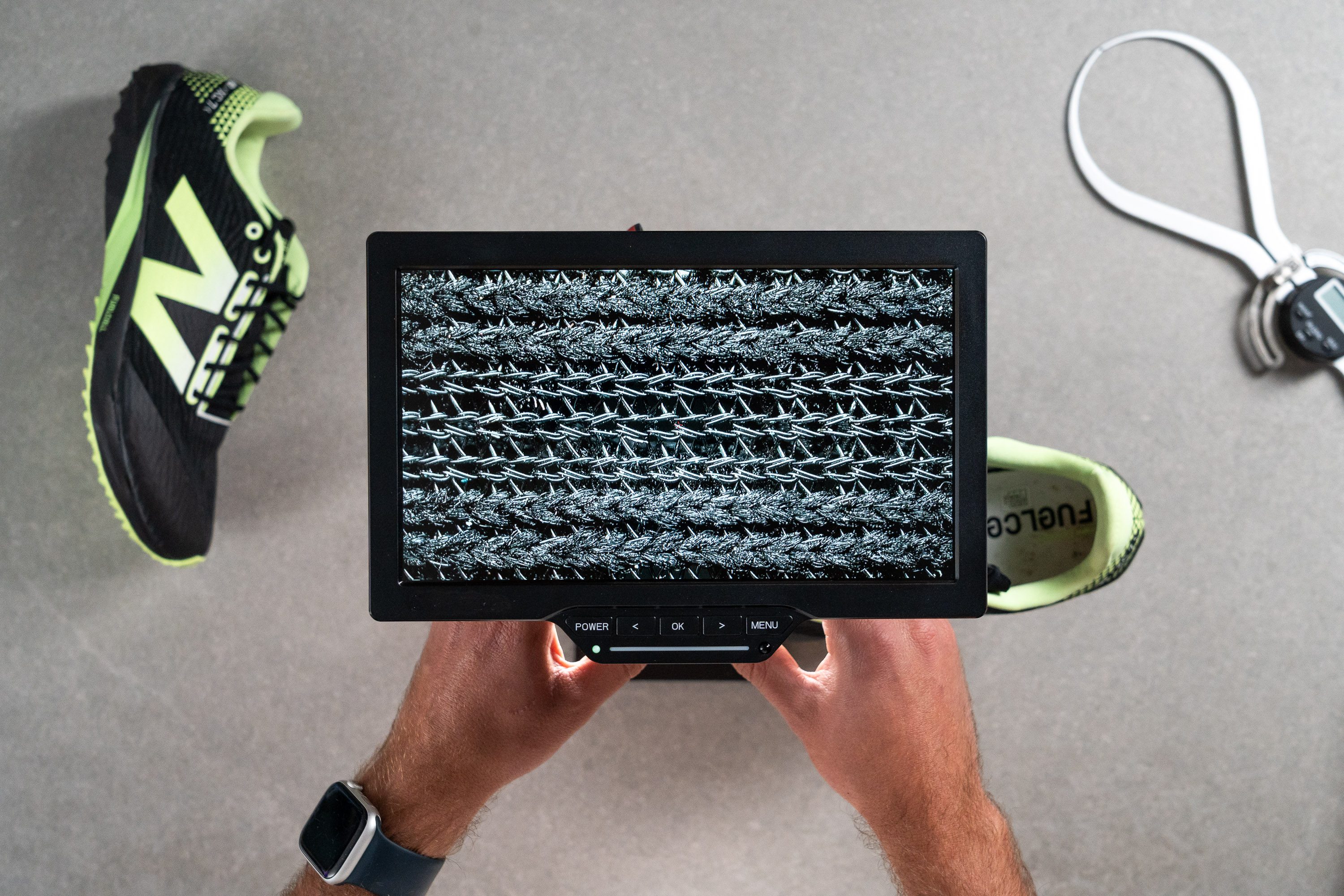
New Balance intentionally limited airflow in certain areas to improve foothold and stability. That's a smart choice for the uneven terrain and constant direction changes of XC racing.
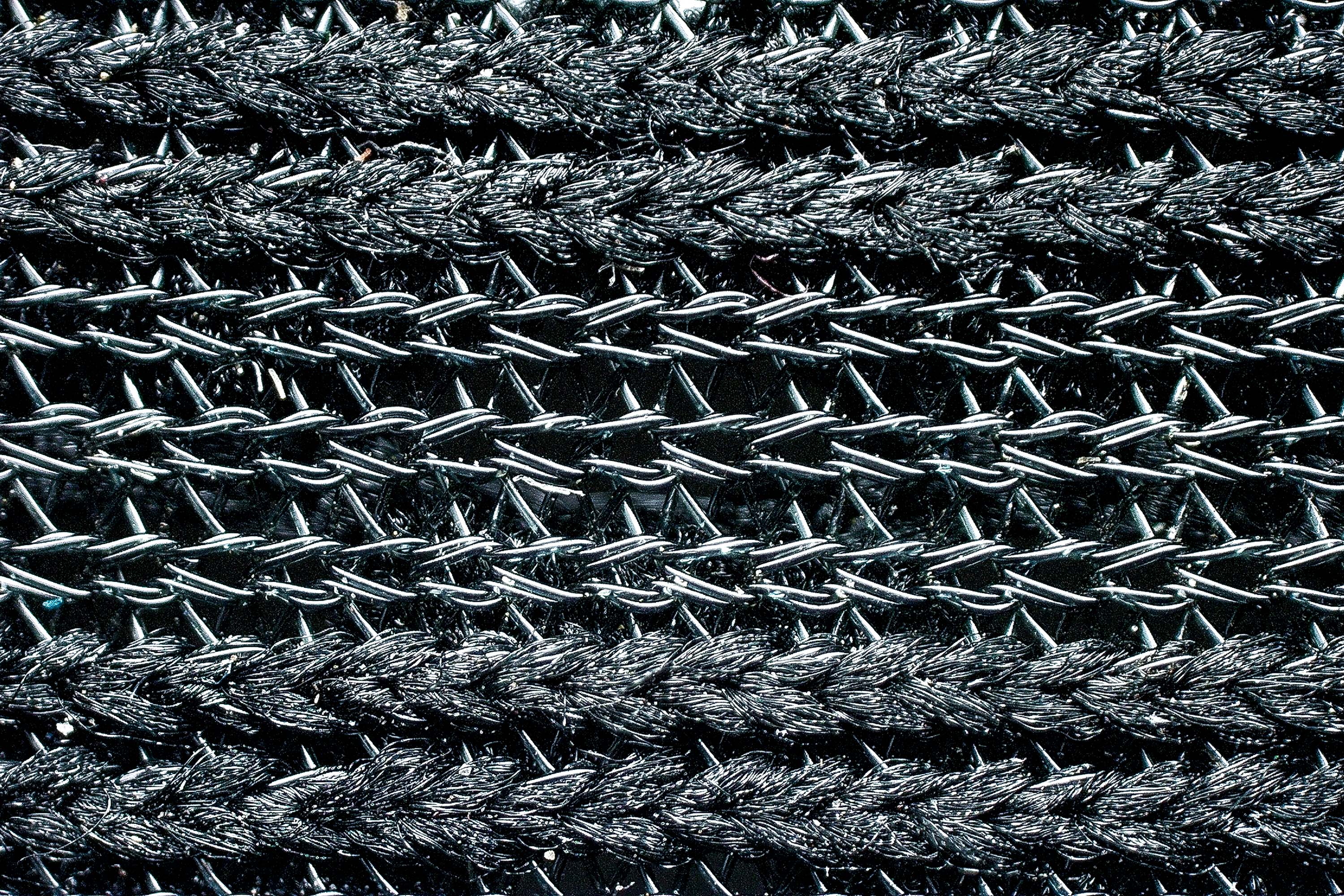
We also noticed more padding than expected, especially around the heel. It adds a welcome layer of comfort and makes the XC7 v5 feel more accommodating than many competitors.
| FuelCell XC7 v5 | 4 |
| Average | 3.9 |
Stability
Torsional rigidity
We found the XC7 v5 to be exceptionally flexible in every direction, and our lab tests confirmed that impression. It required just 7.1 Nm of force in our torsional rigidity test, making it one of the more adaptable shoes in the category.
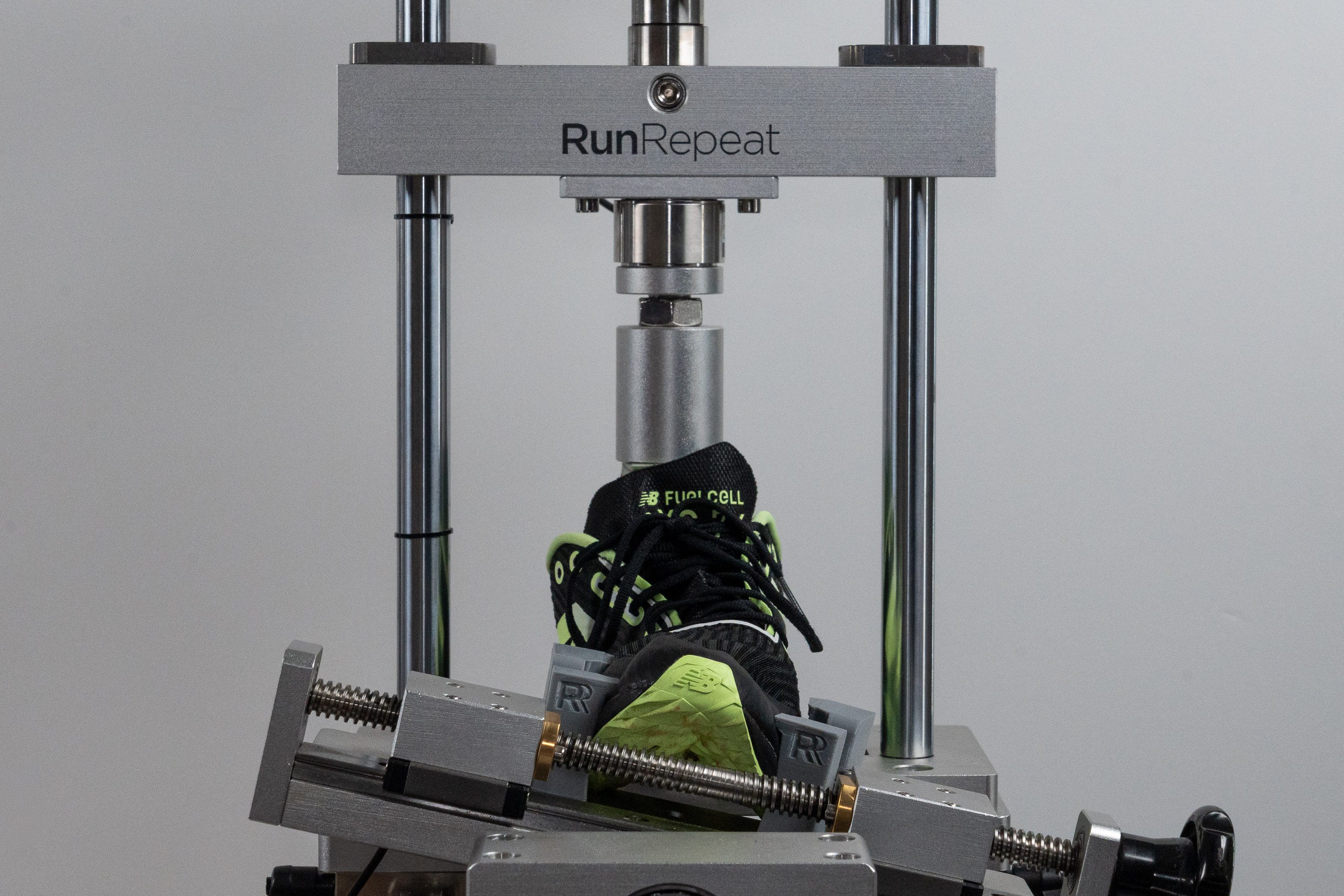
| FuelCell XC7 v5 | 7.1 Nm |
| Average | 10.7 Nm |
Heel counter stiffness
The heel counter includes a small amount of structure, which can be helpful during those moments in a race when fatigue causes runners to drift toward a heel strike. Even so, it remains highly flexible by design, earning just 2/5 in our assessment.
| FuelCell XC7 v5 | 2 |
| Average | 1.6 |
Midsole width - forefoot
We also discovered that New Balance gave the XC7 v5 a broader platform than most running spikes, a sensible decision given the added stability demands of cross-country racing.
Our measurements confirmed that approach, as the forefoot reached 100.0 mm in width, providing a better base for uneven terrain and off-camber sections.
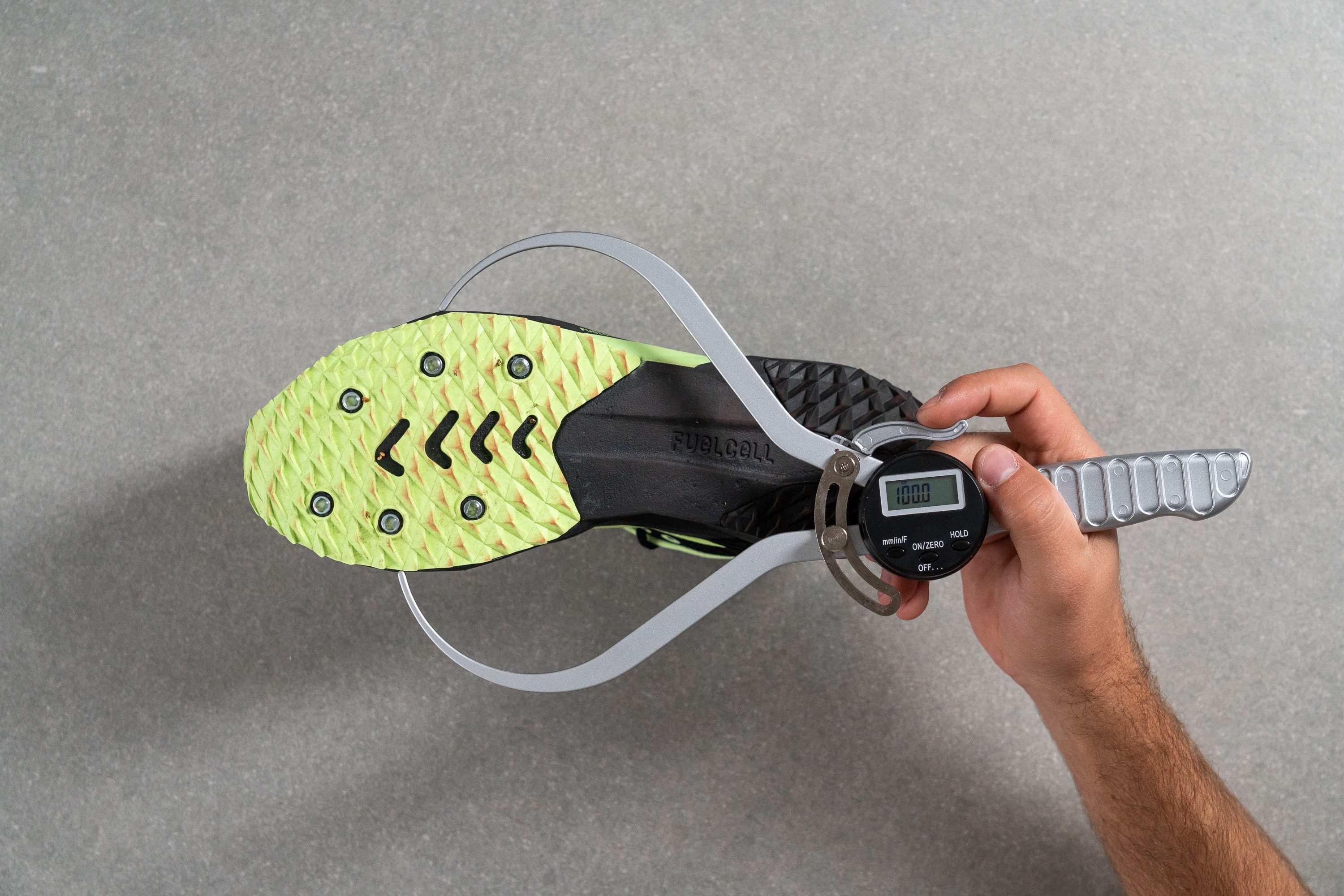
| FuelCell XC7 v5 | 100.0 mm |
| Average | 96.1 mm |
Midsole width - heel
The heel is very wide at 77.6 mm, reinforcing our impression that New Balance prioritised approachability and stability over an ultra-aggressive race-day feel.
In our view, this beginner-friendly design makes the XC7 v5 easier to trust on uneven terrain, even if it sacrifices a bit of all-out speed potential.
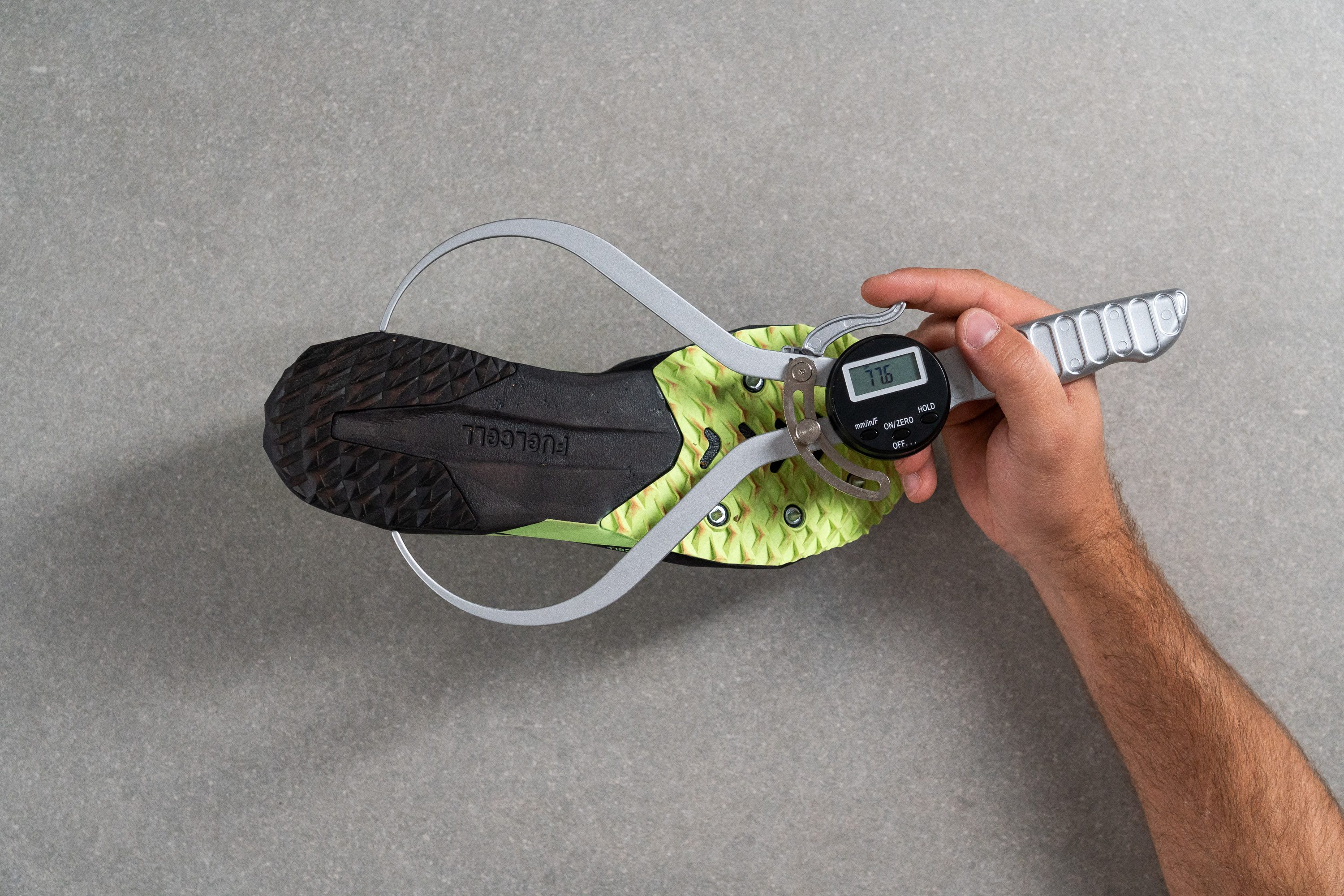
| FuelCell XC7 v5 | 77.6 mm |
| Average | 63.8 mm |
Durability
Toebox durability
We were pleased to find strong toebox durability with a 4/5 score, an area where not every cross-country spike performs well. Unlike track racing, where upper abrasion is less of a concern, the rougher conditions of XC make durability far more important, so this result is especially welcome.
It's also worth noting that the toe cap comes fully protected.
| FuelCell XC7 v5 | 4 |
| Average | 2.2 |
Heel padding durability
And it gets even better. The FuelCell XC7 v5 earned a perfect 5/5 in our heel padding durability test, confirming that New Balance built this shoe to withstand the demands of several full cross-country seasons.
| FuelCell XC7 v5 | 5 |
| Average | 3.8 |
Outsole thickness
New Balance also took a durability-first approach with the outsole, using a substantial 3.2 mm layer of rubber. To us, that's yet another sign that the XC7 v5 was designed with long-term durability in mind rather than chasing the lowest possible weight.
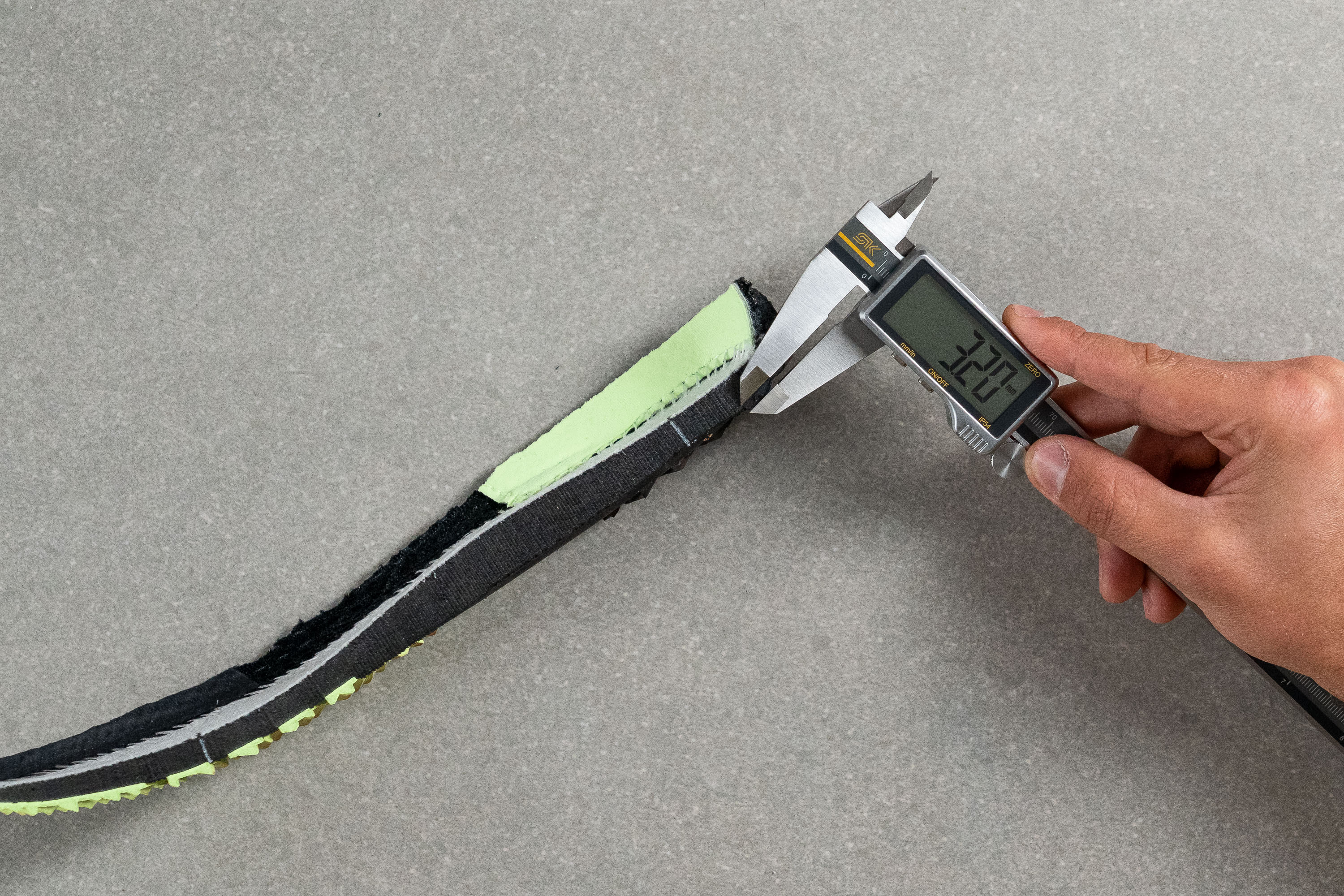
| FuelCell XC7 v5 | 3.2 mm |
| Average | 2.6 mm |
Misc
Insole thickness
At 2.3 mm thick, the insole falls right in line with what we typically see in cross-country shoes.
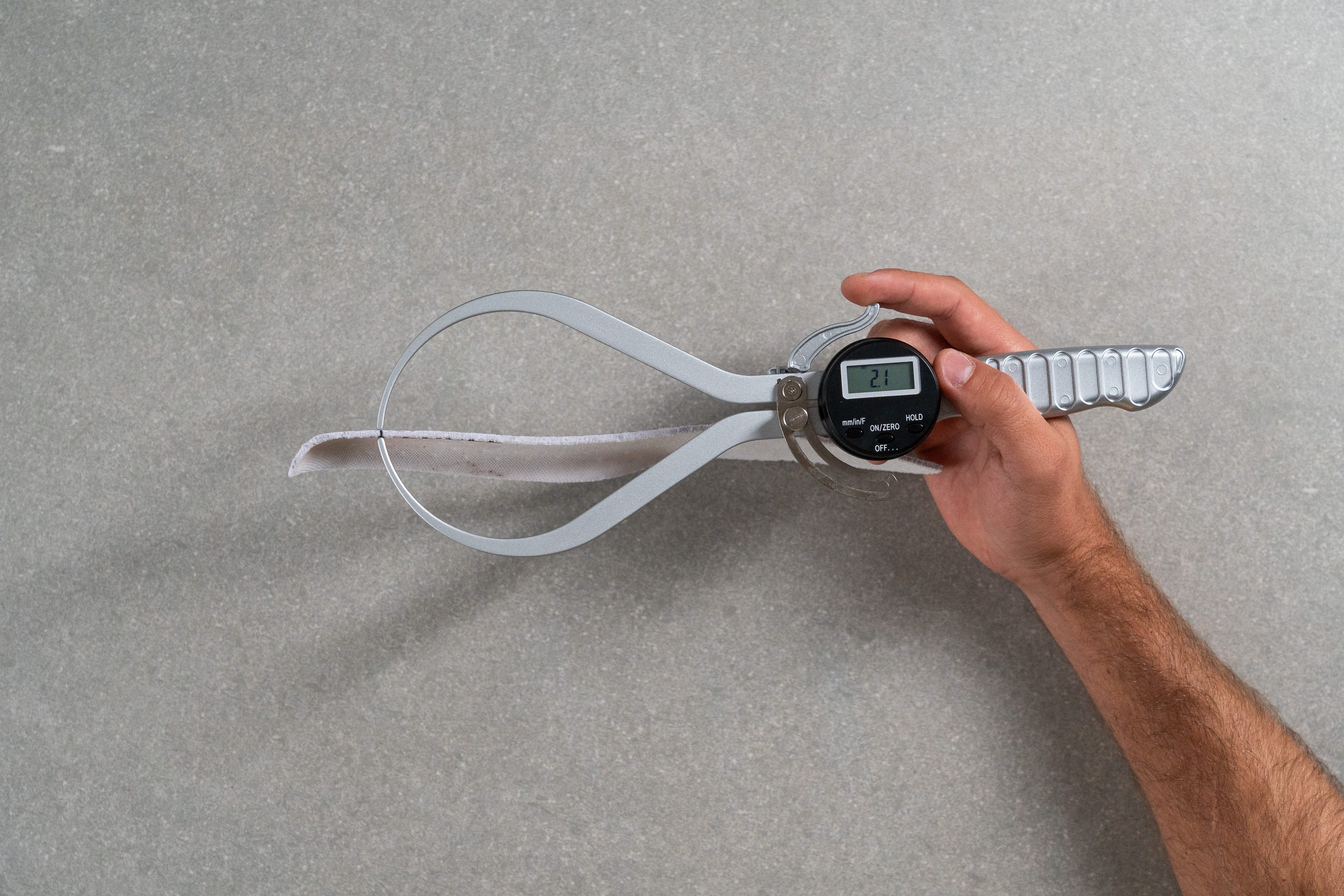
| FuelCell XC7 v5 | 2.3 mm |
| Average | 2.6 mm |
Tongue padding
The XC7 v5 uses thin laces that resemble those found on some classic New Balance road shoes. They may look minimal, but we found them effective and easy to fine-tune.
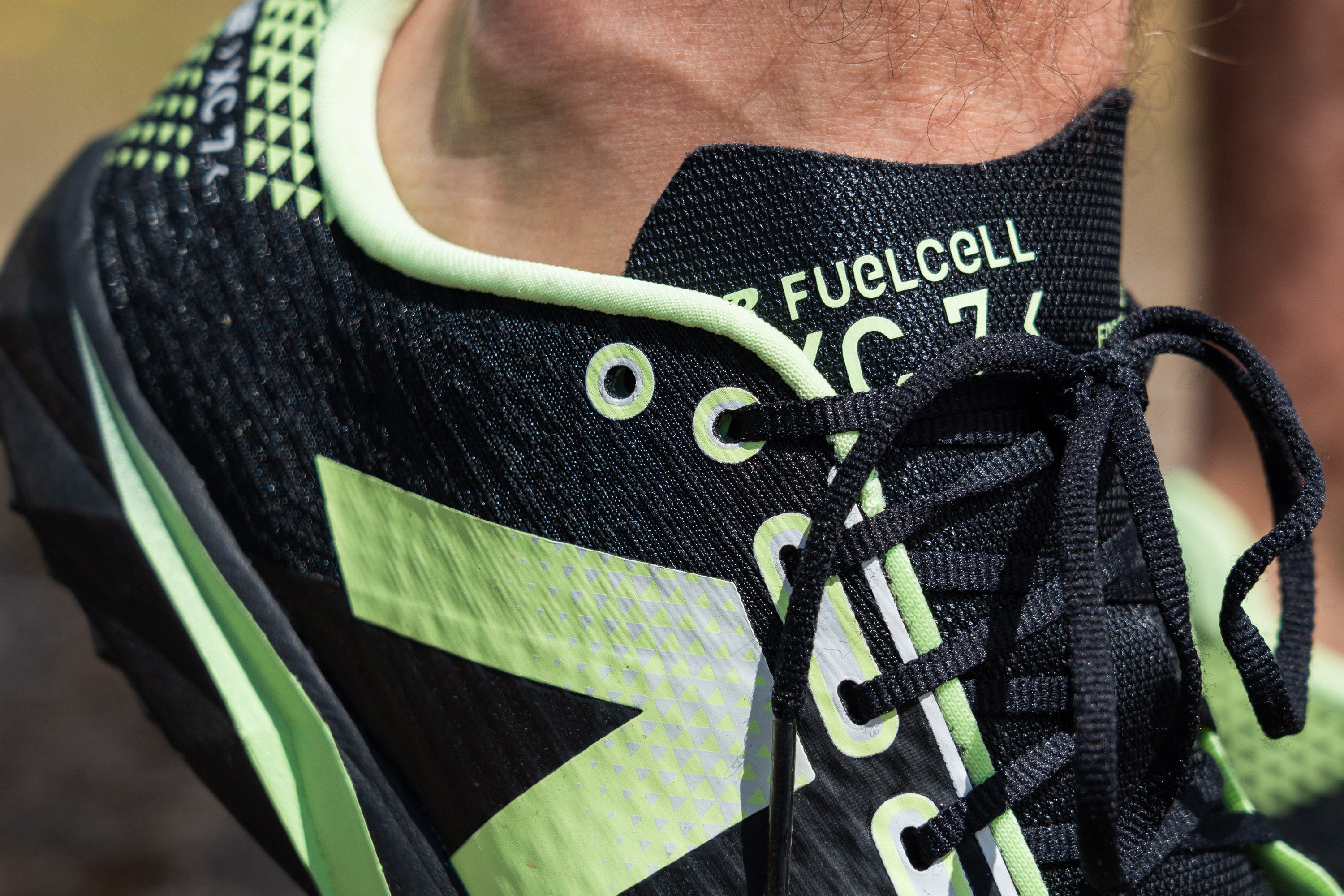
The tongue also performed well in our testing. Its length felt spot-on, and the minimal padding measured just 2.0 mm, helping keep weight reasonable while still providing enough comfort.
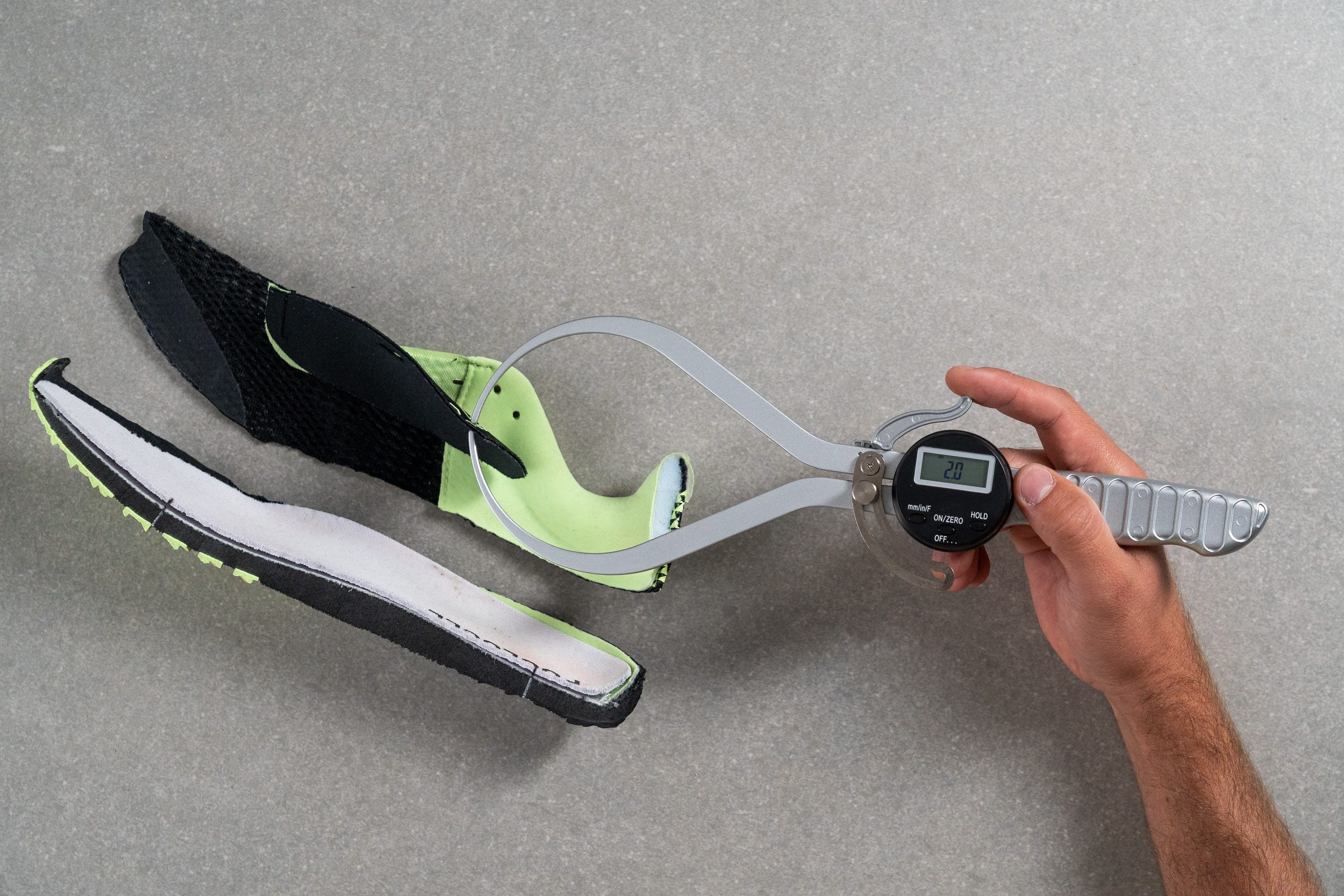
| FuelCell XC7 v5 | 2.0 mm |
| Average | 2.3 mm |
Heel tab
As expected for a racing shoe, the heel comes without a pull tab. However, we were pleasantly surprised by the overall design and attention to detail, which feel more refined than what we'd normally expect from a shoe at this price point.
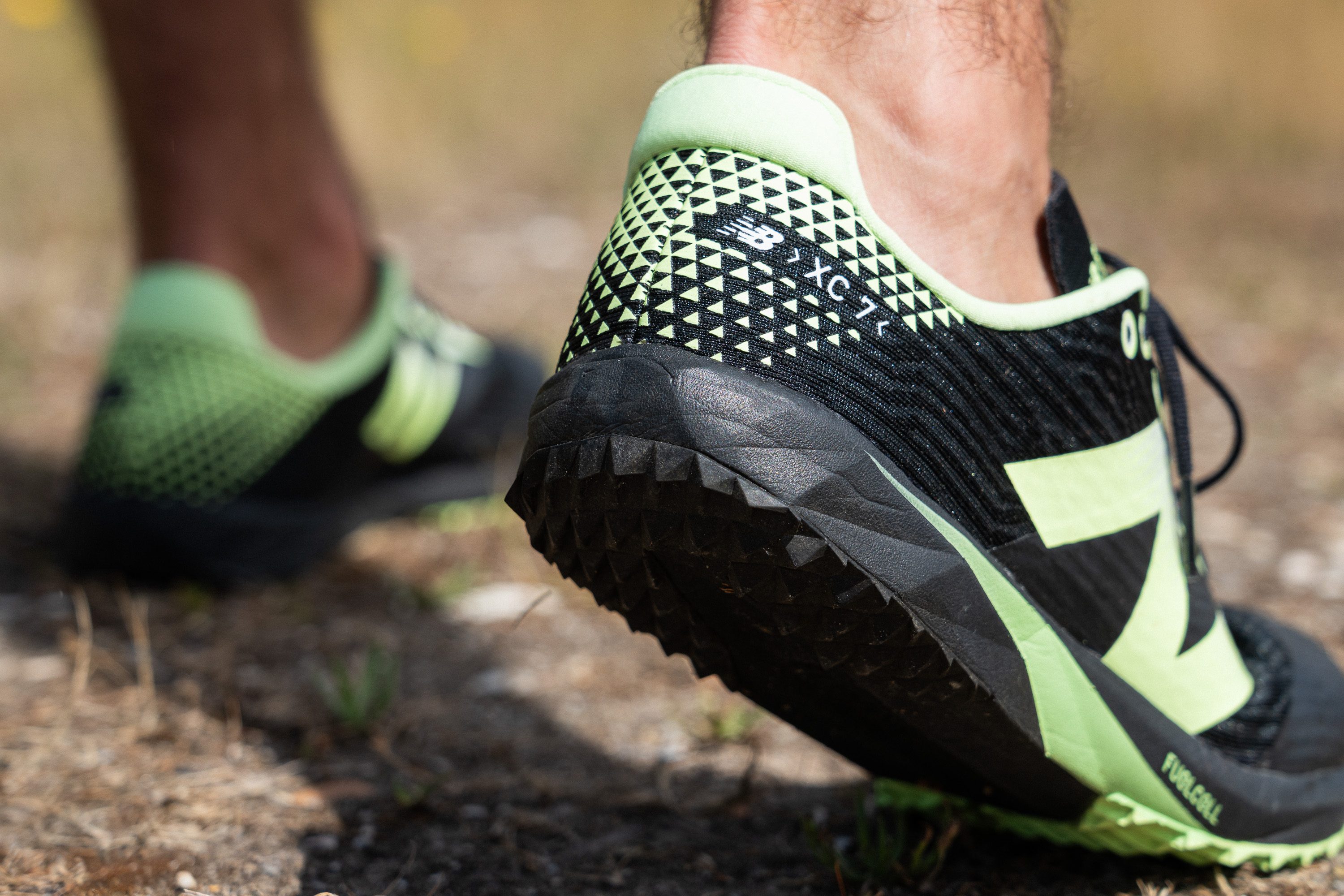
| FuelCell XC7 v5 | None |
Price
The low price is arguably the FuelCell XC7 v5's biggest advantage. It undercuts most cross-country rivals while still delivering a well-rounded package, making it an excellent choice for runners who only race a handful of XC events each year and don't want to invest heavily in a premium shoe.
| FuelCell XC7 v5 | $85 |
Removable pins
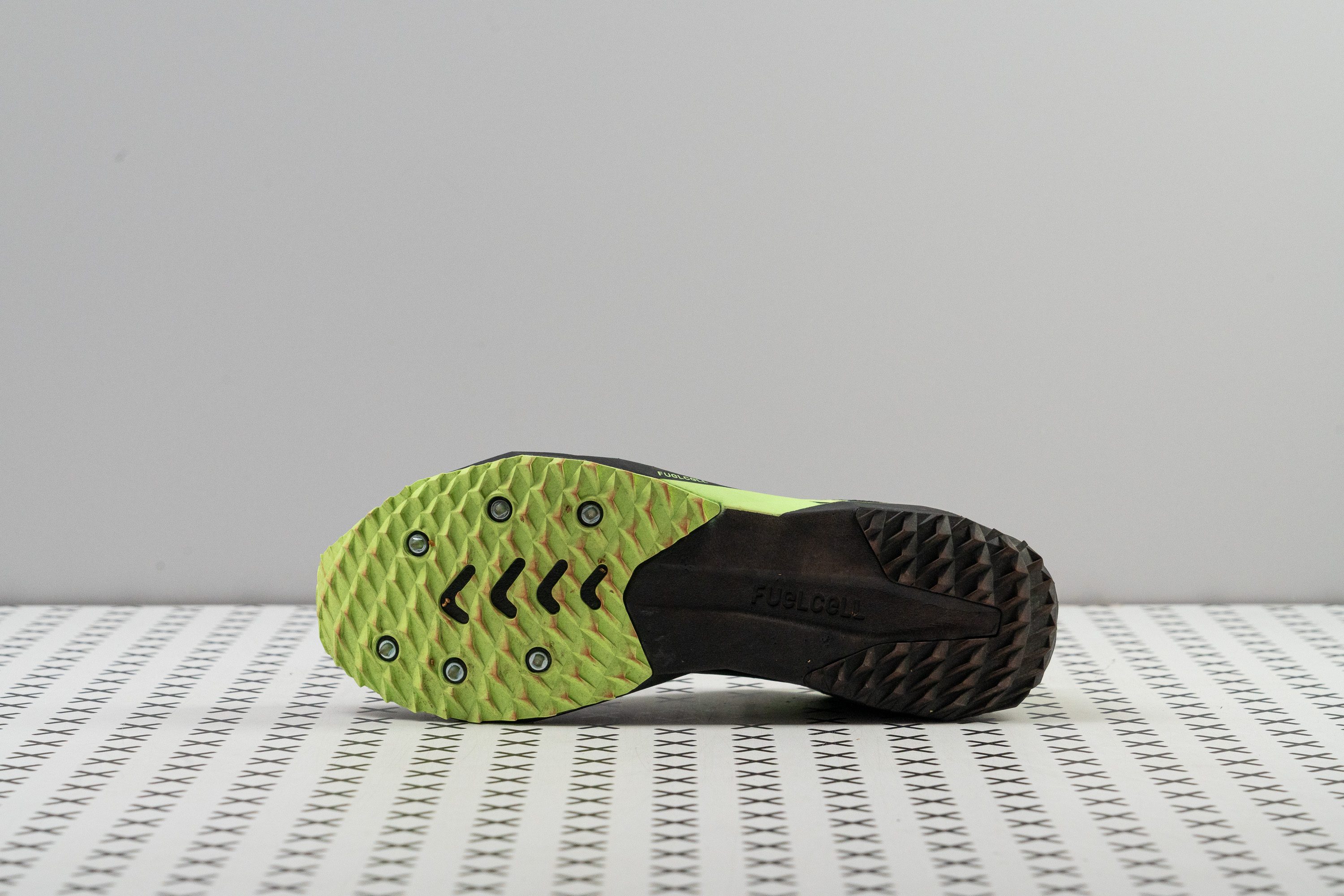
New Balance includes a spike wrench with the XC7 v5, making it easy to replace or swap the spikes whenever needed.