





















Nuestra conclusión
- Seco 22
- Mojado 72
- Mixto 84
Pros
- Precio asequible
- Estructura flexible y cómoda
- Duraderas hasta decir basta
- Espuma mullida
- Estética premium
- Diseño que se adapta bien a los principiantes
- Ideales para las carreras largas de campo a través
Contras
- Los corredores más veloces a lo mejor quieren algo más rápido
- Pueden ser demasiado flexibles para algunos
- Espuma mullida que puede sentirse rara en el campo a través
Premios
- Top 29% más vendidas zapatillas de atletismo
Comparativa
Las zapatillas de cross más parecidas
+ + Añadir unas zapatillas | |||||
|---|---|---|---|---|---|
| Nuestra puntuación | 85 Geniales | 77 Buenas | 72 Decentes | 88 Geniales | |
| Precio | 100 € | 85 € | 70 € | 140 € | |
| Peso laboratorio Peso marca | 6.5 oz / 184g 6.1 oz / 172g | 6.2 oz / 176g | 5.7 oz / 161g | 6.7 oz / 190g 6.3 oz / 179g | |
| Transpirabilidad | Alta | Media | Media | Alta | |
| Suela exterior | Clavos | - | - | Clavos | |
| Uso | - | Larga distanciaMedia distancia | Larga distanciaMedia distancia | - | |
| Superficie | TierraHierba | - | - | TierraHierba | |
| Anchura / ajuste | Media | Ancha | Ancha | Ancha | |
| Anchura de la parte delantera | Media | Media | - | Ancha | |
| Drop laboratorio | 2.7 mm | 5.1 mm | 4.1 mm | -0.1 mm | |
| Talla | - | Tallan un poquito pequeño | Tallan un poquito pequeño | Tallan bien | |
| Rigidez de la mediasuela | Blanda | Firme | Firme | Equilibrada | |
| Acolchado de la lengüeta | Estándar | Estándar | Estándar | Estándar | |
| Flexibilidad | Flexible | Moderada | Flexible | Moderada | |
| Rigidez torsional | Flexible | Flexibles | Flexibles | Firme | |
| Rigidez del contrafuerte del talón | Flexible | Flexibles | Flexibles | Flexible | |
| Grosor de la suela | Estándar | Fina | Estándar | Estándar | |
| Dureza de la suela | - | - | Blanda | - | |
| Tirador del talón | Ninguno | Ninguno | Ninguno | Tirador estándar | |
| Altura de la suela en la zona del talón laboratorio | 17.5 mm | 17.3 mm | 15.0 mm | 19.2 mm | |
| Antepié | 14.8 mm | 12.2 mm | 10.9 mm | 19.3 mm | |
| Grosor de la plantilla | Estándar | Gruesa | Fina | Estándar | |
| Anchura de la mediasuela - antepié | Ancha | Estándar | Estándar | Muy ancha | |
| Anchura de la mediasuela - talón | Muy ancha | Estándar | Estándar | Estándar | |
| Ranking | #4 42% inferior | #21 12% inferior | #23 4% inferior | #3 Top 43% | |
| Popularity | #2 Top 29% | #7 Top 30% | #22 8% inferior | #4 42% inferior |


Quién debería comprárselas
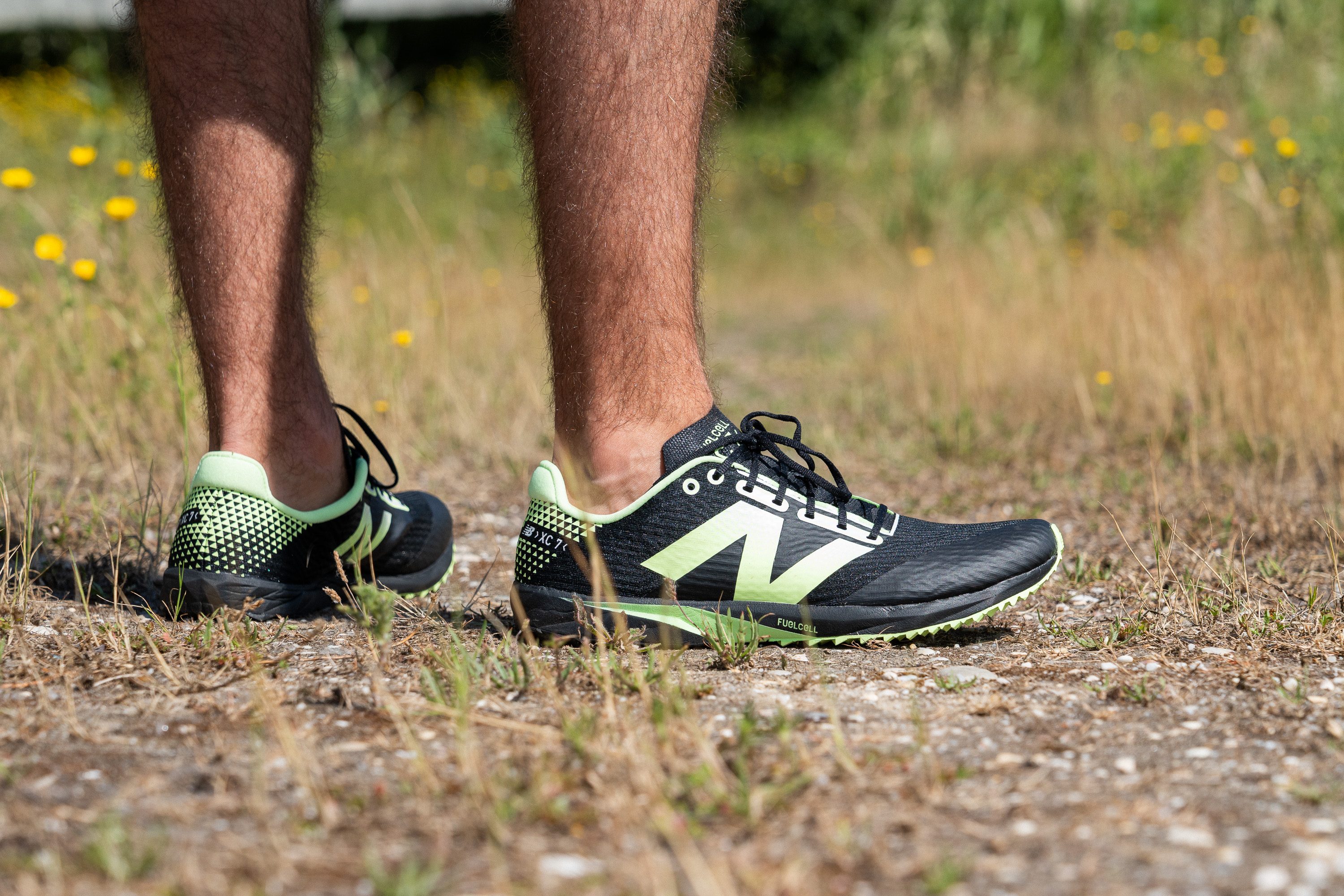
Las New Balance FuelCell XC7 v5 son ideales para:
- Los runners que están buscando unas zapatillas de campo a través baratas que tengan un buen rendimiento para competir.
- Los amantes de las espumas blandas que suavizan los impactos y que quieren esa misma sensación bajo los pies en un modelo de campo a través.
- Los atletas que se centran en la relación calidad-precio y ponen la durabilidad y el uso a largo plazo antes que la ligereza y la agresividad en su lista de prioridades.
- Los principiantes que quieren darle caña al campo a través por primera vez.
Quién NO debería comprárselas
Creemos que las XC7 v5 no son la mejor opción para los runners que priorizan el rendimiento. En ese caso, las Nike Dragonfly XC ofrecen un retorno de energía más alto y más velocidad.
También creemos que los corredores que prefieren una plataforma más rígida para sentir una pisada más agresiva deberían buscar otras alternativas. Las XC7 v5 son muy flexibles, y sabemos que eso no le va a gustar a todo el mundo; las On Cloudspike XC son una mejor opción.
Amortiguación
Altura de la suela en la zona del talón
La tecnología de las espumas está cambiando las carreras de cross, ya que hace que las zapatillas puedan ofrecer más protección y reducir la fatiga muscular en distancias más largas.
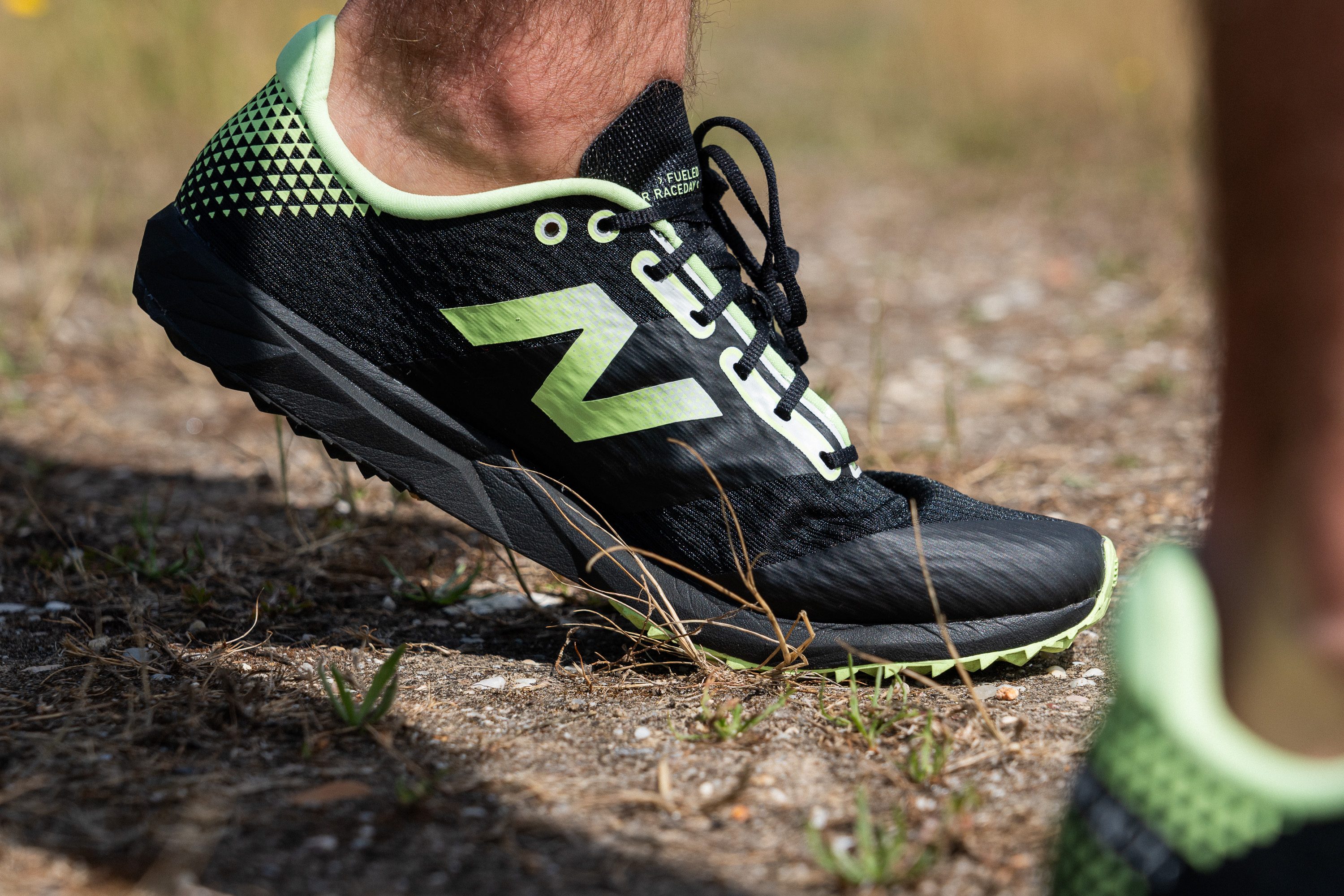
New Balance se subió a esta ola con las FuelCell XC7 v5, diseñándolas para enfrentarse a las distancias largas con más comodidad que los modelos de cross tradicionales. Como resultado, tienen unos generosos 17,5 mm de altura en el talón.
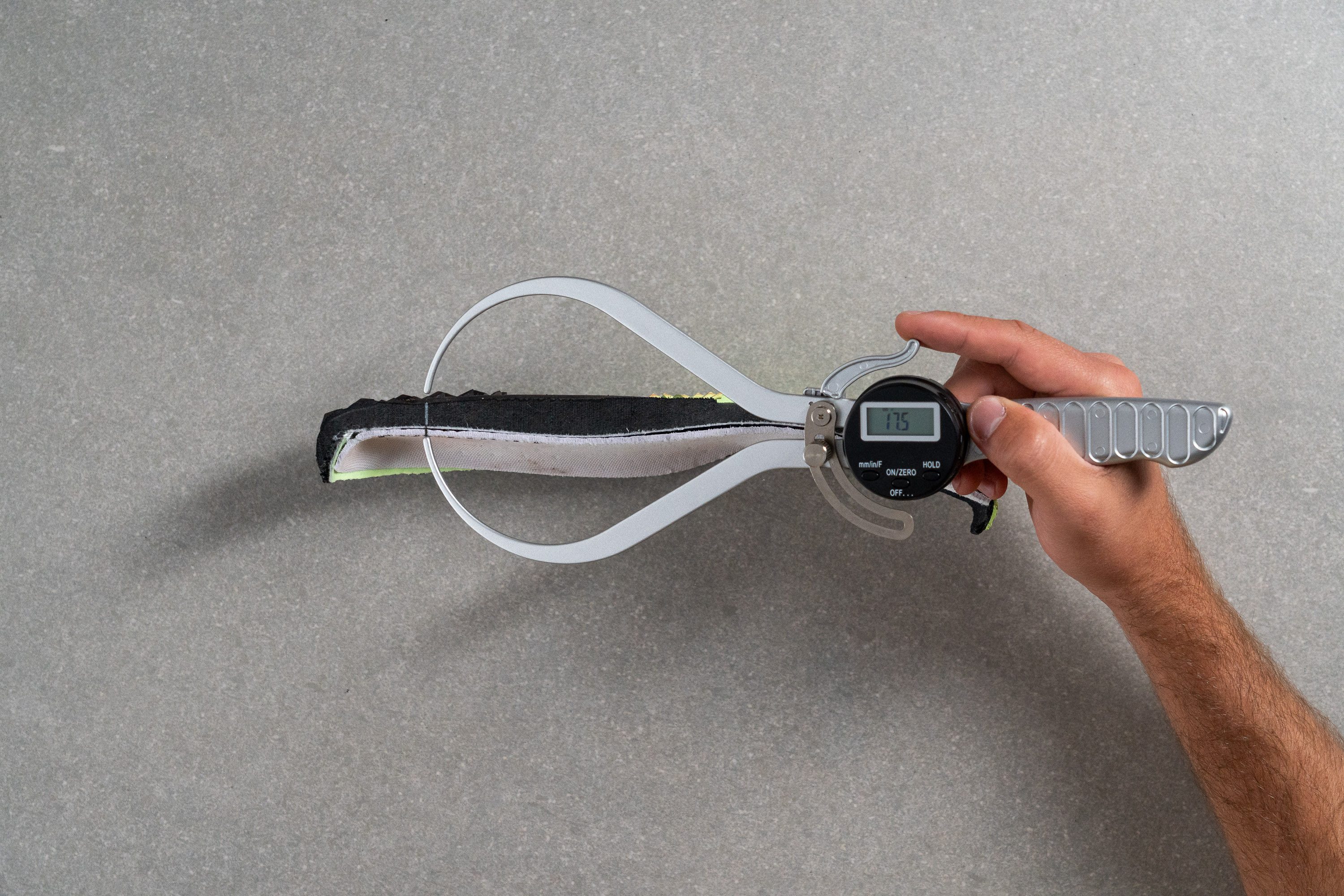
| FuelCell XC7 v5 | 17.5 mm |
| Media | 16.8 mm |
Altura de la suela en el antepié
El antepié es un poco más bajo, pero sus 14,8 mm siguen siendo sinónimo de un montón de amortiguación para unas zapatillas de cross baratas. La verdad es que nos sorprendió mucho por lo baratas que son; al final, los modelos de cross de gama básica suelen ofrecer menos protección bajo los pies que los de gama alta.
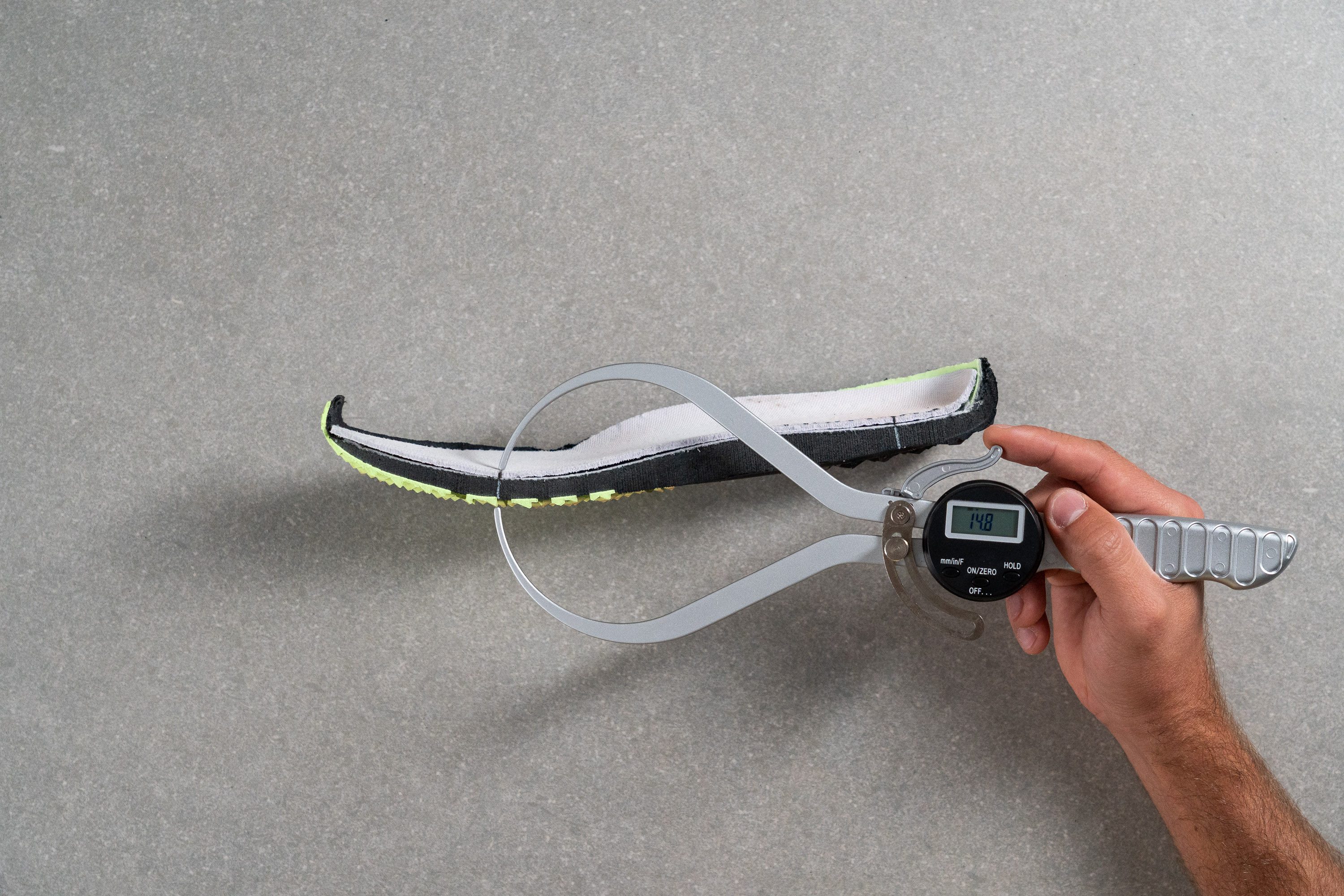
| FuelCell XC7 v5 | 14.8 mm |
| Media | 15.8 mm |
Drop
La diferencia entre el talón y el antepié nos deja con un drop moderado de 2,7 mm.
Es un poco más alto de lo que solemos ver en las zapatillas de clavos para cross, pero, teniendo en cuenta que estas zapatillas están diseñadas pensando en los principiantes y los corredores que buscan una buena relación calidad-precio, creemos que New Balance ha dado en el clavo.
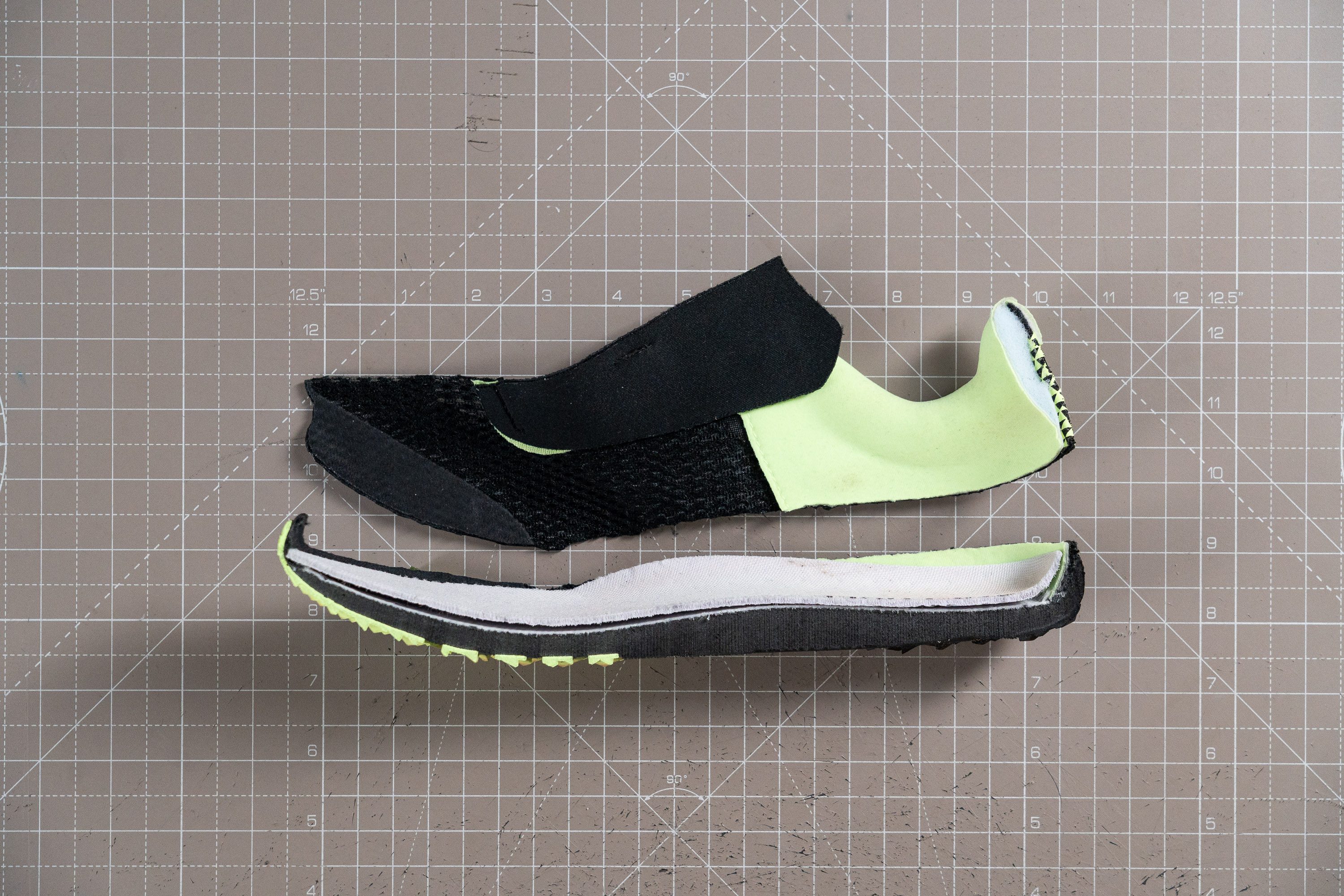
| FuelCell XC7 v5 | 2.7 mm |
| Media | 1.0 mm |
Dureza de la mediasuela
New Balance se ha ganado su reputación con espumas blandas centradas en la comodidad, y las FuelCell XC7 v5 se mantienen fieles a esa filosofía pese a ser unas zapatillas de cross.
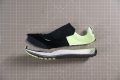
Nuestro durómetro Asker C marcó solo 27,8 AC cuando analizamos la espuma FuelCell negra. Es muy blandita para esta categoría y, aunque es algo que no le va a gustar a todo el mundo, a nosotros nos encanta que las marcas ofrezcan distintas sensaciones al correr en lugar de seguir siempre la misma fórmula.
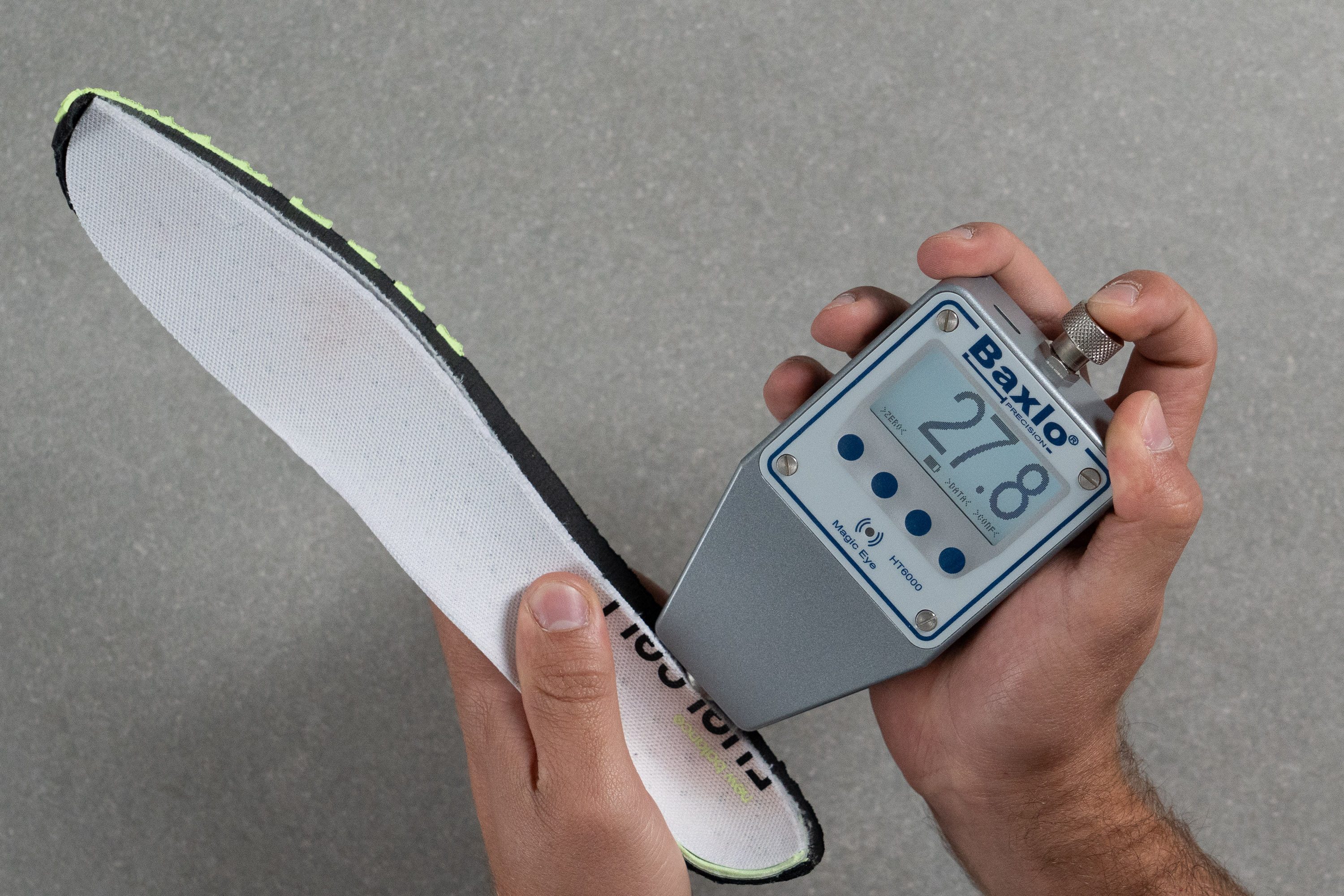
| FuelCell XC7 v5 | 27.8 AC |
| Media | 42.9 AC |
Tallaje y ajuste
Talla
Longitud interna
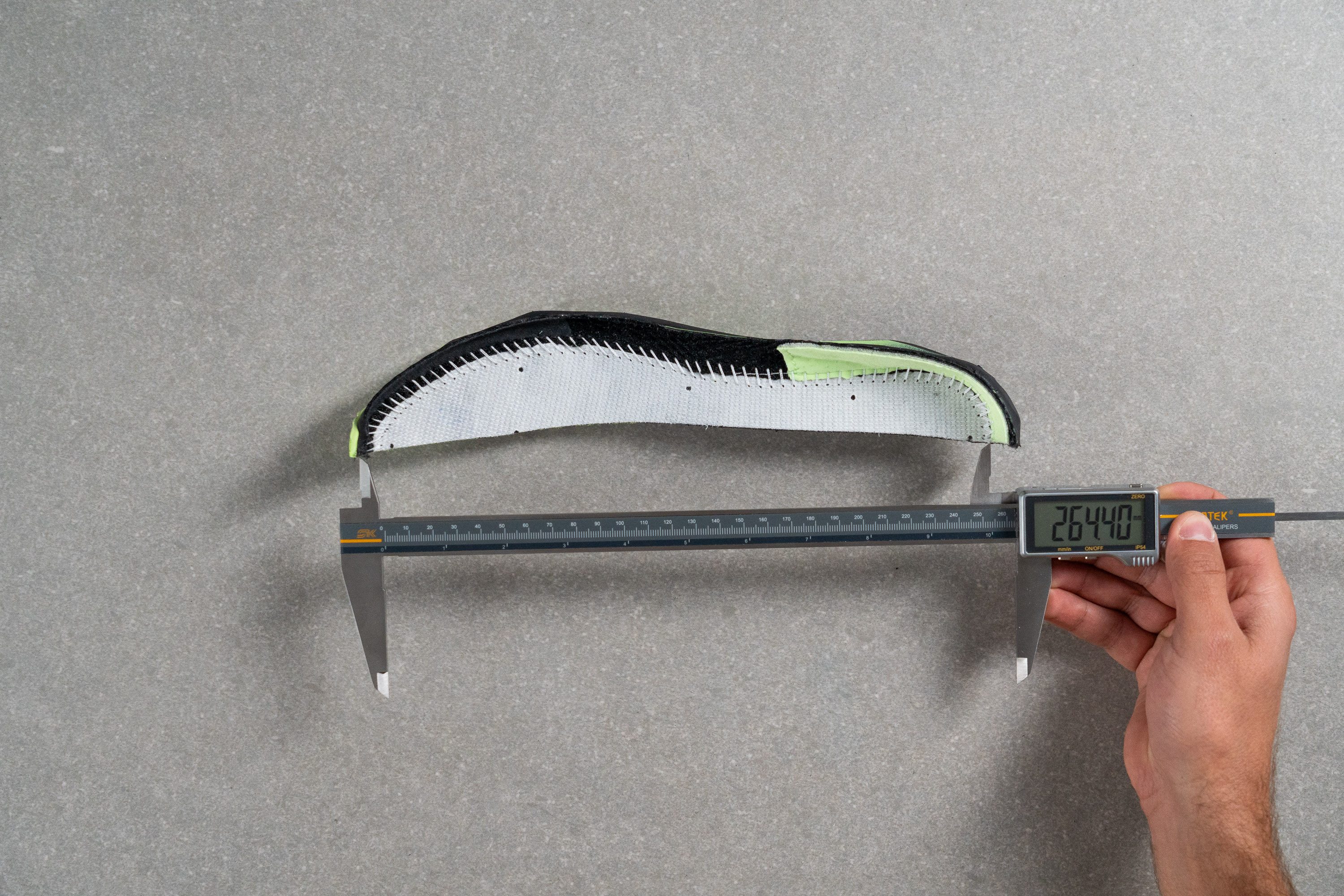
| FuelCell XC7 v5 | 264.4 mm |
| Media | 260.9 mm |
Anchura / Ajuste
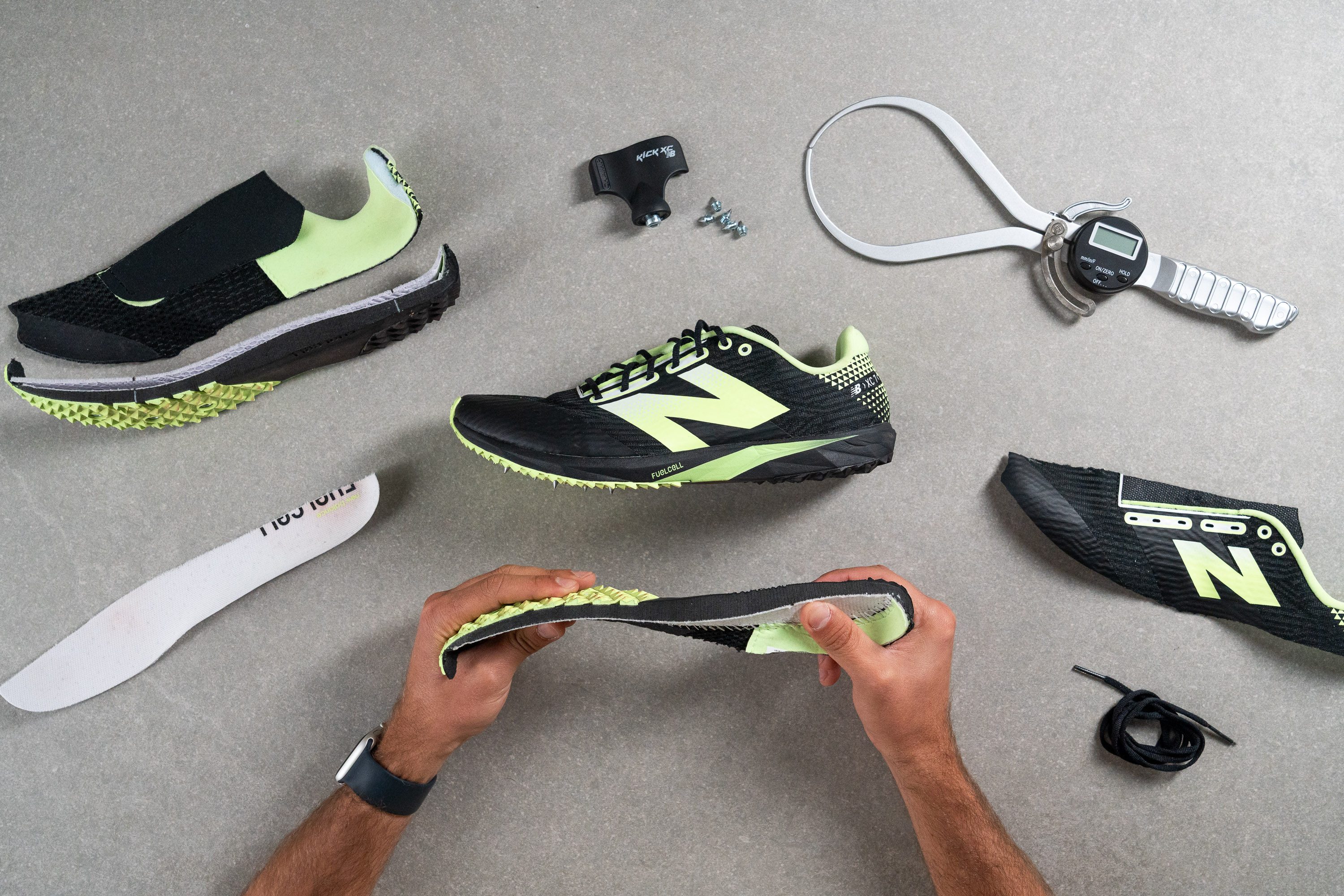
Para evaluar el ajuste de las New Balance FuelCell XC7 v5, utilizamos el mismo método con el gel que con las zapatillas de running para asfalto.
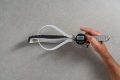
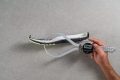
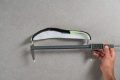
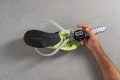
Con nuestra herramienta personalizada impresa en 3D y nuestro calibre digital, vimos que su punto más ancho tenía una anchura estándar de 89,7 mm.
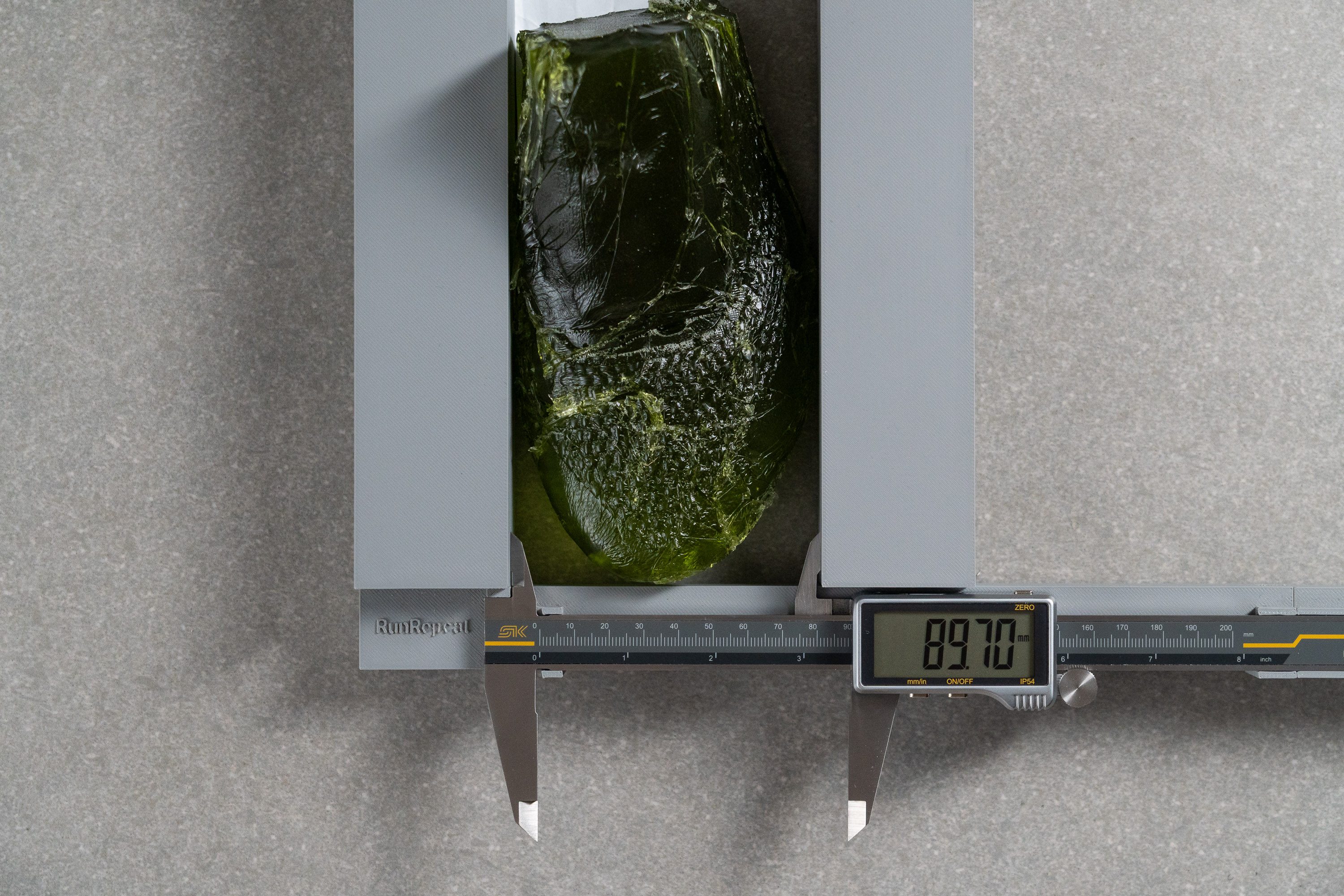
| FuelCell XC7 v5 | 89.7 mm |
| Media | 88.7 mm |
Anchura de la parte delantera
La parte delantera tampoco nos cogió por sorpresa; su anchura de 68,0 mm es justo lo que nos esperábamos.
Es un resultado bastante habitual en unas zapatillas de clavos para cross y encaja con el ajuste seguro y pensado para la competición que sentimos al correr con ellas.
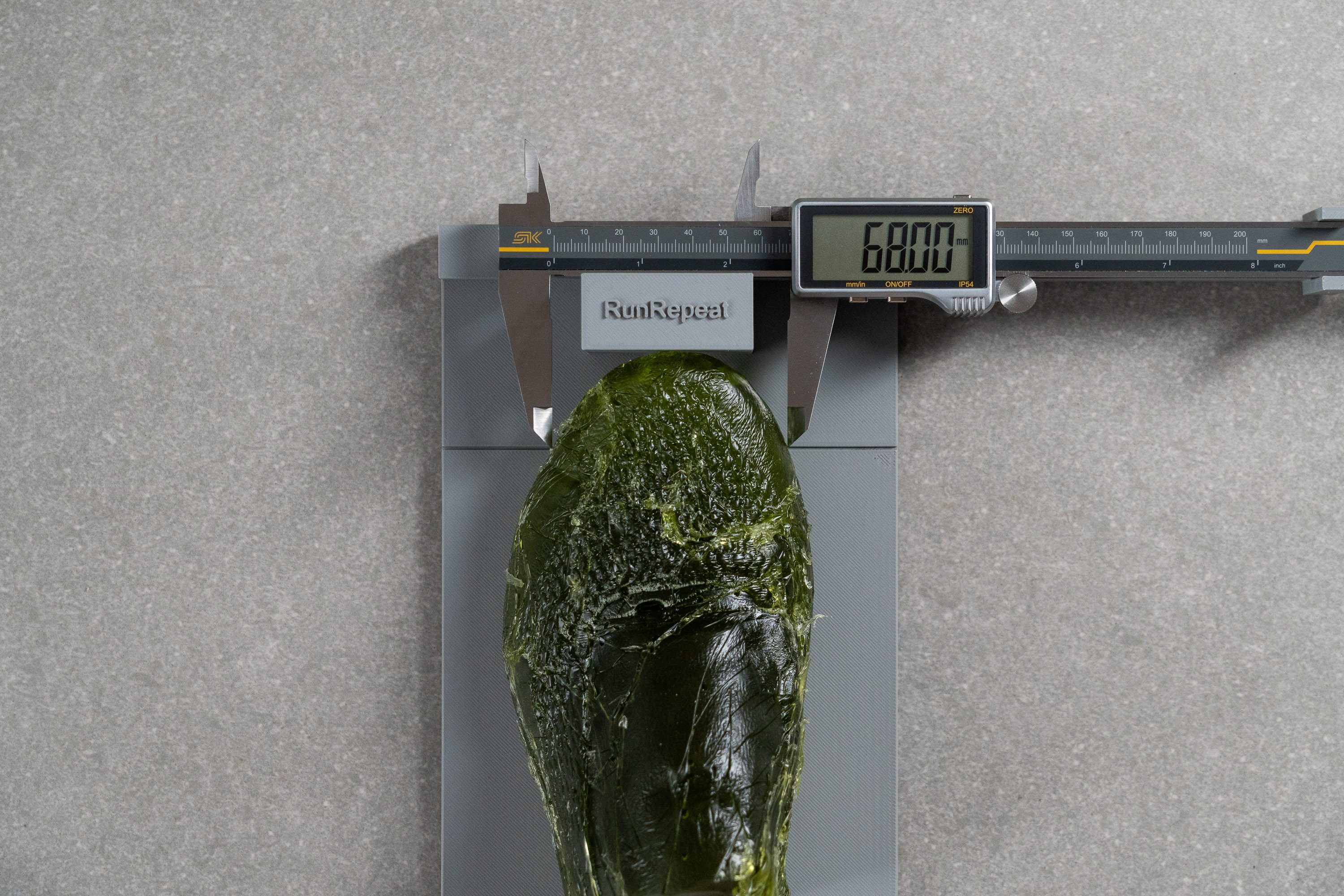
| FuelCell XC7 v5 | 68.0 mm |
| Media | 68.8 mm |
Altura de la parte delantera
Eso sí, New Balance optó por un diseño más agresivo en cuanto al espacio vertical, ya que la parte delantera tiene una altura de solo 24,1 mm.
Incluso así, nunca nos pareció incómoda. De hecho, los runners que prefieren un ajuste seguro, sobre todo para las curvas, los giros y las ondulaciones del terreno de los circuitos de cross, probablemente estarán encantados con este diseño.
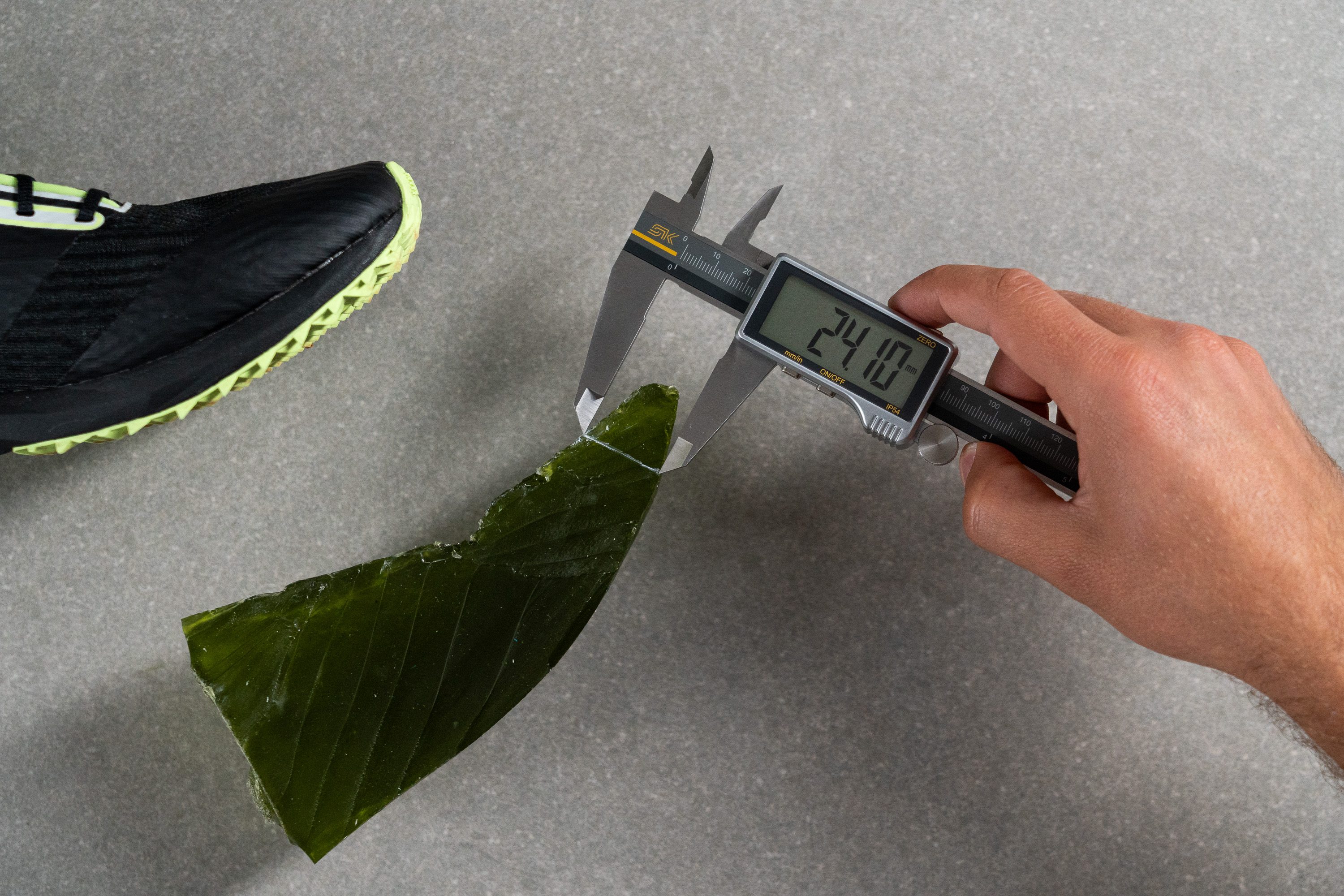
| FuelCell XC7 v5 | 24.1 mm |
| Media | 25.9 mm |
Flexibilidad / Rigidez
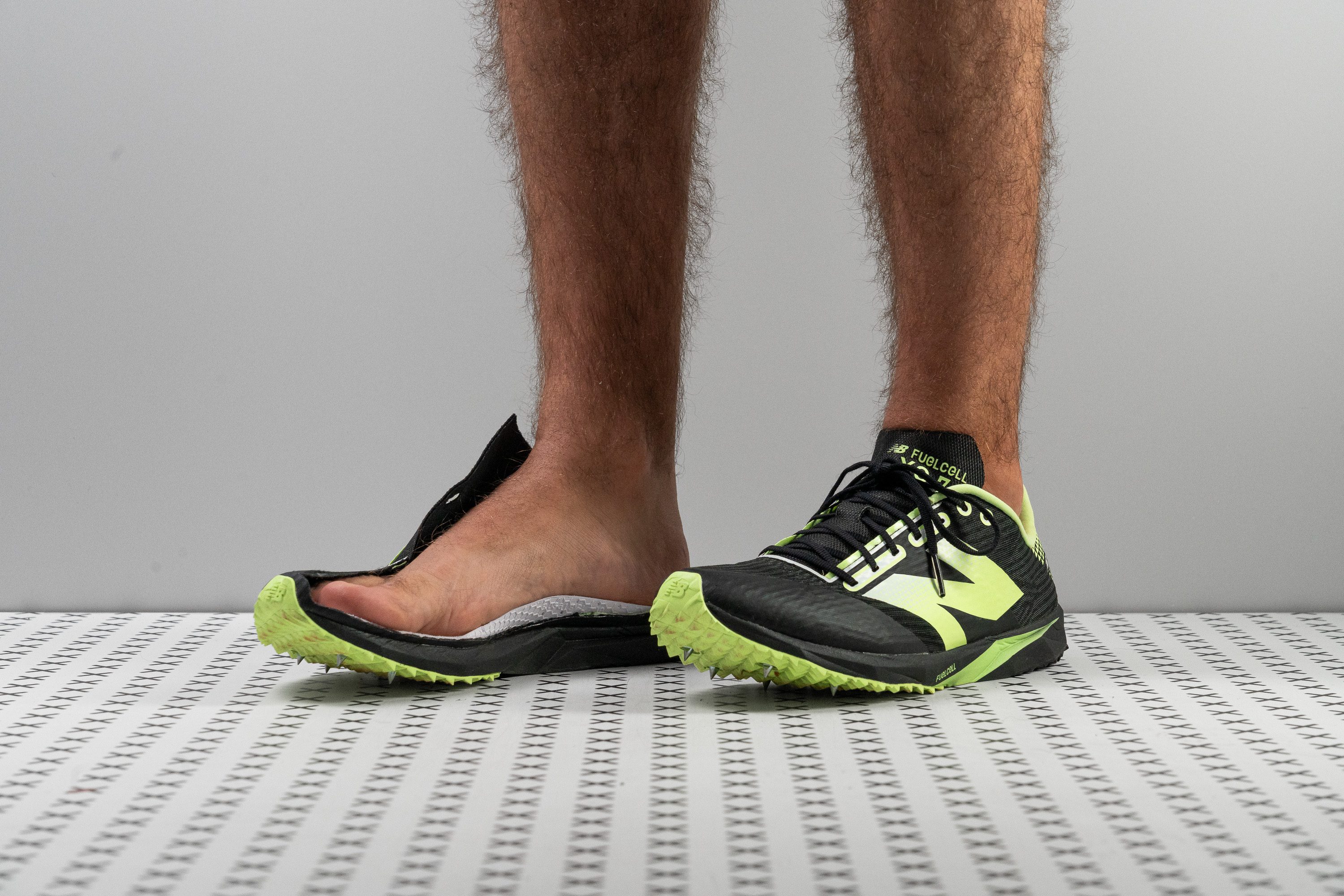
Al no tener placa ni ningún otro elemento que aporte rigidez, las New Balance FuelCell XC7 v5 ofrecen una pisada muy natural que les va a gustar a muchos corredores.
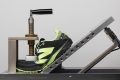
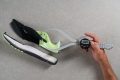
Acompañaron los movimientos de nuestros pies sin oponer resistencia, así que los runners que quieren una estructura flexible para los terrenos irregulares van a estar encantados. En nuestra prueba de flexión de 30 grados lo confirmamos, ya que solo necesitamos hacer 3,9 N de fuerza para doblarlas.
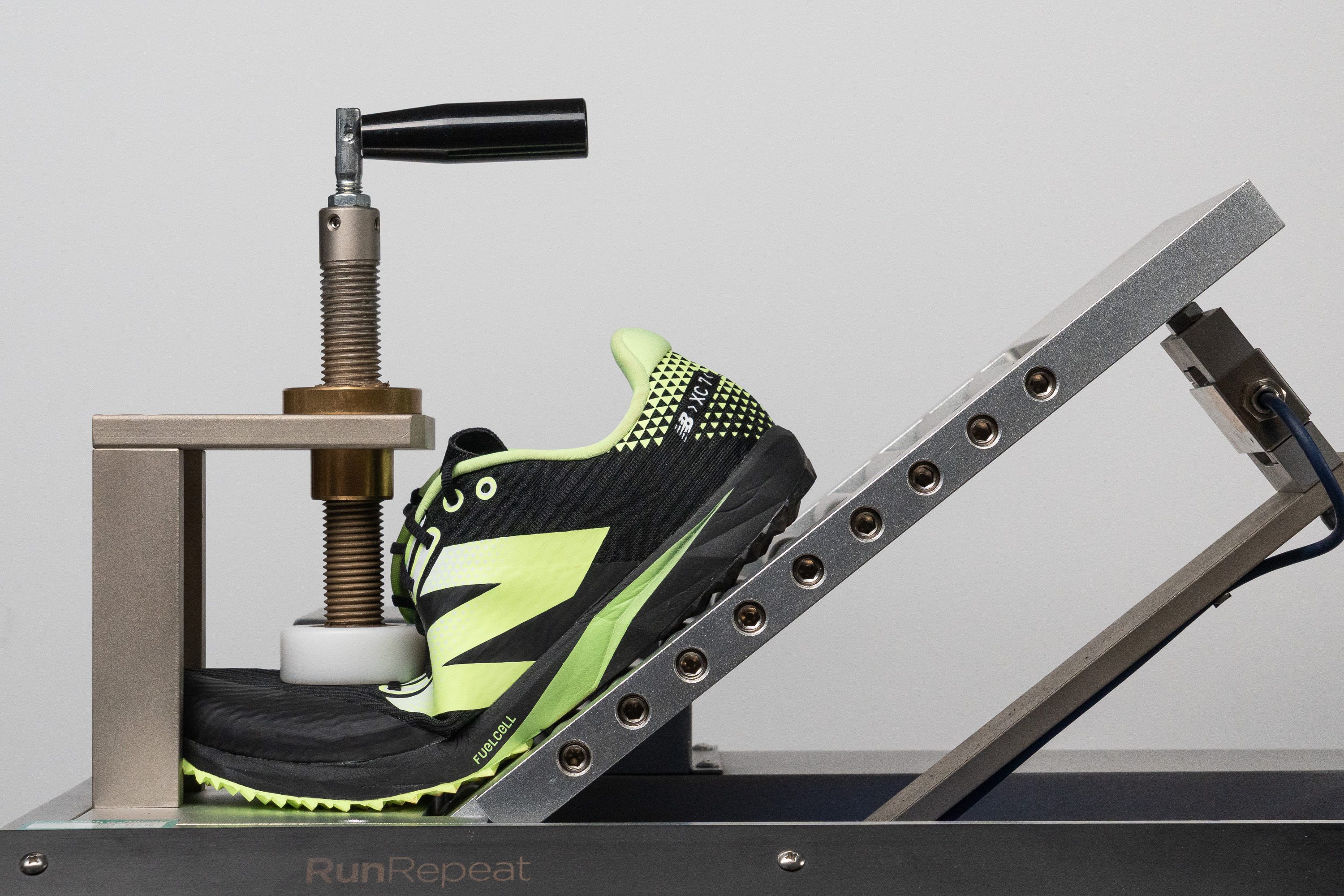
| FuelCell XC7 v5 | 3.9N |
| Media | 14.5N |
Peso
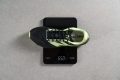
Hasta este punto, las FuelCell XC7 v5 nos habían demostrado que, para lo que cuestan, vienen cargaditas de ventajas maravillosas. Y aunque no podemos decir que 184 g sea un peso alto para unas zapatillas de cross, aquí es donde ya empezamos a ver los sacrificios que había hecho la marca para que costaran menos de 90 €.
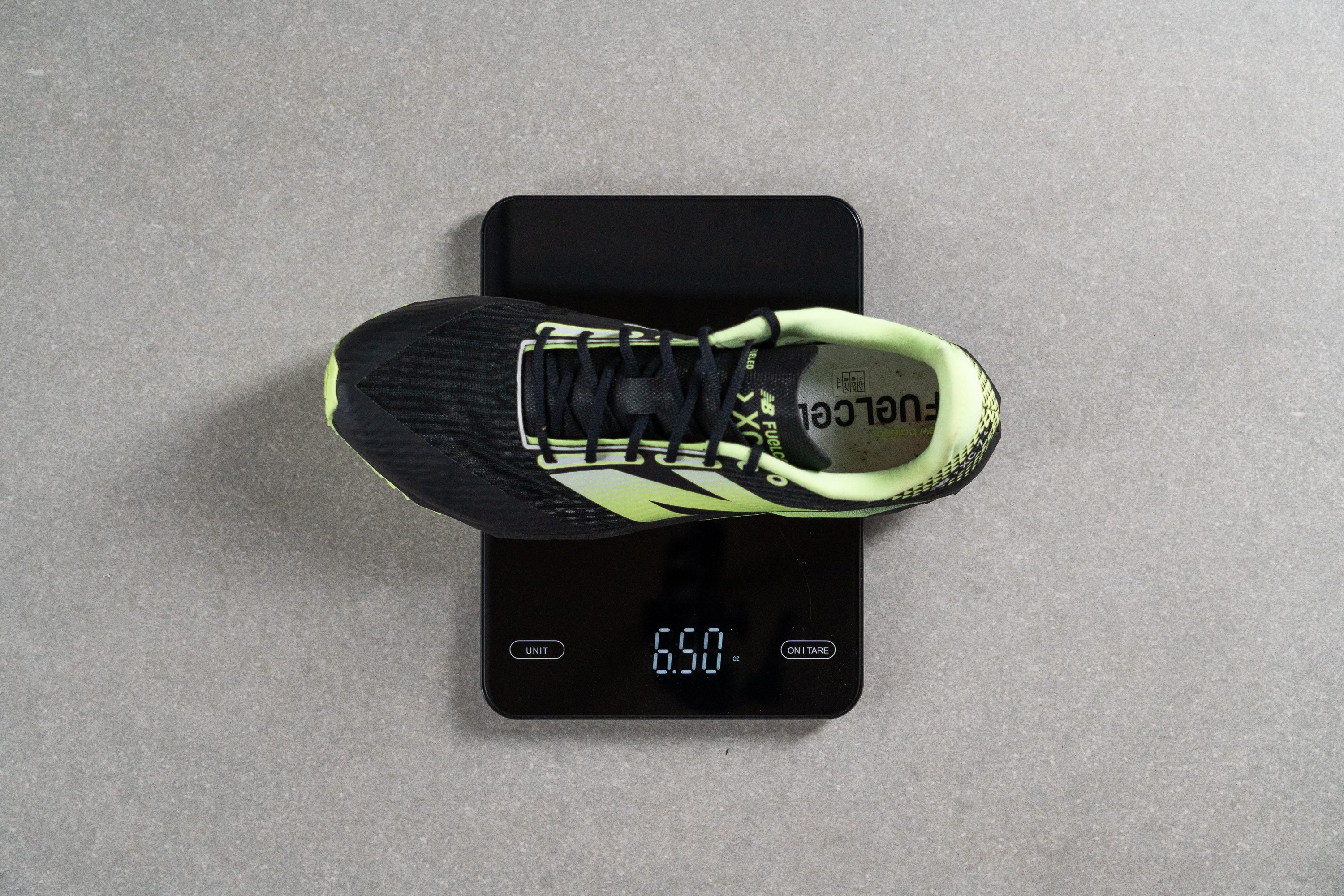
| FuelCell XC7 v5 | 6.5 oz (184g) |
| Media | 5.7 oz (162g) |
Transpirabilidad
Breathability
To keep the price under control, New Balance used a simpler upper material. Even so, we think it works well for the intended purpose.
Breathability scored a solid 4/5 in our tests, delivering enough airflow without making the shoe feel overly exposed in colder conditions.
In fact, we think that a 5/5 score would have been less appropriate given that cross-country season usually takes place in cool weather.
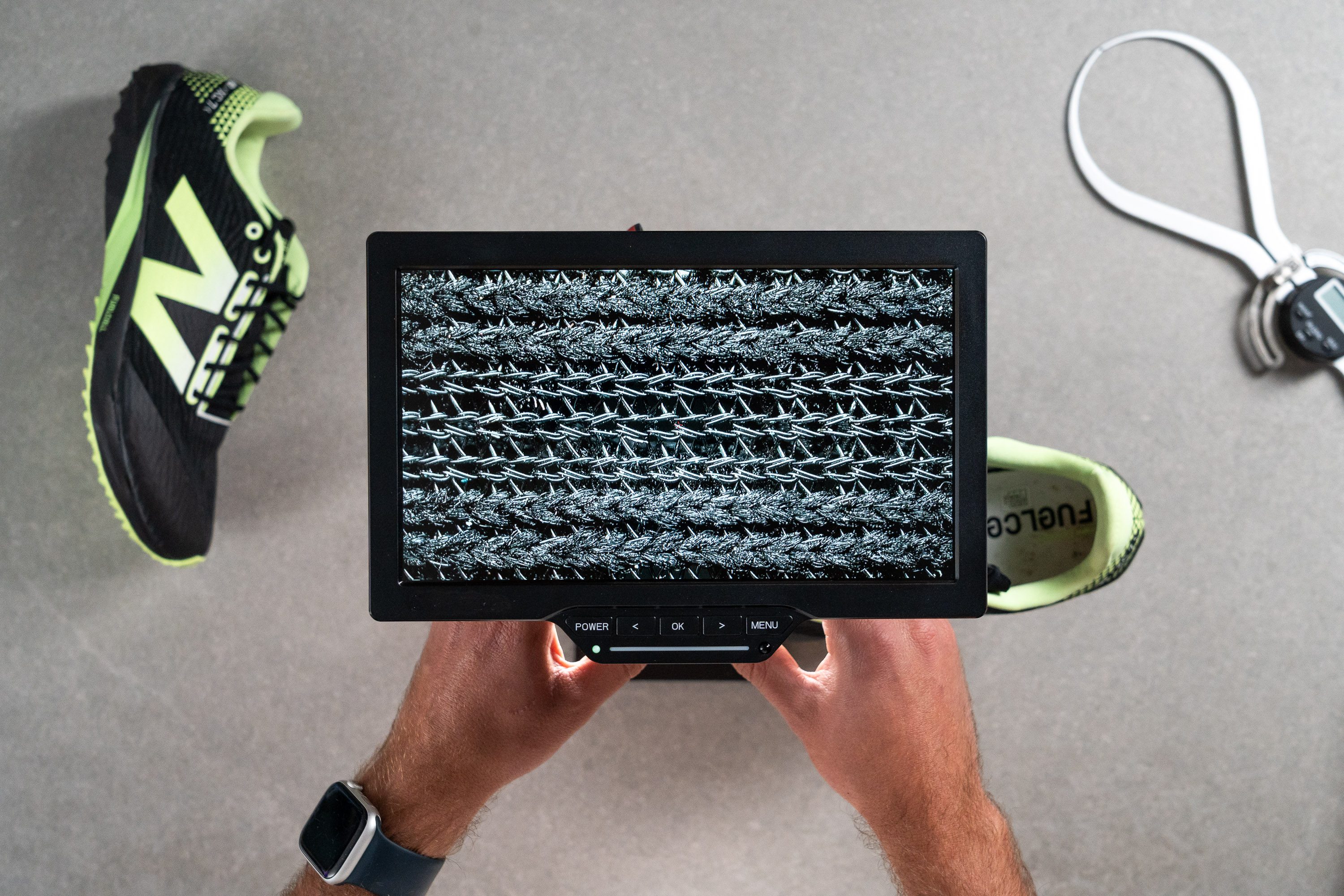
New Balance intentionally limited airflow in certain areas to improve foothold and stability. That's a smart choice for the uneven terrain and constant direction changes of XC racing.
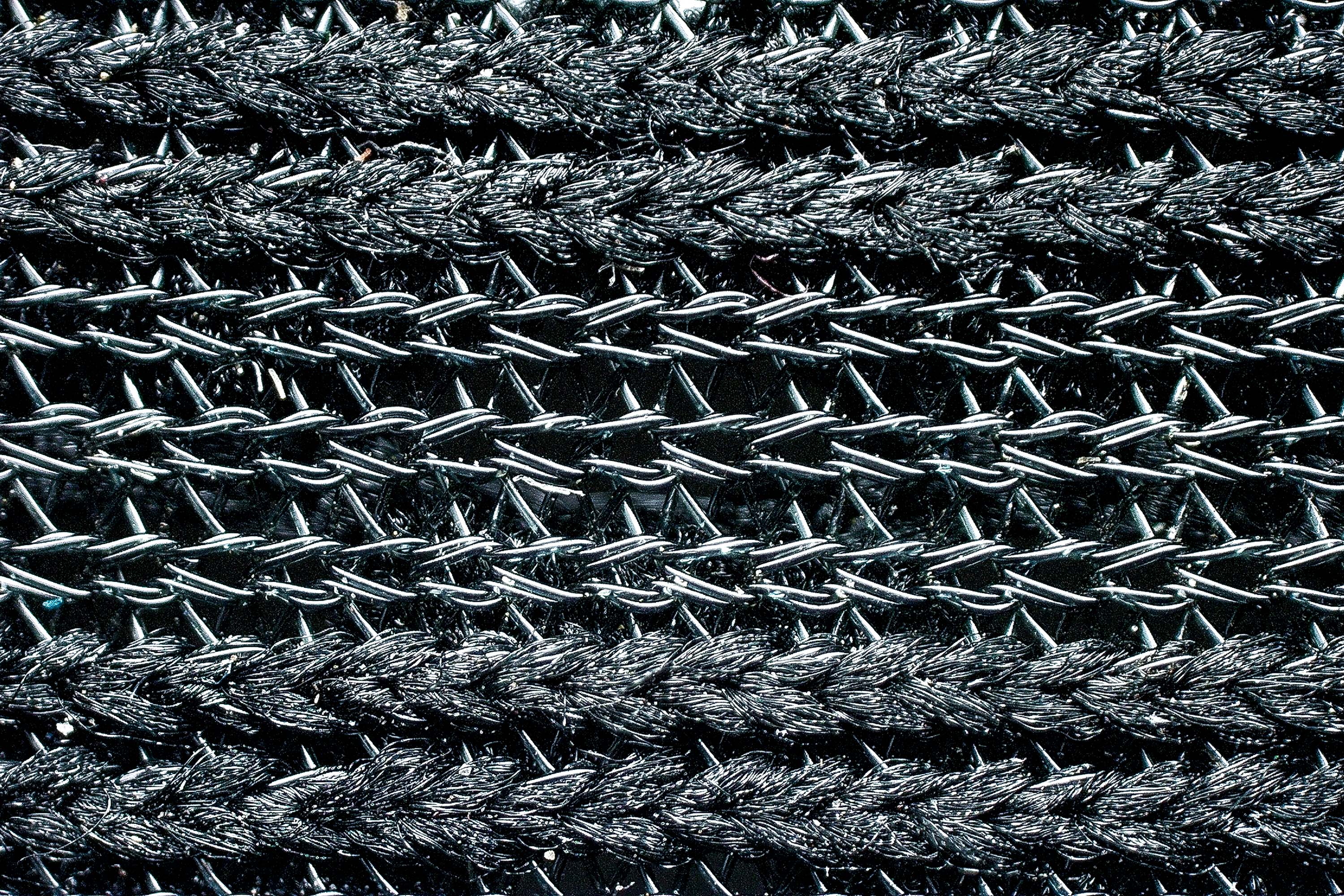
We also noticed more padding than expected, especially around the heel. It adds a welcome layer of comfort and makes the XC7 v5 feel more accommodating than many competitors.
| FuelCell XC7 v5 | 4 |
| Media | 3.9 |
Estabilidad
Rigidez torsional
Las XC7 v5 nos parecieron muy flexibles en general, y nuestras pruebas de laboratorio lo confirmaron. En nuestra prueba de rigidez torsional, ¡nuestra máquina especial marcó solo 7,1 Nm!
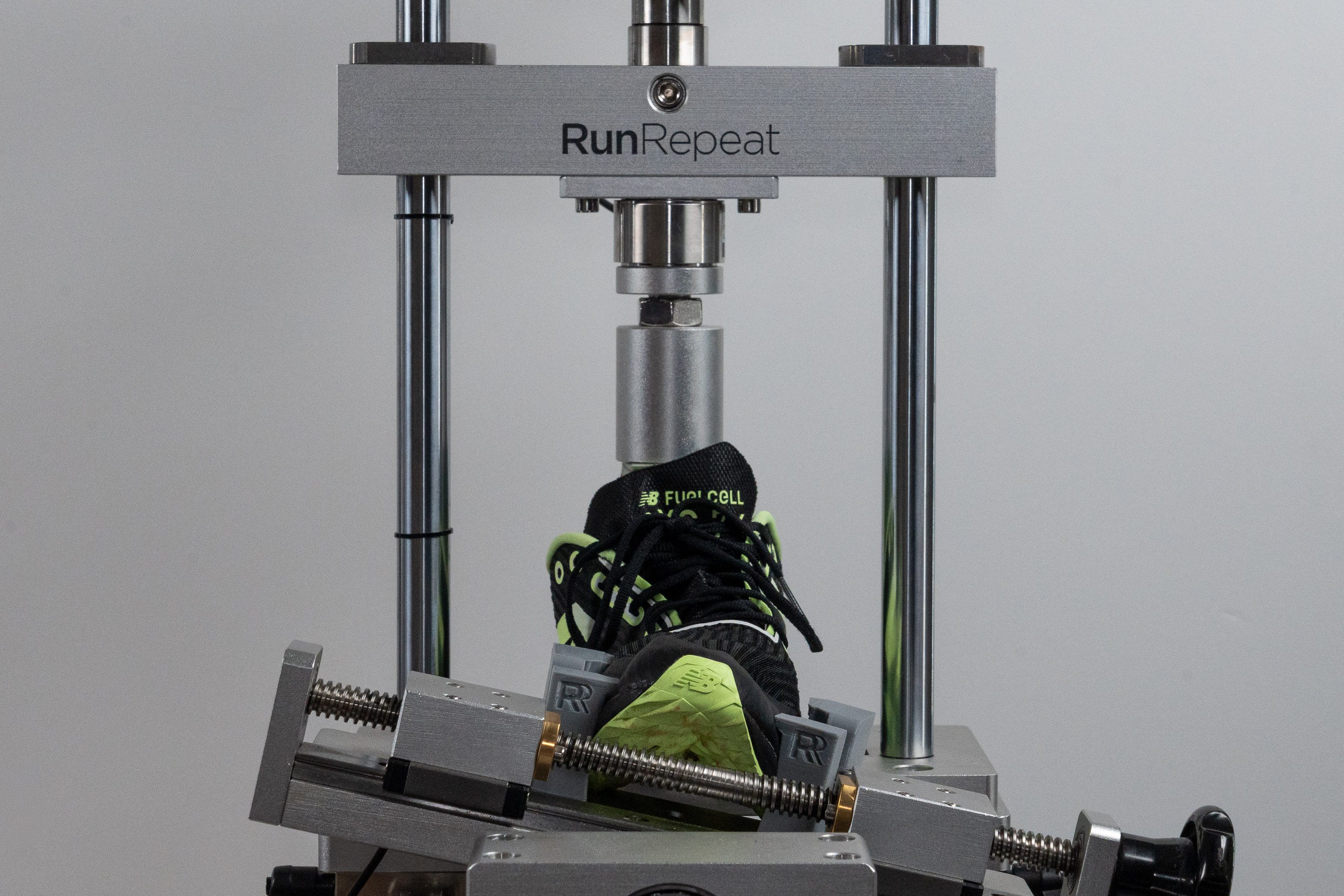
| FuelCell XC7 v5 | 7.1 Nm |
| Media | 10.7 Nm |
Rigidez del contrafuerte del talón
El contrafuerte del talón está un poquito más estructurado, cosa que puede irte como anillo al dedo cuando la fatiga empieza a hacer acto de presencia al correr y empiezas a aterrizar con el talón. Incluso así, su diseño sigue siendo muy flexible, por lo que solo obtuvo un 2/5 en nuestra evaluación.
| FuelCell XC7 v5 | 2 |
| Media | 1.6 |
Anchura de la mediasuela - antepié
También descubrimos que New Balance les puso a las XC7 v5 una plataforma más ancha que la de la mayoría de las zapatillas de clavos para pista, y creemos que ha hecho bien, ya que las carreras de cross exigen más estabilidad.
Nuestro calibre lo confirmó al marcar 100,0 mm de anchura en el antepié, lo que hace que la base se adapte mejor a los terrenos irregulares y a los tramos con inclinación lateral.
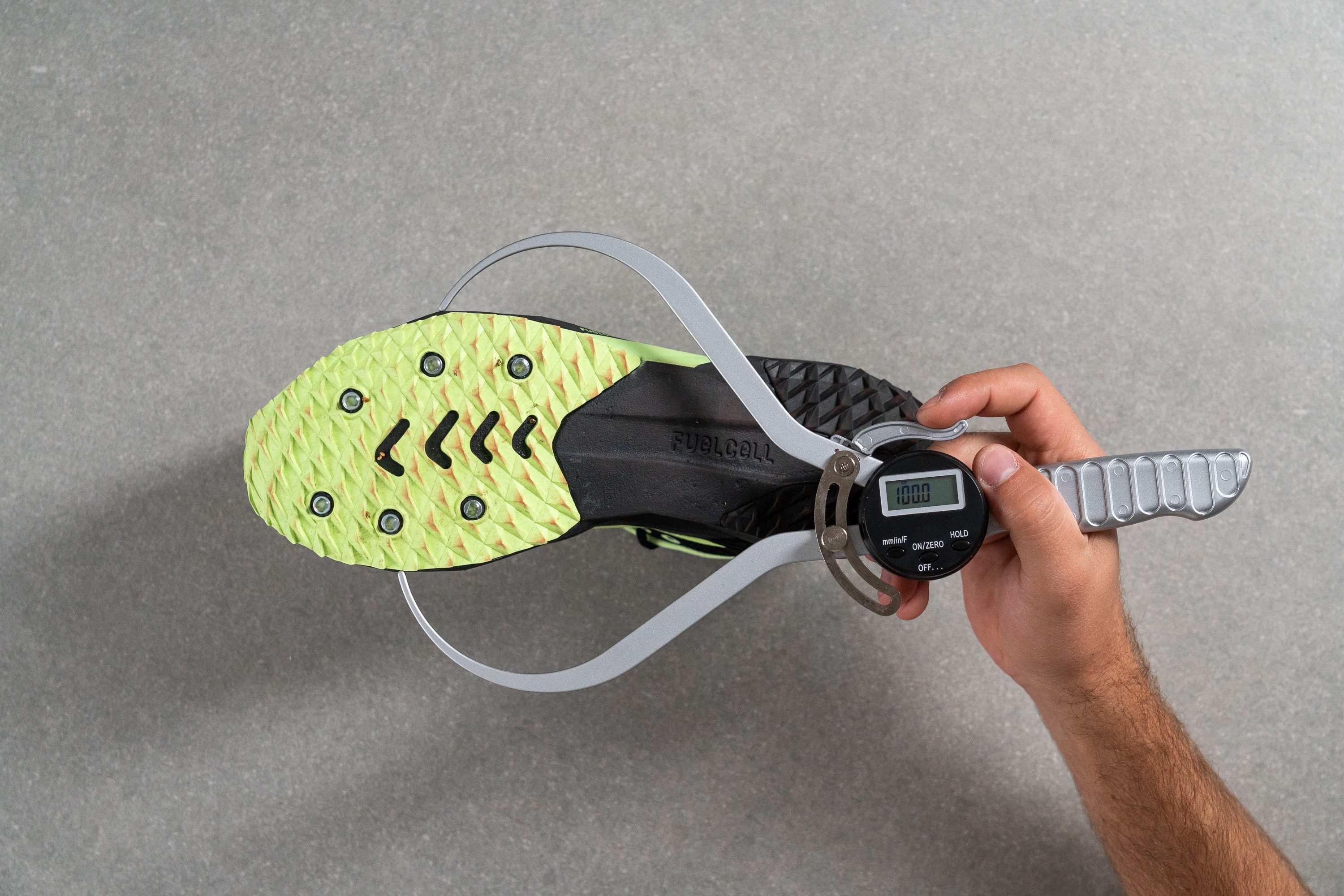
| FuelCell XC7 v5 | 100.0 mm |
| Media | 96.1 mm |
Anchura de la mediasuela - talón
El talón es muy ancho, de 77,6 mm, lo que refuerza nuestra impresión de que New Balance puso la facilidad de uso y la estabilidad como sus prioridades, dejando en un segundo plano las sensaciones ultraagresivas de la competición.
En nuestra opinión, este diseño apto para principiantes hace que sea más fácil confiar en las XC7 v5 sobre terrenos irregulares, aunque se sacrifique algo de velocidad máxima.
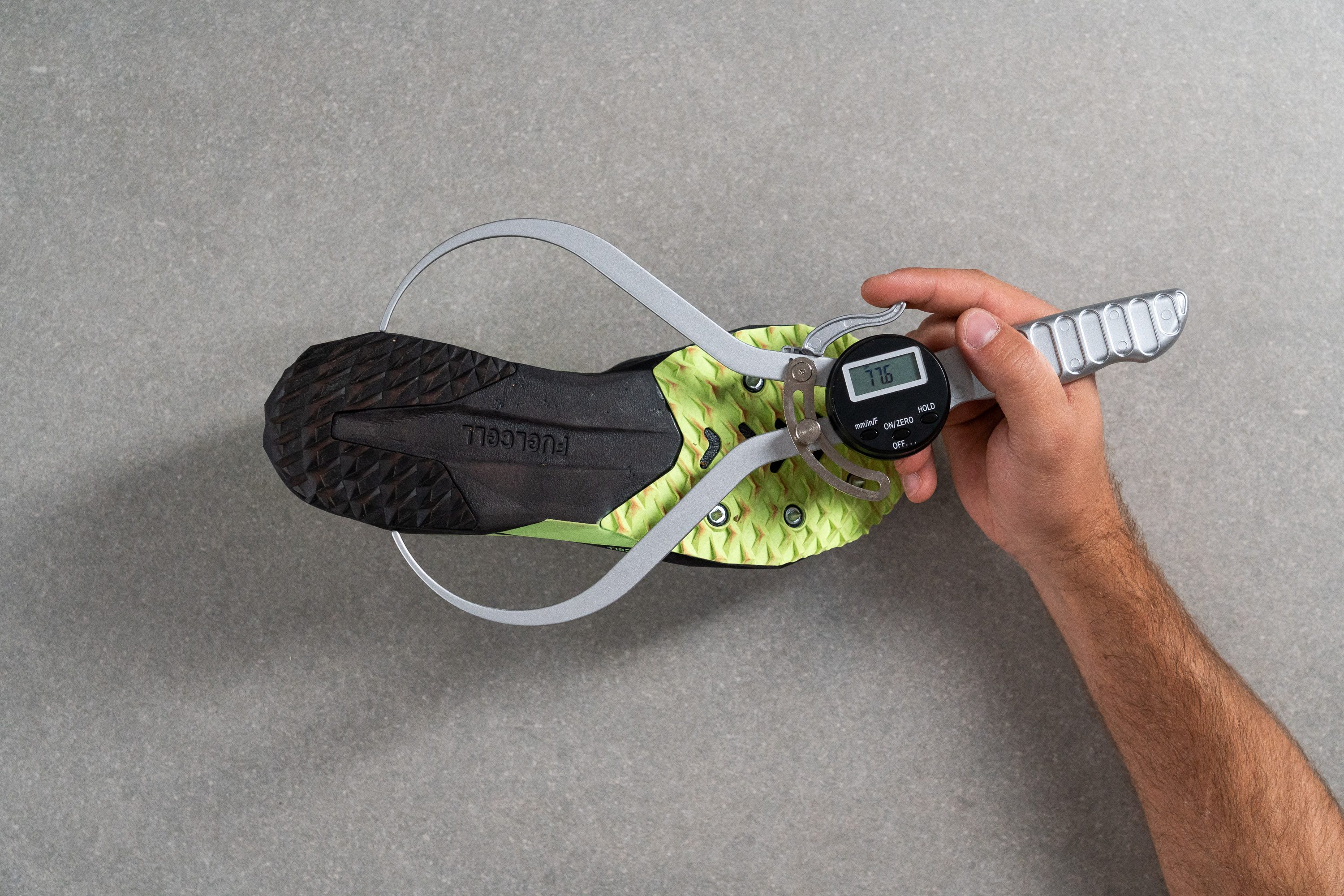
| FuelCell XC7 v5 | 77.6 mm |
| Media | 63.8 mm |
Durabilidad
Durabilidad de la parte delantera
La verdad es que nos alegró mucho ver que la parte delantera de estas zapatillas es muy resistente. Se llevó un 4/5 en nuestra prueba, que es algo que no todas las zapatillas de cross consiguen, eso está claro. A diferencia de la pista de atletismo, donde la durabilidad del upper no preocupa tanto, las condiciones más duras del cross hacen que la resistencia al desgaste sea mucho más importante, así que este resultado nos sacó una sonrisa de oreja a oreja.
Ah, ¡y la zona de los dedos está totalmente protegida!
| FuelCell XC7 v5 | 4 |
| Media | 2.2 |
Durabilidad del acolchado del talón
Pero eso no es todo, ya que las FuelCell XC7 v5 obtuvieron un 5/5 perfecto en nuestra prueba de durabilidad del acolchado del talón, confirmándonos que New Balance las diseñó para soportar las exigencias de varias temporadas completas de cross.
| FuelCell XC7 v5 | 5 |
| Media | 3.8 |
Grosor de la suela
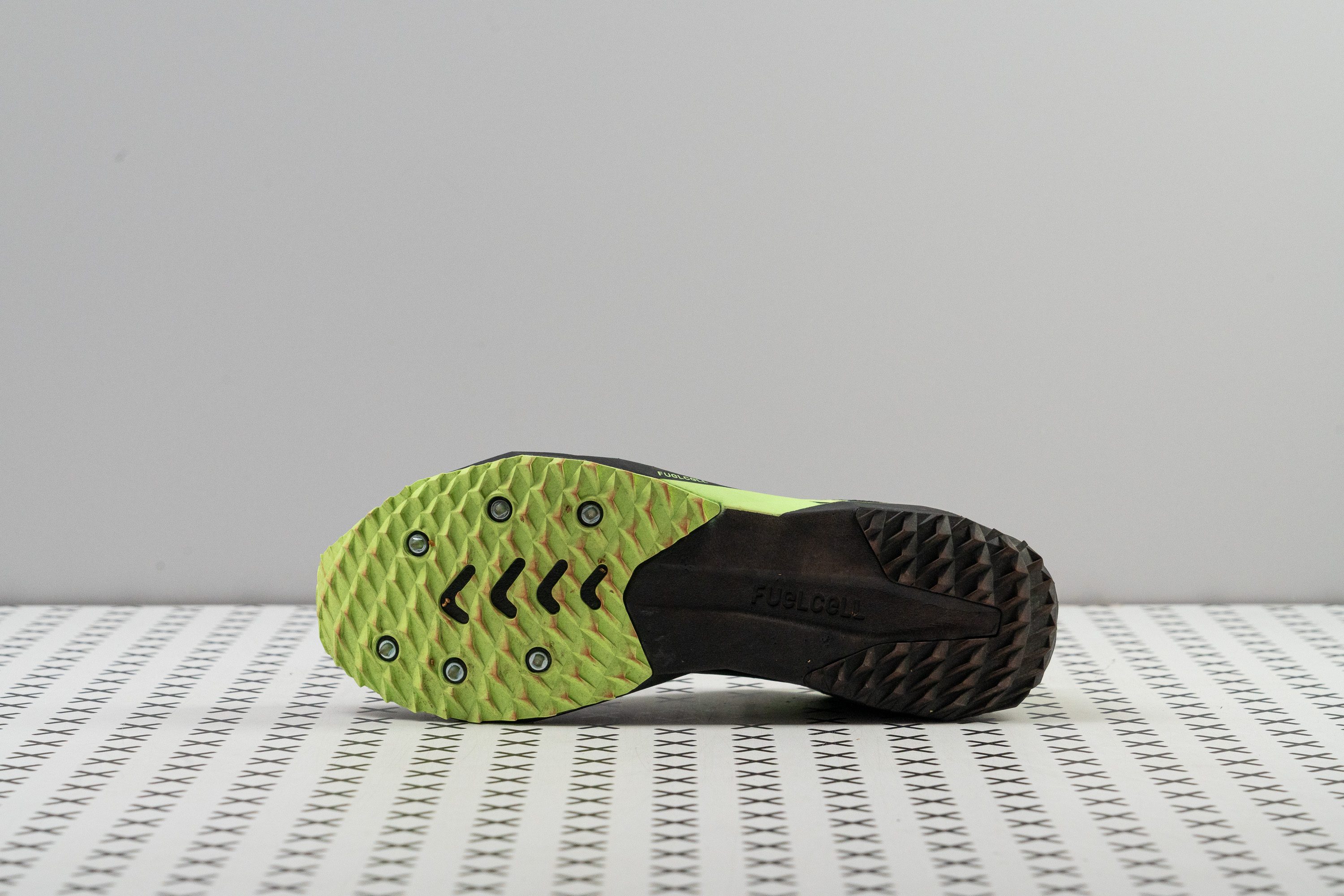
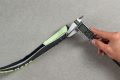
New Balance también priorizó la durabilidad de la suela utilizando una generosa capa de caucho de 3,2 mm. Para nosotros, es otra señal de que las XC7 v5 están diseñadas pensando en que duren mucho tiempo, y no en que sean un par de plumas.
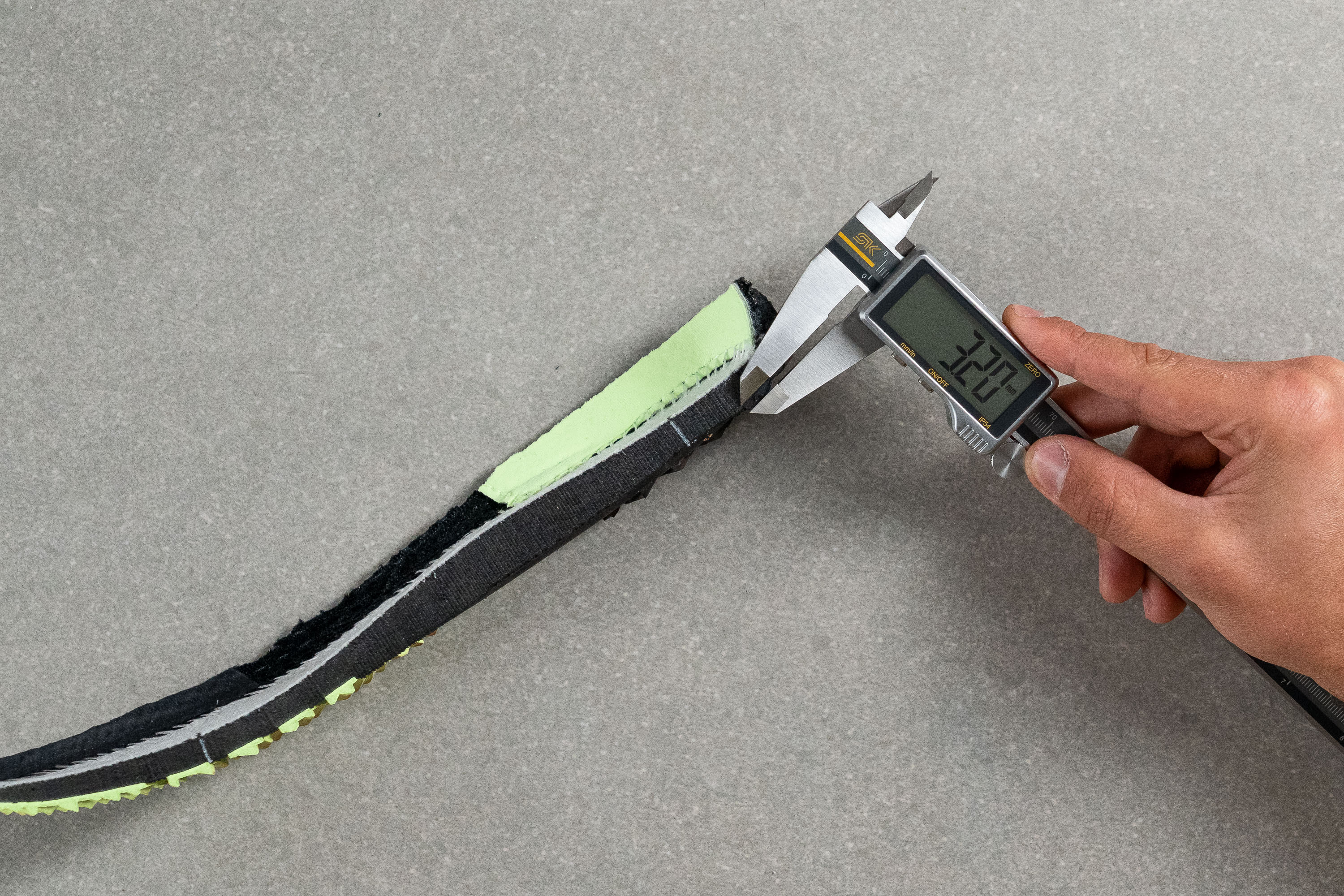
| FuelCell XC7 v5 | 3.2 mm |
| Media | 2.6 mm |
Varios
Grosor de la plantilla
Con 2,3 mm de grosor, la plantilla está justo al nivel de lo que solemos ver en las zapatillas de cross.
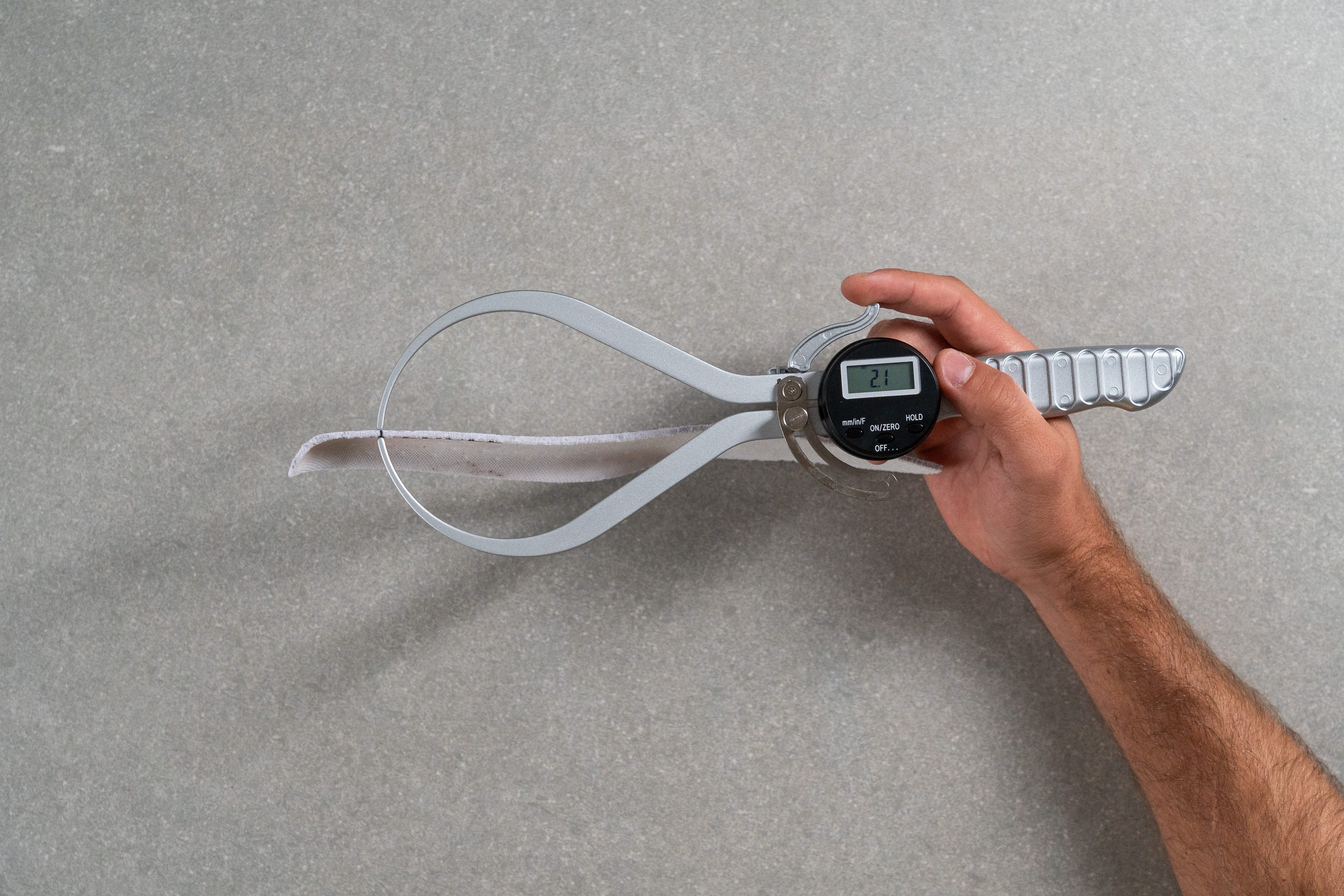
| FuelCell XC7 v5 | 2.3 mm |
| Media | 2.6 mm |
Acolchado de la lengüeta
Las XC7 v5 tienen unos cordones finitos que se parecen a los de algunas zapatillas clásicas de New Balance para correr por asfalto. Aunque parecen sencillos, a nosotros nos parecieron eficaces y fáciles de ajustar con precisión.
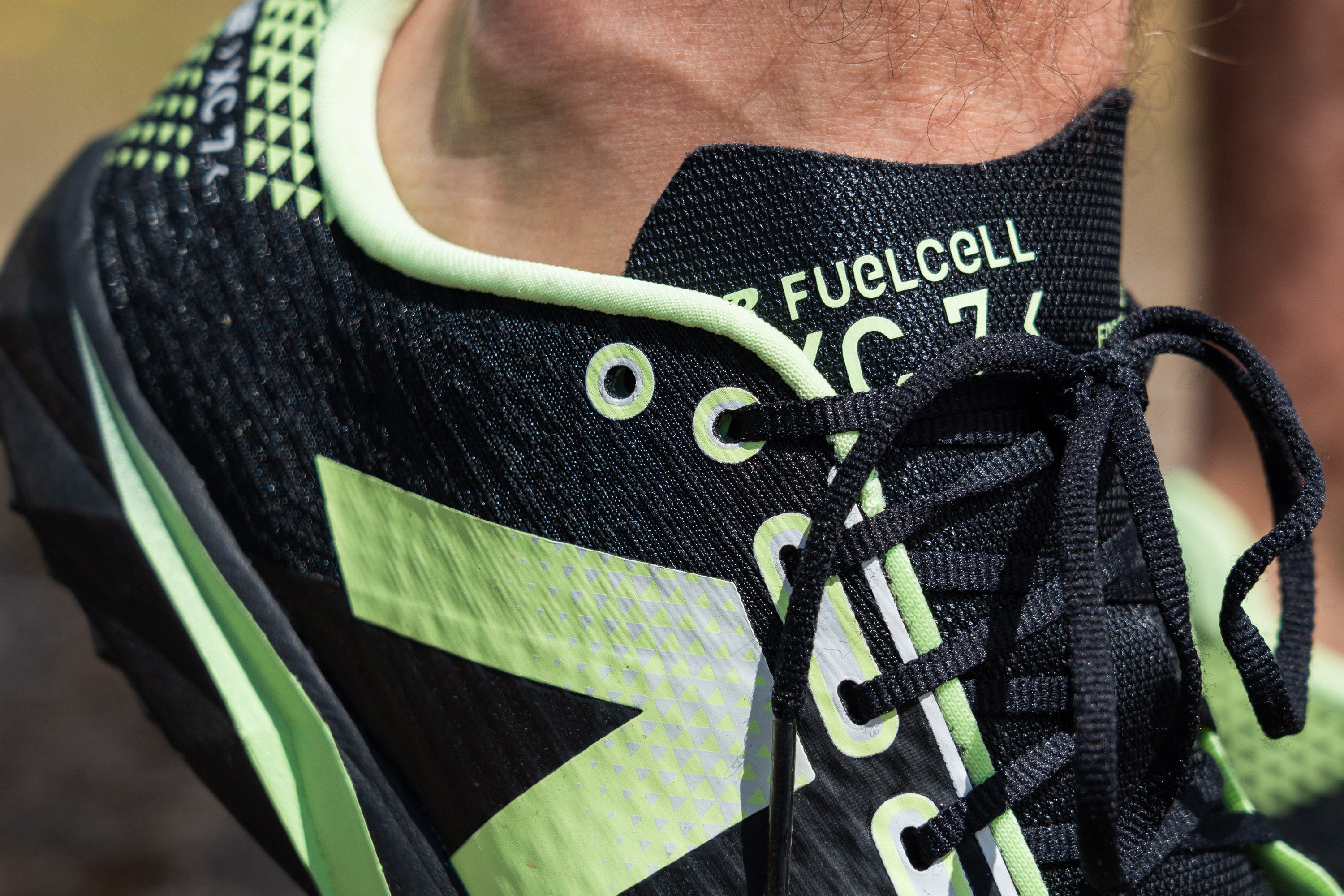
La lengüeta también nos dio una grata sorpresa. Su longitud nos pareció ideal y su escaso acolchado de solo 2,0 mm ayuda a mantener un peso razonable sin sacrificar la comodidad.
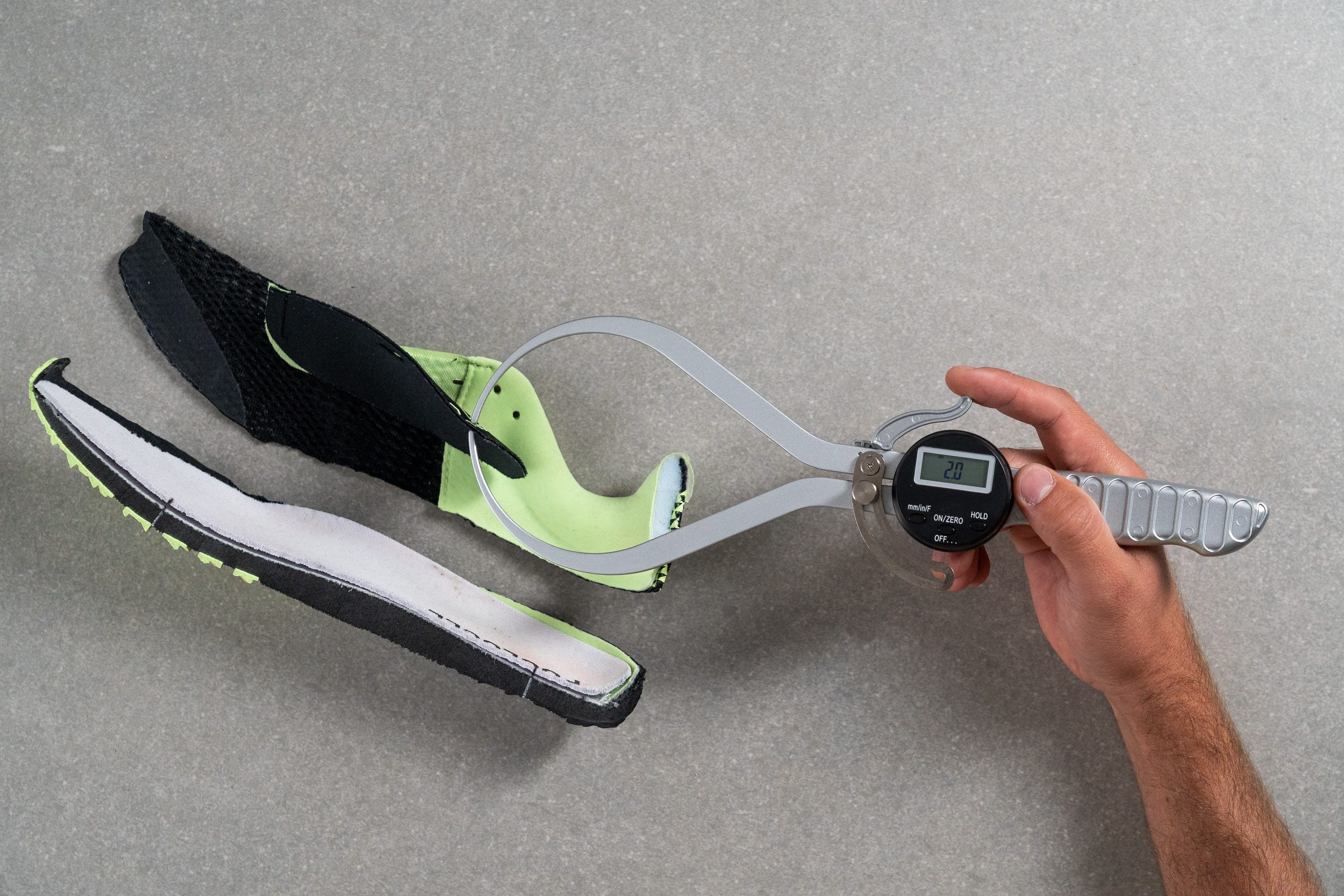
| FuelCell XC7 v5 | 2.0 mm |
| Media | 2.3 mm |
Tirador del talón
Como cabía esperar de unas zapatillas de competición, el talón no tiene tirador. Pero mira, nos gustó mucho el diseño general y la atención al detalle, ya que están mucho más cuidados de lo que uno se espera en las zapatillas con este precio.
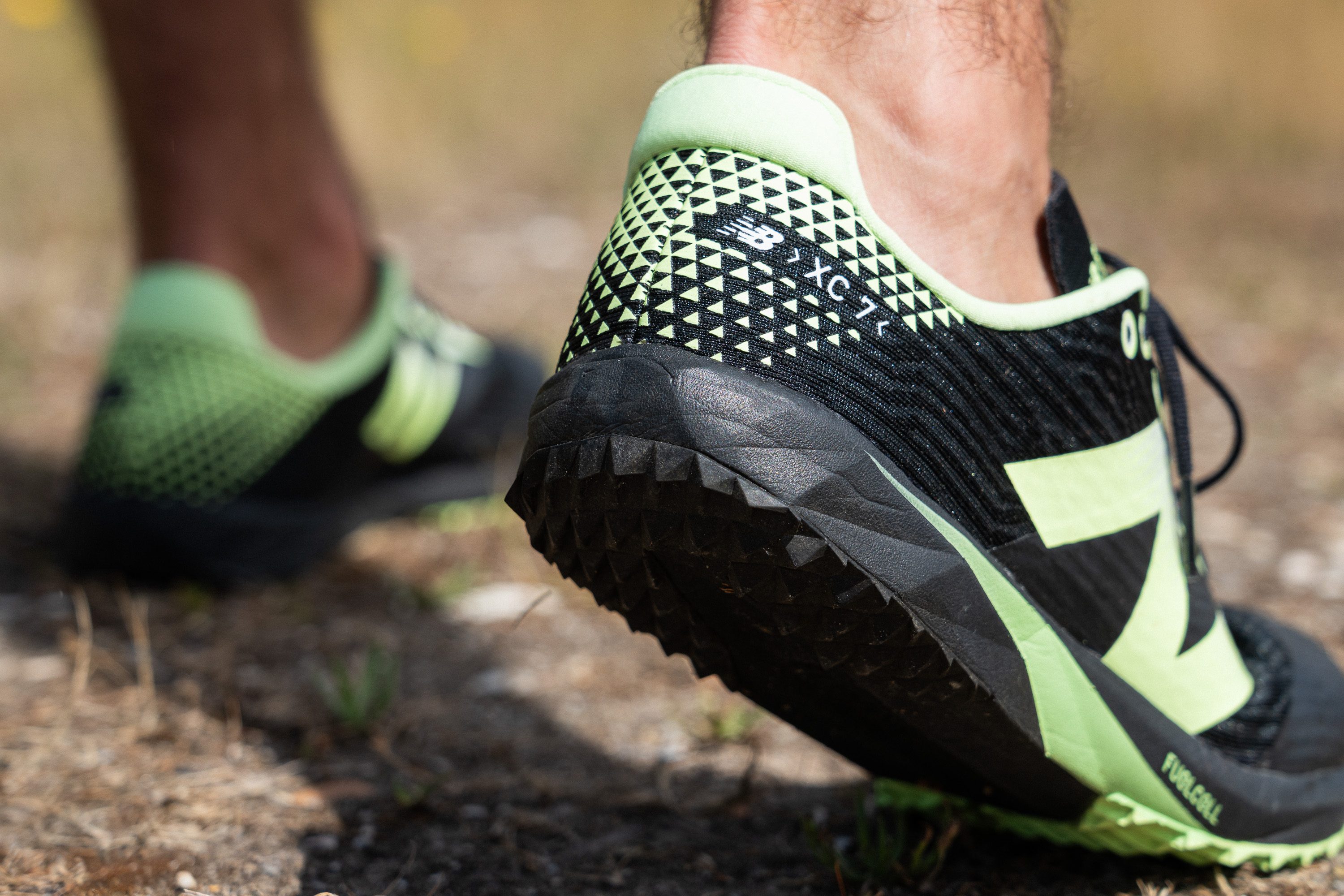
| FuelCell XC7 v5 | Ninguno |
Precio
Lo baratas que son las FuelCell XC7 v5 es, muy probablemente, su mayor ventaja. Cuestan menos que la mayoría de sus rivales de cross e, incluso así, sus características están muy bien equilibradas. Esto las convierte en una opción excelente para los corredores que solo participan en unas pocas carreras de cross al año y no quieren gastarse una pasta en unas zapatillas de gama alta.
| FuelCell XC7 v5 | $85 |
Tacos extraíbles
New Balance te regala una llave para clavos con las XC7 v5, lo que hace que sustituirlos o cambiarlos por otros sea más fácil.